


Simple Summary
The tribe Epilachnini currently comprising 1126 identified species in 28 genera is distributed worldwide. It is a highly diverse group of herbivorous ladybird beetles, predominantly found in the Afrotropical, Neotropical, and Oriental regions. This study provides a comprehensive checklist of 176 species across 10 genera, along with detailed data on their regional distribution and host plant associations in China. A significant ecological knowledge gap is revealed, as host plant associations are documented for only 72 species (41%) of the Chinese Epilachnini, which are primarily associated with the families Solanaceae, Cucurbitaceae, Urticaceae, Fabaceae, Asteraceae, Poaceae, Lamiaceae, Rubiaceae, Ranunculaceae, and Brassicaceae. The host plants of the remaining 59% of ladybird beetle species in this tribe remain unknown.
Abstract
A comprehensive annotated checklist of the members of the phytophagous ladybird beetle tribe Epilachnini (Coccinellinae) in China is compiled based on existing published sources and incorporates the latest taxonomic and nomenclatural updates. The checklist documents 176 extant species across 10 genera and provides analyses of regional species richness, distribution, and host plant associations. Regarding regional species richness, Yunnan Province is home to the highest number of species (76), followed by Taiwan (50), Sichuan (48), Guizhou (48), Guangxi (43), Tibet (43), Guangdong (25), Hainan (17), Hubei (17), Hunan (13), Shaanxi (13), Fujian (12), Henan (10), Jiangsu (10), Anhui (7), Shandong (7), Zhejiang (7), Jiangxi (5), Hong Kong (5), Gansu (5), Beijing (4), Hebei (4), Liaoning (3), Shanxi (2), and Chongqing, Jilin, Heilongjiang, Ningxia, and Xinjiang (each with one species). Among the recognized genera, Epilachna Chevrolat, 1837, is currently the most species-rich genera, with 59 species, followed by Afissa Dieke, 1947 (34), Uniparodentata Wang & Cao, 1993 (28), Henosepilachna Li, 1961 (29), Afidentula Kapur, 1958 (10), Diekeana Tomaszewska & Szawaryn, 2015 (9), and Epiverta Dieke, 1947 (4). Additionally, Afidenta Dieke, 1947, Cynegetis Chevrolat, 1837, and Subcoccinella Agassiz & Erichson, 1845 are each represented by a single species. Host plant data are currently available for only 72 species (approximately 41% of the species recorded in China), which are associated with 177 plant species across 34 families. The most frequently recorded host plant families are Solanaceae (43 species), Cucurbitaceae (32), Urticaceae (15), Fabaceae (14), Asteraceae (14), and Poaceae (10), whereas each of the remaining 28 families comprises fewer than 10 host species. For 104 species (59% of the Chinese members of the tribe), host plant associations remain unknown, highlighting a substantial gap in our understanding of their feeding habits.
1. Introduction
The family Coccinellidae (Coleoptera), commonly known as ladybird beetles, ladybugs or lady beetles, is a charismatic and globally distributed group of insects, comprising approximately 6900 described species belonging to 360 genera in 25 tribes [1,2,3,4]. Currently, the family is divided into three subfamilies [3]: Coccinellinae (336 genera, more than 6500 species), Microweiseinae (23 genera, more than 150 species) and Monocoryninae (1 genus, 10 species) [4,5,6,7]. Ladybird species are predominantly recognized for their predatory nature, with over half of the family preying on various insect groups, particularly scale insects (36%) and aphids (20%), thereby serving as vital biological control agents [8]. However, beyond this familiar predatory stereotype, Coccinellidae exhibits a significant diversity of feeding habits. Approximately 20% of ladybird species are phytophagous. This group includes members of the tribe Epilachnini, which consists of around 1126 formally described extant species classified into 27 recognized genera. Furthermore, the genus Bulaea Mulsant, 1850 (comprising four species), which belongs to the tribe Coccinellini, is also phytophagous [1,2,9,10,11]. A smaller proportion, approximately 2%, are mycophagous, while others feed on pollen and small arthropods [1,12].
Epilachnini represents the largest phytophagous group of herbivorous beetles within the family Coccinellidae. Notably, several species within this tribe are of major agricultural importance. For example, Epilachna varivestis Mulsant, 1837 (commonly referred to as the Mexican bean beetle), is widespread in the Nearctic and Neotropical regions [1,13,14], while Henosepilachna vigintioctopunctata (Fabricius, 1775) (known as the 28-spotted ladybird or the Hadda beetle) is prevalent in the Oriental, Palaearctic, and Australian regions [1,15,16,17]. Additional economically significant pests include Henosepilachna vigintioctomaculata (Motschulsky, 1857) (also called the 28-spotted potato ladybird beetle), H. implicata (Mulsant, 1850), and Chnootriba elaterii (Rossi, 1794) (known as 12-spotted melon beetle) [1,16,18,19,20]. These species are known to infest a wide range of cultivated crops, including cucumber, ivy gourd, tomato, eggplant, melon, potato, pumpkin, snake gourd, tobacco, and ramie [18,20,21,22]. Despite the agricultural importance of several well-documented pest species, host plant associations remain poorly documented for the tribe. Currently, host plant associations are documented for only 134 species (approximately 12% of Epilachnini) [16,20,21,22,23,24,25,26,27], representing 15 genera (55.5% of the tribe). Consequently, host-plant associations remain unknown for 986 species, representing approximately 88% of the tribe. This substantial gap in knowledge highlights a significant deficiency in our understanding of feeding habits and host plant interactions within Epilachnini. Such information is fundamental to understanding the evolutionary history of phytophagous lineages, including patterns of host shifts and host-associated diversification, and is also important for predicting pest host ranges and developing effective management strategies [22].
In earlier taxonomic classifications, Epilachnini was treated as a distinct subfamily, Epilachninae, and was further divided into four tribes: Epilachnini Mulsant, 1846; Cynegetini Thomson, 1866; Epivertini Pang & Mao, 1979; and Eremochilini Gordon & Vandenberg, 1987 [1,13,28,29,30]. The designation Epilachnini was originally proposed by Costa in 1849 to include three species: Epilachna chrysomelina (Fabricius, 1775) (now referred to as Chnootriba elaterii (Rossi, 1794), Cynegetis globosa (=Subcoccinella vigintiquatuorpunctata), and Epilachna argus (Fourcroy, 1785) (now known as Henosepilachna argus (Geoffroy in Fourcroy, 1785)) [13]. Despite the earlier classification, recent taxonomic studies, which have examined larval and adult morphological characteristics, food preferences, and phylogenetic relationships, have consistently identified Epilachnini as a monophyletic clade within Coccinellinae [2,12,31,32,33,34].
The tribe Epilachnini currently comprises 27 recognized genera, of which two, Afidenta and Macrolasia, are monotypic, and the number of species in 23 genera ranges between two and seventy. Among these, Epilachna (with around 484 species) and Henosepilachna (233 species) are considered the most species-rich genera. However, the true diversity and taxonomic limits of Epilachna remain controversial. Once considered a cosmopolitan genus, Epilachna is now believed to be restricted to the New World, with many Asian species transferred or reassigned to other genera such as Afissa, Diekeana, and Uniparodentata [2,20,35,36]. Epilachna was the first described genus within phytophagous ladybird beetles and historically served as a “catch-all” genus for many newly described species. However, subsequent taxonomic revisions and a better understanding of morphological and phylogenetic relationships have led to establishment of several new genera within the tribe, and many species formerly assigned to Epilachna have been transferred to other genera. Despite these advances, a significant number of species originally described under Epilachna remain taxonomically unresolved. Although there has been considerable progress in clarifying generic boundaries and phylogenetic relationships within Epilachnini, many species originally described in Epilachna still require further taxonomic revision.
The Chinese fauna of Epilachnini currently comprises 10 genera and approximately 176 species and represents about 15% of the known global diversity of the tribe. The earliest record of Epilachnini from the territory of present-day China dates back to Mulsant [37], who described Epilachna maculivestis from Tibet. Thereafter, numerous species have been described from China over the past 170 years by many authors, including Crotch [38], Weise [39], Gorham [40], Frivaldszky [41], Sicard [42], Weise [43,44], Mader [45,46], Zimmermann [47], Liu [48], Li & Cook [21], Kapur [49], Bielawski [50], Miyatake [51], Pang & Mao [52,53], Hoàng [54], Cao & Xiao [55], Cao & Wang [56], Xiao & Li [57], Pang [58], Zeng & Yang [59,60], Hu & Zhang [61], Yu & Wang [62], Yu [63], Zeng [64,65], Peng et al. [66], Pang & Zeng [67], Yu [68], Pang et al. [69], Yi et al. [70], Wang et al. [71], Tomaszewska et al. [72], L. Wang et al. [73], Jin et al. [74], and Ye et al. [75]. A list of 106 Epilachna species recorded in China was relatively recently compiled by Pang et al. [69]. Since then, however, many taxonomic changes have been made and many new species described.
Since the publication of the world catalog of Epilachnini by Jadwiszczak & Węgrzynowicz [1], the taxonomy of this tribe has undergone a significant revision, with several new genera established and numerous nomenclatural changes proposed. The present study aims to provide an updated checklist of the Chinese Epilachnini, summarizing current taxonomic knowledge and providing a foundation for future systematic and biodiversity studies of the tribe in the region.
2. Materials and Methods
The checklist present below includes the valid generic and species names of Epilachnini found in China, their synonyms, as well as their regional and global distributions, and associated host plant data published up to 1 April 2026. All the data presented here has also been entered into the online database LadybirdBase (http://www.ladybirdbase.com/home/, accessed on 1 January 2026), ensuring wide accessibility and integration with global ladybird taxonomic resources.
2.1. Taxonomic Data Sources
Valid species names and their synonyms were derived from the following publications: Korschefsky [76], Fürsch [77,78,79,80], Kapur [49,81,82,83,84,85,86], Li & Cook [21], Gordon [13], Hoàng [54,87,88], Pang & Mao [53], Miyatake [51,89], Gordon & Vandenberg [30], Wang & Cao [90,91,92], Katakura et al. [23], Jadwiszczak & Węgrzynowicz [1], Poorani [93], Kovář [94], Ślipiński [31], Ren et al. [9], Szawaryn [95,96], Canepari [15], Pang et al. [69], Tomaszewska & Szawaryn [11], Wang et al. [71,73], Szawaryn et al. [34], Tomaszewska & Szawaryn [2], Tomaszewska et al. [72], González [97], González et al. [98], Bajracharya & Budha [99], Iqbal et al. [20], Duarte-de-Mélo et al. [17], Wang et al. [73], Jin et al. [74], and Ye et al. [75].
2.2. Classification and Taxonomic Arrangements
The taxonomic classification adopted herein is based on the recent classification systems proposed by Szawaryn et al. [34] and Tomaszewska & Szawaryn [2]. The classification has been updated to incorporate all subsequent taxonomic changes published between 2016 and 2025, including re-validation of previously synonymized taxa, descriptions of new taxa, and newly proposed synonyms and combinations (see references above). These updates were further verified using online biodiversity platforms and specialized databases, including the Global Biodiversity Information Facility (GBIF: https://doi.org/10.15468/39omei, accessed on 1 January 2026) and Catalog of Life (https://doi.org/10.48580/dgwnl, accessed on 1 March 2026), LadybirdBase [4], and Coccinellidae South America [100]. All known genera and species are listed alphabetically in the checklist.
2.3. Geographical Distribution
The geographical distribution data are presented as follows: biogeographical region, followed by China (with provinces in parentheses), and other countries listed alphabetically within each region. Here we follow the traditional zoogeographical classification of China into the Palaearctic and Oriental regions. The Palaearctic region includes northern and western China, whereas the Oriental region comprises southern and eastern China. The boundary between these two regions in eastern China is generally considered to follow the Qinling Mountains–Huaihe River line. In western China, however, this boundary is less distinct and forms a broad transitional belt encompassing southern Gansu, northwestern Sichuan, northwestern Yunnan, and southeastern Tibet. Therefore, provinces located within this transitional zone, such as parts of Sichuan, Yunnan, and Tibet, should be assigned with caution, as species in these regions may show affinities with both regions. The transition zone of these two regions have been discussed for various groups of animals [101,102,103,104]. Herein we currently assign Sichuan and Yunnan in the Oriental region, and Tibet in the Palaearctic region.
The map of China shown in Figure 1 was obtained from the Ministry of Natural Resources Standard Map Service website GS (2019) 1680, accessed on 20 January 2026 (http://bzdt.ch.mnr.gov.cn/). Detailed host plant records for individual species are provided in the annotated checklist.
Figure 1.
Regional distribution of the phytophagous ladybird beetle species in China. The numbers in gray circles represent regions and the blue numbers indicate the number of recorded species in each region. Source (http://bzdt.ch.mnr.gov.cn/browse.html) accessed on 15 April 2026.
2.4. Host Plant Data
Host plant associations are currently available for only 72 species, representing nine of the 10 genera in China (Figure 2). These species are associated with 177 plant species belonging to 34 families. Host plant data were compiled from an extensive review of historical and contemporary literature, including Pang & Mao [53], Cao [105], Singh & Phaloura [106], Wang & Cao [90], Zeng & Yang [59,60], Shirai & Katakura [107], Katakura et al. [23], Yu & Lau [108], Zhang & Ou [109], Naz et al. [110], Yi et al. [70], Katoh et al. [22], Casari & Teixeira [111], Ahmed et al. [112], Ohta-Matsubayashi et al. [24], Sajan et al. [25], Dorji et al. [26], Nakano [16], Das et al. [35], Maulana et al. [113], Saha et al. [27], and Iqbal et al. [20]. Host plant associations remain unknown for 104 species, representing approximately 59% of the members of the tribe Epilachnini recorded in China. This substantial lack of host plant information highlights a significant gap in our understanding of feeding habits and host plant interactions within this tribe. Host plant associations are essential for our understanding the evolutionary history of phytophagous lineages, including patterns of host shifts and host-associated diversification. Such data are also critical for predicting pest host ranges and developing effective management strategies.
Figure 2.
The number of species with a known host plant association compared with the total number of species within each genus of the Chinese Epilachnini.
3. Checklist
- Genus Afidenta Dieke, 1947
Afidenta Dieke, 1947 [114]: 109. Type species: Afidenta mimetica Dieke, 1947 [114] (=Epilachna misera Weise, 1901a [115]: 420). Original designation. — Li & Cook [21]; 84; Liu [116]: 26; Pang & Mao [53]: 118; Fürsch [80]: 222; Chakraborty & Biswas [117]: 149; Jadwiszczak & Węgrzynowicz [1]: 15; Poorani [93]: 37, 38; Kovář [94]: 625; Ren et al. [9]: 250; Szawaryn et al. [34]: 558, 565; Tomaszewska & Szawaryn [2]: 56; Nakano [16]: 132; Bajracharya & Budha [99]: 848; Iqbal et al. [20]: 77.
- Distribution. Palaearctic and Oriental regions [2].
Remarks. Afidenta currently includes only the type species, Afidenta misera, which has a notably broader distribution, extending across the Oriental region and into the Palaearctic (Shandong and Tibet) region. In China, it is widely distributed in Anhui, Fujian, Guangdong, Guangxi, Guizhou, Shandong, Taiwan, Yunnan, and Tibet. Host plant records include five plant families and ten species.
- 1)
- Afidenta misera (Weise, 1901)
Epilachna misera Weise, 1901a [115]: 420. Type locality: Sri Lanka.
Afidenta mimetica Dieke, 1947 [114]: 110. Type locality: Vietnam. — Li & Cook [21]; 67; Yu & Pang [118]: 14; Wu [119]: 5; Chakraborty & Biswas [117]: 150. Synonymized by Bielawski [120]: 392.
Afidenta mimetica simplex Dieke, 1947 [114]: 111. Type locality: India. Synonymized with Afidenta mimetica by Li & Cook [21]; 67.
Afidenta misera (Weise [115]): — Bielawski [120]: 392; Liu [116]: 26; Pang & Mao [53]: 119; Li [121]: 401; Miyatake [89]: 25; Xiao & Li [57]: 384; Wang & Cao [122]; 118; Yu & Pang [118]: 14; Katakura et al. [23]: 331; Islam et al. [123]: 127; Pang & Zeng [67]: 279; Jadwiszczak & Węgrzynowicz [1]: 19; Poorani [93]: 38; Kovář [94]: 625; Ren et al. [9]: 250; Zhang & Ou [109]: 57; Canepari [15]: 365; Katoh et al. [22]: 822; Szawaryn et al. [34]: 558, 565; Tomaszewska & Szawaryn [2]: 59; Nakano [16]: 132; Bajracharya & Budha [99]: 848; Iqbal et al. [20]: 79.
- Distribution. Oriental. China (Anhui, Fujian, Guangdong, Guangxi, Guizhou, Taiwan, Yunnan); - Bangladesh, India, Indonesia, Myanmar, Nepal, Pakistan, Philippines, Sri Lanka, Thailand, Vietnam; Palaearctic. China (Shandong, Tibet) [1,2,9,20,73,89,93,99,106,114,115,123,124,125].
- Host plants. Aristolochiaceae [22]; Bignoniaceae: Catalpa fargesii f. duclouxii [16]; Ebenaceae: Diospyros strigosa [16]; Fabaceae: Desmodium sp. [23], Glycine max [106,109], G. soja [16], Rhynchosia minima, R. volubilis [16,109], Phaseolus vulgaris [106], Vigna unguiculata [16,109]; Solanaceae: Solanum nigrum [20].
- Genus Afidentula Kapur, 1958
Afidentula Kapur, 1958 [82]: 324. Type species: Epilachna manderstjernae Mulsant, 1853 [37]: 256. Original designation. – Pang & Mao [53]: 120; Chakraborty & Biswas [117]: 150; Jadwiszczak & Węgrzynowicz [1]: 22; Poorani [93]: 38; Kovár [94]: 625; Ren et al. [9]: 252; Tomaszewska & Szawaryn [11]: 27; Szawaryn et al. [34]: 559, 564; Tomaszewska & Szawaryn [2]: 79; Nakano [16]: 133; Bajracharya & Budha [99]: 848; Iqbal et al. [20]: 70; Ashfaque et al. [126]: 499.
Remarks. Originally, Afidentula comprised only nine species from Asia [11]. Szawaryn et al. [34] has found that four studied African species of Afidenta formed a monophyletic group with Afidentula and that probably all African species formerly classified in Afidenta may belong to Afidentula. Some other species of former Epilachna and Henosepilachna may also belong to this genus, such as E. blaesa and H. acervata. This genus has more than 47 valid species. The Chinese fauna comprises ten species, four of which are endemic. Three of these endemic species are known only from Yunnan, and one species from Guizhou and Sichuan. Provisional regional distribution records are as follows: Yunnan (7), Guangdong (4), Guangxi (4), Sichuan (4), Guizhou (2), Hong Kong (1), and Tibet (1); the exact locality of one species is unknown. Host plants are known to comprise five species, revealing associations with thirteen plant species under five families. Poaceae is the most frequent host family (8 species), followed by Lamiaceae (2), while Fabaceae, Verbenaceae, and Cucurbitaceae are each represented by a single species.
- 2)
- Afidentula bisquadripunctata (Gyllenhal, 1808)
Coccinella bis quadripunctata Gyllenhal in Schönherr, 1808 [127]: 186. Type locality: “India Orientali”.
Epilachna herbigrada Mulsant, 1850 [128]: 805. Type locality: “environs de Pondichéry”. Synonymized by Crotch, 1874 [38]: 89. — Weise [115]: 421; Dieke [114]: 112 (as Afidenta bisquadripunctata); Bielawski [129]: 78 (as Afidenta herbigrada); Jadwiszczak & Węgrzynowicz [1]: 22 (as Afidentula herbigrada); Poorani [93]: 38.
Afissula bisquadripunctata (Gyllenhal [127]): — Wang & Cao [122]: 118; Yu & Lau [108]: 171; Zeng [130]: 50; Ren et al. [9]: 254.
Afidentula bisquadripunctata (Gyllenhal [127]): — Pang & Mao [53]: 121; Cao [131]: 12; Canepari [132]; 57; Jadwiszczak & Węgrzynowicz [1]: 22; Poorani [93]: 38; Kovár [94]: 625; Zhang & Ou [109]: 57; Tomaszewska & Szawaryn [11]: 29; Hayat & Khan [133]: 348; Tomaszewska & Szawaryn [2]: 82; Nakano [16]: 133; Bajracharya & Budha [99]: 848; Iqbal et al. [20]: 72; Ashfaque et al. [126]: 499.
- Distribution. Oriental. China (Guangdong, Guizhou, Guangxi, Yunnan, Hong Kong); - India, Nepal, Pakistan, Sri Lanka, Vietnam [1,11,20,99,126,134].
- Host plants. Poaceae:Apluda mutica, Arthraxon hispidulus [16,109].
- 3)
- Afidentula decimaculata Cao & Wang, 1992
Afidentula decimaculata Cao & Wang in Wang & Cao, 1992 [90]: 203, 205. Type locality: China (Yunnan). — Cao [131]: 12; Jadwiszczak & Węgrzynowicz [1]: 23; Kovár [94]: 625; Nakano [16]: 133; Tomaszewska & Szawaryn [11]: 49.
- Distribution. Oriental. China (Yunnan) [11,90].
- Host plants. Lamiaceae: Colquhounia coccinea [16,90], Colquhounia sp. [16].
- 4)
- Afidentula dentata Wang, Tomaszewska & Ren, 2015
Afidentula dentata Wang, Tomaszewska & Ren in Wang et al. 2015 [125]: 42. Type locality: China (Yunnan). —Nakano [16]: 133.
- Distribution. Oriental. China (Yunnan) [125,134].
- 5)
- Afidentula himalayana Kapur, 1963
Afidentula himalayana Kapur, 1963 [49]: 12. Type locality: India. — Pang & Mao [52]: 324; Pang & Mao [53]: 123; Li [121]: 401; Canepari [135]: 30; Cao [131]: 12; Canepari [132]: 57; Jadwiszczak & Węgrzynowicz [1]: 23; Poorani [93]: 38; Kovár [94]: 625; Ren et al. [9]: 252; Canepari [15]: 365; Tomaszewska & Szawaryn [11]: 32; Tomaszewska & Szawaryn [2]: 82; Nakano [16]: 134; Dorji et al. [26]: 513; Bajracharya & Budha [99]: 848.
Afidentula himalayana var. championi Kapur, 1963 [49]: 16. Type locality: India. Synonymised by Jadwiszczak & Węgrzynowicz [1]: 23. Infrasubspecific name published after 1960, unavailable in zoological nomenclature.
- Distribution. Oriental. Bhutan, India, Nepal; Palaearctic. China (Tibet) [1,11,134].
- Host plant. Poaceae [16].
- 6)
- Afidentula jinpingensis Wang, Tomaszewska & Ren, 2015
Afidentula jinpingensis Wang, Tomaszewska & Ren in Wang et al. 2015 [125]: 44. Type locality: China (Yunnan). —Nakano [16]: 134.
- Distribution. Oriental. China (Yunnan) [125,134].
- 7)
- Afidentula manderstjernae bielawskii Tomaszewska & Szawaryn, 2013
Afidentula manderstjernae bielawskii Tomaszewska & Szawaryn, 2013 [11]: 37. Type locality: Vietnam. — Katoh et al. [22]: 822.
- Distribution. Oriental. China (locality not available); –Vietnam [11].
- Host plant. Poaceae: Microstegium ciliatum [109].
- 8)
- Afidentula manderstjernae manderstjernae (Mulsant, 1853)
Epilachna manderstjernae Mulsant, 1853 [37]: 256. Type locality: Asia.
Afidentula manderstjernae (Mulsant [37]): — Kapur [82]: 325; Pang & Mao [53]: 122; Xiao & Li [57]: 384; Cao [131]: 12; Zeng [130]: 49; Canepari [132]: 58; Chakraborty & Biswas [117]: 150; Jadwiszczak & Węgrzynowicz [1]: 23; Canepari [136]: 265; Poorani [93]: 38; Kovár [94]: 625; Ren et al. [9]: 252; Zhang & Ou [109]: 57; Tomaszewska & Szawaryn [11]: 34; Saeed et al. [137]: 1367; Tomaszewska & Szawaryn [2]: 82; Nakano [16]: 134; Dorji et al. [26]: 513; Bajracharya & Budha [99]: 848; Iqbal et al. [20]: 72; Ashfaque et al. [126]: 500.
Afidentula manderstgerne: — an incorrect species name used by Saeed et al. [137]: 1371.
- Distribution. Oriental. China (Sichuan, Guangdong, Guangxi, Yunnan); - India, Myanmar, Nepal, Pakistan, Vietnam [20,99,126].
- Host plants. Fabaceae:Vigna radiata [20]; Poaceae: Heteropogon contortus, Zea mays [20], Microstegium ciliatum [16,109]; Verbenaceae: Lantana camara [20].
- 9)
- Afidentula quindecemguttata (Dieke, 1947)
Afissa quindecemguttata Dieke, 1947 [114]: 126. Type locality: China (Sichuan).
Afidentula quinquedecemguttata Pang & Mao [53]: 122. Unnecessary emendation by Pang & Mao [53]: — Liu [116]: 30; Jadwiszczak & Węgrzynowicz [1]: 24.
Afidentula quinquedecemguttata (Dieke [114]): — Pang & Mao [53]: 122; Wang & Cao [122]: 121; Cao [131]: 12; Ren et al. [9]: 252; Zhang & Ou [109]: 57.
Afidentula quindecemguttata (Dieke [114]): — Jadwiszczak & Węgrzynowicz [1]: 24; Kovár [94]: 625; Tomaszewska & Szawaryn [11]: 41; Tomaszewska & Szawaryn [2]: 82; Nakano [16]: 134.
- Distribution. Oriental. China (Guizhou, Sichuan) [1,125,134].
- Host plants. Cucurbitaceae: Gynostemma pentaphyllum [16]; Poaceae: Arthroxon hispidus [16], Phyllostachys pubescens, Yushania niitakayamensis [16,109].
- 10)
- Afidentula siamensis (Dieke, 1947)
Afissa siamensis Dieke, 1947 [114]: 127. Type locality: Thailand.
Afidenta siamensis (Dieke [114]): — Pang & Mao [53]: 119; Jadwiszczak & Węgrzynowicz [1]: 21; Kovár [94]: 625; Ren et al. [9]: 250; Nakano [16]: 135.
Afidentula siamensis (Dieke [114]): — Nakano [16]: 135; Wang et al. [125]: 41.
- Distribution. Oriental. China (Guizhou, Yunnan); –Thailand [1,125,134].
- 11)
- Afidentula thanhsonensis Hoàng, 1977
Afidentula thanhsonensis Hoàng, 1977 [87]: 134. Type locality: Vietnam (Vinh Phu, Than Shon). —Cao [131]: 12; Jadwiszczak & Węgrzynowicz [1]: 24; Nakano [16]: 135.
Afidentula cucphuongensis Hoàng, 1977 [87]: 135. Type locality: Vietnam (Xanamninh, Cuc Phuong). — Cao [131]: 12; Jadwiszczak & Węgrzynowicz [1]: 22. Synonymized by Tomaszewska & Szawaryn [11]: 46.
- Distribution. Oriental. China (Guangdong); - India, Vietnam [1].
- Genus Afissa Dieke, 1947
Afissa Dieke, 1947 [114]: 113. Type species: Coccinella flavicollis Thunberg, 1781 [138]: 18. Original designation. — Liu [116]: 26. Synonymised with Epilachna by Li & Cook [21]: 51. — Pang & Mao [53]: 130; Kovář [94]: 626; Ślipiński [31]: 535; Jadwiszczak & Węgrzynowicz [1]: 31; Poorani [93]: 40; Pang et al. [69]: 34. Resurrected from synonymy by Szawaryn et al. [34]: 556. — Tomaszewska & Szawaryn [2]: 49; Das et al. [35]: 38; Das et al. [139]: 249; Bajracharya & Budha [99]: 848; Iqbal et al. [20]: 61; Wang et al. [73]: 3.
Afissula Kapur, 1958 [82]: 319. Type species: Afissula rana Kapur, 1958 [82]: 320. Original designation. —Pang & Mao [53]: 124; Chakraborty & Biswas [117]: 150; Poorani [93]: 39. Synonymized by Szawaryn et al. [34]: 565.
Remarks. The genus Afissa currently includes 47 valid species, predominantly found in the Oriental region (44 species). An additional twelve species are included when extending the range into the Palaearctic region, with two species recently described from the Palaearctic and one species occurring in both the Oriental and Australasia regions. The Chinese fauna consists of 34 species, 16 of which are endemic to China. Provisional regional distribution records are as follows: Yunnan (15 species), Tibet (12), Guangxi (9), Taiwan (9), Guizhou (8), Sichuan (6), Henan (4), Hubei (4), Shaanxi (4), Anhui (3), Hainan (3), Hunan (3), Fujian (2), Guangdong (2), Hong Kong (2), Jiangxi (2), and 1 species each in Gansu, Jiangsu, and Zhejiang.
Among the endemic species, thirteen species are known from only one to three provinces, while three species have wider distribution. Host plant records are available for 14 species, revealing associations with 26 plant species from 11 families. Urticaceae is the most frequently recorded host family (9 species), followed by Rubiaceae (5), Asteraceae (3), and Lamiaceae (3). The families Araceae, Hydrangeaceae, Euphorbiaceae, Rosaceae, Schizaeaceae, and Styracaceae are each represented by a single species.
- 12)
- Afissa ampliata (Pang & Mao, 1979)
Epilachna ampliata Pang & Mao, 1979 [53]: 152. Type locality: China. — Wang & Cao [91]; 120; Wang & Cao [122]: 118; Jadwiszczak & Węgrzynowicz [1]: 35; Kovář [94]: 626; Ren et al. [9]: 262, 263; Canepari [15]: 366; Pang et al. [69]: 34.
Afissa ampliata (Pang & Mao [53]): — Tomaszewska & Szawaryn [2]: 52; Nakano [16]: 139; Poorani & Thangjam [140]: 551; Bajracharya & Budha [99]: 849.
- Distribution. Oriental. China (Guangxi, Yunnan, Guizhou); - India, Nepal [2,53,73,99,140].
- 13)
- Afissa anhweiana Dieke, 1947
Afissa anhweiana Dieke, 1947 [114]: 147. Type locality: China (Anhui). — Tomaszewska & Szawaryn [2]: 52; Nakano [16]: 140.
Epilachna anhweiana (Dieke [114]): — Wang & Cao [91]: 120; Jadwiszczak & Węgrzynowicz [1]: 36; Kovář [94]: 626; Ren et al. [9]: 264; Pang et al. [69]: 4, 34.
- Distribution. Oriental. China (Anhui, Guangdong, Guangxi, Guizhou, Henan, Hubei, Hunan, Jiangsu, Jiangxi, Yunnan, Zhejiang); - Palaearctic. China (Shaanxi) [1,69,114,134].
- Host plant. Styracaceae: Styrax japonica [16].
- 14)
- Afissa arisana (Li & Cook, 1961)
Afidenta arisana Li & Cook, 1961 [21]: 87. Type locality: China (Taiwan). — Yu & Pang [118]: 14; Jadwiszczak & Węgrzynowicz [1]: 15; Nakano [16]: 135.
Afissula arisana (Li & Cook [21]): — Ren et al. [9]: 254.
Afissa arisana (Li & Cook [21]): — Tomaszewska & Szawaryn [2]: 53.
- Distribution. Oriental. China (Guangxi, Taiwan) [1,16,21].
- Host plant. Araceae: Alocasia macrorrhizos [16].
- 15)
- Afissa chinensis (Weise, 1912)
Solanophila chinensis Weise, 1912a [43]: 112. Type locality: China (Fujian).
Afissa chinensis var. separata Dieke, 1947 [114]: 150. Type locality: China (Anhui). Synonymized by Li & Cook [21]: 74.
Afissa chinensis tsushimana Nakane & Araki, 1960 [141]: A118. Type locality: Japan. — Katoh et al. [22]: 822.
Epilachna chinensis (Weise [43]): — Li & Cook [21]; 74; Pang & Mao [53]: 154; Zhang & Qi [142]: 249; Xiao & Li [57]: 385; Pang [58]: 108, 109; Yu & Pang [118]: 14; Zheng & Pang [143]: 118; Kuznetsov & Zakharov [144]: 173; Jadwiszczak & Węgrzynowicz [1]: 48; Kovář [94]: 627; Ren et al. [9]: 268; Pang et al. [69]: 6; Cho [145]: 311.
Afissa chinensis (Weise [43]): — Nakano [16]: 142.
- Distribution. Oriental. China (Anhui, Fuijan, Guangdong, Hainan, Hubei, Guangxi, Guizhou, Jiangxi, Yunnan, Taiwan); Palaearctic. China (Henan, Shaanxi); - Japan, Russian Far East [58,69,141,144].
- Host plants. Rubiaceae: Galium aparine, G. spurium, Paederia scandens, Rubia akane, R. cordifolia; Schizaeaceae: Lygodium japonicum; Urticaceae: Boehmeria sp. [16].
- 16)
- Afissa craspedotricha (Yu, 2004)
Afissula craspedotricha Yu, 2004 [68]: 60. Type locality: China (Tibet). — Ren et al. [9]: 254; Nakano [16]: 135.
Afissa craspedotricha (Yu [68]): — Poorani & Thangjam [140]: 552.
- Distribution. Oriental. India; Palaearctic. China (Tibet) [68,140].
- 17)
- Afissa cuonaensis (Pang & Mao, 1977)
Epilachna cuonaensis Pang & Mao, 1977 [52]: 324, 325. Type locality: China (Tibet). — Li [121]: 400; Jadwiszczak & Węgrzynowicz [1]: 55; Kovář [94]: 627; Ren et al. [9]: 270; Pang et al. [69]: 34; Nakano [16]: 144.
Afissa cuonaensis (Pang & Mao [52]): — Iqbal et al. [20]: 62.
- Distribution. Oriental. India, Pakistan; Palaearctic. China (Tibet) [20,52,69].
- 18)
- Afissa dumerili (Mulsant, 1850)
Epilachna dumerili Mulsant, 1850 [128]: 801. Type locality: “Indes Orientales”. — Miyatake [89]: 25; Canepari [135]: 29; Jadwiszczak & Węgrzynowicz [1]: 60; Poorani [93]: 41; Kovář [94]: 627; Ren et al. [9]: 272; Zhang & Ou [109]: 53; Canepari [15]: 365; Pang et al. [69]: 35; Dorji et al. [26]: 515; Nakano [16]: 145.
Solanophila dumerili a. discordia Mader, 1935 [146]: 362. — Jadwiszczak & Węgrzynowicz [1]: 60; Poorani [93]: 41.
Afissa dumerili (Mulsant [128]): — Kapur [85]: 159; Canepari [132]: 59; Sajan et al. [25]: 1243; Bajracharya & Budha [99]: 849.
- Distribution. Oriental. China (Fujian, Taiwan, Hong Kong, Yunnan); - Bhutan, Myanmar, Nepal, Sri Lanka, Vietnam [69,93,99].
- Host plants. Lamiaceae: Clerodendrum infortunatum, Colebrookea oppositifolia [25].
- 19)
- Afissa expansa Dieke, 1947
Afissa expansa Dieke, 1947 [114]: 141. Type locality: China (Sichuan). — Tomaszewska & Szawaryn [2]: 52.
Afissula expansa (Dieke [114]): — Pang & Mao [53]: 127; Wang & Cao [92]: 1; Wang & Cao [122]: 118; Jadwiszczak & Węgrzynowicz [1]: 26; Kovář [94]: 626; Ren et al. [9]: 256; Zhang & Ou [109]: 57; Nakano [16]: 136.
- Distribution. Oriental. China (Yunnan, Sichuan, Hunan, Hubei, Hainan, Guizhou); Palaearctic. China (Henan) [1,114,134].
- Host plants. Urticaceae: Elatostema sp. [16], Urtica fissa [16,109], U. thunbergiiana [16].
- 20)
- Afissa flavicollis (Thunberg, 1781)
Coccinella flavicollis Thunberg, 1781 [138]: 18. Type locality: East Indies.
Epilachna flavicollis (Thunberg [138]): — Chakraborty & Biswas [117]: 145; Jadwiszczak & Węgrzynowicz [1]: 65; Poorani [93]: 41; Pang et al. [69]: 35.
Afissa flavicollis (Thunberg [138]): — Tomaszewska & Szawaryn [2]: 52.
Epilachna fiavicollis (Thunberg [138]): — an incorrect spelling used by Nakano [16]: 146.
- Distribution. Oriental. China (Taiwan); - Myanmar, India, Sri Lanka, Thailand, Vietnam, Philippines, Indonesia (Sumatra, Java, Borneo, Celebes) [1,69].
- 21)
- Afissa galerucinoides (Korschefsky, 1934)
Epilachna (Solanophila) galerucinoides Korschefsky, 1934a [147]: 107. Type locality: Indonesia.
Epilachna galerucinoides Korschefsky [147]: — Bielawski [148]: 193; Pang & Mao [53]: 155; Li [149]: 222; Wang & Cao [91]; 120; Wang & Cao [122]: 117; Jadwiszczak & Węgrzynowicz [1]: 68; Kovář [94]: 626; Ślipiński [31]: 542; Ren et al. [9]: 276; Pang et al. [69]: 7, 35; Nakano [16]: 146.
Afissa galerucinoides (Korschefsky [147]): — Szawaryn [150]: 161.
- Distribution. Australasia. Australia; Oriental. China (Anhui, Guangxi, Hainan, Yunnan, Guizhou, Taiwan), Vietnam, Thailand, Sri Lanka, Indonesia [1,16,69,150].
- 22)
- Afissa gedeensis Dieke, 1947
Afissa gedeensis Dieke, 1947 [114]: 129. Type locality: Indonesia (Java). — Tomaszewska & Szawaryn [2]: 52; Nakano [16]: 147; Maulana et al. [113]: 56.
Epilachna gedeensis (Dieke [114]): — Wang & Cao [91]: 120; Wang & Cao [122]: 117; Katakura et al. [23]: 331; Jadwiszczak & Węgrzynowicz [1]: 68; Kovář [94]: 626; Ren et al. [9]: 276; Pang et al. [69]: 35; Katoh et al. [22]: 822.
- Distribution. Oriental. China (Guizhou, Hunan, Sichuan, Yunnan); - Indonesia (Java) [2,69,114].
- Host plants. Asteraceae: Ageratina sp. [16]; Urticaceae [22], Elatostema sp. [113], E. acuminata [16,23], E. strigosum [23].
- 23)
- Afissa gibbera (Crotch, 1874)
Epilachna gibbera Crotch, 1874 [38]: 80. Type locality: India. — Canepari [135]: 29; Chakraborty & Biswas [117]: 145; Jadwiszczak & Węgrzynowicz [1]: 69; Poorani [93]: 41; Nakano [16]: 147.
Afissa gibbera (Crotch [38]): — Kapur [49]: 4; Das et al. [35]: 249; Bajracharya & Budha [99]: 849.
- Distribution. Oriental. Nepal, India; Palaearctic. China (Tibet) [1,16].
- 24)
- Afissa henanica (Yu, 2000)
Afissula henanica Yu, 2000 [63]: 68. Type locality: China (Henan). — Kovář [94]: 626; Nakano [16]: 136; Ren et al. [9]: 256.
Afissa henanica (Yu [63]): — Tomaszewska & Szawaryn [2]: 53.
- Distribution. Palaearctic. China (Henan, Shaanxi) [63,134].
- 25)
- Afissa hydrangeae (Pang & Mao, 1979)
Afissula hydrangeae Pang & Mao, 1979 [53]: 125. Type locality: China (Sichuan). — Pang & Mao [53]: 125; Jadwiszczak & Węgrzynowicz [1]: 26; Kovář [94]: 626; Nakano [16]: 136; Ren et al. [9]: 256.
Afissa hydrangeae (Pang & Mao [53]): — Tomaszewska & Szawaryn [2]: 53.
- Distribution. Oriental. China (Sichuan) [1,53].
- Host plant. Hydrangeaceae: Hydrangea sp. [16].
- 26)
- Afissa incauta (Mulsant, 1850)
Epilachna incauta Mulsant, 1850 [128]: 803. Type locality: Indonesia (Java). — Li & Cook [21]: 65; Yu & Pang [118]: 15; Katakura et al. [23]: 331; Jadwiszczak & Węgrzynowicz [1]: 76; Poorani [93]: 42; Kovář [94]: 627; Pang et al. [69]: 35; Katoh et al. [22]: 822; Nakano [16]: 149.
Afissa incauta (Mulsant [128]): — Maulana et al. [113]: 57.
- Distribution. Oriental. China (Taiwan); - Indonesia (Java, Sumatra), Myanmar [1,69].
- Host plants. Urticaceae [22], Boehmeria clidemioides [113], B. macrophylla, Debregeasia wallichiana [23], Elatostema sp. [113], Leucosyke candidissima, Villebrunea sp. [23].
- 27)
- Afissa kambaitana (Bielawski, 1967)
Epilachna kambaitana Bielawski, 1967a [151]: 793. Type locality: Myanmar.
Afissula kambaitana (Bielawski [151]): — Li [121]: 402; Canepari [132]: 63; Pang & Mao [52]: 324; Pang & Mao [53]: 127; Jadwiszczak & Węgrzynowicz [1]: 26; Poorani [93]: 39; Kovář [94]: 626; Nakano [16]: 136.
Afissa kambaitana (Bielawski [151]): — Bajracharya & Budha [99]: 849.
- Distribution. Oriental. Myanmar, Nepal; Palaearctic. China (Tibet) [1,99,134].
- 28)
- Afissa langpingensis (Zeng & Yang, 1996)
Epilachna langpingensis Zeng & Yang, 1996b [60]: 195, 200. Type locality: China (Guangxi). —Jadwiszczak & Węgrzynowicz [1]: 82; Kovář [94]: 628; Ren et al. [9]: 282; Pang et al. [69]: 35; Nakano [16]: 150.
Epilachna longpingensis Zeng & Yang [60]: — an incorrect spelling used by Nakano [16]: 150.
Afissa langpingensis (Zeng & Yang [60]): — Das et al. [36]: 79.
- Distribution. Oriental. China (Guangxi) [60].
- 29)
- Afissa max (Pang & Ślipiński, 2012)
Epilachna max Pang & Ślipiński in Pang et al. [69]: 26. Type locality: China (Sichuan). —Nakano [16]: 151.
Afissa max (Pang & Ślipiński in Pang et al. [69]): — Tomaszewska & Szawaryn [2]: 52.
- Distribution. Oriental. China (Hubei, Sichuan, Taiwan) [2,69,73].
- 30)
- Afissa motuoensis Jin, Chen & Wang, 2026
Afissa motuoensis Jin, Chen & Wang in Jin et al. 2026 [74]: 307. Type locality: China (Xizang).
- Distribution. Palaearctic. China (Tibet) [74].
- 31)
- Afissa mystica (Mulsant, 1850)
Epilachna mystica Mulsant, 1850 [128]: 841. Type locality: India. — Pang & Mao [52]: 324; Li [121]: 399; Booth & Pope [152]: 346; Chakraborty & Biswas [117]: 147; Jadwiszczak & Węgrzynowicz [1]: 94; Poorani [93]: 43; Kovář [94]: 628; Ren et al. [9]: 290; Canepari [15]: 367; Pang et al. [69]: 35; Dorji et al. [26]: 515; Nakano [16]: 154; Bajracharya & Budha [99]: 852.
Afissa mystica (Mulsant [128]): — Kapur [82]: 315; Das et al. [35]: 38.
- Distribution. Oriental. Bhutan, India, Nepal, Myanmar; Palaearctic. China (Tibet) [1,69,99].
- 32)
- Afissa mysticoides (Sicard, 1913)
Solanophila mysticoides Sicard, 1913 [153]: 507. Type locality: India.
Epilachna mysticoides (Sicard [153]): — Li [121]: 399.
Afissula mysticoides (Sicard [153]): — Pang & Mao [53]: 129; Miyatake [89]: 25; Canepari [136]: 265; Chakraborty & Biswas [117]: 147; Jadwiszczak & Węgrzynowicz [1]: 26; Poorani [93]: 39; Kovář [94]: 626; Canepari [15]: 367; Nakano [16]: 136; Ren et al. [9]: 258; Dorji et al. [26]: 514.
Afissa mysticoides (Sicard [153]): — Kapur [82]: 316; Kapur [84]: 291; Canepari [132]: 61; Bajracharya & Budha [99]: 849.
- Distribution. Oriental. Bhutan, India, Nepal; Palaearctic. China (Tibet) [1,89,99,134].
- 33)
- Afissa nielamuensis (Pang & Mao, 1977)
Epilachna nielamuensis Pang & Mao, 1977 [52]: 323, 327. Type locality: China (Tibet). — Li [121]: 398; Miyatake [89]: 30; Jadwiszczak & Węgrzynowicz [1]: 94; Poorani [93]: 44; Kovář [94]: 628; Ren et al. [9]: 290; Pang et al. [69]: 35; Nakano [16]: 154.
Afissa nielamuensis (Pang & Mao [52]): — Canepari [132]: 59; Poorani & Thangjam [140]: 553; Das et al. [35]: 38; Bajracharya & Budha [99]: 849.
- Distribution. Oriental. China (Yunnan); - India, Nepal; Palaearctic. China (Tibet) [52,69,89,99,140].
- 34)
- Afissa nonggangensis (Zeng & Yang, 1996)
Afissula nonggangensis Zeng & Yang, 1996a [59]: 271, 274. Type locality: China (Guangxi). — Jadwiszczak & Węgrzynowicz [1]: 26; Kovář [94]: 626; Nakano [16]: 137.
Afissula longgangensis Zeng, 1996 [59]. — an incorrect spelling used by Ren et al. [9]: 258.
Afissa longgangensis (Zeng & Yang [59]): — Tomaszewska & Szawaryn [2]: 53.
- Distribution. Oriental. China (Guangxi) [1,59,134].
- Host plant. Euphorbiaceae: Claoxylon khasianum [16,59].
- 35)
- Afissa ornithorrhyncha (Zeng & Yang, 1996)
Afissula ornithorrhyncha Zeng & Yang, 1996a [59]: 273, 275. Type locality: China (Guangxi). — Jadwiszczak & Węgrzynowicz [1]: 25; Kovář [94]: 626; Nakano [16]: 137.
Afissula ornithorrhynchus Zeng [59]: — an incorrect spelling used by Ren et al. [9]: 258; Zhang & Ou [109]: 57.
Afissa ornithorrhyncha (Zeng & Yang [59]): — Tomaszewska & Szawaryn [2]: 53.
- Distribution. Oriental. China (Guangxi, Yunnan) [1,59,134].
- Host plant. Rosaceae: Neillia sinensis [16,109].
- 36)
- Afissa plicata (Weise, 1889)
Epilachna plicata Weise, 1889 [39]: 649. Type locality: China (Gansu). — Pang & Mao [53]: 151; Wang & Cao [91]: 120; Wang & Cao [92]: 1; Jadwiszczak & Węgrzynowicz [1]: 106; Kovář [94]: 628; Ren et al. [9]: 294; Pang et al. [69]: 36.
Afissa plicata (Weise [39]): — Liu [116]: 230; Tomaszewska & Szawaryn [2]: 53; Nakano [16]: 156.
- Distribution. Oriental. China (Taiwan, Yunnan, Sichuan, Guizhou); Palaearctic. China (Shaanxi, Gansu) [69].
- Host plants. Asteraceae: Artemisia rubripes, Tanacetum vulgare [16].
- 37)
- Afissa puncta (Bielawski, 1967)
Afissula puncta Bielawski, 1967b [154]: 154. Type locality: Myanmar. — Jadwiszczak & Węgrzynowicz [1]: 27; Poorani [93]: 39.
Afissa puncta (Bielawski [154]): — Tomaszewska & Szawaryn [2]: 53.
- Distribution. Oriental. China (Yunnan); - Myanmar [1,59,134].
- 38)
- Afissa pyramidalis Jin, Chen & Wang, 2026
Afissa pyramidalis Jin, Chen & Wang in Jin et al. 2026 [74]: 309. Type locality: China (Xizang).
- Distribution. Palaearctic. China (Tibet) [74].
- 39)
- Afissa rana (Kapur, 1958)
Afissula rana Kapur, 1958 [82]: 320. Type locality: Nepal. — Pang & Mao [52]: 324; Pang & Mao [53]: 124; Li [121]: 401; Miyatake [89]: 25; Canepari [132]: 62; Jadwiszczak & Węgrzynowicz [1]: 27; Canepari [136]: 265; Poorani [93]: 39; Kovář [94]: 626; Zhang & Ou [109]: 57; Canepari [15]: 367; Nakano [16]: 137; Ren et al. [9]: 260.
Afissa rana (Kapur [82]): — Tomaszewska & Szawaryn [2]: 53; Sajan et al. [25]: 1244; Das et al. [35]: 38; Bajracharya & Budha [99]: 850.
- Distribution. Oriental. India, Nepal; Palaearctic. China (Tibet) [1,99,134].
- Host plants. Urticaceae: Urtica sp. [16,25], U. fissa [16].
- 40)
- Afissa sanscrita (Crotch, 1874)
Epilachna sanscrita Crotch, 1874 [38]: 82. Type locality: India.
Afissula sanscrita (Crotch [38]): — Kapur [49]: 4, 12; Pang & Mao [52]: 324; Pang & Mao [53]: 128; Li [121]: 402; Canepari [135]: 30; Canepari [132]: 61; Chakraborty & Biswas [117]: 151; Jadwiszczak & Węgrzynowicz [1]: 27; Poorani [93]: 39; Kovář [94]: 626; Nakano [16]: 137.
Afissa sanscrita (Crotch [38]): — Tomaszewska & Szawaryn [2]: 53; Bajracharya & Budha [99]: 850.
- Distribution. Oriental. Nepal, India; Palaearctic. China (Tibet) [1,99].
- 41)
- Afissa spatulata (Cao & Xiao, 1984)
Afissula spatulata Cao & Xiao, 1984 [55]: 110, 126. Type locality: China (Yunnan). — Jadwiszczak & Węgrzynowicz [1]: 27; Kovář [94]: 626; Nakano [16]: 137.
- Distribution. Oriental. China (Yunnan) [1,55,134].
- 42)
- Afissa undecimspilota (Hope, 1831)
Coccinella 11-spilota Hope, 1831 [155]: 31. Type locality: Nepal.
Epilachna undecimspilota (Hope [155]): — Pang & Mao [52]: 324; Chakraborty & Biswas [117]: 147; Jadwiszczak & Węgrzynowicz [1]: 125; Poorani [93]: 45; Kovář [94]: 629; Pang et al. [69]: 36; Dorji et al. [26]: 516; Nakano [16]: 159; Bajracharya & Budha [99]: 852.
Afissa undecimspilota (Hope [155]): — Das et al. [35]: 38.
- Distribution. Oriental. China (Taiwan, Hong Kong); - Bhutan, Nepal, India, Myanmar, Indonesia (Sumatra), Sri Lanka, Thailand; Palaearctic. China (Tibet) [1,69,99].
- 43)
- Afissa uniformis (Pang & Mao, 1979)
Afissula uniformis Pang & Mao, 1979 [53]: 126. Type locality: China (Sichuan). — Xiao & Li [57]: 384; Jadwiszczak & Węgrzynowicz [1]: 28; Kovář [94]: 626; Nakano [16]: 138; Ren et al. [9]: 260.
Afissa uniformis (Pang & Mao [53]): — Tomaszewska & Szawaryn [2]: 53.
- Distribution. Oriental. China (Guangxi, Sichuan, Yunnan) [53,134].
- Host plant. Vitaceae [16].
- 44)
- Afissa xuexii Wang & Wang, 2025
Afissa xuexii Wang & Wang in Wang et al. 2025 [73]: 4. Type locality: China (Yunnan).
- Distribution. Oriental. China (Guizhou, Yunnan) [73].
- 45)
- Afissa yunnanica (Cao & Wang, 1992)
Afissula yunnanica Cao & Wang, 1992 [56]: 66, 68. Type locality: China (Yunnan). — Jadwiszczak & Węgrzynowicz [1]: 28; Kovář [94]: 626; Nakano [16]: 138.
Afissula yunanica Cao & Wang [56]: — an incorrect spelling used by Ren et al. [9]: 260.
Afissa yunnanica (Cao & Wang [56]): — Tomaszewska & Szawaryn [2]: 53.
- Distribution. Oriental. China (Yunnan) [1,56,134].
- Host plants. Lamiaceae: Elsholtzia ciliata [16].
- Genus Cynegetis Chevrolat, 1837
Cynegetis Chevrolat in Dejean, 1837 [156]: 461. Type species: Coccinella impunctata Linnaeus, 1767 [157]. Subsequent designation by Crotch [38]. — Fürsch [79]: 397; Jadwiszczak & Węgrzynowicz [1]: 193; Kovář [94]: 625; Bousquet & Bouchard, 2013 [158]: 140; Wang et al. [71]: 39; Szawaryn et al. [34]: 565; Tomaszewska & Szawaryn [2]: 62; Cho [145]: 311; Nakano [16]: 167.
Remarks. The genus Cynegetis includes three described species, all endemic to the Palaearctic region. Cynegetis chinensis is the only representative of the genus recorded in China; however, its host plant data remains unknown. Host plant data are available only for Cynegetis impunctata, which is associated with Poaceae.
- 46)
- Cynegetis chinensis Wang & Ren, 2014
Cynegetis chinensis Wang & Ren in Wang et al. 2014 [71]: 42. Type locality: China (Ningxia). — Tomaszewska & Szawaryn [2]: 65; Nakano [16]: 167.
- Distribution. Palaearctic. China (Ningxia) [71].
- Genus Diekeana Tomaszewska & Szawaryn, 2015
Diekeana Tomaszewska & Szawaryn in Szawaryn et al. [34]: 562. Type species: Epilachna alternans Mulsant, 1850 [128]: 767. Original designation. — Tomaszewska & Szawaryn [2]: 71; Das et al. [35]: 38; Chandra et al. [159]: 417; Jung et al. [160]: 241; Bajracharya & Budha [99]: 850.
Remarks. The genus Diekeana currently includes nineteen species, predominately found in the Oriental region, with four species extending into the Palaearctic. The Chinese fauna includes nine species, two of which are endemic: Diekeana parainsignis (distributed in Guangxi, Guizhou, and Yunnan) and Diekeana bocaki (known only from Sichuan). Provisional distribution records by regions are as follows: Guangxi (7), Yunnan (6), Guizhou (5), Sichuan (4), Guangdong (3), Fujian (3), Hunan (3), Taiwan (3), Anhui (2), Shaanxi (2), Hainan (3), Hubei (2), Jiangsu (2), Tibet (2), and 1 species each in Beijing, Gansu, Hebei, Henan, Jiangxi, and Zhejiang. Host plant records are available for eight of the nine species (all except Diekeana bocaki), revealing associations with twenty-one plant species under seven families. Cucurbitaceae is the most frequently recorded host family (8 spp.), followed by Solanaceae (6), Lamiaceae (3), and Urticaceae (2), while Asteraceae, Ranunculaceae, and Vitaceae are each represented by a single species.
- 47)
- Diekeana admirabilis (Crotch, 1874)
Epilachna admirabilis Crotch, 1874 [38]: 81. Type localities: China & Japan. — Li & Cook [21]: 56; Pang & Mao [53]: 136; Zhang & Qi [142]: 250; Xiao & Li [57]: 384; Pang [58]: 106; Wang & Cao [91]: 120; Wang & Cao [122]: 117; Yu & Pang [118]: 14; Kobayashi et al. [161]: 148; Zheng & Pang [143]: 118; Pang & Zeng [67]: 279; Jadwiszczak & Węgrzynowicz [1]: 32; Kovář [94]: 626; Ren et al. [9]: 262; Zhang & Ou [109]: 55; Pang et al. [69]: 2; Katoh et al. [22]: 822; Cho [145]: 311.
Afissa admirabilis continentalis Dieke, 1947 [114]: 118. Type locality: China (Sichuan). — Synonymized by Li & Cook [21]: 56; Liu [116]: 28; Jadwiszczak & Węgrzynowicz [1]: 32; Kovář [94]: 626.
Epilachna admirabilis taiwanensis Miyatake, 1965 [51]: 50. Type locality: China (Taiwan). — Jadwiszczak & Węgrzynowicz [1]: 32; Kovář [94]: 626.
Afissa admirabilis (Crotch [38]): — Liu [116]: 27.
Diekeana admirabilis (Crotch [38]): — Szawaryn et al. [34]: 562; Tomaszewska & Szawaryn [2]: 74; Nakano [16]: 138.
- Distribution. Oriental. China (Anhui, Fujian, Hubei, Hunan, Guangxi, Guizhou, Jiangsu, Yunnan, Sichuan, Zhejiang, Taiwan); - Bangladesh, India, Myanmar, Nepal, Thailand, Vietnam; Palaearctic. China (Shaanxi); - Japan [1,2,58,69,134].
- Host plants. Cucurbitaceae [22,161], Benincasa hispida, Cucurbita moschata, Gynostemma pentaphyllum, Momordica charantia [16,109], Zehneria mucronata; Ranunculacea: Clematis petrae [16]; Solanaceae: Physalis alkekengi, Solanum melongena, S. nigrum; Vitaceae: Tetrastigma formosanum [16,109].
- 48)
- Diekeana bocaki (Pang & Ślipiński, 2012)
Epilachna bocaki Pang & Ślipiński in Pang et al. 2012 [69]: 27. Type locality: China (Sichuan). — Nakano [16]: 141.
Diekeana bocaki (Pang & Ślipiński in Pang et al. 2012 [69]): — Szawaryn et al. [34]: 563; Ohta-Matsubayashi et al. [24]: 25.
- Distribution. Oriental. China (Sichuan) [69].
- 49)
- Diekeana concuongensis concuongensis (Hoàng, 1978)
Epilachna concuongensis Hoàng, 1978 [88]: 837. Type locality: Vietnam. — Zhang & Pang [143]: 116, 119; Jadwiszczak & Węgrzynowicz [1]: 51; Kovář [94]: 626; Pang et al. [69]: 34; Nakano [16]: 143.
Diekeana concuongensis (Hoàng [88]): — Szawaryn et al. [34]: 563.
- Distribution. Oriental. China (Guangxi); - Vietnam [1,24,69].
- Host plants. Cucurbitaceae: Sechium edule, Trichosanthes sp. [24].
- 50)
- Diekeana glochinosa (Pang & Mao, 1979)
Epilachna glochinosa Pang & Mao, 1979 [53]: 138. Type locality: China (Yunnan). — Wang & Cao [91]: 120; Wang & Cao [122]: 117; Jadwiszczak & Węgrzynowicz [1]: 70; Kovář [94]: 626; Ren et al. [9]: 278; Zhang & Ou [109]: 55; Pang et al. [69]: 35.
Epilachna glochiosa Pang & Mao, 1979 [53]. An incorrect spelling by Szawaryn et al. [34]: 563.
Diekeana glochinosa (Pang & Mao [53]): — Szawaryn et al. [34]: 563; Tomaszewska & Szawaryn [2]: 74; Chandra et al. [159]: 417; Ohta-Matsubayashi et al. [24]: 25; Poorani & Thangjam [140]: 554; Nakano [16]: 147.
- Distribution. Oriental. China (Guangxi, Hunan, Yunnan); - India (Nagaland) [69,134,140].
- Host plants. Urticaceae:Urtica sp. [24], U. fissa [16,109]; Lamiaceae: Clerodendrum sp. [24], C. bungei [16,109], C. trichotomum [16].
- 51)
- Diekeana grayi (Mulsant, 1850)
Epilachna grayi Mulsant, 1850 [128]: 774. Type locality: India. — Pang & Mao [52]: 324; Pang & Mao [53]: 138; Li [121]: 400; Miyatake [89]: 27; Booth & Pope [152]: 354; Yu & Pang [118]: 15; Chakraborty & Biswas [117]: 145; Jadwiszczak & Węgrzynowicz [1]: 72; Poorani [93]: 41; Kovář [94]: 627; Poorani [93]: 42; Canepari [15]: 366; Pang et al. [69]: 35; Nakano [16]: 148; Chandra et al. [159]: 417.
Afissa grayi (Mulsant [128]): — Kapur [82]: 324.
Epilachna hopeiana Miyatake, 1985 [89]: 28. Type locality: Nepal (Kathmandu). — Canepari [132]: 57; Jadwiszczak & Węgrzynowicz [1]: 75; Poorani [93]: 42; Kovář [94]: 627; Ren et al. [9]: 280; Pang et al. [69]: 35. Synonymized by Ohta-Matsubayashi et al. [24]: 22.
Diekeana hopeiana (Miyatake) — Szawaryn et al. [34]: 563; Nakano [16]: 149.
Diekeana grayi (Mulsant [128]): — Szawaryn et al. [34]: 562; Ohta-Matsubayashi et al. [24]: 22; Bajracharya & Budha [99]: 850.
- Distribution. Oriental. China (Guangxi, Guizhou, Taiwan); - India, Indonesia (Java, Sumatra), Nepal, Vietnam; Palaearctic. China (Tibet) [1,69,134].
- Host plant. Cucurbitaceae: Sechium edule [24].
- 52)
- Diekeana insignis (Gorham, 1892)
Epilachna insignis Gorham, 1892 [40]: 84. Type locality: China (Jiangxi). — Pang & Mao [53]: 132; Xiao & Li [57]: 385; Wang & Cao [91]: 120; Zhang & Yu [162]: 430; Zheng & Pang [143]: 118; Jadwiszczak & Węgrzynowicz [1]: 77; Poorani [93]: 42; Kovář [94]: 627; Ren et al. [9]: 282; Pang et al. [69]: 13, 35; Yu [163]: 188.
Epilachna fairmairei Frivaldszky, 1892 [41]. 121. Type locality: China (Guangdong). — Jadwiszczak & Węgrzynowicz [1]: 77; Kovář [94]: 627. Synonymized by Korschefsky [76].
Afissa insignis (Gorham [40]): — Liu [116]: 28.
Diekeana insignis (Gorham [40]): — Szawaryn et al. [34]: 562; Tomaszewska & Szawaryn [2]: 74; Nakano [16]: 149; Jung et al. [160]: 241.
- Distribution. Oriental. China (Anhui, Hainan, Hubei, Fujian, Guangdong, Guangxi, Guizhou, Hainan, Jiangxi, Sichuan, Yunnan); - Palaearctic. China (Beijing, Hebei, Henan, Gansu, Jiangsu, Shaanxi, Shandong); - Japan, Korea (South) [69,160].
- Host plant. Solanaceae: Solanum melongena, S. nigrum [16].
- 53)
- Diekeana macularis (Mulsant, 1850)
Epilachna macularis Mulsant, 1850 [128]: 797. Type locality: Nepal. — Pang & Mao [53]: 137; Booth & Pope [152]: 346; Xiao & Li [57]: 386; Wang & Cao [91]: 120; Wang & Cao [122]: 117; Chakraborty & Biswas [117]: 146; Jadwiszczak & Węgrzynowicz [1]: 86; Poorani [93]: 43; Kovář [94]: 628; Ren et al. [9]: 284; Zhang & Ou [109]: 55; Canepari [15]: 366; Pang et al. [69]: 13, 35.
Solanophila macularis ab. donckieri Weise, 1912a [43]: 112. Type locality: China (Yunnan). — Jadwiszczak & Węgrzynowicz [1]: 86; Poorani [93].
Diekeana macularis (Mulsant [128]): — Szawaryn et al. [34]: 562; Tomaszewska & Szawaryn [2]: 74; Nakano [16]: 150; Das et al. [35]: 38; Bajracharya & Budha [99]: 850.
- Distribution. Oriental. China (Fujian, Guangdong, Guangxi, Guizhou, Hainan, Hunan, Sichuan, Yunnan); - India, Nepal, Myanmar, Thailand, Vietnam; Palaearctic. China (Tibet) [1,35,69,99].
- Host plants. Asteraceae: Artemisia sp. [35]; Cucurbitaceae: Gynostemma pentaphyllum [16,109]; Solanaceae: Solanum nigrum, S. tuberosum, S. melongena, S. torvum [16,109], S. verbascifolium [16].
- 54)
- Diekeana maxima (Weise, 1898)
Solanophila maxima Weise, 1898e [164]: 236. Type locality: India (Assam).
Epilachna maxima (Weise [164]): — Li & Cook [21]: 60; Pang & Mao [53]: 134; Pang [58]: 108; Jadwiszczak & Węgrzynowicz [1]: 89; Yu & Pang [118]: 15; Poorani [93]: 43; Kovář [94]: 628; Ren et al. [9]: 288; Pang et al. [69]: 35; Chandra et al. [159]: 417.
Afissa maxima (Weise [164]): — Liu [116]: 29.
Diekeana maxima (Weise [164]): — Szawaryn et al. [34]: 562; Tomaszewska & Szawaryn [2]: 74; Nakano [16]: 152.
- Distribution. Oriental. China (Guangdong, Yunnan, Taiwan); - India, Vietnam [1,58,69].
- Host plants. Cucurbitaceae: Trichosanthes sp.; Solanaceae: Solanum verbascifolium [16].
- 55)
- Diekeana parainsignis (Pang & Mao, 1979)
Epilachna parainsignis Pang & Mao, 1979 [53]: 133. Type locality: China (Yunnan). — Wang & Cao [122]: 117; Pang & Zeng [67]: 281; Jadwiszczak & Węgrzynowicz [1]: 102; Kovář [94]: 628; Ren et al. [9]: 292; Zhang & Ou [109]: 56; Pang et al. [69]: 36; Nakano [16]: 155.
Diekeana parainsignis (Pang & Mao [53]): — Szawaryn et al. [34]: 563; Tomaszewska & Szawaryn [2]: 74.
- Distribution. Oriental. China (Guangxi, Guizhou, Yunnan) [69].
- Host plants. Cucurbitaceae: Melothria india; Solanaceae: Solanum torvum [16,109], S. verbascifolium [16]; Urticaceae: Urtica fissa [16,109].
- Genus Epilachna Chevrolat, 1837
Epilachna Chevrolat in Dejean, 1837 [156]: 460. Type species: Coccinella borealis Fabricius, 1775 [165]: 82. Subsequent designation of Hope [166]: 157. — Epilachna sensu stricto Szawaryn et al. [34]: 561; Casey [167]: 103; Li & Cook [21]: 51; Gordon [13]: 37; Pang & Mao [53]: 130; Fürsch [80]: 221; Li [121]: 222; Chakraborty & Biswas [117]: 145; Poorani [93]: 40; Kovář [94]: 626; Ślipiński [31]: 535; Bousquet & Bouchard [158]: 140; Bustamante-Navarrete et al. [168]: 4; Bustamante-Navarrete et al. [169]: 101; Cho [145]: 311; Chandra et al. [159]: 417; González [97]: 535; Bajracharya & Budha [99]: 850; González et al. [98]: 71; Duarte-de-Mélo et al. [17]: 469.
Remarks. The genus Epilachna currently includes 59 species in China, of which 45 are endemic. Among these endemic species, 28 species are restricted to a single region: Yunnan (8), Taiwan (7), Sichuan (6), Guizhou (2), Tibet (2), and 1 species each in Hainan, Henan, Hubei, and Guangxi. The remaining 17 endemic species range across two to six regions. Overall, the provisional distribution records of Epilachna in China are as follows: Sichuan (21), Taiwan (14), Guizhou (13), Guangxi (10), Hubei (7), Tibet (7), Guangdong (6), Hainan (4), Hunan (3), Jiangsu (3), Fujian (2), Shaanxi (2), Shandong (2), and a single species each from Gansu, Henan, and Zhejiang. Host plant records are available for 13 species, revealing associations with 17 plant species from eight families. Urticaceae is the most frequently recorded host family (7 species), followed by Rubiaceae (4) and Asteraceae (3), while Hydrangeaceae, Lamiaceae, and Vitaceae are each represented by a single species. No confirmed host plant records exist for Cucurbitaceae and Poaceae.
Note. A total of 14 species, including 11 originally described in Afissa and 3 later transferred to Afissa in subsequent records, are currently placed in Epilachna (sensu Jadwiszczak & Węgrzynowicz [1]). The taxonomic placement of these species should be carefully reassessed in future studies to ensure accurate classification.
- 56)
- Epilachna adscita (Mader, 1930)
Solanophila adscita Mader, 1930 [45]: 184. Type locality: China (Sichuan). — Dieke [114]: 118.
Epilachna adscita (Mader [45]): — Jadwiszczak & Węgrzynowicz [1]: 32; Pang et al. [69]: 34; Kovář [94]: 626; Nakano [16]: 139.
- Distribution. Oriental. China (Sichuan) [69].
- 57)
- Epilachna anthodea Zeng & Yang, 1996
Epilachna anthodea Zeng & Yang, 1996b [60]: 193, 199. Type locality: China (Guangxi). —Jadwiszczak & Węgrzynowicz [1]: 46; Kovář [94]: 626; Ren et al. [9]: 264; Pang et al. [69]: 34; Nakano [16]: 140.
- Distribution. Oriental. China (Guangxi, Guizhou) [16,60].
- 58)
- Epilachna apicilaris Yu, 2000
Epilachna apicilaris Yu, 2000 [63]: 67. Type locality: China (Henan). — Kovář [94]: 626; Ren et al. [9]: 264; Pang et al. [69]: 34; Nakano [16]: 140.
- Distribution. Oriental. China (Henan) [69].
- 59)
- Epilachna arytaenoidea Zeng, 2000
Epilachna arytaenoidea Zeng, 2000a [64]: 33. Type locality: China (Sichuan). — Pang et al. [69]: 34.
- Distribution. Oriental. China (Sichuan) [64].
- 60)
- Epilachna bengalica (Dieke, 1947)
Afissa bengalica Dieke, 1947 [114]: 130. Type locality: India. — Kapur [49]: 4, 9; Canepari [132]: 58.
Epilachna bengalica (Dieke [114]): — Pang & Mao [52]: 324; Li [121]: 400; Canepari [135]: 30; Chakraborty & Biswas [117]: 145; Jadwiszczak & Węgrzynowicz [1]: 39; Poorani [93]: 40; Kovář [94]: 626; Pang et al. [69]: 34; Dorji et al. [26]: 514; Nakano [16]: 140; Bajracharya & Budha [99]: 850.
- Distribution. Oriental. India, Bhutan, Nepal, Myanmar; Palaearctic. China (Tibet) [1,26,69].
- 61)
- Epilachna bicrescens (Dieke, 1947)
Afissa bicrescens Dieke, 1947 [114]: 142. Type locality: China (Sichuan).
Epilachna bicrescens (Dieke [114]): — Pang & Mao [53]: 152; Xiao & Li [57]: 385; Jadwiszczak & Węgrzynowicz [1]: 40; Kovář [94]: 626; Ren et al. [9]: 266; Pang et al. [69]: 5, 34; Nakano [16]: 140.
- Distribution. Oriental. China (Hubei, Guangdong, Sichuan, Guizhou) [69].
- 62)
- Epilachna brachyloba Zeng & Yang, 1996
Epilachna brachyloba Zeng & Yang, 1996b [60]: 194, 199. Type locality: China (Guangxi). —Jadwiszczak & Węgrzynowicz [1]: 46; Kovář [94]: 626; Pang et al. [69]: 34; Nakano [16]: 141.
Epilachna brachyfoliata Zeng & Yang [60]: — an incorrect spelling used by Ren et al. [9]: 266; Zhang & Ou [109]: 56; Pang et al. [69]: 6.
- Distribution. Oriental. China (Guangxi, Guangdong, Sichuan) [60,69].
- Host plants. Urticaceae: Boehmeria sp. [16,109], Urtica fissa [16,60,69], U. lotabifolia [16,109].
- 63)
- Epilachna brivioi (Bielawski & Fürsch, 1960)
Afissa brivioi Bielawski & Fürsch, 1960 [170]: 70. Type locality: Myanmar.
Epilachna brivioi (Bielawski & Fürsch [170]): — Pang & Mao [53]: 148; Wang & Cao [91]: 120; Jadwiszczak & Węgrzynowicz [1]: 46; Poorani [93]: 40; Kovář [94]: 627; Pang et al. [69]: 34; Nakano [16]: 141.
- Distribution. Oriental. China (Yunnan); - Myanmar [1,69].
- 64)
- Epilachna chayuensis Pang & Mao, 1977
Epilachna chayuensis Pang & Mao, 1977 [52]: 324, 327. Type locality: China (Xizang). — Li [121]: 399; Ren et al. [9]: 266; Kovář [94]: 627; Pang et al. [69]: 34; Nakano [16]: 142
- Distribution. Palaearctic. China (Tibet) [69].
- 65)
- Epilachna completa (Dieke, 1947)
Afissa completa Dieke, 1947 [114]: 155. Type locality: China (Sichuan).
Epilachna completa (Dieke [114]): — Xiao & Li [57]: 385; Jadwiszczak & Węgrzynowicz [1]: 51; Kovář [94]: 627; Pang et al. [69]: 34; Nakano [16]: 143.
- Distribution. Oriental. China (Sichuan) [69].
- 66)
- Epilachna confusa Li, 1961
Epilachna confusa Li in Li & Cook, 1961 [21]: 72. Type locality: China (Taiwan). — Pang & Mao [53]: 158; Pang [58]: 106; Yu & Pang [118]: 14; Jadwiszczak & Węgrzynowicz [1]: 52; Kovář [94]: 627; Ren et al. [9]: 268; Pang et al. [69]: 6, 34; Nakano [16]: 144.
- Distribution. Oriental. China (Guangdong, Hainan, Guizhou, Taiwan) [21,58,69].
- 67)
- Epilachna crassimala Li & Cook, 1961
Epilachna crassimala Li & Cook, 1961 [21]: 68. Type locality: China (Taiwan). — Yu & Pang [118]: 14; Jadwiszczak & Węgrzynowicz [1]: 54; Kovář [94]: 627; Nakano [16]: 144.
Epilachna cressimala: An incorrect spelling used by Pang & Mao [53]: 156; Ren et al. [9]: 270; Pang et al. [69]: 34.
- Distribution. Oriental. China (Taiwan) [69].
- Host plant. Poaceae [16].
- 68)
- Epilachna decemguttata (Weise, 1923)
Solanophila decemguttata Weise, 1923b [44]: 183. Type locality: China (Taiwan).
Epilachna decemguttata (Weise [44]): — Li & Cook [21]: 56; Yu & Pang [118]: 15; Jadwiszczak & Węgrzynowicz [1]: 56; Kovář [94]: 627; Pang et al. [69]: 34; Nakano [16].
- Distribution. Oriental. China (Taiwan) [21,69].
- 69)
- Epilachna decemmaculata Redtenbacher, 1844
Epilachna decemmaculata Redtenbacher in Kollar & Redtenbacher, 1844 [171]: 564. Type locality: India (Kashmir). — Jadwiszczak & Węgrzynowicz [1]: 56; Poorani [93]: 41; Kovář [94]: 627; Pang et al. [69]: 34; Dorji et al. [26]: 514; Nakano [16]: 144; Bajracharya & Budha [99]: 850.
- Distribution. Oriental. China (Taiwan); - India, Myanmar, Nepal, Sri Lanka; Palaearctic. China (Tibet) [1,26,69].
- 70)
- Epilachna dictyodroma Zeng, 2000
Epilachna dictyodroma Zeng, 2000a [64]: 32. Type locality: China (Sichuan). — Ren et al. [9]: 272; Pang et al. [69]: 6; Nakano [16]: 145.
- Distribution. Oriental. China (Guizhou, Sichuan) [64,69].
- 71)
- Epilachna dobzhanskyi (Dieke, 1947)
Afissa dobzhanskyi Dieke, 1947 [114]: 163. Type locality: China (Shandong).
Epilachna dobzhanskyi (Dieke [114]): — Xiao & Li [57]: 385; Jadwiszczak & Węgrzynowicz [1]: 59; Kovář [94]: 627; Pang et al. [69]: 34; Nakano [16]: 145.
- Distribution. Oriental. China (Hubei, Jiangsu, Sichuan, Shandong); Palaearctic. China (Shaanxi) [69].
- 72)
- Epilachna donghoiensis Hoàng, 1978
Epilachna donghoiensis Hoàng, 1978 [88]: 832. Type locality: Vietnam. — Peng et al. [66]: 89; Jadwiszczak & Węgrzynowicz [1]: 59; Ren et al. [9]: 272; Pang et al. [69]: 34; Nakano [16]: 145.
- Distribution. Oriental. China (Hainan); - Vietnam [1,66,69,88].
- 73)
- Epilachna echinata Pang & Ślipiński, 2012
Epilachna echinata Pang & Ślipiński in Pang et al. [69]: 31. Type locality: China (Sichuan). —Nakano [16]: 145.
- Distribution. Oriental. China (Sichuan); Palaearctic. China (Shaanxi) [69].
- 74)
- Epilachna emeiensis Zeng, 2000
Epilachna emeiensis Zeng, 2000a [64]: 32. Type locality: China (Sichuan). — Ren et al. [9]: 274; Pang et al. [69]: 6; Nakano [16]: 145.
- Distribution. Oriental. China (Hubei, Guangxi, Yunnan, Sichuan, Guizhou) [64,69].
- 75)
- Epilachna erythrotricha Hoàng, 1978
Epilachna erythrotricha Hoàng, 1978 [88]: 833. Type locality: Vietnam. — Zeng & Pang [143]: 114; Jadwiszczak & Węgrzynowicz [1]: 62; Kovář [94]: 627; Ren et al. [9]: 274; Pang et al. [69]: 6, 35; Nakano [16]: 145.
- Distribution. Oriental. China (Guangxi, Guizhou, Sichuan, Yunnan); - Vietnam [69,88].
- Host plant. Vitaceae: Cayratia japonica [16].
- 76)
- Epilachna fenchinica Pang, 1993
Epilachna fenchinica Pang, 1993 [58]: 109. Type locality: China (Taiwan). — Yu & Pang [118]: 15; Jadwiszczak & Węgrzynowicz [1]: 64; Kovář [94]: 627; Pang et al. [69]: 35; Nakano [16]: 146.
- Distribution. Oriental. China (Taiwan) [69].
- 77)
- Epilachna filamentacea Zeng & Pang, 2002
Epilachna filamentacea Zeng & Pang in Pang & Zeng, 2002 [67]: 280. Type locality: China (Guizhou: Maolan Landscape).
- Distribution. Oriental. China (Guizhou) [67].
- 78)
- Epilachna formosana (Weise, 1923)
Solanophila formosana Weise, 1923b [44]: 183. Type locality: China (Taiwan).
Afissa formosana (Weise [44]): — Bielawski [120]: 384.
Epilachna formosana (Weise [44]): — Li & Cook [21]; 73; Pang [58]: 107; Jadwiszczak & Węgrzynowicz [1]: 66; Kovář [94]: 626; Pang et al. [69]: 35; Nakano [16]: 146.
- Distribution. Oriental. China (Taiwan) [58,69].
- 79)
- Epilachna freyana Bielawski, 1965
Epilachna freyana Bielawski, 1965c [50]: 219. Type locality: China (Sichuan). — Pang & Mao [53]: 153; Wang & Cao [91]: 120; Jadwiszczak & Węgrzynowicz [1]: 67; Ren et al. [9]: 276; Pang et al. [69]: 6, 35; Nakano [16]: 146.
- Distribution. Oriental. China (Sichuan, Yunnan) [50,69].
- 80)
- Epilachna gloiera Xiao, 1992
Epilachna gloiera Xiao in Xiao & Li [57]: 386, 390. Type locality: China (Sichuan). — Jadwiszczak & Węgrzynowicz [1]: 70; Kovář [94]: 626; Pang et al. [69]: 35; Nakano [16]: 148.
Epilachna globiera (error typogr.!): — Xiao in Xiao & Li [57]: 386.
- Distribution. Oriental. China (Sichuan) [69].
- 81)
- Epilachna gokteika (Kapur, 1961)
Afissa gokteika Kapur, 1961a [172]: 139. Type locality: Myanmar.
Epilachna gokteika (Kapur [172]): — Peng et al. [66]: 90; Jadwiszczak & Węgrzynowicz [1]: 71; Poorani [93]: 42; Ren et al. [9]: 278; Pang et al. [69]: 35; Nakano [16]: 148.
- Distribution. Oriental. China (Guangxi, Hainan); - Myanmar [1,66].
- 82)
- Epilachna hendecaspilota (Mader, 1927)
Solanophila hendecaspilota Mader, 1927b [173]: 44. Type locality: Asia (India, China, Myanmar, Java, Borneo).
Afissa hendecaspilota (Mader [173]): — Canepari [132]: 59.
Epilachna hendecaspilota (Mader [173]): — Pang & Mao [53]: 155; Pang [58]: 108; Yu & Pang [118]: 15; Jadwiszczak & Węgrzynowicz [1]: 74; Poorani [93]: 42; Kovář [94]: 626; Pang et al. [69]: 35; Nakano [16]: 148; Bajracharya & Budha [99]: 851.
- Distribution. Oriental. China (Taiwan); - India, Myanmar, Sri Lanka, Nepal, Thailand, Vietnam, Philippines, Indonesia (Java, Borneo) [1,58,69,99].
- 83)
- Epilachna hingstoni (Kapur, 1963)
Afissa hingstoni Kapur, 1963 [49]: 10. Type locality: China (Tibet). — Canepari [132]: 58.
Epilachna hingstoni (Kapur [49]): — Miyatake [89]: 25; Jadwiszczak & Węgrzynowicz [1]: 74; Poorani [93]: 42; Kovář [94]: 626; Ren et al. [9]: 280; Canepari [15]: 365; Pang et al. [69]: 35; Nakano [16]: 148; Bajracharya & Budha [99]: 851.
- Distribution. Oriental. China (Yunnan); - India, Nepal; Palaearctic. China (Tibet) [1,69,99].
- 84)
- Epilachna jianchuanensis Cao & Xiao, 1984
Epilachna jianchuanensis Cao & Xiao, 1984 [55]: 113,127. Type locality: China (Yunnan). — Wang & Cao [91]: 120; Jadwiszczak & Węgrzynowicz [1]: 78; Kovář [94]: 627; Ren et al. [9]: 283; Zhang & Ou [109] 53; Pang et al. [69]: 35.
- Distribution. Oriental. China (Yunnan) [69].
- Host plant. Rubiaceae: Paederia scandens [109].
- 85)
- Epilachna kunmingensis Yi, He & Xiao, 2013
Epilachna kunmingensis Yi, He & Xiao in Yi et al. 2013 [70]: 114. Type locality: China (Yunnan). — Nakano [16]: 149.
- Distribution. Oriental. China (Yunnan) [70].
- Host plant. Rubiaceae: Rubia oncotricha [70].
- 86)
- Epilachna lenta (Weise, 1902)
Solanophila lenta Weise, 1902b [174]: 495. Type locality: Vietnam.
Epilachna lenta (Weise [174]): — Bielawski [50]: 215; Jadwiszczak & Węgrzynowicz [1]: 83; Ren et al. [9]: 284; Nakano [16]: 150.
- Distribution. Oriental. China (Guangdong); - Vietnam; Palaearctic. China (Gansu) [1,9].
- 87)
- Epilachna lichuaniensis Xiao, 1992
Epilachna lichuaniensis Xiao in Xiao & Li [57]: 387, 390. Type locality: China (Hubei). — Jadwiszczak & Węgrzynowicz [1]: 84; Kovář [94]: 628; Pang et al. [69]: 13, 35; Nakano [16]: 150.
- Distribution. Oriental. China (Hubei, Sichuan, Yunnan) [69].
- 88)
- Epilachna longissima (Dieke, 1947)
Afissa longissima Dieke, 1947 [114]: 148. Type locality: China (Taiwan).
Epilachna longissima (Dieke [114]): — Li & Cook [21]; 67; Pang & Mao [53]: 157; Pang [58]: 106; Yu & Pang [118]: 15; Jadwiszczak & Węgrzynowicz [1]: 84; Kovář [94]: 628; Ren et al. [9]: 284; Pang et al. [69]: 35; Nakano [16]: 150.
- Distribution. Oriental. China (Fujian, Taiwan, Sichuan, Yunnan) [58,69].
- Host plant. Lamiaceae: Callicarpa formosana [16].
- 89)
- Epilachna lugubris (Dieke, 1947)
Afissa lugubris Dieke, 1947 [114]: 157. Type locality: China (Shandong).
Epilachna lugubris (Dieke [114]): — Jadwiszczak & Węgrzynowicz [1]: 85; Kovář [94]: 628; Pang et al. [69]: 35; Nakano [16]: 150.
- Distribution. Oriental. China (Jiangsu); Palaearctic. China (Shandong) [1,69].
- 90)
- Epilachna maculicollis (Sicard, 1922)
Solanophila nilghirica v. maculicollis Sicard, 1922 [175]: 131. Type locality: China (Taiwan).
Afissa maculicollis (Sicard [175]): — Dieke [114]: 131.
Epilachna maculicollis (Sicard [175]): — Li & Cook [21]: 61; Pang & Mao [53]: 140; Pang [58]: 108; Yu & Pang [118]: 15; Zheng & Pang [143]: 118; Pang & Zeng [67]: 281; Jadwiszczak & Węgrzynowicz [1]: 87; Kovář [94]: 628; Ren et al. [9]: 286; Pang et al. [69]: 13, 35; Nakano [16]: 150.
- Distribution. Oriental. China (Zhejiang, Guangdong, Guangxi, Taiwan, Yunnan, Guizhou) [58,69].
- Host plants. Urticaceae: Boehmeria sp., B. nivea, Debregeasia orientalis, Elatostema platyphyllum [16].
- 91)
- Epilachna maculivestis Mulsant, 1853
Epilachna maculivestis Mulsant, 1853 [37]: 251. Type locality: China (Tibet). — Jadwiszczak & Węgrzynowicz [1]: 87; Poorani [93]: 43; Kovář [94]: 628; Pang et al. [69]: 35; Dorji et al. [26]: 515; Nakano [16]: 151; Bajracharya & Budha [99]: 851.
- Distribution. Oriental. Bhutan, India, Nepal; Palaearctic. China (Tibet) [1,26,69,99].
- 92)
- Epilachna maolanensis Zeng & Pang, 2002
Epilachna maolanensis Zeng & Pang in Pang & Zeng, 2002 [67]: 281. Type locality: China (Guizhou: Maolan Landscape).
- Distribution. Oriental. China (Guizhou) [67].
- 93)
- Epilachna marginicollis (Hope, 1831)
Coccinella marginicollis Hope, 1831 [155]: 31. Type locality: Nepal.
Afissa marginicollis (Hope [155]): — Kapur [82]: 315; Canepari [132]: 61.
Epilachna marginicollis (Hope [155]): — Mulsant [128]: 728; Pang & Mao [52]: 324; Li [121]: 399; Canepari [135]: 29; Chakraborty & Biswas [117]: 146; Jadwiszczak & Węgrzynowicz [1]: 88; Poorani [93]: 43; Kovář [94]: 628; Ren et al. [9]: 288; Canepari [15]: 365; Pang et al. [69]: 35; Dorji et al. [26]: 515; Nakano [16]: 151; Bajracharya & Budha [99]: 851.
- Distribution. Oriental. Bhutan, India, Myanmar, Nepal; Palaearctic. China (Tibet) [1,69,99].
- Host plant. Cucurbitaceae [16].
- 94)
- Epilachna menglunensis Hu & Zhang, 1997
Epilachna menglunensis Hu & Zhang, 1997 [61]: 30, 33. Type locality: China (Yunnan). — Pang et al. [69]: 35; Nakano [16]: 153.
- Distribution. Oriental. China (Yunnan) [61,69].
- 95)
- Epilachna microgenitalia Li, 1961
Epilachna microgenitalia Li in Li & Cook, 1961 [21]: 70. Type locality: China (Taiwan). — Xiao & Li [57]: 385; Yu & Pang [118]: 15; Jadwiszczak & Węgrzynowicz [1]: 91; Kovář [94]: 628; Pang et al. [69]: 13, 35; Nakano [16]: 153.
- Distribution. Oriental. China (Guangxi, Sichuan, Taiwan) [21,69].
- 96)
- Epilachna mirabiloides (Dieke, 1947)
Afissa mirabiloides Dieke, 1947 [114]: 131. Type locality: China (Sichuan).
Epilachna mirabiloides (Dieke [114]): — Jadwiszczak & Węgrzynowicz [1]: 91; Kovář [94]: 628; Pang et al. [69]: 35; Nakano [16]: 153.
- Distribution. Oriental. China (Sichuan); - Vietnam [1,69].
- 97)
- Epilachna monandrum Yi, He & Xiao, 2013
Epilachna monandrum Yi, He & Xiao in Yi et al. 2013 [70]: 112: Type locality: China (Yunnan). — Nakano [16]: 153.
- Distribution. Oriental. China (Yunnan) [70].
- Host plant. Urticaceae: Elatostema monandrum [70].
- 98)
- Epilachna mushana Li, 1961
Epilachna mushana Li in Li & Cook, 1961 [21]: 71. Type locality: China (Taiwan). — Yu & Pang [118]: 15; Jadwiszczak & Węgrzynowicz [1]: 93; Kovář [94]: 628; Pang et al. [69]: 35; Nakano [16]: 154.
- Distribution. Oriental. China (Taiwan) [69].
- 99)
- Epilachna ocellataemaculata (Mader, 1930)
Solanophila ocellatae-maculata Mader, 1930 [45]: 183. Type locality: China (Yunnan).
Epilachna ocellataemaculata (Mader [45]): — Pang & Mao [53]: 150; Xiao & Li [57]: 385; Wang & Cao [91]:120; Wang & Cao [122]: 118; Jadwiszczak & Węgrzynowicz [1]: 98; Kovář [94]: 628; Ren et al. [9]: 290; Zhang & Ou [109]: 53; Pang et al. [69]: 20, 35; Katoh et al. [22]: 822; Nakano [16]: 154.
- Distribution. Oriental. China (Guizhou, Hubei, Hunan, Yunnan, Sichuan); - Vietnam [1,69].
- Host plants. Asteraceae [22], Artemisia dubia, A. lavandulaefolia [16,109], A. rubripes [16].
- 100)
- Epilachna ocreata Zeng & Yang, 1996
Epilachna ocreata Zeng & Yang, 1996b [60]: 196, 200. Type locality: China (Guangxi). — Kovář [94]: 628; Ren et al. [9]: 292; Pang et al. [69]: 35; Nakano [16]: 154.
- Distribution. Oriental. China (Guangxi, Guizhou, Hunan) [60,69].
- Host plant. Urticaceae [16].
- 101)
- Epilachna paling Yu, 2001
Epilachna paling Yu, 2001 [176]: 99. Type locality: China (Taiwan). — Jadwiszczak & Węgrzynowicz [1]: 101; Kovář [94]: 628; Pang et al. [69]: 35; Nakano [16]: 154.
- Distribution. Oriental. China (Taiwan) [69].
- 102)
- Epilachna paraglobiera Peng, Pang & Pang, 2001
Epilachna paraglobiera Peng, Pang & Pang in Peng et al. 2001 [66]: 88, 91. Type locality: China (Hainan). — Nakano [16]: 155.
- Distribution. Oriental. China (Hainan) [66,69].
- 103)
- Epilachna pingbianensis Pang & Mao, 1979
Epilachna pingbianensis Pang & Mao, 1979 [53]: 146. Type locality: China (Yunnan). — Jadwiszczak & Węgrzynowicz [1]: 106; Kovář [94]: 628; Ren et al. [9]: 294; Pang et al. [69]: 36; Nakano [16]: 155.
- Distribution. Oriental. China (Yunnan) [69].
- 104)
- Epilachna provisoria (Dieke, 1947)
Afissa provisoria Dieke, 1947 [114]: 151. Type locality: China (Sichuan).
Epilachna provisoria (Dieke [114]): — Jadwiszczak & Węgrzynowicz [1]: 108; Kovář [94]: 628; Pang et al. [69]: 36; Nakano [16]: 156.
- Distribution. Oriental. China (Sichuan) [69].
- 105)
- Epilachna pui Hu & Zhang, 1997
Epilachna pui Hu & Zhang, 1997 [61]: 31, 33. Type locality: China (Yunnan). — Pang et al. [69]: 36; Nakano [16]: 156.
- Distribution. Oriental. China (Yunnan) [61,69].
- 106)
- Epilachna rubiacis Cao & Xiao, 1984
Epilachna rubiacis Cao & Xiao, 1984 [55]: 112,126. Type locality: China (Yunnan). — Wang & Cao [122]: 117; Wang & Cao [91]: 120; Jadwiszczak & Węgrzynowicz [1]: 111; Kovář [94]: 628; Zhang & Ou [109]: 53; Pang et al. [69]: 36; Nakano [16]: 157.
- Distribution. Oriental. China (Yunnan) [69].
- Host plants. Rubiaceae: Galium aparine, Rubia cordifolia [16,109].
- 107)
- Epilachna sauteri (Weise, 1923)
Solanophila sauteri Weise, 1923b [44]: 182. Type locality: China (Taiwan).
Epilachna sauteri (Weise [44]): — Li & Cook [21]; 75; Pang & Mao [53]: 147; Yu & Pang [118]: 15; Jadwiszczak & Węgrzynowicz [1]: 113; Kovář [94]: 628; Ren et al. [9]: 296; Pang et al. [69]: 22, 36; Nakano [16]: 157.
Distribution. Oriental. China (Fujian, Guizhou, Hunan, Hubei, Jiangsu, Sichuan, Taiwan); Palaearctic. Japan [1,66,69].
- Host plant. Hydrangeaceae: Hydrangea chinensis [16].
- 108)
- Epilachna shennongjiaensis Peng, Pang & Ren, 2000
Epilachna shennongjiaensis Peng, Pang & Ren in Peng et al. 2000 [177]: 133, 135. Type locality: China (Hubei: Shennongjia Mt.).
- Distribution. Oriental. China (Hubei) [177].
- 109)
- Epilachna sichuana Pang & Ślipiński, 2012
Epilachna sichuana Pang & Ślipiński in Pang et al. 2012 [69]: 27. Type locality: China (Sichuan). —Nakano [16]: 157.
- Distribution. Oriental. China (Sichuan) [69].
- 110)
- Epilachna siphonechinulata Zeng & Yang, 1996
Epilachna siphonechinulata Zeng & Yang, 1996b [60]: 197, 200. Type locality: China (Guangxi). —Pang & Zeng [67]: 282; Jadwiszczak & Węgrzynowicz [1]: 117; Ren et al. [9]: 298; Pang et al. [69]: 36; Nakano [16]: 157.
- Distribution. Oriental. China (Guangxi) [60,69].
- 111)
- Epilachna sociolamina Li, 1961
Epilachna sociolamina Li in Li & Cook, 1961 [21]: 64. Type locality: China (Taiwan). — Yu & Pang [118]: 15; Jadwiszczak & Węgrzynowicz [1]: 117; Kovář [94]: 628; Pang et al. [69]: 36; Nakano [16]: 158.
- Distribution. Oriental. China (Taiwan) [69].
- 112)
- Epilachna spiraloides Cao & Xiao, 1984
Epilachna spiraloides Cao & Xiao, 1984 [55]: 114, 127. Type locality: China (Yunnan). — Jadwiszczak & Węgrzynowicz [1]: 118; Kovář [94]: 628; Nakano [16]: 158.
Epilachna spiroloides Cao & Xiao [55]: — an incorrect spelling used by Pang et al. [69]: 36.
- Distribution. Oriental. China (Yunnan) [69].
- 113)
- Epilachna tianpingiensis Pang & Mao, 1979
Epilachna tianpingiensis Pang & Mao, 1979 [53]: 142. Type locality: China (Guangxi). — Zhang & Qi [142]: 250; Zheng & Pang [143]: 118; Pang & Zeng [67]: 282; Jadwiszczak & Węgrzynowicz [1]: 122; Kovář [94]: 628; Ren et al. [9]: 300; Pang et al. [69]: 22, 36; Nakano [16]: 158.
- Distribution. Oriental. China (Guangdong, Guangxi, Guizhou) [53,69].
- 114)
- Epilachna tridecimmaculosa Pang & Mao, 1977
Epilachna tridecimmaculosa Pang & Mao, 1977 [52]: 326, 328. Type locality: China (Xizang). — Li [121]: 398; Ren et al. [9]: 300; Jadwiszczak & Węgrzynowicz [1]: 124; Kovář [94]: 628; Nakano [16]: 158.
Epilachna tredecimmaculosa Pang & Mao [52]: — an incorrect spelling used by Pang & Mao [52]: 324.
Epilachna tridecimaculata Pang & Mao [52]: — an incorrect spelling used by Pang et al. [69]: 36.
- Distribution. Palaearctic. China (Tibet) [69].
- Genus Epiverta Dieke, 1947
Epiverta Dieke, 1947 [114]: 169. Type species: Solanophila chelonia Mader, 1933 [46]: 79. Original designation. — Pang & Mao [53]: 159; Jadwiszczak & Węgrzynowicz [1]: 208; Kovář [94]: 631; Katoh et al. [22]: 827; Szawaryn et al. [34]: 556, 565; Tomaszewska & Szawaryn [2]: 47; Tomaszewska et al. [72]: 2; Nakano [16]: 167.
Remarks. The genus Epiverta includes four described species endemic to China and predominantly distributed in Oriental region, with the exception of Epiverta supinata, which extends into the Palaearctic region (Tibet). Host plant data is available only for E. chelonia, which feeds on Asteraceae and Ranunculaceae.
- 115)
- Epiverta albopilosa Tomaszewska, Huo, Szawaryn & Wang, 2017
Epiverta albopilosa Tomaszewska, Huo, Szawaryn & Wang in Tomaszewska et al. 2017 [72]: 6. Type locality: China (Yunnan). — Nakano [16]: 168.
- Distribution. Oriental. China (Yunnan) [72].
- 116)
- Epiverta angusta Tomaszewska, Huo, Szawaryn & Wang, 2017
Epiverta angusta Tomaszewska, Huo, Szawaryn & Wang in Tomaszewska et al. 2017 [72]: 7. Type locality: China (Sichuan). — Nakano [16]: 168.
- Distribution. Oriental. China (Sichuan) [72].
- 117)
- Epiverta supinata Tomaszewska, Huo, Szawaryn & Wang, 2017
Epiverta supinata Tomaszewska, Huo, Szawaryn & Wang in Tomaszewska et al. 2017 [72]: 9. Type locality: China (Sichuan). — Nakano [16]: 168.
- Distribution. Oriental. China (Sichuan, Yunnan); Palaearctic. China (Tibet) [72].
- 118)
- Epiverta chelonia (Mader, 1933)
Solanophila chelonia Mader, 1933 [46]: 79. Type locality: China (Yunnan).
Epiverta chelonia (Mader [46]): — Bielawski, 1960 [178]: 441; Pang & Mao [53]: 159; Jadwiszczak & Węgrzynowicz [1]: 208; Katoh et al. [22]: 827; Szawaryn et al. [34]: 549; Tomaszewska & Szawaryn [2]: 49; Tomaszewska et al. [72]: 3; Nakano [16]: 167; Zhang et al. 2023 [179]: 7.
- Distribution. Oriental. China (Sichuan, Yunnan) [1,72].
- Host plants. Asteraceae [22], Artemisia sp. [16,53]; Ranunculaceae [22], Anemone tomentosa, Eriocapitella rivularis [16,53].
- Genus Henosepilachna Li, 1961
Henosepilachna Li in Li & Cook, 1961 [21]: 35. Type species: Coccinella sparsa Herbst, 1786 [180] (= Coccinella vigintioctopunctata Fabricius, 1775 [165]). Original designation. — Pang & Mao [53]: 107; Fürsch [80]: 239; Li [149]: 210; Yu & Pang [118]: 13; Thapa [124]: 146; Chakraborty & Biswas [117]: 147; Jadwiszczak & Wegrzynowicz [1]: 132; Poorani [93]: 45; Kovář [94]: 629; Nattier et al. 2015 [181]: 314; Szawaryn et al. [34]: 560; Tomaszewska & Szawaryn [2]: 56; Ahmed et al. [112]: 1754; Cho [145]: 311; Nakano [16]: 159; Das et al. [35]: 41; Chandra et al. [159]: 417; Bajracharya & Budha [99]: 852; Iqbal et al. [20]: 80; Duarte-de-Mélo et al. [17]: 470; Ye et al. [75]: 333.
Subafissa Bielawski, 1963 [182]: 437. Type species: Epilachna papuensis Crotch, 1874 [38]: 79. — Jadwiszczak & Węgrzynowicz [1]: 183. Synonymized by Szawaryn et al. [34]: 565.
Remarks. The genus Henosepilachna currently includes 233 species, predominantly found in the Afrotropical region (122 species), followed by the Oriental (80), Australasia (26), Palaearctic (13), and Neotropical (1) regions. The Chinese fauna comprises 29 species, of which 11 are endemic. Provisional regional distribution records by region are as follows: Yunnan (17), Guangxi (11), Taiwan (10), Guizhou (10), Tibet (9), Hainan (5), Guangdong (5), Beijing (3), Sichuan (3), Zhejiang (3), Hebei (2), Henan (2), Hubei (2), Shandong (2), Shanxi (2), Shaanxi (2), Fujian (2), Jiangsu (2), Liaoning (2), Anhui (1), Chongqing (1), Gansu (1), Hong Kong (1), Hunan (1), Jilin (1), Jiangxi (1), and Heilongjiang (1).
Host plants records are available for 15 species, revealing associations with 112 plant species from 19 families. Solanaceae is the most frequently recorded host family (43 species), followed by Cucurbitaceae (29), Fabaceae (10), Asteraceae (9), Brassicaceae (6) and Poaceae (3). The families Adoxaceae, Apocynaceae, Araliaceae, Boraginaceae, Convolvulaceae, Dennstaedtiaceae, Elaeagnaceae, Juncaceae, Lythraceae, Portulacaceae, Polygonaceae, Schisandraceae, and Urticaceae are each represented by a single species.
- 119)
- Henosepilachna aduncfolia Zeng, 2000
Henosepilachna aduncfolia Zeng, 2000c [65]: 136. Type locality: China (Zhejiang).
- Distribution. Oriental. China (Zhejiang) [65].
- 120)
- Henosepilachna boisduvali (Mulsant, 1850)
Epilachna boisduvali Mulsant, 1850 [128]: 765. Type locality: Australia. — Katakura et al. [23]: 330; Ślipiński [31]: 541.
Epilachna montrouzieri Fauvel, 1862 [183]: 57 Type locality: New Caledonia. Synonymized by Korschefsky [76]: 32.
Epilachna montrouzieri var. fijiensis Crotch, 1874 [38]: 89. Type locality: Fiji Is.
Epilachna boisduvali chabuana Dieke, 1947 [114]: 80. Type locality: India (Assam).
Epilachna boisduvali samoana Dieke, 1947 [114]: 81. Type locality: Samoa Islands, Tutuila, Vaitogi.
Epilachna boisduvali tokarana Nakane & Araki, 1959 [184]: A45. Type locality: Tokara Islands (Nakanoshima).
Henosepilachna boisduvali (Mulsant [128]): — Li & Cook [21]: 47; Li [149]: 219; Yu & Pang [118]: 13; Kobayashi et al. [161]: 148; Chakraborty & Biswas [117]: 148; Jadwiszczak & Węgrzynowicz [1]: 139; Poorani [93]: 46; Kovář [94]: 629; Ren et al. [9]: 302; Katoh et al. [22]: 822; Nattier et al. [181]: 314; Szawaryn [150]: 161; Patil & Gaikwad, 2023 [185]: 22862; Nakano [16]: 159; Iqbal et al. [20]: 94; Ye et al. [75]: 337.
- Distribution. Australasia. Australia, New Guinea, New Hebrides, New Caledonia, Samoa Is., Fiji Is.; Oriental. China (Taiwan, Hainan, Guizhou); - India, Vietnam, Philippines, Pakistan, Indonesia (West Timor); Palaearctic. Japan (Ryukyu Islands) [1,20,75,181].
- Host plants. Apocynaceae: Calotropis procera [20]; Cucurbitaceae [22,161], Diplocyclos palmatus [16], Momordica charantia [20], Mukia javanica [23]; Solanaceae: Solanum nigrum [16].
- 121)
- Henosepilachna dodecastigma (Wiedemann, 1823)
Coccinella dodecastigma Wiedemann, 1823 [186]: 73. Type locality: India.
Epilachna dodecastigma (Wiedemann [186]): — Kapur, 1963 [49]: 4, 6; Kapur [85]: 150.
Henosepilachna dodecastigma (Wiedemann [186]): — Pang & Mao [52]: 324; Li [121]: 400; Canepari [132]: 56; Chakraborty & Biswas [117]: 148; Jadwiszczak & Węgrzynowicz [1]: 144; Poorani [93]: 46; Ren et al. [9]: 302; Nakano [16]: 160; Bajracharya & Budha [99]: 853; Iqbal et al. [20]: 91; Ye et al. [75]: 338.
- Distribution. Oriental. Bangladesh, Nepal, India, Indonesia, Pakistan, Myanmar; Palaearctic. China (Tibet) [1,16,20,75,99].
- Host plants. Cucurbitaceae: Cucurbita moschata [20], Luffa cylindrica [16]; Solanaceae: Withania somnifera [20].
- 122)
- Henosepilachna genitalis Hoàng, 1977
Henosepilachna genitalis Hoàng, 1977 [87]: 139. Type locality: Vietnam (Thạnh Hóa, Lang An). — Jadwiszczak & Węgrzynowicz [1]: 149; Ye et al. [75]: 339.
- Distribution. Oriental. China (Yunnan), Vietnam [1,75,87].
- 123)
- Henosepilachna hornoformis Ye, Chen & Wang, 2026
Henosepilachna hornoformis Ye, Chen & Wang in Ye et al. 2026 [75]: 340. Type locality: China (Yunnan)
- Distribution. Oriental. China (Guizhou, Yunnan) [75].
- 124)
- Henosepilachna indica (Mulsant, 1850)
Epilachna indica Mulsant, 1850 [128]: 776. Type locality: ‘Indes’. — Kapur [49]: 4, 7; Kapur [83]: 135.
Epilachna indica var. ceylonica Weise, 1901a [115]: 418. Type locality: Sri Lanka.
Epilachna tertia Dieke, 1947 [114]: 66. Type locality: India (Assam). Synonymized by Kapur [83]: 135.
Henosepilachna indica (Mulsant [128]): — Pang & Mao [53]: 114; Chakraborty & Biswas [117]: 148; Jadwiszczak & Węgrzynowicz [1]: 154; Poorani [93]: 47; Kovář [94]: 629; Ren et al. [9]: 304; Zhang & Ou [109]: 57; Katoh et al. [22]: 822; Dorji et al. [26]: 516; Nakano [16]: 160; Das et al. [35]: 41; Chandra et al. [159]: 417; Iqbal et al. [20]: 92; Ye et al. [75]: 341.
- Distribution. Oriental. China (Yunnan, Guizhou, Guangxi, Hainan, Taiwan); - Bhutan, India, Nepal, Laos, Myanmar, Vietnam [1,9,20,75].
- Host plants. Solanaceae [22,26], Solanum torvum [16,109], S. verbascifolium [16].
- 125)
- Henosepilachna intriogibbera Yu & Pang, 1993
Henosepilachna intriogibbera Yu & Pang, 1993: 501. Type locality: China. — Kovář [94]: 629; Ren et al. [9]: 304; Nakano [16]: 160; Ye et al. [75]: 342.
- Distribution. Oriental. China (Guangdong, Guangxi) [9,75].
- 126)
- Henosepilachna kaszabi (Bielawski & Fürsch, 1960)
Epilachna kaszabi Bielawski & Fürsch, 1960 [170]: 68. Type locality: Myanmar. — Kapur [85]: 157.
Henosepilachna kaszabi (Bielawski & Fürsch [170]): — Jadwiszczak & Węgrzynowicz [1]: 156; Poorani [93]: 47; Kovář [94]: 629; Ren et al. [9]: 304; Katoh et al. [22]: 822; Szawaryn et al. [34]: 560; Tomaszewska & Szawaryn [2]: 56; Halim et al. 2017 [187]: 815; Nakano [16]: 160; Ye et al. [75]: 343.
- Distribution. Oriental. China (Yunnan, Guizhou, Guangdong, Guangxi, Hainan); - India, Myanmar, Philippines, Thailand, Vietnam [1,16,75].
- Host plants. Cucurbitaceae [22]; Solanaceae: Solanum verbascifolium [16].
- 127)
- Henosepilachna laokayensis Hoàng, 1977
Henosepilachna laokayensis Hoàng, 1977 [87]: 144. Type locality: Vietnam (Hoàng Len Shon, Lao Kay, 12 lern W from Shapa). — Jadwiszczak & Węgrzynowicz [1]: 157; Tomaszewska & Szawaryn [2]: 56; Ye et al. [75]: 344.
- Distribution. Oriental. China (Yunnan); –Vietnam [1,2,75].
- 128)
- Henosepilachna libera (Dieke, 1947)
Epilachna libera Dieke, 1947 [114]: 85. Type locality: China (Sichuan).
Henosepilachna libera (Dieke [114]): — Pang & Mao [53]: 115; Pang [58]: 106; Yu & Pang [118]: 13; Zeng [188]: 42; Jadwiszczak & Węgrzynowicz [1]: 157; Kovář [94]: 629; Ren et al. [9]: 306; Nakano [16]: 161; Ye et al. [75]: 345.
- Distribution. Oriental. China (Guizhou, Guangxi, Sichuan, Yunnan, Taiwan) [1,58,75].
- Host plant. Cucurbitaceae: Thladiantha dubia [16].
- 129)
- Henosepilachna maunsonica Jadwiszczak & Węgrzynowicz, 2003
Epilachna freudei Fürsch, 1959 [77]: 7. Type locality: Vietnam.
Henosepilachna freudei (Fürsch [77]): — Zeng [65]: 139.
Henosepilachna maunsonica Jadwiszczak & Węgrzynowicz, 2003 [1,9,75]: 158. The replacement name for Epilachna freudei Fürsch, 1959 [77]. — Kovář [94]: 629; Ren et al. [9]: 302; Katoh et al. [22]: 822; Nakano [16]: 161; Ye et al. [75]: 346.
- Distribution. Oriental. China (Guangxi); –Vietnam [1,9,75].
- Host plant. Solanaceae [22].
- 130)
- Henosepilachna megista Ye, Chen & Wang, 2026
Henosepilachna megista Ye, Chen & Wang in Ye et al. 2026 [75]: 347. Type locality: China (Xizang).
- Distribution. Palaearctic. China (Xizang) [75].
- 131)
- Henosepilachna ocellata (Redtenbacher, 1844)
Epilachna ocellata Redtenbacher in Kollar & Redtenbacher, 1844 [171]: 563. Type locality: India (Kashmir). — Kapur [81]: 18; Kapur [82]: 313.
Epilachna oculea Mulsant, 1850 [128]: 791. Type locality: Nepal. Synonymized by Crotch [38].
Henosepilachna ocellata (Redtenbacher [171]): — Pang & Mao [52]: 324; Li [121]: 401; Canepari [132]: 56; Chakraborty & Biswas [117]: 148; Jadwiszczak & Węgrzynowicz [1]: 163; Poorani [93]: 47; Kovář [94]: 629; Ren et al. [9]: 306; Hayat & Khan [133]: 348; Tomaszewska & Szawaryn [2]: 56; Nakano [16]: 161; Sajan et al. [25]: 1244; Dorji et al. [26]: 517; Bajracharya & Budha [99]: 853; Iqbal et al. [20]: 90; Ye et al. [75]: 349.
- Distribution. Oriental. China (Yunnan); - Bhutan, Nepal, India, Pakistan; Palaearctic. China (Tibet) [1,16,20,75,99].
- Host plants. Asteraceae: Artemisia rubripes [16]; Cucurbitaceae: Cucumis sativus [25].
- 132)
- Henosepilachna operculata (Liu, 1950)
Epilachna operculata Liu, 1950 [48]: 162. Type locality: China (Beijing).
Henosepilachna operculata (Liu [48]): — Pang & Mao [53]: 110; Xiao & Li [57]: 384; Yu [189]: 240; Jadwiszczak & Węgrzynowicz [1]: 163; Kovář [94]: 629; Nakano [16]: 161; Ye et al. [75]: 349.
- Distribution. Palaearctic. China (Beijing, Fujian) [1,48,75].
- Host plant. Cucurbitaceae:Actinostemma lobatum [16].
- 133)
- Henosepilachna processa Li & Cook, 1961
Epilachna wissmanni ab. processa Weise, 1908 [190]: 217. Note: Infrasubspecific name, unavailable in zoological nomenclature, validated by Li & Cook [21]: 46.
Epilachna processa Weise: — Kapur [85]: 155.
Henosepilachna processa Li & Cook, 1961 [21]: 45. — Pang & Mao [53]: 116; Yu & Pang [118]: 13; Yu [189]: 239; Chakraborty & Biswas [117]: 149; Jadwiszczak & Wegrzynowicz [1]: 164; Kovář [94]: 629; Ren et al. [9]: 306; Canepari [15]: 366; Dorji et al. [26]: 518; Nakano [16]: 161; Poorani et al. [18]: 544; Bajracharya & Budha [99]: 853; Ye et al. [75]: 350.
- Distribution. Oriental. China (Yunnan, Taiwan); - Bhutan, Nepal, India, Thailand, Myanmar, Vietnam, Philippines, Indonesia [1,16,18,75,99].
- 134)
- Henosepilachna pusillanima (Mulsant, 1850)
Epilachna pusillanima Mulsant, 1850 [128]: 784. Type locality: Indonesia (Java). — Booth & Pope [152]: 346; Shirai & Katakura [107]: 76; Katakura et al. [23]: 330, 333.
Epilachna pusillanima var. languens Mulsant, 1850 [128]: 786. Type locality: India.
Epilachna dentulata Dieke, 1947 [114]: 46. Type locality: Vietnam. Synonymized by Li & Cook [21]: 42.
Epilachna dentulata subsp. parvinotata Dieke, 1947 [114]: 47. Type locality: Philippine Islands. Synonymized By Li & Cook [21]: 42.
Henosepilachna pusillanima (Mulsant [128]): — Li & Cook [21]: 42; Pang & Mao [53]: 116; Miyatake [89]: 22; Yu & Pang [118]: 13; Kobayashi et al. [161]: 148; Yu [189]: 241; Zeng [188]: 43; Jadwiszczak & Węgrzynowicz [1]: 165; Poorani [93]: 48; Ren et al. [9]: 308; Katoh et al. [22]: 822; Dorji et al. [26]: 518; Nakano [16]: 162; Patil & Gaikwad [185]: 22862; Saha et al. [27]: 20; Bajracharya & Budha [99]: 853; Ye et al. [75]: 351.
- Distribution. Oriental. China (Taiwan, Yunnan, Guizhou, Guangxi, Hainan); - Bhutan, India, Nepal, Thailand, Indonesia (Java), Philippines, Vietnam [1,99,107].
- Host plants. Cucurbitaceae [22,161], Benincasa hispida, Citrullus lanatus, Cucurbita moschata, Cucumis sativus [23], Cuccinia indica [107], Coccinia grandis [16], Gymnopetalum chinense, Luffa aegytiaca, L. acutangula, Sechium edule [23], Trichosanthes bracteata [16]; Fabaceae: Phaseolus vulgaris [16], Solanaceae: Solanum lycopersicum, S. melongena, S. tuberosum [16,27], S. nigrum, S. verbascifolium [16].
- 135)
- Henosepilachna pytharga (Dieke, 1947)
Epilachna pytharga Dieke, 1947 [114]: 74. Type locality: Philippine Islands. — Bielawski [120]: 383.
Henosepilachna pytharga (Dieke [114]): — Pang [58]: 106; Yu & Pang [118]: 14; Jadwiszczak & Węgrzynowicz [1]: 193; Kovář [94]: 629; Nakano [16]: 162; Ye et al. [75]: 351.
- Distribution. Oriental. China (Taiwan); - Philippines (Bomeo, Sumatra) [1,58,75].
- 136)
- Henosepilachna quadriplagiata Pang & Mao, 1977
Henosepilachna quadriplagiata Pang & Mao, 1977 [52]: 327, 328. Type locality: China (Xizang). — Li [121]: 401; Jadwiszczak & Węgrzynowicz [1]: 166; Kovář [94]: 629; Nakano [16]: 162; Ye et al. [75]: 352.
- Distribution. Palaearctic. China (Tibet) [1,75].
- 137)
- Henosepilachna septima (Dieke, 1947)
Epilachna septima Dieke, 1947 [114]: 58. Type locality: Vietnam. — Kapur [85]: 151; Katakura et al. [23]: 330, 333.
Epilachna keiseri Bielawski, 1957b [129]: 73. Type locality: Sri Lanka. Synonymized by Kapur [85].
Henosepilachna septima (Dieke [114]): — Pang & Mao [53]: 110; Wang & Cao [92]: 1; Kobayashi et al. [161]: 148; Yu [189]: 240; Zeng [188]: 43; Chakraborty & Biswas [117]: 149; Jadwiszczak & Węgrzynowicz [1]: 170; Poorani [93]: 48; Kovář [94]: 629; Ren et al. [9]: 308; Canepari [15]: 367; Hayat & Khan [133]: 346; Katoh et al. [22]: 822; Saeed et al. [137]: 1371; Dorji et al. [26]: 518; Nakano [16]: 163; Patil & Gaikwad [185]: 22862; Saha et al. [27]: 20; Iqbal et al. [20]: 86; Bajracharya & Budha [99]: 853; Ye et al. [75]: 353.
- Distribution. Oriental. China (Yunnan, Guizhou, Guangdong, Guangxi, Hainan); - Bhutan, India, Sri Lanka, Pakistan, Vietnam [1,9,16,20,75].
- Host plants. Cucurbitaceae [22,27,161], Benincasa hispida var. chiehqua [16], Momordica charantia [16,20,23], M. subangulata [23], Luffa cylindrica [20].
- 138)
- Henosepilachna sexta (Dieke, 1947)
Epilachna sexta Dieke, 1947 [114]: 84. Type locality: Indonesia (Celebes, Molino).
Henosepilachna sexta (Dieke [114]): — Jadwiszczak & Węgrzynowicz [1]: 170; Nakano [16]: 163; Ye et al. [75]: 354.
- Distribution. Oriental. China (Yunnan); - Indonesia [1,16,75].
- Host plant. Solanaceae: Solanum nigrum [16].
- 139)
- Henosepilachna subfasciata (Weise, 1923)
Epilachna subfasciata Weise, 1923b [44]: 182. Type locality: China (Taiwan).
Epilachna semifasciata Dieke, 1947 [114]: 103. Type locality: China (Taiwan). Synonymized by Bielawski [50]: 213.
Henosepilachna semifasciata (Dieke [114]): — Li & Cook [21]: 50; Pang [58]: 105; Yu & Pang [118]: 14.
Henosepilachna subfasciata (Weise [44]): — Bielawski [50]: 213; Pang [58]: 105, 106; Yu & Pang [118]: 14; Jadwiszczak & Węgrzynowicz [1]: 172; Kovář [94]: 630; Nakano [16]: 163; Ye et al. [75]: 355.
- Distribution. Oriental. China (Taiwan) [1,50,58,75].
- Host plants. Solanaceae: Lycianthes bifiora, Solanum nigrum [16].
- 140)
- Henosepilachna tamdaoensis Hoàng, 1977
Henosepilachna tamdaoensis Hoàng, 1977 [87]: 137. Type locality: Vietnam. — Zeng [65]: 139; Pang & Zeng [67]: 283; Jadwiszczak & Węgrzynowicz [1]: 174; Kovář [94]: 630; Ren et al. [9]: 308; Zhang & Ou [109]: 57; Nakano [16]: 164; Ye et al. [75]: 356.
- Distribution. Oriental. China (Yunnan, Guizhou, Guangdong, Guangxi); - Vietnam [1,16,75].
- 141)
- Henosepilachna tenuis Ye, Chen & Wang, 2026
Henosepilachna tenuis Ye, Chen & Wang in Ye et al. 2026 [75]: 357. Type locality: China (Xizang).
- Distribution. Palaearctic. China (Xizang) [75].
- 142)
- Henosepilachna tonkinensis (Bielawski, 1957)
Epilachna tonkinensis Bielawski, 1957a [191]: 91. Type locality: Vietnam.
Henosepilachna tonkinensis (Bielawski [191]): — Jadwiszczak & Węgrzynowicz [1]: 175; Ren et al. [9]: 310; Zhang & Ou [109]: 57; Tomaszewska & Szawaryn [2]: 56; Nakano [16]: 164; Ye et al. [75]: 358.
- Distribution. Palaearctic. China (Tibet); - Oriental. China (Yunnan, Guizhou, Guangxi); - Vietnam [1,16,75].
- 143)
- Henosepilachna umbonata Pang & Mao, 1979
Henosepilachna umbonata Pang & Mao, 1979 [53]: 118. Type locality: China (Yunnan). — Jadwiszczak & Węgrzynowicz [1]: 176; Kovář [94]: 630; Ren et al. [9]: 310; Nakano [16]: 164; Ye et al. [75]: 359.
- Distribution. Oriental. China (Yunnan) [1,75].
- 144)
- Henosepilachna verriculata Pang & Mao, 1979
Henosepilachna verriculata Pang & Mao, 1979 [53]: 117. Type locality: China (Yunnan). — Jadwiszczak & Węgrzynowicz [1]: 177; Kovář [94]: 630; Ren et al. [9]: 310; Zhang & Ou [109]: 57; Nakano [16]: 164; Poorani & Thangjam [140]: 557; Chandra et al. [159]: 417; Iqbal et al. [20]: 87; Ye et al. [75]: 360
- Distribution. Oriental. China (Yunnan); - Pakistan, India [1,20,75,140].
- Host plant. Cucurbitaceae: Solena amplexicaulis [20].
- 145)
- Henosepilachna vigintioctomaculata (Motschulsky, 1857)
Epilachna 28-maculata Motschulsky, 1857 [192]: 40. Type locality: Japan.
Epilachna 28-maculata a. incompleta Mader, 1930 [45]: 184. Type locality: Korea.
Epilachna 28-maculata a. coalescens Mader, 1930 [45]: 184. Type locality: China (Sichuan). — Liu [48]: 164.
Epilachna vigintioctomaculata Motschulsky [192]: — Liu [48]: 164; Bielawski [178]: 436; Kobayashi et al. [161]: 148.
Epilachna vigintioctomaculata solanivora Chujo, 1968 [193]: 52. Nomen nudum.
Henosepilachna vigintioctomaculata (Motschulsky [192]): — Li & Cook [21]: 48; Pang & Mao [52]: 324; Pang & Mao [53]: 111; Li [121]: 400; Xiao & Li [57]: 384; Canepari [132]: 56; Yu & Pang [118]: 14; Zhang & Yu [162]: 430; Yu [189]: 239; Kuznetsov & Zakharov [144]: 173; Jadwiszczak & Węgrzynowicz [1]: 178; Poorani [93]: 48, 49; Kovář [94]: 630; Ren et al. [9]: 312; Zhang & Ou [109]: 56; Katoh et al. [22]: 822; Tomaszewska & Szawaryn [2]: 56; Szawaryn [150]: 161; Cho [145]: 311; Dorji et al. [26]: 518; Nakano [16]: 164; Das et al. [35]: 41; Yu [163]: 192; Huang et al. [12]: 19; Bajracharya & Budha [99]: 854; Ye et al. [75]: 361.
- Distribution. Australian. Australia; Oriental. China (Yunnan, Guizhou, Sichuan, Hubei, Jiangsu, Zhejiang, Guangxi, Taiwan); - Bhutan, India, Nepal, Vietnam; Palaearctic. China (Beijing, Gansu, Hebei, Heilongjiang, Henan, Jilin, Liaoning, Shanxi, Shaanxi, Shandong, Tibet); –Japan, Korea, Russian Far East (Primorskij Kraj, Khabarowskij Kraj) [1,16,75,144,163].
- Host plants. Cucurbitaceae [22,161], Cucumis sativus, Cucurbita pepo, C. moschata, Schizopepon bryoniifolius [16]; Fabaceae: Phaseolus vulgaris [16]; Schisandraceae: Schisandra cf. Propinqua [16]; Solanaceae [22,161,163], Capsicum annuum [16]; Datura stramonium [16,109], D. metel [16], Lycopersicon esculentum [16,109], Lycium barbarum, L. chinense [16], Solanum melongena, S. nigrum, S. tuberosum [16,109].
- 146)
- Henosepilachna vigintioctopunctata (Fabricius, 1775)
Coccinella 28 punctata Fabricius, 1775 [165]: 84. Type locality: India.
Coccinella chrysomelina Fabricius, 1775 [165]: 82. Type locality: Saint Helena. Synonymized by Fürsch [78].
Coccinella sparsa Herbst, 1786 [180]: 160. Type locality: Ostindien. Synonymized by Herbst, 1793 [194].
Coccinella 24maculata Fabricius, 1792 [195]: 281. Type locality: India. Synonymized by Mulsant [128].
Coccinella pubescens Hope, 1831 [155]: 31. Type locality: Nepal. Synonymized by Mulsant [128].
Coccinella pardalis Boisduval, 1835 [196]: 596. Type locality: Santa Cruz Island (Vanikoro). Synonymized by Korschefsky [76]: 26.
Coccinella 11-variolata Boisduval, 1835 [196]: 590. Type locality: New Guinea.
Epilachna infausta Mulsant, 1850 [128]: 786. Type locality: Indonesia (Java). Synonymized with Coccinella sparsa Herbst, 1786 [180] by Fürsch [77].
Epilachna territa Mulsant, 1850 [128]: 787. Type locality: Indonesia (Java). Synonymized by Richards, 1983 [197]: 18.
Epilachna territa var. indocilis Mulsant, 1850 [128]: 788. Type locality: Maluku.
Epilachna territa var. fatalis Mulsant, 1850 [128]: 788. Type locality: Not available.
Epilachna territa var. lusoria Mulsant, 1850 [128]: 789. Type locality: Not available.
Epilachna gradaria Mulsant, 1850 [128]: 789. Type locality: India. Synonymized with Coccinella sparsa Herbst, 1786 [180] by Dieke [114]: 33.
Epilachna gradaria var. addita Mulsant, 1850 [128]: 791. Type locality: India.
Epilachna gradaria var. socors Mulsant, 1850 [128]: 791. Type locality: Indes Orientales.
Epilachna gradaria var. stolida Mulsant, 1850 [128]: 791. Type locality: Indonesia (Java).
Epilachna gradaria var. vieta Mulsant, 1850 [128]: 791. Type locality: Not available.
Epilachna vigintiocto-punctata var. egens Mulsant, 1850 [128]: 836. Type locality: Indonesia (Java).
Epilachna vigintiocto-punctata var. multi-punctata Mulsant, 1850 [128]: 836. Type locality: Not available.
Epilachna vigintiocto-punctata var. recta Mulsant, 1850 [128]: 836. Type locality: Not available.
Epilachna implicata var. lacertosa Mulsant, 1850 [128]: 838. Type locality: Indes Orientales. Synonymized by Crotch [38].
Coccinella (Epilachna) 28-punctata Montrouzier, 1857 [198]: 75, nee Coccinella 28 punetata Fabricius, 1775 [165]. Type locality: Woodlark. Synonymized by Jadwiszczak & Węgrzynowicz [1]. Montrouzier’s Coccinella 28-punctata is a junior primary homonym of Fabricius’ name; being also a junior synonym it does not warrant creation of a replacement-name.
Epilachna gradaria var. infuscata Weise, 1895 [199]: 152. Type locality: Barway.
Epilachna 28-punctata a. imitata Mader, 1927a [200]: 35. Type locality: Not available.
Epilachna sparsa orientalis Dieke, 1947 [114]: 34, nee Epilachna elaterii orientalis Zimmermann, 1934 [47]: 527. Type locality: China. Despite homonymy of Dieke’s name, creation of a replacement-name is not warranted because of uncertain Status of this subspecies and chaos in the systematics of this species group.
Epilachna sparsa orientalis var. cinerea Dieke, 1947 [114]: 35. Type locality: China (Sichuan). Unavailable name in zoological nomenclature (ICZN, Art. 5).
Epilachna sparsa 26-punctata var. nigrescens Dieke, 1947 [114]: 37. Type locality: Fiji. Unavailable name in zoological nomenclature (ICZN, Art. 5).
Epilachna vigintioctopunetata ab. nakana Nakane & Araki, 1959 [184]: A45. Type locality: Japan.
Epilachna 28-punctata Fabricius [165]: — Kapur [82]: 310; Booth & Pope [152]: 346.
Epilachna vigintioctopunctata (Fabricius [165]): — Kapur [85]: 151; Kapur [86]: 310; Canepari [135]: 29; Abbas et al. [201]: 45; Shirai & Katakura [107]: 76; Katakura et al. [23]: 327; Joshi & Sharma [202] 2008: 163; Casaria & Teixeira [111]: 114.
Henosepilachna vigintioctopunctata (Fabricius [165]): — Pang & Mao [53]: 108; Miyatake [89]: 22; Xiao & Li [57]: 384; Li [149]: 211; Pang [58]: 105; Yu & Pang [118]: 14; Zhang & Yu [162]: 430; Canepari [132]: 56; Kobayashi et al. [161]: 148; Yu [189]: 240; Yu & Lau [108]: 171; Pang & Zeng [67]: 283; Chakraborty & Biswas [117]: 149; Jadwiszczak & Węgrzynowicz [1]: 178; Poorani [93]: 49; Kovář [94]: 630; Ślipiński [31]: 544; Joshi & Sharma [202]: 163; Ren et al. [9]: 312; Zhang & Ou [109]: 56; Canepari [15]: 367; Naz et al. [110]: 421; Hayat & Khan [133]: 346; Katoh et al. [22]: 822; Bhatnagar [203]: 81; Saeed et al. [137]: 1371; Tomaszewska & Szawaryn [2]: 56; Ahmed et al. [112]: 1754; Halim et al. [187]: 815; Sajan et al. [25]: 1244; Szawaryn [150]: 161; Cho [145]: 311; Dorji et al. [26]: 518; Nakano [16]: 165; Nakano [204]: 138; Sajan et al. [205]: 424; Yu [163]: 192; Patil & Gaikwad [185]: 22862; Saha et al. [27]: 20; Huang et al. [12]: 19; Iqbal et al. [20]: 82; Bajracharya & Budha [99]: 853; Duarte-de-Mélo et al. [17]: 470; Ye et al. [75]: 362.
- Distribution. Oriental. China (Anhui, Chongqing, Hubei, Fujian, Guangdong, Guangxi, Guizhou, Hainan, Hong Kong, Hunan, Jiangsu, Jiangxi, Tibet, Sichuan, Taiwan, Yunnan, Zhejiang); - Bhutan, India, Malaysia, Myanmar, Thailand, Vietnam, Philippine, Indonesia (Sumatra, Java), Pakistan, Nepal, Sri Lanka; Palaearctic. China (Beijing, Hebei, Henan, Liaoning, Shandong, Shanxi, Shaanxi); - Afghanistan, Japan, Korea; Australian. Australia, New Guinea, Fiji, Solomon Is.; Neotropical. Brazil [1,15,16,17,58,75,107].
- Host plants. Adoxaceae: Sambucus racemosa subsp. sieboldiana; Apocynaceae: Calotropis procera [20]; Araliaceae: Panax japonicus [204]; Asteraceae: Arctium lappa [204], Bidens pilosa [16,109], Carduus crispus [204], Chromolaena odorata [23], Cirsium kamtschaticum, C. setosum [204], Erigeron canadensis, Parthenium hysterophorus [20]; Boraginaceae: Symphytum tuberosum [112]; Brassicaceae: Brassica chinensis [108,204], B. rapa var. glabra, B. rapa var. hakabura, B. rapa var. rapa, Raphanus sativus var. hortensis [204], Raphanus sativus [108]; Convolvulaceae: Ipomoea cairica [108]; Cucurbitaceae [161], Actinostemma tenerum [204], Benincasa hispida [108], Citrullus lanatus [204], Cucumis melo [204], C. sativus [16,108,204], Cucurbita maxima [204], C. moschata [20,204], Lagenaria siceraria [20], Luffa aegyptica [204], L. cylindrica [16,108], Momordica charantia [108], Trichosanthes kirilowii var. japonica [204]; Dennstaedtiaceae: Pteridium aquilinum [204]; Elaeagnaceae: Elaeagnus multiflora [204]; Fabaceae [22], Centrosema pubescens [23,107], Glycine soja [16], G. max, Phaseolus coccineus [204], P. mungo [108], P. vulgaris [204], Trifolium alexandrinum [20], Vicia faba, Vigna angularis var. angularis, V. unguiculata var. Unguiculata [204]; Juncaceae: Juncus compressus [20]; Lythraceae: Lagerstroemia indica [20]; Poaceae: Saccharum spontaneum, Tripidium bengalense [20], Zea mays [108]; Polygonaceae: Fallopia sachalinensis [204]; Portulacaceae: Portulaca oleracea [204]; Solanaceae [22,161], Alkekengi officinarum var. franchetii [204], Brugmansia candida, B. suaveolens [23,111], Capsicum annuum [16,204], C. frutescens [108], Datura metel [23,108,201], D. stramonium [16,109,204], Lycopersicon esculentum [16,23,108,109,110], Lycium barbarum [16], Lycium chinense [108,204], L. cylindrica [108], Nicotiana rustica [204], N. tabacum [108], Petunia hybrida [204], Physaliastrum echinatum [204], Physalis sp. [110], P. angulata [108], P. heterophylla [204], P. peruviana [23], Withania somnifera [20,110], Scopolia japonica [204], Solanum aethiopicum, S. americanum, S. capsicoides [23], S. carolinense [16,109], S. erianthum [23], S. indicum [16,108,109,204], S. jamaicaense [23], S. japonense [204], S. lycopersicum [27,204], S. macrocarpon [23], S. mammosum [23,108], S. maximowiczii [204], S. melongena [16,20,23,27,107,108,109,110,201,204], S. nigrum [16,20,23,107,108,109,110], S. pseudocapsicum [23,107], S. surretanses [110], S. torvum [16,23,107,109,201], S. triflorum [23]; S. tuberosum [16,23,27,107,108,109,201]; Urticaceae: Urtica platyphylla [204].
- 147)
- Henosepilachna wissmanni (Mulsant, 1850)
Epilachna wissmanni Mulsant, 1850 [128]: 832. Type locality: Celebes.
Epilachna wissmanni ab. forsteri Weise, 1908 [190]: 218. Type locality: Sumatra.
Henosepilachna wissmani (Mulsant [128]): — an incorrect spelling used by Nakano [16]: 166.
Henosepilachna wissmanni (Mulsant [128]): — Yu & Pang [118]: 14; Jadwiszczak & Węgrzynowicz [1]: 182; Katoh et al. [22]: 822; Ye et al. [75]: 364.
- Distribution. Oriental. China (Taiwan); - India, Thailand, Philippines, Indonesia (Borneo, Celebes, Sumatra) [1,16,75].
- Host plant. Cucurbitaceae [22].
- Genus Subcoccinella Agassiz & Erichson, 1845
Lasia Hope, 1840 [166]: 157. (nec Wiedemann, 1824 [206]: 11; Diptera). Type species: Coccinella globosa Schneider, 1792 [207] (=Coccinella vigintiquatuorpunctata Linnaeus, 1758 [208]). Original designation.
Subcoccinella Agassiz & Erichson, 1845 [209]. Type species: Coccinella vigintiquatuorpunctata Linnaeus, 1758 [208]. Replacement name for Lasia Hope, 1840 [166]: 157. — Pang & Mao [53]: 160; Fürsch [79]: 397; Jadwiszczak & Węgrzynowicz [1]: 184; Kovář [94]: 630; Ren et al. [9]: 314; Szawaryn et al. [34]: 566; Tomaszewska & Szawaryn [2]: 68; Cho [145]: 311; Nakano [16]: 166.
Remarks. The genus Subcoccinella comprises two described species, both endemic to the Palaearctic region. Subcoccinella vigintiquatuorpunctata is the only species of the genus recorded from China and is also widely distributed across the Palaearctic region. It has been recorded on Medicago sp. (family Fabaceae).
- 148)
- Subcoccinella vigintiquatuorpunctata (Linnaeus, 1758)
Coccinella 24-punctata Linnaeus, 1758 [208]: 366. Type locality: Europa.
Coccinella 25-punctata Linnaeus, 1758 [208]: 366. Type locality: Europa. Synonymized by Paykull, 1798 [210].
Coccinella haemorrhoidalis Fabricius, 1776 [211]: 218. Type locality: Germany (Hamburg). Synonymized by Herbst, 1793 [194].
Coccinella livida Herbst, 1783 [212]: 42. Type locality: Germany (Berlin). Synonymized by Herbst, 1793 [194].
Coccinella colon Herbst, 1783 [212]: 42. Type locality: Germany (Berlin). Synonymized by Herbst, 1793 [194].
Coccinella limbata Moll, 1784 [213]: 181, nee Fabricius [214]: 497. Type locality: Austria (Salzburg). Synonymized by Weise in Heyden, Reitter, Weise [215].
Coccinella 4 notata Fabricius, 1787 [216]: 56. Type locality: Kiliae. Synonymized by Schönherr, 1808 [127]: 154.
Coccinella globosa Schneider, 1792 [207]: 149. Type locality: Europa. Synonymized by Illiger, 1798 [217].
Coccinella immaculata Rossi, 1794 [218]: 86, nee Gmelin, 1790: 1644, nee Fabricius [195]: 267. Type locality: Not available. Synonymized by Gemminger & Harold, 1876 [219].
Coccinella hemisphaerica Schrank, 1798 [220]: 460. Type locality: Baiern. Note: Schrank, 1798 [220] included name Coccinella 24-punctata Linnaeus, 1758 [208] in the list of Synonyms of Coccinella hemisphaerica, so it is younger objective synonym of Linnaeus’ name.
Coccinella 24-punctata var. 22-punctata Haworth, 1812 [221]: 283. Type locality: Not available.
Coccinella 24-punctata var. vulgaris Haworth, 1812 [221]: 283. Type locality: Not available.
Coccinella rufet Haworth, 1812 [221]: 283. Type locality: Not available. Synonymized by Crotch [38].
Coccinella rufa var. 22-punctata Haworth, 1812 [221]: 284. Type locality: Not available.
Coccinella rufa var. 20-punctata Haworth, 1812 [221]: 284. Type locality: Not available.
Coccinella gibbosa Dumeril, 1817 [222]: 495. Type locality: Not available. Synonymized by Mulsant, 1846 [223].
Coccinella meridionalis Motschulsky, 1837 [224]: 420. Type locality: Derbent and in the provinces bordering the Caspian Sea. Synonymized by Crotch [38].
Coccinella colchica Motschulsky, 1839 [225]: 51. Type locality: Republic of Georgia. Synonymized by Crotch [38].
Subcoccinella vigintiquatuorpunctata v. saponariae Weise, 1879 [226]: 130. Type locality: Not available. Note: Hitherto Subcoccinella saponariae has been attributed to Huber, 1842 [227]: 353 who, however, used only a vernacular name; the first to introduce saponariae was Weise [226].
Subcoccinella 24-punctata var. centrimaculata Rossi, 1882 [228]: 214. Type locality: Not available.
Subcoccinella 24-punctata var. zonata Heyden, 1883 [229]: 53. Type locality: Not available.
Subcoccinella 24-punctata var. inversa Weise, 1905b [230]: 137. Type locality: Germany (Berlin).
Subcoccinella vigintiquatuor-punctata var. reticulata Della-Beffa, 1912 [231]: 184. Type locality: Italia.
Subcoccinella vigintiquatuor-punctata var. reticulata ab. bifasciata Della-Beffa, 1912 [231]: 185. Note: Infrasubspecific quadrinomen, unavailable in zoological nomenclature (ICNZ, Art. 5).
Subcoccinella vigintiquatuor-punctata var. reticulata ab. laterifasciata Della-Beffa, 1912 [231]: 185. Note: Infrasubspecific quadrinomen, unavailable in zoological nomenclature (ICNZ, Art. 5).
Subcoccinella vigintiquatuor-punctata var. reticulata ab. festae Della-Beffa, 1912 [231]: 186. Note: Infrasubspecific quadrinomen, unavailable in zoological nomenclature (ICNZ, Art. 5).
Subcoccinella vigintiquatuor-punctata var. nigra Fiori in Della-Beffa, 1912 [231]: 187. Type locality: Bologna.
Subcoccinella (Lasia) 24-punctata v. biundulata Pic, 1912 [232]: 82. Type locality: Cancale.
Subcoccinella 24-punctata ab. nigra Hänel, 1913 [233]: 99. Type locality: bei Klausen in Südtirol.
Subcoccinella 24-punctata a. parvimacula Depoli, 1915 [234]:109. Type locality: Martinschizza bei Fiume.
Subcoccinella 24-punctata forma micropunctata Papp, 1943 [235]: 195. Type locality: Not available.
Subcoccinella 24-punctata forma hungarica Papp, 1943 [235]: 195. Type locality: Not available.
Subcoccinella 24-punctata forma marmorata Papp, 1943 [235]: 195. Type locality: Not available.
Subcoccinella 24-punctata ab. quadriundulata Krejcärek, 1949 [236]: 118. Type locality: Bzenec.
Subcoccinella 24-punctata ab. triundulata Krejcärek, 1949 [236]: 118. Type locality: Uh. Hradiste.
Subcoccinella vigintiquatuorpunctata (Linnaeus [208]): — Bielawski, 1968 [237]: 193; Bielawski, 1975 [238]: 247; Fürsch [79]: 397; Kuznetsov & Zakharov [144]: 173; Jadwiszczak & Węgrzynowicz [1]: 184; Kovář [94]: 630; Ren et al. [9]: 314; Magro et al. [239]: 835; Tomaszewska & Szawaryn [2]: 71; Cho [145]: 311; Nakano [16]: 167; Soares et al. [240]: 122; Sanchez & Chittaro [241]: 116; Biranvand et al. [19]: 111.
- Distribution. Palaearctic. China (Liaoning, Xinjiang); - widely distributed [1,9,241,242].
- Host plant. Fabaceae: Medicago sp. [16].
- Genus Uniparodentata Wang & Cao, 1993
Epilachna (Uniparodentata) Wang & Cao, 1993 [91]: 126. Type species: Epilachna paramagna Pang & Mao [53]: 135. Original designation.
Epilachna (Aparodentata) Wang & Cao, 1993 [91]: 126. Type species: Epilachna yongshanensis Cao & Xiao [55]: 116, 128. Original designation. Synonymized by Tomaszewska & Szawaryn [2]: 40.
Ryszardia Tomaszewska & Szawaryn in Szawaryn et al. [34]: 563. Type species: Epilachna decipiens Crotch, 1874 [38]: 83. Original designation). Synonymized by Tomaszewska & Szawaryn [2]: 40.
Uniparodentata Wang & Cao [91]: — Das et al. [35]: 252; Tomaszewska & Szawaryn [2]: 39; Bajracharya & Budha [99]: 854; Iqbal et al. [20]: 58.
Remarks. The genus Uniparodentata currently includes 34 species, predominantly distributed in the Oriental region, with 6 species also extending into the Palaearctic. The Chinese fauna comprises 28 species, 26 of the which are endemic to China, while the other 2 species are also recorded from India and Korea. Among the endemic species, 7 species are known only in Taiwan, followed by Yunnan (5), Sichuan (4), Guizhou (1), and Hunan (1). The provisional regional distribution records by region are as follows: Sichuan (9), Taiwan (9), Yunnan (8), Guizhou (7), Guangdong (5), Fujian (3), Guangxi (3), Hunan (3), Shaanxi (3), Shandong (2), Jiangsu (2), and a single species each from Gansu, Hainan, Henan, Hong Kong, Hubei, Jiangxi, Tibet, and Zhejiang. Host plant records are available for 13 species, revealing associations with 20 plant species under nine families. Ranunculaceae is the most frequently recorded host family (5 species), followed by Schisandraceae (4), Solanaceae (4), Oleaceae (3), and Cucurbitaceae (2). Lamiaceae, Rosaceae, Rubiaceae, and Urticaceae are each represented by a single species.
- 149)
- Uniparodentata acuta (Weise, 1900)
Epilachna acuminata Weise, 1889 [39]: 648. Type locality: China (Gansu). Preoccupied by Epilachna acuminata Mulsant, 1853 [37]: 240.
Solanophila acuta Weise, 1900b [243]: 384. Replacement name for Epilachna acuminata Weise, 1889 [39]: 648.
Solanophila acutula Weise, 1902b [174]: 496. An unnecessary replacement name for Solanophila acuminata (Weise, 1889 [39]: 648).
Epilachna acuta (Weise [174]): — Li & Cook [21]: 89; Bielawski, 1965a [244]: 217; Jadwiszczak & Węgrzynowicz [1]: 32; Kovář [94]: 626.
Ryszardia acuta (Weise [39]): — Szawaryn et al. [34]: 563.
Uniparodentata acuta (Weise [39]): — Tomaszewska & Szawaryn [2]: 42; Nakano [16]: 139.
- Distribution. Oriental. China (Hubei, Jiangsu, Taiwan); Palaearctic. China (Gansu, Henan, Shaanxi) [1,69,134].
- 150)
- Uniparodentata angusta (Li, 1961)
Epilachna angusta Li in Li & Cook, 1961 [21]: 79. Type locality: China (Taiwan). — Pang & Mao [53]: 146; Pang [58]: 106; Yu & Pang [118]: 14; Jadwiszczak & Węgrzynowicz [1]: 35; Kovář [94]: 626; Ren et al. [9]: 262; Pang et al. [69]: 34.
Ryszardia angusta (Li in Li & Cook [21]): — Szawaryn et al. [34]: 563.
Uniparodentata angusta (Li in Li & Cook [21]): — Tomaszewska & Szawaryn [2]: 42; Nakano [16]: 139.
- Distribution. Oriental. China (Taiwan) [1,21,58,69].
- Host plant. Rosaceae: Rubus lambertianus [16].
- 151)
- Uniparodentata bifibra (Li, 1961)
Epilachna bifibra Li in Li & Cook, 1961 [21]: 82. Type locality: China (Taiwan). — Yu & Pang [118]: 14; Jadwiszczak & Węgrzynowicz [1]: 40; Kovář [94]: 626.
Ryszardia bifibra (Li in Li & Cook [21]): — Szawaryn et al. [34]: 563.
Uniparodentata bifibra (Li in Li & Cook [21]): — Tomaszewska & Szawaryn [2]: 42; Nakano [16]: 140.
- Distribution. Oriental. China (Taiwan) [1,2,21].
- 152)
- Uniparodentata boymi (Jadwiszczak & Węgrzynowicz, 2003)
Solanophila hauseri Mader, 1930 [45]: 182. Preoccupied by Epilachna hauseri Weise, 1904a: 57. Type locality: China (Yunnan).
Epilachna boymi Jadwiszczak & Węgrzynowicz, 2003 [1]: 45. A new replacement name for Epilachna hauseri (Mader, 1930 [45]: 182). — Wang & Cao [91]: 120; Wang & Cao [122]: 117; Jadwiszczak & Węgrzynowicz [1]: 45.
Uniparodentata boymi (Jadwiszczak & Węgrzynowicz): — Tomaszewska & Szawaryn [2]: 42; Nakano [16]: 141.
- Distribution. Oriental. China (Guizhou, Sichuan, Yunnan); Palaearctic. China (Shandong) [1,2,69].
- Host plants. Ranunculaceae: Clematis armandii, C. fasciculifolata [16].
- 153)
- Uniparodentata chingjing (Yu & Wang, 1999)
Epilachna chingjing Yu & Wang, 1999 [62]: 28. Type locality: China (Taiwan). — Jadwiszczak & Węgrzynowicz [1]: 49; Kovář [94]: 627; Pang et al. [69]: 34.
Ryszardia chingjing (Yu & Wang [62]): — Szawaryn et al. [34]: 563.
Uniparodentata chingjing (Yu & Wang [62]): — Tomaszewska & Szawaryn [2]: 43; Nakano [16]: 142.
- Distribution. Oriental. China (Taiwan) [1,2,62,69].
- Host plant. Cucurbitaceae: Thladiantha nudiflora [16].
- 154)
- Uniparodentata circummaculata (Pang & Mao, 1977)
Epilachna circummaculata Pang & Mao, 1977 [52]: 325. Type locality: China (Tibet). — Pang & Mao [53]: 141; Li [121]: 399; Jadwiszczak & Węgrzynowicz [1]: 45; Kovář [94]: 627; Ren et al. [9]: 268; Pang et al. [69]: 34; Das et al. [35]: 252.
Ryszardia circummaculata (Pang & Mao [52]): — Szawaryn et al. [34]: 563.
Uniparodentata circummaculata (Pang & Mao [52]): — Tomaszewska & Szawaryn [2]: 42; Nakano [16]: 143.
- Distribution. Oriental. India; Palaearctic. China (Tibet) [1,35,52,69,134,139].
- 155)
- Uniparodentata clematicola (Cao & Xiao, 1984)
Epilachna clematicola Cao & Xiao, 1984 [55]: 115, 127. Type locality: China (Yunnan). — Cao [105]: 77, 82; Wang [245]: 193; Wang & Cao [91]: 120; Wang & Cao [122]: 118; Kovář [94]: 627; Zhang & Ou [109]: 53; Pang et al. [69]: 34.
Epilachna clemeticola Cao & Xiao [55]: — an incorrect spelling used by Jadwiszczak & Węgrzynowicz [1]: 50.
Ryszardia clematicola (Cao & Xiao [55]): — Szawaryn et al. [34]: 563.
Uniparodentata clematicola (Cao & Xiao [55]): — Tomaszewska & Szawaryn [2]: 43; Nakano [16]: 143.
- Distribution. Oriental. China (Yunnan) [1,2,55,69,134].
- Host plants. Ranunculaceae: Clematis armandii [16,105], Clematis fasciculifiora [16,109].
- 156)
- Uniparodentata complicata (Dieke, 1947)
Afissa complicata Dieke, 1947 [114]: 159. Type locality: China (Sichuan).
Afissa complicata var. sustenans Dieke, 1947 [114]: 161. China (Sichuan).
Epilachna complicata (Dieke [114]): — Jadwiszczak & Węgrzynowicz [1]: 51; Kovář [94]: 627; Pang et al. [69]: 34.
Ryszardia complicata (Dieke [114]): — Szawaryn et al. [34]: 563.
Uniparodentata complicata (Dieke [114]): — Tomaszewska & Szawaryn [2]: 43; Nakano [16]: 143.
- Distribution. Oriental. China (Sichuan) [2,69,114,134].
- 157)
- Uniparodentata convexa (Dieke, 1947)
Afissa convexa Dieke, 1947 [114]: 158. Type locality: China (Sichuan). — Liu [116]: 28.
Epilachna convexa (Dieke [114]): — Pang & Mao [53]: 145; Xiao & Li [57]: 385; Jadwiszczak & Węgrzynowicz [1]: 53; Kovář [94]: 627; Ren et al. [9]: 270; Pang et al. [69]: 6, 34; Jamal et al. [246]: 406.
Ryszardia convexa (Dieke [114]): — Szawaryn et al. [34]: 563.
Uniparodentata convexa (Dieke [114]): — Tomaszewska & Szawaryn [2]: 43; Nakano [16]: 144.
- Distribution. Oriental. China (Guizhou, Sichuan, Guangdong); Palaearctic. China (Shaanxi) [2,69,114,134].
- Host plant. Ranunculaceae: Anemone tomentosa [16].
- 158)
- Uniparodentata crepida (Pang & Ślipiński, 2012)
Epilachna crepida Pang & Ślipińsk in Pang et al. 2012 [69]: 30. Type locality: China (Sichuan).
Uniparodentata crepida (Pang & Ślipiński in Pang et al. [69]): — Tomaszewska & Szawaryn [2]: 43; Nakano [16]: 144.
- Distribution. Oriental. China (Sichuan) [2,69].
- 159)
- Uniparodentata exornata (Bielawski, 1965)
Epilachna exornata Bielawski, 1965c [50]: 223. Type locality: China (Yunnan). — Jadwiszczak & Węgrzynowicz [1]: 53; Kovář [94]: 627; Pang et al. [69]: 35.
Ryszardia exornata (Bielawski [50]): — Szawaryn et al. [34]: 563.
Uniparodentata exornata (Bielawski [50]): — Tomaszewska & Szawaryn [2]: 43; Nakano [16]: 145.
- Distribution. Oriental. China (Yunnan) [2,50,69].
- 160)
- Uniparodentata folifera (Pang & Mao, 1979)
Epilachna folifera Pang & Mao, 1979 [53]: 149. Type locality: China (Yunnan). — Wang & Cao [91]: 120; Wang & Cao [122]: 117; Jadwiszczak & Węgrzynowicz [1]: 66; Kovář [94]: 627; Ren et al. [9]: 274; Zhang & Ou [109]: 56; Pang et al. [69]: 35.
Ryszardia folifera (Pang & Mao [53]): — Szawaryn et al. [34]: 563.
Uniparodentata folifera (Pang & Mao [53]): — Tomaszewska & Szawaryn [2]: 43; Nakano [16]: 146.
- Distribution. Oriental. China (Yunnan) [1,2,69].
- 161)
- Uniparodentata fugongensis (Cao & Xiao, 1984)
Epilachna fugongensis Cao & Xiao, 1984 [55]: 111, 126. Type locality: China (Yunnan). — Wang & Cao [91]: 120; Wang & Cao [122]: 118; Jadwiszczak & Węgrzynowicz [1]: 67; Kovář [94]: 626; Pang et al. [69]: 35.
Ryszardia fugongensis (Cao & Xiao [55]): — Szawaryn et al. [34]: 563.
Uniparodentata fugongensis (Cao & Xiao [55]): — Tomaszewska & Szawaryn [2]: 43; Nakano [16]: 146.
- Distribution. Oriental. China (Yunnan) [1,2,69].
- Host plant. Cucurbitaceae: Benincasa hispida [16].
- 162)
- Uniparodentata glochisifoliata (Pang & Mao, 1979)
Epilachna glochisifoliata Pang & Mao, 1979 [53]: 139. Type locality: China (Sichuan). — Xiao & Li [57]: 385; Jadwiszczak & Węgrzynowicz [1]: 70; Kovář [94]: 626; Ren et al. [9]: 278; Zhang & Ou [109]: 55.
Ryszardia glochisifoliata (Pang & Mao [53]): — Szawaryn et al. [34]: 563.
Uniparodentata glochisifoliata (Pang & Mao [53]): — Tomaszewska & Szawaryn [2]: 43; Nakano [16]: 147.
- Distribution. Oriental. China (Guangdong, Guangxi, Guizhou, Sichuan) [1,2,69].
- Host plants. Lamiaceae: Clerodendrum bungei; Urticaceae:Urtica fissa [109].
- 163)
- Uniparodentata gressitti (Li, 1961)
Epilachna gressitti Li in Li & Cook, 1961 [21]. 83. Type locality: China (Taiwan). — Yu & Pang [118]: 15; Jadwiszczak & Węgrzynowicz [1]: 72; Kovář [94]: 626; Pang et al. [69]: 35.
Epilachna gressiti Li in Li & Cook, 1961 [21]: — an incorrect spelling used by Szawaryn et al. [34]: 563.
Uniparodentata gressiti (Li in Li & Cook, 1961 [21]): — an incorrect spelling used by Tomaszewska & Szawaryn [2]: 1, 43.
Ryszardia gressitti (Li in Li & Cook, 1961 [21]): — Szawaryn et al. [34]: 563.
Uniparodentata gressitti (Li in Li & Cook, 1961 [21]): — Tomaszewska & Szawaryn [2]: 1, 43; Nakano [16]: 148.
- Distribution. Oriental. China (Taiwan) [1,2,69].
- 164)
- Uniparodentata hamulifera (Pang & Ślipiński, 2012)
Epilachna hamulifera Pang & Ślipiński in Pang et al. 2012 [69]: 31, 35. Type locality: China (Hunan). — Nakano [16]: 148.
Ryszardia hamulifera (Pang & Ślipiński in Pang et al. [69]): — Szawaryn et al. [34]: 563.
Uniparodentata hamulifera Pang & Ślipiński in Pang et al. [69]: — Tomaszewska & Szawaryn [2]: 43.
- Distribution. Oriental. China (Hunan) [2,69].
- 165)
- Uniparodentata lata (Li, 1961)
Epilachna lata Li in Li & Cook, 1961 [21]: 76. Type locality: China (Taiwan). — Bielawski [50]: 215; Yu & Pang [118]: 15; Jadwiszczak & Węgrzynowicz [1]: 82; Pang et al. [69]: 35.
Ryszardia lata (Li in Li & Cook, 1961): — Szawaryn et al. [34]: 563.
Uniparodentata lata (Li in Li & Cook, 1961): — Tomaszewska & Szawaryn [2]: 43; Nakano [16]: 150.
- Distribution. Oriental. China (Taiwan) [1,69].
- 166)
- Uniparodentata madanensis (Zeng, 2002)
Epilachna madanensis Zeng in Pang & Zeng, 2002 [67]: 273. Type locality: China (Guizhou). — Ren et al. [9]: 286; Pang et al. [69]: 35; Nakano [16]: 151.
Ryszardia madanensis (Zeng in Pang & Zeng [67]): — Szawaryn et al. [34]: 563.
Ryszardia madensis: — an incorrect species name used by Szawaryn et al. [34]: 563.
Uniparodentata madanensis (Zeng in Pang & Zeng [67]): — Tomaszewska & Szawaryn [2]: 43.
- Distribution. Oriental. China (Guizhou) [69].
- 167)
- Uniparodentata magna (Dieke, 1947)
Afissa magna Dieke, 1947 [114]: 167. Type locality: China (Fujian).
Epilachna magna (Dieke [114]): — Pang & Mao [53]: 143; Wang & Cao [91]: 120; Yu & Lau [108]: 171; Jadwiszczak & Węgrzynowicz [1]: 87; Kovář [94]: 628; Ren et al. [9]: 286; Zhang & Ou [109]: 55; Pang et al. [69]: 35; Nakano [16]: 151.
Ryszardia magna (Dieke [114]): — Szawaryn et al. [34]: 563.
Uniparodentata magna (Dieke [114]): — Tomaszewska & Szawaryn [2]: 43.
- Distribution. Oriental. China (Fujian, Guangdong, Guizhou, Sichuan, Yunnan, Hong Kong) [69,108].
- Host plants. Solanaceae: Solanum melongena, S. tuberosum, S. verbascifolium [16], S. torvum [16,109]; Ranunculaceae: Clematis ganpiniana [16,109].
- 168)
- Uniparodentata malleforma (Peng, Pang & Ren, 2002)
Epilachna malleforma Peng, Pang & Ren in Peng et al. 2002 [247]: 128, 130. Type locality: China (Hubei). — Kovář [94]: 628; Ren et al. [9]: 288; Pang et al. [69]: 13, 35; Nakano [16]: 151.
Ryszardia malleforma (Peng, Pang & Ren in Peng et al. [247]): — Szawaryn et al. [34]: 563.
Uniparodentata malleforma (Peng, Pang & Ren in Peng et al. [247]): — Tomaszewska & Szawaryn [2]: 43.
- Distribution. Oriental. China (Hubei, Hunan); Palaearctic. China (Shaanxi) [69,247].
- 169)
- Uniparodentata media (Li, 1961)
Epilachna media Li in Li & Cook, 1961 [21]: 79. Type locality: China (Taiwan). — Yu & Pang [118]: 15; Jadwiszczak & Węgrzynowicz [1]: 89; Kovář [94]: 628; Pang et al. [69]: 35; Nakano [16]: 153.
Ryszardia media (Li in Li & Cook [21]): — Szawaryn et al. [34]: 563.
Uniparodentata media (Li in Li & Cook [21]): — Tomaszewska & Szawaryn [2]: 43.
- Distribution. Oriental. China (Taiwan) [21,69].
- 170)
- Uniparodentata mobilitertiae (Li, 1961)
Epilachna mobilitertiae Li in Li & Cook, 1961 [21]: 83. Type locality: China (Taiwan). — Pang [58]: 107; Yu & Pang [118]: 15; Jadwiszczak & Węgrzynowicz [1]: 92; Kovář [94]: 628; Pang et al. [69]: 35.
Uniparodentata mobliteratiae (Li in Li & Cook [21]): — an incorrect spelling by Tomaszewska & Szawaryn [2]: 1, 43.
Ryszardia mobilitertiae (Li in Li & Cook [21]): — Szawaryn et al. [34]: 563.
Uniparodentata mobilitertiae (Li in Li & Cook [21]): — Tomaszewska & Szawaryn [2]: 43.
- Distribution. Oriental. China (Taiwan) [21,58,69].
- 171)
- Uniparodentata paramagna (Pang & Mao, 1979)
Epilachna paramagna Pang & Mao, 1979 [53]: 135. Type locality: China (Yunnan). — Wang & Cao [91]: 120; Wang & Cao [122]: 117; Jadwiszczak & Węgrzynowicz [1]: 102; Kovář [94]: 628; Ren et al. [9]: 294; Zhang & Ou [109]: 55; Pang et al. [69]: 36; Nakano [16]: 155.
Uniparodentata paramagna (Pang & Mao [53]): — Tomaszewska & Szawaryn [2]: 43.
- Distribution. Oriental. China (Yunnan) [69].
- Host plant. Ranunculaceae: Clematis fasciculifiora [109].
- 172)
- Uniparodentata quadricollis (Dieke, 1947)
Afissa quadricollis Dieke, 1947 [114]: 134. Type locality: China (Zhejiang).
Epilachna quadricollis (Dieke [114]): — Pang & Mao [53]: 149; Pang [58] 107; Yu & Pang [118]: 15; Zhang & Yu [162]: 430; Jadwiszczak & Węgrzynowicz [1]: 109; Kovář [94]: 628; Ren et al. [9]: 296; Pang et al. [69]: 22, 36; Cho [145]: 311; Nakano [16]: 156.
Ryszardia quadricollis (Dieke [114]): — Szawaryn et al. [34]: 563.
Uniparodentata quadricollis (Dieke [114]): — Tomaszewska & Szawaryn [2]: 43.
- Distribution. Oriental. China (Fujian, Guangdong, Guangxi, Jiangsu, Jiangxi, Sichuan, Zhejiang, Taiwan); Palaearctic. China (Hebei, Shandong); - Korea [1,58,69].
- Host plants. Oleaceae:Fraxinus chinensis, F. rhynchophylla, Ligustrum obtusifolium [16].
- 173)
- Uniparodentata siphodenticulata (Hoàng, 1983)
Epilachna siphodenticulata Hoàng, 1983 [54]: 351. Type locality: China. — Zheng & Pang [143]: 119; Kovář [94]: 628; Ren et al. [9]: 296; Pang et al. [69]: 36; Nakano [16]: 157.
Epilachna siphodentulata Hoàng [54]: — an incorrect spelling used by Jadwiszczak & Węgrzynowicz [1]: 117.
Ryszardia siphodenticulata (Hoàng [54]): — Szawaryn et al. [34]: 563.
Uniparodentata siphodenticulata (Hoàng [54]): — Tomaszewska & Szawaryn [2]: 43.
- Distribution. Oriental. China (Fujian, Guangxi, Guangdong, Guizhou, Hainan, Hunan) [69].
- Host plant. Rubiaceae: Randia oxyodonta [16].
- 174)
- Uniparodentata subacuta (Dieke, 1947)
Afissa subacuta Dieke, 1947 [114]: 165. Type locality: China (Sichuan). — Liu [116]: 31.
Epilachna subacuta (Dieke [114]): — Pang & Mao [53]: 144; Kovář [94]: 628; Ren et al. [9]: 298; Jadwiszczak & Węgrzynowicz [1]: 119; Pang et al. [69]: 22, 36.
Ryszardia subacuta (Dieke [114]): — Szawaryn et al. [34]: 563.
Uniparodentata subacuta (Dieke [114]): — Tomaszewska & Szawaryn [2]: 43; Nakano [16]: 158.
- Distribution. Oriental. China (Sichuan) [1,69].
- Host plant. Schisandraceae: Schisandra cf. propinqua [16].
- 175)
- Uniparodentata szechuana (Dieke, 1947)
Afissa szechuana Dieke, 1947 [114]: 164. Type locality: China (Sichuan).
Epilachna szechuana (Dieke [114]): — Pang & Mao [53]: 144; Kovář [94]: 628; Ren et al. [9]: 298; Jadwiszczak & Węgrzynowicz [1]: 120; Pang et al. [69]: 36.
Ryszardia szechuana (Dieke [114]): — Szawaryn et al. [34]: 563.
Uniparodentata szechuana (Dieke [114]): — Tomaszewska & Szawaryn [2]: 43; Nakano [16]: 158.
- Distribution. Oriental. China (Sichuan) [1,69].
- Host plant. Schisandraceae: Schisandra chinensis [16].
- 176)
- Uniparodentata yongshanensis (Cao & Xiao, 1984)
Epilachna yongshanensis Cao & Xiao, 1984 [55]: 116, 128. Type locality: China (Yunnan). — Wang & Cao [91]: 120; Wang & Cao [122]: 118; Pang & Zeng [67]: 283; Jadwiszczak & Węgrzynowicz [1]: 131; Kovář [94]: 629; Ren et al. [9]: 300; Zhang & Ou [109]: 56; Pang et al. [69]: 36.
Ryszardia yongshanensis (Cao & Xiao [55]): — Szawaryn et al. [34]: 563.
Uniparodentata yongshanensis (Cao & Xiao [55]): — Tomaszewska & Szawaryn [2]: 43; Nakano [16]: 159.
- Distribution. Oriental. China (Guizhou, Yunnan) [1,69].
- Host plants. Ranunculaeae: Clematis armandii, C. ranunculoides [16,109].
Author Contributions
Conceptualization, M.A.H., Y.-F.S., H.-S.L., M.A., H.P. and Z.I.; methodology, M.A.H., Z.I., T.S., M.A., B.-L.Z. and H.-S.L.; validation, M.A.H., H.-S.L., H.P., Z.I. and B.-L.Z.; data curation, M.A.H., Y.-F.S., H.-S.L., M.A., and H.P.; writing—original draft preparation, M.A.H., H.P. and Z.I.; writing—review and editing, H.-S.L., H.P., Z.I., Y.-F.S., M.A., T.S. and B.-L.Z.; visualization, M.A.H.; supervision, H.-S.L. and H.P.; project administration, H.-S.L., Y.-F.S., and H.P.; funding acquisition, H.P. All authors have read and agreed to the published version of the manuscript.
Funding
This work was supported by the Science & Technology Fundamental Resources Investigation Program of China (2023FY100200) and the Comprehensive Scientific Investigation of Biodiversity in Nanling National Park (2025267).
Data Availability Statement
The data used in this study are based on published literature on the tribe Epilachnini, as well as the following online biodiversity platforms (GBIF, COL) and specialized databases (LadybirdBase and Coccinellidae South America), all of which are publicly available and cited in the reference list.
Acknowledgments
We sincerely thank the editor and the anonymous reviewers for their valuable comments and constructive suggestions, which greatly improved the quality of our manuscript. This work was supported by the Science & Technology Fundamental Resources Investigation Program of China (2023FY100200) and the Comprehensive Scientific Investigation of Biodiversity in Nanling National Park (2025267).
Conflicts of Interest
The authors declare no conflicts of interest.
References
- Jadwiszczak, A.S.; Węgrzynowicz, P. World Catalogue of Coccinellidae. Part I Epilachninae; Mantis: Krakow, Poland, 2003; p. 264. [Google Scholar]
- Tomaszewska, W.; Szawaryn, K. Epilachnini (Coleoptera: Coccinellidae)—A revision of the world genera. J. Insect Sci. 2016, 16, 101. [Google Scholar] [CrossRef] [Scilit]
- Che, L.H.; Zhang, P.; Deng, S.H.; Escalona, H.E.; Wang, X.M.; Li, Y.; Pang, H.; Vandenberg, N.; Ślipiński, A.; Tomaszewska, W.; et al. New insights into the phylogeny and evolution of lady beetles (Coleoptera: Coccinellidae) by extensive sampling of genes and species. Mol. Phylogenetics Evol. 2021, 156, 107045. [Google Scholar] [CrossRef] [Scilit]
- Sun, Y.F.; Yang, K.Y.; Li, H.; Liang, Y.S.; Cai, L.Q.; Xie, J.Y.; Zhang, Y.W.; Liang, J.Y.; Mou, Q.; Wang, Y.M.; et al. LadybirdBase: A comprehensive biology, ecology, and omics resource for ladybird beetles (Coccinellidae). Insect Sci. 2026; online version of record before inclusion in an issue. [CrossRef] [Scilit] [PubMed]
- Szawaryn, K.; Větrovec, J.; Tomaszewska, W. A new tribe of the ladybird beetle subfamily Microweiseinae (Coleoptera: Coccinellidae) discovered on an island in the North Atlantic Ocean. Insects 2020, 11, 367. [Google Scholar] [CrossRef] [Scilit]
- Szawaryn, K.; Czerwiński, T.; Tomaszewska, W. A contribution to the lady beetles genus Monocoryna Gorham, 1885 (Coleoptera: Coccinellidae: Monocoryninae), from the Philippines. Ann. Zool. 2023, 73, 783–795. [Google Scholar] [CrossRef] [Scilit]
- Poorani, J. A brief review of the Microweiseinae (Coleoptera: Coccinellidae) of the Indian region, including description of a new species. Insects 2024, 15, 874. [Google Scholar] [CrossRef] [Scilit]
- Hodek, I.; Honěk, A. Scale insects, mealybugs, whiteflies and psyllids (Hemiptera, Sternorrhyncha) as prey of ladybirds. Biol. Control 2009, 51, 232–243. [Google Scholar] [CrossRef] [Scilit]
- Ren, S.X.; Wang, X.M.; Pang, H.; Peng, Z.Q.; Zeng, T. Colored Pictorial Handbook of Ladybird Beetles in China; Science Press: Bejing, China, 2009. [Google Scholar]
- Szawaryn, K.; Tomaszewska, W. Two new genera of Epilachnini Mulsant from New Guinea and Aru Islands (Coleoptera: Coccinellidae). J. Nat. Hist. 2013, 47, 2427–2457. [Google Scholar] [CrossRef] [Scilit]
- Tomaszewska, W.; Szawaryn, K. Revision of the Asian species of Afidentula Kapur, 1958 (Coleoptera: Coccinellidae: Epilachnini). Zootaxa 2013, 3608, 26–50. [Google Scholar] [CrossRef] [Scilit] [PubMed]
- Huang, Y.-H.; Escalona, H.E.; Sun, Y.-F.; Zhang, P.-F.; Du, X.-Y.; Gong, S.-R.; Tang, X.-F.; Liang, Y.-S.; Yang, D.; Chen, P.-T.; et al. Molecular evolution of dietary shifts in ladybird beetles (Coleoptera: Coccinellidae): From fungivory to carnivory and herbivory. BMC Biol. 2025, 23, 67. [Google Scholar] [CrossRef] [Scilit]
- Gordon, R.D. A Revision of the Epilachninae of the Western Hemisphere (Coleoptera: Coccinellidae); Technical Bulletin No. 1493; United States Department of Agriculture: Washington, DC, USA, 1975; p. 409. [Google Scholar]
- Trejo-Loyo, A.G.; Nestor-Arriola, J.I.; Marín-Jarillo, A. Updated Checklist and new records of the lady beetles (Coleoptera: Coccinellidae) from the Morelos state, Mexico. Acta Zoológica Mex. 2024, 40, e4012632. [Google Scholar]
- Canepari, C. Coccinellidae of Nepal Himalaya in the Naturkundemuseum Erfurt. In Biodiversity and Natural Heritage of the Himalaya IV; Hartmann, M., Weipert, J., Eds.; Naturkundemuseum: Erfurt, Germany, 2012; pp. 357–390. [Google Scholar]
- Nakano, S. Food Plants, Distributions, and Ecological Information of Epilachnini (Coleoptera, Coccinellidae, Insecta) 1. Epilachnini in China, Taiwan, and Korea. J. Hum. Environ. Stud. 2019, 17, 129–181. [Google Scholar]
- Duarte-De-Mélo, J.; Almeida, L.M.D.; Lima, I.M.D.M. A diversity panorama of Coccinellidae (Coleoptera) from Northeastern Brazil. Zootaxa 2025, 5728, 451–495. [Google Scholar] [CrossRef] [Scilit]
- Poorani, J.; Booth, R.; Gracy, R.G.; Anuradha, C.; Thanigairaj, R.; Swathi, R. Immature stages, host plants and natural enemies of Henosepilachna implicata (Mulsant) (Coleoptera: Coccinellidae) with DNA sequence data and a new synonym and notes on some Indian species of Epilachnini. Zootaxa 2021, 4970, 533546. [Google Scholar] [CrossRef] [Scilit] [PubMed]
- Biranvand, A.; Fekrat, L.; Větrovec, J.; Ghobari, H.; Hamidi, E.; Khormizi, M.Z.; Azadbakht, N.; Nedvěd, O.; Romasi, F.; Ceryngier, P. Checklist and distribution of ladybirds (Coleoptera, Coccinellidae) in Iranian provinces. Zootaxa 2024, 5493, 101–128. [Google Scholar] [CrossRef] [Scilit]
- Iqbal, Z.; Azad, R.; Nasir, M.F.; Bodlah, I.; Zaman, M.; Hassan, M.A.; Hayat, A.; Naz, F.; Wang, X.M.; Nie, R.E. Review of ladybird tribe Epilachnini Mulsant, 1846 (Coleoptera: Coccinellidae) from Pakistan. Orient. Insects 2025, 59, 54–100. [Google Scholar] [CrossRef] [Scilit]
- Li, C.; Cook, E. The Epilachninae of Taiwan (Col.: Coccinellidae). Pac. Insects 1961, 3, 31–91. [Google Scholar]
- Katoh, T.; Koji, S.; Ishida, T.A.; Matsubayashi, K.W.; Kahono, S.; Kobayashi, N.; Furukawa, K.; Viet, B.T.; Vasconcellos-Neto, J.; Lange, C.N.; et al. Phylogeny of Epilachna, Henosepilachna, and some minor genera of phytophagous ladybird beetles (Coleoptera: Coccinellidae: Coccinellinae: Epilachnini), with an analysis of ancestral biogeography and host-plant utilization. Zool. Sci. 2014, 31, 820–830. [Google Scholar] [CrossRef] [Scilit]
- Katakura, H.; Nakano, S.; Kahono, S.; Abbas, I.; Nakamura, K. Epilachnine ladybird beetles (Coleoptera, Coccinellidae) of Sumatra and Java. Tropics 2001, 10, 325–352. [Google Scholar] [CrossRef] [Scilit]
- Ohta-Matsubayashi, Y.; Katakura, H.; Kahono, S.; Kikuchi, N. A taxonomic review of the phytophagous ladybird beetles of the Diekeana alternans complex (Coleoptera: Coccinellidae: Epilachnini) with descriptions of eight new species and one new subspecies. Insecta Matsumurana 2017, 73, 1–37. [Google Scholar]
- Sajan, K.; Kapil, K.; Anjali, K. Records of ladybeetles (Coleoptera: Coccinellidae) from hilly regions of Nepal. Indian J. Entomol. 2018, 80, 1236–1248. [Google Scholar] [CrossRef] [Scilit]
- Dorji, C.; Loday, P.; Vorst, O. A preliminary checklist of the Coccinellidae of Bhutan (Insecta: Coleoptera). Zootaxa 2019, 4712, 497–530. [Google Scholar] [CrossRef] [Scilit]
- Saha, S.; Keerthana, B.; Sarkar, S.; Karjee, M.; Dhanapati, G.K.; Sahoo, S.K.; Pal, S. An annotated checklist of coccinellidae (coleoptera) from Pundibari region of West Bengal, India. Uttar Pradesh J. Zool. 2023, 44, 14–27. [Google Scholar] [CrossRef] [Scilit]
- Sasaji, H. Phylogeny of the family Coccinellidae (Coleoptera). Etizenia 1968, 35, 1–37. [Google Scholar]
- Sasaji, H. Fauna Japonica: Coccinellidae (Insecta: Coleoptera); Academic Press of Japan: Tokyo, Japan, 1971. [Google Scholar]
- Gordon, R.D.; Vandenberg, N. Eremochilini, a new tribe of Neotropical Epilachninae (Coleoptera: Coccinellidae). J. New York Entomol. Soc. 1987, 95, 5–9. [Google Scholar]
- Ślipiński, A. Australian Ladybird Beetles (Coleoptera: Coccinellidae): Their Biology and Classification; Australian Biological Resources Study: Canberra, Australia, 2007. [Google Scholar]
- Giorgi, J.A.; Vandenberg, N.J.; McHugh, J.V.; Forrester, J.A.; Ślipiński, S.A.; Miller, K.B.; Shapiro, L.R.; Whiting, M.F. The evolution of food preferences in Coccinellidae. Biol. Control 2009, 51, 215–231. [Google Scholar] [CrossRef] [Scilit]
- Seago, A.E.; Giorgi, J.A.; Li, J.; Ślipiński, A. Phylogeny, classification and evolution of ladybird beetles (Coleoptera: Coccinellidae) based on simultaneous analysis of molecular and morphological data. Mol. Phylogenetics Evol. 2011, 60, 137–151. [Google Scholar] [CrossRef] [Scilit]
- Szawaryn, K.; Bocak, L.; Ślipiński, A.; Escalona, H.E.; Tomaszewska, W. Phylogeny and evolution of phytophagous ladybird beetles (Coleoptera: Coccinellidae: Epilachnini), with recognition of new genera. Syst. Entomol. 2015, 40, 547–569. [Google Scholar] [CrossRef] [Scilit]
- Das, P.; Chandra, K.; Gupta, D. The ladybird beetles (Coleoptera: Coccinellidae) of Arunachal Pradesh, East Himalaya, India with new combinations and new country records. Bonn Zool. Bull. 2020, 69, 27–44. [Google Scholar]
- Das, P.; Banerjee, D.; Gupta, D. New records and new combinations of ladybird beetles from India (Coleoptera: Coccinellidae). Rec. Zool. Surv. India 2023, 123, 77–84. [Google Scholar] [CrossRef] [Scilit]
- Mulsant, M.E. Supplement a la Monographie des Coleopteres Trimeres Securipapes [sie!]. Ann. Soc. Linn. Lyon Nouv. Ser. 1853, 1, 129–333. [Google Scholar]
- Crotch, G.R. A Revision of the Coleopterous Family Coccinellidae; E.W. Johnson: London, UK, 1874. [Google Scholar]
- Weise, J. Insecta, a Cl.G.N. Potanin in China et in Mongolia Novissime Lecta. IX. Chrysomelidae et Coccinellidae. Horae Soc. Entomol. Ross. 1889, 23, 560–653. [Google Scholar]
- Gorham, H.S. Coleoptera from Central China and the Korea. Entomologist 1892, 25, 81–85. [Google Scholar]
- Frivaldszky, J. Coleoptera in expeditione D. Comitis Belae Széchenyi in China, praecipue boreali, a Dominis Gustavo Kreitner et Ludovico Lóczy anno 1879 collecte. Paris secunda. Természetrajzi Füzetek 1892, 15, 114–125. [Google Scholar]
- Sicard, A. Descriptions d’especes et varietes nouvelles de Coccinellides de la collection du Deutsches Entomologisches Museum de Berlin-Dahlem. Arch. Für Naturgeschichte 1912, 78, 129–138. [Google Scholar]
- Weise, J. Über Hispinen und Coccinelliden. Arch. Für Naturgeschichte 1912, 78, 100–120. [Google Scholar]
- Weise, J.H. Sauter’s Formosa-Ausbeute: Coccinellidae. Arch. Für Naturgeschichte 1923, 1, 182–188. [Google Scholar]
- Mader, L. Neue Coccinelliden aus Yü-nan und Sze-tschwan (China). Entomol. Anz. 1930, 10, 181–184. [Google Scholar]
- Mader, L. Uber bekannte und neue Coccinelliden. Entomol. Anz. 1933, 13, 79–84. [Google Scholar]
- Zimmermann, K. Die geographischen Rassen von Epilachna chrysomelina F. und ihre Beziehungenzu Epilachna capensis Thunberg. Z. Indukt. Abstamm. Vererbungslehre 1934, 71, 527–537. [Google Scholar]
- Liu, C.L. On the recognition of the so-called 28-spotted lady beetles of North China, with description of Epilachna operculata n. sp. Sci. Sin. 1950, 1, 159–164. [Google Scholar]
- Kapur, A. The Coccinellidae of the third mount Everest expedition, 1924 (Coleoptera). Bull. Br. Mus. (Nat. Hist.) Entomol. 1963, 14, 3–48. [Google Scholar] [CrossRef] [Scilit]
- Bielawski, R. Contribution to the knowledge of Coccinellidae (Coleoptera). IV. Ann. Zool. 1965, 28, 211–236. [Google Scholar]
- Miyatake, M. Some coccinellidae (excluding scymnini) of Formosa (Coleoptera). Spec. Bull. Lepidopterol. Soc. Jpn. 1965, 1, 50–74. [Google Scholar]
- Pang, X.F.; Mao, J.L. Notes on the Epilachninae of Tibet Autonomous Region (Coleoptera; Coccinellidae). Acta Entomol. Sin. 1977, 20, 323–328. [Google Scholar]
- Pang, X.F.; Mao, J.L. Coleoptera: Coccinellidae (Part 2). In Economic Entomology China; Science Press: Beijing, China, 1979; Volume 14, p. 170. [Google Scholar]
- Hoàng, D.N. Ladybeetles (Coleoptera: Coccinellidae) of Vietnam, II; Nha Xuat Ban Khoa Hoc Va Ky Thuat: Hanoi, Vietnam, 1983; p. 160. [Google Scholar]
- Cao, C.Y.; Xiao, N.Y. New species of Coccinellidae from Yunnan, China. Entomotaxonomia 1984, 6, 109–132. [Google Scholar]
- Cao, C.Y.; Wang, H. A new species of the genus Afissula Kapur (Coleoptera: Coccinellidae) from Yunnan China. Entomotaxonomia 1992, 14, 66–68. [Google Scholar]
- Xiao, N.; Li, H. Coleoptera: Coccinellidae. In Insects of Wuling Mountains Area, Southwestern China; Huang, F., Ed.; Science Press: Beijing, China, 1992; pp. 368–390. [Google Scholar]
- Pang, H. The Epilachninae (Coleoptera: Coccinellidae) from Taiwan collected by J. Klapperich in 1977 with description of a new species. J. South China Agric. Univ. 1993, 14, 105–110. [Google Scholar]
- Zeng, T.; Yang, L. Two new species of Affisula (Coleoptera: Coccinellidae) from Guangxi, China. Entomotaxonomia 1996, 18, 271–275. [Google Scholar]
- Zeng, T.; Yang, L. Five new species of genus Epilachna (Coleoptera: Coccinellidae) from Guangxi, China. Entomotaxonomia 1996, 18, 193–200. [Google Scholar]
- Hu, S.C.; Zhang, S.M. Two new species of Epilachna from Yunnan Province (Coccinellidae: Epilachinae). Acta Agric. Univ. Jiangxiensis 1997, 19, 30–33. [Google Scholar]
- Yu, G.Y.; Wang, H.Y. A new species and a new record of lady beetles (Coleoptera: Coccinellidae) from Taiwan. J. Taiwan Mus. 1999, 52, 27–31. [Google Scholar]
- Yu, G.Y. Eight new species of ladybeetles from Henan, China (Coleoptera: Coccinellidae). In The Fauna and Taxonomy of Insects in Henan. Insects of the Mountains Funiu and Dabie Regions; Shen, X.C., Pei, H.C., Eds.; China Agricultural Science and Technology Press: Beijing, China, 2000; Volume 4, pp. 62–73. [Google Scholar]
- Zeng, T. Description of three new species of Epilachna Chevrolat (Coleoptera: Coccinellidae) from Sichuan Province of China. J. S. China Agric. Univ. 2000, 21, 32–33. [Google Scholar]
- Zeng, T. A new species and two new records of Henosepilachna (Coleoptera: Coccinellidae) from China. In Systematic and Faunistic Research on Chinese Insects. Proceedings of the 5th National Congress of Insect Taxonomy; China Agriculture Press: Beijing, China, 2000; pp. 136–139. [Google Scholar]
- Peng, Z.; Hong, P.; Xiongfei, P. One new species and two new records of the genus Epilachna Chevrolat from Hainan Island (Coleoptera: Cocci nellidae). Kun Chong Xue Bao. Acta Entomol. Sin. 2001, 44, 88–91. [Google Scholar]
- Pang, H.; Zeng, T. Coleoptera: Coccinellidae. In Insects from Maolan Landscape; Li, Z.Z., Ed.; Guizhou Science and Technology Press: Guiyang, China, 2002; pp. 273–284. [Google Scholar]
- Yu, G.-Y. Coleoptera: Coccinellidae. In Insects of the great Yarlung Zangbo Canyon of Xizang; Yang, X.-K.E., Ed.; The Straits Publishing & Distributing Group: Beijing, China, 2004; pp. 60–67. [Google Scholar]
- Pang, H.; Ślipiński, A.; Wu, Y.; Zuo, Y. Contribution to the knowledge of Chinese Epilachna Chevrolat with descriptions of new species (Coleoptera: Coccinellidae: Epilachnini). Zootaxa 2012, 3420, 1–37. [Google Scholar] [CrossRef] [Scilit]
- Yi, C.-H.; He, Q.-j.; Xiao, N.-N. Two new species of Epilachna Dejean (Coleoptera: Coccinellidae) from China. Orient. Insects 2013, 47, 111–115. [Google Scholar] [CrossRef] [Scilit]
- Wang, X.; Tomaszewska, W.; Ren, S. A new species and first record of the genus Cynegetis Chevrolat (Coleoptera, Coccinellidae, Epilachnini) from China. ZooKeys 2014, 448, 37–45. [Google Scholar] [CrossRef] [Scilit] [PubMed]
- Tomaszewska, W.; Huo, L.; Szawaryn, K.; Wang, X. Epiverta Dieke (Coleoptera: Coccinellidae: Epilachnini): A complex of species, not a monotypic genus. J. Insect Sci. 2017, 17, 60. [Google Scholar] [CrossRef] [Scilit] [PubMed]
- Wang, L.; Yang, Q.; Zhang, Q.; Wang, X. A new species of the genus Afissa Dieke, 1947 (Coleoptera, Coccinellidae) from China. Biodivers. Data J. 2025, 13, e156613. [Google Scholar] [CrossRef] [Scilit]
- Jin, M.-X.; Chen, X.-S.; Wang, X.-M. Two new species of the genus Afissa Dieke, 1947 (Coleoptera: Coccinellidae) from Xizang, China. Zootaxa 2026, 5786, 306–312. [Google Scholar] [CrossRef] [Scilit]
- Ye, M.-L.; Zhang, Q.; Peng, Z.-Q.; Chen, X.-S.; Wang, X.-M. A review of the genus Henosepilachna Li, 1961 (Coleoptera: Coccinellidae) from China. Zootaxa 2026, 5786, 332–368. [Google Scholar] [CrossRef] [Scilit]
- Korschefsky, R. Coccinellidae I. In Coleopterorum Catalogus. Part 118; Schenkling, S., Ed.; W. Junk: Berlin, Germany, 1931; p. 224. [Google Scholar]
- Fürsch, H. Die palaearktischen und indomalayischen Epilachnini der Zoologischen Sammlung des Bayerischen Staates München (Col. Cocc). Opusc. Zool. 1959, 26, 1–9. [Google Scholar]
- Fürsch, H. Die Arten der Verwandtschaftsgruppe Henosepilachna elaterii (Rossi) (=E. chrysomelina auet.) (Coleoptera, Coccinellidae). Reichenbachia Dresd. 1964, 3, 181–208. [Google Scholar]
- Fürsch, H. Die Madaini der alten Welt (Coleoptera, Coccinellidae). Rev. Zool. Bot. Afr. 1986, 99, 391–410. [Google Scholar]
- Fürsch, H. Die Epilachnini Africas sudlich der Sahara (Coleoptera: Coccinellidae). Entomofauna 1991, 12, 217–320. [Google Scholar]
- Kapur, A. A note on Epilachna ocellata Redt. (Coleoptera: Coccinellidae), with descriptions of three species hitherto confused with it. Rec. Zool. Surv. India 1951, 48, 17–29. [Google Scholar] [CrossRef] [Scilit]
- Kapur, A. Coccinellidae of Nepal. Rec. Zool. Surv. India 1958, 53, 309–338. [Google Scholar] [CrossRef] [Scilit]
- Kapur, A. Taxonomic notes on Epilachna indica Mulsant and description of a new species related to it (Coleoptera: Coccinellidae). In Proceedings of Royal Entomological Society of London. Series B, Taxonomy; Wiley: Hoboken, NJ, USA, 1961; pp. 133–140. [Google Scholar]
- Kapur, A. Zoological results of the Indian Cho-oyu expedition (1958) in Nepal. Part 9-Insecta. Rec. Zool. Surv. India 1961, 59, 269–303. [Google Scholar] [CrossRef] [Scilit]
- Kapur, A. The Coccinellidae (Coleoptera) of the Andamans. Proc. Natl. Inst. Sci. 1966, 32, 148–189. [Google Scholar]
- Kapur, A. The Coccinellidae (Coleoptera) of Goa. Rec. Zool. Surv. India 1972, 66, 309–320. [Google Scholar] [CrossRef] [Scilit]
- Hoàng, D.N. Epilachninae (Coleoptera, Coccinellidae) of the Northern Vietnam. I. Rev. D’entomologie L’urss Leningr. 1977, 56, 132–145. [Google Scholar]
- Hoàng, D.N. Epilachninae (Coleoptera, Coccinellidae) of the Northern Vietnam. II. Rev. D’entomologie L’urss Leningr. 1978, 57, 832–845. [Google Scholar]
- Miyatake, M. Coccinellidae collected by the Hokkaido University Expedition to Nepal Himalaya, 1968 (Coleoptera). Insecta Matsumurana 1985, 30, 1–33. [Google Scholar]
- Wang, H.; Cao, C. A new species of the genus Afidentula Kapur (Coleoptera: Coccinellidae) from Yunnan, China. Entomotaxonomia 1992, 14, 203–205. [Google Scholar]
- Wang, H.; Cao, C.Y. Studies on the systematic position and generic relationship of the tribe Epilachnini (Coleoptera: Coccinellidae) from Yunnan. Zool. Res. 1993, 14, 118–127. [Google Scholar]
- Wang, H.; Cao, C.Y. New records of Epilachnini (Coleoptera: Coccinellidae) from Yunnan. J. Southwest For. Coll. 1993, 13, 1. [Google Scholar]
- Poorani, J. An Annotated Checklist of the Coccinellidae (Coleoptera) of Indian Subregion; Angelfire: Ahmedabad, India, 2004; p. 1190. [Google Scholar]
- Kovář, I. Family Coccinellidae Latreille, 1807. In Catalogue of Palaearctic Coleoptera. Volume 4: Elateroidea-Derodontoidea-Bostrichoidea-Lymexyloidea-Cleroidea-Cucujoidea; Löbl, I., Smetana, A., Eds.; Apollo Books: Stenstrup, Denmark, 2007; pp. 568–631. [Google Scholar]
- Szawaryn, K. A new species of Henosepilachna Li (Coleoptera: Coccinellidae: Epilachnini) from New Guinea. Ann. Zool. 2011, 61, 685–689. [Google Scholar] [CrossRef] [Scilit]
- Szawaryn, K. A new Papuan species of the genus Henosepilachna Li (Coleoptera: Coccinellidae: Epilachnini). Ann. Zool. 2012, 62, 705–709. [Google Scholar] [CrossRef] [Scilit]
- González, G. Nuevas combinaciones en la tribu Epilachnini Mulsant, 1846 (Coleoptera: Coccinellidae). Rev. Chil. Entomol. 2023, 49, 533–537. [Google Scholar]
- Gonzalez, G.; Kondo, T.; Gasca-Alvarez, H.J.; Sandoval-Espinel, M.K.; Nino-Suarez, M.A.; Moreno, M.A.Z. Coccinellidae (Coleoptera: Coccinelloidea) from Colombia: A systematic and illustrated list. Zootaxa 2024, 5478, 1–172. [Google Scholar] [CrossRef] [Scilit]
- Bajracharya, S.; Budha, P.B. An updated checklist of the ladybird beetles (Col., Coccinellidae) of Nepal. J. Insect Biodivers. Syst. 2025, 11, 823–872. [Google Scholar]
- González, G. Coccinellidae de America del Sur en PDF (Marzo 2025). 34 Archivos. 2.866 Páginas. Available online: https://drive.google.com/drive/folders/14IvP3efvOoF5la4bQPwPQ9qcz1rHIMvt (accessed on 12 December 2025).
- Chen, L.; Song, Y.L.; Xu, S.F. The boundary of palaearctic and oriental realms in western China. Prog. Nat. Sci. 2008, 18, 833–841. [Google Scholar] [CrossRef] [Scilit]
- Heiser, M.; Schmitt, T. Tracking the boundary between the Palaearctic and the Oriental region: New insights from dragonflies and damselflies (Odonata). J. Biogeogr. 2013, 40, 2047–2058. [Google Scholar] [CrossRef] [Scilit]
- He, J.; Kreft, H.; Gao, E.; Wang, Z.; Jiang, H. Patterns and drivers of zoogeographical regions of terrestrial vertebrates in China. J. Biogeogr. 2017, 44, 1172–1184. [Google Scholar] [CrossRef] [Scilit]
- Dufresnes, C.; Litvinchuk, S.N. Diversity, distribution and molecular species delimitation in frogs and toads from the Eastern Palaearctic. Zool. J. Linn. Soc. 2022, 195, 695–760. [Google Scholar] [CrossRef] [Scilit]
- Cao, C.Y. Preliminary study on the life history and habitus of Epilachna clematicola (Coleoptera: Coccinellidae). J. Southwest For. Univ. 1988, 8, 77–82. [Google Scholar]
- Singh, T.; Phaloura, S.P.S. Biological observations on Afidenta misera (Weise) (Coleoptera: Coccinellidae) a pest of leguminous crops in north-east India. Ann. Entomol. 1990, 8, 85–88. [Google Scholar]
- Shirai, Y.; Katakura, H. Host plants of the phytophagous ladybird beetle, Epilachna vigintioctopunctata (Coleoptera: Coccinellidae), in southeast Asia and Japan. Appl. Entomol. Zool. 1999, 34, 75–83. [Google Scholar] [CrossRef] [Scilit]
- Yu, G.Y.; Lau, S.K. A contribution to knowledge of the ladybirds of Hong Kong, with descriptions of three new species (Coleoptera: Coccinellidae). Mem. Hong Kong Nat. Hist. Soc. 2001, 24, r179. [Google Scholar]
- Zhang, X.N.; Ou, X.H. Fauna of Some Species of Phytophagous Ladybirds Epilachninae (Coleoptera: Coccinellidae) in Yunnan Province. Entomotaxonomia 2010, 32, 53–60. [Google Scholar]
- Naz, F.; Inayatullah, M.; Rafi, M.A.; Ashfaque, M.; Ali, A. Henosepilachna vigintioctopunctata (Fab.) (Epilachninae; Coccinellidae); its taxonomy, distribution and host plants in Pakistan. Sarhad J. Agric. 2012, 28, 421–427. [Google Scholar]
- Casari, S.A.; Teixeira, E.P. Immatures of Epilachna Chevrolat (Coleoptera, Coccinellidae, Epilachninae). Rev. Bras. De Entomol. 2015, 59, 113–120. [Google Scholar] [CrossRef] [Scilit]
- Ahmed, K.S.; Majeed, M.Z.; Rafi, M.A.; Sellami, F.; Afzal, M. Biodiversity and species distribution of Coccinellids (Coccinellidae: Coleoptera) in District Sargodha (Punjab), Pakistan. Pak. J. Zool. 2017, 49, 1749–1759. [Google Scholar] [CrossRef] [Scilit]
- Maulana, A.; Atmowidi, T.; Kahono, S. A contribution to the taxonomy and Ecology of little-known Indonesian Afissa ladybird beetles (Coccinellidae, Epilachnini). Treubia 2020, 47, 53–62. [Google Scholar]
- Dieke, G.H. Ladybeetles of the genus Epilachna (sens, lat.) in Asia, Europe, and Australia. Smithson. Misc. Collect. 1947, 106, 1–183. [Google Scholar]
- Weise, J. Coccinelliden aus Ceylon gesammelt von Dr. Hörn. Dtsch. Entomol. Z. 1901, 1900, 417–445. [Google Scholar] [CrossRef]
- Liu, C.L. Coleoptera: Coccinellidae I. In Economic Insect Fauna of China (V); Science Press: Beijing, China, 1963; p. 101. [Google Scholar]
- Chakraborty, S.K.; Biswas, S. Insecta: Coleoptera: Coccinellidae. In Fauna of Sikkim, State Fauna Series; Zoological Survey of India: Calcutta, India, 2003; Volume 8, pp. 117–152. [Google Scholar]
- Yu, G.Y.; Pang, H. A Catalogue of Coccinellidae of Taiwan. J. Taiwan Mus. 1997, 50, 1–19. [Google Scholar]
- Wu, Y. Overview of taxonomic research on the phytophagous ladybird subfamily (Coleoptera: Coccinellidae). Grad. J. Sun Yat-Sen Univ. Nat. Sci. Med. 2010, 31, 1–8. [Google Scholar]
- Bielawski, R. Materialien zur Kenntnis der Coccinellidae (Coleoptera). II. Ann. Zool. 1961, 9, 383–415. [Google Scholar]
- Li, H.X. Coleoptera: Coccinellidae. In Qinghai-Xizang Plateau Expedition Group; Chinese Academy of Sciences, Ed.; Tibet Insects (I); Science Press: Beijing, China, 1981; pp. 397–404. [Google Scholar]
- Wang, H.; Cao, C.Y. The female genitalia of Epilachnini (Coleoptera: Coccinelidae) in Yunnan and its taxonomic implications. J. Southwest For. Coll. 1993, 13, 116–121. [Google Scholar]
- Islam, K.; Joarder, O.I.; Sohrab, A.M. Biological note on Afidenta misera Weise (Coleoptera: Coccinellidae). J. Bio-Sci. 2002, 10, 127–129. [Google Scholar]
- Thapa, V.K. An inventory of Nepal’s insects. Volume III [Hemiptera, Hymenoptera, Coleoptera & Diptera]; IUCN Nepal: Kathmandu, Nepal, 2000. [Google Scholar]
- Wang, X.; Tomaszewska, W.; Ren, S. A contribution to Asian Afidentula Kapur (Coleoptera, Coccinellidae, Epilachnini). Zookeys 2015, 516, 35–48. [Google Scholar] [CrossRef] [Scilit]
- Ashfaque, M.; Sabahatullah, M.; Ullah, F.; Naz, F.; Rafi, M.A. Taxonomic study of sub-family Epilachninae (Coleoptera: Coccinellidae) of Gilgit-Baltistan. Sarhad J. Agric. 2025, 41, 497–504. [Google Scholar] [CrossRef] [Scilit]
- Schönherr, C.J. Synonymia Insectorum oder Versuch Einer Synonymie aller Bisher Bekannten Insekten: Nach Fabricii Systema Eleutheratorum Geordnet. Mit Berichtigungen und Anmerkungen, Wie Auch Beschreibungen Neuer Arten und Illuminirten Kupfern. Erster Band in Drei Theil; Spercheus–Cryptocephalus. Marquard, Stockholm; H. A. Nordström: Stockholm, Sweden, 1808; Volume 1. [Google Scholar]
- Mulsant, M.E. Species des Coléoptéres Triméres Securipalpes. In Annales des Sciencies Physiques et Naturelles, d’Agriculture et d’Industrie; Deuxieme Serie; Societe Nationale d’Agriculture: Lyon, France, 1850; Volume 2, pp. 451–1104. [Google Scholar]
- Bielawski, R. Coccinellidae (Coleoptera) von Ceylon. Verhandlungen Naturforschenden Ges. 1957, 68, 72–96. [Google Scholar]
- Zeng, T. Descriptions of larvae of Afidentula and Afissula (Coleoptera: Coccinellidade) in China. J. S. China Agric. Univ. 2001, 1, 49–50. [Google Scholar]
- Cao, C.Y. A study on the classification of Afidentula Kapur, 1955 and their geographical distribution. J. Yunnan Agric. Univ. 1994, 9, 11–16. [Google Scholar]
- Canepari, C. Coccinellidae (Coleoptera) from the Nepal Himalayas. Stuttg. Beitr. Zur Naturkunde 1997, 565, 1–65. [Google Scholar]
- Hayat, A.; Khan, M.R. Biodiversity and species composition of ladybird beetles (Coccinellidae: Coleoptera) from Mirpur division of Azad Jammu & Kashmir, Pakistan. Sarhad J. Agric. 2014, 30, 341–350. [Google Scholar]
- Wang, X.M.; Chen, X.S. Illustrated Handbook of Ladybird Beetles in China; Straits Publishing House Company Limited: Fuzhou, China, 2022; p. 516. [Google Scholar]
- Canepari, C. Su aleuni Coccinellidi dell’India e Nepal Settentrionale del Museo di Storia Naturale di Ginevra (Coleoptera Coccinellidae). Rev. Suisse Zool. 1986, 93, 21–36. [Google Scholar] [CrossRef] [Scilit]
- Canepari, C. Coccinellidae (Insecta: Coleoptera) of Nepal from the collection of the Naturkundemuseum Erfurt. In Biodiversity and Natural Heritage of the Himalaya; Hartmann, M., Baumbach, H., Eds.; Verein der Freunde & Förderer des Naturkundemuseums: Erfurt, Germany, 2003; pp. 261–265. [Google Scholar]
- Saeed, K.; Khattak, M.N.K.; Khan, F.; Naz, F.; Akhtar, N. Morphological characteristics of ladybird beetles (Coccinellidae: Coleoptera) of district buner, khyber pakhtunkhwa, Pakistan. Pak. J. Zool. 2016, 48, 1367–1372. [Google Scholar]
- Thunberg, C.P. Dissertatio Entomologica Novas Insectorum Species, Sistens, Cujus Partem Primam; Joh. Edman; Edman, A.J., Ed.; Upsaliæ: Uppsala, Sweden, 1781. [Google Scholar]
- Das, P.; Chandra, K.; Gupta, D. Redescription of Afissa gibbera (Crotch, 1874) and Uniparodentata circummaculata (Pang & Mao, 1977) (Coccinellidae: Epilachnini) from India. Zootaxa 2020, 4822, 248–256. [Google Scholar]
- Poorani, J.; Thangjam, R. New additions to Indian fauna of Coccinellidae (Coleoptera). Orient. Insects 2019, 53, 547–565. [Google Scholar] [CrossRef] [Scilit]
- Nakane, T.; Araki, M. Descriptions of two new forms of Coccinellidae from Japan (Insecta-Coleoptera). Sci. Rep. Kyoto Prefect. Univ. (Nat. Living Sci.) A 1960, 3, 117–119. [Google Scholar]
- Zhang, C.L.; Qi, L.Z. Description of larval morphology of 3 species in Epilachninae and the subfamily diagnosis. J. Shandong Agric. Univ. 1991, 22, 249–254. [Google Scholar]
- Zheng, T.; Pang, X.F. Descriptions of three new records and two larva species of Epilachna (Coleoptera: Coccinellidae) of China. Entomotaxonomia 2001, 23, 114–119. [Google Scholar]
- Kuznetsov, V.N.; Zakharov, E.V. Distribution of the Lady Beetles (Coleoptera, Coccinellidae) in Plant Formations in the Russian Far East. Spec. Publ. Jpn. Coleopterol. Soc. 2001, 1, 167–174. [Google Scholar]
- Cho, G. National species list of KOREA, III. In Insects (Hexapoda); National Institute of Biological Resources (NIBR); Designzip Press: Incheon, Republic of Korea, 2019; p. 988. [Google Scholar]
- Mader, L. Evidenz der palaerktischen Coccinelliden. Entomol. Anz. 1935, 15, 361–364. [Google Scholar]
- Korschefsky, R.; Handschin, E. Studienreise auf den Sundainseln und Nord. australien, 1930–32. 3. Drei neue Coccinelliden der Indo-malayischen und Papuanischen. Region. Mitteilungen Schweiz. Entomol. Ges. 1934, 16, 107–109. [Google Scholar]
- Bielawski, R. Materiały do poznania Coccinellidae (Coleoptera). III. Ann. Zool. 1962, 15, 193–205. [Google Scholar]
- Li, C. Review of the Australian Epilachninae (Coleoptera: Coccinellidae). Aust. J. Entomol. 1993, 32, 209–224. [Google Scholar] [CrossRef] [Scilit]
- Szawaryn, K. Taxonomic notes on Australian herbivorous ladybird beetles (Coccinellidae: Epilachnini). Zootaxa 2018, 4413, 158–162. [Google Scholar] [CrossRef] [Scilit]
- Bielawski, R. Zwei neue Arten der Gattung Henosepilachna Li aus Burma (Coleoptera Coccinellidae). Bull. L’academie Pol. Sci. Ser. Sci. Biol. 1967, 14, 787–791. [Google Scholar]
- Booth, R.G.; Pope, R.D. A review of the type material of Coccinellidae (Coleoptera) described by F.W. Hope, and by E. Mulsant in the Hope Entomological Collections, Oxford. Insect Syst. Evol. 1989, 20, 343–370. [Google Scholar] [CrossRef] [Scilit]
- Sicard, A. Notes sur quelques Coccinellides de l’Inde et de Birmanie appartenant à la collection de M. Andrewes, de Londres et description d’espèces et de variétés nouvelles. Ann. Société Entomol. De Fr. 1913, 81, 495–506. [Google Scholar] [CrossRef] [Scilit]
- Bielawski, R. Drei neue Arten der Gattung Afissula Kapur aus Burma (Coleoptera, Coccinellidae). Bull. L’academie Pol. Sci. Série Sci. Biol. 1967, 15, 151–157. [Google Scholar]
- Hope, F.W. Synopsis of the new species of Nepaul Insects in the collection of Major General Hardwicke. Zool. Misc. 1831, 1, 21–32. [Google Scholar]
- Dejean, P.F.M.A. Catalogue des Coleopteres de la Collection de M. le Comte Dejean. In Troisieme Edition, Revue, Corrigee et Augmentee; Mequignon-Marvis Peres et Fils: Paris, France, 1837; pp. 385–503. [Google Scholar]
- Linnaeus, C. Systema Nature, per Regna TriaNaturae, seeundum Classes, Ordines, Genera, Species, cum Characteribus, Differentiis, Synonymis, Locis; Tom I. Pars I. Editio Decima tertia, ad Editionem duodeeimam reformatam Holmiensem.; von Trattner, J.T., Ed.; Typis Ioannis Thomae nob. de Trattem, Vindobonae: Paris, France, 1767; pp. 533–1364. [Google Scholar]
- Bousquet, Y.; Bouchard, P. The genera in the second catalogue (1833–1836) of Dejean’s Coleoptera collection. ZooKeys 2013, 282, 1–219. [Google Scholar] [CrossRef] [Scilit]
- Chandra, K.; Gupta, D.; Ghosh, J.; Das, P.; Bhunia, D. Insecta: Coleoptera. In Faunal Diversity of Biogeographic Zones of India: North-East; Zoological Survey of India: Colkata, India, 2021; pp. 377–451. [Google Scholar]
- Jung, S.W.; Shin, I.C.; Kim, Y.-H. New report of Diekeana insignis (Gorham, 1892)(Coleoptera: Coccinellidae: Epilachnini) in South Korea. J. Species Res. 2023, 12, 240–243. [Google Scholar]
- Kobayashi, N.; Tamura, K.; Aotsuka, T.; Katakura, H. Molecular phylogeny of twelve Asian species of epilachnine ladybird beetles (Coleoptera, Coccinellidae) with notes on the direction of host shifts. Zool. Sci. 1998, 15, 147–151. [Google Scholar] [CrossRef] [Scilit]
- Zhang, C.L.; Yu, G.Y. Coccinellidae collected from Taishan, Shandong Province (Coleoptera). J. Shangdong Agric. Univ. 1997, 28, 427–430. [Google Scholar]
- Yu, G.Y. Photographic Atlas of Beijing Beetles; Science Press: Beijing, China, 2020; pp. 188–192. [Google Scholar]
- Weise, J. Ueber bekannte und neue Coccinelliden. Arch. Naturgeschichte Berl. 1898, 64, 225–238. [Google Scholar]
- Fabricius, J.C. Systema entomologiae, sistens insectorum classes, Ordines, genera, species, adiectis synonymis, Locis, descriptionibus, Observationibus. Off. Libr. Kortii Flensburgi Lipsiae 1775, 8, 1–822. [Google Scholar]
- Hope, F.W. The Coleopterist’s Manual, Part the Third, Containing Various Families, Genera and Species of Beetles, Recorded by Linnaeus and Fabricius, Although Descriptions of Newly Discovered and Unpublished Insects; Bridgewater: London, UK, 1840. [Google Scholar]
- Casey, T.L. A revision of the American Coccinellidae. J. New York Entomol. Soc. 1899, 7, 71–169. [Google Scholar]
- Bustamante-Navarrete, A.; Oroz-Ramos, A.J.; Elme, T.A.; Marquina-Montesinos, E.L.; Yabar-Landa, E. Description of two new species and new records of the genus Epilachna Chevrolat (Coleoptera: Coccinellidae) in Peru. Rev. Peru. De Biol. 2018, 25, 3–10. [Google Scholar] [CrossRef] [Scilit]
- Bustamante-Navarrete, A.; Castillo, M.M.; Oroz-Ramos, A.; Yábar-Landa, E. Epilachnini species (Coleoptera: Coccinellidae) from the Cusco region, present in the Entomological Collection of the San Antonio Abad University of Cusco, Peru. Rev. Chil. Entomol. 2018, 44, 99–121. [Google Scholar]
- Bielawski, R.; Fürsch, H. Zwei neue Coccinelliden aus Burma. Mitteilungen Münchener Entomol. Ges. E.V. 1960, 50, 68–71. [Google Scholar]
- Kollär, V.; Redtenbacher, L. Aufzählung und Beschreibung der von Freiherrn Carl von Huegel auf seiner Reise durch Kaschmir und das Himalayagebirge Gesammelten Insecten; von Hügel, C.F., Ed.; Hallbergersche Verlagschandlun: Stuttgart, Germany, 1844. [Google Scholar]
- Kapur, A. Some new or a little known species of Coccinellidae (Insecta: Coleoptera). Part 1. Four new species of Epilachninae from India and Burma. Rec. Zool. Surv. India 1961, 59, 131–141. [Google Scholar] [CrossRef]
- Mader, L. Evidenz der paläarktischen Coccinelliden und ihrer Aberrationen in Wort und Bild. I. Teil Epilachnini, Coccinellini. Z. Ver. Naturbeobachter Samml. 1927, 2, 41–44. [Google Scholar]
- Weise, J. Coccinelliden aus der Sammlung des Ungarischen National—Museums. Termeszetrajzi Füzetek Bp. 1902, 25, 489–520. [Google Scholar]
- Sicard, A. Descriptions de Variétés, Espèces et genres nouveaux appartenant à la famille des Coccinellides. Annais Mag. Nat. Hist. Incl. 1922, 52, 349–360. [Google Scholar] [CrossRef] [Scilit]
- Yu, G.-Y. Two new species of ladybeetles (Coleoptera: Coccinellidae) from Taiwan. Bull. Natl. Mus. Nat. Sci. 2001, 14, 99–103. [Google Scholar]
- Peng, Z.Q.; Pang, H.; Ren, S.X. One new species of the genus Epilachna Chevrolat (Coleoptera: Coccinellidae) from Hubei Province, China. In Systematic and Faunistic Research on Chinese Insects; China Agriculture Press: Beijing, China; pp. 133–135.
- Bielawski, R. Materialien zur Kenntnis der Coccinellidae (Coleoptera). Ann. Zool. 1960, 18, 435–458. [Google Scholar]
- Zhang, Y.; Zhang, L.; Lu, Y.; He, X.; Zhang, H. Characterization of the complete mitochondrial genome and phylogenetic analysis of Epiverta chelonia (Coleoptera: Coccinellidae). Mitochondrial DNA Part B 2023, 8, 7–9. [Google Scholar] [CrossRef] [Scilit]
- Herbst, J.F.W. Erste Mantisse zum Verzeichniss der ersten klasse meiner Insektensammlung. Arch. Insectengeschichte 1786, 6, 153–182. [Google Scholar]
- Nattier, R.; Jourdan, H.; Mille, C.; Chazeau, J. An annotated checklist of the Coccinellidae (Coleoptera) from New Caledonia. Zootaxa 2015, 4058, 301–331. [Google Scholar] [CrossRef] [Scilit]
- Bielawski, R. Monographie der Epilachninae (Coleoptera, Coccinellidae) der Australischen Region. Ann. Zool. 1963, 21, 295–461. [Google Scholar]
- Fauvel, M.A. Coleopteres de la Nouvelle-Caledonie, recueillis par M. E. Deplanche, Chirurgien de la marine imperiale (1858-59-60). Bull. Socie’te Linnee Denormandie Caen 1862, 7, 3–68. [Google Scholar]
- Nakane, T.; Araki, M. Entomological results from the scientific survey of the Tokara Islands. VI. Coleoptera: Coccinellidae. Sci. Rep. Kyoto Prefect. Univ. (Nat. Living Sci.) A 1959, 3, 45–52. [Google Scholar]
- Patil, P.B.; Gaikwad, S.M. First report of the beetle Henosepilachna nana (Kapur, 1950)(Coleoptera: Coccinellidae) from Maharashtra with special reference to molecular phylogeny and host plants. J. Threat. Taxa 2023, 15, 22859–22865. [Google Scholar] [CrossRef] [Scilit]
- Wiedemann, C.R.W. Zweihundert neue Kafer von Java, Bengalen und dem Volgebirge der guten Hoffnung. Zool. Mag. 1823, 2, 1–133. [Google Scholar]
- Halim, M.; Aman-Zuki, A.; Mohammed, M.A.; Yaakop, S. DNA barcoding and relationships of eight ladybugs species (Coleoptera: Coccinellidae) that infesting several crops from Peninsular Malaysia. J. Asia-Pac. Entomol. 2017, 20, 814–820. [Google Scholar] [CrossRef] [Scilit]
- Zeng, T. Descriptions of three larvae species of Henosepilachna from China (Coleoptera: Coccinellidae). J. South China Agric. Univ. 2000, 21, 42–44. [Google Scholar]
- Yu, G.Y. Identification of the ‘Twenty-Eight-Spotted’ Ladybird Beetle. Chin. Bull. Entomol. 2000, 37, 239–242. [Google Scholar]
- Weise, J. Coleopteren aus Ostindien. Stettin. Entomol. Ztg. 1908, 69, 213–230. [Google Scholar]
- Bielawski, R. Notes on some species of Coccinellidae and description of a new species from Tonking (Coleoptera). Acta Zool. Cracoviensia Krakow 1957, 2, 91–106. [Google Scholar]
- Motschulsky, V.D. Insectes du Japon. Etudes Entomol. 1857, 6, 25–41. [Google Scholar]
- Chujo, M. On the type specimens of Epilachna niponica Lewis. Mikado Takamatsushi 1968, 7, 51–58. [Google Scholar]
- Herbst, J.F.W. Natursystem aller Bekannten in- und Ausländischen Insecten, als Eine Fortsetzung der von Büffonschen Naturgeschichte; Der Käfer fünfter Theil; Paulischen Buchhandlung: Berlin, Germany, 1793. [Google Scholar]
- Fabricius, J.C. Entomologia Systematica Emendata et Aucta. Secundum Classes, Ordines, Genera, Species Adjectis Synonimis, Locis, Observationibus, Descriptionibus; Tom I [Pars I]; Impensis Christ. Gottl. Proft.: Copenhagen, Denmark, 1792; pp. XX + 330. [Google Scholar]
- Boisduval, J.B.A. Voyage de Decouvertes de l’Astrolabe. Execute par ordre du Roi, Pendant les Annees 1826-1827-1828-1829, sous le Commandement de M. J. Dumont d’Urville. Faune Entomologique de l’Ocean Pacifique, avec 1’illustration des Insectes Nouveaux Recueillis Pendant le Voyage, Deuxieme Partie; Coleopteres et autres ordres; J. Tastu: Paris, France, 1835; pp. VIII + 716. [Google Scholar]
- Richards, A.M. The Epilachna vigintioctopunctata complex (Coleoptera: Coccinellidae). Int. J. Entomol. 1983, 25, 11–41. [Google Scholar]
- Montrouzier, X. Essai sur la faune de Tille de Woodlark ou Moiou; F. Dumoulin: Lyon, France, 1857. [Google Scholar]
- Weise, J. Coccinellen aus Afrika. Dtsch. Entomol. Z. 1895, 1895, 49–157. [Google Scholar] [CrossRef]
- Mader, L. Evidenz der paläarktischen Coccinelliden und ihrer Aberrationen in Wort und Bild. Bild. I. Teil Epilachnim, Coccinellini. Z. Ver. Naturbeobachter Samml. 1927, 2, 33–36. [Google Scholar]
- Abbas, I.; Nakamura, K.; Katakura, H.; Sasaji, H. Geographical variation of elytral spot patterns in the phytophagous ladybird, Epilachna vigintioctopunctata (Coleoptera: Coccinellidae) in the Province of Sumatera Barat, Indonesia. Popul. Ecol. 1988, 30, 43–56. [Google Scholar] [CrossRef] [Scilit]
- Joshi, P.C.; Sharma, P.K. First records of coccinellid beetles (Coccinellidae) from the Haridwar,(Uttarakhand), India. Trop. Nat. Hist. 2008, 8, 157–167. [Google Scholar] [CrossRef] [Scilit]
- Bhatnagar, P.S. A Study of Counselling (Insecta: Coleoptera: Coccinellidae) Fauna of Northern-Western Ghats. Rec. Zool. Surv. India 2016, 116, 71–82. [Google Scholar] [CrossRef] [Scilit]
- Nakano, S. The Host Plants and Auxiliary Host Plants of the Henosepilachna vigintioctomaculata Complex (Twenty-Eight-Spotted Ladybird Beetle Group). J. Hum. Environ. Stud. 2020, 18, 137–165. [Google Scholar]
- Sajan, K.; Větrovec, J.; Gouli, R.C.; Neupane, B.p. Lady beetles of Nepal (Coleoptera: Coccinellidae): Coccinellinae from the fields at Nepal Agricultural Research Council, Khumaltar, Lalitpur. Bioscan 2020, 4, 423–428. [Google Scholar]
- Wiedemann, C.R.W. Analecta Entomologica ex Museo Regio Havniensi Maxime Congesta Profert Iconibusque Illustrat; A Regio Typographeo Scholarum; Kiliae: Kiel, Germany, 1824. [Google Scholar]
- Schneider, D. Verzeichniss zur Beschreibung der in der Sammlung des Herausgebers befindlichen zur Gattung Coccinella gehörigen europäischen Käfer (Sonnen-Käfer oder Blattlaus-Käfer). Neuestes Mag. Für Liebh. Entomol. 1792, 2, 128–256. [Google Scholar]
- Linnaeus, C. Systema Naturae per Regna Tria Naturae, Secundum Classes, Ordines, Genera, Species, cum Characteribus, Differentiis, Synonymis, Locis; Tomus I. Editio Decima, Reformata; Laurentii Salvii: Stockholm, Sweden, 1758. [Google Scholar]
- Agassiz, L.; Erichson, G.F. Nomina Systematica Generum Coleopterorum, tam Viventium quam Fossilium, Secundum Ordinem Alphabeticum Disposita, Adjectis Auctoribus, Libris In Quibus Reperiuntur, Anno Editionis, Etymologia et Familiis ad Quas Pertinent; Sumtibus et Typis Jent et Gassmann: Solothurn, Switzerland, 1845; Volume XII, p. 170. [Google Scholar]
- Paykull, G.V. Anmärkningar vid Genus Coccinella, och beskrifning öfver de Svänska arter deraf som äro med fina hår beströdde. Kongliga Vetensk. Acad. Nya Handl. 1798, 19, 144–156. [Google Scholar]
- Fabricius, J.C. Genera Insectorum Eorumque Characteres Naturales Secundum Numerum, Figuram, Situm et Proportonem Omnium Partium oris Adiecta Mantissa Specierum Nuper Detectarum; Litteris MF Bartschii: Kiel, Germany, 1776. [Google Scholar]
- Herbst, J.F.W. Kritisches Verzeichniß meiner Insektensammlung. Arch. Insectengeschichte 1783, 4, 1–72. [Google Scholar]
- Moll, K.v. Verzeichniss der Salzburgen Insecten. Illte Lief. Füessly Neues Mag. 1784, 2, 169–198. [Google Scholar]
- Fabricius, J.C. Species Insectorum Exhibentes Eorum Differentias Specificas, Synonyma Auctorum, Loca Natalia, Metamorphosin Adiectis Observationibus, Descriptionibus; C. E. Bohn: Hamburgi/Kiel, Germany, 1781; pp. VIII + 552. [Google Scholar]
- Weise, J. Ostafrikanische Chrysomeliden und Coccinelliden. Dtsch. Entomol. Z. 1906, 1906, 35–64. [Google Scholar]
- Fabricius, J.C. Mantissa Insectorum Sistens Eorum Species Nuper Detectas Adiectis Characteribus Genericis, Differentiis Specificis, Emendationibus, Observationibus; Hafniae, T.I., Ed.; Christ. Gottl. Proft.: Copenhagen, Denmark, 1787; pp. xvi + 348. [Google Scholar] [CrossRef] [Scilit]
- Illiger, J.K.W. Verzeichniss der Käfer Preussens. Entworfen von Johann Gottlieb KugelannApotheker in Osterode. Ausgearbeitet von Johann Karl Wilhelm Illiger. Mit einer Vorrededes Professors und Pagenhofmeisters Hellwig in Braunschweig, und dem angehängtenVersuche einer natürlichen Ordnungs- und Gattungs-Folge der Insekten; Gebauer, J.J., Ed.; Johann Jacob Gebauer Halle: Halle, Germany, 1798; pp. xlii + [1] + 510 + [511]. [Google Scholar]
- Rossi, P. Mantissa Insectorum. Exhibens Species Nuper in Etruria Collectas a Petro Rossio; Polloni (Typographia Polloni or Ex typ. Polloni): Pisa, Italy, 1794. [Google Scholar]
- Gemminger, M.; Harold, E. Catalogus Coleopterorum hucusque descriptorum synonymicus et systematicus. In Tom. XII. Chrysomelidae (Pars II.), Languridae (sie!), Erotylidae, Endomychidae, Coccinellidae, Corylophidae, Platypsyllidae. Accedit; Index Generum Universalis; Theodor Ackermann: Munchen, Germany, 1876; pp. 3479–3822. [Google Scholar]
- Schrank, F.V.P. Favna Boica. Durchgedachte Gefchichte der in Baiern Einheimischen und Zahmen Thiere; Erster Band Zweite Abtheilung; Kaiserl. königl. Hof- und Staatsdruckerei (The Imperial and Royal Court and State Printing House): Vienna, Austria, 1798; pp. XII + 293–720. [Google Scholar]
- Haworth, A.H. An Account of the genus Coccinella. Trans. Entomol. Soc. Lond. 1812, 1, 257–296. [Google Scholar]
- Duméril, A.M.C. Coccinelle. In Dictionnaire des Sciences Naturelles, 9th ed.; Levrault, F.G., Ed.; CHL–COF: Strasbourg, Paris, France, 1817; pp. 490–496. [Google Scholar]
- Mulsant, E. Histoire Naturelle des Coléoptères de France: Sulcicolles, Sécuripalpes; Maison: Paris, France, 1846; Volume 4. [Google Scholar]
- Motschulsky, V.D. Description de quelques Coléoptères, recuillis dans un voyage au Caucase et dans les provinces Transcaucasiennes Russes. Nouv. Mémoires Société Impériale Nat. Moscou 1837, 4, 413–425. [Google Scholar]
- Motschulsky, V.D. Insectes du Caucase et des provinces Transcaucasiennes recueillis et décrits. Bull. Société Impériale Nat. Mosciu 1839, 12, 44–67. [Google Scholar]
- Weise, J. Bestimmungs-Tabellen der europäischen Coleopteren. II. Coccinellidae. Z. Für Entomol. (Neue Folge) 1879, 7, 88–156. [Google Scholar]
- Huber, P. Mémoire pour servir à l’histoire de la Coccinella de la Saponaire. Mem. Société Phys. D’histoire Nat. Genève 1842, 9, 363–378. [Google Scholar]
- Rossi, P. Die Käfer der Umgegend von Neviges. Verhandlungen Naturhistorischen Vereines Preußischen Rheinl. 1882, 39, 196–215. [Google Scholar]
- Heyden, L.v. Phytodecta. Coccinella. Adoxus. Entomol. Nachrichten Puttbus Leipz. 1883, 9, 53. [Google Scholar]
- Weise, J. Ueber Coccinellen. Deutche Entomol. Z. 1905, 1905, 137–138. [Google Scholar] [CrossRef]
- Della-Beffa, G. Revisione dei Coccinellidi Italiani. Riv. Coleotterologica Ital. 1912, 10, 145–192. [Google Scholar]
- Pic, M. Anomalies, captures et nouveautés de Coléopteres. L’Echange Rev. Linn. Moulins 1912, 28, 81–82. [Google Scholar]
- Hänel, K. Beiträge zur Fauna Mitteleuropas. Entomol. Blätter Berl. 1913, 9, 98–99. [Google Scholar]
- Depoli, G. Neue Käferformen aus dem Liburnischen und Istrianer Karst. Wien. Entomol. Ztg. 1915, 34, 109–110. [Google Scholar] [CrossRef] [Scilit]
- Papp, K. A Magyar Bogárfauna Határozója: Kézikönyv a Történelmi Magyarország Területén Előforduló Jellegzetes Bogarak Meghatározására: Valamennyi Középiskolai, Mezőgazdasági Szakiskolai, Valamint Akadémiai, Főiskolai és Egyetemi Használatra; Ruszkabányai Könyvkiadó Vállalat: Budapest, Hungary, 1943. [Google Scholar]
- Krejcärek, L. Pfispevek k poznäni nasich slunecek s popisem 29 novych odchylek, (Col.). Cas. Ceskoslovenske Spol. Entomol. 1949, 46, 117–122. [Google Scholar]
- Bielawski, R. Ergebnisse der zoologischen Forschungen von Dr. Z. Kaszab in der Mongolei, 116. Coleoptera: Coccinellidae III. Ann. Zool. 1968, 4, 193–207. [Google Scholar]
- Bielawski, R. Ergebnisse der zoologischen Forschungen von Dr. Z. Kaszab in der Mongolei Nr. 352. Coccinellidae V und VI (Coleoptera). Fragm. Faun. 1975, 16, 247–271. [Google Scholar] [CrossRef] [Scilit]
- Magro, A.; Lecompte, E.; Magne, F.; Hemptinne, J.-L.; Crouau-Roy, B. Phylogeny of ladybirds (Coleoptera: Coccinellidae): Are the subfamilies monophyletic? Mol. Phylogenetics Evol. 2010, 54, 833–848. [Google Scholar] [CrossRef] [Scilit]
- Soares, A.O.; Calado, H.R.; Franco, J.C.; Aguiar, A.F.; Andrade, M.M.; Zina, V.; Ameixa, O.M.; Borges, I.; Magro, A. An annotated checklist of ladybeetle species (Coleoptera, Coccinellidae) of Portugal, including the Azores and Madeira Archipelagos. ZooKeys 2021, 1053, 107. [Google Scholar] [CrossRef] [Scilit] [PubMed]
- Sanchez, A.; Chittaro, Y. Annotated checklist of the Coccinellidae (Coleoptera, Coccinelloidea) of Switzerland. Alp. Entomol. 2022, 6, 111–127. [Google Scholar] [CrossRef] [Scilit]
- Czaja, M.; Ceryngier, P. Distribution and Ecology of Cynegetis impunctata (Linnaeus, 1767) (Coleoptera: Coccinellidae) in Poland: New Records and Review of Published Data. Coleopt. Bull. 2025, 79, 137–145. [Google Scholar] [CrossRef] [Scilit]
- Weise, J. Synonymische Bemerkungen. Dtsch. Entomol. Z. 1900, 1899, 384. [Google Scholar]
- Bielawski, R. Four new species of the genus Afidentula Kapur (Coleoptera, Coccinellidae) from New Guinea. Ann. Zool. 1965, 23, 45–55. [Google Scholar]
- Wang, H. Studies on the egg-shell structure and the epicuticular patterns of larva of Epilachna clematicola and on biology of the species. J. Southwest For. Coll. 1992, 12, 192–200. [Google Scholar]
- Jamal, H.; Rehman, S.U.; Osmonaliev, K. Assessment of ladybird beetle species diversity in Swat District using morphometric and DNA barcoding techniques. J. Anim. Plant Sci. 2025, 35, 403–414. [Google Scholar] [CrossRef] [Scilit]
- Peng, Z.Q.; Pang, H.; Ren, S.X. One new species of the genus Epilachna Chevrolat (Coleoptera: Coccinellidae) from Hubei Province, China. Entomotaxonomia 2002, 24, 128–130. [Google Scholar]
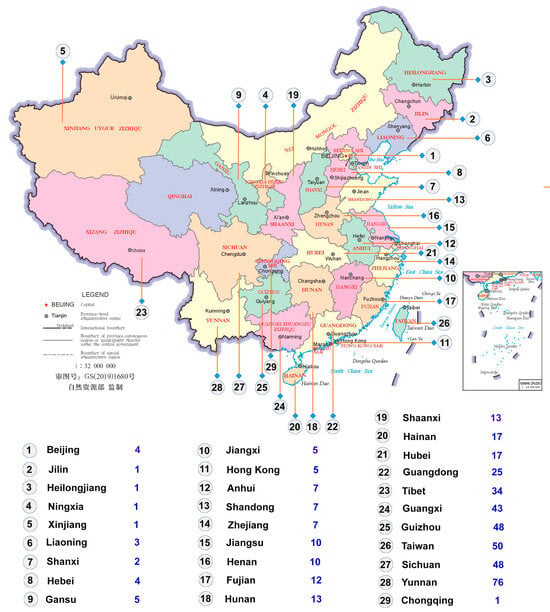
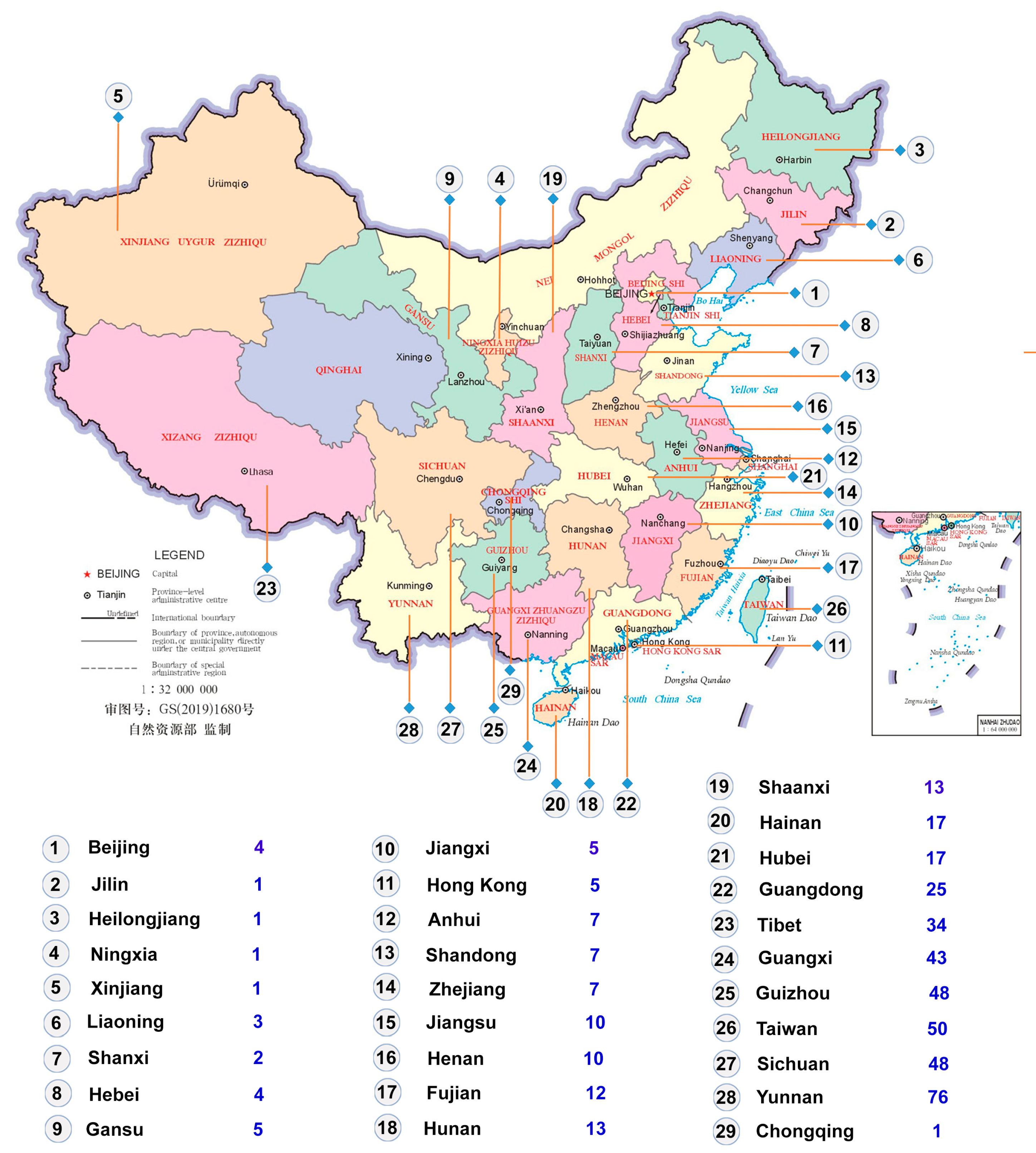
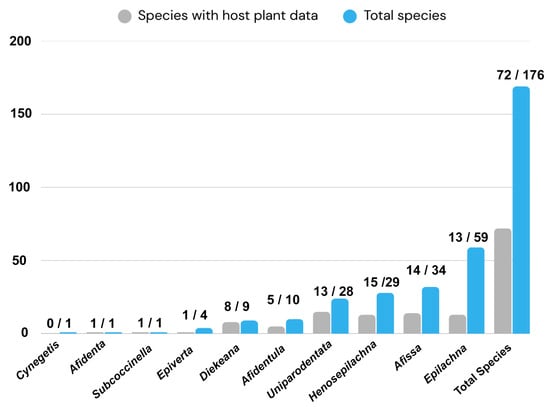
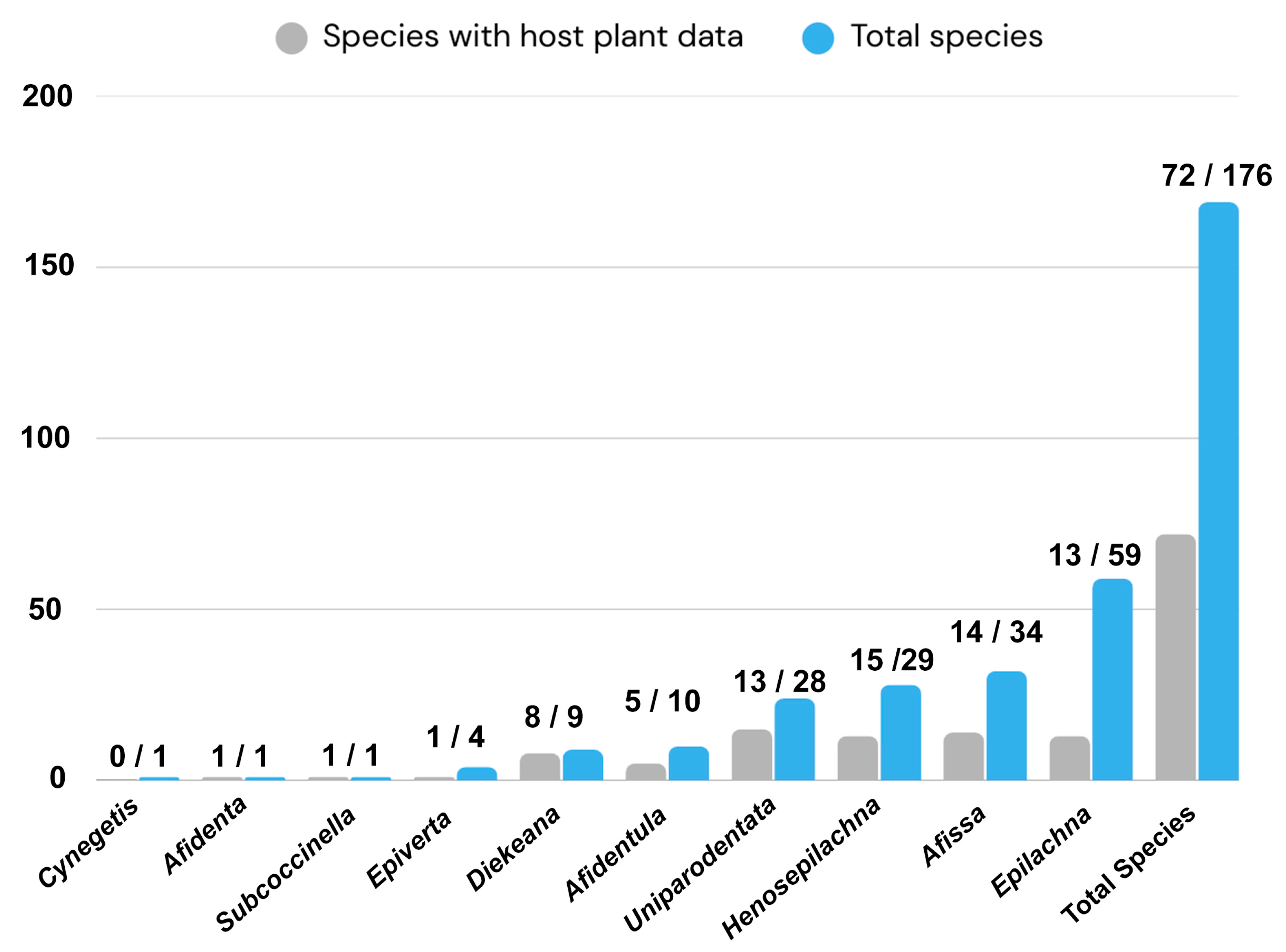
Disclaimer/Publisher’s Note: The statements, opinions and data contained in all publications are solely those of the individual author(s) and contributor(s) and not of MDPI and/or the editor(s). MDPI and/or the editor(s) disclaim responsibility for any injury to people or property resulting from any ideas, methods, instructions or products referred to in the content. |
© 2026 by the authors. Licensee MDPI, Basel, Switzerland. This article is an open access article distributed under the terms and conditions of the Creative Commons Attribution (CC BY) license.