


Simple Summary
Edible insects are traditional foods in many communities in Northeastern Thailand, but their continuing use depends on cultural acceptance, local availability, and safety. This study examined the use of edible insects among ethnic communities in Kalasin and Mukdahan provinces using a community survey, genetic identification of insect specimens, and pesticide-residue screening. A total of 299 people participated in the survey, and 43 insect specimens were examined. Participants reported varying responses across attitudes, consumption-related behaviors, and perceived household economic roles. These findings provide information on the social and cultural dimensions of edible-insect consumption without establishing their quantitative contribution to household diets or savings. Molecular analysis yielded 27 COI sequences from 43 documented insect specimens, which were organized into 17 provisional taxonomic entries. None of the 61 target pesticides was detected in the analyzed mole cricket material at the corresponding method-specific limits of detection. The findings highlight the cultural and ecological importance of edible insects while showing that pesticide exposure within farming communities should not be assumed to mean that the insects themselves are contaminated. Continued species identification and direct food-safety monitoring are important for their sustainable use.
Abstract
Edible insects are traditional food resources in Northeastern Thailand. This study examined community attitudes, taxonomic diversity, and pesticide-related context through three complementary components: a survey of 299 edible-insect consumers in Khao Wong and Dong Luang districts; cytochrome c oxidase subunit I (COI) DNA barcoding of specimens from Kalasin and Mukdahan provinces; and targeted pesticide-residue screening of mole crickets from Kuchinarai, Khao Wong, and Dong Luang districts. Mean attitude-domain scores ranged from 2.26 to 2.62 on a three-point scale. Household responses described perceived socio-economic roles, while food records documented traditional dishes, including red ant egg salad and insect-based relish; dietary contributions and household savings were not quantified. Of 43 documented specimens, 27 had available COI sequences (657 bp each), and the records were grouped into 17 provisional taxonomic entries. Questionnaire responses characterized pesticide-related practices and exposure circumstances. None of the 61 target pesticides was detected in the analyzed mole cricket material at method-specific limits of detection. These findings are specific to the tested material and analytical panel and do not establish the overall chemical safety of edible insects. Together, the findings characterize edible insects as eco-cultural food resources while distinguishing reported exposure circumstances from direct residue measurements.
1. Introduction
Edible insects have gained increasing attention in the context of sustainable food systems and global food security due to their high nutritional value and relatively low environmental footprint. Insects are rich in protein, essential amino acids, fats, vitamins, and minerals, and may offer a viable alternative to conventional animal-source foods [1,2]. In addition, edible insects require fewer natural resources, such as land and water, and emit lower greenhouse gas emissions than traditional livestock production, highlighting their potential role in sustainable food production systems [3].
Globally, entomophagy is widespread, with more than 2 billion people consuming insects as part of their diets, particularly in Asia, Africa, and Latin America [2]. In Thailand, edible insects have long been part of traditional food systems, especially in rural and northeastern regions, where people commonly harvest them from natural environments or buy them in local markets [1]. A wide range of species—including crickets, red ants, beetles, and giant water bugs—are consumed and traded, reflecting both ecological availability and cultural practices. These patterns indicate that edible insects are not merely alternative protein sources but eco-cultural food resources closely linked to local knowledge, livelihoods, and agroecosystems [2].
From a food-systems perspective, edible insects can contribute to dietary diversity and local food availability through both wild harvesting and market-based supply. Their relevance to sustainable diets extends beyond nutritional composition to include cultural acceptability, local accessibility, and the environmental sustainability of production or collection. Edible insects provide protein, fatty acids, and micronutrients, though their nutritional composition varies by species and developmental stage [4]. In Thailand, particularly in the northeastern region, insect consumption is a longstanding food practice associated with local ecological knowledge, traditional food preparation, and the availability of insects from natural habitats and local markets [1]. These characteristics illustrate the interaction between biological resources, cultural food preferences, and household food practices. Nevertheless, the contribution of edible insects to sustainable diets is context-dependent, as wild-harvested resources may be affected by seasonal availability, environmental conditions, and harvesting practices, while farmed-insect supply chains present distinct sustainability and food-safety considerations [5]. Accordingly, edible insects may serve as complementary components of local food systems rather than necessarily constituting primary or consistently available dietary resources.
Despite their long-standing presence in traditional diets, acceptance of edible insects varies. Consumer attitudes toward insect consumption are frequently shaped by sensory perception, emotional responses, and social norms, with factors such as disgust, food neophobia, and unfamiliarity acting as major barriers [6,7]. Even in contexts where entomophagy is culturally recognized, individuals may still be reluctant to consume insects because of concerns about taste, texture, and appearance [8]. At the same time, growing awareness of the nutritional and environmental benefits of edible insects may contribute to more favorable perceptions in certain domains, suggesting a complex and sometimes contradictory pattern of acceptance.
The diversity of edible insects is an important component of traditional food systems, particularly in regions where insect consumption is closely associated with local ecological knowledge and harvesting practices. In Thailand, a wide range of edible insects, including crickets, beetles, ants, and aquatic insects, are traditionally collected or purchased for consumption, reflecting the diversity of locally available biological resources [1]. However, accurate species identification is essential for documenting edible-insect diversity and ensuring consistent taxonomic reporting, as local names and morphological characteristics alone may not always provide sufficient resolution to distinguish closely related species. DNA barcoding, particularly analysis of the mitochondrial cytochrome c oxidase subunit I (COI) gene, provides a molecular approach that complements morphological identification by comparing specimen sequences with taxonomically identified reference sequences [9,10]. Nevertheless, the reliability of species-level assignments depends on sequence quality, taxonomic coverage, and reference database accuracy. Consequently, DNA barcoding should be interpreted as supporting species identification rather than providing unequivocal confirmation in all cases, especially when reference data are incomplete or sequence matches remain taxonomically unresolved [10]. This approach is relevant to documenting edible-insect resources in Northeastern Thailand, where locally recognized insect types may require molecular assessment to support consistent scientific identification.
Beyond consumer acceptance, food safety is an important consideration in using edible insects, particularly those collected from natural habitats and agricultural environments. The potential occurrence of pesticide residues in edible insects depends on environmental exposure, collection conditions, and the characteristics of individual chemical compounds. The Food and Agriculture Organization of the United Nations has identified pesticide contamination as a potential chemical hazard associated with edible insects and emphasized the importance of evaluating food-safety risks based on their sources and production or collection environments [11]. In Thailand, agricultural pesticide use also presents occupational and environmental exposure concerns for farming communities, including individuals who may encounter pesticides through activities other than direct application [12]. However, pesticide-related exposure among community members should be distinguished from direct evidence of residues in edible-insect material, as appropriate chemical analysis is needed to establish contaminant presence and concentrations.
Understanding edible-insect use therefore requires consideration of the relationships among local food practices, community attitudes, environmental conditions, and food-safety evidence. Traditional ecological knowledge and cultural food preferences influence how edible insects are recognized, obtained, prepared, and consumed, while pesticide-related practices provide context for potential environmental exposure. Nevertheless, community attitudes and reported exposure circumstances cannot establish the chemical safety of edible insects on their own. Although previous research has examined the nutritional properties, consumption, production, and safety of edible insects, community-level information and direct analytical findings are not always considered together within specific local food-system contexts [1,11,13]. This study addresses this research gap by examining consumption attitudes, household-level roles, and pesticide-related exposure circumstances alongside DNA-based taxonomic identification and targeted pesticide-residue screening. These complementary components provide a broader understanding of edible insects as eco-cultural food resources without assuming a direct relationship between community pesticide exposure and contamination of the insects examined.
Therefore, this study aimed to characterize edible insects as eco-cultural food resources in Northeastern Thailand by examining three complementary research components: community attitudes, household-level food and socio-economic roles, and pesticide-related exposure circumstances; DNA-based taxonomic identification of edible-insect specimens; and targeted pesticide-residue screening. Together, these components provide social, biological, and food-safety perspectives on the role of edible insects within regional food systems.
2. Materials and Methods
2.1. Study Design and Setting
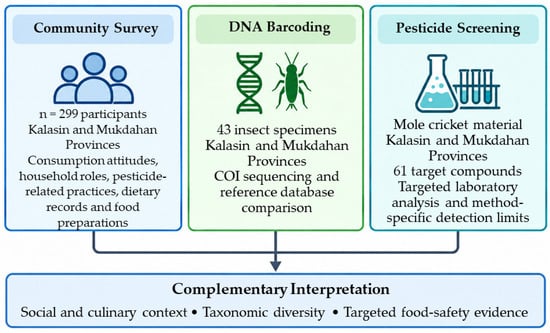
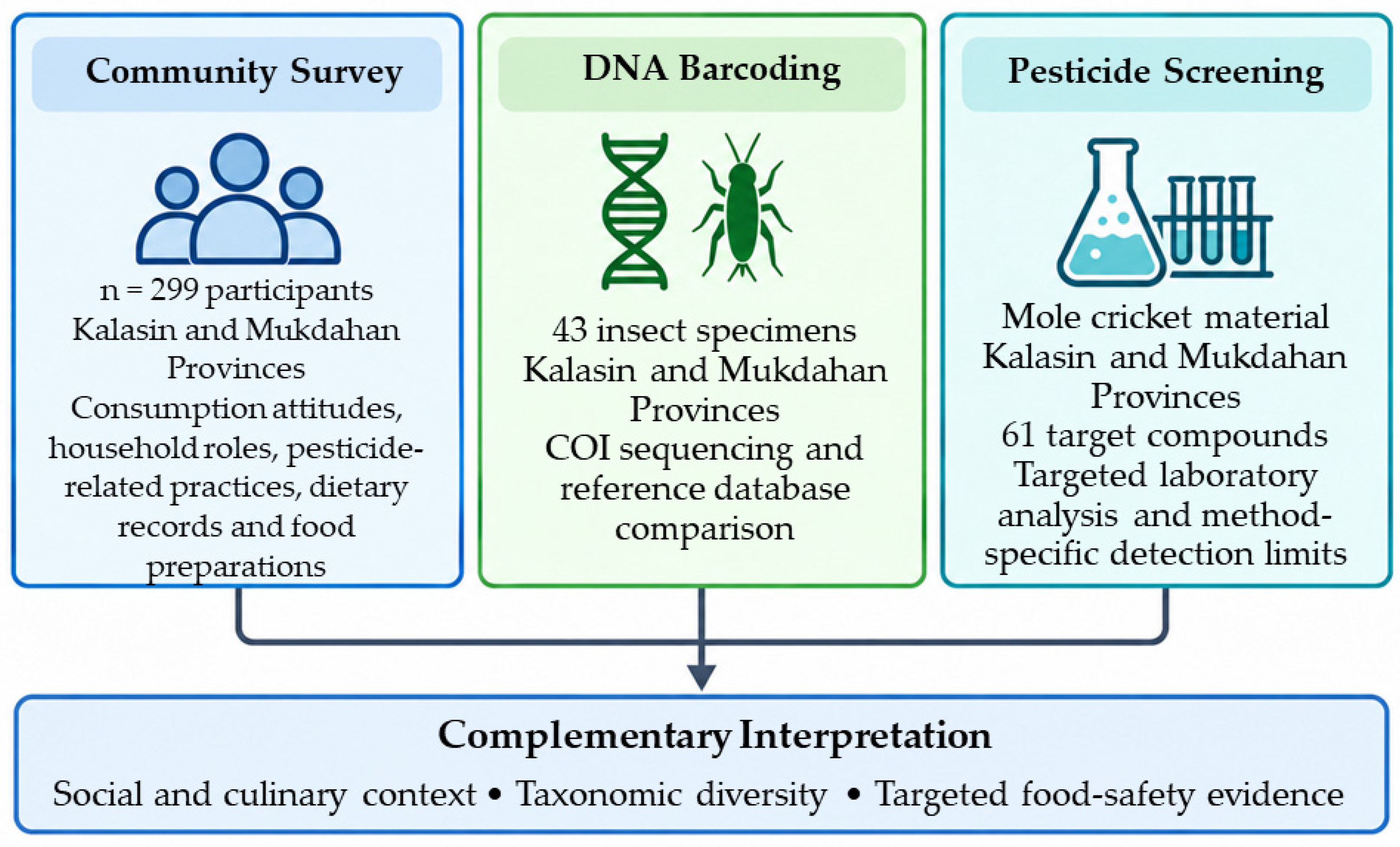
This study comprised three complementary research components: (1) a cross-sectional questionnaire survey of edible-insect consumers, (2) DNA barcoding of edible-insect specimens, and (3) targeted pesticide-residue screening of selected insect material. The questionnaire survey included 299 participants from Khao Wong District, Kalasin Province, and Dong Luang District, Mukdahan Province. The biological component documented 43 edible-insect specimens obtained between March and August 2025 from collection and acquisition sites across Kalasin and Mukdahan provinces, including Khao Wong, Na Khu, and Kuchinarai districts in Kalasin Province, and Dong Luang and Nong Sung districts in Mukdahan Province. Documented collection and acquisition settings included rice fields, household areas, local markets, and natural collection sites. In Na Khu District, these settings included fresh and municipal markets, household areas, and local collection sites. The three components provided complementary evidence on community food practices, edible-insect diversity, and pesticide-exposure context, alongside targeted pesticide-residue findings from the analyzed insect material. An overview of the study design is presented in Figure 1.
Figure 1.
Study Design and Research Components.
2.2. Study Population and Sampling
The study population comprised people who consumed edible insects or insect-based products in Khao Wong District, Kalasin Province, and Dong Luang District, Mukdahan Province. Eligibility criteria were: (1) consumption of edible insects or insect-based products; (2) age ≥20 years; (3) voluntary agreement to participate; and (4) ability to communicate in Thai and complete the survey. Individuals who did not consume edible insects, were younger than 20 years, or declined participation were excluded. The sample size was determined using the single-population proportion formula [14], assuming a 95% confidence level, an absolute precision of 0.05, and an anticipated proportion (p) of 0.79. This planning proportion was based on a previous survey of six insect-consuming ethnic communities in Bangladesh, which reported a 79% preference for the giant water bug (Lethocerus indicus) among respondents [15].
The sampling plan covered Khao Wong District, Kalasin Province, and Dong Luang District, Mukdahan Province. District-level population registration statistics from December 2024 were used as the geographical basis for sample allocation, with registered populations of 20,755 and 39,086, respectively. The planned sample comprised 92 participants from Khao Wong District (34.33%) and 176 from Dong Luang District (65.67%), based on the respective district populations. The original research protocol specified probability-based simple random sampling. Fieldwork was coordinated by the research team in collaboration with community leaders, local administrative organizations, and public health personnel. Trained field researchers conducted face-to-face interviews with eligible, consenting participants.
The final analytical sample comprised 299 completed questionnaires, including 134 participants from Khao Wong District (44.82%) and 165 from Dong Luang District (55.18%). The achieved district-level distribution differed from the planned allocation.
2.3. Questionnaire Development and Data Collection
We collected data through face-to-face interviews using a structured questionnaire developed for the study. The present analysis included general and health information (13 items), edible-insect consumption patterns (16 items), attitudes toward edible-insect consumption (18 items), pesticide-related exposure and protective practices, and household socio-economic characteristics (26 rating-scale items and additional expenditure questions). The research instrument also included a 24-h dietary recall component documenting foods consumed and their ingredients. Records of edible-insect foods and preparations were used descriptively to characterize local food practices and the use of edible insects in traditional food preparations.
Content validity was assessed using the Index of Item-Objective Congruence (IOC). The questionnaire was reviewed by experts in public health, nutrition, entomology, and research methodology, and items with an IOC of at least 0.50 were considered acceptable or revised before administration. The questionnaire was then pilot-tested among 30 individuals with characteristics comparable to the target population. Internal consistency of the 18-item attitude scale was assessed using Cronbach’s alpha. The overall attitude scale yielded an alpha coefficient of 0.95, with domain-specific coefficients of 0.88 for perceived health benefits and safety, 0.93 for sensory acceptance, 0.90 for affective and behavioral disposition, and 0.62 for social influence.
2.4. Measurement of Key Variables
2.4.1. Measurement of Attitudes Toward Edible-Insect Consumption
Attitudes toward edible-insect consumption were assessed using 18 items organized into four predefined domains: perceived health benefits and safety (items 1–6), sensory acceptance (items 7–11), affective and behavioral disposition (items 12–15), and social influence (items 16–18). The domains were defined based on the questionnaire’s conceptual content and evaluated through expert content review and internal consistency analysis, as described in Section 2.3. For items 1–14 and 16–18, responses were scored as agree (3 points), uncertain (2 points), and disagree (1 point). For the item assessing concern about chemical contamination in edible insects (item 15), the response options were very concerned (1 point), slightly concerned (2 points), and not concerned (3 points). Domain-specific and overall attitude scores were summarized using means and standard deviations. The item-to-domain mapping of the attitude questionnaire is provided in Supplementary Table S2.
2.4.2. Household-Level Socio-Economic Roles
Household socio-economic characteristics related to edible-insect consumption were assessed using 26 questionnaire items across three predefined domains: attitudes and knowledge related to edible-insect consumption (items 1–10), consumption behavior and purchase intention (items 11–16), and perceived economic impacts (items 17–26). The questionnaire provided four response options: high, moderate, low, and uncertain. Because uncertain responses do not represent an ordered level comparable to high, moderate, and low, we retained all four response options as distinct categories and analyzed them using item-level frequencies and percentages.
2.4.3. Assessment of Pesticide-Related Exposure and Protective Behaviors
Pesticide-related exposure and protective practices were assessed using 15 questionnaire items addressing pesticide use, occupational and environmental exposure circumstances, reported symptoms, hygiene practices, and personal protective behaviors. Responses were recorded using three categories: never, sometimes, and always. Exposure-related and protective-practice responses were summarized separately using item-level frequencies and percentages.
2.4.4. DNA Barcoding and Taxonomic Identification
Edible insect specimens collected or obtained from local sources in Kalasin and Mukdahan provinces were assigned individual specimen codes. Following collection, the specimens were frozen overnight at temperatures below −20 °C. For DNA-barcoding analysis, we thawed specimens and kept them at 7–8 °C for 3 h before transferring them individually with sterilized forceps into 95% ethanol and storing them at 7–8 °C for subsequent morphological examination.
We processed specimens in separate preparation batches based on morphological characteristics, comprising hard-bodied beetles (Coleoptera) and comparatively soft-bodied insects (Orthoptera, Hemiptera, and Hymenoptera). We extracted genomic DNA from leg or thoracic tissue, avoiding abdominal tissue to minimize potential interference from gut contents and PCR-inhibitory substances. The mitochondrial cytochrome c oxidase subunit I (COI) barcode region was amplified using the primer pair LCO1490 (5′-GGTCAACAAATCATAAAGATATTGG-3′) and HCO2198 (5′-TAAACTTCAGGGTGACCAAAAAATCA-3′), described by Folmer et al. [16]. The PCR protocol included initial denaturation at 95 °C for 5 min and an annealing temperature of 49 °C. Amplification products were examined by agarose gel electrophoresis to assess the expected approximately 658-bp COI fragment.
PCR products were arranged in a 96-well plate format and submitted to Macrogen (Seoul, Republic of Korea) for DNA sequencing. Sequence chromatograms were examined using MEGA (version 12.0.9), with a Phred quality-score threshold of ≥30 applied during quality assessment. The resulting nucleotide sequences were maintained in FASTA format and examined for ambiguous nucleotide characters. COI sequences were compared with reference sequences in the National Center for Biotechnology Information (NCBI) GenBank database using the Basic Local Alignment Search Tool (BLASTn, version 2.16.0+, web-based; https://blast.ncbi.nlm.nih.gov/Blast.cgi; accessed on 27 September 2026). Specimen-level identification records included specimen codes, collection locations, available closest GenBank reference matches, percentage sequence identities, and reference accession numbers.
2.4.5. Pesticide-Residue Analysis
Sample Provenance, Specimen Matching & Sampling Protocol
The tested mole cricket material consisted of three distinct composite batches collected across three districts in Northeastern Thailand during the peak harvesting season (March–April 2025) [11,17]. Sample 1 (Certificate KK68/02449-001) was collected from agricultural paddy field habitats in Khao Wong District, Kalasin Province; Sample 2 (Certificate KK68/02449-002) was collected from residential/peri-domestic habitats in Kuchinarai District, Kalasin Province; and Sample 3 (Certificate KK68/02449-003) was wild-harvested material from Dong Luang District, Mukdahan Province. Each sample comprised a 200 g composite batch of whole-body mole crickets pooled within its respective district.
Collection settings and laboratory certificate numbers were retained for each district-specific batch to support sample traceability and area-specific interpretation. One district-specific composite batch constituted one sampling unit for residue screening; no independent field-replicate composites were analyzed within each district.
Freshly harvested mole cricket specimens (family Gryllotalpidae) were washed with clean water, sealed in food-grade polyethylene bags, rapidly frozen, and transported under cold-chain conditions (−20 °C). The laboratory received the three district-specific composite samples on 8 April 2025, and analyses were conducted between 9 and 24 April 2025. Each sample was homogenized and analyzed separately, without pooling across districts, after storage at −20 °C for less than 48 h prior to analysis. Mole crickets were selected for residue screening because their subterranean habitats and feeding on plant roots and soil invertebrates provide plausible pathways for pesticide exposure in agricultural soils.
QA/QC Information and Matrix Validation
Targeted pesticide-residue screening of the three district-specific mole cricket samples was performed by Central Laboratory (Thailand) Co., Ltd., Khon Kaen Branch (Khon Kaen, Thailand), an ISO/IEC 17025:2017-accredited testing laboratory, using its established in-house analytical and quality-control procedures. Method performance and quality control were verified through specific analytical quality controls, with each testing batch including reagent procedure blanks, matrix-matched blank controls, and parallel duplicate samples to monitor background contamination and analytical precision. In addition, matrix spike recovery testing in the insect matrix yielded mean recoveries between 70% and 120% across target analyte classes, meeting SANTE/11312/2021 quality criteria for pesticide residue analysis. To eliminate signal suppression or enhancement caused by the high protein and lipid matrix of mole crickets, matrix-matched calibration standards were employed for quantification across GC-µECD, GC-FPD, and LC-MS systems.
Analytical Spectrum Rationale and Blind Spot Acknowledgment
The analytical panel comprised 61 pesticides across four chemical groups: 15 carbamates, 18 organochlorines, 21 organophosphates, and seven synthetic pyrethroids. These four groups were selected to cover conventional insecticides potentially associated with agricultural pest management (carbamates, organophosphates, and synthetic pyrethroids), together with organochlorines, which include environmentally persistent legacy pesticides. The targeted analyses were conducted using specific instrumentation and limits of detection (LOD), consisting of carbamates analyzed using liquid chromatography–mass spectrometry (LC–MS) with an LOD of 0.02 mg/kg; organochlorines analyzed using gas chromatography with micro-electron capture detection (GC–µECD) with an LOD of 0.003 mg/kg; organophosphates analyzed using gas chromatography with flame photometric detection (GC–FPD) with an LOD of 0.02 mg/kg; and synthetic pyrethroids analyzed using GC–µECD with an LOD of 0.005 mg/kg. The 61-compound target panel represents the standardized reference monitoring panel established for agricultural produce safety screening in Thailand, prioritizing high-volume legacy neurotoxic insecticides. We explicitly acknowledge that modern systemic agrochemicals—specifically neonicotinoids (imidacloprid, thiamethoxam), fipronil, and non-selective herbicides (glyphosate, paraquat)—were not included in this 61-analyte panel due to requirements for dedicated extraction and derivatization protocols (e.g., LC-MS/MS for hydrophilic polar herbicides).
2.5. Data Analysis
Questionnaire data were analyzed descriptively using frequencies and percentages for categorical variables and means and standard deviations for attitude scores. Given the right-skewed distribution of self-reported individual monthly income, the median and the first and third quartiles (Q1–Q3) were used to summarize central tendency and dispersion. The mean, standard deviation, and observed range were also reported, with missing income responses excluded from these calculations. Household socio-economic responses and pesticide-related exposure and protective practices were analyzed at the item level using frequencies and percentages. Recorded edible-insect food items were summarized according to documented ingredients, preparation methods, and traditional dish names. Analyses were performed using IBM SPSS Statistics for Windows, version 26.0 (IBM Corp., Armonk, NY, USA). COI sequence records were examined for nucleotide sequence length and the presence of ambiguous bases. BLAST comparison results were summarized using specimen codes, collection locations, available closest GenBank reference matches, percentage sequence identities, and reference accession numbers. The 17 taxonomic entries were organized according to the documented local insect groupings and available taxonomic information rather than a genetic-distance-based species-delimitation threshold. Pesticide-residue results were interpreted relative to the method-specific limits of detection.
2.6. Ethical Considerations
The study was approved by the Human Research Ethics Committee of Mahasarakham University (Approval No. 363-224-2568; 29 May 2025). In accordance with the eligibility criteria, participants were adults aged ≥20 years. Before data collection, the study purpose, procedures, potential benefits and risks, voluntary participation, right to withdraw, and confidentiality were explained, and written informed consent was obtained. Collection and analysis of edible-insect specimens were approved under IACUC-MSU-055-033-2025.
3. Results
3.1. Socio-Demographic Characteristics of Participants
The participants represented four ethnic groups, with Phu Thai forming the largest group, followed by Tai Lao/Isan, So/Kaso, and Bru/Blu. Most participants worked in agriculture. Monthly income data were available for 260 participants, with 39 missing responses. The median self-reported individual monthly income was 2500 THB (Q1–Q3: 2000–5000 THB), and the mean was 4090.00 ± 3974.48 THB, indicating a right-skewed distribution (Table 1).
Table 1.
Socio-demographic characteristics of participants (n = 299).
3.2. Attitudes Toward Edible-Insect Consumption
Table 2 presents the descriptive attitude scores for the 299 participants. The overall mean attitude score was 2.46 ± 0.50. Among the four domains, affective and behavioral disposition had the highest mean score (2.62 ± 0.55), followed by sensory acceptance (2.61 ± 0.59), social influence (2.38 ± 0.54), and perceived health benefits and safety (2.26 ± 0.55). These findings demonstrate variation in responses across the assessed attitudinal dimensions.
Table 2.
Descriptive scores for attitudes toward edible-insect consumption (n = 299).
3.3. Household Socio-Economic Responses Related to Edible Insects
Table 3 presents the distribution of responses to 26 household socio-economic questionnaire items across three domains. Within the attitudes and knowledge domain, the highest proportions of high responses were observed for consumption motivated by taste (53.18%) and the influence of texture on willingness to try insects (49.50%). In the consumption behavior and purchase intention domain, moderate was the most frequent response for consuming insects as snacks (46.49%), whereas uncertain responses were most frequent for preference for processed insect products (49.50%) and purchase intention following product improvement (46.82%). Within the perceived economic impacts domain, high responses were most frequent for the influence of season on insect prices (50.84%). In comparison, uncertain responses were most frequent for expectations of lower insect prices in the future (50.17%) and potential economic value added through processed insect products (43.48%).
Table 3.
Distribution of responses to household socio-economic questionnaire items (n = 299).
3.4. Pesticide-Related Exposure and Protective Behaviors
Agricultural activities and pesticide-related involvement are presented in Table 4. Self-farming was the most frequently reported agricultural activity, whereas most respondents reported no involvement in pesticide use. Reported pesticide-related activities included self-application, presence in sprayed areas, and hiring of pesticide applicators. Multiple responses were permitted for pesticide-related involvement. Item-level exposure-related and protective-practice responses are presented in Table 5.
Table 4.
Agricultural activity and pesticide-related involvement (n = 299).
Table 5.
Item-level pesticide-related exposure and protective behaviors (n = 299).
3.5. DNA Barcoding and Taxonomic Diversity of Edible Insects
A total of 43 edible-insect specimens were documented from collection and acquisition sites in Kalasin and Mukdahan provinces. Of these, 27 specimens had available COI nucleotide sequences, each 657 bp in length and containing no ambiguous nucleotide characters. The corresponding BLAST comparisons provided closest GenBank reference matches, percentage sequence identities, and reference accession numbers. No corresponding COI sequences or BLAST results were available for the remaining 16 specimens in the study dataset.
The reasons for the unavailability of COI sequence data for the remaining 16 specimens were not recorded on a per-specimen basis in the available study records. These specimens comprised four mole crickets (Table 6, entry 5), three Type A scarab beetles (entry 6), four giant water bugs (entry 7), and five specimens distributed across entries 13–15 and 17 (Supplementary Table S1).
Table 6.
Provisional taxonomic entries of locally recognized edible insects represented in the specimen collection.
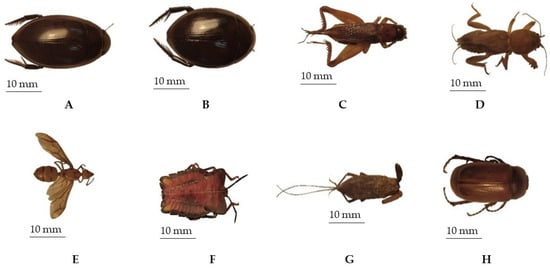
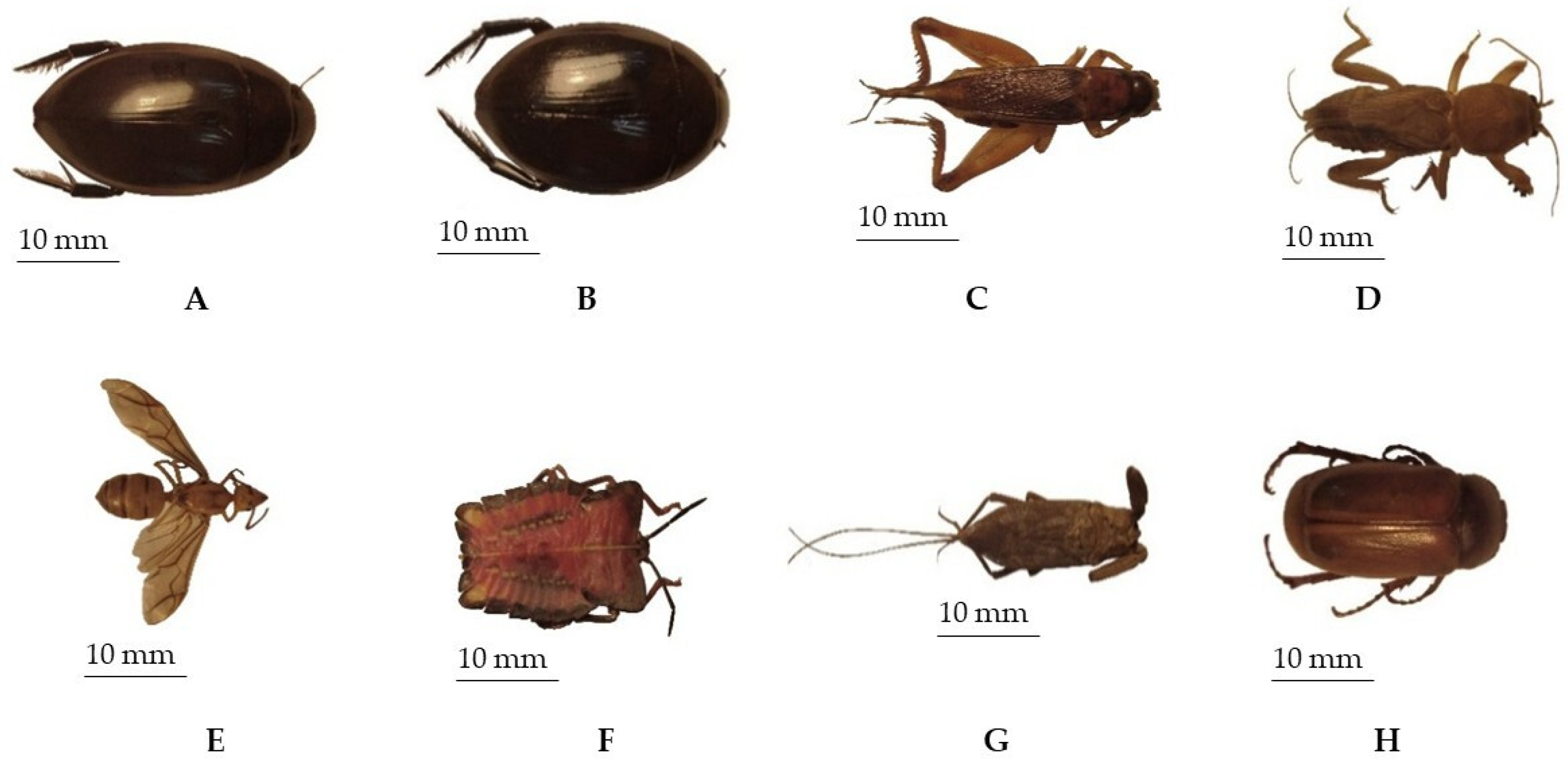
The 43 specimen records were summarized into 17 provisional taxonomic entries representing locally recognized insect groups and the available taxonomic identification information (Table 6). These entries were not defined using a fixed COI sequence-identity threshold or genetic-distance-based species delimitation. Consequently, the reported entries should not be interpreted as 17 independently confirmed molecular species. Specimen-level records and the available BLAST results are provided in Supplementary Table S1. For specimen PSP-KSN-NK4 (Table 6, entry 16), the closest BLAST reference match showed 87% sequence identity, which did not support a reliable genus- or species-level identification. The specimen was therefore classified as taxonomically unresolved. Representative edible-insect specimens are shown in Figure 2.
Figure 2.
Representative edible-insect specimens included in the DNA-barcoding component, showing available closest GenBank reference matches or unresolved taxonomic status: (A) Cybister lewisianus; (B) Hydrophilus bilineatus; (C) Teleogryllus mitratus; (D) Gryllotalpa pluvialis; (E) Oecophylla smaragdina; (F) Tessaratoma papillosa; (G) Laccotrephes sp.; and (H) unresolved beetle specimen (PSP-KSN-NK4; closest BLAST identity: 87%). Scientific names in panels (A–G) represent closest database reference matches rather than independently confirmed species-level identifications. The taxonomic identity of specimen H remains unresolved.
3.6. Sources of Edible Insects in Community Food Systems
Table 7 presents 24 documented collection and acquisition records of edible insects from Khao Wong, Na Khu, and Dong Luang districts. Of these records, 16 were associated with Na Khu, five with Khao Wong, and three with Dong Luang. The records represent documented acquisition entries rather than the distribution of the 43 DNA-barcoded specimens.
Table 7.
Documented collection and acquisition sources of edible insects in the study areas.
The acquisition settings varied across locations. In Khao Wong District, edible insects were documented from rice fields. In Na Khu District, acquisition records included fresh and municipal markets, household areas, and local collection sites. In Dong Luang District, records included wild-harvested insects provided by local collectors, while one record did not specify the acquisition source. These records demonstrate that edible insects were obtained from both natural collection environments and local distribution sources, including markets, household areas, and local collectors.
The dietary records documented a variety of edible-insect ingredients, preparation methods, and traditional dishes within local food practices (Table 8). Documented preparations included blanched mole crickets, crickets, silkworm pupae, dung beetles, scarab beetles, red ants, and giant water bugs, while field crickets and Patanga grasshoppers were also recorded in fried forms. Traditional dishes included red ant egg salad (ก้อยไข่มดแดง; a traditional salad made with red ant eggs) and insect-based relish (ป่นแมลง; a traditional pounded relish made from edible insects), illustrating the incorporation of edible-insect ingredients into local food preparations. Other recorded edible insects included cicadas, for which the preparation method was not specified, and wasps documented in blanched preparations. Together, these findings demonstrate the diversity of edible-insect ingredients and culinary preparations documented within the study communities.
Table 8.
Documented edible-insect ingredients, preparation methods, and traditional dishes in local food practices.
3.7. Pesticide-Residue Screening
We conducted targeted pesticide-residue screening separately on mole cricket material obtained from Kuchinarai, Khao Wong, and Dong Luang districts (Table 9). Targeted screening for 15 carbamate insecticides and their primary oxidative metabolites—comprising aldicarb, aldicarb-sulfoxide, aldicarb-sulfone, oxamyl, methomyl, 3-hydroxycarbofuran, methiocarb, methiocarb-sulfoxide, methiocarb-sulfone, carbofuran, carbaryl, thiodicarb, isoprocarb (MIPC), fenobucarb (BPMC), and promecarb—was carried out using liquid chromatography–mass spectrometry (LC-MS) with an established limit of detection (LOD) of 0.02 mg/kg. All 15 carbamate analytes were reported as not detected (ND) in each of the three separately analyzed district-specific mole cricket composite samples (200 g each) at the stated LOD. The samples originated from Khao Wong District (paddy field habitats; Kalasin Province), Kuchinarai District (residential/peri-domestic habitats; Kalasin Province), and Dong Luang District (wild-harvested material; Mukdahan Province). Screening for 18 legacy organochlorine pesticides and persistent organic pollutants—encompassing hexachlorocyclohexane isomers [α-hexachlorocyclohexane (α-BHC/α-HCH), β-hexachlorocyclohexane (β-BHC/β-HCH), and Lindane (γ-BHC/γ-HCH)], cyclodiene and related chlorinated hydrocarbons [heptachlor, heptachlor-epoxide, aldrin (HHDN), dieldrin (HEOD), endrin, dicofol, α-endosulfan, β-endosulfan, endosulfan-sulfate, trans-chlordane, and cis-chlordane], and diphenylaliphatic organochlorines [p,p′-DDE, p,p′-TDE (p,p′-DDD), o,p′-DDT, and p,p′-DDT]—was performed using gas chromatography equipped with a micro-electron capture detector (GC-μECD) at an LOD of 0.003 mg/kg. All 18 organochlorine analytes were below detectable limits (ND) across all tested composite sample batches.
Table 9.
Summary of targeted pesticide-residue screening in mole cricket material.
The organophosphate screening panel evaluated 21 organophosphorus esters and thio-derivatives, specifically dichlorvos (DDVP), methamidophos, mevinphos, diazinon, dicrotophos, monocrotophos, dimethoate, pirimiphos-methyl, pirimiphos-ethyl, chlorpyrifos, parathion-methyl, parathion (parathion-ethyl), malathion, fenitrothion, prothiofos, profenofos, ethion, triazophos, EPN (ethyl p-nitrophenyl thionobenzenephosphonate), phosalone, and azinphos-ethyl. Instrumental analyses conducted via gas chromatography with a flame photometric detector (GC-FPD) established a detection limit of 0.02 mg/kg. No organophosphate residues were detected in any mole cricket composite material.
Finally, seven synthetic pyrethroid insecticides—bifenthrin, λ-cyhalothrin (L-cyhalothrin), permethrin, cyfluthrin, cypermethrin, fenvalerate, and deltamethrin—were monitored using GC-μECD at an LOD of 0.005 mg/kg. No pyrethroid compounds were detected in any sample. In summary, none of the 61 target pesticide analytes was detected in any of the three separately analyzed district-specific composite batches of mole cricket material at the corresponding method-specific limits of detection (Table 9).
4. Discussion
4.1. Socio-Demographic Context and Edible-Insect Use
Participants were predominantly engaged in agricultural occupations, and their self-reported individual monthly income showed a right-skewed distribution (Table 1). Although median income indicates the economic circumstances of the surveyed participants, individual income alone does not establish household poverty or food insecurity. Food security encompasses food availability, access, utilization, and stability, which cannot be assessed solely from reported income [18,19]. In Thailand, edible insects are obtained through both wild collection and market-based distribution and remain part of traditional food practices [2,20]. These characteristics provide socio-economic context for edible-insect consumption but do not show a direct relationship between individual income and the economic contribution of edible insects to households.
The study participants had a relatively older age profile, with a mean age of 50.55 years, 49.16% aged over 50 years, and 2.34% aged under 30 years. This age distribution provides important context for interpreting attitudes toward edible-insect consumption, as familiarity with traditional foods, cultural practices, and consumption preferences may vary across generations. Traditional and local knowledge plays an important role in identifying, collecting, preparing, and utilizing edible insects [21,22]. Nevertheless, the observed age distribution should be considered when interpreting the findings, particularly in relation to younger consumers.
In addition, the ethnic diversity observed in this study, particularly among Phu Thai, Tai Lao/Isan, So/Kaso, and Bru/Blu groups, underscores the eco-cultural dimension of edible insect consumption. Localized ecological conditions and cultural traditions shape food practices among ethnic communities, resulting in distinct patterns of insect use and preferences [20]. This supports interpreting edible insects as eco-cultural food resources embedded in both social and ecological systems, rather than merely alternative protein sources.
From a local food-systems perspective, the documented collection and acquisition records illustrate how edible-insect resources are obtained through agricultural environments, household areas, and local markets. These pathways reflect the coexistence of wild harvesting and market-based access within community food systems, consistent with previous studies of edible-insect utilization in Thailand [2,20]. The dietary records further documented different culinary uses of edible insects, ranging from blanched and fried preparations to traditional dishes such as red ant egg salad and insect-based relish. Considered together, these findings highlight the relationship between locally available insect resources, food preparation practices, and the cultural context of edible-insect consumption. The inclusion of traditional dishes further shows that edible insects are incorporated into established local food practices rather than used solely as alternative protein sources.
Overall, the findings support interpreting edible insects as context-dependent community food resources shaped by cultural practice, ecological availability, and market access.
4.2. Attitudes Toward Edible-Insect Consumption
The attitudinal findings revealed variation across the four predefined domains, with relatively higher scores for affective and behavioral disposition and sensory acceptance than for perceived health benefits and safety (Table 2). Previous studies have identified sensory characteristics, emotional responses, cultural familiarity, and food neophobia as important considerations in the acceptance of edible insects [6,7,8]. In the present study, participants had previous experience consuming edible insects, and the observed domain scores describe different aspects of attitudes within this consumer population. However, the descriptive differences do not establish which factors influence individual consumption behavior.
Perceived health benefits and safety represented a distinct attitudinal dimension. The questionnaire also included an item addressing concern about chemical contamination in edible insects, reflecting a perceived food-safety concern rather than direct evidence of contamination. Moreover, perceived nutritional benefits cannot be interpreted as evidence of the measured nutritional composition of the insects examined, as this study did not analyze nutritional composition [4,23].
4.3. Household Socio-Economic Context of Edible-Insect Consumption
The household socio-economic findings highlight differences between factors influencing edible-insect consumption and expectations regarding insect-based products. Taste and texture were prominent considerations in participants’ responses, whereas uncertainty was more common regarding preferences for processed insect products and purchase intention following product improvement (Table 3). This pattern suggests that the sensory characteristics that influence existing consumption practices may not translate into clearly established preferences for processed products. Previous studies in Thailand have described both the cultural familiarity of edible-insect consumption and the growing development of insect-based food products, emphasizing the importance of consumer acceptance for commercial use [1,5].
The economic responses further indicate that participants distinguished current market conditions from prospective economic benefits. Seasonality had a relatively high proportion of high responses, while uncertainty was prominent regarding future price reductions and economic value addition through processed insect products (Table 3). These perceptions are relevant to the structure of edible-insect supply systems in Thailand, where wild collection, insect farming, distribution, and marketing coexist [5,20]. The findings suggest that community perceptions of economic opportunities are shaped by considerations extending beyond consumption itself, including the availability, pricing, and potential commercialization of edible insects.
The documented acquisition of edible insects from natural habitats, household areas, and markets, together with their use in traditional preparations such as red ant egg salad and insect-based relish, illustrates the connection between local biological resources and community food practices. Similar relationships between wild harvesting, market supply, and traditional consumption have been documented in Thailand [1,20]. From a food-security perspective, these findings relate to food availability, access, and utilization, which are distinct but interrelated dimensions of food security [18,19]. The observed acquisition pathways and culinary practices therefore document the incorporation of edible insects into local food systems. At the same time, household responses identify perceived opportunities and uncertainties associated with their economic use.
4.4. Pesticide-Exposure Context and Residue Findings
The questionnaire findings place edible-insect consumption within agricultural communities where pesticide-related occupational and environmental exposures can occur. Pesticide use and exposure are recognized public-health concerns in Thailand [12]. These community exposure data must be distinguished from direct chemical measurements in edible-insect material.
Targeted pesticide-residue screening found no detectable residues among the 61 compounds analyzed in the tested mole cricket material at the method-specific limits of detection (Table 9). These results indicate that, if present, the target compounds occurred at concentrations below the respective analytical detection limits. However, the screening covered only selected pesticides from four chemical groups and did not encompass the full range of pesticides potentially encountered in agricultural environments. Consequently, the findings do not provide evidence regarding compounds outside the analytical panel, including neonicotinoids, fipronil, and herbicides such as glyphosate and paraquat. The non-detection results are specific to the analyzed material and cannot be generalized to other edible-insect species, collection sites, or sampling periods. Furthermore, because dietary pesticide exposure and associated health risks were not quantitatively assessed, these findings do not establish the overall chemical safety of edible-insect consumption. The pesticide-residue screening was based on three district-specific composite samples (200 g each), prepared from mole crickets collected in Khao Wong, Kuchinarai, and Dong Luang districts, respectively. Each composite was analyzed separately, with no pooling of material across districts. This design provided targeted screening results for each sampled district but did not preserve information on variation among individual insects. Analytical duplicates were used for laboratory quality control and did not constitute independent field replicates. With one composite sampling unit per district, within-district variability could not be estimated, and the three analytical units were insufficient for statistical comparisons among districts. Accordingly, the non-detection findings apply to the three analyzed composite samples at the method-specific limits of detection and should not be interpreted as evidence of equivalent pesticide-residue conditions across the study areas.
The occurrence of chemical contaminants in edible insects may depend on insect species, environmental conditions, collection or rearing substrates, and contaminant characteristics [11,24,25]. Previous studies have reported variable findings for chemical residues in edible insects, emphasizing the importance of species- and source-specific safety assessments [24,26]. In the present study, questionnaire data described pesticide-related occupational and environmental exposure in agricultural communities, while laboratory analysis examined pesticide residues in the tested insect material. These findings should therefore be interpreted as complementary but distinct evidence, rather than demonstrating a direct association between community pesticide exposure and contamination of edible insects. Continued monitoring across insect species, collection environments, and seasons, together with broader chemical analyses and dietary exposure assessments, would provide a stronger basis for evaluating potential food-safety risks.
4.5. Biodiversity, Local Knowledge, and Sustainability of Edible Insects
COI DNA barcoding provided molecular evidence for 27 of the 43 documented edible-insect specimens. The available 657-bp sequences enabled comparison with GenBank reference records and supported taxonomic characterization at varying identification resolutions. The 17 provisional taxonomic entries reflected the documented local insect groupings rather than independently delineated molecular species. Accordingly, closest BLAST reference matches were interpreted in conjunction with the available specimen information, particularly where sequence identities were relatively low or molecular identification results were unavailable. These findings demonstrate the value of combining molecular evidence with local insect recognition and specimen documentation to characterize edible-insect resources in Northeastern Thailand.
Beyond taxonomic identification, DNA barcoding can contribute to food authentication and traceability by providing species-level molecular information that may help verify the identity of insect-derived food materials. Recent studies have demonstrated the application of DNA-based methods to authenticate edible-insect species in food products and support species verification in food and feed systems [27,28]. In the present study, associating specimen codes with local names, collection locations, and GenBank reference matches provides a foundation for specimen-level documentation. This approach helps connect traditional ecological knowledge with scientific identification and may inform future traceability systems for edible-insect resources. Nevertheless, the study did not assess commercial product authentication or establish a complete supply-chain traceability system. Furthermore, species identification alone does not determine food safety, as pesticide residues and other contaminants require separate analytical assessment. Thus, DNA barcoding contributes to the identification component of food-safety assessment but should not be interpreted as direct evidence of chemical safety.
The ecological significance of edible insects is closely associated with the habitats and environmental conditions that support their occurrence and availability. In the present study, insect specimens and acquisition records were documented from rice fields, household areas, natural collection sites, and local markets, indicating that edible-insect resources are obtained through both environmental and market-based pathways. In agricultural landscapes, insect occurrence may be influenced by habitat characteristics, vegetation, agricultural activities, and seasonal environmental conditions. Recent research in Thailand has demonstrated that insect diversity and distribution can vary across habitat strata and between wet and dry seasons. However, these patterns differ among insect groups and ecosystems [29]. Similarly, previous studies of edible insects in Thailand have described the seasonal collection of wild insects alongside the continuous market availability of certain commercially reared species [1]. These findings provide an ecological context for understanding why the availability of wild edible insects may vary across locations and seasons, while market supply does not necessarily reflect their abundance in nearby natural habitats.
The relationship between insects, ecosystems, and seasonality also has implications for traditional food practices and the sustainable use of local biological resources. Community knowledge of insect habitats, collection locations, and availability periods can shape the selection and use of edible insects as culturally recognized foods [20,21,22]. However, the sustainability of wild harvesting depends on ecological conditions and collection practices, whereas commercially produced insects involve different supply-chain and environmental considerations [5]. The coexistence of wild collection and market-based acquisition observed in this study therefore illustrates how ecological resources and human food practices intersect. Nevertheless, the present study did not systematically compare insect abundance or species composition across seasons, quantify harvesting pressure, or directly measure the contribution of insect biodiversity to household food security. Consequently, seasonality and ecological sustainability are discussed as relevant contextual factors rather than outcomes demonstrated by the present dataset. This distinction supports interpreting edible insects as eco-cultural food resources while recognizing the ecological and temporal limits of the available evidence.
4.6. Integrated Interpretation Within Local Food Systems
The findings provide complementary perspectives on edible insects as eco-cultural food resources within local food systems in Northeastern Thailand. The community survey documented variation across attitudinal domains and household socio-economic responses, while dietary records and acquisition-source documentation illustrated traditional culinary practices and locally available insect resources. Relatively higher sensory and affective attitude scores, together with the prominence of taste and texture in household responses, highlight the importance of sensory experiences in edible-insect consumption. However, uncertainty about processed insect products suggests that current consumption practices do not necessarily indicate established preferences for newly developed products. Previous research has emphasized the roles of sensory perception, cultural familiarity, and food neophobia in edible-insect acceptance [6,7,8]. At the same time, studies in Thailand have documented the coexistence of traditional consumption, wild harvesting, insect farming, and market-based distribution [1,5,20]. These observations support interpreting edible insects as culturally embedded food resources, although the descriptive findings do not establish individual-level relationships between attitudes, consumption practices, and household economic outcomes.
At the biological level, specimen-level documentation connected local insect names and collection information with available COI reference comparisons. This approach supports taxonomic characterization while retaining the distinction between provisional groupings and confirmed species-level identifications. Such documentation may contribute to future applications in species authentication and traceability [9,10,27,28], although the present study did not link specimen identities to the dietary intake of individual survey participants.
The food-safety component added perspective by distinguishing community-reported pesticide-related practices from direct residue measurements in mole cricket material. Because the community survey and laboratory specimens were not linked through matched sampling, associations between individual practices and chemical residues could not be established. The non-detection findings were specific to the tested material, target compounds, and analytical detection limits, rather than evidence of the overall chemical safety of edible insects.
Taken together, the findings highlight the complementary importance of consumer acceptance, cultural food practices, biological identification, acquisition environments, and source-specific food-safety assessment. Their contribution lies in bringing social, biological, and analytical evidence into a common eco-cultural food-systems perspective while retaining the methodological boundaries of each component. This perspective provides a basis for culturally appropriate food-resource documentation, improved species identification, and targeted food-safety monitoring in local edible-insect systems.
4.7. Policy and Practical Implications
The findings have practical implications for community food systems, public health, and biodiversity documentation. They support considering edible insects as culturally embedded food resources, while separating potential environmental safety concerns from measured contamination and avoiding assumptions of either universal safety or universal risk.
From a food-systems perspective, support for locally appropriate edible-insect practices may include documentation of sustainable harvesting, market hygiene, and, where appropriate, controlled production. Reviews of the sector emphasize that sustainability depends on production and harvesting systems rather than on the insect resource alone [2,13].
Food-safety initiatives should combine good harvesting and handling practices with direct, fit-for-purpose monitoring of relevant hazards [11]. In the present study, questionnaire-based pesticide exposure in the surrounding community should not be equated with contamination of the tested mole-cricket material.
At the community level, communication and monitoring should be adapted to local harvesting practices, market pathways, and cultural knowledge. Such approaches can support risk communication without displacing locally important food practices.
Accordingly, future community and policy initiatives should integrate cultural knowledge, biodiversity documentation, responsible pesticide use, and proportionate food-safety surveillance.
4.8. Strengths and Limitations
This study combined community survey data, edible-insect acquisition records, molecular identification, and targeted pesticide-residue screening to characterize complementary dimensions of local food systems in Northeastern Thailand. These components provided distinct evidence on community attitudes, traditional food practices, biological identification, and food-safety considerations.
The questionnaire analysis characterized four predefined attitudinal domains and household socio-economic responses at the item level. The social influence domain showed comparatively lower internal consistency (Cronbach’s alpha = 0.62), warranting caution in interpreting this dimension. Furthermore, the descriptive analyses did not assess associations between demographic characteristics, attitudinal domains, or household socio-economic responses. Consequently, ethnic-group differences and independent predictors of edible-insect acceptance could not be established. The eco-cultural perspective presented in this study therefore represents a synthesis of complementary observations rather than a statistically validated explanatory model.
Despite these strengths, several limitations remain. The cross-sectional survey design limits causal inference and does not permit assessment of changes in consumption attitudes or pesticide-related practices over time. The documented insect collection and acquisition records reflect the study period rather than year-round patterns of insect availability and harvesting.
Pesticide-related exposure and protective practices were assessed using self-reported questionnaire responses, which may be subject to recall bias and social desirability bias. These responses describe reported behaviors and exposure circumstances rather than directly measured pesticide exposure. Future studies incorporating biological monitoring or environmental sampling would provide complementary evidence on exposure pathways and associated risks.
Taxonomic identification was constrained by incomplete COI sequence coverage and varying levels of similarity to the closest GenBank reference sequences. Of the 43 documented specimens, 16 lacked available COI sequences and BLAST records, while some of the 27 available sequences showed relatively low identity to their closest reference matches (Supplementary Table S1). Consequently, the 17 provisional taxonomic entries should not be interpreted as independently confirmed species-level identifications. Additional molecular characterization, expanded reference-sequence coverage, and complementary morphological examination would improve taxonomic resolution. The absence of COI sequence data was unevenly distributed across the documented insect groups, with seven provisional entries represented entirely by specimens without available sequences. This pattern may lead to uneven molecular representation of locally recognized insect groups. Consequently, the available COI data cannot establish the full taxonomic diversity of the documented collection or determine whether particular groups were systematically affected by sequence-data unavailability.
The community survey focused on adult edible-insect consumers in Khao Wong and Dong Luang districts, whereas biological specimens were obtained from a broader geographical area. The relatively small proportion of participants younger than 30 years should be considered when interpreting the attitudinal findings across age groups. Accordingly, the findings should be interpreted within the geographical and demographic context of the surveyed communities.
The dietary records documented edible-insect ingredients, preparation methods, and traditional dishes, providing descriptive evidence of local culinary practices. These findings complement the community survey by illustrating how edible insects are incorporated into traditional food preparations. However, the recorded food items do not establish the quantitative contribution of edible insects to overall dietary intake or their relative importance as supplementary or staple foods.
Pesticide-residue screening was limited to the analyzed mole cricket material and 61 target compounds from four pesticide groups. Accordingly, the non-detection findings should not be generalized to other edible-insect species, collection sites, sampling periods, or chemicals outside the analytical panel. Future investigations incorporating broader sampling and analyte coverage, together with reporting of relevant analytical method performance and matrix-appropriate quality-control measures, would support more comprehensive food-safety assessments.
5. Conclusions
This study examined edible insects as eco-cultural food resources within selected communities in Northeastern Thailand. The community survey documented variation in consumption attitudes and household socio-economic responses, while collection records identified acquisition pathways through natural habitats, household settings, and local markets. Dietary records further documented diverse edible-insect ingredients and preparation methods, including traditional dishes such as red ant egg salad and insect-based relish. Together, these findings contribute to understanding the cultural and household food-use dimensions of edible insects, although their quantitative contribution to daily dietary intake and financial savings was not established.
The molecular component yielded 27 COI sequences from 43 documented insect specimens and supported taxonomic comparisons among locally recognized edible-insect groups. The specimens were summarized into 17 provisional taxonomic entries with varying identification resolution. Pesticide-related survey findings characterized exposure circumstances within agricultural communities. Laboratory analysis did not detect any of the 61 target pesticide compounds in the analyzed mole cricket material at the corresponding method-specific limits of detection. This finding applies only to the tested material and analytical scope and does not establish the overall chemical safety of edible insects. Community pesticide exposure therefore cannot be interpreted as proof of contamination in edible insects, and the laboratory findings cannot be directly associated with participants’ reported practices because the study components were not based on matched samples.
Collectively, the findings support understanding edible insects as eco-cultural food resources whose significance extends beyond their potential nutritional contribution to include cultural food practices, local biodiversity, and environmental context. Their responsible utilization requires attention to consumer acceptance, accurate species identification, sustainable collection practices, and evidence-based food-safety assessment. The study highlights the value of considering community-level information alongside molecular identification and targeted chemical analysis. Future research should examine seasonal availability, strengthen taxonomic reference data, and assess chemical contaminants across a wider range of insect species and collection settings. Such evidence would support more informed decisions concerning the conservation, utilization, and safety of edible insects within local food systems.
Supplementary Materials
The following supporting information can be downloaded at: https://www.mdpi.com/article/10.3390/insects17121232/s1, Table S1: Specimen-level COI DNA-barcoding records and available GenBank reference matches for 43 edible-insect specimens; Table S2: Item-to-domain mapping of the 18-item attitude questionnaire.
Author Contributions
Conceptualization, C.N., K.T. and N.T.; methodology, C.N., K.T., P.P., W.P., S.K., K.W., W.S., B.G. and N.T.; validation, K.T., P.P., S.K., K.W., W.S., B.G. and N.T.; formal analysis, C.N., S.K., K.W., R.K., P.P., W.P., W.S., B.G. and N.T.; investigation, C.N., K.W., R.K., P.P., W.P., B.G. and N.T.; data curation, C.N., R.K., P.P., W.P., W.S., B.G. and N.T.; visualization, C.N., R.K., W.P., B.G. and N.T.; writing—original draft preparation, C.N. and N.T.; writing—review and editing, all authors; supervision, K.T., P.P., S.K., W.S. and N.T.; project administration, C.N.; funding acquisition, C.N. All authors have read and agreed to the published version of the manuscript.
Funding
This research received Fundamental Fund support for fiscal year 2025 from the Thailand Science Research and Innovation Fund through Mahasarakham University (grant no. FF6817025).
Institutional Review Board Statement
The study was approved by the Human Research Ethics Committee of Mahasarakham University (Approval No. 363-224-2568; 29 May 2025). The collection and analysis of edible-insect specimens were approved under IACUC-MSU-055-033-2025.
Informed Consent Statement
Written informed consent was obtained from all participants involved in the study.
Data Availability Statement
Specimen-level DNA-barcoding records, including available closest GenBank reference matches, percentage sequence identities, and reference accession numbers, are provided in Supplementary Table S1. The study-generated COI sequence dataset comprises 27 nucleotide sequences of 657 bp each and is available from the corresponding author upon reasonable request. The GenBank accession numbers reported in Supplementary Table S1 correspond to previously deposited reference sequences used for BLAST comparisons. Questionnaire data are available from the corresponding author upon reasonable request due to ethical and privacy restrictions. Analyte-level pesticide-screening results are available from the corresponding author upon reasonable request.
Acknowledgments
The authors thank the participating communities in Northeastern Thailand, local coordinators, field assistants, and laboratory personnel who supported field data collection and specimen analysis. During the preparation of this manuscript, the authors used ChatGPT (OpenAI; GPT-6, web-based version) and Grammarly (Grammarly Editor, web-based version) to assist with English-language editing, consistency checking, and document formatting. The authors reviewed and edited the output and take full responsibility for the content of this publication.
Conflicts of Interest
The authors declare no conflicts of interest.
Abbreviations
| Abbreviation | Definition |
| BLAST | Basic Local Alignment Search Tool |
| COI | Cytochrome c oxidase subunit I |
| DNA | Deoxyribonucleic acid |
| FASTA | FASTA sequence format |
| IOC | Index of Item-Objective Congruence |
| ISO/IEC | International Organization for Standardization/International Electrotechnical Commission |
| LOD | Limit of detection |
| NCBI | National Center for Biotechnology Information |
| PCR | Polymerase chain reaction |
| SD | Standard deviation |
| SPSS | Statistical Package for the Social Sciences |
| THB | Thai baht |
References
- Krongdang, S.; Phokasem, P.; Venkatachalam, K.; Charoenphun, N. Edible insects in Thailand: An overview of status, properties, processing, and utilization in the food industry. Foods 2023, 12, 2162. [Google Scholar] [CrossRef] [Scilit] [PubMed]
- van Huis, A.; Van Itterbeeck, J.; Klunder, H.; Mertens, E.; Halloran, A.; Muir, G.; Vantomme, P. Edible Insects: Future Prospects for Food and Feed Security; FAO Forestry Paper 171; FAO: Rome, Italy, 2013. [Google Scholar]
- Lange, K.W.; Nakamura, Y. Edible insects as future food: Chances and challenges. J. Future Foods 2021, 1, 38–46. [Google Scholar] [CrossRef] [Scilit]
- van Huis, A.; Rumpold, B.; Maya, C.; Roos, N. Nutritional qualities and enhancement of edible insects. Annu. Rev. Nutr. 2021, 41, 551–576. [Google Scholar] [CrossRef] [Scilit] [PubMed]
- Krongdang, S.; Venkatachalam, K.; Chitov, T.; Wangtueai, S.; Wongsa, J.; Parametthanuwat, T.; Charoenphun, N. Edible insect production in Thailand: Sustainable supply chain management. Insects 2025, 16, 827. [Google Scholar] [CrossRef] [Scilit] [PubMed]
- Hartmann, C.; Siegrist, M. Consumer perception and behaviour regarding sustainable protein consumption: A systematic review. Trends Food Sci. Technol. 2017, 61, 11–25. [Google Scholar] [CrossRef] [Scilit]
- Ros-Baró, M.; Sánchez-Socarrás, V.; Santos-Pagès, M.; Bach-Faig, A.; Aguilar-Martínez, A. Consumers’ acceptability and perception of edible insects as an emerging protein source. Int. J. Environ. Res. Public Health 2022, 19, 15756. [Google Scholar] [CrossRef] [Scilit] [PubMed]
- Hartmann, C.; Shi, J.; Giusto, A.; Siegrist, M. The psychology of eating insects: A cross-cultural comparison between Germany and China. Food Qual. Prefer. 2015, 44, 148–156. [Google Scholar] [CrossRef] [Scilit]
- Hebert, P.D.N.; Cywinska, A.; Ball, S.L.; deWaard, J.R. Biological identifications through DNA barcodes. Proc. R. Soc. B 2003, 270, 313–321. [Google Scholar] [CrossRef] [Scilit] [PubMed]
- Meier, R.; Lawniczak, M.K.N.; Srivathsan, A. Illuminating entomological dark matter with DNA barcodes in an era of insect decline, deep learning, and genomics. Annu. Rev. Entomol. 2025, 70, 185–204. [Google Scholar] [CrossRef] [Scilit] [PubMed]
- Food and Agriculture Organization of the United Nations (FAO). Looking at Edible Insects from a Food Safety Perspective: Challenges and Opportunities for the Sector; FAO: Rome, Italy, 2021. [Google Scholar] [CrossRef] [Scilit]
- Laohaudomchok, W.; Nankongnab, N.; Siriruttanapruk, S.; Klaimala, P.; Lianchamroon, W.; Ousap, P.; Jatiket, M.; Kajitvichyanukul, P.; Kitana, N.; Siriwong, W.; et al. Pesticide use in Thailand: Current situation, health risks, and gaps in research and policy. Hum. Ecol. Risk Assess. 2021, 27, 1147–1169. [Google Scholar] [CrossRef] [Scilit] [PubMed]
- van Huis, A. Insects as food and feed, a new emerging agricultural sector: A review. J. Insects Food Feed 2020, 6, 27–44. [Google Scholar] [CrossRef] [Scilit]
- Daniel, W.W.; Cross, C.L. Biostatistics: A Foundation for Analysis in the Health Sciences, 10th ed.; Wiley: Hoboken, NJ, USA, 2013. [Google Scholar]
- Dev, S.; Hassan, K.; Claes, J.; Mozahid, M.N.; Khatun, H.; Mondal, M.F. Practices of entomophagy and entomotherapy in Bangladesh. J. Insects Food Feed 2020, 6, 515–524. [Google Scholar] [CrossRef] [Scilit]
- Folmer, O.; Black, M.; Hoeh, W.; Lutz, R.; Vrijenhoek, R. DNA primers for amplification of mitochondrial cytochrome c oxidase subunit I from diverse metazoan invertebrates. Mol. Mar. Biol. Biotechnol. 1994, 3, 294–299. [Google Scholar] [PubMed]
- Xu, Y.; Held, D.W.; Hu, X.P. Dietary choices and their implication for survival and development of omnivorous mole crickets (Orthoptera: Gryllotalpidae). Appl. Soil Ecol. 2013, 71, 65–71. [Google Scholar] [CrossRef] [Scilit]
- Food and Agriculture Organization of the United Nations (FAO). An Introduction to the Basic Concepts of Food Security; FAO: Rome, Italy, 2008. [Google Scholar]
- Jones, A.D.; Ngure, F.M.; Pelto, G.; Young, S.L. What are we assessing when we measure food security? A compendium and review of current metrics. Adv. Nutr. 2013, 4, 481–505. [Google Scholar] [CrossRef] [Scilit] [PubMed]
- Hanboonsong, Y.; Jamjanya, T.; Durst, P.B. Six-Legged Livestock: Edible Insect Farming, Collection and Marketing in Thailand; FAO Regional Office for Asia and the Pacific: Bangkok, Thailand, 2013. [Google Scholar]
- Ramos-Elorduy, J. Anthropo-entomophagy: Cultures, evolution and sustainability. Entomol. Res. 2009, 39, 271–288. [Google Scholar] [CrossRef] [Scilit]
- Yen, A.L. Edible insects: Traditional knowledge or western phobia? Entomol. Res. 2009, 39, 289–298. [Google Scholar] [CrossRef] [Scilit]
- Payne, C.L.R.; Scarborough, P.; Rayner, M.; Nonaka, K. Are edible insects more or less ‘healthy’ than commonly consumed meats? A comparison using two nutrient profiling models developed to combat over- and undernutrition. Eur. J. Clin. Nutr. 2016, 70, 285–291. [Google Scholar] [CrossRef] [Scilit] [PubMed]
- Labu, S.; Subramanian, S.; Cheseto, X.; Akite, P.; Kasangaki, P.; Chemurot, M.; Tanga, C.M.; Salifu, D.; Egonyu, J.P. Agrochemical contaminants in six species of edible insects from Uganda and Kenya. Curr. Res. Insect Sci. 2022, 2, 100049. [Google Scholar] [CrossRef] [Scilit] [PubMed]
- Meyer, A.M.; Meijer, N.; Hoek-van den Hil, E.F.; Van der Fels-Klerx, H.J. Chemical food safety hazards of insects reared for food and feed. J. Insects Food Feed 2021, 7, 823–831. [Google Scholar] [CrossRef] [Scilit]
- Poma, G.; Cuykx, M.; Amato, E.; Calaprice, C.; Focant, J.F.; Covaci, A. Evaluation of hazardous chemicals in edible insects and insect-based food intended for human consumption. Food Chem. Toxicol. 2017, 100, 70–79. [Google Scholar] [CrossRef] [Scilit] [PubMed]
- Wildbacher, M.; Andronache, J.; Pühringer, K.; Dobrovolny, S.; Hochegger, R.; Cichna-Markl, M. Authentication of EU-Authorized Edible Insect Species in Food Products by DNA Barcoding and High-Resolution Melting (HRM) Analysis. Foods 2025, 14, 751. [Google Scholar] [CrossRef] [Scilit] [PubMed]
- Zdeňková, K.; Čermáková, E.; Vejl, P.; Čermáková, A.; Vašek, J. Analytical Methods for the Identification of Edible and Feed Insects: Focus on DNA-Based Techniques. Foods 2025, 14, 2002. [Google Scholar] [CrossRef] [Scilit] [PubMed]
- Punthuwat, L.; Taveesri, R.; Stewart, A.B.; Yongsiri, P.; Janmaneeporn, A.; Waitayachart, P.; Kongnoo, P.; Reshchikov, A.; Alcantara, M.J.M.; Cao, M.; et al. A cross-taxon study in Thailand demonstrates significance of vertical stratification and seasonality in monitoring tropical forest insects. Integr. Conserv. 2024, 3, 410–425. [Google Scholar] [CrossRef] [Scilit]

Disclaimer/Publisher’s Note: The statements, opinions and data contained in all publications are solely those of the individual author(s) and contributor(s) and not of MDPI and/or the editor(s). MDPI and/or the editor(s) disclaim responsibility for any injury to people or property resulting from any ideas, methods, instructions or products referred to in the content. |
© 2026 by the authors. Licensee MDPI, Basel, Switzerland. This article is an open access article distributed under the terms and conditions of the Creative Commons Attribution (CC BY) license.