


Simple Summary
Olfactory-related genes play crucial roles in life activities of insects, including feeding, mating, and oviposition. Investigating the molecular mechanisms of insect olfaction has significant theoretical implications for developing pest control strategies based on olfactory processes. In this study, next-generation sequencing techniques were used to perform transcriptome sequencing and analysis on different tissues of Exolontha castanea (a major subterranean pest of sugarcane). The objectives were to identify the types and numbers of olfactory-related genes in E. castanea and to characterize their expression profiles across different tissues. This work establishes the first substantial foundation for subsequent functional investigations into olfactory genes in E. castanea.
Abstract
Exolontha castanea is an important subterranean pest of sugarcane in China, currently controlled mainly by chemical insecticides. However, prolonged and improperly timed insecticide application has exacerbated infestations, necessitating the development of eco-friendly management strategies. Given the pivotal role of olfactory-related genes in host-seeking, mating, and oviposition, deciphering the olfactory mechanisms of E. castanea may support environmentally sound pest management. In this study, we sequenced transcriptomes from different tissues of male and female E. castanea and annotated olfactory-related genes. We identified 35 odorant binding proteins (OBPs), 12 chemosensory proteins (CSPs), 51 odorant receptors (ORs), 21 ionotropic receptors (IRs), and 4 sensory neuron membrane proteins (SNMPs). Expression profiling indicated that 13 OBPs, 6 CSPs, 16 ORs, 5 IRs, and 2 SNMPs were moderately or highly expressed in the antennae, and among these, 4 OBPs, 4 CSPs, 1 IR and 1 SNMP were also moderately or highly expressed in non-olfactory tissues. In addition, 8 OBPs, 1 CSP, 5 IRs and 1 SNMP displayed moderate or high expression levels only in non-olfactory tissues, including the head, leg, thorax, and abdomen. Based on these findings, the potential functions of these olfactory-related genes are discussed. This study represents the first comprehensive catalog of olfactory-related genes in E. castanea, laying a solid foundation for future functional characterization and novel sustainable pest management strategy development.
1. Introduction
Insects rely on their olfactory system to detect chemical substances in the environment, performing life activities such as feeding, mating, and oviposition [1]. This process depends on the coordinated action of various olfactory-related genes, including odorant binding proteins (OBPs), chemosensory proteins (CSPs), odorant receptors (ORs), ionotropic receptors (IRs), and sensory neuron membrane proteins (SNMPs) [2]. In olfactory signal transduction, OBPs and CSPs bind odorants and transport them to receptor proteins (ORs, IRs, SNMPs) on the membranes of olfactory sensory neurons, transducing chemical signals into electrical signals and initiating signal transduction [3,4,5].
OBPs are small molecular weight water-soluble proteins, which are mainly distributed in insect olfactory sensilla [6]. They primarily participate in the olfactory recognition process of insects and can specifically bind to lipophilic odorant molecules in the environment. CSPs are also small-molecule soluble proteins, which are expressed in sensory organs such as insect antennae, legs and genitalia, and participate in insect chemical communication processes [7,8]. ORs are divided into two categories, typical ORs and atypical ORs. They are mainly involved in the recognition of various odorants from host and non-host plants [9], as well as sex pheromones [10]. Atypical ORs, also known as odorant receptor co-receptors, act as a master switch for olfactory recognition and play a crucial role in insect oviposition and host localization. For instance, RNA interference of OcomORco in Ophraella communa significantly reduces the behavioral responses of male and female adults to host volatiles [11]. IRs represent an evolutionarily conserved olfactory gene family that evolved from ionotropic glutamate receptors (iGluRs) and belong to a variant subfamily of iGluRs [12]. IRs can also recognize odorant molecules such as acids, alcohols, and amines [3]. SNMPs are double-transmembrane proteins located on the membrane of insect olfactory sensory neurons. They share molecular evolutionary homology with the vertebrate CD36 gene family [13,14] and are involved in sex pheromone recognition [15]. Thus, exploring the functions and mechanisms of insect olfactory-related proteins contributes to the development of targeted attractants or repellents, and provides new strategies for pest monitoring and management.
Exolontha castanea (Coleoptera: Melolonthinae) is a major subterranean pest of sugarcane in China [16]. As China’s largest sugarcane cultivation region, Guangxi suffers the most severe damage from E. castanea [17]. The larvae damage sugarcane by feeding on the underground roots, causing leaf yellowing, plant stunting, lodging, and even whole-plant desiccation and death [16,18,19], thereby reducing both sugarcane yield and quality. Because of its cryptic feeding habit, outbreaks of this pest are often severe and can cause devastating losses. Currently, this pest control primarily relies on chemical insecticides, but prolonged use and improper application timing have exacerbated E. castanea infestations and raised concerns about environmental pollution and pesticide residues [18,20,21]. Hence, the development of green and efficient control strategies is urgently needed. Given the strong flight performance and fecundity of adult individuals [22], research on olfactory-mediated control strategies, including host volatiles and sex pheromones, provides crucial theoretical and practical support for eco-friendly management of this pest.
In this study, next-generation sequencing techniques were employed to assemble and analyze E. castanea transcriptomes from different tissues. We identified 35 OBPs, 12 CSPs, 51 ORs, 21 IRs, and 4 SNMPs in total. Phylogenetic relationships and expression patterns of these genes were analyzed, laying an important foundation for subsequent functional studies and the development of novel pest control strategies.
2. Materials and Methods
2.1. Insect and Sample Collection
The same batch of E. castanea adults was obtained from a colony reared at the Sugarcane Research Institute, Guangxi Academy of Agricultural Sciences, Nanning, Guangxi Province, China. Adults of Exolontha castanea were placed in plastic rearing boxes (35 cm length × 23 cm width × 11 cm height) and maintained at a temperature of 26 ± 1 °C, a relative humidity of 70 ± 5%, and natural light. Tissues were collected from 150 healthy adults (for each sex) in three biological replicates, each consisting of 100 antennae, 10 heads without antennae, 3 thoraces, 3 abdomens, and 18 legs, and were immediately flash-frozen in liquid nitrogen for subsequent RNA isolation.
2.2. cDNA Synthesis
Total RNA was extracted using TRIzol according to the manufacturer’s instructions (Invitrogen, Carlsbad, CA, USA). RNA integrity was evaluated by 1% agarose gel electrophoresis. The concentration and quality of total RNA were measured using a NanoDrop ONEC spectrophotometer (Thermo Fisher Scientific, Waltham, MA, USA). First-strand cDNA was synthesized from 0.5 μg of total RNA derived from various tissue samples using the PrimeScript RT reagent kit with gDNA Eraser (TaKaRa, Dalian, China) according to the manufacturer’s protocol. Briefly, genomic DNA was eliminated in a 16 μL reaction containing 2 μL of 8× gDNA Eraser Premix, 0.5 μg of total RNA, and RNase-free H2O; the reaction was incubated at 42 °C for 2 min and then held at 4 °C. Subsequently, 4 μL of 5× RT Premix was added to the 16 μL reaction to give a final volume of 20 μL, and reverse transcription was performed at 37 °C for 10 min, followed by inactivation at 85 °C for 5 s. The resulting cDNA was stored at −20 °C for subsequent use.
2.3. Illumina Sequencing, Sequence Assembly
Transcriptome sequencing was performed on the Illumina HiSeq 4000 platform by Gene Denovo Biotechnology Co., Ltd. (Guangzhou, China). Fastp software (v.0.18.0) was used to filter clean reads by removing low-quality sequences (including those with >10% unknown nucleotides (N) or >50% of bases with a Q value ≤ 20), as well as adapter-containing reads [23]. The quality metrics of the cleaned reads, including the Q20 and Q30 scores, GC content, and duplication rate, were assessed.
Transcriptomic de novo assembly was performed using the short-read assembly program Trinity (v. 2.15.1) [24]. The quality of the assembly was evaluated using metrics including N50, contig length, and Benchmarking Universal Single-Copy Orthologs (BUSCO) assessment (http://busco.ezlab.org/) [25]. The abundance and variation of each transcribed region were quantified using the FPKM (fragments per kilobase of transcript per million mapped reads) metric, which was calculated with the RSEM software (v.1.2.19) [26]. Principal component analysis (PCA) was conducted using R (v. 4.5.2) to elucidate the underlying structure and interrelationships among samples.
2.4. Functional Annotation
Functional annotation was performed using homology- and conserved-domain-based approaches. For homology-based annotation, transcript sequences were annotated using DIAMOND (v. 2.0.15.153) [27] against the NR (access date: June 2025) and Swiss-Prot databases (access date: January 2025), with an E-value threshold of 1 × 10⁻⁵. For the conserved-domain-based approach, CDS regions were first predicted using TransDecoder (v. 5.5.0) (https://github.com/TransDecoder/TransDecoder, accessed on 5 June 2025). Then, the predicted amino acid sequences were annotated against the PFAM database (Access date: January 2025) [28] using HMMER (v. 3.3.2) with an E-value threshold of 1 × 10⁻¹⁰ [29]. After that, the predicted amino acid sequences were annotated using the Kyoto Encyclopedia of Genes and Genomes (KEGG) database, Gene Ontology (GO) database, and the COG/KOG database using eggnog-mapper (v. 2) [30].
SignalP (v. 6.0) was utilized to predict the signal peptides of candidate OBPs and CSPs [31]. The transmembrane domains (TMDs) of ORs, IRs, and SNMPs were predicted using deepTMHMM (v. 1.0.57) [32]. Identified olfactory genes were named using the species abbreviation “Ecas” followed by the gene family abbreviation and a sequential Arabic numeral based on their identification order in the transcriptome data, and are listed in Table S1.
2.5. Phylogenetic Analysis
Following sequence alignment with the ClustalW algorithm implemented in MEGA software (version 12; MEGA Limited, Auckland, New Zealand), maximum likelihood phylogenetic trees were constructed using the full-length olfactory gene protein sequences of Exolontha castanea, Tribolium castaneum, and Drosophila melanogaster (Table S2) on the IQ-TREE web server (http://iqtree.cibiv.univie.ac.at/) with 1000 bootstrap replicates before final visualization in iTOL (https://itol.embl.de/).
2.6. Real-Time Quantitative PCR Analysis
The tissue-specific expression profiles of olfactory genes were assessed by real-time quantitative PCR (RT-qPCR) to validate the transcriptome data reliability. The RNA used for RT-qPCR was derived from the RNA samples returned by the sequencing company. Gene-specific primers (Table 1), designed via the Primer3 web service (https://primer3.ut.ee/), were employed, amplifying products with lengths between 151 and 243 bp. The cDNA templates from various tissues were subjected to 5-fold dilution with sterile water, and 1 μL of the diluted product served as template for RT-qPCR analysis conducted on a CFX Connect Real-Time PCR system (Bio-Rad, Hercules, CA, USA) with TB Green Premix Ex Taq II (Tli RNaseH Plus) (TaKaRa, China). Each RT-qPCR was performed in a 25 μL mixture containing 12.5 μL of 2× TB Green Premix Ex Taq II (Tli RNaseH Plus) (2×), 1 μL of each primer (10 μM), 1 μL of diluted cDNA, and 9.5 μL of sterile water, under the following protocol: 95 °C for 30 s; 40 cycles of 95 °C for 5 s and 60 °C for 30 s; followed by 95 °C for 10 s and a melting curve analysis from 60 °C to 95 °C with 0.5 °C increments for 0.05 s per step to confirm amplification specificity. All tissue samples were performed in two biological replicates, each of which contained three technical replicates. Biological replicates are described in Section 2.1. The relative expression of E. castanea olfactory genes was calculated using the 2−ΔΔCT method, normalized to GAPDH and ACT, with data presented as mean ± standard error (SE). Gene expression among tissues was compared using one-way ANOVA followed by Tukey’s test, with significance denoted by distinct letters at p < 0.05. Within each tissue, differences between sexes were compared using the independent-samples Student’s t-test (*, **, *** for p < 0.05, 0.01, 0.001; ns for not significant). Statistical analysis and visualization were performed using IBM SPSS (version 27.0) and Origin (version 2022; OriginLab Corporation, Northampton, MA, USA), respectively.
Table 1.
Primers used in this study.
3. Results
3.1. Analysis of Transcriptome Results
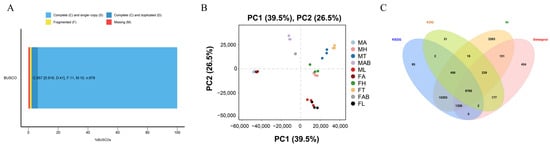
We filtered and screened E. castanea transcriptome data from the antennae, head without antennae, thorax, abdomen, and legs of male and female adults, obtaining a total of 191.46 GB of clean data. The raw reads were submitted to the GenBank Short Read Archive (SRA) under the BioProject accession number PRJNA1478205. Quality assessment showed that Q20 and Q30 base percentages exceeding 98.03% and 94.46%, respectively, which indicated that the sequencing results were reliable and suitable for subsequent assembly (Table S3). The completeness and accuracy of the transcriptome assembly were evaluated using BUSCOs. Figure 1A shows that complete BUSCOs accounted for 97.85%. We used principal component analysis (PCA) to analyze gene expression data and the results showed that samples within the same group clustered closely together, while samples from different groups were partially separated (Figure 1B). The results revealed high intragroup repeatability as well as substantial intergroup differences. By searching against the NR, KEGG, Swiss-Prot, and KOG databases, a total of 25,338 unigenes were identified through alignment and annotation (Figure 1C). Additionally, the Venn diagram demonstrated that 9768 unigenes were simultaneously annotated in all four major databases (Figure 1C). Subsequently, based on the transcriptome data, we identified a total of 123 olfactory-related genes through database comparison, including 35 OBPs, 12 CSPs, 51 ORs, 21 IRs, and 4 SNMPs (Table S1).
Figure 1.
Statistical analysis of transcriptome data among different tissues of E. castanea. (A) BUSCO assessment for the E. castanea transcriptome assembly. (B) PCA of the samples from the antennae, heads (without antennae), thoraxes, abdomens, and legs of male and female E. castanea. The colored points in the figure represent individual samples. MA: male antennae; FA: female antennae; MH: male heads without antennae; FH: female heads without antennae; MT: male thoraces; FT: female thoraces; MAb: male abdomens; FAb: female abdomens; ML: male legs; FL: female legs. (C) Venn diagram of the number of genes annotated in the Swiss-Prot, Nr, KOG, and KEGG databases.
3.2. OBP Genes
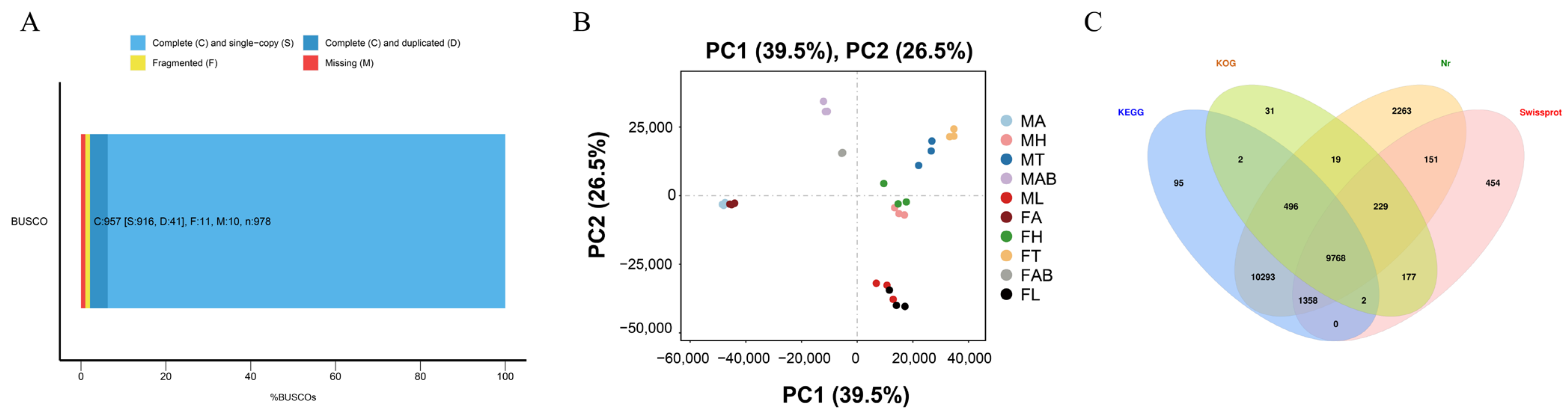
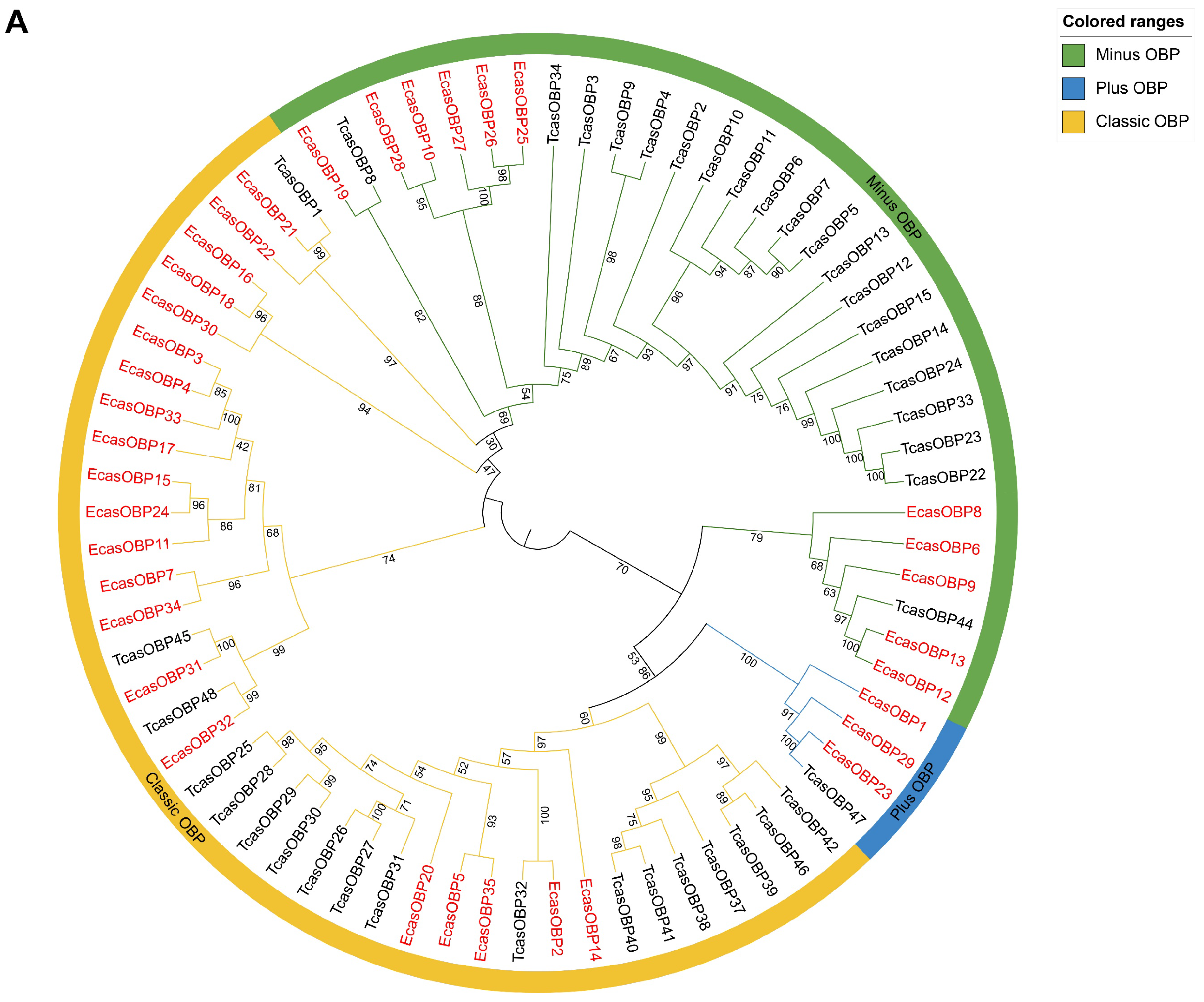
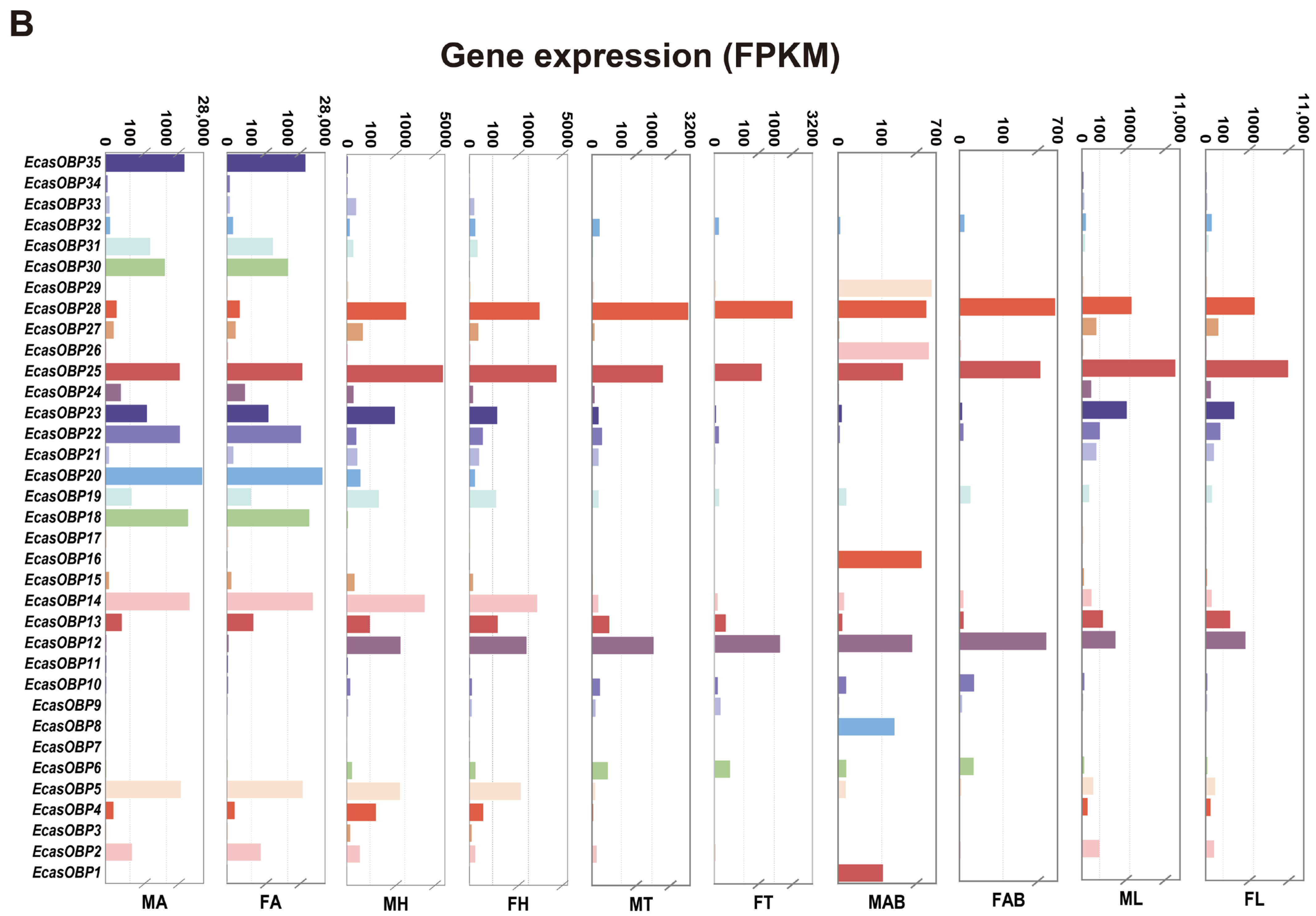
We identified a total of 35 OBP genes in the E. castanea transcriptome and named them EcasOBP1 to EcasOBP35. There were 26 full-length transcripts of the identified E. castanea OBP genes (Table S1). Sequence alignment analysis revealed that most E. castanea OBPs shared high sequence similarity with OBP genes from Tribolium castaneum. Phylogenetic analysis showed that three OBP genes (EcasOBP1, EcasOBP23, and EcasOBP29) belonged to the Plus-C subfamily; 11 OBP genes belonged to the Minus-C subfamily; and the remaining 21 OBP genes all belonged to the Classic subfamily (Figure 2A).
Figure 2.
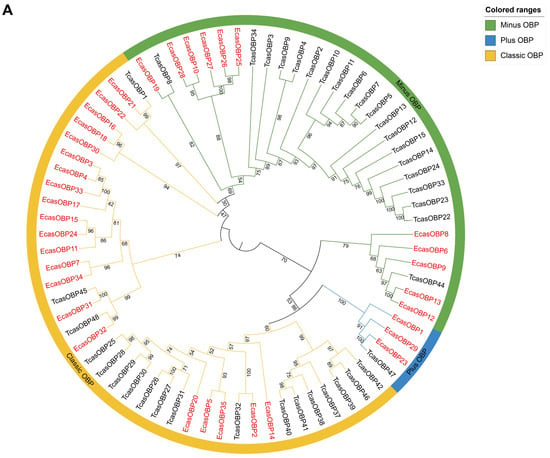
Phylogenetic analysis and tissue-specific expression patterns of EcasOBPs. (A) Phylogenetic tree of candidate odorant-binding proteins (OBPs). Tcas: Tribolium castaneum (black); Ecas: Exolontha castanea (red). The three phylogenetic groups, Classic OBPs, Plus-C OBPs, and Minus-C OBPs, are highlighted in yellow, blue, and green, respectively. (B) Expression patterns of candidate EcasOBPs in different tissues.
OBPs with FPKM values ≥ 1000 were defined as highly expressed genes, those with values 100–1000 were defined as moderately expressed genes, and those with values ≤ 100 were defined as weakly expressed genes. The expression level of OBPs in the antennae was higher than that in other adult tissues (Figure 2B). Seven highly expressed genes were detected in the antennae of both sexes (Figure 2B). Except for the head, thorax, and legs, which contained three, three, and two highly expressed genes, respectively, other tissues had no highly expressed genes (Figure 2B). Obvious sex differences were observed in the head, thorax, and abdomen (Figure 2B). OBP4 showed a moderate expression level in the male head, which was 2.1 times higher than that in females (Figure 2B). OBP25 exhibited a higher expression level in the male thorax, which was 5.3 times that in females (Figure 2B). OBP1, OBP8, OBP16, OBP26, and OBP29 were expressed only in the male abdomen, all at moderate levels (Figure 2B).
3.3. CSP Genes
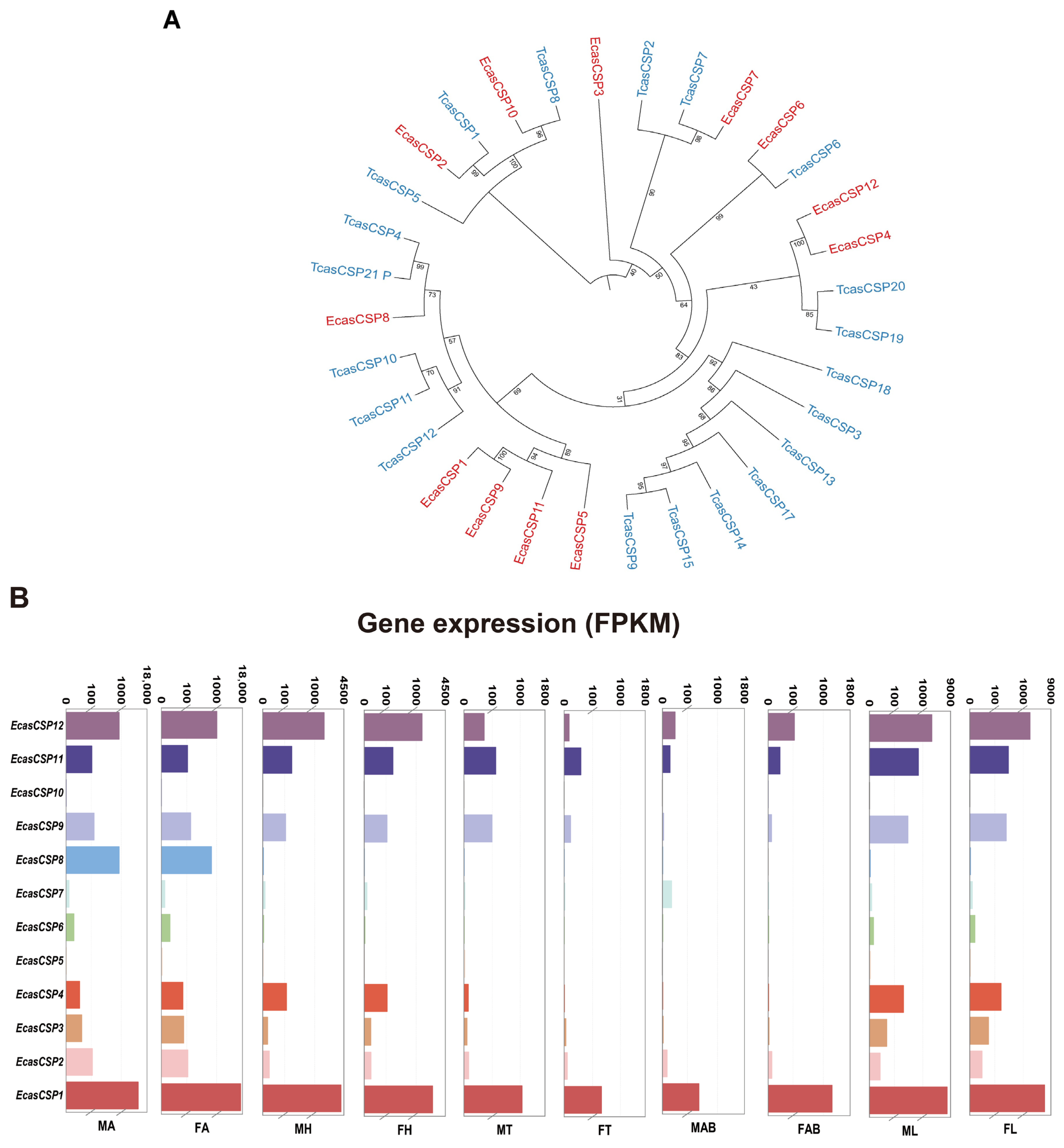
A total of 12 CSP genes were identified, named EcasCSP1 to EcasCSP12. There were 10 full-length transcripts of these CSP genes (Table S1). Based on the homologous sequences from T. castaneum and E. castanea, the phylogenetic relationships of the CSP genes were reconstructed. The results showed that CSPs were present on different branches in the phylogenetic tree (Figure 3A). CSPs with FPKM values were defined using the same criteria as those applied to OBPs with FPKM values. Among them, six genes were moderately or highly expressed in the antennae, five in the head and legs, two in the male thorax and female abdomen, and one in the female thorax and male abdomen (Figure 3B). The results revealed that CSPs were distributed in all tissues. CSP1, CSP11, and CSP12 exhibited obvious differential expression across tissues and between sexes (Figure 3B). CSP1 was expressed at higher levels in the male thorax, reaching 2.7 times that in females, with the expression level in the female abdomen being 2.8 times higher than that in males; CSP11 showed a moderate expression level in the male thorax, which was 3.7 times higher than that in females; CSP12 was expressed at higher levels in the female abdomen, reaching 3 times that in males (Figure 3B).
Figure 3.
Phylogenetic analysis and tissue-specific expression patterns of EcasCSPs. (A) Phylogenetic tree of candidate chemosensory proteins (CSPs). Tcas: Tribolium castaneum (blue); Ecas: Exolontha castanea (red). (B) Expression patterns of candidate EcasCSPs in different tissues.
3.4. OR Genes
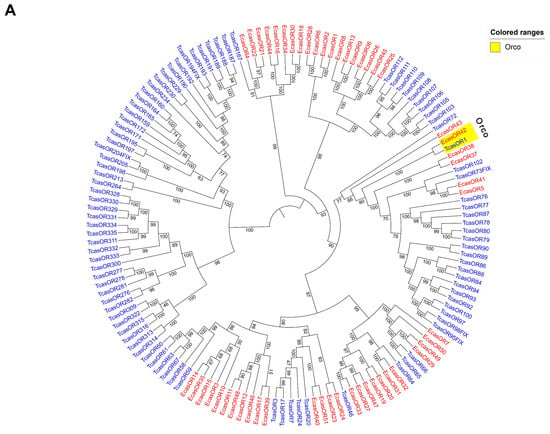
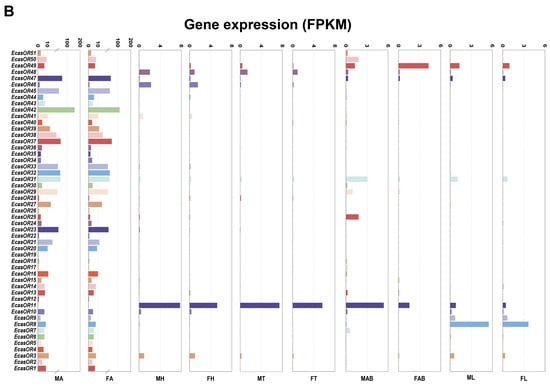
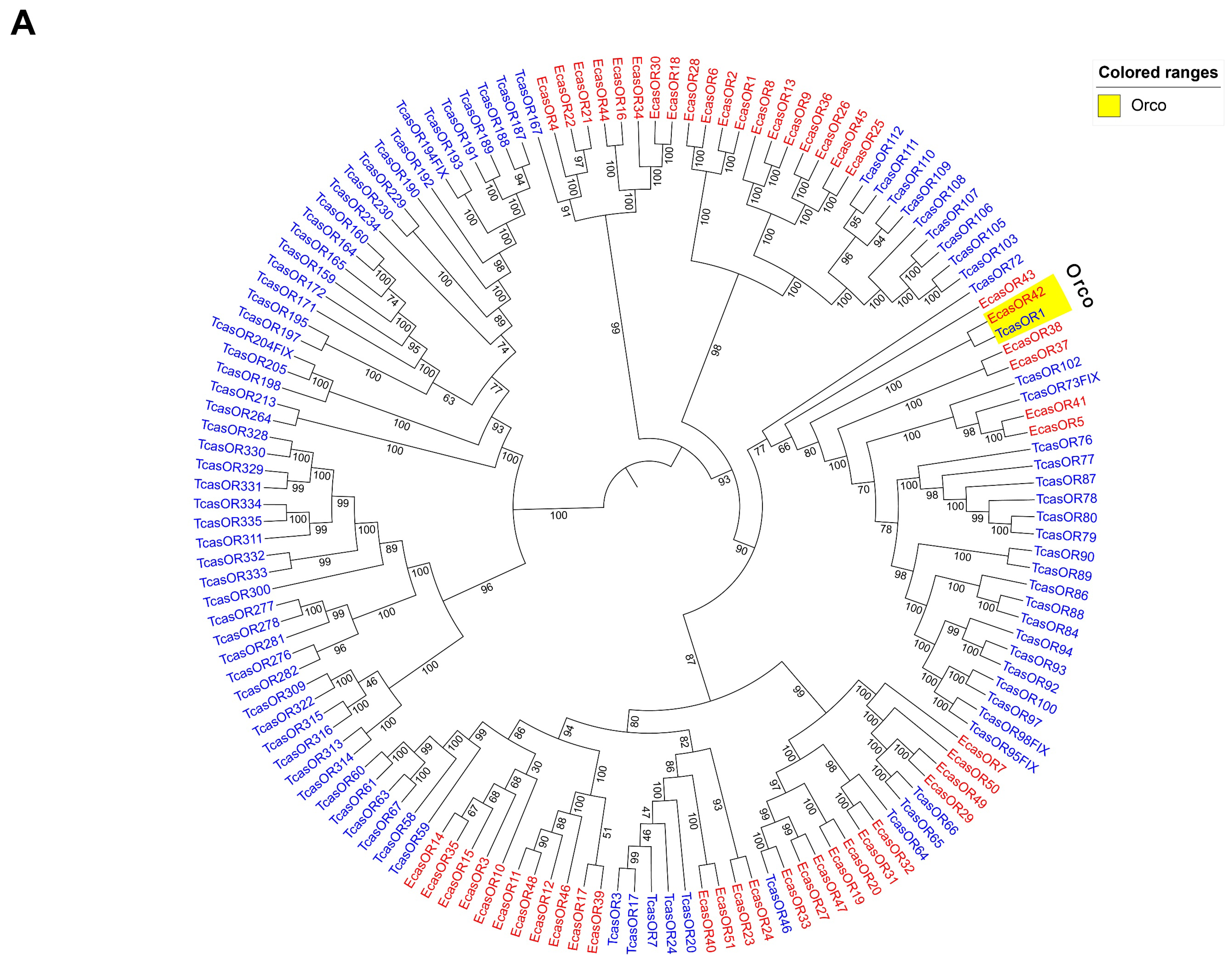
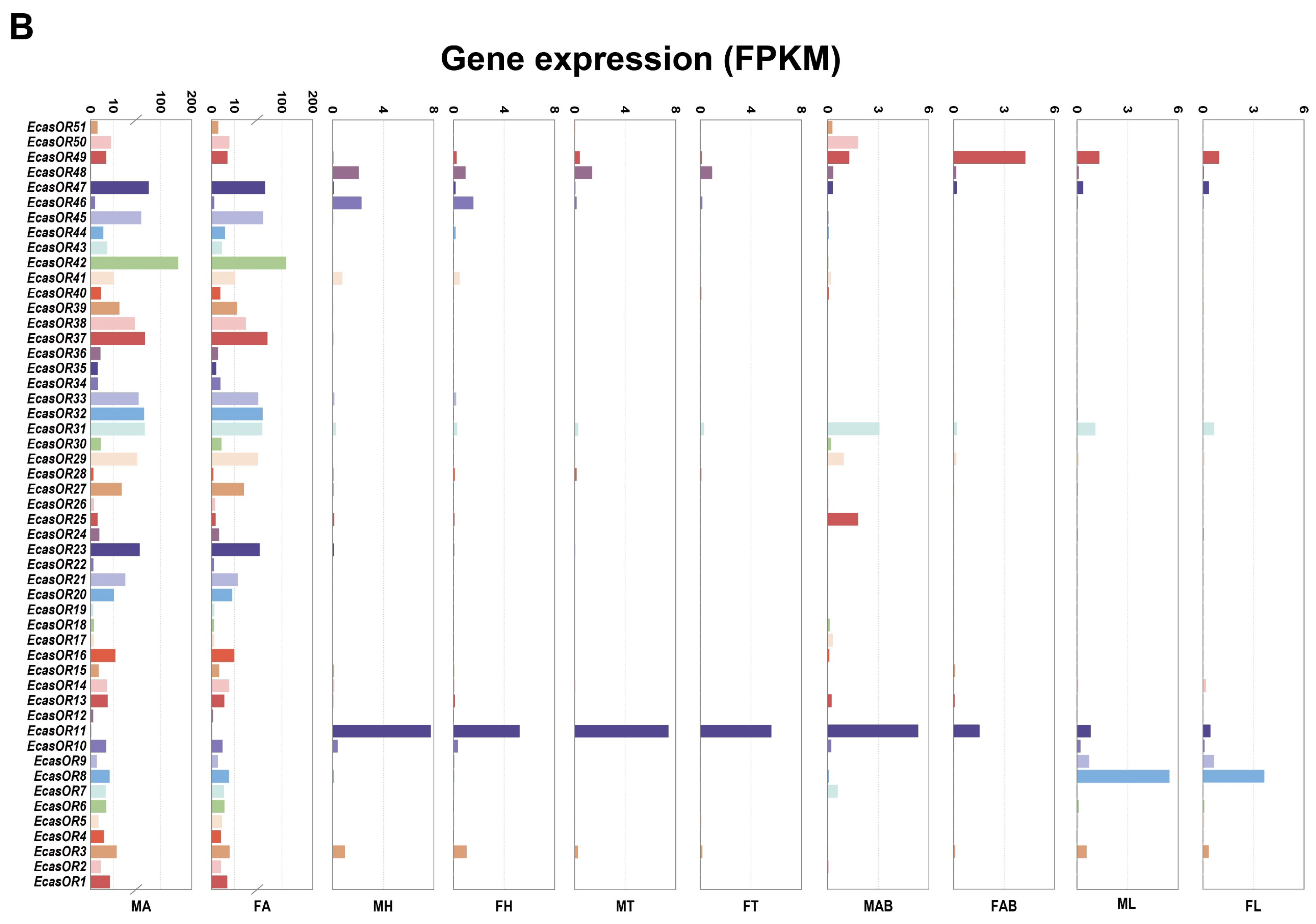
A total of 51 OR genes were identified and named EcasOR1 to EcasOR51. Among them, full-length sequences were obtained for 47 genes, with ORFs encoding 302–477 amino acids and the number of transmembrane domains ranging from 4 to 7 (Table S1). Phylogenetic analysis showed that OR42 was clustered into the coleopteran ORco clade (Figure 4A). ORs with FPKM values ≥ 100 were defined as highly expressed genes, those with values 10–100 were defined as moderately expressed genes, and those with values ≤ 10 were defined as weakly expressed genes. Expression analysis revealed that the expression level of ORs in adult antennae was higher than that in other tissues (Figure 4B). OR42 was exclusively highly expressed in the antennae, while 15 OR genes showed moderate expression levels in the antennae (Figure 4B). Among them, OR3, OR16, and OR20 exhibited moderate expression exclusively in male antennae (Figure 4B). Apart from these 16 genes, the remaining OR genes showed low expression levels or were undetectable (Figure 4B).
Figure 4.
Phylogenetic analysis and tissue-specific expression patterns of EcasORs. (A) Phylogenetic tree of candidate odorant receptors (ORs). Tcas: Tribolium castaneum (blue); Ecas: Exolontha castanea (red). ORco is marked in yellow. (B) Expression patterns of candidate EcasORs in different tissues.
3.5. IR Genes
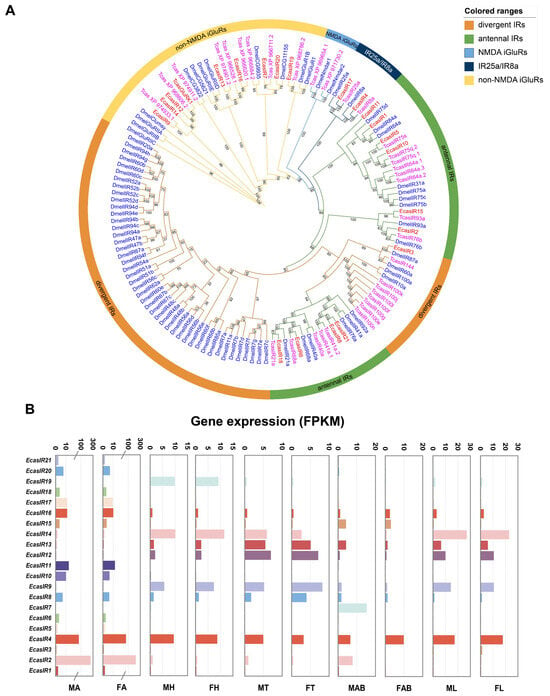
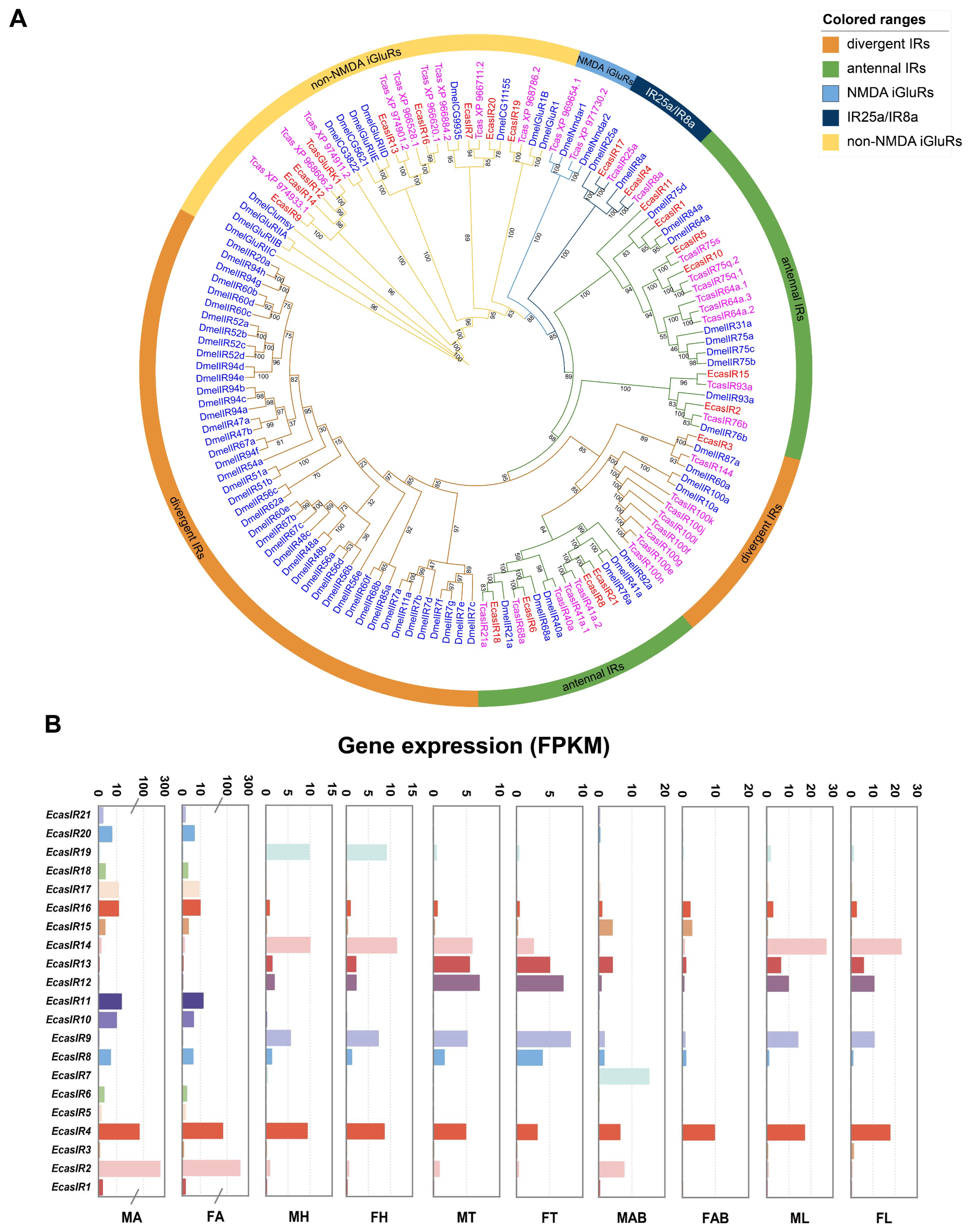
We identified a total of 21 IR genes and named them EcasIR1 to EcasIR21, of which 15 had full-length sequences (Table S1). Phylogenetic analysis indicated that 21 IR genes could be classified into four major clades of coleopteran IRs (Figure 5A). Among them, IR4 and IR17 were assigned to the IR25a/IR8a clade; IR3 was assigned to the divergent IR clade; IR7, IR9, IR12, IR13, IR14, IR16, IR19, and IR20 were assigned to the non-NMDA iGluR clade; and the remaining ten genes were assigned to the antennal IR clade (Figure 5A). IRs with FPKM values were defined using the same criteria as those applied to ORs with FPKM values. Expression analysis revealed that one gene showed high expression and four genes showed moderate expression in adult antennae (Figure 5B). Respectively, 2, 1 and 4 genes exhibited moderate expression in the head, male abdomen, and legs, and no moderately or highly expressed genes were detected in the remaining tissues (Figure 5B). IR2 was exclusively highly expressed in the antennae; IR9 and IR12 showed moderate expression exclusively in the legs; and IR19 was only moderately expressed in the head (Figure 5B). IR7 showed different expression in different sexes and was moderately expressed only in the male abdomen (Figure 5B).
Figure 5.
Phylogenetic analysis and tissue-specific expression patterns of EcasIRs. (A) Phylogenetic tree of candidate ionotropic receptors (IRs). Tcas: Tribolium castaneum (pink); Ecas: Exolontha castanea (red); Dmel: Drosophila melanogaster (blue). The five phylogenetic groups are defined as follows: NMDA iGluRs (cyan), non-NMDA iGluRs (yellow), IR25a/IR8a (blue), divergent IRs (orange), and antennal IRs (green). (B) Expression patterns of candidate EcasIRs in different tissues.
3.6. SNMP Genes
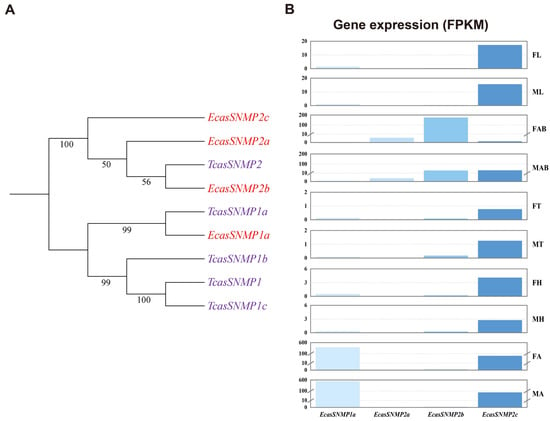
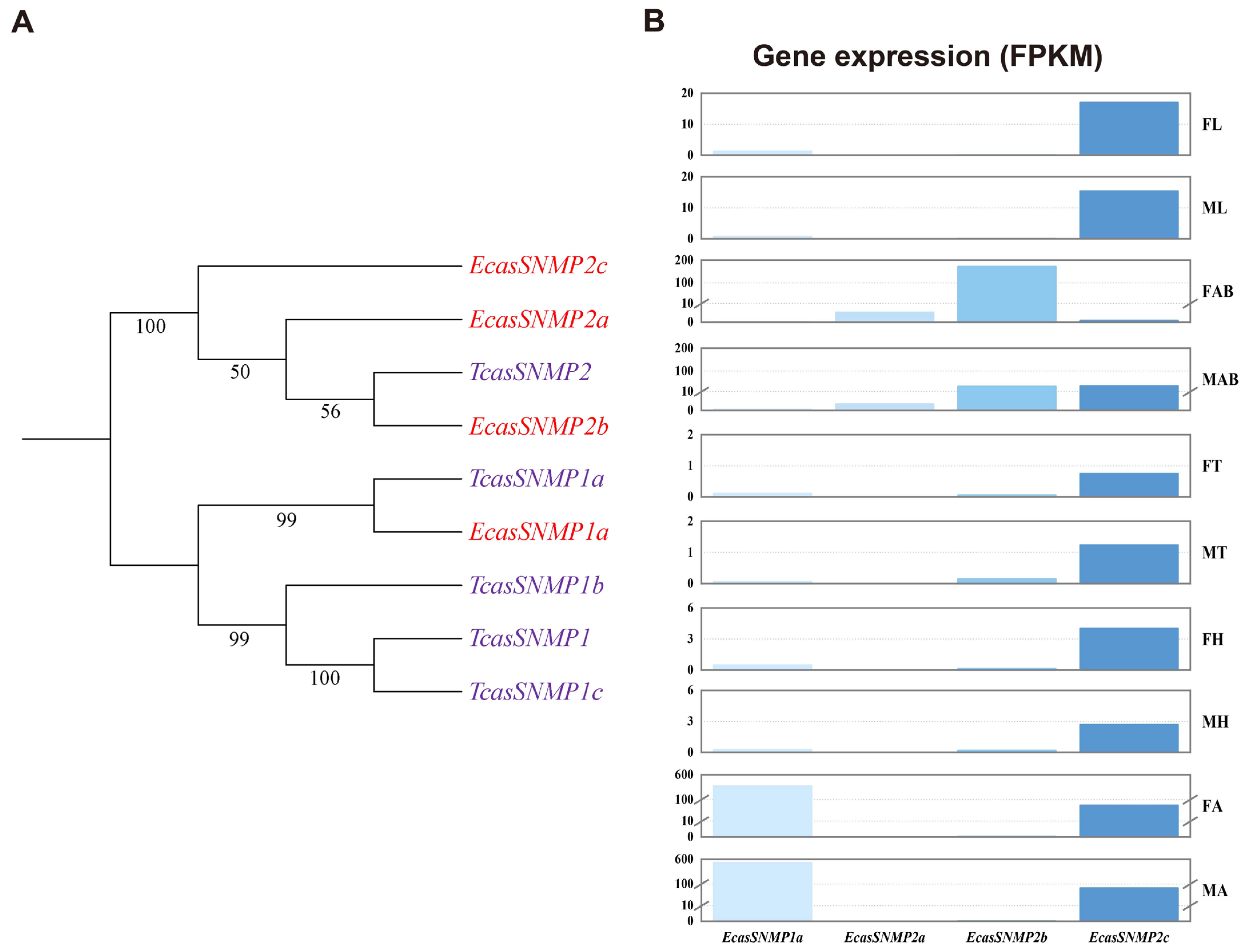
We identified a total of 4 SNMP genes and named them EcasSNMP1a, EcasSNMP2a, EcasSNMP2b and EcasSNMP2c. Phylogenetic analysis revealed that all SNMP genes formed two major subfamilies, namely SNMP1 and SNMP2 (Figure 6A). Among them, EcasSNMP1a clustered with TcasSNMP1a, while EcasSNMP2a, EcasSNMP2b and EcasSNMP2c clustered with TcasSNMP2 in the other clade (Figure 6A). SNMPs with FPKM values were defined using the same criteria as those applied to ORs with FPKM values. Expression analysis revealed that SNMP1a was the only highly expressed gene in the antennae (Figure 6B). SNMP2a only showed low expression in the abdomen, with undetectable expression levels in other tissues (Figure 6B). SNMP2b exhibited relatively higher expression in the female abdomen, reaching 5.2 times that in males; SNMP2c showed moderate expression in the antennae, legs, and male abdomen, but was not expressed in the female abdomen (Figure 6B).
Figure 6.
Phylogenetic analysis and tissue-specific expression patterns of EcasSNMPs. (A) Phylogenetic tree of candidate sensory neuron membrane proteins (SNMPs). Tcas: Tribolium castaneum (purple); Ecas: Exolontha castanea (red). (B) Expression patterns of candidate EcasSNMPs in different tissues.
3.7. Validation of Reliability of RNA-Seq Data Using RT-qPCR
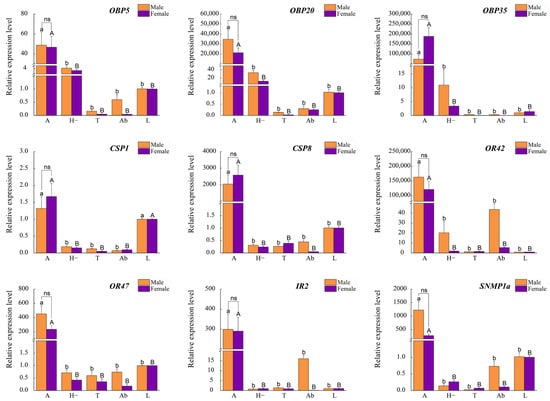
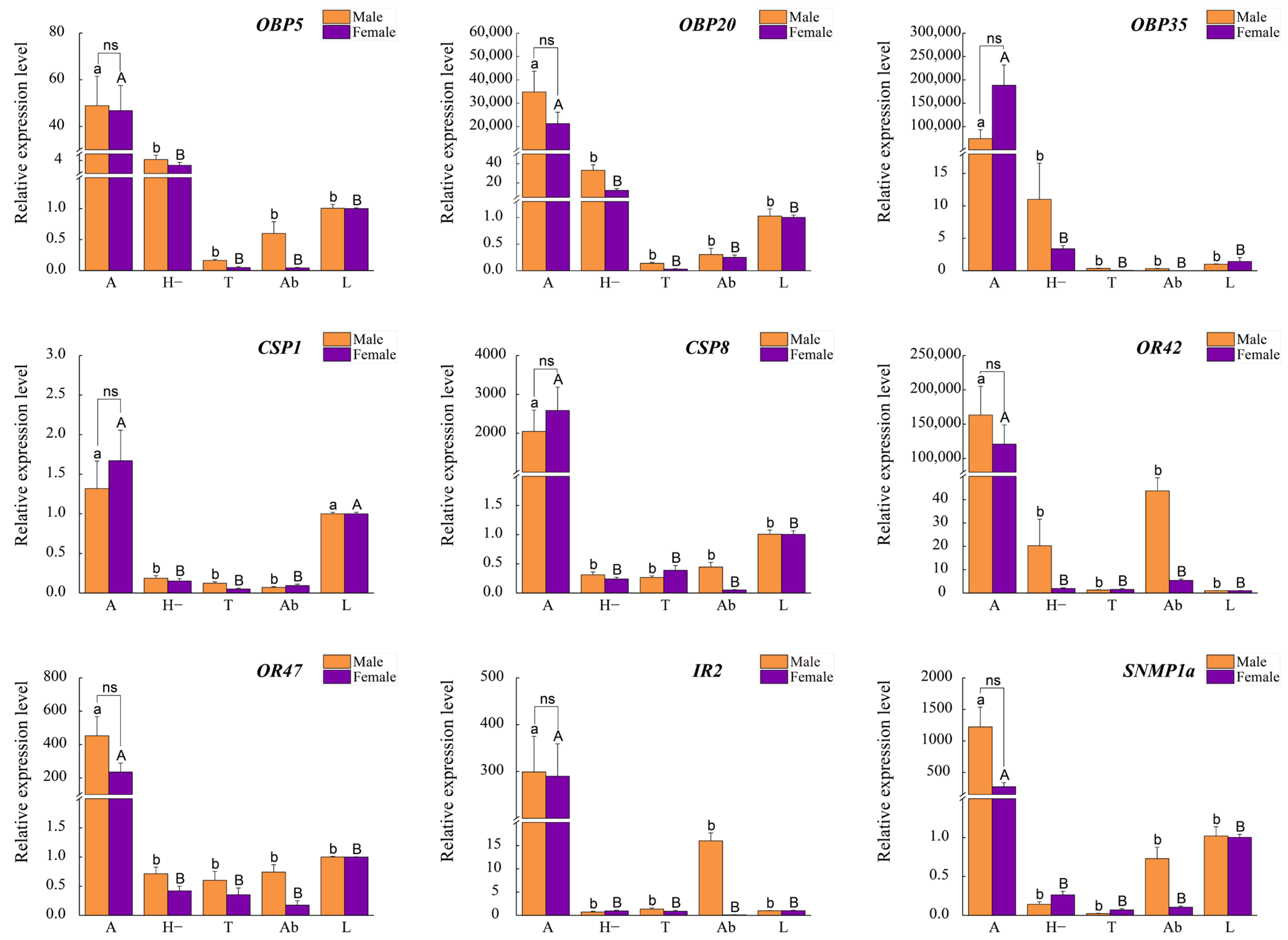
To verify the reliability of the transcriptome data, 9 candidate genes were subjected to qRT-PCR analysis. These candidates were selected from different olfactory gene families and the inclusion of genes with both relatively high and low expression levels. The results indicated that the transcriptional expression patterns of the selected genes were consistent with the RNA-seq data, further validating the robustness of the transcriptomic results (Figure 7).
Figure 7.
Tissue expression patterns of 9 olfactory-related genes of E. castanea measured by RT-qPCR. The error bar represents the standard error of the mean. Different letters denote significant differences across tissues. The abbreviation ‘ns’ indicates no significant difference in expression between the sexes.
4. Discussion
Olfactory-related genes are central to perception of external chemical signals in insects. Investigating the functions and mechanisms of these genes provides key targets for the development of green and efficient pest control strategies, offering significant theoretical value and application prospects. From the transcriptome of adults, we identified 123 olfactory-related genes, including 35 OBP genes, 12 CSP genes, 51 OR genes, 21 IR genes, and 4 SNMP genes.
Closely related scarab species to E. castanea have also been reported to harbor varying repertoires of olfactory-related genes. For example, transcriptomic analysis of female antennae and legs of Holotrichia parallela identified 24 OBPs, 8 CSPs, 4 SNMPs, 28 ORs, and 10 IRs [33]. In Anomala corpulenta, adult antennal transcriptomes revealed 15 OBPs, 5 CSPs, 1 SNMP, 43 ORs, 8 GRs, and 5 IRs [34]. Transcriptome sequencing of olfactory and non-olfactory tissues from Holotrichia oblita uncovered 29 OBPs, 2 CSPs, 44 ORs, and 9 IRs [35,36,37]. Collectively, the number of identified olfactory genes varies across scarab species. Even so, OBPs and ORs consistently represent the largest gene families in all these species. This pattern may stem from their central roles in olfactory recognition, which heightens the sensitivity of oligophagous scarabs to host plant volatiles. A further explanation is that, relative to previous transcriptomic studies on other scarab species, our work on E. castanea incorporated broader tissue sampling and newer sequencing platforms, which may have enabled the recovery of additional low-abundance olfactory genes.
A total of 35 OBP genes were identified. Their expression levels in the antennae were higher than in other adult tissues. Seven highly expressed genes (OBP5, OBP14, OBP18, OBP20, OBP22, OBP25, and OBP35) were detected in the antennae of both sexes, and high expression in the antennae is a typical feature of olfactory involvement [38]. OBP14, OBP19, and OBP23 showed moderate-to-high expression in antennectomized head samples. Because the antennae were removed before sampling, their expression likely originated from non-antennal cephalic tissues, potentially including the mouthparts. Previous studies have demonstrated that OBPs expressed in insect mouthparts can participate in gustatory or contact-chemosensory perception [39,40]. Moreover, the mouthparts contain numerous chemosensory sensilla involved in the detection of food- and host-associated chemical cues [41]. These findings therefore suggest that OBP14, OBP19, and OBP23 may contribute to mouthpart-mediated chemosensation, possibly by facilitating the detection of nonvolatile compounds during feeding or host assessment. Nevertheless, tissue-specific localization and functional assays are required to confirm their roles. OBP12 and OBP13 are moderately expressed in the legs. The expression of OBPs in the legs has been previously reported, suggesting that these OBPs may play a role in gustatory function [42,43]. Moreover, a large number of gustatory sensilla are distributed on the legs. Therefore, these genes may be involved in gustation, possibly in recognizing plant surface non-volatile compounds, and may play roles in host location and oviposition behavior. OBP1, OBP8, OBP16, OBP26, and OBP29 were exclusively expressed in the male abdomen, suggesting possible roles in reproductive behaviors. It has been reported that an OBP is highly expressed in the seminal fluid of male Helicoverpa armigera and Helicoverpa assulta, is transferred to females during mating, and ultimately appears on the surface of fertilized eggs, which consequently affects insect reproductive behavior [44].
In E. castanea, we identified 12 CSP genes. These genes are distributed across various tissues, including the antennae, head, legs, thorax, and abdomen, which is consistent with the widely recognized broad tissue expression pattern of insect CSP genes [45,46]. CSP2 and CSP8 were expressed in the antennae, possibly associated with insect olfaction [41,45,47]. CSP4 was moderately expressed in the head. The expression of this gene in the head may be associated with gustatory perception, as the insect head harbors numerous gustatory receptors [48,49]. CSP1, CSP9, CSP11, and CSP12 also show relatively high expression in multiple tissues, including the antennae, head, and legs, indicating that these CSPs may be involved in various physiological processes, such as embryonic body wall development in Apis mellifera [50], behavioral phase transition in migratory locust [51], leg regeneration in Periplaneta americana [52], and insecticide resistance in Rhaphuma horsfieldi [53]. Among these, CSP1 and CSP12 exhibited higher expression levels in the female abdomen than in males, suggesting a potential role in oviposition. Notably, a previous study reported that OcomCSP12 in Ophraella communa is specifically expressed in the female ovary, and silencing OcomCSP12 significantly reduced female egg production [54].
A total of 51 ORs were identified. Among these, 16 ORs showed moderate or high expression levels in the antennae, while OR genes exhibited low or undetectable expression in other tissues. Thus, OR expression levels are higher in adult antennae than in other tissues, consistent with the functional role of ORs [55]. In the phylogenetic tree (Figure 4A), OR42 was clustered into the ORco clade. Moreover, OR42 was highly expressed in the antennae of both sexes, consistent with the expression pattern of ORco reported in other insects [56,57]. Thus, OR42 was proposed to be the ORco gene of E. castanea. ORco is fundamental to olfactory recognition in insects. Serving as an obligatory chaperone for conventional odorant receptors, it is required for the correct folding, membrane targeting, and functional activation of OR proteins, making it a vital player in olfactory signal transduction [58]. Consequently, ORco represents a key molecular target for elucidating the olfactory mechanism of E. castanea. OR3, OR16 and OR20 exhibited moderate expression levels exclusively in male antennae. These genes may be associated with male-specific behaviors, such as sex pheromone recognition. For instance, in Holotrichia parallela, the olfactory system of male beetles is enhanced every other day by the expression of HparOR14 for the detection of the sex pheromone LIME, which was previously demonstrated to be emitted in a circabidian fashion [59]. Consistent with this, CmacOR13a in Callosobruchus maculatus is a male antenna-dominant OR, and RNAi knockdown of CmacOR13a significantly reduces male attraction and antennal electrophysiological responses to sex attractant pheromones [60]. Male-biased ORs potentially involved in sex pheromone detection have also been reported in Protaetia brevitarsis and Harmonia axyridis (Pallas) [61,62]. These findings support the plausibility that OR3, OR16, and OR20 contribute to male sex pheromone recognition in E. castanea; however, this remains a hypothesis, and functional characterization (e.g., heterologous expression, RNAi, or EAG) is required to confirm their roles.
We identified 21 IRs from the transcriptomic data. Notably, functional studies of IRs have primarily focused on fruit flies. Among these, IR2 showed high expression in the antennae, while IR11, IR16 and IR17 exhibited moderate expression in the antennae, suggesting their potential involvement in odor perception [63]. Among them, IR2 and IR17 may also be associated with hygrosensation, as they cluster with Drosophila melanogaster IR93a and IR25a (Figure 5A), respectively, both of which have been demonstrated to be essential for humidity sensing [64,65]. The expression levels of IR9 and IR12 were moderate in the legs. In D. melanogaster, IR20a and IR76b were expressed in the adult leg and can detect amino acids such as serine [66]. Therefore, these IR genes are speculated to be involved in gustatory perception, specifically in sensing amino acid substances.
Four SNMP genes, namely SNMP1a, SNMP2a, SNMP2b, and SNMP2c, were identified from the transcriptomic data. Notably, unlike most other insect species that typically possess only 2–3 SNMP genes, four SNMP genes were identified in E. castanea. This observation can be explained by gene duplication followed by functional divergence. The phylogenetic tree (Figure 6A) shows that EcasSNMP2c clusters with EcasSNMP2a and EcasSNMP2b, indicating a duplication event within the SNMP2 subfamily. Similar gene expansions have been documented in the family Scarabaeidae, with up to 12 SNMP genes identified in Onthophagus taurus [67]. Thus, the four SNMP genes in E. castanea likely reflect a lineage-specific expansion and subsequent differentiation. SNMP1a was exclusively and highly expressed in the antennae, suggesting its potential involvement in pheromone detection. SNMP1 in D. melanogaster and CbuqSNMP1b in Cyrtotrachelus buqueti play critical roles in sex pheromone detection [15,68,69]. SNMP1a may also be involved in perceiving general odors, such as host plant volatiles. Consistent with this, SNMP1 has been functionally implicated in the detection of general odorant molecules in Lepidoptera [70], and in Drosophila, it is required for normal behavioral and electrophysiological responses to specific odorants such as farnesol [71]. SNMP2b was expressed exclusively in the abdomen, with higher expression levels in females than in males. Given that the female abdomen contains pheromone glands, SNMP2b is speculated to be involved in the binding and transport of pheromone molecules [72]. SNMP2c showed moderate expression in the legs, where its expression may be associated with gustatory function [73].
Insect antennae are equipped with olfactory sensilla that enable insects to detect and discriminate various odorants [74]. Expression profiling revealed that 13 OBPs, 6 CSPs, 16 ORs, 5 IRs, and 2 SNMPs were moderately or highly expressed in the antennae. These genes are presumed to participate in olfactory perception, which requires further functional verification via subsequent bioassays. In recent years, olfactory genes have been recognized as promising molecular targets for pest management. Attract-and-kill and repellent technologies based on olfactory interference possess advantages, including environmental compatibility. Functional characterization of these candidate genes will lay a theoretical foundation for screening target genes to control E. castanea.
5. Conclusions
In summary, we identified 123 olfactory-related genes from the transcriptomes of different tissues in E. castanea, and further revealed that these genes exhibit differential expression across tissues and between sexes. Among them, several genes exhibited moderate-to-high expression in the olfactory organs (antennae), including EcasOBP2, 5, 13, 14, 18, 19, 20, 22, 23, 25, 30, 31, 35; EcasCSP1, 2, 8, 9, 11, 12; EcasOR3, 16, 20, 21, 23, 27, 29, 31, 32, 33, 37, 38, 41, 42, 45, 47; EcasIR2, 4, 11, 16, 17; and EcasSNMP1a, 2c. These genes are highly recommended as priority candidates for subsequent functional investigations. Our study provides a molecular basis for investigating the olfactory recognition mechanisms and other physiological activities in E. castanea, thereby offering theoretical guidance for the development of novel green control strategies.
Supplementary Materials
The following supporting information can be downloaded at: https://www.mdpi.com/article/10.3390/insects17111119/s1, Table S1: Transcripts of olfactory-related genes identified in E. castanea and their annotations; Table S2: Protein sequence used for phylogenetic-tree construction; Table S3: Statistical analysis of transcriptome data among different tissues of E. castanea.
Author Contributions
Conceptualization, G.Z., X.S. and W.H.; methodology, G.Z., W.H., G.X., C.H., X.P. and X.S.; formal analysis, G.Z., W.H., Y.Y., Z.W. and G.X.; writing—original draft preparation, G.Z., Y.Y., W.H., G.X., Z.W. and B.L.; writing—review and editing, G.Z., Y.Y., W.H., B.L. and X.S.; funding acquisition, X.S. and C.H. All authors have read and agreed to the published version of the manuscript.
Funding
This research was funded by the National Natural Science Foundation of China (32160632), the Earmarked Fund for China Agriculture Research System (CARS-17), and the Fundamental Research Fund of the Guangxi Academy of Agriculture Sciences (2026YT051).
Data Availability Statement
Data is contained within this article and the Supplementary Materials.
Acknowledgments
We are grateful to Buqie Shama and Xia Wang (Yangtze University, China) for valuable advice on the manuscript.
Conflicts of Interest
The authors declare no conflicts of interest.
References
- Hansson, B.S.; Stensmyr, M.C. Evolution of insect olfaction. Neuron 2011, 72, 698–711. [Google Scholar] [CrossRef] [Scilit] [PubMed]
- Su, C.-Y.; Menuz, K.; Carlson, J.R. Olfactory perception: Receptors, cells, and circuits. Cell 2009, 139, 45–59. [Google Scholar] [CrossRef] [Scilit] [PubMed]
- Benton, R.; Vannice, K.S.; Gomez-Diaz, C.; Vosshall, L.B. Variant ionotropic glutamate receptors as chemosensory receptors in Drosophila. Cell 2009, 136, 149–163. [Google Scholar] [CrossRef] [Scilit] [PubMed]
- Kaissling, K.-E. Olfactory perireceptor and receptor events in moths: A kinetic model revised. J. Comp. Physiol. A 2009, 195, 895–922. [Google Scholar] [CrossRef] [Scilit] [PubMed]
- Zhang, G.; Chen, J.; Wang, F.; Gui, L.; Zhang, J. Characterization and levels of expression of sensory neuron membrane proteins in the adult citrus fruit fly (Diptera: Tephritidae). J. Insect Sci. 2018, 18, 10. [Google Scholar] [CrossRef] [Scilit] [PubMed]
- Leal, W.S. Pheromone reception. In The Chemistry of Pheromones and Other Semiochemicals II; Schulz, S., Ed.; Topics in Current Chemistry; Springer: Berlin, Germany, 2004; Volume 240, pp. 1–36. [Google Scholar]
- Gong, X.; Liu, H.; Li, P.; Li, F.; Wu, S. Overview of functional research on insect chemosensory proteins (CSPs). J. Environ. Entomol. 2023, 45, 42–51. [Google Scholar]
- Du, Y.; Xu, K.; Zhao, H.; Liu, Y.; Niu, Q.; Jiang, Y. Research progress in odorant binding proteins of insects. Acta Entomol. Sin. 2020, 63, 365–380. [Google Scholar]
- Chahda, J.S.; Soni, N.; Sun, J.S.; Ebrahim, S.A.M.; Weiss, B.L.; Carlson, J.R. The molecular and cellular basis of olfactory response to tsetse fly attractants. PLoS Genet. 2019, 15, e1008005. [Google Scholar] [CrossRef] [Scilit] [PubMed]
- Yuvaraj, J.K.; Corcoran, J.A.; Andersson, M.N.; Newcomb, R.D.; Anderbrant, O.; Löfstedt, C. Characterization of odorant receptors from a non-ditrysian moth, Eriocrania semipurpurella sheds light on the origin of sex pheromone receptors in Lepidoptera. Mol. Biol. Evol. 2017, 34, 2733–2746. [Google Scholar] [CrossRef] [Scilit] [PubMed]
- Ma, C.; Cui, S.; Bai, Q.; Tian, Z.; Zhang, Y.; Chen, G.; Gao, X.; Tian, Z.; Chen, H.; Guo, J. Olfactory co-receptor is involved in host recognition and oviposition in Ophraella communa (Coleoptera: Chrysomelidae). Insect Mol. Biol. 2020, 29, 381–390. [Google Scholar] [CrossRef] [Scilit] [PubMed]
- Croset, V.; Rytz, R.; Cummins, S.F.; Budd, A.; Brawand, D.; Kaessmann, H.; Gibson, T.J.; Benton, R. Ancient protostome origin of chemosensory ionotropic glutamate receptors and the evolution of insect taste and olfaction. PLoS Genet. 2010, 6, e1001064. [Google Scholar] [CrossRef] [Scilit] [PubMed]
- Rogers, M.E.; Steinbrecht, R.A.; Vogt, R.G. Expression of SNMP-1 in olfactory neurons and sensilla of male and female antennae of the silkmoth Antheraea polyphemus. Cell Tissue Res. 2001, 303, 433–446. [Google Scholar] [CrossRef] [Scilit] [PubMed]
- Nichols, Z.; Vogt, R.G. The SNMP/CD36 gene family in Diptera, Hymenoptera and Coleoptera: Drosophila melanogaster, D. pseudoobscura, Anopheles gambiae, Aedes aegypti, Apis mellifera, and Tribolium castaneum. Insect Biochem. Mol. Biol. 2008, 38, 398–415. [Google Scholar] [CrossRef] [Scilit] [PubMed]
- Benton, R.; Vannice, K.S.; Vosshall, L.B. An essential role for a CD36-related receptor in pheromone detection in Drosophila. Nature 2007, 450, 289–293. [Google Scholar] [CrossRef] [Scilit] [PubMed]
- Shang, X.K.; Huang, C.; Ouyang, J.; Wei, X.; Pan, Z. Damage and control of Exolontha castanea Chang in Laibin sugarcane area of Guangxi. Plant Prot. 2016, 42, 193–196. [Google Scholar]
- Shang, X.K.; Pan, X.; Wei, J.; Liu, W.; Wei, X. Morphological and biological characteristics of Exolontha castanea Chang (Coleoptera: Melolonthinae). J. Environ. Entomol. 2025, 48, 1296–1307. [Google Scholar]
- Shang, X.K.; Huang, C.; Pan, X.; Wei, J.; Huang, W. Preliminary report on distribution and damage of Alissonotum impressicolle Arrow in Guangxi sugarcane area. Plant Prot. 2014, 40, 130–134. [Google Scholar]
- Shang, X.K.; Wei, J.L.; Pan, X.H.; Huang, C.H.; Nikpay, A. Sugarcane insect pests in China: Species, distribution and population dynamics. Sugar Tech 2024, 26, 20–32. [Google Scholar] [CrossRef] [Scilit]
- Shang, X.K.; Huang, C.; Wang, B. Research progress on chemical control of sugarcane beetles in China. J. South. Agric. 2011, 42, 1229–1232. [Google Scholar]
- Shang, X.K.; Wei, J.L.; Liu, W.; Nikpay, A.; Pan, X.H.; Huang, C.-H. Integrated pest management of sugarcane insect pests in China: Current status and future prospects. Sugar Tech 2025, 27, 299–317. [Google Scholar] [CrossRef] [Scilit]
- Shang, X.K.; Liu, W.; Wei, J.L.; Wei, X.; Meng, H.H.; Huang, C.H.; Pan, X.H. Phototaxis of Exolontha castanea (Coleoptera: Melolonthidae) adults to different color light-emitting diodes (LEDs): Blue-violet light preference. Crop Prot. 2025, 197, 107354. [Google Scholar] [CrossRef] [Scilit]
- Chen, S.; Zhou, Y.; Chen, Y.; Gu, J. Fastp: An ultra-fast all-in-one FASTQ preprocessor. Bioinformatics 2018, 34, i884–i890. [Google Scholar] [CrossRef] [Scilit] [PubMed]
- Haas, B.J.; Papanicolaou, A.; Yassour, M.; Grabherr, M.; Blood, P.D.; Bowden, J.; Couger, M.B.; Eccles, D.; Li, B.; Lieber, M.; et al. De Novo transcript sequence reconstruction from RNA-seq using the Trinity platform for reference generation and analysis. Nat. Protoc. 2013, 8, 1494–1512. [Google Scholar] [CrossRef] [Scilit] [PubMed]
- Simão, F.A.; Waterhouse, R.M.; Ioannidis, P.; Kriventseva, E.V.; Zdobnov, E.M. BUSCO: Assessing genome assembly and annotation completeness with single-copy orthologs. Bioinformatics 2015, 31, 3210–3212. [Google Scholar] [CrossRef] [Scilit] [PubMed]
- Li, B.; Dewey, C.N. RSEM: Accurate transcript quantification from RNA-seq data with or without a reference genome. BMC Bioinform. 2011, 12, 323. [Google Scholar] [CrossRef] [Scilit] [PubMed]
- Buchfink, B.; Reuter, K.; Drost, H.-G. Sensitive protein alignments at tree-of-life scale using DIAMOND. Nat. Methods 2021, 18, 366–368. [Google Scholar] [CrossRef] [Scilit] [PubMed]
- Finn, R.D.; Coggill, P.; Eberhardt, R.Y.; Eddy, S.R.; Mistry, J.; Mitchell, A.L.; Potter, S.C.; Punta, M.; Qureshi, M.; Sangrador-Vegas, A.; et al. The Pfam protein families database: Towards a more sustainable future. Nucleic Acids Res. 2016, 44, D279–D285. [Google Scholar] [CrossRef] [Scilit] [PubMed]
- Finn, R.D.; Clements, J.; Eddy, S.R. HMMER web server: Interactive sequence similarity searching. Nucleic Acids Res. 2011, 39, W29–W37. [Google Scholar] [CrossRef] [Scilit] [PubMed]
- Cantalapiedra, C.P.; Hernández-Plaza, A.; Letunic, I.; Bork, P.; Huerta-Cepas, J. EggNOG-mapper v2: Functional annotation, orthology assignments, and domain prediction at the metagenomic scale. Mol. Biol. Evol. 2021, 38, 5825–5829. [Google Scholar] [CrossRef] [Scilit] [PubMed]
- Teufel, F.; Almagro Armenteros, J.J.; Johansen, A.R.; Gíslason, M.H.; Pihl, S.I.; Tsirigos, K.D.; Winther, O.; Brunak, S.; von Heijne, G.; Nielsen, H. SignalP 6.0 predicts all five types of signal peptides using protein language models. Nat. Biotechnol. 2022, 40, 1023–1025. [Google Scholar] [CrossRef] [Scilit] [PubMed]
- Hallgren, J.; Tsirigos, K.D.; Pedersen, M.D.; Almagro Armenteros, J.J.; Marcatili, P.; Nielsen, H.; Krogh, A.; Winther, O. DeepTMHMM predicts alpha and beta transmembrane proteins using deep neural networks. Biorxiv 2022, 4, 487609. [Google Scholar]
- Fang, C. Identification and Characterization of Olfactory Genes in Holotrichia parallela. Master’s Thesis, Northeast Agricultural University, Harbin, China, 2016. [Google Scholar]
- Li, X.; Ju, Q.; Jie, W.; Li, F.; Jiang, X.; Xu, J.; Qu, M. Chemosensory gene families in adult antennae of Anomala corpulenta Motschulsky (Coleoptera: Scarabaeidae: Rutelinae). PLoS ONE 2015, 10, e0144214. [Google Scholar] [CrossRef] [Scilit] [PubMed]
- Li, K.; Wei, H.S.; Shu, C.L.; Zhang, S.; Cao, Y.Z.; Luo, C.; Yin, J. Identification and comparison of candidate odorant receptor genes in the olfactory and non-olfactory organs of Holotrichia oblita Faldermann by transcriptome analysis. Comp. Biochem. Physiol. Part D Genom. Proteom. 2017, 24, 1–11. [Google Scholar] [CrossRef] [Scilit] [PubMed]
- Yin, J.; Wang, C.Q.; Fang, C.Q.; Zhang, S.; Cao, Y.Z.; Li, K.B.; Leal, W.S. Functional characterization of odorant-binding proteins from the scarab beetle Holotrichia oblita based on semiochemical-induced expression alteration and gene silencing. Insect Biochem. Mol. Biol. 2019, 104, 11–19. [Google Scholar] [CrossRef] [Scilit] [PubMed]
- Sun, H.; Guan, L.; Feng, H.; Yin, J.; Cao, Y.; Xi, J. Functional characterization of chemosensory proteins in the scarab beetle, Holotrichia oblita Faldermann (Coleoptera: Scarabaeidae). PLoS ONE 2014, 9, e107059. [Google Scholar] [CrossRef] [Scilit] [PubMed][Green Version]
- Sun, L.; Xiao, H.; Gu, S.; Zhou, J.; Guo, Y.; Liu, Z.; Zhang, Y. The antenna-specific odorant-binding protein AlinOBP13 of the alfalfa plant bug Adelphocoris lineolatus is expressed specifically in basiconic sensilla and has high binding affinity to terpenoids. Insect Mol. Biol. 2014, 23, 417–434. [Google Scholar] [CrossRef] [Scilit] [PubMed]
- Shanbhag, S.; Park, S.K.; Pikielny, C.; Steinbrecht, R. Gustatory organs of Drosophila melanogaster: Fine structure and expression of the putative odorant-binding protein PBPRP2. Cell Tissue Res. 2001, 304, 423–437. [Google Scholar] [CrossRef] [Scilit] [PubMed]
- Campo, M.L.D.; Palmer, S.; Caillaud, M. Characterization of a new odorant binding protein gene in gustatory organs of Manduca sexta Larvae (Lepidoptera: Sphingidae). Ann. Entomol. Soc. Am. 2011, 104, 319–325. [Google Scholar] [CrossRef] [Scilit]
- Kwon, H.-W.; Lu, T.; Rützler, M.; Zwiebel, L.J. Olfactory responses in a gustatory organ of the malaria vector mosquito Anopheles gambiae. Proc. Natl. Acad. Sci. USA 2006, 103, 13526–13531. [Google Scholar] [CrossRef] [Scilit] [PubMed]
- Ozaki, K.; Utoguchi, A.; Yamada, A.; Yoshikawa, H. Identification and genomic structure of chemosensory proteins (CSP) and odorant binding proteins (OBP) genes expressed in foreleg tarsi of the swallowtail butterfly Papilio xuthus. Insect Biochem. Mol. Biol. 2008, 38, 969–976. [Google Scholar] [CrossRef] [Scilit] [PubMed]
- Matsuo, T.; Sugaya, S.; Yasukawa, J.; Aigaki, T.; Fuyama, Y. Odorant-binding proteins OBP57d and OBP57e affect taste perception and host-plant preference in Drosophila sechellia. PLoS Biol. 2007, 5, e118. [Google Scholar] [CrossRef] [Scilit] [PubMed]
- Sun, Y.-L.; Huang, L.-Q.; Pelosi, P.; Wang, C.-Z. Expression in antennae and reproductive organs suggests a dual role of an odorant-binding protein in two sibling helicoverpa species. PLoS ONE 2012, 7, e30040. [Google Scholar] [CrossRef] [Scilit] [PubMed]
- Pelosi, P.; Zhou, J.-J.; Ban, L.P.; Calvello, M. Soluble proteins in insect chemical communication. Cell. Mol. Life Sci. 2006, 63, 1658–1676. [Google Scholar] [CrossRef] [Scilit] [PubMed]
- Vieira, F.G.; Rozas, J. Comparative genomics of the odorant-binding and chemosensory protein gene families across the Arthropoda: Origin and evolutionary history of the chemosensory system. Genome Biol. Evol. 2011, 3, 476–490. [Google Scholar] [CrossRef] [Scilit] [PubMed]
- Leal, W.S.; Choo, Y.-M.; Xu, P.; Da Silva, C.S.B.; Ueira-Vieira, C. Differential expression of olfactory genes in the southern house mosquito and insights into unique odorant receptor gene isoforms. Proc. Natl. Acad. Sci. USA 2013, 110, 18704–18709. [Google Scholar] [CrossRef] [Scilit] [PubMed]
- Falk, R.; Bleiser-Avivi, N.; Atidia, J. Labellar taste organs of Drosophila melanogaster. J. Morphol. 1976, 150, 327–341. [Google Scholar] [CrossRef] [Scilit] [PubMed]
- Stocker, R.F. The organization of the chemosensory system in Drosophila melanogaster: A rewiew. Cell Tissue Res. 1994, 275, 3–26. [Google Scholar] [CrossRef] [Scilit] [PubMed]
- Maleszka, J.; Forêt, S.; Saint, R.; Maleszka, R. RNAi-induced phenotypes suggest a novel role for a chemosensory protein CSP5 in the development of embryonic integument in the honeybee (Apis mellifera). Dev. Genes Evol. 2007, 217, 189–196. [Google Scholar] [CrossRef] [Scilit] [PubMed]
- Guo, W.; Wang, X.; Ma, Z.; Xue, L.; Han, J.; Yu, D.; Kang, L. CSP and takeout genes modulate the switch between attraction and repulsion during behavioral phase change in the Migratory locust. PLoS Genet. 2011, 7, e1001291. [Google Scholar] [CrossRef] [Scilit] [PubMed]
- Kitabayashi, N.A.; Arai, T.; Kubo, T.; Natori, S. Molecular cloning of cDNA for p10, a novel protein that increases in the regenerating legs of Periplaneta americana (American cockroach). Insect Biochem. Mol. Biol. 1998, 28, 785–790. [Google Scholar] [CrossRef] [Scilit] [PubMed]
- Yao, Y.-J.; Yin, N.-N.; Pu, L.-M.; Yang, A.-J.; Liu, N.-Y. Three chemosensory proteins enriched in antennae and tarsi of Rhaphuma horsfieldi differentially contribute to the binding of insecticides. Pestic. Biochem. Physiol. 2024, 199, 105797. [Google Scholar] [CrossRef] [Scilit] [PubMed]
- Ma, C.; Cui, S.; Tian, Z.; Zhang, Y.; Chen, G.; Gao, X.; Tian, Z.; Chen, H.; Guo, J.; Zhou, Z. OcomCSP12, a chemosensory protein expressed specifically by ovary, mediates reproduction in Ophraella communa (Coleoptera: Chrysomelidae). Front. Physiol. 2019, 10, 1290. [Google Scholar] [CrossRef] [Scilit] [PubMed]
- Sakurai, T.; Nakagawa, T.; Mitsuno, H.; Mori, H.; Endo, Y.; Tanoue, S.; Yasukochi, Y.; Touhara, K.; Nishioka, T. Identification and functional characterization of a sex pheromone receptor in the silkmoth Bombyx mori. Proc. Natl. Acad. Sci. USA 2004, 101, 16653–16658. [Google Scholar] [CrossRef] [Scilit] [PubMed]
- Benton, R.; Sachse, S.; Michnick, S.W.; Vosshall, L.B. Atypical membrane topology and heteromeric function of Drosophila odorant receptors in vivo. PLoS Biol. 2006, 4, e20. [Google Scholar] [CrossRef] [Scilit] [PubMed]
- Zhang, R.; Gao, G.; Chen, H. Silencing of the olfactory co-receptor gene in Dendroctonus armandi leads to EAG response declining to major host volatiles. Sci. Rep. 2016, 6, 23136. [Google Scholar] [CrossRef] [Scilit] [PubMed]
- Larsson, M.C.; Domingos, A.I.; Jones, W.D.; Chiappe, M.E.; Amrein, H.; Vosshall, L.B. Or83b encodes a broadly expressed odorant receptor essential for Drosophila olfaction. Neuron 2004, 43, 703–714. [Google Scholar] [CrossRef] [Scilit] [PubMed]
- Wang, Y.; Dong, H.; Qu, Y.; Zhou, Y.; Qin, J.; Li, K.; Luo, C.; Ren, B.; Cao, Y.; Zhang, S. Circabidian rhythm of sex pheromone reception in a scarab beetle. Curr. Biol. 2024, 34, 568–578.e5. [Google Scholar] [CrossRef] [Scilit] [PubMed]
- Shimomura, K.; Sakita, K.; Terajima, T.; Tomizawa, M. Odorant receptor CmacOR13a mediates sex attractant pheromone reception in the cowpea weevil, Callosobruchus maculatus. Biochem Biophys. Res. Commun. 2026, 811, 153589. [Google Scholar] [CrossRef] [Scilit] [PubMed]
- Zhao, S.-H.; Yue, Y.; Gao, Q.; Yu, R.-T.; Yang, Z.-H.; Zhou, N.; Xu, G.-L. Identification and expression profiles of chemosensory genes in the antennal transcriptome of Protaetia brevitarsis (Coleoptera: Scarabaeidae). Insects 2025, 16, 607. [Google Scholar] [CrossRef] [Scilit] [PubMed]
- Rondoni, G.; Roman, A.; Meslin, C.; Montagné, N.; Conti, E.; Jacquin-Joly, E. Antennal transcriptome analysis and identification of candidate chemosensory genes of the Harlequin Ladybird Beetle, Harmonia axyridis (Pallas) (Coleoptera: Coccinellidae). Insects 2021, 12, 209. [Google Scholar] [CrossRef] [Scilit] [PubMed]
- Zhou, M.; Liang, Z.; Zheng, Y.; Gu, T.; Zhang, S. Identification and analysis of chemosensory genes in rusty-spotted longhorn beetle Apriona swainsoni (Coleoptera: Cerambycidae). J. Plant Prot. 2024, 51, 1413–1426. [Google Scholar]
- Enjin, A.; Zaharieva, E.E.; Frank, D.D.; Mansourian, S.; Suh, G.S.B.; Gallio, M.; Stensmyr, M.C. Humidity sensing in Drosophila. Curr. Biol. 2016, 26, 1352–1358. [Google Scholar] [CrossRef] [Scilit] [PubMed]
- Knecht, Z.A.; Silbering, A.F.; Cruz, J.; Yang, L.; Croset, V.; Benton, R.; Garrity, P.A. Ionotropic receptor-dependent moist and dry cells control hygrosensation in Drosophila. eLife 2017, 6, e26654. [Google Scholar] [CrossRef] [Scilit] [PubMed]
- Ganguly, A.; Pang, L.; Duong, V.-K.; Lee, A.; Schoniger, H.; Varady, E.; Dahanukar, A. A molecular and cellular context-dependent role for Ir76b in detection of amino acid taste. Cell Rep. 2017, 18, 737–750. [Google Scholar] [CrossRef] [Scilit] [PubMed]
- Zhao, Y.-J.; Li, G.-C.; Zhu, J.-Y.; Liu, N.-Y. Genome-based analysis reveals a novel SNMP group of the Coleoptera and chemosensory receptors in Rhaphuma horsfieldi. Genomics 2020, 112, 2713–2728. [Google Scholar] [CrossRef] [Scilit] [PubMed]
- Jin, X.; Ha, T.S.; Smith, D.P. SNMP is a signaling component required for pheromone sensitivity in Drosophila. Proc. Natl. Acad. Sci. USA 2008, 105, 10996–11001. [Google Scholar] [CrossRef] [Scilit] [PubMed]
- Yang, H.; Liu, L.; Wang, F.; Yang, W.; Huang, Q.; Wang, N.; Hu, H. The molecular and functional characterization of sensory neuron membrane protein 1b (SNMP1b) from Cyrtotrachelus buqueti (Coleoptera: Curculionidae). Insects 2024, 15, 111. [Google Scholar] [CrossRef] [Scilit] [PubMed]
- Gu, S.-H.; Yang, R.-N.; Guo, M.-B.; Wang, G.-R.; Wu, K.-M.; Guo, Y.-Y.; Zhou, J.-J.; Zhang, Y.-J. Molecular identification and differential expression of sensory neuron membrane proteins in the antennae of the black cutworm moth Agrotis ipsilon. J. Insect Physiol. 2013, 59, 430–443. [Google Scholar] [CrossRef] [Scilit] [PubMed]
- Ronderos, D.S.; Lin, C.-C.; Potter, C.J.; Smith, D.P. Farnesol-detecting olfactory neurons in Drosophila. J. Neurosci. 2014, 34, 3959–3968. [Google Scholar] [CrossRef] [Scilit] [PubMed]
- Solinas, M.; Isidoro, N. Functional anatomy of female sex pheromone gland of Mayetiola destructor Say (Diptera: Cecidomyiidae). Entomologica 1996, 30, 43–54. [Google Scholar]
- Liu, S.; Qiao, F.; Liang, Q.-M.; Huang, Y.-J.; Zhou, W.-W.; Gong, Z.-J.; Cheng, J.; Zhu, Z.-R. Molecular characterization of two sensory neuron membrane proteins from Chilo suppressalis (Lepidoptera: Pyralidae). Ann. Entomol. Soc. Am. 2013, 106, 378–384. [Google Scholar] [CrossRef] [Scilit][Green Version]
- Schneider, D. Insect antennae. Annu. Rev. Entomol. 1964, 9, 103–122. [Google Scholar] [CrossRef] [Scilit]

Disclaimer/Publisher’s Note: The statements, opinions and data contained in all publications are solely those of the individual author(s) and contributor(s) and not of MDPI and/or the editor(s). MDPI and/or the editor(s) disclaim responsibility for any injury to people or property resulting from any ideas, methods, instructions or products referred to in the content. |
© 2026 by the authors. Licensee MDPI, Basel, Switzerland. This article is an open access article distributed under the terms and conditions of the Creative Commons Attribution (CC BY) license.