Article

Evaluation of Drimys winteri (Canelo) Essential Oil as Insecticide against Acanthoscelides obtectus (Coleoptera: Bruchidae) and Aegorhinus superciliosus (Coleoptera: Curculionidae)


by
Jocelyne Tampe
1,2,*,
Javier Espinoza
3,4,
Manuel Chacón-Fuentes
3,4,
Andrés Quiroz
3,4 and
Mónica Rubilar
1,2,*
1
Technology and Processes Laboratory, Department of Chemical Engineering, Faculty of Engineering and Science, Universidad de La Frontera, Avenida Francisco Salazar 01145, Temuco 4811230, Chile
2
Scientific and Technological Bioresource Nucleus, BIOREN, Universidad de La Frontera, Avenida Francisco Salazar 01145, Temuco 4811230, Chile
3
Laboratorio de Química Ecológica, Departamento de Ciencias Químicas y Recursos Naturales, Universidad de La Frontera, Casilla 54-D, Avenida Francisco Salazar 01145, Temuco 4811230, Chile
4
Centro de Excelencia en Investigación Biotecnológica Aplicada al Medio Ambiente (CIBAMA), Facultad de Ingeniería y Ciencias, Universidad de La Frontera, Avenida Francisco Salazar 01145, Temuco 4811230, Chile
*
Authors to whom correspondence should be addressed.
Insects 2020, 11(6), 335; https://doi.org/10.3390/insects11060335

Submission received: 22 April 2020 / Revised: 23 May 2020 / Accepted: 27 May 2020 / Published: 30 May 2020
(This article belongs to the Special Issue Natural Products to Control Insect Pests)

Abstract

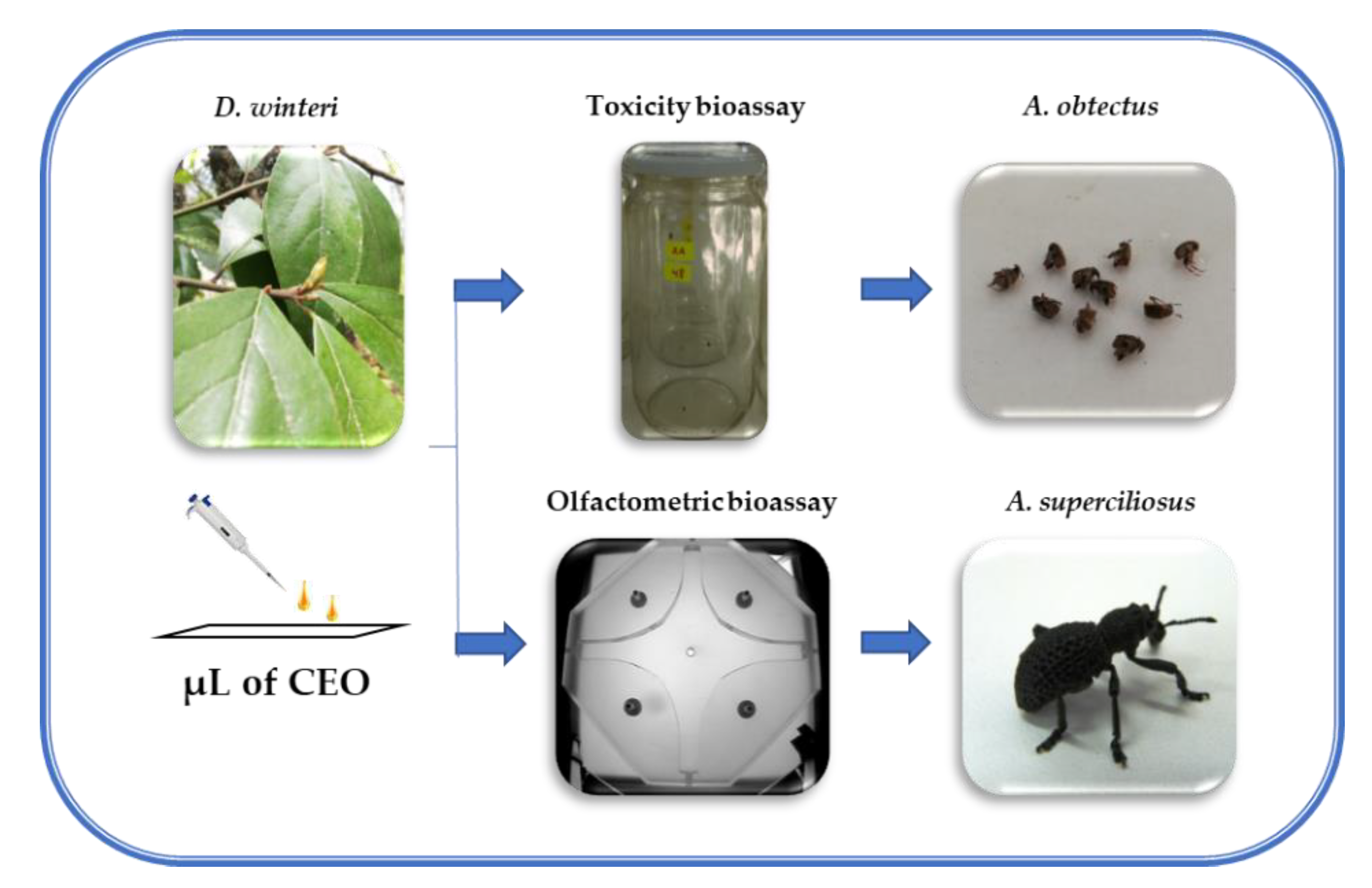
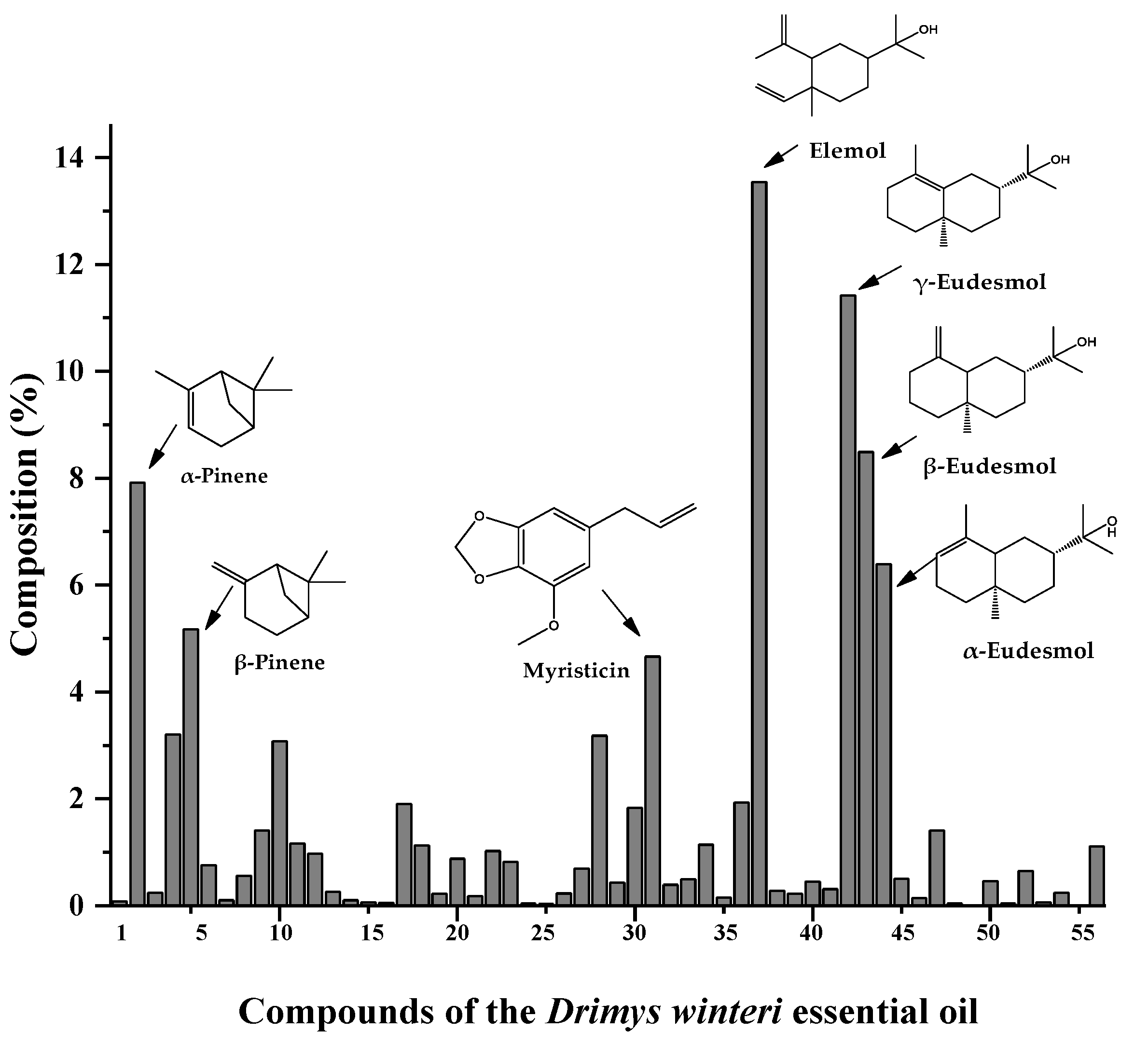
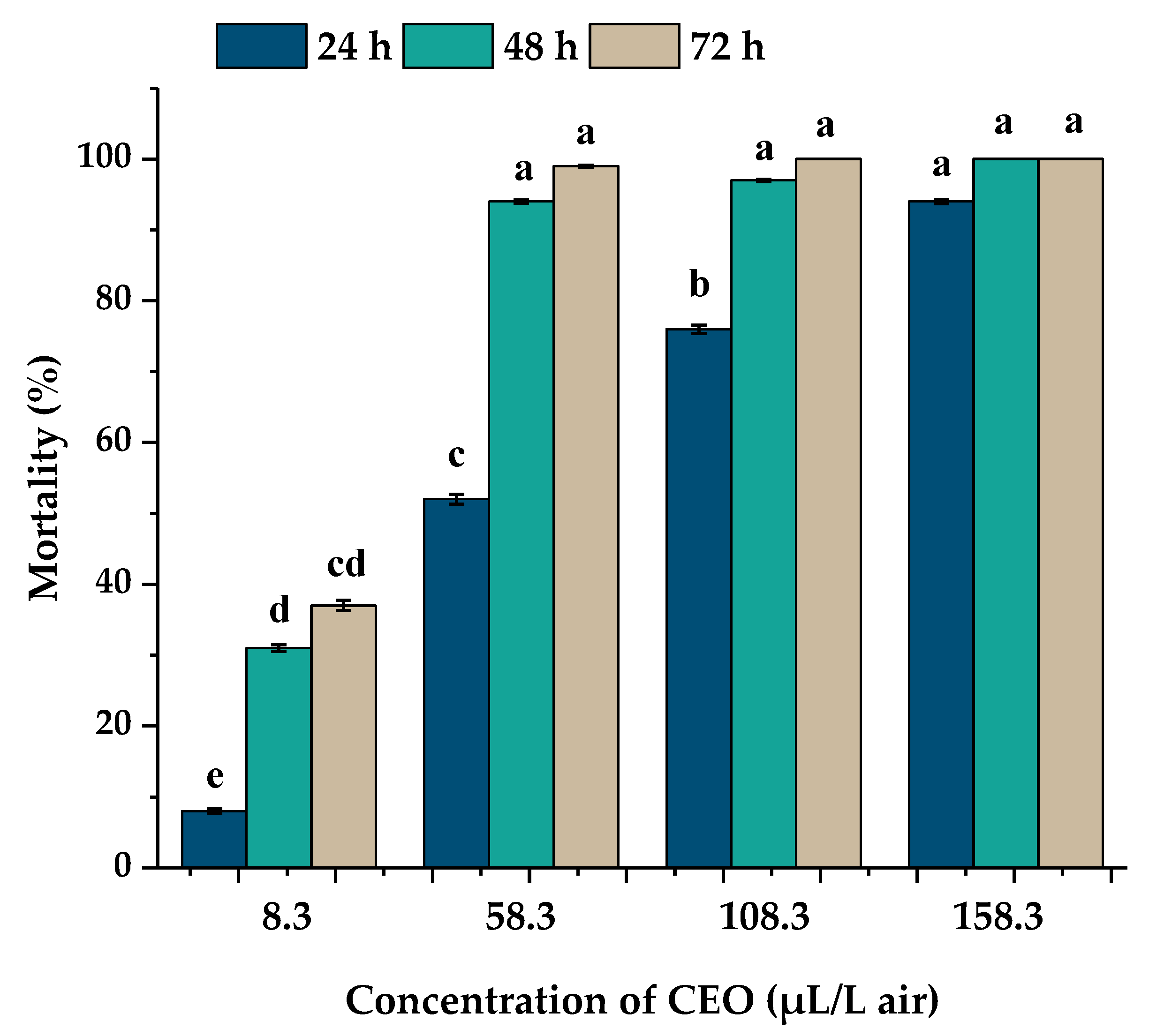
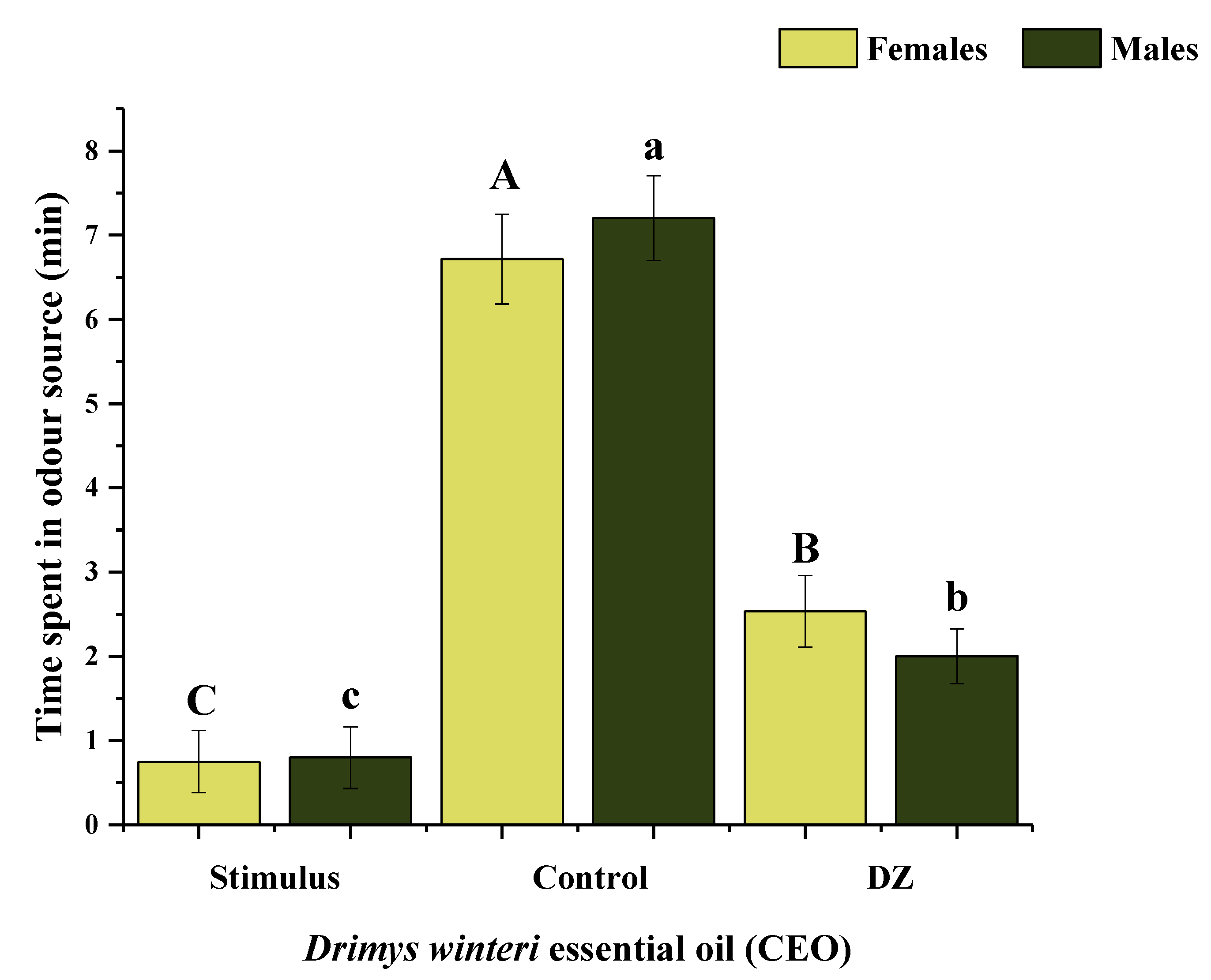
Adverse effects caused by synthetic pesticides have increased interest in plant-derived insecticidal compounds, in particular essential oils, as a more compatible and ecofriendly alternative for pest control of economic importance. For this reason, the essential oil isolated from leaves and shoots of Drimys winteri (J.R. Forster & G. Forster)—also named canelo (CEO)—was investigated for its chemical profile and insecticidal action against Acanthoscelides obtectus (Say)—one of the most important post-harvest pests of dry beans in the world—and Aegorhinus superciliosus (Guérin)—a significant pest of fruit trees in Chile. The analysis by gas chromatography, paired with mass spectrometry (GC/MS) determined 56 compounds, corresponding to 92.28% of the detected compounds. Elemol (13.54%), γ-eudesmol (11.42%), β-eudesmol (8.49%), α-eudesmol (6.39%), α-pinene (7.92%) and β-pinene (5.17%) were the most abundant. Regarding the bioactivity of the CEO, the results demonstrated toxicological effects against A. obtectus. A concentration of 158.3 µL L−1 had a mortality rate of 94% after 24 h exposure. The LC50 and LC90 values at 24 h were 60.1 and 163.0 µL L−1. Moreover, behavioral bioassays showed a repellent effect against A. superciliosus with a dose of one microliter of CEO. Both sexes of the raspberry weevil stayed for very short times in the treated area with the oil (<0.8 min), showing a homogeneous repellency in the species. The overall data suggest that canelo leaves and shoots essential oil has an insecticide effect and is worth exploring to better understand the synergistic relationship between the compounds present in the essential oil.
Keywords: bean weevil; raspberry weevil; toxic effect; repellent effect bean weevil; raspberry weevil; toxic effect; repellent effect