


Abstract
Industrial gear contacts operate under mixed-to-boundary lubrication where reliable antiwear protection is essential. This study assesses whether carbon nanomaterials can enhance the performance of zinc dialkyldithiophosphate (ZDDP) under severe conditions. A crossed-cylinder Reichert configuration (2 GPa, 75 °C, 1 m/s) with PAO6 was used to test ZDDP (1 wt%) and its blends with carbon nanotubes (CNT, 0.05 wt%), graphene nanoplatelets (GNP, 0.05 wt%), and few-layer graphene (FLG, 0.05 wt%) at 1, 10 and 60 min. The lubrication regime was boundary. Friction, specific wear rate (k), and tribofilm coverage were quantified. Oils containing only carbon nanoparticles could not sustain the test (seizure within minutes), confirming the necessity of ZDDP. After 60 min, average CoF remained similar across formulations and largely governed by ZDDP. By contrast, wear showed marked differences: relative to ZDDP alone (A), ZDDP + CNT (F) and ZDDP + GNP (G) reduced k by 52% and 48%, respectively, and exhibited higher tribofilm coverage (F = 68%, G = 72% vs. A = 57%). Time-resolved tests revealed that long-duration degradation was mitigated in F and G: from 10 to 60 min, k rose by 72% (F) and 58% (G) versus 159% for A; coverage decreased by only 8% (F) and 3% (G) versus 22% for A. SEM–EDS indicated no major differences in average elemental chemistry among formulations, suggesting an improvement on tribofilm coverage/stability rather than compositional change.
1. Introduction
Industrial gearboxes, notably those used in wind turbines, operate under high specific loads, mixed-to-boundary lubrication, and extended duty cycles. As drivetrains have shifted toward higher power density, contact pressures and thermal stresses at the sliding interfaces have increased, narrowing the safe operating window for lubricants and making effective antiwear protection essential. Similarly, engine oils rely on carefully engineered additive packages to achieve low friction, high wear protection, and overall improved energy efficiency.
Zinc dialkyldithiophosphate (ZDDP) was patented in 1941 and has since been widely used and studied as an antiwear and antioxidant additive [1]. Moreover, it has long been regarded as the benchmark antiwear additive owing to its low cost and its ability to decompose under mechanical and thermal stresses at the metal surface, forming a zinc and iron polyphosphate sacrificial film that protects it from severe wear [2,3]. However, ZDDP’s use routinely encounters challenges such as the promotion of micropitting in gearboxes and bearings [4], and catalyst deactivation and environmental issues arising from its high phosphorus content in engine oils [1]. This has prompted research into methods for reducing its concentration while retaining or even enhancing tribological properties.
In this context, carbon-based nanoparticles have attracted considerable attention due to their unique thermal, electrical, and mechanical properties as well as the ease with which their surfaces can be modified. Several reviews have been written about this topic. For example, De Mello focused on their use as solid lubricants [5] and Berman et al. compared graphene with graphite and graphene oxide [6]. Zhang et al. reviewed carbon nanotubes (CNT) in tribology, covering topics from manufacturing to nano- and macro-applications, including computational studies [7], and Nyholm and Espallargas reviewed functionalized carbon nanostructures as lubricant additives, highlighting dispersion/functionalization strategies and performance gains across oils, greases, and coatings [8]. Collectively, these reviews show that carbon-based nanoparticles can deliver great tribological results in many different areas.
As is well known, fully formulated oils have two components: a base oil and an additive package to improve or confer certain properties. The amount and types of additives depend mainly on the application of the oil, but it can be up to 24% of the blend for engine oils [9]. Therefore, besides studying the benefits of each nanoparticle individually, it is important to analyze their impact on other additives’ performances, particularly those present in most additive packages, such as ZDDP.
The interaction between graphene and ZDDP in PAO 4 was addressed by Zhao et al. [10]. They performed reciprocating ball-on-disc tests, with loads ranging from 30 to 310 N for 3600 s and reported a reduction in wear rate of 77% compared to the base oil. On the other hand, Dziegielewski et al., also in a ball-on-disc configuration, studied the combination of ZDDP and CNT in a PAO 8 base oil [11]. The lowest linear wear was measured when 1.5 wt% of ZDDP and 0.005 wt% of CNTs were added to the base oil, indicating an improvement on the antiwear additive performance. Despite this progress, there are no studies that systematically evaluate different carbon-based nanoparticles in combination with ZDDP under the same tribological conditions. Therefore, direct comparisons among the nanomaterials are not possible.
Based on the above, the aim of this paper was to evaluate the impact of CNT, graphene nanoplatelets (GNP), and few-layer graphene (FLG) on the tribological behavior of ZDDP. Using a crossed-cylinder Reichert configuration at 2 GPa, different oil formulations containing ZDDP, CNT, GNP, and FLG were tested. Quantification of friction, specific wear rate, and tribofilm coverage by SEM–EDS was done. Also, the tribofilm stability was investigated by characterizing the wear and coverage at different rubbing times. This article is a revised and expanded version of an abstract presented at the Leeds-Lyon Symposium on Tribology 2025, Leeds, UK (3 September 2025) [12].
2. Materials and Methods
2.1. Oil Formulation
Oil variants were formulated using a Durasyn 126 polyalphaolefin base oil (PAO 6, from INEOS, London, UK), with no additive package. The base oil has a density of 0.826 g/mL, a kinematic viscosity of 6.0 /s at 100 °C, a viscosity index of 144, and a flash point above 220 °C. Zinc dialkyldithiophosphate (ZDDP), multi-walled carbon nanotubes (CNT), few-layer graphene (FLG), and graphene nanoplatelets (GNP) were incorporated as additives to the oil to enhance tribological performance.
ZDDP is one of the most widely used antiwear additives in engine oils, gearboxes and heavy-duty oils. Therefore, a commercial ZDDP (Hitec 1656, from Afton Chemical, Rio de Janeiro, Brazil) was used at a concentration of 1 wt%. Zhang et al. had tested several concentrations of ZDDP and showed that this was the optimum amount of additive for wear protection [13].
CNT (from Cheap Tubes ®, Townshend, VT, USA), with an outer diameter of 100–200 nm and a length of 20–30 m, were functionalized before incorporation into the blends. They were dispersed in a sodium hypochlorite solution, sonicated for 20 min, heated in a water bath at 85 °C for 3 h and then filtered and washed with distilled water until reaching a pH of 7 [14].
Finally, two graphene-based boosters were incorporated into the base oil: FLG and GNP (both supplied by Gerdau Graphene, Sao Paulo, Brazil). The characterization of these materials is reported elsewhere—FLG corresponds to sample A20 in [15], and GNP to sample L66_2 in [16].
All carbon-based nanoparticles were added to the oils at a maximum concentration of 0.05 wt%. It has been reported that a higher concentration of graphene or CNT may have negative impact on friction and/or wear, as agglomeration of particles may occur leading to abrasive wear [17,18,19]. The resulting formulations and concentrations are summarized in Table 1. Oil viscosity was measured at 40 °C using a SpectroVisc Q300 viscosimeter (Spectro Scientific, Chelmsford, MA, USA).
Table 1.
Oil Formulations.
The dispersion stability of the oil-based suspensions containing carbon nanotubes and graphene nanoplatelets was evaluated through transmitted-light measurements as a function of time. For this purpose, a custom-built optical monitoring device was developed using an Arduino Uno board, a laser diode, and a light sensor. The laser beam was directed through a 5 mL vial containing the sample, while the light sensor was placed on the opposite side of the vial to record the intensity of the transmitted light. The measurement chamber was designed to maintain complete darkness during operation, thereby preventing interference from ambient light and ensuring reliable intensity measurements.
After sonication and mechanical stirring, each sample was immediately placed in the measuring device and the transmitted light intensity was recorded periodically at 1 min intervals. The measured intensity was taken as an indirect indicator of the particle concentration remaining in suspension. At the beginning of the test, when the nanoparticles were fully dispersed, the transmitted light intensity reached its minimum value due to the higher optical attenuation caused by the suspended particles. As sedimentation progressed, the concentration of particles in the optical path decreased, leading to a gradual increase in the transmitted light intensity. The maximum intensity value was associated with the condition in which the particles had fully settled.
For each formulation, transmitted-light intensity curves were obtained as a function of time, then they were normalized and used to compare the sedimentation behavior and relative stability of the different nanolubricant suspensions.
2.2. Tribological Tests
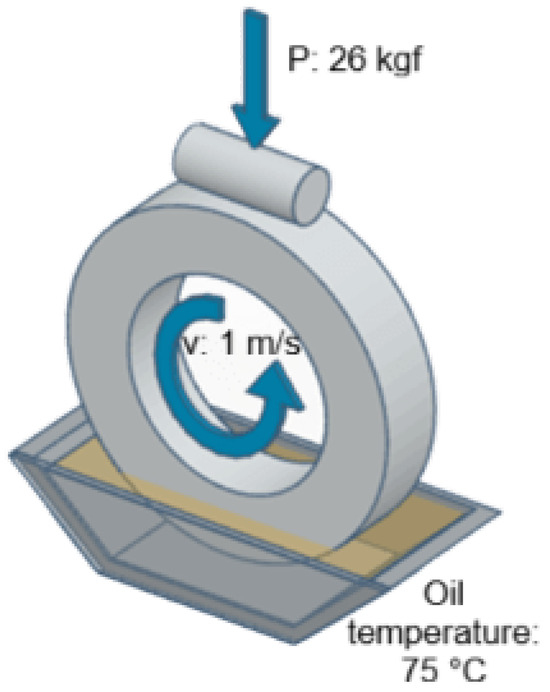
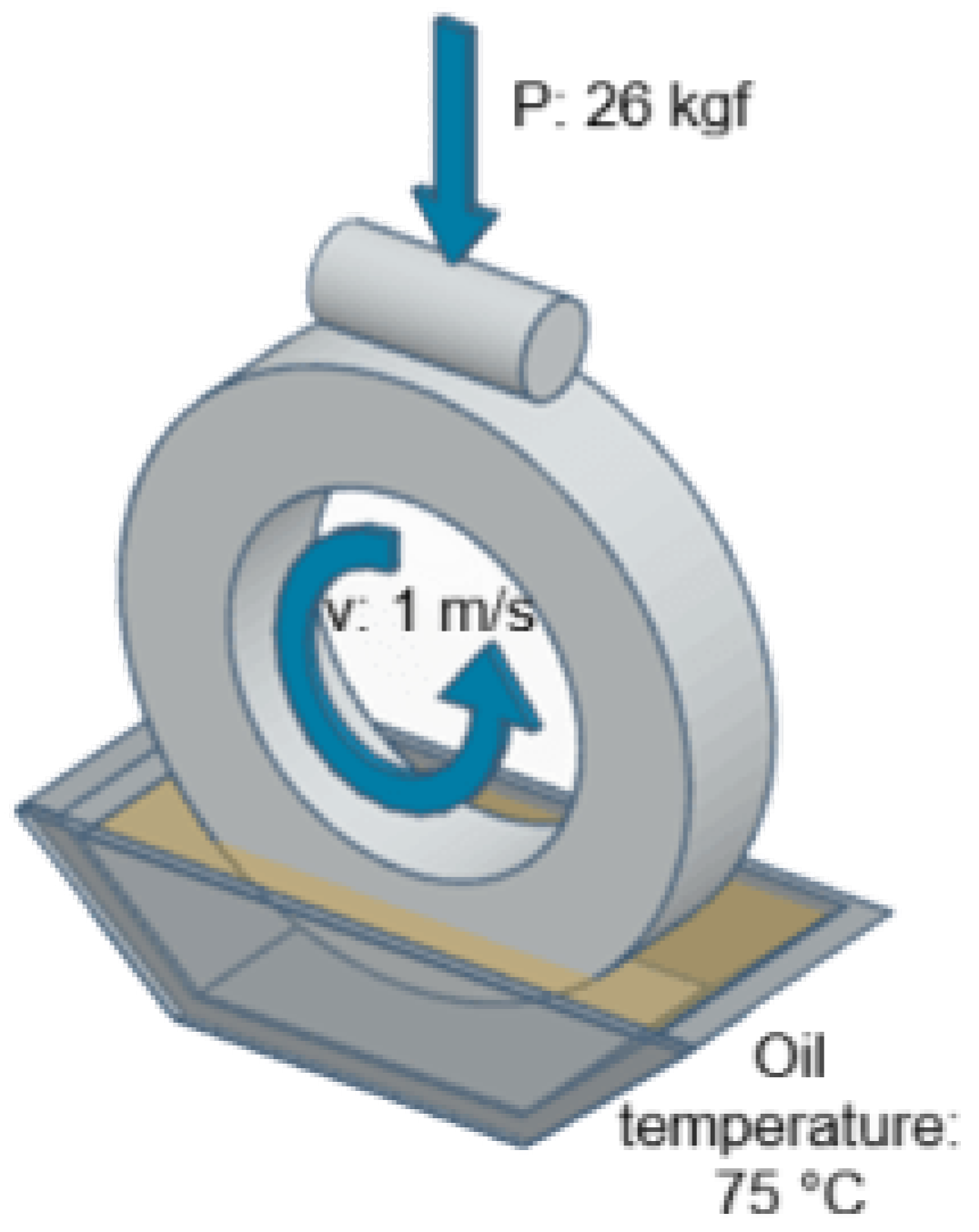
Reichert tests were performed to assess the lubricant performance using a custom-built Reichert tribometer. A schematic is shown in Figure 1. The upper, stationary, cylinder had a diameter of 8 mm and a length of 30 mm. The lower cylinder, with an outer diameter of 42 mm, rotated and carried the lubricant into the contact zone from a reservoir with 8 mL of oil. Both specimens were made of bearing steel (AISI 52100), with a hardness of 61.3 ± 0.4 HRC. The applied load was 26 kgf, which produced an initial Hertzian contact pressure of 2 GPa [20]. The oil temperature was maintained at 75 °C, the sliding speed was set at 1 m/s, and 60, 10, and 1-min tests were conducted. Prior to each test, the formulated oil was ultrasonicated to promote the dispersion of the nanoparticles in the lubricant.
Figure 1.
Schematic of the configuration of Reichert tests.
The Coefficient of Friction (CoF) was recorded continuously throughout each test. For each formulation, all measured parameters were obtained from n independent replicate tests (n = 3–5). The error bars shown in all figures represent the standard deviation of these replicate means, reflecting variability between independent experiments. Before every run, the lower cylinder was polished with sandpaper, reaching a root mean square roughness (Rq) of 0.776 ± 0.120 m. The Rq of the upper cylinder was 1.132 ± 0.046 m.
The film parameter was estimated as , where is the minimum lubricant film thickness and is the composite surface roughness. The minimum film thickness was calculated using the Hamrock–Dowson correlation for a fully flooded, isothermal, Newtonian elliptical point contact [21]. For the present crossed-cylinder geometry, Rx = 4 mm and Ry = 21 mm were used. The reduced elastic modulus for steel/steel contact was taken as , the entrainment speed was ue = 0.5 m/s, and the normal load was WN = 255 N. The dynamic viscosity at 75 °C was estimated by interpolation from values at 40 and 100 °C, yielding . A typical pressure–viscosity coefficient for PAO at this temperature, , was assumed. Using the measured roughness values of the upper and lower cylinders, the composite roughness was 1.37 m. The resulting minimum film thickness was of the order of 20–30 nm, giving 0.02. Even considering reasonable variations in viscosity, pressure–viscosity coefficient, or roughness, remains well below unity, confirming that all tests were conducted under boundary lubrication conditions.
Accordingly, the Reichert test should be interpreted as a severe boundary-lubrication screening method rather than as a direct gearbox validation. Real gearbox contacts involve combined rolling and sliding motion, whereas the present crossed-cylinder Reichert configuration imposes pure sliding.
2.3. Characterization
After testing, wear was quantified using a laser confocal microscope (Smartproof 5, Carl Zeiss, Oberkochen, Germany). The measured wear volume was used to calculate the specific wear rate k according to Equation (1).
where:
- V: Wear volume [m3].
- : Normal force [N].
- D: Sliding distance [m].
The wear surfaces and tribofilms were also evaluated. Elemental analyses were performed by scanning electron microscopy coupled with energy-dispersive X-ray spectroscopy (SEM–EDS). The measurements were carried out using a EVO MA10 scanning electron microscope (Carl Zeiss, Oberkochen, Germany) equipped with an X-act EDS detector (Oxford Instruments, High Wycombe, England). EDS elemental maps were acquired at an accelerating voltage of 20 kV and a working distance of 8.5 mm. The mapped area was approximately 309 × 232 m, corresponding to a magnification of 1000×. The acquisition was performed using a fixed duration of three frames, with a process time setting of 4, a pixel dwell time of 500 s, and a map resolution of 256 × 256 pixels. Point EDS spectra were acquired under the same analytical configuration using a process time setting of 4. The acquisition was performed in counts mode, with a fixed total acquisition of 500,000 counts for each spectrum.
For quantitative analysis of tribofilm coverage, the raw EDS counts were exported to CSV files, and each pixel was classified based on the presence of additive-derived elements. For each pixel, the counts of Zn, P, S, and O were summed to obtain a combined elemental signal. A single fixed threshold of 20 counts per pixel, corresponding to 50% of the maximum combined signal observed across all EDS maps (41 counts per pixel), was applied uniformly to all samples. Pixels with a combined Zn + P + S + O signal equal to or above this threshold were classified as “tribofilm,” whereas pixels below the thresholds were labeled as “substrate.” The percentage of tribofilm coverage was then calculated as the number of “tribofilm” pixels divided by the total number of pixels in the mapped area. Representative SEM images and corresponding EDS maps, together with the thresholding scheme, are shown in Figure 2 to illustrate the procedure.
Figure 2.
(a) SEM image of wear scars, (b) EDS map of Zn, P, S, and O on the track, (c) EDS—P mapping, and (d) Pixels classified as “tribofilm” after applying the threshold.
3. Results & Discussion
3.1. Oil Characterization
The kinematic viscosity of the formulated oils was measured to evaluate the effect of the carbon-based additives on the bulk rheological properties of the lubricant. All formulations exhibited similar viscosity values, with an average of 31 ± 1.3 cSt. This result indicates that the incorporation of the nanoparticles did not modify the kinematic viscosity of the base oil, making the formulated oils directly comparable in terms of this property.
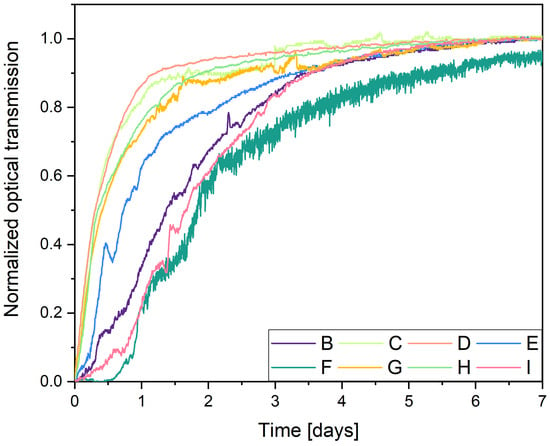
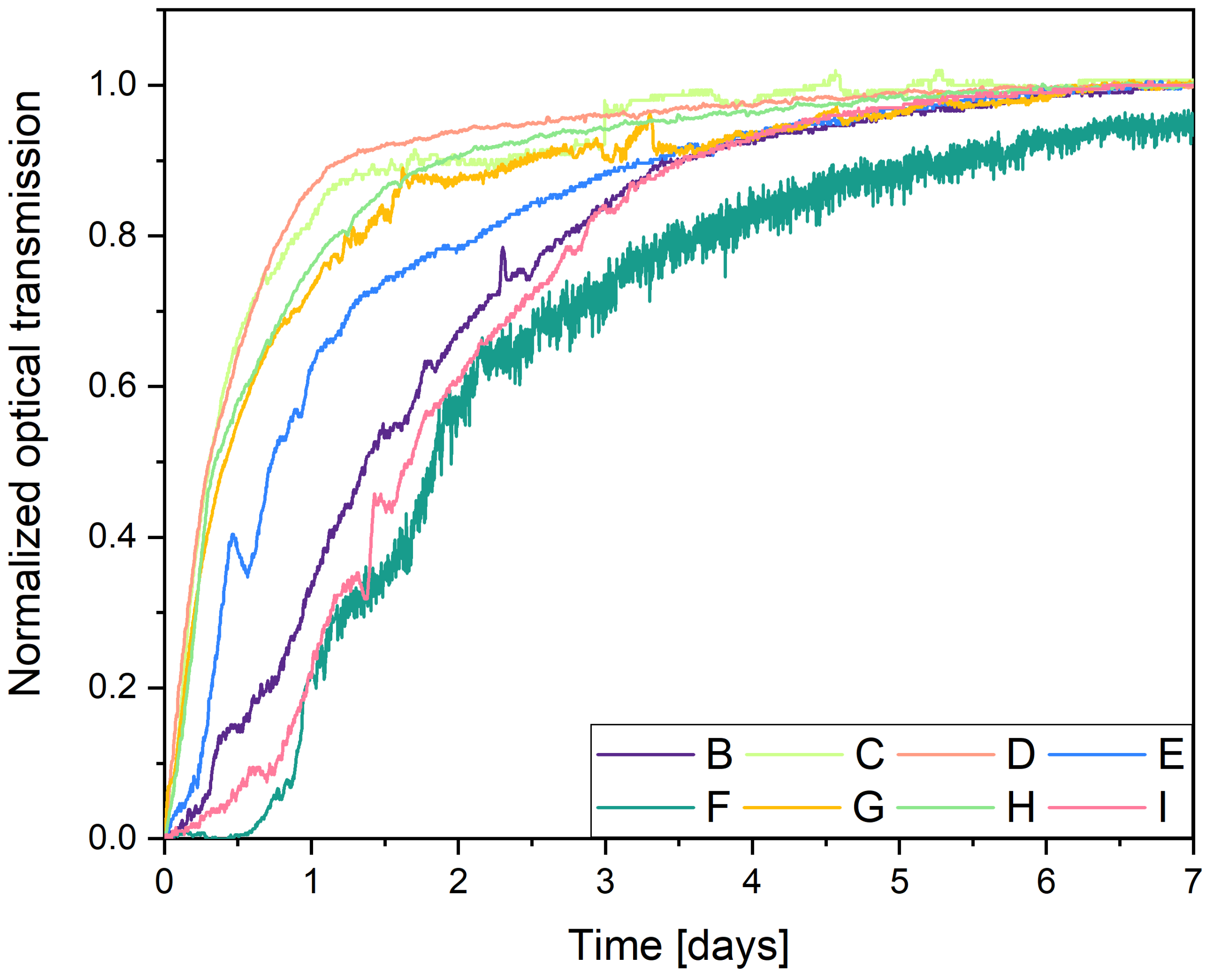
Instead, the decantation behavior revealed clear differences in the stability of the carbon-based oil dispersions (Figure 3). Formulations containing GNP and FLG showed a relatively fast increase in the normalized optical signal, indicating rapid clarification and sedimentation of the dispersed phase. In this sense, oil D (FLG) exhibited the fastest increase in normalized transmission, reaching 90% of the final signal after approximately 1.2 days (t90). Similarly, oil C (GNP) reached t90 after approximately 1.5 days.
Figure 3.
Normalized static decantation curves of the formulated oils.
The addition of ZDDP delayed the clarification process in both cases, increasing the corresponding t90 values to approximately 1.9 days for ZDDP + FLG (H) and 2.4 days for ZDDP + GNP (G). The most stable behavior was observed for the CNT + ZDDP formulation, which exhibited the slowest increase in optical transmission and reached t90 only after approximately 4.7 days. These results suggest that ZDDP contributes to improving the stability of carbon-based dispersions.
3.2. Preliminary Evaluation of Base Oil and Minimal Additive Systems
An initial screening of base oil and minimally formulated lubricants was conducted to evaluate their ability to withstand high-contact-pressure conditions. The tested formulations included PAO, and PAO with one or more additives: ZDDP (A), CNT (B), GNP (C), FLG (D), and CNT + FLG (E). The target test duration was 60 min.
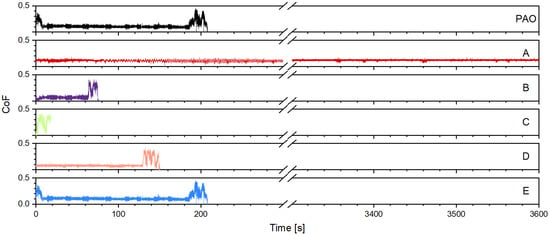
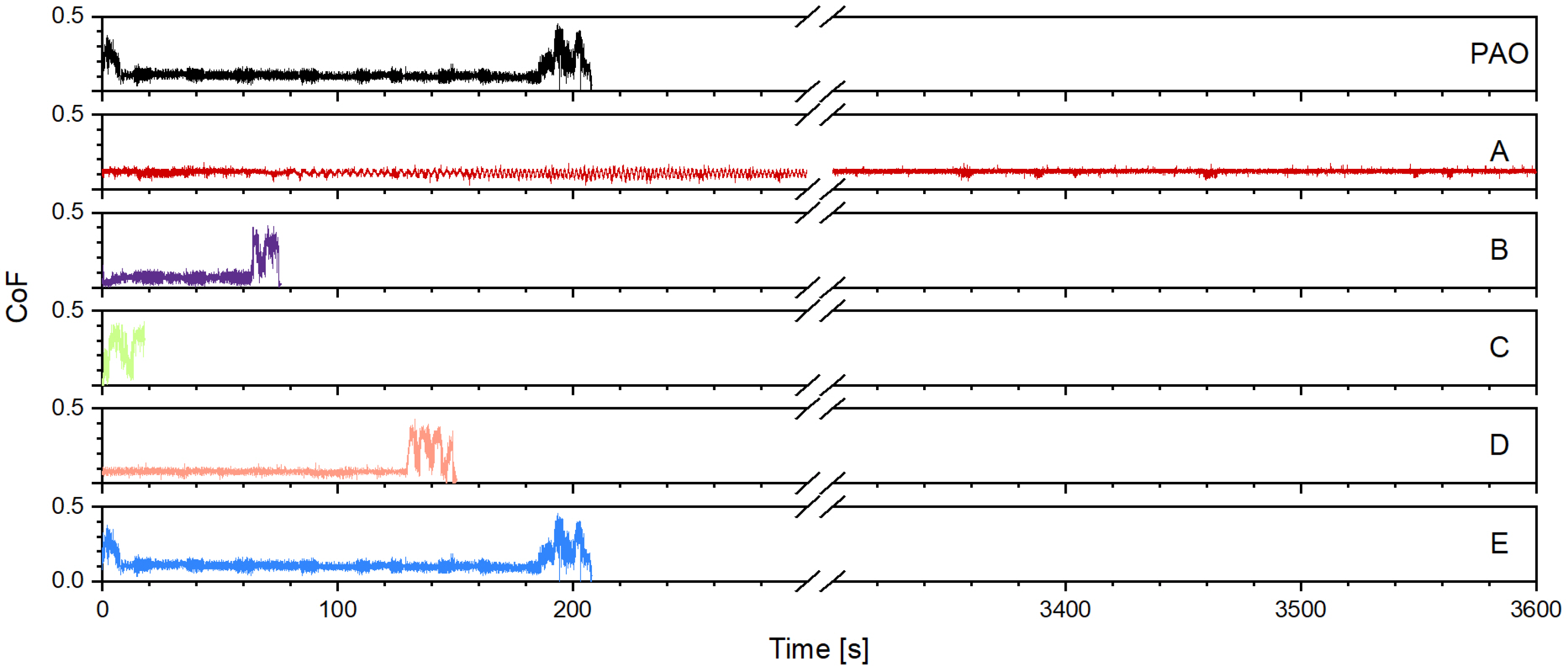
Among all tested formulations, only the blend containing ZDDP (A) was able to complete the full test. Those lacking the antiwear additive experienced seizure and the tests had to be interrupted prematurely, with failure occurring at approximately 0.25 min for PAO, 1.25 min for formulation B, 0.3 min for C, 2.5 min for D and 3.5 min for E (Figure 4).
Figure 4.
Typical CoF versus time curves for 60-min tests.
Multiple repetitions were performed to confirm the critical role of ZDDP in maintaining tribological integrity under the applied load.
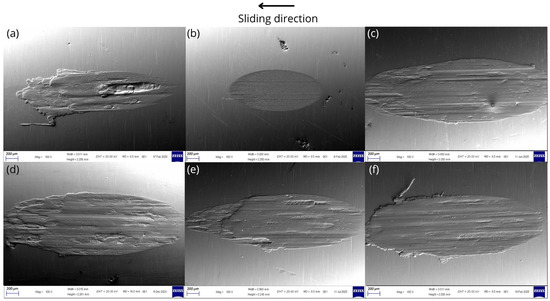
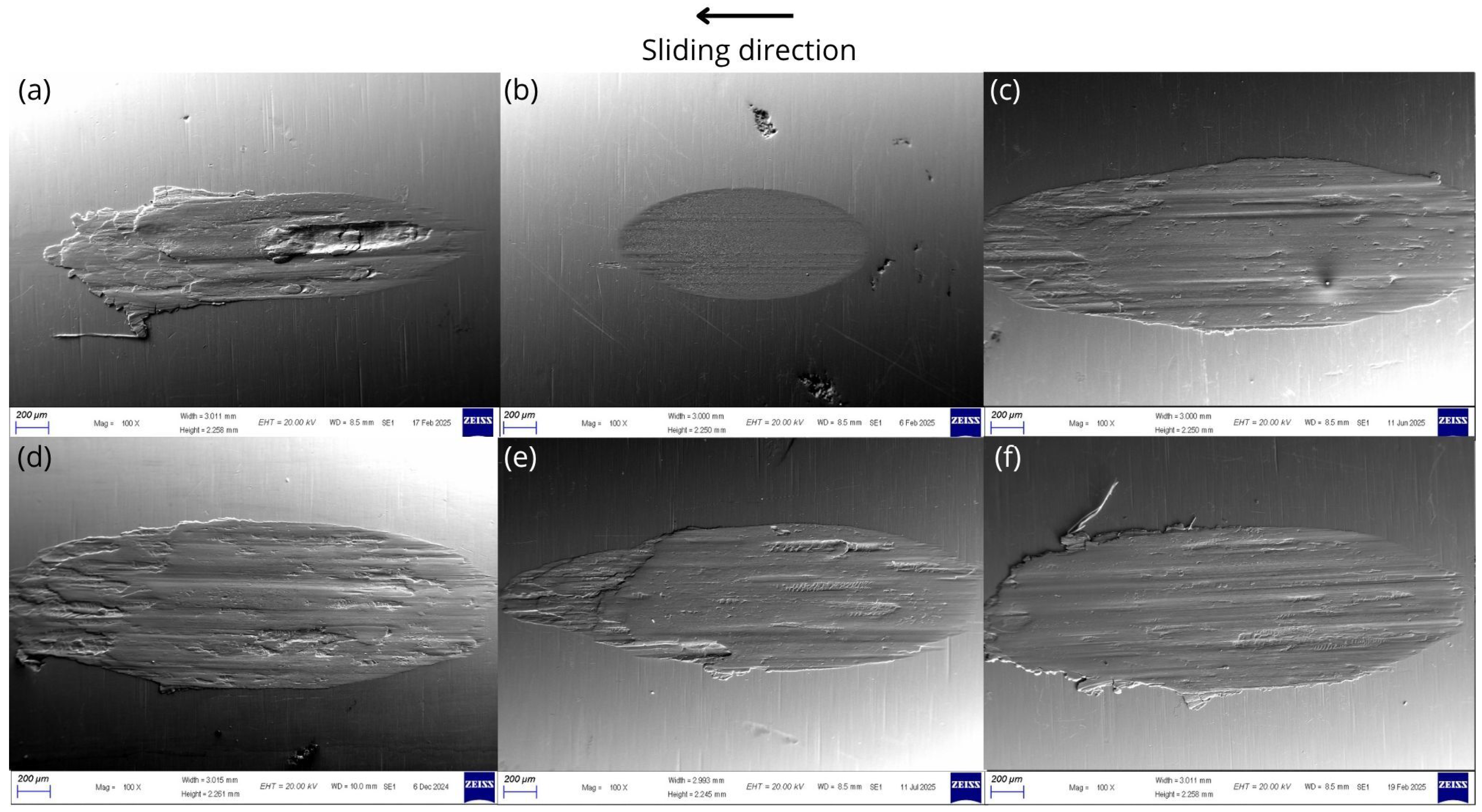
Figure 5 shows SEM images of the wear scars for formulations PAO (a), A (b), B (c), C (d), D (e), and E (f) acquired at the same magnification. The PAO base oil failed almost immediately upon load application, producing a severely damaged wear scar with clear evidence of adhesive wear and plastic deformation (Figure 5a). In contrast, the ZDDP-containing formulation (Figure 5b) generated a much smaller and smoother scar after 60 min of sliding, confirming both improved load-carrying capacity and wear protection [22]. From formulation B to E, all displayed a similar failure mechanism to PAO, characterized by adhesion, but also with wider and extensive surface damage (Figure 5c–f).
Figure 5.
SEM images of the wear scars obtained at the same magnification for: (a) PAO, (b) A, (c) B, (d) C, (e) D, and (f) E. The sliding direction is indicated by the arrow.
Under less severe conditions or with higher-viscosity base oils, several studies have reported improved lubricant performance upon adding carbon-based nanomaterials. For instance, La et al. reported a 35% reduction in the wear scar diameter with the incorporation of GNP to an HD-50 base oil [18]. Nunn et al. tested PAO 6 with CNT and GNP in a block-on-ring configuration, applying a Hertzian contact pressure of 220 MPa, and found reductions in both CoF and wear relative to base oil alone [23]. Nevertheless, in this study, while some nanomaterials marginally increased the test duration compared with the base oil, none was able to prevent seizure beyond a few minutes. This indicates that, in isolation, the carbon-based nanoparticles are not capable of sustaining the load conditions imposed here, whereas ZDDP is. As originally proposed by Martin et al. [24] and later corroborated by Dorgham et al. [3], Shimizu et al. [22], and Hsu et al. [25], ZDDP quickly forms a sulfur-rich tribofilm during run-in. This layer enables the contact to sustain sliding under severe loads without seizure.
3.3. Combined Formulations: ZDDP with Nanomaterials
To evaluate systematically the combined effect of ZDDP and the carbon-based nanomaterials, formulations F (ZDDP + CNT), G (ZDDP + GNP), H (ZDDP + FLG), and I (ZDDP + CNT + FLG) were prepared and tested.
3.3.1. 60-Min Tests
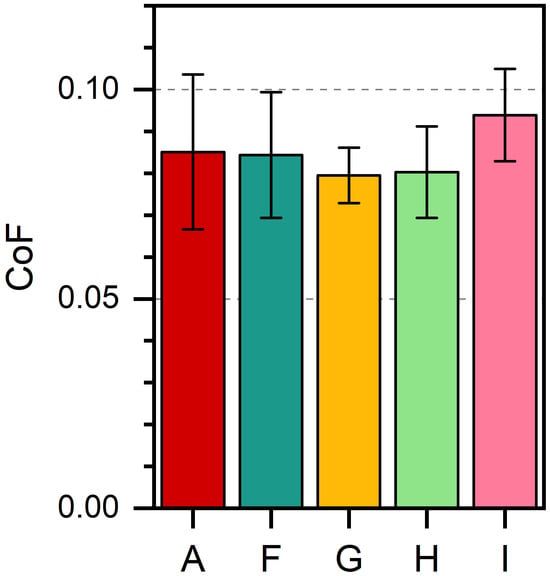
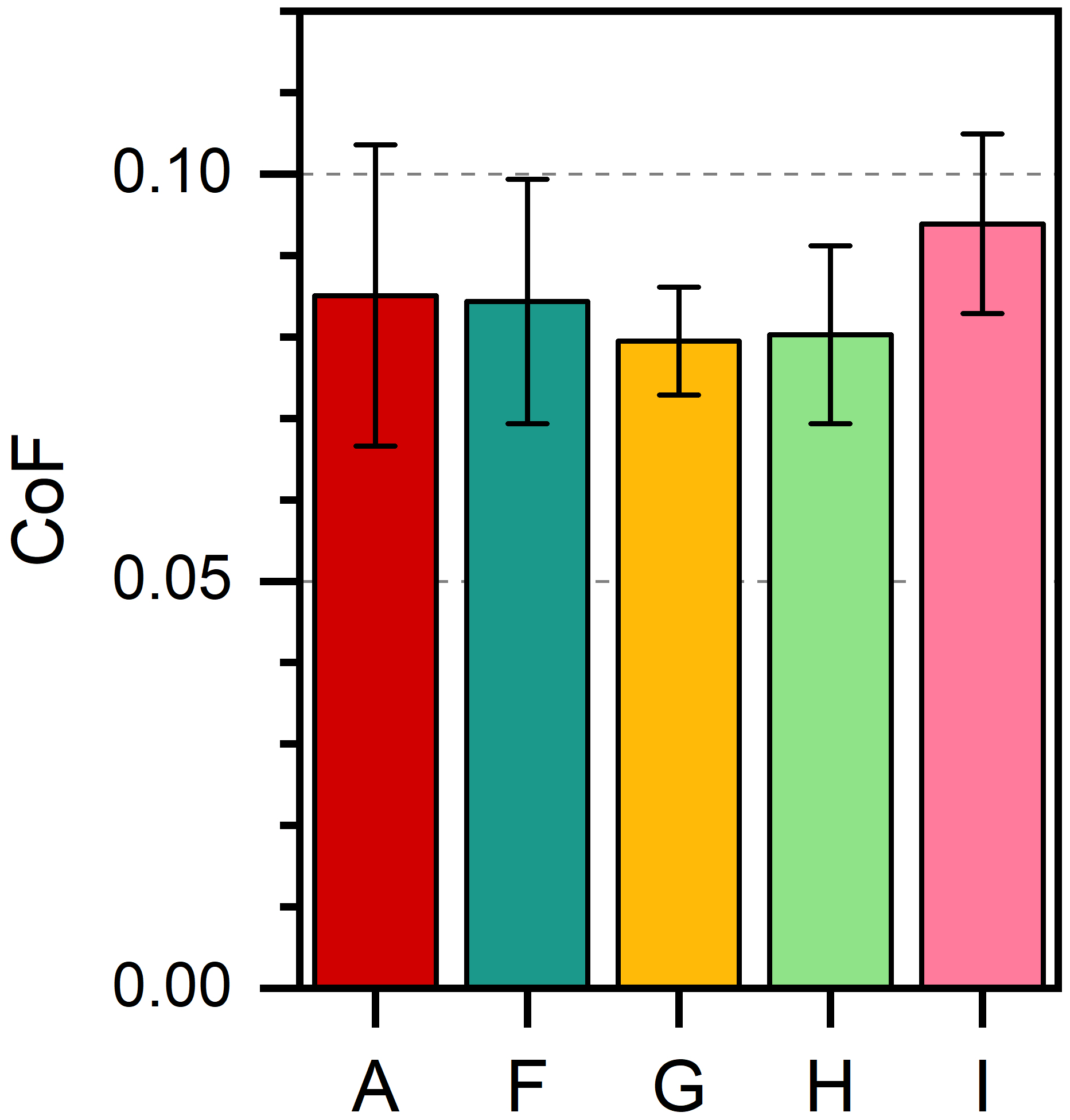
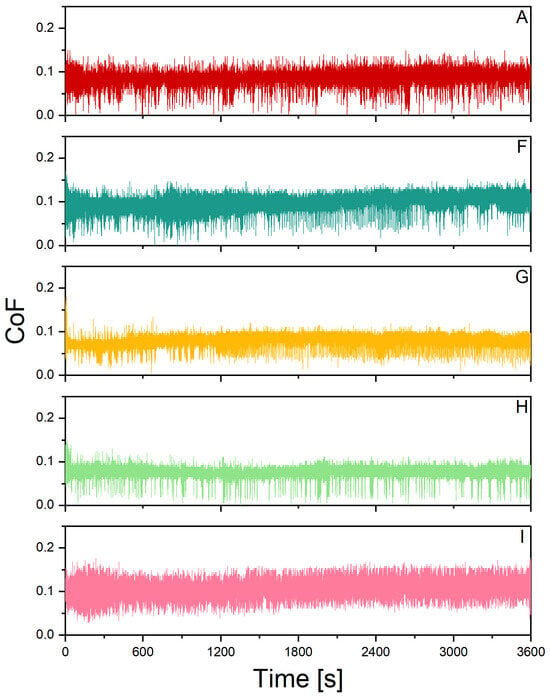
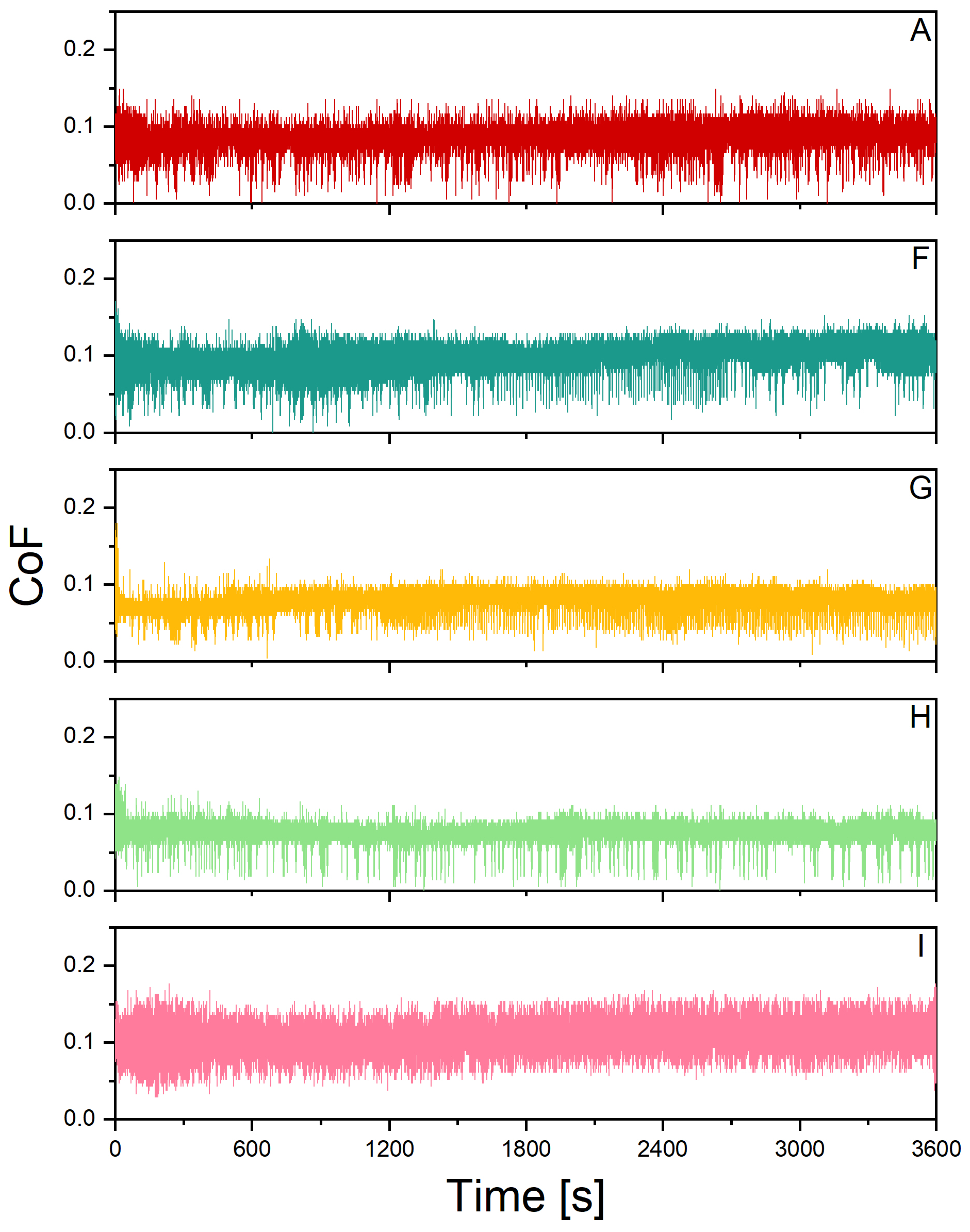
Figure 6 presents the average CoF after 60 min of testing. All formulations maintained stable tribological behavior, and no significant differences were observed (Figure 7). Formulations G and H, both containing graphene variants and ZDDP, exhibited a slightly lower CoF, of approximately 0.08. Instead, the addition of CNT (formulation F) did not affect the mean frictional response of the oil relative to ZDDP alone (A). Notably, formulation I (ZDDP + CNT + FLG) showed the highest mean CoF among the group, despite combining both nanomaterials with ZDDP.
Figure 6.
Mean CoF for 60-min tests.
Figure 7.
Typical CoF versus time curves for 60-min tests.
It is known that ZDDP incorporation tends to increase CoF due to its rough, patchy, and pad-like features [2,26]. Nevertheless, the addition of carbon-based nanomaterials did not counteract the adverse feature of ZDDP. This limited sensitivity of friction to carbon nanomaterials in ZDDP-containing oils agrees with Zhao et al., who reported little to no effect of graphene on CoF in PAO 4 + ZDDP + graphene lubricants, with friction largely governed by ZDDP [10].
The incorporation of nanomaterials also improved the reproducibility of the tests, as all formulations exhibited lower CoF dispersion than A. The larger variability observed for the formulation containing only ZDDP could be attributed to intermittent breakdown and regeneration of the tribofilm under severe contact conditions [10]. In contrast, the narrower standard deviation found in formulations F, G, H, and I may indicate the formation of a more uniform and stable tribofilm, aided by the addition of CNT and graphene-based additives.
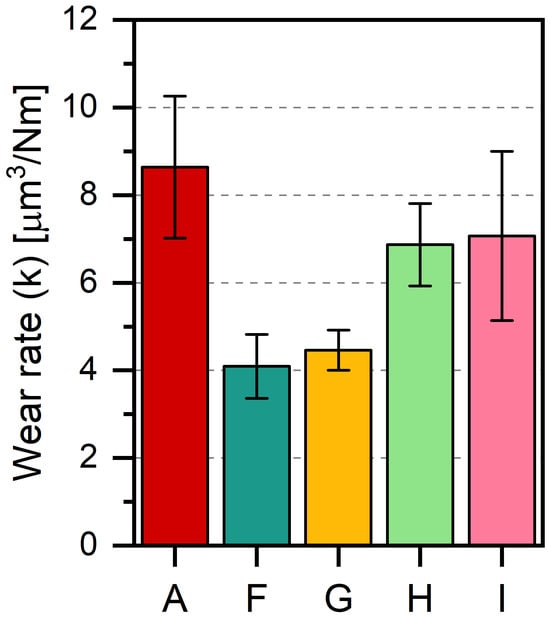
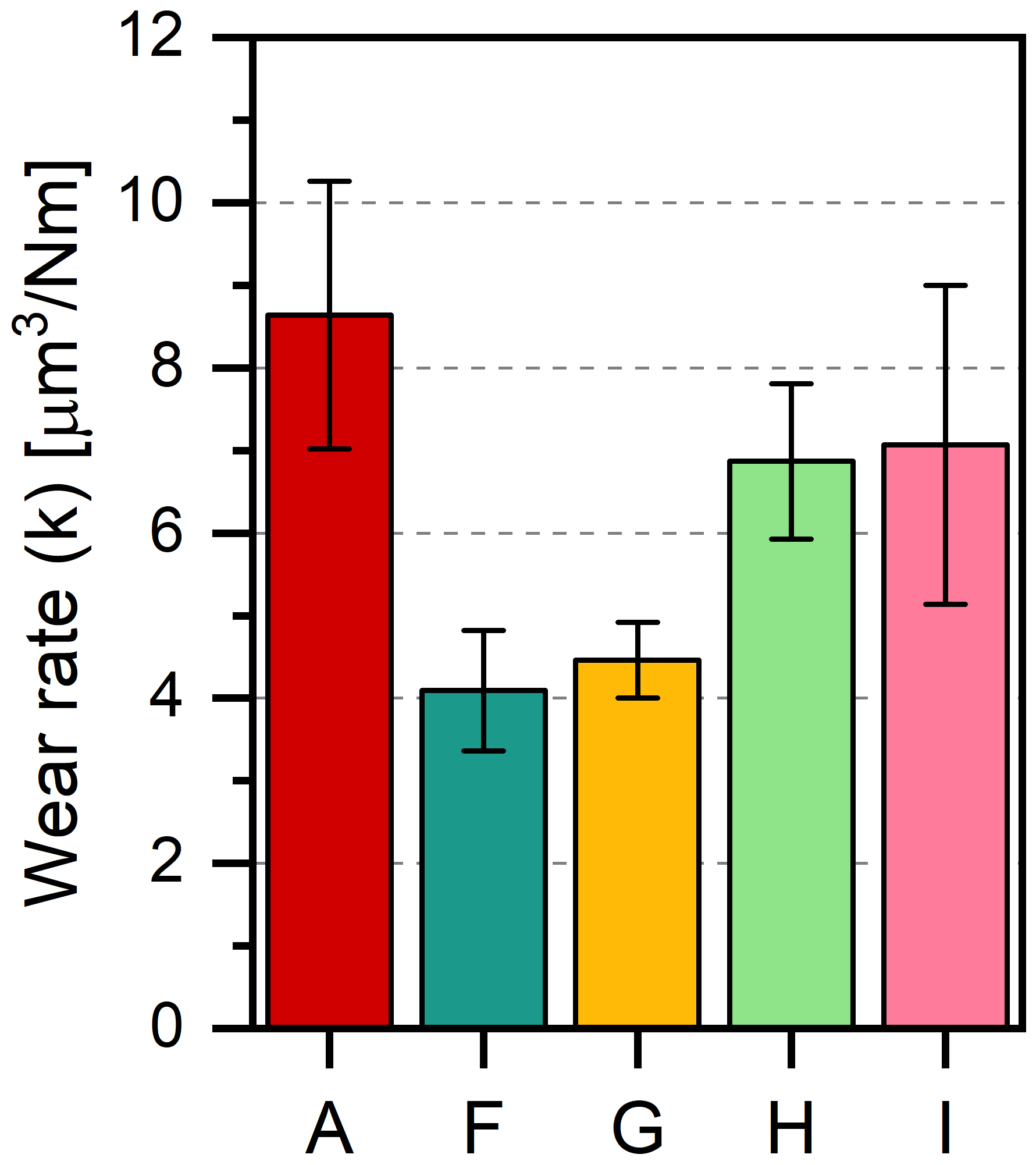
Once the tests were completed, the wear rate (k) was calculated. As can be seen in Figure 8, formulation A (ZDDP) presented the highest wear rate, averaging 8.64 /Nm. The incorporation of CNT, FLG or GNP into the oil reduced the wear. Combining ZDDP with CNT (formulation F) or GNP (formulation G) markedly improved the antiwear performance of the lubricant, reducing k by 52% and 48%, respectively. The reduction in wear produced by adding only 0.05 wt% CNT or GNP to the ZDDP-containing oil indicates a positive antiwear interaction under the present conditions.
Figure 8.
Wear rate for 60-min tests.
To evaluate statistical significance, a one-way analysis of variance (ANOVA) was performed, confirming a global effect of formulation on wear (F = 10.46; p < 0.001). However, the moderate value (0.69) and relatively high coefficient of variation (20.5%) indicate appreciable experimental variability. Post hoc comparisons using Fisher’s Least Significant Difference (LSD) test at = 0.05 revealed that formulation A was statistically distinct from the carbon-nanostructure-containing formulations. Formulations F and G exhibited the lowest wear values and did not differ significantly from each other, indicating equivalent performance. Formulation H showed intermediate wear values, significantly higher than F and G but lower than A, while formulation I displayed transitional behavior, with no significant differences relative to either H or A, reflecting higher variability in its tribological response. These findings align with Dziegielewski et al. and Zhao et al., who also reported synergistic interactions between ZDDP and CNT, and ZDDP and graphene in a different base oil [10,11].
Consistent with CoF results, the variability in k for formulations F, G, and H was also lower, supporting the conclusion that the positive antiwear interaction is associated with more uniform and persistent tribofilm coverage.
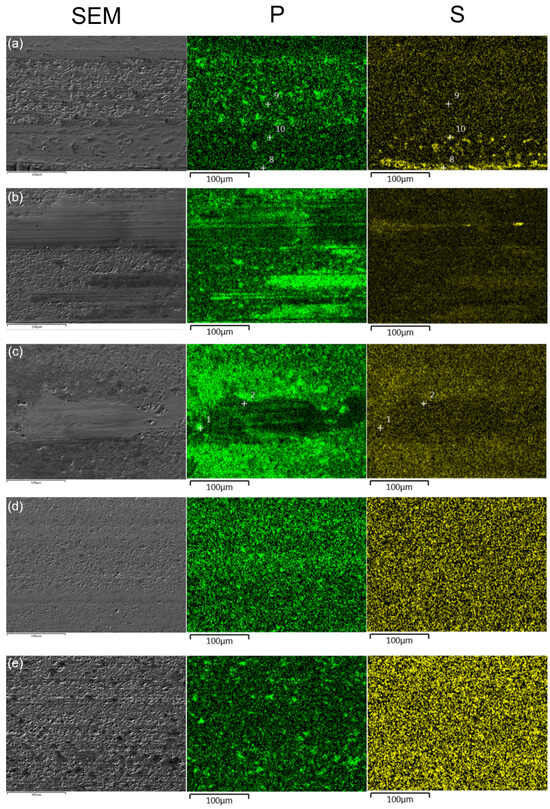
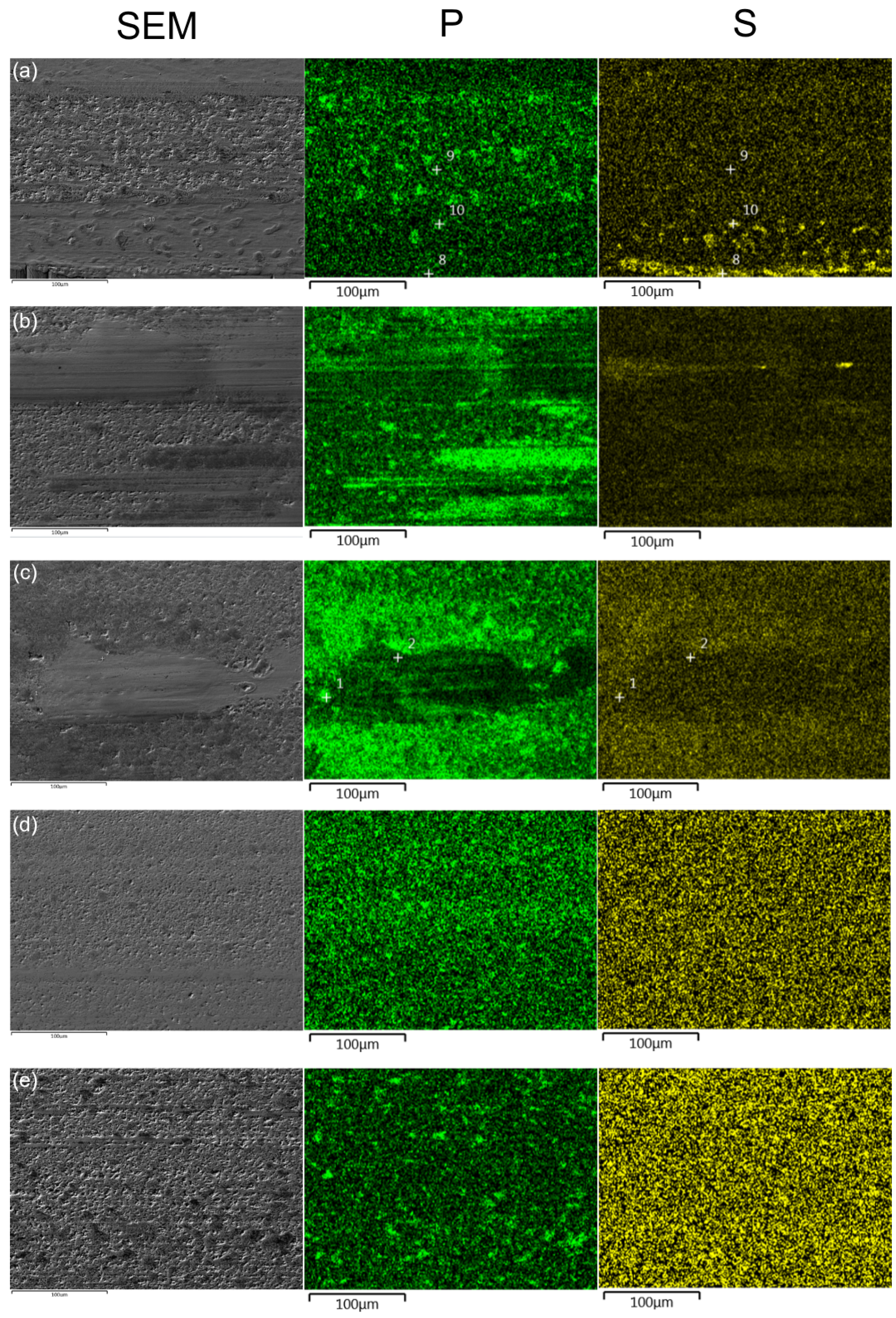
Representative SEM micrographs and the corresponding EDS elemental maps of P and S for the ZDDP-containing formulations are shown in Figure 9. The SEM images revealed clear differences in the morphology of the worn surfaces, which were partially correlated with the spatial distribution of P- and S-rich regions. In formulation A (ZDDP), the worn surface showed a heterogeneous morphology, with roughened regions and localized surface damage, together with a non-uniform distribution of P and S. For formulations F (ZDDP + CNT) and G (ZDDP + GNP), the EDS maps showed more extended P-rich regions over the analyzed wear track, which coincided with areas showing modified surface morphology in the SEM images. This suggests that CNT and GNP promoted the development or retention of ZDDP-derived tribochemical products on the worn surface. In the FLG-containing formulations, H (ZDDP + FLG) and I (ZDDP + CNT + FLG), the SEM images showed more extended roughened regions, while the EDS maps displayed a more diffuse distribution of P and S, especially for sulfur. These observations indicate that the carbon nanostructures not only affected the amount of ZDDP-derived material retained on the surface, but also its spatial distribution and its association with the wear morphology.
Figure 9.
SEM micrographs and corresponding EDS elemental maps of phosphorus (P) and sulfur (S) for formulation: (a) A, (b) F, (c) G, (d) H, and (e) I.
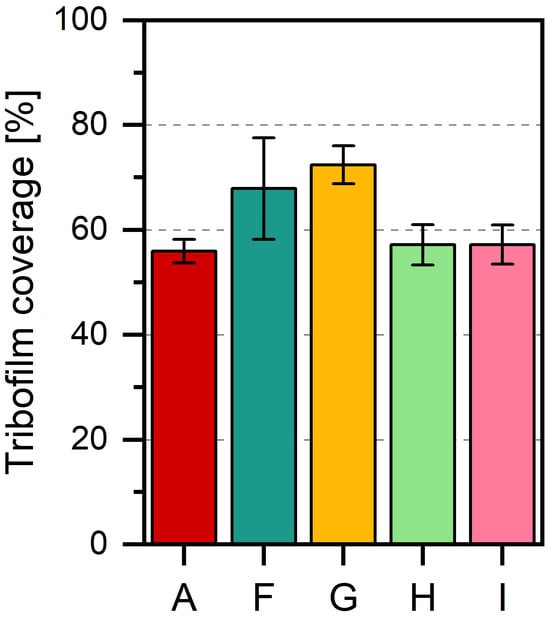
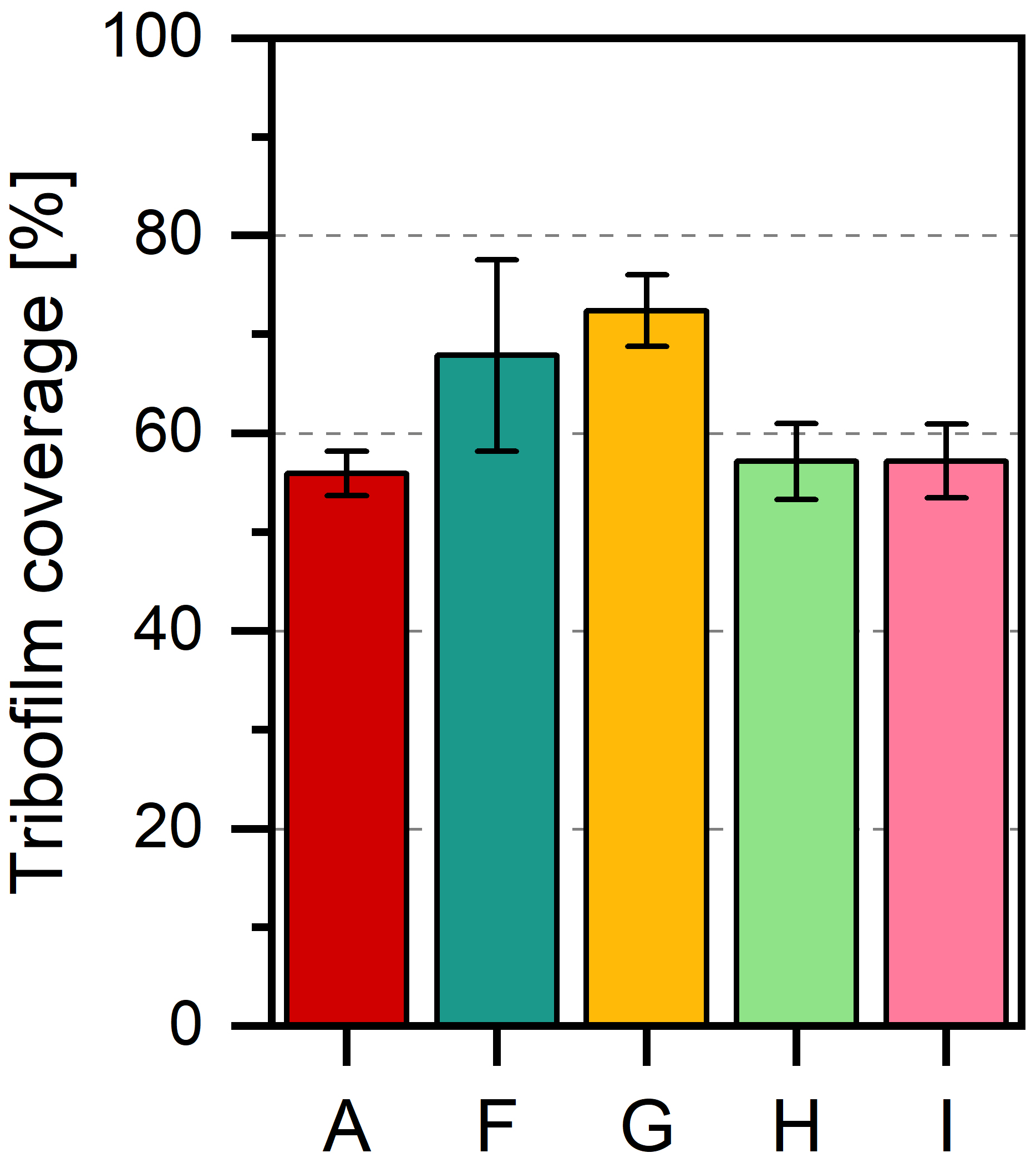
Based on the EDS data, the tribofilm coverage of the surface, in %, was quantified and a clear relationship with the wear rate could be seen. Figure 10 shows that the tribofilm formed with formulations F (ZDDP + CNT) and G (ZDDP + GNP) cover a larger fraction of the surface, averaging 68 and 72%, respectively. Accordingly, CNT and GNP appear to promote the development of the protective film. As a consequence, more surface is covered with tribofilm, minimizing the contact between asperities and therefore reducing the wear of the samples.
Figure 10.
Tribofilm coverage for 60-min tests.
By contrast, oil A (ZDDP), H (ZDDP + FLG) and I (ZDDP + CNT + FLG) have a tribofilm coverage of approximately 57%, consistent with their less effective antiwear performance. Despite the similar coverage, formulations H and I still achieved lower k than A. In those cases, the reduction in wear could be attributed to changes in the tribofilm composition or structure not captured by EDS alone. Therefore, the mechanism behind the improvement in the oils’ performance due to the incorporation of carbon-based nanomaterials seems to vary depending on the additive added.
3.3.2. Tribofilm Evolution
As formulations F (ZDDP + CNT) and G (ZDDP + GNP) presented a wear rate reduction of approximately 50% compared with A (only ZDDP), shorter tests were executed to analyze changes in the tribofilm formation and evolution. To this end, 1 and 10-min tests under the same conditions of load, temperature and sliding velocity were done.
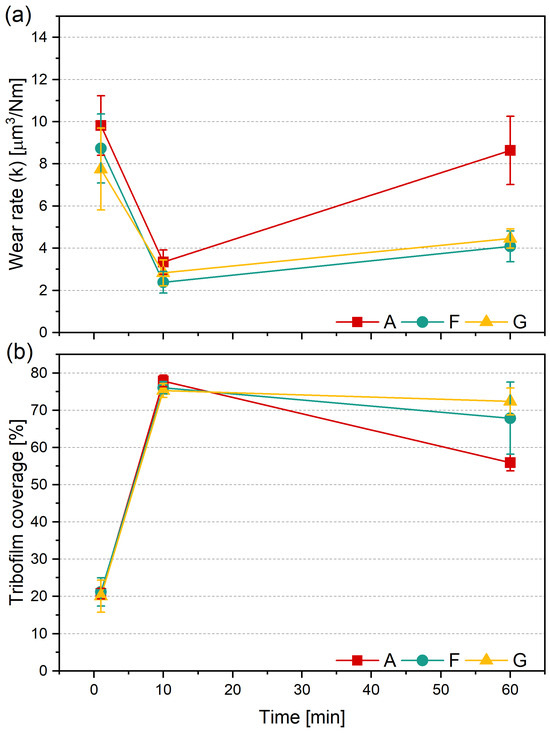
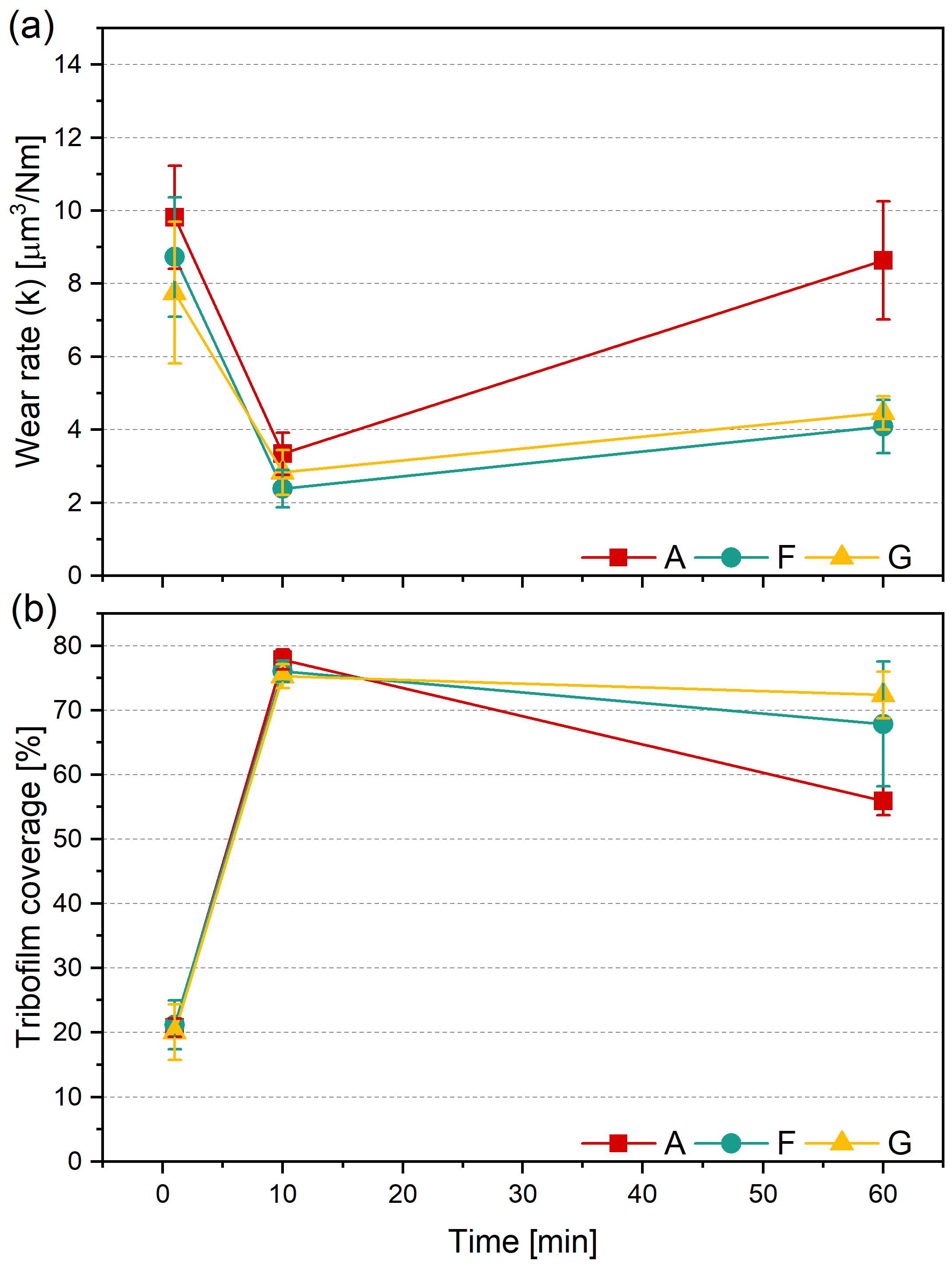
Figure 11 shows the evolution of k and tribofilm coverage for the different test durations. Even at the short 1-min tests, the EDS results showed signals of P, S, and Zn, indicating that the tribofilm is already developing and protecting the surface from wear. Shimizu and Spikes have demonstrated that after only 5 s of rubbing some ZDDP tribofilm is created [22]. At this point, the film coverage in the samples was about 20% for all formulations. Despite the absence of differences in coverage, oil A (ZDDP) exhibited the highest wear rate, while formulations F and G reduced it by 13% and 26%, respectively. Formulation G (ZDDP + GNP) presented the best initial k, reaching 7.75 /Nm.
Figure 11.
(a) Wear rate versus sliding time, (b) tribofilm coverage versus sliding time.
Each formulation achieved its lowest wear rate and its highest tribofilm coverage after the 10-min tests. Formulation A (ZDDP) showed a wear rate of 3.38 /Nm and a 78% coverage. Formulation F (ZDDP + CNT) achieved a k reduction of 28% compared with A, with the tribofilm covering practically the same amount of surface. Finally, formulation G (ZDDP + GNP) reduced the wear rate by 15% with 75% of the surface covered. At this point, the tribofilm is already covering most of the surface and significantly reducing wear. Nevertheless, none of the chemical features of the tribofilms studied with EDS differed significantly between the formulations. Once again, as happened with formulations H (ZDDP + FLG) and I (ZDDP + CNT + FLG) in the 60-min tests, the extension of the tribofilm is practically the same, but the wear rate is not. Therefore, the differences in k are likely related to some physical property, such as structure, hardness or adherence, that are not captured by average EDS chemistry alone. Further characterization of the tribofilms, with more surface-sensitive techniques, should be done to clearly elucidate the cause behind the antiwear improvement.
Finally, when the tests were extended to 60 min, an increase in k and a decrease in the tribofilm coverage were observed. These changes were much more pronounced for formulation A (ZDDP) than for the others. Specifically, the wear rate of A increased by 159%, whereas the increase for F (ZDDP + CNT) and G (ZDDP + GNP) was 72% and 58%, respectively. At the same time, tribofilm coverage dropped by 22% for formulation A, compared with only 8% and 3% for F and G. These trends suggest that the incorporation of CNT and GNP mitigated long-term degradation and improved tribofilm stability, yielding a more consistent response throughout the test.
Across all test durations, the addition of carbon-based nanoparticles improved the antiwear properties of ZDDP, as k was always lower for the CNT- or GNP-containing blends than for ZDDP alone. Although formulation F (ZDDP + CNT) achieved a slightly lower wear rate than G (ZDDP + GNP), the latter showed the most stable behavior over time.
3.3.3. Chemical Characterization of Tribofilms
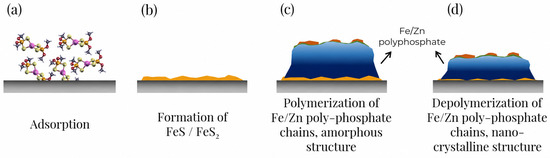
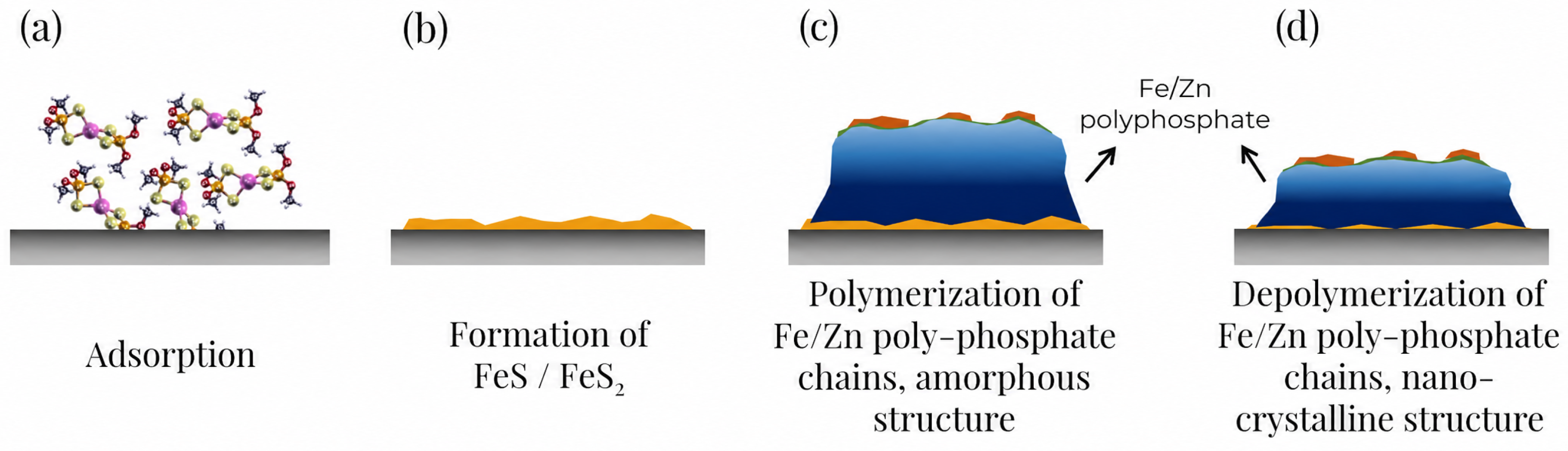
ZDDP tribofilm formation can be described in five stages [1]. First, ZDDP molecules adsorb onto the ferrous surface (Figure 12a). Second, they react forming iron sulfide or sulfate (Figure 12b). Third, a transfer of alkyl groups from O to S is thought to occur, facilitating the following step. Fourth, an amorphous zinc/iron poly-phosphate film polymerizes and grows on the S-rich underlayer (Figure 12c). Finally, with continued rubbing the poly-phosphate chains depolymerize, shortening the chain length, and the film evolves toward a nanocrystalline structure with improved mechanical properties and greater wear resistance (Figure 12d).
Figure 12.
Stages of ZDDP tribofilm evolution: (a) Adsorption of ZDDP molecules into the surface, (b) formation of FeS/FeS2, (c) polymerization of Fe/Zn poly-phosphate chains, and (d) depolymerization of Fe/Zn poly-phosphate chains.
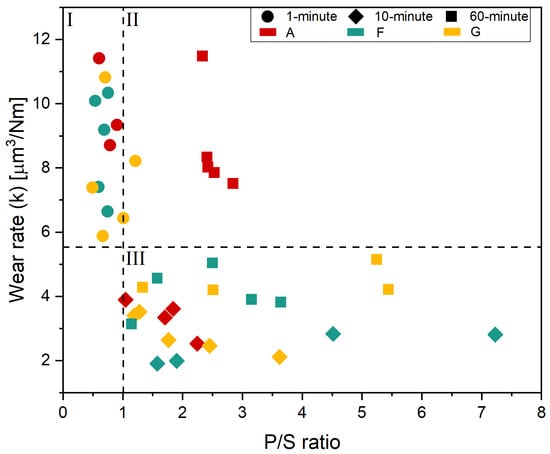
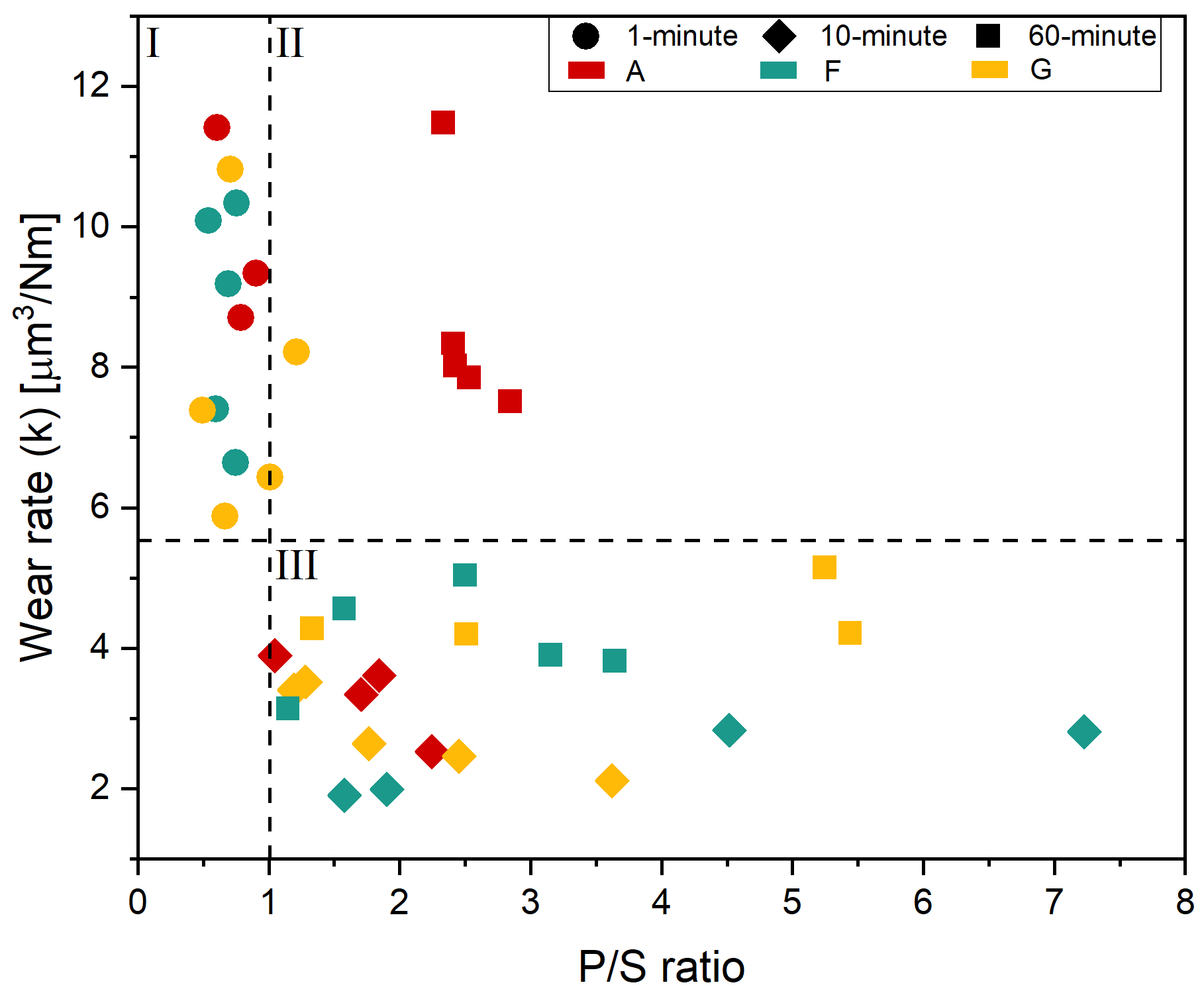
The phosphorus-to-sulfur atomic ratio (P/S) was calculated for each test as a qualitative indicator of tribofilm development. Ratios below 1 (P/S < 1) denote S-rich films characteristic of the early stages of ZDDP reaction (stages 1–2). Conversely, ratios above 1 (P/S > 1) indicate phosphate enrichment and a more developed poly-phosphate film (stages 3–4).
Figure 13 shows the wear rate versus the P/S ratio, and three zones can be clearly seen. The first one (zone I) with P/S ratio lower than 1, the second (zone II) with P/S ratio higher than 1 and high wear rate, and the last one (zone III) with a ratio still higher than 1, but with lower k. Tests with a duration of 1 min, independently of the oil used, are located in Zone I. As expected, due to the duration of these tests, the tribofilm has more sulfur than phosphorus. These results confirm the development of an initial layer rich in S stated in Section 3.2 and studied by Dorgham et al. [3], Shimizu et al. [22], Martin et al. [24] and Hsu et al. [25]. This layer, despite not being as effective to protect the surface from wear as the P-rich one, prevented the adhesion of the surfaces [1].
Figure 13.
Wear rate (k) versus phosphorus/sulfur ratio.
The 60-min tests done with formulation A (ZDDP) fall within Zone II. Here, the increase in the content of P suggests a chemically more evolved tribofilm, but it does not seem enough to prevent the high wear rate. In contrast, those tests in Zone III have developed a high P/S ratio that confers better protection of the surface. The main difference between these two zones is the extension of the tribofilm. While Zone II has a coverage reaching 56% on average, the tribofilm of Zone III covers 75% of the surface. Therefore, a phosphate-rich tribofilm alone does not appear sufficient to minimize wear; adequate surface coverage and tribofilm stability must also be considered.
Each carbon nanostructure studied appears to interact with the ZDDP tribofilm through a different pathway, as suggested by both the present results and mechanisms reported in the literature. Regarding CNTs, Kaluzny et al. proposed that their high axial thermal conductivity allows frictional heat generated at asperity contacts to be redistributed into the surrounding oil film, expanding the thermally activated zone available for ZDDP decomposition and tribofilm growth [27]. This interpretation is supported by Dziegielewski et al., Bukrajewski et al., and Ozimina et al., who independently observed improved tribological performance when CNTs were combined with ZDDP in PAO base oils [11,28,29]. Additionally, CNTs have been suggested to act as nanoscale rolling elements at asperity contacts, reducing direct metal-to-metal interaction [7]. Both proposed mechanisms are consistent with the higher tribofilm coverage and lower wear rate observed for formulation F in the present work, though neither can be confirmed from EDS data alone.
For GNPs, Zhao et al. proposed that graphene co-deposits with ZDDP-derived reaction products at the steel surface, contributing to a more spatially extended tribofilm [10]. The lamellar structure of GNP, characterized by low interlayer shear strength, has also been associated with reduced friction in other studies [30]. The behavior of formulation G is consistent with this co-deposition mechanism, though direct confirmation would require surface-sensitive characterization beyond EDS.
The comparatively similar tribofilm coverage of formulation H (ZDDP + FLG) relative to ZDDP alone suggests that FLG did not promote tribofilm development to the same extent as CNT or GNP. One possible explanation is that FLG, consisting of fewer graphene layers than GNP, is more prone to folding or agglomeration under high contact pressures, limiting its interaction with the ZDDP tribofilm [30]. However, this interpretation remains speculative in the absence of direct microstructural evidence.
Taken together, the present results suggest that the positive antiwear interaction between ZDDP and CNT or GNP is associated with greater and more stable tribofilm coverage rather than with a change in average film chemistry, as evidenced by the EDS data. Whether this reflects accelerated tribofilm maturation, mechanical reinforcement, or a combination of both remains an open question that would require cross-sectional FIB–TEM, nanoindentation, and XPS or Raman spectroscopy to resolve.
4. Conclusions
This study investigated the interaction of ZDDP with CNT, GNP, and FLG, blended in PAO 6 base oil under pure sliding in a boundary lubrication regime with a Hertzian contact pressure of 2 GPa, 75 °C, and 1 m/s. Under these conditions, ZDDP was required to prevent seizure of AISI 52100 contacts. Instead, carbon nanoparticle-only formulations failed rapidly. When combined with 1 wt% commercial ZDDP, CNT and GNP additions reduced the measured specific wear rate relative to ZDDP alone, while friction remained largely unchanged. SEM–EDS mapping indicated higher retained additive-derived tribofilm coverage for the CNT and GNP blends after 60 min. These results suggest a positive antiwear interaction between ZDDP and CNT/GNP under the present conditions. The mechanism remains unresolved; confirmation of tribofilm chemistry, thickness, crystallinity, and mechanical properties requires surface-sensitive and cross-sectional characterization.
Author Contributions
Conceptualization, J.P.A. and G.P.; methodology, J.P.A., W.R.T. and G.P.; validation, G.P. and W.R.T.; formal analysis, J.P.A., E.T., W.C. and G.P.; investigation, J.P.A., E.T. and W.C.; resources, E.T. and W.C.; data curation, J.P.A. and W.C.; writing—original draft preparation, J.P.A.; writing—review and editing, W.R.T., E.T. and G.P.; visualization, J.P.A.; supervision, W.R.T. and G.P.; funding acquisition, W.R.T. All authors have read and agreed to the published version of the manuscript.
Funding
This research was funded by Agencia Nacional de Promoción Científica y Tecnológica of Argentina grant number PICT-2021-0458.
Data Availability Statement
The original contributions presented in this study are included in the article. Further inquiries can be directed to the corresponding author.
Acknowledgments
The authors wish to express their gratitude to Interlub S.A. for donating the ZDDP. During the preparation of this manuscript/study, the authors used ChatGPT-5.4 for the purposes of improving clarity and readability of the manuscript. The authors have reviewed and edited the output and take full responsibility for the content of this publication.
Conflicts of Interest
Authors Eduardo Tomanik and Wania Christinelli were employed by the Gerdau Graphene Brazil. The remaining authors declare that the research was conducted in the absence of any commercial or financial relationships that could be construed as a potential conflict of interest.
Abbreviations
The following abbreviations are used in this manuscript:
| ZDDP | Zinc dialkyldithiophosphate |
| CNT | Carbon nanotubes |
| PAO | Polyalphaolefin |
| GNP | Graphene nanoplatelets |
| FLG | Few-layer graphene |
| SEM | Scanning electron microscope |
| EDS | X-ray energy dispersive spectroscopy |
| CoF | Coefficient of friction |
| Rq | Root mean square roughness |
| HFRR | High frequency reciprocating rig |
| FIB | Focused ion beam |
| TEM | Transmission electron microscope |
| XPS | X-ray photoelectron spectroscopy |
References
- Spikes, H. Mechanisms of ZDDP—An Update. Tribol. Lett. 2025, 73, 38. [Google Scholar] [CrossRef] [Scilit]
- Taylor, L.; Dratva, A.; Spikes, H.A. Friction and Wear Behavior of Zinc Dialkyldithiophosphate Additive. Tribol. Trans. 2000, 43, 469–479. [Google Scholar] [CrossRef] [Scilit]
- Dorgham, A.; Azam, A.; Morina, A.; Neville, A. On the Transient Decomposition and Reaction Kinetics of Zinc Dialkyldithiophosphate. ACS Appl. Mater. Interfaces 2018, 10, 44803–44814. [Google Scholar] [CrossRef] [Scilit] [PubMed]
- Ueda, M.; Spikes, H.; Kadiric, A. In-situ observations of the effect of the ZDDP tribofilm growth on micropitting. Tribol. Int. 2019, 138, 342–352. [Google Scholar] [CrossRef] [Scilit]
- de Mello, J.D.B. Carbon-based solid lubricants: An overview. Friction 2025, 13, 9441017. [Google Scholar] [CrossRef] [Scilit]
- Berman, D.; Erdemir, A.; Sumant, A.V. Graphene: A new emerging lubricant. Mater. Today 2014, 17, 31–42. [Google Scholar] [CrossRef] [Scilit]
- Zhang, F.Z.; Liu, X.B.; Yang, C.M.; Chen, G.D.; Meng, Y.; Zhou, H.B.; Zhang, S.H. Insights into robust carbon nanotubes in tribology: From nano to macro. Mater. Today 2024, 74, 203–234. [Google Scholar] [CrossRef] [Scilit]
- Nyholm, N.; Espallargas, N. Functionalized carbon nanostructures as lubricant additives—A review. Carbon 2023, 201, 1200–1228. [Google Scholar] [CrossRef] [Scilit]
- Mortier, R.M.; Fox, M.F.; Orszulik, S.T. (Eds.) Chemistry and Technology of Lubricants, 3rd ed.; Springer: Dordrecht, The Netherlands, 2009. [Google Scholar] [CrossRef]
- Zhao, Y.; Geng, Z.; Li, D.; Wang, L.; Lu, Z.; Zhang, G. An investigation on the tribological properties of graphene and ZDDP as additives in PAO4 oil. Diam. Relat. Mater. 2021, 120, 108635. [Google Scholar] [CrossRef] [Scilit]
- Dzięgielewski, W.; Kowalczyk, J.; Kulczycki, A.; Madej, M.; Ozimina, D. Tribochemical Interactions between Carbon Nanotubes and ZDDP Antiwear Additive during Tribofilm Formation on Uncoated and DLC-Coated Steel. Materials 2020, 13, 2409. [Google Scholar] [CrossRef] [Scilit] [PubMed]
- Abdelnabe, J.P.; Tuckart, W.R.; Tomanik, E.; Christinelli, W.; Prieto, G. Tribological synergistic interaction between ZDDP and C-based nanoparticles. In Proceedings of the 50th Leeds-Lyon Symposium on Tribology, Leeds, UK, 2–4 September 2025. [Google Scholar]
- Zhang, Z.; Yamaguchi, E.S.; Kasrai, M.; Bancroft, G.M. Tribofilms generated from ZDDP and DDP on steel surfaces: Part 1, growth, wear and morphology. Tribol. Lett. 2005, 19, 211–220. [Google Scholar] [CrossRef] [Scilit]
- Lu, C.; Chiu, H. Adsorption of zinc(II) from water with purified carbon nanotubes. Chem. Eng. Sci. 2006, 61, 1138–1145. [Google Scholar] [CrossRef] [Scilit]
- Tomanik, E.; Berto, P.; Christinelli, W.; Papoulias, G.; Raby, X.; Peressinotto, V. Use of Functionalized Graphene-Based Materials on Grease. Lubricants 2023, 11, 452. [Google Scholar] [CrossRef] [Scilit]
- Tomanik, E.; Christinelli, W.; Garcia, P.S.; Rajala, S.; Crepaldi, J.; Franzosi, D.; Souza, R.M.; Rovai, F.F. Effect of Graphene Nanoplatelets as Lubricant Additive on Fuel Consumption During Vehicle Emission Tests. Eng 2025, 6, 18. [Google Scholar] [CrossRef] [Scilit]
- Azman, S.S.N.; Zulkifli, N.W.M.; Masjuki, H.H.; Gulzar, M.; Zahid, R. Study of tribological properties of lubricating oil blend added with graphene nanoplatelets. J. Mater. Res. 2016, 31, 1932–1938. [Google Scholar] [CrossRef] [Scilit]
- La, D.D.; Truong, T.N.; Pham, T.Q.; Vo, H.T.; Tran, N.T.; Nguyen, T.A.; Nadda, A.K.; Nguyen, T.T.; Chang, S.W.; Chung, W.J.; et al. Scalable Fabrication of Modified Graphene Nanoplatelets as an Effective Additive for Engine Lubricant Oil. Nanomaterials 2020, 10, 877. [Google Scholar] [CrossRef] [Scilit] [PubMed]
- Zhang, W.; Zhou, M.; Zhu, H.; Tian, Y.; Wang, K.; Wei, J.; Ji, F.; Li, X.; Li, Z.; Zhang, P.; et al. Tribological properties of oleic acid-modified graphene as lubricant oil additives. J. Phys. D Appl. Phys. 2011, 44, 205303. [Google Scholar] [CrossRef] [Scilit]
- Williams, J.A. Contact between surfaces. In Engineering Tribology; Cambridge University Press: Cambridge, UK, 2005; pp. 73–131. [Google Scholar]
- Hamrock, B.J.; Schmid, S.R.; Jacobson, B.O. Fundamentals of Fluid Film Lubrication, 2nd ed.; CRC Press: Boca Raton, FL, USA, 2004. [Google Scholar] [CrossRef] [Scilit]
- Shimizu, Y.; Spikes, H.A. The Tribofilm Formation of ZDDP Under Reciprocating Pure Sliding Conditions. Tribol. Lett. 2016, 64, 46. [Google Scholar] [CrossRef] [Scilit]
- Nunn, N.; Mahbooba, Z.; Ivanov, M.G.; Ivanov, D.M.; Brenner, D.W.; Shenderova, O. Tribological properties of polyalphaolefin oil modified with nanocarbon additives. Diam. Relat. Mater. 2015, 54, 97–102. [Google Scholar] [CrossRef] [Scilit]
- Martin, J.M. Antiwear mechanisms of zinc dithiophosphate: A chemical hardness approach. Tribol. Lett. 1999, 6, 1–8. [Google Scholar] [CrossRef] [Scilit]
- Hsu, C.J.; Barrirero, J.; Merz, R.; Stratmann, A.; Aboulfadl, H.; Jacobs, G.; Kopnarski, M.; Mücklich, F.; Gachot, C. Revealing the interface nature of ZDDP tribofilm by X-ray photoelectron spectroscopy and atom probe tomography. Ind. Lubr. Tribol. 2020, 72, 923–930. [Google Scholar] [CrossRef] [Scilit]
- Gosvami, N.N.; Berman, D.; Erdemir, A.; Sumant, A.V.; Carpick, R.W. Mechanisms of antiwear tribofilm growth revealed in situ by single-asperity sliding contacts. Science 2015, 348, 102–106. [Google Scholar] [CrossRef] [Scilit] [PubMed]
- Kałużny, J.; Kulczycki, A.; Dzięgielewski, W.; Piasecki, A.; Gapiński, B.; Mendak, M.; Runka, T.; Łukawski, D.; Stepanenko, O.; Merkisz, J.; et al. The Indirect Tribological Role of Carbon Nanotubes Stimulating Zinc Dithiophosphate Anti-Wear Film Formation. Nanomaterials 2020, 10, 1330. [Google Scholar] [CrossRef] [Scilit] [PubMed]
- Bukrajewski, P.; Deliś, M.; Desaniuk, T.; Dzięgielewski, W.; Kałużny, J.; Kulczycki, A.; Ozimina, D. The influence of ordered carbon structures on the mechanism of tribocatalysis. Tribol. Int. 2020, 151, 106518. [Google Scholar] [CrossRef] [Scilit]
- Ozimina, D.; Kulczycki, A.; Janas, D.; Desaniuk, T.; Deliś, M. Carbon-Based Functional Nanomaterials as Tools for Controlling the Kinetics of Tribochemical Reactions. Materials 2024, 17, 785. [Google Scholar] [CrossRef] [Scilit] [PubMed]
- Berman, D.; Erdemir, A.; Sumant, A.V. Reduced wear and friction enabled by graphene layers on sliding steel surfaces in dry nitrogen. Carbon 2013, 59, 167–175. [Google Scholar] [CrossRef] [Scilit]



Disclaimer/Publisher’s Note: The statements, opinions and data contained in all publications are solely those of the individual author(s) and contributor(s) and not of MDPI and/or the editor(s). MDPI and/or the editor(s) disclaim responsibility for any injury to people or property resulting from any ideas, methods, instructions or products referred to in the content. |
© 2026 by the authors. Licensee MDPI, Basel, Switzerland. This article is an open access article distributed under the terms and conditions of the Creative Commons Attribution (CC BY) license.