


Abstract
Previous research indicates that WC-12Co contents above 60 wt.% in feedstock powders for cermet coatings impair adhesion and wear resistance. This study characterizes NiCrFeSiAlBC coatings—unreinforced or reinforced with 65 wt.% or 85 wt.% WC-12Co—applied via high-velocity oxy-fuel (HVOF) spraying onto stainless steel substrates under controlled parameters. It quantifies the influence of high carbide volume fractions within the NiCrFeSiAlBC matrix on microstructure and tribomechanical performance. Microstructural analysis revealed uniformly distributed cermet layers featuring dissolved reinforcements and WC hard phase formation, with minimal W2C crystallization. Elevated WC-12Co incorporation promoted densification and reduced porosity. Vickers microhardness tests (HV 0.3) demonstrated increased hardness upon WC-12Co addition, attributable to finer particle sizes, lower porosity, and the presence of WC phases alongside crystallographic refinements. Under dry reciprocating sliding conditions, friction coefficients and wear volumes decreased markedly. Consequently, the coating with 85 wt.% WC exhibited the best mechanical and tribological properties.
Keywords:
HVOF process; NiCrFeSiAlBC; WC-12Co; cermet coatings; microstructure; microhardness; friction; wear 1. Introduction
Modern automotive and powertrain components, such as piston rings, cylinder liners, valve seats, and camshafts, operate under severe conditions that combine high contact stresses, sliding motion and thermal gradients. These harsh operating conditions accelerate surface degradation mechanisms, including abrasive and adhesive wear, oxidation, and tribo-corrosion, which often govern the lifetime of critical components [1,2]. Surface engineering via advanced coatings is crucial to enhance durability, curtail servicing intervals, and offer operational efficacy while supporting light-weighting strategies through superficial densification that preserves the resilience and plastic deformability of low-density substrates.
High-velocity oxy-fuel (HVOF) thermal spraying has emerged as an effective technique for producing protective coatings with superior adhesion, low porosity, and excellent mechanical properties [3]. In fact, during HVOF spraying, the elevated particle velocities and thermal energy strongly affect splat formation, carbide retention, and interfacial bonding, thereby substantially altering the coatings’ microstructure [4,5] to attain the desired properties. HVOF coatings offer a sustainable alternative to hard chromium plating, which is increasingly restricted due to the health and environmental hazards associated with hexavalent chromium compounds [2]. The ability to deposit dense, wear-resistant coatings makes HVOF particularly suitable for engine and powertrain applications where components are subjected to repeated sliding and high thermal loads [6].
Nickel-based self-fluxing alloys are widely used as protective coatings in industry due to their excellent corrosion and wear resistance [7]. Consequently, extensive research has focused on their deposition processes, microstructural features, and mechanical performance. According to the literature, deposition technologies significantly affect coating’s properties, including adhesion, porosity, and tribological properties [8]. For instance, laser cladding studies under varying conditions have yielded diverse morphologies, planar cellular structures [9] or flower-like patterns [10]. Similarly, Huang et al. reported that atmospheric plasma-sprayed (APS) Ni-based coatings presented lamellar structures [7]. The variety in the structure is accompanied by a broad range of phases formed during deposition. Notably, Cr, B, Si, Fe and C in Ni-based powders enhance self-fluxing behavior, promote hard phase formation within the Ni matrix, and improve wear and corrosion resistance [11,12,13]. This composition enables crystallization of a wide variety of crystalline phases influenced by powder chemistry and deposition parameters [9,14], and resulting in borides and carbides embedded in the microstructure of NiCrBSiFeC alloy [9,14,15]. Such phases boost their resistance to abrasion and wear [16]. Moreover, Ni-based coatings exhibit high hardness, strong metallurgical adhesion to substrates, and superior high-temperature corrosion and wear performance [15,16]. NiCrBSiFeC coatings are widely employed as matrix materials in HVOF coatings due to their toughness, high-temperature stability, and corrosion resistance [17]. However, metallic matrices alone often lack sufficient resistance to severe wear in high-load sliding applications. To overcome this limitation, hard ceramic reinforcements, particularly tungsten carbide bonded with cobalt (WC-12Co), are incorporated to form cermet coatings. The key benefit of WC-12Co lies in its composite structure: the carbide provides exceptional hardness and wear resistance, while the Co binder matrix imparts the necessary toughness to the system [18]. Nevertheless, sprayed WC-12Co is brittle and susceptible to cracking [19,20]. Moreover, it forms highly brittle phases (W2C, Co-W-C) during decomposition and decarburization above 450 °C [21,22], which degrades fracture toughness [22]. NiCrBSiFeC is employed to support and bond WC particles, ensuring effective wetting and adhesion of the reinforcing material [9]. The literature highlights significant interest in optimizing WC-12Co content within metallic matrices. Several studies, using different processes (laser-cladding, HVOF), have shown that in NiCrBSi coatings reinforced with WC/12Co, the progressive addition of ceramic particles (10–50 wt.%) modified the microstructure and the tribological properties of cermet coatings [9,15,23] significantly. In contrast, excessive hard phase levels (60–80 wt.%) hinder particle wetting, introduce defects, and adversely affect bonding, cohesion and wear mechanisms [15,23]. Thus, balancing the matrix–reinforcement ratio is essential for optimizing hardness, toughness and wear resistance while maintaining performance under elevated stress and temperature conditions [6]. Coatings are particularly suitable for engine and powertrain components, where coatings must endure high contact stresses, repeated sliding motion, and thermal cycling while preserving consistent tribological performance [1,6,24,25].
In the present study, industrial NiCrFeSiAlBC powder, incorporating aluminum (Al) as a novel alloying element, was used to extend prior findings. NiCrFeSiAlBC-based cermet coatings were subsequently developed, both unreinforced and reinforced with WC/12Co at 65 wt.% and 85 wt.%. Optimized HVOF parameters ensured consistent microstructural development, even at these high hard-phase contents. The resulting coatings underwent comprehensive characterization of their microstructure, porosity, mechanical properties, and tribological behavior. Quantitative phase composition data were also obtained.
2. Materials and Methods
2.1. Materials
2.1.1. Substrate
Coatings were deposited on AISI 316L stainless steel substrates, selected for their excellent corrosion resistance, thermal stability, and mechanical properties, which are essential for demanding industrial applications. Prior to deposition, the substrates underwent a standardized preparation protocol, including degreasing with acetone to remove surface contaminants, abrasive blasting to achieve a controlled arithmetic surface roughness of about 4–7 µm for mechanical interlocking, and final cleaning to ensure a defect-free surface. This procedure enhances coating adhesion and ensures reproducibility. The substrate dimensions are 30 mm × 20 mm × 2 mm.
2.1.2. Feedstock Powders
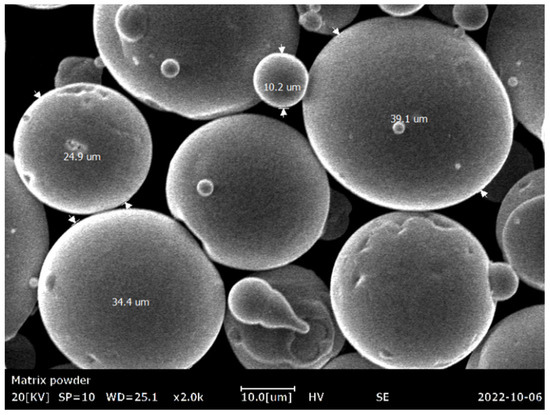
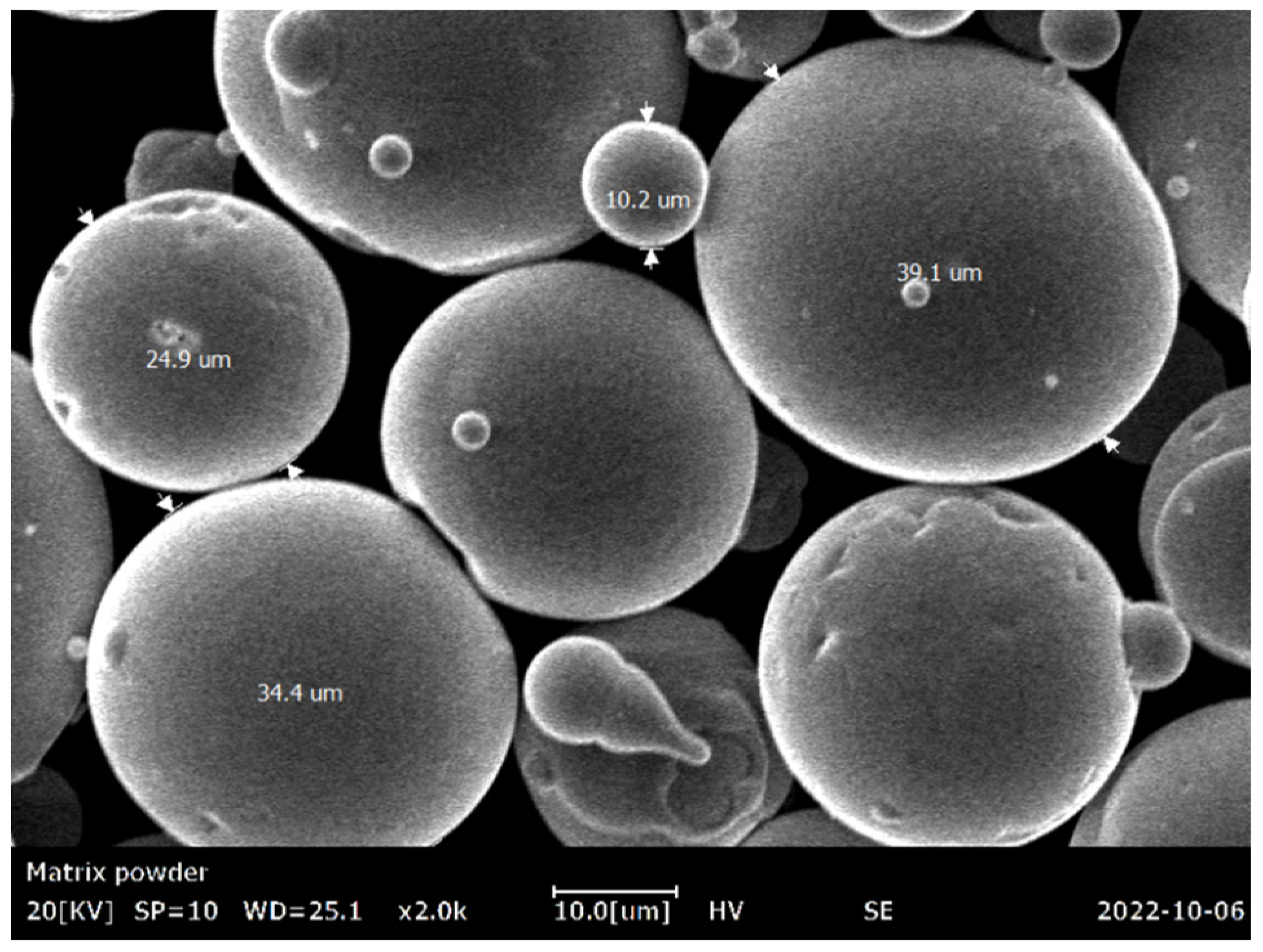
The feedstock material employed in this study was a NiCrFeSiAlBC alloy powder supplied by Praxair Surface Technologies. Table 1 presents the detailed chemical composition of the multi-component alloy. Nickel represents the primary constituent, ensuring adequate ductility and toughness of the coating matrix, while chromium enhances oxidation and corrosion resistance. The presence of silicon, aluminum, boron, and carbon contributes to solid-solution strengthening and the formation of hard phases, which collectively improve hardness and wear resistance. Owing to this combination of mechanical robustness and chemical stability, NiCrFeSiAlBC was selected as a suitable matrix material for high-performance cermet coatings produced by high-velocity oxy-fuel (HVOF) spraying. As we can see in Figure 1, the NiCrFeSiAlBC powder morphology is predominantly spherical particles with a few slightly elongated semispherical particles; a predominance of particles with sizes between 30 and 45 microns is seen.
Table 1.
Chemical composition of the NiCrFeSiAlBC powder.
Figure 1.
SEM image of NiCrFeSiAlBC powder showing predominantly spherical morphology.
2.1.3. Powder Preparation
Composite powder mixtures were prepared by blending the NiCrFeSiAlBC master alloy with tungsten carbide–cobalt (WC-Co) reinforcement at two mass fractions, namely 65 wt.% and 85 wt.%, using ball milling. The powders were introduced into a cylindrical jar mounted on a roller-driven milling system to ensure homogeneous mixing. To enhance the dispersion of the ceramic phase within the metallic matrix and promote inter-particle adhesion, steel balls were added to the container, thereby converting the mixing operation into a ball milling process.
Ball milling was used as a blending technique to achieve a homogeneous dispersion of ceramic particles within the metallic master alloy matrix while maintaining particle characteristics suitable for both additive manufacturing and HVOF spraying [26]. Ball milling and related mechanical alloying processes are well documented in the powder metallurgy literature as effective methods to control particle morphology, reinforcement dispersion, and internal strain through process variables such as milling speed, ball-to-powder ratio, and milling time. Several experimental studies have demonstrated that these milling parameters directly influence composite powder morphology and properties; for example, variations in milling speed, ball-to-powder ratio, and milling duration significantly affect powder particle size, homogeneity, and densification behavior [27,28].
The powders were mixed in a rotating steel jar containing steel balls, resulting in a low-energy ball milling process that enhances the mechanical adhesion of ceramic particles onto metal powder surfaces. The mixing efficiency is influenced by parameters such as ball-to-powder weight ratio, rotation speed, and drum filling level, which govern the motion of the grinding media and the resulting powder homogeneity [26,27]. To prevent oxidation and preserve powder chemistry, milling was performed under an inert argon atmosphere. The selected milling parameters (Table 2) were chosen based on the established literature guidelines to ensure homogeneous blending while preserving powder flowability [26].
Table 2.
Ball milling parameters used for powder blending.
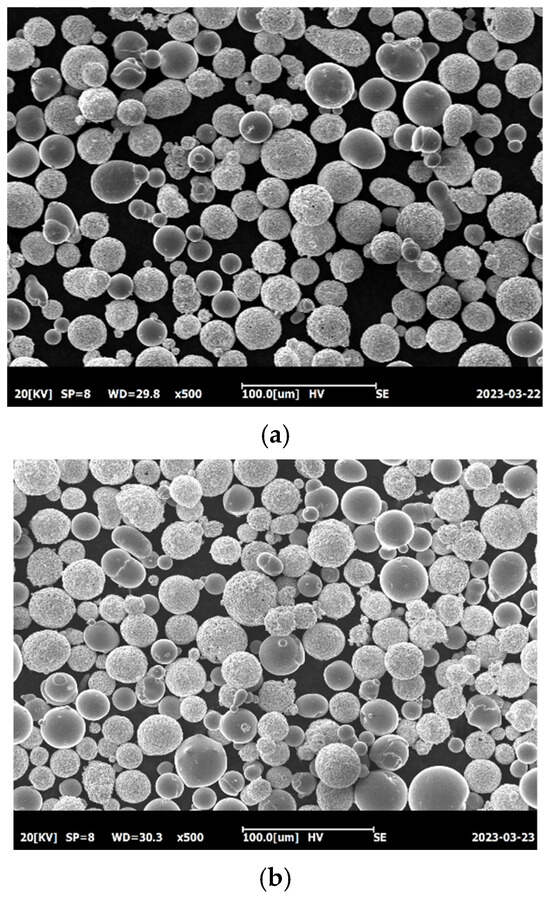
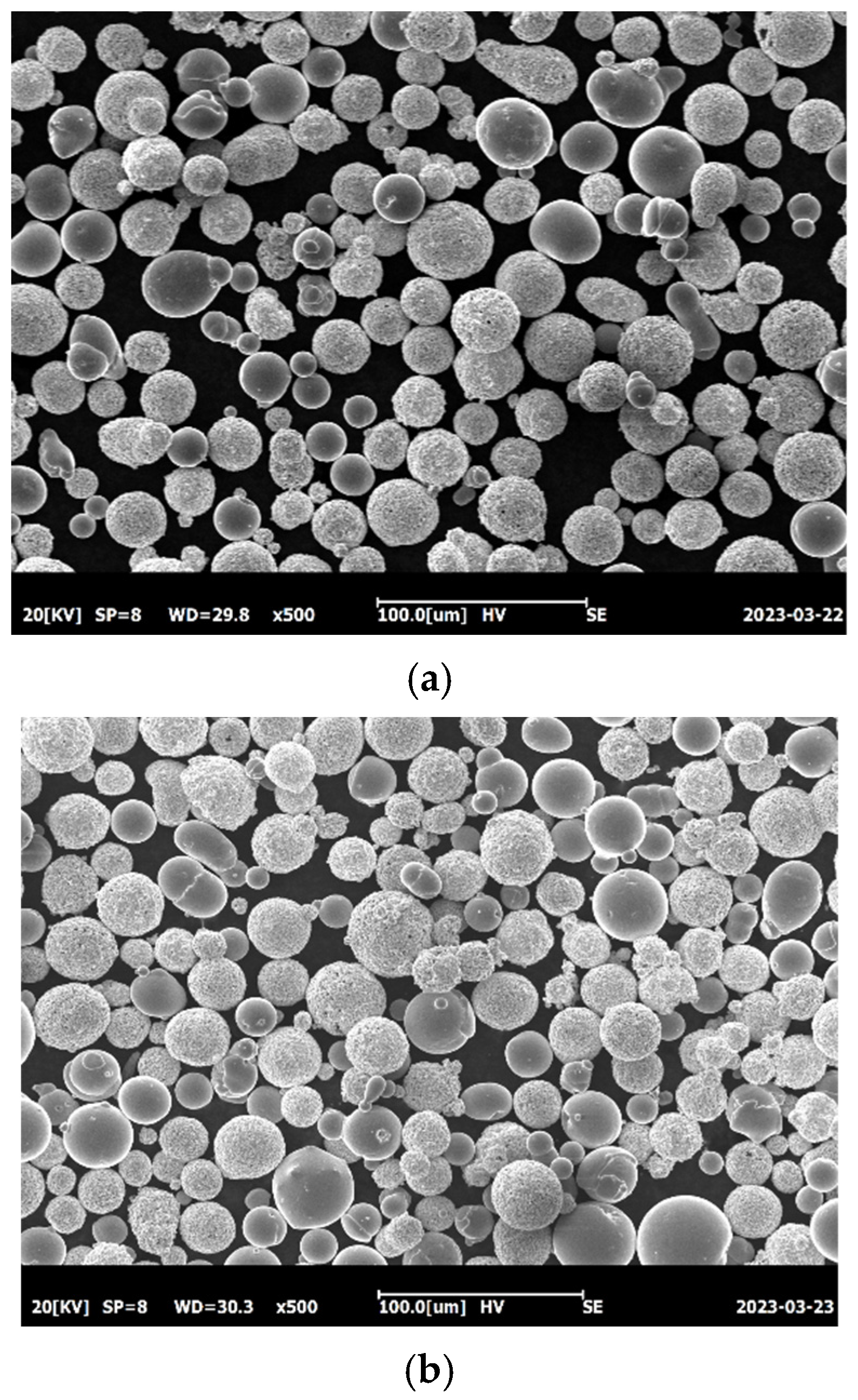
The prepared powders were subsequently used for microstructural characterization and coating deposition. Figure 2 presents SEM images showing the morphology of composite formulations of NiCrFeSiAlBC reinforced with WC-12Co.
Figure 2.
(a) NiCrFeSiAlBC + 65% WC/12Co morphology and (b) NiCrFeSiAlBC + 85% WC/12Co morphology obtained by SEM.
2.2. Methods
2.2.1. HVOF Spraying Process
Coatings were deposited using a JP-5000 HVOF system (TAFA/OerlikonMetco, Concord, NH, USA) at RINA Consulting S.p.A., which enabled industrial-scale precision. The system combusts kerosene with high-purity oxygen in a high-pressure chamber to generate a supersonic jet, accelerating powder particles to velocities exceeding 700–800 m/s. This high kinetic energy enables particle deformation and bonding with the substrate while limiting thermal degradation. The deposition process utilized a robotic arm to control gun trajectory, stand-off distance (330–370 mm), and traverse speed (500 mm/s), with a digitally controlled powder feeder ensuring consistent flow.
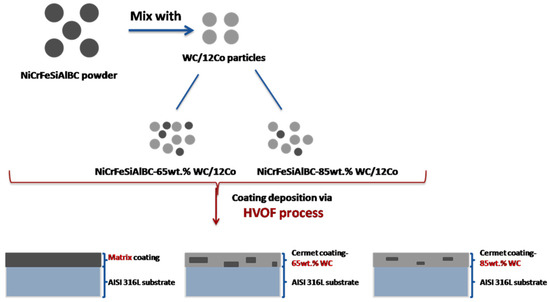
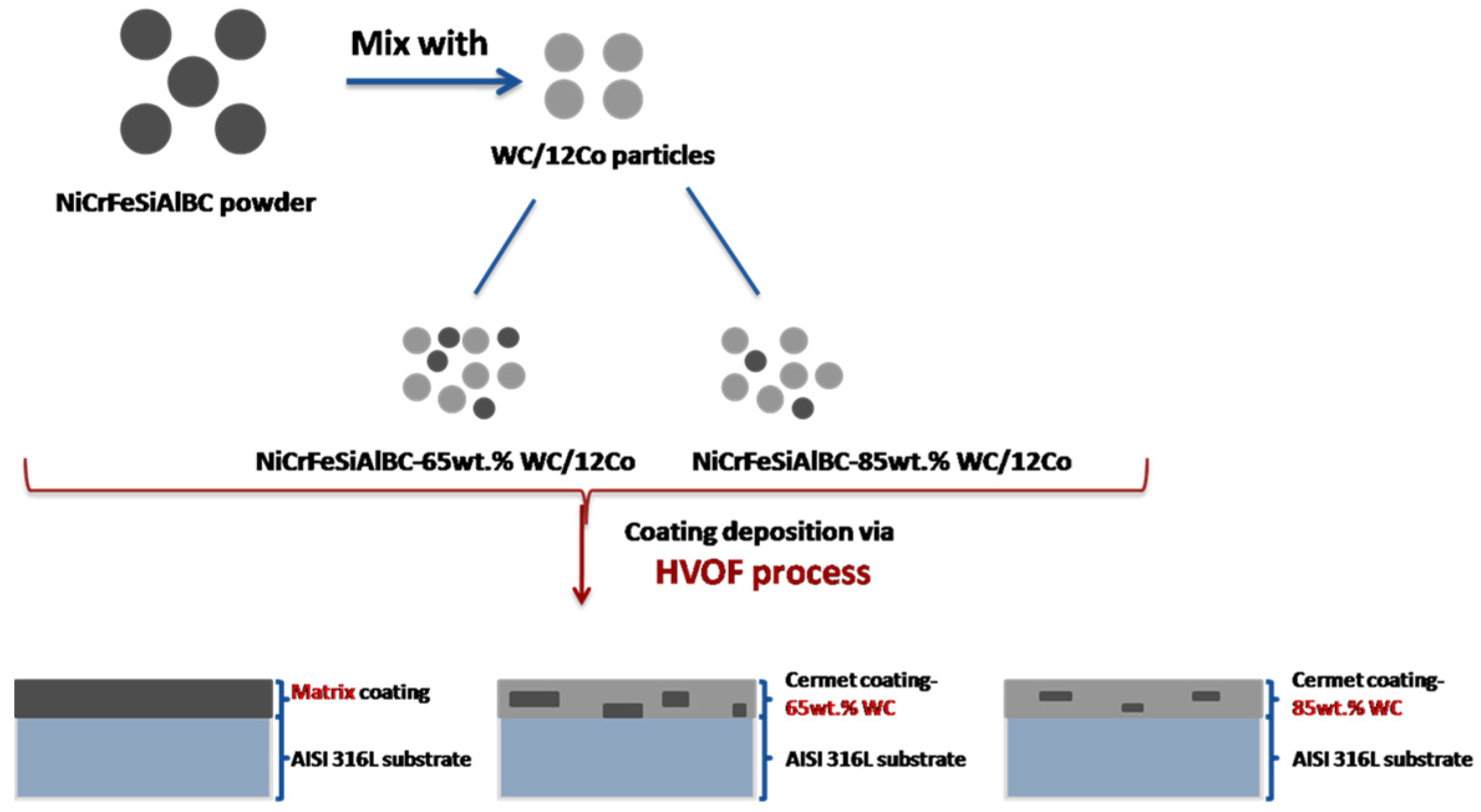
Experimental methodology for the different investigated coatings has been summarized in Figure 3.
Figure 3.
Experimental methodology for the different investigated coatings.
2.2.2. Characterization Techniques
Following deposition, the coatings were subjected to comprehensive characterization to assess their microstructural, mechanical, and tribological characteristics. SEM imaging was performed using a COXEM CX-200Plus microscope (Daejeon, Republic of Korea) to assess particle distribution, porosity, and interfacial quality. Samples were cut to appropriate sizes, embedded in thermosetting resin, and subjected to progressive grinding and polishing with fine abrasives and diamond paste to achieve sub-micron surface finishes. A thin gold layer was sputter-coated on the samples using a Cressington Sputter Coater 108 Auto (Cressington Scientific Instruments Ltd., Watford, UK) to enhance conductivity and prevent surface charging. SEM images enabled analysis of WC-12Co particle dispersion, matrix-ceramic interfaces, and potential microstructural defects.
X-ray diffraction (XRD) analysis was performed using a RigakuSmartLab diffractometer (Rigaku Corporation, Tokyo, Japan) to identify crystalline phases, detect phase transformations, and confirm the presence of metallic and ceramic phases. Scans were conducted under controlled conditions with Cu-Kα radiation, providing accurate phase identification. The resulting diffraction patterns were analyzed with X’Pert High Score Plus software (3.0d (3.0.4)) to evaluate existing phases and their mass fraction in the coatings using Rietveld refinement.
Microhardness measurements were performed using a Leitz RZD-DO Vickers microdurometer (Leitz, Wetzlar, Germany) under a 3 N load with a dwell time of 10 s. Multiple indentations per sample provided statistically significant results and allowed evaluation of the influence of WC/12Co content on coating hardness and mechanical integrity.
Tribological performance was evaluated using a CSM Instruments Tribometer Plus (CSM Instruments, Peseaux, Switzerland) in a ball-on-flat configuration and reciprocating linear motion. Al2O3 balls (6 mm diameter) were used as the counterbody under a normal load of 10 N, a stroke length of 5 mm, a frequency of 30 Hz, and 5000 cycles in dry ambient conditions (25 °C). Friction forces were continuously monitored, and wear profiles were analyzed using profilometry. Wear volume loss was quantified by measuring the cross-sectional area S (in mm2) of the wear tracks with a Surtronic® S-100 profilometer (AMETEK Taylor Hobson, Leicester, UK). For each specimen, measurements were taken at the track endpoints and midpoint; the mean S value was then used to calculate volume via V = S × d, where stroke length d = 5 mm. Wear mechanisms were qualitatively assessed through optical microscopy of the tracks.
3. Results
3.1. Microstructural, Crystallographic and Morphological Analyses
3.1.1. Microstructural Analysis
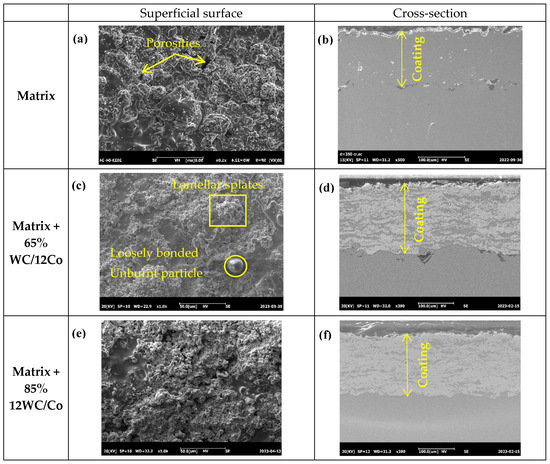
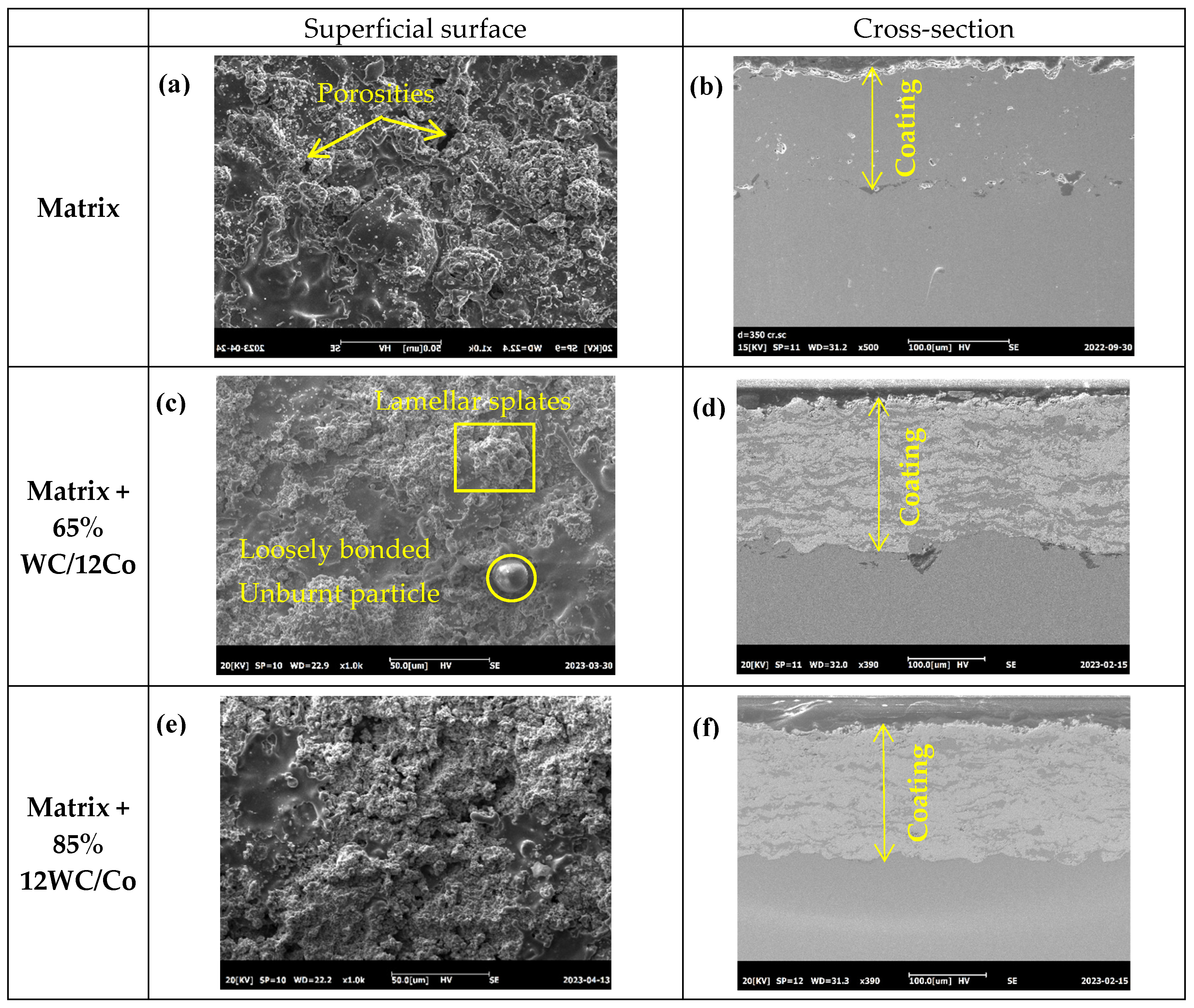
The morphological aspects of the surface and cross-sectional microstructures of the different sprayed coatings, examined by SEM, are presented in Figure 4. A preliminary examination of the coating surfaces reveals that all the layers are continuous and relatively homogeneous. However, the NiCrFeSiAlBC alloy matrix exhibits noticeable pores and microcracks (Figure 4a). In contrast, the incorporation of WC-12Co particles into the NiCrFeSiAlBC alloy (Figure 4c,e) results in denser coatings with significantly reduced porosity. The micrographs of the latter coatings reveal the presence of lamellar splats and loosely bonded unburnt NiCrFeSiAlBC/WC-12Co particles. The lamellar features observed in the mixed coatings indicate the formation of an anisotropic microstructure [29]. Furthermore, melted or partially melted WC-12Co particles predominantly occupy the coating surface (light gray regions in Figure 4c), whereas the melted matrix appears darker. This dominance of WC/12Co increases with higher WC/12Co content in the matrix, as observed in Figure 4e. These microstructural features can be attributed to the thermal and kinetic conditions imposed during the spraying process [4,5].
Figure 4.
SEM micrographs of: (a) NiCrFeSiAlBC coating (surface); (b) NiCrFeSiAlBC coating (cross-section); (c,d) NiCrFeSiAlBC + 65 wt.% WC–12Co cermet coating (surface and cross-section, respectively); (e,f) NiCrFeSiAlBC + 85 wt.% WC–12Co cermet coating (surface and cross-section, respectively).
The cross-sectional microstructures of the different coatings (Figure 4b,d,f) show compact and thick layers of about 150 µm thickness. Microscopic examination confirms the SEM surface observations previously discussed (Figure 4a,c,e). Indeed, the alloy matrix coating (Figure 4b) exhibits an undulated surface morphology with internal defects such as pores and microcracks. In contrast, the mixed coatings (Figure 4d,f) reveal a lamellar structure composed of alternating strata: light-gray WC agglomerates and dark-gray undulated layers of NiCrFeSiAlBC, illustrating the discrete mixing characteristic of successive thermal spray deposits [30]. The micrographs highlight a dense material, free of pores and voids, both within the coating and at the coating–substrate interface. The coated surface and the interface are particularly distinguished by the formation of this lamellar structure. The arithmetic surface roughness values (Ra) are summarized in Table 3. The results show a systematic increase in roughness with the incorporation of WC–12Co powder, since the two feedstock materials are comparable in terms of particle size and shape. This increase is, therefore, mainly attributed to the intrinsic thermo-physical properties of the WC–Co particles during HVOF spraying. Due to their high melting temperature and limited plastic deformation compared to the NiCrFeSiAlBC alloy, WC–Co particles are frequently deposited in a partially molten state, resulting in incomplete splat spreading upon impact. The presence of hard WC-rich agglomerates protruding from the coating surface enhances surface heterogeneity and promotes the formation of micro-asperities. As the WC–12Co content increases, this effect becomes more pronounced, leading to higher arithmetic surface roughness values.
Table 3.
Comparison of arithmetic surface roughness values (Ra).
3.1.2. Crystallographic Analysis
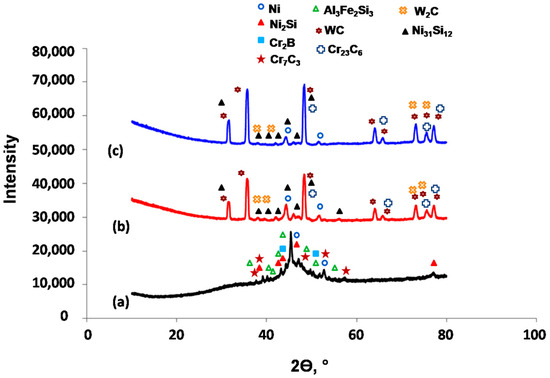
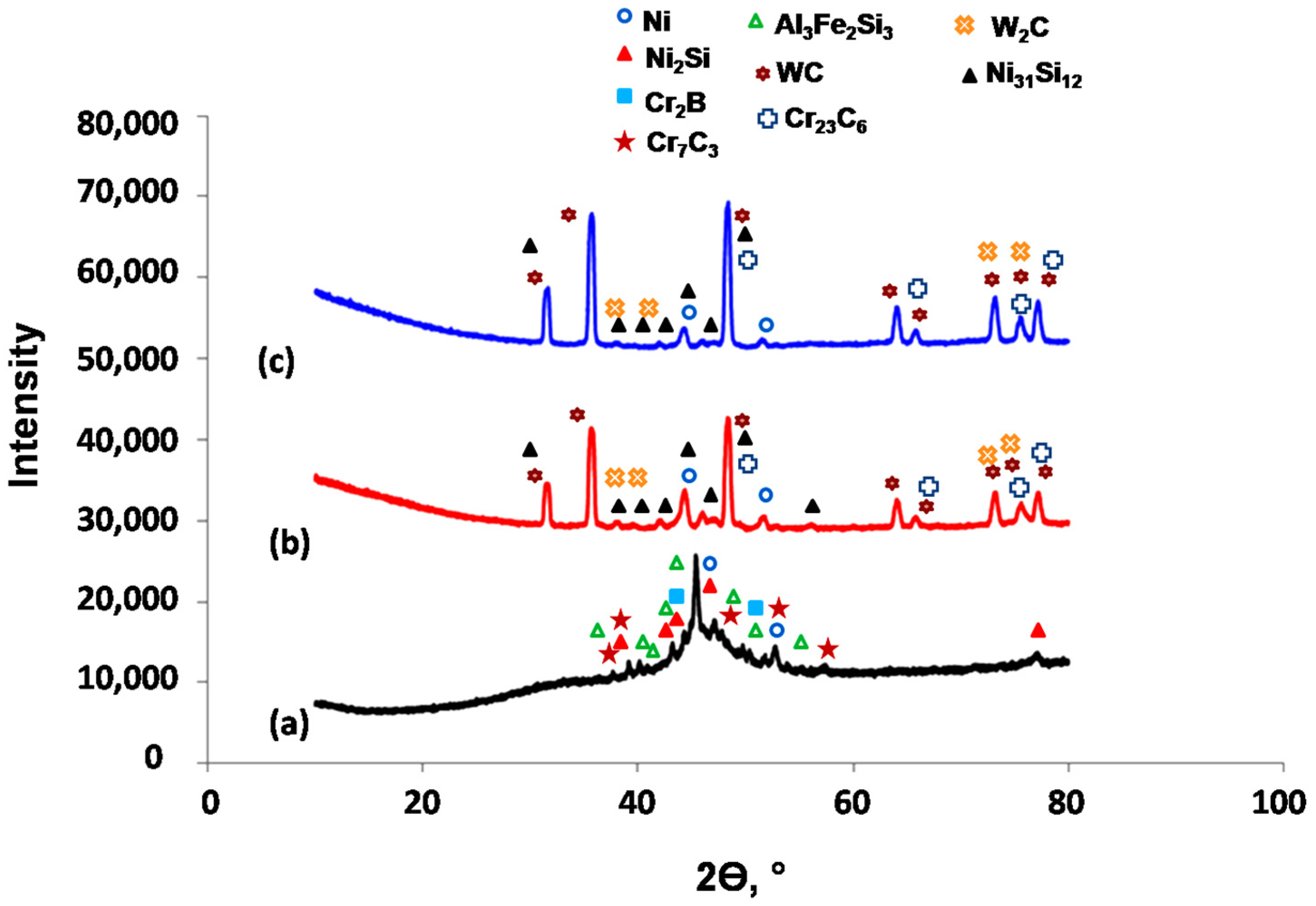
Figure 5 shows the XRD diagrams obtained during Matrix (Figure 5a), Matrix-65% WC-12Co (Figure 5b) and Matrix-85% wt.% WC-12Co (Figure 5c) analysis. First general observation of the diffractograms indicates that Matrix and mixed coatings form a crystalline structure. The resulting structure seems to be well-crystallized in the case of mixed layers, showing well-defined and intense peaks.
Figure 5.
X-ray diffraction patterns of (a) Matrix, (b) Matrix-65% WC/12Co and (c) Matrix-85% WC/12Co.
Regarding NiCrFeSiAlBC coatings (Figure 5a), the major detected phases were: γ-Ni (34.9 wt.%) and the intermetallic phase δ-Ni2Si (35 wt.%). Additionally, Cr7C3 (22.1 wt.%) phase was identified, and Cr2B was present in a smaller fraction (1.2 wt.%), indicating the formation of hard phases: mainly carbides and borides. Moreover, the phase Al3Fe2Si3 was identified with a mass fraction of 6.3 wt.% in the coating, demonstrating that Al is incorporated into the matrix structure and forms intermetallic phases with Fe and Si. The intermetallic phases are hard, which enhances wear resistance but may induce brittleness when excessively abundant, or if they are unevenly distributed or poorly formed [31,32]. Then, mixing with 65 wt.%-WC/12Co (Figure 5b) causes many phases to disappear while new phases—from mixing matrix elements and WC/12Co—to appear, as though the presence of WC causes a change in matrix structure. In fact, the γ-Ni phase with a smaller fraction (16.4 wt.%) was still identified after mixing. In addition, the intermetallic phases of Ni and Si were detected from matrix elements, but with a new crystalline structure, Ni31Si12 (34.1 wt.%). WC patterns were detected as well, confirming the WC phase’s existence, and its mass fraction was in the order of 28.8 wt.%. Moreover, a new carbide phase was detected, Cr23C6 phase (20.6 wt.%), along with traces of W2C (ε wt.%), which were produced by decarburizing the WC phase [15]. The increase in the hard phase content to 85 wt.% in the matrix caused the WC patterns’ intensity to rise (Figure 5c) while the matrix patterns’ intensity decreased. Indeed, the WC phase’s crystallization seemed to be greater than the matrix phases with 85 wt.% WC/12Co. This interpretation was confirmed by Rietveld refinement: γ-Ni (8.4 wt.%), Ni31Si12 (15.5 wt.%), WC (59.4 wt.%) and Cr23C6 (16.6 wt.%). Since the percentage of un-decarburized WC increased, the decrease in Cr23C6 mass fraction confirms that the appearance of this phase results from the WC decomposition. Although peaks corresponding to W2C were detected, its mass fraction was still negligible even when the WC content increased in the initial mixed powder and the coatings.
The appearance of these latter phases means that diffusion and precipitation of the elements occur in the molten bath [33]. In fact, WC dissolves at the edges under the action of heat, and the dissolved W and C elements diffuse into the molten bath and combine with Cr to form Cr23C6. However, the density of WC is greater than that of the molten matrix, and the melting point is higher. Therefore, the WC will not be completely dissolved. Furthermore, WC coatings grown by HVOF processes do not show completely decarburized phases [15]. The undissolved WC presents the hardest phase, and as the WC content increases, the size of these particles decreases [9], which confirms the microscopic observation of loosely bonded unburnt particles of large size for 65%wt.% WC/12Co mixed coatings, which was not the case for 85%wt.% layers. Indeed, optimized HVOF parameters allow developing cermet coatings without substantial crystallization of highly brittle phases (W2C, Co-W-C) during decomposition and decarburization of WC/12Co.
3.1.3. Porosity Analysis
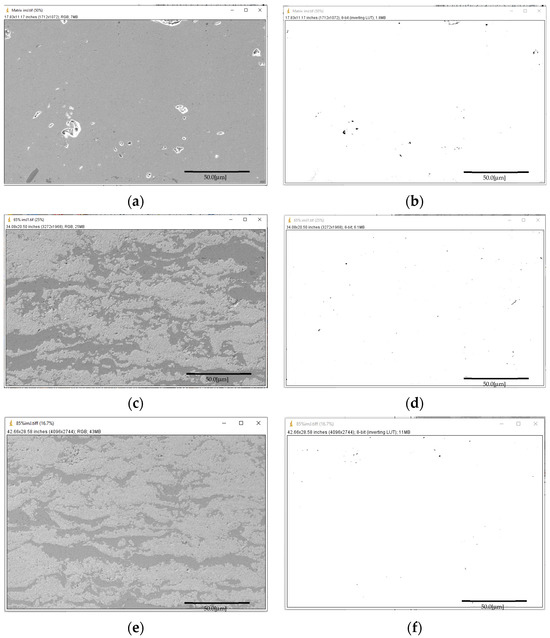
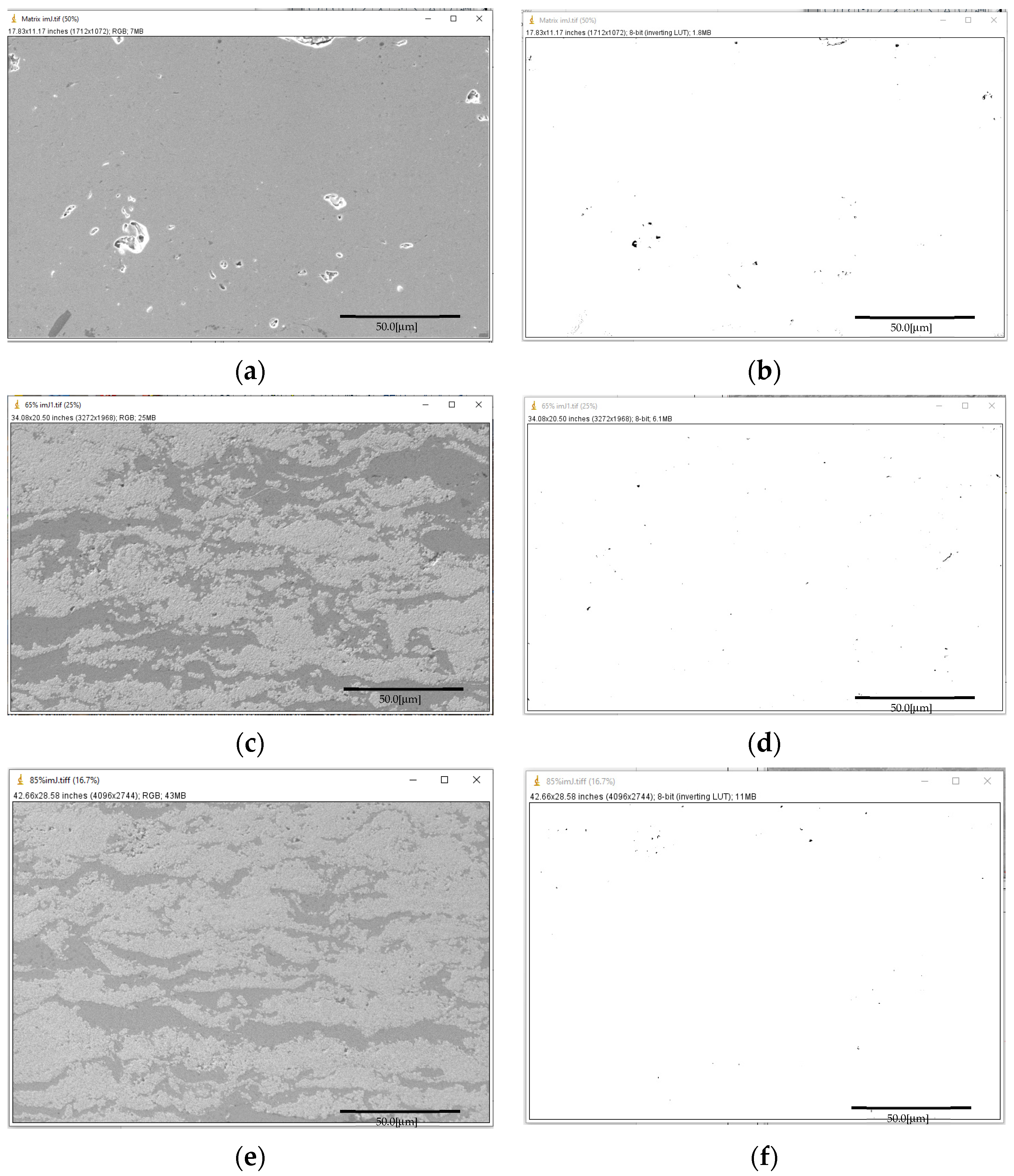
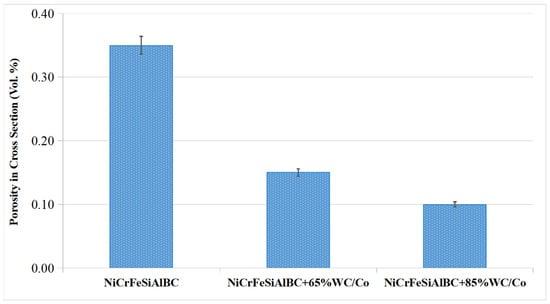
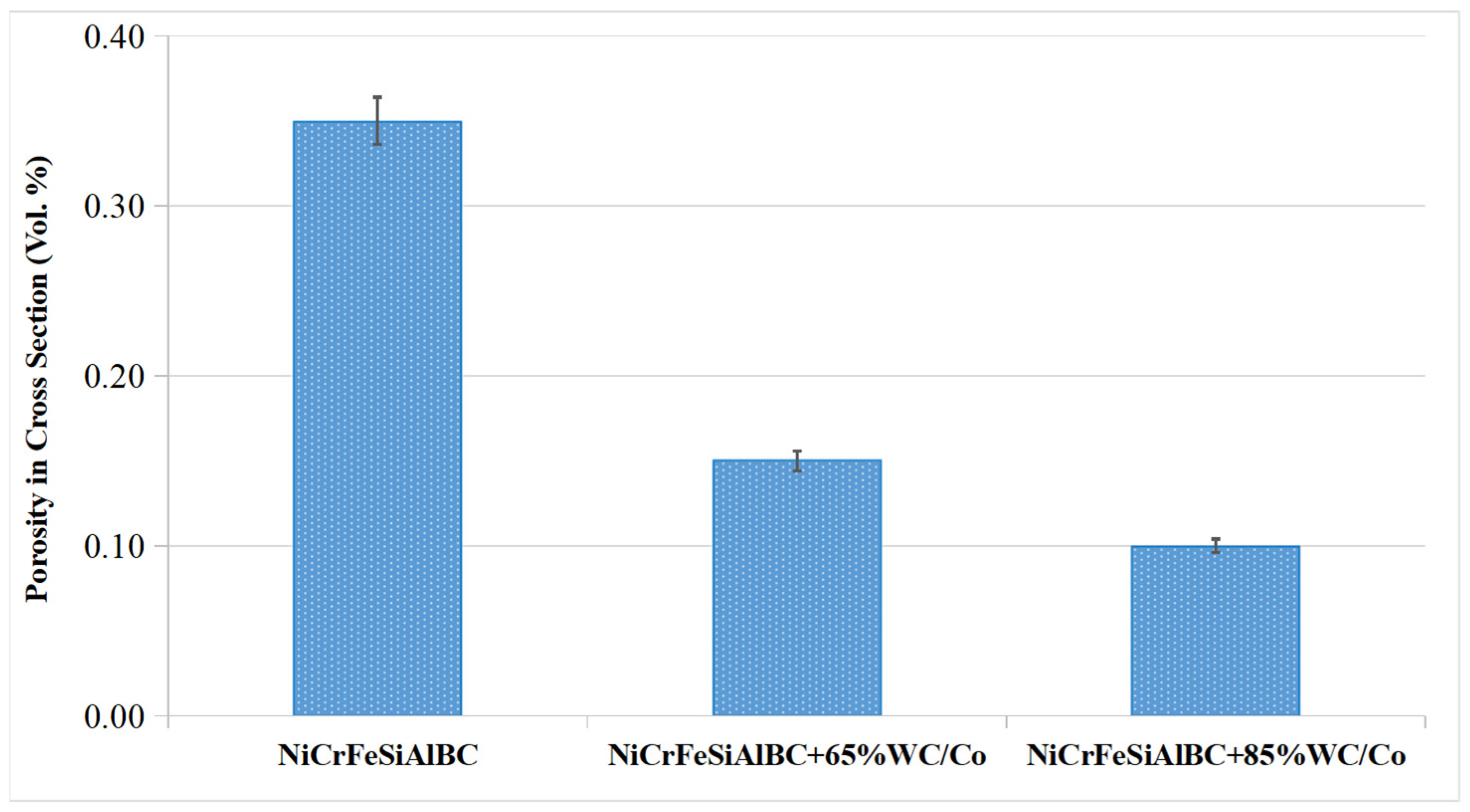
The porosity levels in the coatings were quantified through image analysis of cross-sectional backscattered electron (BSE) images (Figure 6), using ImageJ software (version 1.53t, National Institutes of Health, Bethesda, MD, USA). For each coating, three representative images from different regions were analyzed. The images were converted to 8-bit grayscale, and a threshold was applied to distinguish pores from solid material, generating binary images (pores = black, solid = white). The area fraction of pores was measured using the “Analyze Particles” function, and the reported values represent the average ± standard deviation of the three measurements. The mean porosities of the different coatings are represented in Figure 7. NiCrFeSiAlBC coatings exhibited the highest porosity (0.35 ± 0.02 vol.%), while 65 wt.% WC/12Co and 85 wt.% WC/12Co coatings showed lower porosities of 0.15 ± 0.01 vol.% and 0.10 ± 0.01 vol.%, respectively. The lower porosity in WC/12Co coatings, particularly 85 wt.% WC/12Co, is consistent with SEM and XRD results discussed earlier, which demonstrated good wetting of WC grains by NiCrFeSiAlBC and Co binders, more extensive particle melting, and enhanced densification during deposition. Prior XRD analyses also revealed higher carbon retention in 85 wt.% WC/12Co coatings through prominent WC peaks, indicating complete binder melting, which drastically reduces porosity [22,34]. Additionally, retaining solid WC particles likely increases kinetic energy during deposition, promoting tighter inter-particle bonding and improved coating cohesion [21].
Figure 6.
Scheme of porosity assessment in HVOF sprayed coatings for (a,b) Matrix, (c,d) Matrix + 65%WC/12Co, (e,f) Matrix + 85%WC/12Co.
Figure 7.
Porosity (vol.%) of NiCrFeSiAlBC coatings in cross-section at different WC/12Co weight fractions.
3.2. Micromechanical and Tribological Investigations
3.2.1. Micro-Hardness Results
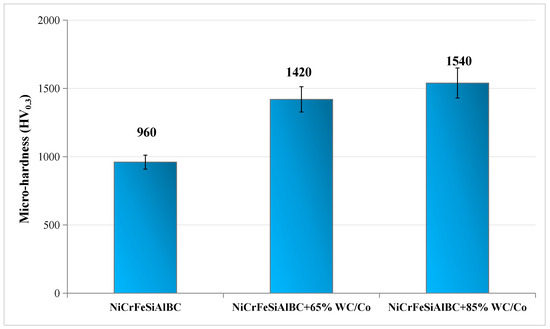
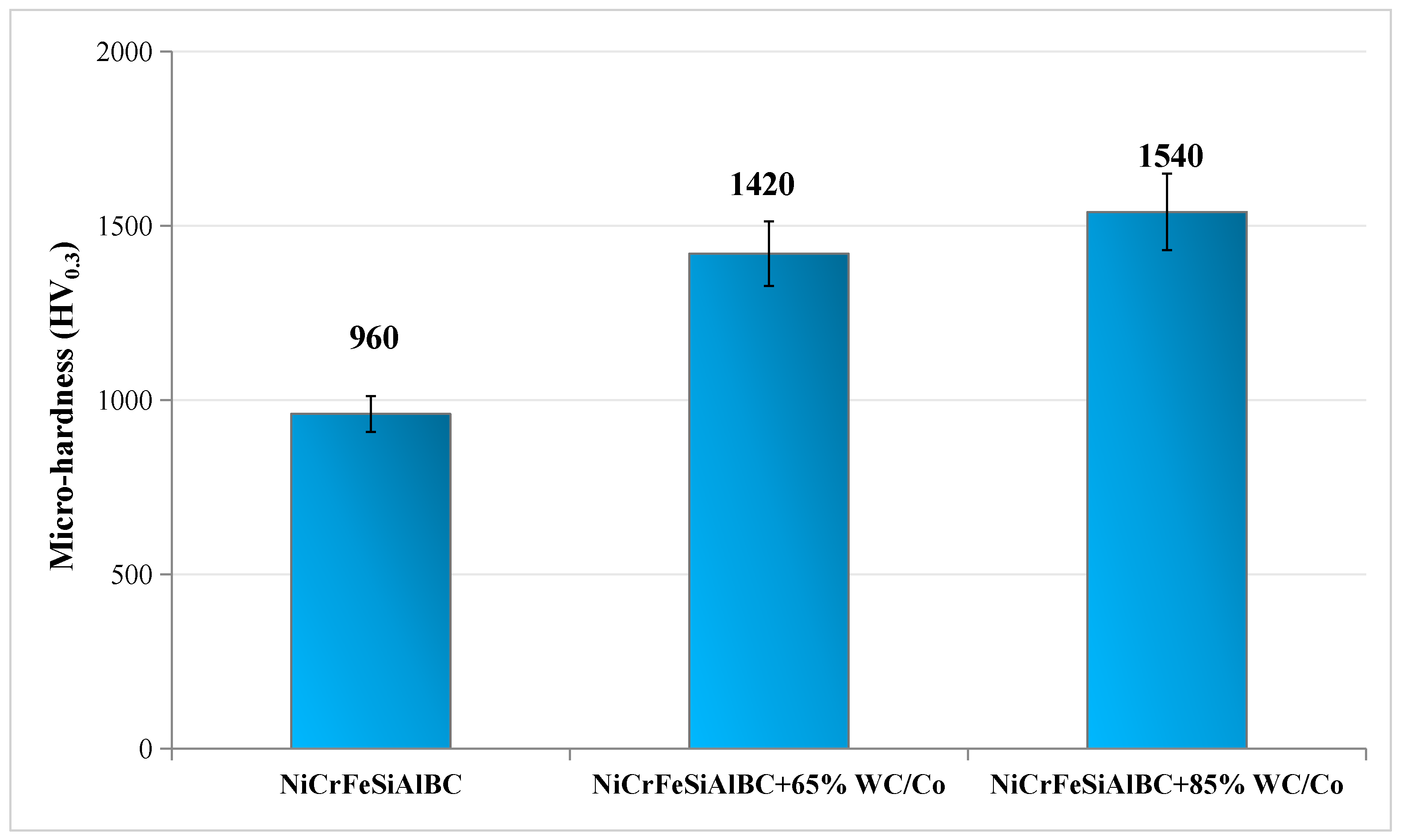
Figure 8 displays the average hardness values recorded on the surface of the NiCrFeSiAlBC coating and the two NiCrFeSiAlBC + WC/12Co cermet coatings. The NiCrFeSiAlBC+ 85%WC/12Co coating exhibits the highest average hardness at 1540 HV, roughly 150% greater than that of the NiCrFeSiAlBC coating (960 HV0.3). Notably, the intermediate NiCrFeSiAlBC+ 65%WC/12Co coating shows an average hardness about 9% lower than the 85%WC/12Co variant.
Figure 8.
Microhardness (HV0.3) of NiCrFeSiAlBC coatings at different WC/12Co weight fractions.
This trend aligns with findings from Çelik and Benli, who showed that WC-12Co coatings applied via HVOF can exceed 1300 HV0.1 in hardness, depending on feedstock powders and spraying parameters [35]. The substantial variation in hardness stemmed from differences in the HVOF spraying equipment used. The setup in this investigation delivered greater power, accelerating particle velocities during flight and yielding a more compact structure with a harder microstructure [15]. This approach also minimized or effectively suppressed WC decomposition and decarburization. With identical matrix composition and no novel phases identified in the XRD patterns, the improved hardness could be directly linked to the elevated WC fraction. The wide error bars for the NiCrFeSiAlBC + WC/12Co coatings suggest no statistically significant differences in their hardness levels. Despite its lower inherent hardness, the incorporation of NiCrFeSiAlBC did not cause any substantial drop in overall hardness, likely due to enhanced densification from the molten NiCrFeSiAlBC covering the WC cemented phase. These findings, both in terms of mean values and variability, align well with prior research on similar coating systems [30,36].
3.2.2. Tribological Investigations
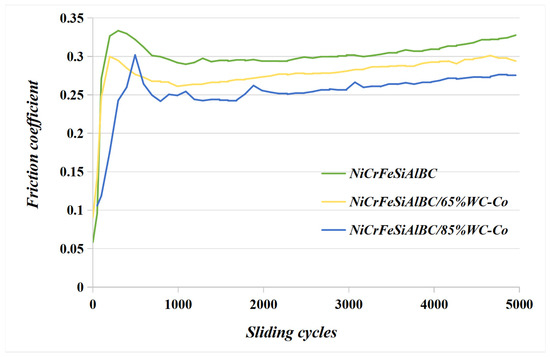
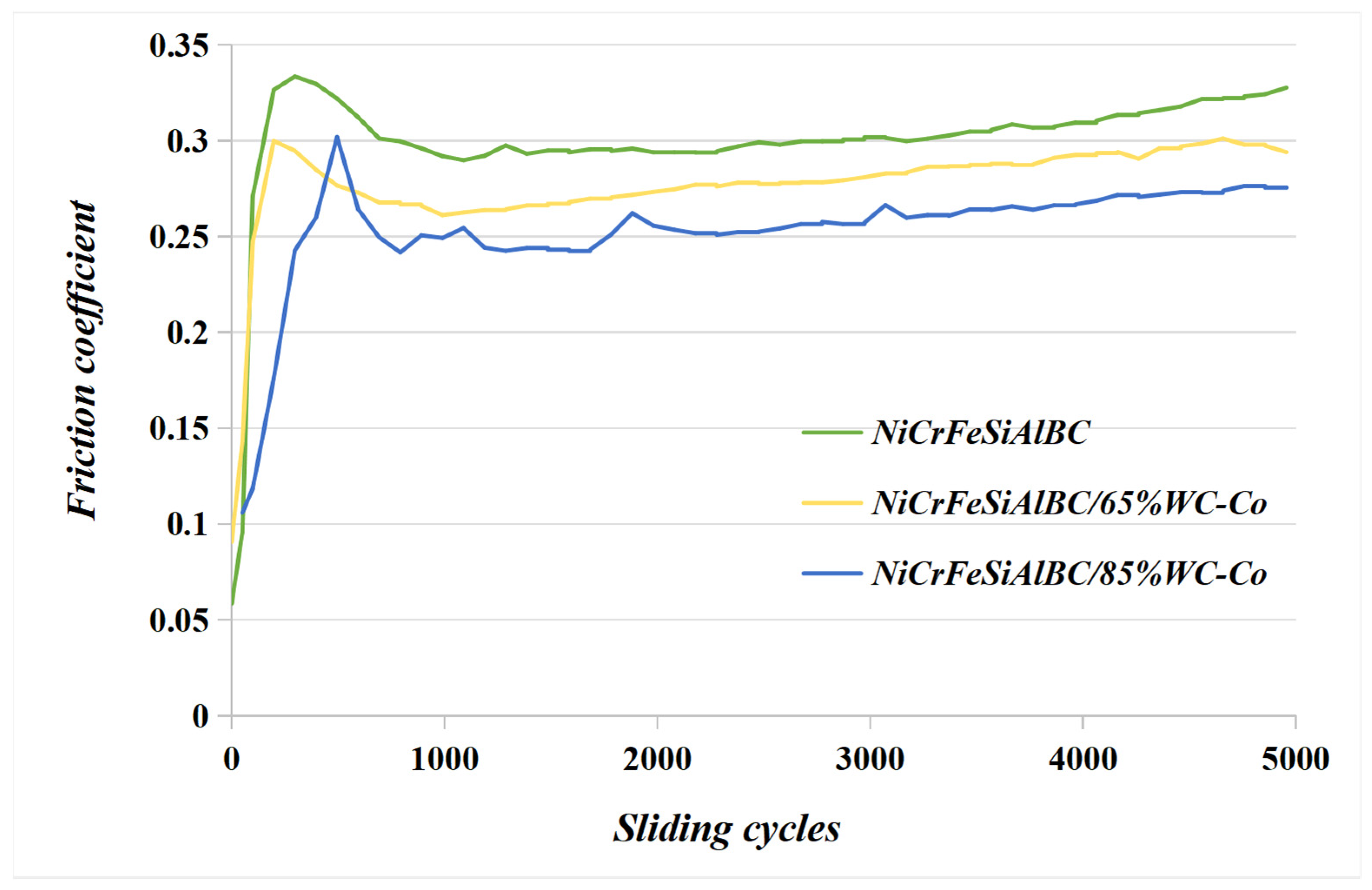
Figure 9 illustrates typical friction coefficient trends as a function of sliding cycles at varying tungsten carbide mass fractions. The curve profiles clearly reflect the decline in the friction coefficient with increasing WC/12Co weight percentages. After 5000 cycles, the average friction coefficient drops from 0.342 to 0.261 with the incorporation of 85% WC/12Co.
Figure 9.
Friction coefficient variation versus number of sliding cycles at different WC/12Co weight fractions.
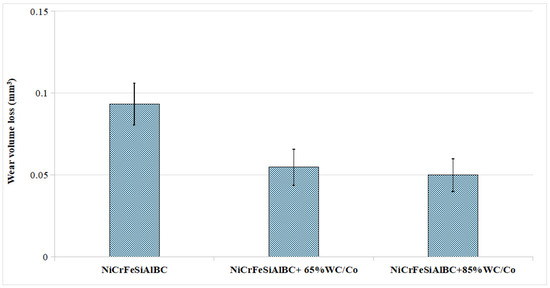
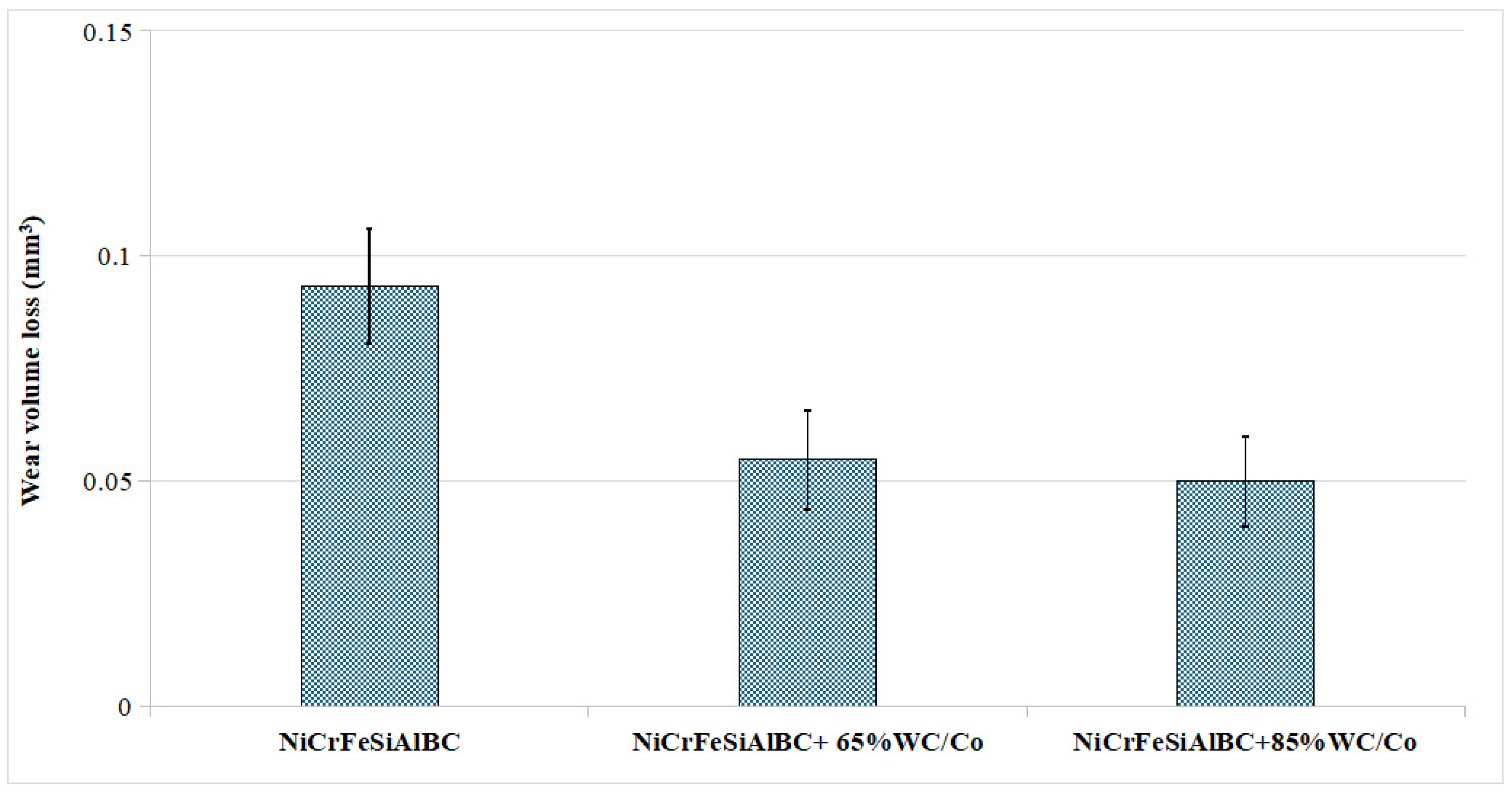
The obtained results prove satisfactory regarding both friction and wear performance, evidenced by the progressive reduction in worn volume following the addition of hard WC particles, as shown in Figure 10. The unreinforced nickel matrix, notwithstanding its high density and adequate fracture toughness, manifests the lowest wear resistance, registering a worn volume of 9.32 × 10⁻² mm3. This underscores its pronounced susceptibility to plastic deformation and adhesive wear mechanisms under sliding contact regimes. Incorporation of 65 wt.% WC/12Co shows a marked diminution in worn volume to 5.47 × 10⁻² mm3, due to the dispersion of hard carbide particulates that enhance load distribution under stress. Superior wear resistance is evidenced in the 85 wt.% WC/12Co reinforced coating, which attains a minimal worn volume of 4.98 × 10⁻² mm3. This enhancement correlates directly with elevated microhardness measurements from Figure 10, wherein increased hardness inversely scales with wear rate. Analogous hardness–weight loss correlations have been documented in prior investigations of sliding wear in WC/Co cermet coatings [21,37]. These observations also corroborate findings by Yao et al., who established that NiCrBSi-WC(Co) cermet coatings exhibit a pronounced decrease in the wear rates with WC(Co) additions up to 50 wt.%, beyond which further increases to 80 wt.% yield only marginal improvements [35].
Figure 10.
Wear volume after 5000 sliding cycles of NiCrFeSiAlBC coatings at different WC/12Co weight fractions.
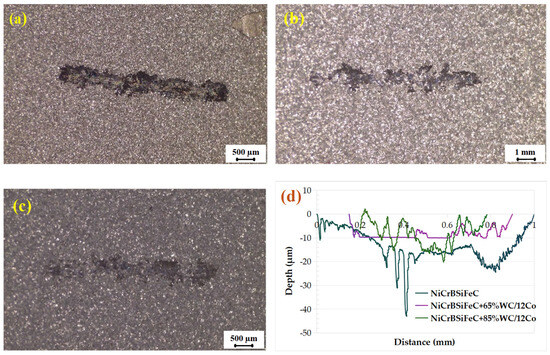
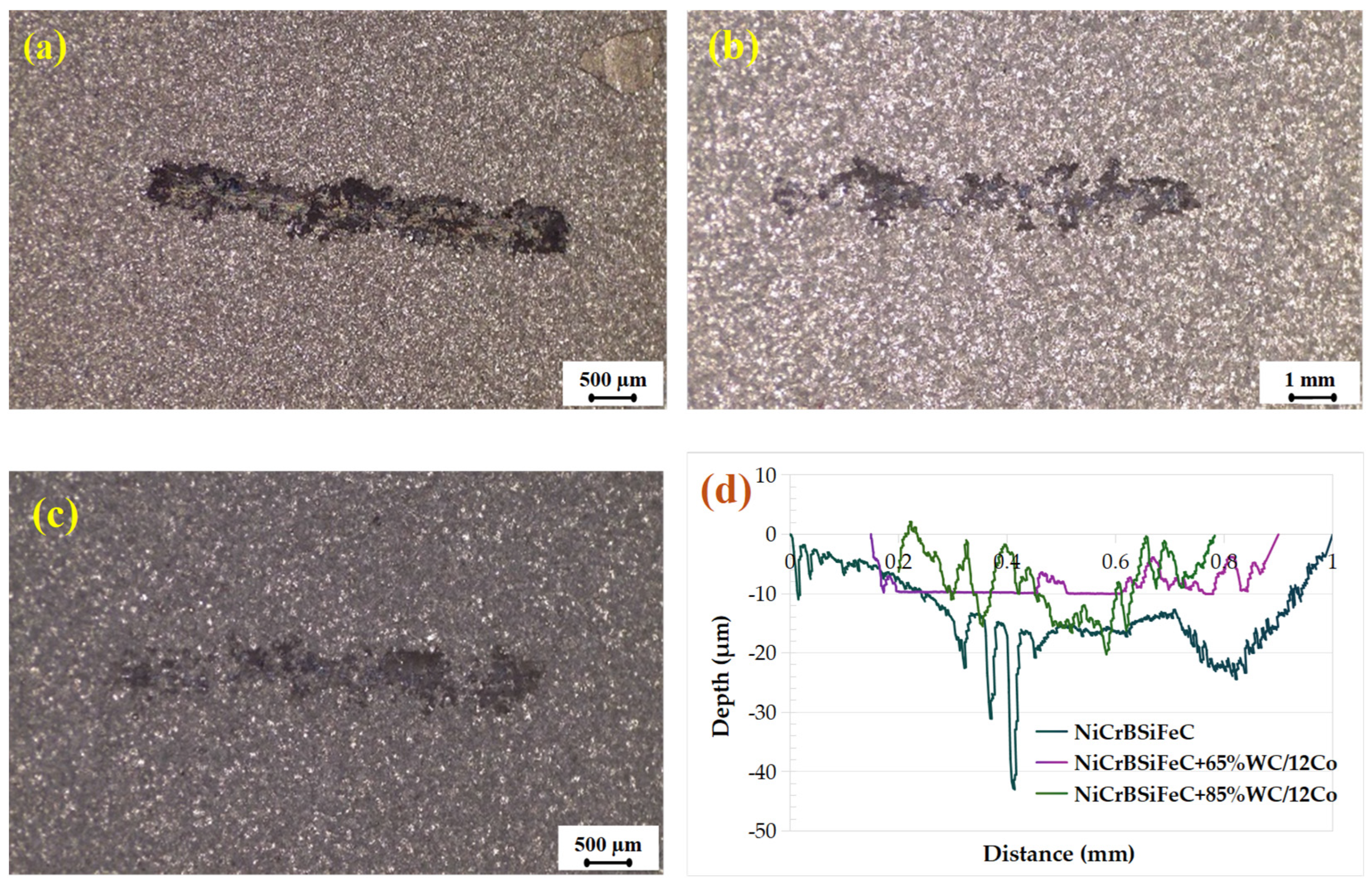
Figure 11a–c display optical micrographs of wear tracks formed on NiCrFeSiAlBC matrix coatings reinforced with graded WC/12Co weight fractions after 5000 cycles of reciprocating sliding, and Figure 11d shows typical transversal wear profiles of the different coatings. Progressive WC/12Co incorporation yielded a marked diminution in track width and depth (Figure 11d). This observation correlates directly with quantified wear volume reductions, exhibiting an approximate 40% decrease upon integration of 85 wt.% WC/12Co (Figure 11). Friction and wear constitute system-inherent properties governed by the tribological pair and test environment. Among these factors, antagonist material selection exerts a significant influence on frictional response, particularly when promoting tribochemical interactions with the hard metal surface or inducing transferred particle accumulation on the coating. Previous extensive research on HVOF-sprayed NiCrBSi–WC(Co) coatings (0–80 wt% WC(Co)) using reciprocating wear testing against AISI 52100 steel ball demonstrates a wear mechanism transition: low WC content shows matrix-dominated adhesive wear via inter/intragranular cracking, while high WC fractions exhibit carbide-controlled loading with tribo-oxidation (WxOy) and particle fracture [15]. Other tribological evaluations of WC/Co cermet coatings sliding against Si3N4 ball reveal that initial sliding contact induces severe plastic deformation of the ductile Co matrix, followed by WC particle microcracking, pullout, and debris generation due to loss of intergranular support [37]. For conventional WC/Co coatings tested against alumina counterparts, wear rates correlate primarily with carbide grain size rather than coating hardness or fracture toughness [38]. Submicron WC reinforcements thus critically govern wear performance by refining particle size distributions. In WC cermet coatings with ductile matrices, the superior hardness of WC phases fundamentally drives wear rate reductions. The involved mechanism acts by transitioning from matrix severe adhesive wear at low carbide fractions to carbide-dominated load-bearing regimes at elevated WC contents. The optimal performances are achieved through critical inter-particle spacing that maximizes hardness while preserving matrix continuity.
Figure 11.
Optical micrographs of wear tracks after 5000 cycles: (a) NiCrFeSiAlBC, (b) NiCrFeSiAlB + 65% WC/12Co, (c) NiCrFeSiAlBC + 85% WC/12Co and (d) typical wear profiles of the different coatings.
4. Conclusions
WC/12Co-reinforced NiCrFeSiAlBC cermet coatings were produced by HVOF spraying, and the influence of carbide content on microstructure, hardness, and tribological response was comprehensively assessed. HVOF processing successfully resulted in well-adhered Ni-based coatings and WC/12Co cermet coatings with characteristic lamellar architectures. The introduction of a high content of WC/12Co improved coating compactness and reduced internal defects, even with the WC content increased up to 85 wt.%.
XRD analysis revealed crystalline structures across all coatings. Matrix coatings primarily contained carbides and borides as hard phases, with dominance of pure Ni and intermetallic phases containing Si. The addition of aluminum also enabled the formation of intermetallic hard phases. WC addition promoted dominant WC crystallization, with the detection of Cr23C6, and traces of W2C from decarburization of WC. In fact, HVOF optimized parameters limited the formation of brittle phases, such as W2C.
Porosity levels decreased with the increase in ceramic phase content. Mixed coatings with high WC contents in the matrix (on the order of 65 wt.%) showed dense, cohesive and adhesive layers deposited on stainless steel substrates.
Microhardness values increased significantly with carbide fraction, with the highest hardness measured for the coating containing 85 wt.% WC/12Co, reflecting the strong reinforcing effect of the carbide phase and improved densification. The formation of hard phases and particle size refinement likely contributed to enhanced microhardness.
Tribological testing revealed a clear improvement in wear resistance and a reduction in friction coefficient as WC content increased. The highest carbide fraction promoted a transition toward carbide-controlled load support, resulting in minimal wear loss under dry sliding conditions.
Overall, the results demonstrate that carbide content plays a decisive role in governing the mechanical and tribological behavior of NiCrFeSiAlBC-based cermet coatings. Moreover, well controlled parameters of HVOF enable production of high-content WC/12Co cermet coatings that exhibit strong potential for use in severe sliding environments, particularly in engine and powertrain components while offering a sustainable alternative to conventional hard chromium surface treatments.
Author Contributions
Conceptualization, B.B.D.; Methodology, B.B.D.; Validation, B.B.D., M.K. and M.B.; Investigation, B.B.D., F.N., C.A. and A.P.; Resources, A.P.; Writing—original draft, F.H. and F.N.; Writing—review and editing, B.B.D. and M.K.; Supervision, B.B.D., C.A., M.K. and M.B.; Project administration, M.K. All authors have read and agreed to the published version of the manuscript.
Funding
This work was funded by the project AM2R—Agenda Mobilizadora para a inovação empresarial do setor das Duas Rodas [C644866475-00000012—project n. 15], financed by PRR—Recovery and Resilience Plan under the Next Generation EU from the European Union, and had laboratory support of the Centre for Mechanical Technology and Automation (TEMA).
Data Availability Statement
The original contributions presented in this study are included in the article. Further inquiries can be directed to the corresponding authors.
Acknowledgments
The kind assistance provided by RINA (Italy) members in developing the HVOF coatings is gratefully acknowledged.
Conflicts of Interest
The authors declare no conflicts of interest.
References
- Liu, T.; Li, J.; Li, H.; Liu, J.; Huang, Y.; Wang, Q.; Ramachandran, C.S. Optimization of Preparation Process Parameters for HVOF-Sprayed WC-10Co-4Cr Coatings and Study of Abrasive and Corrosion Performances. Lubricants 2025, 13, 516. [Google Scholar] [CrossRef] [Scilit]
- Ben Difallah, B.; Mebdoua, Y.; Serdani, C.; Kharrat, M.; Dammak, M. Advanced HVOF-Sprayed Carbide Cermet Coatings as Environmentally Friendly Solutions for Tribological Applications: Research Progress and Current Limitations. Technologies 2025, 13, 281. [Google Scholar] [CrossRef] [Scilit]
- Vidaković, I.; Šimunović, K.; Heffer, G.; Špada, V. Microstructural Analysis of Nickel-Based Self-Fluxing Alloy Coatings. Weld. World 2024, 68, 2819–2836. [Google Scholar] [CrossRef] [Scilit]
- Brioua, S.; Belmokre, K.; Debout, V.; Jacquot, B.; Conforto, E.; Touzain, S.; Creus, J. Influence of Spray Parameters on the Metallurgical and Functional Properties of HVOF WC Based Cermets Deposited onto Low Alloy Steel. J. Mater. Sci. Technol. Res. 2022, 9, 375. [Google Scholar] [CrossRef] [Scilit]
- Shuecamlue, S.; Taman, A.; Khamnantha, P.; Banjongprasert, C. Influences of flame remelting and WC-Co addition on microstructure, mechanical properties and corrosion behavior of NiCrBSi coatings manufactured via HVOF process. Surf. Interfaces 2024, 48, 104135. [Google Scholar] [CrossRef] [Scilit]
- Richert, M. Thermally Sprayed Coatings for the Protection of Industrial Fan Blades. Materials 2024, 17, 3903. [Google Scholar] [CrossRef] [Scilit]
- Huang, S.; Zhou, J.; Sun, K.; Yang, H.; Cai, W.; Liu, Y.; Zhou, P.; Wu, S.; Li, H. Microstructural Charactistics of Plasma Sprayed NiCrBSi Coatings and Their Wear and Corrosion Behaviors. Coatings 2021, 11, 170. [Google Scholar] [CrossRef] [Scilit]
- González, R.; Cadenas, M.; Fernández, R.; Cortizo, J.L.; Rodríguez, E. Wear behaviour of flame sprayed NiCrBSi coating remelted by flame or by laser. Wear 2007, 262, 301–307. [Google Scholar] [CrossRef] [Scilit]
- Bergant, Z.; Batic, B.S.; Felde, I.; Storm, R.; Sedlacek, M. Tribological Properties of Solid Solution Strengthened Laser Cladded NiCrBSi/WC-12Co Metal Matrix Composite Coatings. Materials 2022, 15, 342. [Google Scholar] [CrossRef] [Scilit]
- Zhao, L.; Yu, H.; Wang, Y.; Zhao, Z.; Song, W.; Chen, C. NiCrBSi Coatings Fabricated on 45 Steel Using Large Spot Laser Cladding. Materials 2022, 15, 6246. [Google Scholar] [CrossRef] [Scilit]
- Shieh, Y.-H.; Wang, J.-T.; Shih, H.C.; Wu, S.-T. Allowing and post-heat treatment of thermal sprayed coatings of self-fluxing alloys. Surf. Coat. Technol. 1993, 58, 73–78. [Google Scholar] [CrossRef] [Scilit]
- Cha, S.C.; Gudenau, H.W.; Bayer, G.T. Comparison of corrosion behaviour of thermal sprayed and diffusion-coated materials. Mater. Corros. 2002, 53, 195–205. [Google Scholar] [CrossRef] [Scilit]
- Mahesh, C. Multiscale abinitio simulation of Ni-based alloys: Real-space distribution of atoms in γ+γ’ phase. Comput. Mater. Sci. 2015, 108, 192–204. [Google Scholar] [CrossRef] [Scilit]
- Zhu, L.; Wang, J.; Deng, X.; Dong, Y.; Yang, Y.; Li, D. Comparison of Microstructure and Properties of In-Situ TiN- and WC-Reinforced NiCrBSi Composite Coatings Prepared by Plasma Spraying. Materials 2018, 11, 2182. [Google Scholar] [CrossRef] [Scilit]
- Yao, S.H. Tribological behaviour of NiCrBSi–WC (Co) coatings. Mater. Res. Innov. 2014, 18, S2-332–S2-337. [Google Scholar] [CrossRef] [Scilit]
- Kazamer, N.; Kossman, S.; Baranyi, I.; Chicot, D.; Serban, V.; Rajnai, Z.; Voda, M. Influence of TiB2 addition on the mechanical and tribological properties of NiCrBSi deposited by flame spraying. Mater. Tech. 2018, 106, 202. [Google Scholar] [CrossRef] [Scilit]
- Singh, G.; Kaur, M. High-Temperature Wear Behaviour of HVOF-Sprayed NiCrSiFeBC–WC–Co Composite Coating. Surf. Eng. 2020, 36, 1139–1155. [Google Scholar] [CrossRef] [Scilit]
- Zhao, L.; Maurer, M.; Fischer, F.; Dicks, R.; Lugscheider, E. Influence of Spray Parameters on the In-Flight Particle Properties and the Properties of HVOF Coating of WC-CoCr. Wear 2004, 257, 41–46. [Google Scholar]
- Richard, C.S.; Béranger, G.; Lu, J.; Flavenot, J.F.; Grégoire, T. Four-point bending tests of thermally produced WC-Co coatings. Surf. Coat. Technol. 1996, 78, 284–294. [Google Scholar] [CrossRef] [Scilit]
- Tahir, A.; Li, G.-R.; Liu, M.-G.; Yang, G.-J.; Li, C.-X.; Wang, Y.-Y.; Li, C.-J. Improving WC-Co coating adhesive strength on rough substrate: Finite element modeling and experiment. J. Mater. Sci. Technol. 2020, 37, 1–8. [Google Scholar] [CrossRef] [Scilit]
- Chakradhar, R.P.S.; Prasad, G.; Venkateswarlu, K.; Srivastava, M. An Investigation on the Wear and Corrosion Behavior of HVOF-Sprayed WC-12Co-Al2O3 Cermet Coating. J. Mater. Eng. Perform. 2018, 27, 1241–1248. [Google Scholar] [CrossRef] [Scilit]
- Nahvi, S.M.; Jafari, M. Microstructural and mechanical properties of advanced HVOF-sprayed WC-based cermet coatings. Surf. Coat. Technol. 2016, 286, 95–102. [Google Scholar] [CrossRef] [Scilit]
- Shen, X.; Peng, H.; Xue, Y.; Wang, B.; Su, G.; Zhu, J.; Li, A. Microstructure and Properties of WC/Ni-Based Laser-Clad Coatings with Different WC Content Values. Materials 2022, 15, 6309. [Google Scholar] [CrossRef] [Scilit]
- Berger, L.M. Application of hard metals as thermal spray coatings. Int. J. Refract. Met. Hard Mater. 2015, 49, 350–364. [Google Scholar] [CrossRef] [Scilit]
- Ibarra, J.d.J.; González, M.A.; Rodríguez, E.; Vásquez, G.I.; Medina, A.; Bernal, J.; Aguilar, C.; Velez, E.E. Enhanced Fracture Toughness of WC-CoCr Thermally Sprayed Coatings by the Addition of NiCrFeSiBC and Mo and its Influence on Sliding Wear Behavior. Coatings 2024, 14, 1207. [Google Scholar] [CrossRef] [Scilit]
- Suryanarayana, C. Mechanical alloying and milling. Prog. Mater. Sci. 2001, 46, 1–184. [Google Scholar] [CrossRef] [Scilit]
- Zhuang, Z.; Li, Z.; Xu, L.; Feng, Y.; Wang, R.; Peng, C. Influence of ball milling conditions on powder characteristics and sintering densification of Mo–Cu alloy. Int. J. Refract. Met. Hard Mater. 2024, 125, 106914. [Google Scholar] [CrossRef] [Scilit]
- Ni, M.; Zhang, X.; Liu, Y.; Zhou, H. Effect of milling time on powder characteristics and mechanical performance of Ti–4 wt.% Al alloy. Powder Technol. 2019, 342, 275–287. [Google Scholar] [CrossRef] [Scilit]
- Singh, J.; Kumar, S.; Mohapatra, S.K. Erosion wear performance of Ni-Cr-O and NiCrBSiFe-WC(Co) composite coatings deposited by HVOF technique. Ind. Lubr. Tribol. 2019, 71, 610–619. [Google Scholar] [CrossRef] [Scilit]
- Ramesh, M.R.; Prakash, S.; Nath, S.K.; Sapra, P.K.; Venkataraman, B. Solid particle erosion of HVOF sprayed WC-Co/NiCrFeSiB coatings. Wear 2010, 269, 197–205. [Google Scholar] [CrossRef] [Scilit]
- Mathew, J.; Remy, G.; Williams, M.A.; Tang, F.; Srirangam, P. Effect of Fe intermetallics on microstructure and properties of Al-7Si alloys. JOM 2019, 71, 4362–4369. [Google Scholar] [CrossRef] [Scilit]
- Li, L.; Li, X.; Shi, L.; Huang, S.; Xu, C.; Lu, G.; Guan, S. CALPHAD-Assisted Analysis of Fe-Rich Intermetallics and Their Effect on the Mechanical Properties of Al-Fe-Si Sheets via Continuous Casting and Direct Rolling. Metals 2025, 15, 578. [Google Scholar] [CrossRef] [Scilit]
- Feng, L.; Li, C.; Han, X.; Luo, F.; San, H. Experimental Study on Preparation of Tungsten-Carbide- Particle-Reinforced Nickel-Based Alloy Plasma Surfacing Layer on Descaling Roller Surface. Coatings 2024, 14, 729. [Google Scholar] [CrossRef] [Scilit]
- Liu, J.; Bai, X.Z.; Chen, T.; Yuan, C. Effects of Cobalt Content on the Microstructure, Mechanical Properties and Cavitation Erosion Resistance of HVOF Sprayed Coatings. Coatings 2019, 9, 534. [Google Scholar] [CrossRef] [Scilit]
- Çelik, İ.; Benli, B. The effect of WC-12Co and CrC-NiCr hard coatings applied by HVOF method on the microstructure, mechanical, and surface properties of steel. Metall. Res. Technol. 2024, 121, 318. [Google Scholar] [CrossRef] [Scilit]
- Khuengpukheiw, R.; Wisitsoraat, A.; Saikaew, C. Wear behaviors of HVOF-sprayed NiSiCrFeB, WC-Co/NiSiCrFeB and WC-Co coatings evaluated using a pin-on-disc tester with C45 steel pins. Wear 2021, 484–485, 203699. [Google Scholar] [CrossRef] [Scilit]
- Yuan, J.; Ma, C.; Yang, S.; Yu, Z.; Li, H. Improving the wear resistance of HVOF sprayed WC-Co coatings by adding submicron-sized WC particles at the splats’ interfaces. Surf. Coat. Technol. 2016, 285, 17–23. [Google Scholar] [CrossRef] [Scilit]
- Yang, Q.; Senda, T.; Ohmori, A. Effect of carbide grain size on microstructure and sliding wear behavior of HVOF-sprayed WC–12%Co coatings. Wear 2003, 254, 23–34. [Google Scholar] [CrossRef] [Scilit]

Disclaimer/Publisher’s Note: The statements, opinions and data contained in all publications are solely those of the individual author(s) and contributor(s) and not of MDPI and/or the editor(s). MDPI and/or the editor(s) disclaim responsibility for any injury to people or property resulting from any ideas, methods, instructions or products referred to in the content. |
© 2026 by the authors. Licensee MDPI, Basel, Switzerland. This article is an open access article distributed under the terms and conditions of the Creative Commons Attribution (CC BY) license.