


Abstract
Thin-walled partition frame parts are key load-bearing components in aerospace structures. Machining deformation directly affects assembly accuracy and service reliability. During milling, the release of residual stress caused by material removal is one of the main factors leading to deformation of thin-walled parts. To address this problem, aluminum alloy thin-walled partition frame parts are taken as the research object. A machining accuracy control method based on stress-sensitive region analysis is proposed. Key machining accuracy is used as the constraint condition. The concepts of stress-sensitive regions and sensitive directions are introduced. A coupled analysis model of residual stress and machining deformation is established. Residual stress is applied to element meshes in a finite element analysis platform and released under a free state. The influence of residual stress in different regions on part deformation is qualitatively identified. The dominant deformation directions are also determined. Based on these results, the milling tool path is specifically optimized. Strategies are adopted to avoid highly stress-sensitive regions or to control residual stress release by region. Overall machining deformation is effectively reduced. Experimental results show that the optimized tool path significantly suppresses part deformation compared with the conventional tool path. The flatness of the bottom surface is improved by up to 25.33%. The proposed method provides a feasible approach for machining process optimization of aerospace thin-walled parts with high precision.
1. Introduction
With the increasing demand for lightweight and high-performance structural components in aerospace and automotive industries, high-strength aluminum alloy components are widely used in complex load-bearing structures. Among them, 7075-T7451 aluminum alloy has high specific strength, good corrosion resistance, and excellent heat treatment strengthening capability. Therefore, it is extensively applied in aircraft structural parts and high-stress load-bearing components [1,2,3,4,5]. Meanwhile, recent experimental studies on 7075-T7451 milling further confirm that thermo-mechanical coupling during cutting can significantly affect residual stress states and thus surface integrity and part performance [6]. However, integral machining is commonly adopted during the milling of thin-walled parts. This process involves a high material removal rate. As a result, the original internal stress balance of the part is easily disturbed, which leads to the introduction of machining-induced residual stress. When internal residual stress is released during machining or subsequent service, part deformation often occurs. This deformation reduces dimensional accuracy and may even cause part failure. Consequently, manufacturing cost is increased. Therefore, to reduce the influence of residual stress on the machining deformation of aerospace thin-walled parts, it is necessary to investigate the action mechanism of residual stress in depth. Corresponding deformation control measures should be adopted. Milling process parameters should be precisely controlled to optimize the residual stress distribution. This ensures that machining quality meets design requirements [7,8]. In addition, recent reviews on distortion control emphasize that toolpath optimization based on bulk/initial residual stress, process parameter optimization, and fixture strategies are among the most promising measures for suppressing residual-stress-driven distortion in machined components [9].
Existing studies indicate that the formation mechanisms of machining-induced surface residual stress can be mainly classified into two theoretical frameworks. They are the mechanically dominated model and the thermally dominated model. The mechanically dominated model emphasizes the dominant role of cutting force in residual stress formation [10,11,12]. It suggests that compressive stress tends to form in the surface layer during cutting, while tensile stress appears in the core region. In contrast, the thermally dominated model focuses on the effect of cutting heat. It points out that tensile stress is likely to form on the surface layer due to constrained thermal expansion, while compressive stress is generated in the core region [13]. More recently, review studies on residual stress modeling in machining have systematically summarized analytical/numerical routes and further highlighted that residual stress in cutting is typically governed by the coupled effects of plastic deformation and thermal loading, and that model selection should be consistent with dominant load sources and process conditions [14].
To reduce the influence of residual stress on thin-walled parts, many researchers have conducted related studies. Jiang et al. [15] established an empirical model for residual stress superposition during milling. This model quantitatively distinguished the contribution ratios of cutting force and cutting heat to residual stress formation. It provided an important reference for the development of residual stress prediction models. For specific machining conditions, Zheng et al. [16] proposed the concept of non-uniform milling. An analytical model based on elastic theory was developed. This model was used to predict the evolution of residual stress and the resulting machining deformation in beam-like aluminum alloy components under asymmetric milling conditions. Zhang et al. [17] proposed a prediction method based on deformation measurement of milled thin-walled specimens. The overall deformation of thin-walled components was predicted by calculating the average value of machining-induced residual stress (MIRS). The experimental error was controlled within 20%. Li et al. [18] investigated bending deformation of aerospace aluminum alloy components caused by residual stress. A semi-analytical solution model was established. The effects of residual stress distribution and geometric parameters on deformation behavior were systematically analyzed. The model was validated by finite element simulations and cutting experiments. Chen et al. [19] combined gray relational analysis (GRA), backpropagation neural network (BP), and the non-dominated sorting genetic algorithm (NSGA-III) to conduct a multi-objective optimization study on the factors affecting residual stress during milling of magnesium–lithium alloys. The study revealed typical residual stress distribution characteristics under the coupled effects of cutting force and cutting temperature. In addition, Chen et al. [20] established an analytical prediction model for machining deformation that considers the influence of initial residual stress. The model analyzed stress redistribution during material removal and the evolution of stress equilibrium. Its effect on component deformation was clarified. Zhang et al. [21] proposed an active control method during machining. By constructing a balance equation among internal stress, residual stress, and clamping force, online control of machining deformation in thin-walled parts was achieved. Li et al. [22] investigated the effect of cutting depth on residual stress redistribution. The results showed that machining deformation of thin-walled parts can be effectively reduced by properly controlling machining-induced residual stress (MIRS) during roughing and finishing stages. Wang et al. [23] further demonstrated that initial residual stress (BIRS) plays a dominant role during the early stage of deformation. As part stiffness decreases, machining-induced residual stress gradually becomes the main factor affecting deformation. This conclusion is also consistent with recent high-fidelity experimental analyses showing that inherent/initial residual stress in aerospace aluminum plates can be a key contributor to distortion in high-aspect-ratio machined parts, thereby requiring explicit consideration in predictive and control frameworks [24].
Recent research has further deepened the understanding of residual stress formation and its effect on machining deformation, especially under complex milling scenarios. A comprehensive review by Jiang et al. summarized the latest advances in the generation, evaluation, prediction, and control of milling-induced residual stresses, highlighting the influence of process parameters, tool geometry, and cooling conditions on the residual stress field and subsequent part distortion in thin-walled structures [25]. In parallel, new finite element-based prediction models have been proposed to improve the accuracy of residual stress and deformation prediction for large or medium-sized thin-walled components by discretizing the tool–workpiece contact surface and capturing regional residual stress distribution effects under variable machining states [26]. Moreover, recent work on frame-type thin-walled parts demonstrated that integrating both initial residual stress and cutting forces into finite element models significantly enhances milling deformation prediction accuracy and provides a basis for process planning strategies that minimize distortion through optimized cutting paths and removal sequencing. Numerical and experimental studies have also highlighted the crucial role of workpiece initial residual stress and toolpath strategies, revealing that toolpaths aligned with specific geometric directions can either aggravate or reduce final distortion by affecting stress redistribution during material removal. More recently, analytical models have been developed that explicitly separate the contributions of initial residual stress in blanks and machining-induced residual stress, providing clearer physical insight into the mechanisms driving thin-wall deformation and enabling more targeted control approaches during process design [27]. Collectively, these studies emphasize the importance of accounting for both material-inherent and process-induced stresses in predictive frameworks and support the necessity of regional residual stress analysis for accurate deformation control in aerospace thin-walled components.
Although extensive studies have been conducted on residual stress and machining deformation of thin-walled parts, most existing methods focus on global parameter optimization or control within a single machining stage. Regional analysis methods oriented toward specific accuracy requirements are still lacking. As a result, the applicability of these methods is limited in the machining of complex thin-walled structural components. Based on the above analysis, a machining accuracy control method for thin-walled parts based on stress-sensitive region analysis is proposed. In this method, key machining accuracy is taken as the constraint condition. The concepts of stress-sensitive regions and sensitive directions are introduced. A coupled analysis model of residual stress and deformation is established. Residual stress is applied to element meshes in a finite element analysis platform and released under a free state. The influence degree of residual stress in different regions on part deformation is qualitatively identified. The dominant deformation directions are also determined. On this basis, the milling tool path is specifically optimized. Machining deformation of thin-walled parts is effectively controlled by avoiding highly stress-sensitive regions or by releasing residual stress in advance.
Based on the above analysis, the main objectives of this study are summarized as follows:
- (1)
- To propose a stress sensitivity analysis method for thin-walled frame components, enabling the identification of regions where residual stress release has a significant impact on specific machining accuracy indicators.
- (2)
- To establish a residual stress–deformation coupled finite element model and quantitatively analyze the dominant stress components and directions governing machining deformation.
- (3)
- To develop a path optimization strategy guided by stress-sensitive regions, in which machining paths are designed to avoid high-sensitivity areas or reduce directional stress accumulation.
- (4)
- To validate the proposed method through numerical simulation and milling experiments, and to evaluate its effectiveness in reducing machining deformation and improving flatness accuracy of frame-type thin-walled parts.
2. Stress Sensitivity Modeling of Thin-Walled Aluminum Alloy Parts
Before cutting begins, the internal residual stress of a part is usually in a relatively stable equilibrium state. As machining proceeds, material in the cutting layer is gradually removed. The original residual stress is released accordingly. At the same time, new machining-induced residual stress is generated in the surface and subsurface layers of the workpiece. The release of original residual stress and the superposition of newly generated stress jointly destroy the original stress equilibrium of the part. To re-establish a new equilibrium state, the part undergoes geometric deformation. As a result, post-machining dimensional accuracy may deviate from design tolerance requirements. Based on this understanding, this section first proposes a machining deformation control method based on stress sensitivity analysis. Second, secondary development of the ABAQUS finite element software is carried out using Python (Version 3.12.0). This approach simplifies the modeling and analysis process. Finally, the machining process of a six-partition frame component is optimized based on quantitative data obtained from simulation analysis.
2.1. Stress Sensitivity Analysis Method
According to elastoplastic mechanics theory, metallic materials can be simplified as ideal elastoplastic models. The stress–strain relationship of aluminum alloys follows the generalized Hooke’s law:
In the formula, and represent the Poisson’s ratio and elastic modulus of the aluminum alloy material, respectively. is the strain tensor, is the stress tensor, is the unit diagonal matrix, and is the sum of normal stresses.
The above analysis indicates that the displacement of any material micro-element in the X, Y, and Z directions is functionally related to the nine independent components of its stress tensor. It should be noted that stress components in different directions have significantly different influences on directional displacement during stress release. This difference is closely related to stress orientation, component geometry, and constraint conditions. From a macroscopic structural perspective, even when the amount of residual stress release is the same in different regions, its influence on overall deformation and key accuracy indicators can vary significantly. This variation is caused by differences in geometric configuration and stiffness distribution of the part. Based on the above analysis, the concept of a stress-sensitive region is introduced. It is used to characterize the influence degree of residual stress release in different regions on specific machining accuracy.
Let a specific machining accuracy requirement of the part be denoted as and taken as the constraint condition. If residual stress exists on the surface or inside a certain region, the release of this residual stress will affect the machining accuracy. The corresponding influence function is denoted as . The relationship between and can be expressed as
When different regions are subjected to the same stress state (i.e., remains constant), the spatial coordinates (x, y, z) become the primary factors determining the extent to which residual stress release affects the accuracy requirement . Regions where stress release exerts a significant influence on are defined as the stress-sensitive regions corresponding to that accuracy requirement. For a specific location (with fixed coordinates (x, y, z)), the dominant factor affecting the accuracy is the local stress state . In this case, both the magnitude and direction of stress play important roles in determining the accuracy. Within the stress-sensitive region, the stress component direction that contributes most significantly to the accuracy requirement is defined as the sensitive stress direction for that accuracy.
2.2. ABAQUS-Based Implementation of Stress Sensitivity Analysis
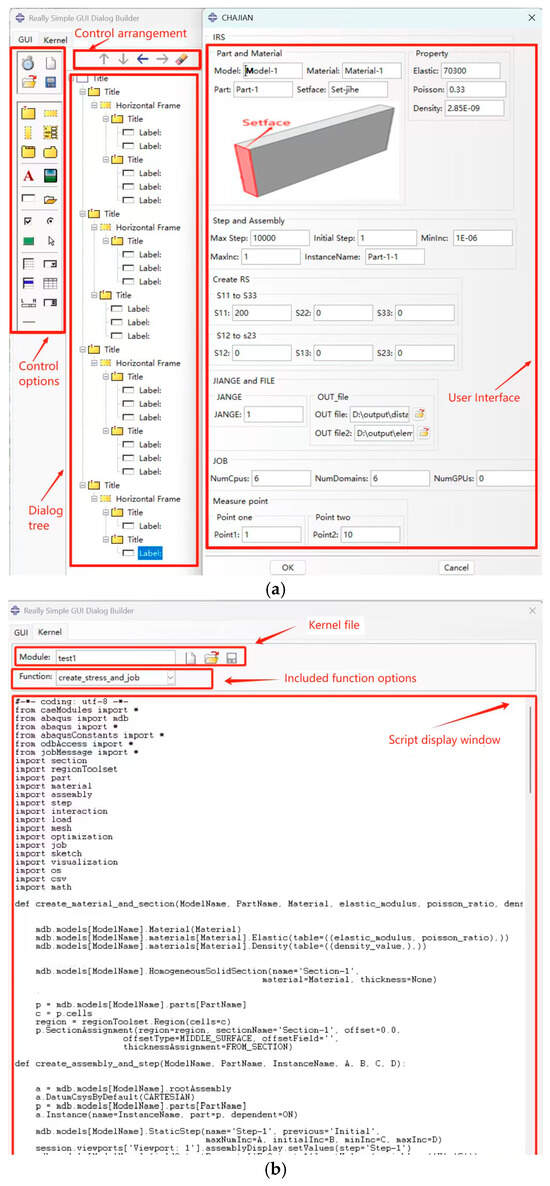
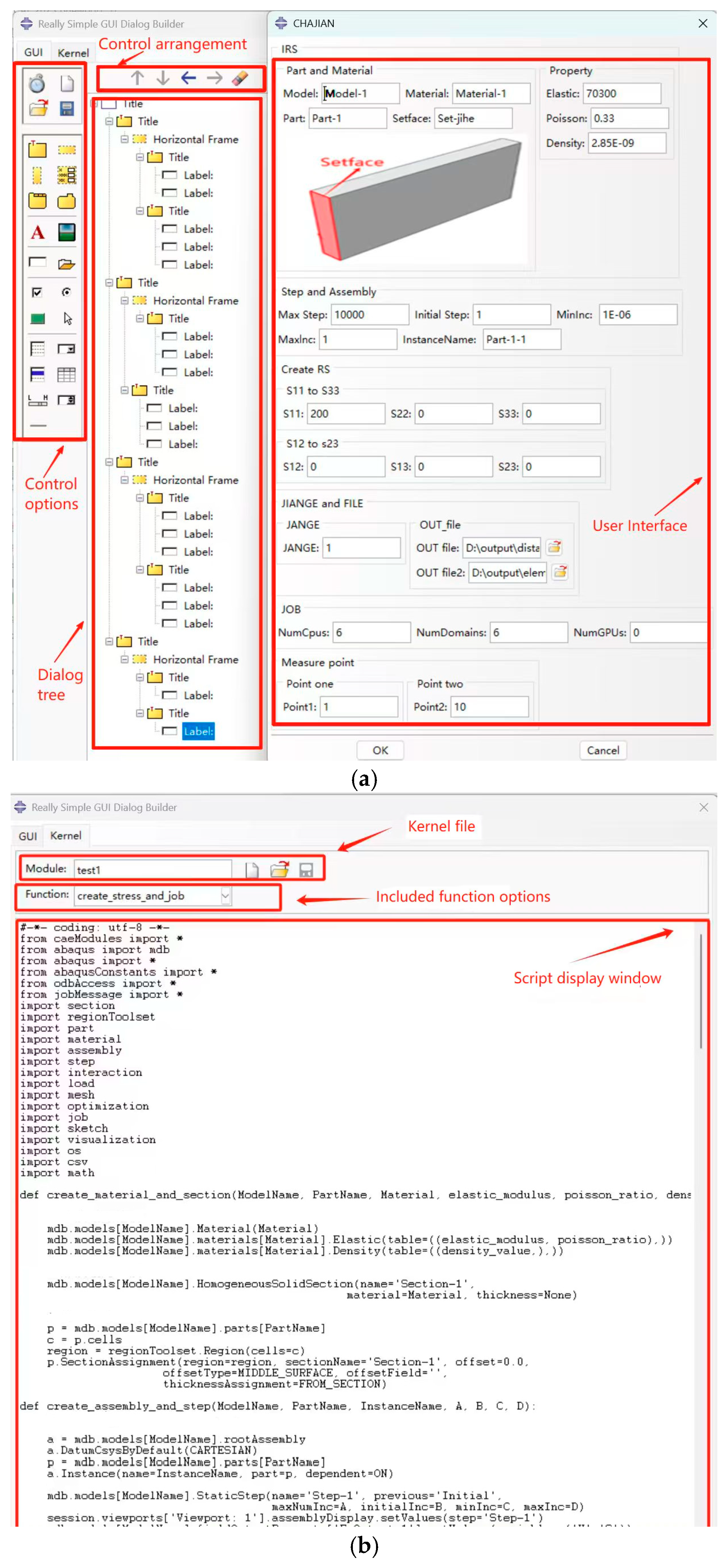
ABAQUS is a mature nonlinear finite element analysis software with strong capabilities in material nonlinearity and structural analysis. However, due to its general-purpose nature, the modeling and post-processing procedures are relatively complex when repetitive analyses are required for specific engineering problems. To improve simulation efficiency, secondary development is carried out based on the application programming interface provided by ABAQUS. Python is used to implement interaction between the graphical user interface (GUI) and the solver kernel. A dedicated simulation platform for stress sensitivity analysis of thin-walled parts is developed, as shown in Figure 1. The platform integrates a residual stress loading–release analysis module. It enables qualitative identification of machining stress-sensitive regions and dominant deformation directions. The results are then used to guide subsequent optimization of milling tool paths.
Figure 1.
RSG Dialog Box Constructor. (a) GUI. (b) Kernel.
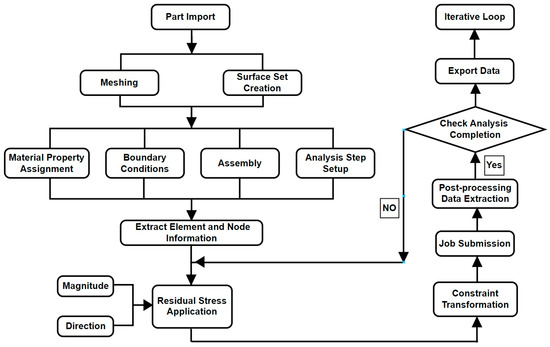
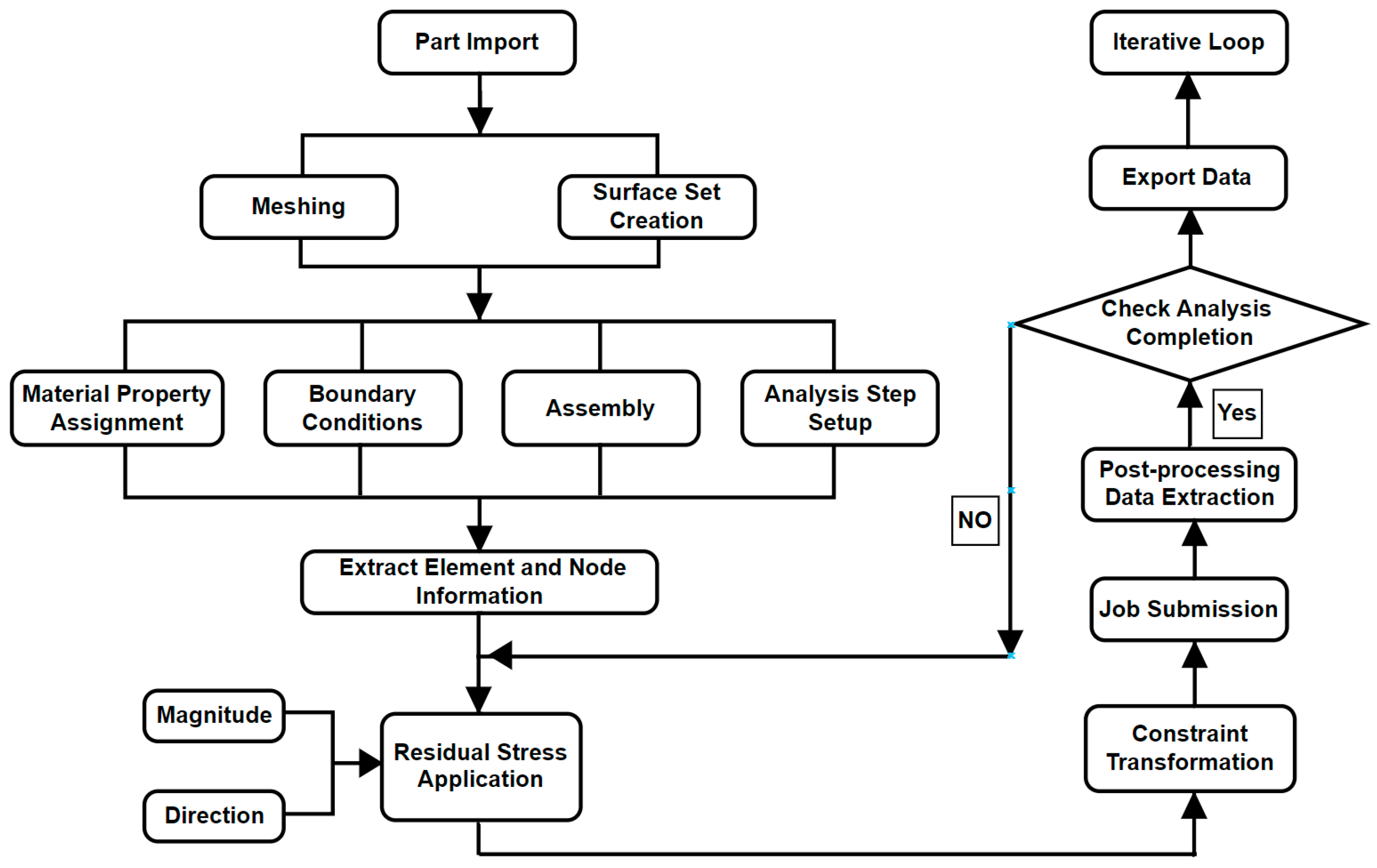
During platform development, Python scripts were written to cover the entire simulation workflow of thin-walled structural components. The workflow includes parametric modeling, assignment of material properties and section characteristics, creation of analysis steps, load application, job submission, and post-processing analysis. Among these modules, the detailed design procedure of the stress-sensitive region and sensitive direction analysis plug-in is shown in Figure 2. Through the above secondary development, the stress sensitivity analysis process for thin-walled parts is parameterized and automated. This approach effectively reduces modeling and analysis complexity. It also improves the efficiency and consistency of simulation analysis.
Figure 2.
Flow chart of plugin operation.
2.3. Stress Sensitivity Modeling of a Frame-Type Thin-Walled Part
In the aerospace manufacturing field, the machining accuracy of thin-walled partition frame parts is directly related to the structural integrity and service safety of aircraft fuselages. Deformation control of such components has long been a key challenge in aerospace manufacturing technology. The aluminum alloy 7075-T7451 is widely used for thin-walled load-bearing structures in aerospace applications. This is due to its high strength, high toughness, and good machinability. However, this material is prone to significant deformation during machining. The deformation is mainly caused by residual stress release, which adversely affects part accuracy. Therefore, a thin-walled partition frame part with typical structural characteristics is selected as the research object. The commonly used aerospace aluminum alloy 7075-T7451 is adopted for simulation analysis. The objective is to systematically investigate the influence of residual stress release on machining deformation. The material properties are listed in Table 1.
Table 1.
Mechanical properties of 7075-T7451 aluminum alloy.
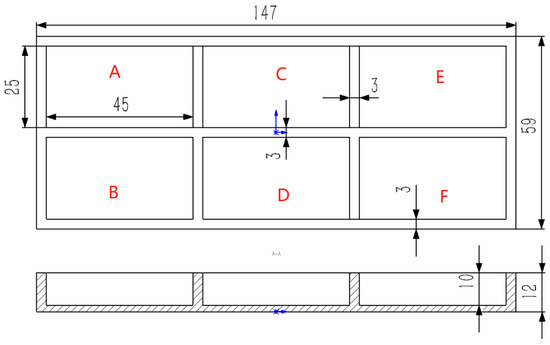
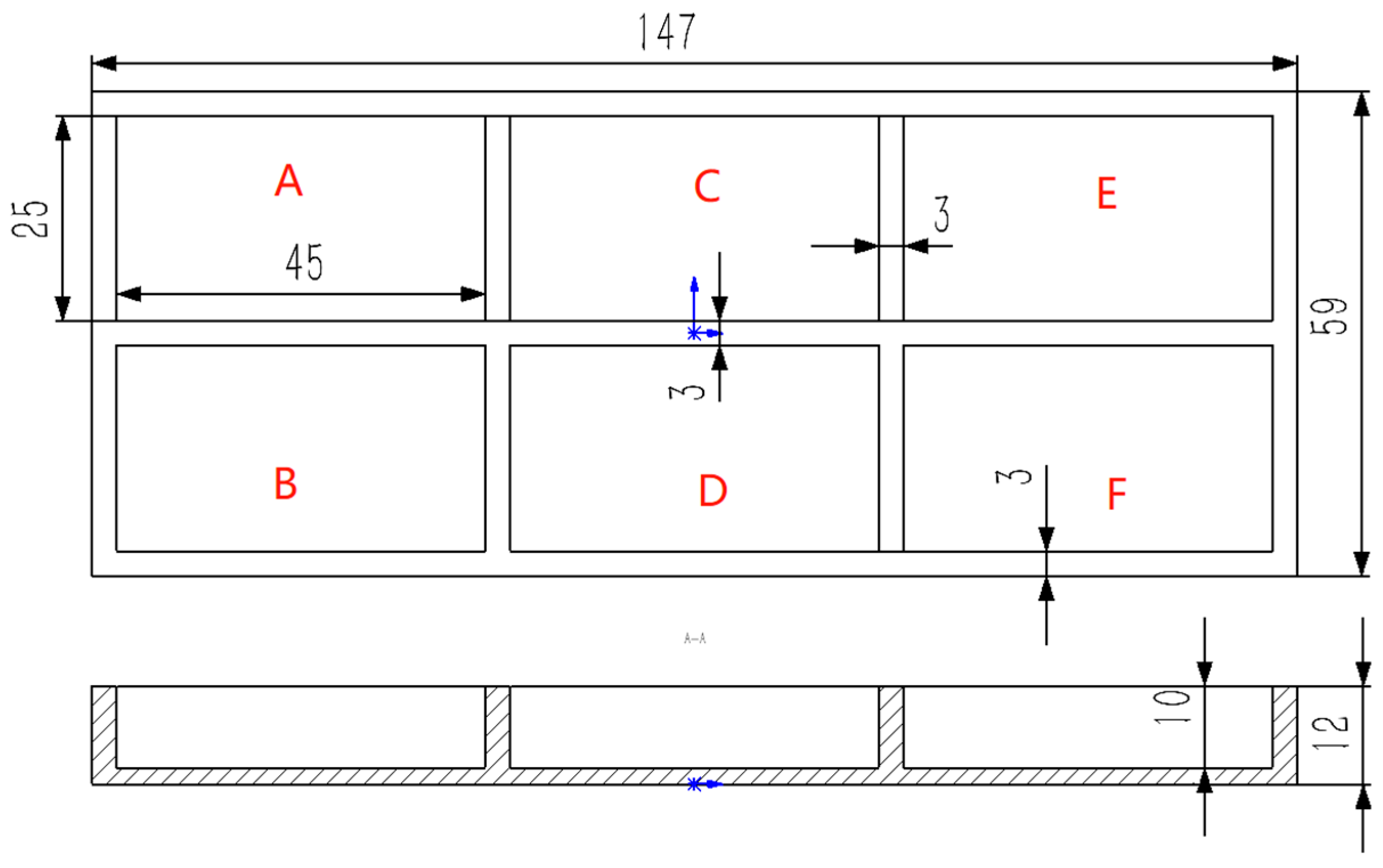
Thin-walled partition frame parts are key load-bearing structures in aircraft fuselages. They are mainly classified into ordinary frames and reinforced frames. Reinforced frames are usually composed of a frame rim, stiffeners, and a web. The frame rim and stiffeners serve as the primary load-transfer components. Their structural parameters directly affect the overall mechanical performance. To analyze the influence of residual stress on milling-induced deformation, a typical partition frame part is selected to establish the simulation model. The overall dimensions of the part are 147 mm × 59 mm × 12 mm, as shown in Figure 3.
Figure 3.
Model dimensions of frame component.
The construction procedure of the simulation model is as follows. First, a three-dimensional solid model of the thin-walled partition frame part is created in SolidWorks 2022. The model is then imported into ABAQUS. Key geometric regions are partitioned to meet meshing requirements.
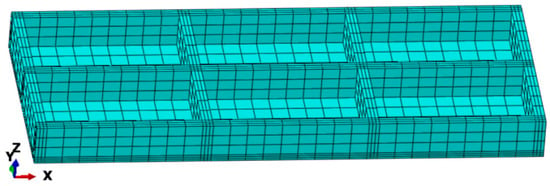
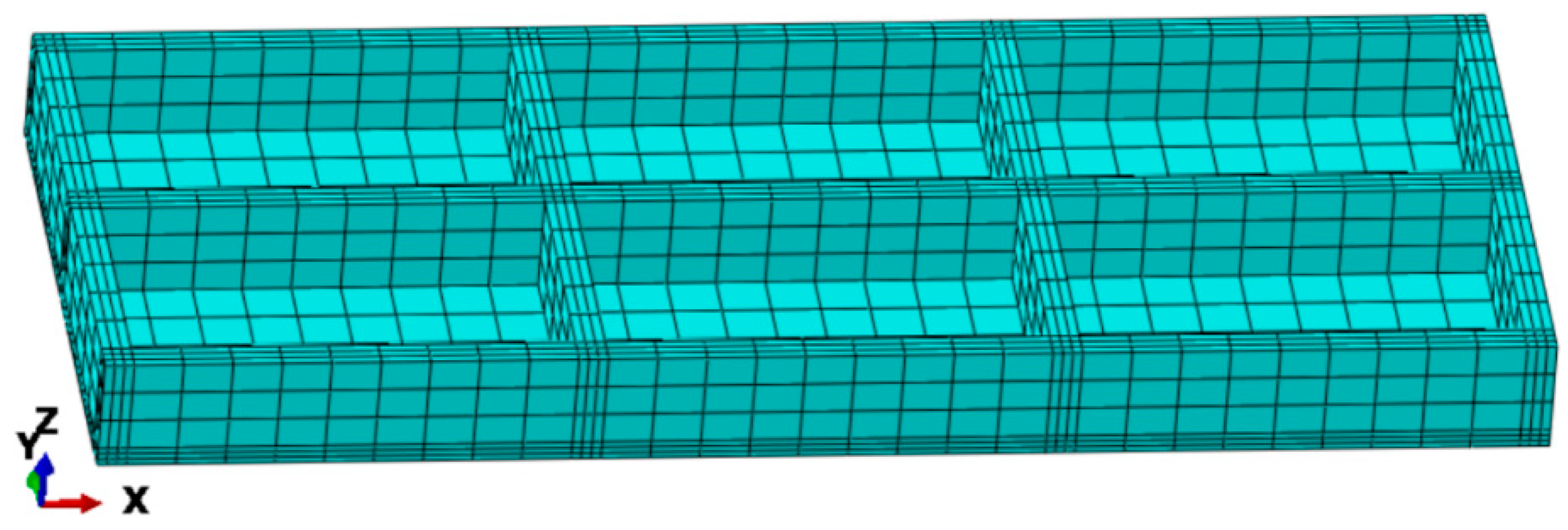
The present study employed a static analysis approach. A global seeding strategy with a mesh size of 5 mm was adopted for discretization. To ensure computational accuracy in the thin-walled regions, three layers of locally refined elements were arranged along the thickness direction. Eight-node linear hexahedral elements (C3D8) were used, resulting in a finite element model consisting of 3636 elements. Since the simulation only involved the application and release of residual stress under a free state condition, no contact interactions were defined in the model. To replicate the actual machining condition in which the bottom surface of the workpiece was bonded to the machine tool table using AB adhesive, a fully fixed boundary condition was applied to the bottom surface. The resulting mesh configuration is illustrated in Figure 4.
Figure 4.
Meshing of the bulkhead part.
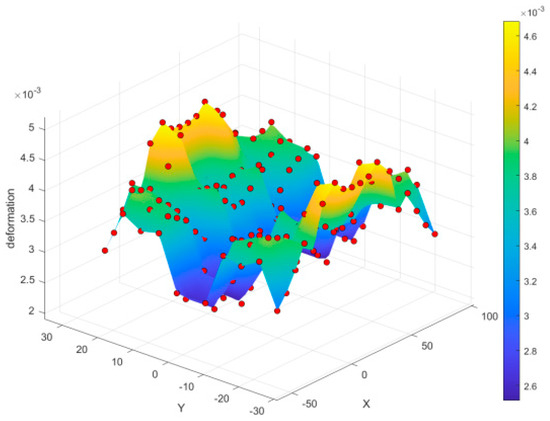
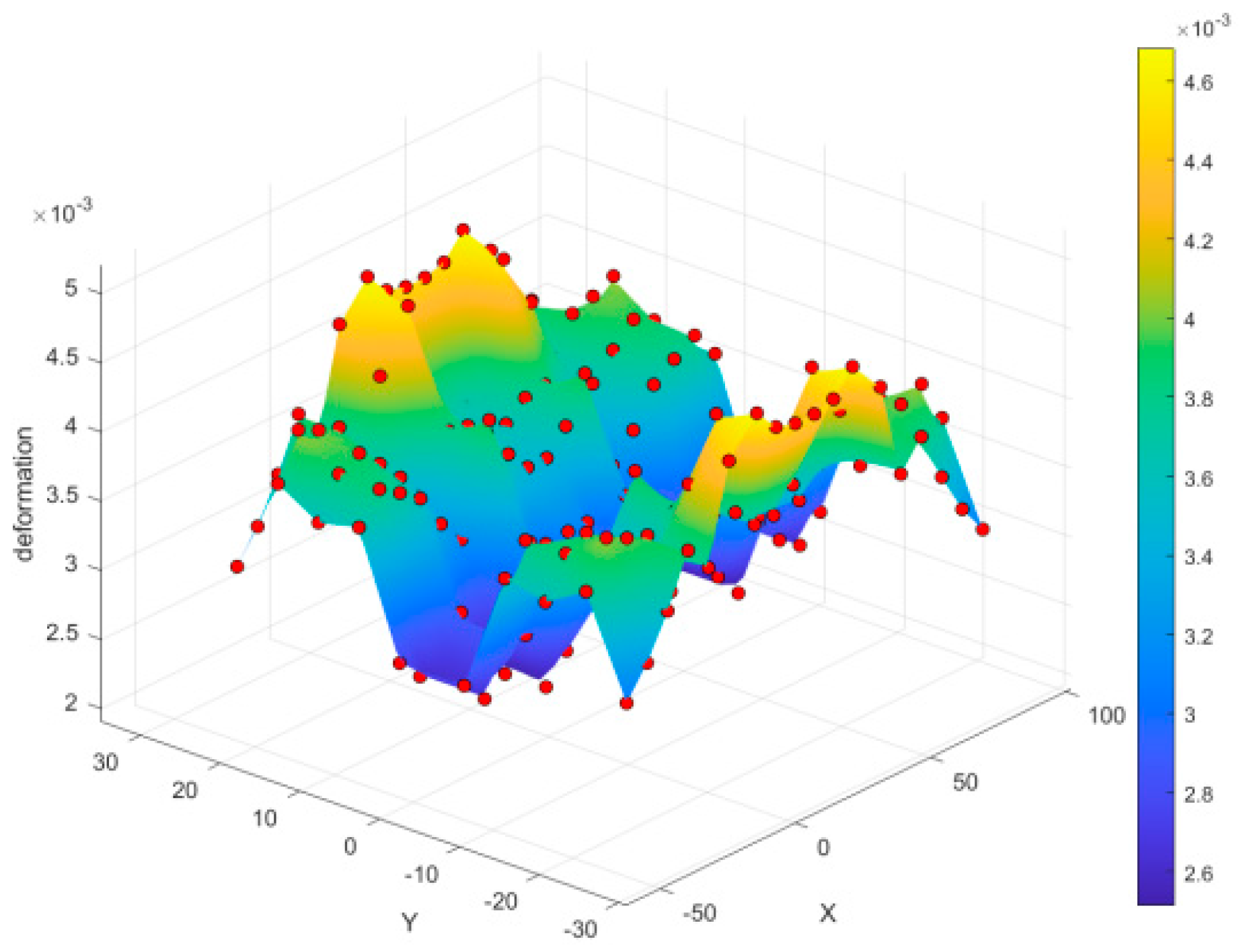
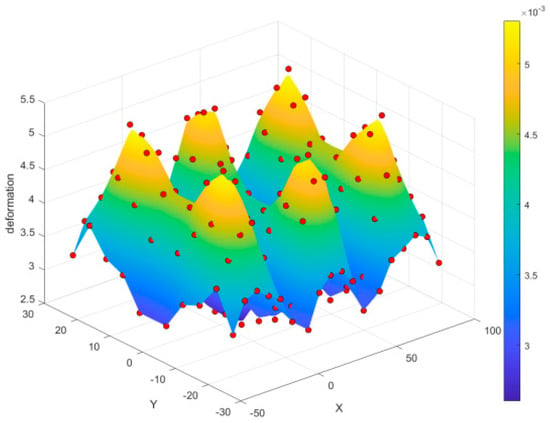
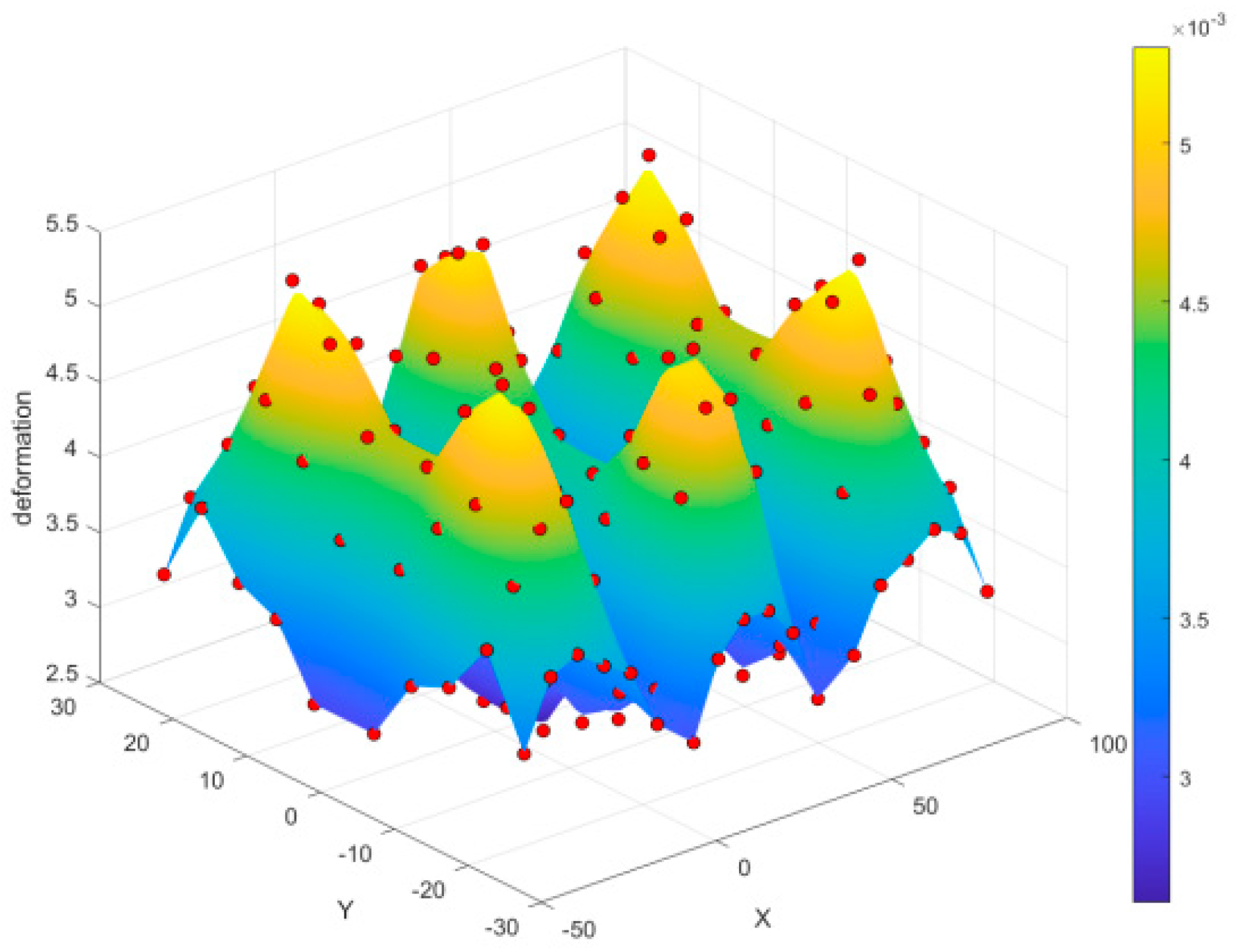
After completing the plug-in parameter settings, stress sensitivity analysis is performed on the six-partition thin-walled frame part. In the analysis, the flatness of the bottom surface is selected as the target accuracy indicator. A corresponding element set is established for the bottom surface region. This is used to quantify the influence of residual stress release in different regions on the flatness. After the plug-in is activated, initial residual stress loads are applied to each element sequentially according to the mesh numbering order within the element set. The magnitude of the applied residual stress is set to 200 MPa. The stress direction is defined as S11 (X direction). This setup is used to simulate the influence of residual stress release in the X direction on the overall deformation of the part. Subsequently, the release process of element residual stress is solved under free boundary conditions. The corresponding influence on bottom surface flatness is calculated. After all elements in the element set complete the calculation, the flatness variation caused by residual stress release of each element is extracted. MATLAB (Version R2022a) is then used for unified data processing. Finally, a residual stress–deformation distribution contour map is obtained, as shown in Figure 5. Similarly, initial residual stress with a magnitude of 200 MPa is applied to the mesh elements in the S22 direction (Y direction). The influence of S22-direction residual stress on bottom surface flatness is obtained. The results are shown in Figure 6.
Figure 5.
The influence of S11 directional stress on the flatness of the bottom surface.
Figure 6.
The influence of S22 directional stress on the flatness of the bottom surface.
As shown in Figure 5, the influence of S11-direction residual tensile stress release on the bottom surface flatness of the six-partition thin-walled frame part varies significantly with location in the machining region. Pronounced deformation is observed near the two long side edges of the part. The peak flatness deformation caused by S11-direction tensile stress is mainly concentrated in the middle regions of the two long edges. In contrast, the central region of the part is less affected by S11-direction tensile stress. The corresponding flatness deformation remains at a relatively low level. This distribution characteristic is closely related to the structural features of the part. The central region contains stiffener-like structures, which provide higher overall stiffness. As a result, this region exhibits stronger resistance to deformation during the release of S11-direction residual stress.
As shown in Figure 6, the stress–deformation distribution indicates that the release of S22-direction residual stress contributes significantly to deformation in the central region of the six-partition thin-walled frame part. This region exhibits relatively large variations in bottom surface flatness. The pronounced deformation is closely related to the structural characteristics of the part. By comparing the bottom surface flatness contour maps under S11- and S22-direction residual stress, it can be observed that S22-direction residual stress has a more significant influence on flatness. It is the primary stress factor leading to flatness deviation. Since the magnitude of residual stress in the Z direction is relatively small during machining, its influence on bottom surface flatness is limited. Therefore, residual stress in the Z direction is not further analyzed in this study.
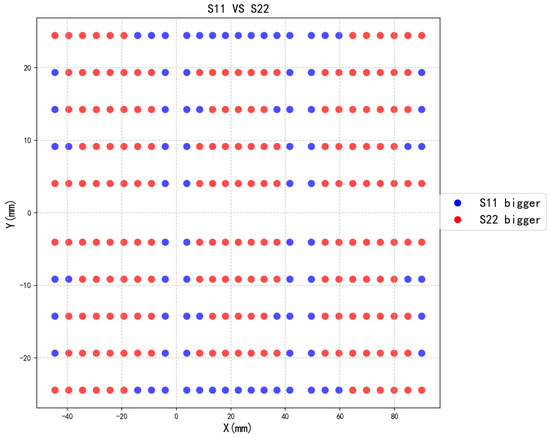
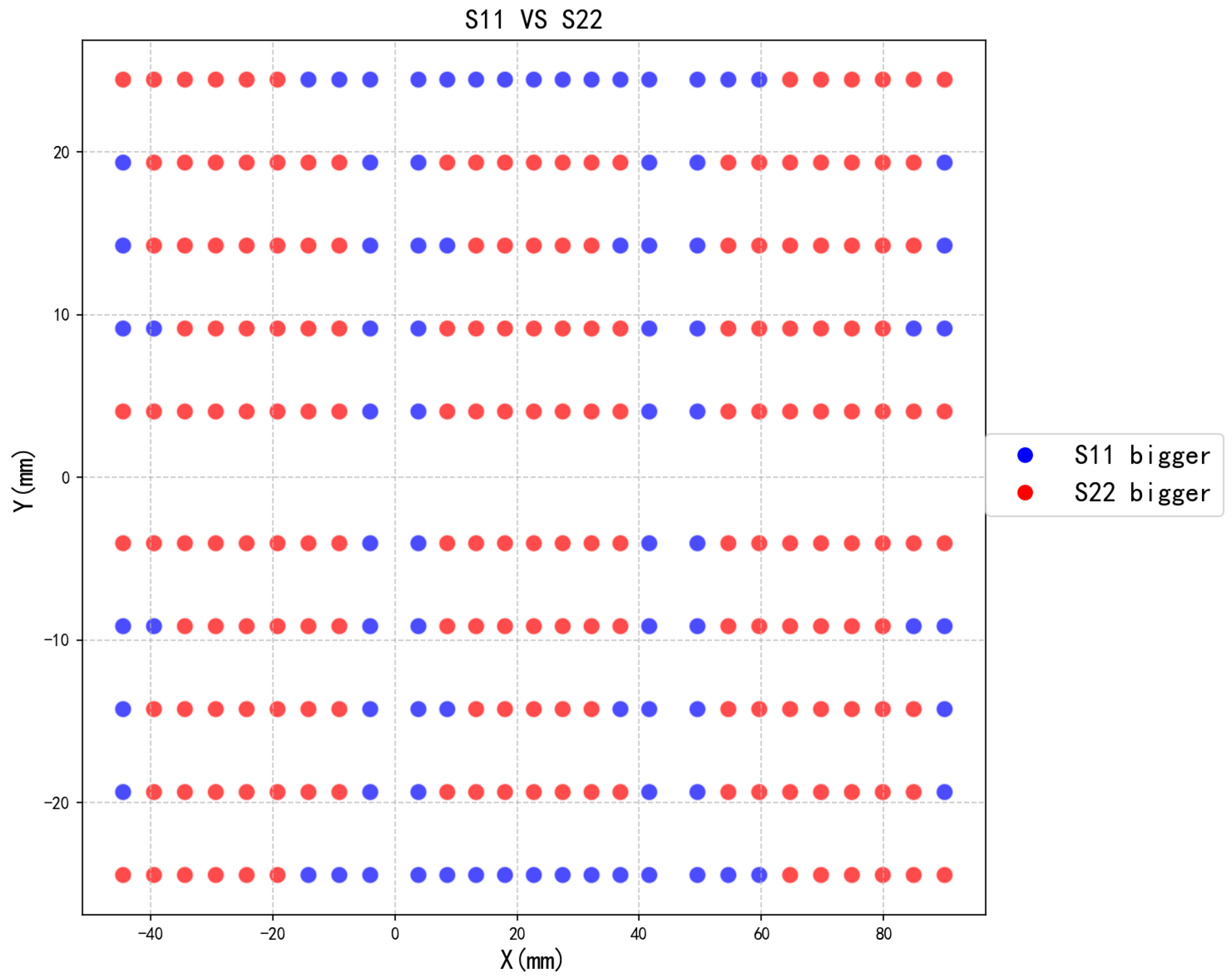
To further clarify the dominant effects of residual stress in different directions on bottom surface flatness deformation, and to provide a basis for subsequent tool path optimization, a comparative analysis is conducted. The deformation induced by S11- and S22-direction residual stress release at the same locations of the part is compared. The results are shown in Figure 7. In the figure, blue points indicate locations where S11-direction residual stress has a more significant influence on bottom surface flatness. Red points represent locations where S22-direction residual stress plays a dominant role in flatness deformation.
Figure 7.
Comparison of S11 and S22 deformation at the same location.
2.4. Tool Path Optimization Based on Stress Sensitivity Analysis
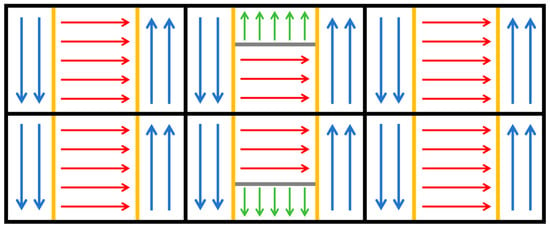
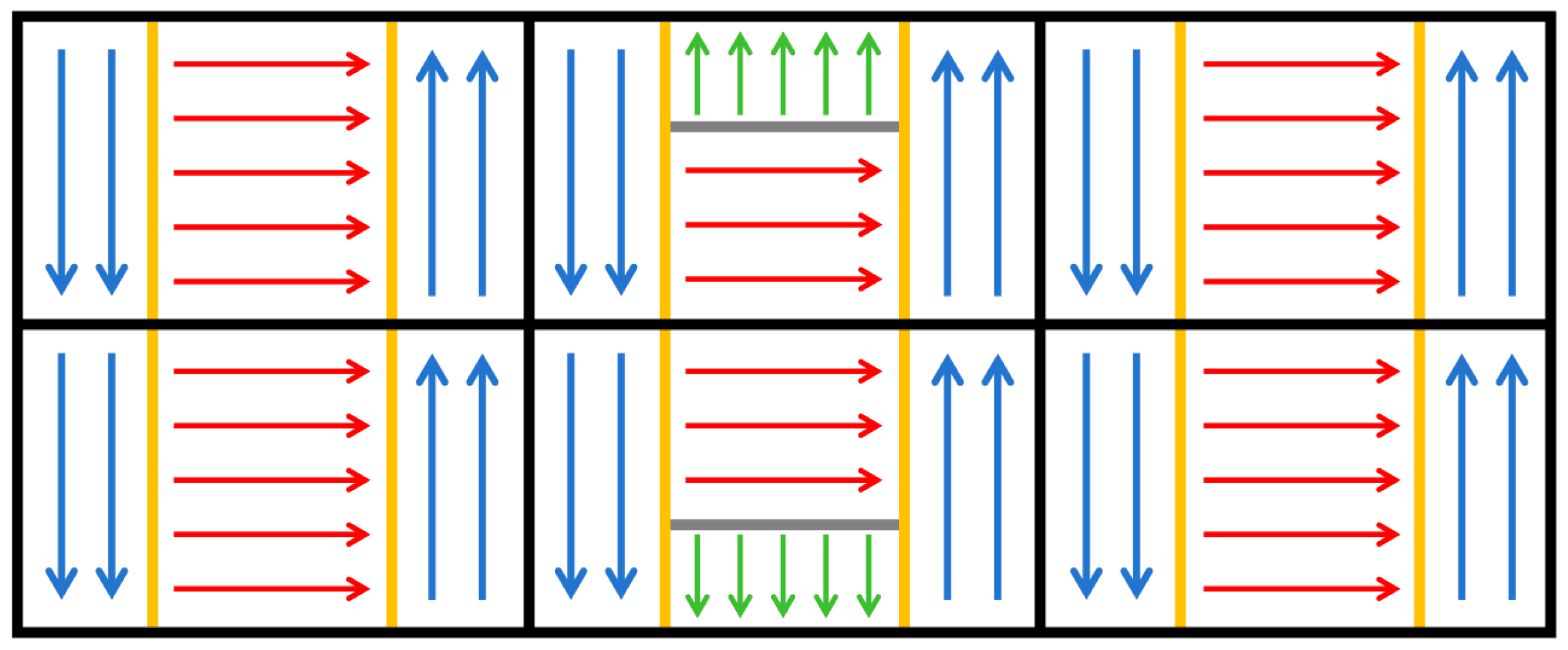
Based on the distribution characteristics of the effects of S11- and S22-direction residual stress on bottom surface flatness deformation shown in Figure 7, the machining region of the six-partition thin-walled frame part can be divided into two typical stress-sensitive regions. The first is the S11-direction stress-dominated region, where blue points are concentrated. The second is the S22-direction stress-dominated region, where red points are concentrated. In the S11-direction stress-dominated region, residual tensile stress in the S11 direction has a more significant influence on bottom surface flatness deformation. Therefore, in tool path design for this region, a cutting direction perpendicular to the S11 direction is preferred. This strategy avoids continuous cutting along the sensitive direction. As a result, the accumulation effect of residual stress in the S11 direction is reduced. In the S22-direction stress-dominated region, residual stress in the S22 direction plays a dominant role in deformation. Thus, the tool path should avoid being parallel to the S22 direction. A reciprocating tool path along the short-edge direction is adopted. This approach reduces the superposition effect of residual stress in the S22 direction and suppresses machining deformation. The optimized tool path scheme for the six-partition thin-walled frame part based on the above stress sensitivity analysis is shown in Figure 8.
Figure 8.
Optimized tool path scheme.
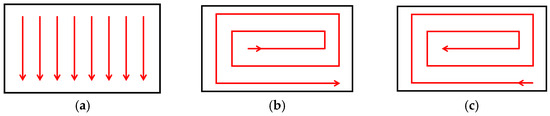
To verify the effectiveness of the proposed tool path optimization scheme, three typical machining paths are selected for comparison. They are the unidirectional, outside, and inside toolpaths. These toolpaths are compared with the optimized toolpath in subsequent experiments. The unidirectional, outside, and inside toolpaths are selected as reference machining strategies. The corresponding toolpath patterns are shown in Figure 9.
Figure 9.
Conventional tool path. (a) Unidirectional tool path, (b) outside tool path, and (c) inside tool path.
3. Experimental Validation
3.1. Experimental Setup and Cutting Conditions
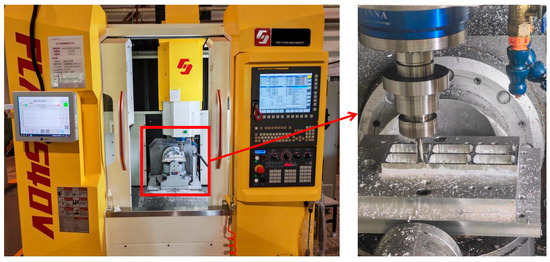
Milling experiments were conducted on an FLM540V vertical precision machining center. The effective travel ranges of the X, Y, and Z axes were 400 mm, 400 mm, and 300 mm, respectively. The maximum spindle speed was 9000 r/min. The experimental setup is shown in Figure 10. A three-flute solid carbide end mill with a diameter of 8 mm and a helix angle of 35° was used in the experiments. To minimize the influence of clamping force on the machining deformation of thin-walled parts, the workpiece was bonded to the machine table using AB adhesive. This method avoids additional constraint stress introduced by conventional mechanical clamping. This experiment focuses on the influence of different toolpaths during the finishing stage on machining-induced residual stress distribution and part deformation. To ensure the validity of the comparison, all other machining parameters and experimental conditions were kept identical. The machining sequence was set as A–B–E–F–C–D. The finishing allowance of the bottom web was 0.7 mm, and the finishing allowance of the side walls was 0.3 mm. The spindle speed was set to 3500 r/min, and the feed rate was 300 mm/min. The material used in the experiment was a pre-stretched 7075-T7451 aluminum alloy plate. Its geometric dimensions are consistent with those of the finite element simulation model to ensure comparability between experimental and numerical results.
Figure 10.
Actual Machining of the Optimized Scheme.
3.2. Results and Discussion
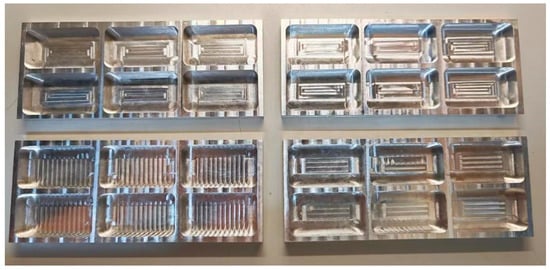
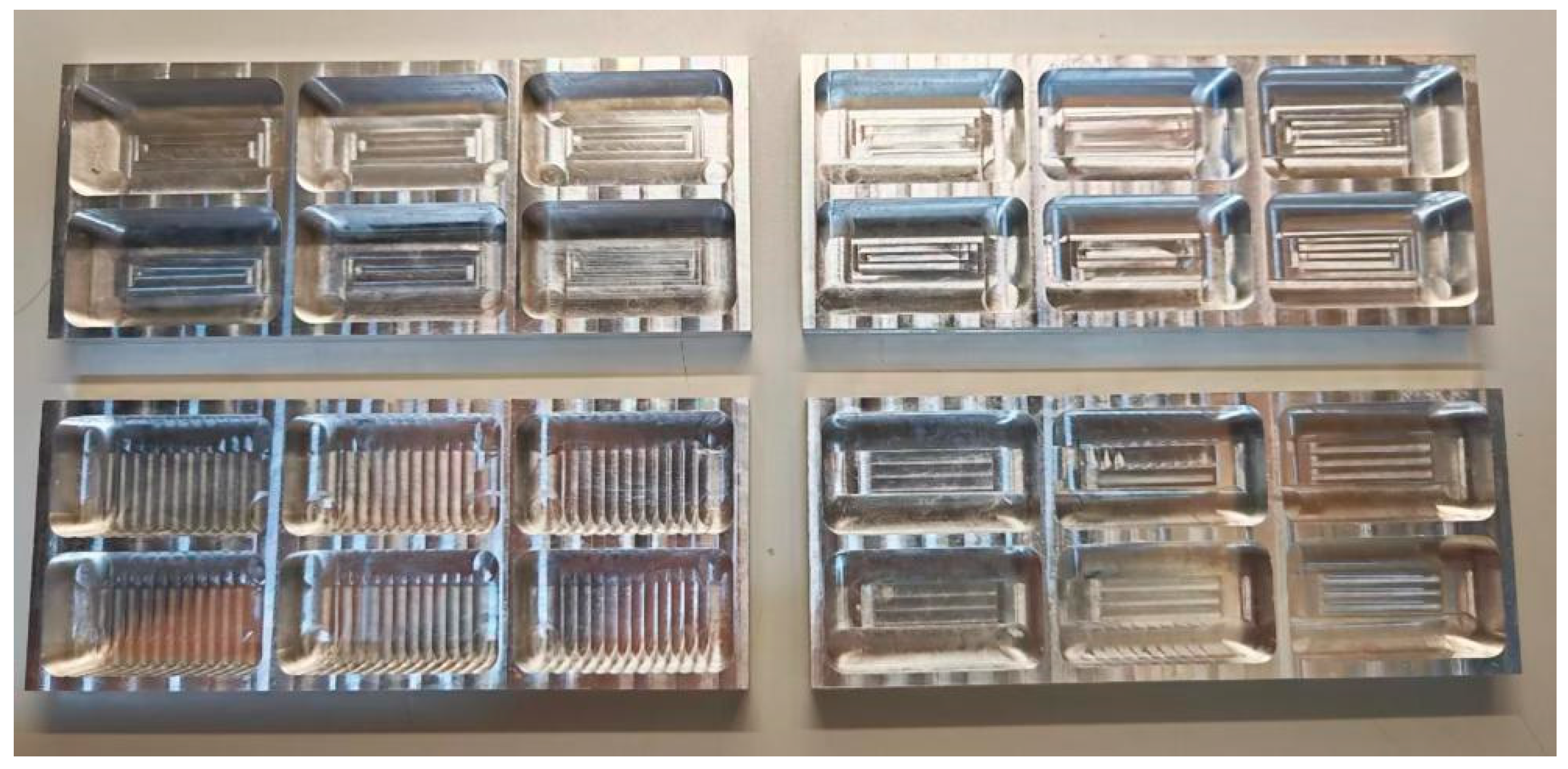
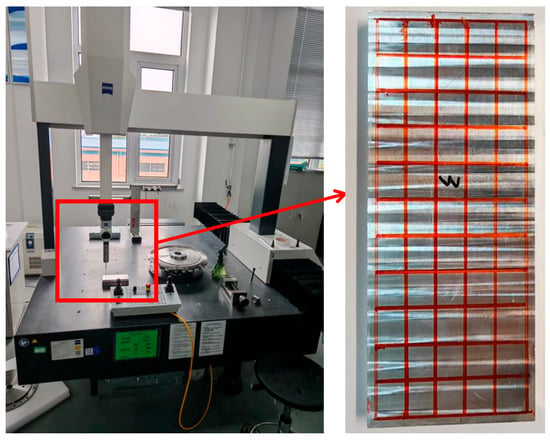
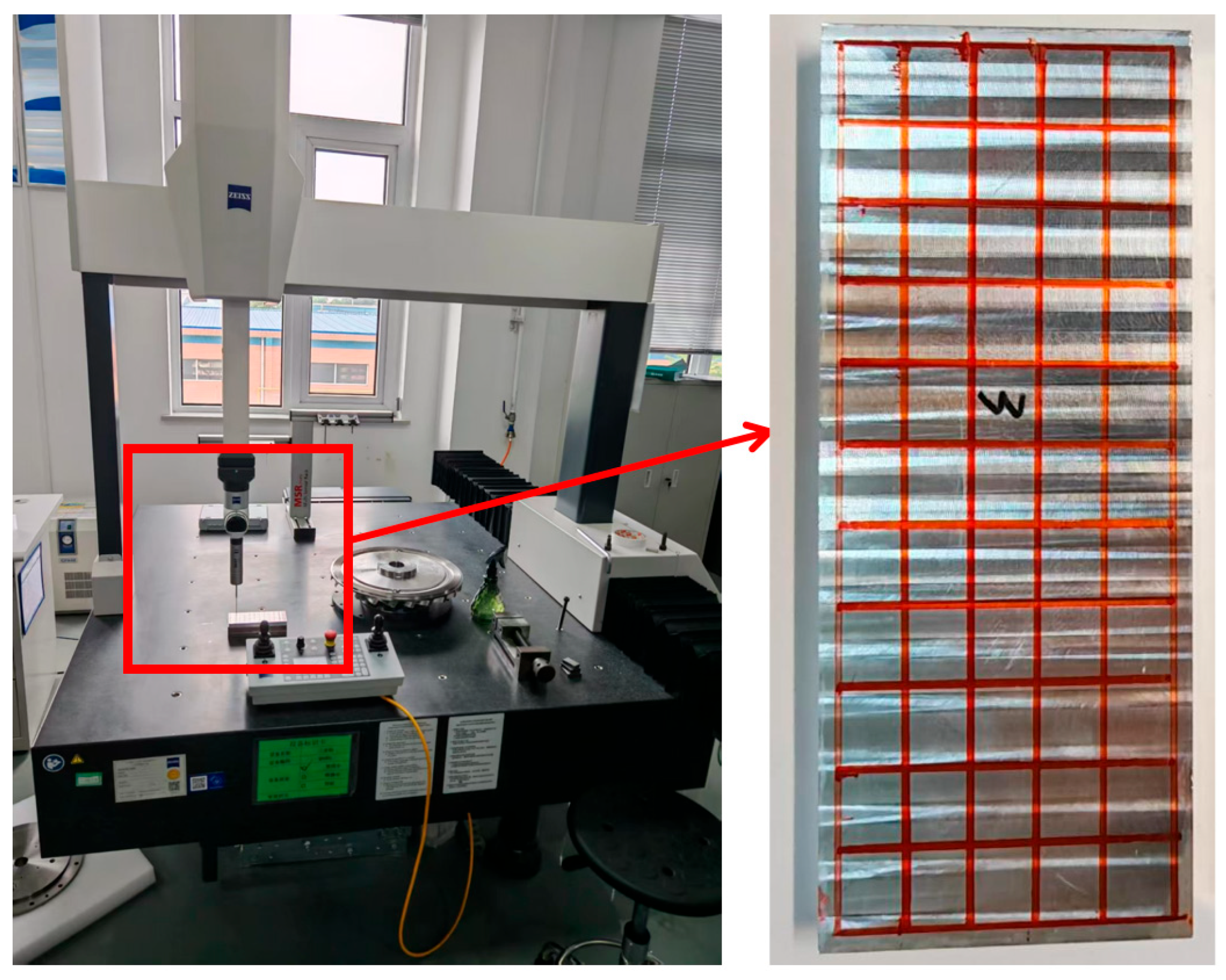
To analyze the influence of different toolpaths on the machining accuracy of thin-walled parts, finishing comparison experiments were conducted. The finished thin-walled partition frame parts obtained using four different toolpaths are shown in Figure 11. After machining, the workpieces were removed from the machine table and subjected to natural aging for 72 h. This treatment promotes the full release of residual stress generated during machining. After aging, the bottom surface flatness of the workpieces was measured with high precision using a CAPTUM coordinate measuring machine manufactured by ZEISS, Oberkochen, Germany. During measurement, sampling points were uniformly distributed on the bottom surface according to a predefined spacing. The distribution of measurement points and the measurement procedure are illustrated in Figure 12. This approach ensures the accuracy and repeatability of the measurement results.
Figure 11.
Structural components machined with different tool paths.
Figure 12.
Flatness measurement of workpiece bottom surface using a coordinate measuring machine.
Table 2 summarizes the measured bottom surface flatness of the thin-walled partition frame parts machined under four different toolpath conditions. The experimental results indicate that the optimized toolpath exhibits smaller deformation in terms of bottom surface flatness compared with the three conventional toolpaths. Compared with the unidirectional toolpath, the bottom surface flatness is improved by 19.11%. Compared with the outside toolpath, the improvement reaches 25.33%. Compared with the inside toolpath, the improvement is 11.28%. These results clearly demonstrate the effectiveness of the machining path optimization method based on stress sensitivity analysis in suppressing deformation of thin-walled parts.
Table 2.
Model training parameters.
Further analysis of the experimental data reveals the following observations.
- (1)
- The deformation of the unidirectional toolpath is 0.0565 mm. This deformation is mainly caused by continuous cutting in a single direction. During unidirectional milling, the tool always moves along the same path direction. As a result, residual stress continuously accumulates along the toolpath direction. According to the stress sensitivity distribution shown in Figure 7, this toolpath does not avoid the S22 high-sensitivity region. Therefore, machining-induced stress is superimposed along the cutting direction. After aging, stress release leads to significant deformation. In addition, the cutting force gradient generated by unidirectional cutting causes stress concentration at the end of the toolpath. This effect further aggravates local flatness deviation.
- (2)
- The outside toolpath exhibits the largest deformation, with a maximum value of 0.0612 mm. This deformation may be attributed to the tool movement from the interior of the cavity toward the outer region. During machining, continuous pressure is applied to the central area of the bottom surface. Since the bottom surface thickness is only 2 mm, the material in the central region undergoes repeated compression. As a result, compressive residual stress is generated. After aging, the release of this stress leads to poor bottom surface flatness. In addition, this toolpath does not effectively avoid high stress-sensitive regions during machining. Consequently, residual stress release in the Y direction (S22) becomes more pronounced, which further induces larger deformation.
- (3)
- The deformation of the inside toolpath is 0.0514 mm. This behavior may be explained by the transmission of cutting force from the stiffer sidewall regions toward the thinner central area. Compressive residual stress generated at the edges diffuses toward the center through material continuity. This process helps to avoid local stress concentration. In addition, the tool moves from the boundary toward the center during inside milling. The cutting force mainly acts on the edge regions of the bottom surface. After compression of the edge material, the central region remains in a relatively free state. As a result, the residual stress distribution becomes more uniform. After aging, the induced deformation has a smaller effect on bottom surface flatness.
- (4)
- The optimized toolpath exhibits the smallest deformation, with a value of 0.0457 mm. Its core advantage lies in the precise matching between toolpath direction and stress sensitivity characteristics based on stress sensitivity analysis. Specifically, short-edge toolpaths are adopted in S11 high-sensitivity regions to reduce stress accumulation in the X direction. In S22-dominated deformation regions, a reciprocating toolpath along the long-edge direction is applied to decrease the superposition of residual stress in the Y direction. Through this zoned toolpath strategy, the distribution of cutting force becomes more uniform. As a result, the peak residual stress is reduced by more than 20% compared with conventional toolpaths. This result is in full agreement with the finite element simulation analysis on the dominant effect of residual stress on deformation. It further confirms the prediction accuracy of the proposed stress sensitivity model.
Extensive research has confirmed that machining deformation of thin-walled components is primarily driven by the release and redistribution of residual stress during material removal, which directly leads to geometric inaccuracies in the final part. For example, a recent study established a finite element prediction model that considers both initial residual stress and cutting forces for frame-type thin-walled parts; the authors reported that including both stress sources improved prediction accuracy by approximately 6.7%, and that factors such as toolpath pattern and removal sequence significantly influenced deformation outcomes [28,29].
This finding aligns closely with the deformation mechanism identified in the current work, wherein residual stress redistribution caused by material removal is confirmed as a dominant factor governing deformation of thin-walled parts. Unlike traditional approaches that often only consider initial residual stress or cutting loads, the stress-sensitivity-based toolpath optimization method proposed herein explicitly incorporates spatial variations in residual stress into the machining strategy. As a result, machining deformation was effectively suppressed in our experiments, with bottom surface flatness improvements of 19.11%, 25.33%, and 11.28% compared with conventional unidirectional, outside, and inside toolpaths, respectively. Several other recent studies have investigated the influence of machining strategies on residual stress evolution and deformation control. For instance, a 2024 study compared “Christmas tree” and hybrid milling strategies for aluminum alloy thin-walled components and found that choice of machining strategy and cutting speed can markedly alter the post-machining residual stress state and thus improve dimensional and shape accuracy [30].
However, compared with these works, the present study offers two key advantages: (1) toolpath optimization is driven explicitly by the spatial distribution of residual stress sensitivity rather than by predefined strategy alterations alone; (2) we employ a coupled residual stress–machining deformation finite element model to identify stress-sensitive regions and dominant deformation directions, enabling a more targeted adjustment of toolpath direction to locally suppress deformation accumulation. This targeted optimization is therefore more effective in controlling deformation resulting from directional residual stress release. Prior research has also shown that different machining paths lead to different sequences of residual stress release and, consequently, varying deformation outcomes. For example, Liu et al. [31] used three-dimensional finite element models incorporating initial residual stress to compare deformation under straight, semicircular, and contour toolpaths, finding that contour-type paths generally produce smaller distortion than simple linear paths.
This observation directly supports our experimental findings: by comparing conventional unidirectional toolpaths, inside/outside contour toolpaths, and the proposed zoned optimization strategy, we demonstrate that aligning toolpath direction with stress-sensitive features more effectively controls directional residual stress accumulation. These results further confirm that toolpath design influences not only cutting conditions but also the internal stress release sequence, thereby affecting final geometric accuracy. In summary, existing studies consistently confirm that residual stress—including initial and machining-induced components—is one of the primary causes of machining deformation in thin-walled parts, and various deformation prediction and control methods have been proposed through machining strategy or parameter adjustment. However, most existing approaches focus on deformation prediction or local parameter optimization (e.g., feed rate, cutting depth) without fully exploiting the spatial distribution characteristics of residual stress in toolpath planning. In contrast, the present work systematically introduces the concepts of stress-sensitive regions and stress-sensitive directions to guide toolpath optimization and validates the approach through coupled residual stress–deformation finite element modeling and experimental verification. The proposed method achieves more significant deformation reduction in key accuracy indicators, demonstrating clear engineering applicability. Therefore, this study not only deepens the understanding of the interaction between toolpath strategy and residual stress release mechanisms but also provides a practical and effective route for high-precision machining of thin-walled aerospace components.
4. Conclusions
To address the deformation of aluminum alloy thin-walled partition frame parts caused by residual stress release during milling, this study focuses on machining accuracy control as the core objective. A machining process optimization method based on stress sensitivity analysis is proposed. Its effectiveness is systematically verified through a combination of numerical simulation and experimental investigation. The main conclusions are summarized as follows:
- (1)
- A stress sensitivity analysis method was established to evaluate the influence of residual stress release in different regions on machining accuracy of thin-walled frame parts. Finite element results show that residual stress release in different spatial regions produces significantly different deformation responses, even under the same stress magnitude.
- (2)
- The effects of residual stress components in different directions on bottom surface flatness are not equivalent. For the investigated frame-type thin-walled part, residual stress in the S22 direction has a more dominant influence on flatness deformation than that in the S11 direction, while the effect of S33-direction stress is relatively limited.
- (3)
- Based on the identified stress-sensitive regions and dominant stress directions, a region-oriented toolpath optimization strategy was developed. The strategy avoids continuous cutting along stress-sensitive directions and reduces directional accumulation of residual stress during machining.
- (4)
- Milling experiments demonstrate that the optimized toolpath effectively suppresses machining deformation of thin-walled parts. Compared with conventional unidirectional, outside, and inside toolpaths, the optimized toolpath reduces bottom surface flatness deviation by 19.11%, 25.33%, and 11.28%, respectively.
- (5)
- The stress sensitivity analysis and toolpath optimization process was implemented through secondary development of ABAQUS using Python, enabling automated residual stress loading–release analysis and improving the efficiency and consistency of deformation evaluation for complex thin-walled structures.
In summary, the machining process optimization method based on stress sensitivity analysis proposed in this study provides a new technical approach for refined control of machining deformation in aerospace thin-walled parts. It has significant engineering application value for improving the manufacturing quality of high-precision and complex thin-walled structural components.
Author Contributions
All authors contributed to the conceptualization and design of the study. H.J. and W.X. designed the main architecture of the model and wrote the code, while A.W. handled the data preprocessing. H.J. and W.X. authored the first version of the manuscript. A.W., Q.L. and L.W. provided significant assistance with this version. All authors have read and agreed to the published version of the manuscript.
Funding
This research received no external funding.
Institutional Review Board Statement
Not applicable.
Informed Consent Statement
Not applicable.
Data Availability Statement
The original contributions presented in the study are included in the article, further inquiries can be directed to the corresponding author.
Conflicts of Interest
The authors declare no conflicts of interest.
References
- Wang, F.; Yang, S.; Yin, T. Research on finite element simulation and parameters optimization of milling 7050-T7451 aluminum alloy thin-walled parts. Recent Pat. Eng. 2022, 16, 85–94. [Google Scholar]
- Guo, J.; Fu, H.Y.; Pan, B.; Kang, R.K. Recent progress of residual stress measurement methods: A review. Chin. J. Aeronaut. 2021, 34, 54–78. [Google Scholar] [CrossRef] [Scilit]
- Tan, Z.; Wang, Y.; Xie, K. Stress deformation simulation for optimizing milling thin-walled Ti-6Al-4V titanium alloy parts. Int. J. Interact. Des. Manuf. 2023, 18, 265–273. [Google Scholar] [CrossRef] [Scilit]
- Weber, D.; Kirsch, B.; Jonsson, J.E.; Denkena, B. Simulation based compensation techniques to minimize distortion of thin-walled monolithic aluminum parts due to residual stresses. CIRP J. Manuf. Sci. Technol. 2022, 38, 427–441. [Google Scholar] [CrossRef] [Scilit]
- Garstka, T.; Szota, P.; Mróz, S.; Zawada-Michałowska, M.; Pieśko, P.; Nowotnik, A.; Mrówka-Nowotnik, G.; Legutko, S. Calibration method of measuring heads for testing residual stresses in sheet metal using the Barkhausen method. Materials 2024, 17, 4584. [Google Scholar] [CrossRef] [Scilit]
- Jia, H.; Xiong, W.; Wang, A.; Li, Y.; Chen, X. Effects of milling parameters on residual stress and cutting force. Materials 2025, 18, 3836. [Google Scholar] [CrossRef] [Scilit]
- Zhang, H.; Zhao, S.; Sun, H.; Liu, Y.; Wang, Q. Investigation on the initial residual stress detection method and its application for deformation analysis in machining thin-walled blades. Trans. Nanjing Univ. Aeronaut. Astronaut. 2024, 41, 158–173. [Google Scholar]
- Yang, L.; Li, Y.; Liu, X.; Zhang, W.; Chen, Y. Influence of material removal strategy on machining deformation of aluminum plates with asymmetric residual stresses. Materials 2023, 16, 2033. [Google Scholar] [CrossRef] [Scilit]
- Waseem, A.; Ismail, L.; Lee, Y.S. Prediction and control of residual stress-based distortions in the machining of aerospace parts: A review. J. Manuf. Process. 2022, 76, 106–122. [Google Scholar] [CrossRef] [Scilit]
- Zhang, W.; Yang, F.; Zhang, J.; Liu, X.; Zhao, Y. An adaptive clamp system for deformation control of aerospace thin-walled parts. J. Manuf. Process. 2023, 107, 115–125. [Google Scholar] [CrossRef] [Scilit]
- Chen, H.; Wang, X.; Han, X.; Liu, Y.; Zhang, M. Ultrasonic non-destructive detection method for residual stress in rotary forging aluminum alloy plates. Materials 2024, 17, 2528. [Google Scholar] [CrossRef] [Scilit]
- Liu, L.; Jiang, X.; Ying, E.; Sun, Z.; Geng, D.; Zhang, D. Elliptical ultrasonic side milling for improved surface integrity and fatigue resistance of thin-walled Ti6Al4V components. J. Zhejiang Univ. Sci. A 2025, 26, 1179–1196. [Google Scholar] [CrossRef] [Scilit]
- Zawada-Michałowska, M.; Pieśko, P.; Mrówka-Nowotnik, G.; Nowotnik, A.; Legutko, S. Effect of technological parameters of milling on residual stress in the surface layer of thin-walled plates. Materials 2024, 17, 1193. [Google Scholar] [CrossRef] [Scilit]
- Zhou, R. Modeling and simulation of residual stress in metal cutting process: A review. Adv. Mech. Eng. 2024, 16, 1–13. [Google Scholar] [CrossRef] [Scilit]
- Jiang, X.H.; Kong, X.J.; He, S.R.; Wu, K. Modeling the superposition of residual stresses induced by cutting force and heat during the milling of thin-walled parts. J. Manuf. Process. 2021, 68, 356–370. [Google Scholar] [CrossRef] [Scilit]
- Zheng, Y.H.; Hu, P.C.; Wang, M.H.; Huang, X.Y. Prediction model for the evolution of residual stresses and machining deformation of uneven milling plate blanks. Materials 2023, 16, 6113. [Google Scholar] [CrossRef] [Scilit]
- Zhang, Z.X.; Zhang, Z.; Zhang, D.H.; Luo, M. Milling distortion prediction for thin-walled components based on the average machining-induced residual stress in specimen machining. Int. J. Adv. Manuf. Technol. 2020, 111, 3379–3392. [Google Scholar] [CrossRef] [Scilit]
- Li, N.; Yi, S.H.; Tian, W.Y.; Wang, Q. Semi-analytical solution model for bending deformation of T-shaped aviation aluminum alloy components under residual stress. Metals 2024, 14, 486. [Google Scholar] [CrossRef] [Scilit]
- Chen, Z.J.; Qian, L.Y.; Cui, R.K.; Liu, J.S.; Zhang, Q.D. Machining-induced residual stress analysis and multi-objective optimization for milling process of Mg–Li alloy. Measurement 2022, 204, 112127. [Google Scholar] [CrossRef] [Scilit]
- Chen, Z.; Yue, C.; Xu, Y.; Liu, H.; Zhang, Q. Analytical machining deformation model of H-section multi-frame beam integral components. J. Mater. Process. Technol. 2023, 314, 117907. [Google Scholar] [CrossRef] [Scilit]
- Zhang, Z.; Luo, M.; Tang, K.; Ding, H.; Liu, Y. A new in-process active control method for reducing residual stress-induced deformation of thin-walled parts. J. Manuf. Process. 2020, 59, 316–325. [Google Scholar] [CrossRef] [Scilit]
- Li, B.; Jiang, X.; Yang, J.; Liu, H.; Wang, Y. Effects of depth of cut on the redistribution of residual stress and distortion during the milling of thin-walled parts. J. Mater. Process. Technol. 2015, 216, 223–233. [Google Scholar] [CrossRef] [Scilit]
- Wang, Z.B.; Sun, J.F.; Chen, W.Y.; Liu, X.; Zhang, Y. Machining distortion of titanium alloy aero-engine cases based on energy principles. Metals 2018, 8, 464. [Google Scholar] [CrossRef] [Scilit]
- Seger, M.; Mathews, R.; Marais, D.; Venter, A.M.; Halley, J.; Wang, J.H.; Malik, A. Effects of aluminum plate initial residual stress on machined-part distortion. J. Manuf. Sci. Eng. 2024, 146, 101006. [Google Scholar] [CrossRef] [Scilit]
- Jiang, X.; Wei, Y.; Zhou, J.; Liu, H.; Zhang, Y. Residual stress generation and evaluation in milling: A review. Int. J. Adv. Manuf. Technol. 2023, 126, 3783–3812. [Google Scholar] [CrossRef] [Scilit]
- Zhang, S.; Shi, H.; Qi, J.; Wang, Y.; Liu, X. Prediction of residual stress in milling large or medium-sized thin-walled parts based on equivalent loads. J. Manuf. Process. 2025, 151, 282–297. [Google Scholar] [CrossRef] [Scilit]
- Ma, J.; Liu, Y.; Zhao, Y.; Wang, Q.; Zhang, H. A novel analytical model for predicting the thin-walled workpiece deformation considering the effect of residual stress accumulation and redistribution in layer-by-layer milling. J. Manuf. Process. 2025, 141, 1444–1462. [Google Scholar] [CrossRef] [Scilit]
- Ma, L.; Ba, S.; Zhang, Y.; Liu, H.; Li, L.; Gao, F.; Zhang, F.; Ma, J. Prediction of milling deformation for frame-type thin-walled parts considering workblank initial residual stress and milling force. J. Manuf. Mater. Process. 2025, 9, 146. [Google Scholar] [CrossRef] [Scilit]
- Wang, Z.; Wang, S.; Zhao, Z.; Xia, C.; Xuan, Y. Machining deformation modeling method for thin-walled parts based on bi-axial and dual-source residual stresses. Thin-Walled Struct. 2025, 216, 113649. [Google Scholar] [CrossRef] [Scilit]
- Zawada-Michałowska, M.; Pieśko, P. Analysis of machining strategies in terms of residual stress and post-machining deformation of thin-walled element. Int. J. Adv. Manuf. Technol. 2026, 142, 2335–2358. [Google Scholar] [CrossRef] [Scilit]
- Liu, Y.; Wang, M.; Gao, X.; Wu, L.; Jiang, X. Machining path research of thin-walled parts considering initial residual stress. Int. J. Manuf. Res. 2020, 15, 344–356. [Google Scholar] [CrossRef] [Scilit]

Disclaimer/Publisher’s Note: The statements, opinions and data contained in all publications are solely those of the individual author(s) and contributor(s) and not of MDPI and/or the editor(s). MDPI and/or the editor(s) disclaim responsibility for any injury to people or property resulting from any ideas, methods, instructions or products referred to in the content. |
© 2026 by the authors. Licensee MDPI, Basel, Switzerland. This article is an open access article distributed under the terms and conditions of the Creative Commons Attribution (CC BY) license.