1. Introduction
One of the key metal forming processes is hot rolling. Despite the passage of time, this process continues to attract widespread interest among scientists [
1,
2]. Hot rolling remains a fundamental stage in the production of steel strips and sheets, as it determines not only the final geometry of the product but also its mechanical properties, microstructure, and surface quality. Due to its continuous and energy-intensive nature, even relatively small improvements in rolling parameters can yield substantial economic and environmental benefits.
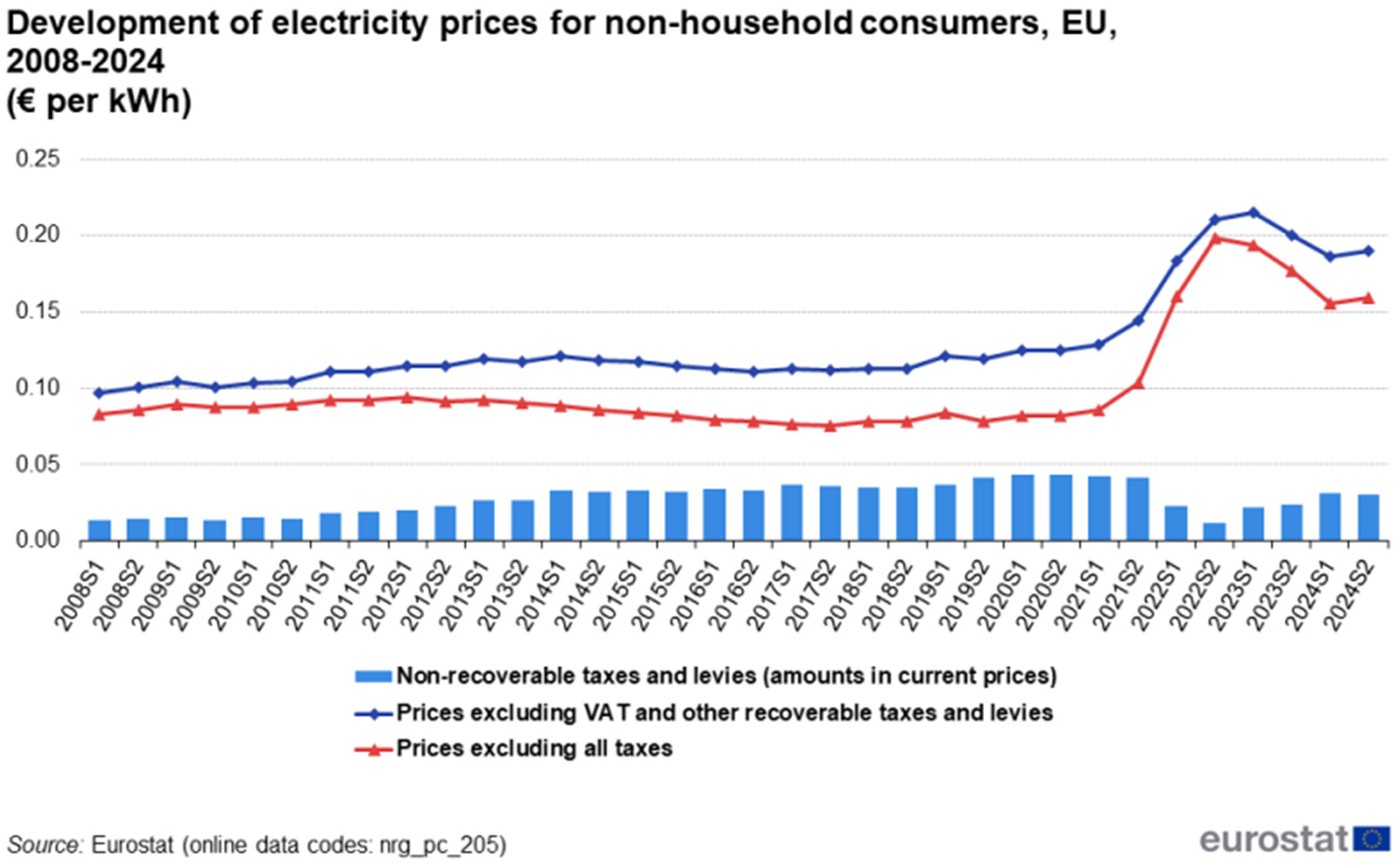
In recent years, the European steel industry has faced growing challenges related to the rising cost of electricity and the increasing emphasis on sustainable production (see
Figure 1). The steady increase in energy prices across Europe has compelled rolling engineers and plant operators to seek new methods for process optimization, aiming to reduce production costs and energy consumption without compromising product quality [
3]. Among the potential directions for improvement are enhanced control strategies, optimization of deformation schedules, modernization of cooling and lubrication systems, and, notably, reduction in friction in the roll gap.
One promising yet not entirely new concept is the application of a roll gap lubrication (RGL) system [
4,
5,
6]. The introduction of a lubricant into the roll bite reduces friction between the working rolls and the hot strip. This reduction in friction leads not only to lower rolling forces and torques but also to diminished wear of the rolls, thereby extending their service life and reducing maintenance costs. Moreover, by lowering resistance in the deformation zone, RGL can contribute to energy savings, improve strip surface quality, and potentially increase rolling speeds under stable process conditions. From the sustainable development point of view, such improvements are aligned with the global trend toward more energy-efficient and environmentally responsible steelmaking [
7,
8,
9].
The authors of the present work are currently engaged in research aimed at improving the production process of hot-rolled HSLA (High-Strength Low-Alloy) steel strips at one of the most advanced rolling mills in this part of Europe—the hot rolling mill of ArcelorMittal Poland S.A. in Krakow [
10,
11]. As part of these investigations, the focus has not only been placed on metallurgical and technological parameters but also on the economic aspects of production. In particular, the team sought to evaluate whether the implementation or optimization of a roll gap lubrication system could bring measurable cost reductions while maintaining or enhancing product quality. This prompted a detailed examination of the current state of research on the subject, with the goal of identifying potential knowledge gaps that could be addressed through the authors’ own studies.
An extensive literature search revealed that, while keywords such as roll gap lubrication and hot rolling lubrication return several hundred results annually, only a limited number of publications directly address lubrication within the roll gap during hot rolling. A significant portion of these papers consists of conference proceedings or extended abstracts, offering insufficient experimental data or theoretical insight [
12,
13,
14,
15,
16,
17,
18,
19,
20,
21,
22]. Consequently, there remains a need for a comprehensive review that synthesizes the most relevant and technically detailed research on RGL systems in hot rolling, particularly for microalloyed steels.
The present review therefore aims to summarize and critically analyze recent advancements in the field of roll gap lubrication for cost reduction in hot rolling. Special attention is given to studies that focus on microalloyed HSLA steels, due to their growing industrial significance. Additionally, selected aspects of the RGL system implemented at the Krakow Hot Rolling Mill are discussed, providing an industrial perspective on the practical benefits and challenges of this technology.
Through this analysis, the authors seek to identify key trends, technological opportunities, and research directions that could contribute to developing more efficient, economically viable, and environmentally sustainable methods of hot rolling in the future.
Building on these premises, the following section reviews the current state of research on roll gap lubrication systems, emphasizing both experimental and industrial findings that illustrate the mechanism, benefits, and challenges of this technology.
2. Roll Gap Lubrication (RGL) System—Review
The variety of roll gap lubrication systems is considerable and depends on numerous factors, including process parameters, material properties, and the design of individual lubrication and cooling components. In most cases, the term roll gap lubrication refers primarily to the lubrication of the working rolls (WR), as these rolls are directly responsible for forming the strip and defining the conditions within the deformation zone. Effective lubrication of the working rolls therefore results in improved lubrication within the roll gap itself, which is the origin of the term RGL [
23,
24,
25].
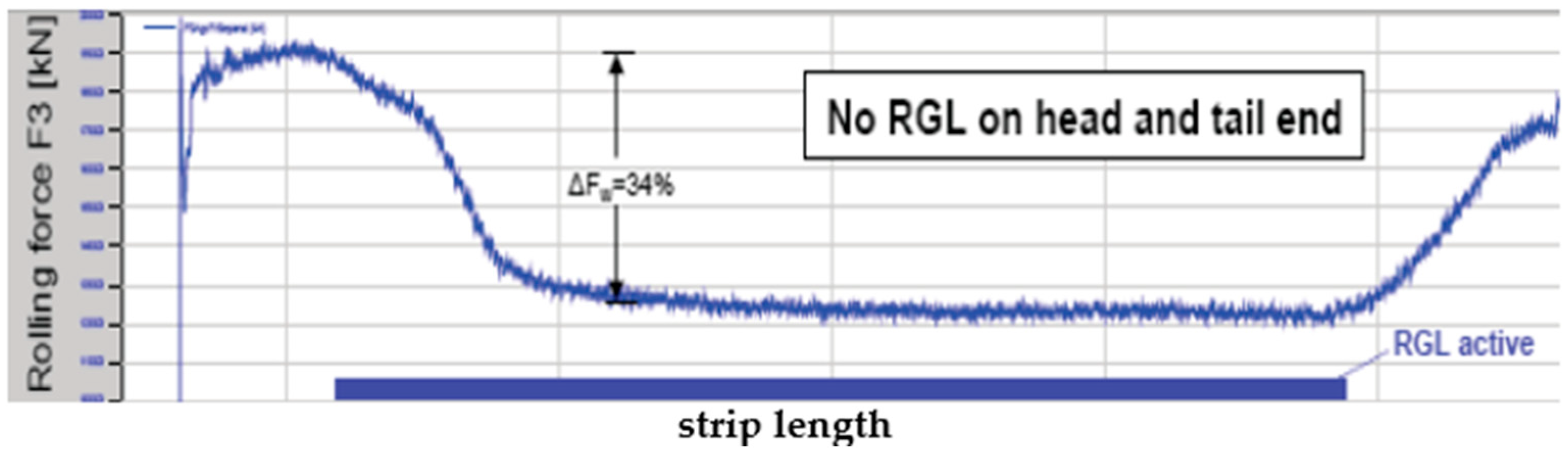
The application of lubrication in the roll gap leads to a direct reduction in the rolling force and torque required to deform the strip, as illustrated in
Figure 2. This reduction is attributed to the decreased friction between the rolls and the strip, which also contributes to lower energy consumption, reduced roll wear, and improved process stability.
The study presented in [
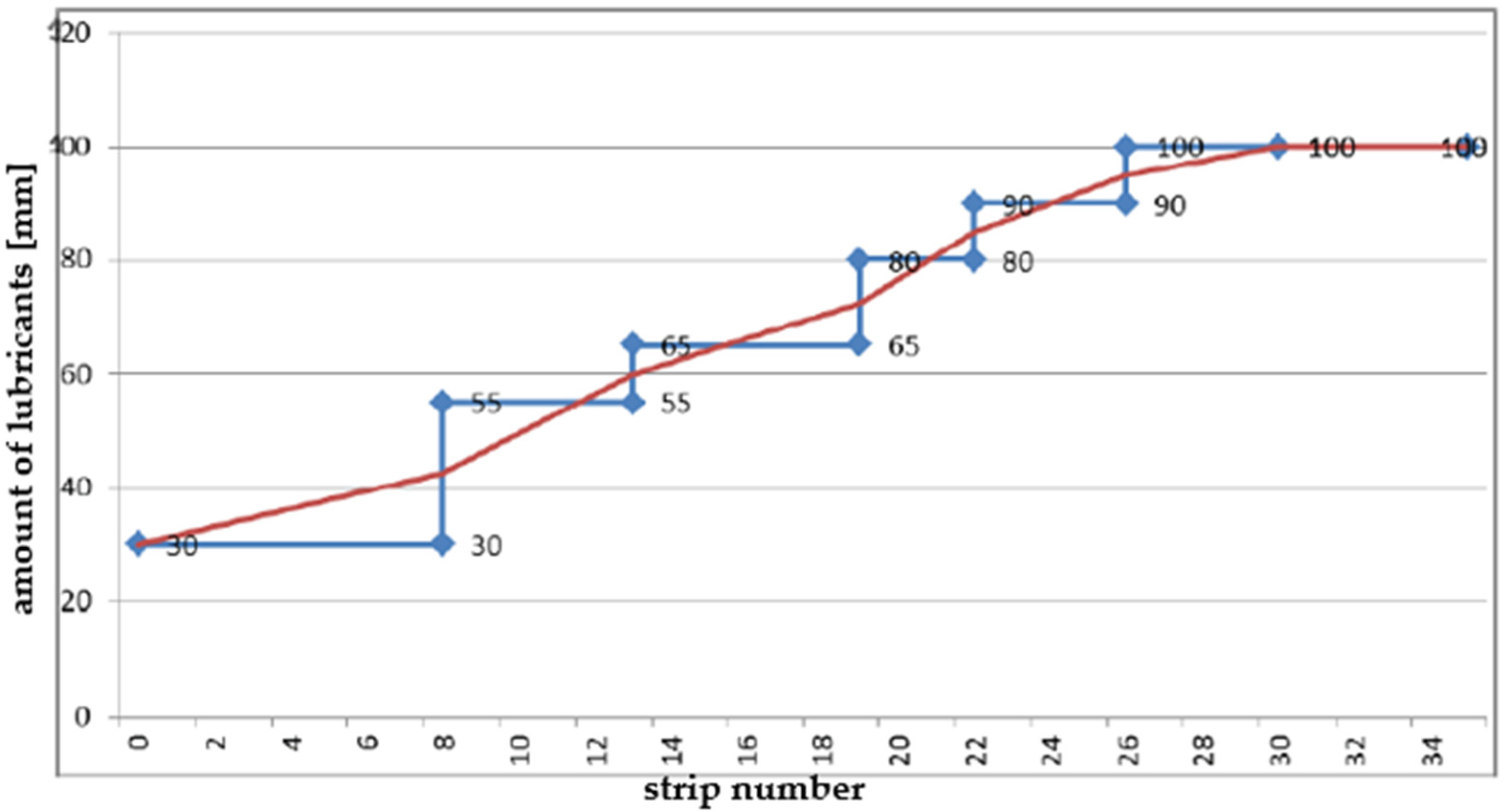
26] focuses on the optimization of the roll gap lubrication system implemented at the Al-Ezz Dekheila Steel Hot Strip Mill in Alexandria, Egypt. The authors emphasize the importance of taking into account the effect of roll wear when determining the quantity of lubricant supplied to the roll gap. Excessive or insufficient lubrication can alter the frictional conditions in the roll bite, affecting both roll life and strip surface quality. To address this issue, Saeed proposed a model that correlates roll wear progression with lubricant demand, enabling dynamic adjustment of lubrication parameters during the rolling campaign.
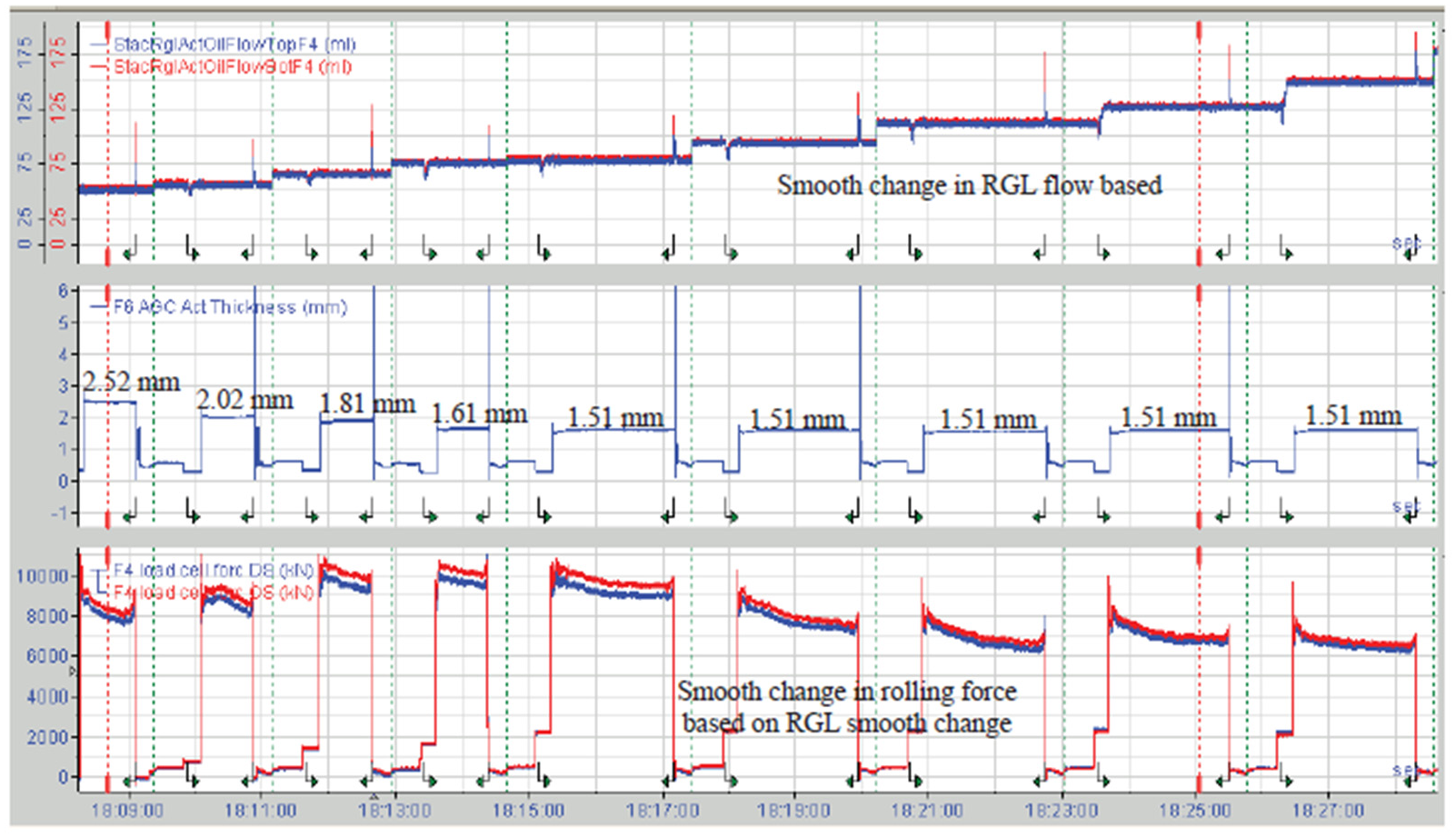
Based on this concept (see
Figure 3), an automated control strategy was developed to continuously regulate the RGL system operation depending on real-time process conditions (
Figure 4). The automation system relied on process monitoring and predictive logic to maintain optimal lubrication levels, ensuring stable rolling forces throughout extended campaigns. As a result, only small and smooth variations in the measured rolling forces were observed, indicating improved process consistency.
Furthermore, the adaptive RGL control led to a significant reduction in the number of cobbles—unintended strip breakages or entanglements—in stand F4, which had previously been a critical issue. The decrease in cobble frequency not only enhanced mill productivity and operational reliability but also yielded a direct economic benefit due to reduced downtime and lower maintenance requirements.
Overall, Saeed’s work demonstrated that data-driven lubrication optimization can simultaneously improve product quality, extend roll service life, and enhance the energy efficiency of the hot rolling process.
While Saeed’s study focused primarily on the adaptive control of lubricant flow, other researchers have investigated the direct tribological and energetic effects of RGL under different material and process conditions. Similar studies carried out under industrial conditions, this time involving the hot rolling of DP600 dual-phase steel, were presented by the authors in [
27]. Although their work does not primarily focus on the optimization of the roll gap lubrication system itself, it provides valuable experimental evidence of its practical effectiveness in force and energy reduction.
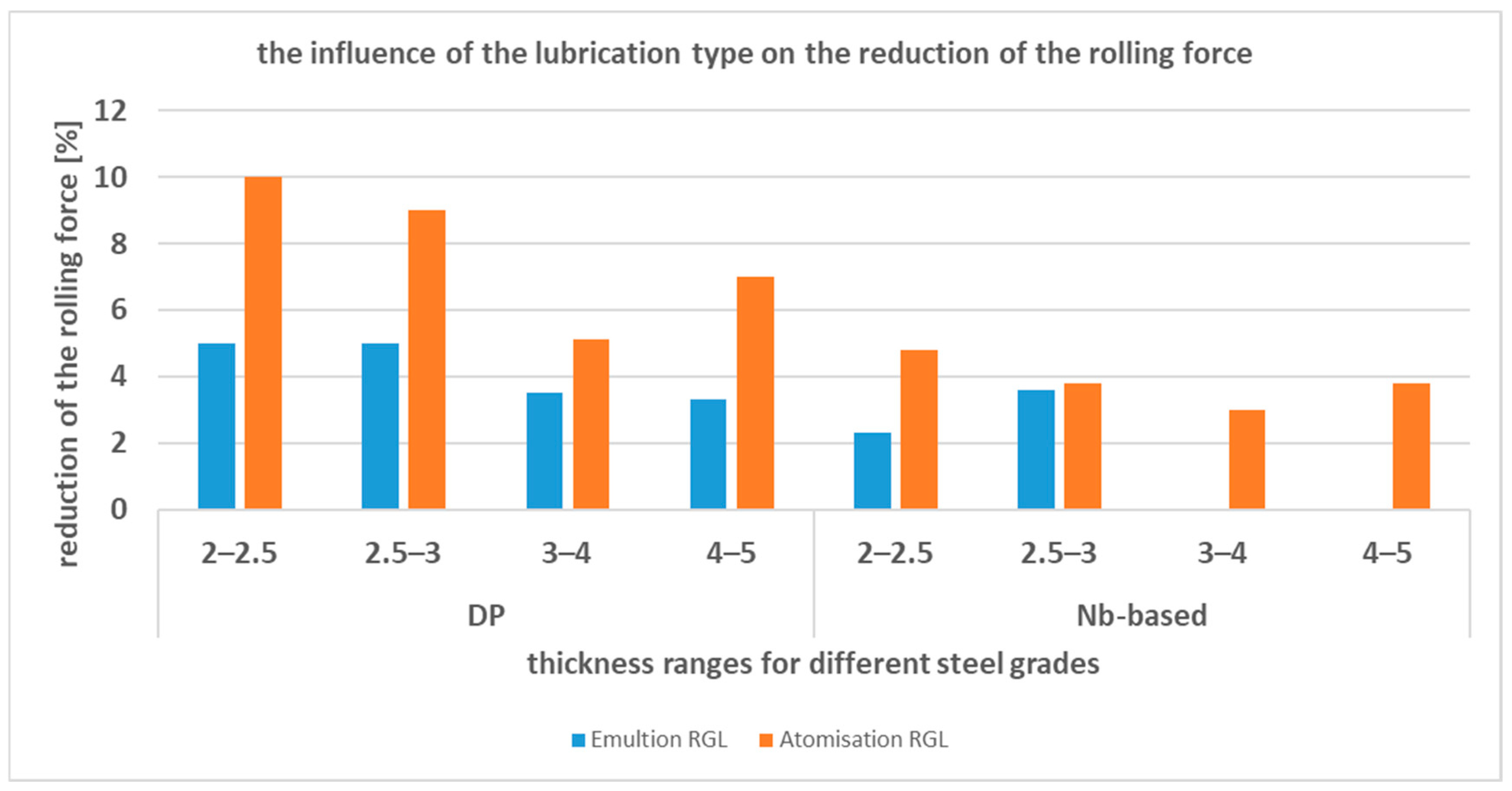
The authors demonstrated that the application of a water–oil emulsion through dedicated nozzles onto the working rolls during finishing passes led to a reduction in rolling forces of up to 30%, particularly in the earlier stands of the finishing mill. The average decrease in rolling force across all stands ranged between 5% and 20%, depending on the rolling schedule and strip dimensions. This reduction also translated into a drop in power consumption by approximately 15%, confirming the significant energetic benefits of the RGL system in the rolling of high-strength steels such as DP600.
In addition to the force reduction, the authors observed that the roll surface temperature was lower in stands where lubrication was applied, even though the intensity of roll cooling had to be reduced to prevent washing off the oil film. This finding indicates that reduced frictional heating compensates for the lower coolant flow, indirectly contributing to extended roll life and surface stability. Importantly—and somewhat uniquely among studies of this type—the authors also discuss several drawbacks and operational challenges associated with RGL implementation. They point out that sump-type lubrication can cause sudden spikes in rolling force when the system is turned off at the beginning or end of the strip, potentially destabilizing the rolling process. They also highlight the issue of residual lubricant film removal between strips, which may affect the consistency of subsequent passes.
These observations underline that, while the RGL system offers measurable process and energy benefits, its integration into industrial production requires careful control and timing, particularly during transient operating conditions.
To further clarify the physical mechanisms underlying these experimental observations, several authors have employed numerical modeling approaches capable of reproducing real mill conditions. In the work [
6], the authors presented a detailed three-dimensional finite element (FE) model of the hot rolling process applied to a 250-grade steel strip. The study investigated the complex interaction between rolling speed, friction conditions, and the resulting mechanical and thermal responses in the roll bite. It was shown that, with increasing rolling speed, the effective friction coefficient at the roll–strip interface decreases due to the formation of a more stable lubricant film and reduced metal-to-metal contact. Interestingly, despite this reduction in friction, both the roll separating force and the rolling torque were observed to increase with higher rolling speeds, which the authors attributed to the combined effects of higher strain rates and increased deformation resistance of the material at elevated rolling speeds.
The research also highlighted the significance of lubrication in modifying the thermo-mechanical state of the deformation zone. The FE model captured the variation in temperature distribution across the strip thickness and roll surface, showing that lubrication leads to lower frictional heat generation and a more uniform temperature field in the contact region. These observations confirm that lubrication not only reduces direct mechanical resistance but also contributes to better control of thermal gradients, which can have a positive influence on strip shape and surface quality.
Moreover, the authors emphasized that the proposed FE model is capable of closely reproducing industrial hot rolling conditions, offering a valuable predictive tool for evaluating the influence of lubrication, roll speed, and deformation parameters before conducting full-scale mill trials. Such simulation-based approaches complement industrial experiments by providing insight into the underlying tribological mechanisms governing roll–strip interaction, and thus support the optimization of RGL systems in practice.
Following these modeling advances, industrial research has increasingly shifted toward the practical implementation of novel lubrication technologies that combine process efficiency with environmental performance. Interestingly, recent developments have focused on oil-only lubrication systems designed specifically for use in industrial hot rolling lines. In the work [
28], Vervaet, Uijtdebroeks, and Simon presented an innovative lubrication solution implemented at the ArcelorMittal Dunkerque hot strip mill as part of a European Commission–supported industrial cooperation project. The system utilized specially designed atomizing nozzles capable of generating a fine oil mist, which was sprayed directly onto the working rolls, eliminating the need for a traditional water–oil emulsion. This technological shift aimed to simplify the lubrication process, improve energy efficiency, and reduce the overall environmental footprint of the RGL system.
The authors reported that introducing oil mist lubrication led to a reduction in rolling forces by approximately 20% (see
Figure 5), consistent with the tribological improvement expected from a more stable and controlled lubricant film in the roll gap. At the same time, the total oil consumption decreased by nearly 50% compared with the conventional emulsion-based RGL systems used in similar mills. This represents a substantial operational advantage, both economically and ecologically, due to lower lubricant usage, reduced waste generation, and minimized water contamination.
In addition to mechanical benefits, the study emphasized the improvement of roll surface condition and wear resistance, noting that the fine oil mist provided a uniform, thin lubricating layer with superior heat transfer and film stability. A comparison of roll surface conditions under the two systems clearly illustrates the smoother and more uniform surface achieved with pure oil mist lubrication. This innovation demonstrates that modern lubrication technologies can effectively combine production efficiency, cost reduction, and sustainability, paving the way for broader industrial adoption of oil-only RGL systems across European steel plants.
Beyond the mechanical and energetic aspects, researchers have also explored how lubrication affects product geometry and surface characteristics, revealing a broader influence of RGL on final strip quality. Another interesting consideration is presented in the work [
29], where the authors investigated not only the quantitative influence of lubrication on the rolling forces but also the qualitative effects related to surface and shape control in hot strip rolling. Their research focused on the ASR (Asymmetry Self-Compensating Roll) process applied to non-oriented electrical steel and employed both experimental trials and three-dimensional finite element modeling to assess the role of different lubricants under industrially relevant conditions. The results confirmed that the use of lubrication significantly reduces the frictional stress in the roll gap, which in turn lowers the rolling forces and contributes to a more stable deformation process.
However, the most notable finding of the study lies in the improvement of the strip profile and flatness quality. The application of lubrication enabled the production of strips with considerably lower surface roughness deviations along their length, effectively yielding a smoother and more uniform surface finish. Moreover, the combination of ASR technology and optimized lubrication conditions enhanced the control of crown and edge drop, leading to more consistent strip geometry across the width. The authors also pointed out that by minimizing roll–strip friction, lubrication reduces roll wear and surface deterioration, extending the working roll campaign life from around 70 to as many as 100–150 campaigns.
In summary, Li et al. demonstrated that lubrication in hot strip rolling plays a dual role—not only lowering mechanical resistance and energy demand but also improving product quality parameters, such as surface texture, flatness, and shape accuracy. Their findings underline the growing importance of advanced RGL systems as a tool for achieving both technological precision and economic efficiency in modern steel production.
While the previous section focused on system-level implementations and performance outcomes, an equally important line of research addresses the composition and behavior of lubricants themselves, which ultimately determine RGL efficiency.
3. Lubricants for RGL Systems
A substantial portion of the existing literature does not directly investigate the RGL system as implemented under industrial operating conditions. This limitation largely arises from the high costs and logistical challenges associated with large-scale experimental studies, which are typically undertaken by industrial R&D centers rather than independent researchers. Consequently, much of the current research focuses on the properties and performance of lubricants themselves, aiming to better understand their behavior and potential optimization for real-world applications [
30,
31,
32,
33,
34].
In the study by Matsubara et al. [
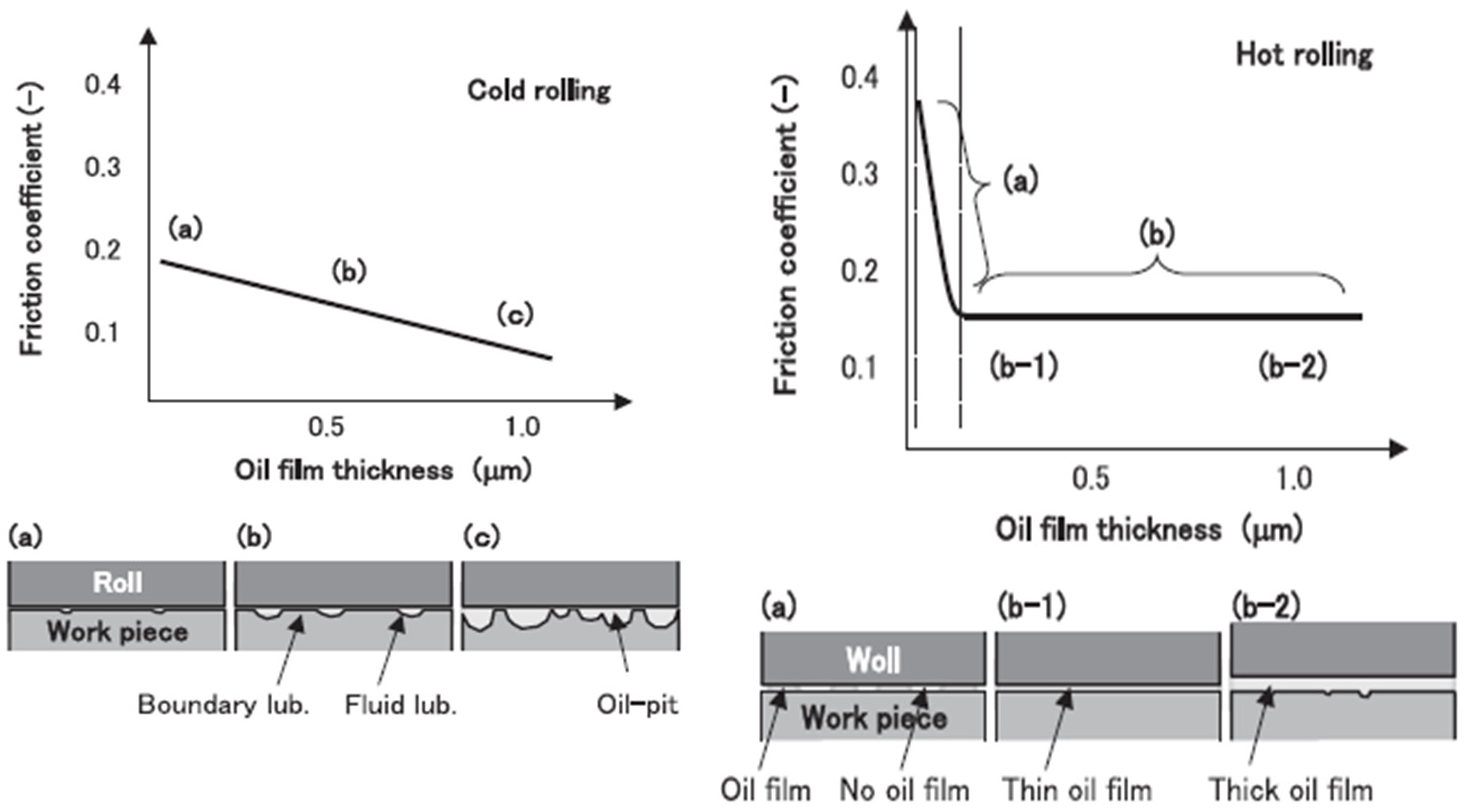
35], laboratory experiments were conducted to examine how the thickness of the lubricating oil film affects the coefficient of friction during cold and hot rolling. The work aimed to clarify differences in lubrication behavior under these two rolling conditions. The results showed a clear contrast between the two regimes. In cold rolling, increasing the oil film thickness led to a steady decrease in the coefficient of friction, suggesting a transition from boundary to mixed and eventually hydrodynamic lubrication. The relatively low surface temperature and higher oil viscosity allowed the film to remain stable, effectively separating the contact surfaces and reducing friction. In hot rolling, however, the effect was limited to a specific range of film thicknesses. Beyond a critical value, further increases no longer produced a significant reduction in friction. The authors attributed this to the drastic viscosity drop at elevated temperatures, which prevents the formation of a continuous hydrodynamic film (see
Figure 6). Microscopic observations confirmed that oil pits and residual films were much less pronounced under hot rolling conditions, indicating reduced lubricating effectiveness.
Overall, the study demonstrated that lubrication efficiency in hot rolling saturates beyond a certain film thickness, emphasizing that improving high-temperature lubrication requires optimizing oil viscosity and thermal stability rather than merely increasing film thickness.
In the study by Azushima et al. [
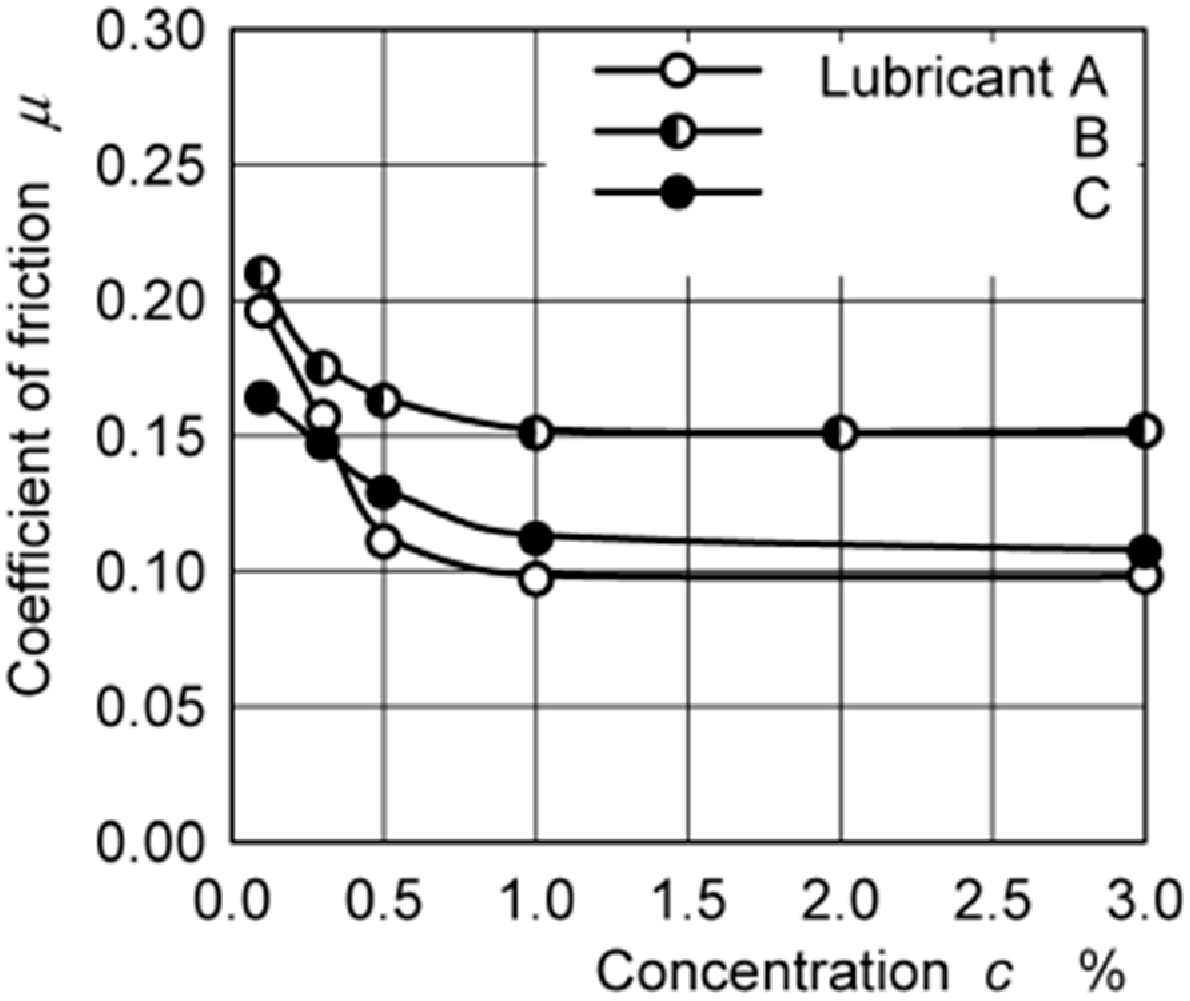
20], the authors focused exclusively on the hot rolling process, aiming to clarify how different types and concentrations of lubricating emulsions influence the coefficient of friction and the underlying lubrication mechanisms. A series of controlled experiments was conducted using various water-based emulsions containing mineral and synthetic oils, with concentrations systematically varied to assess their effect on lubrication performance.
The results revealed that the coefficient of friction decreases with increasing emulsion concentration up to a certain point, beyond which further concentration increases no longer produce a significant reduction. This behavior was observed consistently across different emulsion types, suggesting that, once a critical oil film condition is achieved, the frictional characteristics stabilize regardless of additional lubricant content. The authors explained this saturation effect by the limited capacity of the oil droplets to form a continuous lubricating film under high-temperature conditions.
These findings align closely with those of Matsubara et al. [
35], indicating that, in hot rolling, lubrication efficiency cannot be improved indefinitely by simply increasing lubricant concentration. Instead, the formation and stability of the oil film at the roll–workpiece interface play a decisive role in determining frictional behavior. The observed trends are summarized in
Figure 7.
The study by Azushima et al. [
36] can be regarded as a continuation of the authors’ previous investigations into lubrication mechanisms during hot rolling. In this work, a newly developed laboratory-scale simulation testing machine was introduced, designed to reproduce the actual contact and lubrication conditions occurring between the roll and the workpiece during industrial hot rolling.
The apparatus allowed the authors to study the evolution of frictional behavior with high precision under controlled temperature and load conditions. A key aspect of this research was the analysis of how the coefficient of friction changes along the rolling length of the material. Despite the test being limited to a laboratory rolling length of approximately 400 mm, the authors found that the coefficient of friction remained remarkably stable throughout the process.
This finding indicates that, once steady-state lubrication conditions are established at the roll–workpiece interface, friction does not vary significantly with rolling distance under constant operating parameters. The stability of friction observed in these experiments supports the idea that the lubrication regime in hot rolling rapidly reaches equilibrium. The results provide valuable validation for simulation-based approaches and help clarify the dynamic balance between lubricant supply, film formation, and thermal effects in the roll gap.
In the study by Wu et al. [
37], the authors investigated the lubrication performance of innovative water-based nanolubricants containing TiO
2 nanoparticles during the hot rolling of microalloyed steel. The primary objective was to evaluate how varying nanoparticle concentrations influence the frictional behavior and rolling force under high-temperature conditions.
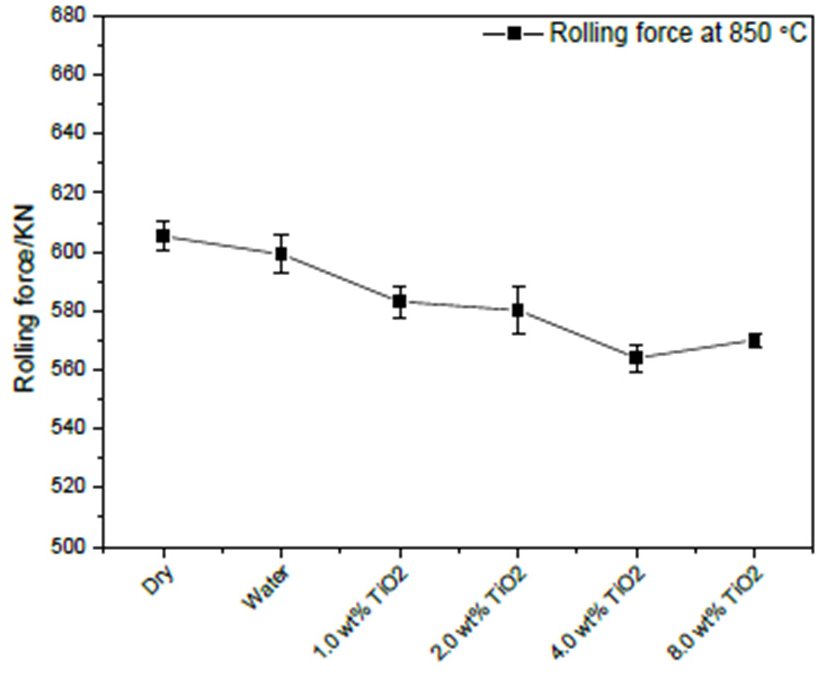
The experimental results showed that the addition of TiO2 nanoparticles significantly improved lubrication performance compared to conventional emulsions. As the nanoparticle concentration increased, the rolling force and friction coefficient decreased markedly, indicating enhanced load-carrying capacity and surface protection. However, this trend persisted only up to a critical concentration of approximately 4 wt. % TiO2. Beyond this level, both the rolling force and friction began to increase again. The authors attributed this reversal to the agglomeration of nanoparticles at higher concentrations, which can reduce their effective dispersion in the lubricant and hinder the formation of a uniform lubricating film.
The study suggests that TiO
2 nanoparticles contribute to improved lubrication primarily through a physical rolling effect and the formation of a protective tribofilm at the roll–workpiece interface. Nevertheless, optimal concentration control is essential to maintain stable dispersion and effective lubrication. The results, illustrated in
Figure 8, demonstrate the promising potential of nanolubricants for enhancing lubrication efficiency in hot steel rolling applications.
Apart from lubricant formulation, another factor that strongly influences frictional behavior in hot rolling is the oxide scale formed on the strip surface. Understanding its evolution is essential for interpreting real contact and lubrication conditions.
4. Key Role of Scale
A separate yet highly significant aspect influencing friction in the hot rolling process is the role of surface scale [
38,
39,
40,
41,
42,
43]. The presence and characteristics of oxide scale formed at elevated temperatures can have a decisive impact on the lubrication regime, the real contact conditions, and consequently on the overall frictional behavior. Although numerous studies have examined the mechanisms of scale formation and its mechanical interaction with the roll and the workpiece, in this review the authors aim only to highlight this factor as an equally important contributor to friction coefficient variations.
A representative example illustrating this influence can be found in the study [
44]. Yu et al. examined the oxide scale formed on microalloyed low-carbon steels with a chemical composition closely resembling that used in their previous investigations (as listed in
Table 1). The research aimed to clarify the microstructural and microtextural evolution of deformed oxide layers that develop during hot rolling followed by accelerated cooling. The oxide scale was found to consist mainly of magnetite (Fe
3O
4), wustite (FeO), and a thin hematite (Fe
2O
3) layer at the surface.
Detailed electron backscatter diffraction (EBSD) analyses revealed that both magnetite and wustite exhibited a strong {001} and a weaker {110} fiber texture parallel to the oxide growth direction. The trigonal hematite layer developed a pronounced {0001} basal fiber texture parallel to the {111} crystallographic plane of the underlying magnetite, indicating a crystallographic orientation relationship between the oxide phases. Furthermore, the study employed Taylor factor estimation to explain the observed microtexture evolution during deformation.
It was demonstrated that the fine-grained magnetite seam adjacent to the steel substrate evolves primarily through stress relief and ionic vacancy diffusion mechanisms. These processes help accommodate strain incompatibility between the oxide scale and the metallic substrate during deformation. The findings of this work provide valuable insight into the micro-mechanical behavior of oxide layers in hot rolling and help to explain how scale structure and texture development may influence friction and surface quality in industrial processes.
Another valuable contribution to the understanding of oxide scale behavior during hot rolling is presented in the work by Cheng et al. [
45]. In this study, the authors focused on ferritic stainless steel and examined how the environmental conditions during scale formation affect its structure, deformation, and influence on frictional behavior. The experiments were designed to simulate different atmospheric humidity levels during oxidation, followed by controlled hot rolling tests.
The results demonstrated that increasing air humidity during oxidation led to a noticeable decrease in the coefficient of friction. This effect was attributed to the changes in the microstructure and composition of the oxide scale formed under humid conditions, which promoted the formation of a more compact and smoother surface layer with improved lubricating properties. In contrast, scales formed under dry-air conditions were rougher, more porous, and exhibited higher friction during rolling.
Furthermore, the study showed that the degree of deformation applied to the strip with a pre-formed scale strongly affected the frictional response. Greater deformation resulted in more severe cracking and fragmentation of the oxide layer, exposing the underlying metal and increasing friction.
The findings summarized so far provide a solid theoretical and experimental background for evaluating real industrial implementations of RGL systems. The following section presents a brief overview of such an application in the ArcelorMittal Poland Hot Strip Mill (HSM) in Kraków.
5. Short Review of RGL System in AMP HSM in Krakow
The roll gap lubrication (RGL) system has been implemented in the ArcelorMittal Poland Hot Strip Mill (AMP HSM) in Krakow as part of ongoing technological improvements aimed at reducing frictional forces and enhancing surface quality during the finishing stages of hot rolling. The system operates on three of the six finishing stands—F2, F3, and F4—which are considered the most critical for determining final strip thickness, surface roughness, and temperature distribution.
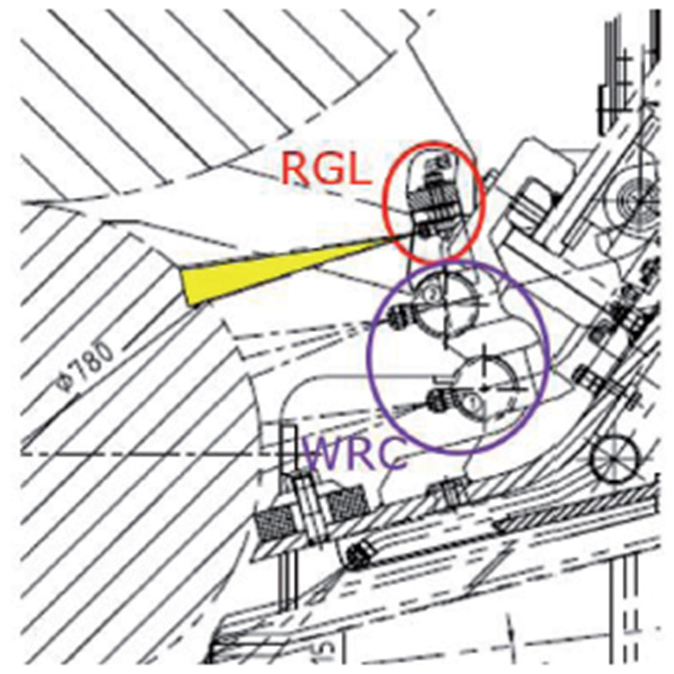
Structurally, the RGL installation in Krakow is integrated with the existing working roll cooling (WRC) arrangement, with dedicated nozzles positioned adjacent to the cooling headers, as shown schematically in
Figure 9. This configuration ensures precise and consistent delivery of lubricant directly into the roll gap, without adversely affecting the thermal balance of the rolls. The proper coordination of the RGL and WRC systems is essential to maintain uniform lubrication and avoid excessive roll temperature gradients, which can negatively influence strip flatness and roll wear.
The RGL system in Krakow employs an oil-in-water emulsion based on mineral oil with a concentration ranging from approximately 1% to 2%. The base oil has a density of 0.92 g/cm3 and a kinematic viscosity of 54.5 mm2/s at room temperature. These parameters provide a good balance between lubricity and thermal stability, allowing the formation of a stable lubricating film even under severe contact conditions characteristic of hot rolling. The emulsion is atomized and sprayed onto both working rolls under a pressure of about 6 atm. The flow rate of the lubricant can be adjusted between 15 and 35 mL/min, depending on the rolled material grade and entry strip thickness.
Industrial observations confirm that the application of RGL significantly decreases the rolling force and friction coefficient, leading to improved strip surface finish and reduced roll wear. Moreover, the system contributes to lower energy consumption and enhanced process stability, which are essential for maintaining both product quality and operational efficiency in large-scale steel production. Overall, the reviewed research and industrial experiences consistently demonstrate that roll gap lubrication offers substantial technological, economic, and environmental advantages. These findings highlight the importance of continued development and optimization of RGL systems for next-generation steel production.