


Abstract
This study investigates the effect of Ce on the microstructure and tribological properties of (AlCrNbTiVCe)N coatings synthesized via unbalanced magnetron sputtering. (AlCrNbTiVCe)N coatings doped with different amounts of Ce presented a face-centered cubic (FCC) structure. As the Ce concentration increased, the grain size and hardness, and elastic modulus of the coatings first decreased then increased. At a Ce concentration of 4.3%, the hardness and elastic modulus reached 30.6 GPa and 272.2 GPa, respectively, while the H/E and H3/E2 reached maximum values of 0.11 and 0.21 GPa, respectively. The results demonstrate that doping with 4.3% Ce improved the structure, refined the grains, and increased the hardness of the coating, thus enhancing its resistance to plastic and elastic deformation and improving its tribological properties. The coefficient of friction and wear rate of the coating with 4.3 at% Ce were drastically lower than those of the undoped Ce coating. The coating of Ce atoms (4.3%) has a minimum friction coefficient of 0.347 and a wear rate of 6.5 × 10⁻⁷ mm3/N∙m. Upon adjusting the content of Ce, the (AlCrNbTiVCe)N coatings exhibit exceptional mechanical and tribological properties, making this material a promising candidate for tribological protective coatings.
1. Introduction
A material’s surface directly determines its industrial application performance. By relying on surface modification technology, coatings can be prepared on low-grade alloys to obtain excellent properties such as heat resistance, corrosion resistance, and wear resistance. The influence of surface quality on durability cannot be ignored in design. With the advancement of the aeroengine requiring a high thrust-to-weight ratio, high reliability and durability, and low fuel consumption costs, the moving parts (such as the main shaft, bearings, compressor blades, hinges, and gears) are subjected to complex and unfavorable working conditions, such as heavy loads, high speeds, and oil cutoff. During operation, the contact between two land-riding zones may cause considerable fretting, resulting in bearing failure and engine stop as well as the risk of serious damage [1,2]. A variety of hard coatings, such as commercial coatings of CrN, TiN, and TiAlSiN, were developed to improve the service performance of mechanical moving parts [3,4]. Nevertheless, these coatings are only doped with one or two metal elements; it is difficult or impossible to predict all the difficulties that may arise during practical use. Compared with traditional alloys based on a single principal element, novel alloys termed high-entropy alloys (HEAs) have been proposed, motivated by the high-entropy alloys or multicomponent alloys (MCAs) first proposed by Chen et al. [5] and Cantor et al. [6] in 2004. HEAs are defined as a system of alloys composed of at least five elements in an equal or near-equal atomic ratio, with the concentration of each element varying between 5 and 35 at.%. HEAs tend to form a single-phase solid solution with high hardness, high wear resistance, excellent corrosion resistance, and good thermal stability [7], allowing them to well meet the needs of mechanical equipment.
There are reports of high-entropy alloy coatings developed with the goal of forming crystal structures with face-centered cubic (FCC) or body-centered cubic (BCC) structures by adding metals, oxides, carbides, and nitrides [8,9]. High-entropy alloy nitride (HEAN) coatings, similar to high-entropy alloy bulk materials, exhibit high hardness, outstanding thermal stability, and excellent wear and corrosion resistance, because of which they have many potential commercial applications, especially in fabricating moving parts used in the aerospace industry [7,10]; therefore, they have garnered much attention among researchers.
Various HEAN coatings based on refractory metal elements (Cr, Mo, Nb, Zr, Ti, V, Si, etc.) have recently been developed. For example, (AlCrTiZrHf)N [11], (AlCrTiVZr)N [12], (AlCrNbSiTiMo)N [13], and (TiZrNbCrSi)N [14] coatings were produced by magnetron sputtering, and they exhibited maximum hardnesses in the range of 9–38 GPa. To refine the grain size and grain boundary, the tribological properties of a coating can be further enhanced by adding rare earth elements [15,16]. This is because rare earth elements have a unique 4f electron layer structure, excellent chemical affinity, and a large atomic radius, which are advantageous for eliminating gas and slag, purifying grains, and limiting nucleation and crystal growth in the coatings [17,18,19]. Shu et al. discovered that the introduction of Ce leads to a finer grain structure in Ni-based composite coatings [16]. Introducing Ce into magnetron-sputtered NbN coatings reduced the friction coefficient and enhanced the wear resistance at ambient temperature [17]. Ding showed that adding Ce to composite coatings remarkably increased their abrasive wear resistance [18]. The above studies all indicate that high-entropy alloy coatings have good mechanical properties, and the addition of Ce can improve the microstructure and mechanical properties of binary layers. However, different contents of Ce can lead to uncertainty in the structure and tribological properties of high-entropy coatings. Rare earth elements (particularly with the addition of Ce) may enhance the mechanical and tribological properties of AlCrNbTiVN coatings. A systematic study on the effect of Ce doping on the microstructure, and mechanical and tribological properties of AlCrNbTiVN coatings is crucial for designing and developing coatings with excellent tribological performance. However, the Ce content’s effects on the tribological properties of AlCrNbTiVN coatings have been insufficiently investigated.
Many synthetic technologies, such as physical vapor deposition, laser cladding, and thermal spraying, have been developed to advance the commercial use of the coatings [20,21]. In particular, nitride coatings generated by direct current (DC) or radio frequency (RF) reactive magnetron sputtering have been widely studied because of their compact structure, high adhesion capability, and easily regulated parameters [22,23,24].
In designing the compositions for HEAN coatings, Al, Cr, Nb, Ti, and V are typically chosen because of their similar atomic radii, electronegativity, valence electron concentration, and identical FCC crystal structures [11,12,13,14]. In this work, (AlCrNbTiVCe)N coatings were deposited by magnetron sputtering from an AlCrNbTiV target and a CeAl alloy target at different sputtering powers to study the effect of Ce on the tribological properties of HEAN coatings. During the deposition process, the Ce content of (AlCrNbTiVCe)N coatings was regulated by adjusting the CeAl target power. The effects of the Ce content on the phase evolution, morphology, mechanical properties, and tribological characteristics were systematically investigated. The optimized parameters contribute to the design processes of additional HEAN coatings.
2. Material and Methods
2.1. Coating Preparation
The (AlCrNbTiVCe)N coatings were produced by a magnetron sputtering system(Shenyang Science Instrument, Shenyang, China). AlCrNbTiV (99.95%) and CeAl alloy (5:5 Ce: Al) (φ50.8 mm × 3 mm) were utilized as sputtering targets, while Ar and N2 were used as the working and reaction gas, respectively. The 9Cr18 steel (φ30 mm × 2 mm) and silicon (10 mm × 10 mm × 500 μm) were selected as substrates. First, the 9Cr18 steel substrates were ground with sandpaper and grinding paste and subsequently polished; then, the substrates were cleaned with acetone and ethanol for 15 min, respectively, after drying at 30 °C for 90 min in a vacuum oven. Before starting deposition, the chamber pressure was pumped down to 5 × 10⁻⁴ Pa and the chamber temperature was increased to 300 °C. The Ar flow was 20 sccm. A Cr layer was deposited for 20 min to improve the adhesion of the coating to the substrate. During the deposition process, both sputtering targets were treated simultaneously, and the workpiece table was rotated at 20 rad/min. The total coating-deposition time was 180 min. The optimum processing parameters obtained for the sputtering power, deposition pressure, and nitrogen flow rate are listed in Table 1. The CeAl target sputtering power was adjusted to 0 W, 60 W, 80 W, 100 W, and 120 W, respectively, with all other process parameters unchanged. The five resulting coatings were designated R0 to R4 in order of increasing CeAl target power. The parameters that affect the final performance of the coating include deposition pressure, nitrogen flow rate, bias voltage, etc. The main focus is on studying the effect of different Ce contents on the performance of coatings obtained from different RF powers.
Table 1.
Sputtering deposition parameters of (AlCrNbTiVCe)N coatings.
2.2. Characterization
Scanning electron microscopy (SEM) (ZEISS Sigma 300, Baden, Germany) and X-ray diffraction (XRD) analysis (Smartlab Rigaku, Tokyo, Japan) with Cu-Ka radiation (λ = 0.154 nm) were performed. The scanning speed was 1°/s, and the scanning range was 10 to 90°. X-ray photoelectron spectroscopy (XPS) (Thermo Scientific K-Alpha, Waltham, MA, USA) and a nanoindentation instrument (iNano, Milpitas, CA, USA) were used to characterize the surface morphologies, crystal structures, phases, chemical bonding states, average thicknesses, and surface hardness of the produced coatings. Among them, the vacuum degree of the analysis chamber was 4 × l0−9 mbar, the excitation source was Al Ka ray (HV = 1486.6 eV), the working voltage was 14.6 kV, and the filament current was 13.5 m. The passing energy was 20 eV with a step of 0.1 eV, and the charge correction was carried out with C1s = 284.8 eV binding energy as the benchmark. Before the measurement, the surface of each sample was cleaned for 5 min using an Ar+ ion beam with an energy of 3 keV to remove surface contaminants.
In addition, a scratch tester (MFT-4000, Rtec, Oakland Rd, B, San Jose, CA USA) equipped with a diamond indenter (Rockwell type) of 200 µm radius was used to examine the adhesion characteristics of the coatings. The loading rate was 80 N/min, and the sliding speed was 0.1 mm/s. The scratch surface was examined using an optical microscope to identify the critical load for each failure mode.
Using a tribometer (HT-1000, Lanzhou Zhongke Kaihua Technology Development Co., Ltd., Lanzhou, China), friction tests were conducted. The friction couple consisted of a GCr15 ball (Φ6 mm, hardness 63–65 HRC) and an (AlCrNbTiVCe)N disk. The testing parameters included reciprocating sliding in ambient air with a velocity of 17.6 cm/s, and a normal load of 10 N, with a total of 3360 cycles.
The morphologies of the wear tracks on the samples were studied using a three-dimensional white-light profiler. The wear volume was determined by multiplying the wear area (obtained by integrating the profile) by the whole length of the wear track. The wear rate (mm3/(N·m)) was calculated using Equation (1) [11].
where V is the worn volume (mm3); F is the applied normal load (N); L is the total friction stroke (m). The average wear rates of the three tests were used to evaluate the performance of the coating to eliminate inaccuracy. To ensure the reproducibility of the results, each test was conducted thrice. The average values are presented as the results.
3. Results and Discussion
3.1. Composition of (AlCrNbTiVCe)N Coatings
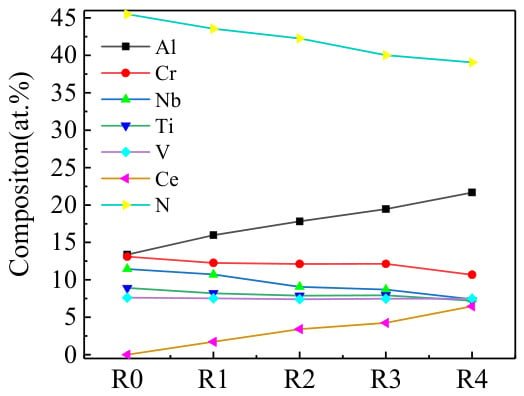
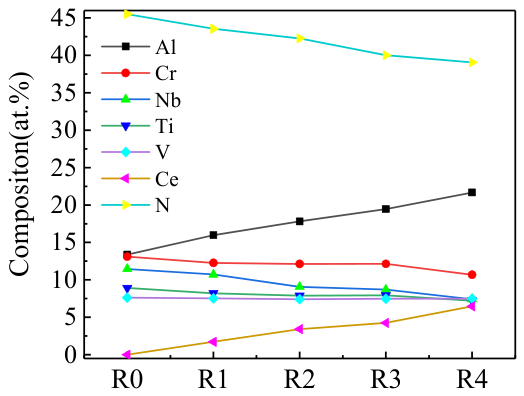
Figure 1 shows the element ratio of R0–R4 coatings. To determine the elemental ratio of the coatings, the N1s, Ti2p, Nb3d, Al2p, V2p, Cr2p, and Ce3d spectra were recorded, and the relative atomic concentrations were estimated from the integral area of the respective peaks using the Multipak software 9.3.0. The concentration of Ce increased gradually with increasing CeAl sputtering power, while the contents of N and other elements decreased and stabilized at 40% and in the range 5–27%, respectively. During deposition, the target atoms acquired considerable kinetic energy and collided with other atoms in a cascading manner. When the kinetic energy of the surface atoms exceeded the required threshold for displacement, the surface atoms were separated and deposited on the substrate. As the CeAl sputtering power increased, the atomic energy increased, resulting in the Ce element content increasing with sputtering power. Al was also present in the HEA targets; therefore, its concentration increased. In addition, Al had the highest sputtering yield and the lowest atomic weight [12,13]. The other components in the samples were about 27% Al, 8% Cr, 8% Nb, 7% Ti, and 5% V. The fact that the Cr, Nb, Ti, and V concentrations are not equimolar can be attributed to the different sputtering yields. All major elements were present in concentrations that were within the allowable ranges of 5–35 at%. for HEAs. The sputtering power of the AlCrNbTiV target was maintained at 150 W, while that of the CeAl target was varied to adjust the atomic ratio (R) of Ce. XPS measurements determined the R0, R1, R2, R3, and R4 values to be 0, 1.7, 3.4, 4.3, and 6.5, respectively.
Figure 1.
Chemical composition of (AlCrNbTiVCe)N coatings.
3.2. Phase Analysis of (AlCrNbTiVCe)N Coatings
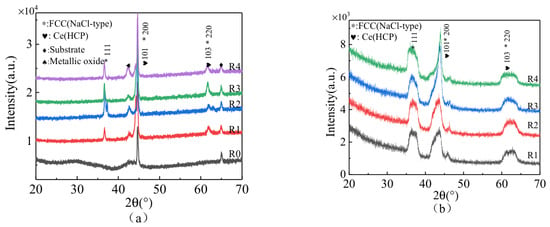
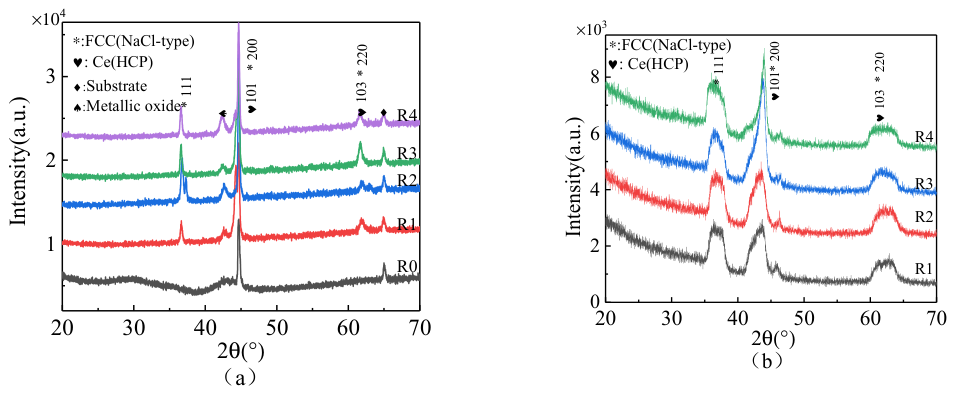
Figure 2 presents the XRD patterns of the (AlCrNbTiVCe)N coatings with varying Ce contents. As seen from Figure 2a, the XRD patterns of all coatings reveal a prominent (200) crystal plane diffraction peak near 43°, whereas the XRD pattern of the Ce-containing coating reveals the diffraction peak of a (111) crystal diffraction plane at ~37° and the peaks of (220) and (103) crystal planes at 62°. Notably, the wide-angle XRD profiles shown in Figure 2b demonstrate that the R3 coating has a preferred orientation (200). The addition of the Ce atoms causes a shift in the peak to a lower angle. This result implies that Ce strongly inhibits the growth of crystalline grains and changes in the crystalline phase. According to the literature [16,17], the cause of this inhibitory effect is likely the penetration of the lattice or crystal boundary by the big Ce ions, thereby causing the crystal lattice to expand and deform. Hence, the crystallite does not grow normally; the smaller the crystal size, the greater the specific surface area. The coatings show that the FCC crystal structure is a nanograin NaCl structure; this result agrees with a previous report on a single FCC solid solution for as-deposited mixtures of ternary nitrides [10], such as TiN, CrN, NbN, and VN. In addition, a single FCC structure appears in both (AlCrTiZrHf)N [11] and (TiZrNbCrSi)N [14] coatings. The FCC structure arising from thermodynamic stability is associated with the high mixing entropy and limited diffusion kinetics [13]. No intermetallic compounds or complex phases were observed in any of the coatings. Further, for the NaCl-type phase, the (111) plane was found to have the lowest strain energy, while the (200) plane had the lowest surface energy [5,11].
Figure 2.
(a) XRD patterns and (b) wide-angle XRD of (AlCrNbTiVCe)N coatings.
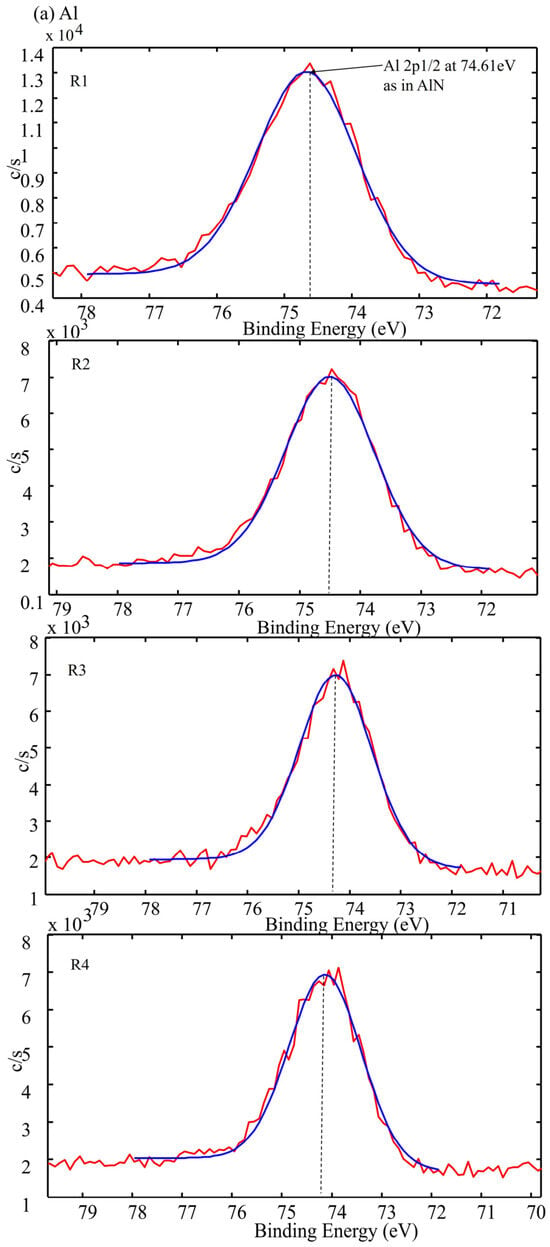
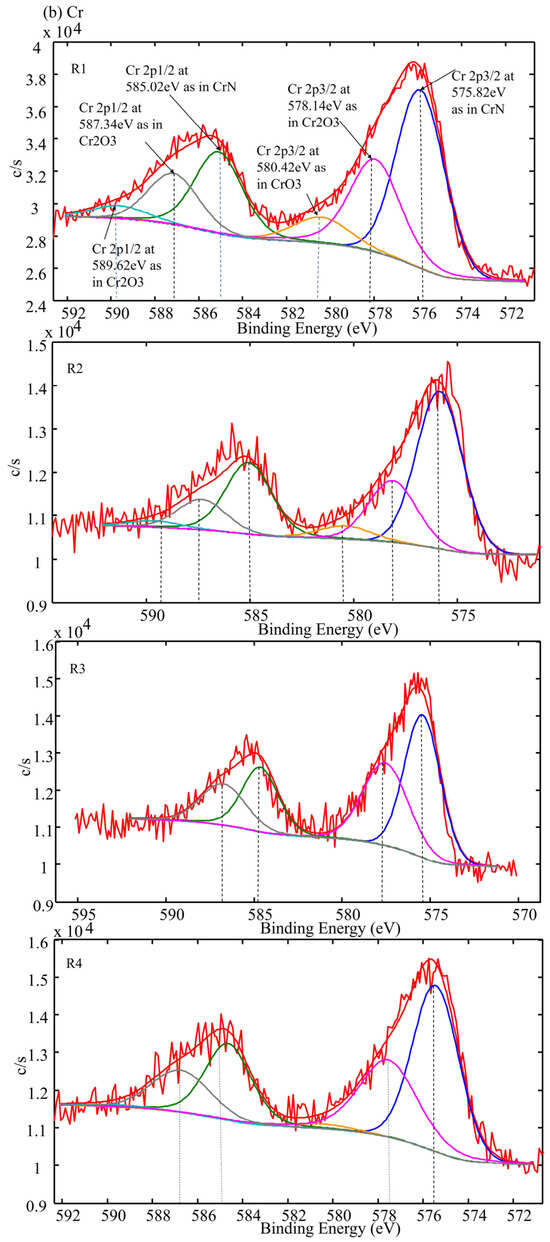
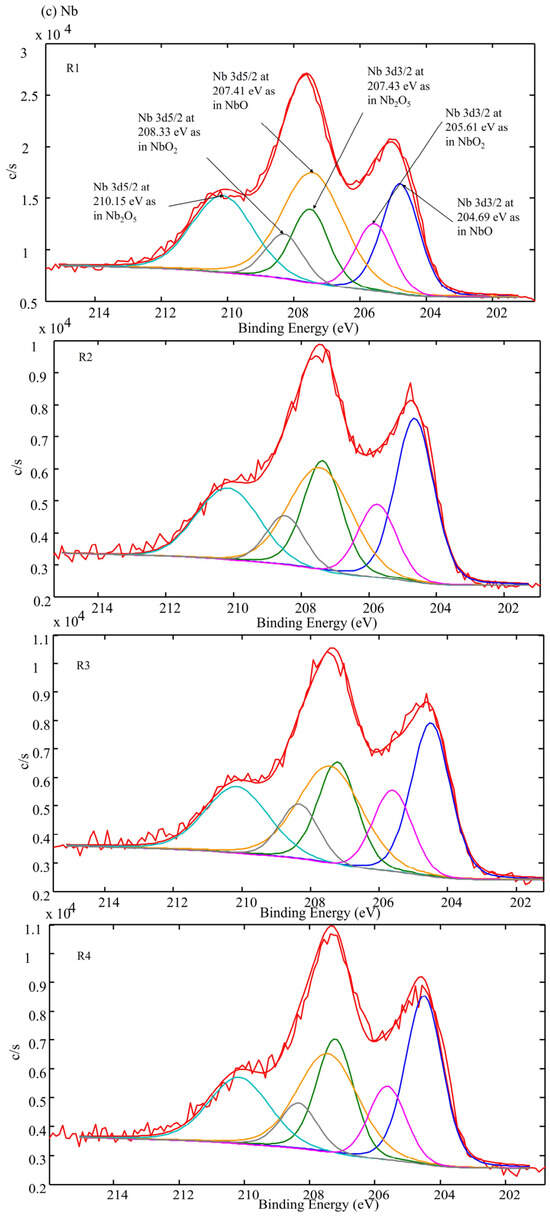
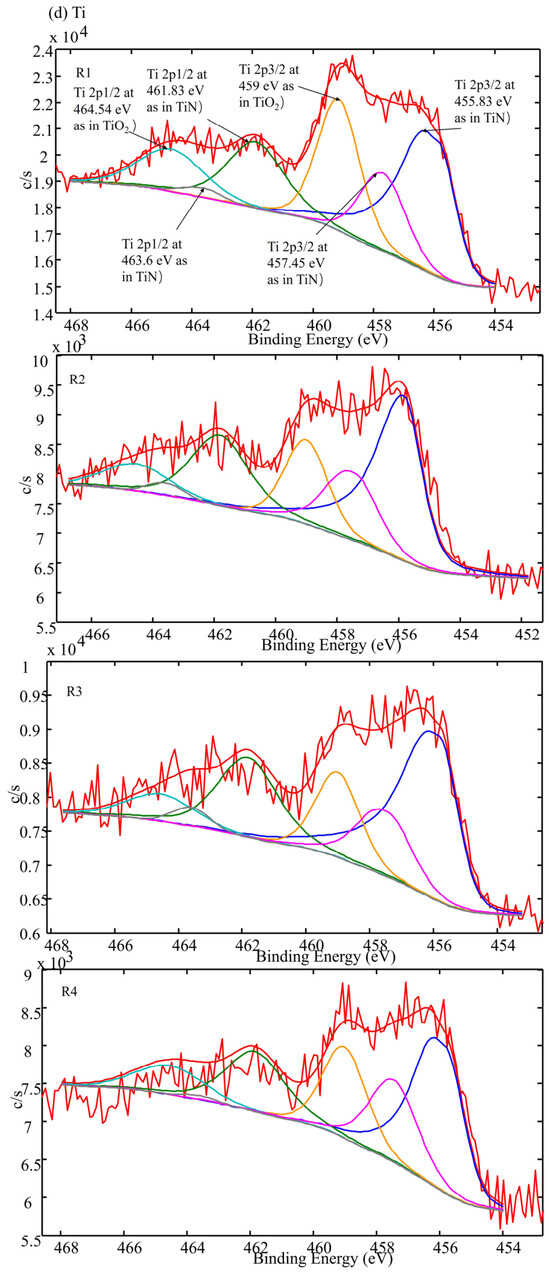
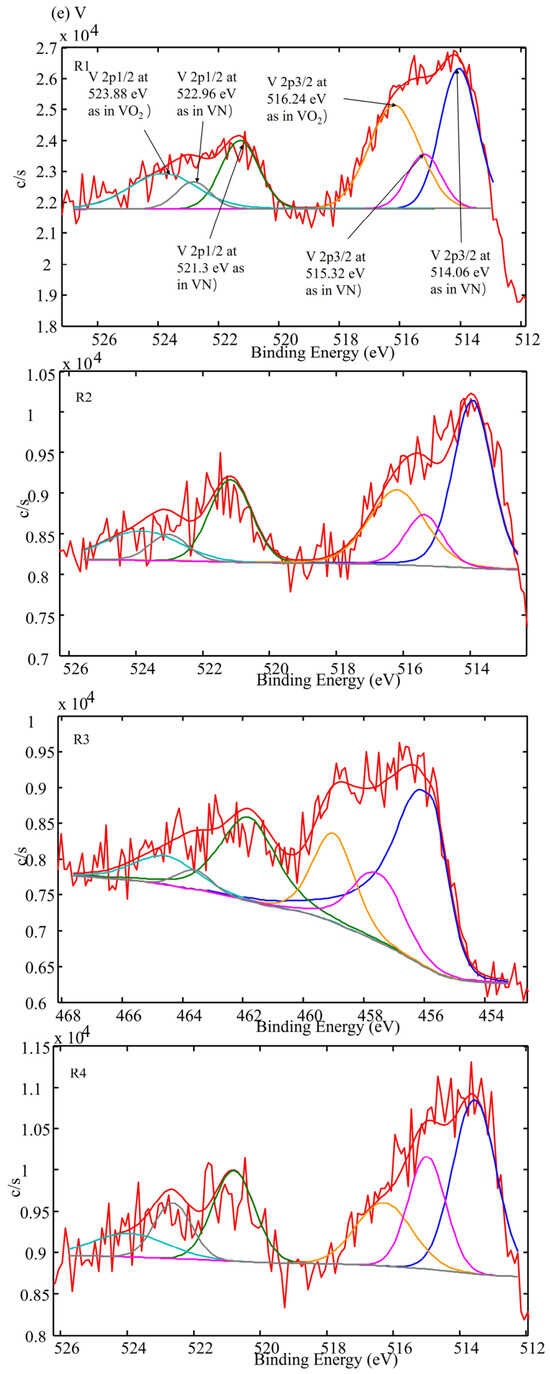
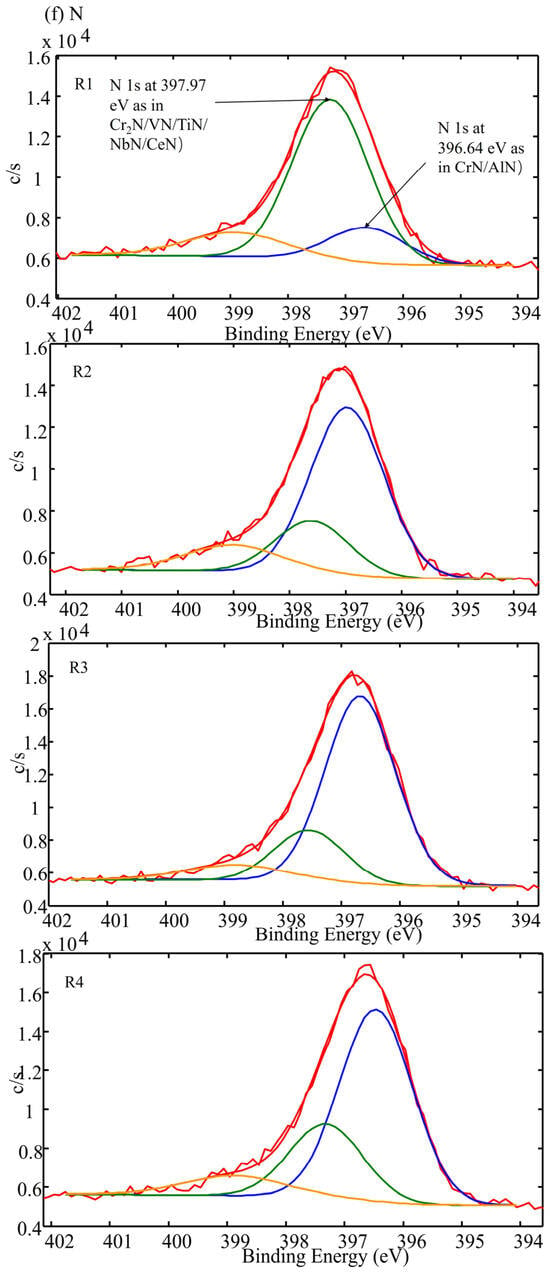
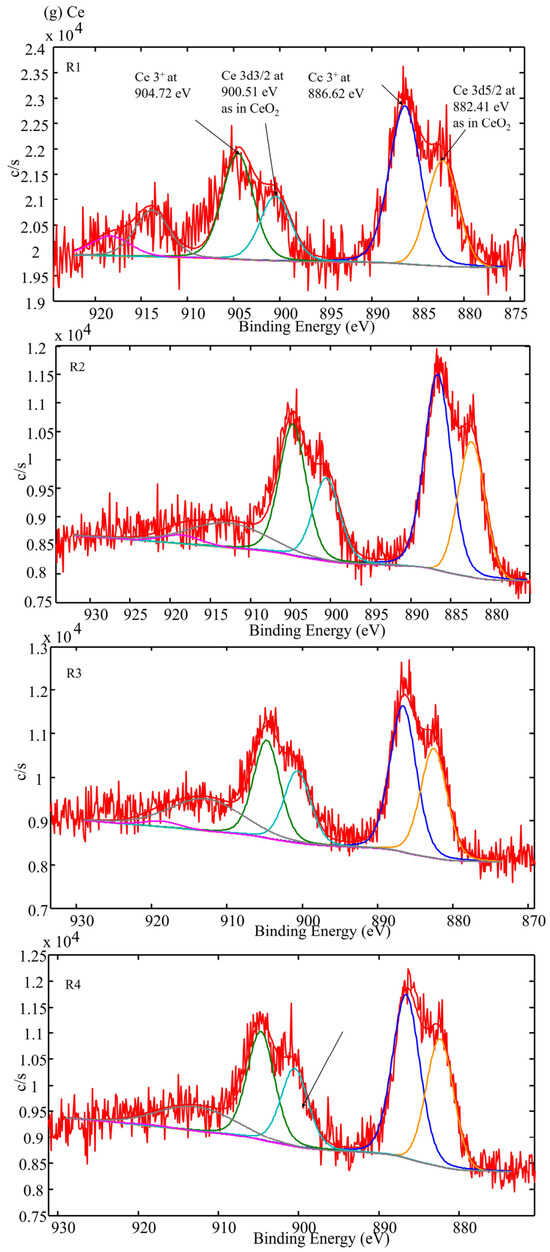
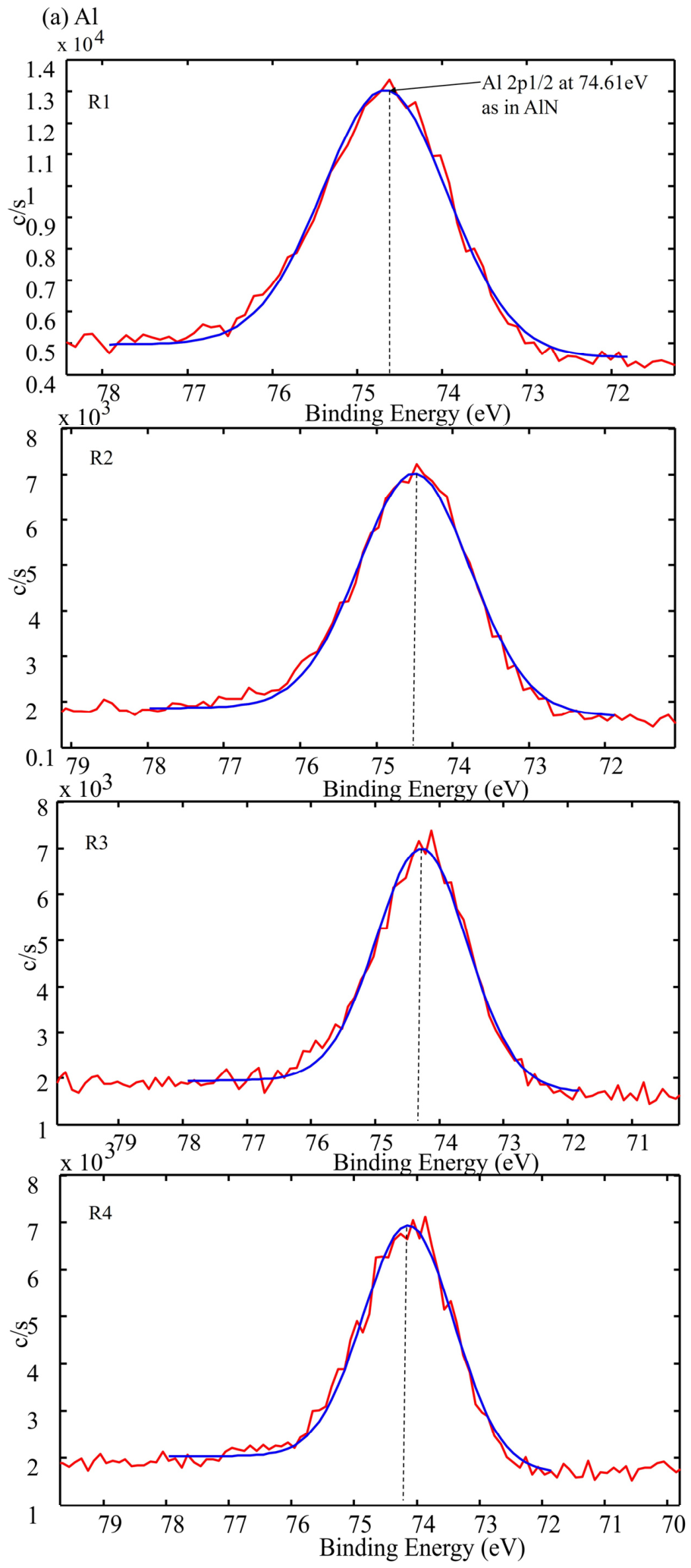
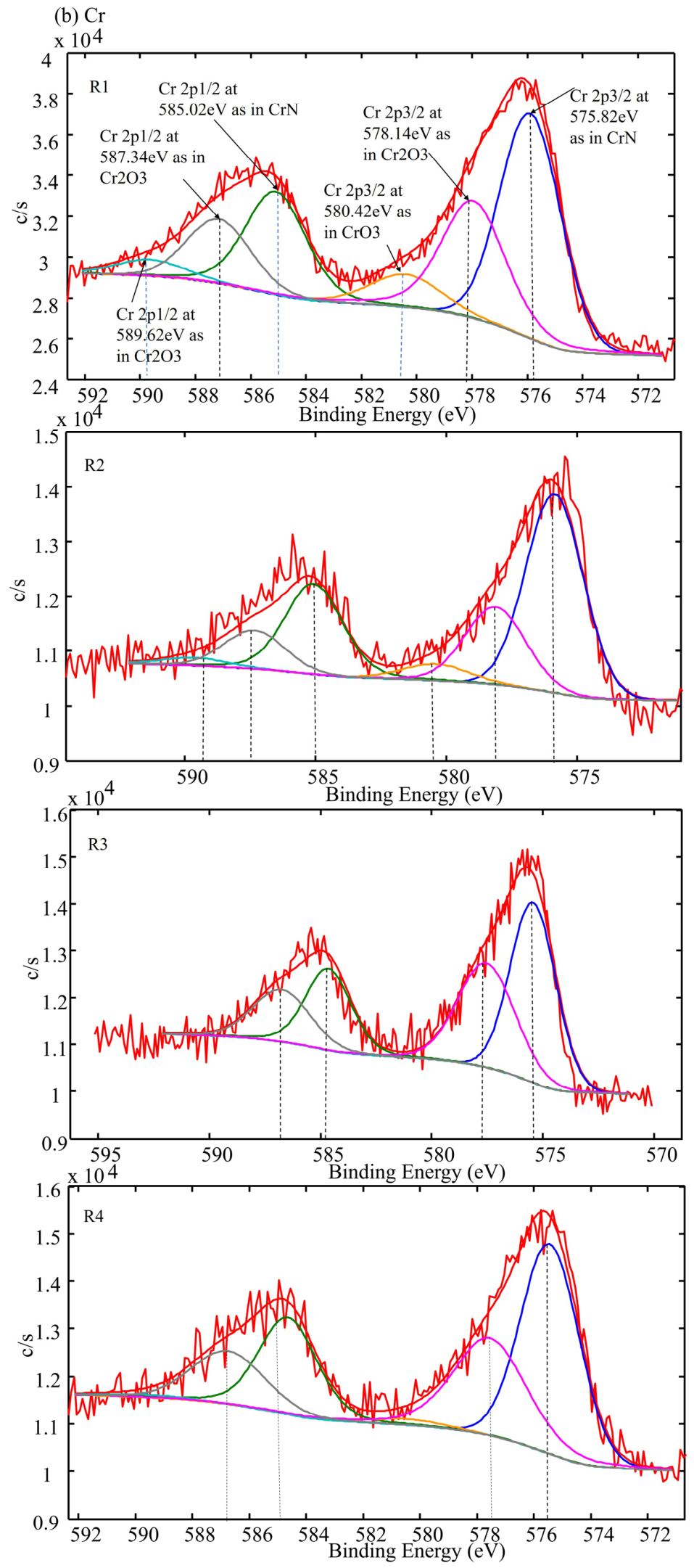
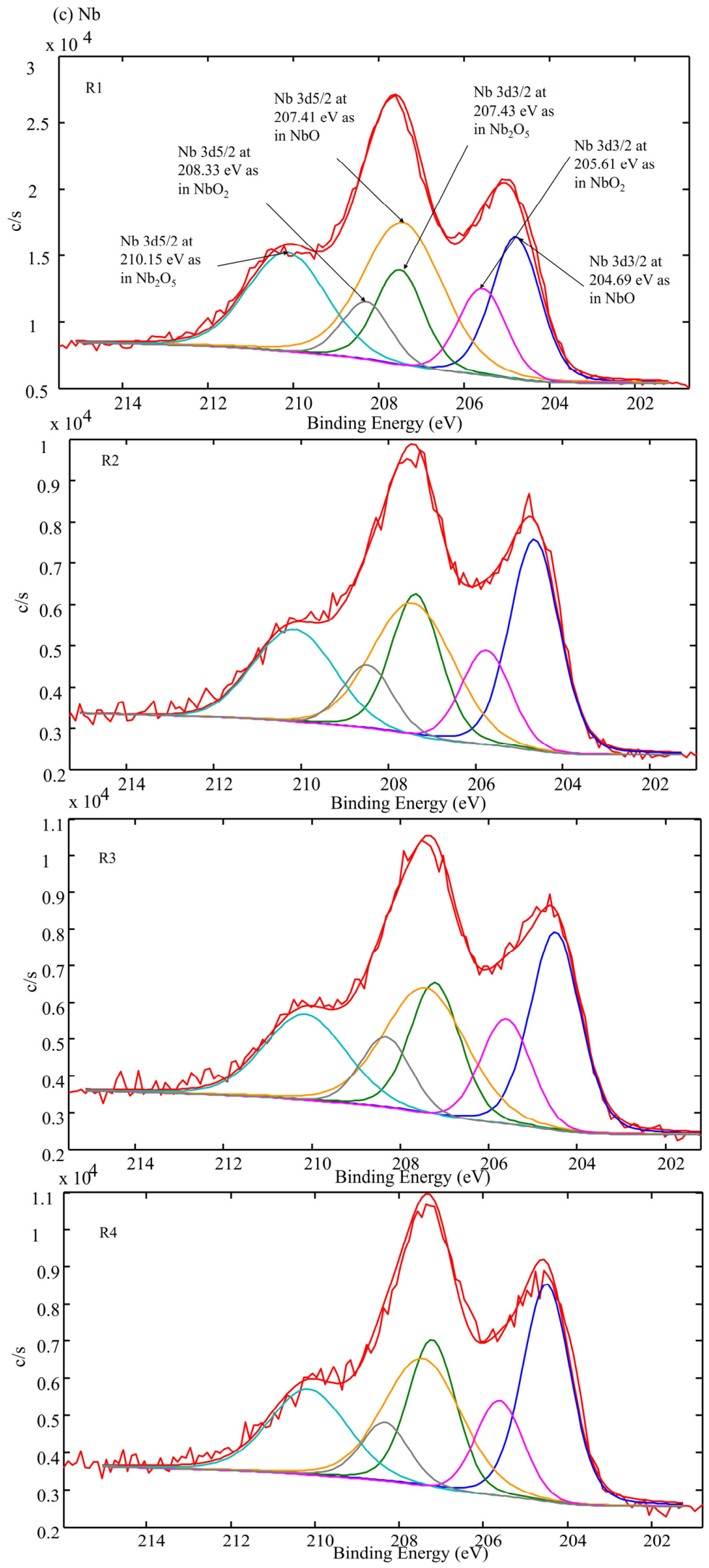
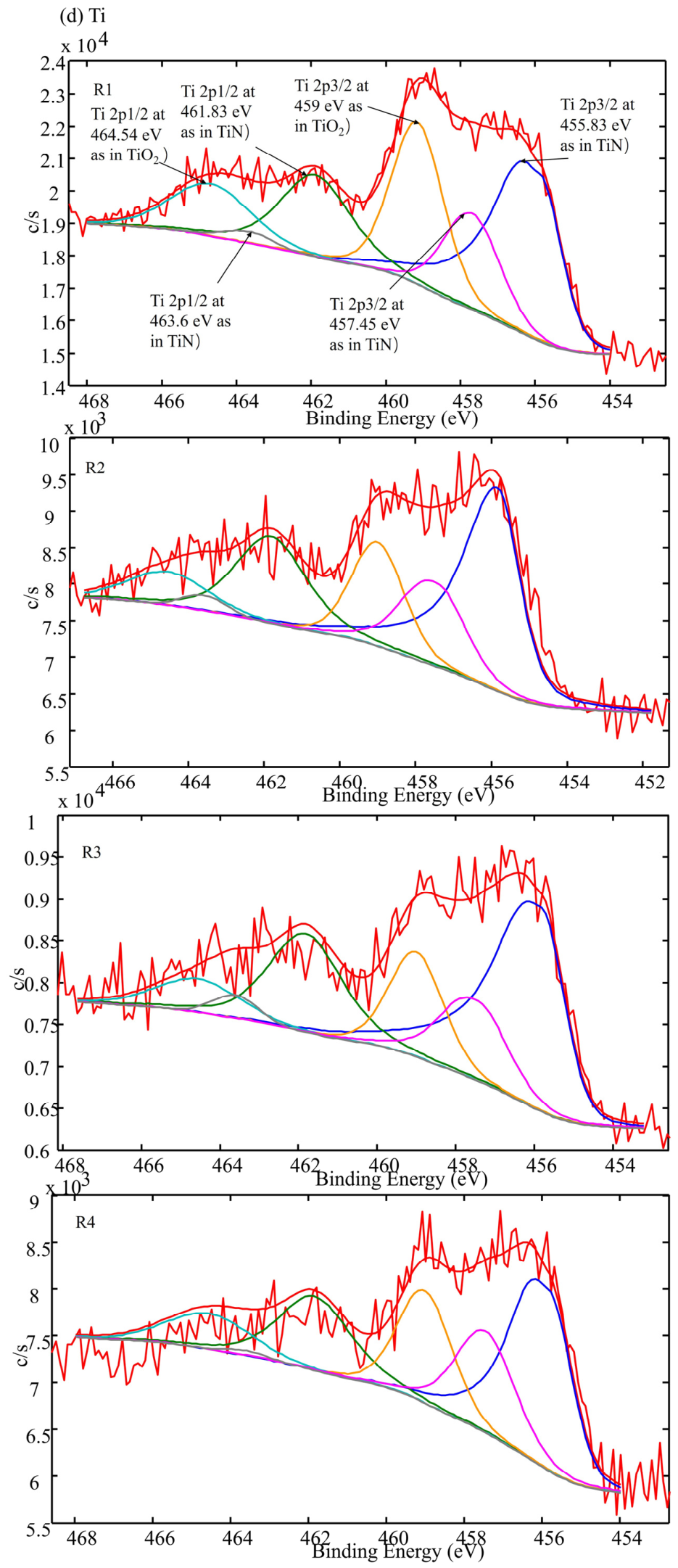
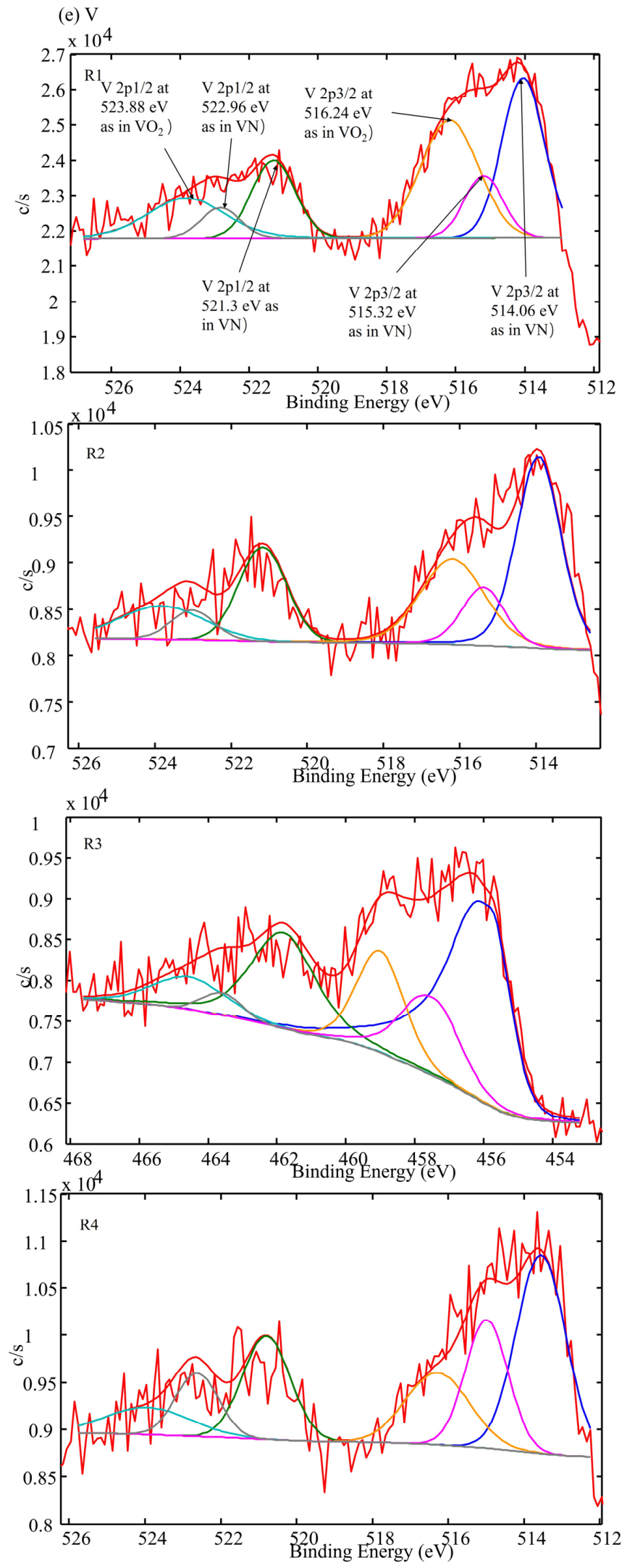
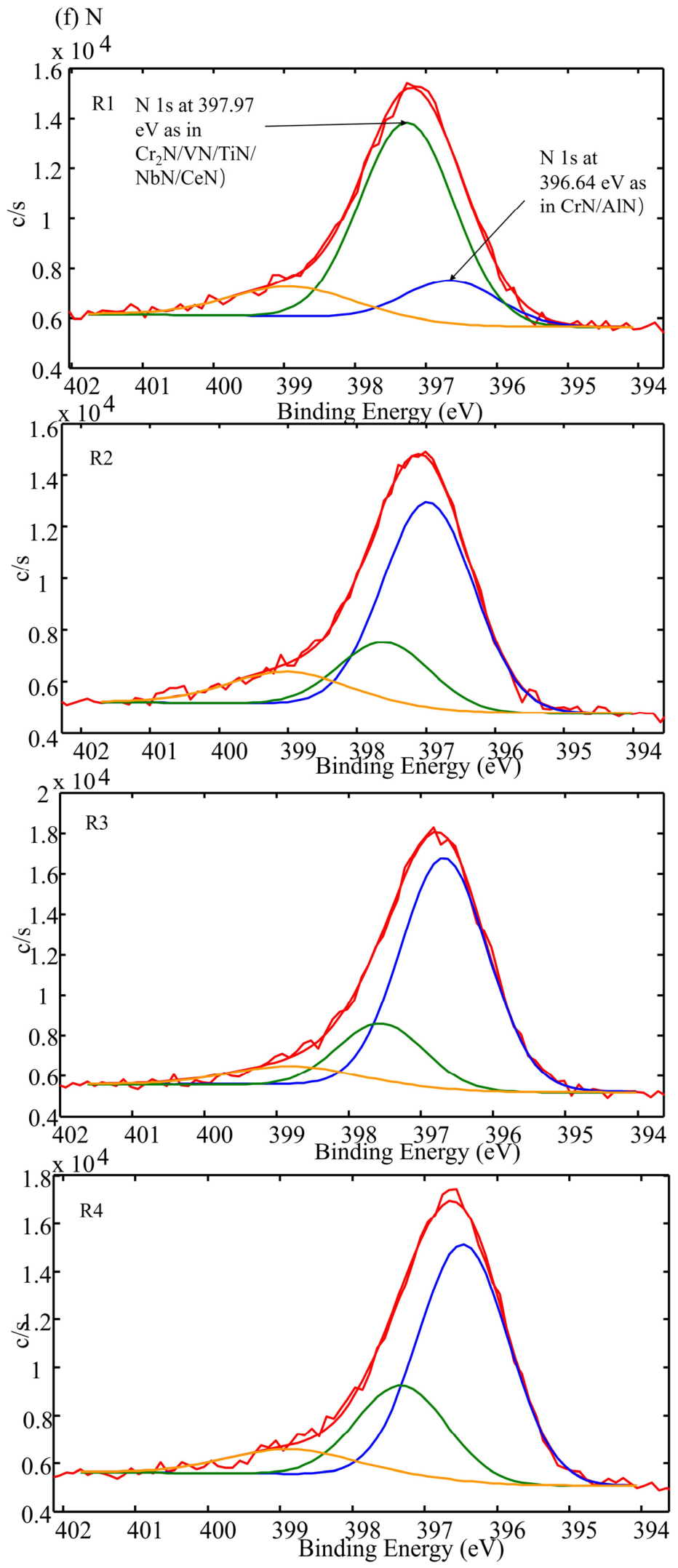
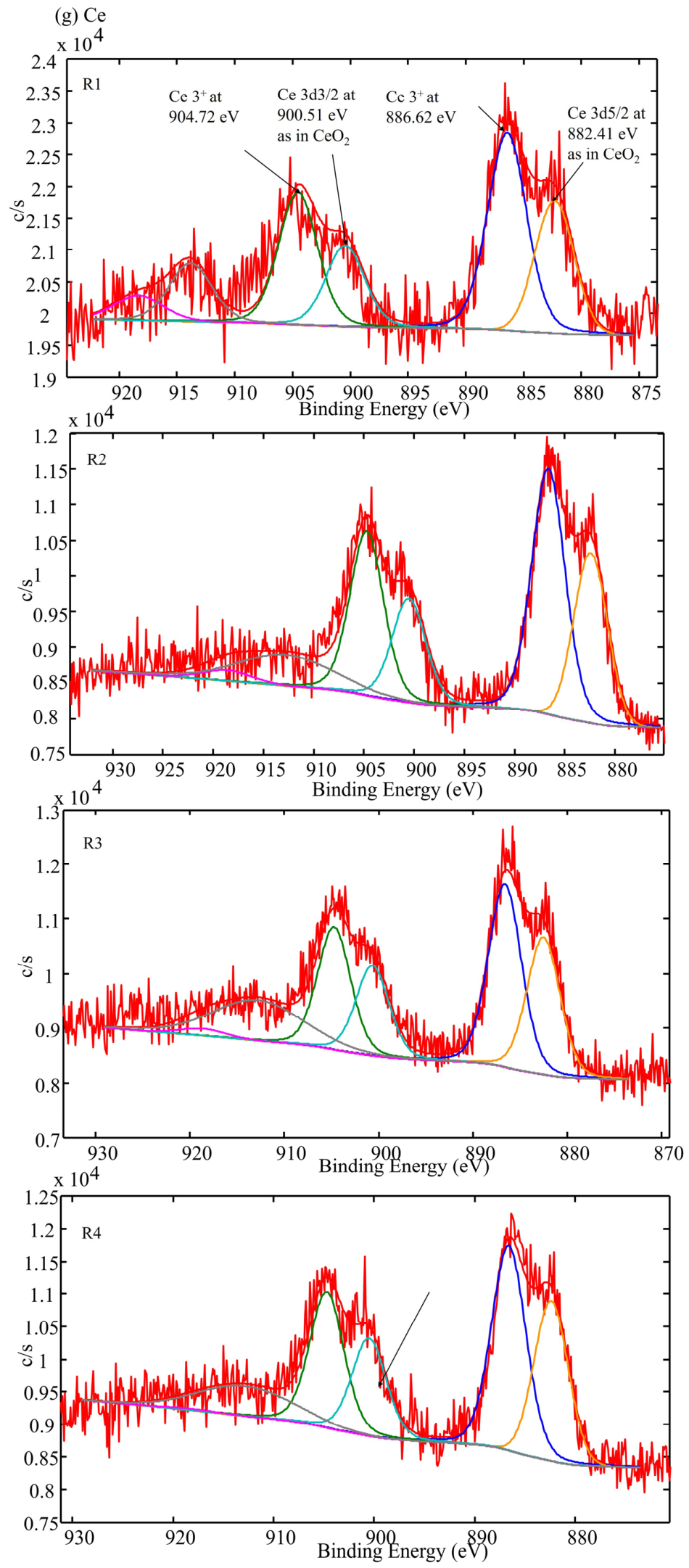
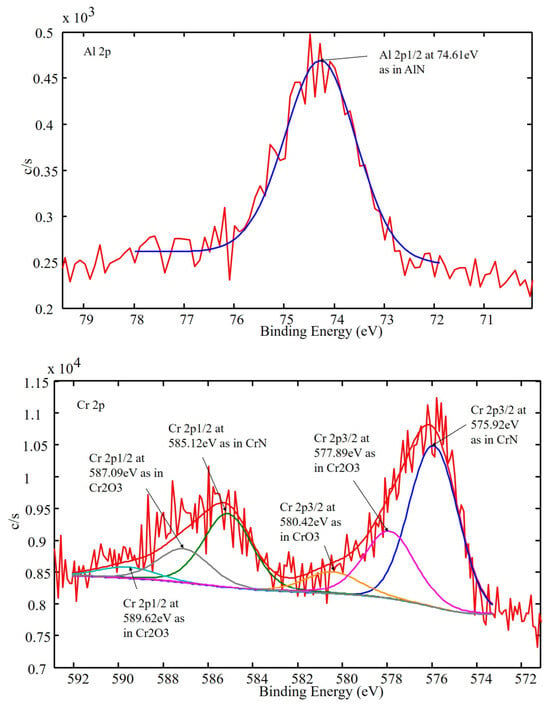
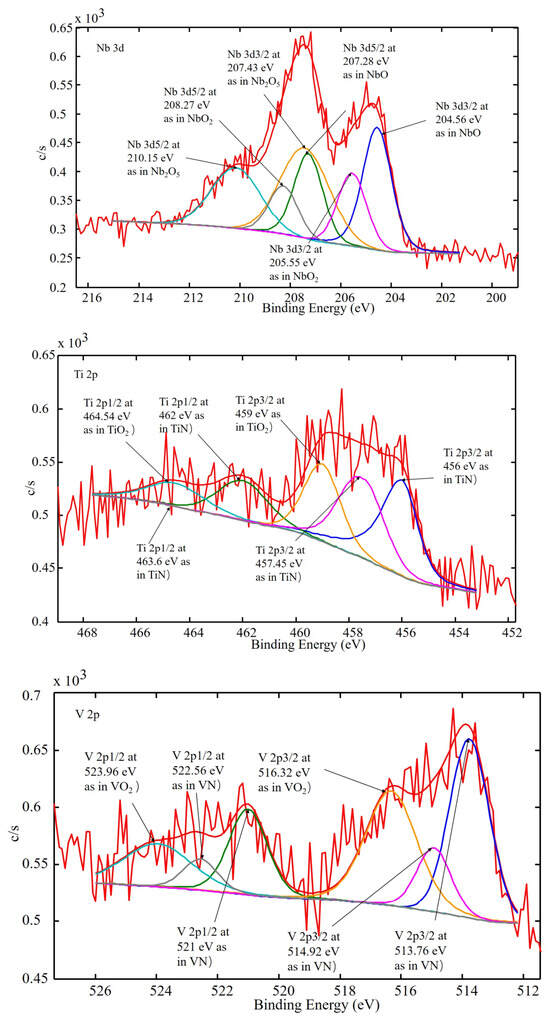
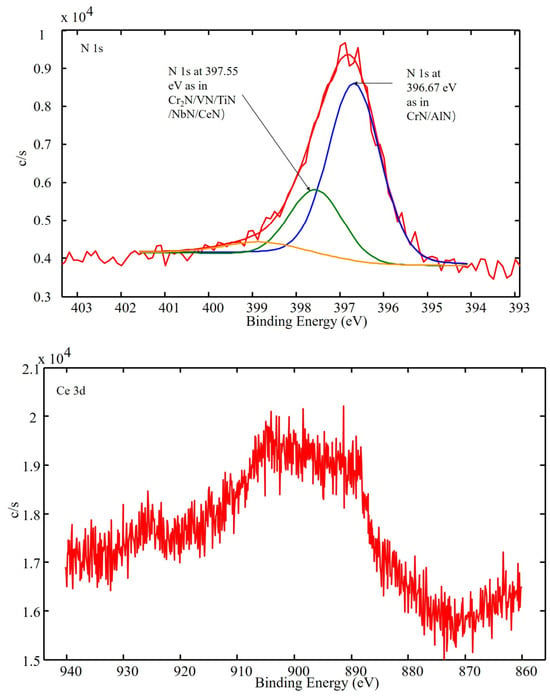
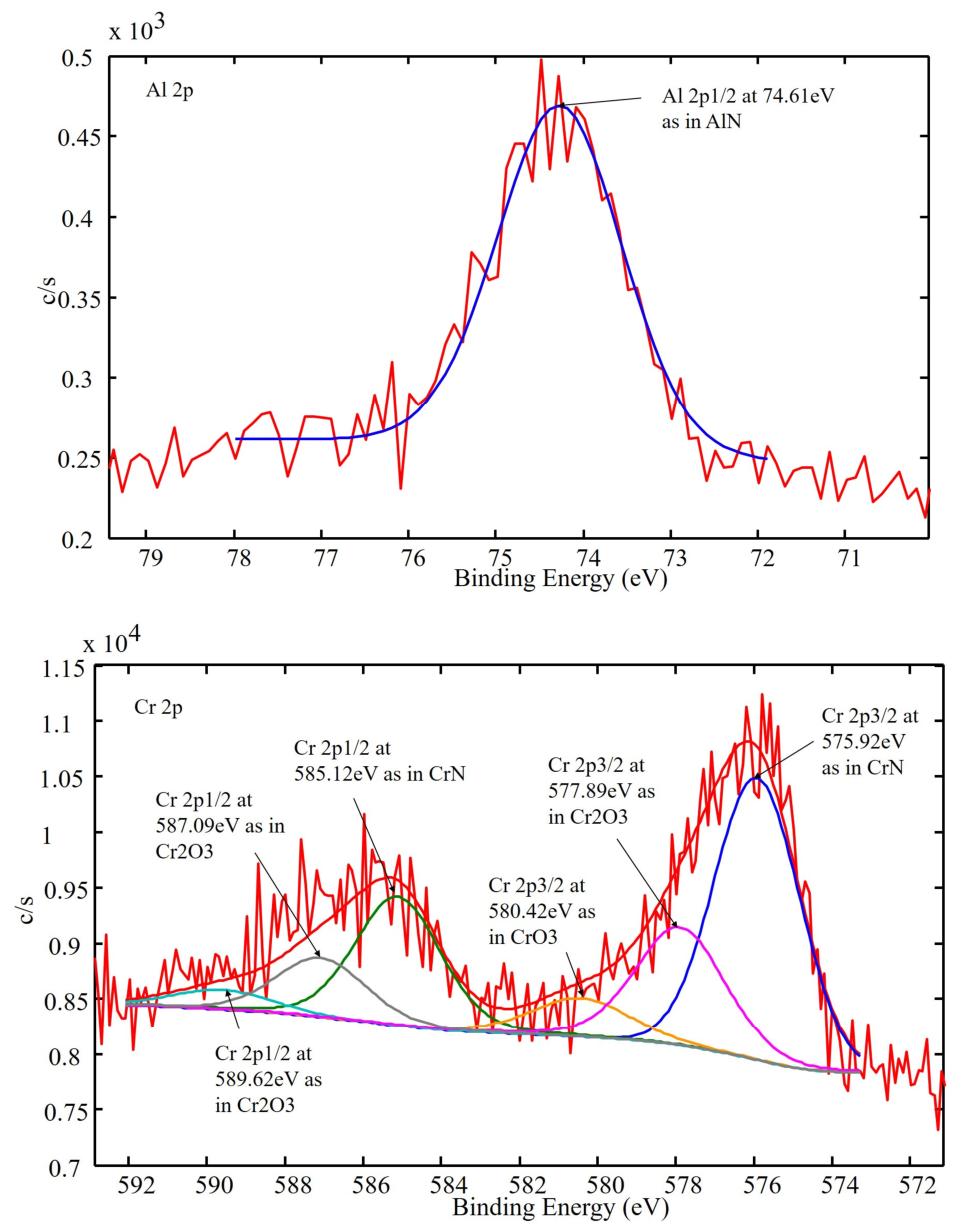
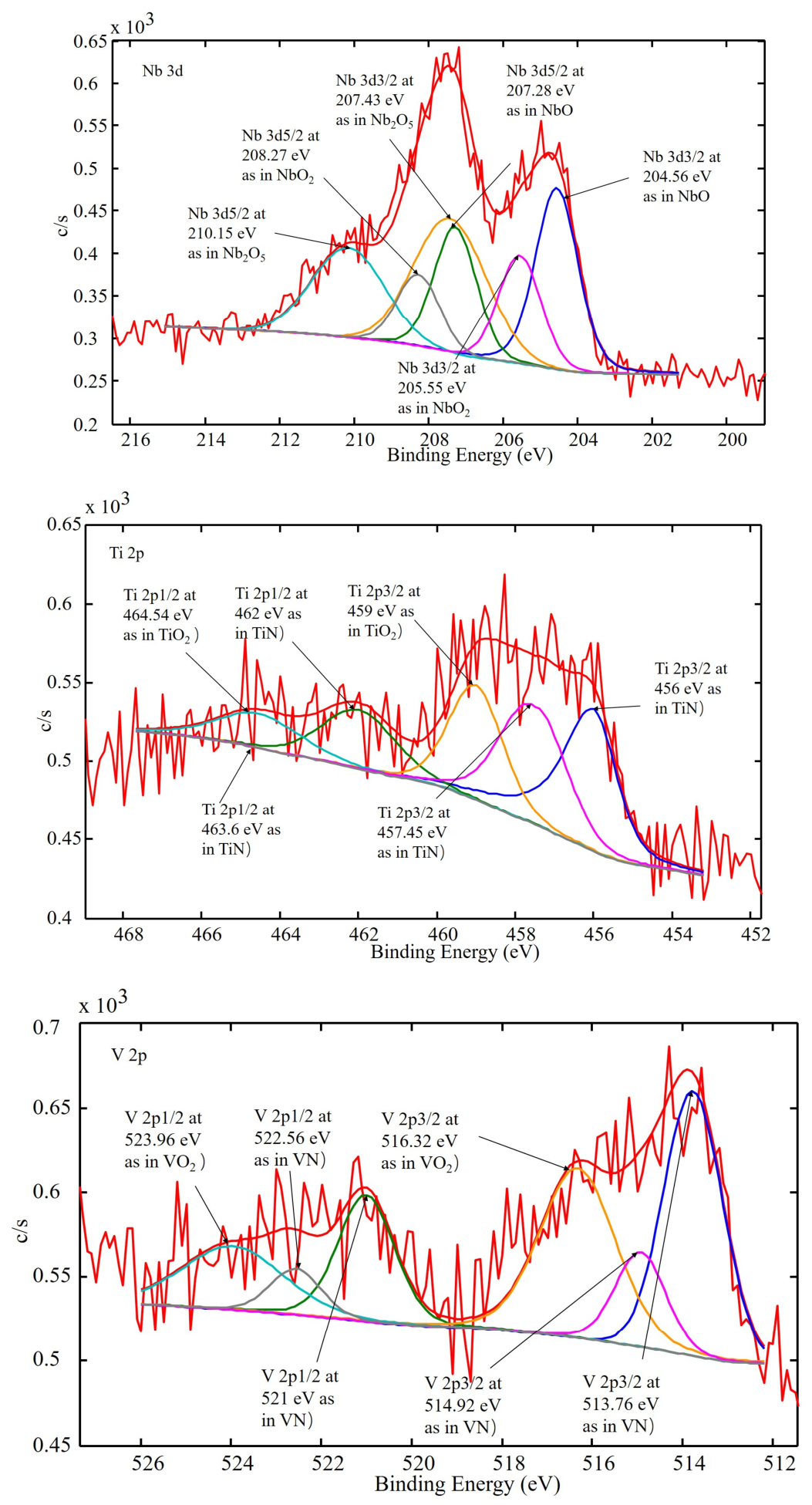
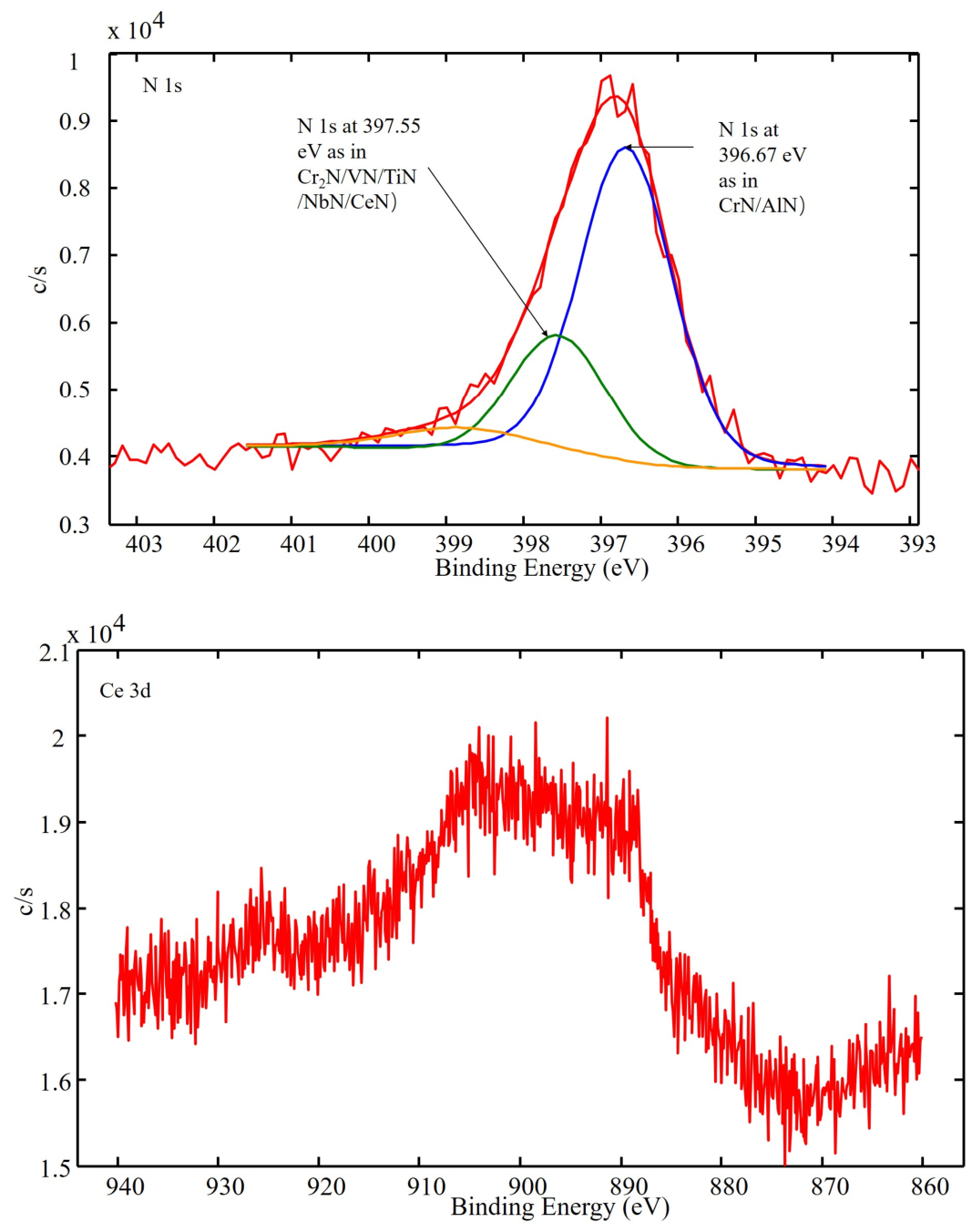
To investigate the bonding situations of the surface elements in the coatings, the chemical states of the (AlCrNbTiVCe)N coating were determined by XPS analysis. The fitting results of the spectra for Al 2p, Cr 2p, Nb 3d, Ti 2p, V 2p, N 1s, and Ce 3d are shown in Figure 3. Because the photoelectronic signal travels across a few nanometers from within the material to the surface, the desired signals of the elements of the coating are always influenced by carbon impurities. Hence, a gas cluster ion beam (GCIB) is commonly used to clean the surface without damaging the intrinsic chemical states. In this work, GCIB cleaning was performed, and the spectra of the desired elements were acquired before and after the cleaning. The intensity of the Ce element before cleaning is extremely weak; after cleaning, the intensity was greatly enhanced because of the removal of surface contaminants. The C1s at 284.8 eV of the contaminant was always used as a reference for calibration. All spectra were acquired from the cleaned surface, and both inner and outer calibration methods were utilized. The primary peak Ce 3d 5/2 at 882.4eV belonging to CeO2 was used for inner calibration for the peak positions after GCIB treatment; this result agrees with the result obtained by calibration with the outer surface contaminant, i.e., carbon at 284.8eV. Al appears on the coating surface in the form of AlN (74.61 eV) [25], as shown in Figure 3a, which presents the Al 2p XPS spectra. The Cr 2p spectrum as shown in Figure 3b indicates the composition of the metallic states of CrN/Cr2N/CrO2 (Cr 2p3/2 575.82 eV and Cr 2p1/2 585.02 eV), which are consistent with the previously reported data for CrN 2p3/2 at 575.8 eV CrO3 (Cr 2p3/2 at 580.42 eV, Cr 2p1/2 at 589.62 eV) and Cr2O3 (Cr 2p3/2 at 578.14 eV, Cr 2p1/2 at 587.34 eV) [14]. Figure 3c shows the spectral peak of Nb 3d and indicates that Nb is present in the form of NbO (Nb 3d 5/2 at 207.41eV, Nb 3d 3/2 at 204.69eV) and Nb2O5 (Nb 3d 5/2 at 210.15eV, Nb 3d 3/2 at 207.43eV); these results agree with the results of a previous study [17]. Figure 3d shows that the Ti element exists in the form of TiN (Ti 2p3/2 455.83V, Ti 2p1/2 461.83 eV) and TiO2 (Ti 2p3/2 459 eV, Ti 2p1/2 464.54 eV) [14]. From Figure 3e, we see that V exists in two chemical states: VN (V 2p3/2 514.06 eV, V 2p1/2 521.3 eV) and VO2 (V 2p3/2 516.24 eV, V 2p1/2 523.88 eV)). Figure 3f shows two peaks of N1s at 396.64 eV and 397.97 eV, which are assigned to MeN, based on the position of the TiN peak [25]. The observed deviation of the binding energy of most metal elements from the metallic state (as shown by the blue dashed line) to the metal–nitride state (as shown by the pink dashed line) can prove the formation of the ceramic coating. Ce 3d with four peaks in Figure 3g includes Ce3+ (886.62 eV and 904.72 eV) and CeO2 (Ce 3d5/2 882.41 eV and Ce 3d3/2 900.51 eV) corresponding to the typical peaks of Ce2O3 (885.0 eV) and CeO2 (905.0 eV), respectively [17]. This finding indicates that a certain quantity of CeO2 is present on the surface.
Figure 3.
XPS spectra of the main elements in the (AlCrNbTiVCe)N coatings, showing decreases and then increases with increasing Ce concentration.
3.3. Morphological Analysis of (AlCrNbTiVCe)N Coatings
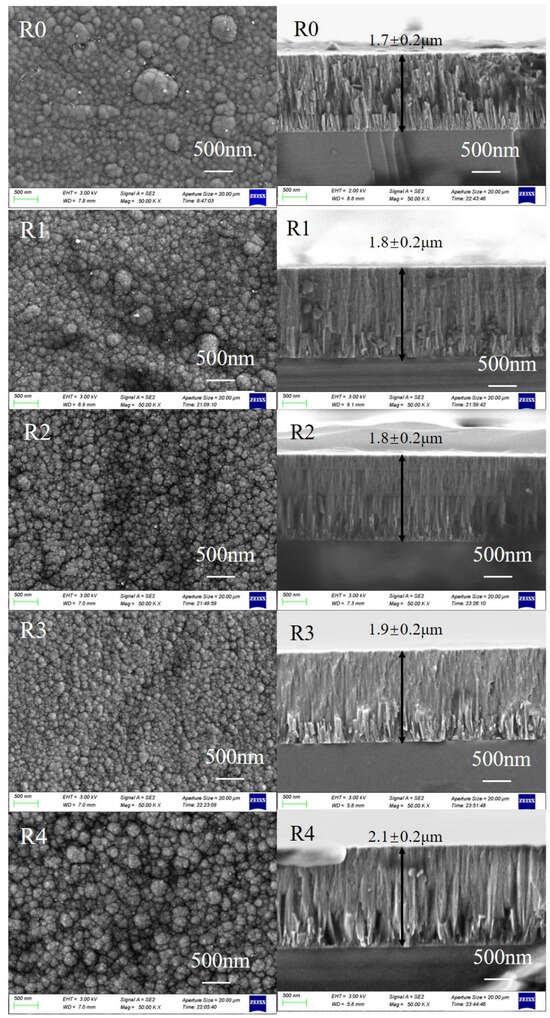
Figure 4 shows the plan view and cross-sectional morphologies of (AlCrNbTiVCe)N coatings with varying Ce concentrations. In Figure 4, the column structure is visible, and the crystals are dense. The R0 coating with free Ce shows an agglomeration particle size of about 170 nm, which affects the density and uniformity of the coating. The surface morphology of the R1 coating shows various cluster particles ranging in size from 80 to 150 nm. The column structure is broader in the cross-sectional morphology. The R2 coating has a dome-like surface with cluster grains of 70 to 120 nm. As the concentration of Ce in the R3 coating increased to 4.3 at%, the grain size of the top surface became finer and decreased to about 60 nm, and the column structure became dense and compressed. Furthermore, the surface grains of the R4 coating are large (90~110 nm) and the cross-section gradually becomes less dense. This result can be attributed to two factors. First, suitably raising the RF power can intensify ion bombardment and increase adatom mobility, preventing big columns from expanding and forcing atoms to move into the gaps between columns [11,26]. Second, Ce is a large atomic radius, which reduces the adatom mobility, promotes additional nucleation [16,17], and thereby supports coating densification and column refining. In contrast, increased Ce content leads to excessive ion bombardment, possibly accelerating the migration of small grains to grain boundaries [26]. Therefore, the formation of a columnar structure is as expected, as shown in Figure 4; the grain size decreases and then increases with an increasing Ce concentration.
Figure 4.
SEM images and cross-sectional morphologies of the (AlCrNbTiVCe)N coatings.
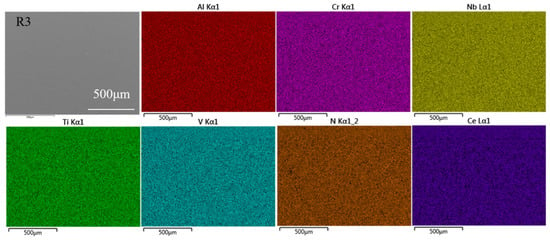
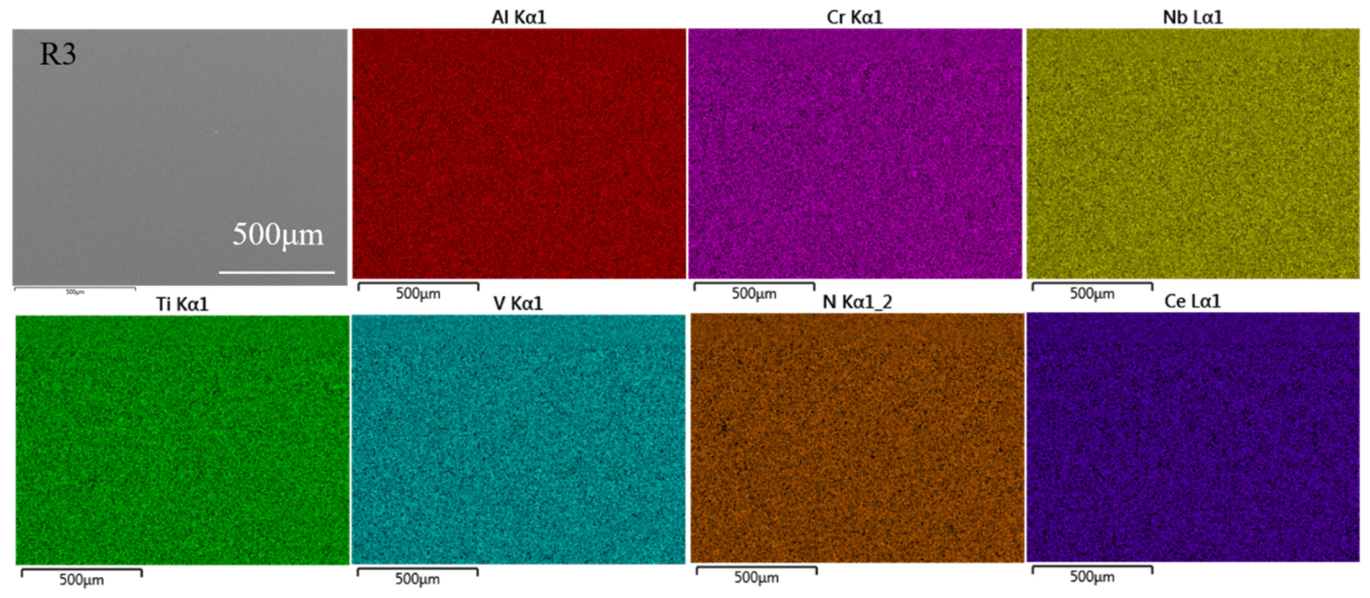
The elemental distribution maps of the coating with a Ce concentration of 4.3 at% are shown in Figure 5, suggesting that the elements are distributed uniformly across the surface.
Figure 5.
EDS mapping of the R3 coating.
3.4. Mechanical Properties of (AlCrNbTiVCe)N Coatings
The hardness (H), elastic modulus (E), and adhesive critical load (Lc) of the (AlCrNbTiVCe)N coatings are listed in Table 2. It is evident that both the hardness and elastic modulus show trends of an initial increase followed by slight decreases with Ce concentration. The hardness rises to 30.6 GPa when the Ce concentration increases to 4.3%. At a higher sputtering power, the sputtered particles readily acquire high kinetic energy, resulting in an increase in coating density [22] and, thus, increasing the hardness. As Ce has a larger atomic radius than other elements, introducing Ce causes lattice distortion and increases the hardness; hence, increasing the Ce content can increase the solid solution effect [16,17]. As illustrated in Figure 4, as the Ce content of the coatings increases, a dense columnar structure, which can limit dislocation movement, is generated. Moreover, according to the Hall–Petch equation, the smaller the grain size, the harder the film [12]. Therefore, the hardness increases and then decreases as the grain size of the film decreases with increasing Ce content. Table 2 also summarizes the Lc values of the coatings; the Lc improved with increasing Ce. The adhesive critical loads are mainly influenced by factors such as the hardness, residual stresses, and structure of the coating. Compressive stress can enhance resistance to crack and fracture formation, and greater hardness imparts greater resistance to plastic deformation [27]. A higher Lc results from the greater compressive stress and hardness of the coating deposited at 4.3%; hence, this coating is resistant to crack formation and plastic deformation. In addition, an increase in the Ce content makes the coatings denser, the hardness and elastic modulus of the coating increase, and the interface between the coating and substrate improves, thereby increasing the adhesive critical load.
Table 2.
Hardness (H), elastic modulus (E), and adhesive critical load (Lc) of the (AlCrNbTiVCe)N coatings at various Ce contents.
3.5. Tribological Properties of (AlCrNbTiVCe)N Coatings
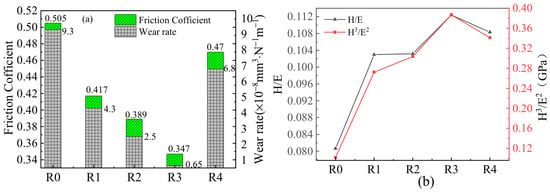
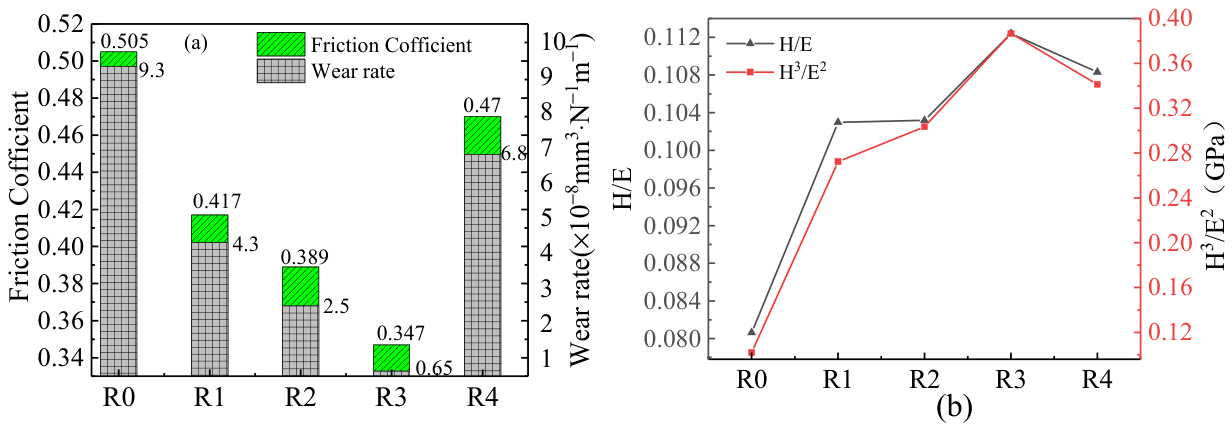
Figure 6 shows the friction coefficient, wear rate, and H/E and H3/E2 values of the coatings with various Ce concentrations. The coefficient of friction for (AlCrNbTiVCe)N coatings ranges between 0.347 and 0.505, decreasing gradually with increasing Ce concentration and then increasing. The friction coefficient of the Ce-free coating is close to 0.505, and it quickly drops to 0.417 upon adding a few Ce atoms (R1). Upon further increasing the Ce content, the friction coefficient value decreases to 0.389 at R2 and to 0.347 at R3 before increasing to 0.47 at R4. Consistent with the change in the friction coefficient, the increase in Ce content causes the wear rates to decrease and then increase. The coating with a Ce concentration of 4.3% has a reduced friction coefficient and wear rate compared to the other coatings. This can be attributed to the following factors: first, the atomic radius of Ce is larger than that of the other atoms; therefore, the fine grain strength increases with increasing Ce concentration [17]. Second, as the Ce concentration in the coatings becomes denser, the wear resistance is enhanced [16,18]. Third, the hardness increases with the Ce content, and in turn, it improves the wear resistance [17]. The tribological behaviors of the coatings can be evaluated using H/E and H3/E2. Figure 6b shows the calculated H/E and H3/E2 values. H/E denotes the resistance to elastic strain to failure. H3/E2 represents the contact yield pressure in the case of a rigid ball on a plastic plate contact. The H/E and H3/E2 values of the coating gradually increase and then decrease as the Ce concentration increases. The values of H/E and H3/E2 accurately indicate the tribological characteristics of the coatings, according to Leyland and Matthew [28]. The greater the H/E and H3/E2, the better the wear resistance [29]. When the Ce concentration is 4.3%, the maximum values of H/E and H3/E2 are 0.11 and 0.21 GPa, respectively. The wear rate of the coating with a Ce content of 4.3 at% has a minimum value of 6.5 × 10⁻⁷ mm3/N∙m.
Figure 6.
(a) Friction coefficient and wear rate, and (b) H/E and H3/E2 values of (AlCrNbTiVCe)N coatings.
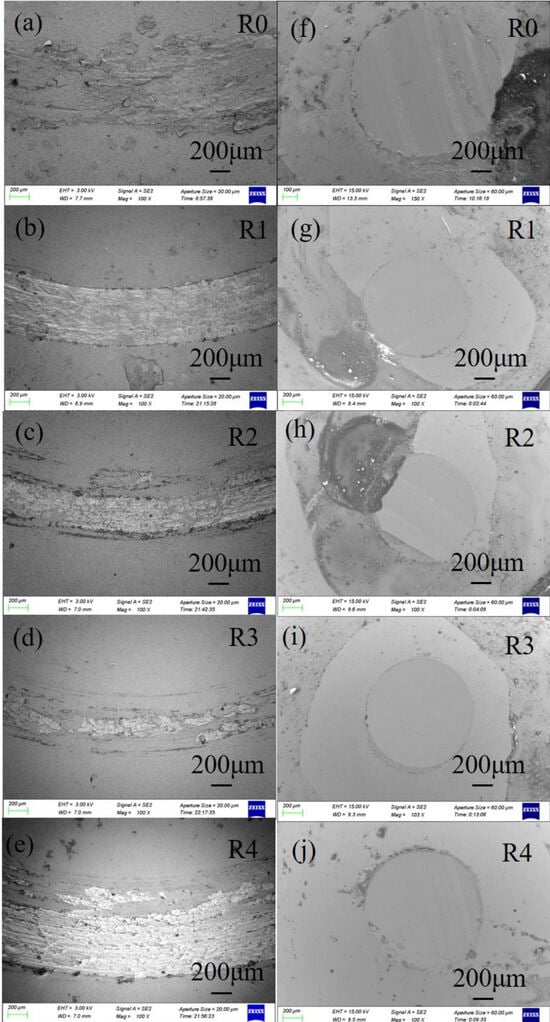
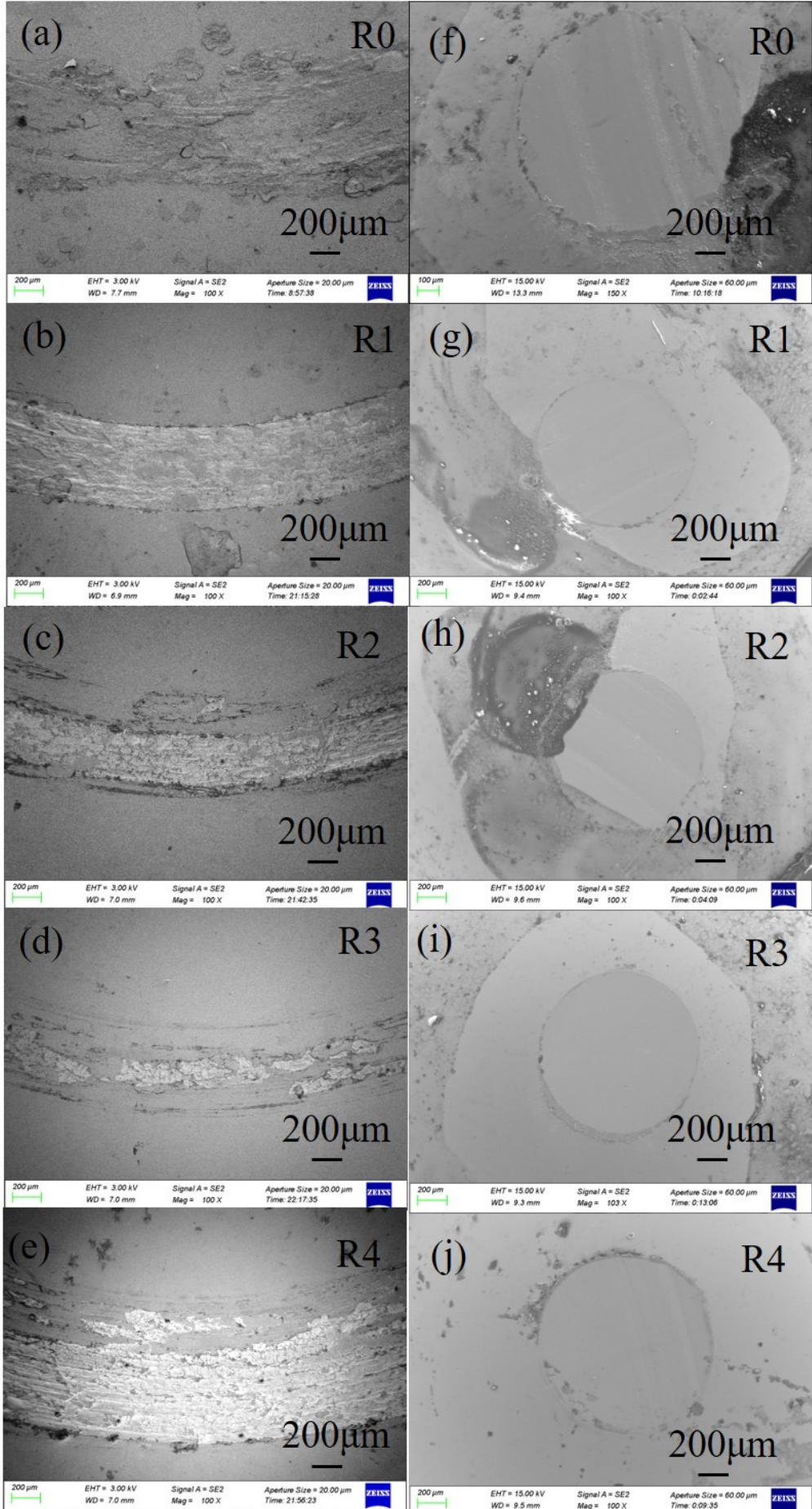
Figure 7 shows the SEM images of the wear track and the wear scar developed on the GCr15 steel balls. The wear properties of the coating gradually diminished with increasing Ce content, and the wear scar width gradually narrowed and then broadened. The R0 coating surface is the most deteriorated, and there is a considerable adhesion in the wear markings. This is attributed to the fact that the particles on the coating surface are large (Figure 4) and detach easily under the action of external stress, resulting in the generation of a large amount of wear debris during the friction process; the debris becomes attached to the friction surface, indicating that the wear mechanism of the coating is adhesive wearing. Under contact stress, the R1 coating is damaged by the contact surface. The wear track exhibits a particular adhesion phenomenon in the central region of the wear track because of the high contact stress and fewer surface particles. Therefore, adhesive wear may predominate in the wear mechanism. For a Ce concentration of 3.4%, the wear mark of R2 coating showed furrows and adhesion. Adhesive and abrasive wear are the wear mechanisms. The continuous participation of hard particles at the friction interface creates furrows in the wear mark. Furthermore, the wear mark surface of the R3 coating is mainly abrasive wear, with minor adhesion and peeling. The wear mark is the narrowest and deepest among all coatings, indicating a micro abrasive wear process. The appropriate friction pair surface is slightly damaged and scratched. The wear tracks of the R4 coating cause visible damage to the coatings. This phenomenon is due to the high durability of the coating. Under prolonged and consistent contact stress, the concave and convex peaks are detached from the coatings and crushed into fine abrasive contents. Under contact stress, abrasive wear in the sliding direction between the GCr15 ball and coatings generates furrows, demonstrating that abrasive wear is the principal wear mechanism. Among all the coatings, R3 has a substantially reduced wear breadth. Moreover, the coating has a compact structure with minor defects, which can help improve wear resistance [30].
Figure 7.
SEM images of wear track (a–e) and wear scar (f–j).
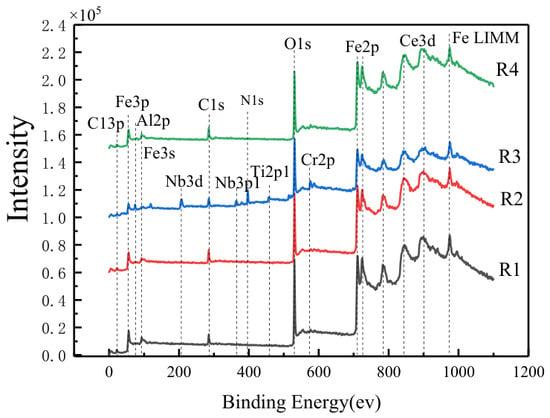
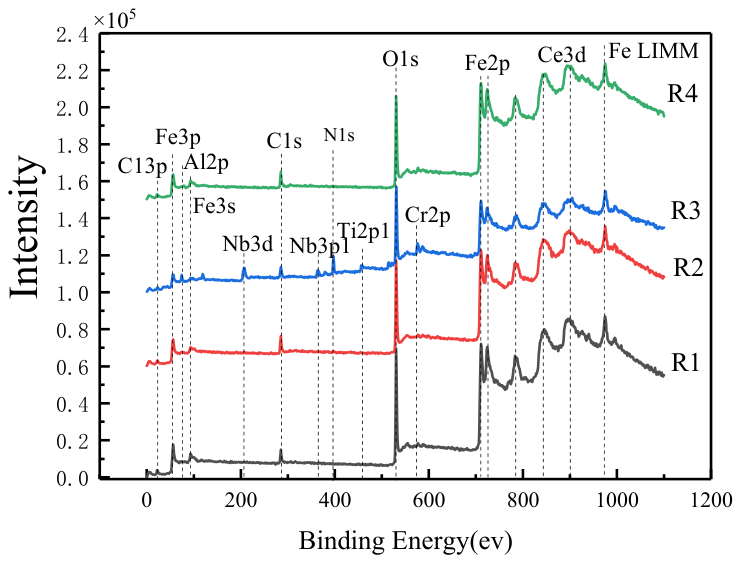
The wear marks of R1–R4 coatings were investigated by XPS to determine the effect of Ce on wear reduction and wear resistance in the coating, as shown in Figure 8. There are remarkable peaks at 710 eV in the full spectrum, indicating that a substantial number of base Fe atoms are exposed on the track. Besides the R3 coating, the peaks of the distinctive elements of other coatings are not visible, indicating that the bottom is exposed locally in the friction mark area. Although the R3 coating has not been damaged partially, it has reached proximity to the transition Cr layer. The Cr peak of the R3 coating at ~580 eV and other characteristic elements of the coating exhibit prominent peaks, indicating that they still exist at this wear mark; this result is consistent with the analysis of the above wear mark area. This result is also consistent with the XPS results for the wear tracks. It can be concluded that the R3 coating still plays a major supporting role in the friction movement process, which determines the antifriction effect and wear resistance.
Figure 8.
XPS survey scan of the wear track of (AlCrNbTiVCe)N coatings.
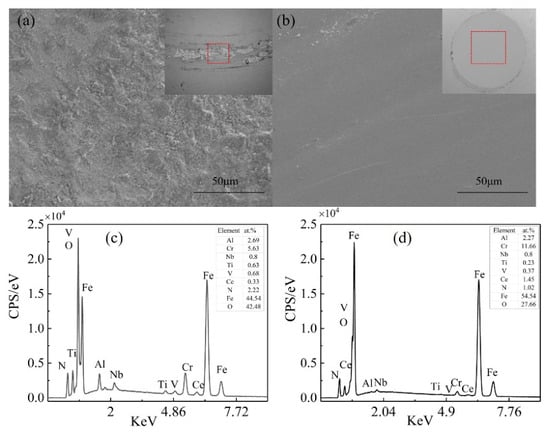
A detailed spectrum analysis was conducted for the R3 coating wear track to ascertain the type of Ce compound present in Figure 9. In addition to the remarkable decrease in Ce concentration, the other chemical contents of the residual coating at the wear mark were similar to those of the coating surface. This result can be explained as follows: first, the surface of the coating has a higher concentration of Ce. Second, as shown in Figure 10, Ce is easily transferred to the scar during the frictional process, resulting in a reduced Ce content along the wear track and a higher Ce content along the wear scar. In addition, Ce atoms in R3 exist only in the form of Ce3+ ions, indicating the presence of CeO2 oxides on the surface. It is observed that the insertion of a few Ce atoms can promote the oxidation of the surface. The mechanism by which Ce in the NbN coating leads to friction reduction and wear resistance is the formation of CeO2 on the wear surface, with CeO2 acting as a solid lubricant to reduce friction and impart wear resistance [17]. The CeO2 groups on the worn surface may directly act as a solid lubricant to minimize the friction coefficient [16,18]. This may reduce the force of interaction with the sliding counterpart. Therefore, the ceria groups produced by Ce atoms on the wear surface can help to reduce the friction coefficient and wear rate.
Figure 9.
XPS fine spectra of the main elements in the R3 coating wear track.
Figure 10.
SEM observations and EDS analyses of (a,c) the worn surface of the wear track and (b,d) the contact area of the GCr15 ball after the wear test for the R3 coating: the insets in (c,d) show the corresponding EDS spectra referring to the marks on the figures.
4. Conclusions
The effects of the Ce concentration on the phase, microstructure, mechanical, and tribological properties of (AlCrNbTiVCe)N coatings were examined in this work. Coatings under investigation may introduce a new preparative strategy for coating development, positioning them as potential candidates for various tribological applications. The major conclusions are as follows:
(1) (AlCrNbTiVCe) N coatings containing Ce were produced by magnetron sputtering. The coatings have an FCC structure and Ce concentration ranging from 0% to 6.5%. The grain size of the coatings first decreased then increased as the Ce concentration increased. The surfaces of all the coatings have a grain-like structure, and the columnar crystals become dense with a small amount of Ce (4.3%).
(2) At a Ce concentration of 4.3%, the hardness and elastic modulus reached 30.6 GPa and 272.2 GPa, respectively, while the H/E and H3/E2 reached maximum values of 0.11 and 0.21 GPa, respectively. This result indicates that the coating is resistant to elastic and plastic deformations.
(3) When Ce is added to the coatings, the coefficient friction and wear rate first decreased then increased. The layer of Ce atoms (4.3%) has a minimum friction coefficient of 0.347 and a wear rate of 6.5 × 10⁻⁷ mm3/N∙m.
Author Contributions
W.C.: Writing—Original Draft, Formal Analysis, Data Curation, Validation, Writing—Review and Editing. J.X.: Conceptualization, Formal Analysis, Data Curation, Visualization, Validation, Writing—Review and Editing. H.Z.: Formal Analysis, Data Curation, Validation, Writing—Review and Editing. Y.X.: Investigation, Validation, Writing—Review and Editing. F.X.: Resources, Validation, Writing—Review and Editing. All authors have read and agreed to the published version of the manuscript.
Funding
This work was supported by the National Key Research and Development Program (2021YFB3400401) and Doctoral Research Initiation Project of the Nanyang Institute of Technology (Grant No. NGBJ-2024-05).
Data Availability Statement
Data is contained within the article.
Acknowledgments
The authors acknowledge the financial support provided by the National Key Research and Development Program of China (Grant No. 2021YFB3400401) and the Doctoral Research Initiation Project of the Nanyang Institute of Technology (Grant No. NGBJ-2024-05).
Conflicts of Interest
This manuscript has not been published or presented elsewhere in part or in its entirety, and is not under consideration by another journal. All the authors have approved the manuscript and agree with its submission to your esteemed journal. There are no conflicts of interest to declare.
References
- Alipovna, M.A.; Karaulovich, K.A.; Vladimirovich, P.A.; Zhanuzakovich, A.Z.; Bolatovna, K.B.; Wieleba, W.; Leśniewski, T.; Bakhytuly, N. The study of the tribological properties under high contact pressure conditions of TiN, TiC and TiCN coatings deposited by the magnetron sputtering method on the AISI 304 stainless steel substrate. Mater. Sci.-Pol. 2023, 41, 1–14. [Google Scholar] [CrossRef] [Scilit]
- Zhuang, W.; Meng, S.; Xu, T.; Ma, Z.; Jiang, L.; Wang, T.; Cao, Z. Effect of Nb content on microstructure and tribological properties of AlCrMoNbxNi high-entropy alloy coatings. Surf. Coat. Technol. 2025, 513, 132477. [Google Scholar] [CrossRef] [Scilit]
- Das, S.; Guha, S.; Ghadai, R.; Swain, B.P. A comparative analysis over different properties of TiN, TiAlN and TiAlSiN thin film coatings grown in nitrogen gas atmosphere. Mater. Chem. Phys. 2021, 258, 123866. [Google Scholar] [CrossRef] [Scilit]
- Liu, L.; Shao, L.; Li, W.; Shang, L.; Zhang, C.; Song, Q. Improving the tribological behavior of CrN film by PVD/HVOF design. Surf. Coat. Technol. 2023, 475, 130171. [Google Scholar] [CrossRef] [Scilit]
- Chen, T.K.; Shun, T.T.; Yeh, J.W.; Wong, M.S. Nanostructured nitride films of multi-element high-entropy alloys by reactive DC sputtering. Surf. Coat. Technol. 2004, 188, 193–200. [Google Scholar] [CrossRef] [Scilit]
- Cantor, B.; Chang, I.T.H.; Knight, P.; Vincent, A.J.B. Microstructural development in equiatomic multicomponent alloys. Mater. Sci. Eng. A 2004, 375, 213–218. [Google Scholar] [CrossRef] [Scilit]
- Kumar, S. Comprehensive review on high entropy alloy-based coating. Surf. Coat. Technol. 2024, 477, 130327. [Google Scholar] [CrossRef] [Scilit]
- Lu, J.; Zhang, H.; Chen, Y.; Li, L.; Liu, X.; Xiao, W.; Ni, N.; Zhao, X.; Guo, F.; Xiao, P. Y-doped AlCoCrFeNi2.1 eutectic high-entropy alloy with excellent oxidation resistance and structure stability at 1000 °C and 1100 °C. Corros. Sci. 2021, 180, 109191. [Google Scholar] [CrossRef] [Scilit]
- Sharma, P.; Dwivedi, V.K.; Dwivedi, S.P. Development of high entropy alloys: A review. Mater. Today Proc. 2021, 43, 502–509. [Google Scholar] [CrossRef] [Scilit]
- Agbogo, V.U.; Sadiku, E.R.; Mavhungu, L.; Kupolati, W.K.; Injor, O.M. Nanotechnology coatings in the defense and aerospace industry. Next Nanotechnol. 2025, 7, 100197. [Google Scholar] [CrossRef] [Scilit]
- Cui, P.; Li, W.; Liu, P.; Zhang, K.; Ma, F.; Chen, X.; Feng, R.; Liaw, P.K. Corrigendum to “Effects of nitrogen content on microstructures and mechanical properties of (AlCrTiZrHf) N high-entropy alloy nitride films”. J. Alloys Compd. 2020, 834, 155361. [Google Scholar] [CrossRef] [Scilit]
- Xu, Y.; Li, G.; Li, G.; Gao, F.; Xia, Y. Effect of bias voltage on the growth of super-hard (AlCrTiVZr) N high-entropy alloy nitride films synthesized by high power impulse magnetron sputtering. Appl. Surf. Sci. 2021, 564, 150417. [Google Scholar] [CrossRef] [Scilit]
- Lo, W.L.; Hsu, S.Y.; Lin, Y.C.; Tsai, S.Y.; Lai, Y.T.; Duh, J.G. Improvement of high entropy alloy nitride coatings (AlCrNbSiTiMo) N on mechanical and high temperature tribological properties by tuning substrate bias. Surf. Coat. Technol. 2020, 401, 126247. [Google Scholar] [CrossRef] [Scilit]
- Qiu, H.; Peng, S.; Zou, Y.; Cui, X.; Zhao, Y.; Wang, X.; Sun, D. Effect of nitrogen content on mechanical properties and microstructure of (TiZrNbCrSi) Nx high-entropy nitride coating. J. Alloys Compd. 2025, 1022, 179822. [Google Scholar] [CrossRef] [Scilit]
- Aninat, R.; Valle, N.; Chemin, J.B.; Duday, D.; Michotte, C.; Penoy, M.; Bourgeois, L.; Choquet, P. Addition of Ta and Y in a hard Ti-Al-N PVD coating: Individual and conjugated effect on the oxidation and wear properties. Corros. Sci. 2019, 156, 171–180. [Google Scholar] [CrossRef] [Scilit]
- Shu, D.; Cui, X.; Li, Z.; Sun, J.; Wang, J.; Chen, X.; Dai, S.; Si, W. Effect of the rare earth oxide CeO2 on the microstructure and properties of the nano-WC-reinforced Ni-based composite coating. Metals 2020, 10, 383. [Google Scholar] [CrossRef] [Scilit]
- Hao, J.; Zhang, K.; Ren, P.; Chen, J.; Wang, M.; Zhang, Y.; Wen, M. Tuning the wettability, mechanical and tribological properties of NbN films by doping rare earth cerium. J. Alloys Compd. 2020, 814, 152339. [Google Scholar] [CrossRef] [Scilit]
- Ding, L.; Hu, S. Effect of nano-CeO2 on microstructure and wear resistance of Co-based coatings. Surf. Coat. Technol. 2015, 276, 565–572. [Google Scholar] [CrossRef] [Scilit]
- Oveisi, H.; Jiang, X.; Nemoto, Y.; Beitollahi, A.; Yamauchi, Y. Cerium-doped mesoporous TiO2 thin films: Controlled crystallization of anatase with retention of highly ordered mesostructure. Microporous Mesoporous Mater. 2011, 139, 38–44. [Google Scholar] [CrossRef] [Scilit]
- Athmani, M.; Kong, F.; Ju, H.; Luan, J.; Zhang, C.; Ma, B.; Cavaleiro, A.; Fernandes, F. RF magnetron sputtered Nb–V–N composite coatings for high-temperature self-lubricant applications. Vacuum 2024, 219, 112657. [Google Scholar] [CrossRef] [Scilit]
- Zhang, S.; Jiang, D.; Sun, S.; Zhang, B. Microstructure and tribological properties of FeCrCoMnSix high-entropy alloy coatings. Coatings 2024, 14, 1476. [Google Scholar] [CrossRef] [Scilit]
- Zoita, N.C.; Dinu, M.; Parau, A.C.; Pana, I.; Kiss, A.E. Mechanical, tribological, and corrosion resistance properties of (TiAlxCrNbY) Ny high-entropy coatings synthesized through hybrid reactive magnetron sputtering. Crystals 2024, 14, 993. [Google Scholar] [CrossRef] [Scilit]
- Cai, H.; Xue, Y.; Pang, B.; Wang, J.; Ye, J. Effect of rare earth La on friction and wear resistance of WS2-based composite coating at high temperature. J. Mater. Sci. 2022, 57, 16875–16891. [Google Scholar] [CrossRef] [Scilit]
- Chang, W.; Zhang, H.; Tian, C.; Xue, Y.; Liu, G. Influence of La/Al doping via magnetron sputtering on the mechanical and tribological properties of TiN coatings. Coatings 2025, 15, 284. [Google Scholar] [CrossRef] [Scilit]
- Zheng, J.; Zhao, Y.; Li, J.; Zhang, S.; Zhang, J.; Sun, D. Study on microstructure and tribological mechanism of Mo incorporated (AlCrTiZr) N high-entropy ceramics coatings prepared by magnetron sputtering. Nanomaterials 2024, 14, 814. [Google Scholar] [CrossRef] [Scilit] [PubMed]
- Feng, X.; Zheng, Y.; Wang, K.; Hu, H.; Zhang, K.; Zhou, H. High-temperature wear and oxidation behavior of (CrNbTaMoVW) N high entropy films deposited by reactive magnetron sputtering. Surf. Coat. Technol. 2023, 470, 129790. [Google Scholar] [CrossRef] [Scilit]
- Lu, X.; Mu, C.; Lu, Y.; Liu, J.; Hao, J.; Liu, W. Comparative analysis of structural, mechanical and tribological properties of high-entropy nitrides and carbonitrides coatings over a wide temperature range. J. Alloys Compd. 2025, 1027, 180591. [Google Scholar] [CrossRef] [Scilit]
- Leyland, A.; Matthews, A. On the significance of the H/E ratio in wear control: A nanocomposite coating approach to optimised tribological behaviour. Wear 2000, 246, 1–11. [Google Scholar] [CrossRef] [Scilit]
- Belyak, O.A.; Suvorova, T.V.; Manturov, D.S. Study of tribological and mechanical characteristics of wear-resistant coatings taking into account their elastoplastic properties. J. Frict. Wear 2024, 45, 280–286. [Google Scholar] [CrossRef] [Scilit]
- Jiang, Y.; Yuan, L.; Zhao, C.; Shi, Z.; Zhao, W.; Wang, F. Effects of N element on the micro-structures and properties of (TiAlMoNbW) N high entropy nitride film. Intermetallics 2023, 162, 108032. [Google Scholar] [CrossRef] [Scilit]

Disclaimer/Publisher’s Note: The statements, opinions and data contained in all publications are solely those of the individual author(s) and contributor(s) and not of MDPI and/or the editor(s). MDPI and/or the editor(s) disclaim responsibility for any injury to people or property resulting from any ideas, methods, instructions or products referred to in the content. |
© 2026 by the authors. Licensee MDPI, Basel, Switzerland. This article is an open access article distributed under the terms and conditions of the Creative Commons Attribution (CC BY) license.