


Abstract
The dry-sliding friction and wear of AA6061 composites reinforced with micrometer-sized TiB2 and nanoscale SiC were investigated. The composites were produced by powder metallurgy, followed by hot extrusion, hot rolling, and T6 heat treatment. The first series contained 0, 2.5, 5, 10, or 15 wt.% TiB2. In the hybrid series, the TiB2 content was fixed at 10 wt.% and the nano-SiC content ranged from 0.25 to 2 wt.%. Microstructure, relative density, Brinell hardness, and transverse rupture strength were evaluated. Dry-sliding wear tests were conducted under normal loads of 5 and 15 N. At 5 N and a sliding distance of 300 m, the composite containing 10 wt.% TiB2 and 2 wt.% nano-SiC (S9) exhibited the lowest mean cumulative mass loss among the hybrid composites (0.0037 g), approximately 68% lower than that of unreinforced AA6061 under the same conditions. S9 also had the lowest reported coefficient-of-friction values (0.235–0.295). Scanning electron microscopy of the worn surfaces revealed grooves and localized smearing consistent with abrasive wear and a possible adhesive contribution. Crack-like features were also observed on the worn surface of S9.
1. Introduction
Aluminum matrix composites are of interest in applications where low density must be combined with adequate mechanical strength and resistance to friction and wear. Under dry-sliding conditions, however, tribological performance is governed by more than hardness alone. Applied load, sliding speed, temperature, reinforcement characteristics, and the evolving condition of the contact surface can all influence friction and material loss. Studies of aluminum alloys and particle-reinforced composites have documented transitions between mild and severe wear regimes under different contact conditions [1,2]. In powder-metallurgy AA7068 composites reinforced with TiB2 and TiC, mechanically mixed layers and oxide-rich tribolayers were observed on worn surfaces, and tribolayer stability was identified as a factor influencing wear resistance [3].
In dry reciprocating ball-on-plate tests, the cast iron used for compressor-cylinder inserts exhibited a higher mean coefficient of friction than the AlSi10Mg cylinder alloy at the lowest tested sliding speed and lower values at higher speeds under the same normal load [4]. This change in the relative friction response illustrates the importance of sliding speed when comparing materials for dry-sliding contacts. AA6061 is frequently used as a matrix for ceramic-particle-reinforced composites. TiB2-reinforced AA6061 produced by stir casting has been investigated for its mechanical and tribological properties [5]. More recently, dry-sliding tests have been reported for AA6061-based TiB2 hybrid composites containing a secondary reinforcement, demonstrating the continuing interest in hybrid reinforcement strategies for this alloy [6,7]. In powder-metallurgy AA6061 composites containing 10 wt.% TiB2, Çakıroğlu et al. found that the addition of 1 wt.% graphene nanoplatelets yielded the lowest wear volume loss and coefficient of friction among the tested compositions [8]. A particularly relevant earlier study examined stir-cast Al6061–5 wt.% SiC–xTiB2 composites and assessed their friction and wear under different sliding conditions [6]. Thus, the combination of SiC and TiB2 in an AA6061 matrix has precedent in the literature. The contribution of the present work is therefore considered in relation to the reinforcement size scales and processing route, rather than as the first use of these two reinforcement phases together.
The use of nanoscale SiC in AA6061 has also been explored. Lagisetti et al. studied nano-SiC-reinforced AA6061 and SiC–graphite hybrid nanocomposites under dry-sliding conditions [9]. In a related study published in Lubricants, Tan and Liew investigated a graphene–SiC hybrid surface composite produced by friction stir processing, reporting changes in friction and wear with reinforcement fraction [10]. Their work concerns AA5083 and surface reinforcement, so it provides evidence for the broader tribological potential of SiC-based hybrid reinforcement rather than a direct comparison with the present bulk AA6061 composites. A recent review in Lubricants likewise summarizes the effects of reinforcement type, content, and processing on the mechanical and tribological behavior of aluminum-based composites, with particular attention to stir-cast materials [11]. Taken together, these studies support investigating hybrid reinforcement while also showing why results must be interpreted in the context of the matrix alloy, particle scale, fabrication method, and test conditions.
Powder metallurgy provides a solid-state route for producing aluminum matrix composites, but their properties remain sensitive to powder characteristics and processing conditions. For example, research on powder-metallurgy Al–Al2O3 composites showed that sintering parameters, reinforcement content, and particle size affected microstructure, density, hardness, and wear resistance [12]. In powder-metallurgy SiC-reinforced aluminum composites, Cao et al. showed that sintering temperature and holding time affected densification, and that subsequent hot pressing further increased relative density [13]. More directly, a recent study examined powder-metallurgy AA6061 composites containing SiC alongside other ceramic reinforcements, providing a relevant comparison for the processing route and matrix alloy used here [14]. However, the reinforcement system and processing conditions in that study differ from those investigated in the present work. Karakoç et al. used powder metallurgy followed by hot extrusion and T6 heat treatment to produce AA6061/SiC/B4C hybrid composites. Among the compositions tested, the composite containing 9 wt.% B4C and 3 wt.% SiC exhibited the highest wear resistance [15].
Accordingly, this study evaluates the dry-sliding friction and wear behavior of powder-metallurgy AA6061 composites reinforced with micrometre-scale TiB2 and nanoscale SiC. The experimental program first examines a range of TiB2 contents and then evaluates nano-SiC additions in an AA6061 matrix containing 10 wt.% TiB2. The composites are hot-extruded and T6-treated before testing under applied loads of 5 and 15 N. This design enables the effects of reinforcement content and the combined micro–nano configuration to be assessed within the selected processing route. The study focuses on how nano-SiC addition changes the tribological response of the TiB2-containing AA6061 composites, with interpretation based on the measured friction and wear results.
2. Materials and Methods
2.1. Materials and Experimental Design
Gas-atomized AA6061 aluminum alloy powder was used as the matrix material. Micrometre-sized TiB2 and nanosized SiC powders were used as the reinforcement phases. All powders were supplied by Nanografi Nano Teknoloji A.Ş. (Ankara, Türkiye). According to the powder specifications used in this study, the AA6061 powder had a spherical morphology and a particle-size range of 15–53 μm. The TiB2 powder had an irregular, angular morphology and a particle-size range of 2.5–13 μm, whereas the SiC powder had a cubic morphology and a particle-size range of 50–70 nm. The purities of the TiB2 and SiC powders were ≥98.5% and ≥99.5%, respectively.
The experimental program consisted of two stages. In the first stage, AA6061/TiB2 composites containing 0, 2.5, 5, 10, and 15 wt.% TiB2 were produced. The unreinforced AA6061 specimen served as the reference material. In the second stage, the TiB2 content was fixed at 10 wt.%, and nano-SiC was added at 0, 0.25, 0.5, 1, and 2 wt.%. The 10 wt.% TiB2 baseline was selected based on transverse rupture strength (TRS) and extrusion behavior. At this reinforcement level, S4 achieved a TRS of 610 MPa, compared with 440 MPa for unreinforced AA6061. Increasing the TiB2 content from 10 to 15 wt.% made the compacts more difficult to extrude and produced a visibly rougher extrudate surface under the same processing conditions. The 10 wt.% TiB2 composition was therefore used as the common baseline for evaluating the effect of nano-SiC addition. A composition containing 4 wt.% nano-SiC was also attempted but was excluded from the study because agglomeration and compaction difficulties prevented successful specimen production. The powder masses were measured using a Precisa (Zurich, Switzerland) electronic balance with a resolution of 0.1 mg.
2.2. Powder Mixing and Composite Fabrication
For the AA6061/TiB2 series, the weighed powders were transferred to sealed plastic containers and mixed for 30 min using a Turbola T2-F three-dimensional mixer (Basel, Switzerland). The powder blends were then uniaxially cold-compacted at 200 MPa in a cylindrical steel die. The resulting compacts were approximately 60 mm long and 30 mm in diameter. The purpose of presintering was to promote interparticle bonding and improve compact integrity before hot extrusion. Presintering was performed at 590 °C to promote interparticle bonding and improve compact integrity before hot extrusion. The selected temperature lies within the 580–640 °C range previously investigated for AA6061 powder compacts [16]. Presintering was conducted in air because the laboratory furnace was not equipped with a controlled-atmosphere system. The temperature and atmosphere were held constant across all compositions to allow comparisons under a common processing route. The compacts were presintered in air at 590 °C for 1 h in a Nevola laboratory electric furnace (Ankara, Türkiye) with a maximum operating temperature of 1200 °C.
Before hot extrusion, the compacts and extrusion die were heated to 590 °C. The extrusion tooling was manufactured from H13 hot-work tool steel, also identified in the experimental records as AISI 2344. The billets were extruded to a final diameter of 12 mm. Based on the initial and final circular cross-sections, the extrusion ratio was approximately 6.25:1.
For the hybrid composites, nano-SiC was dispersed in 99% ethanol using a BANDELIN Sonorex RK 52H (Berlin, Germany) ultrasonic bath operating at 40 kHz for 30 min. The resulting suspension was added to the previously prepared AA6061–TiB2 powder mixture. The mixture was dried at 60 °C until the ethanol had evaporated and then mixed for a further 30 min using the Turbola T2-F mixer (Basel, Switzerland). The hybrid powder blends were compacted at 200 MPa and sintered in air at 590 °C for 1 h. Before extrusion, the compacts and die were preheated at 590 °C for 1 h and extruded to a final diameter of 12 mm.
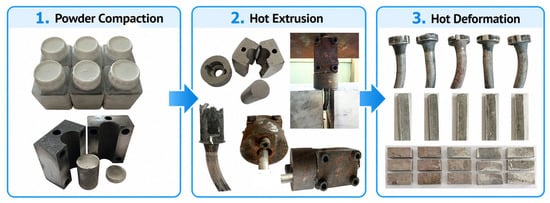
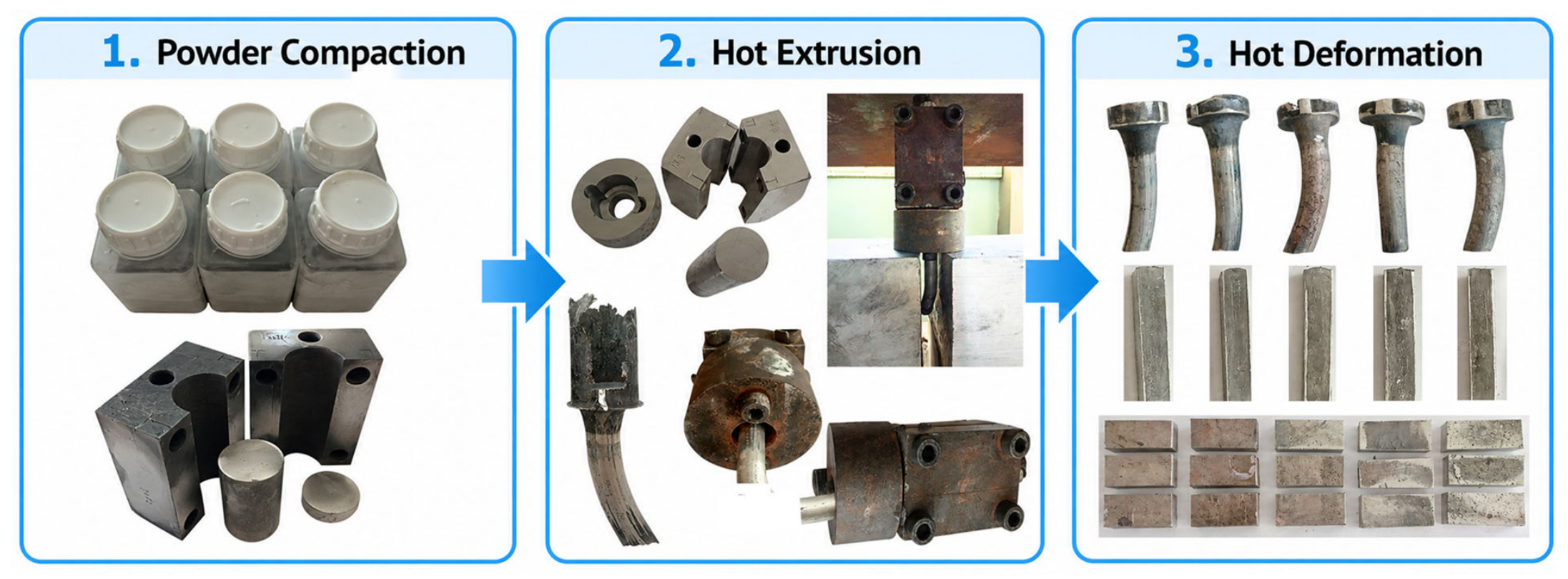
After extrusion, the composite rods were reheated at 500 °C for 1 h and subjected to a three-stage hot-deformation procedure. Between stages, the specimens were reheated at 500 °C for 30 min. The final specimen thickness was approximately 7 mm (Figure 1).
Figure 1.
Schematic overview of the fabrication route for the AA6061–TiB2–SiC composites, showing powder compaction, hot extrusion, and subsequent hot deformation.
2.3. Heat Treatment, Characterization, and Tribological Testing
Following hot extrusion and deformation, the specimens were solution-treated at 530 °C for 1 h using a heating rate of 10 °C min−1. Immediately after solution treatment, they were quenched in water at room temperature. Artificial ageing was subsequently performed at 175 °C for 8 h, with a heating rate of 10 °C min−1. The density of each specimen was determined using the Archimedes method. Specimen masses were measured in air and while immersed in distilled water using a Sartorius analytical balance (Göttingen, Germany) with a resolution of 0.1 mg. For microstructural examination, specimens were sectioned by wire electrical-discharge machining. The surfaces were ground using 400, 600, 800, 1000, and 1200 grit papers and then polished with 3 and 1 μm diamond suspensions. The polished surfaces were etched for approximately 15 s using the aqueous HF solution described in the experimental records. Microstructural features were examined using a Leica DM4000M optical microscope (Wetzlar, Germany) and a JEOL JSM-6060LV scanning electron microscope (Tokyo, Germany). Elemental analysis was performed using energy-dispersive X-ray spectroscopy. Brinell hardness measurements were performed using an EMCO TEST Duravision 200 tester (Kuchl, Austria) with ASTM E10 as a procedural reference [17]. A 2.5 mm diameter steel-ball indenter and a test force of 31.25 kgf were used. Multiple measurements were taken at locations spaced 3 mm apart, and the arithmetic mean was reported for each specimen.
Transverse rupture testing was conducted in accordance with MPIF Standard 15 using an Instron 3369 universal testing machine (Norwood, UK) with a 50 kN load capacity. Three specimens were tested for each TiB2 composition at room temperature and a crosshead speed of 1 mm min−1. The specimens were supported at both ends, and the load was applied at the center using a dedicated fixture. Three independent tests were performed for each composition to determine hardness and transverse rupture strength (TRS). Dry-sliding wear tests were repeated three times for each composition at each normal load (5 and 15 N). The arithmetic mean and sample standard deviation were calculated from the three independent results for each condition. Hardness, TRS, and mass-loss results are reported as mean ± standard deviation (n = 3). Dry-sliding wear tests were performed at room temperature using a TURKYUS PODWT pin-on-disc tribometer (Trabzon, Türkiye) with ASTM G99 as the procedural reference [18]. The tests were conducted at a sliding speed of 3 m s−1 under normal loads of 5 and 15 N, up to a sliding distance of 300 m. The AISI 1020 low-carbon steel disc supported a sheet of 600-mesh SiC abrasive paper, which served as the counterface and was replaced after each test. Three independent tests were performed for each composition and normal load, using a separate specimen for each test.
Following hot extrusion and subsequent rolling, cylindrical wear specimens (10 mm in diameter and 7 mm in height) were taken from the rolled material along the rolling direction. Before testing, the flat contact face of each specimen was ground sequentially with 800- and 1000-mesh SiC abrasive papers and polished with a 6 µm diamond suspension. During testing, the specimen was held stationary against the rotating disc, with the normal load applied along the specimen axis. Based on the apparent contact area of the 10 mm diameter flat end face, the nominal contact pressures were 0.064 MPa at 5 N and 0.191 MPa at 15 N.
The tangential friction force was recorded continuously by the tribometer load cell. The instantaneous coefficient of friction, (mu), was calculated using Equation (1):
Here, (Ft) is the measured tangential friction force and (FN) is the applied normal force, both expressed in newtons.
The specimens were weighed before and after testing using a Radwag AS/220/C/2 analytical balance (Mazowieckie, Poland) with a readability of 0.0001 g. Loose wear debris was removed with air before post-test weighing. The cumulative mass loss, at a given sliding distance was calculated using Equation (2):
Here, (m0) is the initial specimen mass and (ms) is the specimen mass at the specified sliding distance. Both masses are expressed in grams.
3. Results
3.1. Characterization of the Starting Powders
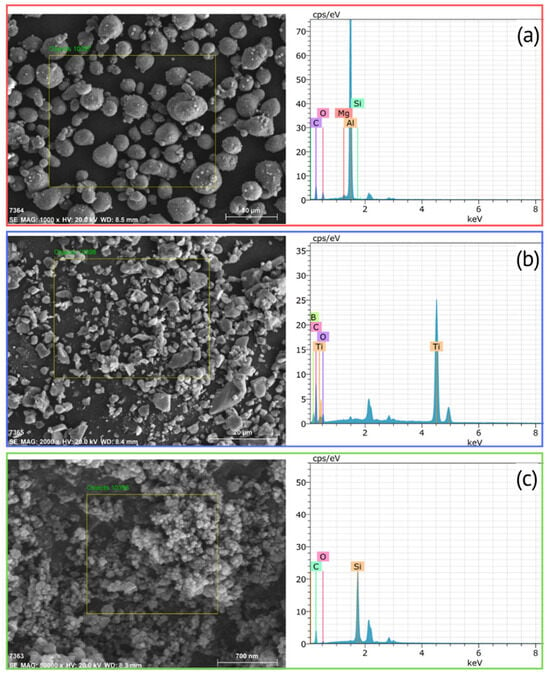
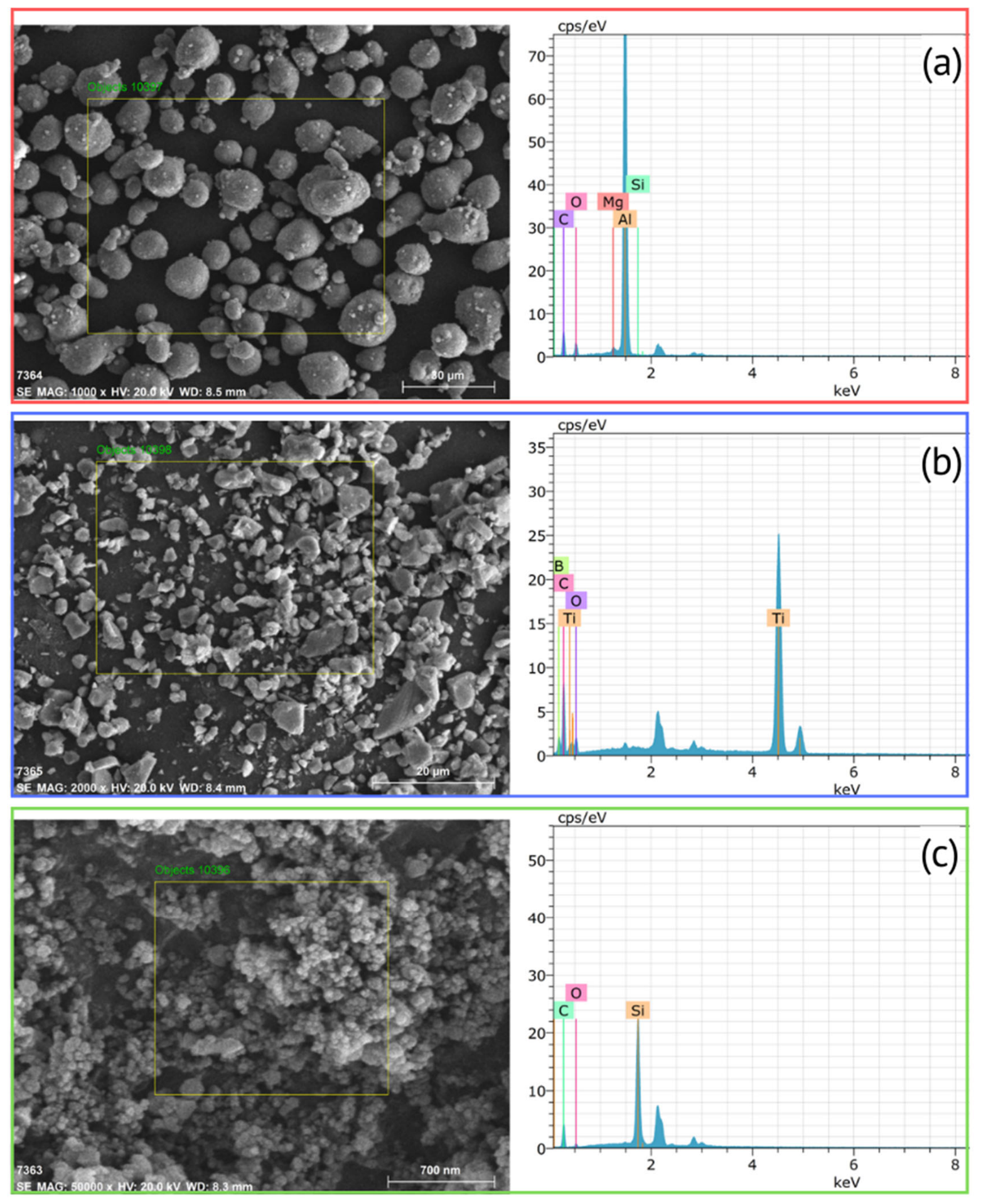
The morphologies and elemental compositions of the AA6061 matrix powder, micro-sized TiB2 reinforcement, and nano-sized SiC reinforcement were examined by scanning electron microscopy (SEM) and energy-dispersive X-ray spectroscopy (EDS). The nominal particle-size ranges were 15–53 µm for AA6061, 2.5–13 µm for TiB2, and 50–70 nm for SiC.
The SEM images showed that the AA6061 powder particles were predominantly spherical or near-spherical, consistent with gas atomization. The TiB2 particles exhibited angular and irregular morphologies. The nano-SiC powder appeared in agglomerated clusters in the SEM images. These clusters reflect the observed state of the powder during imaging and should not be interpreted as the primary particle size of SiC.
The EDS spectra showed Al, Mg, and Si signals in the AA6061 powder; Ti and B signals in the TiB2 powder; and Si and C signals in the SiC powder. These results are consistent with the nominal constituents of the starting powders. Carbon and oxygen signals should be interpreted cautiously because they may also arise from the carbon mounting medium and surface oxidation, respectively. The SEM images and corresponding EDS spectra are presented in Figure 2.
Figure 2.
SEM images and corresponding EDS spectra of the starting powders: (a) AA6061 pre-alloyed powder, (b) micro-sized TiB2 reinforcement powder, and (c) nano-sized SiC powder.
3.2. Relative Density After Deformation
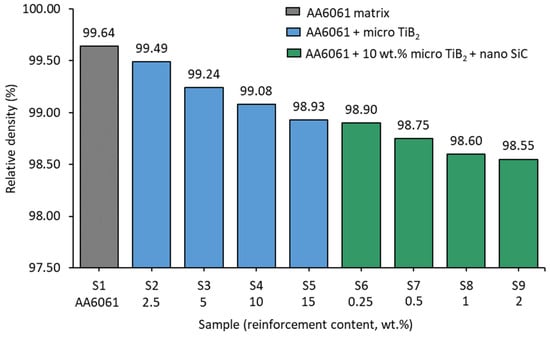
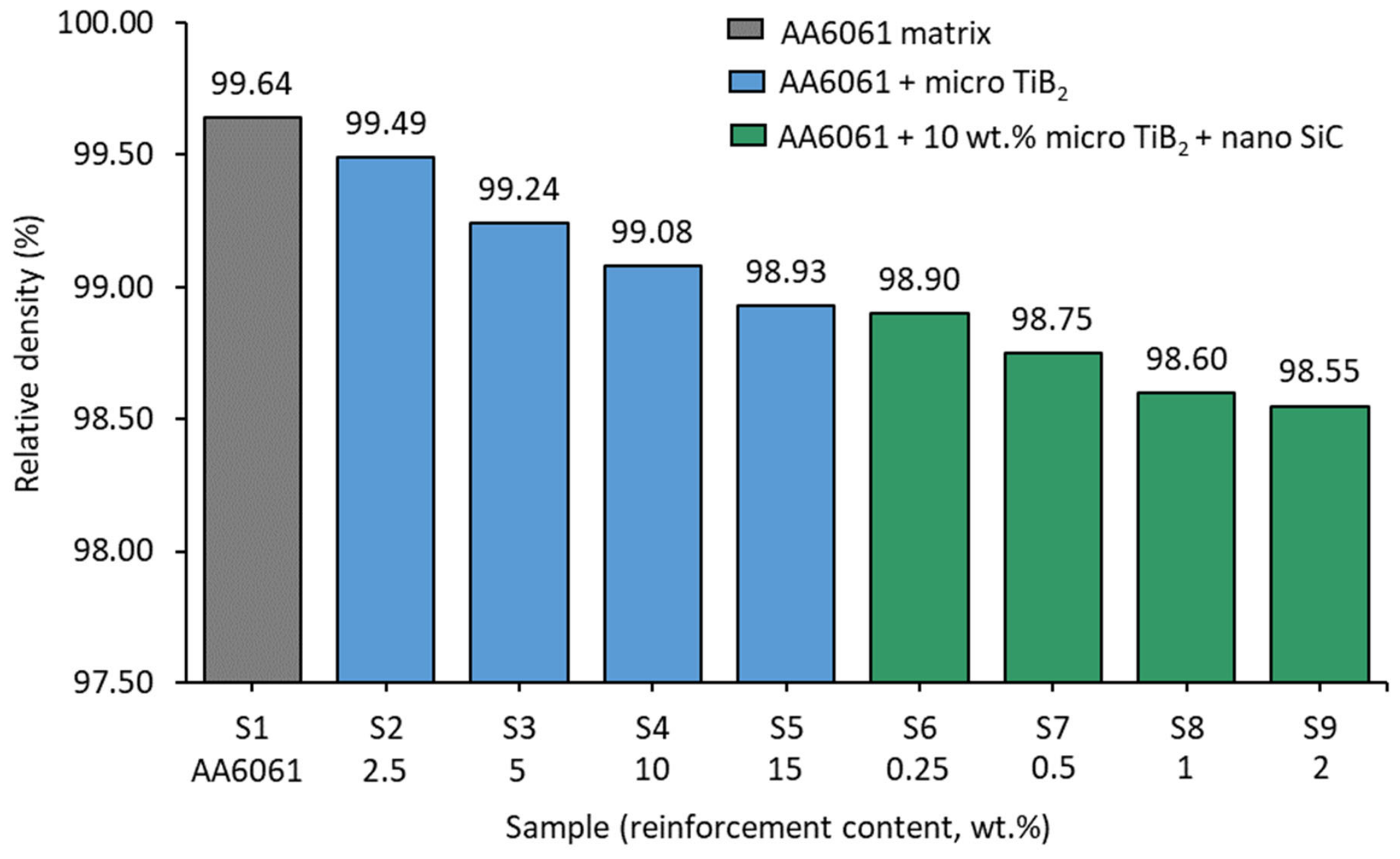
Figure 3 compares the relative densities of the AA6061-based composites after deformation. The values ranged from 98.0% to 99.6%, corresponding to a spread of 1.6 percentage points. All investigated compositions therefore exhibited a similarly high final relative density. Previous work on powder-metallurgy AA6061/SiC composites has shown that density is influenced by both SiC content and sintering temperature [19]. Powder-metallurgy routes have also been used to produce hybrid aluminum composites containing ceramic reinforcements, although the reinforcement sizes and compositions differ from those examined here [20]. The present results indicate that a high final relative density was achieved across the investigated compositions. However, because Figure 3 reports only the post-deformation values, it does not allow the individual contributions of hot extrusion and subsequent deformation to be distinguished, nor does it establish a statistically significant or monotonic relationship between reinforcement content and relative density.
Figure 3.
Relative density of the AA6061–TiB2 and AA6061–TiB2–SiC composites after deformation.
The presintering temperature of 590 °C is slightly above the reported nominal solidus of AA6061 (approximately 582 °C) [21]. Local liquid formation was therefore possible during heating, although it was not verified in the present study. Surface oxide films have been characterized on gas-atomized 6061 powder [22], and sintering atmosphere has been shown to influence densification in aluminum powder compacts [23]. Under the air atmosphere used here, oxide films may have persisted or grown at particle surfaces, potentially limiting interparticle bonding. The extent of oxidation and any liquid-phase formation were not quantified. The measured relative densities therefore describe the specimens after the complete processing route.
3.3. Optical Microstructural Observations and Discussion
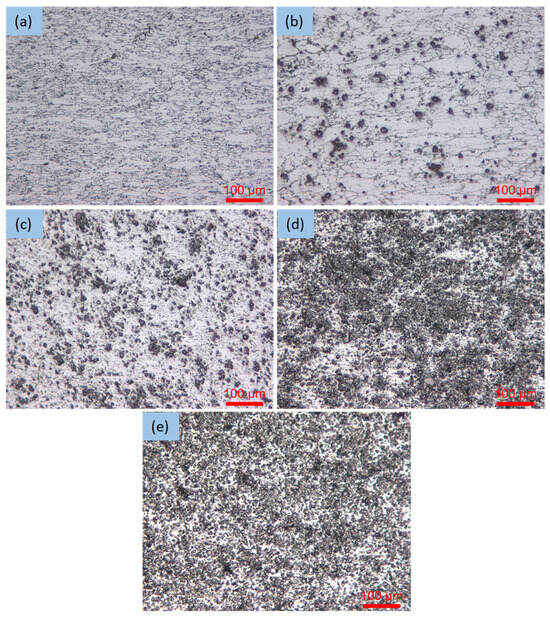
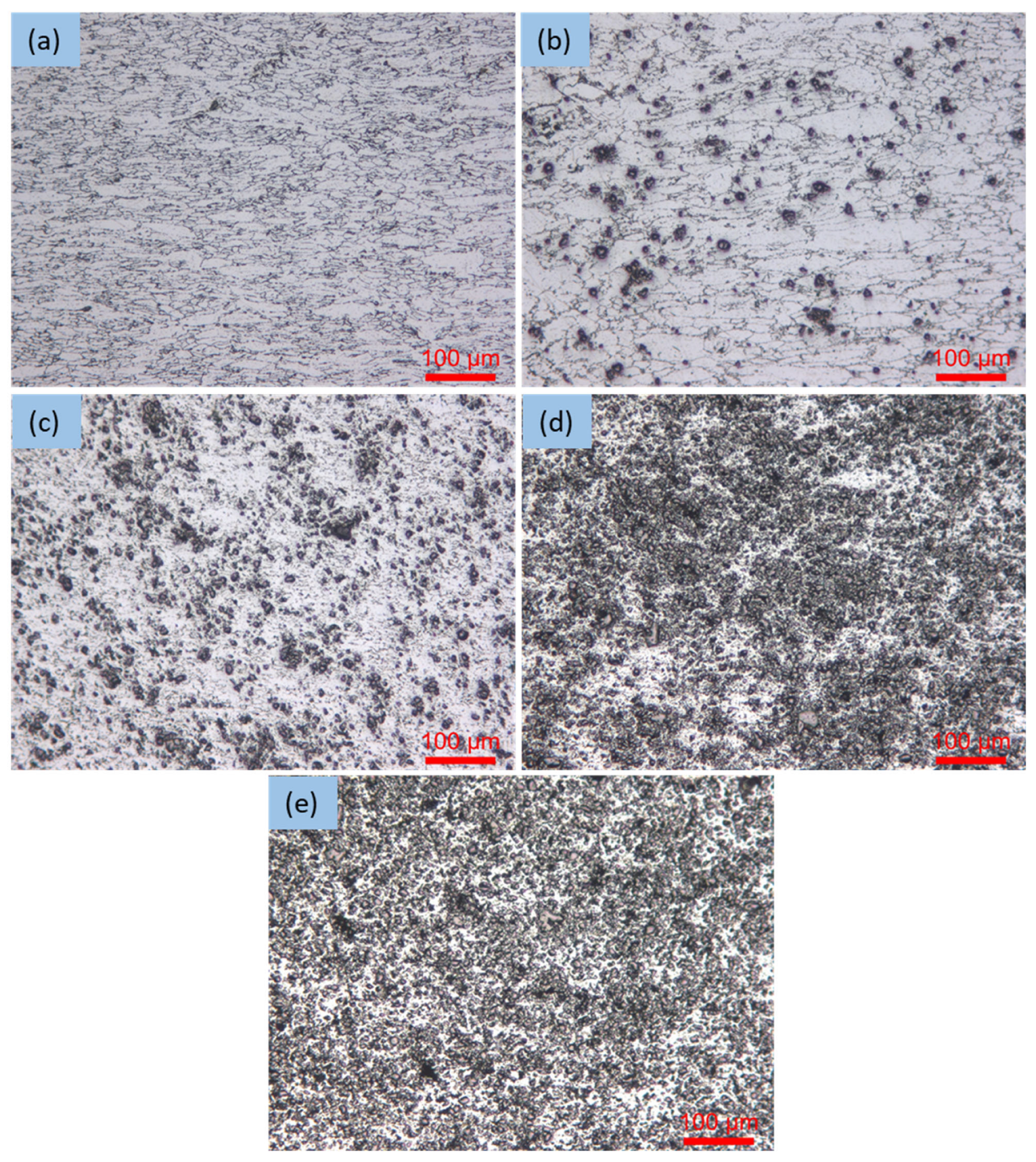
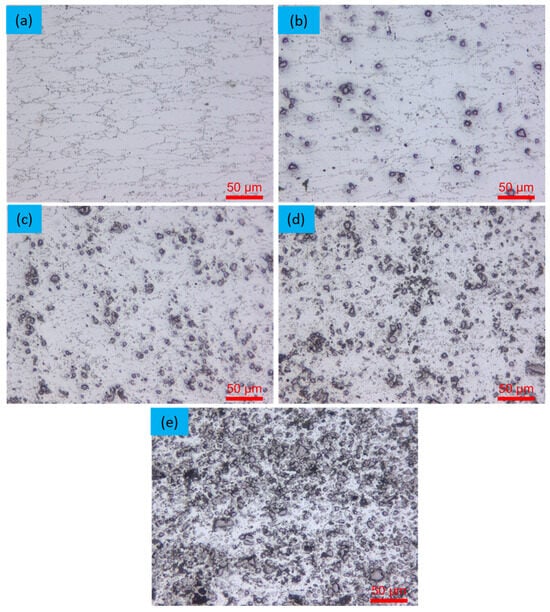
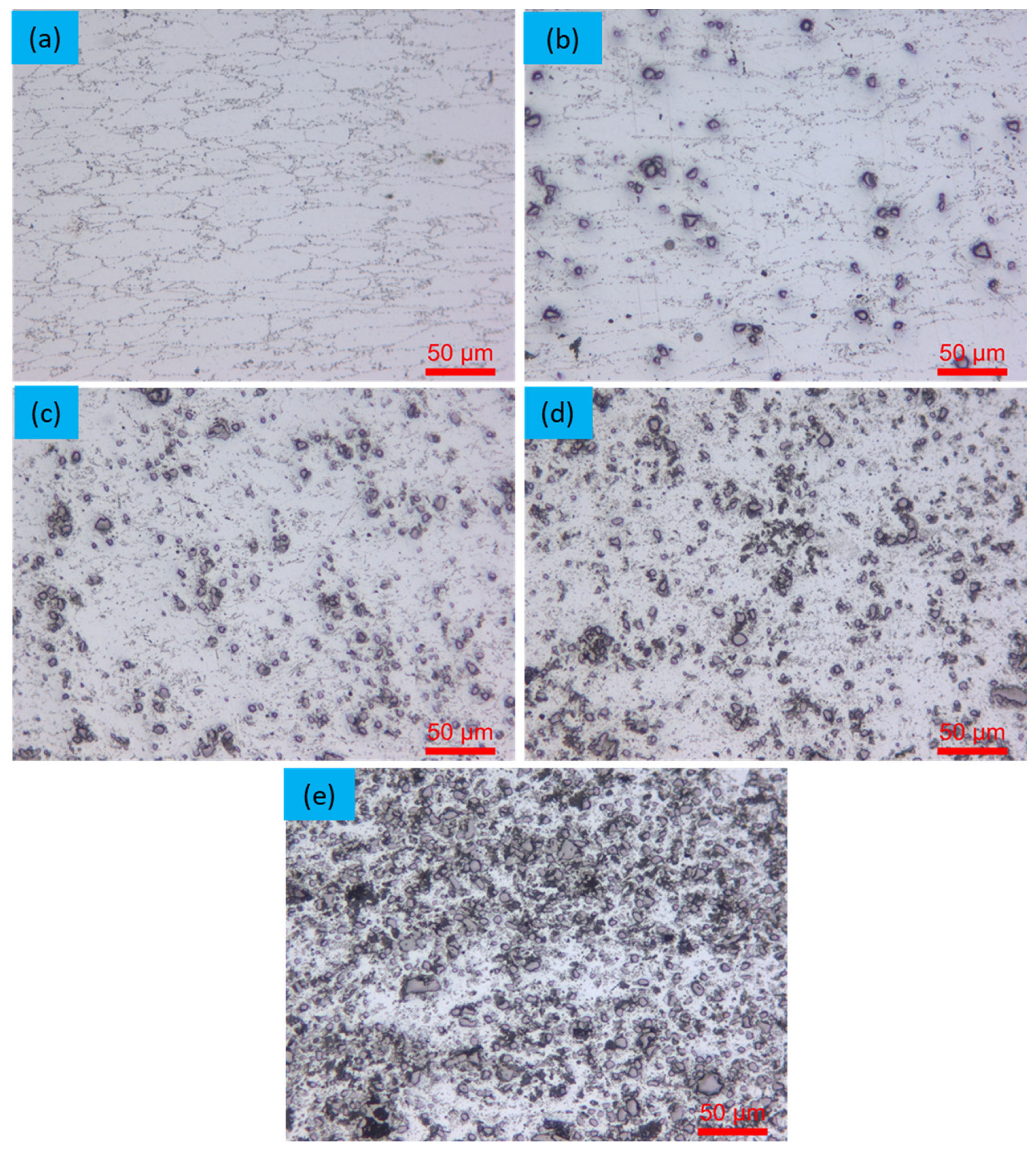
Optical micrographs of the hot-deformed AA6061–TiB2 composites are presented in Figure 4 and Figure 5 at 200× and 500× magnification, respectively. The unreinforced AA6061 sample exhibited a relatively continuous matrix, with few visibly discernible pore-like features in the examined fields. In the TiB2-containing samples, contrast features became more frequent as the nominal TiB2 content increased. These features appeared relatively dispersed in the samples containing 2.5 and 5 wt.% TiB2, whereas greater local heterogeneity and residual pore-like regions were visible in the samples containing 10 and 15 wt.% TiB2. Similar microstructural concerns have been reported for powder-metallurgy Al–TiB2 systems. Annamalai et al. observed that TiB2 content and sintering conditions affected the density and microstructural uniformity of Al-6061/TiB2 composites [24]. Vajargah et al. also reported increased porosity and structural defects at higher TiB2 contents in powder-metallurgy Al–TiB2 composites, associating these features with particle agglomeration and hindered sintering [25]. These studies provide context for the localized heterogeneity observed here, although their particle sizes and processing conditions differ from those of the present work. The optical images therefore support a qualitative comparison; they do not establish the specific mechanism responsible for the observed features.
Figure 4.
Optical micrographs of the hot-deformed AA6061–TiB2 composites at 200× magnification: (a) unreinforced AA6061, (b) 2.5 wt.% TiB2, (c) 5 wt.% TiB2, (d) 10 wt.% TiB2, and (e) 15 wt.% TiB2.
Figure 5.
Optical micrographs of the hot-deformed AA6061–TiB2 composites at 500× magnification: (a) unreinforced AA6061, (b) 2.5 wt.% TiB2, (c) 5 wt.% TiB2, (d) 10 wt.% TiB2, and (e) 15 wt.% TiB2.
The hot-deformation route also needs to be considered when interpreting the final microstructure. Studies of powder-metallurgy TiB2-reinforced aluminum composites have reported microstructural evolution during hot extrusion, including deformation-related grain refinement and recrystallization [26,27]. Such findings provide a relevant framework for discussing the appearance of the present hot-deformed samples. However, the images shown here represent only the post-deformation condition; without equivalent pre-deformation micrographs or quantitative image analysis, the extent of pore closure cannot be determined from these figures alone.
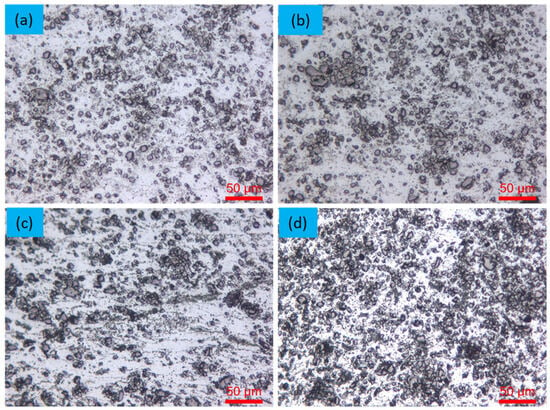
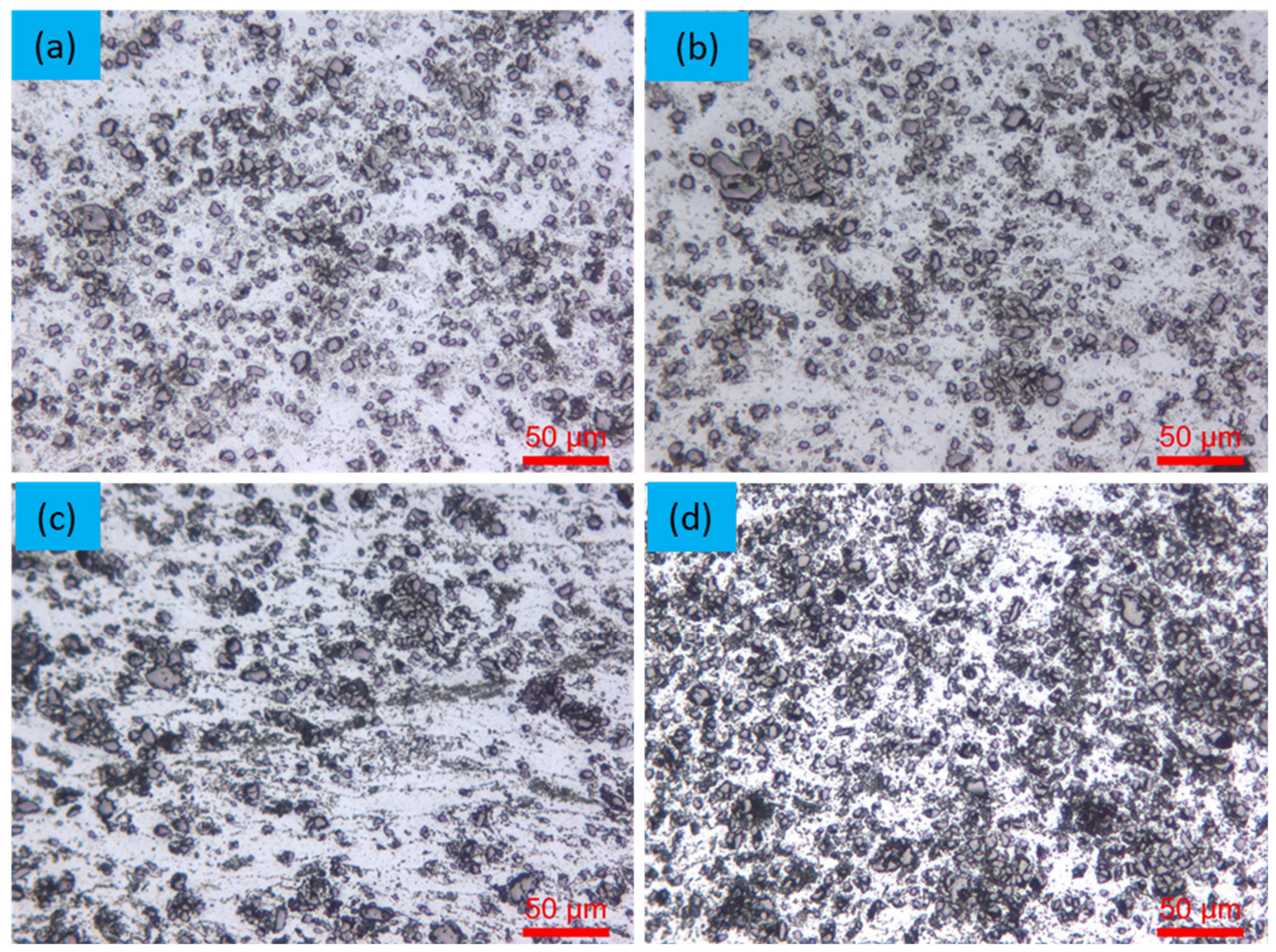
The hybrid AA6061–10 wt.% TiB2–x wt.% SiC micrographs are shown in Figure 6. Fewer pore-like features appeared in the images of the samples containing 0.25 and 0.5 wt.% SiC, while more localized heterogeneity was visible at 1 and 2 wt.% SiC. This is a qualitative observation. Because the primary SiC particles are 50–70 nm, optical microscopy cannot resolve their individual distribution or confirm nanoparticle agglomeration. Reddy et al. used electron microscopy and elemental mapping to examine SiC nanoparticle distribution in Al–SiC nanocomposites produced by microwave sintering and hot extrusion [28]. Accordingly, the present optical images should be interpreted as showing differences in overall microstructural appearance, rather than direct evidence of SiC clustering.
Figure 6.
Optical micrographs of the hot-deformed AA6061–10 wt.% TiB2–x wt.% SiC hybrid composites at 500× magnification: (a) x = 0.25, (b) x = 0.5, (c) x = 1, and (d) x = 2.
3.4. Brinell Hardness
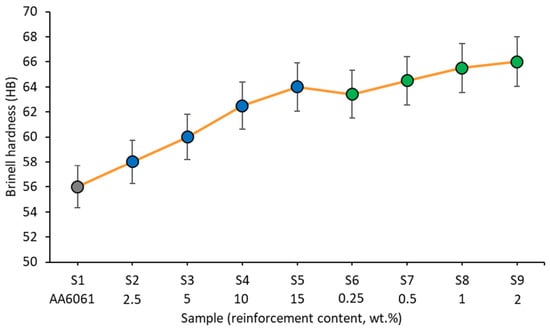
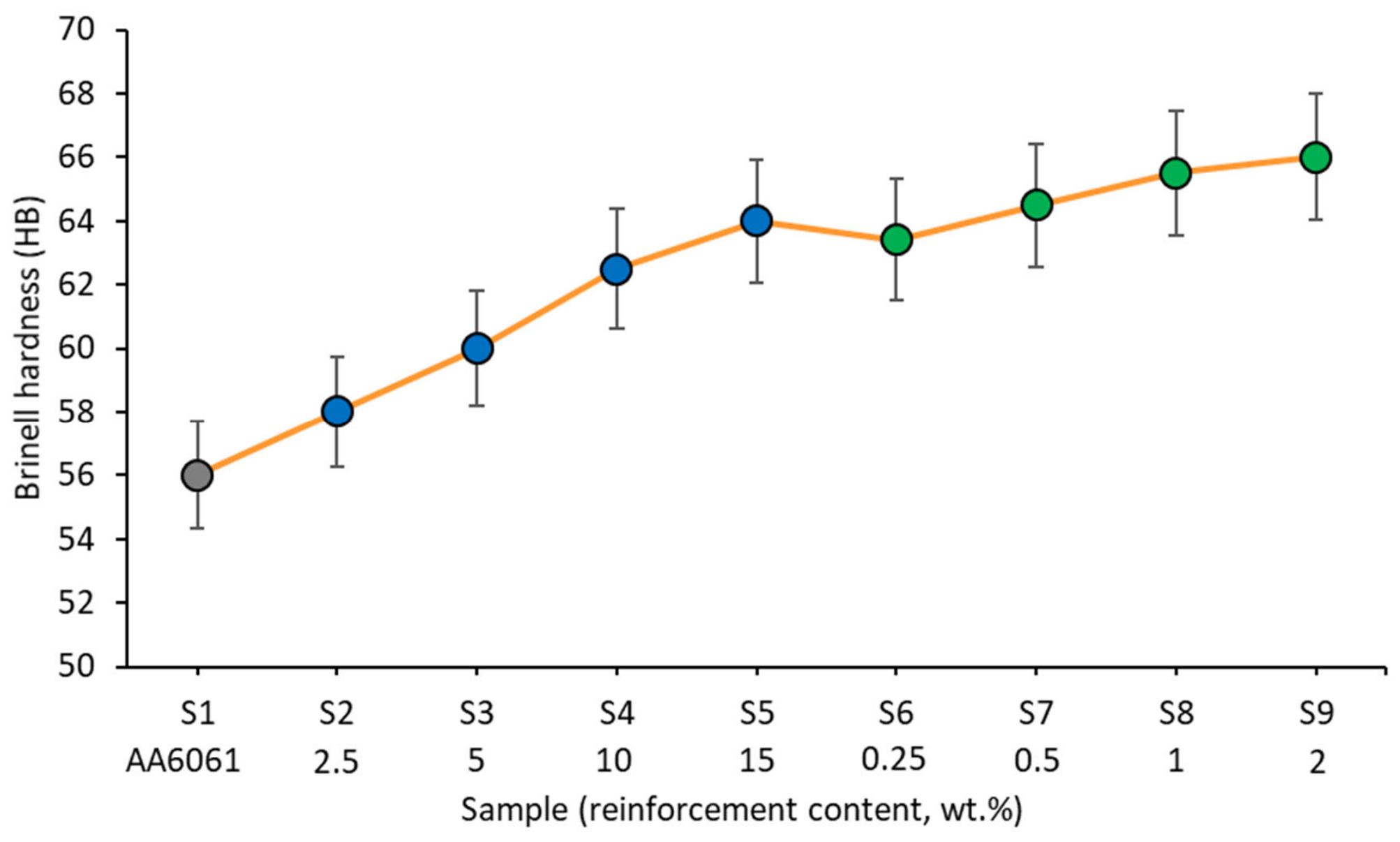
Figure 7 presents the mean Brinell hardness values of the extruded AA6061–TiB2–nano-SiC composites. The unreinforced AA6061 specimen (S1) exhibited the lowest hardness. In the TiB2-reinforced series, hardness increased progressively as the TiB2 content rose from 2.5 to 15 wt.%. A further increase was observed in the hybrid series, in which the TiB2 content was fixed at 10 wt.% and the nano-SiC content increased from 0.25 to 2 wt.%. The highest measured hardness, approximately 66 HB, was obtained for the composite containing 2 wt.% nano-SiC.
Figure 7.
Mean Brinell hardness of the AA6061 matrix and AA6061–TiB2–nano-SiC composites after extrusion.
The hardness increase with ceramic reinforcement may be associated with the hard particles’ resistance to local plastic deformation beneath the indenter. Load transfer from the aluminium matrix to the reinforcement particles and restricted dislocation motion may also contribute to the measured response. These mechanisms are possible explanations for the observed trend; their individual contributions cannot be established from hardness measurements alone.
Previous studies of AA6061–TiB2 composites have also reported hardness changes with reinforcement content, although the reported trends depend on composition and processing conditions. Annamalai et al. reported that the Vickers microhardness of spark-plasma-sintered AA6061–TiB2 composites peaked at 2.5 wt.% TiB2 and decreased at higher TiB2 contents [24]. Prakash and Raja reported a 19.3% increase in hardness relative to unreinforced AA6061 for a hot-compacted composite containing 4 wt.% TiB2 [29]. These findings show that the hardness response varies with the processing route and composition. The progressive increase observed in the present study is therefore specific to the compositions and extrusion conditions investigated.
3.5. Transverse Rupture Strength
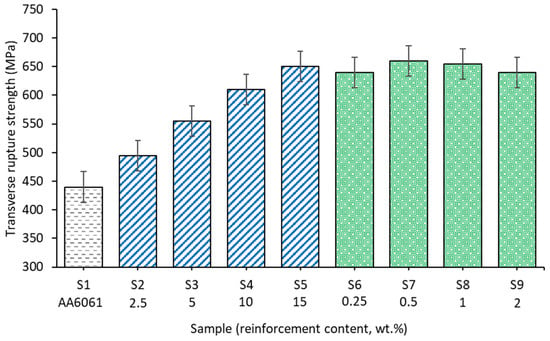
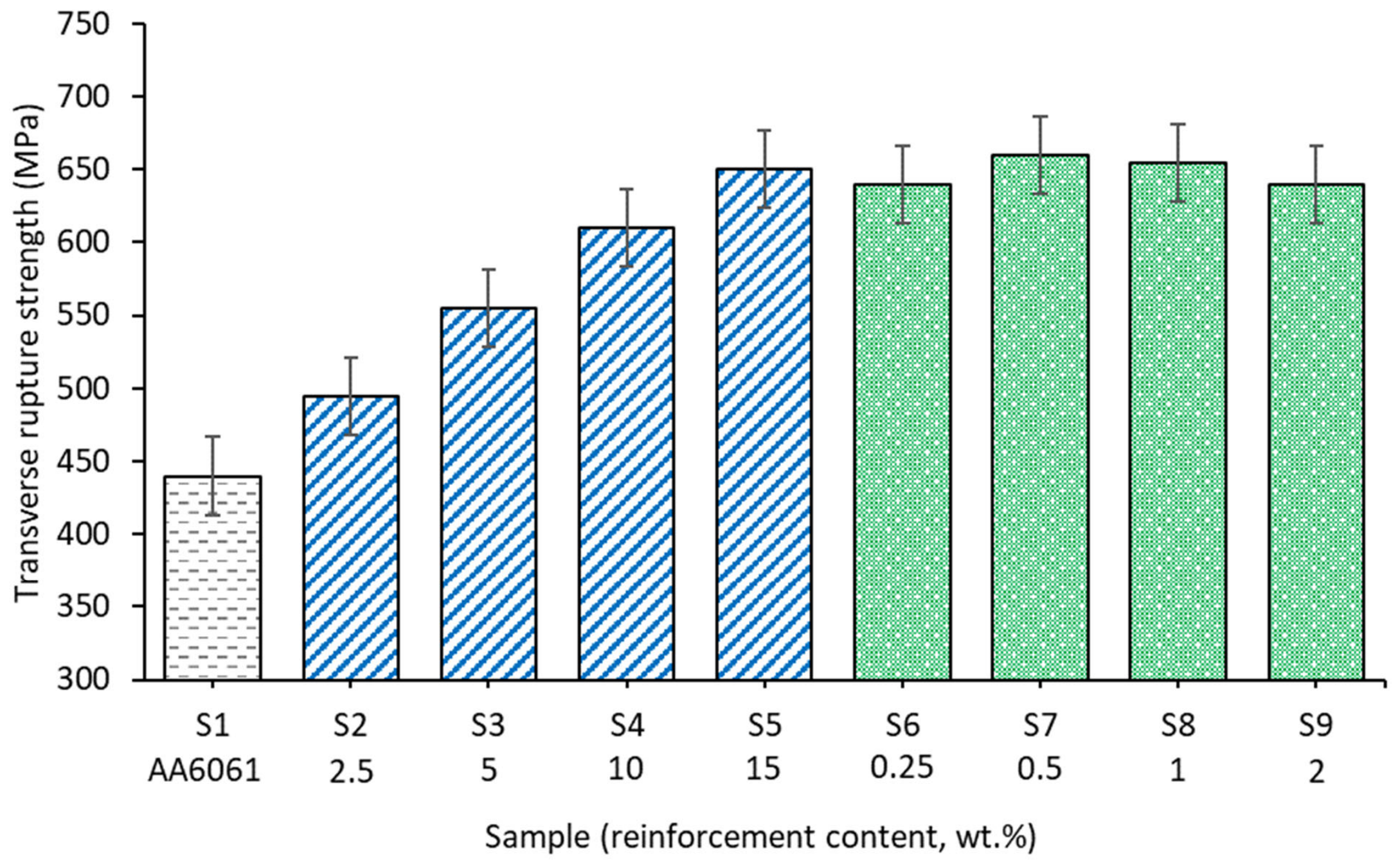
Figure 8 shows the transverse rupture strength (TRS) of unreinforced AA6061 and the reinforced composites after hot extrusion. The mean TRS was approximately 440 MPa for unreinforced AA6061 (S1) and increased to 495 and 555 MPa for S2 and S3, respectively. Within the TiB2-only series, the mean TRS reached 610 MPa at 10 wt.% TiB2 (S4) and 650 MPa at 15 wt.% TiB2 (S5), the highest value in that series. Among the hybrid composites, S7 (10 wt.% TiB2 and 0.5 wt.% nano-SiC) showed the highest mean TRS, approximately 660 MPa, followed by S8 at approximately 655 MPa. S6 and S9 both showed mean values of approximately 640 MPa. These rankings are based on the measured means.
Figure 8.
Transverse rupture strength of the AA6061 matrix and AA6061–TiB2–nano-SiC composites after hot extrusion.
The mean TRS increased with TiB2 content across the TiB2-only series, reaching approximately 610 MPa for S4 (10 wt.% TiB2) and 650 MPa for S5 (15 wt.% TiB2) (Figure 8). Load transfer from the aluminium matrix to the TiB2 particles may have contributed to this trend, although its contribution was not quantified in the present study. Increased bending strength has also been reported for hot-pressed Al/Al–TiB2 laminates containing TiB2-reinforced layers [30]. The layered architecture of those laminates limits direct comparison with the particulate composites examined here.
In the hybrid series, containing a fixed 10 wt.% TiB2, the TRS remained high at nano-SiC contents of 0.25–1 wt.%. Among these compositions, the 10 wt.% TiB2–0.5 wt.% nano-SiC specimen showed the most favorable TRS. At 2 wt.% nano-SiC, the TRS decreased slightly to approximately 640 MPa. The agglomeration observed in this specimen may have contributed to local stress concentrations and reduced the effectiveness of load transfer.
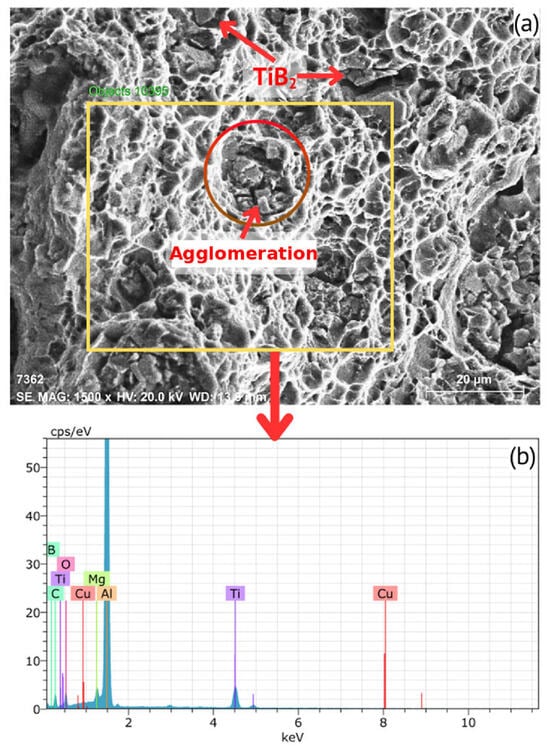
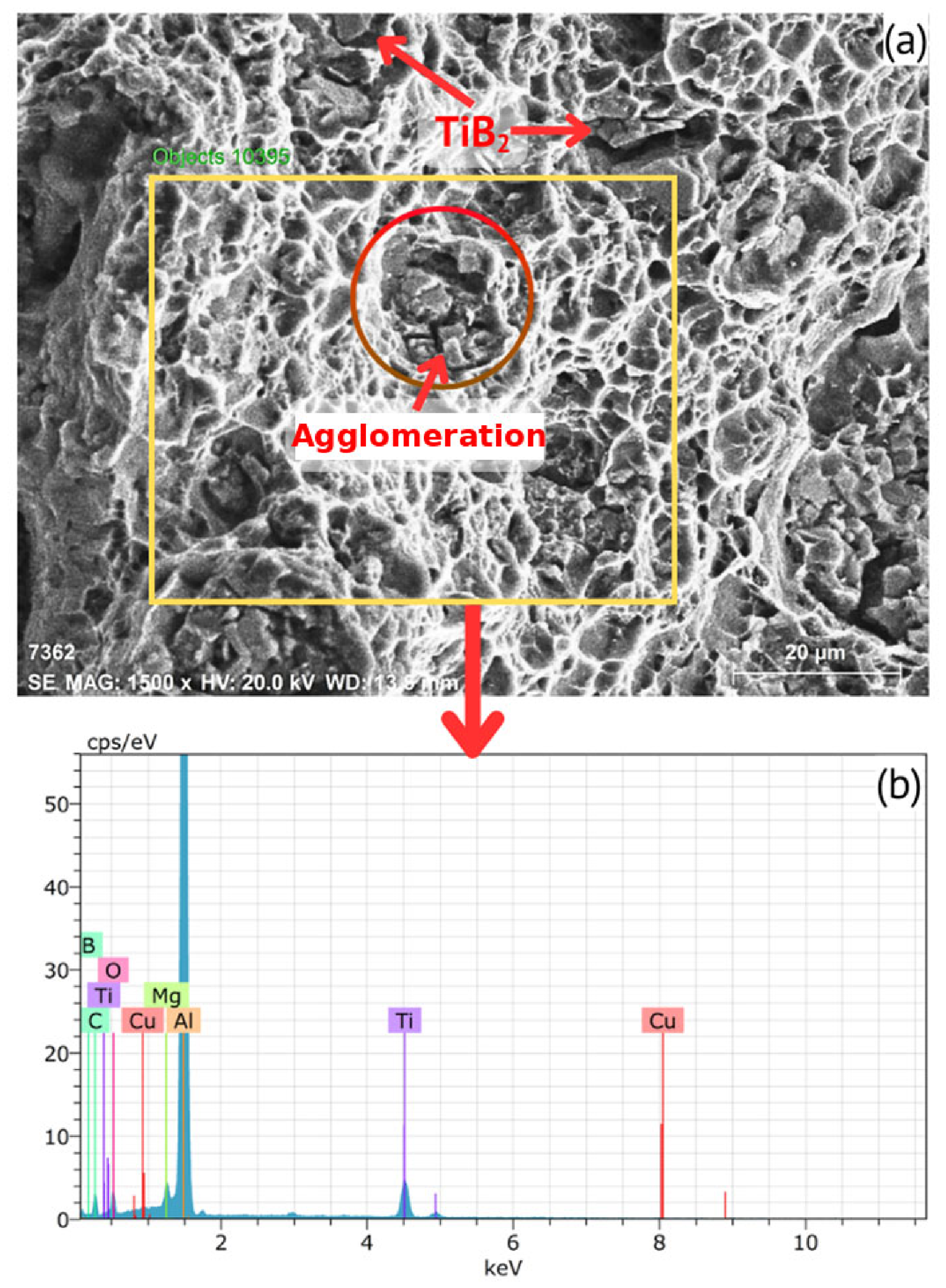
The fracture-surface morphology of specimen S9 (AA6061–10 wt.% TiB2–2 wt.% nano-SiC) was examined to further interpret its transverse rupture response. Figure 9 shows the SEM micrograph and EDS spectrum acquired from the same region. The fracture surface contains locally clustered, reinforcement-rich regions, consistent with the agglomeration tendency observed at the highest nano-SiC content. Such local heterogeneity may create stress concentrations during loading and contribute to the slight decrease in TRS measured for S9. The SEM image also shows angular features attributed to the TiB2 particles; however, their distribution and contribution to fracture should be interpreted in conjunction with the EDS results.
Figure 9.
SEM micrograph of the fracture surface of specimen S9 (AA6061–10 wt.% TiB2–2 wt.% nano-SiC) and the corresponding EDS spectrum.
The EDS spectrum acquired from the region of localized clustering on the fracture surface of S9 (Figure 9) contains signals from Al, Ti, Si, and C. The Ti and Si signals are consistent with the nominal composition of S9. The local EDS spectrum does not establish the phase identity of individual nanoparticles, and the available SEM images do not quantify the spatial distribution of nano-SiC. The observed heterogeneity provides qualitative context for the transverse rupture strength (TRS) results, while its influence on fracture would require further quantitative analysis.
4. Wear Resistance
4.1. Mass Loss
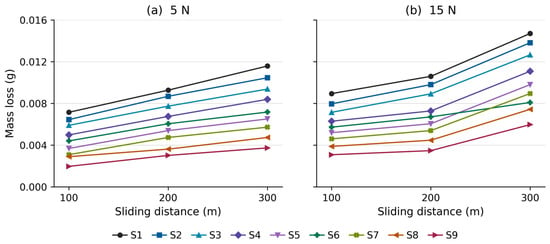
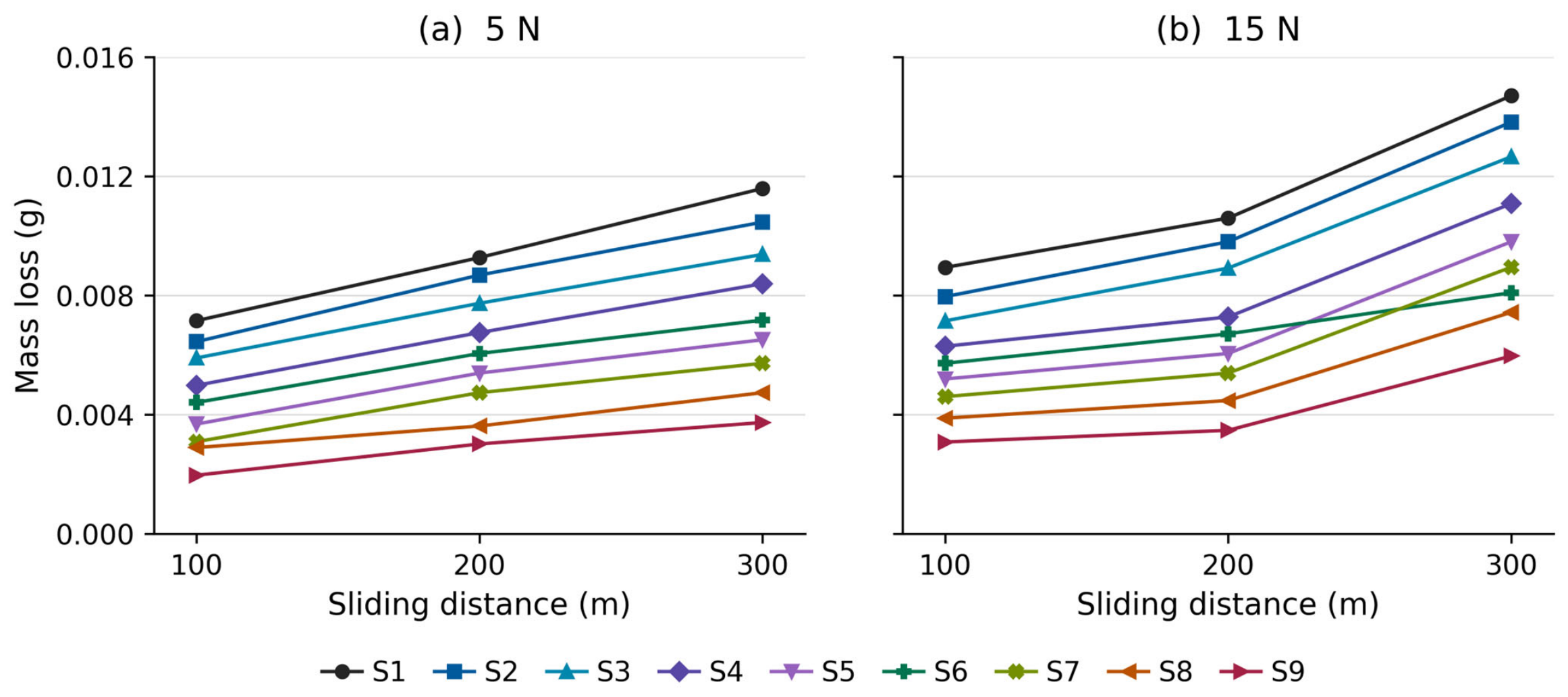
Figure 10 shows the mass loss of the AA6061–TiB2–nano-SiC composites as a function of sliding distance under dry-sliding conditions at normal loads of 5 and 15 N. At both loads, the unreinforced AA6061 specimen (S1) exhibited the highest mass loss. In the TiB2-reinforced series (S2–S5), mass loss decreased with increasing TiB2 content. This trend may be associated with the increased resistance of the reinforced specimens to surface deformation and material removal during sliding.
Figure 10.
Cumulative mass loss of specimens S1–S9 after 100, 200, and 300 m of dry sliding under normal loads of (a) 5 N and (b) 15 N.
The hybrid specimens (S6–S9), containing a fixed 10 wt.% TiB2, also exhibited lower mass loss than S1. At a normal load of 5 N and a sliding distance of 300 m, S9 (10 wt.% TiB2 and 2 wt.% nano-SiC) exhibited the lowest mean cumulative mass loss among the hybrid composites (0.0037 g; Figure 10a).
Zheng et al. reported lower volumetric wear rates for powder-metallurgy AA6061 composites reinforced with micro- and nanoscale TiB2 [31]. Hillary et al. reported improved dry-sliding wear behavior and the formation of a mechanically mixed layer in stir-cast Al6061–SiC–TiB2 composites [6]. Reddy et al. examined the effects of SiC content and sliding conditions on the dry-sliding wear of AA6061/SiC nanocomposites [32]. These studies used different compositions and production routes; therefore, they offer a basis for comparison but do not directly establish the wear mechanisms in the present powder-metallurgy composites.
4.2. Coefficient of Friction
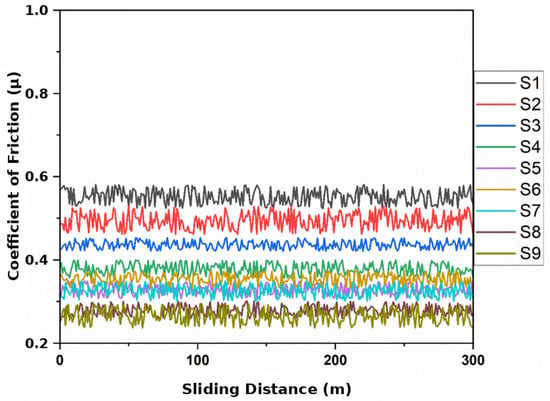
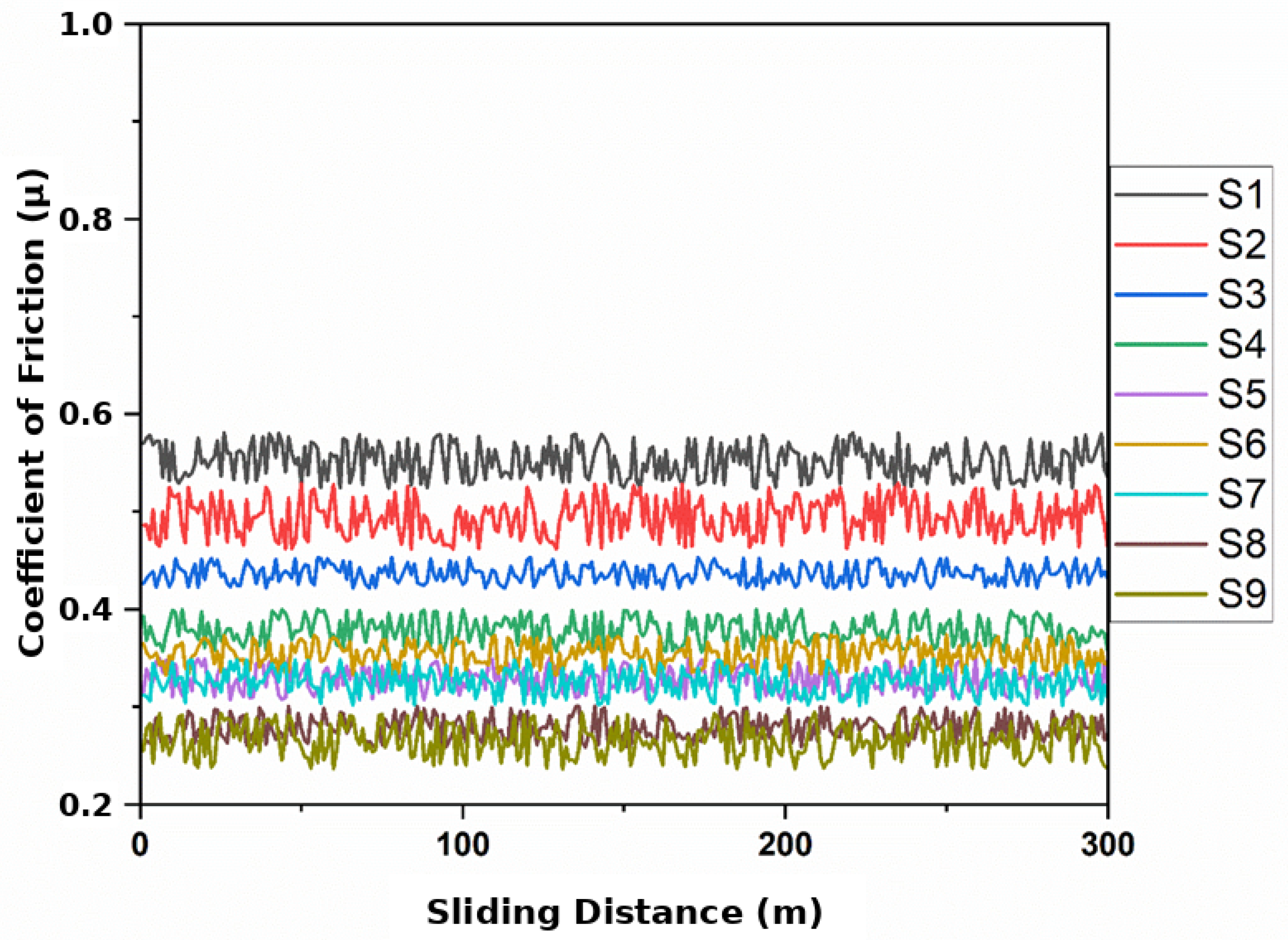
Figure 11 shows the coefficient of friction as a function of sliding distance for specimens S1–S9 tested under a normal load of 5 N. Table 1 summarizes the coefficient-of-friction ranges for the same specimens at 5 N. S1 exhibited the highest coefficient-of-friction range (0.523–0.581). The values decreased across the TiB2-reinforced series, reaching 0.307–0.350 for S5. A similar decrease occurred within the hybrid series as the nano-SiC content increased: the range declined from 0.332–0.374 for S6 to 0.235–0.295 for S9. The decrease in the coefficient of friction coincided with the addition of ceramic reinforcement and the increase in hardness reported for the composites. However, friction also depends on surface roughness, wear debris, and the condition of the sliding surfaces. The measured trend therefore cannot be attributed to hardness alone. Among the hybrid composites, S9 (10 wt.% TiB2 and 2 wt.% nano-SiC) exhibited the highest Brinell hardness and the lowest coefficient-of-friction range at 5 N (Figure 11 and Table 1). At a normal load of 5 N and a sliding distance of 300 m, S9 (10 wt.% TiB2 and 2 wt.% nano-SiC) exhibited the lowest mean cumulative mass loss among the hybrid composites (0.0037 g, Figure 10a). S9 also had the highest mean Brinell hardness (Figure 7). The coefficient of friction describes the tangential resistance to sliding relative to the applied normal force, whereas cumulative mass loss measures the amount of material removed over the test. The friction and mass-loss results should therefore be interpreted in the context of their respective test conditions. Wąsik et al. reported that, among the tested extruded aluminum composites, the Al–5 wt.% SiC–5 wt.% TiO2 composite had the highest mean coefficient of friction and the lowest measured mass loss after 500 m of sliding [33].
Figure 11.
Coefficient of friction as a function of sliding distance for specimens S1–S9 during dry sliding under a normal load of 5 N.
Table 1.
Coefficient-of-friction ranges for specimens S1–S9 under a normal load of 5 N.
For each specimen, the reported range extends from the minimum to the maximum coefficient of friction along the corresponding curve in Figure 11 over the full sliding distance of 0–300 m.
4.3. Worn-Surface Morphology of the TiB2-Reinforced Composites
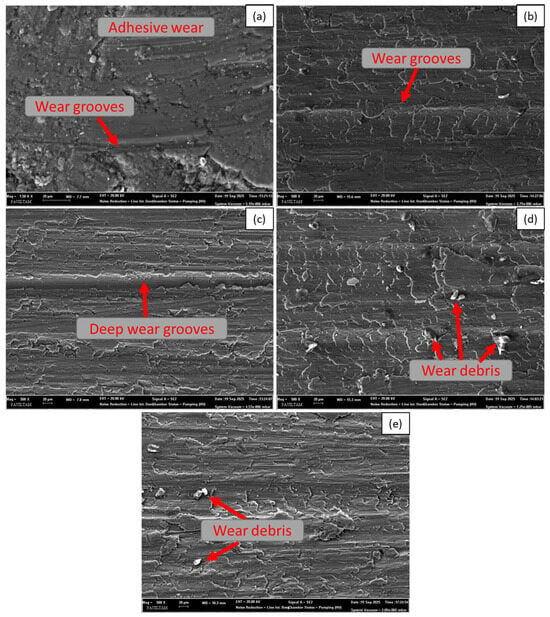
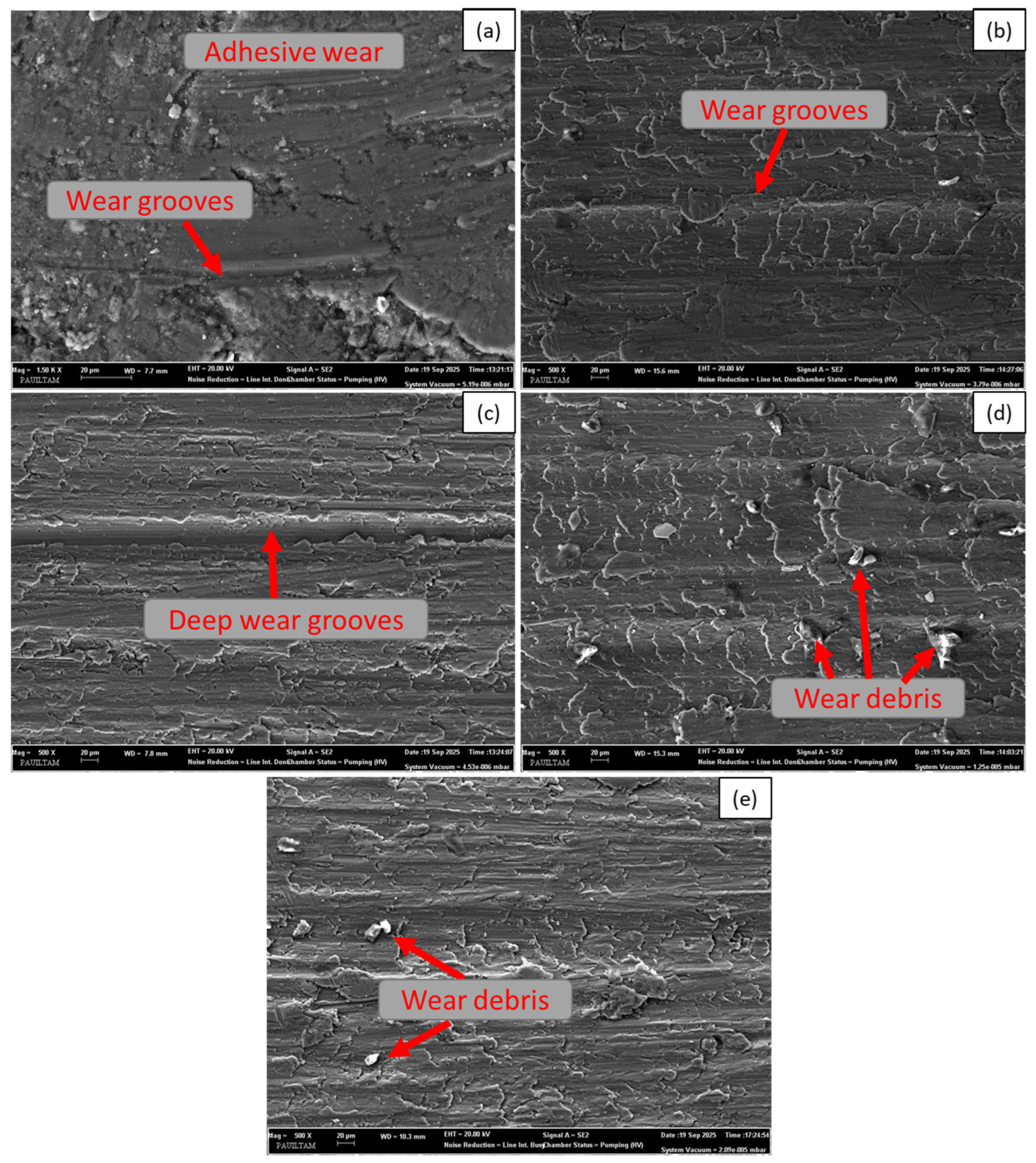
Figure 12 shows the worn surfaces of specimens S1–S5. S1 exhibits broad grooves and areas of surface smearing. The grooves are consistent with abrasive wear, while the smeared regions suggest a possible adhesive contribution. Grooves remain visible in S2 and S3, with prominent parallel grooves in S3. The worn surfaces of S4 and S5 show localized debris-like features. Their origin, including possible detachment of reinforcement particles, cannot be determined from the SEM images alone. The TiB2-reinforced specimens showed lower mass loss than S1 under the tested conditions. Grooves and features interpreted as particle pull-out have also been reported for stir-cast Al6061–TiB2 composites [34]. Differences in processing and test conditions limit the comparison to surface morphology.
Figure 12.
SEM images of the worn surfaces of the TiB2-reinforced AA6061 composites: (a) S1, unreinforced AA6061; (b) S2, AA6061 + 2.5 wt.% TiB2; (c) S3, AA6061 + 5 wt.% TiB2; (d) S4, AA6061 + 10 wt.% TiB2; and (e) S5, AA6061 + 15 wt.% TiB2.
4.4. Worn-Surface Morphology of the Hybrid Composites
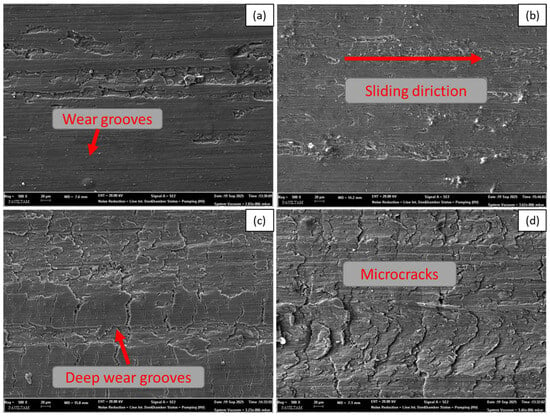
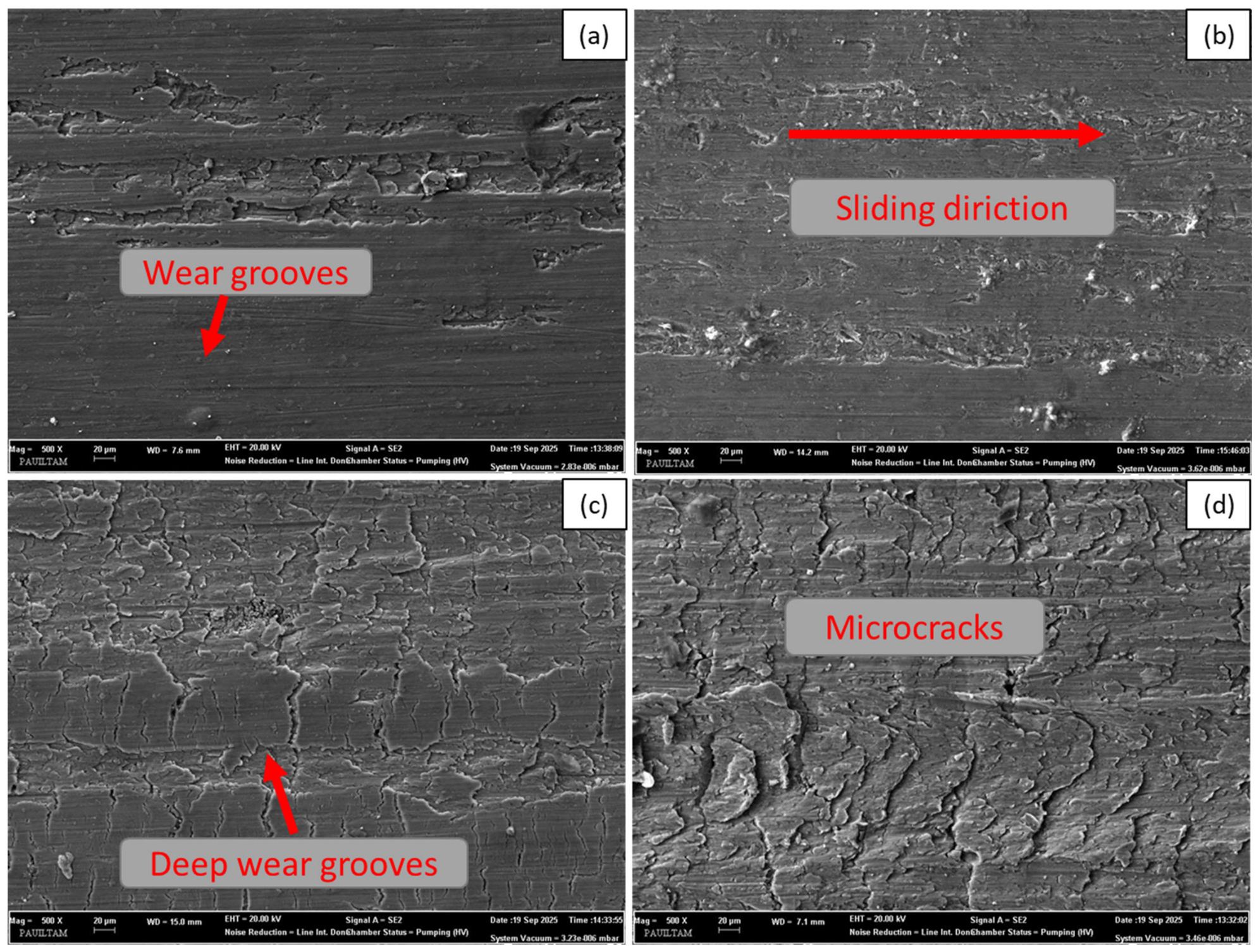
Figure 13 shows SEM micrographs of the worn surfaces of the hybrid specimens S6–S9. The surfaces of S6 and S7 exhibit elongated grooves and scratches aligned with the sliding direction. Localized grooves and surface damage are visible on S8. The worn surface of S9 exhibited localized crack-like features (Figure 13d). The available SEM images do not establish whether these features contributed to material detachment or explain the difference in mass loss between S8 and S9. The origin of these features and their potential association with reinforcement clusters or particle detachment could not be determined from the available SEM images.
Figure 13.
SEM images of the worn surfaces of the hybrid AA6061–TiB2–nano-SiC composites: (a) S6, 10 wt.% TiB2 + 0.25 wt.% nano-SiC; (b) S7, 10 wt.% TiB2 + 0.5 wt.% nano-SiC; (c) S8, 10 wt.% TiB2 + 1 wt.% nano-SiC; and (d) S9, 10 wt.% TiB2 + 2 wt.% nano-SiC.
Hillary et al. studied dry-sliding wear in stir-cast Al6061–SiC–TiB2 hybrids [6], while Reddy et al. investigated dry-sliding wear in AA6061/SiC nanocomposites [32]. Studies of Al–SiC nanocomposites provide context for the dry-sliding behavior of SiC-reinforced aluminum alloys. In the present study, the mass-loss and friction data show differences among the tested compositions. The worn-surface images provide qualitative context for these differences. The spatial distribution of nano-SiC and its relation to the observed wear features were not quantified.
5. Conclusions
AA6061 composites reinforced with micrometer-sized TiB2 and nanoscale SiC were produced by powder metallurgy, followed by hot extrusion, hot rolling, and T6 heat treatment. The effects of TiB2 content and subsequent nano-SiC addition were evaluated in terms of relative density, microstructure, mechanical properties, and dry-sliding behavior. The main findings are as follows.
- The final relative densities ranged from 98.55% to 99.64% across the tested compositions. Because density was measured only after processing, the individual contributions of hot extrusion and hot rolling to densification could not be determined.
- Mean Brinell hardness increased with TiB2 content in the TiB2-only series and with nano-SiC content in the hybrid series. S9 (10 wt.% TiB2 and 2 wt.% nano-SiC) exhibited the highest mean hardness, approximately 66 HB. The highest mean transverse rupture strength in the TiB2-only series was approximately 650 MPa for S5 (15 wt.% TiB2). Among the hybrid composites, S7 (10 wt.% TiB2 and 0.5 wt.% nano-SiC) showed the highest mean value, approximately 660 MPa.
- The reinforced specimens showed lower cumulative mass loss than unreinforced AA6061 under the tested dry-sliding conditions. At 5 N and a sliding distance of 300 m, S9 exhibited the lowest mean cumulative mass loss among the hybrid composites (0.0037 g).
- The recorded coefficient-of-friction values were highest for unreinforced AA6061 (S1, 0.523–0.581) and lowest for S9 (0.235–0.295). Within the hybrid series, the composition with 2 wt.% nano-SiC thus gave the highest mean hardness and the lowest recorded friction values, while the composition with 0.5 wt.% nano-SiC gave the highest mean transverse rupture strength.
- Worn-surface SEM images showed broad grooves and localized smearing on unreinforced AA6061, consistent with abrasive wear and a possible adhesive contribution. Crack-like features were visible on the worn surface of S9. Their origin and contribution to material removal could not be determined from the available images.
Author Contributions
Conceptualization, U.T. and H.K.; methodology, Ç.İ., E.T., R.Y. and U.T.; formal analysis, Ç.İ. and H.K.; investigation, Ç.İ., E.T., R.Y. and R.Ç.O.; resources, E.T. and U.T.; data curation, Ç.İ. and R.Y.; writing—original draft preparation, Ç.İ. and H.K.; writing—review and editing, E.T., R.Y., U.T., R.Ç.O. and H.K.; visualization, Ç.İ. and R.Y.; supervision, U.T. and H.K.; project administration, E.T.; funding acquisition, E.T. All authors have read and agreed to the published version of the manuscript.
Funding
This research was funded by the Pamukkale University Scientific Research Projects Coordination Unit, grant number 2024FEBE002.
Data Availability Statement
The raw and processed data supporting the findings of this study are not publicly available because they also form part of an ongoing study.
Acknowledgments
The authors gratefully acknowledge the financial support provided by the Pamukkale University Scientific Research Projects Coordination Unit under Project No. 2024FEBE002. ChatGPT 6 (OpenAI) was used to assist with drafting selected passages and language editing. The authors reviewed the text and take full responsibility for the manuscript.
Conflicts of Interest
The authors declare no conflicts of interest.
References
- Wilson, S.; Alpas, A.T. Wear mechanism maps for metal matrix composites. Wear 1997, 212, 41–49. [Google Scholar] [CrossRef] [Scilit]
- Yu, S.Y.; Ishii, H.; Tohgo, K.; Cho, Y.T.; Diao, D. Temperature dependence of sliding wear behavior in SiC whisker or SiC particulate reinforced 6061 aluminum alloy composite. Wear 1997, 213, 21–28. [Google Scholar] [CrossRef] [Scilit]
- Özer, E. Microstructure, Mechanical Response, and Tribological Behavior of Mechanically Alloyed and Microwave-Sintered AA7068/TiB2–TiC Hybrid Composites. Materials 2026, 19, 3072. [Google Scholar] [CrossRef] [Scilit] [PubMed]
- Milojević, S.; Džunić, D.; Marić, D.; Skrućaný, T.; Mitrović, S.; Pešić, R. Tribological Assessment of Aluminum Cylinder Material for Piston Compressors in Trucks and Buses Brake Systems. Tech. Gaz. 2021, 28, 1268–1276. [Google Scholar] [CrossRef] [Scilit]
- Hassan, K.H.; Ramadan, D.O. Experimental investigation of the mechanical properties and tribological behaviour of Al6061 enhanced by TiB2 particles. Trans. Indian Inst. Met. 2023, 76, 1625–1633. [Google Scholar] [CrossRef] [Scilit]
- Hillary, J.J.M.; Ramamoorthi, R.; Chelladurai, S.J.S. Dry sliding wear behaviour of Al6061–5%SiC–TiB2 hybrid metal matrix composites synthesized by stir casting process. Mater. Res. Express 2020, 7, 126519. [Google Scholar] [CrossRef] [Scilit]
- Aherwar, A.; Ahirwar, A.; Pathak, V.K. Dry sliding tribological characteristics evaluation and prediction of TiB2-CDA/Al6061 hybrid composites exercising machine learning methods. Sci. Rep. 2025, 15, 16710. [Google Scholar] [CrossRef] [Scilit] [PubMed]
- Çakıroğlu, E.K.; Albayrak, S.; Ulutaş, A.; Karakoç, H.; Ovalı, İ.; Çinici, H.; Çıtak, R. Development of TiB2-GNP reinforced Al6061 nano-hybrid composites with enhanced wear and mechanical properties. J. Compos. Mater. 2026, 60, 2031–2057. [Google Scholar] [CrossRef] [Scilit]
- Lagisetti, V.K.; Reddy, A.P.; Krishna, P.V. Dry sliding wear study on AA6061/SiCp nano and AA6061/SiCp/Gr hybrid nanocomposites. Silicon 2022, 14, 12235–12250. [Google Scholar] [CrossRef] [Scilit]
- Tan, J.L.; Liew, K.W. Tribological behaviour and microstructure of an aluminium alloy-based g-SiC hybrid surface composite produced by FSP. Lubricants 2023, 11, 124. [Google Scholar] [CrossRef] [Scilit]
- Sharma, S.K.; Gajević, S.; Sharma, L.K.; Pradhan, R.; Sharma, Y.; Miletić, I.; Stojanović, B. Progress in aluminum-based composites prepared by stir casting: Mechanical and tribological properties for automotive, aerospace, and military applications. Lubricants 2024, 12, 421. [Google Scholar] [CrossRef] [Scilit]
- Rahimian, M.; Parvin, N.; Ehsani, N. The effect of production parameters on microstructure and wear resistance of powder metallurgy Al–Al2O3 composite. Mater. Des. 2011, 32, 1031–1038. [Google Scholar] [CrossRef] [Scilit]
- Cao, L.; Dai, Q.; Liang, Q.; Zhang, X. The Influence of Process Conditions and Reinforcement Characteristics on the Densification and Mechanical Properties of Powder Metallurgy SiCp/Al Composites. Materials 2025, 18, 5060. [Google Scholar] [CrossRef] [Scilit] [PubMed]
- Ada, H. Improved hardness and wear resistance in B4C–SiC–TiC reinforced AA6061 composites produced by powder metallurgy: A comparative study of monolithic and hybrid structures. J. Compos. Mater. 2025, 59, 3431–3452. [Google Scholar] [CrossRef] [Scilit]
- Karakoç, H.; Ovalı, İ.; Dündar, S.; Çıtak, R. Wear and mechanical properties of Al6061/SiC/B4C hybrid composites produced with powder metallurgy. J. Mater. Res. Technol. 2019, 8, 5348–5361. [Google Scholar] [CrossRef] [Scilit]
- Youseffi, M.; Showaiter, N. PM processing of elemental and prealloyed 6061 aluminium alloy with and without common lubricants and sintering aids. Powder Metall. 2006, 49, 240–252. [Google Scholar] [CrossRef] [Scilit]
- ASTM E10-23; Standard Test Method for Brinell Hardness of Metallic Materials. ASTM International: West Conshohocken, PA, USA, 2023. [Google Scholar] [CrossRef] [Scilit]
- ASTM G99-23; Standard Test Method for Wear and Friction Testing with a Pin-on-Disk or Ball-on-Disk Apparatus. ASTM International: West Conshohocken, PA, USA, 2023. [Google Scholar] [CrossRef] [Scilit]
- Surya, M.S.; Kumar, V.N.; Sridhar, A. To Study the Effect of Varying Sintering Temperature and Reinforcement on Physical and Mechanical Characteristics of AA6061/SiC Composites. Silicon 2023, 15, 3003–3009. [Google Scholar] [CrossRef] [Scilit]
- Tan, A.; Teng, J.; Zeng, X.; Fu, D.; Zhang, H. Fabrication of Aluminium Matrix Hybrid Composites Reinforced with SiC Microparticles and TiB2 Nanoparticles by Powder Metallurgy. Powder Metall. 2017, 60, 66–72. [Google Scholar] [CrossRef] [Scilit]
- International Atomic Energy Agency. Material Properties of Unirradiated Uranium–Molybdenum (U–Mo) Fuel for Research Reactors; IAEA-TECDOC-1923; IAEA: Vienna, Austria, 2020; Available online: https://www-pub.iaea.org/MTCD/Publications/PDF/TE-1923web.pdf (accessed on 16 November 2026).
- Ernst, A.T.; Kerns, P.; Nardi, A.; Brody, H.D.; Dongare, A.M.; Lee, S.-W.; Champagne, V.K.; Suib, S.L.; Aindow, M. Surface states of gas-atomized Al 6061 powders—Effects of heat treatment. Appl. Surf. Sci. 2020, 534, 147643. [Google Scholar] [CrossRef] [Scilit]
- Schaffer, G.B.; Hall, B.J.; Bonner, S.J.; Huo, S.H.; Sercombe, T.B. The effect of the atmosphere and the role of pore filling on the sintering of aluminium. Acta Mater. 2006, 54, 131–138. [Google Scholar] [CrossRef] [Scilit]
- Annamalai, A.R.; Srikanth, M.; Muthuchamy, A.; Acharya, S.; Khisti, A.; Agrawal, D.K.; Jen, C.-P. Spark Plasma Sintering and Characterization of Al-TiB2 Composites. Metals 2020, 10, 1110. [Google Scholar] [CrossRef] [Scilit]
- Vajargah, P.H.; Abdizadeh, H.; Baghchesara, M.A. Fabrication of TiB2 Nanoparticulates-Reinforced Aluminum Matrix Composites by Powder Metallurgy Route. J. Compos. Mater. 2015, 49, 3115–3125. [Google Scholar] [CrossRef] [Scilit]
- Yang, Q.; Cheng, D.L.; Liu, J.; Wang, L.; Chen, Z.; Wang, M.L.; Zhong, S.Y.; Wu, Y.; Ji, G.; Wang, H.W. Microstructure Evolution of the TiB2/Al Composites Fabricated by Powder Metallurgy during Hot Extrusion. Mater. Charact. 2019, 155, 109834. [Google Scholar] [CrossRef] [Scilit]
- Chen, C.; Sun, C.; Wang, W.; Qi, M.; Han, W.; Li, Y.; Liu, X.; Yang, F.; Guo, L.; Guo, Z. Microstructure and Mechanical Properties of In-Situ TiB2/AlSi7Mg Composite via Powder Metallurgy and Hot Extrusion. J. Mater. Res. Technol. 2022, 19, 1282–1292. [Google Scholar] [CrossRef] [Scilit]
- Reddy, M.P.; Shakoor, R.A.; Parande, G.; Manakari, V.; Ubaid, F.; Mohamed, A.M.A.; Gupta, M. Enhanced Performance of Nano-Sized SiC-Reinforced Al Metal Matrix Nanocomposites Synthesized through Microwave Sintering and Hot Extrusion Techniques. Prog. Nat. Sci. Mater. Int. 2017, 27, 606–614. [Google Scholar] [CrossRef] [Scilit]
- Prakash, D.S.; Raja, N.D. Investigation of Tensile Strength, Hardness and Wear of Titanium Diboride Reinforced AA6061 Composite. Mater. Today Proc. 2021, 46, 3712–3715. [Google Scholar] [CrossRef] [Scilit]
- Que, B.; Chen, L.; Chen, Y.; Qian, L.; Zhao, G.; Zhang, C. Fabrication of Al/Al-TiB2 laminate composites via hot press sintering process: An insight into the mechanical properties and fracture behavior. J. Manuf. Process. 2024, 109, 53–64. [Google Scholar] [CrossRef] [Scilit]
- Zheng, X.; Long, W.; Zhu, C.; Zhao, L.; Hu, X.; Liu, S.; Jiang, W.; Peng, Y. The Effect of Micron-Sized TiB2 Particles on the Properties of Al6061 Strengthened with 4% TiB2 Nano-TiB2. Materials 2024, 17, 182. [Google Scholar] [CrossRef] [Scilit] [PubMed]
- Reddy, A.P.; Krishna, P.V.; Rao, R.N. Dry Sliding Wear Behaviour of Ultrasonically-Processed AA6061/SiC Nanocomposites. Int. J. Automot. Mech. Eng. 2017, 14, 4747–4768. [Google Scholar] [CrossRef] [Scilit]
- Wąsik, A.; Leszczyńska-Madej, B.; Madej, M. Comparative Evaluation of Single and Hybrid Reinforcements in Aluminum Matrix Composites: Effects of SiC, Si3N4 and TiO2 Content on Mechanical and Tribological Properties. Sustainability 2026, 18, 11010. [Google Scholar] [CrossRef] [Scilit]
- Suresh, S.; Moorthi, N.S.V.; Vettivel, S.C.; Selvakumar, N. Mechanical Behavior and Wear Prediction of Stir Cast Al–TiB2 Composites Using Response Surface Methodology. Mater. Des. 2014, 59, 383–396. [Google Scholar] [CrossRef] [Scilit]

Disclaimer/Publisher’s Note: The statements, opinions and data contained in all publications are solely those of the individual author(s) and contributor(s) and not of MDPI and/or the editor(s). MDPI and/or the editor(s) disclaim responsibility for any injury to people or property resulting from any ideas, methods, instructions or products referred to in the content. |
© 2026 by the authors. Licensee MDPI, Basel, Switzerland. This article is an open access article distributed under the terms and conditions of the Creative Commons Attribution (CC BY) license.