


Abstract
Older adults living with multimorbidity and polypharmacy often face medication regimens that exceed their cognitive, functional, social, or financial capacity. Medication adherence must therefore be considered alongside the appropriateness of prescribing and the patient’s treatment priorities. This structured narrative review integrates evidence on adherence determinants, measurement, interventions, and patient-important outcomes in older adults with complex chronic conditions. Pharmacist-led care, regimen simplification, behavioral support, and selected digital or caregiver-assisted strategies may improve some adherence or medication-management measures, but benefits for hospitalization, functional outcomes, quality of life, and mortality are less consistent. The contribution to personalized medicine is a proposed, patient-specific decision sequence: assess whether each medicine remains indicated and compatible with agreed goals; identify treatment burden, patient capacity, preferences, and modifiable barriers; select feasible, barrier-matched support; and evaluate adherence separately from safety and clinical or patient-centered outcomes. Appropriate, mutually agreed deprescribing is distinguished from non-adherence to an indicated regimen. This framework connects clinical and social evidence to support individualized medication decisions, but it is an interpretive synthesis, not a validated decision algorithm.
1. Introduction
Population aging has increased the number of older adults requiring long-term pharmacological management for chronic non-communicable diseases. Cardiovascular disease, diabetes mellitus, chronic respiratory disease, chronic kidney disease, osteoporosis, and neurodegenerative disorders frequently coexist in later life, making multimorbidity a routine feature of geriatric care rather than an exception [1,2,3]. As chronic conditions accumulate, older adults are often exposed to complex medication regimens, polypharmacy, and increased risks of adverse drug reactions, drug interactions, and medication-management difficulties [4].
Medication adherence is important to achieving treatment goals when a medicine remains indicated and acceptable to the patient [5,6,7]. The World Health Organization describes adherence in terms of behavior consistent with recommendations agreed with a healthcare provider [7]. However, greater adherence to every existing prescription does not necessarily represent better care when medication harm, treatment burden, or appropriate deprescribing must be considered. Adherence is influenced by regimen complexity, cognition, functional ability, medication beliefs, affordability, healthcare communication, and caregiver support [8]. Associations between adherence and downstream clinical outcomes require caution because frailty, underlying disease, and healthcare access can affect both.
Medication non-adherence remains common across cardiovascular, endocrine, respiratory, and renal conditions, although estimates vary by disease category and measurement method [6,9]. Non-adherence may be unintentional, such as missed doses caused by cognitive decline, sensory impairment, frailty, or complex schedules, or intentional, such as dose reduction or discontinuation due to side effects, financial constraints, low perceived benefit, fear of dependency, or poor understanding of long-term treatment goals [6,10]. These patterns require different clinical responses and cannot be addressed by education alone.
Medication non-adherence is associated with poorer disease control, acute exacerbations, unplanned healthcare visits, greater costs, functional decline, and higher mortality in some chronic disease populations [6,11]. These associations may be influenced by disease severity, multimorbidity, frailty, cognition, socioeconomic circumstances and healthcare access; they should not automatically be interpreted as causal effects. Adherence assessment therefore has clinical and patient-centered relevance, including potential implications for quality of life, independence, treatment burden and continuity of care.
Medication management is also embedded within social and healthcare contexts. Health literacy, cultural beliefs, medication affordability, access to healthcare, caregiver involvement, and patient-provider communication all influence whether treatment can be followed consistently [12,13]. Digital health tools, including telemedicine, electronic reminders, mobile applications, and adherence monitoring systems, may support medication use, but their effectiveness in older adults depends on digital literacy, accessibility, acceptability, cognitive status, and caregiver availability [14,15,16].
Recent reviews already address major aspects of medication adherence. Stewart et al. summarize definitions, determinants, and psychosocial intervention approaches across populations [17]; Kardas et al. describe unresolved adherence and health-system challenges [10]; Patel et al. and Religioni et al. discuss chronic-disease adherence, outcomes, and costs [5,6]; and Stanly et al. focus on older adults [9]. More targeted syntheses examine interventions in multimorbidity [18,19], broader medication-management approaches [20], intervention outcomes [21], and adherence strategies across older-adult populations [22]. The contribution of the present review to personalized medicine is not the identification of previously unknown barriers or a new estimate of intervention effectiveness. Instead, it connects evidence across prescribing, patient capacity, treatment burden, beliefs, caregiver resources, and health systems to inform individualized medication decisions. The proposed pathway (Figure 1) first reviews medication appropriateness and shared goals, then identifies each patient’s main barriers, matches support to those barriers, and evaluates medication-taking separately from clinical and patient-important outcomes. This is a practice-oriented interpretation of existing evidence, not a validated prediction model.
Figure 1.
Original author-developed conceptual framework for patient-centered medication adherence in older adults with multimorbidity and polypharmacy, informed by the WHO multidimensional adherence domains [7]. The first decision is whether a medication remains clinically appropriate and consistent with agreed patient goals; planned deprescribing is not non-adherence. Connecting arrows illustrate a proposed clinical reasoning sequence and conceptual relationships for individualized assessment, not validated causal pathways or tested statistical interactions.
2. Methods
2.1. Study Design
A structured narrative design was chosen to integrate the clinical, behavioral, social, and health-system dimensions of medication adherence in older adults with multimorbidity and polypharmacy. The aim was to critically interpret heterogeneous evidence from primary studies, evidence syntheses, and clinical or conceptual sources, rather than estimate one intervention effect. The review was developed iteratively around clinically relevant subtopics. Sources were organized thematically, with attention to differences in population, adherence measurement, study design, and outcome.
2.2. Search Strategy
The original review used a purposive, topic-guided approach. The authors organized the topic into clinically relevant subtopics, identified pertinent publications while developing each section, and used those publications to inform the narrative and its references. Literature was sought through PubMed/MEDLINE, Scopus and Google Scholar, with emphasis on publications from January 2021 to April 2026 and selected earlier foundational sources. The original work did not use a single prespecified systematic search-and-screening pathway; consequently, no formal numerical identification, exclusion or inclusion log was generated. Exact historical queries, execution dates and Google Scholar search depth were not documented in a reproducible form. Separately, during peer-review revision, PubMed and Scopus searches were executed on 10 October 2026 to update and check the literature: PubMed covered publications dated 1 January 2020 to 10 October 2026, and Scopus was limited to publication years 2020–2026. The executed strategies, limits, export totals and deduplication are reported in Supplementary Material S1. These searches yielded 1484 unique bibliographic retrievals but were not followed by comprehensive systematic eligibility screening. The 1484 records therefore do not form a screening denominator from which the 99 cited sources were formally selected.
2.3. Scope and Relevance of Literature
The narrative considered English-language sources relevant to medication adherence, persistence, determinants, measurement, associated outcomes or interventions in older adults with chronic conditions, emphasizing multimorbidity and polypharmacy. These were thematic relevance considerations, not prospectively implemented systematic eligibility rules. In interpreting evidence during revision, studies involving people aged 60 years or older were considered directly geriatric-relevant, including studies using a threshold of 65 years. Broader adult evidence was used for context or measurement concepts without treating its estimates as older-adult-specific. This age convention was not an original prespecified eligibility threshold or a retrospective filter applied to all 1484 retrieved records.
Pediatric, animal and preclinical studies, short-term acute medication use, and papers unrelated to medication-taking behavior in chronic disease were outside the review scope. Agreed treatment discontinuation or appropriate deprescribing was distinguished from non-adherence.
2.4. Literature Selection and Thematic Synthesis
The original review was assembled section by section. The first author (A.I.A.) identified and considered publications relevant to each subtopic, reviewed pertinent titles and abstracts and consulted relevant full texts, then integrated and referenced the literature while drafting the narrative. The first author sought coauthors’ opinions on both the relevance of publications and interpretation of the scientific findings. This consultation was not independent duplicate screening, and no formal inter-reviewer adjudication procedure was used. The approach was iterative and purposive, rather than a protocol-driven record-by-record eligibility assessment; no formal identification-to-inclusion screening log or exclusion-by-reason counts were generated. The original submitted manuscript contained 90 cited references.
The first revision added eight references to strengthen discussion of older-adult interventions, adherence measurement, treatment burden, qualitative patient experience and intervention outcomes; a further older-adult intervention review was added in Round 2 as an additional source. The 99 cited sources include primary research, evidence syntheses and foundational or broader contextual literature. They do not represent 99 systematically eligible primary studies selected from the 1484 revision-stage retrievals. Evidence was integrated across adherence concepts and measurement, treatment burden, patient and health-system factors, clinical consequences, interventions and patient-centered decisions.
The synthesis was organized around adherence concepts and measurement, treatment burden, patient and system factors, clinical consequences, interventions and patient-centered decisions. The WHO multidimensional adherence framework informed the thematic organization [7]. Figure 1 is an original conceptual synthesis developed by the authors on this basis; it is intended to organize clinical considerations, not to depict validated causal pathways or measured statistical interactions.
2.5. Limitations of the Review Method
No protocol-driven systematic eligibility selection, independent duplicate screening, formal study-level risk-of-bias assessment, certainty grading or meta-analysis was performed. Because the original literature was assembled through iterative, topic-guided selection, no formal numerical identification-to-inclusion log was generated. Exact historical queries and dates cannot now be reproduced. The additional October 2026 retrieval pool was not subjected to comprehensive eligibility screening and cannot supply retrospective exclusion counts or an included-study denominator for the original narrative. Purposive selection led by one author, even with coauthor consultation, carries a risk that relevant evidence was omitted or selectively emphasized. The absence of a systematic selection process remains a limitation of the narrative synthesis. Heterogeneity in populations, designs, adherence measures and endpoints further limits cross-source comparisons. Observational findings are therefore interpreted as associations, and improvements in adherence or prescribing processes are not assumed to establish improved survival, functional status or quality of life.
3. Conceptualizing Medication Adherence in Older Adults
Medication adherence encompasses initiation, implementation of an agreed regimen, and continuation while that regimen remains indicated [4,17]. In older adults, the meaning of adherence depends on functional capacity, beliefs, preferences, social support, and daily routines. An appropriate prescribing decision must come first: continuing an unnecessary, harmful, or unwanted medicine with perfect adherence is not necessarily good care. A supervised decision to stop or reduce a medicine, reached through shared decision-making, is not medication non-adherence. Consequently, adherence-support interventions should apply to medicines that remain appropriate and consistent with the patient’s goals [23,24,25].
The term compliance has increasingly been replaced by adherence because compliance implies passive obedience to medical instructions, whereas adherence reflects shared decision-making and agreement between the patient and healthcare provider [23,26]. This distinction is especially relevant in geriatric care, where treatment decisions often require balancing disease-specific targets against patient priorities such as independence, symptom control, avoidance of adverse effects, reduced pill burden, and quality of life.
Adherence and persistence are related but different constructs. Adherence describes how medication-taking corresponds with the current, agreed dose and schedule; persistence describes continuation over a specified period [27]. Someone may persist with treatment while missing doses or stop a prescribed treatment without discussion because of adverse effects, cost, or perceived lack of benefit. These patterns should not be conflated with a planned, documented medication discontinuation by mutual agreement. Forgetfulness may warrant reminders or simplification, whereas concerns about harms or benefit call for clinical review and shared decisions.
In practice, adherence assessment should be framed as a clinical conversation rather than a compliance check. A forgotten midday dose and a deliberate decision to stop treatment because of dizziness require different responses; both warrant clarification of the underlying problem before selecting an intervention.
The World Health Organization framework groups determinants of adherence into five domains: patient-related, therapy-related, condition-related, healthcare system-related, and socioeconomic factors [7]. In older adults, challenges across these domains can coexist. For example, cognitive difficulty, complex dosing, medication beliefs, poor communication, financial constraints, and limited caregiver support may be present in the same patient [28,29,30,31,32]. Their co-occurrence is clinically plausible, but the studies summarized here do not establish a specific statistical interaction between every domain; such interaction should not be inferred solely from a conceptual diagram.
Patient preference is central to this framework. Older adults may accept some treatments but reject others based on perceived necessity, side effects, pill burden, route of administration, cost, or impact on daily life. When these preferences are not discussed, non-adherence may occur silently despite a clinically appropriate prescription. Adherence assessment should therefore include medication beliefs, perceived benefit, concerns about adverse effects, daily routines, caregiver availability, and willingness to use adherence-support tools.
Adherence measures capture different constructs and should be matched to the clinical question. Self-report tools include the four-item Morisky Medication Adherence Scale (MMAS-4) in geriatric intervention research and the Malaysia Medication Adherence Assessment Tool (MyMAAT) used among older adults with multiple chronic conditions [19,33]. They may reveal reported behavior or practical barriers, but recall and social-desirability bias limit accuracy. Their scores should not be treated as interchangeable. Refill-based measures, including medication possession ratio (MPR) and proportion of days covered (PDC), estimate supply over a specified interval rather than confirming ingestion. Franchi et al., for example, used MPR among adults aged 65–94 years receiving chronic polypharmacy [34].
Pill counts and electronic monitoring provide complementary information but have limitations related to medication transfer, pre-visit behavior, device acceptability, and cost [35,36]. A mixed-age hypertension study compared pharmacy refill data with chemical adherence testing, illustrating that different measurement approaches need not agree; it does not establish measurement validity specifically among frail older adults [37]. In a systematic review of 55 geriatric adherence studies, measurement tools varied considerably; questionnaires were used in 61.8% and clinical records in 30.9% [38]. Older adults may also experience regimen changes, caregiver-administered doses, or transitions in care. Where feasible, the measured construct and observation period should be reported explicitly, and conflicting indicators should be interpreted alongside a nonjudgmental clinical interview rather than treated as proof of medication ingestion.
Together, these observations suggest a practical mismatch framework: treatment demands may exceed a patient’s cognitive, functional, social, or financial capacity. Determinants can cluster, but their individual and combined effects vary across patients and should be assessed rather than presumed [7,39]. A patient-centered assessment should ask whether indicated medicines are understandable, acceptable, affordable, physically manageable, and compatible with daily routines and priorities. Figure 1 offers a conceptual overview of these considerations; it is not a validated causal model.
Figure 1 situates adherence to an agreed, indicated regimen within medication appropriateness, patient capacity, treatment burden, caregiver resources and health-system context. These considerations can coexist and may guide the choice of tailored support. The clinical and patient-centered outcomes shown below are separate outcome domains that require direct evaluation; improved adherence does not, by itself, establish reduced hospitalization, mortality, or functional decline.
4. Multimorbidity, Polypharmacy, and Treatment Burden
Multimorbidity refers to the coexistence of two or more chronic conditions [40]. Many older adults must therefore manage several symptoms, medication regimens, treatment goals, monitoring requirements, and lifestyle recommendations at once. Medication-taking is only one part of this broader workload, which may make sustained adherence more difficult.
Older adults with multimorbidity may receive medicines from primary care physicians, specialists, and hospital clinicians. Fragmented care can produce overlapping prescriptions, duplication, inconsistent advice, or unclear instructions [41]. Disease-specific guidelines address individual conditions, whereas patients must manage their combined treatment burden. Even clinically justified medicines may become difficult to take consistently when considered as a whole.
Polypharmacy, commonly defined as the concurrent use of five or more medications, is closely linked to multimorbidity [41]. It may be clinically necessary, but it increases the risk of adverse drug reactions, drug–drug interactions, inappropriate prescribing, falls, frailty, and medication errors [42,43,44]. Age-related changes in renal and hepatic function, body composition, drug distribution, and pharmacodynamic sensitivity further increase vulnerability to adverse effects [41]. Symptoms such as dizziness, fatigue, gastrointestinal discomfort, hypotension, or hypoglycemia may lead patients to skip doses or discontinue treatment without informing clinicians.
Not all polypharmacy is inappropriate. Several medications may be necessary to manage coexisting conditions safely. Difficulties may arise when the regimen becomes too complex for the patient to manage, particularly in the presence of adverse effects or conflicting treatment priorities. Distinguishing necessary treatment from avoidable medication burden is therefore essential.
Treatment burden involves more than pill count. Patients may need to coordinate doses, appointments, refills, monitoring, diet, adverse-effect management, and communication with clinicians. Cognitive impairment, sensory loss, poor dexterity, mobility limitations, low health literacy, or dependence on caregivers can increase this workload. A regimen that seems manageable to a prescriber may be difficult for someone living alone or experiencing memory problems.
Medication burden also has psychological, social, and financial dimensions. Older adults may feel confused by frequent medication changes, anxious about side effects, uncertain about which medicines are essential, or frustrated by pill burden [45]. Out-of-pocket costs, transport difficulties, and limited access to adherence-support services may contribute to delayed refills, dose rationing, or selective discontinuation [46,47]. Multimorbidity and polypharmacy should therefore be viewed not only as clinical descriptors but as determinants of whether medication use is realistic, acceptable, and sustainable.
The feasibility of a regimen may change over time. Hospitalization, cognitive decline, bereavement, financial difficulties, or the loss of caregiver support can increase medication-management demands. Periodic reassessment is therefore preferable to assuming that adherence barriers are fixed.
5. Patient-Centered Determinants of Medication Non-Adherence
Several constraints may coexist in an older person experiencing medication non-adherence. Relevant factors include treatment complexity, patient capacity, symptoms, communication, affordability, and caregiver resources [12,39]. Co-occurrence does not demonstrate statistical interaction, and each barrier should be assessed individually. An intervention should target the obstacles that matter to the patient while confirming that the regimen remains appropriate.
As discussed in Section 3, intentional and unintentional non-adherence require different responses. Patients may also experience both patterns. Clinicians should explore the reasons for missed or altered doses without blame rather than assuming that all non-adherence reflects forgetfulness.
Patient-related factors include cognition, psychological status, health literacy, medication beliefs, and functional ability. Cognitive decline is a major contributor to unintentional non-adherence, particularly when patients must remember multiple medications, doses, timings, and administration instructions [9,48]. Depression may reduce motivation, hopefulness, and perceived value of long-term treatment [49]. Limited health literacy can impair understanding of prescription labels, dose changes, monitoring requirements, and the consequences of stopping treatment [50]. Medication beliefs and preferences are equally important; patients may worry about dependency, long-term harm, interactions, side effects, or excessive pill burden [51]. Functional limitations such as visual impairment, arthritis, tremor, frailty, poor dexterity, and mobility restriction may make it difficult to read labels, open containers, split tablets, use inhalers, administer injections, attend appointments, or collect prescriptions [52].
Therapy-related factors strongly influence adherence because regimens often become more complex as chronic diseases accumulate. Polypharmacy increases the likelihood of dosing errors, duplication, confusion, adverse effects, and selective discontinuation [42]. Multiple daily doses, food-related instructions, difficult formulations, or frequent medication changes are particularly challenging for patients with cognitive or functional limitations [6,42]. Adverse drug reactions are a major driver of intentional non-adherence in older adults, who are more vulnerable to medication-related symptoms because of age-related pharmacokinetic and pharmacodynamic changes [53]. Formulation and route also matter: inhalers require technique and coordination, injectable therapies may cause anxiety or dependence, and large tablets or complex packaging may increase treatment burden [54]. Innovative drug-delivery systems have been proposed to address some administration barriers, but this engineering literature does not itself establish geriatric adherence effectiveness [55]. Cost should also be treated as an adherence barrier because out-of-pocket expenses may lead to delayed refills, dose rationing, or discontinuation [56].
Disease-related factors include symptom visibility, disease severity, duration, and multimorbidity. When a condition causes few noticeable symptoms, patients may question the necessity of preventive treatment. Broader chronic-disease literature associates illness perceptions with adherence, but these data do not provide an older-adult-specific causal estimate for hypertension or dyslipidemia [5,57]. Symptom relief may encourage medication use, whereas persistent symptoms or adverse effects can prompt unplanned changes. Competing recommendations across chronic conditions add uncertainty about treatment priorities [12,41].
Healthcare-system factors influence understanding and continuity of treatment. Clear explanations of a medicine’s purpose, expected benefits, possible harms, and contingency plans support informed decisions [57]. Fragmented care, incomplete reconciliation, short consultations, or inconsistent advice may leave patients uncertain about the current regimen [58,59]. Access to transport, pharmacies, follow-up, and suitable telemedicine also matters, particularly for those with limited digital access [60].
Medication changes require especially clear communication. Written medication lists, teach-back, and reconciliation after hospital discharge may reduce confusion about medicines that have been started, changed, or stopped.
Socioeconomic, caregiver, and cultural factors further shape adherence. Lower income may limit medication purchase, follow-up, and access to private support services [4]. In older adults with multiple chronic conditions, health literacy has been associated with reported medication adherence [33]. A separate mixed-age hypertension study also considered health literacy and adherence, but neither observational study establishes a causal effect or a geriatric-specific estimate applicable to all older populations [61]. Patients living alone may struggle with medication organization, reminders, refills, and appointments [62]. Caregivers often support adherence by preparing pillboxes, supervising administration, monitoring adverse effects, and communicating with healthcare providers [63]. However, caregiver involvement is not automatically protective because caregivers may experience burden, limited medication knowledge, emotional stress, or financial strain [64]. Cultural beliefs may also influence trust in pharmacotherapy, preference for traditional remedies, and interpretation of illness [65,66]. Collectively, these determinants indicate that non-adherence is often a marker of cumulative mismatch between the prescribed regimen and the patient’s cognitive, functional, social, financial, and healthcare context. Adherence assessment should therefore ask whether the regimen is understandable, affordable, acceptable, physically manageable, compatible with patient preferences, and supported by caregivers and healthcare systems [13].
A summary of patient-centered determinants of medication non-adherence is provided in Table 1.
Table 1.
Patient-centered determinants of medication non-adherence in older adults with multimorbidity and polypharmacy.
6. Clinical and Patient-Centered Consequences of Non-Adherence
Across chronic disease populations, lower medication adherence is associated with worse disease control and greater healthcare use, although the magnitude and direction of these relationships vary by population, treatment and measurement method [5,11]. These associations are clinically important in older adults with multimorbidity and frailty, but much of the evidence is observational. Disease severity, functional capacity, cognition, socioeconomic circumstances, and access to care can confound the relationship between adherence and outcomes. Accordingly, non-adherence should be considered a potentially modifiable clinical signal rather than an independently proven cause of every adverse outcome.
Non-adherence is associated with increased emergency visits, unplanned consultations, and hospital admissions [11]. Missed antihypertensive therapy can contribute to uncontrolled blood pressure, stroke, heart failure exacerbation, or hypertensive emergencies [69]. In diabetes, inconsistent use of glucose-lowering therapy may lead to poor glycemic control, severe hyperglycemia, hypoglycemia, or acute metabolic complications [70]. Poor adherence to maintenance therapy in chronic respiratory disease may increase exacerbations and emergency visits [71]. In patients with multimorbidity, worsening of one condition can destabilize others, making hospitalization risk especially important [72]. Hospitalization in older adults may then trigger deconditioning, delirium, falls, functional decline, loss of independence, and transition to long-term care [73].
Hospital visits can disrupt routines and caregiver relationships and may expose frail patients to further functional decline. These patient-centered consequences deserve attention alongside healthcare expenditure. Whether a particular adherence intervention prevents such outcomes requires direct evaluation.
Across cardiovascular, metabolic, and renal disease populations, observational studies have linked suboptimal adherence with worse disease-specific outcomes [6,74,75]. However, risks of myocardial infarction, stroke, kidney decline, and functional deterioration cannot be attributed to medication-taking behavior alone because disease severity, clinical indication, frailty, and healthcare access also contribute. Moreover, the relationship depends on whether the medicine remains appropriate for the individual’s goals and prognosis. The potential value of an adherence intervention should therefore be assessed in terms of both implementation of indicated treatment and observed clinical outcomes.
Non-adherence has been associated with higher mortality in chronic disease populations, but such findings do not by themselves establish a causal effect, particularly when adherence and prognosis may share determinants such as frailty, cognition, disease severity, and access to services [76]. Non-adherence may also coincide with greater utilization and financial burden [11,77]. Whether a specific adherence-support intervention reduces mortality, hospitalization, or costs requires direct evaluation rather than extrapolation from an improved adherence score [18,19,20].
For older adults, the consequences of non-adherence extend beyond laboratory values or disease-specific endpoints. Poor adherence can worsen symptoms, fatigue, mobility limitation, confidence in self-management, and participation in daily life [5,52]. These outcomes directly affect autonomy and quality of life. Recurrent exacerbations, falls, hospitalization, or functional decline may increase dependence on caregivers and further reduce the ability to manage medicines, creating a cycle of worsening adherence [78]. However, adherence goals should remain individualized. In severe frailty, advanced multimorbidity, or limited life expectancy, the priority may be simplifying regimens, reducing adverse effects, and aligning medication use with patient preferences rather than maximizing adherence to every disease-specific medication.
Taken together, these associations underscore the importance of considering independence, functioning, caregiver burden, and healthcare use when discussing medication adherence. They do not establish that every adherence-enhancing intervention improves these outcomes.
7. Intervention Strategies to Improve Medication Adherence
Adherence-support strategies should be matched to the reasons for difficulty and should be preceded by review of medication appropriateness. Pharmacist-led review, regimen simplification, reminders, caregiver involvement, behavioral support, and multidisciplinary coordination address different mechanisms [13,42,43]. Their outcomes must be distinguished: a program may increase implementation of an agreed regimen, improve prescribing appropriateness, reduce treatment burden, or enhance understanding without necessarily reducing hospitalization or mortality. Intervention choice should therefore consider patient preferences, cognition, function, cost, caregiver capacity, and the evidence for the outcome of interest [18,19,20].
Pharmacist-led medication review and reconciliation can identify therapeutic duplication, adverse effects, complex regimens, and potentially inappropriate prescriptions [24,79,80]. Counseling and follow-up may clarify dosing or address refill gaps [52,81]. A meta-analysis of 40 randomized trials involving 8822 older adults found improved adherence with broader pharmacist-led interventions (standardized effect size d = 0.57, 95% CI 0.38–0.76), attenuating to d = 0.41 after excluding two outlier studies [79]. By contrast, a smaller multimorbidity-focused synthesis found no significant pooled adherence improvement from medication review alone [18]. Neither adherence effect establishes reduced mortality or hospitalization [20]. Implementation often requires coordination with prescribers, nurses, and primary care services.
Community pharmacists may detect refill gaps, confusion about dose changes, or early discontinuation. Linking those observations to prescribers is important when medication optimization is required.
Regimen simplification is one of the most practical approaches for older adults. Multiple daily doses, food restrictions, difficult formulations, and frequent medication changes increase missed doses and medication errors [6]. Simplification may include once-daily dosing, fixed-dose combinations, extended-release preparations, clearer written schedules, medication synchronization, and removal of unnecessary medicines when clinically appropriate [82,83]. Deprescribing is particularly important in polypharmacy. It involves systematic reduction or discontinuation of medicines that are no longer necessary, potentially inappropriate, harmful, or inconsistent with the patient’s goals of care [24,25]. By reducing pill burden, adverse effects, and confusion, deprescribing may improve adherence to essential therapies. However, it must be individualized and conducted through shared decision-making because some patients may fear stopping long-term medicines while others may welcome a reduced regimen.
Simplification should preserve necessary treatment rather than reduce medication counts indiscriminately. When clinically appropriate, aligning dosing times with established routines may improve feasibility without changing therapeutic goals.
Digital health and reminder-based tools may reduce unintentional non-adherence. Mobile applications, text messages, automated calls, electronic monitors, smart pillboxes, telemedicine platforms, and remote monitoring systems can support patients who miss doses because of forgetfulness, irregular routines, or complex schedules [14,67,68]. Telemedicine may also allow clinicians to review regimens, assess side effects, clarify instructions, and reinforce plans without requiring in-person visits [14]. However, digital tools are not universal solutions. Their usefulness depends on digital literacy, cognition, vision and hearing, affordability, device access, internet connectivity, and caregiver support [15]. In some patients, low-technology approaches such as pill organizers, written schedules, telephone follow-up, and community pharmacy support may be more acceptable than smartphone applications.
Older-adult acceptability should guide digital design. Simple interfaces, legible text, caregiver-access options, and clear follow-up plans may be preferable to intensive monitoring that some patients find intrusive.
Caregiver-supported strategies may be appropriate where cognition, frailty, sensory impairment, or functional dependence complicates self-management. Caregivers can help organize prescriptions, supervise administration, identify problems, and communicate with clinicians [63,84]. Education and clear written instructions may support safer medication organization, although direct evidence for reduced medication errors or clinical events is limited [63,84,85]. Caregiver burden, resources, and preferences must be considered when planning sustained support.
Behavioral and multidisciplinary approaches seek to address barriers that cross clinical and social domains. Counseling, teach-back, goal setting, and motivational approaches may improve understanding or support behavior change, but evidence from general lifestyle interventions should not be presented as direct proof of medication-adherence effectiveness in frail older adults [86,87,88]. Coordination between clinicians, pharmacists, nurses, and caregivers may improve implementation, although intervention components and outcomes vary substantially across settings [86,89,90,91].
The broader ISPOR review by Ágh et al. examined outcome measures across 308 articles involving heterogeneous populations, not 308 geriatric multimorbidity trials [21]. Its findings reinforce the need to distinguish medication-taking measures, prescribing or workflow outcomes, healthcare utilization, quality of life, and survival. Evidence for one outcome cannot be substituted for evidence for another; no comparative ranking of interventions is inferred from this narrative synthesis.
The intervention evidence remains heterogeneous. A recent systematic review identified 128 intervention studies involving adults aged 60 years or older, including 96 randomized trials; most reported improvements in adherence, but intervention effects were heterogeneous and mainly short-term [22]. The majority of studies focused on single chronic diseases, and only a minority specifically required polypharmacy, limiting direct inference for older adults with multimorbidity [22]. Findings from this broad review may overlap with trials captured in more focused syntheses and should not be counted as additional independent patient cohorts. A review of nine studies involving 3292 community-dwelling older adults with multimorbidity reported some adherence improvements with self-management and eHealth approaches but no significant pooled adherence benefit from medication review; clinical benefits were uncertain [18]. A synthesis of 48 unique studies found differences according to adherence measurement: a benefit was reported with MMAS-4 outcomes but not consistently with continuous adherence measures, while quality-of-life and mortality benefits were unclear. The review authors rated the overall evidence as very low certainty [19]. An umbrella review of 71 systematic reviews reported clearer effects on prescribing appropriateness than on harder clinical outcomes [20]. These reviews may share underlying trials and should not be counted as independent patient samples.
Patient-centered intervention strategies to improve medication adherence are summarized in Table 2.
Table 2.
Patient-centered intervention strategies to improve medication adherence in older adults.
8. Discussion: Personalized Medicine and Future Research
8.1. Implications for Personalized Medicine
The personalized-medicine relevance of medication adherence in older adults lies in recognizing that identical patterns of missed doses may have different underlying causes and therefore require different responses. A refill gap related to cost or pharmacy access may call for financial or service-level support; difficulty following a complex schedule in a patient with cognitive impairment may warrant regimen simplification and caregiver involvement; and intentional omission because of dizziness or perceived harm requires review of benefit, tolerability, and prescribing appropriateness rather than reminders alone [7,23,24,25,63]. These examples illustrate barrier-matched clinical reasoning, not interventions proven superior through head-to-head comparison. Care should also account for the patient’s goals, prognosis, functional status, digital access, and capacity to manage treatment.
A second implication for personalized medicine is that success cannot be defined solely by higher adherence scores. Self-reported implementation, pharmacy refill measures, and medication-management outcomes reflect different aspects of medicine use [35,38]. A prescribing review may appropriately reduce unnecessary medicines, whereas a reminder intervention aims to support implementation of a regimen that remains indicated. Available reviews report improvements in some adherence or prescribing-process outcomes without consistent improvements in mortality, hospitalization, or quality of life [18,19,20,21]. Accordingly, the proposed decision sequence separates medication appropriateness, feasibility, medication-taking, safety, and patient-important outcomes. Figure 1 is an original author-developed conceptual synthesis to support this interpretation; it does not demonstrate causal relationships or constitute a validated clinical tool.
8.2. Evidence Gaps and Future Research Priorities
Although medication adherence in older adults has been widely studied, evidence gaps continue to limit the development of effective and scalable interventions. Existing research identifies many determinants of non-adherence, but translation into routine geriatric care is limited by methodological variation, short follow-up, underrepresentation of frail adults, and insufficient attention to multimorbidity, patient preferences, caregiver involvement, and health-system context [6,12,52,92].
The oldest-old, particularly adults aged 85 years and above, remain underrepresented in adherence research [93,94]. This group often differs from younger older adults because of greater frailty, cognitive impairment, sensory limitations, functional dependence, polypharmacy, and caregiver reliance [93,94]. Interventions such as smartphone reminders, self-management education, or written instructions may not be suitable when cognition, vision, dexterity, or caregiver support is limited. Future studies should include advanced age, frailty, cognitive decline, and functional limitation rather than excluding these patients for methodological convenience. They should also examine whether adherence goals should be modified when reducing treatment burden and aligning medication use with patient priorities is more appropriate than maximizing adherence to all disease-specific medications [24,25,52].
Adherence measures capture different constructs and may be affected by cognitive impairment, caregiver administration, pharmacy switching, or frequent regimen changes. Future geriatric studies should define the adherence construct and measurement period, report the instrument used, and examine agreement between complementary measures where appropriate [35,36,37]. They should also distinguish intentional from unintentional difficulties when evaluating interventions [95].
Longer follow-up is needed to determine whether short-term adherence changes persist or translate into patient-important outcomes such as hospitalization, functional status, quality of life, or mortality [52,96]. Future evaluations should also assess intervention fidelity, acceptability, cost, and feasibility in routine care, including the resources needed for sustained follow-up [96].
Future research should test whether adherence support can be matched to individual barriers and treatment goals. Pharmacy refill information, clinical records, and digital adherence data may help identify patients needing review, but predictive tools require validation in older adults. Their use should be evaluated for accessibility, acceptability, and equity, particularly where cognition, device access, or caregiver support is limited. Implementation studies should test sustainable pathways across primary care, pharmacy, hospital discharge, and long-term care.
A further limitation is the continued focus on single diseases. Studies of hypertension, diabetes, cardiovascular disease, or chronic respiratory disease provide useful insights, but they do not fully represent geriatric patients with multimorbidity and polypharmacy [92]. Future research should examine how older adults prioritize medications, how clinicians support decision-making when recommendations compete, and whether regimen simplification improves adherence to essential medicines and patient-centered outcomes such as function, independence, and quality of life [6].
Evidence may not generalize across settings with different medication prices, insurance arrangements, pharmacy access, transport, health literacy, and cultural practices [97,98]. Studies in lower-resource settings should therefore assess affordability and feasibility alongside adherence and clinical outcomes. Digital support and deprescribing warrant geriatric-specific evaluation of usability, acceptability, caregiver participation, and patient trust [16,24,25].
Key evidence gaps and future research priorities are summarized in Table 3.
Table 3.
Evidence gaps and future research priorities in medication adherence among older adults.
9. Implications for Personalized Medicine, Clinical Practice and Health Policy
Medication use should be discussed at treatment initiation, routine follow-up, hospital discharge, and when clinical control changes unexpectedly. Clinicians can ask without blame about understanding, adverse effects, affordability, dose schedules, and available support. These conversations may reveal barriers, but this review does not establish that counseling alone prevents hospitalization, disease progression, or functional decline.
Medication review should become a standard part of geriatric chronic disease care. Older adults with multimorbidity and polypharmacy require periodic evaluation of medication necessity, dosing, duplication, interactions, adverse effects, and alignment with current goals of care [24,79]. Pharmacists can contribute by identifying medication-related problems, supporting refill adherence, counseling patients, and coordinating recommendations with prescribers. In complex regimens, review should be linked to simplification strategies such as once-daily dosing where possible, medication synchronization, pill organizers, clearer schedules, and deprescribing of unnecessary medications.
Personalized medication care begins by determining which medicines remain indicated and acceptable to the patient, particularly when frailty, adverse effects, competing therapeutic priorities, or limited life expectancy change the expected benefit–burden balance [23,24,25]. The next step is to identify the specific reason an agreed regimen is difficult to follow. For example, missed doses caused by forgetfulness may justify an accessible reminder or caregiver-supported routine; cost-related gaps call for affordability or pharmacy-access support; and dose changes due to adverse effects require shared clinical reassessment. Where there is cognitive impairment or poor dexterity, schedules and dispensing systems should be adapted to the patient’s actual abilities. These are examples of individualized decision-making rather than proven comparative-effectiveness rankings. The chosen outcome should correspond to the intervention’s aim: appropriate prescribing, adherence, adverse effects, treatment burden, functioning, or quality of life. Improved adherence alone does not establish a survival or hospitalization benefit [18,19,20].
Caregiver support should be evaluated systematically. Caregivers often organize medication, provide reminders, collect refills, monitor adverse effects, and communicate with healthcare providers [63,84]. However, caregiver burden may limit sustainability [85]. Health systems should provide clear medication lists, written instructions, caregiver education, and access to professional advice. Digital adherence tools should be implemented selectively, as their usefulness depends on digital literacy, cognition, sensory ability, affordability, and caregiver involvement [15]. For some patients, low-technology strategies such as medication charts, telephone follow-up, and community pharmacy support may be more appropriate.
At the policy level, adherence support requires reducing structural barriers. Medication affordability, insurance coverage, pharmacy access, transportation support, continuity of care, and standardized medication review programs may reduce preventable non-adherence [56,99]. Health systems should support multidisciplinary models involving physicians, pharmacists, nurses, caregivers, and community services. Policy action should also recognize that adherence is influenced by system design: complex refill processes, poor discharge communication, fragmented records, and lack of reimbursement for counseling or medication review can undermine adherence even when patients are motivated. Overall, adherence support should shift from isolated patient education toward integrated medication management that reduces unnecessary complexity, respects preferences, supports caregivers, improves access, and makes medication use feasible within the realities of aging.
10. Conclusions
Medication adherence in older adults with chronic diseases is a multidimensional challenge shaped by multimorbidity, polypharmacy, treatment burden, cognitive and functional capacity, communication, socioeconomic access, caregiver support, and patient preferences. Non-adherence should not be interpreted simply as poor patient behavior; it often reflects a mismatch between clinical recommendations and the patient’s abilities, priorities, resources, and daily living context.
Lower adherence is associated with adverse clinical and patient-centered outcomes, but causality is not established across all settings, and much of the supporting evidence is observational. Studies of adherence-enhancing interventions more consistently report changes in medication-taking or prescribing processes than demonstrable reductions in mortality or improvements in quality of life [18,19,20]. In older adults with frailty or competing therapeutic goals, appropriate medication selection and patient preferences are integral to interpreting these findings.
The practical contribution of this review to personalized medicine is a patient-specific approach rather than a universal strategy to maximize adherence. Clinicians should first confirm prescribing appropriateness and shared goals, then assess treatment capacity, preferences, and modifiable barriers; choose feasible support tailored to those barriers; and monitor the outcomes relevant to the individual patient. For one patient, this may mean a simplified dose schedule or caregiver support, whereas for another it may mean addressing affordability, tolerability, or appropriate deprescribing. Such decisions should prioritize safe and preference-concordant medicine use, function, and quality of life, rather than adherence to every historical prescription. The proposed framework is an interpretive synthesis requiring prospective evaluation, not a validated clinical algorithm. Future studies should assess whether barrier-matched strategies improve sustained, patient-important outcomes among frail older adults with multimorbidity.
Supplementary Materials
The following supporting information can be downloaded at: https://www.mdpi.com/article/10.3390/jpm16120590/s1, Supplementary Material S1. Documented revision-stage bibliographic searches.
Author Contributions
Conceptualization, A.I.A.; methodology, T.I. and J.S.; investigation, A.I.A.; writing—original draft preparation, A.I.A.; writing—review and editing, T.I. and J.S.; supervision, T.I. and J.S. All authors have read and agreed to the published version of the manuscript.
Funding
This research received no external funding.
Institutional Review Board Statement
Not applicable.
Informed Consent Statement
Not applicable.
Data Availability Statement
No patient-level data were collected or generated. The exact database-specific revision search strategies, execution dates, and aggregate retrieval counts are reported in Supplementary Material S1. Bibliographic records were exported from PubMed and Scopus for internal review-audit purposes; redistribution of subscription-indexed records is subject to the databases’ applicable access and licensing terms. No completed individual-study screening database is claimed as accompanying the manuscript.
Acknowledgments
The authors acknowledge the broader scientific community whose published scholarship provided the evidence and insights that informed this review. During the preparation of this manuscript, the authors used ChatGPT (OpenAI; model: GPT-5.6 Sol) to assist with language refinement, structural organization, and formatting. The authors reviewed and edited the output and take full responsibility for the content of this publication.
Conflicts of Interest
The authors declare no conflicts of interest.
References
- World Health Organization. Ageing: Global Population; World Health Organization: Geneva, Switzerland, 2025; Available online: https://www.who.int/news-room/questions-and-answers/item/population-ageing (accessed on 29 October 2026).
- Chen, Q.-F.; Ni, C.; Jiang, Y.; Chen, L.; Liao, H.; Gao, J.; Qin, X.; Pan, S.; Luan, X.; Wu, Y.; et al. Global burden of disease and its risk factors for adults aged 70 and older across 204 countries and territories: A comprehensive analysis of the Global Burden of Disease Study 2021. BMC Geriatr. 2025, 25, 462. [Google Scholar] [CrossRef] [Scilit] [PubMed]
- Zhao, Y.; Lin, T.; Jiang, X.; Yang, Q.; Wang, W.; Xu, L.; Wang, X.; Qiu, Y. Prevalence of Chronic Diseases and Patterns of Multimorbidity Among Older Adults in Zhejiang, China: A Cross-Sectional Analysis Utilizing Electronic Health Records. J. Aging Soc. Policy 2025, 38, 277–294. [Google Scholar] [CrossRef] [Scilit] [PubMed]
- Cardona, D.; Santacruz-Restrepo, V.; Rendón-Montoya, A.; Madrigal-Cadavid, J.; Segura-Cardona, A.; Estrada-Acevedo, J.I. Medication adherence in the elderly population with chronic diseases: A factor analysis. Front. Pharmacol. 2025, 16, 1699999. [Google Scholar] [CrossRef] [Scilit] [PubMed]
- Religioni, U.; Barrios-Rodríguez, R.; Requena, P.; Borowska, M.; Ostrowski, J. Enhancing therapy adherence: Impact on clinical outcomes, healthcare costs, and patient quality of life. Medicina 2025, 61, 153. [Google Scholar] [CrossRef] [Scilit] [PubMed]
- Patel, S.; Huang, M.; Miliara, S. Understanding Treatment Adherence in Chronic Diseases: Challenges, Consequences, and Strategies for Improvement. J. Clin. Med. 2025, 14, 6034. [Google Scholar] [CrossRef] [Scilit] [PubMed]
- World Health Organization. Adherence to Long-Term Therapies: Evidence for Action; World Health Organization: Geneva, Switzerland, 2003; Available online: https://iris.who.int/handle/10665/42682 (accessed on 29 October 2026).
- Ngcobo, N.N. Influence of Ageing on the Pharmacodynamics and Pharmacokinetics of Chronically Administered Medicines in Geriatric Patients: A Review. Clin. Pharmacokinet. 2025, 64, 335–367. [Google Scholar] [CrossRef] [Scilit] [PubMed]
- Stanly, E.A.R.; Vilakkathala, R.; George, J. Medication non-adherence in older adults: Underlying factors, potential interventions and outcomes. Drugs Aging 2025, 42, 991–1000. [Google Scholar] [CrossRef] [Scilit] [PubMed]
- Kardas, P.; Bennett, B.; Borah, B.; Burnier, M.; Daly, C.; Hiligsmann, M.; Menditto, E.; Peterson, A.M.; Slejko, J.F.; Tóth, K.; et al. Medication non-adherence: Reflecting on two decades since WHO adherence report and setting goals for the next twenty years. Front. Pharmacol. 2024, 15, 1444012. [Google Scholar] [CrossRef] [Scilit] [PubMed]
- Achterbosch, M.; Aksoy, N.; Obeng, G.D.; Ameyaw, D.; Ágh, T.; van Boven, J.F.M. Clinical and economic consequences of medication nonadherence: A review of systematic reviews. Front. Pharmacol. 2025, 16, 1570359. [Google Scholar] [CrossRef] [Scilit] [PubMed]
- González-Bueno, J.; Sevilla-Sánchez, D.; Puigoriol-Juvanteny, E.; Molist-Brunet, N.; Codina-Jané, C.; Espaulella-Panicot, J. Factors Associated with Medication Non-Adherence among Patients with Multimorbidity and Polypharmacy Admitted to an Intermediate Care Center. Int. J. Environ. Res. Public Health 2021, 18, 9606. [Google Scholar] [CrossRef] [Scilit] [PubMed]
- Alhabib, M.Y.; Alhazmi, T.S.; Alsaad, S.M.; AlQahtani, A.S.; Alnafisah, A.A. Medication Adherence Among Geriatric Patients with Chronic Diseases in Riyadh, Saudi Arabia. Patient Prefer. Adherence 2022, 16, 2021–2030. [Google Scholar] [CrossRef] [Scilit] [PubMed]
- Lee, S.R.; Maxi, A.; Kim, L.; Kim, Y.; Choe, I.; Hong, C.; Kim, P.; Reed, P.S.; Kim, Y.; Shen, J.; et al. Enhancing Telehealth Accessibility for Older Adults in Underserved Areas: A 4M Framework Approach. Gerontol. Geriatr. Med. 2024, 10, 23337214241277045. [Google Scholar] [CrossRef] [Scilit] [PubMed]
- Bertolazzi, A.; Quaglia, V.; Bongelli, R. Barriers and facilitators to health technology adoption by older adults with chronic diseases: An integrative systematic review. BMC Public Health 2024, 24, 506. [Google Scholar] [CrossRef] [Scilit] [PubMed]
- Moon, Z.; Walsh, J. Digital interventions in medication adherence: A narrative review of current evidence and challenges. Front. Pharmacol. 2025, 16, 1632474. [Google Scholar] [CrossRef] [Scilit] [PubMed]
- Stewart, S.J.F.; Moon, Z.; Horne, R. Medication nonadherence: Health impact, prevalence, correlates and interventions. Psychol. Health 2022, 38, 726–765. [Google Scholar] [CrossRef] [Scilit] [PubMed]
- Yang, C.; Zhu, S.; Lee, D.T.F.; Chair, S.Y. Interventions for improving medication adherence in community-dwelling older people with multimorbidity: A systematic review and meta-analysis. Int. J. Nurs. Stud. 2022, 126, 104154. [Google Scholar] [CrossRef] [Scilit] [PubMed]
- Durán-Luque, M.; Robles-Muñoz, M.R.; Velasco-García, M.E.; Gómez-Peña, C.; Cobos-Vargas, Á.; Núñez-Núñez, M.; Bueno-Cavanillas, A. Interventions to enhance in-home taking medication among older adults with multimorbidity/polypharmacy: A systematic review and meta-analysis. Front. Public Health 2026, 13, 1701622, Published online. [Google Scholar] [CrossRef] [Scilit] [PubMed]
- Das, S.; Shukla, S.; Aadityan, R.; Skender, K.; Sukumaran, D.; Cherian, J.J.; Bhatta, M.; Pathak, A.; Panda, S.; Tripathi, S.K.; et al. Interventions to Optimize Medication Management in Older Adults: An Umbrella Review of Systematic Reviews. J. Am. Geriatr. Soc. 2026, 74, 2297–2307. [Google Scholar] [CrossRef] [Scilit] [PubMed]
- Ágh, T.; Hiligsmann, M.; Borah, B.; Beaudart, C.; Turcu-Stiolica, A.; Manias, E.; Jakab, I.; Pednekar, P.; Zeber, J.; Peterson, A.M. Systematic Review of Outcomes for Assessment of Medication Adherence Enhancing Interventions: An ISPOR Special Interest Group Report. Value Health 2024, 27, 133–142. [Google Scholar] [CrossRef] [Scilit] [PubMed]
- Scotti, S.; Pasina, L.; Lunghi, C.; Raschi, E.; Rossi, A.; Olmastroni, E.; Salluzzo, M.; Mucherino, S.; Orlando, V.; Nobili, A.; et al. Enhancing Medication Adherence in Older Adults: A Systematic Review of Evidence-Based Strategies. J. Am. Geriatr. Soc. 2026, 74, 479–487. [Google Scholar] [CrossRef] [Scilit] [PubMed]
- Montori, V.M.; Ruissen, M.M.; Hargraves, I.G.; Brito, J.P.; Kunneman, M. Shared decision-making as a Method of Care. BMJ Evid.-Based Med. 2022, 28, 213–217. [Google Scholar] [CrossRef] [Scilit] [PubMed]
- Carollo, M.; Boccardi, V.; Crisafulli, S.; Conti, V.; Gnerre, P.; Miozzo, S.; Pieraccini, F.; Zamboni, M.; Marengoni, A.; Onder, G.; et al. Medication review and deprescribing in different healthcare settings: A position statement from an Italian scientific consortium. Aging Clin. Exp. Res. 2024, 36, 63. [Google Scholar] [CrossRef] [Scilit] [PubMed]
- Quek, H.W.; Page, A.; Lee, K.; Lee, G.; Hawthorne, D.; Clifford, R.; Potter, K.; Etherton-Beer, C. The effect of deprescribing interventions on mortality and health outcomes in older people: An updated systematic review and meta-analysis. Br. J. Clin. Pharmacol. 2024, 90, 2409–2482. [Google Scholar] [CrossRef] [Scilit] [PubMed]
- Mir, T.H. Adherence Versus Compliance. HCA Healthc. J. Med. 2023, 4, 22. [Google Scholar] [CrossRef] [Scilit] [PubMed]
- Menditto, E.; Cahir, C.; Malo, S.; Aguilar-Palacio, I.; Almada, M.; Costa, E.; Giardini, A.; Gil Peinado, M.; Mesquida, M.M.; Mucherino, S.; et al. Persistence as a Robust Indicator of Medication Adherence-Related Quality and Performance. Int. J. Environ. Res. Public Health 2021, 18, 4872. [Google Scholar] [CrossRef] [Scilit] [PubMed]
- Afkhami, S.; Asadi, F.; Emami, H.; Sabahi, A. Promoting Medication Adherence in the Elderly: Factors and Insights From a Cross-Sectional Study. Aging Med. 2025, 8, 523–555. [Google Scholar] [CrossRef] [Scilit] [PubMed]
- Kim, E.J.; Koo, Y.R.; Nam, I.C. Patients and Healthcare Providers’ Perspectives on Patient Experience Factors and a Model of Patient-Centered Care Communication: A Systematic Review. Healthcare 2024, 12, 1090. [Google Scholar] [CrossRef] [Scilit] [PubMed]
- Ibrahim, N.; Edis, Z.; Al-Owais, K. Adherence of geriatric patients and their beliefs toward their medicines in the United Arab Emirates. J. Pharm. Bioallied Sci. 2020, 12, 22. [Google Scholar] [CrossRef] [Scilit] [PubMed]
- McMaughan, D.J.; Oloruntoba, O.; Smith, M.L. Socioeconomic Status and Access to healthcare: Interrelated Drivers for Healthy Aging. Front. Public Health 2020, 8, 231. [Google Scholar] [CrossRef] [Scilit] [PubMed]
- O’Conor, R.; Eifler, M.; Russell, A.M.; Opsasnick, L.; Arvanitis, M.; Pack, A.; Curtis, L.; Benavente, J.Y.; Wolf, M.S. Caregiver involvement in managing medications among older adults with multiple chronic conditions. J. Am. Geriatr. Soc. 2021, 69, 2916–2922. [Google Scholar] [CrossRef] [Scilit] [PubMed]
- Selvakumar, D.; Sivanandy, P.; Ingle, P.V.; Theivasigamani, K. Relationship between Treatment Burden, Health Literacy, and Medication Adherence in Older Adults Coping with Multiple Chronic Conditions. Medicina 2023, 59, 1401. [Google Scholar] [CrossRef] [Scilit] [PubMed]
- Franchi, C.; Ardoino, I.; Ludergnani, M.; Cukay, G.; Merlino, L.; Nobili, A. Medication adherence in community-dwelling older people exposed to chronic polypharmacy. J. Epidemiol. Community Health 2021, 75, 854–859. [Google Scholar] [CrossRef] [Scilit] [PubMed]
- Dunbar-Jacob, J.; Zhao, J. Medication Adherence Measurement in Chronic Diseases: A State-of-the-Art Review of the Literature. Nurs. Rep. 2025, 15, 370. [Google Scholar] [CrossRef] [Scilit] [PubMed]
- Mason, M.; Cho, Y.; Rayo, J.; Gong, Y.; Harris, M.; Jiang, Y. Technologies for Medication Adherence Monitoring and Technology Assessment Criteria: Narrative Review. JMIR mHealth uHealth 2022, 10, e35157. [Google Scholar] [CrossRef] [Scilit] [PubMed]
- Osula, D.; Wu, B.; Schesing, K.; Das, S.R.; Moss, E.; Alvarez, K.; Clark, C.; Halm, E.A.; Brown, N.J.; Vongpatanasin, W. Comparison of Pharmacy Refill Data With Chemical Adherence Testing in Assessing Medication Nonadherence in a Safety Net Hospital Setting. J. Am. Heart Assoc. 2022, 11, e027099. [Google Scholar] [CrossRef] [Scilit] [PubMed]
- Granata, N.; Traversoni, S.; Kardas, P.; Kurczewska-Michalak, M.; Costa, E.; Midão, L.; Giardini, A. Methodological features of quantitative studies on medication adherence in older patients with chronic morbidity: A systematic review. Patient Educ. Couns. 2020, 103, 2132–2141. [Google Scholar] [CrossRef] [Scilit] [PubMed]
- Maffoni, M.; Traversoni, S.; Costa, E.; Midão, L.; Kardas, P.; Kurczewska-Michalak, M.; Giardini, A. Medication adherence in the older adults with chronic multimorbidity: A systematic review of qualitative studies on patient’s experience. Eur. Geriatr. Med. 2020, 11, 369–381. [Google Scholar] [CrossRef] [Scilit] [PubMed]
- Zhu, X.; Wang, Z.; Yang, X.; Ning, Z. About half of older adults have two or more chronic conditions at the same time: A systematic review and meta-analysis. Front. Public Health 2025, 13, 1680745. [Google Scholar] [CrossRef] [Scilit] [PubMed]
- Varghese, D.; Koya, H.H.; Ishida, C.; Patel, P. Polypharmacy; National Library of Medicine; StatPearls Publishing: Treasure Island, FL, USA, 2024. Available online: https://www.ncbi.nlm.nih.gov/books/NBK532953/ (accessed on 29 October 2026).
- Ngcobo, N.N. Polypharmacy and deprescribing among geriatric patients. Aging Health Res. 2025, 5, 100256. [Google Scholar] [CrossRef] [Scilit]
- Aggarwal, P.; Woolford, S.J.; Patel, H.P. Multi-Morbidity and polypharmacy in older people: Challenges and opportunities for clinical practice. Geriatrics 2020, 5, 85. [Google Scholar] [CrossRef] [Scilit] [PubMed]
- Pazan, F.; Wehling, M. Polypharmacy in older adults: A narrative review of definitions, epidemiology and consequences. Eur. Geriatr. Med. 2021, 12, 443–452. [Google Scholar] [CrossRef] [Scilit] [PubMed]
- Yang, C.; Zhu, S.; Hui, Z.; Mo, Y. Psychosocial factors associated with medication burden among community-dwelling older people with multimorbidity. BMC Geriatr. 2023, 23, 741. [Google Scholar] [CrossRef] [Scilit] [PubMed]
- Larkin, J.; Prendergast, C.; Murry, L.T.; Flood, M.; Clyne, B.; Burke, S.; Keegan, C.; Boland, F.; Fahey, T.; Persaud, N.; et al. Out-of-pocket prescription medicine expenditure amongst community-dwelling adults: Findings from the Irish longitudinal study on ageing (TILDA) in 2016. Explor. Res. Clin. Soc. Pharm. 2025, 17, 100565. [Google Scholar] [CrossRef] [Scilit] [PubMed]
- Kardas, P.; Bago, M.; Barnestein-Fonseca, P.; Garuolienė, K.; Granas, A.G.; Gregório, J.; Hadžiabdić, M.O.; Kostalova, B.; Leiva-Fernández, F.; Lewek, P.; et al. Reimbursed medication adherence enhancing interventions in 12 european countries: Current state of the art and future challenges. Front. Pharmacol. 2022, 13, 944829. [Google Scholar] [CrossRef] [Scilit] [PubMed]
- He, X.; Wang, X.; Wang, B.; Zhu, A. The Association Between Mild Cognitive Impairment and Medication Non-adherence Among Elderly Patients With Chronic Diseases. Cureus 2023, 15, e47756. [Google Scholar] [CrossRef] [Scilit] [PubMed]
- Khairatun Hisan, U.; Widjanarko, B.; Sriatmi, A.; Shaluhiyah, Z. Association between depression and medication adherence in noncommunicable diseases: A narrative review. Korean J. Fam. Med. 2025, 46, 231–239. [Google Scholar] [CrossRef] [Scilit] [PubMed]
- Kim, M.; Suh, D.; Barone, J.A.; Jung, S.Y.; Wu, W.; Suh, D.C. Health Literacy Level and Comprehension of Prescription and Nonprescription Drug Information. Int. J. Environ. Res. Public Health 2022, 19, 6665. [Google Scholar] [CrossRef] [Scilit] [PubMed]
- Belitsi, V.; Tsiampalis, T.; Kouvari, M.; Kalantzi, V.; Androutsos, O.; Bonoti, F.; Panagiotakos, D.B.; Kosti, R.I. Exploring Patient Beliefs and Medication Adherence in the Mediterranean Context: A Cross-Sectional Study in Patients with Cardiovascular Diseases and Cardiometabolic Disorders in Greece—The IACT-Study. Life 2023, 13, 1880. [Google Scholar] [CrossRef] [Scilit] [PubMed]
- Cross, A.J.; Elliott, R.A.; Petrie, K.; Kuruvilla, L.; George, J. Interventions for improving medication-taking ability and adherence in older adults prescribed multiple medications. Cochrane Database Syst. Rev. 2020, 5, CD012419. [Google Scholar] [CrossRef] [Scilit] [PubMed]
- Zazzara, M.B.; Palmer, K.; Vetrano, D.L.; Carfì, A.; Graziano, O. Adverse drug reactions in older adults: A narrative review of the literature. Eur. Geriatr. Med. 2021, 12, 463–473. [Google Scholar] [CrossRef] [Scilit] [PubMed]
- Liu, Y.-R.; Zhang, W.; Huang, Y.; Peng, X.; Sun, K.; Wu, Z.; Wang, H.; Ji, X.; Wang, J. Barriers and Facilitators to Inhaler Adherence in Elderly Individuals with Chronic Obstructive Pulmonary Disease: A Qualitative Study. Int. J. Chronic Obstr. Pulm. Dis. 2025, 20, 3827–3838. [Google Scholar] [CrossRef] [Scilit] [PubMed]
- Baryakova, T.H.; Pogostin, B.H.; Langer, R.; McHugh, K.J. Overcoming barriers to patient adherence: The case for developing innovative drug delivery systems. Nat. Rev. Drug Discov. 2023, 22, 387–409. [Google Scholar] [CrossRef] [Scilit] [PubMed]
- Rohatgi, K.W.; Humble, S.; McQueen, A.; Hunleth, J.M.; Chang, S.-H.; Herrick, C.J.; James, A.S. Medication Adherence and Characteristics of Patients Who Spend Less on Basic Needs to Afford Medications. J. Am. Board Fam. Med. 2021, 34, 561–570. [Google Scholar] [CrossRef] [Scilit] [PubMed]
- Zhang, J.; Hu, J.; Zheng, Y.; Dai, T. Factors affecting medication adherence in patients with chronic diseases: A systematic literature review. Chin. General. Pract. J. 2025, 2, 100072. [Google Scholar] [CrossRef] [Scilit]
- Khatri, R.; Endalamaw, A.; Erku, D.; Wolka, E.; Nigatu, F.; Zewdie, A.; Assefa, Y. Continuity and care coordination of primary health care: A scoping review. BioMed Cent. Health Serv. Res. 2023, 23, 750. [Google Scholar] [CrossRef] [Scilit] [PubMed]
- Kvarnström, K.; Westerholm, A.; Airaksinen, M.; Liira, H. Factors contributing to medication adherence in patients with a chronic condition: A scoping review of qualitative research. Pharmaceutics 2021, 13, 1100. [Google Scholar] [CrossRef] [Scilit] [PubMed]
- Yazdi-Feyzabadi, V.; Sabermahani, M.; Borhaninejad, V.; Iranmanesh, M. Breaking barriers: Challenges faced by the older adults in accessing primary healthcare in a developing country. BMC Geriatr. 2025, 25, 946. [Google Scholar] [CrossRef] [Scilit] [PubMed]
- Karakurt, P.; Bilgin, S.; Özdemir, S. Association between health literacy and medication adherence in patients with hypertension: A cross-sectional study. Sci. Rep. 2025, 15, 45630. [Google Scholar] [CrossRef] [Scilit] [PubMed]
- Horvat, M.; Eržen, I.; Vrbnjak, D. Barriers and Facilitators to Medication Adherence among the Vulnerable Elderly: A Focus Group Study. Healthcare 2024, 12, 1723. [Google Scholar] [CrossRef] [Scilit] [PubMed]
- Muñoz-Contreras, M.C.; Segarra, I.; López-Román, F.J.; Galera, R.N.; Cerdá, B. Role of caregivers on medication adherence management in polymedicated patients with Alzheimer’s disease or other types of dementia. Front. Public Health 2022, 10, 987936. [Google Scholar] [CrossRef] [Scilit] [PubMed]
- Alkhaldi, M.; Lindsey, L.; Richardson, C. Role of informal carers in medication management for people with long-term conditions: A systematic review. BMJ Open 2025, 15, e094443. [Google Scholar] [CrossRef] [Scilit] [PubMed]
- Kasahun, A.E.; Sendekie, A.K.; Mekonnen, G.A.; Sema, F.D.; Kemal, L.K.; Abebe, R.B. Impact of Personal Cultural and Religious Beliefs on Medication Adherence among Patients with Chronic Diseases at University Hospital in Northwest Ethiopia. Patient Prefer. Adherence 2022, 16, 1787–1803. [Google Scholar] [CrossRef] [Scilit] [PubMed]
- Rafhi, E.; Al-Juhaishi, M.; Stupans, I.; Stevens, J.E.; Park, J.S.; Wang, K.N. The influence of patients’ beliefs about medicines and the relationship with suboptimal medicine use in community-dwelling older adults: A systematic review of quantitative studies. Int. J. Clin. Pharm. 2024, 46, 811–830. [Google Scholar] [CrossRef] [Scilit] [PubMed]
- Luong, P.; Glorioso, T.J.; Grunwald, G.K.; Peterson, P.; Allen, L.A.; Khanna, A.; Waughtal, J.; Sandy, L.; Ho, P.M.; Bull, S. Text Message Medication Adherence Reminders Automated and Delivered at Scale Across Two Institutions: Testing the Nudge System: Pilot Study. Circ. Cardiovasc. Qual. Outcomes 2021, 14, e007015. [Google Scholar] [CrossRef] [Scilit] [PubMed]
- Gargioni, L.; Fogli, D.; Baroni, P. A Systematic Review on Pill and Medication Dispensers from a Human-Centered Perspective. J. Healthc. Inform. Res. 2024, 8, 244–285. [Google Scholar] [CrossRef] [Scilit] [PubMed]
- Peng, X.; Wan, L.; Yu, B.; Zhang, J. The link between adherence to antihypertensive medications and mortality rates in patients with hypertension: A systematic review and meta-analysis of cohort studies. BMC Cardiovasc. Disord. 2025, 25, 145. [Google Scholar] [CrossRef] [Scilit] [PubMed]
- Suprapti, B.; Izzah, Z.; Anjani, A.; Andarsari, M.R.; Nilamsari, W.P.; Nugroho, C.W. Prevalence of medication adherence and glycemic control among patients with type 2 diabetes and influencing factors: A cross-sectional study. Glob. Epidemiol. 2023, 5, 100113. [Google Scholar] [CrossRef] [Scilit] [PubMed]
- Turégano-Yedro, M.; Trillo-Calvo, E.; i Ros, F.N.; Maya-Viejo, J.D.; Villaescusa, C.G.; Sustaeta, J.M.E.; Doña, E.; Navarrete, B.A. Inhaler Adherence in COPD: A Crucial Step Towards the Correct Treatment. Int. J. Chronic Obstr. Pulm. Dis. 2023, 18, 2887–2893. [Google Scholar] [CrossRef] [Scilit] [PubMed]
- Rodrigues, L.P.; Rezende, A.T.d.O.; Delpino, F.M.; Mendonça, C.R.; Noll, M.; Nunes, B.P.; de Oliviera, C.; Silveira, E.A. Association between multimorbidity and hospitalization in older adults: Systematic review and meta-analysis. Age Ageing 2022, 51, afac155. [Google Scholar] [CrossRef] [Scilit] [PubMed]
- Chen, Y.; Almirall-Sánchez, A.; Mockler, D.; Adrion, E.; Domínguez-Vivero, C.; Romero-Ortuño, R. Hospital-associated deconditioning: Not Only physical, but Also Cognitive. Int. J. Geriatr. Psychiatry 2022, 37, gps.5687. [Google Scholar] [CrossRef] [Scilit] [PubMed]
- Chen, C.; Li, X.; Su, Y.; You, Z.; Wan, R.; Hong, K. Adherence with cardiovascular medications and the outcomes in patients with coronary arterial disease: “Real-world” evidence. Clin. Cardiol. 2022, 45, 1220–1228. [Google Scholar] [CrossRef] [Scilit] [PubMed]
- Bonikowska, I.; Szwamel, K.; Uchmanowicz, I. Adherence to Medication in Older Adults with Type 2 Diabetes Living in Lubuskie Voivodeship in Poland: Association with Frailty Syndrome. J. Clin. Med. 2022, 11, 1707. [Google Scholar] [CrossRef] [Scilit] [PubMed]
- Uys, C.; Schellack, N. A systematic review of medication adherence and mortality in chronic disease: Implications for clinical guidelines and policy. Br. J. Clin. Pharmacol. 2025, 92, 360–373. [Google Scholar] [CrossRef] [Scilit] [PubMed]
- Moody, E.; Ganann, R.; Martin-Misener, R.; Ploeg, J.; Macdonald, M.; Weeks, L.E.; Orr, E.; McKibbon, S.; Jefferies, K. Out-of-pocket expenses related to aging in place for frail older people. JBI Evid. Synth. 2021, 20, 537–605. [Google Scholar] [CrossRef] [Scilit] [PubMed]
- Khaiser, U.F.; Sultana, R.; Das, R.; Alzahrani, S.G.; Saquib, S.; Shamsuddin, S.; Fareed, M. Medication adherence and quality of life among geriatric patients: Insights from a hospital-based cross-sectional study in India. PLoS ONE 2024, 19, e0302546–6. [Google Scholar] [CrossRef] [Scilit] [PubMed]
- Marcum, Z.A.; Jiang, S.; Bacci, J.L.; Ruppar, T.M. Pharmacist-led interventions to improve medication adherence in older adults: A meta-analysis. J. Am. Geriatr. Soc. 2021, 69, 3301–3311. [Google Scholar] [CrossRef] [Scilit] [PubMed]
- Studer, H.; Imfeld-Isenegger, T.L.; Beeler, P.E.; Ceppi, M.G.; Rosen, C.; Bodmer, M.; Boeni, F.; Hersberger, K.E.; Lampert, M.L. The impact of pharmacist-led medication reconciliation and interprofessional ward rounds on drug-related problems at hospital discharge. Int. J. Clin. Pharm. 2022, 45, 117–125. [Google Scholar] [CrossRef] [Scilit] [PubMed]
- Sholihah, S.; Rahayu, F.; Farhana, L.; Alshehri, S.; Alfian, S.; Abdulah, R. Pharmacist-Led Interventions to Improve Medication Adherence Among Patients with Multimorbidity: A Scoping Review. Patient Prefer. Adherence 2025, 19, 3589–3602. [Google Scholar] [CrossRef] [Scilit] [PubMed]
- Zul Alam, S.Z.; Akkawi, M.E. Factors influencing drug regimen complexity, its impact on geriatric patients’ attitude toward deprescribing, and opportunities for simplification. Geriatr. Pharmacol. 2025, 2, 2560306. [Google Scholar] [CrossRef] [Scilit]
- Waghmare, P.H.; Lindsey, R.; Reed, J.B.; Gao, S.; Zillich, A.J. Systematic Review of the Impact of Medication Synchronization on Healthcare Utilization, Economic, Clinical, and Humanistic Outcomes. J. Am. Coll. Clin. Pharm. 2023, 8, 6. [Google Scholar]
- O’Conor, R.; Russell, A.M.; Pack, A.; Oladejo, D.; Filec, S.; Rogalski, E.; Morhardt, D.; Lindquist, L.A.; Wolf, M.S. Managing medications among individuals with mild cognitive impairment and dementia: Patient-caregiver perspectives. J. Am. Geriatr. Soc. 2024, 72, 3011–3021. [Google Scholar] [CrossRef] [Scilit] [PubMed]
- Hailu, G.N.; Gebru, H.B.; Hagos, G.G.; Weldemariam, A.H.; Tadesse, D.B.; Mebrahtom, G. The role of family caregivers in supporting older adults in Africa: Systematic review. BMC Geriatr. 2025, 25, 491. [Google Scholar] [CrossRef] [Scilit] [PubMed]
- Crawshaw, J.; McCleary, N. Healthcare provider interventions to support medication adherence: State-of-the-science overview. Front. Pharmacol. 2025, 16, 1567967. [Google Scholar] [CrossRef] [Scilit] [PubMed]
- Bahri, A. Motivational Interviewing to Promote Healthy Lifestyle Behaviors: Evidence, Implementation, and Digital Applications. J. Multidiscip. Healthc. 2025, 18, 6629–6642. [Google Scholar] [CrossRef] [Scilit] [PubMed]
- Berardinelli, D.; Conti, A.; Hasnaoui, A.; Casabona, E.; Martin, B.; Campagna, S.; Dimonte, V. Nurse-Led Interventions for Improving Medication Adherence in Chronic diseases: A Systematic Review. Healthcare 2024, 12, 2337. [Google Scholar] [CrossRef] [Scilit] [PubMed]
- Alshahrani, A.; Vasudevan, R.; Hmlan, A.; Assiri, A.M.; Asiri, A.; Asiri, O.A.; Mashni, A.A. Digital Transformation and Team-Based Care: Pharmacists in Multidisciplinary Models—A Narrative Review. J. Multidiscip. Healthc. 2026, 19, 1–16. [Google Scholar] [CrossRef] [Scilit] [PubMed]
- de França, N.G.; de Souto Barreto, P.; Jang, H.; Cesari, M.; Rolland, Y. An overview of care coordination elements for older adults with long-term care needs: A narrative review. Arch. Gerontol. Geriatr. 2025, 141, 106077. [Google Scholar] [CrossRef] [Scilit] [PubMed]
- Surya, G.; Angelica, N.; Insani, W.N. Pharmacist-Led Digital Health Interventions to Improve Treatment Outcomes in Patients with Hypertension—A Systematic Review. J. Multidiscip. Healthc. 2025, 18, 5275–5287. [Google Scholar] [CrossRef] [Scilit] [PubMed]
- Su, M.; Qin, X.S.; Li, Y.; Upshur, R.; Sullivan, F.; Légaré, F.; Greiver, M.; Wu, S.; Wei, X. Association between medication adherence and cardiovascular outcomes in patients with both diabetes and hypertension in primary care settings in Canada: A retrospective cohort study. PLoS ONE 2025, 20, e0319991. [Google Scholar] [CrossRef] [Scilit] [PubMed]
- Adamson, J.; Hanson, H.; Todd, A.; Duncan, R.; Hanratty, B.; Robinson, L. Medication work among nonagenarians: A qualitative study of the Newcastle 85+ cohort participants at 97 years old. Br. J. General. Pract. 2022, 73, e267–e275. [Google Scholar] [CrossRef] [Scilit] [PubMed]
- Shiwani, T.; Relton, S.; Evans, R.; Kale, A.; Heaven, A.; Clegg, A.; Ageing Data Research Collaborative (Geridata) AI Group; Abuzour, A.; Alderman, J.; Anand, A.; et al. New Horizons in artificial intelligence in the healthcare of older people. Age Ageing 2023, 52, afad219. [Google Scholar]
- Tan, N.C.; Joshi, S.R.; De-Madaria, E.; Mostafa, B.E.; Özgirgin, O.N.; Simoncini, T.; Tokgözoğlu, L. Clinicians’ view on non-adherence: Sharing expert opinion. Front. Pharmacol. 2025, 16, 1636806. [Google Scholar] [CrossRef] [Scilit] [PubMed]
- Klaic, M.; Kapp, S.; Hudson, P.; Chapman, W.; Denehy, L.; Story, D.; Francis, J.J. Implementability of healthcare interventions: An overview of reviews and development of a conceptual framework. Implement. Sci. 2022, 17, 10. [Google Scholar] [CrossRef] [Scilit] [PubMed]
- Zhou, X.; Zhang, X.; Gu, N.; Cai, W.; Feng, J. Barriers and Facilitators of Medication Adherence in Hypertension Patients: A Meta-Integration of Qualitative Research. J. Patient Exp. 2024, 11, 23743735241241176. [Google Scholar] [CrossRef] [Scilit] [PubMed]
- Christopher, C.M.; Blebil, A.Q.; Bhuvan, K.; Alex, D.; Ibrahim, M.I.M.; Ismail, N.; Loong, M.C.W. Medication use problems and factors affecting older adults in primary healthcare. Res. Soc. Adm. Pharm. 2023, 19, 1520–1530. [Google Scholar] [CrossRef] [Scilit] [PubMed]
- Al Meslamani, A.Z. Policy solutions for medication non-adherence: What can governments do? Expert Rev. Pharmacoecon Outcomes Res. 2024, 24, 777–781. [Google Scholar] [CrossRef] [Scilit] [PubMed]
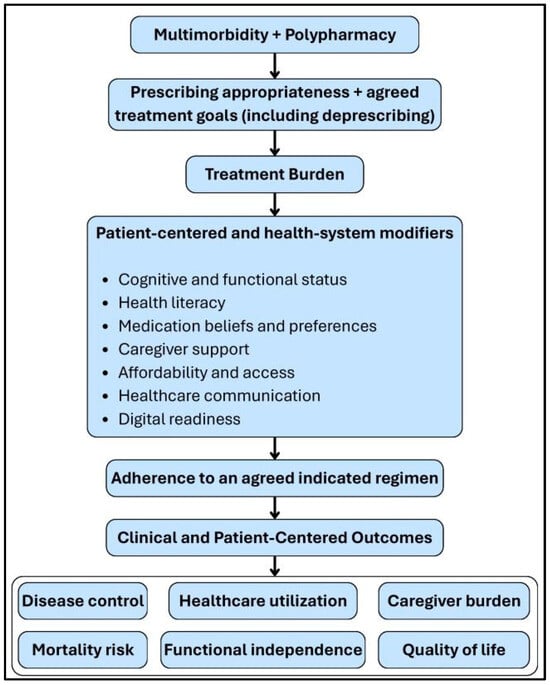

Disclaimer/Publisher’s Note: The statements, opinions and data contained in all publications are solely those of the individual author(s) and contributor(s) and not of MDPI and/or the editor(s). MDPI and/or the editor(s) disclaim responsibility for any injury to people or property resulting from any ideas, methods, instructions or products referred to in the content. |
© 2026 by the authors. Licensee MDPI, Basel, Switzerland. This article is an open access article distributed under the terms and conditions of the Creative Commons Attribution (CC BY) license.