


Abstract
Introduction: Patients with Locally Advanced Renal Cell Cancer (LARCC) may be subjected to multivisceral resection (MVR) of invaded organs to achieve R0 resection and local disease control. The aim of the present study was to systematically review all available literature on the postoperative and long-term outcomes of MVR for RCC and highlight its role in current oncologic treatment strategies. Material and Methods: The PubMed, Scopus and Cochrane databases were systematically searched by two independent investigators for studies concerning MVR for LARCC. Results: In total, 10 original studies including 474 patients met our inclusion criteria. The female:male ratio was 1:1.8 and the median age varied from 56 to 64 years. Regarding patients’ symptoms, 47.83% (95% CI, 40.1–55.01%) of the patients presented with local clinical symptoms and 44.02% (95% CI, 37.04–53.50%) of patients with systematic symptomatology, while only 8.15% (95% CI, 4.91–13.1%) of patients were asymptomatic and were diagnosed incidentally. The median tumor size measured between 10 cm and 14.5 cm. Seven articles (161 patients) assessed the histologic findings of the RCC, with the majority (83.5%) classified as the clear cell type. Lymphovascular invasion was reported in 32 tumor specimens, tumor necrosis in 45 patients and sarcomatoid features in 55 specimens. Radical nephrectomy (RN) combined with resection of one organ was performed in 86.65% (95% CI, 82.85–89.7%) of patients, while RN along with resection of more than one was performed in 13.35% (95% CI, 10.3–17.15%) of patients. The liver, the large bowel, the spleen and the adrenal glands were the most frequently resected organs for MVR. Regarding survival, three studies reported survival data with a median cancer-specific survival ranging from 10 to 36 months. Conclusions: Radical nephrectomy combined with MVR of adjacent organs is feasible and both patient and tumor characteristics should be carefully assessed to optimize candidate selection. Whether MVR can offer a survival advantage remains to be determined and further well-designed studies are needed.
1. Introduction
Renal cancer is considered a relatively common cancer globally, ranking as the sixth most common malignancy in men and the ninth most common malignancy in women [1,2]. Partial nephrectomy is considered the standard treatment for patients with T1 tumors (<7 cm) and should be discussed for T2 tumors (>7 cm), if technically feasible, especially in solitary kidneys, bilateral renal tumors or Chronic Kidney Disease (CKD) with sufficient parenchymal volume [3,4,5]. In locally advanced renal cancer (T3 and T4), open radical nephrectomy is the optimal choice for patients fit for surgery with resectable tumor, while palliative or systematic therapy comprise alternative options for unresectable tumor or/and for patients unfit for surgery [3,6]. Of note, advanced and metastatic RCCs warrant systemic treatment [3,7]. Cytoreduction with radical nephrectomy may still be considered for patients with low-volume single-organ metastatic disease with a large primary tumor, or for patients with complete response to upfront systemic therapy [8,9,10]. Although surgical resection has been the mainstay of treatment for localized disease, the role of surgery in cases of venous involvement or invasion to adjacent organs remains controversial, and the surgical option for locally advanced disease may represent a challenge [11,12]. Accurate preoperative staging of LARCC is essential for the exclusion of metastatic disease, appropriate patient selection, and determination of the optimal therapeutic approach. Multiphasic contrast-enhanced computed tomography [6] of the abdomen and chest are considered optimal modalities for the diagnosis and staging of renal tumors, while magnetic resonance imaging (MRI) should be preferred to better evaluate venous involvement of RCC 38792005. Interestingly, brain CT or MRI should be offered in patients when systemic therapy or cytoreductive RN is considered, while bone imaging can be used in the presence of specific clinical or laboratory findings [13].
In cases of RCC invasion to adjacent structures such as the spleen, duodenum, liver, pancreas or the diaphragm, multivisceral en bloc resection is considered a potentially curative intervention [10,14,15]. Although surgically feasible, these data are derived from case series and retrospective studies involving small numbers of patients and should therefore be interpreted with caution. Those surgical procedures are technically challenging and require multidisciplinary collaboration between urologists and surgical oncologists to achieve a complete R0 resection [16,17]. Currently there are insufficient data regarding optimal patient selection, timing of surgery, the need for adjuvant or neoadjuvant therapy and long-term oncological results of these aggressive surgical techniques. More specifically, most of the adjuvant treatments described in the literature have become outdated and are no longer recommended. The majority of findings mainly derive from retrospective case series and single-center studies, revealing a lack of standardized protocols, published guidelines and comprehensive surgical strategy algorithms for these patients [17,18].
To our knowledge, this is the first systematic review willing to collect knowledge on the role of MVR for locally advanced RCC disease. The aim of this study was to synthesize the existing findings regarding surgical management and therapeutic strategies for locally advanced RCC, while highlighting the oncological outcomes and adverse events of multiorgan resection of adjacent organs for these patients.
2. Materials and Methods
2.1. Literature Search and Inclusion Criteria
This systematic review was performed according to the PRISMA (Preferred Reporting Items for Systematic Reviews and Meta-Analyses) guidelines, following the protocol mutually agreed upon by all authors [19]. Two independent researchers (PD, CP) performed an extensive search in the PubMed/Medline, Scopus, and Cochrane databases for publications concerning T4 LARCC (last search conducted: 5 July 2026). The search employed Boolean operators (AND, OR) along with the following keywords: (“Kidney Neoplasms” OR “renal cancer” OR “kidney cancer” OR “renal cell carcinoma” OR “RCC” OR “locally advanced”) AND (“multiorgan resection” OR “multivisceral resection”). The review protocol was not registered in a public registry. The completed PRISMA checklist is provided in Supplementary Table S1.
Eligible studies focusing on MVR for clinical-stage T4 LARCC and written in English, without a specific publication date limit, were reviewed. The snowball methodology was applied examining references of all included articles in order to discover other potentially eligible manuscripts. Any disputes were resolved by a third researcher (IG). Articles that concerned RCC with distant hematogenous or lymph node metastases, studies not written in English, literature reviews, case reports, letters to the editor, articles lacking original data, in vitro research, animal studies, and abstracts were excluded from this systematic review.
2.2. Data Extraction
Data extraction was performed by two independent researchers (IG, PD) using a pre-defined template. The following variables were collected and tabulated: study and patients’ characteristics, including author names, publication dates, study design, study origin, number of included cases, patients gender and age and patient symptomatology. In addition, tumor characteristics and treatment options were recorded: tumor location, macroscopic and histologic tumor findings, TNM classification, surgical treatment strategies, number of resected or invaded organs, lymphadenectomy, survival rates, postoperative and intraoperative complications, adjuvant treatment, survival rates and follow-up of patients subjected to MVR.
2.3. Statistical Analyses
Continuous variables were expressed as mean ± SD (standard deviation) or median whereas categorical variables were presented as absolute frequencies and percentages. Relative proportions, together with their corresponding 95% confidence intervals (CIs), were calculated based on available data for each variable of interest. Statistical analysis was performed via IBM SPSS Statistics for Windows, Version 24.0. Armonk, NY: IBM Corp. Although a meta-analysis was initially planned, quantitative pooling was deemed inappropriate due to the limited number of eligible studies and substantial clinical and methodological heterogeneity among them.
Assessment of Study Quality
The methodological quality of the included studies was evaluated via the assessment tool developed by the National Heart, Lung, and Blood Institute (NHLBI), which incorporates methodological principles established by the Agency for Healthcare Research and Quality, the Cochrane Collaboration, the United States Preventive Services Task Force, the Scottish Intercollegiate Guidelines Network, and the National Health Service Centre for Reviews and Dissemination [14]. The NHLBI scoring system ranges from 1 to 9, with scores of 1–3, 4–6, and 7–9 indicating poor, fair, and good methodological quality, respectively. The mean and standard deviation (SD) of the overall NHLBI scores were calculated. Quality appraisal was independently conducted by three reviewers (IG, PD, CP), and the individual assessments were subsequently consolidated to provide a comprehensive evaluation of study quality.
3. Results
3.1. Quality Assessment
The mean NHLBI score among the 10 eligible studies included in this systematic review was 5.9, indicating an overall fair methodological quality. Among included studies, three were classified of high quality and six fair, while one was considered to be of poor quality. Detailed NHLBI and JBI quality assessment results for all included studies are presented in Supplementary Table S2.
3.2. Article Selection and Patient Demographics
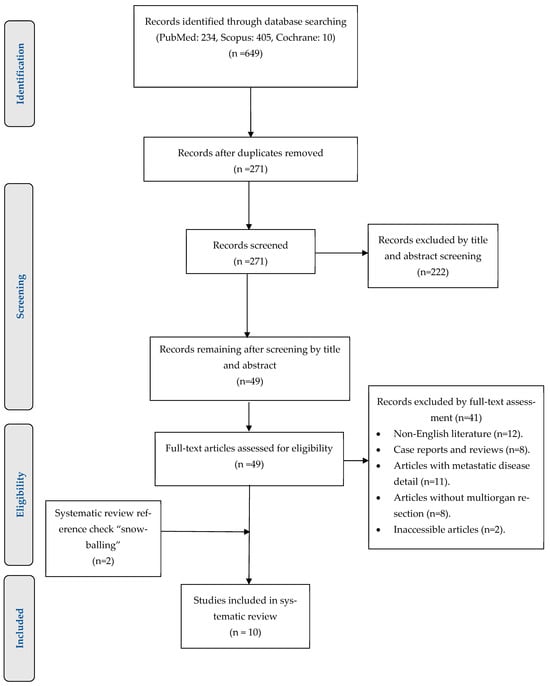
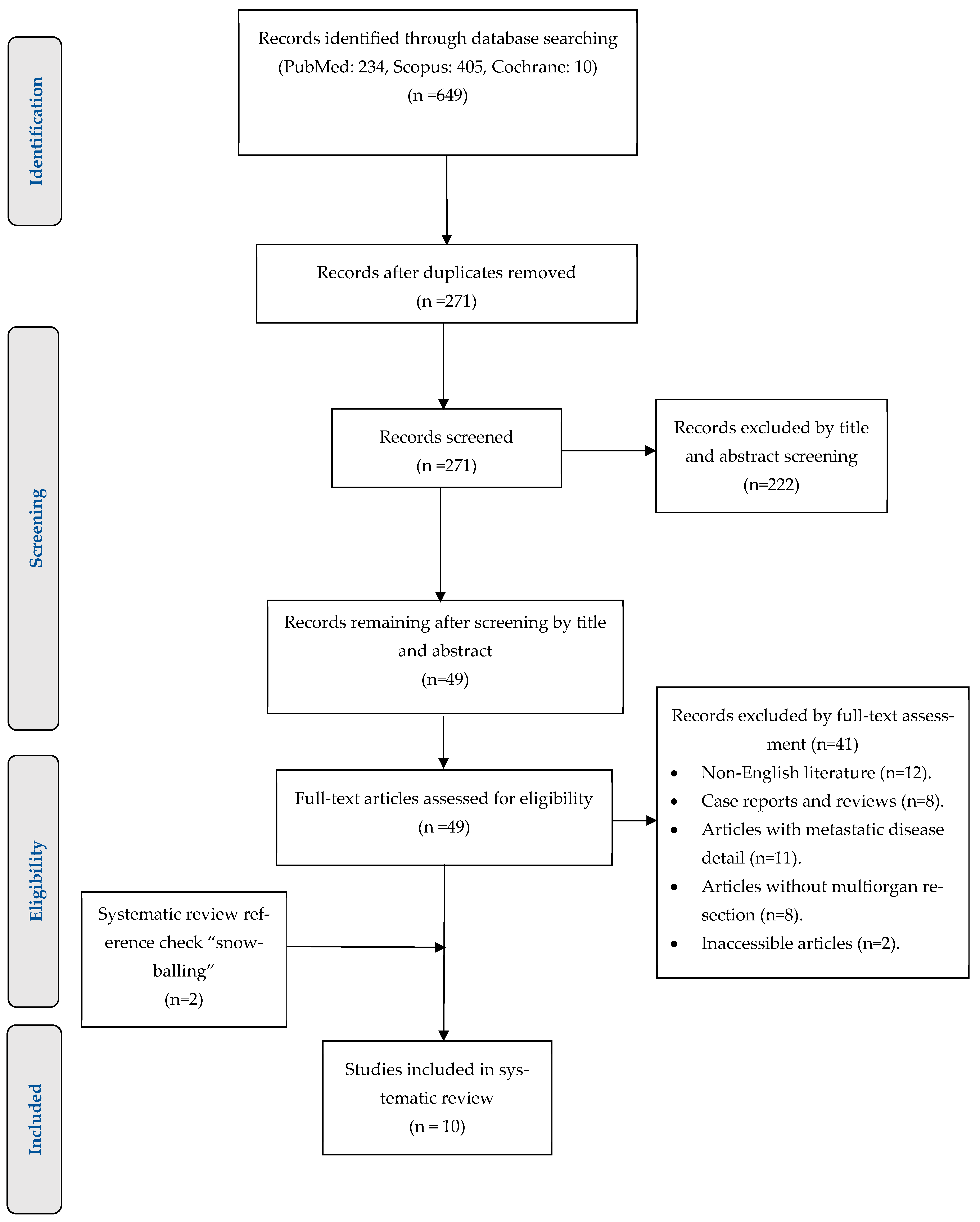
Our literature search yielded 271 unique articles following removal of duplicate publications. Overall, 10 articles met the inclusion criteria and were included in our systematic analysis (Figure 1). Included articles were published between 1995 and 2023. Geographically, seven studies were conducted in the USA, and one in each of Spain, Japan and India. Regarding the study types, eight retrospective studies, one matched cohort study and one case series study were included in our analysis. In total, 462 patients were included and analyzed. Out of the available data, 258 patients were males and 143 were females, with a female:male ratio of 1:1.8. The median patient age among studies varied from 56 to 64 years. Regarding patients’ symptoms, out of the available data, 88 patients (47.83%) presented with local clinical manifestations and 81 (44.02%) with systematic symptomatology, while only 15 patients (8.15%) were asymptomatic and were diagnosed incidentally. Patients’ demographic characteristics and clinical manifestations of the included studies are presented in Table 1.
Figure 1.
Prisma flow chart of this systematic review.
Table 1.
Demographic characteristics and clinical manifestations of included patients.
3.3. Staging and Tumor Characteristics of LARCC
In six studies the TNM staging was presented including 143 patients, with 75.52% (108 pts, 95% CI, 67.87–81.84%) of them staged with T4 disease and the remaining 24.48% (35 pts, 95% CI, 17.68–32.36%) presented with T3 RCC. Furthermore, nodal involvement (N1 or N2) was reported in only 40 patients.
The median tumor size ranged from 10 cm to 14.5 cm with most of the tumors being of the clear cell type 83.85% (n = 135, 95% CI, 77.34–88.79%). The rest of the histopathology was transitional histology and one adrenocortical carcinoma. Regarding the microscopic findings, lymphovascular invasion was found in 25.81% (n = 32) cases, tumor necrosis in 36.29% (n = 45) and sarcomatoid features in 44.35% (n = 55) cases. Inferior vena cava thrombectomy was reported in 30 patients. Macroscopic and microscopic RCC characteristics are shown in Table 2.
Table 2.
Macroscopic and microscopic findings and survival data of included RCC cases.
3.4. Type of Surgical and Adjuvant Treatment
Radical nephrectomy (RN) combined with resection of one organ was performed in 86.65% (n = 331) of the cases, while RN along with resection of multiple organs (more than one) was performed in 13.35% (n = 51). The liver, the large bowel, the spleen and the adrenal glands were the most frequently resected organs for MVR, while the small bowel, the duodenum, the pancreas and the psoas muscle comprised other excised organs. The exact number and type of invaded/resected organs by LARCC are presented in Table 3. Out of the available data, six studies including 163 patients assessed surgical margins, and R0 resection was achieved in 85.28% (n = 139) of the patients that underwent MVR, while R1 resections were described in 14.72% (n = 24) of patients.
Table 3.
Number and type of invaded/resected organs by LARCC. AG: Adrenal Gland, SB: Small Bowel, SP: Spleen, C: Colon, D: Duodenum, L: Liver, PM: Psoas Muscle, P: Pancreas, NR: Non-Reported.
In total, in four studies, including 88 patients, adjuvant or neoadjuvant therapy was administered in patients that underwent MVR for LARCC. Only 14 patients received neoadjuvant therapy, including sunitinib given to seven patients, IL-2/interferon/5-FU to three patients, capecitabine/gemcitabine to two patients, and bevacizumab and 5-FU/adriamycin/cisplatin to one patient. Most common was the adjuvant treatment administration (n = 74) with 10 patients receiving interferon-a, 11 patients interferon-a combined with IL-6, two patients cis-retinoic acid, and one patient suramin and sorafenib, while seven patients received adjuvant radiation therapy.
3.5. Survival and Complication Rates of MVR for LARCC
Regarding the oncological outcomes of MVR for LARCC, the available data are sparse and only five studies presented survival data. The largest series, by Borregales et al., included 61 patients, of whom 17 (27.8%) had no evidence of disease after surgery. Recurrence occurred later in 11 of these patients, including seven with distant, two with local and two with both local and distant recurrences. Of note, the median cancer-specific survival (CSS) was 10 months (95% CI, 8.7–17.2 months). In addition, Gonzalez et al. and Yezhelyev et al. reported a median cancer-specific and overall survival of 36 and 25 months, respectively; however, detailed data regarding recurrence and cancer-specific mortality were not available. Johnin et al. reported two patients, both of whom remained free of recurrence, with no cancer-related deaths during 4 to 8 months of follow-up. Finally, Karellas et al. reported a median survival from surgery to death at 11.7 months.
Data on perioperative complications was available in only four of the included studies. Gonzalez et al. reported an overall complication rate of 44.4%, including both intraoperative and postoperative adverse events. Intraoperative complications included pancreatic injury and atrial fibrillation, whereas postoperative complications included intra-abdominal collections, wound infection, pancreatitis, pancreatic leak, and prolonged intubation. Similarly, Yezhelyev et al. reported postoperative complications in 50% of patients, with pulmonary complications (30%), surgical site infections (15%), and intra-abdominal abscesses (10%) being the most frequently observed. Margulis et al. reported both major and minor complications in 16.7% of patients, respectively. Finally, Ciancio et al., in a series of 70 patients undergoing MVR for masses in the left upper retroperitoneum (only eight concerned RCC), reported only intraoperative complications involving adjacent organs, including splenic injury (n = 4), pancreatic injury (n = 2), gastric serosal injury (n = 1), and major intraoperative blood loss (n = 1), while no long-term postoperative complications were observed.
4. Discussion
En bloc resection of RCC along with invaded surrounding structures comprise a surgical option for locally advanced disease [28]. Although R0 resection is the optimal goal for these tumors, they are technically demanding and are related with increased morbidity and high recurrence rates [14]. Importantly, ongoing advancements in surgical approaches and minimally invasive techniques, alongside the refinement of perioperative care, have been associated with decreased postoperative morbidity and improved survival outcomes in patients with RCC. [14]. In our study we managed to collect the existing knowledge regarding curative approaches and oncological outcomes of multiorgan resection for locally advanced RCC. Despite scarce evidence, these demanding surgical procedures should be offered in a selected population with good performance status and lower burden of disease [14]. Within this framework, it seems that invasion of RCC to adjacent organs should not constitute an a priori contraindication for potentially curative resections [29]. The EAU guidelines for LARCC include recommendations for the surgical management of RCC with venous tumor thrombus and lymph node disease or the administration of systematic therapy for unresectable tumors, while there are no recommendations concerning the role of MVR for LAGC in resectable tumors. Of note, there are no available data to compare MVR vs. systematic treatment for LARCC in order to report any difference between these therapeutic methods. Our study showed that despite MVR in patients with LARCC, multiorgan resection could be performed safely in experienced surgeons with relatively low morbidity and mortality rates, while long-term oncologic outcomes for these patients are missing.
Resection of large tumors is challenging due to their relative inaccessibility, the high incidence of multiple pathologic findings, and complex vascular anatomy and thus pose a challenging scenario even for experienced surgeons [16,30]. Theoretically, because of the central retroperitoneal location and the natural protective barrier of Gerota fascia, it is considerably more frequent for a renal mass to indent adjacent organs rather than to directly infiltrate them [26]. As a result, radical nephrectomy in patients with locally advanced RCC may be limited by extensive local tumor invasion, increased number of invaded organs or involvement of major vascular structures. Interestingly, Ciancio et al. described a complex en bloc mobilization of the spleen, pancreas and stomach for masses in the left upper retroperitoneum [16]. These tumors usually constitute large, poorly differentiated renal masses with an increased likelihood of LN metastases, venous tumor thrombus, and adrenal involvement [20]. In addition, large renal masses frequently induce reactive desmoplasia, obliterating surgical tissue planes, and mimicking pT4 disease [31]. Margulis et al. showed that the majority of patients initially thought to have invasion of adjacent organs clinically were downstaged during final pathologic evaluation [26]. These locally advanced tumors are also associated with aggressive features such as Fuhrman grade 3 or 4, sarcomatoid dedifferentiation and lymphovascular invasion [20]. According to our systematic analysis, the majority of tumors consisted of CC-RCC and inferior vena cava thrombectomy was reported only in 30 patients. Of note, adverse histopathological features were frequently observed with lymphovascular invasion being present in 25.81% of cases, tumor necrosis in 36.29%, and sarcomatoid differentiation in 44.35% of the patients.
In a retrospective study of LARCC cases described by Margulis et al., the colon, pancreas, and diaphragm were the most commonly infiltrated adjacent organs, whereas invasion into the spleen, liver, and bowel mesentery was rare [26]. Of note, all surgical margins of excised structures were found negative. Additionally, in another retrospective study by Borregales et al., the adrenal gland, liver, pancreas and colon comprised the most commonly invaded adjacent organs for LARCC [20]. According to our systematic review, the liver, large bowel, spleen and adrenal glands comprised the most frequently excised organs for MVR, while the small bowel, duodenum, pancreas and psoas muscle were not usually invaded.
Despite aggressive surgical management, long-term oncological outcomes following MVR for LARCC remain suboptimal and under-reported. Previous reports have suggested that fewer than 5% of patients with pathologically confirmed adjacent organ invasion survive beyond 5 years following surgery [26]. In the largest published series, Borregales et al. reported a median cancer-specific survival of only 10 months, with the majority of patients experiencing disease recurrence or cancer-related death during follow-up [20]. In contrast, Gonzalez et al. demonstrated a median cancer-specific survival of 36 months, whereas Yezhelyev et al. reported a median overall survival of 25 months [15,23]. These findings should be interpreted with caution because of the limited sample sizes and heterogeneity of the available studies. Interestingly, although MVR for RCC may provide durable disease control in carefully selected patients, the overall prognosis remains poor.
The available evidence indicates that survival outcomes vary considerably across studies, likely reflecting differences in patient selection, disease burden, pathological features, and duration of follow-up. These factors along with marked heterogeneity and the retrospective design among studies have precluded the identification of consistent prognostic factors associated with patient survival. According to Margulis et al., pathological T stage and lymph node involvement emerged as the only independent predictors of disease recurrence and cancer-specific mortality on multivariable analysis [26]. More specifically, the same study reported significantly inferior 3-year cancer-specific survival among patients with metastatic lymph nodes (12% vs. 66%) and those with histologically confirmed visceral organ invasion (22% vs. 66%), highlighting the adverse prognostic impact of advanced pathological disease [26]. Similarly, Karellas et al. identified surgical margin status as the only independent predictor of overall survival, whereas the number of resected organs, tumor size greater than 7 cm, high pathological grade, sarcomatoid differentiation, and adrenal involvement were not significantly associated with survival [25]. These findings suggest that the biological aggressiveness of the tumor and the ability to achieve complete (R0) resection are more crucial determinants of oncological outcomes than the extent of the surgical procedure itself. Therefore, meticulous preoperative staging and careful patient selection remain essential to identify patients most likely to benefit from multivisceral resection, aiming to apply personalized approaches, according to individualized patient characteristics and risk stratification. More specifically, the advancement of imaging modalities will aid surgeons to focus on careful staging of LARCC in order to identify patients with metastatic disease and avoid excessive surgical procedures accompanied with major post-surgical complications [32].
Our systematic analysis presents with several limitations that should be acknowledged. Most of studies concerned retrospective studies from single institutions that were published in different time periods with varying surgical approaches and advancement of minimally invasive techniques. Importantly, these differences may account for the administration of adjuvant therapies that are no longer considered preferred treatment options in current clinical practice, as well as the lack of studies evaluating the role of adjuvant immunotherapy in these patients. Notably, recent advances in systemic therapies have rendered the options analyzed in our study obsolete, suggesting that contemporary treatments may offer more promising outcomes. Currently, adjuvant immunotherapy with pembrolizumab following complete nephrectomy represents the standard of care for high-risk clear cell RCC (including pT3 or N+ disease), whereas neoadjuvant systemic therapy remains strictly experimental within clinical trials. Second, although the analysis was intended to focus exclusively on post-MVR outcomes in T4 LAGC, the inclusion of T3 lesions that were overstaged as T4 on preoperative imaging should be acknowledged as a potential source of patient selection bias. Third, MVR comprises a heterogenous group of patients and limiting our analysis to cases of MVR for multiple involved organs was not feasible. In addition, no available data concerning mortality rates post MVR were available in the majority of the included studies. Of note, the lack of reported follow-up and disease recurrence rates precludes the assessment of surgical procedure efficacy. Further data extraction for these clinical questions was not feasible, since specific data was not provided within the selected articles. Fourth, advancement in surgical, anesthetic, and medical management techniques was presented throughout the years which may explain why some studies report different outcomes and present heterogeneous data. Finally, although we tried to meta-analyze included data, this intention failed due to the restricted number of published studies and increased heterogeneity in the recording of our primary outcomes.
5. Conclusions
Radical nephrectomy combined with resection of one organ was reported in the majority of cases, and the liver, large bowel, spleen and adrenal glands were the most frequently resected organs for MVR. Achieving a R0 resection was feasible in the majority of cases despite local advancement of RCC. However, the available evidence is limited by the retrospective design and considerable heterogeneity of published studies, precluding the identification of reliable prognostic factors. Future well-designed multicenter studies, with a minimum follow-up of two years, are needed to better define the role of MVR and should focus on recording survival rates and postoperative complications of MVR, while also identifying clinical and pathological factors that influence the survival of these patients.
Supplementary Materials
The following supporting information can be downloaded at https://www.mdpi.com/article/10.3390/jpm16110577/s1. Supplementary Table S1: PRISMA 2020 checklist; Supplementary Table S2: Quality assessment of included studies using the NHLBI Quality Assessment Scale for case series.
Author Contributions
Conceptualization, I.G. and D.S.; methodology, I.G. and Z.K.; software, P.D. and C.P.; validation, P.D., C.P., P.M.L., V.T., N.M. and M.C.; formal analysis, I.G. and D.S.; investigation, C.P. and P.D.; resources, I.G.; data curation, M.C. and D.S.; writing—original draft preparation, I.G., P.D. and C.P.; writing—review and editing, P.D., C.P., P.M.L., V.T., N.M., Z.K., D.S. and M.C.; visualization, Z.K.; supervision, M.C. and D.S.; project administration, M.C. and D.S.; funding acquisition, none. All authors have read and agreed to the published version of the manuscript.
Funding
This research received no external funding.
Institutional Review Board Statement
Not applicable.
Informed Consent Statement
Not applicable.
Data Availability Statement
Data supporting reported results are available at https://github.com/iliasgiann/MVR-for-RCC.git (accessed on 16 September 2026).
Conflicts of Interest
The authors declare no conflict of interest.
References
- Bray, F.; Laversanne, M.; Sung, H.; Ferlay, J.; Siegel, R.L.; Soerjomataram, I.; Jemal, A. Global cancer statistics 2022: GLOBOCAN estimates of incidence and mortality worldwide for 36 cancers in 185 countries. CA Cancer J. Clin. 2024, 74, 229–263. [Google Scholar] [CrossRef] [Scilit] [PubMed]
- Siegel, R.L.; Giaquinto, A.N.; Jemal, A. Cancer statistics, 2024. CA Cancer J. Clin. 2024, 74, 12–49. [Google Scholar] [CrossRef] [Scilit] [PubMed]
- Bex, A.; Ghanem, Y.A.; Albiges, L.; Bonn, S.; Campi, R.; Capitanio, U.; Dabestani, S.; Hora, M.; Klatte, T.; Kuusk, T.; et al. European Association of Urology Guidelines on Renal Cell Carcinoma: The 2025 Update. Eur. Urol. 2025, 87, 683–696. [Google Scholar] [CrossRef] [Scilit] [PubMed]
- Sprenkle, P.C.; Power, N.; Ghoneim, T.; Touijer, K.A.; Dalbagni, G.; Russo, P.; Dalbagni, G.; Russo, P.; Coleman, J.A. Comparison of open and minimally invasive partial nephrectomy for renal tumors 4–7 centimeters. Eur. Urol. 2012, 61, 593–599. [Google Scholar] [CrossRef] [Scilit] [PubMed]
- Badalato, G.M.; Kates, M.; Wisnivesky, J.P.; Choudhury, A.R.; McKiernan, J.M. Survival after partial and radical nephrectomy for the treatment of stage T1bN0M0 renal cell carcinoma (RCC) in the USA: A propensity scoring approach. BJU Int. 2012, 109, 1457–1462. [Google Scholar] [CrossRef] [Scilit] [PubMed]
- Powles, T.; Albiges, L.; Bex, A.; Comperat, E.; Grunwald, V.; Kanesvaran, R.; Kitamura, H.; McKay, R.; Porta, C.; Procopio, G.; et al. Renal cell carcinoma: ESMO Clinical Practice Guideline for diagnosis, treatment and follow-up. Ann. Oncol. 2024, 35, 692–706. [Google Scholar] [CrossRef] [Scilit] [PubMed]
- Bedke, J.; Albiges, L.; Capitanio, U.; Giles, R.H.; Hora, M.; Ljungberg, B.; Marconi, L.; Klatte, T.; Volpe, A.; Abu-Ghanem, Y.; et al. The 2022 Updated European Association of Urology Guidelines on the Use of Adjuvant Immune Checkpoint Inhibitor Therapy for Renal Cell Carcinoma. Eur. Urol. 2023, 83, 10–14. [Google Scholar] [CrossRef] [Scilit] [PubMed]
- Chen, Y.W.; Wang, L.; Panian, J.; Dhanji, S.; Derweesh, I.; Rose, B.; Bagrodia, A.; McKay, R.R. Treatment Landscape of Renal Cell Carcinoma. Curr. Treat. Options Oncol. 2023, 24, 1889–1916. [Google Scholar] [CrossRef] [Scilit] [PubMed] [PubMed Central]
- Pignot, G.; Thiery-Vuillemin, A.; Albiges, L.; Walz, J.; Lang, H.; Balssa, L.; Parier, B.; Geoffrois, L.; Bensalah, K.; Schlürmann, F.; et al. Oncological Outcomes of Delayed Nephrectomy After Optimal Response to Immune Checkpoint Inhibitors for Metastatic Renal Cell Carcinoma. Eur. Urol. Oncol. 2022, 5, 577–584. [Google Scholar] [CrossRef] [Scilit] [PubMed]
- Dragomir, A.; Nazha, S.; Tanguay, S.; Breau, R.H.; Bhindi, B.; Rendon, R.A.; Kapoor, A.; Hotte, S.J.; Basappa, N.; Fairey, A.; et al. Outcomes of Cytoreductive Nephrectomy for Patients with Metastatic Renal Cell Carcinoma: Real World Data from Canadian Centers. Eur. Urol. Focus 2022, 8, 1703–1710. [Google Scholar] [CrossRef] [Scilit] [PubMed]
- Kirkali, Z.; Van Poppel, H. A critical analysis of surgery for kidney cancer with vena cava invasion. Eur. Urol. 2007, 52, 658–662. [Google Scholar] [CrossRef] [Scilit] [PubMed]
- Chen, Z.; Yang, F.; Ge, L.; Qiu, M.; Liu, Z.; Liu, C.; Tian, X.; Zhang, S.; Ma, L. Outcomes of renal cell carcinoma with associated venous tumor thrombus: Experience from a large cohort and short time span in a single center. BMC Cancer 2021, 21, 766. [Google Scholar] [CrossRef] [Scilit]
- Bellin, M.F.; Valente, C.; Bekdache, O.; Maxwell, F.; Balasa, C.; Savignac, A.; Meyrignac, O. Update on Renal Cell Carcinoma Diagnosis with Novel Imaging Approaches. Cancers 2024, 16, 1926. [Google Scholar] [CrossRef] [Scilit] [PubMed]
- Abdul-Muhsin, H.M.; Stern, K.L.; Katariya, N.N.; Castle, E.P. Robot assisted “en bloc” radical nephrectomy, splenectomy and distal pancreatectomy for renal cell carcinoma: Case report and illustration of technique. J. Robot. Surg. 2016, 10, 375–378. [Google Scholar] [CrossRef] [Scilit] [PubMed]
- Gonzalez, J.; Gaynor, J.J.; Ciancio, G. Renal Cell Carcinoma with or without Tumor Thrombus Invading the Liver, Pancreas and Duodenum. Cancers 2021, 13, 1695. [Google Scholar] [CrossRef] [Scilit] [PubMed]
- Ciancio, G.; Vaidya, A.; Shirodkar, S.; Manoharan, M.; Hakky, T.; Soloway, M. En bloc mobilization of the pancreas and spleen to facilitate resection of large tumors, primarily renal and adrenal, in the left upper quadrant of the abdomen: Techniques derived from multivisceral transplantation. Eur. Urol. 2009, 55, 1106–1111. [Google Scholar] [CrossRef] [Scilit] [PubMed]
- Schlussel, A.T.; Fowler, A.B.; Chinn, H.K.; Wong, L.L. Management of locally advanced renal cell carcinoma with invasion of the duodenum. Case Rep. Surg. 2013, 2013, 596362. [Google Scholar] [CrossRef] [Scilit] [PubMed]
- Becher, E.; Jericevic, D.; Huang, W.C. Minimally Invasive Surgery for Patients with Locally Advanced and/or Metastatic Renal Cell Carcinoma. Urol. Clin. N. Am. 2020, 47, 389–397. [Google Scholar] [CrossRef] [Scilit] [PubMed]
- Page, M.J.; McKenzie, J.E.; Bossuyt, P.M.; Boutron, I.; Hoffmann, T.C.; Mulrow, C.D.; Shamseer, L.; Tetzlaff, J.M.; Akl, E.A.; Brennan, S.E.; et al. The PRISMA 2020 statement: An updated guideline for reporting systematic reviews. Int. J. Surg. 2021, 88, 105906. [Google Scholar] [CrossRef] [PubMed]
- Borregales, L.D.; Kim, D.Y.; Staller, A.L.; Qiao, W.; Thomas, A.Z.; Adibi, M.; Tamboli, P.; Sircar, K.; Jonasch, E.; Tannir, N.M.; et al. Prognosticators and outcomes of patients with renal cell carcinoma and adjacent organ invasion treated with radical nephrectomy. Urol. Oncol. 2016, 34, 237.e19–237.e26. [Google Scholar] [CrossRef] [Scilit] [PubMed]
- Johnin, K.; Nakai, O.; Kataoka, A.; Koizumi, S.; Dok An, C.; Okada, Y.; Makuuchi, M. Surgical management of renal cell carcinoma invading into the liver: Radical nephrectomy en bloc with right hepatic lateral sector. Urology 2001, 57, 975. [Google Scholar] [CrossRef] [Scilit] [PubMed]
- Joyce, D.D.; Psutka, S.P.; Groeschl, R.T.; Thompson, R.H.; Boorjian, S.A.; Cheville, J.C.; Stewart-Merrill, S.B.; Lohse, C.M.; Costello, B.A.; Que, F.G.; et al. Complications and Outcomes Associated With Surgical Management of Renal Cell Carcinoma Involving the Liver: A Matched Cohort Study. Urology 2017, 99, 155–161. [Google Scholar] [CrossRef] [Scilit] [PubMed]
- Yezhelyev, M.; Master, V.; Egnatashvili, V.; Kooby, D.A. Combined nephrectomy and major hepatectomy: Indications, outcomes, and recommendations. J. Am. Coll. Surg. 2009, 208, 410–418. [Google Scholar] [CrossRef] [Scilit] [PubMed]
- Manjunath, S.; Ramachandra, C.; Murthy, V.; Murthy, P.S.; Prabhakaran, P.S.; Attili, V.S. Surgical resection for locally invasive renal cell carcinoma: Is it worthwhile? Indian J. Urol. 2007, 23, 246–249. [Google Scholar] [CrossRef] [Scilit] [PubMed] [PubMed Central]
- Karellas, M.E.; Jang, T.L.; Kagiwada, M.A.; Kinnaman, M.D.; Jarnagin, W.R.; Russo, P. Advanced-stage renal cell carcinoma treated by radical nephrectomy and adjacent organ or structure resection. BJU Int. 2009, 103, 160–164. [Google Scholar] [CrossRef] [Scilit] [PubMed]
- Margulis, V.; Sánchez-Ortiz, R.F.; Tamboli, P.; Cohen, D.D.; Swanson, D.A.; Wood, C.G. Renal cell carcinoma clinically involving adjacent organs: Experience with aggressive surgical management. Cancer 2007, 109, 2025–2030. [Google Scholar] [CrossRef] [Scilit] [PubMed]
- Lim, K.; Riveros, C.; Ranganathan, S.; Xu, J.; Patel, A.; Slawin, J.; Ordonez, A.; Aghazadeh, M.; Morgan, M.; Miles, B.J.; et al. Morbidity and mortality of multivisceral resection with radical nephrectomy for locally advanced renal cell carcinoma: An analysis of the National Surgical Quality Improvement Program (NSQIP) database. Urol. Oncol. 2023, 41, 209.e1–209.e9. [Google Scholar] [CrossRef] [Scilit] [PubMed]
- Zhang, X.W.; Jäger, D.; Zschäbitz, S. Management of Advanced Renal Cell Carcinoma. Oncol. Res. Treat. 2026, 49, 26–34. [Google Scholar] [CrossRef] [Scilit] [PubMed]
- Flanigan, R.C.; Mickisch, G.; Sylvester, R.; Tangen, C.; Van Poppel, H.; Crawford, E.D. Cytoreductive nephrectomy in patients with metastatic renal cancer: A combined analysis. J. Urol. 2004, 171, 1071–1076. [Google Scholar] [CrossRef] [Scilit] [PubMed]
- Almatari, A.L.; Sathe, A.; Wideman, L.; Dewan, C.A.; Vaughan, J.P.; Bennie, I.C.; Buscarini, M. Renal cell carcinoma with tumor thrombus: A review of relevant anatomy and surgical techniques for the general urologist. Urol. Oncol. 2023, 41, 153–165. [Google Scholar] [CrossRef] [Scilit] [PubMed]
- Connolly, J.; Eisner, D.; Goldman, S.; Stutzman, R.; Steiner, M. Benign retroperitoneal fibrosis and renal cell carcinoma. J. Urol. 1993, 149, 1535–1537. [Google Scholar] [CrossRef] [Scilit] [PubMed]
- Woon, D.; Qin, S.; Al-Khanaty, A.; Perera, M.; Lawrentschuk, N. Imaging in Renal Cell Carcinoma Detection. Diagnostics 2024, 14, 2105. [Google Scholar] [CrossRef] [Scilit] [PubMed]

Disclaimer/Publisher’s Note: The statements, opinions and data contained in all publications are solely those of the individual author(s) and contributor(s) and not of MDPI and/or the editor(s). MDPI and/or the editor(s) disclaim responsibility for any injury to people or property resulting from any ideas, methods, instructions or products referred to in the content. |
© 2026 by the authors. Licensee MDPI, Basel, Switzerland. This article is an open access article distributed under the terms and conditions of the Creative Commons Attribution (CC BY) license.