


Abstract
Electronic cigarettes (EC) are a novel product, marketed as an alternative to tobacco cigarette. Its effects on human health have not been investigated widely yet, especially in specific populations such as patients with asthma. With this review, we use the existing literature in order to answer four crucial questions concerning: (1) ECs’ role in the pathogenesis of asthma; (2) ECs’ effects on lung function and airway inflammation in patients with asthma; (3) ECs’ effects on asthma clinical characteristics in asthmatics who use it regularly; and (4) ECs’ effectiveness as a smoking cessation tool in these patients. Evidence suggests that many EC compounds might contribute to the pathogenesis of asthma. Lung function seems to deteriorate by the use of EC in this population, while airway inflammation alters, with the aggravation of T-helper-type-2 (Th2) inflammation being the most prominent but not the exclusive effect. EC also seems to worsen asthma symptoms and the rate and severity of exacerbations in asthmatics who are current vapers, whilst evidence suggests that its effectiveness as a smoking cessation tool might be limited. Asthmatic patients should avoid using EC.
1. Introduction
Asthma is a chronic inflammatory airway disease characterized by exacerbations and remissions, affecting 1–18% of the population in different countries [1]. Airway inflammation in asthma is typically eosinophilic, but can also be neutrophilic, mixed, or non-granulocytic [1]. Different factors are involved in aggravating airways inflammation in asthmatic patients, with cigarette smoke being one of the main ones [1,2]. Smoking prevalence in patients with asthma approximates that of the general population [3]. Even in severe asthma, the percentages of asthmatic smokers could reach or even exceed these of the general population [4]. The percentage of severe asthmatics that were using e-cigarettes (ECs) in the same study was 2% and was higher than in the general population in many countries [4]. Asthmatic smokers suffer from more symptoms and exacerbations, develop a more rapid decline in pulmonary function and have a worse prognosis than non-smoking asthmatics [5,6,7]. In addition, they usually present with a higher proportion of neutrophils in induced sputum, reduced pH, and heterogenous inflammatory mediator profiles in exhaled breath condensate (EBC) [8,9,10,11].
Since 2003, the EC has become very popular as it was advertised as a tool for smoking cessation. Clinical experience has shown that smokers attempting to quit smoking use the EC as an alternative [12,13,14,15]. However, ECs’ safety has not been scientifically demonstrated, especially in asthmatic patients. In this review, we consolidate the current knowledge about the effects of ECs on asthma by addressing four critical questions: (A) Do EC compounds play a role in the pathogenesis of asthma? (B) What is the effect of EC use on lung function and on airway inflammation in patients with asthma? (C) What is the effect of EC on the clinical characteristics of asthma? (D) Is EC use an effective strategy for smoking cessation in patients with asthma?
2. Materials and Methods
We performed a PubMed search in “All Fields” for “electronic nicotine delivery system” OR “electronic cigarette” OR “e-cigarette” AND “asthma” to the 31 March 2021 with no start date. This search identified 256 unique results. Two of the co-authors performed the PubMed search and identified the results. They decided which studies to exclude from this review based on their abstracts. Items were removed if they were editorials, comments on articles, meeting abstracts, a duplicate, not in English, or irrelevant to the research theme. Subsequently, the results of the procedure were presented to the other co-authors. There were no disagreements between the co-authors about the studies which included and excluded. As a result, 154 items were removed and 102 were included in this review. Articles were categorized based on the questions of this review. For the first question, 28 studies were used (15 reviews, 11 experimental studies, and 2 systematic reviews). For the second question, 15 studies were used (5 interventional animal studies, 4 interventional human studies, 3 observational studies, 2 case studies, and 1 systematic review). For the third question, 60 studies were used (39 observational studies, 8 reviews, 6 case studies, 5 systematic reviews with 4 meta-analyses, and 2 opinion articles). For the fourth question, 41 studies were used (25 observational studies, 8 reviews, 4 systematic reviews with 3 meta-analyses, 3 case studies, and 1 opinion article). Some of the studies included, were used to answer more than one question. For any studies written by one or more co-authors of the present review, an independent author, who did not participate in the study, reviewed it for suitability of inclusion.
3. Results
3.1. Do EC Compounds Play a Role in the Pathogenesis of Asthma?
The constitution of EC aerosol is defined by temperature, and by the contents in the heated liquid as propylene glycol (PG), glycerin, flavoring agents, nicotine in variable concentrations and other non-nicotine substances [16]. Laboratory, observational, and clinical studies have revealed that EC aerosols contain numerous respiratory irritants and toxins and that may have a cytotoxic effect on lung tissue, analogous to that of the tobacco cigarette [17,18]. More than 80 compounds (including known toxins—e.g., formaldehyde, acetaldehyde, metallic nanoparticles, and acrolein) have been found in e-liquid and aerosols and as a result, ECs have been linked with an increase in symptoms in individuals with asthma [16]. Additionally, ECs were found to contain not only formaldehyde but also formaldehyde-forming hemiacetals and potentially toxic particulate matter that deposits on surfaces [19]. The novel-generation high-power electronic nicotine delivery systems (ENDS) which seem to be particularly user-adaptive, produce droplets with a diameter at 0.78 ± 0.03 μm [20,21]. Exposure of the airway epithelial cells to certain liquid flavorings reaches toxicity thresholds. The chocolate flavoring 2,5-dimethypyrazine activates the cystic fibrosis transmembrane conductance regulator (CFTR) ion channel [22]. Work-related inhalation of several usual food-safe flavoring substances has been related with occupational asthma and asthma symptoms deterioration [23]. More specifically, work-related inhalation exposures to the flavoring substance diacetyl was found to cause irreversible obstructive airway disease in healthy workers. The thermal decomposition of PG and vegetable glycerin (VG), the key elements of EC liquids, generates reactive carbonyls, including acetaldehyde, formaldehyde, and acrolein which have well-known lung toxicities [23]. PG vapor has been found to induce respiratory irritation and increase asthma risk, despite the fact that EC use improved home indoor air quality compared with secondhand tobacco smoke [24]. Long-term exposure to EC was found to change the human bronchial epithelial proteome promoting its damage [25]. Heavy EC smoking promotes inflammatory processes (activator of transcription and nuclear factor-κB signaling, Janus tyrosine kinase/signal transducer, and mitogen-activated protein kinase), in a similar way to tobacco smoke. Protracted exposure to some components of EC vapor results in respiratory complications as asthma [26].
Chronic EC exposure also seems to result in increased neutrophil elastase and matrix metalloprotease levels in the lung, abnormal activation of the lung epithelial cells, β-defensins and neutrophilic response (NETosis), activation of transient receptor potential ankyrin 1 (TRAP1), alternations in the normal respiratory microbiota, induced proteolysis and in general impaired respiratory innate immune system, all associated with allergies and asthma [27,28]. Respiratory innate immune cell function has also been found to be impaired by flavored EC liquids and more specifically, by cinnamaldehyde which suppresses phagocytosis by macrophages [29], and provisionally represses ciliary mobility of bronchial epithelial cells through dysregulation of mitochondrial function [30]. These dysregulations of the respiratory immunity by EC could impact asthma development, severity, and/or exacerbations [31].
A recently published review [32] cited that ECs induced oxidative stress toxicity in a range of cells (including lung cells), released pro-inflammatory cytokines, and impaired the ability to fight infection. This increased pro-inflammatory activity suggests that switching to EC would not necessarily resolve the lung inflammation in smokers, while flavor additives could additionally affect cellular function by inducing phagocytosis and cytokine production [32]. Moreover, hydroxyl radical (−OH), the most destructive of reactive oxygen species (ROS), was found in significant amounts in EC vapor due to, or depending on, increased power output, puff volume, coil temperature, and oxygen supply. VG produced greater −OH levels than PG and flavored liquids compared to non-flavored ones. Subsequently, even though the dose of −OH levels per puff associated with EC vaping was 10–1000 times lower than the reported dose generated by conventional cigarette, the daily average −OH level could be comparable to that from cigarette smoking depending on vaping patterns. This means that EC users vaping VG-based flavored liquids at higher power output settings may be at increased risk for −OH exposures and related health consequences, such as asthma [33]. Apart from oxidative stress agents, EC has been shown to promote disorders in pro-inflammatory and pro-fibrotic markers, DNA damage and dysfunction of DNA repair and antioxidant enzymes, which participate in lung disease pathogenesis, such as asthma [34]. Long non-coding RNAs (lncRNAs), which are involved in cell proliferation and differentiation, intracellular communication, and steroid metabolism in lung pathologies, including asthma, have also been found altered after exposure to EC vapor [35].
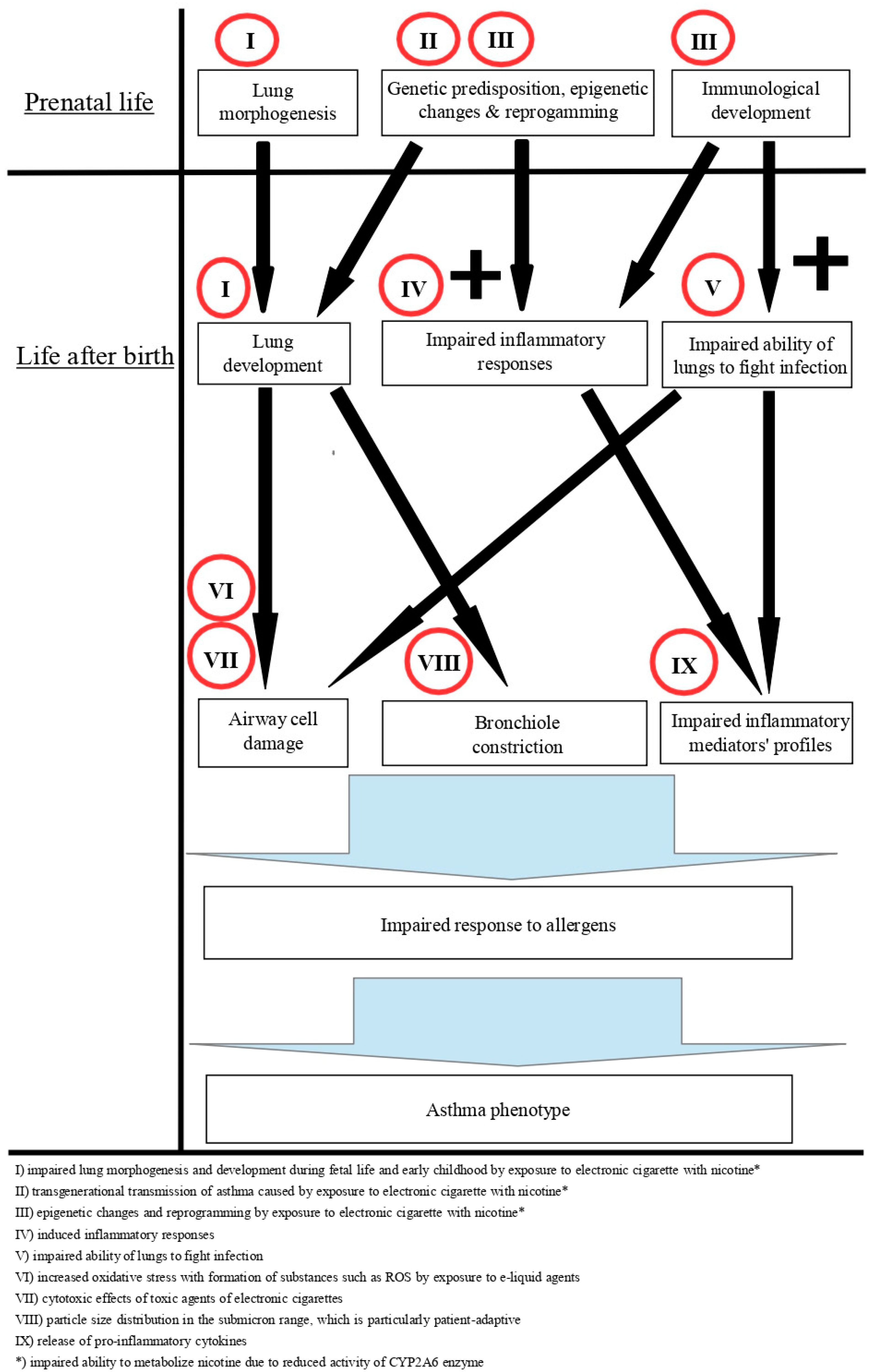
A recent study has shown that EC smokers were at higher risk for developing diseases—such as asthma, coronary artery disease, and lung cancer—than their non-smoking counterparts as downstream metabolites derived from nicotine were found in ECs [36]. Nicotine was found to be the key agent affecting in utero lung development of the fetus, contributing to the increased prevalence of childhood diseases such as asthma in smokers [37]. Nicotine induces cell-specific molecular changes in the lungs [38]. Prenatal exposure to nicotine provoked epigenetic reprogramming in the new-born child, anomalous respiratory growth, and multigenerational transmission of symptomatology similar to that of asthma [23]. In utero exposure to nicotine-containing EC in murine models increased the risk of asthma in offsprings by enhancing T-helper-type-2 (Th2)-mediated inflammation, changing mitochondrial homeostasis and impairing airway cell function [39]. Some e-liquid flavoring agents, such as aromatic aldehydes, may reduce Cytochrome P450 2A6 (CYP2A6) activity, an enzyme that metabolizes almost 80% of nicotine, and consequently prolong nicotine activity [40]. EC usage during pregnancy is likely to be as dangerous to fetal lung development as maternal smoking [37]. Tobacco use and exposure are risk factors with potentially durable impact on lung health in early life. EC sales should thus be restricted during pregnancy [41]. Significant concerns are raised about the dual use of ECs and conventional cigarettes during pregnancy, as well as the use of ECs only, during pregnancy by women who think ECs are safe or they are not able to quit [42]. However, since nicotine itself has an additive negative impact to fetus, the complete abstinence of pregnant women from all nicotine-contained products is absolutely necessary [43]. Moreover, a review on the epigenetic impacts of maternal tobacco and e-vapor exposure on offspring lungs, concluded that maternal EC use, not only induces epigenetic changes that could contribute to developing asthma, but these changes could possibly be passed down to further generations independent of exposure [44].
The possible mechanisms whereby EC compounds can affect asthma are shown in Figure 1.
Figure 1.
Possible mechanisms whereby electronic cigarette compounds can affect asthma.
3.2. What Is the Effect of EC Use on Lung Function and on Airway Inflammation in Patients with Asthma?
Studies on the effects of EC on the lung function of asthmatic patients are few and even fewer regarding airway inflammation (Table 1). Asthmatic patients exhibited a significant increase in respiratory system total impedance at 5 Hz (Z5), respiratory resistance at 5, 10, and 20 Hz (R5, R10, and R20), resonant frequency and reactance area measured by impulse oscillometry (IOS) after EC use, compared with healthy controls [45]. Mean airway resistance along with the slope of the phase III curve on the single breath nitrogen test increased immediately after short-term EC use in a group of asthmatic smokers, thereby demonstrating airway dysfunction, particularly in small airways [46]. Apart from airway resistance, asthmatic patients also exhibited impaired pulmonary function tests (PFTs) after vaping for five minutes, with the decrease in forced expiratory volume in 1 s to forced vital capacity ratio (FEV1/FVC) and peak expiratory flow (PEF) being more significant [47]. Furthermore, patients who recovered from electronic vapor acute lung injury (EVALI), a condition more commonly observed in asthmatic patients, exhibited chronic irreversible airflow obstruction, markedly abnormal 129Xe MRI ventilation heterogeneity, abnormal lung clearance index and oscillometry measures and decreased diffusing capacity of the lung for carbon monoxide (DLCO), all persistent after their discharge [48,49]. Studies in animals with allergen-induced airway disease demonstrated not only increased airway hyperresponsiveness after EC vapor inhalation, but also increase in mucus and airway wall thickening which are hallmark features of allergic asthma [34,39,50,51].
On the other hand, there is evidence from a small group of asthmatics (10 patients) that the use of ECs free of nicotine, filled with a mixture of PG and glycerol, did not significantly affect pulmonary function and symptoms [52]. In a study of only 15 asthmatic patients that switched from conventional cigarettes to electronic, PFTs remained stable over three visits [53]. Furthermore, two studies reported that lung function in the same 18 asthmatic patients who switched from tobacco cigarette to EC and were monitored for 30–36 months improved [54,55]. However, apart from the fact that the above two studies included a small number of the same patients, there are serious concerns about selection bias since those patients were reviewed retrospectively [54], and then prospectively [55].
The effects of EC use on inflammation have been studied in cell lines, animal models, and humans. In all three, EC use led to inflammation and oxidative stress [56]. However, specifically in asthmatic patients, the studies that evaluate the effects of ECs on airway inflammation are limited [32]. ECs free of nicotine were found to cause heterogenous effects depending on their flavor, while ECs containing nicotine suppressed airway inflammation but not airway remodeling in mice with allergic airway disease [50]. Eosinophilic inflammation is accompanied by an increased fraction of exhaled nitric oxide (FeNO) and correlates with other indices of inflammation in asthmatic patients [57]. FeNO is increased during asthma exacerbations, while it decreases with recovery or inhaled corticosteroids [58,59]. There is conflicting evidence on the effect of EC on the FeNO of asthmatics. There are studies where FeNO significantly decreased after an EC session [45], whereas the opposite result was exhibited in another study [47]. In the latter study, Th2 cytokines such as interleukins (IL) IL-4 and IL-13 in the EBC of asthmatics were found to be significantly increased after vaping for five minutes, reflecting increased eosinophilic inflammation, and supporting the finding of increased FeNO [47]. Apart from Th2 inflammatory mediators, an increase in IL-1β and tumor necrosis factor alpha (TNF-α) was observed. Both are proinflammatory cytokines that amplify and orchestrate the inflammatory response in asthma and determine its severity; IL-10, a cytokine derived from Th2 cells and 8-Isoprostane (ISO8) a biomarker of oxidative stress were also increased [47]. Additionally, in three experimental studies on mice with allergen-induced airway disease, EC inhalation increased infiltration of what by inflammatory cells, including eosinophils, into airways from blood, increased the number of all types of inflammatory cells in Bronchoalveolar lavage fluid (BALF), stimulated the production of Th2 cytokines such as IL-4, IL-5, and IL-13 and allergen-specific immunoglobulin E (IgE) and reduced the levels of transforming growth factor (TGF)-β1 and matrix metalloproteinase (MMP)-2 in lung tissue homogenate [39,51,60].
Table 1.
Studies addressing research question 2: What is the effect of EC use on lung function and on airway inflammation in patients with asthma?
3.3. What Is the Effect of EC on the Clinical Characteristics of Asthma?
Thirty-nine observational studies including 2,111,023 participants, six case studies, two opinion articles, eight reviews, and five systematic reviews with four meta-analyses investigated the effects of EC use in asthmatics (Table 2). Several investigators have concluded that EC could be associated with the development of pulmonary disorders, including asthma and might increase asthma severity and exacerbations [18,31,61,62,63,64]. Numerous cross-sectional studies with a large number of participants have described the significant association between EC use and even secondhand exposure and asthma diagnosis and severity [65,66,67,68,69,70,71,72,73,74], compared to the few studies which found no association [75,76], or even negative association between EC use and asthma [77,78]. A prospective cohort study also found that EC use was associated with an increased risk of developing respiratory disease, including asthma, independent of cigarette smoking [79]. A study from Korea demonstrated that adolescent EC users presented the highest adjusted odds ratio for severe asthma, which was reflected by the number of days absent from school due to asthma symptoms [80]. EC use was found to be positively correlated with asthma, or even more, to increase the probability of an adolescent being diagnosed with asthma and also enhanced the adverse effects of tobacco cigarettes in asthma [80,81,82]. A study from Sweden which comprised patients with obstructive lung diseases, mostly asthmatics, showed that all respiratory symptoms were most common among dual users (electronic plus tobacco cigarette), former smokers and nonsmokers who used ECs rather than tobacco cigarette smokers-alone [83]. Furthermore, two studies from France and Canada also found that asthma was more commonly associated with EC use [84,85]. A large epidemiological study from the USA including more than 400,000 participants showed that current EC use was associated with 39% higher odds of self-reported asthma, compared to never EC use and that there was a graded increased odds of having asthma with increased EC use intensity, from occasional to daily EC users [86]. Five more studies from the USA also concluded that EC is an independent risk factor for respiratory disease including asthma, after controlling for covariates [87,88,89,90,91]. EC had an additive effect for asthma beyond smoking [91]. Dual use, which is the most common usage pattern, is riskier than using either product alone [87]. Dual use, with even passive exposure to EC, was identified as significant predictor for asthma in two more cross-sectional studies [73,92] and one meta-analysis [93]. A recently published systematic review concluded that evidence up to now suggests that the side effects of ECs may be exaggerated in people with asthma [32]. Additionally, asthma symptoms were among the most frequently reported side effects associated with EC use, second to headaches [94]. Moreover, EC use was associated with lower general health scores, higher breathing difficulty scores and a greater proportion of reporting asthma [95]. A large epidemiological study in USA with a weighted sample size of 31,721,603 adults between 18 and 24 years (2,503,503 with former and 3,200,681 with current asthma) found that the prevalence of EC use was significantly higher among young adults with current or former asthma and that asthma combined with EC use was significantly associated with worse mental health [96], a finding similar to that of another study from Korea [72].
There are studies about EC use for harm reduction in asthmatic cigarette smokers [97]. A study pointed out that EC is far less problematic compared with combustible cigarettes and that exclusive EC users had substantially lower risk of exposure to tobacco smoke toxins compared to cigarette smokers. There is also emerging evidence that switching to regular EC use could produce significant respiratory health gains [98]. A study from Italy demonstrated that 90% of 382 asthmatic-vapers-only declared that vaping did not worsen their asthma symptoms and would recommend EC use. However, the majority of participants responded to a web survey and only a small fraction (55 volunteers, including 10 asthmatics), reported improvement in their asthma control after switching to EC but without PFTs improvement over three visits [53]. Similar findings regarding asthma control improvement were demonstrated by another worldwide online survey and two more studies from Italy but with no changes in the exacerbation rates [54,55,99]. However, all these studies exhibited considerable selection bias (Table 2).
A systematic review with meta-analysis found that former smokers who transitioned to EC showed approximately 40% lower odds of respiratory outcomes, including asthma, compared to current exclusive smokers [100]. However, that meta-analysis included only six studies (five cross-sectional and only three reported respiratory outcomes), whereas three more recently published systematic reviews with meta-analyses which included more studies with a lower percentage of cross-sectional studies found a significant association between EC use and dual use with asthma [93], both diagnosis and exacerbations [101], and after controlling for cigarette smoking and other covariates [102]. Most of the studies that were included in those meta-analyses are also included in the present review (Table 2).
As far as for asthma exacerbations, it was reported that EC use was associated with the frequency of asthma attacks in the past 12 months [103]. Even second-hand EC exposure was associated with higher odds of reporting an asthma attack in adolescents [104] and children [105]. Additionally, several cases of EVALI (some of them mimicking COVID-19) were recently reported in patients with a history of asthma [49,62,106,107,108,109]. Asthma is more common in patients with EVALI (approximately 30%; 43.6% in adolescents and 28.3% in adults) compared to the 8% to 10% of the general population [109,110]. Furthermore, a higher proportion of fatal cases of EVALI had a history of asthma compared to non-fatal cases (23% vs. 8%) [111]. Moreover, extremely severe status asthmaticus with hypercarbia requiring veno-venous extracorporeal membrane oxygenation (VV-ECMO) and slow recovery on extensive bronchodilator and steroid regimens were also reported in two adolescents with a history of recent and past EC use and asthma [112]. ECMO was also necessary in a patient with a history of asthma who developed hypersensitivity pneumonitis (HP) secondary to EC use [113].
Table 2.
Studies addressing research question 3: What is the effect of EC on the clinical characteristics of asthma?
3.4. Is EC Use an Effective Strategy for Smoking Cessation in Patients with Asthma?
Twenty-five observational studies involving 966,376 participants, three case studies, one opinion article, eight reviews, and four systematic reviews with three meta-analyses were identified for this query (Table 3). Several researchers have pointed out that EC might lead previously “nicotine naïve youths” to tobacco cigarette use [18,62,63,64,114]. Tobacco cigarette use and asthma were found to be associated with lifetime EC use and young adults who used ECs persisted with smoking tobacco cigarettes [84]. Adolescents with asthma were more likely to be dependent on nicotine compared to their non-asthmatic counterparts [115,116]; they started smoking earlier because of curiosity about cigarettes and continued because it improved their stress and anxiety [116]. There is strong evidence that bad mental health is associated with EC in asthmatics as well as with tobacco cigarette and illicit substance use [92,96,110]. This population was at increased risk of dual use of conventional cigarettes and EC and those who used ECs presented higher tobacco cigarette smoking susceptibility [85,90,103,115]. Asthmatics that used ECs had significantly greater odds of exhibiting problematic smoking behaviors characterized by dual use of multiple tobacco products including waterpipes and marijuana [117]. Furthermore, dual users reported consuming a significantly greater number of cigarettes per day compared to cigarette only users and dual use was not associated with reduced exposure to cigarettes [95]. In addition to that, dual use showed the strongest association with lifetime asthma compared to other forms of EC use [71,92]. Moreover, in adults with asthma, current smokers were more likely to have tried ECs than former/never smokers [83,118], and smoking status was the most consistent predictor of EC use among all age groups [118]. ECs did not adequately serve as a smoking cessation tool in the asthmatic population [83], and EC use was significantly more common in adult smokers with one or more comorbidities, including asthma, versus those without comorbidities [119]. This was not the case in an on-line based survey from Japan, which however, included a small percentage of asthmatics [120].
It has been pointed out that ECs could serve as a gateway to tobacco cigarette smoking or illicit drugs (the “gateway effect”) [19,63]. One cohort study and two large cross-sectional studies—including more than 670,000 participants, with many asthmatics among them—have demonstrated the association between EC and tobacco smoking, snus, alcohol, and other substance use [68,75,114]. EC devices can contain cannabis-based products including tetrahydrocannabinol (THC), the psychoactive component of cannabis (marijuana) [18]. Several asthmatics have suffered from EVALI after the use of such devices [49,107,108]. Two more cross-sectional studies have demonstrated the association between EC and cannabis [66,110], whereas another cross-sectional study has shown the opposite [78]. A recently published review and meta-analysis, despite the high heterogeneity among studies (I2 = 88%), showed that non-smoker EC users had 4.59 increased odds (95% CI: 3.60 to 5.85) to become tobacco cigarette smokers at a later stage in their lives [121]. EC experimentation among never-smokers, especially children and adolescents lead to nicotine addiction and increased the possibility of becoming a regular smoker. This is a major public health issue taking into account the fact that the prevalence of ever use of ECs has been found to be higher in patients with asthma [16]. Smokers who quit smoking using ECs continue to vape for long periods after smoking cessation with all that this condition entails for lung health [32].
On the other hand, EC has been advertised as less harmful than tobacco cigarette [54,55,77,98,99]. Polosa et al., suggest that based on the existing evidence, EC should be used as a smoking cessation tool when counseling patients with asthma [98]. A study based on an internet survey, found an impressive reduction in smoking percentage and in the number of tobacco cigarettes (by approximately 80% in both) [99]. In two more studies from Italy, 18 asthmatic smokers that managed to switch from tobacco cigarettes to EC reported substantial health gains; however, two of them (11.1%) relapsed to tobacco cigarette [54,55]. Two recent systematic reviews with meta-analyses exhibited that former smokers who changed to EC showed better respiratory outcomes, including asthma, compared to current exclusive smokers [100,101]; however, dual use was associated with the worst outcomes as far as asthma [93,101]. This is particularly concerning since dual use seems to be the most common form of EC use [61]. Finally, three reviews that investigated the effectiveness of EC as a tool for smoking cessation in different groups of patients stated that the evidence on the use of EC as potential cessation tool is inconclusive, as few studies have been able to demonstrate an impact of EC use on harm reduction related to combustible cigarettes, which however does not address nicotine addiction, and that additional research was needed for patients with pulmonary diseases, including asthma [61,64,122]. Current evidence is inconclusive to recommend ECs as effective or safe smoking-cessation tools [123,124]. Importantly, ECs’ safety has not been proven and as they are increasingly used by young people or people not previously addicted to tobacco cigarette, they may prove to be a significant future health burden as far as nicotine addiction [123,124].
Table 3.
Studies addressing research question 4: Is EC use an effective strategy for smoking cessation in patients with asthma?
4. Discussion
Although several studies showed that ECs may worsen asthma inflammation, there are people who suggest that harm reduction strategy should also apply to asthmatic patients.
As far as we know, most studies concluded that EC acutely worsens lung function of asthmatic patients. Studies that found no difference or even improvement in lung function included a small number of participants and exhibited serious methodological errors [53,54,55]. Airway inflammation was also found to be altered, mainly the Th2 inflammatory pathway, but not limited to that [45,47,50,51].
Most studies indicate the negative effects of vaping on asthma indirectly by the increased likelihood of a vaper being also an asthmatic, with a dose-dependent manner. However, most of the studies were cross-sectional, thus they could not establish a cause-and-effect relationship between EC use and asthma. Nevertheless, they provide excellent epidemiological data to assess trends and note areas where interventions are needed. Studies suggesting that EC improves asthma control presented serious concerns about a possible selection bias, as they were based on online surveys data, or included a small number of asthmatics. Recently published systematic reviews with meta-analyses tally with the above conclusions [93,100,101,102]. More research is needed in order to study the effects of EC on lung function and airway inflammation of asthmatic patients.
As nicotine dependence remains while vaping, most studies reflect the ineffectiveness of EC as a smoking cessation tool by pointing out that patients with asthma could more easily become addicted to EC than non-asthmatics and that asthmatics who are dual users smoke a greater number of tobacco cigarettes per day, while the most alarming finding on this aspect is the ‘gateway effect’. On the contrary, there are also studies suggesting that EC could in fact promote smoking cessation [98,99]. Nonetheless, the study with the most participants supporting that was based on an online survey [99], thus there are serious concerns of a possible selection bias. These conclusions correspond with those of recently published systematic reviews with meta-analyses [93,100,101], and other comprehensive studies [123,124].
5. Conclusions
To conclude, this review has consolidated the current knowledge about the effect of EC on asthma by attempting to answer four crucial questions. The studies used in this review had several limitations which are discussed in detail in the tables supporting each question. However, the majority of the studies that used firm laboratory techniques (experimental studies), accurate scientific methodology (interventional studies), and a great number of participants (observational studies) concluded that EC has negative effects on asthma. Studies reporting positive aspects about EC and asthma, presented important limitations, mainly the small number of participants and the possible selection bias. Moreover, many of the authors of these studies presented substantial conflict of interest. It has been shown that a conflict of interest is strongly associated with tobacco industry–favorable results, indicating no harm of ECs [125]. Furthermore, in a blinded assessment, almost all papers without a conflict of interest found potentially harmful effects of ECs, whereas there was a strong association between industry-related conflict of interest and tobacco- and e-cigarette industry favorable results, indicating that ECs are harmless [56]. In any case, as EC is becoming more and more popular, there is an urgent need for long-term prospective studies which will reveal its medium- and long-term effects on the health of asthmatic patients.
Author Contributions
Conceptualization, S.-C.K., A.P., D.P. and D.S.; methodology, S.-C.K., A.P., D.P. and D.S.; software, S.-C.K., A.P., I.G., R.R. and P.K.; validation, K.D. and K.P.; formal analysis, S.-C.K., I.G., R.R. and A.P.; investigation, S.-C.K., A.P., I.G. and P.K.; resources, D.P., K.D. and K.P.; data curation, S.-C.K., A.P., D.P., I.G. and K.D.; writing—original draft preparation, S.-C.K., A.P., P.K., I.G. and R.R.; writing—review and editing, D.P., D.S., K.D., K.P. and R.R.; visualization, S.-C.K., I.G. and A.P.; supervision, P.K., D.P., D.S. and A.P.; project administration, P.K., D.P., D.S. and A.P.; funding acquisition, P.K., D.P. and A.P. All authors have read and agreed to the published version of the manuscript. All listed authors have equally: Made substantial contributions to the conception and design of the work. Drafted the work or revised it critically for important intellectual content. Agreed to be accountable for all aspects of the work in ensuring that questions related to the accuracy or integrity of any part of the work are appropriately investigated and resolved. Read and agreed to the published version of the manuscript.
Funding
This research received no external funding.
Institutional Review Board Statement
Not applicable.
Informed Consent Statement
Not applicable.
Data Availability Statement
The articles that were used in this review can be found online by using the information that is cited in the reference list.
Conflicts of Interest
The authors declare no conflict of interest.
References
- Global Initiative for Asthma. Global Strategy for Asthma Management and Prevention. 2021. Available online: www.ginasthma.org (accessed on 4 July 2021).
- Putcha, N.; Hansel, N.N. All-cause mortality in asthma. The importance of age, comorbidity, and socioeconomic status. Ann. Am. Thorac. Soc. 2014, 11, 1252–1253. [Google Scholar] [CrossRef] [Scilit]
- Polosa, R.; Thomson, N.C. Smoking and asthma: Dangerous liaisons. Eur. Respir. J. 2013, 41, 716–726. [Google Scholar] [CrossRef] [Scilit]
- Katsaounou, P.; Ioannou, M.; Hyland, M.E.; Odemyr, M.; Spranger, O.; Lindberg, A.; Gasser, M.; Conde, L.G.; Jaumont, X.; Kasujee, I. Smoking asthmatics, a neglected large phenotype of asthmatic patients. Open J. Asthma 2019, 3, 1–8. [Google Scholar] [CrossRef] [Scilit]
- James, A.L.; Palmer, L.J.; Kicic, E.; Maxwell, P.S.; Lagan, S.E.; Ryan, G.F.; Musk, A.W. Decline in lung function in the Busselton Health Study: The effects of asthma and cigarette smoking. Am. J. Respir. Crit. Care Med. 2005, 171, 109–114. [Google Scholar] [CrossRef] [Scilit] [PubMed]
- Aanerud, M.; Carsin, A.E.; Sunyer, J.; Dratva, J.; Gislason, T.; Jarvis, D.; deMarco, R.; Raherison, C.; Wjst, M.; Dharmage, S.C.; et al. Interaction between asthma and smoking increases the risk of adult airway obstruction. Eur. Respir. J. 2015, 45, 635–643. [Google Scholar] [CrossRef] [Scilit]
- Tommola, M.; Ilmarinen, P.; Tuomisto, L.E.; Haanpää, J.; Kankaanranta, T.; Niemelä, O.; Kankaanranta, H. The effect of smoking on lung function: A clinical study of adult-onset asthma. Eur. Respir. J. 2016, 48, 1298–1306. [Google Scholar] [CrossRef] [Scilit] [PubMed]
- Prieto, L.; Palop, J.; Llusar, R.; Herrera, S.; Perez-Frances, C.; Lanuza, A.; Aguilar, D. Effects of cigarette smoke on methacholine- and AMP-induced air trapping in asthmatics. J. Asthma 2015, 52, 26–33. [Google Scholar] [CrossRef] [Scilit] [PubMed]
- Papaioannou, A.I.; Koutsokera, A.; Tanou, K.; Kiropoulos, T.S.; Tsilioni, I.; Oikonomidi, S.; Liadaki, K.; Pournaras, S.; Gourgoulianis, K.I.; Kostikas, K. The acute effect of smoking in healthy and asthmatic smokers. Eur. J. Clin. Investig. 2010, 40, 103–109. [Google Scholar] [CrossRef] [Scilit] [PubMed]
- Boulet, L.P.; Lemière, C.; Archambault, F.; Carrier, G.; Descary, M.C.; Deschesnes, F. Smoking and asthma: Clinical and radiologic features, lung function, and airway inflammation. Chest 2006, 129, 661–668. [Google Scholar] [CrossRef] [Scilit] [PubMed]
- St-Laurent, J.; Bergeron, C.; Pagé, N.; Couture, C.; Laviolette, M.; Boulet, L.P. Influence of smoking on airway inflammation and remodelling in asthma. Clin. Exp. Allergy 2008, 38, 1582–1589. [Google Scholar] [CrossRef] [Scilit] [PubMed]
- Rom, O.; Pecorelli, A.; Valacchi, G.; Reznick, A.Z. Are E-cigarettes a safe and good alternative to cigarette smoking? Ann. N. Y. Acad. Sci. 2015, 1340, 65–74. [Google Scholar] [CrossRef] [Scilit] [PubMed]
- Löhler, J.; Wollenberg, B. Are electronic cigarettes a healthier alternative to conventional tobacco smoking? Eur. Arch. Otorhinolaryngol. 2019, 276, 17–25. [Google Scholar] [CrossRef] [Scilit] [PubMed]
- Notley, C.; Ward, E.; Dawkins, L.; Holland, R.; Jakes, S. Vaping as an alternative to smoking relapse following brief lapse. Drug Alcohol Rev. 2019, 38, 68–75. [Google Scholar] [CrossRef] [Scilit] [PubMed]
- Jackson, S.E.; Shahab, L.; Kock, L.; West, R.; Brown, J. Expenditure on smoking and alternative nicotine delivery products: A population survey in England. Addiction 2019, 114, 2026–2036. [Google Scholar] [CrossRef] [Scilit]
- Thirión-Romero, I.; Pérez-Padilla, R.; Zabert, G.; Barrientos-Gutiérrez, I. Respiratory Impact of Electronic Cigarettes And “Low-Risk” Tobacco. Rev. Investig. Clin. 2019, 71, 17–27. [Google Scholar] [CrossRef] [Scilit] [PubMed]
- Ratajczak, A.; Feleszko, W.; Smith, D.M.; Goniewicz, M. How close are we to definitively identifying the respiratory health effects of e-cigarettes? Expert Rev. Respir. Med. 2018, 12, 549–556. [Google Scholar] [CrossRef] [Scilit]
- Traboulsi, H.; Cherian, M.; Abou Rjeili, M.; Preteroti, M.; Bourbeau, J.; Smith, B.M.; Eidelman, D.H.; Baglole, C.J. Inhalation Toxicology of Vaping Products and Implications for Pulmonary Health. Int. J. Mol. Sci. 2020, 21, 3495. [Google Scholar] [CrossRef] [Scilit]
- Cooke, A.; Fergeson, J.; Bulkhi, A.; Casale, T.B. The Electronic Cigarette: The Good, the Bad, and the Ugly. J. Allergy Clin. Immunol. Pract. 2015, 3, 498–505. [Google Scholar] [CrossRef] [Scilit]
- Pourchez, J.; de Oliveira, F.; Perinel-Ragey, S.; Basset, T.; Vergnon, J.M.; Prévôt, N. Assessment of new-generation high-power electronic nicotine delivery system as thermal aerosol generation device for inhaled bronchodilators. Int. J. Pharm. 2017, 518, 264–269. [Google Scholar] [CrossRef] [Scilit]
- Casula, L.; Sinico, C.; Valenti, D.; Pini, E.; Pireddu, R.; Schlich, M.; Lai, F.; Maria Fadda, A. Delivery of beclomethasone dipropionate nanosuspensions with an electronic cigarette. Int. J. Pharm. 2021, 596, 120293. [Google Scholar] [CrossRef] [Scilit]
- Sherwood, C.L.; Boitano, S. Airway epithelial cell exposure to distinct e-cigarette liquid flavorings reveals toxicity thresholds and activation of CFTR by the chocolate flavoring 2,5-dimethypyrazine. Respir. Res. 2016, 17, 57. [Google Scholar] [CrossRef] [Scilit] [PubMed]
- Clapp, P.W.; Jaspers, I. Electronic Cigarettes: Their Constituents and Potential Links to Asthma. Curr. Allergy Asthma Rep. 2017, 17, 79. [Google Scholar] [CrossRef] [Scilit]
- Oh, A.Y.; Kacker, A. Do electronic cigarettes impart a lower potential disease burden than conventional tobacco cigarettes? Review on E-cigarette vapor versus tobacco smoke. Laryngoscope 2014, 124, 2702–2706. [Google Scholar] [CrossRef] [Scilit] [PubMed]
- Ghosh, A.; Coakley, R.C.; Mascenik, T.; Rowell, T.R.; Davis, E.S.; Rogers, K.; Webster, M.J.; Dang, H.; Herring, L.E.; Sassano, M.F.; et al. Chronic E-Cigarette Exposure Alters the Human Bronchial Epithelial Proteome. Am. J. Respir. Crit. Care Med. 2018, 198, 67–76. [Google Scholar] [CrossRef] [Scilit] [PubMed]
- Kaur, G.; Pinkston, R.; Mclemore, B.; Dorsey, W.C.; Batra, S. Immunological and toxicological risk assessment of e-cigarettes. Eur. Respir. Rev. 2018, 27, 170119. [Google Scholar] [CrossRef] [Scilit] [PubMed]
- Ghosh, A.; Coakley, R.D.; Ghio, A.J.; Muhlebach, M.S.; Esther, C.R., Jr.; Alexis, N.E.; Tarran, R. Chronic E-Cigarette Use Increases Neutrophil Elastase and Matrix Metalloprotease Levels in the Lung. Am. J. Respir. Crit. Care Med. 2019, 200, 1392–1401. [Google Scholar] [CrossRef] [Scilit] [PubMed]
- Quinones Tavarez, Z.; Li, D.; Croft, D.P.; Gill, S.R.; Ossip, D.J.; Rahman, I. The Interplay Between Respiratory Microbiota and Innate Immunity in Flavor E-Cigarette Vaping Induced Lung Dysfunction. Front. Microbiol. 2020, 11, 589501. [Google Scholar] [CrossRef] [Scilit]
- Clapp, P.W.; Pawlak, E.A.; Lackey, J.T.; Keating, J.E.; Reeber, S.L.; Glish, G.L.; Jaspers, I. Flavored e-cigarette liquids and cinnamaldehyde impair respiratory innate immune cell function. Am. J. Physiol. Lung Cell Mol. Physiol. 2017, 313, L278–L292. [Google Scholar] [CrossRef] [Scilit] [PubMed]
- Clapp, P.W.; Lavrich, K.S.; van Heusden, C.A.; Lazarowski, E.R.; Carson, J.L.; Jaspers, I. Cinnamaldehyde in flavored e-cigarette liquids temporarily suppresses bronchial epithelial cell ciliary motility by dysregulation of mitochondrial function. Am. J. Physiol. Lung Cell Mol. Physiol. 2019, 316, L470–L486. [Google Scholar] [CrossRef] [Scilit]
- Hickman, E.; Jaspers, I. Current E-Cigarette Research in the Context of Asthma. Curr. Allergy Asthma Rep. 2020, 20, 62. [Google Scholar] [CrossRef] [Scilit]
- Bozier, J.; Chivers, E.K.; Chapman, D.G.; Larcombe, A.N.; Bastian, N.; Masso-Silva, J.A.; Byun, M.K.; McDonald, C.F.; Alexander Crotty, L.E.; Ween, M.P. The Evolving Landscape of Electronic Cigarettes: A Systematic Review of Recent Evidence. Chest 2020, 157, 1362–1390. [Google Scholar] [CrossRef] [Scilit] [PubMed]
- Son, Y.; Mishin, V.; Laskin, J.D.; Mainelis, G.; Wackowski, O.A.; Delnevo, C.; Schwander, S.; Khlystov, A.; Samburova, V.; Meng, Q. Hydroxyl Radicals in Vapor and E-Vapor Oxidative Potentials under Different Vaping Patterns. Chem. Res. Toxicol. 2019, 32, 1087–1095. [Google Scholar] [CrossRef] [Scilit] [PubMed]
- Marczylo, T. How bad are e-cigarettes? What can we learn from animal exposure models? J. Physiol. 2020, 598, 5073–5089. [Google Scholar] [CrossRef] [Scilit]
- Kaur, G.; Singh, K.; Maremanda, K.P.; Li, D.; Chand, H.S.; Rahman, I. Differential plasma exosomal long non-coding RNAs expression profiles and their emerging role in E-cigarette users, cigarette, waterpipe, and dual smokers. PLoS ONE 2020, 15, e0243065. [Google Scholar] [CrossRef] [Scilit]
- Saji, S.; Patil, S.S.; Alleyn, M.; Lockey, R.; Kolliputi, N. Nicotine in E-cigarette smoke: Cancer culprit? J. Cell Commun. Signal. 2020, 14, 127–128. [Google Scholar] [CrossRef] [Scilit]
- McEvoy, C.T.; Spindel, E.R. Pulmonary Effects of Maternal Smoking on the Fetus and Child: Effects on Lung Development, Respiratory Morbidities, and Life Long Lung Health. Paediatr. Respir. Rev. 2017, 21, 27–33. [Google Scholar] [CrossRef] [Scilit]
- Kuniyoshi, K.M.; Rehan, V.K. The impact of perinatal nicotine exposure on fetal lung development and subsequent respiratory morbidity. Birth Defects Res. 2019, 111, 1270–1283. [Google Scholar] [CrossRef] [Scilit]
- McAlinden, K.D.; Naidu, V.; Sohal, S.S.; Sharma, P. In utero Exposure to Nicotine Containing Electronic Cigarettes Increases the Risk of Allergic Asthma in Female Offspring. Am. J. Physiol. Lung Cell Mol. Physiol. 2020, 319, L1061. [Google Scholar] [CrossRef] [Scilit] [PubMed]
- Winters, B.R.; Kochar, T.K.; Clapp, P.W.; Jaspers, I.; Madden, M.C. Impact of E-Cigarette Liquid Flavoring Agents on Activity of Microsomal Recombinant CYP2A6, the Primary Nicotine-Metabolizing Enzyme. Chem. Res. Toxicol. 2020, 33, 1689–1697. [Google Scholar] [CrossRef] [Scilit] [PubMed]
- Grant, T.; Brigham, E.P.; McCormack, M.C. Childhood Origins of Adult Lung Disease as Opportunities for Prevention. J. Allergy Clin. Immunol. Pract. 2020, 8, 849–858. [Google Scholar] [CrossRef] [Scilit]
- Spindel, E.R.; McEvoy, C.T. The Role of Nicotine in the Effects of Maternal Smoking during Pregnancy on Lung Development and Childhood Respiratory Disease. Implications for Dangers of E-Cigarettes. Am. J. Respir. Crit. Care Med. 2016, 193, 486–494. [Google Scholar] [CrossRef] [Scilit]
- Diamanti, A.; Papadakis, S.; Schoretsaniti, S.; Rovina, N.; Vivilaki, V.; Gratziou, C.; Katsaounou, P.A. Smoking cessation in pregnancy: An update for maternity care practitioners. Tob. Induc. Dis. 2019, 17, 57. [Google Scholar] [CrossRef] [Scilit]
- Zakarya, R.; Adcock, I.; Oliver, B.G. Epigenetic impacts of maternal tobacco and e-vapour exposure on the offspring lung. Clin. Epigenet. 2019, 11, 32. [Google Scholar] [CrossRef] [Scilit]
- Lappas, A.S.; Tzortzi, A.S.; Konstantinidi, E.M.; Teloniatis, S.I.; Tzavara, C.K.; Gennimata, S.A.; Koulouris, N.G.; Behrakis, P.K. Short-term respiratory effects of e-cigarettes in healthy individuals and smokers with asthma. Respirology 2018, 23, 291–297. [Google Scholar] [CrossRef] [Scilit] [PubMed]
- Palamidas, A.; Tsikrika, S.; Katsaounou, P.A.; Vakali, S.; Gennimata, S.A.; Kaltsakas, G.; Gratziou, C.; Koulouris, N. Acute effects of short-term use of e-cigarettes on airways physiology and respiratory symptoms in smokers with and without airway obstructive diseases and in healthy non-smokers. Tob. Prev. Cessat. 2017, 3, 1–8. [Google Scholar] [CrossRef] [Scilit] [PubMed]
- Kotoulas, S.C.; Pataka, A.; Domvri, K.; Spyratos, D.; Katsaounou, P.; Porpodis, K.; Fouka, E.; Markopoulou, A.; Passa-Fekete, K.; Grigoriou, I.; et al. Acute effects of e-cigarette vaping on pulmonary function and airway inflammation in healthy individuals and in patients with asthma. Respirology 2020, 25, 1037–1045. [Google Scholar] [CrossRef] [Scilit] [PubMed]
- Eddy, R.L.; Serajeddini, H.; Knipping, D.; Landman, S.T.; Bosma, K.J.; Mackenzie, C.A.; Dhaliwal, I.; Parraga, G. Pulmonary Functional MRI and CT in a Survivor of Bronchiolitis and Respiratory Failure Caused by e-Cigarette Use. Chest 2020, 158, e147–e151. [Google Scholar] [CrossRef] [Scilit]
- Reddy, A.; Jenssen, B.P.; Chidambaram, A.; Yehya, N.; Lindell, R.B. Characterizing e-cigarette vaping-associated lung injury in the pediatric intensive care unit. Pediatr. Pulmonol. 2021, 56, 162–170. [Google Scholar] [CrossRef] [Scilit]
- Chapman, D.G.; Casey, D.T.; Ather, J.L.; Aliyeva, M.; Daphtary, N.; Lahue, K.G.; van der Velden, J.L.; Janssen-Heininger, Y.M.W.; Irvin, C.G. The Effect of Flavored E-cigarettes on Murine Allergic Airways Disease. Sci. Rep. 2019, 9, 13671. [Google Scholar] [CrossRef] [Scilit]
- Lim, H.B.; Kim, S.H. Inhallation of e-cigarette Cartridge Solution Aggravates Allergen-induced Airway Inflammation and Hyper-responsiveness in Mice. Toxicol. Res. 2014, 30, 13–18. [Google Scholar] [CrossRef] [Scilit]
- Boulay, M.È.; Henry, C.; Bossé, Y.; Boulet, L.P.; Morissette, M.C. Acute effects of nicotine-free and flavour-free electronic cigarette use on lung functions in healthy and asthmatic individuals. Respir. Res. 2017, 18, 33. [Google Scholar] [CrossRef] [Scilit]
- Solinas, A.; Paoletti, G.; Firinu, D.; Di Pino, M.; Tusconi, M.; Mura, J.F.; Del Giacco, S.; Marongiu, F. Vaping effects on asthma: Results from a web survey and clinical investigation. Intern. Emerg. Med. 2020, 15, 663–671. [Google Scholar] [CrossRef] [Scilit] [PubMed]
- Polosa, R.; Morjaria, J.; Caponnetto, P.; Caruso, M.; Strano, S.; Battaglia, E.; Russo, C. Effect of smoking abstinence and reduction in asthmatic smokers switching to electronic cigarettes: Evidence for harm reversal. Int. J. Environ. Res. Public Health 2014, 11, 4965–4977. [Google Scholar] [CrossRef] [Scilit] [PubMed]
- Polosa, R.; Morjaria, J.B.; Caponnetto, P.; Caruso, M.; Campagna, D.; Amaradio, M.D.; Ciampi, G.; Russo, C.; Fisichella, A. Persisting long term benefits of smoking abstinence and reduction in asthmatic smokers who have switched to electronic cigarettes. Discov. Med. 2016, 21, 99–108. [Google Scholar] [PubMed]
- Bals, R.; Boyd, J.; Esposito, S.; Foronjy, R.; Hiemstra, P.S.; Jiménez-Ruiz, C.A.; Katsaounou, P.; Lindberg, A.; Metz, C.; Schober, W.; et al. Electronic cigarettes: A task force report from the European Respiratory Society. Eur. Respir. J. 2019, 53, 1801151. [Google Scholar] [CrossRef] [Scilit] [PubMed]
- Riise, G.C.; Torén, K.; Olin, A.C. Subjects in a Population Study with High Levels of FENO Have Associated Eosinophil Airway Inflammation. ISRN Allergy 2011, 2011, 792613. [Google Scholar] [CrossRef] [Scilit] [PubMed]
- Harkins, M.S.; Fiato, K.L.; Iwamoto, G.K. Exhaled nitric oxide predicts asthma exacerbation. J. Asthma 2004, 41, 471–476. [Google Scholar] [CrossRef] [Scilit]
- Kharitonov, S.A.; Barnes, P.J. Effects of corticosteroids on noninvasive biomarkers of inflammation in asthma and chronic obstructive pulmonary disease. Proc. Am. Thorac. Soc. 2004, 1, 191–199. [Google Scholar] [CrossRef] [Scilit] [PubMed]
- Taha, H.R.; Al-Sawalha, N.A.; Alzoubi, K.H.; Khabour, O.F. Effect of E-Cigarette aerosol exposure on airway inflammation in a murine model of asthma. Inhal. Toxicol. 2020, 32, 503–511. [Google Scholar] [CrossRef] [Scilit]
- St Claire, S.; Gouda, H.; Schotte, K.; Fayokun, R.; Fu, D.; Varghese, C.; Prasad, V.M. Lung health, tobacco, and related products: Gaps, challenges, new threats, and suggested research. Am. J. Physiol. Lung Cell Mol. Physiol. 2020, 318, L1004–L1007. [Google Scholar] [CrossRef] [Scilit]
- Casey, A.M.; Muise, E.D.; Crotty Alexander, L.E. Vaping and e-cigarette use. Mysterious lung manifestations and an epidemic. Curr. Opin. Immunol. 2020, 66, 143–150. [Google Scholar] [CrossRef] [Scilit]
- Galderisi, A.; Ferraro, V.A.; Caserotti, M.; Quareni, L.; Perilongo, G.; Baraldi, E. Protecting youth from the vaping epidemic. Pediatr. Allergy Immunol. 2020, 31, 66–68. [Google Scholar] [CrossRef] [Scilit] [PubMed]
- Hernandez, M.L.; Burbank, A.J.; Alexis, N.E.; Rebuli, M.E.; Hickman, E.D.; Jaspers, I.; Guidos, G. Electronic Cigarettes and Their Impact on Allergic Respiratory Diseases: A Work Group Report of the AAAAI Environmental Exposures and Respiratory Health Committee. J. Allergy Clin. Immunol. Pract. 2021, 9, 1142–1151. [Google Scholar] [CrossRef] [Scilit]
- Entwistle, M.R.; Valle, K.; Schweizer, D.; Cisneros, R. Electronic cigarette (e-cigarette) use and frequency of asthma symptoms in adult asthmatics in California. J. Asthma 2020, 28, 1–7. [Google Scholar] [CrossRef] [Scilit] [PubMed]
- Clawson, A.H.; Ruppe, N.M.; Nwankwo, C.N.; Blair, A.L. Profiles of Nicotine and Cannabis Exposure among Young Adults with Asthma. Behav. Med. 2020, 23, 1–13. [Google Scholar] [CrossRef] [Scilit]
- Xie, L.; Rao, D.R.; Harrell, M.B.; Vidot, D.C.; Gelfand, A.; Sterling, K.; Messiah, S.E. Ethnic disparities in the e-cigarette use epidemic and childhood asthma in the US. Pediatr. Pulmonol. 2020, 55, 2498–2500. [Google Scholar] [CrossRef] [Scilit]
- Han, C.H.; Chung, J.H. Factors associated with electronic cigarette use among adolescents asthma in the Republic of Korea. J. Asthma 2020, 4, 1–9. [Google Scholar] [CrossRef] [Scilit] [PubMed]
- Alnajem, A.; Redha, A.; Alroumi, D.; Alshammasi, A.; Ali, M.; Alhussaini, M.; Almutairi, W.; Esmaeil, A.; Ziyab, A.H. Use of electronic cigarettes and secondhand exposure to their aerosols are associated with asthma symptoms among adolescents: A cross-sectional study. Respir. Res. 2020, 21, 300. [Google Scholar] [CrossRef] [Scilit] [PubMed]
- Parekh, T.; Owens, C.; Fay, K.; Phillips, J.; Kitsantas, P. Use of e-Cigarettes and Development of Respiratory Conditions in Women of Childbearing Age. South. Med. J. 2020, 113, 488–494. [Google Scholar] [CrossRef] [Scilit]
- Han, Y.Y.; Rosser, F.; Forno, E.; Celedón, J.C. Electronic vapor products, marijuana use, smoking, and asthma in US adolescents. J. Allergy Clin. Immunol. 2020, 145, 1025–1028.e6. [Google Scholar] [CrossRef] [Scilit]
- Kim, C.W.; Jeong, S.C.; Kim, J.Y.; Lee, J.S.; Lee, J.H.; Jo, S.H.; Kim, S.H. Associated factors for depression, suicidal ideation and suicide attempt among asthmatic adolescents with experience of electronic cigarette use. Tob. Induc. Dis. 2020, 18, 85. [Google Scholar] [CrossRef] [Scilit]
- Ebrahimi Kalan, M.; Bursac, Z.; Behaleh, R.; Jebai, R.; Osibogun, O.; Gautam, P.; Li, W.; Anderson, T.; Rahman, A.; Ward, K.D.; et al. Nicotine-naive adolescents who live with tobacco products users, 2018 Florida Youth Tobacco Survey. J. Addict. Dis. 2021, 39, 265–269. [Google Scholar] [CrossRef] [Scilit]
- Alqahtani, M.M.; Alanazi, A.M.; Pavela, G.; Dransfield, M.T.; Wells, J.M.; Lein, D.H., Jr.; Hendricks, P.S. Binge Drinking Moderates the Association Between Chronic Lung Disease and E-Cigarette Use. Respir. Care 2021, 66, 936–942. [Google Scholar] [CrossRef] [Scilit]
- Tran, L.; Tran, P.; Tran, L. A cross-sectional analysis of electronic cigarette use in US adults by asthma status. Clin. Respir. J. 2020, 14, 991–997. [Google Scholar] [CrossRef] [Scilit]
- Walker, C.J.; Christian, W.J. Estimating the Population Attributable Fraction of Asthma Due to Electronic Cigarette Use and Other Risk Factors Using Kentucky Behavioral Risk Factor Survey Data, 2016–2017. Subst. Use Misuse 2021, 56, 353–358. [Google Scholar] [CrossRef] [Scilit]
- Gibson-Young, L.; Martinasek, M.; Tamulevicius, N.; Fortner, M.; Alanazi, A.M. Examining electronic nicotine delivery system use and perception of use among college students with and without asthma across the South. J. Am. Coll. Health 2020, 5, 1–7. [Google Scholar] [CrossRef] [Scilit]
- Alanazi, A.M.M.; Alqahtani, M.M.; Lein, D.H.; Ford, E.W. The relationship between asthma diagnosis and E-Cigarette use among youth and young adults: The mediation effects of anxiety, depression, and impulsivity and the moderation effects of substance use. J. Asthma 2021, 12, 1–9. [Google Scholar] [CrossRef] [Scilit]
- Xie, W.; Kathuria, H.; Galiatsatos, P.; Blaha, M.J.; Hamburg, N.M.; Robertson, R.M.; Bhatnagar, A.; Benjamin, E.J.; Stokes, A.C. Association of Electronic Cigarette Use with Incident Respiratory Conditions Among US Adults From 2013 to 2018. JAMA Netw. Open 2020, 3, e2020816. [Google Scholar] [CrossRef] [Scilit]
- Cho, J.H.; Paik, S.Y. Association between Electronic Cigarette Use and Asthma among High School Students in South Korea. PLoS ONE 2016, 11, e0151022. [Google Scholar] [CrossRef] [Scilit]
- Chung, S.J.; Kim, B.K.; Oh, J.H.; Shim, J.S.; Chang, Y.S.; Cho, S.H.; Yang, M.S. Novel tobacco products including electronic cigarette and heated tobacco products increase risk of allergic rhinitis and asthma in adolescents: Analysis of Korean youth survey. Allergy 2020, 75, 1640–1648. [Google Scholar] [CrossRef] [Scilit]
- Kim, S.Y.; Sim, S.; Choi, H.G. Active, passive, and electronic cigarette smoking is associated with asthma in adolescents. Sci. Rep. 2017, 7, 17789. [Google Scholar] [CrossRef] [Scilit] [PubMed]
- Hedman, L.; Backman, H.; Stridsman, C.; Bosson, J.A.; Lundbäck, M.; Lindberg, A.; Rönmark, E.; Ekerljung, L. Association of Electronic Cigarette Use With Smoking Habits, Demographic Factors, and Respiratory Symptoms. JAMA Netw. Open 2018, 1, e180789. [Google Scholar] [CrossRef] [Scilit] [PubMed]
- Aljandaleh, H.; Bolze, C.; El-Khoury Lesueur, F.; Melchior, M.; Mary-Krause, M. Factors Associated with Electronic Cigarette Use among Young Adults: The French Trajectoires EpidéMiologiques en POpulation (TEMPO) Cohort Study. Subst. Use Misuse 2020, 55, 964–972. [Google Scholar] [CrossRef] [Scilit]
- Larsen, K.; Faulkner, G.E.J.; Boak, A.; Hamilton, H.A.; Mann, R.E.; Irving, H.M.; To, T. Canadian Respiratory Research Network. Looking beyond cigarettes: Are Ontario adolescents with asthma less likely to smoke e-cigarettes, marijuana, waterpipes or tobacco cigarettes? Respir. Med. 2016, 120, 10–15. [Google Scholar] [CrossRef] [Scilit]
- Osei, A.D.; Mirbolouk, M.; Orimoloye, O.A.; Dzaye, O.; Uddin, S.M.I.; Dardari, Z.A.; DeFilippis, A.P.; Bhatnagar, A.; Blaha, M.J. The association between e-cigarette use and asthma among never combustible cigarette smokers: Behavioral risk factor surveillance system (BRFSS) 2016 & 2017. BMC Pulm. Med. 2019, 19, 180. [Google Scholar] [CrossRef] [Scilit]
- Bhatta, D.N.; Glantz, S.A. Association of E-Cigarette Use with Respiratory Disease among Adults: A Longitudinal Analysis. Am. J. Prev. Med. 2020, 58, 182–190. [Google Scholar] [CrossRef] [Scilit]
- Wills, T.A.; Pagano, I.; Williams, R.J.; Tam, E.K. E-cigarette use and respiratory disorder in an adult sample. Drug Alcohol Depend. 2019, 194, 363–370. [Google Scholar] [CrossRef] [Scilit]
- Schweitzer, R.J.; Wills, T.A.; Tam, E.; Pagano, I.; Choi, K. E-cigarette use and asthma in a multiethnic sample of adolescents. Prev. Med. 2017, 105, 226–231. [Google Scholar] [CrossRef] [Scilit]
- Fedele, D.A.; Barnett, T.E.; Dekevich, D.; Gibson-Young, L.M.; Martinasek, M.; Jagger, M.A. Prevalence of and beliefs about electronic cigarettes and hookah among high school students with asthma. Ann. Epidemiol. 2016, 26, 865–869. [Google Scholar] [CrossRef] [Scilit]
- Wills, T.A.; Choi, K.; Pagano, I. E-Cigarette Use Associated With Asthma Independent of Cigarette Smoking and Marijuana in a 2017 National Sample of Adolescents. J. Adolesc. Health 2020, 67, 524–530. [Google Scholar] [CrossRef] [Scilit]
- Leavens, E.L.S.; Ford, B.R.; Ojo-Fati, O.; Winkelman, T.N.A.; Vickery, K.D.; Japuntich, S.J.; Busch, A.M. Electronic cigarette use patterns and chronic health conditions among people experiencing homelessness in MN: A statewide survey. BMC Public Health 2020, 20, 1889. [Google Scholar] [CrossRef] [Scilit]
- Xian, S.; Chen, Y. E-cigarette users are associated with asthma disease: A meta-analysis. Clin. Respir. J. 2021, 15, 457–466. [Google Scholar] [CrossRef] [Scilit]
- Hua, M.; Sadah, S.; Hristidis, V.; Talbot, P. Health Effects Associated with Electronic Cigarette Use: Automated Mining of Online Forums. J. Med. Internet Res. 2020, 22, e15684. [Google Scholar] [CrossRef] [Scilit] [PubMed]
- Wang, J.B.; Olgin, J.E.; Nah, G.; Vittinghoff, E.; Cataldo, J.K.; Pletcher, M.J.; Marcus, G.M. Cigarette and e-cigarette dual use and risk of cardiopulmonary symptoms in the Health eHeart Study. PLoS ONE 2018, 13, e0198681. [Google Scholar] [CrossRef] [Scilit]
- Alanazi, A.M.M.; Alqahtani, M.M.; Pavela, G.; Ford, E.W.; Leventhal, A.M.; Hendricks, P.S. Mental Health and the Association between Asthma and E-cigarette Use among Young Adults in The United States: A Mediation Analysis. Int. J. Environ. Res. Public Health 2020, 17, 8799. [Google Scholar] [CrossRef] [Scilit]
- Lee-Sarwar, K.A.; Bacharier, L.B.; Litonjua, A.A. Strategies to alter the natural history of childhood asthma. Curr. Opin. Allergy Clin. Immunol. 2017, 17, 139–145. [Google Scholar] [CrossRef] [Scilit] [PubMed]
- Polosa, R.; Campagna, D.; Sands, M.F. Counseling patients with asthma and allergy about electronic cigarettes: An evidence-based approach. Ann. Allergy Asthma Immunol. 2016, 116, 106–111. [Google Scholar] [CrossRef] [Scilit]
- Farsalinos, K.E.; Romagna, G.; Tsiapras, D.; Kyrzopoulos, S.; Voudris, V. Characteristics, perceived side effects and benefits of electronic cigarette use: A worldwide survey of more than 19,000 consumers. Int. J. Environ. Res. Public Health 2014, 11, 4356–4373. [Google Scholar] [CrossRef] [Scilit] [PubMed]
- Goniewicz, M.L.; Miller, C.R.; Sutanto, E.; Li, D. How effective are electronic cigarettes for reducing respiratory and cardiovascular risk in smokers? A systematic review. Harm Reduct. J. 2020, 17, 91. [Google Scholar] [CrossRef] [Scilit]
- Gugala, E.; Okoh, C.M.; Ghosh, S.; Moczygemba, L.R. Pulmonary Health Effects of Electronic Cigarettes: A Scoping Review. Health Promot. Pract. 2021, 4, 1524839920985506. [Google Scholar] [CrossRef] [Scilit]
- Wills, T.A.; Soneji, S.S.; Choi, K.; Jaspers, I.; Tam, E.K. E-cigarette use and respiratory disorders: An integrative review of converging evidence from epidemiological and laboratory studies. Eur. Respir. J. 2021, 57, 1901815. [Google Scholar] [CrossRef] [Scilit]
- Choi, K.; Bernat, D. E-Cigarette Use Among Florida Youth with and Without Asthma. Am. J. Prev. Med. 2016, 51, 446–453. [Google Scholar] [CrossRef] [Scilit]
- Bayly, J.E.; Bernat, D.; Porter, L.; Choi, K. Secondhand Exposure to Aerosols from Electronic Nicotine Delivery Systems and Asthma Exacerbations Among Youth with Asthma. Chest 2019, 155, 88–93. [Google Scholar] [CrossRef] [Scilit]
- Berlinski, A. 2019 Year in Review: Aerosol Therapy. Respir. Care 2020, 65, 705–712. [Google Scholar] [CrossRef] [Scilit] [PubMed]
- Aberegg, S.K.; Maddock, S.D.; Blagev, D.P.; Callahan, S.J. Diagnosis of EVALI: General Approach and the Role of Bronchoscopy. Chest 2020, 158, 820–827. [Google Scholar] [CrossRef] [Scilit] [PubMed]
- Rodriguez, J.A.; Roa, A.A.; Lemos-Ramirez, J.C. E-Cigarette or Vaping Product Use-Associated Lung Injury (EVALI) Mimicking COVID-19 Disease. Case Rep. Pulmonol. 2020, 2020, 8821289. [Google Scholar] [CrossRef] [Scilit] [PubMed]
- Chawla, H.; Weiler, T. E-cigarette or Vaping Product Use-Associated Lung Injury Presenting as Sub-Acute Hypoxemia Without Increased Work of Breathing. Cureus 2020, 12, e9855. [Google Scholar] [CrossRef] [Scilit]
- Clapp, P.W.; Peden, D.B.; Jaspers, I. E-cigarettes, vaping-related pulmonary illnesses, and asthma: A perspective from inhalation toxicologists. J. Allergy Clin. Immunol. 2020, 145, 97–99. [Google Scholar] [CrossRef] [Scilit]
- Adkins, S.H.; Anderson, K.N.; Goodman, A.B.; Twentyman, E.; Danielson, M.L.; Kimball, A.; Click, E.S.; Ko, J.Y.; Evans, M.E.; Weissman, D.N.; et al. Demographics, Substance Use Behaviors, and Clinical Characteristics of Adolescents with e-Cigarette, or Vaping, Product Use-Associated Lung Injury (EVALI) in the United States in 2019. JAMA Pediatr. 2020, 174, e200756. [Google Scholar] [CrossRef] [Scilit]
- Werner, A.K.; Koumans, E.H.; Chatham-Stephens, K.; Salvatore, P.P.; Armatas, C.; Byers, P.; Clark, C.R.; Ghinai, I.; Holzbauer, S.M.; Navarette, K.A.; et al. Hospitalizations and Deaths Associated with EVALI. N. Engl. J. Med. 2020, 382, 1589–1598. [Google Scholar] [CrossRef] [Scilit]
- Bradford, L.E.; Rebuli, M.E.; Ring, B.J.; Jaspers, I.; Clement, K.C.; Loughlin, C.E. Danger in the vapor? ECMO for adolescents with status asthmaticus after vaping. J. Asthma 2020, 57, 1168–1172. [Google Scholar] [CrossRef] [Scilit]
- Nair, N.; Hurley, M.; Gates, S.; Davies, P.; Chen, I.L.; Todd, I.; Fairclough, L.; Bush, A.; Bhatt, J.M. Life-threatening hypersensitivity pneumonitis secondary to e-cigarettes. Arch. Dis. Child. 2020, 105, 1114–1116. [Google Scholar] [CrossRef] [Scilit] [PubMed]
- Hedman, L.; Backman, H.; Stridsman, C.; Lundbäck, M.; Andersson, M.; Rönmark, E. Predictors of electronic cigarette use among Swedish teenagers: A population-based cohort study. BMJ Open 2020, 10, e040683. [Google Scholar] [CrossRef] [Scilit]
- Turner, E.; Fedele, D.A.; Thompson, L.; Salloum, R.G. Patterns of electronic cigarette use in youth with asthma: Results from a nationally representative sample. Ann. Allergy Asthma Immunol. 2018, 120, 220–222. [Google Scholar] [CrossRef] [Scilit] [PubMed]
- Vázquez-Nava, F.; Vázquez-Rodríguez, E.M.; Vázquez-Rodríguez, C.F.; Castillo Ruiz, O.; Peinado Herreros, J. Epidemiological profile of smoking and nicotine addiction among asthmatic adolescents. Public Health 2017, 149, 49–56. [Google Scholar] [CrossRef] [Scilit] [PubMed]
- Martinasek, M.P.; White, R.M.; Wheldon, C.W.; Gibson-Young, L. Perceptions of non-traditional tobacco products between asthmatic and non-asthmatic college students. J. Asthma 2019, 56, 498–504. [Google Scholar] [CrossRef] [Scilit] [PubMed]
- Deshpande, M.; Bromann, S.; Arnoldi, J. Electronic cigarette use among adults with asthma: 2014–2017 National Health Interview Survey. Res. Soc. Adm. Pharm. 2020, 16, 202–207. [Google Scholar] [CrossRef] [Scilit]
- Kruse, G.R.; Kalkhoran, S.; Rigotti, N.A. Use of Electronic Cigarettes Among U.S. Adults with Medical Comorbidities. Am. J. Prev. Med. 2017, 52, 798–804. [Google Scholar] [CrossRef] [Scilit]
- Kioi, Y.; Tabuchi, T. Electronic, heat-not-burn, and combustible cigarette use among chronic disease patients in Japan: A cross-sectional study. Tob. Induc. Dis. 2018, 16, 41. [Google Scholar] [CrossRef] [Scilit] [PubMed]
- Khouja, J.N.; Suddell, S.F.; Peters, S.E.; Taylor, A.E.; Munafò, M.R. Is e-cigarette use in non-smoking young adults associated with later smoking? A systematic review and meta-analysis. Tob. Control 2020, 30, 8–15. [Google Scholar] [CrossRef] [Scilit]
- Franks, A.S.; Sando, K.; McBane, S. Do Electronic Cigarettes Have a Role in Tobacco Cessation? Pharmacotherapy 2018, 38, 555–568. [Google Scholar] [CrossRef] [Scilit] [PubMed]
- Pisinger, C.; Katsaounou, P.; Ravara, S.B.; Vestbo, J. E-cigarettes, heated tobacco and other novel nicotine-containing products: A help to smokers or a public health threat? In Supporting Tobacco Cessation, 2021th ed.; Ravara, S.B., Dağli, E., Katsaounou, P., Lewis, K.E., Pisinger, C., Eds.; European Respiratory Society: Sheffield, UK, 2021; Volume 1, pp. 33–55. [Google Scholar]
- Katsaounou, P.A. Electronic cigarettes for smoking cessation: An opportunity to readdress smoking cessation treatment. Eur. Respir. J. 2020, 56, 2000098. [Google Scholar] [CrossRef] [Scilit] [PubMed]
- Pisinger, C.; Godtfredsen, N.; Bender, A.M. A conflict of interest is strongly associated with tobacco industry-favourable results, indicating no harm of e-cigarettes. Prev. Med. 2019, 119, 124–131. [Google Scholar] [CrossRef] [Scilit] [PubMed]
Publisher’s Note: MDPI stays neutral with regard to jurisdictional claims in published maps and institutional affiliations. |
© 2021 by the authors. Licensee MDPI, Basel, Switzerland. This article is an open access article distributed under the terms and conditions of the Creative Commons Attribution (CC BY) license (https://creativecommons.org/licenses/by/4.0/).