


Abstract
Background: Life Kinetics training, a multimodal intervention integrating coordinated motor tasks with cognitive challenges, has been proposed as a method to enhance neurocognitive and sport-specific performance. This study examined the effects of an 18-session Life Kinetics program on concentration, working memory, and service performance in junior and intermediate badminton athletes. Methods: Forty athletes (20 junior, 20 intermediate) were included in the final analysis following random allocation to Life Kinetics or control groups. The intervention group performed Life Kinetics training in addition to regular badminton practice for six weeks, while the control group maintained standard training. Outcomes included concentration (Concentration Grid Test), working memory (Digit Span Test), and short- and long-service performance. Data were analyzed using mixed-design ANOVA to assess Group × Time (pre–post) effects, with statistical significance set at p < 0.05. Results: Significant Group × Time interaction effects were observed for concentration (F(1, 38) = 152.40, p < 0.001, ηp2 = 0.80), working memory (F(1, 38) = 168.70, p < 0.001, ηp2 = 0.82), short-service performance (F(1, 38) = 181.20, p < 0.001, ηp2 = 0.83), and long-service performance (F(1, 38) = 210.50, p < 0.001, ηp2 = 0.85). The Life Kinetics group demonstrated substantial improvements across all outcomes, whereas the control group showed minimal changes. Improvements were observed in both junior and intermediate athletes, with variations across outcomes. Exploratory EEG observations suggested a shift toward higher-frequency spectral activity following the intervention. Conclusions: Life Kinetics training was associated with significant improvements in cognitive function and service performance in badminton athletes. These findings support the integration of cognitive–motor training into athlete development programs. However, EEG findings should be interpreted cautiously due to methodological limitations, and future research using larger samples and advanced neuroimaging techniques is warranted.
1. Introduction
Badminton is a high-speed racket sport that requires the continuous integration of perceptual information, cognitive processing, and precise motor execution. Among its technical components, the serve plays a critical role in initiating tactical advantage and shaping rally development, particularly during youth and developmental stages [1,2]. Existing research indicates that serving performance in badminton depends not only on technical proficiency and physical capacities but also on cognitive functions, especially concentration, which are essential for information selection, movement planning, and accurate motor execution [3,4,5]. However, in practical training and coaching contexts, traditional badminton training programs predominantly emphasize repetitive technical drills and physical conditioning, often overlooking the systematic development of cognitive components [6,7,8]. In the context of high-speed and dynamically changing competition environments, training approaches that focus solely on motor repetition may be insufficient to meet athletes’ demands for effective cognitive–motor coordination [9,10,11]. Consequently, identifying training interventions that integrate cognitive and motor components has become an important direction for enhancing overall badminton performance. One training approach that explicitly targets cognitive–motor integration is Life Kinetics, a multimodal cognitive–motor training method developed by Horst Lutz [12]. Life Kinetics combines coordinative motor tasks with concurrent cognitive challenges, such as attention shifting, memory processing, and perceptual discrimination, with the aim of activating brain function and promoting neuroplasticity [13,14,15,16]. Several Indonesian studies have described brain jogging as a Life Kinetics based training approach originating from Germany and attributed it to the work of Horst Lutz [7,14,16]. This reflects local terminology usage, as both brain jogging and Life Kinetics are conceptually rooted in training principles developed by Horst Lutz. However, in the international literature, this training approach is most commonly referred to as Life Kinetics. Consistent with this framework, previous research has demonstrated that Life Kinetics or similar cognitively demanding coordination-based training programs can improve both cognitive and motor performance across various sports, including football and fencing [17,18]. In addition, such training approaches have been shown to positively influence working memory in adolescent populations [19]. In recent years, Life Kinetics training has also been preliminarily applied in badminton. Empirical studies have reported that Life Kinetics interventions may improve selected badminton-specific skills, such as overhead lob accuracy [20] as well as serve performance and concentration-related outcomes in children aged 10–12 years [19]. However, the findings across studies are mixed. For instance, other research has reported no significant improvements in certain coordinative abilities following Life Kinetics training in elite youth badminton players [21]. These mixed results suggest that the effects of Life Kinetics training in badminton may depend on factors such as training design, outcome measures, and athlete characteristics, and therefore warrant further systematic investigation [22,23].
Electroencephalography (EEG) studies indicate that elite athletes exhibit distinct neural activity patterns during the execution of motor tasks, such as increased theta-band activity associated with decision-making and alpha-band suppression related to focused concentration [24,25,26]. Gamma-band activity has been closely linked to working memory integration and rapid information processing [27,28]. Life Kinetics training is believed to optimize cognitive–motor connectivity by modulating these neural oscillatory activities [29]. However, research examining its application in badminton athletes, particularly studies investigating its effects and underlying mechanisms from a neurophysiological perspective, remains limited.
To resolve those limitations, the present study aimed to examine the effects of a six-week Life Kinetics training program on concentration, memory, and serve accuracy in junior and intermediate badminton athletes. In addition, EEG measures were employed to explore potential neural mechanisms underlying training-related changes. The following hypotheses were proposed: (1) Life Kinetics training would significantly enhance athletes’ concentration and memory performance, with exploratory EEG measures used to describe potential changes in spectral activity; (2) improvements in cognitive performance will be accompanied by enhanced short-serve and long-serve accuracy.
2. Materials and Methods
2.1. Sample Size
The sample size was determined using an a priori power analysis conducted with G*Power software (version 3.1.9.7) [30]. The analysis was based on detecting between-group differences in service performance, which was defined as a primary badminton-specific behavioral outcome, as well as related measures of cognitive function. The assumed effect size (Cohen’s d = 0.44) was derived from previous cognitive–motor intervention studies reporting moderate improvements in behavioral and cognitive performance following Life Kinetics and related coordination-based training programs [31]. This effect size was selected to represent a conservative and realistic magnitude of change, consistent with the variability typically observed in human motor and cognitive performance studies. A standard deviation of 2.25, consistent with variability reported in comparable performance measures, was applied in the calculation. With a significance level of α = 0.05 and a statistical power of 0.80, the estimated minimum required sample size was 45 participants. To account for an anticipated dropout rate of approximately 20%, an additional nine participants were recruited, resulting in a total of 54 athletes initially enrolled in the study. Fifty-four badminton athletes were initially enrolled and randomized to either the Life Kinetics training group or the control group. After applying the inclusion and exclusion criteria and accounting for withdrawals, 40 athletes completed the study and were included in the final analysis. The final analyzed sample (n = 40) was slightly below the estimated minimum requirement (n = 45), which may have reduced statistical power, particularly for detecting smaller effects. Therefore, the reduced sample size may have limited the ability to detect smaller effects and is therefore acknowledged as a limitation.
2.2. Randomization
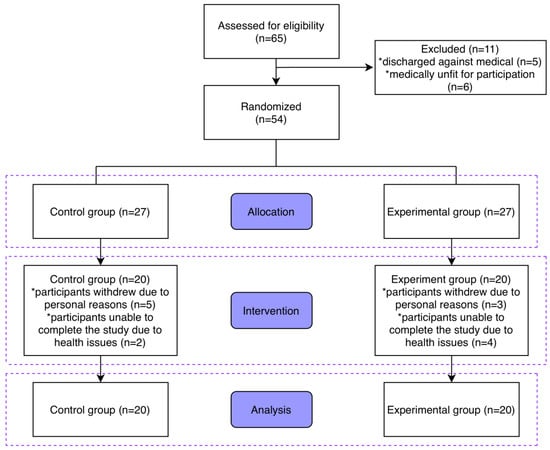
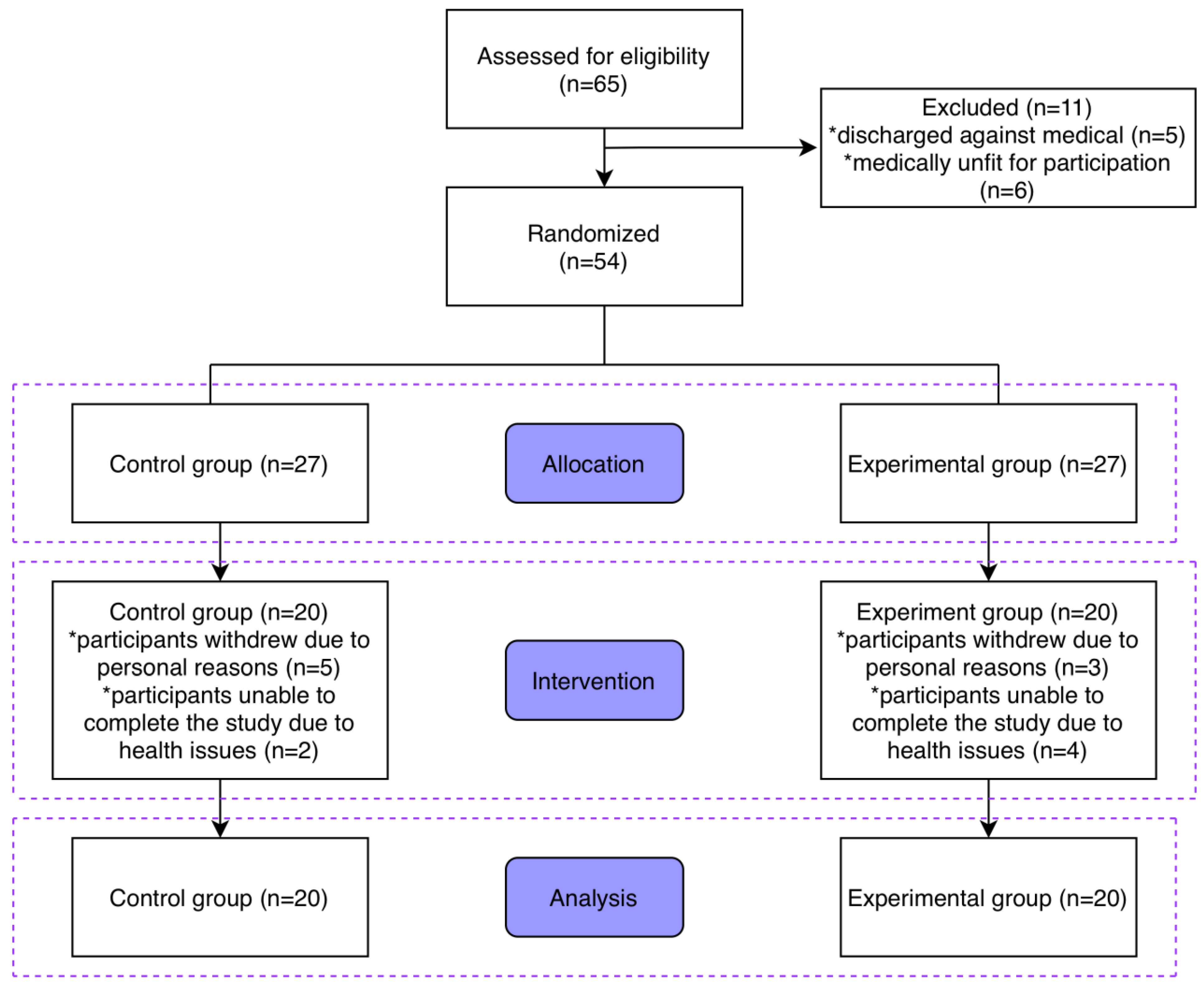
This study was conducted as a randomized controlled trial following the CONSORT guidelines [32] (Figure 1). A total of 54 badminton athletes (27 junior and 27 intermediate) were enrolled and randomly assigned to either the Life Kinetics training group or the control group. Participants were first categorized according to competitive level (junior vs. intermediate) and randomization was performed by an independent third party using a computer-generated sequence with a fixed block size of four and a 1:1 allocation ratio, without stratification [33]. Allocation concealment was maintained using sequentially numbered, sealed, and opaque envelopes in accordance with recommended procedures [34]. Due to the nature of the intervention, blinding of coaches and participants was not feasible; however, outcome assessments were performed by evaluators who remained blinded to group allocation to reduce measurement bias [34,35]. All randomization procedures were documented, and after completing all assessments, an independent statistician conducted the final unblinding and performed the statistical analyses.
Figure 1.
Flow diagram of the trial. * indicates additional explanatory information or special conditions.
2.3. Participants
A total of 40 badminton athletes completed the study and were included in the final analysis. This sample consisted of 20 junior athletes (10 assigned to the experimental group and 10 to the control group) and 20 intermediate athletes (10 experimental and 10 control). Athletes were recruited from Student Activity Unit, Indonesia University of Education. Recruitment was conducted through coach referrals and training-center announcements. Interested athletes were screened for eligibility by the research team prior to enrollment. Athletes were categorized as junior or intermediate based on their competitive experience and training history within the university badminton program. Junior athletes had between 1 and 3 years of structured badminton training and limited competitive experience at the regional level, whereas intermediate athletes had more than three years of systematic training and regular participation in university or regional competitions.
Inclusion Criteria: Eligible participants were junior and intermediate badminton athletes aged 18–23 years, in good general health, and with no history of neurological, cardiovascular, or musculoskeletal disorders. All athletes engaged in structured badminton training at least three times per week, with each session lasting a minimum of two hours and including technical drills (footwork, stroke mechanics, serving), tactical training, match simulation, and strength or conditioning sessions supervised by certified coaches. Additional criteria included: no high-intensity exercise within the 24 h preceding testing, no lower-limb injuries within the previous six months, and the ability to complete all test procedures safely.
Exclusion Criteria: Athletes were excluded if they experienced a recent lower-limb injury (within six months), engaged in strenuous exercise within 24 h prior to testing, or had any neurological, respiratory, cardiovascular, or hematological conditions that might compromise performance or safety.
Written informed consent was obtained from all participants (and from parents/guardians for minors). The study adhered to the Declaration of Helsinki and was approved by the institutional ethics committee, and was registered in the Indonesia Clinical Trial Registry (INA-06052025427E234).
2.4. Training Program
The experimental group received a structured Life Kinetics training program conducted three times per week for a total of 18 sessions. Each session lasted 30–60 min and progressed from basic to advanced difficulty levels. Life Kinetics combines physical movement with perceptual and cognitive challenges and has been shown to promote neuroplasticity and enhance cognitive functions such as concentration and memory [36]. Both groups continued to participate in their regular badminton training routines; however, only the experimental group received additional Life Kinetics exercises during the intervention period. The following exercises illustrate the representative Life Kinetics tasks used in this study (Figure 2 and Figure 3).
Figure 2.
Life Kinetics exercise 1: Juggling training.
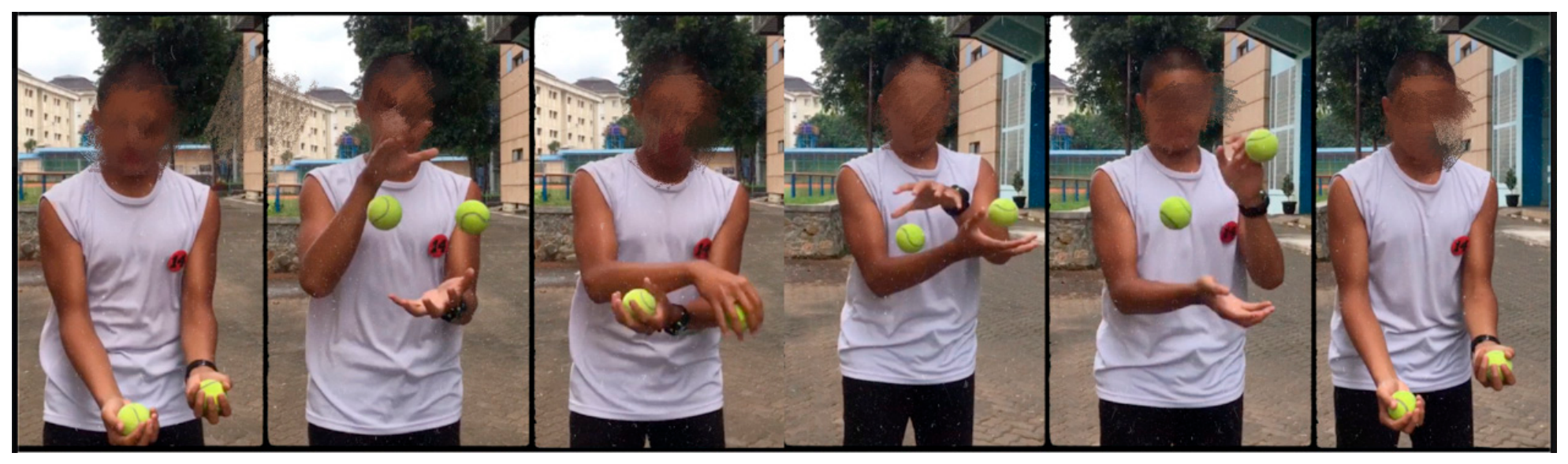
Juggling was performed individually using two balls. Athletes simultaneously tossed both balls upward and caught them with crossed hands right hand above and left hand below and alternated this pattern continuously. This drill emphasizes hand–eye coordination, bilateral integration, and cognitive–motor coupling by requiring sustained concentration, spatial awareness and rhythmic movement control. The playful, game-like nature of juggling enhances engagement and motivation during training.
Figure 3.
Life Kinetics exercise 2: Agility ladder B2.
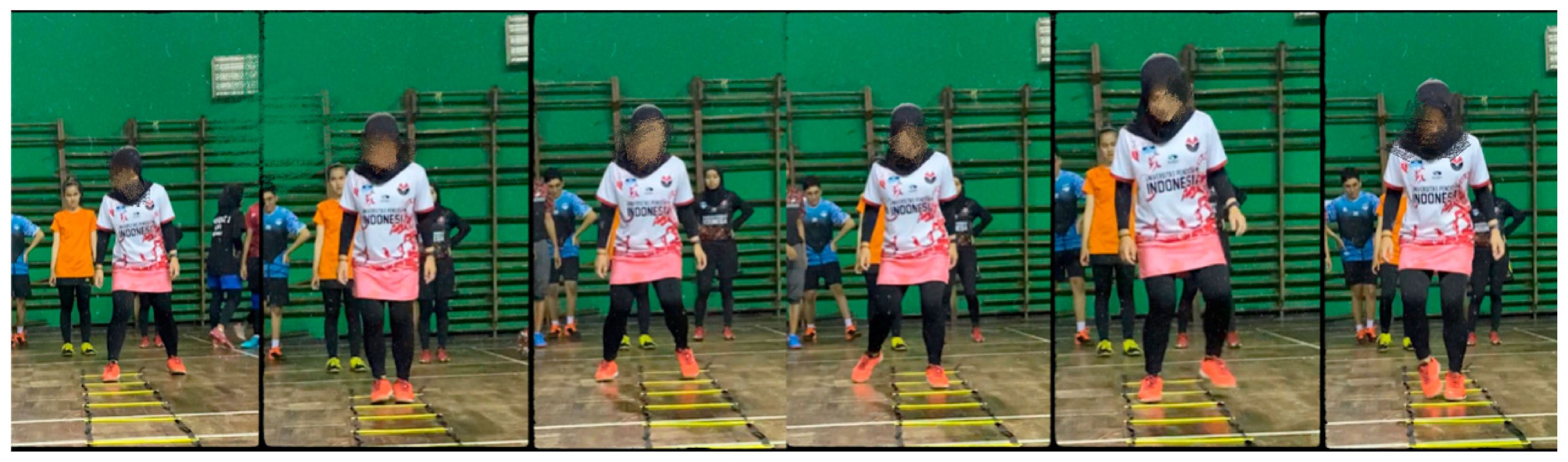
The Agility Ladder B2 drill began with the athlete stepping into zigzag-shaped spaces along the ladder using one foot, followed by placing both feet outside the ladder before moving to the next position. This drill trained quick footwork, directional changes, and timing. In the present study, juggling and B2 agility ladder drills were implemented as representative examples of Life Kinetics training, selected to reflect its core principles of cognitive–motor integration while ensuring feasibility and standardization within the intervention period. Task complexity and movement speed were progressively increased across sessions to maintain both cognitive load and physical challenge.
Control Group Training: The control group performed traditional badminton training with an equivalent duration and frequency. Training sessions included standard technical drills (footwork, serving, and stroke mechanics), basic agility exercises, and tactical gameplay. This ensured comparable training volume and intensity between groups while isolating the cognitive–motor effects of the Life Kinetics intervention. The intervention consisted of 18 sessions over six weeks (three sessions per week) and was conducted alongside regular badminton training rather than replacing it.
2.5. Training Program Instrument and Test Procedure
This study employed a combination of cognitive tests, badminton skill assessments, and EEG-based measurements to evaluate changes in concentration, working memory, brainwave activity, and service performance following the Life Kinetics intervention. All outcome measures were assessed twice: at baseline (pre-test) before the intervention and again after completion of the training program (post-test), using identical procedures, task order, and testing conditions with EEG recording synchronized across the cognitive and serving tasks to capture neural dynamics associated with cognitive–motor performance.
2.5.1. Cognitive Assessment
Cognitive performance was assessed through two established instruments measuring concentration and working memory. Concentration was evaluated using the Concentration Grid Test adapted from Harris and Harris [37] in which participants located numbers from 00 to 99 within a randomized 10 × 10 grid as quickly and accurately as possible within fixed time period. Performance was quantified as the total number of correctly identified targets, with higher scores indicating better attentional performance. Working memory was measured using the forward and backward Digit Span Test [38] In the forward condition, participants recalled numerical sequences in order, while in the backward condition, they reproduced sequences in reverse, engaging short-term memory storage as well as executive manipulation processes. Forward and backward scores were analyzed separately and then summed to obtain a composite working memory score. Together, these two instruments provided a comprehensive assessment of attentional focus and working memory capabilities relevant to cognitive–motor performance in badminton.
2.5.2. Badminton Skill Assessment
Badminton performance was measured using standardized serving skill assessments commonly applied in sport performance research. Short-service accuracy was evaluated using the Frank M. Verduci Short Service Skill Test [39,40] which examines precision, consistency, and control in low-trajectory serves. Long-service performance was assessed using the James Poole Long Service Skill Test [41]. For each test, athletes performed a predetermined number of service attempts toward designated target zones on the court. Performance was quantified using a score-based system, in which points were awarded for successful placements within target areas, as defined in the original test protocols. Scores from all attempts were summed to yield a total service performance score for each condition, with higher scores reflecting greater service accuracy and consistency. The outcome measures were expressed as unitless performance scores.
2.5.3. EEG Measurement Across Cognitive and Serving Tasks
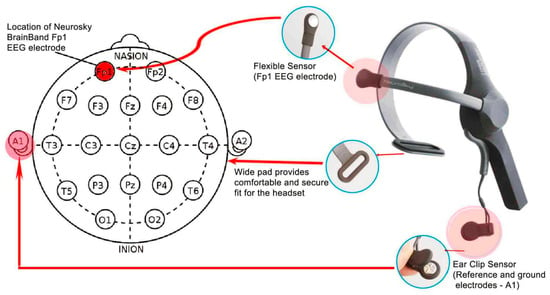
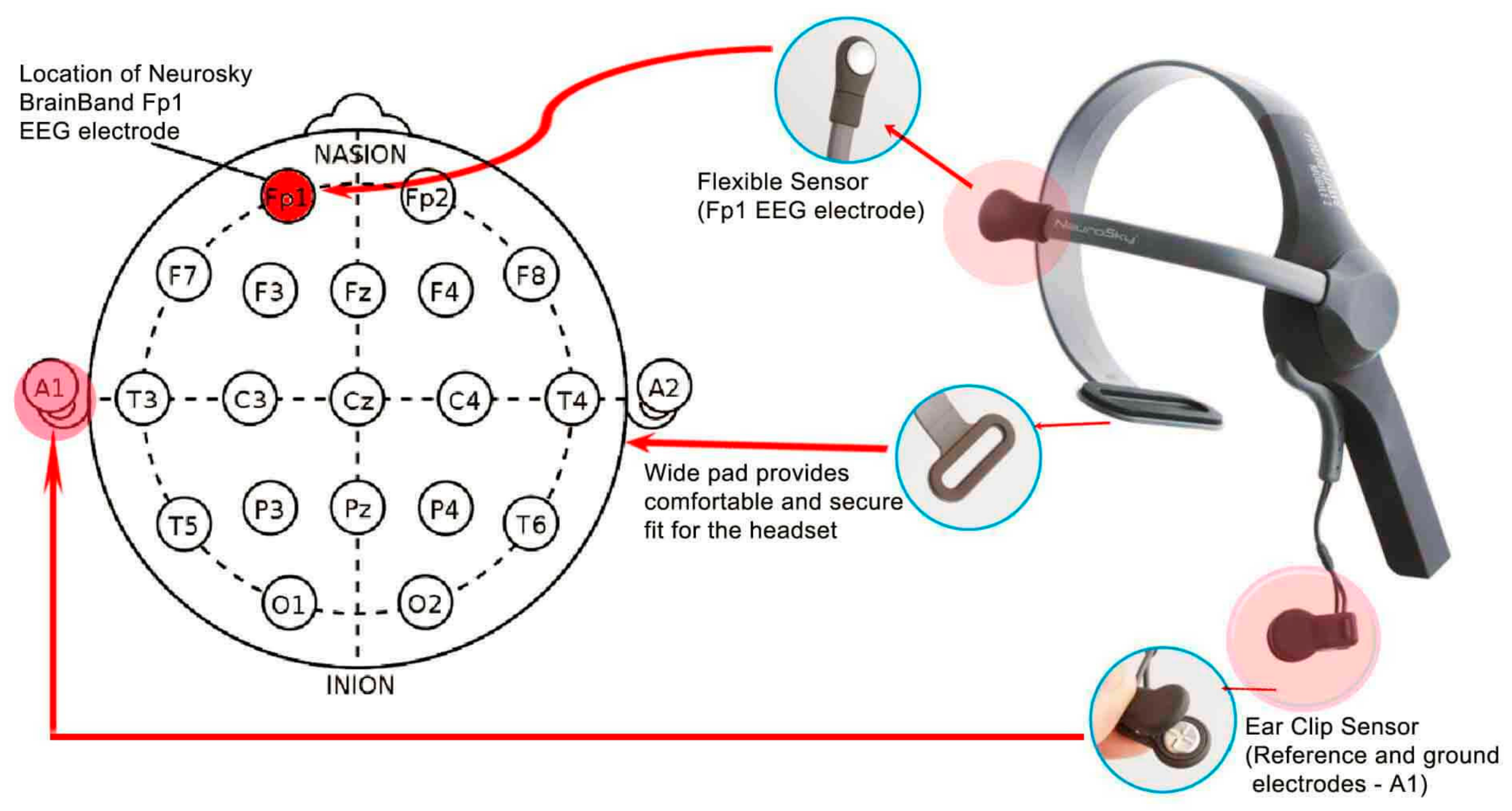
To capture neural processes underlying cognitive and motor performance, EEG recordings were collected continuously during the concentration test, memory test, and both serving assessments. Brain activity was recorded using the NeuroSky MindWave headset (NeuroSky Inc., San Jose, CA, USA) (Figure 4), a single-channel EEG device positioned at the frontal region (Fp1), with a sampling rate of 512 Hz. The device transmits data to the WujiBrainwave software 1.2.7 for acquisition and processing [42].
Figure 4.
NeuroSky MindWave headset. The red arrows indicate electrode connections/positions, the blue circles highlight headset components, and the red shaded circles indicate the active sensor and reference electrode locations.
The NeuroSky system applies Fast Fourier Transform (FFT) to decompose raw EEG signals into their constituent frequency components. Based on this transformation, the device provides estimates of spectral activity across standard EEG frequency ranges, including Delta (0.5–4 Hz), Theta (4–8 Hz), Alpha (8–13 Hz), Beta (13–30 Hz), and Gamma (30–50 Hz). These frequency ranges are consistent with commonly accepted EEG band classifications in the literature [27,28,29]. In the present study, EEG outputs were summarized as dominant frequency estimates (Hz), representing the prevailing spectral characteristics of the signal during task performance. EEG data were used as exploratory indicators of relative spectral changes and were intended to complement behavioral outcomes. By synchronizing EEG recording with both cognitive and badminton tasks, the study captured real-time neural markers of attention, memory, and cognitive–motor integration, providing an exploratory description of task-related EEG spectral characteristics during performance.
2.6. Data Analysis
EEG signals recorded by the NeuroSky MindWave headset were processed using the WujiBrainwave software, which provides acquisition, visualization, and frequency-domain analysis of the signal. Raw EEG data transmitted via Bluetooth were filtered and smoothed to isolate activity within standard frequency bands, including Delta (0.5–4 Hz), Theta (4–8 Hz), Alpha (8–13 Hz), Beta (13–30 Hz), and Gamma (30–50 Hz). In addition to band power estimates, dominant frequency (Hz) was extracted to summarize overall spectral characteristics as the relative magnitude of spectral energy within each frequency range over time, derived from signal amplitude following spectral transformation. All processed data were exported in numerical form for statistical analysis and integration with behavioral outcomes.
All statistical analyses were conducted using IBM SPSS Statistics version 27.0 (IBM Corp., Armonk, NY, USA). Descriptive data are presented as mean ± standard deviation. Baseline characteristics (Table 1) were compared between junior and intermediate athletes using independent-samples t-tests. Data distribution was assessed using the Shapiro–Wilk test, and homogeneity of variance was evaluated using Levene’s test. Primary inferential analyses were performed using mixed-design ANOVA to examine Group (Life Kinetics vs. control) × Time (pre-test vs. post-test) effects on concentration, Digit Span scores, and short- and long-service accuracy. Mixed-design ANOVA was selected as the main analytical approach due to its robustness to moderate deviations from normality in balanced experimental designs. Effect sizes were reported as partial eta squared (ηp2). Within-group pre–post changes are presented descriptively to illustrate the magnitude and direction of change and were not used as the primary basis for statistical inference. Following significant Group × Time interactions, Bonferroni-adjusted post hoc comparisons were conducted to examine (1) within-group pre–post differences and (2) between-group differences at baseline and post-test. EEG data were analyzed descriptively to examine changes in dominant frequency values across conditions. Due to methodological limitations, EEG results are interpreted cautiously and primarily as supportive descriptive data. Statistical significance was set at p < 0.05 (two-tailed) for all analyses.
Table 1.
Baseline characteristics assessment.
3. Results
3.1. Baseline Characteristics
The baseline characteristics of the study participants, including their demographic, anthropometric, and cognitive profiles, are summarized in Table 1 presents baseline characteristics compared using independent-samples t-tests. A detailed comparison of these variables is presented below to illustrate initial similarities and differences between the junior and intermediate groups prior to the intervention. A total of 40 badminton athletes participated in this study, consisting of 20 junior athletes and 20 intermediate athletes. The combined descriptive characteristics of all participants are summarized in Table 1. Across both groups, the athletes had an average age of 20 years (range: 18–22), with a mean height of 167.9 cm and an average body weight of 63.9 kg. This corresponds to a mean BMI of 20.55 kg/m2 (range: 19.72–26.57), indicating that the participants were generally within the normal and healthy weight range for competitive badminton athletes. Cognitive ability, assessed using a standardized IQ measure, showed an overall mean score of 105.8, with individual scores ranging from 98 to 123, reflecting normal to above-average cognitive functioning. Independent-samples t-tests revealed significant differences between junior and intermediate athletes across all baseline variables (all p < 0.05), indicating expected differences in age, anthropometric characteristics, and experience level. In addition, baseline comparisons between the Life Kinetics (LK) and control groups showed no significant differences across all measured variables (all p > 0.05), indicating that the groups were comparable prior to the intervention.
Mixed-design ANOVA analyses revealed significant Group × Time interaction effects across all performance variables (Table 2). Significant interactions were observed for concentration (F(1, 38) = 152.40, p < 0.001, ηp2 = 0.80), memory (F(1, 38) = 168.70, p < 0.001, ηp2 = 0.82), short-service performance (F(1, 38) = 181.20, p < 0.001, ηp2 = 0.83), and long-service performance (F(1, 38) = 210.50, p < 0.001, ηp2 = 0.85), indicating that the Life Kinetics group improved significantly more over time compared to the control group.
Table 2.
Mixed-design ANOVA results for performance outcomes.
Post hoc (follow-up) comparisons were conducted following significant Group × Time interaction effects to further examine within-group and between-group differences across all outcomes (Table 3).
Table 3.
Post hoc comparisons of performance outcomes.
The results demonstrated that the Life Kinetics (LK) group exhibited statistically significant improvements from pre-test to post-test in concentration, working memory, short-service, and long-service performance (all p < 0.001). Percentage values reported in this study represent relative changes in behavioral performance scores, calculated as (post − pre)/pre × 100. EEG results, in contrast, are expressed as dominant frequency values (Hz) obtained during task performance and represent spectral characteristics independent of behavioral percentage measures. The control group showed only minimal changes across these variables, and these changes did not reach statistical significance (all p > 0.05). Between-group comparisons indicated no substantial baseline differences across most variables (p > 0.05), with minor variations accounted for by the Group × Time interaction analysis. At post-test, the LK group demonstrated significantly higher scores than the control group across all performance variables (all p < 0.001), indicating a clear effect of the intervention. To enhance transparency and account for individual variability, participant-level change scores (Δ = post − pre) are provided in Supplementary Table S1.
3.2. Effect of Life Kinetics Training on Cognitive Function and Motor Performance in Junior Badminton Athletes
Significant Group × Time interaction effects were observed across all performance variables Table 2. The Life Kinetics (LK) group showed marked improvements from pre- to post-test, whereas the control group exhibited only minimal changes Table 4. For example, concentration increased from 5.30 ± 2.16 to 12.70 ± 2.67 in the LK group. Comparable gains were also evident for memory, short-service, and long-service performance.
Table 4.
Performance outcomes of junior badminton athletes.
3.3. Effect of Life Kinetics Training on Cognitive Function and Motor Performance in Intermediate Badminton Athletes
A similar pattern was found in intermediate athletes, with significant Group × Time interaction effects across all variables Table 2. The LK group demonstrated substantial increases in concentration, memory, and service performance, while the control group showed only modest improvements Table 5. These findings indicate a consistent advantage of the Life Kinetics intervention across performance outcomes.
Table 5.
Performance outcomes of intermediate badminton athletes.
3.4. EEG Spectral Characteristics in Junior and Intermediate Badminton Athletes
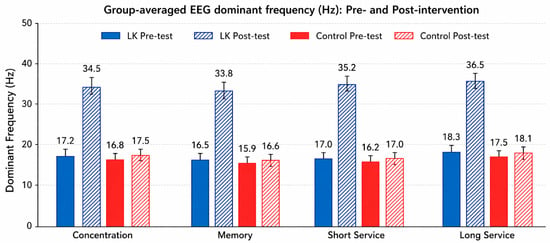
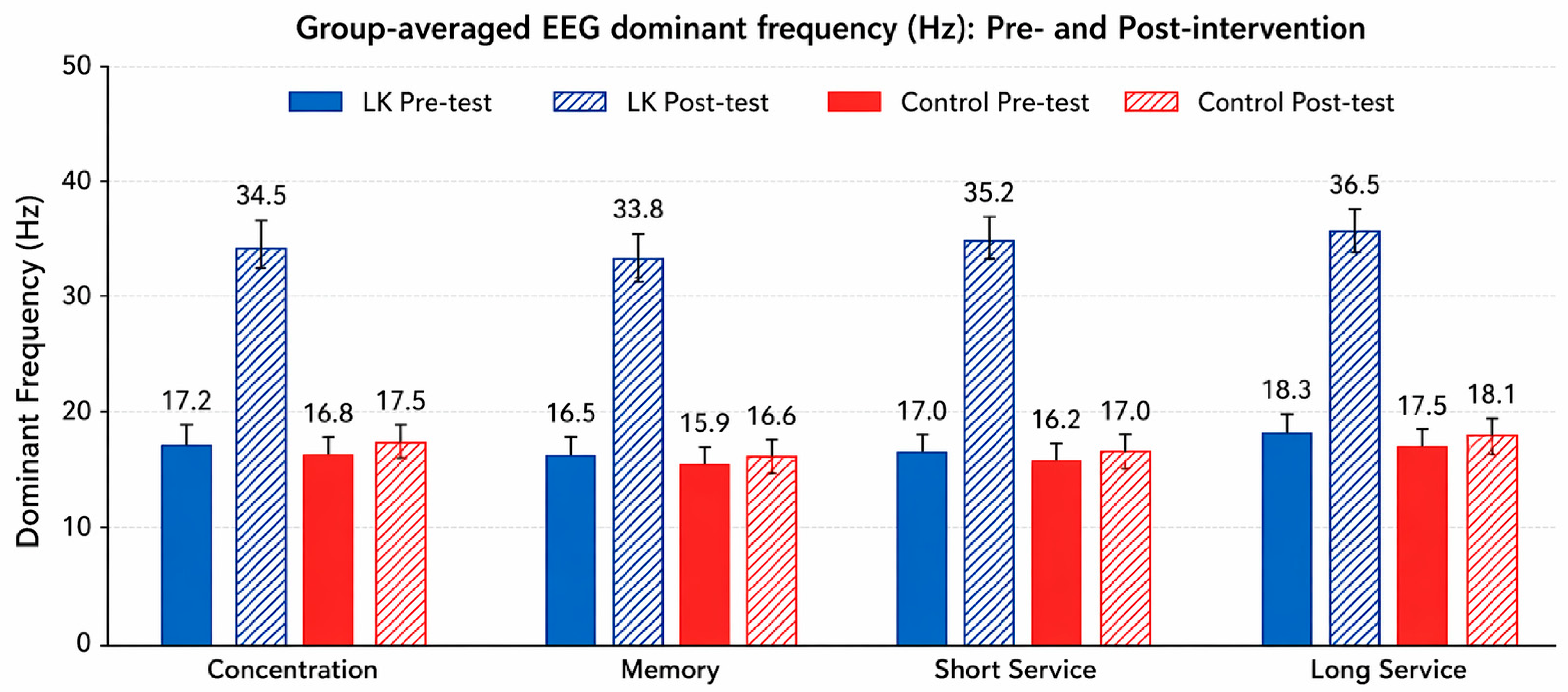
At post-test, the Life Kinetics (LK) group [Table 6] demonstrated substantially higher dominant frequency values across all task conditions compared to the control group. Specifically, dominant frequencies in the LK group ranged from approximately 33.8 to 36.5 Hz across concentration, memory, short-service, and long-service tasks. These values fall within the gamma frequency range (30–50 Hz), which is commonly associated with higher-frequency spectral activity during task engagement. In contrast, the control group remained within a lower range of approximately 16.6 to 18.1 Hz, corresponding to the beta frequency band (13–30 Hz), with minimal deviation from baseline levels. This clear post-intervention separation between groups indicates a consistent shift from beta-range activity at baseline toward higher-frequency (gamma-range) spectral characteristics in the LK group. The magnitude and consistency of this shift across both cognitive and motor tasks suggest a generalized pattern of increased higher-frequency engagement following the intervention, whereas the control group exhibited only negligible changes. Importantly, these post-test findings are consistent with the significant Group × Time interaction effects observed in the inferential analysis, confirming that the divergence between groups emerged specifically after the intervention period. Nevertheless, these results should be interpreted as descriptive indicators of spectral activity derived from single-channel EEG recordings and should not be considered direct evidence of specific neurophysiological mechanisms or localized cortical processes.
Table 6.
EEG spectral characteristics (dominant frequency, Hz).
Mixed-design ANOVA analysis of EEG dominant frequency values (Figure 5) revealed significant Group × Time interaction effects across all task conditions Table 7, indicating that changes in spectral characteristics differed systematically between the Life Kinetics and control groups over time. Specifically, the Life Kinetics group demonstrated consistent increases in dominant frequency values from pre- to post-test across cognitive and motor task conditions, whereas the control group exhibited only minimal changes. These findings reflect a clear divergence in task-related spectral patterns between groups and provide quantitative support for the observed differences in EEG spectral characteristics following the intervention. Detailed EEG spectral activity maps illustrating pre–post changes are provided in the Supplementary Materials (Figures S1 and S2) for transparency and visualization purposes.
Figure 5.
Group-averaged EEG dominant frequency (Hz) before and after the intervention. EEG frequency bands were categorized as follows: Delta (0.5–4 Hz), Theta (4–8 Hz), Alpha (8–13 Hz), Beta (13–30 Hz), and Gamma (30–50 Hz).
Table 7.
Mixed-design ANOVA results for EEG dominant frequency (Hz).
4. Discussion
4.1. Effects of Life Kinetics Training on Cognitive Function in Junior and Intermediate Athletes
The findings of this study demonstrate that Life Kinetics training produced notable enhancements in cognitive performance among both junior and intermediate badminton athletes. As presented in Table 4, junior athletes exhibited significant improvements in concentration (mean difference = 7.4) and memory (mean difference = 14.4), corresponding to gains of 58% and 63%, respectively. These results are consistent with prior evidence suggesting that younger athletes possess heightened neuroplastic potential, allowing for greater improvements in executive functioning and working memory when exposed to cognitively enriched motor-training environments [16,43].
Intermediate athletes also demonstrated substantial cognitive gains, although their adaptations followed a slightly different pattern. As illustrated in Table 5, concentration improved by 13.9 points (68%), and memory increased by 13 points (56%). While relative improvements were slightly smaller compared with junior athletes, absolute performance gains remained considerable. This pattern aligns with research indicating that athletes with greater perceptual–motor maturity exhibit more efficient attentional control, cue filtering, and working-memory retrieval due to accumulated sport experience [44,45].
EEG observations complemented these behavioral outcomes. In addition to the descriptive patterns observed, statistical analysis of EEG dominant frequency values revealed significant Group × Time interaction effects across all task conditions Table 7, indicating that changes in spectral characteristics differed systematically between the Life Kinetics and control groups over time. As summarized in Table 6, post-intervention recordings demonstrated consistently higher dominant frequency values compared with pre-test conditions in the Life Kinetics group across all task conditions, whereas only minimal changes were observed in the control group. These descriptive patterns are consistent with the prior EEG literature linking beta-band activity to sustained attention and sensorimotor processing [46,47,48]. Collectively, the behavioral findings demonstrate improvements in attentional stability and working memory following Life Kinetics training, which are directly relevant to badminton performance—requiring rapid information processing, anticipation, and precise motor execution.
4.2. Influence of Life Kinetics Training on Service Performance
Life Kinetics training also resulted in meaningful improvements in serving performance across skill levels. As shown in Table 5, junior athletes experienced increases of 14.4 points in short service and 16.6 points in long service. These improvements likely reflect enhanced coordination, timing control, and more effective integration of perceptual information during motor execution. Such findings are consistent with previous research highlighting the role of cognitive functions, particularly attention and working memory, in badminton skill performance [49,50].
Intermediate athletes similarly showed substantial improvements, as shown in Table 4, with short service increasing by 11.3 points and long service by 22.4 points. The larger gains in long-service performance may be related to improved control of force, trajectory planning, and decision-making processes, which are influenced by both cognitive and motor experience [51,52].
The cognitive–motor nature of service execution explains these improvements. Serving requires athletes to: (1) regulate attentional focus, (2) retrieve learned motor schemas, (3) anticipate opponent positioning and (4) execute coordinated movement sequences. Life Kinetics directly trains these processes by pairing perceptual load with motor execution, promoting neurocognitive integration crucial to serving efficiency.
4.3. Neural Oscillatory Mechanisms Underlying Performance Enhancement
The EEG findings indicate changes in spectral characteristics following Life Kinetics training. In both junior and intermediate athletes, post-intervention recordings consistently showed higher dominant frequency values compared with pre-test conditions, reflecting a systematic shift in task-related spectral activity during performance. These observations are interpreted in relation to the established EEG literature. Beta-band activity has been associated with sustained attention and sensorimotor processing [46,47], whereas higher-frequency activity, including gamma-band oscillations, has been linked to cognitive functions such as working memory, attentional integration, and rapid information processing [48,49,50,51,53]. The spectral patterns observed in the present study are consistent with these general functional associations. Overall, the EEG results characterize global changes in spectral activity during task performance and provide complementary information alongside the behavioral findings. The primary conclusions of the study remain grounded in the statistically validated improvements in cognitive and motor performance [52,54,55,56].
4.4. Differential Adaptations Between Junior and Intermediate Athletes
Although both groups benefited from Life Kinetics training, junior athletes demonstrated relatively greater percentage improvements across most variables. This difference may be attributed to heightened neuroplasticity in younger athletes, allowing for more rapid synaptic strengthening and cognitive–motor integration [43].
Intermediate athletes demonstrated greater absolute improvements in long-service performance and concentration control. These findings are consistent with research showing that experienced athletes possess more developed perceptual–attentional frameworks, enabling them to utilize cognitive training more effectively and strategically [44]. Additionally, their more mature sensorimotor systems may allow them to better capitalize on the observed neural adaptations. Overall, these patterns suggest that Life Kinetics represents a scalable intervention: junior athletes benefit through broader developmental gains, while intermediate athletes benefit through more refined, performance-specific cognitive–motor efficiency.
4.5. Practical Implications for Badminton Training
The results suggest that Life Kinetics training can serve as a valuable complement to technical badminton instruction. By enhancing concentration, working memory, and motor coordination, Life Kinetics may improve performance consistency, reduce technical errors, and support more effective decision-making during match play. Coaches may integrate Life Kinetics sessions into regular training micro-cycles to enhance cognitive readiness alongside motor execution. This approach aligns with evidence showing that cognitively enriched training environments promote superior learning outcomes and more durable motor skills [55,56].
4.6. Limitations
Several limitations should be acknowledged when interpreting the findings of this study. First, although statistically sufficient, the sample sizes for both junior and intermediate groups were relatively small, which may limit the generalizability of the results to wider badminton populations. Larger and more diverse samples including elite or recreational athletes could provide a more comprehensive understanding of the effects of Life Kinetics training. Second, the EEG measurements were obtained using the NeuroSky MindWave system, which utilizes a single electrode and produces algorithmically derived brainwave indices rather than raw multi-channel microvolt recordings. Although this device is appropriate for detecting general patterns of oscillatory activity and relative changes across sessions, the neural mechanisms underlying training-related improvements cannot be mapped in detail. Future studies employing high-density EEG or multimodal neuroimaging methods would allow for more precise characterization of neurocognitive processes associated with Life Kinetics training. Third, the study only assessed pre–post changes immediately following the intervention, with no retention testing to examine the durability of cognitive or motor improvements. Without long-term follow-up, it remains unclear whether the gains in concentration, memory, and service performance persist over time. Fourth, the study focused primarily on service performance, which represents only one technical component of badminton. Other crucial aspects such as footwork speed, tactical anticipation, defensive transitions, and rally performance were not evaluated, limiting the scope of performance-related conclusions.
4.7. Future Directions
Future research should address these limitations through several targeted approaches. First, studies involving larger and more diverse athlete samples across age groups and competitive levels are needed to strengthen generalizability. Second, the use of advanced neuroimaging techniques such as high-density EEG, fNIRS, or MEG would allow more precise identification of neural mechanisms underlying cognitive–motor training. Third, longitudinal designs are recommended to determine whether improvements in cognitive and motor performance are maintained over time and to identify optimal training duration and frequency. Fourth, future studies should incorporate a broader range of performance measures, including agility, reaction time, visual search strategies, and decision-making during match play. Finally, individualized or adaptive Life Kinetics programs may further enhance training effectiveness. Tailoring task difficulty to athletes’ cognitive and motor profiles may optimize learning outcomes and reduce overload.
5. Conclusions
This study investigated the effects of an 18-session Life Kinetics training program on concentration, working memory, and service performance in junior and intermediate badminton athletes using behavioral assessments and EEG measures. The results demonstrated significant improvements across all cognitive and motor outcomes following the intervention, with increases in concentration, memory, and both short- and long-service accuracy in the Life Kinetics group compared to the control group. Exploratory EEG observations suggested relatively higher dominant frequency values following training, indicating descriptive changes in spectral activity during task performance. Overall, the findings highlight the potential value of incorporating multimodal cognitive–motor training into badminton development programs. Life Kinetics appears to effectively target both cognitive and technical aspects of performance, supporting its application as a complementary training approach. Future research should employ larger samples, advanced multi-channel neuroimaging methods, and longitudinal designs to further clarify underlying mechanisms and assess the long-term sustainability of training effects.
Supplementary Materials
The following supporting information can be downloaded at: https://www.mdpi.com/article/10.3390/life16050836/s1, Table S1. Individual pre–post difference scores for concentration, memory, short-service, and long-service performance in all participants; Figure S1. EEG Brainwave Activity and Performance of JBA; Figure S2. EEG Brainwave Activity and Performance of IBA.
Author Contributions
Conceptualization, Q.S.S., W.S. and H.Y.; methodology, Q.S.S., W.S. and H.Y.; investigation, Q.S.S. and X.M.; data curation, Q.Y., W.S. and H.Y. assisted in interpreting the data and provided additional suggestions; writing—original draft preparation, Q.S.S. and H.Y.; writing—review and editing, Q.S.S. and W.S.; funding acquisition, W.S. All authors have read and agreed to the published version of the manuscript.
Funding
This research was funded by the Fundamental Research Funds for the Central Universities [2025KYPT04] and the Beijing Sport University Alumni Foundation.
Institutional Review Board Statement
This work has been approved by Sports Science Experiment Ethics Committee of Beijing Sport University (Approval Code: 2025605H; Approval Date: 24 December 2025) At the time of data collection, ethical oversight for this study was obtained through registration and approval procedures under the Indonesian Ministry of Health framework granted by the Indonesia Clinical Trial Registry (Registration Number: INA-06052025427E234). This registration corresponds to the study population and data collection site in Indonesia and reflects compliance with local regulatory requirements.
Informed Consent Statement
Informed consent was obtained from all subjects involved in the study.
Data Availability Statement
The original contributions presented in this study are included in the article/Supplementary Material. Further inquiries can be directed to the corresponding author.
Conflicts of Interest
The authors declare no conflicts of interest.
Abbreviations
The following abbreviations are used in this manuscript:
| LK | Life Kinetics |
| EEG | Electroencephalography |
| JBA | Junior badminton athletes |
| IBA | Intermediate badminton athletes |
References
- Zhang, B.; Li, F.; Jiang, W. Mixed Doubles Match Technical and Tactical Analysis of World Badminton Champion Based on Mathematical Statistics. Adv. Phys. Educ. 2013, 3, 154–157. [Google Scholar] [CrossRef]
- Duncan, M.J.; Chan, C.K.Y.; Clarke, N.D.; Cox, M.; Smith, M. The effect of badminton-specific exercise on badminton short-serve performance in competition and practice climates. Eur. J. Sport Sci. 2017, 17, 119–126. [Google Scholar] [CrossRef] [Scilit] [PubMed]
- Chen, Y.; Zulnaidi, H.; Syed Ali, S.K.B. Study on the eye movement characteristics of the badminton practitioners of different levels regarding visual attention. Front. Psychol. 2023, 13, 1026006. [Google Scholar] [CrossRef] [Scilit]
- Phomsoupha, M.; Laffaye, G. The Science of Badminton: Game Characteristics, Anthropometry, Physiology, Visual Fitness and Biomechanics. Sports Med. 2015, 45, 473–495. [Google Scholar] [CrossRef] [Scilit]
- Squire, L.R.; Dede, A.J.O. Conscious and Unconscious Memory Systems. Cold Spring Harb. Perspect. Biol. 2015, 7, a021667. [Google Scholar] [CrossRef] [Scilit]
- Demirakca, T.; Cardinale, V.; Dehn, S.; Ruf, M.; Ende, G. The Exercising Brain: Changes in Functional Connectivity Induced by an Integrated Multimodal Cognitive and Whole-Body Coordination Training. Neural Plast. 2016, 1, 8240894. [Google Scholar] [CrossRef] [Scilit]
- Tafaqur, M.; Komarudin; Mulyana; Saputra, M.Y. Brain Jogging Training to Improve Motivation and Learning Result of Tennis Skills. IOP Conf. Ser. Mater. Sci. Eng. 2017, 180, 012215. [Google Scholar] [CrossRef] [Scilit]
- Schreiner, L.A. The Privilege of Grit. About Campus Enrich. Stud. Learn. Exp. 2017, 22, 11–20. [Google Scholar]
- Baddeley, A. Working Memory: Theories, Models, and Controversies. Annu. Rev. Psychol. 2012, 63, 1–29. [Google Scholar] [CrossRef] [Scilit] [PubMed]
- Liao, C.M.; Masters, R.S.W. Analogy learning: A means to implicit motor learning. J. Sports Sci. 2001, 19, 307–319. [Google Scholar] [CrossRef] [Scilit]
- Miller, E.K.; Cohen, J.D. An Integrative Theory of Prefrontal Cortex Function. Annu. Rev. Neurosci. 2001, 24, 167–202. [Google Scholar] [CrossRef] [Scilit]
- Lutz, H. Life Kinetics: Bewegung Macht Hirn; Meyer Meyer: Aachen, Germany, 2017. [Google Scholar]
- Komarudin. Life Kinetics dan Performa Psikologis; Remaja Rosdakarya: Bandung, Indonesia, 2018. [Google Scholar]
- Saputra, M.Y.; Mulyana; Komarudin; Sartono, H. Optimization of Pencak Silat Athletes Coordination Through Brain Jogging. IOP Conf. Ser. Mater. Sci. Eng. 2017, 180, 012216. [Google Scholar] [CrossRef] [Scilit]
- Komarudin; Awwaludin, P.N.; Hidayat, Y.; Novan, N.A. Life Kinetics Training to Increase Concentration and Skills in Playing Football. Int. J. Hum. Mov. Sports Sci. 2021, 9, 53–58. [Google Scholar]
- Sholehudin, I.; Fendrian, F.; Junanda, H.; Heryanto, M. Cognitive Transformation Through Brain jogging Exercise: A Longitudinal Study in Improving Working memory. J. Kepelatihan Olahraga 2015, 17, 144–153. [Google Scholar] [CrossRef] [Scilit]
- Yarayan, Y.E.; Keskin, K.; Çelik, O.B.; Güder, B.C.; Kurtipek, S.; Aslan, M.; Söğüt, T.; Durhan, T.A.; Alkhamees, N.H.; Sheeha, B.B.; et al. Impact of Life Kinetics training on balance, agility, jumping, proprioception, and cognitive function in preadolescent recreational fencing athletes: A randomized controlled trial. BMC Sports Sci. Med. Rehabil. 2025, 17, 146. [Google Scholar] [CrossRef] [Scilit]
- Gür, Y.; Taşkın, S.; Şahin, E.; Taşkın, C. Investigation of the Effect of Life Kinetic Exercises on Shooting Performance in Women Doing Floor Curling. J. Educ. Issues 2022, 8, 672–679. [Google Scholar] [CrossRef] [Scilit]
- Koyun, S. Effects of 8 weeks Life Kinetics Exercises on Badminton Specific Skills and Motoric Features in Children Aged 10–12. Master’s Thesis, Bursa Uludağ Üniversitesi, Bursa, Turkey, 2024. [Google Scholar]
- Pathonah, A.N.; Komarudin; Saputra, M.Y.; Novian, G. Life Kinetics training and accuracy of overhead lob strokes of badminton athletes. Compet. J. Pendidik. Keolahragaan 2024, 16, 410–416. [Google Scholar] [CrossRef] [Scilit]
- Kurt, M.A.; Çolak, M. Badmintoncularda Life Kinetik Antrenmanlarının Bazı Koordinatif Yetenekler Üzerine Etkisi. Mediterr. J. Sport Sci. 2022, 5, 195–216. [Google Scholar] [CrossRef] [Scilit]
- Sarikabak, M.; Hepsert, S.; Dönmez, A.; Baykara, C.; Cana, H.; Ayranci, M.; Çelebioğlu, H.A. Cognitive traces of life kinetic exercise in puberty sedentary subjects. PLoS ONE 2025, 20, e0322778. [Google Scholar] [CrossRef] [Scilit]
- Cowan, N. The Magical Mystery Four: How is Working Memory Capacity Limited, and Why? Curr. Dir. Psychol. Sci. 2010, 19, 51–57. [Google Scholar] [CrossRef] [Scilit]
- Kovářová, L.; Kovář, K. Concentration of attention as a predisposition of performance in junior categories in endurance sports. Acta Gymnica 2010, 40, 23–31. [Google Scholar]
- Janelle, C.M. Anxiety, arousal and visual attention: A mechanistic account of performance variability. J. Sports Sci. 2002, 20, 237–251. [Google Scholar] [CrossRef] [Scilit]
- Hepler, T.J.; Feltz, D.L. Take the first heuristic, self-efficacy, and decision-making in sport. J. Exp. Psychol. Appl. 2012, 18, 154–161. [Google Scholar] [CrossRef] [Scilit]
- Herrmann, C.S.; Fründ, I.; Lenz, D. Human gamma-band activity: A review on cognitive and behavioral correlates and network models. Neurosci. Biobehav. Rev. 2010, 34, 981–992. [Google Scholar] [CrossRef] [Scilit]
- Klimesch, W. Alpha-band oscillations, attention, and controlled access to stored information. Trends Cogn. Sci. 2012, 16, 606–617. [Google Scholar] [CrossRef] [Scilit]
- Başar, E.; Başar-Eroğlu, C.; Karakaş, S.; Schürmann, M. Gamma, alpha, delta, and theta oscillations govern cognitive processes. Int. J. Psychophysiol. 2001, 39, 241–248. [Google Scholar] [CrossRef] [Scilit] [PubMed]
- Faul, F.; Erdfelder, E.; Lang, A.G.; Buchner, A. G*Power 3: A flexible statistical power analysis program for the social, behavioral, and biomedical sciences. Behav. Res. Methods 2007, 39, 175–191. [Google Scholar] [CrossRef] [Scilit] [PubMed]
- Romeas, T.; Guldner, A.; Faubert, J. 3D-Multiple Object Tracking task improves passing decision-making accuracy in soccer players. Psychol. Sport Exerc. 2016, 22, 1–9. [Google Scholar] [CrossRef] [Scilit]
- Schulz, K.F.; Altman, D.G.; Moher, D. CONSORT 2010 Statement: Updated guidelines for reporting parallel group randomised trials. BMJ 2010, 340, c332. [Google Scholar] [CrossRef] [Scilit]
- Moher, D.; Hopewell, S.; Schulz, K.F.; Montori, V.; Gøtzsche, P.C.; Devereaux, P.J.; Elbourne, D.; Egger, M.; Altman, D.G. CONSORT 2010 Explanation and Elaboration: Updated guidelines for reporting parallel group randomised trials. J. Clin. Epidemiol. 2010, 63, e1–e37. [Google Scholar] [CrossRef] [Scilit]
- Schulz, K.F.; Grimes, D.A. Allocation concealment in randomised trials: Defending against deciphering. Lancet 2002, 359, 614–618. [Google Scholar] [CrossRef] [Scilit]
- Boutron, I.; Estellat, C.; Ravaud, P. A review of blinding in randomized controlled trials found results inconsistent and questionable. J. Clin. Epidemiol. 2005, 58, 1220–1226. [Google Scholar] [CrossRef] [Scilit]
- Duda, H. Application of Life Kinetics in the process of teaching technical activities to young football players. J. Kinesiol. Exerc. Sci. 2015, 7, 53–63. [Google Scholar]
- Harris, D.V.; Harris, B.L. The Athlete’s Guide to Sports Psychology: Mental Skills for Physical People; Human Kinetics: Champaign, IL, USA; Leisure Press: New York, NY, USA, 1984. [Google Scholar]
- Turner, M.; Ridsdale, J. Turner: The Digit Memory Test; Dyslexia International: Pikesville, MD, USA, 2004. [Google Scholar]
- Verducci, F.M. Measurement Concepts in Physical Education; Mosby: St. Louis, MO, USA, 1980. [Google Scholar]
- Nugroho, S.; Komari, A.; Dwihandaka, R.; Pambudi, D.K.; Sulistiyono, S.; Ihsan, F.; Hidayat, R.A. The Effectiveness of Accuracy Training to Improve Badminton Athletes’ Service Skills. In Proceedings of the International Seminar of Sport and Exercise Science; Atlantis Press: Dordrecht, The Netherlands, 2025; pp. 152–159. [Google Scholar]
- Poole, J. Learn Badminton; Pionir Jaya: Bandung, Indonesia, 1988. [Google Scholar]
- NeuroSky. MindWave Mobile 2 EEG Biosensor Technical Specifications. Available online: https://store.neurosky.com/pages/mindwave (accessed on 20 December 2025).
- Kim, D.H.; Kim, M.H. The effectiveness of mental training for youth badminton players. J. Coach. Dev. 2023, 25, 112–120. [Google Scholar] [CrossRef] [Scilit]
- Vestberg, T.; Reinebo, G.; Maurex, L.; Ingvar, M.; Petrovic, P. Core executive functions are associated with success in young elite soccer players. PLoS ONE 2017, 12, e0170845. [Google Scholar] [CrossRef] [Scilit]
- Sung, Y.T.; Chang, K.E.; Liu, T.C. The effects of integrating mobile devices with teaching and learning on students’ learning performance: A meta-analysis and research synthesis. Comput. Educ. 2016, 94, 252–275. [Google Scholar] [CrossRef] [Scilit]
- Engel, A.K.; Fries, P. Beta-band oscillations—Signaling the status quo? Curr. Opin. Neurobiol. 2010, 20, 2. [Google Scholar] [CrossRef] [Scilit] [PubMed]
- Bertrand, O.; Tallon-Baudry, C. Oscillatory gamma activity in humans: A possible role for object representation. Int. J. Psychophysiol. 2000, 38, 211–223. [Google Scholar] [CrossRef] [Scilit]
- Jensen, O.; Mazaheri, A. Shaping Functional Architecture by Oscillatory Alpha Activity: Gating by Inhibition. Front. Hum. Neurosci. 2010, 4, 186. [Google Scholar] [CrossRef] [Scilit]
- Castaneda, B.; Gray, R. Effects of focus of Attention on Baseball Batting Performance in Players of Differing Skill Levels. J. Sport Exerc. Psychol. 2007, 29, 60–77. [Google Scholar] [CrossRef] [Scilit]
- Mann, D.T.Y.; Williams, A.M.; Ward, P.; Janelle, C.M. Perceptual-cognitive expertise in sport: A meta-analysis. J. Sport Exerc. Psychol. 2007, 4, 457–478. [Google Scholar] [CrossRef] [Scilit] [PubMed]
- Gabbett, T.; Georgieff, B.; Domrow, N. The use of physiological, anthropometric, and skill data to predict selection in a talent-identified junior volleyball squad. J. Sports Sci. 2007, 12, 1337–1344. [Google Scholar] [CrossRef] [Scilit] [PubMed]
- Liao, K.F.; Chen, Y.L.; Meng, F.W. The relationship between action inhibition and athletic performance in elite badminton players and non-athletes. J. Hum. Sport Exerc. 2017, 12, 574–581. [Google Scholar] [CrossRef] [Scilit]
- Herrmann, C.S.; Strüber, D.; Helfrich, R.F.; Engel, A.K. EEG oscillations: From correlation to causality. Int. J. Psychophysiol. 2016, 103, 12–21. [Google Scholar] [CrossRef] [Scilit]
- Fries, P. Rhythms for Cognition: Communication through Coherence. Neuron 2015, 1, 220–235. [Google Scholar] [CrossRef] [Scilit] [PubMed]
- Wulf, G.; Lewthwaite, R. Optimizing performance through intrinsic motivation and attention for learning: The OPTIMAL theory of motor learning. Psychon. Bull. Rev. 2016, 13, 82–1414. [Google Scholar] [CrossRef] [Scilit]
- Voss, M.W.; Heo, S.; Prakash, R.S.; Erickson, K.I.; Alves, H.; Chaddock, L.; Szabo, A.N.; Mailey, E.L.; Wójcicki, T.R.; White, S.M.; et al. The influence of aerobic fitness on cerebral white matter integrity and cognitive function in older adults: Results of a one-year exercise intervention. Hum. Brain Mapp. 2013, 34, 2972–2985. [Google Scholar] [CrossRef] [Scilit]

Disclaimer/Publisher’s Note: The statements, opinions and data contained in all publications are solely those of the individual author(s) and contributor(s) and not of MDPI and/or the editor(s). MDPI and/or the editor(s) disclaim responsibility for any injury to people or property resulting from any ideas, methods, instructions or products referred to in the content. |
© 2026 by the authors. Licensee MDPI, Basel, Switzerland. This article is an open access article distributed under the terms and conditions of the Creative Commons Attribution (CC BY) license.