


Abstract
The Great Hunger (An Gorta Mór) of 1845–1852 caused an estimated one million deaths in Ireland, and at least as many people emigrated. Before the blight, the rural poor lived mainly on a diet of potatoes and buttermilk, which supplied tryptophan, the amino acid involved in serotonin synthesis. After Phytophthora infestans destroyed the potato crop, relief came mostly as unprocessed Indian corn (maize). Maize protein is low in tryptophan, and its niacin is poorly absorbed. In those who contracted typhus, relapsing fever, or dysentery, inflammation may have redistributed part of the remaining tryptophan into the kynurenine pathway; this cannot be quantified for the population as a whole. A dietary reconstruction, reported here with its assumptions, parameter sources, and uncertainty ranges, estimates that the tryptophan supply fell to roughly one-eighth of its pre-1845 level at the height of the crisis and had recovered to about three-fifths of that level by 1859. This Perspective article examines historical evidence that recorded suicide and asylum admissions rose during and after the Great Hunger, series that are biased upward and cannot establish a rise in depression itself; current evidence on rates of depression in Ireland and among the Irish in Britain; and evidence from famines elsewhere linking prenatal undernutrition to affective disorders and to changes in the methylation of serotonin receptor genes. We propose that tryptophan depletion contributed to depression during the Great Hunger and may have increased the risk of depression in those born during and after it.
1. Introduction
The Great Hunger (An Gorta Mór) of 1845–1852 is among the most significant events in Irish history. More than one million people died, and at least as many emigrated [1,2]. The census population fell from 8,175,124 in 1841 to 6,552,385 in 1851, and continued emigration kept the population falling for decades afterward [1,3]. The population of the island of Ireland is still below its 1841 level.
Despite its importance, the health effects of the Great Hunger received little scientific attention for more than a century, for political, economic, psychological, and religious reasons. The experience of the mentally ill during this period has been described as something that was first recorded, then largely forgotten, and only recently studied again [4]. This is now changing. Bioarchaeologists have studied bones and teeth from workhouse burial grounds [5,6,7], economic historians have examined the causes of death [8], and epidemiologists have begun to ask whether the Great Hunger affected the health of later generations [9,10].
A large body of evidence now shows that undernutrition during pregnancy can affect health across the life course. This framework comes from the observation that poor conditions in early life predict disease in adulthood [11]. Famines with a well-defined beginning and end have served as natural experiments in this field. People conceived or carried during the Dutch Hunger Winter of 1944–1945 and the Chinese famine of 1959–1961 have higher rates of affective disorders, as well as schizophrenia, than those born before or after these events [12,13,14,15,16]. Some exposed individuals also show lasting differences in DNA methylation, a chemical mark that helps control gene expression [17,18].
There is growing evidence that the Great Hunger may have had lasting effects on rates of psychosis [9,10]. In this perspective we argue that major depression was also affected, and set out the dietary mechanism. Before 1845, the potato supplied most of the tryptophan in the diet of the rural poor. Tryptophan is the essential amino acid from which serotonin is made. Its replacement by maize, which provides little usable tryptophan, together with epidemic infection and severe stress, would have sharply reduced serotonin production during the crisis. Through effects on the developing brain, it may also have increased the risk of depression in children born during and after it.
1.1. Prevalence of Depression
A nationally representative survey of 1110 adults in 2022 reported that 42.5% of respondents met the criteria for at least one of the disorders assessed, which includes anxiety, alcohol use, and post-traumatic stress disorder as well as depression, and concluded that “mental health disorder prevalence in Ireland is relatively high compared to international estimates” [19]. The same survey put major depressive disorder at 11.5% (95% CI 9.6–13.4%), roughly twice the European figure of about 5%, although it drew on a non-probability sample. Earlier Irish estimates are lower. In the SLÁN 2007 survey, about 6% of adults screened positive for probable major depressive disorder and 3% for generalized anxiety disorder, against reported European rates of about 5% and 2% [20]. Differences of this size fall within the range produced by differences in instruments, sampling, and case definition, so the margin over the European figures is modest, the Irish estimates sit at the upper end of that range. Taken together, the data place Ireland at or above the European average for depression, without showing a markedly elevated rate.
It is unknown if these rates of depression are the result of epigenetic changes, such that alterations in DNA are transgenerational. While possible, it is equally plausible that cultural factors and poverty are the underlying mechanism. Obviously, an interplay between these two factors is also possible.
1.2. Regional Distribution
Rates of depression also vary within Ireland. Small-area estimates based on spatial microsimulation show the highest rates in the Border, West, Mid-West, and Midland regions and the lowest in the South-East, South, Mid-East, and Dublin regions [21]. This pattern broadly matches the geography of the Great Hunger, in which potato blighting, excess deaths, and dependence on relief were concentrated in the west and north-west [3]. Between 1841 and 1851, the population of Connacht fell by about 29%, compared with about 15% in Leinster (calculated from provincial census totals [1,3]). This is an ecological association, however. The west is also more rural, older, poorer, and more affected by emigration, and each of these could raise rates of depression on its own [21]. Testing whether the two patterns are causally related would require linking individual ancestry to blight severity and to biological markers.
1.3. The Irish in Britain
Irish emigrants and their descendants also have higher rates of depression. In Britain, people of Irish descent have higher rates of depression than the non-Irish population [22,23]. People born in the Republic of Ireland and living in Britain have been admitted to hospital for depression at about two and a half times the rate of those born in England, and in 1988–1992 their age-standardized suicide rate was about 53% higher than that of the native-born population [23,24]. This excess remains when the Irish are compared with other migrant groups [25], yet the Irish have been described as an invisible and excluded population in British health research [26].
In two British birth cohorts, second-generation Irish children showed more psychological distress than their peers [27], and a 25% excess in suicide has been reported among British-born children of Irish migrants [23]. The timing of this migration matters. Most Irish-born people living in Britain in the period covered by these studies, and most parents of the second-generation cohorts, emigrated in the decades after the Second World War, a century or more after the Great Hunger. Any inherited contribution would therefore have to persist across many intervening generations.
Social factors also play a part. A case–control study of 360 Irish-born adults in London scored each participant on eight questions about how far the move had been prepared, among them whether work and accommodation had been arranged in advance and whether anyone was there to meet them. Each unprepared item raised the odds of depression by about 20%, though that association did not survive adjustment for circumstances before and after the move. Those with little social support after arrival were more than three times as likely to be depressed [28]. The second-generation cohort study attributed the distress it recorded to childhood adversity rather than to anything carried from Ireland [27]. Migration selection, discrimination, alcohol use, and socioeconomic position plausibly explain much of the excess described above. A role for the Great Hunger has already been proposed for schizophrenia in the Irish population [9,10], in line with evidence linking prenatal famine to psychiatric disorders elsewhere [29,30]. We ask here whether the same may apply to depression.
1.4. Aims and Central Proposal
The proposal has four claims. First, that the replacement of the potato by unprocessed maize substantially reduced the supply of dietary tryptophan, and that the niacin demand created by a maize diet competed for part of what remained. Second, that this reduction was large enough, and sustained for long enough, to lower serotonin synthesis in a population already exposed to severe stress and widespread infection. Third, in those exposed before birth, altered serotonin signaling during development changed the methylation and expression of serotonin receptor genes. Fourth, that these changes raised the risk of depression in the exposed generation, and possibly in their descendants.
1.5. Approach to the Literature
Searches on PubMed and Google Scholar were done between January 2025 and September 2026, using combinations of the terms Great Hunger, Irish famine, tryptophan, serotonin, niacin, pellagra, maize, prenatal famine, DNA methylation, and depression. Historical material was identified through the standard historiography of the period and through the census and asylum records cited in Section 2. Because the selection was not systematic, the literature cited should be read as a contributing factor of the argument rather than a complete or unbiased sample of the field.
2. Historical Evidence of Depression During and After the Great Hunger
Psychological distress was certainly widespread during the Great Hunger. No contemporary survey measured it, there were no standard diagnoses, medical care was limited, and records were incomplete, so the evidence is necessarily indirect; this evidence includes suicide records, asylum and workhouse records, and the records of Irish emigrants admitted to asylums abroad.
2.1. Suicide
The most complete demographic data for the period come from the 1851 census, whose medical tables were compiled under William Wilde, the father of Oscar Wilde [31]. Estimates of deaths and emigration during the Great Hunger still rely, at least in part, on these records [1,8]. These tables were assembled in 1851 from retrospective household reports covering the previous ten years, so deaths in the earlier years of the decade were more likely to go unreported, and households destroyed by death or emigration could report nothing at all. Both effects bias the series towards an apparent increase over time, so the recorded rise is larger than any real one. Annual counts of deaths by suicide for 1841–1850, taken from the census Tables of Deaths, are shown in Table 1 [31].
Table 1.
Recorded deaths by suicide in Ireland, 1841–1850.
Calculated from the data in Table 1, the mean number of recorded suicides per year rose from 69 in 1841–1844 to 102 in 1846–1850, an increase of about 48%. Because the population was falling at the same time, the mean rate per 100,000 rose from about 0.9 to about 1.5. Excluding 1845 from the correlation as well as from the means, the Pearson correlation between calendar year and the annual count was r = 0.90 (p = 0.001, two-tailed, n = 9), and between calendar year and the rate per 100,000 it was r = 0.94 (p < 0.001). Recorded suicides were already rising before the blight, from 53 in 1841 to 77 in 1843, so part of the later rise continues a trend that was already there. Suicide was also under-recorded throughout, given its religious and legal stigma and the many deaths never investigated during a period of mass death. Taken on their own, these counts cannot establish that depression rose, but their direction and size are consistent with it.
2.2. Asylums and Workhouses
Little was recorded about the condition of the mentally ill during the Great Hunger [4]. The asylum system cared for some, but many of those described at the time as lunatics lived for long periods in workhouses. An analysis of the records of the Ballinrobe workhouse in County Mayo found that, without any scientific basis for treatment, the workhouse tried to meet the practical needs of these inmates, including shelter, food, supervision, and refuge from vagrancy. Deaths were common, but causes of death were often not recorded, and little is known about what happened to these inmates [32].
Asylum admissions increased during and after the Great Hunger. The asylum population grew after 1850 even as the general population declined, a rise that has been linked in part to the hunger of this period [33]. Admission rates have been described as rising most sharply between 1857 and 1868 in Connacht, the province hit hardest by the blight, with much smaller increases in Ulster, Leinster, and Munster, and it has been noted that by the early 1900s Ireland had more psychiatric beds relative to its population than any other country and that in 1914 the Inspectors of Lunatics remarked on the large share of asylum patients admitted from the generation born in 1841–1851 [34]. These statements come from a short commentary rather than from a primary analysis.
The broader pattern of asylum growth is better documented, and much of it has causes unrelated to nutrition: the legislation of 1817, 1838, and 1845, the building of district and county asylums, the practice of the Poor Law, changes in the ways families and officials used the asylums, and the decline of other forms of care [4,35]. The admission records cannot separate institutional change from any real increase in illness, but the regional pattern, greatest in the province worst hit by the blight, fits an increase as well.
2.3. The Cohort Born During the Great Hunger
If exposure before birth mattered, its effects should have appeared as those born in 1845–1852 reached the usual age of onset of major mental illness, between about 1860 and 1875. An analysis done by Walsh of Irish asylum reports for this period, with 19th-century diagnostic terms matched to modern definitions, found that first admission rates for schizophrenia rose by 85.7% between 1860 and 1875, and that admissions for melancholia, the 19th-century category closest to severe depression, rose alongside them. Regrettably, no separate figure is currently available for melancholia [10]. The 19th-century category covered a broader range of states than modern major depressive disorder, including conditions that would now be called psychotic, organic, or anxiety disorders. Walsh concluded that the link between the Great Hunger and later psychiatric admissions is equivocal, because similar increases occurred in other areas [10], and an analysis across several famines has likewise concluded that prenatal exposure raises the risk of schizophrenia but produces relatively few extra cases [9]. The asylum data cannot establish that any effect of prenatal exposure extended beyond psychosis, but the parallel rise in melancholia is consistent with it.
2.4. Irish Emigrants
Irish emigrants also suffered high rates of mental illness abroad in the decades after the Great Hunger. Records from the Lancashire asylums, which received many Irish patients from Liverpool, show that on 31 December 1871 Rainhill Asylum held more Irish-born than English-born patients (313 versus 308), although Irish-born residents made up only about 15.6% of the population of Liverpool [36]. The study of these records concluded that, once even their limited resources were withdrawn, “the Irish appear to have been very liable to mental breakdown” [36]. The same records describe Irish patients as physically worn down when admitted and show the prejudice that shaped how they were described. Yet asylum superintendents of the period did not consider the Great Hunger as a possible cause [36]. Poverty, isolation, and prejudice clearly contributed to these admissions. The question addressed in the following sections is whether a biological vulnerability that began during the Great Hunger also played a part.
3. The Collapse of Dietary Tryptophan Supply
3.1. Tryptophan and Serotonin Synthesis
Tryptophan is an essential amino acid, so it must come from the diet [37]. Most dietary tryptophan is built into protein. Of the rest, about 95% is broken down through the kynurenine pathway [38], and only a small fraction is converted to serotonin (5-hydroxytryptamine, 5-HT) [37]. Serotonin is made in two steps. Tryptophan hydroxylase converts tryptophan to 5-hydroxytryptophan (5-HTP), and aromatic L-amino acid decarboxylase (AADC), an enzyme that depends on vitamin B6, then converts 5-HTP to serotonin [37,39]. One form of tryptophan hydroxylase, TPH1, is found mainly in the gut, while the other, TPH2, is found in the brain [40]. Because serotonin does not cross the blood–brain barrier, the brain must make its own from tryptophan in the blood [39].
Two features make serotonin production in the brain sensitive to diet. First, brain tryptophan hydroxylase is not saturated with tryptophan under normal conditions, so the rate of serotonin production rises and falls with the amount of tryptophan reaching the brain [41,42]. Second, tryptophan enters the brain on a transporter that it shares with other large neutral amino acids (LNAAs), including leucine, isoleucine, valine, phenylalanine, and tyrosine. The amount that enters therefore depends on the ratio of tryptophan to these competing amino acids in the blood, not only on the tryptophan level itself [43]. Both the amount and the quality of dietary protein therefore affect serotonin production.
3.2. The Potato-Based Diet Before 1845
Before the blight, the Irish rural poor lived mainly on potatoes and milk, usually as buttermilk [44]. Based on historical consumption estimates, an adult male laborer ate about 5.2 kg of potatoes per day, providing about 1408 mg of tryptophan, with buttermilk adding another 592 mg [44]. This total of about 2000 mg per day was about 7.1 times the minimum adult requirement of about 280 mg per day for a 70 kg adult [45], and the same diet supplied about 16 mg of vitamin B6 per day, roughly ten times the adult requirement. This figure describes an adult male laborer, the group for whom the historical consumption surveys were made, and not an average across the population; women, children, and those less dependent on the potato ate less. The population affected by the blight was poor, but it was well supplied with both nutrients needed to produce serotonin.
The potato has a poor modern reputation, mostly because of fried products [46], but its protein is of high quality, even though fresh potatoes contain only about 2 g of protein per 100 g [47]. The Digestible Indispensable Amino Acid Score (DIAAS), the method recommended by the Food and Agriculture Organization of the United Nations for rating protein quality [48], is based on how well each essential amino acid is digested and absorbed, rather than on total protein content [49]. Potato protein has a DIAAS of 100, similar to egg (101) and close to pork (117), and a digestible tryptophan score of 128 (Table 2) [50]. Potato is also relatively rich in free tryptophan compared with other common vegetables [51]. The value of the potato in pre-1845 Ireland therefore came from the combination of high protein quality and the very large amounts eaten.
Table 2.
Digestible tryptophan score and overall DIAAS of selected protein sources.
The way the potatoes were cooked and eaten was also beneficial. Boiling, the traditional method in Ireland [44], preserves the protein quality of potatoes better than other cooking methods, while long frying reduces it [52]. In addition, eating carbohydrate raises insulin, which moves competing LNAAs from the blood into muscle, while tryptophan, much of which is bound to albumin, is less affected. The ratio of tryptophan to its competitors therefore rises, and more tryptophan and serotonin are found in the brain [53,54]. Because dietary protein weakens this effect [43], it would have been only partial for meals of potatoes and buttermilk. Even so, a diet high in carbohydrate and in protein with good tryptophan content would have supported serotonin production in the brain. A maize-based relief diet was also high in carbohydrate and low in protein, and would therefore have raised the tryptophan-to-LNAA ratio in the same way, and perhaps more strongly. The proposal here is dependent upon absolute supply rather than on this ratio; a favorable ratio cannot compensate for a circulating tryptophan pool that is itself much smaller, and the fraction of a small pool that reaches the brain remains small.
3.3. The Blight and the Relief Diet
The potato crop was blighted between 1845 and 1852 by the water mold Phytophthora infestans [55]. Potato acreage fell from about 2.19 million acres in 1845 to about 274,000 acres in 1847, a drop of 87.5% [1]. Through trade, charity, and government relief, less nutritious foods replaced the potato [2,56]. Indian corn was imported in large amounts, first through a government purchase in late 1845 and then on a much larger scale in 1847 [2,56]. At the peak of the soup kitchen scheme in the summer of 1847, relief rations based mostly on maize meal were given to about three million people a day [1,2].
Human remains confirm the written record. Layers of tooth dentine from people buried at the Kilkenny Union Workhouse showed a shift in carbon isotope values consistent with a change from potato to maize, which has a distinct carbon isotope signature, along with isotopic signs of starvation [5]. Dental calculus from 42 individuals from the same mass burials contained particles and proteins from maize, oats, potato, wheat, and milk, and egg proteins in three individuals [6,7]. Maize was the most common food, found in 93% of individuals, compared with oats in 54%, wheat in 39%, and potato in only 12%. This shows that potatoes had been largely replaced by Indian meal, with other foods added when they were available [6].
3.4. Nutritional Limitations of Maize
Maize differs from the potato in two ways that are relevant to serotonin production. First, maize protein is low in lysine and tryptophan [57]. Its digestible tryptophan score is 52, compared with 128 for potato, so for the same quantity of protein maize supplies about 41% as much usable tryptophan (Table 2) [50]. Those scores are digestibility-adjusted and expressed per unit of protein. Per 100 g of food the ranking reverses, since cornmeal carries 70 mg of tryptophan against 27 mg in a boiled potato that is about four-fifths water. Maize also has an overall DIAAS of 36, about one-third that of potato, but that figure is set by lysine rather than by tryptophan. The reconstruction in Section 3.5 therefore works from tryptophan per unit of food rather than from either score.
Second, most of its niacin (vitamin B3) is in a bound form that the body cannot absorb unless the grain is nixtamalized, that is, cooked with lime or wood ash, as is traditional where maize was first grown [58]. This process was unknown in Ireland, where the corn was given out as unprocessed and often poorly cooked meal. When the diet lacks niacin, the body makes it from tryptophan, using about 60 mg of tryptophan for each 1 mg of niacin, which is the definition of the niacin equivalent (mg NE) [59]. A maize-based diet therefore draws tryptophan away from serotonin production at the very time when tryptophan intake is lowest.
Populations that depend on unprocessed maize are at risk of pellagra, the disease caused by niacin deficiency [58,60]. Pellagra is defined by dermatitis, diarrhea, and dementia, but its early signs are often psychiatric and include low mood, anxiety, irritability, and fatigue [58]. Full pellagra usually develops only after several months on a maize-based diet, and during the Great Hunger its early signs would have been hard to separate from the effects of starvation and dysentery. Two mechanisms are involved, and they are easily confused. The neuropsychiatric features of pellagra are attributed to niacin deficiency itself, through its effects on NAD-dependent metabolism in the brain, and they respond to niacin rather than to tryptophan given as a neurotransmitter precursor. They are not evidence of a serotonin deficit. Niacin deficiency is relevant to the present proposal for a different reason: it creates a metabolic demand that competes with serotonin synthesis for a shared and diminished tryptophan supply. Where both operated, their psychiatric effects would be indistinguishable in the historical record, and we cannot separate them.
3.5. Quantitative Reconstruction of Tryptophan Supply
We estimate the size of these effects from the historical consumption and import data and the food composition values. Table 3 gives the result, and Table 4 gives each parameter, its source, and its uncertainty range. Before the blight, the 5.2 kg of potatoes and the buttermilk eaten by an adult male laborer supplied about 2000 mg of tryptophan a day. During the crisis the reduced potato supply gave about 652 g a day (the laborer ration scaled by the ratio of 1847-to-1845 potato acreage, 0.125; a derived rather than an independent measurement—see Table 4) and 176 mg of tryptophan, and Indian corn imports, averaging 5,833,014 hundredweight a year between 1845 and 1849, gave about 108 g of dry cornmeal a head and a further 76 mg. Gross intake was therefore about 252 mg a day, below the minimum requirement of about 280 mg [45] and about 13% of the pre-blight figure. The same two diets supply about 4700 kcal with 159 g of protein, and about 890 kcal with 21 g, the second a semi-starvation intake consistent with the starvation and dropsy deaths recorded in the census tables [31].
Table 3.
Estimated daily tryptophan supply for an adult male laborer before, during, and after the Great Hunger.
Table 4.
Parameters used in dietary reconstruction, with their sources and uncertainty ranges.
A maize diet also creates a demand for niacin, which competes for what tryptophan remains. Cornmeal supplied about 1.84 mg of preformed niacin a day and the remaining potatoes about 6.9 mg, or 8.7 mg against an adult male requirement of 16 mg NE [59]. Covering the 7.3 mg shortfall from tryptophan would take about 435 mg, more than the whole gross intake, leaving a balance of about −183 mg a day. The requirement is sex-specific, and the female value of 14 mg NE would leave about −63 mg; we use the male value because the ration describes an adult male laborer.
The balance is negative because estimated demand exceeded estimated supply, not because the diet contained no tryptophan. How large it was is uncertain: across the ranges in Table 4 it runs from −11 to −243 mg a day. The proportional fall is on firmer ground. Crisis intake is about an eighth of the pre-blight figure, between 12.2% and 15.5% (Table 4) across those ranges. The net balance is best read as bookkeeping rather than as a physiological quantity: it records the difference between two estimates, and the body would have responded by catabolising tissue protein and by tolerating a niacin deficit. The proportional fall is the primary claim; the balance is reported only to show that demand exceeded supply under every parameter set tested.
Vitamin B6 is the cofactor for the conversion of 5-HTP to serotonin, and the pre-blight diet was unusually rich in it, supplying about 16 mg a day. The crisis ration supplies about 2.1 mg, or about 1.1 mg if half is lost in cooking, against an adult requirement of 1.3 to 1.7 mg [59]. That is marginal rather than deficient, so vitamin B6 is unlikely to have been limiting on its own, though a supply that close to requirement left little reserve in people who were also losing water-soluble vitamins through diarrheal disease.
Recovery was slow and incomplete. By 1859, potato intake had recovered to about 1729 g a day and buttermilk to about 38 ounces, while Indian corn had become a permanent part of the diet at about 510 g. Total tryptophan intake was about 1212 mg a day, about 61% of the pre-blight level, and potato and maize together supplied about 27 mg of niacin, above the requirement, so no further tryptophan would have been diverted. Children conceived in the 1850s were still carried by mothers in households eating well below what the generation before them had eaten.
3.6. Diversion of Tryptophan by Infection and Stress
The tryptophan that remained would also have been pulled away from serotonin production. During infection, the immune system increases the activity of indoleamine 2,3-dioxygenase (IDO), which sends tryptophan into the kynurenine pathway [62,63]. Cortisol increases a second enzyme, tryptophan 2,3-dioxygenase (TDO), with a similar effect [38]. Not all products of the kynurenine pathway are harmless. Quinolinic acid acts on N-methyl-D-aspartate (NMDA) glutamate receptors, is toxic to neurons at high levels, and has been linked to depression [62,65,66]. In patients with cancer receiving cytokine therapy, which activates IDO, blood tryptophan fell, and the size of the fall was linked to the severity of depressive symptoms [67]. More broadly, inflammation causes a pattern of sickness behavior that overlaps heavily with depression [68].
Infection was widespread during the Great Hunger. In 1847, typhus and relapsing fever caused 57,095 deaths, 46.4% of all deaths from disease, and dysentery and diarrhea caused another 36,464 [8]. Together, these inflammatory conditions caused about three-quarters of the 123,172 deaths from disease recorded that year. IDO activation during infection can lower circulating tryptophan by 30–50%. This is not a further subtraction from dietary supply. IDO does not reduce tryptophan intake; it redistributes tryptophan between metabolic pools, lowering the fraction available for serotonin synthesis while increasing the remaining down the kynurenine pathway. Figures measured in acutely infected patients cannot be applied to a whole population, since only part of the population was infected at any one time. In those who were acutely infected, and they were numerous, a smaller proportion of an already reduced tryptophan supply would have reached serotonin synthesis, and more would have been converted to kynurenine metabolites, including quinolinic acid.
4. Tryptophan Depletion and Depression: Clinical and Experimental Evidence
4.1. The Serotonin Hypothesis of Depression
A large body of research links serotonin to depression [39,69,70,71,72,73,74,75]. Serotonin helps regulate mood, sleep, appetite, and the stress response, and it supports neuroplasticity and the formation of new neurons in the hippocampus, processes that are impaired in depression and restored by antidepressant treatment [73,74]. The simplest form of the serotonin hypothesis, that depression is caused by low serotonin, has been strongly challenged. An umbrella review found no consistent evidence that depression is caused by reduced serotonin activity [76]. Others have argued that this review framed the question too narrowly and that the evidence still links the serotonin system to depression, especially to the risk of relapse [77]. A positron emission tomography study also found reduced serotonin release in patients with depression compared with healthy controls [78]. Sustained loss of the substrate for serotonin synthesis is one plausible contributor to affective disturbance in a population also facing starvation, infection, and bereavement, but any such contribution is modest and falls mainly on those already vulnerable. It does not require that depression be caused by low serotonin, or that serotonin capacity be the main determinant of depression in any population.
4.2. Tryptophan Depletion
The experimental literature that bears most directly on substrate limitation comes from tryptophan depletion studies, in which participants drink an amino acid mixture that contains no tryptophan. Other amino acids drive protein production in the liver, which uses up tryptophan in the blood, and compete with tryptophan for entry into the brain [42]. The method was first developed in rats, in which a tryptophan-free diet quickly lowered tryptophan in the blood and brain, as well as brain serotonin and its main breakdown product [79]. The depletion produced in these studies is acute. A standard amino acid mixture lowers total plasma tryptophan by about 60 to 80% within five to seven hours, and a fall of roughly 60% appears to be needed before mood is affected [42]. Participants have included healthy men and women, patients in remission from depression, and patients taking antidepressants, and normal intake resumes at the end of the session. Conditions during the Great Hunger involved a smaller proportional reduction sustained over years, in people also deficient in energy, protein, and multiple micronutrients, and in whom adaptive responses, including catabolism of tissue protein, would have partly defended the plasma tryptophan pool. The paradigm therefore cannot establish the size of the effect under chronic shortage, but it does show that serotonin synthesis in the human brain tracks tryptophan supply, and that a partial fall is enough to affect mood.
Within those limits, the findings are consistent. In humans, tryptophan depletion causes increases in low mood and difficulty regulating emotion [80,81,82,83,84]. Early reports described mental changes after a tryptophan-free amino acid mixture [85] and a rapid drop in mood in healthy men [86]. In a double-blind study of patients in remission from depression, depletion brought back depressive symptoms, with larger effects at a higher dose [80]. In patients whose depression had improved on antidepressants, rapid depletion caused a temporary relapse [87]. Healthy people with a family history of depression show greater changes in emotional processing after depletion than those without [82,84]. A meta-analysis of monoamine depletion studies confirmed that depletion did not lower mood in healthy people without risk factors, but it did in those with a family history of depression and in patients in remission [88]. It pooled 32 studies in healthy volunteers and 19 in patients in remission, so a little over a third of that evidence comes from patients rather than from healthy volunteers [76,88]. A shortage of tryptophan therefore appears to expose an existing vulnerability rather than to cause depression in everyone, so any effect during the Great Hunger would have fallen on a susceptible minority rather than on the whole population, and would be correspondingly hard to see in aggregate historical records.
Long-term dietary restriction is closer to conditions during the Great Hunger, although the evidence is thinner. In mice, a long-term reduction in dietary tryptophan changed the emotional response to stress [83]. In a crossover study of healthy young adults, a high-tryptophan diet led to fewer depressive symptoms and less anxiety than a low-tryptophan diet [89], and in a large sample of adults in the United States, higher usual tryptophan intake was linked to lower depression scores [90]. The pharmacological evidence is consistent with this but is older. Parachlorophenylalanine (PCPA), which blocks tryptophan hydroxylase, reversed the improvement in depressed patients who had responded to tranylcypromine or imipramine [91,92]. These were small, uncontrolled studies from the 1970s, conducted before modern diagnostic criteria and without blinding or placebo comparison, and they have not been replicated under current standards. However, it is notable that the results are consistent with a role for continued serotonin synthesis in maintaining antidepressant response.
4.3. Sleep
Tryptophan also affects sleep, which is closely linked to mood. Taking tryptophan improves sleep quality [93,94], and an evening serving of tryptophan-rich protein improved morning alertness and brain measures of attention [95]. On the other hand, a tryptophan-free amino acid drink changed the sleep EEG in healthy volunteers [96], and acute tryptophan depletion has been shown to shorten the time to rapid eye movement (REM) sleep and increase the amount of REM sleep [97]. Shorter REM latency and more REM sleep are among the most consistent sleep findings in depression, and poor sleep is both a symptom of depression and a risk factor for it [98]. Tryptophan depletion may therefore have contributed to low mood in part through its effects on sleep.
4.4. Supplementation and Dietary Evidence
Evidence from supplementation is consistent with these findings but is weak. A Cochrane review of tryptophan and 5-HTP for depression, published in 2002 and not updated since, screened 108 trials and found only two, with 64 patients in total. Within those limits, the reviewers concluded that the “available evidence does suggest these substances are better than placebo at alleviating depression” [99]. Among earlier trials, a study of more than 100 patients in general practice found that tryptophan lowered depression scores compared with placebo [100], and similar results were reported for 5-HTP [101]. A systematic review of tryptophan supplements in healthy people suggested benefits for mood and emotional functioning, although the studies were small and varied [72]. It is also worth noting that our argument concerns the loss of tryptophan from everyday food rather than supplements. Nevertheless, it shows that raising tryptophan intake can affect mood, which is the direction the proposal requires.
Whole-diet studies [102,103,104] vary many nutrients at once and cannot isolate tryptophan, and the purple-potato trial [105] tested anthocyanins, not tryptophan; neither is offered as support here. No study has directly tested tryptophan from potatoes on mood.
5. Prenatal Undernutrition and Later Depression: Developmental and Epigenetic Pathways
5.1. Serotonin and the Developing Brain
The effects of tryptophan depletion would not have been limited to adults. During development, serotonin acts as a growth signal that helps shape brain circuits [106]. Early in pregnancy, the fetal forebrain receives serotonin made by the placenta from the mother’s tryptophan, before the fetus’s own serotonin system is fully working [107], and the mother’s tryptophan metabolism changes markedly during pregnancy to meet the needs of the fetus [108]. A shortage of maternal tryptophan, or its diversion into the kynurenine pathway, could therefore change the serotonin signals that shape the developing brain. Such changes can have lasting effects on behavior. In mice, briefly blocking the serotonin transporter soon after birth led to anxiety-like and depression-like behavior that lasted into adulthood [109].
Maternal undernutrition can also program the serotonin system of the offspring, although not in the direction our model would predict. When pregnant rats were fed a low-protein diet (8% versus 20% protein), serotonin levels were higher, in the mother’s blood, the placenta, and the fetal brain at embryonic day 16.5 [110]. This was followed by a lifelong reduction in 5-HT2C receptor expression in the hypothalamus and weaker responses to serotonin in adulthood [110]. Fetal serotonin exposure was disturbed without being reduced, and the lasting change in receptor expression followed a rise rather than a fall. This leads to the conclusion that development may be sensitive to any sustained departure from normal serotonin signaling rather than to a shortage specifically. Alternatively, restricting protein in general may act differently from restricting tryptophan, since this diet was low in total protein rather than selectively low in tryptophan. During the Great Hunger both mechanisms would have operated: the crisis ration was severely protein-deficient (about 21 g/day, Section 3.5), and within that small protein pool tryptophan was further reduced relative to other amino acids. A maternal diet restricted selectively in tryptophan is therefore needed to separate them (Section 7, sixth prediction). The study also examined the hypothalamus rather than the circuits that regulate mood.
5.2. Prenatal Famine and Affective Disorders
Human evidence on the psychiatric effects of prenatal undernutrition comes mainly from the Dutch Hunger Winter and the Chinese famine (Table 5). During the Dutch Hunger Winter of 1944–1945, a German blockade cut official rations in the western Netherlands to well below 1000 kcal per day for several months in a population that was otherwise adequately fed [12]. Prenatal exposure has been linked to a range of psychiatric and neurodevelopmental outcomes [15,29,111,112]. Most relevant to this perspective, an increased risk of affective disorders was found in men exposed during the second trimester [13], and a later study using the national psychiatric register found an increased risk of major affective disorder, both unipolar and bipolar, after exposure in the second and third trimesters [14]. The findings are not uniform. In a cohort of 819 people born in Amsterdam, evidence of more depressive symptoms was weak and limited to men exposed in early pregnancy [113]. Genetic background and timing also matter. The effect of prenatal exposure on symptoms of post-traumatic stress disorder (PTSD), which overlap with those of depression, depended on variants of the glucocorticoid receptor gene [114], and outcomes differ depending on the stage of pregnancy at which exposure occurred [115,116].
Table 5.
Selected studies of prenatal famine exposure and affective or stress-related outcomes.
The Chinese famine of 1959–1961 was much larger, with deaths estimated in the tens of millions [9]. Exposure in early life was linked to poorer adult mental health [117], and prenatal exposure to about twice the risk of adult schizophrenia [16], although comparisons between birth cohorts in this famine may be confounded by age [119]. Neither famine reproduces the specific exposure proposed here. The Dutch population was rationed on bread, potatoes, and sugar beet, and the Chinese famine involved generalized caloric and protein deprivation; neither involved a substitution of maize for potato, and in neither case was tryptophan intake measured. What these cohorts do establish is the part of the proposal that does not depend on which nutrient was lost: that prenatal undernutrition raises the risk of affective disorder, and that the developmental window is real and leaves traces still measurable six decades later.
5.3. Epigenetic Changes Following Prenatal Undernutrition
DNA methylation offers a plausible way for prenatal exposures to have lasting effects. In the Dutch cohort, 60 people exposed around the time of conception had 5.2% lower methylation of the IGF2 gene than their unexposed same-sex siblings six decades later [17]. Later work showed that famine-related methylation differences are common and depend on the timing of exposure and on sex [18]. Evidence specific to the serotonin system comes from a single study of the Chinese famine. In blood from adults born during the famine, methylation differed at serotonin receptor genes, including HTR1A, HTR2A, and HTR2C. The clearest change was lower methylation of HTR2A and HTR2C in women, with no comparable change in men [118]. The change resulted in lower methylation, resulting in the receptor system being altered, and higher expression expected. The effect was specific to women. This is a single unreplicated study measured in blood, and Section 8 discusses its limitations. What it demonstrates is that exposure to famine before birth can leave a measurable difference at serotonin receptor genes six decades later.
These findings fit with wider evidence that early-life conditions set methylation at genes involved in mood and stress. Differences in maternal care during the first week of life change methylation of the glucocorticoid receptor gene in the rat hippocampus, with lasting effects on the stress response [120]. In humans, methylation of the serotonin transporter gene (SLC6A4) has been linked to a lifetime history of major depression [121]. A systematic review and meta-analysis concluded that prenatal famine exposure is associated with a higher risk of mental disorders and with changes in DNA methylation, and proposed that methylation changes in genes involved in neuronal, hormonal, and immune processes may contribute to depression and schizophrenia in adult offspring [30].
5.4. Effects Across Generations
Whether these effects reach beyond the exposed generation is uncertain, and to our knowledge there are few multigenerational data on depression after famine. Evidence that famine exposure can affect descendants comes mostly from non-psychiatric outcomes. These include studies of the grandchildren of the Dutch Hunger Winter cohort [122,123], 19th-century Swedish harvest records linking grandparents’ food supply to the deaths of grandchildren [124,125,126,127], the descendants of survivors of the Siege of Leningrad [128], and animal models [129,130]. Reviews of these historical cohorts conclude that food deprivation before birth and in childhood can affect the health of offspring as well as of those exposed [131], although some of these effects, especially in the Swedish data, followed plentiful food rather than scarcity [127].
How such effects might be passed on in humans is also uncertain. Epigenetic marks include DNA methylation, histone modifications, and small non-coding RNAs [132,133]. Their inheritance across many generations is well established in plants [134] but appears much less common in mammals [133,135]. In mammals, most DNA methylation is erased and reset twice, once in the early embryo and again in the developing germ cells [136]. In addition, when a pregnant woman is exposed, her fetus and the germ cells inside it that will form her grandchildren are exposed at the same time. Only effects in great-grandchildren through the maternal line can therefore be called truly transgenerational [136,137]. The evidence for transgenerational epigenetic inheritance in humans has been described as weak [137], and shared family environment, culture, and living conditions can produce similarities across generations without biological inheritance. A higher risk of depression in people exposed before birth during the Great Hunger is therefore plausible based on evidence from famines elsewhere [12,14,30], while the passing of that risk to later descendants remains conjectural.
6. Discussion
6.1. An Integrated Model
Figure 1 outlines the proposed mechanism in four stages. The dietary trigger was the replacement of the potato by unprocessed maize, which reduced tryptophan intake and created a demand for niacin that competed for part of what remained. This stage is documented in historical and bioarchaeological records [5,6] and is the best supported. At the biochemical stage, less tryptophan would have been available for serotonin synthesis, and infection and stress would have diverted more of it into the kynurenine pathway; the dependence of brain serotonin synthesis on tryptophan supply is well established [41,42], but the magnitude of the effect in this population cannot be recovered and is an inference. The developmental stage, in which altered serotonin signaling alters brain circuits that regulate mood, is plausible on animal evidence but is complicated by the finding that maternal protein restriction raised rather than lowered fetal serotonin [110]. The epigenetic stage rests on one unreplicated study in blood from a different famine [118]. The final stage, transmission to later generations, has not been demonstrated in humans for any psychiatric outcome and is currently just speculation.
Figure 1.
Proposed pathway linking tryptophan depletion during the Great Hunger to depression and to possible epigenetic effects in later generations. Solid arrows mark steps supported by direct evidence; dashed arrows mark steps that are proposed and have not been demonstrated. Box colors indicate the strength of evidence: blue, documented step; red, inferred consequence; grey, conjecture. The four stages, and the strength of the evidence for each, are described in Section 6.1. The pathway as a whole has not been tested in an Irish population.
6.2. Alternative Explanations
Tryptophan depletion was not the only hardship the Irish population faced during this period, and we do not suggest that it was the only cause of depression. Psychological trauma is the most obvious alternative. Survivors saw mass death, lost family members, were evicted, entered workhouses, and saw their communities scattered by emigration, and severe stress in early life can itself change DNA methylation of stress-related genes [120]. Methylation differences at the FKBP5 gene have been reported in Holocaust survivors and their children [138], although that study was small and its interpretation is still debated. Trauma and nutrition are not competing explanations, because stress itself draws tryptophan away from serotonin production through cortisol-driven TDO activity [38].
General malnutrition is also a major alternative factor. The relief diet was deficient not only in energy and protein but in a long list of micronutrients that independently affect mood and brain function, including thiamine (B1), vitamin B6, vitamin B12, folate, iron, zinc, omega-3 fatty acids, and vitamin D. Several of these act on the proposed mechanism. Vitamin B6 is the cofactor for the decarboxylation of 5-HTP to serotonin, and iron is a cofactor for tryptophan hydroxylase, so a deficiency of either would impair serotonin synthesis independently of tryptophan supply. As Section 3.5 states, the reconstructed crisis supply of vitamin B6 was marginal, and reconstruction of other micronutrients was not completed.
Other nutrients supply the methyl groups needed for DNA methylation, specifically folate, choline, methionine, and vitamin B12. In mice, adding methyl donors to the mother’s diet changed the coat color of her offspring by altering methylation at a specific gene [139], and in rural Gambia, the season of conception, and with it the mother’s methyl donor status, predicted methylation in her children [140]. With little milk available, the relief diet would have been low in vitamin B12 and probably in other methyl donors, so methyl donor deficiency may have contributed to epigenetic change alongside tryptophan depletion.
These deficiencies acted together with inflammation from epidemic infection, with bereavement on a mass scale, and with eviction and forced migration. Their contributions cannot be separated in a historical population; the nutrient-specificity prediction in Section 7 is the route by which tryptophan could be distinguished from this background in a contemporary setting.
Other factors include the effects of infection on mood through pathways that do not involve tryptophan [68]; selective death and emigration, which may have left surviving and emigrant populations that differed from the original population [12]; the social and economic conditions of Ireland after 1852, including continued poverty, heavy emigration of young adults, changes in family life, and heavy alcohol use [1,141]; and changes in law and institutional practice that shaped asylum admissions [10,35]. These explanations are not mutually exclusive, and biological and social factors most likely acted together. This perspective adds a specific, testable biological pathway that has received little attention.
6.3. Contemporary Relevance
These questions are not only of historical interest. Undernutrition is increasing worldwide, and famine and severe food insecurity continue to affect large populations [30], often with relief based on a few staple cereals. Our analysis suggests that the tryptophan and niacin content of relief food may affect the risk of depression in famine-affected populations and their children. We have previously suggested that contemporary food insecurity offers a setting in which parts of this proposal could be tested [142].
7. Testable Predictions
The following predictions follow the model, and each could be tested with existing or obtainable material.
First, ancestry and exposure. If the proposed mechanism operated, then among people of Irish descent the risk of depression should vary with the severity of blight exposure in their ancestral locality, and with the number of ancestors exposed during gestation, after adjustment for present-day socioeconomic position. Genealogical records, Poor Law union-level blight and mortality data, and existing biobank cohorts with Irish ancestry make this testable.
Second, timing. The excess should be concentrated in descendants of people conceived or carried between 1846 and the mid-1850s, and should not extend to descendants of Irish populations that experienced emigration and poverty without blight exposure. Comparison with Irish-descended populations whose ancestors emigrated before 1845 offers a natural control.
Third, dose and nutrient specificity. If only tryptophan depletion is to be tested against general undernutrition, then famines involving substitution towards tryptophan-poor staples, particularly unprocessed maize, should show larger affective effects than famines of comparable caloric severity based on other staples. Contemporary maize-dependent relief allows for prospective tests, in which tryptophan and niacin intake can be measured directly rather than reconstructed.
Fourth, molecular. Methylation at HTR2A, HTR2C, and HTR1A in famine-exposed cohorts should replicate in independent samples, should show a consistent direction and sex pattern, as well as be accompanied by corresponding differences in expression. Postmortem brain tissue, or tissues that better proxy brain methylation than whole blood, would be required to connect these findings to the proposed mechanism.
Fifth, bioarchaeological. If nutritional stress of the proposed kind occurred, incremental dentine and bone collagen from Great Hunger burial populations should show isotopic signatures of the potato-to-maize transition that correlate with skeletal markers of stress, and the Kilkenny material already analyzed [5,6,7] could be extended to this question.
Sixth, animal. A maternal diet selectively restricted in tryptophan, rather than in total protein, should be compared with the low-protein model [110] for its effects on fetal serotonin, on methylation and expression of serotonin receptor genes in mood-regulating circuits, and on depression-like behavior in offspring. This is the most direct available test of the developmental step, and it would discriminate between the two readings of the existing animal data.
8. Limitations
The argument is inferential throughout. No study has measured tryptophan intake, plasma tryptophan, serotonin synthesis, or serotonin receptor methylation in any person exposed to the Great Hunger, and none can. Every quantitative statement about nutrition in this period is a reconstruction from aggregate historical data, and every biological statement is an extrapolation from modern populations, other famines, or animal models.
The dietary reconstruction carries particular uncertainty. It rests on consumption estimates for adult male laborers, which do not describe women, children, or the less potato-dependent, and which give no estimate at all for pregnant women, whose intake the developmental argument requires and whose tryptophan requirements are higher; it mixes a laborer ration with a per-capita one; it omits oats, wheat, milk, and eggs, which bioarchaeological evidence shows were present [6]; it does not model endogenous protein catabolism; and dietary intake is not equivalent to plasma tryptophan, still less to tryptophan reaching the brain. The headline fall of about 87% is a consequence of scaling intake by the fall in potato acreage rather than an independent measurement, and acreage is itself out of phase with yield, so the single crisis figure understates 1846 and overstates 1847. The crisis estimate further assumes that buttermilk disappeared entirely; retaining about 5% of the pre-blight dairy contribution would restore intake to the minimum requirement, so the comparison with that requirement is not robust. Nor is the requirement itself fixed. It is weight-dependent, and at a reference weight of 60 kg it falls to about 240 mg, which the crisis estimate exceeds. The reconstruction also rests on a small number of historical sources, and it has not been independently reproduced.
The biological chain has weak links. Acute tryptophan depletion is not a model of chronic dietary deficiency. The one animal study of maternal undernutrition and fetal serotonin found an increase rather than a decrease [110]. The single human study of serotonin receptor methylation after famine was conducted in blood rather than the brain, found effects only in women, reported lower rather than higher methylation, included no expression data, and has not been replicated [118]. It is also open to confounding variables such as age and birth cohort, since exposed and unexposed participants differ systematically in year of birth and methylation changes with age at many loci. No expression data and no brain-tissue data exist for these genes in any famine cohort, and the epigenetic stage of the proposal rests on this one study. Methylation measured in blood is a poor representation of methylation in the brain. In matched blood and brain tissue from 122 individuals, differences between people in blood did not track differences in the brain at most sites, although blood tracked the cortex more closely than the cerebellum [143]. In live brain taken from 27 patients during epilepsy surgery, blood and brain agreed at only about a fifth of sites, with an average correlation of 0.15, and 0.17 in genes linked to psychiatric illness [144]. The authors of the first study still regard blood as useful for identifying biomarkers, and that distinction applies here. A blood methylation difference at a serotonin receptor gene can mark prenatal exposure without showing that the brain was altered in the same way, so the Chinese famine finding [118] is better read as a marker of exposure than as direct evidence of an altered receptor system in the brain. A blood methylation difference at a serotonin receptor gene is therefore not strong evidence of a corresponding difference in brain.
Recorded suicide counts derive from retrospective census tables that under-record earlier years, which biases the trend upward; the rates rest on population denominators interpolated between two censuses; the absolute rates are very low, between 0.6 and 1.7 per 100,000, so a small change in recording practice could produce the pattern; a rise was already underway before the blight; and asylum admissions reflect legislative and institutional change as much as morbidity. Nineteenth-century melancholia is not major depressive disorder.
Alternative explanations are not excluded by anything presented here. Starvation produced simultaneous deficits in energy, protein, and the micronutrients listed in Section 6.2, alongside inflammation from epidemic infection, bereavement, eviction, and forced migration, and the Minnesota Starvation Experiment showed that semi-starvation alone produces severe depressive symptoms without any isolated tryptophan deficiency [145]. The tryptophan content of that diet has not, to our knowledge, been reconstructed. Reconstructing it by the method used here would help either way. If that diet was adequate in tryptophan and still produced severe depressive symptoms, it counts against this proposal; if it was also low in tryptophan, it is the closest human analogue available. Pellagra, through niacin deficiency itself, provides a separate and sufficient route to neuropsychiatric symptoms on a maize diet. Nothing in the historical record allows the contribution of tryptophan to be separated from these.
Contemporary observations are confounded. Regional variation in depression within Ireland tracks rurality, age structure, poverty, and emigration as well as blight severity. The Irish population in Britain descends largely from twentieth-century migration, and migration selection and social disadvantage are weaker explanations for its excess than any biological legacy.
9. Conclusions
To our knowledge, this is one of the first detailed neuropsychological treatments of the Great Hunger, extending earlier work on psychosis [9,10] to major depression. The conditions of the Great Hunger cannot, and should not, be recreated experimentally. Historical, bioarchaeological, nutritional, and clinical evidence together make it plausible that a severe loss of dietary tryptophan contributed to affective disturbance during this period and is possible that it left a lasting effect on the generation born during and after it. The dietary collapse is well documented, the biochemical consequences are inferred rather than measured, the developmental and epigenetic steps rest on evidence from other populations, and the transgenerational step is untested. The value of the proposal lies in the fact that several of its predictions are testable, through archival, bioarchaeological, epigenetic, and experimental work, and such work may help explain how the Great Hunger shaped the health of Ireland and its diaspora.
Author Contributions
Conceptualization, M.A., R.G. and J.P.K.; investigation, M.A., R.G. and J.P.K.; writing—original draft preparation, M.A., R.G. and J.P.K.; writing—review and editing, M.A., R.G. and J.P.K. All authors have read and agreed to the published version of the manuscript.
Funding
This research received no external funding.
Institutional Review Board Statement
Not applicable.
Informed Consent Statement
Not applicable.
Data Availability Statement
The original contributions presented in this study are included in the article. Further inquiries can be directed to the corresponding author.
Acknowledgments
The authors wish to acknowledge the victims of The Great Hunger, then and now. While our science concerning the tragedy is explanatory, the event remains incomprehensible in human terms. This work is dedicated to the victims.
Conflicts of Interest
The authors declare no conflicts of interest.
Abbreviations
The following abbreviations are used in this manuscript:
| 5-HT | 5-hydroxytryptamine (serotonin) |
| 5-HTP | 5-hydroxytryptophan |
| AADC | aromatic L-amino acid decarboxylase |
| DDC | dopa decarboxylase |
| DIAAS | Digestible Indispensable Amino Acid Score |
| EEG | electroencephalogram |
| IDO | indoleamine 2,3-dioxygenase |
| LNAA | large neutral amino acid |
| NMDA | N-methyl-D-aspartate |
| PCPA | parachlorophenylalanine |
| PTSD | post-traumatic stress disorder |
| REM | rapid eye movement |
| SLÁN | Survey of Lifestyle, Attitudes and Nutrition |
| TDO | tryptophan 2,3-dioxygenase |
| TPH1 | tryptophan hydroxylase 1 |
| TPH2 | tryptophan hydroxylase 2 |
| Trp | tryptophan |
References
- Ó Gráda, C. Black ’47 and Beyond: The Great Irish Famine in History, Economy, and Memory; Princeton University Press: Princeton, NJ, USA, 1999. [Google Scholar]
- Kinealy, C. This Great Calamity: The Irish Famine 1845-52, 2nd ed.; Gill and Macmillan: Dublin, Ireland, 2006. [Google Scholar]
- Crowley, J.; Smyth, W.J.; Murphy, M. (Eds.) Atlas of the Great Irish Famine; Cork University Press: Cork, Ireland, 2012. [Google Scholar]
- Kelly, B.D. The Great Irish Famine (1845-52) and the Irish asylum system: Remembering, forgetting, and remembering again. Ir. J. Med. Sci. 2019, 188, 953–958. [Google Scholar] [CrossRef] [Scilit] [PubMed]
- Beaumont, J.; Montgomery, J. The Great Irish Famine: Identifying starvation in the tissues of victims using stable isotope analysis of bone and incremental dentine collagen. PLoS ONE 2016, 11, e0160065. [Google Scholar] [CrossRef] [Scilit] [PubMed]
- Geber, J.; Tromp, M.; Scott, A.; Bouwman, A.; Nanni, P.; Grossmann, J.; Hendy, J.; Warinner, C. Relief food subsistence revealed by microparticle and proteomic analyses of dental calculus from victims of the Great Irish Famine. Proc. Natl. Acad. Sci. USA 2019, 116, 19380–19385. [Google Scholar] [CrossRef] [Scilit] [PubMed]
- Geber, J. Victims of Ireland’s Great Famine: The Bioarchaeology of Mass Burials at Kilkenny Union Workhouse; University Press of Florida: Gainesville, FL, USA, 2015. [Google Scholar]
- Mokyr, J.; Ó Gráda, C. What do people die of during famines: The Great Irish Famine in comparative perspective. Eur. Rev. Econ. Hist. 2002, 6, 339–363. [Google Scholar] [CrossRef] [Scilit]
- Ó Gráda, C.; Li, C.; Lumey, L.H. How much schizophrenia do famines cause? Schizophrenia 2023, 9, 90. [Google Scholar] [CrossRef] [Scilit] [PubMed]
- Walsh, D. Did the Great Irish Famine increase schizophrenia? Ir. J. Psychol. Med. 2012, 29, 7–15. [Google Scholar] [CrossRef] [Scilit] [PubMed]
- Barker, D.J. The fetal and infant origins of adult disease. BMJ 1990, 301, 1111. [Google Scholar] [CrossRef] [Scilit] [PubMed]
- Lumey, L.H.; Stein, A.D.; Susser, E. Prenatal famine and adult health. Annu. Rev. Public Health 2011, 32, 237–262. [Google Scholar] [CrossRef] [Scilit] [PubMed]
- Brown, A.S.; Susser, E.S.; Lin, S.P.; Neugebauer, R.; Gorman, J.M. Increased risk of affective disorders in males after second trimester prenatal exposure to the Dutch hunger winter of 1944-45. Br. J. Psychiatry 1995, 166, 601–606. [Google Scholar] [CrossRef] [Scilit] [PubMed]
- Brown, A.S.; van Os, J.; Driessens, C.; Hoek, H.W.; Susser, E.S. Further evidence of relation between prenatal famine and major affective disorder. Am. J. Psychiatry 2000, 157, 190–195. [Google Scholar] [CrossRef] [Scilit] [PubMed]
- Susser, E.; Neugebauer, R.; Hoek, H.W.; Brown, A.S.; Lin, S.; Labovitz, D.; Gorman, J.M. Schizophrenia after prenatal famine: Further evidence. Arch. Gen. Psychiatry 1996, 53, 25–31. [Google Scholar] [CrossRef] [Scilit] [PubMed]
- St Clair, D.; Xu, M.; Wang, P.; Yu, Y.; Fang, Y.; Zhang, F.; Zheng, X.; Gu, N.; Feng, G.; Sham, P.; et al. Rates of adult schizophrenia following prenatal exposure to the Chinese famine of 1959-1961. JAMA 2005, 294, 557–562. [Google Scholar] [CrossRef] [Scilit] [PubMed]
- Heijmans, B.T.; Tobi, E.W.; Stein, A.D.; Putter, H.; Blauw, G.J.; Susser, E.S.; Slagboom, P.E.; Lumey, L.H. Persistent epigenetic differences associated with prenatal exposure to famine in humans. Proc. Natl. Acad. Sci. USA 2008, 105, 17046–17049. [Google Scholar] [CrossRef] [Scilit] [PubMed]
- Tobi, E.W.; Lumey, L.H.; Talens, R.P.; Kremer, D.; Putter, H.; Stein, A.D.; Slagboom, P.E.; Heijmans, B.T. DNA methylation differences after exposure to prenatal famine are common and timing-and sex-specific. Hum. Mol. Genet. 2009, 18, 4046–4053. [Google Scholar] [CrossRef] [Scilit] [PubMed]
- Hyland, P.; Vallières, F.; Shevlin, M.; Bentall, R.P.; Butter, S.; Hartman, T.K.; Karatzias, T.; Martinez, A.P.; McBride, O.; Murphy, J.; et al. State of Ireland’s mental health: Findings from a nationally representative survey. Epidemiol. Psychiatr. Sci. 2022, 31, e47. [Google Scholar] [CrossRef] [Scilit] [PubMed]
- Barry, M.M.; Van Lente, E.; Molcho, M.; Morgan, K.; McGee, H.; Conroy, R.M.; Watson, D.; Shelley, E.; Perry, I. SLÁN 2007: Survey of Lifestyle, Attitudes and Nutrition in Ireland; Mental Health and Social Well-Being Report; Department of Health and Children, The Stationery Office: Dublin, Ireland, 2009. [Google Scholar]
- Morrissey, K.; Hynes, S.; Clarke, G.; O’Donoghue, C. Examining the factors associated with depression at the small area level in Ireland using spatial microsimulation techniques. Ir. Geogr. 2010, 43, 1–22. [Google Scholar] [CrossRef] [Scilit]
- Fitzpatrick, M.; Newton, J. Profiling mental health needs: What about your Irish patients? Br. J. Gen. Pract. 2005, 55, 739–740. [Google Scholar] [PubMed]
- Bracken, P.J.; Greenslade, L.; Griffin, B.; Smyth, M. Mental health and ethnicity: An Irish dimension. Br. J. Psychiatry 1998, 172, 103–105. [Google Scholar] [CrossRef] [Scilit] [PubMed]
- Leavey, G. Suicide and Irish migrants in Britain: Identity and integration. Int. Rev. Psychiatry 1999, 11, 168–172. [Google Scholar] [CrossRef] [Scilit]
- Aspinall, P.J. Suicide amongst Irish migrants in Britain: A review of the identity and integration hypothesis. Int. J. Soc. Psychiatry 2002, 48, 290–304. [Google Scholar] [CrossRef] [Scilit] [PubMed]
- Leavey, G.; Clarke, G.; King, M.; Littlewood, R. Health research on the Irish in Britain: Invisible and excluded. Psychiatr. Bull. 1997, 21, 739–740. [Google Scholar] [CrossRef] [Scilit]
- Das-Munshi, J.; Clark, C.; Dewey, M.E.; Leavey, G.; Stansfeld, S.A.; Prince, M.J. Born into adversity: Psychological distress in two birth cohorts of second-generation Irish children growing up in Britain. J. Public Health 2014, 36, 92–103. [Google Scholar] [CrossRef] [Scilit] [PubMed]
- Ryan, L.; Leavey, G.; Golden, A.; Blizard, R.; King, M. Depression in Irish migrants living in London: Case-control study. Br. J. Psychiatry 2006, 188, 560–566. [Google Scholar] [CrossRef] [Scilit] [PubMed]
- Hoek, H.W.; Susser, E.; Buck, K.A.; Lumey, L.H.; Lin, S.P.; Gorman, J.M. Schizoid personality disorder after prenatal exposure to famine. Am. J. Psychiatry 1996, 153, 1637–1639. [Google Scholar] [CrossRef] [Scilit] [PubMed]
- Eichenauer, H.; Ehlert, U. The association between prenatal famine, DNA methylation and mental disorders: A systematic review and meta-analysis. Clin. Epigenet. 2023, 15, 152. [Google Scholar] [CrossRef] [Scilit] [PubMed]
- The Census of Ireland for the Year 1851. Part V: Tables of Deaths; Alexander Thom and Sons for Her Majesty’s Stationery Office: Dublin, Ireland, 1856; Volume I. [Google Scholar]
- Kelly, B.D. Mental illness in 19th-century Ireland: A qualitative study of workhouse records. Ir. J. Med. Sci. 2004, 173, 53–55. [Google Scholar] [CrossRef] [Scilit] [PubMed]
- Grimsley-Smith, M. Revisiting a ‘demographic freak’: Irish asylums and hidden hunger. Soc. Hist. Med. 2012, 25, 307–323. [Google Scholar] [CrossRef] [Scilit]
- Kelly, B.D. The Psychological Legacy of the Great Hunger. Medical Independent, 4 May 2018. Available online: https://www.medicalindependent.ie/comment/guest-columnist/the-psychological-legacy-of-the-great-hunger/ (accessed on 1 October 2026).
- Finnane, M. Insanity and the Insane in Post-Famine Ireland; Croom Helm: London, UK, 1981. [Google Scholar]
- Cox, C.; Marland, H.; York, S. Emaciated, exhausted, and excited: The bodies and minds of the Irish in late nineteenth-century Lancashire asylums. J. Soc. Hist. 2012, 46, 500–524. [Google Scholar] [CrossRef] [Scilit] [PubMed]
- Richard, D.M.; Dawes, M.A.; Mathias, C.W.; Acheson, A.; Hill-Kapturczak, N.; Dougherty, D.M. L-Tryptophan: Basic metabolic functions, behavioral research and therapeutic indications. Int. J. Tryptophan Res. 2009, 2, 45–60. [Google Scholar] [CrossRef] [Scilit] [PubMed]
- Badawy, A.A. Kynurenine pathway of tryptophan metabolism: Regulatory and functional aspects. Int. J. Tryptophan Res. 2017, 10, 1178646917691938. [Google Scholar] [CrossRef] [Scilit] [PubMed]
- Jenkins, T.A.; Nguyen, J.C.; Polglaze, K.E.; Bertrand, P.P. Influence of tryptophan and serotonin on mood and cognition with a possible role of the gut-brain axis. Nutrients 2016, 8, 56. [Google Scholar] [CrossRef] [Scilit] [PubMed]
- Walther, D.J.; Peter, J.U.; Bashammakh, S.; Hörtnagl, H.; Voits, M.; Fink, H.; Bader, M. Synthesis of serotonin by a second tryptophan hydroxylase isoform. Science 2003, 299, 76. [Google Scholar] [CrossRef] [Scilit] [PubMed]
- Fernstrom, J.D.; Wurtman, R.J. Brain serotonin content: Physiological dependence on plasma tryptophan levels. Science 1971, 173, 149–152. [Google Scholar] [CrossRef] [Scilit] [PubMed]
- Young, S.N. Acute tryptophan depletion in humans: A review of theoretical, practical and ethical aspects. J. Psychiatry Neurosci. 2013, 38, 294–305. [Google Scholar] [CrossRef] [Scilit] [PubMed]
- Fernstrom, J.D. Large neutral amino acids: Dietary effects on brain neurochemistry and function. Amino Acids 2013, 45, 419–430. [Google Scholar] [CrossRef] [Scilit] [PubMed]
- Clarkson, L.A.; Crawford, E.M. Feast and Famine: Food and Nutrition in Ireland 1500-1920; Oxford University Press: Oxford, UK, 2001. [Google Scholar]
- World Health Organization. Protein and Amino Acid Requirements in Human Nutrition: Report of a Joint WHO/FAO/UNU Expert Consultation; WHO Technical Report Series 935; World Health Organization: Geneva, Switzerland, 2007. [Google Scholar]
- Fleming, S.A.; Morris, J.R. Perspective: Potatoes, quality carbohydrates, and dietary patterns. Adv. Nutr. 2024, 15, 100138. [Google Scholar] [CrossRef] [Scilit] [PubMed]
- King, J.C.; Slavin, J.L. White potatoes, human health, and dietary guidance. Adv. Nutr. 2013, 4, 393S–401S. [Google Scholar] [CrossRef] [Scilit] [PubMed]
- Food and Agriculture Organization of the United Nations. Dietary Protein Quality Evaluation in Human Nutrition: Report of an FAO Expert Consultation; FAO Food and Nutrition Paper 92; FAO: Rome, Italy, 2013. [Google Scholar]
- Moughan, P.J.; Lim, W.X.J. Digestible indispensable amino acid score (DIAAS): 10 years on. Front. Nutr. 2024, 11, 1389719. [Google Scholar] [CrossRef] [Scilit] [PubMed]
- Herreman, L.; Nommensen, P.; Pennings, B.; Laus, M.C. Comprehensive overview of the quality of plant-and animal-sourced proteins based on the digestible indispensable amino acid score. Food Sci. Nutr. 2020, 8, 5379–5391. [Google Scholar] [CrossRef] [Scilit] [PubMed]
- Islam, J.; Shirakawa, H.; Nguyen, T.K.; Aso, H.; Komai, M. Simultaneous analysis of serotonin, tryptophan and tryptamine levels in common fresh fruits and vegetables in Japan using fluorescence HPLC. Food Biosci. 2016, 13, 56–59. [Google Scholar] [CrossRef] [Scilit]
- Bailey, T.; Franczyk, A.J.; Goldberg, E.M.; House, J.D. Impact of cooking on the protein quality of Russet potatoes. Food Sci. Nutr. 2023, 11, 8131–8142. [Google Scholar] [CrossRef] [Scilit] [PubMed]
- Fernstrom, J.D.; Wurtman, R.J. Brain serotonin content: Increase following ingestion of carbohydrate diet. Science 1971, 174, 1023–1025. [Google Scholar] [CrossRef] [Scilit] [PubMed]
- Madras, B.K.; Cohen, E.L.; Fernstrom, J.D.; Larin, F.; Munro, H.N.; Wurtman, R.J. Dietary carbohydrate increases brain tryptophan and decreases free plasma tryptophan. Nature 1973, 244, 34–35. [Google Scholar] [CrossRef] [Scilit] [PubMed]
- Kinealy, C. A Death-Dealing Famine: The Great Hunger in Ireland; Pluto Press: London, UK, 1997. [Google Scholar]
- Harzallah, M.S. Food supply and economic ideology: Indian corn relief during the second year of the Great Irish Famine (1847). Historian 2006, 68, 305–323. [Google Scholar] [CrossRef] [Scilit]
- Mertz, E.T.; Bates, L.S.; Nelson, O.E. Mutant gene that changes protein composition and increases lysine content of maize endosperm. Science 1964, 145, 279–280. [Google Scholar] [CrossRef] [Scilit] [PubMed]
- Hegyi, J.; Schwartz, R.A.; Hegyi, V. Pellagra: Dermatitis, dementia, and diarrhea. Int. J. Dermatol. 2004, 43, 1–5. [Google Scholar] [CrossRef] [Scilit] [PubMed]
- Institute of Medicine. Dietary Reference Intakes for Thiamin, Riboflavin, Niacin, Vitamin B6, Folate, Vitamin B12, Pantothenic Acid, Biotin, and Choline; National Academies Press: Washington, DC, USA, 1998. [Google Scholar]
- Bollet, A.J. Politics and pellagra: The epidemic of pellagra in the U.S. in the early twentieth century. Yale J. Biol. Med. 1992, 65, 211–221. [Google Scholar] [PubMed]
- Crawford, E.M. Indian Meal and Pellagra in Nineteenth-Century Ireland. In Irish Population, Economy, and Society: Essays in Honour of the Late K.H. Connell; Goldstrom, J.M., Clarkson, L.A., Eds.; Clarendon Press: Oxford, UK, 1981; pp. 113–133. [Google Scholar]
- Davidson, M.; Rashidi, N.; Nurgali, K.; Apostolopoulos, V. The role of tryptophan metabolites in neuropsychiatric disorders. Int. J. Mol. Sci. 2022, 23, 9968. [Google Scholar] [CrossRef] [Scilit] [PubMed]
- Maes, M.; Leonard, B.E.; Myint, A.M.; Kubera, M.; Verkerk, R. The new ‘5-HT’ hypothesis of depression: Cell-mediated immune activation induces indoleamine 2,3-dioxygenase, which leads to lower plasma tryptophan and an increased synthesis of detrimental tryptophan catabolites (TRYCATs), both of which contribute to the onset of depression. Prog. Neuropsychopharmacol. Biol. Psychiatry 2011, 35, 702–721. [Google Scholar] [CrossRef] [Scilit] [PubMed]
- Crawford, E.M. Aspects of Irish Diet 1839 to 1904. Ph.D. Thesis, University of London, London, UK, 1985. [Google Scholar]
- Schwarcz, R.; Bruno, J.P.; Muchowski, P.J.; Wu, H.Q. Kynurenines in the mammalian brain: When physiology meets pathology. Nat. Rev. Neurosci. 2012, 13, 465–477. [Google Scholar] [CrossRef] [Scilit] [PubMed]
- Savitz, J. The kynurenine pathway: A finger in every pie. Mol. Psychiatry 2020, 25, 131–147. [Google Scholar] [CrossRef] [Scilit] [PubMed]
- Capuron, L.; Ravaud, A.; Neveu, P.J.; Miller, A.H.; Maes, M.; Dantzer, R. Association between decreased serum tryptophan concentrations and depressive symptoms in cancer patients undergoing cytokine therapy. Mol. Psychiatry 2002, 7, 468–473. [Google Scholar] [CrossRef] [Scilit] [PubMed]
- Dantzer, R.; O’Connor, J.C.; Freund, G.G.; Johnson, R.W.; Kelley, K.W. From inflammation to sickness and depression: When the immune system subjugates the brain. Nat. Rev. Neurosci. 2008, 9, 46–56. [Google Scholar] [CrossRef] [Scilit] [PubMed]
- Bremshey, S.; Groß, J.; Renken, K.; Masseck, O.A. The role of serotonin in depression: A historical roundup and future directions. J. Neurochem. 2024, 168, 1751–1779. [Google Scholar] [CrossRef] [Scilit] [PubMed]
- Dell’Osso, L.; Carmassi, C.; Mucci, F.; Marazziti, D. Depression, serotonin and tryptophan. Curr. Pharm. Des. 2016, 22, 949–954. [Google Scholar] [CrossRef] [Scilit] [PubMed]
- Hamon, M.; Blier, P. Monoamine neurocircuitry in depression and strategies for new treatments. Prog. Neuropsychopharmacol. Biol. Psychiatry 2013, 45, 54–63. [Google Scholar] [CrossRef] [Scilit] [PubMed]
- Kikuchi, A.M.; Tanabe, A.; Iwahori, Y. A systematic review of the effect of L-tryptophan supplementation on mood and emotional functioning. J. Diet. Suppl. 2021, 18, 316–333. [Google Scholar] [CrossRef] [Scilit] [PubMed]
- Kraus, C.; Castrén, E.; Kasper, S.; Lanzenberger, R. Serotonin and neuroplasticity: Links between molecular, functional and structural pathophysiology in depression. Neurosci. Biobehav. Rev. 2017, 77, 317–326. [Google Scholar] [CrossRef] [Scilit] [PubMed]
- Mahar, I.; Bambico, F.R.; Mechawar, N.; Nobrega, J.N. Stress, serotonin, and hippocampal neurogenesis in relation to depression and antidepressant effects. Neurosci. Biobehav. Rev. 2014, 38, 173–192. [Google Scholar] [CrossRef] [Scilit] [PubMed]
- Neumeister, A. Tryptophan depletion, serotonin, and depression: Where do we stand? Psychopharmacol. Bull. 2003, 37, 99–115. [Google Scholar] [PubMed]
- Moncrieff, J.; Cooper, R.E.; Stockmann, T.; Amendola, S.; Hengartner, M.P.; Horowitz, M.A. The serotonin theory of depression: A systematic umbrella review of the evidence. Mol. Psychiatry 2023, 28, 3243–3256. [Google Scholar] [CrossRef] [Scilit] [PubMed]
- Jauhar, S.; Cowen, P.J.; Browning, M. Fifty years on: Serotonin and depression. J. Psychopharmacol. 2023, 37, 237–241. [Google Scholar] [CrossRef] [Scilit] [PubMed]
- Erritzoe, D.; Godlewska, B.R.; Rizzo, G.; Searle, G.E.; Agnorelli, C.; Lewis, Y.; Ashok, A.H.; Colasanti, A.; Boura, I.; Farrell, C.; et al. Brain serotonin release is reduced in patients with depression: A [11C]Cimbi-36 positron emission tomography study with a d-amphetamine challenge. Biol. Psychiatry 2023, 93, 1089–1098. [Google Scholar] [CrossRef] [Scilit] [PubMed]
- Biggio, G.; Fadda, F.; Fanni, P.; Tagliamonte, A.; Gessa, G.L. Rapid depletion of serum tryptophan, brain tryptophan, serotonin and 5-hydroxyindoleacetic acid by a tryptophan-free diet. Life Sci. 1974, 14, 1321–1329. [Google Scholar] [CrossRef] [Scilit] [PubMed]
- Booij, L.; Van der Does, A.J.; Haffmans, P.M.; Riedel, W.J.; Fekkes, D.; Blom, M.J. The effects of high-dose and low-dose tryptophan depletion on mood and cognitive functions of remitted depressed patients. J. Psychopharmacol. 2005, 19, 267–275. [Google Scholar] [CrossRef] [Scilit] [PubMed]
- Delgado, P.L.; Price, L.H.; Miller, H.L.; Salomon, R.M.; Licinio, J.; Krystal, J.H.; Heninger, G.R.; Charney, D.S. Rapid serotonin depletion as a provocative challenge test for patients with major depression: Relevance to antidepressant action and the neurobiology of depression. Psychopharmacol. Bull. 1991, 27, 321–330. [Google Scholar] [PubMed]
- Feder, A.; Skipper, J.; Blair, J.R.; Buchholz, K.; Mathew, S.J.; Schwarz, M.; Doucette, J.T.; Alonso, A.; Collins, K.A.; Neumeister, A.; et al. Tryptophan depletion and emotional processing in healthy volunteers at high risk for depression. Biol. Psychiatry 2011, 69, 804–807. [Google Scholar] [CrossRef] [Scilit] [PubMed]
- Uchida, S.; Kitamoto, A.; Umeeda, H.; Nakagawa, N.; Masushige, S.; Kida, S. Chronic reduction in dietary tryptophan leads to changes in the emotional response to stress in mice. J. Nutr. Sci. Vitaminol. 2005, 51, 175–181. [Google Scholar] [CrossRef] [Scilit] [PubMed]
- van der Veen, F.M.; Evers, E.A.; Deutz, N.E.; Schmitt, J.A. Effects of acute tryptophan depletion on mood and facial emotion perception related brain activation and performance in healthy women with and without a family history of depression. Neuropsychopharmacology 2007, 32, 216–224. [Google Scholar] [CrossRef] [Scilit] [PubMed]
- Concu, A.; Fadda, F.; Blanco, S.; Congia, S.; Lostia, M. Mental changes induced by the oral administration of tryptophan-free amino acid mixtures in man. IRCS Med. Sci. 1977, 5, 520. [Google Scholar]
- Young, S.N.; Smith, S.E.; Pihl, R.O.; Ervin, F.R. Tryptophan depletion causes a rapid lowering of mood in normal males. Psychopharmacology 1985, 87, 173–177. [Google Scholar] [CrossRef] [Scilit] [PubMed]
- Delgado, P.L.; Charney, D.S.; Price, L.H.; Aghajanian, G.K.; Landis, H.; Heninger, G.R. Serotonin function and the mechanism of antidepressant action: Reversal of antidepressant-induced remission by rapid depletion of plasma tryptophan. Arch. Gen. Psychiatry 1990, 47, 411–418. [Google Scholar] [PubMed]
- Ruhé, H.G.; Mason, N.S.; Schene, A.H. Mood is indirectly related to serotonin, norepinephrine and dopamine levels in humans: A meta-analysis of monoamine depletion studies. Mol. Psychiatry 2007, 12, 331–359. [Google Scholar] [CrossRef] [Scilit] [PubMed]
- Lindseth, G.; Helland, B.; Caspers, J. The effects of dietary tryptophan on affective disorders. Arch. Psychiatr. Nurs. 2015, 29, 102–107. [Google Scholar] [CrossRef] [Scilit] [PubMed]
- Lieberman, H.R.; Agarwal, S.; Fulgoni, V.L., 3rd. Tryptophan intake in the USadult population is not related to liver or kidney function but is associated with depression sleep outcomes. J. Nutr. 2016, 146, 2609S–2615S. [Google Scholar] [CrossRef] [Scilit] [PubMed]
- Shopsin, B.; Friedman, E.; Gershon, S. Parachlorophenylalanine reversal of tranylcypromine effects in depressed patients. Arch. Gen. Psychiatry 1976, 33, 811–819. [Google Scholar] [CrossRef] [Scilit] [PubMed]
- Shopsin, B.; Gershon, S.; Goldstein, M.; Friedman, E.; Wilk, S. Use of synthesis inhibitors in defining a role for biogenic amines during imipramine treatment in depressed patients. Psychopharmacol. Commun. 1975, 1, 239–249. [Google Scholar] [PubMed]
- Hartmann, E. Effects of L-tryptophan on sleepiness and on sleep. J. Psychiatr. Res. 1982, 17, 107–113. [Google Scholar] [CrossRef] [Scilit] [PubMed]
- Silber, B.Y.; Schmitt, J.A.J. Effects of tryptophan loading on human cognition, mood, and sleep. Neurosci. Biobehav. Rev. 2010, 34, 387–407. [Google Scholar] [CrossRef] [Scilit] [PubMed]
- Markus, C.R.; Jonkman, L.M.; Lammers, J.H.; Deutz, N.E.; Messer, M.H.; Rigtering, N. Evening intake of alpha-lactalbumin increases plasma tryptophan availability and improves morning alertness and brain measures of attention. Am. J. Clin. Nutr. 2005, 81, 1026–1033. [Google Scholar] [CrossRef] [Scilit] [PubMed]
- Bhatti, T.; Gillin, J.C.; Seifritz, E.; Moore, P.; Clark, C.; Golshan, S.; Stahl, S.; Rapaport, M.; Kelsoe, J. Effects of a tryptophan-free amino acid drink challenge on normal human sleep electroencephalogram and mood. Biol. Psychiatry 1998, 43, 52–59. [Google Scholar] [CrossRef] [Scilit] [PubMed]
- Carhart-Harris, R.L.; Nutt, D.J.; Munafò, M.R.; Christmas, D.M.; Wilson, S.J. Equivalent effects of acute tryptophan depletion on REM sleep in ecstasy users and controls. Psychopharmacology 2009, 206, 187–196. [Google Scholar] [CrossRef] [Scilit] [PubMed]
- Tsuno, N.; Besset, A.; Ritchie, K. Sleep and depression. J. Clin. Psychiatry 2005, 66, 1254–1269. [Google Scholar] [CrossRef] [Scilit] [PubMed]
- Shaw, K.; Turner, J.; Del Mar, C. Tryptophan and 5-hydroxytryptophan for depression. Cochrane Database Syst. Rev. 2002, 1, CD003198. [Google Scholar] [CrossRef] [Scilit] [PubMed]
- Thomson, J.; Rankin, H.; Ashcroft, G.W.; Yates, C.M.; McQueen, J.K.; Cummings, S.W. The treatment of depression in general practice: A comparison of L-tryptophan, amitriptyline, and a combination of L-tryptophan and amitriptyline with placebo. Psychol. Med. 1982, 12, 741–751. [Google Scholar] [CrossRef] [Scilit] [PubMed]
- van Praag, H.M.; Korf, J. 5-Hydroxytryptophan as an antidepressant: The predictive value of the probenecid test. J. Nerv. Ment. Dis. 1974, 158, 331–337. [Google Scholar] [PubMed]
- Li, Y.; Lv, M.R.; Wei, Y.J.; Sun, L.; Zhang, J.X.; Zhang, H.G.; Li, B. Dietary patterns and depression risk: A meta-analysis. Psychiatry Res. 2017, 253, 373–382. [Google Scholar] [CrossRef] [Scilit] [PubMed]
- Rashidkhani, B.; Pourghassem Gargari, B.; Ranjbar, F.; Zareiy, S.; Kargarnovin, Z. Dietary patterns and anthropometric indices among Iranian women with major depressive disorder. Psychiatry Res. 2013, 210, 115–120. [Google Scholar] [CrossRef] [Scilit] [PubMed]
- Jacka, F.N.; O’Neil, A.; Opie, R.; Itsiopoulos, C.; Cotton, S.; Mohebbi, M.; Castle, D.; Dash, S.; Mihalopoulos, C.; Chatterton, M.L. A randomised controlled trial of dietary improvement for adults with major depression (the ‘SMILES’ trial). BMC Med. 2017, 15, 23, Erratum in BMC Med. 2018, 16, 236. [Google Scholar] [CrossRef] [Scilit] [PubMed]
- Maeda-Yamamoto, M.; Honmou, O.; Sasaki, M.; Haseda, A.; Kagami-Katsuyama, H.; Shoji, T.; Namioka, A.; Namioka, T.; Magota, H.; Oka, S.; et al. The impact of purple-flesh potato (Solanum tuberosum L.) cv. ‘Shadow Queen’ on minor health complaints in healthy adults: A randomized, double-blind, placebo-controlled study. Nutrients 2022, 14, 2446. [Google Scholar] [CrossRef] [Scilit] [PubMed]
- Gaspar, P.; Cases, O.; Maroteaux, L. The developmental role of serotonin: News from mouse molecular genetics. Nat. Rev. Neurosci. 2003, 4, 1002–1012. [Google Scholar] [CrossRef] [Scilit] [PubMed]
- Bonnin, A.; Goeden, N.; Chen, K.; Wilson, M.L.; King, J.; Shih, J.C.; Blakely, R.D.; Deneris, E.S.; Levitt, P. A transient placental source of serotonin for the fetal forebrain. Nature 2011, 472, 347–350. [Google Scholar] [CrossRef] [Scilit] [PubMed]
- Badawy, A.A. Tryptophan metabolism, disposition and utilization in pregnancy. Biosci. Rep. 2015, 35, e00261. [Google Scholar] [CrossRef] [Scilit] [PubMed]
- Ansorge, M.S.; Zhou, M.; Lira, A.; Hen, R.; Gingrich, J.A. Early-life blockade of the 5-HT transporter alters emotional behavior in adult mice. Science 2004, 306, 879–881. [Google Scholar] [CrossRef] [Scilit] [PubMed]
- Martin-Gronert, M.S.; Stocker, C.J.; Wargent, E.T.; Cripps, R.L.; Garfield, A.S.; Jovanovic, Z.; D’AGostino, G.; Yeo, G.S.H.; Cawthorne, M.A.; Arch, J.R.S.; et al. 5-HT2A and 5-HT2C receptors as hypothalamic targets of developmental programming in male rats. Dis. Model. Mech. 2016, 9, 401–412. [Google Scholar] [CrossRef] [Scilit] [PubMed]
- Franzek, E.J.; Sprangers, N.; Janssens, A.C.; Van Duijn, C.M.; Van De Wetering, B.J. Prenatal exposure to the 1944-45 Dutch ‘hunger winter’ and addiction later in life. Addiction 2008, 103, 433–438. [Google Scholar] [CrossRef] [Scilit] [PubMed]
- Susser, E.; Hoek, H.W.; Brown, A. Neurodevelopmental disorders after prenatal famine: The story of the Dutch Famine Study. Am. J. Epidemiol. 1998, 147, 213–216. [Google Scholar] [CrossRef] [Scilit] [PubMed]
- de Rooij, S.R.; Painter, R.C.; Phillips, D.I.; Räikkönen, K.; Schene, A.H.; Roseboom, T.J. Self-reported depression and anxiety after prenatal famine exposure: Mediation by cardio-metabolic pathology? J. Dev. Orig. Health Dis. 2011, 2, 136–143. [Google Scholar] [CrossRef] [Scilit] [PubMed]
- Gültig, K.D.; de Rooij, S.R.; Hilberdink, C.E.; Olff, M.; Roseboom, T.J.; van Zuiden, M. Effects of prenatal exposure to the 1944-45 Dutch famine and glucocorticoid receptor polymorphisms on later life PTSD susceptibility. Eur. J. Psychotraumatol. 2023, 14, 2219075. [Google Scholar] [CrossRef] [Scilit] [PubMed]
- Ramirez, D.; Haas, S.A. Windows of vulnerability: Consequences of exposure timing during the Dutch Hunger Winter. Popul. Dev. Rev. 2022, 48, 959–989. [Google Scholar] [CrossRef] [Scilit] [PubMed]
- Conti, G.; Poupakis, S.; Ekamper, P.; Bijwaard, G.E.; Lumey, L.H. Severe prenatal shocks and adolescent health: Evidence from the Dutch Hunger Winter. Econ. Hum. Biol. 2024, 53, 101372. [Google Scholar] [CrossRef] [Scilit] [PubMed]
- Huang, C.; Phillips, M.R.; Zhang, Y.; Zhang, J.; Shi, Q.; Song, Z.; Ding, Z.; Pang, S.; Martorell, R. Malnutrition in early life and adult mental health: Evidence from a natural experiment. Soc. Sci. Med. 2013, 97, 259–266. [Google Scholar] [CrossRef] [Scilit] [PubMed]
- Zeng, X.; Tan, Z.; Wang, W.; Li, W.; Li, S.; Zhang, D.; Tan, Q. Long-term impact of prenatal famine on differential DNA methylation of genes in the serotonin receptor signalling pathway in adults. Neuroscience 2023, 529, 107–115. [Google Scholar] [CrossRef] [Scilit] [PubMed]
- Li, C.; Lumey, L.H. Exposure to the Chinese famine of 1959-61 in early life and long-term health conditions: A systematic review and meta-analysis. Int. J. Epidemiol. 2017, 46, 1157–1170. [Google Scholar] [CrossRef] [Scilit] [PubMed]
- Weaver, I.C.; Cervoni, N.; Champagne, F.A.; D’Alessio, A.C.; Sharma, S.; Seckl, J.R.; Dymov, S.; Szyf, M.; Meaney, M.J. Epigenetic programming by maternal behavior. Nat. Neurosci. 2004, 7, 847–854. [Google Scholar] [CrossRef] [Scilit] [PubMed]
- Philibert, R.A.; Sandhu, H.; Hollenbeck, N.; Gunter, T.; Adams, W.; Madan, A. The relationship of 5HTT (SLC6A4) methylation and genotype on mRNA expression and liability to major depression and alcohol dependence in subjects from the Iowa Adoption Studies. Am. J. Med. Genet. B Neuropsychiatr. Genet. 2008, 147B, 543–549. [Google Scholar] [CrossRef] [Scilit] [PubMed]
- Painter, R.C.; Osmond, C.; Gluckman, P.; Hanson, M.; Phillips, D.I.; Roseboom, T.J. Transgenerational effects of prenatal exposure to the Dutch famine on neonatal adiposity and health in later life. BJOG 2008, 115, 1243–1249. [Google Scholar] [CrossRef] [Scilit] [PubMed]
- Veenendaal, M.V.; Painter, R.C.; de Rooij, S.R.; Bossuyt, P.M.; van der Post, J.A.; Gluckman, P.D.; Hanson, M.; Roseboom, T. Transgenerational effects of prenatal exposure to the 1944-45 Dutch famine. BJOG 2013, 120, 548–553. [Google Scholar] [CrossRef] [Scilit] [PubMed]
- Kaati, G.; Bygren, L.O.; Edvinsson, S. Cardiovascular and diabetes mortality determined by nutrition during parents’ and grandparents’ slow growth period. Eur. J. Hum. Genet. 2002, 10, 682–688. [Google Scholar] [CrossRef] [Scilit] [PubMed]
- Pembrey, M.E.; Bygren, L.O.; Kaati, G.; Edvinsson, S.; Northstone, K.; Sjöström, M.; Golding, J. Sex-specific, male-line transgenerational responses in humans. Eur. J. Hum. Genet. 2006, 14, 159–166. [Google Scholar] [CrossRef] [Scilit] [PubMed]
- Vågerö, D.; Pinger, P.R.; Aronsson, V.; van den Berg, G.J. Paternal grandfather’s access to food predicts all-cause and cancer mortality in grandsons. Nat. Commun. 2018, 9, 5124, Erratum in Nat. Commun. 2021, 12, 1954. [Google Scholar] [CrossRef] [Scilit] [PubMed]
- Vågerö, D.; Cederström, A.; van den Berg, G.J. Food abundance in men before puberty predicts a range of cancers in grandsons. Nat. Commun. 2022, 13, 7507. [Google Scholar] [CrossRef] [Scilit] [PubMed]
- Tolkunova, K.; Usoltsev, D.; Moguchaia, E.; Boyarinova, M.; Kolesova, E.; Erina, A.; Voortman, T.; Vasilyeva, E.; Kostareva, A.; Shlyakhto, E.; et al. Transgenerational and intergenerational effects of early childhood famine exposure in the cohort of offspring of Leningrad Siege survivors. Sci. Rep. 2023, 13, 11188. [Google Scholar] [CrossRef] [Scilit] [PubMed]
- da Cruz, R.S.; Carney, E.J.; Clarke, J.; Cao, H.; Cruz, M.I.; Benitez, C.; Jin, L.; Fu, Y.; Cheng, Z.; Wang, Y.; et al. Paternal malnutrition programs breast cancer risk and tumor metabolism in offspring. Breast Cancer Res. 2018, 20, 99. [Google Scholar] [CrossRef] [Scilit] [PubMed]
- McCue, M.D.; Terblanche, J.S.; Benoit, J.B. Learning to starve: Impacts of food limitation beyond the stress period. J. Exp. Biol. 2017, 220, 4330–4338. [Google Scholar] [CrossRef] [Scilit] [PubMed]
- González-Rodríguez, P.; Füllgrabe, J.; Joseph, B. The hunger strikes back: An epigenetic memory for autophagy. Cell Death Differ. 2023, 30, 1404–1415. [Google Scholar] [CrossRef] [Scilit] [PubMed]
- Fitz-James, M.H.; Cavalli, G. Molecular mechanisms of transgenerational epigenetic inheritance. Nat. Rev. Genet. 2022, 23, 325–341. [Google Scholar] [CrossRef] [Scilit] [PubMed]
- Bošković, A.; Rando, O.J. Transgenerational epigenetic inheritance. Annu. Rev. Genet. 2018, 52, 21–41. [Google Scholar] [CrossRef] [Scilit] [PubMed]
- Cao, S.; Chen, Z.J. Transgenerational epigenetic inheritance during plant evolution and breeding. Trends Plant Sci. 2024, 29, 1203–1223. [Google Scholar] [CrossRef] [Scilit] [PubMed]
- Švorcová, J. Transgenerational epigenetic inheritance of traumatic experience in mammals. Genes 2023, 14, 120. [Google Scholar] [CrossRef] [Scilit] [PubMed]
- Heard, E.; Martienssen, R.A. Transgenerational epigenetic inheritance: Myths and mechanisms. Cell 2014, 157, 95–109. [Google Scholar] [CrossRef] [Scilit] [PubMed]
- Horsthemke, B. A critical view on transgenerational epigenetic inheritance in humans. Nat. Commun. 2018, 9, 2973. [Google Scholar] [CrossRef] [Scilit] [PubMed]
- Yehuda, R.; Daskalakis, N.P.; Bierer, L.M.; Bader, H.N.; Klengel, T.; Holsboer, F.; Binder, E.B. Holocaust exposure induced intergenerational effects on FKBP5 methylation. Biol. Psychiatry 2016, 80, 372–380. [Google Scholar] [CrossRef] [Scilit] [PubMed]
- Waterland, R.A.; Jirtle, R.L. Transposable elements: Targets for early nutritional effects on epigenetic gene regulation. Mol. Cell. Biol. 2003, 23, 5293–5300. [Google Scholar] [CrossRef] [Scilit] [PubMed]
- Dominguez-Salas, P.; Moore, S.E.; Baker, M.S.; Bergen, A.W.; Cox, S.E.; Dyer, R.A.; Fulford, A.J.; Guan, Y.; Laritsky, E.; Silver, M.J.; et al. Maternal nutrition at conception modulates DNA methylation of human metastable epialleles. Nat. Commun. 2014, 5, 3746. [Google Scholar] [CrossRef] [Scilit] [PubMed]
- Greenslade, L.; Pearson, M.; Madden, M. A good man’s fault: Alcohol and Irish people at home and abroad. Alcohol Alcohol. 1995, 30, 407–417. [Google Scholar] [CrossRef] [Scilit]
- Albedawe, M.; Keenan, J.P. The legacy of the Great Hunger: Obesity, hypothalamic circuits, and the role of tryptophan: A proposed mechanism. Brain Sci. 2026, 16, 1035. [Google Scholar] [CrossRef] [Scilit] [PubMed]
- Hannon, E.; Lunnon, K.; Schalkwyk, L.; Mill, J. Interindividual methylomic variation across blood, cortex, and cerebellum: Implications for epigenetic studies of neurological and neuropsychiatric phenotypes. Epigenetics 2015, 10, 1024–1032. [Google Scholar] [CrossRef] [Scilit] [PubMed]
- Braun, P.R.; Han, S.; Hing, B.; Nagahama, Y.; Gaul, L.N.; Heinzman, J.T.; Grossbach, A.J.; Close, L.; Dlouhy, B.J.; Howard, M.A.; et al. Genome-wide DNA methylation comparison between live human brain and peripheral tissues within individuals. Transl. Psychiatry 2019, 9, 47. [Google Scholar] [CrossRef] [Scilit] [PubMed]
- Keys, A.; Brožek, J.; Henschel, A.; Mickelsen, O.; Taylor, H.L. The Biology of Human Starvation; University of Minnesota Press: Minneapolis, MN, USA, 1950. [Google Scholar]
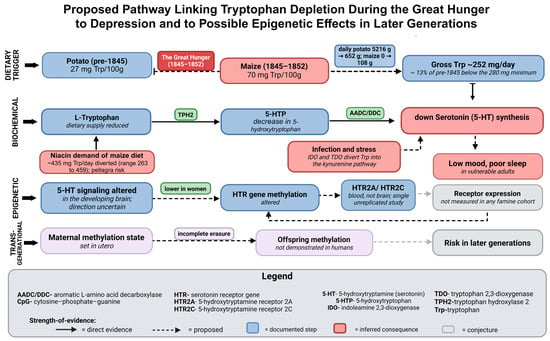
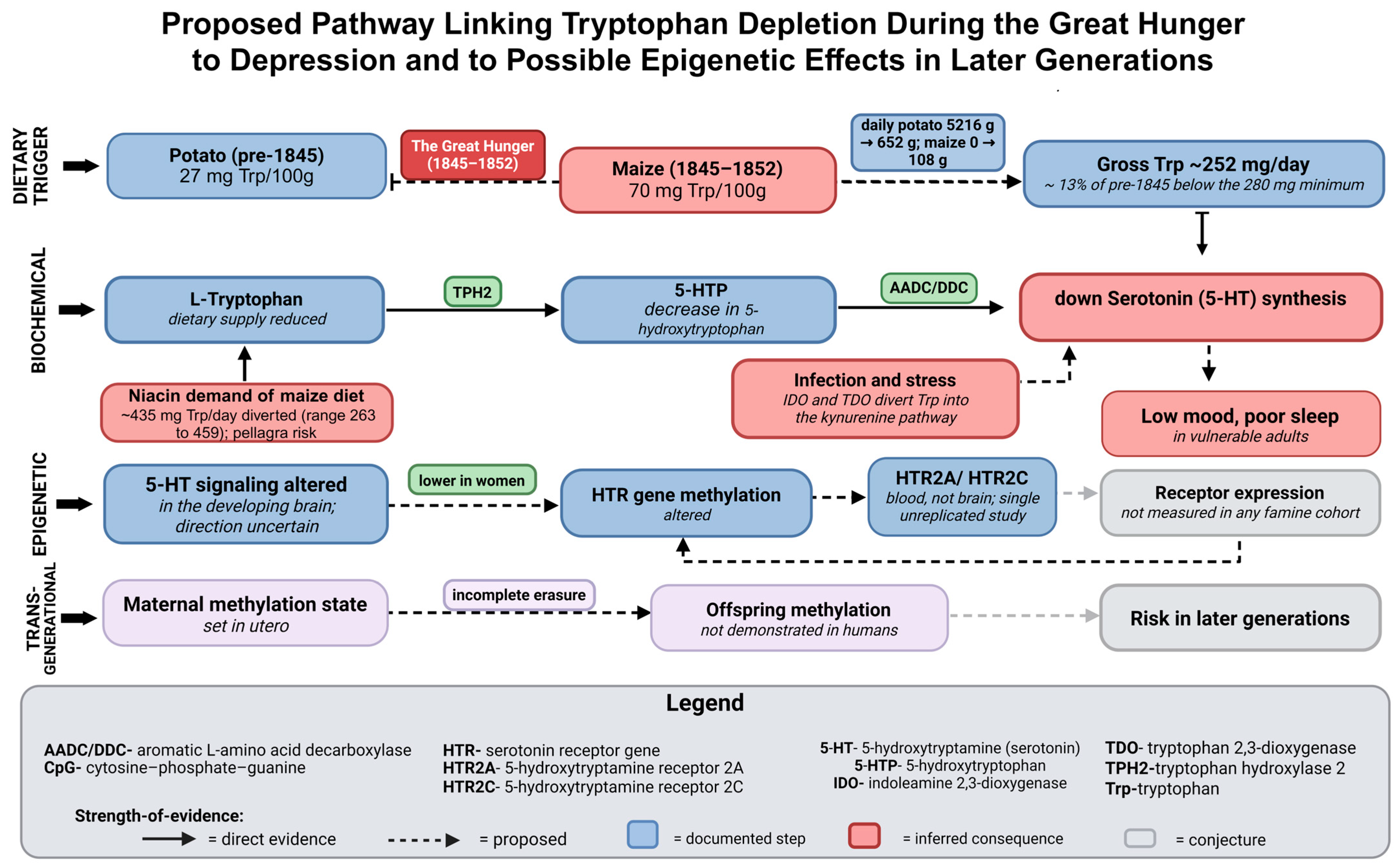

Disclaimer/Publisher’s Note: The statements, opinions and data contained in all publications are solely those of the individual author(s) and contributor(s) and not of MDPI and/or the editor(s). MDPI and/or the editor(s) disclaim responsibility for any injury to people or property resulting from any ideas, methods, instructions or products referred to in the content. |
© 2026 by the authors. Licensee MDPI, Basel, Switzerland. This article is an open access article distributed under the terms and conditions of the Creative Commons Attribution (CC BY) license.