Article

Determining the Effects of Compost Substitution on Carbon Sequestration, Greenhouse Gas Emission, Soil Microbial Community Changes, and Crop Yield in a Wheat Field

1
Engineering Research Center for Smart Crop Planting and Processing Technology, Anhui Science and Technology University, Chuzhou 233100, China
2
Cotton Research Institute of Anhui Academy of Agricultural Sciences, Hefei 230036, China
3
College of Plant Science & Technology, Hua Zhong Agricultural University, Wuhan 430070, China
*
Authors to whom correspondence should be addressed.
Life 2022, 12(9), 1382; https://doi.org/10.3390/life12091382
Submission received: 1 August 2022 / Revised: 29 August 2022 / Accepted: 30 August 2022 / Published: 5 September 2022

Abstract

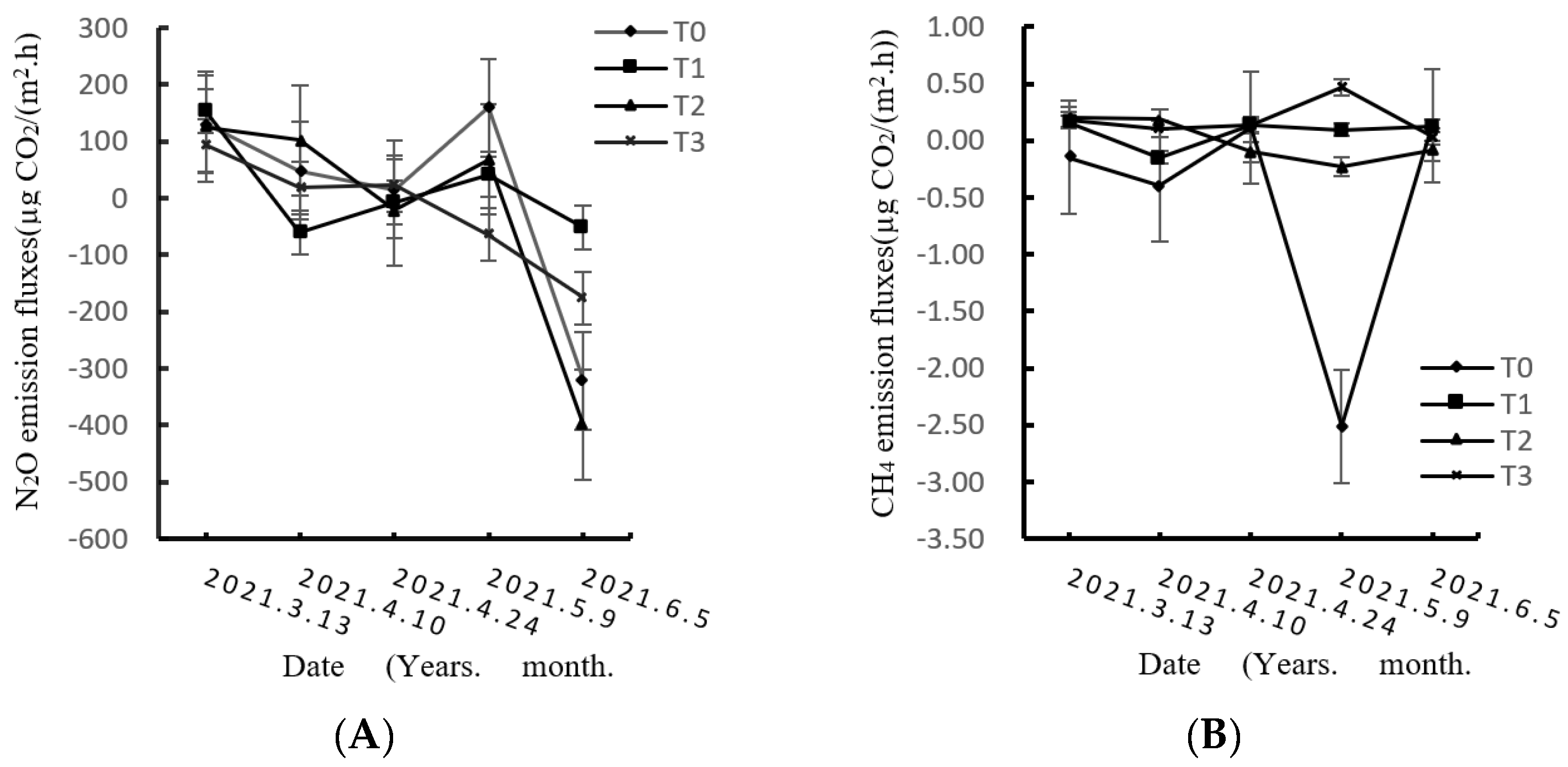
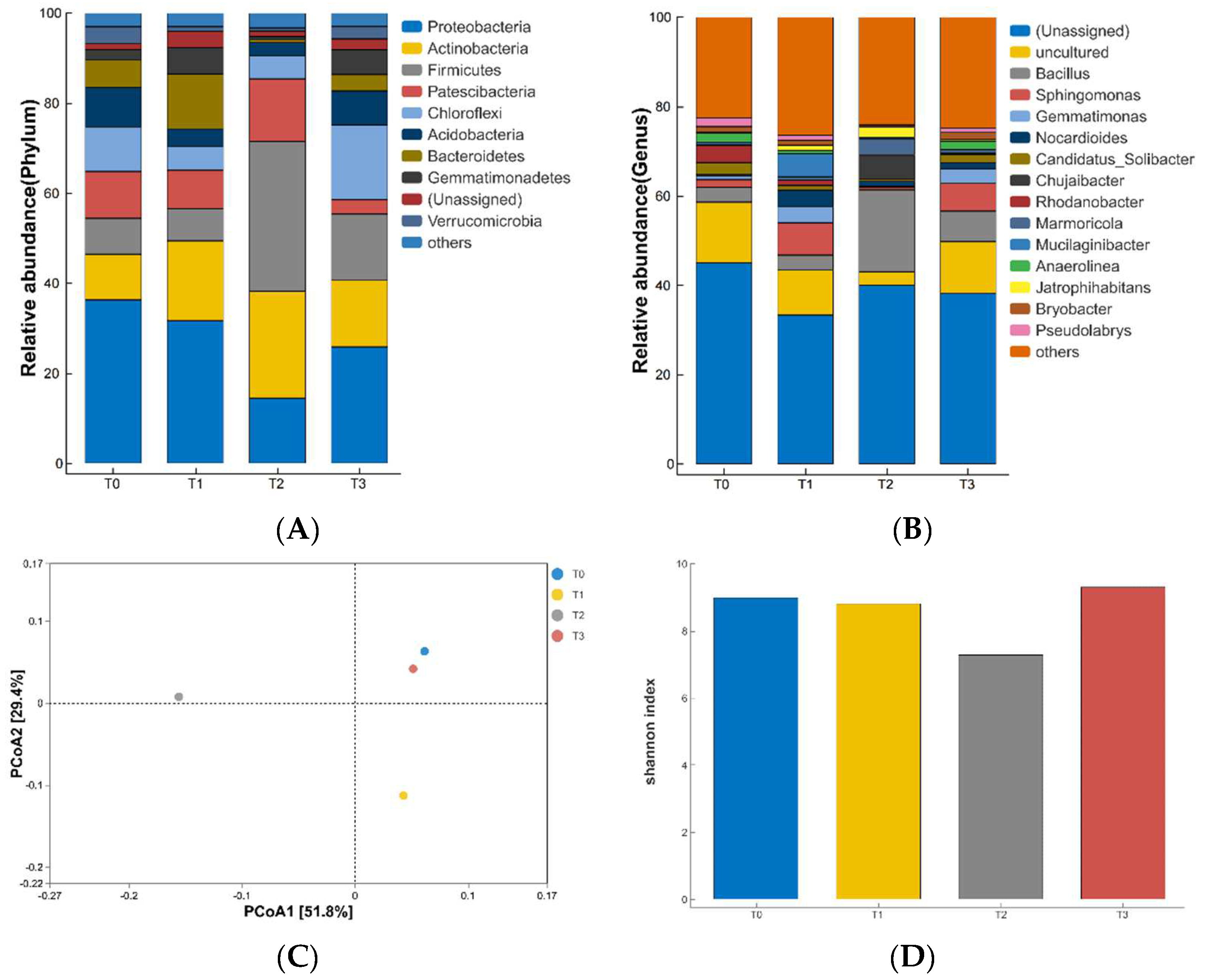
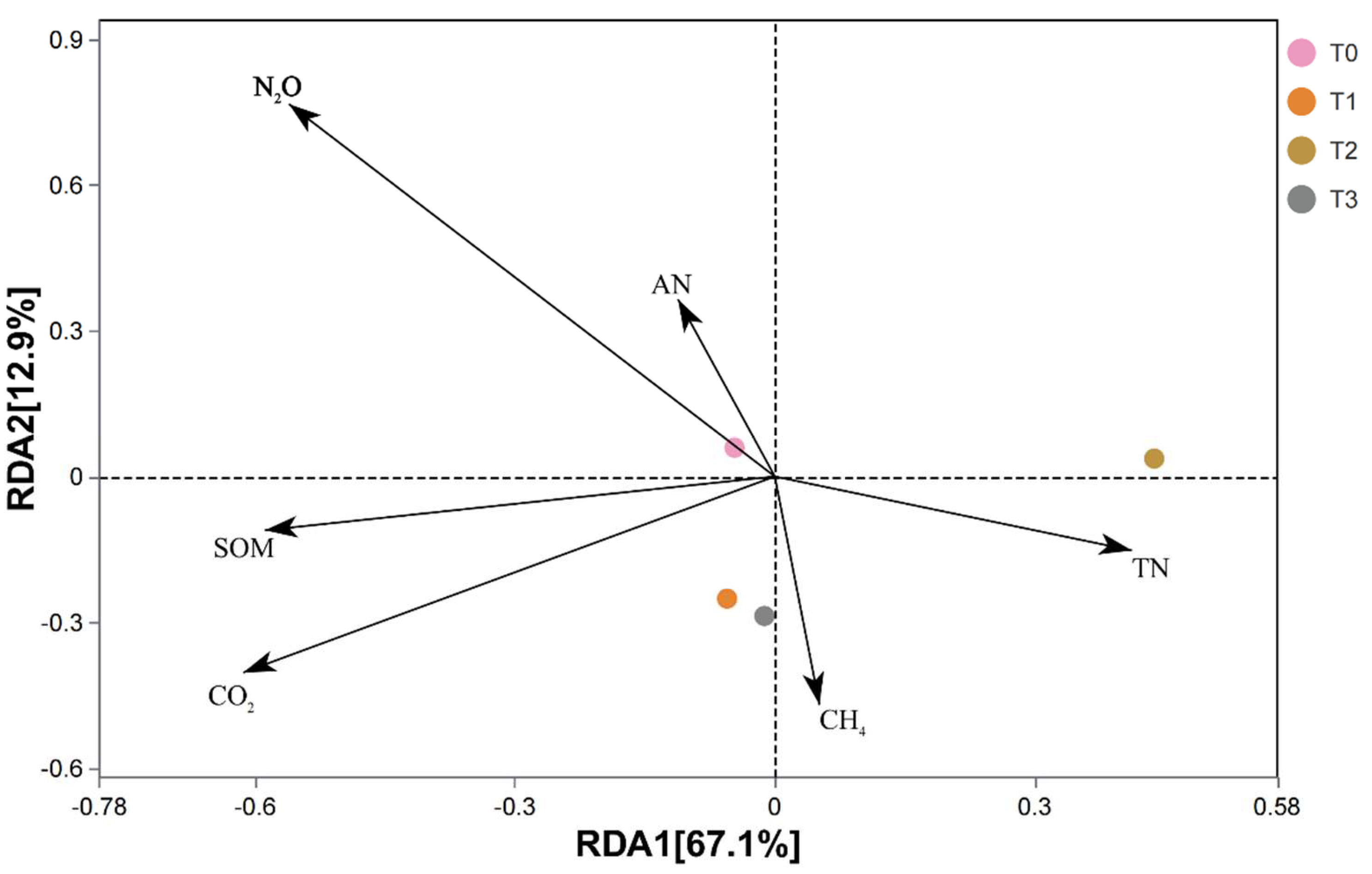
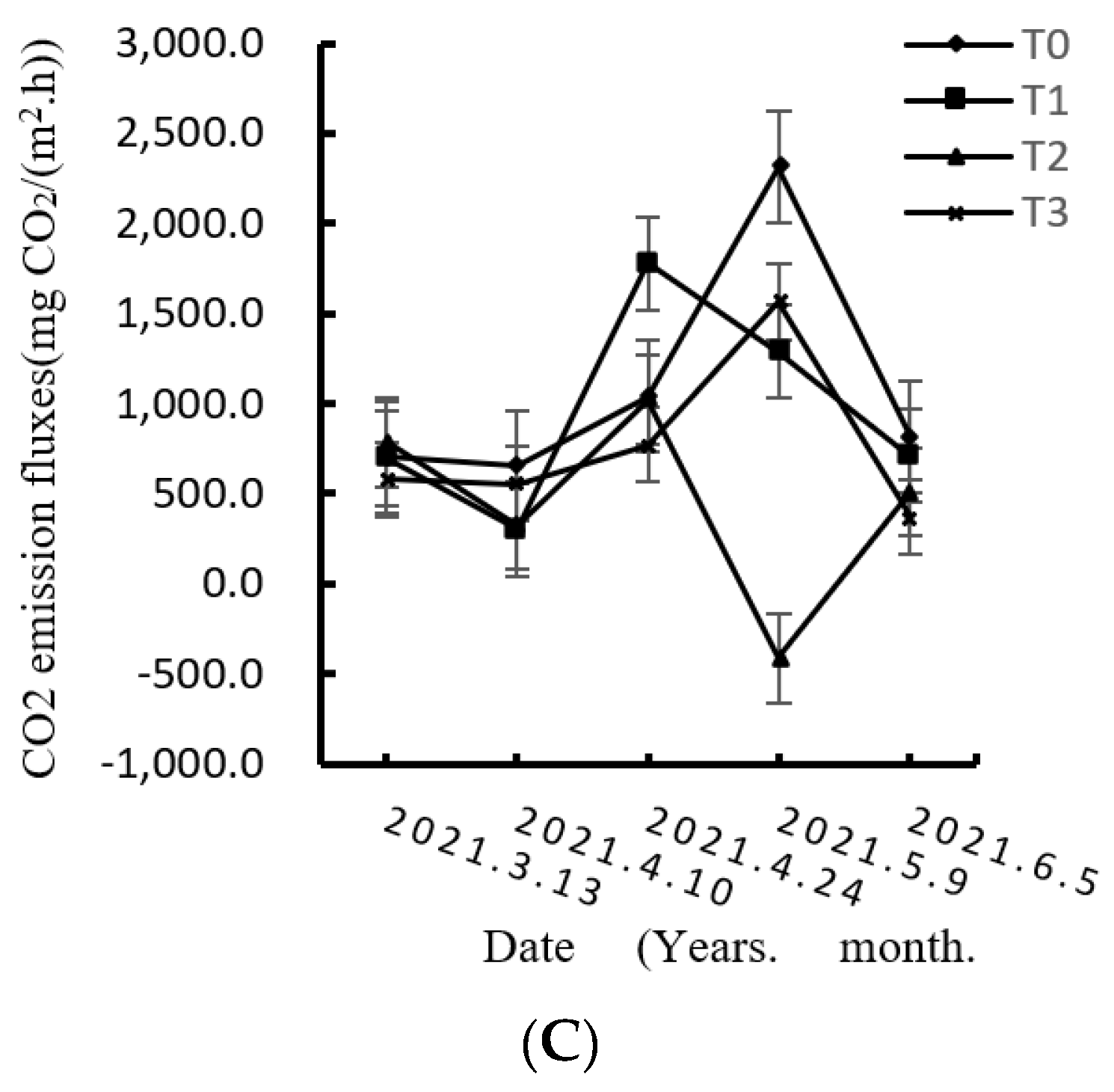
Compost produced by straw and livestock and poultry manure under the action of micro-organisms is one of the main forms of organic alternative fertilizers at present. The present study explored the effects of compost substitution on soil greenhouse gas emissions, soil microbial community changes, and wheat yield to determine the best substitution ratio for reducing greenhouse gas emissions and soil microbial community changes and increasing wheat yield. Using the single-factor randomized block trial design, four treatments were employed, the characteristics of greenhouse gas emission, yield and yield components, and the changes of soil microbial community under different compost substitution ratio in the whole wheat growing season were determined by static box-gas chromatography. During the wheat season, both CO2 and N2O emissions were reduced, whereas CH4 emission was increased. That all treatments reduced the Global Warming Potential (GWP) and Greenhouse gas emission intensity (GHGI) in wheat season compared with T0. Compost substitution can alleviate the global warming potential to some extent. Under the condition of compost substitution, the wheat yield under T2 and T3 increased significantly compared with that under the control; however, the spike number and 1000-grain weight did not differ significantly among the treatments. When compost replacement was 30%, the yield was the highest. Under different ratios of compost substitution, the microbial communities mainly comprised Proteobacteria, Actinobacteria, Firmicutes, Patescibacteria, Chloroflexi, Acidobacteria, Bacteroidetes, Gemmatimonadetes, and Verrucomicrobia. The soil microbial community structure differed mainly due to the difference in the compost substitution ratio and was clustered into different groups. In conclusion, to achieve high wheat yield and low greenhouse gas emissions, compost replacement of 30% is the most reasonable means for soil improvement and fertilization.
Keywords: composting; wheat; yield; greenhouse gas; soil micro-organism composting; wheat; yield; greenhouse gas; soil micro-organism