


Abstract
Non-alcoholic fatty liver disease (NAFLD) represents the hepatic expression of the metabolic syndrome and is the most prevalent liver disease. NAFLD is associated with liver-related and extrahepatic morbi-mortality. Among extrahepatic complications, cardiovascular disease (CVD) is the primary cause of mortality in patients with NAFLD. The most frequent clinical expression of CVD is the coronary artery disease (CAD). Epidemiological data support a link between CAD and NAFLD, underlain by pathogenic factors, such as the exacerbation of insulin resistance, genetic phenotype, oxidative stress, atherogenic dyslipidemia, pro-inflammatory mediators, and gut microbiota. A thorough assessment of cardiovascular risk and identification of all forms of CVD, especially CAD, are needed in all patients with NAFLD regardless of their metabolic status. Therefore, this narrative review aims to examine the available data on CAD seen in patients with NAFLD, to outline the main directions undertaken by the CVD risk assessment and the multiple putative underlying mechanisms implicated in the relationship between CAD and NAFLD, and to raise awareness about this underestimated association between two major, frequent and severe diseases.
1. Introduction
Non-alcoholic fatty liver disease (NAFLD) is a chronic liver disease constantly on the rise among patients with metabolic syndrome (MS), leading to an emerging worldwide epidemic. Therefore, a growing volume of research tries to describe its pathogenesis, to determine the most appropriate therapy, and to identify the most accurate predictors for its evolution and prognosis [1].
Already recognized as the most widespread cause of chronic liver disease around the world, NAFLD is a growing public health problem extending to a prevalence of about 25% in the general population. Well-developed countries display the highest prevalences, due to the current unhealthy, sedentary lifestyle [2,3]. Reports of NAFLD involve more than 50% of persons with type 2 diabetes mellitus (T2DM) and 90% of people with severe obesity [3]. Advanced fibrosis is present in approximately 10–15% of patients with NAFLD in the United States and Europe [3]. Moreover, patients with histologically proven non-alcoholic steatohepatitis (NASH) have an increased risk of liver-related death [3,4]. The global prevalence of NAFLD is expected to increase in line with the rates of obesity and T2DM.
NAFLD is characterized by excessive hepatic accumulation of lipids caused by abdominal obesity and insulin resistance [5]. NAFLD is classically defined by the presence of steatosis affecting more than 5% of all hepatocytes (documented histologically by liver biopsy), in the absence of excessive alcohol consumption and after excluding other causes of steatosis such as drugs, or viral hepatitis, autoimmune diseases, hereditary liver disease or hypothyroidism [5,6]. In a recent move to redefine NAFLD as metabolic dysfunction associated fatty liver disease (MAFLD), criteria in a recent consensus include detection of hepatic steatosis in addition to one of three criteria represented by overweight/obesity, T2DM, or at least two metabolic risk factors [7]. NAFLD encompasses a spectrum of progressive pathological conditions ranging from simple steatosis to NASH, advanced fibrosis, liver cirrhosis, or even hepatocellular carcinoma (HCC) [5,6]. As mentioned above, advanced liver disease due to NAFLD is associated with a worsened prognosis. Therefore, the progression of NAFLD to these late stages of liver histology needs to be prevented.
Since the most important trigger of hepatic insulin resistance is the accumulation of lipids within the liver, NAFLD is perceived today as the hepatic manifestation of the MS [8]. Besides focusing on insulin resistance as the main target of the therapeutic strategy, ongoing studies provide new evidence on additional mechanisms that need to be dealt with in order to intervene on all MS components and to ameliorate all risk factors not only for advanced liver disease, but also for cardiovascular disease (CVD). This constellation of metabolic conditions also includes abdominal obesity, hyperlipidemia, hyperuricemia, chronic kidney disease, and T2DM [9].
Recent epidemiological research has identified a close relationship between these two global health problems, NAFLD and CVD. The progression of NAFLD displays the closest correlation with CVD, followed by extra-hepatic cancers and other liver-associated complications [10]. CVD represents a leading cause of death in the general population, with a prevalence of at least 40% among patients with NAFLD [2,11]. NAFLD is a predictor and a risk factor for the development of CVD, as it increases the risk of morbidity and mortality and impacts the progress to other extrahepatic manifestations [9]. Therefore, the highest mortality in NAFLD seems to be due to the aggravation of the CVD risk driven by metabolic comorbidities, and not to the evolution towards HCC or end-stage liver disease [12,13].
However, a minority of studies have not succeeded to demonstrate this significant association of NAFLD with the risk of CVD. Olubamwo et al. showed that incident CVD can be predicted in patients with NAFLD using a non-invasive test (NIT), but the results were not significant after adjustments based on metabolic factors [14]. Shah and colleagues reported no correlation between hepatic fat and atherosclerotic CVD (ASCVD), demonstrating instead a correlation between the rising incidence of ASCVD and a higher pericardial fat content [15].
In contrast with the few studies that failed to prove that hepatic steatosis significantly contributes to an increased cardiovascular risk, a greater number of researchers demonstrated a link existing between fatty liver and subclinical CVD, independently of traditional cardiovascular risk factors or other MS elements [16,17,18]. Differences in the inclusion criteria and the high variability of tools used for NAFLD and CVD diagnosis may be the explanation of this discrepancy between results [19].
Therefore, there is a high probability that NAFLD is an independent risk factor for CVD, regardless of other associated metabolic risk factors. The multiple conventional risk factors like dyslipidemia, hypertension, obesity, tobacco smoking, and T2DM are also strongly correlated with the incidence and severity of atherosclerosis. A well represented body of evidence supports the hypothesis that atherosclerosis and NAFLD share a handful of common cardiometabolic risk factors [20,21]. NAFLD not only promotes atherosclerosis, but also predisposes to the evolution towards coronary artery disease (CAD), valvular heart disease, left ventricular dysfunction, heart failure, arrhythmia, and stroke [22,23]. A longer duration and the progression to advanced stages of NAFLD are associated with an increased cardiovascular risk, including coronary lesions [24,25], high arterial stiffness [26], impaired endothelial function, or a greater risk for carotid intima-media thickening [27].
Further pathogenesis-related research is needed to identify all mechanisms and then develop targeted therapies able to decrease the additional CVD risk related to NAFLD. The evolution towards cardiovascular events and mortality could be prevented by a sustained screening for cardiovascular risk and an early intervention to reduce it. Since CAD is one of the most frequent forms of ASCVD, such an approach would surely serve to lower, in particular, the prevalence of coronary events and to reduce CAD-related morbidity and death.
In this review, we summarize the current knowledge on the pathogenesis linking together NAFLD and CAD and revise the available evidence validating the hypothesis that these two conditions share key pathological features. We also highlight the results of CAD risk assessment in patients with NAFLD, independently of their metabolic status, and the need for approaches to improve their outcome.
2. Epidemiology of the Relationship between NAFLD and CAD
Compared to non-NAFLD individuals, it appears that patients with NAFLD are associated with an important risk of fatal and non-fatal cardiovascular events such as angina, myocardial infarction, coronary revascularization, or stroke [28]. An extensive meta-analysis of six studies carried out on 25,837 adults, including nearly 6000 cases of NAFLD showed that patients with NAFLD had an increased risk of clinical cardiovascular events compared to those without NAFLD (14.9% vs 6.3%) [29].
Narrowing the hypothesis that NAFLD is a risk factor for CVD, the fatty liver also appears to be a risk factor for CAD, independently of common risk factors, such as age, sex, family history of CVD, dyslipidemia, obesity, arterial hypertension, and diabetes [23].
Multiple publications indicate that patients at high risk for both diseases, such as those with diabetes, dyslipidemia, high level of low-density lipoprotein cholesterol, smoking, or family history of CAD, also have a high risk for non-calcified plaques (NCPs) [30,31,32].
A cohort study of 3756 North American individuals evaluated for NAFLD using computed tomography (CT) and for CAD using coronary computed angiography (CCTA) demonstrated that hepatic steatosis is associated with major adverse cardiovascular events (MACE) irrespective of other cardiovascular risk factors or of CAD extent, assessed by measurements of coronary stenosis or plaques [33]. According to Choi et al., the intensity of NAFLD was closely related to the severity of angiography-proven coronary artery stenosis in an Asian population. NAFLD kept its value of CAD predictor independently of common risk factors like age, gender, body mass index (BMI), or glycemic control [34].
In a recent meta-analysis, the prevalence of subclinical CAD in 67,070 patients with NAFLD reached 38.7% (95% confidence interval [CI]: 29.8%–48.5%) of asymptomatic patients (odds ratio [OR]: 1.22; CI: 1.13–1.31, p < 0.001), and clinical CAD was present in 55.4% (CI: 39.6%–70.1%) of symptomatic patients (OR: 2.18, CI: 1.69–2.81, p < 0.0001); both forms significantly correlated with NAFLD. Non-obstructive CAD had a 43.5% prevalence (CI: 30.3%–57.8%), higher than obstructive CAD, with a 33.5% prevalence (CI: 19.6%–51.1%) [35].
The research conducted by Lee et al. pointed out that only NCPs are independently associated with NAFLD, while the incidence of calcified or mixed plaques did not vary between people with or without NAFLD [36]. NCPs are suggestive of instability and predisposition to acute coronary events, whilst calcified plaques (CPs) add a less vulnerable feature [37]. Considering these findings, the mechanism leading to sudden, unexpected cardiac events in asymptomatic patients with NAFLD may be related to the NCPs instability and the elevated risk of plaque rupture [36].
During NAFLD progression, some data suggests that advanced fibrosis worsens the CAD state. Moreover, NASH has a lower risk for the liver fibrosis stage than for CAD lesions and cardiovascular events [38,39].
Furthermore, research adjusting for cardiometabolic risk factors found NAFLD severity to be independently associated with coronary atherosclerosis, especially with mixed type plaques. Moreover, even the population without associated metabolic risk factors had a higher risk for CAD and mixed atherosclerotic plaques when hepatic steatosis was more severe [40]. A study comparing NASH patients to controls with hepatic steatosis found the former to have a higher risk of coronary lesions (stenosis, NCPs and calcium score) [38].
Another example proving the existence of advanced, high-risk coronary plaques in patients with NAFLD is represented by a cohort study derived from The ROMICAT II trial (Rule Out Myocardial Infarction using Computer Assisted Tomography). Assessment by CCTA and hepatic CT demonstrated an increased prevalence of high-risk plaques compared to patients without NAFLD, irrespective of cardiovascular risk factors and CAD severity. Moreover, NAFLD added an approximately 6-fold higher risk for the development of acute coronary syndromes [41]. The risk of progression from subclinical coronary and carotid atherosclerosis also correlates with NAFLD [42].
Asymptomatic patients with NAFLD submitted to coronary angiography have a higher risk for needing percutaneous coronary interventions or bypass grafting surgery, with an increased risk for fatal and non-fatal outcomes. Among patients with NAFLD meeting the criteria for coronary artery bypass grafting surgery, levels of inflammatory markers were elevated in comparison to patients without NAFLD [43,44].
The prospective and retrospective studies focused on the relationship between NAFLD and clinical and subclinical forms of CAD, are listed in Table 1 and Table 2 (all references are detailed within the tables).
Table 1.
Summary of studies that evaluated the association between NAFLD and clinical CAD.
Table 2.
Summary of studies that evaluated the association between NAFLD and subclinical CAD.
3. Screening and Diagnosis
3.1. CAD in Patients Assessed for NAFLD
The “gold standard” tool for NAFLD diagnosis and quantification is the liver biopsy, which identifies macrovesicular steatosis. Since it is an invasive method, with many potential complications, biopsy indications are limited to patients with NAFLD at high risk of NASH and/or advanced fibrosis and patients with suspected NAFLD in whom other etiologies of steatosis cannot be ruled out without a liver biopsy [6,89].
The early findings correlating NAFLD and CVD focused on the elevation of liver enzymes. Increased values of serum alanine aminotransferase (ALT) [90], gamma-glutamyl transferase [91], or alkaline phosphatase [92] were associated with other forms of CVD like arterial hypertension and peripheral vascular disease [93].
Non-invasive tests such as clinical scores, serum biomarkers and liver elastographic evaluation provide a good alternative to the diagnosis and staging of NAFLD [89]. According to European guidelines, clinical scores should be used in all patients with NAFLD [5]. A retrospective cross-sectional study involving 34,890 asymptomatic subjects evaluated by ultrasonography (US) analyzed 665 subjects undergoing CCTA imaging. Multiple non-invasive scores, including fatty liver index (FLI), hepatic steatosis index (HSI), Fibrosis-4 score (FIB-4), NAFLD fibrosis score (NFS), Forn’s index, and AST to platelet ratio index (APRI), were applied. Values of NFS, FIB-4, and Forn’s index were higher when coronary artery calcium scoring (CACS) increased. The authors concluded that fibrosis markers incorporating risk factors for CAD demonstrated a good discriminatory power in the prediction of CACS levels over 100 [94].
Another non-invasive test of NAFLD is represented by the liver fat score (LFS), used in a study, including 17,244 participants of the United States National Health and Nutrition Survey (US NHANES) database. LFS showed associations with CAD (adjusted OR: 1.09 per standard deviation [SD], 95% CI: 1.03–1.15, p = 0.003), angina (1.08, 1.02–1.13, p = 0.005) and congestive heart failure (1.11, 1.04–1.18, p = 0.003), but not with myocardial infarction or stroke [95].
Currently available imaging methods for hepatic steatosis and fibrosis are represented by US, liver stiffness measurement (LSM) and controlled attenuation parameter (CAP) by transient elastography (VCTE or FibroScan®), CT, magnetic resonance imaging, magnetic resonance spectroscopy (MRS), and magnetic resonance elastography (MRE) [89,96].
Transient elastography is a non-invasive imagistic method that remarked as a clinical tool for staging both liver fibrosis indicated by LSM and hepatic steatosis assessed by CAP, allowing an early detection of NAFLD even in asymptomatic individuals without overt liver disease [97,98]. Use of VCTE measurements in patients from the Framingham Heart Study showed that hepatic fibrosis is significantly correlated with cardiometabolic risk factors represented by high values of BMI and waist circumference, elevated serum transaminases, poor glycemic control, higher systolic and diastolic blood pressure, modified lipid profile [99]. Some studies using FibroScan for the assessment of NAFLD showed an independent link between liver stiffness and CACS [71,100]. A retrospective cohort study highlighted the association between NAFLD and CVD using CAP by transient elastography and found an independent correlation between the degree of steatosis and the incidence of CVD. The results suggest an optimal cut-off CAP value set at 295 dB/m for stratifying the associated CVD risk [101].
The Multi-Ethnic Study of Atherosclerosis (MESA) [102] assessed NAFLD by CT and the cardiovascular risk by CACS in selected patients [15]. Interestingly, these findings identified only pericardial fat, but not fatty liver, to be associated with cardiovascular outcomes, including CAD, calling into question the role of inflammation and insulin resistance.
3.2. NAFLD in Patients Assessed for CAD
Current guidelines recommend the assessment of CVD risk in asymptomatic adults using the Framingham Risk Score (FRS), the European SCORE-2 and SCORE-2 OP, and the ASCVD algorithm, each based on the identification of several risk factors [103]. All these models fail to correctly identify NAFLD-related CVD, because features like insulin resistance are not included in the evaluation [95]. The Framingham Risk Score underestimate CVD risk in patients with MS; hence, this category could be subject to a late mitigation of cardiovascular risk. It is therefore reasonable to hypothesize that NAFLD evaluation could help in accurately assessing cardiovascular risk in the general population [95,104].
The CACS is an accurate assessment tool for the presence and development of coronary atherosclerosis, and can be used for monitoring the disease progression, detecting cardiac outcomes, and oversee therapeutic effectiveness [76]. The association between NAFLD and coronary artery calcification has been most frequently demonstrated by calculating the Agatston CACS by CT [26]. Ichikawa et al. propose in their prospective study on patients with T2DM the stratification of NAFLD-associated risk for cardiovascular events using CACS and FRS [64]. Another study including an Austrian screening cohort and using the FRS to assess the CVD risk showed an independent association of NAFLD with CV risk [105].
CCTA is another non-invasive assessment method of coronary arteries that allows their measurement and identification of plaque composition [71]. The lipid-rich coronary plaques are more vulnerable to sudden rupture and predict an increased risk of CV morbi-mortality [53,106]. Increased CACS measured by cardiac multiple detector CT is followed by a negative impact on patients’ outcome, reflecting the total burden of atherosclerosis. NAFLD is related to CACS progression and high-risk plaques, irrespective of traditional CV risk factors [51]. As mentioned in the previous pages, Meyersohn and colleagues showed, using CCTA scan, that the addition of NAFLD to every grade of CAD (no significant CAD, non-obstructive CAD, obstructive CAD) was associated with a higher risk for cardiovascular events than in patients without fatty liver [33].
4. Potential Pathogenic Links between NAFLD and CAD
The pathogenic mechanisms associating NAFLD and CAD are still poorly understood. Several mechanisms have been proposed as promoters of both conditions (Figure 1), among which systemic inflammation, gut microbiota, endothelial dysfunction (ED), oxidative stress, or cardiometabolic comorbidities like glucose dysregulation, insulin resistance, dyslipidemia, obesity, and hypertension; all of these usually display a genetic predisposition; a growing line of evidence suggests that the NAFLD–CAD association is tightly linked to dysfunctional secretion of fatty acids, enzymes, cytokine-related anomalies, and pro-atherogenic microRNAs [22,107,108].
Figure 1.
Summary of suggested pathophysiological mechanisms underlying the NAFLD–CAD interconnection. Abbreviations: PNPLA3, patatin-like phospholipase domain-containing protein-3; TM6SF2, transmembrane 6 superfamily member 2; SREBP, sterol regulatory element-binding proteins; ADIPOQ, adiponectin-encoding gene, APOC3, apolipoprotein C3; LEPR, leptin receptor; MTTP, microsomal triglyceride transfer protein; MnSOD, manganese superoxide dismutase; AGT, angiotensin; LPS, lipopolysaccharides; FGF-21, fibroblast growth factor-21; FGF-19, fibroblast growth factor-19; A-FABP, adipocyte fatty acid-binding protein; hsCRP, high-sensitive C-protein reaction; PAI-1, plasminogen activator inhibitor-1; IL-1, interleukin-1; IL-6, interleukin-6; IL-8, interleukin-8; TNF- α, tumor necrosis factor-alpha; HMGB-1, high mobility group box 1; PTX-3. petraxin-3; RAS, renin-angiotensin system.
Following recent research, MAFLD may be a more appropriate acronym that highlights better the relevant risk factors and NAFLD pathogenesis [109]. The heterogeneity of MAFLD emphasizes the need for individualization, an absolute requisite for the development of new effective treatments for each patient, depending on the dominant subphenotype [110].
Pathogenic features such as insulin resistance, lipid disturbances, oxidative stress, and inflammation can induce NASH and aggravate CVD progression. It is therefore reasonable to suppose that NASH modifications significantly associated with worse coronary artery lesions than hepatic steatosis [40].
4.1. Common Risk Factors
The well-established risk factors for CAD are represented by age, gender, family history of premature CVD, hypertension, hyperlipidemia, overweight, T2DM, chronic smoking, or other comorbidities increasing CVD risk [103]. It seems that some residual risk factors remain even after the classical risk factors are mitigated. For example, a study including individuals without classical cardiovascular risk factors showed that even normal levels of low-density lipoprotein (LDL)-cholesterol are associated with subclinical atherosclerosis [111].
The decisive factors leading to NAFLD progression are related to unhealthy lifestyle and eating behavior (excessive intake of saturated fatty acids or fructose, de novo lipogenesis caused by excessive carbohydrate intake), microbiome-related metabolites, and metabolic comorbidities (insulin resistance, dyslipidemia, obesity, T2DM, MS, hypothyroidism) [5,112].
It is therefore obvious that NAFLD and CVD share several common risk factors, e.g., obesity, T2DM, dyslipidemia, and physical inactivity, supporting the idea of a shared pathogenesis [113]. At its turn, insulin resistance is associated both with NAFLD and with endothelial dysfunction and ASCVD [41].
4.2. Genetics, Epigenetics Modifications
Also correlating with NAFLD stages, three genetic forms represented by patatin-like phospholipase domain-containing protein-3 (PNPLA3), transmembrane 6 superfamily member 2 (TM6SF2), and sterol regulatory element-binding proteins (SREBP) were found to have a protective effect against CAD [5,95]. The possible negative correlation between PNPLA3 and CAD seems to be influenced by the triglyceride metabolism and NAFLD severity related to PNPLA3 rs738409 mutation [114,115].
CARDIoGRAMplusC4D (Coronary Artery Disease Genomewide Replication and Meta-analysis (CARDIoGRAM) plus the Coronary Artery Disease (C4D)) included a cohort of cases with and without CAD [116]. In this study, TM6SF2 had a protective role for CAD, while the new NAFLD susceptibility gene of the membrane-bound O-acyltransferase domain-containing protein 7 (MBOAT7) had a neutral effect on CAD risk [117].
Other newly identified gene polymorphisms apparently involved in the NAFLD–CAD relationship are represented by: adiponectin rs266729 [118], adiponectin-encoding gene (ADIPOQ), apolipoprotein C3 (APOC3), leptin receptor (LEPR), peroxisome proliferator activated receptors (PPAR), tumor necrosis factor-alpha (TNF-α), microsomal triglyceride transfer protein (MTTP), and manganese superoxide dismutase (MnSOD) [105,119]. The angiotensin (AGT) rs2493132 genotype displayed a significantly increased risk of developing CAD in a Chinese Han population with NAFLD [120]. Rab18 gene expression seems to be linked to increased adiposity and lipotoxicity [121].
Circulating microRNAs are secreted and released in biological fluids and maintain intracellular balance. Metha et al. investigated the expression of microRNAs related to NAFLD and CAD. The researchers found that miR132 circulatory level was reduced in patients with both diseases (0.24 ± 0.16 vs 0.30 ± 0.11, p = 0.03) and miR-143 circulatory level was increased compared to controls with NAFLD, but without CAD (0.96 ± 0.90 vs 0.64 ± 0.77, p = 0.02). Hence, miRNAs could be utilized as biomarkers to identify and monitor the disease progression [122].
4.3. Lipid and Cholesterol Metabolism
Lipid profiles with a pro-atherogenic feature appear to be influenced by the hepatic lipid concentration and the peripheral, adipose insulin resistance; such profiles include an increased proportion of small dense LDL and very low-density lipoproteins (VLDL), high apolipoprotein B to apolipoprotein A-1 ratio, and low high-density lipoprotein (HDL)-cholesterol concentration [6]. Some authors argue that patients with NASH have reduced levels of VLDL due to the decrease of microsomal triglyceride transfer protein and reduced VLDL synthesis. This precursor of the small dense LDL particles that transports an abundance of triglyceride thus becomes a pivotal atherosclerosis risk factor [38]. Prolonged hypertriglyceridemia can determine postprandial hyperlipidemia in patients with NAFLD, which further progresses to an accelerated postprandial atherogenesis and a higher CVD risk [22].
High levels of triglyceride-rich lipoprotein-related elements are related to either calcified or non-calcified coronary lesions in patients with NAFLD [123,124]. Studies such as GREACE (The Greek Atorvastatin and Coronary-heart-disease Evaluation) support the need to prevent major coronary events in patients with elevated plasma liver enzymes caused by NAFLD [125].
Another suggested driver of metabolic and cardiovascular complications seems to be the exhaustion of adipose tissue expansion and ectopic lipid accumulation in non-adipose cells, which in turn causes lipotoxicity [126].
The NAFLD–CVD link is also influenced by lipid profile modifications determined by adipokines like adiponectin, fibroblast growth factor 21 (FGF-21), and adipocyte fatty acid-binding protein (A-FABP) [127,128]. FGF-21 concentrations are elevated in obesity and T2DM, which involves it in NAFLD development. Therefore, the administration of FGF-21 analog can reduce lipogenesis and fatty acid oxidation and can also protect against atherosclerosis progression [129,130]. The association of A-FABP with NAFLD-related CVD is amplified by insulin resistance and arterial inflammation [95]. Fibroblast growth factor 19 (FGF-19) hormone levels were negatively correlated with CAD (defined by coronary angiography), independently of BMI, hypertension, dyslipidemia, and diabetes [131]. Levels of FGF-19 are decreased in patients with obesity, regardless of the degree of insulin resistance. FGF-19 analogs currently under research can suppress de novo bile acid synthesis and de novo lipogenesis [129,132].
4.4. Systemic Inflammation and Cytokines
NAFLD-associated pro-inflammatory status changes the structure of the coronary wall, leading to CAD and increased CVD mortality [133].
The inflammatory syndrome and the increased oxidative stress play a crucial role in CAD associated with NAFLD. Plaque vulnerability is influenced by the inflammatory status of NAFLD. Underlying mechanisms include increased levels of high-sensitive C-reactive protein (hsCRP) and lipoprotein A reported in these patients [40]. Other markers associated both with NAFLD and a high risk for CAD include homeostatic and fibrinolytic function markers, such as fibrinogen, tissue plasminogen activator, and plasminogen activator inhibitor 1 (PAI-1), fetuin-A [55], or homocysteine [50].
The heart-liver axis is related to the MS and acts as a direct connection between the white adipose tissue, the liver and the heart by a systemic signaling led by organic cytokines such as adipokines, hepatokines, and cardiomyokines, predicting the NAFLD-related CVD risk [134]. The adipose tissue produces cytokines with complex outcomes, including a pro-inflammatory effect, such as interleukin 6 (IL-6), interleukin 8 (IL-8), and tumor necrosis factor α (TNF-α). The cumulative pathogenic effects of the disturbed cytokine secretion, the oxidative stress, and the lipotoxicity lead both to NAFLD development and to coronary atherosclerosis, irrespective of conventional cardiovascular risk factors [41,135,136].
Contrary to other studies, Choi et al. did not find insulin, hsCRP, IL-6, and TNF-α levels to be related to CAD; however, the authors found reduced levels serum of adiponectin once the CAD progressed, which indicates a possible dual role that also extends to NAFLD pathogenesis [34]. Adiponectin inhibits hepatic gluconeogenesis and lipogenesis. Therefore, hypoadiponectinemia can determine impaired glucose tolerance, but also CAD in patients without diabetes [137]. In patients with NAFLD, hypoadiponectinemia associates with increased inflammation and oxidative stress. It seems that the early onset of atherosclerosis and CAD is also related to lower serum adiponectin levels, which suggests that hypoadiponectinemia may predict atherosclerosis [138]. The CANTOS (Canakinumab Anti-inflammatory Thrombosis Outcome Study) trial highlighted the key role of interleukin 1 (IL-1), a cytokine related to the evolution of NAFLD, as a therapeutic strategy for atherosclerosis. The results showed a positive outcome on CVD events and morbi-mortality [139].
4.5. Endothelial Dysfunction and Oxidative Stress
Endothelial dysfunction developed during NAFLD progression is considered an independent risk factor for CAD occurrence [140]. An impaired coronary flow reserve was described in patients with NAFLD compared to controls without fatty liver after adjustment for cardiometabolic risk factors [141]. An impaired flow-mediated vasodilatation (FMD) can also influence the emergence of vulnerable coronary plaques and the high risk for ischemic heart syndromes in patients with NAFLD [133]. Moreover, NAFLD was associated with a higher short-term mortality and a worsened long-term prognosis in patients with ST-segment elevation myocardial infarction [142].
It was shown that patients with NAFLD may have an impaired endothelial nitric oxide synthase (eNOS) function due to insulin resistance, leading to a reduction in the nitric oxide (NO) substrate production and an imbalance in the induction of platelet-mediated vasorelaxation. Hence, eNOS dysfunction plays a key role in modifying the endothelial function in patients with NAFLD and may determine an increased cardiovascular risk [143].
The role of adipocyte-derived hormone leptin and angiotensin are also investigated for their role in endothelial function as vasoactive factors [144]. Hyperleptinemia in obesity and NAFLD is significantly correlated with the development of atherosclerosis and cardiovascular diseases [145,146]. Stimulation of the renin-angiotensin system and leptin resistance appears to be correlated with arterial hypertension associated with obesity. Moreover, angiotensin II can also participate to the NAFLD pathophysiology by stimulation of lipogenesis, insulin resistance or pro-inflammatory cytokine production [145,147].
Several endothelial biomarkers were studied as possible determinants of the pathophysiological relationship between NAFLD and CAD. Increased endocan levels and decreased levels of high mobility group box 1 (HMGB-1) were correlated with the severity of CAD in NAFLD, while anti-endothelial cell antibodies (AECA) has not yet proven any significance [148,149]. The levels of circulating petraxin-3 (PTX-3), an acute-phase protein, were found to be elevated and strongly correlated with endothelial dysfunction in patients with NAFLD [150].
4.6. Gut Microbiota
Compared to healthy individuals, patients with NAFLD, obesity and diabetes display an increased intestinal permeability and increased bacterial growth in the small intestine (endotoxemia) [108]. Metabolic endotoxemia can occur in the form of lipopolysaccharides (LPS) entering portal circulation and impairing the immune response by binding to toll-like receptor 4 (TLR) and activating the inflammatory cascade [108,151]. This process acts on the insulin signaling, favors hepatic steatosis and progression to NASH; on the other hand, it promotes endothelial dysfunction, LDL oxidation, and thrombogenesis, destabilizing the atherosclerotic plaques [152].
Gut dysbiosis was discovered in patients with both CAD and NAFLD. The intestinal microbiota might be different in patients with NAFLD and CAD than in those with just CAD. Studies focused on gut microbiota composition in patients with NAFLD and CAD [152] showed increased levels of Coprococcus and Veillonella, and decreased levels of Bacteroides fragilis, Parabacterioides, Bifidobacterium longum subsp. infantis, Ruminococcus gnavus, Bacteroides dorei, which could underlie the intestinal alterations that cause a higher risk for adverse CVD outcomes less witnessed in NAFLD-free CAD. The abundance of Coprococcus could favor MS in patients with CAD and NAFLD due to its positive correlation with BMI [153]. Another potential cause of the progression of NAFLD and CAD could be the abundance of Collinsella and Proteobacteria [154].
Circulating bile acids (BA) are also implicated in metabolic liver diseases associated with CVD. Glycochenodeoxycholic acid (GCDCA), a marker for reduced serum concentrations of BA, predicts CAD. Interestingly, this defect is reversible under statin therapy [155].
Gut microbiome-related metabolites, such as phosphatidylcholine (PC) and trimethylamine N-oxide (TMAO), are also studied for their association with an increased cardiovascular risk [152]. TMAO is a metabolite linked with the PC metabolism and modulates glucose and lipid homeostasis, thus influencing the liver, precipitating intra-adipose inflammation and impairing platelet function. High levels of TMAO seem to be involved in the progression of NAFLD-related CAD, probably due to intestinal dysbiosis influenced by dietary factors [105]. TMAO was found able to predict cardiovascular events in a cohort of patients submitted to coronary angiography, independently of other risk factors [156]. Among current attempts for therapeutic strategies aiming at gut microbiota in CAD, an inhibitor targeting a pair of microbial TMA-generating enzymes was developed, which was able to reduce the risk of atherothrombotic events and prevent coronary complications [157].
5. The Challenge of Lean NAFLD and Cardiovascular Risk
Patients with NAFLD usually are overweight or obese and associate insulin resistance, T2DM, dyslipidemia, hypertriglyceridemia, or hypertension, all of these being MS components and CVD risk factors [105]. However, it appears that CVD risk is increased even in individuals with NAFLD but normal BMI, who became categorized as lean patients with NAFLD (BMI <25 kg/m2 in Caucasians and <23 kg/m2 in Asians) [158]. The prevalence of lean NAFLD ranges from 10% to 20%, and despite the absence of obesity these individuals have a similar cardiovascular risk to patients with obese NAFLD [159].
In lean NAFLD, the risk of cardiometabolic conditions is elevated compared to NAFLD-free subjects of all BMI categories [160]. When lean NAFLD was compared with a healthy control group, an increased prevalence of metabolic impairment and cardiovascular risk was noticed [161]. An analysis on 5375 lean participants selected from the NHANES III survey showed that NAFLD presence was associated with a major increase in all-cause and cardiovascular mortality compared to controls [162].
While most opinions support an important role for obesity in patients with both NAFLD and CVD, some recent studies suggest a new theory of a particular lean NAFLD phenotype displaying a higher CVD risk than overweight people [163]. This hypothesis suggests that visceral adiposity has a higher contribution to the waist circumference value in lean NAFLD persons; this ectopic adipose accumulation leads to endothelial dysfunction and a pro-inflammatory effect [164]. Visceral fat accumulation in lean Asian people was correlated with the severity of NAFLD [95].
Despite the seemingly favorable metabolic risk profile, lean NAFLD is associated with a higher rate of cardiovascular events compared to the obese NAFLD group, as shown in a recent subgroup analysis study [165]. Likewise, another retrospective post hoc analysis showed the risk for incident CVD of various types (CAD, ischemic stroke, and cerebral hemorrhage) in lean patients with NAFLD to be higher than in overweight patients with NAFLD (8.8% vs. 3.3%) [166]. Therefore, NAFLD also needs an increased attention in lean individuals to prevent cardiovascular events.
The differences between lean and obese NAFLD include genetic predisposition, body composition, environmental risk factors, and gut microbiota, all related to the incidence of cardiovascular disease [167,168]. The metabolic dysfunction in NAFLD is weight-dependent. A recent meta-analysis showed lean people with NAFLD have significantly lower values of systolic and diastolic blood pressure and fasting glycemia than patients with NAFLD and obesity [169]. According to a study by Kim and colleagues, lean patients with NAFLD had a significantly higher ASCVD score (defined as an ASCVD risk of >10%) compared to patients with NAFLD and obesity (51.6% vs. 39.8%) and NAFLD-free controls (25.5%) [170]. NAFLD influences the incidence of CVD more than the presence of any degree excess weight, indicating that NAFLD-triggered mechanisms favor ASCVD independently of overweight or obesity [166].
The impact of lean NAFLD on the long-term prognosis of such patients is not completely understood, but it could be labeled as not being a benign condition [171]. The fact that NAFLD is also found in normal weight patients is usually overlooked, delaying the diagnosis and risking the progression of hepatic steatosis to NASH or fibrosis, with an increased associated CVD risk [172]. The conundrum of lean NAFLD being linked to CVD risk needs clarification in future studies.
At this moment, no data are available on the incidence and progression of coronary artery disease in lean NAFLD.
6. Conclusions
The available findings strongly support the fact that NAFLD and CAD are two conditions closely related to the MS. Similar to NAFLD being named the hepatic MS manifestation, we could say that CAD is its cardiac manifestation, closely related to the former. Consistent data showed that CAD has a high prevalence among patients with NAFLD, leading to an increased mortality. NAFLD is significantly associated with clinical and subclinical CAD, independently of the conventional cardiometabolic risk factors.
Many putative mechanisms are considered relevant in NALFD-related CAD, including genetics, inflammation, oxidative stress, lipotoxicity, atherogenic dyslipidemia, or gut microbiota. Key questions for future research refer to the complex mechanisms linking NAFLD to CAD, to the nature of optimal personalized lifestyle modification and appropriate pharmacologic approaches for both conditions, and to whether NAFLD-directed therapeutic strategies can also reduce CVD risk.
Author Contributions
Conceptualization, G.-D.C., C.-M.L. and B.-M.M.; methodology, G.-D.C., C.-M.L. and E.-D.G.; validation, G.-D.C., C.-M.L. and B.-M.M.; formal analysis, C.M., E.-D.G. and A.O.; investigation, C.M., E.-D.G. and A.O.; resources, G.-D.C., C.-M.L. and E.-D.G.; writing—original draft preparation, G.-D.C., C.-M.L. and E.-D.G.; writing—review and editing, C.M., A.O. and B.-M.M.; visualization, G.-D.C. and C.-M.L.; supervision, B.-M.M.; project administration, C.-M.L. and E.-D.G. All authors have read and agreed to the published version of the manuscript.
Funding
This research received no external funding.
Institutional Review Board Statement
Not applicable.
Informed Consent Statement
Not applicable.
Data Availability Statement
Not applicable.
Conflicts of Interest
The authors declare no conflict of interest.
References
- Younossi, Z.; Anstee, Q.M.; Marietti, M.; Hardy, T.; Henry, L.; Eslam, M.; George, J.; Bugianesi, E. Global burden of NAFLD and NASH: Trends, predictions, risk factors and prevention. Nat. Rev. Gastroenterol. Hepatol. 2017, 15, 11–20. [Google Scholar] [CrossRef] [Scilit] [PubMed]
- Younossi, Z.M.; Koenig, A.B.; Abdelatif, D.; Fazel, Y.; Henry, L.; Wymer, M. Global Epidemiology of Nonalcoholic Fatty Liver Disease—Meta-analytic Assessment of Prevalence, Incidence, and Outcomes. Hepatology 2016, 64, 73–84. [Google Scholar] [CrossRef] [Scilit] [PubMed]
- Younossi, Z.M.; Henry, L. Epidemiology of non-alcoholic fatty liver disease and hepatocellular carcinoma. JHEP Rep. 2021, 3, 100305. [Google Scholar] [CrossRef] [Scilit]
- Younossi, Z.M.; Golabi, P.; de Avila, L.; Paik, J.M.; Srishord, M.; Fukui, N.; Qiu, Y.; Burns, L.; Afendy, A.; Nader, F. The global epidemiology of NAFLD and NASH in patients with type 2 diabetes: A systematic review and meta-analysis. J. Hepatol. 2019, 71, 793–801. [Google Scholar] [CrossRef] [Scilit]
- European Association for the Study of the Liver (EASL); European Association for the Study of Diabetes (EASD); European Association for the Study of Obesity (EASO). EASL-EASD-EASO Clinical Practice Guidelines for the management of non-alcoholic fatty liver disease. J. Hepatol. 2016, 64, 1388–1402. [Google Scholar] [CrossRef] [Scilit]
- Chalasani, N.; Younossi, Z.; LaVine, J.E.; Charlton, M.; Cusi, K.; Rinella, M.; Harrison, S.A.; Brunt, E.M.; Sanyal, A.J. The diagnosis and management of nonalcoholic fatty liver disease: Practice guidance from the American Association for the Study of Liver Diseases. Hepatology 2018, 67, 328–357. [Google Scholar] [CrossRef] [Scilit]
- Eslam, M.; Newsome, P.N.; Sarin, S.K.; Anstee, Q.M.; Targher, G.; Romero-Gomez, M.; Zelber-Sagi, S.; Wong, V.W.-S.; Dufour, J.-F.; Schattenberg, J.M.; et al. A new definition for metabolic dysfunction-associated fatty liver disease: An international expert consensus statement. J. Hepatol. 2020, 73, 202–209. [Google Scholar] [CrossRef] [Scilit]
- Kotronen, A.; Yki-Järvinen, H. Fatty Liver. Arter. Thromb. Vasc. Biol. 2008, 28, 27–38. [Google Scholar] [CrossRef] [Scilit]
- Targher, G.; Tilg, H.; Byrne, C.D. Non-alcoholic fatty liver disease: A multisystem disease requiring a multidisciplinary and holistic approach. Lancet Gastroenterol. Hepatol. 2021, 6, 578–588. [Google Scholar] [CrossRef] [Scilit]
- Wijarnpreecha, K.; Aby, E.S.; Ahmed, A.; Kim, D. Evaluation and management of extrahepatic manifestations of nonalcoholic fatty liver disease. Clin. Mol. Hepatol. 2021, 27, 221–235. [Google Scholar] [CrossRef] [Scilit] [PubMed]
- Duell, P.B.; Welty, F.K.; Miller, M.; Chait, A.; Hammond, G.; Ahmad, Z.; Cohen, D.E.; Horton, J.D.; Pressman, G.S.; Toth, P.P. Nonalcoholic Fatty Liver Disease and Cardiovascular Risk: A Scientific Statement from the American Heart Association. Arter. Thromb. Vasc. Biol. 2022, 42. [Google Scholar] [CrossRef] [Scilit]
- Luo, J.; Xu, L.; Li, J.; Zhao, S. Nonalcoholic fatty liver disease as a potential risk factor of cardiovascular disease. Eur. J. Gastroenterol. Hepatol. 2015, 27, 193–199. [Google Scholar] [CrossRef] [Scilit]
- Alexander, M.; Loomis, A.K.; Van Der Lei, J.; Duarte-Salles, T.; Prieto-Alhambra, D.; Ansell, D.; Pasqua, A.; Lapi, F.; Rijnbeek, P.; Mosseveld, M.; et al. Non-alcoholic fatty liver disease and risk of incident acute myocardial infarction and stroke: Findings from matched cohort study of 18 million European adults. BMJ 2019, 367, l5367. [Google Scholar] [CrossRef] [Scilit]
- Olubamwo, O.O.; Virtanen, J.K.; Voutilainen, A.; Kauhanen, J.; Pihlajamäki, J.; Tuomainen, T.-P. Association of fatty liver index with the risk of incident cardiovascular disease and acute myocardial infarction. Eur. J. Gastroenterol. Hepatol. 2018, 30, 1047–1054. [Google Scholar] [CrossRef] [Scilit]
- Shah, R.V.; Anderson, A.; Ding, J.; Budoff, M.; Rider, O.; Petersen, S.; Jensen, M.K.; Koch, M.; Allison, M.; Kawel-Boehm, N.; et al. Pericardial, But Not Hepatic, Fat by CT Is Associated with CV Outcomes and Structure. JACC Cardiovasc. Imaging 2017, 10, 1016–1027. [Google Scholar] [CrossRef] [Scilit]
- Liu, C.-J. Prevalence and risk factors for non-alcoholic fatty liver disease in Asian people who are not obese. J. Gastroenterol. Hepatol. 2012, 27, 1555–1560. [Google Scholar] [CrossRef] [Scilit]
- Oni, E.T.; Agatston, A.S.; Blaha, M.J.; Fialkow, J.; Cury, R.; Sposito, A.; Erbel, R.; Blankstein, R.; Feldman, T.; Al-Mallah, M.H.; et al. A systematic review: Burden and severity of subclinical cardiovascular disease among those with nonalcoholic fatty liver; Should we care? Atherosclerosis 2013, 230, 258–267. [Google Scholar] [CrossRef] [Scilit]
- Al Rifai, M.; Silverman, M.G.; Nasir, K.; Budoff, M.J.; Blankstein, R.; Szklo, M.; Katz, R.; Blumenthal, R.S.; Blaha, M.J. The association of nonalcoholic fatty liver disease, obesity, and metabolic syndrome, with systemic inflammation and subclinical atherosclerosis: The Multi-Ethnic Study of Atherosclerosis (MESA). Atherosclerosis 2015, 239, 629–633. [Google Scholar] [CrossRef] [Scilit]
- Ismael, H.; Tag-Adeen, M.; Abdel-Rady, A.; Shazly, M.; Hussein, A. Non-Alcoholic Fatty Liver Disease as a Coronary Heart Disease Severity Predictor. Int. J. Clin. Med. 2020, 11, 182–192. [Google Scholar] [CrossRef]
- Gaudio, E.; Nobili, V.; Franchitto, A.; Onori, P.; Carpino, G. Nonalcoholic fatty liver disease and atherosclerosis. Intern. Emerg. Med. 2012, 7, 297–305. [Google Scholar] [CrossRef] [Scilit]
- Baharvand-Ahmadi, B.; Sharifi, K.; Namdari, M. Prevalence of non-alcoholic fatty liver disease in patients with coronary artery disease. ARYA Atheroscler. 2016, 12, 201–205. [Google Scholar]
- Ismaiel, A.; Dumitraşcu, D.L. Cardiovascular Risk in Fatty Liver Disease: The Liver-Heart Axis—Literature Review. Front. Med. 2019, 6, 202. [Google Scholar] [CrossRef] [Scilit]
- Przybyszewski, E.M.; Targher, G.; Roden, M.; Corey, K.E. Nonalcoholic Fatty Liver Disease and Cardiovascular Disease. Clin. Liver Dis. 2021, 17, 19–22. [Google Scholar] [CrossRef] [Scilit]
- Akabame, S.; Hamaguchi, M.; Tomiyasu, K.-I.; Tanaka, M.; Kobayashi-Takenaka, Y.; Nakano, K.; Oda, Y.; Yoshikawa, T. Evaluation of Vulnerable Coronary Plaques and Non-Alcoholic Fatty Liver Disease (NAFLD) by 64-Detector Multislice Computed Tomography (MSCT). Circ. J. 2007, 72, 618–625. [Google Scholar] [CrossRef] [Scilit] [PubMed]
- Chen, C.-C.; Hsu, W.-C.; Wu, H.-M.; Wang, J.-Y.; Yang, P.-Y.; Lin, I.-C. Association between the Severity of Nonalcoholic Fatty Liver Disease and the Risk of Coronary Artery Calcification. Medicina 2021, 57, 807. [Google Scholar] [CrossRef] [Scilit] [PubMed]
- Kim, D.; Choi, S.-Y.; Park, E.H.; Lee, W.; Kang, J.H.; Kim, W.R.; Kim, Y.J.; Yoon, J.-H.; Jeong, S.H.; Lee, D.H.; et al. Nonalcoholic fatty liver disease is associated with coronary artery calcification. Hepatology 2012, 56, 605–613. [Google Scholar] [CrossRef] [Scilit] [PubMed]
- Li, X.; Xia, M.; Ma, H.; Hofman, A.; Hu, Y.; Yan, H.; He, W.; Lin, H.; Jeekel, J.; Zhao, N.; et al. Liver fat content is associated with increased carotid atherosclerosis in a Chinese middle-aged and elderly population: The Shanghai Changfeng study. Atherosclerosis 2012, 224, 480–485. [Google Scholar] [CrossRef] [Scilit]
- Arab, J.P.; Dirchwolf, M.; Álvares-Da-Silva, M.R.; Barrera, F.; Benítez, C.; Castellanos-Fernandez, M.; Castro-Narro, G.; Chavez-Tapia, N.; Chiodi, D.; Cotrim, H.; et al. Latin American Association for the study of the liver (ALEH) practice guidance for the diagnosis and treatment of non-alcoholic fatty liver disease. Ann. Hepatol. 2020, 19, 674–690. [Google Scholar] [CrossRef] [Scilit]
- Mahfood Haddad, T.; Hamdeh, S.; Kanmanthareddy, A.; Alla, V.M. Nonalcoholic fatty liver disease and the risk of clinical cardiovascular events: A systematic review and meta-analysis. Diabetes Metab. Syndr. 2017, 11 (Suppl. S1), S209–S216. [Google Scholar] [CrossRef] [Scilit]
- Park, G.-M.; Yun, S.-C.; Cho, Y.-R.; Gil, E.H.; Her, S.H.; Kim, S.H.; Joon-Won, K.; Lee, M.S.; Lee, S.-W.; Kim, Y.-H.; et al. Prevalence of coronary atherosclerosis in an Asian population: Findings from coronary computed tomographic angiography. Int. J. Cardiovasc. Imaging 2015, 31, 659–668. [Google Scholar] [CrossRef] [Scilit]
- Virmani, R.; Burke, A.P.; Farb, A.; Kolodgie, F.D. Pathology of the Vulnerable Plaque. J. Am. Coll. Cardiol. 2006, 47, C13–C18. [Google Scholar] [CrossRef] [Scilit]
- Lim, S.; Shin, H.; Lee, Y.; Yoon, J.W.; Kang, S.M.; Choi, S.H.; Park, K.S.; Jang, H.C.; Choi, S.I.; Chun, E.J. Effect of Metabolic Syndrome on Coronary Artery Stenosis and Plaque Characteristics as Assessed with 64–Detector Row Cardiac CT. Radiology 2011, 261, 437–445. [Google Scholar] [CrossRef] [Scilit]
- Meyersohn, N.M.; Mayrhofer, T.; Corey, K.E.; Bittner, D.O.; Staziaki, P.V.; Szilveszter, B.; Hallett, T.; Lu, M.T.; Puchner, S.B.; Simon, T.G.; et al. Association of Hepatic Steatosis with Major Adverse Cardiovascular Events, Independent of Coronary Artery Disease. Clin. Gastroenterol. Hepatol. 2020, 19, 1480–1488.e14. [Google Scholar] [CrossRef] [Scilit]
- Choi, D.H.; Lee, S.J.; Kang, C.D.; Park, M.O.; Choi, N.W.; Kim, T.S.; Lee, W.; Cho, B.R.; Kim, Y.H.; Lee, B.-K.; et al. Nonalcoholic fatty liver disease is associated with coronary artery disease in Koreans. World J. Gastroenterol. 2013, 19, 6453–6457. [Google Scholar] [CrossRef] [Scilit]
- Toh, J.Z.K.; Pan, X.-H.; Tay, P.W.L.; Ng, C.H.; Yong, J.N.; Xiao, J.; Koh, J.H.; Tan, E.Y.; Tan, E.X.X.; Dan, Y.Y.; et al. A Meta-Analysis on the Global Prevalence, Risk factors and Screening of Coronary Heart Disease in Nonalcoholic Fatty Liver Disease. Clin. Gastroenterol. Hepatol. 2021; in press. [CrossRef] [Scilit]
- Lee, S.B.; Park, G.-M.; Lee, J.-Y.; Lee, B.U.; Park, J.H.; Kim, B.G.; Jung, S.W.; Du Jeong, I.; Bang, S.-J.; Shin, J.W.; et al. Association between non-alcoholic fatty liver disease and subclinical coronary atherosclerosis: An observational cohort study. J. Hepatol. 2018, 68, 1018–1024. [Google Scholar] [CrossRef] [Scilit]
- Thomsen, C.; Abdulla, J. Characteristics of high-risk coronary plaques identified by computed tomographic angiography and associated prognosis: A systematic review and meta-analysis. Eur. Hear. J. Cardiovasc. Imaging 2015, 17, 120–129. [Google Scholar] [CrossRef] [Scilit]
- Niikura, T.; Imajo, K.; Ozaki, A.; Kobayashi, T.; Iwaki, M.; Honda, Y.; Kessoku, T.; Ogawa, Y.; Yoneda, M.; Kirikoshi, H.; et al. Coronary Artery Disease is More Severe in Patients with Non-Alcoholic Steatohepatitis than Fatty Liver. Diagnostics 2020, 10, 129. [Google Scholar] [CrossRef] [Scilit]
- Baratta, F.; Pastori, D.; Angelico, F.; Balla, A.; Paganini, A.M.; Cocomello, N.; Ferro, D.; Violi, F.; Sanyal, A.J.; Del Ben, M. Nonalcoholic Fatty Liver Disease and Fibrosis Associated with Increased Risk of Cardiovascular Events in a Prospective Study. Clin. Gastroenterol. Hepatol. 2020, 18, 2324–2331.e4. [Google Scholar] [CrossRef] [Scilit]
- Hsu, P.; Wang, Y.; Lin, C.; Wang, Y.; Ding, Y.; Liou, T.; Huang, S.; Lu, T.; Chan, W.; Lin, S.; et al. The association of the steatosis severity in fatty liver disease with coronary plaque pattern in general population. Liver Int. 2020, 41, 81–90. [Google Scholar] [CrossRef] [Scilit]
- Puchner, S.B.; Lu, M.T.; Mayrhofer, T.; Liu, T.; Pursnani, A.; Ghoshhajra, B.; Truong, Q.A.; Wiviott, S.D.; Fleg, J.L.; Hoffmann, U.; et al. High-Risk Coronary Plaque at Coronary CT Angiography Is Associated with Nonalcoholic Fatty Liver Disease, Independent of Coronary Plaque and Stenosis Burden: Results from the ROMICAT II Trial. Radiology 2015, 274, 693–701. [Google Scholar] [CrossRef] [Scilit]
- Targher, G.; Corey, K.E.; Byrne, C.D. NAFLD, and cardiovascular and cardiac diseases: Factors influencing risk, prediction and treatment. Diabetes Metab. 2020, 47, 101215. [Google Scholar] [CrossRef] [Scilit]
- Wong, V.W.-S.; Wong, G.L.-H.; Yeung, J.C.-L.; Fung, C.Y.-K.; Chan, J.K.-L.; Chang, Z.H.-Y.; Kwan, C.T.-Y.; Lam, H.-W.; Limquiaco, J.; Chim, A.M.-L.; et al. Long-term clinical outcomes after fatty liver screening in patients undergoing coronary angiogram: A prospective cohort study. Hepatology 2015, 63, 754–763. [Google Scholar] [CrossRef] [Scilit]
- Wang, L.; Li, Y.; Gong, X. Changes in inflammatory factors and prognosis of patients complicated with non-alcoholic fatty liver disease undergoing coronary artery bypass grafting. Exp. Ther. Med. 2017, 15, 949–953. [Google Scholar] [CrossRef] [Scilit] [PubMed]
- Thévenot, T.; Vendeville, S.; Weil, D.; Akkouche, L.; Calame, P.; Canivet, C.M.; Vanlemmens, C.; Richou, C.; Cervoni, J.-P.; Seronde, M.-F.; et al. Systematic screening for advanced liver fibrosis in patients with coronary artery disease: The CORONASH study. PLoS ONE 2022, 17, e0266965. [Google Scholar] [CrossRef] [Scilit]
- Fiorentino, T.V.; Succurro, E.; Sciacqua, A.; Andreozzi, F.; Perticone, F.; Sesti, G. Non-alcoholic fatty liver disease is associated with cardiovascular disease in subjects with different glucose tolerance. Diabetes/Metabolism Res. Rev. 2020, 36, e3333. [Google Scholar] [CrossRef] [Scilit] [PubMed]
- Jana, S.B.; Paul, K.; Roy, B.; Mandal, S.C. A Correlation Study between Non-Alcoholic Fatty Liver Disease and Severity of Coronary Artery Disease. J. Med Sci. Clin. Res. 2020, 8, 4688–4699. [Google Scholar] [CrossRef] [Scilit]
- Liu, H.-H.; Cao, Y.-X.; Sun, D.; Jin, J.-L.; Guo, Y.-L.; Wu, N.-Q.; Zhu, C.-G.; Gao, Y.; Dong, Q.-T.; Zhao, X.; et al. Impact of Non-Alcoholic Fatty Liver Disease on Cardiovascular Outcomes in Patients with Stable Coronary Artery Disease: A Matched Case–Control Study. Clin. Transl. Gastroenterol. 2019, 10, e00011. [Google Scholar] [CrossRef] [Scilit]
- Langroudi, T.F.; Haybar, H.; Parsa, S.A.; Mahjoorian, M.; Khaheshi, I.; Naderian, M. The severity of coronary artery disease was not associated with non-alcoholic fatty liver disease in a series of 264 non-diabetic patients who underwent coronary angiography. Romanian J. Intern. Med. 2018, 56, 167–172. [Google Scholar] [CrossRef] [Scilit]
- Pulimaddi, R.; Parveda, A.R.; Dasari, D. Prevalence of Non-Alcoholic Fatty Liver Disease (NAFLD) in Type 2 Diabetic Patients in Correlation with Coronary Artery Disease. Int. Arch. Integr. Med. 2016, 3, 118–128. [Google Scholar]
- Sinn, D.H.; Kang, D.; Chang, Y.; Ryu, S.; Gu, S.; Kim, H.; Seong, D.; Cho, S.J.; Yi, B.-K.; Park, H.-D.; et al. Non-alcoholic fatty liver disease and progression of coronary artery calcium score: A retrospective cohort study. Gut 2016, 66, 323–329. [Google Scholar] [CrossRef] [Scilit]
- Idilman, I.S.; Akata, D.; Hazirolan, T.; Erdogan, B.D.; Aytemir, K.; Karcaaltincaba, M. Nonalcoholic fatty liver disease is associated with significant coronary artery disease in type 2 diabetic patients: A computed tomography angiography study. J. Diabetes 2014, 7, 279–286. [Google Scholar] [CrossRef] [Scilit]
- Osawa, K.; Miyoshi, T.; Yamauchi, K.; Koyama, Y.; Nakamura, K.; Sato, S.; Kanazawa, S.; Ito, H. Nonalcoholic Hepatic Steatosis Is a Strong Predictor of High-Risk Coronary-Artery Plaques as Determined by Multidetector CT. PLoS ONE 2015, 10, e0131138. [Google Scholar] [CrossRef] [Scilit]
- Ağaç, M.T.; Korkmaz, L.; Çavuşoğlu, G.; Karadeniz, A.G.; Ağaç, S.; Bektas, H.; Erkan, H.; Varol, M.O.; Vatan, M.B.; Acar, Z.; et al. Association Between Nonalcoholic Fatty Liver Disease and Coronary Artery Disease Complexity in Patients with Acute Coronary Syndrome. Angiology 2013, 64, 604–608. [Google Scholar] [CrossRef] [Scilit]
- Ballestri, S.; Meschiari, E.; Baldelli, E.; Musumeci, F.E.; Romagnoli, D.; Trenti, T.; Zennaro, R.G.; Lonardo, A.; Loria, P. Relationship of Serum Fetuin-A Levels with Coronary Atherosclerotic Burden and NAFLD in Patients Undergoing Elective Coronary Angiography. Metab. Syndr. Relat. Disord. 2013, 11, 289–295. [Google Scholar] [CrossRef] [Scilit]
- Josef, P.; Ali, I.; Ariel, P.; Alon, M.; Nimer, A. Relationship between Retinal Vascular Caliber and Coronary Artery Disease in Patients with Non-Alcoholic Fatty Liver Disease (NAFLD). Int. J. Environ. Res. Public Health 2013, 10, 3409–3423. [Google Scholar] [CrossRef] [Scilit]
- Wong, V.W.-S.; Wong, G.L.-H.; Yip, G.W.K.; Lo, A.O.S.; Limquiaco, J.; Chu, W.C.W.; Chim, A.M.-L.; Yu, C.-M.; Yu, J.; Chan, H.L.Y.; et al. Coronary artery disease and cardiovascular outcomes in patients with non-alcoholic fatty liver disease. Gut 2011, 60, 1721–1727. [Google Scholar] [CrossRef] [Scilit]
- Assy, N.; Djibre, A.; Farah, R.; Grosovski, M.; Marmor, A. Presence of Coronary Plaques in Patients with Nonalcoholic Fatty Liver Disease. Radiology 2010, 254, 393–400. [Google Scholar] [CrossRef] [Scilit]
- Açikel, M.; Sunay, S.; Koplay, M.; Gündoğdu, F.; Karakelleoğlu, S. Evaluation of ultrasonographic fatty liver and severity of coronary atherosclerosis, and obesity in patients undergoing coronary angiography. Anadolu Kardiyol. Derg. AKD Anatol. J. Cardiol. 2009, 9, 273–279. [Google Scholar]
- Arslan, U.; Türkoğlu, S.; Balcioğlu, S.; Tavil, Y.; Karakan, T.; Çengel, A. Association between nonalcoholic fatty liver disease and coronary artery disease. Coron. Artery Dis. 2007, 18, 433–436. [Google Scholar] [CrossRef] [Scilit]
- Carter, J.; Heseltine, T.D.; Meah, M.N.; Tzolos, E.; Kwiecinski, J.; Doris, M.; McElhinney, P.; Moss, A.J.; Adamson, P.D.; Hunter, A.; et al. Hepatosteatosis and Atherosclerotic Plaque at Coronary CT Angiography. Radiol. Cardiothorac. Imaging 2022, 4, e210260. [Google Scholar] [CrossRef] [Scilit]
- Ichikawa, K.; Miyoshi, T.; Osawa, K.; Miki, T.; Toda, H.; Ejiri, K.; Yoshida, M.; Nakamura, K.; Morita, H.; Ito, H. Incremental prognostic value of non-alcoholic fatty liver disease over coronary computed tomography angiography findings in patients with suspected coronary artery disease. Eur. J. Prev. Cardiol. 2021, 28, 2059–2066. [Google Scholar] [CrossRef] [Scilit]
- Wang, X.; Shen, L.; Shen, Y.; Han, F.; Ji, Z. Association between Non-alcoholic Fatty Liver Disease and the Severity of Coronary Artery Stenosis in Eastern Chinese Population. Zahedan J. Res. Med Sci. 2022, 21, 1–7. [Google Scholar] [CrossRef] [Scilit]
- Ichikawa, K.; Miyoshi, T.; Osawa, K.; Miki, T.; Toda, H.; Ejiri, K.; Yoshida, M.; Nanba, Y.; Yoshida, M.; Nakamura, K.; et al. Prognostic value of non-alcoholic fatty liver disease for predicting cardiovascular events in patients with diabetes mellitus with suspected coronary artery disease: A prospective cohort study. Cardiovasc. Diabetol. 2021, 20, 8. [Google Scholar] [CrossRef] [Scilit]
- Saraya, S.; Saraya, M.; Mahmoud, M.; Galal, M.; Soliman, H.H.; Raafat, M. The associations between coronary artery disease, and non-alcoholic fatty liver disease by computed tomography. Egypt. Hear. J. 2021, 73, 96. [Google Scholar] [CrossRef] [Scilit]
- Bae, Y.S.; Ko, Y.S.; Yun, J.M.; Eo, A.Y.; Kim, H. Association and Prediction of Subclinical Atherosclerosis by Nonalcoholic Fatty Liver Disease in Asymptomatic Patients. Can. J. Gastroenterol. Hepatol. 2020, 2020, 8820445. [Google Scholar] [CrossRef] [Scilit]
- Koo, B.K.; Allison, M.A.; Criqui, M.H.; Denenberg, J.O.; Wright, C.M. The association between liver fat and systemic calcified atherosclerosis. J. Vasc. Surg. 2019, 71, 204–211.e4. [Google Scholar] [CrossRef] [Scilit] [PubMed]
- Chang, Y.; Cho, Y.K.; Cho, J.; Jung, H.-S.; Yun, K.E.; Ahn, J.; Sohn, C.I.; Shin, H.; Ryu, S. Alcoholic and Nonalcoholic Fatty Liver Disease and Liver-Related Mortality: A Cohort Study. Am. J. Gastroenterol. 2019, 114, 620–629. [Google Scholar] [CrossRef] [Scilit] [PubMed]
- Oni, E.; Budoff, M.J.; Zeb, I.; Li, D.; Veledar, E.; Polak, J.F.; Blankstein, R.; Wong, N.D.; Blaha, M.J.; Agatston, A.; et al. Nonalcoholic Fatty Liver Disease Is Associated with Arterial Distensibility and Carotid Intima-Media Thickness: (from the Multi-Ethnic Study of Atherosclerosis). Am. J. Cardiol. 2019, 124, 534–538. [Google Scholar] [CrossRef] [Scilit]
- Pais, R.; Redheuil, A.; Cluzel, P.; Ratziu, V.; Giral, P. Relationship Among Fatty Liver, Specific and Multiple-Site Atherosclerosis, and 10-Year Framingham Score. Hepatology 2019, 69, 1453–1463. [Google Scholar] [CrossRef] [Scilit] [PubMed]
- Park, H.E.; Lee, H.; Choi, S.-Y.; Kwak, M.-S.; Yang, J.I.; Yim, J.Y.; Chung, G.E. Clinical significance of hepatic steatosis according to coronary plaque morphology: Assessment using controlled attenuation parameter. J. Gastroenterol. 2018, 54, 271–280. [Google Scholar] [CrossRef] [Scilit]
- Gummesson, A.; Strömberg, U.; Schmidt, C.; Kullberg, J.; Angerås, O.; Lindgren, S.; Hjelmgren, O.; Torén, K.; Rosengren, A.; Fagerberg, B.; et al. Non-alcoholic fatty liver disease is a strong predictor of coronary artery calcification in metabolically healthy subjects: A cross-sectional, population-based study in middle-aged subjects. PLoS ONE 2018, 13, e0202666. [Google Scholar] [CrossRef] [Scilit]
- Wu, R.; Hou, F.; Wang, X.; Zhou, Y.; Sun, K.; Wang, Y.; Liu, H.; Wu, J.; Zhao, R.; Hu, J. Nonalcoholic Fatty Liver Disease and Coronary Artery Calcification in a Northern Chinese Population: A Cross Sectional Study. Sci. Rep. 2017, 7, 9933. [Google Scholar] [CrossRef] [Scilit]
- Jacobs, K.; Brouha, S.; Bettencourt, R.; Barrett-Connor, E.; Sirlin, C.; Loomba, R. Association of Nonalcoholic Fatty Liver Disease With Visceral Adiposity but Not Coronary Artery Calcification in the Elderly. Clin. Gastroenterol. Hepatol. 2016, 14, 1337–1344.e3. [Google Scholar] [CrossRef] [Scilit]
- Kim, B.J.; Kim, H.S.; Kang, J.G.; Kim, B.S.; Kang, J.H. Association of epicardial fat volume and nonalcoholic fatty liver disease with metabolic syndrome: From the CAESAR study. J. Clin. Lipidol. 2016, 10, 1423–1430.e1. [Google Scholar] [CrossRef] [Scilit]
- Park, H.E.; Kwak, M.-S.; Kim, D.; Kim, M.-K.; Cha, M.-J.; Choi, S.-Y. Nonalcoholic Fatty Liver Disease is Associated with Coronary Artery Calcification Development: A longitudinal study. J. Clin. Endocrinol. Metab. 2016, 101, 3134–3143. [Google Scholar] [CrossRef] [Scilit]
- Kim, M.K.; Ahn, C.W.; Nam, J.S.; Kang, S.; Park, J.S.; Kim, K.R. Association between nonalcoholic fatty liver disease and coronary artery calcification in postmenopausal women. Menopause 2015, 22, 1323–1327. [Google Scholar] [CrossRef] [Scilit]
- Kang, M.K.; Kang, B.H.; Kim, J.H. Nonalcoholic Fatty Liver Disease Is Associated with the Presence and Morphology of Subclinical Coronary Atherosclerosis. Yonsei Med. J. 2015, 56, 1288–1295. [Google Scholar] [CrossRef] [Scilit]
- Lee, M.-K.; Park, H.-J.; Jeon, W.S.; Park, S.E.; Park, C.-Y.; Lee, W.-Y.; Oh, K.-W.; Park, S.-W.; Rhee, E.-J. Higher association of coronary artery calcification with non-alcoholic fatty liver disease than with abdominal obesity in middle-aged Korean men: The Kangbuk Samsung Health Study. Cardiovasc. Diabetol. 2015, 14, 88. [Google Scholar] [CrossRef] [Scilit]
- Efe, D.; Aygün, F. Assessment of the Relationship between Non-Alcoholic Fatty Liver Disease and CAD using MSCT. Arq. Bras. Cardiol. 2013, 102, 10–18. [Google Scholar] [CrossRef] [Scilit]
- Van Wagner, L.B.; Ning, H.; Lewis, C.E.; Shay, C.M.; Wilkins, J.; Carr, J.J.; Terry, J.G.; Lloyd-Jones, D.M.; Jacobs, D.R.; Carnethon, M.R. Associations between nonalcoholic fatty liver disease and subclinical atherosclerosis in middle-aged adults: The Coronary Artery Risk Development in Young Adults Study. Atherosclerosis 2014, 235, 599–605. [Google Scholar] [CrossRef] [Scilit]
- Chhabra, R.; O’Keefe, J.H.; Patil, H.; O’Keefe, E.; Thompson, R.C.; Ansari, S.; Kennedy, K.F.; Lee, L.W.; Helzberg, J.H. Association of Coronary Artery Calcification with Hepatic Steatosis in Asymptomatic Individuals. Mayo Clin. Proc. 2013, 88, 1259–1265. [Google Scholar] [CrossRef] [Scilit]
- Juárez-Rojas, J.G.; Medina-Urrutia, A.X.; Jorge-Galarza, E.; González-Salazar, C.; Kimura-Hayama, E.; Cardoso-Saldaña, G.; Posadas-Sánchez, R.; Martínez-Alvarado, R.; Posadas-Romero, C. Fatty Liver Increases the Association of Metabolic Syndrome with Diabetes and Atherosclerosis. Diabetes Care 2013, 36, 1726–1728. [Google Scholar] [CrossRef] [Scilit]
- Khashper, A.; Gaspar, T.; Azencot, M.; Dobrecky-Mery, I.; Peled, N.; Lewis, B.S.; Halon, D.A. Visceral abdominal adipose tissue and coronary atherosclerosis in asymptomatic diabetics. Int. J. Cardiol. 2013, 162, 184–188. [Google Scholar] [CrossRef] [Scilit]
- Sung, K.-C.; Lim, Y.-H.; Park, S.; Kang, S.-M.; Park, J.B.; Kim, B.-J.; Shin, J.-H. Arterial stiffness, fatty liver and the presence of coronary artery calcium in a large population cohort. Cardiovasc. Diabetol. 2013, 12, 162. [Google Scholar] [CrossRef] [Scilit]
- Arslan, U.; Kocaoğlu, I.; Balcı, M.; Duyuler, S.; Korkmaz, A. The association between impaired collateral circulation and non-alcoholic fatty liver in patients with severe coronary artery disease. J. Cardiol. 2012, 60, 210–214. [Google Scholar] [CrossRef] [Scilit] [PubMed]
- Sung, K.-C.; Wild, S.H.; Kwag, H.J.; Byrne, C.D. Fatty Liver, Insulin Resistance, and Features of Metabolic Syndrome. Diabetes Care 2012, 35, 2359–2364. [Google Scholar] [CrossRef] [Scilit]
- Agarwal, A.K.; Jain, V.; Singla, S.; Baruah, B.P.; Arya, V.; Yadav, R.; Singh, V.P. Prevalence of non-alcoholic fatty liver disease and its correlation with coronary risk factors in patients with type 2 diabetes. J. Assoc. Physicians India 2011, 59, 351–354. [Google Scholar] [PubMed]
- Cotter, T.G.; Rinella, M. Nonalcoholic Fatty Liver Disease 2020: The State of the Disease. Gastroenterology 2020, 158, 1851–1864. [Google Scholar] [CrossRef] [Scilit] [PubMed]
- Schindhelm, R.K.; Dekker, J.M.; Nijpels, G.; Bouter, L.M.; Stehouwer, C.D.; Heine, R.J.; Diamant, M. Alanine aminotransferase predicts coronary heart disease events: A 10-year follow-up of the Hoorn Study. Atherosclerosis 2007, 191, 391–396. [Google Scholar] [CrossRef] [Scilit] [PubMed]
- Kunutsor, S.; Apekey, T.A.; Cheung, B.M. Gamma-glutamyltransferase and risk of hypertension. J. Hypertens. 2015, 33, 2373–2381. [Google Scholar] [CrossRef] [Scilit]
- Webber, M.; Krishnan, A.; Thomas, N.G.; Cheung, B.M. Association between serum alkaline phosphatase and C-reactive protein in the United States National Health and Nutrition Examination Survey 2005–2006. Clin. Chem. Lab. Med. (CCLM) 2009, 48, 167–173. [Google Scholar] [CrossRef] [Scilit]
- Cheung, B.M.; Ong, K.L.; Wong, L.Y. Elevated serum alkaline phosphatase and peripheral arterial disease in the United States National Health and Nutrition Examination Survey 1999–2004. Int. J. Cardiol. 2009, 135, 156–161. [Google Scholar] [CrossRef] [Scilit]
- Song, D.S.; Chang, U.I.; Kang, S.-G.; Song, S.-W.; Yang, J.M. Noninvasive Serum Fibrosis Markers are Associated with Coronary Artery Calcification in Patients with Nonalcoholic Fatty Liver Disease. Gut Liver 2019, 13, 658–668. [Google Scholar] [CrossRef] [Scilit]
- Lee, C.-O.; Li, H.-L.; Tsoi, M.-F.; Cheung, C.-L.; Cheung, B.M.Y. Association between the liver fat score (LFS) and cardiovascular diseases in the national health and nutrition examination survey 1999–2016. Ann. Med. 2021, 53, 1067–1075. [Google Scholar] [CrossRef] [Scilit]
- Lee, Y.-H.; Cho, Y.; Lee, B.-W.; Park, C.-Y.; Lee, D.H.; Cha, B.-S.; Rhee, E.-J. Nonalcoholic Fatty Liver Disease in Diabetes. Part I: Epidemiology and Diagnosis. Diabetes Metab. J. 2019, 43, 31–45. [Google Scholar] [CrossRef] [Scilit]
- Berzigotti, A.; Tsochatzis, E.; Boursier, J.; Castera, L.; Cazzagon, N.; Friedrich-Rust, M.; Petta, S.; Thiele, M. EASL Clinical Practice Guidelines on non-invasive tests for evaluation of liver disease severity and prognosis—2021 update. J. Hepatol. 2021, 75, 659–689. [Google Scholar] [CrossRef] [Scilit]
- European Association for Study of Liver. EASL-ALEH Clinical Practice Guidelines: Non-invasive tests for evaluation of liver disease severity and prognosis. J. Hepatol. 2015, 63, 237–264. [Google Scholar] [CrossRef] [Scilit]
- Long, M.T.; Zhang, X.; Xu, H.; Liu, C.; Corey, K.E.; Chung, R.T.; Loomba, R.; Benjamin, E.J. Hepatic Fibrosis Associates with Multiple Cardiometabolic Disease Risk Factors: The Framingham Heart Study. Hepatology 2020, 73, 548–559. [Google Scholar] [CrossRef] [Scilit]
- You, S.C.; Kim, K.J.; Kim, S.U.; Kim, B.K.; Park, J.Y.; Kim, D.Y.; Ahn, S.H.; Lee, W.J.; Han, K.-H. Factors associated with significant liver fibrosis assessed using transient elastography in general population. World J. Gastroenterol. 2015, 21, 1158–1166. [Google Scholar] [CrossRef] [Scilit]
- Magalhães, R.D.S.; Xavier, S.; Magalhães, J.; Rosa, B.; Marinho, C.; Cotter, J. Transient elastography through controlled attenuated parameter assisting the stratification of cardiovascular disease risk in NAFLD patients. Clin. Res. Hepatol. Gastroenterol. 2020, 45, 101580. [Google Scholar] [CrossRef] [Scilit]
- Kerut, S.E.; Balart, J.T.; Kerut, E.K.; McMullan, M.R. Diagnosis of fatty liver by computed tomography coronary artery calcium score. Echocardiography 2017, 34, 937–938. [Google Scholar] [CrossRef] [Scilit]
- Visseren, F.L.J.; Mach, F.; Smulders, Y.M.; Carballo, D.; Koskinas, K.C.; Bäck, M.; Benetos, A.; Biffi, A.; Boavida, J.-M.; Capodanno, D.; et al. 2021 ESC Guidelines on cardiovascular disease prevention in clinical practice: Developed by the Task Force for cardio-vascular disease prevention in clinical practice with representatives of the European Society of Cardiology and 12 medical societies with the special contribution of the European Association of Preventive Cardiology (EAPC). Eur. Heart J. 2021, 42, 3227–3337. [Google Scholar] [CrossRef] [Scilit]
- Targher, G.; Byrne, C.D.; Tilg, H. NAFLD and increased risk of cardiovascular disease: Clinical associations, pathophysiological mechanisms and pharmacological implications. Gut 2020, 69, 1691–1705. [Google Scholar] [CrossRef] [Scilit]
- Niederseer, D.; Wernly, S.; Bachmayer, S.; Wernly, B.; Bakula, A.; Huber-Schönauer, U.; Semmler, G.; Schmied, C.; Aigner, E.; Datz, C. Diagnosis of Non-Alcoholic Fatty Liver Disease (NAFLD) Is Independently Associated with Cardiovascular Risk in a Large Austrian Screening Cohort. J. Clin. Med. 2020, 9, 1065. [Google Scholar] [CrossRef] [Scilit]
- Van Veelen, A.; van der Sangen, N.M.R.; Delewi, R.; Beijk, M.A.M.; Henriques, J.P.S.; Claessen, B.E.P.M. Detection of Vulnerable Coronary Plaques Using Invasive and Non-Invasive Imaging Modalities. J. Clin. Med. 2022, 11, 1361. [Google Scholar] [CrossRef] [Scilit]
- Xu, X.; Lu, L.; Dong, Q.; Li, X.; Zhang, N.; Xin, Y.; Xuan, S. Research advances in the relationship between nonalcoholic fatty liver disease and atherosclerosis. Lipids Heal. Dis. 2015, 14, 158. [Google Scholar] [CrossRef] [Scilit]
- Caturano, A.; Acierno, C.; Nevola, R.; Pafundi, P.C.; Galiero, R.; Rinaldi, L.; Salvatore, T.; Adinolfi, L.E.; Sasso, F.C. Non-Alcoholic Fatty Liver Disease: From Pathogenesis to Clinical Impact. Processes 2021, 9, 135. [Google Scholar] [CrossRef] [Scilit]
- Kang, S.H.; Cho, Y.; Jeong, S.W.; Kim, S.U.; Lee, J.-W.; Korean NAFLD Study Group. From nonalcoholic fatty liver disease to metabolic-associated fatty liver disease: Big wave or ripple? Clin. Mol. Hepatol. 2021, 27, 257–269. [Google Scholar] [CrossRef] [Scilit]
- Eslam, M.; Sanyal, A.J.; George, J.; on behalf of the International Consensus Panel. MAFLD: A Consensus-Driven Proposed Nomenclature for Metabolic Associated Fatty Liver Disease. Gastroenterology 2020, 158, 1999–2014.e1991. [Google Scholar] [CrossRef] [Scilit]
- Fernandez-Friera, L.; Fuster, V.; López-Melgar, B.; Oliva, B.; García-Ruiz, J.M.; Mendiguren, J.; Bueno, H.; Pocock, S.; Ibanez, B.; Fernández-Ortiz, A.; et al. Normal LDL-Cholesterol Levels Are Associated with Subclinical Atherosclerosis in the Absence of Risk Factors. J. Am. Coll. Cardiol. 2017, 70, 2979–2991. [Google Scholar] [CrossRef] [Scilit] [PubMed]
- Gariani, K.; Jornayvaz, F.R. Pathophysiology of NASH in endocrine diseases. Endocr. Connect. 2021, 10, R52–R65. [Google Scholar] [CrossRef] [Scilit] [PubMed]
- Liu, H.; Lu, H.-Y. Nonalcoholic fatty liver disease and cardiovascular disease. World J. Gastroenterol. 2014, 20, 8407–8415. [Google Scholar] [CrossRef] [Scilit] [PubMed]
- Tang, C.S.; Zhang, H.; Cheung, C.Y.Y.; Xu, M.; Ho, J.C.Y.; Zhou, W.; Cherny, S.S.; Zhang, Y.; Holmen, O.; Au, K.-W.; et al. Exome-wide association analysis reveals novel coding sequence variants associated with lipid traits in Chinese. Nat. Commun. 2015, 6, 10206. [Google Scholar] [CrossRef] [Scilit]
- Francque, S.M.; van der Graaff, D.; Kwanten, W.J. Non-alcoholic fatty liver disease and cardiovascular risk: Pathophysiological mechanisms and implications. J. Hepatol. 2016, 65, 425–443. [Google Scholar] [CrossRef] [Scilit]
- Brouwers, M.C.G.J.; Simons, N.; Stehouwer, C.D.A.; Isaacs, A. Non-alcoholic fatty liver disease and cardiovascular disease: Assessing the evidence for causality. Diabetologia 2019, 63, 253–260. [Google Scholar] [CrossRef] [Scilit]
- Simons, N.; Isaacs, A.; Koek, G.H.; Kuč, S.; Schaper, N.C.; Brouwers, M.C. PNPLA3, TM6SF2, and MBOAT7 Genotypes and Coronary Artery Disease. Gastroenterology 2017, 152, 912–913. [Google Scholar] [CrossRef] [Scilit]
- Hsieh, C.-J.; Wang, P.W.; Hu, T.H. Association of Adiponectin Gene Polymorphism with Nonalcoholic Fatty Liver Disease in Taiwanese Patients with Type 2 Diabetes. PLoS ONE 2015, 10, e0127521. [Google Scholar] [CrossRef] [Scilit]
- Li, X.-L.; Sui, J.-Q.; Lu, L.-L.; Zhang, N.-N.; Xu, X.; Dong, Q.-Y.; Xin, Y.-N.; Xuan, S.-Y. Gene polymorphisms associated with non-alcoholic fatty liver disease and coronary artery disease: A concise review. Lipids Heal. Dis. 2016, 15, 53. [Google Scholar] [CrossRef] [Scilit]
- Dong, M.; Liu, S.; Wang, M.; Wang, Y.; Xin, Y.; Xuan, S. Relationship between AGT rs2493132 polymorphism and the risk of coronary artery disease in patients with NAFLD in the Chinese Han population. J. Int. Med Res. 2021, 49. [Google Scholar] [CrossRef] [Scilit]
- Pulido, M.R.; Diaz-Ruiz, A.; Jiménez-Gómez, Y.; Garcia-Navarro, S.; Gracia-Navarro, F.; Tinahones, F.; López-Miranda, J.; Frühbeck, G.; Vázquez-Martínez, R.; Malagón, M.M. Rab18 Dynamics in Adipocytes in Relation to Lipogenesis, Lipolysis and Obesity. PLoS ONE 2011, 6, e22931. [Google Scholar] [CrossRef] [Scilit]
- Mehta, R.; Otgonsuren, M.; Younoszai, Z.; Allawi, H.; Raybuck, B.; Younossi, Z. Circulating miRNA in patients with non-alcoholic fatty liver disease and coronary artery disease. BMJ Open Gastroenterol. 2016, 3, e000096. [Google Scholar] [CrossRef] [Scilit]
- Cao, Y.-X.; Zhang, H.-W.; Jin, J.-L.; Liu, H.-H.; Zhang, Y.; Xue, R.-X.; Gao, Y.; Guo, Y.-L.; Zhu, C.-G.; Hua, Q.; et al. Prognostic utility of triglyceride-rich lipoprotein-related markers in patients with coronary artery disease. J. Lipid Res. 2020, 61, 1254–1262. [Google Scholar] [CrossRef] [Scilit]
- Dongiovanni, P.; Paolini, E.; Corsini, A.; Sirtori, C.R.; Ruscica, M. Nonalcoholic fatty liver disease or metabolic dysfunction-associated fatty liver disease diagnoses and cardiovascular diseases: From epidemiology to drug approaches. Eur. J. Clin. Investig. 2021, 51, e13519. [Google Scholar] [CrossRef] [Scilit]
- Athyros, V.G.; Tziomalos, K.; Gossios, T.D.; Griva, T.; Anagnostis, P.; Kargiotis, K.; Pagourelias, E.D.; Theocharidou, E.; Karagiannis, A.; Mikhailidis, D.P. Safety and efficacy of long-term statin treatment for cardiovascular events in patients with coronary heart disease and abnormal liver tests in the Greek Atorvastatin and Coronary Heart Disease Evaluation (GREACE) Study: A post-hoc analysis. Lancet 2010, 376, 1916–1922. [Google Scholar] [CrossRef] [Scilit]
- Virtue, S.; Vidal-Puig, A. Adipose tissue expandability, lipotoxicity and the Metabolic Syndrome—An allostatic perspective. Biochim. Biophys. Acta 2010, 1801, 338–349. [Google Scholar] [CrossRef] [Scilit]
- Jeon, W.S.; Park, S.E.; Rhee, E.-J.; Park, C.-Y.; Oh, K.-W.; Park, S.-W.; Lee, W.-Y. Association of Serum Adipocyte-Specific Fatty Acid Binding Protein with Fatty Liver Index as a Predictive Indicator of Nonalcoholic Fatty Liver Disease. Endocrinol. Metab. 2013, 28, 283–287. [Google Scholar] [CrossRef] [Scilit]
- Lee, C.H.; Woo, Y.C.; Chow, W.S.; Cheung, C.Y.Y.; Fong, C.H.Y.; Yuen, M.M.A.; Xu, A.; Tse, H.F.; Lam, K.S.L. Role of Circulating Fibroblast Growth Factor 21 Measurement in Primary Prevention of Coronary Heart Disease Among Chinese Patients with Type 2 Diabetes Mellitus. J. Am. Hear. Assoc. 2017, 6, e005344. [Google Scholar] [CrossRef] [Scilit]
- Gómez-Ambrosi, J.; Gallego-Escuredo, J.M.; Catalán, V.; Rodríguez, A.; Domingo, P.; Moncada, R.; Valentí, V.; Salvador, J.; Giralt, M.; Villarroya, F.; et al. FGF19 and FGF21 serum concentrations in human obesity and type 2 diabetes behave differently after diet- or surgically-induced weight loss. Clin. Nutr. 2016, 36, 861–868. [Google Scholar] [CrossRef] [Scilit]
- Deprince, A.; Haas, J.T.; Staels, B. Dysregulated lipid metabolism links NAFLD to cardiovascular disease. Mol. Metab. 2020, 42, 101092. [Google Scholar] [CrossRef] [Scilit]
- Hao, Y.; Zhou, J.; Zhou, M.; Ma, X.; Lu, Z.; Gao, M.; Pan, X.; Tang, J.; Bao, Y.; Jia, W. Serum Levels of Fibroblast Growth Factor 19 Are Inversely Associated with Coronary Artery Disease in Chinese Individuals. PLoS ONE 2013, 8, e72345. [Google Scholar] [CrossRef] [Scilit]
- Zhou, M.; Learned, R.M.; Rossi, S.J.; DePaoli, A.M.; Tian, H.; Ling, L. Engineered FGF19 eliminates bile acid toxicity and lipotoxicity leading to resolution of steatohepatitis and fibrosis in mice. Hepatol. Commun. 2017, 1, 1024–1042. [Google Scholar] [CrossRef] [Scilit]
- Kasper, P.; Martin, A.; Lang, S.; Kütting, F.; Goeser, T.; Demir, M.; Steffen, H.-M. NAFLD and cardiovascular diseases: A clinical review. Clin. Res. Cardiol. 2020, 110, 921–937. [Google Scholar] [CrossRef] [Scilit]
- Baars, T.; Gieseler, R.K.; Patsalis, P.C.; Canbay, A. Towards harnessing the value of organokine crosstalk to predict the risk for cardiovascular disease in non-alcoholic fatty liver disease. Metabolism 2022, 130, 155179. [Google Scholar] [CrossRef] [Scilit]
- Cheng, Y.; An, B.; Jiang, M.; Xin, Y.; Xuan, S. Association of Tumor Necrosis Factor-alpha Polymorphisms and Risk of Coronary Artery Disease in Patients with Non-alcoholic Fatty Liver Disease. Zahedan J. Res. Med Sci. 2015, 15, e26818. [Google Scholar] [CrossRef] [Scilit]
- Simon, T.G.; Trejo, M.E.P.; McClelland, R.; Bradley, R.; Blaha, M.J.; Zeb, I.; Corey, K.E.; Budoff, M.J.; Chung, R.T. Circulating Interleukin-6 is a biomarker for coronary atherosclerosis in nonalcoholic fatty liver disease: Results from the Multi-Ethnic Study of Atherosclerosis. Int. J. Cardiol. 2018, 259, 198–204. [Google Scholar] [CrossRef] [Scilit]
- Otsuka, F.; Sugiyama, S.; Kojima, S.; Maruyoshi, H.; Funahashi, T.; Sakamoto, T.; Yoshimura, M.; Kimura, K.; Umemura, S.; Ogawa, H. Hypoadiponectinemia is Associated with Impaired Glucose Tolerance and Coronary Artery Disease in Non-Diabetic Men. Circ. J. 2007, 71, 1703–1709. [Google Scholar] [CrossRef] [Scilit]
- Treeprasertsuk, S.; Lopez-Jimenez, F.; Lindor, K.D. Nonalcoholic Fatty Liver Disease and the Coronary Artery Disease. Am. J. Dig. Dis. 2010, 56, 35–45. [Google Scholar] [CrossRef] [Scilit]
- Ridker, P.M.; Everett, B.M.; Thuren, T.; MacFadyen, J.G.; Chang, W.H.; Ballantyne, C.; Fonseca, F.; Nicolau, J.; Koenig, W.; Anker, S.D.; et al. Antiinflammatory Therapy with Canakinumab for Atherosclerotic Disease. N. Engl. J. Med. 2017, 377, 1119–1131. [Google Scholar] [CrossRef] [Scilit]
- Jose, N.; Vasant, P.K.; Kulirankal, K.G. Study of Endothelial Dysfunction in Patients with Non-alcoholic Fatty Liver Disease. Cureus 2021, 13, e20515. [Google Scholar] [CrossRef] [Scilit]
- Yilmaz, Y.; Kurt, R.; Yonal, O.; Polat, N.; Celikel, C.A.; Gurdal, A.; Oflaz, H.; Ozdogan, O.; Imeryuz, N.; Kalayci, C.; et al. Coronary flow reserve is impaired in patients with nonalcoholic fatty liver disease: Association with liver fibrosis. Atherosclerosis 2010, 211, 182–186. [Google Scholar] [CrossRef] [Scilit] [PubMed]
- Keskin, M.; Hayıroğlu, M.; Uzun, A.O.; Güvenç, T.S.; Şahin, S.; Kozan, Ö. Effect of Nonalcoholic Fatty Liver Disease on In-Hospital and Long-Term Outcomes in Patients With ST–Segment Elevation Myocardial Infarction. Am. J. Cardiol. 2017, 120, 1720–1726. [Google Scholar] [CrossRef] [Scilit] [PubMed]
- Persico, M.; Masarone, M.; Damato, A.; Ambrosio, M.; Federico, A.; Rosato, V.; Bucci, T.; Carrizzo, A.; Vecchione, C. Non alcoholic fatty liver disease and eNOS dysfunction in humans. BMC Gastroenterol. 2017, 17, 35. [Google Scholar] [CrossRef] [Scilit]
- Frühbeck, G.; Gómez-Ambrosi, J. Control of body weight: A physiologic and transgenic perspective. Diabetologia 2003, 46, 143–172. [Google Scholar] [CrossRef] [Scilit]
- Fortuño, A.; Rodríguez, A.; Gómez-Ambrosi, J.; Muñiz, P.; Salvador, J.; Díez, J.; Frühbeck, G. Leptin Inhibits Angiotensin II-Induced Intracellular Calcium Increase and Vasoconstriction in the Rat Aorta. Endocrinology 2002, 143, 3555–3560. [Google Scholar] [CrossRef] [Scilit]
- Cernea, S.; Roiban, A.L.; Both, E.; Huţanu, A. Serum leptin and leptin resistance correlations with NAFLD in patients with type 2 diabetes. Diabetes/Metabolism Res. Rev. 2018, 34, e3050. [Google Scholar] [CrossRef] [Scilit]
- Silva, A.C.S.; Miranda, A.S.; Rocha, N.P.; Teixeira, A.L. Renin angiotensin system in liver diseases: Friend or foe? World J. Gastroenterol. 2017, 23, 3396–3406. [Google Scholar] [CrossRef] [Scilit]
- Elsheikh, E.; Younoszai, Z.; Otgonsuren, M.; Hunt, S.; Raybuck, B.; Younossi, Z.M. Markers of endothelial dysfunction in patients with non-alcoholic fatty liver disease and coronary artery disease. J. Gastroenterol. Hepatol. 2014, 29, 1528–1534. [Google Scholar] [CrossRef] [Scilit]
- Dallio, M.; Masarone, M.; Caprio, G.G.; Di Sarno, R.; Tuccillo, C.; Sasso, F.C.; Persico, M.; Loguercio, C.; Federico, A. Endocan Serum Levels in Patients with Non-Alcoholic Fatty Liver Disease with or without Type 2 Diabetes Mellitus: A Pilot Study. J. Gastrointest. Liver Dis. 2017, 26, 261–268. [Google Scholar] [CrossRef] [Scilit]
- Gurel, H.; Genç, H.; Celebi, G.; Sertoglu, E.; Cicek, A.F.; Kayadibi, H.; Ercin, C.N.; Dogru, T. Plasma pentraxin-3 is associated with endothelial dysfunction in non-alcoholic fatty liver disease. Eur. Rev. Med Pharmacol. Sci. 2016, 20, 4305–4312. [Google Scholar]
- Marušić, M.; Paić, M.; Knobloch, M.; Pršo, A.-M.L. NAFLD, Insulin Resistance, and Diabetes Mellitus Type 2. Can. J. Gastroenterol. Hepatol. 2021, 2021, 6613827. [Google Scholar] [CrossRef] [Scilit]
- Sanduzzi Zamparelli, M.; Compare, D.; Coccoli, P.; Rocco, A.; Nardone, O.M.; Marrone, G.; Gasbarrini, A.; Grieco, A.; Nardone, G.; Miele, L. The Metabolic Role of Gut Microbiota in the Development of Nonalcoholic Fatty Liver Disease and Cardiovascular Disease. Int. J. Mol. Sci. 2016, 17, 1225. [Google Scholar] [CrossRef] [Scilit]
- Zhang, Y.; Xu, J.; Wang, X.; Ren, X.; Liu, Y. Changes of intestinal bacterial microbiota in coronary heart disease complicated with nonalcoholic fatty liver disease. BMC Genom. 2019, 20, 862. [Google Scholar] [CrossRef] [Scilit]
- Karlsson, F.H.; Fåk, F.; Nookaew, I.; Tremaroli, V.; Fagerberg, B.; Petranovic, D.; Bäckhed, F.; Nielsen, J. Symptomatic atherosclerosis is associated with an altered gut metagenome. Nat. Commun. 2012, 3, 1245. [Google Scholar] [CrossRef] [Scilit]
- Nguyen, C.C.; Duboc, D.; Rainteau, D.; Sokol, H.; Humbert, L.; Seksik, P.; Bellino, A.; Abdoul, H.; Bouazza, N.; Treluyer, J.-M.; et al. Circulating bile acids concentration is predictive of coronary artery disease in human. Sci. Rep. 2021, 11, 22661. [Google Scholar] [CrossRef] [Scilit]
- Wang, Z.; Tang, W.H.W.; Buffa, J.A.; Fu, X.; Britt, E.B.; Koeth, R.A.; Levison, B.; Fan, Y.; Wu, Y.; Hazen, S.L. Prognostic value of choline and betaine depends on intestinal microbiota-generated metabolite trimethylamine-N-oxide. Eur. Hear. J. 2014, 35, 904–910. [Google Scholar] [CrossRef] [Scilit]
- Roberts, A.B.; Gu, X.; Buffa, J.A.; Hurd, A.G.; Wang, Z.; Zhu, W.; Gupta, N.; Skye, S.M.; Cody, D.B.; Levison, B.S.; et al. Development of a gut microbe–targeted nonlethal therapeutic to inhibit thrombosis potential. Nat. Med. 2018, 24, 1407–1417. [Google Scholar] [CrossRef] [Scilit]
- Lu, F.; Zheng, K.I.; Rios, R.S.; Targher, G.; Byrne, C.D.; Zheng, M. Global epidemiology of lean non-alcoholic fatty liver disease: A systematic review and meta-analysis. J. Gastroenterol. Hepatol. 2020, 35, 2041–2050. [Google Scholar] [CrossRef] [Scilit]
- Zou, B.; Yeo, Y.H.; Nguyen, V.H.; Cheung, R.; Ingelsson, E. Prevalence, characteristics and mortality outcomes of obese, nonobese and lean NAFLD in the United States, 1999–2016. J. Intern. Med. 2020, 288, 139–151. [Google Scholar] [CrossRef] [Scilit]
- Aneni, E.C.; Bittencourt, M.S.; Teng, C.; Cainzos-Achirica, M.; Osondu, C.U.; Soliman, A.; Al-Mallah, M.; Buddoff, M.; Parise, E.R.; Santos, R.D.; et al. The risk of cardiometabolic disorders in lean non-alcoholic fatty liver disease: A longitudinal study. Am. J. Prev. Cardiol. 2020, 4, 100097. [Google Scholar] [CrossRef] [Scilit]
- Semmler, G.; Wernly, S.; Bachmayer, S.; Wernly, B.; Schwenoha, L.; Huber-Schönauer, U.; Stickel, F.; Niederseer, D.; Aigner, E.; Datz, C. Nonalcoholic Fatty Liver Disease in Lean Subjects: Associations with Metabolic Dysregulation and Cardiovascular Risk—A Single-Center Cross-Sectional Study. Clin. Transl. Gastroenterol. 2021, 12, e00326. [Google Scholar] [CrossRef] [Scilit]
- Golabi, P.; Paik, J.; Fukui, N.; Locklear, C.T.; de Avilla, L.; Younossi, Z.M. Patients with Lean Nonalcoholic Fatty Liver Disease Are Metabolically Abnormal and Have a Higher Risk for Mortality. Clin. Diabetes 2019, 37, 65–72. [Google Scholar] [CrossRef] [Scilit]
- Bisaccia, G.; Ricci, F.; Mantini, C.; Tana, C.; Romani, G.L.; Schiavone, C.; Gallina, S. Nonalcoholic fatty liver disease and cardiovascular disease phenotypes. SAGE Open Med. 2020, 8. [Google Scholar] [CrossRef] [Scilit]
- Kumar, R.; Mohan, S. Non-alcoholic Fatty Liver Disease in Lean Subjects: Characteristics and Implications. J. Clin. Transl. Hepatol. 2017, 5, 216–223. [Google Scholar] [CrossRef] [Scilit]
- Lee, C.-H.; Han, K.-D.; Kim, D.H.; Kwak, M.-S. The Repeatedly Elevated Fatty Liver Index Is Associated with Increased Mortality: A Population-Based Cohort Study. Front. Endocrinol. 2021, 12, 638615. [Google Scholar] [CrossRef] [Scilit]
- Yoshitaka, H.; Hamaguchi, M.; Kojima, T.; Fukuda, T.; Ohbora, A.; Fukui, M. Nonoverweight nonalcoholic fatty liver disease and incident cardiovascular disease. Medicine 2017, 96, e6712. [Google Scholar] [CrossRef] [Scilit]
- Honda, Y.; Yoneda, M.; Kessoku, T.; Ogawa, Y.; Tomeno, W.; Imajo, K.; Mawatari, H.; Fujita, K.; Hyogo, H.; Ueno, T.; et al. Characteristics of non-obese non-alcoholic fatty liver disease: Effect of genetic and environmental factors. Hepatol. Res. 2016, 46, 1011–1018. [Google Scholar] [CrossRef] [Scilit]
- Kuchay, M.S.; Martínez-Montoro, J.I.; Choudhary, N.S.; Fernández-García, J.C.; Ramos-Molina, B. Non-Alcoholic Fatty Liver Disease in Lean and Non-Obese Individuals: Current and Future Challenges. Biomedicines 2021, 9, 1346. [Google Scholar] [CrossRef] [Scilit]
- Tang, A.; Ng, C.H.; Phang, P.H.; Chan, K.E.; Chin, Y.H.; Fu, C.E.; Zeng, R.W.; Xiao, J.; Tan, D.J.H.; Quek, J.; et al. Comparative Burden of Metabolic Dysfunction in Lean NAFLD vs. Non-Lean NAFLD—A Systematic Review and Meta-Analysis. Clin. Gastroenterol. Hepatol. 2022. [Google Scholar] [CrossRef] [Scilit]
- Kim, Y.; Han, E.; Lee, J.S.; Lee, H.W.; Kim, B.K.; Kim, M.K.; Kim, H.S.; Park, J.Y.; Kim, D.Y.; Ahn, S.H.; et al. Cardiovascular Risk Is Elevated in Lean Subjects with Nonalcoholic Fatty Liver Disease. Gut Liver 2022, 16, 290–299. [Google Scholar] [CrossRef] [Scilit]
- Van Wagner, L.B.; Khan, S.S.; Ning, H.; Siddique, J.; Lewis, C.E.; Carr, J.J.; Vos, M.B.; Speliotes, E.; Terrault, N.A.; Rinella, M.E.; et al. Body mass index trajectories in young adulthood predict non-alcoholic fatty liver disease in middle age: The CARDIA cohort study. Liver Int. 2017, 38, 706–714. [Google Scholar] [CrossRef] [Scilit] [PubMed]
- Sung, K.C.; Ryan, M.C.; Wilson, A.M. The severity of nonalcoholic fatty liver disease is associated with increased cardiovascular risk in a large cohort of non-obese Asian subjects. Atherosclerosis 2009, 203, 581–586. [Google Scholar] [CrossRef] [Scilit] [PubMed]
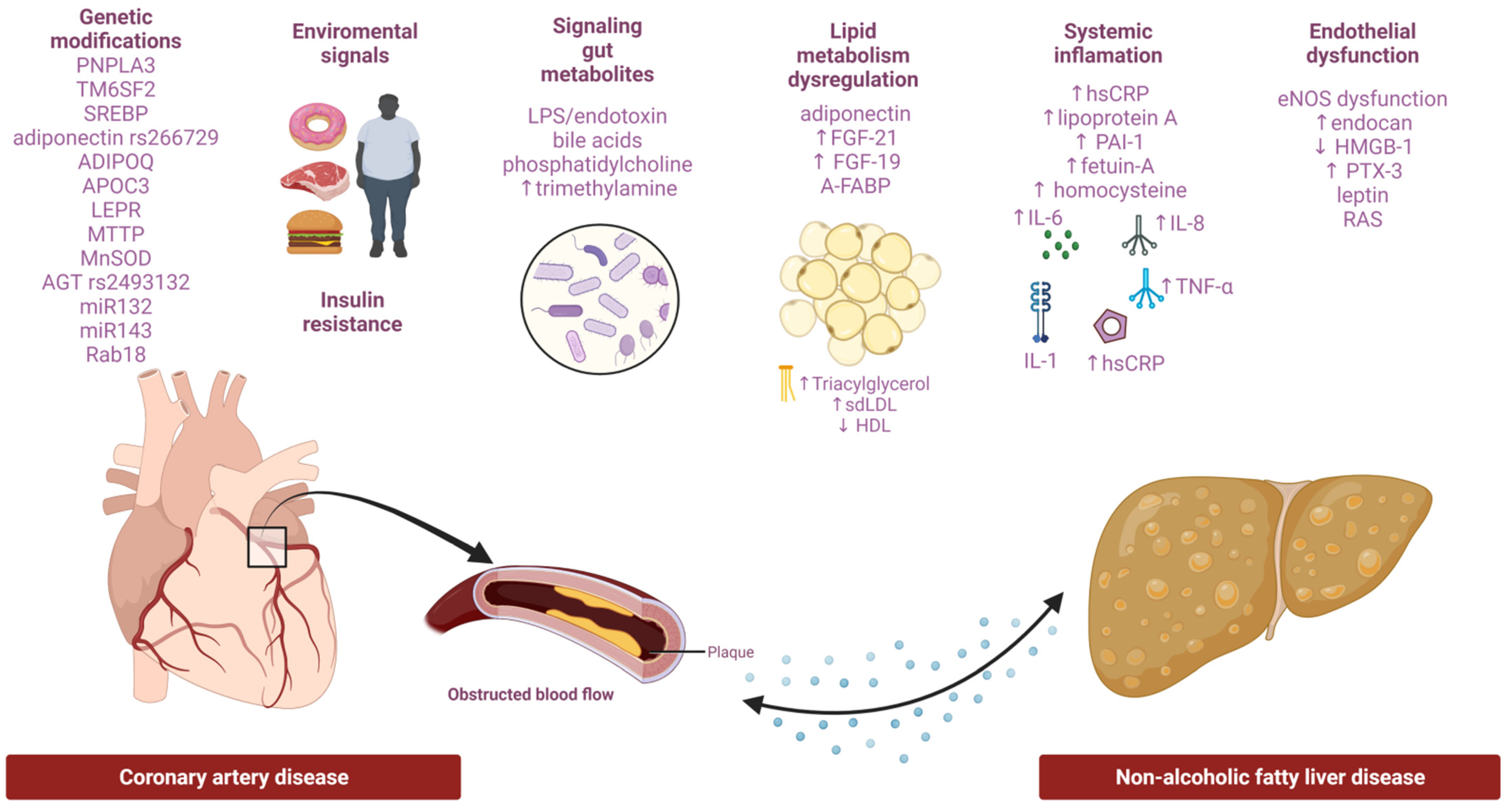

Publisher’s Note: MDPI stays neutral with regard to jurisdictional claims in published maps and institutional affiliations. |
© 2022 by the authors. Licensee MDPI, Basel, Switzerland. This article is an open access article distributed under the terms and conditions of the Creative Commons Attribution (CC BY) license (https://creativecommons.org/licenses/by/4.0/).