


Abstract
Due to the absence of traffic signal control and the difficulty in accurately estimating the future movements of surrounding vehicles, autonomous vehicle decision-making faces challenges at unsignalized intersections. This study proposes a trajectory prediction-aided deep reinforcement learning framework. First, a composite prioritized replay mechanism is introduced into the Twin Delayed Deep Deterministic Policy Gradient (TD3) algorithm, jointly considering temporal-difference error and reward-based event severity to enhance critical-experience reuse. Second, a convolutional multi-layer long short-term memory (CM-LSTM) model predicts surrounding-vehicle trajectories through convolutional local-motion encoding and stacked LSTM temporal modeling, and the predicted trajectories are incorporated into the deep reinforcement learning state representation. A multi-objective reward function is designed to balance collision avoidance, passing efficiency, lane keeping, and task completion. In CARLA go-straight and left-turn tests, CLS-TD3 achieves success rates of 93.8% and 90.2%, collision rates of 2.5% and 4.2%, and average passing times of 5.18 s and 5.58 s. Compared with TD3, the success rates increase by 6.3 and 8.6 percentage points, while average passing times decrease by 18.8% and 20.5%. These results demonstrate that the proposed framework improves the safety and crossing efficiency of autonomous vehicle decision-making at unsignalized intersections.
1. Introduction
Autonomous driving technology has the potential to improve traffic safety and operational efficiency by reducing human-related driving errors and enabling more consistent vehicle control [1,2,3]. Recent studies have made considerable progress in autonomous vehicle decision-making algorithms [4], especially in structured driving scenarios such as car following and lane changing, where autonomous vehicles can perform relatively stable and safe driving decisions [5,6,7,8]. However, decision-making remains challenging in complex interactive environments, particularly at unsignalized intersections [9,10]. In these scenarios, vehicles from multiple directions may enter the same conflict area without traffic signal guidance, and autonomous vehicles must interact with surrounding human-driven vehicles whose future movements and driving directions are uncertain. The uncertainty of surrounding vehicles’ behavior and the limited time available for conflict avoidance may lead to severe traffic conflicts, increasing the risk of congestion and collisions [11]. Therefore, advanced decision-making strategies are required to improve the safety and crossing efficiency of autonomous vehicles at unsignalized intersections.
Existing autonomous vehicle decision-making methods can generally be classified into rule-based methods and learning-based methods [12,13,14,15]. Rule-based methods generate driving decisions according to predefined rules, heuristic strategies, or manually designed decision logic. These methods usually have clear decision procedures, good interpretability, and relatively simple implementation [16,17,18]. However, their performance depends heavily on the completeness and generalizability of handcrafted rules, which limits their adaptability in dynamic and uncertain traffic environments such as unsignalized intersections [19]. In contrast, learning-based methods can learn decision policies from interaction data and environmental feedback rather than relying entirely on predefined driving rules. Among these methods, deep reinforcement learning (DRL) has attracted increasing attention because it can optimize sequential decision-making through repeated interactions with the environment and reward feedback [20,21,22]. By using deep neural networks to approximate policy or value functions, DRL can handle high-dimensional state representations and can be extended to continuous action spaces, making it suitable for autonomous vehicle decision-making in complex interactive scenarios [23,24].
In recent years, DRL has been widely applied to autonomous vehicle decision-making at unsignalized intersections [25]. Existing studies have improved decision-making performance from several perspectives, including multi-agent coordination, policy optimization, replay buffer design, and human driving knowledge integration. Zhang et al. [26] proposed a variable-noise-based multi-agent reinforcement learning method to improve decision stability in unsignalized intersection scenarios. Xiao et al. [27] introduced a hybrid attention network based on the soft actor–critic algorithm and optimized the replay buffer by using collision and task-completion samples, thereby enhancing driving safety. Li et al. [28] incorporated human driving knowledge into a DRL framework to generate expert-guided policies and improve the decision success rate at intersections. Wang et al. [29] developed an asynchronous DRL-based cooperation method for signal-free intersections, in which hierarchical coordination and asynchronous training were used to improve convergence and policy stability. These studies show that DRL has strong potential for autonomous vehicle decision-making in complex interactive traffic environments.
In addition to decision policy optimization, vehicle future-motion prediction has become an important component of autonomous driving decision-making. At unsignalized intersections, potential conflicts often emerge over a future time horizon rather than only at the current time step. Therefore, predicting the future trajectories of surrounding vehicles can provide useful interaction information for an autonomous vehicle before it enters a conflict area. As shown in Figure 1, vehicle future-trajectory information allows the autonomous vehicle to better anticipate the motion trends of surrounding vehicle before entering the conflict area. Li et al. [30] proposed a multimodal vehicle trajectory prediction method for urban uncontrolled intersections by considering multiple types of traffic participants and driving risks. Related studies have also explored how future scene evolution and safety-critical interaction information can support autonomous driving decisions in complex environments [31,32].
Figure 1.
Illustration of autonomous vehicle decision-making with and without future trajectory information at an unsignalized intersection. (a) Decision-making based only on current observations of surrounding vehicles. (b) Decision-making considering the predicted future trajectories of surrounding vehicles.
These studies indicate that vehicle future-motion information is valuable for improving the ability of autonomous vehicles to identify potential conflicts and make proactive decisions in interactive driving scenarios. However, how to effectively incorporate such predicted trajectory information into DRL-based decision-making remains an issue that requires further investigation.
Despite these advances, DRL-based autonomous vehicle decision-making at unsignalized intersections still faces several challenges. First, conventional DRL algorithms often suffer from inefficient sample utilization, which may lead to slow convergence and unstable policy learning in highly interactive traffic scenarios [33]. Second, although trajectory prediction has been investigated in autonomous driving, many DRL-based decision-making models still do not sufficiently integrate predicted future trajectories into the learning process. As a result, the autonomous vehicles rely mainly on instantaneous observations and fail to anticipate potential conflicts in advance [34]. Third, reward design remains a critical issue in intersection decision-making. Sparse or overly simplified rewards may fail to coordinate multiple objectives, such as collision avoidance, passing efficiency, lane keeping, and task completion [35]. As a result, the learned policy may become overly conservative, leading to unnecessary waiting, or overly aggressive, increasing collision risk. These limitations point to the need for a decision-making framework that improves the use of interaction samples, incorporates predicted vehicle motions into the state representation, and better handles the trade-off between safety and efficiency at unsignalized intersections.
To address the above challenges, this paper proposes a trajectory prediction-aided deep reinforcement learning framework for autonomous vehicle decision-making at unsignalized intersections. Specifically, the TD3 algorithm is first improved by introducing a composite prioritized replay mechanism to enhance sample utilization and training stability. The resulting algorithm is named CPR-TD3. On this basis, a CM-LSTM trajectory prediction module is incorporated to estimate the future motion of interacting vehicles. The predicted trajectory information is then integrated into the reinforcement learning state representation, and a multi-objective reward function is designed to balance collision avoidance, passing efficiency, lane keeping, and task completion. The resulting decision-making framework, referred to as CLS-TD3, enables the vehicle to consider both current traffic states and future interaction risks when making decisions at unsignalized intersections. The main contributions of this work are summarized as follows.
- A composite prioritized replay mechanism is introduced into TD3 to construct the CPR-TD3 algorithm for autonomous vehicle decision-making at unsignalized intersections. By jointly considering the normalized temporal-difference error and reward-based event priority, the proposed mechanism enables transitions with large learning errors or important task outcomes to be sampled more effectively, thereby improving critical-experience utilization and policy-learning stability.
- A CM-LSTM trajectory prediction model is developed to provide future motion information of surrounding vehicles for autonomous vehicle decision-making. The model combines convolutional local motion feature extraction with stacked LSTM temporal modeling to predict the future trajectories of surrounding vehicles, thereby supporting earlier anticipation of potential conflicts.
- A trajectory prediction-aided autonomous vehicle decision-making framework, referred to as CLS-TD3, is constructed by incorporating predicted trajectory information into the deep reinforcement learning state representation. A multi-objective reward function is also designed to balance collision avoidance, passing efficiency, lane keeping, and task completion. The proposed framework is evaluated in CARLA-based go-straight and left-turn scenarios through baseline comparisons, replay-mechanism comparisons, ablation studies and independent testing.
2. Materials and Methods
This section presents the proposed trajectory prediction-aided deep reinforcement learning framework for autonomous vehicle decision-making at unsignalized intersections. The framework comprises the CPR-TD3 algorithm for decision policy learning, the CM-LSTM model for predicting the future trajectories of interacting vehicles, a state-space representation that integrates current motion states with predicted trajectory information, and the design of the action space and multi-objective reward function. The following subsections describe the overall framework and each component in detail.
2.1. Overall Framework of the Proposed Method
The overall framework of the proposed trajectory prediction-aided deep reinforcement learning method is shown in Figure 2. The framework is designed for autonomous vehicle decision-making at unsignalized intersections. In this paper, the autonomous vehicle controlled by the proposed decision-making framework is referred to as the ego vehicle. It is assumed that real-time motion information of the ego vehicle and surrounding vehicles can be obtained through roadside units and onboard sensors. Based on the observed historical trajectories, a CM-LSTM trajectory prediction model is used to estimate the future motion of interacting vehicles. The predicted trajectory information is then incorporated into the state-space representation of the CPR-TD3 decision-making model.
Figure 2.
Overall framework of the proposed trajectory prediction-aided deep reinforcement learning method.
Based on this framework, the state space, action space, and reward function are designed to support safe and efficient decision-making at unsignalized intersections. Specifically, the state space includes the motion states of the ego vehicle and surrounding vehicles, as well as the future positions predicted by the CM-LSTM model. The action space is defined according to the executable driving actions of the ego vehicle, including lateral and longitudinal maneuver commands. A multi-objective reward function is formulated to balance collision avoidance, passing efficiency, lane keeping, and task completion.
During training, the ego vehicle continuously interacts with the environment and updates its decision-making policy through reward feedback. After an action is executed, the resulting transition sample is stored in the replay buffer. The CPR mechanism then samples transitions according to their temporal-difference errors and reward-based priorities, providing mini-batches for network updates in CPR-TD3. Through this process, the proposed framework enables the ego vehicle to learn a decision-making policy that considers both current traffic states and the predicted trajectories of surrounding vehicles.
2.2. CPR-TD3 Algorithm with Composite Prioritized Replay
To address the continuous action space required for autonomous vehicle decision-making at unsignalized intersections, this study employed the TD3 algorithm as the decision-making core. TD3 improves upon DDPG by alleviating the Q-value overestimation problem, which helps prevent the ego vehicle from executing aggressive or unsafe actions caused by erroneous value estimation. The algorithm mainly includes three optimization mechanisms: dual-Q network update, target policy smoothing, and delayed policy updates.
In the dual-Q network update mechanism, TD3 constructs two independent critic networks to mitigate overestimation bias. When calculating the target value, the minimum output of the two target critic networks is selected. This conservative estimation strategy suppresses cumulative errors during training and improves the stability of decision-making. The target value is calculated as follows:
where is the agent’s reward at time , is the discount factor, is the Q-value of the target network of the i-th critic network, and and denote the state and action values at time , respectively.
In the target policy smoothing mechanism, clipped normal noise is added to the target action calculation. This allows the critic network to learn a smoother value function and reduces the possibility that the policy overfits to specific actions. The target action is calculated as follows:
where is the target actor network, is its parameter, and is the restriction of the added normal noise to within the interval .
TD3 adopts a delayed policy update strategy. The update frequency of the actor network is lower than that of the critic network, which allows the value function to become more stable before policy updating and reduces policy oscillation during training.
Although these mechanisms improve training stability, standard TD3 still samples transitions uniformly from the replay buffer. Prioritized Experience Replay (PER) replaces uniform sampling with non-uniform sampling and assigns higher priorities to transitions with larger temporal-difference errors [36]. The original PER framework includes proportional and rank-based prioritization. In this study, proportional PER is adopted for comparison with the proposed CPR mechanism. For transition , its priority is defined as:
The corresponding sampling probability is calculated as:
Here, denotes the TD error of transition . is a small positive constant that prevents zero priority, while controls the degree of prioritization. After the critic networks are updated, the TD errors and priorities of the sampled transitions are recalculated.
Standard PER determines transition importance mainly according to value-estimation error. Existing reward-aware PER variants have further incorporated reward information into the priority calculation so that learning error and task outcomes jointly influence experience selection [37]. In the considered intersection decision-making task, the two signals describe different aspects of a transition. The TD error reflects the current learning discrepancy of the critic network, whereas the immediate reward reflects the outcome of the corresponding vehicle interaction. Therefore, a Composite Priority Experience Replay (CPR) mechanism is introduced to combine the TD error-based learning priority with a reward-based event priority.
For transition , the TD error is calculated as:
where denotes the immediate reward associated with transition , is the discount factor, and represent the current and target critic networks, respectively, and denotes the target actor network. The current state–action pair is represented by , and is the subsequent state. A larger absolute TD error indicates a larger discrepancy between the current critic output and the target value.
The reward-based event priority is defined as:
where denotes the absolute magnitude of the immediate reward and is a small positive constant set to 10−6. In the proposed reward function, events such as collisions and successful task completion produce immediate rewards with relatively large absolute magnitudes. Therefore, this component increases the replay priority of transitions associated with important task outcomes.
Because the TD error and reward-based event priority may have different numerical ranges, the two components are normalized separately before being combined. The composite priority score of transition is calculated as follows:
where denotes the composite priority score of transition , is the TD error of transition , and represents the reward-based priority of transition . The terms and are used to normalize the two priority components according to the maximum values in the replay buffer. The parameter controls the relative contributions of the two priority components. The first term reflects the learning discrepancy of the transition, whereas the second term reflects its event importance.
Since the two normalized components describe different, but equally relevant aspects of a transition, β is set to 0.5 to assign equal weight to both terms. This setting avoids an a priori preference for either learning discrepancy or event importance, allowing both insufficiently learned transitions and transitions associated with important task outcomes to influence replay sampling.
Based on the composite priority score, , the sampling probability of transition is calculated as:
where denotes the probability of sampling transition and is the number of transitions currently stored in the replay buffer. The hyperparameter controls the degree of prioritization. In this study, α is set to 0.6 to provide moderate prioritization strength. This value increases the sampling probability of high-priority transitions without excessively concentrating network updates on a small subset of the replay buffer, thereby maintaining sufficient sample diversity.
Accordingly, standard PER primarily relies on the TD error, whereas CPR retains the learning-error information and additionally incorporates the separately normalized reward-based event priority. The two components jointly determine the replay probability of each transition.
The CPR mechanism is integrated into the TD3 framework to form the CPR-TD3 algorithm, as shown in Figure 3. At each time step, the agent selects an action through the actor network according to the current state. After the action is executed in the environment, the agent receives the immediate reward and the next state, and the transition tuple is stored in the replay buffer with the maximum initial priority. During the CPR sampling phase, the TD error and reward priority of each transition are calculated and fused into a composite priority through weighted normalization. The corresponding sampling probability is then obtained, and a mini-batch of transitions is sampled for network updates. During the critic update phase, the dual Q networks compute the target value using the smaller Q value to suppress overestimation. After the critic parameters are updated, the priorities of the sampled transitions in the replay buffer are updated synchronously. The actor network follows a delayed update strategy, in which one policy gradient update is performed after every two critic updates, followed by soft updates of the target networks. This process is repeated until the policy converges.
Figure 3.
Training process of the proposed CPR-TD3 algorithm with composite prioritized replay.
2.3. CM-LSTM Trajectory Prediction Model
At unsignalized intersections, the decision-making of the ego vehicle depends not only on the instantaneous motion states of surrounding vehicles, but also on their future motion trends. Current observations, such as position and velocity, only describe the immediate traffic situation, whereas potential conflicts may occur within the following several seconds. Therefore, trajectory prediction is introduced to provide future interaction information for the downstream CPR-TD3 decision-making model. In this study, the historical motion states of interacting vehicles were used to infer their future positions, and the predicted trajectory information was incorporated into the reinforcement learning state representation.
Trajectory prediction can be regarded as a time-series forecasting problem. Long Short-Term Memory (LSTM), a variant of Recurrent Neural Networks (RNNs), can capture temporal dependencies in vehicle motion sequences through its internal memory mechanism. Compared with standard RNNs, LSTM alleviates gradient-vanishing and gradient-exploding problems by introducing gating mechanisms. The structure of the LSTM cell used for trajectory prediction is shown in Figure 4.
Figure 4.
Schematic structure of an LSTM cell.
For an input vector and the previous hidden state , the intermediate gating variables are computed as follows:
where and represent the learnable weight matrices and bias vector, respectively. denotes the concatenation of the previous hidden state and the current input. , , and , respectively, represent the forget gate, input gate, and output gate. denotes the candidate cell state.
Subsequently, the cell state and the hidden state are updated through element-wise operations:
where denotes element-wise multiplication. Through these gating operations, the LSTM network can selectively retain or discard historical motion information over a long time horizon, making it suitable for modeling the temporal evolution of vehicle trajectories.
During the construction of the time-series samples, the historical trajectory data of each vehicle are organized as a two-dimensional input matrix of size , where denotes the length of the historical trajectory sequence and denotes the feature dimension of the input trajectory data at each observation time step. Each row represents the vehicle motion information at one observation time step, while each column corresponds to one trajectory feature. This arrangement preserves the temporal order of the historical observations and provides a structured input for the subsequent convolutional and recurrent operations.
Although LSTM can model temporal dependencies, directly using raw trajectory coordinates as input may limit the extraction of local motion features and increase sensitivity to high-frequency fluctuations in vehicle motion data. To address this issue, this study developed a convolutional multi-layer LSTM model, named CM-LSTM, for trajectory prediction. As shown in Figure 5, the CM-LSTM model consists of three main stages: local motion feature encoding, temporal dynamics modeling and trajectory decoding.
Figure 5.
Architecture of the CM-LSTM trajectory prediction model.
- Local motion feature encoding stage: the convolutional module is located between the historical trajectory input and the stacked LSTM layers. It consists of two convolutional layers with different kernel sizes, followed by a max-pooling layer. The first convolutional layer uses a kernel size of , where n denotes the feature dimension of the input trajectory data at each observation time step. The kernel covers three adjacent observation steps and their corresponding input features, enabling the model to extract and encode local variation patterns from short segments of the historical trajectory. The second convolutional layer uses a kernel size of to further transform and integrate the intermediate feature representation generated by the first convolutional layer. During this process, the convolutional layers employ a weight-sharing mechanism when processing different positions of the trajectory sequence, thereby reducing the number of independently trained parameters. Following the two convolutional operations, a max-pooling layer is applied to retain the dominant local responses and reduce redundant feature information. The resulting feature sequence is then passed to the stacked LSTM layers for temporal dependency modeling.
- Temporal dynamics modeling stage: the local motion features extracted by the convolutional module are fed into a three-layer stacked LSTM network. The stacked LSTM structure increases the modeling depth of the network and enables it to capture more complex temporal dependencies in vehicle motion. To balance prediction accuracy and training efficiency, the numbers of hidden units in the three LSTM layers are set to 128, 64, and 32, respectively.
- Trajectory decoding stage: fully connected layers are used to map the motion representation generated by the stacked LSTM network to the predicted future trajectory. The decoder contains two dense layers with 16 and 8 neurons, respectively. The ReLU activation function is used to enhance the nonlinear representation capability, and dropout layers are added after the dense layers to reduce overfitting. Finally, the output layer generates the predicted future coordinates of the interacting vehicle. The main parameters of the CM-LSTM model are summarized in Table 1.
Table 1.
Main parameters of the CM-LSTM trajectory prediction model.
When multiple surrounding vehicles are present in the scenario, the historical trajectory of each vehicle is organized separately in the same, input form and processed by the same trained CM-LSTM model. The model parameters are shared across all surrounding vehicles, and an individual future trajectory is generated for each vehicle.
2.4. State and Action Space Design
The objective of deep reinforcement learning is to train the ego vehicle to make optimal decisions through environmental perception and reward feedback. In this process, the design of the state space and action space directly affects the convergence speed and decision-making performance of the algorithm. At unsignalized intersections, the ego vehicle needs to process multiple types of traffic information, including its own motion state, the motion states of surrounding vehicles, and the possible future movements of surrounding vehicles. If all available traffic information is directly used as input, redundant information may increase the dimensionality of the state representation and slow model convergence. Therefore, the state space should retain decision-relevant information while avoiding unnecessary redundancy.
In this study, the state space was designed by considering the motion states of the ego vehicle and surrounding vehicles, as well as the future positions predicted by the CM-LSTM model. The predicted trajectory information is used to represent the future motion tendencies of surrounding vehicles, allowing the decision-making model to consider potential conflicts in advance. The state space is formulated as follows:
where denotes the state representation used by the decision-making model. represents the state sequence of the ego vehicle and represents the state sequence of surrounding vehicles. They are defined as follows:
where includes the position coordinates , longitudinal velocity and acceleration of the ego vehicle. includes the current position coordinates , velocity and acceleration of the surrounding vehicle. In addition, denotes the future position of surrounding vehicles at time step , as predicted by the CM-LSTM model from the observed historical motion sequence. When multiple surrounding vehicles are considered, CM-LSTM separately generates future coordinates for each vehicle. The current motion state of each vehicle and its corresponding predicted future coordinates are then jointly incorporated into the state representation and concatenated with the ego vehicle state as the input to the actor network.
To reduce the influence of different map scales and coordinate origins, a coordinate transformation strategy centered on the ego vehicle is adopted. The position variables (x, y) in the state representation are not treated as absolute global coordinates. Instead, they are defined as local relative coordinates with respect to the center of mass of the ego vehicle. Through this spatial normalization, the state features are converted into relative motion patterns that are less dependent on specific map topologies. This helps the policy model learn more general decision-making logic across different intersection scenarios.
The action space defines the executable driving commands of the ego vehicle. Considering the physical constraints of vehicle motion, the throttle and brake should not be activated simultaneously. To reduce the complexity of the action dimension and avoid action conflicts, the three-dimensional physical control space is compressed into a two-dimensional hybrid action space:
where denotes the hybrid action space of the ego vehicle, is the steering command for lateral maneuvering, and is the longitudinal throttle/brake command. Both components are normalized within [−1,1]. A positive value of indicates throttle input, whereas a negative value indicates brake input.
To improve the stability of the transition between acceleration and braking and to simulate the inertial coasting behavior of human drivers, a switching threshold is introduced for the longitudinal throttle/brake command. Based on the value of , the longitudinal driving mode is determined as follows:
where denotes the longitudinal driving mode determined by the throttle/brake command and is the preset switching threshold. In this study, was set to 0.05. When , the vehicle accelerates through throttle input. When , the vehicle decelerates through braking. When , both throttle and brake commands are set to zero, and the vehicle enters a coasting mode. This threshold-based switching mechanism suppresses chattering near the zero point and ensures a smoother transition between acceleration and braking.
2.5. Multi-Objective Reward Function Design
Autonomous vehicle decision-making at unsignalized intersections is a multi-objective optimization problem. The ego vehicle needs to avoid collisions, maintain a reasonable driving trajectory, reduce unnecessary waiting, improve passing efficiency, and complete the crossing task. If only sparse rewards are used, such as rewards given only after success, the training process may suffer from slow convergence and unstable exploration. Therefore, this study designed a composite reward function that combines sparse and dense rewards.
The reward function consists of five components: collision penalty, lane deviation reward, stop reward, speed reward, and task completion reward. These components are designed to guide the ego vehicle toward safe and efficient decision-making in unsignalized intersection scenarios.
Collision penalty. Safety is the primary requirement for autonomous driving. When a collision with other vehicles or obstacles is detected, a large negative reward is assigned and the current episode is terminated. The collision penalty is defined as follows:
where represents the collision penalty coefficient. An excessively large penalty may reduce exploration efficiency in the early training stage, whereas an insufficient penalty may fail to prevent unsafe behaviors. In this study, was set to 15.
Lane deviation reward. To encourage the ego vehicle to follow a stable and reasonable path through the intersection, a negative reward is imposed when the vehicle deviates from the lane center line. The lane deviation reward is defined as follows:
where denotes the coordinates of the nearest lane centerline point. This reward guides the ego vehicle to maintain a stable trajectory and avoid unnecessary lateral deviation.
Stop reward. At unsignalized intersections, the ego vehicle may learn an overly conservative policy and remain stationary to avoid potential collision risks. To prevent this behavior, a waiting-time penalty is introduced. The stop reward is defined as follows:
where denotes the stop reward and represents the number of consecutive time steps during which the ego vehicle remains waiting in the intersection area. In this study, the waiting-time threshold was set to 30 time steps. When , a penalty of −1 is imposed at each subsequent time step to encourage the ego vehicle to seek feasible passing opportunities.
Speed reward. To improve intersection throughput and encourage the vehicle to pass efficiently under safe conditions, a speed reward is designed. The speed reward is calculated as follows:
where denotes the velocity of the ego vehicle. and represent the maximum and minimum velocities in the scenario, respectively. The coefficient is used to adjust the weight of the normalized speed reward and was set to 0.7 in this study.
Task completion reward. When the ego vehicle successfully passes through the intersection without collision and reaches the target area, a positive reward is assigned. The task completion reward is defined as follows:
To balance different sub-objectives in the decision-making process, the total reward function is formulated as a weighted summation of the five reward components:
where denotes the weight assigned to the corresponding reward component . The weights were selected by considering both the magnitude and the occurrence frequency of each reward term. The collision penalty and task completion reward already have relatively large absolute values, and their weights were therefore kept at 1.0. The lane-deviation reward is generated continuously during an episode and may accumulate over time. Its weight was set to 0.5 to prevent this term from having an excessive influence on the total reward. The stop and speed rewards were assigned weights of 1.0 because their individual magnitudes are relatively limited and they mainly provide continuous guidance for reducing unnecessary waiting and maintaining an appropriate driving speed.
Based on the above design principle, the reward weight vector is set as follows:
This setting retains the influence of collision avoidance and task completion while providing sufficient guidance for lane keeping, waiting reduction, and passing efficiency.
3. Experimental Design
This section describes the experimental design for evaluating the proposed trajectory prediction-aided deep reinforcement learning framework. It first presents the Open ITS trajectory dataset, data preprocessing, and CM-LSTM evaluation settings. It then introduces the CARLA platform, unsignalized intersection scenario design, domain adaptation, compared algorithms, training settings, testing protocol, and evaluation metrics.
3.1. Trajectory Dataset and Preprocessing
The Open ITS trajectory dataset was used for training and evaluating the CM-LSTM trajectory prediction model. Open ITS is an open urban traffic data platform that provides real-world vehicle motion trajectories and related traffic information. The dataset contains vehicle trajectory records, including frame ID, position coordinates, speed, acceleration, and velocity components in the x and y directions. These variables provide the basic motion information required for vehicle trajectory prediction. A description of the trajectory data fields is given in Table 2.
Table 2.
Description of trajectory data fields.
Raw trajectory data collected from sensors usually contain high-frequency random noise caused by measurement errors. If the noisy data are directly used as model input, the trajectory sequence may exhibit local jitter, which can lead to error accumulation and unstable prediction results. Therefore, a filtering optimization process is applied to smooth the raw velocity and acceleration data before model training. As shown in Figure 6, the filtering process reduces spikes and high-frequency fluctuations in the original data, resulting in smoother motion trends. The processed data provide more stable input sequences for CM-LSTM training.
Figure 6.
Comparison of vehicle data before and after smoothing. (a) Velocity filtering result. (b) Acceleration filtering result.
After preprocessing, the dataset is divided into a training set and a test set at an 8:2 ratio. For all trajectory prediction models, the historical motion sequence of each vehicle over the preceding 4 s is used as the input, and the vehicle positions over the subsequent 5 s are used as the prediction target. The root mean square error (RMSE) is adopted to quantify the deviation between the predicted and ground-truth vehicle positions. For a prediction horizon , the RMSE is calculated as follows:
where denotes the number of trajectory samples in the test set. and represent the predicted coordinates of the i-th sample at prediction horizon . and denote the corresponding ground-truth coordinates.
3.2. Simulation Environment and Experimental Setup
3.2.1. Simulation Platform and Scenario Construction
To evaluate the decision-making performance of the proposed framework, a typical unsignalized intersection scenario is constructed in the Town04 map of the CARLA simulation platform [38], as shown in Figure 7a. In the simulation, the ego vehicle is required to perform straight-line driving and left-turn maneuvers. Its path originates from a starting point and terminates at the destination. The vehicle’s speed is bounded between 0 and 8 m/s, determined by analyzing trajectory data from the Open ITS dataset. Key performance metrics for the algorithm are acquired by observing its interactive behavior with surrounding vehicles during operation.
Figure 7.
Simulation scenario configuration and task definitions. (a) Ego vehicle trajectories of the two tasks. (b) Go-straight scenario. (c) Left-turn scenario.
As shown in Figure 7b,c, surrounding vehicles are dynamically generated in all possible directions of the intersection and are uniformly managed by the built-in traffic manager in CARLA, with speeds also constrained to 0–8 m/s. To emulate realistic traffic conflicts, the following probabilistic traffic flow configurations are implemented according to the driving task of ego vehicle.
- Gostraight scenario (see Figure 7b): Three conflict points are established for the straight-driving scenario: opposing left-turning vehicles, as well as vehicles from the perpendicular direction that are either proceeding straight or turning left. Each of the three types of conflict vehicles is assigned a generation probability of 0.3.
- Left-Turn Scenario (see Figure 7c): Primary conflict sources include go-straight and left-turn vehicles from the perpendicular direction, as well as go-straight vehicles from the opposite direction, each assigned a generation probability of 0.3.
3.2.2. Domain Adaptation Between Open ITS and CARLA
In the proposed framework, the environmental state incorporates predicted trajectories generated by the CM-LSTM model. Since the CM-LSTM model was trained using the real-world Open ITS trajectory dataset, while the decision-making experiments were conducted in CARLA, domain gaps exist between the trajectory prediction data and the simulation environment. These gaps mainly involve differences in map origins, coordinate scales, and dynamic feature distributions. If these differences are not handled, the predicted trajectory information may be inconsistent with the state representation used by the decision-making model.
To reduce the influence of map-scale and coordinate-origin differences, a coordinate transformation strategy centered on the ego vehicle is adopted. During the preprocessing stage, absolute global coordinates in the simulation environment are discarded. The perceived positions of surrounding vehicles are transformed in real time into local relative coordinates with respect to the center of mass of the ego vehicle. Through this spatial normalization, the state features are represented as relative motion patterns rather than absolute map positions. This makes the geometric representation of the input features more consistent with the training data used by the CM-LSTM model.
In addition, to address feature-scale mismatch caused by differences in dynamic parameters, an online statistical distribution alignment method is used. During the inference stage, the decision-making system retrieves the global statistical parameters, including the mean and standard deviation, from the Open ITS training set. The real-time state data obtained in CARLA are then normalized using Z-score normalization. By aligning the state distribution of the simulation environment with the feature space of the training data, the CM-LSTM model can maintain more stable inference performance when providing predicted trajectory information for the CPR-TD3 decision-making framework.
3.2.3. Baseline Algorithms and Training Settings
All experiments were implemented in the PyCharm 2020.3.1 integrated development environment using Python 3.7. Model construction and training were carried out using the TensorFlow 2.9.1 deep learning framework. The decision-making simulations were conducted using CARLA 0.9.10. The hardware platform consisted of an Intel Core i7-12700 CPU and an NVIDIA GeForce RTX 3060 Ti GPU.
To comprehensively evaluate the proposed decision-making framework, DDPG, TD3 and Soft Actor Critic (SAC) were selected as the baseline reinforcement learning algorithms. DDPG and TD3 are deterministic actor critic algorithms for continuous control, whereas SAC is an off-policy actor critic algorithm based on the maximum-entropy reinforcement learning framework. The inclusion of SAC provides an additional comparison with a representative continuous-control reinforcement learning method.
To further evaluate the contributions of experience replay and trajectory prediction, four TD3-based variants were evaluated: PER-TD3, CPR-TD3, LS-TD3, and CLS-TD3. PER-TD3 replaces the uniform experience replay of TD3 with standard prioritized experience replay, in which the sampling priority is determined by the TD error. CPR-TD3 incorporates the composite prioritized replay mechanism. LS-TD3 incorporates the future trajectories predicted by CM-LSTM into the state representation while retaining uniform experience replay. CLS-TD3 is the complete proposed framework, combining CM-LSTM-based trajectory prediction with composite prioritized replay. The descriptions of the compared algorithms are summarized in Table 3.
Table 3.
Description of the compared algorithms.
To ensure a fair comparison, all algorithms were trained and evaluated using the same simulation scenarios, state and action definitions, reward function, number of training episodes, and evaluation protocol. The main hyperparameter settings used for training are summarized in Table 4. In addition to these settings, SAC employs automatic entropy adjustment. Its target entropy and temperature parameter learning rate were set to −2 and 3 × 10⁻⁵. Moreover, each reinforcement learning algorithm was trained using five random seeds.
Table 4.
Main hyperparameter settings used for training.
Each training run consisted of 6000 episodes to allow the policy to reach a stable learning state. To improve the readability of the training reward curves, a Savitzky–Golay filter was applied to smooth the displayed curves during result visualization. This smoothing operation was used only for presentation and did not affect the model training process or the calculation of quantitative evaluation results.
3.2.4. Testing Protocol and Evaluation Metrics
After training, the decision-making performance of all algorithms was evaluated in independently generated test episodes under the go-straight and left-turn scenarios. During testing, all network parameters were fixed, exploration noise was removed, and no gradient update or experience replay operation was performed. For LS-TD3 and CLS-TD3, the trajectory prediction model was used only for online inference, and its parameters remained unchanged throughout the testing process.
To ensure a fair comparison, all algorithms were evaluated using the same set of test scenario seeds. At the beginning of each episode, the initial positions, velocities, and traffic configurations of the surrounding vehicles were generated according to the predefined scenario-generation rules. The test episodes were independent of those used during training, while the road geometry, vehicle dynamics, observation range, action constraints, and termination conditions remained unchanged. Each algorithm was evaluated using the same 200 independently generated test episodes in the go-straight scenario and the same 200 test episodes in the left-turn scenario.
A test episode was considered successful when the ego vehicle reached the target region without a collision within the maximum episode duration. Consistent with the parameter setting in Table 4, the maximum duration of each test episode was set to 30 s. An episode was classified as a collision if the ego vehicle collided with another traffic participant before reaching the target region. If the ego vehicle failed to reach the target region within 30 s without a collision, the episode was classified as a timeout.
The evaluation metrics included the success rate, collision rate, timeout rate, and average passing time. Let , , and denote the numbers of successful, collision, and timeout episodes. Since each algorithm was evaluated over 200 test episodes in each driving scenario, the success rate, collision rate and timeout rate were calculated as:
The average passing time was calculated only over the test episodes in which the ego vehicle successfully completed the driving task:
where denotes the time required by the ego vehicle to complete the intersection-crossing task in the i-th successful episode. Collision and timeout episodes were excluded from the calculation of the average passing time because the ego vehicle did not complete the specified driving task in these episodes. The success rate was used to evaluate the overall task-completion capability. The collision rate reflected driving safety. The timeout rate indicated the occurrence of excessively conservative or ineffective decisions. The average passing time was used to assess intersection-crossing efficiency.
4. Results and Discussion
This section presents and discusses the experimental results. The trajectory prediction performance of CM-LSTM was first evaluated on the Open ITS dataset. The training and testing performance of the compared decision-making algorithms was then analyzed in the go-straight and left-turn scenarios, and the online inference latency of the proposed framework was measured.
4.1. Trajectory Prediction Results and Analysis
To provide a more comprehensive evaluation of the CM-LSTM trajectory prediction model, a standard LSTM and a standard GRU are introduced as comparative baselines. Both models adopt their conventional network structures. Compared with LSTM, GRU uses a relatively simpler gating mechanism with fewer internal gates, resulting in a more compact recurrent architecture. The root mean square error (RMSE) is used to quantify the deviation between the predicted and ground-truth trajectories for the three models, with a lower RMSE indicating higher prediction accuracy. The comparative results at different prediction horizons are presented in Table 5.
Table 5.
Mean RMSE of trajectory prediction.
As shown in Table 5, the standard LSTM and GRU achieve similar prediction accuracy at the 1 s horizon, with RMSE values of 0.46 and 0.45, respectively. However, as the prediction horizon increases, the RMSE of GRU grows more rapidly than that of LSTM, reaching 1.06 at 5 s compared with 0.97 for LSTM. In contrast, CM-LSTM consistently achieves the lowest RMSE across all prediction horizons, with values of 0.23, 0.31, 0.40, 0.48, and 0.55 from 1 to 5 s, respectively. Although the prediction errors of all three models increase with the prediction horizon, CM-LSTM exhibits a noticeably slower error growth rate, indicating that it maintains relatively stable prediction accuracy, provides better long-term prediction stability, and effectively mitigates the error accumulation commonly observed in trajectory prediction tasks.
4.2. Decision-Making Results and Analysis
This section analyzes the decision-making performance of the compared algorithms in the go-straight and left-turn scenarios. The analysis includes training reward and convergence performance, testing results and representative interaction behaviors.
4.2.1. Go-Straight Scenario
Figure 8 presents the training reward curves of the compared algorithms in the go-straight scenario. Figure 8a presents the baseline algorithm comparison, in which the proposed CLS-TD3 is compared with DDPG, TD3, and SAC to evaluate the reward levels and convergence performance of the different algorithms in the go-straight scenario. Figure 8b compares TD3, PER-TD3, and CPR-TD3 to investigate the effects of different experience replay mechanisms on policy training. Figure 8c presents the ablation comparison among TD3, CPR-TD3, LS-TD3, and CLS-TD3 to examine the individual and combined contributions of composite prioritized replay and trajectory prediction.
Figure 8.
Training reward curves of different algorithms in the go-straight scenario. (a) Comparison with baseline reinforcement learning algorithms. (b) Comparisonof experience replay mechanisms. (c) Ablation comparison. The solid lines represent the mean values, while the shaded regions indicate the standard deviations.
As shown in Figure 8a, CLS-TD3 exhibits the fastest reward improvement during the early stage of training. Its mean reward becomes positive after approximately 400 episodes and exceeds 100 at around 1600 episodes, after which it remains mainly between 110 and 125. SAC and TD3 show similar learning trends, but their rewards increase more gradually. Both algorithms reach relatively stable reward levels after approximately 2500–3000 episodes, with SAC generally maintaining a higher reward than TD3 during the later stage of training. DDPG shows the slowest reward improvement and obtains the lowest mean reward among the four algorithms. Overall, CLS-TD3 reaches a relatively stable high-reward level earlier and maintains a higher reward than the three baseline algorithms in the go-straight scenario.
Figure 8b further compares the effects of different experience replay mechanisms on the training process. Compared with TD3 using uniform experience replay, PER-TD3 shows faster reward improvement and reaches a higher reward level earlier. PER determines the replay priority of each transition according to its TD-error, allowing transitions with larger value-estimation errors to be sampled more frequently. CPR extends this mechanism by combining the normalized TD-error with a reward-based event priority, so that transitions with large learning errors or important reward information receive greater sampling attention. As shown in the figure, CPR-TD3 improves faster than PER-TD3 during the early and middle stages of training, enters a relatively stable high-reward region earlier, and maintains a higher overall reward than the other two algorithms. These results indicate that reward-based event priority provides an effective complement to the TD error-based prioritization used in PER.
The ablation results in Figure 8c show that both composite prioritized replay and trajectory prediction contribute to policy learning. Compared with TD3, CPR-TD3 reaches the high-reward region considerably earlier and achieves a higher converged reward, demonstrating the contribution of the proposed replay mechanism. LS-TD3 also obtains a higher reward than TD3 after convergence, indicating that incorporating predicted trajectories of surrounding vehicles improves the learned decision policy. CLS-TD3 combines these two components and exhibits the fastest reward increase, reaching a relatively stable high-reward level before the other methods. Although all algorithms experience local fluctuations after convergence, CLS-TD3 generally maintains the highest reward, followed by CPR-TD3 and LS-TD3, whereas TD3 remains at the lowest level. These results confirm that both composite prioritized replay and trajectory prediction contribute to the performance improvement of CLS-TD3 in the go-straight scenario.
To further examine whether the advantages observed during training were retained in actual driving tasks, the models obtained from five independent training runs were evaluated in the go-straight scenario. Each trained model was tested over the same 200 independent episodes, and the results were averaged across the five runs. The results are presented in Table 6.
Table 6.
Testing results of different algorithms in the go-straight scenario.
As shown in Table 6, the algorithms exhibit clear differences in the go-straight scenario, and the replay mechanisms and trajectory prediction information affect the evaluation metrics in different ways. Compared with TD3, PER-TD3 increases the success rate from 87.5% to 89.4% and reduces the collision rate from 8.8% to 6.7%, indicating that prioritized experience replay moderately improves experience utilization. CPR-TD3 further increases the success rate to 92.2% and reduces the timeout rate to 3.4%, demonstrating that composite prioritized replay strengthens the utilization of critical conflict experiences and improves task-completion stability. After trajectory prediction is introduced, LS-TD3 reduces the collision rate to 3.2% and shortens the average passing time from 6.38 s to 5.61 s, whereas its timeout rate increases to 5.2%. This reflects the safety improvement brought by earlier conflict anticipation, while also indicating more cautious waiting behavior in a small number of uncertain situations. Therefore, the CPR mechanism mainly improves critical-experience utilization and task-completion stability, whereas trajectory prediction mainly reduces collision risk. By incorporating both mechanisms, CLS-TD3 achieves the highest success rate of 93.8%, the lowest collision rate of 2.5%, and the shortest average passing time of 5.18 s, indicating that the complete model outperforms the other methods in terms of task completion and collision-risk reduction.
A typical decision-making process in the go-straight scenario is shown in Figure 9. In this case, the ego vehicle travels straight through the intersection while an opposing left-turning vehicle approaches the conflict area from the opposite direction. When a potential conflict is detected, the ego vehicle uses the predicted trajectory information to estimate the relative arrival time of the two vehicles at the conflict point. Since the predicted time gap is sufficient for safe passage, the ego vehicle adopts an acceleration strategy and clears the conflict area before the opposing left-turning vehicle arrives. This behavior indicates that CLS-TD3 can avoid unnecessary waiting while maintaining safe interaction with surrounding vehicles.
Figure 9.
Decision-making visualization in the go-straight scenario. The ego vehicle goes straight through the intersection while interacting with an opposing left-turning vehicle.
4.2.2. Left-Turn Scenario
Figure 10 presents the training reward curves of the compared algorithms in the left-turn scenario. Figure 10a compares CLS-TD3 with DDPG, TD3, and SAC in the baseline algorithm comparison. Figure 10b compares TD3, PER-TD3, and CPR-TD3 to examine the effects of different experience replay mechanisms. Figure 10c presents the ablation comparison among TD3, CPR-TD3, LS-TD3, and CLS-TD3. The solid lines represent the mean values, while the shaded regions indicate the standard deviations. Compared with the go-straight scenario, most algorithms require more training episodes to enter the positive-reward region and reach a relatively stable reward level. This may be because the vehicle heading changes continuously during the turning maneuver, requiring the decision policy to balance conflict avoidance and traffic efficiency and thereby increasing the difficulty of policy learning.
Figure 10.
Training reward curves of different algorithms in the left-turn scenario. (a) Baseline algorithm comparison. (b) Comparison of experience replay mechanisms. (c) Ablation comparison. The solid lines represent the mean values, while the shaded regions indicate the standard deviations.
As shown in Figure 10a, CLS-TD3 exhibits the fastest overall reward growth among the four algorithms. Its mean reward becomes positive after approximately 1000 episodes and exceeds 100 at around 2500 episodes. After approximately 3200 episodes, its reward mainly fluctuates between 120 and 135, indicating that the policy has reached a relatively stable high-reward level. SAC and TD3 require more training episodes to achieve positive rewards and converge to lower reward levels, with SAC generally outperforming TD3 during the later stage of training. DDPG shows the slowest learning process and obtains the lowest final reward. These results indicate that CLS-TD3 adapts more rapidly to the left-turn task and achieves a higher and more stable reward level than the three baseline algorithms.
Figure 10b compares the training performance of three experience replay strategies in the left-turn scenario. PER-TD3 enters the positive-reward region earlier than TD3 with uniform experience replay and subsequently achieves a higher reward level, indicating that TD error-based prioritization improves the utilization of informative transition samples. CPR-TD3 further introduces a reward-based event priority and combines it with the normalized TD-error priority to determine the sampling probability. This design considers both transitions with large value-estimation errors and transitions associated with important task outcomes. As shown in the figure, CPR-TD3 improves earlier than PER-TD3 and TD3, reaches a relatively stable high-reward region sooner, and generally maintains the highest reward during the later stage of training. These results demonstrate that incorporating reward-based event information into the standard TD-error priority further improves learning in the left-turn scenario.
The ablation results in Figure 10c show that both composite prioritized replay and trajectory prediction contribute to policy learning in the left-turn scenario. Compared with TD3, CPR-TD3 improves earlier and reaches the high-reward region more rapidly, indicating that the proposed composite prioritized experience replay mechanism accelerates policy learning in the left-turn scenario. LS-TD3 also achieves a substantially higher reward than TD3 during the later stage of training, indicating that the predicted trajectories of surrounding vehicles provide useful information for decision-making. By combining both components, CLS-TD3 achieves a higher and more stable reward level and generally maintains the best overall performance during the later training stage. Although LS-TD3 occasionally approaches CLS-TD3, its reward exhibits more noticeable fluctuations, whereas CLS-TD3 remains concentrated within a relatively stable high-reward range. TD3 maintains the lowest overall reward among the four variants. These results show that both components are effective in improving policy learning and that their combination further enhances the overall performance and training stability of CLS-TD3 in the left-turn scenario.
To further examine whether the advantages observed during training were retained in the more challenging left-turn task, the models obtained from five independent training runs were evaluated under the same testing protocol. Each trained model was tested over the same 200 independent episodes, and the results were averaged across the five runs. The results are presented in Table 7.
Table 7.
Testing results of different algorithms in the left-turn scenario.
As shown in Table 7, Compared with TD3, PER-TD3 increases the success rate from 81.6% to 84.4%, showing a moderate improvement from prioritized experience replay. CPR-TD3 further increases the success rate to 88.2% and reduces the timeout rate to 5.3%, indicating that enhanced utilization of critical conflict experiences improves task-completion stability. After trajectory prediction is introduced, LS-TD3 reduces the collision rate from 11.9% to 4.8%, whereas its timeout rate rises to 7.8%, reflecting improved anticipation of potential conflicts and more cautious waiting in uncertain situations. CLS-TD3 achieves the best overall performance, with the highest success rate of 90.2%, the lowest collision rate of 4.2%, and the shortest average passing time of 5.58 s. Compared with TD3, its success rate increases by 8.6 percentage points, its collision rate decreases by 7.7 percentage points, and its average passing time is shortened by 1.44 s, demonstrating the effectiveness of combining composite prioritized replay with future trajectory information in the left-turn scenario.
A comparison of Table 6 and Table 7 shows that the performance improvement of CLS-TD3 over TD3 is more pronounced in the left-turn scenario. In the go-straight scenario, CLS-TD3 increases the success rate by 6.3 percentage points, reduces the collision rate by 6.3 percentage points, and shortens the average passing time by 18.8%. The corresponding improvements in the left-turn scenario are 8.6 percentage points, 7.7 percentage points, and 20.5%, respectively. This difference may be attributed to the greater interaction complexity of the left-turn task, in which the ego vehicle must continuously adjust its heading and evaluate temporal gaps with opposing and crossing vehicles. Under such conditions, current motion states alone provide limited information about future conflict evolution, making predicted trajectories more valuable for decision-making. The more diverse critical interactions in the left-turn scenario may also provide greater scope for composite prioritized replay to improve the utilization of informative transitions.
It should also be noted that LS-TD3 exhibits a higher timeout rate but a shorter average passing time than TD3, PER-TD3, and CPR-TD3. These results are not contradictory, because average passing time is calculated only over successful episodes. When the predicted trajectories indicate a clear and safe temporal gap, LS-TD3 can complete the crossing task more efficiently. In uncertain interactions, however, the model may adopt prolonged waiting behavior and eventually time out. Therefore, the shorter average passing time reflects improved efficiency in successful episodes, whereas the higher timeout rate indicates more conservative decisions in a small number of uncertain situations.
A representative decision-making process in the left-turn scenario is shown in Figure 11. In this case, the ego vehicle performs a left-turn maneuver while an opposing straight-going vehicle approaches the intersection. As the two vehicles move toward the conflict area, the predicted future trajectory provides the ego vehicle with information about the possible motion trend of the opposing vehicle. Based on this information, the ego vehicle identifies an available temporal gap before the opposing vehicle reaches the conflict area. Therefore, instead of waiting passively, the ego vehicle completes the left-turn maneuver and accelerates through the intersection within the available time window. This example shows that CLS-TD3 can use future trajectory information to support efficient passing decisions while maintaining safe interaction with surrounding vehicles.
Figure 11.
Decision-making visualization in the left-turn scenario. The ego vehicle turns left through the intersection while interacting with an opposing straight-going vehicle.
4.3. Online Inference Latency Evaluation
Incorporating predicted trajectories into the decision-making framework provides information about the future motion of surrounding vehicles but also introduces additional computation during online execution. Therefore, the actual inference latency of the proposed framework was measured to determine whether trajectory prediction and action generation could be completed within the control interval used in the CARLA experiments.
During online execution, the proposed CLS-TD3 framework mainly performs three operations. First, CM-LSTM predicts the future positions of surrounding vehicles from their historical motion states. Second, the predicted positions are incorporated into the current observations to construct the extended state representation. Finally, the trained actor network generates the acceleration and steering commands through forward inference. Since the composite prioritized replay mechanism is used only during policy training, replay-buffer sampling, priority calculation, and critic-network optimization are not involved in online action generation and therefore do not contribute to the measured inference latency.
The inference-time measurements were conducted on a computer equipped with an Intel Core i7-12700 CPU and an NVIDIA GeForce RTX 3060 Ti GPU. The latency of CM-LSTM trajectory prediction, state construction, actor-network inference, and the complete online decision-making process was measured separately. The complete-process latency was measured from the input of historical vehicle states to the generation of acceleration and steering commands, excluding the computational costs of CARLA physics simulation and graphical rendering. The average inference time of CM-LSTM trajectory prediction was 12.7 ms, while state construction and actor-network inference required 1.2 ms and 4.5 ms, respectively. The complete online decision-making process required an average of 18.8 ms per decision step, including the small additional overhead between the individual processing stages.
In the CARLA experiments, the control frequency was set to 20 Hz, corresponding to a control interval of 50 ms. The measured complete inference latency of 18.8 ms was substantially lower than this interval, indicating that trajectory prediction, state construction, and action generation could be completed within each control period under the current hardware and simulation settings.
5. Conclusions
This study proposed a trajectory prediction-aided deep reinforcement learning framework for autonomous vehicle decision-making at unsignalized intersections. The framework combines the CPR-TD3 algorithm with a CM-LSTM trajectory prediction model. The CPR mechanism jointly considers the temporal-difference error and reward-based event priority to improve the utilization of important transition samples. CM-LSTM predicts the future trajectories of surrounding vehicles, and the predicted trajectory information is incorporated into the deep reinforcement learning state-space representation. A multi-objective reward function is also designed to balance collision avoidance, passing efficiency, lane keeping and task completion.
Based on the framework described above, the experimental results validate its effectiveness in terms of trajectory prediction, decision-making performance, and online computation. CM-LSTM achieves lower prediction errors than LSTM and GRU on the Open ITS dataset, enabling more accurate prediction of the future positions of surrounding vehicles. Among all the algorithms compared in this study, CLS-TD3 achieves the best overall performance in both the go-straight and left-turn scenarios. The ablation results further show that both composite prioritized replay and trajectory prediction contribute to the improvement in decision-making performance. In addition, the complete framework can complete trajectory prediction, state construction, and actor-network inference within the control interval adopted in the CARLA experiments, thereby satisfying the online decision-making requirements under the current hardware and simulation settings.
This study still has some limitations. First, the decision-making experiments were conducted only on the CARLA Town04 map. Therefore, the generalization capability of the proposed framework under different maps, intersection layouts, and complex traffic conditions requires further validation. Second, although DDPG, SAC, TD3, and several TD3-based variants were compared, the evaluation did not include more recently proposed deep reinforcement learning methods for autonomous driving decision-making at unsignalized intersections. Therefore, the current results mainly reflect the performance of CLS-TD3 within the selected baseline range. Third, the trajectory prediction evaluation mainly compared LSTM and GRU models, and the performance differences between CM-LSTM and other trajectory prediction models require further investigation. Fourth, the sensitivity of CPR parameters and reward weights has not been systematically analyzed. Finally, the online inference latency was evaluated only on a desktop computing platform, and its real-time performance on real vehicle platforms requires further investigation.
Future work will focus on several areas. First, experiments will be extended to more CARLA maps and unsignalized intersection scenarios to further evaluate the robustness and generalization capability of the proposed framework. Second, more recently proposed deep reinforcement learning methods for autonomous driving decision-making at unsignalized intersections will be compared with CLS-TD3 under the same experimental settings and evaluation metrics. Third, the comparison of trajectory prediction models will be expanded to further evaluate the performance of CM-LSTM. Fourth, sensitivity analyses of CPR parameters and reward weights will be conducted. Finally, the proposed framework will be deployed on embedded vehicle computing platforms and validated through real-vehicle experiments to evaluate its practical application potential.
Author Contributions
Conceptualization, L.J.; methodology, S.W.; software, Y.W. and L.J.; data curation, Y.W. and Y.L.; visualization, Y.L.; writing—original draft preparation, Y.W.; writing—review and editing, S.W.; supervision, S.W.; funding acquisition, L.J. All authors have read and agreed to the published version of the manuscript.
Funding
This research was funded by the State Key Lab of Intelligent Transportation System under Project 2025-B008, Key Research and Development Program of Shandong Province (Innovation Capacity Enhancement Project for SMEs) under Grant 2025TSGCCZZB0166, and Postgraduate Quality Professional Degree Teaching Case Base of Shandong Province under Grant SDYAL 2024030.
Data Availability Statement
The Open ITS trajectory data used for training and evaluating the trajectory prediction model are publicly available from the Open ITS platform at http://www.openits.cn/openData/index.jhtml, accessed on 14 February 2024. The CARLA simulation data generated and analyzed during this study are available from the corresponding author upon reasonable request.
Conflicts of Interest
The authors declare no conflicts of interest.
References
- Mesch, G.S.; Dodel, M. The acceptance of driverless cars: The roles of perceived outcomes and technology usefulness. Am. Behav. Sci. 2023, 67, 1736–1754. [Google Scholar]
- Karmakar, G.; Chowdhury, A.; Das, R.; Kamruzzaman, J.; Islam, S. Assessing trust level of a driverless car using deep learning. IEEE Trans. Intell. Transp. Syst. 2021, 22, 4457–4466. [Google Scholar]
- Ezgeta, D.; Mehanović, M.; Čaušević, S. Intelligent vehicle functions in reducing the uncertainty of the driver’s environment and reducing risk. In New Technologies, Development and Application VII, NT 2024; Karabegovic, I., Kovačević, A., Mandzuka, S., Eds.; Lecture Notes in Networks and Systems; Springer: Cham, Switzerland, 2024; Volume 1070, pp. 246–252. [Google Scholar]
- Jiang, J.; Rui, Y.; Ran, B.; Luo, P. Design of an intelligent vehicle behavior decision algorithm based on DGAIL. Appl. Sci. 2023, 13, 5648. [Google Scholar]
- Fang, H.; Liu, L.; Gu, Q.; Xiao, X.; Meng, Y. Research on robust decision making for intelligent connected vehicle at highway on-ramp. Proc. Inst. Mech. Eng. Part D J. Automob. Eng. 2025, 239, 5876–5887. [Google Scholar]
- Kuang, J.; Tan, G.; Guo, X.; Pei, X.; Peng, D. Research of obstacle vehicles avoidance for automated heavy vehicle platoon by switching the formation. IET Intell. Transp. Syst. 2024, 18, 630–644. [Google Scholar]
- Yeom, K. Efficient self-driving strategy with preceding car following and road slopes based on learning predictive control. Energy Rep. 2023, 9, 139–148. [Google Scholar] [CrossRef] [Scilit]
- Xu, Q.; Guo, J. Research on intelligent vehicle decision system based on reinforcement learning. Meas. Sci. Technol. 2025, 36, 035114. [Google Scholar] [CrossRef] [Scilit]
- Xu, H.; Cassandras, C.G.; Li, L.; Zhang, Y. Comparison of cooperative driving strategies for CAVs at signal-free intersections. IEEE Trans. Intell. Transp. Syst. 2021, 23, 7614–7627. [Google Scholar]
- Cai, L.; Guan, H.; Xu, Q.H.; Jia, X.; Zhan, J. Automatic driving decision-making on left-turn behavior at unsignalized intersections. Proc. Inst. Mech. Eng. Part D J. Automob. Eng. 2025, 239, 4232–4251. [Google Scholar]
- Chen, C.; Cai, M.; Wang, J.; Li, K.; Xu, Q.; Wang, J.; Li, K. Cooperation method of connected and automated vehicles at unsignalized intersections: Lane changing and arrival scheduling. IEEE Trans. Veh. Technol. 2022, 71, 11351–11366. [Google Scholar] [CrossRef] [Scilit]
- Wang, S.; Wang, Z.; Wang, X.; Liang, Q.; Meng, L. Intelligent vehicle driving decision-making model based on variational AutoEncoder network and deep reinforcement learning. Expert Syst. Appl. 2025, 268, 126319. [Google Scholar] [CrossRef] [Scilit]
- Al-Sharman, M.; Dempster, R.; Daoud, M.A.; Nasr, M.; Rayside, D.; Melek, W. Self-learned autonomous driving at unsignalized intersections: A hierarchical reinforced learning approach for feasible decision-making. IEEE Trans. Intell. Transp. Syst. 2023, 24, 12345–12356. [Google Scholar] [CrossRef] [Scilit]
- Zhang, C.; Sun, L. Bayesian calibration of the intelligent driver model. IEEE Trans. Intell. Transp. Syst. 2024, 25, 9308–9320. [Google Scholar] [CrossRef] [Scilit]
- Cui, Q.; Ding, R.; Wei, C.; Zhou, B. A hierarchical framework of emergency collision avoidance amid surrounding vehicles in highway driving. Control Eng. Pract. 2021, 109, 104751. [Google Scholar] [CrossRef] [Scilit]
- Negash, N.M.; Yang, J. Driver behavior modeling toward autonomous vehicles: Comprehensive review. IEEE Access 2023, 11, 22788–22821. [Google Scholar] [CrossRef] [Scilit]
- Jeon, S.; Lee, K.; Kum, D. Overtaking decision and trajectory planning in highway via hierarchical architecture of conditional state machine and chance constrained model predictive control. Robot. Auton. Syst. 2022, 151, 104014. [Google Scholar] [CrossRef] [Scilit]
- Wang, Y.; Jiang, J.; Li, S.; Li, R.; Xu, S.; Wang, J.; Li, K. Decision-making driven by driver intelligence and environment reasoning for high-level autonomous vehicles: A survey. IEEE Trans. Intell. Transp. Syst. 2023, 24, 10362–10381. [Google Scholar] [CrossRef] [Scilit]
- Taghavifar, H.; Mohammadzadeh, A. Integrating deep reinforcement learning and social-behavioral cues: A new human-centric cyber-physical approach in automated vehicle decision-making. Proc. Inst. Mech. Eng. Part D J. Automob. Eng. 2025, 239, 2118–2130. [Google Scholar] [CrossRef] [Scilit]
- Aradi, S. Survey of deep reinforcement learning for motion planning of autonomous vehicles. IEEE Trans. Intell. Transp. Syst. 2022, 23, 740–759. [Google Scholar] [CrossRef] [Scilit]
- Qiang, Y.; Wang, X.; Liu, X.; Wang, Y.; Zhang, W. Edge-enhanced graph attention network for driving decision-making of autonomous vehicles via deep reinforcement learning. Proc. Inst. Mech. Eng. Part D J. Automob. Eng. 2024, 239, 1168–1180. [Google Scholar] [CrossRef] [Scilit]
- Li, Z.; Jiang, H.; Liu, Y. A reinforcement double deep Q-network with prioritised experience replay for rolling bearing fault diagnosis. Meas. Sci. Technol. 2023, 34, 125133. [Google Scholar] [CrossRef] [Scilit]
- Li, S.; Peng, K.; Hui, F.; Li, Z.; Wei, C.; Wang, W. A decision-making approach for complex unsignalized intersection by deep reinforcement learning. IEEE Trans. Veh. Technol. 2024, 73, 16134–16147. [Google Scholar] [CrossRef] [Scilit]
- Liu, J.; Hang, P.; Na, X.; Huang, C.; Sun, J. Cooperative decision-making for CAVs at unsignalized intersections: A MARL approach with attention and hierarchical game priors. IEEE Trans. Intell. Transp. Syst. 2025, 26, 443–456. [Google Scholar] [CrossRef] [Scilit]
- Shu, H.; Liu, T.; Mu, X.; Cao, D. Driving tasks transfer using deep reinforcement learning for decision-making of autonomous vehicles in unsignalized intersection. IEEE Trans. Veh. Technol. 2022, 71, 41–52. [Google Scholar] [CrossRef] [Scilit]
- Zhang, H.; Du, Y.; Zhao, S.; Yuan, Y.; Gao, Q. VN-MADDPG: A variable-noise-based multi-agent reinforcement learning algorithm for autonomous vehicles at unsignalized intersections. Electronics 2024, 13, 3180. [Google Scholar] [CrossRef] [Scilit]
- Xiao, W.; Yang, Y.; Mu, X.; Xie, Y.; Tang, X.; Cao, D.; Liu, T. Decision-making for autonomous vehicles in random task scenarios at unsignalized intersection using deep reinforcement learning. IEEE Trans. Veh. Technol. 2024, 73, 7812–7825. [Google Scholar] [CrossRef] [Scilit]
- Li, F.J.; Zhang, C.Y.; Chen, C.P. Robust decision-making for autonomous vehicles via deep reinforcement learning and expert guidance. Appl. Intell. 2025, 55, 412. [Google Scholar] [CrossRef] [Scilit]
- Wang, S.; Ding, Y.; Ding, X.; Tan, X. Solving the vehicle cooperation problem at signal-free intersection via an asynchronous deep reinforcement learning approach. IEEE Internet Things J. 2025, 12, 23357–23372. [Google Scholar] [CrossRef] [Scilit]
- Li, X.; Ren, M.; Xu, H. Multimodal vehicle trajectory prediction at urban uncontrolled intersections considering multiple types of traffic participants and driving risks. Alex. Eng. J. 2026, 135, 194–208. [Google Scholar] [CrossRef] [Scilit]
- Li, H.; Peng, T.; Wang, B.; Zhang, R.; Gao, B.; Qiao, N.; Guan, Z.; Li, J.; Shi, T. SafeDrive Dreamer: Navigating safety-critical scenarios in autonomous driving with world models. Alex. Eng. J. 2025, 111, 92–106. [Google Scholar] [CrossRef] [Scilit]
- Tang, Z.; Feng, Y.; Zhang, J.; Wang, Z. SVD-BDRL: A trustworthy autonomous driving decision framework based on sparse voxels and blockchain enhancement. Alex. Eng. J. 2026, 134, 433–446. [Google Scholar] [CrossRef] [Scilit]
- Fu, M.; Guo, F. Decision-making at unsignalized intersections based on deep reinforcement learning. Comput. Eng. 2024, 50, 91–99. [Google Scholar]
- Bei, T.; Wang, M.; Meng, Z.; Lu, B.; Niu, S.; Li, B.; Gao, H.; Li, M. VIG: Trajectory prediction of autonomous vehicles based on VectorNet-Interaction-GAN. Meas. Sci. Technol. 2025, 36, 076206. [Google Scholar] [CrossRef] [Scilit]
- Cao, J.; Wang, X.; Wang, Y.; Tian, Y. An improved Dueling Deep Q-network with optimizing reward functions for driving decision method. Proc. Inst. Mech. Eng. Part D J. Automob. Eng. 2022, 237, 2295–2309. [Google Scholar] [CrossRef] [Scilit]
- Schaul, T.; Quan, J.; Antonoglou, I.; Silver, D. Prioritized experience replay. In Proceedings of the 4th International Conference on Learning Representations (ICLR), San Juan, Puerto Rico, 2–4 May 2016. [Google Scholar]
- Gao, J.; Li, X.; Liu, W.; Zhao, J. Prioritized experience replay method based on experience reward. In Proceedings of the 2021 International Conference on Machine Learning and Intelligent Systems Engineering (MLISE), Chongqing, China, 9–11 July 2021; pp. 214–219. [Google Scholar]
- Dosovitskiy, A.; Ros, G.; Codevilla, F.; Lopez, A.; Koltun, V. CARLA: An open urban driving simulator. In Conference on Robot Learning, Proceedings of Machine Learning Research, Mountain View, CA, USA, 13–15 November 2017; Levine, S., Vanhoucke, V., Goldberg, K., Eds.; PMLR: New York, NY, USA, 2017; Volume 78, pp. 1–16. [Google Scholar]
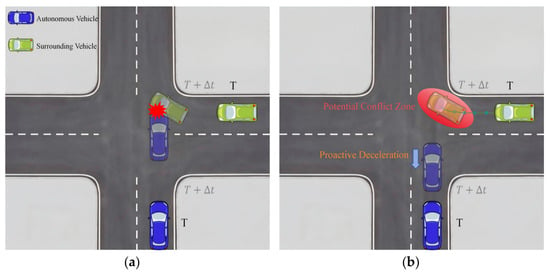
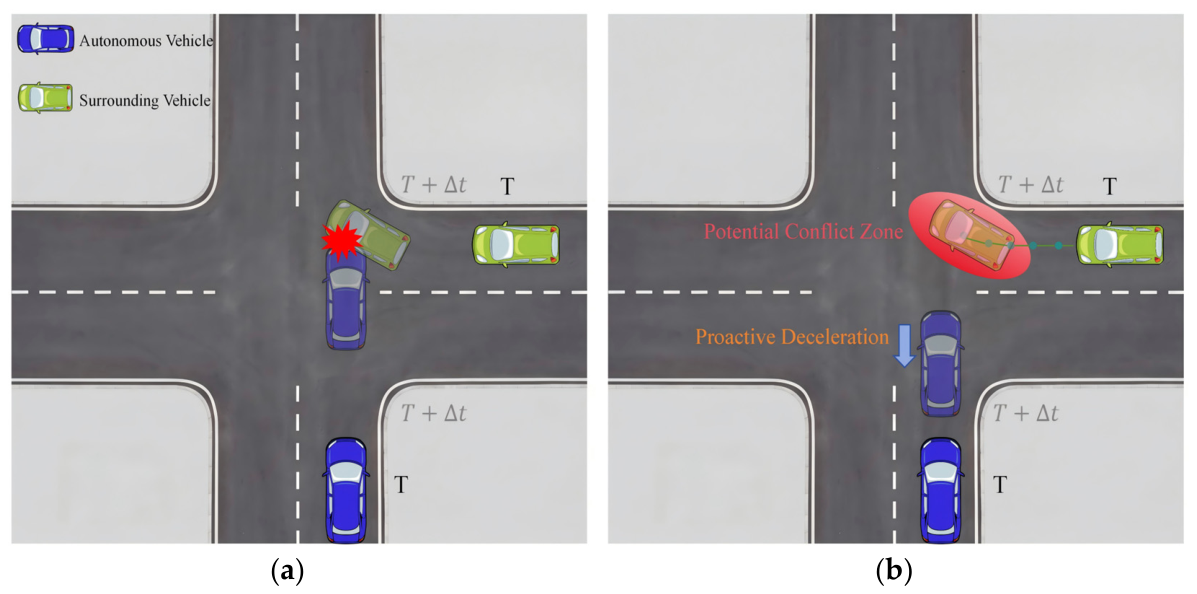
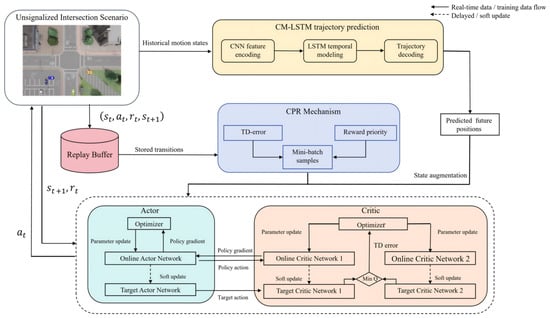
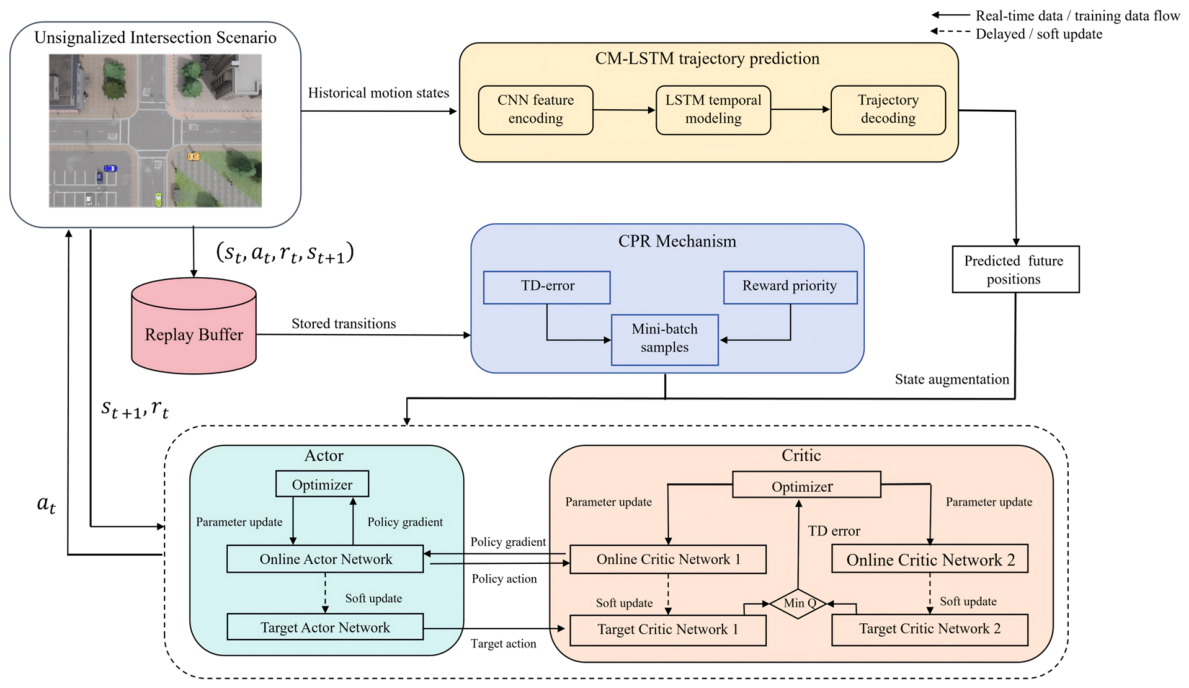
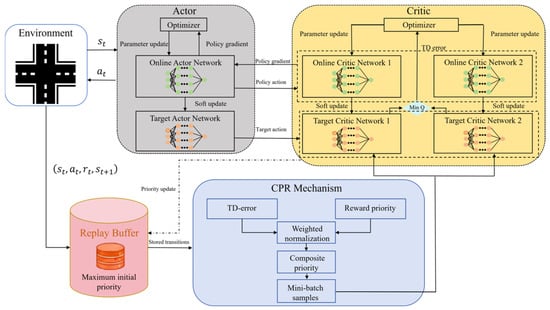
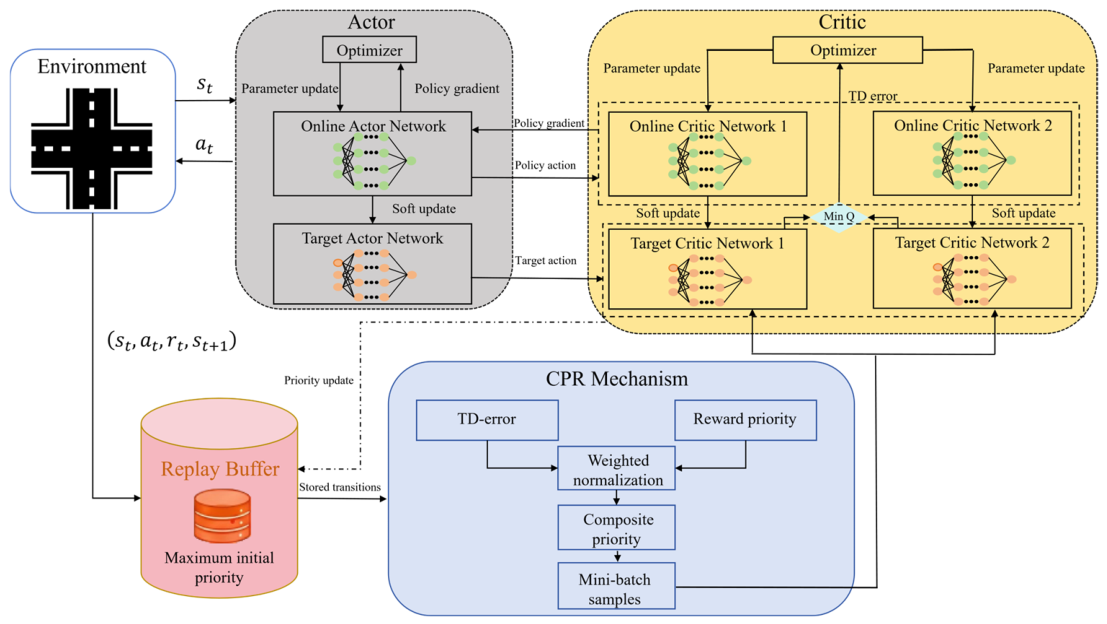
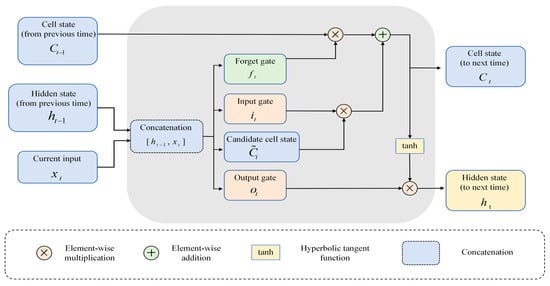
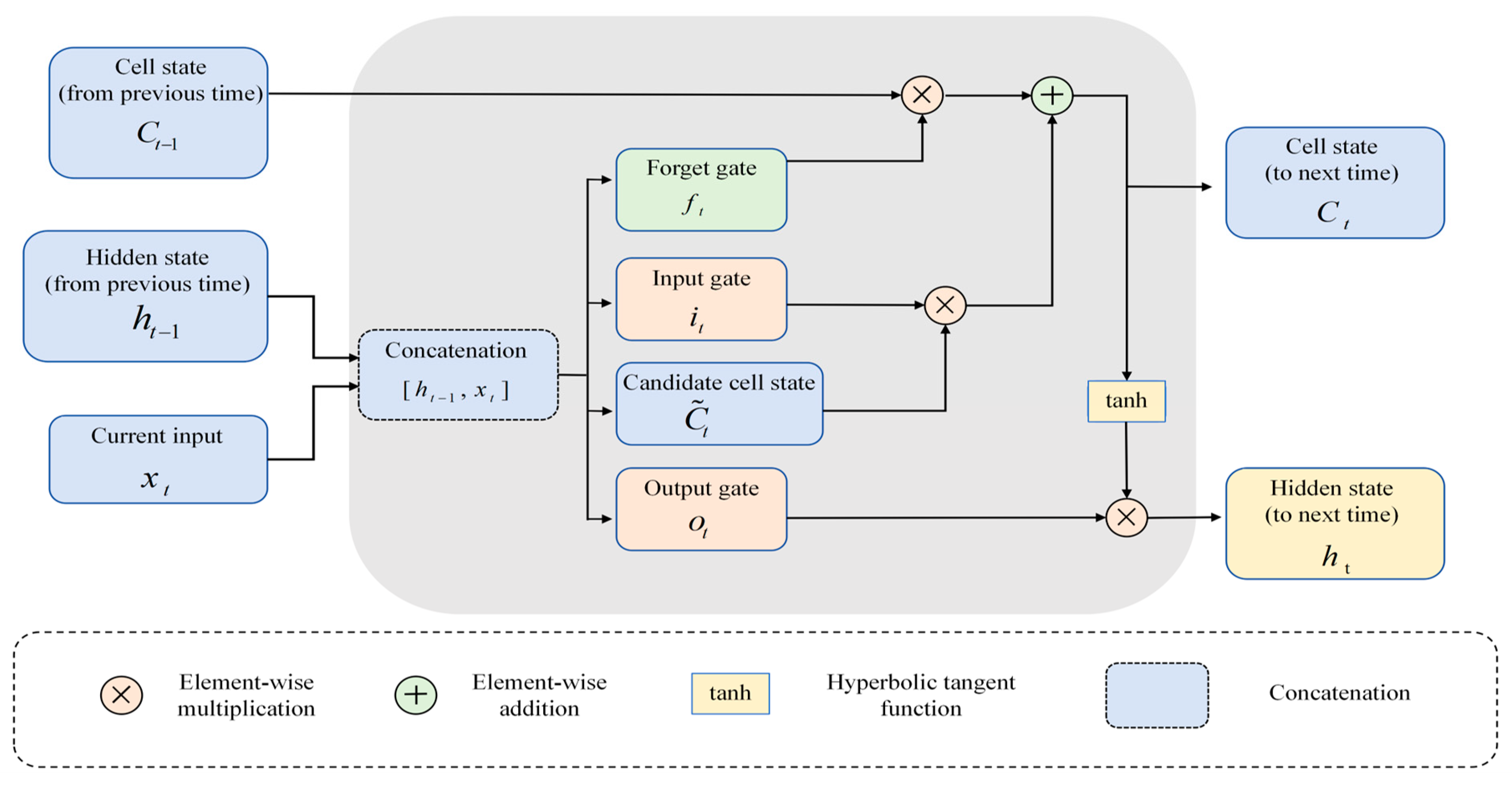
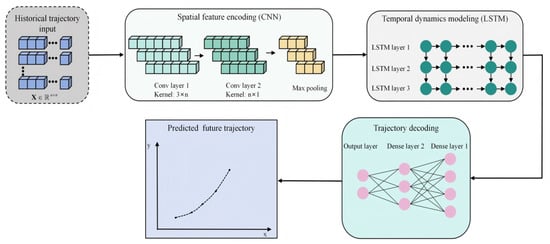
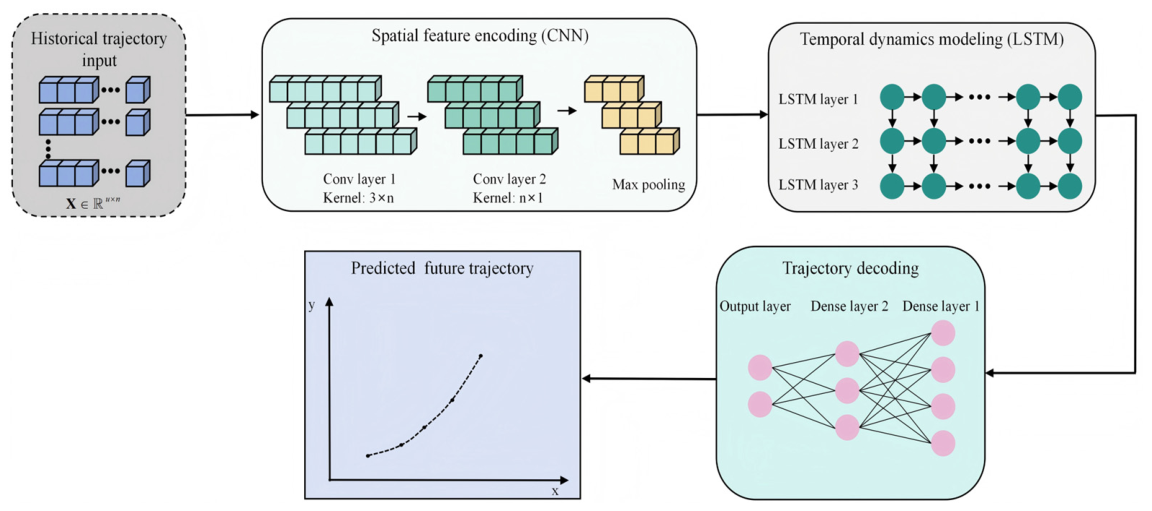
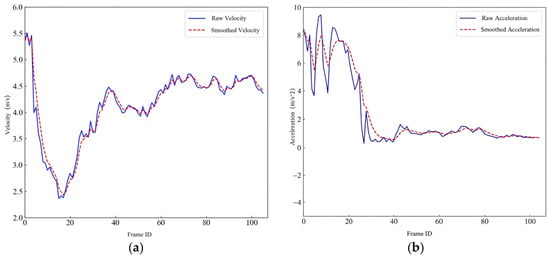
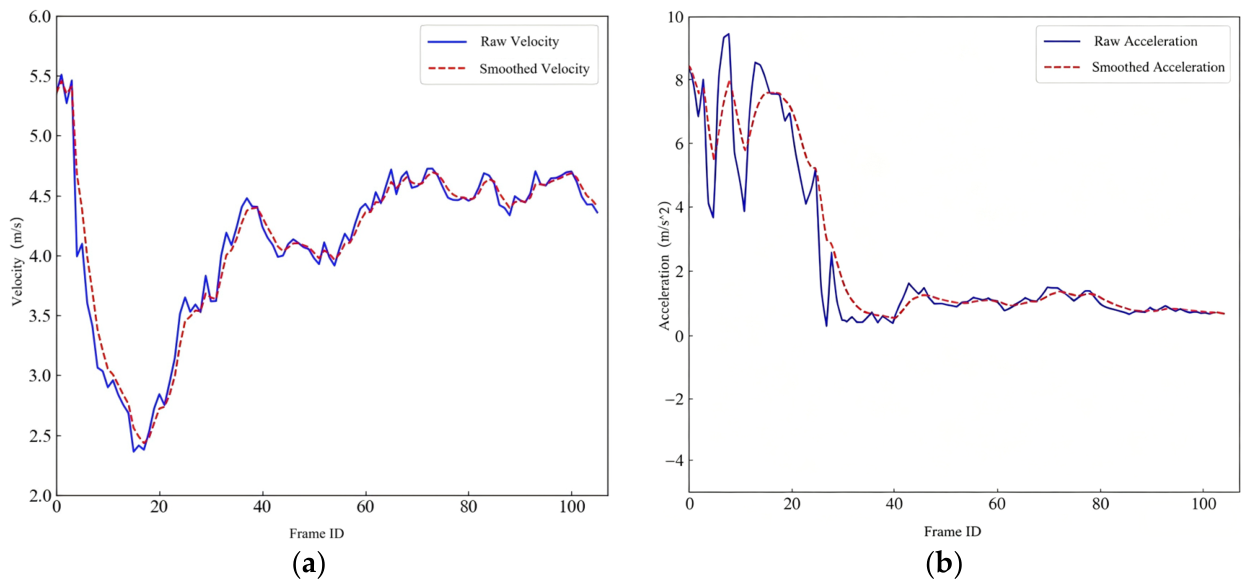
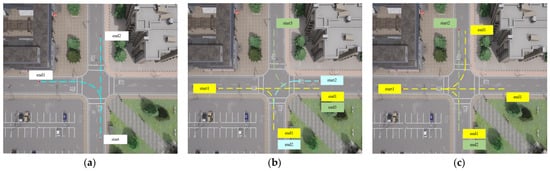
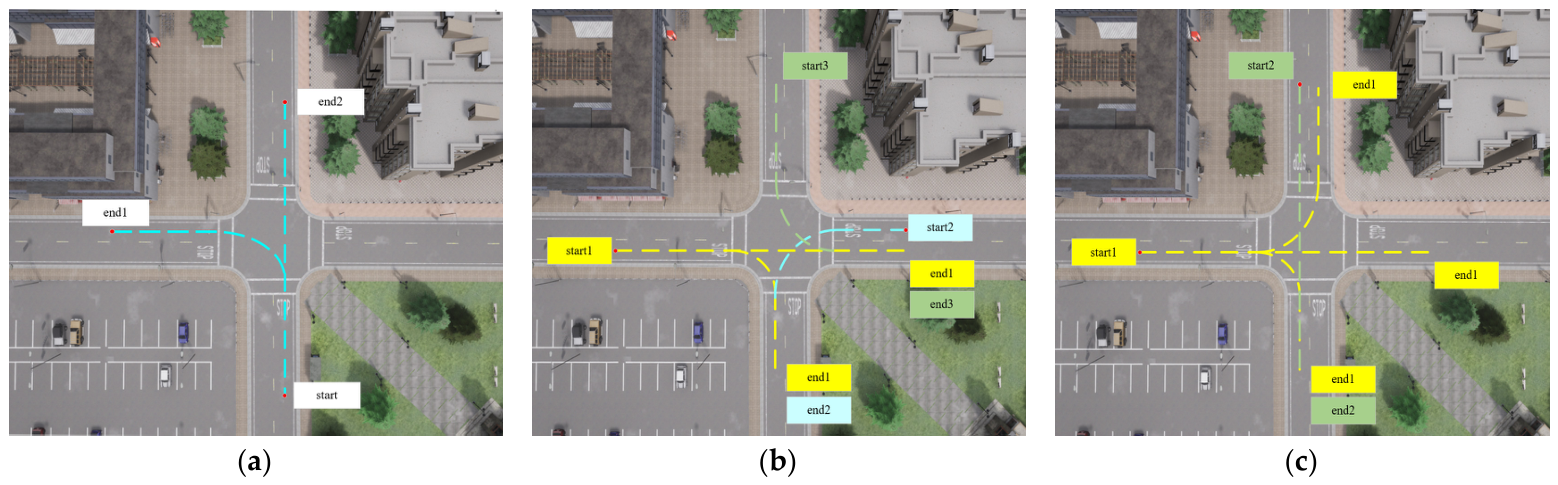
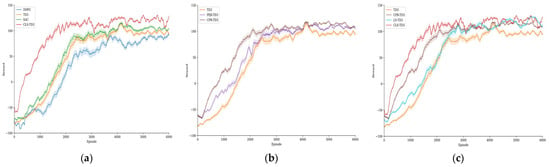
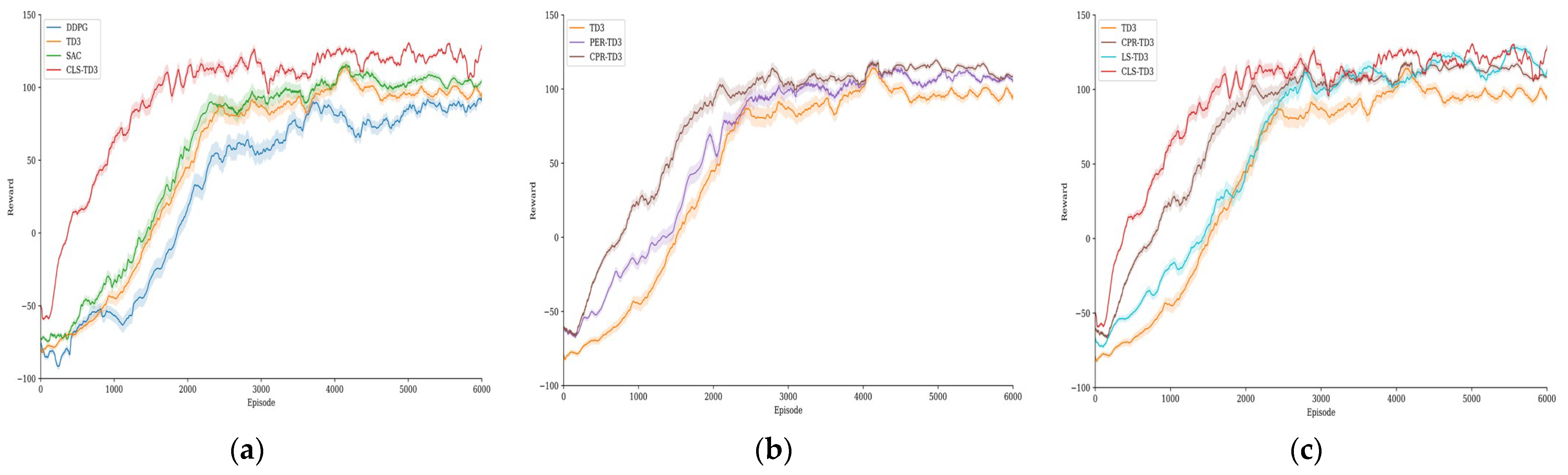
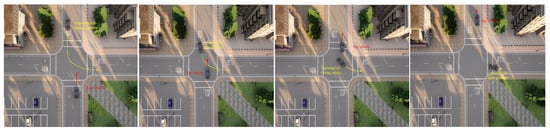
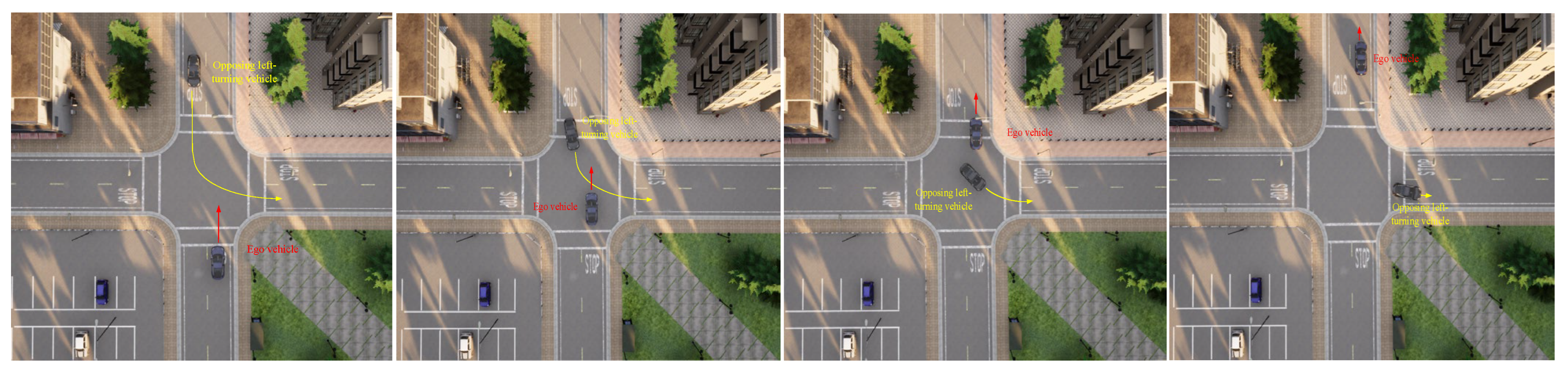
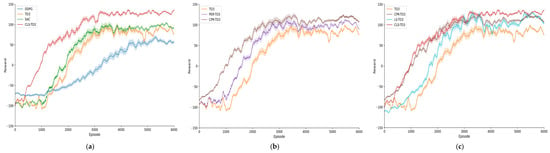
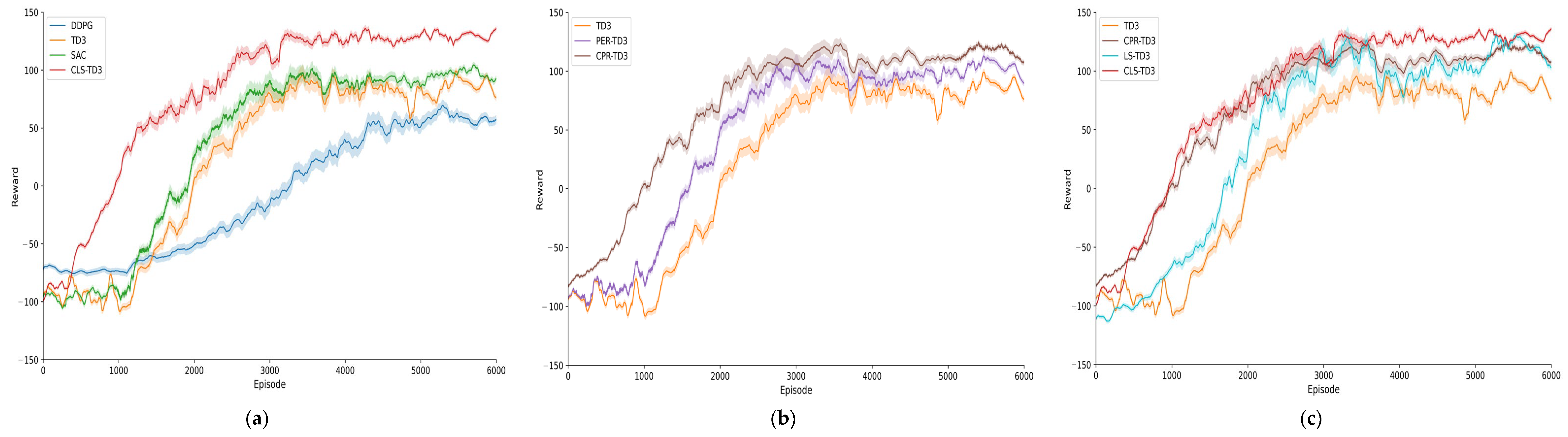
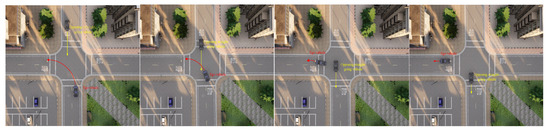
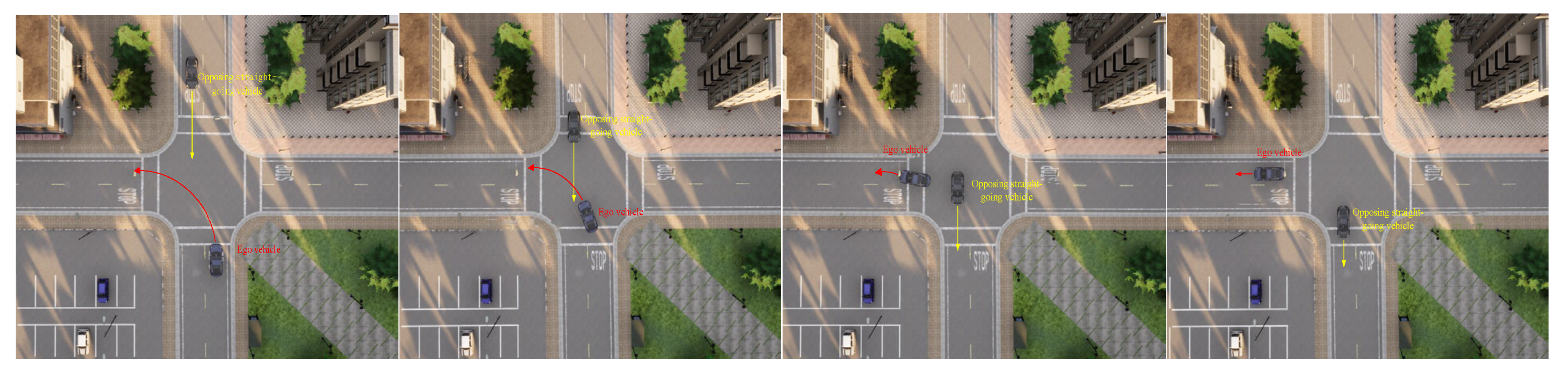

Disclaimer/Publisher’s Note: The statements, opinions and data contained in all publications are solely those of the individual author(s) and contributor(s) and not of MDPI and/or the editor(s). MDPI and/or the editor(s) disclaim responsibility for any injury to people or property resulting from any ideas, methods, instructions or products referred to in the content. |
© 2026 by the authors. Licensee MDPI, Basel, Switzerland. This article is an open access article distributed under the terms and conditions of the Creative Commons Attribution (CC BY) license.