


Abstract
Human-centric manufacturing is reshaping collaborative production systems by repositioning human capabilities, safety, experience, and well-being as central concerns in the design and operation of intelligent manufacturing. As manufacturing moves toward Industry 5.0, task allocation in assembly-oriented collaborative systems is no longer only a matter of productivity, cycle time, or resource utilization, but also a key mechanism for protecting worker safety, workload balance, ergonomic compatibility, and long-term well-being. Although existing reviews have addressed various aspects of collaborative manufacturing and ergonomics, a systematic synthesis of how ergonomics is embedded into task allocation for collaborative assembly remains limited. To address this gap, this paper systematically reviews 95 studies identified from WoS and Scopus using an expanded keyword-based search strategy, with April 2026 retained as the publication eligibility cutoff. Studies were included when ergonomics or related human-factor considerations materially influenced task allocation, task assignment, planning, scheduling, or line-balancing decisions in AI-enabled and robot-assisted collaborative manufacturing, with emphasis on assembly-related settings such as workstations, workcells, and assembly lines. The literature is analyzed from four perspectives: ergonomic objectives, allocation scenarios, temporal responsiveness, and computational approaches. Given the heterogeneity of modeling, optimization, simulation, and design studies, a narrative synthesis rather than meta-analysis was conducted. The results show that physiological ergonomics remains the dominant dimension, accounting for 70 of the 95 studies. Recent studies increasingly incorporate multidimensional ergonomic risks, fatigue progression, worker trust, human preference, and real-time human-state information into allocation decisions. The reviewed studies also indicate a transition from static and assessment-informed allocation toward adaptive, state-aware, and cyber-physical allocation. Finally, the review identifies future directions concerning multidimensional ergonomic modeling, assessment-to-decision transformation, real-time adaptive allocation, human-centric interaction, and transferable industrial validation for collaborative assembly systems. No review registration was undertaken.
1. Introduction
As manufacturing systems evolve toward greater digitalization, flexibility, and intelligence, human workers remain indispensable in activities that require dexterity, contextual judgment, exception handling, and adaptive decision-making. This is particularly evident in assembly-oriented production, where workers are frequently involved in fine-grained manual operations, quality-sensitive decisions, and close coordination with intelligent machines. Under the vision of Industry 5.0 [1] and HCM [2], such human participation should not be regarded as a residual limitation of automation, but as a foundational element of next-generation production systems that must support both system performance and worker well-being [3].
Within this transition, human–AI [4] and human–robot [5] collaboration provide two representative pathways for combining human capabilities with intelligent technologies. Human–AI collaboration mainly supports planning, decision support, adaptive guidance, and cognitive assistance, whereas HRC is more directly involved in physical task sharing, coordinated execution, and interaction within shared workspaces. In collaborative assembly, these two forms often converge: AI systems support perception, planning, and decision-making, while robots assist with manipulation, positioning, transportation, inspection, or other assembly operations. Therefore, task allocation in collaborative assembly is not only a matter of productivity, cycle time, or resource utilization, but also a mechanism for managing physical strain, cognitive workload, ergonomic risk, comfort, trust, and long-term well-being. From this perspective, ergonomics [6] becomes a critical lens for examining how task allocation should be designed in HCCM.
Recent years have seen increasing attention to ergonomics in collaborative manufacturing, accompanied by a growing body of review literature. As summarized in Table 1, existing reviews have examined broad HRC systems, cobot applications, safety and ergonomics, human-factor assessment, worker-centered outcomes, assembly line balancing, task allocation, and enabling technologies such as digital twins. These studies provide an important foundation for understanding human-centric collaboration in manufacturing. However, they have not yet fully explained how ergonomic considerations are translated into task allocation decisions, especially in assembly-oriented settings where workstation design, task execution, line balancing, and adaptive collaboration are closely coupled.
Table 1.
Summary of representative recent review articles about collaborative manufacturing considering ergonomics.
Despite these review efforts, a systematic understanding of ergonomics-aware task allocation remains limited. In particular, existing studies have not sufficiently clarified how ergonomic constraints influence task performers, how human-related factors are converted into allocation models, and how allocation decisions are implemented across AI-enabled and robot-assisted assembly-oriented manufacturing settings. This gap is important because collaborative assembly often involves tightly coupled task precedence, physical workload, cognitive oversight, human–machine coordination, and production-efficiency requirements. Building on prior reviews, this study therefore develops a PRISMA-informed systematic review of ergonomics-aware task allocation in HCCM, with collaborative assembly treated as the primary and most representative application context. Adjacent manufacturing scenarios, such as disassembly, parts picking, and intralogistics, are considered only when they involve comparable human–machine task allocation structures and ergonomics-related decision mechanisms that are transferable to collaborative assembly. Specifically, this review seeks to answer the following research questions:
- -
- RQ1: What ergonomic constraints have been considered in ergonomics-aware task allocation for HCCM?
- -
- RQ2: How has ergonomics been incorporated into task allocation design in AI-enabled and robot-assisted collaborative manufacturing settings?
- -
- RQ3: What research patterns can be identified in terms of operational scenarios, temporal responsiveness, and computational approaches?
After a brief introduction of the theoretical background in Section 1, Section 2 presents the workflow of literature retrieval and the preliminary analysis results. Section 3 establishes the conceptual foundation of this review. Section 4 provides detailed discussions of ergonomics-aware task allocation in collaborative manufacturing, with emphasis on assembly-oriented collaborative scenarios. The future research agenda is outlined in Section 5, and Section 6 concludes the paper.
2. Literature Retrieval and Statistical Analysis
To provide a transparent and structured overview of the relevant research landscape, this study adopted a systematic review procedure to retrieve, screen, code, and synthesize the relevant literature. The review was reported in accordance with the PRISMA 2020 statement [23]. The review was not registered in a public registry, and no separate review protocol was prepared, because the study focuses on ergonomics-aware task allocation in engineering and manufacturing research rather than health intervention evidence synthesis. Because collaborative assembly is one of the most representative application contexts of human–AI and human–robot task allocation, the subsequent synthesis pays particular attention to assembly-oriented settings while retaining the broader manufacturing retrieval scope. Adjacent manufacturing scenarios, such as disassembly, parts picking, intralogistics, and production-support operations, were retained only when they involved explicit human–machine task-assignment decisions, ergonomics-related objectives or constraints, and allocation mechanisms transferable to collaborative assembly. The analytical corpus was distinguished from contextual and agenda-supporting literature, as detailed in the following subsections.
2.1. PRISMA Reporting, Information Sources, and Search Strategy
WoS and Scopus were selected as the primary information sources because they provide broad coverage of manufacturing, industrial engineering, robotics, automation, and ergonomics-related research. The final database search was conducted in July 2026, while the eligibility period was restricted to studies published or available online by 30 April 2026. The search strategy was structured around four concept groups: (i) human–AI or human–robot collaboration; (ii) allocation, assignment, planning, scheduling, or line balancing; (iii) manufacturing; and (iv) ergonomics or related human-factor constructs. The expanded human-factor vocabulary was intended to capture studies that addressed workload, fatigue, posture, musculoskeletal risk, comfort, or trust without consistently using “ergonomics” as an explicit indexing term. The WoS query string was:
TS = (“human-AI” OR “human AI” OR “human-robot” OR “human robot”) AND
TS = (“allocation” OR “assignment” OR “planning” OR schedul* OR “balancing”) AND
TS = (manufactur*) AND
TS = (ergonomic* OR “human factor*” OR workload OR fatigue OR posture OR
“musculoskeletal risk*” OR comfort OR trust)
For Scopus, the same search logic was implemented by replacing the WoS field label ‘TS’ with ‘TITLE-ABS-KEY’. Since HCM is a broad conceptual framework rather than a consistently indexed technical term, human–AI and human–robot collaborative manufacturing were used as representative operational settings in which ergonomics-aware task allocation is explicitly studied. Assembly was not used as an additional mandatory search term, because many relevant studies describe assembly-related contexts through terms such as workstation, workcell, production line, line balancing, scheduling, disassembly, or task execution. Instead, assembly-oriented relevance was further considered during screening and thematic synthesis. Following this procedure, 377 records were identified from the two databases, including 217 journal papers and 160 conference papers.
2.2. Eligibility Criteria and Study Selection
Studies were included when they met the following criteria: (i) they addressed human–AI, human–robot, or HCCM settings; (ii) they involved task allocation, task planning, role allocation, scheduling, line balancing, task–resource assignment, or related assignment decisions; (iii) they explicitly considered ergonomic, human-factor, workload, fatigue, comfort, trust, cognitive, or worker-state constraints; and (iv) they were related to manufacturing or assembly-oriented settings, including workstations, workcells, production lines, disassembly, logistics, or cyber-physical manufacturing scenarios. Studies were excluded if they were review articles, inaccessible reports, or studies mainly concerned with general exoskeleton applications, enterprise-level operation, generic workplace design, or simulation without explicit relevance to ergonomics-aware allocation.
The study selection process followed the PRISMA 2020 flow structure, including duplicate removal, title/abstract screening, full-text retrieval, eligibility assessment, and inclusion, as shown in Figure 1. After removing 114 duplicate records, 263 records remained for screening. 13 reports could not be retrieved and were excluded before eligibility assessment. The remaining reports were assessed through full-text screening according to publication type and thematic relevance. As a result, 95 papers were retained as the analytical corpus for subsequent synthesis, comprising 74 journal papers and 21 conference papers. Three categories of literature were distinguished in this review. First, the 95-study analytical corpus identified through the expanded database search served as the exclusive basis for coding, classification, descriptive statistics, summary tables, and keyword analysis. Second, backward reference screening identified 56 contextual sources, which were used only for conceptual interpretation and methodological positioning and were not included in the analytical corpus. Third, a separate set of illustrative recent studies was used in Section 5 to exemplify emerging technologies and support the formulation of the future research agenda. These agenda-supporting sources were not systematically coded and did not contribute to any corpus-level counts, classifications, or statistical results. Screening and eligibility decisions were checked among all the authors, and uncertain cases were resolved through discussion until consensus was reached. No automation tools were used to make inclusion or exclusion decisions.
Figure 1.
PRISMA 2020 flow diagram of the literature identification, screening, eligibility assessment, and inclusion process.
2.3. Data Extraction, Coding, and Synthesis Methods
For each included study, information was extracted on publication year, publication type, publication venue, ergonomic objective, ergonomic constraint or indicator, allocation focus, computational method or tool, operational scenario, decision timing, main allocation intention, and validation setting. The validation setting was coded as numerical or computational analysis, simulation or virtual validation, laboratory or physical-prototype validation, or industrial and field validation. When a study reported multiple validation settings, the setting representing the highest level of physical and industrial implementation was recorded. When terminology differed across studies, conceptually similar terms were harmonized during coding. For example, postural load, musculoskeletal risk, physical workload, energy expenditure, and fatigue-related indicators were coded under physiological ergonomics; autonomy, preference, trust, comfort, acceptance, and initiative were coded under psychological ergonomics; and cognitive workload, task complexity, attention demand, situational awareness, decision-making burden, and human competence were coded under cognitive ergonomics. Studies addressing multiple ergonomic objectives were classified according to their dominant research focus, while secondary ergonomic considerations were considered in the qualitative interpretation. Data extraction and coding were conducted by all the authors. Ambiguous coding decisions were discussed among the authors until consensus was reached. No automation tools were used for data extraction, and no study investigators were contacted for additional information.
The synthesis was conducted in two steps. First, the included studies were categorized according to dominant ergonomic objectives, including physiological, psychological, and cognitive ergonomics. Second, the implementation characteristics of task allocation were analyzed in terms of operational scenarios, temporal responsiveness, and computational approaches. Individual studies were summarized in structured tables, and cross-study patterns were presented through descriptive statistics, keyword co-occurrence analysis, and conceptual diagrams. Because the included studies are heterogeneous in terms of research aims, manufacturing scenarios, ergonomic indicators, computational methods, and reported outcomes, meta-analysis and statistical sensitivity analysis were not applicable. Therefore, this review used narrative and thematic synthesis rather than quantitative effect-size aggregation.
A formal risk-of-bias assessment and certainty grading were not conducted because the included studies are mainly methodological, optimization, simulation, design, and engineering application studies rather than comparable intervention trials. Accordingly, no effect measures such as risk ratios, mean differences, or confidence intervals were extracted. Instead, the review used structured descriptive coding and qualitative comparison with examine how ergonomics was modeled, operationalized, and embedded into task allocation decisions. Methodological limitations of the included evidence and review process are discussed qualitatively in Section 4. Risk of bias due to missing results or selective reporting was not formally assessed, because the review did not synthesize comparable intervention outcomes or effect estimates across studies.
2.4. Preliminary Summary
The final analytical corpus of 95 studies was subjected to descriptive and thematic analysis to characterize the overall profile of the literature from multiple perspectives. Specifically, the analysis covers the annual distribution of publications, the distribution of publication venues, and the statistical characteristics of keywords, as shown in Figure 2, Figure 3 and Figure 4. These summaries were used to characterize the included studies rather than to estimate quantitative intervention effects. They provide a general overview of the temporal evolution, publication characteristics, and core research concerns in AI-enabled and robot-assisted collaborative manufacturing settings, with particular attention to assembly-related workstations, workcells, production lines, and cyber-physical task allocation scenarios. These settings are treated in this review as representative empirical contexts of HCCM, thereby establishing a descriptive basis for the subsequent thematic analysis.
Figure 2.
Number of selected studies per year.
Figure 3.
Distribution of publication venues of selected papers.
Figure 4.
Keyword co-occurrence network of selected papers.
The annual distribution of the retained studies shows a gradual expansion of research on ergonomics-aware task allocation in collaborative manufacturing. Earlier studies were relatively scattered and mainly addressed collaborative feasibility, safety assurance, workstation configuration, basic human–robot task sharing, and ergonomics-informed offline planning. Ergonomic factors were often used as evaluation criteria or predefined constraints rather than as continuously updated decision variables. The marked increase since 2022, and particularly the concentration of studies in 2025, reflects the convergence of several developments, including the wider deployment of collaborative robots, the increasing use of AI-enabled optimization and decision support, and the growing influence of Industry 5.0 and HCM. Recent studies increasingly combine fatigue and workload modeling with digital twins, reinforcement learning, human feedback, trust, preference, and dynamic task reallocation. Accordingly, the literature is moving from static and productivity-oriented task assignment toward more multidimensional, state-aware, and adaptive allocation, especially in assembly settings where task precedence, workstation constraints, and human–machine coordination are closely coupled.
The distribution of publication venues further reflects the interdisciplinary nature of this topic. The 95 retained studies, including 74 journal articles and 21 conference papers, are not concentrated in a single disciplinary outlet, but are distributed across venues related to manufacturing systems, industrial engineering, automation, robotics, optimization, and human factors. This pattern suggests that ergonomics-aware task allocation is positioned at the intersection of production optimization, collaborative robotics, ergonomic assessment, and human-centric system design. The coexistence of journal articles and conference proceedings also indicates that the field is still developing methodologically. In the reviewed sample, journal articles more often provide systematic modeling, optimization, and validation frameworks, whereas conference contributions more often explore emerging mechanisms such as sensing-based adaptation, digital-human and simulation-based platforms, digital twins, and real-time allocation strategies. Therefore, the publication distribution suggests that this field is supported by a relatively broad disciplinary foundation while still maintaining strong technical exploration.
The keyword co-occurrence network provides a more detailed view of the thematic structure of the reviewed literature. The network was generated from the 95-study analytical corpus using VOSviewer version 1.6.20, based on all keywords and the full counting method. A minimum occurrence threshold of 2 was applied, resulting in 34 keywords being included in the final network. Synonymous terms and spelling variants were standardized before network generation. The most connected keywords are associated with HRC, ergonomics, task allocation, Industry 5.0, collaborative assembly, and HCM, indicating that existing studies are mainly organized around the integration of collaborative production systems and worker-centered design. In bibliometric analysis, keyword co-occurrence is commonly used to reveal conceptual relationships and thematic structures within a research field. In this review, the strong connections among terms such as digital twin, collaborative workcell, assembly line balancing, multi-objective optimization, and collaborative robots suggest that ergonomics-aware allocation is no longer limited to simple human–robot task sharing, but increasingly involves sensing, modeling, optimization, and system-level coordination. The updated network also highlights growing connections involving fatigue, workload, reinforcement learning, human-state monitoring, and dynamic task allocation, reflecting the increasing integration of ergonomic assessment with adaptive decision-making. At the same time, keywords related to ergonomic risk, safety, human factors, and human digital twin show that worker-related constraints are being incorporated into allocation models more explicitly. Terms related to trust, human preference, feedback, and workforce individualization have also become more visible, indicating increasing attention to psychological experience and human agency. However, the network still reveals an imbalance: physiological ergonomics, safety, fatigue, and assembly-oriented optimization remain more central, whereas psychological and cognitive factors such as acceptance, initiative, preference, cognitive workload, attention, and decision authority remain less densely connected. This suggests that future studies should further translate multidimensional human states into explicit allocation constraints, objectives, and adaptive decision rules.
Taken together, the descriptive results show that ergonomics-aware task allocation in collaborative manufacturing is developing as an increasingly active and interdisciplinary research topic. The expanded 95-study analytical corpus remains primarily organized around collaborative manufacturing, ergonomic constraints, and optimization-oriented decision-making, while recent studies increasingly incorporate fatigue-aware modeling, digital twins, reinforcement learning, human-state monitoring, trust, preference, and dynamic task allocation. Despite this broadening, the current research landscape still shows uneven attention across ergonomic dimensions, with physiological and safety-related factors remaining dominant, psychological considerations receiving growing but still limited attention, and cognitive mechanisms being less consistently formalized in allocation models.
3. Conceptual Foundations
To support a focused review of ergonomics-aware task allocation, this section clarifies the key concepts and analytical boundaries of the study. HCCM is first clarified as the overarching conceptual setting of this review, with collaborative assembly positioned as a representative and practically salient application context, within which HAIC and HRC are treated as two representative operational forms. Ergonomics is then introduced as the central analytical lens, with emphasis on physiological, psychological, and cognitive dimensions. On this basis, ergonomics-aware task allocation is conceptualized as a human-centric decision-making process that coordinates task demands, human capabilities, machine functions, and worker-related constraints. These definitions establish the conceptual scope of the review and prevent task allocation from being conflated with broader interaction, workstation design, or ergonomic assessment issues.
3.1. HCCM and Representative Collaborative Settings
Manufacturing is increasingly evolving toward human-centric and resilient production systems [24], as neither fully manual production nor fully autonomous automation can consistently meet the requirements of contemporary manufacturing for flexibility, adaptability, and sustainable performance. In this context, collaborative manufacturing has emerged as a prominent paradigm by leveraging the complementary strengths of humans and intelligent technologies [25]. From a human-centric perspective, collaborative manufacturing can be understood as an operational pathway through which human capabilities, intelligent technologies, and production requirements are jointly organized to support both system performance and worker well-being [26]. Within this broad paradigm, HAIC and HRC manufacturing can be regarded as two representative settings, corresponding respectively to the integration of intelligent support into cognitive and decision-related processes and the coordinated involvement of robotic systems in physical or hybrid production processes. Together, they represent the two primary collaborative settings examined in this review for analyzing ergonomics-aware task allocation.
HAIC manufacturing refers to manufacturing settings in which human workers and AI systems engage in interdependent activities to achieve shared production goals [27], with AI primarily supporting perception, analysis, prediction, decision-making, or adaptive guidance, thereby augmenting rather than replacing human capabilities. This form of collaboration is not simply characterized by the application of AI tools in manufacturing, but by goal-oriented coordination between human and AI agents, where task completion depends on their combined contributions [28]. In this sense, HAIC manufacturing can be understood as a manufacturing-specific manifestation of human–AI teaming [29], emphasizing complementary capabilities, shared objectives, and interactive task execution within production processes.
Human–robot collaborative manufacturing refers to manufacturing settings in which human workers and robotic systems cooperate toward shared production goals through coordinated task execution [30]. Rather than operating in strict physical separation, humans and robots in this form of manufacturing work in close proximity or within deliberately organized collaborative workspaces, where collaboration relies on the combination of human flexibility, judgment, and adaptability with robotic precision, repeatability, and physical assistance [5]. In this context, collaboration extends beyond simple coexistence and typically involves coordinated physical and cognitive actions, including joint task execution, mutual adaptation, and information exchange during production processes [31]. Accordingly, human–robot collaborative manufacturing in this review is understood as a manufacturing-specific form of HRC characterized by shared objectives, coordinated action, and close human–robot cooperation in production environments.
Rather than representing two separate trajectories, HAIC and HRC manufacturing reveal different layers of human–machine complementarity. AI primarily extends human perception, analysis, prediction, and decision support [32], while robots provide embodied assistance and coordinated execution in production environments [33]. This layered complementarity is especially evident in collaborative assembly, where AI-enabled planning, guidance, and decision support may be coupled with robot-assisted manipulation, positioning, transportation, inspection, and shared task execution. In increasingly integrated HCM systems, these two forms often coexist as cognitive and physical layers of collaboration [34]. Therefore, this review treats them as interconnected manifestations of a broader HCCM paradigm, in which task allocation is examined as an ergonomics-aware mechanism rather than a purely technical optimization problem.
3.2. Ergonomics in HCCM
Drawing on the definition adopted by the IEA and ISO [35], ergonomics in HCCM is understood in this review as a human-centric design and evaluation perspective that links task demands, technological functions, and worker conditions. Rather than treating ergonomics merely as a post hoc assessment of discomfort or risk, this review regards it as a guiding lens for examining whether collaborative tasks, interfaces, and work environments are compatible with human capabilities, limitations, and requirements. Accordingly, the worker-related implications of collaborative manufacturing are discussed through three interrelated dimensions: physiological, psychological, and cognitive ergonomics [2], as illustrated in Figure 5. In assembly-oriented settings, these dimensions are particularly relevant because task allocation may simultaneously affect physical workload, perceived autonomy, cognitive demand, and human–machine coordination.
Figure 5.
Overview of the three ergonomics dimensions in collaborative manufacturing.
3.2.1. Physiological Ergonomics
Physiological ergonomics in HCM primarily concerns the physical fit between the worker’s body and the demands of collaborative tasks [36]. In manufacturing settings, its main manifestations include awkward or sustained postures [37], repetitive actions [38], localized muscular overload [39], and cumulative physical fatigue [40], all of which are closely related to work-related MSD risk. In HRC, these issues become particularly salient because workers are required to coordinate their movements with robotic assistance and digitally mediated task flows while maintaining physical safety and performance. Physiological ergonomics therefore concerns both immediate task-body compatibility and the cumulative effects of collaborative work on bodily strain and long-term musculoskeletal health.
Current studies assess physiological ergonomics through heterogeneous sensing and computational methods, including motion capture, wearable systems, EMG, force/torque sensing, pressure sensing, and fatigue-related physiological signals. These data are commonly translated into ergonomic knowledge through predefined index-based assessment, data-driven risk inference, or multimodal physiological fusion. Compared with psychological and cognitive ergonomics, physiological ergonomics provides the most directly operationalizable basis for task allocation, because postural load, muscular activation, physical workload, and fatigue progression can be more readily converted into measurable constraints or optimization objectives.
3.2.2. Psychological Ergonomics
Psychological ergonomics in HCM concerns the extent to which collaborative systems are aligned with workers’ affective and psychosocial needs [41]. In this context, it is mainly reflected in trust in AI systems or robots [42], perceived safety [43], mental stress [44], emotional comfort [45], and broader psychological well-being. These issues are particularly salient in collaborative manufacturing because HAIC often introduces concerns related to opacity, reliability, and human agency, whereas HRC further adds close-proximity interaction, perceived threat, and uncertainty in shared workspaces. Accordingly, psychological ergonomics captures whether collaboration is experienced as acceptable, controllable, trustworthy, and emotionally sustainable, rather than only whether it is technically feasible or objectively safe.
Psychological ergonomics in collaborative manufacturing is commonly examined through subjective, behavioral, and physiological evidence. Workers’ responses depend not only on the technical performance of AI systems or robots, but also on how these technologies are perceived in terms of competence, transparency, controllability, and threat. In HRC, interaction intensity, task complexity, and collaboration mode can influence perceived stress and acceptance, whereas in HAIC, trust, explainability, and perceived human agency are often more prominent. Compared with physiological ergonomics, psychological ergonomics is less directly measurable and is more often reflected in subjective acceptance, perceived control, and willingness to collaborate. This makes its integration into task allocation models more challenging, as psychological states must be translated into preference-related, trust-related, or autonomy-related decision criteria.
3.2.3. Cognitive Ergonomics
Cognitive ergonomics in HCM concerns the extent to which collaborative systems are aligned with workers’ mental processes during task execution [46]. In manufacturing contexts, it is mainly reflected in cognitive workload [47], attention allocation [48], situational awareness [49], and decision-making demand [50]. These issues become particularly salient in collaborative manufacturing because workers must not only execute tasks, but also interpret system feedback, monitor AI or robot behavior, coordinate actions in dynamic environments, and retain meaningful oversight of the process. Accordingly, cognitive ergonomics is increasingly treated as a key design concern in Industry 5.0-oriented manufacturing systems rather than merely a post hoc evaluation outcome. Cognitive ergonomics therefore concerns whether operators can maintain sufficient attention, understanding, judgment, and decision capacity under increasingly complex human–machine collaboration.
The assessment of cognitive ergonomics commonly integrates subjective scales, behavioral indicators, and physiological or neurophysiological signals, such as NASA-TLX, task performance, heart-related measures, eye-based measures, and electroencephalogram. Recent work has moved from snapshot-based evaluation toward multimodal and learning-based recognition of cognitive workload, which is especially relevant for Industry 5.0 contexts where operators face sustained monitoring, interpretation, and decision-making demands. This shift is important for collaborative manufacturing because cognitive-state recognition can support not only interface adaptation, but also task allocation decisions that redistribute monitoring, decision-making, or intervention responsibilities when human cognitive capacity becomes constrained.
3.3. Task Allocation in HCCM
In HCCM, and especially in collaborative assembly systems, task allocation is a core mechanism for organizing human–machine collaboration and for translating human-centric principles into operational work design. Drawing on the broader concept of function allocation in human-automation systems, where work functions are assigned among human and automated agents [51], task allocation in this review is understood as a structured decision-making process through which tasks, subtasks, work functions, and decision responsibilities are assigned or reassigned among human operators, AI systems, robotic executors, or their combinations. In human–robot collaborative assembly, recent reviews have examined task allocation approaches, assignment criteria, and the distinction between static and dynamic allocation [52]. Therefore, task allocation is not merely a task-to-resource assignment problem, but a key design decision that determines how human and machine contributions are coordinated under specific production requirements while maintaining ergonomic compatibility and worker-centered performance.
In HAIC and HRC manufacturing, task allocation involves both cognitive and physical dimensions of work. From the human-automation perspective, allocation may concern information acquisition, information analysis, decision and action selection, and action implementation [53]. In HAIC manufacturing, this is mainly reflected in the distribution of perception, analysis, planning, decision support, and oversight between workers and AI-enabled agents [54]. In HRC manufacturing, task allocation is more directly associated with the division of physical or hybrid production tasks, such as manipulation, assembly, transportation, inspection, and workstation-level coordination. For collaborative assembly, these cognitive and physical dimensions are often coupled through task precedence, workstation constraints, quality requirements, and real-time human–robot coordination. Accordingly, task allocation in collaborative manufacturing should be understood as a capability- and context-matching process across perception, cognition, and operation layers.
From an ergonomics perspective, task allocation should not be evaluated only by productivity, cycle time, cost, or resource utilization. Instead, it should also consider whether assigned tasks are compatible with workers’ physiological, psychological, and cognitive capacities. Accordingly, ergonomics-aware task allocation refers to the assignment and adjustment of collaborative tasks by incorporating worker-related constraints such as postural load, physical fatigue, perceived autonomy, trust, cognitive workload, attention demand, and decision-making burden. This definition establishes the analytical basis for Section 4, where the included studies are first classified according to their dominant ergonomic objectives and then compared in terms of operational scenarios, temporal responsiveness, and computational approaches. The conceptual distinctions developed in this section are therefore translated into a two-level synthesis of what worker-related concerns are represented in task allocation and how they are operationalized in HCCM, with collaborative assembly serving as the primary application context.
4. Ergonomics-Aware Task Allocation in HCCM
This section synthesizes the 95 studies included in the analytical corpus on ergonomics-aware task allocation in HCCM. All classifications, descriptive comparisons, and corpus-level findings reported in this section are based exclusively on these 95 studies; contextual and future-agenda-supporting sources are not included in the analytical counts. Building on the conceptual foundation developed above, the analysis examines how worker-centered concerns are translated into task allocation decisions in representative AI-enabled and robot-assisted collaborative manufacturing settings, with collaborative assembly treated as the dominant and most practically relevant application context. Adjacent manufacturing scenarios are considered only when they involve explicit ergonomics-aware allocation mechanisms that are transferable to collaborative assembly. The analysis is organized around two levels. The first level focuses on the ergonomic objectives embedded in task allocation, including physiological, psychological, and cognitive ergonomics. This classification clarifies what types of human-related constraints or outcomes have been considered when assigning tasks between human workers and intelligent agents. Studies addressing multiple ergonomic dimensions are classified according to their dominant research focus, while secondary dimensions are retained in the qualitative discussion. The second level examines the implementation characteristics of these studies, including allocation scenarios, decision timing, and computational approaches. By combining these two levels, this section aims to reveal not only which ergonomic concerns have been incorporated into task allocation, but also how they have been operationalized in assembly-oriented collaborative manufacturing systems, including workstations, workcells, assembly lines, and related cyber-physical settings, to support the broader goals of HCM.
To provide an integrated view before the detailed synthesis, Table 2 maps the three ergonomic dimensions to their dominant allocation objectives, operational scenarios, temporal patterns, computational approaches, and prevailing validation profiles. The entries summarize general tendencies rather than mutually exclusive categories, because some studies span multiple scenarios, decision modes, methodological approaches, or validation settings.
Table 2.
Cross-dimensional overview of ergonomics-aware task allocation and validation profiles in collaborative manufacturing.
4.1. Ergonomic Objectives in Human-Centric Task Allocation
Ergonomics-aware task allocation can be first examined according to the ergonomic objectives embedded in allocation decisions. Conventional task allocation in manufacturing has mainly focused on productivity-related criteria such as cycle time, cost, resource utilization, and production efficiency. In contrast, ergonomics-aware allocation introduces worker-related states, risks, and preferences as constraints, objectives, or evaluation criteria, thereby linking task assignment to the compatibility between task demands and human capabilities [55]. This issue is especially salient in collaborative assembly, where task precedence, manual operations, robot assistance, workstation constraints, and quality requirements are tightly coupled. Based on the 95 studies in the analytical corpus from representative AI-enabled and robot-assisted collaborative manufacturing settings, these ergonomic objectives can be broadly grouped into physiological, psychological, and cognitive ergonomics. Physiological ergonomics-oriented allocation focuses on reducing physical strain, postural risk, fatigue, and musculoskeletal burden. Psychological ergonomics-oriented allocation emphasizes autonomy, preference, comfort, trust, and acceptance. Cognitive ergonomics-oriented allocation considers mental workload, task complexity, attention demand, and decision-making burden. Some studies address more than one ergonomic objective, but they are classified in this section according to their dominant research focus for corpus-level analysis, while secondary ergonomic dimensions are retained in the qualitative interpretation. This classification clarifies the different dimensions of ergonomics incorporated into collaborative task allocation and demonstrates the role of task allocation as a decision mechanism for balancing worker well-being and system performance in HCCM.
4.1.1. Physiological Ergonomics-Oriented Allocation
Physiological ergonomics-oriented allocation represents the most extensively studied direction in ergonomics-aware task allocation, accounting for 70 of the 95 studies in the analytical corpus. Following the general ergonomics principle that work systems should be designed to support both human well-being and system performance [35], this research stream embeds physiological and physical workload-related factors into collaborative task allocation. In assembly-oriented collaborative manufacturing, these factors mainly include posture, musculoskeletal risk, manual handling load, physical workload, fatigue, energy expenditure, and recovery needs [36]. This emphasis is consistent with prior reviews on safe and ergonomic HRC, which have shown that physical safety, ergonomic risk, and efficiency are often jointly considered in the design and control of collaborative systems [10,11]. Compared with psychological and cognitive ergonomics, physiological ergonomics is more readily incorporated into allocation models because many of its indicators can be quantified through established ergonomic assessment methods, motion data, biomechanical measures, or physiological signals. Given the relatively large number of studies in this category, the reviewed literature is further organized into five subgroups according to the dominant physiological concern and allocation implementation focus.
- (1)
- Ergonomic workstation and safe workcell design.
At the workstation and workcell level, physiological ergonomics is mainly incorporated through the design or redesign of collaborative workstations and workcells. In these studies, task allocation is closely associated with layout configuration, workstation conversion, safety assessment, and the distribution of manual and robotic operations. The primary physiological constraints include postural load, musculoskeletal risk, manual handling burden, physical risk exposure, and the feasibility of converting conventional manual workstations into human–robot collaborative systems. Unlike studies focusing on online adjustment or real-time reallocation, this subgroup usually treats task allocation as an upstream design-support problem. The main purpose is to compare alternative human–robot task distributions and identify collaborative configurations that can reduce physical risk while maintaining operational feasibility. Representative studies in this subgroup are summarized in Table 3.
Table 3.
Overview of physiological ergonomics-oriented allocation studies for ergonomic workstation and safe workcell design.
At the design stage, physiological ergonomics is incorporated into task allocation primarily through workstation and workcell configuration. The central concern is not real-time reassignment during execution, but whether collaborative workstations or workcells can be designed in advance to ensure safe, feasible, and physically acceptable human–robot cooperation. Early studies framed allocation as part of human–robot coexistence and task coordination [56] or process-oriented task assignment [57], where the distribution of work had to be compatible with physical safety and human workload. This logic was further extended to risk-assessment-based cell layout [58] and shared-task planning with ergonomic and layout constraints [59], indicating that ergonomic task allocation at this stage is inseparable from workspace configuration, access conditions, and physical feasibility. The CAD-based task–resource and layout planning method further illustrates this design logic by jointly considering task assignment, cell layout, and assembly-sequence information.
A second important theme is the conversion of manual workstations into collaborative workcells. Rather than directly transferring manual operations to robots, these studies examine whether tasks can be decomposed, reassigned, and reorganized under safety, capability, and ergonomic constraints. For example, manual-to-HRC conversion evaluation [62], capability- and posture-based task allocation [63], and HRC assembly-cycle optimization [66] all treat task allocation as a redesign problem that connects task structure with human physical capability and robot assistance potential. Similar design-support logic can also be seen in morphology-based configuration analysis [60], virtual simulation of HRC workstations [61], simulation-based task allocation [64], and certification-oriented workstation transformation [65], where alternative collaborative configurations are assessed before deployment. These studies show that physiological ergonomics is mainly used to screen out unsuitable task distributions, unsafe layouts, and physically demanding manual operations. This conversion logic is further clarified in more formal activity allocation methods, where static human–robot task distribution is treated as a systematic redesign problem involving technical, safety, ergonomic, quality, and economic considerations.
More recent work has made workstation-level allocation more methodologically explicit. Hierarchical task analysis combined with automation and collaboration level assessment [67] provides a structured way to specify human–robot task allocation in complex assembly operations. The Human–Robot Activity Allocation Algorithm [68] formalizes manual-to-HRC redesign by jointly considering technical feasibility, safety, ergonomics, quality, and economic factors in activity allocation. In parallel, mathematical modeling for ergonomic workstation design [69], ergonomics simulation [70], safe-conversion methodology [71], VR-based ergonomic assessment [72], and integrated HRC workstation design frameworks [73] indicate that workstation-level allocation is gradually shifting from qualitative feasibility analysis toward more structured and model-supported design decision-making. The integrated design logic in this stream further suggests that task analysis, ergonomic assessment, workspace design, virtual prototyping, and simulation-based optimization are increasingly combined within unified workflows.
Overall, this subgroup shows that physiological ergonomics is most often embedded into task allocation as a pre-execution design constraint. Its main contribution lies in connecting task allocation with workstation layout, manual-to-HRC conversion, ergonomic assessment, and collaborative feasibility. However, because most studies remain static in decision timing, changes in workers’ physical state during execution, such as fatigue accumulation, recovery, and individual physiological differences, are still insufficiently reflected in the allocation process. This limitation provides the basis for later research streams that move toward motion-level optimization, workload balancing, fatigue-aware planning, and digital twin-enabled adaptive allocation.
- (2)
- Posture, motion, and robot action optimization.
At the execution level, the focus shifts from workstation design to the coordination of human posture, robot motion, and collaborative actions. In these studies, physiological ergonomics is not only used to judge whether a task should be assigned to a human or a robot, but also to guide how the robot should move, where the workpiece should be positioned, and how robotic actions should be adapted to reduce human postural discomfort, joint load, and localized physical burden. This makes task allocation more closely connected with motion planning, trajectory optimization, posture correction, intention recognition, and robot action adaptation. Compared with the design-stage studies discussed above, this subgroup reflects a finer-grained integration of physiological ergonomics into collaborative execution. Representative studies on posture, motion, and robot action optimization are summarized in Table 4.
Table 4.
Overview of physiological ergonomics-oriented allocation studies for posture, motion, and robot action optimization.
At the execution level, the emphasis shifts from workstation configuration to ergonomic optimization of posture, motion, and robot actions. Physiological ergonomics is no longer used only to decide whether a task should be assigned to humans or robots, but is embedded into robot action planning, trajectory generation, posture optimization, and role adaptation. Early studies translated human physical effort into cost-function-based robot action planning [74] and dynamic worker-performance cost functions [75], while later work incorporated ergonomics into multi-objective trajectory planning [76] and virtual element-based postural optimization [77]. These studies show that physiological constraints can influence not only task assignment, but also the spatial and motion characteristics of collaborative execution. In particular, trajectory-level optimization shows that ergonomic and safety requirements can be balanced with robot motion efficiency within the same planning process.
A further development is the use of physiological state or ergonomic risk to support dynamic role allocation and robot action adaptation. Ergonomic risk prediction has been used to adjust human–robot roles and robot actions during collaboration [78,80], while EMG-based motion intention recognition combined with reinforcement learning control [79] links muscle activation and motion intention to adaptive robot response. In this sense, posture-, motion-, and action-level studies form an intermediate layer between conventional task allocation and real-time HRC control. Their main contribution is to make allocation more sensitive to physical burden during execution, although the boundary between task allocation, motion planning, and interaction control becomes less distinct. Relative to design-stage approaches, this stream moves the analysis closer to execution by linking ergonomic burden with motion-level or role-level adaptation.
- (3)
- Workload-balancing and production-system allocation.
At the production-system level, physiological ergonomics extends from local posture or motion optimization to the distribution of physical workload across workers, robots, stations, and production stages. In these studies, task allocation is usually embedded in broader production-system decisions, such as assembly line balancing, job rotation, robot or cobot deployment, and collaborative scheduling. The main concern is not only to reduce the ergonomic risk of a single task, but also to avoid uneven physical burden, excessive manual workload, and inefficient use of human–robot resources at the system level. Compared with workstation-level design and motion-level optimization, this subgroup treats physiological ergonomics as a multi-objective production constraint that must be balanced with cycle time, productivity, cost, energy consumption, and resource utilization. Representative studies on workload-balancing and production-system allocation are summarized in Table 5.
Table 5.
Overview of physiological ergonomics-oriented allocation studies for workload balancing and production-system allocation.
At the production-system level, physiological ergonomics is translated into the distribution of physical workload across workers, robots, stations, and production stages. The central concern is how physically demanding tasks should be distributed across workers, robots, stations, and production stages while maintaining production efficiency. An early optimization framework jointly considered makespan and human physical strain when generating human–robot task assignments and schedules, demonstrating that ergonomic risk can be incorporated directly into process-level resource allocation [81]. Early work in this stream also combined job rotation and HRC [82] to reduce cumulative ergonomic burden in assembly lines, showing that physiological ergonomics can be addressed not only by improving a single workstation, but also by reorganizing task sequences and human–robot participation across the line. This system-level perspective is further reflected in multi-objective task allocation for collaborative robot systems [83] and energy-aware semi-automatic assembly line balancing [84], where ergonomic risk, energy expenditure, workload balance, and uncertain processing time are incorporated together with production-oriented objectives. More recent work further incorporates workforce individualization by considering differences in worker skills and fatigue when selecting collaboration modes and assigning workers and cobots across assembly stations [93].
A major body of studies formulates workload balancing as an assembly line balancing and scheduling problem. For example, robot and cobot allocation to production systems [86] directly links ergonomic improvement with productivity optimization, while multi-type collaborative robot line balancing and scheduling [87] expands the decision space by considering different robot types and collaborative execution modes. Similar optimization logic appears in mixed-flow assembly line balancing under uncertainty [88], mixed-model two-sided assembly line balancing [89], and fuzzy HRC assembly line balancing [90], where ergonomic risk or workload-related constraints are embedded into more complex production configurations. This direction has recently been extended to U-shaped mixed-model assembly lines, where physical, environmental, and psychosocial ergonomic risks are distributed across stations together with cycle-time objectives [94], and to mixed-model HRC line balancing that integrates multidimensional ergonomic risk through fuzzy evaluation [95]. Two-sided assembly-line models have also begun to combine fatigue–recovery-based ergonomic risk with cycle time and cobot energy consumption within a unified multi-objective formulation [96]. These studies indicate that physiological ergonomics is increasingly treated as a formal optimization objective, rather than only as a post hoc evaluation criterion. Compared with local or motion-level studies, these approaches widen the allocation problem to the production-system scale.
Recent work further broadens this stream toward more application-specific and context-sensitive production systems. The incorporation of human-factor workload in battery disassembly line balancing [85] shows that workload-balancing allocation is not limited to assembly, but can also support disassembly and recycling scenarios. Aerospace assembly optimization [91] illustrates how ergonomic load can be integrated into high-complexity production contexts, while SME-oriented HRC line balancing with ergonomic risk and cost [92] highlights the need to adapt ergonomics-aware allocation to resource-constrained manufacturing environments. Overall, this subgroup shows a clear transition from local physical-risk reduction to system-level ergonomic optimization. Its main contribution lies in translating physiological ergonomics into multi-objective production decisions, with recent models increasingly accounting for workforce heterogeneity, multidimensional ergonomic exposure, fatigue–recovery effects, collaboration modes, and energy use. However, most studies remain static and still rely on estimated ergonomic indicators rather than real-time worker-state feedback.
- (4)
- Fatigue, strenuousness, and recovery-aware allocation.
Fatigue-, strenuousness-, and recovery-aware allocation represents a further transition from static ergonomic-risk control to the temporal management of workers’ physical state. In these studies, physiological ergonomics is not only represented by posture, workload, or task difficulty, but also by fatigue accumulation, task strenuousness, energy expenditure, recovery behavior, and rest allowance. Task allocation is therefore expected to determine not only who should perform a task, but also when the task should be performed, whether a rest break is needed, and how human workload should be adjusted over time. Compared with workload-balancing studies, fatigue- and recovery-aware allocation places stronger emphasis on the dynamic evolution of human physical capacity during collaboration. This makes it particularly relevant for long-duration assembly, disassembly, scheduling, and production-planning scenarios, where short-term efficiency may conflict with sustained operator well-being. Representative studies on fatigue, strenuousness, and recovery-aware allocation are summarized in Table 6.
Table 6.
Overview of physiological ergonomics-oriented allocation studies for fatigue, strenuousness, and recovery-aware allocation.
Here, human physical capacity is treated as a time-varying state rather than a fixed attribute of the assigned task. Rather than treating physical workload as a fixed attribute of tasks, these studies model fatigue, strenuousness, recovery, and rest allowance as variables that evolve during production. Early work already linked cobot work pace optimization [97] with operators’ perceived exertion and physiological responses, showing that allocation-related decisions can influence fatigue through task rhythm and collaborative tempo. This temporal perspective is also reflected in rest-break-aware resource allocation [101], where task strenuousness is reduced by adjusting the scheduling of work and recovery periods. Related scheduling studies jointly consider cycle time, fatigue accumulation, and recovery opportunities, demonstrating that task sequence and work–rest organization can be optimized together rather than treated as independent decisions [99,102]. Compared with workload-balancing studies, this stream is therefore more concerned with how human capacity changes over time and how allocation decisions can prevent overload before it becomes critical.
A second line of work embeds fatigue and recovery mechanisms into task planning and production scheduling. Online biotic fatigue detection for dynamic task reallocation [98] directly connects fatigue monitoring with reallocation during HRC execution. Video-based fatigue estimation provides a further non-contact route for linking observed worker state with task allocation optimization [100], while dynamic allocation models increasingly balance productivity improvement with operator strain and well-being [103]. More structured planning models further incorporate fatigue-aware human digital twin support [106] and fatigue-aware task planning in HRC assembly [107], where physical fatigue is represented, predicted, and used to guide human–robot task distribution. Human-centric assembly planning has also begun to incorporate dynamic fatigue progression, physiological load, and worker capability into task assignment and sequencing decisions [110]. At the production-planning level, ergonomic-fatigue-constrained scheduling [109] and learning-forgetting fatigue recovery modeling with energy expenditure and rest allowance [111] show that fatigue cannot be treated only as a local workstation issue. It must also be considered in task sequencing, recovery opportunity design, and long-duration production planning. This HDT-oriented direction is especially representative because it links physical fatigue assessment, fatigue reduction, and task planning within a bidirectional decision-support process.
More recent studies move further toward adaptive and predictive allocation under fatigue constraints. Fuzzy reinforcement learning for real-time cobotic disassembly planning [105] and safe reinforcement learning with online filtering for fatigue-predictive task planning [112] indicate that fatigue-aware allocation is beginning to incorporate uncertainty, online estimation, and safety constraints into decision-making. Reinforcement learning-based planning has further used estimated physical exertion to guide task selection and reduce workers’ cumulative burden [104], while uncertainty-aware models explicitly consider variations in task duration and physical exertion when generating collaborative task plans [113]. In this direction, allocation is formulated as a decision problem concerning when tasks should be performed and who should execute them while keeping workers’ physical fatigue within safe limits. In parallel, ergonomic order-picking allocation with mathematical modeling and machine learning [108] shows that fatigue-related allocation is also extending beyond assembly into logistics-oriented collaborative scenarios. Overall, this subgroup highlights the most dynamic form of physiological ergonomics-aware allocation. Its main contribution is to transform fatigue and recovery from post hoc evaluation indicators into predictive constraints and decision variables, with recent studies increasingly integrating individualized fatigue, physical exertion, recovery opportunities, uncertainty, and worker-state estimation into allocation decisions. However, reliable real-time fatigue sensing, subject-specific calibration, and industrial validation remain major challenges. This subgroup consequently adds a temporal dimension by treating human capacity as a changing state rather than a fixed task attribute.
- (5)
- Simulation, digital twin, and state-aware allocation support.
Simulation-, DT-, and HDT-supported studies provide state-aware architectures for connecting physiological assessment with task allocation decisions. Unlike the previous subgroups, these studies do not always focus on a single allocation algorithm or a specific physiological constraint. Instead, they provide computational environments for connecting ergonomic assessment, human-state monitoring, task simulation, and allocation decision-making. Simulation-based approaches enable alternative task allocation schemes to be evaluated before implementation, while digital twin and human digital twin methods further support dynamic data exchange, worker-state representation, and adaptive task planning. In this sense, physiological ergonomics is not only used as an evaluation criterion, but is gradually incorporated into a closed-loop decision-support process. Representative studies on simulation, digital twin, and state-aware allocation support are summarized in Table 7.
Table 7.
Overview of physiological ergonomics-oriented allocation studies based on simulation, digital twin, and state-aware allocation support.
Simulation and DT/HDT platforms provide the computational infrastructure needed to connect physiological assessment with task allocation decisions. Simulation-based approaches provide virtual environments for evaluating alternative allocation schemes, linking dynamic data exchange for HRC assessment and optimization [115] with productivity- and ergonomics-oriented task allocation simulation [118]. DT-based digital-human models have also been used to synchronize task progress and operator physical load for ergonomics-aware dynamic scheduling [114]. In this sense, simulation serves as a bridge between ergonomic assessment and allocation decision-making, especially when direct industrial testing is costly or disruptive.
DT and HDT methods further strengthen state representation and adaptive decision support. Digital twin combined with multi-adaptive genetic algorithms [116] supports cooperative assembly optimization by synchronizing human, robot, and task states, while vision-based human digital twin modeling [117] represents human posture, action intention, and ergonomic risk for adaptive HRC. Recent studies further use digital-human-enabled DTs to assess human workload and support mutual-assistance task allocation [123], while DT-driven collaborative assembly frameworks connect workload monitoring, task-state synchronization, and dynamic allocation within a closed-loop decision process [124]. More recent work extends this direction toward multi-simulation DT requirements [119], DT-supported conceptual modeling [121], and multi-simulation DT task allocation systems [122], where ergonomic KPIs, productivity indicators, simulation tools, and task management interfaces are integrated. State-aware allocation has also been supported by learning-based architectures that recognize fatigue and skill states and use reinforcement learning to update task assignments [125]. In extended manufacturing scenarios, DT-based disassembly planning further integrates posture and fatigue assessment with human–robot task planning and evaluation [120].
Overall, this line of work suggests that physiological ergonomics-aware allocation is evolving from isolated model-based optimization toward state-aware and platform-supported decision-making, with recent studies increasingly linking digital-human representation, workload estimation, human-state recognition, and adaptive task allocation. However, data synchronization, model fidelity, latency, and industrial robustness remain key challenges. Taken together, these studies provide the cyber-physical infrastructure through which earlier design-, motion-, system-, and fatigue-oriented approaches can become more state-aware.
4.1.2. Psychological Ergonomics-Oriented Allocation
Compared with physiological ergonomics-oriented allocation, psychological ergonomics-oriented allocation has received more limited but growing attention in collaborative manufacturing. While physiological constraints are usually expressed through posture, workload, fatigue, or biomechanical risk, psychological constraints are more closely related to how workers experience the allocation process and the resulting collaboration. In this research stream, task allocation is not only expected to assign work efficiently between humans and robots, but also to preserve worker agency, accommodate individual preferences, support trust in intelligent systems [42], and improve comfort during HRC [45]. For collaborative assembly, these concerns are particularly important because frequent human–machine coordination, shared workspaces, and changing task roles may directly affect perceived autonomy, comfort, trust, and acceptance. Existing studies therefore tend to incorporate psychological factors through participatory allocation, preference analysis, human-centric design requirements, acceptance and trust assessment, comfort-oriented optimization, and human-initiative scheduling. Representative studies on psychological ergonomics-oriented task allocation are summarized in Table 8.
Table 8.
Overview of psychological ergonomics-oriented allocation studies in collaborative manufacturing.
Psychological ergonomics-oriented allocation differs from physiological ergonomics-oriented allocation in that its central concern is not the reduction in bodily load but the way workers experience and participate in the allocation process. One important stream focuses on worker agency, autonomy, and preference. For example, participatory task allocation shows that giving workers influence over allocation decisions can improve perceived autonomy [128], while preference-aware task assignment demonstrates that workers’ subjective preferences can become meaningful criteria in human–robot task distribution [131]. This logic is further extended in human-initiative scheduling [132] and visual task guidance with initiative scheduling [134], where workers are not treated as passive recipients of machine-generated plans, but as active agents who can shape task execution and scheduling decisions. Recent work further incorporates worker satisfaction and skill-related preferences into human-centric workforce planning [137], while reinforcement learning from human feedback enables allocation policies to be adjusted according to workers’ expressed preferences and feedback during collaboration [136].
A second stream links task allocation with trust, acceptance, comfort, and user-centered design. Motion-planning studies show that allocation-related decisions can affect not only objective task execution, but also collaboration quality, predictability, and comfort [127]. Human-oriented cobotic system design [129] and operator-centered design analysis [130] further suggest that psychological ergonomics should be considered from the early design stage, because workers’ acceptance of collaborative systems depends on whether task roles, interaction modes, and decision authority are perceived as appropriate. Trust has also been incorporated more directly into allocation mechanisms, as mutual-trust-based subtask allocation adjusts human–robot task distribution according to feedback on collaborative performance [126]. Comfort-oriented optimization [133] provides a more computational example of this trend by translating human comfort into an optimization target for adaptive HRC.
Overall, psychological ergonomics-oriented allocation remains less developed than physiological ergonomics-oriented allocation, but it expands the meaning of “ergonomics-aware” from physical compatibility to subjective acceptability and human agency. Existing studies mainly incorporate psychological factors through preference elicitation, participatory design, user-centered requirements, comfort-oriented optimization, initiative-aware scheduling, trust-aware allocation, satisfaction-oriented workforce planning, and human-feedback-driven policy adaptation. More recent work on user-centric QoS-based workflow orchestration [135] indicates that preference-related and experience-related goals may be integrated into more formal allocation frameworks. The introduction of mutual trust, worker satisfaction, and RLHF-based preference adaptation suggests an emerging transition from post hoc psychological evaluation toward more explicit and computationally actionable allocation criteria [126,136,137]. However, psychological constraints remain difficult to quantify and validate consistently, and many studies still depend on subjective measures, scenario-specific preference models, or limited feedback samples rather than continuous and generalizable psychological-state estimation. Future work therefore needs to transform autonomy, trust, acceptance, comfort, satisfaction, and preference feedback from post hoc evaluation outcomes into explicit allocation constraints, objectives, or adaptive decision rules.
4.1.3. Cognitive Ergonomics-Oriented Allocation
Cognitive ergonomics-oriented allocation focuses on how cognitive demands are distributed between human workers and intelligent agents in collaborative manufacturing. Compared with physiological ergonomics-oriented allocation, which mainly addresses physical strain and fatigue, and psychological ergonomics-oriented allocation, which emphasizes preference, autonomy, trust, and comfort, cognitive ergonomics-oriented allocation concerns whether workers can maintain sufficient mental capacity for perception, monitoring, interpretation, decision-making, and intervention. This issue is especially relevant to collaborative assembly, where workers often need to interpret task progress, monitor robot behavior, follow precedence relations, respond to quality deviations, and coordinate actions in real time. In this research stream, task allocation is not only a matter of assigning physical or operational tasks, but also a mechanism for regulating cognitive workload [47], attention demand and cognitive ergonomics during collaborative assembly [48], and decision authority under varying workload conditions [50]. Existing studies therefore incorporate cognitive ergonomics into allocation through workload-aware task assignment, complexity-based task decomposition, decision-authority allocation, attention-sensitive collaboration, and adaptive support for human oversight. Representative studies on cognitive ergonomics-oriented allocation are summarized in Table 9.
Table 9.
Overview of cognitive ergonomics-oriented allocation studies in collaborative manufacturing.
Cognitive ergonomics-oriented allocation mainly concerns how task logic, information-processing demands, and decision responsibilities are distributed between human workers and intelligent agents. A first stream focuses on task decomposition and execution logic, where cognitive ergonomics is reflected in whether task structures are understandable, executable, and compatible with human judgment. Early decision frameworks for collaborative workplace generation [138] and human-in-the-loop subtask distribution in collaborative assembly [139] treat allocation as a process of matching task feasibility, human skill, and robotic capability. Related work on cycle-time estimation for hybrid assembly stations [140] and hierarchical task allocation based on execution states [142] further shows that cognitive-oriented allocation is not limited to workload measurement. It also involves structuring task sequences, defining execution states, and clarifying when human intervention or robotic execution should occur. Intention-aware collaboration [141] extends this logic by incorporating human action understanding into adaptive task coordination, thereby making allocation more responsive to the worker’s ongoing behavior.
A second line of studies connects allocation with cognitive workload, attention demand, and human evaluation of collaborative workstations. Mental workload assessment based on eye-tracking and cardiac indicators [143] provides evidence that different workstation and cobot task configurations can impose different levels of cognitive burden on workers. Workstation evaluation using cognitive workload, user acceptance, and trust measures [144] further indicates that cognitive ergonomics should not be treated as separate from collaboration design, because excessive mental workload may influence both task performance and willingness to rely on robotic partners. These studies are important because they move cognitive ergonomics from a general human-factor concern toward an allocation-relevant criterion, suggesting that task assignment should consider not only who can physically perform a task, but also who can monitor, interpret, and respond to the task without cognitive overload.
More recent studies shift attention from workload assessment to mutual cognition, competence-aware organization, and cognitive assistance. Sequential disassembly planning in a human–cyber–physical system [146] incorporates human-in/on-loop roles into task sequencing, while mixed-reality-enabled mutual cognition and visual reasoning [147] supports proactive task assignment by improving task understanding between human and robot. Human-centric digital twin support [148] further expands this direction by representing procedure recognition and human-state information within a cyber-physical allocation environment. In parallel, competence-aware task organization [149] highlights that cognitive and skill-related readiness can influence safe and effective cobot adoption, and multi-criteria hybrid assembly path allocation with AR guidance [150] shows how cognitive assistance can be integrated into allocation and execution. Overall, cognitive ergonomics-oriented allocation is developing from task-logic modeling and workload evaluation toward adaptive support for human oversight, intention understanding, and decision coordination. However, compared with physiological ergonomics, cognitive constraints remain harder to formalize, and many studies still rely on indirect indicators, scenario-specific task models, or offline evaluation. A central challenge is therefore to translate cognitive workload, attention, competence, and intention-related evidence into explicit allocation constraints, trigger conditions, and real-time decision rules.
4.2. Implementation Characteristics of Human-Centric Task Allocation
The preceding subsection classified the reviewed studies according to the ergonomic objectives embedded in task allocation. However, ergonomic awareness in human-centric task allocation is not determined only by what human-related constraints are considered, but also by how these constraints are translated into implementable allocation mechanisms. Existing HRC task allocation research has emphasized allocation criteria and static or dynamic decision modes [52], while studies on HRC assembly line balancing and scheduling [20] further show that allocation problems vary substantially with production context, system level, and solution method. Recent studies further extend this implementation landscape toward individualized workforce allocation, multidimensional ergonomic line balancing, fatigue- and recovery-aware planning, DT-supported state representation, reinforcement learning-based adaptation, and human-feedback-driven allocation. Building on this view, this subsection shifts the focus from ergonomic objectives to implementation characteristics. Specifically, the reviewed studies are analyzed from three perspectives: operational scenarios, temporal responsiveness, and computational approaches. These three perspectives respectively clarify where ergonomics-aware allocation is implemented, how allocation decisions respond to task and human-state changes over time, and how ergonomic evidence is converted into computational allocation logic. Because the reviewed studies are strongly concentrated in assembly-related settings, this subsection highlights collaborative workstations, workcells, assembly lines, disassembly cells, and DT/HDT-supported assembly systems as the main contexts in which implementation characteristics are examined.
4.2.1. Operational Scenarios of Task Allocation
Operational scenarios define the operational boundary within which ergonomics-aware task allocation is formulated and implemented. In the reviewed studies, task allocation is not confined to simple human–robot task division, but appears across multiple manufacturing contexts, including manufacturing applications [151], task execution, production-system scheduling, and smart manufacturing environments [152]. From an assembly-oriented perspective, these contexts can be interpreted as a continuum from local workstation/workcell design to execution-level collaboration, assembly-line or production-system allocation, and extended cyber-physical task allocation scenarios. Although some reviewed studies address disassembly, order picking, or other non-assembly operations, they are included because they share the same human–machine task allocation mechanisms, ergonomic constraints, and collaborative manufacturing characteristics as assembly-oriented systems. These scenarios are therefore considered as extended manufacturing contexts rather than independent application domains. As shown in Figure 6, the reviewed studies can be grouped into four scenario types: local design, execution-level collaboration, production-system allocation, and extended cyber-physical allocation. This classification highlights a gradual expansion from workstation-level task division and ergonomic feasibility analysis to fine-grained human–robot coordination, system-level workload distribution, and state-aware allocation beyond conventional assembly.
Figure 6.
Allocation scenarios in ergonomics-aware collaborative manufacturing task allocation.
The local design scenario mainly concerns workstation/workcell design, layout planning, and manual-to-HRC conversion. In this scenario, allocation is usually performed before implementation to determine suitable human, robot, or shared tasks. Its boundary is relatively local and design-oriented, with emphasis on workspace layout, task feasibility, safety conditions, and worker-related constraints. This setting is closely related to the structural design of HRC systems, where work roles, interaction levels, communication interfaces, and safety-control modes [153] affect collaborative feasibility. Representative studies include safe assembly cell layout and shared task planning [58,59], ergonomic workstation redesign [61,68,69], simulation-based task allocation analysis [64,70], task allocation specification and redesign [67,68,73], and VR-supported workstation assessment [72]. In these studies, ergonomics is mainly used as a design-stage criterion to prevent unsuitable task division or unsafe workstation configuration.
The execution-level collaboration scenario shifts the focus from design-stage allocation to task execution. Allocation here is more fine-grained and is often coupled with robot action planning, trajectory planning, role allocation, intention recognition, and human-initiative scheduling. Broader HRC research has shown that collaborative applications depend on shared work environments and complementary human–robot capabilities [151]. In ergonomics-aware allocation, this complementarity is constrained by posture, fatigue, physical effort, comfort, cognitive state, or initiative. Typical examples include ergonomic motion and trajectory planning [74,76], posture optimization [77], EMG-based intention recognition [79], dynamic reallocation and role allocation based on fatigue or ergonomic risk [78,80,98], human-initiative scheduling [132,134], human-guided manipulation planning [129,139], and mutual-cognitive task assignment [147]. Recent studies further extend execution-level allocation toward preference- and feedback-aware collaboration, where worker preferences and human feedback are incorporated to improve task assignment acceptability and adaptability [126,136]. In this scenario, ergonomics directly affects how humans and robots coordinate during task execution.
The production-system scenario extends ergonomics-aware allocation to lines, job shops, and multi-station systems. The main allocation problems include assembly line balancing, job rotation, robot/cobot deployment, flexible job shop scheduling, rest-break planning, and production scheduling. In this setting, HRC is often modeled through line-balancing and scheduling objectives [154], making allocation a system-level optimization problem. Representative studies include job rotation and HRC design in assembly lines [82], robot/cobot allocation for productivity and ergonomics [86], collaborative assembly line balancing and scheduling [88,89,90,92], rest-break-aware resource allocation [101], fatigue-aware production scheduling [109], and fatigue-recovery-aware planning [111]. Recent studies further consider workforce heterogeneity, worker skills, fatigue, and multidimensional ergonomic risks in collaborative line balancing and production planning. Examples include individualized worker–cobot assignment considering fatigue and rest allowance [93], ergonomic-risk-aware mixed-model line balancing [94,95], fatigue–recovery-based two-sided assembly line balancing [96], and human-centric workforce planning considering worker satisfaction and preferences [137].
The extended and cyber-physical scenario includes disassembly, order picking, warehouse/logistics, modular construction, and DT/HDT-supported planning. This scenario reflects the expansion of ergonomics-aware allocation beyond conventional assembly and workstation-centered HRC. However, these studies are not regarded as independent logistics or disassembly research streams; rather, they represent extended manufacturing scenarios where similar human–machine allocation problems emerge under different task structures and environmental constraints. Smart manufacturing research emphasizes AI, sensing, digital connectivity, and cyber-physical integration [152], which provides a technical basis for state-aware allocation. In the reviewed studies, this direction is reflected in disassembly planning [105,145,146], disassembly line balancing [85], ergonomic order-picking allocation [108], modular construction workstation assessment [72], DT-based allocation support [115,116,119,122], and HDT-based fatigue-aware or human-centric planning [106,107,117]. Recent developments further integrate digital human models, workload estimation, and adaptive decision-making, including DT-supported mutual-assistance allocation [123], DT-driven collaborative assembly allocation [124], fatigue- and skill-state-aware allocation using learning methods [125], and DT-supported disassembly planning with ergonomic evaluation [120]. These scenarios usually involve greater task uncertainty, product-state variability, spatial constraints, or human-state dynamics, and therefore rely more on simulation, DT/HDT, sensing, and learning-based models.
Taken together, the scenario-based synthesis shows that ergonomics-aware task allocation is expanding from local design-stage decisions toward execution-level coordination, production-system optimization, and cyber-physical decision support. Workstation and assembly-oriented studies remain dominant, while extended scenarios such as disassembly and order picking are emerging as transferable applications of similar allocation mechanisms rather than separate research domains. For an assembly-focused interpretation, collaborative assembly provides the strongest empirical basis through workstation/workcell design, assembly line balancing, and DT/HDT-supported task coordination. Related disassembly and order-picking studies complement this evidence by demonstrating the transferability of similar ergonomics-aware allocation mechanisms to reverse-assembly and production-support operations. However, broader validation is still needed to determine whether assembly-derived allocation models can be transferred across different products, workstations, operators, and production environments.
4.2.2. Temporal Responsiveness of Task Allocation
Temporal responsiveness describes the extent to which task allocation decisions are determined before execution, updated during execution, or adapted continuously according to task progress and human-state feedback. In collaborative manufacturing, task allocation can be performed as static allocation, where task assignments are determined before execution, or as dynamic allocation, where assignments are updated during execution in response to changing conditions or delays [155]. Building on this distinction, the ergonomics-aware studies reviewed here can be further interpreted through a third mode, namely adaptive allocation, where reallocation is driven not only by task progress but also by online human-state or capability feedback, such as fatigue, posture, intention, comfort, cognitive workload, or learned human–robot capability matching [156]. Under this classification, dynamic allocation includes discrete or event-triggered updates during execution, whereas adaptive allocation involves repeated closed-loop or learning-based adjustment according to evolving human or system states. Accordingly, static allocation mainly supports design-stage planning and pre-execution scheduling, dynamic allocation addresses process-level changes during collaboration, and adaptive allocation represents a more human-state-aware mechanism for updating task assignments. These three modes indicate an increasing degree of temporal responsiveness, from offline ergonomic feasibility assessment to process-driven reallocation and finally to ergonomics-informed real-time adaptation, as shown in Figure 7.
Figure 7.
Comparison of static, dynamic, and adaptive ergonomics-aware task allocation in collaborative manufacturing.
Static allocation remains the most common decision timing in the reviewed studies. In this mode, ergonomic factors are evaluated before task execution and then embedded into workstation design, task planning, line balancing, or production scheduling. Typical examples include safe assembly cell layout [58], ergonomic workstation redesign [61,68,69], simulation-based task allocation analysis [64,70], manual-to-HRC conversion [62,71], job rotation for ergonomic assembly lines [82], and assembly line balancing with ergonomic risk or workload constraints [87,88,89,90,92]. Recent studies further extend static allocation toward makespan–ergonomics optimization [81], heterogeneous worker–cobot assignment [93], multidimensional ergonomic line balancing [94,95,96], human-centric workforce planning [137], and fatigue- and recovery-aware scheduling [99,102]. In these studies, ergonomic concerns are usually represented by relatively stable indicators, such as postural risk, MSD risk, physical workload, workload imbalance, or cycle-time-related burden. The advantage of static allocation is that it is easy to integrate with design-stage evaluation and mathematical optimization. However, it is less responsive to within-task variation, fatigue accumulation, and individual differences that emerge during actual collaboration.
Dynamic allocation appears in studies where task assignment is updated during task progress, but the updating mechanism is mainly driven by process states, task logic, human initiative, or scheduling events rather than continuous human-state feedback. This mode is reflected in dynamic task reallocation based on fatigue detection [98], ergonomic role allocation during collaborative tasks [78,80], human–robot disassembly planning [145,146], rest-break-aware resource allocation [101], and human-initiative scheduling [132,134]. Recent studies add video-based fatigue estimation for allocation updates [100], dynamic assembly planning considering fatigue progression and physiological load [110], DT-supported scheduling based on task progress and operator physical load [114], and DT-enabled disassembly planning under changing human and task conditions [120]. Compared with static allocation, dynamic allocation better captures the temporal and interactive nature of collaborative manufacturing. It allows task plans to be adjusted when the production process changes, when human or robot roles need to be switched, or when operators initiate a scheduling action. Nevertheless, many dynamic studies still rely on predefined rules, task-state transitions, periodic state updates, or event-triggered scheduling logic, which means that ergonomics is not always continuously sensed or updated during execution.
Adaptive allocation represents a more human-state-aware form of decision timing. In this mode, allocation decisions are updated according to online feedback related to fatigue, posture, muscle activation, intention, comfort, cognitive fatigue, or DT/HDT-based operator status. This direction is particularly visible in cobot work-pace optimization using human feedback [97], virtual element-based posture optimization [77], EMG-based intention recognition and ergonomic control [79], DT/HDT-based ergonomic optimization [106,107,117,122], real-time cobotic disassembly planning [105], fatigue-aware task planning [107], safe reinforcement learning for fatigue-predictive allocation [112], comfort-oriented DT-based collaboration [133], mutual-cognitive task assignment [147], and human-centric digital twin construction [148]. The reviewed studies further include DT-supported mutual-assistance allocation [123], real-time reallocation balancing productivity and operator well-being [103], physical-exertion-aware and uncertainty-aware reinforcement learning [104,113], DT-driven collaborative assembly allocation [124], fatigue- and skill-state-aware learning architectures [125], mutual-trust-based feedback allocation [126], and RLHF-based adaptation to worker preferences [136]. Compared with static and dynamic allocation, adaptive allocation is more closely aligned with the core aim of ergonomics-aware collaboration because it treats human state, capability, or preference as a time-varying input rather than a fixed design parameter. Its practical implementation, however, depends heavily on sensing reliability, model robustness, computational latency, feedback quality, and safe update mechanisms.
The three modes should not be interpreted as a simple maturity hierarchy. Their practical distinction lies in the dominant trigger, information input, and feedback structure of the allocation decision. Static allocation is appropriate when task and ergonomic parameters are sufficiently stable and planning quality is more important than execution-time responsiveness. Dynamic allocation is preferable when task progress, disturbances, or resource changes require discrete replanning, whereas adaptive allocation is required when time-varying human states or preferences must repeatedly influence task assignment through closed-loop estimation or learning. Some systems combine features of more than one mode; in this review, they are classified according to the dominant updating logic. The critical challenge is therefore not to replace all static models with adaptive ones, but to determine when additional sensing, prediction, and reallocation complexity produces meaningful ergonomic and operational benefits.
4.2.3. Computational Approaches for Allocation
Computational approaches provide the mechanisms through which ergonomic evidence is translated into allocation constraints, objectives, decision rules, predictive models, or adaptive feedback. As shown in Figure 8, the reviewed studies can be grouped into five major approaches: assessment and design approaches, mathematical programming approaches, metaheuristic approaches, learning and statistical approaches, and simulation and digital twin approaches. Their distribution indicates that ergonomics-aware allocation is still largely supported by ergonomic assessment and design formalization, while optimization, learning, and digital twin techniques are increasingly used to convert ergonomic risks, workload, fatigue, comfort, and human-state information into allocation constraints, objectives, or decision-support mechanisms for assembly-related workstations, lines, and cyber–physical collaborative cells. The corpus further shows a more balanced methodological distribution, with growing use of multidimensional mathematical models, reinforcement learning, human-feedback-based adaptation, and DT-supported closed-loop allocation.
Figure 8.
Distribution and characteristics of computational approaches used in ergonomics-aware task allocation.
Assessment and design approaches are the most frequently used pathway in ergonomics-oriented allocation. They mainly translate ergonomic concerns into evaluation criteria, design procedures, or task allocation rules, especially in workstation design and manual-to-HRC conversion. Typical examples include risk-assessment-based safe layout planning [58], shared-task planning with ergonomic and layout considerations [59], certified ergonomic workstation transformation [65], integrated HRC workstation design [73], and manual-to-collaborative conversion evaluation [71]. Similar logic also appears in worker-influence-based allocation [128], preference analysis [131], and cognitive-workload-oriented workstation evaluation [143]. Mutual-trust-based subtask allocation further extends this pathway by using trust and collaborative feedback to structure human–robot task distribution [126]. These approaches are interpretable and easy to connect with design practice, but they usually remain at the design or evaluation stage and provide limited support for real-time reallocation.
Mathematical programming approaches provide a more formal way to embed ergonomic concerns into allocation models. Ergonomic risks, workload, fatigue, energy expenditure, and safety requirements are usually expressed as objectives, constraints, or cost functions. Representative studies include safe and ergonomic trajectory planning [76], human-centric multi-objective task allocation [83], robot/cobot allocation for productivity and ergonomics optimization [86], assembly line balancing and scheduling [87], and energy-expenditure and rest-allowance modeling [111]. Recent models further integrate makespan with upper-limb strain [81], workforce heterogeneity with fatigue and rest allowance [93], and multidimensional ergonomic risks into mixed-model and U-shaped collaborative line balancing [94,95]. Mathematical formulations have also been extended to human-centric workforce planning [137] and real-time multi-objective allocation balancing productivity with operator well-being [103]. Their advantage lies in clear formulation and strong interpretability, especially for structured problems such as line balancing, trajectory planning, and scheduling. However, they often rely on predefined ergonomic indicators and relatively stable task assumptions, and model complexity can increase rapidly when worker heterogeneity, recovery dynamics, and real-time states are represented simultaneously.
Metaheuristic approaches are mainly used for complex combinatorial and multi-objective allocation problems. They are common in job rotation, assembly line balancing, disassembly planning, and production scheduling, where ergonomic objectives must be balanced with cycle time, cost, and resource utilization. Examples include GA-based job rotation and HRC design [82], DT-supported cooperative assembly optimization using multi-adaptive GA [116], discrete bees algorithm for mixed-flow line balancing [88], artificial bee colony algorithm for two-sided line balancing [89], fuzzy GA for HRC line balancing [90], IMOPSO for SME-oriented line balancing [92], and AVNS for fatigue-constrained scheduling [109]. Recent studies further apply multi-objective metaheuristics to fatigue–recovery-aware two-sided line balancing [96], cycle-time and fatigue-sensitive task scheduling [99], dynamic human-centric assembly planning [110], and personalized fatigue- and recovery-aware scheduling [102]. These approaches are flexible for trade-off exploration and large combinatorial search spaces, but many results remain offline or simulation-based, and their solution quality and computational efficiency may depend strongly on parameter settings and scenario-specific encoding.
Learning and statistical approaches provide a data-driven route for incorporating human-state information into allocation. In many cases, they support allocation indirectly by estimating fatigue, intention, comfort, workload, or operator status. Examples include EMG-based intention recognition and control [79], online fatigue detection for dynamic reallocation [98], XGBoost-supported order-picking allocation [108], fatigue-aware planning with IK-BiLSTM-AM and AOG [107], and safe reinforcement learning for fatigue-predictive task planning [112]. Related studies also use statistical or learning models for mental workload analysis [143], comfort-oriented optimization [133], mutual-cognitive task assignment [147], and procedure recognition in HDT construction [148]. Recent work extends this category through video-based fatigue estimation for allocation support [100], reinforcement learning for physical exertion reduction [104], uncertainty-aware task planning that combines human-state representation with reinforcement learning [113], and CNN–DDQN architectures for fatigue- and skill-state-aware allocation [125]. Human preference has also been incorporated through multi-agent reinforcement learning and RLHF, allowing allocation policies to respond to explicit worker feedback [136]. Their main potential lies in adaptive allocation, but data quality, generalization, and interpretability remain major limitations. Additional challenges arise from sparse feedback, inter-individual variability, and the safety of learned allocation updates under previously unseen operating conditions.
Simulation and digital twin approaches provide virtual and cyber-physical environments for evaluating or updating ergonomics-aware allocation. Simulation-based task allocation [64,70] enables alternative human–robot task distributions to be tested before implementation. DT-based data exchange and optimization [115], simulation-based productivity and ergonomics evaluation [118], multi-simulation DT requirements [119], and multi-simulation DT task allocation systems [122] further support ergonomic KPI tracking and decision support. HDT-related studies extend this direction by modeling posture, fatigue, comfort, cognitive state, and procedure recognition [106,107,117,148]. The reviewed studies further include digital-human-enabled DTs for workload-aware mutual assistance [123], DT-based synchronization of task progress and operator physical load [114], DT-driven dynamic allocation in collaborative assembly [124], and integrated DT-supported disassembly planning with posture and fatigue evaluation [120]. These approaches are important for state-aware allocation, but their effectiveness depends on model fidelity, data synchronization, computational efficiency, and industrial validation. Their emerging value lies in connecting sensing, ergonomic state estimation, simulation, and allocation optimization within a unified cyber-physical decision loop.
Taken together, the five approach families are complementary rather than interchangeable. Assessment and design approaches are most suitable for transparent pre-deployment screening, workstation redesign, and manual-to-HRC conversion, but they provide limited responsiveness during task execution. Mathematical programming is preferable when tasks, ergonomic objectives, and production constraints can be explicitly formulated, whereas metaheuristics offer greater flexibility for large-scale, combinatorial, and multi-objective problems at the cost of stronger dependence on problem encoding, parameter settings, and scenario-specific search strategies. Learning and statistical approaches are valuable when fatigue, intention, workload, comfort, or preference cannot be represented adequately through predefined analytical models, but their deployment depends on representative data, subject-specific calibration, interpretability, and safe generalization. Simulation and DT/HDT approaches do not replace allocation algorithms; rather, they provide virtual validation, state synchronization, and system-integration environments through which sensing, human-state estimation, optimization, and allocation updates can be connected.
This comparison suggests that mature ergonomics-aware allocation systems are likely to require layered combinations of methods rather than a single dominant algorithm. Ergonomic assessment can define human-related indicators and acceptable boundaries, optimization can generate feasible task assignments, learning models can estimate evolving human states, and DT/HDT platforms can evaluate and synchronize allocation updates within cyber-physical production environments. The main methodological gap is therefore the limited integration of these functions into allocation processes that are interpretable, safe, computationally tractable, and validated under sustained industrial operation.
4.3. Discussion
The preceding sections reviewed ergonomics-aware task allocation from two complementary perspectives: the ergonomic objectives embedded in allocation decisions and the implementation characteristics through which these objectives are operationalized. Under the framing of HCCM, these two perspectives can be understood as the objective layer and implementation layer of human-centric task allocation. Building on this synthesis, this section further discusses the main findings of the reviewed literature. Firstly, the three research questions proposed in the Introduction are addressed by summarizing the ergonomic constraints considered, the ways in which ergonomics has been incorporated into allocation design, and the major research emphases emerging across the literature. Secondly, the key bottlenecks that continue to limit the transition from ergonomics assessment to ergonomics-driven allocation are identified.
4.3.1. Responses to the Research Questions
This subsection responds directly to the three research questions proposed in the Introduction. By integrating the findings from the preceding analyses, it clarifies what ergonomic constraints have been considered, how these constraints have been incorporated into task allocation design, and what research patterns can be identified in terms of operational scenarios, temporal responsiveness, and computational approaches.
- -
- RQ1: What ergonomic constraints have been considered in ergonomics-aware task allocation for HCCM?
The reviewed studies indicate that existing constraints can be broadly organized into physiological, psychological, and cognitive dimensions, which is consistent with recent human-factor research that examines Industry 4.0/5.0 technologies through physical, psychological, and cognitive effects [55]. In assembly-oriented settings, these constraints are especially visible because task allocation directly affects manual workload, posture, fatigue, attention demand, task understanding, and human–machine coordination. Physiological ergonomics is the most extensively represented dimension, mainly involving postural risk, musculoskeletal load, physical workload, manual handling burden, fatigue accumulation, and recovery requirements [36,157]. The reviewed studies further incorporate worker heterogeneity, multidimensional ergonomic exposure, physiological load, physical exertion, fatigue–recovery dynamics, and uncertainty in human-state evolution [93,94,96,104,110,113]. These constraints dominate current allocation studies because they can be more directly linked to ergonomic indices, biomechanical measures, motion data, physiological signals, or fatigue models, and can therefore be converted into measurable constraints or optimization objectives. Psychological ergonomics has received less systematic attention, but it expands ergonomics-aware allocation from physical compatibility to workers’ subjective experience, including perceived autonomy, preference, trust, acceptance, comfort, perceived safety, and human initiative [42,158]. Recent studies have begun to formalize these factors through satisfaction-oriented workforce planning, mutual-trust-based allocation, and human-feedback-driven preference adaptation [126,136,137], indicating an initial transition from post hoc psychological evaluation toward computationally actionable allocation criteria. Cognitive ergonomics further extends the allocation problem to the distribution of mental demands, such as task complexity, mental workload, attention demand, decision-making burden, human competence, intention understanding, and cognitive assistance [46,47]. Overall, ergonomics-aware task allocation has moved beyond the narrow goal of reducing physical risk, but the reviewed literature remains uneven across ergonomic dimensions. Physiological constraints are relatively mature and operationalizable, while psychological constraints are beginning to be incorporated through explicit trust, preference, and feedback mechanisms. Cognitive constraints, however, are still more often treated as evaluation outcomes, design considerations, or local experimental variables rather than formal decision variables in allocation models. Consequently, collaborative assembly models continue to prioritize physical risk, cycle time, and resource utilization, with integrated psychological and cognitive modeling remaining comparatively limited.
- -
- RQ2: How has ergonomics been incorporated into task allocation design in AI-enabled and robot-assisted collaborative manufacturing settings?
The reviewed studies suggest that ergonomics has been incorporated through three main pathways. The first is assessment-informed allocation, in which ergonomic indicators are used to evaluate alternative workstation layouts, task distributions, robot deployment schemes, or manual-to-HRC conversion plans. This pathway is closely related to the broader logic of ergonomic HRC, where ergonomic assessment tools and monitoring technologies provide the basis for adapting collaborative robot behavior [157]. In addition to physical-risk assessment, recent studies have extended this pathway toward the evaluation of worker workload, capability, trust, and preference when determining suitable human–machine task distributions [123,126]. The second is optimization-embedded allocation, where ergonomic factors are formulated as objectives, constraints, cost functions, or utility terms in allocation models. This pathway is particularly common in assembly line balancing, job rotation, scheduling, robot/cobot allocation, and production-system optimization, where ergonomic risk, workload balance, fatigue, energy expenditure, or recovery requirements are considered together with cycle time, productivity, and resource utilization [20,52]. The reviewed studies further incorporate worker heterogeneity, multidimensional ergonomic exposure, satisfaction, physical exertion, and fatigue–recovery dynamics into process-level assignment, collaborative line balancing, and workforce planning models [81,93,94,95,96,99,102,137]. The third is state-aware adaptive allocation, in which sensing, learning models, simulation, DT, or HDT systems are used to estimate time-varying human states and feed them back into task adjustment. This pathway is consistent with adaptive automation research, where allocation becomes dynamic according to system conditions, task progress, performance, and human attributes [159]. Recent studies strengthen this pathway through video-based fatigue estimation [100], physical-exertion-aware and uncertainty-aware reinforcement learning [104,113], dynamic physiological-state modeling [110], DT-supported human-state synchronization [114,120,124], fatigue- and skill-state recognition [125], and trust- or preference-driven feedback adaptation [126,136]. Existing studies show a gradual transition from using ergonomics as a post hoc evaluation criterion toward embedding it into task allocation as a design constraint, optimization objective, or adaptive decision input. Recent studies further indicate that this transition is expanding from physical-risk indicators toward multidimensional human states and explicit worker feedback. However, the translation from ergonomic assessment to allocation action remains incomplete, because many studies still do not specify how ergonomic indicators should trigger reallocation, how conflicting ergonomic and production objectives should be weighted, or how allocation updates should remain safe, explainable, and acceptable to human workers. In addition, limited attention has been paid to uncertainty in human-state estimation, the reliability of sparse subjective feedback, and the validation of closed-loop allocation mechanisms under sustained industrial operation.
- -
- RQ3: What research patterns can be identified in terms of operational scenarios, temporal responsiveness, and computational approaches?
In terms of allocation scenarios, the reviewed studies are still dominated by human–robot collaborative assembly, especially workstation/workcell design, manual-to-HRC conversion, assembly line balancing, and production scheduling. This pattern is consistent with existing HRC task allocation reviews, which identify assembly as the most mature application domain for structured human–robot task division [52]. The current evidence reinforces this concentration through studies on process-level task assignment, heterogeneous worker–cobot allocation, U-shaped, mixed-model, and two-sided assembly line balancing, and human-centric workforce planning [81,93,94,95,96,137]. At the same time, the scenario boundary is gradually expanding from local workstations to production systems and cyber-physical environments, including disassembly, logistics, order picking, modular construction, and DT/HDT-supported collaborative cells [21,160]. Recent DT-supported studies further connect digital-human representation, workload estimation, dynamic assembly allocation, and disassembly planning within these extended manufacturing contexts [114,120,123,124]. In terms of temporal responsiveness, static allocation remains the dominant mode because it is compatible with offline ergonomic assessment, mathematical optimization, and design-stage planning. Recent static models increasingly incorporate worker heterogeneity, multidimensional ergonomic risks, fatigue accumulation, and recovery requirements [93,94,95,96,99,102]. Dynamic allocation has been increasingly used to respond to process changes, task-state transitions, or human initiative, while adaptive allocation further incorporates time-varying human states such as fatigue, posture, comfort, intention, or cognitive status into allocation updates [159]. Some studies strengthen this adaptive direction through fatigue and physiological-state estimation, physical-exertion-aware reinforcement learning, uncertainty modeling, fatigue–skill recognition, mutual-trust feedback, and RLHF-based preference adaptation [100,103,104,110,113,125,126,136]. In terms of computational approaches, the literature shows a layered pattern: assessment and design approaches are still widely used for ergonomic feasibility analysis, mathematical programming and metaheuristics are commonly adopted for structured allocation, line balancing, and scheduling problems, while learning-based and DT/HDT-supported approaches are emerging as enabling tools for state-aware and predictive allocation [20,21]. Across these three perspectives, the dominant pattern is not a uniform technological progression but a selective expansion of decision scope. Local, static, and assessment-based approaches remain appropriate for structured workstation design and line-balancing problems, whereas dynamic and cyber-physical approaches are concentrated in scenarios where task states, worker conditions, or collaboration roles change during execution. The growing connection among optimization, learning, and DT/HDT support therefore reflects functional complementarity rather than straightforward methodological replacement. At present, evidence for this transition remains uneven: system-level and adaptive approaches are increasing, but most remain scenario-specific, offline, or validated through simulation and controlled cases. Consequently, the key research pattern is a widening gap between the technical capability to sense and model human states and the industrial maturity required to use those states safely, transparently, and transferably in allocation decisions.
4.3.2. Bottlenecks in Current Research
Although ergonomics-aware task allocation has made clear progress, the reviewed evidence also reveals a gap between current allocation research and the broader Industry 5.0 objectives of human-centricity, resilience, and sustainability. Human-centricity is addressed most directly because task allocation determines whether task demands remain compatible with worker capability, well-being, agency, and cognitive capacity. Resilience is reflected in the ability to redistribute tasks when fatigue, disturbances, skill mismatch, or changing production conditions reduce human or system capacity. Within the scope of this review, sustainability is mainly associated with the long-term protection of worker health and the continued participation of human workers in collaborative production, whereas direct evidence concerning environmental and resource sustainability remains limited. Against this background, the bottlenecks discussed below explain why these Industry 5.0 objectives have not yet been fully translated into reliable and deployable allocation mechanisms. They are interrelated and jointly reflect the difficulty of converting multidimensional human factors into allocation decisions that are adaptive, explainable, transferable, and industrially robust.
- (1)
- Uneven representation of ergonomic dimensions.
Current studies are still dominated by physiological ergonomics, especially postural risk, MSD-related workload, fatigue, physical burden, and safety-related constraints. This dominance is evident in studies on ergonomic workstation design [69], simulation-supported task allocation [70], fatigue-sensitive HDT support [106], fatigue-aware task planning [107], and fatigue-predictive allocation [112]. By contrast, psychological and cognitive ergonomics are much less consistently formalized. Factors such as worker preference [131], perceived autonomy [128], human initiative [132,134], human comfort [133], cognitive workload [143,144], mutual cognition [147], and human competence [149] have been introduced in some studies. Recent work has further formalized worker satisfaction, mutual trust, and preference feedback within allocation mechanisms [126,136,137]. Nevertheless, psychological and cognitive factors remain less systematically represented than physical workload and fatigue, and are still frequently treated as evaluation outcomes or scenario-specific variables rather than generalizable allocation constraints.
- (2)
- Weak transformation from ergonomic assessment to allocation decisions.
Many studies can evaluate ergonomic risk, workload, fatigue, or comfort, but they do not always clarify how these indicators should change the allocation result. For example, VR-based ergonomic assessment [72], workstation conversion assessment [71], and simulation-based task allocation analysis [70] provide useful evaluation support, but their allocation logic is still mainly design-stage or comparison-oriented. In optimization-oriented studies, ergonomic indicators are more directly embedded into objectives or constraints, such as ergonomic workstation design using MILP [69], robot/cobot allocation for productivity and ergonomics [86], and fatigue-constrained production scheduling [109]. However, the mechanisms for setting thresholds, updating weights, resolving conflicts with productivity objectives, and triggering reallocation remain insufficiently generalized. Even in adaptive studies such as ergonomic role allocation [80], fatigue-aware task planning [107], and fatigue-predictive reinforcement learning [112], the link between sensed ergonomic state and allocation action is still highly scenario-specific. Recent approaches based on real-time multi-objective optimization, exertion-aware reinforcement learning, DT-supported allocation, and human feedback strengthen this link [103,104,113,124,125,136], but their triggering conditions, objective weighting, and intervention policies remain difficult to transfer across scenarios. Accordingly, the central gap lies in the absence of transferable mechanisms that connect ergonomic indicators with personalized thresholds, objective weights, reallocation triggers, and intervention actions. This limitation is particularly important in collaborative assembly, where task precedence, production rhythm, and quality requirements constrain when and how allocation changes can be implemented.
- (3)
- Dominance of static and offline allocation.
A further bottleneck is that static and offline allocation still dominates the field. Many studies formulate ergonomics-aware allocation as a pre-execution design, manual-to-HRC conversion, line balancing, or scheduling problem, as seen in workstation redesign [68,71], ergonomic workstation design [69], robot/cobot allocation [86], mixed-flow assembly line balancing [88], and SME-oriented HRC line balancing [92]. These studies are valuable for structured design and production planning, but they cannot fully capture the time-varying nature of human states during task execution. Fatigue accumulation, recovery, attention fluctuation, trust variation, and individual performance differences may change substantially over time. Some studies have begun to incorporate online fatigue detection [98], dynamic ergonomic role allocation [80], fatigue-sensitive HDT modeling [106], and safe reinforcement learning for fatigue-predictive task planning [112]. The reviewed studies further include fatigue- and physiological-state-aware reallocation, uncertainty-aware reinforcement learning, DT-supported dynamic allocation, and trust- or preference-driven adaptation [100,103,104,110,113,124,125,126,136]. However, these approaches still represent a minority of the reviewed studies and are commonly validated in controlled, numerical, or simulated settings. As a result, continuous human-state-aware allocation remains more of an emerging capability than a mature implementation pattern. This limits the responsiveness of current allocation systems to the central HCM requirement that workers should be treated as changing human agents rather than fixed production resources, particularly in assembly tasks where fatigue, posture, attention, and coordination demand may vary over repeated operations.
- (4)
- Insufficient coupling between task allocation and interaction.
Task allocation determines who performs which task, but it also changes the worker’s autonomy, initiative, information load, sense of control, and trust in the collaborative system. At the same time, interaction mechanisms such as visual guidance, feedback, preference expression, and human override can strongly influence whether allocation results are understandable and acceptable. Existing studies on participatory task allocation [128], worker preference in task assignment [131], human-initiative scheduling [132], visual task guidance [134], user-centric workflow orchestration [135], mutual-trust-based subtask allocation [126], and RLHF-based preference adaptation [136] already show that allocation cannot be separated from how workers perceive, influence, and execute the assigned tasks. However, most allocation models still focus on task–resource matching, workload reduction, or optimization performance, while the interaction process through which workers understand, negotiate, accept, or modify allocation decisions is only weakly represented. These findings indicate that the interaction layer remains weakly coupled to the allocation layer. Even when an allocation is ergonomically preferable, its human-centric value may be reduced if workers cannot understand the rationale, express disagreement, or influence task changes, especially in quality-critical collaborative assembly.
- (5)
- Limited industrial validation, benchmark datasets, and model transferability.
The final bottleneck concerns industrial validation and transferability. Many studies are based on specific workstations, simplified assembly tasks, simulation platforms, or single-case production scenarios. For example, local workstation and workcell studies usually focus on specific assembly or conversion cases [63,68,71,73], while line-balancing and scheduling studies are often validated through numerical experiments or scenario-specific cases [84,87,89,92]. Learning-based and DT/HDT-supported approaches further depend on data quality, synchronization, model fidelity, and update latency, as shown in vision-based HDT modeling [117], fatigue-sensitive HDT support [106], human-centric DT construction [148], and multi-simulation DT task allocation [122]. Similar limitations remain in recent exertion-aware reinforcement learning, uncertainty-aware planning, DT-driven dynamic allocation, fatigue–skill recognition, and human-feedback-based allocation studies [104,113,124,125,136], which are generally demonstrated through specific cases or controlled scenarios. These studies demonstrate promising technical routes, but their results are still difficult to compare across workers, tasks, products, and production environments. The absence of shared benchmarks, standardized ergonomic metrics, longitudinal datasets, and cross-scenario validation prevents robust comparison of allocation approaches across workers, tasks, products, and production environments. As a result, evidence of technical feasibility remains substantially stronger than evidence of general effectiveness, sustained worker acceptance, and scalable industrial deployment.
In addition to these research bottlenecks, several limitations should be considered when interpreting the findings of this review. First, the included studies are heterogeneous in terms of research aims, manufacturing scenarios, ergonomic indicators, computational methods, and validation settings. This heterogeneity supports narrative and thematic synthesis but prevents quantitative meta-analysis or direct effect-size comparison. Second, many studies are methodological, simulation-based, or laboratory-oriented, and therefore provide limited evidence on long-term industrial effectiveness, transferability, and worker-level outcomes. Third, psychological and cognitive ergonomics are less consistently operationalized than physiological ergonomics, which limits cross-study comparison. Fourth, the review process was based mainly on WoS and Scopus, supplemented by backward reference screening; relevant studies indexed in other databases or reported in industrial documents may therefore have been missed. Finally, although classification was guided by predefined coding dimensions, some studies addressed multiple ergonomic objectives, and their dominant-category assignment inevitably involved interpretive judgment.
5. Future Research Agenda
The reviewed studies show that ergonomics-aware task allocation is becoming an important pathway for realizing HCCM, especially in collaborative assembly settings where workstation design, task execution, line balancing, and human–machine coordination are tightly coupled. Existing research has demonstrated how physiological, psychological, and cognitive considerations can be introduced into task allocation through ergonomic assessment, optimization models, adaptive algorithms, and digital twin-enabled decision support. However, as collaborative manufacturing continues to evolve toward more intelligent, connected, and human-centric systems, task allocation needs to move beyond local ergonomic improvement and become a more integrated decision-making mechanism that coordinates human well-being, system performance, and human–machine complementarity. For collaborative assembly, this requires allocation models that can link task precedence, human state, robot capability, workstation constraints, and production rhythm within a unified decision process. The future agenda is grounded in the findings derived from the 95-study analytical corpus. Additional references introduced in this section are used only as illustrative agenda-supporting sources to demonstrate emerging technical possibilities and recent methodological developments. They are not part of either the 95-study analytical corpus or the 56 backward-screened contextual sources and do not contribute to the systematic classifications or descriptive results reported in the previous sections. The previous section diagnosed the main limitations of the current evidence base. The present section converts those limitations into five action-oriented research directions: multidimensional ergonomic modeling, assessment-to-decision transformation, real-time adaptive allocation, allocation–interaction coupling, and industrial validation and transfer, as summarized in Figure 9.
Figure 9.
Future research agenda for ergonomics-aware task allocation in collaborative assembly systems.
5.1. Multidimensional Ergonomic Constraint Modeling
A first priority is to develop a decision-oriented, multidimensional representation of worker state for collaborative assembly. Rather than adding isolated indicators to existing models, future work should jointly represent physiological load, psychological experience, and cognitive demand in forms that can directly enter allocation constraints, objectives, or trigger rules. In assembly-oriented settings, such representation should also reflect task precedence, workstation layout, operation sequence, robot assistance mode, and quality requirements. For HCM-oriented allocation, such representation should be decision-oriented rather than merely assessment-oriented, so that human-state information can directly shape task assignment, reallocation, and intervention policies. This direction is consistent with recent human digital twin research, which emphasizes function-oriented human modeling and the integration of heterogeneous human data for individualized representation [161]. Recent studies on cognitive workload in Industry 5.0 also suggest that cognitive-state assessment should support human-centric system design rather than remain only an evaluation tool [47].
A promising methodological route is to build multimodal human-state representations from heterogeneous data sources. Physiological ergonomic states can be inferred from posture, motion, force, EMG, and fatigue-related signals, while psychological and cognitive states can be estimated from eye movements, heart rate variability, EEG, galvanic skin response, facial expressions, speech, behavioral indicators, and subjective feedback. Recent work on operator stress in collaborative robotics shows that multimodal sensing can better capture complex psycho-physiological responses than single-source assessment [162]. These developments indicate that future allocation models should represent workers as dynamic human-state vectors, including fatigue, postural risk, stress, comfort, attention, workload, trust, and preference.
More importantly, future models should capture the interactions among ergonomic dimensions. A task distribution that reduces physical effort may increase monitoring demand, and a highly robot-centered allocation may reduce manual burden while weakening autonomy or trust. Recent evidence on human-cobot collaboration shows that cobots may reduce physical fatigue while also introducing psychological and cognitive challenges related to robot speed, proximity, usability, and task complexity [163]. Therefore, multidimensional ergonomic constraints should be formulated as hierarchical constraints, utility functions, personalized thresholds, or time-dependent state trajectories that can directly support allocation decisions. This would allow task allocation to evolve from physical-risk reduction toward a more comprehensive mechanism for balancing worker well-being, cognitive sustainability, human agency, and manufacturing performance in collaborative assembly systems where physical execution, cognitive oversight, and human–machine coordination are closely coupled.
5.2. From Ergonomic Assessment to Allocation Decision-Making
A second priority is to establish a transferable decision layer that converts ergonomic evidence into concrete allocation actions. This layer should connect posture, workload, fatigue, comfort, or cognitive-state estimates with decisions such as task reassignment, collaboration-mode change, recovery insertion, temporary task suspension, or robot assistance adjustment. This direction is consistent with adaptive automation research, which emphasizes that allocation should be adjusted according to system conditions, task progress, performance, and human attributes [159].
This intermediate decision layer should define how different indicators are interpreted, prioritized, and translated into allocation constraints or rules. For example, fatigue-aware task planning and fatigue-predictive allocation have shown that worker fatigue can be used to guide task planning or reallocation [107,112], while dynamic fatigue-model-based reallocation further demonstrates how fatigue assessment can be directly connected to workshop-level task reassignment [164]. A more transferable decision layer is needed to define when ergonomic deterioration should trigger reallocation, how thresholds should be personalized, and how short-term efficiency should be balanced against long-term well-being. Similar mechanisms are also needed for cognitive workload, stress, comfort, trust, and perceived autonomy, which are more difficult to convert into hard constraints than physical fatigue or postural risk.
Another important direction is to develop decision models that can handle conflicts among ergonomic and production objectives. In practice, the most ergonomic allocation may not be the most efficient one, while the most efficient allocation may increase fatigue, reduce autonomy, or overload the worker cognitively. Future models should therefore include explicit trade-off mechanisms, such as adaptive weights, risk boundaries, human-state-dependent utility functions, or multi-level decision rules. Rather than treating ergonomic constraints only as fixed parameters, allocation systems should adjust the importance of different objectives according to task urgency, operator state, safety level, and production context. This would make ergonomic assessment more actionable and prevent human-centric objectives from being overridden by productivity-oriented optimization.
Allocation research should also distinguish between different levels of intervention. Some ergonomic states may only require system recommendations, while others may require immediate reallocation or safety-constrained task suspension. For example, mild workload increase may trigger advisory guidance, accumulated fatigue may trigger rest-aware rescheduling, and high-risk postures or unsafe fatigue levels may require automatic task transfer to a robot. Therefore, ergonomics-aware allocation should be designed as a graded decision process rather than a single optimization result. This graded mechanism can also support human-in-the-loop control, allowing workers to understand, confirm, or override allocation changes when appropriate.
The transition from ergonomic assessment to allocation decision-making requires more than better sensing or more accurate prediction. Future studies should focus on decision rules, trigger mechanisms, personalized thresholds, conflict resolution strategies, and human-confirmable allocation updates. This would allow ergonomic assessment to become an active component of task allocation, rather than remaining a post hoc evaluation tool or a supplementary optimization criterion with limited influence on human-centric production decisions.
5.3. Real-Time and Predictive Adaptive Allocation
Future research should further advance ergonomics-aware task allocation from static planning toward real-time and predictive adaptation in collaborative assembly systems. Recent developments in adaptive robotic behavior suggest that future HCM-oriented collaborative systems need to detect task-specific and human-state variations in real time, analyze them through AI-enabled models, and dynamically adjust robot behavior or task plans in response to human performance fluctuations [165]. This provides an important methodological basis for ergonomics-aware allocation, because human states such as fatigue, recovery, attention, cognitive workload, trust, skill performance, and comfort are not fixed parameters, but time-varying conditions that may change during task execution.
A key direction is to develop closed-loop allocation architectures that integrate real-time sensing, state estimation, prediction, task adjustment, and safety verification. Recent HDT-based studies have shown that real-time fatigue estimation and fatigue-aware task planning can be connected through bidirectional human–robot decision support [107], while safe reinforcement learning with online filtering further demonstrates the potential of updating fatigue-related parameters during production and constraining task choices before fatigue limits are exceeded [112]. Beyond physical fatigue, recent progress in cognitive-state sensing also provides new opportunities for adaptive allocation. Wearable eye-tracking has shown potential for monitoring mental strain and fatigue in long-duration HRC assembly processes [166], and gaze-driven robot adaptation has demonstrated that visual attention and cognitive workload can be used to adjust robot speed and trajectory in real time [167]. These studies suggest that future allocation should not only react to task delays or production disturbances, but also respond to physiological and cognitive state changes during collaboration.
Predictive capability is especially important because ergonomic intervention should occur before overload becomes critical. Future allocation systems should estimate not only the current human state, but also the likely future consequences of different allocation alternatives. For example, a task may be feasible at the current moment but may lead to excessive fatigue after repeated execution. Similarly, transferring a physically demanding task to a robot may reduce bodily load but increase monitoring demand or cognitive burden for the human worker. Predictive adaptive allocation should therefore evaluate future fatigue, workload, recovery, and performance over a time horizon, rather than selecting only the best immediate assignment.
DT and HDT technologies can provide the infrastructure for this direction. Multi-simulation DT systems have begun to integrate ergonomic and productivity KPIs with task management interfaces for HRC allocation [122], while HDT methods provide a route for synchronizing posture, fatigue, procedure, and task-state information [106,107]. Future studies should further improve synchronization among physical workcells, human-state models, robot-control systems, and allocation algorithms. At the same time, real-time adaptation must remain safe, explainable, and controllable. Uncertain sensing, model drift, delayed feedback, and inappropriate reallocation may create new risks. Therefore, future predictive adaptive allocation should combine multimodal sensing, HDT-based state prediction, safe learning algorithms, conservative update rules, and human-confirmable decision mechanisms, so that allocation can proactively prevent ergonomic overload while maintaining production performance and worker trust.
5.4. Coupled Allocation-Interaction Mechanisms with Human Agency
A fourth priority is to embed explanation, feedback, negotiation, and human override within the allocation mechanism itself. Future systems should treat worker interaction not as a downstream interface issue, but as part of how task assignments are proposed, interpreted, confirmed, and revised. Existing studies on participatory task allocation, preference-aware assignment, human-initiative scheduling, visual guidance, and user-centric workflow orchestration have already shown that worker agency can influence the effectiveness and acceptability of allocation decisions [128,131,134,135].
A key direction is to make allocation decisions more explainable and negotiable. When a system reallocates a task because of fatigue, risk, workload, or production urgency, workers should be able to understand why the decision is made and how it affects their role. HAIC research in smart manufacturing has emphasized that workers should remain meaningfully in the loop and that transparency and explainability are important for trust and human understanding [54]. Explainable AI has also been shown to improve task performance compared with black-box AI support [4]. Future ergonomics-aware allocation should therefore provide task-level explanations, such as whether a decision is driven by ergonomic risk, production constraints, robot capability, worker preference, or safety requirements. Such explanations can support trust calibration and prevent allocation systems from being perceived as opaque or overly machine-dominated.
Another promising route is to integrate allocation with multimodal interaction technologies. MR/AR interfaces can visualize task assignments, safety boundaries, robot intentions, ergonomic risks, and alternative task plans directly in the worker’s field of view. Recent MR research in human–robot teaming shows that MR can enhance situational awareness, support real-time hazard visualization, and improve human–robot communication through intuitive interfaces [168]. Similarly, gaze-driven robot adaptation shows that visual attention and cognitive workload can be used to adjust robot motion in real time [167]. These technologies suggest a possible route by which future allocation systems could move beyond one-way task instructions toward bidirectional interaction, where the system communicates allocation logic and the worker provides implicit or explicit feedback through gaze, gesture, speech, preference input, or manual override.
Future studies should also explore human-in-the-loop and LLM-enabled mechanisms for allocation negotiation. Recent HRC scheduling research has started to use local LLMs to generate heuristic dispatching rules for complex human–robot collaborative flexible manufacturing systems [169]. This suggests a potential pathway for translating production constraints, human preferences, and ergonomic states into more understandable scheduling or allocation recommendations. However, such systems should not replace human judgment. Instead, they should support mixed-initiative allocation, where AI proposes task plans, workers provide contextual feedback or constraints, and the system revises the allocation accordingly. This is especially important when ergonomic objectives conflict with production efficiency, or when workers’ tacit knowledge cannot be fully represented in the model.
Coupled allocation-interaction mechanisms should preserve human agency while improving allocation quality. Future research should examine how explanations, MR/AR guidance, multimodal feedback, preference negotiation, human override, and LLM-assisted decision support can be embedded into ergonomics-aware allocation. The goal is not only to generate optimal task assignments, but also to make allocation decisions understandable, acceptable, and adjustable for workers. This would allow task allocation to become a human-centric collaborative decision process rather than a purely computational optimization output and would better align allocation mechanisms with the agency, transparency, and trust requirements of HCM.
5.5. Industrial Validation, Benchmarks, and Transferable Models
A fifth priority is to establish validation infrastructures that allow ergonomics-aware allocation methods to be compared and transferred across collaborative assembly settings. This requires coordinated industrial trials, benchmark datasets, standardized reporting, and cross-scenario test protocols rather than isolated demonstrations in a single workstation or simulation case. Recent human modeling research for HRC and digital twins also highlights that industrial deployment depends not only on model accuracy, but also on data quality, synchronization, representation fidelity, and lifecycle applicability [170].
A key direction is to build benchmark datasets that connect human-state data, task execution data, ergonomic labels, and allocation outcomes. Recent progress in industrial HRC datasets provides useful foundations. For example, vision-based datasets for industrial assembly lines have begun to combine worker localization, 3D pose estimation, posture analysis, action recognition, and task progress modeling [171]. Other recent HRC datasets focus on industrial hand segmentation in hazardous or constrained environments, aiming to reduce limitations such as low diversity, static scenes, and insufficient documentation in existing datasets [172]. These efforts suggest that future ergonomics-aware allocation benchmarks should go beyond motion or posture data alone. They should include synchronized multimodal signals, task states, ergonomic assessments, productivity indicators, worker feedback, and allocation decisions, so that allocation algorithms can be compared under shared conditions.
Standardized evaluation metrics are also needed. Recent benchmark and metrology efforts in HRC have started to define assessment criteria for collaborative manipulation and co-manipulation tasks, covering both collaboration performance and interaction-related measures [173]. For ergonomics-aware task allocation, future metrics should jointly evaluate productivity, cycle time, ergonomic improvement, fatigue reduction, cognitive workload, trust, perceived autonomy, safety, latency, robustness, and implementation cost. Without such multidimensional metrics, methods may appear effective only because they optimize one narrow objective while neglecting other human-centric or deployment-related outcomes.
Transferability should become another core evaluation target. Allocation models trained or validated in one workstation may fail when task sequences, operator populations, robot types, sensing layouts, or production constraints change. Recent benchmark platforms such as M4Bench have been proposed to address the broader HRI problem of limited reproducibility and lack of standardized benchmarks [174]. Similar ideas could be extended to ergonomics-aware manufacturing allocation by designing cross-task, cross-subject, and cross-environment test protocols. DT and HDT technologies may further support this direction by generating simulation scenarios, testing allocation strategies before deployment, and narrowing the gap between virtual and physical workcells. However, simulation-based validation should be complemented by real industrial trials, because sensing noise, worker adaptation, organizational constraints, and safety requirements often emerge only in actual production settings. Future ergonomics-aware allocation research should move from isolated proof-of-concept demonstrations toward reproducible and transferable validation in real assembly environments. This requires open or semi-open benchmark datasets, standardized ergonomic and allocation metrics, transparent reporting of sensing and calibration procedures, longitudinal industrial experiments, and cross-scenario robustness testing. Only with stronger validation infrastructure can ergonomics-aware task allocation become a scalable decision-support mechanism for collaborative assembly systems, rather than remaining a collection of scenario-specific prototypes.
6. Conclusions
This review synthesizes research on ergonomics-aware task allocation in HCCM, with HAIC and HRC examined as representative AI-enabled and robot-assisted settings. The analysis shows that task allocation is evolving from a conventional efficiency-oriented assignment problem into a human-centric decision mechanism that jointly considers production performance, human capability, and ergonomic compatibility. Among the reviewed studies, physiological ergonomics has been most extensively operationalized through posture, workload, fatigue, musculoskeletal risk, energy expenditure, and recovery-related constraints, especially in collaborative workstations, workcells, and assembly-line settings. Psychological and cognitive ergonomics have also begun to extend the scope of allocation design by introducing autonomy, preference, trust, comfort, cognitive workload, attention demand, and decision authority. Recent studies further incorporate worker satisfaction, mutual trust, and human feedback into workforce planning and adaptive allocation, although psychological and cognitive factors remain less systematically formalized than physiological constraints. These findings indicate that ergonomics-aware task allocation provides an important pathway for translating HCM principles into concrete decisions about task division, role adjustment, and human–machine complementarity.
Existing research indicates a clear transition from static and assessment-based allocation toward adaptive, state-aware, and cyber-physical allocation supported by optimization, learning algorithms, simulation, digital twins, and human digital twins. The current evidence further highlights reinforcement learning, uncertainty-aware planning, digital-human representation, and feedback-driven preference adaptation as emerging mechanisms for closed-loop allocation. However, the field is still constrained by fragmented ergonomic modeling, weak assessment-to-decision translation, limited real-time adaptation, insufficient integration of allocation and human-centric interaction, and a lack of transferable industrial validation. Advancing ergonomics-aware task allocation therefore requires moving beyond isolated indicators and scenario-specific models toward multidimensional, explainable, adaptive, and industrially robust decision mechanisms. Such progress is essential for transforming collaborative manufacturing, especially collaborative assembly, from technically feasible human–machine cooperation into genuinely human-centric, resilient, trustworthy, and sustainable production. Nevertheless, these conclusions should be interpreted in light of the narrative synthesis design of this review, the heterogeneity of the included engineering studies in terms of scenarios, ergonomic indicators, and computational methods, and the absence of quantitative meta-analysis.
Funding
This research was funded by the Fundamental Research Funds for the Central Universities (No. FRF-TP-22-036A1), the Open Project of State Key Laboratory of Virtual Reality Technology and Systems, Beihang University (No. VRLAB2026B07). The funders had no role in the design of the review, literature retrieval, data extraction, synthesis, manuscript writing, or the decision to submit the article for publication.
Data Availability Statement
The data used in this review were extracted from published literature. The bibliographic dataset and coding table are available from the corresponding author upon reasonable request.
Acknowledgments
We would like to thank the reviewers for their constructive suggestions for enhancing this paper.
Conflicts of Interest
The authors declare no conflicts of interest.
Abbreviations
The following abbreviations are used in this manuscript:
| AI | Artificial intelligence |
| HCM | Human-centric manufacturing |
| HRC | Human–robot collaboration |
| PRISMA | Preferred Reporting Items for Systematic Reviews and Meta-Analyses |
| HCCM | Human-centric collaborative manufacturing |
| WoS | Web of Science |
| HAIC | Human–AI collaboration |
| IEA | International Ergonomics Association |
| ISO | International Organization for Standardization |
| MSD | Musculoskeletal disorder |
| EMG | Electromyography |
| NASA-TLX | National Aeronautics and Space Administration Task Load Index |
| DT | Digital twin |
| HDT | Human digital twin |
| DHM | Digital human modeling |
| AR | Augmented reality |
| CAD | Computer-aided design |
| MAS | Multi-agent system |
| MCDM | Multi-criteria decision-making |
| REBA | Rapid entire body assessment |
| GA | Genetic algorithm |
| HRAA | Human–robot activity allocation algorithm |
| MMC | Man-machine chart |
| HTA | Hierarchical task analysis |
| LoA | Level of automation |
| MILP | Mixed-integer linear programming |
| VR | Virtual reality |
| RULA | Rapid upper limb assessment |
| SOCP | Second-order cone programming |
| MOO | Multi-objective optimization |
| VEBPO | Virtual element-based postural optimization |
| AOG | AND/OR graph |
| FOS | Fast orthogonal search |
| DDPG | Deep deterministic policy gradient |
| MA | Memetic algorithm |
| IMOFOA | Improved multi-objective fruit fly optimization algorithm |
| CIP | Constraint integer programming |
| MIP | Mixed-integer programming |
| ANSA | Adaptive neighborhood simulated annealing algorithm |
| DBA | Discrete bees algorithm |
| MDABCSB | Multi-objective discrete artificial bee colony algorithm with specialist bees |
| FGA | Fuzzy genetic algorithm |
| SME | Small and medium-sized enterprise |
| IMOPSO | Improved multi-objective particle swarm optimization |
| MINLP | Mixed-integer nonlinear programming |
| IER | Integrated ergonomic risk |
| IMOMBO | Improved multi-objective migrating birds optimization |
| IBEA | Interactive bacterial evolutionary algorithm |
| EEG | Electroencephalography |
| CRO | Chemical reaction optimization |
| MS-TCN | Multi-stage temporal convolutional network |
| FJSP | Flexible job shop scheduling problem |
| NSGA-III | Non-dominated sorting genetic algorithm III |
| DuelingDQN-AM | Dueling deep Q-network with attention mechanism |
| RL | Reinforcement learning |
| LSTM | Long short-term memory |
| IK-BiLSTM-AM | Inverse kinematics-based bidirectional long short-term memory with attention mechanism |
| AVNS | Adaptive variable-neighborhood search |
| SL-MGDO | Self-learning-guided multi-operator genetic and differential evolution optimizer |
| LFFRM-HRC | Learning-forgetting fatigue-recovery model for human–robot collaboration |
| PF-CD3Q | Particle filter with constrained dueling double deep Q-learning |
| SVTN | Single-valued triangular neutrosophic number |
| KPI | Key performance indicator |
| MAGA | Multi-adaptive genetic algorithm |
| CNN | Convolutional neural network |
| TA | Task allocation |
| UML | Unified Modeling Language |
| IGA-TS | Improved genetic algorithm with tabu search |
| DDQN | Double deep Q-network |
| ATS | Adaptive task sharing |
| L-ConvLSTM | Lightweight convolutional long short-term memory |
| BES | Bald eagle search |
| HRMS | Human–robot multistation system |
| QoS | Quality of service |
| MARL | Multi-agent reinforcement learning |
| RLHF | Reinforcement learning from human feedback |
| DEMATEL | Decision-Making Trial and Evaluation Laboratory |
| MLR | Multiple linear regression |
| CWT | Continuous wavelet transform |
| HFSM | Hierarchical finite-state machine |
| ANOVA | Analysis of variance |
| LMM | Linear mixed model |
| IMOHGWO | Improved multi-objective hybrid grey wolf optimizer |
| GCN | Graph convolutional network |
| MR | Mixed reality |
| LLM | Large language model |
| HRI | Human–robot interaction |
References
- Leng, J.; Sha, W.; Wang, B.; Zheng, P.; Zhuang, C.; Liu, Q.; Wuest, T.; Mourtzis, D.; Wang, L. Industry 5.0: Prospect and retrospect. J. Manuf. Syst. 2022, 65, 279–295. [Google Scholar] [CrossRef] [Scilit]
- Lu, Y.; Zheng, H.; Chand, S.; Xia, W.; Liu, Z.; Xu, X.; Wang, L.; Qin, Z.; Bao, J. Outlook on human-centric manufacturing towards Industry 5.0. J. Manuf. Syst. 2022, 62, 612–627. [Google Scholar] [CrossRef] [Scilit]
- Xu, X.; Lu, Y.; Vogel-Heuser, B.; Wang, L. Industry 4.0 and Industry 5.0—Inception, conception and perception. J. Manuf. Syst. 2021, 61, 530–535. [Google Scholar] [CrossRef] [Scilit]
- Senoner, J.; Schallmoser, S.; Kratzwald, B.; Feuerriegel, S.; Netland, T. Explainable AI improves task performance in human–AI collaboration. Sci. Rep. 2024, 14, 31150. [Google Scholar] [CrossRef] [Scilit] [PubMed]
- Dhanda, M.; Rogers, B.A.; Hall, S.; Dekoninck, E.; Dhokia, V. Reviewing human-robot collaboration in manufacturing: Opportunities and challenges in the context of Industry 5.0. Robot. Comput.-Integr. Manuf. 2025, 93, 102937. [Google Scholar] [CrossRef] [Scilit]
- Reiman, A.; Kaivo-oja, J.; Parviainen, E.; Takala, E.P.; Lauraeus, T. Human factors and ergonomics in manufacturing in the Industry 4.0 context—A scoping review. Technol. Soc. 2021, 65, 101572. [Google Scholar] [CrossRef] [Scilit]
- Yonga Chuengwa, T.; Swanepoel, J.A.; Kurien, A.M.; Kanakana-Katumba, M.G.; Djouani, K. Research perspectives in collaborative assembly: A review. Robotics 2023, 12, 37. [Google Scholar] [CrossRef] [Scilit]
- Keshvarparast, A.; Battini, D.; Battaia, O.; Pirayesh, A. Collaborative robots in manufacturing and assembly systems: Literature review and future research agenda. J. Intell. Manuf. 2024, 35, 2065–2118. [Google Scholar] [CrossRef]
- Shah, R.; Arockia Doss, A.S.; Lakshmaiya, N. Advancements in AI-enhanced collaborative robotics: Towards safer, smarter, and human-centric industrial automation. Results Eng. 2025, 27, 105704. [Google Scholar] [CrossRef] [Scilit]
- Gualtieri, L.; Rauch, E.; Vidoni, R. Emerging research fields in safety and ergonomics in industrial collaborative robotics: A systematic literature review. Robot. Comput.-Integr. Manuf. 2021, 67, 101998. [Google Scholar] [CrossRef] [Scilit]
- Proia, S.; Carli, R.; Cavone, G.; Dotoli, M. Control techniques for safe, ergonomic, and efficient human-robot collaboration in the digital industry: A survey. IEEE Trans. Autom. Sci. Eng. 2022, 19, 1798–1819. [Google Scholar] [CrossRef] [Scilit]
- Suryoputro, M.R.; Zhang, T.; Kiridena, S. Ergonomics and safety in human-collaborative robot interaction: A review of literature for manufacturing industries. Int. J. Ind. Ergon. 2025, 110, 103837. [Google Scholar] [CrossRef] [Scilit]
- de Nobile, A.; Bibbo, D.; Russo, M.; Conforto, S. A focus on quantitative methods to assess human factors in collaborative robotics. Int. J. Ind. Ergon. 2024, 104, 103663. [Google Scholar] [CrossRef] [Scilit]
- Ahsan, M.N.; Maksud, N.M.; Chowdhury, R.A.; Zitu, R.F.; Tropa, A.C. Mapping human factor research trends in manufacturing: An R-based bibliometric analysis. Theor. Issues Ergon. Sci. 2026, 27, 57–77. [Google Scholar] [CrossRef] [Scilit]
- Rahman, S.M.M. HRC metrology: Assessment criteria, metrics and methods for human-robot co-manipulation tasks. Machines 2026, 14, 336. [Google Scholar] [CrossRef] [Scilit]
- Storm, F.A.; Chiappini, M.; Dei, C.; Piazza, C.; André, E.; Reißner, N.; Brdar, I.; Delle Fave, A.; Gebhard, P.; Malosio, M.; et al. Physical and mental well-being of cobot workers: A scoping review using the software-hardware-environment-liveware-liveware-organization model. Hum. Factors Ergon. Manuf. 2022, 32, 419–435. [Google Scholar] [CrossRef] [Scilit]
- Concetta Manuela, L.F.; Antonio, G.; Giada, L.S.; Rosa, M. Toward acceptance of human-robot collaboration in industrial settings: A bibliometric and systematic literature review. Int. J. Adv. Manuf. Technol. 2025, 139, 2139–2160. [Google Scholar] [CrossRef] [Scilit]
- Pereira, Â.M.R.d.S.; Pinto, A.L.S.; Carvalho, C.M.S.d.; Giger, J.C. Worker stress during human-robot collaboration in manufacturing: A systematic literature review. Int. J. Hum.-Comput. Interact. 2026, 1–23. [Google Scholar] [CrossRef] [Scilit]
- Hashemi-Petroodi, S.E.; Dolgui, A.; Kovalev, S.; Kovalyov, M.Y.; Thevenin, S. Workforce reconfiguration strategies in manufacturing systems: A state of the art. Int. J. Prod. Res. 2021, 59, 6721–6744. [Google Scholar] [CrossRef] [Scilit]
- Kheirabadi, M.; Keivanpour, S.; Chinniah, Y.A.; Frayret, J.M. Human-robot collaboration in assembly line balancing problems: Review and research gaps. Comput. Ind. Eng. 2023, 186, 109737. [Google Scholar] [CrossRef] [Scilit]
- Baratta, A.; Cimino, A.; Longo, F.; Nicoletti, L. Digital twin for human-robot collaboration enhancement in manufacturing systems: Literature review and direction for future developments. Comput. Ind. Eng. 2024, 187, 109764. [Google Scholar] [CrossRef] [Scilit]
- Lefranc, G.; Gatica, G.; Vásquez, E.; Peña, M. Advanced algorithm combinations for safe human-robot collaboration: A review and research proposal. Procedia Comput. Sci. 2025, 266, 142–149. [Google Scholar] [CrossRef] [Scilit]
- Page, M.J.; McKenzie, J.E.; Bossuyt, P.M.; Boutron, I.; Hoffmann, T.C.; Mulrow, C.D.; Shamseer, L.; Tetzlaff, J.M.; Akl, E.A.; Brennan, S.E.; et al. The PRISMA 2020 statement: An updated guideline for reporting systematic reviews. BMJ 2021, 372, n71. [Google Scholar] [CrossRef] [Scilit] [PubMed]
- Breque, M.; De Nul, L.; Petridis, A. Industry 5.0: Towards a Sustainable, Human-Centric and Resilient European Industry; Technical Report; Directorate General for Research and Innovation (DG RTD) of the European Commission: Brussels, Belgium, 2021. [Google Scholar] [CrossRef] [PubMed]
- Li, X.; Nassehi, A.; Wang, B.; Hu, S.J.; Epureanu, B.I. Human-centric manufacturing for human-system coevolution in Industry 5.0. CIRP Ann. 2023, 72, 393–396. [Google Scholar] [CrossRef] [Scilit]
- Zhang, C.; Wang, Z.; Zhou, G.; Chang, F.; Ma, D.; Jing, Y.; Cheng, W.; Ding, K.; Zhao, D. Towards new-generation human-centric smart manufacturing in Industry 5.0: A systematic review. Adv. Eng. Inform. 2023, 57, 102121. [Google Scholar] [CrossRef] [Scilit]
- Berretta, S.; Tausch, A.; Ontrup, G.; Gilles, B.; Peifer, C.; Kluge, A. Defining human-AI teaming the human-centric way: A scoping review and network analysis. Front. Artif. Intell. 2023, 6, 1250725. [Google Scholar] [CrossRef] [Scilit] [PubMed]
- Li, D.; Liu, S.; Wang, B.; Yu, C.; Zheng, P.; Li, W. Trustworthy AI for human-centric smart manufacturing: A survey. J. Manuf. Syst. 2025, 78, 308–327. [Google Scholar] [CrossRef] [Scilit]
- Schmutz, J.B.; Outland, N.; Kerstan, S.; Georganta, E.; Ulfert, A.S. AI-teaming: Redefining collaboration in the digital era. Curr. Opin. Psychol. 2024, 58, 101837. [Google Scholar] [CrossRef] [Scilit] [PubMed]
- Semeraro, F.; Griffiths, A.; Cangelosi, A. Human-robot collaboration and machine learning: A systematic review of recent research. Robot. Comput.-Integr. Manuf. 2023, 79, 102432. [Google Scholar] [CrossRef] [Scilit]
- Panagou, S.; Neumann, W.P.; Fruggiero, F. A scoping review of human robot interaction research towards Industry 5.0 human-centric workplaces. Int. J. Prod. Res. 2024, 62, 974–990. [Google Scholar] [CrossRef] [Scilit]
- Yan, J.; Liu, Z.; Leng, J.; Zhao, J.L.; Chen, C.; Zhang, D.; Tao, Y.; Wang, Y.; Liu, T.; Zhang, C.; et al. Human-centric artificial intelligence towards Industry 5.0: Retrospect and prospect. J. Ind. Inf. Integr. 2025, 47, 100903. [Google Scholar] [CrossRef] [Scilit]
- Wang, L.; Gao, R.X.; Krüger, J.; Váncza, J. Human-centric assembly in smart factories. CIRP Ann. 2025, 74, 789–815. [Google Scholar] [CrossRef] [Scilit]
- Leng, J.; Zhu, X.; Huang, Z.; Li, X.; Zheng, P.; Zhou, X.; Mourtzis, D.; Wang, B.; Qi, Q.; Shao, H.; et al. Unlocking the power of industrial artificial intelligence towards Industry 5.0: Insights, pathways, and challenges. J. Manuf. Syst. 2024, 73, 349–363. [Google Scholar] [CrossRef] [Scilit]
- ISO Standard 6385:2016; Ergonomics Principles in the Design of Work Systems. International Organization for Standardization: Geneva, Switzerland, 2016.
- Tomelleri, F.; Sbaragli, A.; Picariello, F.; Pilati, F. Digital ergonomic assessment to enhance the physical resilience of human-centric manufacturing systems in Industry 5.0. J. Manuf. Syst. 2024, 77, 246–265. [Google Scholar] [CrossRef] [Scilit]
- Martins, D.R.; Cerqueira, S.M.; Santos, C.P. Combining inertial-based ergonomic assessment with biofeedback for posture correction: A narrative review. Comput. Ind. Eng. 2024, 190, 110037. [Google Scholar] [CrossRef] [Scilit]
- Junior, M.C.P.; Michels, A.S.; Magatão, L. An exact method to incorporate ergonomic risks in assembly line balancing problems. Comput. Ind. Eng. 2023, 183, 109414. [Google Scholar] [CrossRef] [Scilit]
- Chand, S.; McDaid, A.; Lu, Y. Dynamic muscle fatigue assessment using s-EMG technology towards human-centric human-robot collaboration. J. Manuf. Syst. 2023, 68, 508–522. [Google Scholar] [CrossRef] [Scilit]
- Mohapatra, P.; Aravind, V.; Bisram, M.; Lee, Y.J.; Jeong, H.; Jinkins, K.; Gardner, R.; Streamer, J.; Bowers, B.; Cavuoto, L.; et al. Wearable network for multilevel physical fatigue prediction in manufacturing workers. PNAS Nexus 2024, 3, pgae421. [Google Scholar] [CrossRef] [Scilit] [PubMed]
- Realyvásquez, A.; Maldonado-Macías, A.A.; García-Alcaraz, J.; Cortés-Robles, G.; Blanco-Fernández, J. Structural model for the effects of environmental elements on the psychological characteristics and performance of the employees of manufacturing systems. Int. J. Environ. Res. Public Health 2016, 13, 104. [Google Scholar] [CrossRef] [Scilit] [PubMed]
- Saßmannshausen, T.; Burggräf, P.; Wagner, J.; Hassenzahl, M.; Heupel, T.; Steinberg, F. Trust in artificial intelligence within production management–An exploration of antecedents. Ergonomics 2021, 64, 1333–1350. [Google Scholar] [CrossRef] [Scilit] [PubMed]
- Li, W.; Hu, Y.; Zhou, Y.; Pham, D.T. Safe human–robot collaboration for industrial settings: A survey. J. Intell. Manuf. 2024, 35, 2235–2261. [Google Scholar] [CrossRef] [Scilit]
- Lu, L.; Xie, Z.; Wang, H.; Li, L.; Xu, X. Mental stress and safety awareness during human-robot collaboration: Review. Appl. Ergon. 2022, 105, 103832. [Google Scholar] [CrossRef] [Scilit] [PubMed]
- Yan, Y.; Jia, Y. A review on human comfort factors, measurements, and improvements in human-robot collaboration. Sensors 2022, 22, 7431. [Google Scholar] [CrossRef] [Scilit] [PubMed]
- Gualtieri, L.; Fraboni, F.; Brendel, H.; Pietrantoni, L.; Vidoni, R.; Dallasega, P. Updating design guidelines for cognitive ergonomics in human-centred collaborative robotics applications: An expert survey. Appl. Ergon. 2024, 117, 104246. [Google Scholar] [CrossRef] [Scilit] [PubMed]
- Vitti, M.; Padovano, A.; Facchini, F. A review on cognitive workload for Industry 5.0. Comput. Ind. Eng. 2025, 207, 111350. [Google Scholar] [CrossRef] [Scilit]
- Lagomarsino, M.; Lorenzini, M.; Balatti, P.; De Momi, E.; Ajoudani, A. Pick the right co-worker: Online assessment of cognitive ergonomics in human–robot collaborative assembly. IEEE Trans. Cogn. Dev. Syst. 2022, 15, 1928–1937. [Google Scholar] [CrossRef] [Scilit]
- Gopinath, V.; Johansen, K. Understanding situational and mode awareness for safe human-robot collaboration: Case studies on assembly applications. Prod. Eng. 2019, 13, 1–9. [Google Scholar] [CrossRef] [Scilit]
- Karakikes, M.; Nathanael, D. The effect of cognitive workload on decision authority assignment in human–robot collaboration. Cogn. Technol. Work. 2023, 25, 31–43. [Google Scholar] [CrossRef] [Scilit]
- Pritchett, A.R.; Kim, S.Y.; Feigh, K.M. Measuring human-automation function allocation. J. Cogn. Eng. Decis. Mak. 2014, 8, 52–77. [Google Scholar] [CrossRef] [Scilit]
- Petzoldt, C.; Harms, M.; Freitag, M. Review of task allocation for human-robot collaboration in assembly. Int. J. Comput. Integr. Manuf. 2023, 36, 1675–1715. [Google Scholar] [CrossRef] [Scilit]
- Fragiadakis, G.M.; Diou, C.; Kousiouris, G.; Nikolaidou, M. Evaluating human-AI collaboration: A review and methodological framework. arXiv 2024, arXiv:2407.19098. [Google Scholar] [CrossRef] [Scilit]
- Hartikainen, M.; Spurava, G.; Väänänen, K. Human-AI collaboration in smart manufacturing: Key concepts and framework for design. In Proceedings of the International Conference on Hybrid Human-Artificial Intelligence; IOS Press BV: Amsterdam, The Netherlands, 2024; pp. 162–172. [Google Scholar] [CrossRef] [Scilit]
- Yahia, E.; Magnani, G.; Pellerin, R. Exploring the effects of Industry 4.0/5.0 on human factors: A preliminary systematic literature review. IFAC-PapersOnLine 2024, 58, 539–544. [Google Scholar] [CrossRef] [Scilit]
- Shen, Y.; Reinhart, G.; Tseng, M.M. A design approach for incorporating task coordination for human-robot-coexistence within assembly systems. In Proceedings of the 2015 Annual IEEE Systems Conference (SysCon); IEEE: New York, NY, USA, 2015; pp. 426–431. [Google Scholar] [CrossRef] [Scilit]
- Mueller, R.; Vette, M.; Mailahn, O. Process-oriented task assignment for assembly processes with human-robot interaction. Procedia CIRP 2016, 44, 210–215. [Google Scholar] [CrossRef] [Scilit]
- Gopinath, V.; Ore, F.; Johansen, K. Safe assembly cell layout through risk assessment—An application with hand guided industrial robot. Procedia CIRP 2017, 63, 430–435. [Google Scholar] [CrossRef] [Scilit]
- Michalos, G.; Spiliotopoulos, J.; Makris, S.; Chryssolouris, G. A method for planning human robot shared tasks. CIRP J. Manuf. Sci. Technol. 2018, 22, 76–90. [Google Scholar] [CrossRef] [Scilit]
- Ranz, F.; Komenda, T.; Reisinger, G.; Hold, P.; Hummel, V.; Sihn, W. A morphology of human robot collaboration systems for industrial assembly. Procedia CIRP 2018, 72, 99–104. [Google Scholar] [CrossRef] [Scilit]
- Castro, P.; Högberg, D.; Ramsen, H.; Bjursten, J.; Hanson, L. Virtual simulation of human-robot collaboration workstations. In Proceedings of the Advances in Intelligent Systems and Computing; Springer: Cham, Switzerland, 2019; Volume 822, pp. 250–261. [Google Scholar] [CrossRef] [Scilit]
- Gualtieri, L.; Rauch, E.; Vidoni, R.; Matt, D.T. An evaluation methodology for the conversion of manual assembly systems into human-robot collaborative workcells. Procedia Manuf. 2019, 38, 358–366. [Google Scholar] [CrossRef] [Scilit]
- Makrini, I.E.; Merckaert, K.; Winter, J.D.; Lefeber, D.; Vanderborght, B. Task allocation for improved ergonomics in human-robot collaborative assembly. Interact. Stud. 2019, 20, 102–133. [Google Scholar] [CrossRef] [Scilit]
- Bänziger, T.; Kunz, A.; Wegener, K. Optimizing human–robot task allocation using a simulation tool based on standardized work descriptions. J. Intell. Manuf. 2020, 31, 1635–1648. [Google Scholar] [CrossRef] [Scilit]
- Cunha, J.; Faria, C.; Colim, A.; Oliveira, J.; Rocha, L.; Silva, M.; Monteiro, S.; Bicho, E. From handcrafting to a certified and ergonomic collaborative workstation: The digital transformation process. In Proceedings of the ISR 2021—2021 IEEE International Conference on Intelligence and Safety for Robotics; IEEE: New York, NY, USA, 2021; pp. 363–366. [Google Scholar] [CrossRef] [Scilit]
- Gualtieri, L.; Rauch, E.; Vidoni, R. Methodology for the definition of the optimal assembly cycle and calculation of the optimized assembly cycle time in human-robot collaborative assembly. Int. J. Adv. Manuf. Technol. 2021, 113, 2369–2384. [Google Scholar] [CrossRef] [Scilit]
- Salunkhe, O.; Stahre, J.; Romero, D.; Li, D.; Johansson, B. Specifying task allocation in automotive wire harness assembly stations for human-robot collaboration. Comput. Ind. Eng. 2023, 184, 109572. [Google Scholar] [CrossRef] [Scilit]
- Gualtieri, L.; Rauch, E.; Vidoni, R. Human-robot activity allocation algorithm for the redesign of manual assembly systems into human-robot collaborative assembly. Int. J. Comput. Integr. Manuf. 2023, 36, 308–333. [Google Scholar] [CrossRef] [Scilit]
- Keshvarparast, A.; Berti, N.; Chand, S.; Guidolin, M.; Lu, Y.; Battaia, O.; Xu, X.; Battini, D. Ergonomic design of human-robot collaborative workstation in the era of Industry 5.0. Comput. Ind. Eng. 2024, 198, 110729. [Google Scholar] [CrossRef] [Scilit]
- Konstant, A.; White, N.; Mutlu, B.; Radwin, R.G. Ergonomics analysis for a simulation approach to human-robot collaborative task allocation. IISE Trans. Occup. Ergon. Hum. Factors 2025, 13, 290–300. [Google Scholar] [CrossRef] [Scilit] [PubMed]
- Cardoso, A.; Colim, A.; Bicho, E.; Braga, A.C.; Arezes, P. A novel human-centered methodology for assessing manual-to-collaborative safe conversion of workstations. Saf. Sci. 2025, 181, 106685. [Google Scholar] [CrossRef] [Scilit]
- Fu, Y.; Lu, W.; Chen, J. A virtual reality-based ergonomic assessment approach for human-robot collaboration workstation design in modular construction manufacturing. Adv. Eng. Inform. 2025, 64, 103054. [Google Scholar] [CrossRef] [Scilit]
- Salami, M.; Bilancia, P.; Peruzzini, M.; Pellicciari, M. A framework for integrated design of human–robot collaborative assembly workstations. Robot. -Comput.-Integr. Manuf. 2026, 97, 103108. [Google Scholar] [CrossRef] [Scilit]
- Wang, W.; Chen, Y.; Diekel, Z.; Jia, Y. Cost functions based dynamic optimization for robot action planning. In Proceedings of the ACM/IEEE International Conference on Human-Robot Interaction, Chicago, IL, USA, 5–8 March 2018; pp. 277–278. [Google Scholar] [CrossRef] [Scilit]
- Smith, T.; Benardos, P.; Branson, D. Assessing worker performance using dynamic cost functions in human robot collaborative tasks. Proc. Inst. Mech. Eng. Part C-J. Mech. Eng. Sci. 2020, 234, 289–301. [Google Scholar] [CrossRef] [Scilit]
- Proia, S.; Cavone, G.; Carli, R.; Dotoli, M. A multi-objective optimization approach for trajectory planning in a safe and ergonomic human-robot collaboration. In Proceedings of the 2022 IEEE 18th International Conference on Automation Science and Engineering (CASE); IEEE: New York, NY, USA, 2022; pp. 2068–2073. [Google Scholar] [CrossRef] [Scilit]
- El Makrini, I.; Mathijssen, G.; Verhaegen, S.; Verstraten, T.; Vanderborght, B. A virtual element-based postural optimization method for improved ergonomics during human-robot collaboration. IEEE Trans. Autom. Sci. Eng. 2022, 19, 1772–1783. [Google Scholar] [CrossRef] [Scilit]
- Merlo, E.; Lamon, E.; Fusaro, F.; Lorenzini, M.; Carfi, A.; Mastrogiovanni, F.; Ajoudani, A. Dynamic human-robot role allocation based on human ergonomics risk prediction and robot actions adaptation. In Proceedings of the IEEE International Conference on Robotics and Automation; IEEE: New York, NY, USA, 2022; Volume 2022, pp. 2825–2831. [Google Scholar] [CrossRef] [Scilit]
- Zhang, T.; Sun, H.; Zou, Y. An electromyography signals-based human-robot collaboration system for human motion intention recognition and realization. Robot. Comput.-Integr. Manuf. 2022, 77, 102359. [Google Scholar] [CrossRef] [Scilit]
- Merlo, E.; Lamon, E.; Fusaro, F.; Lorenzini, M.; Carfì, A.; Mastrogiovanni, F.; Ajoudani, A. An ergonomic role allocation framework for dynamic human–robot collaborative tasks. J. Manuf. Syst. 2023, 67, 111–121. [Google Scholar] [CrossRef] [Scilit]
- Pearce, M.; Mutlu, B.; Shah, J.; Radwin, R. Optimizing makespan and ergonomics in integrating collaborative robots into manufacturing processes. IEEE Trans. Autom. Sci. Eng. 2018, 15, 1772–1784. [Google Scholar] [CrossRef] [Scilit]
- Dalle Mura, M.; Dini, G. Job rotation and human-robot collaboration for enhancing ergonomics in assembly lines by a genetic algorithm. Int. J. Adv. Manuf. Technol. 2022, 118, 2901–2914. [Google Scholar] [CrossRef] [Scilit]
- Calzavara, M.; Faccio, M.; Granata, I. Multi-objective task allocation for collaborative robot systems with an Industry 5.0 human-centered perspective. Int. J. Adv. Manuf. Technol. 2023, 128, 297–314. [Google Scholar] [CrossRef] [Scilit]
- Rahman, H.F.; Janardhanan, M.N.; Ponnambalam, S.G. Energy aware semi-automatic assembly line balancing problem considering ergonomic risk and uncertain processing time. Expert Syst. Appl. 2023, 231, 120737. [Google Scholar] [CrossRef] [Scilit]
- Jiao, J.; Feng, G.; Yuan, G. Research on the human-robot collaborative disassembly line balancing of spent lithium batteries with a human factor load. Batteries 2024, 10, 196. [Google Scholar] [CrossRef] [Scilit]
- Huang, C.; Zhou, S.; Li, J.; Radwin, R.G. Allocating robots/cobots to production systems for productivity and ergonomics optimization. IEEE Trans. Autom. Sci. Eng. 2024, 21, 2841–2855. [Google Scholar] [CrossRef] [Scilit]
- Mao, Z.; Sun, Y.; Fang, K.; Huang, D.; Zhang, J. Balancing and scheduling of assembly line with multi-type collaborative robots. Int. J. Prod. Econ. 2024, 271, 109207. [Google Scholar] [CrossRef] [Scilit]
- Zhang, X.; Fathollahi-Fard, A.M.; Tian, G.; Yaseen, Z.M.; Pham, D.T.; Zhao, Q.; Wu, J. Human-robot collaboration in mixed-flow assembly line balancing under uncertainty: An efficient discrete bees algorithm. J. Ind. Inf. Integr. 2024, 41, 100676. [Google Scholar] [CrossRef] [Scilit]
- Huang, Y.; Sheng, B.; Luo, R.; Lu, Y.; Fu, G.; Yin, X. Solving human-robot collaborative mixed-model two-sided assembly line balancing using multi-objective discrete artificial bee colony algorithm. Comput. Ind. Eng. 2024, 187, 109776. [Google Scholar] [CrossRef] [Scilit]
- Th. Zacharia, P.; Xidias, E.K.; Nearchou, A.C. The fuzzy human-robot collaboration assembly line balancing problem. Comput. Ind. Eng. 2024, 187, 109774. [Google Scholar] [CrossRef] [Scilit]
- Hémono, P.; Nait Chabane, A.; Sahnoun, M. Multi objective optimization of human–robot collaboration: A case study in aerospace assembly line. Comput. Oper. Res. 2025, 174, 106874. [Google Scholar] [CrossRef] [Scilit]
- Yin, X.; Yang, Y.; Li, X.; Wu, R.; Guo, A.; Zhao, Q. Research on the balancing problem of human–robot collaborative assembly line in SMEs considering ergonomic risk and cost. Comput. Ind. Eng. 2025, 204, 111091. [Google Scholar] [CrossRef] [Scilit]
- Keshvarparast, A.; Katiraee, N.; Finco, S.; Calzavara, M. Integrating collaboration scenarios and workforce individualization in collaborative assembly line balancing. Int. J. Prod. Econ. 2025, 279, 109450. [Google Scholar] [CrossRef] [Scilit]
- Kulaç, S.; Kiraz, A. Balancing and scheduling U-shaped mixed-model assembly lines with human–robot collaboration considering ergonomic risk. Arab. J. Sci. Eng. 2026, 51, 16029–16061. [Google Scholar] [CrossRef] [Scilit]
- Kulaç, S.; Kiraz, A. Collaborative robot integration in mixed-model assembly line balancing with ergonomic risk considerations. Flex. Serv. Manuf. J. 2026. [Google Scholar] [CrossRef] [Scilit]
- Chen, N.; Ning, J.; Yang, F.; Wang, D. Multi-objective human–robot collaborative two-sided assembly line balancing problem with the optimization of ergonomics and energy consumption. Flex. Serv. Manuf. J. 2026. [Google Scholar] [CrossRef] [Scilit]
- Gyongyossy, N.; Domonkos, M.; Botzheim, J. Interactive bacterial evolutionary algorithm for work pace optimization of cobots. In Proceedings of the 20th IEEE International Symposium on Computational Intelligence and Informatics, CINTI 2020; IEEE: New York, NY, USA, 2020; pp. 99–104. [Google Scholar] [CrossRef] [Scilit]
- Li, X.; Xu, W.; Yao, B.; Ji, Z.; Liu, X. Dynamic task reallocation in human-robot collaborative workshop based on online biotic fatigue detection. In Proceedings of the IEEE International Conference on Automation Science and Engineering; IEEE: New York, NY, USA, 2022; Volume 2022, pp. 116–122. [Google Scholar] [CrossRef] [Scilit]
- Zhang, M.; Li, C.; Shang, Y.; Liu, Z. Cycle time and human fatigue minimization for human–robot collaborative assembly cell. IEEE Robot. Autom. Lett. 2022, 7, 6147–6154. [Google Scholar] [CrossRef] [Scilit]
- Zheng, H.; Chand, S.; Keshvarparast, A.; Battini, D.; Lu, Y. Video-based fatigue estimation for human–robot task allocation optimisation. In Proceedings of the 2023 IEEE 19th International Conference on Automation Science and Engineering (CASE); IEEE: New York, NY, USA, 2023; pp. 1955–1960. [Google Scholar] [CrossRef] [Scilit]
- Hemono, P.; Sahnoun, M.; Chabane, A. Optimizing resource allocation in the flexible job shop problem: Assessing the impact of rest breaks on task strenuousness reduction. In Proceedings of the 2023 International Conference on Decision Aid Sciences and Applications, DASA 2023; IEEE: New York, NY, USA, 2023; pp. 320–325. [Google Scholar] [CrossRef] [Scilit]
- Chand, S.; Lu, Y. Dual task scheduling strategy for personalized multi-objective optimization of cycle time and fatigue in human–robot collaboration. Manuf. Lett. 2023, 35, 88–95. [Google Scholar] [CrossRef] [Scilit]
- Calzavara, M.; Faccio, M.; Granata, I.; Trevisani, A. Achieving productivity and operator well-being: A dynamic task allocation strategy for collaborative assembly systems in Industry 5.0. Int. J. Adv. Manuf. Technol. 2024, 134, 3201–3216. [Google Scholar] [CrossRef] [Scilit]
- You, Y.; Ji, Z. Towards human-centric manufacturing: A reinforcement learning method for physical exertion alleviation in HRCA. Robot. Comput.-Integr. Manuf. 2025, 95, 103025. [Google Scholar] [CrossRef] [Scilit]
- Amirnia, A.; Keivanpour, S. Real-time sustainable cobotic disassembly planning using fuzzy reinforcement learning. Int. J. Prod. Res. 2025, 63, 3798–3821. [Google Scholar] [CrossRef] [Scilit]
- Chand, S.; Zheng, H.; Lu, Y. A vision-enabled fatigue-sensitive human digital twin towards human-centric human-robot collaboration. J. Manuf. Syst. 2024, 77, 432–445. [Google Scholar] [CrossRef] [Scilit]
- You, Y.; Cai, B.; Pham, D.T.; Liu, Y.; Ji, Z. A human digital twin approach for fatigue-aware task planning in human-robot collaborative assembly. Comput. Ind. Eng. 2025, 200, 110774. [Google Scholar] [CrossRef] [Scilit]
- Keshvarparast, A.; Jaber, M.Y.; Zolfaghari, S.; Afshari, H. A human-robot collaborative order picking system with ergonomic considerations: A novel mathematical model and machine learning approach. Comput. Ind. Eng. 2025, 209, 111441. [Google Scholar] [CrossRef] [Scilit]
- Park, K.T.; Lim, C.; Lee, J.Y. Production scheduling for human–robot collaborative assembly workstations under constraints of ergonomic fatigue and simultaneous cooperation. J. Manuf. Syst. 2025, 83, 337–356. [Google Scholar] [CrossRef] [Scilit]
- Zhao, R.; Tao, S.; Li, P. Human-centric assembly planning framework for human–robot collaborative systems with efficient reinforcement self-learning multi-objective evolutionary optimizer. Adv. Eng. Inform. 2025, 67, 103508. [Google Scholar] [CrossRef] [Scilit]
- Keshvarparast, A.; Jaber, M.Y.; Zolfaghari, S.; Afshari, H. Incorporating energy expenditure and rest allowance in a human-robot collaborative learning-forgetting process. Appl. Math. Model. 2026, 154, 116711. [Google Scholar] [CrossRef] [Scilit]
- Xue, J.; Li, X.; Zhang, N. Safe reinforcement learning with online filtering for fatigue-predictive human–robot task planning and allocation in production. J. Manuf. Syst. 2026, 84, 561–583. [Google Scholar] [CrossRef] [Scilit]
- You, Y.; Ji, Z.; Wei, C. Towards human-centric manufacturing: Task planning under uncertainties in human–robot collaborative assembly. Robot. Comput.-Integr. Manuf. 2026, 101, 103293. [Google Scholar] [CrossRef] [Scilit]
- Maruyama, T.; Ueshiba, T.; Tada, M.; Toda, H.; Endo, Y.; Domae, Y.; Nakabo, Y.; Mori, T.; Suita, K. Digital twin-driven human robot collaboration using a digital human. Sensors 2021, 21, 8266. [Google Scholar] [CrossRef] [Scilit] [PubMed]
- Baratta, A.; Solina, V.; Cimino, A.; Gnoni, M.G.; Nicoletti, L. Human robot collaboration: An assessment and optimization methodology based on dynamic data exchange. In Proceedings of the 2023 Joint European Conference on Networks and Communications & 6G Summit, Eucnc/6G Summit; IEEE: New York, NY, USA, 2023; pp. 658–662. [Google Scholar] [CrossRef] [Scilit]
- Xuan, D.T.; Huynh, T.V.; Hung, N.T.; Thang, V.T. Applying digital twin and multi-adaptive genetic algorithms in human-robot cooperative assembly optimization. Appl. Sci. 2023, 13, 4229. [Google Scholar] [CrossRef] [Scilit]
- Fan, J.; Zheng, P.; Lee, C.K.M. A vision-based human digital twin modeling approach for adaptive human–robot collaboration. J. Manuf. Sci. Eng. 2023, 145, 121002. [Google Scholar] [CrossRef] [Scilit]
- Baratta, A.; Cimino, A.; Longo, F.; Mirabelli, G.; Nicoletti, L. Task allocation in human-robot collaboration: A simulation-based approach to optimize operator’s productivity and ergonomics. Procedia Comput. Sci. 2024, 232, 688–697. [Google Scholar] [CrossRef] [Scilit]
- Baratta, A.; Cimino, A.; Chiurco, A.; Longo, F.; Mirabelli, G.; Nicoletti, L. Towards Real-Time Task Allocation in Human-Robot Collaboration: Defining Key Requirements and Features for a Multi-Simulation Digital Twin System. In Proceedings of the 36th European Modeling & Simulation Symposium (EMSS 2024), Tenerife, Spain, 18–20 September 2024. [Google Scholar] [CrossRef] [Scilit]
- Yuan, G.; Lv, F.; Shi, J.; Tian, G.; Feng, Y.; Li, Z.; Pham, D.T. Integrated optimisation of human–robot collaborative disassembly planning and adaptive evaluation driven by a digital twin. Int. J. Prod. Res. 2024, 1–19. [Google Scholar] [CrossRef] [Scilit]
- Baratta, A.; Cimino, A.; Gazzaneo, L.; Nicoletti, L.; Solina, V. Conceptual modeling for a simulation-based digital twin in human-robot collaboration. Procedia Comput. Sci. 2025, 253, 3247–3256. [Google Scholar] [CrossRef] [Scilit]
- Baratta, A.; Cardamone, M.; Cimino, A.; Longo, F.; Nicoletti, L.; Padovano, A.; Sammarco, C. Advancing task allocation in human-robot collaboration with a multi-simulation based digital twin system. Procedia Comput. Sci. 2025, 253, 3257–3267. [Google Scholar] [CrossRef] [Scilit]
- Shirakura, N.; Maruyama, T.; Makihara, K.; Ueshiba, T.; Itadera, S.; Endo, Y.; Tada, M.; Domae, Y. Synergistic effects of robot performance on human–robot mutual assistance systems in manufacturing. Adv. Robot. 2025, 39, 208–221. [Google Scholar] [CrossRef] [Scilit]
- Gao, Z.; Tang, J.; Lu, H.; Yao, Y.; Cao, X.; Yu, C.; Liu, L. A dynamic task allocation framework for human–robot collaborative assembly based on digital twin and IGA-TS. J. Manuf. Syst. 2025, 80, 206–223. [Google Scholar] [CrossRef] [Scilit]
- Urrea, C. Hybrid deep learning-reinforcement learning for adaptive human–robot task allocation in Industry 5.0. Systems 2025, 13, 631. [Google Scholar] [CrossRef] [Scilit]
- Rahman, S.M.; Wang, Y. Mutual trust-based subtask allocation for human–robot collaboration in flexible lightweight assembly in manufacturing. Mechatronics 2018, 54, 94–109. [Google Scholar] [CrossRef] [Scilit]
- Beschi, M.; Faroni, M.; Copot, C.; Pedrocchi, N. How motion planning affects human factors in human-robot collaboration. IFAC-PapersOnLine 2020, 53, 744–749. [Google Scholar] [CrossRef] [Scilit]
- Tausch, A.; Peifer, C.; Kirchhoff, B.M.; Kluge, A. Human-robot interaction: How worker influence in task allocation improves autonomy. Ergonomics 2022, 65, 1230–1244. [Google Scholar] [CrossRef] [Scilit] [PubMed]
- Papetti, A.; Ciccarelli, M.; Scoccia, C.; Palmieri, G.; Germani, M. A human-oriented design process for collaborative robotics. Int. J. Comput. Integr. Manuf. 2022, 36, 1760–1782. [Google Scholar] [CrossRef] [Scilit]
- Bounouar, M.; Bearee, R.; Siadat, A.; Benchekroun, T.H. On the role of human operators in the design process of cobotic systems. Cogn. Technol. Work 2022, 24, 57–73. [Google Scholar] [CrossRef] [Scilit]
- Schmidbauer, C.; Zafari, S.; Hader, B.; Schlund, S. An empirical study on workers’ preferences in human-robot task assignment in industrial assembly systems. IEEE Trans. Hum.-Mach. Syst. 2023, 53, 293–302. [Google Scholar] [CrossRef] [Scilit]
- Hämmerle, A.; Kollingbaum, M.J.; Steiner, F.; Ebenhofer, G.; Widmoser, F.; Ikeda, M.; Bauer, H.; Pichler, A. An approach to task scheduling in an end-of-line quality assurance situation with human-robot cooperation. Procedia Comput. Sci. 2025, 253, 524–532. [Google Scholar] [CrossRef] [Scilit]
- Liu, X.; Li, G.; Xiang, F.; Tao, B.; Jiang, G. A digital twin-driven method for improving human comfort in human–robot collaboration. Int. J. Adv. Manuf. Technol. 2025, 137, 339–359. [Google Scholar] [CrossRef] [Scilit]
- Zörrer, H.; Hämmerle, A.; Kollingbaum, M.; Ebenhofer, G.; Steiner, F.; Ikeda, M.; Fixl, S.; Widmoser, F.; Pichler, A. The human–robot multistation system—Visual task guidance and human initiative scheduling for collaborative work cells. Appl. Sci. 2025, 15, 12230. [Google Scholar] [CrossRef] [Scilit]
- Buchner, L.; Zallinger, P.; Nachbagauer, K.; Zoitl, A.; Froschauer, R. Towards a skill-based framework for user-centric QoS-based orchestration of human-robot collaboration workflows. In Proceedings of the 2025 IEEE 30th International Conference on Emerging Technologies and Factory Automation (ETFA); IEEE: New York, NY, USA, 2025; pp. 1–8. [Google Scholar] [CrossRef] [Scilit]
- Wang, J.; Yan, Y.; Hu, Y.; Yang, X. A reinforcement learning from human feedback based method for task allocation of human robot collaboration assembly considering human preference. Adv. Eng. Inform. 2025, 66, 103497. [Google Scholar] [CrossRef] [Scilit]
- Kurtay, K.G. Human–robot collaboration in Industry 5.0: Workforce planning optimization model. J. Fac. Eng. Archit. Gazi Univ. 2026, 41, 413–426. [Google Scholar] [CrossRef] [Scilit]
- Tsarouchi, P.; Spiliotopoulos, J.; Michalos, G.; Koukas, S.; Athanasatos, A.; Makris, S.; Chryssolouris, G. A decision making framework for human robot collaborative workplace generation. Procedia CIRP 2016, 44, 228–232. [Google Scholar] [CrossRef] [Scilit]
- Raessa, M.; Chen, J.C.Y.; Wan, W.; Harada, K. Human-in-the-loop robotic manipulation planning for collaborative assembly. IEEE Trans. Autom. Sci. Eng. 2020, 17, 1800–1813. [Google Scholar] [CrossRef] [Scilit]
- Mourtzis, D.; Angelopoulos, J.; Siatras, V. Cycle time estimation model for hybrid assembly stations based on digital twin. In Proceedings of the IFIP Advances in Information and Communication Technology; IFIP Advances in Information and Communication Technology; Springer: Cham, Switzerland, 2020; Volume 591, pp. 169–175. [Google Scholar] [CrossRef] [Scilit]
- Lin, C.J.; Lukodono, R.P. Sustainable human-robot collaboration based on human intention classification. Sustainability 2021, 13, 5990. [Google Scholar] [CrossRef] [Scilit]
- El Makrini, I.; Omidi, M.; Fusaro, F.; Lamon, E.; Ajoudani, A.; Vanderborght, B. A hierarchical finite-state machine-based task allocation framework for human-robot collaborative assembly tasks. In Proceedings of the 2022 IEEE/RSJ International Conference on Intelligent Robots and Systems (IROS); IEEE: New York, NY, USA, 2022; pp. 10238–10244. [Google Scholar] [CrossRef] [Scilit]
- Pluchino, P.; Pernice, G.F.A.; Nenna, F.; Mingardi, M.; Bettelli, A.; Bacchin, D.; Spagnolli, A.; Jacucci, G.; Ragazzon, A.; Miglioranzi, L.; et al. Advanced workstations and collaborative robots: Exploiting eye-tracking and cardiac activity indices to unveil senior workers’ mental workload in assembly tasks. Front. Robot. AI 2023, 10, 1275572. [Google Scholar] [CrossRef] [Scilit] [PubMed]
- Panchetti, T.; Pietrantoni, L.; Puzzo, G.; Gualtieri, L.; Fraboni, F. Assessing the relationship between cognitive workload, workstation design, user acceptance and trust in collaborative robots. Appl. Sci. 2023, 13, 1720. [Google Scholar] [CrossRef] [Scilit]
- Lou, S.; Tan, R.; Zhang, Y.; Lv, C. Human-robot interactive disassembly planning in Industry 5.0. In Proceedings of the IEEE/ASME International Conference on Advanced Intelligent Mechatronics, AIM; IEEE: New York, NY, USA, 2023; Volume 2023, pp. 891–895. [Google Scholar] [CrossRef] [Scilit]
- Lou, S.; Zhang, Y.; Tan, R.; Lv, C. A human-cyber-physical system enabled sequential disassembly planning approach for a human-robot collaboration cell in Industry 5.0. Robot. Comput.-Integr. Manuf. 2024, 87, 102706. [Google Scholar] [CrossRef] [Scilit]
- Li, S.; You, Y.; Zheng, P.; Wang, X.V.; Wang, L. Mutual-cognition for proactive human–robot collaboration: A mixed reality-enabled visual reasoning-based method. IISE Trans. 2024, 56, 1099–1111. [Google Scholar] [CrossRef] [Scilit]
- Wang, T.; Liu, Z.; Wang, L.; Li, M.; Wang, X.V. A design framework for high-fidelity human-centric digital twin of collaborative work cell in Industry 5.0. J. Manuf. Syst. 2025, 80, 140–156. [Google Scholar] [CrossRef] [Scilit]
- Jung, K.; Yang, J.S. Mitigating safety challenges in human-robot collaboration: The role of human competence. Technol. Forecast. Soc. Change 2025, 213, 124022. [Google Scholar] [CrossRef] [Scilit]
- Reider, R.; Lang, S.; Artiushenko, V.; Reggelin, T. Multi-criteria path optimization for a hybrid assembly process. IFAC-PapersOnLine 2025, 59, 2445–2450. [Google Scholar] [CrossRef] [Scilit]
- Matheson, E.; Minto, R.; Zampieri, E.G.G.; Faccio, M.; Rosati, G. Human-robot collaboration in manufacturing applications: A review. Robotics 2019, 8, 100. [Google Scholar] [CrossRef] [Scilit]
- Othman, U.; Yang, E. Human-robot collaborations in smart manufacturing environments: Review and outlook. Sensors 2023, 23, 5663. [Google Scholar] [CrossRef] [Scilit] [PubMed]
- Segura, P.; Lobato-Calleros, O.; Ramírez-Serrano, A.; Soria, I. Human-robot collaborative systems: Structural components for current manufacturing applications. Adv. Ind. Manuf. Eng. 2021, 3, 100060. [Google Scholar] [CrossRef] [Scilit]
- Nourmohammadi, A.; Arbaoui, T.; Fathi, M.; Dolgui, A. Balancing human–robot collaborative assembly lines: A constraint programming approach. Comput. Ind. Eng. 2025, 205, 111154. [Google Scholar] [CrossRef] [Scilit]
- Petzoldt, C.; Niermann, D.; Maack, E.; Sontopski, M.; Vur, B.; Freitag, M. Implementation and evaluation of dynamic task allocation for human–robot collaboration in assembly. Appl. Sci. 2022, 12, 12645. [Google Scholar] [CrossRef] [Scilit]
- Ali, A.; Azevedo-Sa, H.; Tilbury, D.M.; Robert, L.P.J. Heterogeneous human–robot task allocation based on artificial trust. Sci. Rep. 2022, 12, 15304. [Google Scholar] [CrossRef] [Scilit] [PubMed]
- Lorenzini, M.; Lagomarsino, M.; Fortini, L.; Gholami, S.; Ajoudani, A. Ergonomic human-robot collaboration in industry: A review. Front. Robot. AI 2023, 9, 813907. [Google Scholar] [CrossRef] [Scilit] [PubMed]
- Baltrusch, S.J.; Krause, F.; de Vries, A.W.; van Dijk, W.; de Looze, M.P. What about the human in human robot collaboration? A literature review on HRC’s effects on aspects of job quality. Ergonomics 2022, 65, 719–740. [Google Scholar] [CrossRef] [Scilit] [PubMed]
- Bernabei, M.; Costantino, F. Adaptive automation: Status of research and future challenges. Robot. Comput.-Integr. Manuf. 2024, 88, 102724. [Google Scholar] [CrossRef] [Scilit]
- Ramasubramanian, A.K.; Mathew, R.; Kelly, M.D.; Papakostas, N. Digital twin for human–robot collaboration in manufacturing: Review and outlook. Appl. Sci. 2022, 12, 4811. [Google Scholar] [CrossRef] [Scilit]
- Zhu, E.; Yang, S. Towards human digital twin: Reviewing human modelling and simulation. J. Ind. Inf. Integr. 2025, 48, 100975. [Google Scholar] [CrossRef] [Scilit]
- Borghi, S.; Ruo, A.; Sabattini, L.; Peruzzini, M.; Villani, V. Assessing operator stress in collaborative robotics: A multimodal approach. Appl. Ergon. 2025, 123, 104418. [Google Scholar] [CrossRef] [Scilit] [PubMed]
- Bassi, G.; Orso, V.; Salcuni, S.; Gamberini, L. Understanding workers’ well-being and cognitive load in human-cobot collaboration: Systematic review. J. Med. Internet Res. 2025, 27, e75658. [Google Scholar] [CrossRef] [Scilit] [PubMed]
- Yao, B.; Li, X.; Ji, Z.; Xiao, K.; Xu, W. Task reallocation of human-robot collaborative production workshop based on a dynamic human fatigue model. Comput. Ind. Eng. 2024, 189, 109855. [Google Scholar] [CrossRef] [Scilit]
- Karbouj, B.; Garha, R.; Keßler, K.; Krüger, J. Adaptive robotic behavior in industrial human–robot collaboration: A systematic review of taxonomies, enabling mechanisms, and research frontiers. IEEE Access 2025, 14, 1398–1422. [Google Scholar] [CrossRef] [Scilit]
- Gervasi, R.; Capponi, M.; Mastrogiacomo, L.; Franceschini, F. Eye-tracking support for analyzing human factors in human-robot collaboration during repetitive long-duration assembly processes. Prod. Eng. 2025, 19, 47–64. [Google Scholar] [CrossRef] [Scilit]
- Manzardo, M.; Fraboni, F.; Morandini, S.; Gualtieri, L.; Vidoni, R.; Pietrantoni, L. Dynamic velocity scaling for industrial collaborative robots: A gaze-driven approach. Sci. Rep. 2026, 16, 8471. [Google Scholar] [CrossRef] [Scilit] [PubMed]
- Das, A.; Rahman, A.; Hossain, S.T.; Ahmed, R.; Ara, M. Mixed reality for human-robot teaming to enhance work health and safety in manufacturing industries: A systematic literature review. Augment. Hum. Res. 2025, 10, 11. [Google Scholar] [CrossRef] [Scilit]
- Huang, J.; Teng, Y.; Liu, Q.; Gao, L.; Li, X.; Zhang, C.; Xu, G. Leveraging large language models for efficient scheduling in human–robot collaborative flexible manufacturing systems. npj Adv. Manuf. 2025, 2, 47. [Google Scholar] [CrossRef] [Scilit]
- Xia, G.; Ghrairi, Z.; Wuest, T.; Hribernik, K.; Heuermann, A.; Liu, F.; Liu, H.; Thoben, K.D. Towards human modeling for human-robot collaboration and digital twins in industrial environments: Research status, prospects, and challenges. Robot. Comput.-Integr. Manuf. 2025, 95, 103043. [Google Scholar] [CrossRef] [Scilit]
- Papoutsakis, K.; Bakalos, N.; Zacharia, A.; Fragkoulis, K.; Kapetadimitri, G.; Pateraki, M. A vision-based framework and dataset for human behavior understanding in industrial assembly lines. Comput. Vis. Image Underst. 2026, 263, 104592. [Google Scholar] [CrossRef] [Scilit]
- Sharma, S.; Huang, M.; Nair, S.; Wen, A.; Petlowany, C.; Moore, J.; Wanna, S.; Pryor, M. The collection of a human robot collaboration dataset for cooperative assembly in glovebox environments. arXiv 2024, arXiv:2407.14649. [Google Scholar] [CrossRef] [Scilit]
- Rahman, S.M. Assessment and Benchmark Metrics for Human-Robot Collaborative Object Manipulation Tasks. In Proceedings of the 2025 IEEE International Conference on Robotics and Technologies for Industrial Automation (ROBOTHIA); IEEE: New York, NY, USA, 2025; pp. 1–6. [Google Scholar] [CrossRef] [Scilit]
- Yoshida, A.; Dossa, R.F.J.; Di Vincenzo, M.; Sujit, S.; Douglas, H.; Arulkumaran, K. A multi-user multi-robot multi-goal multi-device human-robot interaction manipulation benchmark. Front. Robot. AI 2025, 12, 1528754. [Google Scholar] [CrossRef] [Scilit] [PubMed]
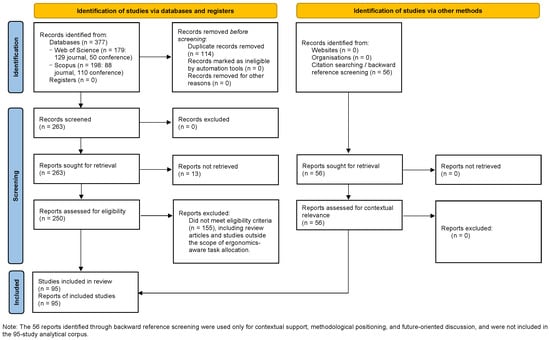
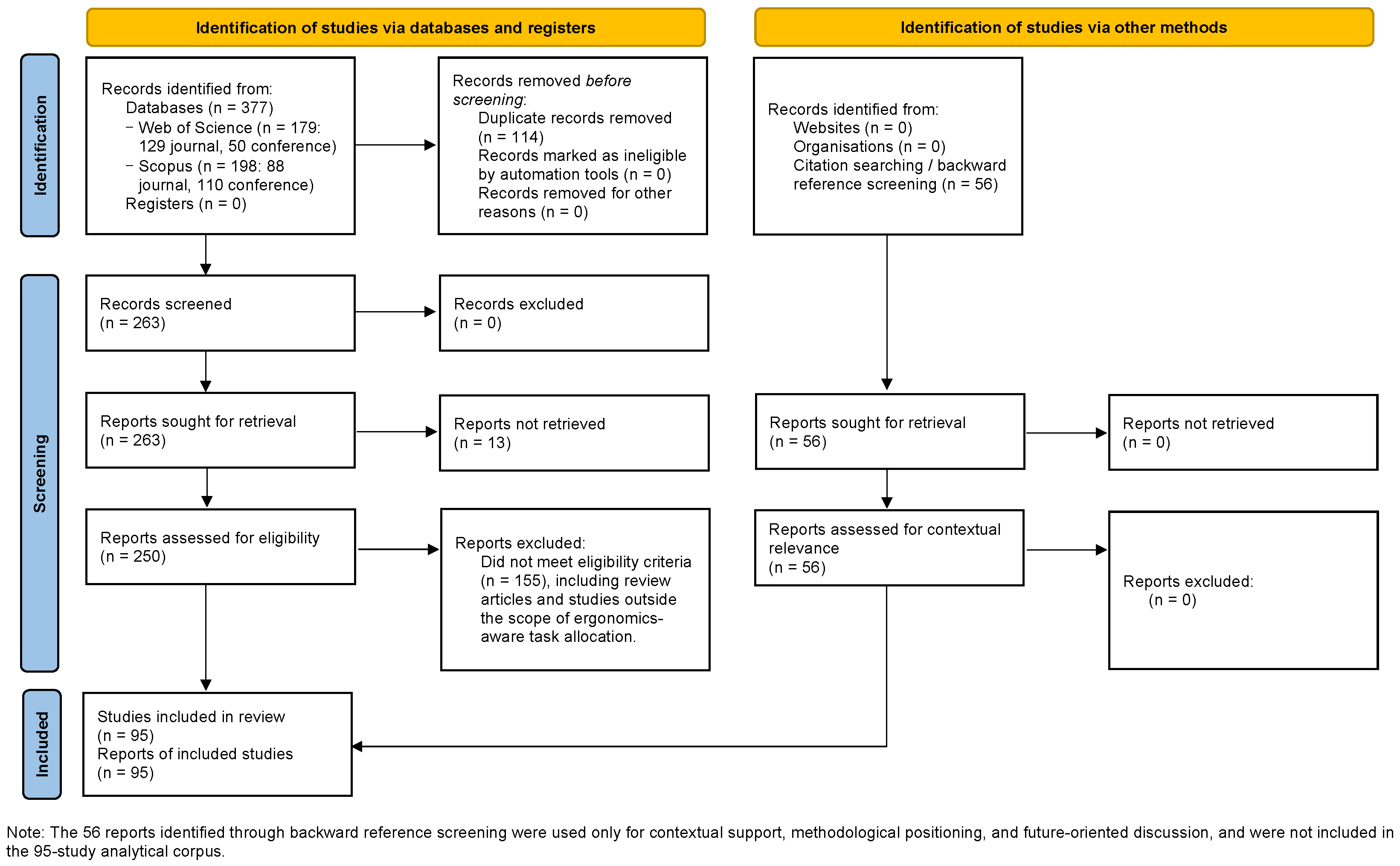
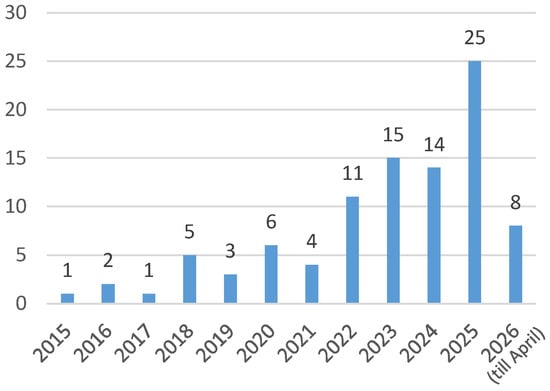
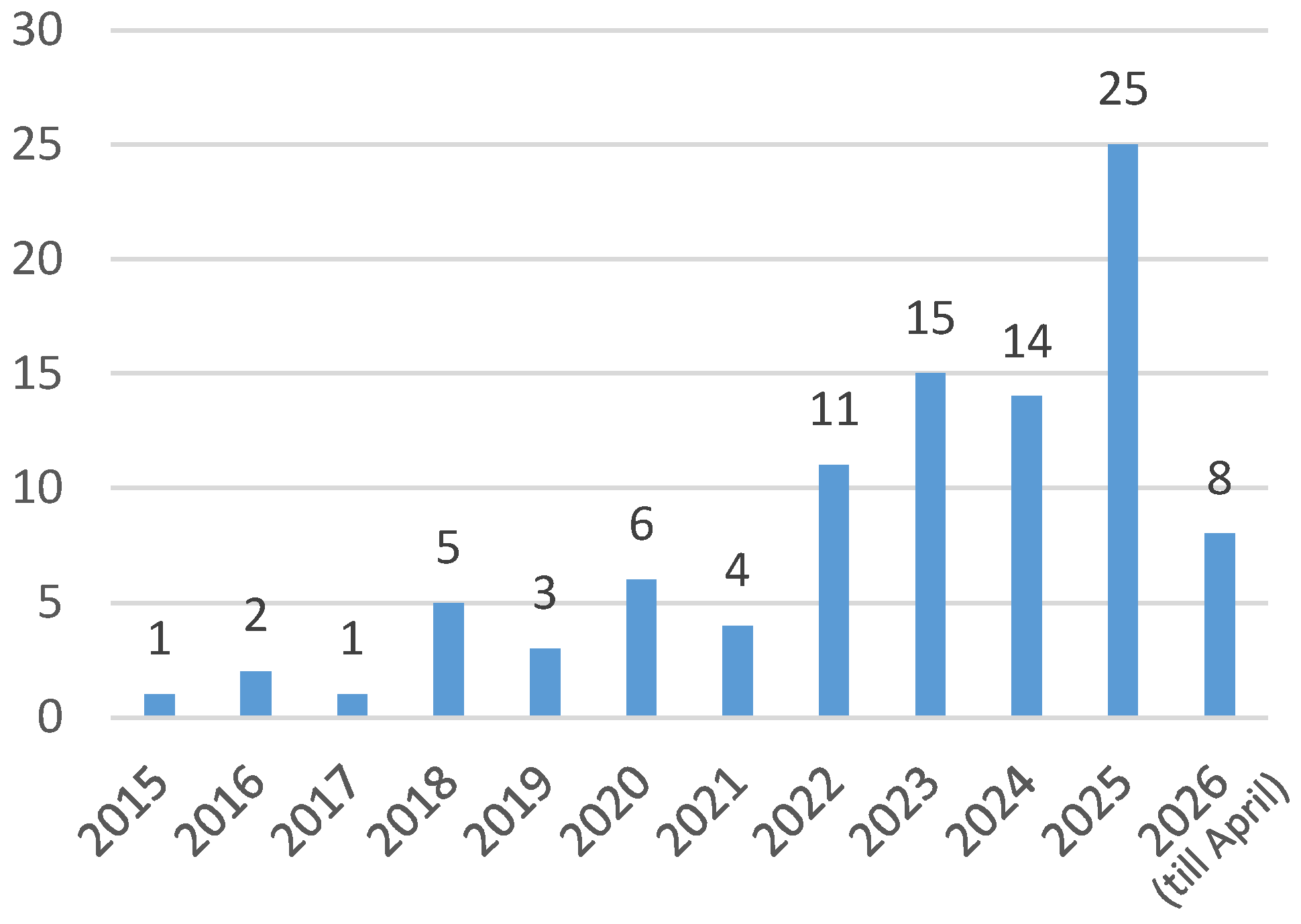
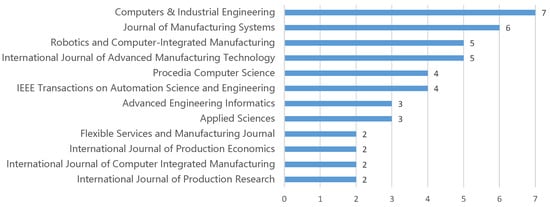
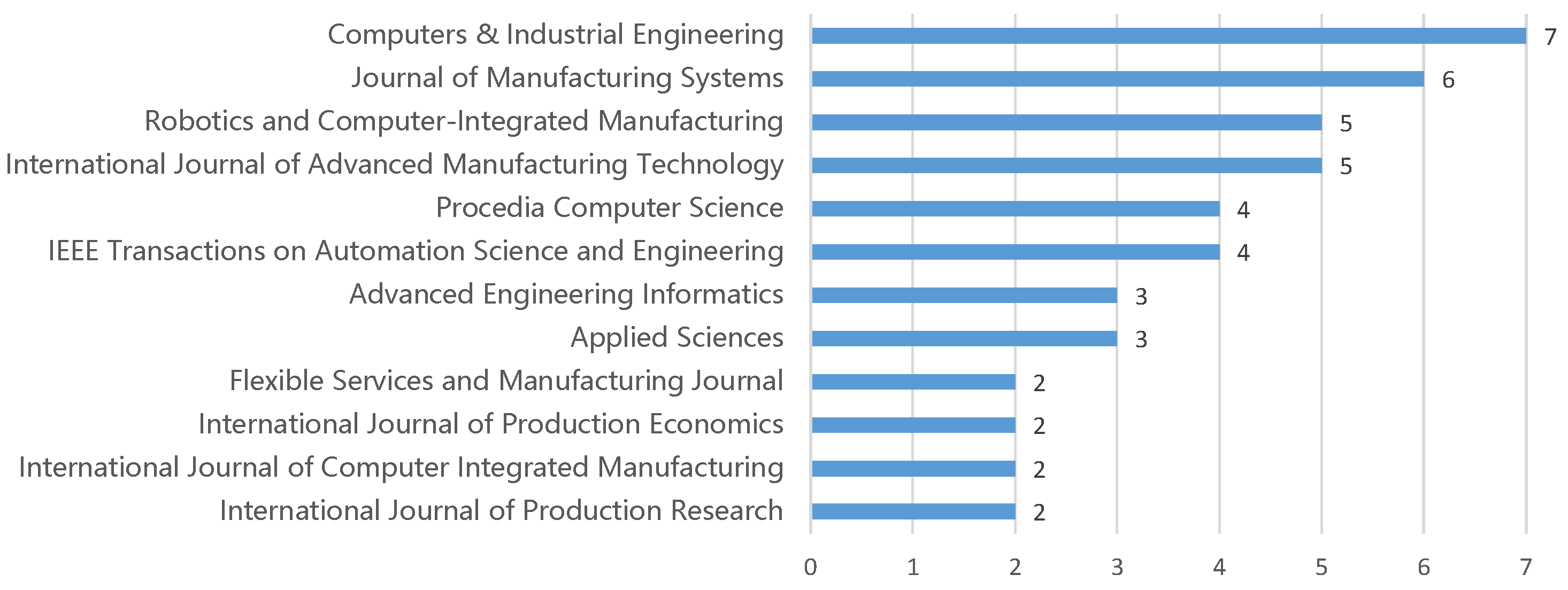
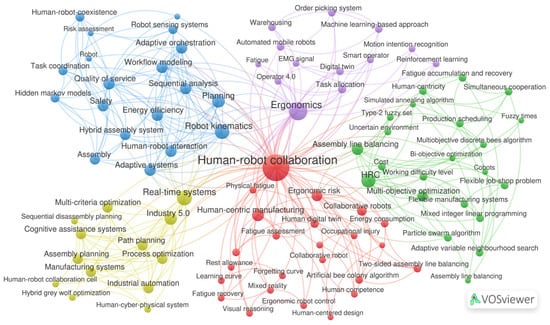
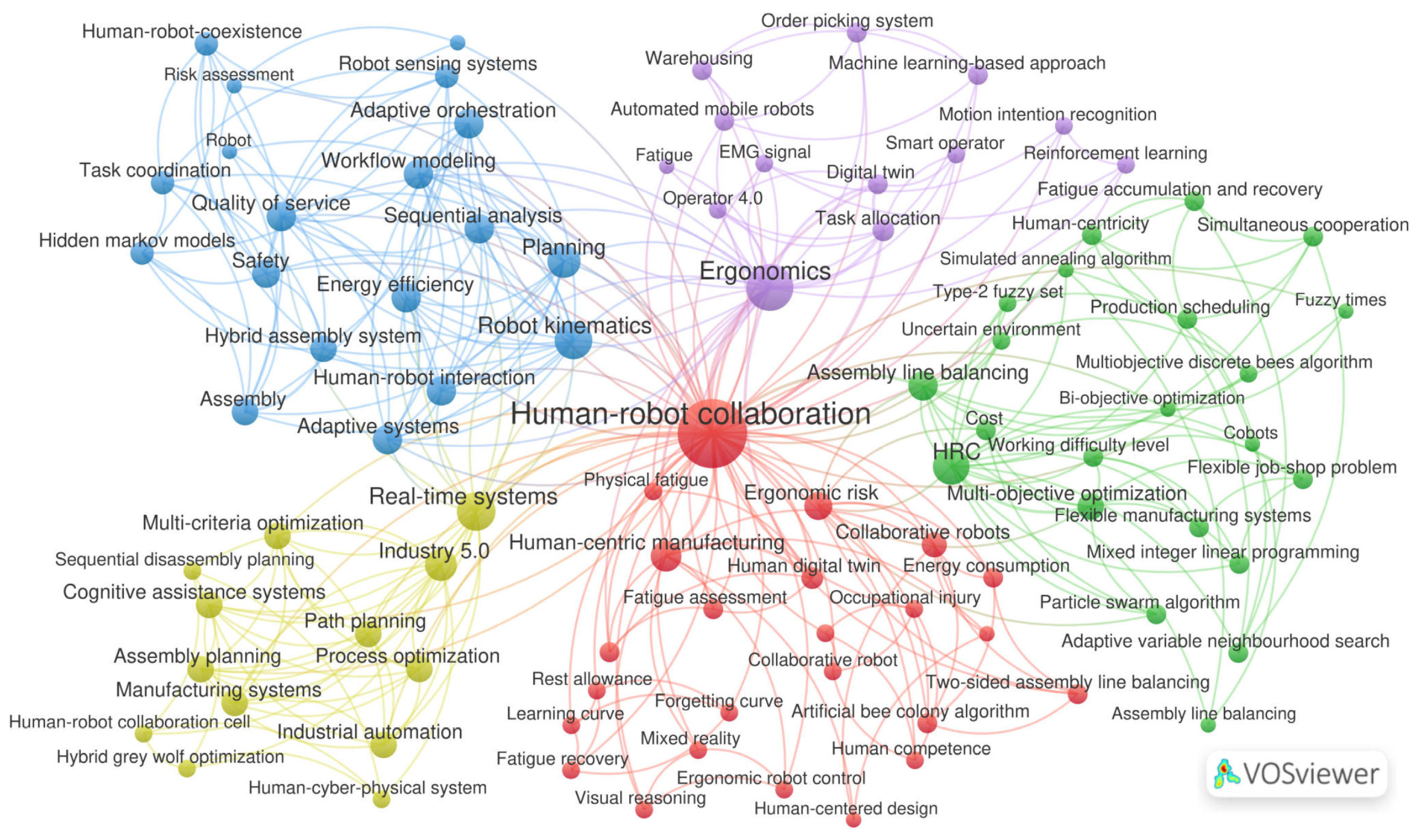
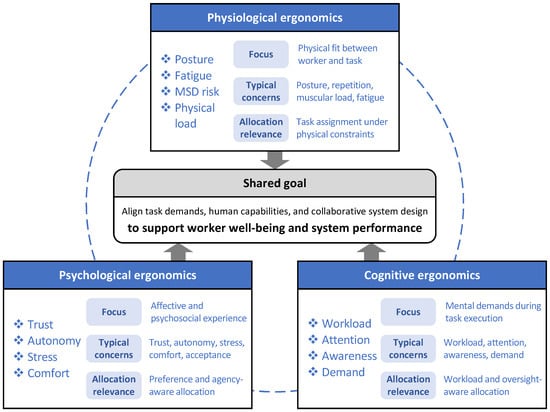
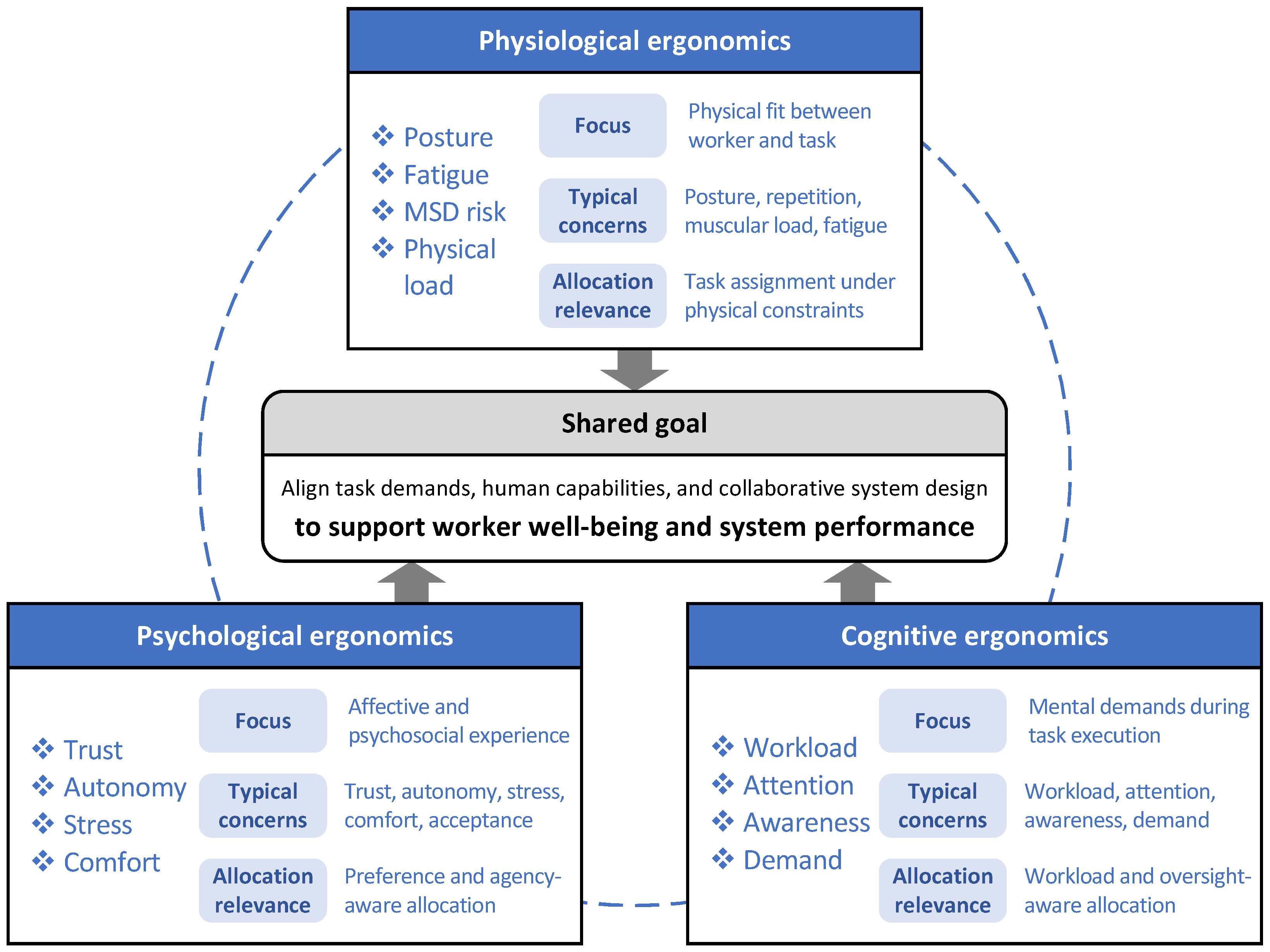
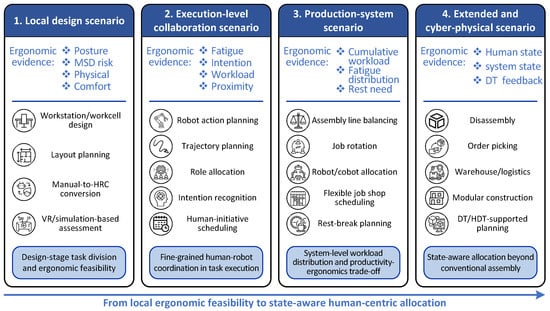
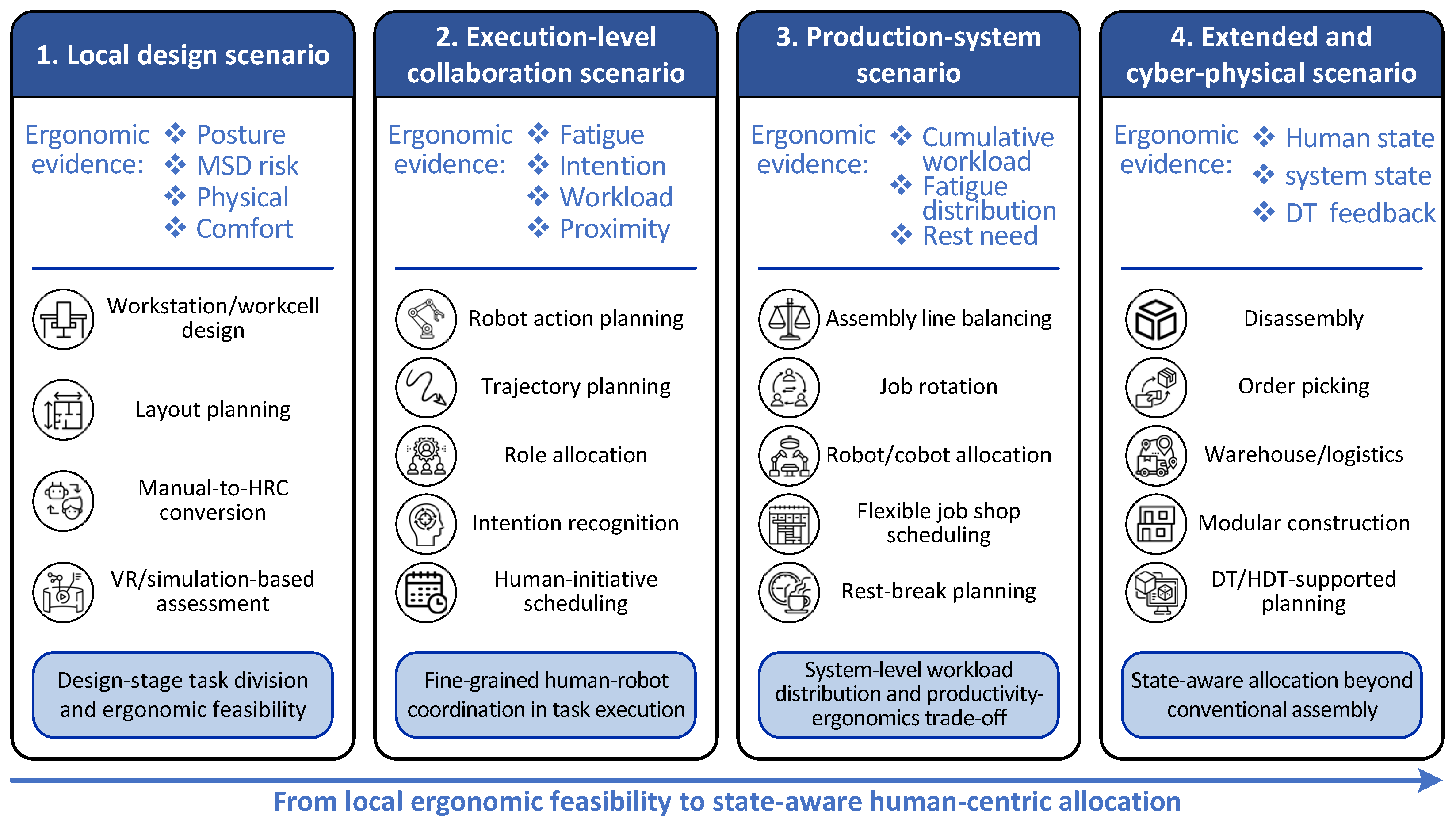
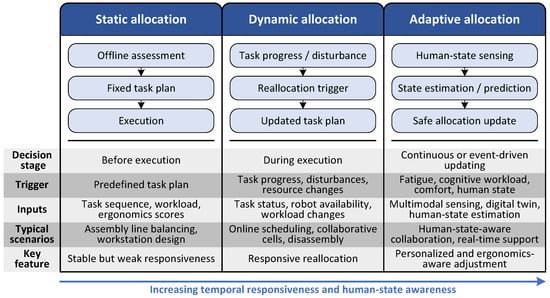
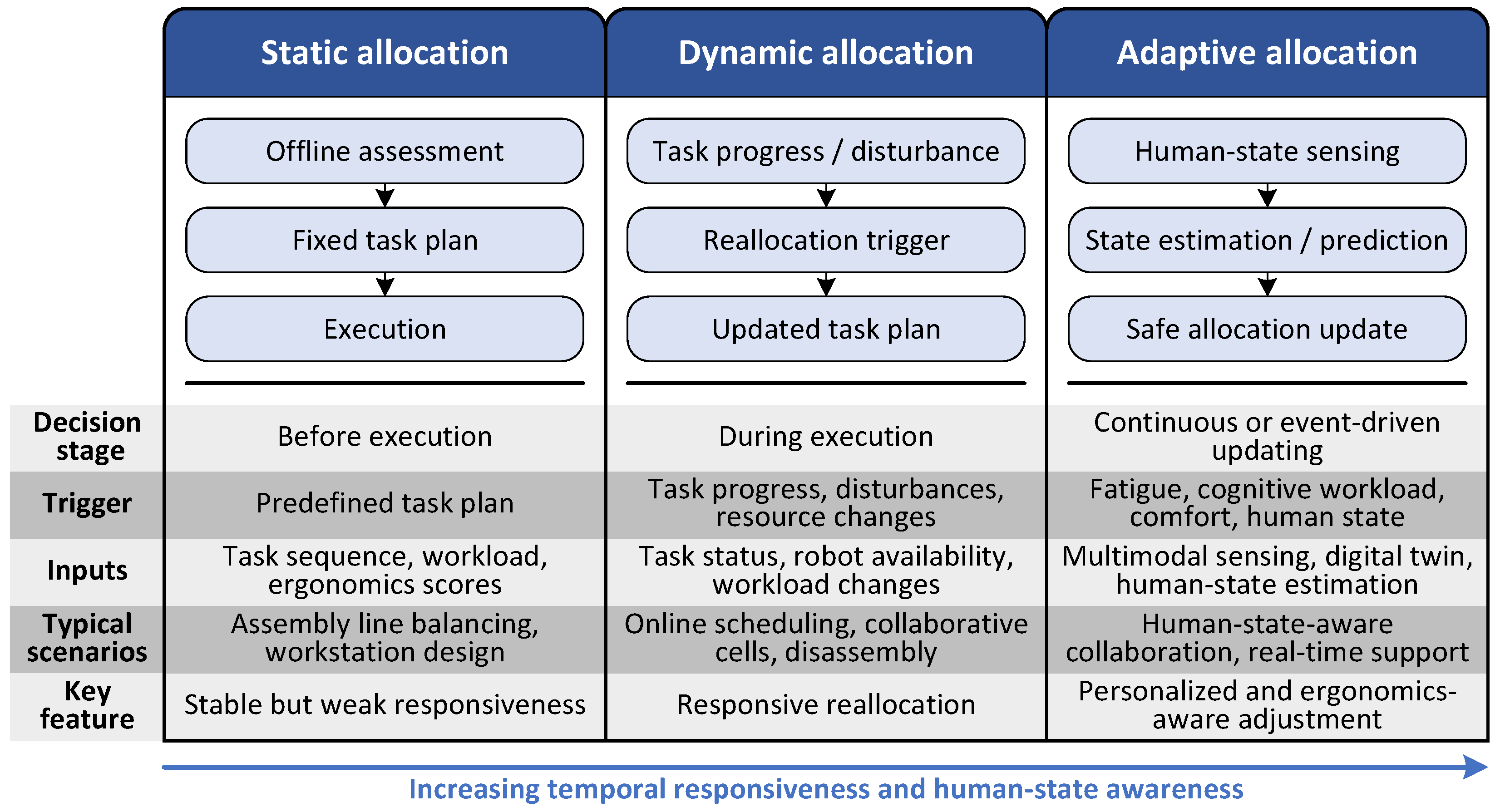
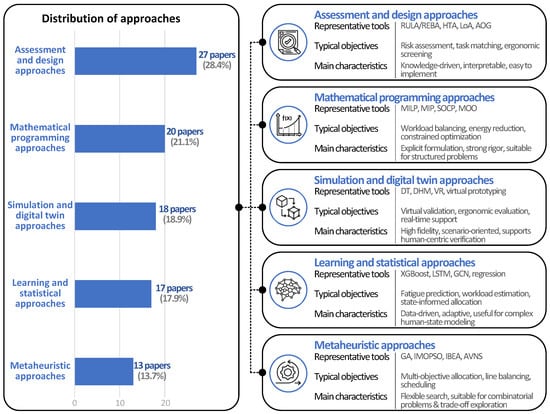
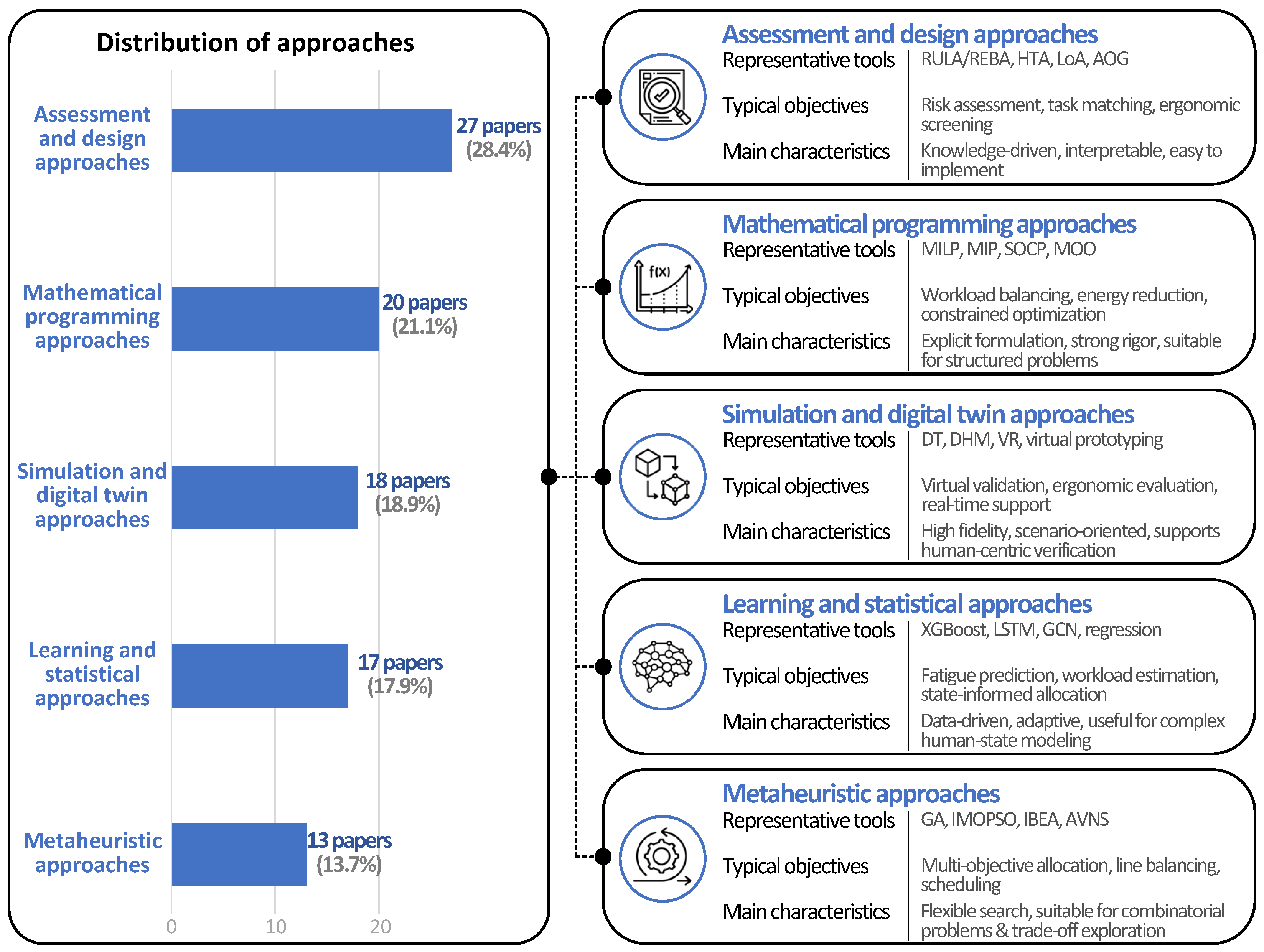
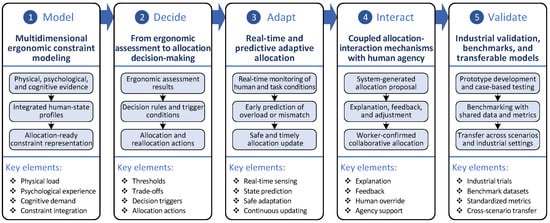
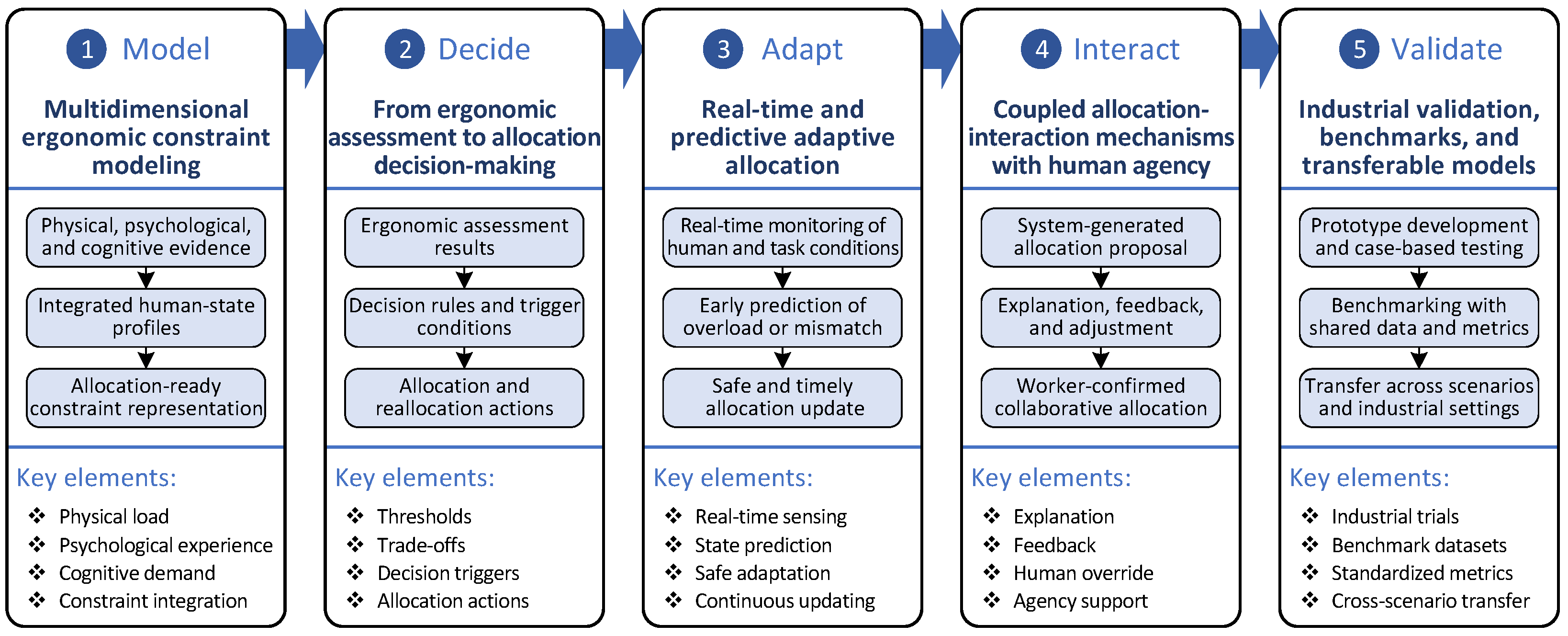

Disclaimer/Publisher’s Note: The statements, opinions and data contained in all publications are solely those of the individual author(s) and contributor(s) and not of MDPI and/or the editor(s). MDPI and/or the editor(s) disclaim responsibility for any injury to people or property resulting from any ideas, methods, instructions or products referred to in the content. |
© 2026 by the authors. Licensee MDPI, Basel, Switzerland. This article is an open access article distributed under the terms and conditions of the Creative Commons Attribution (CC BY) license.