


Abstract
Agricultural machinery operates under complex field conditions involving uneven terrain, crop flow impacts, variable speed and load, dust, moisture, and multi-source structural excitation. These factors make vibration-based fault diagnosis more challenging than that of conventional rotating machinery because weak fault features are often masked by non-stationary background vibration and operating condition disturbances. This review provides a structured synthesis of vibration-based fault diagnosis for agricultural machinery, focusing on tractors, combine harvesters, harvesting machinery, and key components such as bearings, gearboxes, transmission systems, headers, threshing drums, cleaning sieves, vibrating screens, chassis, frames, and cab systems. The review first analyzes vibration sources, fault mechanisms, and signal degradation under field conditions. It then summarizes vibration sensors, data acquisition, preprocessing, time–frequency analysis, feature representation, machine learning, deep learning, transfer learning, and multi-source information fusion. Applications are reviewed from component-level diagnosis to whole-machine monitoring. Key challenges include field data scarcity, variable conditions, sensor reliability, data leakage, model generalization, edge deployment, standardization, and long-term validation. Future research should emphasise high-quality field datasets, physics-informed and explainable models, robust cross-condition diagnosis, multimodal sensing, edge intelligence, digital twins, and predictive maintenance. This review highlights the need to connect vibration mechanisms, diagnostic models, and engineering deployment requirements for reliable agricultural machinery health monitoring. Rather than treating sensors, components, algorithms, and deployment issues as separate topics, this review organizes the literature around field-specific vibration disturbances, validation evidence, deployable diagnostic requirements, and future implementation priorities.
1. Introduction
1.1. Reliability Requirements and Fault Diagnosis Needs of Agricultural Machinery
Agricultural machinery is essential for modern agricultural production, including tillage, seeding, plant protection, harvesting, transportation, and post-harvest processing. Its operational reliability directly affects field efficiency, operation quality, timeliness, and maintenance costs. With the increasing use of large tractors, combine harvesters, forage harvesters, corn harvesters, and multi-operation equipment, agricultural machinery is becoming larger, faster, more intelligent, and more dependent on continuous operation. However, unlike conventional industrial machinery, agricultural machinery usually operates under harsh field conditions involving dust, mud, moisture, thermal variation, impact loads, uneven terrain, crop flow disturbances, and variable working loads. These conditions expose key components to strong impact loads, alternating loads, and multi-source coupled excitation, leading to wear, looseness, cracks, fatigue, bearing damage, gear faults, imbalance, and misalignment.
Machinery faults during field operation not only increase maintenance costs but also reduce operation quality, increase harvesting losses, and delay critical agricultural working periods. A combine harvester consists of multiple subsystems, including the header, conveying system, threshing system, cleaning system, transmission system, travelling system, and chassis. Structural fault detection and diagnosis of combine harvesters have therefore been recognized as important for improving reliability and intelligent maintenance [1]. Similarly, tractor transmission systems, agricultural machinery rolling bearings, gearboxes, vibrating screens, threshing drums, chassis frames, and cab systems also operate under complex dynamic conditions. Condition monitoring and fault diagnosis technologies suitable for real field operating conditions are therefore urgently needed.
1.2. Role of Vibration Signals in Agricultural Machinery Condition Monitoring
Vibration signals reflect internal excitation, structural response, and fault evolution in mechanical systems and are among the most widely used information sources for condition monitoring and fault diagnosis. For rotating machinery, faults such as bearing spalling, gear pitting, shaft imbalance, coupling misalignment, structural looseness, and crack propagation usually cause changes in vibration amplitude, frequency components, impact features, and modulation characteristics. Accordingly, vibration-based condition monitoring has developed into a relatively complete process involving vibration measurement, signal preprocessing, feature extraction, feature selection, and fault diagnosis [2].
Agricultural machinery also contains many rotating, reciprocating, and impact components. Vibration signals can provide dynamic condition information for bearings, gearboxes, transmission shafts, headers, threshing drums, cleaning sieves, chassis, and engines. Compared with oil analysis, infrared thermography, manual inspection, and corrective maintenance, vibration monitoring is non-invasive, real-time, and sensitive to early dynamic abnormalities, making it suitable for online monitoring, fault warning, and predictive maintenance. With the development of accelerometers, embedded acquisition systems, wireless communication, machine learning, and deep learning, vibration-based diagnosis of agricultural machinery has gradually shifted from experience-based analysis toward intelligent, automated, and online diagnosis.
Nevertheless, vibration signals from agricultural machinery are more complex than those from conventional industrial rotating machinery. During field operation, tractors and combine harvesters are simultaneously affected by ground unevenness, crop flow impact, engine excitation, and transmission system excitation. Reciprocating header motion, threshing and cleaning impacts, and coupled frame vibration further complicate the measured vibration response. These factors lead to strong noise, non-stationarity, intensive impacts, frequency overlap, and weak fault-related features. Previous studies have shown that corn harvester frames may undergo bending and torsional vibration under field road excitation and operational fluctuations, requiring denoising and pattern recognition methods to identify different operating states [3]. Extracting weak fault features from complex field vibration backgrounds is therefore a core challenge that distinguishes agricultural machinery diagnosis from general rotating machinery diagnosis.
1.3. Research Progress and Existing Limitations
Recent studies on vibration-based fault diagnosis of agricultural machinery have made progress in transmission systems, bearings, gearboxes, structural vibration, and multi-source excitation analysis. For transmission systems and gearboxes, order analysis has been used for the differential inverse gearbox of a crawler combine harvester to reduce the influence of load amplitude variation and speed fluctuation on fault feature identification [4]. For large tractor transmission systems, an improved convolutional neural network–bidirectional long short-term memory (CNN-BiLSTM) model has been proposed to enhance fault recognition under noisy conditions by combining convolutional feature extraction with bidirectional temporal modelling [5].
Rolling bearings are key vulnerable components in agricultural machinery transmission systems and have become important diagnostic targets. A method combining singular value decomposition (SVD), energy difference spectrum (EDS), generalized S-transform (GST), and ResNet–Vision Transformer (ResViT) has been proposed for rolling bearing fault diagnosis in agricultural machinery, where singular value decomposition and generalized S-transform enhance vibration representation before ResNet-Vision Transformer-based recognition [6]. A multi-source locally adaptive graph convolutional network has also been proposed to address cross-condition diagnosis of agricultural machinery rolling bearings [7]. These studies indicate that deep learning, Transformer models, and graph neural networks are increasingly being used in agricultural machinery diagnosis, although their reliability under real field conditions, cross-machine generalization, and small sample scenarios still requires further validation.
For combine harvesters, studies have focused on vibration responses of headers, conveyor troughs, vibrating screens, chassis, and frames. Header vibration under multi-source coupled excitation can affect harvesting efficiency and operation quality [8]. Vibrating screen bolt looseness changes system vibration characteristics and may induce connection failure and structural fatigue [9]. Improved operational transfer path analysis has been used to decouple multi-source vibration in combine harvester chassis, supporting the identification of dominant vibration transmission paths and structural optimization [10]. In addition, grain harvesters are subjected to long-term random vibration, impact loads, and complex operating loads, which may accelerate fatigue damage in frames, joints, and working components. Therefore, vibration-based diagnosis should support not only fault classification of bearings and gearboxes but also structural fatigue analysis, load spectrum identification, and reliability evaluation [11].
Meanwhile, general rotating machinery fault diagnosis has provided a rich methodological foundation. Vibration image representation studies show that converting one-dimensional vibration signals into time–frequency images, spectrograms, or other two-dimensional representations helps convolutional neural networks and vision-based models extract texture, shape, and energy distribution features [12]. Deep learning reviews have shown that convolutional neural networks (CNNs), recurrent neural networks (RNNs), autoencoders, deep belief networks (DBNs), residual neural networks (ResNets), and Transformers, and graph neural networks are widely used for vibration signal-driven rotating machinery fault diagnosis [13]. Recent international reviews further indicate that data augmentation, transfer learning, domain adaptation, and deep learning have become important tools for vibration-based rotating machinery fault diagnosis, but their value for agricultural machinery should still be judged according to real field validation, leakage-free evaluation, and cross-condition robustness [13,14,15]. These methods provide transferable foundations for agricultural machinery diagnosis, but they cannot be directly applied without adaptation because agricultural machinery involves strong field disturbances, seasonal operation, low-cost sensing constraints, and limited real fault data.
Overall, existing studies remain fragmented. Some focus on vibration testing, modal analysis, structural optimization, and vibration control of agricultural machinery; others focus on intelligent diagnosis of agricultural bearings, gearboxes, and transmission systems; and many algorithm-oriented studies originate from general rotating machinery. Existing reviews on combine harvester structural fault diagnosis mainly address structural fault detection and diagnosis of combine harvesters [1], while general rotating machinery reviews mainly discuss vibration diagnosis procedures and algorithmic frameworks for industrial machinery [2,12,13]. A systematic review centred on the vibration signal-based fault diagnosis technology chain of agricultural machinery is still needed to connect complex field vibration mechanisms, signal processing, intelligent diagnostic models, and engineering deployment challenges. The differences between these research streams and the focus of the present review are summarized in Table 1.
Table 1.
Comparison with previous review and research streams.
Unlike previous review streams that mainly focus on general rotating machinery, combine harvester structural faults, vibration image representations, deep learning algorithms, transfer learning, sensor technologies, or predictive maintenance systems, this review constructs an integrated framework of “complex field conditions–vibration signal degradation–feature representation–intelligent diagnosis–engineering deployment” for vibration-based fault diagnosis of agricultural machinery.
1.4. Scope and Contributions of This Review
This review provides a structured synthesis of vibration-signal-driven fault diagnosis for agricultural machinery. To avoid a purely descriptive catalogue of machinery types, components, sensors, and algorithms, the review is guided by four research questions. First, what vibration sources and operating condition disturbances are unique to agricultural machinery compared with conventional rotating machinery? Second, which components and diagnostic tasks have been validated directly on agricultural machinery, and which are still mainly supported by transferable rotating machinery evidence? Third, which signal processing and intelligent-diagnosis methods have been evaluated under real field or realistic agricultural operating conditions? Fourth, what minimum requirements are necessary for vibration-based diagnosis to become deployable in agricultural machinery, including sensor placement, operating condition recording, data splitting, robustness evaluation, edge implementation, and maintenance feedback?
The machinery considered in this review includes tractors, combine harvesters, corn harvesters, forage harvesters, and other typical field operation machines. The key components include bearings, gearboxes, transmission systems, shafts, headers, threshing drums, cleaning sieves, vibrating screens, chassis, frames, and cab systems. The technical scope covers vibration signal acquisition, preprocessing, feature extraction, time–frequency analysis, fault recognition, intelligent diagnosis, transfer learning, multi-source fusion, and edge deployment. By treating agricultural machinery as intelligent equipment operating under complex field conditions, this review links agricultural applications with broader issues in mechanical vibration, condition monitoring, fault diagnosis, and intelligent maintenance.
Accordingly, the contribution of this review is not only to summarize vibration-based fault diagnosis methods but also to evaluate their agricultural relevance, evidence level, and deployment maturity. First, the review identifies field-specific vibration disturbances caused by uneven terrain, crop flow impact, variable speed/load, dust, moisture, and multi-source excitation. Second, it distinguishes direct agricultural machinery evidence from transferable rotating machinery evidence and general methodological evidence, thereby avoiding overgeneralization of methods that have not been field-validated. Third, it connects signal degradation mechanisms with acquisition, preprocessing, feature representation, and intelligent diagnosis strategies, emphasizing why different methods are suitable for different components and operating conditions. Fourth, it summarizes the minimum requirements for field-deployable vibration-based diagnosis and proposes a prioritized future research roadmap that separates near-term field data and validation tasks, mid-term robustness and deployment tasks, and long-term intelligent maintenance ecosystem development.
To clarify the organization of this review, the overall framework of vibration-based fault diagnosis for agricultural machinery is shown in Figure 1. The review starts from field operating conditions and vibration signal degradation mechanisms and then follows the technical chain of signal acquisition, preprocessing, intelligent diagnosis, typical applications, field deployment challenges, and future research directions.
Figure 1.
Overall framework of vibration based fault diagnosis for agricultural machinery.
1.5. Literature Search Method
This review adopts a structured narrative review method and establishes an explicit literature search and screening record. The search was organized around the main technical chain of vibration-signal-based fault diagnosis for agricultural machinery, including vibration signal acquisition, preprocessing, feature extraction, fault recognition, intelligent diagnosis, condition monitoring, and field deployment.The stepwise literature screening quantities, screening criteria and output of each stage are summarized in Table 2.
Table 2.
Search, screening flow, and evidence level classification used for the structured narrative review.
The main databases searched were Web of Science Core Collection, ScienceDirect, and IEEE Xplore. The final literature search was updated in June 2026. Web of Science Core Collection and ScienceDirect were used as primary sources, IEEE Xplore was used to supplement engineering and intelligent diagnosis studies, and Google Scholar was used for supplementary retrieval, citation tracking, and identifying foundational studies that may have been missed in database searches.
The search terms consisted of four thematic blocks. The first block included agricultural machinery terms, such as “agricultural machinery”, “farm machinery”, “tractor”, “combine harvester”, “harvester”, and “agricultural equipment”. The second block included vibration and condition monitoring terms, such as “vibration”, “vibration signal”, “accelerometer”, “condition monitoring”, “health monitoring”, and “predictive maintenance”. The third block included fault diagnosis task terms, such as “fault diagnosis”, “fault detection”, “fault classification”, “fault prognosis”, “fault identification”, and “remaining useful life”. The fourth block included component and method terms, such as “bearing”, “gearbox”, “transmission”, “shaft”, “threshing drum”, “vibrating screen”, “chassis”, “signal processing”, “machine learning”, “deep learning”, “transfer learning”, and “domain adaptation”.
English-language publications published since 2015 were prioritized because recent developments in vibration sensing, intelligent diagnosis, transfer learning, and edge deployment have significantly advanced machinery fault diagnosis methods. Earlier studies were retained only when they had foundational value in vibration signal processing, rotating machinery fault diagnosis, bearing diagnosis, gearbox diagnosis, or condition monitoring theory. The included publication types mainly comprised journal articles, review papers, and conference papers with sufficient technical detail.
The initial database search and citation tracking identified 502 records. After removing duplicate titles, repeated database entries, and duplicated early-access/final-version publications, 320 records remained. Title and abstract screening retained 184 studies related to agricultural machinery vibration, fault diagnosis, condition monitoring, or transferable rotating machinery diagnosis. Full text assessment and technical relevance evaluation further identified 154 core studies highly relevant to this review. To support discussions on standardized evaluation, engineering deployment, commercial intelligent maintenance, agricultural machinery electrification and automation, vision-based contextual perception, and predictive maintenance, this review further included condition monitoring standards, commercial system materials, foundational signal-processing literature, general rotating machinery diagnosis methods, and supporting studies on intelligent agricultural equipment. Finally, 200 literature sources and technical materials were cited for qualitative synthesis.
To avoid overgeneralizing results from industrial rotating machinery or public bearing datasets to agricultural field conditions, the included literature was further classified into four evidence levels. E1 denotes field-validated agricultural machinery evidence, where vibration data were collected from real agricultural machinery under field or realistic operating conditions. E2 denotes bench- or laboratory validated agricultural machinery evidence, where tractors, harvesters, agricultural bearings, gearboxes, threshing components, cleaning sieves, chassis structures, or related agricultural machinery components were tested under controlled experimental conditions. E3 denotes transferred rotating machinery evidence, including bearing, gearbox, shaft, motor, or general rotating machinery studies that provide useful diagnostic methods but were not directly validated on agricultural machinery. E4 denotes general methodological evidence, including deep learning, transfer learning, few-shot learning, graph models, edge intelligence, digital twins, and maintenance frameworks that support methodological discussion but should not be interpreted as direct agricultural field validation. Unless E1 or E2 evidence is available, this review describes a method as potentially transferable rather than field proven for agricultural machinery. This evidence level classification was used throughout the review to interpret component applications, intelligent diagnostic models, transfer learning studies, and future deployment priorities.
To avoid excessive expansion of the review scope, crop recognition, machine vision navigation, agricultural robotics, remote sensing monitoring, and general artificial intelligence methods were not treated as independent review topics. Related studies were included only when they supported agricultural machinery condition monitoring, vibration signal interpretation, field deployment, or maintenance decision-making.
2. Vibration Sources, Fault Mechanisms, and Signal Degradation in Agricultural Machinery
Section 1 introduced the field deployment background of agricultural machinery diagnosis. This section focuses on how field excitation forms and degrades diagnostic vibration signals. In agricultural machinery, powertrain, vehicle–ground, working component, crop flow, and structural transfer path excitations act simultaneously. Their coupling changes vibration amplitude, frequency position, modulation pattern, and propagation path. These mechanisms should therefore be clarified before signal processing and intelligent diagnosis are performed.
2.1. Multi-Source Excitation Under Field Operating Conditions
Vibration in agricultural machinery is rarely generated by a single component or fault source. It usually results from the coupled response of the power system, transmission system, travelling system, working components, crop flow, and frame structure. According to excitation source, agricultural machinery vibration can be broadly classified into powertrain excitation, terrain and vehicle–ground excitation, working component excitation, crop flow excitation, and structural coupling excitation.
Powertrain excitation is mainly generated by engines, hydraulic pumps, fans, sprockets, pulleys, gear pairs, transmission shafts, and power take-off (PTO) systems. These components produce periodic and speed-related vibration that varies with engine speed, transmission ratio, and working load. In tractors, the engine, gearbox, differential, axles, and frame form rigid transmission paths through which vibration can propagate across the whole machine. In combine harvesters, the engine and main transmission system further drive the header, conveying, threshing, cleaning, and travelling mechanisms, causing powertrain excitation to overlap with working component excitation. For crawler combine harvesters, the steering gearbox and travelling transmission mechanism also affect chassis loading and whole machine dynamic response. Tang et al. developed a forward–reverse crawler steering gearbox and showed that steering mode, crawler motion, and soil disturbance influence paddy field operation and machine response [35]. Therefore, vibration variations caused by normal steering, crawler slip, and soil disturbance should be separated from abnormal vibration caused by gear wear, bearing damage, support looseness, or transmission impact.
Terrain excitation is another important field vibration source. Agricultural machinery often operates on ridges, muddy fields, straw-covered ground, slopes, and uneven field roads. Tyre–soil or crawler–soil interaction induces vertical, pitching, rolling, and lateral vibration, while tractor–implement systems are further affected by soil resistance, implement mass, suspension parameters, and working depth. Studies on tractor–rotary cultivator vibration show that whole-machine vibration under tillage conditions should be analyzed in both time and frequency domains [36]. Dynamic modelling of tractor–implement systems with hydro-pneumatic front axle suspension also shows that implement forces, suspension parameters, and operating conditions jointly determine vibration response [37]. For crawler harvesters and tractors, terrain excitation is closely related to soil moisture, softness, slope, slip, sinkage, soil adhesion, and implement resistance. Studies on crawler anti-adhesion and anti-skid design, attitude-adjustable chassis, and bionic drag reduction components further indicate that soil and ground conditions significantly change low-frequency chassis vibration and structural loading [38,39,40]. Therefore, ground condition, slope, tyre/crawler adhesion, and working resistance should be recorded as external operating information to avoid misclassifying normal terrain-induced vibration as mechanical faults. Similar international work on agricultural vehicles has also treated vibration analysis as a fault detection tool, emphasizing that vehicle-level excitation should be considered when distinguishing mechanical abnormalities from normal field-induced vibration responses [41].
Working component excitation is generated by headers, reels, cutters, conveyor troughs, threshing drums, cleaning sieves, fans, and grain conveying devices. These components usually have periodic, reciprocating, impact, or rotating motion characteristics. For example, combine harvester header vibration originates from cutter motion, conveying mechanisms, ground undulation, crop flow impact, and frame constraints. Header vibration under multi-source coupled excitation affects harvesting efficiency and operation quality [8], while operational modal analysis of combine harvester cutting platforms shows that header vibration may increase grain losses, reduce service life and ride comfort, and affect operational accuracy [42]. Specialized harvesting machinery also introduces additional material–structure interactions. Rigid–flexible coupling modelling of hemp harvesters indicates that operating speed, conveying parameters, and stem flexibility jointly affect working component motion and material posture [43]. Therefore, normal working excitation may overlap with early fault impacts, and operating speed, component parameters, and material state should be recorded as auxiliary diagnostic information.
Crop flow excitation is a distinctive feature of harvesting machinery. During cutting, conveying, threshing, separation, and cleaning, crop flow includes stalks, grains, fruits, straw, chaff, impurities, and soil, producing random impacts, blockage, sliding, and mass fluctuations. Unlike the relatively stable loads of industrial rotating machinery, crop flow excitation is random, intermittent, and time-varying. Feed rate variation in combine harvesters changes vibration responses of the inclined conveyor and threshing-separation system, and vibration signals from the inclined conveyor have been used for feed rate prediction [44]. Crop flow status can also be characterized through near-infrared sensing, weighing, rotational speed, fan parameters, and control parameters. Studies on grain mass flow measurement, cleaning fan air duct performance, and bionic screw conveying show that grain flow rate, airflow organization, conveying structure, and material distribution affect cleaning, conveying, and frame vibration responses [45,46,47]. Therefore, crop flow state should not be described only by feed rate; fan speed, air duct condition, conveying structure, and material distribution should also be considered when distinguishing normal crop flow fluctuation, blockage trends, and mechanical fault responses.
Structural coupling excitation arises because agricultural machinery contains welded frames, large thin-walled parts, beam–plate structures, bolted joints, supports, and transmission connectors. Structural stiffness, connection type, and component layout determine vibration propagation and amplification paths. Studies on rice combine harvester chassis vibration under multi-source excitation show that engine speed and connected working components significantly affect chassis response [48]. Improved operational transfer path analysis has been applied to decouple multi-source vibration contributions in combine harvester chassis [10]. Modal studies of rice combine harvester frames further indicate that some frame modal frequencies may fall within operating excitation ranges, leading to coupled vibration and resonance [49]. In addition, welded plate–shell structures and bolted connections change local vibration transmission. Ding et al. showed that connection type, structural boundary, and external excitation jointly affect modal and response characteristics of metal plate and shell structures [50]. Jing et al. further validated vibration noise response prediction for a combine harvester conveyor trough, revealing coupling among shell structures, chain transmission impacts, and radiated noise [51]. Recent studies on attitude-adjustable combine harvester chassis and conveyor trough sprocket noise further show that chassis adjustment conditions and structural constraints can affect dynamic stress responses, while chain/sprocket impacts and cavity structures can influence vibration–noise transmission in combine harvesters [52,53]. These studies indicate that agricultural machinery diagnosis should consider not only local components such as bearings, gears, and drums, but also structural amplification, transfer paths, and radiation effects.
Overall, field vibration of agricultural machinery is characterized by multi-source excitation, spatial distribution, path coupling, and time variation. Powertrain, travelling system, working component, crop flow, and structural transfer path excitations often coexist and overlap in frequency. Fault features may therefore not appear as isolated and stable spectral components but may be masked by normal working vibration, terrain impacts, and crop flow disturbances. Agricultural machinery fault diagnosis thus requires multi-point measurement, time–frequency analysis, order analysis, transfer path analysis, and data-driven models to identify key excitation sources and their variations.
As summarized in Table 3, different excitation sources require different diagnostic responses. Powertrain-related vibration is better handled using speed-synchronous acquisition and order analysis, terrain and crop flow disturbances require operating condition recording and state separation, and structural coupling requires multi-point testing, modal analysis, or transfer path analysis. This relationship between excitation source, signal degradation, and diagnostic strategy is illustrated in Figure 2.
Table 3.
Typical vibration sources, excitation mechanisms, and signal degradation characteristics in agricultural machinery.
Figure 2.
Multi-source excitation, vibration signal degradation, and diagnostic difficulty in agricultural machinery.
2.2. Variable Speed, Variable Load, and Crop-Flow Disturbance
In addition to multi-source excitation, the variability of operating conditions is a core challenge in agricultural machinery vibration diagnosis. General rotating machinery diagnosis often assumes relatively stable speed and load, whereas agricultural machinery is frequently affected by variable speed, variable load, and random crop flow disturbance. These factors cause fault characteristic frequencies to drift, amplitude modulation to intensify, background noise to increase, and signal distributions to change.
Variable speed changes the frequency structure of vibration signals. Tractor engine speed, PTO speed, travelling speed, and implement speed vary with soil resistance, driving strategy, and working load. In combine harvesters, header, threshing drum, fan, cleaning sieve, and conveying speeds may also change with feed rate and control strategy. Under such conditions, fixed frequency peaks may broaden or drift, and bearing, gear, and shaft features may appear as order-related components. Therefore, gearbox and transmission diagnosis in agricultural machinery often requires order analysis, angular domain resampling, or speed-synchronous features [4]. In addition, mechanical–electronic–hydraulic powertrain systems and energy-saving control strategies may cause vibration signals to be influenced simultaneously by mechanical excitation, hydraulic state, and electronic control strategy [57].
Variable load and crop flow disturbance further change vibration amplitude, impact components, and statistical distributions. Tractor traction load varies with soil resistance, tillage depth, speed, and implement attitude. During harvesting, crop density, moisture content, maturity, feed rate, and blockage state affect cutting, conveying, threshing, and cleaning loads. Studies show that threshing load, feed rate variation, and blockage state significantly affect the dynamic response of combine harvester threshing and separation devices [75,77], while tractor–implement vibration is closely related to field roads, tillage resistance, and suspension parameters [59]. Normal load fluctuation can therefore produce amplitude changes similar to fault impacts, structural looseness, or imbalance, increasing the risk of misdiagnosis.
Variable operating conditions also cause distribution shift. Field condition, crop variety, moisture content, harvesting season, driving speed, implement adjustment, and sensor position can all change measured vibration signals. Studies on corn harvester frame vibration and crawler pepper harvester multi-condition testing show that ground condition and operational fluctuation significantly affect measurement point responses [3,58]. Moreover, imbalance and assembly errors of working components may couple with speed and load variation; for example, threshing drum imbalance can generate periodic excitation that overlaps with crop flow impacts and transmission system fault features [64].
Therefore, diagnostic models trained under a single speed, load, or laboratory condition are difficult to apply directly to real field environments. Future data acquisition should cover multiple speeds, loads, crops, fields, and machines. Signal processing should combine order analysis, adaptive time–frequency analysis, non-stationary signal decomposition, and multi-source decoupling, while modelling should incorporate transfer learning, domain adaptation, few-shot learning, and physics-constrained mechanisms to improve field reliability.
In practical agricultural operation, field variables should be treated as measurable disturbance variables rather than as qualitative background conditions. Crop moisture, crop density, feed rate, soil hardness, soil roughness, travelling speed, implement depth, and machine adjustment can change vibration amplitude, frequency distribution, impact density, and feature stability. For example, increased feed rate or crop moisture may increase threshing and conveying load, causing higher broadband vibration, stronger intermittent impacts, and greater amplitude fluctuation in the inclined conveyor, threshing drum, and cleaning system. Harder or rougher soil can increase low-frequency chassis and cab vibration and may introduce transient shocks that are unrelated to mechanical faults. Header height and crop posture can change cutter and header frame vibration, while cleaning sieve material distribution may change local periodic response and mask bolt-loosening features. Therefore, agricultural machinery diagnosis should record these field variables together with vibration signals and should interpret RMS, kurtosis, spectral kurtosis, envelope energy, and time–frequency energy only after considering operating state information.
2.3. Typical Key Components and Fault Modes
Agricultural machinery consists of power systems, transmission systems, working actuators, travelling chassis, frames, and cabs. For vibration diagnosis, typical components can be grouped into rotating transmission components, working components, and load-bearing or vibration-transfer structures. These components may either generate abnormal vibration or modify the propagation path of fault features. Establishing the relationship among component type, fault mode, vibration feature, and operating condition influence is therefore essential.The typical fault modes, vibration interference signatures, mainstream diagnostic approaches and representative literature for core agricultural machinery subsystems are summarised in Table 4.
Rolling bearings are widely distributed in gearboxes, transmission shafts, threshing drums, cleaning mechanisms, conveying mechanisms, and travelling systems. Under dust, impact, insufficient lubrication, load fluctuation, and long-term high-speed operation, bearings are prone to raceway spalling, rolling-element damage, cage damage, wear, pitting, and clearance enlargement. Local bearing defects generate periodic impacts and modulation features, but in field operation, these weak impacts are often masked by engine vibration, working component impacts, and crop flow disturbance. Agricultural machinery bearing diagnosis has therefore combined strong-noise suppression, time–frequency representation, and deep feature extraction, such as SVD-EDS-GST with ResViT [6], as well as multi-source locally adaptive graph convolution for cross-condition diagnosis [7].
Gearboxes and transmission systems are core power-transmission components in tractors and harvesters. Alternating loads, impact loads, and variable speed may cause gear wear, pitting, scuffing, tooth root cracks, broken teeth, shaft misalignment, bearing support looseness, and lubrication failure. These faults usually alter meshing frequencies, harmonics, sidebands, modulation components, and impact responses. Order analysis has been used for the differential inverse gearbox of a combine harvester under variable speed and load [4], while an improved CNN-BiLSTM model has been proposed for large tractor transmission systems under strong noise and complex fault modes [5]. This suggests that agricultural gearbox diagnosis should combine mechanical characteristic frequencies with intelligent models.
Headers are important working components of combine harvesters, corn harvesters, forage harvesters, and other harvesting machines. A header system usually includes the cutter, reel, auger, conveying chain, support beam, and height-adjustment mechanism. Faults include blade wear, abnormal cutter clearance, transmission looseness, auger imbalance, connection cracks, and support structure fatigue. Header vibration affects cutting stability, feeding continuity, harvesting loss, and vibration transmission to the chassis and cab. Studies have shown that header vibration is closely related to harvesting efficiency and operation quality [8] and may increase grain loss, reduce service life and ride comfort, and affect operational accuracy [42]. Vibrating harvesting mechanisms also affect operator comfort and machine stability [96]. For oilseed rape and other crops prone to wrapping and shattering, header vibration is further coupled with reel tine trajectory, crop posture, shattering resistance, and header loss. Related studies show that reel motion affects feeding and crop flow continuity [73], and total header vibration is significantly correlated with oilseed rape header loss [74]. Therefore, header vibration diagnosis should consider both mechanical faults and crop-related loss mechanisms.
Threshing drums are high-speed rotating components whose dynamic states directly affect threshing quality, grain damage, energy consumption, and whole-machine vibration. Common faults include mass imbalance, assembly eccentricity, drum deformation, rasp bar wear, bolt looseness, bearing damage, and transmission chain abnormalities. Imbalance or eccentric mass distribution can generate strong centrifugal excitation and increase vibration in frames, chassis, and cabs. Studies have shown that threshing drum imbalance may still occur after assembly even when parts are pre-balanced [64], and automatic balancing systems can reduce mechanical wear, energy consumption, noise, and maintenance cost [65]. Parameter-adaptive variational mode decomposition has been used for threshing cylinder unbalance detection [97], and unbalanced excitation during rice threshing has been shown to change drum axis trajectories and vibration amplitudes [98]. Therefore, threshing drum diagnosis should consider rotational components, harmonics, amplitude modulation, structural resonance, crop flow wrapping, eccentric load distribution, and non-stationary signal decomposition. In addition, feed rate, drum speed, and threshing clearance affect threshing performance and vibration response [71].
Cleaning sieves and vibrating screens are reciprocating vibration components used for separating grain, straw, chaff, and impurities. Their long-term periodic motion and crop flow impact make them prone to sieve clogging, sieve plate wear, bolt looseness, hanger fatigue, support cracking, and driving mechanism wear. Vibrating screen bolt looseness changes system vibration characteristics and increases the risk of connection failure and fatigue [9,85], while multi-feature fusion and optimized feature selection can improve bolt failure identification under multi-source excitation [89]. Harvester bolt-response modelling further helps identify strong response locations and local structural response characteristics, supporting the need for local vibration sensing around bolted joints and high-stress sieve frame regions [90]. Material distribution, blockage state, and durability degradation also affect cleaning sieve dynamics. Multi-point feeding and variable-amplitude screening studies show that material distribution and sieve motion parameters affect screening stability and blockage risk [70,72], while durability testing indicates that local vibration and strain responses can identify structurally weak regions [86]. Cleaning sieve diagnosis should therefore integrate vibration, strain, sieve speed, material distribution, and cleaning loss rather than relying only on vibration amplitude. Because the cleaning system integrates airflow, sieve motion, crop-material distribution, and loss formation, cleaning system reviews provide useful background for interpreting cleaning sieve vibration and distinguishing mechanical looseness from normal material flow variation [99].
Chassis and frames support the whole machine and transmit vibration from engines, transmissions, headers, threshing cleaning systems, and field impacts. Common problems include weld fatigue, local cracks, connection looseness, structural deformation, insufficient stiffness, modal frequencies close to operating excitation, and abnormal transfer paths. Chassis vibration response changes with engine speed and working component excitation [48], and transfer path analysis can identify dominant vibration propagation paths [10]. Modal studies of rice combine harvester frames show that modal frequencies within operating excitation ranges may cause coupled vibration and resonance [49]. Damping improvement of threshing-related structures has also been shown to improve vibration characteristics [81]. Therefore, chassis and frame diagnosis should consider local damage, modal variation, and transfer paths simultaneously.
Cabs and suspension systems are terminal structures through which vibration and noise are transmitted to operators. Although they do not usually participate directly in fault generation, excessive cab vibration may indicate abnormalities in chassis, engines, transmissions, or suspension systems. Cab-related degradation includes ageing rubber mounts, connection looseness, reduced vibration isolation, resonance, seat suspension failure, and increased low-frequency noise. Studies on tractor cab suspension show that suspension form strongly affects whole-body vibration [60], and comparative studies confirm the role of cab suspension in reducing ride vibration [61]. Self-levelling cabs can improve cab attitude and reduce whole-body vibration exposure during tillage [62]. Cab vibration monitoring therefore serves both comfort evaluation and auxiliary diagnosis of whole machine vibration transfer and suspension degradation.
In summary, bearing and gearbox faults are mainly reflected by impacts, modulation, and characteristic frequency changes; header, threshing drum, cleaning sieve, and vibrating screen faults are closely related to working motion, crop flow impact, looseness, and imbalance; and chassis, frame, and cab faults are more often manifested as modal variation, transfer path change, fatigue damage, and vibration isolation degradation.
Table 4.
Typical agricultural machinery components, fault modes, and vibration signatures.
2.4. Vibration Signal Degradation: Strong Noise, Non-Stationarity, Frequency Overlap, and Weak Fault Features
The difficulty of vibration-based diagnosis in agricultural machinery lies not only in complex fault sources, but also in the degradation of fault information during acquisition, propagation, and representation. Signal degradation means that fault features may be weakened, shifted, mixed with other components, unstable in impact response, or changed in statistical distribution because of multi-source excitation, strong noise, variable speed, variable load, crop flow disturbance, and structural transfer paths.
Strong background noise and impact interference reduce the identifiability of early fault features. Engines, transmissions, terrain impacts, reciprocating working components, and crop flow collisions act on the whole machine simultaneously, causing weak fault signals from bearings, gears, bolts, and connectors to be submerged in normal working vibration. Studies on corn harvester frame vibration and vibrating screen bolt faults indicate that field operation fluctuation and multi-source excitation significantly increase the difficulty of fault recognition [3,85]. Therefore, early fault diagnosis requires denoising, filtering, envelope demodulation, sparse enhancement, or time–frequency analysis rather than relying only on raw vibration amplitude.
Nonstationarity is another core degradation characteristic. The speed, load, feed rate, and crop flow state of tractors and harvesters change continuously with field conditions, making fault frequencies, amplitudes, and statistical distributions unstable. Order analysis has been applied to the differential inverse gearbox of crawler combine harvesters under variable speed and load [4], and feed rate prediction studies show that crop flow variation changes time- and frequency domain vibration characteristics [44]. Thus, order analysis, adaptive time–frequency analysis, angular domain resampling, and non-stationary signal decomposition are needed for field vibration signals.
Frequency overlap and feature mixing arise from the coexistence of engines, gearboxes, chain drives, headers, threshing drums, cleaning sieves, fans, chassis, and cabs. Their operating frequencies, harmonics, sidebands, and structural modal frequencies may appear in adjacent bands. Studies on operational transfer path analysis, tractor–implement vibration, and rice combine harvester frame modal response show that source contributions, transmission paths, and structural modes jointly determine measured vibration responses [10,37,49,59]. This weakens the correspondence between a single spectral peak and a specific fault, making source separation and fault localization more difficult.
Early weak fault features are also prone to attenuation and information loss. Bearing spalling, gear pitting, bolt looseness, weld cracks, and fatigue damage may generate only weak impacts or local stiffness changes at early stages. Agricultural machinery rolling bearing diagnosis has used SVD-EDS-GST and ResViT to enhance weak features [6], while small sample multi-domain diagnosis studies note that early agricultural machinery faults are scarce and weak, leading to class imbalance and recognition bias [103]. Early weak fault identification should therefore combine feature enhancement, data augmentation, sample balancing, and model generalization.
Finally, cross-condition distribution shift reduces engineering adaptability. Field, crop variety, moisture content, speed, feed rate, implement setting, and sensor position all change vibration distributions. Multi-source locally adaptive graph convolution for agricultural machinery bearings shows that cross-condition transfer is a key issue [7], and reviews of deep transfer learning confirm that distribution inconsistency between training and testing data strongly affects model generalization [20]. For agricultural machinery, distribution shift across fields, seasons, crops, machines, and sensor layouts is especially prominent. Therefore, models should be evaluated not only on a single dataset, but also under real field conditions and cross-domain tests.
Because agricultural field vibration is affected by machine type, crop type, soil condition, travelling speed, load state, and sensor position, universal numerical thresholds for signal-to-noise ratio or non-stationarity cannot be directly defined across all machines. A more reproducible strategy is to report quantitative complexity indicators together with diagnostic results. Useful indicators include the signal-to-noise ratio in the fault-sensitive band, speed coefficient of variation, load or feed rate coefficient of variation, spectral entropy, kurtosis, crest factor, time–frequency energy dispersion, operating condition labels, and distribution-shift metrics between bench and field data. For model evaluation, the accuracy decrease from bench/laboratory testing to field testing, the cross-speed and cross-load performance drop, and the difference between random splitting and grouped machine-level splitting should also be reported. These indicators can convert the general statement that agricultural machinery vibration is “complex” into measurable evidence and can help distinguish method robustness from dataset-specific performance.
In summary, agricultural machinery vibration degradation is mainly manifested as strong noise, non-stationarity, frequency overlap, weak early fault features, and cross-condition distribution shift. These degradation mechanisms directly determine the diagnostic route: acquisition should ensure appropriate sensor type, measurement location, sampling parameters, and operating condition records; signal processing should use denoising, order analysis, time–frequency analysis, decomposition, and multi-source decoupling; feature representation should combine time domain, frequency domain, time–frequency, and image based features; and intelligent diagnosis should consider transfer learning, few shot learning, data augmentation, and explainable models.
2.5. Summary of This Section
This section analyzed vibration sources, fault mechanisms, and signal degradation characteristics of agricultural machinery. Field vibration is dominated by multi-source excitation from power systems, transmission systems, terrain, working components, crop flow, and whole machine structures. Variable speed, variable load, and crop flow disturbance cause frequency drift, amplitude modulation, transient impacts, and statistical distribution changes. Different components also show distinct fault modes: bearings and gearboxes are mainly related to impacts, modulation, and characteristic frequency changes; headers, threshing drums, cleaning sieves, and vibrating screens are associated with working motion, crop flow impact, looseness, and imbalance; and chassis, frames, and cabs are more closely related to structural modes, transfer paths, fatigue damage, and vibration isolation degradation.
These characteristics explain why vibration-based fault diagnosis of agricultural machinery cannot directly adopt methods developed for general rotating machinery under stable operating conditions. Future monitoring and diagnosis methods should be designed along the complete chain of “vibration source–transfer path–signal degradation–feature representation–intelligent diagnosis”. The next section discusses vibration signal acquisition, sensor selection, measurement point arrangement, and field data collection, providing the data foundation for subsequent signal processing and intelligent diagnosis.
3. Vibration Signal Acquisition and Sensor Placement
The discussion in Section 2 indicates that reliable diagnosis depends on matching the measurement system with the target fault, component type, and operating state. This section therefore focuses on sensor type, measuring-point arrangement, channel synchronization, field acquisition parameters, and dataset construction. In this context, acquisition quality determines whether subsequent signal processing and intelligent models can extract meaningful fault information.
3.1. Vibration Sensor Types and Acquisition Systems
Vibration sensors convert mechanical vibration during agricultural machinery operation into electrical signals for recording and analysis. Common sensors for mechanical condition monitoring include accelerometers, velocity sensors, displacement sensors, tachometers, acoustic sensors, strain gauges, and inertial measurement units. Among them, accelerometers are the most widely used in vibration-based agricultural machinery diagnosis because of their broad frequency response, convenient installation, and sensitivity to impacts and high-frequency faults. Reviews on vibration sensors and monitoring systems indicate that sensor selection should consider the target object, frequency range, installation method, acquisition requirements, and signal quality [16,17,25]. Therefore, in agricultural machinery, sensor selection should not depend only on cost or installation convenience, but also on fault frequency band, vibration amplitude, environmental interference, synchronization requirements, and long-term stability. The mainstream vibration sensors and acquisition devices applied to agricultural machinery monitoring, together with their applicable scenarios, advantages and field limitations, are systematically summarised in Table 5.
Piezoelectric, integrated electronics piezoelectric (IEPE), and microelectromechanical systems (MEMSs) accelerometers are the most common acceleration sensors. Piezoelectric and IEPE accelerometers usually provide high sensitivity, wide bandwidth, and good anti-interference capability, making them suitable for detecting impacts and high-frequency faults in bearings, gearboxes, transmission systems, threshing drums, and vibrating screens. MEMS accelerometers are smaller, cheaper, easier to integrate, and more suitable for embedded monitoring, wireless nodes, and large-scale multi-point deployment. However, their high-frequency response, noise level, temperature stability, and mounting stiffness are usually inferior to those of high precision piezoelectric sensors. Therefore, MEMS sensors are more suitable for chassis, cab, frame, operating state recognition, and trend monitoring, while early weak bearing faults and gear impacts still require careful evaluation of bandwidth, noise floor, dynamic range, and installation condition. The diagnostic sensitivity of capacitive MEMS-based digital vibration sensors has been evaluated for machinery monitoring, showing their potential for cost reduction but also the need to verify fault type, frequency band, and mounting effects [26].
Measurement direction should also match the diagnostic task. Single-axis accelerometers are suitable when the dominant vibration direction is known, such as radial bearing seat vibration or vertical gearbox/cab vibration. Triaxial accelerometers or inertial measurement units (IMUs) are more suitable for agricultural machinery because multidirectional coupled vibration is common. Studies on tractor cab vibration and whole-body vibration usually install triaxial accelerometers on the seat, cab floor, and frame to evaluate vibration transmission and driver exposure [60,61,62,93,94,95]. For tractors, combine harvesters, and other field machines, triaxial measurement can capture vertical impact, lateral oscillation, pitch, and roll, making it useful for whole-machine vibration analysis and measurement point optimization.
For variable speed components, tachometers and angular encoders are also essential. Tractor PTO shafts, threshing drums, cleaning sieves, fans, gearboxes, and transmission shafts often operate under variable speed. Time domain vibration alone may be insufficient for stable extraction of order-related fault features. Tachometers, photoelectric encoders, Hall sensors, and magnetoelectric sensors can provide speed pulses for order analysis, angular domain resampling, and speed-synchronous averaging. Fault diagnosis of the differential inverse gearbox of a crawler combine harvester has shown that order analysis can reduce the influence of speed fluctuation under variable speed and load [4]. Therefore, synchronous acquisition of vibration and speed channels should be considered a basic requirement for diagnosing gearboxes, transmission systems, and rotating components [4,64,65,109,110].
A vibration acquisition system usually includes sensors, signal conditioning modules, acquisition cards, sampling control units, storage devices, and communication modules. For high-precision offline testing, wired accelerometers, portable analyzers, and professional acquisition systems are commonly used to ensure sampling accuracy and synchronization. A noise and vibration measurement system for combine harvesters showed that accelerometers and noise sensors can be arranged at key locations for systematic field vibration and noise analysis [111]. In combine harvester bearing maintenance research, auxiliary mounting brackets were designed for difficult-to-access locations, such as threshing drum bearings, and vibration analyzers with fast Fourier transform (FFT) analysis were used for condition detection [104]. Additional threshing-unit evidence from a tangential threshing drum of a combine harvester further showed that roller-bearing condition can be evaluated through vibration analysis, indicating that vibration-based bearing monitoring is directly applicable to critical threshing components rather than only to generic test rig bearings [112]. These studies indicate that acquisition quality depends not only on sensor type but also on mounting fixtures, accessibility, signal paths, and field operability. A low-cost accelerometer-based monitoring system for a hay rotary tedder further demonstrated that vibration nodes can be arranged on the gearbox, drive-shaft bearing, and frame to support agricultural machine condition monitoring under practical operating conditions [113].
With the development of intelligent agricultural machinery, embedded and wireless monitoring systems have received increasing attention. IoT-based farm machinery classification studies have also shown that vibration and tilt signals acquired from accelerometers and gyroscopes can be used with supervised learning to identify machinery type and field activity, providing useful contextual labels for remote vibration monitoring [114]. Wireless acceleration nodes, edge modules, and Internet of Things (IoT) platforms can reduce cabling difficulty and support long-term online monitoring and remote maintenance. However, agricultural field environments include dust, mud, moisture, temperature variation, strong impact, electromagnetic interference, and unstable power supply. Wireless systems therefore need reliable packaging, protection rating, firm node fixation, stable communication, time synchronization, battery management, and data-loss handling. For early diagnosis of bearings, gears, and bolts, high sampling frequency, sufficient dynamic range, and multi-channel synchronization are still required. Online monitoring systems should distinguish trend-monitoring data from fault diagnosis data: the former emphasizes low-power, long-term stability, whereas the latter requires high-frequency waveform acquisition, accurate synchronization, and complete signal storage.
Agricultural machinery condition monitoring should not rely on vibration alone. In-field tractor hydraulic-system assessment based on acoustic measurements further indicates that auxiliary acoustic and hydraulic-condition information can support weak-fault detection and help distinguish mechanical degradation from normal operating variation [115]. Because crop flow, rotational speed, load, ground condition, and implement attitude strongly affect vibration features, practical systems should synchronously acquire auxiliary information such as engine speed, drum speed, travelling speed, feed rate, torque, oil pressure, temperature, current, working depth, cab attitude, and controller area network (CAN) data. Combine harvester feed rate prediction has shown that inclined conveyor vibration is correlated with crop flow load [44]. Studies on near-infrared mass flow measurement, ultrasonic soil surface roughness estimation, acoustic and piezoelectric cleaning loss sensing, and grain flow/loss monitoring further show that crop flow, terrain, and operation quality information can support vibration interpretation [45,63,78,79,80,116]. Meanwhile, vibration may also interfere with crop flow and loss sensors. Therefore, online systems should jointly consider sensor installation, vibration isolation, filtering, synchronization, and outlier removal.
Overall, agricultural machinery sensor and acquisition system selection should follow three principles. First, sensor bandwidth, range, and noise performance should match the target fault frequency band and vibration amplitude. Second, the acquisition system should ensure sampling frequency, waveform integrity, multi-channel synchronization, and synchronous recording of speed and operating conditions. Third, field deployment should consider dustproofing, waterproofing, impact resistance, electromagnetic compatibility, firm mounting, cable protection, and maintainability. Reliable acquisition is the prerequisite for meaningful signal processing and intelligent diagnosis.
Table 5.
Vibration sensors and acquisition systems for agricultural machinery condition monitoring.
3.2. Measurement-Point Arrangement and Signal-Channel Selection
Measurement point arrangement determines which components, faults, and transfer paths can be reflected by vibration signals. Agricultural machinery has complex structures and spatially distributed vibration sources; the same fault may show different amplitudes, frequency components, and impact features at different measuring points. Sensor placement should therefore be designed according to the fault source, transfer path, structural mode, and diagnostic objective, rather than by simply increasing the number of sensors. General principles include placing sensors close to fault-sensitive components, avoiding flexible covers or weakly connected structures, considering multidirectional responses, and ensuring field accessibility and maintainability.The standardized sensor layout schemes, auxiliary synchronous channels, diagnostic targets and practical field constraints for core agricultural machinery subsystems are summarized in Table 6.
For rotating transmission components such as bearings and gearboxes, sensors should preferably be installed on bearing seats, gearbox housings, transmission shaft supports, engine supports, or other rigid structures. Local bearing and gear impacts attenuate and mix with other sources as they propagate, so measurement points far from the fault source may lose diagnostic sensitivity. In combine harvester bearing monitoring, some threshing drum bearing locations were difficult to access directly, requiring special mounting brackets for vibration measurement [104]. For gearboxes and transmission systems, measurement points should ideally cover the input end, output end, and key bearing supports, while speed channels should be recorded to distinguish rotational frequency, gear meshing frequency, bearing fault frequency, and structural resonance.
For working components such as headers, threshing drums, cleaning sieves, and vibrating screens, sensor placement should follow working-motion direction and structural loading characteristics. Header sensors can be installed on the cutter support beam, knife drive housing, reel or auger support, and header frame to reflect cutting impact, conveying vibration, and support response. Threshing drum sensors can be placed on the drum bearing seat, side plate, drive end, and support frame to monitor imbalance, bearing damage, and transmission abnormalities. Cleaning sieves and vibrating screens should focus on sieve boxes, hangers, crank link mechanisms, drive ends, screen supports, and bolted connections. Studies on vibrating screen bolt looseness show that local vibration features at connection positions are important for identifying looseness and connection failure under multi-source excitation [9,85].
For chassis, frames, and cabs, sensor placement should support vibration transfer path analysis and whole machine dynamic response evaluation. Chassis and frame sensors can be arranged at engine mounts, transmission supports, header connections, threshing and cleaning supports, axle connections, and cab mounting points to identify dominant excitation sources and propagation paths. Improved operational transfer path analysis of combine harvester chassis shows that multi-point acquisition and path contribution analysis can reveal dominant transfer paths [10]. For cab comfort and whole-body vibration evaluation, sensors are usually placed on the seat, cab floor, frame, and suspension connections. Tractor studies commonly use triaxial accelerometers at seat, cab floor, and frame locations to evaluate vibration transmission to the driver [60,61,62].
Single-point acquisition is low-cost and suitable for long-term trend monitoring of specific bearings, gearboxes, or local components, but it is limited under multi-source excitation and multi-path propagation. Multi-point and multi-channel acquisition can describe spatial vibration distribution and support source identification, modal analysis, transfer path analysis, and multi-source fusion. Previous studies on vibration sensors, optimal sensor placement, and multi-sensor rotating machinery diagnosis indicate that multiple measuring points can provide complementary spatial and dynamic information, but their practical value depends on synchronization, mounting reliability, and channel selection [25,26,27,117]. Nevertheless, agro-industrial machinery studies show that simplified sensing strategies can still be useful when the diagnostic objective is clearly defined. An SVM-based classifier estimated the state of several rotating components using a single vibration signal acquired from one chassis point, while later work used a k-nearest-neighbour classifier with Harmony Search-based frequency selection for vibration-based monitoring of agro-industrial machinery. Composite-spectrum analysis also suggested that rotating unbalance in agricultural machines can be detected with a reduced number of accelerometers, which is relevant to low-cost field deployment [118,119,120]. However, more channels also increase cost, wiring complexity, synchronization requirements, and data redundancy. A practical strategy is to use dense multi-point testing during bench or field experiments, then select key channels through correlation analysis, principal component analysis (PCA), feature importance, transfer path contribution, or modal sensitivity analysis. Optimal sensor placement studies in structural health monitoring also emphasize improving damage detection and localization with a limited number of sensors [117].
Signal-channel selection should be driven by the diagnostic objective. Early bearing fault diagnosis requires rigid high-frequency measurement points close to the bearing seat. Gearbox diagnosis requires housing vibration and synchronous speed pulses. Crop flow blockage or load-state identification should use channels related to inclined conveyors, threshing drums, cleaning sieves, and feed rate information. Chassis structural optimization and cab comfort evaluation require coverage of excitation sources, transfer paths, and response ends. Agricultural machinery diagnostic systems should also consider operating condition adaptability, rapid detection, robustness, and user-friendliness [121]. Thus, measurement point and channel design should satisfy not only laboratory diagnostic accuracy, but also field deployment, operator use, and maintenance cost.
In summary, measurement point arrangement and channel selection should follow the logic of “fault source–transfer path–structural response–diagnostic objective”. Rotating components should be measured near bearing seats, gearbox housings, and rigid supports. Working components should cover periodic motion ends, impact action ends, and weak connections. Chassis and cab systems should include excitation sources, transfer paths, and human response ends. For online systems, final channels should be selected from preliminary multi-point tests to balance diagnostic performance, reliability, and maintainability.
Table 6.
Sensor placement and signal-channel selection for typical agricultural machinery components.
Reliable vibration-based diagnosis depends not only on algorithms, but also on field data quality. Sensor placement should therefore match key components, fault-sensitive positions, and auxiliary operating condition channels. To make the acquisition guidance more actionable, Figure 3 provides a representative example of sensor placement and acquisition parameter settings for key combine harvester components, including the threshing drum, vibrating screen, cutting platform, chassis frame, gearbox or bearing seat, engine or transmission system, and cab or seat. The figure also illustrates typical sensor types, sampling frequencies, filtering methods, and signal flow from sensor acquisition to fault warning and maintenance decision support.
Figure 3.
Representative sensor placement and acquisition parameter settings for key combine harvester components, including the threshing drum, vibrating screen, cutting platform, chassis frame, gearbox or bearing seat, engine or transmission system, and cab or seat.
In addition to sensor location, acquisition parameters should be selected according to the target component and expected fault frequency range. For bearing, gearbox, threshing drum support, and high-frequency impact diagnosis, the sampling frequency should be sufficiently higher than the highest analysis frequency after considering anti-aliasing margins, and rigid acceleration measurement near bearing seats or gearbox housings is preferred. For rotating components under variable speed, a tachometer, encoder, PTO speed, drum speed, or CAN-based speed channel should be recorded so that order analysis and angular domain resampling can be performed. For cleaning sieves, vibrating screens, headers, and chassis structures, the acquisition window should cover multiple working cycles or several revolutions so that periodic vibration, transient impacts, and structural response can be separated. For cab and seat vibration, triaxial acceleration and operating state information such as road or field type, speed, and suspension condition should be recorded. Filter bands and window lengths should not be fixed mechanically; they should be selected according to component speed, resonance band, expected fault frequency, and whether the target signal is an early local fault, a structural response, or an operator exposure indicator.
As illustrated in Figure 3, vibration sensors can be deployed on the header, cab or seat, threshing drum, cleaning sieve or vibrating screen, engine or transmission system, gearbox or bearing seat, and chassis or frame. Auxiliary channels such as tachometer or encoder signals and CAN-based operating parameters provide speed and working condition information. The acquired signals are then processed through multi-channel acquisition and synchronization, edge preprocessing, feature extraction or representation, diagnostic modelling, and finally fault warning and maintenance decision support.
3.3. Bench Test, Field Test, and Online Monitoring Data
Data sources for vibration-based fault diagnosis of agricultural machinery can be divided into bench test data, field operation data, and online monitoring data. Bench data provide controllable conditions, clear fault types, and accurate labels and are useful for mechanism analysis and preliminary model validation. Field data reflect real operating environments but are strongly affected by crops, soil, weather, driver operation, and machine adjustment. Online monitoring data emphasize long-term acquisition and real-time condition tracking, making them closer to predictive maintenance and intelligent machinery deployment. Therefore, agricultural machinery vibration diagnosis should combine bench, field, and online data according to research objectives.
Bench test data are widely used in mechanical fault diagnosis because rotational speed, load, fault position, fault size, and sampling parameters can be controlled. Public datasets such as Case Western Reserve University (CWRU), Paderborn, and PRONOSTIA have supported algorithm comparison, feature extraction, deep learning, and remaining useful life prediction [105,106,107]. However, bench systems are usually simpler than real agricultural machinery, with fewer excitation sources, lower background noise, and no crop flow disturbance. Bench faults are often artificially seeded and clearly labelled, whereas real agricultural machinery faults are usually progressive, compound, and uncertain. Therefore, bench data are useful for method development and preliminary validation, but final diagnostic methods should still be verified using field and long-term operation data.
Field test data provide a more realistic view of agricultural machinery vibration. During field operation, tractors, combine harvesters, corn harvesters, forage harvesters, and other machines are affected by terrain, crop flow impacts, engine excitation, transmission excitation, and structural coupling. Corn harvester frame vibration studies have shown that field road excitation and operational fluctuations generate strong noise and nonstationarity [3]. Multi-condition vibration tests of crawler pepper harvesters show that different operating conditions significantly change vibration characteristics [58]. Combine harvester noise and vibration measurement studies further show that accelerometers and noise sensors can be arranged at key locations to analyze real harvesting vibration and noise [111]. Field data therefore play an irreplaceable role in revealing real vibration characteristics.
The main difficulty of field data is its variability. Soil condition, crop density, crop moisture, feed rate, travelling speed, driver operation, and implement adjustment continuously change during operation. If training data do not cover diverse field conditions, a model may learn only local patterns from a specific field, speed, or crop condition. Field data acquisition should therefore include multiple speeds, loads, crop states, fields, and machine individuals, while recording metadata such as travelling speed, rotational speed, feed rate, crop state, field condition, and driver operation. Only by combining vibration data with operating condition information can fault-induced abnormalities be distinguished from normal operating condition variations.
Online monitoring data are essential for intelligent maintenance and predictive maintenance. Unlike short-term bench or field tests, online monitoring emphasizes long-term continuous acquisition, real-time transmission, and dynamic condition evaluation. International agricultural machinery fault diagnostic studies and commercial machine-support systems indicate that field monitoring is moving from isolated fault classification toward connected fleet monitoring, remote support, automated setting adjustment, and maintenance decision-making [121,122,123,124,125,126,127]. These studies and systems show that agricultural machinery monitoring is developing from single vibration measurement toward multi-parameter, multi-source, and service-oriented evaluation.
Online monitoring also faces data quality and labelling challenges. Sensor loosening, cable wear, mud and dust coverage, wireless packet loss, power fluctuation, and storage limitations may occur during long-term operation. Meanwhile, normal samples are far more abundant than real fault samples, leading to severe class imbalance. Online data should therefore be screened through outlier removal, operating condition labelling, fault event recording, and maintenance log association. When vibration changes abruptly, rotational speed, load, crop flow state, and maintenance records should be jointly examined to determine whether the change is caused by a fault, blockage, terrain impact, or normal operation.
A progressive data system is therefore needed: bench tests for controllable mechanism verification and preliminary model training, field tests for robustness and cross-condition validation, and online monitoring for long-term condition tracking, fault warning, and predictive maintenance. Future research should reduce reliance on single bench datasets and construct datasets that include real field conditions, fault records, maintenance logs, and multi-source operating information.
3.4. Sampling Frequency, Acquisition Parameters, and Data Quality Control
Acquisition parameters determine whether raw vibration data preserve diagnostic information. Sampling frequency, sampling duration, window length, measurement range, resolution, filtering settings, installation quality, and multi-channel synchronization all affect subsequent feature extraction and model recognition. If sampling frequency is too low, high-frequency bearing impacts, gear meshing, and bolt looseness features may be lost or aliased. If sampling duration is too short, signals may not cover complete rotating, reciprocating, or crop flow cycles. If segmentation is unreasonable, transient faults may be smoothed, statistical features may be unstable, or data leakage may occur.
Sampling frequency should match the diagnostic object and target frequency band. Low-frequency tasks such as cab vibration, chassis vibration, and vehicle attitude monitoring require relatively low sampling frequency. In contrast, early bearing faults, gear impacts, and high-speed rotating components often require kilohertz-level or higher sampling. Low-cost high-frequency acquisition research indicates that accuracy, resolution, sampling frequency, and channel number should be jointly considered in vibration monitoring systems [27]. Therefore, agricultural machinery acquisition should distinguish low-frequency condition monitoring, medium-frequency operating state recognition, and high-frequency fault diagnosis.
Sampling duration and window design should match working cycles, rotational speed, and operating condition changes. A short window may not include enough cycles, whereas an overly long window may mix multiple operating states. For variable speed components, angular domain resampling or order-synchronous windows are preferable to fixed-time segmentation. During model training, highly overlapping windows and random splitting should be avoided because they may cause data leakage. For field data, grouping by machine, field, operation date, operating condition, or fault event is more suitable for testing true generalization across speeds, loads, machines, and seasons.
Sensor installation and synchronization are central to field data quality. Accelerometers should be installed at rigid positions close to fault-sensitive components. Loose mounting, magnetic-base slipping, excessive adhesive thickness, uneven surfaces, and cable drag can change frequency response, attenuate impacts, or introduce noise. Field environments also include mud, straw, oil, rainwater, impact, and electromagnetic interference, so fixation, cable protection, and power supply should be checked before acquisition. For multi-channel acquisition, vibration, speed, load, feed rate, operating speed, GPS, and other channels should share a unified time base; otherwise, order analysis, transfer path analysis, phase analysis, and data fusion will be affected.
Data quality control should include outlier removal, missing-data handling, saturated signal identification, noise inspection, and label consistency checking. Sensor dropout, wireless packet loss, buffer overflow, range saturation, cable loosening, and electromagnetic interference may otherwise be mistakenly learned as fault features. Raw vibration signals should be checked for waveform clipping, zero-value segments, abnormal spikes, and discontinuities. Spectra, speed, load, and operating state should be used together to determine whether an abnormal signal reflects a real mechanical state change. For supervised datasets, labels should be checked against maintenance records and operation logs to reduce label noise.
Agricultural machinery vibration data should preserve complete metadata whenever possible. In addition to raw waveforms, records should include machine model, component location, sensor type, measurement point, installation direction, sampling frequency, duration, filtering setting, rotational speed, load, crop type, travelling speed, field condition, date, time, and fault label. For online systems, maintenance records, alarm records, and manual inspection results should also be linked. Future datasets should move from isolated vibration waveforms toward integrated “vibration data–operating condition data–maintenance records–fault labels–metadata” records.
In summary, sampling frequency, sampling duration, segmentation, sensor installation, synchronization, and data quality control jointly determine the usability of agricultural machinery vibration data. Standardized acquisition protocols and quality control procedures are needed to improve comparability and reusability across machines, fields, and research groups.
3.5. Agricultural Machinery Vibration Dataset Construction and Labelling Issues
High-quality datasets are essential for model training, algorithm comparison, and engineering validation in vibration-based agricultural machinery diagnosis. Public datasets such as CWRU, Paderborn, and PRONOSTIA have promoted data-driven diagnosis, remaining useful life prediction, and prognostics and health management (PHM) methods [14,28,105,106,107]. However, most originate from industrial motors, bearings, gearboxes, or test rigs and differ greatly from agricultural field operation in multi-source excitation, variable speed, variable load, crop flow disturbance, and distribution shift.
Agricultural machinery datasets should first clarify data objects and diagnostic tasks. Objects may include tractor transmission systems, combine harvester gearboxes, agricultural machinery bearings, threshing drums, headers, cleaning sieves, chassis, frames, and cabs. Tasks may include health state recognition, fault classification, severity assessment, anomaly detection, blockage warning, operating state recognition, and remaining useful life prediction. Therefore, datasets should not only record binary normal/fault labels, but should also establish multi-level labels at machine, component, fault type, fault severity, and event-time levels. For predictive maintenance, degradation processes, maintenance histories, and component replacement records should also be recorded.
Labelling agricultural machinery data is difficult because real fault samples are rare, fault boundaries are unclear, and manual labelling is costly. Severe faults are often repaired quickly, while many faults such as wear, looseness, blockage, fatigue, and performance degradation evolve gradually. Reviews on small-data PHM show that missing data, class imbalance, label noise, and distribution differences significantly affect model generalization [24]. In agricultural machinery, this problem is even more prominent. Small-data PHM reviews and agricultural machinery bearing-diagnosis studies also report limitations related to sample size, weak fault features, label uncertainty, single test conditions, and manual labelling workload [24,103].
To improve dataset usability, metadata should be preserved together with vibration data. Important metadata include machine model, component location, sensor model, measurement point, installation direction, sampling frequency, rotational speed, load, travelling speed, crop type, moisture content, terrain, soil condition, weather, driver operation, maintenance record, and fault treatment record. Without such information, datasets may support only single-model training but are difficult to use for cross-condition analysis, transfer learning, or engineering reproducibility. Since vibration is strongly coupled with operating state, missing speed, feed rate, crop flow, or field information may cause models to learn normal operating condition variation as fault features.
Data partitioning is also critical. Many studies divide continuous signals into short windows and randomly split them into training and testing sets, which may cause data leakage because samples from the same acquisition record appear in both sets. For agricultural machinery, data should instead be split by machine, field, date, speed, load, season, or fault event. For online monitoring data, adjacent windows from the same fault event should not be assigned to both training and testing sets. Such grouped splitting better evaluates cross-condition and cross-machine generalization.
Class imbalance and data sharing also require attention. In real applications, normal samples far outnumber fault samples, and mild faults are more common than severe faults. Resampling, cost-sensitive learning, data augmentation, transfer learning, and few-shot learning can help, but augmented samples must be validated using real field data, leakage-free splits, and cross-condition tests [14,15,24]. At present, agricultural machinery vibration diagnosis still suffers from non-public data, inconsistent formats, inconsistent label definitions, and unclear experimental splits. Future open benchmarks should include raw vibration waveforms, operating condition parameters, metadata, label descriptions, training/validation/test split schemes, and baseline models. For enterprises or farms unable to disclose raw data, federated learning or distributed modelling can support collaborative training without centralizing data [29].
In summary, agricultural machinery vibration datasets should be developed systematically in terms of acquisition, metadata, label systems, quality control, experimental splitting, and sharing standards. An ideal dataset should cover multiple machines, components, faults, fields, crops, and seasons. Only datasets with realistic field representativeness, reliable labels, and standardized evaluation protocols can support diagnostic models with real engineering significance.
3.6. Summary of This Section
This section reviewed vibration acquisition, sensor placement, data sources, acquisition parameters, and dataset construction for agricultural machinery. Sensor and acquisition system selection should match target components, fault types, frequency bands, and field environments. Piezoelectric, IEPE, MEMS, triaxial sensors, tachometers, encoders, strain gauges, acoustic sensors, crop flow sensors, and terrain sensors have different applicable scenarios. Measurement point arrangement should follow the logic of fault source, transfer path, structural response, and diagnostic objective. Local rotating components should be measured near bearing seats, gearbox housings, and rigid supports; working components should cover periodic motion ends, impact positions, and weak connections; and chassis, frames, and cabs should include excitation sources, transfer paths, and response ends.
Bench tests, field tests, and online monitoring, respectively, support mechanism verification, real-condition robustness evaluation, and long-term condition tracking. Sampling frequency, window length, sensor installation, synchronization, metadata, and data quality control determine whether vibration data can be used reliably. At present, agricultural machinery vibration dataset construction remains a weak link. Future datasets should include raw vibration waveforms, operating condition information, machine metadata, maintenance records, fault labels, and standardized split schemes and should be validated through cross-machine, cross-field, cross-season, and cross-condition tests. Only on the basis of reliable acquisition and standardized datasets can subsequent signal processing, feature representation, and intelligent diagnosis have strong engineering foundations.
4. Vibration Signal Preprocessing, Feature Extraction, and Signal Representation Methods
Vibration-based fault diagnosis of agricultural machinery depends not only on reliable data acquisition but also on effective preprocessing, feature extraction, and signal representation. As discussed in Section 2 and Section 3, agricultural machinery vibration signals are often affected by strong noise, non-stationarity, frequency overlap, weak fault features, variable speed/load, and cross-condition distribution shift. Therefore, before intelligent models are applied, raw vibration signals should be transformed into more stable, interpretable, and model-suitable diagnostic information through denoising, feature extraction, time–frequency analysis, order analysis, and representation learning. This section reviews major preprocessing and representation methods used for agricultural machinery vibration diagnosis.
4.1. Vibration Signal Preprocessing and Denoising
Preprocessing aims to suppress irrelevant interference, improve the signal-to-noise ratio, normalize data scale, and enhance fault-related information. Raw agricultural machinery vibration signals usually contain engine excitation, transmission vibration, terrain impacts, working component motion, crop flow disturbance, and sensor noise. If these raw signals are directly used for feature extraction or model training, diagnostic models may learn operating condition differences, sensor installation effects, or background noise rather than fault information. Common preprocessing steps include detrending, direct-current (DC) component removal, outlier removal, filtering, normalization, resampling, segmentation, denoising, and channel synchronization.
Detrending and DC component removal are used to reduce baseline drift caused by sensor zero drift, installation bias, frame attitude variation, cab pitch, terrain undulation, and slowly varying loads. Filtering is then selected according to the diagnostic object. For chassis, cab, and whole-machine operating-state monitoring, low- and medium-frequency vibration responses may be important. For bearings, gearboxes, threshing drums, and vibrating screen connectors, impact components, meshing frequencies, sidebands, and high-frequency resonance bands are more relevant. Rolling bearing diagnosis tutorials emphasize that impact response, envelope demodulation, and spectral features should be combined when extracting bearing fault information under strong background components [128]. For agricultural machinery, filter design should consider rotational speed, fault characteristic frequency, sensor bandwidth, and measurement point location rather than relying only on fixed empirical frequency bands.
Normalization and standardization are widely used in intelligent diagnosis because vibration amplitude varies with sensor sensitivity, installation direction, measurement location, working load, and field condition. Mean–variance standardization, min–max normalization, and energy normalization can reduce scale differences among samples. However, normalization may also weaken the physical relationship between vibration amplitude and fault severity. Therefore, amplitude-related information should be retained when the task involves severity assessment or trend monitoring, whereas moderate normalization is acceptable for fault-type classification.
Denoising methods include filtering-based denoising, adaptive filtering, wavelet thresholding, empirical-mode decomposition-based methods, variational-mode decomposition-based methods, and sparse representation-based methods. Wavelet denoising is suitable for signals with impact and transient components. Empirical mode decomposition can separate non-stationary signals into intrinsic mode functions [129], while variational-mode decomposition decomposes signals into finite bandwidth modes through variational optimization and can reduce mode mixing to some extent [130]. Agricultural machinery bearing diagnosis has combined SVD, generalized S-transform, and deep models to enhance fault features, showing that denoising is often closely coupled with subsequent representation and recognition models [6].
For signals containing strong background vibration and periodic impacts, blind deconvolution can further enhance weak fault impulses. Faults such as bearing defects, gear faults, bolt looseness, and threshing drum imbalance may appear as periodic or quasi-periodic impacts, but these impacts can be weakened by structural transfer paths, crop flow disturbance, and background noise. Blind deconvolution methods can enhance impulse-like features when the transfer path is unknown and have been recognized as useful tools for mechanical fault feature enhancement and denoising [131]. In agricultural machinery diagnosis, blind deconvolution can be used before envelope demodulation, spectral kurtosis, or time–frequency analysis, but its filter length, objective function, and periodic parameters should be selected according to rotational speed and fault characteristic frequency.
Cepstrum analysis and cepstrum pre-whitening can also be used to process harmonics, sidebands, and transfer path effects. Cepstrum methods reveal periodic structures in spectra and are useful for gear meshing sidebands, bearing modulation, and periodic impacts. Cepstrum pre-whitening can weaken strong deterministic components and transfer path effects, making envelope analysis more sensitive to bearing modulation components under variable speed [110]. For agricultural gearboxes, transmission shafts, and threshing drums, this approach can help reduce interference from engines, gear meshing, and structural resonance.
For variable-speed agricultural machinery, preprocessing should also include speed synchronization and resampling. Speed fluctuation causes frequency spreading and blurred spectral peaks in traditional time domain signals. Order analysis of the differential inverse gearbox of a crawler combine harvester has shown that speed/load variation can be reduced by using order domain processing [4]. Therefore, when diagnosing rotating components such as gearboxes, threshing drums, PTO shafts, and transmission shafts, speed information should be acquired whenever possible, and angular domain resampling, order tracking, or speed-synchronous averaging should be used to convert time domain nonstationarity into more stable order domain features.
4.2. Time Domain and Frequency Domain Feature Extraction
Feature extraction converts raw vibration signals into diagnostic indicators. Traditional features include time domain statistics, frequency domain spectral indicators, time–frequency energy features, and physical fault characteristic frequencies. Although deep learning can learn features automatically, handcrafted features remain important in agricultural machinery diagnosis because they are interpretable, physically meaningful, and useful when labelled samples are limited.
Time domain features include mean value, variance, standard deviation, root mean square, peak value, peak-to-peak value, skewness, kurtosis, shape factor, crest factor, impulse factor, and margin factor. Root mean square (RMS) and peak-to-peak value can reflect whole-machine vibration intensity and impact level, while kurtosis, crest factor, and impulse factor are sensitive to transient impacts caused by bearing spalling, gear pitting, bolt looseness, and structural collisions. Studies on handcrafted features show that traditional time and frequency domain indicators remain fundamental in condition monitoring [132].
However, time domain features are strongly influenced by operating conditions. Working load, travelling speed, feed rate, ground condition, and crop flow impact can change vibration amplitude and impulsiveness. Feed rate variation changes inclined conveyor vibration features [44], and threshing load variation changes threshing-separation vibration patterns [75]. Thus, increased RMS or kurtosis may indicate bearing damage or looseness but may also result from terrain impact, crop flow blockage, or sudden load variation. These features should therefore be interpreted together with speed, load, operating state, and multi-point information.
Frequency domain features include dominant frequency, band energy, spectral peak amplitude, centroid frequency, mean square frequency, frequency variance, spectral kurtosis, gear meshing frequency, rotational frequency and harmonics, sidebands, and envelope spectrum indicators. For rotating components, frequency domain features have clear physical meaning. Bearing faults are related to characteristic frequencies of the inner race, outer race, rolling elements, or cage; gear faults appear as meshing-frequency changes and sidebands; imbalance is usually reflected by increased rotational frequency components. Nevertheless, frequency domain analysis assumes quasi-stationarity within the window, which is often violated by variable speed, load, and crop flow in field operation. Therefore, for clearly variable-speed agricultural machinery, order spectra, angular domain features, or time–frequency spectra should be preferred over simple fixed frequency features [4].
4.3. Envelope Demodulation, Spectral Kurtosis, and Weak Fault Feature Enhancement
Early faults in bearings, gears, bolts, and connectors often appear as weak impact features. These impacts are easily masked by engine vibration, terrain excitation, working component motion, and crop flow disturbance. Envelope demodulation is a classical approach for extracting fault modulation components from resonance bands and plays an important role in rolling bearing diagnosis under strong background vibration [128].
Spectral kurtosis, kurtograms, blind deconvolution, maximum correlated kurtosis deconvolution, and cyclostationary analysis are commonly used to enhance weak periodic impacts. Spectral kurtosis and kurtograms help select sensitive frequency bands for envelope demodulation; deconvolution methods enhance periodic impacts from bearings, gears, and connectors; and cyclostationary analysis extracts modulation components related to rotational speed and fault periods [131,133,134,135,136]. The spectral kurtosis framework is particularly useful for detecting non stationary transient components and incipient rotating machine faults under strong masking noise, which is relevant to weak agricultural machinery fault features embedded in field vibration backgrounds [137]. In agricultural machinery, these methods are useful for early bearing spalling, gear pitting, threshing drum support abnormalities, and vibrating screen connection looseness.
However, strong impacts in agricultural machinery do not necessarily indicate faults. Terrain bumps, crop flow collisions, blockage, straw impacts, header vibration, and driver operation can also produce transient responses. If the frequency band with the highest kurtosis is selected blindly, non-fault impacts may be amplified and misdiagnosed.
Therefore, spectral kurtosis, envelope demodulation, and deconvolution should not be used as stand-alone fault-confirmation tools in agricultural machinery. They are more reliable when the selected band is consistent with the expected bearing, gear, shaft, or bolt-related characteristic frequency and when the detected impacts are repeatable across operating cycles, sensor locations, or speed-synchronous orders. If high-kurtosis bands appear only during sudden crop blockage, terrain shock, header collision, or abrupt load change, they should be interpreted as operating condition events rather than as mechanical faults. This distinction is essential for converting general rotating machinery signal processing methods into agricultural-field diagnostic tools.
Therefore, envelope demodulation and impact-enhancement methods should be interpreted together with speed synchronization, fault characteristic frequencies, measurement point location, multi-channel consistency, and operating state. Stable impacts linked to bearing fault frequencies, gear meshing sidebands, or rotational orders are more likely to indicate mechanical faults, whereas impacts appearing only during abrupt feed rate changes or terrain shocks should be treated cautiously.
4.4. Time–Frequency Analysis and Adaptive Signal Decomposition
Because agricultural machinery vibration signals are strongly non-stationary, time-domain and frequency-domain features alone are often insufficient. Time–frequency analysis describes signal energy distribution over both time and frequency, making it suitable for variable speed, variable load, and transient-impact conditions. A review of mechanical fault diagnosis has summarized the use of short-time Fourier transform, wavelet transform, Wigner–Ville distribution, S-transform, synchrosqueezing transform, and generalized S-transform for non-stationary vibration analysis [138].
Short-time Fourier transform is simple and intuitive, but its resolution is limited by the fixed window. Wavelet transform provides multi-scale analysis and is useful for transient fault features but depends on wavelet basis, decomposition level, and threshold selection [139]. S-transform and generalized S-transform combine advantages of STFT and wavelet transform, providing frequency-dependent time–frequency resolution. In agricultural machinery bearing diagnosis, generalized S-transform has been combined with ResViT through time–frequency representation, demonstrating the applicability of image-like time–frequency features [6]. Because rotating machine vibration can contain both periodic and random components, cyclostationary analysis provides a useful theoretical basis for interpreting repeated impacts, modulation phenomena, and hidden periodicity in non-stationary vibration signals [140].
Adaptive decomposition methods such as empirical mode decomposition and variational mode decomposition are also widely used for non-stationary vibration processing. Empirical mode decomposition (EMD) separates signals according to local signal characteristics and can help distinguish low-frequency terrain disturbance, medium-frequency working component vibration, and high-frequency fault impacts [129]. Variational mode decomposition (VMD) decomposes signals into finite bandwidth components and can reduce mode mixing [130]. Studies on corn harvester frame vibration and agricultural machinery bearing diagnosis show the value of adaptive decomposition for complex vibration signals [3,6]. However, EMD, VMD, and their variants may suffer from mode mixing, endpoint effects, parameter sensitivity, and uncertainty in effective component selection. Therefore, component selection should be guided by spectral kurtosis, energy entropy, correlation coefficients, fault characteristic frequencies, or deep models [141].
Overall, time–frequency analysis and adaptive decomposition improve the representation of non-stationary agricultural machinery vibration, but they should not be stacked mechanically. For variable speed gearboxes, order analysis and time–frequency order maps are more appropriate. For early bearing faults, band-pass filtering, envelope demodulation, and spectral kurtosis are usually more effective. For whole-machine operating state recognition, time–frequency energy distributions can be combined with machine learning models.
4.5. Order Analysis and Synchronous Features Under Variable-Speed Conditions
Variable speed is a major difference between agricultural field diagnosis and ordinary test rig diagnosis. Tractor PTO shafts, combine harvester threshing drums, cleaning sieves, fans, gearboxes, and transmission shafts often fluctuate with load and control strategies. Under speed variation, fault components related to rotational frequency drift along the frequency axis, causing spectral spreading and blurred fault peaks. Reviews of variable speed machinery diagnosis indicate that fixed frequency methods are difficult to apply under variable speed conditions and that available methods can be divided into resampling-based and non-resampling-based approaches [109]. Computed order tracking provides a classical framework for analyzing speed-related vibration components under variable speed operation and is therefore suitable for interpreting shaft-, gear-, and bearing-related responses in agricultural machinery with fluctuating engine or PTO speed [142].
The core of order analysis is to transform time domain signals into angular domain signals so that speed-synchronous features remain stable in the order domain. For bearings, gearboxes, shafts, and threshing drums, order features can directly describe cycle-related fault information. The differential inverse gearbox study of a crawler combine harvester demonstrates the suitability of order analysis for agricultural transmission systems under speed fluctuation [4]. For threshing drum imbalance, gearbox faults, and PTO shaft abnormalities, speed synchronous sampling, order spectra, and order energy features can improve diagnostic stability.
Order analysis usually requires speed signals or angular references. If a speed sensor is available, photoelectric encoders, Hall sensors, or magnetoelectric sensors can provide pulses for angular domain resampling. If not, instantaneous speed can be estimated from vibration signals using tacholess order analysis. For field deployment, tachometers may be limited by mud, straw, installation space, and communication reliability. Future variable speed diagnosis should therefore combine tachometers, CAN data, vibration-based instantaneous speed estimation, and operating parameters.
4.6. Image-Based Representation of Vibration Signals and Deep Feature Inputs
With the development of deep learning and vision models, converting one-dimensional vibration signals into two-dimensional images or matrix representations has become an important direction. Reviews of vibration image representations indicate that time–frequency images, spectrograms, recurrence plots, Gramian angular fields, Markov transition fields, and other representations can transform vibration signals into texture, shape, energy distribution, and local-structure features for CNNs and vision-based models [12]. For agricultural machinery, image-based representation is useful because it can describe non-stationary impacts, frequency drift, order variation, and multi-source coupling in a form suitable for deep feature learning.
Common representations include short-time Fourier transform (STFT) spectrograms, wavelet maps, S-transform maps, generalized S-transform maps, envelope spectra, order spectra, cyclic spectra, recurrence plots, and multi-channel time series matrices. Generalized S-transform has been used with ResViT for agricultural machinery rolling bearing diagnosis, showing the potential of time–frequency images and vision models in agricultural bearing applications [6]. For gearboxes and transmission systems, order spectra or time–frequency order maps can be used. For headers, cleaning sieves, and chassis structures, time–frequency energy maps can describe transient impacts and multi-source excitation. For cab and whole-machine vibration, multi-axis time series maps or band energy matrices can represent directional responses.
However, image-based representation is sensitive to image resolution, window length, transform parameters, and normalization. It also increases computational cost and may reduce physical interpretability. Therefore, agricultural machinery applications should select image representations according to fault mechanisms. Envelope spectra, time–frequency maps, and order maps are suitable for bearing and gear faults; time-varying band energy maps can support crop flow and load recognition; and channel–time or channel–frequency matrices can represent multi-point structural responses.A full classification of mainstream vibration signal processing and feature representation methods, their application scenarios and field limitations for agricultural machinery monitoring are summarised in Table 7.
Table 7.
Signal preprocessing, feature extraction, and representation methods for vibration-based diagnosis.
After vibration acquisition, appropriate preprocessing and feature representation are required before diagnostic modelling. Since agricultural machinery vibration signals are noisy, non-stationary, and affected by variable speed and load, the signal processing procedure should include denoising, filtering, decomposition, feature extraction, and feature fusion. The general pipeline is shown in Figure 4.
Figure 4.
Signal processing and feature representation pipeline for vibration-based agricultural machinery fault diagnosis.
Raw vibration signals are first segmented and normalized, followed by denoising, filtering, or decomposition. Time domain, frequency domain, and time–frequency features are then extracted and represented through order analysis, envelope analysis, or image-based methods. Feature selection or feature fusion is finally used to construct diagnostic model inputs.
4.7. Summary of This Section
This section reviewed preprocessing, feature extraction, and representation methods for agricultural machinery vibration signals. Because agricultural machinery operates under strong noise, variable speed, variable load, crop flow disturbance, and multi-source coupling, preprocessing should not be treated as simple data cleaning, but as a key step for enhancing fault information, suppressing operating condition interference, and stabilizing model inputs. Detrending, filtering, denoising, normalization, segmentation, resampling, and channel synchronization should be designed according to target components, fault types, and field conditions.
Time domain and frequency domain features remain important because they reflect vibration intensity, impulsiveness, rotational frequency, gear meshing frequency, bearing fault frequency, and modulation sidebands. However, they must be interpreted together with speed, load, crop flow, measurement position, and multi-point information. For early weak faults, envelope demodulation, spectral kurtosis, deconvolution, and cyclostationary analysis can enhance fault-related impacts. For non-stationary and variable speed signals, time–frequency analysis, adaptive decomposition, and order analysis provide more stable feature representations. For deep learning, time–frequency maps, order maps, cyclic spectra, and multi channel matrices can serve as image based inputs.
Overall, signal processing methods for agricultural machinery should be selected according to the dominant signal-degradation mechanism and deployment constraint, rather than according to algorithmic complexity alone. Time domain and frequency domain indicators are convenient for stable operating conditions, trend monitoring, and lightweight implementation, but they are sensitive to speed, load, and crop flow changes. Envelope demodulation, spectral kurtosis, and deconvolution are more suitable for early bearing, gear, and connection-impact faults when a resonance band or characteristic frequency can be identified, but they may amplify non-fault impacts caused by terrain shocks or crop flow collisions. Time–frequency analysis and adaptive decomposition are more appropriate for non-stationary vibration under variable speed/load and transient working component impacts, although their reliability depends on parameter selection and physically meaningful component interpretation. Order analysis is particularly useful for rotating components under variable speed, but it requires reliable speed or angular reference information. Therefore, practical diagnosis should combine mechanism-guided preprocessing, operating condition recording, and component-specific method selection. The next section discusses intelligent diagnostic models, including traditional machine learning, deep learning, transfer learning, few-shot learning, and multi-source fusion.
5. Intelligent Diagnostic Models: Machine Learning, Deep Learning, and Cross-Condition Generalization
After vibration acquisition, preprocessing, feature extraction, and signal representation, intelligent diagnostic models are used for fault recognition, condition classification, and health assessment. Unlike traditional approaches that rely mainly on expert experience and spectral interpretation, intelligent models can establish data-driven mappings between vibration features and machinery health states. Reviews of artificial-intelligence-based fault diagnosis have shown that K nearest neighbours, naive Bayes, support vector machines, artificial neural networks, and deep learning methods have been widely used in rotating machinery diagnosis [143]. For agricultural machinery, these models must identify faults in bearings, gearboxes, transmission systems, headers, threshing drums, vibrating screens, chassis, and other components while coping with variable speed, variable load, strong noise, insufficient samples, label uncertainty, and cross-condition distribution shift. This section reviews traditional machine learning, deep learning, transfer learning, few-shot learning, multi-source fusion, model evaluation, and interpretability.
In the following discussion, the validation context of each method is interpreted according to the four evidence levels defined in Section 1.5. Methods validated on real agricultural machinery under field or realistic operating conditions are treated as direct agricultural evidence. Methods tested only on agricultural components or benches are treated as controlled agricultural evidence. Methods derived from industrial rotating machinery or public bearing datasets are described as transferable rather than field-proven, and general AI or maintenance frameworks are used only as methodological support. From an application perspective, intelligent diagnostic models should be compared according to data scale, feature form, interpretability, computational cost, and deployment conditions. Traditional machine learning models are more convenient when labelled agricultural machinery samples are limited and handcrafted features have clear physical meaning, but their performance depends strongly on feature engineering and their cross-field or cross-machine generalization is often limited. Deep learning models can learn nonlinear features from raw signals, spectra, time–frequency maps, and multi-channel inputs, but they require more representative datasets and are more sensitive to data leakage, overfitting, and domain shift. Transfer learning, domain adaptation, and few-shot learning are useful for reducing sample scarcity and cross-condition distribution differences, but their effectiveness in agricultural machinery should still be judged according to E1 or E2 validation. Multi-source fusion and graph-based models are more suitable for whole-machine monitoring because they can describe sensor topology, component coupling, and operating condition information; however, they require reliable synchronization, calibration, and greater engineering complexity. Therefore, model selection should balance diagnostic accuracy, evidence level, robustness, interpretability, computational burden, and field deployment feasibility.
5.1. Traditional Machine Learning Models
Traditional machine learning models usually use handcrafted features as inputs and classify machinery states through algorithms such as support vector machines, random forests, K nearest neighbours, decision trees, naive Bayes, extreme learning machines, back-propagation neural networks, and artificial neural networks. Compared with deep learning, these models require fewer samples, train faster, and are easier to interpret, making them suitable for agricultural machinery scenarios with limited labelled data and engineered features.
Support vector machine (SVM) and random forest (RF) are commonly used in agricultural machinery vibration diagnosis. SVM is suitable for nonlinear classification with small samples and high-dimensional features, and is often combined with time domain, frequency domain, time–frequency, or decomposition-based features. Improved empirical mode decomposition and SVM have been used to identify corn harvester frame vibration states under different operating conditions [3]. More generally, SVMs, random forests, and ensemble models remain useful for small samples and interpretable diagnosis when handcrafted vibration features have clear physical meaning [14,143].
Other models also have application value, but each has limitations. K nearest neighbour (KNN) is simple but sensitive to distance metrics and noisy high-dimensional features. Naive Bayes is efficient but relies on feature independence assumptions. Decision trees are interpretable but prone to overfitting. Extreme learning machines train quickly but are sensitive to hidden-node configuration and random initialization. Overall, traditional machine learning is useful for engine state recognition, transmission system diagnosis, threshing-load recognition, and local trend monitoring [75], but its performance depends strongly on feature design and its generalization across fields, speeds, crops, and machines remains limited. It is therefore more suitable as a lightweight baseline or as part of hybrid frameworks combined with deep learning, transfer learning, or multi-source fusion.
5.2. Deep Learning Models
Deep learning models can automatically learn fault features from raw vibration signals, spectra, time–frequency images, and multi-channel matrices, reducing dependence on handcrafted features. Reviews on machinery health monitoring and rotating machinery diagnosis have shown that autoencoders, deep belief networks, CNNs, RNNs, residual networks, and Transformers are widely used for vibration signal-driven condition monitoring and fault recognition [13,18,19]. For agricultural machinery, deep learning is valuable because it can process noisy, non-stationary, multi-channel, and image-based vibration representations under complex field environments. Another disc-mower study evaluated deep-learning-based fault detection approaches for agricultural machinery, further supporting the use of implement-level vibration data to move deep diagnostic models beyond generic bearing datasets and toward field-relevant agricultural applications [144].
Convolutional neural networks are among the most widely used deep models. One-dimensional CNNs can directly process raw vibration signals, envelope signals, or spectral sequences to extract local impacts, periodic fluctuations, and frequency-band features [145]. Two-dimensional CNNs use time–frequency maps, envelope spectra, order maps, recurrence plots, or other vibration images to learn fault patterns from texture and local structures [12]. For agricultural bearings, gearboxes, and cleaning systems, 1D-CNNs are suitable for waveforms and spectral sequences, while 2D-CNNs are suitable for time–frequency and order representations. Beyond tractor transmissions and bearings, CNN- and ResNet-based condition monitoring has also been evaluated for agricultural machinery at the implement level, such as disc mower condition monitoring. This example indicates that deep-learning-based diagnosis is gradually moving from generic rotating machinery datasets toward more realistic agricultural machinery applications [146].
Deep learning has already been applied to agricultural machinery transmission and bearing diagnosis. An improved CNN-BiLSTM model has been proposed for tractor transmission fault diagnosis under strong noise [5]. For rolling bearings in agricultural machinery, a method combining SVD-EDS-GST and ResViT uses decomposition, generalized S-transform, and vision-based recognition to enhance weak fault diagnosis [6]. These studies show that deep models in agricultural machinery are often not used alone but are combined with denoising, time–frequency representation, image transformation, and physical diagnostic knowledge. Recent work has also explored automatically optimized neural network structures for agricultural machine fault detection, using a genetic algorithm with matrix-chromosome encoding to design multiple-input parallel neural networks. This suggests that architecture optimization may become useful when multi-source vibration channels and heterogeneous inputs are available [147].
RNNs, attention mechanisms, and Transformers can further model temporal dependence and global relationships. Long short-term memory (LSTM), gated recurrent unit (GRU), and bidirectional LSTM (BiLSTM) are suitable for continuous vibration windows, degradation processes, and online sequences. CNN-LSTM and CNN-BiLSTM combine local feature extraction with temporal modelling. Attention mechanisms and Transformers can highlight key time segments, frequency bands, or sensor channels. However, these models depend heavily on data scale, label quality, and computational resources. Their agricultural deployment still faces four major limitations: scarcity of real fault samples, sensitivity to bench-to-field and cross-machine distribution shift, limited interpretability, and high computational cost for low-power edge terminals. Therefore, deep diagnosis should be evaluated not only by offline accuracy but also by cross-condition robustness, lightweight deployment, explainability, and field validation.
5.3. Transfer Learning and Cross-Condition Diagnosis
Cross-condition generalization is one of the central challenges in vibration-based agricultural machinery diagnosis. Traditional machine learning and deep learning usually assume that training and testing data have similar distributions. In field operation, however, speed, load, crop flow, terrain, crop variety, moisture content, driver operation, and machine individuality vary continuously. The same fault may show different vibration features under different conditions, and a model trained on a single bench, speed, load, or field may perform poorly in real applications.
Transfer learning provides a potentially useful strategy for reducing data scarcity and distribution shift by using labelled data or model knowledge from a source domain to support diagnosis in a target domain with few or no labels. However, most transfer learning evidence in machinery diagnosis still belongs to E3 or E4 unless it has been validated on agricultural machinery under field or realistic operating conditions. Reviews on deep transfer learning and unsupervised transfer learning show that domain shift is common when machinery operates under different working conditions, making transfer learning and domain adaptation important for intelligent diagnosis [20,21]. In agricultural machinery, the source domain may be public bearing data, bench data, data from a specific machine, or data under a known condition, while the target domain may be a real field, another machine, another speed/load, another measuring point, or another crop condition.
Common methods include model transfer, feature transfer, domain adaptation, and adversarial transfer. A recent review of transfer learning-based fault diagnosis in rotating machines further summarizes parameter-based, instance-based, feature-based, and relevance-based transfer strategies. For agricultural machinery, these strategies should be treated as transferable methodological evidence unless they are further verified under cross-machine, cross-field, cross-season, and crop flow disturbance conditions [148]. Model transfer can fine-tune pretrained networks using limited target data, while feature transfer and domain adaptation aim to reduce source–target distribution mismatch by learning shared or transferable representations [20,21,22,148]. These methods suggest that general rotating machinery data, bench bearing data, gearbox data, or fleet data may provide transferable feature extractors for target agricultural machines, but such transfer should be regarded as methodological support rather than agricultural field validation unless E1 or E2 evidence is available.
For agricultural machinery, transfer learning should extend beyond different speeds to more realistic scenarios, including bench to field, low load to high load, cross-crop, cross field, cross season, cross-measuring-point, and cross machine transfer. Cross machine transfer is particularly important because collecting enough labelled fault samples for every agricultural machine is unrealistic. However, current studies remain limited. Many are still based on public bearing datasets, real field transfer validation is insufficient, negative transfer may occur when domains differ greatly, and many methods assume identical fault categories between source and target domains. Future research should address real agricultural field data, cross-machine validation, open-set diagnosis, negative transfer detection, and physical mechanism constraints.
5.4. Few-Shot Learning, Imbalanced Data, and Data Augmentation
Small sample size and class imbalance are another major challenge. Agricultural machinery usually operates in normal or mildly degraded states, while severe fault samples are rare and often repaired quickly. Labels also often depend on maintenance records, manual inspection, and expert judgement, making high-quality annotation difficult. As a result, vibration diagnosis of agricultural machinery often involves many normal samples, few fault samples, fewer early fault samples, and uncertain labels.
Small samples and class imbalance directly affect model training and evaluation. Deep models can overfit when fault samples are limited, while imbalanced datasets may bias models toward majority classes, increasing overall accuracy but reducing minority fault recall. Small-data PHM and recent vibration-diagnosis reviews indicate that insufficient labelled data, class imbalance, label noise, distribution differences, and leakage-prone evaluation affect model generalization, while meta learning, metric learning, data augmentation, and transfer learning remain promising but require strict validation [14,15,24]. In agricultural machinery, early bearing damage, slight bolt looseness, mild blockage, and initial gear pitting are particularly important because they are exactly the states predictive maintenance needs to detect.
Data augmentation is commonly used to address small samples and imbalance. Methods include random cropping, noise addition, amplitude scaling, time shifting, frequency perturbation, resampling, window segmentation, synthetic minority oversampling, and augmentation in time–frequency or spectral domains. Early fault diagnosis of agricultural machinery rolling bearings has shown that augmentation can improve small sample and weak fault recognition [103]. Generative and augmentation-based methods can increase minority fault samples, but recent reviews emphasize that synthetic samples must be physically plausible and tested against real unseen operating conditions rather than only random-split laboratory data [14,15,24]. However, agricultural machinery augmentation must be physically reasonable; otherwise, synthetic samples may improve laboratory accuracy while reducing real field generalization.
Meta-learning and few-shot learning enable rapid adaptation to new machines, fields, and faults. By training on many related tasks, a model can adapt to a new task with few samples. Few-shot methods based on metric learning, prototype learning, augmentation, and transfer learning can improve recognition under limited data, but their applicability to agricultural machinery still depends on real early fault samples and cross-machine or cross-field validation [15,23,24]. In agricultural machinery, existing machines, bench faults, and field tasks can be used for meta-training, followed by fine-tuning with a small number of target-machine samples.
Generated samples cannot replace real field fault data. Few-shot and imbalanced diagnosis should report not only accuracy but also minority class recall, precision, F1 score, confusion matrix, false alarm rate, and missed alarm rate. Random splitting after continuous window segmentation should be avoided to prevent information leakage. Future studies should focus on real early faults, physical plausibility of synthetic samples, cross-condition validation, and standardized evaluation metrics.
5.5. Multi-Source Information Fusion and Graph Models
Multi-source information fusion is essential for moving agricultural machinery diagnosis from single-point recognition to system-level health monitoring. During field operation, vibration sources from engines, transmissions, working components, terrain, and crop flow are strongly coupled. A single measuring point or sensor type often cannot fully describe the fault state. Multi-point, multi-channel, and multi-type sensing can supplement information from spatial distribution, transfer paths, and operating conditions, improving diagnostic robustness and fault localization.
Fusion can be performed at data, feature, or decision levels. Data-level fusion directly aligns and combines raw signals but requires strict synchronization and high data quality. Feature-level fusion extracts time domain, frequency domain, time–frequency, and deep features from different channels before concatenation, weighting, or attention fusion. Decision-level fusion diagnoses different sources separately and combines results through voting, weighted averaging, or ensemble learning. Studies on multi-sensor vibration diagnosis and multi-channel deep learning show that multi-point and multi-sensor information can improve rotating machinery diagnosis, especially when sensor synchronization, channel reliability, and feature complementarity are properly considered [25,26,27].
For agricultural machinery, fusion should include not only multiple vibration sensors, but also speed, load, temperature, current, hydraulic pressure, travelling speed, feed rate, attitude, and control parameters. International agricultural machinery fault diagnostic studies and commercial connected-support systems indicate that multi-source information can support condition monitoring, remote support, fleet management, and maintenance decision-making [121,122,123,124,125,126,127]. Vibration reflects mechanical dynamics; speed supports order analysis; load and feed rate describe operating conditions; temperature and current indicate lubrication, friction, or electric drive states; and posture and travelling speed help distinguish mechanical faults from terrain impacts.
Graph neural networks provide a structured modelling framework for multi-source fusion. Sensors, measuring points, components, frequency bands, or samples can be represented as nodes, while physical connections, spatial adjacency, statistical correlations, coherence, or operating condition similarity can be represented as edges. Graph-based models provide a useful way to represent sensor topology, component coupling, and similarity relationships in machinery diagnosis, but their practical value depends on physically meaningful graph construction and robust validation [13,14]. In agricultural machinery, multi-source locally adaptive graph convolution has shown potential for rolling-bearing diagnosis [7], but further field validation is still needed. For agricultural machinery, sensor graphs, component graphs, or feature graphs can help describe fault sources, transfer paths, and measurement responses.
Nevertheless, fusion and graph models still face practical challenges. Multi-source data require time synchronization, calibration, and consistent formats; additional sensors increase hardware cost and maintenance difficulty; and graph construction remains uncertain. Purely data-driven graphs may be affected by operating condition changes, while purely physical graphs may miss hidden coupling relationships. Future graph models should combine physical structure, sensor placement, signal correlation, and expert knowledge while improving robustness to missing channels, cross-condition adaptability, interpretability, and lightweight deployment.
5.6. Model Evaluation, Generalization Ability, and Interpretability
Model evaluation determines whether diagnostic conclusions are credible for engineering use. For agricultural machinery, reporting only classification accuracy is insufficient. Normal samples usually dominate, while early and minority faults are rare. Under class imbalance, high accuracy may coexist with poor early fault warning. Therefore, evaluation should include accuracy, precision, recall, F1 score, confusion matrix, false alarm rate, missed alarm rate, and class-specific recognition results.
Data splitting is particularly important. Many vibration studies divide continuous signals into short windows and randomly split them into training and testing sets, causing adjacent or highly similar windows from the same acquisition record to appear in both sets. This leads to data leakage and overestimated performance. For agricultural field data, samples should be split by machine, field, operation date, fault event, speed, load, or season, and models should be tested on unseen machines or operating conditions. Domain generalization studies emphasize that cross-domain diagnosis should focus on performance in unseen target domains rather than same-distribution tests [149,150].
Evaluation should also include robustness, interpretability, and edge deployability. Field environments may cause sensor loosening, wireless packet loss, mud and dust coverage, signal saturation, sampling interruption, and abrupt operating condition changes. Therefore, models should be tested under noise disturbance, missing channels, sampling-rate changes, load variation, and condition shift. Explainable artificial intelligence (XAI) methods, such as Shapley additive explanations (SHAP) and gradient-weighted class activation mapping (Grad-CAM), can help identify which time segments, frequency bands, measuring points, or features support a decision [151,152]. In agricultural machinery, explanations should be linked to bearing fault frequencies, gear meshing sidebands, vibrating screen impacts, chassis transfer paths, or operating condition changes.
Lightweight design is also necessary because online monitoring systems are often deployed on onboard controllers, edge modules, or embedded terminals with limited computation, storage, power, and communication bandwidth. Real-time 1D-CNN diagnosis, model compression, and edge-AI reviews indicate that lightweight models can improve deployment feasibility, but their agricultural value should be assessed together with latency, memory use, robustness, and field hardware reliability [15,30,145,153]. Therefore, agricultural machinery model evaluation should report not only accuracy but also parameter number, computational complexity, inference time, memory requirement, and energy consumption.
Finally, diagnostic models should recognize uncertainty and handle unknown conditions. In real field environments, models may encounter new faults, compound faults, sensor abnormalities, or extreme operating states not included in training data. If the model forces all inputs into known categories, maintenance decisions may be misled. Future evaluation should therefore include confidence calibration, open set recognition, anomaly detection, and uncertainty estimation. When confidence is low, the system should recommend manual inspection or additional data acquisition rather than outputting an overconfident fault category.The characteristics, advantages, limitations, and deployment suitability of the main intelligent diagnostic models are compared in Table 8.
Table 8.
Intelligent diagnostic models for agricultural machinery vibration fault diagnosis.
On the basis of signal representation, intelligent models can be grouped according to their input type, learning strategy, generalization ability, and deployment requirements. The taxonomy is summarized in Figure 5.
Figure 5.
Taxonomy of intelligent diagnostic models for vibration-based agricultural machinery fault diagnosis.
Intelligent diagnostic models include traditional machine learning, 1D/2D deep learning, transfer learning and domain adaptation, domain generalization, few-shot and imbalanced learning, multi-sensor fusion, graph-based models, and explainable lightweight edge models. These model families address feature learning, cross-condition generalization, small-sample diagnosis, multi-source vibration fusion, interpretability, and field deployment.
5.7. Summary of This Section
The comparison above indicates that no single intelligent model is optimal for all agricultural machinery diagnostic tasks. Traditional machine learning is more suitable for small-sample, interpretable, and lightweight diagnosis when reliable handcrafted features are available. Deep learning is more suitable for complex nonlinear vibration representation, especially when raw signals, spectra, time–frequency maps, or multi-channel inputs are available, but it requires stronger data support and stricter validation. Transfer learning, domain adaptation, and few-shot learning are mainly useful for reducing data scarcity and cross-condition distribution shift, whereas multi-source fusion and graph-based models are more appropriate for whole machine diagnosis involving multiple sensors, operating parameters, and coupled components. Therefore, the practical value of an intelligent model should be judged not only by classification accuracy but also by validation context, robustness under variable operating conditions, interpretability, edge-deployment feasibility, and maintenance decision support.
Multi-source fusion and graph models can integrate vibration, speed, load, temperature, operating parameters, and structural topology, supporting the transition from single-point diagnosis to system-level health monitoring. Overall, intelligent diagnosis of agricultural machinery should move beyond offline accuracy and emphasise cross-condition generalisation, minority fault recall, false alarm rate, missed alarm rate, robustness, interpretability, uncertainty, and edge deployment. Future research should jointly consider signal mechanisms, data quality, model generalization, and engineering deployment to promote the transition from algorithm validation to reliable field application.
6. Typical Agricultural Machinery Components and Application Scenarios
The previous sections reviewed vibration-based fault diagnosis of agricultural machinery from the perspectives of vibration sources, signal acquisition, signal processing, and intelligent diagnostic models. However, these methods must ultimately be applied to specific components and field scenarios. Agricultural machinery components differ markedly in structural form, operating speed, load variation, vibration transfer path, and fault mechanism. For example, tractor diagnosis focuses mainly on engines, clutches, gearboxes, PTO shafts, chassis structures, and cab vibration, whereas combine harvesters involve dense vibration sources from headers, inclined conveyors, threshing drums, cleaning sieves, gearboxes, bearings, chassis, and frames. Therefore, object-oriented analysis is necessary to connect diagnostic methods with real agricultural machinery applications.
This section summarizes typical applications in tractors, combine harvesters, vibrating screens, bolted connections, chassis, frames, and cabs. The discussion follows the logic of “equipment object–key component–fault mechanism–diagnostic method–field deployment challenge”, thereby clarifying how vibration-based diagnosis can be implemented in agricultural machinery.
6.1. Condition Recognition of Tractor Engines, Transmission Systems, and Chassis
Tractors are widely used for tillage, seeding, plant protection, transportation, harvesting assistance, and power output. They often operate under low-speed, high-torque, variable load, and complex terrain conditions. Their engines, gearboxes, clutches, PTO shafts, axles, suspension systems, and chassis structures are therefore prone to vibration abnormalities. Tractor vibration signals contain engine combustion excitation, gear meshing excitation, tyre–ground interaction, implement traction, soil resistance, working-depth variation, and driver-operation effects. Thus, tractor vibration diagnosis includes not only powertrain fault detection, but also whole-machine condition recognition and ride comfort evaluation.
The engine is one of the main vibration sources in tractors. Engine vibration is related to combustion impact, piston–connecting rod reciprocating motion, crankshaft imbalance, valve mechanisms, fuel injection abnormalities, and support structure transmission. Vibration and acoustic monitoring have been used for tractor gearbox bearing and fuel injection fault detection with least-squares support vector machines [100]. Recent studies have also shown that vibration features collected from different measuring points and directions, combined with VMD, permutation entropy, SVM, and random forest, can identify tractor engine speeds and operating states [101]. These results indicate that tractor engine condition can be inferred through multiple transfer paths, although measurement location, direction, and external excitation strongly affect recognition performance. In addition to engine state recognition, vibration-based intelligent diagnosis has also been applied to tractor starter motors. For example, vibration features combined with an adaptive neuro-fuzzy inference system were used to classify starter-motor conditions such as rotor cracks, shaft unbalance, and bearing wear, indicating that vibration monitoring can support diagnosis of multiple tractor subsystems beyond the main engine and gearbox [155].
The tractor transmission system includes clutches, gearboxes, gear pairs, bearings, transmission shafts, hydro-mechanical continuously variable transmissions, and PTO mechanisms. Typical faults include gear wear, tooth pitting, bearing damage, clutch-pressure abnormality, hydraulic control faults, and transmission impacts. Failure analysis of rotary cultivator transmission gears has shown that insufficient material hardness, unreasonable tooth profile design, abrasive wear, and plastic deformation can lead to gear failure [102]. These failure modes usually change gear meshing frequencies, sidebands, impact responses, and modulation features, making vibration-based diagnosis feasible through frequency domain analysis, envelope spectra, order analysis, and intelligent classification. Earlier studies on MF285 tractor gearboxes further showed that local tooth damage and gearbox faults can be detected using vibration features measured from gearbox or bearing-housing positions. Adaptive vibration monitoring and genetic-algorithm-based feature/model optimization both demonstrated the feasibility of vibration-based tractor gearbox diagnosis under controlled experimental conditions [156,157].
Modern tractors with wet clutches, power shifting, and hydro-mechanical power-split transmissions require multi-source diagnosis. For tractor transmission systems, vibration-based gearbox diagnosis and powertrain studies indicate that vibration should be interpreted together with speed, load, torque, pressure, temperature, and control signals rather than as an isolated signal source [5,54,57]. This suggests that tractor transmission diagnosis should not rely only on vibration signals but should also integrate pressure, speed, torque, oil temperature, and control signals. For example, vibration reflects mechanical meshing and impacts, pressure reflects hydraulic control conditions, and speed supports order analysis and operating condition synchronization.
Deep learning has also been introduced into tractor transmission diagnosis. An improved CNN-BiLSTM model has been used for large tractor transmission systems, where CNNs extract local vibration features and BiLSTM models temporal correlations [5]. Such models improve recognition of complex nonlinear vibration patterns, but their field deployment still requires validation under cross-speed, cross-load, cross-machine, and cross-operation scenarios.
Tractor chassis and cab vibration are more closely related to vibration transmission, structural response, and ride comfort. During tillage, transportation, and field driving, vibration is transmitted to the operator through the frame, axles, cab suspension, and seat. Tractor–implement studies show that front axle hydro-pneumatic suspension, operating conditions, and suspension parameters significantly affect whole machine vibration response [37,59]. Cab and seat vibration studies further show that suspension configurations influence driver whole-body vibration exposure [60,61,62]. Therefore, tractor vibration monitoring can support fault diagnosis, structural optimization, suspension design, and human–machine comfort evaluation.
Overall, tractor vibration diagnosis is characterized by strong power-source excitation, long transfer paths, variable field conditions, and a high demand for multi-source information. Engines and transmission systems are suitable for joint diagnosis using vibration, speed, pressure, and control parameters. Gearbox and bearing faults require envelope analysis, order analysis, and intelligent classification. Chassis and cab vibration require multi-point acquisition, transfer path analysis, and comfort evaluation.
6.2. Vibration Diagnosis of Combine Harvester Transmission Components, Headers, and Threshing-Cleaning Systems
Combine harvesters are complex agricultural machines with dense vibration sources. Their working process includes cutting, conveying, threshing, separation, cleaning, grain conveying, and travelling, involving headers, reels, cutters, inclined conveyors, threshing drums, cleaning sieves, fans, gearboxes, chain drives, bearings, chassis, and frames. Compared with tractors, combine harvester vibration is more strongly influenced by crop flow impacts, periodic working component motion, and coupled structural transfer paths. Recent studies have therefore expanded from single component vibration analysis toward integrated monitoring of operating state, blockage state, and control systems. For example, studies on axial-flow threshing-separation blockage and variable-amplitude screening indicate that feed rate, sieve motion, and material distribution significantly affect abnormal-state recognition in threshing cleaning systems [70,77].
Transmission systems, gearboxes, and bearings are typical rotating components in combine harvester diagnosis. Under variable speed and load, order analysis is more suitable than fixed frequency analysis for extracting gearbox fault features, as shown in studies on crawler combine harvesters’ differential inverse gearboxes [4]. Agricultural machinery bearing studies further show that denoising, time–frequency representation, deep learning, and graph models can improve weak fault recognition under complex noise and field disturbances [6,7]. Therefore, speed-synchronous acquisition, envelope demodulation, order spectra, time–frequency maps, and cross-condition validation should be prioritized for combine harvester transmission and bearing diagnosis.
Headers and cutters are representative working components. Header vibration affects cutting stability, feeding continuity, harvesting loss, and structural life. Existing studies show that header frame, cutter, and knife drive vibration are related to multi-source excitation, mechanism motion, clearance collision, and structural modes [8,66,67,68]. Header diagnosis should therefore combine local measuring points, modal analysis, partial coherence analysis, time–frequency features, and operating parameters, rather than relying only on vibration amplitude thresholds.
The threshing drum is a core high-speed rotating component whose vibration state directly affects threshing quality, grain damage, energy consumption, and structural safety. During operation, it is affected by eccentric loading, crop flow impacts, bearing supports, and transmission system coupling. Imbalance vibration is closely associated with eccentric load, material flow disturbance, and high-speed rotation, and automatic balancing can reduce wear, energy consumption, and maintenance cost [65,69]. Threshing drum diagnosis should focus on rotational frequency, harmonics, imbalance features, bearing support response, and crop flow impacts, while synchronously considering feed rate, drum speed, and crop state.
Cleaning sieves, vibrating screens, and connection structures have both working-function and structural-health significance. Their normal operation depends on periodic vibration, but bolt looseness, support failure, sieve box fatigue, and material blockage can change local impacts, stiffness, and time–frequency features. Studies on vibrating screen bolt looseness under multi-source excitation show that local measuring points near connection structures are important for identifying looseness and structural failure [9,85]. Therefore, vibration, strain, sieve speed, feed rate, and cleaning loss should be jointly considered.
Chassis and frame vibration reflect whole machine propagation of multi-source excitation. Frame modal response and chassis vibration studies show that engines, threshing drums, headers, and cleaning systems transmit excitation through frames and chassis, potentially causing resonance and complex structural responses [48,49]. In hilly and mountainous scenarios, attitude-adjustable chassis and omnidirectional levelling studies further show that terrain adaptability, attitude variation, and dynamic stress should be included in health management frameworks [83,84].
Overall, combine harvester vibration diagnosis is more complex than single rotating machinery diagnosis. Transmission components and bearings require order analysis, envelope demodulation, and deep models. Headers require local multi-point measurement and modal/excitation source analysis. Threshing drums require imbalance identification, speed synchronization, and balancing control. Cleaning sieves and bolted connections require local impact features and strain–vibration fusion. Chassis and frames require transfer path analysis and modal analysis. Future research should move from single-component fault classification to coordinated multi-component whole machine monitoring, integrating vibration with crop flow, feed rate, speed, load, and operation quality indicators.
6.3. Diagnosis of Vibrating Screens, Bolted Connections, and Structural Looseness
Vibrating screens and cleaning sieves are key components in combine harvester cleaning systems. Unlike bearings and gearboxes, a vibrating screen is itself a periodic excitation source. The main diagnostic challenge is therefore to identify abnormal impacts, local looseness, fatigue cracks, and connection failure under normal periodic vibration. If normal working vibration and fault vibration are not distinguished, models may misclassify operating condition changes as faults or allow early looseness to remain masked.
Cleaning sieve reliability directly affects harvesting quality and whole-machine stability. Durability testing of cleaning sieves has combined finite element analysis, vibration signals, and strain signals to identify vulnerable regions and fault features in crawler combine harvesters [86]. This indicates that for flexible and periodically excited structures, global vibration alone may be insufficient. Modal analysis, strain measurement, and local vibration sensing should be combined to locate high stress, high-vibration, and fatigue-prone regions.
Bolted connections are widely used in headers, threshing drum supports, cleaning sieves, vibrating screens, frames, chassis, and protective plates. Under alternating loads, crop flow impacts, terrain excitation, engine vibration, and structural resonance, bolted joints may suffer preload loss, local sliding, contact stiffness variation, and loosening failure. Studies on vibrating screen bolt looseness show that bolted-connection faults change local vibration responses and may induce impacts, friction, nonlinear contact, and fatigue [9,85].
From the broader perspective of structural health monitoring, bolt looseness can be detected using modal parameters, wave propagation, percussion, vibration, acoustic, ultrasonic, vision, and machine learning methods [87]. For agricultural machinery, vibration-based methods are particularly practical because the machine itself continuously provides excitation during operation. However, complex background vibration, multiple impact sources, non-stationarity, and harsh measurement environments increase diagnostic difficulty. A vibration-based multi-bolt looseness study shows that early looseness detection requires local measurement points, time–frequency features, sensitive feature selection, and robust classification models [88].
For vibrating screens and bolted connections, sensors should be placed near weak connections and high-stress regions, such as sieve box side plates, hanger joints, crank link mechanisms, drive bearing seats, sieve frame supports, bolted plates, and vibrating screen sidewalls. If the target is abnormal cleaning performance rather than bolt looseness alone, fan speed, sieve opening, feed rate, crop moisture, and cleaning loss should also be recorded. Future studies should integrate vibration, strain, visual inspection, bolt preload, and operating parameters to support early looseness, compound looseness, multi-bolt coupling, and random field excitation diagnosis.
6.4. Vibration Comfort Evaluation of Chassis, Frames, and Cabs
Chassis, frames, and cabs are important for both vibration transmission and human exposure evaluation. The chassis and frame support the whole machine and transmit vibration from engines, transmissions, headers, threshing cleaning systems, travelling systems, and field excitation. The cab and seat are the final response points through which vibration reaches the operator, affecting ride comfort, fatigue, health risk, and ergonomic performance. Therefore, chassis, frame, and cab vibration studies connect fault diagnosis, structural health monitoring, comfort evaluation, and vibration reduction.
Combine harvester frames and chassis are subjected to multi-source excitation from engines, threshing drums, headers, cleaning systems, and other components, which can produce coupled vibration, structural deformation, and local resonance [48,49]. Transfer path analysis and damping optimization indicate that identifying dominant vibration transmission paths and contribution regions helps structural vibration reduction and optimized design [82]. For fault diagnosis, this is equally important because local component faults, structural resonance, and normal field excitation can be distinguished only when major sources and paths are understood.
Tractor chassis and cab vibration are mainly related to ground unevenness, tyre–soil interaction, axles, suspension systems, cab supports, and seats. Studies on tractor–implement vibration, cab suspension, and seat whole-body vibration show that suspension configuration, operating speed, and ground condition all influence driver exposure [37,59,60,61,62,91,92,93,94]. Agriculture 4.0 studies have further linked operator vibration-risk mapping with machine-learning-based activity recognition, indicating that vibration exposure should be interpreted together with field activity, work cycle, and operation context [158]. Similarly, tractor ride comfort research using IoT and supervised machine learning under real rotary tillage conditions shows that operating variables such as average speed, implement depth, and pulling force can be combined with vibration measurements to predict operator exposure and ride comfort [159]. Comfort evaluation commonly uses triaxial acceleration measured at the seat, cab floor, and chassis, with frequency-weighted indicators for operator health risk [62,93,94]. Recent international studies further support the importance of cab, seat, and operator-interface vibration assessment in agricultural machinery. Earlier prognostic analysis of vibration-induced risk to agricultural machinery operators indicated that long-term exposure to machinery vibration may require risk prediction and preventive management, while more recent studies have evaluated seat-support vibration, tractor-operator vibration, sprayer-cabin vibration, dynamic substructuring of operators’ seats, and EEG-based brain-stress responses under agricultural machinery noise and vibration exposure [160,161,162,163,164,165]. Whole body vibration studies during tractor loader operation have also characterized seat-to-head transmissibility under real field conditions, showing that operator response should be evaluated not only from seat acceleration but also from vibration transmission through the human body [166]. Comparative evaluation of diesel and electric agricultural tractors has further shown that propulsion type and operating condition can influence vibration transmission to the seat, floor, backrest, and operator head, which is relevant to both operator safety and future electrified agricultural machinery design [167]. Whole-body vibration exposure during soil tillage operation has also been quantified for tractor operators, indicating that tillage conditions and dominant vibration exposure levels should be considered when evaluating ride comfort and long-term occupational risk [168]. Noise-exposure studies on agricultural machinery further show that operator health assessment should not be limited to vibration alone. Spatial characterization of noise emitted by low-profile tractors and by agricultural or forestry machinery indicates that sound-pressure distribution around machinery can affect both operators and nearby rural workers. Therefore, cab and operator-platform evaluation should consider vibration exposure, noise exposure, operating condition, and human response indicators together, while vibration-signal-based fault diagnosis remains the main technical focus of this review [169,170]. From a diagnostic perspective, abnormal cab vibration may originate from engine, gearbox, transmission shaft, working component faults, suspension degradation, rubber mount ageing, frame cracks, bolt looseness, or terrain impact. Multi-point acquisition, modal analysis, transfer path analysis, and operating condition information are therefore required to avoid misclassification.
In sensor placement, combine harvester measurements may include engine mounts, threshing drum supports, cleaning sieve supports, header connections, chassis beams, frame crossbeams, and cab supports. Tractor measurements may include the front axle, rear axle, frame, cab floor, seat rails, and seat pan. Structural optimization requires modal testing, finite element analysis, and operational vibration testing; comfort evaluation requires triaxial seat acceleration and whole-body vibration indicators; and fault diagnosis requires integration of source features, transfer path contribution, and component condition.
Overall, chassis, frame, and cab studies bridge local component diagnosis and whole-machine vibration response. They also connect mechanical condition with operator comfort. Future research should emphasize real field multi-source vibration testing, long-term cab vibration monitoring, the relationship between structural degradation and comfort deterioration, and lightweight multi-point online monitoring.
6.5. Comparison of Typical Component Applications and Method Selection
The above applications show that no universal method is suitable for all agricultural machinery components. Diagnostic methods must be selected according to component structure, working mechanism, fault mode, excitation source, and measurement condition. Directly transferring general bearing or gearbox algorithms to whole agricultural machines without considering component mechanisms and field conditions may lead to unstable or poorly interpretable results.
For bearings, gearboxes, and transmission systems, faults are related to rotational cycles, meshing frequencies, bearing characteristic frequencies, sidebands, and impact modulation. High-frequency acquisition, speed synchronization, envelope demodulation, order analysis, time–frequency maps, and deep models are therefore suitable [4,54]. For headers, cutters, threshing drums, and cleaning systems, vibration is influenced by mechanical faults, material impacts, crop flow fluctuation, and normal periodic motion. Multi-point acquisition, modal analysis, excitation source identification, time–frequency analysis, and operating parameter association are more appropriate [65,66,67,68,69]. For vibrating screens, cleaning sieves, bolted joints, and frame connectors, diagnosis should focus on preload loss, stiffness variation, looseness, weld damage, fatigue cracks, and structural resonance, using local vibration, strain response, nonlinear impact features, and structural health monitoring methods [9,85,86]. For chassis, frames, cabs, and seats, transfer path analysis, modal analysis, whole-body vibration evaluation, and vibration-reduction optimization are more suitable [48,49,60,61,62,82,93,94].
Agricultural machinery diagnosis is also shifting from single vibration classification toward multi-source parameter fusion. Studies on complex agricultural equipment such as forage harvesters show that multi-parameter intelligent diagnosis can improve condition recognition [76]. In field deployment, vibration, speed, load, temperature, current, hydraulic pressure, operating speed, feed rate, control parameters, and maintenance records should be used together to distinguish mechanical faults from normal operating condition variation. Table 9 is further used as a practical decision matrix for component-oriented diagnosis. It connects component type, fault or application focus, suitable methods, validation context, field deployment challenges, and method-selection cautions, so that researchers and engineers can select diagnostic routes according to component structure, operating condition, and data availability rather than algorithmic complexity alone.
Table 9.
Typical agricultural machinery components, vibration features, diagnosis methods, and application challenges.
As shown in Table 9, rotating transmission components rely more on frequency, order, and impact modulation features. Working components require multi-source excitation analysis, modal response, and local measurement. Connection structures require local stiffness and impact analysis. Chassis and cabs require transfer path and comfort evaluation. Therefore, method selection should prioritize component mechanisms, match signal features, maintain moderate model complexity, and ensure field deployment feasibility.
6.6. Summary of This Section
This section reviewed vibration-based fault diagnosis applications for tractors, combine harvesters, and key agricultural machinery structures. Tractor diagnosis must consider engine excitation, gear meshing, hydraulic control, power output, terrain impacts, and implement load. Combine harvester diagnosis involves strong coupling among headers, cutters, threshing drums, cleaning sieves, vibrating screens, chassis, and frames. These applications show that vibration diagnosis should move from single-component algorithm validation toward object-oriented whole-machine diagnosis.
Future research should establish differentiated diagnostic strategies: rotating transmission components require speed synchronization and weak impact feature extraction; working components require multi-source excitation and modal-coupling analysis; connection structures require local looseness and fatigue identification; and chassis/cab systems require transfer path, comfort, and structural reliability evaluation. Meanwhile, vibration, speed, load, temperature, hydraulic pressure, operating parameters, and maintenance records should be integrated to build field-oriented agricultural machinery condition monitoring systems.
7. Current Challenges and Field Deployment Issues
The previous sections reviewed vibration-based agricultural machinery diagnosis from vibration sources, sensor acquisition, signal processing, intelligent models, and component-level applications. Although diagnosis has been applied to bearings, gearboxes, transmission systems, headers, threshing drums, vibrating screens, chassis, frames, and cabs, field deployment remains more difficult than test rig diagnosis of conventional rotating machinery. The key question is not only whether a model can achieve high classification accuracy but also whether it can remain reliable under strong noise, variable operating conditions, scarce fault samples, unstable sensors, and long-term field operation.
The deployment challenges can be summarized at three levels. At the signal level, field vibration is affected by crops, soil, terrain, load, speed, driver operation, and multi-source excitation, which may mask or shift fault features. At the data level, real fault samples are scarce, labels are difficult to obtain, and open agricultural machinery vibration datasets remain limited. At the model level, models trained on test rigs, single machines, or single conditions are difficult to generalize to different machines, fields, seasons, and operating scenarios.
7.1. Signal Degradation and Diagnostic Uncertainty Under Complex Field Conditions
The primary challenge comes from complex field operating conditions. During field operation, tractors, combine harvesters, and other harvesting machines are affected by internal excitation from engines, gearboxes, bearings, shafts, threshing drums, cleaning sieves, and headers, as well as external factors such as ground unevenness, soil resistance, crop flow impact, crop moisture, feed rate fluctuation, implement traction, and driver operation. These factors make vibration signals noisy, non-stationary, coupled, and spectrally mixed. Reviews of combine harvester structural fault diagnosis have also noted that dust, moisture, vibration, impact, complex loading, and structural complexity increase the difficulty of fault detection [1].
Compared with laboratory test rigs, field vibration contains stronger background noise and operating condition disturbance. Corn harvester frame studies show that road excitation and operating fluctuations cause strong noise and non-stationarity [3]. Multi-condition tests of crawler pepper harvesters also show that operating conditions change vibration amplitude and spectral components [58]. Therefore, abnormal vibration in agricultural machinery may indicate mechanical failure, but it may also be caused by normal operating condition variation, crop flow impact, or terrain disturbance.
Fault-feature stability is also affected by field conditions. Bearing defects, gear damage, and bolt looseness usually have characteristic frequencies, impact periods, or modulation patterns, but these features may drift, spread, or be masked under variable speed, variable load, and multi-source excitation. Gearbox features may shift with speed; weak bearing impacts may be covered by engine and crop flow vibration; and bolt looseness impacts may be mixed with normal sieve box vibration. Field diagnosis should therefore combine speed synchronization, operating condition information, multi-point responses, and fault mechanisms rather than relying only on fixed thresholds, fixed bands, or single spectral peaks.
Sensor and acquisition systems introduce additional uncertainty. Dust, mud, straw, temperature variation, impact, electromagnetic interference, unstable power supply, and wireless communication loss may cause sensor loosening, drift, packet loss, cable breakage, noise increase, or signal distortion. Vibration-sensor and condition monitoring studies indicate that sensor type, mounting condition, sampling stability, data quality, and acquisition hardware directly affect diagnostic reliability [25,26,27,171,172,173,174,175]. Therefore, agricultural machinery diagnosis should evaluate both mechanical faults and sensor-data reliability.
Model-output uncertainty is also important. Many intelligent models output deterministic categories, but real inputs may come from unseen operating conditions, unknown faults, or sensor abnormalities. Distribution shift can reduce both model accuracy and confidence calibration [154]. If a model gives a high-confidence known fault category under an unknown condition, maintenance decisions may be misled. Field diagnostic systems should therefore incorporate uncertainty estimation, anomaly detection, and human review. When confidence is low or input distribution deviates from training data, the system should recommend inspection rather than outputting an overconfident fault label.
7.2. Insufficient High-Quality Agricultural Machinery Fault Datasets
The lack of high-quality field datasets is a major bottleneck for intelligent agricultural machinery diagnosis. Public datasets such as CWRU, Paderborn, and PRONOSTIA are widely used for mechanical fault diagnosis [105,106,107], but most come from laboratory test rigs, motor bearings, or controlled conditions. They are valuable for algorithm validation but differ substantially from real agricultural machinery operation involving crop flow disturbance, soil impact, variable speed/load, and multi-source coupling. Models validated only on general public bearing datasets cannot fully demonstrate applicability to tractors, combine harvesters, or other field machines.
Real agricultural machinery fault data are difficult to obtain. Faults occur infrequently, severe faults are repaired quickly, and complete degradation trajectories are rarely recorded. Fault events are also strongly coupled with working environment and load state, while synchronous speed, load, feed rate, crop condition, maintenance records, and inspection results are often missing. Field data collection further requires long-term tracking across seasons, fields, and machines. Studies on early fault diagnosis of agricultural machinery rolling bearings have noted that early fault samples are limited and weak features are easily masked by noise, so data augmentation is often required [103].
Label uncertainty is another serious problem. Real fault labels often depend on maintenance records, driver feedback, expert inspection, video observation, and sensor alarms rather than predefined fault sizes and locations. Many faults evolve gradually, including bearing wear, gear pitting, bolt looseness, sieve box fatigue, and suspension degradation, making the fault initiation time difficult to determine. If a label only records that a component was damaged at maintenance, the early vibration manifestation remains unclear, and supervised learning may suffer from label noise.
Open agricultural machinery datasets remain limited and often lack metadata. Agricultural machinery fault diagnosis requires machine type, component, measurement location, sensor direction, speed, load, crop flow, field condition, crop variety, crop moisture, maintenance record, and fault treatment record. Without such information, vibration waveforms alone cannot support reliable cross-condition or cross-machine evaluation. Non-standard data splitting further reduces credibility. Randomly splitting continuous vibration windows may cause adjacent or highly similar samples from the same acquisition to appear in both training and testing sets, leading to data leakage and overestimated performance [176].
Therefore, future datasets should cover multiple machines, components, fields, crops, seasons, and fault types; record complete metadata and label sources; and provide standardized training, validation, and testing splits. Cross-machine, cross-field, cross-season, and cross-fault-event testing should become basic evaluation protocols. Only datasets close to real applications can make reported model accuracy meaningful for engineering deployment.
7.3. Limited Generalization Across Conditions, Machine Types, and Seasons
Limited generalization is a key obstacle to field application. Most machine learning and deep learning models assume that training and testing data follow similar distributions, but agricultural machinery data vary with speed, load, crop, field, moisture, driver operation, machine model, and service age. Even the same fault may produce different amplitudes, frequency-band energies, impact periods, and time–frequency patterns under different conditions, while different faults may appear similar under some operating states.
Test-rig-to-field generalization is especially difficult. Test rig data usually have clear labels, controllable speeds, stable measurement points, and lower noise. Real field data contain crop flow disturbance, terrain impact, and multi-source coupling. Reviews on deep transfer learning have emphasized that identical-distribution assumptions are often violated under variable conditions, making transfer learning necessary [20]. This problem is even more prominent in agricultural machinery.
Cross-condition generalization includes low speed to high speed, light-load to heavy-load, no-load to working-load, and road-to-field transfer. Load variation changes gear meshing impacts, bearing load distribution, and chassis vibration. Crop flow variation changes threshing drum, cleaning sieve, and inclined conveyor responses. Soil and terrain change low-frequency chassis impacts. Domain adaptation and domain generalization studies show that diagnostic models often degrade when source and target working conditions differ, and transferable features or unseen-domain evaluation are therefore needed for cross-condition diagnosis [15,20,21,149,150]. For agricultural machinery, cross-condition testing should be a standard requirement rather than an optional experiment.
Cross machine and cross season generalization are also critical. Agricultural machines differ in structural stiffness, transfer paths, measurement locations, assembly condition, and wear state. A model trained on one machine may not generalize to another. Domain generalization studies emphasize performance on unseen domains rather than only adaptation between known domains [149,150]. Seasonal use further increases temporal drift: combine harvesters operate intensively during harvest seasons, while tractors perform different tasks across seasons. Crop variety, moisture, soil condition, temperature, humidity, sensor status, and machine wear all change over time. Long-term cross-season validation is therefore necessary.
Approaches such as transfer learning, domain adaptation, domain generalization, contrastive learning, few-shot learning, and multi-source fusion can improve generalization. For agricultural machinery, these methods should be combined with mechanical mechanisms: speed-synchronous features can improve cross-speed stability; operating parameters can support condition stratification; and structural topology or measurement point information can strengthen cross-machine transfer. Future evaluation should include test-rig-to-field, single-machine-to-fleet, single-field-to-multi-field, single-season-to-multi-season, and known-fault-to-unknown-fault tests.
7.4. Online Monitoring, Edge Deployment, and Sensor Reliability
For vibration diagnosis to support field operation, agricultural machinery monitoring must move from offline experiments to online deployment. Online systems require sensors to remain installed for long periods and operate under dust, mud, straw, impact, temperature variation, electromagnetic interference, and strong vibration. Data acquisition, transmission, storage, analysis, and alarm generation must occur in real time or near real time. Thus, field deployment depends not only on algorithms, but also on sensor reliability, data-link stability, edge computing capability, and system maintenance cost.
Commercial agricultural machinery has already moved toward connected monitoring and service systems. John Deere Connected Support/Expert Alerts emphasizes connected machine data, dealer remote diagnostics, and predictive maintenance; CLAAS CEMOS/TELEMATICS supports harvest-process optimization and fleet management; Fendt IDEALharvest uses acoustic crop flow sensing for automatic combine adjustment; and New Holland IntelliSense, IntelliCruise, and NutriSense near-infrared (NIR) reflect trends in automatic feeding, operation quality monitoring, yield, and moisture sensing [122,123,124,125,126,127]. These systems indicate that agricultural machinery monitoring is moving from offline single machine diagnosis toward connected, service-oriented, and closed-loop systems. However, publicly available materials rarely disclose vibration-level fault features, diagnostic models, or label rules. Academic vibration diagnosis should therefore be further integrated with CAN data, operation quality sensors, remote maintenance platforms, and repair records.
Sensor reliability is the foundation of online monitoring. Mud, rain, oil contamination, straw entanglement, stone impacts, and cable pulling can loosen sensors or change their frequency response. A loose accelerometer, ageing adhesive layer, contaminated mounting surface, or unstable cable may attenuate real fault impacts or generate pseudo-abnormalities. Vibration-sensor and condition-monitoring studies indicate that sensor type, mounting condition, sampling stability, data quality, and acquisition hardware directly affect diagnostic reliability [25,26,27,171,172,173,174,175]. Online systems should therefore include both mechanical fault diagnosis and sensor health monitoring.
Edge computing and edge–cloud collaboration provide feasible architectures. Because high-frequency vibration data are expensive to transmit continuously, edge devices can perform filtering, anomaly detection, feature extraction, window selection, and preliminary diagnosis, uploading only key features, alarms, or compressed data [30]. Edge-AI and AIoT-based predictive maintenance reviews further suggest that edge–cloud architectures can support onboard real-time monitoring, cloud-based long-term management, model updating, and fleet maintenance optimization [30,153]. However, edge devices have limited computation, storage, power, and communication. Therefore, online diagnosis needs lightweight models, event-triggered acquisition, model compression, quantization, pruning, knowledge distillation, and hierarchical diagnosis strategies.
Online systems must also handle synchronization, data loss, and user acceptance. Multi-sensor systems need synchronized vibration, speed, temperature, pressure, load, feed rate, and operating speed. Inconsistent timestamps affect order analysis, transfer path analysis, and fusion diagnosis. System design should include local buffering, breakpoint transmission, integrity checking, timestamp calibration, and abnormal-data flags. Diagnostic outputs should provide fault location, risk level, confidence, possible causes, and inspection suggestions rather than only abstract fault categories.
7.5. Insufficient Interpretability, Maintenance Decision Support, and Human–Machine Collaboration
The goal of intelligent diagnosis is not only high dataset accuracy but also maintenance decision support and downtime reduction. Operators, maintenance personnel, service organizations, and equipment managers need understandable and actionable diagnostic results. However, many deep models output only “normal” or a fault category without explaining the evidence, key measuring points, frequency bands, or risk level, reducing trust and limiting field adoption.
Interpretability is particularly important because agricultural machinery faults involve complex structures and operating conditions. Maintenance personnel need to know which component may be abnormal, whether the abnormality is related to operating conditions, whether immediate shutdown is needed, and which locations should be checked first. SHAP has been used to explain feature contributions and support root-cause analysis in rotating machinery diagnosis [151], while Grad-CAM-based interpretable diagnosis can reveal signal or time–frequency regions that deep models focus on [152]. For agricultural machinery, explanations should be linked to mechanical meaning: bearing fault frequencies, gear meshing sidebands, vibrating screen impacts, chassis transfer paths, or cab suspension responses.
Maintenance decisions require diagnostic outputs to be converted into practical actions. Condition-based maintenance and human-in-the-loop predictive maintenance reviews emphasize that monitoring should support maintenance timing, spare-part planning, reliability improvement, explainable decision-making, and health management actions [31,32]. Agricultural machinery diagnostic systems should therefore provide fault category, possible location, risk level, confidence, recommended inspection items, and maintenance window. For example, a threshing drum-bearing alarm should prompt inspection of the bearing seat, lubrication, drum balance, and related transmission components, while a vibrating screen bolt looseness alarm should guide inspection of local plates, preload, and sieve box supports.
Human–machine collaboration is essential because agricultural machinery operation is highly seasonal. False alarms may cause unnecessary downtime, while missed alarms may lead to severe failures. Diagnostic systems should allow maintenance personnel to confirm or correct alarms, and maintenance records should feed back into model updating. Human-in-the-loop explainable AI for predictive maintenance has been shown to improve system effectiveness and user adoption when aligned with maintenance workflows [32]. Systems should also avoid over-automation: for unknown faults, compound faults, sensor abnormalities, or extreme conditions, they should output “uncertain” or “manual inspection required” instead of forcing a known fault category.
Future agricultural machinery diagnosis should therefore evolve from model output to decision support. Ideal systems should classify faults, explain evidence, assess risk, recommend inspection steps, record maintenance results, and use human feedback for model improvement, forming a closed loop of monitoring, diagnosis, explanation, maintenance, feedback, and updating.
7.6. Lack of Standardized Evaluation Systems and Long-Term Field Validation
A lack of standardized evaluation remains a major weakness in agricultural machinery vibration diagnosis. Many studies still report classification accuracy on a single dataset, while data acquisition protocols, splitting rules, evaluation metrics, and field validation procedures differ substantially. Because agricultural machinery is highly condition-dependent, inconsistent sensor types, measurement locations, sampling frequencies, operating conditions, windowing strategies, and train/test splits make fair comparison difficult and may enlarge the gap between laboratory and field performance.
Standardized acquisition and reporting are first needed. ISO 17359:2018 provides general guidelines for machine condition monitoring and diagnostics, while ISO 13373-1:2002 provides requirements for vibration condition monitoring, including measurement procedures, sensor location, mounting, acquisition, operating conditions, and monitoring modes [171,172]. Although developed mainly for general machinery, these standards provide useful references. Agricultural machinery studies should explicitly report sensor type, measurement location, mounting method, sampling frequency, sampling duration, filtering setting, machine condition, and data quality control.
Evaluation metrics should also extend beyond accuracy. For imbalanced and early fault scenarios, precision, recall, F1 score, confusion matrix, false alarm rate, missed alarm rate, minority class recall, and severity-specific performance should be reported. For online and edge models, inference time, parameter number, computational cost, memory use, energy consumption, communication load, and device stability should also be evaluated. Multi-source fusion models should be tested under missing channels, sensor abnormalities, noise disturbance, and operating condition shift.
Data splitting should be stricter. Random splitting of windowed continuous signals can cause data leakage because adjacent windows or samples from the same fault event may appear in both training and testing sets [176]. Agricultural machinery studies should use grouped splitting by machine, field, operation date, fault event, condition, or season. For cross-condition claims, source domain, target domain, training/testing samples, and target-label usage should be clearly reported to avoid presenting the same distribution testing as cross-condition generalisation.
Long-term field validation is still insufficient. Load-spectrum research for tractor ground vibration has shown that vibration loads should be collected under different grounds and operating conditions to better approximate full-life conditions [173]. Similarly, agricultural machinery diagnosis requires not only short-term classification tests but also long-term vibration load records covering different grounds, loads, crops, seasons, and machines. Practical systems must demonstrate sensor stability, reliable communication, model robustness, controllable false alarms, and effective maintenance feedback over multiple operation cycles.
Standardization should also cover data processing, communication, and result presentation. ISO 13374-1:2003 provides a framework for data processing, communication, and information presentation in condition monitoring systems, while ISO 13374-3:2012 specifies open communication requirements [174,175]. These standards are relevant for fleet monitoring, remote maintenance, and cross-manufacturer data sharing. Future agricultural machinery benchmarks should include public datasets, baseline algorithms, recommended measurement points, operating condition templates, labelling rules, data splits, and evaluation metrics. Component-level tasks can be established for tractor transmissions, combine harvester bearings, headers, threshing drums, vibrating screens, and chassis, while system level tasks can evaluate online alarms, false/missed alarms, missing channels, edge inference, remote transmission, and maintenance feedback.The main field-deployment challenges and corresponding solutions are summarized in Table 10.
Table 10.
Field deployment challenges and possible solutions for vibration based agricultural machinery diagnosis.
7.7. Summary of This Section
This section discussed the main challenges in moving vibration-based agricultural machinery diagnosis from laboratory research to field deployment. Field deployment requires diagnostic methods to distinguish mechanical faults from normal operating condition variation and to remain robust across machines, fields, crops, and seasons. Therefore, field diagnosis cannot rely only on fixed frequencies, thresholds, or single-point features, but should combine operating condition information, speed synchronization, multi-point responses, sensor health monitoring, and fault mechanisms.
Insufficient high-quality datasets and limited cross-condition generalization remain major bottlenecks. Real fault samples are scarce, imbalanced, and uncertainly labelled. Without metadata, maintenance records, standardized labels, and grouped data splits, model results cannot reflect engineering capability. Future datasets and evaluation protocols should support cross-machine, cross-field, cross-season, and cross-fault-event tests, while adaptive learning, transfer learning, domain generalization, and multi-source fusion should improve long-term robustness.
In addition, online deployment requires reliable sensor mounting, environmental protection, stable power, communication integrity, time synchronization, edge computing, interpretability, and maintenance feedback. Diagnostic outputs should provide not only fault categories but also fault location, risk level, confidence, key measuring points, frequency evidence, and inspection suggestions. Only through standardized acquisition, strict data splitting, multi-dimensional evaluation, long-term field validation, and a closed loop of monitoring, diagnosis, explanation, maintenance, and feedback can vibration-based fault diagnosis of agricultural machinery become a reusable, deployable, and maintainable engineering technology.
8. Prioritized Future Research Roadmap
As discussed in Section 7, vibration-based fault diagnosis of agricultural machinery still faces several barriers to field deployment, including signal degradation, insufficient field datasets, limited cross-condition generalization, sensor reliability problems, weak interpretability, and incomplete evaluation standards. However, these future tasks do not have the same urgency or evidence maturity. Therefore, this section reorganizes future research directions into a prioritized roadmap. Near-term priorities focus on standardized field datasets, machine-level validation, sensor placement guidelines, metadata recording, and leakage-free evaluation protocols. Mid-term priorities focus on cross-condition adaptation, physics-informed modelling, multimodal fusion, and edge deployment. Long-term priorities focus on digital twins, fleet-level learning, human-in-the-loop maintenance ecosystems, and electrified agricultural machinery health management.
8.1. Near-Term Priorities: Field Datasets, Validation Protocols, and Sensor Placement
Near-term research should first address the basic evidence gap that limits trustworthy agricultural machinery diagnosis. High-quality field datasets and open benchmarks are the foundation for reliable agricultural machinery fault diagnosis. Many current studies still rely on general bearing, gearbox, or laboratory test rig datasets, which are useful for algorithm comparison but cannot fully represent crop flow disturbance, soil impact, variable speed and load, sensor mounting variation, and seasonal changes in field operation. Future research should therefore shift from borrowing general rotating machinery datasets to constructing dedicated agricultural machinery datasets.
Future datasets should cover multiple machines, components, fault types, fields, crops, and seasons. Typical diagnostic objects may include tractor engines and transmission systems, combine harvester gearboxes, rolling bearings, headers, threshing drums, cleaning sieves, vibrating screens, chassis, frames, and cabs. Data should not be limited to vibration signals but should also include speed, load, temperature, current, hydraulic pressure, travelling speed, feed rate, crop condition, terrain, weather, maintenance records, and manual inspection results. Only by linking vibration data with operating condition information and maintenance records can cross-condition diagnosis, remaining useful life prediction, and maintenance decision-making be effectively supported.
Open benchmarks should also provide standardized splits and evaluation protocols. For continuous vibration signals, random window splitting should be avoided because it can cause data leakage. Instead, data should be grouped by machine, field, operation date, fault event, season, or machine model. Benchmark tasks may include same-machine testing, cross-speed testing, cross-load testing, cross-field testing, cross-machine testing, cross-season testing, and unknown fault detection. Each data record should include sensor type, measurement location, mounting direction, sampling frequency, sampling duration, filtering settings, and data quality description. Fault labels should indicate their source, such as seeded faults, maintenance confirmation, expert inspection, or operation-log inference. Baseline models and standard scripts should also be provided to support fair comparison.
8.2. Mid-Term Priorities: Physics-Informed Modelling, Cross-Condition Adaptation, Multimodal Fusion, and Edge Deployment
Mid-term research should focus on improving robustness across operating conditions and converting validated models into deployable diagnostic modules. Purely data-driven diagnostic models are vulnerable to insufficient samples, noise, operating condition variation, and distribution shift. Future models should incorporate physical mechanisms such as bearing fault frequencies, gear meshing frequencies, rotational orders, envelope modulation, structural modal frequencies, transfer paths, crop flow loads, and component connections. At the feature level, physical knowledge can guide frequency-band selection and feature extraction. At the model level, physical costraints can be embedded into loss functions or attention mechanisms so that model outputs are consistent with fault mechanisms. At the data level, physical simulations can generate supplementary data under different faults, loads, and sensor locations.
Physics-informed neural networks provide a methodological basis for this direction. Physics-informed neural networks (PINNs) incorporate differential equations, boundary conditions, or physical residuals into neural network training [178]. In rotor condition monitoring, PINNs have been used to estimate health-state-related parameters such as imbalance location, support stiffness, and damping [179]. Physics-informed hyperparameter selection has also been applied to gearbox fault detection with LSTM models, showing that physical knowledge can participate in both model design and diagnostic workflow selection [180]. For agricultural machinery, future studies can combine rotor dynamics, gear meshing models, sieve box dynamics, frame modal models, and soil–vehicle interaction models with deep learning. Recent analytical work on gear mesh dynamics for agricultural machinery drive systems also provides useful physics-based support for modelling gear meshing excitation, transmission system vibration, and drive-train dynamic response. In this review, such analytical evidence should be treated as physics-supporting evidence for model construction and interpretability rather than as direct field-validated fault diagnosis evidence [181].
However, agricultural machinery physical models are more complex than laboratory test rig models because crop flow impacts, soil resistance, driver operation, and implement coupling are difficult to model precisely. A practical direction is therefore grey box modelling, where physical mechanisms provide constraints, priors, and explanatory frameworks, while data-driven models compensate for unmodeled disturbances and nonlinear relationships. This physics–data fusion strategy is more suitable for field applications.
Cross-condition adaptive diagnosis is another mid-term priority because vibration distributions vary greatly across speeds, loads, crops, fields, seasons, and machine individuals, making models trained under a single condition difficult to apply reliably in long-term field operation. Future models should therefore move from static classifiers toward transferable, adaptive, and continuously updateable diagnostic systems.
Transfer learning and domain adaptation should be extended from simple speed-transfer tasks on public datasets to field-oriented tasks such as test-rig-to-field transfer, low-load-to-high-load transfer, single-machine-to-multi-machine transfer, single-field to multi-field transfer, single-season-to-multi-season transfer, and artificial-fault-to-real-fault transfer. For target domains with few or no labels, unsupervised domain adaptation, semi-supervised learning, self-training, and pseudo-labelling can be used. For unknown conditions, domain generalization and uncertainty estimation can help determine whether a sample falls outside the model’s reliable range.
Self-supervised learning is also promising because agricultural machines can collect large amounts of unlabeled operating data, whereas real fault labels are scarce. Representations learned from unlabeled vibration data have been shown to support anomaly detection across bearing degradation stages [177]. For agricultural machinery, pretraining tasks can be designed based on temporal consistency, cross-sensor consistency, spectrum masking reconstruction, time–frequency contrastive learning, and operating condition prediction.
Federated learning can further address distributed data and privacy barriers. Agricultural machinery data are often distributed across farms, cooperatives, manufacturers, and service organizations. Federated learning allows local model training without centralizing raw data, supporting collaborative learning across regions and fleets. Existing studies have explored federated learning for predictive maintenance and anomaly detection under distribution shift [182] and have compared federated, centralized, and local training in industrial predictive maintenance [29]. Future agricultural machinery research can explore federated diagnostic frameworks involving manufacturers, farms, and maintenance providers to improve cross-region generalization while protecting raw data.
Future diagnosis should move from single-component, single-sensor, and single-task recognition toward multi-source fusion and whole machine health management. Agricultural machinery faults do not occur in isolation. Bearings, gearboxes, threshing drums, cleaning sieves, chassis, and frames are connected through power transmission and structural coupling. A single vibration measurement point is often insufficient to describe whole-machine health. Future systems should integrate vibration, speed, load, temperature, current, hydraulic pressure, travelling speed, feed rate, attitude, GPS, CAN bus data, maintenance records, and operation quality indicators. Lightweight models are essential for deployment on agricultural machinery. Future research should focus on lightweight 1D-CNNs, depthwise separable convolutions, lightweight Transformers, quantized networks, pruning, and knowledge distillation. Hierarchical diagnosis is also needed. Edge devices can perform low-cost anomaly detection and trend monitoring; when abnormalities occur, high-frequency waveforms can be stored and uploaded to the cloud for detailed diagnosis. The cloud can then support model training, fleet-level statistics, maintenance strategy optimization, and model updating. This edge–cloud strategy reduces communication and computation burden while preserving key fault information.
8.3. Long-Term Priorities: Digital Twins, Fleet-Level Learning, Human-in-the-Loop Maintenance, and Electrified Machinery Health Management
Digital twins provide an important framework for whole-machine health management. A digital twin can connect the physical machine, sensor data, structural models, operating states, diagnostic models, and maintenance decisions into a virtual agricultural machine updated in real time. Reviews on predictive maintenance and digital twins indicate that digital twins can support real-time monitoring, state estimation, and maintenance decision-making [183]. Reviews on agricultural digital twins further suggest that they can improve productivity, sustainability, and decision-making, although data acquisition, modelling, integration, and standardization remain key challenges [33,34].
In agricultural machinery vibration diagnosis, digital twins can be developed at three levels. Component-level twins can simulate fault evolution and vibration responses of gearboxes, bearings, threshing drums, vibrating screens, and cab suspensions. Whole-machine twins can model coupled systems involving engines, transmissions, headers, threshing cleaning systems, chassis, and frames to analyze vibration transfer paths and excitation contributions. Fleet-level twins can integrate operating states, maintenance records, and task information from multiple machines to support remote monitoring, fault warning, and maintenance scheduling. High-precision mapping and real-time localization studies for agricultural machinery operating environments further suggest that field-position information and operation-context perception can provide useful spatial context for whole machine health management and digital management platforms [184].
Agricultural machinery digital twins are still at an early stage. Key barriers include insufficient sensor deployment, discontinuous field data, difficulty in modelling crop flow and soil disturbances, inconsistent data interfaces, real-time model updating, and implementation cost. Future studies should begin with lightweight, verifiable, updateable, and deployable twins for key components rather than immediately pursuing high-fidelity whole machine twins.
Future vibration-based diagnosis must be oriented toward online deployment and predictive maintenance. Recent reviews of vibration-data processing for predictive maintenance in heavy machinery further show that signal processing, preprocessing, and artificial-intelligence-based methods should be integrated to improve automated fault detection, operational safety, and maintenance decision-making [185]. Recent tractor whole-body vibration research has further shown that selected operational parameters can be combined with machine learning models to predict vibration exposure, supporting data-driven evaluation of operator comfort and safety [186]. Field systems should process data on onboard or edge devices, detect abnormalities in real time, and provide maintenance suggestions rather than relying completely on offline server analysis. Artificial intelligence of things (AIoT)-based predictive maintenance has been shown to support real-time sensing, learning, fault detection, remaining useful life estimation, and maintenance scheduling [153]. For agricultural machinery, edge intelligence and AIoT can integrate sensors, controllers, communication modules, diagnostic models, and remote platforms into online health management systems. Broader reviews of farm machinery condition monitoring further emphasize that maintenance strategies should be connected with machine reliability, availability, durability, and sustainable agricultural production. However, such system-level reviews usually discuss condition monitoring and maintenance management in a broad farm machinery context rather than focusing specifically on vibration-based fault diagnosis. Therefore, in this review, such evidence is used to support the maintenance-strategy and health-management perspective, while vibration-signal-based diagnosis remains the main technical line [187].
Online predictive maintenance should also move beyond fault classification. A practical system should assess whether a fault is developing, whether risk is increasing, whether shutdown is required, and when maintenance should be scheduled. Vibration trends, temperature trends, load history, maintenance records, and operation-task plans can be combined for health trend assessment, remaining useful life prediction, and risk grading. For seasonal combine harvesters, maintenance windows can be arranged according to harvest progress and component health; for tractors, maintenance strategies can be adjusted according to task type and load history.
Continual learning and model updating are also necessary because machine ageing, sensor status, field environment, and maintenance history change data distributions over time. Incremental learning, online learning, and human-feedback learning can help update models with new data and maintenance outcomes. However, model updates should avoid catastrophic forgetting, and model versions, training data sources, and update records should be retained for traceability.
Future diagnostic systems must be explainable, interactive, and standardized. Maintenance personnel need more than a fault category; they need possible fault locations, risk levels, diagnostic evidence, inspection suggestions, and shutdown recommendations. Explainability methods should be linked to mechanical mechanisms, such as bearing-fault frequencies, gear-meshing sidebands, bolt impacts, threshing-drum rotational frequencies, chassis transfer paths, and frequency-weighted cab responses. Only mechanism-related explanations can support trustworthy maintenance decisions.
Human–machine collaboration is also essential. Maintenance personnel should be able to confirm, correct, and feed back model alarms, and maintenance results should be recorded in databases. These feedback records can help update labels, correct false alarms, and accumulate real fault samples. For unknown faults or low-confidence cases, the system should recommend manual inspection rather than forcing a deterministic category. A practical agricultural machinery health management platform should form a closed loop of online monitoring, model diagnosis, human review, maintenance recording, and model updating.
Standardization is another key direction. Agricultural machinery vibration diagnosis should gradually establish specifications for sensor placement, sampling frequency, data format, operating condition recording, fault labels, data splitting, evaluation metrics, alarm levels, and interface protocols. International Organization for Standardization (ISO) 17359, ISO 13373, and ISO 13374 provide useful foundations for machine condition monitoring and diagnostics [171,172,174,175]. Field-oriented extensions are still needed for combine harvester bearings, tractor transmission systems, vibrating screen bolts, chassis frames, cab vibration, and other agricultural machinery applications.
A broader diagnostic ecosystem will require collaboration among manufacturers, sensor companies, machinery service organizations, farms, research institutions, and standardization bodies. Only by integrating standardized data, explainable models, edge–cloud platforms, maintenance feedback, and long-term validation can vibration-based fault diagnosis move from individual research studies to large-scale field application.
Although vibration-based diagnosis has strong potential in agricultural machinery, its deployment still depends on data quality, cross-condition generalization, sensor reliability, interpretability, and maintenance decision support. To make these future directions more actionable, Figure 6 organizes the roadmap into near-term, mid-term, and long-term priorities.The corresponding research priorities, expected outputs, and enabling technologies are summarized in Table 11.
Figure 6.
Prioritized roadmap for field-deployable vibration-based fault diagnosis of agricultural machinery.
Table 11.
Prioritized future research directions and enabling technologies.
With electrified, hybrid, and automated agricultural machinery, vibration diagnosis will expand from mechanical transmission components to electric drives, batteries, power electronics, controllers, and energy management systems. Electrified agricultural machinery operates under dust, moisture, heat, vibration, and impact, which imposes higher requirements on sealing, thermal management, insulation, and reliability [197]. Reviews on agricultural machinery automation further indicate that future agricultural equipment will rely increasingly on multi-source perception, intelligent decision-making, automatic control, and digital operation management [199]. Therefore, vibration diagnosis should be integrated with motor current, BMS data, CAN data, power state information, control-system logs, and edge intelligence, moving from component-level mechanical fault recognition toward electromechanical–thermal whole-machine health management.
Variable speed and load also affect online monitoring, operation control, and energy management. A power-demand estimation study for extended-range hybrid combine harvesters shows that feed rate, travelling speed, header speed, threshing drum speed, and load state are strongly coupled [55]. Future vibration diagnosis should therefore be linked with speed control, feed rate regulation, power demand estimation, and maintenance decision-making to form a closed loop of state perception, fault warning, control optimization, and maintenance support.
Agricultural machine vision, crop-state perception, and operation path perception can provide external context for vibration diagnosis. Machine vision methods for agricultural object detection and precision weeding support crop monitoring, weed identification, path perception, and field-environment understanding, although they remain limited by illumination variation, occlusion, small object detection, data scarcity, and edge deployment [195,196]. Crop height, canopy structure, biomass, straw–grain ratio, crop density, grain quality, post-harvest quality, header boundary, and operation path information can help interpret feed rate changes, cleaning load fluctuation, cutting-width utilization, and vibration distribution shift [108,188,189,190,191,192,193,194]. These vision, point-cloud, UAV, crop-quality, and path-perception variables are best used as auxiliary operating condition information to distinguish normal vibration variation from mechanical or structural faults.
Finally, engineering application depends on whether maintenance personnel and agricultural service providers can understand and act on diagnostic outputs. Maintenance skill training can improve the service capability and competitive advantage of agricultural socialized service providers [200]. Future diagnostic systems should therefore provide not only fault categories, risk levels, and confidence values, but also maintenance suggestions, inspection checklists, maintenance records, and human feedback, forming a closed loop of online monitoring, model diagnosis, human review, maintenance recording, and model updating.
Near-term priorities include standardized field datasets, sensor placement guidelines, metadata recording, leakage-free evaluation, and machine-level validation. Mid-term priorities include physics-informed modelling, cross-condition adaptation, multimodal fusion, and lightweight edge deployment. Long-term priorities include digital twins, fleet-level learning, human-in-the-loop maintenance, and electrified agricultural machinery health management.
8.4. Summary of This Section
In summary, future research on vibration-based fault diagnosis of agricultural machinery should follow a staged roadmap. Near-term work should establish trustworthy field evidence through standardized field datasets, sensor placement guidelines, metadata recording, leakage-free data splitting, and machine-level validation. Mid-term work should improve robustness and deployability through physics-informed modelling, cross-condition adaptation, multimodal fusion, federated learning, and lightweight edge deployment. Long-term work should build intelligent maintenance ecosystems through digital twins, fleet-level learning, human-in-the-loop feedback, electrified agricultural machinery health management, and operation quality feedback.
This staged roadmap emphasizes that agricultural machinery diagnosis should not be advanced only by proposing more complex algorithms. Reliable field deployment requires a progressive transition from data trustworthiness, to model robustness, to engineering integration, and finally to closed-loop maintenance decision-making.
9. Conclusions
Vibration-signal-based fault diagnosis is an important technology for improving the reliability, operation quality, and intelligent maintenance of agricultural machinery. This review systematically summarized research progress from the perspectives of vibration sources and fault mechanisms, signal acquisition and sensor placement, preprocessing and feature representation, intelligent diagnostic models, typical agricultural machinery applications, field deployment challenges, and future research directions. Overall, the field has developed from traditional time domain, frequency domain, and experience-based feature analysis toward a multi-method framework involving time–frequency analysis, order analysis, machine learning, deep learning, transfer learning, multi-source fusion, graph models, edge intelligence, and digital twins.
Compared with conventional rotating machinery, agricultural machinery vibration signals are more complex and uncertain. During field operation, tractors, combine harvesters, and other harvesting machines are affected not only by internal excitation from engines, gearboxes, bearings, transmission shafts, headers, threshing drums, cleaning sieves, vibrating screens, chassis, and frames, but also by external factors such as soil unevenness, crop flow impact, feed rate fluctuation, crop moisture, travelling speed, working load, and driver operation. These factors lead to strong noise, non-stationarity, variable speed, variable load, multi-source coupling, and weak fault features. Therefore, diagnostic methods developed for general bearing or gearbox test rigs cannot be directly transferred to agricultural machinery without considering component structures, fault mechanisms, operating conditions, and field environments.
Methodologically, time domain and frequency domain analysis, envelope demodulation, spectral kurtosis, wavelet transform, empirical mode decomposition, variational mode decomposition, order analysis, and time–frequency image representation remain important foundations. Machine learning is suitable for small-sample, handcrafted-feature, and interpretable scenarios, while deep learning is useful for nonlinear feature learning and image-based representations. Transfer learning, domain adaptation, and domain generalization provide potential solutions for variable operating conditions and cross-machine diagnosis. Multi-sensor fusion and graph models further help represent multi-source excitation, multi-point coupling, and structural topology. The future trend is not to replace all methods with a single algorithm but to combine methods according to component object, data scale, fault mechanism, and deployment requirement.
In terms of applications, vibration-based fault diagnosis has gradually covered tractor engines and transmissions, combine harvester bearings and gearboxes, headers and cutters, threshing drums, vibrating screens and cleaning sieves, bolted connections, chassis frames, and cab vibration comfort. Fault modes and signal characteristics differ significantly among these components. Rotating transmission components rely more on rotational frequency, order features, gear meshing frequency, and impact modulation. Working components are more strongly affected by crop flow and multi-source excitation. Connection structures are more concerned with local stiffness variation, bolt looseness, and fatigue damage. Chassis and cab systems involve transfer paths, vibration reduction, and whole-body vibration evaluation. Therefore, agricultural machinery diagnosis should prioritize component mechanisms, match signal features, maintain appropriate model complexity, and ensure field deployment feasibility.
Despite considerable progress, a gap remains between current research and large-scale field application. Major limitations include insufficient real field fault datasets; uncertain labels; class imbalance; limited generalization across operating conditions, machine types, fields, and seasons; and engineering constraints in online monitoring, such as sensor mounting, environmental protection, power supply, communication, time synchronization, and edge computing resources. Deep models also often lack interpretability and cannot directly support maintenance decisions. In addition, unified standards for data acquisition, evaluation metrics, testing protocols, and long-term field validation are still insufficient. These challenges indicate that agricultural machinery vibration diagnosis should move beyond offline classification accuracy toward field-oriented diagnostic systems connected with real maintenance workflows.
Future research should focus on high-quality open datasets, physics-informed data-driven models, cross-domain adaptive learning, multi-source fusion, edge intelligence, digital twins, explainable decision-making, and standardized evaluation. Open benchmarks can improve reproducibility and comparability; physics informed models can enhance interpretability and generalization; transfer learning, self supervised learning, federated learning, and domain generalization can alleviate label scarcity and distribution shift; edge–cloud collaboration and lightweight models can support online deployment; and digital twins and multi-source fusion can promote whole machine health management. Explainability and human–machine collaboration can further establish a closed loop of monitoring, diagnosis, explanation, maintenance, and feedback.
In conclusion, vibration-based fault diagnosis of agricultural machinery is moving from traditional signal analysis toward intelligent, systematic, and engineering-oriented development. Future studies should pay greater attention to real field conditions, long-term online validation, and maintenance decision requirements and should integrate vibration signal processing, mechanical fault mechanisms, artificial intelligence models, sensor systems, and agricultural equipment maintenance workflows. Only through coordination among data, models, hardware, standards, and application scenarios can vibration based diagnosis effectively support intelligent agricultural machinery, precision agriculture, and predictive maintenance of agricultural equipment.
Author Contributions
Conceptualization, Z.Z. and K.J.; methodology, Z.Z. and Y.L.; investigation, Z.Z.; writing—original draft preparation, Z.Z.; writing—review and editing, K.J.; supervision, K.J.; funding acquisition, K.J. and Y.L. All authors have read and agreed to the published version of the manuscript.
Funding
This study was supported by the National Natural Science Foundation of China (52275251), the Natural Science Foundation of Jiangsu Province (BK20210772), the Youth Project of the Natural Science Foundation of Jiangsu Province (BK20240879), the Shandong Province Postdoctoral Innovation Project (SDCX-ZG-202400199), and a project funded by the Priority Academic Program Development of Jiangsu Higher Education Institutions (PAPD-2023-87).
Institutional Review Board Statement
Not applicable.
Data Availability Statement
The raw data supporting the conclusions of this article will be made available by the authors on request.
Conflicts of Interest
The authors declare no conflicts of interest.
Abbreviations
The following abbreviations are used in this manuscript:
| Abbreviation | Full term |
| AI | Artificial intelligence |
| AIoT | Artificial intelligence of things |
| ANN | Artificial neural network |
| BiLSTM | Bidirectional long short-term memory |
| BMS | Battery management system |
| BPFO | Ball pass frequency of the outer race |
| BPFI | Ball pass frequency of the inner race |
| BSF | Ball spin frequency |
| CAN | Controller area network |
| CBM | Condition-based maintenance |
| CEEMDAN | Complete ensemble empirical mode decomposition with adaptive noise |
| CNN | Convolutional neural network |
| CNN-BiLSTM | Convolutional neural network–bidirectional long short-term memory |
| CWRU | Case Western Reserve University |
| CWT | Continuous wavelet transform |
| DANN | Domain-adversarial neural network |
| DBN | Deep belief network |
| DC | Direct current |
| DG | Domain generalization |
| EEMD | Ensemble empirical mode decomposition |
| EMD | Empirical mode decomposition |
| EDS | energy difference spectrum |
| FFT | Fast Fourier transform |
| FTF | Fundamental train frequency |
| GAN | Generative adversarial network |
| GAT | Graph attention network |
| GCN | Graph convolutional network |
| GNN | Graph neural network |
| GPS | Global positioning system |
| GRU | Gated recurrent unit |
| GST | Generalized S-transform |
| IEPE | Integrated electronics piezoelectric |
| IIoT | Industrial Internet of Things |
| IMU | Inertial measurement unit |
| IoT | Internet of Things |
| ISO | International Organization for Standardization |
| KNN | K nearest neighbour |
| LSTM | Long short-term memory |
| MCKD | Maximum correlated kurtosis deconvolution |
| MEMS | Microelectromechanical systems |
| MMD | Maximum mean discrepancy |
| ML | Machine learning |
| OMA | Operational modal analysis |
| PCA | Principal component analysis |
| PHM | Prognostics and health management |
| PINN | Physics-informed neural network |
| PTO | Power take-off |
| RF | Random forest |
| RMS | Root mean square |
| RNN | Recurrent neural network |
| ResNet | Residual neural network |
| ResViT | ResNet–Vision Transformer |
| RGB | Red, green, and blue |
| RUL | Remaining useful life |
| SHAP | Shapley additive explanations |
| SHM | Structural health monitoring |
| SI | International System of Units |
| SK | Spectral kurtosis |
| SSL | Self-supervised learning |
| STFT | Short-time Fourier transform |
| SVD | Singular value decomposition |
| SVM | Support vector machine |
| ViT | Vision Transformer |
| VMD | Variational mode decomposition |
| WBV | Whole body vibration |
| XAI | Explainable artificial intelligence |
References
- Wang, H.; Lao, L.; Zhang, H.; Tang, Z.; Qian, P.; He, Q. Structural Fault Detection and Diagnosis for Combine Harvesters: A Critical Review. Sensors 2025, 25, 3851. [Google Scholar] [CrossRef] [Scilit] [PubMed]
- Tiboni, M.; Remino, C.; Bussola, R.; Amici, C. A Review on Vibration-Based Condition Monitoring of Rotating Machinery. Appl. Sci. 2022, 12, 972. [Google Scholar] [CrossRef] [Scilit]
- Fu, J.; Chen, C.; Zhao, R.; Chen, Z.; Li, D.; Qiao, Y. Frame Vibration States Identification for Corn Harvester Based on Joint Improved Empirical Mode Decomposition–Support Vector Machine Method. Front. Plant Sci. 2023, 14, 1065209. [Google Scholar] [CrossRef] [Scilit]
- Li, Y.; Liu, Y.; Ji, K.; Zhu, R. A Fault Diagnosis Method for a Differential Inverse Gearbox of a Crawler Combine Harvester Based on Order Analysis. Agriculture 2022, 12, 1300. [Google Scholar] [CrossRef] [Scilit]
- Xu, L.; Zhao, G.; Zhao, S.; Wu, Y.; Chen, X. Fault Diagnosis Method for Tractor Transmission System Based on Improved Convolutional Neural Network–Bidirectional Long Short-Term Memory. Machines 2024, 12, 492. [Google Scholar] [CrossRef] [Scilit]
- Xie, F.; Wang, Y.; Wang, G.; Sun, E.; Fan, Q.; Song, M. Fault Diagnosis of Rolling Bearings in Agricultural Machines Using SVD-EDS-GST and ResViT. Agriculture 2024, 14, 1286. [Google Scholar] [CrossRef] [Scilit]
- Xie, F.; Sun, E.; Wang, L.; Wang, G.; Xiao, Q. Rolling Bearing Fault Diagnosis in Agricultural Machinery Based on Multi-Source Locally Adaptive Graph Convolution. Agriculture 2024, 14, 1333. [Google Scholar] [CrossRef] [Scilit]
- He, Q.; Tian, L.; Qian, P.; Tang, Z.; Zhang, Z.; Lu, T. Vibration Characteristics Analysis of the Header Assembly of Combine Harvester Under Multi-Source Coupled Excitation. Agriculture 2025, 15, 2488. [Google Scholar] [CrossRef] [Scilit]
- Yuan, L.; Sun, M.; Yan, G.; Que, K.; Wang, B.; Xu, S.; Lian, Y.; Tang, Z. Experimental Study on Loosening and Vibration Characteristics of Vibrating Screen Bolts of Combine Harvester. Agriculture 2025, 15, 749. [Google Scholar] [CrossRef] [Scilit]
- Wang, H.; Tang, Z.; Lao, L.; Zhang, H.; Gu, J.; He, Q. A Diagnostic Framework for Decoupling Multi-Source Vibrations in Complex Machinery: An Improved OTPA Application on a Combine Harvester Chassis. Appl. Sci. 2025, 15, 8581. [Google Scholar] [CrossRef] [Scilit]
- Tang, Z.; Wang, H.; Tian, L.; Lao, L.; Sun, H. Enhancing Grain Harvester Fatigue Reliability to Support Sustainable Agriculture: A Review of Research Status and Prospects. Sci. Prog. 2025, 108, 00368504251400813. [Google Scholar] [CrossRef] [Scilit] [PubMed]
- Ahmed, H.O.A.; Nandi, A.K. Vibration Image Representations for Fault Diagnosis of Rotating Machines: A Review. Machines 2022, 10, 1113. [Google Scholar] [CrossRef] [Scilit]
- Tama, B.A.; Vania, M.; Lee, S.; Lim, S. Recent Advances in the Application of Deep Learning for Fault Diagnosis of Rotating Machinery Using Vibration Signals. Artif. Intell. Rev. 2023, 56, 4667–4709. [Google Scholar] [CrossRef] [Scilit]
- Neupane, D.; Bouadjenek, M.R.; Dazeley, R.; Aryal, S. Data-Driven Machinery Fault Diagnosis: A Comprehensive Review. Neurocomputing 2025, 627, 129588. [Google Scholar] [CrossRef] [Scilit]
- Matania, O.; Dattner, I.; Bortman, J.; Kenett, R.S.; Parmet, Y. A Systematic Literature Review of Deep Learning for Vibration-Based Fault Diagnosis of Critical Rotating Machinery: Limitations and Challenges. J. Sound Vib. 2024, 590, 118562. [Google Scholar] [CrossRef] [Scilit]
- Mohd Ghazali, M.H.; Rahiman, W. Vibration Analysis for Machine Monitoring and Diagnosis: A Systematic Review. Shock Vib. 2021, 2021, 9469318. [Google Scholar] [CrossRef] [Scilit]
- Romanssini, M.; de Aguirre, P.C.C.; Compassi-Severo, L.; Girardi, A.G. A Review on Vibration Monitoring Techniques for Predictive Maintenance of Rotating Machinery. Eng 2023, 4, 1797–1817. [Google Scholar] [CrossRef] [Scilit]
- Zhao, R.; Yan, R.; Chen, Z.; Mao, K.; Wang, P.; Gao, R.X. Deep Learning and Its Applications to Machine Health Monitoring. Mech. Syst. Signal Process. 2019, 115, 213–237. [Google Scholar] [CrossRef] [Scilit]
- Zhu, Z.; Lei, Y.; Qi, G.; Chai, Y.; Mazur, N.; An, Y.; Huang, X. A Review of the Application of Deep Learning in Intelligent Fault Diagnosis of Rotating Machinery. Measurement 2023, 206, 112346. [Google Scholar] [CrossRef] [Scilit]
- Chen, X.; Yang, R.; Xue, Y.; Huang, M.; Ferrero, R.; Wang, Z. Deep Transfer Learning for Bearing Fault Diagnosis: A Systematic Review Since 2016. IEEE Trans. Instrum. Meas. 2023, 72, 3508221. [Google Scholar] [CrossRef] [Scilit]
- Zhao, Z.; Zhang, Q.; Yu, X.; Sun, C.; Wang, S.; Yan, R.; Chen, X. Applications of Unsupervised Deep Transfer Learning to Intelligent Fault Diagnosis: A Survey and Comparative Study. IEEE Trans. Instrum. Meas. 2021, 70, 1–28. [Google Scholar] [CrossRef] [Scilit]
- Shao, S.; McAleer, S.; Yan, R.; Baldi, P. Highly Accurate Machine Fault Diagnosis Using Deep Transfer Learning. IEEE Trans. Ind. Inform. 2019, 15, 2446–2455. [Google Scholar] [CrossRef] [Scilit]
- Dixit, S.; Verma, N.K.; Ghosh, A.K. Intelligent Fault Diagnosis of Rotary Machines: Conditional Auxiliary Classifier GAN Coupled with Meta Learning Using Limited Data. IEEE Trans. Instrum. Meas. 2021, 70, 1–11. [Google Scholar] [CrossRef] [Scilit]
- Li, C.; Li, S.; Feng, Y.; Gryllias, K.; Gu, F.; Pecht, M. Small Data Challenges for Intelligent Prognostics and Health Management: A Review. Artif. Intell. Rev. 2024, 57, 214. [Google Scholar] [CrossRef] [Scilit]
- Hassan, I.U.; Panduru, K.; Walsh, J. An In-Depth Study of Vibration Sensors for Condition Monitoring. Sensors 2024, 24, 740. [Google Scholar] [CrossRef] [Scilit] [PubMed]
- Fidali, M.; Augustyn, D.; Ochmann, J.; Uchman, W. Evaluation of the Diagnostic Sensitivity of Digital Vibration Sensors Based on Capacitive MEMS Accelerometers. Sensors 2024, 24, 4463. [Google Scholar] [CrossRef] [Scilit] [PubMed]
- Soto-Ocampo, C.R.; Mera, J.M.; Cano-Moreno, J.D.; Garcia-Bernardo, J.L. Low-Cost, High-Frequency, Data Acquisition System for Condition Monitoring of Rotating Machinery through Vibration Analysis—Case Study. Sensors 2020, 20, 3493. [Google Scholar] [CrossRef] [Scilit] [PubMed]
- Su, H.; Lee, J. Machine Learning Approaches for Diagnostics and Prognostics of Industrial Systems Using Open Source Data from PHM Data Challenges: A Review. Int. J. Progn. Health Manag. 2024, 15, 1–26. [Google Scholar] [CrossRef] [Scilit]
- Pruckovskaja, V.; Weißenfeld, A.; Heistracher, C.; Graser, A.; Kafka, J.; Leputsch, P.; Schall, D.; Kemnitz, J. Federated Learning for Predictive Maintenance and Quality Inspection in Industrial Applications. In 2023 Prognostics and Health Management Conference (PHM); IEEE: Piscataway, NJ, USA, 2023; pp. 312–317. [Google Scholar] [CrossRef] [Scilit]
- Bala, A.; Rashid, R.Z.J.A.; Ismail, I.; Oliva, D.; Muhammad, N.; Sait, S.M.; Al-Utaibi, K.A.; Amosa, T.I.; Memon, K.A. Artificial Intelligence and Edge Computing for Machine Maintenance—Review. Artif. Intell. Rev. 2024, 57, 119. [Google Scholar] [CrossRef] [Scilit]
- Quatrini, E.; Costantino, F.; Di Gravio, G.; Patriarca, R. Condition-Based Maintenance—An Extensive Literature Review. Machines 2020, 8, 31. [Google Scholar] [CrossRef] [Scilit]
- Amaliah, N.R.; Tjahjono, B.; Palade, V. Human-in-the-Loop XAI for Predictive Maintenance: A Systematic Review of Interactive Systems and Their Effectiveness in Maintenance Decision-Making. Electronics 2025, 14, 3384. [Google Scholar] [CrossRef] [Scilit]
- Zhang, R.; Zhu, H.; Chang, Q.; Mao, Q. A Comprehensive Review of Digital Twins Technology in Agriculture. Agriculture 2025, 15, 903. [Google Scholar] [CrossRef] [Scilit]
- Tagarakis, A.C.; Benos, L.; Kyriakarakos, G.; Pearson, S.; Sørensen, C.G.; Bochtis, D. Digital Twins in Agriculture and Forestry: A Review. Sensors 2024, 24, 3117. [Google Scholar] [CrossRef] [Scilit] [PubMed]
- Tang, Z.; Zhang, H.; Li, H.; Li, Y.; Ding, Z.; Chen, J. Developments of Crawler Steering Gearbox for Combine Harvester Straight Forward and Steering in Situ. Int. J. Agric. Biol. Eng. 2020, 13, 120–126. [Google Scholar] [CrossRef] [Scilit]
- Gao, Y.; Yang, Y.; Fu, S.; Feng, K.; Han, X.; Hu, Y.; Zhu, Q.; Wei, X. Analysis of Vibration Characteristics of Tractor–Rotary Cultivator Combination Based on Time Domain and Frequency Domain. Agriculture 2024, 14, 1139. [Google Scholar] [CrossRef] [Scilit]
- Zheng, E.; Zhong, X.; Zhu, R.; Xue, J.; Cui, S.; Gao, H.; Lin, X. Investigation into the Vibration Characteristics of Agricultural Wheeled Tractor-Implement System with Hydro-Pneumatic Suspension on the Front Axle. Biosyst. Eng. 2019, 186, 14–33. [Google Scholar] [CrossRef] [Scilit]
- Yuan, L.; Tang, Z.; Liu, S.; Wang, T.; Ding, Z. Design for Copying Grouser and Bionic Convex Hull Patterns on Track Surfaces of Crawler Combine Harvesters. Agriculture 2024, 14, 1079. [Google Scholar] [CrossRef] [Scilit]
- Hu, J.; Pan, J.; Dai, B.; Chai, X.; Sun, Y.; Xu, L. Development of an Attitude Adjustment Crawler Chassis for Combine Harvester and Experiment of Adaptive Leveling System. Agronomy 2022, 12, 717. [Google Scholar] [CrossRef] [Scilit]
- Guan, C.; Fu, J.; Xu, L.; Jiang, X.; Wang, S.; Cui, Z. Study on the Reduction of Soil Adhesion and Tillage Force of Bionic Cutter Teeth in Secondary Soil Crushing. Biosyst. Eng. 2022, 213, 133–147. [Google Scholar] [CrossRef] [Scilit]
- Mafla-Yépez, C.; Castejon-Sisamon, C.; Rubio-Alonso, H. Vibration Analysis in Agricultural Vehicles for Fault Detection. In Proceedings of the XV Ibero-American Congress of Mechanical Engineering; Vizán Idoipe, A., García Prada, J.C., Eds.; Springer: Cham, Switzerland, 2023; pp. 70–76. [Google Scholar] [CrossRef] [Scilit] [PubMed]
- Ebrahimi, R.; Esfahanian, M.; Ziaei-Rad, S. Vibration Modeling and Modification of Cutting Platform in a Harvest Combine by Means of Operational Modal Analysis (OMA). Measurement 2013, 46, 3959–3967. [Google Scholar] [CrossRef] [Scilit]
- Huang, J.; Tan, L.; Tian, K.; Zhang, B.; Ji, A.; Liu, H.; Shen, C. Formation Mechanism for the Laying Angle of Hemp Harvester Based on ANSYS-ADAMS. Int. J. Agric. Biol. Eng. 2023, 16, 109–115. [Google Scholar] [CrossRef] [Scilit]
- Liang, Z.; Qin, Y.; Su, Z. Establishment of a Feeding Rate Prediction Model for Combine Harvesters. Agriculture 2024, 14, 589. [Google Scholar] [CrossRef] [Scilit]
- Zhang, Y.; Zhao, Z.; Li, X.; Xue, Z.; Jin, M.; Deng, B. Near-Infrared-Based Measurement Method of Mass Flow Rate in Grain Vibration Feeding System. Agriculture 2024, 14, 1476. [Google Scholar] [CrossRef] [Scilit]
- Ma, Z.; Zhu, Y.; Li, J.; Song, Z.; Yu, J.; Li, Y.; Xu, L. Study on the Performance of Detection Air Duct and Evaluation Index of Agricultural Cleaning Centrifugal Fans. Biosyst. Eng. 2024, 239, 81–97. [Google Scholar] [CrossRef] [Scilit]
- Ma, Z.; Wu, Z.; Li, Y.; Song, Z.; Yu, J.; Li, Y.; Xu, L. Study of the Grain Particle-Conveying Performance of a Bionic Non-Smooth-Structure Screw Conveyor. Biosyst. Eng. 2024, 238, 94–104. [Google Scholar] [CrossRef] [Scilit]
- Li, J.; Tang, Z.; Ren, H.; Zhou, Y. Vibration Response Analysis of Crawler-Type Combine Harvester Chassis under Multi-Source Excitation. Shock Vib. 2021, 2021, 8856094. [Google Scholar] [CrossRef] [Scilit]
- Chen, S.; Zhou, Y.; Tang, Z.; Lu, S. Modal Vibration Response of Rice Combine Harvester Frame under Multi-Source Excitation. Biosyst. Eng. 2020, 194, 177–195. [Google Scholar] [CrossRef] [Scilit]
- Ding, Z.; Tang, Z.; Zhang, B.; Ding, Z. Vibration Response of Metal Plate and Shell Structure under Multi-Source Excitation with Welding and Bolt Connection. Agriculture 2024, 14, 816. [Google Scholar] [CrossRef] [Scilit]
- Jing, J.; Yan, G.; Tang, Z.; Chen, S.; Liang, R.; Chen, Y.; He, X. Response Prediction and Experimental Validation of Vibration Noise in the Conveyor Trough of a Combine Harvester. Agriculture 2025, 15, 1099. [Google Scholar] [CrossRef] [Scilit]
- Chai, X.; Hu, J.; Ma, T.; Liu, P.; Shi, M.; Zhu, L.; Zhang, M.; Xu, L. Construction and Characteristic Analysis of Dynamic Stress Coupling Simulation Models for the Attitude-Adjustable Chassis of a Combine Harvester. Agronomy 2024, 14, 1874. [Google Scholar] [CrossRef] [Scilit]
- Jing, J.; Sun, H.; Liang, R.; Chen, S.; Tang, Z.; He, X.; Chen, Y. Noise Testing of the Conveyor Trough Sprocket and Surface Noise Reduction Performance Evaluation of the Cavity Structure in a Combine Harvester. Agriculture 2025, 15, 1299. [Google Scholar] [CrossRef] [Scilit]
- Hosseinpour-Zarnaq, M.; Omid, M.; Biabani-Aghdam, E. Fault Diagnosis of Tractor Auxiliary Gearbox Using Vibration Analysis and Random Forest Classifier. Inf. Process. Agric. 2022, 9, 60–67. [Google Scholar] [CrossRef] [Scilit]
- Weng, S.; Yuan, C.; He, Y.; Shen, J.; Xu, L.; Zhu, Z.; Yu, Q.; Yang, X. Energy Optimization Control of Extended-Range Hybrid Combine Harvesters Based on Quasi-Cycle Power Demand Estimation. J. Agric. Eng. 2025, 56, 1819. [Google Scholar] [CrossRef] [Scilit]
- Zhu, Z.; Chai, X.; Xu, L.; Quan, L.; Yuan, C.; Tian, S. Design and Performance of a Distributed Electric Drive System for a Series Hybrid Electric Combine Harvester. Biosyst. Eng. 2023, 236, 160–174. [Google Scholar] [CrossRef] [Scilit]
- Zhu, Z.; Yang, Y.; Wang, D.; Cai, Y.; Lai, L. Energy Saving Performance of Agricultural Tractor Equipped with Mechanic-Electronic-Hydraulic Powertrain System. Agriculture 2022, 12, 436. [Google Scholar] [CrossRef] [Scilit]
- Wang, X.; Cao, Y.; Fang, W.; Sheng, H. Vibration Test and Analysis of Crawler Pepper Harvester under Multiple Working Conditions. Sustainability 2023, 15, 8112. [Google Scholar] [CrossRef] [Scilit]
- Zhang, J.; Yao, H.; Chen, L.; Zheng, E.; Zhu, Y.; Xue, J. Vibration Characteristics Analysis and Suspension Parameter Optimization of Tractor/Implement System with Front Axle Suspension under Ploughing Operation Condition. J. Terramechanics 2022, 102, 49–64. [Google Scholar] [CrossRef] [Scilit]
- Oh, J.; Chung, W.J.; Han, H.W.; Kim, J.T.; Son, G.; Park, Y.J. Evaluation of Tractor Ride Vibrations by Cab Suspension System. Trans. ASABE 2020, 63, 1465–1476. [Google Scholar] [CrossRef] [Scilit]
- Han, G.; Kim, K.D.; Ahn, D.V.; Park, Y.J. Comparative Analysis of Tractor Ride Vibration According to Suspension System Configuration. J. Biosyst. Eng. 2023, 48, 69–78. [Google Scholar] [CrossRef] [Scilit]
- Pochi, D.; Fornaciari, L.; Vassalini, G.; Grilli, R.; Fanigliulo, R. Levels of Whole-Body Vibrations Transmitted to the Driver of a Tractor Equipped with Self-Levelling Cab during Soil Primary Tillage. AgriEngineering 2022, 4, 695–706. [Google Scholar] [CrossRef] [Scilit]
- Zhao, Z.; Wei, H.; Liu, S.; Xue, Z. Estimation of Agricultural Soil Surface Roughness Based on Ultrasonic Echo Signal Characteristics. Soil Tillage Res. 2024, 239, 106038. [Google Scholar] [CrossRef] [Scilit]
- Yu, Z.; Li, Y.; Xu, L.; Du, X.; Ji, K. Unbalanced Variation after Assembly and Double-Speed Influence Coefficient Method in the Threshing Drum. Int. J. Agric. Biol. Eng. 2023, 16, 1–10. [Google Scholar] [CrossRef] [Scilit]
- Gu, X.; Wang, B.; Tang, Z.; Zhang, H.; Zhang, H. Automatic Vibration Balancing System for Combine Harvester Threshing Drums Using Signal Conditioning and Optimization Algorithms. Agriculture 2025, 15, 1564. [Google Scholar] [CrossRef] [Scilit]
- Tang, H.; Xu, C.; Zhu, J.; Guan, R.; Wang, J. Vibration Analysis and Topology Optimization of the Header of Full-Feeding Rice Combine Harvester. Int. J. Agric. Biol. Eng. 2023, 16, 96–108. [Google Scholar] [CrossRef] [Scilit]
- Pang, J.; Li, Y.; Ji, J.; Xu, L. Vibration Excitation Identification and Control of the Cutter of a Combine Harvester Using Triaxial Accelerometers and Partial Coherence Sorting. Biosyst. Eng. 2019, 185, 25–34. [Google Scholar] [CrossRef] [Scilit]
- Fukushima, T.; Inoue, E.; Mitsuoka, M.; Okayasu, T.; Sato, K. Collision Vibration Characteristics with Interspace in Knife Driving System of Combine Harvester. Eng. Agric. Environ. Food 2012, 5, 115–120. [Google Scholar] [CrossRef] [Scilit]
- Tang, Z.; Zhang, H.T.; Zhou, Y.P. Unbalanced Vibration Identification of Tangential Threshing Cylinder Induced by Rice Threshing Process. Shock Vib. 2018, 2018, 4708730. [Google Scholar] [CrossRef] [Scilit]
- Ma, Z.; Zhu, Y.; Liu, Y.; Wu, Z. Study on Anti-Blocking Law of Variable Amplitude Screening under Multipoint Feeding of Materials. Biosyst. Eng. 2025, 258, 104272. [Google Scholar] [CrossRef] [Scilit]
- Wang, F.; Liu, Y.; Li, Y.; Ji, K. Research and Experiment on Variable-Diameter Threshing Drum with Movable Radial Plates for Combine Harvester. Agriculture 2023, 13, 1487. [Google Scholar] [CrossRef] [Scilit]
- Ma, Z.; Zhu, Y.; Wu, Z.; Traore, S.N.; Chen, D.; Xing, L. BP Neural Network Model for Material Distribution Prediction Based on Variable Amplitude Anti-Blocking Screening DEM Simulations. Int. J. Agric. Biol. Eng. 2023, 16, 190–199. [Google Scholar] [CrossRef] [Scilit]
- Qing, Y.; Li, Y.; Yang, Y.; Xu, L.; Ma, Z. Development and Experiments on Reel with Improved Tine Trajectory for Harvesting Oilseed Rape. Biosyst. Eng. 2021, 206, 19–31. [Google Scholar] [CrossRef] [Scilit]
- Li, Y.; Xu, L.; Gao, Z.; Lu, E.; Li, Y. Effect of Vibration on Rapeseed Header Loss and Optimization of Header Frame. Trans. ASABE 2021, 64, 1247–1258. [Google Scholar] [CrossRef] [Scilit]
- Ma, Z.; Jiang, S.; Xu, L.; Li, Y. Recognition Methods of Threshing Load Conditions Based on Machine Learning Algorithms. Comput. Electron. Agric. 2022, 200, 107250. [Google Scholar] [CrossRef] [Scilit]
- Zhou, X.; Xu, X.; Zhang, J.; Wang, L.; Wang, D.; Zhang, P. Fault Diagnosis of Silage Harvester Based on a Modified Random Forest. Inf. Process. Agric. 2023, 10, 301–311. [Google Scholar] [CrossRef] [Scilit]
- Zhu, Y.; Ma, Z.; Wu, Z.; Zhang, Z.; Li, Y.; Wang, L.; Pan, Y. Monitoring and Blockage Diagnosis in Axial Flow Threshing and Separation Device under Variable Feed Conditions. Biosyst. Eng. 2025, 258, 104262. [Google Scholar] [CrossRef] [Scilit]
- Jin, M.; Zhao, Z.; Chen, S.; Chen, J. Improved Piezoelectric Grain Cleaning Loss Sensor Based on Adaptive Neuro-Fuzzy Inference System. Precis. Agric. 2022, 23, 1174–1188. [Google Scholar] [CrossRef] [Scilit]
- Qian, P.; Lu, T.; Shen, C.; Chen, S. Influence of Vibration on the Grain Flow Sensor during the Harvest and the Difference Elimination Method. Int. J. Agric. Biol. Eng. 2021, 14, 149–162. [Google Scholar] [CrossRef] [Scilit]
- Lian, Y.; Chen, J.; Guan, Z.; Song, J. Development of a Monitoring System for Grain Loss of Paddy Rice Based on a Decision Tree Algorithm. Int. J. Agric. Biol. Eng. 2021, 14, 224–229. [Google Scholar] [CrossRef] [Scilit]
- Tang, Z.; Zhang, B.; Wang, M.; Zhang, H. Damping Behaviour of a Prestressed Composite Beam Designed for the Thresher of a Combine Harvester. Biosyst. Eng. 2021, 204, 130–146. [Google Scholar] [CrossRef] [Scilit]
- Wang, B.; Chen, S.; Wang, G.; Tang, Z.; Ding, H. Damping Optimization Method of Combine Harvester Frame Undergoing Multi-Source Excitation. Agriculture 2024, 14, 815. [Google Scholar] [CrossRef] [Scilit]
- Hu, J.; Yu, Y.; Ma, T.; Liu, P.; Xu, L. Design of Attitude-Adjustable Chassis and Dynamic Stress Analysis of Key Components for Crawler Combine Harvester. J. Agric. Eng. 2025, 56, 1685. [Google Scholar] [CrossRef] [Scilit]
- Ding, R.; Qi, X.; Chen, X.; Mei, Y.; Li, A.; Wang, R.; Guo, Z. Research on the Design of an Omnidirectional Leveling System and Adaptive Sliding Mode Control for Tracked Agricultural Chassis in Hilly and Mountainous Terrain. Agriculture 2025, 15, 1920. [Google Scholar] [CrossRef] [Scilit]
- Xu, J.; Jing, T.; Fang, M.; Li, P.; Tang, Z. Failure State Identification and Fault Diagnosis Method of Vibrating Screen Bolt Under Multiple Excitation of Combine Harvester. Agriculture 2025, 15, 455. [Google Scholar] [CrossRef] [Scilit]
- Ma, Z.; Zhang, Z.; Zhang, Z.; Song, Z.; Liu, Y.; Li, Y.; Xu, L. Durable Testing and Analysis of a Cleaning Sieve Based on Vibration and Strain Signals. Agriculture 2023, 13, 2232. [Google Scholar] [CrossRef] [Scilit]
- Chelimilla, N.; Chinthapenta, V.; Kali, N.; Korla, S. Review on Recent Advances in Structural Health Monitoring Paradigm for Looseness Detection in Bolted Assemblies. Struct. Health Monit. 2023, 22, 4264–4304. [Google Scholar] [CrossRef] [Scilit]
- Eraliev, O.; Lee, K.H.; Lee, C.H. Vibration-Based Loosening Detection of a Multi-Bolt Structure Using Machine Learning Algorithms. Sensors 2022, 22, 1210. [Google Scholar] [CrossRef] [Scilit] [PubMed]
- Wang, B.; Tang, Z.; Wang, K.; Li, P. Failure Feature Identification of Vibrating Screen Bolts under Multiple Feature Fusion and Optimization Method. Agriculture 2024, 14, 1433. [Google Scholar] [CrossRef] [Scilit]
- Wang, L.; Wang, G.; Zhai, X.; Tang, Z.; Wang, B.; Li, P. Response Characteristics of Harvester Bolts and the Establishment of the Strongest Response Structure’s Kinetic Model. Agriculture 2024, 14, 1174. [Google Scholar] [CrossRef] [Scilit]
- Marsili, A.; Ragni, L.; Santoro, G.; Servadio, P.; Vassalini, G. Innovative Systems to Reduce Vibrations on Agricultural Tractors: Comparative Analysis of Acceleration Transmitted through the Driving Seat. Biosyst. Eng. 2002, 81, 35–47. [Google Scholar]
- Deprez, K.; Moshou, D.; Anthonis, J.; De Baerdemaeker, J.; Ramon, H. Improvement of Vibrational Comfort on Agricultural Vehicles by Passive and Semi-Active Cabin Suspensions. Comput. Electron. Agric. 2005, 49, 431–440. [Google Scholar] [CrossRef] [Scilit]
- Scarlett, A.J.; Price, J.S.; Stayner, R.M. Whole-Body Vibration: Evaluation of Emission and Exposure Levels Arising from Agricultural Tractors. J. Terramechanics 2007, 44, 65–73. [Google Scholar] [CrossRef] [Scilit]
- Kabir, M.S.N.; Chung, S.-O.; Kim, Y.-J.; Sung, N.-S.; Hong, S.-J. Measurement and Evaluation of Whole Body Vibration of Agricultural Tractor Operator. Int. J. Agric. Biol. Eng. 2017, 10, 248–255. [Google Scholar]
- Jahanbakhshi, A.; Ghamari, B.; Heidarbeigi, K. Vibrations Analysis of Combine Harvester Seat in Time and Frequency Domain. J. Mech. Eng. Sci. 2020, 14, 6251–6258. [Google Scholar] [CrossRef] [Scilit]
- Çakmak, B.; Saraçoğlu, T.; Alayunt, F.N.; Özarslan, C. Vibration and Noise Characteristics of Flap Type Olive Harvesters. Appl. Ergon. 2011, 42, 397–402. [Google Scholar] [CrossRef] [Scilit] [PubMed]
- Yu, Z.; Li, Y.; Du, X.; Liu, Y. Threshing Cylinder Unbalance Detection Using a Signal Extraction Method Based on Parameter-Adaptive Variational Mode Decomposition. Biosyst. Eng. 2024, 244, 26–41. [Google Scholar] [CrossRef] [Scilit]
- Que, K.; Tang, Z.; Wang, T.; Su, Z.; Ding, Z. Effects of Unbalanced Incentives on Threshing Drum Stability during Rice Threshing. Agriculture 2024, 14, 777. [Google Scholar] [CrossRef] [Scilit]
- Liang, Z.; Wada, M.E. Development of Cleaning Systems for Combine Harvesters: A Review. Biosyst. Eng. 2023, 236, 79–102. [Google Scholar] [CrossRef] [Scilit]
- Akinci, I.; Yilmaz, D.; Çanakci, M. Failure of a Rotary Tiller Spur Gear. Eng. Fail. Anal. 2005, 12, 400–404. [Google Scholar] [CrossRef] [Scilit]
- Moshou, D.; Natsis, A.; Kateris, D.; Gravalos, I.; Sawalhi, N.; Kalimanis, I.; Loutridis, S.; Gialamas, T.; Xyradakis, P.; Tsiropoulos, Z. Tractor Engine Fault Detection System Based on Vibration and Acoustic Monitoring. J. Agric. Mach. Sci. 2011, 7, 1–6. [Google Scholar]
- Li, J.; Li, X.; Li, Y.; Zhang, Y.; Yang, X.; Xu, P. A New Method of Tractor Engine State Identification Based on Vibration Characteristics. Processes 2023, 11, 303. [Google Scholar] [CrossRef] [Scilit]
- Xie, F.; Li, G.; Liu, H.; Sun, E.; Wang, Y. Advancing Early Fault Diagnosis for Multi-Domain Agricultural Machinery Rolling Bearings through Data Enhancement. Agriculture 2024, 14, 112. [Google Scholar] [CrossRef] [Scilit]
- Jotautienė, E.; Juostas, A.; Bhandari, S. Proper Technical Maintenance of Combine Harvester Rolling Bearings for Smooth and Continuous Performance for Grain Crop Agrotechnical Requirements. Appl. Sci. 2021, 11, 8605. [Google Scholar] [CrossRef] [Scilit]
- Smith, W.A.; Randall, R.B. Rolling Element Bearing Diagnostics Using the Case Western Reserve University Data: A Benchmark Study. Mech. Syst. Signal Process. 2015, 64, 100–131. [Google Scholar] [CrossRef] [Scilit]
- Lessmeier, C.; Kimotho, J.K.; Zimmer, D.; Sextro, W. Condition Monitoring of Bearing Damage in Electromechanical Drive Systems by Using Motor Current Signals of Electric Motors: A Benchmark Data Set for Data-Driven Classification. In Proceedings of the PHM Society European Conference, Bilbao, Spain, 5–8 July 2016; Volume 3. [Google Scholar]
- Nectoux, P.; Gouriveau, R.; Medjaher, K.; Ramasso, E.; Chebel-Morello, B.; Zerhouni, N.; Varnier, C. PRONOSTIA: An Experimental Platform for Bearings Accelerated Degradation Tests. In Proceedings of the IEEE International Conference on Prognostics and Health Management, Denver, CO, USA, 18–21 June 2012; pp. 1–8. [Google Scholar]
- Chen, J.; Song, J.; Guan, Z.; Lian, Y. Measurement of the Distance from Grain Divider to Harvesting Boundary Based on Dynamic Regions of Interest. Int. J. Agric. Biol. Eng. 2021, 14, 226–232. [Google Scholar] [CrossRef] [Scilit]
- Choudhury, M.D.; Blincoe, K.; Dhupia, J.S. An Overview of Fault Diagnosis of Industrial Machines Operating under Variable Speeds. Acoust. Aust. 2021, 49, 229–238. [Google Scholar] [CrossRef] [Scilit]
- Borghesani, P.; Pennacchi, P.; Randall, R.B.; Sawalhi, N.; Ricci, R. Application of Cepstrum Pre-Whitening for the Diagnosis of Bearing Faults under Variable Speed Conditions. Mech. Syst. Signal Process. 2013, 36, 370–384. [Google Scholar] [CrossRef] [Scilit]
- Yilmaz, D.; Gökduman, M.E. Development of a Measurement System for Noise and Vibration of Combine Harvester. Int. J. Agric. Biol. Eng. 2020, 13, 104–108. [Google Scholar] [CrossRef] [Scilit]
- Bhandari, S.; Jotautienė, E. Vibration Analysis of a Roller Bearing Condition Used in a Tangential Threshing Drum of a Combine Harvester for the Smooth and Continuous Performance of Agricultural Crop Harvesting. Agriculture 2022, 12, 1969. [Google Scholar] [CrossRef] [Scilit]
- Mystkowski, A.; Kociszewski, R.; Kotowski, A.; Ciężkowski, M.; Wojtkowski, W.; Ostaszewski, M.; Kulesza, Z.; Wolniakowski, A.; Kraszewski, G.; Idzkowski, A. Design and Evaluation of Low-Cost Vibration-Based Machine Monitoring System for Hay Rotary Tedder. Sensors 2022, 22, 4072. [Google Scholar] [CrossRef] [Scilit] [PubMed]
- Gupta, S.; Khosravy, M.; Gupta, N.; Darbari, H. In-field failure assessment of tractor hydraulic system operation via pseudospectrum of acoustic measurements. Turk. J. Electr. Eng. Comput. Sci. 2019, 27, 2718–2729. [Google Scholar] [CrossRef] [Scilit]
- Waleed, M.; Um, T.-W.; Kamal, T.; Usman, S.M. Classification of Agriculture Farm Machinery Using Machine Learning and Internet of Things. Symmetry 2021, 13, 403. [Google Scholar] [CrossRef] [Scilit]
- Shen, Y.; Gao, J.; Jin, Z. Research on Acoustic Signal Identification Mechanism and Denoising Methods of Combine Harvesting Loss. Agronomy 2024, 14, 1816. [Google Scholar] [CrossRef] [Scilit]
- Zacharakis, I.; Giagopoulos, D. Optimal Sensor Placement for Vibration-Based Damage Localization Using the Transmittance Function. Sensors 2024, 24, 1608. [Google Scholar] [CrossRef] [Scilit] [PubMed]
- Ruiz-Gonzalez, R.; Gomez-Gil, J.; Gomez-Gil, F.J.; Martínez-Martínez, V. An SVM-Based Classifier for Estimating the State of Various Rotating Components in Agro-Industrial Machinery with a Vibration Signal Acquired from a Single Point on the Machine Chassis. Sensors 2014, 14, 20713–20735. [Google Scholar] [CrossRef] [Scilit] [PubMed]
- Feijoo, F.; Gomez-Gil, F.J.; Gomez-Gil, J. Application of Composite Spectrum in Agricultural Machines. Sensors 2020, 20, 5519. [Google Scholar] [CrossRef] [Scilit] [PubMed]
- Gomez-Gil, F.J.; Martínez-Martínez, V.; Ruiz-Gonzalez, R.; Martínez-Martínez, L.; Gomez-Gil, J. Vibration-Based Monitoring of Agro-Industrial Machinery Using a k-Nearest Neighbors Classifier with a Harmony Search Frequency Selector Algorithm. Comput. Electron. Agric. 2024, 217, 108556. [Google Scholar] [CrossRef] [Scilit]
- Craessaerts, G.; De Baerdemaeker, J.; Saeys, W. Fault Diagnostic Systems for Agricultural Machinery. Biosyst. Eng. 2010, 106, 26–36. [Google Scholar] [CrossRef] [Scilit]
- John Deere. Agriculture Connected Support: Expert Alerts and Remote Display Access. Available online: https://www.deere.com/en/parts-and-service/connected-support/agriculture-connected-support/ (accessed on 19 June 2026).
- John Deere. X9 Technology Packages: Combine Advisor and Harvest Settings Automation. Available online: https://www.deere.com/en/harvesting/x-series-combines/technology-packages/ (accessed on 19 June 2026).
- CLAAS. CEMOS AUTOMATIC: Self-Learning Operator Assistance System. Available online: https://www.claas.com/en-us/smart-farming/cemos/cemos-automatic (accessed on 19 June 2026).
- CLAAS. CLAAS Connect: Digital Platform for Farm and Fleet Management. Available online: https://www.claas.com/en-us/smart-farming/claas-connect (accessed on 19 June 2026).
- Fendt. Fendt IDEAL Axial Combine Brochure: IDEALharvest and Mass Acoustic Detection Sensors. Available online: https://dam.agcocorp.com/content/dam/multisite/fendt/marketing/north-america/united-states/documents/marketing-material/brochures/combines/ideal/en/FT24B006AG-fendt-ideal-axial-combine-brochure.pdf (accessed on 19 June 2026).
- New Holland Agriculture. Combine Automation and Sensing Products: IntelliSense, IntelliCruise, NutriSense NIR, and Yield/Moisture Monitoring. Available online: https://agriculture.newholland.com/en/africamiddleeast/products/precision-technology/combine-automation-and-sensing (accessed on 19 June 2026).
- Randall, R.B.; Antoni, J. Rolling Element Bearing Diagnostics—A Tutorial. Mech. Syst. Signal Process. 2011, 25, 485–520. [Google Scholar] [CrossRef] [Scilit]
- Lei, Y.; Lin, J.; He, Z.; Zuo, M.J. A Review on Empirical Mode Decomposition in Fault Diagnosis of Rotating Machinery. Mech. Syst. Signal Process. 2013, 35, 108–126. [Google Scholar] [CrossRef] [Scilit]
- Dragomiretskiy, K.; Zosso, D. Variational Mode Decomposition. IEEE Trans. Signal Process. 2014, 62, 531–544. [Google Scholar] [CrossRef] [Scilit]
- Miao, Y.; Zhang, B.; Lin, J.; Zhao, M.; Liu, H.; Liu, Z.; Li, H. A Review on the Application of Blind Deconvolution in Machinery Fault Diagnosis. Mech. Syst. Signal Process. 2022, 163, 108202. [Google Scholar] [CrossRef] [Scilit]
- Sánchez, R.V.; Lucero, P.; Vásquez, R.E.; Cerrada, M.; Cabrera, D. Evaluation of Hand-Crafted Feature Extraction for Fault Diagnosis in Rotating Machinery. Sensors 2024, 24, 5400. [Google Scholar] [CrossRef] [Scilit]
- Antoni, J. Fast Computation of the Kurtogram for the Detection of Transient Faults. Mech. Syst. Signal Process. 2007, 21, 108–124. [Google Scholar] [CrossRef] [Scilit]
- Wang, Y.; Xiang, J.; Markert, R.; Liang, M. Spectral Kurtosis for Fault Detection, Diagnosis and Prognostics of Rotating Machines: A Review with Applications. Mech. Syst. Signal Process. 2016, 66–67, 679–698. [Google Scholar] [CrossRef] [Scilit]
- Antoni, J. Cyclic Spectral Analysis of Rolling-Element Bearing Signals: Facts and Fictions. J. Sound Vib. 2007, 304, 497–529. [Google Scholar] [CrossRef] [Scilit]
- McDonald, G.L.; Zhao, Q.; Zuo, M.J. Maximum Correlated Kurtosis Deconvolution and Application on Gear Tooth Chip Fault Detection. Mech. Syst. Signal Process. 2012, 33, 237–255. [Google Scholar] [CrossRef] [Scilit]
- Antoni, J.; Randall, R.B. The Spectral Kurtosis: Application to the Vibratory Surveillance and Diagnostics of Rotating Machines. Mech. Syst. Signal Process. 2006, 20, 308–331. [Google Scholar] [CrossRef] [Scilit]
- Feng, Z.; Liang, M.; Chu, F. Recent Advances in Time–Frequency Analysis Methods for Machinery Fault Diagnosis: A Review with Application Examples. Mech. Syst. Signal Process. 2013, 38, 165–205. [Google Scholar] [CrossRef] [Scilit]
- Yan, R.; Gao, R.X.; Chen, X. Wavelets for Fault Diagnosis of Rotary Machines: A Review with Applications. Signal Process. 2014, 96, 1–15. [Google Scholar] [CrossRef] [Scilit]
- McCormick, A.C.; Nandi, A.K. Cyclostationarity in Rotating Machine Vibrations. Mech. Syst. Signal Process. 1998, 12, 225–242. [Google Scholar] [CrossRef] [Scilit]
- Feng, Z.; Zhang, D.; Zuo, M.J. Adaptive Mode Decomposition Methods and Their Applications in Signal Analysis for Machinery Fault Diagnosis: A Review with Examples. IEEE Access 2017, 5, 24301–24331. [Google Scholar] [CrossRef] [Scilit]
- Fyfe, K.R.; Munck, E.D.S. Analysis of Computed Order Tracking. Mech. Syst. Signal Process. 1997, 11, 187–205. [Google Scholar] [CrossRef] [Scilit]
- Liu, R.; Yang, B.; Zio, E.; Chen, X. Artificial Intelligence for Fault Diagnosis of Rotating Machinery: A Review. Mech. Syst. Signal Process. 2018, 108, 33–47. [Google Scholar] [CrossRef] [Scilit]
- Stroescu, V.-C.; Olcay, E. Deep Learning-Based Approaches for Fault Detection in Disc Mower. IFAC-Pap. 2022, 55, 217–221. [Google Scholar] [CrossRef] [Scilit]
- Ince, T.; Kiranyaz, S.; Eren, L.; Askar, M.; Gabbouj, M. Real-Time Motor Fault Detection by 1-D Convolutional Neural Networks. IEEE Trans. Ind. Electron. 2016, 63, 7067–7075. [Google Scholar] [CrossRef] [Scilit]
- Jaumann, M.; Olcay, E.; Oksanen, T. Condition Monitoring Using Convolutional Neural Network in Agricultural Machinery—Use Case: Disc Mower. IFAC-Pap. 2022, 55, 235–240. [Google Scholar] [CrossRef] [Scilit]
- Sewioło, M.; Mystkowski, A. Agriculture Machine Fault Detection Based on Multiple Input-Parallel-Neural Network Optimized by Genetic Algorithm with Matrix Chromosomes. Comput. Electron. Agric. 2025, 239, 111125. [Google Scholar] [CrossRef] [Scilit]
- Misbah, I.; Lee, C.K.M.; Keung, K.L. Fault Diagnosis in Rotating Machines Based on Transfer Learning: Literature Review. Knowl.-Based Syst. 2024, 283, 111158. [Google Scholar] [CrossRef] [Scilit]
- Zhao, C.; Zio, E.; Shen, W. Domain Generalization for Cross-Domain Fault Diagnosis: An Application-Oriented Perspective and a Benchmark Study. Reliab. Eng. Syst. Saf. 2024, 245, 109964. [Google Scholar] [CrossRef] [Scilit]
- Xiao, Y.; Shao, H.; Yan, S.; Wang, J.; Liu, B.; Peng, Y. Domain Generalization for Rotating Machinery Fault Diagnosis: A Survey. Adv. Eng. Inform. 2025, 64, 103063. [Google Scholar] [CrossRef] [Scilit]
- Brito, L.C.; Susto, G.A.; Brito, J.N.; Duarte, M.A.V. An Explainable Artificial Intelligence Approach for Unsupervised Fault Detection and Diagnosis in Rotating Machinery. Mech. Syst. Signal Process. 2022, 163, 108105. [Google Scholar] [CrossRef] [Scilit]
- Brito, L.C.; Susto, G.A.; Brito, J.N.; Duarte, M.A.V. Fault Diagnosis Using Explainable AI: A Transfer Learning-Based Approach for Rotating Machinery Exploiting Augmented Synthetic Data. Expert Syst. Appl. 2023, 232, 120860. [Google Scholar] [CrossRef] [Scilit]
- Bitam, T.; Yahiaoui, A.; Boubiche, D.E.; Martínez-Peláez, R.; Toral-Cruz, H.; Velarde-Alvarado, P. Artificial Intelligence of Things for Next-Generation Predictive Maintenance. Sensors 2025, 25, 7636. [Google Scholar] [CrossRef] [Scilit] [PubMed]
- Ovadia, Y.; Fertig, E.; Ren, J.; Nado, Z.; Sculley, D.; Nowozin, S.; Dillon, J.V.; Lakshminarayanan, B.; Snoek, J. Can You Trust Your Model’s Uncertainty? Evaluating Predictive Uncertainty under Dataset Shift. In Advances in Neural Information Processing Systems; Curran Associates, Inc.: Red Hook, NY, USA, 2019; Volume 32. [Google Scholar]
- Ebrahimi, E.; Mollazade, K. Intelligent Fault Classification of a Tractor Starter Motor Using Vibration Monitoring and Adaptive Neuro-Fuzzy Inference System. Insight—Non-Destr. Test. Cond. Monit. 2010, 52, 561–566. [Google Scholar] [CrossRef] [Scilit]
- Heidabeigi, K.; Ahmadi, H.; Omid, M. Adaptive Vibration Condition Monitoring Techniques for Local Tooth Damage in Gearbox. Mod. Appl. Sci. 2010, 4, 104–110. [Google Scholar] [CrossRef] [Scilit]
- Ebrahimi, E.; Javadikia, P.; Astan, N.; Heydari, M.; Bavandpour, M.; Jalili, M.H.; Zarei, A. Developing an Intelligent Fault Diagnosis of MF285 Tractor Gearbox Using Genetic Algorithm and Vibration Signals. Mod. Mech. Eng. 2013, 3, 152–160. [Google Scholar] [CrossRef]
- Aiello, G.; Catania, P.; Vallone, M.; Venticinque, M. Worker Safety in Agriculture 4.0: A New Approach for Mapping Operator’s Vibration Risk through Machine Learning Activity Recognition. Comput. Electron. Agric. 2022, 193, 106637. [Google Scholar] [CrossRef] [Scilit]
- Singh, A.; Nawayseh, N.; Singh, H.; Dhabi, Y.K.; Samuel, S. Internet of Agriculture: Analyzing and Predicting Tractor Ride Comfort through Supervised Machine Learning. Eng. Appl. Artif. Intell. 2023, 125, 106720. [Google Scholar] [CrossRef] [Scilit]
- Kiełbasa, P.; Zagórda, M. Ergonomic Evaluation of Mechanical Vibrations of Specialized Agricultural Machinery with General Effects on Humans. Przegląd Elektrotechniczny 2023, 99, 242–245. [Google Scholar] [CrossRef] [Scilit]
- Dimitriadis, C.I.; Kateris, D.; Xyradakis, P.; Gialama, A.; Gialamas, T. Vibration Assessment of Tractor Operator Based on Vibration Signals. INMATEH—Agric. Eng. 2023, 71, 776–784. [Google Scholar] [CrossRef] [Scilit]
- Silva, M.T.R.; Santos, F.L.; Pereira, R.V.; Scinocca, F. Vibration Severity Analysis in a Cabin of a Self-Propelled Sprayer: A Study Considering the Variation in the Forward Speed and the Tire Inflation Pressure in an Ergonomic Context. AgriEngineering 2026, 8, 97. [Google Scholar] [CrossRef] [Scilit]
- Brunetti, J.; D’Ambrogio, W.; Fregolent, A. Analysis of the Vibrations of Operators’ Seats in Agricultural Machinery Using Dynamic Substructuring. Appl. Sci. 2021, 11, 4749. [Google Scholar] [CrossRef] [Scilit]
- Hwang, S.-J.; Nam, J.-S. Effects of Noise and Vibration Changes from Agricultural Machinery on Brain Stress Using EEG Measurement. AgriEngineering 2024, 6, 4248–4266. [Google Scholar] [CrossRef] [Scilit]
- Merkevičius, S.; Butkus, R.; Jotautienė, E.; Vasiliauskas, G. Prognostics of Vibration-Induced Risk to Operators of Agricultural Machinery. J. Vibroengineering 2012, 14, 381–387. [Google Scholar]
- Singh, A.; Samuel, S.; Dhabi, Y.K.; Singh, H. Whole-Body Vibration: Characterization of Seat-to-Head Transmissibility for Agricultural Tractor Drivers during Loader Operation. Smart Agric. Technol. 2023, 4, 100164. [Google Scholar] [CrossRef] [Scilit]
- Oncescu, T.-A.; Persu, I.C.; Bostina, S.; Biris, S.S.; Vilceleanu, M.-V.; Nenciu, F.; Matache, M.-G.; Tarnita, D. Comparative Analysis of Vibration Impact on Operator Safety for Diesel and Electric Agricultural Tractors. AgriEngineering 2025, 7, 40. [Google Scholar] [CrossRef] [Scilit]
- Singh, A.; Samuel, S.; Dhabi, Y.K.; Singh, H. Evaluation and Analysis of Whole-Body Vibration Exposure during Soil Tillage Operation. Safety 2021, 7, 61. [Google Scholar] [CrossRef] [Scilit]
- Santos, L.M.D.; Ferraz, G.A.S.; Batista, M.L.; Martins, F.B.S.; Barbosa, B.D.S. Characterization of Noise Emitted by a Low-Profile Tractor and Its Influence on the Health of Rural Workers. An. Acad. Bras. Ciênc. 2020, 92, e20200460. [Google Scholar] [CrossRef] [Scilit] [PubMed]
- Veiga, R.K.; Gontijo, L.A.; Masiero, F.C.; Venturi, J. Analysis of Spatial Distribution of Noise near Agricultural and Forestry Machinery. Ciênc. Florest. 2021, 31, 43–65. [Google Scholar] [CrossRef] [Scilit]
- ISO 17359:2018; Condition Monitoring and Diagnostics of Machines—General Guidelines. International Organization for Standardization: Geneva, Switzerland, 2018.
- ISO 13373-1:2002; Condition Monitoring and Diagnostics of Machines—Vibration Condition Monitoring—Part 1: General Procedures. International Organization for Standardization: Geneva, Switzerland, 2002.
- Dai, D.; Chen, D.; Wang, S.; Li, S.; Mao, X.; Zhang, B.; Wang, Z.; Ma, Z. Compilation and Extrapolation of Load Spectrum of Tractor Ground Vibration Load Based on CEEMDAN-POT Model. Agriculture 2023, 13, 125. [Google Scholar] [CrossRef] [Scilit]
- ISO 13374-1:2003; Condition Monitoring and Diagnostics of Machines—Data Processing, Communication and Presentation—Part 1: General Guidelines. International Organization for Standardization: Geneva, Switzerland, 2003.
- ISO 13374-3:2012; Condition Monitoring and Diagnostics of Machines—Data Processing, Communication and Presentation—Part 3: Communication. International Organization for Standardization: Geneva, Switzerland, 2012.
- Wheat, L.; von Mohrenschildt, M.; Habibi, S.; Al-Ani, D. Impact of Data Leakage in Vibration Signals Used for Bearing Fault Diagnosis. IEEE Access 2024, 12, 169879–169895. [Google Scholar] [CrossRef] [Scilit]
- De Fabritiis, F.; Gryllias, K. A Self-Supervised Learning Approach for Anomaly Detection in Rotating Machinery. In Proceedings of the Annual Conference of the PHM Society; PHM Society: Rochester, NY, USA, 2024; Volume 16. [Google Scholar]
- Raissi, M.; Perdikaris, P.; Karniadakis, G.E. Physics-Informed Neural Networks: A Deep Learning Framework for Solving Forward and Inverse Problems Involving Nonlinear Partial Differential Equations. J. Comput. Phys. 2019, 378, 686–707. [Google Scholar] [CrossRef] [Scilit]
- Parziale, M.; Lomazzi, L.; Giglio, M.; Cadini, F. Physics-Informed Neural Networks for the Condition Monitoring of Rotating Shafts. Sensors 2024, 24, 207. [Google Scholar] [CrossRef] [Scilit] [PubMed]
- Chen, Y.; Rao, M.; Feng, K.; Zuo, M.J. Physics-Informed LSTM Hyperparameters Selection for Gearbox Fault Detection. Mech. Syst. Signal Process. 2022, 171, 108907. [Google Scholar] [CrossRef] [Scilit]
- Twardoch, K.; Sierociński, D. An Analytical Approach to Gear Mesh Dynamics for the Sustainable Design of Agricultural Machinery Drive Systems. Sustainability 2025, 17, 1837. [Google Scholar] [CrossRef] [Scilit]
- Ahn, J.; Lee, Y.; Kim, N.; Park, C.; Jeong, J. Federated Learning for Predictive Maintenance and Anomaly Detection Using Time Series Data Distribution Shifts in Manufacturing Processes. Sensors 2023, 23, 7331. [Google Scholar] [CrossRef] [Scilit] [PubMed]
- Abd Wahab, N.H.; Hasikin, K.; Lai, K.W.; Xia, K.; Bei, L.; Huang, K.; Wu, X. Systematic Review of Predictive Maintenance and Digital Twin Technologies: Challenges, Opportunities, and Best Practices. PeerJ Comput. Sci. 2024, 10, e1943. [Google Scholar] [CrossRef] [Scilit] [PubMed]
- Yu, Y.; Li, Z.; Dai, B.; Pan, J.; Xu, L. High-Precision Mapping and Real-Time Localization for Agricultural Machinery Sheds and Farm Access Roads Environments. Agriculture 2025, 15, 2248. [Google Scholar] [CrossRef] [Scilit]
- Hassan, I.U.; Panduru, K.; Walsh, J. Review of Data Processing Methods Used in Predictive Maintenance for Next Generation Heavy Machinery. Data 2024, 9, 69. [Google Scholar] [CrossRef] [Scilit]
- Barač, Ž.; Jurić, M.; Plaščak, I.; Jurić, T.; Marković, M. Assessing Whole-Body Vibrations in an Agricultural Tractor Based on Selected Operational Parameters: A Machine Learning-Based Approach. AgriEngineering 2025, 7, 72. [Google Scholar] [CrossRef] [Scilit]
- Salawu, E.Y.; Airewa, I.; Akerekan, O.E.; Afolalu, S.A.; Kayode, J.F.; Ongbali, S.O.; Awoyemi, O.O.; Edun, B.M. Condition Monitoring of Farm Machinery, a Maintenance Strategy for a Sustainable Livestock Production: A Review. E3S Web Conf. 2023, 430, 01227. [Google Scholar] [CrossRef] [Scilit]
- Liang, Y.; Lin, H.; Kang, W.; Shao, X.; Cai, J.; Li, H.; Chen, Q. Application of Colorimetric Sensor Array Coupled with Machine-Learning Approaches for the Discrimination of Grains Based on Freshness. J. Sci. Food Agric. 2023, 103, 6790–6799. [Google Scholar] [CrossRef] [Scilit] [PubMed]
- Xu, J.; Liu, H.; Shen, Y.; Zeng, X.; Zheng, X. Individual Nursery Trees Classification and Segmentation Using a Point Cloud-Based Neural Network with Dense Connection Pattern. Sci. Hortic. 2024, 328, 112945. [Google Scholar] [CrossRef] [Scilit]
- Niu, Y.; Han, W.; Zhang, H.; Zhang, L.; Chen, H. Estimating Maize Plant Height Using a Crop Surface Model Constructed from UAV RGB Images. Biosyst. Eng. 2024, 241, 56–67. [Google Scholar] [CrossRef] [Scilit]
- Zhang, Z.; Lu, Y.; Zhao, Y.; Pan, Q.; Jin, K.; Xu, G.; Hu, Y. TS-YOLO: An All-Day and Lightweight Tea Canopy Shoots Detection Model. Agronomy 2023, 13, 1411. [Google Scholar] [CrossRef] [Scilit]
- Wei, L.; Yang, H.; Niu, Y.; Zhang, Y.; Xu, L.; Chai, X. Wheat Biomass, Yield, and Straw-Grain Ratio Estimation from Multi-Temporal UAV-Based RGB and Multispectral Images. Biosyst. Eng. 2023, 234, 187–205. [Google Scholar] [CrossRef] [Scilit]
- Sun, Y.; Luo, Y.; Zhang, Q.; Xu, L.; Wang, L.; Zhang, P. Estimation of Crop Height Distribution for Mature Rice Based on a Moving Surface and 3D Point Cloud Elevation. Agronomy 2022, 12, 836. [Google Scholar] [CrossRef] [Scilit]
- Qi, Y.; Yang, Y.; Hamadou, A.H.; Li, B.; Xu, B. Gentle Debranning as a Technology to Reduce Microbial and Deoxynivalenol Levels in Common Wheat (Triticum aestivum L.) and Its Application in Milling Industry. J. Cereal Sci. 2022, 107, 103518. [Google Scholar] [CrossRef] [Scilit]
- Khan, Z.; Shen, Y.; Liu, H. Object Detection in Agriculture: A Comprehensive Review of Methods, Applications, Challenges, and Future Directions. Agriculture 2025, 15, 1351. [Google Scholar] [CrossRef] [Scilit]
- Gao, X.; Gao, J.; Qureshi, W.A. Applications, Trends, and Challenges of Precision Weed Control Technologies Based on Deep Learning and Machine Vision. Agronomy 2025, 15, 1954. [Google Scholar] [CrossRef] [Scilit]
- Shen, Y.; Yang, F.; Wu, J.; Luo, S.; Khan, Z.; Zhang, L.; Liu, H. Advances and Future Trends in Electrified Agricultural Machinery for Sustainable Agriculture. Agriculture 2025, 15, 2367. [Google Scholar] [CrossRef] [Scilit]
- Han, J.; Wang, F. Design and Testing of a Small Orchard Tractor Driven by a Power Battery. Eng. Agríc. 2023, 43, e20220195. [Google Scholar] [CrossRef] [Scilit]
- Jiang, L.; Xu, B.; Husnain, N.; Wang, Q. Overview of Agricultural Machinery Automation Technology for Sustainable Agriculture. Agronomy 2025, 15, 1471. [Google Scholar] [CrossRef] [Scilit]
- Chen, L.; Zhang, Z.; Li, H.; Zhang, X. Maintenance Skill Training Gives Agricultural Socialized Service Providers More Advantages. Agriculture 2023, 13, 135. [Google Scholar] [CrossRef] [Scilit]
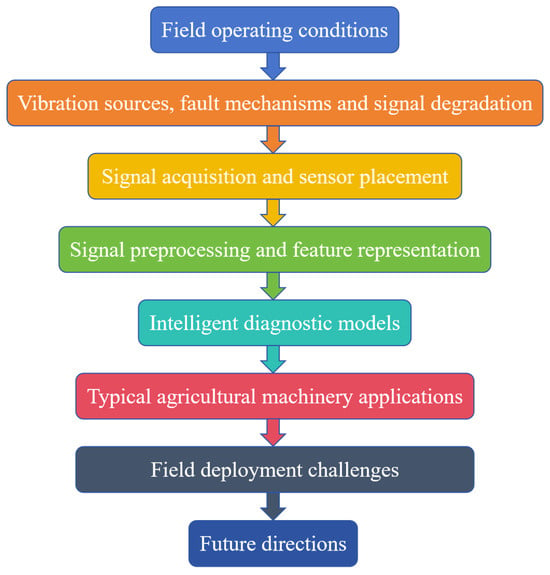
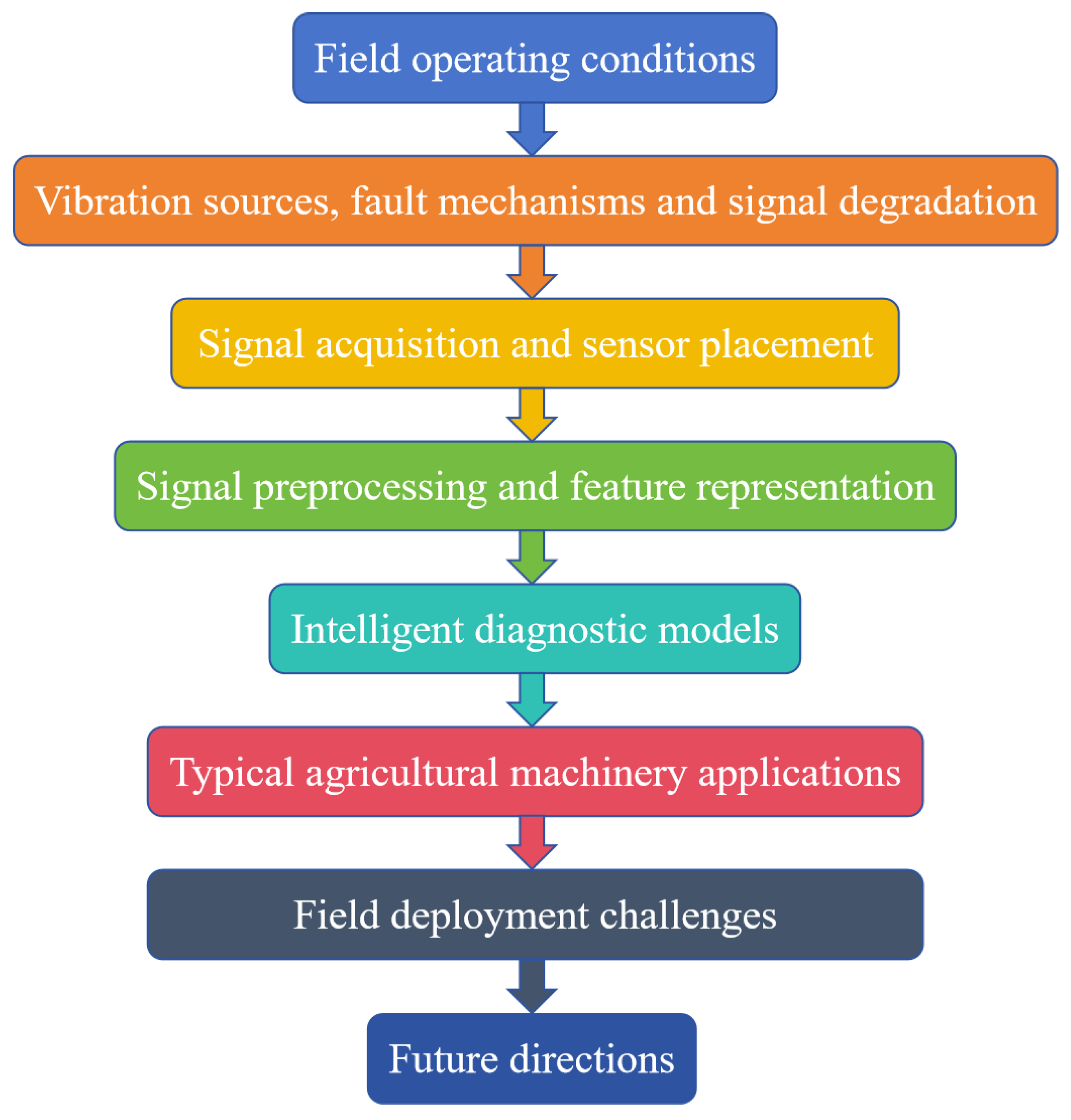
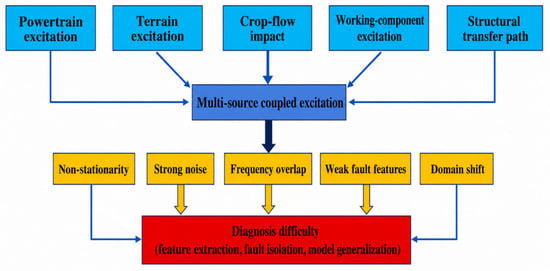
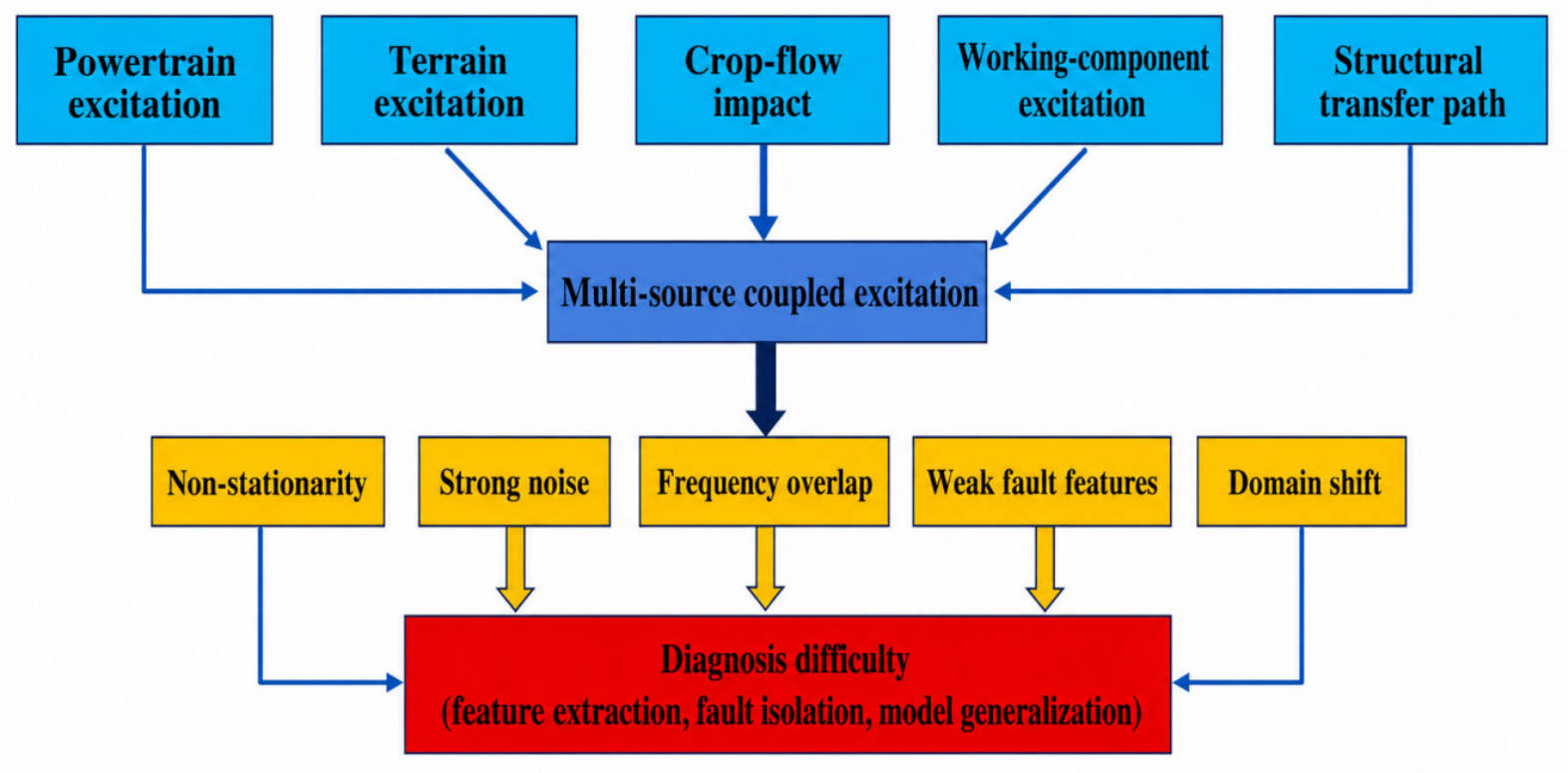
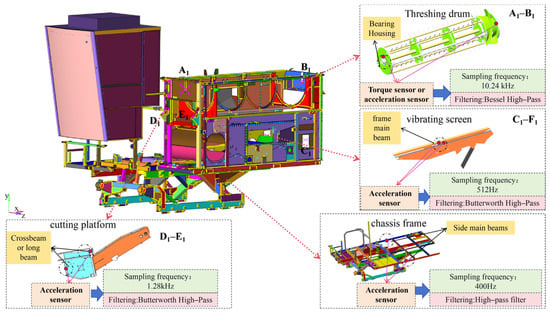
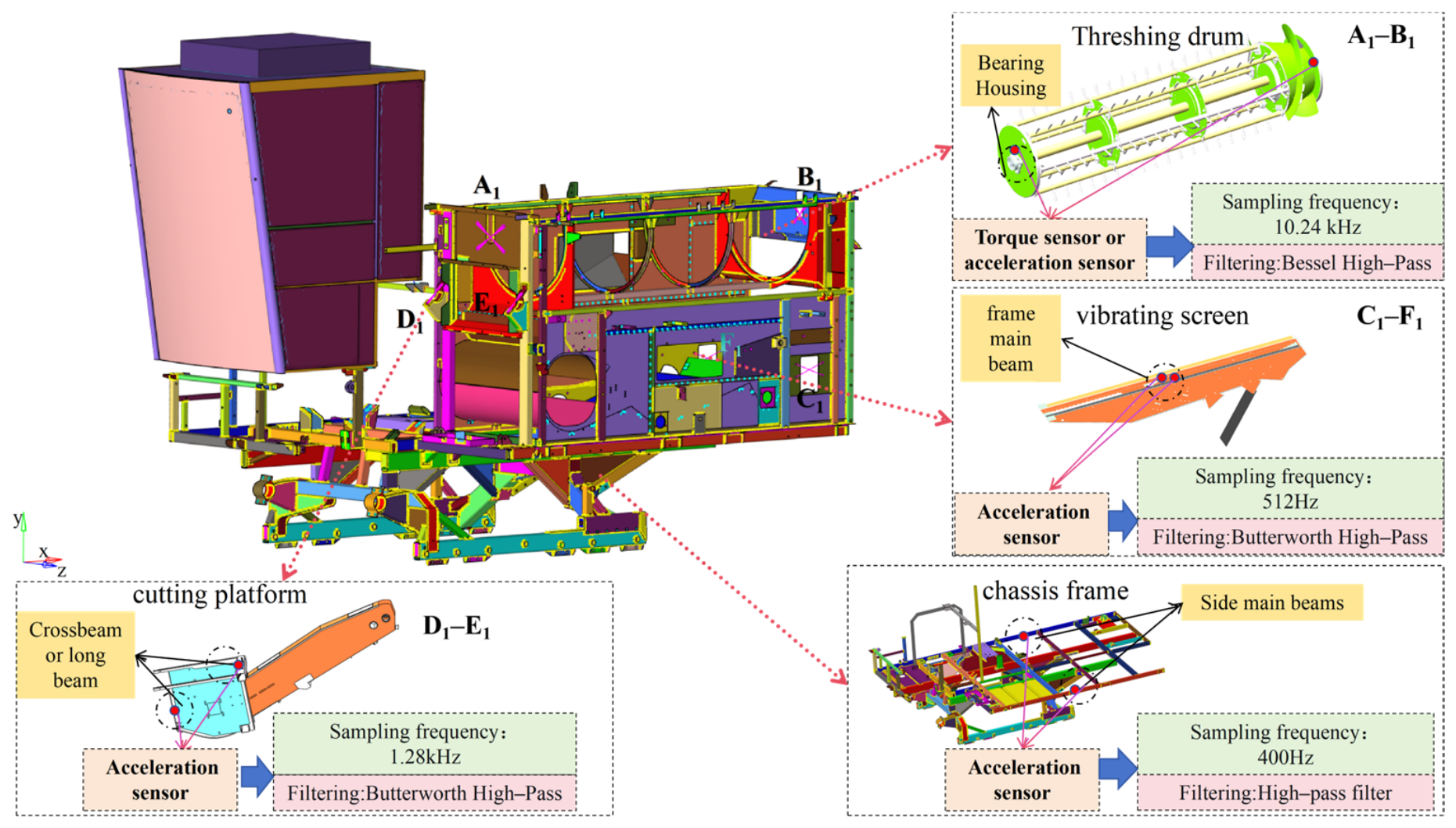
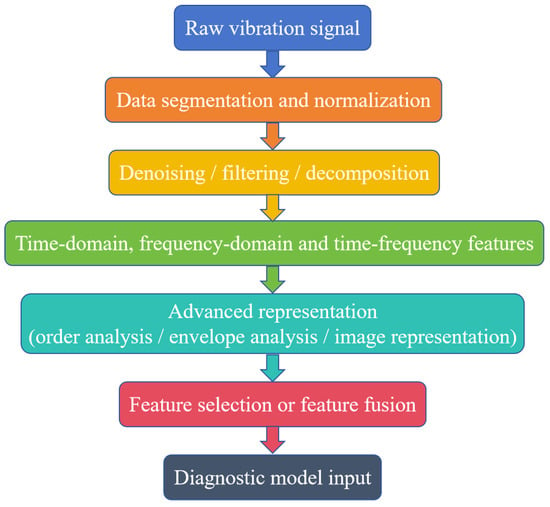
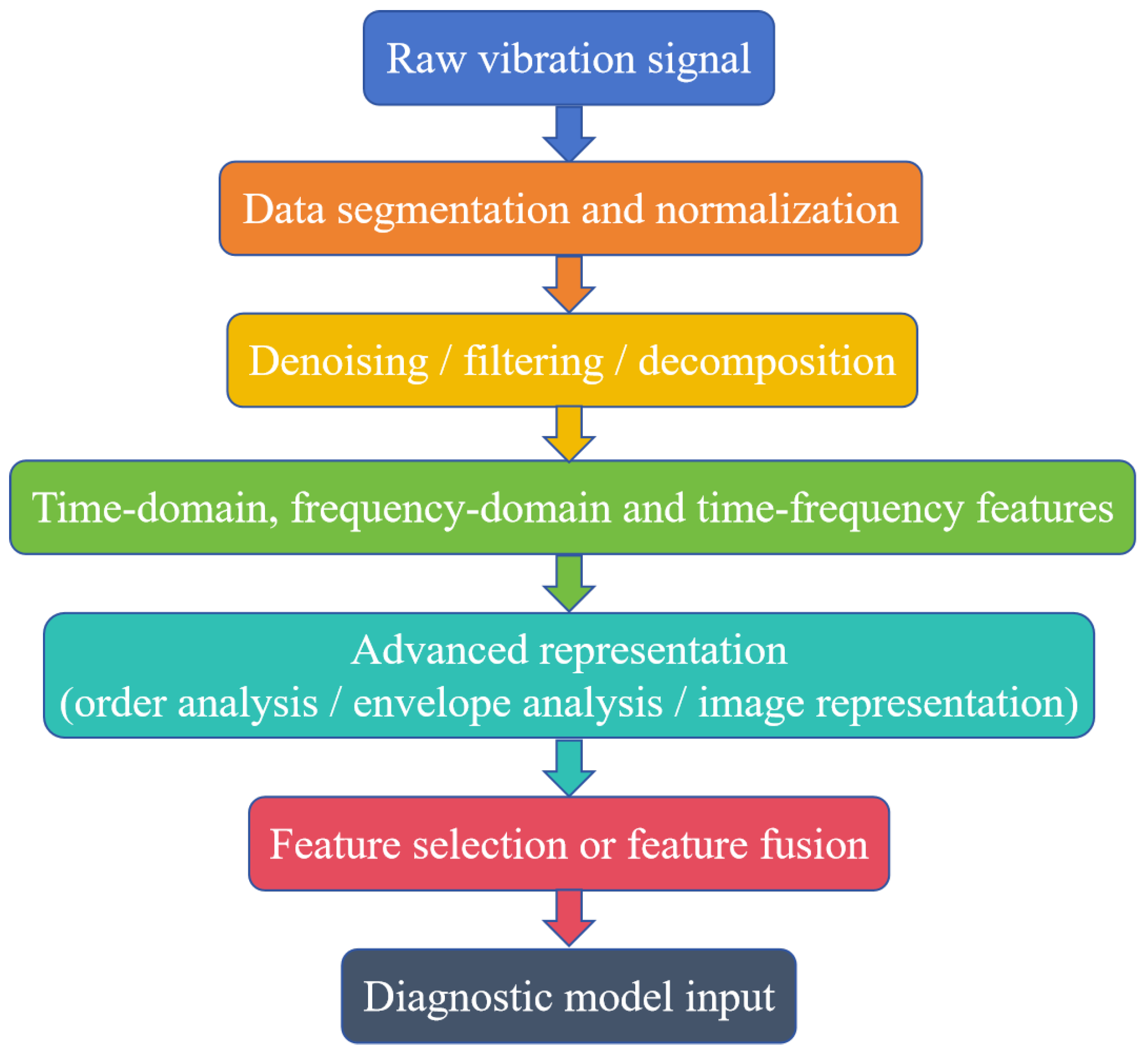
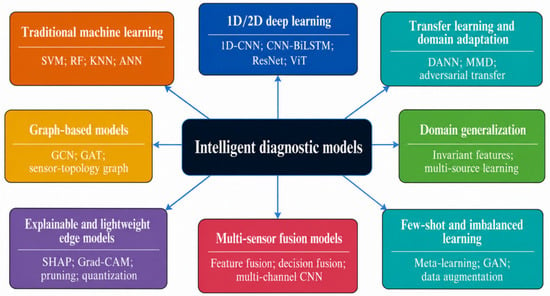
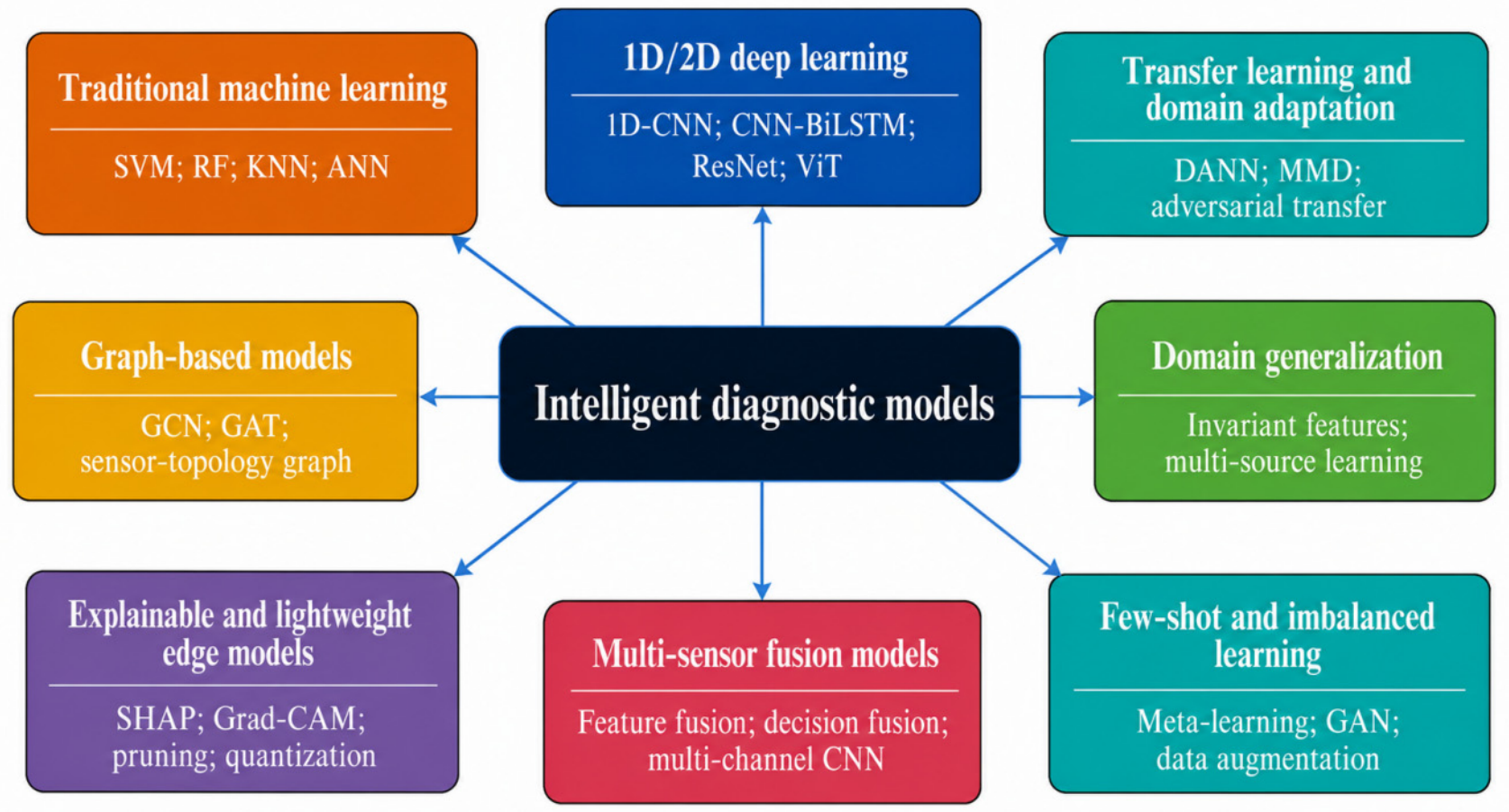
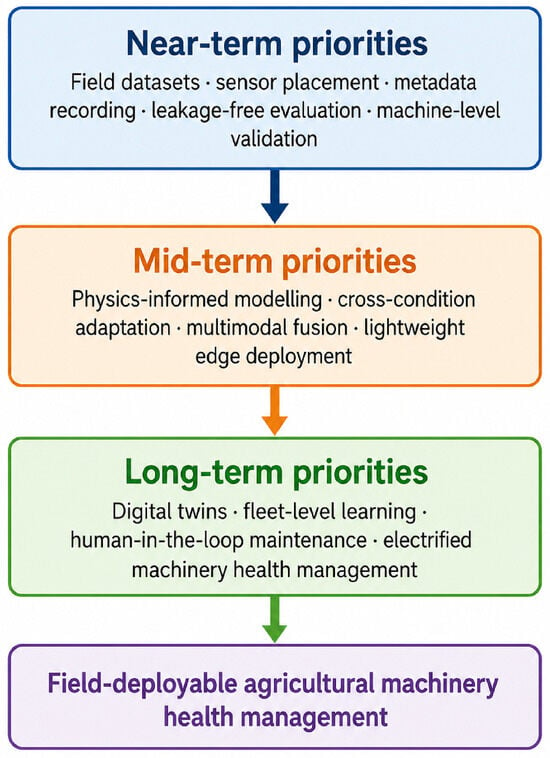
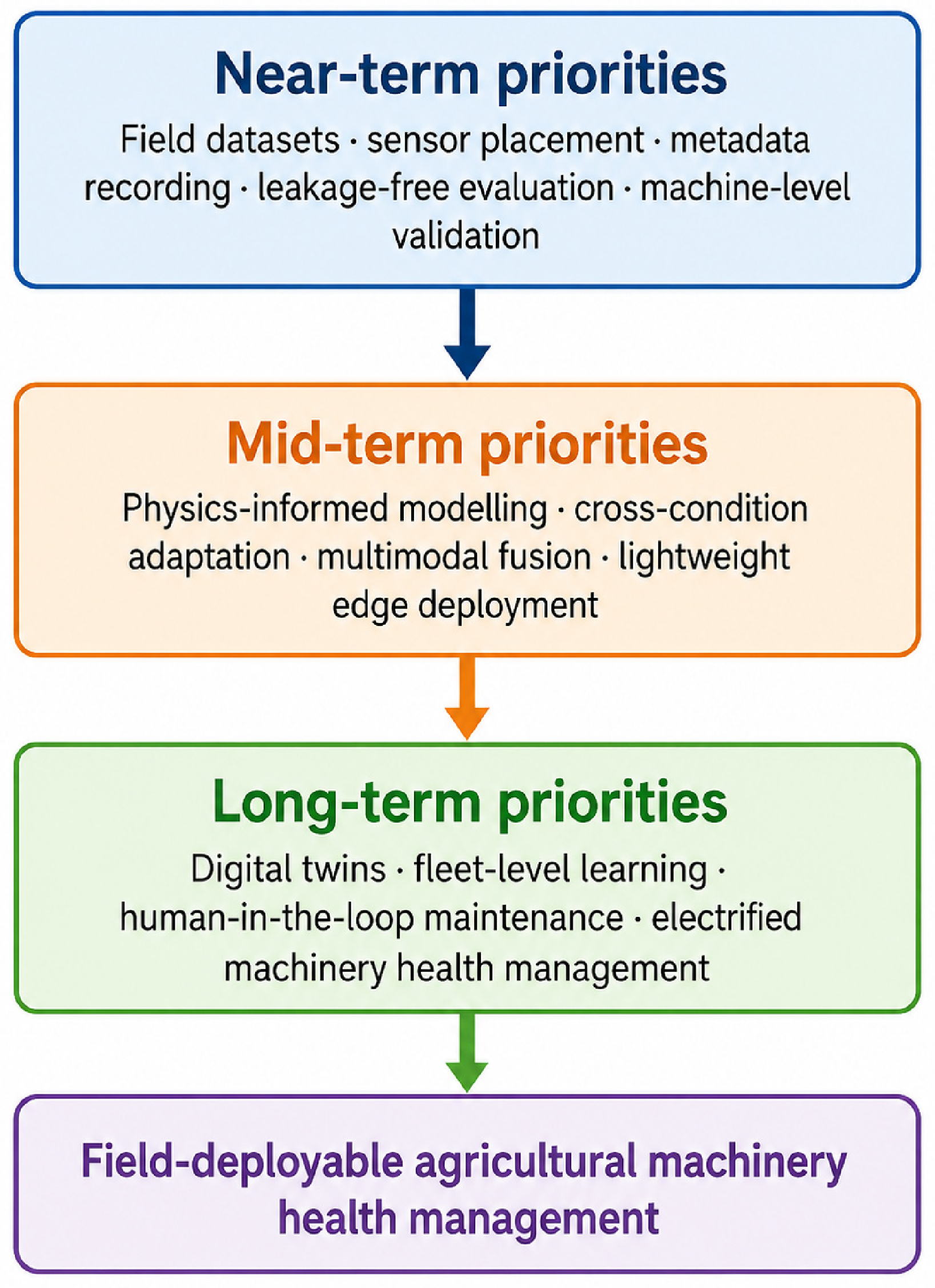

Disclaimer/Publisher’s Note: The statements, opinions and data contained in all publications are solely those of the individual author(s) and contributor(s) and not of MDPI and/or the editor(s). MDPI and/or the editor(s) disclaim responsibility for any injury to people or property resulting from any ideas, methods, instructions or products referred to in the content. |
© 2026 by the authors. Licensee MDPI, Basel, Switzerland. This article is an open access article distributed under the terms and conditions of the Creative Commons Attribution (CC BY) license.