


Abstract
Hybrid dynamical systems may exhibit Zeno behavior, where infinitely many discrete transitions occur in finite time, leading to a loss of well-posedness of trajectories beyond the accumulation point. This paper develops a measure-theoretic formulation of hybrid dynamics by representing discrete transitions through finite vector-valued Radon measures and recasting the system as a measure differential inclusion. Within this framework, we establish a closure result for extended hybrid solutions in the space of functions of bounded variation and derive an existence result under suitable approximation assumptions. We also prove consistency with classical hybrid trajectories in the absence of Zeno behavior and characterize the state at the Zeno time as the left limit of the hybrid evolution, together with any additional vector atom deliberately assigned at the accumulation time. The proposed formulation provides a natural basis for continuation beyond the accumulation point and allows Lyapunov-based stability properties to be formulated directly at the level of the measure-driven dynamics. A central feature of the approach is that infinitely many discrete transitions with finite total variation of the jump increments are encoded by a finite vector-valued atomic measure whose atoms may accumulate at the Zeno time. An additional vector atom at the Zeno time may be introduced as a lumped effective jump; however, such an atom should be understood as a modeling choice, not as an automatic consequence of the jump sequence. The results are illustrated on an event-triggered control system exhibiting Zeno accumulation.
Keywords:
hybrid systems; Zeno behavior; measure differential inclusions; functions of bounded variation; Lyapunov stability; event-triggered control MSC:
34A60; 34A38; 93D05; 93C65
1. Introduction
Hybrid dynamical systems combine continuous-time evolution with discrete transitions and arise naturally in a wide range of applications. A central difficulty in their analysis is the occurrence of Zeno behavior, characterized by infinitely many discrete events in finite time. Such behavior leads to a loss of well-posedness of trajectories beyond the accumulation point and poses fundamental challenges for analysis, stability, and control design.
Classical frameworks for hybrid systems provide well-posedness and robustness properties under suitable assumptions, with the formulation of [1] being among the most influential. Related developments include generalized solution concepts [2] and Lyapunov-based stability methods [3]. However, these frameworks typically treat Zeno behavior as a pathological phenomenon and do not provide a systematic mechanism for extending trajectories beyond Zeno accumulation points.
A variety of approaches have been proposed to address Zeno behavior. Regularization techniques eliminate Zeno executions by perturbing the system and considering limits of non-Zeno trajectories [4]. Alternative constructions extend solutions by restarting the dynamics from -limit points or by modifying the hybrid time domain [5,6,7]. Early foundational studies of Zeno hybrid behavior include [8]. From a stability perspective, Zeno executions have been analyzed using Lyapunov and small-gain techniques [9,10,11,12], including in event-triggered and networked control systems [13]. Recent event-triggered control studies also demonstrate the continued relevance of triggering mechanisms in finite-time and fixed-time multi-agent control problems, including hybrid-order heterogeneous systems and networked systems under denial-of-service effects [14,15]. In many control-oriented designs, Zeno behavior is explicitly excluded by imposing dwell-time conditions [16,17]. While these approaches provide valuable insights, they either modify the system or alter the notion of solution and therefore do not yield a unified description of trajectories beyond Zeno time.
Complementary perspectives arise in nonsmooth and Filippov-type formulations, which describe limiting behavior under fast switching or sliding modes [18], as well as in non-standard analysis and numerical approaches addressing Zeno phenomena [19,20]. Recent developments extend hybrid systems theory toward learning-based methods, stochastic approximation, and adaptive estimation [21,22,23,24]. Related recent work also illustrates the broad use of hybrid ideas in stochastic jump-diffusion control with hybrid disturbances, high-order hybrid computational methods, and time-distribution viewpoints in discrete dynamical settings [25,26,27]. These directions broaden the applicability of hybrid models, but they do not address the intrinsic ill-posedness associated with Zeno accumulation. For convenience, we recall at this stage that a Dirac mass is the unit Radon measure concentrated at the time t. A point s is called an atom of a Radon measure if , and the atomic support refers to the set of such atoms. These notions will be used repeatedly below to distinguish actual mass assigned at the Zeno time from the mere accumulation of pre-Zeno jump times.
In parallel, measure-driven differential equations and inclusions have been extensively studied in connection with impulsive systems and optimal control. Early contributions include impulsive systems with derivative-dependent controls [28]. A systematic treatment of measure-driven differential inclusions was developed in [29], introducing robust solution concepts and closure properties motivated by impulsive optimal control. Further developments include approximation and sampling results [30] and extensions to nonconvex settings and vector-valued measures [31].
Despite this substantial body of work, the application of measure-driven differential equations and inclusions to hybrid systems with Zeno behavior, and in particular to the problem of post-Zeno continuation of trajectories, has not been systematically developed. Existing contributions focus primarily on impulsive control systems, optimal control formulations, and approximation schemes, without addressing the interplay between hybrid dynamics and Zeno accumulation.
This paper adopts a measure-theoretic viewpoint in which discrete transitions, including countably many transitions accumulating at a finite time, are represented by finite vector-valued Radon measures with a scalar control measure. In contrast to approaches based on regularization or modifications of the time domain, Zeno behavior is incorporated directly into the system dynamics through a measure-driven formulation.
The main idea is not to identify Zeno accumulation automatically with a vector atom at the Zeno time. Instead, a Zeno execution with finite total jump variation is naturally described by a finite vector-valued atomic measure whose support may accumulate at the Zeno time. If desired, an additional atom at the accumulation time can be introduced as a lumped effective jump, but this is an explicit modeling step. This viewpoint yields a well-defined limiting state at the Zeno time and provides a natural starting point for the continuation of trajectories beyond the accumulation point within a unified dynamical framework. The continuation itself is not uniquely determined by the original hybrid inclusion, but it is consistently defined once the limiting state and any additional post-Zeno modeling choice are specified.
Main contributions. This paper develops a measure-theoretic formulation of hybrid systems that provides a unified treatment of continuous evolution, discrete transitions, and their accumulation. The main contributions can be summarized as follows:
- 1.
- A reformulation of hybrid dynamics as a measure differential inclusion, providing a unified representation of flows, isolated jumps, and countable jump accumulations with finite total variation of the jump increments within a single dynamical model.
- 2.
- A well-posed characterization of trajectories at the Zeno time, in which the pre-Zeno jump sequence determines a left limit, and any additional atom at the Zeno time is interpreted as a lumped effective jump introduced by the modeling choice, not as an automatic consequence of accumulation.
- 3.
- An existence result in the space of functions of bounded variation, obtained by compactness and approximation arguments for measure-driven inclusions.
- 4.
- Consistency with classical hybrid trajectories in the absence of Zeno behavior, ensuring compatibility with standard hybrid system formulations under isolated jump conditions.
- 5.
- Lyapunov-based stability analysis formulated at the level of the measure-driven dynamics, allowing flow and jump contributions to be treated within a unified dissipation framework.
- 6.
- An interpretation of Zeno behavior through a vector-valued atomic jump measure, with a clear distinction between the natural countably atomic pre-Zeno contribution and optional lumped atoms used for post-Zeno modeling.
From a computational perspective, the resulting evolution admits a natural decomposition into a pre-Zeno hybrid phase and a post-Zeno continuation phase. The measure-driven formulation is used to describe the pre-Zeno hybrid evolution and to define a well-posed state at the accumulation time. The subsequent choice of post-Zeno dynamics is not selected uniquely by the original hybrid inclusion; it is an additional modeling choice unless the model is enlarged, for instance by introducing a mode variable or a time-dependent flow map.
To the best of our knowledge, a measure-theoretic formulation of hybrid systems that explicitly distinguishes accumulating pre-Zeno atoms from optional lumped effective atoms while also providing a Lyapunov-based stability analysis within a unified framework is not available in the existing literature. Existing approaches either rely on system modifications or treat flows and jumps separately, which limits their ability to capture Zeno accumulation and stability properties within a single consistent model. The novelty of this study lies in combining three ingredients within one mathematically consistent framework: a BV/vector-measure formulation capable of encoding countably many pre-Zeno jump increments with finite total variation, an explicit separation between natural pre-Zeno atomic accumulation and optional lumped post-Zeno atoms, and a Lyapunov analysis carried out directly at the level of the measure-driven dynamics. In this sense, the contribution is not merely a reformulation of classical hybrid inclusions but a unified treatment of existence, consistency, Zeno-state characterization, and stability in a single measure-theoretic setting.
The remainder of this paper is organized as follows. Section 2 introduces the necessary background on the functions of bounded variation and set-valued analysis and recalls the standard hybrid system framework together with its reformulation as a measure differential inclusion.
Section 3 contains the main analytical results. It begins with compactness and closure ingredients for trajectories, measures, and admissible flow selections, which are then combined into a closure result for extended hybrid solutions and an existence result obtained under suitable approximation assumptions. The section further shows consistency of the proposed notion of solution with classical time-parameterized hybrid trajectories in the absence of simultaneous jumps, and it concludes with a characterization of the state at the Zeno time and of admissible post-Zeno continuations once additional dynamics are specified.
Lyapunov-based stability properties are analyzed in Section 4, where dissipation conditions are formulated directly in the measure-driven setting and are used to derive both nonincreasing and strict decay results.
Section 5 presents a numerical example of an event-triggered control system with Zeno accumulation, illustrating the measure-based interpretation of the Zeno limit and one possible subsequent continuation of the trajectory.
Finally, Section 6 summarizes the main findings and outlines possible directions for future research.
2. Preliminaries and Problem Formulation
This section introduces the mathematical framework underlying the proposed approach. We recall basic notions on functions of bounded variation and set-valued mappings and review the standard hybrid system formulation. These elements provide the foundation for the measure-theoretic representation of hybrid dynamics introduced in this work.
In particular, functions of bounded variation naturally capture trajectories exhibiting both continuous evolution and jump discontinuities and therefore provide an appropriate functional setting for describing hybrid systems with Zeno behavior. This motivates the reformulation of hybrid dynamics as a measure differential inclusion, where the continuous and discrete components are treated in a unified manner.
2.1. Functions of Bounded Variation
Functions of bounded variation play a central role in the proposed framework, as they allow one to rigorously describe trajectories that combine absolutely continuous evolution with possibly infinitely many jump discontinuities. In particular, they provide a natural setting for representing hybrid trajectories with Zeno accumulation, where classical formulations may fail.
A function is said to be of bounded variation if
where the supremum is taken over all partitions , with .
Every function admits a measure-valued derivative , which admits a Radon–Nikodym decomposition into absolutely continuous and singular parts (see, e.g., [32]). This decomposition provides the structural foundation for the measure-based formulation introduced below, revealing that the evolution can be naturally split into a flow component and a singular component. In particular, the absolutely continuous part corresponds to the flow dynamics, while the singular part captures discrete transitions. In the Zeno case, this singular part may be a purely atomic measure with countably many atoms accumulating at the Zeno time; it need not contain an atom at the accumulation time unless such an atom is introduced explicitly.
2.2. Hybrid Systems
In the following and throughout this paper, we use the notation to denote a set-valued mapping, i.e., a mapping that assigns to each a subset . We consider a hybrid dynamical system in the form of a hybrid inclusion
where are set-valued maps, and denote the flow and jump sets, respectively. Throughout this paper, we assume that the sets C and D are closed.
By a classical hybrid trajectory of (1) we mean a solution defined on a hybrid time domain involving both continuous time and a discrete jump index, in the sense of [1]. Such solutions alternate between continuous evolution (flows) and discrete transitions (jumps) and may exhibit multiple jumps at the same continuous time instant.
The jump relation in (1) is written in incremental form. This representation is equivalent to the standard post-jump formulation using the transformation , and it is particularly convenient for the measure-theoretic formulation introduced below.
Solutions to (1) may exhibit Zeno behavior, i.e., infinitely many jumps occurring in finite time. In such cases, classical hybrid trajectories typically cannot be extended beyond a finite Zeno time , since the hybrid time domain becomes unbounded in the jump index.
From a measure-theoretic perspective, the accumulation of jump times may occur in a variety of ways. In general, the support of the associated measure may contain multiple accumulation points or exhibit a more intricate structure within the interval , which cannot be characterized by a single accumulation time.
In the present work, we restrict attention to Zeno behavior characterized by accumulation at a single point , as introduced in Definition 2. The natural measure associated with such a pre-Zeno jump sequence has atoms at the jump times whose support accumulates at . It does not, in general, have an atom at . An atom at may be added only as a lumped effective jump, representing an additional modeling choice for the post-Zeno description.
2.3. Measure-Based Formulation
To overcome the limitations associated with Zeno behavior, we use a measure-driven representation in which the cumulative jump contribution is encoded by a finite vector-valued measure. We write this measure in the form
where is a non-negative finite Radon measure on , g is -integrable, and is the vector-valued Radon measure defined by
The differential notation is understood in the sense of measures, that is, as the distributional derivative of the function . The absolutely continuous part of the dynamics is described by a selection , while the vector measure describes the accumulated jump contribution.
The scalar measure should therefore be understood as a control measure for the vector-valued jump measure , not as the jump increment itself. At an atom t of , the actual state jump is
Consequently, compatibility with the original hybrid jump map is imposed on the product
not on the density alone. If , this reduces to the usual convention , but for general atomic weights the product is the physical jump increment.
This distinction is important for Zeno behavior. A Zeno sequence of classical hybrid jumps , , with finite total jump variation is naturally represented by the vector-valued measure
Equivalently, one may take , for instance
with the zero increments omitted. Then, and . Thus, finite total variation of the jump increments, not finiteness of the counting measure , is the relevant condition. The accumulating atoms may have in the support of , but they do not create a mass or a vector atom unless such a lumped effective jump is explicitly prescribed.
Remark 1.
The formulation above allows a general finite control measure μ at the level of notation. The hybrid interpretation used in the consistency, post-Zeno, and Lyapunov results is centered on the purely atomic case, where the vector measure represents isolated jumps and countable families of jumps accumulating at a Zeno time. A possible atom at the Zeno time is interpreted as an explicitly prescribed lumped effective jump, not as a measure-theoretic consequence of the mere convergence of jump times.
3. Main Results
The main technical difficulty in establishing the existence of solutions to (2) lies in the lack of compactness induced by Zeno accumulation, which leads to the appearance of infinitely many discrete events in finite time and prevents a direct application of classical compactness arguments.
To address this issue, we combine compactness properties of functions of bounded variation with weak and weak-∗ convergence techniques for integrable functions and Radon measures. For the convenience of the reader, we briefly recall the notions of convergence used throughout this section.
More precisely, we use the following types of convergence:
- Pointwise convergence: A sequence converges pointwise to x if
- Weak convergence in : A sequence converges weakly to f, denotedif
- Weak-∗ convergence of measures: A sequence of finite Radon measures converges weakly-∗ to , denotedif
Throughout this paper, a.e. stands for almost every with respect to the Lebesgue measure, while μ-a.e. means μ-almost every, i.e., up to a set of -measure zero.
These notions of convergence will be used to extract convergent subsequences of approximate trajectories and to pass to the limit in the measure-driven integral identity (6). For clarity, the strategy of Section 3 is as follows. First, we collect compactness ingredients for BV trajectories and Radon measures. Second, we establish closedness of the admissible flow selections and stability of the integral identity under the adopted convergence assumptions. Third, these ingredients are assembled into a closure theorem for approximate extended hybrid solutions and a conditional existence corollary. Finally, we turn to consistency with classical hybrid trajectories and to the characterization of the state and continuation beyond a Zeno accumulation time.
3.1. Closure and Existence of Extended Hybrid Solutions by Approximation
The strategy adopted in this subsection is to first establish a closure property of the set of extended hybrid solutions under suitable convergence assumptions (Proposition 1) and then to derive existence as a consequence of this closure together with an approximability argument (Corollary 1).
We begin by recalling a standard compactness result for functions of bounded variation, namely Helly’s selection theorem (see, e.g., [32,33,34]). This result will be used to extract convergent subsequences of approximate trajectories.
Lemma 1.
Let be a sequence such that
Then there exist a subsequence, not relabeled, and a function
such that for every .
Proof.
This is a standard form of Helly’s selection theorem for functions of bounded variation; see, for example, the classical treatments in [33,34]. For completeness, note that the uniform variation bound together with the common initial value implies a uniform pointwise bound on . Applying Helly’s selection theorem componentwise yields a subsequence converging pointwise on to a function x of bounded variation. Lower semicontinuity of the total variation then gives . □
Remark 2.
Lemma 1 provides the compactness needed to extract pointwise convergent subsequences of trajectories with uniformly bounded variation and consistent initial conditions, including sequences exhibiting Zeno accumulation.
The next result ensures weak-∗ compactness of uniformly bounded families of Radon measures.
Lemma 2.
Let , and let be a sequence of non-negative finite Radon measures on such that
for some constant . Then there exist a subsequence, still denoted by , and a non-negative finite Radon measure μ on such that
Moreover, .
Proof.
For each k, define the positive linear functional by . Since is non-negative and finite, one has , so the sequence is bounded in . By the Banach–Alaoglu theorem, there exist a subsequence, still denoted by , and a functional such that converges to L in the weak-∗ topology of . Because each is positive, the limit functional L is also positive. The Riesz representation theorem therefore yields a unique non-negative finite Radon measure on such that for all . Consequently, for every continuous ,
Finally, taking and passing to the limit gives . □
We recall that a set-valued mapping has nonempty closed values if and is closed for every , and we recall that H is outer semicontinuous if for every sequence and every sequence , such that , one has .
It is well known that outer semicontinuity with closed values implies closedness of the graph of H (see, e.g., [35]). In particular, if , , and for all k, then .
The following lemma provides a crucial weak-closedness property of the differential inclusion associated with F. It guarantees that the limit of admissible velocities remains admissible under weak convergence and thus enables the passage to the limit in the flow part of the dynamics.
Lemma 3.
Let , and let be upper semicontinuous with nonempty, convex, and compact values. Assume, in addition, that there is a compact set such that and for a.e. and all k. Equivalently, the conclusion remains valid if F is integrably bounded along the sequence.
Let be measurable, and let satisfy
Assume that
Then,
Proof.
We argue by contradiction. Assume that there exists a measurable set with positive measure such that
Step 1: Measurable separation. By the strict separation theorem, for each there exist and such that
For each , , and , define
Using the density of and , the strict separation at each implies that
Since E has positive measure and the above union is countable, there exist , , and such that
Setting and , we obtain
for all .
Step 2: Upper semicontinuity and boundedness of the support function. Define
Then h is upper semicontinuous and measurable. Since all relevant trajectories take values in the compact set K and F is upper semicontinuous with compact values, F is bounded on K. Hence, is uniformly bounded above and below on the set under consideration. Moreover, for all . Since almost everywhere, we obtain
Step 3: Integral inequality. From we get
Hence,
By the reverse Fatou inequality, using the uniform integrable boundedness obtained in Step 2,
Thus,
Step 4: Contradiction by weak convergence. On the other hand,
so
Since , weak convergence yields
Hence,
a contradiction. This proves the claim. □
To pass to the limit in the measure-driven integral identity, we need a result ensuring stability of both the absolutely continuous and singular components under the adopted convergence assumptions. The following lemma provides this property and plays a key role in the subsequent closure argument.
Lemma 4.
Let . For each , let and let be a non-negative finite Radon measure on satisfying . Assume that for every ,
Assume, moreover, the following:
- (i)
- for every ;
- (ii)
- in ;
- (iii)
- as finite Radon measures on ;
- (iv)
- There exists a bounded continuous function such that
Proof.
Fix . We pass to the limit term by term in (4).
Step 1: Convergence of the absolutely continuous term. Since
and since the indicator function of belongs to , it follows that
Step 2: Definition of the component measures. Write
For each , define signed Radon measures and on by
for every Borel set .
We claim that
for every . Indeed, let . Then,
Hence,
equals
For the first term, we have
Since
and this term converges to zero.
For the second term, the scalar function is continuous and bounded on , hence weak-∗ convergence of to yields
Therefore,
for every , which proves the claim.
Step 3: Convergence of the measure terms when . Assume first that Fix .
Since converges uniformly on , there exists a constant such that
and
We first note that
If , then
Since is closed and with , the portmanteau theorem, see, e.g., [36,37,38], yields
Hence,
Assume now that . Let , and choose a continuous function
such that
Then,
and, therefore,
where denotes the indicator function of a set A, i.e.,
Since for every Borel set , we obtain
Similarly,
Since and , we have
Hence,
Moreover, since
and is closed, the portmanteau theorem yields
Because , one has
Therefore,
Letting and using , we conclude that
Since was arbitrary, it follows that
Combining this with Step 1 and the pointwise convergence we may pass to the limit in (4) and obtain
This proves (5) for every such that .
Step 4: The case of arbitrary t. Assume now that for every . Fix and .
By Step 3, we already know that
Moreover, for every ,
By uniform convergence of and convergence of the atomic masses, it follows that
Since converges uniformly on , there exists a constant such that
and
If , then , and, therefore,
Thus, the desired convergence of the measure integrals holds at . In what follows, assume that .
Let be any sequence such that and for all m. Such a sequence exists because a finite Radon measure has at most countably many atoms. For each fixed m, Step 3 yields
Moreover,
We decompose
Hence,
Using the uniform bound on and , we obtain
It therefore remains to estimate . Since
the portmanteau theorem for the non-negative measures gives
Together with the convergence of the atomic masses and the fact that , this yields
Therefore, for each fixed m,
Since as and is finite, we have
Hence,
Thus,
Combining this with Step 1 and the pointwise convergence , we obtain (5) for every . □
Remark 3.
The assumption
is needed to ensure convergence of the measure integral at points where the limit measure μ has atoms. Indeed, weak-∗ convergence of measures guarantees convergence on continuity sets but does not in general control the behavior of the atomic parts. The above condition ensures that the contributions of point masses are preserved in the limit, which is essential for passing to the limit in the integral identity (5) at arbitrary times. This assumption plays a key role in the closure result of Proposition 1 and, consequently, in the existence result stated in Corollary 1.
Remark 4.
From a practical viewpoint, the atom-compatibility assumption prevents artificial creation or disappearance of concentrated jump mass when approximate trajectories are generated numerically or by regularization. This condition is intentionally strong: Proposition 1 and Corollary 1 cover approximations in which the relevant atoms and their masses are tracked at the same time instants. They do not cover moving-atom approximations such as , nor smooth or absolutely continuous mollifications of atoms, because these approximations fail the pointwise condition at the limiting atom. Such perturbative or Filippov-type regularizations require a different approximation theorem based on convergence of the cumulative vector-valued jump term.
We now formalize the notion of extended hybrid solution, which is motivated by the measure-based formulation introduced in Section 2.
Definition 1.
Let , and let . A function is called an extended hybrid solution on if there exist a non-negative finite Radon measure μ on satisfying and a μ-integrable function such that
and
for every .
Moreover, the trajectory satisfies the hybrid constraints in the sense that
and
These conditions are the measure-theoretic counterparts of the standard hybrid inclusion constraints. The flow condition acts on the absolutely continuous part, while the atom condition acts on the actual jump increments . Since the support of a measure also contains accumulation points of its atoms, the support condition constrains accumulation points of jump activity as well as actual atoms; for instance, if and , then even when . No jump relation is imposed at such a non-atomic support point unless an atom is explicitly assigned there.
Here, denotes the left limit of x at time t, which exists since ; at the initial time we use the convention . The condition excludes an initial atom and ensures that the integral identity gives .
Remark 5.
The pair parametrizes the vector-valued jump measure . In particular, for an atom at time t,
Thus, the compatibility condition with the original hybrid jump map is
which is exactly the standard incremental jump relation. Equivalently, in the post-jump notation with , an atom of the vector measure produces the update .
For a genuine Zeno sequence of jump times with finite total jump variation, the natural vector measure has atoms at the points . Its scalar control measure may be chosen as the total variation measure . This representation does not, by itself, create a vector atom at . A term appears only when an additional lumped effective jump at the Zeno time is deliberately included in the model.
In Definition 1, the jump inclusion is required at atoms of μ. In contrast, non-atomic points of , such as accumulation points of pre-Zeno atoms, are constrained by the support condition but do not themselves generate a jump unless the measure assigns positive mass to the singleton.
Proposition 1.
Let , and let be a sequence of approximate extended solutions on of the form (4), where
and, at every atom t of ,
Assume the following:
- (i)
- for all k, and for every , and for every and every sequence such that and for all sufficiently large k, one has
- (ii)
- for all k;
- (iii)
- and for all k;
- (iv)
- in ;
- (v)
- uniformly on , where g is continuous;
- (vi)
- for a.e. , and for all k;
- (vii)
- F is upper semicontinuous with nonempty, convex, and compact values, and G is outer semicontinuous with nonempty closed values;
- (viii)
- For every weakly-∗ convergent subsequence, still denoted by , with limit μ, one has
Then there exist a subsequence, not relabeled, and a non-negative finite Radon measure μ on such that x is an extended hybrid solution on in the sense of Definition 1.
Proof.
The proof follows by combining compactness and closedness arguments.
Step 1: Bounded variation of the limit trajectory. By (i), pointwise on , and by (ii),
Since , Lemma 1 implies that
Step 2: Compactness of measures. By (iii) and Lemma 2, there exist a subsequence, not relabeled, and a non-negative finite Radon measure such that
Moreover, by assumption (viii) and , we also have .
Step 3: Passage to the limit in the integral identity. By Step 2, there exists a subsequence, not relabeled, such that By assumption (viii), this subsequence also satisfies
Therefore, by assumptions (iv), (v), and Lemma 4, we obtain
Step 4: Verification of the flow inclusion. For each k,
Since
and
Lemma 3 implies
Step 5: Verification of the atomic jump inclusion. Let t be an atom of the limit measure . Then, , and by assumption (viii) we have . Hence, for all sufficiently large k, the point t is an atom of . By the atomic compatibility assumption for the approximating sequence,
Using assumption (i), assumption (v), and the convergence of the atomic masses, we obtain
Since G is outer semicontinuous with closed values, its graph is closed. Passing to the limit gives
Thus, the atomic jump compatibility condition in Definition 1 is satisfied.
Step 6: Preservation of hybrid constraints. By assumption (vi), for each k there exists a measurable set with Lebesgue measure zero such that
Let
Then, N is measurable and has Lebesgue measure zero. Hence, for every , one has
Since C is closed and pointwise, it follows that
Therefore,
Now let . Then, for every neighborhood U of t, one has
Since and the measures are non-negative, the portmanteau theorem, see, e.g., [36] (Theorem A.3.12) or [39] (Theorem 11.1.1) yields
Hence,
for all sufficiently large k. Therefore, there exists a sequence such that
By assumption (vi),
By assumption (i), since and for all sufficiently large k, we have
Because D is closed, it follows that
Hence,
Thus all conditions of Definition 1 are satisfied, and, therefore, x is an extended hybrid solution on . □
Proposition 1 establishes a closure property of the set of extended hybrid solutions with respect to the convergence induced by the underlying function spaces and measures. In particular, it ensures that limits of admissible approximating sequences remain extended hybrid solutions.
This result provides the key compactness and stability mechanism for the existence theory. As a direct consequence, the existence of extended hybrid solutions follows under an approximability assumption.
Corollary 1.
a function
and a non-negative finite Radon measure μ on such that x is an extended hybrid solution on in the sense of Definition 1.
Let , and let . Assume the following:
- (i)
- is upper semicontinuous with nonempty, convex, and compact values;
- (ii)
- is outer semicontinuous with nonempty closed values;
- (iii)
- There exists a constant and a sequence of approximate hybrid trajectories , with associated functions , , and non-negative finite Radon measures on satisfying , such that for every k and every ,withand
- (iv)
- The sequence converges uniformly on to a continuous function ;
- (v)
- For every weakly-∗ convergent subsequence, still denoted by , with limit μ, one has
- (vi)
- The sequence is compatible with left limits in the following sense: for every subsequence, still denoted by , and every pointwise limit x of , one has
- (vii)
- The sequence is compatible with the supports of in the following sense: for every subsequence, still denoted by , every pointwise limit x of , every weakly-∗ limit μ of , every , and every sequence such that and for all sufficiently large k, one hasThen there exist a subsequence, still denoted by , a function
Proof.
By Helly’s selection theorem (Lemma 1), the bounds
yield, after passing to a subsequence, a function such that
By Lemma 2, after passing to a further subsequence, there exists a non-negative finite Radon measure on such that
Since , the sequence is uniformly bounded on . Hence, all values of all trajectories lie in a fixed compact ball. Because F is upper semicontinuous with compact values, it is locally bounded on that ball and, therefore, is bounded in . In particular, is uniformly integrable, and by the Dunford–Pettis theorem there exists, after passing to a further subsequence, a function
such that
All assumptions of Proposition 1 are now satisfied. Therefore, x is an extended hybrid solution on in the sense of Definition 1. □
Remark 6.
Corollary 1 should be read as a conditional closure/existence result. It shows that an extended hybrid solution exists once one has constructed approximating trajectories satisfying the compactness, support, and atom-compatibility assumptions of Proposition 1. It is not a general well-posedness theorem for arbitrary hybrid inclusions with Zeno behavior.
The admissible approximations covered by the corollary are those that are compatible with the atomic structure of the limiting jump measure. Typical examples are truncations of a Zeno sequence, or atomic approximations in which the prescribed atoms and their vector increments are tracked in the approximating sequence. In contrast, a sequence of purely smooth or absolutely continuous scalar measures cannot satisfy the pointwise atomic compatibility condition
when the limiting measure has a genuine atom, since for every k and every point t. Such diffuse regularizations may be useful in other approximation frameworks, but they are not covered by Corollary 1 without additional hypotheses controlling the convergence of the cumulative vector-valued jump term.
The same pointwise atom-compatibility condition is restrictive but intentional: it prevents atomic mass from appearing or disappearing at prescribed points without being tracked by the approximating sequence. In particular, an arbitrary collapse of a pre-Zeno sequence into a new atom at is not covered unless this atomic mass is explicitly built into the approximation. Thus the corollary applies to compatible atomic approximations and compatible lumped-jump models, not to every possible Zeno collapse.
3.2. Consistency with Time-Parameterized Hybrid Trajectories
Classical hybrid solutions are typically defined on hybrid time domains involving both continuous time and a discrete jump index, as in the framework of hybrid inclusions [1]. Such representations allow multiple jumps to occur at the same continuous time instant.
In contrast, the present formulation considers trajectories parameterized solely by time. As a consequence, multiple jumps occurring at the same time instant cannot be represented explicitly. This restriction is intrinsic to the chosen time-parameterized formulation and reflects a modeling choice. In particular, the proposed framework is intended for hybrid evolutions in which jump times are totally ordered, and any Zeno accumulation is represented through a finite vector-valued atomic measure whose atoms may accumulate at a single time. A vector atom at the accumulation time itself is treated separately as an effective-jump modeling choice.
The following result shows that, in the absence of simultaneous jumps, the proposed notion of solution is consistent with standard time-parameterized hybrid trajectories.
Theorem 1.
Let be an extended hybrid solution in the sense of Definition 1. Assume that the associated measure μ is purely atomic with finitely many atoms located at distinct times, i.e.,
Then x coincides with a time-parameterized hybrid trajectory of (1) with isolated jumps at times .
Proof.
Since is a finite sum of Dirac measures, we have
Hence,
Between jump times, the measure vanishes, and, therefore, x is absolutely continuous on each interval not containing jump times. In particular,
Moreover, by Definition 1, one has for almost every . Since x is continuous on each open interval between successive jump times and C is closed, it follows that
with the obvious modifications on the initial and terminal intervals. Thus, the flow evolves within the flow set.
At each jump time , Definition 1 gives
Since
we obtain
Furthermore, since
it follows that , so jumps occur only from the jump set.
Therefore, x satisfies the hybrid dynamics (1) with isolated jump times and coincides with a time-parameterized hybrid trajectory. □
3.3. Post-Zeno Continuation
We first formalize the notion of Zeno behavior considered in this work.
Definition 2.
A sequence of jump times is said to exhibit Zeno behavior if there exists a time such that
The point is called the Zeno time.
In general, sequences of jump times may accumulate in more complex ways, including multiple accumulation points or accumulation at the boundary of the interval. In the measure-theoretic setting, this corresponds to measures whose support may have a nontrivial structure and cannot be described in terms of a single accumulation time.
In the present work, we restrict attention to Zeno behavior characterized by accumulation at a single point , as in Definition 2. Within the measure-based formulation (2), the natural representation of a pre-Zeno sequence is a finite vector-valued atomic measure with atoms at the points , provided the total variation of the jump increments is finite. Its scalar control measure may have in its support, but neither the control measure nor the vector jump measure needs to assign positive mass to the singleton .
We may also allow the vector measure to possess an atomic component at . Such a vector atom should be interpreted as a lumped effective jump introduced by modeling choice, not as a consequence of the accumulation of jump times alone.
Theorem 2.
Let be an extended hybrid solution, and let be a Zeno time. Then,
- (i)
- The left limit exists;
- (ii)
- The value is well defined and satisfiesConsequently, if , then ; if , the additional term is the vector-valued effective jump deliberately assigned to ;
- (iii)
- The restriction of x to , together with the restricted measure , is an extended hybrid solution in the same shifted sense on with initial condition and with no atom at the initial time .
In particular, the theorem identifies a well-defined post-Zeno initial state. The subsequent continuation is determined by the measure and dynamics prescribed after and is not uniquely fixed by the pre-Zeno hybrid inclusion alone.
Proof.
(i) Since , it admits left and right limits at every point. In particular, exists, independently of the structure of the measure .
(ii) By Definition 1, one has
Decomposing the measure at , we obtain
Since , one has
Moreover, by the definition of the left limit and the above decomposition of the measure term, it follows that
Hence,
which shows that is well defined.
(iii) Define for , and let . Then, for every ,
The use of is essential when has an atom at : that atom has already been included in the initial value and must not be counted again in the post-Zeno segment. Thus, the restricted measure has no atom at the new initial time. The flow and support constraints are inherited by restriction, with the support condition understood for . Hence, is an extended hybrid solution on in the corresponding shifted-time sense. □
Remark 7.
The identity in Theorem 2(ii) follows from the elementary formula
for any μ-integrable function g and any atom t of μ.
At a Zeno time , this formula describes only the vector atom actually assigned by to the singleton . For the natural purely pre-Zeno representation
one typically has , even though is an accumulation point of the support. Therefore, a nonzero term should be interpreted as an explicitly prescribed lumped effective jump, not as an automatic consequence of the accumulation of jump times.
Remark 8.
Corollary 1 provides a closure principle for hybrid dynamics in the measure-theoretic setting. It shows that, under the stated approximation and compatibility assumptions, extended hybrid solutions can be obtained as limits of approximating sequences of classical or regularized trajectories.
From a computational perspective, numerical simulations of hybrid systems naturally generate such approximations. When the assumptions of Corollary 1 are satisfied, the limiting trajectory is well defined in the sense of Definition 1, even in the presence of Zeno behavior.
Together with Theorems 1 and 2, this establishes a coherent framework linking classical hybrid trajectories, their approximations, and their continuation beyond Zeno accumulation.
Remark 9.
Theorem 2 ensures that the trajectory admits a well-defined value at the Zeno time , obtained from the BV left limit and, if present, from an explicitly prescribed atom at . However, in general, the original hybrid dynamics (1) do not admit a continuation beyond in the classical sense.
Indeed, at the Zeno time the state typically belongs to the jump set D, and the hybrid system may generate further instantaneous transitions without allowing the evolution to re-enter the flow set C. As a consequence, the classical hybrid model does not provide a well-defined post-Zeno trajectory.
The proposed measure-theoretic framework addresses this issue by defining the pre-Zeno state as a BV left limit and, if a lumped atom is explicitly included at , by adding the corresponding effective jump to obtain . Such continuation is not uniquely determined by the original hybrid inclusion and may depend on additional modeling choices. In particular, the present framework does not by itself select a unique post-Zeno vector field; it supplies a mathematically well-defined state at together with a measure-theoretic bookkeeping of any additional lumped atom, after which one may prescribe a continuation rule consistent with the application of interest.
In Section 5, this continuation is illustrated by replacing the event-triggered mechanism with a continuous dynamics beyond . This choice is made for demonstration purposes and is consistent with the extended solution concept, while highlighting that the essential role of the measure-based formulation is to provide a well-defined limiting state at the Zeno time, which serves as an initial condition for subsequent evolution.
4. Stability Analysis
This section establishes Lyapunov-based stability properties of extended hybrid solutions in the sense of Definition 1. The analysis is carried out directly at the level of the measure differential inclusion (2).
A key feature of the proposed framework is that both the absolutely continuous evolution and the singular jump contribution are represented within a unified measure-driven dynamics. As a consequence, dissipation properties can be formulated and analyzed by separating the absolutely continuous flow contribution from the atomic jump contribution within a common measure-driven framework.
In particular, the classical hybrid dissipation conditions—decrease of a Lyapunov function along flows and non-increase across jumps—are naturally embedded into a single measure-based inequality. This makes it possible to treat hybrid and Zeno dynamics within a common analytical framework.
More precisely, the derivative of a Lyapunov function along a trajectory is interpreted in the sense of measures, combining the contribution of the Lebesgue part (flows) and the singular part induced by (jumps). This extends classical Lyapunov arguments to trajectories exhibiting Zeno accumulation, where infinitely many jumps are represented through a finite vector-valued atomic measure with support that may accumulate.
We first establish a nonincreasing property for Lyapunov functions under suitable dissipation conditions and then strengthen this result to obtain a strict decay estimate implying exponential convergence. For ease of navigation, Theorem 3 addresses the nonstrict case and guarantees that the Lyapunov function is nonincreasing, whereas Theorem 4 imposes strict dissipation and yields an explicit exponential estimate. The distinction will also be summarized again after the proofs.
Definition 3.
Let . A locally Lipschitz function is called a Lyapunov function for if
Theorem 3.
Let , and let be a Lyapunov function in the sense of Definition 3. Assume that there exist class functions and such that
Assume further that,
- (i)
- For every and every ,
- (ii)
- For every and every ,
Let be an extended hybrid solution in the sense of Definition 1, with associated data f, g, and μ. Assume that μ itself is purely atomic, i.e., it has neither an absolutely continuous part nor a singular continuous part. Then,
Equivalently, the distributional derivative of is a nonpositive finite Radon measure on .
Proof.
Fix an extended hybrid solution x on . By Definition 1, there exist a non-negative finite Radon measure on and a -integrable function such that
and
for all . Since and V is locally Lipschitz, the composition is a function of bounded variation on .
Step 1: Absolutely continuous part. The absolutely continuous part of x has density f with respect to the Lebesgue measure. By the chain rule for locally Lipschitz functions in the sense of the Clarke generalized gradient [40] (Chapter 2), applied to the absolutely continuous component, we obtain for almost every ,
Since for almost every t, assumption (i) implies
Step 2: Jump contribution. Let be such that . Then t is an atom of the measure .
By Definition 1, the jump of the trajectory at t is given by
By the atomic jump compatibility condition in Definition 1,
Hence,
Applying assumption (ii) with and , we obtain
Therefore,
Hence, the Lyapunov function does not increase across jump contributions.
Step 3: Conclusion. By Step 1, the absolutely continuous part of the distributional derivative of w is nonpositive. By Step 2, the atomic part corresponding to jump times is also nonpositive.
By the standing assumption that itself is purely atomic, the measure-driven term has no absolutely continuous component and no singular continuous component. Therefore, the only contributions to the distributional derivative of w are the absolutely continuous flow part generated by f and the atomic jump part treated above.
Therefore, the distributional derivative is a nonpositive finite Radon measure on . It follows that w is nonincreasing on , and consequently
□
Theorem 4.
Let , and let be locally Lipschitz. Assume that there exist constants and such that
Assume further that there exists a constant such that,
- (i)
- For every and every ,
- (ii)
- For every and every ,
Let be an extended hybrid solution in the sense of Definition 1. Assume that the associated measure μ itself is purely atomic, i.e., it has neither an absolutely continuous part nor a singular continuous part. Then, for every ,
Consequently,
Proof.
Let Since and V is locally Lipschitz, the function w is of bounded variation on . By Definition 1, there exist a non-negative finite Radon measure on and a -integrable function such that
and
Step 1: Decay along the absolutely continuous part. The absolutely continuous part of x has density f with respect to the Lebesgue measure. As in the proof of Theorem 3, for almost every ,
Since for almost every , assumption (i) yields
Combining this with the chain-rule estimate, we obtain
Hence, on every interval on which x evolves continuously, the function
is nonincreasing. Therefore, for ,
which is equivalent to
The estimate is formulated for arbitrary times in order to allow its application on subintervals of continuous evolution between successive jumps.
Step 2: Decay across jump contributions. This step is identical to Step 2 in the proof of Theorem 3. Indeed, for every atom of , the jump increment
belongs to by Definition 1, and
Assumption (ii) therefore yields
Hence, the Lyapunov function does not increase across jump contributions.
Step 3: Global estimate. By Step 1, the absolutely continuous part of the distributional derivative of w satisfies
By Step 2, the atomic part corresponding to jump times is nonpositive. By the standing assumption that itself is purely atomic, the measure-driven term has no absolutely continuous component and no singular continuous component. Therefore, the only contributions to the distributional derivative of w are the absolutely continuous flow part generated by f and the atomic jump part treated above.
Equivalently, the distributional derivative of the function is a nonpositive finite Radon measure on . Hence, is nonincreasing on , and, therefore,
This proves (8).
Remark 10.
The preceding Lyapunov results are stated for the case in which the control measure μ itself is purely atomic. This is the setting corresponding to classical hybrid jumps and to Zeno sequences represented by countably many jump increments with finite total variation.
This assumption is stronger than requiring only the singular part of μ to be purely atomic. Indeed, if , then the absolutely continuous part of the trajectory has density , not merely . The flow inequality involving F alone would then fail to control the full absolutely continuous derivative unless an additional condition were imposed on the combined velocity .
Similarly, if a genuine singular continuous, Cantor-type component is allowed in the measure term, the atomic jump inequality
is not by itself sufficient to control the diffuse singular motion. One then needs an additional directional condition, for example
or an equivalent chain-rule hypothesis ensuring dissipation with respect to that component. Theorems 3 and 4 adopt the purely atomic alternative in order to match the jump/Zeno interpretation used in this paper.
Remark 11.
Theorems 3 and 4 differ in the strength of the dissipation conditions imposed on the flow and jump dynamics.
Theorem 3 guarantees that the Lyapunov function is nonincreasing along the trajectory,
which corresponds to a stability property without a prescribed rate of convergence.
In contrast, Theorem 4 imposes strict dissipation conditions that yield the exponential estimate
thereby ensuring a quantitative convergence rate.
In the measure-theoretic setting, both results are obtained within the same framework, with the strict decay arising from strengthened inequalities applied to both the absolutely continuous flow component and the atomic jump component of the dynamics.
5. Numerical Example: Event-Triggered Control with Zeno Accumulation
Event-triggered control has emerged as an important paradigm for reducing communication and computation in feedback systems by generating control updates only when necessary. A central challenge in this context is the occurrence of Zeno behavior, where infinitely many triggering events accumulate in finite time. Consequently, most existing event-triggering strategies enforce Zeno exclusion through dwell-time conditions, hysteresis mechanisms, or lower bounds on inter-event times.
The measure-theoretic framework proposed in this paper suggests an alternative viewpoint. Within this formulation, the accumulation of infinitely many triggering events with finite total variation of the jump increments can be represented by a finite vector-valued atomic Radon measure whose atoms accumulate at the Zeno time, leading to a well-defined evolution in the space of functions of bounded variation. In this sense, Zeno behavior is incorporated into the system dynamics and is not excluded a priori.
This perspective suggests that event-triggered systems may be analyzed without explicitly ruling out Zeno behavior, provided that the cumulative effect of triggering events remains finite in a measure-theoretic sense. In such a setting, sequences of triggering instants may converge while the corresponding state evolution remains well defined.
The following example illustrates this viewpoint on a controlled hybrid system with event-triggered updates and Zeno accumulation. The pre-Zeno part is described by the measure-driven formulation developed above. After the Zeno time, we also display one possible continuation initialized from the well-defined limiting state. This continuation is a separate modeling choice and is not claimed to be generated by the original pre-Zeno flow map.
We consider a damped oscillator of the form
where
and where denotes a held control input updated only at discrete event times. The feedback law is given by
To describe the event-triggered mechanism, we introduce two auxiliary variables, and r, and define the extended state
The variable acts as an internal timer that determines the occurrence of triggering events; its geometric reset mechanism generates a sequence of inter-event times that converges to zero, leading to Zeno accumulation. We initialize the held input by .
Hybrid system formulation. The above dynamics can be written as a hybrid system of the form (1) with state z, flow map F, jump map G, and sets C and D defined as follows.
The flow set is
and the jump set is
The flow map is single-valued and given by
The jump map is described in incremental form as where
Equivalently, using the left limit , a classical event at time t satisfies
In the measure-driven formulation below this condition is imposed only at atoms of the jump measure. An accumulation point of event times may belong to the support of the scalar control measure without being an atom; such a point does not itself generate a jump unless an additional vector atom is deliberately assigned there.
Zeno accumulation. With the initialization there is no jump at the initial time. We set
Thus, the first triggering event occurs at , and the inter-event times are
Consequently,
Thus, infinitely many events occur in the finite interval , and the corresponding classical hybrid trajectory cannot be extended beyond in the usual hybrid-time sense.
Measure-based formulation. In the proposed framework, the pre-Zeno hybrid evolution is described directly by the vector-valued jump measure
Equivalently, one may write with the scalar control measure . This is the precise sense in which the Zeno sequence is represented by a finite measure: the counting measure need not be finite, but the vector jump measure is finite when .
We now verify this finiteness for the present example. Since and each event resets , the held input satisfies
Let
If , then
for almost every . Hence,
and Gronwall’s inequality gives
Thus, x and are bounded on , and
At the k-th triggering event,
so
The auxiliary jumps are also summable, since
Therefore,
and the vector-valued jump measure is a finite Radon measure.
The natural pre-Zeno representation consists of vector atoms at the triggering times ; these atoms may accumulate at without producing a vector atom at . More precisely, the evolution of the control component can be written in integral form as
where is the -component of the vector jump measure. If an additional effective reset is deliberately assigned at the Zeno time, then its contribution to the control variable is
In the natural purely pre-Zeno representation, however, , and the limiting value already contains the accumulated effect of the updates at the times . Thus, the displayed term should be read as a possible lumped effective reset at , not as an automatic consequence of Zeno accumulation.
Consequently, the pre-Zeno trajectory, extended to by its BV left limit, together with the finite vector measure , satisfies Definition 1 directly on . On every interval containing only finitely many events, Theorem 1 ensures agreement with the corresponding classical time-parameterized hybrid trajectory. At the Zeno time , the pre-Zeno evolution has a well-defined BV left limit, and any additional atomic contribution at is handled explicitly by Theorem 2.
The measure-based formulation also provides a unified interpretation of stability properties. In particular, nonincrease of a Lyapunov function and exponential decay correspond, respectively, to nonstrict and strict dissipation conditions imposed on both the flow and jump components of the dynamics. This mirrors the classical distinction between Lyapunov stability and exponential stability in hybrid systems, while allowing both properties to be treated within a single measure-driven framework.
Post-Zeno continuation. For , we illustrate one possible continuation by replacing the sample-and-hold mechanism with a continuous relaxation of the held control toward the feedback law , namely
where . This post-Zeno ODE should be understood as a new system initialized at the well-defined value supplied by the measure-based pre-Zeno analysis. It is not a solution of the original pre-Zeno hybrid inclusion with the same flow map, since the original flow map has , , and . To represent both regimes as a single formal hybrid model, one would have to enlarge the system, for example by introducing a mode variable or a time-dependent flow map that switches at .
The key point is that the proposed measure-based formulation ensures that the state at the Zeno time is well defined as the limit of the hybrid trajectory. In particular, the value is determined by the pre-Zeno hybrid evolution, while may additionally incorporate a deliberately prescribed effective jump at . This provides a consistent initial condition for subsequent evolution.
Without such a characterization, the state at would in general be undefined, and any post-Zeno continuation would be inherently ambiguous. In contrast, the present framework guarantees a well-defined limiting state at , thereby enabling a meaningful continuation, including the continuous relaxation considered here. From this perspective, the example illustrates how the measure-based formulation captures the limiting effect of Zeno accumulation and provides a rigorous initial state for a subsequent application-dependent post-Zeno model.
Numerical illustration and Lyapunov-like behavior. We use the parameters with initial condition The held input is initialized as . The corresponding Zeno time is The chosen parameters were selected to make the qualitative mechanisms clearly visible in a single figure: the gain K yields a noticeable effect of the control updates, the factor produces a geometric decrease in the inter-event times that is fast enough to exhibit Zeno accumulation on a short time horizon, and the relaxation gain makes the post-Zeno continuous regime visible without creating excessive stiffness. Other parameter choices are possible. For example, values of closer to 1 postpone the accumulation time and spread the events over a longer interval, while smaller values of produce faster accumulation; larger values of speed up the post-Zeno convergence of toward , whereas smaller values lead to a slower relaxation.
Figure 1 shows the evolution of the system. The event times, indicated by vertical dashed lines, accumulate at . Before , the system evolves in a hybrid sample-and-hold regime with increasingly frequent updates, reflected in the discontinuous behavior of the held control input , while the physical state variables evolve continuously. At , the Zeno accumulation is represented by the vector-valued jump measure through atoms accumulating at , and the well-defined limiting state is then used as the initial condition for the displayed post-Zeno continuation. The top two panels show that the physical state remains continuous while the held input experiences increasingly frequent updates; the middle panels display the timer variables whose geometric resets generate the accumulating event pattern; and the bottom panel shows that, despite short transient increases, the Lyapunov-like quantity exhibits an overall dissipative trend once the repeated feedback updates dominate the evolution.
Figure 1.
Event-triggered controlled oscillator with Zeno accumulation, with state . Vertical dashed lines indicate event times forming a geometric sequence that accumulates at the Zeno time . The panels display, from top to bottom, the oscillator states, the held control input, the timer variables and r, and the Lyapunov-like function . The hybrid character arises from the discrete updates of , while evolve continuously. The accumulating event sequence is represented by the vector-valued atomic jump measure, while any vector atom at is interpreted as an optional effective reset, not as an automatic consequence of the accumulation.
The function
serves as a Lyapunov-like function for the closed-loop system. Due to the sample-and-hold implementation of the control input, V is not necessarily non-increasing along individual flow intervals. In particular, between successive triggering events the input is held constant, and the system evolves in an effectively open-loop regime, which may lead to a temporary increase in V, as observed in Figure 1 on the initial time interval.
Each triggering event updates the control according to , thereby restoring the feedback structure. The instantaneous change in the illustrative quantity V at a single event is not sign-definite, since only the held input changes and
Thus, the figure should not be interpreted as showing a guaranteed decrease in V at every jump. Instead, as the inter-event times decrease geometrically, the feedback updates become increasingly frequent, and the observed trajectory exhibits an overall dissipative trend after the initial transient.
From the perspective of the proposed measure-theoretic framework, this behavior is naturally interpreted through the combined effect of the absolutely continuous and singular components of the dynamics. While the absolutely continuous part may locally increase V, the atomic jump contribution associated with the vector measure produces compensating decreases, resulting in an overall dissipative trend.
Although V does not satisfy the assumptions of Theorem 3 on the whole trajectory, it still provides a useful Lyapunov-like description of the observed dynamics. This illustrates that the theorem supplies a sufficient condition for monotone dissipation in the measure-driven setting, not a necessary one: in applications, informative Lyapunov-like functions may still exist even when temporary growth is present along some flow intervals. The example shows how the combined effect of continuous evolution and discrete control updates can produce an overall dissipative trend, even when V is not monotone along individual flow intervals. In this sense, the simulation illustrates the type of behavior that the proposed measure-based framework is designed to capture in the presence of Zeno accumulation.
Remark 12.
The example highlights three practical advantages of the proposed framework. First, the pre-Zeno evolution remains meaningful in the BV sense even though infinitely many triggering events occur in finite time. Second, the state at the accumulation time is characterized without artificially identifying the event accumulation with an automatic atom at . Third, the resulting state description provides a coherent bridge to subsequent dynamics, whether one adopts a continuous relaxation, a new hybrid law, or another application-dependent post-Zeno model.
6. Conclusions
This paper introduced a measure-theoretic formulation of hybrid dynamical systems that allows one to address Zeno behavior within a unified analytical framework. By recasting hybrid dynamics as a measure differential inclusion, we derived an existence result for extended hybrid solutions in the space of functions of bounded variation, together with consistency with classical hybrid trajectories in the absence of Zeno behavior.
A key feature of the approach is that the accumulation of infinitely many discrete transitions at a Zeno time is represented by a finite vector-valued atomic Radon measure whose atoms may accumulate at the Zeno time. The pre-Zeno sequence determines a BV left limit at the accumulation point. A finite incremental state change of the form appears only when an additional lumped effective atom is explicitly assigned at .
The proposed formulation provides a unified description of continuous and jump dynamics and resolves the loss of well-posedness associated with Zeno behavior at the level of trajectories. Lyapunov-based stability properties were derived directly in the measure-driven setting, showing that classical stability concepts extend to this framework when interpreted in terms of the combined absolutely continuous flow component and purely atomic jump component of the dynamics.
The results were illustrated on an event-triggered control system exhibiting Zeno accumulation, demonstrating how the measure-based formulation captures the limiting behavior at the Zeno time and one possible subsequent evolution.
The framework does not enforce uniqueness of post-Zeno continuation, but it provides a consistent characterization of the state at the accumulation point, which can serve as an initial condition for a subsequently prescribed dynamical law. This highlights the role of the proposed formulation as a tool for analyzing hybrid systems with Zeno phenomena within a coherent measure-theoretic setting. At the same time, the present results should be read together with their scope conditions: the closure/existence theory is conditional on compatible approximations, the consistency and post-Zeno results are tailored to the atomic behavior relevant for jump dynamics, and the Lyapunov theorems intentionally assume a purely atomic control measure unless additional hypotheses are imposed on possible diffuse measure components. These limitations are not defects of the framework but part of its precise mathematical range of validity.
Possible directions for future research include the development of more explicit approximation schemes ensuring the assumptions used in the existence theory, the analysis of uniqueness and selection principles for post-Zeno continuations, and the extension of the framework to broader classes of hybrid and impulsive systems.
Funding
This research received no external funding.
Institutional Review Board Statement
Not applicable.
Informed Consent Statement
Not applicable.
Data Availability Statement
The original contributions presented in this study are included in the article. Further inquiries can be directed to the corresponding author.
Conflicts of Interest
The author declares no conflicts of interest.
References
- Goebel, R.; Sanfelice, R.G.; Teel, A.R. Hybrid Dynamical Systems: Modeling, Stability, and Robustness; Princeton Series in Applied Mathematics; Princeton University Press: Princeton, NJ, USA, 2012. [Google Scholar]
- Goebel, R.; Hespanha, J.; Teel, A.R.; Cai, C.; Sanfelice, R. Hybrid systems: Generalized solutions and robust stability. Ifac Proc. Vol. 2004, 37, 1–12. [Google Scholar] [CrossRef] [Scilit]
- Liberzon, D.; Nešić, D.; Teel, A.R. Lyapunov-based small-gain theorems for hybrid systems. IEEE Trans. Autom. Control 2014, 59, 1395–1410. [Google Scholar] [CrossRef] [Scilit]
- Johansson, K.H.; Egerstedt, M.; Lygeros, J.; Sastry, S. On the regularization of Zeno hybrid automata. Syst. Control Lett. 1999, 38, 141–150. [Google Scholar] [CrossRef] [Scilit]
- Dashkovskiy, S.; Feketa, P. Prolongation and stability of Zeno solutions to hybrid dynamical systems. IFAC-PapersOnLine 2017, 50, 3429–3434. [Google Scholar] [CrossRef] [Scilit]
- Dashkovskiy, S.; Feketa, P. Asymptotic properties of Zeno solutions. Nonlinear Anal. Hybrid Syst. 2018, 30, 256–265. [Google Scholar] [CrossRef] [Scilit]
- Westenbroek, T.; Sastry, S.S.; Gonzalez, H. On the relaxation of hybrid dynamical systems. arXiv 2017, arXiv:1710.08483. [Google Scholar] [CrossRef] [Scilit]
- Zhang, J.; Johansson, K.H.; Lygeros, J.; Sastry, S. Zeno hybrid systems. Int. J. Robust Nonlinear Control 2001, 11, 435–451. [Google Scholar] [CrossRef] [Scilit]
- Ames, A.D.; Tabuada, P.; Sastry, S. On the stability of Zeno equilibria. In Hybrid Systems: Computation and Control; HSCC 2006; Lecture Notes in Computer Science; Hespanha, J.P., Tiwari, A., Eds.; Springer: Berlin/Heidelberg, Germany, 2006. [Google Scholar] [CrossRef] [Scilit]
- Murti, C.; Peet, M. A sum-of-squares approach to the analysis of Zeno stability in polynomial hybrid systems. In Proceedings of the 2013 European Control Conference (ECC), Zurich, Switzerland, 17–19 July 2013; pp. 1657–1662. [Google Scholar] [CrossRef] [Scilit]
- Contzen, P.M. Stability of switched linear systems with possible Zeno behavior: A polytopic approach. Eur. J. Control 2018, 40, 40–47. [Google Scholar] [CrossRef] [Scilit]
- Altın, B.; Sanfelice, R.G. Hybrid systems with delayed jumps: Asymptotic stability via robustness and Lyapunov conditions. IEEE Trans. Autom. Control 2020, 65, 3381–3396. [Google Scholar] [CrossRef] [Scilit]
- Yu, H.; Chen, T. On Zeno behavior in event-triggered finite-time consensus of multiagent systems. IEEE Trans. Autom. Control 2021, 66, 4700–4714. [Google Scholar] [CrossRef] [Scilit]
- Yu, X.; Yang, Y.; Qing, N. Finite-time pinning event-triggered control for bipartite consensus of hybrid-order heterogeneous multi-agent systems with antagonistic links. Appl. Sci. 2024, 14, 9468. [Google Scholar] [CrossRef] [Scilit]
- Han, J.; Jiang, H. Dynamic event-triggered, fixed-time control for heterogeneous multi-agent systems with hybrid DoS attacks. Mathematics 2025, 13, 4009. [Google Scholar] [CrossRef] [Scilit]
- Li, D.-M.; He, X.-Q.; Wu, L.-B.; Yu, Q.-K. Event-triggered adaptive robust fault-tolerant control for a class of uncertain switched nonlinear systems. Automatika 2023, 64, 933–942. [Google Scholar] [CrossRef] [Scilit]
- Zhu, X.-Z.; Casau, P.; Silvestre, C. Global trajectory tracking for a quadrotor through event-triggered control: Synthesis, simulations, and experiments. In Proceedings of the American Control Conference, Denver, CO, USA, 1–3 July 2020; pp. 3852–3857. [Google Scholar]
- Iervolino, R.; Trenn, S.; Vasca, F. Asymptotic stability of piecewise affine systems with Filippov solutions via discontinuous piecewise Lyapunov functions. IEEE Trans. Autom. Control 2021, 66, 1513–1528. [Google Scholar] [CrossRef] [Scilit]
- Aljarbouh, A.; Fayaz, M.; Qureshi, M.S. Non-standard analysis for regularization of geometric-Zeno behaviour in hybrid systems. Systems 2020, 8, 15. [Google Scholar] [CrossRef] [Scilit]
- Falcone, A.; Garro, A.; Mukhametzhanov, M.S.; Sergeyev, Y.D. Simulation of hybrid systems under Zeno behavior using numerical infinitesimals. Commun. Nonlinear Sci. Numer. Simul. 2022, 111, 106443. [Google Scholar] [CrossRef] [Scilit]
- Montenegro G., C.A.; Leudo, S.J.; Sanfelice, R.G. Data-driven stability and optimality certificates for hybrid dynamical systems. Nonlinear Anal. Hybrid Syst. 2026, 60, 101678. [Google Scholar] [CrossRef] [Scilit]
- Teel, A.R.; Sanfelice, R.G.; Goebel, R.K. Stochastic approximation of hybrid systems: Boundedness and asymptotic behavior. Annu. Rev. Control 2025, 60, 101015. [Google Scholar] [CrossRef] [Scilit]
- Saoud, A.; Maghenem, M.; Loría, A.; Sanfelice, R.G. Hybrid persistency of excitation in adaptive estimation for hybrid systems. IEEE Trans. Autom. Control 2024, 69, 8828–8835. [Google Scholar] [CrossRef] [Scilit]
- Johnson, R.S.; Cairano, S.D.; Sanfelice, R.G. Robust parameter estimation for hybrid dynamical systems with linear parametric uncertainty. Automatica 2024, 167, 111766. [Google Scholar] [CrossRef] [Scilit]
- Ren, Y.; Zhao, S. A high-order hybrid approach integrating neural networks and fast Poisson solvers for elliptic interface problems. Computation 2025, 13, 83. [Google Scholar] [CrossRef] [Scilit]
- Tang, C.; Li, X.; Wang, Q. Mean-field stochastic linear quadratic optimal control for jump-diffusion systems with hybrid disturbances. Symmetry 2024, 16, 642. [Google Scholar] [CrossRef] [Scilit]
- Beau, M. Time-of-flow distributions in discrete quantum systems: From operational protocols to quantum speed limits. Entropy 2025, 27, 996. [Google Scholar] [CrossRef] [Scilit] [PubMed]
- Bressan, A.; Rampazzo, F. Impulsive control systems with commutative vector fields. J. Optim. Theory Appl. 1991, 71, 67–83. [Google Scholar] [CrossRef] [Scilit]
- Silva, G.N.; Vinter, R.B. Measure driven differential inclusions. J. Math. Anal. Appl. 1996, 202, 727–746. [Google Scholar] [CrossRef] [Scilit]
- Wolenski, P.R.; Žabić, S. A sampling method and approximation results for impulsive systems. Siam J. Control Optim. 2007, 46, 983–998. [Google Scholar] [CrossRef] [Scilit]
- Code, W.J.; Loewen, P.D. Optimal control of non-convex measure-driven differential inclusions. Set-Valued Var. Anal. 2011, 19, 203–235. [Google Scholar] [CrossRef] [Scilit]
- Ambrosio, L.; Fusco, N.; Pallara, D. Functions of Bounded Variation and Free Discontinuity Problems; Oxford University Press: Oxford, UK, 2000. [Google Scholar]
- Natanson, I.P. Theory of Functions of a Real Variable; Frederick Ungar Publishing Co.: New York, NY, USA, 1955; Volume 1. [Google Scholar]
- Royden, H.; Fitzpatrick, P. Real Analysis, 4th ed.; Pearson: Boston, MA, USA, 2010; ISBN 978-0131437470. [Google Scholar]
- Aubin, J.-P.; Frankowska, H. Set-Valued Analysis; Birkhäuser: Boston, MA, USA, 2009. [Google Scholar]
- Dupuis, P.; Ellis, R.S. A Weak Convergence Approach to the Theory of Large Deviations; Wiley Series in Probability and Statistics; John Wiley & Sons, Inc.: New York, NY, USA, 1997. [Google Scholar]
- van der Vaart, A.W.; Wellner, J.A. Weak Convergence and Empirical Processes: With Applications to Statistics, 2nd ed.; Springer Series in Statistics; Springer: Cham, Switzerland, 2023. [Google Scholar]
- Billingsley, P. Convergence of Probability Measures, 2nd ed.; Wiley Series in Probability and Statistics; John Wiley & Sons: New York, NY, USA, 1999. [Google Scholar]
- Dudley, R.M. Real Analysis and Probability; Chapman and Hall: New York, NY, USA, 1989. [Google Scholar]
- Clarke, F.H. Optimization and Nonsmooth Analysis; John Wiley & Sons: New York, NY, USA, 1983. [Google Scholar]
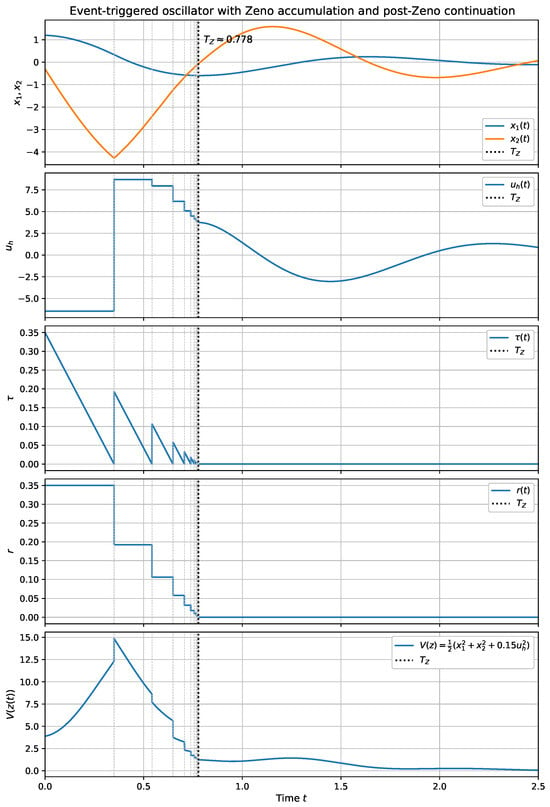
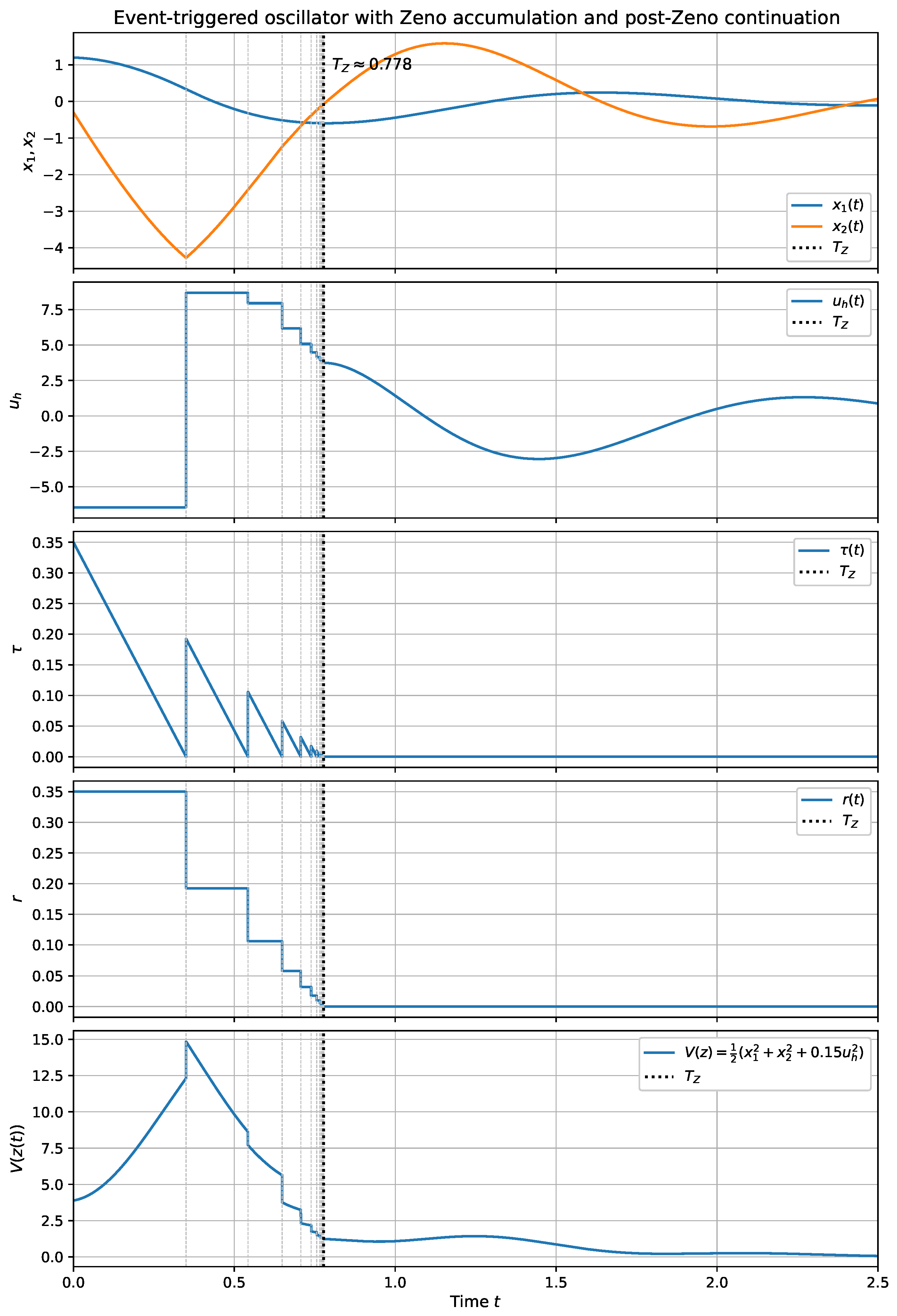
Disclaimer/Publisher’s Note: The statements, opinions and data contained in all publications are solely those of the individual author(s) and contributor(s) and not of MDPI and/or the editor(s). MDPI and/or the editor(s) disclaim responsibility for any injury to people or property resulting from any ideas, methods, instructions or products referred to in the content. |
© 2026 by the author. Licensee MDPI, Basel, Switzerland. This article is an open access article distributed under the terms and conditions of the Creative Commons Attribution (CC BY) license.