


Abstract
The Xianglin Sn polymetallic deposit, located on the northwestern margin of the Cuonadong dome in the eastern Tethyan Himalaya, represents an important Sn-W-Be polymetallic system recently recognized in southern Tibet. This study investigates the nature and evolution of the ore-forming fluids and the mechanisms of cassiterite precipitation. Fluid inclusion petrography, microthermometry, and laser Raman spectroscopy were applied to inclusions from the cassiterite–sulfide, proximal cassiterite–quartz vein, distal cassiterite–quartz vein, and late fluorite–quartz vein stages. The fluid inclusions mainly comprise liquid-rich, vapor-rich, H2O-CO2 three-phase, and minor daughter-mineral-bearing inclusions. The cassiterite–sulfide stage contains the most complex inclusion assemblage, with homogenization temperatures of 326–399 °C and salinities of 2.4–10.5 wt.% NaCl equiv. The proximal cassiterite–quartz vein stage yields homogenization temperatures of 280–361 °C and salinities of 2.4–9.6 wt.% NaCl equiv., whereas the distal cassiterite–quartz vein stage records lower temperatures of 195–295 °C. The fluorite–quartz vein stage is characterized by low-temperature and low-salinity fluids. Raman spectra identify CO2, N2, CH4, H2S, and CaCO3 daughter minerals, indicating a volatile-rich, relatively reduced H2O-CO2-NaCl hydrothermal system. These features suggest that the principal ore-forming fluids were dominantly magmatic–hydrothermal fluids exsolved from highly fractionated Miocene leucogranites. During upward and outward migration from the main detachment zone to peripheral fractures, the fluids experienced boiling, cooling, mixing, and multistage hydrothermal overprinting. Cassiterite precipitation during the cassiterite–sulfide stage was mainly triggered by boiling or phase separation, whereas the proximal cassiterite–quartz veins were controlled by progressive cooling and local phase separation. In contrast, distal cassiterite precipitation was more strongly influenced by fluid mixing and cooling. These results indicate that the Xianglin deposit records a structurally controlled proximal-to-distal magmatic–hydrothermal Sn mineralizing system related to the Cuonadong dome.
1. Introduction
Tin is a critical metal widely used in electronics, alloys, solders, and advanced manufacturing industries. Economically important Sn deposits are commonly associated with highly fractionated granitic magmas and their derivative magmatic–hydrothermal systems [1,2]. Global and deposit-scale studies document the close association of Sn and related rare-metal mineralization with evolved granitic systems and their mineralogical expression [3,4,5]. The metallogenic fertility of these systems is strongly influenced by granite source, composition, and magmatic differentiation [6,7,8,9]. Regional studies further demonstrate the importance of tectonic setting and prolonged magmatic evolution in controlling Sn polymetallic mineralization [10,11,12,13,14]. More recent studies from the Nanling region show that protolith composition and temperature-controlled melting can further regulate the decoupling and temporal separation of W and Sn mineralization [15,16]. These metallogenic processes occur within the broader geochemical context of the elemental abundance of Sn and associated metals [17]. The transport and deposition of Sn are strongly influenced by fluid chemistry and redox conditions [18,19]. Fluid mixing has been shown to trigger cassiterite precipitation in several granite-related Sn systems [20,21,22]. Experimental and thermodynamic studies further constrain Sn solubility, complexation, and deposition in hydrothermal fluids [23,24,25,26,27]. Magmatic fluid exsolution and late-stage granite evolution provide an important framework for transferring metals from granitic melts to hydrothermal systems [28,29]. Fluorine can further enhance metal transport and play an important role in hydrothermal Be mineralization [30]. Granite type and progressive magmatic–hydrothermal evolution also influence metallogenic fertility [31,32,33,34,35], whereas melt–fluid partitioning of incompatible elements may provide additional constraints on the degree of fractionation of parental granitic magmas [36]. Therefore, constraining ore-forming fluid evolution is essential for understanding how fractionated granite systems generate economically significant Sn mineralization.
Fluid inclusions provide one of the most direct records of the physicochemical conditions of ore-forming fluids. Their petrographic relationships can be used to distinguish primary, pseudosecondary, and secondary populations, whereas microthermometric measurements constrain homogenization temperature and salinity [37,38,39,40]. Raman spectroscopy further identifies volatile species and daughter minerals, allowing hydrothermal fluid compositions to be evaluated more directly [41,42,43]. In Sn mineralizing systems, the coexistence of liquid-rich and vapor-rich inclusions within the same growth domain may record boiling or heterogeneous trapping of immiscible fluid phases, whereas contrasting temperature–salinity populations may indicate fluid mixing or multiple pulses of hydrothermal activity. Fluid inclusion studies are therefore particularly useful for evaluating the relative roles of boiling, cooling, mixing, and multistage overprinting in cassiterite precipitation.
The Cuonadong dome, located in the eastern Tethyan Himalaya, is one of the most important rare-metal mineralization centers in the North Himalayan Gneiss Dome Belt. This belt developed within the Himalayan collisional orogen and is characterized by Cenozoic leucogranites, pegmatites, dome-related extension, and rare-metal mineralization associated with the South Tibetan Detachment System [44,45,46,47,48,49,50,51,52,53,54,55,56,57,58,59]. The Cuonadong–Xianglin area hosts Miocene leucogranites and Be-W-Sn polymetallic mineralization, including skarn-type, cassiterite–sulfide, cassiterite–quartz vein, pegmatite-related, fluorite vein, Pb-Zn-Sb, and Au-Sb mineralization [46,49,50,51,52,53,54,55,56,57,58,59,60,61,62,63,64,65,66,67,68]. The Xianglin Sn polymetallic deposit occurs on the northwestern margin of the Cuonadong dome and contains cassiterite–sulfide, proximal cassiterite–quartz vein, distal cassiterite–quartz vein, and late fluorite–quartz vein stages. Although previous studies have constrained the regional geology, geochronology, isotopic characteristics, and ore-forming fluids of the broader Cuonadong system [60,61,62,63], several deposit-scale questions remain unresolved. Specifically, this study addresses: (1) whether the detachment-hosted cassiterite–sulfide mineralization and the peripheral cassiterite–quartz veins evolved from a common magmatic–hydrothermal system; (2) how the ore-forming fluids changed during migration from proximal to distal structural levels; and (3) which processes triggered cassiterite precipitation during different mineralization stages. To address these questions, we investigate fluid inclusions hosted mainly in quartz and locally in fluorite from successive mineralization stages at Xianglin, integrating petrography, microthermometry, and Raman spectroscopy to reconstruct the temperature, salinity, volatile composition, and phase-state evolution of the ore-forming fluids.
2. Geological Setting
2.1. Himalayan Metallogenic Belt
The Himalayan orogen is one of the youngest and most representative continent–continent collisional belts worldwide. From north to south, it comprises the Tethyan Himalayan Sequence (THS), the Greater Himalayan Crystalline Complex (GHC), the Lesser Himalayan Sequence (LHS), and the Sub-Himalayan Sequence (SHS) (Figure 1B) [44,47,48]. Within the low-grade metamorphic succession of the Tethyan Himalaya, a series of approximately east–west-trending gneiss domes collectively constitute the North Himalayan Gneiss Dome Belt. Cenozoic leucogranites and pegmatites are widespread throughout this belt and are commonly characterized by highly fractionated magmatism closely associated with Be, W, Sn, Nb-Ta, and Li mineralization [45,46,49,51,64,65]. The Cuonadong dome is situated in the eastern Tethyan Himalaya, spatially adjacent to the South Tibetan Detachment System (STDS), and represents one of the most prominent gneiss domes in the North Himalayan Gneiss Dome Belt associated with rare-metal mineralization [46,60,61,67].
Figure 1.
(A) Tectonic and geographical location map of the study area; (B) regional tectonic map of the Tethyan Himalayas [61]; (C) geological map of the Cuonadong dome [49].
The Cuonadong dome exhibits a well-developed three-tiered core–mantle–rim architecture (Figure 1C). The core consists predominantly of Cambrian granitic gneiss characterized by penetrative gneissic foliation and augen structures and is extensively intruded and crosscut by younger Cenozoic leucogranites and pegmatites [64,65,67]. The mantle comprises two-mica schist interlayered with marble and contains metamorphic index minerals such as garnet, staurolite, and sillimanite. It is strongly deformed and displays a typical outward Barrovian metamorphic zonation [64,65]. The rim is composed mainly of Triassic–Jurassic sandy slate, silty carbonaceous slate, and phyllite [64,65]. Multiple generations of pegmatite dykes are widely developed throughout the core and mantle and were subsequently overprinted by Miocene leucogranitic intrusions, locally producing features characteristic of a thermal dome [66].
Cenozoic magmatism in the Cuonadong area occurred in several distinct stages. The earliest magmatic episode, at approximately 23 Ma, is represented by an assemblage of deformed two-mica granites and granitic pegmatites, the emplacement of which was closely associated with activity along the South Tibetan Detachment System and the exhumation of the gneiss dome [64,65]. This was followed at approximately 18 Ma by the emplacement of weakly foliated two-mica granites, mainly in the northern part of the dome, recording partial melting of metapelitic rocks and magma emplacement within a syn-extensional tectonic regime [65]. By approximately 15 Ma, highly fractionated peraluminous leucogranites characterized by garnet–tourmaline–muscovite assemblages had formed. These rocks represent a late-stage, strongly evolved magmatic system produced by advanced fractional crystallization and are closely associated with Be–W–Sn polymetallic mineralization in the Cuonadong–Xianglin area [46,60,61,63,66].
2.2. Geology of the Xianglin Mining District
The Xianglin Sn-Be polymetallic deposit is located along the northwestern margin of the Cuonadong dome, with the orebodies generally striking NE-SW. The southeastern part of the mining district exposes granitic gneiss of the dome core and Cenozoic leucogranites, whereas the central part is dominated by mantle facies two-mica schist interlayered with marble. Jurassic sandy slate belonging to the outer rim of the dome is exposed in the northwestern part of the district (Figure 2) [64,65]. Weakly foliated two-mica granite dykes and pegmatite dykes were emplaced along foliation planes within the marble and underwent contact metasomatism with the carbonate wall rocks, producing heterogeneously distributed stratiform, irregular stockwork-like, and lenticular skarn alteration zones, locally accompanied by Be-Sn polymetallic mineralization [66].
Figure 2.
Geological and mineral resource map of the Xianglin mining area in Cuonadong [49].
The structural framework of the mining district records multiple tectonic episodes and is dominated by three principal fault sets striking approximately N-S, NE, and NW. High-angle, NW-dipping NE-striking faults host the most intense fluoritization and Be-Sn polymetallic mineralization and represent the principal ore conduits and ore-hosting structures. In contrast, the NW-striking faults are mainly filled by fluorite veins and constitute secondary ore-controlling structures. Magmatic activity in the district is represented chiefly by the emplacement of weakly foliated two-mica granite and muscovite granite. The muscovite granite was emplaced at approximately 14.9 Ma and is closely associated with Miocene Sn-W-Be polymetallic mineralization in the Cuonadong–Xianglin area [61]. The weakly foliated two-mica granite formed at approximately 18 Ma and is generally interpreted to be related to dome-scale extensional detachment and the partial melting of metapelitic rocks [65].
2.3. Orebody Geology of the Xianglin Deposit
Three principal styles of Sn mineralization are recognized in the Xianglin mining district: skarn-type Sn-W-Be mineralization, cassiterite–sulfide Sn-W-Be mineralization, and cassiterite–quartz vein Sn mineralization. Based on their spatial relationships with the dome structure and the principal detachment zone, the cassiterite–quartz veins can be further subdivided into proximal and distal types. Proximal quartz vein orebodies occur mainly within or adjacent to the principal detachment zone and near the cassiterite–sulfide orebodies, whereas distal quartz vein orebodies are hosted predominantly along the periphery of the dome or within subsidiary structures. This spatial subdivision provides the geological framework for comparing fluid inclusion characteristics among successive mineralization stages and reconstructing the evolution of the ore-forming fluids.
Spatially, the three styles of Sn mineralization are centered on the interlayer detachment zone within the dome and display a systematic zonation from the granite–marble contact zone, through the principal detachment zone, to the peripheral fracture systems (Figure 3). Cassiterite–sulfide orebodies are hosted mainly within the principal detachment zone in the interior of the dome and constitute the largest, most continuous, and economically most important orebodies in the district. They occur predominantly as stratiform, tabular, and locally lenticular bodies and exhibit pronounced stratabound enrichment. Cassiterite–quartz vein orebodies are developed mainly in the hanging wall and along the flanks of the principal detachment zone, or within peripheral subsidiary extensional fractures. These orebodies are generally smaller and occur as individual veins or stockworks. Skarn-type mineralization is concentrated near contacts between leucogranite and marble, where it commonly forms lenticular or disseminated bodies and is strongly controlled by contact metasomatism.
Figure 3.
Exploration Line No. 44 profile in the Xianglin mining area.
The alteration assemblages also vary among the different mineralization styles. Cassiterite–sulfide orebodies are characterized predominantly by silicification, sericitization, and chloritization, commonly accompanied by fluoritization. Alteration surrounding the cassiterite–quartz vein orebodies is generally limited to weak silicification and sericitization. In contrast, skarn-type mineralization is characterized by skarn alteration and commonly contains contact-metasomatic mineral assemblages including scapolite, vesuvianite, and garnet.
2.4. Mineralization Characteristics of the Xianglin Deposit
The cassiterite–sulfide ores are dominated by cassiterite, arsenopyrite, and pyrite, with local sphalerite, chalcopyrite, and galena, and minor scheelite, beryl, and fluorite. Cassiterite is typically pale brown to brownish-brown and occurs as fine-grained anhedral to subhedral aggregates or as fine- to medium-grained disseminations (Figure 4A). It commonly fills fractures and is crosscut by, or intergrown with, sulfide veinlets, and locally forms banded concentrations within shear-related transpressional microfracture zones. Some cassiterite grains exhibit weak oscillatory or compositional zoning (Figure 4D), suggesting episodic variations in fluid composition and physicochemical conditions during crystallization. The close association of cassiterite with arsenopyrite, pyrite, scheelite, and beryl indicates that this stage represents the principal ore-forming episode of a Be-W-Sn-rich magmatic–hydrothermal system (Figure 4E,F) [50,61,62,63,68].
Figure 4.
Representative cassiterite ore samples and photomicrographs from the Xianglin mining area. (A) Cassiterite sample from cassiterite–sulfide-type mineralization; (B,C) cassiterite samples from cassiterite–quartz vein-type mineralization; (D) cassiterite showing typical zoning and closely associated with quartz and beryl; (E,F) cassiterite associated with quartz and plagioclase, with twinning developed in plagioclase.
Cassiterite–quartz vein ores have a comparatively simple mineral assemblage dominated by cassiterite, quartz, and muscovite or sericite, with markedly lower sulfide contents. The ores occur mainly as veins, stockworks, or fracture fillings. Cassiterite typically forms pale- to dark-brown euhedral to subhedral crystals that are relatively coarse-grained and commonly occur as short-prismatic or granular grains within the quartz veins (Figure 4B,C). Compared with cassiterite–sulfide ores, the cassiterite–quartz vein ores display more pronounced fracture-filling textures and late-stage hydrothermal crystallization features. They may therefore represent products precipitated as the ore-forming fluids migrated along structural conduits towards shallower or more distal parts of the hydrothermal system, where cooling, decompression, and diminished metal-complexing capacity promoted cassiterite deposition [50,61,62,63].
Overall, the cassiterite–sulfide and cassiterite–quartz vein ores differ markedly in their mineral assemblages, modes of occurrence, and spatial distribution. The former predominantly records the activity of high-temperature, metal-rich, and volatile-rich fluids within the principal detachment zone, whereas the latter reflects mineral precipitation following the upward and outward migration of ore-forming fluids into peripheral fracture systems. These mineralogical contrasts provide a direct basis for defining successive fluid inclusion stages and reconstructing the evolution of the ore-forming system from proximal to distal domains.
2.5. Paragenetic Sequence and Mineralization Stages
Based on field relationships, orebody occurrence, mineral assemblages, and crosscutting textures, the Xianglin Sn polymetallic deposit can be divided into five mineralization stages: skarn stage, cassiterite–sulfide stage, proximal cassiterite–quartz vein stage, distal cassiterite–quartz vein stage, and late fluorite–quartz vein stage (Figure 5). The skarn stage is mainly developed near contacts between leucogranite and marble and is characterized by contact-metasomatic mineral assemblages. The cassiterite–sulfide stage represents the principal Sn-forming stage and is dominated by cassiterite, arsenopyrite, and pyrite, with subordinate sphalerite, chalcopyrite, galena, scheelite, beryl, and fluorite. The cassiterite–quartz vein stage can be further subdivided into proximal and distal vein stages according to their spatial relationship with the principal detachment zone and cassiterite–sulfide orebodies. Proximal cassiterite–quartz veins occur mainly within or adjacent to the principal detachment zone and record continued migration of Sn-bearing hydrothermal fluids, whereas distal cassiterite–quartz veins occur mainly along peripheral fractures and represent a more external part of the hydrothermal system. The late fluorite–quartz vein stage is characterized by low-temperature fracture-filling veins and records the waning stage of hydrothermal activity.
Figure 5.
Paragenetic sequence and mineral assemblages of different mineralization stages in the Xianglin Sn polymetallic deposit.
The present fluid inclusion study focuses mainly on the cassiterite–sulfide, proximal cassiterite–quartz vein, distal cassiterite–quartz vein, and late fluorite–quartz vein stages, which preserve suitable transparent gangue minerals and well-developed fluid inclusions. The skarn stage is included in the paragenetic framework but was not selected for detailed fluid inclusion analysis because suitable inclusion-bearing transparent minerals are limited in the available samples.
3. Sampling and Analytical Methods
The fluid inclusion samples analyzed in this study were collected mainly from cassiterite–sulfide and cassiterite–quartz vein orebodies in the Xianglin Sn polymetallic deposit. Based on their spatial relationships with the principal detachment zone and the main cassiterite–sulfide orebodies, the cassiterite–quartz veins were further subdivided into proximal and distal types. Skarn-type mineralization was not sampled for fluid inclusion analysis because of its limited scale, poor lateral continuity, and comparatively minor economic significance for current mineral exploration and resource evaluation. The present study therefore focuses on samples from the cassiterite–sulfide and cassiterite–quartz vein mineralization.
During sampling, priority was given to quartz that were closely associated with ore-forming fluid activity, relatively transparent, weakly fractured, and rich in well-preserved fluid inclusions. The sampling locations and field characteristics of each specimen were documented with reference to orebody position, mineralization style, and mineral paragenesis. All samples were prepared as doubly polished wafers, and the morphology, size, phase proportions, and modes of occurrence of the fluid inclusions were systematically examined under a polarizing microscope (Leica Microsystems GmbH, Wetzlar, Germany). Primary, pseudosecondary, and secondary fluid inclusions were distinguished according to their spatial relationships with growth zones, fractures, and healed microfractures in the host minerals. Quantitative microthermometric analyses were restricted to well-preserved primary and pseudosecondary inclusions occurring within crystal interiors or along mineral growth zones. Secondary inclusions occurring along late crosscutting or healed fractures were excluded from the quantitative dataset summarized in Table 1.
Table 1.
Summary of microthermometric data for primary and pseudosecondary fluid inclusions from the Xianglin Sn polymetallic deposit.
The quartz selected for fluid inclusion analysis is paragenetically associated with cassiterite from the corresponding mineralization stage, as demonstrated by hand-specimen and petrographic observations (Figure 4) and the established paragenetic sequence (Figure 5). No evidence for multiple generations of quartz was observed within the analyzed mineralization stage. Where petrographic relationships permitted, inclusions occurring within the same mineral growth zone or along the same healed microfracture were considered together as a fluid inclusion assemblage (FIA), following Goldstein and Reynolds [38]. Secondary inclusions related to later crosscutting fractures were excluded from the quantitative dataset.
Fluid inclusion analyses were conducted at the Analysis and Testing Research Centre of the Beijing Research Institute of Uranium Geology. Microthermometric measurements were performed in Laboratory 7035 using a LINKAM THMS600 (Linkam Scientific Instruments Ltd., Redhill, UK) heating–freezing stage, under ambient conditions of 22 °C and 36% relative humidity. During analysis, the fluid inclusions were first cooled to induce complete freezing and then slowly heated to determine the final ice-melting temperature. Heating was subsequently continued until complete homogenization, and the homogenization temperature was recorded. Salinities were determined according to fluid inclusion type. For L- and V-type aqueous inclusions in the H2O-NaCl system, salinities were calculated from final ice-melting temperatures using the equations of Bodnar [69]. Salinity values for C-type H2O-CO2 inclusions were taken from the original laboratory microthermometric dataset and were treated separately from those of the aqueous inclusions following the general procedures for CO2-bearing fluid inclusions. Salinity was not calculated for S-type inclusions because the daughter minerals were identified as carbonate rather than halite. Pressures of C-type H2O-CO2 three-phase inclusions were calculated using the FLINCOR program based on their total homogenization temperatures, partial homogenization temperatures, and other relevant microthermometric parameters [70].
To further constrain the volatile and daughter mineral compositions of the fluid inclusions, laser Raman spectroscopic analyses were conducted at the Analysis and Testing Research Centre of the Beijing Research Institute of Uranium Geology using a LabRAM HR800 research-grade micro-Raman spectrometer (instrument No. 8581). A 532 nm frequency-doubled YAG solid-state laser was used as the excitation source, and spectra were collected over the range of 100–4200 cm−1. Analyses were performed at approximately 21 °C and 25% relative humidity. A total of nine samples were analyzed at 12 measurement spots, targeting representative fluid inclusions and their individual phases to identify volatile species and solid daughter minerals. The integration of fluid inclusion petrography, microthermometry, and laser Raman spectroscopy enables the temperature, salinity, phase state, and volatile composition of the ore-forming fluids to be reconstructed for the successive mineralization stages of the Xianglin Sn polymetallic deposit.
4. Results
4.1. Fluid Inclusion Petrography
Fluid inclusions provide important records of the physicochemical properties of ore-forming fluids. Their morphology, phase assemblages, and spatial distribution can therefore yield critical constraints on the nature and evolution of hydrothermal fluids [37,39,43,71]. Prior to microthermometric analysis, fluid inclusions hosted in quartz and fluorite from the different mineralization stages of the Xianglin deposit were systematically examined petrographically. Laser Raman spectroscopy was subsequently combined with these observations to identify the principal inclusion types and constrain their fluid compositions.
Fluid inclusions are abundant in quartz and fluorite from the Xianglin deposit. Most inclusions are 5–25 μm in size, although a few exceed 30 μm. They are predominantly elliptical, subrounded, negative-crystal shaped, or irregular, with elliptical and negative-crystal forms being the most common. Some inclusions have straight boundaries and regular shapes and occur either as isolated inclusions within host mineral crystals or along growth zones, suggesting a primary origin. Others form bead-like or linear arrays along healed fractures and are relatively irregular in shape, indicating a pseudosecondary or secondary origin. Overall, the fluid inclusions are well preserved and suitable for subsequent microthermometric and Raman spectroscopic analyses.
Based on their phase assemblages and vapor-to-liquid ratios at room temperature, the fluid inclusions from the Xianglin deposit can be classified into four principal types: liquid-rich inclusions (L type), vapor-rich inclusions (V type), CO2-bearing three-phase inclusions (C type), and daughter-mineral-bearing inclusions (S type) (Table 1). The assemblages of inclusion types vary among the mineralization stages. The cassiterite–sulfide stage contains the most diverse assemblage, comprising L-, V-, and C-type inclusions. The proximal cassiterite–quartz vein stage contains L-, V-, and C-type inclusions, together with minor S-type inclusions, whereas the distal cassiterite–quartz vein stage is dominated by L- and C-type inclusions. These characteristics indicate that the Xianglin ore-forming fluids had complex phase states and compositions, which evolved markedly from the principal mineralization stage to the later stages of the hydrothermal system.
4.1.1. Liquid-Rich Inclusions
Liquid-rich aqueous inclusions (L type) are the most common inclusion type in the study area. At room temperature, these inclusions are overwhelmingly dominated by the liquid phase, with vapor proportions generally below 5%. They are mostly elliptical or irregular in shape and typically range from 5 to 15 μm in size. L-type inclusions commonly occur as isolated inclusions, clusters, or bead-like arrays along healed fractures (Figure 6A,B).
Figure 6.
Petrographic characteristics of the main fluid inclusion types in the Xianglin Sn polymetallic deposit. (A,B) L-type liquid-rich aqueous inclusions; (C,D) V-type vapor-rich aqueous inclusions; (E,F) S-type daughter-mineral-bearing inclusions; (G,H) C-type CO2-bearing three-phase inclusions.
4.1.2. Vapor-Rich Inclusions
Vapor-rich inclusions are relatively uncommon in the study area, although they are locally abundant in some samples. At room temperature, these inclusions are dominated by the vapor phase, which generally accounts for more than 50% of the inclusion volume and locally reaches 70%–80%, whereas the liquid phase occurs only as a thin film along the inclusion walls (Figure 6C,D). They are mostly elliptical, subrounded, or irregular in shape, with well-defined boundaries, and are generally 5–10 μm in size, although a few are slightly larger. Petrographic observations show that vapor-rich inclusions commonly occur as isolated individuals or clusters and are locally aligned along healed fractures. Petrographic observations show that L- and V-type inclusions coexist within the same mineral growth domains or fluid inclusion assemblages (FIAs). These coexisting inclusions display markedly contrasting vapor-to-liquid proportions, indicating heterogeneous entrapment of two fluid populations during the same hydrothermal event.
The coexistence of vapor-rich and liquid-rich inclusions within the same fluid inclusion assemblage is commonly regarded as evidence for fluid boiling or phase separation. As hydrothermal fluids ascend and undergo decompression, boiling may induce separation of the vapor and liquid phases. This process can alter fluid temperature, pressure, and chemical composition, destabilizing metal-bearing complexes and promoting mineral precipitation. Boiling and phase separation are therefore considered important ore-forming mechanisms in many hydrothermal mineral systems [38,39].
4.1.3. Daughter-Mineral-Bearing Three-Phase Inclusions
Three-phase inclusions containing solid daughter minerals were also observed in several quartz samples. These inclusions comprise liquid, vapor, and solid phases, with the daughter minerals occurring as minute crystals or bright spots within the inclusions (Figure 6E,F). Raman spectroscopic analyses yielded characteristic peaks at 1084–1087 cm−1, indicating that the solid daughter mineral is CaCO3.
The presence of CaCO3 daughter minerals suggests that some ore-forming fluids contained appreciable CO2 and that carbonate precipitation may have occurred during fluid evolution. CO2 is an important volatile component in hydrothermal systems, and its occurrence may be consistent with a deep-seated or magmatic contribution, although it is not diagnostic of fluid source on its own [28,43]. The formation of CaCO3 daughter minerals may therefore reflect chemical reactions involving CO2-rich fluids during migration, which promoted carbonate precipitation. Given the limited number of S-type inclusions available for microthermometric analysis, these inclusions are interpreted qualitatively and are not used independently to constrain fluid source or hydrothermal evolution.
4.1.4. H2O-CO2 Three-Phase Inclusions
H2O-CO2 three-phase inclusions are relatively uncommon in the study area but are well developed in several samples. They occur mainly in quartz from the cassiterite–sulfide stage and in fluorite from the fluorite–quartz vein stage (Figure 6G,H). At room temperature, these inclusions contain a distinct CO2 phase and are generally elliptical, subrounded, or relatively regular in shape, with well-defined boundaries. They are typically small- to medium-sized, commonly ranging from approximately 7 × 8 to 15 × 14 μm, whereas some inclusions hosted in fluorite are approximately 7 × 12 μm. Petrographic observations show that these inclusions commonly occur in clusters and locally coexist with liquid-rich or vapor-rich inclusions. They therefore represent an important and distinctive fluid inclusion type in the study area.
Integrated petrographic observations indicate that L-type liquid-rich aqueous inclusions are the most abundant inclusion type in the study area. V-type, C-type, and S-type inclusions are comparatively less common but provide important constraints on fluid phase separation, volatile composition, and hydrothermal evolution. Overall, the fluid inclusion assemblages record a pronounced multistage evolution of the ore-forming fluids, characterized by progressive changes in temperature and fluid chemistry together with variable pressure conditions. The local coexistence of vapor-rich and aqueous two-phase inclusions suggests that boiling or phase separation may have occurred during some stages, whereas daughter-mineral-bearing three-phase inclusions indicate local fluid concentration or mineral precipitation. Because primary and pseudosecondary inclusions are more likely to preserve information on the mineralizing fluids, subsequent microthermometric and Raman spectroscopic analyses focused primarily on well-preserved, regularly shaped inclusions hosted within mineral growth zones or crystal interiors, thereby providing a robust basis for reconstructing the properties of the ore-forming fluids.
4.2. Microthermometric Characteristics of Quartz-Hosted Inclusions
Fluid inclusion microthermometry is an important method for constraining the physicochemical properties of hydrothermal fluids (Figure 7). Measurements of homogenization temperature, freezing temperature, and final ice-melting temperature provide estimates of fluid temperature and salinity, thereby constraining the nature and evolution of ore-forming fluids [37,39,40,71]. In this study, systematic microthermometric measurements were conducted on primary and pseudosecondary fluid inclusions hosted in quartz from the different mineralization stages of the Xianglin deposit. Priority was given to well-preserved inclusions with regular shapes and clearly defined boundaries that occur within crystal interiors or along mineral growth zones, ensuring that the measurements are representative of the fluids associated with the corresponding mineralization stages.
Figure 7.
Histograms of temperature and salinity of fluid inclusions in different metallogenic stages from the Xianglin Sn polymetallic deposit.
The microthermometric results reveal a wide range of homogenization temperatures, indicating that the Xianglin deposit formed within a medium- to high-temperature hydrothermal system. Homogenization temperatures and salinities vary markedly among the different mineralization stages and collectively record progressive cooling and changes in fluid chemistry during hydrothermal evolution. Pressure estimates from C-type inclusions further constrain pressure variations among the principal mineralization stages. Mineralization stages should therefore not be distinguished solely on the basis of temperature but instead through an integrated assessment of mineral assemblages, orebody occurrence, inclusion phase assemblages, and fluid composition.
4.2.1. Cassiterite–Sulfide Stage
Fluid inclusions from the cassiterite–sulfide mineralization stage are hosted mainly in quartz and comprise C-, L-, and V-type inclusions. C-type inclusions are the most abundant, with 38 measurements yielding homogenization temperatures of 326–369 °C and an average of 343 °C. Their salinities range from 2.8 to 6.8 wt.% NaCl equiv., with an average of 5.1 wt.% NaCl equiv. A total of 35 V-type inclusions have homogenization temperatures of 343–389 °C, averaging 368 °C, and salinities of 2.4–7.4 wt.% NaCl equiv., averaging 5.07 wt.% NaCl equiv. The 32 L-type inclusions yield homogenization temperatures of 340–399 °C, with an average of 370 °C, and salinities of 4.8–10.5 wt.% NaCl equiv., averaging 7.1 wt.% NaCl equiv. C-type inclusions from the cassiterite–sulfide stage yield calculated pressures of 174.6–300.1 MPa, with a mean value of 236.23 MPa.
The L-and V-type inclusions show strongly overlapping homogenization temperature ranges of 340–399 °C and 343–389 °C, respectively, with nearly identical mean values of 370 °C and 368 °C. Their salinity populations are partly separated, with L-type inclusions extending to higher salinities (4.8–10.5 wt.% NaCl equiv.; mean 7.07 wt.%) than V-type inclusions (2.4–7.4 wt.% NaCl equiv.; mean 5.07 wt.%). Together with their petrographic coexistence within the same FIAs and contrasting phase proportions, these relationships support boiling or heterogeneous phase separation during the cassiterite–sulfide stage.
4.2.2. Fluid Inclusions from the Cassiterite–Quartz Vein Mineralization Stage
Fluid inclusions from the cassiterite–quartz vein mineralization stage are hosted mainly in quartz and can be further divided into proximal and distal assemblages. The proximal cassiterite–quartz vein stage contains S-, C-, L-, and V-type inclusions. Four S-type inclusions yield homogenization temperatures of 284–339 °C, with an average of 307 °C. Only four well-preserved S-type inclusions were suitable for microthermometric measurement. Owing to this limited sample size, these data are considered preliminary and are used only to constrain the approximate thermal range of S-type inclusions, not for statistical comparison among mineralization stages or as a basis for genetic interpretation. Two C-type inclusions have homogenization temperatures of 292–340 °C, averaging 316 °C, and a salinity of approximately 8.3 wt.% NaCl equiv. Forty-eight L-type inclusions yield homogenization temperatures of 280–338 °C, with an average of 315 °C, and salinities of 2.4–9.6 wt.% NaCl equiv., averaging 6.3 wt.% NaCl equiv. Four V-type inclusions have homogenization temperatures of 315–361 °C, with an average of 348 °C, and salinities of 2.4–8.8 wt.% NaCl equiv., averaging 4.3 wt.% NaCl equiv. The two proximal C-type inclusions yield calculated pressures of 209.0–225.2 MPa, with a mean value of 217.10 MPa.
The distal cassiterite–quartz vein stage contains a simpler inclusion assemblage dominated by L-and C-type inclusions. Fourteen L-type inclusions yield homogenization temperatures of 252–295 °C, averaging 266 °C, and salinities of 3.4–6.6 wt.% NaCl equiv., with an average of 4.25 wt.% NaCl equiv. Seven C-type inclusions have homogenization temperatures of 195–208 °C, with an average of 200 °C, and salinities of 10.5–10.7 wt.% NaCl equiv., averaging 10.6 wt.% NaCl equiv. (Figure 7). The distal C-type inclusions yield calculated pressures of 233.1–253.0 MPa, with a mean value of 244.94 MPa.
Overall, the homogenization temperature ranges of the L- and V-type inclusions from the proximal stage overlap between 315 and 338 °C, although their mean values differ at 315 °C and 348 °C, respectively. This partial overlap suggests that the liquid-rich and vapor-rich inclusions may have formed under broadly similar fluid conditions. In contrast, the L- and C-type inclusions from the distal stage have markedly different mean homogenization temperatures of 266 °C and 200 °C, respectively, and their temperature ranges do not overlap. They are therefore unlikely to represent conjugate phases produced by a single boiling event, providing a basis for the subsequent interpretation of fluid mixing or the superposition of multiple hydrothermal episodes.
4.2.3. Fluid Inclusions from the Fluorite–Quartz Vein Mineralization Stage
Fluid inclusions from the fluorite–quartz vein mineralization stage are hosted mainly in quartz. Based on the currently compiled data, quartz is dominated by L-type inclusions. A total of 72 inclusions yield homogenization temperatures of 180–191 °C, with an average of 185 °C, and salinities of 1.4–2.6 wt.% NaCl equiv., averaging 1.9 wt.% NaCl equiv. (Figure 7). These results indicate that the fluids recorded by quartz during this stage were characterized by relatively low temperatures and low salinities.
4.3. Raman Spectroscopic Constraints on Fluid Composition
To further constrain the chemical composition of the ore-forming fluids in the Xianglin Sn polymetallic deposit, micro-laser Raman spectroscopic analyses were conducted on selected representative fluid inclusions. Raman spectroscopy enables the direct identification of gaseous and solid components within fluid inclusions and is therefore an important method for determining the volatile composition of ore-forming fluids [37,41,42].
Raman spectroscopic analyses identified CO2, N2, CH4, and H2S as the principal volatile components in fluid inclusions from the Xianglin deposit (Figure 8). CO2 is the most common species, with characteristic peaks at approximately 1282.21 and 1385.58 cm−1. N2, CH4, and H2S were also detected in selected fluid inclusions, with characteristic peaks at approximately 2327, 2914, and 2607 cm−1, respectively. These Raman signals were acquired from measurement spots optically focused within the sealed fluid inclusions. The occurrence of these volatile species indicates that the ore-forming fluids had a complex gaseous composition and were generally volatile-rich and relatively reducing.
Figure 8.
Representative Raman spectra of fluid inclusions from the Xianglin deposit.
In addition, solid daughter minerals were identified in some fluid inclusions. Their characteristic Raman peaks occur at 1084–1087 cm−1 and correspond to CaCO3. The presence of carbonate daughter minerals indicates that the trapped fluids contained appreciable CO2 or carbonate species and may reflect the involvement of CO2-rich fluids, fluid–rock interaction, or local crystallization after fluid entrapment.
Integrated fluid inclusion petrography, microthermometry, and Raman spectroscopy indicate that the ore-forming fluids of the Xianglin deposit were composed predominantly of H2O, CO2, and NaCl, with minor volatile components including N2, CH4, and H2S. The fluids can therefore be broadly classified as an H2O–CO2–NaCl hydrothermal system. This system was characterized by medium to high temperatures, low to moderate salinities, and abundant volatile components. These features suggest that the ore-forming fluids were derived principally from magmatic–hydrothermal fluids exsolved from highly fractionated Miocene leucogranites and subsequently underwent progressive cooling, decompression, and changes in fluid chemistry during hydrothermal evolution.
5. Discussion
5.1. Source of Ore-Forming Fluids
Combined with the fluid inclusion characteristics documented in this study, the ore-forming fluids of the Xianglin Sn polymetallic deposit were most likely dominated by magmatic–hydrothermal fluids. O-H isotope data from the Cuonadong deposit provide important regional support for this interpretation. Cao et al. showed that the calculated δ18Ofluid values of fluids from the late skarn stage (stage II) and cassiterite–quartz vein stage (stage III) fall within the typical range of magmatic fluids, at approximately 5.5–10‰ (Figure 9a) [61]. Quartz δD values range from −90‰ to −99‰ (Figure 9b). Although slightly lower than those of typical magmatic water, these values were attributed to D depletion during magmatic–hydrothermal degassing and were therefore interpreted to indicate a predominantly magmatic fluid source.
Figure 9.
O-H isotope characteristics of ore-forming fluids from the Cuonadong-Xianglin Sn polymetallic system. (a) δ18OV-SMOW compositions of ore-forming fluids and associated rocks from different mineralization stages; (b) δDV-SMOW compositions of ore-forming fluids from different mineralization stages. Reference fields and isotope data are from Cao et al. [61].
The calculated O-H isotope compositions of quartz-hosted fluids from the cassiterite–sulfide stage (stage IV) are likewise close to those of magmatic–hydrothermal fluids. In contrast, coeval fluorite has lower and more variable δ18O and δD values, suggesting that the late-stage fluids were affected by boiling or the addition of externally derived fluids. During the latest fluorite–quartz vein stage (stage V), both δ18O and δD values become markedly more negative and approach hydrothermal spring or meteoric water end members, indicating substantial involvement of shallow fluids (Figure 9). Given that the Xianglin and Cuonadong deposits belong to the same Cuonadong dome metallogenic system and share a common Miocene granite-related hydrothermal setting, these regional O-H isotope constraints suggest that the principal ore-forming fluids at Xianglin were also predominantly magmatic–hydrothermal in origin, whereas the later fluids were modified by shallow-fluid mixing and/or boiling.
Because the O-H isotope data discussed above were obtained from the Cuonadong deposit rather than directly from Xianglin, they are considered here as regional constraints on fluid source rather than direct deposit-scale evidence for Xianglin. Nevertheless, the close geological, temporal, and magmatic relationships between the two deposits, together with the fluid inclusion characteristics documented in this study, support a predominantly magmatic–hydrothermal origin for the principal ore-forming fluids at Xianglin.
5.2. Evolution of Ore-Forming Fluids
Integrating fluid inclusion microthermometry, Raman spectroscopy, and cassiterite trace element characteristics, the ore-forming fluids of the Xianglin deposit show a progressive evolution from the main ore-forming stage to the late hydrothermal stage [72]. The cassiterite–sulfide stage represents the principal Sn mineralization stage. In this stage, L- and V-type inclusions have similar average homogenization temperatures of 370 °C and 368 °C, respectively, representing the highest values in the studied stages. Their closely overlapping temperature ranges indicate that the fluids were trapped under relatively high-temperature conditions and record boiling or heterogeneous phase separation during the main ore-forming stage [38,39]. Consistent with this interpretation, cassiterite from the cassiterite–sulfide ores is characterized by relatively high Ti, Nb, and Fe contents and high Ti/Zr and Zr/Hf ratios, suggesting stronger metal complexing and transport capacity under proximal, high-temperature magmatic–hydrothermal conditions [72].
During the proximal cassiterite–quartz vein stage, the average homogenization temperatures of L- and V-type inclusions decrease to 315 °C and 348 °C, respectively. Although these two inclusion types still show partly overlapping temperature ranges, their overall temperatures are lower than those of the cassiterite–sulfide stage, indicating significant cooling during upward and outward migration of the fluids along the upper part of the detachment zone and adjacent fractures. Correspondingly, Ti, Nb, and In contents, together with Ti/Zr and Zr/Hf ratios in proximal cassiterite, generally decrease, suggesting reduced high-field-strength element activity during hydrothermal fluid migration away from the main ore zone [72].
In the distal cassiterite–quartz vein stage, L- and C-type inclusions yield average homogenization temperatures of 266 °C and 200 °C, respectively. The marked difference between these two inclusion populations, together with their limited overlap in temperature range, indicates that they are unlikely to have been produced by a single boiling event (Figure 10). Instead, they more likely reflect mixing between fluids of different compositions or overprinting by multiple pulses of hydrothermal activity [28,43]. In this stage, Ti/Zr and Zr/Hf ratios in cassiterite continue to decrease, whereas Ta and In become relatively enriched, indicating that elemental partitioning in the hydrothermal system changed substantially during continued cooling [72].
Figure 10.
Micrographs of vapor-rich and liquid-rich fluid inclusions from the Xianglin Sn polymetallic deposit. (A) Coexisting vapor-rich (VH2O) and liquid-rich (LH2O) aqueous inclusions; (B) vapor-rich and liquid-rich aqueous inclusions in a different field of view; (C) coexisting vapor-rich and liquid-rich aqueous inclusions; (D) vapor-rich and liquid-rich aqueous inclusions showing variable phase proportions.
The available pressure estimates provide an additional constraint on this fluid evolution. C-type inclusions from the cassiterite–sulfide stage record pressures of 174.6–300.1 MPa, with a mean of 236.23 MPa, whereas the two proximal C-type inclusions yield 209.0–225.2 MPa, with a lower mean of 217.10 MPa. The decrease in mean pressure from the main ore-forming stage to the proximal stage is broadly consistent with decompression accompanying cooling and outward fluid migration, although the overlapping pressure ranges and limited number of proximal measurements require this interpretation to remain cautious. In contrast, distal C-type inclusions record pressures of 233.1–253.0 MPa, with a mean of 244.94 MPa, and therefore do not continue the earlier decrease in mean pressure. Combined with the distinct temperature–salinity characteristics of the distal inclusion populations, this pressure behavior is more consistent with fluid mixing and/or multistage hydrothermal overprinting than with a simple continuation of the earlier decompression pathway.
By the latest fluorite–quartz vein stage, L-type inclusions in quartz have a much lower average homogenization temperature of 185 °C and an average salinity of only 1.9 wt.% NaCl equiv., indicating that the system had evolved into a low-temperature, low-salinity hydrothermal fluid. Overall, the Xianglin ore-forming system evolved from high-temperature, volatile-bearing, proximal magmatic–hydrothermal fluids during the cassiterite–sulfide stage, through progressive cooling during the proximal cassiterite–quartz vein stage, to possible fluid mixing or multistage overprinting during the distal cassiterite–quartz vein stage, and finally to low-temperature, low-salinity late hydrothermal fluids during the fluorite–quartz vein stage.
Although the present microthermometric dataset is based mainly on quartz-hosted inclusions, the analyzed quartz is paragenetically associated with cassiterite from the corresponding mineralization stages, as supported by hand-specimen and petrographic observations. Nevertheless, SEM-CL-guided analysis of quartz growth domains and direct investigation of cassiterite-hosted fluid inclusions would provide additional constraints on the ore-forming fluids in future studies.
The observed stage-to-stage variations also broadly correspond to the proximal-to-distal spatial distribution of mineralization. They may therefore record progressive hydrothermal evolution accompanied by outward fluid migration, whereas local fluid mixing and multistage hydrothermal overprinting became increasingly important in the distal domain.
5.3. Metal Precipitation Mechanisms
To illustrate variations in fluid parameters among the mineralization stages and their relationship to metal precipitation, the homogenization temperatures and salinities of the principal fluid inclusion types are plotted in Figure 11. The data show an overall cooling trend from the cassiterite–sulfide stage, through the cassiterite–quartz vein stages, to the fluorite–quartz vein stage.
Figure 11.
Scatter plot of temperature (T) and salinity (SAL) of the ore-forming fluid inclusions from the Xianglin Sn polymetallic deposit. (a) Scatter plot of temperature versus salinity from stage I to stage IV. The schematic fluid evolution trends shown in the inset are modified after Wilkinson [39]. (b) Homogenization temperature–salinity diagram of fluid inclusions in the H2O-NaCl system, with critical, halite saturation, and fluid density contours.
During the cassiterite–sulfide stage, L- and V-type inclusions have nearly identical mean homogenization temperatures of 370 °C and 368 °C, respectively, and their temperature ranges overlap substantially. During the cassiterite–sulfide stage, L- and V-type inclusions coexist within the same quartz growth domains/FIAs and display contrasting phase proportions. Their homogenization temperature ranges overlap strongly, with nearly identical mean Th values of 370 °C and 368 °C, respectively, while the L-type population extends to somewhat higher salinities than the V-type population. Taken together, these independent petrographic and microthermometric observations support local boiling or heterogeneous phase separation during the main ore-forming stage. The associated decompression and redistribution of volatile components would have reduced the stability of Sn-bearing complexes and promoted cassiterite precipitation.
During the proximal cassiterite–quartz vein stage, L- and V-type inclusions retain partially overlapping homogenization temperature ranges, but their mean values decrease to 315 °C and 348 °C, respectively. This overall temperature decline indicates continued cooling during fluid migration. Although limited phase separation may still have occurred, metal precipitation at this stage was probably controlled primarily by progressive cooling and the consequent destabilization of Sn-bearing complexes.
In the distal cassiterite–quartz vein stage, L- and C-type inclusions yield markedly different mean homogenization temperatures of 266 °C and 200 °C, respectively. Their essentially non-overlapping temperature ranges are difficult to reconcile with a single boiling event and more likely reflect fluid mixing or the superposition of multiple hydrothermal episodes. Such processes, together with continued cooling, may have promoted further Sn precipitation.
By the fluorite–quartz vein stage, the fluids had evolved into a low-temperature, low-salinity hydrothermal system and were expressed mainly as late fracture-filling veins. Overall, metal precipitation in the Xianglin deposit was strongly stage-dependent: boiling dominated during the principal cassiterite–sulfide stage; progressive cooling was the main control during formation of the proximal cassiterite–quartz veins; fluid mixing or multistage fluid overprinting, combined with cooling, became important in the distal veins; and the fluorite–quartz veins represent late low-temperature hydrothermal infilling.
5.4. Metallogenic Model
Based on the geological setting, mineral assemblages, fluid inclusion petrography, microthermometric data, Raman spectroscopic results, and published isotopic constraints, we propose a metallogenic model for the Xianglin Sn polymetallic deposit (Figure 12). Highly fractionated Miocene granites exsolved Sn-bearing magmatic–hydrothermal fluids, which migrated upward and outward along the principal detachment zone and subsidiary fractures. Skarn-type W-Sn-Be mineralization formed near granite–marble contacts, whereas the main cassiterite–sulfide orebodies were localized along the principal detachment zone, where boiling or phase separation promoted cassiterite precipitation. Continued cooling and local phase separation produced proximal cassiterite–quartz veins near the main ore zone, whereas distal cassiterite–quartz veins and late fluorite–quartz veins formed in peripheral fractures during progressive cooling, fluid mixing, and late low-temperature hydrothermal activity.
Figure 12.
Metallogenic model of the Xianglin Sn polymetallic deposit.
5.5. Comparison with Analogous Granite-Related Sn Deposits
The Xianglin deposit shares several features with other granite-related Sn systems worldwide. Many such systems form from highly fractionated granites and involve volatile-rich fluids, multiple hydrothermal stages, and cassiterite precipitation triggered by changes in temperature, pressure, fluid composition, and redox state [1,2,18]. However, the relative importance of each mechanism varies among deposits. Xianglin is distinctive because the main ore stage is strongly controlled by dome-related detachment structures, allowing fluid boiling and outward migration to be arranged spatially within a clear structural framework.
In particular, fluid inclusion and isotopic studies from Xiling, Xianghualing, San Rafael, and Dafulou show that boiling, mixing, cooling, and redox change may operate together but with different relative importance at different structural levels [20,21,22,73].
The Cuonadong Sn-W-Be polymetallic deposit, which occurs in the same regional dome system, provides the closest comparison. Previous studies of Cuonadong indicate that ore-forming fluids were mainly magmatic–hydrothermal, with medium-high temperatures, low to moderate salinities, CO2-bearing compositions, and evidence for fluid boiling and mixing [60,62]. Xianglin shows a comparable fluid character, but the present quartz-hosted dataset provides more direct emphasis on the transition between detachment-hosted cassiterite–sulfide mineralization and proximal–distal quartz veins. This makes Xianglin particularly useful for understanding how a Cuonadong-style magmatic–hydrothermal system evolved along detachment structures.
Comparisons with South China Sn deposits further clarify the role of mixing and boiling. At the Xiling Sn polymetallic deposit in Guangdong, fluid inclusion and isotope data have been interpreted to indicate that fluid mixing was a major trigger for main-stage cassiterite precipitation [21]. At the Xianghualing skarn-type Sn deposit in the Nanling region, cassiterite precipitation has been linked to fluid mixing, cooling, oxidation of Sn(II)-Cl complexes, and neutralization by carbonate wall rocks [22]. These examples show that fluid mixing and wall-rock reaction can be highly effective cassiterite precipitation mechanisms. At Xianglin, however, mixing is most clearly expressed in the distal quartz vein stage, whereas boiling is the dominant signal in the main detachment-hosted stage.
The world-class San Rafael Sn-Cu deposit in Peru provides another important comparison. There, fluid mixing between Sn-rich magmatic brines and meteoric waters has been identified as a primary trigger for cassiterite deposition [20]. Xianglin differs in that the quartz-hosted inclusion data do not require meteoric mixing during the main ore stage. Instead, the main stage is better explained by boiling or heterogeneous phase separation of a reduced volatile-bearing magmatic fluid. Distal quartz veins at Xianglin, however, show stronger similarity to San Rafael and Xiling in that mixing becomes more important in the later and more external parts of the hydrothermal system.
Other Sn systems emphasize redox change and boiling. The Dafulou Sn deposit in the Dachang orefield has been interpreted to involve redox variation and boiling as important controls on large-scale cassiterite precipitation [73]. This aspect is comparable to Xianglin, where CH4 and H2S indicate reduced conditions and L-V inclusion coexistence supports boiling during the main ore stage. The comparison suggests that boiling-related destabilization of Sn-bearing complexes may be a recurring mechanism in structurally focused, volatile-rich Sn systems, especially where reduced magmatic fluids ascend rapidly through faults or detachment zones.
Overall, Xianglin combines several mechanisms observed in other Sn deposits but arranges them in a coherent spatial sequence. Boiling and phase separation dominate in the proximal detachment-hosted cassiterite–sulfide ore zone. Continued cooling and local phase separation characterize proximal quartz veins. Fluid mixing and cooling dominate in distal quartz veins. This multistage mechanism is consistent with global Sn deposit models but highlights the importance of dome-related detachment structures in controlling where each process becomes effective.
5.6. Implications for Exploration
The fluid inclusion results provide useful constraints for exploration in the Cuonadong–Xianglin Sn polymetallic system. The most important exploration implication is that the main cassiterite–sulfide mineralization is closely related to high-temperature, volatile-rich fluids that underwent boiling or heterogeneous phase separation within the principal detachment zone. Therefore, quartz-hosted inclusion assemblages containing coexisting L- and V-type inclusions, especially where they are associated with cassiterite, arsenopyrite, pyrite, scheelite, beryl, and fluorite, may indicate proximity to the main Sn-forming environment.
Structurally, the principal detachment zone, schist–marble interfaces, and their intersections with subsidiary fractures represent favorable sites for fluid focusing and ore deposition. In the Xianglin deposit, these structures provided pathways for the ascent of magmatic–hydrothermal fluids and also created sites where decompression, boiling, and fluid–rock interaction could occur. Similar structural–lithological traps elsewhere in the Cuonadong dome should therefore be regarded as priority targets for future exploration, particularly where they are accompanied by silicification, sericitization, chloritization, and fluorite alteration.
The proximal cassiterite–quartz veins also have exploration significance. Although they are generally smaller than the detachment-hosted cassiterite–sulfide orebodies, they record the continued upward and outward migration of ore-forming fluids from the main ore zone. Their relatively high temperatures, volatile-bearing inclusions, and local evidence for phase separation suggest that they may represent apophyses or lateral extensions of the main hydrothermal system. Thus, the occurrence of proximal cassiterite–quartz veins should not be interpreted simply as weak peripheral mineralization; instead, they may point towards concealed cassiterite–sulfide orebodies at deeper or structurally lower levels.
Distal cassiterite–quartz veins are characterized by lower temperatures and more heterogeneous fluid inclusion populations, indicating cooling, fluid mixing, or multistage hydrothermal overprinting. Although such veins may have limited ore potential individually, they are important indicators of the outward extent of the hydrothermal system. When combined with structural analysis, the recognition of distal low-temperature quartz veins can help define the direction of fluid migration and vector exploration back towards the higher-temperature detachment-hosted ore zone.
Overall, exploration in the Xianglin and broader Cuonadong dome area should focus on the spatial association between Miocene leucogranites, low-angle detachment structures, schist–marble contacts, and quartz veins that preserve evidence for volatile-rich fluids and boiling. The most favorable targets are likely to occur where magmatic–hydrothermal fluids were focused along detachment-related pathways and experienced rapid pressure decrease, phase separation, and interaction with reactive wall rocks.
6. Conclusions
The Xianglin Sn polymetallic deposit is a zoned magmatic–hydrothermal system hosted by the northwestern Cuonadong dome. Quartz-hosted fluid inclusions from the cassiterite–sulfide, proximal cassiterite–quartz vein and distal cassiterite–quartz vein stages record a progressive evolution from high-temperature, reduced, volatile-bearing fluids in the main detachment zone to cooler and more heterogeneous fluids in peripheral fracture systems.
- (1)
- Quartz-hosted inclusions from the Xianglin deposit include liquid-rich inclusions, vapor-rich inclusions, H2O-CO2 three-phase inclusions, and minor daughter-mineral-bearing inclusions. The assemblage, together with Raman-detected CO2, N2, CH4, H2S, and CaCO3, indicates a volatile-bearing H2O-CO2-NaCl hydrothermal system with locally reduced fluid components.
- (2)
- The cassiterite–sulfide stage records the highest temperatures in the quartz-hosted dataset. L-type and V-type inclusions yield strongly overlapping homogenization temperatures, with mean values of 370 and 368 °C, respectively. This petrographic and thermal relationship provides direct evidence for boiling or heterogeneous phase separation during the main Sn precipitation stage.
- (3)
- The proximal cassiterite–quartz vein stage records lower temperatures but retains a complex inclusion assemblage, including L-, V-, C-, and S-type inclusions. This stage represents continued upward and outward migration of volatile-bearing hydrothermal fluids from the main ore zone, accompanied by cooling and local phase separation.
- (4)
- The distal cassiterite–quartz vein stage contains L- and C-type inclusions with contrasting temperature–salinity characteristics. The distinct inclusion populations indicate that distal cassiterite precipitation was more likely controlled by fluid mixing, cooling, and/or overprinting by later hydrothermal pulses than by a single boiling event.
Supplementary Materials
The following supporting information can be downloaded at: https://www.mdpi.com/article/10.3390/min16090933/s1.
Author Contributions
Conceptualization, W.S. and Z.Z.; field investigation, W.S. and Y.Y.; methodology, W.S. and Y.W.; formal analysis, W.S. and L.D.; data curation, W.S. and G.M.; writing—draft preparation, W.S.; writing—review and editing, Z.Z. and M.S.; supervision, Z.Z.; funding acquisition, Z.Z. All authors have read and agreed to the published version of the manuscript.
Funding
This research was funded by the National Natural Science Foundation of China (Grant No. 42572112), the Science and Technology Program of the Tibet Autonomous Region (Grant Nos. XZ202501ZY0102 and XZ202401YD0006), and the China Geological Survey Project (Grant No. DD202402028).
Data Availability Statement
The data supporting the findings of this study are summarized in the tables and figures in this article and Supplementary Materials. Additional analytical data are available from the corresponding author upon reasonable request.
Acknowledgments
The authors gratefully acknowledge Zhi Zhang, Yiyun Wang, Peiyan Xu, and Miao Sun, among others, from the Chengdu Center, China Geological Survey, for their valuable guidance and insights during field sampling, as well as their support in developing the research framework, laboratory analyses, and manuscript preparation. We also thank our colleagues and students in our laboratory for their assistance with analytical work and data processing. Finally, we sincerely thank the three anonymous reviewers and the journal editors for their constructive comments and valuable suggestions, which significantly improved the quality of this manuscript.
Conflicts of Interest
The authors declare no conflicts of interest.
References
- Lehmann, B. Metallogeny of Tin; Springer: Berlin, Germany, 1990; pp. 1–211. [Google Scholar]
- Taylor, R.G. Geology of Tin Deposits; Elsevier: Amsterdam, The Netherlands, 1979; pp. 1–543. [Google Scholar]
- Sillitoe, R.H.; Lehmann, B. Copper-rich tin deposits. Miner. Depos. 2022, 57, 1–11. [Google Scholar] [CrossRef] [Scilit]
- Barton, M.D.; Young, S. Non-pegmatitic deposits of beryllium: Mineralogy, geology, phase equilibria and origin. Rev. Mineral. Geochem. 2002, 50, 591–691. [Google Scholar] [CrossRef] [Scilit]
- Bennett, J.M.; Kemp, A.I.S.; Roberts, M.P. Microstructural controls on the chemical heterogeneity of cassiterite revealed by cathodoluminescence and elemental X-ray mapping. Am. Mineral. 2020, 105, 58–76. [Google Scholar] [CrossRef] [Scilit]
- Blevin, P.L.; Chappell, B.W.; Allen, C.M. Intrusive metallogenic provinces in eastern Australia based on granite source and composition. Earth Environ. Sci. Trans. R. Soc. Edinb. 1996, 87, 281–290. [Google Scholar] [CrossRef] [Scilit]
- Blevin, P.L. Metallogeny of granitic rocks. In Magmas to Mineralisation: The Ishihara Symposium; Blevin, P.L., Jones, M., Chappell, B.W., Eds.; Geoscience Australia Record 2003/14; Geoscience: Canberra, Australia, 2003; pp. 1–4. [Google Scholar]
- Lehmann, B.; Ishihara, S.; Michel, H.; Miller, J.; Rapela, C.W.; Sanchez, A.; Tistl, M.; Winkelmann, L. The Bolivian tin province and regional tin distribution in the Central Andes: A reassessment. Econ. Geol. 1990, 85, 1044–1058. [Google Scholar] [CrossRef] [Scilit]
- Lehmann, B. Formation of tin ore deposits: A reassessment. Lithos 2021, 402, 105756. [Google Scholar] [CrossRef] [Scilit]
- Mao, J.W. The igneous rock series and tin polymetallic mineralization series in the Tengchong area, Yunnan. Acta Geol. Sin. 1989, 2, 175–187. [Google Scholar] [CrossRef] [Scilit]
- Mao, J.W.; Cheng, Y.B.; Chen, M.H.; Pirajno, F. Major types and time-space distribution of Mesozoic ore deposits in South China and their geodynamic settings. Miner. Depos. 2013, 48, 267–294. [Google Scholar] [CrossRef] [Scilit]
- Mao, J.W.; Ouyang, H.G.; Song, S.W.; Santosh, M.; Yuan, S.; Zhou, Z.; Zheng, W.; Liu, H.; Liu, P.; Cheng, Y.; et al. Geology and metallogeny of tungsten and tin deposits in China. Econ. Geol. Spec. Publ. 2019, 22, 411–482. [Google Scholar] [CrossRef] [Scilit]
- Maphalala, R. Rb-Sr ages for Archaean granitoids and tin-bearing pegmatites in Swaziland, southern Africa. J. Afr. Earth Sci. 1989, 9, 749–757. [Google Scholar] [CrossRef] [Scilit]
- Mlynarczyk, M.S.J.; Williams-Jones, A.E. The role of collisional tectonics in the metallogeny of the Central Andean tin belt. Earth Planet. Sci. Lett. 2005, 240, 656–667. [Google Scholar] [CrossRef] [Scilit]
- Yuan, S.D.; Williams-Jones, A.E.; Romer, R.L.; Zhao, P.L.; Mao, J.W. Protolith-related thermal controls on the decoupling of Sn and W in Sn-W metallogenic province: Insights from the Nanling region, China. Econ. Geol. 2019, 114, 1005–1012. [Google Scholar] [CrossRef] [Scilit]
- Zhao, P.L.; Yuan, S.D.; Williams-Jones, A.E.; Romer, R.L.; Yan, C.; Song, S.W.; Mao, J.W. Temporal separation of W and Sn mineralization by temperature-controlled incongruent melting of a single protolith: Evidence from the Wangxianling area, Nanling region, South China. Econ. Geol. 2022, 117, 667–682. [Google Scholar] [CrossRef] [Scilit]
- Lodders, K.; Palme, H.; Gail, H.P. Abundances of the elements in the solar system. In Astronomy and Astrophysics, Landolt-Bornstein New Series; Springer: Berlin, Germany, 2009; pp. 712–770. [Google Scholar]
- Heinrich, C.A. The chemistry of hydrothermal tin(-tungsten) ore deposition. Econ. Geol. 1990, 85, 457–481. [Google Scholar] [CrossRef] [Scilit]
- Ishihara, S. The magnetite-series and ilmenite-series granitic rocks. Min. Geol. 1977, 27, 293–305. [Google Scholar]
- Harlaux, M.; Kouzmanov, K.; Gialli, S.; Marger, K.; Bouvier, A.S.; Baumgartner, L.P.; Rielli, A.; Dini, A.; Chauvet, A.; Kalinaj, M.; et al. Fluid mixing as primary trigger for cassiterite deposition: Evidence from in situ δ18O–δ11B analysis of tourmaline from the world-class San Rafael tin(-copper) deposit, Peru. Earth Planet. Sci. Lett. 2021, 563, 116889. [Google Scholar] [CrossRef] [Scilit]
- Liu, P.; Mao, J.W.; Jian, W.; Mathur, R. Fluid mixing leads to main-stage cassiterite precipitation at the Xiling Sn polymetallic deposit, SE China: Evidence from fluid inclusions and multiple stable isotopes (H–O–S). Miner. Depos. 2020, 55, 1233–1246. [Google Scholar] [CrossRef] [Scilit]
- Chen, Y.K.; Ni, P.; Pan, J.Y.; Cui, J.M.; Li, W.S.; Fang, G.J.; Zhao, Z.H.; Xu, Y.M.; Ding, J.Y.; Han, L. Fluid evolution and metallogenic mechanism of the Xianghualing skarn-type Sn deposit, South China: Evidence from petrography, fluid inclusions and trace-element composition of cassiterite. Ore Geol. Rev. 2023, 154, 105351. [Google Scholar] [CrossRef] [Scilit]
- Duc-Tin, Q.; Audétat, A.; Keppler, H. Solubility of tin in (Cl, F)-bearing aqueous fluids at 700 °C, 140 MPa: A LA-ICP-MS study on synthetic fluid inclusions. Geochim. Cosmochim. Acta 2007, 71, 3302–3310. [Google Scholar] [CrossRef] [Scilit]
- Schmidt, C. Formation of hydrothermal tin deposits: Raman spectroscopic evidence for an important role of aqueous Sn(IV) species. Geochim. Cosmochim. Acta 2018, 220, 499–511. [Google Scholar] [CrossRef] [Scilit]
- Jackson, K.J.; Helgeson, H.C. Chemical and thermodynamic constraints on the hydrothermal transport and deposition of tin: I. Calculation of the solubility of cassiterite at high pressures and temperatures. Geochim. Cosmochim. Acta 1985, 49, 1–22. [Google Scholar] [CrossRef] [Scilit]
- Jackson, K.J.; Helgeson, H.C. Chemical and thermodynamic constraints on the hydrothermal transport and deposition of tin: II. Interpretation of phase relations in the Southeast Asian tin belt. Econ. Geol. 1985, 80, 1365–1378. [Google Scholar] [CrossRef] [Scilit]
- Heinrich, C.A.; Eadington, P.J. Thermodynamic predictions of the hydrothermal chemistry of arsenic, and their significance for the paragenetic sequence of some cassiterite–arsenopyrite–base metal sulfide deposits. Econ. Geol. 1986, 81, 511–529. [Google Scholar] [CrossRef] [Scilit]
- Hedenquist, J.W.; Lowenstern, J.B. The role of magmatic fluids in the formation of hydrothermal ore deposits. Nature 1994, 370, 519–527. [Google Scholar]
- Blevin, P.L.; Chappell, B.W. Chemistry, origin, and evolution of mineralized granites in the Lachlan Fold Belt, Australia: The metallogeny of I- and S-type granites. Econ. Geol. 1995, 90, 1604–1619. [Google Scholar] [CrossRef] [Scilit]
- Zhang, L.; Yuan, S.D.; Wang, J.X.; Zhang, Q.; Fu, Y.Z.; Mao, J.W. The role of fluorine in the formation of hydrothermal beryllium deposits: Insights from experiments and modelling. Geochim. Cosmochim. Acta 2026, 426, 1–13. [Google Scholar] [CrossRef] [Scilit]
- Chappell, B.W.; White, A.J.R. Two contrasting granite types. Pac. Geol. 1974, 8, 173–174. [Google Scholar]
- Chappell, B.W.; White, A.J.R. Two contrasting granite types: 25 years later. Aust. J. Earth Sci. 2001, 48, 489–499. [Google Scholar] [CrossRef] [Scilit]
- Chen, S.C.; Yu, J.J.; Bi, M.F.; Li, H.M.; Lehmann, B. Cassiterite U-Pb, mica 40Ar-39Ar dating and cassiterite trace-element composition of the Furong tin deposit in the Nanling Range, South China. Ore Geol. Rev. 2022, 143, 104775. [Google Scholar] [CrossRef] [Scilit]
- Audétat, A.; Günther, D.; Heinrich, C.A. Formation of a magmatic-hydrothermal ore deposit: Insights with LA-ICP-MS analysis of fluid inclusions. Science 1998, 279, 2091–2094. [Google Scholar] [CrossRef] [Scilit]
- Audétat, A.; Günther, D.; Heinrich, C.A. Magmatic-hydrothermal evolution in a fractionating granite: A microchemical study of the Sn–W–F-mineralized Mole Granite (Australia). Geochim. Cosmochim. Acta 2000, 64, 3373–3393. [Google Scholar] [CrossRef] [Scilit]
- Wen, C.M.; Zhao, P.L.; Grondahl, C.; Tsay, A.; Zajacz, Z.; Yuan, S.D. Cesium partitioning between granitic melts and aqueous fluids: Is Cs in hydrothermal fluids an accurate proxy of the degree of fractionation of parental magmas? Geochim. Cosmochim. Acta 2025, 396, 159–169. [Google Scholar] [CrossRef] [Scilit]
- Roedder, E. Fluid Inclusions. In Reviews in Mineralogy; Mineralogical Society of America: Washington, DC, USA, 1984; Volume 12, pp. 1–644. [Google Scholar]
- Goldstein, R.H.; Reynolds, T.J. Systematics of Fluid Inclusions in Diagenetic Minerals; SEPM Short Course 31; SEPM: Tulsa, OK, USA, 1994. [Google Scholar]
- Wilkinson, J.J. Fluid inclusions in hydrothermal ore deposits. Lithos 2001, 55, 229–272. [Google Scholar] [CrossRef] [Scilit]
- Bakker, R.J. Package FLUIDS 1. Computer programs for analysis of fluid inclusion data and for modelling bulk fluid properties. Chem. Geol. 2003, 194, 3–23. [Google Scholar] [CrossRef] [Scilit]
- Frezzotti, M.L.; Tecce, F.; Casagli, A. Raman spectroscopy for fluid inclusion analysis. J. Geochem. Explor. 2012, 112, 1–20. [Google Scholar] [CrossRef] [Scilit]
- Burke, E.A.J. Raman microspectrometry of fluid inclusions. Lithos 2001, 55, 139–158. [Google Scholar] [CrossRef] [Scilit]
- Diamond, L.W. Review of the systematics of CO2–H2O fluid inclusions. Lithos 2001, 55, 69–99. [Google Scholar] [CrossRef] [Scilit]
- Le Fort, P. Himalayas: The collided range. Present knowledge of the continental arc. Am. J. Sci. 1975, 275-A, 1–44. [Google Scholar]
- Weinberg, R.F. Himalayan leucogranites and migmatites: Nature, timing and duration of anatexis. J. Metamorph. Geol. 2016, 34, 821–843. [Google Scholar] [CrossRef] [Scilit]
- Wu, F.Y.; Liu, X.C.; Liu, Z.C.; Wang, R.C.; Xie, L.; Wang, J.M.; Ji, W.Q.; Yang, L.; Liu, C.; Khanal, G.P.; et al. Highly fractionated Himalayan leucogranites and associated rare-metal mineralization. Lithos 2020, 352–353, 105319. [Google Scholar] [CrossRef] [Scilit]
- Yin, A.; Harrison, T.M. Geologic evolution of the Himalayan-Tibetan orogen. Annu. Rev. Earth Planet. Sci. 2000, 28, 211–280. [Google Scholar] [CrossRef] [Scilit]
- Hodges, K.V. Tectonics of the Himalaya and southern Tibet from two perspectives. Geol. Soc. Am. Bull. 2000, 112, 324–350. [Google Scholar] [CrossRef] [Scilit]
- Zhang, Z.; Li, G.M.; Zhang, L.K. Rare-metal exploration and research progress in the Himalayan belt, Tibet. Sediment. Geol. Tethyan Geol. 2022, 42, 176–188, (In Chinese with English abstract). [Google Scholar]
- Zhang, Z.; Li, G.M.; Zhang, L.K.; Jiao, Y.; Wang, Y.; Ma, G.; Xia, X.; Qing, C.; Dong, L.; Yang, Y. A preliminary discussion on Cenozoic granite-related rare-Sn-W-Pb-Zn-Au-Sb metallogenic systems in the Himalayan post-collisional extension stage: A case study of the Cuonadong ore concentration area. Sediment. Geol. Tethyan Geol. 2025, 45, 375–393, (In Chinese with English abstract). [Google Scholar]
- Li, G.M.; Zhang, L.K.; Jiao, Y.J.; Xia, X.; Dong, S.; Fu, J.; Liang, W.; Zhang, Z.; Wu, J.; Dong, L.; et al. Discovery and significance of the Cuonadong superlarge Be-W-Sn polymetallic deposit in the Himalayan metallogenic belt, Tibet. Mineral. Depos. 2017, 36, 1003–1008, (In Chinese with English abstract). [Google Scholar]
- London, D.; Evensen, J.M. Beryllium in silicic magmas and the origin of beryl-bearing pegmatites. Rev. Mineral. Geochem. 2002, 50, 445–486. [Google Scholar] [CrossRef] [Scilit]
- Harris, N.; Massey, J. Decompression and anatexis of Himalayan metapelites. Tectonics 1994, 13, 1537–1546. [Google Scholar] [CrossRef] [Scilit]
- Harris, N.; Ayres, M.; Massey, J. Geochemistry of granitic melts produced during the incongruent melting of muscovite: Implications for the extraction of Himalayan leucogranite magmas. J. Geophys. Res. Solid Earth 1995, 100, 15767–15777. [Google Scholar] [CrossRef] [Scilit]
- King, J.; Harris, N.; Argles, T.; Parrish, R.; Zhang, H. Contribution of crustal anatexis to the tectonic evolution of Indian crust beneath southern Tibet. Geol. Soc. Am. Bull. 2011, 123, 218–239. [Google Scholar] [CrossRef] [Scilit]
- Searle, M.P.; Godin, L. The South Tibetan Detachment and the Manaslu Leucogranite: A structural reinterpretation and restoration of the Annapurna–Manaslu Himalaya, Nepal. J. Geol. 2003, 111, 505–523. [Google Scholar] [CrossRef] [Scilit]
- Lee, J.; Hacker, B.R.; Dinklage, W.S.; Wang, Y.; Gans, P.; Calvert, A.; Wan, J.; Chen, W.; Blythe, A.E.; McClelland, W. Evolution of the Kangmar Dome, southern Tibet: Structural, petrologic, and thermochronologic constraints. Tectonics 2000, 19, 872–895. [Google Scholar] [CrossRef] [Scilit]
- Kellett, D.A.; Grujic, D.; Warren, C.; Cottle, J.; Jamieson, R.A.; Tenzin, T. Metamorphic history of a syn-convergent orogen-parallel detachment: The South Tibetan Detachment system, Bhutan Himalaya. J. Metamorph. Geol. 2010, 28, 785–808. [Google Scholar] [CrossRef] [Scilit]
- Cottle, J.M.; Searle, M.P.; Horstwood, M.S.A.; Waters, D.J. Timing of midcrustal metamorphism, melting, and deformation in the Mount Everest region of southern Tibet revealed by U(-Th)-Pb geochronology. J. Geol. 2009, 117, 643–664. [Google Scholar] [CrossRef] [Scilit]
- Cao, H.W.; Li, G.M.; Zhang, Z.; Zhang, L.K.; Dong, S.L.; Xia, X.B.; Liang, W.; Fu, J.G.; Huang, Y.; Xiang, A.P.; et al. Miocene Sn polymetallic mineralization in the Tethyan Himalaya, southeastern Tibet: A case study of the Cuonadong deposit. Ore Geol. Rev. 2020, 119, 103403. [Google Scholar] [CrossRef] [Scilit]
- Cao, H.W.; Li, G.M.; Zhang, R.Q.; Zhang, Y.H.; Zhang, L.K.; Dai, Z.W.; Zhang, Z.; Pei, Q.M.; Wang, H.; Tang, L.; et al. Genesis of the Cuonadong tin polymetallic deposit in the Tethyan Himalaya, southern Tibet: Evidence from geology, geochronology, fluid inclusions and multiple isotopes. Gondwana Res. 2021, 92, 72–101. [Google Scholar] [CrossRef] [Scilit]
- Dai, Z.W.; Li, G.M.; Xie, Y.L.; Yang, Z.M.; Huizenga, J.M.; Liang, W.; Fu, J.G.; Cao, H.W. Source and evolution of the ore-forming fluid of the Cuonadong Sn-W-Be polymetallic deposit: Constraints from scheelite trace element and Sr isotope geochemistry. Ore Geol. Rev. 2022, 142, 104570. [Google Scholar] [CrossRef] [Scilit]
- Dai, Z.W.; Li, G.M.; Yang, Z.M.; Xie, Y.; Fu, J.; Xiang, A.; Huizenga, J.M.; Huang, C.; Liang, W.; Cao, H. Long-lived magmatic evolution and mineralization resulted in the formation of the giant Cuonadong Sn-W-Be polymetallic deposit, southern Tibet. Ore Geol. Rev. 2023, 157, 105434. [Google Scholar] [CrossRef] [Scilit]
- Zhang, Z.; Zhang, L.K.; Li, G.M.; Liang, W.; Xia, X.; Fu, J.; Dong, S.; Ma, G. Cuonadong dome in the North Himalaya: A new member of the gneiss dome belt and a new dome-controlling metallogenic proposition. Acta Geosci. Sin. 2017, 38, 754–766, (In Chinese with English abstract). [Google Scholar]
- Zhang, L.K.; Zhang, Z.; Li, G.M.; Dong, S.; Xia, X.; Liang, W.; Fu, J.; Cao, H. Rock association, structural characteristics and genesis of the Cuonadong dome, Tethyan Himalaya. Earth Sci. 2018, 43, 2664–2683, (In Chinese with English abstract). [Google Scholar]
- Xia, X.B.; Li, G.M.; Cao, H.W.; Liang, W.; Fu, J. Petrogenesis and geochemistry of ore-related rocks in the Cuonadong skarn-type Be-W-Sn polymetallic deposit, southern Tibet. Earth Sci. 2019, 44, 2207–2223, (In Chinese with English abstract). [Google Scholar]
- Wu, C.D.; Nelson, K.D.; Wortman, G.; Samson, S.D.; Yue, Y.; Li, J.; Kidd, W.S.F.; Edwards, M.A. Yadong cross structure and South Tibetan Detachment in the east central Himalaya (89°–90°E). Tectonics 1998, 17, 28–45. [Google Scholar] [CrossRef] [Scilit]
- Wang, Y.Y.; Li, G.M.; Liang, W.; Zhang, Z. Chemical characteristics and metallogenic mechanism of beryl from the Cuonadong Sn-W-Be deposit, southern Tibet. Minerals 2022, 12, 497. [Google Scholar] [CrossRef] [Scilit]
- Bodnar, R.J. Revised equation and table for determining the freezing point depression of H2O-NaCl solutions. Geochim. Cosmochim. Acta 1993, 57, 683–684. [Google Scholar] [CrossRef] [Scilit]
- Brown, P.E. FLINCOR: A microcomputer program for the reduction and investigation of fluid-inclusion data. Am. Mineral. 1989, 74, 1390–1393. [Google Scholar]
- Lu, H.Z.; Fan, H.R.; Ni, P.; Ou, G.X.; Shen, K.; Zhang, W.H. Fluid Inclusions; Science Press: Beijing, China, 2004. (In Chinese) [Google Scholar]
- Su, W.P.; Zhang, Z.; Li, G.M.; Zhang, L.K.; Wang, Y.Y.; Ma, G.T.; Dong, L.; Yang, Y. U–Pb geochronology and trace-element geochemistry of cassiterite from the Xianglin tin polymetallic deposit, Xizang: Implications for ore genesis and exploration. Sediment. Geol. Tethyan Geol. 2026; advance online publication. (In Chinese)
- Wang, X.Y.; Zhang, H.Q.; Wei, L.X.; Zhou, R.X.; Gong, Y.; Zhao, P.Z.; Xiao, C.H. Ore-forming processes of the Dafulou tin deposit in the Dachang orefield: Evidence from geological, petrographic, fluid inclusion, and sulfur isotope analyses. Ore Geol. Rev. 2025, 186, 106909. [Google Scholar] [CrossRef] [Scilit]
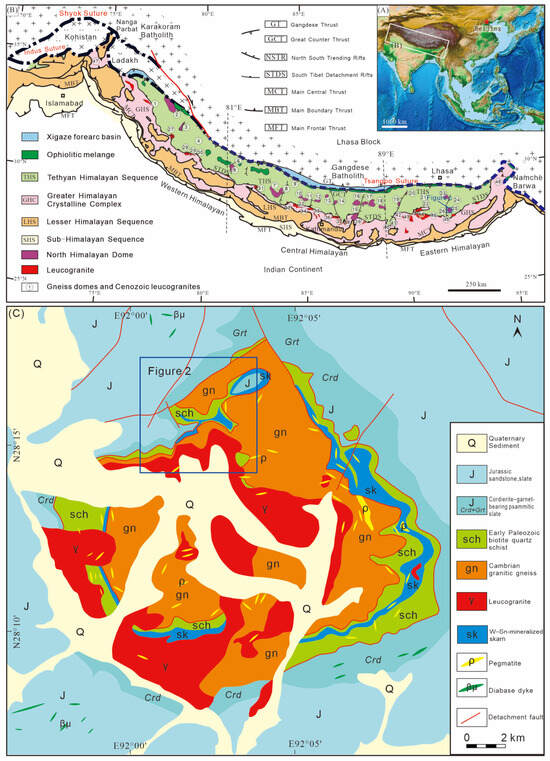
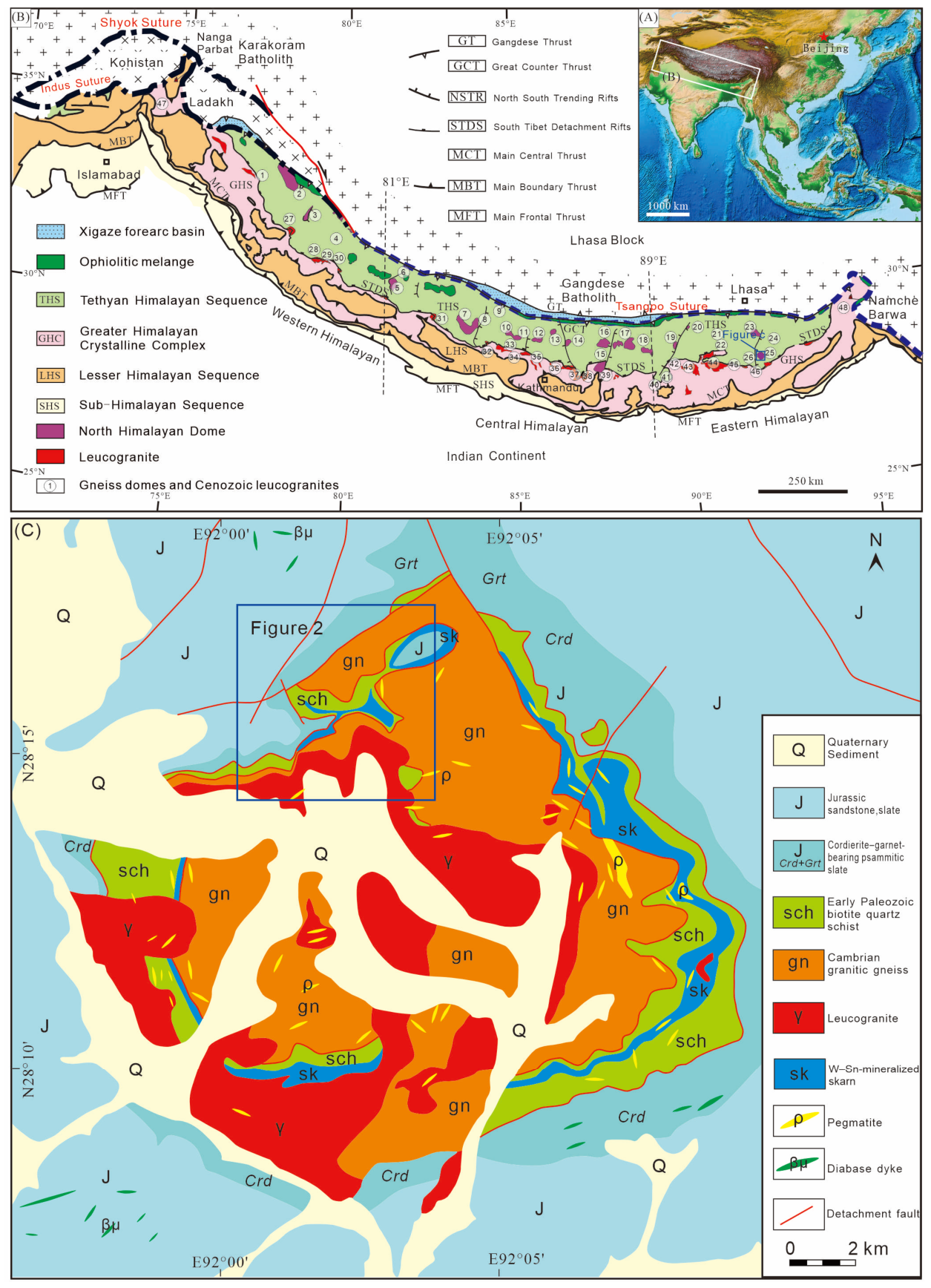
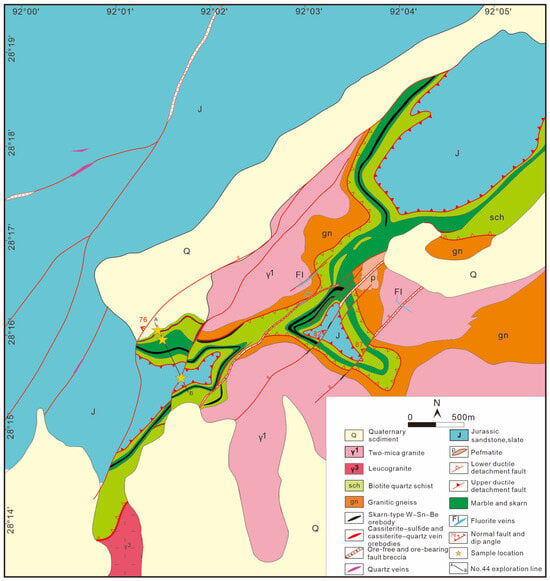
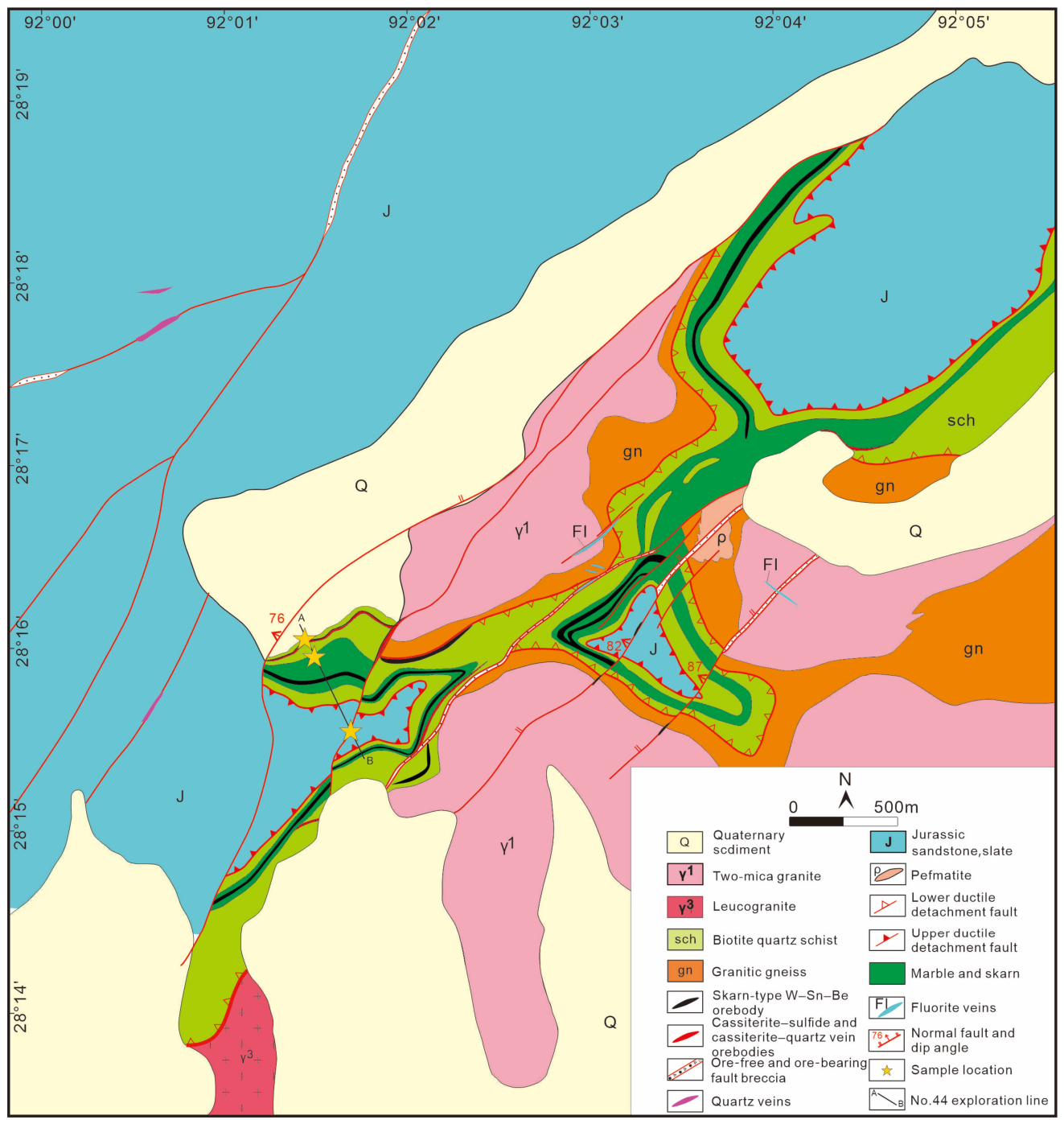
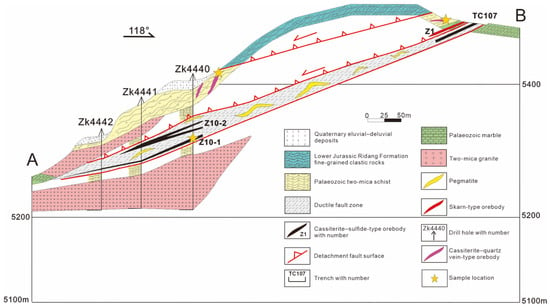
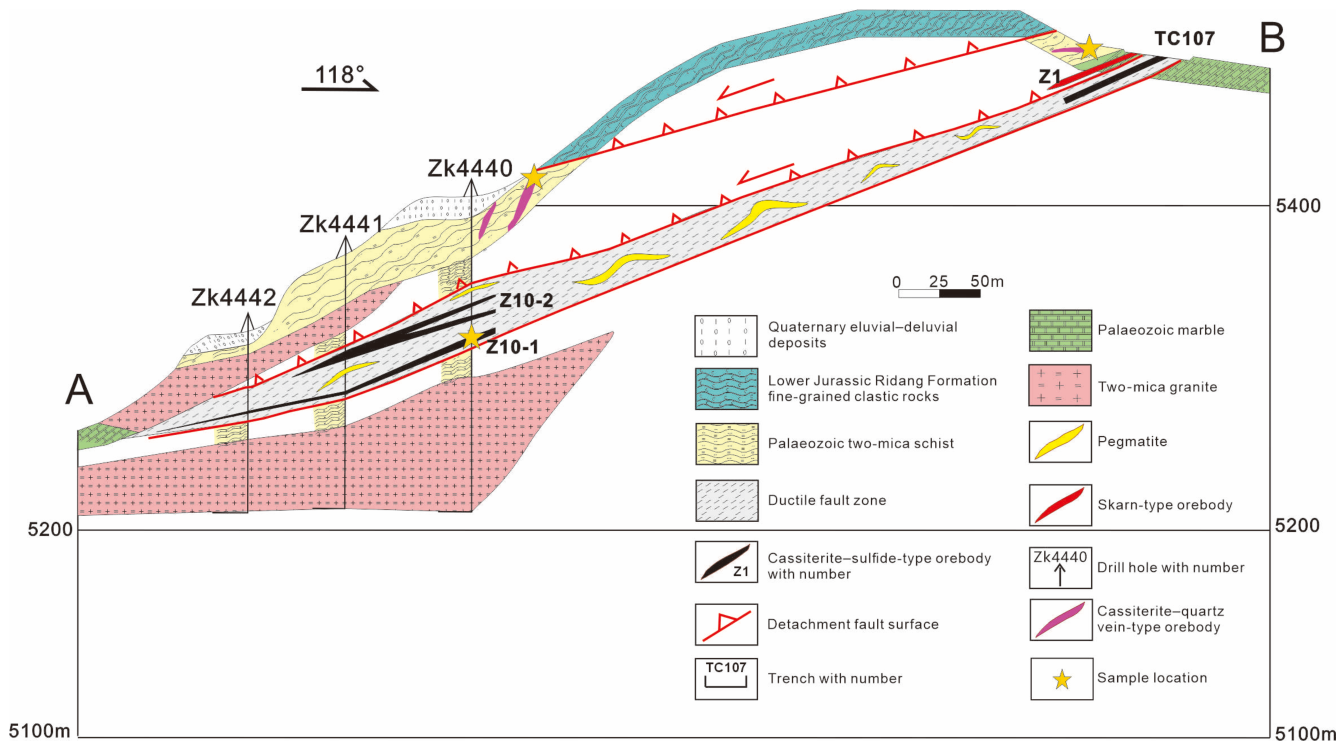
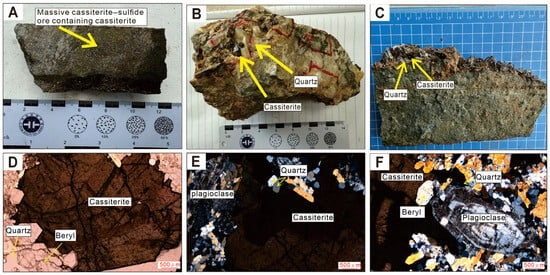
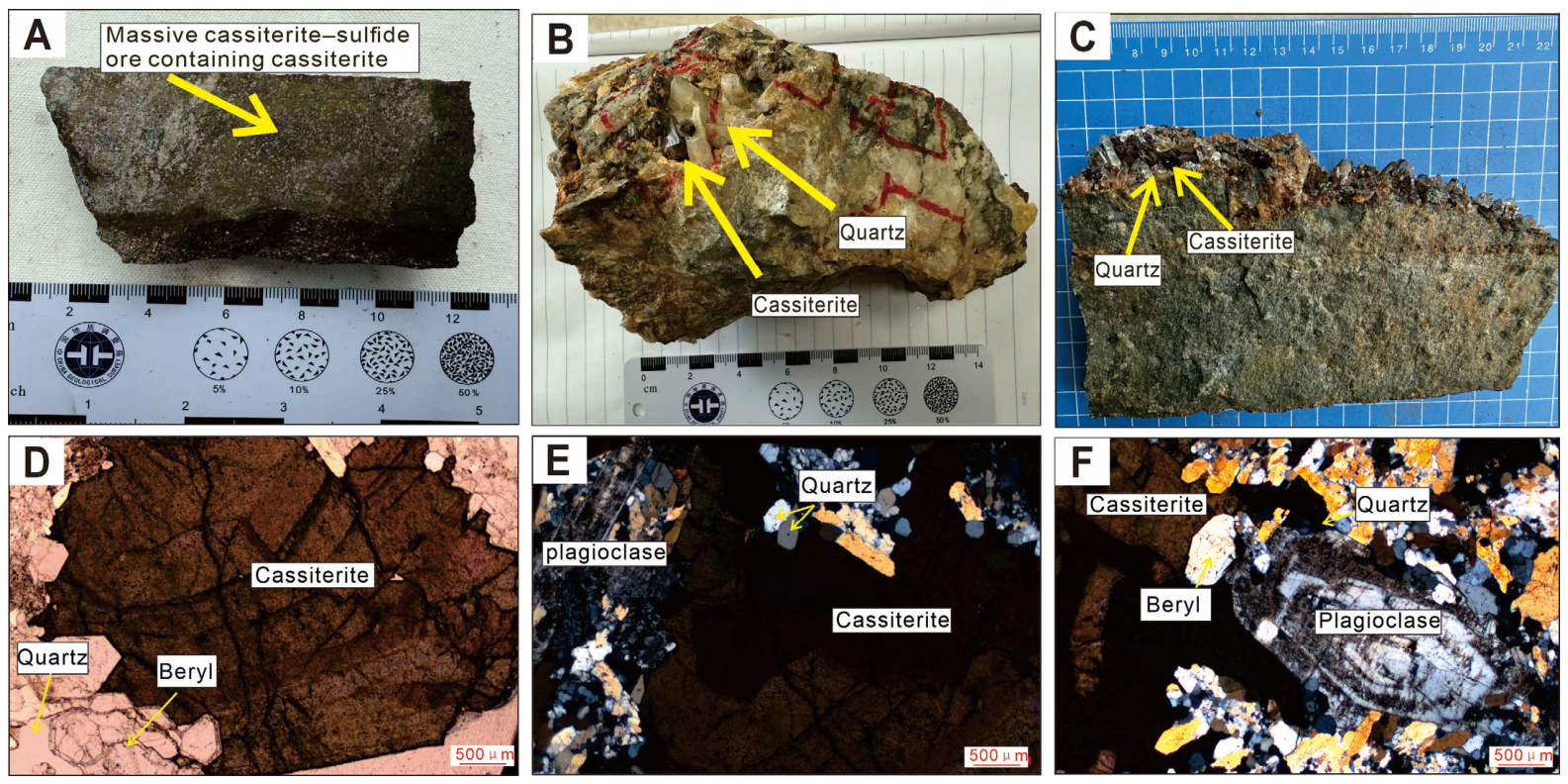
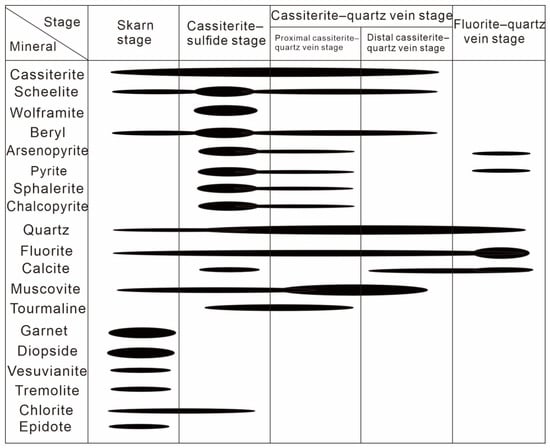
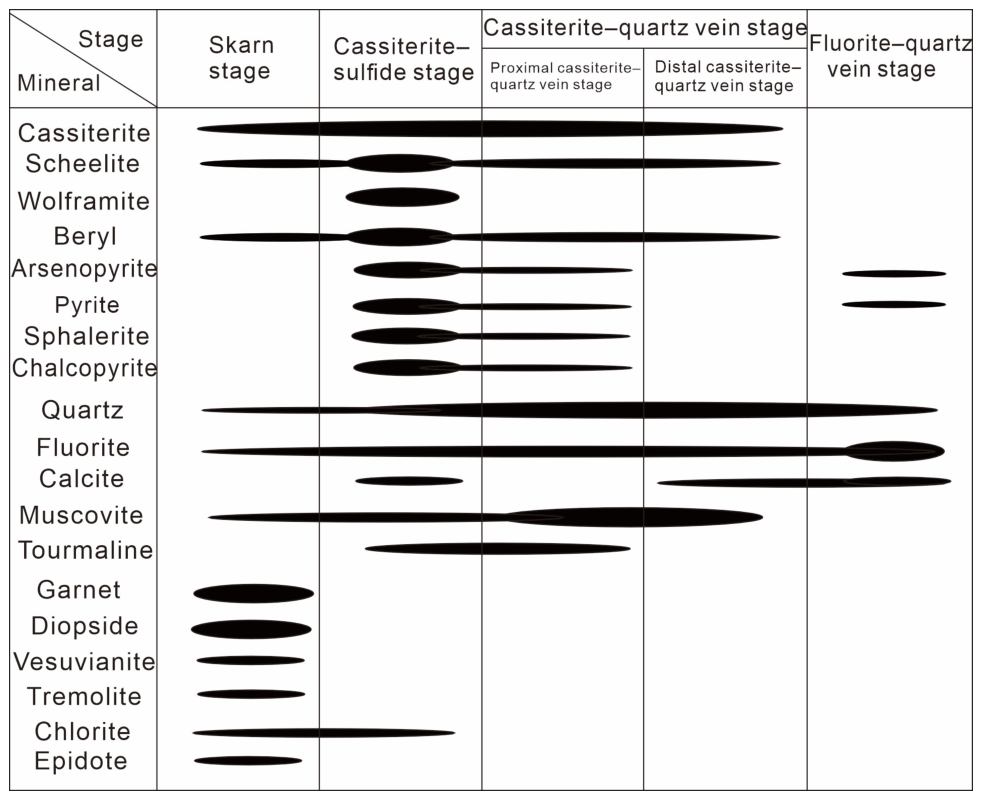
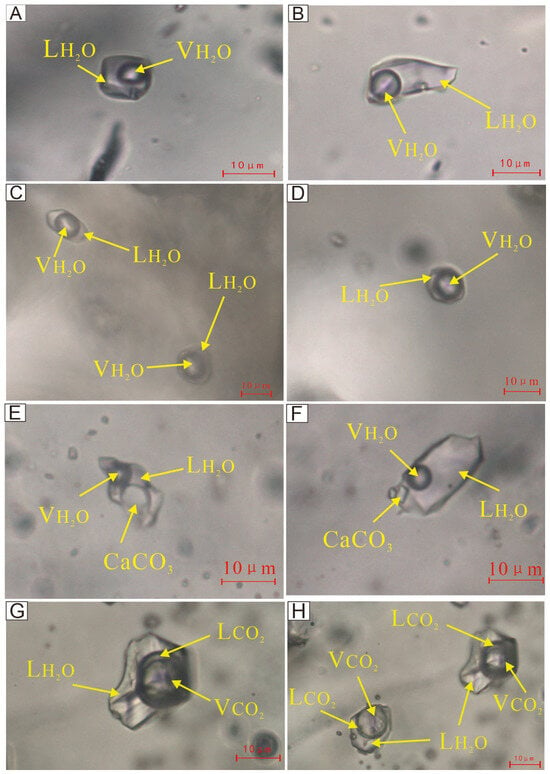
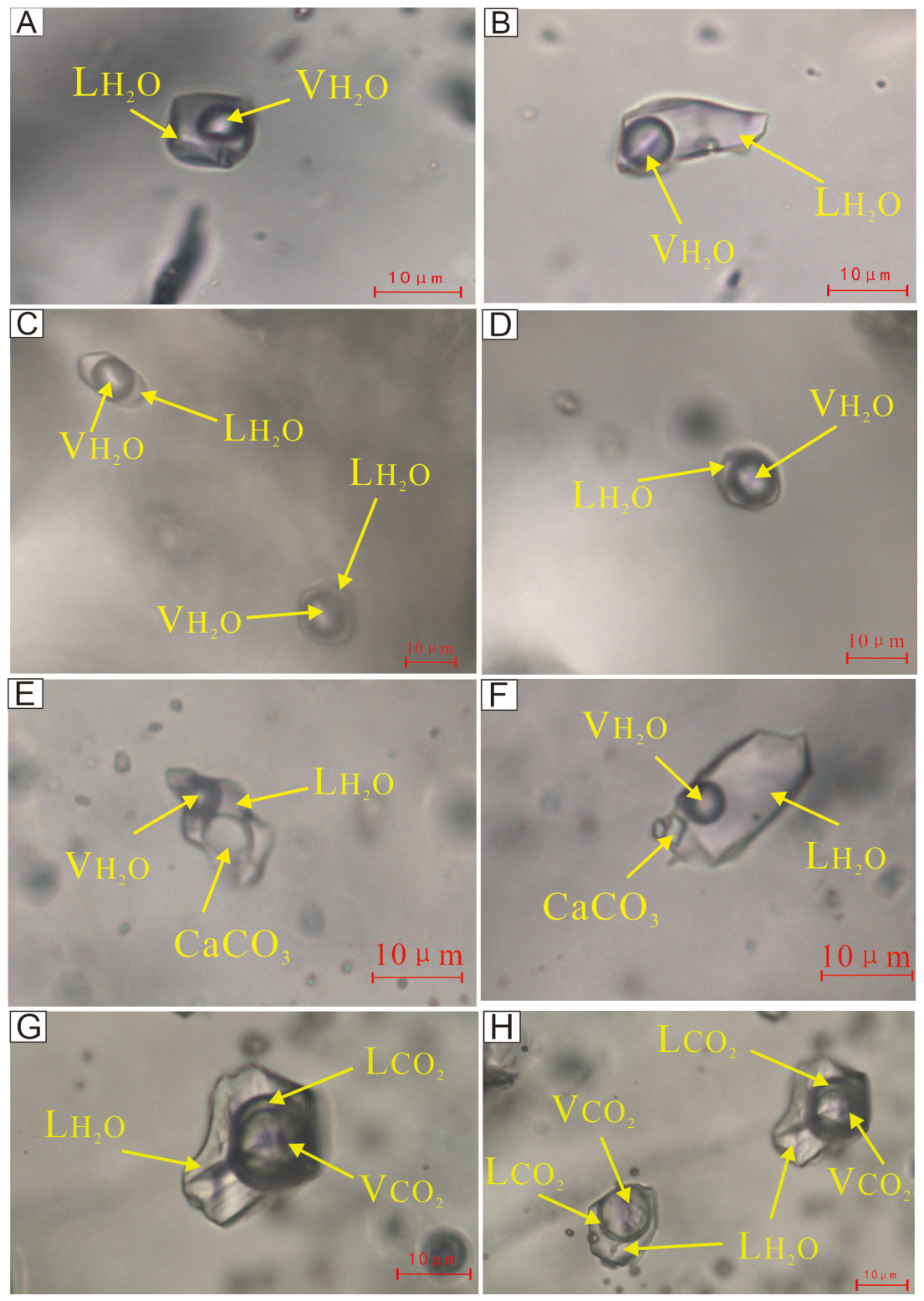
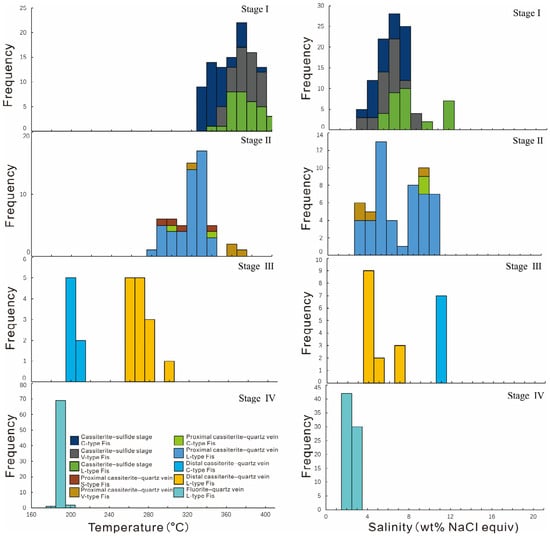
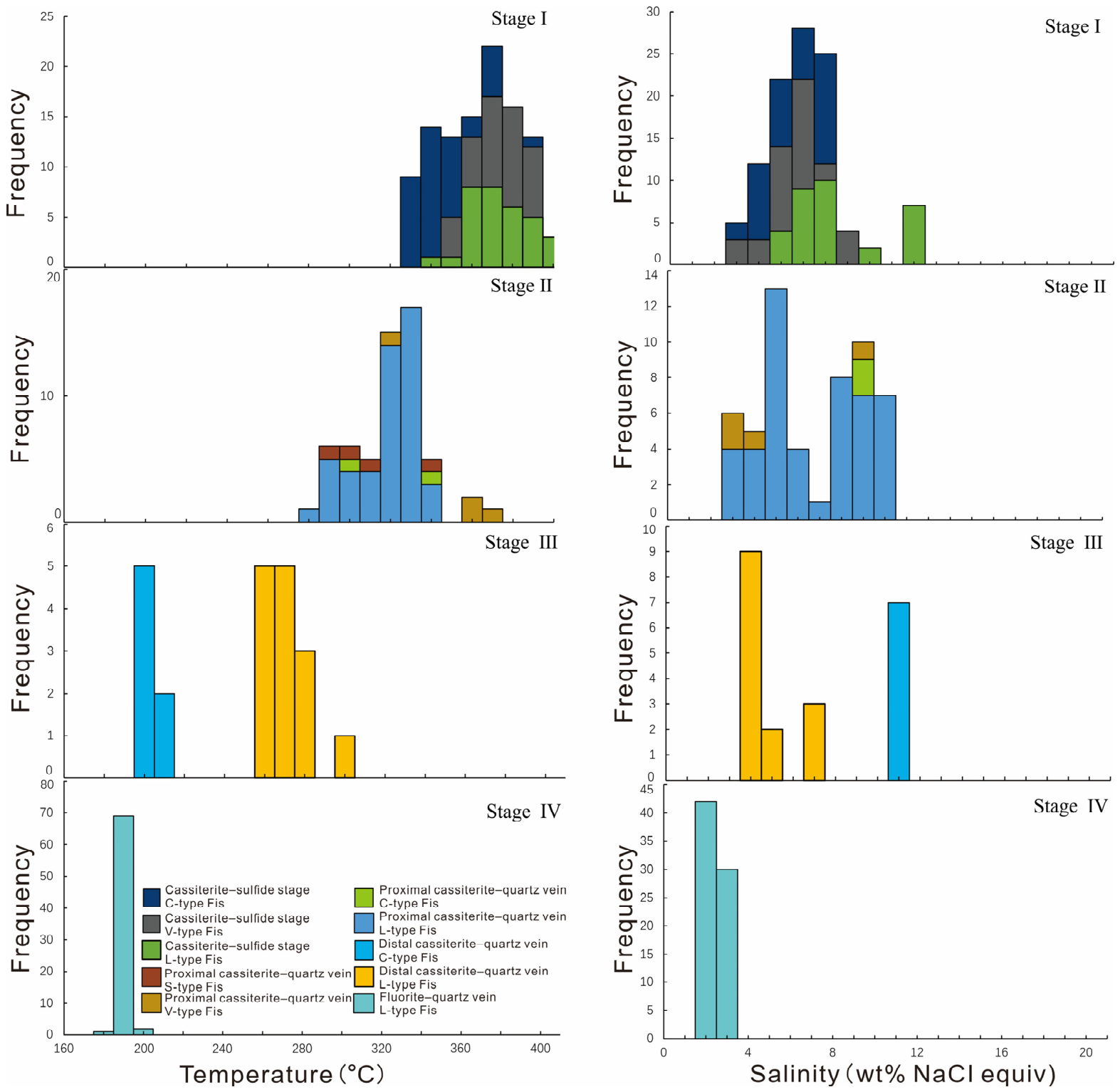
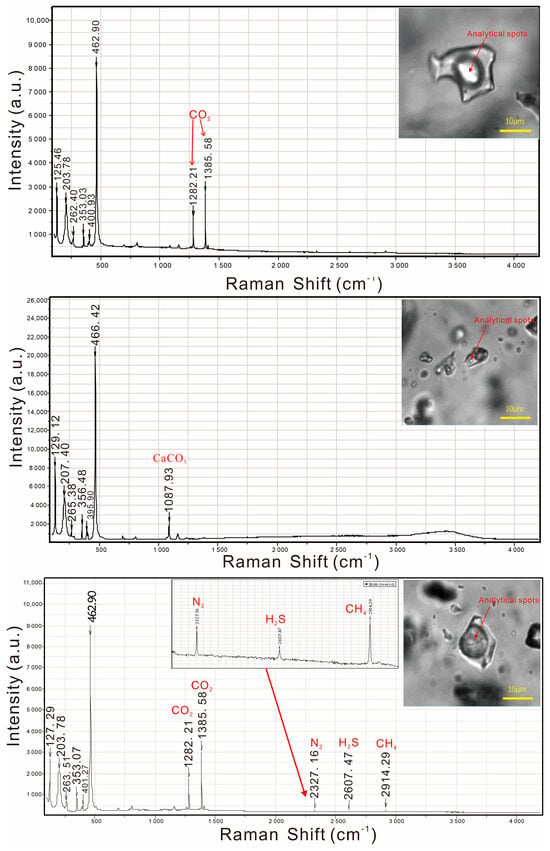
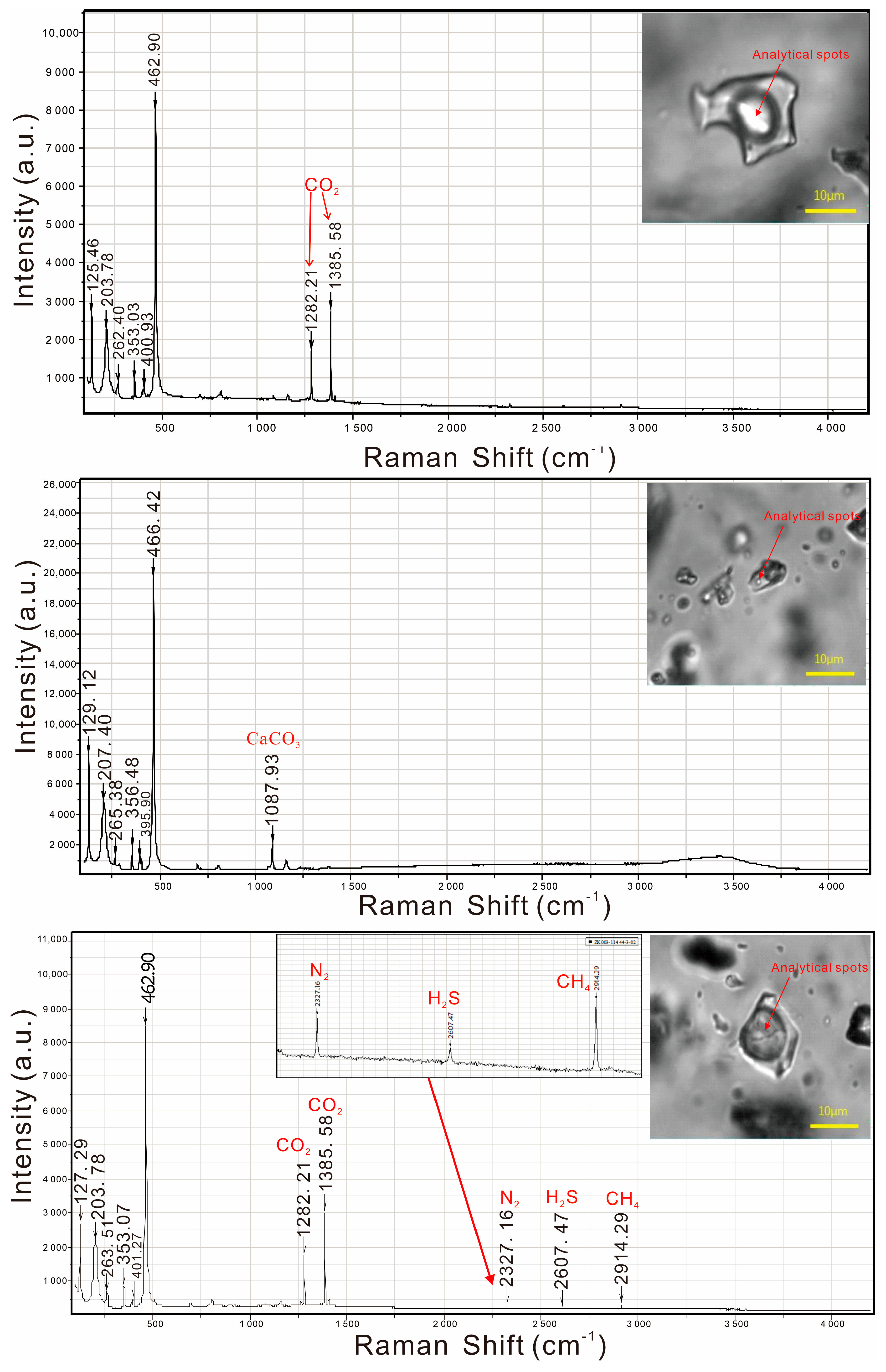
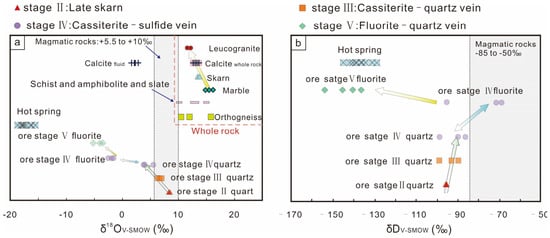
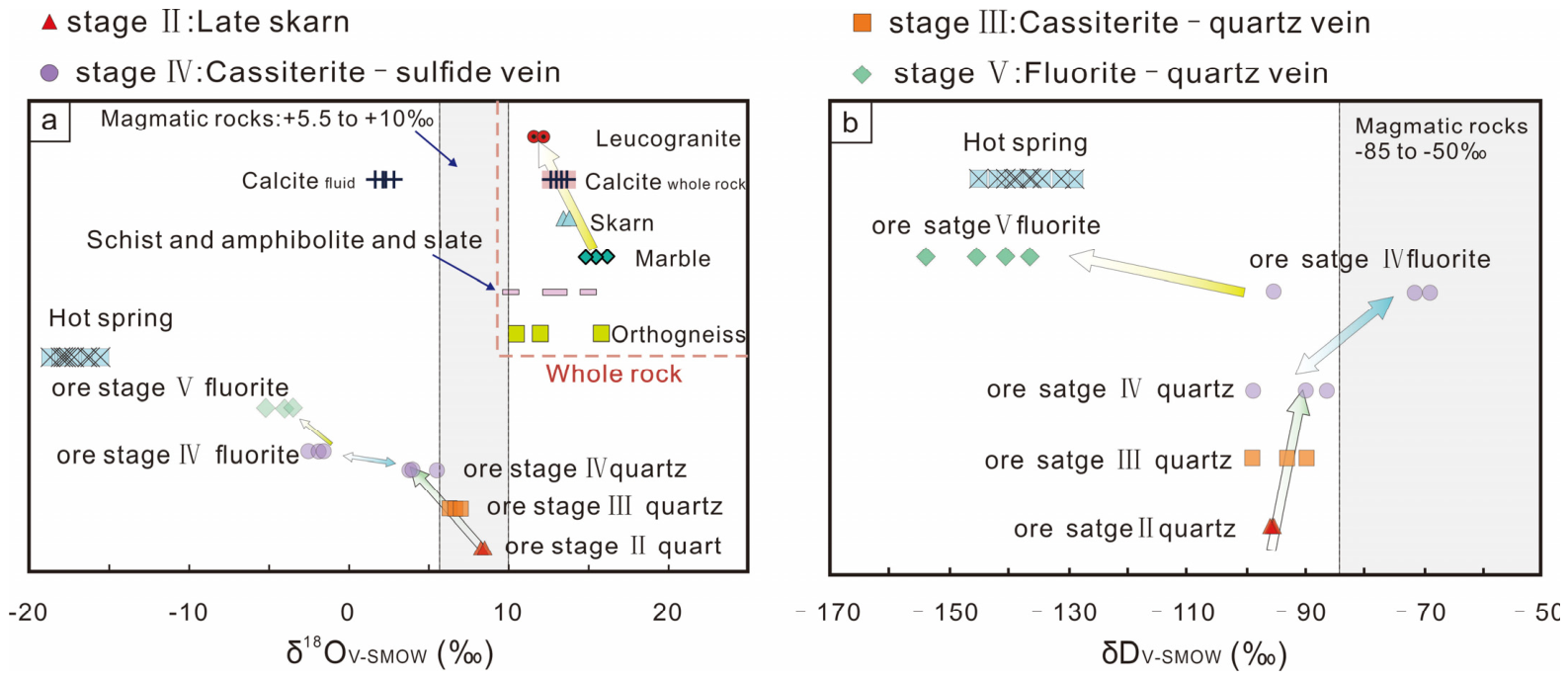
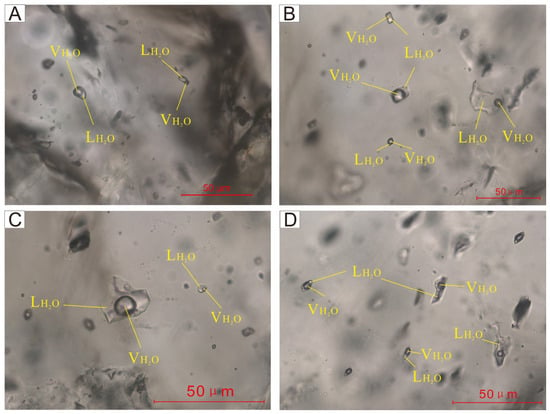
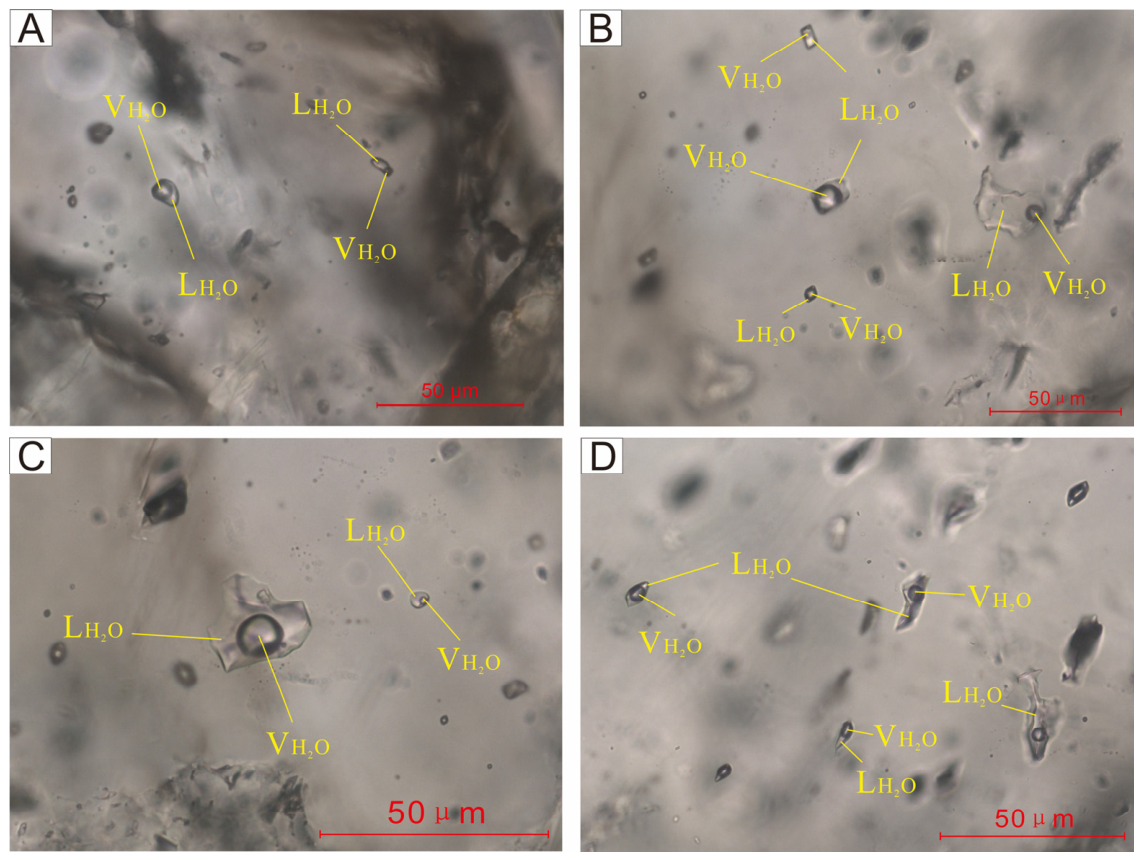
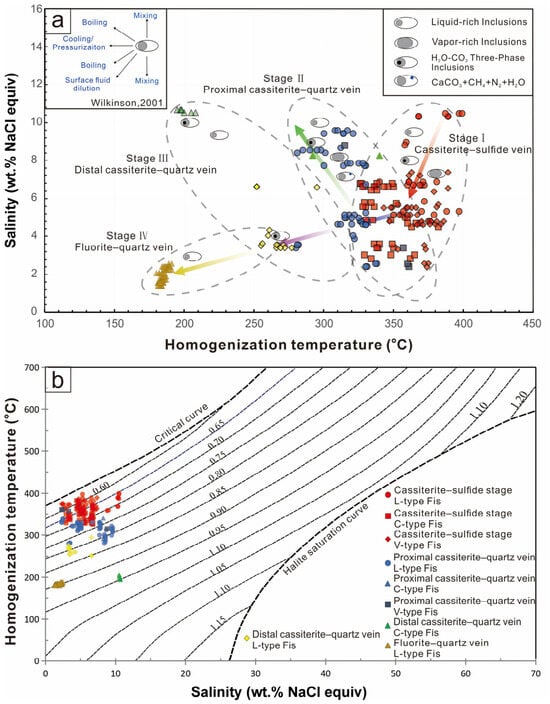
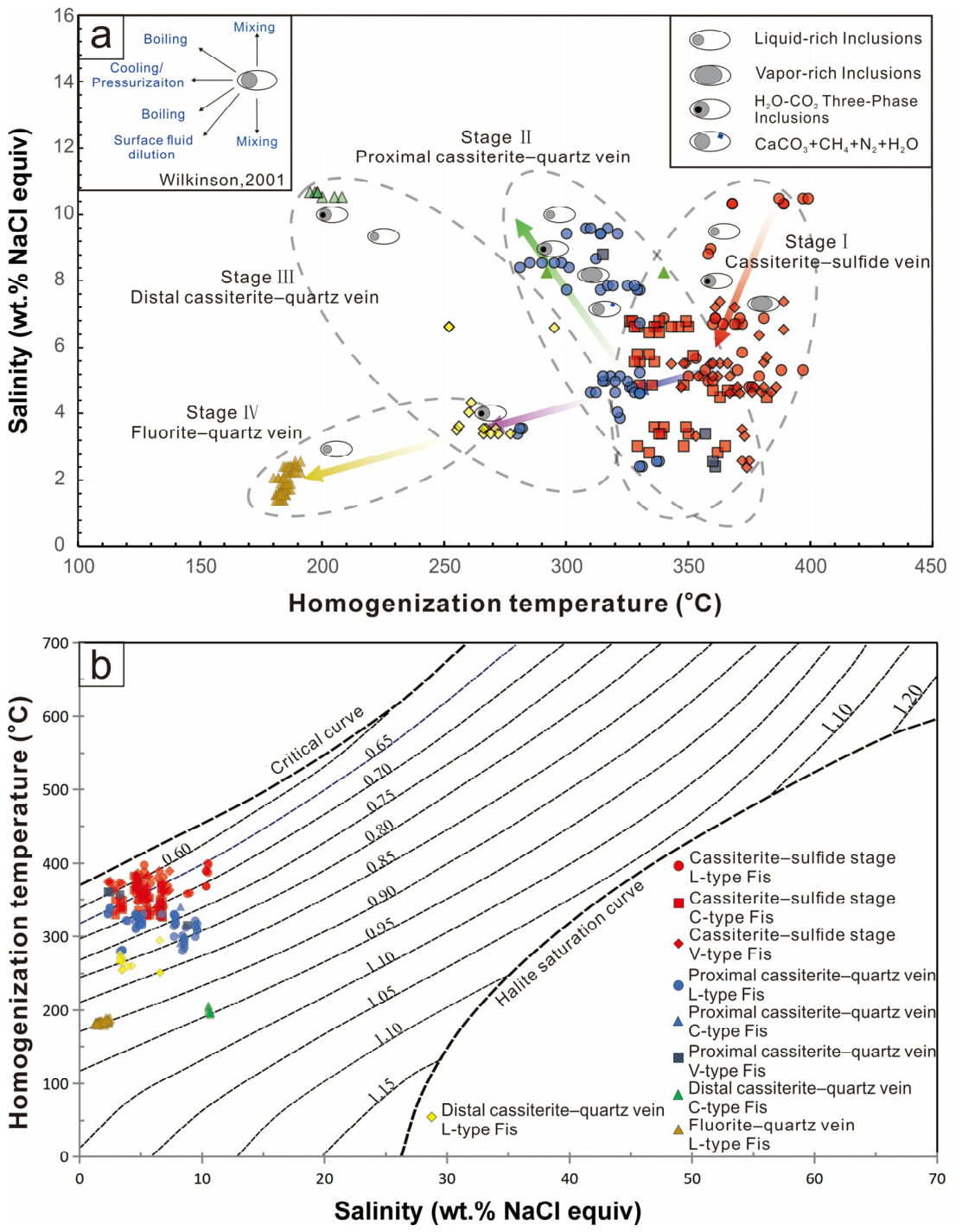
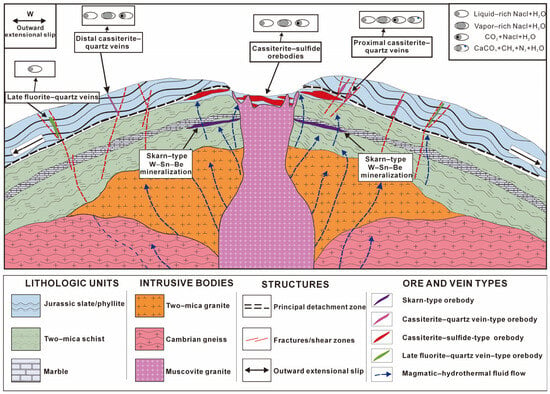
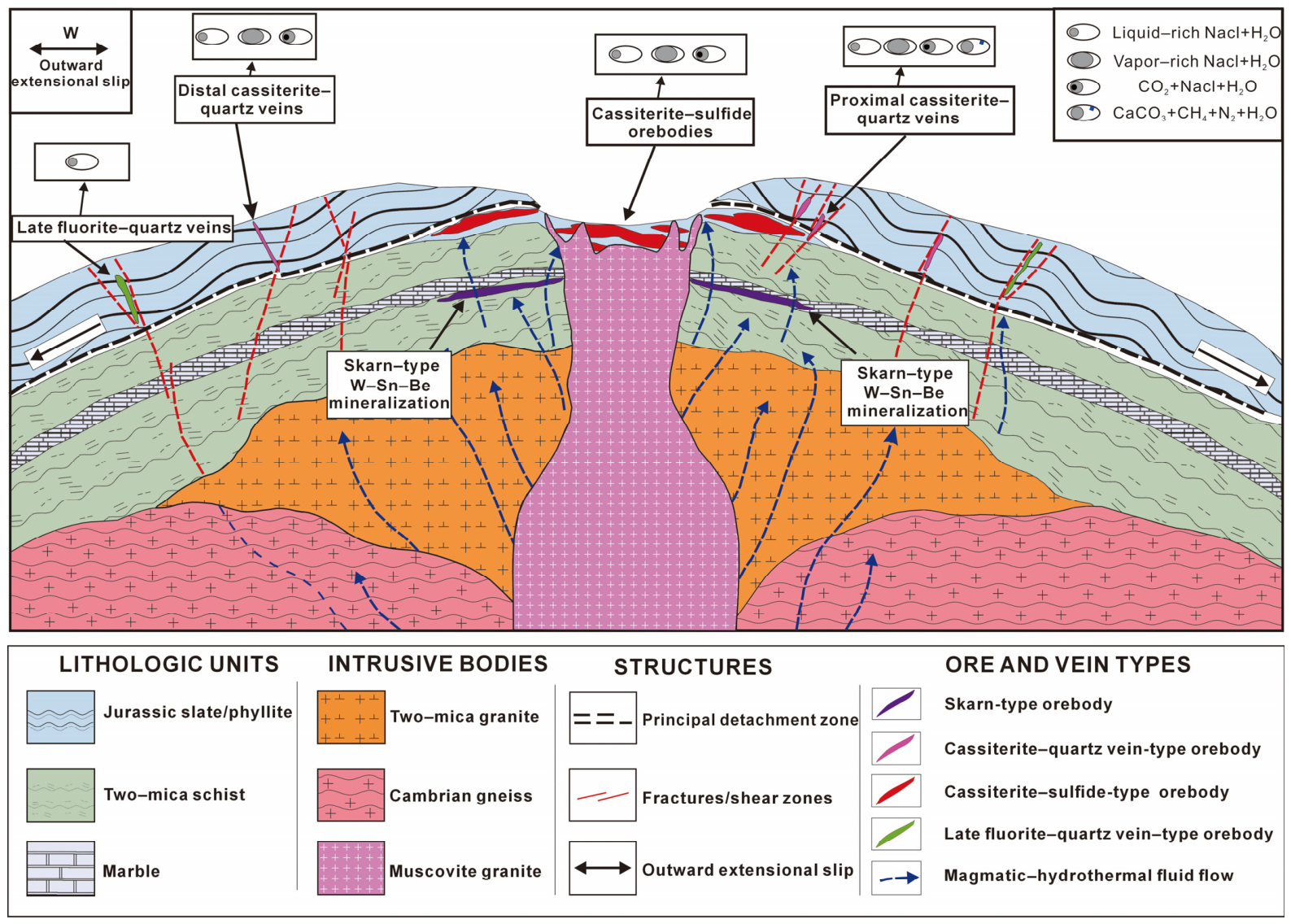

Disclaimer/Publisher’s Note: The statements, opinions and data contained in all publications are solely those of the individual author(s) and contributor(s) and not of MDPI and/or the editor(s). MDPI and/or the editor(s) disclaim responsibility for any injury to people or property resulting from any ideas, methods, instructions or products referred to in the content. |
© 2026 by the authors. Licensee MDPI, Basel, Switzerland. This article is an open access article distributed under the terms and conditions of the Creative Commons Attribution (CC BY) license.