


Abstract
The Dajing Cu-Sn polymetallic deposit, situated within the southern Great Xing’an Range of northern China, is a representative Mesozoic magmatic–hydrothermal system within a major Cu–Sn–Ag–Pb–Zn metallogenic belt. Located at the junction between the Siberian and North China plates, the deposit occurs within a composite tectonic domain overprinted by the Paleo-Asian, Mongol–Okhotsk, and Paleo-Pacific systems. Building on field geological constraints and detailed ore petrography, this study utilizes SEM–CL imaging and in situ LA–ICP–MS trace-element analysis of hydrothermal quartz to reconstruct the multistage physicochemical evolution and fluid dynamics of the ore-forming system. Three quartz generations record successive mineralization stages: early QI forms grain cores associated with Stage I cassiterite–arsenopyrite–quartz mineralization; main-stage QII crystallized during or shortly after Stage II chalcopyrite precipitation and exhibits well-developed oscillatory zoning; and late QIII occurs mainly as rim overgrowths and fracture fillings and postdates Stage III ore-mineral precipitation. Quartz is characteristically Ti-poor (4.7–22.8 ppm), and its trace-element systematics indicate a low- to intermediate-temperature hydrothermal signature and a granitic magmatic–hydrothermal affinity. Al, Li, Na, K, and Ge show coupled behavior consistent with heterovalent substitution and vary markedly among quartz generations, with CL-bright QIIa showing relatively higher Al, Ge, and Na relative to CL-dark QIIb, whereas QIII is generally characterized by lower Al, Li, and Ge. Localized anomalously high Cu and Sn values are mainly attributed to the co-ablation of fine-grained mineral inclusions, metal-rich fluid inclusions, or fracture-filling components. These features indicate a chemically heterogeneous fluid reservoir with inferred relatively acidic conditions during the initial Sn-mineralization stage. The fluid system subsequently experienced recurrent physicochemical fluctuations associated with pulsed fluid input during the principal Cu-mineralization stage. QIII records a trace element-depleted late-fluid system associated with the terminal pyrite–quartz stage. Late fluids migrated along earlier quartz boundaries and fractures and may have undergone further cooling and dilution through fluid mixing and/or water–rock interaction. Overall, the fluid system shows a progressive shift in inferred fluid chemistry, consistent with decreasing acidity during hydrothermal evolution.
1. Introduction
The southern Great Xing’an Range represents a major tectonic junction where the Paleo-Asian, Mongol-Okhotsk, and Paleo-Pacific domains intersect, hosting a premier Cu-Sn-Ag-Pb-Zn polymetallic metallogenic belt in northern China [1,2]. The region has undergone multiple episodes of tectono-magmatic activity since the Late Paleozoic. Magmatic–hydrothermal events peaked during the Mesozoic, especially from the Jurassic to the Early Cretaceous. This interval was characterized by widespread, highly fractionated granitic magmatism accompanied by intense hydrothermal activity [3]. The resulting polymetallic deposits are predominantly of magmatic–hydrothermal and skarn types, strongly controlled by NE-trending fault systems that define a regional metallogenic framework characterized by Sn dominance with associated Cu, Ag, Pb, and Zn mineralization [4]. The Dajing Cu–Sn polymetallic deposit is situated within the Huanggangliang–Ganzhu’ermiao metallogenic belt of the southern Great Xing’an Range. Its main Sn mineralization formed during the Middle–Late Jurassic, thereby predating the regional Late Jurassic–Early Cretaceous metallogenic peak. It represents a discrete phase of Jurassic magmatic–hydrothermal activity. Ag, Sn, Zn, Cu, and Pb resources constitute economically significant mineral resources within the deposit [5].
Recent investigations of the Dajing deposit have utilized in situ U–Pb geochronology to provide direct constraints on the timing of mineralization. Cassiterite from quartz–cassiterite ore yielded an age of 161.3 ± 5.5 Ma. Cassiterite from cassiterite–sulfide ore yielded an age of 162.8 ± 4.9 Ma [6]. These ages indicate that the main-stage Sn mineralization occurred during the Middle–Late Jurassic. Recent cassiterite U–Pb geochronology and geochemical studies further support a Jurassic magmatic–hydrothermal origin for the deposit [7,8]. Previous studies of ore-forming fluids and metal sources mainly used fluid inclusions, stable isotopes, and ore geochemistry. These studies indicate that the ore-forming fluids were dominated by deep magmatic–hydrothermal fluids. Meteoric water or formation water was introduced during fluid evolution [9,10]. Sn, Cu, Pb, and Zn were mainly derived from the Jurassic magmatic–hydrothermal system. Fluid mixing and cooling promoted mineral precipitation. Recent studies have also examined minerals at the microscale. Sphalerite chemistry indicates that In enrichment was associated with early high-temperature fluids rich in Cu and Sn [11]. Sulfide chemistry and in situ S–Pb isotopes suggest a mainly magmatic source of the ore-forming materials. Sulfides from different stages also record changes in fluid conditions [12]. However, the CL textures and in situ trace-element compositions of quartz from different mineralization stages remain poorly studied. This limits detailed reconstruction of stagewise fluid evolution at the mineral scale.
Quartz is one of the most common gangue minerals in hydrothermal ore deposits. It has strong physicochemical stability and can effectively preserve structural and compositional information related to ore-forming fluid processes [13,14]. Cathodoluminescence (CL) imaging reveals quartz growth zoning, secondary overgrowth rims, fracture infillings, and multi-generation relationships that are difficult to identify under conventional optical microscopy. In situ LA-ICP-MS trace-element analysis further provides microscale elemental compositions of different quartz generations [15]. The integration of these two methods not only helps to constrain quartz growth stages and their relationships with associated mineral assemblages, but also allows indirect reconstruction of fluid temperature, pH, chemical composition, growth rate, and local disequilibrium crystallization processes. Therefore, quartz CL textures and trace element signatures are important mineralogical records for interpreting hydrothermal fluid evolution [14]. Recent studies have successfully applied quartz CL and in situ geochemical analysis to Sn-Cu polymetallic deposits, effectively distinguishing multiple quartz generations and reconstructing magmatic-hydrothermal evolution processes [16,17]. However, systematic studies of quartz from different mineralization stages in the Dajing Cu-Sn polymetallic deposit, a typical deposit in the southern Great Xing’an Range, remain limited.
In this study, based on detailed field geological investigations and petrographic observations, hydrothermal quartz from different mineralization stages of the Dajing Cu-Sn deposit was selected for analysis. CL imaging and LA-ICP-MS in situ trace-element analysis were conducted to identify textural characteristics of different quartz generations and their correspondence to mineralization stages. This study further investigates the occurrence mechanisms of trace elements in quartz, the relationship between CL responses and elemental variations, and constraints on the physicochemical conditions and evolution of ore-forming fluids. The results provide new insights into fluid evolution in Sn-Cu hydrothermal systems and may support exploration of similar deposits in the region.
2. Regional and Ore Deposit Geology
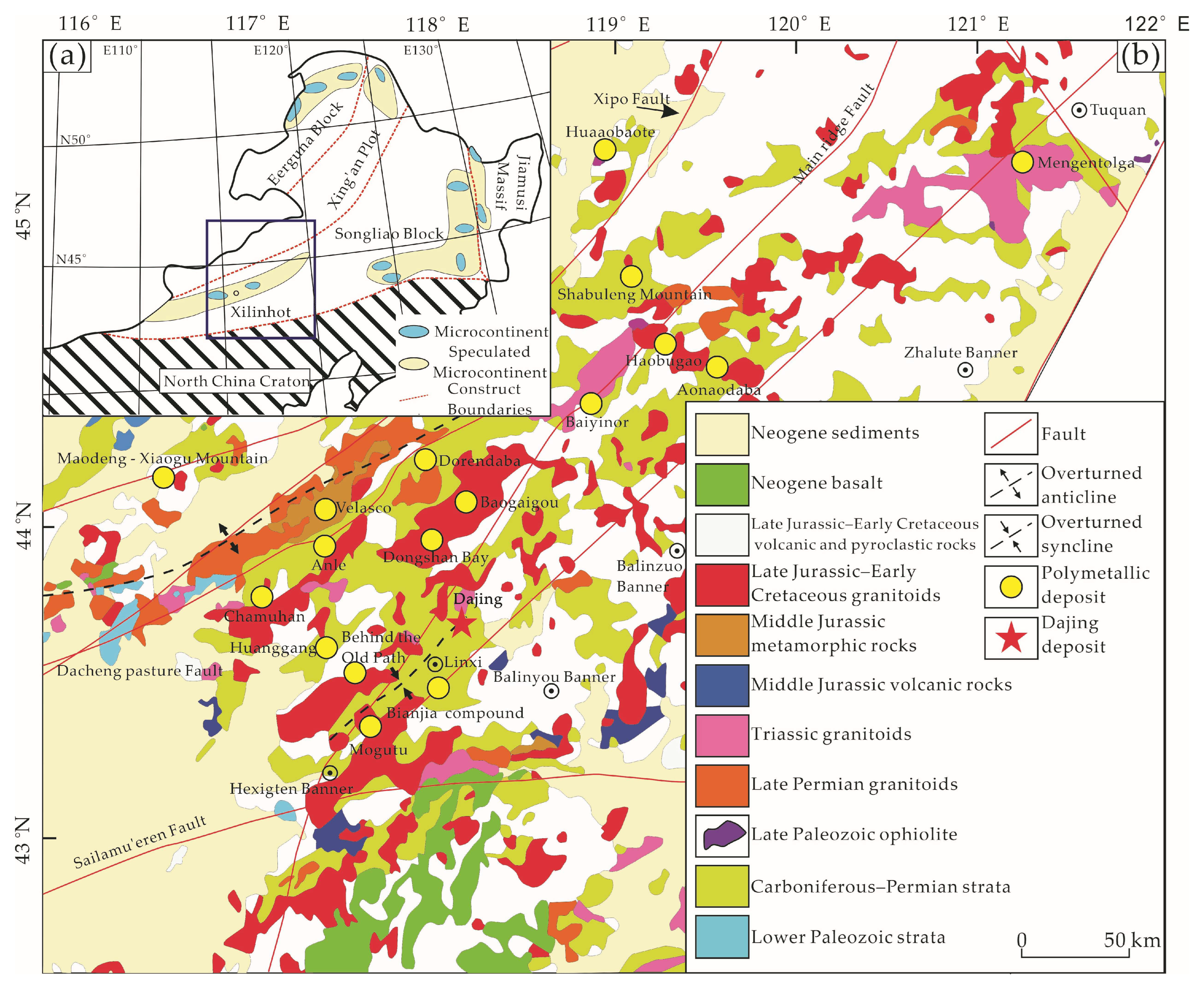
The Dajing Cu-Sn polymetallic deposit is located in the northeastern part of Linxi County, eastern Inner Mongolia, approximately 21 km from Linxi Town. It represents a major polymetallic deposit dominated by Sn, Cu, Ag, Pb, and Zn mineralization [18]. Geodynamically, the deposit is situated within the southern Great Xing’an Range, at the junction between the Siberian Plate and the North China Plate (Figure 1). The Erenhot–Hegenshan fault zone marks the northern boundary with the Xing’an Block, and to the south, the Xar Moron fault zone defines the boundary with the northern margin of the North China Craton. The eastern boundary is defined by the Nenjiang fault zone, which borders the Songliao Basin [19]. The region records the accretionary evolution of the Paleo-Asian Ocean during the Late Paleozoic. Specifically, the Mongol–Okhotsk and Paleo-Pacific regimes were superposed on the region during the Mesozoic. These superposed regimes triggered multiple episodes of tectono-magmatic activity. The far-field effects of the Mongol–Okhotsk Ocean closure induced post-collisional extension within the southern Great Xing’an Range during the Middle–Late Jurassic, establishing an extensional regime that promoted magma emplacement, focused hydrothermal fluid advection, and provided optimal structural and thermal conditions for polymetallic mineralization.
Figure 1.
(a) Tectonic location of the southern Great Xing’an Range (modified after [20]); (b) distribution of polymetallic deposits (modified after [21]).
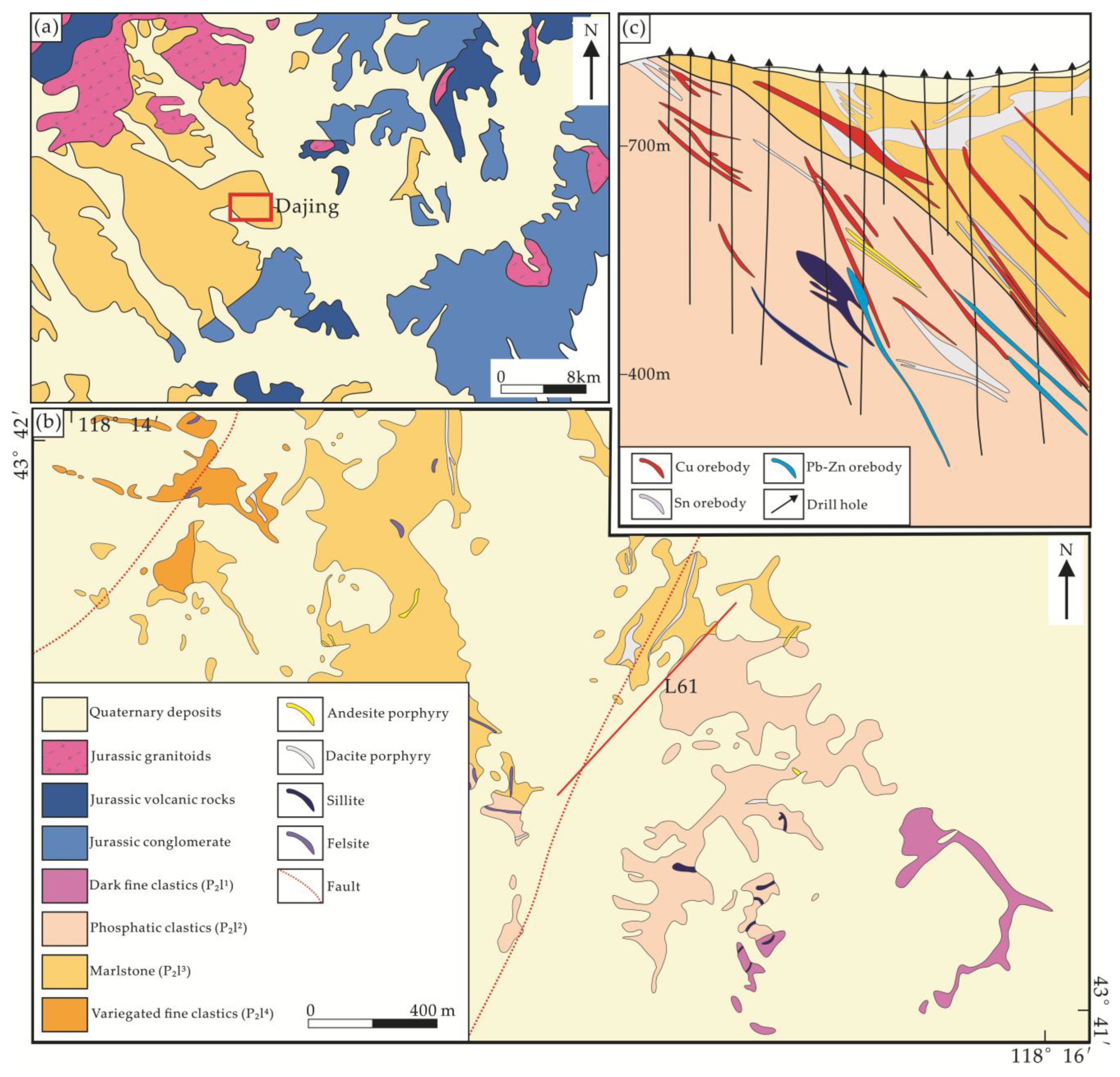
Quaternary unconsolidated deposits are sparsely distributed in the region. The principal exposed geological units comprise the Upper Permian Linxi Formation, alongside Jurassic conglomerate, volcanic successions, and granitoid intrusions (Figure 2a,b). The Upper Permian Linxi Formation represents the primary ore-hosting unit and consists mainly of fine-grained clastic sequences deposited within a freshwater lacustrine environment. From base to top, this formation is subdivided into four members: the variegated fine-grained clastic member (P2l4), the marl member (P2l3), the phosphatic clastic member (P2l2), and the dark fine-grained clastic member (P2l1).
Figure 2.
Regional geological map: (a) simplified geological map of the area surrounding the Dajing deposit (modified after [22]); (b) geological map of the Dajing deposit (modified after [23]); (c) cross-section along Line 61 (modified after [23]).
Magmatic activity occurred in several stages, producing intermediate to felsic intrusive suites and subvolcanic complexes. Zircon U–Pb geochronology records four main magmatic episodes within and peripheral to the deposit, corresponding to the Late Permian, Triassic, Middle Jurassic, and Late Jurassic–Early Cretaceous [22]. The Late Permian and Triassic magmatism predominantly formed granitic intrusions. Conversely, the Middle Jurassic and Late Jurassic–Early Cretaceous magmatism produced granodiorite, granite porphyry, syenogranite, alkali granite, and various subvolcanic phases. Hypabyssal dikes within the mining district include andesite porphyry, dacite porphyry, felsite, and aplite. These rocks generally show a high-K calc-alkaline geochemical affinity [6].
Fault systems are intensely developed throughout the study area, predominantly striking NE, NW, NWW, and nearly N–S. In contrast, folding is relatively gentle and open, locally represented by broad synclines. The NW- and NWW-striking faults acted as the primary conduits for ore-forming fluids and exerted structural controls on orebody emplacement. The Dajing orebodies are mainly hosted within these faults and fractures as veins, composite veins, and localized stockworks. Individual orebodies typically range from 0.5 to 1.5 m in thickness, exhibiting geometries clustered in distinct en-echelon belts or domains. Additionally, intermediate- to felsic dikes—including andesite porphyry, dacite porphyry, aplite, and felsite—were structurally controlled by and emplaced along these structures, striking broadly parallel to the main NW- and NWW-trending faults. Consequently, the regional fault architecture not only focused hydrothermal fluid migration and governed orebody localization but also provided the necessary dilation space to accommodate multiple episodes of magmatic dike intrusion.
Wall-rock alteration is well developed. The main types are silicification, sericitization, chloritization, and carbonatization. Silicification and sericitization are mainly developed in the central part of the mining area and are closely associated with the early Sn–Cu mineralization stages. Chloritization commonly occurs with sulfide mineralization, whereas carbonatization is more common in the eastern and northern parts and is mainly related to the late Ag–Pb–Zn mineralization stage. The mineralization shows clear spatial zoning. In a plan view, Cu–Sn mineralization in the central area grades outward into Pb–Zn–Ag mineralization. The cross-section along exploration line 61 shows local vertical zoning (Figure 2c). Within this section, Cu–Sn orebodies generally occur at higher elevations. Pb–Zn orebodies extend mainly to lower elevations. Orebodies with different metal assemblages are interlaced along several sets of steeply dipping faults. This pattern defines a local downward transition from Cu–Sn to Pb–Zn mineralization.
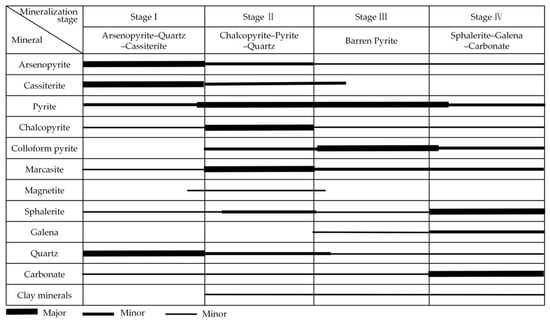
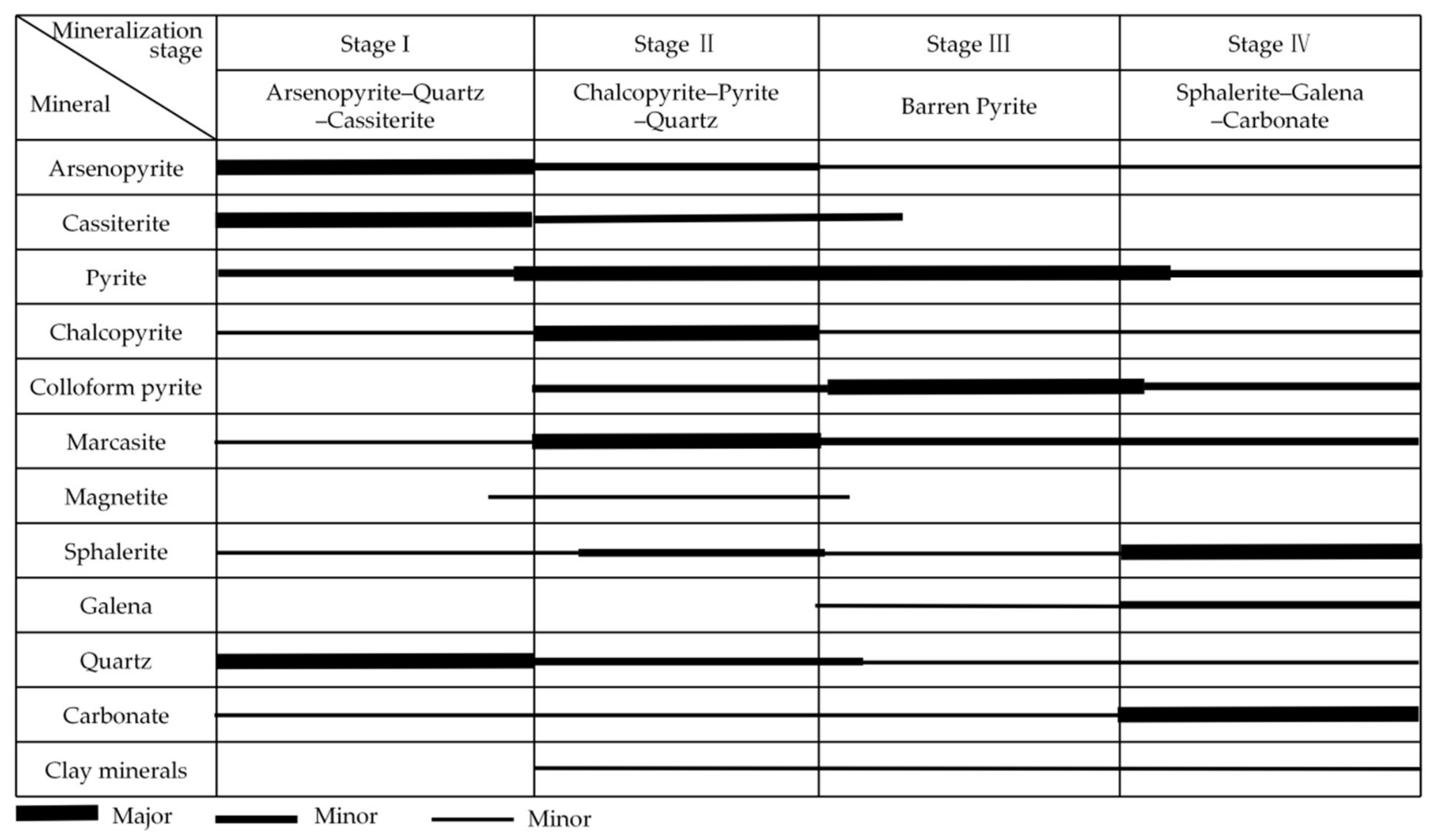
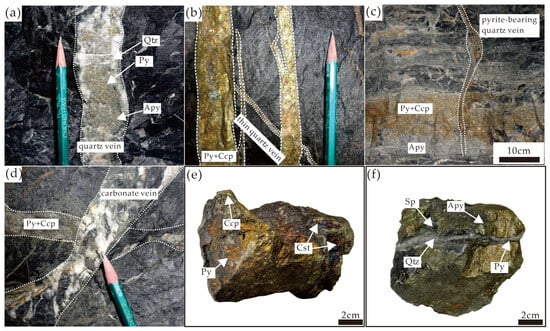
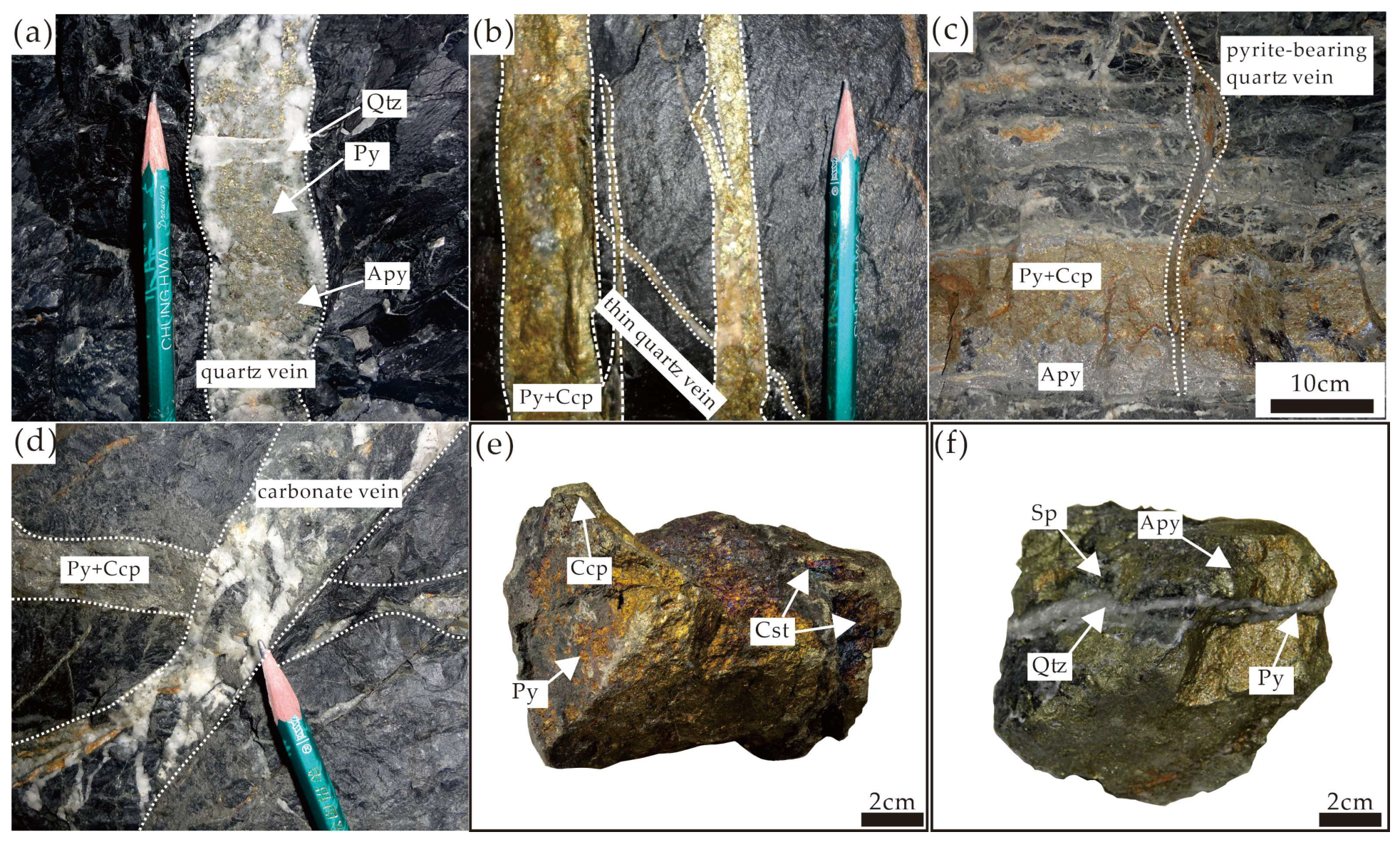
Based on mineral assemblages together with vein textures and crosscutting-filling-replacement relationships, the mineralization at the Dajing Cu-Sn polymetallic deposit can be subdivided into four stages (Figure 3). Stage I represents an early arsenopyrite-quartz-cassiterite event. This stage is dominated by arsenopyrite, quartz, and cassiterite, whereas pyrite and chalcopyrite occur only in minor amounts (Figure 4a,e). Stage II corresponds to the main chalcopyrite–pyrite–quartz mineralization. Chalcopyrite and pyrite are the dominant ore minerals, accompanied by pyrrhotite, cassiterite, and marcasite. Quartz, calcite, and chlorite constitute the gangue assemblage (Figure 4b). Stage III is characterized by a pyrite-rich but Cu-poor assemblage. Pyrite-bearing quartz veinlets clearly cut earlier Cu ores, providing key chronological constraints (Figure 4c,f). Pyrite mainly occurs as granular aggregates within quartz veins and fills fractures and intergranular spaces, with only minor chalcopyrite present. Stage IV marks a late-stage sphalerite–galena–carbonate overprint. Calcite veins truncate earlier Cu mineralization. Galena is commonly developed along pyrite margins or fractures. The mineral assemblage is dominated by sphalerite, pyrite, and carbonate minerals, with galena as a subordinate phase and minor chalcopyrite.
Figure 3.
Major mineral assemblages of different mineralization stages in the Dajing Cu-Sn polymetallic deposit.
Figure 4.
Core and hand-specimen features of ores from the Dajing Cu–Sn polymetallic deposit. (a) Early quartz vein containing arsenopyrite and pyrite, with minor chalcopyrite locally; (b) early Stage I quartz veinlet locally truncated and overprinted by Stage II pyrite–chalcopyrite mineralization; (c) pyrite-bearing quartz vein cutting an earlier orebody; (d) carbonate vein cutting an earlier ore vein; (e) cassiterite and early sulfide mineralization, with minor pyrite and chalcopyrite locally; (f) quartz veinlet cutting Cu ore and containing minor pyrite. Qtz—quartz; Py—pyrite; Apy—arsenopyrite; Ccp—chalcopyrite; Cst—cassiterite; Sp—sphalerite.
3. Analytical Methods
The samples used in this study were collected from underground tunnels of the Dajing Cu-Sn polymetallic deposit. All samples were selected from fresh ore materials representing different mineralization stages. The sampling area is located at approximately 118.16° E, 43.41° N. This study focuses on quartz from Stages I to III of mineralization for cathodoluminescence (CL) imaging and in situ trace-element analysis. All analyses were performed by KeHui Testing (Tianjin) Technology Co., Ltd. (Tianjin, China).
Quartz cathodoluminescence (CL) imaging was performed using a TESCAN MIRA3 field-emission scanning electron microscope (TESCAN GROUP, a.s., Brno, Czech Republic) equipped with a CL detector. After carbon coating, CL images were obtained under an accelerating voltage of 7 kV and a beam current density of 2–10 nA/mm. The magnification was mainly 100–330×, with a maximum field of view of approximately 4.23 mm. The acquisition time for each image was 60 s. Based on CL observations, representative quartz of different generations was selected for in situ trace-element analysis. LA-ICP-MS analyses were performed using a GenesisGEO femtosecond laser ablation system (Shanghai Chemlab Instrument Co., Ltd., Shanghai, China) coupled with a Thermo Scientific iCAP RQ inductively coupled plasma mass spectrometer (Thermo Fisher Scientific (Bremen) GmbH, Bremen, Germany). The excimer laser generates a deep-UV beam that is homogenized and focused onto the sample surface. The laser spot size was 100 μm, with a repetition rate of 2 Hz and an ablation time of 40 s per spot. Helium was used as the carrier gas and argon as the make-up gas to optimize sensitivity during ablation. Quantification of trace element concentrations in quartz was calibrated using multi-external standard normalization based on glass reference materials NIST SRM 610 and BCR-2G [24], with BIR-1G used as a monitoring standard [25]. Detailed analytical procedures follow Liu et al. [24] and Chu et al. [26]. Each time-resolved analysis included approximately 45 s of background signal and 40 s of sample signal. Offline data reduction, including selection of analyte and background intervals, instrumental drift correction, and element concentration calculations, was performed using ICPMSDataCal software (Yongsheng Liu, Wuhan, China).
To minimize the effects of micro-inclusions intercepted by the large laser spot, all analytical sites were carefully reviewed before analysis. Photomicrographs and CL images were used for this purpose. Visible fractures, mineral inclusions, and quartz boundaries were avoided wherever possible. Potential contaminants included fluid inclusions, sulfides, cassiterite, and other microscale heterogeneous components. The raw time-resolved signal of each analysis was then examined individually. The Si signal was used to identify the laser-ablation interval and assess the continuity of the quartz-matrix signal. Variations in the target elements Li, Al, Ti, and Ge were also carefully monitored. Signals of Na, Mg, K, and Ca were used to identify possible fluid inclusions or silicate micro-inclusions. Fe, Cu, Zn, As, and Pb were used to detect contributions from sulfides. Sn was used to monitor possible cassiterite micro-inclusions. An analysis was excluded if mineral-indicator elements showed persistent or repeated enrichment during ablation. Analyses were also rejected when several related elements increased simultaneously and no continuous, stable quartz-matrix signal was observed. Only analyses with stable time-resolved signals and no clear evidence of mineral-inclusion mixing were retained.
4. Analysis Results
4.1. Cathodoluminescence Characteristics of Quartz
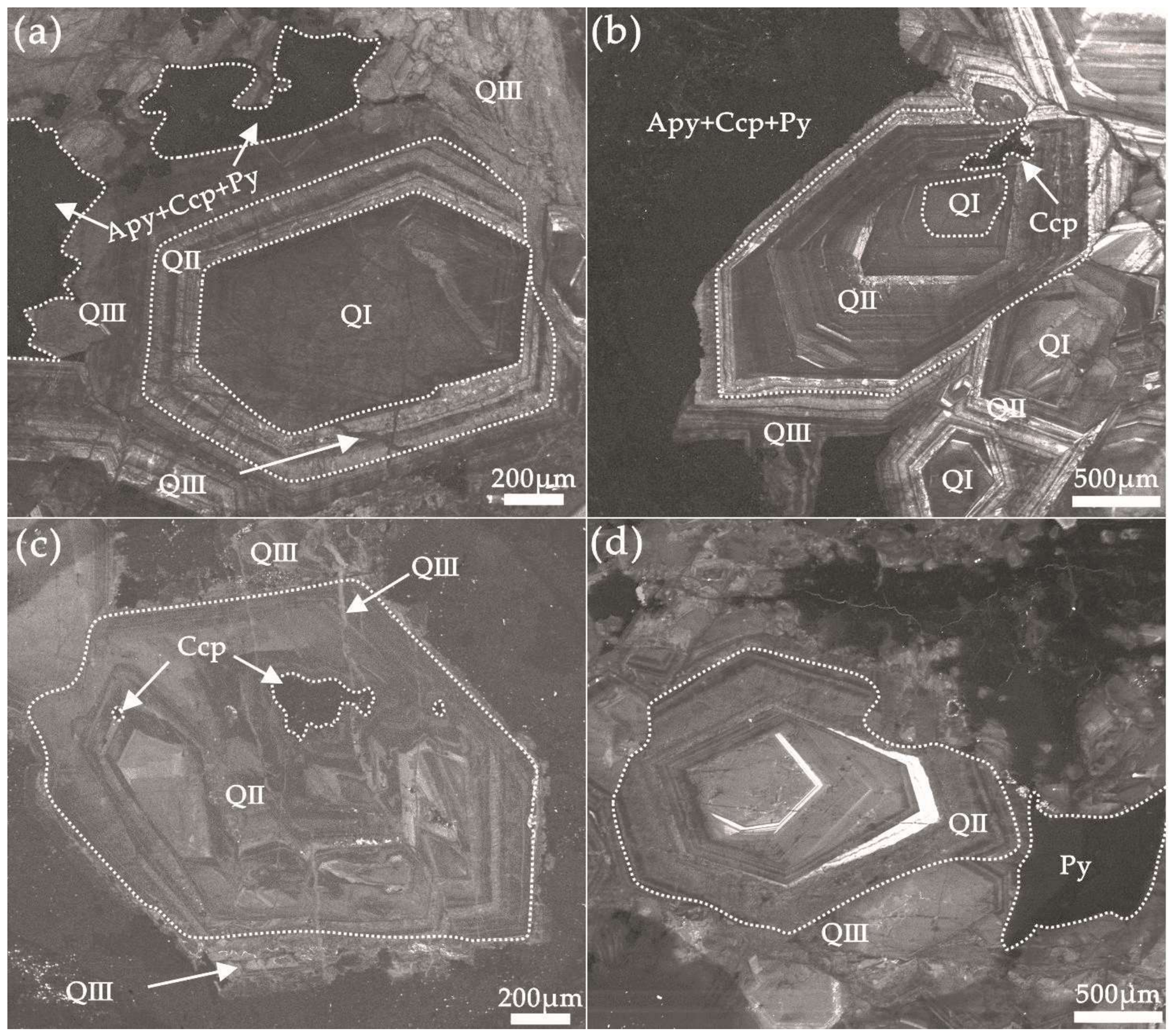
SEM-CL images show that ore-stage quartz from the Dajing deposit commonly has core–mantle–rim textures (Figure 5). Based on quartz textures and its spatial relationships with associated minerals, three quartz generations were identified: QI, QII, and QIII (Table 1). QI occurs mainly in grain cores. It is euhedral to subhedral and shows dark CL. QI is preserved only in Stage I ore samples. It represents early hydrothermal quartz that formed before QII and the Stage II chalcopyrite–quartz assemblage (Figure 5a). QII forms zoned mantles around QI. It shows well-developed oscillatory zoning and stronger CL than QI. Under CL, it appears light gray. QII locally encloses Stage II chalcopyrite (Figure 5b). This quartz generation occurs in samples from Stages I, II, and III. It formed during or shortly after Stage II chalcopyrite precipitation. QIII occurs mainly along pyrite margins and fractures in earlier quartz (Figure 5c,d). It is anhedral and cuts QII and Stage II chalcopyrite. These relationships indicate that QIII postdates Stage II mineralization. QIII formed after the precipitation of Stage III ore minerals. It represents late quartz overgrowth and fracture filling. Thus, quartz in the Dajing deposit records a continuous sequence from QI core growth to QII oscillatory zoning and QIII overgrowth and fracture filling. QI represents early hydrothermal quartz. QII is closely related to Stage II chalcopyrite precipitation. QIII formed after Stage III ore-mineral precipitation. Stage IV is characterized by a sphalerite–galena–carbonate assemblage. No additional quartz generation later than QIII was identified.
Figure 5.
Quartz CL images and generation division. (a,b) Complete QI–QII–QIII growth sequence preserved in Stage I ore. The quartz shows a typical core–mantle–rim texture. QIII locally encloses early sulfides. (c) QII shows well-developed oscillatory zoning in Stage II chalcopyrite–pyrite–quartz ore. QIII occurs as rim overgrowths or veinlets and cuts QII and chalcopyrite. (d) Quartz in Stage III pyrite–quartz veinlets consist mainly of QII and QIII.
Table 1.
SEM-CL characteristics of different generations of quartz and their mineral para genesis in the Dajing deposit.
4.2. Trace Element Composition of Quartz
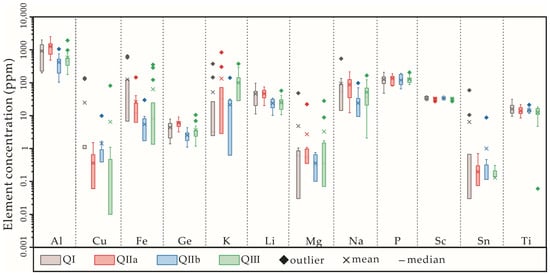
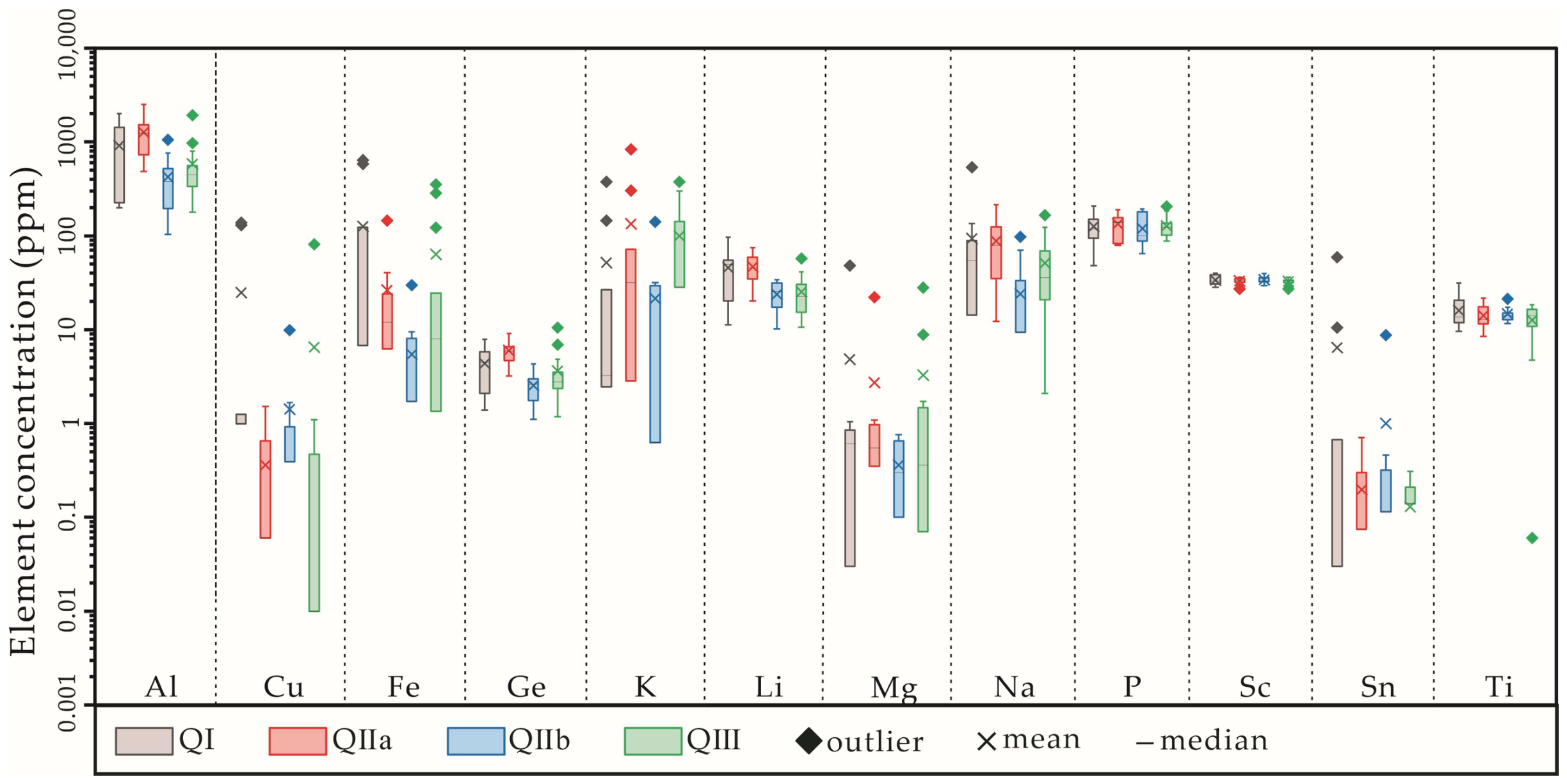
A total of 50 quartz microanalyses were obtained by LA–ICP–MS. After data-quality screening, 43 valid analyses were retained (Table 2). The elemental compositions of the different quartz generations are summarized in the box-and-whisker plots (Figure 6), which provide an overview of the distributions, medians, means, and potential outliers of the analyzed elements.
Table 2.
LA-ICP-MS trace element compositions (ppm) of quartz from the Dajing Cu-Sn polymetallic deposit.
Figure 6.
Box plots of trace element contents in different generations of quartz from the Dajing deposit.
Based on CL intensity and growth textures, QII quartz can be further subdivided into two textural subzones: CL-bright QIIa and CL-dark QIIb. These subzones occur as alternating growth bands within QII quartz. Trace-element compositions vary among QI, QIIa, QIIb, and QIII. Overall, QIIa contains higher Al, Na, and Ge concentrations than QIIb. QIII is generally depleted in Li, Al, and Ge relative to the earlier quartz generations. In contrast, Ti, P, and Sc show comparatively limited variations among the quartz generations. Cu and Sn occur at low concentrations overall, except for several locally anomalous values.
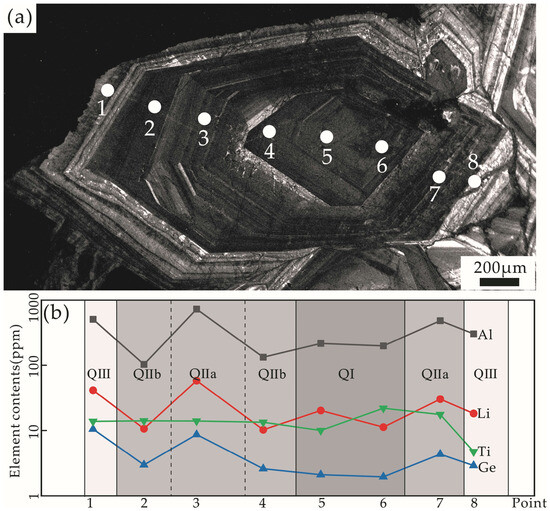
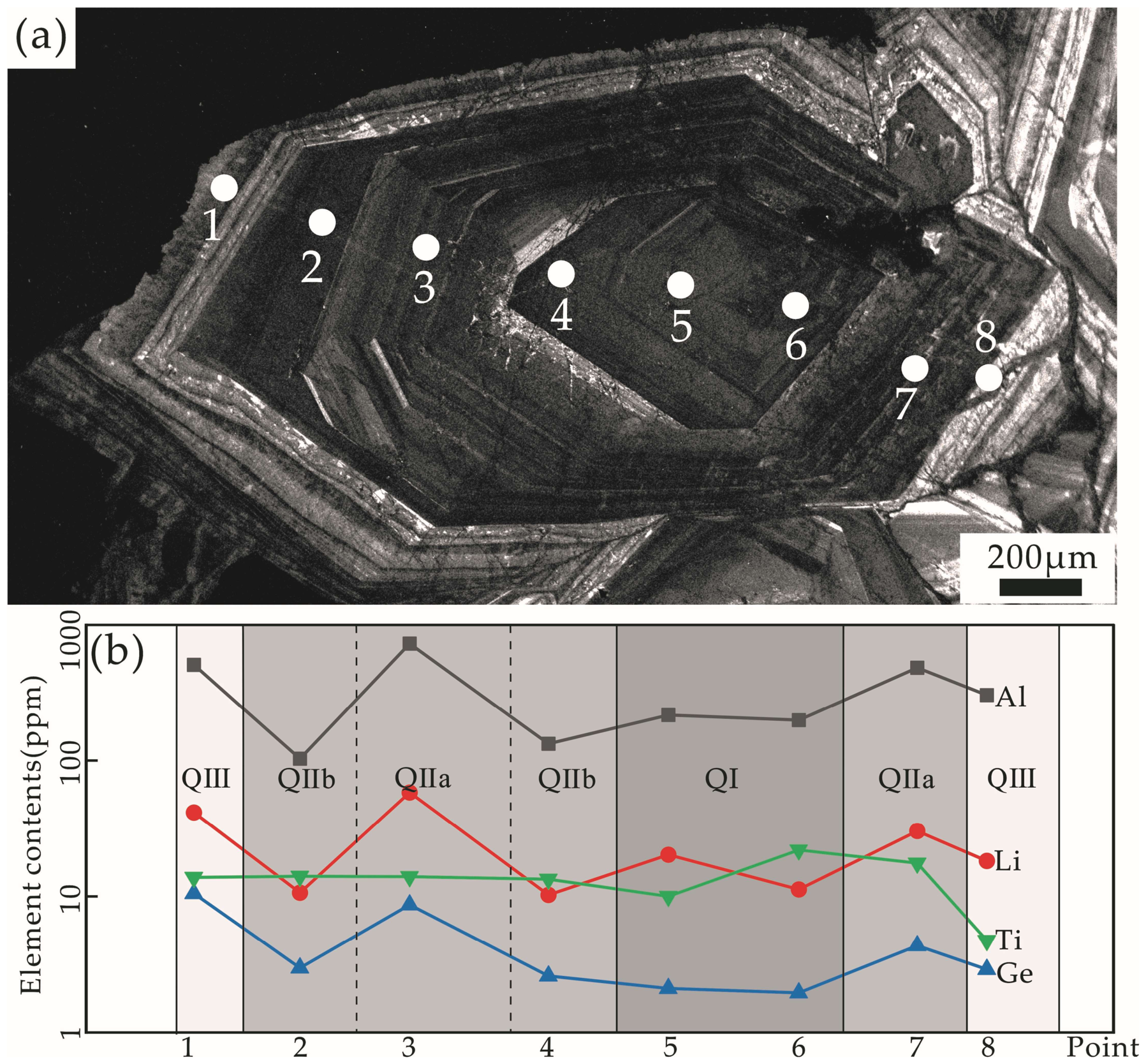
To further examine intra-grain compositional variations, a microscale transect was analyzed across a single quartz grain preserving a complete QI–QII–QIII growth sequence (Figure 7). From Point 1 to Point 8, the analytical transect crosses QIII–QIIb–QIIa–QIIb–QI–QIIa–QIII domains. Aluminum shows pronounced variations along the profile, with higher concentrations in the QIIa domains at Points 3 and 7 than in the adjacent QIIb domains at Points 2 and 4. Li and Ge broadly show similar variations, whereas Ti remains comparatively stable along most of the transect. These profile-scale variations are consistent with the compositional differences between the CL-bright QIIa and CL-dark QIIb growth bands observed in the compiled dataset.
Figure 7.
Trace-element profile variations across a quartz grain preserving QI–QII–QIII growth domains from the Dajing deposit: (a) CL image showing the locations of analytical spots; (b) variations in trace-element contents along the analytical profile.
5. Discussion
5.1. Cathodoluminescence Characteristics and Trace Element Incorporation Mechanisms of Quartz
Previous studies have shown that the relationship between quartz cathodoluminescence intensity and trace elements can be broadly divided into two types [27,28,29]. In high-temperature magmatic-hydrothermal systems, Ti commonly shows a relatively stable positive correlation with CL brightness. In low- to intermediate-temperature hydrothermal quartz, however, the influence of Ti becomes weaker, and CL characteristics are jointly controlled by Al, its charge-compensation mechanisms, associated ions, fluid chemistry, and lattice defects. Microprofile analyses of quartz from the Dajing deposit show pronounced variations in Al and Ge, with more moderate variations in Li, whereas Ti remains relatively stable across the oscillatory zones of QII quartz (Figure 7). Al and Li show broadly similar variations at several analytical spots, although the variation in Al is more pronounced. This suggests that Al-related defect centers and charge compensation by monovalent cations, such as Li+, may jointly influence CL zoning in quartz. Zones with low CL intensity generally show relative depletion in Al and, to a lesser extent, Li. Brighter CL zones commonly contain more Al. However, the trace-element profiles do not show a fully linear relationship with CL intensity. This indicates that quartz CL is controlled by more than Al concentration alone. Other factors may include Al-related charge-compensation mechanisms, local defect structures, and microscale crystallization conditions. Ti contents are generally low. Ti variations also show no clear correspondence with CL intensity. Therefore, Ti is unlikely to be a major control on quartz CL in the Dajing deposit.
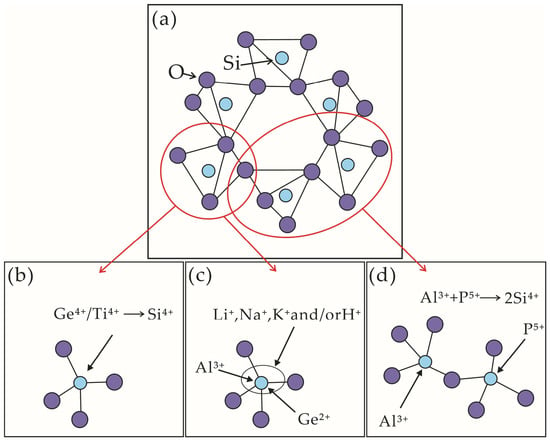
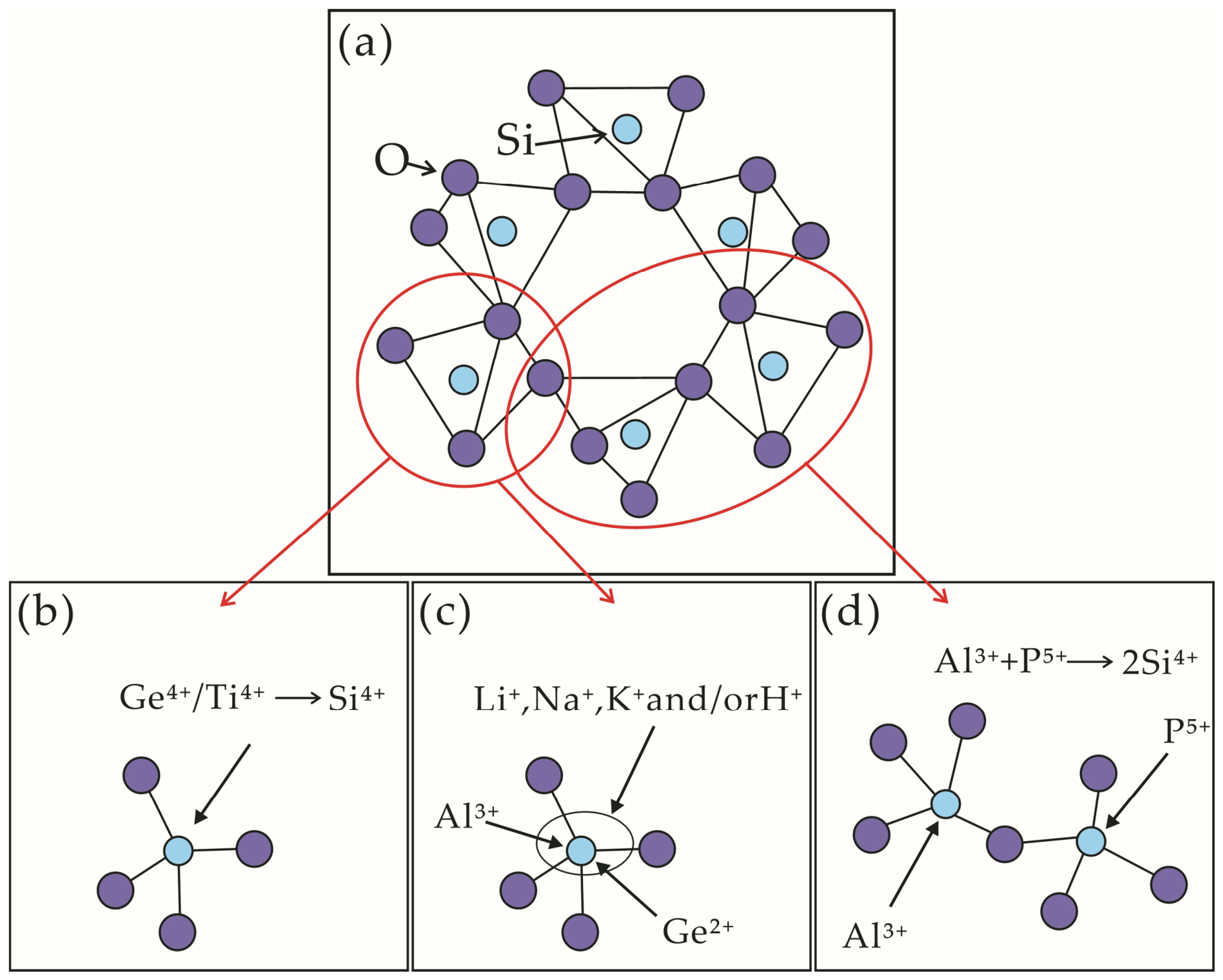
Trace elements enter the quartz lattice mainly through isovalent substitution and coupled heterovalent substitution [30,31] (Figure 8). Ge4+ and Ti4+ can directly substitute for Si4+. When Al3+ or Fe3+ replaces Si4+, charge compensation is required. This is commonly provided by monovalent cations such as Li+, Na+, K+, or H+. These substitutions produce corresponding lattice-defect centers. Al3+ and P5+ can also jointly replace two adjacent Si4+ ions, forming a charge-balanced [AlPO4]0 configuration. Some Ge may enter the quartz lattice in a lower valence state. In this case, charge balance is maintained by interstitial monovalent cations [32,33].
Figure 8.
Schematic diagram of the main substitution and charge-compensation mechanisms of trace elements in the quartz lattice: (a) quartz lattice structure; (b) homovalent substitution of Si4+ by Ge4+ or Ti4+; (c) substitution of Si4+ by Al3+/Ge2+ with charge compensation by Li+, Na+, K+, or H+; (d) coupled substitution of two Si4+ by Al3+ and P5+.
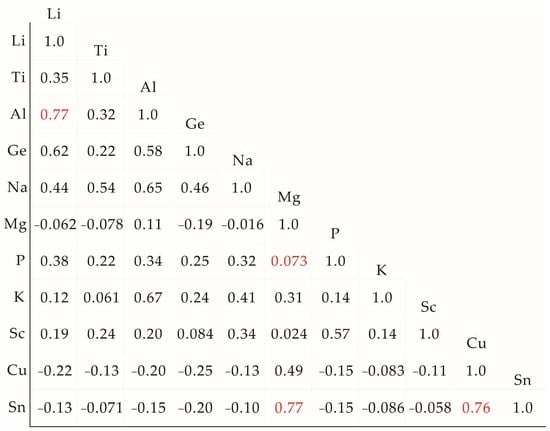
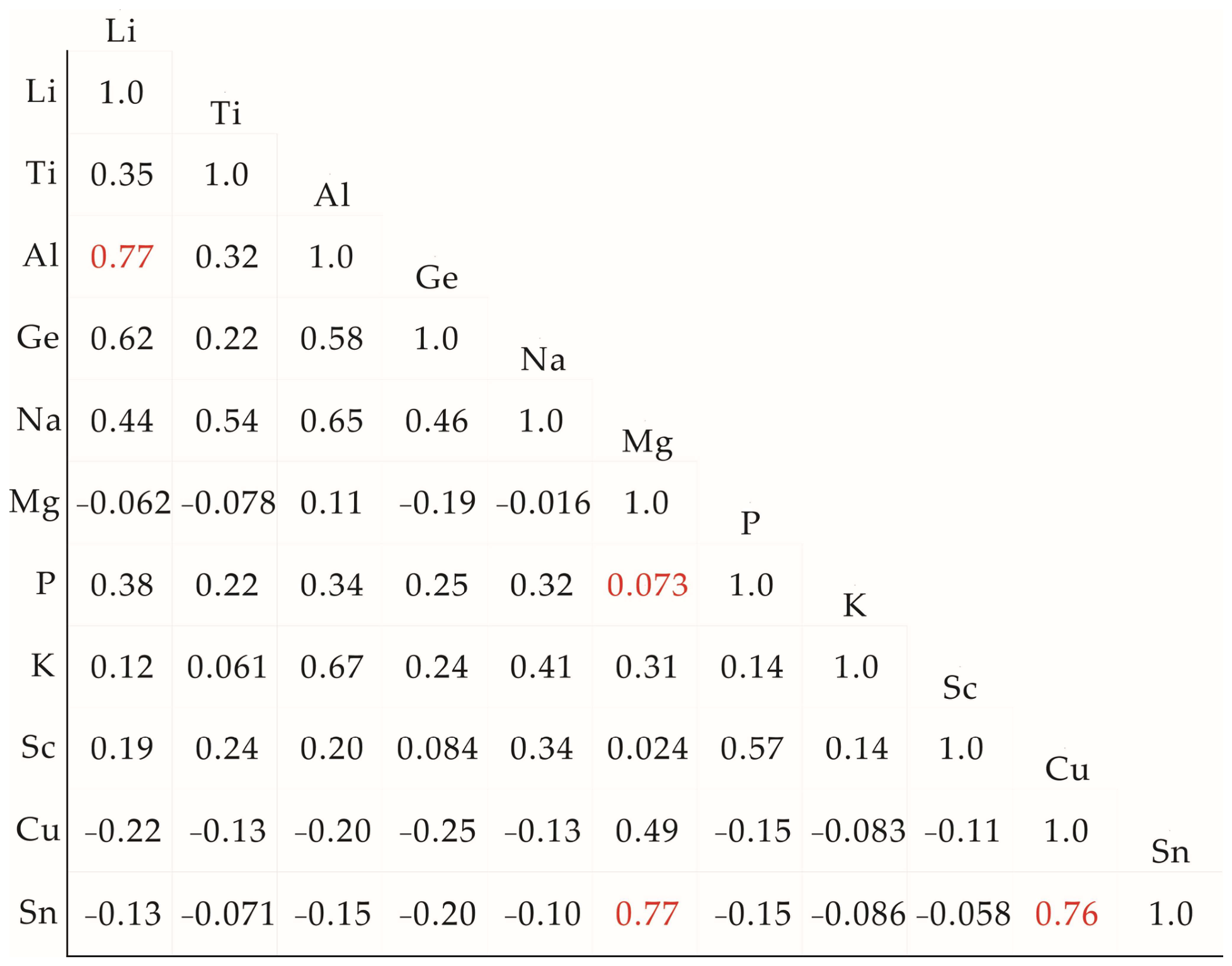
The Pearson correlation matrix for quartz trace elements from the Dajing deposit reveals distinct covariance patterns among element pairs (Figure 9). Aluminum exhibits the highest correlation with Li, with a coefficient of 0.77, while its correlation coefficients with K, Na, and Ge are 0.67, 0.65, and 0.58, respectively. The monovalent cations Li+, Na+, and K+ act as charge-balancers to compensate for the valence imbalance induced by the heterovalent substitution of Al3+ for Si4+ via the coupled substitution mechanism: Al3+ + M+ ↔ Si4+. Na and K datasets are tightly clustered at lower concentrations but become more scattered at higher concentrations. Given the large 100 μm laser beam diameter employed in this study, this high-concentration dispersion is attributed to the inadvertent interception and co-ablation of subsurface solid micro-inclusions or fluid micro-domains. The moderate positive correlation between Al and Ge suggests that Ge variability is partially coupled with Al-related structural substitution within the quartz framework. Other element pairs show different correlation patterns, reflecting fundamental differences in the structural occurrence of trace elements within quartz.
Figure 9.
Pearson correlation matrix of trace elements in quartz from the Dajing deposit.
Copper and Sn concentrations measured in quartz are generally low, although a few analytical spots exhibit distinctly high values. Both Cu and Sn display weak correlated with structural elements such as Al, Li, Na, and K. In contrast, they covary with Mg, K, but covary with Mg, K, and Fe. This geochemical divergence indicates that their localized enrichment is primarily controlled by micro-scale compositional heterogeneity [34,35], rather than by lattice-bound substitution. Given the intimate paragenetic association of quartz with cassiterite and chalcopyrite, these anomalous spikes likely result from sub-surface micro-mineral inclusions, metal-rich fluid inclusions, or micro-fracture fillings [36] that were co-ablated during LA–ICP–MS analysis, generating distinct transient signal enhancements.
5.2. Deposit Genesis and Sources of Ore-Forming Fluids
Hydrothermal minerals form directly from ore-forming fluids and effectively archive the physicochemical evolution of the fluid system. Consequently, quartz cathodoluminescence (CL) microstructures and trace-element signatures record shifting fluid sources and fluctuating physicochemical conditions. Titanium concentrations within the quartz lattice are very low, ranging from 4.7 to 22.8 ppm. Titanium incorporates into the silicate framework primarily via the isovalent substitution of Ti4+ for Si4+. Its concentration is jointly controlled by temperature, pressure, TiO2 activity, and crystal-growth kinetics [37]. No rutile was observed in association with quartz in the study area. This indicates that TiO2 activity was not buffered by a rutile-saturated mineral assemblage. Under rutile-undersaturated conditions, low TiO2 activity limits the incorporation of Ti into the quartz lattice. This likely accounts for the generally low Ti contents of quartz.
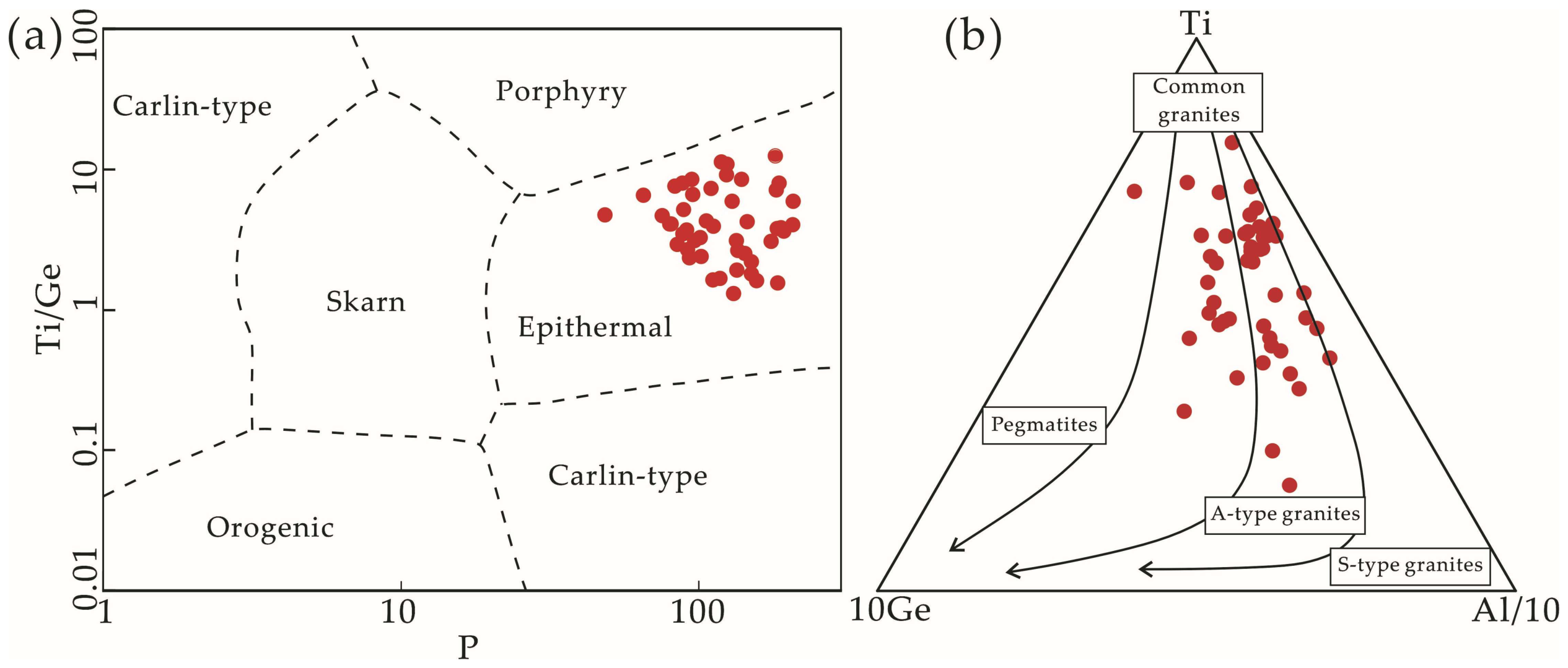
Lattice-bound trace-element distributions within hydrothermal quartz vary predictably across different geological and metallogenic settings. The Ti/Ge-P binary diagram effectively distinguishes quartz populations from diverse ore-deposit types [38]. The analytical dataset from the Dajing deposit plots predominantly within the compositional fields defined by elevated P contents and high Ti/Ge ratios (Figure 10a). This distribution is characteristic of low- to intermediate-temperature hydrothermal quartz, partially overlapping with the typical epithermal deposit domain while remaining clearly resolved from the primary compositional fields of orogenic, Carlin-type, and porphyry deposits.
The Ti-Al/10-10Ge ternary diagram can further constrain the granitic magmatic-hydrothermal affinity of the ore-forming fluids [39]. Most Dajing quartz samples plot in the transitional field between quartz from common granites and A-type granites, with a subset of data points plotting in closer proximity to the A-type granite field [40]. These features suggest that the ore-forming fluids were influenced by highly fractionated hydrothermal fluids related to A-type granitic magmatism (Figure 10b).
Figure 10.
Genetic discrimination diagrams of quartz trace elements from the Dajing deposit: (a) Ti/Ge-P diagram for distinguishing different deposit types (modified afte [39]); (b) Al-Ti-Ge ternary discrimination diagram for quartz (modified after [39,41]).
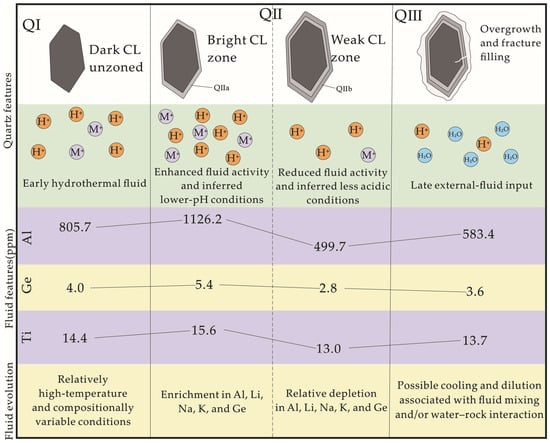
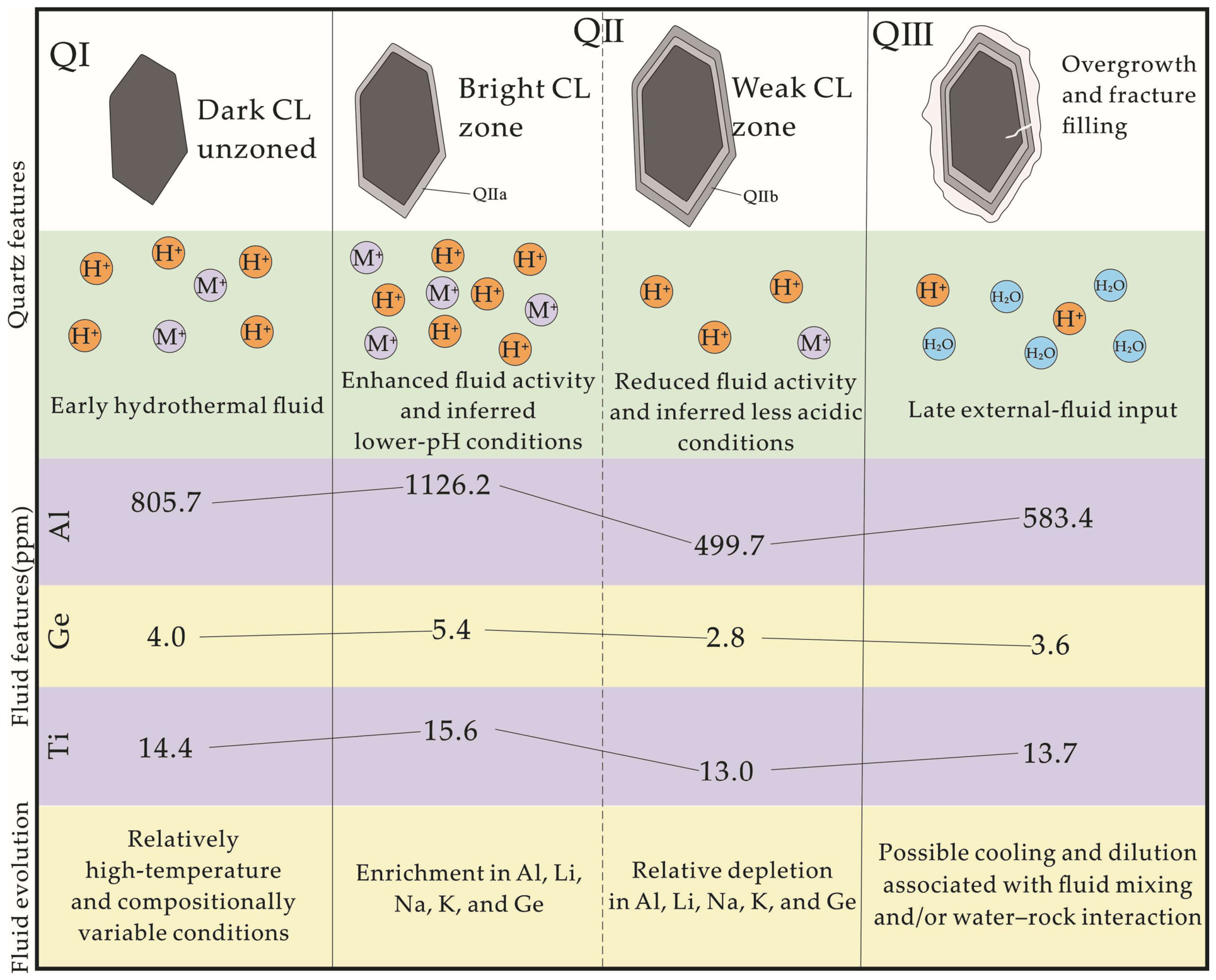
Previous LA–ICP–MS analyses of individual fluid inclusions showed that Sn-rich fluids in the Dajing deposit are relatively enriched in K and have high Rb/Sr ratios [42]. These features indicate a link with shallow granitic magmatic–hydrothermal fluids. In contrast, Cu-rich fluids are relatively enriched in Na and Sr. Additional geochemical constraints from the Dajing deposit reinforce this multi-source genetic model. Rare-earth element (REE) compositions of fluid inclusions effectively distinguish crustally derived, Sn-transporting fluids from Cu–Pb–Zn mineralizing fluids with mantle affinity [43]. Concurrently, platinum-group element (PGE) systematics indicate that some chalcopyrite–arsenopyrite–pyrite ores display chondrite-normalized patterns resembling those of mantle lherzolite or mafic rock suites [44]. Collectively, these independent and complementary geochemical provide robust evidence for the participation of a deeper-seated magmatic component with mantle and basic-magmatic affinity within the Cu-rich fluid system. The fluid-advection dynamics and subsequent mixing of this deep-seated reservoir with highly fractionated granitic magmatic–hydrothermal solutions directly triggered the precipitation, focused localization, and coupled enrichment of the Cu–Sn polymetallic mineralization. Stable-isotope studies further indicate that meteoric water-derived fluids mixed with deep ore-bearing fluids during cooling [7]. The occurrence of QIII quartz as rim overgrowths and micro-fracture infills suggests that late fluids were reactivated along the boundaries and fractures of earlier quartz. These fluids may have undergone further cooling and dilution through fluid mixing and/or water–rock interaction. Overall, the Dajing ore-forming system evolved through the superposed interaction of fractionated granitic magmatic–hydrothermal fluids, a deep-seated magmatic component with a mafic–mantle affinity, and meteoric-derived solutions, which collectively governed the evolution of the Cu–Sn polymetallic mineralization (Figure 11).
Figure 11.
Schematic diagram showing quartz CL features, trace element variations, and fluid evolution in the Dajing deposit. Note: The trace-element concentrations shown in the figure are mean values of the analytical results. Symbols and fluid-evolution annotations represent interpretations based on quartz textures, trace-element systematics, and comparison with previous studies, rather than direct measurements of fluid pH. H+ indicates inferred relatively lower-pH conditions and does not represent the measured concentration of free H+. M+ represents monovalent cations such as Li+, Na+, K+, and H+. H2O indicates late-stage fluid modification and possible dilution and does not exclusively represent meteoric water.
5.3. Evolution of Ore-Forming Fluids
In magmatic-hydrothermal systems, CL imaging combined with quartz trace-element analysis can reveal the formation of different quartz generations. It can also help interpret fluid sources and evolution [45]. Trace element enrichment and fractionation in hydrothermal quartz are controlled by several factors, including fluid temperature, pH, and chemical composition.
In the Dajing deposit, systematic variations in quartz CL textures and trace-element compositions across the QI–QII–QIII sequence record changes in quartz-growth conditions during hydrothermal evolution. The quartz growth rate is an important control on the incorporation and distribution of trace elements [46,47,48]. Specifically, a more pronounced compositional divergence in Al distribution is recorded during the transition from the main ore stage (QII) to the late hydrothermal stage (QIII), where trace-element partitioning between texturally distinct CL domains becomes significantly more pronounced. Furthermore, the prominent development of oscillatory zoning within the QII generation points to elevated precipitation rates [49], suggesting that crystal-growth kinetics may have played an important role in controlling trace-element incorporation and micro-chemical variations across the Dajing fluid system.
Temperature exerts a primary control on the incorporation and partitioning of titanium (Ti) and germanium (Ge) within the quartz framework, where elevated temperatures systematically favor Ti substitution while restricting Ge capture [50]. The micro-analytical datasets from the Dajing deposit show that Ti concentrations show only subordinate variations among the distinct quartz generations. In contrast, Al contents fluctuate markedly within individual generations and even at the intra-grain scale. This spatial divergence demonstrates that Al zoning was decoupled from, and not primarily controlled by, temperature fluctuations. This is further supported by the lack of any discernible relationship between temperature and Li or K contents [51,52], suggesting that thermal variations were not the principal driver governing alkali metal variability within the system.
Crystallographic incorporation of Al into the quartz structure is highly sensitive to fluid pH and physicochemical conditions [51,53]. Relatively lower-pH conditions may increase aqueous Al availability and favor its incorporation into hydrothermal quartz, while crystal-growth kinetics can further modify its uptake and spatial distribution [46,54]. Within Stage II quartz (QII), both QIIa and QIIb domains characteristically display low titanium (Ti) concentrations. Notably, the QIIa subzone contains relatively higher Al, Ge, and Na abundances compared to the subsequent QIIb domains. This enrichment suggests relatively higher availability of these elements within the ore-forming fluid, facilitating their incorporation into the quartz silicate framework and may reflect locally lower-pH conditions [55]. Conversely, the lower concentrations of Al, Ge, and Na documented within the QIIb zones reflect possible episodic shifts toward less acidic conditions. The repeated intercalation of alternating QIIa and QIIb bands therefore records repeated, dynamic fluctuations in pH, ion activities, and growth kinetics during the main mineralization stage. Subsequently, the late-stage QIII quartz, occurring as rim overgrowths and micro-fracture infills post-dating ore precipitation, exhibits the lowest overall Al, Li, Na, and Ge concentrations across the paragenetic sequence, indicating a pronounced depletion in the fluid’s metal-transport capacity. This geochemical depletion suggests that the Stage III fluid may have evolved toward relatively less acidic conditions and experienced dilution associated with low-salinity external fluids and intensified water–rock interaction [56]. This evolution may have occurred during final fluid cooling and interaction along host-rock fractures [57,58].
Against this established framework, the trace-element characteristics of QI quartz provide new microscale constraints on the early Sn-mineralization stage. QI displays relatively high Al, Li, and Na contents together with pronounced intra-generation variability, indicating that the early hydrothermal fluid was chemically heterogeneous and that physicochemical conditions varied during cassiterite precipitation. Thus, rather than recording a single uniform fluid state, QI preserves microscale evidence for repeated variations in fluid chemistry and crystallization dynamics during the early Sn-rich stage.
The transition to the main Cu-mineralization stage is recorded by QII quartz. Previous fluid-inclusion studies identified a compositional distinction between the Sn- and Cu-bearing fluids at Dajing, with the Cu–Pb–Zn-stage fluid showing a deeper, mantle-affinity signature [42]. The present quartz data refine this stage-scale interpretation by revealing repeated alternation between QIIa and QIIb growth bands. Systematic increases and decreases in Al, Ge, and Na between these subzones, together with relatively limited Ti variation, indicate recurrent fluctuations in inferred fluid acidity, elemental availability, and crystal-growth kinetics. The oscillatory microtextures therefore suggest that the main Cu stage was characterized by repeated physicochemical perturbations rather than by a simple, monotonic evolution of a single fluid.
Late QIII quartz provides a further record of fluid evolution during the pyrite–quartz stage. Relative to the earlier generations, QIII is depleted overall in Al, Li, and Ge and occurs mainly as rim overgrowths and micro-fracture infills. These characteristics indicate a chemically depleted late fluid that continued to migrate along pre-existing quartz boundaries and fractures. This late-stage signature is consistent with the broader fluid-inclusion and isotope model for Dajing, in which progressive cooling and increasing interaction with externally derived fluids accompanied hydrothermal evolution [8]. The QIII trace-element data therefore extend the existing deposit-scale model by documenting the corresponding depletion and redistribution of lattice-bound elements at the microscale.
6. Conclusions
- The structural trace-element suites (Al, Li, Na, K and Ge) within the quartz exhibit a robust coupled behavior consistent with heterovalent substitution within the silicate framework, with the Al–Li coupling recording the strongest statistical covariation. Conversely, baseline lattice-bound Cu and Sn concentrations remain low across all generations; localized anomalous metal spikes are unlikely to represent structural incorporation but instead reflect the co-ablation of subsurface mineral micro-inclusions, metal-rich fluid domains, or micro-fracture linings.
- Trace-element systematics and low Ti concentrations (4.7–22.8 ppm) suggest a low- to intermediate-temperature hydrothermal signature and a granitic magmatic–hydrothermal affinity for the Dajing ore-forming fluid. The Ti/Ge–P and Ti–Al/10–10Ge relationships further place most analyses within compositional domains that are transitional between common- and A-type granite-related quartz.
- Variations in quartz CL textures and trace-element concentrations effectively archive a multi-stage hydrothermal fluid evolution. The fluid system progressively evolved toward less acidic conditions, as inferred from trace-element variations. Specifically, the early-stage QI quartz records a chemically heterogeneous early hydrothermal environment during the initial Sn mineralization event. The main-stage QII quartz captures recurrent physicochemical fluctuations associated with episodic fluid input during the principal Cu mineralization stage. Finally, the late-stage QIII overgrowths document the trace element-depleted fluid system associated with the terminal pyrite–quartz stage.
Author Contributions
Y.H.: writing—original draft, writing—review and editing, methodology, conceptualization. Z.S.: writing, methodology, conceptual. Y.R. and Z.L.: writing—review and editing, conceptualization. H.Y., M.G. and Z.Z.: field collection, map drawing. All authors have read and agreed to the published version of the manuscript.
Funding
This research was funded by the National Natural Science Foundation of China, Project Number: 42272105; Science and Technology Innovation Program for Postgraduate students in IDP subsidized by Fundamental Research Funds for the Central Universities, Project Number: ZY20260301; supported by Hebei Natural Science Foundation, Project Number: D2023512031.
Data Availability Statement
Data will be available on request from the authors.
Conflicts of Interest
The authors declare no conflicts of interest.
References
- Sun, S.; Akiyama, S. Geo–tectonic Position of Tin Polymetallic Mineralization Zone in the Southern Da Hinggan Mountains Area, Inner Mongolia, China: An Introduction to This Special Issue. Resour. Geol. 2001, 51, 275–282. [Google Scholar] [CrossRef] [Scilit]
- Ouyang, H.; Mao, J.; Zhou, Z.; Su, H. Late Mesozoic Metallogeny and Intracontinental Magmatism, Southern Great Xing’an Range, Northeastern China. Gondwana Res. 2015, 27, 1153–1172. [Google Scholar] [CrossRef] [Scilit]
- Zhang, J.-H.; Gao, S.; Ge, W.-C.; Wu, F.-Y.; Yang, J.-H.; Wilde, S.A.; Li, M. Geochronology of the Mesozoic Volcanic Rocks in the Great Xing’an Range, Northeastern China: Implications for Subduction-Induced Delamination. Chem. Geol. 2010, 276, 144–165. [Google Scholar] [CrossRef] [Scilit]
- Liu, Y.; Jiang, B.; Chen, Y.; Wu, L.; Zuo, Y.; Liu, Z. Genesis of Cu-Sn Mineralization in the Shuangjianzishan Super-Large Silver Deposit, Inner Mongolia: Trace Element Constraints from Chalcopyrite and Cassiterite. Appl. Sci. 2024, 14, 3822. [Google Scholar] [CrossRef] [Scilit]
- Wang, Y.W.; Wang, J.B.; Uemoto, T.; Wang, L.J. Geology and Mineralization at the Dajing Tin-Polymetallic Ore Deposit, Inner Mongolia, China. Resour. Geol. 2001, 51, 307–320. [Google Scholar] [CrossRef] [Scilit]
- Mei, W.; Lü, X.; Ai, Z.; Tang, R.; Liu, Z.; Zhao, Y. Geochemistry and Zircon U-Pb Age of Subvolcanic Rocks in Dajing Deposit, NE China: Geodynamic Implications. Geochem. J. 2014, 48, 379–395. [Google Scholar] [CrossRef] [Scilit]
- Li, Z.; Zhang, F.; Zhou, Z.; Liu, M.; Wei, J. U-Pb Chronology and Geochemistry of Cassiterite in Dajing Tin-Copper Polymetallic Deposit, Inner Mongolia. Acta Petrol. Sin. 2025, 41, 1860–1878. [Google Scholar] [CrossRef] [Scilit]
- Liu, H.; Mei, W.; Lv, X.; Cao, X.; Ruan, B.; Yu, Q. Genesis and Evolution of the Dajing Tin-Copper Polymetallic Deposit in Inner Mongolia: Constraints from Geochronology, Mineral Composition, and S-Pb-H-O Isotopes. Ore Geol. Rev. 2024, 175, 106373. [Google Scholar] [CrossRef] [Scilit]
- Liu, W.; Li, X.; Tan, J. Fluid Mixing as the Mechanism of Formation of the Dajing Cu-Sn-Ag-Pb-Zn Ore Deposit, Inner Mongolia. Sci. China Ser. D Earth Sci. 2003, 46, 652–663. [Google Scholar] [CrossRef] [Scilit]
- Wang, C.; Wang, K.; Liu, G.; Fu, L.; Quan, H. Characteristics of Fluid Inclusions and Stable Isotopes of the Hydrothermal Vein-Type Deposits in Southern Great Xing’an Range, China: Implications for the Genesis of the Deposits. Geol. J. China Univ. 2018, 24, 491–503. [Google Scholar]
- Ye, Z.; Xu, J.; Zhao, J.; Chen, S.; Chen, J.; Liu, W. Mineralogy of Indium Mineralization in the Dajing Sn-Cu Polymetallic Deposit in Inner Mongolia. Ore Geol. Rev. 2023, 159, 105564. [Google Scholar] [CrossRef] [Scilit]
- He, Y.; Sun, Z.; Xu, W.; Yu, H.; Ren, Y.; Li, Z.; Guan, M.; Zhen, Z. Ore Genesis of the Dajing Cu–Sn Polymetallic Deposit in the Southern Great Xing’an Range, NE China: Constraints from In Situ S-Pb Isotope and Electron-Microprobe Data of Sulfides. Minerals 2026, 16, 589. [Google Scholar] [CrossRef] [Scilit]
- Monecke, T.; Kempe, U.; Götze, J. Genetic Significance of the Trace Element Content in Metamorphic and Hydrothermal Quartz: A Reconnaissance Study. Earth Planet. Sci. Lett. 2002, 202, 709–724. [Google Scholar] [CrossRef] [Scilit]
- Shah, S.A.; Shao, Y.; Zhang, Y.; Zhao, H.; Zhao, L. Texture and Trace Element Geochemistry of Quartz: A Review. Minerals 2022, 12, 1042. [Google Scholar] [CrossRef] [Scilit]
- Li, B.; Xu, D.; Bai, D.; Chi, G.; He, H.; Shao, Y.; Deng, T.; Dai, J.; Zou, S.; Chen, J. Dual-Mineralization in the Intracontinental Jiangnan Orogen, South China: Evidence from Textures and In Situ Trace Elements and Oxygen Analysis of Quartz from the Woxi Au-Sb-W Deposit. Ore Geol. Rev. 2024, 171, 106172. [Google Scholar] [CrossRef] [Scilit]
- Ji, G.-Y.; Jiang, S.-H.; Wei, H.-T.; Liu, Y.-F.; Yan, P.-C. Trace Elements and Growth Patterns in Quartz from the Alubaogeshan Granite in the Maodeng Mo-Bi-Sn-Cu Deposit, Southern Great Xing’an Range, NE China. Ore Geol. Rev. 2024, 165, 105864. [Google Scholar] [CrossRef] [Scilit]
- Wang, X.; Qi, N.; Wu, C.-Z.; Zhu, X.-Y.; He, X.-H.; Deng, X.-H. The Magmatic to Hydrothermal Evolution in the Weilasituo Sn-Polymetallic Deposit, NE China: Insights from Quartz Texture and Trace Elements. Lithos 2025, 508–509, 108091. [Google Scholar] [CrossRef] [Scilit]
- Niu, S.; Sun, A.; Wang, B.; Liu, J.; Guo, L.; Hu, H.; Xu, C. On the Metallogenesis of Dajing Cu-Sn-Polymetallic Ore Deposit, Inner Mongolia, China. Chin. J. Geochem. 2007, 26, 394–401. [Google Scholar] [CrossRef] [Scilit]
- Han, G.; Liu, Y.; Neubauer, F.; Jin, W.; Genser, J.; Ren, S.; Li, W.; Wen, Q.; Zhao, Y.; Liang, C. LA-ICP-MS U–Pb Dating and Hf Isotopic Compositions of Detrital Zircons from the Permian Sandstones in Da Xing’an Mountains, NE China: New Evidence for the Eastern Extension of the Erenhot–Hegenshan Suture Zone. J. Asian Earth Sci. 2012, 49, 249–271. [Google Scholar] [CrossRef] [Scilit]
- Ge, W.; Wu, F.; Zhou, C.; Zhang, J. Porphyry Cu-Mo deposits in the Eastern Xing’an-Mongolian Orogenic Belt: Mineralization Ages and Their Geodynamic Implications. Chin. Sci. Bull. 2007, 52, 3416–3427. [Google Scholar] [CrossRef] [Scilit]
- Wu, G.; Liu, R.; Chen, G.; Li, T.; Li, R.; Li, Y.; Yang, F.; Zhang, T. Metallogenesis of the Weilasituo Rare Metal–Tin Polymetallic Deposit, Inner Mongolia: Implications from Crystallization Differentiation of Granitic Magma. Acta Petrol. Sin. 2021, 37, 637–664. [Google Scholar]
- Jiang, S.; Liang, Q.; Liu, Y.; Liu, Y. Zircon U-Pb Ages of the Magmatic Rocks Occurring in and around the Dajing Cu-Ag-Sn Polymetallic Deposit of Inner Mongolia and Constraints on the Ore-Forming Age. Acta Petrol. Sin. 2012, 28, 495–513. [Google Scholar]
- Yuan, J. Exploration Report on Replacement Resources of the Dajing Ag-Cu Deposit; Beijing Institute of Mineral Resources and Geology, Yuwang Wang: Chifeng, China, 2016. (In Chinese) [Google Scholar]
- Liu, Y.; Hu, Z.; Gao, S.; Günther, D.; Xu, J.; Gao, C.; Chen, H. In Situ Analysis of Major and Trace Elements of Anhydrous Minerals by LA-ICP-MS without Applying an Internal Standard. Chem. Geol. 2008, 257, 34–43. [Google Scholar] [CrossRef] [Scilit]
- Jochum, K.P.; Weis, U.; Stoll, B.; Kuzmin, D.; Yang, Q.; Raczek, I.; Jacob, D.E.; Stracke, A.; Birbaum, K.; Frick, D.A.; et al. Determination of Reference Values for NIST SRM 610–617 Glasses Following ISO Guidelines. Geostand. Geoanal. Res. 2011, 35, 397–429. [Google Scholar] [CrossRef] [Scilit]
- Chu, G.; Chen, H.; Zhang, S.; Zhang, Y.; Cheng, J. Geochemistry and Geochronology of Multi-Generation Garnet: New Insights on the Genesis and Fluid Evolution of Prograde Skarn Formation. Geosci. Front. 2023, 14, 101495. [Google Scholar] [CrossRef] [Scilit]
- Yuan, M.-W.; Li, L.; Alam, M.; Santosh, M.; Li, S.-R.; Hou, Z.-Q. Correlations between Cathodoluminescence Intensity and Aluminum Concentration in Low-Temperature Hydrothermal Quartz. Am. Mineral. 2023, 108, 1224–1231. [Google Scholar] [CrossRef] [Scilit]
- Götze, J.; MacRae, C.M.; Pan, Y.; Wilson, N.C.; Torpy, A.; Audétat, A. The 450 nm (2.8 eV) Cathodoluminescence Emission in Quartz and Its Relation to Structural Defects and Ti Contents. Am. Mineral. 2024, 109, 122–134. [Google Scholar] [CrossRef] [Scilit]
- Zhu, X.; Li, Y. Cathodoluminescence Is Not Always a Robust Proxy for Ti Content in Quartz. Chem. Geol. 2026, 704, 123253. [Google Scholar] [CrossRef] [Scilit]
- Monnier, L.; Lach, P.; Salvi, S.; Melleton, J.; Bailly, L.; Béziat, D.; Monnier, Y.; Gouy, S. Quartz Trace-Element Composition by LA-ICP-MS as Proxy for Granite Differentiation, Hydrothermal Episodes, and Related Mineralization: The Beauvoir Granite (Echassières District), France. Lithos 2018, 320–321, 355–377. [Google Scholar] [CrossRef] [Scilit]
- Luo, K.; Yue, Z.; Zhang, X.; Li, L.; Zhou, J.; Huang, Z.; Zhang, W. In Situ Trace Element Characteristics of Quartz from the Maliping Pb-Zn Deposit, Northeastern Yunnan, and Their Geological Significance. J. Yunnan Univ. Nat. Sci. Ed. 2023, 45, 390–398. [Google Scholar]
- Götze, J.; Pan, Y.; Müller, A. Mineralogy and Mineral Chemistry of Quartz: A Review. Mineral. Mag. 2021, 85, 639–664. [Google Scholar] [CrossRef] [Scilit]
- Mashkovtsev, R.I.; Botis, S.M.; Lin, J.; Deevsalar, R.; Long Cheung, L.K.; Wiens, E.; Tunc, A.; Chen, N.; Chernikov, R.; Pan, Y. Discovery of Ge2+ in Quartz: Evidence from EPR/XAS Experiments and DFT Calculations, and Implications for Ge/Si Systematics. Geochim. Cosmochim. Acta 2025, 393, 290–303. [Google Scholar] [CrossRef] [Scilit]
- Grare, A.; Lacombe, O.; Mercadier, J.; Benedicto, A.; Guilcher, M.; Trave, A.; Ledru, P.; Robbins, J. Fault Zone Evolution and Development of a Structural and Hydrological Barrier: The Quartz Breccia in the Kiggavik Area (Nunavut, Canada) and Its Control on Uranium Mineralization. Minerals 2018, 8, 319. [Google Scholar] [CrossRef] [Scilit]
- Falkenberg, J.J.; Keith, M.; Melfos, V.; Hohl, M.; Haase, K.M.; Voudouris, P.; Höss, A.; Wenske, J.; Klemd, R.; Beier, C.; et al. Insights into Fluid Evolution and Re Enrichment by Mineral Micro-Analysis and Fluid Inclusion Constraints: Evidence from the Maronia Cu-Mo ± Re ± Au Porphyry System in NE Greece. Miner. Depos. 2024, 59, 1407–1431. [Google Scholar] [CrossRef] [Scilit]
- Hložková, M.; Vašinová Galiová, M.; Coufalík, P.; Breiter, K.; Škoda, R.; Březina, M.; Brtnický, M.; Kynický, J. Determination of Tin in Geological Materials Using LA-ICP-MS: Seemingly Simple Analysis? Chem. Geol. 2023, 641, 121775. [Google Scholar] [CrossRef] [Scilit]
- Huang, R.; Audétat, A. The Titanium-in-Quartz (TitaniQ) Thermobarometer: A Critical Examination and Re-Calibration. Geochim. Cosmochim. Acta 2012, 84, 75–89. [Google Scholar] [CrossRef] [Scilit]
- Wang, Y.; Qiu, K.-F.; Hou, Z.-L.; Yu, H.-C. Quartz Ti/Ge-P Discrimination Diagram: A Machine Learning-Based Approach for Deposit Classification. Acta Petrol. Sin. 2022, 38, 281–290. [Google Scholar] [CrossRef] [Scilit]
- Breiter, K.; Costi, H.; Vašinová Galiová, M.; Hložková, M.; Kynický, J.; Korbelová, Z.; Dosbaba, M. Trace Element Composition of Quartz from Alkaline Granites—A Factor Supporting Genetic Considerations: Case Study of the Pitinga Sn–Nb–Ta–Th-Cryolite Deposit. J. S. Am. Earth Sci. 2022, 119, 104025. [Google Scholar] [CrossRef] [Scilit]
- Breiter, K.; Ďurišová, J.; Dosbaba, M. Chemical Signature of Quartz from S- and A-Type Rare-Metal Granites—A Summary. Ore Geol. Rev. 2020, 125, 103674. [Google Scholar] [CrossRef] [Scilit]
- Zheng, W.; Ji, X.; Tang, M.; Chen, Z.; Zhang, Z.; Wang, Q. An Early Cretaceous Tin-Polymetallic System: The Baiyinchagan Giant Deposit in the Southern Great Xing’an Range, North China. Ore Geol. Rev. 2025, 179, 106527. [Google Scholar] [CrossRef] [Scilit]
- Wang, L.; Wang, Y.; Wang, J.; Günther, D. Fluid Mineralization of the Dajing Sn-Polymetal Deposit: Evidence from LA-ICP-MS Analysis of Individual Fluid Inclusions. Chin. Sci. Bull. 2006, 51, 2781–2788. [Google Scholar] [CrossRef] [Scilit]
- Wang, L.; Wang, J.; Wang, Y.; Zhu, H. Ore-Forming Fluid and Mineralization of Caijiaying and Dajing Polymetallic Ore Deposits. Sci. China Ser. D Earth Sci. 2004, 47, 97–107. [Google Scholar] [CrossRef] [Scilit]
- Chu, X.; Sun, M.; Zhou, M. PGE Patterns of Ores of Dajing Cu-Polymetallic Deposit in Linxi County, Inner Mongolia: Indicator to Source of Metallogenic Elements. Chin. Sci. Bull. 2002, 47, 1119–1124. [Google Scholar] [CrossRef] [Scilit]
- Qiu, K.-F.; Deng, J.; Yu, H.-C.; Wu, M.-Q.; Wang, Y.; Zhang, L.; Goldfarb, R. Identifying Hydrothermal Quartz Vein Generations in the Taiyangshan Porphyry Cu-Mo Deposit (West Qinling, China) Using Cathodoluminescence, Trace Element Geochemistry, and Fluid Inclusions. Ore Geol. Rev. 2021, 128, 103882. [Google Scholar] [CrossRef] [Scilit]
- Götte, T.; Pettke, T.; Ramseyer, K.; Koch-Müller, M.; Mullis, J. Cathodoluminescence Properties and Trace Element Signature of Hydrothermal Quartz: A Fingerprint of Growth Dynamics. Am. Mineral. 2011, 96, 802–813. [Google Scholar] [CrossRef] [Scilit]
- Tailby, N.D.; Cherniak, D.J.; Watson, E.B. Al Diffusion in Quartz. Am. Mineral. 2018, 103, 839–847. [Google Scholar] [CrossRef] [Scilit]
- Abiven, B.; Tarantola, A.; Richard, A.; Keith, M.; Melfos, V.; Voudouris, P. Effect of Out-of-Equilibrium Crystallization and Fluid-Assisted Dynamic Recrystallization on Ti-in-Quartz Thermometry in Porphyry-Epithermal Deposits: Insights from Pagoni Rachi (NE Greece). Lithos 2025, 512–513, 108134. [Google Scholar] [CrossRef] [Scilit]
- Torii, H.; Miura, H. Oscillatory Zoning of Minerals as a Fingerprint of Impurity-Mediated Growth. Sci. Rep. 2024, 14, 13337. [Google Scholar] [CrossRef] [Scilit]
- Vonopartis, L.C.; Nex, P.A.M.; Kinnaird, J.A.; Robb, L.J.; Bolhar, R. The Magmatic-Hydrothermal Transition Recorded by Trace Elements in Quartz: A Case Study from the Zaaiplaats Tin Field, South Africa. Miner. Depos. 2025, 60, 1643–1662. [Google Scholar] [CrossRef] [Scilit]
- Rusk, B.G.; Lowers, H.A.; Reed, M.H. Trace Elements in Hydrothermal Quartz: Relationships to Cathodoluminescent Textures and Insights into Vein Formation. Geology 2008, 36, 547–550. [Google Scholar] [CrossRef] [Scilit]
- Elatikpo, S.M.; Li, H.; Sallau, A.K. Nature of Fluid and Genetic Affiliation of the Bakoshi-Kundila Au Deposit, Nigeria: Evidence from Trace Elements in Hydrothermal Quartz. Ore Geol. Rev. 2023, 160, 105620. [Google Scholar] [CrossRef] [Scilit]
- Lan, Q.; Lin, J.; Fu, S.; Luo, J. Cathodoluminescent Textures and Trace Element Signatures of Hydrothermal Quartz from the Granite-Related No. 302 Uranium Deposit, South China: A Reconnaissance Study for Their Genetic Significances. J. Geochem. Explor. 2021, 224, 106740. [Google Scholar] [CrossRef] [Scilit]
- Müller, A.; Herrington, R.; Armstrong, R.; Seltmann, R.; Kirwin, D.J.; Stenina, N.G.; Kronz, A. Trace Elements and Cathodoluminescence of Quartz in Stockwork Veins of Mongolian Porphyry-Style Deposits. Miner. Depos. 2010, 45, 707–727. [Google Scholar] [CrossRef] [Scilit]
- Peng, N.; Shen, H.; Liao, J. Quartz Textural and Trace-Element Geochemical Constraints on the Origin of Lode Gold Deposits: A Case Study of the Yanzhupo Deposit in Jiangnan Orogen (South China). Front. Earth Sci. 2025, 13, 1566088. [Google Scholar] [CrossRef] [Scilit]
- Wang, L.J.; Wang, J.B.; Wang, Y.W.; Long, L.L. Metallogenic Mechanism of Fluid and Prospecting Forecast of Dajing Sn-Cu Polymetallic Deposit, Inner Mongolia. Acta Petrol. Sin. 2015, 31, 991–1001. [Google Scholar]
- Xie, W.; Zeng, Q.-D.; Huang, L.-L.; Zhou, L.-L.; Fan, H.-R.; Wu, J.-J.; Wang, R.-L.; Zhu, H.-P. Formation and Evolution of Multistage Hydrothermal Fluids in the Baishitouwa Quartz–Wolframite Vein-Type Deposit in the Southern Great Xing’an Range Tungsten Belt, NE China: Constraints from Individual Fluid Inclusion LA-ICP-MS Analysis. Geol. J. 2023, 58, 1693–1725. [Google Scholar] [CrossRef] [Scilit]
- Li, S.; Li, Z.; Chen, G.; Yi, H.; Yang, F.; Lü, X.; Shi, J.; Dou, H.; Wu, G. Age, Fluid Inclusion, and H–O–S–Pb Isotope Geochemistry of the Superlarge Huaaobaote Ag–Pb–Zn Deposit in the Southern Great Xing’an Range, NE China. Minerals 2023, 13, 939. [Google Scholar] [CrossRef] [Scilit]

Disclaimer/Publisher’s Note: The statements, opinions and data contained in all publications are solely those of the individual author(s) and contributor(s) and not of MDPI and/or the editor(s). MDPI and/or the editor(s) disclaim responsibility for any injury to people or property resulting from any ideas, methods, instructions or products referred to in the content. |
© 2026 by the authors. Licensee MDPI, Basel, Switzerland. This article is an open access article distributed under the terms and conditions of the Creative Commons Attribution (CC BY) license.