


Abstract
To solve the problem of mechanical entrainment and slime coating of fine sericite and chlorite hindering the flotation separation of gold-bearing pyrite in low-grade gold ores, ethylenediamine-N,N’-disuccinic acid (EDDS) was innovatively used as a selective and eco-friendly depressant. A systematic set of tests, including micro-flotation, artificial mixed mineral flotation, zeta potential measurement, adsorption capacity test, solution chemistry analysis and X-ray photoelectron spectroscopy (XPS) characterization, was conducted to explore its flotation performance and action mechanism. The results showed that pH 8 and 200 mg/L EDDS were the optimal conditions under which EDDS reduced the recoveries of sericite and chlorite to ~20% and ~15%, respectively, while restoring pyrite recovery to ~80% with a notable upgrade in concentrate grade. EDDS exhibited strong chemical adsorption on sericite and chlorite via chelating their active Al/Mg sites, significantly enhancing their hydrophilicity. In contrast, it only undergoes weak physical adsorption on pyrite, with negligible observed influence on its hydrophobicity and the adsorption of (sodium butyl xanthate) SBX. At pH 8, EDDS mainly existed as HEDDS3− (~90%), whose triple negative charge strengthened electrostatic interaction with positively charged gangue surfaces, boosting selective adsorption. This study confirms EDDS as a highly efficient depressant for pyrite–sericite/chlorite flotation under pure mineral and artificial mixed mineral conditions. Since the present study is based on pure minerals and artificial mixtures, further validation using real ore samples is still required before practical industrial application. This research expands the application of EDDS in mineral processing and provides a novel eco-friendly technical approach for the laboratory-scale separation of fine gold-bearing pyrite from low-grade gold ores with high clay gangue content.
1. Introduction
Au, a precious metal with unique physicochemical properties, has played an irreplaceable role in financial reserves, jewelry, the electronics industry, and high-tech fields [1]. With the gradual depletion of global gold ore resources, the efficient recovery of fine-grained gold from complex low-grade ores has become a major challenge for mineral processing engineers [2]. Gold ores are typically characterized by low grade, fine dissemination, and complex mineral composition. Gold particles below 10–20 μm are often embedded in pyrite, arsenopyrite, and other sulfide minerals or enclosed in gangue phases, making it difficult to achieve sufficient liberation via conventional grinding [3,4]. Reasonable grinding mode, grinding medium and particle size classification are essential prerequisites for high-efficiency flotation separation. Different grinding media and particle sizes can significantly change mineral surface properties and subsequent flotation behavior, which has been widely demonstrated in previous mineral processing studies [5,6,7]. Among various recovery techniques, flotation is the most economical and effective method for gold-bearing sulfide ores, especially for recovering fine-grained gold particles smaller than 10 μm [8]. Flotation separation relies on regulating pulp pH/Eh conditions and using collectors, frothers, and depressants to create surface wettability differences between valuable minerals and gangue.
In the flotation of clay-rich gold ores, mechanical entrainment and slime coating are the two main factors that deteriorate separation performance. Mechanical entrainment refers to the non-selective physical transport of fine gangue particles into the froth layer driven by water flow, which occurs independently of surface hydrophobicity [9]. As particle size decreases, mechanical entrainment becomes more severe, significantly lowering concentrate grade and increasing smelting costs [10]. Liu et al. [11] reported that the poor flotation performance of high-clay gold ores is mainly caused by the serious mechanical entrainment of fine gangue minerals, which drastically reduces gold grade. In addition, slime coating of fine sericite and chlorite on pyrite surfaces hinders collector adsorption and further deteriorates pyrite flotation [12]. The rational use of depressants is therefore critical to improving selectivity.
Depressants enhance flotation selectivity by adsorbing on gangue surfaces, increasing hydrophilicity, and reducing true flotation [13]. Conventional industrial depressants are divided into inorganic and organic types. Inorganic depressants mainly include lime, cyanide, sodium sulfide, and sulfite [14]. Lime forms hydrophilic films on pyrite under high alkalinity but may cause pipeline blockage, excessive froth viscosity, and metal loss [15]. Cyanide shows excellent selectivity but is highly toxic and strictly restricted in many regions [16]. Organic depressants such as CMC, tannic acid, starch, guar gum, and sodium lignosulfonate have been widely studied due to their environmental friendliness [17,18]. They adsorb on mineral surfaces via hydroxyl or carboxyl groups and increase hydrophilicity. However, their industrial applications are still limited by unstable inhibition performance, poor selectivity toward sericite and chlorite, and complex interactions with collectors [19,20,21,22]. Among these organic reagents, xanthan gum has been verified to selectively depress fine chlorite in pyrite flotation by acting on Mg active sites, thereby alleviating slime coating and improving separation efficiency [23]. Recent research progress has also systematically reviewed various depressants and activators used in pyrite flotation, pointing out the key demand for green and highly selective inhibitors toward clay gangues [24]. Compared with these conventional reagents, EDDS exhibits a more targeted chelating ability toward Al and Mg sites on sericite and chlorite, which are the main active sites responsible for slime coating and poor selectivity. Unlike traditional organic depressants that lack precise site recognition, EDDS can form stable chelates specifically with clay gangue minerals while barely interacting with Fe sites on pyrite. Meanwhile, EDDS is fully biodegradable and non-toxic, overcoming the environmental risks of inorganic depressants and the low selectivity of common organic depressants. Therefore, EDDS is expected to provide superior selective depression in the pyrite–sericite/chlorite flotation system. Therefore, developing environmentally friendly, highly selective depressants for pyrite–sericite/chlorite separation remains an important research direction.
Ethylenediamine-N,N’-disuccinic acid (EDDS) is a biodegradable aminopolycarboxylic acid chelator with high selectivity for metal ions and good environmental compatibility [25]. EDDS shows strong chelation toward multivalent metal ions and remains stable in neutral to weakly alkaline solutions (pH 6–10). It is easily biodegradable and does not cause secondary heavy metal reactivation, making it superior to non-biodegradable EDTA. EDDS has been widely used in environmental remediation, agricultural fertilizers, water treatment, and soil heavy metal extraction. However, its application as a selective flotation depressant, especially for the separation of pyrite from sericite and chlorite, has rarely been reported.
In the present study, the environmentally friendly chelating agent ethylenediaminedisuccinic acid (EDDS) was employed as a selective depressant, together with sodium butyl xanthate (SBX) as the anionic collector, for the flotation separation of pyrite from sericite and chlorite. Compared with traditional depressants such as starch and CMC, EDDS exhibits stronger metal chelating ability and better selective inhibition performance on silicate clay gangue, with less adverse impact on the floatability of pyrite. As reported in the literature, EDDS is characterized by high biodegradability and low toxicity to humans and living organisms, making it an eco-friendly compound that does not disturb the natural environmental equilibrium. It is a naturally occurring structural isomer of ethylenediaminetetraacetic acid (EDTA), possessing two chiral centers that allow it to exist in four stereoisomeric forms (SS, RR, RS, and SR) [26]. Notably, EDDS has a similar chemical structure to EDTA. As reflected in the relevant references, such chelating agents generally exhibit weak interaction with sulfide minerals under common flotation conditions [27].
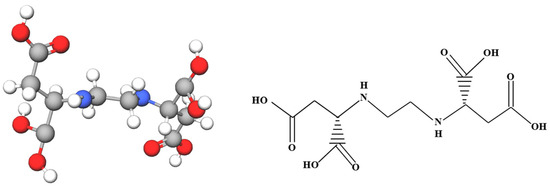
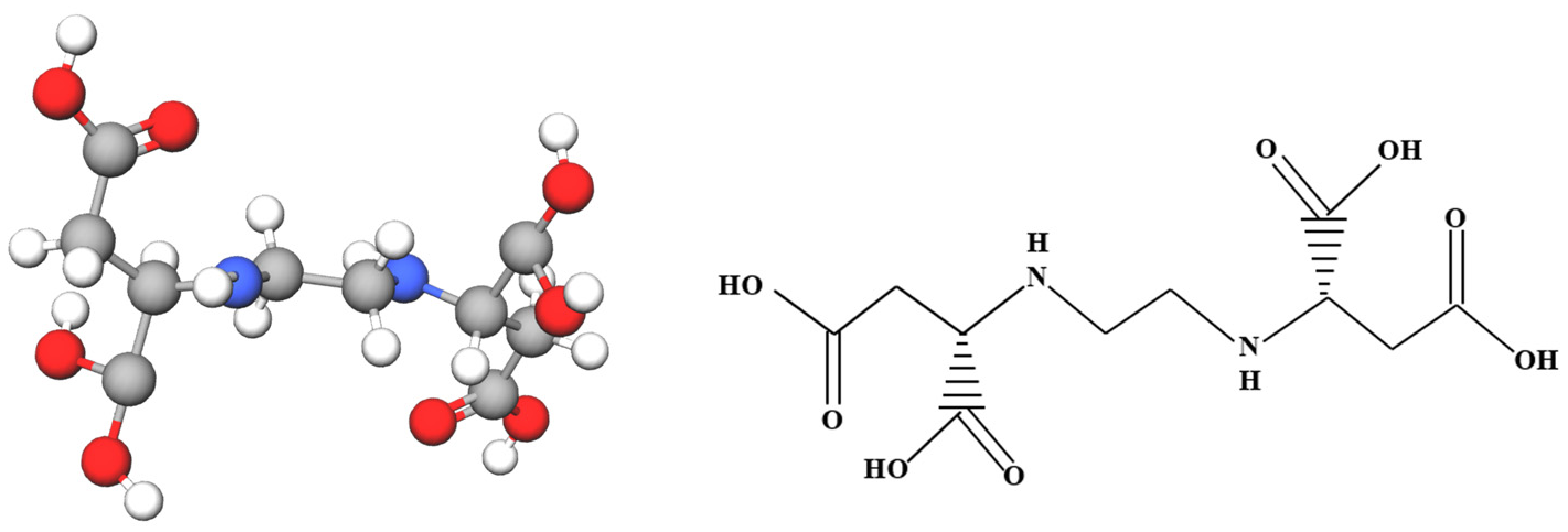
The molecular structure and optimized 3D model of EDDS are presented in Figure 1, which clearly reveals the carboxyl and amine functional groups responsible for its strong chelating ability with metal ions on mineral surfaces. This chelation enables selective depression of gangue minerals (sericite and chlorite) while preserving the adsorption of the anionic collector SBX on pyrite, thereby facilitating efficient flotation separation.
Figure 1.
3D structure (left) and molecular formula (right) of the EDDS molecule.
Based on its chelating properties, we hypothesize that EDDS can selectively adsorb on sericite and chlorite via strong chelation with active Al and Mg sites on their surfaces, significantly increasing their hydrophilicity and suppressing their true flotation. In contrast, EDDS interacts weakly with Fe and S sites on pyrite and barely affects its surface hydrophobicity or collector adsorption. It should be emphasized that mechanical entrainment is a non-selective hydraulic process independent of particle hydrophobicity. EDDS does not directly modify mechanical entrainment through surface chemical alteration. Instead, at the optimal pH 8, EDDS mainly exists as HEDDS3− with triple negative charges. The strong electrostatic repulsion between EDDS and gangue minerals improves the dispersion of fine slime particles and alleviates slime coating on pyrite, which may indirectly contribute to the mitigation of mechanical entrainment of fine gangue particles. In this study, EDDS is introduced as a selective and eco-friendly depressant for the flotation separation of pyrite from fine sericite and chlorite. This study expands the application of EDDS in mineral processing and provides a supplementary strategy for the efficient flotation of low-grade gold ores rich in clay gangue.
2. Experimental
2.1. Minerals and Reagents
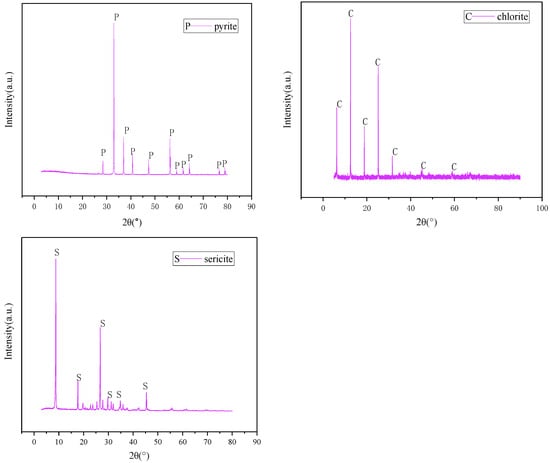
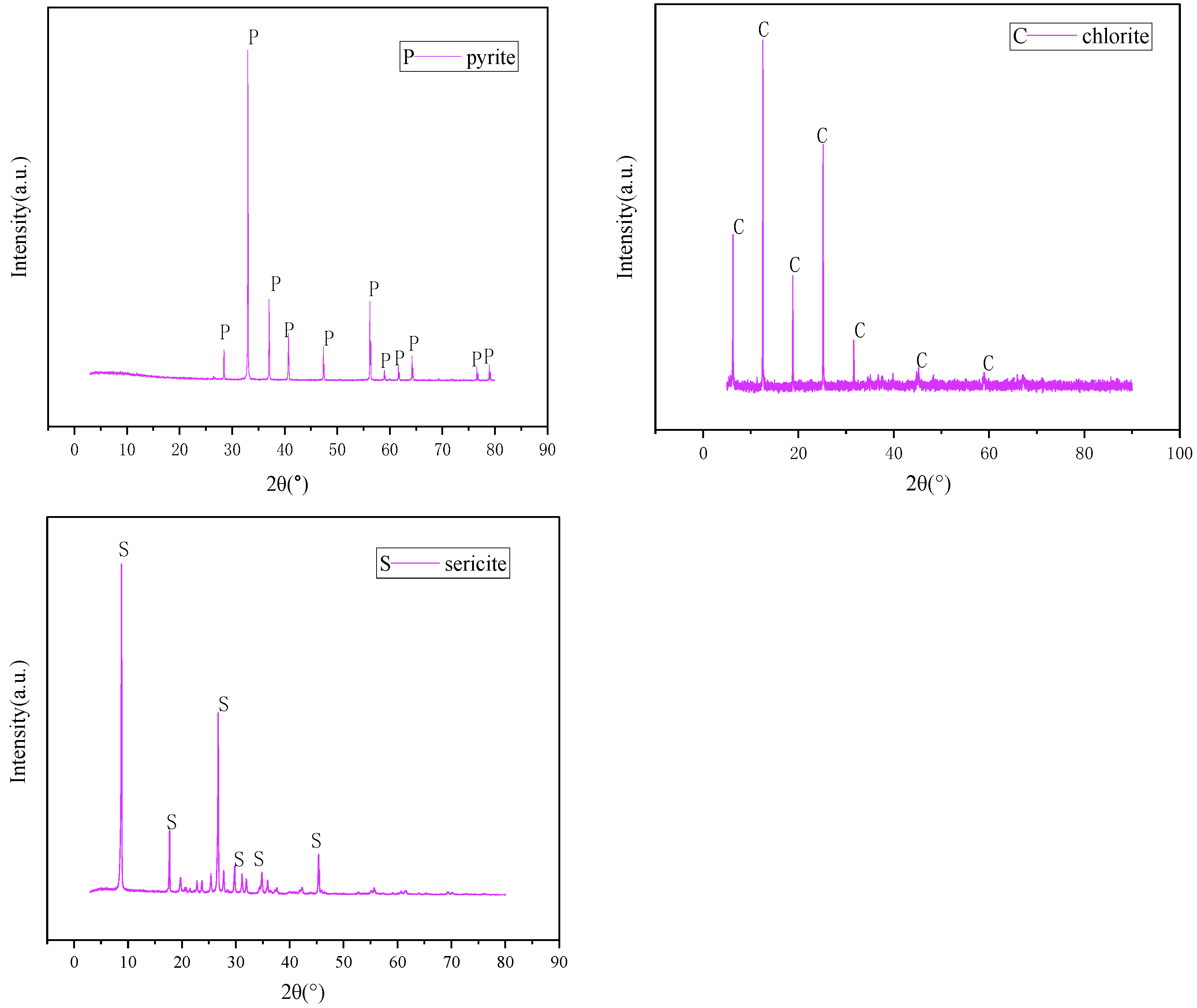
The pyrite, sericite, and chlorite samples were obtained from the Jinchuan mining area [28]. The XRD patterns of the three mineral samples are shown in Figure 2. All characteristic diffraction peaks match well with the standard phases, demonstrating the high purity of pyrite, sericite, and chlorite. Pyrite is a sulfide mineral with high hardness, whereas sericite and chlorite are silicate gangue minerals with much lower hardness. Therefore, during grinding, pyrite tends to remain in the coarser fraction (−74 + 38 μm), while sericite and chlorite are easily ground into finer particles (<38 μm), which is consistent with their natural grinding characteristics.
Figure 2.
XRD patterns of pyrite, sericite, and chlorite samples.
The mineral samples were manually sorted and crushed in advance, followed by dry grinding using a ceramic ball mill. After dry sieving, pyrite particles of −74 + 38 μm and sericite/chlorite particles smaller than 38 μm were collected for flotation and adsorption tests. For zeta potential and fluorescence probe tests, the samples were further ground to a particle size below 5 μm. Artificial mixed minerals were prepared by mixing pyrite, sericite, and chlorite, respectively, at a mass ratio of 1:1 (pyrite:sericite = 1:1, pyrite:chlorite = 1:1). This size classification was determined according to the natural occurrence characteristics of actual clay-bearing gold ore. Coarse pyrite (−74 + 38 μm) is conducive to effective collector adsorption and stable flotation, while fine sericite and chlorite (<38 μm) well simulate the fine slime characteristics that easily cause mechanical entrainment and slime coating in production. Such a particle size design can truly reflect the practical separation difficulties and better highlight the selective inhibition effect of EDDS.
The depressant EDDS used in the experiments was supplied by Chengdu Runze Bentu Chemical Co., Ltd. (Sichuan, China). EDDS is a white crystalline powder, a novel phosphorus-free green chelating agent with a molecular weight of 292.24 (molecular formula: C10H16N2O8), and it is slightly soluble in water. Sulfuric acid (H2SO4) and sodium hydroxide (NaOH), from Sinopharm Group Chemical reagent Co., LTD, Shanghai, China, were used to adjust the pulp pH value. Sodium butyl xanthate (SBX, provided by Dulan Jinhui Mining Co., Ltd.) was used as the collector. Methyl isobutyl carbinol (MIBC, from Rin En Technology Development Co., Ltd., Shanghai, China) was used as the frother. Deionized water (18.25 MΩ·cm) was used for all pure mineral tests.
2.2. Flotation Tests
Micro-flotation experiments were conducted using an XFGII laboratory flotation machine with a 40 mL cell. Pure mineral particles (2.0 g) were mixed with 38 mL of deionized water, and the stirring speed was set to 1920 RPM. H2SO4 andNaOH were used as pH regulators to adjust the pulp pH. SBX was used as the collector to float pyrite. EDDS was used as the depressant. MIBCwas used as the frother to generate froth. After 2 min of stirring, all reagents were added sequentially with 3 min of stirring after each addition. The concentrates and tailings were collected, filtered, and dried. Recovery was determined according to solid mass ratio and iron grade. All tests were performed in triplicate under identical conditions, and average values are presented.
In the artificial mixed mineral system, pyrite (FeS2) is the only sulfur-containing mineral. Therefore, the mass of pyrite can be accurately calculated from the sulfur (S) grade using chemical stoichiometry. First, the mass of the flotation concentrate is weighed, and the sulfur grade in the concentrate is measured. The mass of sulfur element is obtained by multiplying the concentrate mass by its sulfur grade. Then, the molar amount of sulfur is calculated by dividing the mass of sulfur by its molar mass. According to the chemical formula of pyrite, the molar ratio of pyrite to sulfur is 1:2, so the molar amount of pyrite is half of the molar amount of sulfur. The mass of pyrite in the concentrate is then calculated by multiplying the molar amount of pyrite by its molar mass. The recovery of pyrite is expressed as the percentage of the mass of pyrite in the concentrate relative to the total mass of pyrite in the feed. The recovery of gangue minerals is calculated as the percentage of the gangue mass in the concentrate, which is obtained by subtracting the pyrite mass from the total concentrate mass, relative to the total gangue mass in the feed. All tests were performed in triplicate under identical conditions, and average values are presented.
2.3. Electrokinetic Potential
Thirty milligrams of pure pyrite, sericite, or chlorite particles were dispersed in 50 mL of 1 mM KCl solution to form a homogeneous suspension. The suspension was homogenized through magnetic stirring. Under continuous agitation, the desired pH values were adjusted using HCl or NaOH, followed by the sequential addition of EDDS (inhibitor) and sodium butyl xanthate (SBX, collector) at the concentrations adopted in the flotation tests. The mixture was then conditioned for 10 min to ensure sufficient interaction between the reagents and mineral surfaces. After stopping the stirring, the suspension was allowed to settle for at least 30 min to stabilize. Zeta potential measurements were subsequently carried out using a Delsa 440sx Zeta Potential Analyzer (Malvern Instruments Ltd., Worcestershire, UK). All tests were repeated three times, and the average values are reported [29].
2.4. Adsorption Capacity Tests
The adsorption amount of EDDS was measured using a UV–Vis spectrophotometer (Thermo Scientific Co., Waltham, MA, USA) [30]. Single mineral particles (pyrite, sericite, or chlorite) with a mass of 2.0 g were added to a 100 mL beaker containing 50 mL of deionized water. The suspension was adjusted to pH 8 using 0.1 mol/L HCl and NaOH solutions, followed by the addition of 200 mg/L EDDS solution. The mixture was magnetically stirred for 30 min at room temperature to ensure sufficient adsorption. After stirring, the suspension was centrifuged at 8000 r/min for 10 min, and the supernatant was collected for subsequent detection. The characteristic wavelength used for EDDS detection was fixed at 276 nm. Calibration was carried out using a series of standard EDDS solutions with known concentrations to establish a linear calibration curve for quantitative analysis. Blank correction was performed using pure deionized water to eliminate background absorption interference. Method validation was implemented using the residual concentration method to ensure the accuracy and reliability of the test results. All adsorption and detection tests were conducted in triplicate to guarantee data repeatability and methodological validity. The adsorption amount was calculated based on the difference between the initial and residual concentrations of EDDS. The unit of adsorption amount is uniformly expressed as ×10−4 mg/g throughout the text.
2.5. Solution Chemistry Analysis of EDDS
The solution chemistry of EDDS was investigated by calculating its species distribution in aqueous solution across different pH values, using the acid dissociation constants of EDDS obtained from previous study [31]. The distribution curves of different protonated and deprotonated species (H4EDDS, H3EDDS−, H2EDDS2−, HEDDS3−, and EDDS4−) were obtained. These results illustrate the dominant species of EDDS under varying pH conditions, providing a theoretical basis for analyzing its chelation behavior with metal ions in the flotation pulp.
2.6. XPS Analysis
Prior to XPS testing, 2.0 g of representative mineral sample was mixed with 50 mL of deionized water, and the suspension was adjusted to pH 8.0. The sample was treated with 200 mg/L EDDS solution and magnetically stirred for 30 min to complete the surface reaction. After reaction, the solid sample was repeatedly rinsed with deionized water to remove residual reagents. The washed sample was naturally dried at room temperature in a dust-free environment and then sealed immediately to prevent surface oxidation and contamination before XPS measurement.
X-ray photoelectron spectroscopy (XPS) was employed to characterize the surface chemistry of pyrite, sericite, and chlorite before and after treatment with EDDS depressant at the concentration adopted in flotation experiments [32]. All tests were carried out on a K-Alpha 1063 spectrometer (Thermo Scientific Co., Waltham, MA, USA) with an Al Kα X-ray source operated at 12 kV and 6 mA, and the analysis chamber was kept at a pressure of 1.0 × 10⁻⁹ Pa. The C 1s peak at 284.8 eV from adventitious carbon was used as an internal reference to calibrate all binding energies, with charge correction applied where necessary [33,34]. Quantitative analysis and peak fitting were performed using Thermo Scientific Avantage software version 5.9902.
3. Results and Discussion
3.1. Single Mineral Flotation
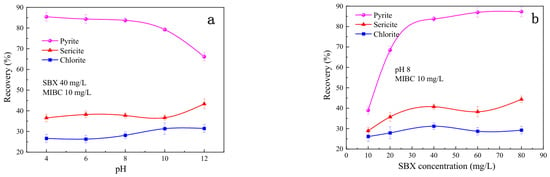
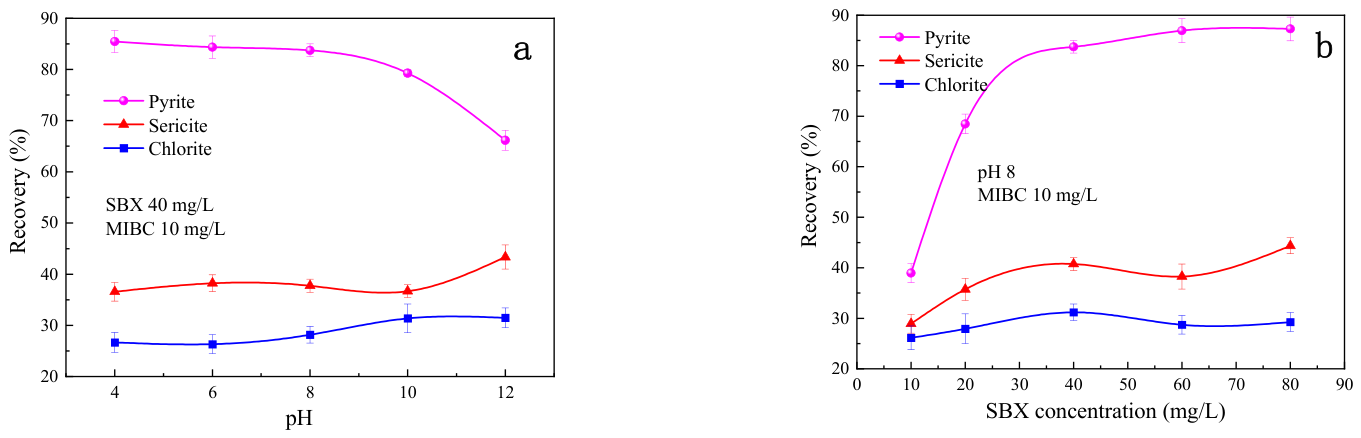
Single-mineral flotation tests were performed on pyrite, sericite, and chlorite using sodium butyl xanthate (SBX) as collector and methyl isobutyl carbinol (MIBC) as frother, with the results presented in Figure 3.
Figure 3.
Single-mineral flotation recovery of pyrite, sericite, and chlorite: (a) effect of pH; (b) effect of SBX concentration.
As shown in Figure 3a (pH-dependent flotation), pyrite exhibits superior floatability under weakly alkaline conditions. When the pulp pH is maintained within 4–8, its recovery remains stable at 84–86%, but a pronounced decline occurs at pH > 10, falling to approximately 65% at pH 12. This phenomenon is attributed to the formation of hydrophilic metal hydroxides on the pyrite surface under high pH conditions [35], which impairs the adsorption of SBX and diminishes the mineral’s hydrophobicity [36]. Sericite and chlorite generally display low flotation recovery in the SBX collector system, with their recovery primarily ascribed to mechanical entrainment rather than true hydrophobic attachment. Moreover, the single-mineral flotation results clearly demonstrate the high selectivity of SBX toward pyrite: sericite and chlorite maintain recovery rates of only 30–45% across the entire tested pH range, which is drastically lower than that of pyrite, indicating a favorable separation window.
The effects of SBX dosage on the flotation behavior of the three minerals are illustrated in Figure 3b (concentration-dependent flotation, at pH 8). The recovery of all three minerals tends to increase with rising collector concentration. However, an optimal collector dosage is identified—beyond 40 mg/L, the incremental recovery of pyrite becomes negligible, while sericite and chlorite show only marginal growth. As reported in previous studies, this trend is associated with the collector concentration approaching its critical micelle concentration (CMC), which hinders further surfactant adsorption onto mineral surfaces and limits the enhancement of hydrophobicity.
Consistent with the pH impact test results, pyrite maintains a substantially higher recovery rate than sericite and chlorite across all collector concentrations, demonstrating the robust separation potential of this flotation system. Notably, pH 8 is determined as the optimal flotation pH, as it maximizes pyrite recovery while minimizing the mechanical entrainment of sericite and chlorite, thereby achieving the highest separation efficiency between the target sulfide mineral and gangue minerals.
3.2. Mixed Mineral Flotation
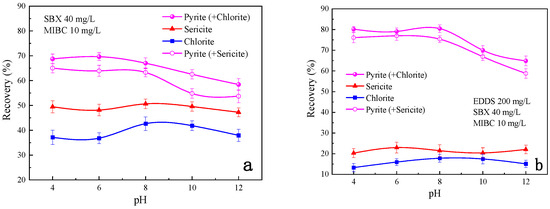
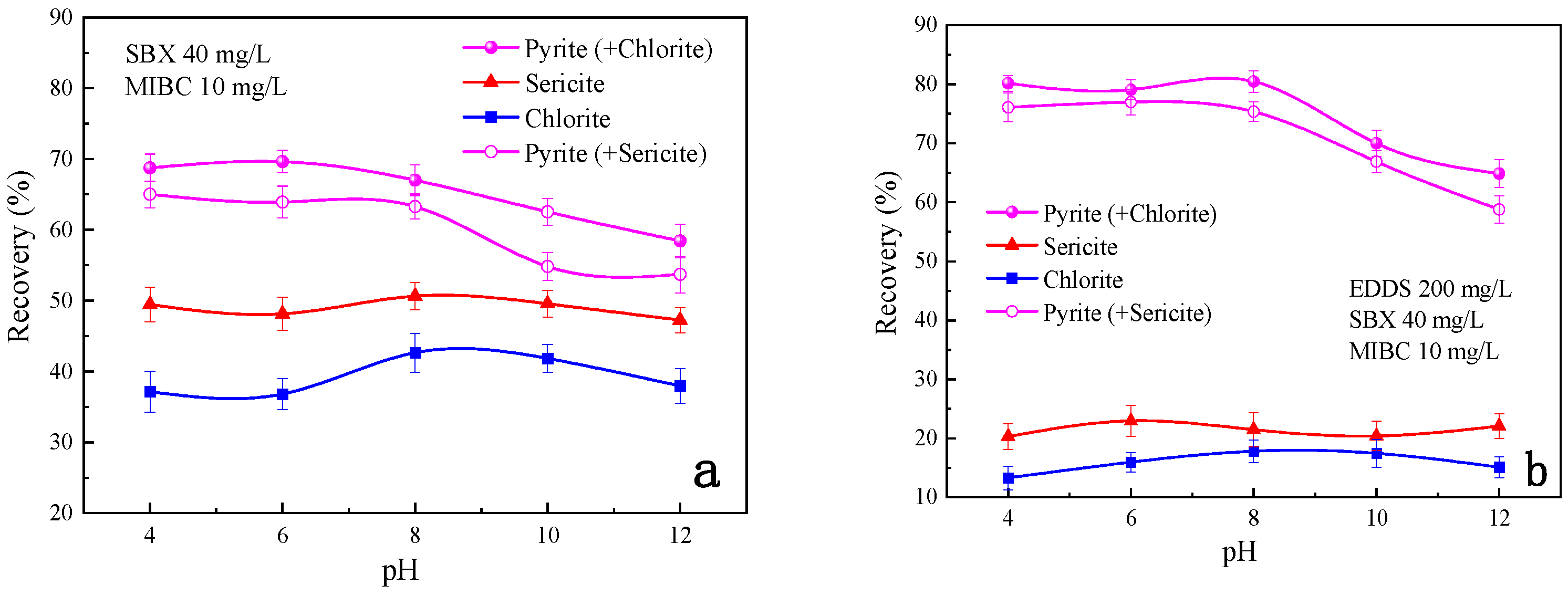
Compared with single-mineral systems, mixed-mineral flotation systems can better reflect the characteristics of actual ore flotation systems. In this study, a mixed flotation system was constructed with a 1:1 mass ratio using representative valuable sulfide mineral (pyrite) and gangue minerals (sericite, chlorite) from Jinchuan ore [37], to reproduce the core interactions (slime coating, mechanical entrainment) that govern actual flotation performance, with the results presented in Figure 4.
Figure 4.
Flotation recovery of artificial mixed minerals (a) without and (b) with EDDS depressant at different pH values.
As shown in Figure 4a, when pyrite was mixed with sericite or chlorite for flotation, a significant decrease in pyrite recovery was observed: at pH = 8, its recovery dropped from ~85% in single-mineral tests to ~68% (coexisting with chlorite) and ~65% (coexisting with sericite). Meanwhile, the flotation recovery of gangue minerals increased markedly: chlorite recovery rose from ~30% to ~43%, while sericite recovery increased from ~38% to ~50%. It is evident that in the mixed-mineral system, not only does mechanical entrainment of gangue minerals occur, but the slime coating of sericite and chlorite on the pyrite surface also significantly impairs pyrite’s floatability, leading to a substantial drop in its recovery. Additionally, some gangue particles float by adhering to pyrite surfaces, resulting in a marked increase in their own recovery, which is extremely unfavorable for the flotation separation of pyrite from gangue minerals.
Furthermore, the study reveals that the floating behavior of both chlorite and sericite (including mechanical entrainment and adhesion to pyrite surfaces) is pronounced in the mixed system, with sericite exhibiting more severe mechanical entrainment and adhesion, thus exerting a stronger negative impact on pyrite’s floatability [38]. This is one of the key factors contributing to the greater difficulty in separating ores containing such gangue minerals. To overcome these adverse effects, the depressant EDDS was introduced into the mixed-mineral system. As clearly demonstrated in Figure 4b, the addition of EDDS effectively maintained the recovery of pyrite, while effectively depressing sericite and chlorite. This result demonstrates that EDDS exhibits excellent selective depression performance, which is highly favorable for the flotation separation of pyrite from gangue minerals.
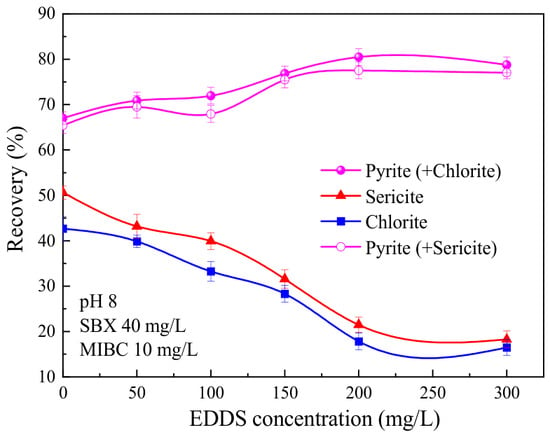
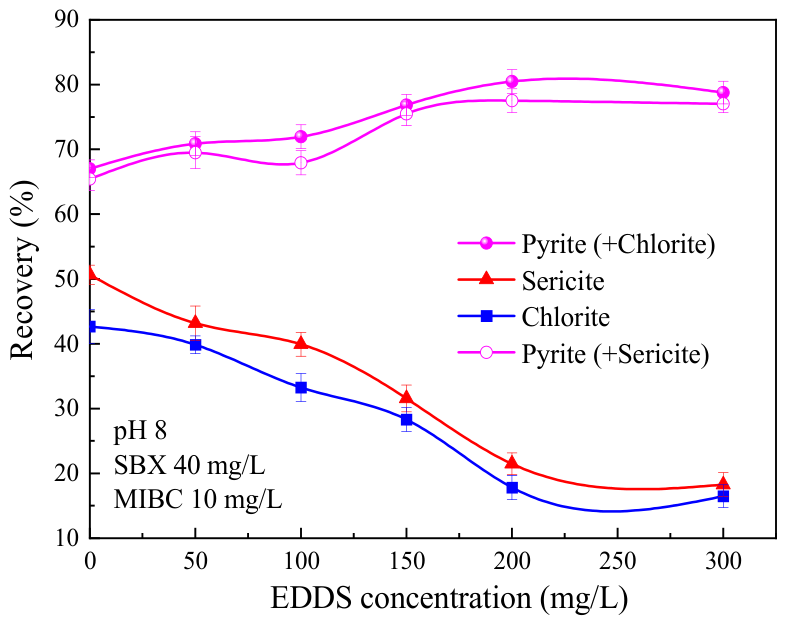
Relevant data under the condition of pH = 8 show that: In the absence of EDDS in the pyrite–sericite system, sericite exhibits a moderate recovery (≈50%), while pyrite remains high (≈65%). In the pyrite–chlorite system, chlorite shows a relatively low recovery (≈40%) and pyrite maintains a high recovery (≈67%). Sericite is more prone to mechanical entrainment into the pyrite concentrate compared with chlorite, resulting in lower pyrite recovery of the concentrate (65.0% vs. 67.0% in pyrite recovery). This indicates that sericite has a stronger interference effect on pyrite flotation compared with chlorite. In the presence of EDDS (200 mg/L), the recoveries of gangue minerals (sericite and chlorite) are significantly depressed to approximately 20% and 15%, respectively. Meanwhile, the pyrite recovery of both mixed mineral systems are correspondingly increased; however, overall, the performance of the pyrite+chlorite system remains superior (80.5% pyrite recovery vs. 77.5% in the pyrite+sericite system). These results clearly demonstrate the selective depression capability of EDDS on sericite and chlorite, thereby improving the separation efficiency of pyrite from gangue minerals. This further demonstrates that sericite exerts a more significant adverse impact on the flotation indices of pyrite and is relatively harder to depress, as evidenced by the higher gangue content in the concentrate of the pyrite–sericite system even in the presence of the depressant (21.5% vs. 17.8% in the pyrite+chlorite system).
The effect of the depressant EDDS on the flotation performance of mixed minerals was further investigated [39], as shown in Figure 5. With the increase in EDDS concentration from 0 to 300 mg/L, the recovery of pyrite (in both pyrite–chlorite and pyrite–sericite systems) increased continuously and stabilized, reaching a maximum at 200 mg/L (~80%), and remained nearly unchanged with further addition of EDDS. Meanwhile, the recoveries of gangue minerals (sericite and chlorite) decreased continuously, and were already suppressed to low levels at 200 mg/L (~18% for chlorite and ~21% for sericite), with no significant increase in depression efficiency observed at higher EDDS dosages. Therefore, 200 mg/L was identified as the optimal dosage of EDDS: at this concentration, the recovery of pyrite is restored to nearly the level of single-mineral flotation, while the recovery of gangue minerals is significantly inhibited, maximizing the recovery difference between pyrite and gangue and achieving efficient selective separation, thus exerting a negative impact [38]. Further increasing the EDDS concentration not only fails to improve the separation performance but also leads to unnecessary reagent waste and increased cost. Even in the presence of EDDS, the mixed system still shows that sericite is more difficult to depress than chlorite, and the recovery of pyrite in the sericite-coexisting system is slightly lower than that in the chlorite-coexisting system, indicating that sericite more persistently interferes with pyrite flotation.
Figure 5.
Flotation recovery of mixed minerals at varying EDDS concentrations.
This excellent agreement between surface micropolarity and flotation recovery strongly demonstrates that EDDS achieves selective separation by enhancing the hydrophilicity of gangue minerals while maintaining the hydrophobicity and floatability of pyrite.
3.3. Surface Electrical Property of the Particles
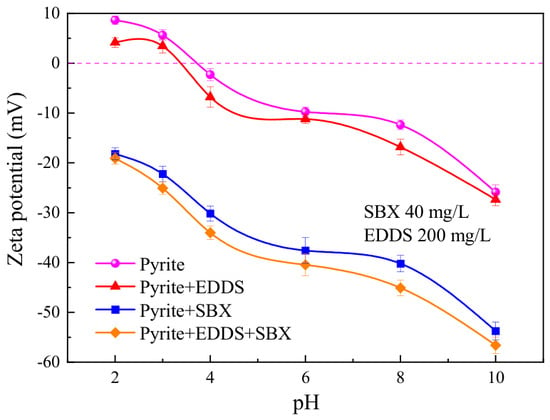
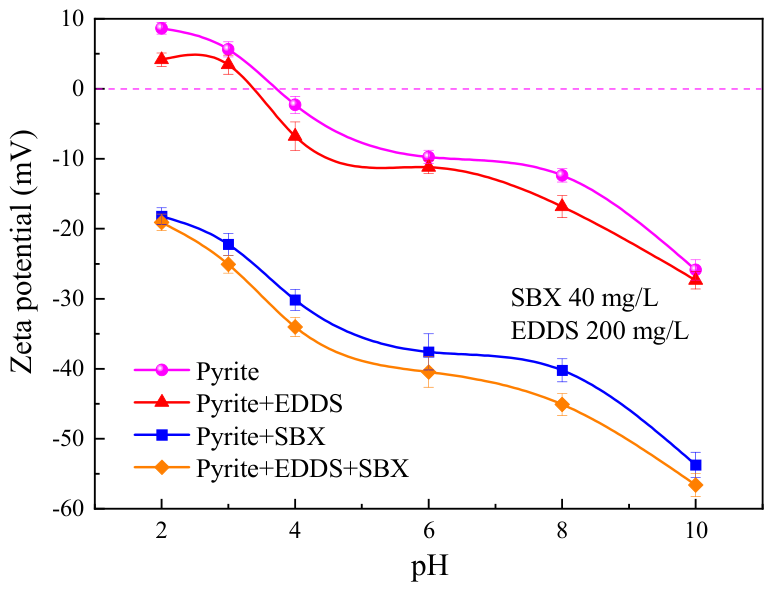
The zeta potential profiles of pyrite—including its native state and after interaction with the collector SBX (40 mg/L), depressant EDDS (200 mg/L), and the EDDS/SBX reagent system—are illustrated in Figure 6. The zeta potential of pyrite exhibits a decreasing trend with increasing pulp pH, with an isoelectric point (IEP) of approximately 3.7, consistent with previously reported findings [40]. After exposure to the collector SBX, the zeta potential of pyrite undergoes a significant reduction, attributed to the extensive adsorption of anionic SBX molecules on its surface. In contrast, interaction with the anionic depressant EDDS results in a moderate decrease in zeta potential, indicating selective binding between EDDS ions and the pyrite surface, which subtly modulates the mineral’s surface charge state. When pyrite particles are pretreated with EDDS followed by SBX, the extent of zeta potential reduction is more pronounced than that observed for pyrite treated with SBX alone. This suggests that EDDS does not hinder the adsorption of SBX onto the pyrite surface, a conclusion that aligns well with the improved flotation recovery and grade observed in micro-flotation tests.
Figure 6.
Zeta potential–pH curves of pyrite in different reagent systems (SBX 40 mg/L, EDDS 200 mg/L).
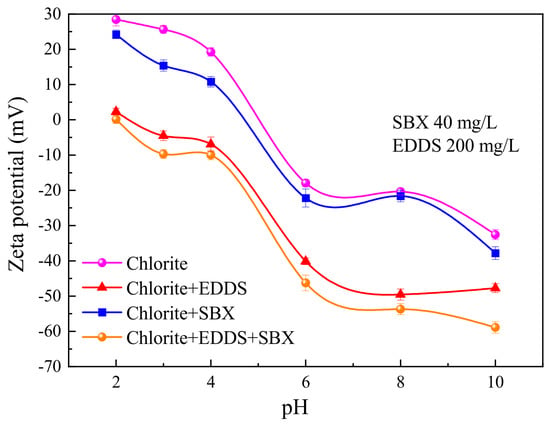
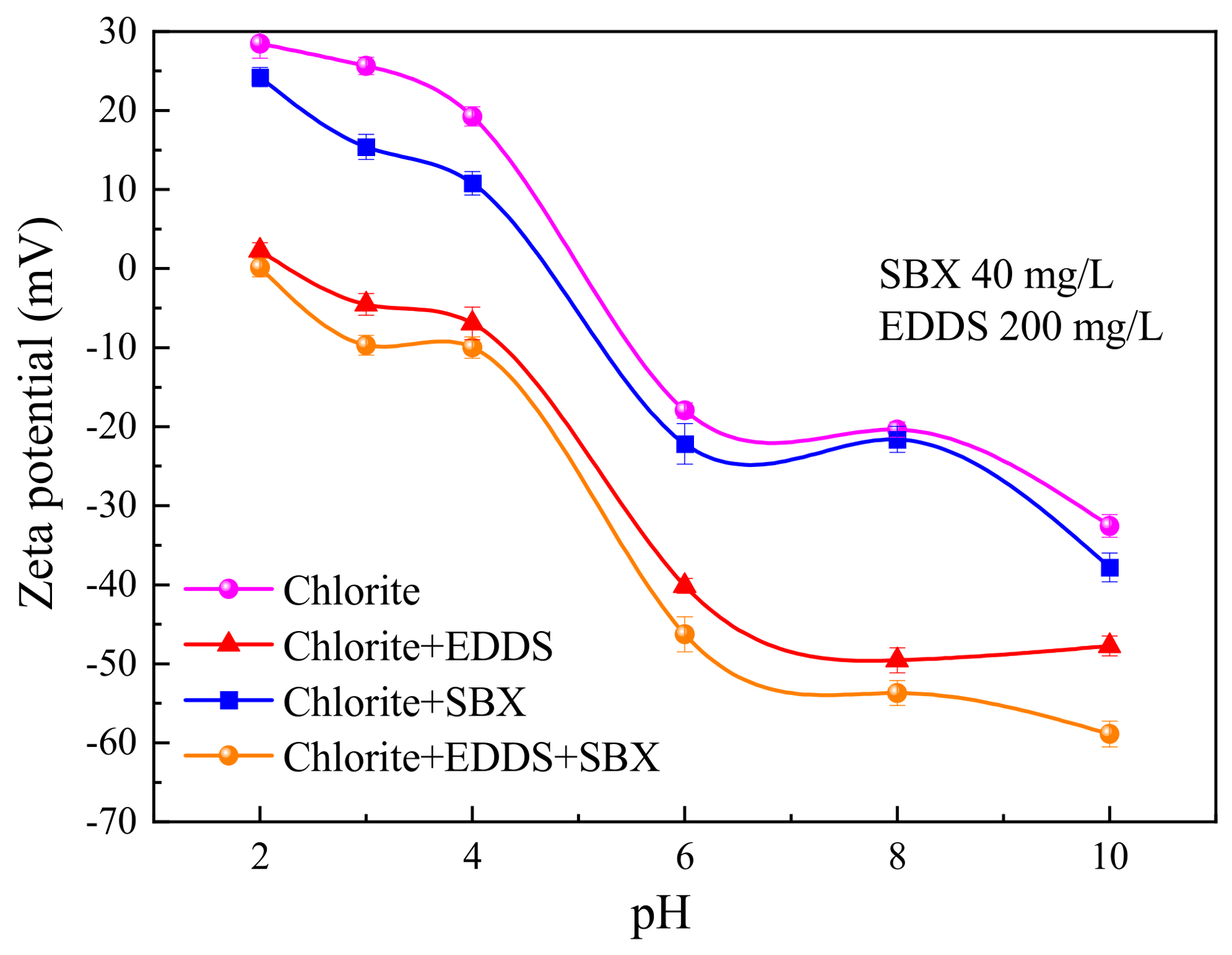
The zeta potential curves of chlorite and its interactions with collector SBX (40 mg/L), depressant EDDS (200 mg/L), and the EDDS/SBX reagent system are presented in Figure 7. The zeta potential of chlorite decreases with increasing pulp pH. The isoelectric point (IEP) of chlorite is approximately 5, falling within the range of chlorite IEPs reported in the literature [41]. After interacting with depressant EDDS, the zeta potential of chlorite drops significantly, attributed to the extensive adsorption of anionic EDDS on its surface, which effectively increases the electrostatic repulsion between chlorite particles. When interacting with anionic collector SBX, the zeta potential of chlorite shows only a slight decrease. This suggests weak interaction between SBX and the chlorite surface, which does not significantly alter the mineral’s surface charge state. It also demonstrates that chlorite flotation is mainly related to water mechanical entrainment and adhesion to valuable mineral surfaces rather than SBX adsorption. When chlorite particles are first treated with EDDS followed by SBX, the magnitude of zeta potential reduction is comparable to that observed for chlorite treated with EDDS alone, indicating that EDDS exerts a dominant inhibitory effect on chlorite surface charge, which is favorable for depressing its flotation.
Figure 7.
Zeta potential–pH curves of chlorite in different reagent systems (SBX 40 mg/L, EDDS 200 mg/L).
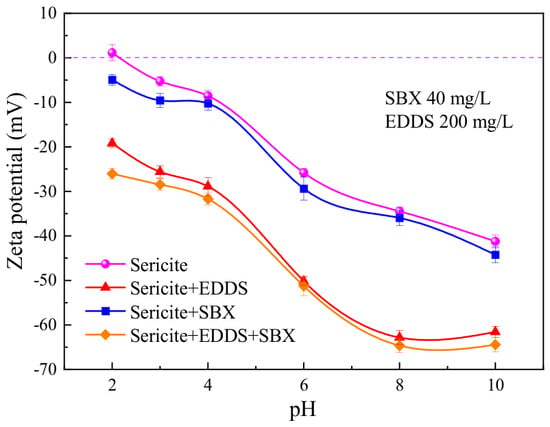
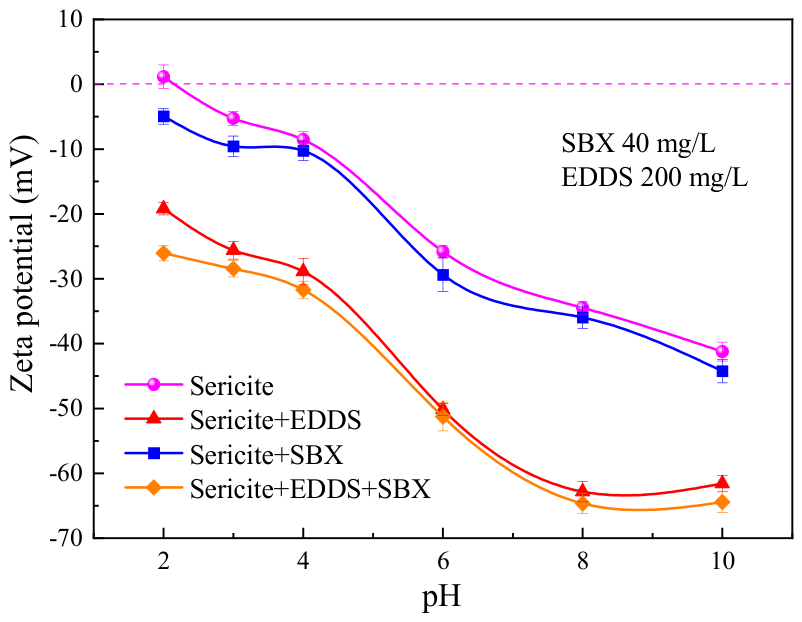
The zeta potential profiles of sericite—including its native state and after interaction with collector SBX (40 mg/L), depressant EDDS (200 mg/L), and the EDDS/SBX reagent system—are illustrated in Figure 8. The zeta potential of sericite decreases monotonically with increasing pulp pH, with an isoelectric point (IEP) of approximately 2.0, consistent with typical sericite surface charge behavior [42]. After exposure to the anionic depressant EDDS, the zeta potential of sericite decreases sharply, indicating strong adsorption of EDDS on its surface, which effectively increases the negative surface charge and dispersibility of sericite particles. In comparison, interaction with collector SBX leads to a moderate reduction in zeta potential, suggesting weaker adsorption of SBX on sericite relative to EDDS. When sericite particles are pretreated with EDDS followed by SBX, the zeta potential reduction is nearly identical to that of sericite treated with EDDS alone, demonstrating that EDDS dominates the surface charge modification of sericite and effectively suppresses the potential interaction between SBX and sericite.
Figure 8.
Zeta potential–pH curves of sericite in different reagent systems (SBX 40 mg/L, EDDS 200 mg/L).
This result aligns with the flotation tests, where EDDS significantly reduces the recovery of sericite while preserving pyrite flotation performance, demonstrating its selective depression effect on gangue minerals.
3.4. Results of Adsorption Capacity
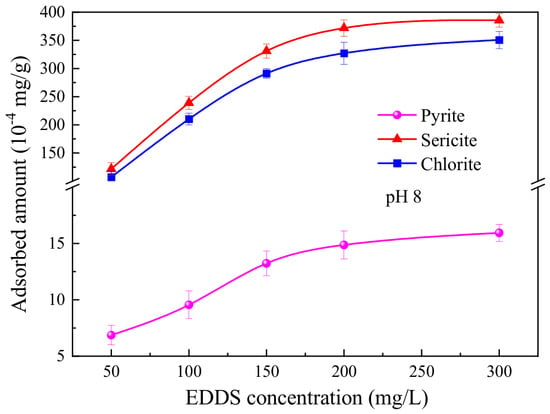
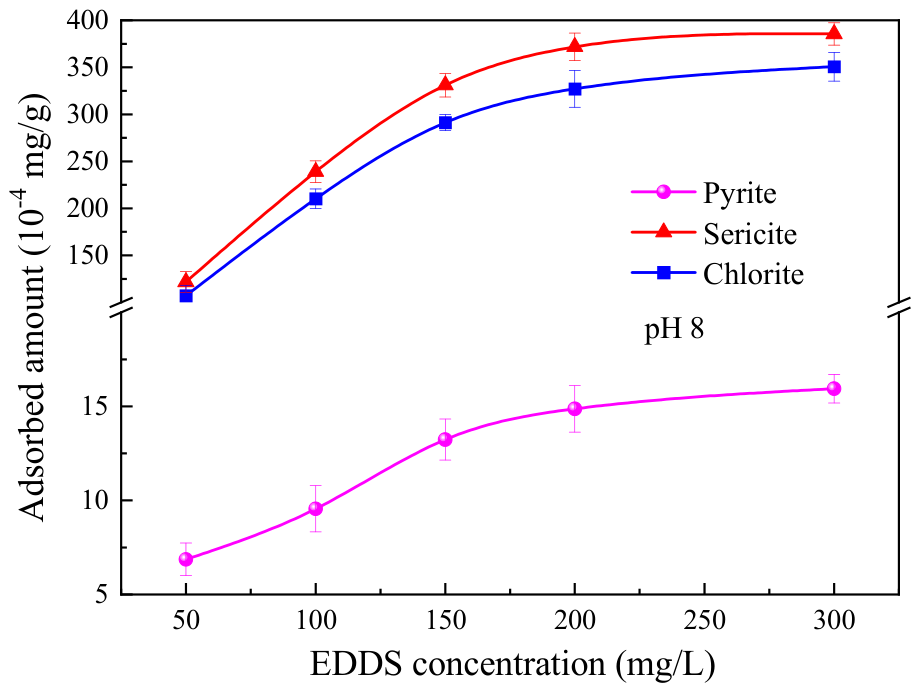
The adsorption amounts of EDDS on pyrite, sericite, and chlorite at pH 8 were measured, with the results presented in Figure 9. As shown in the figure, the EDDS adsorption behavior differs significantly between pyrite and the two gangue minerals (sericite and chlorite). Sericite and chlorite exhibit much higher EDDS adsorption capacities compared to pyrite. With increasing EDDS concentration from 50 to 300 mg/L, the adsorbed amount on sericite rises from ~120 × 10−4 mg/g to ~390 × 10−4 mg/g, while that on chlorite increases from ~110 × 10−4 mg/g to ~360 × 10−4 mg/g. Both curves show a rapid increase at low concentrations and gradually approach saturation at concentrations above 200 mg/L. In sharp contrast, pyrite displays a much lower EDDS adsorption capacity. Its adsorbed amount increases from ~7 × 10⁻⁴ mg/g at 50 mg/L EDDS to ~16 × 10−4 mg/g at 300 mg/L, with only a slight incremental change beyond 200 mg/L. This significant difference in EDDS adsorption demonstrates its selective interaction with gangue minerals (sericite and chlorite) over pyrite, which is consistent with the selective depression effect observed in flotation tests. The significantly higher adsorption amount of EDDS on sericite and chlorite indicates that the depressant is prone to interact with the surfaces of silicate gangue minerals. The intensive adsorption of EDDS enhances the surface hydrophilicity of sericite and chlorite, which is consistent with their depressed flotation behavior. In comparison, the extremely low adsorption amount of EDDS on pyrite confirms that its surface properties and floatability are barely affected. Such a remarkable difference in adsorption behavior provides direct and reliable evidence for the selective inhibition effect of EDDS, which is well consistent with the flotation results and supports the effective separation of pyrite from the two gangue minerals.
Figure 9.
Adsorbed amounts of EDDS on pyrite, sericite, and chlorite as a function of EDDS concentration at pH 8.
3.5. EDDS Solution Chemistry Analysis
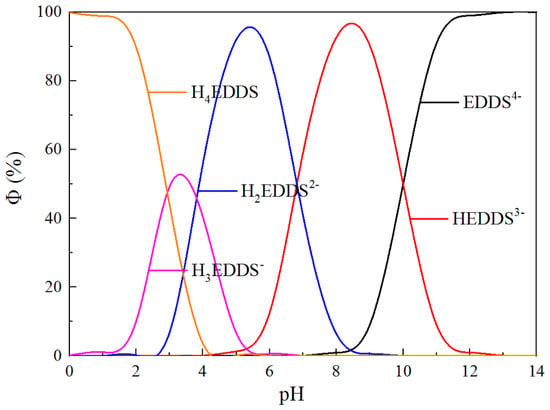
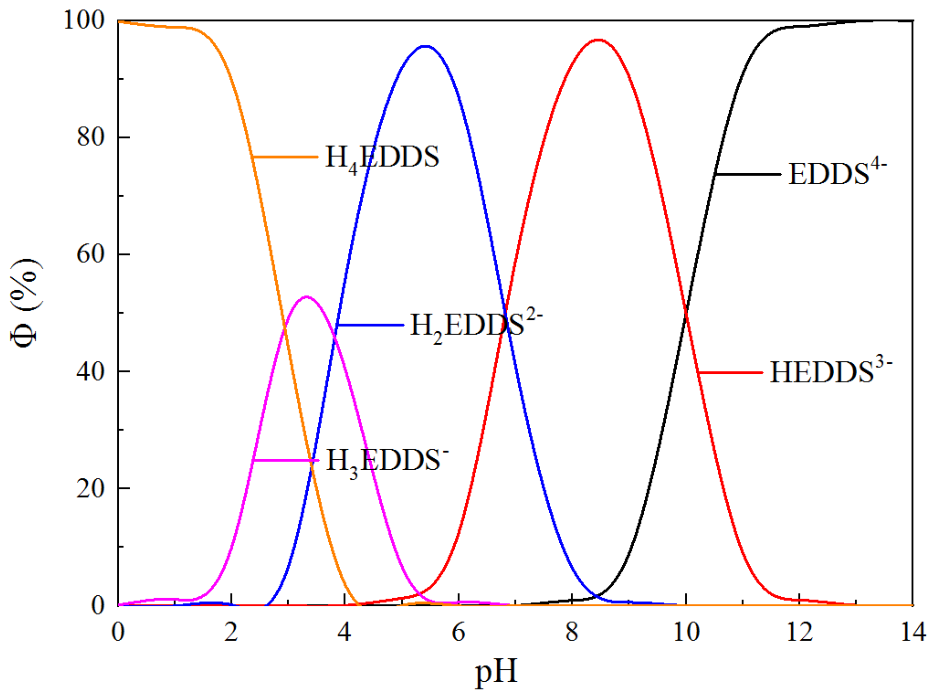
Ethylenediamine-N,N’-disuccinic acid (EDDS) is a hexadentate aminopolycarboxylic acid chelating agent with four carboxylic acid groups and two amine nitrogen atoms, capable of forming stable complexes with various metal ions [43]. The complexation ability and adsorption behavior of EDDS on mineral surfaces are highly dependent on its protonation state, which varies significantly with solution pH. Understanding the speciation distribution of EDDS is therefore essential for elucidating its depression mechanism in flotation systems [44]. The experimentally measured pKa values of EDDS (pKa1 = 2.40, pKa2 = 3.92, pKa3 = 6.32, pKa4 = 9.92) are consistent with previously reported literature data [28]. Based on these values, the species distribution of EDDS as a function of pH was calculated, and the results are presented in Figure 10. The distribution curves reveal four distinct protonation states of EDDS across the pH range 0–14. At strongly acidic conditions (pH < 2), the fully protonated form H4EDDS dominates, accounting for nearly 100% of total EDDS species. As pH increases, sequential deprotonation occurs: the first dissociation produces H3EDDS−, which reaches maximum concentration (~52%) at approximately pH 3.0. Further pH increase leads to the formation of H2EDDS2− becoming the predominant species between pH 4.5 and 6.5, with a peak distribution of ~95% at pH 5.5.
Figure 10.
EDDS solution chemistry analysis.
The third deprotonation yields HEDDS3−, which dominates the pH range 7.5–9.5, reaching maximum concentration (~96%) at approximately pH 8.5. This species is particularly significant for flotation applications, as pH 8–9 represents typical operating conditions for sulfide mineral separation. Finally, the fully deprotonated form EDDS4− becomes predominant above pH 10, approaching 100% distribution at pH > 12.
The transition points between species correspond closely to the reported pKa values: EDDS/EDDS− transition near pH 2.4, EDDS−/EDDS2− near pH 3.9, EDDS2−/EDDS3− near pH 6.3, and EDDS3−/EDDS4− near pH 9.9. Notably, at the optimal flotation pH of 8 (as determined from single-mineral flotation tests), EDDS exists predominantly as HEDDS3− (~90%) with minor contributions from H2EDDS2− (~8%) and EDDS4− (~2%). The triple negative charge of HEDDS3− at this pH enables strong electrostatic interaction with positively charged mineral surfaces, particularly for pyrite, which typically exhibits point of zero charge (PZC) around pH 6–7, thereby facilitating selective adsorption and depression of sulfide minerals in the presence of EDDS inhibitor.
This solution chemistry characteristic of EDDS further explains its pH-dependent selective adsorption behavior. Combined with zeta potential analysis and adsorption experimental results, this well clarifies why EDDS exhibits weak interaction with pyrite but shows a strong binding capacity toward sericite and chlorite, thereby providing essential theoretical support for the selective depression of gangue minerals in flotation.
3.6. XPS Detection
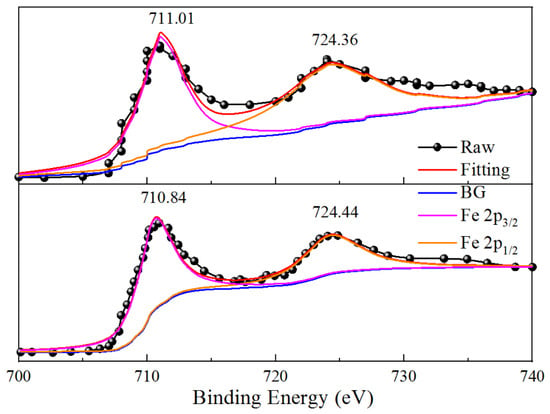
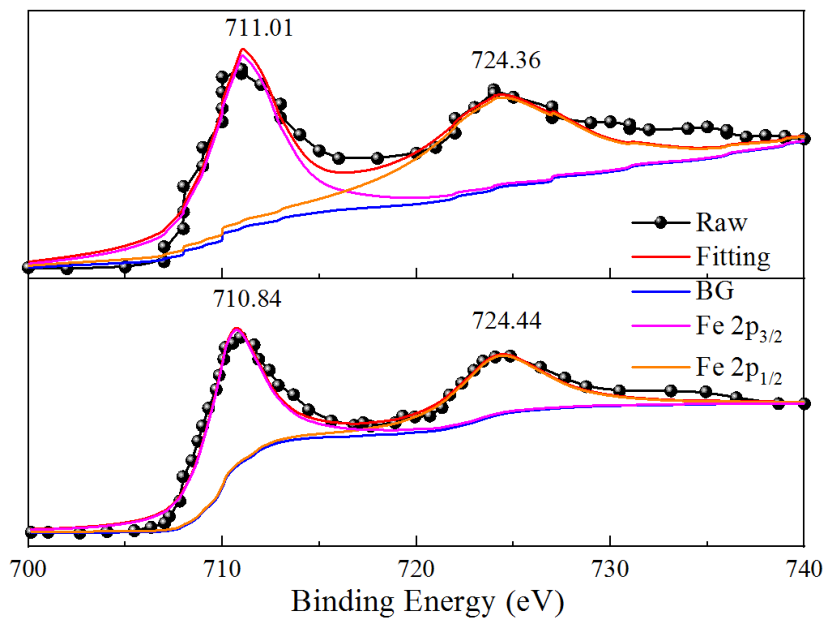
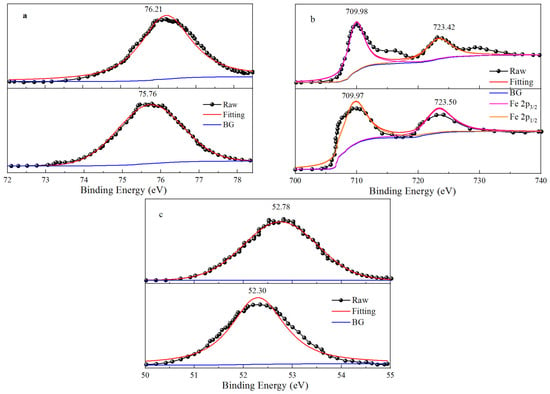
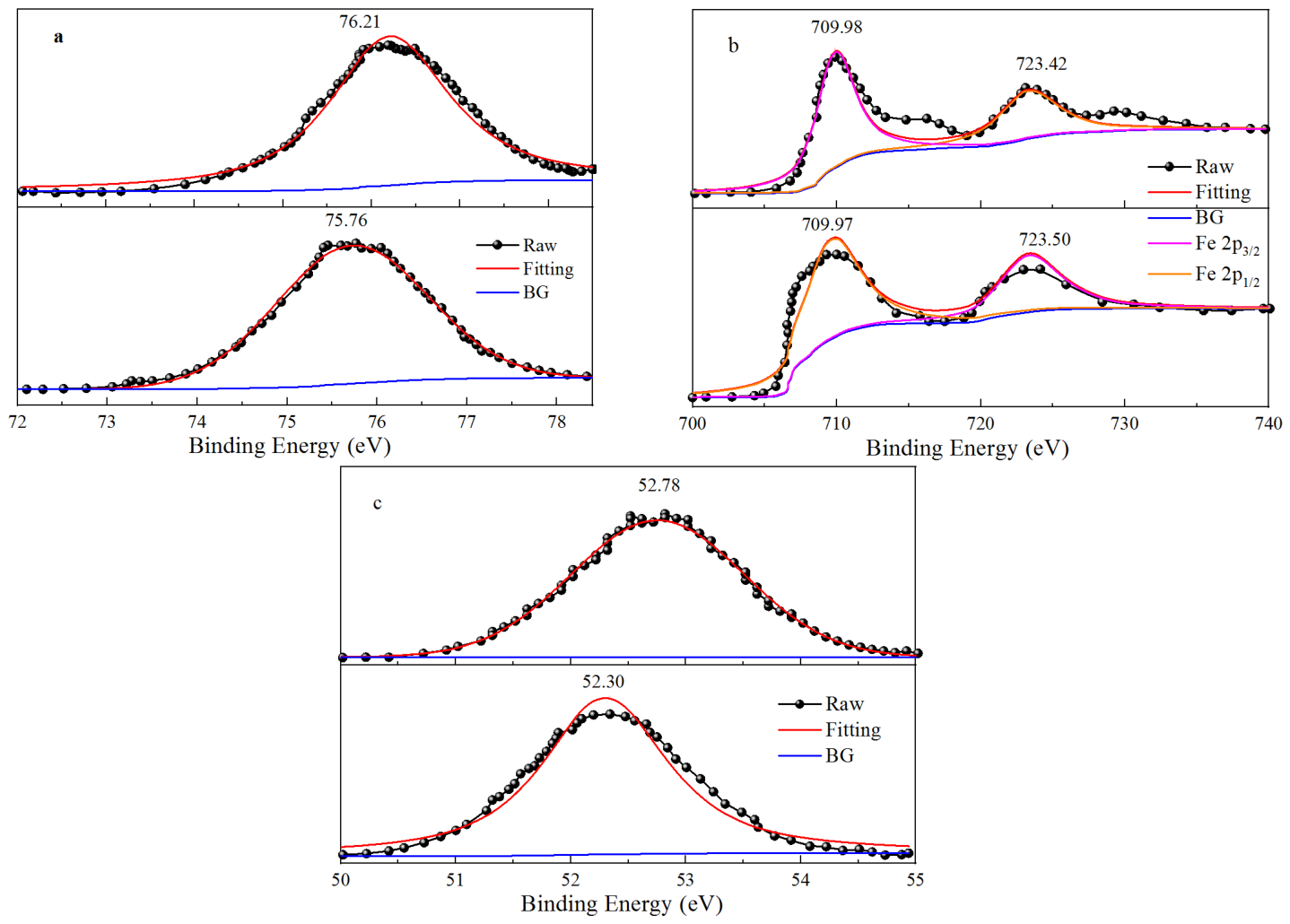
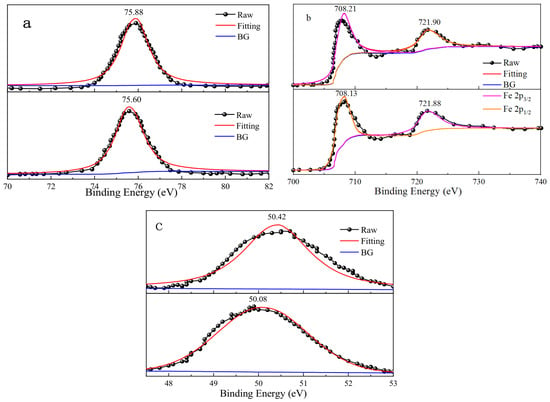
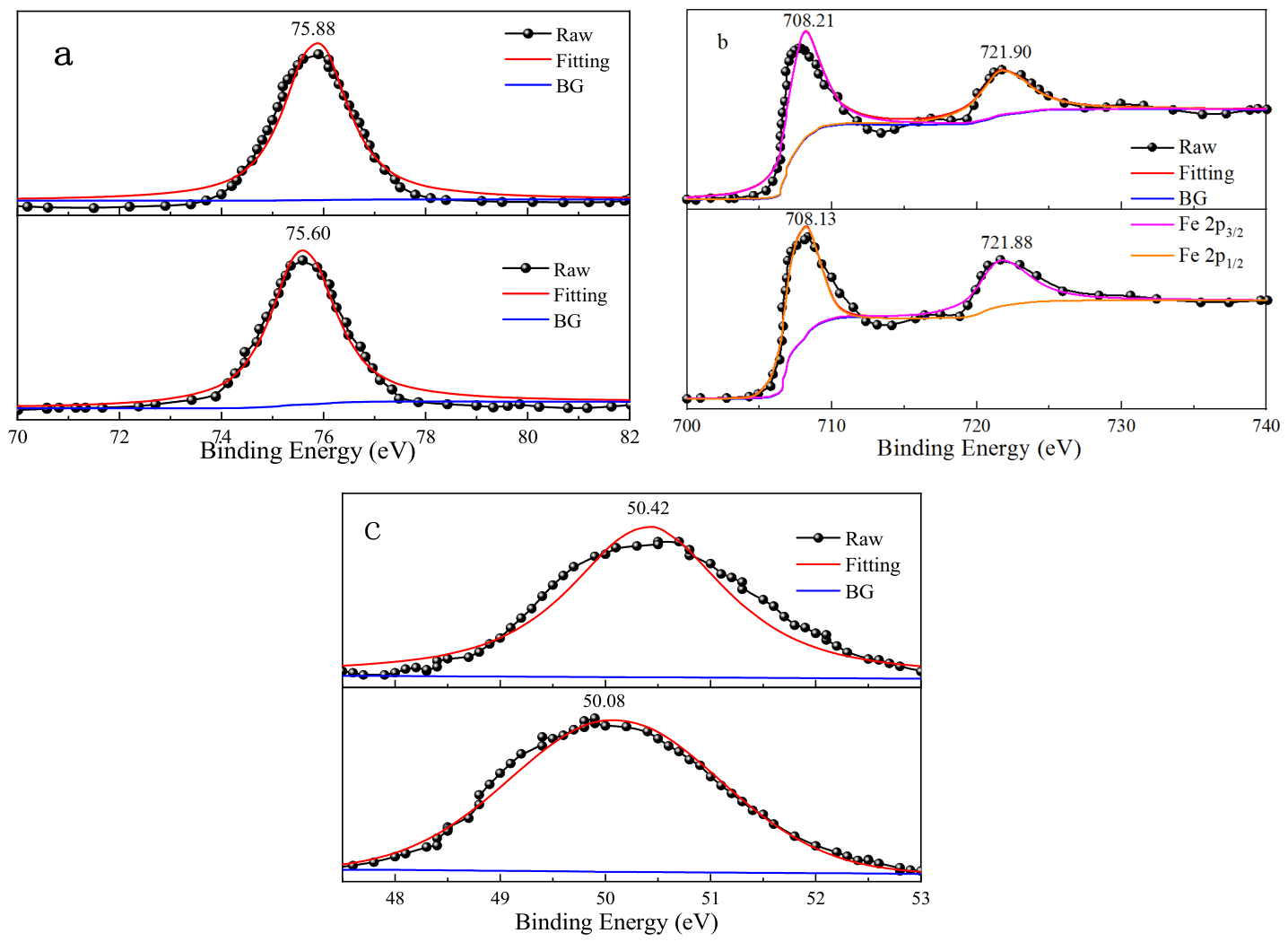
Based on the results of previous characterizations such as ζ-potential measurements, it was found that the interaction between pyrite and the depressant EDDS was weak, as well as between gangue minerals (sericite and chlorite) and the collector SBX. Therefore, no further in-depth study on these interactions was conducted in this paper. X-ray Photoelectron Spectroscopy (XPS) tests were performed on the surfaces of pyrite, sericite, and chlorite before and after their interaction with EDDS, and their high-resolution Fe 2p, Al 2p, and Mg 1s spectra are shown in Figure 11, Figure 12 and Figure 13. The XPS test method refers to the characterization specifications reported in relevant literature [32,45].
Figure 11.
High-resolution XPS spectra of Fe 2p for pyrite before and after interaction with EDDS.
Figure 12.
XPS spectra of (a) Al 2p, (b) Fe 2p, and (c) Mg 2p for sericite before and after EDDS treatment.
Figure 13.
High-resolution XPS spectra of (a) Al 2p, (b) Fe 2p, and (c) Mg 2p for chlorite before and after interaction with EDDS.
After pyrite interacts with EDDS, the characteristic peaks of its Fe 2p show only a slight shift, as illustrated in Figure 11: the Fe 2p3/2 peak changes from 711.01 eV to 710.84 eV (shift = −0.17 eV), and the Fe 2p1/2 peak changes from 724.36 eV to 724.44 eV (shift = −0.08 eV). In this study, a widely accepted criterion for XPS binding energy shift interpretation is adopted: A binding energy shift ≤ 0.2 eV is recognized as negligible, indicating weak physical adsorption or no obvious chemical interaction. A shift ≥ 0.2 eV is regarded as significant, indicating strong chemical adsorption or chelation. The extremely small binding energy shift indicates that only weak physical adsorption occurs between EDDS and pyrite, with no significant chemical interaction. This is consistent with the weak adsorption characteristics of L-cystine on the pyrite surface reported by Galvez-Martinez et al. [45], demonstrating that EDDS has little effect on the Fe sites of pyrite and can retain the adsorption of the collector SBX and the floatability of pyrite, which is also consistent with the selective interaction law observed by Liu et al. [22].
After sericite interacts with EDDS, as shown in Figure 12a, the Al 2p peak shifts from 76.21 eV to 75.76 eV (shift = −0.45 eV), indicating that EDDS undergoes chemical adsorption on the Al sites of sericite. In contrast, the Fe 2p peak of sericite shows only a slight change (Figure 12b): the Fe 2p3/2 peak changes from 709.98 eV to 709.97 eV (shift = −0.01 eV), and the Fe 2p1/2 peak changes from 723.42 eV to 723.50 eV (shift = +0.08 eV), indicating that the interaction between EDDS and the Fe sites of sericite is weak. These results demonstrate that EDDS selectively binds to the active Al sites on the sericite surface instead of the Fe sites, which is consistent with the site-selective adsorption law found in the surface characterization of sulfide minerals by Acres et al. [32]. As shown in Figure 12c, the Mg 2p peak of sericite shifts from 52.78 eV to 52.30 eV (shift = −0.48 eV), further demonstrating that EDDS can also undergo chemical adsorption on the Mg sites of sericite, enhance the hydrophilicity of sericite, and achieve selective inhibition.
After chlorite interacts with EDDS, as shown in Figure 13a, the Al 2p peak of chlorite shifts from 75.88 eV to 75.60 eV, with a total shift of −0.28 eV, indicating chemical adsorption of EDDS on the Al sites of chlorite. In contrast, the Fe 2p peaks show only negligible shifts, as illustrated in Figure 13b: Fe 2p3/2 shifts from 708.21 eV to 708.13 eV (shift = −0.08 eV); Fe 2p1/2 shifts from 721.90 eV to 721.88 eV (shift = −0.02 eV), demonstrating weak interactions between EDDS and the Fe sites of chlorite. As presented in Figure 13c, the Mg 1s peak shifts from 50.42 eV to 50.08 eV, with a total shift of −0.34 eV, further demonstrating that EDDS chemically adsorbs on the active Mg sites of chlorite, in addition to Al sites. These results indicate that EDDS selectively binds to the active Al and Mg sites on the chlorite surface rather than Fe sites, which is consistent with its selective depression effect on chlorite, enhancing its surface hydrophilicity and suppressing its flotation [32].
Table 1 also presents the variations in the main atomic concentrations and binding energy shifts on the surfaces of pyrite, sericite, and chlorite before and after EDDS treatment. Prior to interaction with EDDS, pyrite exhibits relatively high Fe and S atomic contents on its surface, which provides abundant active sites for the depressant to act on. After interaction, the Fe and S atomic contents on pyrite surfaces increased markedly, accompanied by a slight negative shift in Fe 2p binding energy (from 711.01 eV to 710.84 eV, shift of −0.17 eV). In contrast, the Mg and Al atomic contents on sericite and chlorite decreased markedly after EDDS treatment (Mg: from 52.78% to 52.30% for sericite and from 50.42% to 50.08% for chlorite; Al: from 76.21% to 75.76% for sericite and from 75.88% to 75.60% for chlorite). Additionally, the Mg 2p binding energies showed negative shifts (from 709.98 eV to 709.97 eV for sericite, shift of −0.01 eV; from 708.21 eV to 708.13 eV for chlorite, shift of −0.08 eV), while the Al 2p binding energies also exhibited negative shifts (from 76.21% to 75.76% for sericite, shift of −0.45%; from 75.88% to 75.60% for chlorite, shift of −0.28%). This demonstrates that EDDS interacts with the active Mg/Al sites on sericite and chlorite, and the greater negative shifts in Mg/Al binding energy further demonstrate the stronger interaction between the depressant and silicate gangue minerals, consistent with its selective depression effect in flotation.
Table 1.
XPS binding energy shifts of pyrite, sericite, and chlorite before and after EDDS treatment. (Symbol “---“ indicates that it was not detected.).
3.7. Suggested Adsorption Model
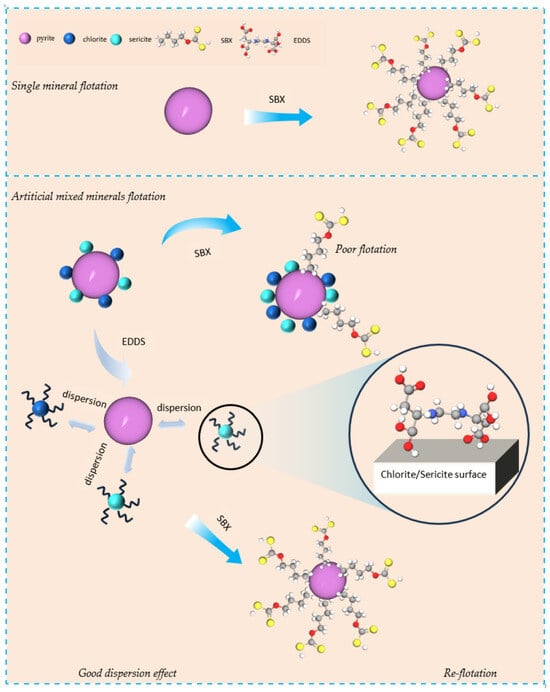
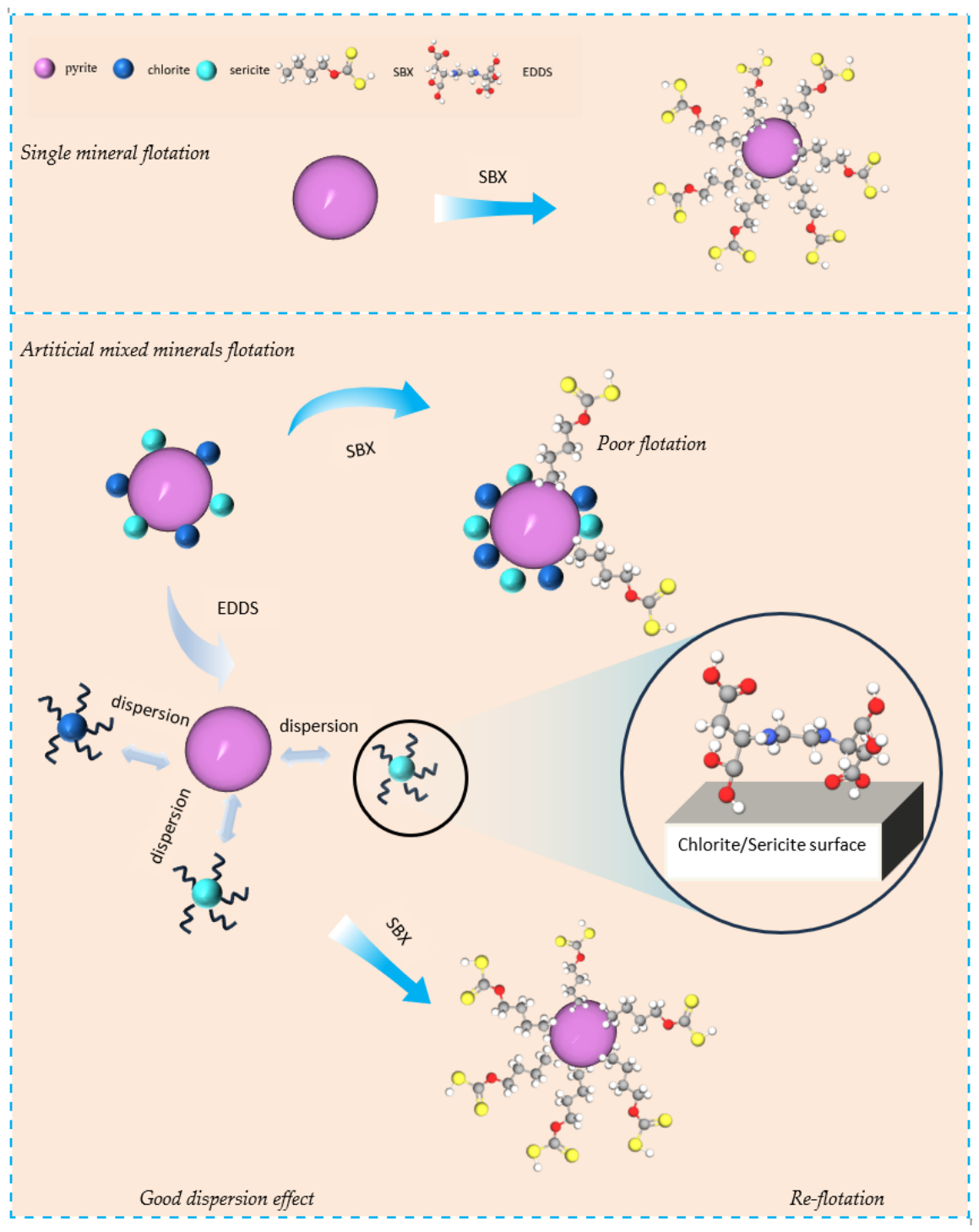
Figure 14 illustrates the interface interaction mechanism between EDDS and the surfaces of pyrite, sericite, and chlorite. In single mineral flotation with only collector SBX added, pyrite exhibits excellent floatability as SBX is selectively adsorbed on its surface to render it hydrophobic, while sericite and chlorite show poor floatability due to their natural hydrophilicity. In the mixed mineral system without EDDS, fine sericite and chlorite particles easily form slime coating on the pyrite surface, which hinders the adsorption of SBX on pyrite and causes mechanical entrainment, resulting in deteriorated floatability of pyrite and low separation efficiency. When EDDS is added first as a selective inhibitor, it disperses the gangue slime from the pyrite surface, helping to alleviate the adverse effect of slime coating. Meanwhile, EDDS is preferentially adsorbed on the active Al and Mg sites of sericite and chlorite via chemical chelation and electrostatic interaction, forming a hydrophilic film to enhance their hydrophilicity and inhibit their flotation. In contrast, EDDS only undergoes weak physical adsorption on pyrite, exerting negligible influence on its surface hydrophobicity and adsorption sites for SBX. EDDS exerts its selective depression on clay gangue through two synergistic effects: direct chelation-induced hydrophilization and indirect mitigation of slime coating by enhancing particle dispersion and electrostatic repulsion. Subsequent addition of SBX restores pyrite floatability, achieving efficient separation and higher-grade pyrite concentrate.
Figure 14.
Schematic diagram of the interface interaction mechanism between EDDS and mineral surfaces.
4. Conclusions
- (1)
- EDDS can be used as an eco-friendly and selective depressant for the flotation separation of pyrite from sericite and chlorite under laboratory pure-mineral conditions. Under optimized conditions (pH 8, 200 mg/L EDDS), the recoveries of sericite and chlorite are reduced to approximately 20% and 15%, respectively, while pyrite recovery remains at about 80%, leading to an improved concentrate grade.
- (2)
- The selective depression mechanism is mainly attributed to differential adsorption behavior: EDDS forms strong chemical chelation with Al/Mg active sites on the surfaces of sericite and chlorite, which enhances their hydrophilicity and helps to disperse slime coating. In contrast, EDDS only undergoes weak physical adsorption on pyrite, thus preserving its hydrophobicity and the adsorption of the collector.
- (3)
- Solution chemistry analysis indicates that HEDDS3− is the dominant species (~90%) at pH 8. Its triple negative charge enhances electrostatic attraction toward positively charged gangue mineral surfaces, further promoting the selective adsorption of EDDS on gangue minerals.
This study extends the application of EDDS in mineral processing and provides a laboratory-scale eco-friendly reference for the separation of fine gold-bearing pyrite from low-grade clay-rich ores. It also offers a useful reference for the flotation separation of sulfide minerals from silicate gangues. Since all experiments were performed using pure minerals and artificial mixtures, the conclusions are only valid under the present laboratory conditions. Further verification using real ore samples is still needed to support future practical applications.
Author Contributions
Investigation, data curation, writing—original draft, J.W.; conceptualization, methodology, Y.Q.; methodology, X.H. and C.L.; funding acquisition, resources, validation, writing—review and editing, Z.W. and Y.Z. All authors have read and agreed to the published version of the manuscript.
Funding
This research was funded by the National Natural Science Foundation of China (No. 52474301), the Scientific Research Fund of Zhejiang Provincial Education Department (No. Y202558621), the Sichuan Science and Technology Program of China (No. 2024YFHZ0243), and the key program of the National Key Research and Development Program (No. 2023YFE0104100).
Data Availability Statement
Data are contained within the article.
Conflicts of Interest
The authors declare no conflicts of interest.
References
- Surimbayev, B.; Bolotova, L.; Akcil, A.; Yessengarayev, Y.; Khumarbekuly, Y.; Kanaly, Y.; Akzharkenov, M. Gravity concentration of gold-bearing ores and processing of concentrates: A review. Miner. Process. Extr. Metall. Rev. 2025, 46, 726–750. [Google Scholar] [CrossRef] [Scilit]
- Zhang, W.; Yuan, Q.; Jia, S.; Li, Z.; Yin, X. Multi-objective optimization of forth flotation process: An application in gold ore. Sustainability 2021, 13, 8314. [Google Scholar] [CrossRef] [Scilit]
- Li, J.; Yang, H.; Zhao, R.; Chen, Q. Mineralogical characteristics and recovery process optimization analysis of a refractory gold ore with gold particles mainly encapsulated in pyrite and Arsenopyrite. Geochemistry 2023, 83, 125941. [Google Scholar] [CrossRef] [Scilit]
- Boduen, A.; Zalesov, M.; Melamud, V.; Grigorieva, V.; Bulaev, A. Combined Bacterial and Pressure Oxidation for Processing High-Sulfur Refractory Gold Concentrate. Processes 2023, 11, 3062. [Google Scholar] [CrossRef] [Scilit]
- Wu, C.; Chen, Z.; Liao, N.; Zeng, C.; Wang, Y.; Tian, J. Enhancing the grinding efficiency of a Magnetite second-stage mill through ceramic ball optimization: From laboratory to industrial applications. Minerals 2024, 14, 160. [Google Scholar] [CrossRef] [Scilit]
- Yao, W.; Li, M.; Zhang, M.; Cui, R.; Ning, J.; Shi, J. Effects and mechanisms of grinding media on the flotation behavior of scheelite. ACS Omega 2020, 5, 32076–32083. [Google Scholar] [CrossRef] [Scilit] [PubMed]
- Wang, W.; Li, Z.; Zhu, W.; Hou, S.; Guo, C. Unravelling the flotation performance of 1-Hydroxy-2-naphthyl hydroxamic acid and styrene phosphonic acid collectors on monazite using experiments and DFT calculations. Molecules 2024, 29, 1052. [Google Scholar] [CrossRef] [Scilit]
- Asamoah, R.K.; Skinner, W.; Addai-Mensah, J. Alkaline cyanide leaching of refractory gold flotation concentrates and bio-oxidised products: The effect of process variables. Hydrometallurgy 2018, 179, 79–93. [Google Scholar] [CrossRef] [Scilit]
- Zhou, W.; Liu, K.; Wang, L.; Zhou, B.; Niu, J.; Ou, L. The role of bulk micro-nanobubbles in reagent desorption and potential implication in flotation separation of highly hydrophobized minerals. Ultrason. Sonochemistry 2020, 64, 104996. [Google Scholar] [CrossRef] [Scilit]
- Sygusch, J.; Stefenelli, N.; Rudolph, M. Ultrafine particle flotation in a concept flotation cell combining turbulent mixing zone and deep froth fractionation with a special focus on the property vector of particles. Minerals 2023, 13, 1099. [Google Scholar] [CrossRef] [Scilit]
- Liu, S.; Chen, X.; Lauten, R.A.; Peng, Y.; Liu, Q. Mitigating the negative effects of clay minerals on gold flotation by a lignosulfonate-based biopolymer. Miner. Eng. 2018, 126, 9–15. [Google Scholar] [CrossRef] [Scilit]
- Gu, G.; Zhou, J.; Du, S.; Liao, S.; Wang, Y. Study of reagent scheme, mechanical entrainment and their relationship in chalcopyrite flotation in the presence of bentonite and kaolinite. Minerals 2022, 12, 263. [Google Scholar] [CrossRef] [Scilit]
- Li, W.; Bai, X.; Liu, J.; Chen, M.; Hao, J.; Gao, H. Mechanism of Cu Ion Targeting Combined with an Organic Depressant to Enhance the Flotation Depression of Pyrite. Langmuir 2024, 40, 26350–26362. [Google Scholar] [CrossRef] [Scilit]
- Xia, H.; Xie, X.; Wang, C.; He, D.; Tong, X.; Zhao, C.; Ping, F. Research on the flotation of high-sulfur and low-Copper ore based on mineralogical characteristics. Minerals 2025, 15, 1213. [Google Scholar] [CrossRef] [Scilit]
- Dong, S.; He, H.; Qiu, Z.; Peng, L.; Qin, S.; Fang, J.; Wang, X.; Li, Y.; Zhang, H.; Liu, J.; et al. An eco-friendly depressant derived from grape seed extract (GSE) as depressant for flotation separation of pyrite from chalcopyrite under low-alkalinity conditions. Miner. Eng. 2024, 213, 108758. [Google Scholar] [CrossRef] [Scilit]
- Suyantara, G.P.W.; Ulmaszoda, A.; Miki, H.; Eladl, D.A.; Sasaki, K.; Okibe, N. Selective depression of copper-activated pyrite by oxalic acid: Implications for enhanced chalcopyrite–pyrite separation. Powder Technol. 2025, 454, 120681. [Google Scholar] [CrossRef] [Scilit]
- Feng, Q.; Yang, W.; Chang, M.; Wen, S.; Liu, D.; Han, G. Advances in depressants for flotation separation of Cu-Fe sulfide minerals at low alkalinity: A critical review. Int. J. Miner. Metall. Mater. 2024, 31, 1–17. [Google Scholar] [CrossRef] [Scilit]
- Gong, P.; Ren, L.; Bao, S.; Zhang, Y.; Qin, W.; Nguyen, A.V. Flotation separation mechanism of rutile and chlorite using CMC as depressant. Miner. Eng. 2024, 217, 108957. [Google Scholar] [CrossRef] [Scilit]
- Huang, R.; Liu, J.; Yang, D.; Yu, X.; Hao, J. Inhibitory effect of CMC on sulfide ore flotation and its influencing factors. Chin. J. Eng. Sci. 2024, 46, 627–636. [Google Scholar]
- Lan, S.; Dong, L.; Shen, P.; Mao, Y.; Zhang, T.; Zheng, Q.; Shen, Z. Green flotation depressats of typical salt and silicate gangue minerals in froth flotation—A comprehensive review. Green Chem. 2026, 28, 7192–7214. [Google Scholar] [CrossRef] [Scilit]
- Zhao, F.; Yu, X.; Gao, X.; Li, M.; Chen, X. The selective depression effect of sodium hexametaphosphate on the separation of chlorite and specularite. Physicochem. Probl. Miner. Process. 2023, 59, 166495. [Google Scholar] [CrossRef] [Scilit]
- Liu, J.; Liu, Z.; Tan, J.; Hu, F. Flotation separation of pyrite from chalcopyrite by tetrazinan-thione collectors. J. Cent. South Univ. 2023, 30, 2587–2598. [Google Scholar] [CrossRef] [Scilit]
- Zhang, Y.X.; Liu, C.; Yang, S.Y. Effect and mechanism of xanthan gum on the flotation separation of pyrite and micro-fine chlorite. Nonferrous Met. Sci. Eng. 2026, 16, 965–971. [Google Scholar]
- Zhang, Q. Research progress on depressants and activators for pyrite flotation. Ind. Miner. Process. 2023, 52, 1–12. [Google Scholar]
- López-Rayo, S.; Valverde, S.; Lucena, J.J. [S, S]-EDDS ligand as a soil solubilizer of Fe, Mn, Zn, and Cu to imsuggest plant nutrition in deficient soils. J. Agric. Food Chem. 2023, 71, 9728–9737. [Google Scholar] [CrossRef] [Scilit]
- Kowalczyk, M.; Hubicki, Z.; Kołodyńska, D. Removal of heavy metal ions in the presence of the biodegradable complexing agent of EDDS from waters. Chem. Eng. J. 2013, 221, 512–521. [Google Scholar] [CrossRef] [Scilit]
- Li, Z.; Wang, Y.; Jia, M.; Wen, L.; Wang, X.; Wei, J. Effect and mechanism of depressant disodium carboxymethyl trithiocarbonate on flotation separation of stibnite and pyrite. Min. Metall. Explor. 2022, 39, 1267–1275. [Google Scholar] [CrossRef] [Scilit]
- Porter, T.M.M. Regional tectonics, geology, magma chamber processes and mineralisation of the Jinchuan nickel-copper-PGE deposit, Gansu Province, China: A review. Geosci. Front. 2016, 7, 431–451. [Google Scholar] [CrossRef] [Scilit]
- Wang, X.; Wang, Z.; Zhao, K.; Gao, Z.; Zhang, W.; Zhou, M.; Deng, Q. Improved Flotation of High-Clay-Content Gold Ore Using Fenugreek Polysaccharide Gum as the Depressant. Minerals 2025, 15, 446. [Google Scholar] [CrossRef] [Scilit]
- Bols, M.L.; Ma, J.; Rammal, F.; Plessers, D.; Wu, X.; Navarro-Jaén, S.; Heyer, A.J.; Sels, B.F.; Solomon, E.I.; Robert, A. In situ UV–Vis–NIR absorption spectroscopy and catalysis. Chem. Rev. 2024, 124, 2352–2418. [Google Scholar] [CrossRef] [Scilit]
- Hao, H.; Huang, W.; Hao, R.; Mu, N.; Wen, L.; Yu, C. Mineralogy and elemental geochemistry of pyrite coal-balls, Datong Coalfield, Shanxi Province, China: Implications for differentiation mechanism. Ore Geol. Rev. 2023, 159, 105538. [Google Scholar] [CrossRef] [Scilit]
- Acres, R.G.; Harmer, S.L.; Beattie, D.A. Synchrotron XPS, NEXAFS, and ToF-SIMS studies of solution exposed chalcopyrite and heterogeneous chalcopyrite with pyrite. Miner. Eng. 2010, 23, 928–936. [Google Scholar] [CrossRef] [Scilit]
- Ding, Z.; Chen, M.; Yuan, J.; Yu, A.; Dai, H.; Bai, S. Fenton oxidation modification mechanism of pyrite and its response to Cu-S flotation separation: Experiment, DFT, XPS and ToF-SIMS studies. Appl. Surf. Sci. 2024, 652, 159305. [Google Scholar] [CrossRef] [Scilit]
- Boulton, A.; Fornasiero, D.; Ralston, J. Characterisation of sphalerite and pyrite flotation samples by XPS and ToF-SIMS. Int. J. Miner. Process. 2003, 70, 205–219. [Google Scholar] [CrossRef] [Scilit]
- Xu, L.; Li, X. Influence behavior of kaolinite and illite on flotation separation of pyrite from high-sulfur bauxite. Physicochem. Probl. Miner. Process. 2025, 61, 207902. [Google Scholar] [CrossRef] [Scilit]
- Zhang, F.; Zhang, C.; Zhang, H.; Chen, P.; Wang, R.; Chen, D.; Chen, J.; Tian, M.; Sun, W. Selective Adsorption Mechanism of Ferric Ions on the Surfaces of Chalcopyrite and Pyrite in Flotation. Jom 2023, 75, 4435–4445. [Google Scholar] [CrossRef] [Scilit]
- Meng, L.; Zhu, S.; Li, X.; Chen, W.; Xian, H.; Gao, X.; Zhao, T. Incorporation mechanism of structurally bound gold in pyrite: Insights from an integrated chemical and atomic-scale microstructural study. Am. Mineral. 2022, 107, 603–613. [Google Scholar] [CrossRef] [Scilit]
- Qiu, Y.; Yu, Y.; Zhang, L.; Qian, Y.; Ouyang, Z. An Investigation of Reverse Flotation Separation of Sericite from Graphite by Using a Surfactant: MF. Minerals 2016, 6, 57. [Google Scholar] [CrossRef] [Scilit]
- Yue, S.; Mohamed-Tahar, A.; Ahmed, B.; Mezazigh, S.; Wang, H. Effect of EDTA, EDDS, NTA and citric acid on electrokinetic remediation of As, Cd, Cr, Cu, Ni, Pb and Zn contaminated dredged marine sediment. Environ. Sci. Pollut. Res. Int. 2016, 23, 10577–10586. [Google Scholar] [CrossRef] [Scilit]
- Pontes-buarque, M.I.L.A.; Tessis, A.C.; Bonapace, J.A.; Monte, M.B.; Souza-barros, F.D.; Vieyra, A. Surface charges and interfaces: Implications for mineral roles in prebiotic chemistry. An. Acad. Bras. Ciênc. 2000, 72, 317–322. [Google Scholar] [CrossRef] [Scilit]
- Tan, H.; Skinner, W.; Addai-Mensah, J. pH-mediated interfacial chemistry and particle interactions in aqueous chlorite dispersions. Chem. Eng. Res. Des. 2013, 91, 448–456. [Google Scholar] [CrossRef] [Scilit]
- Nosrati, A.; Addai-Mensah, J.; Skinner, W. Muscovite clay mineral particle interactions in aqueous media. Powder Technol. 2012, 219, 228–238. [Google Scholar] [CrossRef] [Scilit]
- Orama, M.; Hyvönen, H.; Saarinen, H.; Aksela, R. Complexation of [S,S] and mixed stereoisomers of N,N′-ethylenediaminedisuccinic acid (EDDS) with Fe(III), Cu(II), Zn(II) and Mn(II) ions in aqueous solution. J. Chem. Soc. Dalton Trans. 2002, 4644–4648. [Google Scholar] [CrossRef] [Scilit]
- Wang, Y.; Lu, Y.; Lu, J.; Yang, Z.N.; Yang, Z. Research progress on the biosynthesis and bioproduction of the biodegradable chelating agent (S, S)-EDDS. Process Biochem. 2022, 116, 38–48. [Google Scholar] [CrossRef] [Scilit]
- Galvez-Martinez, S.; Pérez-Dieste, V.; Sanchez-Arenillas, M.; Escudero, C.; Mateo-Martí, E. L-cystine adsorption on a pyrite (100) surface exposed to O2 and CO2 atmospheres by near-ambient pressure X-ray photoelectron spectroscopy (NAP-XPS). Appl. Surf. Sci. 2025, 681, 161536. [Google Scholar] [CrossRef] [Scilit]

Disclaimer/Publisher’s Note: The statements, opinions and data contained in all publications are solely those of the individual author(s) and contributor(s) and not of MDPI and/or the editor(s). MDPI and/or the editor(s) disclaim responsibility for any injury to people or property resulting from any ideas, methods, instructions or products referred to in the content. |
© 2026 by the authors. Licensee MDPI, Basel, Switzerland. This article is an open access article distributed under the terms and conditions of the Creative Commons Attribution (CC BY) license.