


Abstract
Rare earth elements (REEs) are widely adopted as sensitive geochemical tracers for Earth surface critical zone processes. Clarifying how lithology and mineral assemblages jointly control REE mobilization, fractionation, and redistribution during weathering is essential for understanding surficial element cycling. Most previous investigations of REE weathering geochemistry concentrate on individual lithological profiles; furthermore, traditional statistical approaches are limited in resolving the nonlinear threshold effects of mineral phases on REE release flux. To fill this gap, this study collected rock and overlying soil samples developed from phosphorite, altered basalt, and limestone and dolomite in Liangwang Mountain, Yunnan, China. We quantified weathering intensity via the PROFILE model, evaluated REE enrichment using the enrichment factor and geoaccumulation index, and adopted major oxide principal component analysis, Pearson correlation, hierarchical clustering, and CRT (classification and regression tree) regression tree models to reveal mineral controls on light, heavy, and total REE release rates (Rm). Parent lithology dominates the inherent REE geochemical signatures of weathered soils: altered basalt and phosphorite bear high bulk REE concentrations, while limestone and dolomite possess inherently low REE backgrounds inherited in weathering products. Weathering substantially reshapes REE distribution and fractionation: silicate hydrolysis and clay adsorption produce pronounced LREE (light rare earth element) enrichment and weak positive Ce anomalies in altered basalt soils, whereas strong carbonate dissolution leads to remarkable overall REE depletion in limestone and dolomite soils. The ranking of weathering rates shifts from bedrock (limestone and dolomite > altered basalt > phosphorite) to soil (altered basalt > phosphorite > limestone and dolomite), indicating a transition from mineral dissolution control to integrated pedogenic biogeochemical regulation. Across all soil samples, HREEs (heavy rare earth elements) are preferentially leached relative to LREEs, amplifying light–heavy REE fractionation; phosphorite soils largely retain bedrock REE features owing to dominant physical weathering and weak chemical mobilization. This work constructs a complete linkage framework of parent lithology, mineral transformation, weathering progression, and REE fractionation. It highlights that lithology-specific mineral assemblages impose hierarchical nonlinear constraints on REE cycling and offers quantitative supports for investigating regional REE migration and environmental geochemical assessment within soil-water critical zones.
1. Introduction
The International Union of Pure and Applied Chemistry [1] defines rare earth elements (REEs) as a group of 17 chemically similar metallic elements, comprising the lanthanide series plus scandium and yttrium. The latter two are included because of their chemical similarity to the lanthanides [2], and REEs are commonly divided into two groups: light rare earth elements (LREEs: La–Eu) and heavy rare earth elements (HREEs: Gd–Lu) [3,4,5]. Despite their name, REEs are not particularly rare in nature [6]. Although major elements closely reflect mineralogical transformations during weathering, understanding the cycling of certain minor and trace elements can provide further insight into pedogenetic processes. Linking the release or retention of these elements to specific stages of chemical weathering can be accomplished through the combined use of major element weathering indices and trace element mass balance [7]. As widely applied geochemical tracers in Earth science processes [8], REEs must first become mobile prior to adsorption onto clays or other materials during weathering, meaning REE3+ ions need to be released into soil water via dissolution of REE-bearing minerals. The mobility of REEs is controlled not only by the degree of weathering but also by the proportions and weathering resistances of REE-bearing minerals in the parent rocks [9,10]. Although REEs generally exhibit similar chemical properties and coupled geochemical behaviors in natural processes [11], widespread REE fractionation occurs at the Earth’s surface [9,12], leading to unique geochemical behaviors of REEs in migration, differentiation, and re-enrichment during geological processes [13,14]. The geochemical behavior and controlling factors of REEs during weathering have attracted considerable interest in Earth surface process research [15]. Nevertheless, the behavior of REEs in soils remains poorly understood [16], and further studies of REE behavior across different pedological environments are needed to quantify their diverse geochemical behaviors [17]. Since mineral weathering is the primary source of REEs in soils, detailed characterization of all REE-bearing minerals is crucial for understanding REE geochemistry in soils [12]. Concentrations of REEs naturally found in soils depend on the parent material. Previous studies have shown that bedrock mineralogy and lithology largely govern the REE distribution patterns in soils, sediments, waters, and plants [18]. When rocks undergo physical and chemical weathering, REEs are released into the environment, yet the associated environmental impacts of rare earths require further investigation. REE behavior during weathering processes has been extensively studied in a variety of weathering profiles [19,20,21]. However, most of these studies have focused on single lithology types, and systematic comparisons of REE release and enrichment characteristics across contrasting lithologies remain scarce. This knowledge gap restricts our understanding of the coupling mechanisms linking lithology, mineral composition, and REE geochemical behavior during weathering. Therefore, this study focuses on REEs in rocks and soils derived from different lithologies, with the aim of systematically revealing the dominant control of lithology on the natural background characteristics of REEs, clarifying the regulatory mechanisms of weathering processes on REE release and enrichment behaviors, and providing multi-dimensional data support and mechanistic interpretations for the natural migration and cycling of REEs in regional rock–soil systems.
2. Materials and Methods
2.1. Study Area and Sample Collection
The study area is located near Liangwang Mountain in Yuxi City, Yunnan Province, within the hinterland of the Yunnan–Guizhou Plateau (Figure 1). This region occupies a critical transition zone between the Qinghai–Tibet Plateau and the Southeast Asian hills. Geographically, it lies between 102°35′–102°45′ E and 24°20′–24°30′ N, covering parts of the Hongta and Jiangchuan districts in Yuxi City. The outcrops within this area include phosphorite, altered basalt, limestone and dolomite, identified via field geological surveys and hand specimen observation. Centered on Liangwang Mountain, a fault-block mountain in central Yunnan extending in a northwest–southeast direction, the study area ranges in altitude from 1600 to 2820 m, with pronounced topographic relief and diverse landforms including mountains, hills, and valleys. Geologically, the region is dominated by Mesozoic sandstones, shales, and granites. The predominant soil types are red soil and yellow soil, which exhibit clear vertical zonation with increasing altitude. Climatically, the area belongs to the subtropical plateau monsoon climate, with a mean annual temperature of 15–17 °C and an annual precipitation of 800–1000 mm. Precipitation is concentrated from June to September, resulting in distinct dry and wet seasons, and the climate shows marked vertical differentiation in response to altitude variation. The zonal vegetation is subtropical evergreen broad-leaved forest, which transitions upward through coniferous forest and shrubland to alpine meadow with increasing elevation. Overall vegetation coverage is high, and the ecosystem remains well-preserved.
Figure 1.
Sampling locations are distributed near Liangwang Mountain in Yunnan Province, China.
A total of 30 rock and soil samples were collected from three typical lithologies (phosphorite, altered basalt, and limestone and dolomite) in the study area using a targeted sampling strategy. For each lithology, bedrock specimens that appeared relatively fresh upon hand-specimen inspection were obtained from outcrops, and corresponding soil samples were collected from the overlying surface layers. It is worth noting that despite our attempts to avoid strongly weathered zones, these outcrop-derived bedrock samples still inevitably record the effects of near-surface superficial alteration, leading to the formation of secondary weathering-related minerals such as goethite. All samples were sealed in plastic bags (≈500 g per sample), clearly labeled with lithology type and sampling location, and transported to the laboratory. A portion of each soil sample was set aside for air-drying; the dried samples were then ground and homogenized for subsequent geochemical analysis.
2.2. Sample Processing and Calculation Formula
2.2.1. Elemental Chemical Analysis
Soil and rock samples were analyzed following standard regional geochemical sample analysis protocols. The certified reference material GBW07385 (GSS–29) [22] was used to monitor analytical accuracy and precision. For REE determination, approximately 0.2 g of each rock or soil sample was placed in a 50 mL polytetrafluoroethylene (PTFE) beaker. A mixed acid solution containing 5 mL HNO3, 2 mL HF, 1 mLH2SO4, and 5mL aqua regia was added, and the samples were digested on an electric hot plate. During heating, partial acid volatilization occurred; heating was terminated when the solution was concentrated to approximately 8–10 mL, and the vessel was removed before the volume dropped below 8 mL to avoid sample drying and REE loss. After digestion, the solutions were transferred to 10 mL volumetric tubes, diluted to volume, and analyzed by quadrupole inductively coupled plasma-mass spectrometry (ICP–MS). The detection limits were 0.05 mg/kg for La and Yb; 0.01 mg/kg for Pr, Nd, Sm, Eu, Gd, Tb, Dy, Ho, Tm, and Y; 0.05 mg/kg for Ce; 0.02 mg/kg for Er; and 0.1 mg/kg for Lu.
Major element concentrations in soils were determined by powder X-ray fluorescence (XRF) spectrometry (ZSX Primus II, Rigaku, Japan). The mineralogical composition of rocks was examined using an ARL 9800–XP X-ray diffractometer (Thermo Fisher Scientific, Ecublens, Switzerland). X-ray diffraction (XRD) analysis was performed by identifying mineral phases based on the position, intensity, shape, and width of diffraction peaks. The relative standard deviation (RSD) for all analyses was maintained below 5%. Soil pH was measured with a Delta 320 pH meter (Mettler Toledo, Greifenseev, Switzerland). For each measurement, 5 g of air-dried soil was mixed with 12.5 mL of distilled water, agitated, and allowed to equilibrate for 30 min before measuring the pH of the supernatant. It should be noted that our XRD work mainly aimed at qualitative mineral identification. For minerals with calculated abundances below approximately 1 wt%, the numerical results have limited reliability due to the detection-limit constraint of this method. Those low-abundance values can only be regarded as approximate trace-level indicators rather than rigorous absolute quantitative data. This inherent uncertainty of mineralogical data should be kept in mind for subsequent statistical analysis and PROFILE-model-based calculation.
Quality assurance and quality control (QA/QC) procedures, including reagent blanks, replicate samples, and certified reference materials, were implemented to assess the accuracy and precision of the analytical data. To prevent contamination, high-purity deionized water was used for rinsing glassware, preparing standard solutions, and diluting samples.
2.2.2. Other Parameters
Soil bulk density, moisture content, particle-size distribution, and cation exchange capacity were sourced from the soil science database (http://vdb3.soil.csdb.cn/; accessed on 1 November 2025). Selective extraction of iron oxides was performed on the collected soil samples: acid ammonium oxalate–extractable Fe (Feo) was extracted in darkness at pH 3 to target poorly crystalline phases, and citrate–bicarbonate–dithionite–extractable Fe (Fed) was determined following the standard citrate–bicarbonate–dithionite (DCB) method to represent total free Fe oxides. Average annual temperatures and average annual rainfall data were obtained from the National Bureau of Statistics (http://www.stats.gov.cn/sj/ndsj/2020/indexch.htm; accessed on 5 November 2025).
2.2.3. Weathering Model and Other Calculation
In agricultural ecosystems, soil leaching is generally considered a weathering process of soil minerals. Currently, the PROFILE model has been applied as the most reliable method for calculating weathering rate successfully [23]. Hence, this study evaluates soil leaching using the PROFILE model. According to the PROFILE model, the weathering rate is the sum of the weathering rates of all minerals [24]:
where RW denotes the total weathering rate (kmol/(m2·s)), rj indicates the decomposition rate of mineral j (kmol/(m2·s)), xj represents the content of mineral j (%), Aw is the specific surface area of the mineral (m2/m3), θ is the water saturation (%), and z is the thickness (m).
The release rate (RBC) of exchangeable cations (Ca2+, Mg2+, Na+, and K+) can be calculated as follows:
yCa,j, yMg,j, yNa,j, yK,j are the stoichiometric coefficients representing the elements Ca, Mg, Na, and K in minerals.
Release rate of rare earth elements:
where Rm is the release rate of rare earth elements (mg/(m2‧yr)); RBC is the release potential of base cations (mol/ha‧s); CBCt is total content of base cations (mol/kg); and Ct is the concentration of rare earth elements (mg/kg). The concentration of total base cations was calculated according to the percentage of element composition:
To eliminate the odd–even effect of rare earth elements (REEs), the contents of REEs were normalized using the chondrite standard proposed by Boynton [25]. The normalized value is defined as the ratio of the REE content in the collected samples to the corresponding REE content in chondrites. These normalized element ratios can reflect certain geochemical information in the soil. For instance, the values of (La/Sm)N and (Gd/Yb)N can indicate the fractionation degree of light rare earth elements (LREEs) and heavy rare earth elements (HREEs), while δCe and δEu are used to estimate the anomaly degrees of Ce and Eu. The anomalies of Ce and Eu are evaluated by comparing the normalized values of Ce and Eu with the interpolated values of their respective adjacent elements. The calculation formulas are as follows [26]:
Herein, XN denotes the normalized value of an element X, XSample represents the content of element X in the sample, and XBoynton refers to the content of the corresponding element X in chondrites based on the Boynton [25] standard.
In order to understand and evaluate the possible environmental risks, two indexes, namely geo-accumulation index (Igeo), which was first proposed by Müller [27], and enrichment factor (EF), were calculated. Igeo is useful for the assessment of soil contamination [28,29]. It was calculated using the following equation:
where Cn is the measured concentration of rare earth elements (mg/kg), Bn is the background value (mg/kg) of soil elements in Yunnan Province [30] and element abundances of China’s upper continental crust [31], and 1.5 is a constant. It is believed that differences in local rocks may cause changes in the background values. Table 1 shows the classification of Igeo according to Müller and its corresponding grading.
Table 1.
Relationship between Igeo and pollution degree.
The EF is considered as a useful method for assessing levels of pollution caused by human activities and environmental factors [32]. The following formula is used to calculate EF:
where is the ratio of the concentration of rare earth elements (Cn) to reference element (Cref) in the samples and is the ratio of the concentration of rare earth elements (Bn) to reference element (Bref) in the geochemical background. Because of its natural sources, Fe was chosen as an immobile element [33]. As a result of its prevalence in the crust and high immobility, Fe was chosen as the study’s reference element [34]. Nevertheless, it should be noted that Fe is potentially mobile under variable pH or re-dox conditions. This introduces inherent uncertainty to mass-balance calculations. Following common geochemical practice in weathering studies, we adopted Fe for this computation and consequently interpreted these mass-balance results as semi-quantitative rather than fully quantitative. In general, the EF was classified as unpolluted (EF < 2); moderate (2 < EF < 5); significant (5 < EF < 20); very high (20 < EF < 40); and extremely high (EF > 40).
2.3. Data Processing
Statistical analyses were conducted using the SPSS software package (SPSS Inc., Version 26, 2019) including Pearson correlation and principal component analysis (PCA). Cartography was performed using Origin (Origin Pro Inc. Version 9.1, 2020). CorelDRAW (Corel Corporation, Version 2024) was used for further drawing all graphics in the manuscript.
3. Results and Discussion
3.1. Geochemical Features
3.1.1. Major Element Analysis of Different Lithological Samples
The average major element compositions of rocks and soils from different lithologies in the study area are presented in Table 2. The samples represent three lithological types, and their data are compared with those of the Upper Continental Crust (UCC) and Post-Archean Australian Shale (PAAS).
Table 2.
Major element characteristics of rocks and soils with different lithology.
The major element compositions of the three rock types (phosphorite, altered basalt, and limestone and dolomite) and their corresponding soils not only reflect geochemical differentiation driven by lithogenic processes but also reveal patterns of elemental migration during weathering. Additionally, they exhibit notable deviations from global crustal benchmarks. Among the rock samples, phosphorite, limestone and dolomite, as chemical sedimentary rocks, are characterized by high CaO contents (15.0% and 23.4%, respectively) and low siliceous and aluminous components, significantly deviating from the average UCC composition. In contrast, altered basalt exhibits mafic affinities, with SiO2 (30.4%) substantially lower than that of the UCC, while Fe2O3 (23.5%) and Al2O3 (22.7%) are enriched. Only CaO appears relatively depleted, possibly due to post-magmatic alteration. The weathering response of soils to parent rocks exhibits clear lithological control. Soils derived from limestone and dolomite display the highest degree of weathering, characterized by the complete leaching of siliceous and aluminous impurities and intense enrichment of CaO and MgO (25.4% and 19.7%, respectively). In contrast, phosphorite-derived soils are marked by depletion of SiO2 and enrichment of Ca and Mg. Meanwhile, soils formed from altered basalt show relatively weaker overall weathering, with slight enrichment of Mg, Na, and K attributable to clay mineral formation [37]. Comparisons with the UCC and PAAS reveal that the rock–soil system in the study area does not simply reflect average global crustal weathering. Instead, it is predominantly shaped by the distinctive origins of chemical sedimentary and mafic igneous rocks, exhibiting a distinct regional geochemical signature of “Ca and Mg enrichment coupled with Si and Al depletion.” This highlights that the element evolution patterns governed by specific lithologies in the study area cannot be directly extrapolated from global benchmarks. It should be noted that the low bulk-rock SiO2 value for this set of samples results from intense chemical weathering of the original altered basalt parent material, rather than the composition of fresh igneous altered basalt. Severe leaching of mobile base cations during weathering alters whole-rock major-oxide abundances. Accordingly, the IUGS SiO2 classification threshold for unweathered igneous altered basalt cannot be directly applied to these weathered samples. Nevertheless, bulk geochemistry and mineral evidence indicate extensive post-magmatic alteration and early pre-weathering, so we use the term altered basalt to describe this lithology in the following text.
3.1.2. Principal Component Analysis (PCA)
Widely applied in environmental geochemistry [38,39], PCA was employed in this study to investigate the geochemical behavior of major oxides and identify the core factors governing the material composition of rock and soil samples.
PCA was performed on major oxide data from the rock and soil system, yielding two principal components that together explained 86.7% of the total variance. For both rock and soil samples in this dataset, this result clearly revealed the core geochemical differentiation patterns within the system. PC1 (explained variance: 53.7%) was characterized by strong positive loadings for Al2O3 and Fe2O3 and strong negative loadings of CaO and MgO, reflecting the intensity of weathering and mineral type differentiation [40]. Positive scores on PC1 correspond to samples enriched in clay and oxide minerals with relatively intense weathering (e.g., altered basalt-derived parent material and phosphorite-derived soils), whereas negative scores indicate samples dominated by carbonate minerals with weaker weathering (e.g., parent rocks of limestone and dolomite).
For the same set of rock and soil samples, PC2 was characterized by strong positive loadings for K2O and SiO2. Based on the geochemical features of our samples, we interpret this loading pattern to reflect the enrichment of detrital silicate minerals. Positive scores on this component indicate samples with higher detrital mineral contents (e.g., phosphorite and altered basalt parent rocks), whereas negative scores correspond to samples depleted in detrital minerals (e.g., soils derived from limestone and dolomite). In conclusion, PCA identified two core processes controlling the spatial differentiation of major oxides in the rock and soil system of the study area: (1) weathering-driven transformation from carbonate to clay minerals, and (2) residual enrichment of detrital minerals from phosphorite and altered basalt. These findings provide critical statistical insights for further investigation of material migration patterns and genetic mechanisms in the rock and soil system.
3.1.3. Mineral Composition of Different Lithological Samples
To analyze the mineral composition of different lithologies, X-ray diffraction (XRD) analysis was performed on the collected samples. The results, summarized in Table 3, show the mineralogical compositions of soil and rock samples for each lithology.
Table 3.
Mineral composition of different rock samples in the study area (%).
The mineral assemblages of the three rock types and their corresponding soils exhibit distinct lithology-specific characteristics, while also revealing the controlling influence of weathering processes on the geochemical behavior of rare earth elements (REEs). Combined with the results of major oxide and PCA analyses, the mineralogical variations in different rock and soil systems can be reasonably interpreted, further linking the geochemical characteristics of major elements to the transformation of mineral components. Phosphorite parent rocks are dominated by quartz, mica, and apatite. In their derived soils, apatite is retained while dolomite content increases sharply from 0.9% to 31.2%. This marked increase in dolomite corresponds to the carbonate-to-clay mineral differentiation indicated by PC1, whereas the stable inheritance of apatite aligns with the detrital mineral enrichment reflected by PC2. Altered basalt is characterized by a mineral composition highly susceptible to weathering [41,42]. Nevertheless, the dense fine-grained fabric of the bulk rock slows water infiltration, so the intact parent altered basalt shows relatively high resistance to weathering. Its parent rocks are primarily composed of igneous minerals such as plagioclase and pyroxene. In the derived soils, plagioclase decreases in proportion while clay and oxide minerals increase. This increase in clay and oxide minerals is consistent with the enhanced weathering intensity associated with PC1, reflecting the hydrolytic transformation of silicate minerals during weathering. Limestone and dolomite parent rocks are dominated by calcite. In their soils, calcite nearly disappears, dolomite rises to 84.0%, and detrital minerals decrease significantly. These mineralogical changes directly embody the carbonate mineral dominance of PC1 and the detrital mineral depletion of PC2, corresponding to the ionic reprecipitation process following carbonate rock weathering.
Furthermore, drawing upon established mineral-geochemical principles from previous work, it is interpreted that primary minerals determine the initial occurrence states of light and heavy rare earth elements (LREEs and HREEs) in parent rocks, which governs their subsequent migration and fractionation during weathering [43,44]. Based on the geochemical characteristics of the local lithologies in this study area, apatite in phosphorite preferentially incorporates HREEs into its crystal lattice, whereas LREEs are mainly bound in collophane with relatively weaker binding capacity. Similarly, according to our sample observations, plagioclase hosts most LREEs via isomorphous substitution, while pyroxene accommodates relatively higher HREEs in altered basalt parent rocks. By contrast, calcite and dolomite in carbonate rocks contain only low concentrations of adsorbed REEs with poor mineral fixation capacity. During pedogenic weathering, secondary clay minerals and Fe–Mn oxides formed in altered basalt and phosphorite-derived soils exhibit strong selective adsorption for HREEs [45]. In comparison, LREEs released from primary silicate and phosphate minerals are more susceptible to leaching under acidic weathering conditions. Such mineral-mediated differences in REE release and retention directly lead to variable weathering rates between LREEs and HREEs and further control the final REE distribution patterns in soils. This provides a critical mineralogical basis for understanding the fractionation mechanism of REEs in the rock and soil weathering system. Furthermore, the mineral-abundance data derived from XRD carry intrinsic uncertainty. Minerals with modeled concentrations below 1 wt% in Table 3 have limited quantitative reliability and are only treated as approximate trace indicators. Accordingly, statistical correlation results involving these low-content minerals as well as the mineral-related inputs for the PROFILE model should be interpreted cautiously, given the analytical constraints of the XRD measurement. In addition, a direct oxide-to-mineral mass-balance reconciliation between Table 2 and Table 3 is not expected to close perfectly, because our XRD-derived mineral abundances are semi-quantitative rather than strictly quantitative. This is particularly evident for CaO in phosphorite samples: the bulk-rock CaO content is higher than what the currently reported apatite and calcite modes can account for. We interpret this discrepancy as an underestimate of fine-grained, poorly crystalline or amorphous Ca-bearing phases (including cryptocrystalline apatite) by XRD, which cannot be fully resolved by whole-pattern fitting without pure reference standards and Rietveld refinement. The mineral percentages in Table 3 should therefore be read as relative, semi-quantitative indicators rather than closed mass-balance values.
3.2. Rare Earth ElementCcontent Analysis
The rare earth element (REE) analysis of rock and soil samples from different lithologies in the study area is presented in Table 4. For normalization, the chondrite REE abundance values reported by Boynton (1982) [25] were used to standardize the REE concentrations in the samples. Among the three parent rock types, altered basalt exhibits the highest total REE content (∑REE), followed by phosphorite, while limestone and dolomite show the lowest ∑REE. All three rock types have ∑REE values higher than the global upper continental crust (UCC) average. Additionally, the ∑REE of altered basalt and phosphorite exceeds the average REE abundance of the Chinese continental crust. The distribution of light rare earth elements (∑LREE) follows a trend similar to ∑REE, with altered basalt displaying significantly higher ∑LREE than the other two rock types. The heavy rare earth element (∑HREE) contents in altered basalt and phosphorite are comparable, whereas limestone and dolomite show only about half the ∑HREE of the former two. The light-to-heavy REE fractionation coefficient (∑LREE/∑HREE) decreases in the order: altered basalt > limestone and dolomite > phosphorite. The fractionation coefficients of altered basalt and limestone and dolomite are higher than both the global and Chinese UCC averages, while phosphorite is close to these benchmarks. Overall, the parent rocks in the study area exhibit a relatively strong degree of light-to-heavy REE fractionation. Regarding internal fractionation within light REEs, (La/Sm)N ratios are higher in phosphorite and limestone and dolomite but lower in altered basalt. For heavy REEs, the (Gd/Yb)N ratio decreases in the order: altered basalt > limestone and dolomite > phosphorite. Cerium (Ce) anomaly values follow the sequence: phosphorite < limestone and dolomite < altered basalt, while europium (Eu) anomalies show: phosphorite < limestone and dolomite < altered basalt. Both phosphorite and limestone and dolomite display distinct negative Ce and Eu anomalies, whereas altered basalt shows negligible Ce and Eu anomalies.
Table 4.
REE content in rock and soil samples (mg·kg−1).
In the corresponding developed soils, the ∑REE and major geochemical parameters largely retain the core characteristics of their parent rocks. The ∑REE follows the order: altered basalt-derived soils > phosphorite-derived soils > limestone and dolomite-derived soils. The ∑REE of limestone and dolomite soils is significantly lower than the soil background values of both Yunnan Province and China as a whole. Compared to their respective parent rocks, all soils show an increase in the ∑LREE/∑HREE ratio, with the most pronounced increase observed in altered basalt-derived soils, indicating further enhancement of light rare earth element (LREE) enrichment. The (La/Sm)N ratio increases in phosphorite soils, slightly decreases in altered basalt soils, and is lower in limestone and dolomite soils compared to their parent rocks. The (Gd/Yb)N ratio follows the order: altered basalt soils > limestone and dolomite soils > phosphorite soils, consistent with the trend observed in the parent rocks. The δCe values shift to a weakly positive anomaly in altered basalt soils, while phosphorite and limestone and dolomite soils remain negatively anomalous, though with slightly reduced intensity. The δEu anomaly characteristics are highly consistent with those of the parent rocks: phosphorite and limestone and dolomite soils exhibit distinct negative anomalies, while altered basalt soils show insignificant anomalies. Compared to their corresponding parent rocks, all soils exhibit a notable decrease in ∑HREE, while the decrease in ∑LREE is relatively less pronounced. This reflects the higher mobility and greater loss of HREEs during weathering processes [46].
The total REE content, (∑LREE/∑HREE), (Gd/Yb)N, and δEu anomalies of parent rocks and their corresponding soils exhibit a high degree of consistency, strongly confirming that the parent rocks are the primary controlling factor for the REE geochemical characteristics of the soils. Altered basalt, as a mantle-derived igneous rock, is characterized by high total REE content and a low (La/Sm)N ratio, reflecting weak fractionation of light rare earth elements during partial melting of the magma. The relatively high (Gd/Yb)N ratio indicates slight enrichment of heavy rare earth elements during crystallization, which aligns with the magmatic evolution of altered basalt. The soils developed from altered basalt inherit the high total REE content and weak anomaly characteristics of the parent rock, with a further increase in (∑LREE/∑HREE), highlighting the fundamental role of the parent rock’s baseline in shaping REE fractionation in the soils. As a sedimentary rock, phosphorite exhibits a higher (La/Sm)N ratio, suggesting possible selective enrichment of light rare earth elements during deposition. The pronounced negative Ce and Eu anomalies are likely related to the sedimentary environment—under reducing conditions, Ce4+ is reduced to the more mobile Ce3+, leading to Ce depletion [47], while Eu depletion may result from fractional crystallization of minerals such as plagioclase [48]. These characteristics are largely preserved in phosphorite-derived soils, with only a slight weakening in anomaly intensity. Limestone and dolomite, due to the weak adsorption capacity of carbonate minerals for REEs, exhibit low total REE content in the parent rocks. Consequently, their derived soils also show extremely low total REE content and inherit the moderate negative Ce and Eu anomalies of the parent rocks, further validating the genetic influence of parent rocks on the REE characteristics of the soils [12].
A comparison of REE parameters between parent rocks and soils indicates that weathering processes primarily modify REE behavior in three key aspects. First, HREEs are preferentially lost due to their smaller ionic radii and higher charge densities, which favor the formation of soluble complexes (e.g., with carbonate or hydroxyl ligands) that migrate with groundwater [49]. Consequently, all soils exhibit lower ∑HREE than their parent rocks, while LREEs experience relatively smaller reductions owing to stronger adsorption by clay minerals and organic matter [47,50], leading to a general increase in the (∑LREE/∑HREE) ratio. Second, changes in Ce anomalies are linked to surface oxidative conditions: δCe in altered basalt-derived soils rises from 0.92 in the parent rock to 1.08, shifting to a weak positive anomaly, while negative Ce anomalies in phosphorite- and limestone/dolomite-derived soils weaken slightly. This is attributed to the partial oxidation of Ce3+ to insoluble CeO2, which precipitates and is retained in the soil [51]. Third, adjustments in (La/Sm)N ratios are influenced by weathering intensity: phosphorite–derived soils show an increase in (La/Sm)N due to enhanced adsorption of LREEs by clay minerals formed during weathering [52,53], whereas limestone and dolomite-derived soils experience a decrease in (La/Sm)N as intense chemical weathering reduces clay content and promotes leaching of LREEs [26,54]. These patterns collectively reveal the mechanisms of REE fractionation, migration, and redistribution during weathering processes.
Ce and Eu anomalies serve as important environmental geochemical indicators, and their characteristics provide insights into reconstructing the formation environment of parent rocks and the weathering conditions of soils [55]. In the parent rocks, altered basalt exhibits δCe ≈ 0.92 and δEu ≈ 0.90, both close to chondrite-normalized equilibrium values. This reflects formation in a relatively reducing magmatic environment with minimal mineral fractional crystallization. In contrast, phosphorite, limestone, and dolomite display pronounced negative Ce and Eu anomalies, indicating deposition in a reducing to weakly oxidizing aquatic environment, likely accompanied by fractional crystallization or selective adsorption of minerals such as plagioclase. In the soils, altered basalt-derived soils show a weak positive Ce anomaly, suggesting weathering under oxidative conditions. Meanwhile, phosphorite and limestone and dolomite-derived soils retain negative Ce anomalies, which may be associated with higher organic matter content and the development of localized weakly reducing conditions. The δEu anomalies in all three soil types remain consistent with those of their respective parent rocks, indicating that Eu anomalies are predominantly inherited from the parent material and are minimally altered by weathering processes. This observation aligns with previous research findings: “The Eu anomaly is affected mainly by parent material, and the development process of the soil is also a process of Eu loss increase [56].”
The three types of parent rocks all exhibit ∑REE values higher than the UCC, with altered basalt and phosphorite also exceeding the average REE abundance of Chinese rocks, indicating that the parent rocks in the study area possess a relatively high REE background. In terms of soils, the ∑REE of altered basalt-derived soils is close to the average level of Yunnan soils, while phosphorite-derived soils are slightly below the regional and national averages. In contrast, limestone and dolomite-derived soils have ∑REE values significantly lower than these benchmarks, representing a distinctive type in the regional distribution of soil REEs. This variation provides valuable insights for regional soil environmental assessment: soils developed from altered basalt and phosphorite exhibit normal REE levels, requiring no particular concern regarding REE excess or deficiency.
It is also worth noting the potential implication for plant availability. Soils derived from limestone and dolomite have extremely low total REE content, which may affect plant uptake of REEs—known for their “low-promotion, high-inhibition” effect on plant growth [57]. To address this, the application of organic fertilizers or soil amendments rich in REEs could help improve REE availability in such soils [58,59].
Pearson’s correlation analysis was used to identify the relation between REEs and major elements. The detailed correlation coefficients and significance levels are summarized in Table 5.
Table 5.
Correlation between REE and major elements and pH.
The correlation matrix clearly quantifies the geochemical relationships between REEs and major oxides, as well as pH, in the study area. Note that the highly significant positive correlations of ∑REE with LREE and HREE are mathematically inherent; ∑REE is also positively correlated with Al2O3 and Fe2O3. Combined with the strong correlation between Al2O3 and Fe2O3, this confirms that clay and oxide minerals serve as key carriers for REE enrichment. In contrast, MgO and CaO exhibit highly significant negative correlations with ∑REE and LREE, while also showing a significant positive correlation with each other. This reflects that the weathering and dissolution of carbonate minerals promote REE leaching [60]. Meanwhile, SiO2 is negatively correlated with MgO and CaO but positively correlated with ∑REE, further illustrating the lithological differentiation pattern: silicate minerals tend to enrich REEs, while carbonate minerals facilitate REE leaching [61]. Additionally, the weak correlations of K2O and pH with REEs indicate that they are not dominant factors controlling REE distribution. Overall, these correlations statistically support the core logical framework that lithology (mineral composition) controls the distribution of major oxides, which in turn governs the enrichment or leaching of rare earth elements, thereby providing quantitative evidence for understanding the mechanisms of REE migration and cycling in the region.
3.3. Rare Earth Element Allocation Mode
The chondrite-normalized REE distribution patterns of rock and soil samples from the study area are illustrated in Figure 2. The phosphorite samples show strong LREE enrichment, relatively flat HREE segments, and distinct negative Ce and Eu anomalies [62]. Altered basalt samples display relatively flat REE patterns without notable Ce or Eu anomalies. Limestone and dolomite samples exhibit mild LREE enrichment, accompanied by moderate negative Ce and Eu anomalies. These intrinsic REE features of the parent rocks provide the necessary background for interpreting subsequent REE migration and fractionation during weathering and soil formation.
Figure 2.
Factor loadings chart of major elements.
Phosphorite-derived soils fully inherit the parent rock’s REE distribution pattern, characterized by strong LREE enrichment, flat HREE curves, and negative Ce and Eu anomalies. This indicates that weathering processes in such soils are dominated by physical weathering and clay adsorption, with the sedimentary environmental signals of the parent rock being preserved entirely in the soil profile. In contrast, altered basalt-derived soils retain the gently fractionated REE pattern of the parent rock, but exhibit a slight suppression in the HREE segment. Some of these soils also show a shift from no Ce anomaly to a weakly positive Ce anomaly, reflecting the preferential leaching of HREEs due to their tendency to form soluble complexes during weathering, as well as the oxidation of Ce3+ to Ce4+ under surface oxidative conditions, leading to Ce precipitation. Meanwhile, limestone and dolomite-derived soils display overall suppressed REE distribution curves, with extremely low total REE content and significantly reduced LREE enrichment compared to the parent rocks. This results from the combined effects of inherently low REE background levels in the parent carbonate rocks and intense chemical weathering, which promotes substantial REE leaching.
The consistency in REE distribution patterns between the phosphorite-soil system indicates that weathering processes are dominated by physical weathering and clay adsorption, with limited chemical leaching, allowing the sedimentary environmental signals of the parent rock to be fully preserved. In contrast, the differences in REE patterns within the altered basalt-soil system reflect the selective mobilization of HREEs by chemical weathering and the modification of Ce behavior under surface oxidative conditions, while the strong retention of LREEs is closely associated with adsorption by clay minerals formed during altered basalt weathering. The significantly suppressed REE patterns in the limestone and dolomite-soil system result from the combined effects of inherently low REE background levels in the parent rocks and intense chemical leaching, highlighting the sink–loss characteristic of carbonate-derived soils in the geochemical cycling of rare earth elements. In summary, chondrite-normalized REE distribution patterns provide critical geochemical evidence for tracing source-sink relationships, reconstructing weathering environments, and identifying soil parent materials in the region.
3.4. Weathering Rate Calculation
3.4.1. Weathering Rates of Different Lithological Samples and the Release Rates of Rare Earth Elements
Based on the PROFILE model and parameters in Table 6, chemical weathering rates for soil and rock samples of different lithologies were obtained. This model-derived dataset allows quantitative comparison of weathering performance among carbonate rock, altered basalt, and phosphorite samples. The calculated weathering-rate results are summarized in Table 7.
Table 6.
Parameters for PROFILE models.
Table 7.
Average weathering rate (Rw) in rock and soil.
This study systematically reveals the fundamental differences in chemical weathering behaviors across various lithologies and the shift in controlling mechanisms from bedrock to soil. In the bedrock system, the weathering rate follows the sequence: limestone and dolomite > altered basalt > phosphorite, which profoundly reflects the primary control of intrinsic mineral solubility and reaction kinetics. Specifically, the extremely high weathering rate of limestone and dolomite stems from the rapid, nearly instantaneous dissolution reaction between calcite (CaCO3) and the water–carbon dioxide system, with its dissolution rate constant surpassing that of silicate minerals by several orders of magnitude [63]. This positions carbonate rocks as dominant players in global hydrochemistry and the carbon cycle. As a typical mafic silicate rock, altered basalt exhibits a relatively fast weathering rate due to its abundance of easily weathered ferromagnesian silicate minerals such as olivine, pyroxene, and anorthite. The silicate–oxygen tetrahedral structures of these minerals are more susceptible to hydrolysis under H+ attack, releasing cations like Ca2+ and Mg2+ [64,65]. However, the reaction rate is constrained by the difficulty of breaking Si–O bonds, making it significantly slower than the direct dissolution of carbonate rocks. The low weathering rate of phosphorite is directly controlled by its primary mineral, apatite. Due to its low-solubility crystal structure and relatively low surface energy, secondary precipitates tend to develop on the apatite surface, forming a physical barrier that inhibits further chemical reactions [66]. Consequently, the weathering process of phosphorite is primarily governed by the reaction rate at active sites on the mineral surface, rather than by fluid transport processes [67,68].
However, this lithological sequence is reversed in the soil system, shifting to altered basalt > phosphorite > limestone and dolomite. This reversal signifies that the dominant factors controlling weathering have transitioned from deep-seated mineral dissolution kinetics to the coupled physical–chemical–biological processes characteristic of the pedosphere. Specifically, weathering rates of soils derived form altered basalt and phosphorite are significantly enhanced due to a sharp increase in reactive surface area and, in particular, are strongly driven by biogeochemical processes such as organic acid complexation and microbial “biological pumping,” exhibiting a “soil-accelerated” pattern [69]. In contrast, after undergoing rapid dissolution during the bedrock stage, carbonate rocks retain only chemically inert insoluble residues in their soil layers, with most soluble components nearly exhausted. As a result, their soil weathering rates drop to the lowest level, demonstrating a “soil-depleted” characteristic [70]. In summary, this study demonstrates that weathering operates as a multi-level control system: lithology sets the initial weathering potential, while the transition from bedrock to soil sees control shift from the intrinsic properties of minerals to the more complex coupling processes within the Earth’s critical zone [71]. This understanding is crucial for accurately quantifying global weathering fluxes and elemental cycling. Additionally, uncertainty propagates into the outputs of the PROFILE model. Although all input parameters used for modelling are summarized in Table 6, several key parameters including mineral dissolution rate constants and specific surface area were adopted from the published literature rather than direct local measurement. Combined with the semi-quantitative nature of our XRD mineral-abundance data, these sources produce compounded uncertainty for the calculated weathering-release rates (Rw/Rm), and the true uncertainty of these point estimates may be substantially larger. Therefore, the modeled Rw/Rm results in this study should be interpreted with appropriate caution.
Using Equation (3), we calculated the weathering rates of rare earth elements for rock and soil samples derived from different lithologies. These kinetic data can complement the static chondrite-normalized REE distribution results shown previously in Figure 3. The calculated REE weathering-release rates are plotted in Figure 4.
Figure 3.
Chondrite–normalized REE distribution patterns of rock and soil samples.
Figure 4.
Weathering rates (Rm) of rare earth elements in rock and soil (g/(ha‧a)).
Complementary to the static REE fractionation signatures reflected by chondrite-normalized patterns in Figure 3, the REE weathering rates illustrated in Figure 4 further reveal the dynamic kinetic mechanisms controlling REE mobilization and differentiation across different lithological rock–soil systems. The varied REE release behaviors explicitly demonstrate the coupled effects of lithological attributes and mineral-dependent weathering processes, providing quantitative evidence for interpreting the formation of lithology-specific REE geochemical patterns.
In parent rocks, divergent mineral assemblages lead to distinct baseline REE release rates. Altered basalt exhibits the highest LREE release rate among the three lithologies, which is primarily controlled by the abundant weatherable silicate minerals (e.g., plagioclase and pyroxene) that are susceptible to hydrolysis. In comparison, phosphorite presents a relatively low REE release rate due to the strong lattice constraint of apatite, which substantially restricts mineral dissolution and element mobilization. Limestone and dolomite show moderate REE release rates, driven by the initial rapid dissolution of calcite during early weathering stages.
From parent rock to overlying soil horizons, lithology–dependent variations in weathering processes induce completely different trends in REE release rates, which well explain the soil-REE pattern modifications observed in Figure 3. Altered basalt-derived soils show a notable increase in REE release rates. Continuous silicate hydrolysis and progressive lattice breakdown further activate REEs, facilitating sustained element release into soil environments and maintaining the prominent LREE enrichment of altered basalt-soil-REE patterns. Conversely, release rates in limestone- and dolomite-derived soils decrease significantly, largely due to the adsorption of REEs onto secondary dolomite and competitive adsorption by Ca2+ and Mg2+ ions in the soil solution [72]. For phosphorite-derived soils, slightly elevated release rates relative to parent rocks likely originate from weak apatite dissolution and unsaturated adsorption capacity of clay minerals, which contributes to the full preservation of parent-rock REE signatures in soil profiles.
Across all lithological rock-soil systems, LREE release rates are consistently and substantially higher than HREE release rates. This universal kinetic differentiation aligns with the intrinsic geochemical behavior of REEs: LREEs are more readily mobilized into solution during mineral weathering, while HREEs tend to form stable complexes with anions and remain retained within the mineral lattice [73]. This mechanism fundamentally explains the widespread LREE enrichment phenomenon in all soil samples shown in Figure 3.
Collectively, the spatial differentiation of REE release rates fully reflects a mineral-governed sequential weathering framework. Primary lithology-dominated mineral assemblages determine initial REE occurrence states and intrinsic release potentials; differential mobilization between LREEs and HREEs generates divergent weathering and release efficiencies; secondary mineral transformation and surface adsorption further amplify REE fractionation; and the superposition of these multi-stage processes ultimately shapes the final chondrite–normalized REE patterns in soils. This complete mineral-weathering-REE coupling relationship verifies that lithology-specific mineralogy acts as the fundamental factor regulating REE geochemical cycling in the critical zone [74]. The differentiated REE enrichment, depletion, and fractionation characteristics among lithologies represent typical geochemical responses to variable mineral weathering mechanisms under distinct lithological backgrounds.
3.4.2. Correlation-Differentiated Mineral-REE Release Rates Across Lithologies
To elucidate the differential constraints of mineral composition on LREE–Rm, HREE–Rm, and total REE–Rm across distinct parent lithologies, Pearson correlation analyses were conducted on three lithological subsets: phosphorite, altered basalt, and limestone and dolomite. Building on the static REE fractionation characteristics (Figure 3) and lithology-dependent differentiation of REE release rates (Figure 4), correlation heatmaps (Figure 5) visually reveal the linear coupling patterns between minerals and REE release rates, demonstrating fundamentally distinct mineral regulatory modes among the three weathering systems, yet with the universal role of secondary clay minerals as positive carriers of REE release [75].
Figure 5.
Pearson correlation heatmap of mineral composition and rare earth element release rate (Rm) across different lithologies.
In the phosphorite system, calcite exhibits significant strong positive correlations with all three Rm indices (r > 0.77, p < 0.05), indicating that carbonate dissolution mobilizes adsorbed REE, thereby accelerating release rates with increasing calcite content. Palygorskite shows similarly strong positive correlations (r ≈ 0.74, p < 0.05); its fibrous structure and high specific surface area likely provide effective adsorption–desorption sites for REE, with elevated concentrations directly enhancing release fluxes. Pyroxene, amphibole, and anorthite also demonstrate moderate to strong positive correlations (r = 0.49 to 0.65), reflecting the sustained contribution of primary silicate weathering to REE sources. In contrast, albite, dolomite, kaolinite, and magnetite exhibit weak negative correlations (r = −0.16 to −0.23), suggesting their enrichment marginally suppresses REE release. Notably, apatite shows negligible correlation with Rm (r ≈ 0), implying that lattice-bound primary REEs contributes minimally to weathering fluxes, with REE release governed primarily by dissolution kinetics rather than mineral abundance.
In the altered basalt system, montmorillonite exhibits significant strong positive correlations with all three Rm indices (r = 0.61–0.63, p < 0.05), serving as the dominant mineral controlling REE release levels. Chlorite and palygorskite also positively drive REE release (r = 0.44–0.56), with clay enrichment directly determining Rm magnitudes. Primary rock-forming silicates, including plagioclase and pyroxene, show weak to moderate negative correlations (r = −0.22 to −0.48), reflecting an inverse relationship as primary silicates progressively decompose and secondary clays accumulate during parent rock weathering. Carbonate minerals are present at negligible concentrations, with calcite and dolomite showing no significant linear associations with Rm and exerting minimal constraint on REE fractionation. Overall, mineral-Rm correlations in altered basalt are weaker and less significant than in the other two lithologies, indicating that REE release is controlled by multi-mineral synergistic effects rather than individual mineral regulation. This finding also implies that linear correlation analysis alone cannot fully describe the mineral control mechanism in altered basalt weathering, which will be further explored via hierarchical clustering and CRT regression tree models in subsequent sections.
The limestone and dolomite system exhibits the strongest mineral–Rm coupling among the three lithologies, with amphibole, montmorillonite, palygorskite, gibbsite, and hematite all showing extremely significant strong positive correlations with the three Rm indices (r > 0.95, p < 0.01). Anorthite, pyroxene, K–feldspar, kaolinite, and chlorite also demonstrate strong to extremely strong positive correlations (r = 0.53–0.98). Given the extremely low background values of primary silicates and clay minerals in limestone, the extensively developed secondary clays and iron oxides in strongly weathered profiles dominate REE release; higher secondary mineral contents substantially enhance release rates. Conversely, calcite and dolomite show weak to moderate negative correlations (r = −0.22 to −0.38), continuously depleting mobilizable REEs within the system.
Synthesizing the patterns across all three lithologies, secondary clay minerals emerge as universal positive carriers of REE release, with their enrichment consistently and positively correlated with Rm across lithologies. Carbonate mineral regulation is lithology-dependent: promoting REE release in phosphorite, weakly suppressing it in limestone and dolomite, and exerting negligible effects in altered basalt. The regulatory intensity of primary silicates also shows marked lithological dependency, with anorthite and pyroxene exhibiting extremely strong positive correlations in limestone and dolomite, moderate positive correlations in phosphorite, and weak negative correlations in altered basalt. The ranking of correlation strength follows limestone and dolomite > phosphorite > altered basalt, consistent with weathering sensitivity and the degree of secondary mineral development. These lithology-dependent patterns indicate that REE release prediction models must incorporate parent lithology as a fundamental constraint, as individual mineral regulatory patterns cannot be transferred across lithologies, and the development of universal models requires the integration of lithology–mineral interaction terms [74].
3.4.3. Clustering Patterns of Mineral-REE Features in Rock-Soil Samples
Based on Ward’s hierarchical clustering analysis, the mineral–REE release characteristics of the three lithologies exhibit a pronounced “two-mixed-one-distinct” pattern (Figure 6). The agglomeration schedule reveals a sharp increase in the clustering coefficient when the number of groups is reduced from three to two, confirming that a three-group classification represents the optimal solution objectively determined by the data. Cluster membership statistics indicate that all altered basalt samples are uniformly assigned to Cluster 3, with only one strongly weathered limestone sample misclassified; phosphorite and limestone samples are intermixed across Clusters 1 and 2, reflecting substantial overlap in their mineral–Rm features. The dendrogram visually displays three independent main branches, corresponding one-to-one with the three-cluster partition.
Figure 6.
Hierarchical clustering dendrogram of rock–soil samples based on Ward’s linkage method.
Cluster 3 represents the altered basalt endmember, with tightly grouped samples exhibiting the highest contents of plagioclase, pyroxene, clay minerals, and Fe–Mn oxides, corresponding to the highest LREE–Rm in the entire dataset and pronounced light–heavy REE fractionation. This independent branching pattern corroborates the findings from the preceding correlation analysis—the silicate-dominated lithological substrate of altered basalt, combined with the complex multi-mineral synergistic control over REE release during weathering, endows it with high geochemical homogeneity and distinctiveness that precludes overlap with carbonate samples in the clustering space [76]. Secondary sub-branches within this cluster distinguish parent rock from weathered soil, reflecting the regulatory effects of pedogenesis on mineral assemblages and REE release fluxes.
Clusters 1 and 2 constitute the phosphorite–limestone mixed endmember, with inter-branch separation distances substantially smaller than those separating the altered basalt endmember, indicating comparable mineral-REE coupling mechanisms within the carbonate weathering framework. Phosphorite samples are characterized by apatite as the diagnostic mineral, with relatively elevated HREE release rates and small light–heavy Rm differentials; calcite and palygorskite show strong positive correlations with Rm, with carbonate dissolution–clay adsorption mechanisms dominating REE release. Limestone samples are dominated by calcite and dolomite, with REEs occurring predominantly in weakly adsorbed states; synchronous REE leaching occurs during carbonate dissolution, yielding the lowest total REE–Rm across the entire dataset and negligible light–heavy REE fractionation [77]. The intermixed distribution of these two lithologies may imply the existence of lithological transition zones and genetic affinities in their sedimentary origins, or alternatively, similar carbonate dissolution pathways during weathering that render their mineral-REE release features incompletely separable.
Several anomalous cross-lithology clustering patterns in the dendrogram also warrant attention. One limestone sample aggregates with the altered basalt cluster at a relatively low distance level, possibly representing an anomalous sample contaminated by basic rocks or bearing mafic mineral compositions; individual samples at the upper margin of the altered basalt cluster also display transitional tendencies toward the carbonate cluster. These anomalies reflect that lithologies in natural weathering systems are not absolutely homogeneous, and localized mineral compositional variations may cause samples to deviate from the main clustering trends of their parent lithologies [78]. Such sample outliers and transitional clustering features further verify that localized differences in mineral weathering intensity are the essential cause of REE geochemical anomalies in natural weathering systems. Moreover, such cross-lithology transitional clustering may also partially originate from the heterogeneous mixing of multi-source parent materials in individual soil profiles, which introduces additional lithological variability and induces anomalous REE geochemical signatures.
Synthesizing the clustering results with the preceding correlation analysis, the independent branching of altered basalts further substantiates the uniqueness of its mineral-REE regulatory mode—individual minerals exert weak linear control over REE release, with the system behaving as a whole in a multi-mineral synergistic and nonlinear fashion. Conversely, the mixed clustering of phosphorite and limestone supports their comparability within the carbonate weathering framework, with key carriers such as calcite and clay minerals exhibiting transferable regulatory patterns for REE release between the two lithologies. Hierarchical clustering provides independent validation of lithological dependency from the perspective of sample similarity, confirming that parent lithology serves as the primary factor controlling the clustering pattern of REE release. Consequently, lithology must be incorporated as a top-level categorical variable in the development of cross-lithology predictive models.
3.4.4. Controls of Mineral Assemblages Derived from CRT Regression Tree
To further clarify the nonlinear control of mineral assemblages on REE weathering-release rate Rm, a CRT regression decision tree was established with comprehensive mineral components as independent variables and total REE–Rm as the continuous dependent variable. The results (Figure 7) show that magnetite represents the primary mineral governing the variation in Rm. Based on the critical thresholds of 2.650 and 3.370, all samples were hierarchically divided into low, moderate, and high magnetite intervals. Notably, the moderate magnetite group yields the highest average REE release flux, indicating that the relationship between iron oxide abundance and REE release potential does not follow a simple linear positive correlation [12] but exhibits an optimal interval effect. Under different iron oxide backgrounds, montmorillonite and palygorskite serve as secondary regulatory minerals for further node subdivision. The REE release flux displays pronounced mineral threshold behaviors: substantial increases in Rm only occur when clay mineral contents exceed critical values, whereas minor variations in clay minerals below these thresholds fail to effectively alter REE release intensity [79].
Figure 7.
CRT regression tree for total REE release rate (Rm) controlled by multi-mineral assemblages.
The CRT regression tree confirms that Rm is not controlled by individual minerals in a linear manner but is governed by a hierarchical synergistic system consisting of iron oxides and secondary clay minerals [80]. Magnetite provides first-order framework control that reflects differences in primary iron enrichment among diverse lithological substrates. By contrast, montmorillonite and palygorskite perform second-order fine-tuning within the established lithological framework, activating REE release potential only after exceeding specific mineral thresholds. This hierarchical nonlinear relationship effectively compensates for the limitations of Pearson correlation analysis, which merely reflects linear covariation [81]. It reasonably explains why variations in clay mineral abundance do not always induce synchronous changes in Rm: mineral-driven REE weathering is threshold-dependent, and qualitative shifts in release behavior only occur when mineral contents cross critical values.
Furthermore, the regression tree complements the previous lithology-classification CRT model from a methodological perspective. The classification tree takes lithology as the dependent variable and identifies diagnostic mineral assemblages that distinguish weathering endmembers, revealing how mineral compositions determine lithological grouping. In comparison, the regression tree takes REE release flux as the response variable and quantitatively characterizes how internal mineral variations modulate the magnitude of REE release within individual lithological groups. Collectively, the two machine learning approaches fully illustrate the dual functions of mineral assemblages in weathering systems: iron oxides dominate the macroscopic differentiation of weathering end–members [80], while secondary clay minerals precisely regulate internal REE release intensity through threshold effects. This study finally establishes a multi-level genetic framework of lithological substrate–mineral assemblage-REE weathering release-flux.
3.5. Enrichment and Pollution Evaluation of REE
To further systematically quantify the enrichment and accumulation characteristics of rare earth elements (REEs) in rock–soil weathering systems of different lithologies, the enrichment factor (EF) and geo-accumulation index (Igeo) of all samples were calculated using Equations (10) and (11), respectively. These two typical geochemical indices were adopted to objectively reflect the degree of REE enrichment, migration, and anthropogenic or pedogenic accumulation differences among phosphorite, altered basalt, and carbonate rock profiles. The overall distribution patterns and lithological differences in EF and Igeo values are visualized in Figure 8.
Figure 8.
Igeo and EF of different lithological rocks and soils.
The pollution-level labels shown in Figure 8 follow the Igeo classification criteria described in the Materials and Methods section. The Igeo results indicate that the REE Igeo values in the three lithological rock–soil systems of the study area are predominantly negative, suggesting that REE enrichment is primarily governed by natural processes with no significant anthropogenic contamination. Specifically, Igeo values for phosphorite rocks range from −1.5 to 0.6, with only heavy REEs approaching zero, while the Igeo values of phosphorite-derived soils are lower than those of the parent rocks, reflecting absolute REE loss relative to the Yunnan soil background. In contrast, altered basalt rocks exhibit positive Igeo values for multiple elements, with Eu (0.44) and heavy REEs showing higher values, indicating mild enrichment of these elements relative to the UCC—consistent with the preferential retention of heavy REEs and Eu during magmatic differentiation. Limestone and dolomite rocks display consistently negative Igeo values (−3.6 to −2.0) relative to the UCC, indicating overall REE depletion, and their derived soils show even lower values (−4.6 to −3.7) relative to the Yunnan soil background, corresponding to continued REE loss during carbonate weathering. In terms of elemental differentiation, the enrichment of heavy REEs and Eu in altered basalt, as well as the relative enrichment of heavy REEs in phosphorite, align with the element distribution patterns characteristic of their respective lithogenic origins.
The enrichment factor (EF) effectively reveals the dominant control of lithology on the natural enrichment intensity of rare earth elements (REEs). In this study, phosphorite exhibits significant enrichment, with heavy REE EF values in rocks exceeding 3 and further increasing to 4.0–4.7 in soils. This results from the strong binding of REEs within the apatite lattice and the high stability of the mineral during weathering, which hinders REE migration in solution, coupled with secondary enrichment of heavy REEs driven by adsorption onto Fe (oxy)hydroxides [82]. In contrast, altered basalt shows overall EF values below 1, with light REE EF slightly higher than that of heavy REEs. This pattern corresponds to the lower REE abundance in altered basalt relative to the Upper Continental Crust and the dilution effect by high Fe content, reflecting a dynamic balance between REE release from silicate mineral weathering and simultaneous adsorption onto clay minerals. Limestone and dolomite exhibit generally low EF values, with rock EF ranging from 0.4 to 1.1 and soil EF from 0.9 to 1.6. The light REE EF values are particularly low (~0.5), highlighting the extensive loss of REEs in solution during carbonate weathering and their limited enrichment in soils. The slightly higher EF values in soils compared to parent rocks are attributed to relative REE enrichment against Fe due to the leaching of matrix elements (Ca, Mg). In terms of elemental differentiation, the significantly higher heavy REE EF in phosphorite compared to light REEs aligns closely with the relative heavy REE enrichment indicated by Igeo. Similarly, the relative enrichment of Eu in altered basalt corresponds well with the positive Eu anomaly observed in Igeo.
The combined analysis of the Igeo and EF indicates that the enrichment characteristics of REEs in the study area are the result of natural processes, with lithology-dependent mineral assemblages serving as the dominant controlling factor. Differential mineral weathering further modulates the intensity of REE enrichment and generates diverse REE geochemical anomalies through mineral stabilization and dissolution differences. Combined with the mineral nonlinear threshold effects and lithology-specific regulatory patterns identified by machine learning and cluster analysis, this study systematically reveals the weathering-driven REE fractionation and migration mechanisms, providing quantitative support for understanding the migration and cycling patterns of REEs in the regional rock–soil system.
4. Conclusions
- Lithology governs the composition of primary mineral assemblages and serves as the fundamental factor controlling the baseline distribution and geochemical characteristics of REEs. Parent rock properties strongly determine soil-REE signatures: altered basalt and phosphorite are characterized by high total REE concentrations and distinct fractionation patterns, whereas limestone and dolomite possess extremely low inherent REE backgrounds, which are continuously inherited by their overlying weathered soils.
- Pedogenic weathering significantly regulates REE mobilization and fractionation but does not eliminate the original lithological control. Altered basalt-derived soils show pronounced LREE enrichment and weak positive Ce anomalies driven by silicate hydrolysis and secondary adsorption of clay minerals, Fe oxides, and Mn oxides. Intense chemical leaching in limestone and dolomite soils substantially reduces overall REE abundances and weakens LREE–HREE differentiation. In contrast, phosphorite soils largely preserve parent-rock REE patterns due to dominant physical weathering and limited chemical dissolution.
- The weathering rate sequence exhibits a clear reversal from bedrock to soil layers. The original bedrock weathering gradient (limestone and dolomite > altered basalt > phosphorite) is transformed into a soil weathering sequence (altered basalt > phosphorite > limestone and dolomite). This reversal indicates a systematic shift in controlling mechanisms, from bedrock-scale mineral dissolution kinetics to complex pedospheric biogeochemical processes during soil formation.
- Lithology-dependent differences in REE release rates establish a hierarchical framework linking primary mineral assemblages, weathering intensity, and REE geochemical behavior in the critical zone. The nonlinear mineral regulation of REE migration revealed in this study provides quantitative mechanistic insights into lithology-controlled REE cycling and offers a reliable scientific basis for evaluating soil geochemical environments under natural weathering conditions. It is also necessary to note one limitation of the present study. Limestone and dolomite samples were grouped as a unified carbonate-rock set for all statistical analyses. We acknowledge that calcite-dominated limestone and dolomite-dominated dolomite have inherently different mineral dissolution kinetics, and this grouping may mask internal variations within carbonate rock weathering. This treatment was constrained by the limited sample number for each carbonate sub-lithology in our dataset. Future sampling with more dedicated carbonate samples will help to further distinguish the REE weathering-release behaviors of limestone and dolomite separately.
Author Contributions
Conceptualization, investigation and supervision, L.D.; methodology, validation and software, Z.C.; formal analysis, data curation and writing—original draft preparation, Y.Z.; writing—review and editing and visualization, Y.S. All authors have read and agreed to the published version of the manuscript.
Funding
This research was funded by the Department of Human Resources and Social Security of Yunnan Province through the “Yunnan Xingdian Talent Support Program” Youth Talent Project (no grant number issued).
Data Availability Statement
The original contributions presented in this study are included in the article. Further inquiries can be directed to the corresponding author.
Conflicts of Interest
The authors declare no conflicts of interest.
References
- Connelly, N.G.; Damhus, T.; Hartshorn, R.M.; Hutton, A.T. Nomenclature of Inorganic Chemistry: IUPAC Recommendations 2005; Royal Society of Chemistry: London, UK, 2005. [Google Scholar]
- Jaireth, S.; Hoatson, D.M.; Miezitis, Y. Geological setting and resources of the major rare-earth-element deposits in Australia. Ore Geol. Rev. 2014, 62, 72–128. [Google Scholar] [CrossRef] [Scilit]
- Long, K.; Van Gosen, B.; Foley, N.; Cordier, D. The Principal Rare Earth Elements Deposits of the United States: A Summary of Domestic Deposits and a Global Perspective; U.S. Geological Survey: Reston, VA, USA, 2010; pp. 2010–5220. [Google Scholar]
- Sadeghi, M.; Morris, G.A.; Carranza, E.J.M.; Ladenberger, A.; Andersson, M. Rare earth element distribution and mineralization in Sweden: An application of principal component analysis to FOREGS soil geochemistry. J. Geochem. Explor. 2013, 133, 160–175. [Google Scholar] [CrossRef] [Scilit]
- Lusty, P.; Walters, A. Rare Earth Elements. 2010. Available online: https://nora.nerc.ac.uk/id/eprint/12583/1/Rare_Earth_Elements_profile.pdf (accessed on 15 December 2025).
- da Silva, Y.J.A.B.; do Nascimento, C.W.A.; Biondi, C.M.; van Straaten, P.; de Souza Júnior, V.S.; da Silva, Y.J.A.B.; dos Santos, C.A.; do Carmo Trezena de Araújo, J. Influence of metaluminous granite mineralogy on the rare earth element geochemistry of rocks and soils along a climosequence in Brazil. Geoderma 2017, 306, 28–39. [Google Scholar] [CrossRef] [Scilit]
- Babechuk, M.G.; Widdowson, M.; Kamber, B.S. Quantifying chemical weathering intensity and trace element release from two contrasting altered basalt profiles, Deccan Traps, India. Chem. Geol. 2014, 363, 56–75. [Google Scholar] [CrossRef] [Scilit]
- Berger, A.; Janots, E.; Gnos, E.; Frei, R.; Bernier, F. Rare earth element mineralogy and geochemistry in a laterite profile from Madagascar. Appl. Geochem. 2014, 41, 218–228. [Google Scholar] [CrossRef] [Scilit]
- Nesbitt, H.W. Mobility and fractionation of rare earth elements during weathering of a granodiorite. Nature 1979, 279, 206–210. [Google Scholar] [CrossRef] [Scilit]
- Sanematsu, K.; Kon, Y.; Imai, A.; Watanabe, K.; Watanabe, Y. Geochemical and mineralogical characteristics of ion-adsorption type REE mineralization in Phuket, Thailand. Miner. Depos. 2013, 48, 437–451. [Google Scholar] [CrossRef] [Scilit]
- Nance, W.B.; Taylor, S.R. Rare earth element patterns and crustal evolution—II. Archean sedimentary rocks from Kalgoorlie, Australia. Geochim. Cosmochim. Acta 1977, 41, 225–231. [Google Scholar] [CrossRef] [Scilit]
- Laveuf, C.; Cornu, S. A review on the potentiality of Rare Earth Elements to trace pedogenetic processes. Geoderma 2009, 154, 1–12. [Google Scholar] [CrossRef] [Scilit]
- Jahn, B.-M.; Glikson, A.Y.; Peucat, J.J.; Hickman, A.H. REE geochemistry and isotopic data of Archean silicic volcanics and granitoids from the Pilbara Block, Western Australia: Implications for the early crustal evolution. Geochim. Cosmochim. Acta 1981, 45, 1633–1652. [Google Scholar] [CrossRef] [Scilit]
- Xu, C.; Kynický, J.; Smith, M.P.; Kopriva, A.; Brtnický, M.; Urubek, T.; Yang, Y.; Zhao, Z.; He, C.; Song, W. Origin of heavy rare earth mineralization in South China. Nat. Commun. 2017, 8, 14598. [Google Scholar] [CrossRef] [Scilit] [PubMed]
- Liu, W.; Li, Y.; Wang, X.; Cui, L.; Zhao, Z.; Liu, C.; Xu, Z. Weathering stage and topographic control on rare earth element (REE) behavior: New constraints from a deeply weathered granite hill. Chem. Geol. 2022, 610, 121066. [Google Scholar] [CrossRef] [Scilit]
- Chen, L.-M.; Zhang, G.-L.; Jin, Z.-D. Rare earth elements of a 1000-year paddy soil chronosequence: Implications for sediment provenances, parent material uniformity and pedological changes. Geoderma 2014, 230, 274–279. [Google Scholar] [CrossRef] [Scilit]
- Laveuf, C.; Cornu, S.; Guilherme, L.R.G.; Guerin, A.; Juillot, F. The impact of redox conditions on the rare earth element signature of redoximorphic features in a soil sequence developed from limestone. Geoderma 2012, 170, 25–38. [Google Scholar] [CrossRef] [Scilit]
- Migaszewski, Z.M.; Gałuszka, A. The Characteristics, Occurrence, and Geochemical Behavior of Rare Earth Elements in the Environment: A Review. Crit. Rev. Environ. Sci. Technol. 2015, 45, 429–471. [Google Scholar] [CrossRef] [Scilit]
- Duddy, L.R. Redistribution and fractionation of rare-earth and other elements in a weathering profile. Chem. Geol. 1980, 30, 363–381. [Google Scholar] [CrossRef] [Scilit]
- Braun, J.-J.; Pagel, M.; Herbilln, A.; Rosin, C. Mobilization and redistribution of REEs and thorium in a syenitic lateritic profile: A mass balance study. Geochim. Cosmochim. Acta 1993, 57, 4419–4434. [Google Scholar] [CrossRef] [Scilit]
- Tazaki, K.; Fyfe, W.S.; Dissanayake, C.B. Weathering of apatite under extreme conditions of leaching. Chem. Geol. 1987, 60, 151–162. [Google Scholar] [CrossRef] [Scilit]
- Liu, M.; Gu, T.X.; Pan, H.J.; Sun, B.B.; Huang, H.K.; Yang, R.; Yan, W.D. Preparation of Seven Certified Reference Materials for Floodplain Sediments. Rock Miner. Anal. 2018, 37, 558–571. [Google Scholar] [CrossRef]
- Liang, K.; Zhong, J.; Zhao, W.; Song, Y.; Chang, H.; Zhang, S.; Chen, Z.; Zhou, W.; Ji, J.; Ayoko, G.A.; et al. A modified critical load assessment method of heavy metals in paddy soil at large scale. J. Clean. Prod. 2023, 416, 137825. [Google Scholar] [CrossRef] [Scilit]
- Jönsson, C.; Warfvinge, P.; Sverdrup, H. Uncertainty in predicting weathering rate and environmental stress factors with the PROFILE model. Water Air Soil Pollut. 1995, 81, 1–23. [Google Scholar] [CrossRef] [Scilit]
- Boynton, W.V. Cosmochemistry of the Rare Earth Elements: Meteorite Studies. In Developments in Geochemistry; Elsevier: Amsterdam, The Netherlands, 1984. [Google Scholar]
- Lu, W.; Ning, Z.; Gao, T.; Song, C.; Liu, Y.; Sun, J.; Xiao, T.; Liu, C. Geochemistry of Rare Earth Elements in a Dolomite Weathered Soil Profile in Guangxi, China. Earth Environ. 2025, 53, 210–221. [Google Scholar] [CrossRef] [Scilit]
- Muller, G. Index of Geoaccumulation in Sediments of the Rhine River. GeoJournal 1969, 2, 109–118. [Google Scholar]
- Iqbal, J.; Shah, M.H. Distribution, correlation and risk assessment of selected metals in urban soils from Islamabad, Pakistan. J. Hazard. Mater. 2011, 192, 887–898. [Google Scholar] [CrossRef] [Scilit] [PubMed]
- Sheng, J.; Wang, X.; Gong, P.; Tian, L.; Yao, T. Heavy metals of the Tibetan top soils. Environ. Sci. Pollut. Res. 2012, 19, 3362–3370. [Google Scholar] [CrossRef] [Scilit] [PubMed]
- China National Environmental Monitoring Centre. China Environmental Background Values of Soil; China Environmental Press: Beijing, China, 1990. [Google Scholar]
- Tong, L. Element abundances of China’s continental crust and its sedimentary layer and upper continental crust. Chin. J. Geochem. 1995, 14, 26–32. [Google Scholar] [CrossRef] [Scilit]
- Hossain Bhuiyan, M.A.; Chandra Karmaker, S.; Bodrud-Doza, M.; Rakib, M.A.; Saha, B.B. Enrichment, sources and ecological risk mapping of heavy metals in agricultural soils of dhaka district employing SOM, PMF and GIS methods. Chemosphere 2021, 263, 128339. [Google Scholar] [CrossRef] [Scilit] [PubMed]
- Tippie, V.K. An environmental characterization of Chesapeake bay and a framework for action. In The Estuary As a Filter; Kennedy, V.S., Ed.; Academic Press: Cambridge, MA, USA, 1984; pp. 467–487. [Google Scholar]
- Qingjie, G.; Jun, D.; Yunchuan, X.; Qingfei, W.; Liqiang, Y. Calculating Pollution Indices by Heavy Metals in Ecological Geochemistry Assessment and a Case Study in Parks of Beijing. J. China Univ. Geosci. 2008, 19, 230–241. [Google Scholar] [CrossRef] [Scilit]
- Rudnick, R.L.; Gao, S. Composition of the Continental Crust. In Treatise on Geochemistry; Elsevier: Amsterdam, The Netherlands, 2003; Volume 3, pp. 1–64. [Google Scholar] [CrossRef] [Scilit]
- Taylor, S.R.; Mclennan, S.M. The continental crust: Its composition and evolution. J. Geol. 1985, 94, 57–72. [Google Scholar] [CrossRef] [Scilit] [PubMed]
- Chadwick, O.A.; Derry, L.A.; Vitousek, P.M.; Huebert, B.J.; Hedin, L.O. Changing sources of nutrients during four million years of ecosystem development. Nature 1999, 397, 491–497. [Google Scholar] [CrossRef] [Scilit]
- Wu, Y.Z.; Tian, Q.J.; Chen, J.; Ji, J.F.; Du, F.L. Application of rock laboratorial reflectance spectra in Hami area based on principal component analysis. Acta Petrol. Sin. 2003, 19, 761–766. [Google Scholar]
- Ye, T.; Wei, A.; Huang, Z.; Zhao, Z.; Xiao, S. Quantitative Identification of Volcanic Lithology Based on Comprehensive Principal Component Analysis and Bayes Discriminant Method: A Case Study of Mesozoic in Bohai Bay. J. Jilin Univ. (Earth Sci. Ed.) 2019, 49, 872–879. [Google Scholar] [CrossRef]
- Nesbitt, H.W.; Young, G.M. Early Proterozoic climates and plate motions inferred from major element chemistry of lutites. Nature 1982, 299, 715–717. [Google Scholar] [CrossRef] [Scilit]
- Eggleton, R.A.; Foudoulis, C.; Varkevisser, D. Weathering of Altered basalt: Changes in Rock Chemistry and Mineralogy. Clays Clay Miner. 1987, 35, 161–169. [Google Scholar] [CrossRef] [Scilit]
- Nesbitt, H.W.; Wilson, R.E. Recent chemical weathering of altered basalts. Am. J. Sci. 1992, 292, 740–777. [Google Scholar] [CrossRef] [Scilit]
- Humphris, S.E. Chapter 9—The Mobility of the Rare Earth Elements in the Crust. In Developments in Geochemistry; Henderson, P., Ed.; Elsevier: Amsterdam, The Netherlands, 1984; Volume 2, pp. 317–342. [Google Scholar]
- Tyler, G. Rare earth elements in soil and plant systems—A review. Plant Soil 2004, 267, 191–206. [Google Scholar] [CrossRef] [Scilit]
- Qian, L.; Ou, L.; Li, G.; Xiao, X.; Qian, B. Fractionation mechanisms of rare earth element speciation in granitic weathering profiles: Metallogenic implications for the kuanyu ion-adsorption REE deposit, dechang, SW China. PLoS ONE 2025, 20, e0329138. [Google Scholar] [CrossRef] [Scilit] [PubMed]
- Chen, B.; Shoujun, Y. Fractionation of Rare-earth Elements and its Effecting Factors in Weathering Crusts in South China. Acta Sci. Nat. Univ. Sunyatseni 1998, 37, 97–100. [Google Scholar]
- Bau, M. Scavenging of dissolved yttrium and rare earths by precipitating iron oxyhydroxide: Experimental evidence for Ce oxidation, Y-Ho fractionation, and lanthanide tetrad effect. Geochim. Cosmochim. Acta 1999, 63, 67–77. [Google Scholar] [CrossRef] [Scilit]
- Wang, Z.; Yu, X.; Zhao, Z. Rare Earth Element Geochemistry; Science Press: Beijing, China, 1989. [Google Scholar]
- Tang, J.; Johannesson, K.H. Adsorption of rare earth elements onto Carrizo sand: Experimental investigations and modeling with surface complexation. Geochim. Cosmochim. Acta 2005, 69, 5247–5261. [Google Scholar] [CrossRef] [Scilit]
- Coppin, F.; Berger, G.; Bauer, A.; Castet, S.; Loubet, M. Sorption of lanthanides on smectite and kaolinite. Chem. Geol. 2002, 182, 57–68. [Google Scholar] [CrossRef] [Scilit]
- Braun, J.-J.; Pagel, M.; Muller, J.-P.; Bilong, P.; Michard, A.; Guillet, B. Cerium anomalies in lateritic profiles. Geochim. Cosmochim. Acta 1990, 54, 781–795. [Google Scholar] [CrossRef] [Scilit]
- Li, S.; Zhang, J.; Wang, H.; Wang, C. Geochemical Characteristics of Dolomitic Phosphorite Containing Rare Earth Elements and Its Weathered Ore. Minerals 2019, 9, 416. [Google Scholar] [CrossRef] [Scilit]
- Han, Q.; Jie, Z. Migrating Mode of REE in Process of Phosphorites Weathering in Zhijin, Guizhou. Chin. Rare Earths 2007, 28, 107–109. [Google Scholar]
- Han, R.; Xu, Z. Geochemical Behaviors of Rare Earth Elements (REEs) in Karst Soils under Different Land-Use Types: A Case in Yinjiang Karst Catchment, Southwest China. Int. J. Environ. Res. Public Health 2021, 18, 502. [Google Scholar] [CrossRef] [Scilit] [PubMed]
- Zhao, C.; Kang, Z.; Hou, Y.; Yu, X.; Wang, E. Geochemical Characteristics of Rare Earth Elements and Their Geological Significance of Permian Shales in Lower Yangtze Area. Earth Sci. 2020, 45, 4118–4127. [Google Scholar]
- Chen, H.; Chen, Z.; Chen, Z.Q.; Ma, Q.; Zhang, Q. Rare earth elements in paddy fields from eroded granite hilly land in a southern China watershed. PLoS ONE 2019, 14, e0222330. [Google Scholar] [CrossRef] [Scilit] [PubMed]
- Hu, X.; Ding, Z.; Chen, Y.; Wang, X.; Dai, L. Bioaccumulation of lanthanum and cerium and their effects on the growth of wheat (Triticum aestivum L.) seedlings. Chemosphere 2002, 48, 621–629. [Google Scholar] [CrossRef] [Scilit] [PubMed]
- Zhang, S.; Shan, X.-Q. Speciation of rare earth elements in soil and accumulation by wheat with rare earth fertilizer application. Environ. Pollut. 2001, 112, 395–405. [Google Scholar] [CrossRef] [Scilit] [PubMed]
- Wang, Y.; Xia, Z.; Wu, X.; Ni, X.; Wang, W.; Guo, S. Effect of composite soil amendments on soil physicochemical properties and enzyme activities of rare earth tailings. Acta Agric. Univ. Jiangxiensis 2025, 47, 255–266. [Google Scholar] [CrossRef] [Scilit]
- Çimen, O.; Koç, Ş.; Sarı, A. Rare earth element (ree) geochemistry and genesis of oil shales around dağhacilar village, göynük-bolu, turkey. Oil Shale 2013, 30, 419–440. [Google Scholar] [CrossRef] [Scilit]
- Sanematsu, K.; Murakami, H.; Watanabe, Y.; Duangsurigna, S.; Siphandone, V. Enrichment of rare earth elements (REE) in granitic rocks and their weathered crusts in central and southern Laos. Bull. Geol. Surv. Jpn. 2009, 60, 527–558. [Google Scholar] [CrossRef] [Scilit]
- Al-Hobaib, A.S.; Baioumy, H.M.; Al-Ateeq, M.A. Geochemistry and origin of the Paleocene phosphorites from the Hazm Al-Jalamid area, northern Saudi Arabia. J. Geochem. Explor. 2013, 132, 15–25. [Google Scholar] [CrossRef] [Scilit]
- White, A.F.; Bullen, T.D.; Vivit, D.V.; Schulz, M.S.; Clow, D.W. The role of disseminated calcite in the chemical weathering of granitoid rocks. Geochim. Cosmochim. Acta 1999, 63, 1939–1953. [Google Scholar] [CrossRef] [Scilit]
- Liu, Y.; Olsen, A.A.; Rimstidt, J.D. Mechanism for the dissolution of olivine series minerals in acidic solutions. Am. Mineral. 2006, 91, 455–458. [Google Scholar] [CrossRef] [Scilit]
- Wang, J. Thermodynamic equilibrium and kinetic fundamentals of oxide dissolution in aqueous solution. J. Mater. Res. 2020, 35, 898–921. [Google Scholar] [CrossRef] [Scilit]
- Dorozhkin, S.V. Dissolution mechanism of calcium apatites in acids: A review of literature. World J. Methodol. 2012, 2, 1–17. [Google Scholar] [CrossRef] [Scilit] [PubMed]
- Ayinla, K.I.; Baba, A.A.; Oyinloye, J.S.; Olaoluwa, D.T.; Ibrahim, A.S.; Raji, M.A.; Abdulrahman, A.; Ajetomobi, O.O. Establishment of Dissolution Kinetics and Mechanism of Direct Leaching of Gagi Phosphate Rock in Hydrochloric Acid Solution. AL-Hikmah J. Pure Appl. Sci. 2019, 6, 37–46. [Google Scholar]
- Hughes, J.; Gilkes, R. The effect of rock phosphate properties on the extent of fertilizer dissolution in soils. Aust. J. Soil Res. 1986, 24, 209–217. [Google Scholar] [CrossRef] [Scilit]
- Perez-Fodich, A.; Derry, L.A. Organic acids and high soil CO2 drive intense chemical weathering of Hawaiian altered basalts: Insights from reactive transport models. Geochim. Cosmochim. Acta 2019, 249, 173–198. [Google Scholar] [CrossRef] [Scilit]
- Lin, F.; He, S. Geochemical Behaviors of Uranium and Thorium during Weathering of Carbonate Rocks. Geol. J. China Univ. 2022, 28, 493–505. [Google Scholar]
- Dixon, J.L.; von Blanckenburg, F. Soils as pacemakers and limiters of global silicate weathering. Comptes Rendus Geosci. 2012, 344, 597–609. [Google Scholar] [CrossRef] [Scilit]
- Xie, J. Selective removal of dolomite from rare earth element-bearing phosphorite by flotation and leaching and the adsorption mechanism of agents on mineral surfaces. Surf. Interface Anal. 2024, 56, 82–98. [Google Scholar] [CrossRef] [Scilit]
- Yang, R.; Wang, W.; Bao, M.; Wang, Q.; Wei, H. Geochemical character of rare earth mineral from the top of Permian altered basalt, Hezhang County, Guizhou Province. Miner. Depos. 2006, 25, 205–208. [Google Scholar]
- Lara, M.C.; Buss, H.L.; Pett-Ridge, J.C. The effects of lithology on trace element and REE behavior during tropical weathering. Chem. Geol. 2018, 500, 88–102. [Google Scholar] [CrossRef] [Scilit]
- Mukai, H.; Kon, Y.; Sanematsu, K.; Takahashi, Y.; Ito, M. Microscopic analyses of weathered granite in ion-adsorption rare earth deposit of Jianxi Province, China. Sci. Rep. 2020, 10, 20194. [Google Scholar] [CrossRef] [Scilit] [PubMed]
- Beckford, H.O.; Chang, C.; Ji, H. Elemental Behavior during Weathering and Pedogenesis of Clay-Rich Red Soils Developed in Different Lithologies in Java–Madura and Sulawesi in Indonesia. Sustainability 2023, 15, 4936. [Google Scholar] [CrossRef] [Scilit]
- Patel, A.; Raj, R.; Tripathi, J.K. Geochemical Trends and Rare Earth Elements’ Behaviour in the Recently Exposed Weathering Profiles of the Deccan Altered basalts from Central India. J. Geol. Soc. India 2022, 98, 1653–1660. [Google Scholar] [CrossRef] [Scilit]
- Gan, L.; Yan, B.; Liu, Y.; Gao, Y.; Yin, C.; Zhu, L.; Tan, S.; Ding, D.; Jiang, H. Geochemical and Mineralogical Characteristics of Ion-Adsorption Type REE Mineralization in the Mosuoying Granite, Panxi Area, Southwest China. Minerals 2023, 13, 1449. [Google Scholar] [CrossRef] [Scilit]
- Guo, W.; Zhao, Z.; Wang, C.; Wang, D.; Chen, X.; Dang, X.; Zhang, W.; Zhao, C. Micro-Topographic Controls on Rare Earth Element Accumulation and Fractionation in Weathering Profiles: Case Study of Ion-Adsorption Rare Earth Element Deposit in Hedi, Zhejiang Province, China. Minerals 2024, 14, 1178. [Google Scholar] [CrossRef] [Scilit]
- Liang, X.; Wu, P.; Wei, G.; Yang, Y.; Ji, S.; Ma, L.; Zhou, J.; Tan, W.; Takahashi, Y. Enrichment and fractionation of rare earth elements (REEs) in ion-adsorption-type REE deposits: Constraints of an iron (hydr)oxide–clay mineral composite. Am. Mineral. J. Earth Planet. Mater. 2025, 110, 114–135. [Google Scholar] [CrossRef] [Scilit]
- Tahraoui, H.; Bouallouche, R.; Madi, K.; Benkouachi, O.R.; Boudraa, R.; Belkacemi, H.; Lekmine, S.; Moussa, H.; Touzout, N.; Ola, M.S.; et al. Modeling Total Alkalinity in Aquatic Ecosystems by Decision Trees: Anticipation of pH Stability and Identification of Main Contributors. Water 2025, 17, 2939. [Google Scholar] [CrossRef] [Scilit]
- Jian, H. REE Enrichment and Fractionation Mechanism of the Renju Ion Adsorption Type REE Deposit in Guangdong Province; Guangzhou Institute of Geochemistry, Chinese Academy of Sciences: Beijing, China, 2021. [Google Scholar]
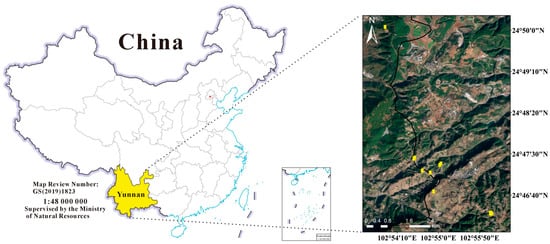
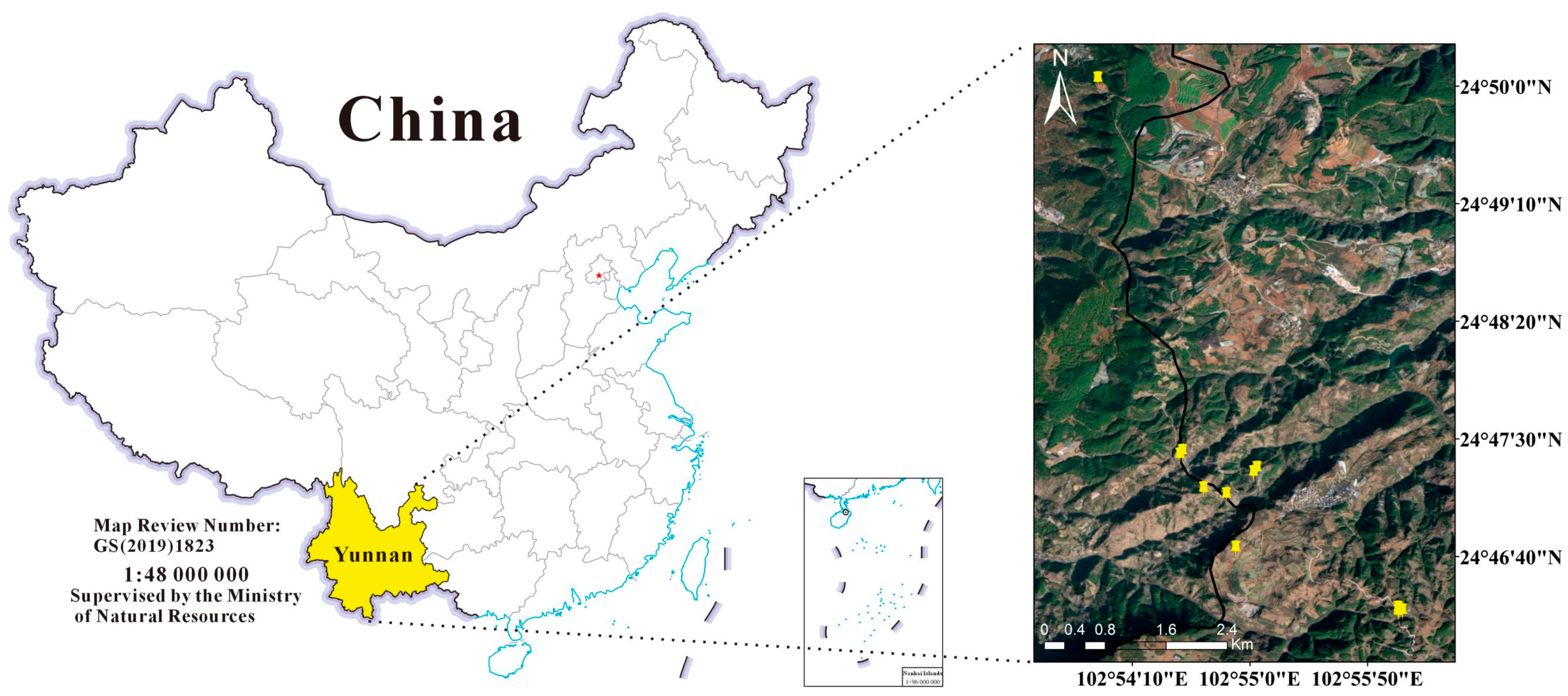
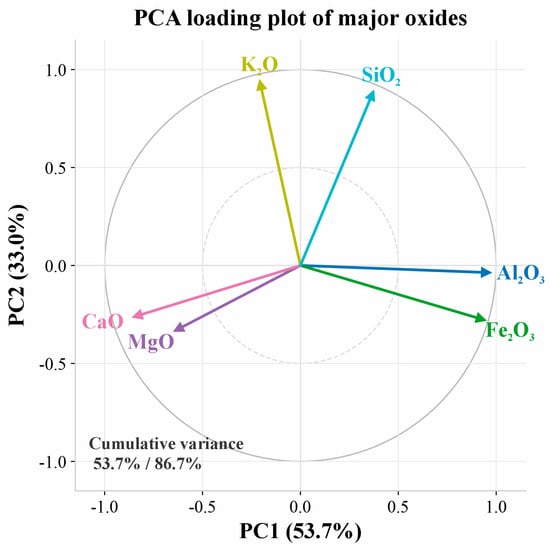
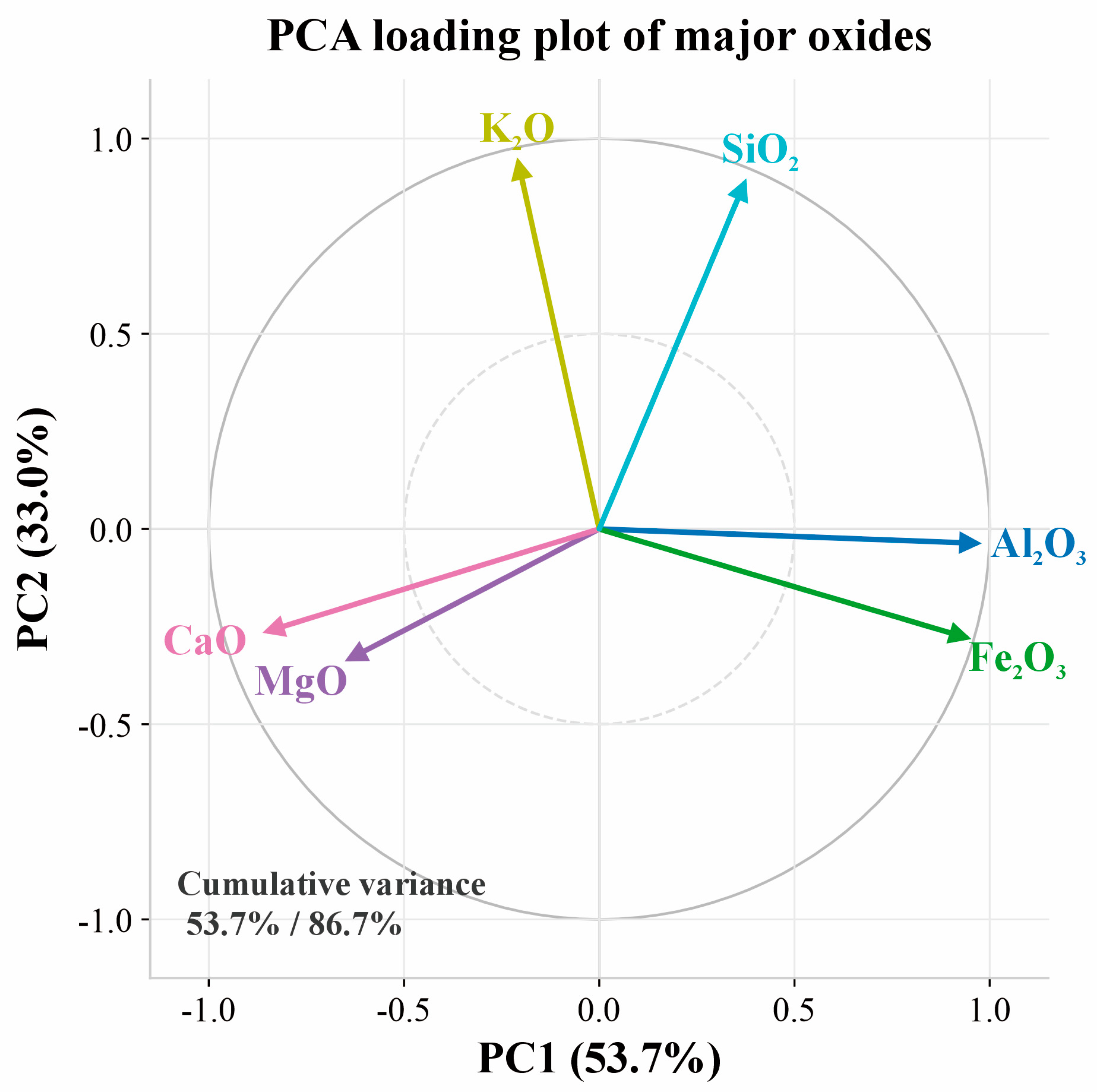
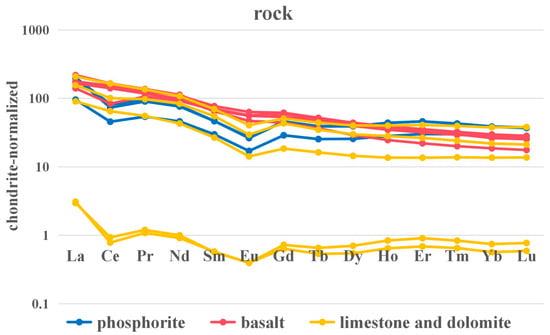
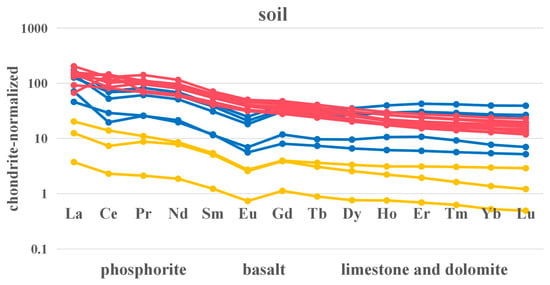
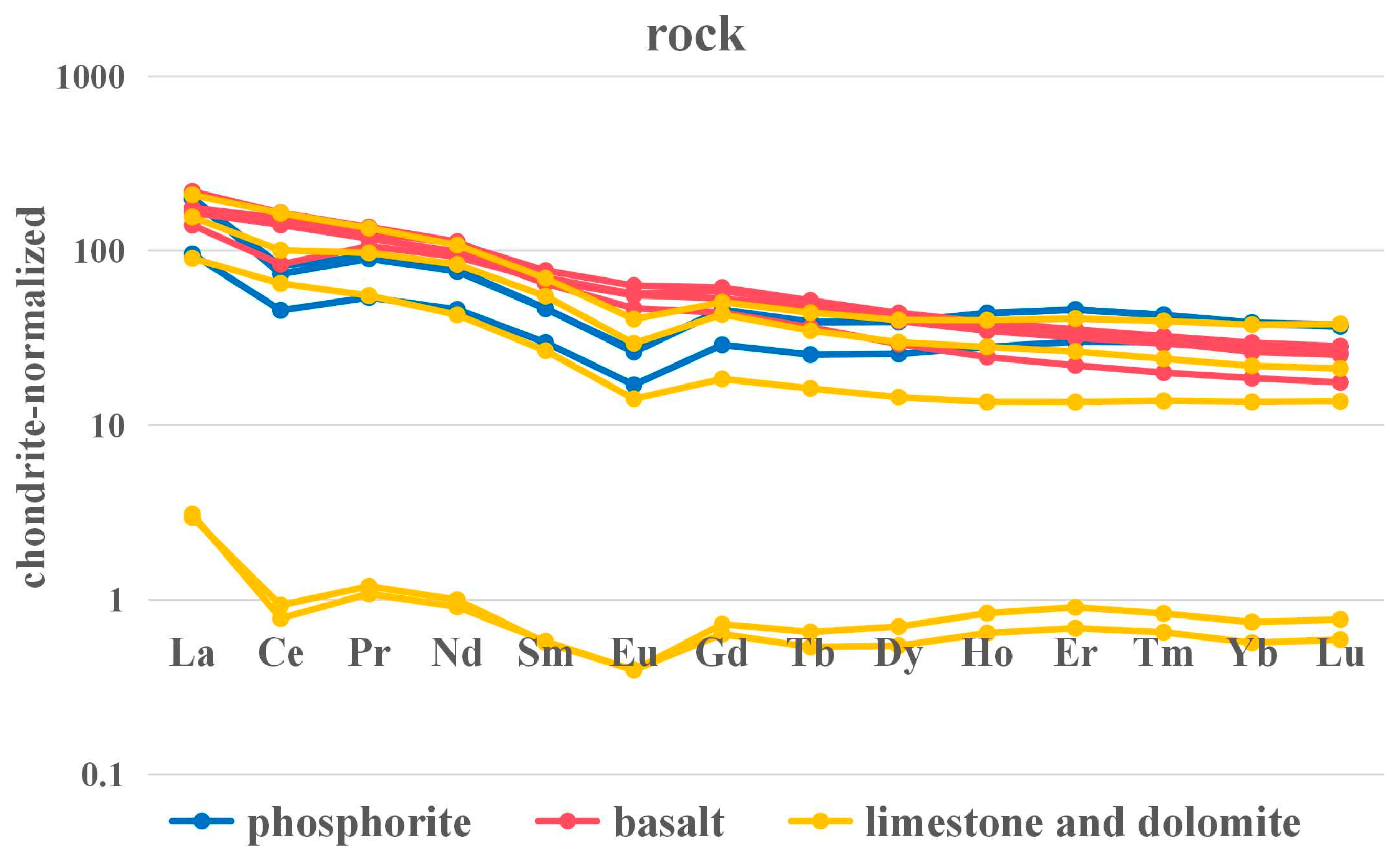
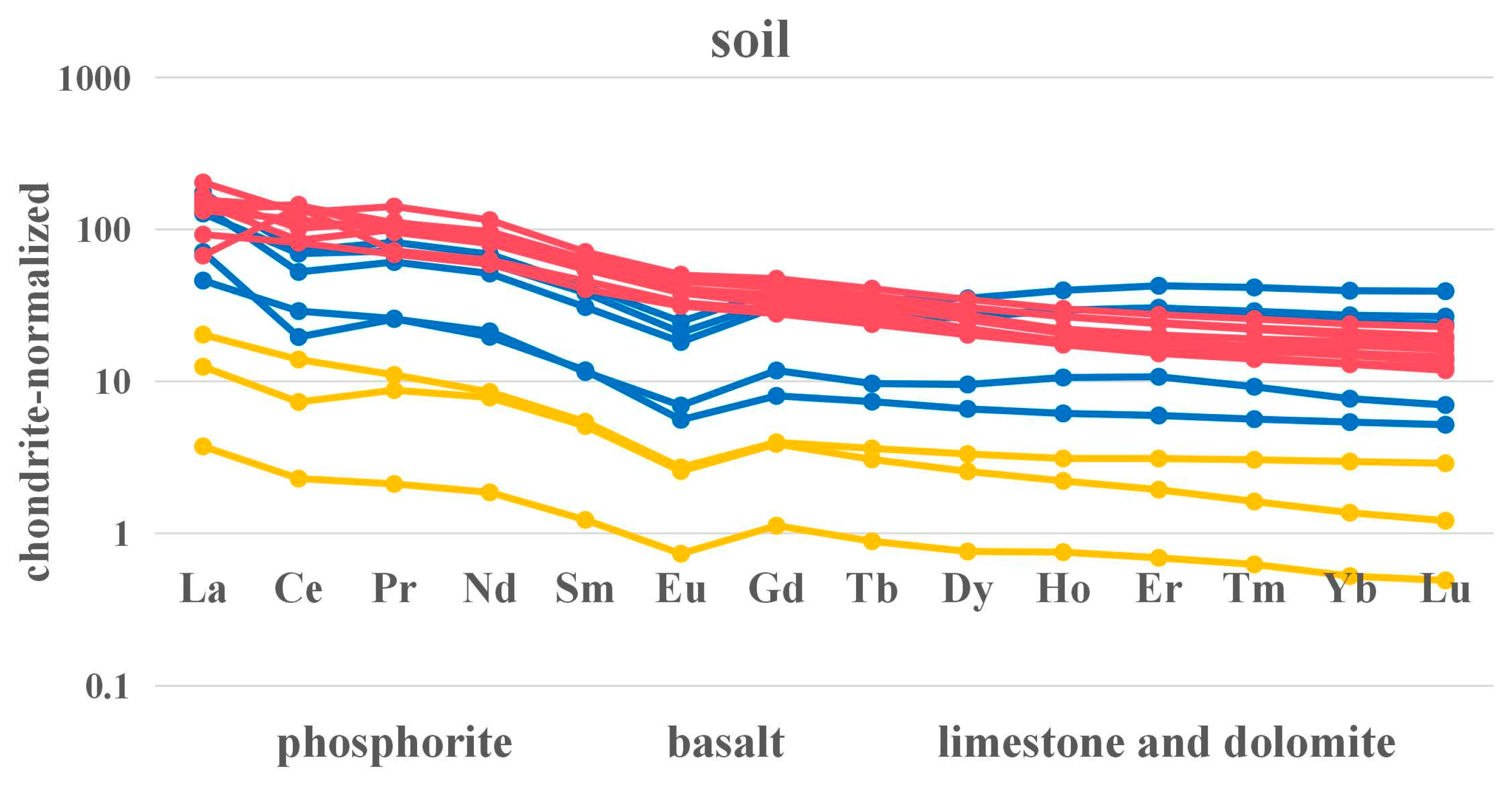
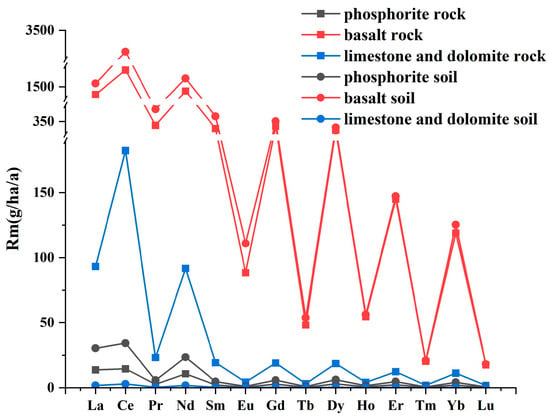
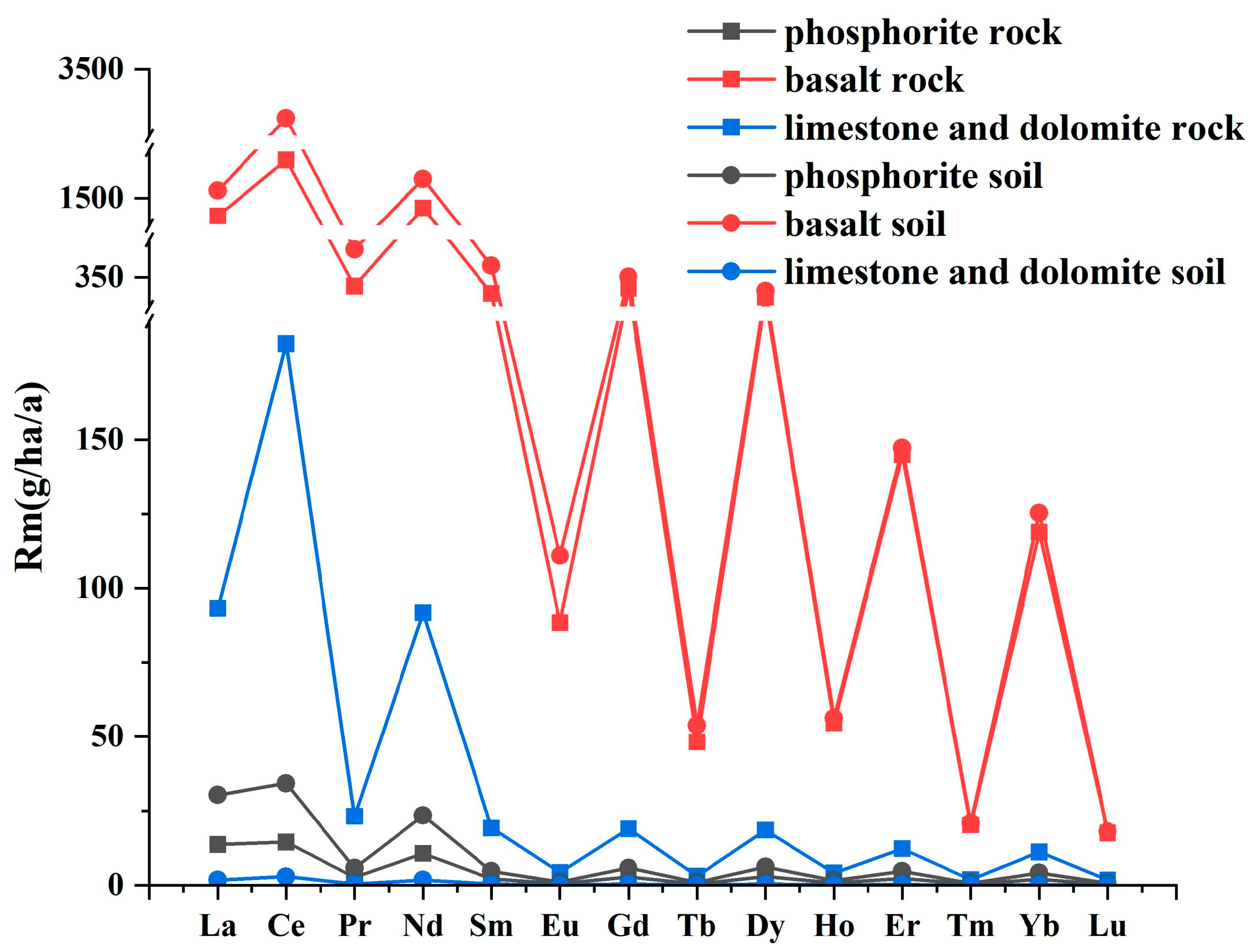
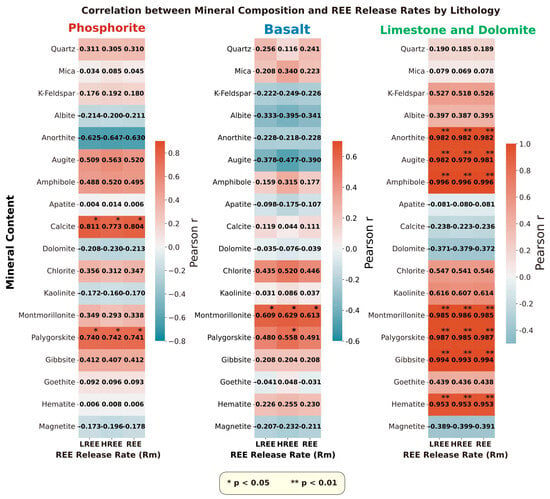
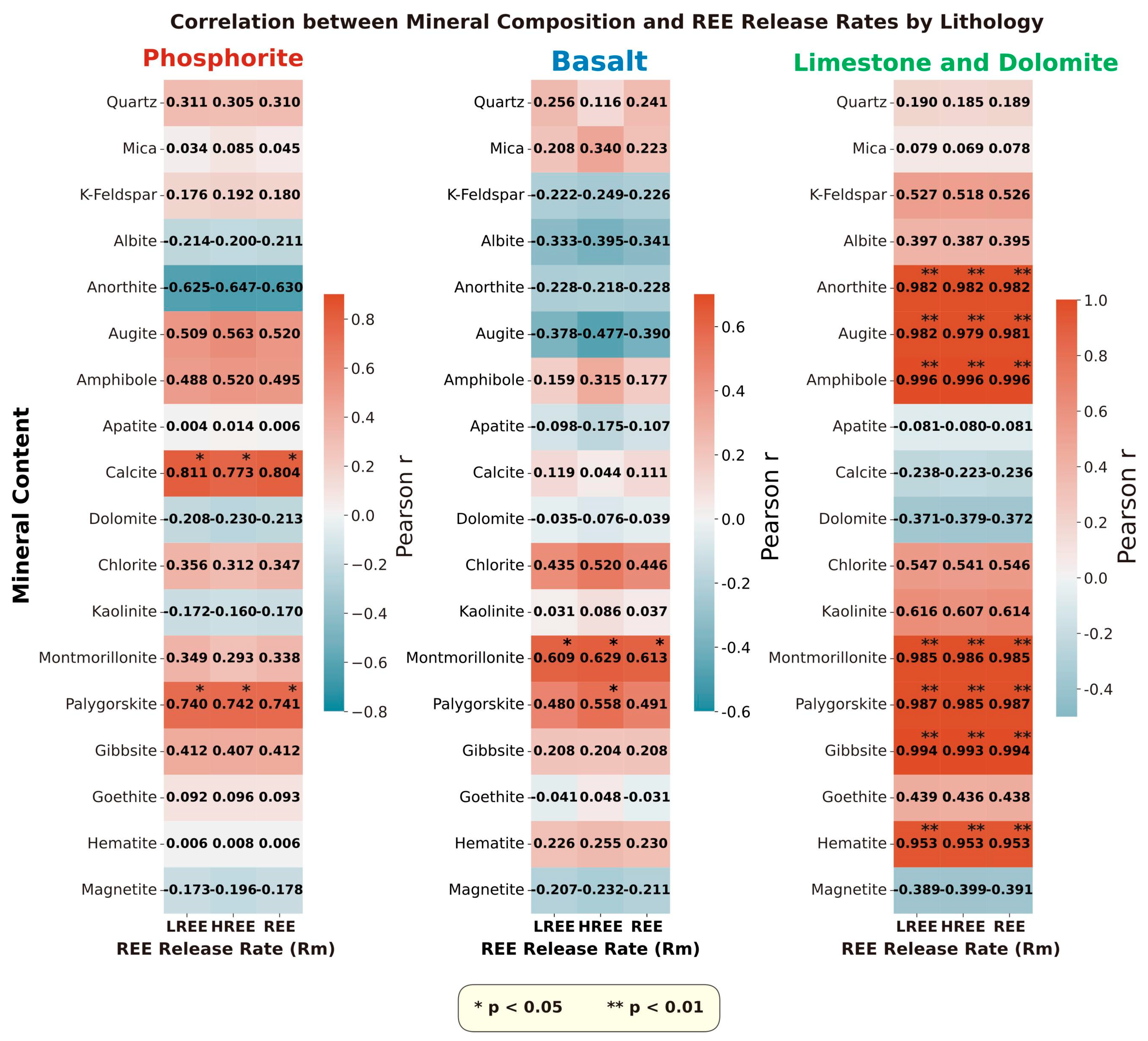
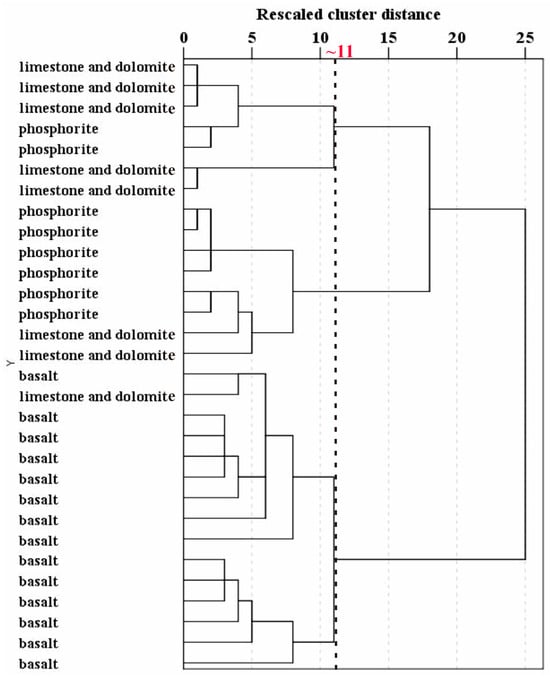
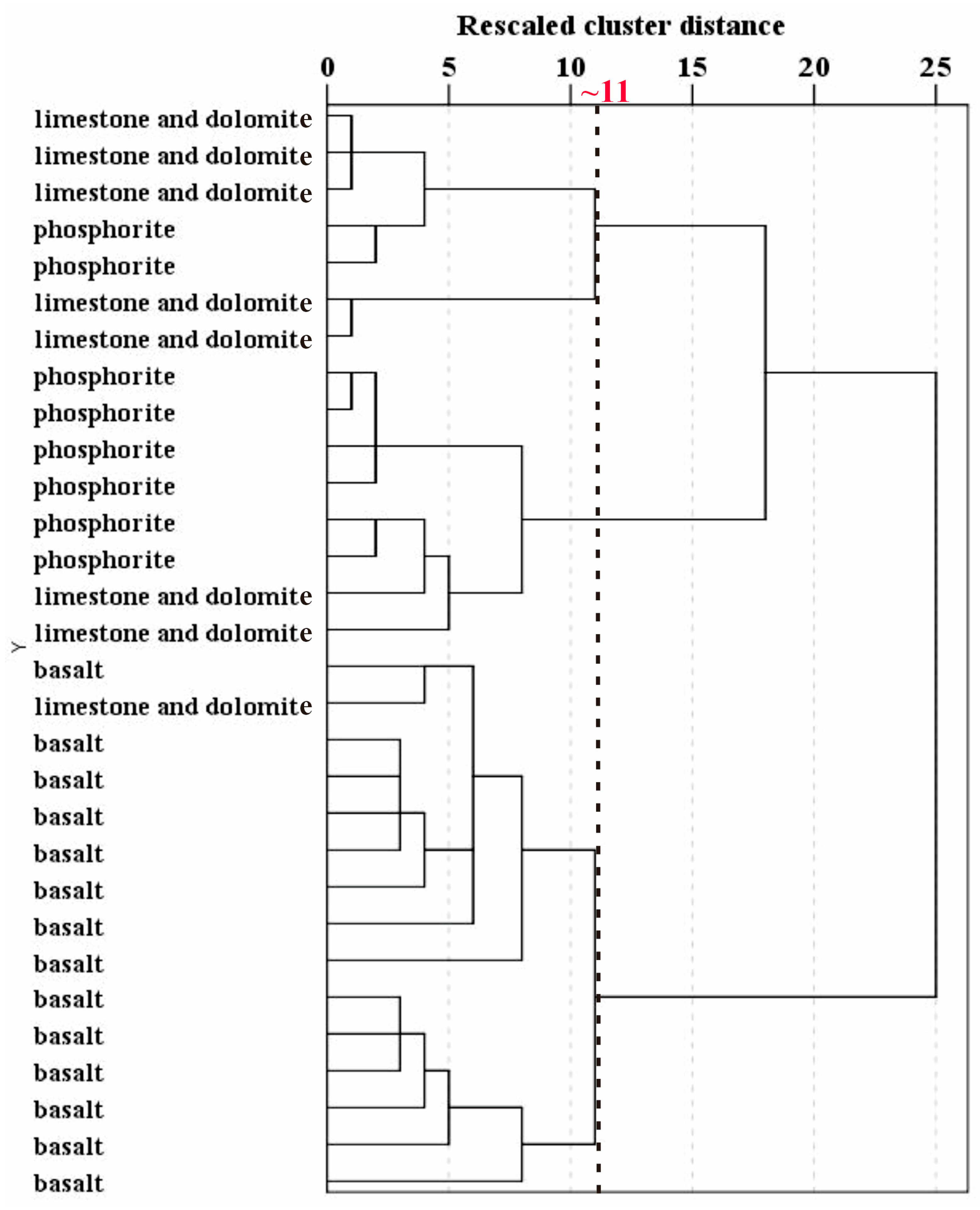
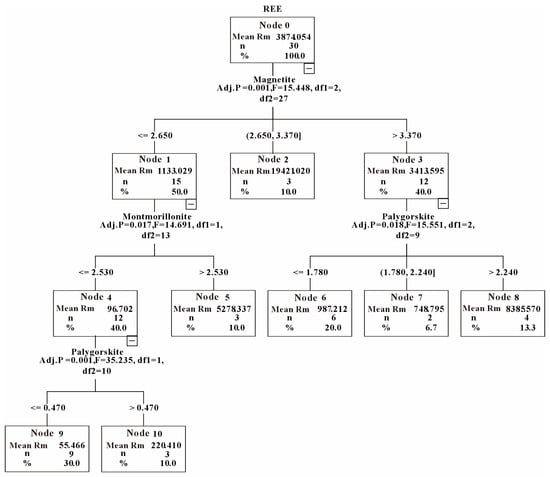
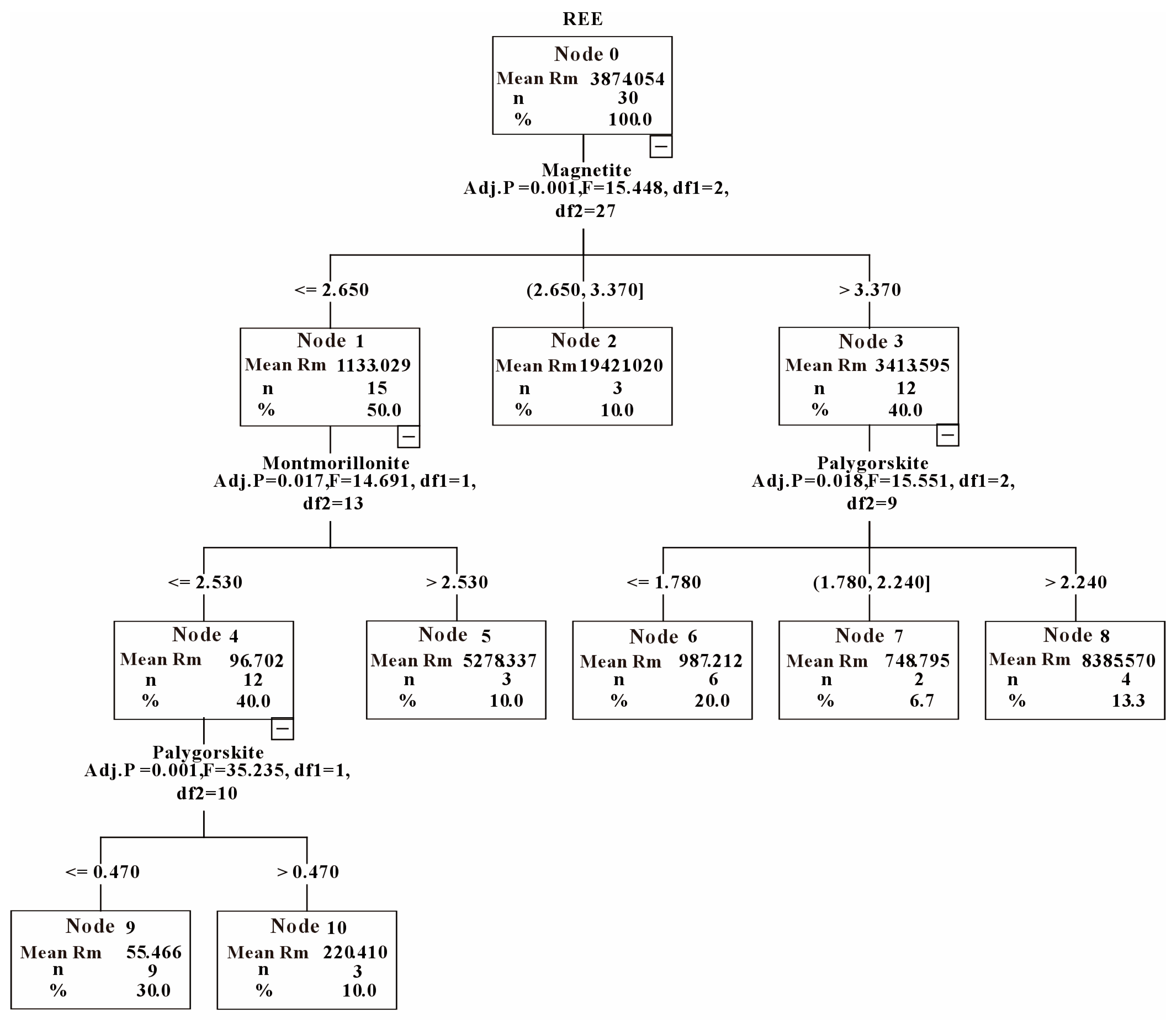
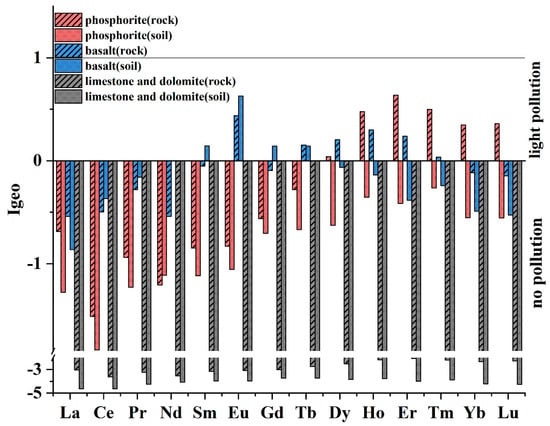
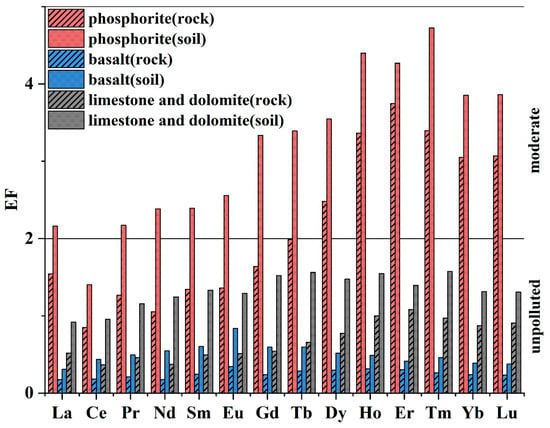
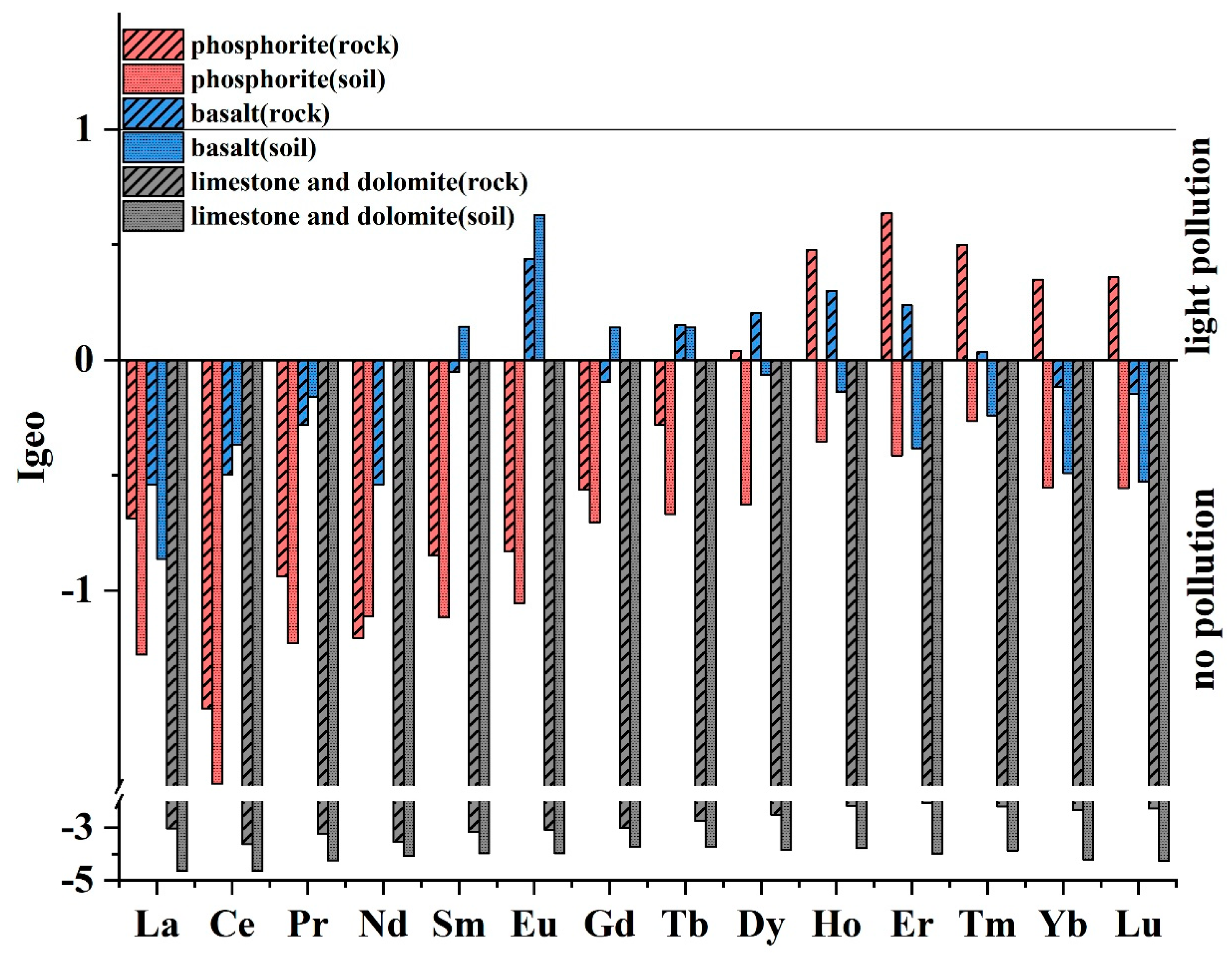
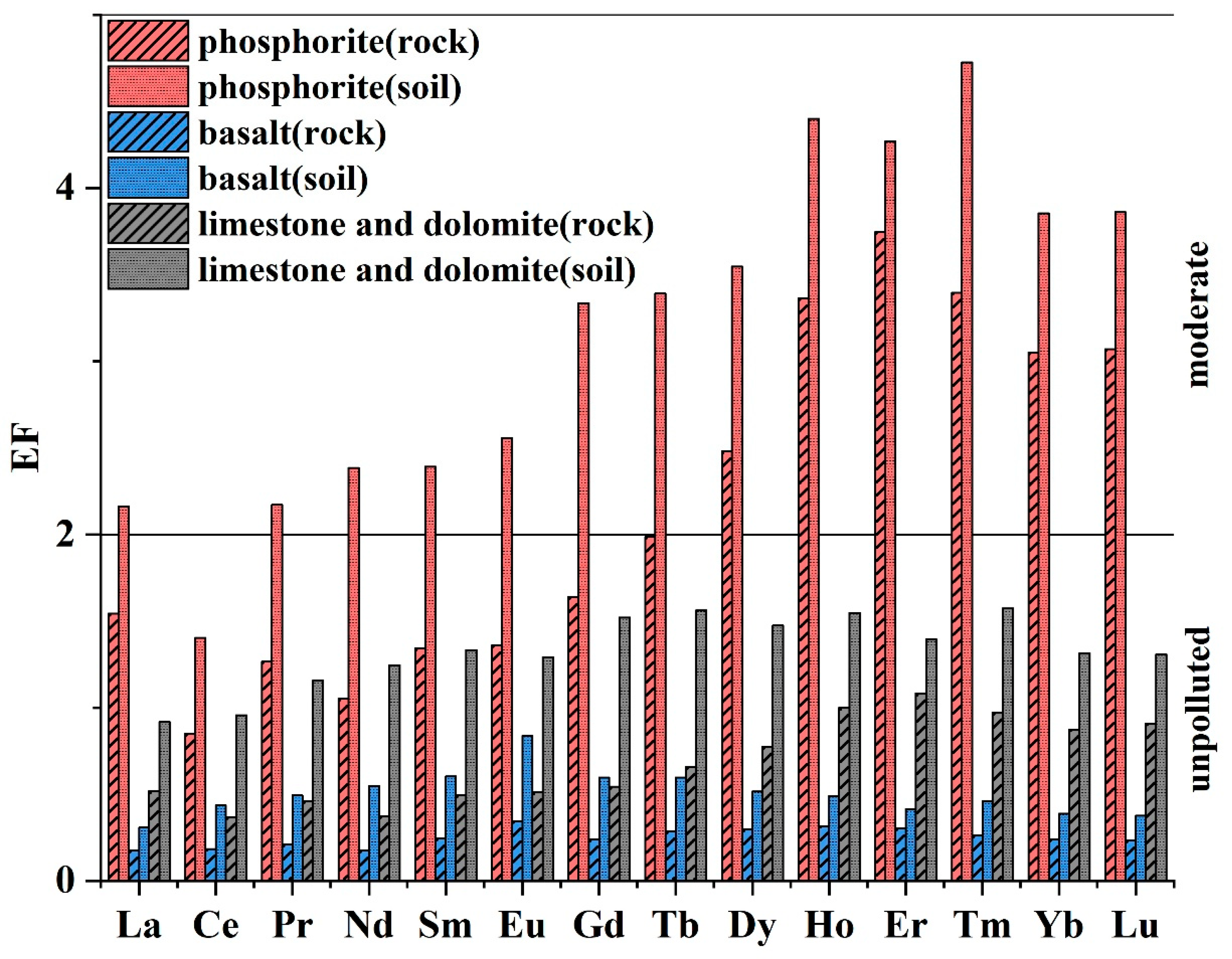

Disclaimer/Publisher’s Note: The statements, opinions and data contained in all publications are solely those of the individual author(s) and contributor(s) and not of MDPI and/or the editor(s). MDPI and/or the editor(s) disclaim responsibility for any injury to people or property resulting from any ideas, methods, instructions or products referred to in the content. |
© 2026 by the authors. Licensee MDPI, Basel, Switzerland. This article is an open access article distributed under the terms and conditions of the Creative Commons Attribution (CC BY) license.