


Abstract
The mechanism of iron enrichment in ferrogabbro remains a controversial subject. This study provides valuable insights derived from the Dashanshu intrusion, located in the Emeishan Large Igneous Province in southwestern China, which features ferrogabbro with a notably high iron content (total Fe2O3 reaching up to 21.6 wt.%). The ferrogabbro samples exhibit distinctive petrographic features, including the early crystallization of plagioclase prior to pyroxenes, amphibole replacing pyroxenes, and magnetite–ilmenite intergrowth filling the interstices between plagioclase and pyroxenes. A quantitative mineral analysis based on micro-X-ray fluorescence element mapping reveals a positive correlation between Fe-Ti oxides and bulk-rock iron contents, suggesting that the formation of ferrogabbro is primarily attributed to the accumulation of Fe-Ti oxides. Petrographic characteristics combined with oxygen fugacity determinations indicate that the primitive magma had a low content of water and was moderately oxidized (ΔFMQ − 0.13 to ΔFMQ + 1.35). These conditions suppress the early crystallization of Fe-Ti oxides, thereby allowing for an enrichment of iron in the residual magma. Following the crystallization of plagioclase and pyroxenes, increased water content—evidenced by amphibole replacing pyroxenes—triggers extensive crystallization of Fe-Ti oxides. Due to their late-stage crystallization, these oxides do not settle within the magma, which possesses a high crystallinity (>50%) and consequently exhibits non-Newtonian fluid behavior. This results in the localized accumulation of Fe-Ti oxides and the formation of a ferrogabbro layer. However, the late-stage crystallization of Fe-Ti oxides also impedes the sinking and flow-sorting processes that are essential for the development of economically valuable Fe-Ti oxide layers. This may account for the lack of an economically valuable Fe-Ti oxide layer within the Dashanshu intrusion.
1. Introduction
Ferrogabbro is defined as a specific type of gabbro that is characterized by an exceptionally high iron content and a relatively low silica content. It can be distinguished from normal gabbro by its higher Fe ratio, which is defined as (Fe2O3 + FeO)/(MgO + Fe2O3 + FeO), with values exceeding 0.75 [1,2]. This category of igneous rocks is typically understood to form through a Fenner trend of primitive magma evolution, which emphasizes that low oxygen fugacity delays the crystallization time of magnetite in the magma, thereby inducing iron enrichment in the residual magma [3,4,5]. In contrast to the widely distributed iron-poor and silica-rich igneous rocks formed by the Bowen evolution trend of basaltic magma [6], iron-rich igneous rocks are rarely found at the surface but hold significant tectonic implications [7]. The Skaergaard intrusion in eastern Greenland has been regarded as a representative example of an intrusion that illustrates the Fenner evolution trend, leading to the formation of ferrogabbro [2,8]. In contrast, the widely accepted Bowen trend has also been advocated for the Skaergaard intrusion, where the formation of ferrogabbro is attributed to magnetite accumulation [9,10]. The variation in V contents from the vertical profile of the Skaergaard intrusion indicates that Fe-Ti oxides crystallized as a later interstitial phase, thereby supporting an extended Fe-enrichment trend during differentiation [5].
The Emeishan Large Igneous Province (ELIP) in southwest China is renowned for its extensive flood basalts, covering an area of at least 250,000 km2, as well as the numerous giant V-Ti magnetite ore deposits found within the layered mafic–ultramafic intrusions [11,12]. The Emeishan basalts consist of two distinct magmatic series: the high-Ti series and the low-Ti series [13,14]. The first series is associated with giant V-Ti magnetite ore deposits such as Panzhihua and Hongge, and the second series is associated with Ni-Cu–platinum group element (PGE) sulfide deposits such as Limahe [15]. Xu et al. (2003) indicated that the tholeiitic basalts spatially associated with V-Ti magnetite ore deposits evolved along a Bowen trend in an oxidized environment, which facilitated the early crystallization of magnetite. In contrast, the tholeiitic basalts located away from the V-Ti magnetite ore deposits underwent Fenner trend evolution, resulting in basalts with total Fe2O3 content reaching up to 23 wt.% [16]. Numerous studies on the genesis of V-Ti magnetite ore deposits in the ELIP have indicated that key factors influencing the enrichment of Fe−Ti oxides in magma include the following: (1) the early crystallization of silicate minerals within deep magma reservoirs, which promotes the enrichment of iron and titanium in the residual ferrogabbroic magma; (2) the crystallization of Fe-Ti oxides near the liquidus of the parent ferrogabbro magma in shallow magma chambers, along with the concentration of Fe−Ti oxides in both lower and middle zones of the chamber through flow sorting [17,18,19,20,21,22,23]. The hypotheses are supported by the presence of abundant Fe−Ti oxide inclusions found in olivine and clinopyroxene from the ore-hosting Panzhihua, Hongge, and Xinjie mafic−ultramafic layered intrusions [17,18,24]. Compared to the large layered mafic–ultramafic intrusions hosting the giant V-Ti magnetite ore deposits, the Ni-Cu-PGE deposits are hosted in small mafic–ultramafic intrusions, of which the magma evolution underwent significant crustal contamination [25,26,27]. Recent research on the magma oxygen fugacity of the ELIP indicates that high-Ti-series magmas exhibit elevated oxygen fugacity, ranging from ΔFMQ + 1.1 to ΔFMQ + 2.6. This condition facilitates the early crystallization of Fe-Ti oxides. In contrast, low-Ti-series magmas demonstrate lower oxygen fugacity values, spanning from ΔFMQ − 0.5 to ΔFMQ + 0.5, which promotes sulfide saturation [28].
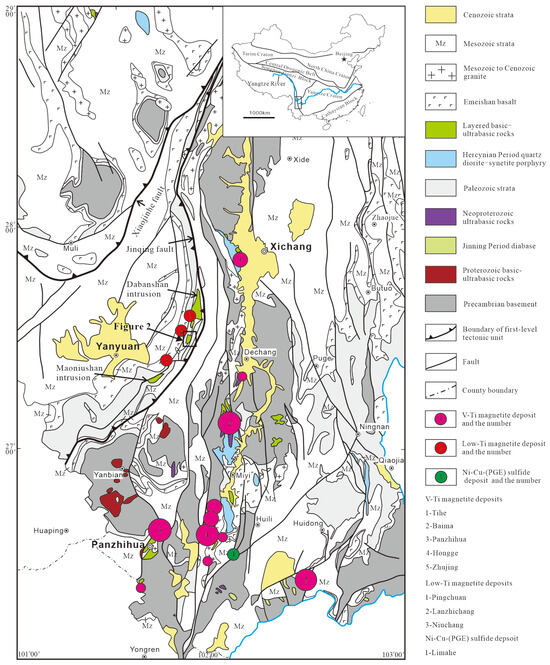
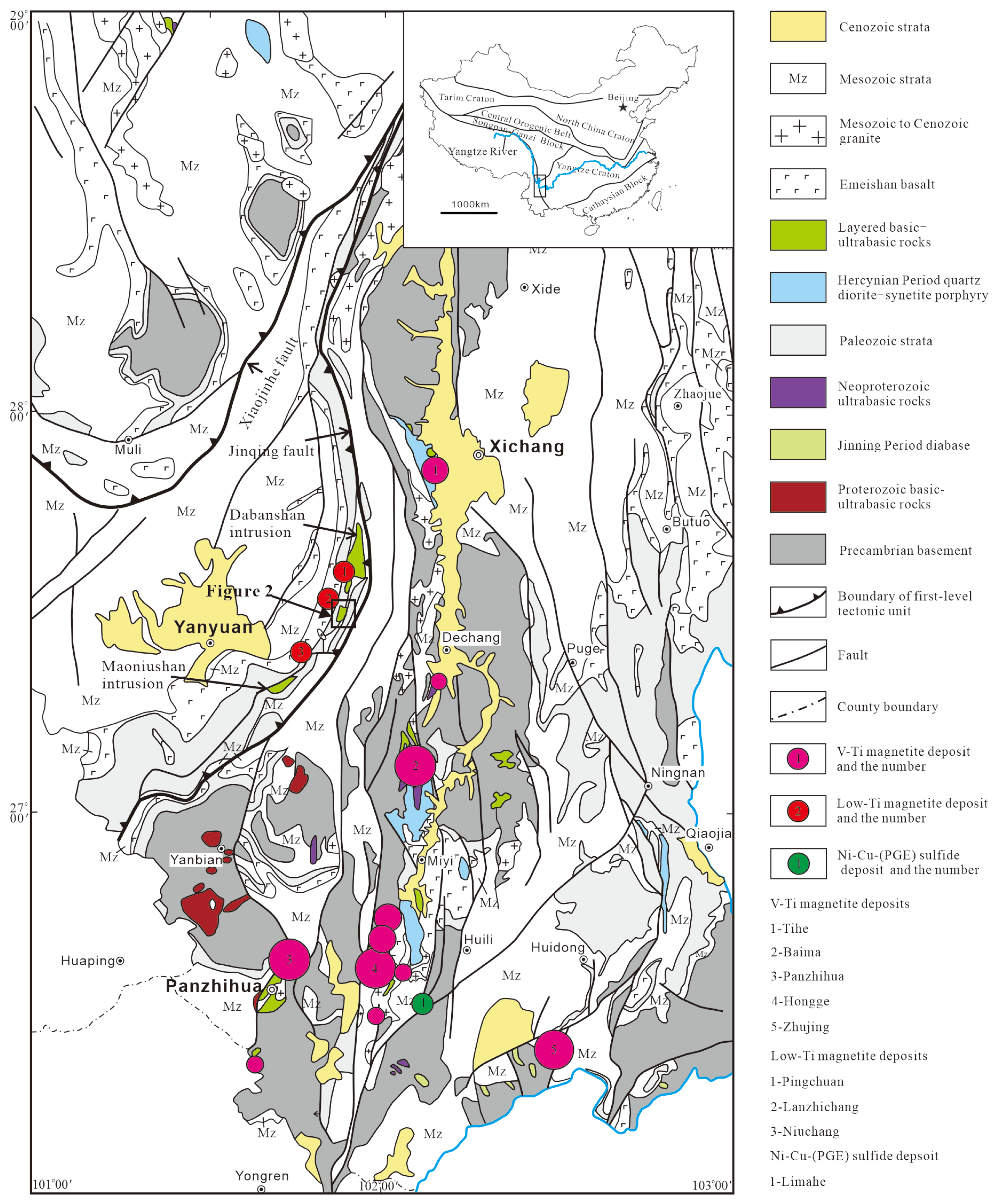
In the Yanyuan region of the ELIP, the basalts and gabbroic intrusions belong to the low-Ti series [29,30]. However, these basalts and intrusions are dominated by iron mineralization, leading to iron deposits, while Ni-Cu-PGE mineralization is not developed. The iron deposits, including Pingchuan, Lanzhichang, and Niuchang, are controlled by volcanic structures and are distinguished by their low titanium content in magnetite [31] (Figure 1). Apart from these economically significant iron deposits, the Yanyuan region also hosts layered intrusions that contain disseminated Fe-Ti oxides, as exemplified by the Dashanshu intrusion [32]. The intrusion exhibits several similarities with the ferrogabbro hosting economically valuable Fe-Ti layers in the ELIP, albeit with lower iron grades falling below cut-off grade thresholds. This raises a question regarding why ferrogabbro layers were formed within low-Ti-series gabbroic intrusions while economically significant Fe-Ti oxide layers remain absent.
Figure 1.
Regional geological map of the central Emeishan Large Igneous Province. Modified from [33].
In this study, we conducted a comprehensive investigation of whole-rock and mineral geochemistry, along with micro-X-ray fluorescence (μXRF) element mapping, on gabbro samples from the Dashanshu intrusion. Our findings suggest that the formation of the ferrogabbro layer occurred through localized accumulation of Fe-Ti oxides in a moderately oxidized environment with increasing water content. The absence of sinking and flow-sorting processes for Fe-Ti oxides probably impeded the development of an economically viable Fe-Ti oxide layer. These findings contribute a better understanding to the genesis of ferrogabbro and associated mineralization.
2. Geological Setting
The Late–Middle Permian (~260 Ma) Emeishan Large Igneous Province consists of massive flood basalts and numerous simultaneous mafic intrusions and is located geographically in southwest China and tectonically at the western margin of the Yangtze Craton and the eastern margin of the Tibetan Plateau [11,34] (Figure 1). The basalts and related intrusions of the ELIP include two series, i.e., the high-Ti series (TiO2 > 2.5 wt.%, Ti/Y > 500) and low-Ti series (TiO2 < 2.5 wt.%, Ti/Y < 500) [13,14]. In the central part (Xichang−Panzhihua region) of the ELIP, numerous layered basic–ultrabasic rocks along with associated V-Ti magnetite and Ni-Cu-PGE sulfide deposits are distributed [11,15,22,25,35].
In the Yanyuan region west to the Xichang−Panzhihua region, the Emeishan basalt and several gabbroic intrusions are distributed along the western margin of the Jingqing fault. The basalts along the Jingqing fault include three lithologic units: the lower unit is characterized by a significant presence of basaltic breccias and agglomerates, the middle unit consists predominantly of amygdaloidal basalts, and the upper unit is primarily composed of compact basalts. From north to south, the three major gabbroic intrusions are named as Dabanshan, Dashanshu, and Maoniushan, respectively. The Dabanshan intrusion is composed of gabbro, gabbronite, and lherzolite. Picrite veins intruded into the ore-controlling faults of the Pingchuan iron deposit are situated at the western contact zone of the Dabanshan intrusion. Between the Dabanshan and Dashanshu intrusions, a submarine volcanogenic iron deposit named Lanzhichang has been identified in the lower unit of the Emeishan basalts. The Maoniushan intrusion is composed of gabbro and is associated with the Niuchang iron deposit (Figure 1).
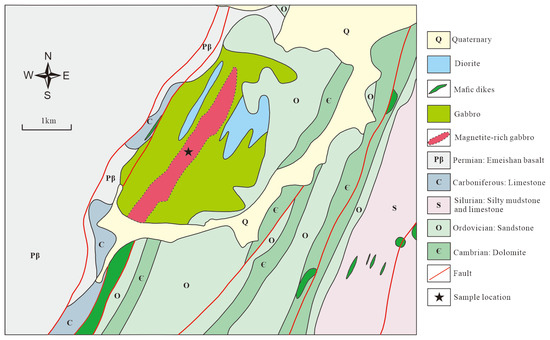
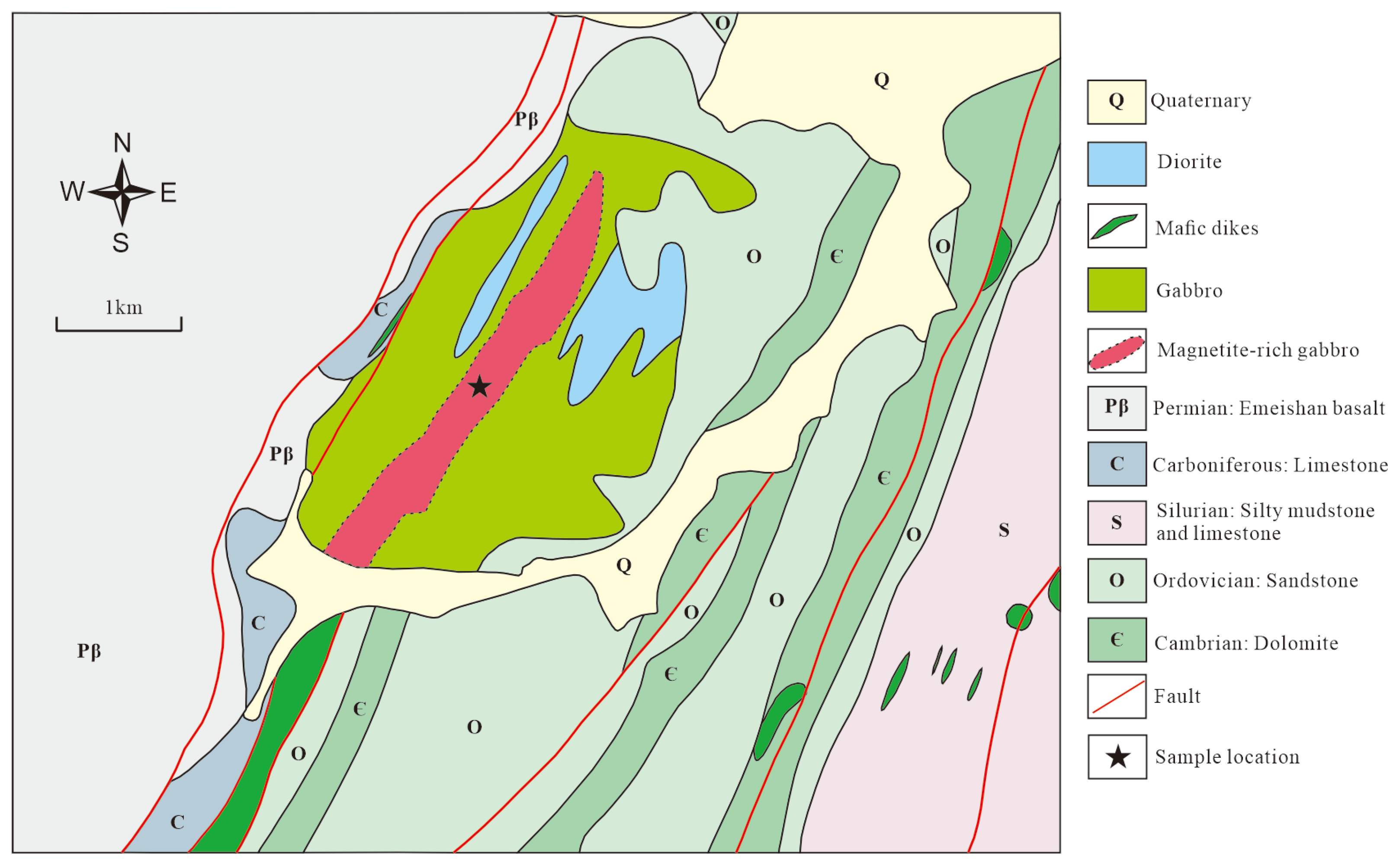
The Dashanshu intrusion is a layered gabbroic intrusion that strikes northeast and dips northwest at angles between 45° and 80°. It is located along the northeast-trending fault and has intruded into Carboniferous limestone to the west and Ordovician sandstone to the east (Figure 2). The intrusion comprises medium- to fine-grained gabbro, with diorite intruding into the gabbro. The ferrogabbro, located centrally within the intrusion, extends 2000 m in length and varies in width from 200 to 360 m, with a dip of 45° to 70° towards the northwest. The total iron content (expressed as Fe2O3) in the ferrogabbro ranges from 15 wt.% to 23 wt.%. Due to the abundance of magnetite, which can be easily separated, the ferrogabbro is considered a low-grade iron ore body. Moving from the middle to the lower sections of the ferrogabbro, there is a noticeable increase in amphibole content, marking a gradual transition from ferrogabbro to iron-bearing amphibole gabbro.
Figure 2.
Sketch map of Dashanshu gabbroic intrusion.
3. Samples and Analytical Methods
Eight gabbro samples with varying magnetite contents were collected from depths of 50 to 255 m in drillcore ZK3002. All samples were prepared for thin-section analysis and subjected to whole-rock analysis for major element composition. Thin sections were examined under a polarizing microscope, and representative pairs of magnetite–ilmenite, augite–hypersthene, and amphibole minerals were selected for electron probe microanalyzer (EPMA) analysis. Sample DSS-5 was selected for zircon separation and LA-ICP-MS U-Pb dating. With the exception of sample DSS-11, micro-X-ray fluorescence (μXRF) mapping was conducted on the thin sections of the remaining seven samples.
The major element compositions of the whole-rock samples were analyzed using X-ray fluorescence spectroscopy (XRF) at ALS Chemex in Guangzhou, China, following the P61-XRF26s method. The FeO content was determined using a titrimetric method (Fe-VOL05). The Fe2O3 content was calculated by subtracting FeO from the total Fe2O3. The relative standard deviations (RSDs) for the major elements were within ±1%–2%.
Mineral compositions were analyzed with a JEOL JXA-8230 Electron Probe Microanalyzer, equipped with five wavelength-dispersive spectrometers (WDS), at the Laboratory of Microscopy and Microanalysis, Wuhan Microbeam Analysis Technology Co., Ltd. (Wuhan, China). Quantitative WDS analyses were performed under operating conditions of 15 kV accelerating voltage, a 20 nA beam current, and a 1 µm spot size. The peak counting time was 10 s for Mn, Cr, Ti, Ca, K, Na, Mg, Al, Si, Fe, and V. The background counting time was 1/2 of the peak counting time on the high- and low-energy background positions. The following standards were used: chromium oxide (Cr), rutile (Ti), microcline (K), jadeite (Na), diopside (Mg, Ca), pyrope (Al), olivine (Si), hematite (Fe), rhodonite (Mn), and vanadium (V). The peak overlap of Ti Kβ on V Kα and V Kβ on Cr Kα was corrected. Data were corrected on-line using a modified ZAF (atomic number, absorption, and fluorescence) correction procedure.
The U-Pb dating and trace element analysis of zircons were conducted simultaneously using LA-ICP-MS at the Wuhan Sample Solution Analytical Technology Company. Selected zircons were embedded in epoxy resin and polished. The samples were then photographed under transmitted and reflected light, and cathodoluminescence (CL) images were obtained using an Analytical Scanning Electron Microscope (JSM IT100) connected to a GATAN MINICL system. These images allowed for the examination of internal zircon structures and the selection of suitable spots for U-Pb analyses. Laser ablation was performed using a GeolasPro system, equipped with a COMPexPro 102 ArF excimer laser (193 nm wavelength, 200 mJ maximum energy output) and a MicroLas optical system. Ion signal intensities were measured using an Agilent 7700e ICP-MS instrument. For U-Pb dating and trace element calibration, the 91,500 zircon standard and NIST610 glass were used as reference materials. The Excel-based ICPMSDataCal 12.2 software facilitated the off-line selection and integration of background and analyzed signals, while also applying time-drift corrections and quantitative calibrations for both trace elements and U-Pb data [36]. Concordia diagrams and weighted mean calculations were generated using Isoplot/Ex_ver3.75 software [37].
A rapid and nondestructive geochemical characterization of rocks was performed using the Bruker Tornado μXRF at the China University of Geosciences, Wuhan, China. This instrument is equipped with a 30 W Rh anode metal–ceramic X-ray tube, two 30 mm2 silicon drift detectors (SDDs), and a polycapillary optic that focuses the X-ray beam to approximately 17 μm in diameter. The scanning μXRF experiments were conducted with an X-ray tube energy of 50 kV and a current of 600 μA. A step size (pixel size) of 20 μm was used, with a dwell time of 5 ms per pixel. The Advanced Mineral Identification and Characterization System (AMICS) was utilized to precisely identify mineral species and determine their area-based and weight-based percentages.
4. Results
4.1. Petrography
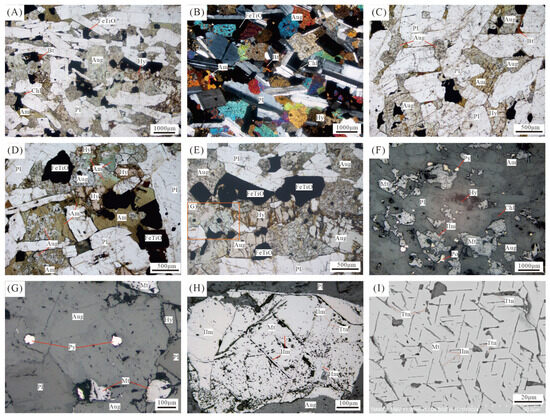
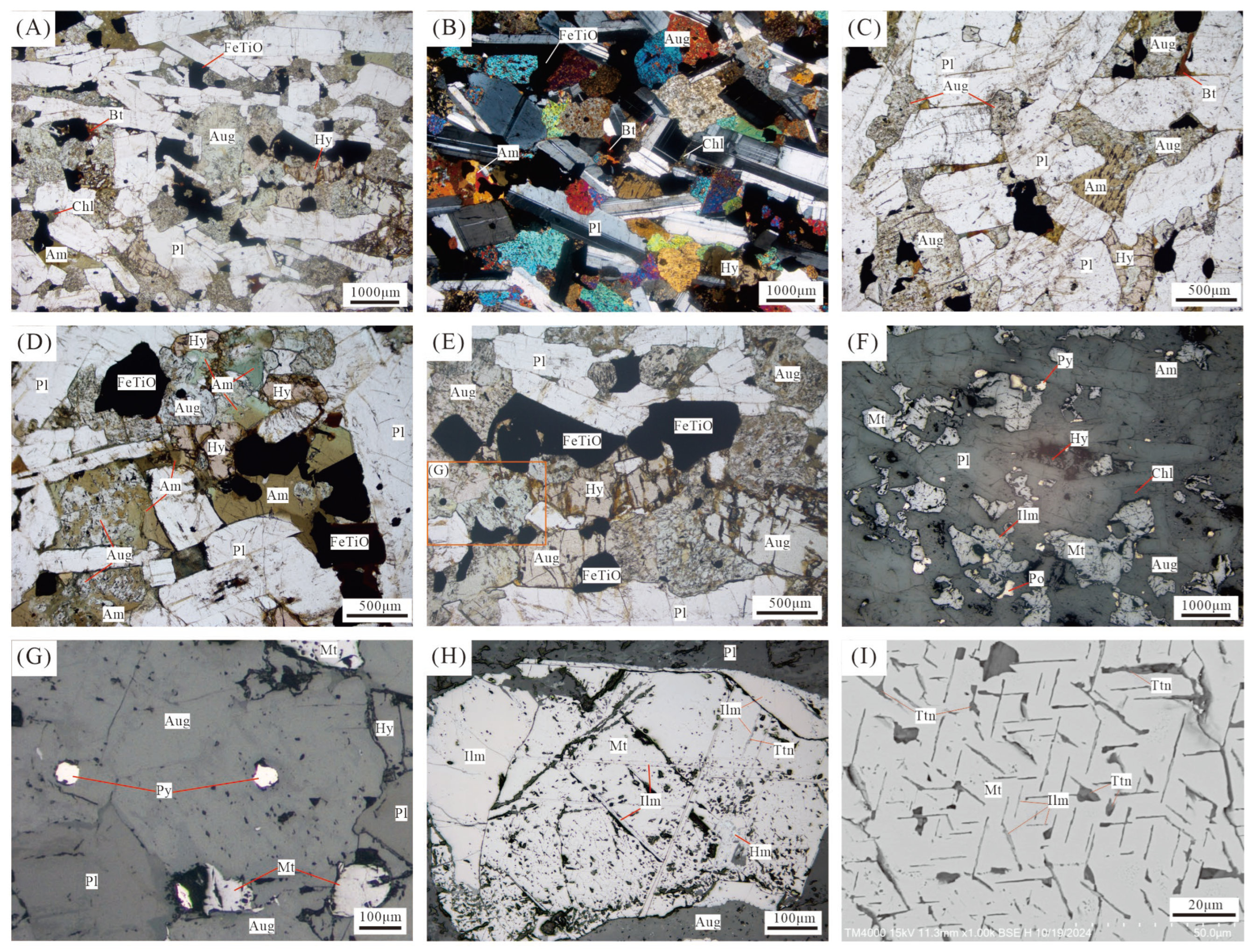
The Dashanshu ferrogabbro exhibits a transitional texture from gabbro to ophitic, characterized by subhedral to anhedral augite and hypersthene filling the interstices of euhedral plagioclase crystals (Figure 3A–C). Amphibole formed after the crystallization of plagioclase and pyroxenes, frequently replacing augite and hypersthene (Figure 3D). Subhedral to anhedral Fe-Ti oxides are commonly observed within the interstices of plagioclase, augite, and hypersthene, particularly in samples with higher total Fe2O3 content (Figure 3E–F). Small pyrite inclusions are found in the augite (Figure 3G). The magnetite–ilmenite intergrowths are widespread, with ilmenite occurring as lamellae or isometric crystals associated with magnetite (Figure 3H). The ilmenite lamellae within the magnetite exhibit a trellis-type texture, with large lamellae with widths ranging from 3 to 12 μm (Figure 3H) and thin lamellae measuring between 1 and 3 μm in width (Figure 3I). The coarse ilmenite is devoid of exsolution minerals. Titanite is observed at the edge of the ilmenite lamellae (Figure 3I). Accessory minerals include minor amounts of apatite, zircon, pyrrhotite, chalcopyrite, and sphalerite. In samples exhibiting alteration, chlorite commonly replaced pyroxenes.
Figure 3.
Petrographic images of Dashanshu gabbroic intrusion: (A–C) gabbroophitic texture and mineral composition of the Dashanshu intrusion; (D) amphiboles replacing augite and hypersthene; (E,F) abundant subhedral to anhedral Fe-Ti oxides distributed in the interstice of plagioclase, augite, and hypersthene; (G) pyrite inclusions in augite; (H) ilmenite occurring as lamellae and grained phase; (I) trellis-type texture of fine-grained ilmenite. Abbreviations: Pl, plagioclase; Aug, augite; Hy, hypersthene; Bt, biotite; FeTiO, Fe-Ti oxides; Am, amphibole; Chl, chlorite; Mt, magnetite; Ilm, ilmenite; Py, pyrite; Po, pyrrhotite; Ttn, titanite; Hm, hematite. Images (A,C,D,F) were taken under plane-polarized light. Image (B) was taken under cross-polarized light. Images (E,G,H) were taken under reflected light. Image (I) was taken under a scanning electron microscope.
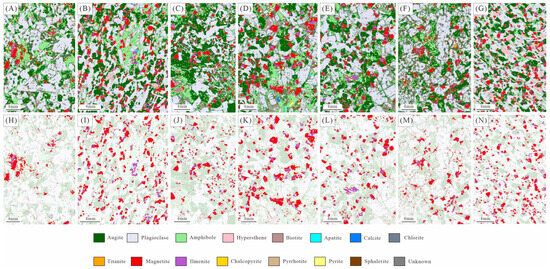
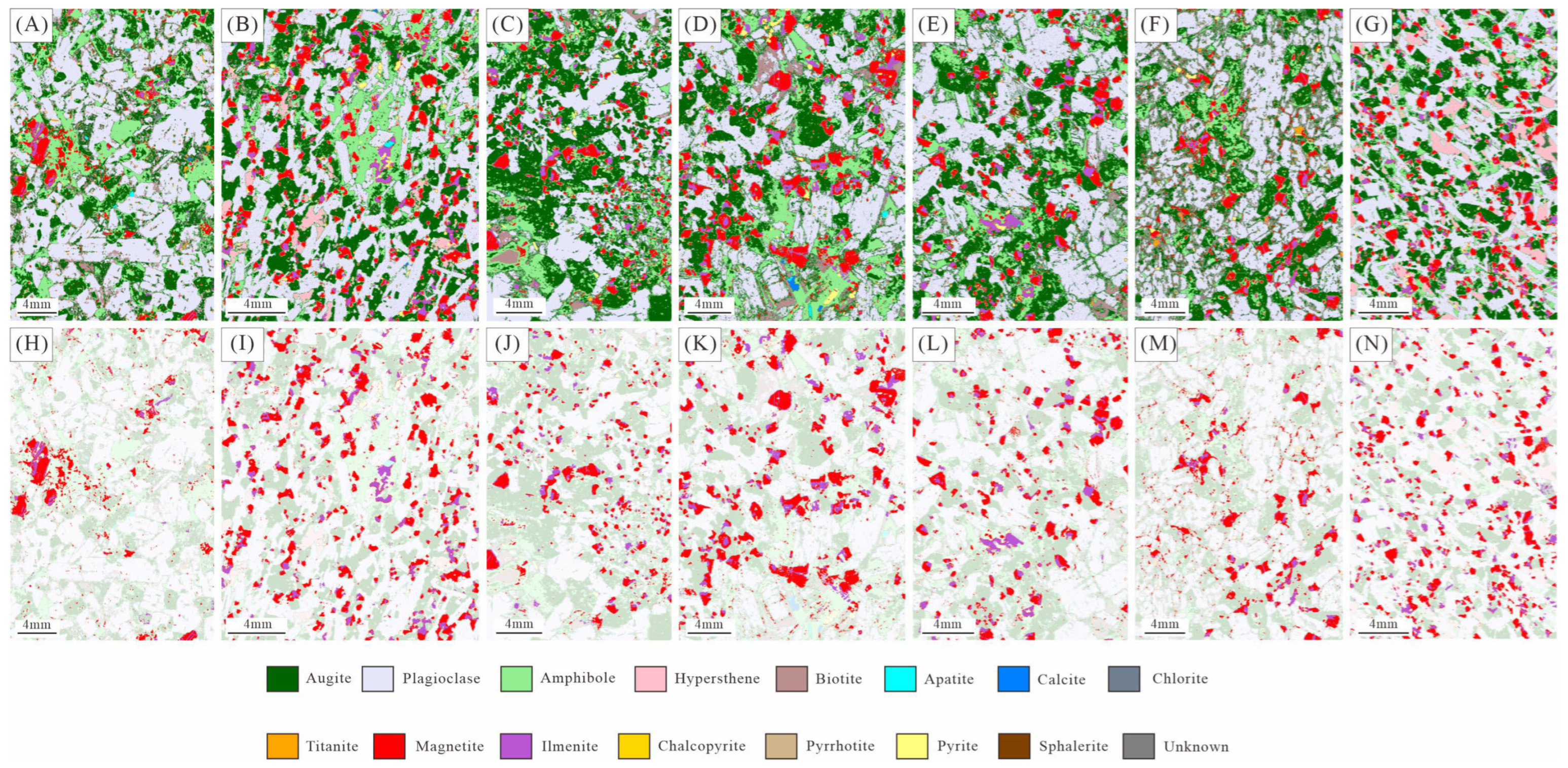
The mineral composition revealed by μXRF element mapping provides precise insights into the mineral species and their contents in the Dashanshu gabbro (Figure 4, Table 1). Utilizing area percentage to represent volume fraction, the plagioclase content ranges from 31.82 vol.% to 45.41 vol.%, while the augite content varies between 23.13 vol.% and 36.39 vol.%. Hypersthene is found only in the least altered samples, DSS-6 and DSS-21, which exhibit minimal chlorite contents of 0.00% and 0.23%, respectively. The contents of amphibole, magnetite, and ilmenite range from 10.09 vol.% to 16.96 vol.%, 4.49 vol.% to 10.43 vol.%, and 0.92 vol.% to 3.56 vol.%, respectively. Additionally, there are several ‘unknown’ minerals, accounting for 2.13 vol.% to 5.13 vol.%, which represent those minerals that could not be identified through element mapping using the AMICS software.
Figure 4.
Mineral composition of Dashanshu gabbro as revealed by micro-X-ray fluorescence (μXRF) element mapping: (A–G) display all the minerals present in the gabbro, while (H–N) illustrate the enhanced distributions of magnetite and ilmenite.
Table 1.
Mineral contents revealed by micro-X-ray fluorescence (μXRF) element mapping.
4.2. Bulk-Rock Major Elements
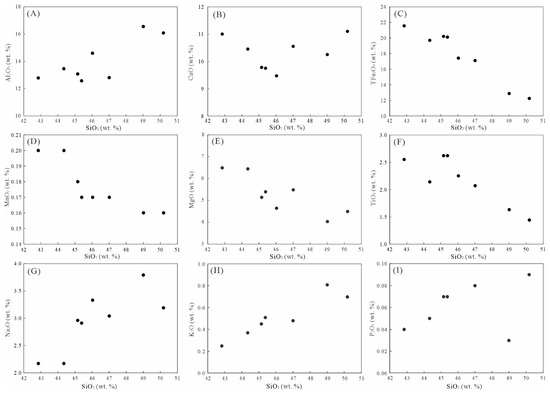
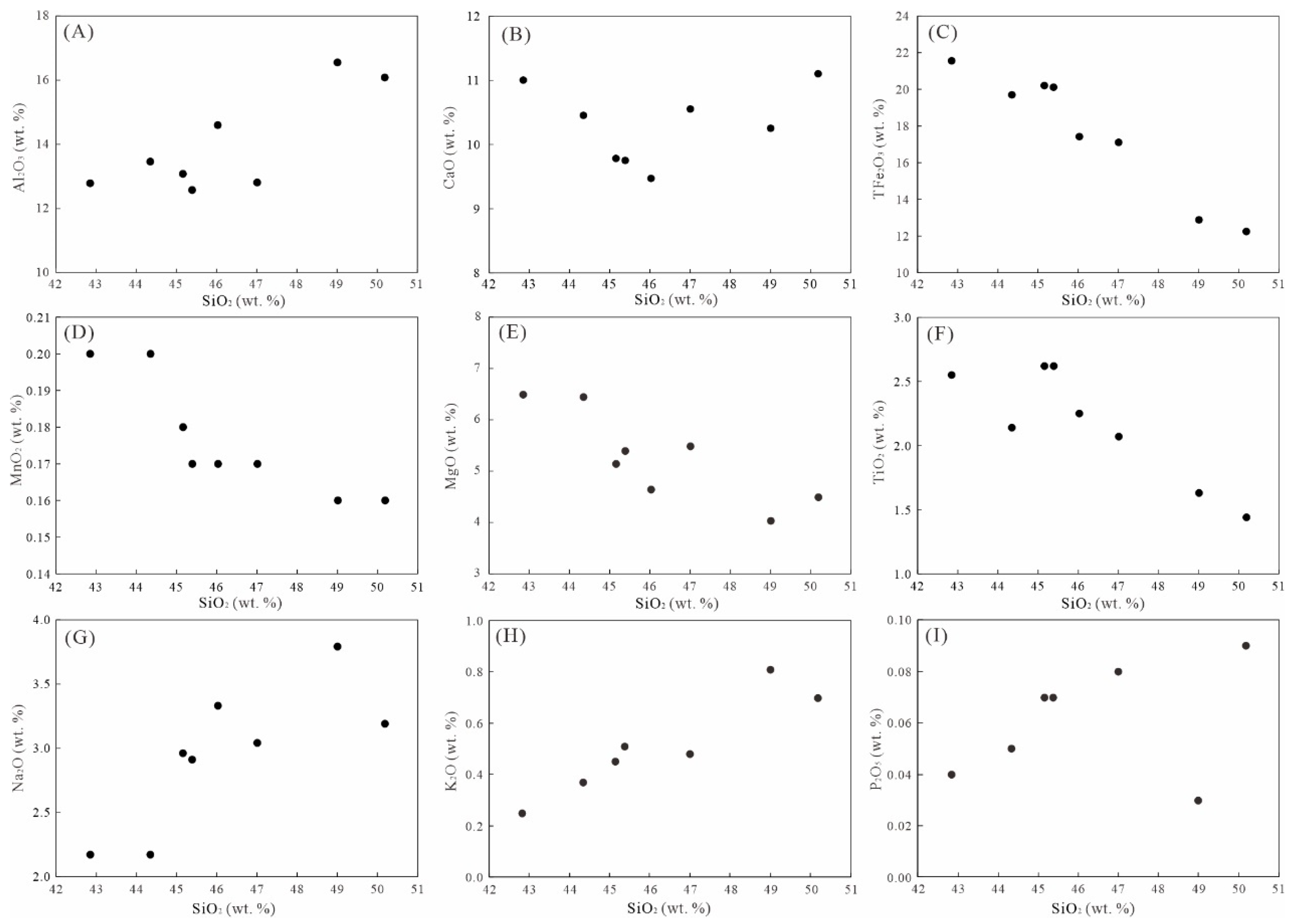
The results of bulk-rock major element analyses for the Dashanshu gabbro are presented in Table 2. The eight samples exhibit low loss-on-ignition (LOI) values ranging from ‒0.05 wt.% to 1.46 wt.%, indicating minimal alteration effects. These samples display variable content ranges for SiO2 (42.85–50.19 wt.%), Al2O3 (12.58–16.55 wt.%), Fe2O3 (4.40–9.49 wt.%), FeO (7.06–10.85 wt.%), MgO (4.03–6.49 wt.%), and CaO (9.47–11.10 wt.%). The total iron content represented by Fe2O3 (denoted as TFe2O3) ranges from 12.24 wt.% to 21.55 wt.%. The Fe ratios of samples range from 0.72 to 0.79, with samples DSS-5 and DSS-21 lower than 0.75, while the other six samples are equal to or greater than 0.75. In the Harker diagrams, significant linear correlations between SiO2 and other oxides are observed (Figure 5). Positive linear correlations are observed for oxides of Al2O3, Na2O, K2O, and P2O5, while negative linear correlations are noted for oxides of TFe2O3, MnO, MgO, and TiO2.
Table 2.
Major element contents (wt.%) of the Dashanshu gabbro.
Figure 5.
Harker diagrams for the Dashanshu gabbro (A–I).
4.3. Zircon U–Pb Dating
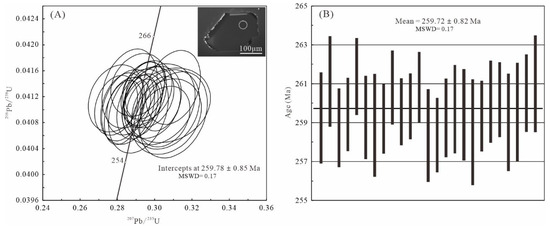
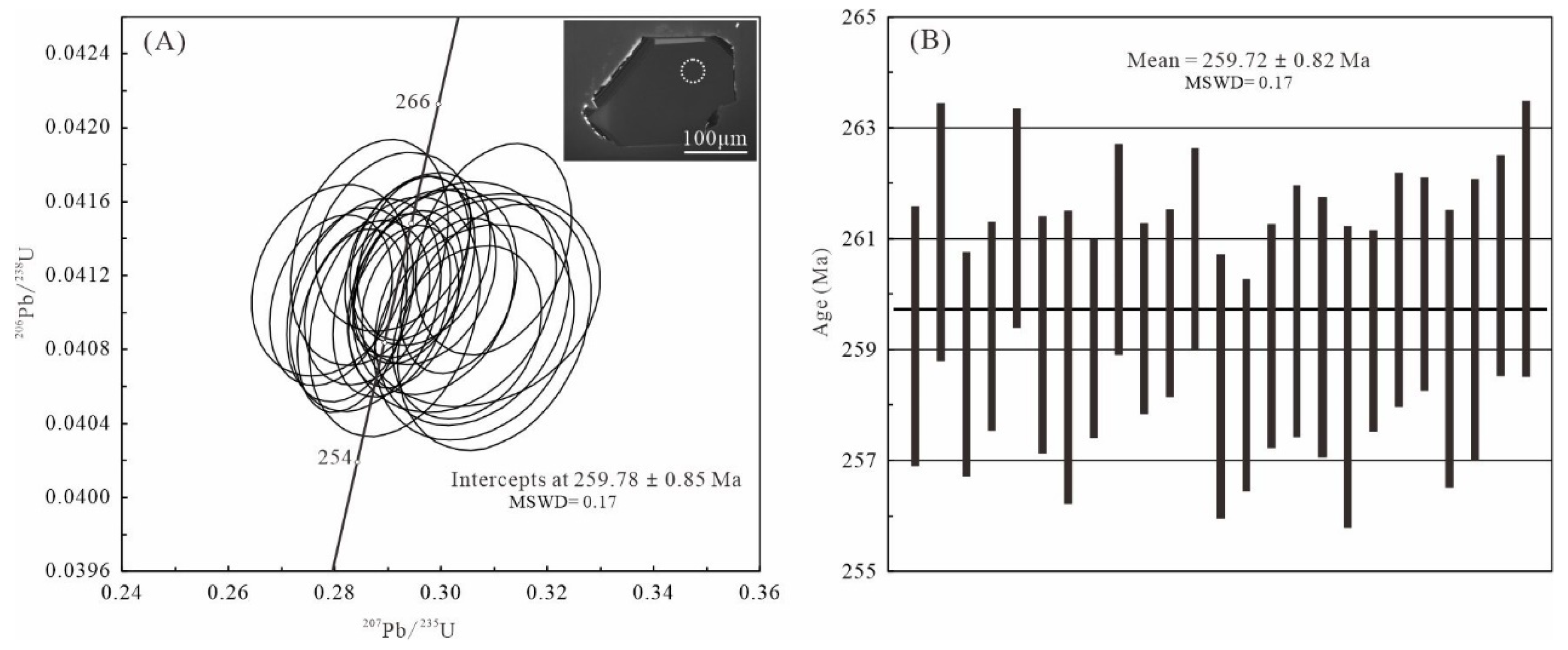
The twenty-five analyzed zircon grains exhibit a subhedral morphology, with sizes ranging from 70 to 200 μm, and display concentrated age distributions (Table 3). The Th/U ratios of the analyzed zircons vary between 0.89 and 1.79, indicating a magmatic origin. In the concordia diagrams, these grains are clustered closely around the concordia curve, yielding an intercept age of 259.78 ± 0.85 Ma (MSWD = 0.17) (Figure 6A). The calculated weighted average age based on the 206Pb/238U ratios is 259.72 ± 0.82 Ma (MSWD = 0.17) (Figure 6B). These two ages are highly consistent, and both correspond to the age of the basalts and basic intrusions associated with the ELIP (~260 Ma; [33]). Consequently, these two ages represent the formation age of the Dashanshu gabbroic intrusion.
Table 3.
Results of in situ U–Pb LA–ICP–MS zircon analyses of the Dashanshu gabbro.
Figure 6.
(A) Zircon U–Pb concordia diagrams with represented zircon CL image and (B) weighted average 206Pb/238U age plots of the Dashanshu gabbro. The dashed circle in the zircon CL image denotes the position of the U–Pb age and trace element analysis.
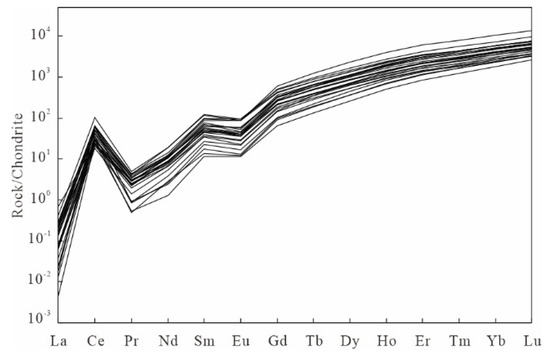
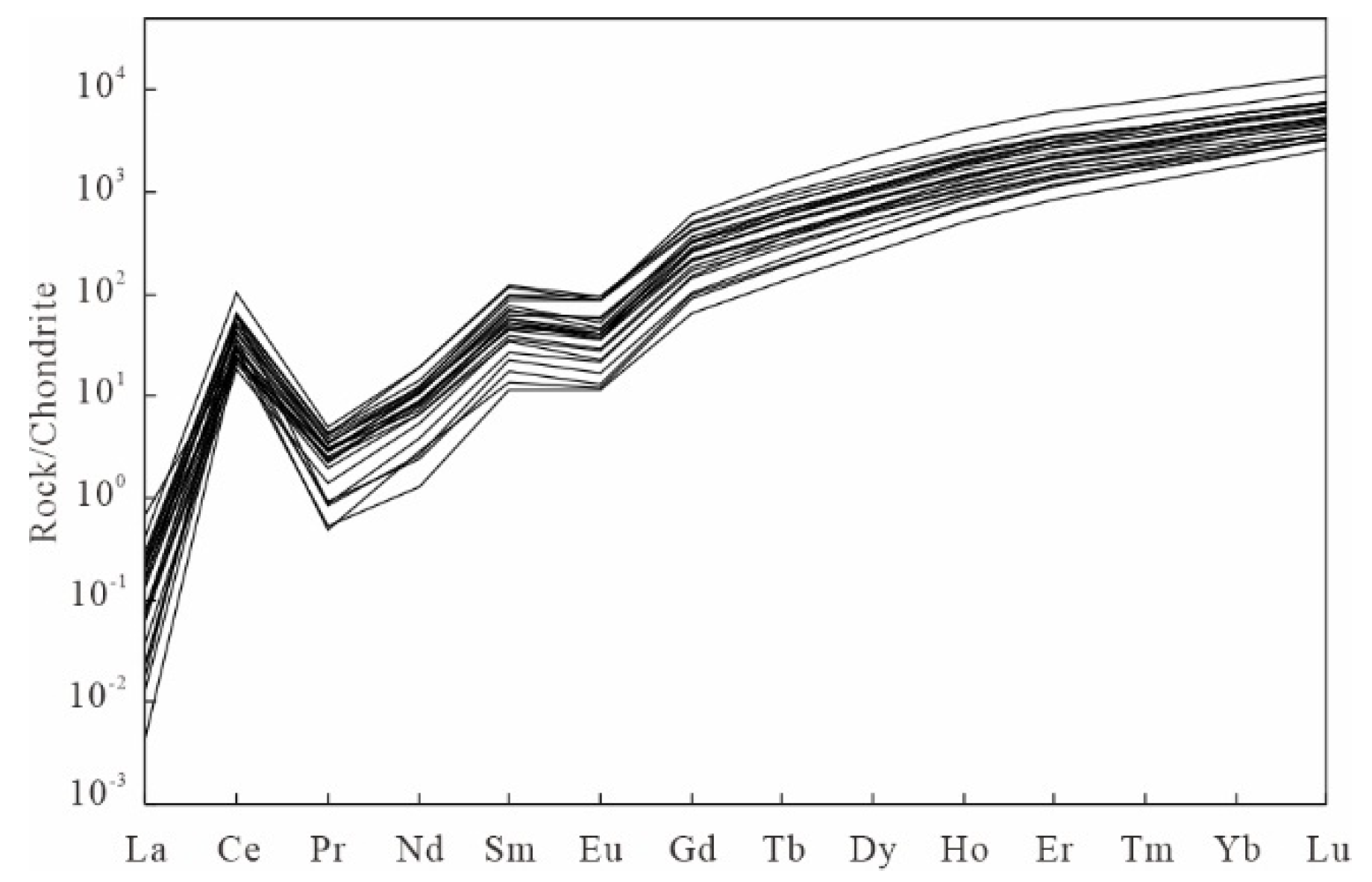
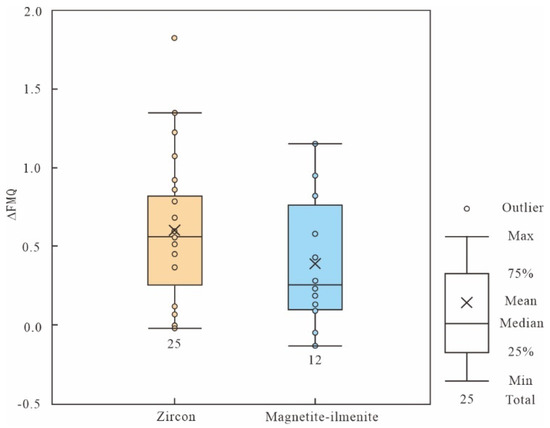
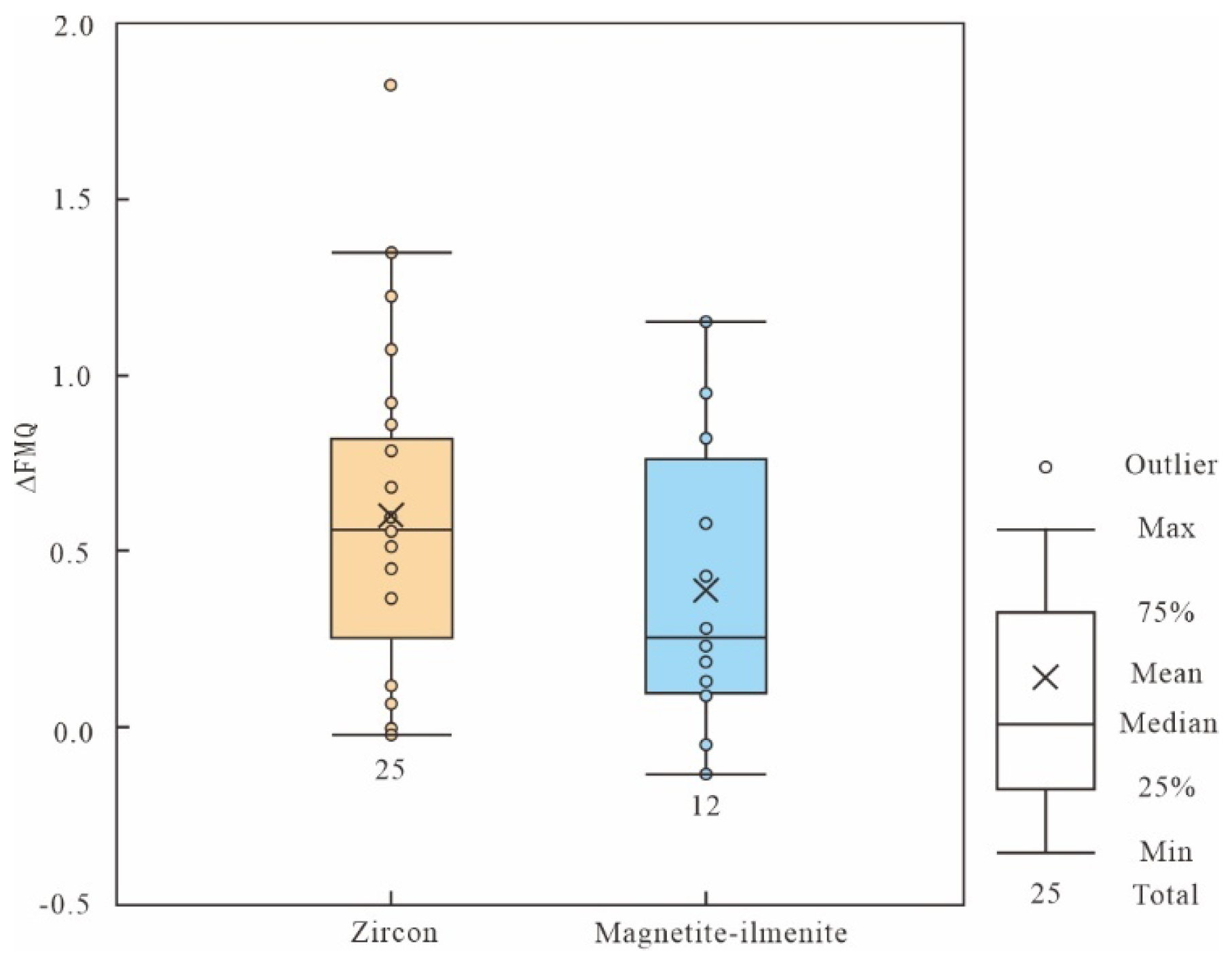
The trace elements of zircons are presented in Table 4. The analysis of the 25 zircon grains reveals consistent chondrite-normalized rare earth element (REE) patterns (Figure 7), with total REE concentrations ranging from 671.7 ppm to 4391.7 ppm. The concentrations of Ti, Ce, and U are 3.3–12.6 ppm, 11.1–62.0 ppm, and 203–1299 ppm, respectively. Utilizing the equation established by [38], the magma oxygen fugacity was calculated based on the concentrations of Ce, U, and Ti in zircon. The results indicate a range of ΔFMQ − 0.02 to ΔFMQ + 1.83 (Table 4). In the box-and-whisker plot (Figure 8), the value of ΔFMQ + 1.83 is identified as an outlier. Consequently, the magma oxygen fugacity can be constrained to ΔFMQ − 0.02 to ΔFMQ + 1.35 based on trace element analyses of zircon.
Table 4.
Trace element of in situ LA–ICP–MS zircon analyses of the Dashanshu gabbro and calculated oxygen fugacity.
Figure 7.
Chondrite-normalized REE patterns of zircon. Normalization values are from [39].
Figure 8.
Box and whisker plot for oxygen fugacity determined by compositions of zircon and magnetite–ilmenite solid solution.
4.4. Mineral Chemistry
4.4.1. Fe-Ti Oxides
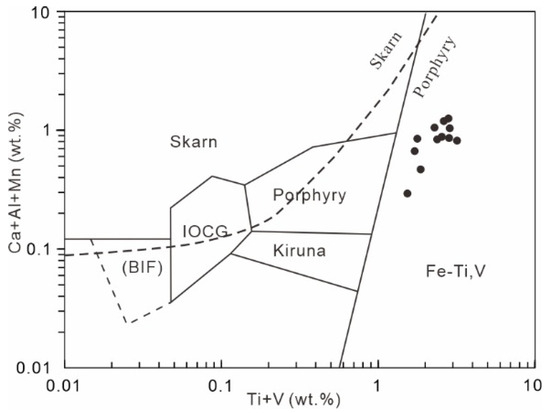
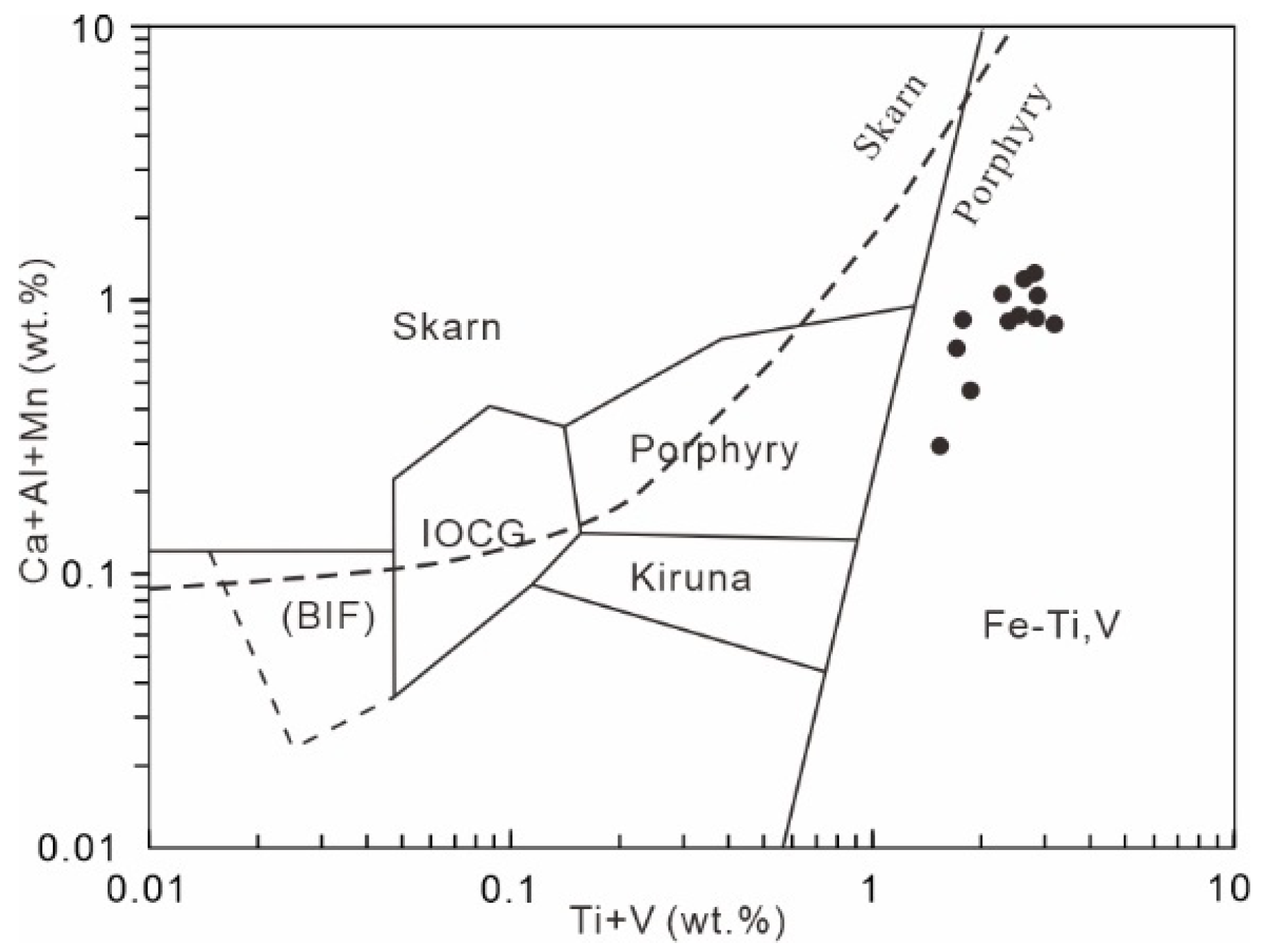
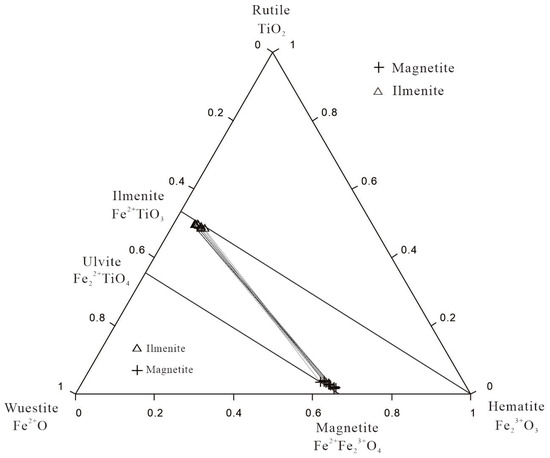
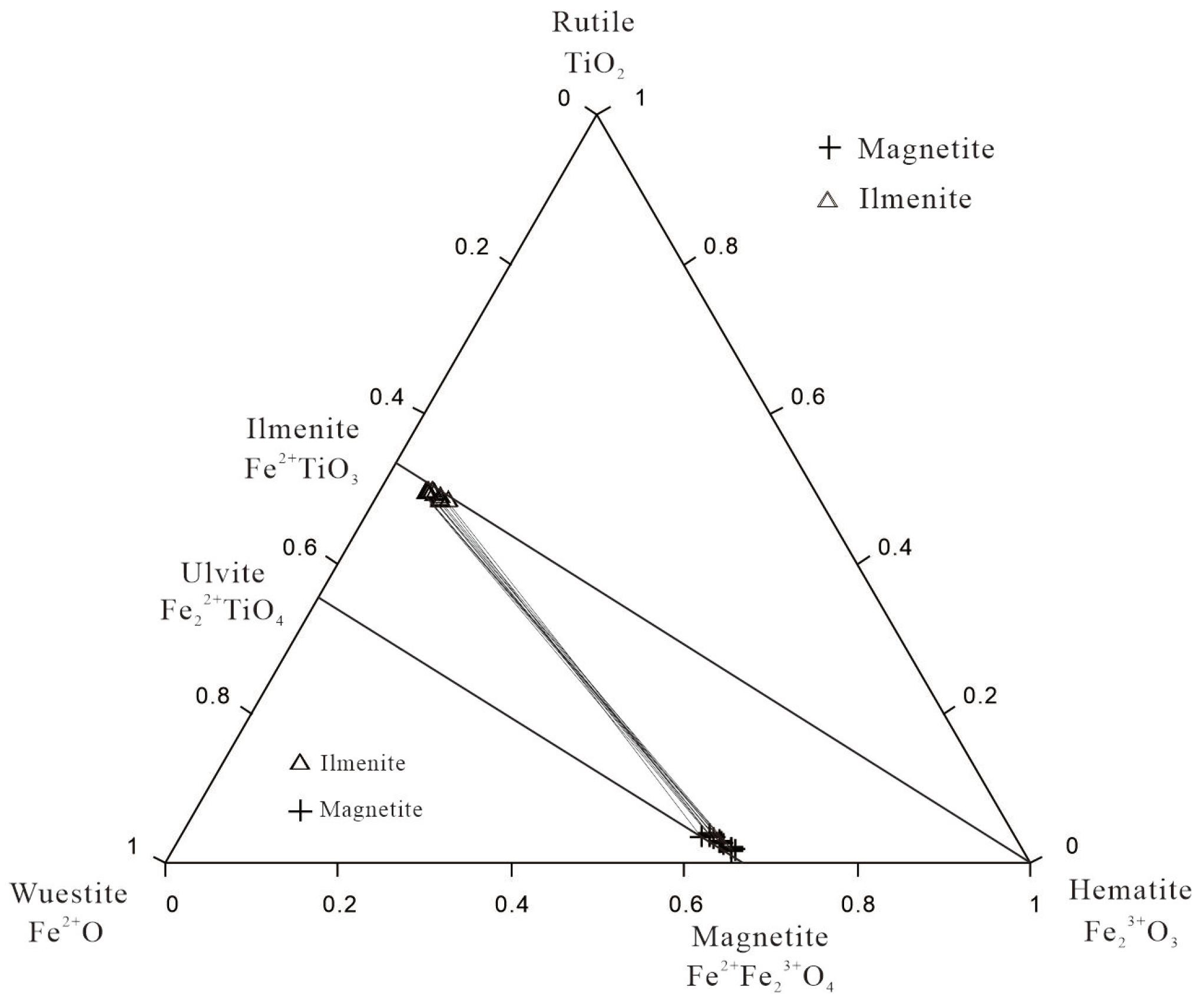
The EPMA results for the twelve pairs of magnetite–ilmenite intergrowths are presented in Table 5. The total contents of magnetite and ilmenite yield ranges of 92.69–93.87 wt.% and 98.89–99.78 wt.%, respectively (with iron expressed as FeO). In a Ca + Al + Mn vs. Ti + V discrimination diagram [40,41], the magnetite plots within the Fe-Ti, V (porphyry) field (Figure 9), which indicates a magmatic origin. Using the methodologies proposed by [42,43], the weight percentages of Fe2O3 and FeO as well as molar percentages of ulvöspinel and ilmenite were calculated, respectively. In the FeO–Fe2O3–TiO2 diagram (Figure 10), magnetites and ilmenites plot close to the magnetite and ilmenite end members, and along the magnetite–ulvöspinel solid solution line and the ilmenite–hematite solid solution trend, respectively. This indicates that the texture involving ilmenite in magnetite resulted from the same mechanism. Utilizing the ILMAT spreadsheet developed by [44] and employing the geothermobarometer established by [45], the equilibration temperatures and oxygen fugacity were calculated. These analyses yielded equilibration temperatures ranging from 606 °C to 686 °C, along with oxygen fugacity values spanning log10 fO2 = −19.07 to −16.24, with ΔFMQ values ranging from −0.13 to +1.15 (Table 5; Figure 8; FMQ refers to the fayalite–magnetite–quartz oxygen buffer).
Table 5.
Composition of Fe–Ti oxides from the Dashanshu gabbro and calculated temperature and oxygen fugacity.
Figure 9.
Ca + Al + Mn versus Ti + V discrimination diagram (after [40,41]) for the magnetite in the Dashanshu gabbro. BIF, banded iron formation; IOCG, iron oxide copper–gold.
Figure 10.
Compositional ranges of the magnetite–ulvöspinel solid solutions and ilmenite–hematite solid solution of magnetite containing ilmenite lamellae within the FeO(+ MnO + MgO)–Fe2O3(+ Al2O3 + Cr2O3)–TiO2 diagram.
4.4.2. Pyroxene
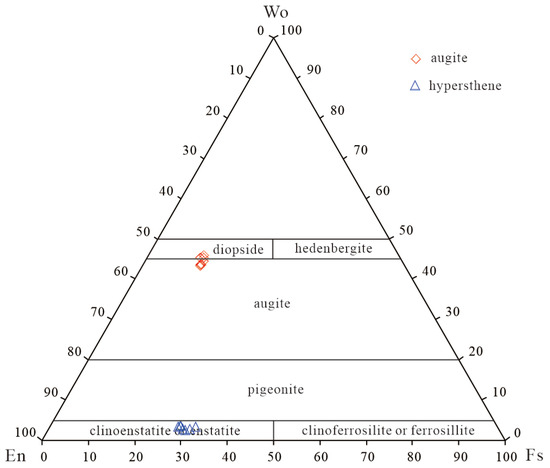
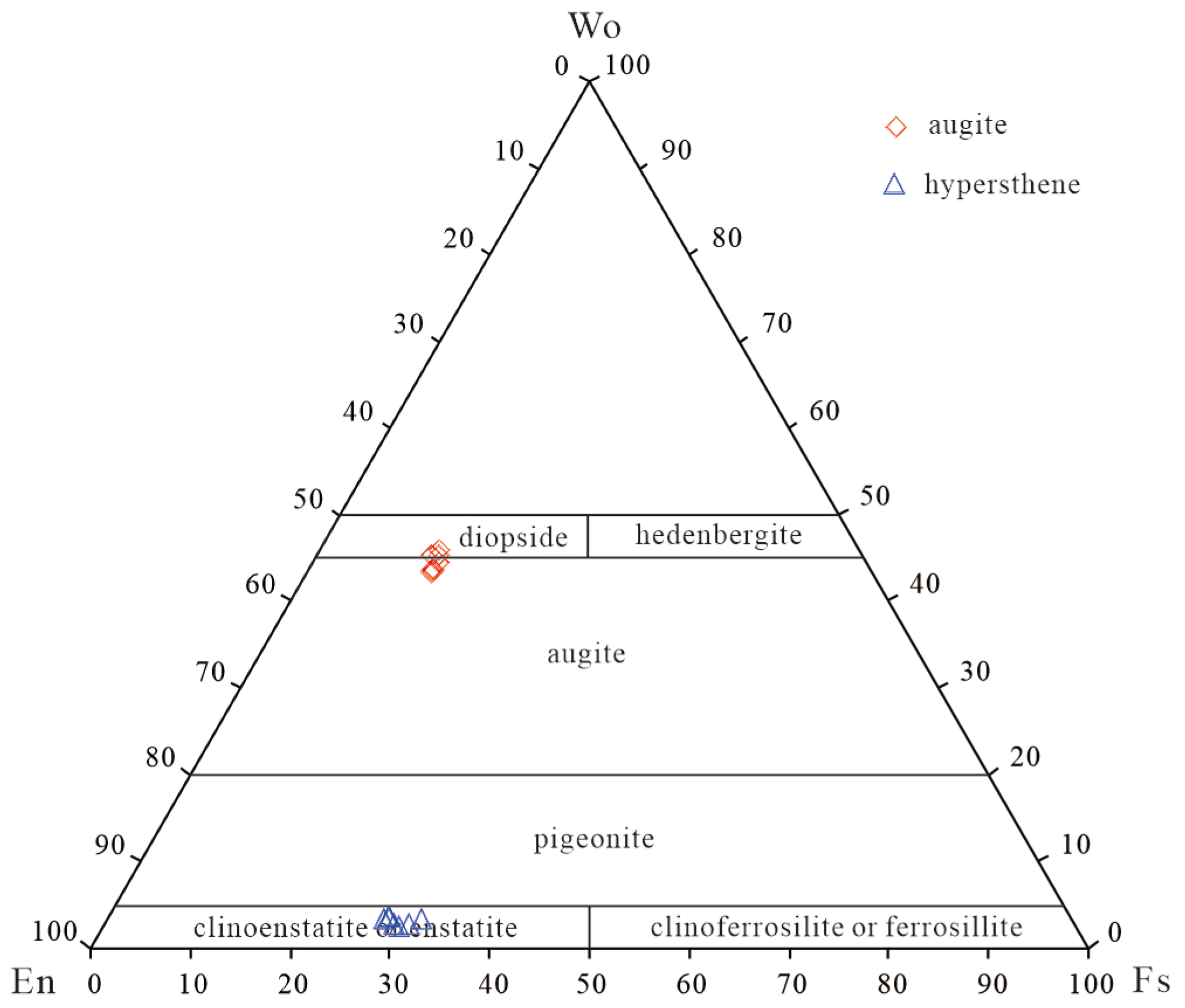
The EPMA results for seven pairs of augite and hypersthene are presented in Table 6. The total contents of augite and hypersthene range from 99.93 wt.% to 100.58 wt.% and from 99.47 wt.% to 100.34 wt.%, respectively. In the Wo-En-Fs ternary diagram for Ca-Mg-Fe pyroxenes, the augites identified under a polarizing microscope fall within the fields designated for both augite and diopside, whereas hypersthenes are plotted in the clinoenstatite or enstatite field (Figure 11). The Mg# values for augite range from 0.66 to 0.71, while those for hypersthene range from 0.75 to 0.78. The iron index refers to the molar ratio of TFe/(TFe + MgO) and ranges from 0.22 to 0.25 for augite and from 0.29 to 0.34 for hypersthene. Utilizing the two-pyroxene thermometers and barometers established by [46], we calculated crystallization temperatures ranging from 844.6 to 957.5 °C, along with pressures between 3.2 and 4.9 kbar for these pyroxenes. The Fe-Mg exchange coefficients for the analyzed pairs of augite and hypersthene vary between 0.62 and 0.80, aligning with an equilibrium value of approximately 0.7 ± 0.2 typical for subsolidus systems [46]; this indicates that equilibrium is achieved between the two pyroxenes.
Table 6.
Composition of pyroxene from the Dashanshu gabbro and calculated temperature and pressure.
Figure 11.
Plot of Ca-Mg-Fe pyroxenes in the Wo-En-Fs ternary diagram (after [47]) for the Dashanshu gabbro.
4.4.3. Amphibole
The EPMA results for eleven amphibole grains are presented in Table 7. The total contents of amphiboles range from 96.05 wt.% to 97.63 wt.%. The Mg# values range from 0.58 to 0.65. Using the Amp-TB spreadsheet proposed by [48], the amphibole species was identified as magnesiohornblende. Additionally, the temperature, pressure, and melt-water content were calculated. The amphibole crystallization temperature is 758–60 °C, the pressure is 66–171 MPa, and the water content in the melt is 3.4–5.6 wt.% (Table 7).
Table 7.
Composition of amphibole from the Dashanshu gabbro and calculated temperature, pressure, and water content.
5. Discussion
5.1. Formation Mechanism of Dashanshu Ferrogabbro
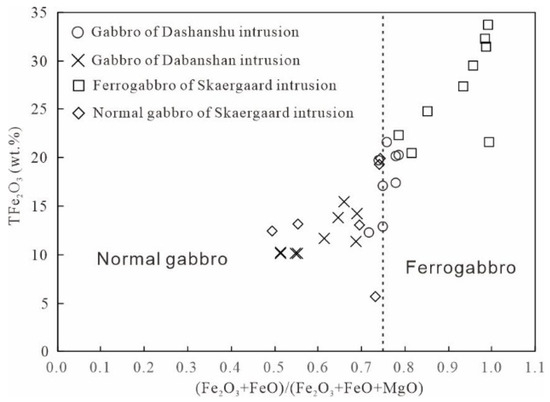
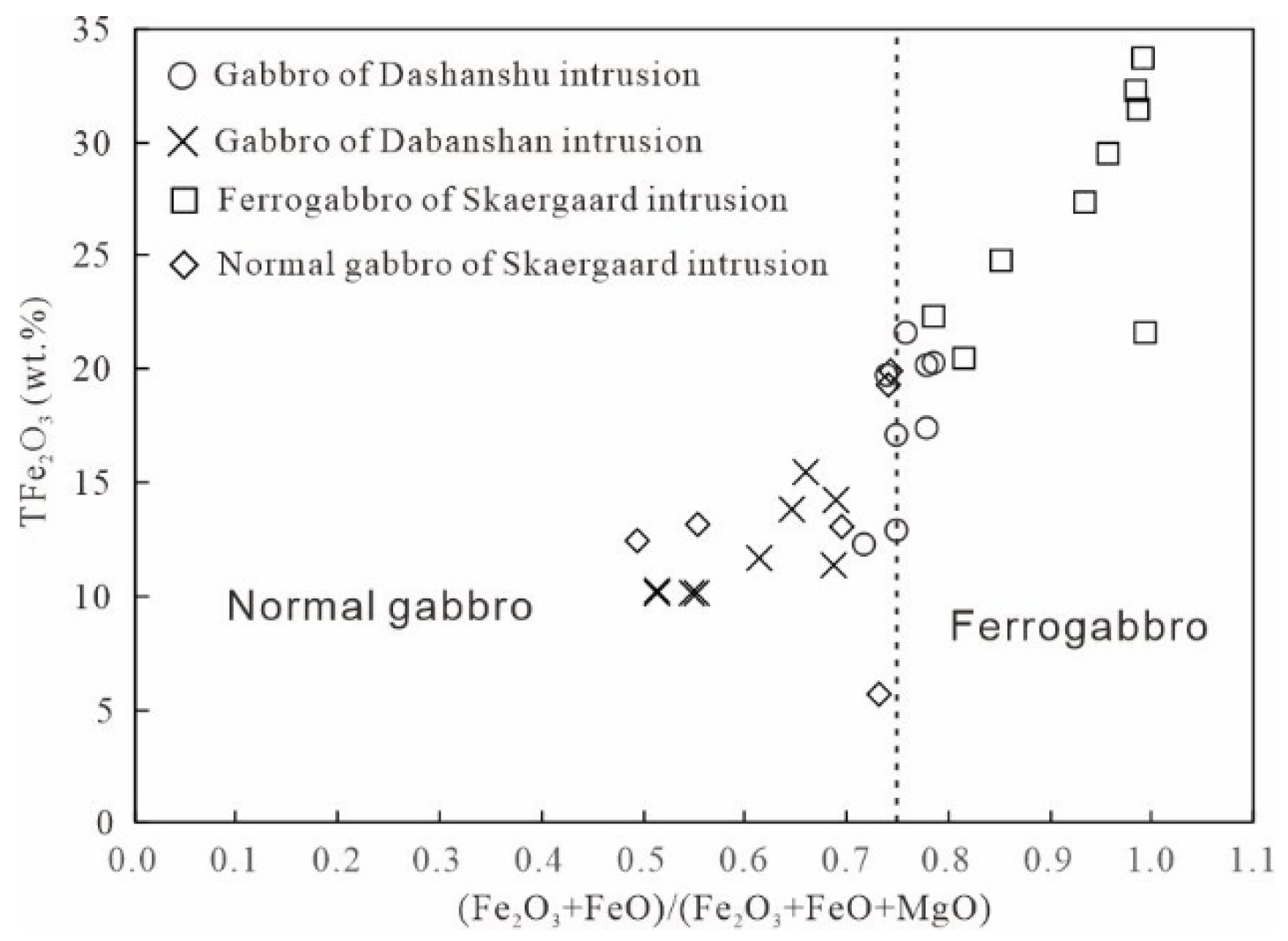
Research on the basalts and gabbro from the Dabanshan intrusion in the Yanyuan area indicate that (1) the basalts and gabbro belong to the low-Ti-series igneous rocks of ELIP; (2) the primitive magma of these rocks was originated from the spinel lherzolite of the lithosphere mantle; and (3) magma evolution was dominated by the crystallization fractionation of olivine and pyroxenes, with minimal crustal contamination [29,30,31]. For the Dashanshu intrusion, the TiO2 content of the gabbro samples ranges from 1.44 wt.% to 2.62 wt.%, but in most samples it does not exceed 2.50 wt.% (Table 2). Considering the accumulation process of Fe-Ti oxides during the formation of the Dashanshu intrusion, as discussed below, it can be inferred that the titanium content in the magma is likely to be lower. Thus, the gabbro associated with the Dashanshu intrusion can be classified as the low-Ti-series igneous rocks of the ELIP. However, the Dashanshu gabbro samples exhibit elevated total iron contents (TFe2O3 ranging from 12.24 wt.% to 21.55 wt.%) and Fe ratios (0.72–0.76) compared to the gabbro of the Dabanshan intrusion. Six samples of the Dashanshu intrusion demonstrate an Fe ratio equal to or exceeding 0.75, which serves as a boundary for distinguishing ferrogabbro from normal gabbro in the Skaergaard intrusion in eastern Greenland [2] (Figure 12). Consequently, these gabbro samples of the Dashanshu intrusion could be classified as ferrogabbro.
Figure 12.
Diagram of total Fe2O3 content versus (Fe2O3 + FeO)/(Fe2O3 + FeO + MgO) ratio to distinguish ferrogabbro from normal gabbro. Data of Dabanshan intrusion are from [30], and data from Skaergaard intrusion are from [2].
The Harker diagrams of the gabbro samples from Dashanshu intrusion show significant linear correlations between SiO2 and other oxides (Figure 5). Generally, these linear correlations could be explained as the crystallization fractionation process from ultrabasic to basic. Specifically, the linear correlations of SiO2 and Fe2O3 (Figure 5C) and SiO2 and TiO2 (Figure 5F) indicate the crystallization fraction of magnetite and ilmenite, respectively. However, the Fe-Ti oxides were crystallized later than plagioclase and pyroxenes, as evidenced by the petrographic observations of abundant subhedral to anhedral Fe-Ti oxides within the interstices of plagioclase, augite, and hypersthene (Figure 3E–G). As will be discussed in Section 5.2, by the time the Fe-Ti oxides crystallized, the magma containing abundant plagioclases and pyroxenes behaved as a non-Newtonian fluid, preventing the Fe-Ti oxides from settling. Thus, the crystallization fractionation of the Fe-Ti oxides did not occur after the crystallization of plagioclase and pyroxenes in the magma of the Dashanshu intrusion.
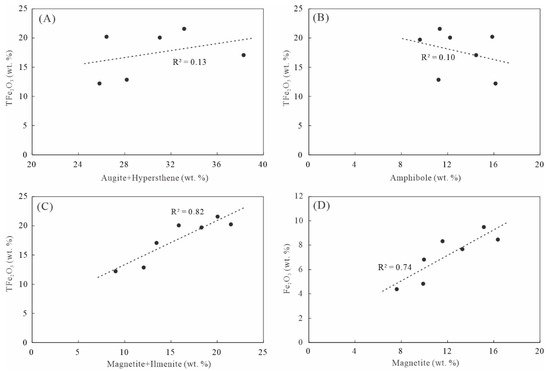
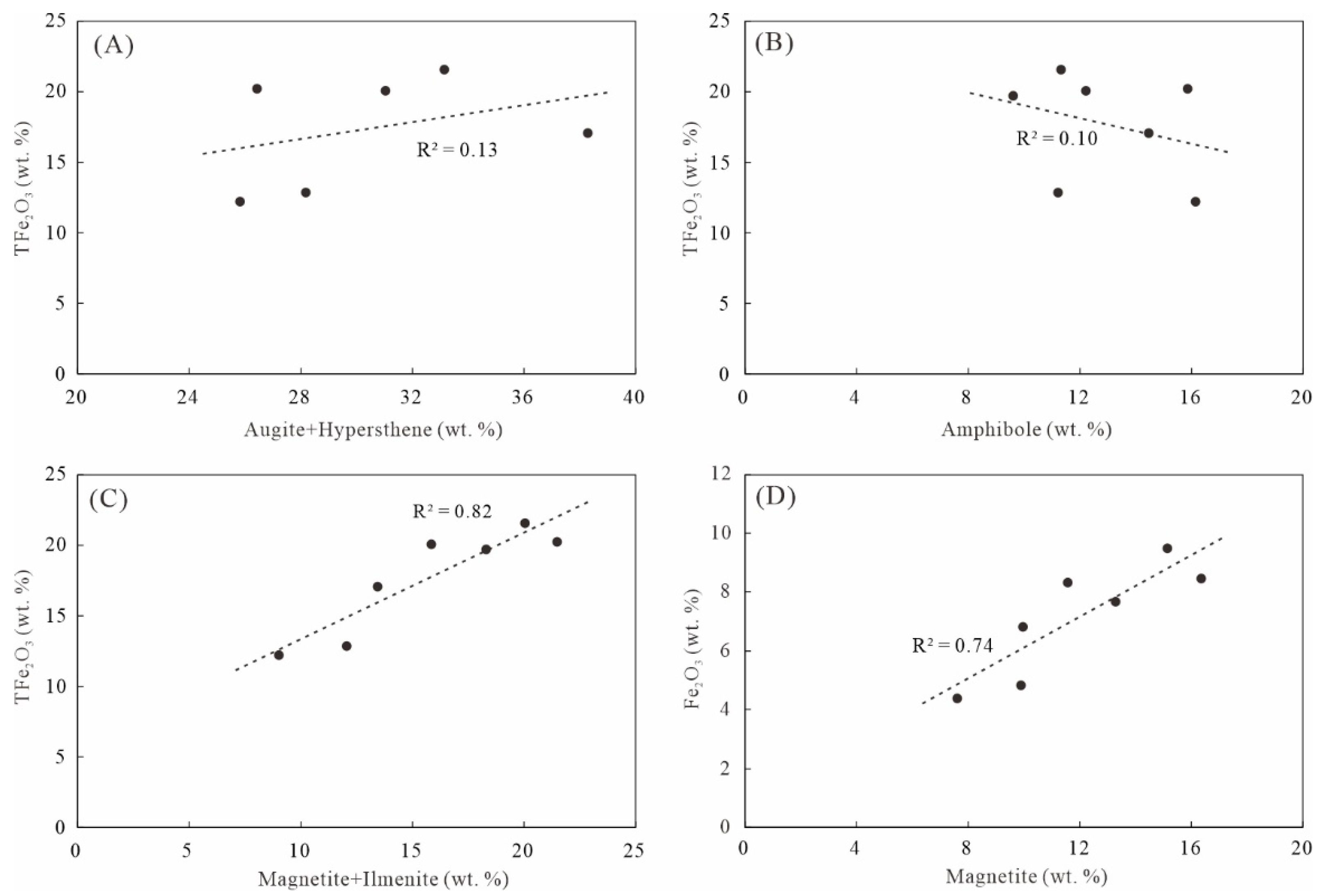
After excluding the possible Fe-Ti oxide crystallization fraction process, the linear correlations of SiO2 and Fe2O3 (Figure 5C) and SiO2 and TiO2 (Figure 5F) possibly indicate a cumulus process, which generates the same linear correlations between SiO2 and other oxides as those seen in the crystallization fraction process. The accurate mineral species and volume and weight percentage revealed by the μXRF results enable us to quantitatively assess the relationship between the mineral contents of Fe-Ti oxides and the chemical iron contents in the Dashanshu gabbro. As shown in Figure 10, the bulk-rock total Fe2O3 contents show no correlation with the contents of pyroxenes and amphibole but are positively correlated with the combined contents of magnetite and ilmenite (Figure 13A–C). Specifically, the bulk-rock Fe2O3 contents correlate positively with magnetite contents (Figure 13D). In addition, the compositions of magnetite indicate that the magnetite in the Dashanshu gabbro is a magmatic origin instead of hydrothermal origin (Figure 9). These findings strongly indicate that the accumulation of Fe-Ti oxides, particularly magnetite, is responsible for the unusually high chemical iron content in the Dashanshu gabbro. In summary, the Dashanshu ferrogabbro was formed primarily through the accumulation of Fe-Ti oxides, especially magnetite. This observation is analogous to the petrographic characteristics of the ferrogabbro found in the Skaergaard intrusion located in eastern Greenland, which exhibits magnetite cumulate within its ferrogabbro layers [2].
Figure 13.
Content correlations between (A) augite + hypersthene and total Fe2O3, (B) amphibole and total Fe2O3, (C) magnetite + ilmenite and total Fe2O3, and (D) magnetite and Fe2O3 of the Dashanshu gabbro.
5.2. Magma Conditions Controlling Enrichment of Fe-Ti Oxides
In the evolution of basaltic magma, water content and oxygen fugacity are two critical factors that determine crystallization sequences and trends in magma evolution. In anhydrous basaltic magma, plagioclase crystallizes before clinopyroxene, while in hydrous basaltic magma, clinopyroxene forms prior to plagioclase [49,50,51]. The presence of orthopyroxene, a nominally anhydrous mineral [52], indicates an anhydrous environment. In contrast, amphibole, a hydrous mineral, signifies nearly water-saturated conditions within the basaltic magma [53,54]. Both water content and oxygen fugacity play significant roles in magnetite crystallization. In hydrous and oxidized basaltic magma, magnetite tends to crystallize close to or on the liquidus line, whereas in anhydrous and reduced environments, magnetite crystallization is inhibited [53,54,55,56,57,58]. The crystallization behavior of ilmenite appears to be largely independent of the melt oxidation state but primarily depends on the TiO2 content within the melt [54,56].
Detailed petrographic investigations, complemented by electron probe microanalysis, have elucidated several key findings regarding the magma conditions and evolution of the Dashanshu intrusion: (1) plagioclase crystallized prior to augite (Figure 3A–C); (2) the presence of hypersthene is noted (Figure 3A–D,F; Table 1), alongside equilibrium between augite and hypersthene (Table 6); (3) amphibole replaces pyroxenes (Figure 3D), while Fe-Ti oxides occupy the interstices between plagioclase and pyroxenes (Figure 3E–G); (4) there are pyrite rather than magnetite inclusions in the augite (Figure 3G); (5) there are widespread magnetite–ilmenite intergrowths (Figure 3H–I); and (6) the melt-water content ranged from approximately 3.4 to 5.6 wt.% when amphibole was present (Table 7). The overall crystallization sequence of the rock-forming minerals is as follows: plagioclase → augite + hypersthene → amphibole + titanomagnetite (magnetite + ilmenite) → biotite. The widespread intergrowths of magnetite and ilmenite are indicative of the subsolidus exsolutions derived from primary titanomagnetite related to slow cooling [59]. The pyroxenes were crystallized at temperatures ranging from 844.6 °C to 957.5 °C (Table 6). Subsequently, the amphibole and primary titanomagnetite formed nearly contemporaneously at temperatures between 758 °C and 860 °C (Table 7). These findings, in conjunction with established theories of magma evolution, provide significant insights into the conditions and evolutionary trends associated with the Dashanshu intrusion. Notably, during the initial stages of mineral crystallization, the magma likely contained low levels of water and exhibited moderate to low oxygen fugacity. However, a significant increase in water content occurred following the crystallization of pyroxenes.
Our analyses of zircon and magnetite–ilmenite aggregates allow for precise constraints on the oxygen fugacity of the magma. The oxygen fugacity derived from zircon trace elements ranges from ΔFMQ − 0.02 to ΔFMQ + 1.83, with an average of ΔFMQ + 0.60. The values obtained from magnetite–ilmenite compositions vary from ΔFMQ − 0.13 to ΔFMQ + 1.15, averaging ΔFMQ + 0.39. Collectively, these results indicate that the oxidation state of the magma is moderate; notably, there was a slight decrease in oxygen fugacity during the crystallization of Fe-Ti oxides (Figure 8). This observation aligns with the understanding that the crystallization of magnetite consumes ferric iron [55]. The moderate oxidation state, combined with the low-content water conditions present during the early stages of magma evolution, likely inhibited the early crystallization of Fe-Ti oxides [54,56].
In summary, the evolutionary path of the magma can be outlined based on specific conditions. In an environment characterized by low water content and a moderate oxidation state, plagioclase crystallizes first, followed by clinopyroxene and hypersthene. This crystallization sequence enhances the enrichment of iron in the residual magma. When the volume percentage of plagioclase and pyroxene crystals in the magma exceeds 50 vol.%, the melt-water content increases to between 3.4 and 5.6 wt.%, resulting in the crystallization of amphibole and a substantial quantity of Fe-Ti oxides. The accumulation of these Fe-Ti oxides within a confined layer contributes to the formation of ferrogabbro in the Dashanshu gabbroic intrusion. The magma exhibiting high crystallinity (>50%) demonstrates non-Newtonian fluid behavior, which inhibits the sinking of late-crystallized Fe-Ti oxides within the magma [60,61,62]. This process resulted in a localized accumulation of Fe-Ti oxides in the gabbro and the formation of a ferrogabbro layer. However, the processes of sinking and flow sorting for Fe-Ti oxides were absent, which may explain the lack of an economically valuable Fe-Ti oxide layer within the Dashanshu intrusion.
6. Conclusions
- The crystallization sequence of rock-forming minerals in the Dashanshu gabbro is as follows: plagioclase → augite + hypersthene → amphibole + titanomagnetite (comprising magnetite and ilmenite) → biotite. The formation of ferrogabbro is attributed to the localized accumulation of substantial amounts of titanomagnetite, which exsolved into magnetite and ilmenite during a slow cooling process.
- The low water content and moderately oxidized nature of the primitive magma inhibit the early crystallization of Fe-Ti oxides, facilitating iron enrichment in the residual magma. An increased water content following the crystallization of plagioclase and pyroxenes promotes the formation of amphibole along with a significant abundance of Fe-Ti oxides.
- As Fe-Ti oxides crystallize, magma with a crystallinity exceeding 50% exhibits non-Newtonian fluid behavior. This characteristic inhibits the sinking of late-crystallized Fe-Ti oxides within the magma, thereby facilitating the formation of a ferrogabbro layer. However, this process also leads to the absence of economically valuable Fe-Ti oxide layers.
Author Contributions
Conceptualization, W.L.; methodology, M.J. and B.Z.; software, B.Z.; validation, M.J.; formal analysis, M.J.; investigation, M.J. and W.W.; resources, W.L.; data curation, M.J. and W.L.; writing—original draft preparation, W.L.; writing—review and editing, M.J., B.Z. and W.W.; visualization, M.J.; supervision, W.L.; project administration, M.J. and W.L.; funding acquisition, W.L. All authors have read and agreed to the published version of the manuscript.
Funding
This work was funded by the National Natural Science Foundation of China (Grant Nos. 41902083 and 41602077).
Data Availability Statement
Data are contained within the article.
Conflicts of Interest
The authors declare no conflicts of interest.
References
- Wager, L.R.; Deer, W.A. Geological investigation in East Greenland, Part III. The petrology of the Skaergaard Intrusion, Kangerdlugssuaq, East Greenland. Meddelelser Grønland 1939, 105, 42. [Google Scholar]
- Wager, L.R. The major element variation of the layered series of the Skaergaard intrusion and a re-estimation of the average composition of the hidden layered series and of the successive residual magmas. J. Petrol. 1960, 1, 364–398. [Google Scholar] [CrossRef] [Scilit]
- Fenner, C.N. The crystallization of basalts. Am. J. Sci. 1929, 18, 225–253. [Google Scholar] [CrossRef] [Scilit]
- Osborn, E.F. Role of oxygen pressure in the crystallization and differentiation of basaltic magma. Am. J. Sci. 1959, 257, 609–647. [Google Scholar] [CrossRef] [Scilit]
- Jang, Y.D.; Naslund, H.R.; Mcbirney, A.R. The differentiation trend of the Skaergaard intrusion and the timing of magnetite crystallization: Iron enrichment revisited. Earth Planet. Sci. Lett. 2001, 189, 189–196. [Google Scholar] [CrossRef] [Scilit]
- Bowen, N.L. The Evolution of the Igneous Rocks; Princeton University Press: Princeton, NJ, USA, 1928. [Google Scholar]
- Brooks, C.K.; Larsen, L.M.; Nielsen, T.F.D. Importance of iron-rich tholeiitic magmas at divergent plate margins: A reappraisal. Geology 1991, 19, 269–272. [Google Scholar] [CrossRef] [Scilit]
- Mcbirney, A.R.; Naslund, H.R. The differentiation of the Skaergaard Intrusion. Contrib. Mineral. Petrol. 1990, 104, 235–240. [Google Scholar] [CrossRef] [Scilit]
- Hunter, R.H.; Sparks, R.S.J. The differentiation of the Skaergaard Intrusion. Contrib. Mineral. Petrol. 1987, 95, 451–461. [Google Scholar] [CrossRef] [Scilit]
- Hunter, R.H.; Sparks, R.S.J. The differentiation of the Skaergaard Intrusion. Contrib. Mineral. Petrol. 1990, 104, 248–254. [Google Scholar] [CrossRef] [Scilit]
- Ali, J.R.; Thompson, G.M.; Zhou, M.F.; Song, X.Y. Emeishan large igneous province, SW China. Lithos 2005, 79, 475–489. [Google Scholar] [CrossRef] [Scilit]
- Zhou, M. Origin of layered gabbroic intrusions and their giant Fe-Ti-V oxide deposits in the Pan-Xi district, Sichuan Province, SW China. Acta Petrol. Mineral. 2005, 24, 381–384. [Google Scholar]
- Xu, Y.G.; Chung, S.L.; Jahn, B.M.; Wu, G.Y. Petrologic and geochemical constraints on the petrogenesis of Permian-Triassic Emeishan flood basalts in southwestern China. Lithos 2001, 58, 145–168. [Google Scholar] [CrossRef] [Scilit]
- Xiao, L.; Xu, Y.G.; Mei, H.J.; Zheng, Y.F.; He, B.; Pirajno, F. Distinct mantle sources of low-Ti and high-Ti basalts from the western Emeishan large igneous province, SW China: Implications for plume-lithosphere interaction. Earth Planet. Sci. Lett. 2004, 228, 525–546. [Google Scholar] [CrossRef] [Scilit]
- Zhou, M.F.; Arndt, N.T.; Malpas, J.; Wang, C.Y.; Kennedy, A.K. Two magma series and associated ore deposit types in the Permian Emeishan large igneous province, SW China. Lithos 2008, 103, 352–368. [Google Scholar] [CrossRef] [Scilit]
- Xu, Y.G.; Mei, H.J.; Xu, J.F.; Huang, X.L.; Wang, Y.J.; Chung, S.L. Origin of two differentiation trends in the Emeishan flood basalts. Chin. Sci. Bull. 2003, 48, 390–394. [Google Scholar] [CrossRef] [Scilit]
- Pang, K.; Li, C.; Zhou, M.; Ripley, E.M. Abundant Fe-Ti oxide inclusions in olivine from the Panzhihua and Hongge layered intrusions, SW China: Evidence for early saturation of Fe-Ti oxides in ferrobasaltic magma. Contrib. Mineral. Petrol. 2008, 156, 307–321. [Google Scholar] [CrossRef] [Scilit]
- Pang, K.; Zhou, M.; Lindsley, D.; Zhao, D.; Malpas, J. Origin of Fe-Ti oxide ores in mafic intrusions: Evidence from the Panzhihua intrusion, SW China. J. Petrol. 2008, 49, 295–313. [Google Scholar] [CrossRef] [Scilit]
- Pang, K.; Li, C.; Zhou, M.; Ripley, E.M. Mineral compositional constraints on petrogenesis and oxide ore genesis of the late Permian Panzhihua layered gabbroic intrusion, SW China. Lithos 2009, 110, 199–214. [Google Scholar] [CrossRef] [Scilit]
- Pang, K.; Zhou, M.; Qi, L.; Shellnutt, G.; Wang, C.Y.; Zhao, D. Flood basalt-related Fe-Ti oxide deposits in the Emeishan large igneous province, SW China. Lithos 2010, 119, 123–136. [Google Scholar] [CrossRef] [Scilit]
- Zhang, X.; Song, X.; Chen, L.; Xie, W.; Yu, S.; Zheng, W.; Deng, Y.; Zhang, J.; Gui, S. Fractional crystallization and the formation of thick Fe–Ti–V oxide layers in the Baima layered intrusion, SW China. Ore Geol. Rev. 2012, 49, 96–108. [Google Scholar] [CrossRef] [Scilit]
- Song, X.Y.; Qi, H.W.; Hu, R.Z.; Chen, L.M.; Yu, S.Y.; Zhang, J.F. Formation of thick stratiform Fe-Ti oxide layers in layered intrusion and frequent replenishment of fractionated mafic magma: Evidence from the Panzhihua intrusion, SW China. Geochem. Geophys. Geosystems 2013, 14, 712–732. [Google Scholar] [CrossRef] [Scilit]
- Song, X.Y.; Chen, L.M.; Yu, S.Y.; Tao, Y.; She, Y.W.; Luan, Y.; Zhang, X.Q.; He, H.L. Geological features and genesis of the V-Ti magnetite deposits in the Emeishan Large Igneous Province, SW China. Bull. Mineral. Petrol. Geochem. 2018, 37, 1003–1018. [Google Scholar]
- Wang, C.Y.; Zhou, M.; Zhao, D. Fe-Ti-Cr oxides from the Permian Xinjie mafic-ultramafic layered intrusion in the Emeishan large igneous province, SW China: Crystallization from Fe- and Ti-rich basaltic magmas. Lithos 2008, 102, 198–217. [Google Scholar] [CrossRef] [Scilit]
- Zhong, H.; Yao, Y.; Prevec, S.A.; Wilson, A.H.; Viljoen, M.J.; Viljoen, R.P.; Liu, B.; Luo, Y. Trace-element and Sr–Nd isotopic geochemistry of the PGE-bearing Xinjie layered intrusion in SW China. Chem. Geol. 2004, 203, 237–252. [Google Scholar] [CrossRef] [Scilit]
- Wang, C.Y.; Zhou, M.; Zhao, D. Mineral chemistry of chromite from the Permian Jinbaoshan Pt–Pd–sulphide-bearing ultramafic intrusion in SW China with petrogenetic implications. Lithos 2005, 83, 47–66. [Google Scholar] [CrossRef] [Scilit]
- Tao, Y.; Li, C.; Song, X.; Ripley, E.M. Mineralogical, petrological, and geochemical studies of the Limahe mafic-ultramatic intrusion and associated Ni-Cu sulfide ores, SW China. Miner. Depos. 2008, 43, 849–872. [Google Scholar] [CrossRef] [Scilit]
- Cao, Y.; Wang, C.Y. Contrasting oxidation states of low-Ti and high-Ti magmas control Ni-Cu sulfide and Fe-Ti oxide mineralization in Emeishan Large Igneous Province. Geosci. Front. 2022, 13, 101434. [Google Scholar] [CrossRef] [Scilit]
- Wang, M.; Zhang, Z.C.; Encarnacion, J.; Hou, T.; Luo, W.J. Geochronology and geochemistry of the Nantianwan mafic-ultramafic complex, Emeishan large igneous province: Metallogenesis of magmatic Ni-Cu sulphide deposits and geodynamic setting. Int. Geol. Rev. 2012, 54, 1746–1764. [Google Scholar] [CrossRef] [Scilit]
- Zeng, L.G.; Zhang, J.; Sun, T.; Guo, D.B. Zircon U-Pb age of mafic-ultramafic rock from Pingchuan region in southern Sichuan and its geologaicl implications. Earth Sci.-J. China Univ. Geosci. 2013, 38, 1197–1213. [Google Scholar]
- Liu, W.H.; Zhang, J.; Sun, T.; Zhou, L.; Liu, A.L. Low-Ti iron oxide deposits in the Emeishan large igneous province related to low-Ti basalts and gabbroic intrusions. Ore Geol. Rev. 2015, 65, 180–197. [Google Scholar] [CrossRef] [Scilit]
- Liu, Z.D.; Jin, J.K.; Zhang, J.F.; Han, D.W.; Lin, H.M. Genetic types of iron deposits in Pingchuan area, Yanyuan County, Sichuan Province and disscussion on the iron ore potential. Contrib. Geol. Miner. Resour. Res. 2008, 23, 1–4. [Google Scholar]
- Liu, B.G.; Luo, Y.N.; Yao, Y.; Zhong, H.; Wilson, A.H. PGE mineralization of layered intrusion in Panxi rift region, China. Earth Sci. Front. 2008, 15, 269–279. [Google Scholar]
- He, B.; Xu, Y.G.; Huang, X.L.; Luo, Z.Y.; Shi, Y.R.; Yang, Q.J.; Yu, S.Y. Age and duration of the Emeishan flood volcanism, SW China: Geochemistry and SHRIMP zircon U-Pb dating of silicic ignimbrites, post-volcanic Xuanwei Formation and clay tuff at the Chaotian section. Earth Planet. Sci. Lett. 2007, 255, 306–323. [Google Scholar] [CrossRef] [Scilit]
- Xu, Y.G.; He, B.; Chung, S.L.; Menzies, M.A.; Frey, F.A. Geologic, geochemical, and geophysical consequences of plume involvement in the Emeishan flood-basalt province. Geology 2004, 32, 917–920. [Google Scholar] [CrossRef] [Scilit]
- Liu, Y.S.; Hu, Z.C.; Gao, S.; Günther, D.; Xu, J.; Gao, C.G.; Chen, H.H. In situ analysis of major and trace elements of anhydrous minerals by LA-ICP-MS without applying an internal standard. Chem. Geol. 2008, 257, 34–43. [Google Scholar] [CrossRef] [Scilit]
- Ludwig, K.R. User’s manual for Isoplot 3.75. A geochronological toolkit for Microsoft Excel. Berkeley Geochronol. Cent. Spec. Publ. 2012, 5, 1–71. [Google Scholar]
- Loucks, R.R.; Fiorentini, M.L.; Henríquez, G.J. New magmatic oxybarometer using trace elements in zircon. J. Petrol. 2020, 61, egaa034. [Google Scholar] [CrossRef] [Scilit]
- Sun, S.S.; Mcdonough, W.F. Chemical and Isotopic Systematics of Oceanic Basalts: Implications for Mantle Composition and Processes; Saunders, A.D., Norry, M.J., Eds.; Magmatism in the Ocean Basins; Geological Society Special Publication: London, UK, 1989; Volume 42, pp. 313–345. [Google Scholar]
- Dupuis, C.; Beaudoin, G. Discriminant diagrams for iron oxide trace element fingerprinting of mineral deposit types. Miner. Depos. 2011, 46, 319–335. [Google Scholar] [CrossRef] [Scilit]
- Nadoll, P.; Angerer, T.; Mauk, J.L.; French, D.; Walshe, J. The chemistry of hydrothermal magnetite: A review. Ore Geol. Rev. 2014, 61, 1–32. [Google Scholar] [CrossRef] [Scilit]
- Carmichael, I. The iron-titanium oxides of salic volcanic rocks and their associated ferromagnesian silicates. Contrib. Mineral. Petrol. 1967, 14, 36–64. [Google Scholar] [CrossRef] [Scilit]
- Lindsley, D.H.; Spencer, K.J. Fe-Ti oxide geothermometry: Reducing analyses of coexisting Ti-magnetite (Mt) and ilmenite (Ilm) abstract AGU 1982 Spring Meeting Eos Transactions. Am. Geophys. Union 1982, 63, 471. [Google Scholar]
- Lepage, L.D. ILMAT: An Excel worksheet for ilmenite–magnetite geothermometry and geobarometry. Comput. Geosci. 2003, 29, 673–678. [Google Scholar] [CrossRef] [Scilit]
- Andersen, D.J.; Lindsley, D.H. New (and final!) models for the Ti-magnetite/ilmenite geothermometer and oxygen barometer. Eos Trans. Am. Geophys. Union 1985, 66, 416. [Google Scholar]
- Putirka, K.D. Thermometers and Barometers for Volcanic Systems. Rev. Mineral. Geochem. 2008, 69, 61–120. [Google Scholar] [CrossRef] [Scilit]
- Morimoto, N.; Fabries, J.; Ferguson, A.K.; Ginzburg, I.V.; Ross, M.; Seifert, F.A.; Zussman, J.; Aoki, K.; Gottardi, G. Nomenclature of pyroxenes. Am. Miner. 1988, 73, 1123–1133. [Google Scholar]
- Ridolfi, F.; Renzulli, A.; Puerini, M. Stability and chemical equilibrium of amphibole in calc-alkaline magmas: An overview, new thermobarometric formulations and application to subduction-related volcanoes. Contrib. Mineral. Petrol. 2010, 160, 45–66. [Google Scholar] [CrossRef] [Scilit]
- Yoder, H.S.J. Diopside-anorthite-water at fine and ten kilobars and its bearing on explosive volcanism. Carnegie Inst. Wash. Yearb. 1965, 64, 82–89. [Google Scholar]
- Gaetani, G.A.; Grove, T.L.; Bryan, W.B. The influence of water on the petrogenesis of subductionrelated igneous rocks. Nature 1993, 365, 332–334. [Google Scholar] [CrossRef] [Scilit]
- Niu, Y.L. Generation and Evolution of Basaltic Magmas: Some Basic Concepts and a New View on the Origin of Mesozoic -Cenozoic Basaltic Volcanism in Eastern China. Geol. J. China Univ. 2005, 11, 9–46. [Google Scholar]
- Bell, D.R.; Rossman, G.R. Water in Earth’s mantle: The role of nominally anhydrous minerals. Science 1992, 255, 1391–1397. [Google Scholar] [CrossRef] [Scilit]
- Sisson, T.W.; Grove, T.L. Experimental investigations of the role of H2O in calc-alkaline differentiation and subduction zone magmatism. Contrib. Mineral. Petrol. 1993, 113, 143–166. [Google Scholar] [CrossRef] [Scilit]
- Berndt, J. An experimental investigation of the influence of water and oxygen fugacity on differentiation of MORB at 200 MPa. J. Petrol. 2005, 46, 135–167. [Google Scholar] [CrossRef] [Scilit]
- Snyder, D.; Carmichael, I.S.E.; Wiebe, R.A. Experimental study of liquid evolution in an Fe-rich, layered mafic intrusion: Constraints of Fe-Ti oxide precipitation on the T-fO2 and T-ϱ paths of tholeiitic magmas. Contrib. Mineral. Petrol. 1993, 113, 73–86. [Google Scholar] [CrossRef] [Scilit]
- Toplis, M.J.; Carroll, M.R. An experimental s of the influence of oxygen fugacity on Fe-Ti oxide Stability, phase relations, and Mineral–Melt equilibria in ferro–basaltic systems. J. Petrol. 1995, 36, 1137–1170. [Google Scholar] [CrossRef] [Scilit]
- Toplis, M.J.; Corgne, A. An experimental study of element partitioning between magnetite, clinopyroxene and iron-bearing silicate liquids with particular emphasis on vanadium. Conbtrib. Miner. Petrol. 2002, 144, 22–37. [Google Scholar] [CrossRef] [Scilit]
- Botcharnikov, R.E.; Almeev, R.R.; Koepke, J.; Holtz, F. Phase relations and liquid lines of descent in hydrous ferrobasalt-Implications for the Skaergaard intrusion and Columbia River flood basalts. J. Petrol. 2008, 49, 1687–1727. [Google Scholar] [CrossRef] [Scilit]
- Haggerty, S.E. Oxide textures—A mini-atlas. In Oxide Minerals: Petrologic and Magnetic Significance; Lindsley, D.H., Ed.; De Gruyter: Boston, MA, USA, 1991; Volume 25, pp. 129–220. [Google Scholar]
- Spera, F.J. Physics of Magmatic Processes; Princeton University Press: Princeton, NJ, USA, 1980. [Google Scholar]
- Giordano, G.; Cas, R.; Wright, J.V. Properties of Magmas. In Volcanology: Processes, Deposits, Geology and Resources; Cas, R., Giordano, G., Wright, J.V., Eds.; Springer International Publishing: Cham, Switzerland, 2024; pp. 37–74. [Google Scholar]
- Ma, C.Q. Magma-dynamical conditions on crystallization differentiation. Earth Sci.-J. China Univ. Geosci. 1989, 14, 245–252. [Google Scholar]

Disclaimer/Publisher’s Note: The statements, opinions and data contained in all publications are solely those of the individual author(s) and contributor(s) and not of MDPI and/or the editor(s). MDPI and/or the editor(s) disclaim responsibility for any injury to people or property resulting from any ideas, methods, instructions or products referred to in the content. |
© 2024 by the authors. Licensee MDPI, Basel, Switzerland. This article is an open access article distributed under the terms and conditions of the Creative Commons Attribution (CC BY) license (https://creativecommons.org/licenses/by/4.0/).