
Article

Selective Leaching of Valuable Metals from Spent Fluid Catalytic Cracking Catalyst with Oxalic Acid
1
School of Resource and Environmental Engineering, Wuhan University of Science and Technology, Wuhan 430081, China
2
State Environmental Protection Key Laboratory of Mineral Metallurgical Resources Utilization and Pollution Control, Wuhan 430081, China
3
Collaborative Innovation Center of Strategic Vanadium Resources Utilization, Wuhan 430081, China
4
Hubei Provincial Engineering Technology Research Center of High Efficient Cleaning Utilization for Shale Vanadium Resource, Wuhan 430081, China
5
School of Resource and Environmental Engineering, Wuhan University of Technology, Wuhan 430070, China
*
Authors to whom correspondence should be addressed.
Minerals 2022, 12(6), 748; https://doi.org/10.3390/min12060748
Submission received: 1 June 2022 / Revised: 9 June 2022 / Accepted: 11 June 2022 / Published: 13 June 2022
(This article belongs to the Section Mineral Processing and Extractive Metallurgy)

Abstract

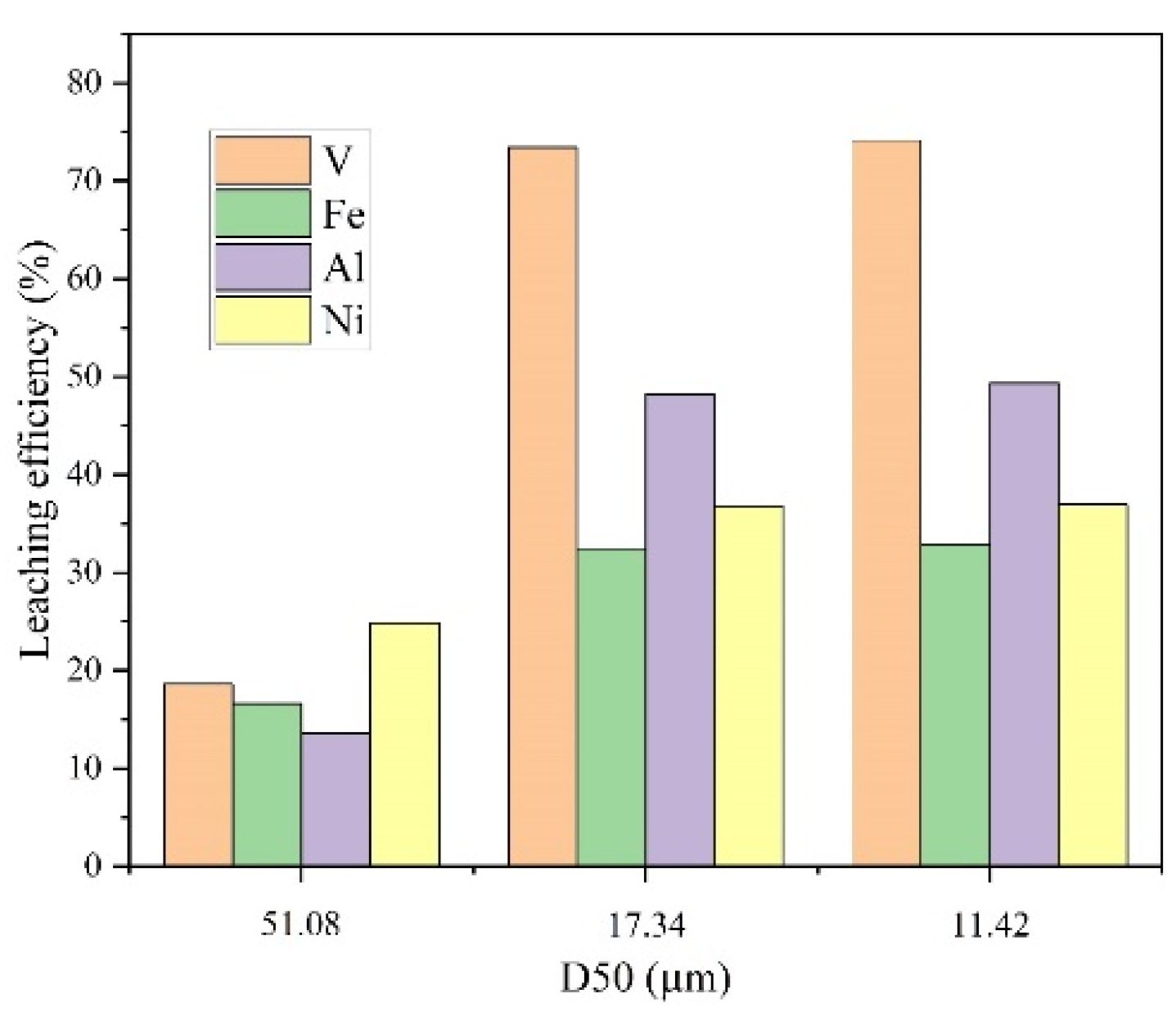
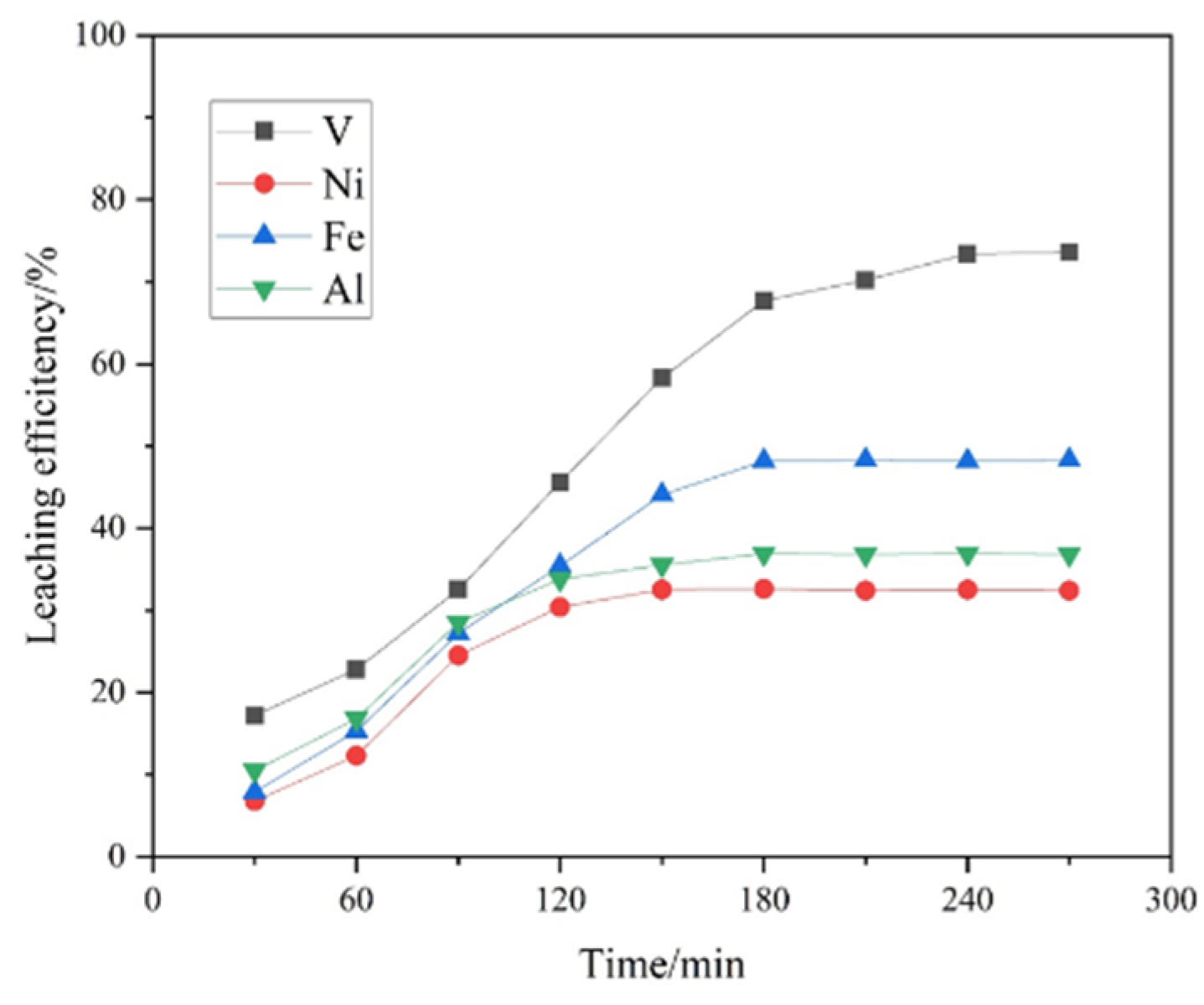
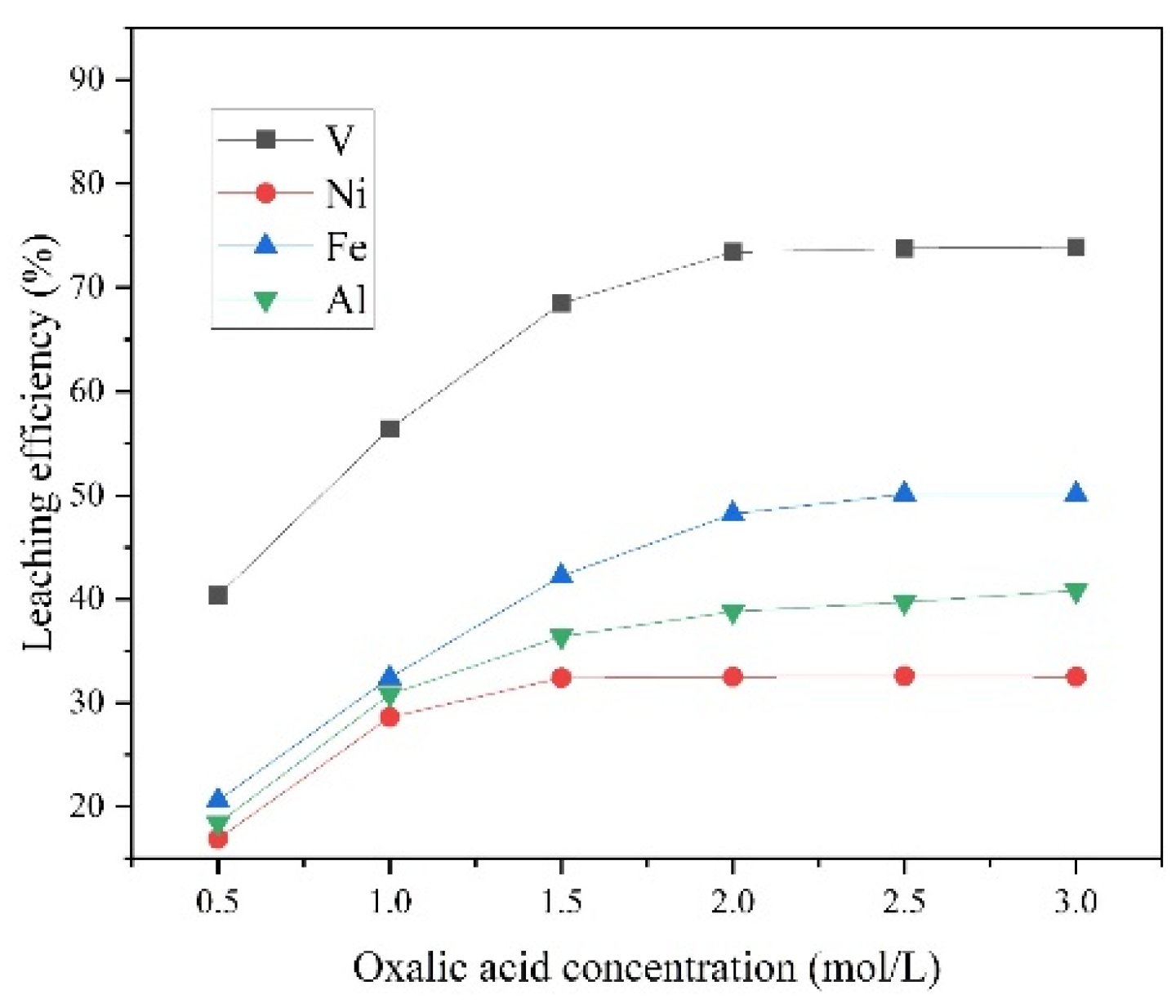
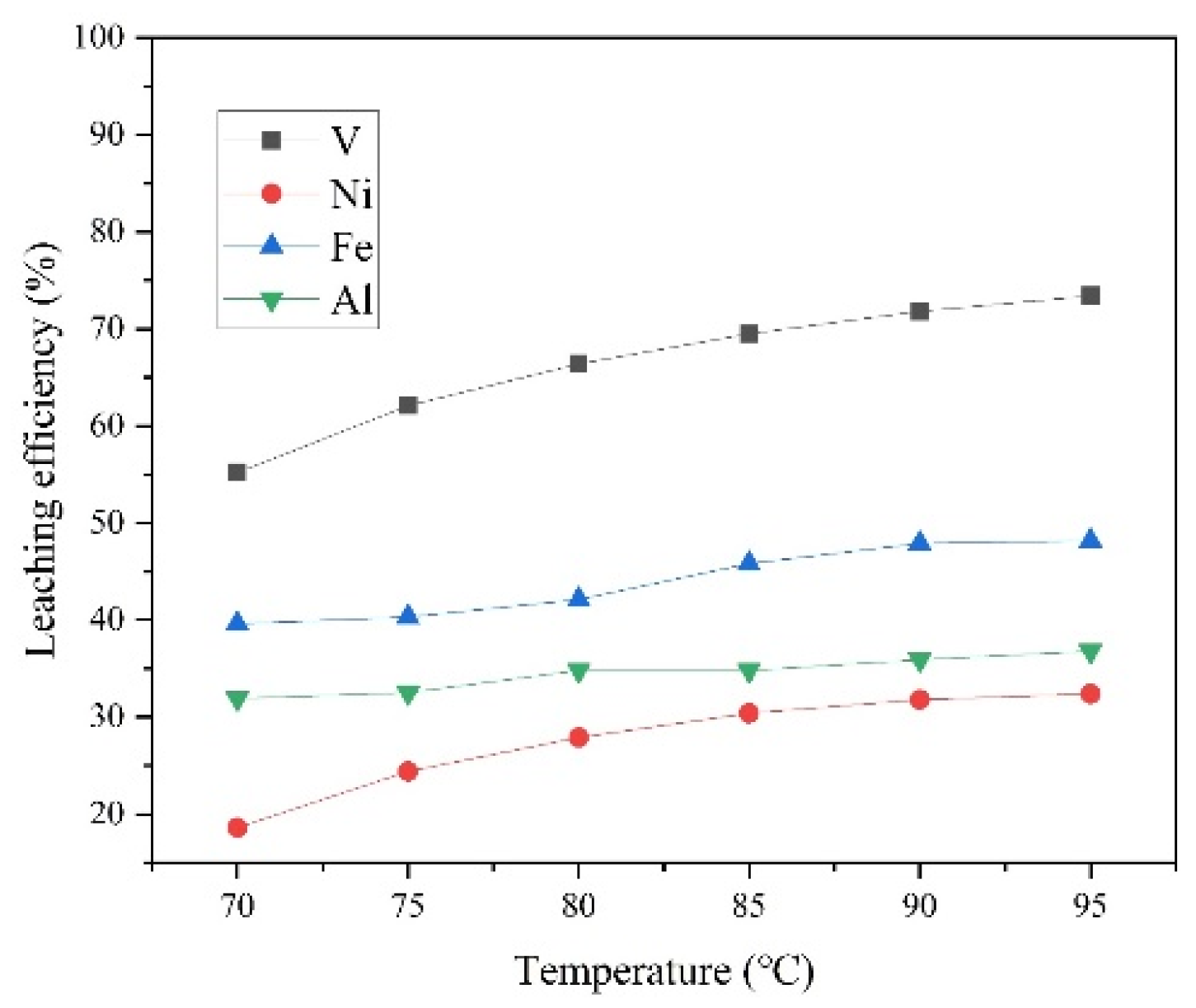
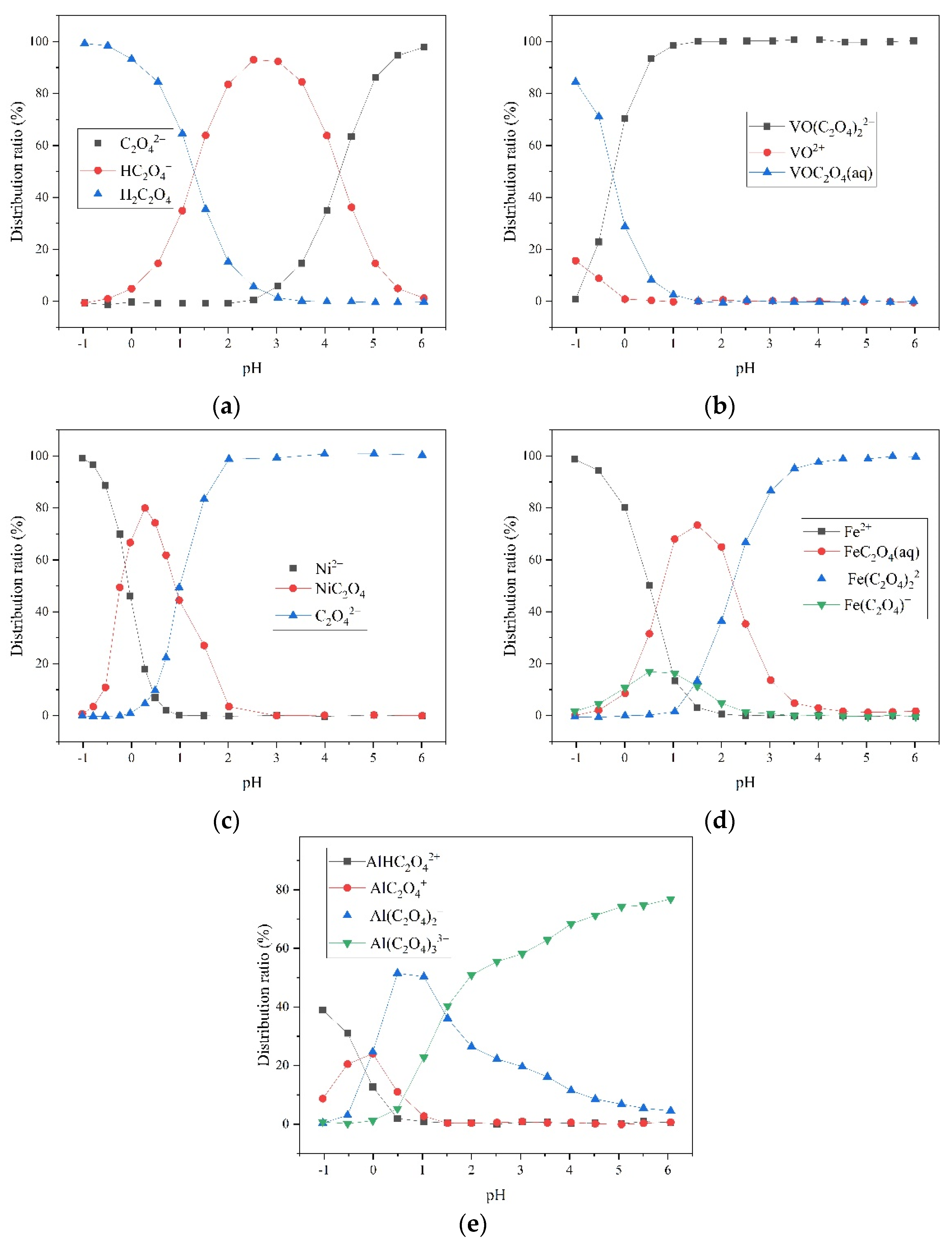
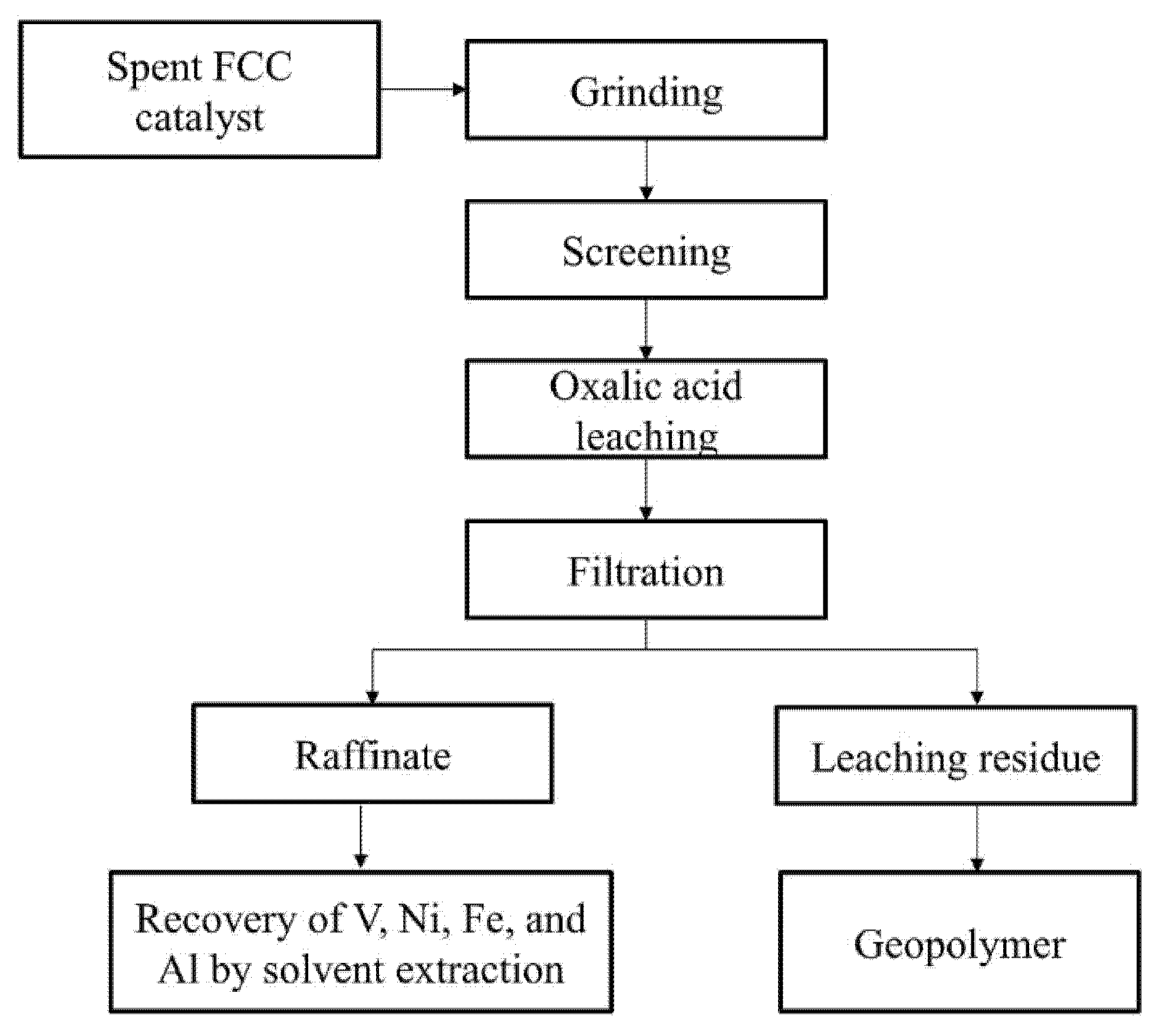
The problem of spent fluid catalytic cracking (SFCC) catalyst resource utilization, draws more and more attention to system analysis. SFCC was leached in an oxalic solution for comprehensive utilization. The results showed that for a D50 ≤ 17.34 μm, the catalyst leached for 240 min at 95 °C in the presence of a 2 mol/L oxalic acid solution, and the extent of leaching of V, Ni, Fe, and Al was 73.4%, 32.4%, 48.2%, and 36.8%, respectively. Studies on the occurrence state of the main ions (V, Ni, Fe, and Al) in the leaching solution were presented. Additionally, the separation of the main ions from such a solution by the “solvent extraction-stripping-hydrothermal precipitation-comprehensive recovery of valuable metal” process was studied. The immobilization rates of vanadium and nickel in geopolymers can be obtained using the toxicity characteristic leaching procedure (TCLP) test, and the geopolymers prepared by SFCC leaching residues can be considered a non-hazardous material. A process diagram of the comprehensive utilization of SFCC catalysts is presented.
Keywords: spent FCC catalysts; oxalic acid; selective extraction; comprehensive utilization spent FCC catalysts; oxalic acid; selective extraction; comprehensive utilization