


Abstract
Bauxite residue (red mud) is a highly alkaline byproduct of the alumina refining process generated in large volumes worldwide. Most alumina operations currently rely on long-term storage facilities due to the high costs and technical constraints of residue reuse technologies. Therefore, understanding the mechanical behaviour of bauxite residue is critical to minimising environmental contamination risks, preventing structural failures, and ensuring the long-term stability of storage facilities. However, obtaining reliable geotechnical parameters is challenging due to the residue’s complex composition and chemical characteristics, particularly given the current fragmented state of the literature. This review compiles an extensive database of bauxite residue parameters across alumina operations worldwide, synthesising existing knowledge and research needs. The database encompasses 940 data points extracted from 63 studies across 25 countries. The findings reveal considerable variability in parameter values across countries, potentially exacerbated by inconsistencies in experimental methodologies. Few studies have integrated geochemical conditions, such as pH and salinity, with geomechanical behaviour, thereby limiting understanding of the mechanisms that govern key parameters, including strength and deformability. Enhancing the predictability of bauxite residue behaviour requires the development of standardised experimental protocols that explicitly account for the coupled effects of chemistry and mechanics to support reliable risk assessments of storage facilities.
1. Introduction
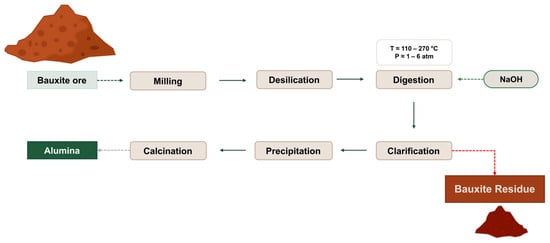
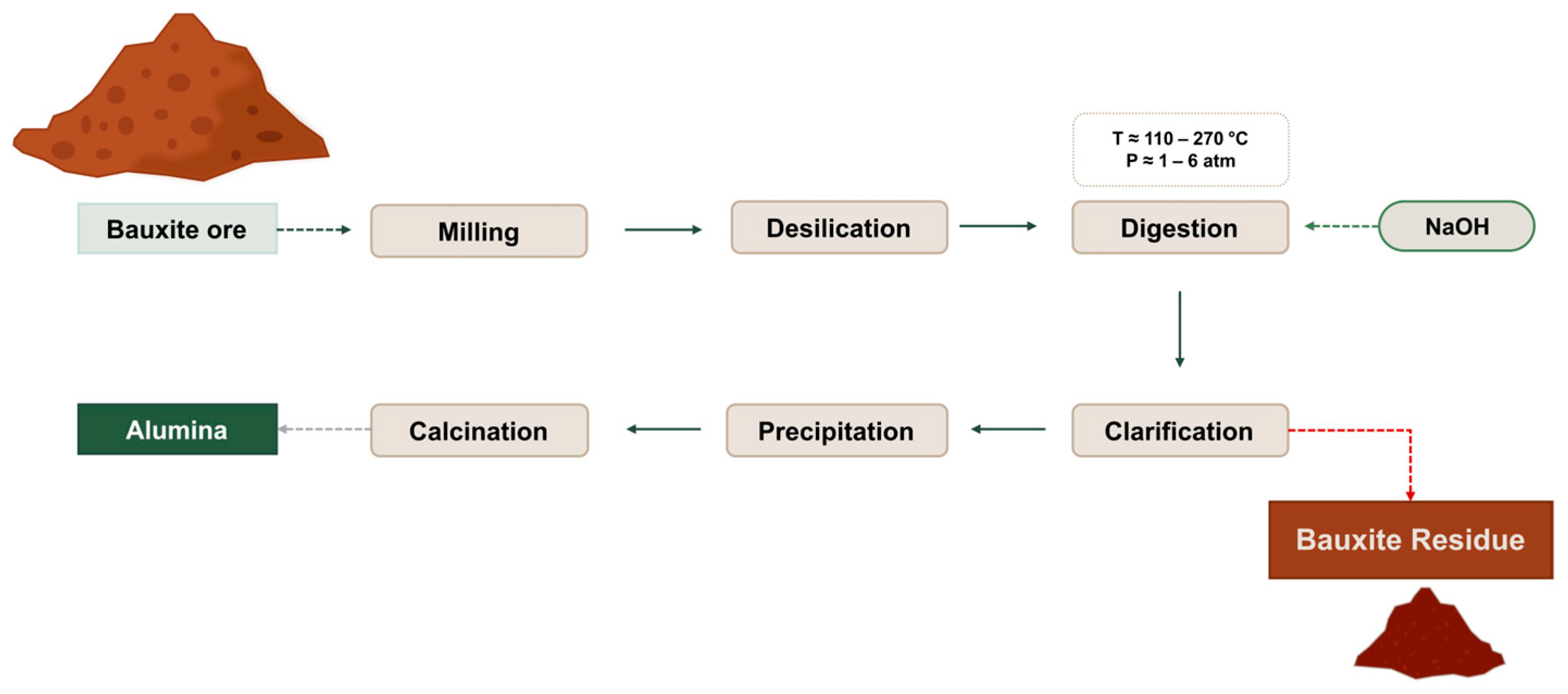
Bauxite residue, also known as red mud, is a fine-grained, highly alkaline waste generated during the alumina refining process. Over 90% of alumina production is utilised for aluminium manufacturing, with approximately 95% derived from the Bayer Process [1]. This refining process, schematically depicted in Figure 1, involves adding caustic soda (NaOH) to the orebody under high-temperature, high-pressure conditions, leading to the formation of bauxite residue—a waste characterised by extreme pH and salinity.
Figure 1.
Unit procedures employed during the Bayer Process for alumina extraction. In the figure, solid arrows indicate the processes involved in the Bayer process, while dotted arrows denote the materials involved, utilized, or generated through the process.
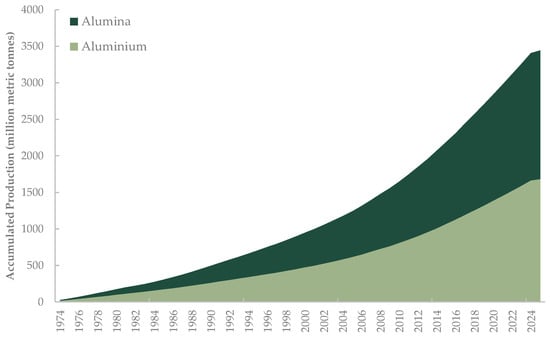
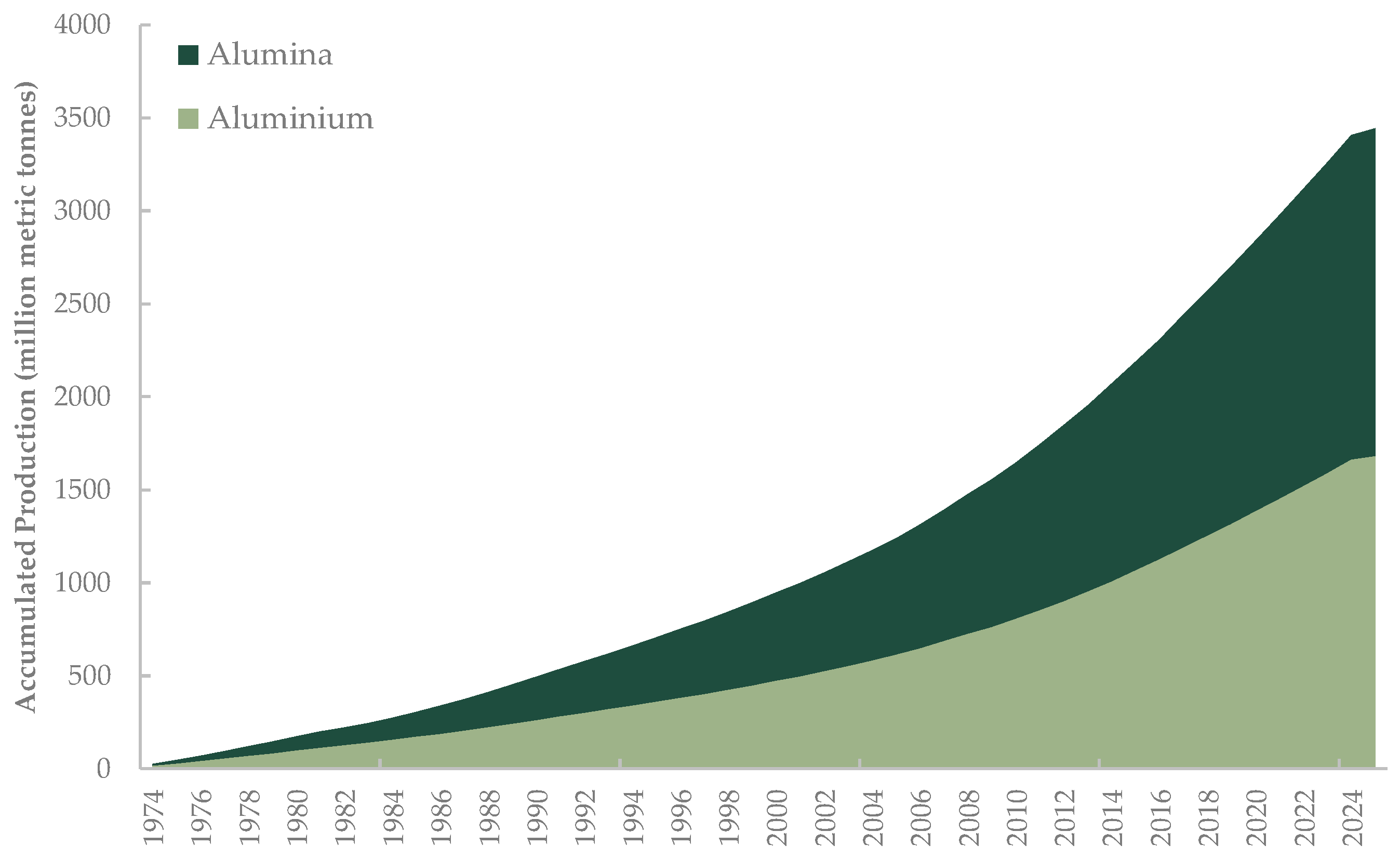
As the global demand for aluminium continues to increase and requires higher alumina production, as illustrated in Figure 2, mining operations are extending into lower-grade ore bodies, resulting in larger annual waste volumes. It is estimated that the Bayer process generates between 0.3 and 2.5 tonnes of red mud per tonne of alumina refined [1,2,3,4,5].
Figure 2.
Global generation of aluminium and alumina between 1974 and 2024.
Extensive research has been conducted on strategies to neutralise or reuse bauxite residue to mitigate the environmental risks associated with its management, including the use of the residue as an additive or aggregate for producing construction material [5,6,7,8,9,10,11,12,13,14,15] or road base material [16,17], recovery of rare and valuable metals [2,18,19,20], and the neutralisation of the residue [21,22,23,24,25,26,27,28,29,30]. Despite this, long-term storage facilities remain the standard practice for bauxite residue deposition and management [31], due to the considerable volume of residue produced each year and the high costs associated with refining processes, making the large-scale implementation of reuse technologies economically infeasible.
Additionally, bauxite residue deposits pose environmental risks associated with dust release, and soil and groundwater contamination. Several incidents have been documented in recent years, including the catastrophic failures at the Ajka Alumina Plant in Hungary in 2010 [32,33], at the Xiangjiang Wanji Aluminium Plant in China in August 2016 and at the HINDALCO Plant in India in 2019 [34,35]. Most recently, in September 2024, another failure was reported at a storage facility in Lajigarh, India [36]. Such failures typically result in the uncontrolled release of hazardous bauxite residue into surrounding areas, leading to severe environmental repercussions owing to the material’s alkalinity and raising concerns about the existing uncertainty in the design of these facilities. Therefore, maintaining the physical stability of bauxite residue storage facilities is essential to ensuring sustainable aluminium production and preventing environmental catastrophes.
However, despite decades of research, the geotechnical parameters reported for bauxite residue remain highly variable and often inconsistent. The variability arises from a range of causes, including differences in ore composition, refining process conditions, and inherent characteristics of the material, such as structural and cementation effects, and pore fluid chemistry [31,34,37,38,39,40,41]. Additionally, lack of standardised procedures for sample preparation and testing adds to the variability documented in this review. As a result, the existing state of research on red mud remains fragmented, and no standardised database allows systematic comparisons across refineries to enhance predictability in facility design.
Considering the recurrent failures of bauxite residue storage facilities and the complexity of this material’s behaviour, there is a clear need for an integrated assessment of the reported geotechnical properties of bauxite residue. This review addresses this gap by compiling a comprehensive database of published bauxite residue properties to facilitate cross-operation comparisons and evaluate current limitations in understanding red mud behaviour, particularly regarding chemical–mechanical interactions. The analysis consolidates existing knowledge on key geotechnical parameters, with particular emphasis on physical, chemical, and mineralogical characteristics and their influence on classification, strength and deformability. Furthermore, this work identifies knowledge gaps and proposes research directions to improve the operational safety and long-term stability of bauxite residue storage facilities.
2. Methodology and Database Framework
This review synthesises existing knowledge on bauxite residue geotechnical parameters and behaviour, and chemical composition. The aim was to compile a database of globally reported properties and to explore current limitations in understanding material behaviour that can lead to parameter variability, uncertainty and ultimately long-term environmental risk.
2.1. Review Methodology
A systematic literature search was conducted for peer-reviewed journal articles and academic theses published between 1974 and 2025. Primary searches were performed using Scopus and Google Scholar, using combinations of keywords such as (“bauxite residue” OR “red mud”) AND (“geotechnical properties” OR “mechanical behaviour” OR “shear strength”). Following the primary search, a “snowballing” technique was applied to capture relevant historical data not indexed in primary databases. Studies were included if they reported geotechnical laboratory or field data, specified the geographic source of the bauxite residue, and described sample preparation (e.g., drying methods and pore fluid). Conversely, studies were excluded if they focused exclusively on chemical processing or mineralogical characterisation without geotechnical testing. To address data quality, sources that failed to specify critical testing conditions (e.g., consolidation or drainage conditions in triaxial tests) were omitted to ensure the dataset’s reliability.
2.2. Database Summary
The review compiled a global dataset consisting of 940 data points from 25 countries. Table 1 provides a summary of the compiled database, categorising the data by geographic origin, the number of independent studies, and the specific geotechnical and chemical parameters available.
Table 1.
Geographic distribution and parameter matrix of the global bauxite residue database.
To preserve the conciseness of the review while ensuring maximum transparency and reproducibility, a breakdown of the dataset is provided in the Supplementary Materials. The Supplementary Materials detail every study considered, including the geographic origin of the residue and the ranges of all evaluated geotechnical and chemical parameters. Furthermore, it encompasses descriptions of sampling protocols, material characteristics (e.g., storage deposit type, sampling method, and whether the residue was filtered or otherwise treated), and the specific laboratory sample preparation procedures utilised across the different testing programs.
3. Bauxite Residue Composition, Alkalinity and Morphology
Most observations on the geotechnical behaviour of bauxite residue have been correlated with the material’s mineralogical and chemical characteristics. This subsection establishes the features of bauxite residue composition, regional characteristics, and external factors that may affect these properties.
3.1. Mineralogy and Alkalinity
The bauxite residue mineralogy reflects the mineral composition of the ore (bauxite) and modifications induced by the refining process. Bauxites are classified as fine-grained residual soil derived from the weathering of felspathoids, igneous, volcanic, and metamorphic rocks through a process known as “bauxitization”. Because alumina in bauxite can occur as a monohydrate (boehmite or diaspore) or a trihydrate (gibbsite), the conditions in the digestion tanks vary. Trihydrate, being more soluble, can be extracted at temperatures up to 150 °C with weaker caustic solutions, while monohydrate requires temperatures over 160 °C and stronger solutions [4,42]. Aside from the predominant alumina trihydrate and monohydrate minerals (i.e., gibbsite, boehmite, and diaspore), other residual minerals can be found in bauxite, such as kaolinite—the dominant siliceous mineral in the matrix, especially in older bauxites [43]—halloysite, goethite, hematite, magnetite, anatase, and quartz.
When bauxite ore undergoes the Bayer process, new mineral phases form [44]. The mineral composition of the residue can include hematite, goethite, gibbsite, silica, quartz, titanium dioxide, boehmite, anatase, rutile, calcite, and desilication products (DSP). Other compounds, such as muscovite, perovskite, calcium aluminate, and magnetite, can also be found [8,34,40,45,46,47].
Published results of elemental composition, presented in Table 2, indicate the most abundant elements in BR to be iron oxide or hematite (Fe2O3), aluminium oxide or alumina (Al2O3), silicon dioxide or quartz (SiO2), titanium dioxide or rutile (TiO2), calcium oxide or quicklime (CaO) and sodium oxide (Na2O).
Table 2.
The most abundant elements present in bauxite residue and their reported concentration ranges based on elemental composition test results.
Desilication products are formed during the pre-desilication and desilication phases of the Bayer process, which convert reactive silica species into insoluble sodium aluminosilicates to prevent contamination of the pregnant liquor [25,45,62,63].
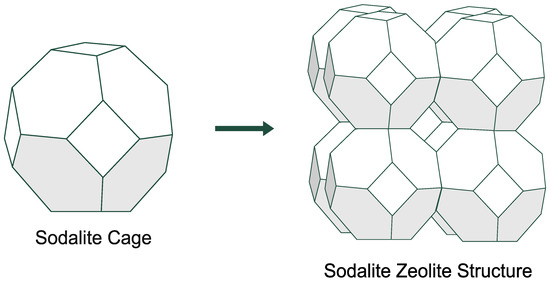
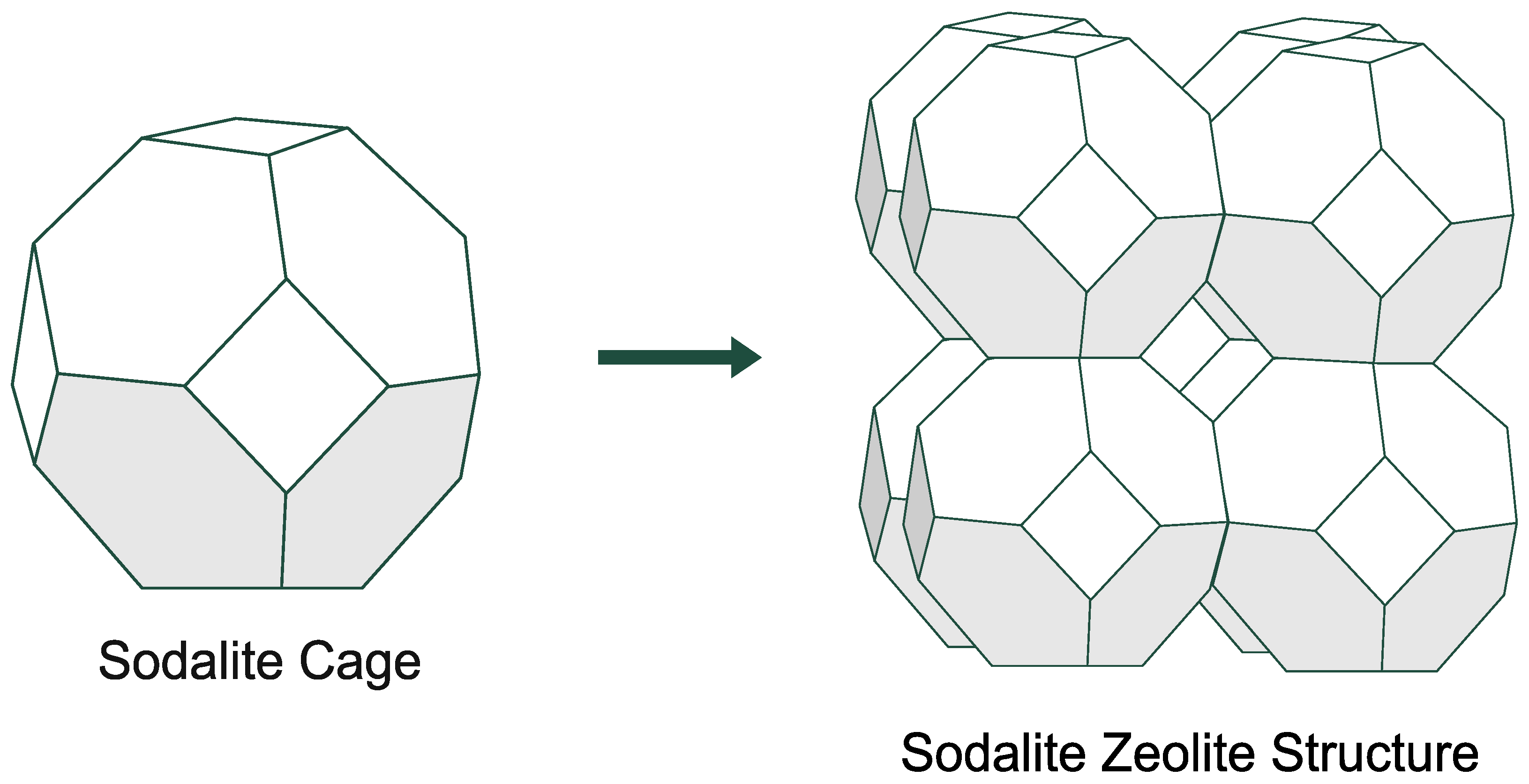
The most common DSPs are sodalite (Na8(Al6Si6O24)X2, X is OH−, Cl−, , or ) and cancrinite (Na6Al6Si6O24⋅2CaCO3). Because of the Bayer process conditions, they exhibit a zeolite-type structure. These zeolite structures can have properties similar to those of clay minerals, including high ion-exchange and adsorption capacities [64,65,66]. Bayer’s sodalite (Figure 3) structure resembles a honeycomb or cage, with relatively large cavities that can accommodate loosely bound water molecules and exchangeable ions. Cancrinite has a similar formation, exhibiting channels in addition to structural cages [67]. The presence of DSPs, particularly sodalite, is inherently linked to the high salinity of the residue, as sodium is incorporated within the sodalite “cages”, releasing sodium ions (Na+) into the pore fluid when dissolved [45,47,68].
Figure 3.
Schematic representation of a Bayer sodalite cage-like structure.
Pre-desilication and digestion also contribute to the formation of alkaline substances in bauxite residue. Approximately one-quarter of the alkalis present in BR is in soluble form, while the remainder exists as structural alkaline minerals such as sodalite and cancrinite, as well as calcite (CaCO3), sodium hydroxide (NaOH), sodium carbonates (Na2CO3), sodium aluminates (NaAl(OH)4), and sodium silicates (Na2SiO3), among others [21,25,29].
It is important to note, however, that the chemical composition of bauxite residue is not stable, as the material’s physicochemical properties can change in response to external conditions [69]. Over time, both the alkaline agents and mineral structures evolve: while fresh bauxite residue contains abundant free hydroxides, aluminates, and carbonates, the alkalinity of weathered red mud becomes largely governed by carbonates, as hydroxides and aluminates precipitate over time [25]. Aged samples may also exhibit changes in the concentrations of other essential oxides, in microstructure, aggregate stability, and in pH over time. These processes result from the transformation of soluble forms (such as sodium and calcium), leaching of dissolved solids due to weathering, and an increase in mineral crystallisation over time [58,68,70,71,72].
3.2. Morphology
Bauxite residue is described to exhibit scattered fine particles, containing grains with sharp edges, slightly rounded forms, and spongelike porous surfaces [34,69,73] with notable angularity, especially in the coarse fraction [6]. The residue matrix is heterogeneous, comprising individual grains and particle aggregates that form a loose, porous structure. The formation of aggregates is commonly attributed to the presence of DSP sodalite, which can act as a cementing agent at alkaline conditions [5,40,50,74,75].
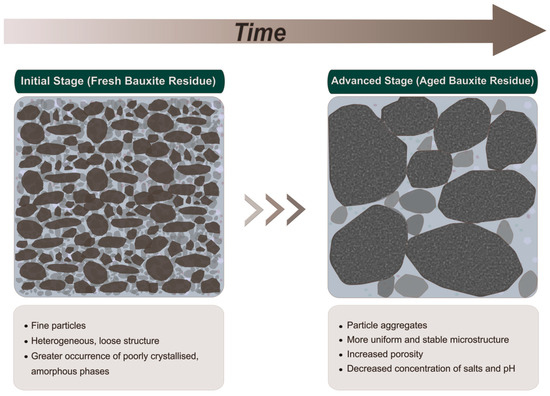
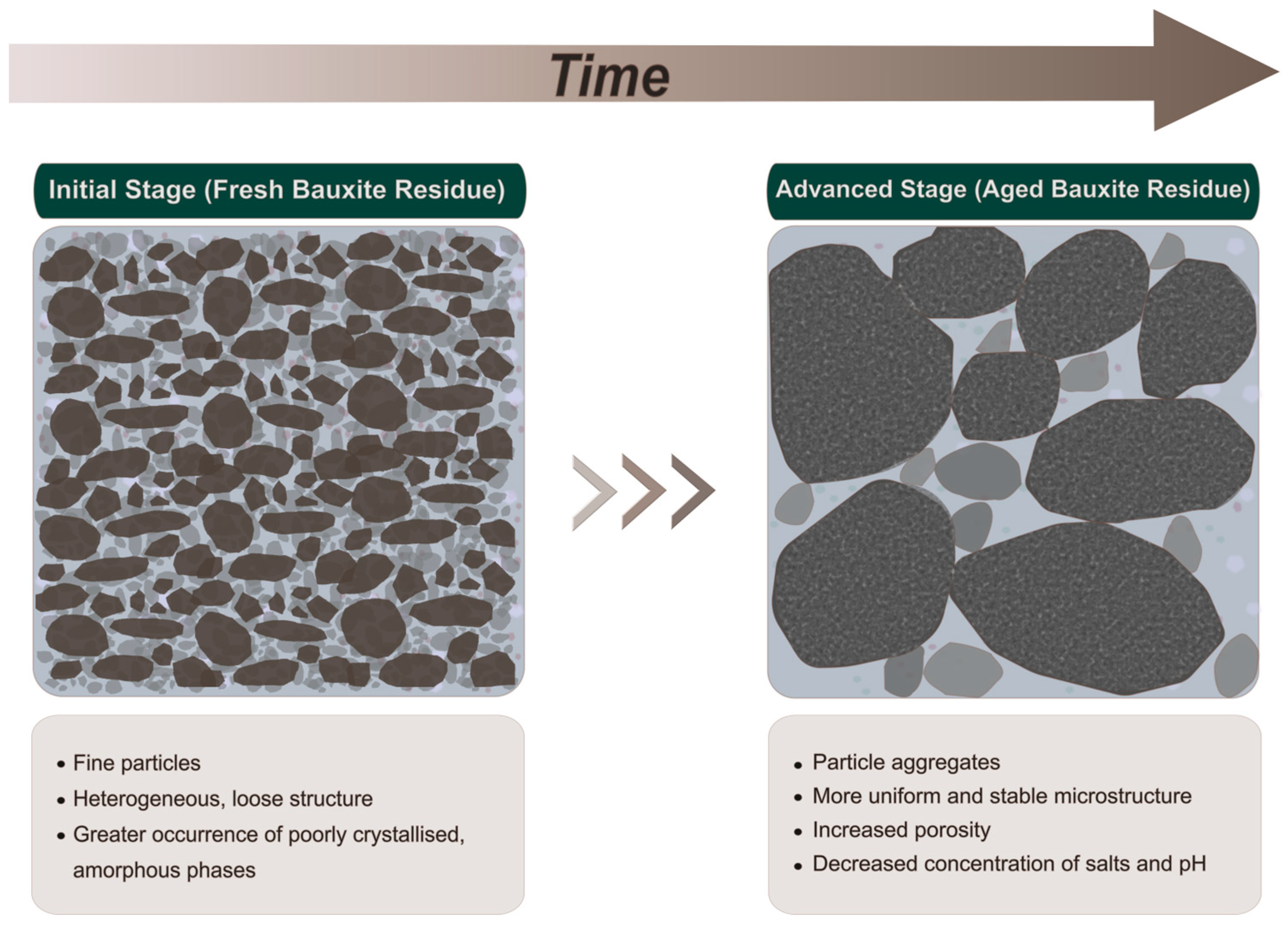
The microstructure of bauxite residue appears to be affected by time, as schematically illustrated in Figure 4. Freshly deposited red mud typically contains a higher proportion of amorphous minerals and has a more disordered microstructure. In comparison, samples collected from areas where the residue had been stored for over a decade showed increased crystallisation of some mineral phases, a decrease in the total dissolved solids, pH and sodium ion concentrations, an increase in calcium ion concentration, and the development of larger macroaggregates due to particle agglomeration [70,72].
Figure 4.
Schematic representation of the residue morphological structure at different ages.
4. A Global Database—Bauxite Residue Geotechnical Properties and Mechanical Behaviour
4.1. Characterisation
The characterisation of geomaterials, including index properties, influences the engineering team’s perception of the storage facility operation. Key properties, such as specific gravity (Gs), particle-size distribution (PSD), and plasticity (i.e., Atterberg Limits), are important for supporting advanced analyses, including in situ void ratio and critical state parameters, hydraulic regime, deposition plans, settlement analysis, and initial liquefaction assessment.
Bauxite residue is recognised for its high specific gravity (Gs), largely attributable to the iron mineral content [46,57], is primarily fine-grained, with a predominant silt fraction, and is characterised as a material with low plasticity [34,40,76,77].
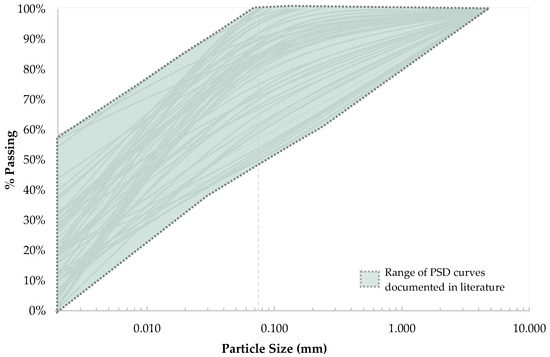
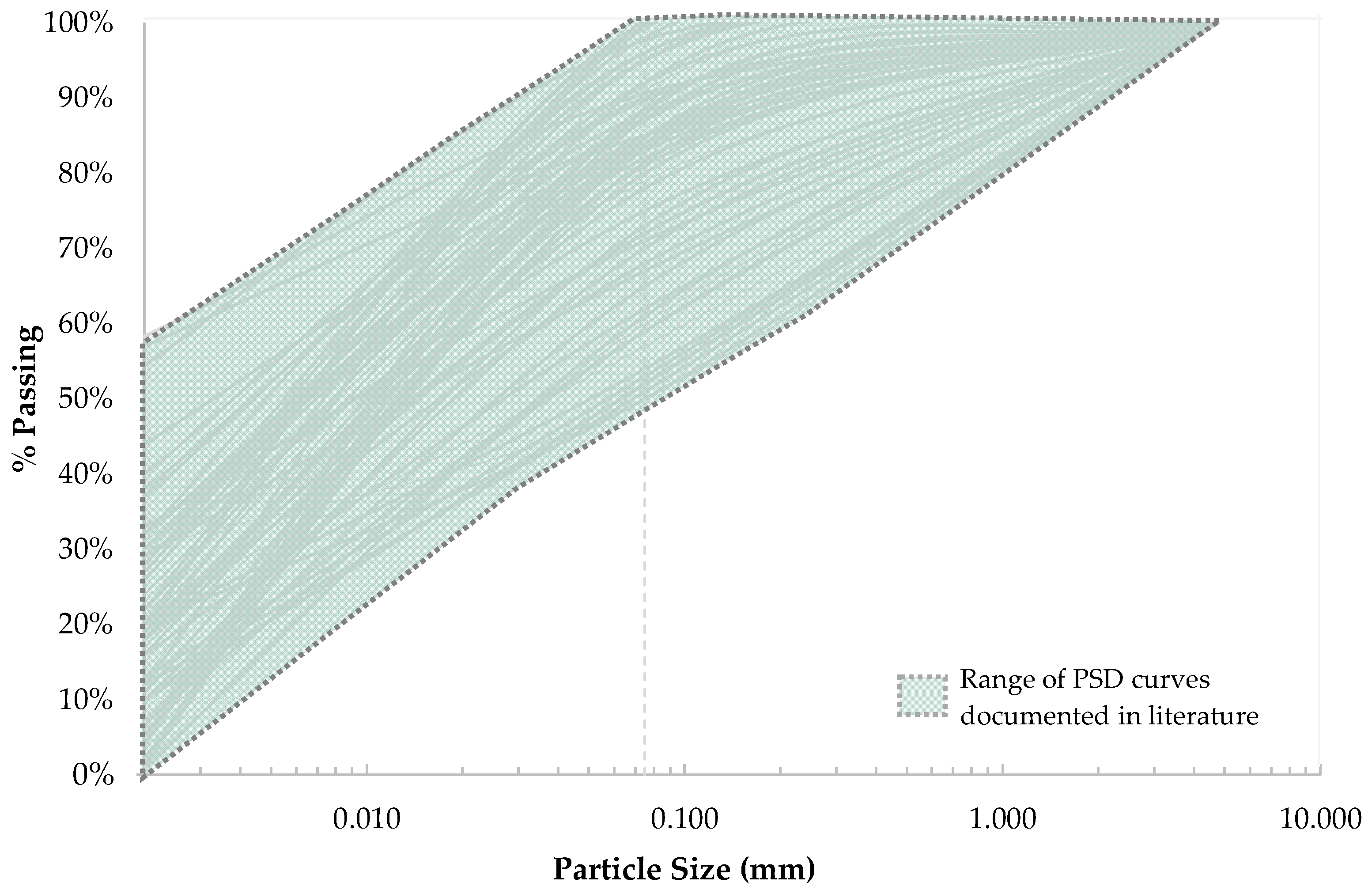
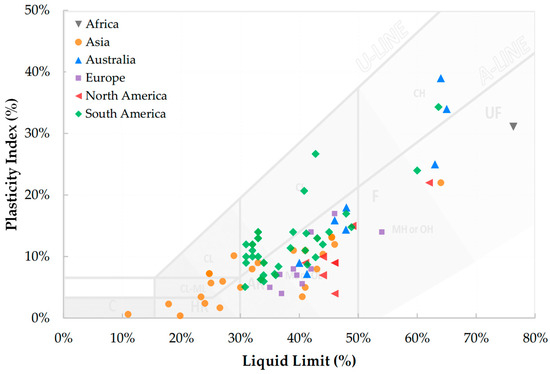
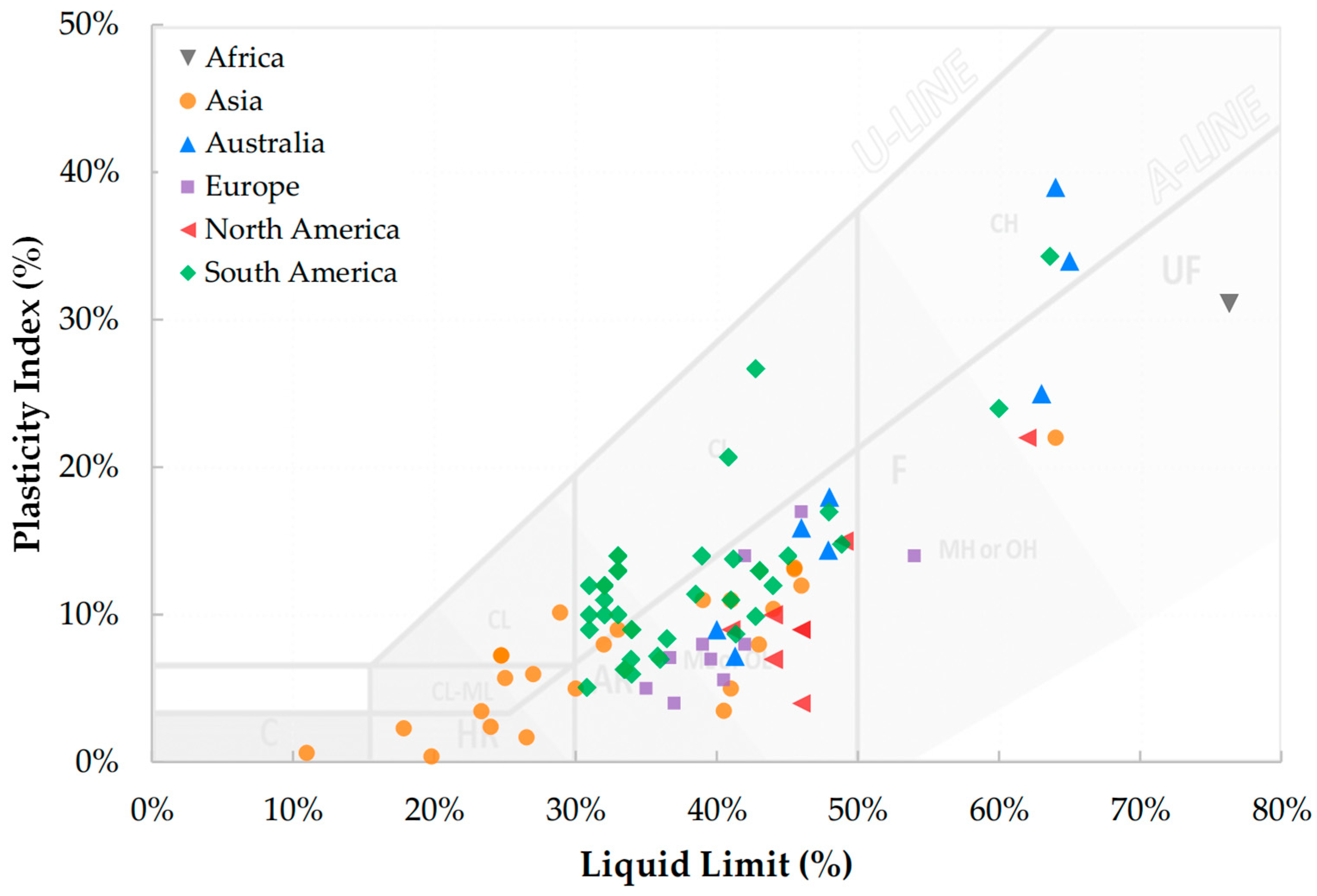
While these classifications define the general properties of bauxite residue, a closer analysis of published data indicates substantial regional variability. For example, Figure 5, which consolidates the spectrum of PSDs documented in the literature from twenty-six distinct sources, reveals that the Bayer process can produce residues with gradings ranging from coarse sand to silty clay, with the silt content varying between 20% and 93%. Similarly, a regional overview of plasticity data reported in the literature indicates that the values of liquid limit (LL), plastic limit (PL), and plasticity index (PI) of bauxite residue fall within a broad range of 11%–87%, 10%–45%, and 0%–52%, respectively, as illustrated by Figure 6.
Figure 5.
Particle-size distribution curves (solid lines within the shaded area) of bauxite residue, as documented in the literature, with the shaded area indicating the typical range of particle sizes reported across various studies.
Figure 6.
Global overview of bauxite residue plasticity data compared with the ICOLD classification system.
Table 3 summarises regional values of specific gravity, particle-size distribution, and Atterberg limits reported in the literature for bauxite residue, and the Supplementary Materials detail relevant information regarding the sources considered and testing methodology used.
Table 3.
Parameter intervals of bauxite residue index properties reported in the literature for residues produced in different countries.
4.2. Mechanical Behaviour
4.2.1. Compressibility and Compaction
The mechanical behaviour of bauxite residue is uniquely defined by a paradox: despite the absence of clay minerals and low plasticity, it usually exhibits geotechnical properties characteristic of clay-rich tailings, particularly high compressibility [76]. This behaviour is strongly influenced by the parent material of the bauxite ores and the processes employed during refinery processing.
Table 4 summarises the regional values of the compression index (Cc) reported in the literature for different operations, showing considerable variation across regions. A significant portion of the samples, particularly those from the UK, Australia, and the USA, fall into the highly compressible category, while the Indian database is a notable outlier, with consistently lower values. This suggests that mineralogical constituents, specifically the type and quantity of iron minerals and particle surface interactions, influence the consolidation behaviour. Furthermore, the chemical environment plays an important role, as the high alkalinity of caustic soda and variations in pore fluid pH can alter compressibility parameters; for instance, leaching or acid neutralisation may reduce the compression indices [40,92,99,102].
Table 4.
Parameter intervals of bauxite residue compression index reported for residues produced in different countries.
Similarly, the compaction characteristics of the red mud are highly sensitive to the residue composition and alkalinity, the ore source and extraction processing conditions, and the compaction effort. Research indicates that the mineral phases inherent to the orebody produce unique “compaction fingerprints”. As a result, the interval of maximum dry density reported in the literature is broad, from 12.4 to 20.0 kN/m3, while the optimum moisture content ranges from 20% to 45%, as detailed in Table 5. Consequently, bauxite residue operations can require site-specific compaction strategies, where higher energy levels or chemical additives may be necessary to ensure structural stability [92].
Table 5.
Parameter intervals of bauxite residue compaction properties reported in the literature for residues produced in different countries.
4.2.2. Shear Strength
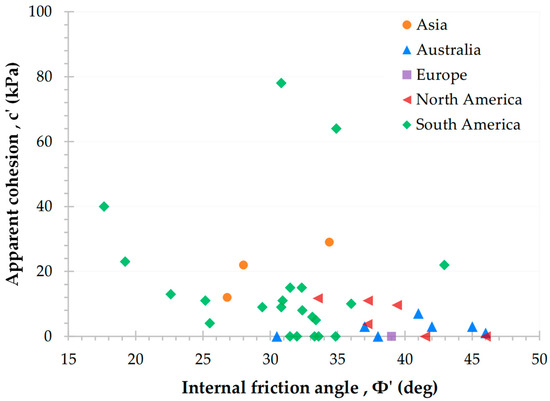
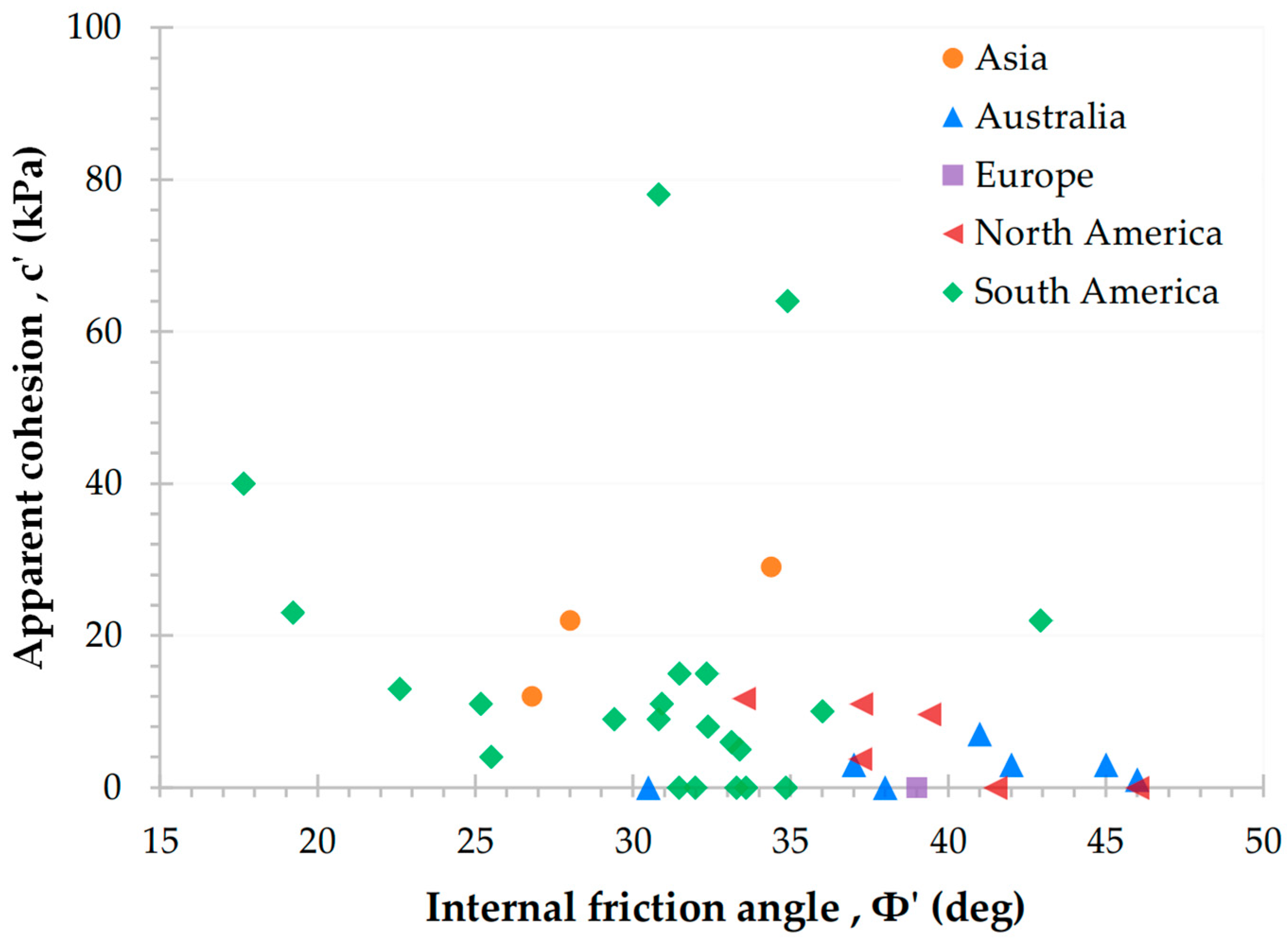
Shear strength is arguably the key property for quantifying a material’s physical resistance. Figure 7 summarises the regional information available for untreated bauxite residue, including drained (CD) and undrained (CU) triaxial test data. The reported internal friction angle (Φ’) ranges from 18° to 43°, with data concentrated between 30° and 36°. For apparent cohesion (c’), the range is between 0 and 80 kPa, and most of the values are in the interval between 0 and 26 kPa [16,40,49,75,82,83,85,90,94,95,97,100,102,103]. The reported cohesion intercept (c’) is treated herein as an ‘apparent cohesion’, resulting from curve-fitting over specific stress ranges, or potentially from cementation bonding.
Figure 7.
Bauxite residue effective internal friction angle and apparent cohesion reported in the literature, obtained from drained and undrained triaxial tests.
The Supplementary Materials detail relevant information, test methods and sources considered in this work. It is important to highlight that, perhaps unexpectedly, a considerable number of studies on this material do not present the experimental results graphically. Because of this, the evaluation of undrained shear strength parameters was limited to vane shear tests. These values are presented in the Supplementary Materials.
What has drawn considerable attention among researchers is the ability of a finely ground material to achieve such high internal friction angles as typically exhibited by bauxite residue.
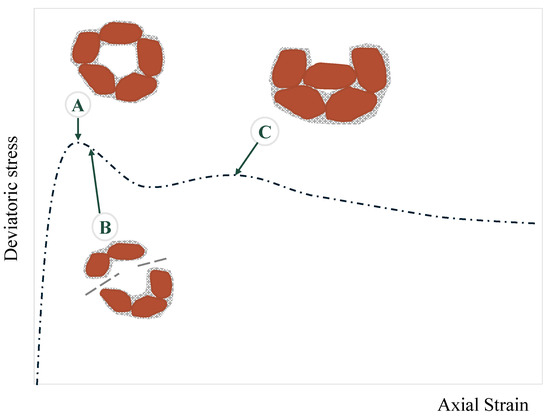
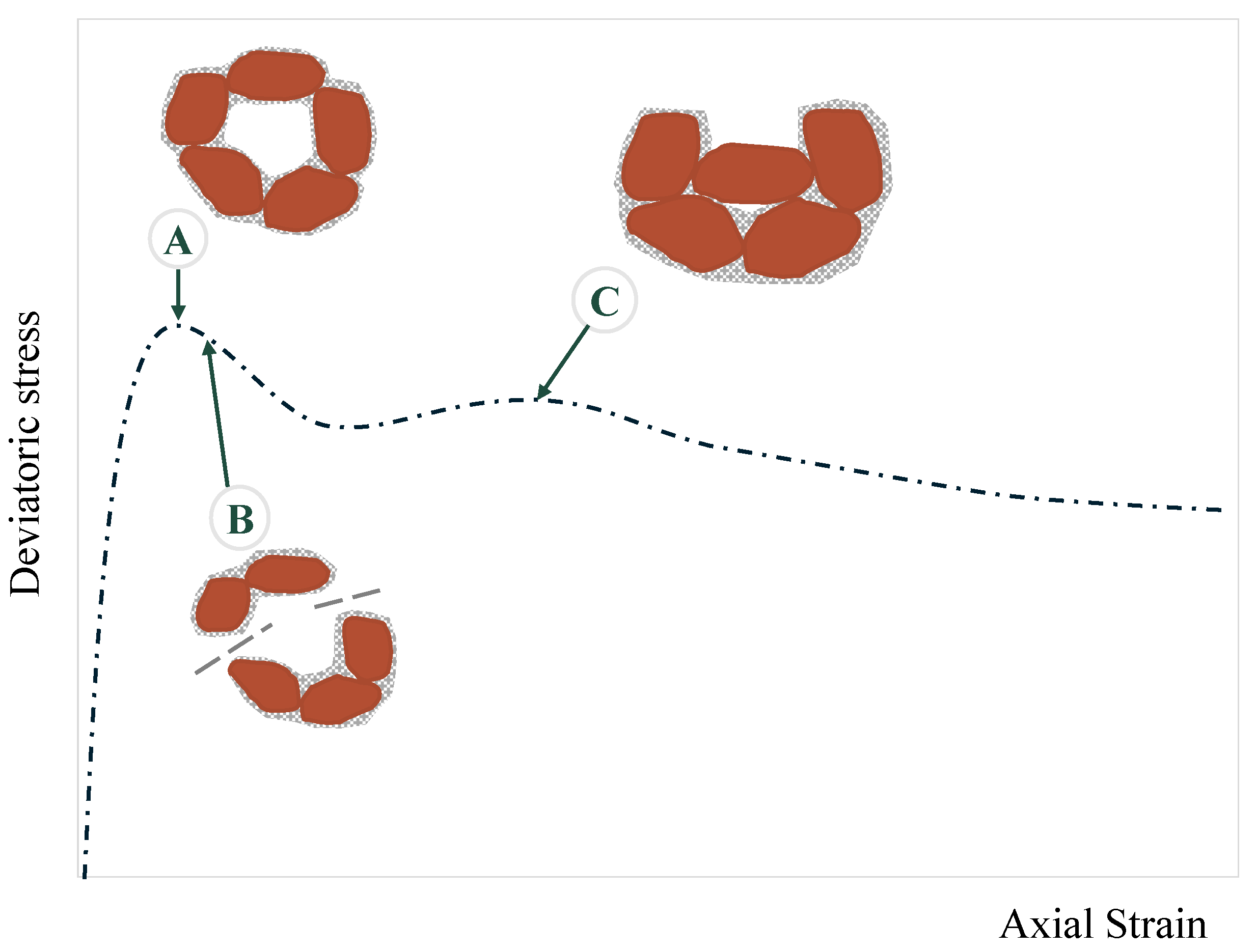
Bauxite residue exhibits behavioural similarities to structured, cemented soils. During shearing, cemented soils are described by an initial yield surface that reflects particle bonding, with strains mainly elastic and limited in magnitude. Plastic strains may occur after the yield point. Therefore, the stress–strain relationship shows an initial peak, after which cementation bonds begin to degrade, typically at low axial strain. This leads to a decrease in strength as the frictional forces of smaller, individual particles become predominantly mobilised [104]. In some cases, a second peak can develop, driven by an increase in particle frictional strength, as illustrated schematically in Figure 8.
Figure 8.
Schematic representation of the strength behaviour of bauxite residue, indicating (A) the presence of bonded particle aggregates; (B) degradation of the bonds, leading to a decrease in strength; and (C) rearrangement of the structure that induces closer particle packing, with the external load transferring from the aggregates to the smaller, individual particles.
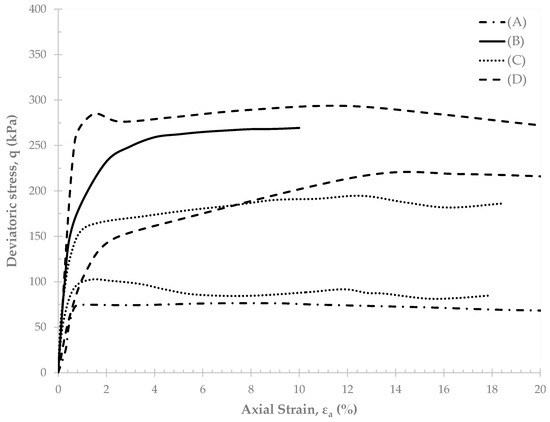
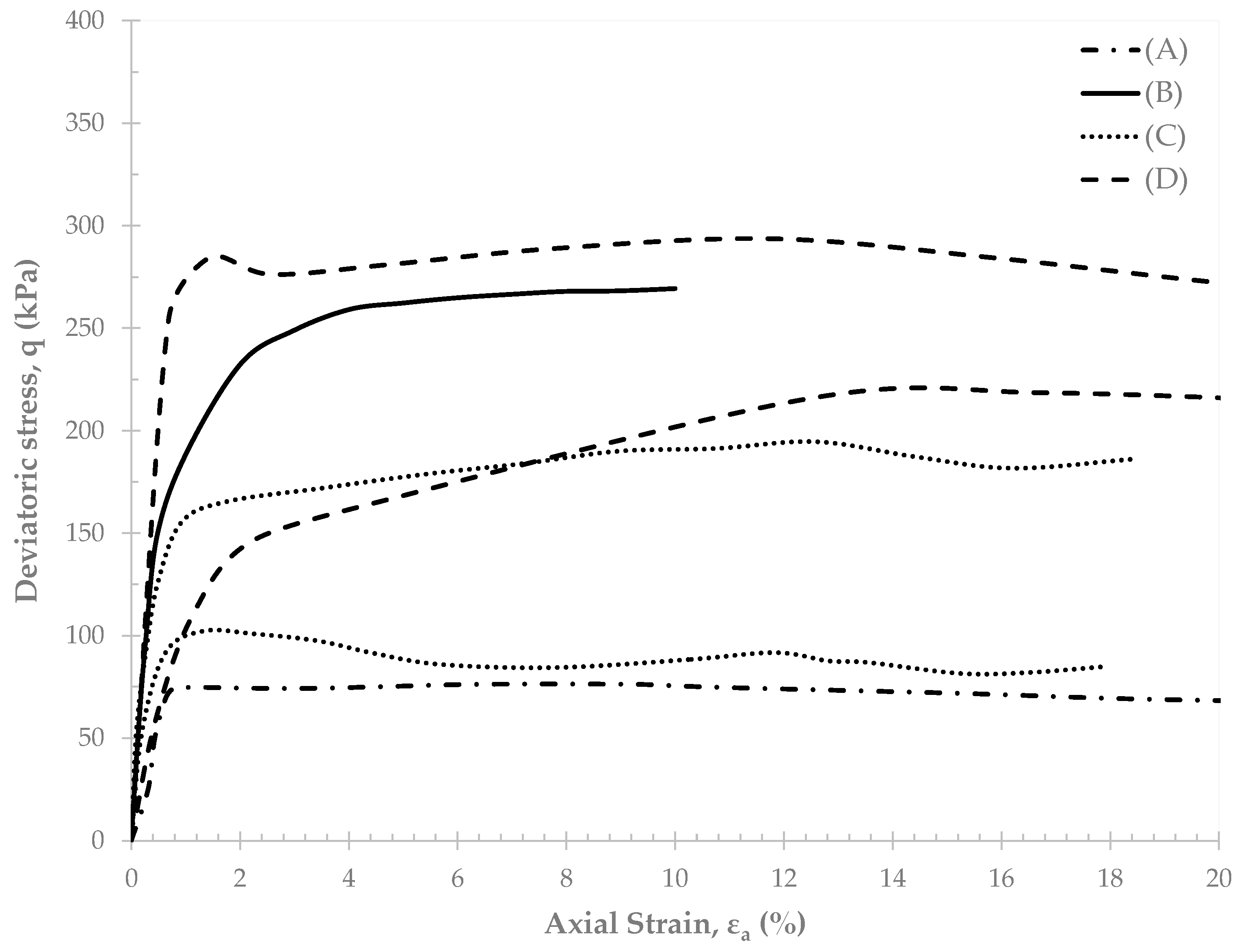
This model of cementation very likely applies to bauxite residue due to the presence of cementing mineral agents, such as DSP sodalite, and is supported by data on the residue’s shear response reported in the literature (Figure 9). Previous research shows that at lower confining pressures, bauxite residue usually exhibits a gradual increase in shear resistance up to 2%–8% axial strain, likely due to cementation bonds, followed by softening, occasionally reaching a second peak before a further reduction in shear resistance beyond 10% axial strain.
Figure 9.
Triaxial deviatoric stress–axial strain curves of bauxite residue from different origins documented in the literature. (A) Specimens from northern Australia [100]; (B) Undisturbed specimens from the UK [40]; (C) Specimens from Brazil [49]; (D) Filtered bauxite residue from Australia [38].
Cementation might also account for the limited increase in tip resistance with depth seen in many cone penetration tests with pore pressure measurements (CPTu) conducted in BR deposits, unlike the more common pattern in which tip resistance increases with depth due to overburden effects [76,105,106]. This is because the cementation bonds are not significantly affected by compressive loads, which limits variations in void ratio despite the increase in effective stress in situ.
Although the residue’s mechanical behaviour may be affected by the presence of cementation bonds, this alone does not explain the high internal friction angles reported in the literature, particularly at higher confining pressures in triaxial tests. It is plausible that the pronounced angularity of the particles could be a large contributor to enhancing interlocking and, consequently, frictional resistance [6,94,95,100].
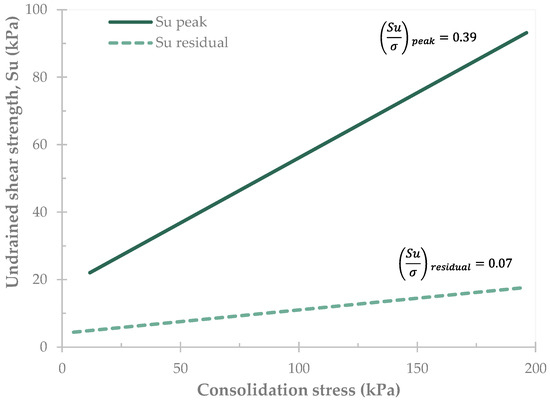
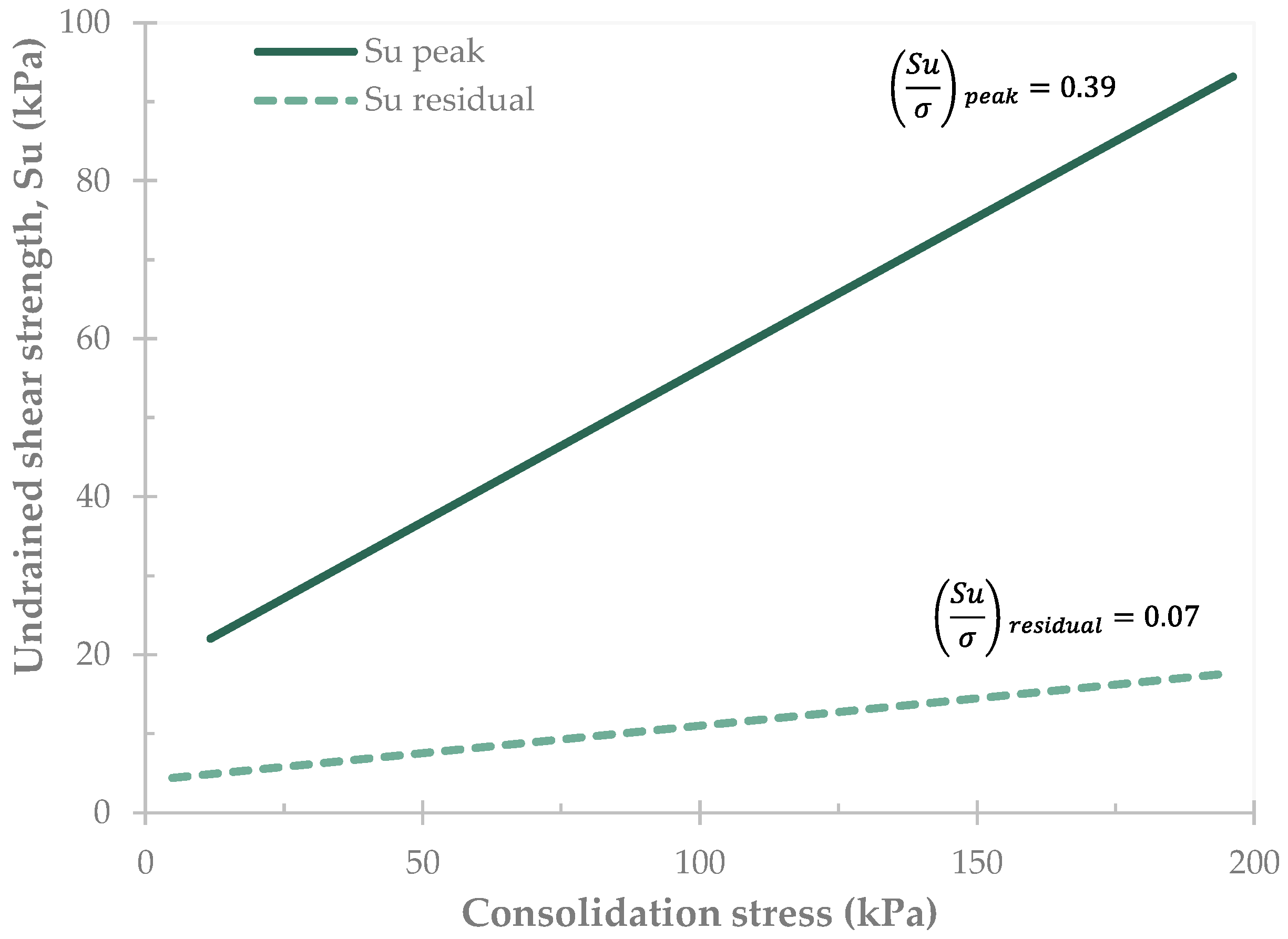
Data on the undrained shear strength and strength ratio (i.e., the ratio of the undrained shear strength (Su) to its effective overburden stress) of bauxite residue are even scarcer than on drained strength. Vane shear tests performed on a German deposit reported an undrained strength ratio of 0.39 at peak and 0.07 in residual or remoulded conditions, as seen in Figure 10. This figure shows a decrease of 80% in peak undrained shear strength by the end of the test, reaching residual Su values of the order of 10 kPa. This suggests that the residue can exhibit high sensitivity. Sensitivity (St) in this context is defined by the ratio between the peak undisturbed and the remoulded (sometimes referred to as residual) undrained shear strength at the same water content.
Figure 10.
Peak and residual undrained shear strength measured by the vane shear apparatus. Adapted from [73].
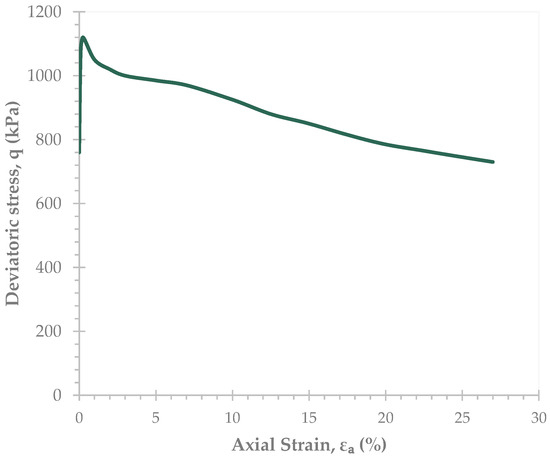
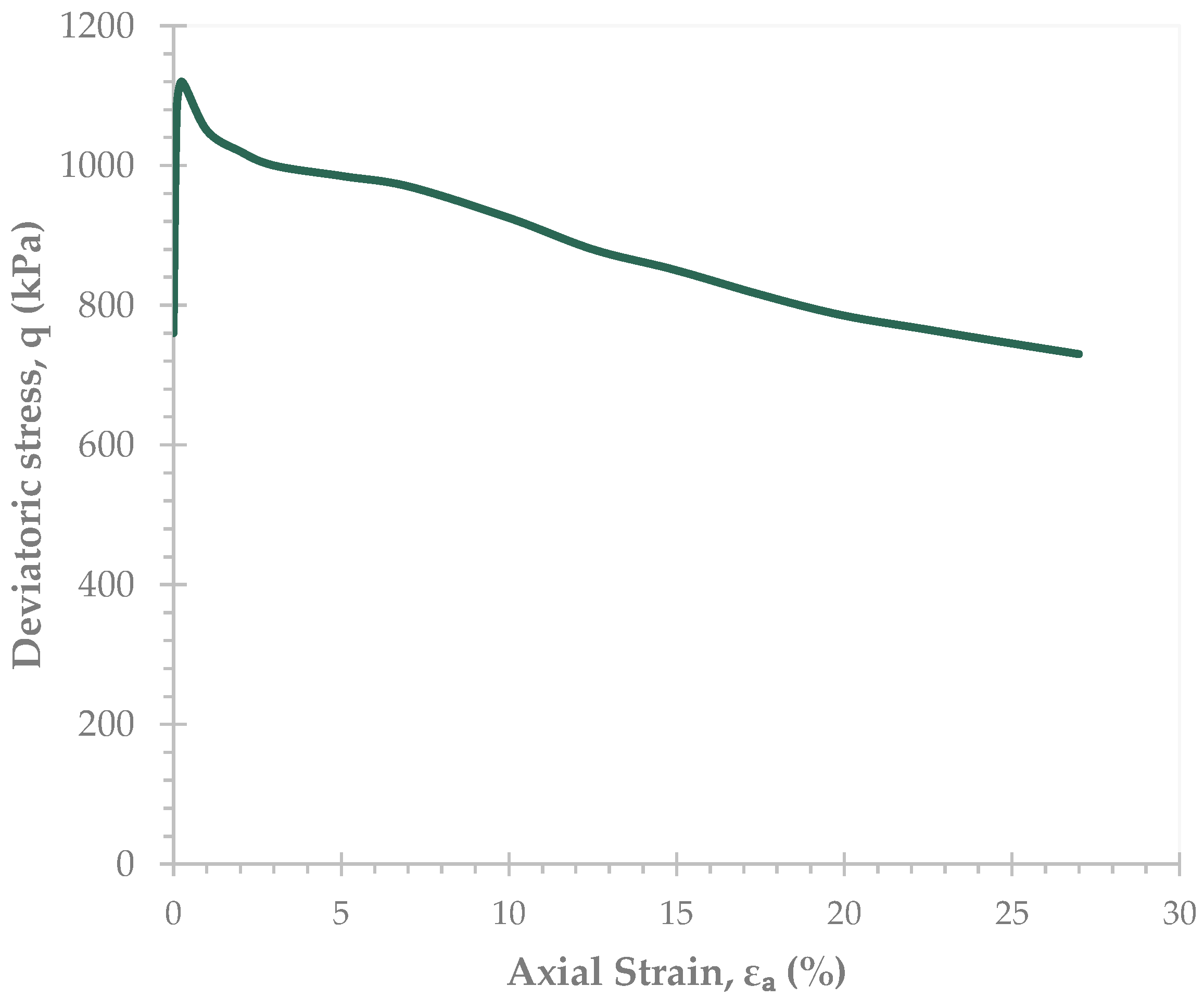
While the vane result is of interest, the condition considered as a residual strength in this context is possibly one of deformation so extreme that it is difficult to assess its representativeness of a real field condition. Triaxial tests mostly indicate that although the material exhibits potential for strength loss, the process unfolds in a non-abrupt manner, and in most cases, the residual strength is not fully developed even at 25% axial strain, as illustrated in Figure 11.
Figure 11.
Undrained triaxial compression test on anisotropically consolidated bauxite residue. Adapted from [76].
5. Parameter Variability—Potential Causes and Chemical–Mechanical Relationship
Establishing a geotechnical database is a crucial initial step towards enhancing the operational safety of bauxite residue storage facilities. Given the material’s high alkalinity and the reliance on long-term storage deposits, maintaining physical stability throughout the operational and closure phases is the primary defence against structural failure and subsequent environmental contamination. Therefore, development of a global database provides a benchmark, offering a framework for alumina refineries to compare their site-specific test results against established typical ranges for this material.
As previously established, the mineralogy of the raw bauxite ore dictates the chemical boundary conditions of the Bayer process, shaping the resulting residue characteristics. Specifically, the caustic concentrations and temperatures required to extract alumina from monohydrate bauxites (boehmite/diaspore) alter the precipitation kinetics of DSPs and iron mineral matrices compared to those derived from trihydrate (gibbsite) digestion. This distinction in the refining conditions defines the material’s initial structure and, consequently, can contribute to variability in geotechnical parameters. Furthermore, residue management, disposal methods, and storage time vary among sites and influence the material properties post-deposition [31]. The facility’s operating history, local climate-driven weathering, and leaching govern the progression of in situ carbonation and pore fluid change, leading to a progressive decrease in total alkalinity and salt concentration, alongside the degradation of sodalite and calcite concentrations over time, shifting the material’s structural bonding and long-term aggregate stability [21,107].
However, the variability in the material’s geotechnical properties, detailed per region in Table 6, is markedly more pronounced than that observed in other mine tailings. An illustrative example of this issue can be seen in the data reported for operations in Brazil, South America. The coefficient of variation (CV) for geotechnical parameters from Brazilian operations indicates a high level of dispersion for most properties. However, all these samples originate from the same country and most likely share the same orebody origin, given bauxite extraction in Brazil. This highlights another significant matter: regional characteristics are not the sole source of parameter variation.
Table 6.
Synthesis of global bauxite residue geotechnical parameters segregated by macro-region, presenting the mean value, Coefficient of Variation (COV, %), and the number of data points (N) for each engineering property.
Beyond regional composition differences, an important yet frequently overlooked factor is how chemical characteristics affect the physical and mechanical properties of red mud—including both those intrinsic to the refining process and those triggered by external influences. In this context, it is essential to evaluate how standardised laboratory protocols may inadvertently modify these chemical conditions, potentially producing parameters that may not accurately reflect in situ performance.
To understand this relationship, the following subsections address considerations of potential chemical–mechanical coupling effects relevant to red muds.
5.1. Thermal Treatments
The leading process capable of altering the chemical features of red mud is thermal treatment, specifically drying. Most standardised laboratory protocols recommend drying the samples, either by air or in an oven, as an initial step in specimen preparation. Although common, evidence suggests this practice can alter residue structure by promoting particle aggregation.
Several authors report changes in particle-size distribution after drying, indicating that oven drying reduces the proportion of fines, while increasing the sand content [16,83]. This difference can be substantial, with the clay fraction reported to decrease by 7 times upon oven-drying the red mud at 100 °C compared to air-drying [95].
While less definitive than the trends observed in PSD, a relationship between drying methods and plasticity also seems to exist. Specifically, a decrease in the plasticity index is often observed after oven-drying bauxite residue compared to air-drying [83]. This effect remains a point of debate, however, as some laboratory data show only minor variations in plasticity indices [78,95]. This inconsistency could partly stem from the lower precision of plasticity testing compared with other soil properties. Nevertheless, there is precedent for the view that drying induces an irreversible alteration in the plasticity of red mud that cannot be restored upon rehydration [74], even if the observed changes are sometimes small in magnitude.
These behavioural changes strengthen the view that red mud is a material susceptible to chemical bonding. This is attributed to the loss of residual or attached water from interstitial voids during oven drying, which promotes strong interparticle attraction. Consequently, the drying process may also indirectly influence the shear strength. Although this mechanism has not been explicitly examined in literature, drying-induced particle aggregation can lead to a loose soil structure, and previous studies suggest that coarser bauxite residues tend to have increased porosity and greater sensitivity [73,102].
To isolate laboratory-induced variability from inherent material heterogeneity, global baseline means were compared by drying pretreatment (Table 7). Oven-drying significantly alters the particle size distribution (PSD), causing a 22% reduction in the silt-sized fraction and a near-doubling of the sand-sized fraction (from 15% to 28%). In contrast, the effects on plasticity are modest. Oven-drying increased the Liquid and Plastic limits, but because both thresholds shift concurrently, the resulting Plasticity Index remains virtually unaltered (Δ = −1%).
Table 7.
Quantitative comparison of global mean geotechnical parameters for bauxite residue subjected to different pre-testing laboratory drying methods (air-dried vs. oven-dried), including the relative change () in measured properties.
In highly alkaline tailings, these thermal shifts indicate temperature-driven microstructural and mineralogical alterations, such as the aggregation of fine particles or changes in the hydration state of sodalite (DSP) frameworks. This divergence highlights the need to standardise pre-test treatments; mixing data from different drying protocols may compromise the reliability of geotechnical design predictions. Comparisons of shear strength parameters across drying conditions must be interpreted with strict caution due to database limitations ( = 5 observations, with only one oven-dried sample), this being a critical point for future experimental investigation.
5.2. Salinity and pH
Although processed bauxite residue is highly saline, the vast majority of studies on geotechnical behaviour do not account for dissolved salts and their influence on geotechnical properties. In this context, two issues require attention: the first is the correction of geotechnical properties for total dissolved solids concentration [108,109], and the second concerns changes in residue properties when subjected to leaching, weathering or neutralisation processes that reduce salt content within the system.
Perhaps the most critical property for which salt correction is relevant is specific gravity, as dissolved salts artificially alter the measured mass and fluid density during laboratory testing. Because specific gravity is a foundational parameter, failing to correct for salt concentration creates a domino effect, leading to inaccurate calculations of the void ratio, porosity, and state parameter, ultimately compromising the accuracy of engineering models that predict the facility settlement, shear strength and stresses. One approach to correcting for salinity is to leach the residue with distilled water to reduce soluble alkalis and salts. This process has been shown to reduce Gs values to 2.84–3.27 [102], compared with the higher baseline of 3.21–3.72 [83] observed in untreated samples from North America, presented in Table 8. However, there is still limited data on the reproducibility of this testing method. Most studies on bauxite residue do not address salinity-related property corrections, raising uncertainty about the reliability of the database for this property.
Table 8.
Quantitative comparison of North American mean geotechnical parameters for bauxite residue subjected to different pre-testing saline treatments, including the relative change () in measured properties.
The second issue concerns the physicochemical changes that occur when the material experiences a reduction in salt concentration, altering the internal balance of interparticle and particle–fluid chemical forces. These mechanisms are particularly pronounced in bauxite residue, where the macroscopic behaviour is governed by these complex, surface-level chemical forces.
For instance, leaching the red mud with water to reduce the dissolved solids content has been shown to reduce the plasticity of the residue [102], as seen in Table 8. Conversely, Atterberg limit tests performed using process liquor instead of water have been shown to increase the plasticity index [74]. This indicates that the material’s plasticity is dynamic and governed by physicochemical interactions between particle surfaces and the pore fluid. There are currently limitations in understanding how chemical sensitivity varies and how to manage these changes during testing to ensure consistent, repeatable results.
The chemical–mechanical coupling is equally prominent when examining the effects of chemical treatment and neutralisation (Table 9). The high concentration of sodium ions (Na+), especially in fresh red mud, enhances interparticle repulsion forces, affecting the material particle size distribution. However, when salinity and pH decrease (naturally through weathering or artificially via neutralisation), sodium is replaced by calcium ions (Ca+), forming micro- and macro-aggregates on the residue structure. Therefore, the proportion of the sand-sized fraction can increase in these conditions [25,69,71,72]. This aggregation mechanism is quantitatively supported by global particle-size trends, in which neutralisation induces a 50% relative increase in the sand fraction (from 21% to 31%) and a 13% reduction in both the clay and silt fractions. Furthermore, this structural reorganisation affects plasticity; neutralisation reduces the Liquid Limit by 16% and the Plasticity Index by 34%, while the mean Specific Gravity shows a modest increase of 2% (3.26 to 3.33). Neutralising the highly alkaline residue shifts the residue toward a coarser, less plastic geotechnical matrix, potentially governed by chemically induced aggregation.
Table 9.
Quantitative comparison of global mean geotechnical parameters for untreated and neutralised bauxite residue, highlighting the relative percentage change () in consistency limits, particle size fractions, and specific gravity.
As for strength, more than 95% of the studies compiled in this review report that shear strength tests were conducted exclusively with non-process water (e.g., tap or distilled water). For some tailings, this practice is unlikely to affect the material’s properties; however, the mechanical behaviour of bauxite residue appears to be sensitive to pore fluid chemistry. Leaching and neutralisation have been associated with reductions in void ratios and compression indices, as well as reductions in undrained shear strength, and appear to promote a more viscous behaviour, particularly at higher moisture contents [40,41].
Critical state studies of bauxite residue indicate variations in pore fluid chemistry, particularly the replacement of process liquor with non-process water, have been associated with reduced salinity and with lower critical-state lines than in specimens saturated with process liquor [38,49,100]. These changes are attributed to alterations in void ratio, compressibility, and specimen fabric, indicating that the residue chemistry influences the mechanical behaviour of bauxite residue. Nevertheless, the selection of pore fluid in shear strength testing of bauxite residue is rarely addressed in the literature, with most studies employing non-process water without a systematic evaluation of the effects of this parameter. Methodological differences and the absence of a standardised approach may therefore partly explain the variability in reported strength parameter values.
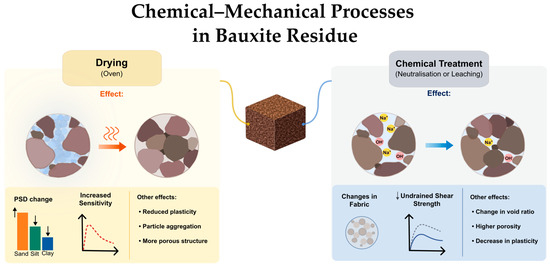
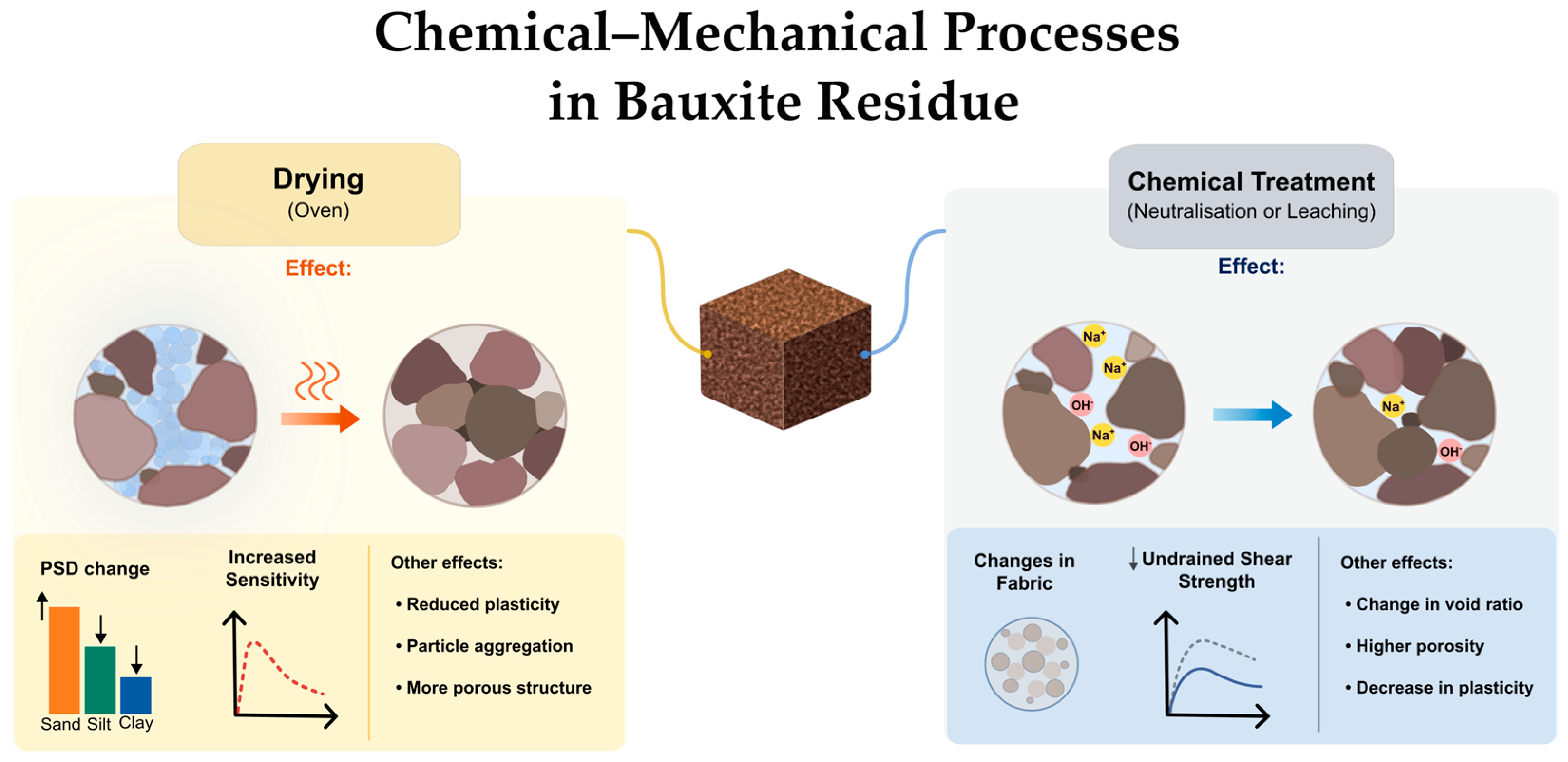
Figure 12 synthesises the main chemical–mechanical processes of bauxite residue as documented in the literature.
Figure 12.
Chemical–mechanical processes and their potential impact on bauxite residue properties and structure.
6. Gaps and Research Directions
This review highlighted current limitations in the understanding of the geotechnical behaviour of bauxite residue. Some sources in this review are dated or overlook variability in geotechnical parameters caused by composition, processing, or testing methods.
One general obstacle appears to be the approach to replicating field conditions in laboratory practice. A significant portion of the studies included in this review examine material properties using standard soil mechanics methods. However, as highlighted earlier in the paper, the selection of laboratory methods is important, as it influences results by altering geochemical interactions and even the fabric, potentially leading to misinterpretation of data if not assessed. This challenge is exacerbated by the fact that studies addressing relevant factors (e.g., composition, pore chemistry, aggregation) usually do so in isolation, thereby contributing to a fragmented and poorly consolidated knowledge base.
Given these considerations, a gap analysis was conducted to identify research needs and priorities related to red mud geotechnical characterisation, as described in Table 10. The analysis was designed to synthesise the main limitations in current research and their implications for the operation and stability of bauxite residue storage facilities. To provide structure and clarity, the gaps were categorised into three main types, in order of priority: (i) contextual—relating to under-studied topics; (ii) conceptual—involving conflicting or inconsistent theoretical frameworks; and (iii) methodological—concerning the selection and application of laboratory techniques and interpretation of results.
Table 10.
Research needs and directions for future research on the characterisation of geotechnical parameters of bauxite residue.
Implications and Priorities
The definition of index properties for geomaterials affects the engineering team’s perception of a storage facility operation. For instance, specific gravity provides information on expected settling behaviour and the in situ void ratio, while particle size distribution influences perceptions of the facility’s hydraulic regime. It is still common to use PSD data as input to define hydraulic functions and soil-water characteristic curves in numerical models [110,111,112]. Moreover, current geotechnical practices continue to exhibit a surprisingly persistent reliance on empirical correlations between plasticity indicators and shear strength or static liquefaction potential [113,114,115]. Consequently, inaccurate estimates of these properties can lead to serious misjudgements of material behaviour, with potential implications for both design and risk assessment. Examples of how these properties manifest in practice include: influencing the effectiveness of the facility disposal plan, impacts on predicted pore pressure and effective stresses within the facility, as well as on long-term seepage and stability studies, thus increasing the environmental risk of contamination due to the facility’s possible collapse and the subsequent release of hazardous red mud into nearby areas.
As shown in this review, the greatest challenge in red mud characterisation lies in replicating and controlling the chemical characteristics while simulating field conditions during experimental tests. For example, most standardised laboratory protocols recommend oven-drying samples. Although common, the practice can modify the residue structure by promoting particle aggregation. This highlights the importance of selecting appropriate methods for handling and drying red mud samples prior to testing. Moreover, evidence indicates that pH and salt concentration decrease over time after deposition, which may also affect the residue microstructure and fabric; however, studies evaluating these time-dependent changes in geotechnical properties are scarce.
The fabric of bauxite residue appears to be so fundamental and complex that even minor variations could affect it. For instance, most of the compiled experimental strength data were obtained by oven-drying the samples and using non-process water (e.g., tap or distilled water). For some tailings, this practice is unlikely to affect the material’s properties; however, given the chemical nature of bauxite residue, this may not be the case. Another potential issue is that drying preserves the total salt mass within the sample, which, if followed by saturation of the specimen with process liquor, could artificially increase the salt concentration, thereby deviating from in situ conditions.
Another important knowledge gap concerns the strain magnitude required by the material to reach the residual state. Studies on this topic are mostly dated and suffer from methodological limitations. When strength loss is observed, it typically occurs gradually and requires large strains to develop fully—a condition usually barely achievable in triaxial tests. It is also worth considering that the limited vane shear test data available in the literature suggest that the residue can exhibit alarmingly low undrained shear strength values (of the order of Su ≈ 10 kPa). Given that the material does not exhibit abrupt strength loss but may exhibit very low shear resistance at large strains, the selection of parameters for operational stability analyses might differ from those adopted for extreme conditions, such as seismic or dam-break events. Broader assessments, including residual mechanical behaviour, are important for ensuring safe and sustainable aluminium production and avoiding further environmental accidents.
7. Conclusions
This review established a geotechnical database of bauxite residue properties, demonstrating that the complexity of material composition, processing conditions, and variations in experimental protocols result in considerable variability across sites. To establish an industry benchmark, this work compiled globally reported parameters and highlighted critical contextual, conceptual, and methodological knowledge gaps. Because of the material’s extreme sensitivity to chemical changes, the parameter ranges synthesised herein serve as a conceptual reference, as site-specific testing remains necessary for facility design.
To assist engineers in predicting material behaviour and ensuring safer stability design, this review summarises some practical guidelines based on the residue’s baseline conditions and testing methods:
- Information regarding the source of the residue and the conditions under which it was processed prior to deposition is important. Variations in ore composition and processing generally result in different initial matrices, which in turn affect the residue’s composition and physical and geotechnical properties.
- The general challenge in determining reliable geotechnical parameters is replicating field conditions. Standard soil mechanics practices, such as oven drying and the use of non-process water, are critical taboos. These pre-test treatments can modify the residue’s chemistry and structure, leading to severe mischaracterisation that can culminate in structural collapse or catastrophic environmental accidents. Additionally, reliable test protocols must account for the presence and concentration of salts within the pore fluid to correct geotechnical parameters.
- Predicting long-term and operational stability requires looking beyond peak strength and evaluating undrained shear strength at very large strains, as the material exhibits gradual post-peak strength loss that can reach critically low residual values.
- Tracking the chemical evolution of the residue under weathering scenarios is important for closure and post-closure design. Practitioners must account for the effects of weathering and leaching in older deposits, as these processes may progressively lower pH and salinity, affecting structural bonds and altering long-term aggregate stability compared to freshly deposited slurry.
This work includes a database that compiles geotechnical parameters and methodologies reported worldwide. Although many questions remain, this initiative consolidates global knowledge to provide a practical basis for engineers. Advancing this field will require additional integrated geochemical and geotechnical research, along with improved, material-specific experimental protocols, to support safer and sustainable management of bauxite residue storage facilities.
Supplementary Materials
The following supporting information can be downloaded at: https://www.mdpi.com/article/10.3390/min16080787/s1.
Funding
Financial support for this research was provided by the University of Western Australia (Scholarship for International Research Fees—SIRF, grant number 72676) and Klohn Crippen Berger (Geotechnical Properties of Bauxite Residue HDR Scholarship, grant number 72657).
Data Availability Statement
The data supporting the findings of this study are available within the Supplementary Materials provided as a spreadsheet. All datasets used in the analysis are included in this file.
Acknowledgments
The authors gratefully acknowledge the research group and staff at the University of Western Australia for their support throughout this study. The authors wish to extend their appreciation to Klohn Crippen Berger for their financial sponsorship and industry insights.
Conflicts of Interest
The authors declare no conflicts of interest.
References
- International Aluminium Institute. Bauxite Residue Management: Best Practice; International Aluminium Institute: London, UK, 2015. [Google Scholar]
- Borra, C.R.; Blanpain, B.; Pontikes, Y.; Binnemans, K.; Van Gerven, T. Recovery of Rare Earths and Other Valuable Metals From Bauxite Residue (Red Mud): A Review. J. Sustain. Metall. 2016, 2, 365–386. [Google Scholar] [CrossRef] [Scilit]
- International Aluminium Institute. Sustainable Bauxite Residue Management Guidance; International Aluminium Institute: London, UK, 2022. [Google Scholar]
- Patel, S.; Pal, B.K. Current Status of an Industrial Waste: Red Mud an Overview. Int. J. Latest Technol. Eng. Manag. Appl. Sci. 2015, 4, 1–16. [Google Scholar]
- Ram Kumar, B.A.V.; Ramakrishna, G. Performance Evaluation of Red Mud as a Construction Material—A Review. Mater. Today Proc. 2023; in press. [CrossRef] [Scilit]
- Alam, S.; Das, S.K.; Rao, B.H. Characterization of Coarse Fraction of Red Mud as a Civil Engineering Construction Material. J. Clean. Prod. 2017, 168, 679–691. [Google Scholar] [CrossRef] [Scilit]
- Archambo, M.; Kawatra, S.K. Red Mud: Fundamentals and New Avenues for Utilization. Miner. Process. Extr. Metall. Rev. 2021, 42, 427–450. [Google Scholar] [CrossRef] [Scilit]
- Evans, K. The History, Challenges, and New Developments in the Management and Use of Bauxite Residue. J. Sustain. Metall. 2016, 2, 316–331. [Google Scholar] [CrossRef] [Scilit]
- Ghalehnovi, M.; Roshan, N.; Hakak, E.; Shamsabadi, E.A.; De Brito, J. Effect of Red Mud (Bauxite Residue) as Cement Replacement on the Properties of Self-Compacting Concrete Incorporating Various Fillers. J. Clean. Prod. 2019, 240, 118213. [Google Scholar] [CrossRef] [Scilit]
- Kusumanjali, G.; Tejas, S.; Chatterjee, A.; Pasla, D. Utilization of Bauxite Residue as Fine Aggregate for the Development of Structural Concrete: An Approach towards Sustainable Construction Materials. Case Stud. Constr. Mater. 2025, 22, e04348. [Google Scholar] [CrossRef] [Scilit]
- Liu, W.; Yang, J.; Xiao, B. Review on Treatment and Utilization of Bauxite Residues in China. Int. J. Miner. Process. 2009, 93, 220–231. [Google Scholar] [CrossRef] [Scilit]
- Mi, H.; Yi, L.; Wu, Q.; Xia, J.; Zhang, B. A Review of Comprehensive Utilization of Red Mud. Waste Manag. Res. 2022, 40, 1594–1607. [Google Scholar] [CrossRef] [Scilit] [PubMed]
- Pontikes, Y.; Angelopoulos, G.N. Bauxite Residue in Cement and Cementitious Applications: Current Status and a Possible Way Forward. Resour. Conserv. Recycl. 2013, 73, 53–63. [Google Scholar] [CrossRef] [Scilit]
- Samal, S.; Ray, A.K.; Bandopadhyay, A. Proposal for Resources, Utilization and Processes of Red Mud in India—A Review. Int. J. Miner. Process. 2013, 118, 43–55. [Google Scholar] [CrossRef] [Scilit]
- Wang, S.; Jin, H.; Deng, Y.; Xiao, Y. Comprehensive Utilization Status of Red Mud in China: A Critical Review. J. Clean. Prod. 2021, 289, 125136. [Google Scholar] [CrossRef] [Scilit]
- Kumar Nigam, S.; Sinha, A.K.; Madan, S.K. Characterisation of Stabilised Red Mud Waste Material for Road Infrastructure. Mater. Today Proc. 2023, 93, 41–46. [Google Scholar] [CrossRef] [Scilit]
- Zhang, J.; Yao, Z.; Wang, K.; Wang, F.; Jiang, H.; Liang, M.; Wei, J.; Airey, G. Sustainable Utilization of Bauxite Residue (Red Mud) as a Road Material in Pavements: A Critical Review. Constr. Build. Mater. 2021, 270, 121419. [Google Scholar] [CrossRef] [Scilit]
- Chen, Y.; Zhang, T.; Lv, G.; Chao, X.; Yang, X. Extraction and Utilization of Valuable Elements from Bauxite and Bauxite Residue: A Review. Bull. Environ. Contam. Toxicol. 2022, 109, 228–237. [Google Scholar] [CrossRef] [Scilit] [PubMed]
- Liu, X.; Han, Y.; He, F.; Gao, P.; Yuan, S. Characteristic, Hazard and Iron Recovery Technology of Red Mud—A Critical Review. J. Hazard. Mater. 2021, 420, 126542. [Google Scholar] [CrossRef] [Scilit] [PubMed]
- Tanvar, H.; Mishra, B. Comprehensive Utilization of Bauxite Residue for Simultaneous Recovery of Base Metals and Critical Elements. Sustain. Mater. Technol. 2022, 33, e00466. [Google Scholar] [CrossRef] [Scilit]
- Çimen, Ö.; Günaydın, H.İ. Impact of Distilled Water Dealkalization on the Geotechnical Behavior of Red Mud. PLoS ONE 2025, 20, e0334002. [Google Scholar] [CrossRef] [Scilit] [PubMed]
- Han, Y.-S.; Ji, S.; Lee, P.-K.; Oh, C. Bauxite Residue Neutralization with Simultaneous Mineral Carbonation Using Atmospheric CO2. J. Hazard. Mater. 2017, 326, 87–93. [Google Scholar] [CrossRef] [Scilit] [PubMed]
- Johnston, M.; Clark, M.W.; McMahon, P.; Ward, N. Alkalinity Conversion of Bauxite Refinery Residues by Neutralization. J. Hazard. Mater. 2010, 182, 710–715. [Google Scholar] [CrossRef] [Scilit] [PubMed]
- Khaitan, S.; Dzombak, D.A.; Lowry, G.V. Mechanisms of Neutralization of Bauxite Residue by Carbon Dioxide. J. Environ. Eng. 2009, 135, 433–438. [Google Scholar] [CrossRef] [Scilit]
- Lyu, F.; Hu, Y.; Wang, L.; Sun, W. Dealkalization Processes of Bauxite Residue: A Comprehensive Review. J. Hazard. Mater. 2021, 403, 123671. [Google Scholar] [CrossRef] [Scilit] [PubMed]
- Menzies, N.W.; Fulton, I.M.; Morrell, W.J. Seawater Neutralization of Alkaline Bauxite Residue and Implications for Revegetation. J. Environ. Qual. 2004, 33, 1877–1884. [Google Scholar] [CrossRef] [Scilit] [PubMed]
- Panda, I.; Jain, S.; Das, S.K.; Jayabalan, R. Characterization of Red Mud as a Structural Fill and Embankment Material Using Bioremediation. Int. Biodeterior. Biodegrad. 2017, 119, 368–376. [Google Scholar] [CrossRef] [Scilit]
- Rai, S.; Wasewar, K.L.; Mukhopadhyay, J.; Yoo, C.K.; Uslu, H. Neutralization and Utilization of Red Mud for Its Better Waste Management. World 2012, 6, 5410. [Google Scholar]
- Silva, P.M.P.; Do Carmo, A.L.V.; Holanda, R.B.; Gomes, F.G.; Nogueira, E.; Da Costa, R.V.; De Melo, C.C.A.; Lucheta, A.R.; Montini, M. Brazilian Bauxite Residue Physical–Chemical Characterization and Acidic Neutralization Potential. In Light Metals 2020; Tomsett, A., Ed.; The Minerals, Metals & Materials Series; Springer International Publishing: Cham, Switzerland, 2020; pp. 115–123. [Google Scholar]
- Zeng, H.; Lyu, F.; Hu, G.; Tang, H.; Wang, L.; Sun, W.; Hu, Y.; Liu, R. Dealkalization of Bauxite Residue Through Acid Neutralization and Its Revegetation Potential. JOM 2020, 72, 319–325. [Google Scholar] [CrossRef] [Scilit]
- Power, G.; Gräfe, M.; Klauber, C. Bauxite Residue Issues: I. Current Management, Disposal and Storage Practices. Hydrometallurgy 2011, 108, 33–45. [Google Scholar] [CrossRef] [Scilit]
- Ruyters, S.; Mertens, J.; Vassilieva, E.; Dehandschutter, B.; Poffijn, A.; Smolders, E. The Red Mud Accident in Ajka (Hungary): Plant Toxicity and Trace Metal Bioavailability in Red Mud Contaminated Soil. Environ. Sci. Technol. 2011, 45, 1616–1622. [Google Scholar] [CrossRef] [Scilit] [PubMed]
- Turi, D.; Pusztai, J.; Nyari, I. Causes and Circumstances of Red Mud Reservoir Dam Failure In 2010 at MAL Zrt Factory Site in Ajka, Hungary. In Proceedings of the International Conference on Case Histories in Geotechnical Engineering; Missouri University of Science and Technology: Rolla, MO, USA, 2013; Volume 10. [Google Scholar]
- Reddy, P.S.; Reddy, N.G.; Serjun, V.Z.; Mohanty, B.; Das, S.K.; Reddy, K.R.; Rao, B.H. Properties and Assessment of Applications of Red Mud (Bauxite Residue): Current Status and Research Needs. Waste Biomass Valor 2021, 12, 1185–1217. [Google Scholar] [CrossRef] [Scilit]
- Reid, D.; Fourie, A. Back Analyses of the August 2016 Luoyang Red Mud Tailings Facility Failure. In Proceedings of the Tailings and Mine Waste (TMW 2017) Conference, Banff, AB, Canada, 5–8 November 2017. [Google Scholar]
- Petley, D. A Mine Waste Storage Facility at Lanjigarh in Odisha, India, After the Failure. Posted in the Landslide Blog A Planet Labs Satellite Image of the Failure of the Mine Waste Storage Facility at Lanjigarh in India. EOS—The Landslide Blog 2024. Available online: https://eos.org/thelandslideblog/lanjigarh-1 (accessed on 17 February 2025).
- Jiang, J.; Su, J.; Ou, X.; Weng, M.; Lü, X. Study on the Physical and Mechanical Properties of Bauxite Residue by Laboratory and Field In-Situ Tests. Environ. Earth Sci. 2021, 80, 377. [Google Scholar] [CrossRef] [Scilit]
- Mmbando, E.; Fourie, A.; Reid, D.; Gao, J.; Nasharuddin, R.; Fridjonsson, E. Effects of Structure and Pore-Water Chemistry on Critical State Behavior of Bauxite Residue. Can. Geotech. J. 2024, 62, 1–17. [Google Scholar] [CrossRef] [Scilit]
- Mmbando, E.; Fourie, A.; Reid, D.; Gao, J. Effect of Compressibility on the Stress State of Wet and Dry Bauxite Residue. Can. Geotech. J. 2024, 62, 1–13. [Google Scholar] [CrossRef] [Scilit]
- Newson, T.; Dyer, T.; Adam, C.; Sharp, S. Effect of Structure on the Geotechnical Properties of Bauxite Residue. J. Geotech. Geoenviron. Eng. 2006, 132, 143–151. [Google Scholar] [CrossRef] [Scilit]
- Somogyi, F.; Gray, D.H. Engineering Properties Affecting Disposal of Red Muds. In Geotechnical Practice for Disposal of Solid Waste Materials; ASCE: New York, NY, USA, 1977; pp. 1–22. [Google Scholar]
- Adamson, A.N.; Bloore, E.J.; Carr, A.R. Basic Principles of Bayer Process Design. In Essential Readings in Light Metals: Alumina and Bauxite; Springer: Cham, Switzerland, 2016; Volume 1, pp. 100–117. [Google Scholar]
- Hose, H.R. Bauxite Mineralogy. In Essential Readings in Light Metals: Alumina and Bauxite; Springer International Publishing: Cham, Switzerland, 2016; Volume 1, pp. 21–29. [Google Scholar]
- Solymár, K.; Mádai, F.; Papanastassiou, D. Effect of Bauxite Microstructure on Beneficiation and Processing. In Essential Readings in Light Metals: Alumina and Bauxite; Springer: Cham, Switzerland, 2016; Volume 1, pp. 37–42. [Google Scholar]
- Gräfe, M.; Power, G.; Klauber, C. Bauxite Residue Issues: III. Alkalinity and Associated Chemistry. Hydrometallurgy 2011, 108, 60–79. [Google Scholar] [CrossRef] [Scilit]
- Li, L.Y.; Rutherford, G.K. Effect of Bauxite Properties on the Settling of Red Mud. Int. J. Miner. Process. 1996, 48, 169–182. [Google Scholar] [CrossRef] [Scilit]
- Snars, K.; Gilkes, R.J. Evaluation of Bauxite Residues (Red Muds) of Different Origins for Environmental Applications. Appl. Clay Sci. 2009, 46, 13–20. [Google Scholar] [CrossRef] [Scilit]
- Altundoğan, H.S.; Altundoğan, S.; Tümen, F.; Bildik, M. Arsenic Adsorption from Aqueous Solutions by Activated Red Mud. Waste Manag. 2002, 22, 357–363. [Google Scholar] [CrossRef] [Scilit] [PubMed]
- Bedin, J. Estudo do Comportamento Geomecânico de Resíduos de Mineração. Ph.D. Thesis, Universidade Federal do Rio Grande do Sul, Porto Alegre, Brazil, 2010. [Google Scholar]
- Chandra, K.S.; Krishnaiah, S. Strength and Leaching Characteristics of Red Mud (Bauxite Residue) as a Geomaterial in Synergy with Fly Ash and Gypsum. Transp. Res. Interdiscip. Perspect. 2022, 13, 100566. [Google Scholar] [CrossRef] [Scilit]
- Ciccu, R.; Ghiani, M.; Serci, A.; Fadda, S.; Peretti, R.; Zucca, A. Heavy Metal Immobilization in the Mining-Contaminated Soils Using Various Industrial Wastes. Miner. Eng. 2003, 16, 187–192. [Google Scholar] [CrossRef] [Scilit]
- Dixit, A.; Jain, S.; Das, S.K. A Systematic Characterization of the Mixture of Red Mud and Bottom Ash as a Geomaterial: An Efficient Utilization in Subgrade Pavement. J. Mater. Cycles Waste Manag. 2024, 26, 2159–2174. [Google Scholar] [CrossRef] [Scilit]
- Gupta, P.; Couperthwaite, S.J.; Santini, T.C.; Pepper, R.A.; Millar, G.J. Experimental and Geochemical Modelling Investigations on the Weathering Behaviour of Bauxite Residue: Effect of pH. J. Environ. Chem. Eng. 2021, 9, 103509. [Google Scholar] [CrossRef] [Scilit]
- Halász, J.; Hodos, M.; Hannus, I.; Tasi, G.; Kiricsi, I. Catalytic Detoxification of C2-Chlorohydrocarbons over Iron-Containing Oxide and Zeolite Catalysts. Colloids Surf. A Physicochem. Eng. Asp. 2005, 265, 171–177. [Google Scholar] [CrossRef] [Scilit]
- Kishan, D.; Kushwaha, S.S.; Dindorkar, N. Geotechanical Properties and Strength Characterisation of Bauxite Residue. Int. J. Civ. Eng. Technol. 2017, 8, 346–357. [Google Scholar]
- Komnitsas, K.; Bartzas, G.; Paspaliaris, I. Efficiency of Limestone and Red Mud Barriers: Laboratory Column Studies. Miner. Eng. 2004, 17, 183–194. [Google Scholar] [CrossRef] [Scilit]
- Li, L.Y. Properties of Red Mud Tailings Produced under Varying Process Conditions. J. Environ. Eng. 1998, 124, 254–264. [Google Scholar] [CrossRef] [Scilit]
- Moise, G.; Capota, P.; Enache, L.; Neagu, E.; Dragut, V.; Mihaescu, D.; Mara, L.; Chirea, A.; Zavoianu, R.; Sarbu, A. Material Composition and Properties of Red Mud Coming from Domestic Alumina Processing Plant. In Proceedings of the SIMI 2017; National Research and Development Institute for Industrial Ecology: Bucharest, Romania, 2017; pp. 279–289. [Google Scholar]
- Park, S.-J.; Jun, B.-R. Improvement of Red Mud Polymer-Matrix Nanocomposites by Red Mud Surface Treatment. J. Colloid Interface Sci. 2005, 284, 204–209. [Google Scholar] [CrossRef] [Scilit] [PubMed]
- Piga, L.; Pochetti, F.; Stoppa, L. Application of Thermal Analysis Techniques to a Sample of Red Mud—A by-Product of the Bayer Process—For Magnetic Separation. Thermochim. Acta 1995, 254, 337–345. [Google Scholar] [CrossRef] [Scilit]
- Wang, S.; Boyjoo, Y.; Choueib, A.; Zhu, Z.H. Removal of Dyes from Aqueous Solution Using Fly Ash and Red Mud. Water Res. 2005, 39, 129–138. [Google Scholar] [CrossRef] [Scilit] [PubMed]
- Scullett-Dean, G. Geochemical Evolution of Bauxite Residue During in Situ Remediation. Doctoral Thesis, University of Western Australia, Crawley, Australia, 2023. [Google Scholar]
- Thomas, D.; Pei, B. Chemical Reaction Engineering in the Bayer Process. In Essential Readings in Light Metals: Alumina and Bauxite; Springer: Cham, Switzerland, 2016; Volume 1, pp. 118–123. [Google Scholar]
- Breck, D.W. Crystalline Molecular Sieves. J. Chem. Educ. 1964, 41, 678. [Google Scholar] [CrossRef] [Scilit]
- Breck, D.W.; Smith, J.V. Molecular Sieves. Sci. Am. 1959, 200, 85–96. [Google Scholar] [CrossRef] [Scilit]
- Lee, Y.; Vogt, T.; Hriljac, J.A.; Parise, J.B.; Hanson, J.C.; Kim, S.J. Non-Framework Cation Migration and Irreversible Pressure-Induced Hydration in a Zeolite. Nature 2002, 420, 485–489. [Google Scholar] [CrossRef] [Scilit] [PubMed]
- De Silva, H. Recovery of Desilication Product in Alumina Industry. Doctoral Thesis, The University of Queensland, Brisbane, Australia, 2014. [Google Scholar]
- Santini, T.C.; Fey, M.V. Spontaneous Vegetation Encroachment upon Bauxite Residue (Red Mud) As an Indicator and Facilitator of In Situ Remediation Processes. Environ. Sci. Technol. 2013, 47, 12089–12096. [Google Scholar] [CrossRef] [Scilit] [PubMed]
- Nie, Q.; Li, Y.; Wang, G.; Bai, B. Physicochemical and Microstructural Properties of Red Muds under Acidic and Alkaline Conditions. Appl. Sci. 2020, 10, 2993. [Google Scholar] [CrossRef] [Scilit]
- Liu, Y.; Lin, C.; Wu, Y. Characterization of Red Mud Derived from a Combined Bayer Process and Bauxite Calcination Method. J. Hazard. Mater. 2007, 146, 255–261. [Google Scholar] [CrossRef] [Scilit] [PubMed]
- Zhu, F.; Zhou, J.; Xue, S.; Hartley, W.; Wu, C.; Guo, Y. Aging of Bauxite Residue in Association of Regeneration: A Comparison of Methods to Determine Aggregate Stability & Erosion Resistance. Ecol. Eng. 2016, 92, 47–54. [Google Scholar] [CrossRef] [Scilit]
- Zhu, F.; Liao, J.; Xue, S.; Hartley, W.; Zou, Q.; Wu, H. Evaluation of Aggregate Microstructures Following Natural Regeneration in Bauxite Residue as Characterized by Synchrotron-Based X-Ray Micro-Computed Tomography. Sci. Total Environ. 2016, 573, 155–163. [Google Scholar] [CrossRef] [Scilit] [PubMed]
- Jenny, F.C. Ferrosilt (Red Mud) Geotechnical and Soil Mechanics Considerations. In Essential Readings in Light Metals: Alumina and Bauxite; Springer International Publishing: Cham, Switzerland, 2016; Volume 1, pp. 909–914. [Google Scholar]
- Villar, L.F.d.S. Estudo do Adensamento e Ressecamento de Resíduos de Mineração e Processamento de Bauxita. Ph.D. Thesis, PUC-Rio, Rio de Janeiro, Brazil, 2002. [Google Scholar]
- Yashmin, S.S.; Sinha, A.K.; Kumar, A. Static and Dynamic Characterisation of Red Mud Waste Material for Geotechnical Applications. Iran. J. Sci. Technol. Trans. Civ. Eng. 2026, 50, 917–937. [Google Scholar] [CrossRef] [Scilit]
- Fourie, A.; Verdugo, R.; Bjelkevik, A.; Torres-Cruz, L.A.; Znidarcic, D. Geotechnics of Mine Tailings: A 2022 State of the Art. In Proceedings of the 20th International Conference on Soil Mechanics and Geotechnical Engineering, Sydney, Australia, 1–5 May 2022. [Google Scholar]
- Kapri, Y.; Jain, A. Red Mud—Its Properties and Application in Geotechnical Engineering. In Recent Advances in Sustainable Waste Management Practices; Invitation to National Level Conference on Sustainable Waste Management Practices; Springer Nature: Singapore, 2023; pp. 311–323. [Google Scholar]
- Alves, C.M. Comportamento de Sedimentação e Adensamento de Uma Lama Vermelha. Doctoral Dissertation, PUC-Rio, Rio de Janeiro, Brazil, 1992. [Google Scholar]
- Carneiro, J.J.V.; Faria, A.D.O.; Júnior, M.P.D.S. Calibration of Modified Cam-Clay Parameters for Red Mud Tailings: A Case Study. In Proceedings of the Tailings and Mine Waste, Vancouver, BC, Canada, 5–8 November 2023. [Google Scholar]
- Cifuentes, H.; Williams, D.J. Effects of Microbial-Induced Calcium Carbonate Precipitation on Settling and Consolidation of Tailings. In Proceedings of the Tailings and Mine Waste 2019, Vancouver, BC, Canada, 17–20 November 2019. [Google Scholar]
- de Oliveira Filho, W.L.; Menezes, L.P. Consolidation Relationships for Different Ore Tailings in Brazilian Mines. In Proceedings of the Tailings and Mine Waste, Keystone, CO, USA, 14–17 October 2012. [Google Scholar]
- Deelwal, K.; Dharavath, K.; Kulshreshtha, M. Evaluation of Characteristic Properties of Red Mud for Possible Use as a Geotechnical Material in Civil Construction. Int. J. Adv. Eng. Technol. 2014, 7, 1053. [Google Scholar]
- Gore, M.S. Geotechnical Characterization of Bauxite Residue (Red Mud). Ph.D. Thesis, The University of Texas, Austin, TX, USA, 2015. [Google Scholar]
- Gore, M.S.; Gilbert, R.B.; McMillan, I.; Isovitsch Parks, S.L. Geotechnical Characterization of Compacted Bauxite Residue for Use in Levees. In Proceedings of the Geo-Chicago 2016; American Society of Civil Engineers: Chicago, IL, USA, 2016; pp. 299–310. [Google Scholar]
- Islam, S. A Study on the Mechanical Behaviour of Three Different Fine-Grained Mine Tailings. J. King Saud Univ. Eng. Sci. 2023, 35, 335–341. [Google Scholar] [CrossRef] [Scilit]
- Kehagia, F. Construction of an Unpaved Road Using Industrial By-Products (Bauxite Residue). WSEAS Trans. Environ. Dev. 2014, 10, 160–168. [Google Scholar]
- Kushwaha, S.S.; Kishan, D. Stabilization of Red Mud by Lime and Gypsum and Investigating Its Possible Use in Geoenvironmental Engineering. In Proceedings of the Geo-Chicago 2016; American Society of Civil Engineers: Chicago, IL, USA, 2016; pp. 978–988. [Google Scholar]
- Li, J.; Feng, S.-J.; Chen, H.-X.; Wang, H. Chemical and Geotechnical Properties of Red Mud at Liulin, China. In Proceedings of GeoShanghai 2018 International Conference: Geoenvironment and Geohazard; Springer: Singapore, 2018; pp. 405–414. [Google Scholar] [CrossRef] [Scilit]
- Nery, K.D. Caracterização Geotécnica e Avaliação da Compactação de um Resíduo da Produção de Alumina (Lama Vermelha) Desaguado por Filtro Prensa. Master’s Thesis, Universidade Federal de Minas Gerais, Belo Horizonte, Brazil, 2013. [Google Scholar]
- Pavani, K.; Jain, S.; Das, S.K. Reuse of Red Mud in Construction of Tailing Dam. IOP Conf. Ser. Earth Environ. Sci. 2022, 982, 012043. [Google Scholar] [CrossRef] [Scilit]
- Pocha, P.R.; Bag, R. An Experimental Investigation on the Hydraulic and Mechanical Properties of Red Mud Amended with Monovalent and Divalent Bentonites. Int. J. Geosynth. Ground Eng. 2024, 10, 91. [Google Scholar] [CrossRef] [Scilit]
- Reddy, N.G.; Hanumantha Rao, B. Compaction and Consolidation Behaviour of Untreated and Treated Waste of Indian Red Mud. Geotech. Res. 2018, 5, 106–121. [Google Scholar] [CrossRef] [Scilit]
- Reid, D.; Fanni, R.; Kulessa, M. Cyclic and Post-Cyclic Behaviour of Four Australian Tailings. In Proceedings of the Tailings and Mine Waste Management for the 21st Century, Sydney, Australia, 27–28 July 2015. [Google Scholar]
- Rout, S.; Sahoo, T.; Das, S. Design of Tailing Dam Using Red Mud. Open Eng. 2013, 3, 316–328. [Google Scholar] [CrossRef] [Scilit]
- Rubinos, D.; Spagnoli, G.; Barral, M.T. Assessment of Bauxite Refining Residue (Red Mud) as a Liner for Waste Disposal Facilities. Int. J. Min. Reclam. Environ. 2015, 29, 433–452. [Google Scholar] [CrossRef] [Scilit]
- Satyanarayana, P.V.V.; Hanumantha Rao, C.H.V.; Jahara, S.K. An Engineering Properties of Compacted Red Mud. Int. J. Civ. Struct. Environ. Infrastruct. Eng. Res. Dev. 2018, 8, 1–6. [Google Scholar] [CrossRef] [Scilit]
- Silva, P. Simulação Numérica das Poropressões em Aterros Construídos com Resíduo da Produção de Alumina Desaguado Por Filtros Prensa. Master’s Thesis, Universidade Federal de Minas Gerais, Belo Horizonte, Brazil, 2020. [Google Scholar]
- Soğancı, A.S.; Özkan, I.; Yenginar, Y.; Güzel, Y.; Özdemir, A. The Use of Waste Materials Red Mud and Bottom Ash as Road Embankment Fill. Sustainability 2024, 16, 9077. [Google Scholar] [CrossRef] [Scilit]
- Stinson, J.M. Correlation of Red Mud Consolidation with Its Soil Properties. In Essential Readings in Light Metals: Alumina and Bauxite; Springer International Publishing: Cham, Switzerland, 2016; Volume 1, pp. 915–921. [Google Scholar]
- Tian, H.; Williams, D.J.; Mandisodza, K.; Zhang, C.; Olaya, S.Q.; Zhang, W.; Tang, C. Engineering Properties of Fine-Grained Red Mud. Int. J. Min. Reclam. Environ. 2023, 37, 399–418. [Google Scholar] [CrossRef] [Scilit]
- Zevgolis, I.E.; Tsiavos, C.; Papangelis, K.; Gaidajis, G.; Xenidis, A. Utilization of Bauxite Residue as a Liner: Permeability Improvement Using Additives. Int. J. Geosynth. Ground Eng. 2021, 7, 6. [Google Scholar] [CrossRef] [Scilit]
- Somogyi, F. Dewatering and Drainage of Red Mud Tailings. Ph.D. Thesis, The University of Michigan, Ann Arbor, MI, USA, 1976. [Google Scholar]
- Nikraz, H.R.; Bodley, A.J.; Cooling, D.J.; Kong, P.Y.L.; Soomro, M. Comparison of Physical Properties between Treated and Untreated Bauxite Residue Mud. J. Mater. Civ. Eng. 2007, 19, 2–9. [Google Scholar] [CrossRef] [Scilit]
- Lade, P.V.; Trads, N. The Role of Cementation in the Behaviour of Cemented Soils. Geotech. Res. 2014, 1, 111–132. [Google Scholar] [CrossRef] [Scilit]
- Li, H.; Pedrosa, S.; Canfell, A. Case Study—Bauxite Residue Management at Rio Tinto Alcan Gove, Northern Territory, Australia ©. In Paste 2011: Proceedings of the 14th International Seminar on Paste and Thickened Tailings; Australian Centre for Geomechanics: Perth, Australia, 2011; pp. 203–211. [Google Scholar]
- Willan, M.; Ghataora, G. Management of Bauxite Residue in a Temperate Climate Using Mud-farming Techniques. In Paste 2015: Proceedings of the 18th International Seminar on Paste and Thickened Tailings; Australian Centre for Geomechanics: Perth, Australia, 2015; pp. 209–222. [Google Scholar]
- Santini, T.C. Chemical and Mineralogical Aspects of Soil Formation in Bauxite Residue. Doctoral Dissertation, University of Western Australia, Crawley, Australia, 2012. [Google Scholar]
- Fanni, R.; Reid, D.; Smith, K. On Some Considerations Related to Pore Fluid Chemistry in Tailings Critical State Testing. In Proceedings of the Tailings and Mine Waste, Vancouver, BC, Canada, 17–20 November 2019; pp. 965–977. [Google Scholar]
- Mundle, C.; Chapman, P.; Williams, D.A.; Fredlund, D. The Impact of High Density Liquors on Standard Soil Mechanics Calculations. In Proceedings of the Tailings and Mine Waste, Keystone, CO, USA, 14–17 October 2012; pp. 281–290. [Google Scholar]
- Fredlund, M.D.; Wilson, G.W.; Fredlund, D.G. Use of the Grain-Size Distribution for Estimation of the Soil-Water Characteristic Curve. Can. Geotech. J. 2002, 39, 1103–1117. [Google Scholar] [CrossRef] [Scilit]
- Mohammadi, M.H.; Meskini-Vishkaee, F. Predicting Soil Moisture Characteristic Curves from Continuous Particle-Size Distribution Data. Pedosphere 2013, 23, 70–80. [Google Scholar] [CrossRef] [Scilit]
- Satyanaga, A.; Rahardjo, H.; Zhai, Q.; Moon, S.-W.; Kim, J. Modelling Particle-Size Distribution and Estimation of Soil–Water Characteristic Curve Utilizing Modified Lognormal Distribution Function. Geotech. Geol. Eng. 2024, 42, 1639–1657. [Google Scholar] [CrossRef] [Scilit]
- Bray, J.D.; Sancio, R.B. Assessment of the Liquefaction Susceptibility of Fine-Grained Soils. J. Geotech. Geoenviron. Eng. 2006, 132, 1165–1177. [Google Scholar] [CrossRef] [Scilit]
- Perlea, V.G. Liquefaction of Cohesive Soils. In Proceedings of the Soil Dynamics and Liquefaction 2000; American Society of Civil Engineers: Denver, CO, USA, 2000; pp. 58–76. [Google Scholar]
- Seed, R.B.; Cetin, K.O.; Moss, R.E.S.; Kammerer, A.M.; Wu, J.; Pestana, J.M.; Riemer, M.F.; Sancio, R.B.; Bray, J.D.; Kayen, R.E.; et al. Recent Advances in Soil Liquefaction Engineering: A Unified and Consistent Framework. In Proceedings of the 26th Annual ASCE Los Angeles Geotechnical Spring Seminar, Long Beach, CA, USA, 30 April 2003. [Google Scholar]

Disclaimer/Publisher’s Note: The statements, opinions and data contained in all publications are solely those of the individual author(s) and contributor(s) and not of MDPI and/or the editor(s). MDPI and/or the editor(s) disclaim responsibility for any injury to people or property resulting from any ideas, methods, instructions or products referred to in the content. |
© 2026 by the authors. Licensee MDPI, Basel, Switzerland. This article is an open access article distributed under the terms and conditions of the Creative Commons Attribution (CC BY) license.