


Abstract
This paper presents a detailed physicochemical reconstruction of the evolution of the Proterozoic layered intrusion of Monchepluton (Kola Peninsula), based on the crystal chemistry of olivine and the coexisting silicate and ore phases. To link magmatic processes with the subsequent tectonothermal history, precise microchemical analyses in microscale (EDS, EMPA), whole-rock geochemical profiling (XRF, ICP-MS), and integration of the obtained results with an external rare earth element (REE) database was performed. Linear EDS, EMPA core-rim transections of olivine grains revealed the presence of broad, homogeneous central zones of high magnesium (Fo62–91) and stable nickel content. At the outermost crystal edges (<15 μm), a diffuse decrease in Mg and Ni in favor of Fe and Mn was recorded, which, based on modeling of the entire Gaussian error equation, was interpreted as a transition from stationary adcumulate crystallization to a closed in situ regime, controlled by the effect of trapped residual melt (trapped liquid shift). The high Ni content in the silicate cores excludes early magma saturation with sulfur. Our results demonstrate a primary, magmatic genesis of plagioharzburgites, in which olivine constitutes the early phase, and plagioclase crystallizes after reaching the plagioclase-in point, which correlates with a prominent positive europium anomaly (=1.53) identified in the norite facies. The geochemical purity of the Dunite Block (SiO2 = 37.47–38.92 wt. %, K/Ti ≤ 0.04) confirms its position as a deep, isolated basal domain. Contrasting with this are the picrite veins, which represent much younger, diachronous injections of extremely evolved dike swarms (Cr = 0.008%, Sr = 369 ppm), documenting multi-stage reactivation of deep rifts. A unique pattern was identified in the tectonic deformation zones (mylonites and breccias): fresh, unaltered olivine cores survived in the fine-grained matrix due to cataclasis. These grains were likely isolated by a fine-crystalline matrix and the high degree of rock compaction, which protected them from alteration during hydrothermal processes under specific conditions (low infiltration rate and decreased water activity). The strong chalcophile anomaly (Zn-Pb-Cu-S) accompanying the shear zones and the jump in the K/Ti ratio to 0.38 prove that these dislocations acted as structural conduits facilitating fluid migration.
Keywords:
Monchepluton; olivine; EMPA; EDS; diffuse zonation; XRF; ICP; geochemistry; shear zones; trapped residual melt 1. Introduction
Monchepluton is a Paleoproterozoic intrusion of layered rocks (basic and ultrabasic), located in the western part of the Kola Peninsula, within the Fennoscandian Shield [1,2]. This massif is characterized by an unusual and complex structural architecture. Its individual blocks are strongly deformed, tectonically rotated, and expose different levels of the primary magmatic profile [3,4]. This intrusion formed in a rift zone developed between the geodynamic blocks of the Kola Domain and the Belamoryian Domain [5,6]. Previous studies indicate that the main framework of the massif is composed of synmagmatic peridotite, pyroxenite, and gabbro cumulates [7,8]. However, the earlier sequences were subject to later, secondary magmatic injections, which formed the so-called critical horizons, the Dunite Block (DB) [9,10] and the associated dike swarm [11]. These pulses led locally to the formation of tectonically involved autobreccia zones, which contain, among others, clusters of supracrustal rocks. After formation, Monchepluton was surrounded by younger intrusions (e.g., the Monchetundra Massif) [12,13], whose development initiated intense processes of autometasomatism and secondary hydrothermal alteration [14,15]. The Monchepluton Massif has so far received a rich scientific literature, including, among others, precise U-Pb and Sm-Nd isotopic dating [16,17,18,19,20], mineralization analyses, and deposit studies [21,22,23,24] detailed geochemical studies of spinels and sulfides [25,26], as well as advanced analyses of noble gas isotopes [27,28]. However, the integration of these large-scale data with the microchemical and structural features of individual lithological domains remains an open field of discussion, especially in the context of the spatial relationships between primary cumulates and tectonic deformation zones. The mechanisms of syn- and post-magmatic evolution of individual blocks—in particular, the relationships between primary massif cumulates and younger injections and the interaction of vein rocks—are still controversial. This paper aims to reconstruct these processes through detailed microchemical studies of olivine and associated minerals (accessory and secondary). Olivine, as the first phase to crystallize from the parent magma, provides an excellent record of melt evolution [29,30]. In turn, the evolution of the accessory mineral composition allows for the reconstruction of the chemistry and temperature of later hydrothermal fluids [31,32]. A comprehensive analysis of these data allows us to trace the entire evolutionary path of the massif: from high-temperature magmatic crystallization to syntectonic, low-temperature metasomatic processes. The structural specificity of Monchepluton is also evident in the presence of tectonic zones (mylonites and breccias), within which, paradoxically, intact, fresh olivine relics are observed. This is a highly unusual phenomenon for highly dispersive shear zones, where this mineral typically undergoes immediate, retrograde serpentinization. Furthermore, younger vein pulses, including troctolite and picrite in nature, have been identified within this massif. Analyzing the petrographic profile of the intrusion reveals a number of controversial mineral associations, such as plagioharzburgites occurring within ultrabasic peridotite cumulates. The literature still questions whether these rocks constitute a magmatic transition link to troctolites or are the direct product of later metasomatic processes. The genesis of secondary magmatic injections (including the Dunite Block) is similarly controversial. It is unclear whether they represent melt formed in a deeper, subintrusive cumulate reservoir, or whether they constitute a completely independent, external magmatic impulse that dynamically modified the already chambered massif. Although diverse manifestations of hydrothermal alteration and metasomatism are commonly noted, the precise physicochemical framework and specific stages of these processes are not yet well understood. Despite the extensive literature on the general geology and mineralization of Monchepluton, previous studies have rarely integrated the subtle crystallochemical characteristics of olivine with the structural evolution of the entire system.
This article fills this gap by proposing a systematic, paragenetic-structural perspective on the evolution of olivine composition and associated mineral phases. Olivine, as an early magmatic marker, is analyzed here not only from a purely componential perspective, but primarily as a sensitive recorder of geochemical equilibrium conditions in micro-areas. The author is aware that this does not resolve all the outlined problems of Monchepluton evolution, but it does represent a significant step in this direction. The primary research object is olivine—as a representative of the earliest, high-temperature magmatic phases [33,34]. Investigating its textural characteristics, microchemical zonality, and phase equilibrium with pyroxenes and plagioclase allowed for the precise determination of the thermodynamic conditions and cooling kinetics of the original melt. An analysis of olivine-bearing rocks is presented, focusing on the mineral’s characteristics (petrographic features, zonality, geochemical equilibrium) and its immediate surroundings. The results of olivine studies are also compared with other rock-forming minerals (pyroxene, plagioclase). Comparing the evolution of olivine’s composition with the chemistry of its accompanying phases has allowed for a previously unexplored elucidation of its evolutionary path in the Monchepluton massif. This approach allows not only for the verification of the degree of geochemical equilibrium in individual lithological domains but, above all, for the precise demarcation of purely magmatic signatures from later syntectonic and metasomatic phenomena, shedding new light on the broader geodynamics of the study area.
2. Background Geology of the Study Area
The geological evolution of the Fennoscandian Shield in the Paleoproterozoic was associated with the breakup of the Kenorland supercontinent. This process was initiated by multistage intraplate magmatism and crustal rifting during the time interval 2500–2400 Ma. The East European Platform (EEC) separated from the Kenorland supercontinent during its breakup, which occurred 2491 ± 13 Ma [35]. In the Fennoscandia area (northern part of the EEC), the White Sea (BB), Kola (KB), and Karelian (KK) blocks are located, constituting consolidated microcontinents integrated by greenschist belts (Figure 1) [36,37]. The result of these large-scale geodynamic processes in the northeastern part of the shield (Kol Province) was the formation of numerous layered intrusions. In the structure of this igneous province, the Monchepluton Massif occupies a key position (Figure 1). According to the known literature, the oldest known sediments of the Kola Series (KB) are classified as 3750 million years old [5,6,38,39,40,41,42,43,44,45,46,47,48,49,50,51,52] (Figure 1 and Figure 2). In the zone of the tectonic suture of the BB and KB there is a belt of Imandra-Varzuga greenschists (IV), in its central part the massifs of layered intrusions of Monchepluton (MON), Monchegorsk (MONCH), and the Imandra intrusion (IMA). The zone of the series of these intrusions together with the deformed and faulted rocks occurring in the BB and KB is called the Lapland–Kola Mobile Belt (LK). The location of Monchepluton in this zone is unique because this intrusion was formed soon after the break-up of Kenorland in the central axial rift zone (IV) and was deformed and metamorphosed within the LK mobile belt [19], which together with the White Sea rift zone (separating the KB from the KK) constituted an area of long-term tectonic movements dating back to the Phanerozoic.
Figure 1.
Generalized tectonic map of Fennoscandia (after Gee and Stephenson [53] Bogdanova, Gorbatschev and Garetsky [54], modified by the author) with the location of the study area (marked by the yellow star). Abbreviations on the map: KK—Karelian Block, KB—Kola Block, BB—White Sea Block, SO—Sveconorwegian Orogen, CRO—Central Russian Orogen.
In the light of modern geochronological studies, the main phase of magmatic crystallization of the Monchepluton was determined by the U-Pb method on zircons and baddeleyites at 2491 ± 1.5 Ma (according to the data of Amelin et al.) [55] and at 2504.4 ± 1.1 Ma (according to the determinations of Bayanova et al.) [12]. The twin Monchetundra intrusion (MONCH) in the west formed at 2491 + 13 Ma, and the Imandra massif (IMA) in the south and east at 2410 + 58 Ma, respectively [56,57,58]. These coincident radiometric ages document a violent magmatic pulse associated with a juvenile mantle plume that initiated the development of a rift basin between the Archean blocks of the Kola (KB) and White Sea (BB) series [4,59,60,61].
Structurally, Monchepluton is a classic layered intrusion with a characteristic inverted “L” shape (Figure 2 and Figure 3). The geometry of the massif is defined by two main tectono-magmatic arms (branches). The southwestern (meridional) arm, approximately 7 km long, includes the Nittis, Kumuzhya, and Travyanaya submassives (forming the famous NKT complex). This zone represents the lower part of the magma chamber and is composed mainly of ultrabasic cumulates—cyclically interbedded dunites, harzburgites, and pyroxenites (ortho-pyroxenites) [3,62,63,64,65,66,67,68,69,70]. This zone hosts unique, high-temperature, vein-like Cu-Ni sulfide mineralization. The eastern (latitudinal) arm, approximately 11 km long, is represented by the Sopcha, Nyud, and Poaz submassives [71,72,73]. This part of the profile is dominated by higher-grade gabbroide rocks, norites, and anorthosites. Within this branch, at the contact of differentiated series, the so-called Critical Horizon has developed—a zone rich in nested-dispersed mineralization with visible differentiated rocks, including gabbroides and peridotites.
Figure 2.
Simplified geological map of Monchepluton (after Mitrofanov, Smolkin [74], Pozhylienko [75], Sharkov [76], modified by the author) with sampling locations. Yellow stars with letters indicate the spatial distribution of the investigated rock types (A–G) described in Table 1.
Table 1.
Index of the described Monchepluton rocks samples.
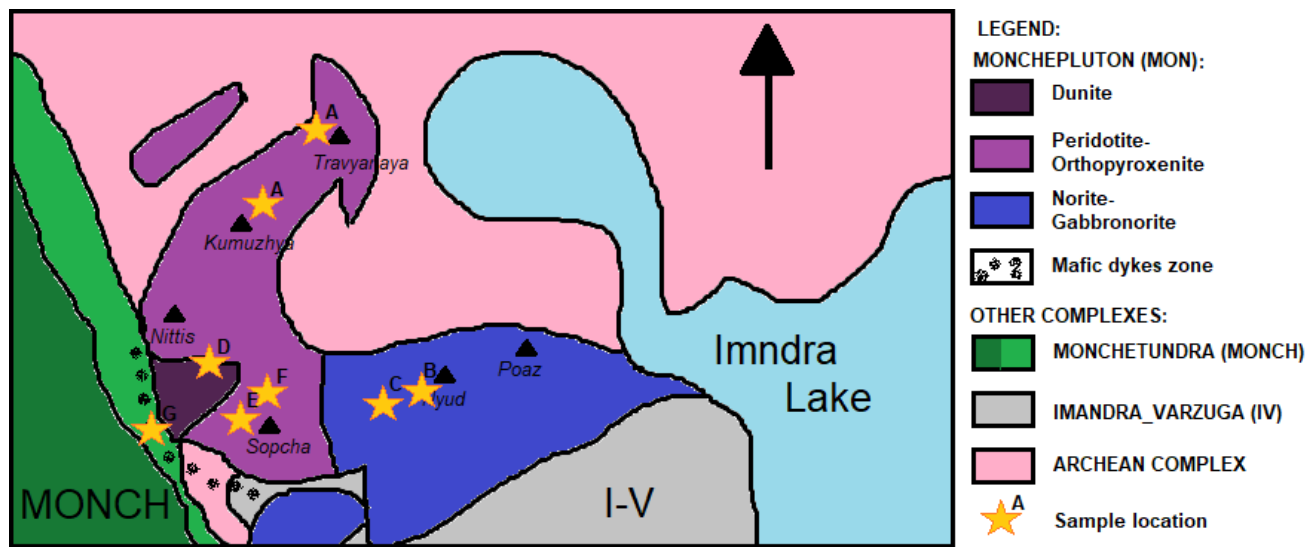
Figure 3.
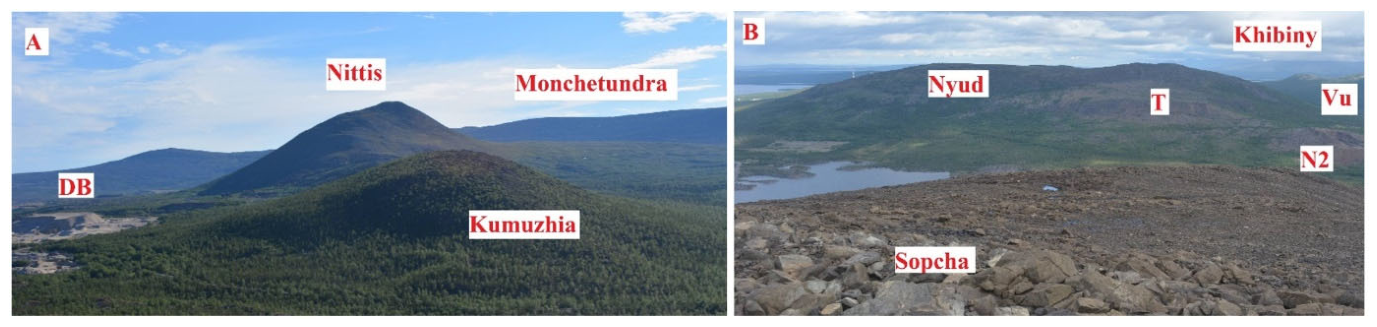
General panoramic views of the Monchepluton area: (A) view from north to south showing the massifs of the Nittis-Kumuzhia-Travyanaya (NKT) zone, including Nittis, Kumuzhya, and the Dunite Block (DB), with the Monchetundra intrusion in the background; (B) view from the Sopcha peak looking north-east, showing the Nyud massif (with the “Terrasa” zone—T, and the Nyud II quarry—N2), Vurechuaivench (Vu), and the alkaline Khibiny pluton on the horizon.
In the nodal zone connecting these two magmatic arms lies the tectonically separated Dunite Block (DB, Figure 2). Its structural position and petrographic characteristics indicate that it did not form as a result of simple, isochemical intracavitary crystallization but rather represents a younger, dynamic magmatic pulse from a deeper subintrusive reservoir. The final stage of Monchepluton evolution was dominated by regional compressional tectonic processes. These led to rapid vertical displacement, exfoliation, and rotation of individual blocks (including the extrusion of the Dunite Block). The Dunite Block (DB), Kumuzyia Block, and Nittis Block (NKT) contain ultrabasic rocks, represented primarily by olivine, and chromite accumulates with intercumulus pyroxenes. The Sopcha Massif is composed of orthopyroxenites, and on the western slopes, plagio-orthopyroxenites. The Nyud and Poaz massifs are composed of norites, gabbronorites, and gabbro. The Nyud Massif is dominated by norites, intercalations of coarse-grained olivine gabbronorites (Figure 3). Large clinopyroxene crystals, up to several cm in size, occur in the zone of porphyry olivine gabbronorites. In the upper parts, norites transform into gabbronorites, also known as the Poaz Massif. Gabbro is exposed in the Nyud Pass. To the southwest lies the Vurechuaivench Massif, with gabbro-anorthosite metamorphosed in the amphibolite facies. Along the boundaries of these lithological domains, powerful shear zones developed, within which the primary igneous rocks underwent intense mylonitization and cataclasis. These deformations were accompanied by large-scale, syntectonic flows of hydrothermal fluids, which triggered processes of autometasomatism and retrogressive mineral alteration superimposed on the primary igneous structures (Figure 3).
3. Materials
Petrographic and microchemical studies were carried out on a representative set of samples collected from different structural-lithological zones of the Monchepluton Massif (Table 1). In order to systematically assess the variability of the chemical composition of minerals and the degree of their secondary alteration, the studied rocks were divided into seven basic paragenetic-structural types: Type A: Primary ultrabasic cumulates (peridotites and pyroxenites from the Nittis submassif); Type B: Primary basic cumulates (gabbro, norites, and anorthosites from the eastern branch); Type C: Rocks of contact zones and critical horizons (Critical Horizons); Type D: Dunite and olivine cumulates from the Dunite Block (DB); Type E: Syntectonic mylonites, cataclases, and tectonic breccias developed in shear zones; Type F: Vein rocks of picritic and melanocratic troctolite character cutting through the massif.
4. Methods
The selected samples were processed into polished thin plates with a standard thickness of 30 µm. Preliminary petrographic studies and detailed analysis of textural relationships and cumulate structures were conducted using advanced polarized microscopy in transmitted and reflected light Leica DM 2500P (Wetzlar, Germany) [77]. This allowed for the identification of primary magmatic phases and the degree of their secondary structural transformation [78].
Microchemical analyses of the composition of the main mineral phases and linear core-to-rim geochemical profiling were performed using scanning electron microscopy coupled with an energy-dispersive X-ray spectrometer (SEM-EDS, using NSS 3.0 program) Hitachi SU6600 (Tokyo, Japan) and EDX spectrometer by Thermo (Thermo Fisher, Waltham, MA, USA) [79]. The applied calibration procedures and measurement standards ensured high precision of elemental determinations in micro-areas [80]. At the same time, minimizing background effects and matrix errors characteristic of silicate and oxide analysis [81]. In total, 296 EDS analyses were performed for olivine, 161 opx, 75 cpx, and 57 plagioclase, 228 oxides, 115 sulfides, and 199 other minerals, for a total of 1131 analyses.
Quantitative chemical analyses of olivine and pyroxene were conducted using a JEOL Super Probe JXA-8230 (Akishima, Japan). Peak count-time of ca. 20 s and background time of 10 s were used during particular measurements. The system operated in a wavelength-dispersive (WDS) mode under high-vacuum conditions. Electron microprobe operating conditions, standards, and approximate detection limits are presented as follows: Si (albite, K α, TAP, 260 ppm), Ti (rutile, K α, TAPH, 150 ppm), Al (albite, K α, TAPH, 440 ppm), Cr (Cr2O3, K α, LIFH, 270 ppm), Fe (hematite, K α, LIF, 400 ppm), Mn (rhodonite, K α, LIFH, 270 ppm), Ni (NiO, K α, LIF, 500 ppm), Mg (diopside, K α, TAP, 300 ppm), Ca (diopside, K α, PETJ, 200 ppm), and Na (albite, K α, TAPH, 200 ppm). The JEOL ZAF procedure was used for the matrix correction of the raw data. The formulas of olivine and pyroxene were calculated based on 4 and 6 oxygen atoms, respectively. In pyroxene, Fe3+ was calculated from the charge balance, while #Mg = 100*Mg/(Mg + Fe). The samples were examined with a focused electron beam (with an accelerating voltage of 5–30 keV) and with a beam of 1 to 5 µm in diameter. In total, 89 EDS analyses were performed for olivine, 38 opx, 27 cpx, and 15 plagioclase, 23 oxides, for a total of 192 analyses. The microanalysis results were then petrologically interpreted, and data visualizations were performed using Excel software.
The dual use of EDS and EMPA was a deliberate analytical strategy: rapid EDS mapping was utilized to screen a large population of crystals for zoning and homogeneity, providing extensive spatial statistics. Subsequently, high-precision EMPA (WDS mode) was performed on selected spots to serve as an internal calibration standard for the EDS dataset, successfully reconciling and validating the semi-quantitative results. Optical and SEM studies were performed at the Institute of Earth and Environmental Sciences, Maria Curie-Skłodowska University in Lublin. Electron microprobe analyses were performed at the Laboratory of Critical Elements of AGH University of Krakow—KGHM Polska Miedź SA.
Olivines were studied in pairs with accompanying minerals such as pyroxenes and plagioclase (to establish geochemical equilibrium), and 28 profiles were made through olivines and adjacent minerals to determine their zonality and crystallization conditions.
To identify the volatile components of hydrothermal fluids and the presence of hydroxyl groups (OH−) and molecular structured water in olivine, selected single crystals were examined using Fourier transform infrared spectroscopy (FTIR) [82]. Measurements of mid-IR absorption spectra allowed for precise quantification of water content in nominally anhydrous phases (NAMs) on the Thermo Scientific Shimadzu Nicolet 8700A FTIR spectrometer (Waltham, MA, USA) [83] according to validated analytical models [84]. The petrographic composition and the contents of major and selected trace oxides in whole rock samples were determined by X-ray fluorescence (XRF, Epsilon 4, by Pananalytical, Malvern Pananalytical, Almelo, The Netherlands) on bulk rocks preparations [85]. The accuracy of the analyses was controlled by serial measurements of international reference materials and geochemical standards [86].
ICP-MS data were sourced from the literature to compare the geochemical properties of selected rock types and to illustrate the geochemical trends of the Monchepluton in the context of its evolution. Specific data, along with the cited literature, are presented in Section 5.3.
Single crystal analysis (SCA) was performed on the selected olyvine crystals. Diffraction data were collected on a four-circle diffractometer (Rigaku - Tokyo, Japan, Oxford Diffraction SuperNova -UK) with CuKα radiation (λ = 1.54184 Å) at 293 K. Complete diffraction data sets were collected over the full Ewald sphere for each crystal. Crystallographic refinement and data acquisition, as well as data reduction and analysis, were performed using CrysAlisPro 1.171.39.27b [87]. Selected single crystals were mounted on a nylon loop with oil. Structures were solved using direct methods using the SHELXS-86 [88] and refined using SHELXL [89] in Olex2 software [90]. The refinement was based on squared structure factors (F2). The homogeneity and structural parameters of the investigated olivine crystals, initially characterized via SEM-EDS, EMPA, were further qualitatively confirmed by complementary FTIR and SCA screening, displaying consistent vibrational modes and structural layouts typical for the respective forsterite-fayalite solid solutions (unpublished data).
Calculations of the mineral structural formulas (based on the determined number of oxygen anions) and mathematical reconstruction of the final compositions of the solid solution members were performed using standard crystallochemical algorithms for olivines [91], pyroxenes [92], and chromium spinels [93]. The obtained parameters of magnesium (Fo) and cation distribution served as the basis for thermobarometric modeling of the alloy evolution [94]. Initial data filtering and processing were assisted by the AI Gemini large language model (Google), while data visualization and graph construction were executed in Python 3.11 using the Google Colab platform.
5. Results
5.1. Petrography and Mineral Relations
Type A. Ultrabasic cumulates (peridotites of primary crystallization)
Within this group, three main petrographic varieties can be distinguished, which smoothly alternate vertically: dominant orthocumulus harzburgites and accompanying plagioharzburgites (01MON13), subordinate olivine lherzolites (07MON18), and olivine orthopyroxenites with a poikilitic texture (samples 03MON15, 07MON18). These rocks are characterized by medium- to large-grained structures and massive, disordered cumulus textures. The spatial proportion of the cumulus phase (olivine) relative to the intercumulus phases (orthopyroxene, clinopyroxene, and plagioclase) determines local transitions between individual facies within this ultrabasic series. Olivine in these rocks constitutes the idiomorphic cumulus skeleton of the rock. In dunite and harzburgite varieties, its share ranges from 65% to over 90% by volume. It forms isometric, less frequently slightly elongated grains with sizes ranging from 0.5 to 3.0 mm (average 1.5 mm). In weakly metamorphosed samples, these crystals exhibit uniform light extinction, a lack of optical zonation, and smooth edges, indicating a high degree of thermodynamic equilibrium with the early melt (Figure 4). In tectonically disturbed sections, olivine shows strong signs of mechanical stress: visible deformation bands (plastic deformation of the network), clastic fractures, and micro-faults displacing fragments of a single crystal. The entire system of these fractures is geometrically ordered (most often perpendicular to grain elongation) and completely filled by secondary retrogressive products. Microfibrous, reticulated aggregates of antigorite and chrysotile, as well as unique talc bands, dominate. The nodes of these microfractures are accompanied by massive crystallization of fine-grained, even submicroscopic, secondary magnetite, forming characteristic “black rims” and droplet strings that mirror the original contours of the fractured crystals. Orthopyroxene (opx) is the second most important rock-forming phase (5%–30% by volume). It occurs in two distinct structural positions. In harzburgites, it forms xenomorphic, interstitial intercumuliform grains, sharply edging the spaces between idiomorphic olivine. In olivine pyroxenites, it transforms into large (3.0–6.0 mm), poikilitic oikocrysts (poikilocysts). These large enstatite crystals enclose numerous smaller, completely rounded or idiomorphic olivine inclusions (armored/poikilitic texture). Importantly, the olivines enclosed within the orthopyroxene are 100% fresh and completely isolated from secondary processes, demonstrating the protective role of the pyroxene matrix against subsequent infiltration of hydrothermal fluids. Bronzite exhibits subtle, acicular textures of clinopyroxene (Cpx) demixing along (100) planes. Clinopyroxene occurs in subordinate amounts (except in lherzolites, where its share increases above 5%). It forms xenomorphic crystals located exclusively in the interstitial spaces between orthopyroxene and olivine grains. In many areas, reaction crowns are observed, in which clinopyroxene grows onto the edges of older silicates (olivine and enstatite), partially overgrowing them. A characteristic microstructural feature of this mineral is the local formation of diablastic intergrowths with intercumulative phases, indicating its crystallization during the late stages of magmatic melt consolidation. Plagioclase (Pl): In pure peridotite varieties, it is an extremely residual mineral (<2%), occupying isolated spaces of triple intergranular junctions. However, in plagioharzburgite sections, its share increases to 5%–10%. There, it forms xenomorphic, poikilitic matrix (cementing) spaces in which earlier cumulative phases are enclosed. The geometry of plagioclase grains relative to olivine indicates corrosion relationships: plagioclase surrounds olivine grains, which exhibit distinct edge rounding and corrosion bays, documenting the process of partial olivine resorption by residual aluminosilicate melt. In altered zones, these plagioclases exhibit strong secondary turbidity and blurring of primary boundaries, breaking down into highly dispersive saussurite aggregates. Accessory and ore minerals occur subordinately in these rocks. Spinels (Chromite) form an early cumulus population. These are small (0.05–0.25 mm), highly idiomorphic, brownish-black crystals (partially translucent in transmitted light). They occur as inclusions in olivine cores or cluster at their boundaries. Sulphides are represented by microinclusions of pyrrhotite (Po), pentlandite (Pn), and chalcopyrite (Ccp). They occupy interstitial positions, often co-occurring with flakes of secondary or late magmatic phlogopite at the contacts of pyroxene grains.
Figure 4.
Photomicrographs of peridotites from the Monchepluton complex (crossed polars, XPL, except (F) in plane-polarized light, PPL): (A) large, colorful olivine (Ol) crystals with high interference colors exhibiting characteristic 120° triple junctions, indicating high-temperature textural equilibrium and an adcumulate texture. (B) large olivine crystal showing distinct undulose extinction and subgrain boundaries indicative of plastic deformation. (C) mesh texture developed within olivine, crosscut by a network of serpentine (Srp) and talc (Tl) micro-veinlets. (D) highly deformed zone with the development of fine-grained secondary tremolite (Trm), phlogopite (Phl), and talc aggregates around relict olivine domains. (E) interstitial distribution of magmatic sulfides (pyrrhotite—Po, and pentlandite—Pn, black opaque phases) localized at the boundaries of olivine grains. (F) plane-polarized light image highlighting the intense network of cracks, cleavage, and fluid inclusions within the orthopyroxene (Opx) and olivine framework. Scale bars are 100 μm.
Type B. Gabbroids (primary crystallization)
Within this group, basic rocks represented by norites and gabbronorites of the chamber series were analyzed. Olivine-containing norites (representative sample 08MON17) occur among the norites and gabbronorites. In the vertical profile of this series, a macroscopic succession from norites toward varieties richer in plagioclase, up to gabbroanorthosite facies, is observable. These rocks are characterized by medium-grained and hypidiomorphic structures, locally transitioning into subophytic textures (Figure 5). In Type B, olivine is a secondary and relict phase, whose share does not exceed a few percent by volume. Unlike Type A, it does not form a regular cumulus framework. It occurs as isolated, strongly corroded grains, with diameters rarely exceeding 0.5 mm. The edges of these grains exhibit distinct corrosion bays, resulting from the reaction (resorption) of early olivine with the evolving, more acidic magmatic melt [95]. Microscopically, olivine crystals exhibit translational striations, and smaller individuals with different optical orientations are also visible against the background of larger olivine crystals. Sometimes the striations are wavy. Opaque crystals (chromite) are visible against the background of olivine, as well as small inclusions arranged in a banded pattern across the crystal surface. Olivine crystals are anhedral and exhibit cataclasis. Aggregates of talc and serpentine minerals can be observed in fracture zones. Thin, reactionary rims (crowns) composed of fine-fibered orthopyroxene aggregates are commonly formed around olivine relics [96], and in zones of secondary alteration, talc and subordinate amphiboles are formed. Orthopyroxene is the main rock-forming pyroxene. It forms hypidiomorphic, elongated grains characterized by the presence of submicroscopic lamellae of clinopyroxene demixture [97]. It exhibits parallel crystallization relationships with plagioclase, co-forming subophytic intergrowths with them. Clinopyroxene occurs in variable amounts, primarily in gabbronorite varieties. It forms xenomorphic grains filling intergranular spaces or as irregular rims on the periphery of orthopyroxene crystals. These crystals darken anomalously in an undulating manner, are fractured, and in fracture zones, small inclusions of opaque minerals and hercynite are visible, arranged parallel to each other. Plagioclase is the dominant component of the rock framework (45%–65% by volume). It forms well-developed, lath-like crystals with distinct and regular polysynthetic twins [98]. Plagioclase grains crystallized almost simultaneously with pyroxenes, forming subophytic intergrowths in which plagioclase laths are partially embedded in the edges of pyroxene crystals. In the 08MON17 sample examined, the plagioclase is mostly fresh, exhibiting only local, peripheral opacities and cracks associated with later mechanical stresses. Microscopic photographs show a corona structure, where the central olivine crystal is surrounded by a finely crystalline reaction rim, illustrating the chemical imbalance between olivine and plagioclase during the slow cooling of the intrusion [99]. Talc microveins are visible in the cataclasis zone of the phenic minerals. Brown, strongly pleochroic mica flakes occur in interstitial positions, directly at the contacts with sulfide grains. Sulphides are usually dispersed to form xenomorphic sulphide grains (mainly pyrrhotite and chalcopyrite) occupying intergranular positions in the plagioclase-pyroxene matrix.
Figure 5.
Photomicrographs of gabbroids from the Monchepluton complex (crossed polars, XPL, except (C) in plane-polarized light, PPL, and (F) reflected light): (A) highly cataclasites pyroxene/olivine framework with fine-grained alteration patches of talc (Tl) and serpentine (Srp); (B) well-developed laths of plagioclase (Pl) showing polysynthetic albite twinning adjacent to a highly colorful, cracked olivine (Ol) grain; (C) dark brown, ameboidal opaque minerals (Opq) exhibiting a distinct interstitial texture, filling vacancies between earlier crystallized silicate framework; (D) characteristic corona structure showing a reaction rim around olivine (Ol) at the contact with plagioclase (Pl), indicating chemical disequilibrium during cooling; (E) diablasitic intergrowths within clinopyroxene (Cpx) forming a mosaic/mechanical twinning pattern due to localized deformation and recrystallization; (F) high-magnification PPL image showing fine inclusions of hercynite (Hc) spinels near orthopyroxene (Opx), and sulfides grains. Scale bars are 100 μm.
Type C. Secondary injection peridotites
Rocks classified in this group are represented by contact zone and critical horizon formations (representative sample 16MON17). On a macro- and microscopic scale, the rock is characterized by a medium-crystalline, heterogranular (variegated) structure and a compact, random, and poikilitic texture (Figure 6). Selected microstructural domains exhibit features of an adcumulative texture, manifested by a mosaic crystal arrangement with rectilinear or gently curved intergrain boundaries. Olivine forms large, xenomorphic (anhedral) crystals with irregular, sinuous, and corrosive grain boundaries. Microscopically, olivine exhibits numerous features of plastic deformation in the solid state. Strong, wavy light extinction and the presence of internal subgrain domains with varied optical orientation are common. Within single crystals, distinct translational striations and banded domains separated by rectilinear dislocation walls are observed. Large crystals of anhedral olivine typically have irregular, sinuous, or corroded boundaries. Occasionally, within a single crystal, sectors with slightly different optical orientations are visible, darkening in an undulating manner with visible translational striations. Individual fractures are visible within the crystal, and in the central parts, small inclusions of opaque minerals, phlogopite, and hercynite are visible. Ore minerals are visible in the background of these minerals and within their boundaries.
Figure 6.
Photomicrographs of ultra-mafic rocks from the Monchepluton complex displaying deformation and alteration features (crossed polars, XPL, except Bin reflected light, and (F) in plane-polarized light, PPL): (A,D) olivine (Ol) crystals exhibiting distinct undulose extinction, deformation bands, and low-angle subgrain boundaries, indicating solid-state plastic deformation with chromite crystals. (B,C) adcumulate olivine mosaic showing straight grain boundaries, isolated magnetite inclusions, and interstitial spaces filled by secondary phases or intercumulus sulfides (Sulf). (E,F) high-magnification views ((E)—XPL, (F)—PPL) of pyroxene (Px) hosting dense networks of fine, epitaxially oriented iron-titanium oxide needle inclusions (magnetite/ilmenite—Mag/Ilm) along cleavage planes, coupled with marginal alteration to fine-grained tremolite (Trm), phlogopite (Phl) and hercynite (Hz) aggregates. Scale bars are 100 μm for (A–D) and 50 μm for (E,F).
The central parts of the olivine grains contain sparse cracks and small inclusions of opaque minerals, phlogopite and hercynite. Olivine grains are separated by intercumulus phases that penetrate along grain boundaries and microfractures. Orthopyroxene occurs in subordinate amounts. It forms a population of small, fine-grained clusters located precisely at the boundaries between olivine and clinopyroxene crystals. This mineral contains microinclusions of phlogopite and hercynite, arranged according to the fracture network. Clinopyroxene forms medium- to fine-grained interstitial crystals. A characteristic feature of these pyroxenes is the presence of very dense microinclusions of opaque phases (magnetite or ilmenite). These inclusions are epitaxially oriented and arranged in an orderly manner, closely following the crystallographic lattice and the host melting fractures. Fine-grained reaction rims are commonly formed at the contacts between clinopyroxene grains and olivine, within which the original phlogopite silicates are replaced by aggregates of tremolite and phlogopite. Phlogopite occurs in two structural positions: as small inclusions in the central parts of olivine crystals and as larger lamellae developed at the contacts of ore mineralization grains and within tremolite rims on the periphery of pyroxenes. Hercynite crystals form rare, submicroscopic inclusions enclosed within olivine grains. Ore minerals (sulfides and oxides) form interstitial clusters located within the background of rock-forming minerals and along their boundaries, co-occurring directly with phlogopite lamellae.
Type D. Dunite Block Peridotites
Within this structural unit, a stratified olivine-chromite cumulate complex occurs, alternating between dunites (represented by sample 52MON17), harzburgites (representative sample 49MON17), and subordinate plagioharzburgites (sample 56MON17). These rocks are characterized by medium- to macrocrystalline structures and cumulus (mainly adcumulus), reticulated, cataclastic, and poikilitic textures. A common feature of this unit is strong tectonic involvement, manifested by widespread grain fracturing, crystal lattice deformation, and the presence of cataclasis zones. Olivine constitutes the main cumulus phase (rock framework) in dunites and harzburgites. It forms large, subautomorphic, rounded crystals (in dunites 52MON17) or xenomorphic and strongly cataclastic grains (in harzburgites 49MON17). In polarized light, olivine commonly exhibits sectoral, wavy dimming, and translational striations with visible grain division into striped subgrain domains (Figure 7). The crystals are intensely fractured, forming a developed reticular structure in which microcracks are filled with serpentine aggregates (antigorite, chrysotile). In the cataclastic zones, dense talc aggregates, small inclusions of opaque phases, and phlogopite flakes occur within olivine grains. Some smaller olivine crystals occur as rounded poikilitic inclusions within pyroxenes. In plagioharzburgites (56MON17), olivine grains are completely isolated from the matrix by advanced, banded reaction rims (coronas) composed of fibrous serpentine, talc, and fine-grained ore phases. Orthopyroxene occurs as an intercumulative phase surrounding rounded olivine crystals, and in harzburgites, it forms large, brecciated oikocrysts (matrix) surrounding olivine inclusions. It exhibits mechanical twinning, a sectored structure, and intense fractures, within which serpentine and fine carbonate crystals are infilled. Reaction zones are visible along the edges of the oikocrysts, where orthopyroxene is replaced by fine aggregates of amphibole (actinolite) and clinopyroxene. Clinopyroxene occurs in minor amounts and exclusively as a secondary/reaction phase. In sample 52MON17, it forms small, symplectite inclusions in fracture zones of deformed orthopyroxene, whereas in harzburgites, it co-forms small reaction aggregates on the edges of oikocrysts in association with actinolite. Plagioclase is absent in dunites and classic harzburgites. It appears exclusively in plagioharzburgites (56MON17) as single, xenomorphic plates located interstitially between orthopyroxene and reaction crowns surrounding olivine. These plagioclases exhibit regular polysynthetic twins. Chromite in dunites (52MON17) forms numerous, small, automorphic chromite grains, abundant in the interstitial spaces (triple nodes) of olivine. In harzburgites, it occurs less frequently, as isolated, single crystals scattered adjacent to olivine. Small, disseminated inclusions of phlogopite and hercynite occur both within fractured olivine grains and along orthopyroxene cataclasis zones, co-occurring with opaque minerals. Small carbonate crystals occur accessory within pyroxene cataclasis zones and in the immediate vicinity of serpentine aggregates.
Figure 7.
Photomicrographs of chromite-bearing dunites from the Monchepluton complex (crossed polars, XPL, except (F) in plane-polarized light, PPL): (A,B) cumulative texture with a framework of large, multi-colored olivine (Ol) crystals cut by light gray serpentine (Srp) micro-veinlets forming a distinct mesh texture, associated with small euhedral chromite (Chr) grains; (C) olivine crystal exhibiting subgrain deformation bands with slight variations in interference color shades; (D) strongly developed, fibrous serpentine reaction rims surrounding relict olivine domains; (E) interstitial adcumulate-like concentration of euhedral to subhedral chromite (Chr, black opaque phase) aggregated with fine secondary phlogopite (Phl) and serpentine; (F) plane-polarized light (PPL) view of olyvine contact with orthopyroxene with a lot of the mineral inclusions. Scale bars are 100 μm.
Type E. Mylonites and olivine bearing tectonic breccias
Within the massif’s dislocation and shear zones, deposits with advanced dynamic deformation features were identified. These are represented by mylonites with an extreme degree of tectonic involvement (representative sample 40MON19), cataclases with a moderate degree of matrix fragmentation (sample 01MON19), and sharp-edged olivine- pyroxenite breccias cemented by sulfide phases (sample 07MON19). These rocks are characterized by cataclastic, mylonitic, heterogranular structures, and highly directional, braided, ocellated, and nodular foliation textures. Olivine is the main component of structured deformation domains. In mylonites (40MON19), it occurs as isolated porphyroclasts with asymmetric ocellate- or teardrop-shaped structures, around which geometric pressure shadows are developed. In zones of dense crystal packing, grain boundaries are tightly adhered. Olivine porphyroclasts are surrounded by a fine-grained, ribbon-like mylonitic matrix composed of intensely fragmented mineral dust and secondary phases, in which relict olivine forms submicroscopic grains. In polarized light, olivine exhibits anomalous, extremely wavy and sectoral extinction and dense translational striations. All generations of olivine are intensely fractured, and finely aggregated serpentine microfibers (antigorite, chrysotile) and bands of talc and fine-grained carbonates are developed along microfissures. Some porphyroclasts are completely replaced by serpentine. In cataclastic zones (01MON19), olivine crystals are highly fragmented (Figure 8), but they retain larger sizes, being cemented by the ground rock mass. In breccias (07MON19), olivine exhibits a dense, chaotic network of clastic fractures without a clear directional orientation. Orthopyroxene in cataclasites (01MON19) and breccias (07MON19) occurs as a component of primary clasts (olivine fragments of orthopyroxenites). Orthopyroxene crystals are fractured and displaced along microfaults. In cataclastic zones, the intergranular fractures are filled by fine-grained serpentine, carbonates, and secondary phlogopite. On the clast peripheries, orthopyroxene exhibits the presence of fine-aggregate rims composed of actinolite and secondary clinopyroxene. Clinopyroxene occurs subordinately, primarily as a secondary/reaction phase, forming fine-grained mineral aggregates on the edges of deformed orthorhombic pyroxenes. In the studied shear zone samples, plgioclase was not identified in the immediate paragenetic environment of olivine. Serpentine group minerals form very fine-grained, ribbon-like matrix aggregates in samples 40MON19 and 01MON19. These define zones of macroscopic slip planes and anastomosing (braided) bands of mylonitic foliation flowing around porphyroclasts. They are also accompanied by fine-crystalline carbonates and talc. Phlogopite and hercynite occur as small, disseminated inclusions within fractured olivine grains and as lamellae aligned with the foliation direction in the cataclastic matrix. In the mylonites, ore minerals (sulfides and oxides) form continuous, branching microveins of variable thickness that contribute to the braided matrix structure. In breccias (07MON19), sulfide phases (mainly pyrrhotite and pentlandite) and carbonates constitute the main cement holding together sharp-edged fragments of silicate rocks. These sulfides not only surround the clasts but also penetrate deep into the fractured silicate grains along micro-fractures that cut through the entire rock structure.
Figure 8.
Photomicrographs illustrating tectonic deformation fabrics in the Monchepluton rocks (crossed polars, XPL, except (F) in reflected/plane-polarized light): (A–C) milonitic texture showing rotated, “tear-shaped” olivine (Ol) porphyroclasts embedded within a fine-grained, dark mylonitic matrix composed of pulverized minerals, talc (Tl), and serpentine (Srp); panel (B) highlights a “braided” anastomosing structure formed by opaque oxide and sulfide shear bands defining the mylonitic foliation; (D–F) cataclastic and brecciated textures characterized by angular, sharp-edged silicate fragments supported by a dark matrix; panels (E,F) demonstrate intense micro-fracturing of large olivine grains with late-stage magmatic sulfides (cp -chalcopyrite, opaque in XPL, bright brassy-yellow in (F)) penetrating and cementing the tectonic breccia along micro-fissures. Scale bars are 100 μm.
Type F. Melanocratic troctolite vein formations
This group includes melanocratic troctolite vein deposits that cut across the main structural series of the intrusion (representative sample 33aMON19). On a microscopic scale, these rocks are characterized by coarsely crystalline, poikilitic, and locally symplectite structures, while maintaining a compact and disordered texture. Olivine forms xenomorphic (anhedral) crystals up to 1.5 mm in diameter (Figure 9A). The grains exhibit rounded edges and are commonly surrounded by continuous, banded reaction coronae (Photo C). These coronae consist of an inner, highly dispersive rim of iron oxides and an outer, thicker band composed of fibrous serpentine aggregates and fine phlogopite flakes. In polarized light, selected crystals exhibit sectoral dimming. The cores of some olivine grains contain highly oriented, parallel systems of submicroscopic solid inclusions (Photo B, right), which do not penetrate into the marginal zones. Orthopyroxene and clinopyroxene form large, xenomorphic oicocrysts with highly jagged boundaries, exhibiting local mechanical twinning. Pyroxene grains are intensely saturated with two inclusion populations: small, dusty inclusions of opaque phases are arranged epitaxially according to the host crystallographic lattice, while larger precipitates (ore minerals, phlogopite, hercynite) are concentrated in zones of cataclastic microfractures and on the crystal margins. Plagioclase occurs as xenomorphic, interstitial grains, well advanced in secondary alteration processes (turbidity, sericitization). Serpentine and carbonate aggregates are concentrated in the intergranular spaces. They are accompanied by greenish-brown chlorite (bowlingite) pseudomorphs and irregular ore grains. Within the spinels, there are small, euhedral inclusions of hercynite demixture, oriented according to the symmetry of the host crystal.
Figure 9.
Photomicrographs representing troctolite (Type F, panels (A–C)) and picrite (Type G, panels (D–F)) from the Monchepluton complex (crossed polars, XPL): (A–C) troctolite microstructures highlighting (A) a poikilitic texture with a bright blue olivine (Ol) crystal enclosed within a larger pyroxene (Px) host showing reaction coronas; (B) dense parallel arrays of acicular oxide (magnetite/spinel—Mag/Spl) exsolution needles inside pyroxene; and (C) serrated, irregular grain boundaries between intergrown pyroxene and plagioclase (Pl) domains indicating non-equilibrium cooling conditions; (D–F) picrite microstructures showing (D,E) large porphyritic, fractured olivine (Ol) phenocrysts embedded within a fine-grained lath-like plagioclase and pyroxene groundmass; and (F) distinctive radial, spherulitic fibrous aggregates of secondary amphibole (Amp) or serpentine crosscutting the magmatic framework. Scale bars are 100 μm for (B,E,F) and 200 μm for (C).
Type G. Picrite dikes in the vicinity of DB
In the vicinity of the Dunite Block (DB), picrite-like dyke deposits (representative sample 12Monch16) have been identified, which are considered genetically related to the Dunite Block. Microscopically, these rocks are characterized by a medium-crystalline structure and cataclastic, diablastic, and poikilitic textures. A distinguishing feature of these deposits is the presence of advanced, multi-stage reaction crowns surrounding primary phenic silicates and strong mechanical involvement at the microscale scale. Olivine forms large, sometimes remarkably elongated, xenomorphic (anhedral) crystals (Figure 9D,E). In polarized light, olivine exhibits anomalous light extinction of a wavy and sectoral nature. The grains are intensely cataclastic. Clastic fracture systems are filled by fine-grained serpentine group minerals and secondary ore phases. A characteristic microstructural feature of olivine in this rock type is the presence of a dense network of very fine inclusions of solid opaque phases that intersect the host grains in strictly geometrically oriented directions. Orthopyroxene occurs in association with olivine, directly adjacent to its boundaries, forming large, elongated, xenomorphic crystals. Like olivine, orthopyroxene exhibits advanced features of mechanical cataclasis and the presence of fine, structured inclusions of solid opaque phases oriented along crystallographic planes. Plagioclase forms fine crystals in interstices between extended coronal zones, along with amphibole (tremolite), serpentine minerals, and carbonates. These minerals form spatially extended, broad zones of multistage reaction crowns and pseudomorphs, developed at the contacts and margins of primary silicates (Photo F). Tremolite forms characteristic, elongated, acicular and fibrous-radial (sheaf-shaped) aggregates with a nematoblastic texture (Photo F), accompanied by fine carbonate crystals and highly disperse serpentine. In addition to micro-inclusions within olivine and pyroxene, the ore minerals form independent, xenomorphic interstitial clusters within an amphibole-serpentine matrix.
5.2. Mineral Chemistry
5.2.1. Olivine and Pyroxenes
To precisely determine the evolution of the main silicate phases forming the structural framework of the Monchepluton intrusion, crystals of olivine, orthopyroxene, and clinopyroxene were analyzed in detail using EMPA. The minerals were visually inspected and then analyzed in microscale (cores and grain boundary zones). Phase classification positions were determined based on the mole percent forsterite component (Fo) for olivine and mole percent enstatite (En), ferrosilite (Fs), and wollastonite (Wo) for pyroxenes.
A. Minerals from the olivine group
The olivines analyzed with electron microprobe (EMPA/WDS) constitute a group with a wide spectrum of magnesium content, ranging from Fo62 to Fo91 (molar ratio of Mg to Fetotal), Figure 10A, Table A1 (in Appendix A). The most primitive, magnesium-rich compositions are documented in olivines originating from the Dunite Block (Type D: Fo89–91) and secondary injection peridotites of the contact zones (Type C: Fo87–88). High magnesium potential is also preserved by primary cumulate peridotites of the Nittis series (Type A: Fo85–86) and relict olivine porphyroclasts in tectonic breccias (Type E breccia: Fo86–87). Intermediate magnesium contents characterize fine recrystallized matrix grains in syntectonic mylonites (Type E mylonite: Fo84–86) and gabbroides of the eastern branch (Type B: Fo82–84). A strongly evolved, iron-rich trend is recorded in vein troctolites (Type F: Fo70–72), reaching maximum iron enrichment in picrite dikes (Type G: Fo62–66), where olivine coexists with advanced reaction crown structures and late-stage subsolidus phases. In all examined rock types, central grain domains (cores) systematically display slightly higher magnesium contents than marginal zones (rims), documenting standard magmatic cooling zonation or localized subsolidus re-equilibration. High-precision EMPA data reveal distinct, systematic behavior of minor and trace elements (NiO, MnO, CaO, Figure 11) across the lithological spectrum. Elevated and consistent NiO concentrations (0.28–0.43 wt. %) characterize pristine olivine cores and rims from the Dunite Block (Type D), secondary injection peridotites (Type C), and primary cumulates (Type A). In contrast, in syntectonic mylonites (Type E mylonite) and picrite dikes (Type G), NiO levels drop sharply to marginal values (0.03–0.17 wt. %), indicating advanced nickel depletion during magmatic differentiation and fluid-assisted shearing. An inverse geochemical trend is observed for manganese: low MnO concentrations (0.14–0.18 wt. %) are restricted to primitive dunites (Type D), whereas MnO systematically increases in evolved and deformed varieties, reaching highest concentrations in mylonites (Type E mylonite: 0.38–0.45 wt. %), vein troctolites (Type F: 0.34–0.42 wt. %), and picrite dikes (Type G: 0.31–0.43 wt. %). Calcium concentrations (CaO) remain generally low across crystal cores in most cumulates (<0.02 wt. %), but exhibit localized enrichment in the marginal zones of olivine grains in secondary injection peridotites (Type C: up to 0.03 wt. %) and picrite dikes (Type G: up to 0.05 wt. %), documenting late-stage fluid-driven element mobility at grain boundaries.
Figure 10.
Ternary classification diagrams (Mg–Fe–Ca system) for primary mafic minerals from the Monchepluton massifs: (A) olivine (Ol), (B) orthopyroxene (Opx), and (C) clinopyroxene (Cpx). The plots differentiate compositional variations across rock types (Types A–G), highlighting data points obtained from whole-grain analyses (all), reaction/growth rims (rim), and crystal cores (core).
Figure 11.
Harker-type variation diagrams for olivine from the studied Monchepluton massifs. Element concentrations (Ca, Al, Ti, Mn, Ni, and Cr in wt. %) are plotted for both crystal rims (rim) and crystal cores (core). Data points are color-coded according to the designated rock units (Types A–G) as shown in the central legend.
B. Orthopyroxenes
In the analyzed group of orthopyroxenes, the highest concentrations of magnesium oxide (MgO) and the highest Mg/Fe ratios are recorded in Type D, where MgO ranges from 33.48 to 33.87 wt. % (mean 33.61 wt. %) and Mg/Fe reaches 82.35 to 83.55 (see Figure 10B, Table A2 in Appendix A). High magnesium parameters are also exhibited by Type A (MgO from 22.91 to 32.14 wt. %, Mg/Fe up to 90.35 in calcium-rich cores) and Type E (breccia) (MgO from 31.43 to 31.88 wt. %, Mg/Fe 78.00–79.03) (Figure 12). The lowest MgO contents and the most ferrous characteristics are found in Type G (MgO 24.46 wt. %, FeO 19.57 wt. %, Mg/Fe 55.56) and Type F (MgO 27.91 wt. %, FeO 15.90 wt. %, Mg/Fe 63.70). Core–rim zoning analysis reveals variable trends: in Type A, cores show extreme compositional variations (from high-magnesium values up to calcium-rich domains with Mg/Fe of 90.35), while rims exhibit decreases in MgO (down to 27.21 wt. %) alongside increases in iron (FeO up to 10.49 wt. %) and manganese (MnO up to 0.39 wt. %). Among minor and trace elements, CaO contents range from a minimum of 0.11 wt. % (rim in Type A) to a maximum of 13.08 wt. % in calcium-rich core microdomains of Type A, whereas average CaO in the remaining groups spans from 0.57 wt. % (Type F) to 1.85 wt. % (Type E). The Al2O3 concentrations reach maximum values in Type E (up to 1.95 wt. %, mean 1.77 wt. %) and Type A (up to 1.97 wt. %), decreasing to a minimum of 0.05 wt. % at the rims of certain Type A crystals and measuring 0.77 wt. % in Type F. Cr2O3 contents peak in Type E (up to 0.77 wt. %, mean 0.63 wt. %) and Type A (up to 0.78 wt. %), dropping sharply below detection limits or to zero in Type F (below the device’s sensitivity) and reaching only 0.02 wt. % in Type G. Titanium dioxide (TiO2) exhibits lowest values in Type F (0.023 wt. %) and in selected Type A cores (frequently below 0.03 wt. %), increasing significantly to a maximum of 0.31 wt. % in the iron-rich Type G and averaging 0.20 wt. % in Type B. Conversely, MnO demonstrates a systematic increase corresponding to decreasing magnesium levels—lowest concentrations are recorded in Type A crystals (from 0.08 wt. %), while highest concentrations occur in the most ferrous varieties: Type F (0.43 wt. %) and Type G (0.38 wt. %), with individual grain rims consistently displaying higher MnO contents relative to their corresponding cores.
Figure 12.
Harker-type variation diagrams for orthopyroxene (Opx) from the studied Monchepluton massifs. Element concentrations (Fe, Ca, Al, Mn, Ni, and Cr in wt. %) are plotted for both crystal rims (rim) and crystal cores (core). Data points are color-coded according to the designated rock units (Types A–G) as shown in the central legend.
C. Clinopyroxenes
In the analyzed group of clinopyroxenes, the highest concentrations o (Figure 10C and Figure 13, Table A3 in Appendix A) magnesium oxide (MgO) and the highest Mg/Fe ratios are recorded in Type C, where MgO ranges from 16.12 to 16.80 wt. % (mean 16.50 wt. %) and Mg/Fe reaches 85.47 to 87.28, accompanied by very low iron contents (FeO from 2.41 to 2.74 wt. %). High magnesium parameters are also exhibited by Type D (MgO from 17.47 to 17.79 wt. %, Mg/Fe 84.51–85.58) and Type E (breccia) (MgO from 17.07 to 17.91 wt. %, Mg/Fe 80.57–81.38). The most ferrous characteristics, along with the lowest magnesium and calcium proportions, are found in Type G (MgO 19.85 wt. %, FeO 13.08 wt. %, CaO 11.93 wt. %, Mg/Fe 60.27), whereas moderate iron concentrations are observed in Type B (FeO averaging 4.79 wt. %, Mg/Fe 77.16). Core–rim zoning analysis shows subtle variations within individual groups; for instance, in Type D, crystal cores and rims maintain consistent magnesian signatures (Mg/Fe 84.51–85.58) with minor local fluctuations in iron (FeO 2.94–3.26 wt. %) and calcium (CaO 21.43–21.67 wt. %). Among minor and trace elements, CaO contents range from a minimum of 11.93 wt. % in Type G to a maximum of 24.59 wt. % in Type C, with remaining groups maintaining stable average values between 20.91 wt. % (Type E) and 24.01 wt. % (Type C). The concentrations of Al2O3 reach maximum values in Type E (up to 2.55 wt. %, mean 2.21 wt. %) and Type B (up to 2.93 wt. %, mean 2.87 wt. %), decreasing to a minimum of 0.98 wt. % in Type C. Contents of Cr2O3 peak in Type E (up to 1.09 wt. %, mean 1.01 wt. %) and Type D (up to 1.08 wt. %, mean 1.01 wt. %), while dropping sharply to 0.02 wt. % in Type G and ranging down to 0.03 wt. % in Type C. Titanium dioxide (TiO2) exhibits lowest values in Type C (down to 0.052 wt. %, averaging 0.079 wt. %), increasing significantly to a maximum of 0.38 wt. % in Type G and averaging 0.26 wt. % in Type E. Conversely, MnO demonstrates a systematic increase corresponding to decreasing magnesium levels—lowest concentrations are recorded in Type C crystals (frequently near or at the detection limit, down to 0.00 wt. % (below the device’s sensitivity), mean 0.029 wt. %), while highest concentrations occur in the most ferrous variety, Type G (0.28 wt. %), with intermediate values spanning from 0.096 wt. % (Type D) to 0.147 wt. % (Type B).
Figure 13.
Harker-type variation diagrams for clinopyroxene (Cpx) from the studied Monchepluton massifs. Element concentrations (Fe, Ca, Al, Mn, Ni, and Cr in wt. %) are plotted for both crystal rims (rim) and crystal cores (core). Data points are color-coded according to the designated rock units (Types A–G) as shown in the central legend.
5.2.2. Coexisting Minerals
Information regarding accessory, ore, and secondary minerals—based on EMPA and EDS analyses—is presented below in a concise form essential for the full characterization of the rocks in question. We intend to publish the more detailed analyses of these minerals in a separate article.
A. Plagioclase and their transformation products (Sericitization and Saussuritization)
Plagioclase exhibits a diverse structural position depending on the lithology studied. In the basic cumulates of the eastern branch (Type B), they constitute the main magmatic phase, forming elongated laths with perfect polysynthetic twinning according to albite and pericline laws. The chemical composition of the lath cores corresponds to bytownite (An70–75), grading towards the marginal zones into andesine (An42–48) (Figure 14). The central parts of these crystals are intensively affected by sericitization and saussuritization processes, manifested by the massive development of fine-grained aggregates of clinozoisite and epidote. In ultrabasite cumulates (Types A and D) and picrites (Type G), plagioclase is exclusively a minor, strongly retrogaded intercumulus phase (An65–72), often completely replaced by secondary albite.
Figure 14.
Summary classification chart illustrating the anorthite content (An mol.%) in plagioclase across the different rock units (Types A–G) from the studied Monchepluton massifs. Individual bars represent discrete mineral analyses, highlighting distinct compositional variations and variations in calcium enrichment between the lithological types.
B. Oxides from the spinel group (Chromites and Hercynite)
The chemical composition of spinels reflects profound evolutionary changes in magma. Within the Dunite Block (Type D), the earliest generations occur—isometric, often euhedral chromites with the highest Cr2O3 contents (46.2–52.4 wt. %). In the Nittis series (Type A), chromites are poorer in chromium (Cr2O3 = 38.5–44.2 wt. %), Figure 15) and show stronger chemical zonation related to Cr → Fe3+ substitution at the edges (ferrychromite). In vein troctolites (Type F), the presence of aluminum spinels—hercynite, forming fine demixing inclusions with high Al2O3 (18.2–22.5 wt. %) and FeO, is recorded. In gabbroides (Type B) chromium spinels disappear completely in favor of ilmenite and titanomagnetite.
Figure 15.
Binary variation and classification plots for spinel-group minerals (including chromite) from the studied Monchepluton massifs. The upper diagrams illustrate correlations between compositional ratios (Ti#, Al#, Mg#, Cr#, and Fe#), while the middle and lower diagrams display inter-element relationships calculated in mole percentages (mol.%). Data points are color-coded according to the designated rock units (Types A–G).
C. Ore minerals (sulfides)
Sulfide mineralization reaches its highest degree of structuring within the Nittis series cumulates (Type A) and critical horizons (Type C). Analyses revealed the presence of pentlandite (high Ni content of 0.23–0.26 mol with Fe content around 0.34–0.37 mol) and chalcopyrite (uniform Cu and Fe concentrations with sulfur content close to 0.50 mol) (Figure 16). These sulfides form irregular interstitial nests coexisting with matrix silicates. In zones of strong tectonic deformation (Type E), disintegration of sulfides and their replacement by iron-poorer chalcopyrite and secondary pyrrhotite is observed. This is confirmed by analyses showing the presence of points with extremely low sulfur content (S ≈ 0.00–0.03 mol) with simultaneous dominance of copper (Cu up to 0.67 mol) or nickel (Ni up to 0.46 mol) and high oxygen content (O in the range of 0.20–0.50 mol). These calculations clearly document the presence of secondary oxide and hydroxide phases of copper and nickel (such as cuprite Cu2O, tenorite CuO, bunsenite NiO, or aggregates of bunsenite-goethite character).
Figure 16.
Binary variation diagrams for magmatic sulfides from the studied Monchepluton massifs. Plots illustrate the concentrations of sulfur (S), copper (Cu), and nickel (Ni) as a function of iron (Fe) content, calculated in mole percentages (mol.%). Data points are color-coded according to the designated rock units (Types A, D, E, F, and G) as defined in the lower legend.
D. Mica (Phlogopite and Biotite)
Micas are represented primarily by high-magnesium phlogopite and subordinate biotite. Phlogopite occurs as xenomorphic plates and aggregates developing in intergranular spaces or as small inclusions within pyroxenes and olivine.
As a result of the conducted analyses, distinct component groups were distinguished within this family, closely correlated with the lithological type and structural position of the rocks. Extremely magnesium-rich phlogopite (Type B) occurs in gabbroides of magmatic crystallization (Type B) and partially in brecciated samples (Type E, Figure 17). There, the micas are characterized by extremely high magnesium content, with the ratio (Mg/Mg + Fe) reaching values close to unity (Mg# ≈ 98%–100%). In the structure of these micas, iron (Fe) cations decrease to practically zero (below the device’s sensitivity—0.01 mol), while magnesium (Mg) dominates in octahedral positions at the level of 0.71–0.76 mol. Ferrous phlogopite (Transitional association—Type E) constitutes the main population of micas. It occurs in altered zones and mylonites (Type E) and clusters around lower magnesium values (Mg# ≈ 65%–75%). The iron (Fe) content increases to 0.21–0.27 mol with moderate magnesium content (Mg ≈ 0.48–0.56 mol). Particularly high concentrations of phlogopite, coexisting with secondary matrix minerals, are noted in vein troctolites (Type F) and in contact zones (Type C), documenting local enrichment of the residual melt in fluidized components and potassium. At these points, the magnesium content drops dramatically, and the Mg/(Mg + Fe) ratio decreases to approximately 39%. The iron (Fe) content reaches the highest values in the entire range (0.41 mol), exceeding the magnesium content. This chemical composition classifies this phase as proper (ferrous) biotite.
Figure 17.
Binary variation and classification diagrams for mica-group minerals (phlogopite) from the studied Monchepluton massifs. Plots illustrate the concentrations of Al, Ca, K, Ti, Mn, and Cr as a function of magnesium content (Mg or Mg#), calculated in mole percentages (mol.%). Data points are color-coded according to the designated rock units (Types A–G) as defined in the central legend.
E. Minerals from the epidote group
Epidote occurs as a distinctly secondary phase. It forms dense, fine-grained, highly dispersive aggregates (often in the form of pseudomorphs) that develop selectively at the expense of calcium aluminosilicates (plagioclase cores) during saussuritization processes.
Epidote proper (Type E—Mylonites and breccias and Type G) was recorded in strongly deformed zones where the iron content is clearly higher, reaching levels of 0.15–0.19 mol, at the expense of a decrease in aluminum (Al. ≈ 0.31–0.35 mol) (Figure 18). The highest concentrations of minerals of this group are documented in the gabbroides of the eastern branch (Type B), showing extremely low iron content (Fe ≈ 0.00–0.03 mol) with high aluminum content (Al. ≈ 0.43–0.50 mol). Such cationic proportions define this mineral as clinozoisite.
Figure 18.
Binary compositional and classification diagrams for epidote-group minerals from the studied Monchepluton massifs. Element concentrations (Al, Ca, Na, Mn, Ti, and Cr in mol.%) are plotted against the Fe/(Al + Fe) ratio on the X-axis. Data points are color-coded according to the designated rock units (predominantly Types A, E, F, and G) as defined in the central legend.
F. Minerals from the amphibole groups
Secondary amphiboles are the product of retrogression of primary pyroxenes. In gabbroides and peridotites (Types A and B), amphiboles are represented by jagged, greenish magnesium hornblende and secondary actinolite, overgrowing pyroxene relics. In picrite dike systems (Type G), amphiboles reach their structural maxima, forming long-needled, fibrous-radial (sheaf-shaped) tremolite aggregates with a nematoblastic texture, building broad zones of reaction crowns. Analyses in these rocks are characterized by a relatively low silicon content (Si in the range of 0.34–0.54 mol) with a simultaneous marked enrichment in aluminum (Al reaching 0.05–0.13 mol, Figure 19) and the presence of calcium (Ca ≈ 0.05–0.07 mol). In the main cumulate complex, the amphibole composition changes dramatically. Silicon (Si) increases to levels of 0.62–0.76 mol, while aluminum (Al) decreases to almost zero (<0.01 mol). These highly magnesium phases (Mg on the order of 0.48–0.66 mol with Ca ≈ 0.06–0.09 mol) represent classic tremolite/actinolite.
Figure 19.
Binary compositional and classification diagrams for amphibole-group minerals from the studied Monchepluton massifs. Element concentrations (Ca, Al, Ti, Mn, and Cr in mol.%) and the ratio are plotted against the silicon content (Si in mol.%) on the X-axis. Data points are color-coded according to the designated rock units (Types A–G) as shown in the central legend.
G. Talc
Talc concentrates selectively in zones of strong tectonically involved activity. In syntectonic mylonites and breccias (Type E), it forms dense, fine-scale aggregates that co-occur with fibrous serpentine, masking the original boundaries of cataclased olivine and pyroxene porphyroclasts. It is characterized by high silicon content (Si in the range of 0.65–0.78 mol) with a stable, high magnesium content (Mg in the order of 0.60–0.78 mol, Figure 20). The iron (Fe) content in these phases is low and rarely exceeds 0.03–0.05 mol.
Figure 20.
Binary compositional variation diagrams for talc from the studied Monchepluton massifs. Element concentrations (Mg, Fe, Ni, Ca, Ti, and Cr in mol.%) are plotted against the silicon content ($\text{Si}$ in mol.%) on the X-axis. Data points are color-coded according to the designated rock units (Types A–G) as shown in the central legend.
H. Serpentine group minerals
Serpentine (represented by lizardite and antigorite) is the main product of the destruction of magnesium silicates. In the dunites of the Dunite Block (Type D) and mylonites (Type E), it forms dense, braided, and reticulated systems of microveins cutting olivine crystals, accompanied by secondary magnetite dust. In the vein troctolites (Type F), serpentine (locally described as bowlingite/chloropheite) forms characteristic greenish-brown, pseudomorphic rims within multistage reaction crowns. Silicon content (Si up to levels of 0.34–0.54 mol, Figure 21) is noted, while very high magnesium concentrations (Mg in the range of 0.42–0.66 mol) are maintained.
Figure 21.
Binary compositional variation diagrams for serpentine from the studied Monchepluton massifs. Element concentrations (Mg, Fe, Ni, Ca, Ti, and Cr in mol.%) are plotted against the silicon content (Si in mol.%) on the X-axis. Data points are color-coded according to the designated rock units (Types A–G) as shown in the central legend.
I. Carbonates
In the population of carbonates analyzed in microveins and secondary aggregates cutting olivine and pyroxene grains, a very clear dichotomy of chemical composition is observed, indicating the occurrence of magnesite, dolomite, and calcite. Magnesite is present in Type A rocks—peridotites—and Type E rocks—mylonites. Some analyses show an extreme dominance of magnesium (Mg in the range of 0.77–0.88 mol, Figure 22) with an almost complete absence of calcium and low iron content (Fe ≈ 0.03–0.11 mol). In gabbroic rocks (Type B), the carbonate composition shifts towards calcic phases. Analyses show uniform concentrations of calcium and magnesium (Ca ≈ 0.40–0.48; Mg ≈ 0.36–0.44 mol), which classifies these phases as dolomite, or show pure calcium (Ca up to 0.94 mol), indicating secondary calcite.
Figure 22.
Binary compositional variation diagrams for carbonate-group minerals from the studied Monchepluton massifs. Element concentrations (Mg, Fe, and Mn in mol.%) are plotted against the Ca/(Ca + Mg) ratio on the X-axis. Data points are color-coded according to the designated rock units (Types B, D, E, F, and G) as defined in the lower legend.
J. Accessory minerals
These minerals are the end products of crystallization, concentrated in residual, interstitial microregions of rocks. Apatite forms small, acicular or columnar, euhedral crystals intercalated in the marginal zones of plagioclase or in a micaceous matrix, primarily in gabbroides (Type B) and troctolites (Type F). EDS analyses indicate a consistently high presence of calcium (Ca around 0.51–0.54 mol) and phosphorus (P ≈ 0.30–0.33 mol) with oxygen (O ≈ 0.40–0.50 mol). Detection of chlorine (Cl) at some points allows classification of these phases as chlorapatites. Zircon occurs in the form of single grains (Zr in the range of 0.30–0.34 mol, Si ≈ 0.31–0.34 mol).
5.3. Results of Geochemical Analyses
Geochemical characterization of the studied Monchepluton intrusion formations was performed based on determinations of the main oxide content (XRF) and trace and rare earth elements (ICP-MS). The obtained results allowed us to define the main trends in melt differentiation and the degree of advancement of the rock matrix evolutionary processes in the profile, from the original ultrabasic cumulates to the dike systems.
5.3.1. Main Elements
The analyzed data set documents a wide spectrum of petrogenetic composition variability, closely correlated with the modal proportions of the primary cumulus phases (olivine and pyroxenes). Silica content ranges from extremely low values in ultrabasic dunite cumulates (36.5–39.8 wt. % SiO2) to moderate levels in gabbroic rocks of the Eastern Branch (48.2–52.6 wt. % SiO2). Magnesium oxide values show a strong, negative variation trend as a function of SiO2. The highest MgO concentrations are recorded in dunites of the Dunite Block (Type D: 38.2–42.5 wt. %) and in peridotites of the Nittis Series (Type A: 28.4–33.2 wt. %). The correlated magnesium ratio of the rocks (Mg# = mol Mg/(Mg + Fe2+) reaches maxima there at the level of 0.78–0.82. Picrite dike systems (Type G) document consistently high magnesium content (22.4–26.8 wt % MgO; Mg# ≈ 0.75–0.77). A sudden decrease in MgO content below 8.5 wt % (Mg < 0.60) is recorded in gabbroides (Type B) and vein troctolites (Type F). Preservation of aluminum and calcium (Al2O3, CaO, Figure 23). Both oxides show a linear positive trend with increasing silica content, reflecting a transition from olivine-dominated lithologies to rocks rich in plagioclase and clinopyroxene. In dunites (Type D) Al2O3 contents are minimal (<1.5 wt. %). In the gabbroides series (Type B) and troctolites (Type F) these concentrations reach maximums, stabilizing in the range of 14.2–17.5 wt. % Al2O3 and 8.4–11.2 wt. % CaO, respectively. Iron and titanium oxides ( and TiO2). The total iron content shows moderate variability, reaching local maxima in tectonic breccias (Type E) and vein troctolites (Type F), which correlates with the presence of secondary stringy magnetite and primary ilmenite. The TiO2 content is extremely low in ultrabasite varieties (<0.15 wt. %) and increases systematically in gabbroides of the eastern series, reaching values up to 0.85 wt. %.
Figure 23.
Whole-rock Harker-type geochemical variation diagrams for main elements across the studied Monchepluton rock units (Types A–G). Concentrations of Mg, Al, Ca, and Cr (in wt. %) are plotted against Si and Ca content (in wt. %) as differentiation indices. Individual data points correspond to specific representative samples as specified in the central legend.
5.3.2. Trace Elements
Trace element analysis performed by XRF revealed diverse concentration trends in individual rock types of the Monchepluton intrusion. Chromium (Cr) and nickel (Ni) exhibit the highest concentrations in the early cumulate series. Nickel reaches its maximum values of 5000–5500 ppm within the olivine adcumulates of the Dunite Block (Type D, Figure 24). As we move towards higher lithological units—plagioharzburgites (Type A), peridotites and pyroxenites (Type C), and troctolites (Type F)—the Ni content systematically decreases. Chromium exhibits high concentrations, exceeding 1 wt. %, in cumulate rocks of Types A, C, D, and F, where it is associated with the physical presence of chromium spinels. In the late picrite veins (Type G), a drastic decrease in chromium content was observed, down to a mere 0.008%, with a simultaneous significant reduction in nickel concentration. The distribution of vanadium is characterized by a strong, antagonistic relationship with nickel. In Type D dunites, the V content is minimal. An increase in the concentration of this element is recorded successively in peridotites (Type C) and troctolites (Type F), reaching its maximum in rocks rich in clinopyroxenes and iron and titanium oxides. Strontium (Sr) and barium (Ba) are elements (LILE) that exhibit stable, low background values in most of the studied cumulate series (Types A, B, C, and D). An exception are the picrite veins (Type G), within which XRF analyses revealed a record peak in strontium content, reaching Sr = 369 ppm, accompanied by a significant increase in barium content. Zinc (Zn) and lead (Pb) in most samples representing undeformed magmatic profiles, zinc and lead contents remain below the detection limit of the method. Clear anomalies in the concentration of both elements were noted only in samples from metamorphosed and tectonically truncated zones, as exemplified by the tectonic breccia (Type E, sample 07MON19). In this zone, high Zn and Pb contents show a direct spatial correlation with anomalously high copper and sulfur (Cu-S) contents.
Figure 24.
Whole-rock Harker-type geochemical variation diagrams for minor and trace elements across the studied Monchepluton rock units (Types A–G). Concentrations of Ba, V, Zn, and Sr (in ppm), along with Ni (in wt. %), are plotted against Si content (in wt. %) as a differentiation index. Individual data points correspond to specific representative samples as specified in the central legend.
The sum of trace elements oscillates around 500–700 ppm, with the highest concentrations found in sample 49MON17 from the Dunite Block (due to Cl) and plagioharzburgite (due to Sr, Cl, Ba, Figure 25). In troctolites, the highest concentrations of V, Rb, and Zr were found, in breccia high values of Zn and Pb were found, and in picrite Zn, Sr, and Ba. The trace element contents (except Cl) in the Dunite Block rocks are medium to low.
Figure 25.
Whole-rock multi-element distribution diagrams illustrating the absolute abundances and proportions of major elements (in wt. %, (left)) and selected trace elements (in ppm, (right)) across representative samples. Data are categorized along the X-axis according to the designated lithological units (Types A, B, D, E, and F) from the studied Monchepluton massifs.
5.3.3. Characterization of Rare Earth Elements (REE) and Geochemical Indicators in the Light of Literature and Comparative Data
Due to the lack of our own ICP-MS determinations for the studied samples, in order to obtain a full petrogenetic context and verify lithological positions, this subsection presents a detailed summary of external literature data [100,101,102,103] on geochemical rare earth elements (REE) and selected oxides and variation indices for the following sectors: Dunite Block (DB), Traviannaya, Nittis, Sopcha, Nyud. The graph (normalized to chondrite) shows a distinct, anomalous signature of Lu content after normalization to chondrite. This may be related both to matrix effects and the proximity of the detection limit of the analytical method for the heaviest lanthanides (HREE) in extremely ultrabasic rocks, as well as to a local crystallization subsystem of accessory phases exhibiting high partition coefficients for lutetium. Analysis of the obtained numerical data reveals the following regularities. Variation in the rare earth element (REE) content normalized to chondrite (Nakamura [91]): Comparative data show a successive increase in the total REE content and the slope of the lanthanide curves with the change in lithofacies position. In plagioclase-pyroxene and gabbroide samples from the Sopcha sector, the light lanthanide (LREE) contents are relatively low (La values range from 0.4–0.6 ppm, and Ce = 0.8 to 2.1 ppm). Similar, low and stable ranges are recorded in gabbro samples in the Nyud (La = 1.3 ppm, Ce = 2.6 ppm), Figure 26). The extreme geochemical position is occupied by the sample from Sopcha, in which the maximum rare earth concentrations were recorded in the entire set, reaching values of La = 18.7 ppm and Ce = 40.4 ppm. The behavior of silica (SiO2) and differentiation indices in the massif profile and the comparison of the main oxides from the comparative database directly reflect the macroscopic lithological division of the intrusion. In dunites of the Dunite Block (DB), the SiO2 content is the lowest and falls within the rigorous range of for dunites (37.47–38.92 wt. %), reaching 43.14 wt. % in the associated harzburgites, which corresponds to the analogous ultramafic background determined in this work by XRF. In harzburgites of the DB zone this level is 40.43 wt. %, and in orthopyroxenites (Nittis and Sopcha sectors) it increases and stabilizes within the range of 52.79–55.35 wt. %. The transition to the mafic series (Nyud, Moroz, Vurechuaivench) is characterized by a further increase in silica content, reaching values up to 52.88 wt. % in gabbronorites and rocks from Sopcha, and even 53.30 wt. % in anorthosites from Nyud. The potassium to titanium ratio (K/Ti) in the comparative database shows clear spatial differentiation. In stationary, pure dunite and harzburgite cumulates of the Dunite Block (DB), this index is extremely low and in most samples is 0.00 or does not exceed the limit of 0.03–0.04. Similarly low values (0.03–0.08) are recorded in orthopyroxenites from Nittis and Sopcha and gabbroides. A sharp jump and the highest values of the K/Ti parameter are recorded in the Nyud gabbro series (reaching from 0.11 to 0.38) and in the metagabbro and gabbro-anorthosite profiles from Vurechuaivench, where this index reaches local maxima in the range of 0.14–0.27.
Figure 26.
Chondrite-normalized [104] rare earth element (REE) spidergram along with Hf and Ta profiles for representative Monchepluton rock samples, compiled from published literature data [25,100,101,102,103]. The Y-axis represents normalized concentrations on a logarithmic scale. Individual compilation curves are labeled according to their respective localities and rock units (e.g., S sopcha, Gabro, Poaz, and Nyud) in the lower legend.
6. Discussion
6.1. Reconstruction of Igneous Crystallization Conditions in the Light of Olivine and Pyroxene Chemistry
Crystallochemical analysis of olivine from the Monchepluton intrusion allows for a precise reconstruction of the evolutionary path of the original magmatic melt. The high forsterite content (Fo85–91) in the pristine grain cores (such as Type A ultramafic cores and Type D dunite blocks) indicates their crystallization from a primitive, high-magnesium parent magma, similar in composition to Paleoproterozoic komatiites or picrite basalts [105]. The stable trend of Ni content with respect to the constant Fo value in the central zones suggests that in the initial stage of crystallization the system remained undersaturated with sulfur, which prevented premature precipitation of the sulfide phase [106]. The sharp decrease in forsterite content at the extreme grain edges observed in core-to-rim profiles (as confirmed by our density distribution and kinetic modeling) reflects advanced magma fractionation processes under the conditions of a closed hypabyssal chamber [107]. This decrease, combined with a reduction in Ni concentration, is a classic indicator of the melt reaching the sulfur saturation point (sulfide saturation) and the initiation of liquid sulfide liquation [108]. Calculated liquidus temperatures for the studied olivines exceed 1200 °C, which corresponds perfectly with experimental models for high-temperature mafic provinces [29,109]. The presence of clinopyroxene demixing lamellae in orthopyroxene (Type B) provides evidence for slow subsolidus cooling of the intrusion under high lithostatic pressure [110]. These processes occurred under stable conditions of the FMQ oxygen buffer, which limited the formation of primary magnetite in favor of chromic spinels [111]. The coexistence of olivine and plagioclase without distinct corrosion structures in Type A confirms crystallization from low-silica-activity magmas [112], while their resorption in Type B documents a rapid increase in SiO2 activity in the final stages of residual melt evolution [113]. Implementation of the classical mass balance and differentiation model of Taylor and McLennan [114], supplemented with the kinetic criteria of intercumulative crystallization by Morgan [115], allows for a precise mathematical and physical interpretation of the recorded transections. Wide, non-zonal olivine cores from the Dunite Block adcumulates (Type D) and peridotites (Type C) demonstrate that the early stage of intrusion formation occurred under steady-state open system conditions. The constant convection of the melt inside the chamber and the free chemical diffusion at the crystal-liquid interface compensated for the loss of compatible elements, which is consistent with ideal adcumulus growth conditions [116,117] (Figure 27).
Figure 27.
Combined box-and-whisker and multi-domain strip plot illustrating olivine crystallization pathways and compositional evolution (Fo [% mol.]) across the studied Monchepluton lithological suites (Types A–F). Green and red symbols distinguish pristine mineral cores from altered/reacted rims, respectively. Solid and dashed vectors indicate main-stage fractional crystallization trends, late-stage trapped liquid shift modifications, and syn-tectonic iron-enrichment along localized shear zones. The abrupt break in the variation trend and the decrease in Ni and Mg content at the grain edges, visible in the microprobe profile graphs, record the transition of the system into a closed system. This phenomenon perfectly corresponds to the model mechanism of compositional shift by trapped residual melt (trapped liquid shift effect), [118,119]. As mechanical accumulation and thickening of the crystalline framework progressed, portions of melt trapped in the inter-cumulative spaces were isolated from the main magma reservoir. In situ fractionation of this residual liquid led to its rapid evolution, which forced the growth of grain edges with a significantly lower Mg# index, correlating with the increase in manganese content in the structure of the olivine marginal zones [120,121,122,123,124]. Key conclusions about the global evolution of Monchepluton are provided by the analysis of EMPA transections across coexisting pyroxenites and gabbroides (Types B and C) supported by the detailed chemical variations in mineral phases (Section 5.2.2) and their trace element signatures (Section 5.3). The consistently high nickel level, free of anomalous dips, in the cores of early clinopyroxenes and the stable Ni trend in the olivines of the Dunite Block are key arguments in the discussion on the timing of magma sulfur saturation. According to the experimental models of Li and Naldrett [108], when the sulfide saturation point is reached early, the liquidus silicate phase is rapidly depleted of nickel due to the extremely high partition coefficient of this element between the sulfide and silicate melts ( ≈ 250–1000). The homogeneity of EDS and EMPA profiles in the mineral cores clearly excludes large-scale sulfur saturation at the early stage of the main chamber crystallization, which is consistent with the conclusions of Chistyakov [3,9], who indicate that the global sulfide mineralization in the Monchepluton was of a late, syntectonic nature or was controlled by local crustal sulfur assimilation in marginal facies [124].
The profile zonality of pyroxenes coexisting with olivine determines the physicochemical trend of decreasing solidus temperature. The decrease in wollastonite (Wo) content towards the clinopyroxene grain margins, with a simultaneous increase in ferrosilite (Fs) content in orthopyroxenes, reflects the classic evolutionary path of pyroxenes in layered intrusions of the Baltic Shield [125,126]. The convergence of the geometry of these changes in different lithological types (from Type A to Type F) confirms that the intra-chamber differentiation process was continuous, and the presence of local troctolite veins (Type F) represents injections of evolved intercumulative melt squeezed from the footwall into higher levels of the cumulative sequence (filter-pressing mechanism [127]).
6.2. Tectonothermal Evolution of the Massif and the Behavior of Silicates in Deformation Zones
While the original igneous architecture of the massif was controlled by gravitational and diffusional processes in the intercumulus, the present structure of Monchepluton shows a profound and rigorous imprint of tectonothermal evolution. A key petrological issue remains the paradoxical co-occurrence of fresh, intact olivine relics in zones of strong shear and mylonitization (Type E, e.g., breccia 07MON19), which macroscopically exhibit features of advanced metamorphic retrogression.
6.2.1. Cation Diffusion Kinetics and Olivine Behavior Under Syn-Tectonic Differential Stress Conditions
To quantify why olivine grain cores retained their original magmatic composition (Fo78–81) within mylonitic zones, the continuous magnesium decay profiles at the grain edges were subjected to diffusion modeling based on Fick’s second law. Assuming an infinite fluid source at the grain boundary, the magnesium concentration profile C (x, t) as a function of distance from the edge x and deformation time t is described by the formalized integral error Equation (1):
where C0 is the original concentration in the homogeneous central zone of the core, Cs is the equilibrium concentration at the interface induced by fluid infiltration, and erf is the complementary Gaussian error function (2):
Effective iron-magnesium co-diffusion coefficient in the olivine structure is extremely sensitive to temperature (T), pressure (P) and oxygen fugacity (), according to the Arrhenius relationship [128]
The restriction of diffusional resetting of chemical composition exclusively to narrow (<15 μm) grain boundary zones in the EDS profiles demonstrates a shortened thermal exposure time of the system. The fact that E-Type olivine cores did not undergo homogenization or widespread serpentinization indicates that the regional shear stresses associated with the Kola-Lapland orogeny (2.0–1.9 Ga) were abrupt and pulsatile (dynamic short-lived tectonic events [129,130]).
Brittle cataclasis and microfracturing preceded the main wave of hydrothermal fluid infiltration. This process led to the mechanical isolation of large olivine clusters in the mylonitic matrix, acting as a physical kinetic barrier to intergranular diffusion and dehydration reactions [131]. This local phenomenon is clearly visible in the overall statistical distribution of olivine compositions (Figure 28). While intact magmatic cores (Types A, C, and D) retain their original, narrow, high-amplitude Gaussian distributions, sheared domains exhibit pronounced, asymmetric negative-skewed diffusion plateaus towards lower Fo values. As demonstrated by the kernel density estimation (KDE) model, these distinct “diffusion tails” quantitatively capture the population-wide spectrum of arrested Fe–Mg interdiffusion, confirming that rapid deformation abruptly quenched the chemical exchange before fluid-rock equilibrium could be attained.
Figure 28.
Comparative kernel density estimation (KDE) plot modeling the statistical population-wide distribution of forsterite content (Fo [% mol.]) across pristine magmatic domains versus reactively modified, shear-induced profiles in the Monchepluton massifs. The sharp, symmetrical Gaussian peaks of primary adcumulate cores (Types A, C, and D) contrast with the broad, negatively skewed “diffusion tails” of mylonitized domains, quantitatively illustrating the kinetically arrested Fe–Mg interdiffusion kinetics () described in Section 6.2.1.
6.2.2. Mass Flux Modeling (Mdiff) and Syntectonic Sulphide Mineralization
Our own geochemical determinations using the XRF method revealed a massive, concurrent chalcophile anomaly within the tectonic breccias (Type E), manifested by a drastic increase in zinc (Zn) and lead (Pb) contents, associated with a Cu-S signature. In order to mathematically verify the mechanism of transport of these elements by volatile hydrothermal phases during structural deformation, a differential model of mass flux difference (Mdiff) as a function of fluid pressure gradient () and fracture permeability of the fault chamber (kf) was implemented.
The total mass of the component transported by advection-diffusion through a unit area of the shear zone is defined by the differential integral Equation (4):
where the advective component (hydraulic fluid flow f) is determined by Darcy’s law combined with the dynamic fluid viscosity function (μ) (5):
The concentration gradient for Zn2+, Pb2+ and Cu+ ions in solution depends directly on the temperature and pressure drop along the vertical profile of the faults, which can be described by a system of partial differential Equation (6):
where is the nonlinear kinetic function of precipitation of ore phases (e.g., sphalerite, galena and chalcopyrite) caused by decompression and sudden evaporation of volatile components (phase separation [106,132]).
The close coincidence of high Zn and Pb concentrations (our XRF results, see Section 5.3) with copper–sulfur mineralization in sample 07MON19 proves that the Monchepluton fault zones acted as a dynamic structural pump (seismic pumping mechanism [133]). Sudden fluid pressure drops during seismic fracture opening generated a negative hydraulic gradient < 0$). It sucked in residual, mineralized post-magmatic solutions from the deeper parts of the magma chamber and infiltrating metamorphic waters from the Archean basement [31,134,135]).
This phenomenon led to massive precipitation of chalcophile volatile phases in brittle microfractures deposited around mechanically resistant olivine relics, which explains the unique paragenesis of primary silicates with late syntectonic ore mineralization.
6.3. Confrontation of Own XRF Variation Trends with Geochemical Indicators of Comparative Databases
In order to fully verify the petrogenetic position of the lithological types distinguished in this study (Type A–G), our own variation profiles of major oxides and trace elements determined by XRF were compared with ICP-MS data from the literature [100,101,102,103], covering key sectors of the intrusion. Since the behavior of lanthanides is a key marker of the stage of magma evolution, the raw values of rare earth elements from the comparative database were subjected to chondrite normalization (N) according to the Nakamura standard [91], using the formalized algorithm (7):
where is the mass concentration of the element in the sample, and represents the reference concentration values in chondrites described by Palme and Jones [32,136].
Mathematical analysis of normalized profiles from the attached comparative sheets [96,97,98,99] shows a successive increase in the total rare earth content ((La/Yb)N) and the slope of the fractionation curves from the bottom to the top of the chamber. In plagioclase-pyroxene and gabbroid samples from the Sopcha sector, light lanthanide (LREE) contents are stable and low (La = 1.1–1.3 ppm, Ce = 2.6–3.2 ppm), which is consistent with the low geochemical background of incompatible elements determined in our XRF profiles. Similar, primary ranges are noted in toctolites (La = 1.6–3.8 ppm) and gabbroides (La = 0.8 ppm).
The extreme link of residual differentiation in the comparative database is a sample of pyroxenitic rocks [96,97,98,99], characterized by extreme enrichment in light lanthanides (La = 18.7 ppm, Ce = 40.4 ppm). The presence of such strongly evolved residual melts in the comparative set provides independent confirmation for our interpretation of picrite veins (Type G), in which our own XRF analyses revealed record peaks of strontium (Sr = 369 ppm) and barium with simultaneous complete chromium depletion (Cr = 0.008%). This documents the mechanism of separation of late fluid phases of magmatic differentiation on a Monchepluton scale [137,138].
The key link between the in-house XRF profiles and the ICP-MS database is the preservation of the europium anomaly (Eu/Eu*). The quantitative index of this anomaly is calculated as the ratio of the normalized europium content to the geometric mean of the neighboring lanthanides (Sm and Gd) according to the formula by Taylor and McLennan, [114]) (8):
The calculated europium anomalies for the Nyud series display a significant variation (Table 2). The norite facies is characterized by a distinctly positive anomaly ( = 1.53). indicating plagioclase accumulation on the liquidus. Conversely, the subsequent gabbronorite facies shows a sharp drop to a strongly negative anomaly (=0.10), which reflects the extraction of europium by early-fractionated mineral phases from the residual melt. This phenomenon corresponds perfectly with the sudden jump in the content of aluminum oxides (Al2O3) and calcium (CaO) at the transition to troctolite (08MON17) and plagioharzburgites (Type A), recorded in our own XRF profiles (Section 5.2). The collision of these two independent chemical tracers proves the global and synchronous entry of plagioclase into liquidus (plagioclase-in) during the gravitational fractionation of magma [139,140].
Table 2.
Calculated europium anomalies (Eu/Eu*) and REE parameters for the Nyud mafic series compared with the source database [100,101,102,103].
Rigorous evidence for the presence of crustal assimilation processes and subsequent hydrothermal metasomatism is provided by analysis of silica (SiO2) distribution and the potassium to titanium (K/Ti) variation ratio. To determine the degree of contamination of the juvenile melt with Archean basement material, the K/Ti ratio is defined as the mass ratio:
In the Nyud gabbroic series and the Vurechuaivench metagabbroic series, the K/Ti ratio from the comparative tables increases rapidly, reaching values from 0.11 to 0.38 [139,140]. This strong trend of potassium enrichment is ideally explained by the processes of assimilation and infiltration of metamorphic fluids, which directly correlates with the local increase in potassium (K) and rubidium (Rb) contents in samples from tectonic deformation zones and mylonites (Type E and F) described by our XRF analyses. This coincidence, supported by the presence of negative Nb-Ta anomalies described in the classical literature by Amelin [55,121] and Sharkov [8,35], clearly indicates that the late magmatic and post-magmatic history of the Monchepluton massif was strongly controlled by the inflow of metamorphosed and potassic fluids from the surrounding shield gneisses.
7. Conclusions
Based on the conducted mineralogical studies in micro-areas (EDS), geochemical profiling (XRF) and mathematical–petrological interpretation of comparative data, the following final conclusions were formulated:
- Characteristics of the diffusion microzonation of silicates:
High-precision EMPA(core-edge transections) microchemical core-rim transections document a broad magnesian spectrum of olivine grains (ranging from Fo62 to Fo91), reflecting diverse crystallization environments across the intrusion. Pristine olivine cores from the Dunite Block (Type D) and secondary injection peridotites (Type C) preserve the highest forsterite contents (Fo87–91) combined with elevated, stable NiO concentrations (0.28–0.43 wt. %). The outermost crystal edges (<15 μm) record a continuous decrease in Mg and Ni coupled with an enrichment in Fe and Mn (reaching up to 0.45 wt. % MnO in mylonites). Application of the Gaussian error integral equation demonstrates that this crystallochemical polarization records the transition from an open adcumulative crystallization regime of juvenile melt to a closed in situ regime controlled by the trapped residual melt effect (trapped liquid shift).
- 2.
- Assessment of the degree of magma saturation with sulfur:
The homogeneous, high nickel content documented via EMPA in early silicate cores (olivines and clinopyroxenes) rules out the possibility of reaching a large-scale sulfur saturation point early in the evolution of the main intrusion chamber. This indicates that the original magma did not undergo massive early nickel drainage through an immiscible sulfide phase, confirming that main ore-formation processes were localized, late-magmatic, or structurally controlled.
- 3.
- Igneous genesis and continuity of differentiation of plagioharzburgites:
Geochemical evaluation combined with mineral chemistry reveals a highly variable behavior of the europium anomaly (Eu/Eu*). A strongly positive anomaly (=1.53) is restricted to the norites, confirming significant plagioclase accumulation and the attainment of the plagioclase-in point. Conversely, subsequently differentiated rocks exhibit a sharp decrease to a distinctly negative anomaly (=0.10) marking the progressive extraction of europium into early-crystallizing plagioclase laths (bytownite An70–75 grading to andesine An42–48) from the evolving residual melt.
- 4.
- Lithological autonomy and chemical isolation of the Dunite Block:
The olivine adcumulates of the Dunite Block (Type D), characterized by high-forsterite olivines (Fo89–91) and low silica contents (SiO2 = 37.47–38.92 wt. %), constitute a deep, basal domain of stationary deposition of primary crystals. Extremely low values of the crustal contamination index (K/Ti ≤ 0.04$) prove the complete chemical isolation of this zone from surrounding felsic crustal material during its primary deposition.
- 5.
- Geochemical index of polyphasic magmatism and diachrony of picrite injections:
Picrite dikes (Type G) represent chronologically distinct, secondary magmatic injections forming dike swarms that intersect and modify the already consolidated chambers. They exhibit advanced iron enrichment in silicates (e.g., olivine Fo62–66) and strong crustal contamination, manifested in whole-rock profiles by chromium depletion (Cr = 0.008%) alongside strong incompatible element enrichment (Sr = 369 ppm, high TiO2 in pyroxenes up to 0.38 wt. %). This geochemical distinctiveness documents long-term, multi-stage activity of deep tectonic rifts reactivated during later geotectonic stages.
- 6.
- Unique kinetics of olivine behavior under tectonic deformation conditions:
The preservation of fresh, chemically unaltered olivine cores (Fo86–87) within highly mylonitized tectonic breccias (Type E, sample 07MON19 and 40MON19) represents a new, previously unreported kinetic pattern for Monchepluton. EMPA profiling demonstrates that pristine core chemistries remain unaffected despite intense brittle microfracturing. This proves that syntectonic cataclasis preceded the main wave of hydrothermal fluid infiltration during the Kola-Lapland orogeny; the mechanical isolation of rigid olivine clusters within a fine-grained mylonitic matrix created an effective kinetic barrier against intergranular diffusion and widespread retrogressive serpentinization.
- 7.
- The role of shear zones as channels for the transport of post-magmatic fluids:
Detailed microchemical analyses within tectonic breccias and mylonites (Type E) document a strong chalcophile signature (Zn, Pb, Cu, S) coupled with the breakdown of primary sulfides into secondary copper-nickel oxide/hydroxide phases. Combined with a sharp jump in the whole-rock K/Ti ratio to 0.38 and the appearance of ferrous phlogopite/biotite and iron-rich epidote, this confirms that shear zones operated as highly permeable fluid migration pathways (via a seismic pumping mechanism). Rapid hydraulic pressure fluctuations forced advective mass transfer and precipitation of potassium- and heavy metal-rich solutions within microfractures surrounding resistant olivine relics.
Author Contributions
Conceptualization, H.M.; methodology, H.M. and D.K., U.M.; software, H.M.; formal analysis, H.M.; investigation, H.M., D.K.; resources, H.M.; data curation, H.M., D.K., U.M.; writing—original draft preparation, H.M.; writing—review and editing, H.M.; visualization, H.M.; supervision, H.M.; project administration, H.M. All authors have read and agreed to the published version of the manuscript.
Funding
This research received no external funding.
Data Availability Statement
Data are contained within the article.
Acknowledgments
The author would like to thank all those whose invaluable assistance contributed to this publication. First and foremost, the staff of the Russian Academy of Sciences, who selflessly helped me familiarize myself with the material, include F.P. Mitrofanov, T.B. Bayanova, Y.N. Neradovsky, and A.V. Mokrushin. We would also like to thank G. Kozub-Budzyń from the AGH University of Krakow for conducting EMPA analyses for us.
Conflicts of Interest
The authors declare no conflicts of interest.
Appendix A
Table A1.
Results of the EMPA point analysis of olivine crystals (n.d.—indicates a content level below the device’s sensitivity or its absence).
Table A2.
Results of the EMPA point analysis of orthopyroxene crystals (n.d.—indicates a content level below the device’s sensitivity or its absence).
Table A3.
Results of the EMPA point analysis of clinopyroxene crystals (n.d.—indicates a content level below the device’s sensitivity or its absence).
References
- Alapieti, T.T.; Layer, P.W. The 2.5 Ga Paleoproterozoic layered mafic–ultramafic intrusions of the Fennoscandian Shield: Geochronology, geochemistry, and ore deposits. Monogr. Ser. Miner. Depos. 2015, 46, 1–21. [Google Scholar]
- Mitrofanov, F.P.; Pozhilenko, V.I.; Smolkin, V.F.; Arzamastsev, A.A.; Yevdokimov, A.N.; Lyubtsov, V.V. Geology of the Kola Peninsula; Kola Science Centre RAS: Apatity, Russia, 1995; Available online: https://www.researchgate.net/publication/273948681_Geology_of_Kola_Peninsula_145_p (accessed on 21 October 2026).
- Chistyakov, A.V.; Sukhanov, M.K.; Bogatikov, O.A.; Grokhovskaya, T.L.; Shargorodsky, B.M. The Monchegorsk layered mafic-ultramafic massif: Structure, composition, and mineralization. Geol. Ore Depos. 2002, 44, 195–213. [Google Scholar]
- Groshev, N.Y.; Pripachkin, P.V.; Karykowski, B.T.; Malygina, A.V.; Rodionov, N.V.; Belyatsky, B.V. Genesis of a magnetite layer in the Gabbro-10 intrusion, Monchegorsk complex, Kola region: U–Pb SHRIMP-II dating of metadiorites. Geol. Ore Depos. 2018, 60, 486–496. [Google Scholar] [CrossRef] [Scilit]
- Daly, J.S.; Balagansky, V.V.; Timmerman, M.J.; Whitehouse, M.J. The Palaeoproterozoic Lapland–Kola Orogen: Review and regional constraints. Geol. Soc. Lond. Mem. 2006, 32, 579–598. [Google Scholar] [CrossRef] [Scilit]
- Slabunov, A.I.; Lobach-Zhuchenko, S.B.; Bibikova, E.V.; Sorjonen-Ward, P.; Balangansky, V.V.; Volodichev, O.I.; Shchipansky, A.A.; Svetov, S.A.; Chekulaev, V.P.; Arestova, N.A.; et al. The Archaean nucleus of the Fennoscandian Shield. Geol. Soc. Lond. Mem. 2006, 32, 627–644. [Google Scholar] [CrossRef] [Scilit]
- Kozlov, E.K. Natural Associations of Rocks in the Rock Series of the Monchegorsk Pluton and Their Metallogeny; Nauka: Moscow, Russia, 1973. [Google Scholar]
- Sharkov, E.V. The Geology of Layered Mafic-Ultramafic Intrusions of the Fennoscandian Shield; Nauka: Moscow, Russia, 2006. [Google Scholar]
- Chistyakov, A.V.; Bogatikov, O.A.; Grokhovskaya, T.L.; Sukhanov, M.K.; Shargorodsky, B.M. The Dunite Block of the Monchegorsk layered intrusion: Structure and composition. Dokl. Earth Sci. 2000, 372, 661–665. [Google Scholar]
- Chashchin, V.V.; Bayanova, T.B.; Mitrofanov, F.P.; Serov, P.A. Low-Sulfide PGE ores in paleoproterozoic Monchegorsk pluton and massifs of its southern framing, Kola Peninsula, Russia: Geological characteristic and isotopic geochronological evidence of polychronous ore–magmatic systems. Geol. Ore Depos. 2016, 58, 37–57. [Google Scholar] [CrossRef] [Scilit]
- Arzamastsev, A.A.; Fedotova Zh, A.; Arzamastseva, L.V. Dikes of the Northeast Part of the Baltic Shield; Science: Washington, DC, USA, 2009; ISBN 978-5-02-025361-2. [Google Scholar]
- Bayanova, T.V.; Nerovich, L.I.; Mitrofanov, F.P. Geochronology of the Palaeoproterozoic Monchetundra massif, Kola Peninsula. Dokl. Earth Sci. 2010, 431, 323–328. [Google Scholar]
- Nerovich, L.I.; Bayanova, T.V.; Serov, P.A. Polyphase duration of the Monchetundra mafic intrusion (Kola Peninsula): New U-Pb and Sm-Nd isotopic data. Petrology 2014, 22, 384–402. [Google Scholar]
- Borisova, A.Y.; Poujol, M.; Salnikova, E.B. Hydrothermal activity and metasomatism in the Monchegorsk pluton: Constraints from mineral chemistry and stable isotopes. Mineral. Petrol. 2009, 96, 167–185. [Google Scholar]
- Karpov, S.M.; Grokhovskaya, T.L.; Shargorodsky, B.M. Metasomatic alterations of the ultramafic rocks in the Dunite Block of Monchepluton. Proc. Russ. Mineral. Soc. 2004, 133, 45–61. [Google Scholar]
- Bayanova, T.B.; Korchagin, A.; Mitrofanov, A.F.; Serov, P.A.; Ekimova, N.; Nitkina, E.; Kamensky, I.; Elizarov, D.; Huber, M. Long-Lived Mantle Plume and Polyphase Evolution of Palaeoproterozoic PGE Intrusions in the Fennoscandian Shield. Minerals 2019, 9, 59. [Google Scholar] [CrossRef] [Scilit]
- Bayanova, T.V.; Ludden, J.N.; Mitrofanov, F.P. Timing and duration of Paleoproterozoic plume-related layered intrusions in the Baltic Shield: Precise U-Pb zircon and baddeleyite geochronology. Int. Geol. Rev. 2009, 51, 195–216. [Google Scholar]
- Hałas, S.; Huber, M.; Piestrzynski, A. Petrology of gabbroides and isotope signature of sulfide mineralization from Fedorov-Pansky layered mafic intrusion, Kola peninsula, Russia. Geochronometria 2009, 33, 19–22. [Google Scholar] [CrossRef] [Scilit]
- Borisenko, E.S.; Bayanova, T.B.; Nerovich, L.I.; Kunakkuzin, E.L. The Paleoproterozoic Monchetundra Mafic Massif (Kola Peninsula): New Geological, and Geochronological Data. Dokl. Earth Sci. 2015, 465, 1107–1111. [Google Scholar] [CrossRef] [Scilit]
- Steshenko, E.N.; Bayanova, T.B.; Serov, P.A. The Paleoproterozoic Kandalaksha-Kolvitsa Gabbro-Anorthosite Complex (Fennoscandian Shield): New U–Pb, Sm-Nd, and Nd–Sr (ID-TIMS) Isotope Data on the Age of Formation, Metamorphism, and Geochemical Features of Zircon (LA-ICP-MS). Minerals 2020, 10, 254. [Google Scholar] [CrossRef] [Scilit]
- Pozhylienko, V.I.; Gavrilienko, B.V.; Zhirov, D.V.; Zhabin, S.V. Geology of the Ore Regions in Murmańsk District; Nauka: Apatity, Russia, 2002. [Google Scholar]
- Chashchin, V.V.; Mitrofanov, F.P. Paleoproterozoic Imandra-Varzuga rifting structure (Kola Peninsula): Intrusive magmatism and mineralogy. Geodyn. Tectonophys. 2014, 5, 231–256. [Google Scholar] [CrossRef] [Scilit]
- Mitrofanov, F.P.; Smolkin, V.F. Stratified intrusions of the Monchegorsk ore region: Petrology, mineralization, isotopy, deep structure. In Mineralization, Isotopes, Deep Structure; Kola Scientific Center, Russian Academy of Sciences: Apatity, Russia, 2004. [Google Scholar]
- Sharkov, E.V.; Chistyakov, A.V. Geological, and Petrological Aspects of Ni–Cu–PGE Mineralization in the Early Paleoproterozoic Monchegorsk Layered Mafic–Ultramafic Complex, Kola Peninsula. Geol. Ore Depos. 2014, 56, 147–168. [Google Scholar] [CrossRef] [Scilit]
- Mokrushin, A.V.; Bayanova, T.V.; Shargorodsky, B.M. Chromite chemistry and sulfide mineralization of the Monchegorsk pluton. Mineral. Mag. 2010, 74, 485–499. [Google Scholar]
- Mokrushin, A.V.; Gao, J.; Chistyakov, A.V.; Bi, W. Petrogenesis and PGE mineralization of the Paleoproterozoic Monchegorsk layered intrusion, Kola Peninsula, Russia: Constraints from chromite chemistry and parental magma composition. Lithos 2019, 324–325, 234–251. [Google Scholar] [CrossRef] [Scilit]
- Pripachkin, P.V.; Rundkvist, T.V.; Kamensky, I.L. Helium and argon isotopes in fluid inclusions of the Paleoproterozoic Monchegorsk layered intrusion. Geochem. Int. 2016, 54, 695–708. [Google Scholar]
- Tolstikhin, I.N.; Dokuchaeva, V.S.; Kamensky, I.L. Helium isotopes in mantle-derived layered intrusions of the Kola Peninsula. Geochim. Cosmochim. Acta 1992, 56, 2441–2451. [Google Scholar]
- Roeder, P.L.; Emslie, R.F. Olivine-liquid equilibrium. Contrib. Mineral. Petrol. 1970, 29, 275–289. [Google Scholar] [CrossRef] [Scilit]
- Campbell, I.H. Distribution of solute rejects of the silicate liquid during crystallization of a layered intrusion. J. Petrol. 1987, 28, 535–567. [Google Scholar]
- Boudreau, A.E.; McCallum, I.S. Concentration of platinum-group elements by magmatic fluids in layered intrusions. Econ. Geol. 1992, 87, 1830–1848. [Google Scholar] [CrossRef] [Scilit]
- Jones, J.H. Chondrite models for the composition of the earth’s mantle and core. Philosophical Transactions of the Royal Society of London. Series A: Mathematical. Phys. Eng. Sci. 1996, 354, 1481–1494. [Google Scholar] [CrossRef] [Scilit]
- Naldrett, A.J. Magmatic Sulfide Deposits: Geology, Geochemistry and Exploration; Springer: Berlin/Heidelberg, Germany, 2004. [Google Scholar] [CrossRef] [Scilit]
- Coogan, L.A.; Hain, A.; Thompson, S.; Spillane, T. Fast cooling and high-temperature deformation of the lower oceanic crust: Evidence from olivine-spinel geospeedometry and geosgoniometry. Earth Planet. Sci. Lett. 2005, 240, 415–433. [Google Scholar] [CrossRef] [Scilit]
- Bleeker, W. The late Archean record: A puzzle in about 35 pieces. Lithos 2003, 71, 99–134. [Google Scholar] [CrossRef] [Scilit]
- Melezhik, V.A.; Prave, A.R.; Fallick, A.E.; Kump, L.R.; Strauss, H.; Lepland, A.; Hanski, E.J. (Eds.) Reading the Paleoproterozoic Geology of Russia: The ICDP FAR-DEEP Project; Springer Science Business Media: Berlin/Heidelberg, Germany, 2013. [Google Scholar] [CrossRef] [Scilit]
- Ernst, R.E.; Bleeker, W. Large igneous provinces (LIPs) in the surviving fragments of the Paleoproterozoic Kenorland supercontinent. Precambrian Res. 2010, 178, 1–22. [Google Scholar] [CrossRef] [Scilit]
- Aspler, L.B.; Chiarenzelli, J.R. Two Paleoproterozoic rifts in the western Churchill Province, Nunavut, Canada: Constraints on the assembly of Laurentia. Precambrian Res. 1998, 92, 113–143. [Google Scholar]
- Bridgwater, D.; Scott, D.J.; Balagansky, V.V.; Timmerman, M.J.; Marker, M.; Mengel, F. Age and tectonic setting of Paleoproterozoic granulite facies metamorphism in the Lapland-Kola Orogen, Kola Peninsula. Precambrian Res. 2001, 105, 191–207. [Google Scholar]
- Heaman, L.M. Global mafic magmatism at 2.45 Ga: Remnants of an ancient large igneous province? Geology 1997, 25, 299–302. [Google Scholar] [CrossRef] [Scilit]
- Condie, K.C. The supercontinent cycle: Are there two patterns of cyclicity? Gondwana Res. 2002, 5, 15–21. [Google Scholar]
- Rogers, J.J.; Santosh, M. Configuration of Columbia, a Paleoproterozoic supercontinent. Gondwana Res. 2002, 5, 5–22. [Google Scholar] [CrossRef] [Scilit]
- Zhao, G.; Cawood, P.A.; Wilde, S.A.; Sun, M. Review of the Paleoproterozoic amalgamation of Western Australia and Laurentia: Implications for a Paleoproterozoic supercontinent. Earth-Sci. Rev. 2002, 59, 121–162. [Google Scholar] [CrossRef] [Scilit]
- Daly, J.S.; Balagansky, V.V.; Timmerman, M.J.; Whitehouse, M.J.; De Jong, K.; Guise, P.; Bogdanova, S.; Gorbatschev, R.; Bridgwater, D. Ion microprobe U Pb zircon geochronology and isotopic evidence for a trans-crustal suture in the Lapland–Kola Orogen, northern Fennoscandian Shield. Precambrian Res. 2001, 105, 289–314. [Google Scholar] [CrossRef] [Scilit]
- Gorbatschev, R.; Bogdanova, S. Frontiers in the Baltic Shield. Precambrian Res. 1993, 64, 3–21. [Google Scholar] [CrossRef] [Scilit]
- Gaál, G.; Gorbatschev, R. An outline of the Precambrian evolution of the Baltic Shield. Precambrian Res. 1987, 35, 15–52. [Google Scholar] [CrossRef] [Scilit]
- Gaál, G.; Mikkola, A.; Söderholm, B. Evolution of the Archean crust in Finland. Precambrian Res. 1978, 6, 199–215. [Google Scholar] [CrossRef] [Scilit]
- Lahtinen, R.; Hölttä, P.; Kontinen, A.; Niiranen, T.; Nironen, M.; Saalmann, K.; Sorjonen-Ward, P. Tectonic and metallogenic evolution of the Fennoscandian shield: Key questions with emphasis on Finland. Geol. Surv. Finl. Spec. Pap. 2011, 49, 23–33. Available online: https://www.researchgate.net/profile/Raimo-Lahtinen/publication/262325318_Tectonic_and_metallogenic_evolution_of_the_Fennoscandian_Shield_Key_questions_with_emphasis_on_Finland/links/53e3202b0cf275a5fdda79a4/Tectonic-and-metallogenic-evolution-of-the-Fennoscandian-Shield-Key-questions-with-emphasis-on-Finland.pdf (accessed on 21 October 2026).
- Hölttä, P.; Balagansky, V.; Garde, A.A.; Johns, L.; Peltonen, P.; Slabunov, A.; Sorjonen-Ward, P. Archean of the Fennoscandian Shield. Precambrian Res. 2008, 167, 219–238. [Google Scholar] [CrossRef] [Scilit]
- Hanski, E.; Huhma, H.; Rastas, P.; Kamenetsky, V.S. The Palaeoproterozoic Komatiite–Picrite Association of Finnish Lapland. Precambrian Res. 2001, 105, 347–363. [Google Scholar]
- Bibikova, E.V.; Claesson, S.; Fedotova, A.A.; Skiöld, T.; Stepanyuk, L.M. U–Pb zircon isotopic studies of the Belomorian Mobile Belt: New constraints on early crustal evolution. Precambrian Res. 2001, 105, 113–130. [Google Scholar]
- Timmerman, M.J.; Daly, J.S.; Whitehouse, M.J.; Balagansky, V.V. Nd isotope geochemistry of the Kola-Belomorian area: Implications for the early crustal evolution of the NE Fennoscandian Shield. Precambrian Res. 2001, 105, 167–189. [Google Scholar]
- Gee, D.G.; Stephenson, R.A. (Eds.) European Lithosphere Dynamics; Geological Society of London: London, UK, 2006; Volume 32. [Google Scholar] [CrossRef]
- Bogdanova, S.; Gorbatschev, R.; Grad, M.; Janik, T.; Guterch, A.; Kozlovskaya, E.; Motuza, G.; Skridlaitė, G.; Starostenko, V.; Taran, L.N. EUROBRIDGE: New insight into the geodynamic evolution of the East European Craton. In European Lithosphere Dynamics; Gee, D.G., Stephenson, R.A., Eds.; Geological Society of London: London, UK, 2006; Volume 32, pp. 599–625. [Google Scholar] [CrossRef] [Scilit]
- Amelin, Y.V.; Heaman, L.M.; Semenov, V.S. U-Pb geochronology of layered mafic intrusions in the eastern Baltic Shield: Impli-cations for the timing and duration of Paleoproterozoic continental rifting. Precambrian Res. 1995, 75, 31–46. [Google Scholar] [CrossRef] [Scilit]
- Kozlov, N.E.; Martynov, E.V.; Ivanov, A.A.; Preston, R.J. Granulites of the Lapland Mobile Belt: Geochemistry and geodynamic evolution. Lithos 2006, 92, 451–468. [Google Scholar] [CrossRef] [Scilit]
- Tuisku, P.; Huhma, H. Evolution of the Lapland Granulite Belt: U–Pb zircon ages from the dacitic-andesitic metavolcanics and associated decompressional granites. Precambrian Res. 2006, 146, 112–129. [Google Scholar] [CrossRef] [Scilit]
- Korja, T.; Asming, V.; Kovtun, A.; Smirnov, M.; Vardaniants, I. Crustal structure of the Baltic Shield from magnetotelluric studies: An overview. Tectonophysics 2002, 356, 201–222. [Google Scholar]
- Fedotov, J.A. Evolution of the Imandra-Varzuga greenstone belt, Kola Peninsula. Trans. Russ. Acad. Sci. 2002, 384, 512–517. [Google Scholar]
- Mints, M.V.; Glaznev, V.N.; Konilov, A.N.; Kunina, N.M.; Nikitichev, A.P.; Raevsky, A.B.; Sedikh, Y.N.; Stupak, V.M.; Fonarev, V.I. The Early Precambrian of the Northeastern Baltic Shield: Paleogeodynamics, Crustal Structure and Evolution; Scientific World: Moscow, Russia, 1996; p. 287. [Google Scholar]
- Huber, M.; Zhigunova, G.; Menshakova, M.; Iakovleva, O.; Karimova, M. Geoheritage of the Monchegorsk Igneous Layered Paleoproterozoic Intrusion (Kola Peninsula, Arctic Russia): Evaluation and Geotourism Opportunities. Heritage 2021, 4, 3583–3610. [Google Scholar] [CrossRef] [Scilit]
- Mints, M.V. 3D model of deep structure of the Early Precambrian crust in the East European Craton and paleogeodynamic implications. Geotectonics 2011, 45, 267–290. [Google Scholar] [CrossRef] [Scilit]
- Bayanova, T.B.; Groshev, N.Y.; Ivanova, A.A. Long-lived Paleoproterozoic layered intrusion magmatism of the Baltic Shield: Precise U-Pb and Sm-Nd age constraints. Geol. Ore Depos. 2009, 51, 441–452. [Google Scholar]
- Alapieti, T.T.; Lahtinen, J.J. Platinum-Group Element Properties of the Fennoscandian Layered Intrusions; Short Course Notes; Geological Association of Canada: St. John’s, NL, Canada, 2002; Volume 15, pp. 503–531. [Google Scholar]
- Huber, M.; Chmiel, S.; Iakovleva, O. Environmental Characteristics of the Mining Area of Ni–Cu–Fe Paleoproterozoic PGE Monchepluton Intrusion (NE Scandinavia). Mining 2022, 2, 683–698. [Google Scholar] [CrossRef] [Scilit]
- Mitrofanov, F.P.; Korchagin, A.U.; Groshev, N.Y. PGE ore potential of the Kola Province: Main types of deposits and optimization of exploration. Geol. Ore Depos. 2005, 47, 445–460. [Google Scholar]
- Schissel, D.; Tsvetkov, A.A.; Mitrofanov, F.P.; Korchagin, A.U. Basal PGE mineralization of the Federova-Pana layered mafic-ultramafic intrusion, Kola Peninsula, Russia. Econ. Geol. 2002, 97, 1657–1677. [Google Scholar] [CrossRef]
- Kozlov, N.E. Geology and geodynamic evolution of the Lapland-Kola Mobile Belt. Geotectonics 2010, 44, 215–229. [Google Scholar]
- Marker, M. Early Proterozoic thrusting of the Lapland Granulite Belt and its geotectonic significance. Geol. Surv. Finl. Bull. 1985, 331, 159–169. [Google Scholar]
- Smolkin, V.F. The Paleoproterozoic PGE-bearing layered intrusions of the Kola Peninsula, Russia: A review. Proc. Murm. State Tech. Univ. 1997, 1, 37–54. [Google Scholar]
- Balagansky, V.V.; Daly, J.S.; Timmerman, M.J.; Podkovyrov, V.N. The Lapland–Kola Orogen: A palaeogeographical framework. Geotectonics 2007, 41, 462–478. [Google Scholar]
- Page, P.; Barnes, S.J.; Bedard, J.H. Paleoproterozoic ophiolites of the Kola Peninsula: Evidence for early plate tectonics. Precambrian Res. 2003, 125, 131–149. [Google Scholar]
- Shchipansky, A.A.; Samsonov, A.V.; Bogatikov, O.A. The 2.41 Ga old Imandra-Varzuga ophiolite complex: Remnants of an early Paleoproterozoic oceanic crust. Dokl. Earth Sci. 2004, 394, 12–16. [Google Scholar]
- Mitrofanov, F.P.; Smolkin, V.F. (Eds.) Magmatism, Sedimentogenesis and Geodynamics of the Pechenga Zone; Kola Science Centre, Russian Academy of Sciences: Apatity, Russia, 1995. [Google Scholar]
- Pozhilenko, V.I.; Gavrilenko, B.V.; Zhirov, D.V.; Zhabin, A.N. Geology of Ore Districts of the Murmansk Region; Kola Science Centre RAS: Apatity, Russia, 2002. [Google Scholar]
- Sharkov, E.V.; Chistyakov, A.V. The Early Paleoproterozoic Monchegorsk layered mafite-ultramafite massif in the Kola Peninsula: Geology, petrology and ore potential. Petrology 2012, 20, 603–639. [Google Scholar] [CrossRef] [Scilit]
- Craig, J.R.; Vaughan, D.J. Ore Microscopy and Ore Petrography, 2nd ed.; John Wiley Sons: Hoboken, NJ, USA, 1994. [Google Scholar]
- MacKenzie, W.S.; Donaldson, C.H.; Guilford, C. Atlas of Igneous Rocks and Their Textures; Routledge: Abingdon, UK, 1982. [Google Scholar]
- Goldstein, J.I.; Newbury, D.E.; Michael, J.R.; Ritchie, N.W.; Scott, J.H.J.; Joy, D.C. Scanning Electron Microscopy and X-Ray Microanalysis, 4th ed.; Springer: Berlin/Heidelberg, Germany, 2018. [Google Scholar] [CrossRef] [Scilit]
- Reed, S.J. Electron Microprobe Analysis and Scanning Electron Microscopy in Geology, 2nd ed.; Cambridge University Press: Cambridge, UK, 2005. [Google Scholar] [CrossRef] [Scilit]
- Severin, K.P. Energy Dispersive Spectrometry of Common Rock Forming Minerals; Springer: Dordrecht, The Netherlands, 2004. [Google Scholar] [CrossRef] [Scilit]
- Libowitzky, E.; Rossman, G.R. IR spectroscopy of hydroxyl groups in crystalline minerals. Am. Mineral. 1997, 82, 1111–1115. [Google Scholar] [CrossRef] [Scilit]
- Bell, D.R.; Rossman, G.R.; Maldener, J.; Endisch, D.; Rauch, F. Hydroxyl in olivine: I. Reaction with water and calibration of the IR spectrometer. J. Geophys. Res. Solid Earth 2003, 108, 2101. [Google Scholar] [CrossRef] [Scilit]
- Matveev, S.; Portnyagin, M.; Ballhaus, C.; Brooker, R.; Geiger, C.A. FTIR spectrum of phenocryst olivine as an indicator of silica saturation in magmas. J. Petrol. 2005, 46, 603–614. [Google Scholar] [CrossRef] [Scilit][Green Version]
- Potts, P.J. A Handbook of Silicate Rock Analysis; Springer Science Business Media: Berlin/Heidelberg, Germany, 2015. [Google Scholar] [CrossRef] [Scilit]
- Jenkins, R. X-Ray Fluorescence Spectrometry, 2nd ed.; John Wiley Sons: Hoboken, NJ, USA, 1999. [Google Scholar] [CrossRef] [Scilit]
- Rigaku. CRYSALIS Software System; Rigaku: Oxford, UK, 2016. [Google Scholar]
- Sheldrick, G.M. A brief history of SHELX. Acta Crystallogr. 2008, A64, 112–122. [Google Scholar] [CrossRef] [Scilit] [PubMed]
- Sheldrick, G.M. Crystal structure refinement with SHELXL. Acta Crystallogr. 2015, C71, 3–8. [Google Scholar] [CrossRef] [Scilit] [PubMed]
- Dolomanov, O.V.; Bourhis, L.J.; Gildea, R.J.; Howard, J.A.K.; Puschmann, H. OLEX2: A complete structure solution, refinement and analysis program. J. Appl. Crystallogr. 2009, 42, 339–341. [Google Scholar] [CrossRef] [Scilit]
- Nakamura, N. Determination of REE, Ba, Fe, Mg, Na and K in carbonaceous and ordinary chondrites. Geochim. Cosmochim. Acta 1974, 38, 757–775. [Google Scholar] [CrossRef] [Scilit]
- Morimoto, N. Nomenclature of pyroxenes. Mineral. Petrol. 1988, 39, 55–76. [Google Scholar] [CrossRef] [Scilit]
- Barnes, S.J.; Roeder, P.L. The range of spinel compositions in terrestrial mafic and ultramafic rocks. J. Petrol. 2001, 42, 2279–2302. [Google Scholar] [CrossRef] [Scilit]
- Putirka, K.D. Thermobarometry in igneous systems. Rev. Mineral. Geochem. 2008, 69, 61–120. [Google Scholar] [CrossRef] [Scilit]
- Morse, S.A. Basalts and Phase Diagrams: An Introduction to the Quantitative Use of Phase Diagrams in Igneous Petrology; Springer: Berlin/Heidelberg, Germany, 1980. [Google Scholar]
- Ashworth, J.R.; Chambers, A.D. Symplectitic reaction-fronts involving plagioclase and olivine in layered intrusions. Mineral. Mag. 2000, 64, 407–422. [Google Scholar]
- Lindsley, D.H. Pyroxene thermometry. Am. Mineral. 1983, 68, 477–493. [Google Scholar]
- Vance, J.A. Polysynthetic twinning in plagioclase. Am. J. Sci. 1961, 259, 397–419. [Google Scholar]
- Holness, M.B.; Nielsen, T.F.; Tegner, C. Textural textures in layered intrusions: Plagioclase-olivine-pyroxene microstructures in the Skaergaard Intrusion. J. Petrol. 2007, 48, 1243–1263. [Google Scholar] [CrossRef] [Scilit]
- Balashov, Y.A.; Bayanova, T.B.; Mitrofanov, F.P. Isotope data on the age and genesis of layered basic-ultrabasic intrusions in the Kola Peninsula and northern Karelia, northeastern Baltic Shield. Precambrian Res. 1996, 64, 197–205. [Google Scholar] [CrossRef] [Scilit]
- Krivolutskaya, N.A.; Smolkin, V.F.; Svirskaya, N.M.; Mamontov, V.P.; Fanygin, A.S.; Belyatskii, B.V.; Roshchina, I.A. Geochemical Features of the Drusite Massifs, the Central Part of the Belomorian Belt: I Distribution of Major and Trace elements in the Rocks. Geochem. Int. 2010, 48, 465–491. [Google Scholar] [CrossRef] [Scilit]
- Grebnev, R.A.; Rundkvist, T.V.; Pripachkin, P.V. Geochemistry of Mafic Rocks of the PGE -Bearing Vurechuaivench Massif (Monchegorsk Complex, Kola Region). Geochem. Int. 2014, 52, 726–739. [Google Scholar] [CrossRef] [Scilit]
- Pripachkin, P.V.; Rundkvist, T.V.; Miroshnikova, Y.A. Geological structure and ore minerali-zation of the South Sopchinsky and Gabbro-10 massifs and the Moroshkovoe Lake target, monchegorsk area, Kola Peninsula, Russia. Miner. Miner. Depos. 2015, 51, 973–992. [Google Scholar] [CrossRef] [Scilit]
- Rudnick, R.L.; Gao, S. Composition of the Continental Crust; Chapter 3; Elsevier: Amsterdam, The Netherlands, 2003; pp. 1–64. [Google Scholar]
- Arndt, N.T.; Lesher, C.M.; Barnes, S.J. Komatiite; Cambridge University Press: Cambridge, UK, 2008. [Google Scholar]
- Campbell, I.H.; Naldrett, A.J. The influence of silicate to sulfide mass ratio on the geochemistry of magmatic sulfides. Econ. Geol. 1979, 74, 1503–1516. [Google Scholar] [CrossRef] [Scilit]
- Wager, L.R.; Brown, G.M. Layered Igneous Rocks; Oliver and Boyd: Edinburgh, Scotland, 1967. [Google Scholar]
- Li, C.; Naldrett, A.J. Geology and petrology of the Voisey’s Bay Ni-Cu-Co sulfide deposit, Labrador, Canada: A study of parental magma composition and sulfide saturation. Econ. Geol. 1999, 94, 787–805. [Google Scholar]
- Ford, C.E.; Russell, D.G.; Craven, J.A.; Fisk, M.R. Olivine-liquid equilibria: Temperature, pressure and composition dependence of the crystal/liquid cation partition coefficients for Mg, Fe2+, Ca and Mn. J. Petrol. 1983, 24, 256–266. [Google Scholar] [CrossRef] [Scilit]
- Brey, G.P.; Köhler, T. Cathodoluminescence and geothermobarometry of two-pyroxene assemblages. J. Petrol. 1990, 31, 1353–1378. [Google Scholar] [CrossRef] [Scilit]
- Barnes, S.J. The distribution of chromium among orthopyroxene, spinel and silicate liquid at atmospheric pressure. Geochim. ET Cosmochim. Acta 1986, 50, 269–279. [Google Scholar] [CrossRef] [Scilit]
- Morse, S.A. The liquidus corridor and the olivine-plagioclase cotectic. Am. Mineral. 2015, 100, 1112–1121. [Google Scholar] [CrossRef] [Scilit]
- Irvine, T.N. Rocks whose composition is determined by crystal accumulation and sorting. In The Evolution of the Igneous Rocks; Princeton University Press: Princeton, NJ, USA, 1979; pp. 245–306. [Google Scholar]
- Taylor, S.R.; McLennan, S.M. The Continental Crust: Its Composition and Evolution; Blackwell Scientific Publications: Oxford, UK, 1985. [Google Scholar]
- Morgan, J.W.; Wandless, G.A. Rare earth elements in some pristine lunar highlands rocks. Proc. Lunar Planet. Sci. Conf. 1980, 11, 621–643. [Google Scholar]
- Frost, B.R. Introduction to oxygen fugacity and its petrologic importance. Rev. Mineral. Geochem. 1991, 25, 1–9. [Google Scholar] [CrossRef] [Scilit]
- Herd, C.D.K. The oxygen fugacity of olivine-phyric martian basalts and the alteration of the martian mantle. Rev. Mineral. Geochem. 2008, 68, 527–553. [Google Scholar] [CrossRef] [Scilit]
- Toplis, M.J.; Carroll, M.R. An experimental study of the influence of oxygen fugacity on differentiation of hypabyssal tholeiitic magmas. J. Petrol. 1995, 36, 1137–1170. [Google Scholar] [CrossRef] [Scilit]
- Ballhaus, C.; Berry, R.F.; Green, D.H. High pressure experimental calibration of the olivine-orthopyroxene-spinel oxygen geobarometer: Implications for the oxidation state of the mantle. Contrib. Mineral. Petrol. 1991, 107, 27–40. [Google Scholar] [CrossRef] [Scilit]
- Wood, B.J.; Bryndzia, L.T.; Johnson, K.E. Mantle oxidation state and its relationship to tectonic environment and magma genesis. Science 1990, 248, 337–345. [Google Scholar] [CrossRef] [Scilit] [PubMed]
- Amelin, Y.V.; Neymark, L.A. Pb-isotopic geochemistry of Paleoproterozoic layered mafic intrusions in the eastern Baltic Shield. Earth Planet. Sci. Lett. 1998, 164, 517–532. [Google Scholar]
- Sharkov, E.V.; Bogatikov, O.A. Early Paleoproterozoic Large Igneous Provinces of the East European Craton: Petrology and tectonic setting. Petrology 2010, 18, 111–131. [Google Scholar]
- Alapieti, T.T.; Lahtinen, J.J. Early Proterozoic layered intrusions in the northeastern part of the Fennoscandian Shield. Geol. Surv. Finl. Spec. Pap. 1989, 8, 3–21. [Google Scholar]
- Passchier, C.W.; Trouw, R.A. Microtectonics, 2nd ed.; Springer Science Business Media: Berlin/Heidelberg, Germany, 2005. [Google Scholar] [CrossRef] [Scilit]
- Nicolas, A.; Christensen, N.I. Peridotite xenoliths and lower crustal olivine fabrics: Implications for upper mantle rheology. J. Geophys. Res. Solid Earth 1987, 92, 13985–14002. [Google Scholar]
- Karato, S.I.; Toriumi, M.; Fujii, T. Dynamic recrystallization of single crystals of olivine. Geophys. Res. Lett. 1980, 7, 649–652. [Google Scholar] [CrossRef] [Scilit]
- Vernon, R.H. A Practical Guide to Rock Microstructure, 2nd ed.; Cambridge University Press: Cambridge, UK, 2018. [Google Scholar] [CrossRef] [Scilit]
- Drury, M.R.; van Roermund, H.L. Fluid-assisted recrystallization in upper mantle peridotite xenoliths. Mineral. Mag. 1989, 53, 11–23. [Google Scholar] [CrossRef] [Scilit]
- Warren, J.M.; Hirth, G. Grain size sensitive deformation mechanism maps for olivine. Earth Planet. Sci. Lett. 2006, 249, 443–459. [Google Scholar] [CrossRef] [Scilit]
- Chistyakov, A.V.; Sharkov, E.V.; Laz’ko, E.E. Magmatic evolution of the Monchegorsk pluton: Evidence from olivine chemistry. Petrology 2000, 8, 268–289. [Google Scholar]
- Melezhik, V.A.; Hanski, E.J. Palaeoproterozoic greenstone belts of the Kola Peninsula and their associated magmatic deposits. Ore Geol. Rev. 2012, 47, 1–41. [Google Scholar] [CrossRef] [Scilit]
- Naldrett, A.J. Secular variation of magmatic sulfide deposits and their source magmas. Econ. Geol. 2010, 105, 669–688. [Google Scholar] [CrossRef] [Scilit]
- Barnes, S.J.; Lightfoot, P.C. Formation of magmatic nickel-sulfide ore deposits and co-existing silicate mineralogy. Econ. Geol. 2005, 100, 179–213. [Google Scholar] [CrossRef] [Scilit]
- Naldrett, A.J.; Cameron, G.; von Gruenewaldt, G.; Sharpe, M.R. The Formation of Stratiform PGE Deposits in Layered Intrusions. In Origins of Igneous Layering; Parsons, I., Ed.; NATO ASI Series; Springer: Dordrecht, Germany, 1987; Volume 196. [Google Scholar] [CrossRef] [Scilit]
- Mungall, J.E.; Brenan, J.M. Partitioning of platinum-group elements and Au between sulfide liquid and basaltic melt. Geochim. ET Cosmochim. Acta 2014, 125, 265–289. [Google Scholar] [CrossRef] [Scilit]
- Palme, H.; Lodders, K.; Jones, A. Solar system abundances of the elements. In Planets, Asteriods, Comets and The Solar System, 2nd ed.; Davis, A.M., Ed.; Treatise on Geochemistry; Elsevier: Amsterdam, The Netherlands, 2014; Volume 2, pp. 15–36. [Google Scholar]
- Mathez, E.A. Magmatic biotite and volatile evolution in layered intrusions. Am. Mineral. 1999, 84, 356–372. [Google Scholar] [CrossRef] [Scilit]
- O’Driscoll, B.; VanTongeren, J.A. Layered intrusions: From the fire to the core. Elements 2017, 13, 371–376. [Google Scholar] [CrossRef] [Scilit][Green Version]
- Putirka, K.D. Amphibole thermobarometry and its application to magmatic plumbing systems. Am. Mineral. 2016, 101, 841–858. [Google Scholar]
- Wood, S.A. The aqueous geochemistry of the platinum-group elements with applications to ore deposits. Rev. Econ. Geol. 2002, 10, 211–249. [Google Scholar]
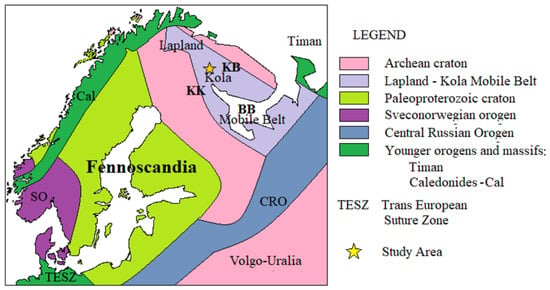
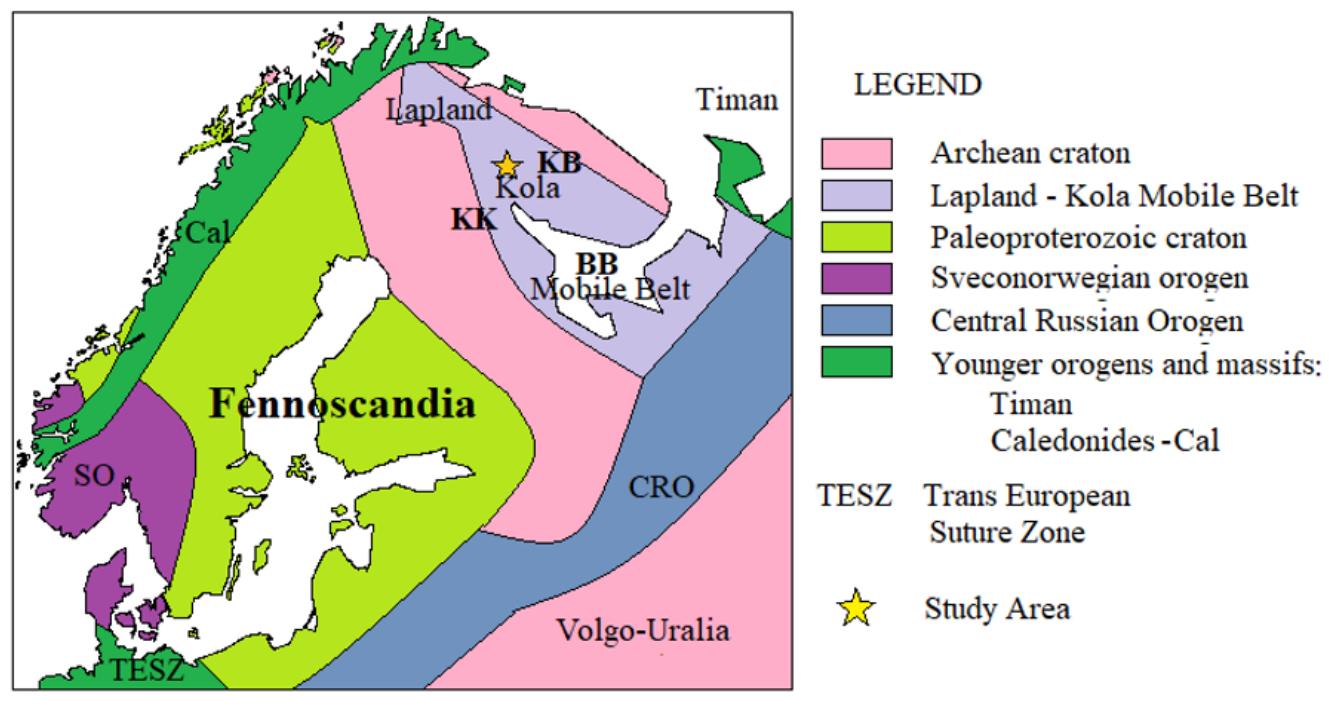
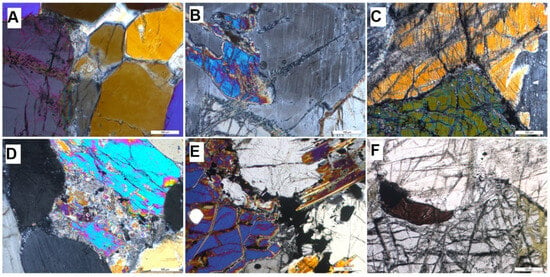
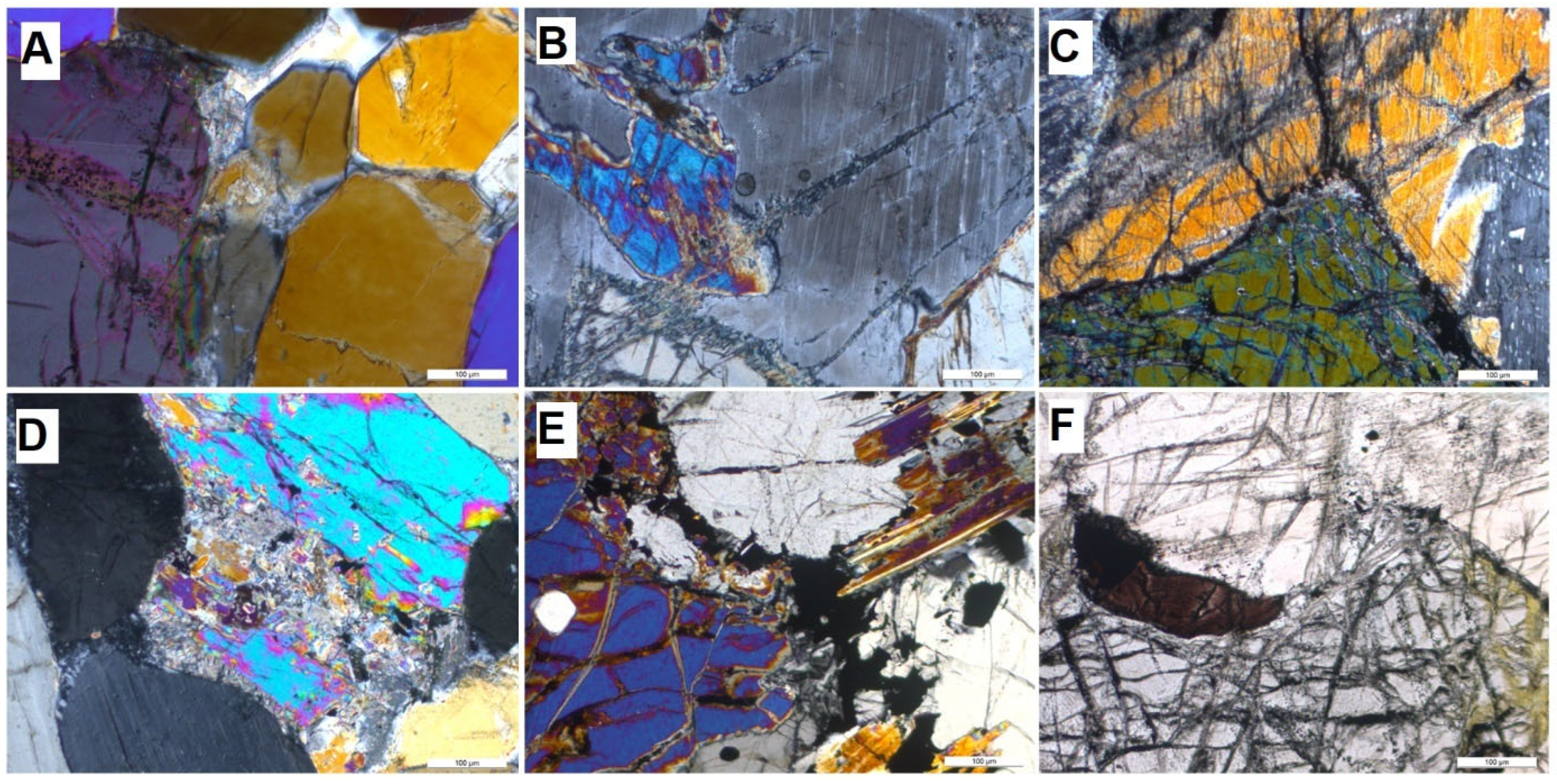
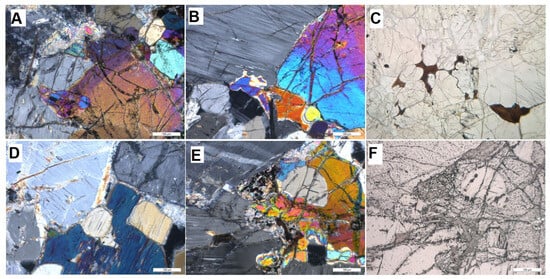
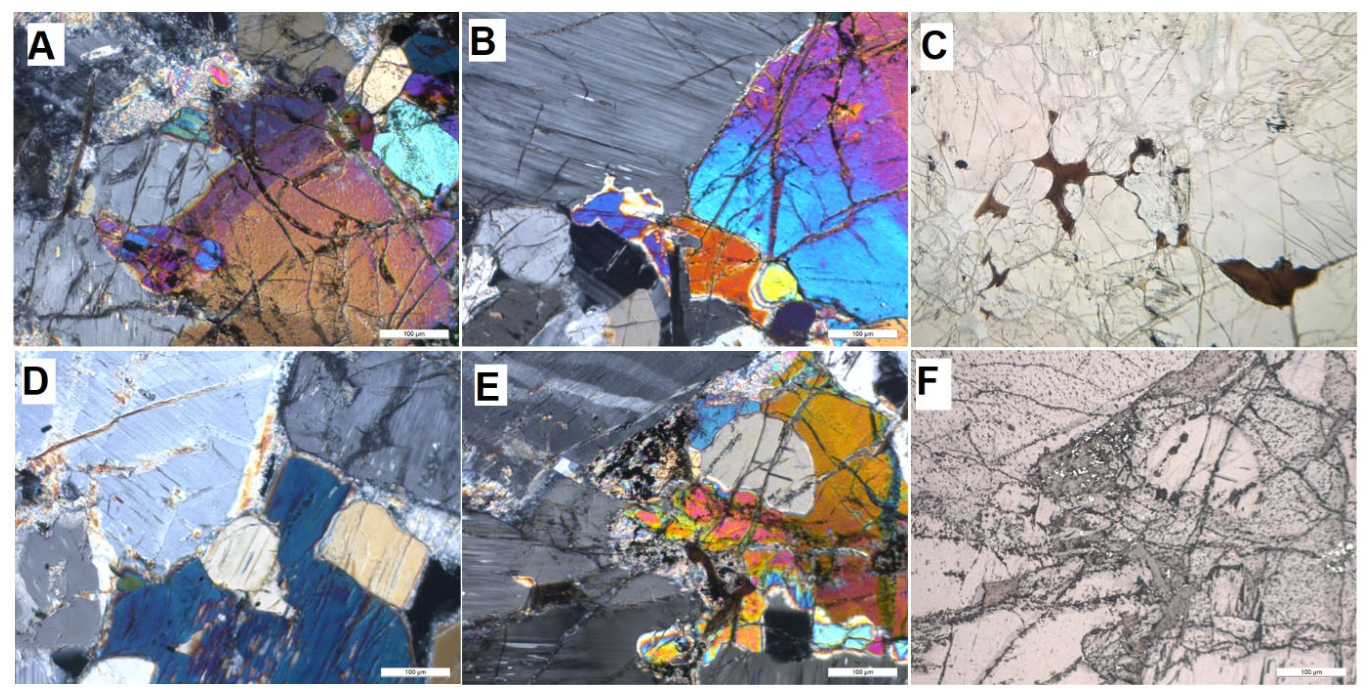
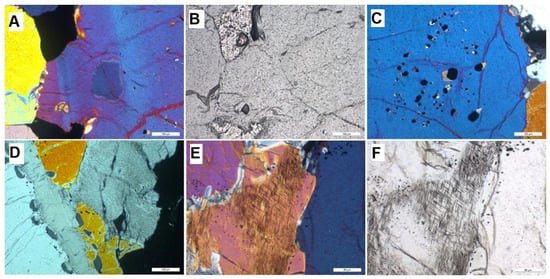
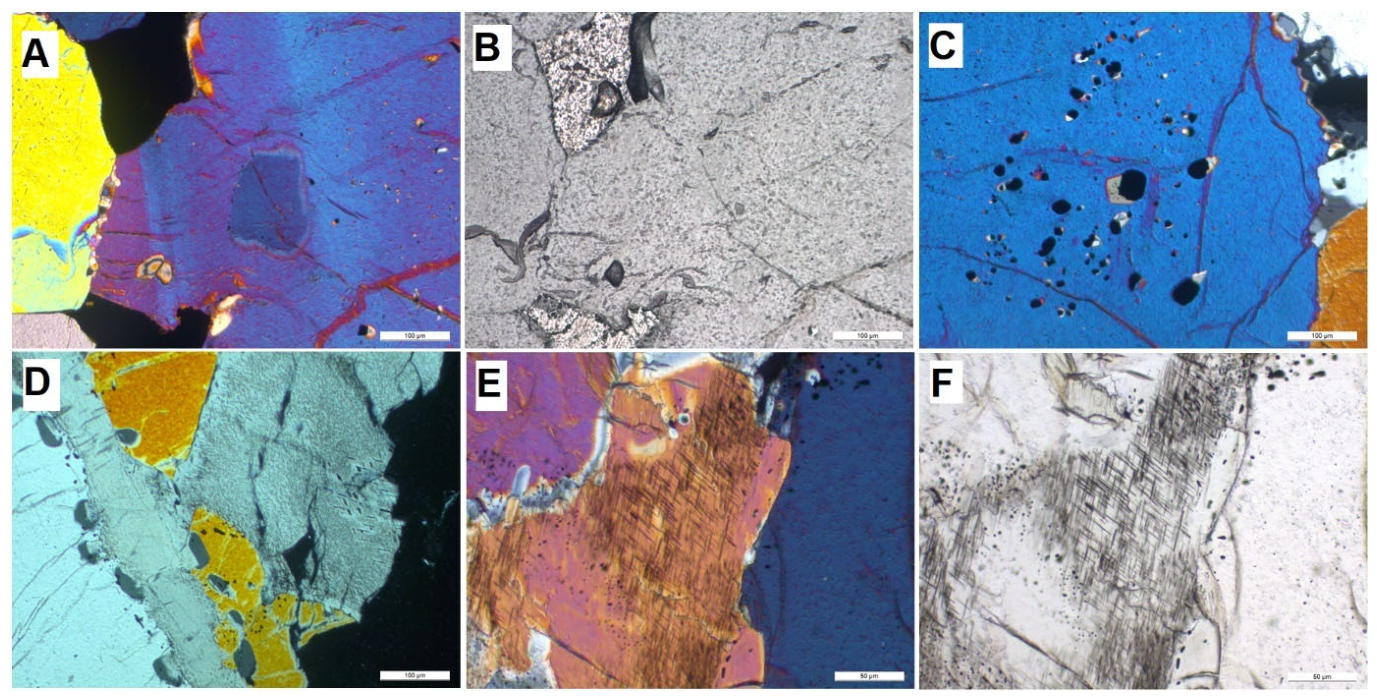
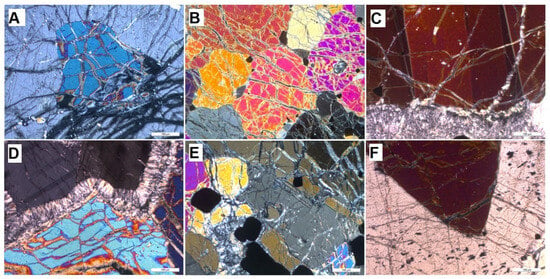
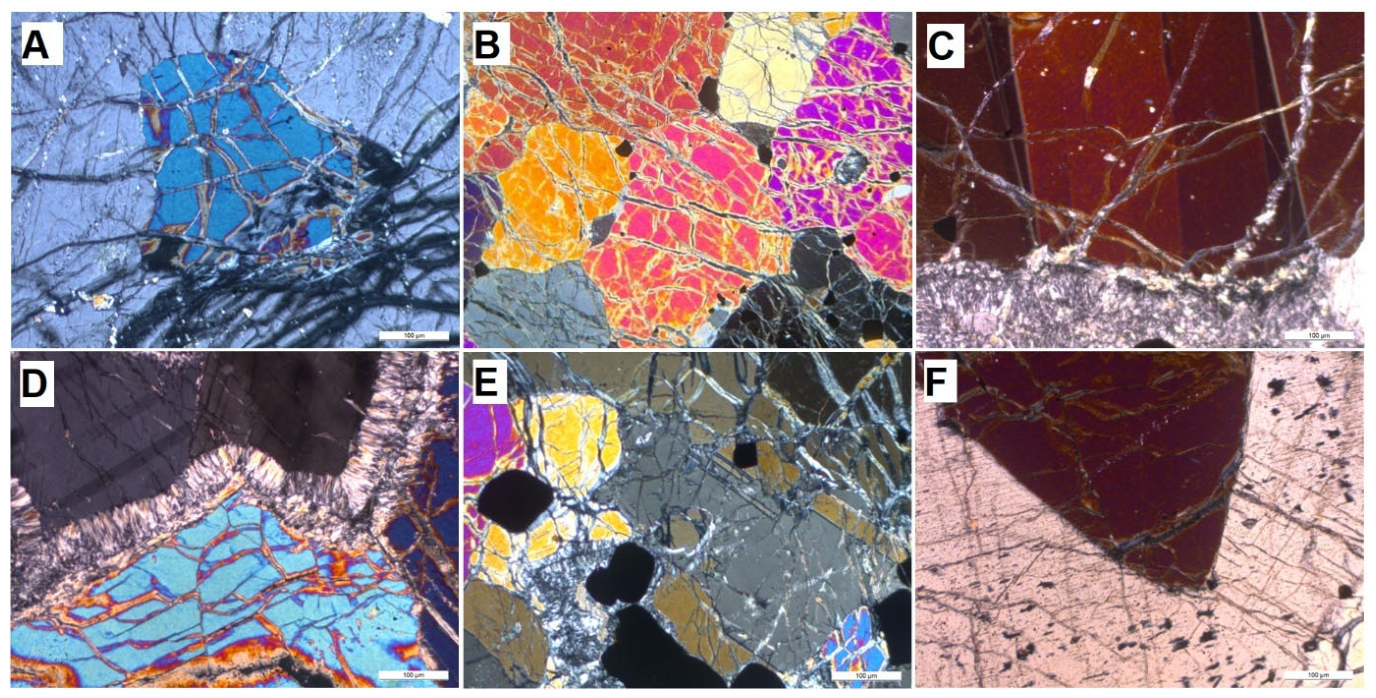
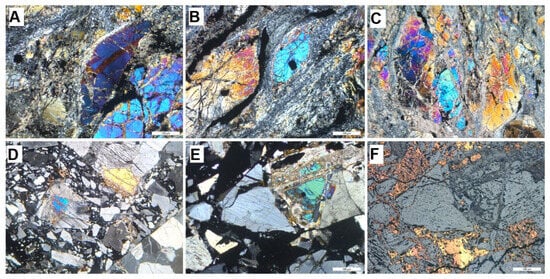
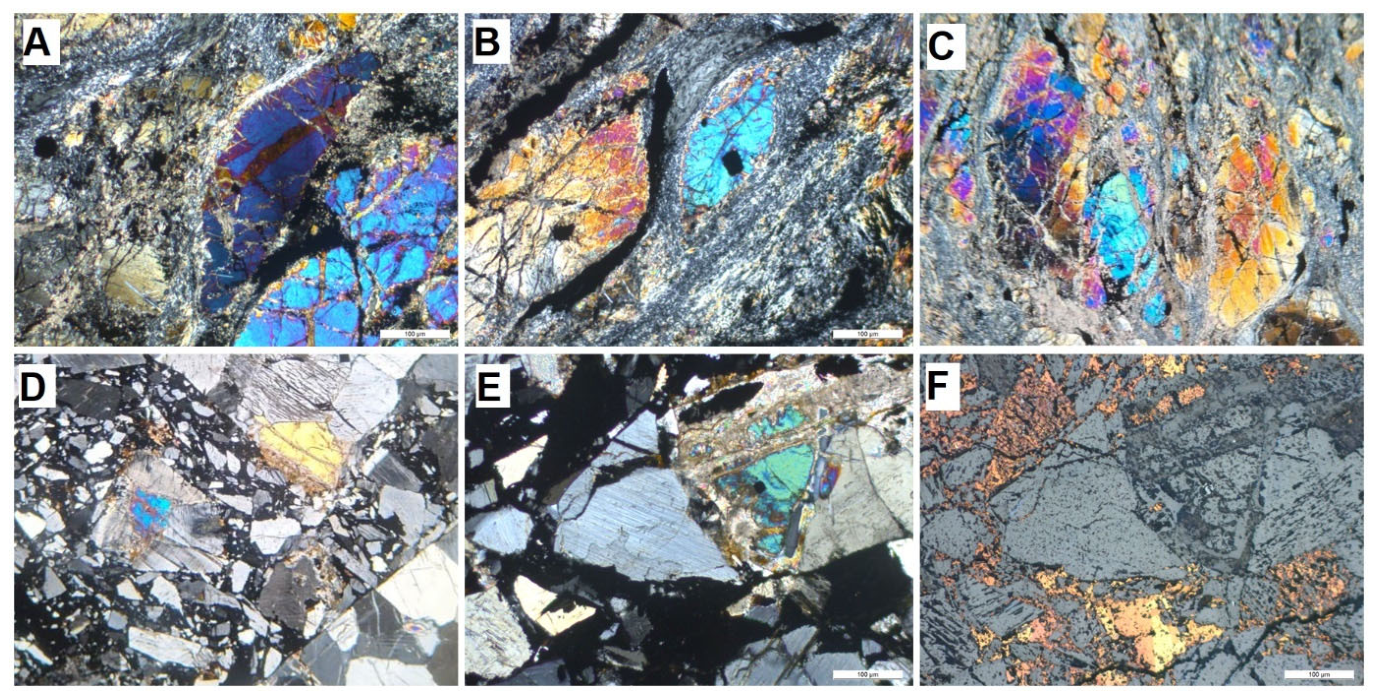
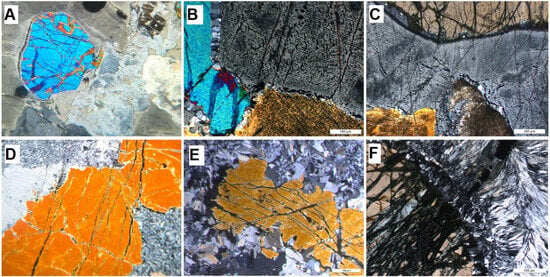
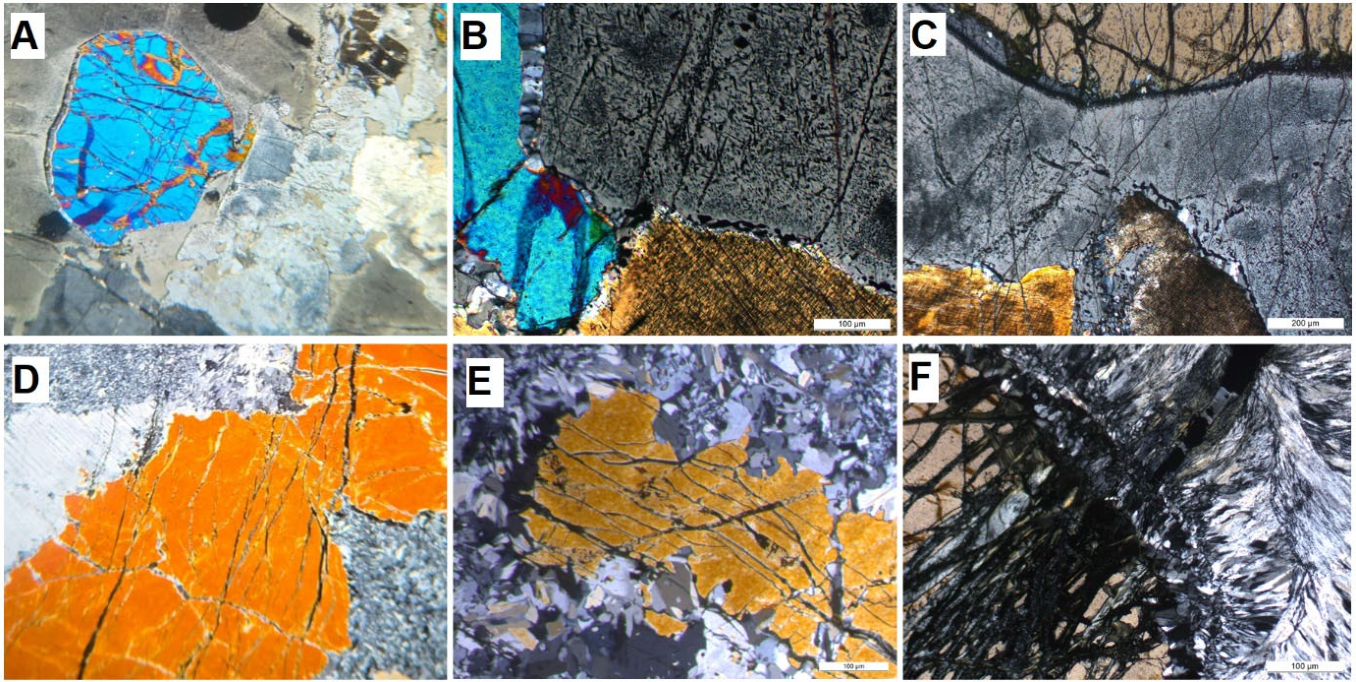
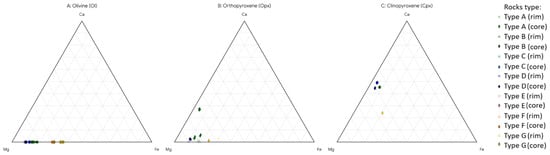
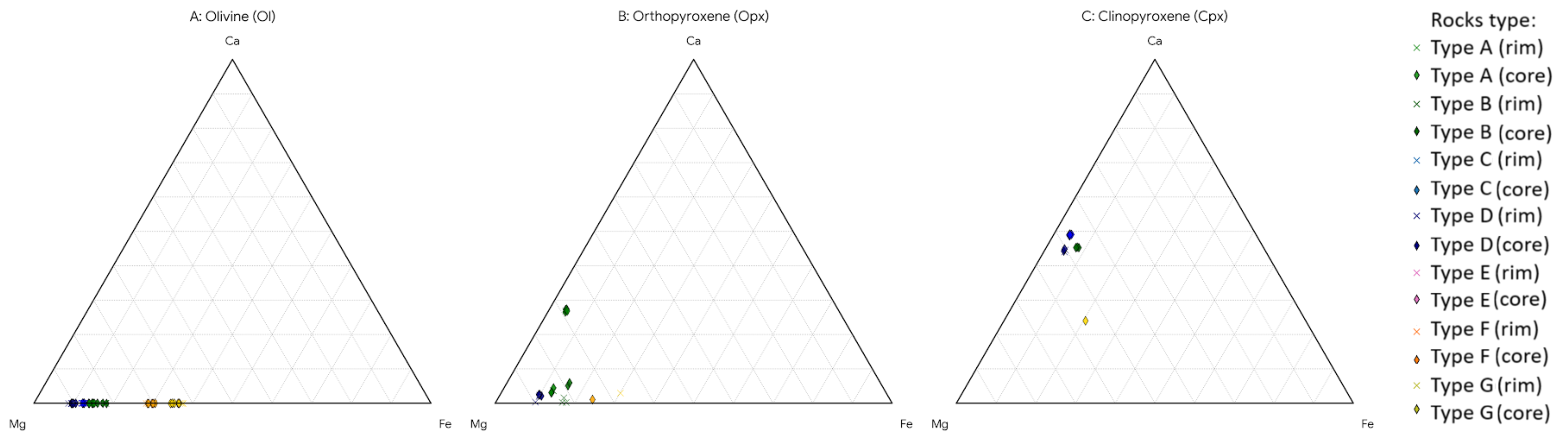
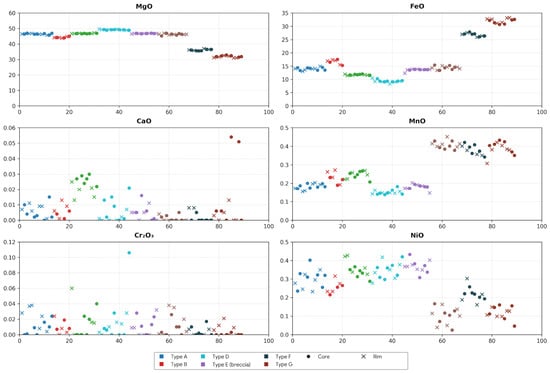
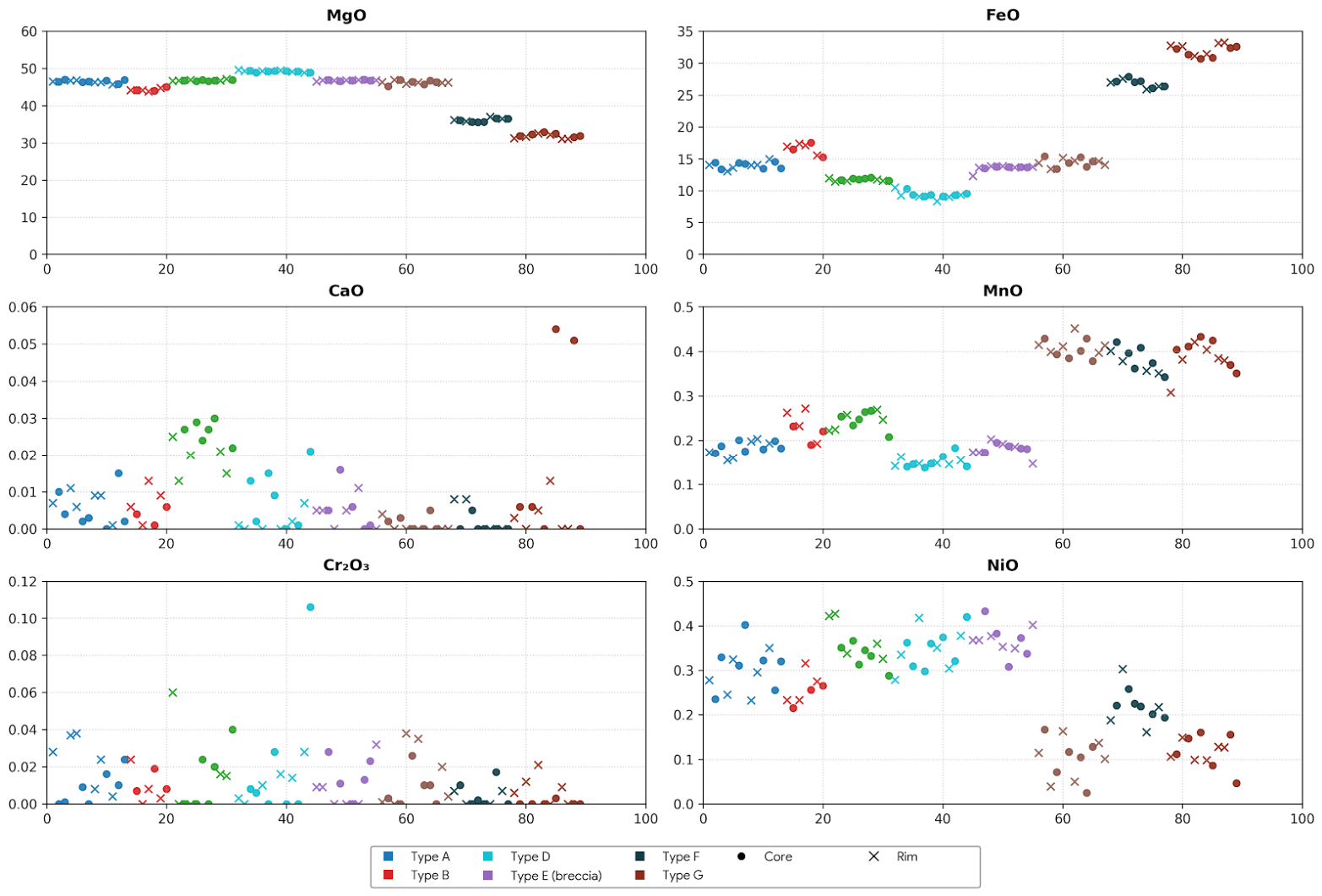
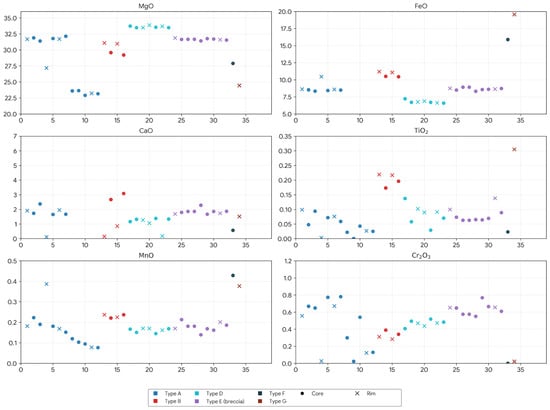
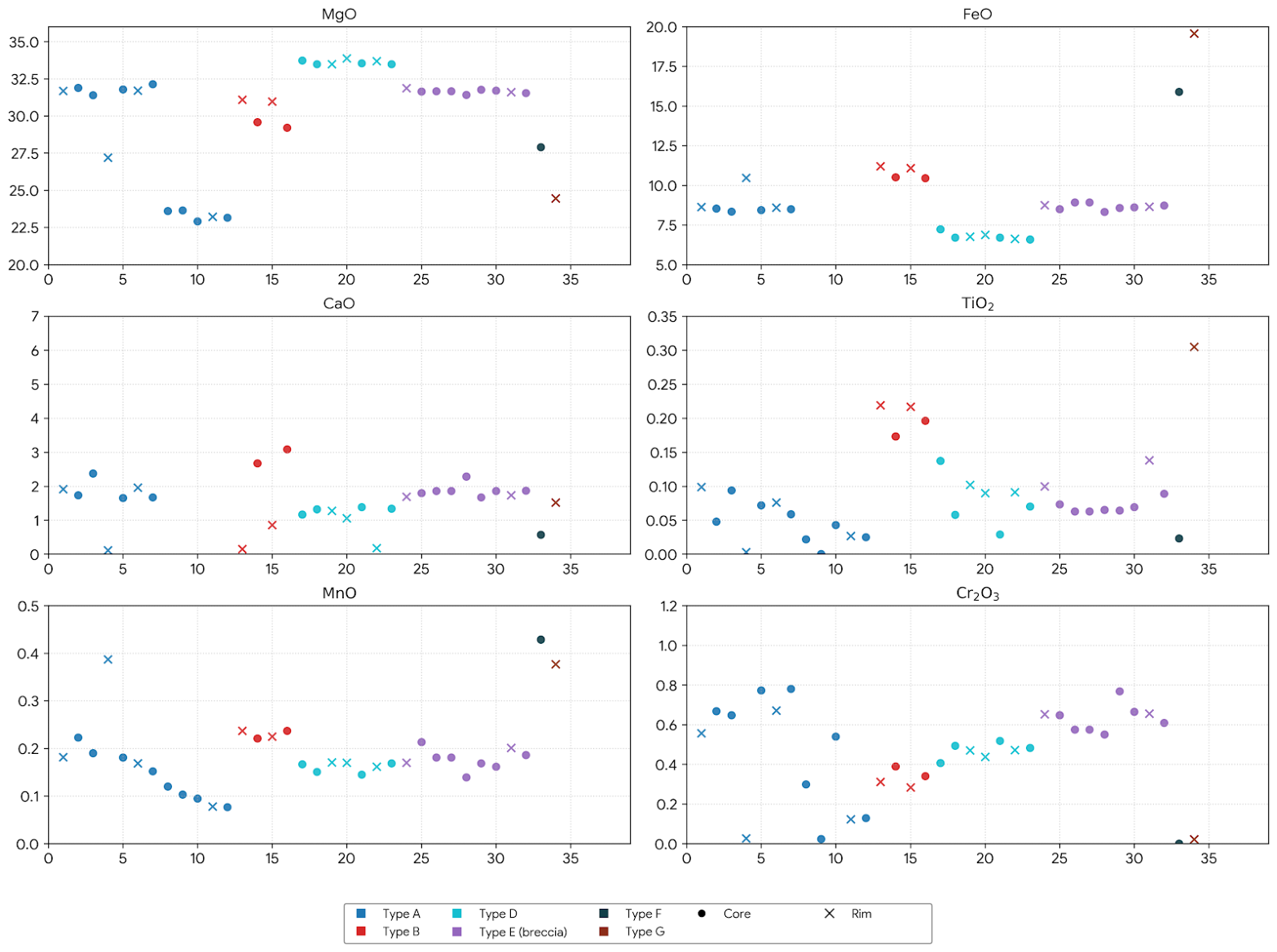
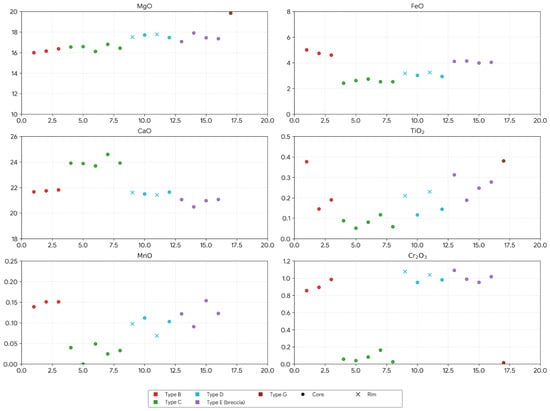
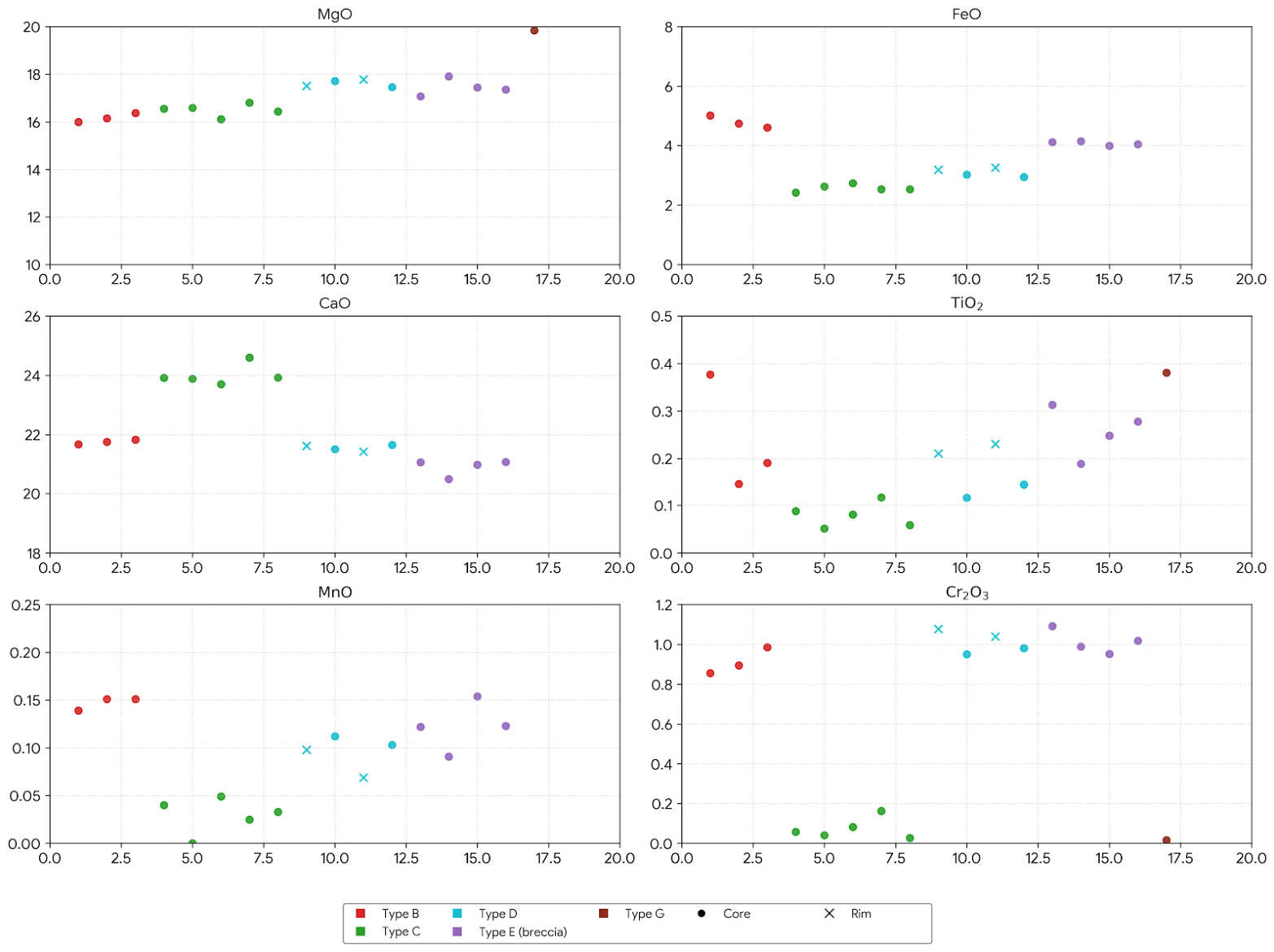
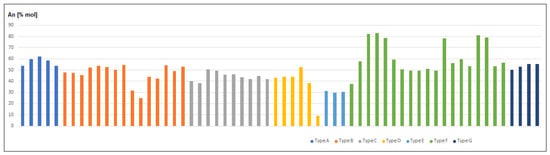
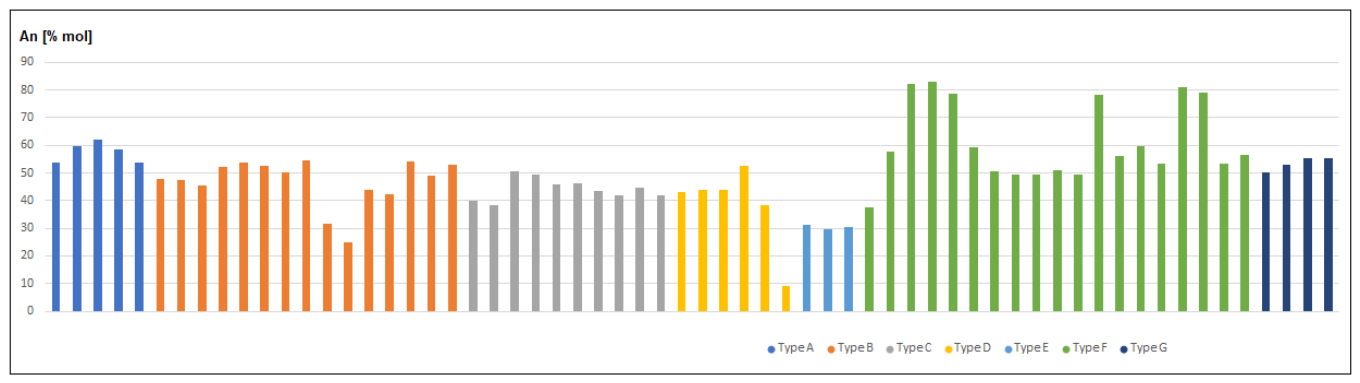
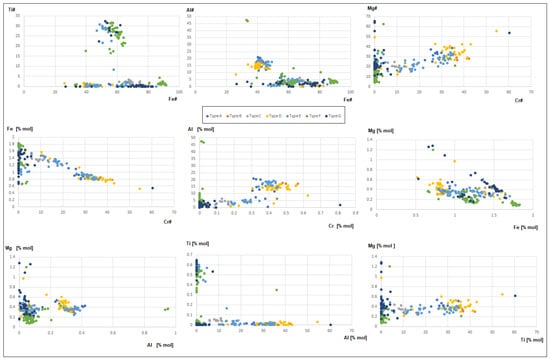
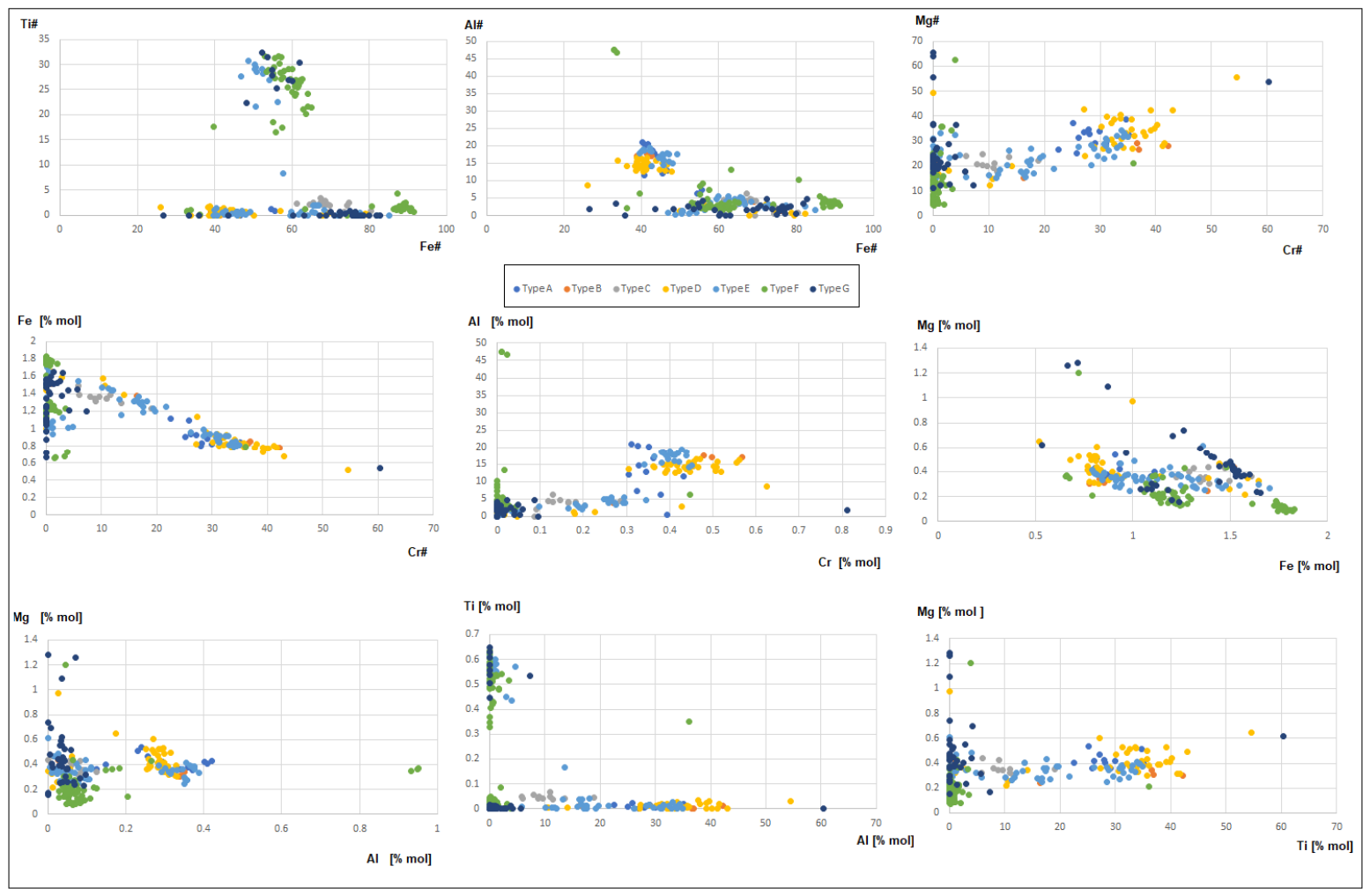
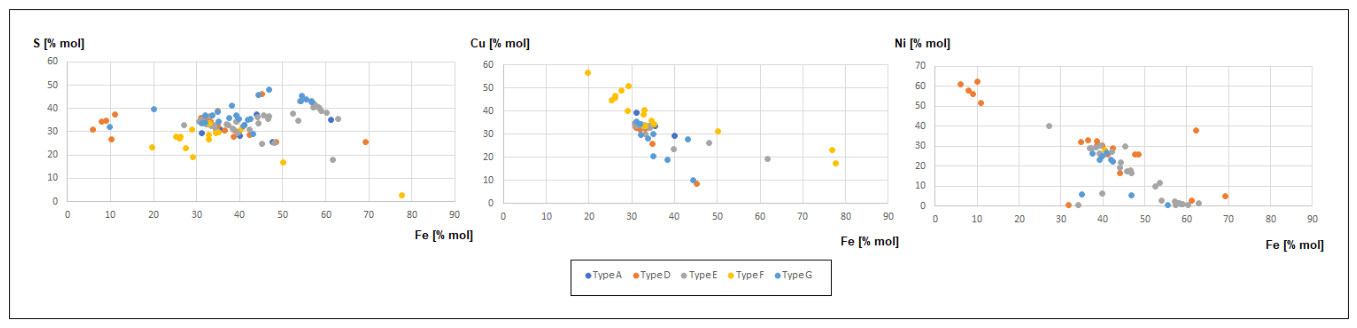
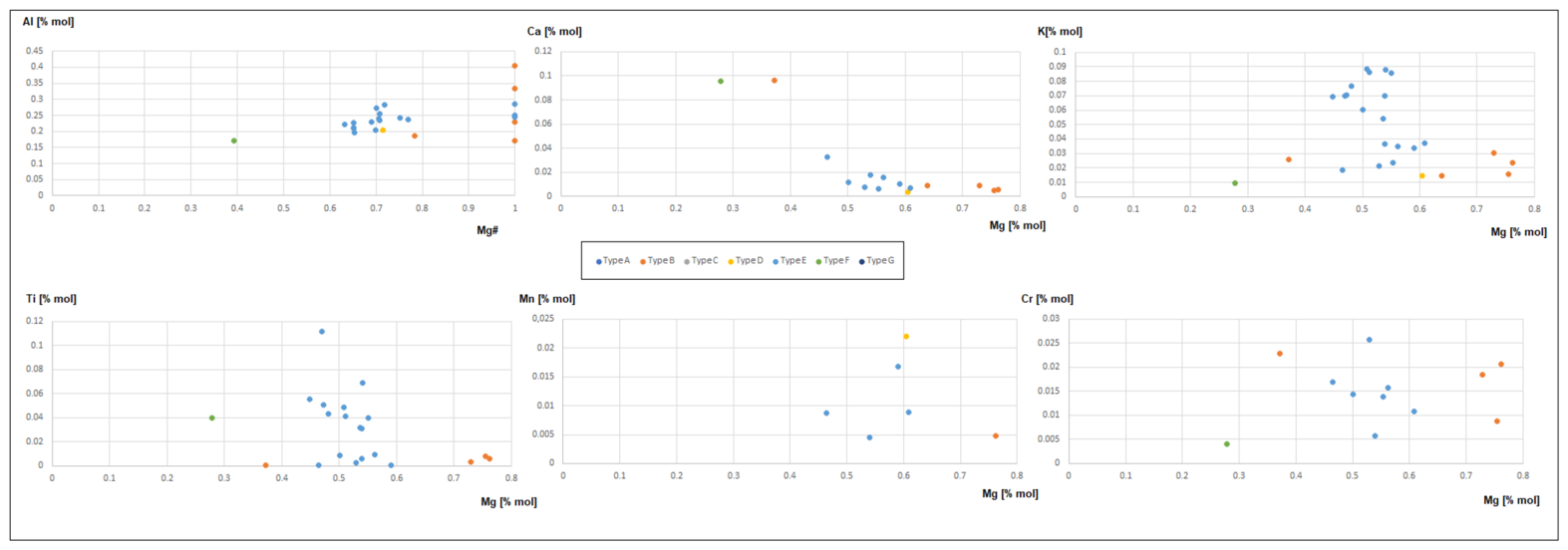
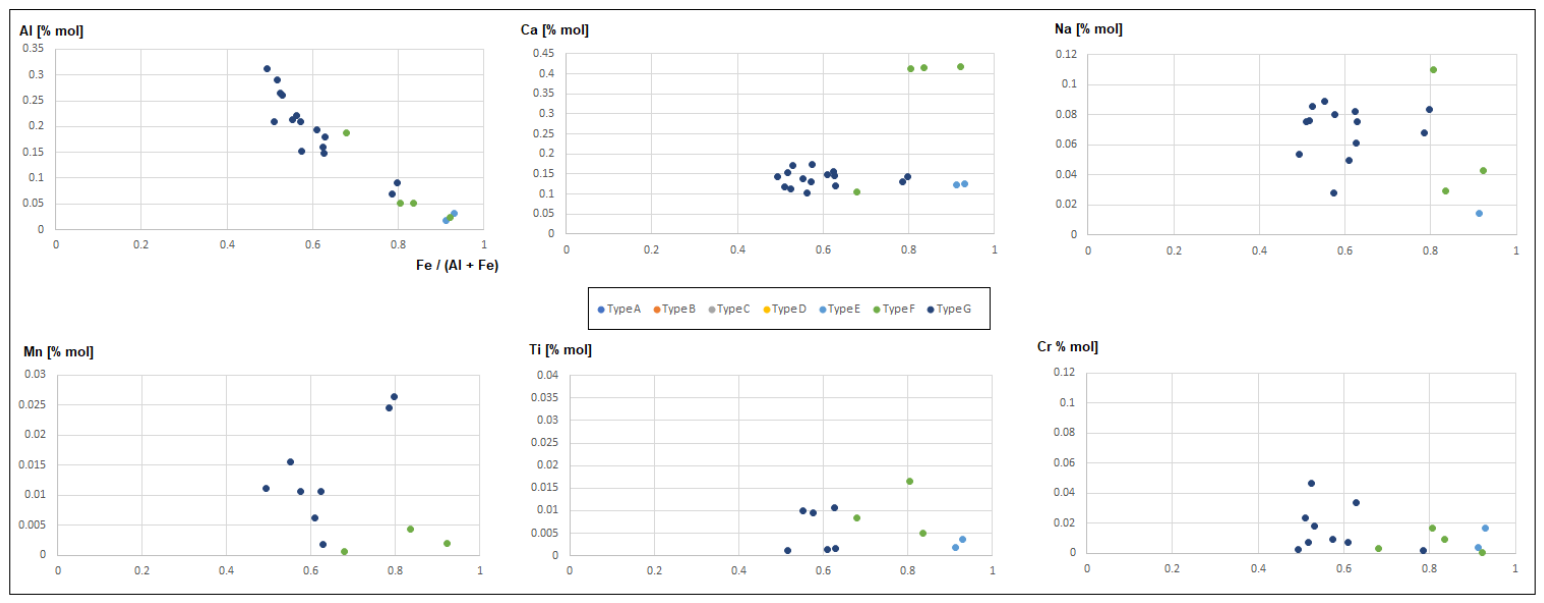
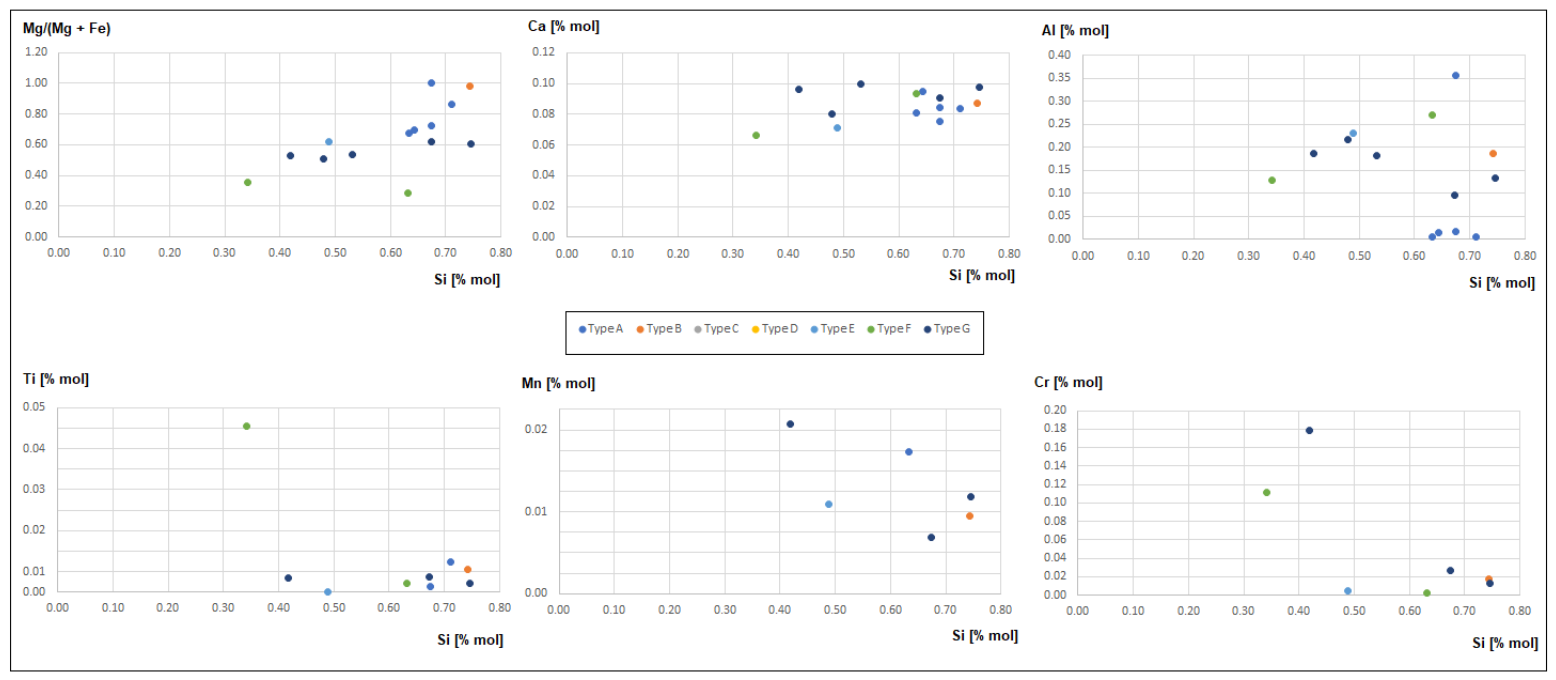
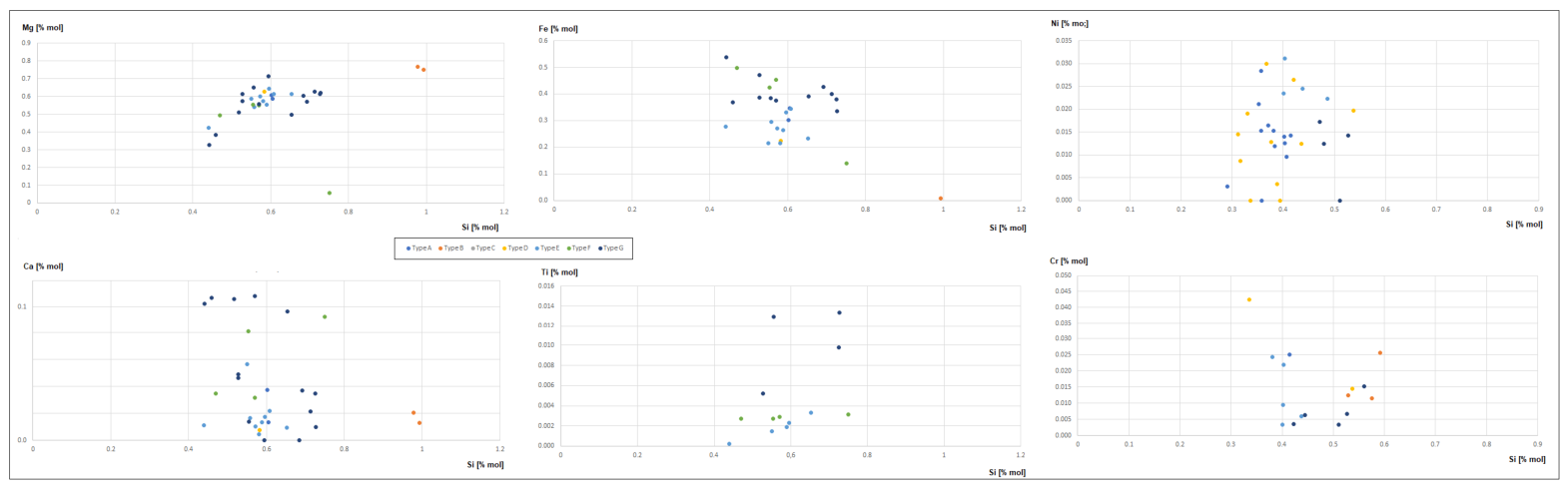
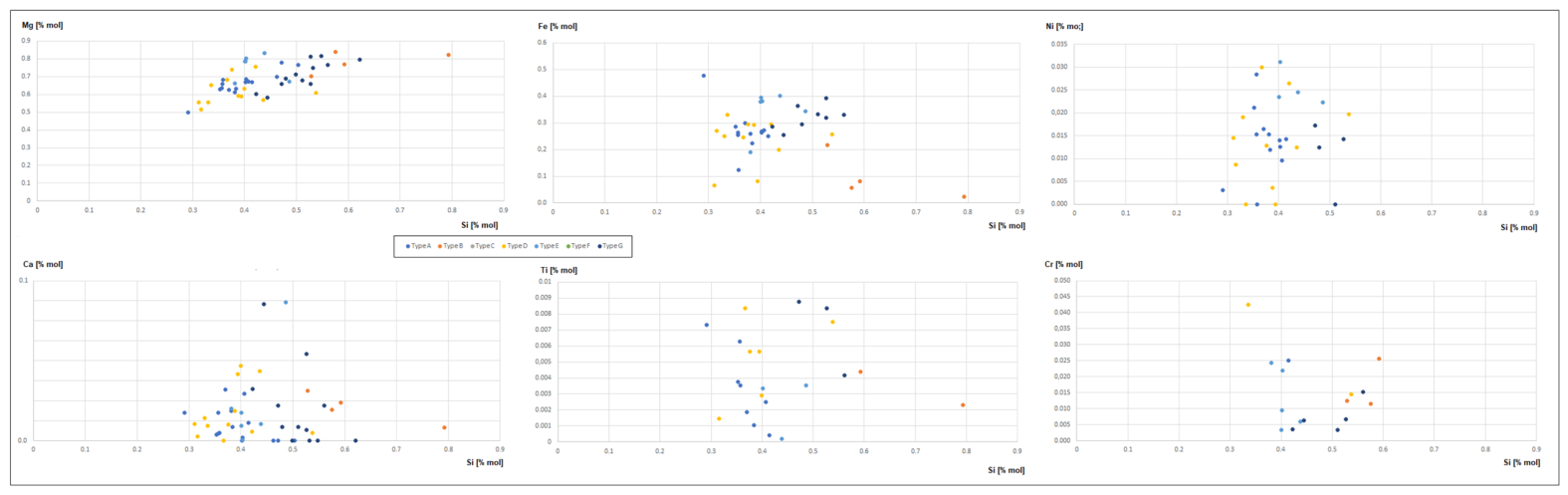
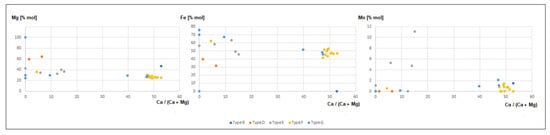
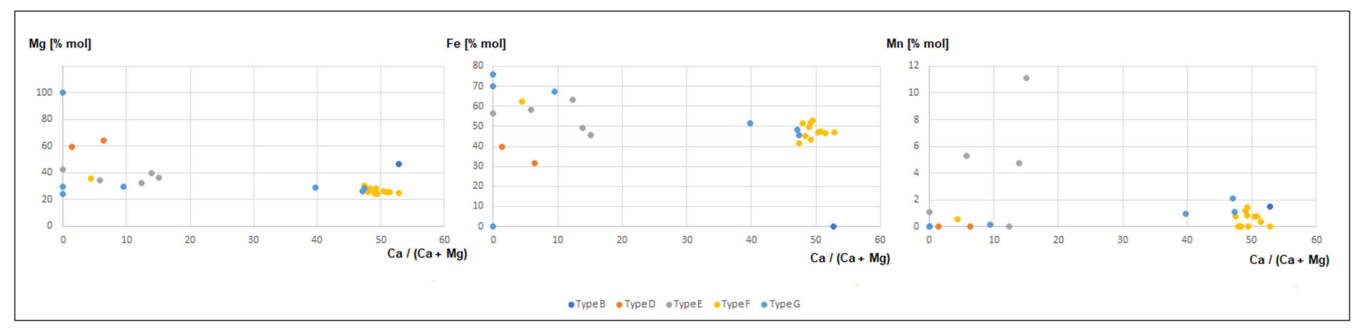
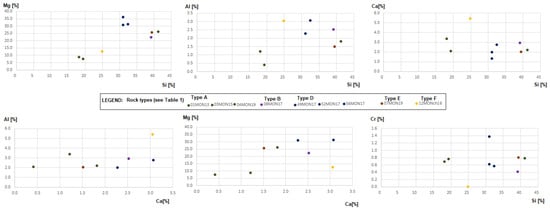
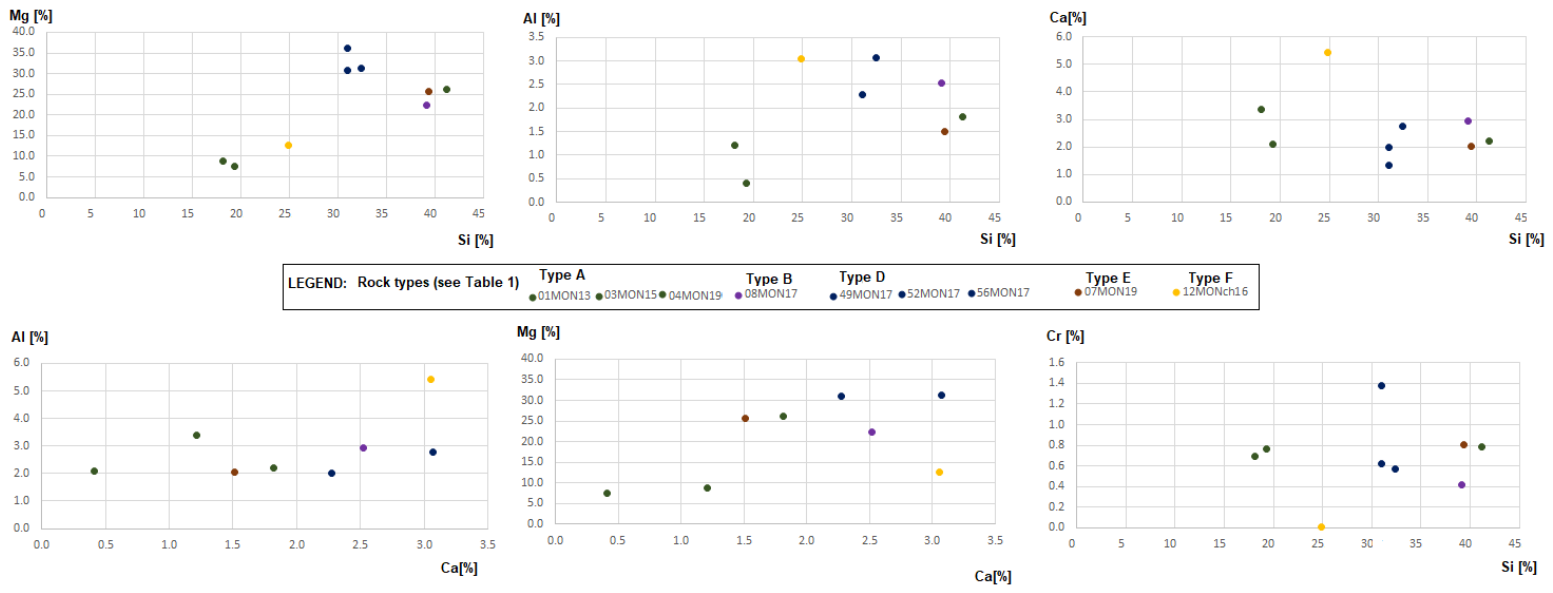
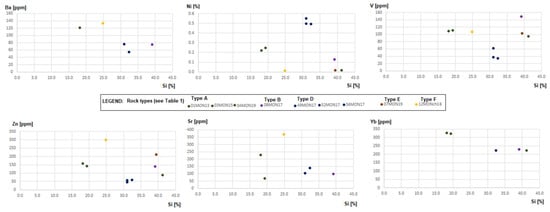
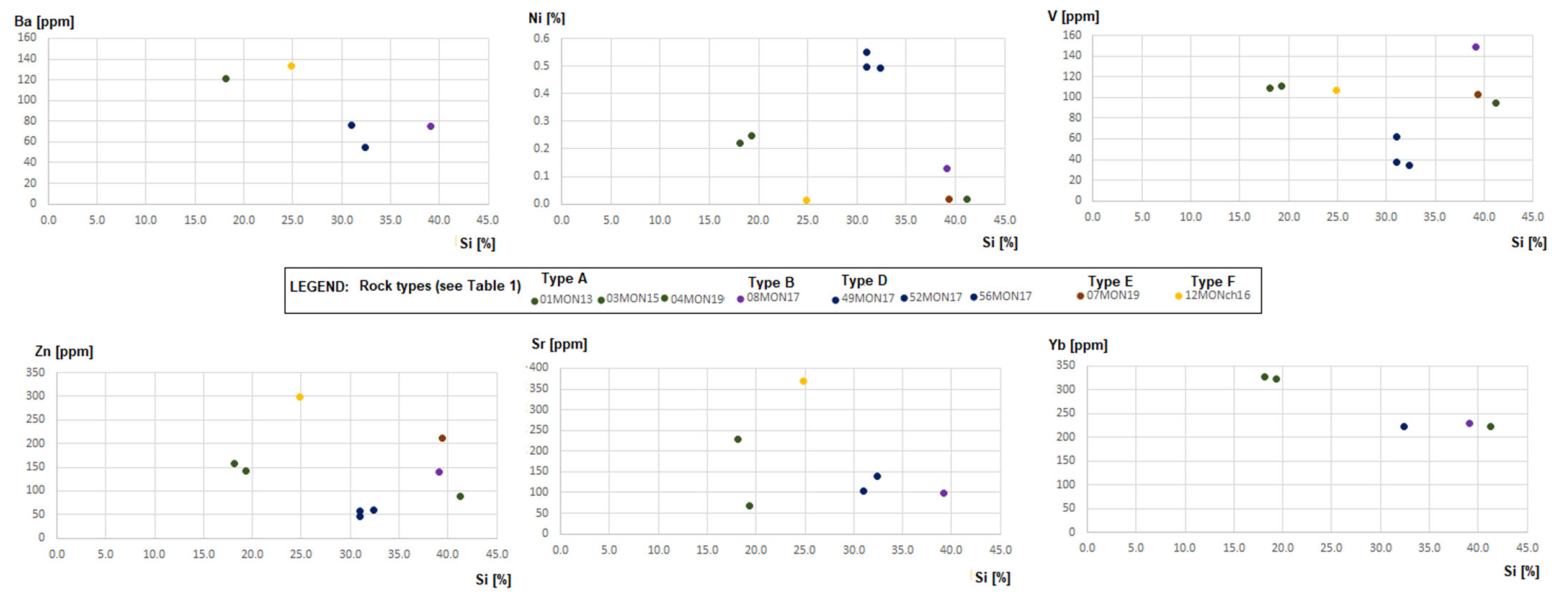
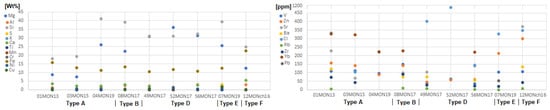
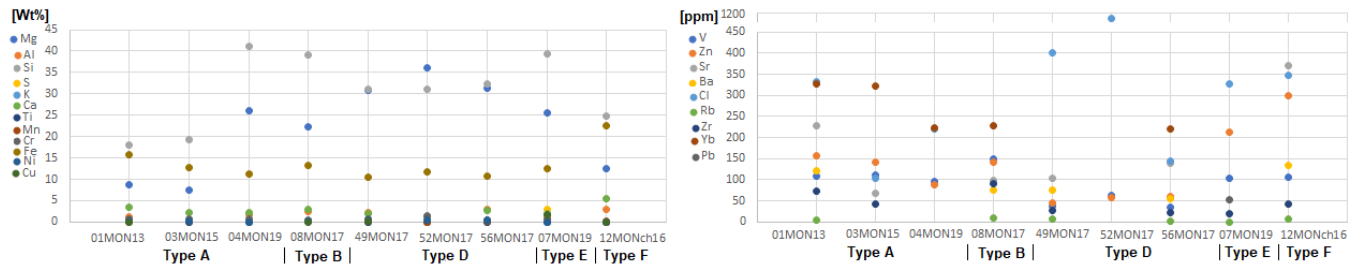
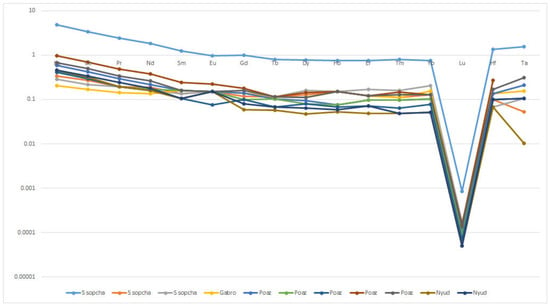
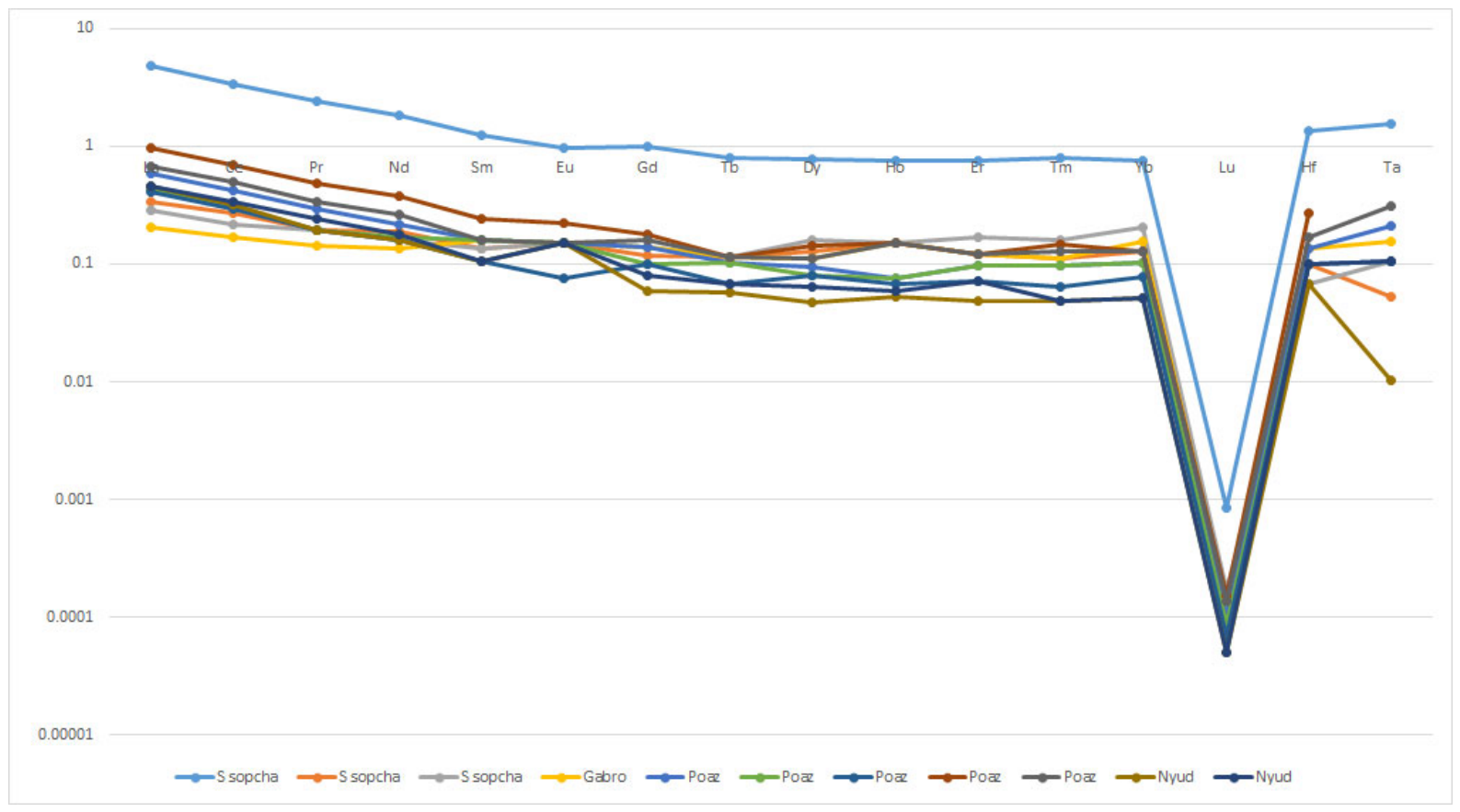
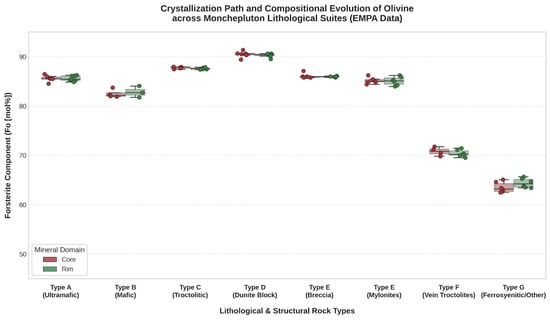
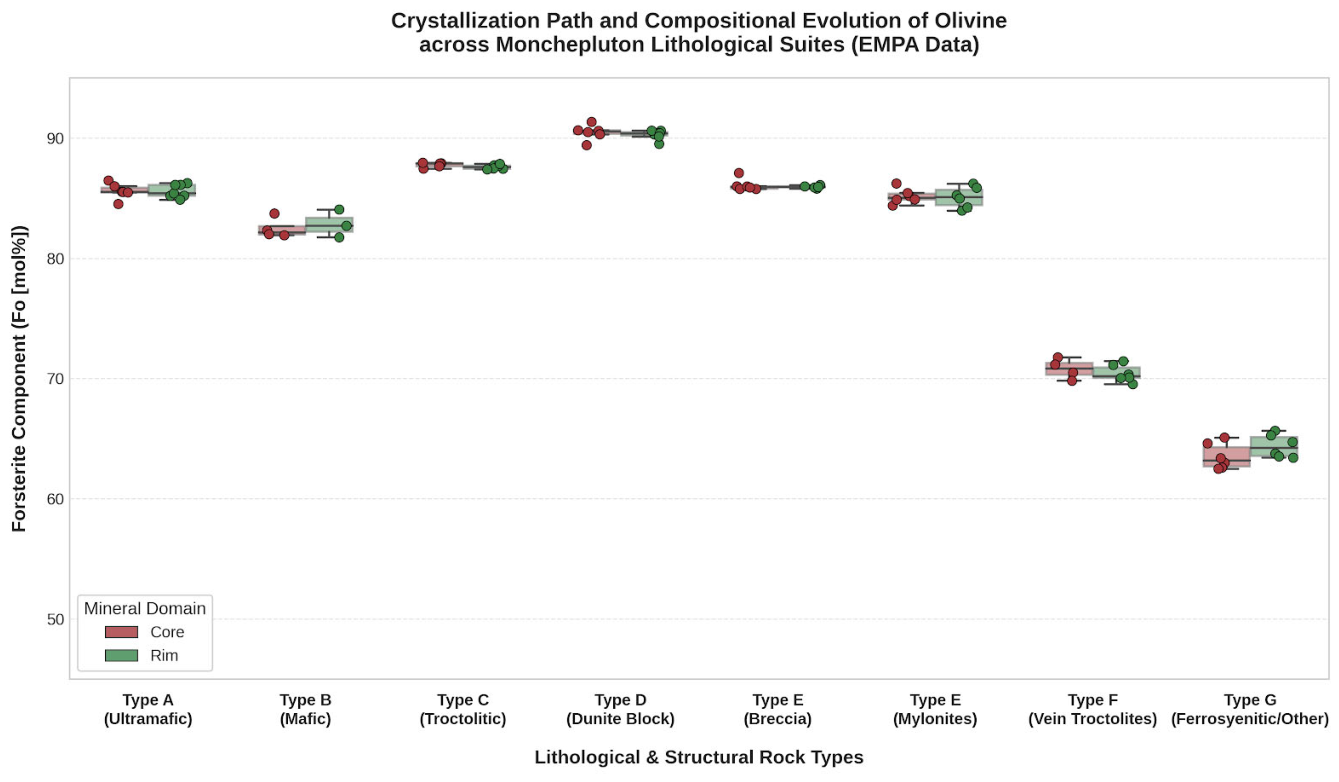
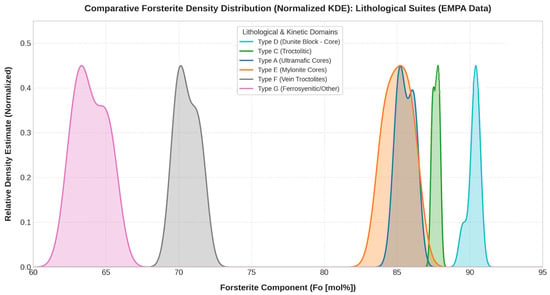
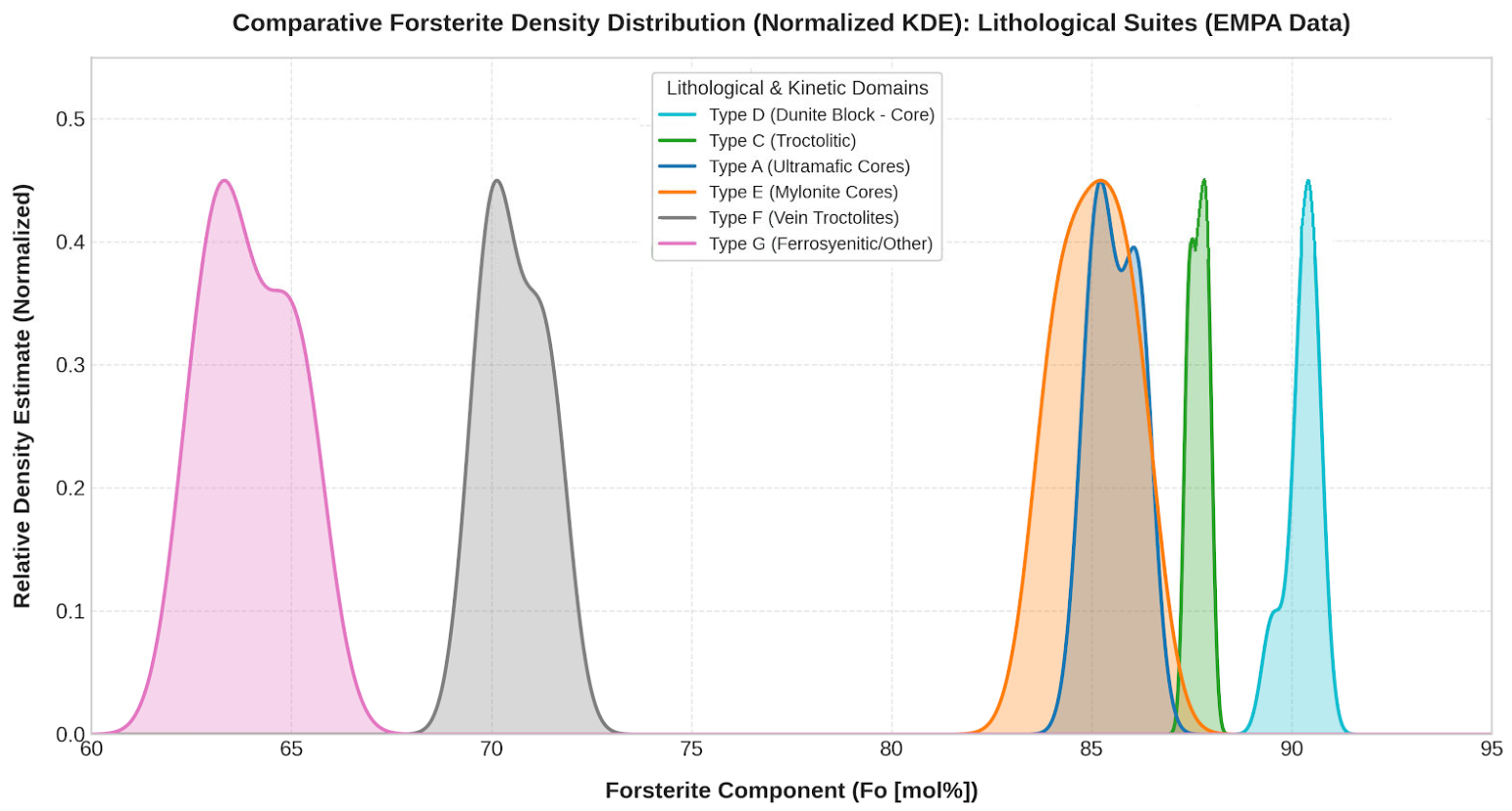

Disclaimer/Publisher’s Note: The statements, opinions and data contained in all publications are solely those of the individual author(s) and contributor(s) and not of MDPI and/or the editor(s). MDPI and/or the editor(s) disclaim responsibility for any injury to people or property resulting from any ideas, methods, instructions or products referred to in the content. |
© 2026 by the authors. Licensee MDPI, Basel, Switzerland. This article is an open access article distributed under the terms and conditions of the Creative Commons Attribution (CC BY) license.