


Abstract
Taxco, Mexico, has centuries of polymetallic Ag–Zn–Pb mining. This review synthesized published information on potentially toxic element (PTE) geochemistry, environmental distribution, biological exposure, and ecological and human health risk along the Cacalotenango River. The maximum concentrations in La Concha tailings (mg/kg) were 11,800 As, 780 Cd, 43,700 Pb, and 37,994 Zn, whereas those in El Fraile were 5725, 384, 22,900, and 39,145, respectively. La Concha was neutral to alkaline and carbonate-rich, while El Fraile was more acidic and contained more secondary sulfates and Fe oxyhydroxides. Acidic conditions at El Fraile favored PTE mobility, although secondary minerals and cemented horizons provided attenuation. As and Pb were mainly associated with less labile fractions, whereas Zn and Cd were more labile. Soils and sediments near the impoundments showed the greatest contamination. Blood-Pb exceeded 5 µg/dL in 94% of children and 87% of women living relatively far from the impoundments, suggesting additional Pb sources. However, multiple sources, confounding stressors, particulate contamination, and reliance on total rather than bioaccessible concentrations limited attribution of biological effects. An integrated assessment combining source tracing, PTE speciation and bioaccessibility, biomonitoring, and longitudinal health studies is required to establish source–exposure–effect relationships and provide a scientific basis for a regional control program to protect human health.
1. Introduction
Environmental pollution is steadily increasing, exposing ecosystems and human populations to potentially toxic elements (PTEs) released by mining activities, energy production, and natural processes such as volcanic eruptions [1]. These contaminants pose serious risks to ecosystems and public health due to their persistence, bioaccumulation, and biomagnification along food chains [2]. Taxco de Alarcón, a municipality located in northern Guerrero, Mexico, has a long mining history dating back to pre-Hispanic times. Mining activity intensified during the viceregal period, when Taxco became one of the most important producers of silver and gold in New Spain [3,4]. From the late nineteenth century onward, as precious metal extraction declined, mining activities increasingly focused on lead and zinc, which remained economically important until mining operations ceased in 2007. Over nearly five centuries, mining played a crucial role in the local and regional economy [5], but it also generated significant and spatially variable environmental impacts. The magnitude and nature of contamination changed over time as mining intensity, waste volumes, and processing technologies evolved. Beyond its historical importance, Taxco is a critical case study because of the long-term persistence of mining waste, the absence of large-scale regional remediation efforts, and the close spatial overlap among tailings deposits, fluvial systems, and inhabited areas.
Along the Cacalotenango River, within a mining district dominated by polymetallic intermediate-sulfidation epithermal Ag–Zn–Pb deposits [6], mining activities ranged from small-scale artisanal workings to large industrial operations. Consequently, the volume and composition of the resulting mining wastes varied not only with the scale of production but also with local ore composition and the extraction and processing technologies employed. The principal wastes included tailings, known in Mexico as jales, composed mainly of sand and silt-sized particles and containing abundant metal sulfides, as well as sludges and slightly weathered waste rock. During the first four centuries of mining activity, most of these materials were disposed of in open, unconfined areas, where they were susceptible to dispersion by wind, water, and mass movements into the surrounding environment, including the river system.
In the 1940s, two major tailings impoundments were constructed at La Concha and El Fraile. The exposure of the wastes to water and atmospheric oxygen following deposition has been shown to promote the oxidation of sulfide minerals, particularly pyrite and other iron sulfide–rich mining wastes. This oxidation generated acidic drainage and enhanced the mobilization of associated potentially toxic elements (PTEs), including Pb, As, and Cd. Acid mine drainage (AMD) from these deposits has been identified as an important source of contamination to the Cacalotenango River system [7]. Although AMD acidity has been partially neutralized by alkaline mineral phases present in the wastes, mainly at La Concha, extensive oxidation of the tailings is evidenced by their characteristic yellow-to-reddish coloration [8,9]. More recently, remediation measures have been implemented at the El Fraile impoundment, limiting direct contact between the tailings and water and atmospheric oxygen, thereby reducing impacts on the river system and windblown dust emissions.
Nevertheless, the long-term remobilization of PTEs from tailings and other mining and metallurgical sources has affected water, sediments, and air quality. Consequently, numerous studies have examined mining-affected areas along the Cacalotenango River. However, the available information remains fragmented across disciplines, environmental matrices, and methodological approaches. It is evident that discrepancies in sampling strategies, analytical techniques and spatial and temporal scales compromise the capacity for direct comparisons between studies. Consequently, an integrative synthesis linking mineralogical controls, geochemical behavior, environmental transport, and human exposure pathways remains lacking.
Interpreting this heterogeneous evidence requires distinguishing PTE concentrations and environmental contamination from mobility, bioaccessibility, bioavailability, exposure, and risk. These concepts describe different aspects of environmental behavior and biological interaction and are not interchangeable. Definitions of these terms and of the operational fractions discussed in this review are provided in the Table S1 of the Supplementary Material.
To contribute to reducing this gap, this article presents a review aimed at compiling, organizing, and synthesizing the available literature on the geochemical behavior of potentially toxic elements (PTEs) in mine tailings, as well as reported PTE concentrations in environmental matrices and approaches used to assess potential human health risks in the Cacalotenango mining district. Within this framework, the published studies are examined to describe their main approaches, strengths, and limitations, as well as the diversity of environmental matrices and methodologies considered. Specifically, this review addresses the following questions: (i) Which have been reported to influence PTE mobility in the two tailings systems? (ii) How have transport pathways across environmental matrices been described in the existing literature? (iii) Which exposure routes have been reported as potentially relevant to human health risks in the study area? By integrating the available evidence, this review may also support environmental assessment and informed decision-making by authorities and local communities, thereby improving the management of PTE contamination and helping to reduce potential health risks.
2. Study Zone
The Cacalotenango River, approximately 11 km long, flows southward and joins the Taxco River at Taxco El Viejo, the original pre-Hispanic and early colonial settlement of the region (Figure 1). The study area is located between 99°25′–99°47′ W and 18°21′–18°41′ N, at an average elevation of approximately 1674 m above sea level. The climate is classified as semi-warm to sub-humid (Aw type), with mean annual temperatures ranging from 12 to 26 °C and annual precipitation between 800 and 1500 mm. Most rainfall occurs from May to October, with minimum precipitation in February and a maximum in September [10]. The dry season extends from November to April.
Figure 1.
Study area showing the spatial relationship between tailings deposits, fluvial system, and nearby populated areas along the Cacalotenango River.
Vegetation varies spatially across the basin, ranging from low deciduous forest in the southern sector to dense high mountain forest in the northern and western areas. Geologically, the region comprises formations ranging in age from the Upper Paleozoic to the Upper Oligocene, including the Taxco Schists, Morelos, Mexcala, and Balsas Formations, as well as the Tizapotla Rhyolite. The Mexcala Formation, which underlies a significant portion of the area surrounding the tailings impoundments, is predominantly composed of sandstones and shales. This formation is regarded as essentially impermeable, although secondary porosity may be of importance in certain localized areas [7]. The Taxco Mining District (TMD) hosts intermediate-sulfidation epithermal deposits characterized by hydrothermal veins containing Ag, Pb, and Zn hosted within sedimentary and metamorphic rocks, particularly the Taxco Schists, where sulfide mineralization is widespread [7]. The main vein systems trend northwest (30–65°) and dip 45–90° to the northeast, with subordinate north–south and southwest orientations. Individual veins can extend up to 3000 m in length and range from 1 to 12 m in thickness [11].
Several villages are located along the riverbanks, including Cacalotenango (2095 inhabitants), El Fraile (540), Santa Rosa (417), and Dolores (635) [12]. The area also contains historical mining wastes, including the La Concha and El Fraile tailings impoundments, as well as former mineral-processing areas. These mining wastes are located close to inhabited areas and schools, making the site particularly relevant in terms of potential human exposure (Figure 1).
3. Methodology
This study followed a structured literature search informed by principles [13] to compile and integrate research on the mineralogical, geochemical, environmental, biological, and human health aspects of historic mine tailings in the Cacalotenango River area, within the Taxco mining district, Mexico. The objective was to organize existing literature and examine geochemical processes related to PTE mobilization, mechanisms, and human exposure.
We used a PRISMA-ScR based workflow [14] to organize and document the source-selection process to support reproducibility and transparency, although we did not follow its reporting recommendations in full.
Database searches were carried out using Web of Science, Scopus, and Google Scholar complemented by academic repositories from the National Autonomous University of Mexico and the Autonomous University of Guerrero.
Inclusion Criteria: (1). Focused on the Cacalotenango River (río Cacalotenango) within the Taxco mining district, Guerrero, Mexico. (2). Reported primary analytical data related to: mine tailings, environmental contamination, geochemical processes, biomonitoring, human health risks or exposure pathways associated with potentially toxic elements (PTEs). (3). Were published as: peer-reviewed journal articles, academic theses/dissertations, or conference proceedings/abstracts.
Exclusion Criteria: (1). Did not focus specifically on the Cacalotenango River area. (2). Were duplicates of the same dataset. (3). Focused on topics not directly related to mining contamination or the behavior and potential health effects of potentially toxic elements.
A comprehensive literature search was conducted on 15 October 2025. The search strategy was structured using thematic blocks combined with Boolean operators. Searches were performed using the advanced search interface of each database to ensure consistency and reproducibility.
The search blocks were as follows:
(Taxco” OR “Taxco de Alarcon” OR “Cacalotenango” OR “Taxco-Cacalotenango” OR “Río Cacalotenango” OR “Cacalotenango River”)
AND
(“mine tailings” OR “tailings” OR “historic mining” OR “mining residues” OR “smelting” OR “metallurgical residues” OR “La Concha” OR “El Fraile”)
The complete search strategies for each database, along with the full list of selected studies, including peer reviewed articles, theses, and conference abstracts, are provided in Supplementary Material Tables S2–S7.
Documents reporting data on tailings mineralogy, geochemistry, leaching behavior, environmental contamination (water, sediments, and soils), biological uptake, or human biomonitoring within the Taxco mining district were identified. After removing duplicates and conducting an initial screening of titles and abstracts, the studies that met the inclusion criteria were assessed and retained for final analysis (Figure 2).
Figure 2.
Flow Diagram of the Literature Selection Process.
The selected literature was categorized according to environmental matrix (tailings, water, sediments, soils, biota), human health and analytical approach, enabling a thematic and process-based synthesis. Rather than summarizing individual studies, this review focused on identifying patterns in PTE mobility, comparing synthetic and natural leaching approaches, and evaluating reported exposure pathways.
All available information meeting the inclusion criteria, including academic theses and conference proceedings or abstracts, was considered to capture locally relevant evidence that might otherwise be absent from peer-reviewed journal publication. Given the importance of the problem for affected communities and public authorities, these sources also helped identify reported concerns and gaps in knowledge.
Of the documents analyzed, 67% corresponded to peer-reviewed journal articles, 27% to academic theses, and 6% to other document types, all of which were related to environmental contamination processes within the study area.
Initial study selection and data extraction were conducted by one author. A preliminary manuscript outline guided the preparation of digital notecards containing relevant information and numerical data, a short bibliographic citation, and the corresponding section or subsection of the outline. These notecards allowed the extracted information to be traced back to the original publications and supported the initial synthesis.
The content of the notecards organized by section was discussed primarily by two authors, who subsequently checked and revised the manuscript against the notecards and original publications. The remaining three coauthors independently reviewed the manuscript, numerical data, tables, and figures. Questions and differences in interpretation were addressed through discussion and re-examination of the original sources.
Findings from different studies were jointly analyzed, synthesized, and evaluated using established scientific knowledge and the authors’ research expertise. Interpretation considered methodological differences and uncertainties, including the limited information provided in several publications for assessing study design and analytical reliability. The authors’ interpretations were distinguished from findings reported in the original studies.
Section 4 was organized to follow the progression from potential sources to environmental transport and biological and human exposure.
The mineralogical and geochemical framework of La Concha and El Fraile is presented first to establish their compositional differences and the controls on PTE release and retention. The subsequent sections examine PTE occurrence and behavior in environmental media, followed by findings in plants, animals, and human populations. This sequence provides a framework for integrating the published information and identifying gaps between sources, transport pathways, exposure, and effects; it does not imply that causal connections among these stages have been established.
The reviewed studies were conducted independently, at different times, and with different objectives, sampling designs, and analytical methodologies. Their findings are therefore interpreted within the scope of each investigation, and comparisons are made with explicit recognition of these differences. Some components of the proposed sequence are supported by measurements or experimental results, whereas others remain potential pathways or incompletely demonstrated connections. Geochemical studies characterize release and retention mechanisms, environmental studies document PTE occurrence and provide evidence of transport and accumulation at the locations investigated, and human biomonitoring demonstrates internal exposure. However, these findings do not establish a continuous causal chain or quantify the relative contributions of tailings, historical metallurgical wastes, natural mineralization, and other sources to exposure and the reported biological effects.
The methodological characteristics of the included studies were assessed considering sampling design, spatial coverage, sample size, analytical methods, reported quality assurance/quality control (QA/QC) procedures, exposure assessment, and study-specific limitations (Table S8).
4. Results and Discussion
4.1. Mineralogical and Geochemical Framework of La Concha and El Fraile
4.1.1. General Description
La Concha (northern sector) and El Fraile (southern sector) are tailings impoundments constructed in the Cacalotenango River basin (Figure 1). The main period of tailings deposition at La Concha is attributed to 1940–1950 [7]. However, Calderón [15] reported that the La Concha mill was remodeled and converted into an oxide flotation plant in 1948 and documented continued milling activity in 1953.
The estimated amount of tailings deposited at La Concha varies considerably among studies. Dotor et al. [16] reported approximately 1 million tons of tailings, whereas Gómez-Bernal et al. [5] estimated approximately 154,000 tons. Cortés-Jiménez et al. [17] described two separate deposits, 12 and 14 m high, covering a total area of 1.26 ha and containing approximately 400,680 tons of tailings. These differences may partly reflect differences in the spatial extent considered in each estimate.
At El Fraile, approximately 5 million tons of tailings from a Pb–Zn concentration plant were stored in an impoundment covering approximately 20 ha. Tailings were deposited from the mid-1940s to approximately 1973, when the plant closed operations [3,9,18,19,20]. After the El Fraile plant closed, mining and tailings deposition continued at other sites in the district until 2007, when these activities finally ceased.
The El Fraile impoundment has two sectors, El Fraile North and El Fraile South [9]. Coarse tailing particles were used to construct the retaining embankment, whereas finer particles settled within the impoundment. At El Fraile, the settling pond was covered with calcareous shale after mine closure, reducing sulfide oxidation and acid generation [9]. This particle-size segregation produced spatial differences in exposure to oxygen and water and, consequently, in the extent of sulfide oxidation [9].
4.1.2. Potentially Toxic Element Total Content
Reported total and pseudo total PTE concentrations in La Concha and El Fraile tailings are summarized in Table 1 and Table 2; data from other environmental matrices are addressed separately in their corresponding sections. The reported tailing concentrations were obtained from studies with heterogeneous sampling designs, sample sizes, analytical techniques, and digestion procedures. The compiled data include total concentrations determined by X-ray fluorescence (XRF) or following HF-containing acid digestions, as well as pseudo total concentrations obtained using acid digestions without HF. Therefore, direct quantitative comparisons across studies should be interpreted with caution.
To improve comparability between La Concha and El Fraile, emphasis was placed on studies that analyzed tailings from both deposits within the same investigation [7,19,20,21] (Table 2), providing a more consistent basis for within-study comparison. Within these studies, the same analytical procedures were applied to samples from both deposits, although methods differed among studies. These comparisons generally show higher PTE concentrations at La Concha than at El Fraile, although the contrast varies among elements. Zn shows substantial variability and overlapping concentration ranges, with higher concentrations reported at El Fraile in some studies.
This overall pattern is also apparent when the compiled data are considered together (Figure 3), despite differences in sampling and analytical procedures. Zn exhibits a higher median concentration at La Concha than at El Fraile, although some concentrations reported at El Fraile exceed those at La Concha, and As shows relatively small differences in mean and median concentrations between the deposits, whereas Cd and Pb show pronounced contrasts. Figure 3 provides a descriptive comparison rather than a formal statistical test of differences between deposits. These compositional contrasts, particularly for Cd and Pb, warrant consideration when evaluating the possible contribution of each deposit to contamination in surrounding soils, although they do not establish source attribution on their own.
Figure 3.
Comparison of reported total and pseudototal PTE concentrations in La Concha and El Fraile tailings from studies using different sampling designs and analytical methods. Concentrations are expressed in mg/kg. Circles indicate outliers.
Table 1.
Analytical Techniques, Digestion Methods, pH, Electrical Conductivity (EC), and Soluble Sulfate Concentrations in Tailings from La Concha and El Fraile, Taxco, Mexico.
Table 2.
Compilation of published data on metal concentrations of tailings from La Concha and El Fraile (Taxco, Mexico). Total concentrations of PTEs.
Additional factors that may contribute to the differences among studies include variation in sample size (1–25 samples), which may be insufficient to represent heterogeneous deposits, and differences in analytical techniques and elemental recovery. Reported values range from total concentrations determined by XRF to pseudo-total concentrations obtained by ICP-OES/ICP-AES following different acid digestion procedures (Table 1). Despite these limitations to direct comparison, concentrations in both deposits are comparable to some of the highest reported worldwide [32,33,34,35] and exceed those reported for other polymetallic mining districts in Mexico, such as San Francisco del Oro–Coahuila [36], Santa Bárbara–Chihuahua [37], Zimapán–Hidalgo [38], and tailings dams in Guanajuato [39] and Morelos [40].
The available data also have limitations for historical interpretation. All studies reviewed were conducted after mine closure, when tailing deposition had already ceased. Consequently, the reported total and pseudo-total PTE concentrations characterize post-closure conditions rather than changes during mine operation and tailing deposition. None of the reviewed studies provides depth profiles extending sufficiently deep into the deposits to reconstruct a historical record of PTE concentrations across successive deposition periods. Differences in sampling locations, depths, and analytical methods also prevent concentrations reported across studies and years from being reliably interpreted as temporal increases or decreases in PTE content.
4.1.3. Primary and Secondary Minerals
The tailings of El Fraile and La Concha differ not only in total potentially toxic element (PTE) concentrations, but also in carbonate content and sulfide mineral abundance. According to X-ray diffraction (XRD) analyses reported by Talavera et al. [7], carbonate minerals are more abundant in La Concha, whereas sulfides are comparatively more abundant in El Fraile (Table 1). The relative proportions of these phases influence the extent of pyrite oxidation, acid mine drainage (AMD) generation, and secondary mineral formation, which are key controls on PTE mobility and environmental impact in soils and water [41,42].
Reported pH values also reflect the contrasting geochemical evolution of the two deposits (Table 1). At La Concha, Talavera-Mendoza et al. [7] reported pH values ranging from 1.5 to 8.4, with most samples (15 of 20) showing neutral to slightly alkaline conditions (pH 7.0–8.4), whereas some samples were strongly acidic (pH 1.5–2.9). The mean and median calculated from these data were 6.3 and 7.7, respectively. Dótor-Almazán et al. [20] reported pH values of 3.1 and 8.4 for oxidized and apparently unoxidized materials, respectively, whereas Cortés-Jiménez et al. [17] found only neutral to slightly alkaline values (pH 7.1–8.0). García-Gutiérrez [43] reported visibly oxidized tailings with a minimum pH of 0.06, an extreme value compared with those reported in other studies. Overall, despite the occurrence of locally strongly acidic conditions, the available data indicate a predominance of neutral to slightly alkaline conditions at La Concha, consistent with its greater abundance of carbonate minerals and neutralizing capacity.
This spatial heterogeneity is also reflected in the internal structure of the deposit. Dótor-Almazán et al. [20] described two contrasting horizons at La Concha: an apparently unoxidized gray upper material deposited over an oxidized ochre-reddish lower horizon to limit its dispersion. This interpretation is consistent with Talavera-Mendoza et al. [7], who also suggested that non-oxidized tailings were deposited over highly oxidized material to mitigate its dispersion.
In contrast to La Concha, El Fraile is characterized predominantly by acidic conditions, although near neutral to slightly alkaline pH values have also been reported (Table 1). These acidic conditions are consistent with the generation of active AMD, elevated sulfate concentrations, and extensive secondary mineral formation [3,24]. The higher pH values reported at El Fraile are consistent with the presence of less oxidized or unoxidized tailings, reflecting the heterogeneous progression of sulfide oxidation within the deposit [9,20]. Sulfate concentrations further support the contrasting geochemical behavior of the two deposits. El Fraile exhibits sulfate concentrations ranging from 6610 to 45,645 mg/kg (Table 1), whereas Dótor-Almazán et al. [20] reported markedly contrasting concentrations of 106 and 32,182 mg/kg in two samples from La Concha.
In both deposits, XRD analyses identified quartz (SiO2), feldspar [K(AlSi3O8)], ferromagnesian minerals (pyroxene and amphibole), sphalerite (ZnS), pyrite (FeS2), chalcopyrite (CuFeS2), and calcite (CaCO3) [7]. Other minerals identified in both deposits included magnetite (Fe3O4), galena (PbS), barite (BaSO4), rhodochrosite (MnCO3), siderite (FeCO3), and smithsonite (ZnCO3). Smithsonite was more abundant in La Concha, consistent with the greater abundance of carbonate minerals in this deposit. Gypsum (CaSO4·2H2O) was more abundant in El Fraile, whereas jarosite [KFe3(SO4)2(OH)6] was reported as very abundant in both deposits.
In La Concha, arsenopyrite (FeAsS), Ag sulfosalts, and dolomite [CaMg(CO3)2] were also detected. Scorodite (FeAsO4·2H2O) was identified as a secondary As-bearing phase [7]. El Fraile contains a greater diversity of secondary minerals. Sulfate and sulfate-bearing secondary phases include epsomite (MgSO4·7H2O), hexahydrite (MgSO4·6H2O), bassanite (CaSO4·0.5H2O), rozenite (FeSO4·4H2O), keoheite (MgSO4·5H2O), and pickeringite [MgAl2(SO4)4·22H2O] [7], as well as plumbojarosite [PbFe6(SO4)4(OH)12], anglesite (PbSO4), and beudantite [PbFe3(AsO4)(SO4)(OH)6] [9]. Fe secondary phases include lepidocrocite [γ-FeO(OH)] and goethite [α-FeO(OH)] [9], as well as bernalite [Fe(OH)3] and hematite (Fe2O3) [7]. Chalcocite (Cu2S) and the clay minerals saponite and montmorillonite were also reported as secondary phases [7]. Corrales [26] reported yukonite [Ca3Fe3+(AsO4)2(OH)3·5H2O] in El Fraile.
Sulfate may originate not only from ongoing sulfide oxidation but also from the dissolution and recycling of secondary sulfate minerals. Ca sulfates and highly soluble Mg sulfates formed during neutralization and evaporation may therefore act as secondary sources of dissolved sulfate and associated elements [7,9]. In contrast, under less acidic conditions, carbonate phases become increasingly relevant to PTE retention, with Pb and Zn occurring in less soluble phases such as cerussite (PbCO3) and smithsonite (ZnCO3), respectively, when these minerals are present [7,9,26].
Secondary Fe(III) (hydr)oxides and sulfate minerals were formed to different extents in the two deposits because of their contrasting geochemical conditions [7,9,26,27]. The formation and stability of these phases depend mainly on pH and redox conditions, although sulfate activity and transformation kinetics also influence their presence [41,44]. Fe (III) (hydr)oxides are particularly relevant because they can retain both cations and oxyanions through sorption and related processes [45,46,47].
In El Fraile, secondary minerals occur mainly in oxidized horizons and cemented layers. Acidity and water percolation favor the formation and transformation of secondary phases in these zones [9]. These minerals may attenuate As and Pb mobility through precipitation, sorption, and incorporation into jarosite-group minerals and Fe (hydr)oxides [9,48].
Secondary mineral formation appears to be less extensive in La Concha than in El Fraile, with acidic oxidative weathering at La Concha mainly restricted to localized zones. In contrast, cemented horizons have been documented in El Fraile, where oxidation and secondary mineral formation are more prevalent.
4.1.4. PTE Potential Mobility
The environmental behavior of PTEs is strongly influenced by their solubility and transport under prevailing geochemical conditions [41,49,50]. As with most chemical processes in tailings, PTE solubility varies with redox potential (Eh) and pH, which, together with sorption and precipitation reactions, control PTE distribution [41], whereas transport in solution is influenced by hydrological and climatic characteristics of the site.
The mineralogical behavior of PTEs reported for these tailing systems reflects the control of geochemical transformations on mobility. An example is the vertical weathering profile described by Romero et al. [9] for El Fraile, which illustrates the influence of pH and oxidation conditions on PTE mobility. Three geochemical zones were identified: (a) an unoxidized zone with near-neutral paste pH (6.5–7.2), where sulfide minerals show no signs of weathering; (b) a transition zone with near-neutral paste pH (6.0–7.0), characterized by weakly altered tailings; and (c) an active oxidation zone characterized by low paste pH and extensive sulfide oxidation. In the dam, paste pH values of 2.0–2.5 were reported near the surface, whereas the oxidized zone of the settling pond showed slightly higher values (2.8–4.1). Eh values of 700–800 mV were measured in uncemented layers of oxidized tailings, consistent with strongly oxidizing conditions [9].
To evaluate the potential mobility of PTEs at La Concha and El Fraile, natural tailings leachates collected from drainage channels, seepage, and mine waters were analyzed, and synthetic leaching experiments, including extraction with water (soluble phase), were conducted [3,7,9,24,25,26,29,51,52].
Synthetic leaching tests simulate short-term interactions between tailings and dilute solutions under controlled laboratory conditions, generally targeting the dissolved fraction (<0.45 µm). Experimental conditions vary considerably among studies, including solid-to-liquid ratios and equilibration times [9,29,52]. Although these tests do not fully reproduce in situ conditions, they provide useful insight into PTE mobility under different pH/Eh conditions and secondary mineral assemblages.
Sampling criteria and spatial coverage varied among studies and were not always described in sufficient detail to assess representativeness. The following reported fractionation patterns therefore characterize the analyzed samples and cannot be assumed to represent entire tailing deposits or surrounding affected areas.
4PTE concentrations are very high (Table 3). Oxidized tailings showed the highest As, Cd, and Zn concentrations, with peaks at near-neutral pH in some non-oxidized samples, consistent with relatively limited retention in secondary mineral phases, although local geochemical variability may also contribute.
Table 3.
PTE concentrations in synthetic tailing leachates from El Fraile and La Concha.
In the studies reviewed, natural tailing leachates were characterized only at El Fraile; natural water samples reported for La Concha came from a nearby stream influenced by mine drainage. Seasonal monitoring of natural leachates from El Fraile, conducted every two months from October 2001 to August 2002, showed predominantly near-neutral leachates (pH 6.3–7.7), whereas acidic leachates (pH 2.4–2.5) formed during rainfall events through interaction of meteoric water with oxidized tailings [3]. Sulfur isotope data confirmed that both acidity and sulfate originated from sulfide oxidation [3]. Nevertheless, most samples showed the highest metal enrichment during the dry season, indicating that pH alone does not explain the observed PTE concentrations. Reduced dilution and evaporative concentration may contribute to this enrichment (69), together with water–mineral interactions and possible colloidal transport. The operationally dissolved fraction may include colloids passing through the 0.45 µm filter used for sample preparation.
No comparable data on changes in natural tailing leachate composition over time were available for La Concha. Laboratory studies generally produced neutral to alkaline leachates from its tailings, although acidic leachates were also reported. This behavior is consistent with the greater carbonate-buffering capacity of La Concha tailings. Talavera-Mendoza et al. [7] reported the highest soluble PTE concentrations at pH 1.5 and much lower concentrations at neutral pH. Comparisons within that study, using the same experimental procedure for both deposits, generally showed lower PTE concentrations in La Concha leachates than in El Fraile leachates. Differences in sampling locations, sample characteristics, and leaching procedures limit comparisons across studies. Laboratory results do not establish temporal trends under field conditions, and the available evidence does not allow comparable seasonal or long-term trends following the cessation of tailings deposition to be established for both deposits.
The correlation coefficients between sulfate and the metal(loid)s listed in Table 4 were very strong for Fe and Cd (r = 0.97 for both), strong for Zn (r = 0.85) and Pb (r = 0.82), and moderate for As (r = 0.63). The presence of sulfate in neutral drainage leachates, although at lower concentrations than in acidic leachates, may reflect both dissolved sulfate and the presence of very fine colloidal particles, including secondary Fe phases containing Pb and As and sparingly soluble secondary sulfate minerals. These colloids and fine particles may pass through conventional filters and therefore be operationally quantified as “dissolved.”
Table 4.
PTE concentrations in natural leachates from El Fraile tailings.
Figure 4 compares As, Cd, Pb, and Zn concentrations in natural leachates and laboratory-generated extracts from El Fraile. The natural leachates had higher median concentrations of As, Cd, and Zn than the extracts prepared at solid-to-extractant ratios of 1:20, 1:10, and 1:3. In contrast, Pb was below the detection limit in all three natural samples but was detected at low concentrations in the laboratory extracts. Among the laboratory treatments, increasing the proportion of solid in the extraction generally increased Cd and Zn concentrations, whereas As and Pb showed no consistent relationship with the solid-to-extractant ratio. Zn reached the highest concentrations in both natural and laboratory-generated leachates, while Pb was the least soluble element. Cd shows behavior similar to that of Zn, consistent with the occurrence of Cd as an isomorphic substitute for Zn in sphalerite (ZnS) and the release of both elements during sulfide oxidation [9]. Retention by Fe and Mn oxyhydroxides, particularly in cemented layers, can partially attenuate the release and transport of these elements [9,53,54].
Figure 4.
As, Cd, Pb, and Zn concentrations in field-collected drainage waters and synthetic leachates generated in the laboratory from El Fraile tailings, shown on a logarithmic scale. Synthetic leachates are grouped by solid-to-water ratio (1:20, 1:10, and 1:3) [27,29,52].
The leaching behavior presented in Figure 4 shows a general pattern: laboratory-generated extracts yielded lower dissolved concentrations of As, Cd, and Zn than natural leachates from the same tailings, whereas Pb showed the opposite behavior. These differences reflect the fact that natural processes are not fully reproduced by laboratory methods.
In general, PTE concentrations in natural and synthetic leachates reflect several field-scale attenuation processes: (i) incorporation into secondary Fe-bearing minerals through isomorphic substitution or coprecipitation during mineral formation [9,55]; (ii) sorption onto freshly precipitated Fe oxyhydroxides [45]; (iii) pH buffering by carbonate minerals, resulting in circumneutral to alkaline conditions, as observed at La Concha [17]; and (iv) restricted percolation through cemented horizons, which reduces the downward transport of dissolved constituents [9].
Figure 5 presents the concentrations of As, Pb, Cd, and Zn in natural leachates from the El Fraile tailings as a function of pH. The figure permits inferences about the possible geochemical mechanisms controlling the retention of Pb and As in solid phases and their release into solution. Arsenic occurs predominantly as As(V) in these leachates, according to pH–Eh speciation modeling [3]. Peaks in Pb and As concentrations are observed around pH 2.4, followed by sharp decreases with a slight increase in pH.
Figure 5.
Concentrations of As, Pb, Cd, and Zn in natural leachates from El Fraile tailings as a function of pH (semi-log scale).
One possible mechanism is the transformation of transient Fe phases, such as schwertmannite, into more stable phases such as goethite [56]. Experimental studies have demonstrated that schwertmannite precipitation and its subsequent transformation into goethite and jarosite can produce element-specific retention and release [57]. However, schwertmannite has not been confirmed in El Fraile. Its transformation is proposed based on the processes reported in other acidic mining environments [45], rather than as the sole or demonstrated explanation for the observed patterns.
Pb-bearing secondary phases may provide an additional control. Romero et al. [9] identified plumbojarosite and anglesite in El Fraile tailings and proposed that their relative stability under acidic conditions may limit dissolved Pb, whereas dissolution of Pb-sulfates with increasing pH may contribute to higher Pb concentrations under mildly acidic conditions. Romero et al. [9] also proposed two possible mechanisms for beudantite formation: replacement of sulfate by arsenate in plumbojarosite and direct precipitation from As, Fe, Pb, and S released during dissolution and desorption reactions. In both cases, beudantite formation provides an additional sink for Pb and As, contributing to their retention in the solid phase. These processes provide a possible mechanism linking the behavior of Pb and As under acidic to mildly acidic conditions.
Across the acidic pH range, Zn and Cd behave similarly to each other but differently from As and Pb, suggesting that Zn and Cd share one set of solubility controls, whereas As and Pb share another. These contrasting behaviors may reflect differences in sorption and incorporation into secondary mineral phases. Overall, the transient peaks may reflect short-lived mineralogical transformations within an evolving AMD system, in which secondary phases act as temporary sinks that limit aqueous transport.
These natural attenuation mechanisms are consistent with the geochemical processes promoted by the remediation measures implemented by the mining company, including the installation of hydrogeochemical traps within the tailing impoundments to enhance drainage neutralization and PTE retention through sorption and precipitation. However, their effects on leachate chemistry appear to be spatially and temporally limited, as leachate generation continues under the intrinsic geochemical conditions of the tailing system [58].
4.1.5. PTE Sequential Extraction in Tailings
Sequential extraction methods provide operationally defined information on the distribution of PTE among fractions in tailings, soils, and sediments, offering insights into their potential release and bioavailability. Although these fractions do not represent discrete mineral phases, they provide useful information on element partitioning, both of which are critical factors in human health risk assessments [59,60]. Santiago [44] and Cortés-Jiménez et al. [17] conducted sequential extractions on tailings, while Dotor [61] and Arcega-Cabrera et al. [21] focused on sediments. Morton-Bermea et al. [23] analyzed both soils and tailings (Figure 6).
Figure 6.
Sequential extraction fractions (%) of As, Pb, Zn, and Cd in tailings from the El Fraile and La Concha dams. (A) El Fraile, acidic tailings (pH 2.4–5.28; n = 8–10) [27]; (B) El Fraile, near-neutral tailings (pH 7.32–7.85; n = 2–3) [27]; (C) El Fraile, tailings with pH not reported [23]; (D) La Concha, near-neutral tailings (pH 7.7; n = 18) [17]; and (E) La Concha, tailings with pH not reported (n = 9) [23]. Percentages may not sum to 100% due to rounding and differences in the values reported in the original studies. Data are provided in Table S7.
The reviewed studies used different sequential extraction procedures, with variations in the number and definition of operational fractions and the extractants used (Table S7). Similarly named fractions are therefore not necessarily quantitatively equivalent, limiting comparisons across studies.
Figure 6 presents the percentage distribution of PTEs among the operationally defined fractions. A greater proportion in potentially mobile fractions corresponds to a smaller proportion in more strongly retained fractions, and vice versa. These more strongly retained fractions may include PTEs associated with relatively stable mineral phases, although sequential extraction does not directly determine mineralogical stability.
The soluble and exchangeable fractions represent the most available metals and carbonate-bound forms, which are mobilized under slight acidification. All are commonly grouped as the “labile fraction”. Metals associated with Fe–Mn oxides may be released under reducing conditions, whereas PTEs bound to the organic matter–labile sulfide fraction are released under oxidizing conditions and may include metastable Fe phases. In contrast, the residual fraction comprises structurally bound metals, and it is practically immobile under environmental conditions [62,63].
According to Santiago [44], Pb in neutral tailings from El Fraile was found primarily in the residual fraction, consistent with the presence of galena, and to a lesser extent in the organic matter–sulfide and Fe–Mn oxyhydroxide fractions (Figure 6), possibly associated with secondary phases such as plumbojarosite and beudantite reported in the same dam. A similar distribution was presented by Morton-Bermea et al. [23], although the relative proportions differed between studies; both datasets are shown in Figure 6. Cortés-Jiménez et al. [17] and Morton-Bermea et al. [23] reported that Pb in La Concha is mainly associated with the residual and Fe–Mn oxyhydroxide fractions, with only minor proportions in the labile fractions, including carbonate-associated Pb. This distribution is consistent with the identification of cerussite in the deposit [8] (Figure 6).
No information on As fractionation has been reported for La Concha, whereas such data are available for El Fraile. At the low-pH sites where acid drainage developed, As was recovered predominantly in the residual fraction rather than, as expected, at least partly in the oxyhydroxide-associated fraction. This distribution may be related to the presence of unreacted arsenopyrite and crystalline Fe–As phases resistant to reductive dissolution. Secondary Fe(III) oxyhydroxides and hydroxysulfates formed during the early stages of acid drainage generation may either have been transported in the leachates as fine colloids or have aged and become more crystalline over time, thereby becoming resistant to reductive dissolution.
In samples of El Fraile with higher pH, As was recovered in the residual, organic matter–sulfide, and Fe–Mn oxyhydroxide fractions [44]. Its recovery in the Fe–Mn oxyhydroxide fraction is consistent with the presence of secondary Fe(III)–As phases—including As-bearing jarosite-group minerals, which may partially dissolve under the reducing conditions of this extraction step. The arsenic recovered in the fraction traditionally associated with organic matter and sulfides may have originated from arsenopyrite or partially weathered As-bearing sulfides, and/or from secondary Fe–As phases that did not fully dissolve during the preceding reducing step. As previously noted, the residual fraction may contain unreacted arsenopyrite as well as highly crystalline, poorly soluble Fe–As phases that are resistant to the preceding extraction steps. Furthermore, because most sequential extraction schemes are designed for cationic metals, the oxyanion behavior of As may lead to its misclassification and redistribution among operational fractions. An As-specific fractionation scheme, such as that proposed by Wenzel et al. [64], could further clarify As partitioning in future studies.
At La Concha, Cortés-Jiménez et al. [17] reported Zn predominantly in the residual fraction, consistent with its occurrence as sphalerite, a primary sulfide, followed by the Fe–Mn oxyhydroxide fraction, with lower proportions recovered in the organic matter–sulfide, and labile fractions. Morton-Bermea et al. [23] reported Zn in these same fractions, although in different proportions, reflecting the heterogeneous composition of the tailings and the difficulty of representing them with a limited number of samples. At El Fraile, Zn and Cd were recovered from all fractions, including the labile fraction, whose contribution increased in samples from zones with acidic conditions (Figure 6).
Overall, the sequential extraction results provide complementary support for the retention mechanisms inferred from leaching behavior, reinforcing the role of mineralogical controls in regulating metal mobility and redistribution within the tailings (Table 5).
Table 5.
Summarizes the main differences between La Concha and El Fraile and their implications for PTE release, retention, and environmental transfer.
4.2. PTEs in Environmental Matrices
4.2.1. PTEs in Soils
- (a)
- Total PTE concentration
The concentrations of PTEs in soils of the study area (Table 6) were reported by Ruiz-Huerta and Armienta [28], Zúñiga [65], Gómez-Bernal et al. [19], Morton-Bermea et al. [23], Dótor et al. [16], Dótor-Almazán [20], Gómez-Bernal et al. [22], and Ruiz-Huerta et al. [71]. The remarkable variability in the reported values can be related to the number and location of the sampling sites, as well as to the transport mechanisms involved. Some soils are affected mainly by the deposition of solid materials, and others by leachates from tailings deposits, while others remain uncontaminated.
Table 6.
Reported pseudo-total Concentrations of PTEs (mg/kg) in Soils from the Study Area.
The highest PTE concentrations in soils were reported by Gómez-Bernal et al. [19] and Morton-Bermea et al. [21] near La Concha and El Fraile, with the lowest values found near the latter tailing deposit. Gómez-Bernal et al. [19] reported the highest total concentrations of As, Pb, and Zn near La Concha, while Zúñiga [65] identified the highest Cd concentration (498 mg kg−1) in the same area. The following average concentrations in soils near La Concha are As 1828, Cd 226, Pb 18,845, and Zn 36,152 mg kg−1, whereas those near El Fraile were notably lower: As 707, Cd 200, Pb 2461, and Zn 4877 mg kg−1. Morton-Bermea et al. [23] and Gómez-Bernal et al. [19] reported soil samples with higher PTE concentrations than those found in sediments [21,61,65,66], which likely reflects the direct dispersion of tailings by river and/or air. In a riverbank zone far from La Concha and El Fraile, Zúñiga [65] reported elevated PTE concentrations exceeding the reference levels established by NOM-147-SEMARNAT/SSA1-2004 and the regional background values (Table 6) for As, Cd, Pb, and Zn. Coincidentally, this area is the same where Dotor [61] reported high Pb concentrations in river water, suggesting the presence of additional transport pathways or secondary contamination sources beyond the direct proximity to the tailings.
Overall, the spatial distribution of PTEs in soil indicates a heterogeneous contamination pattern, with the highest concentrations generally occurring near the tailing deposits but with elevated concentrations also reported at more distant sites. This variability suggests that soil contamination cannot be explained solely by proximity to the tailings and may involve multiple transport pathways and secondary sources.
- (b)
- Geo-accumulation Index
Based on the geoaccumulation index (Igeo), the values obtained for the soils classify most of the study area as heavily contaminated. Ruiz-Huerta et al. [71] reported the following decreasing order of Igeo values for elements in soils near the El Fraile dam: Cd > Pb > As > Zn > Cu > Fe. Based on the Cd values, the zone was classified as extremely contaminated, whereas the Igeo values for Fe ranged from uncontaminated to uncontaminated/moderately contaminated. The indices for Pb, As, Cd, and V reported by Zúñiga [65] indicate heavy contamination, whereas the index for Zn indicates extreme contamination.
These results provide evidence of a potentially severe impact of mining on soil quality in the study region. However, a fractionation study would be advisable to distinguish the residual fraction from the labile fractions, which may be released under reducing or oxidizing environmental conditions, since environmental risk depends on element availability. Igeo values in these studies were calculated using upper continental crust abundances. For Cd, this value (0.09 mg kg−1; Ref. [67]) is about one order of magnitude lower than the local background concentration (1 mg kg−1; Ref. [7]). Because Igeo depends directly on the background value selected, the contamination levels obtained with local background data would be lower.
- (c)
- PTE Sequential Extraction
In soils around El Fraile, Pb was mainly recovered in the residual fraction; however, in soils of La Concha, it was also found in other fractions (organic matter-sulfide and carbonate fractions). Zn in La Concha was mainly in the labile fraction (soluble + exchangeable and carbonates). In El Fraile, the oxyhydroxide and labile fractions of Zn are similar (Figure 7). This behavior suggests that sorption onto Fe–Mn oxyhydroxides may contribute to Zn retention, particularly in El Fraile. The environmental risk scenarios involve the dissolution of carbonates under acidic conditions and the release of PTEs associated with Fe–Mn oxyhydroxides under reducing conditions. However, both processes may be limited under field conditions because acid is generally neutralized by carbonates, and the reduction of Fe3+ from the oxy(hydroxides), releasing the sorbed metals, would be favored under reducing conditions that may develop during prolonged periods of water saturation and limited aeration (i.e., low pE). Regarding potential risks to human health and biota, it involves the ingestion of soil.
Figure 7.
Fractional recovery of lead and zinc in soils (Morton-Bermea et al. [23]). Percentages may not sum to 100% due to rounding. Data are provided in Table S7.
4.2.2. PTEs in Water
PTE concentrations in the Cacalotenango River water and in streams crossing the tailings deposits have been reported by Talavera et al. [18], Arcega-Cabrera et al. [21,67], Méndez-Ramírez et al. [68], Armienta et al. [38], Dotor et al. [16], Salcedo et al. [66], and Ramírez-Javier et al. [70]. The main sources of pollution are PTEs from leachates generated by tailing oxidation, which enter the river through streams crossing the tailing deposits, as well as domestic wastewater discharges. River water pH values range from 6.98 to 8.28, because calcite is abundant in the region and promotes the precipitation of PTEs and their accumulation in the sediments [7,16,29,66]. The impact of these elements on river water depends on several factors, mainly proximity to contamination sources, transport pathways (either direct or through atmospheric dispersion), the volume and composition of the effluents, and the physicochemical characteristics of the river system. Among the latter, the neutralization capacity provided by natural calcite and the sorption capacity of the sediments are particularly important [68].
The reported ranges of PTE concentrations in stream waters and the Cacalotenango River are presented in Table 7. Most samples were analyzed after being filtered through a 0.45 µm filter and contained colloids. The highest concentrations of As, Cd, Pb, and Zn were reported by Dotor [72]. It can be noted that the Pb concentration (0.28 mg L−1) was found at a site relatively distant from the tailing deposits, providing some evidence of the presence of additional and unidentified contamination sources. Nevertheless, the concentrations were below the permissible limits established by NOM-001-SEMARNAT-2021 for wastewater discharges into rivers. Maximum concentrations of some PTEs exceeded the drinking-water limits established by the WHO. Earlier studies reported the use of river water for domestic activities and irrigation and the occasional use of tailing leachates for domestic purposes [3,51].
Table 7.
Concentrations of PTEs in Stream Waters and the Cacalotenango River (mg/L).
In the published studies, there is no information on PTE pollution in groundwater and spring water [66,78]. They suggest that water–rock interaction is the main control on groundwater composition. Also, the PTE pollution in rainwater has not been evaluated in the study zone. However, Velázquez [79] compared the rainwater composition of a nearby city (Iguala), where no tailing dams are located, with levels of As, Cu, and Zn in rainwater from locations near the study area, suggesting atmospheric transport and deposition of fine particles derived from contaminated soils. A similar process may occur in the Cacalotenango River area, although further investigation is needed.
4.2.3. PTEs in Sediments
- (a)
- PTE concentration
The total PTE concentration ranges (mg kg−1) reported in sediments of the Cacalotenango River are shown in Table 8. The highest concentrations were reported by Dotor [61] in samples collected near La Concha and El Fraile tailing deposits. These values exceed international background levels [80], national baseline values [81], and local background concentrations for the study area [61]. Dotor [61] conducted sampling in areas proximal to the El Fraile and La Concha tailing deposits. Within this spatial framework, consistently higher concentrations of PTEs were observed in samples collected closer to the tailing deposits. However, the limited number and spatial distribution of samples, particularly along the riverbank and farther from the tailing deposits, did not allow this pattern to be evaluated at a broader spatial scale.
Table 8.
PTE Concentrations (mg/kg) in Sediments from the Cacalotenango River.
Salcedo et al. [66] reported relatively low concentrations of PTE in sediments farther south of El Fraile and Santa Rosa, in the direction of the river flow, indicating that these dams could be the main sources. However, in the sediments collected south of the Cacalotenango River, the Cd concentrations were high (up to 50 mg kg−1), indicating the existence of additional metal sources, possibly related to legacy mining activities or silversmithing workshops, where Cd and Ni are present in the raw materials and can disperse [66].
For river sediments, the Igeo values indicated extreme contamination by Cd; heavy to extreme contamination by Zn; heavy contamination by Pb; and moderate to heavy contamination by As. However, as previously mentioned, international reference values were used instead of higher local background values (Supplementary Materials Table S9).
The release of tetraethyl lead (TEL) from Cacalotenango River sediments into the water column was reported by Arcega-Cabrera et al. [82]. This substance is poorly soluble in water (~0.29 mg L−1 at 25 °C), but decreasing pH can promote its desorption from sediments. However, this process is probably limited under the slightly alkaline conditions of the Cacalotenango River.
- (b)
- PTE Sequential Extraction of Sediments
In Figure 8 the results of the sequential extraction in sediments are shown.
Figure 8.
Fractional Recovery of As, Pb and Zn in sediments (%). (A) Cacalotenango River sediments, based on Dótor [61] (n = 6); (B) riverbed sediments during the dry, rainy, and post-rainy seasons, based on Arcega-Cabrera et al. [21] (average of stations RCA6 and RLC3, n = 2 per season). Percentages for panel B were estimated from the original graphical data and rounded for presentation. Data are provided in Table S7.
Arsenic in sediments was detected mainly in the residual and organic matter/sulfide fractions. However, this latter fraction probably includes As-bearing sulfide particles and refractory secondary Fe phases that were not completely dissolved during the reductive extraction. It also cannot be ruled out that some As is associated with organic matter. Carbonates dominate the Pb retention, followed by the organic matter/sulfide fraction. Similar to As, this fraction can include Pb linked to sulfide particles, refractory secondary Fe phases, and maybe organic matter. The Zn behavior is very similar to Pb, with the dominance of carbonates. Still, for Zn, the Fe-Mn (Oxy) hydroxides and organic matter/sulfides are similar, and the soluble/exchangeable fraction is higher. The residual fractions for both elements are low [61].
Dótor [61] argued that metal contamination in sediments poses a relatively low environmental risk because most metals occur in residual fractions. However, substantial proportions of Zn and Pb are associated with the operationally defined carbonate-bound fraction and could be released into the water column if local pH decreases due to acid mine drainage (AMD). The river’s buffering capacity may limit such acidification and the associated metal release. Dótor [61] also suggested that natural mineralization may partly contribute to elevated PTE concentrations, since some background sediment samples exceed concentrations typical of non-mining areas (Supplementary Materials).
A slight increase in the operationally soluble Pb fraction in sediments was reported during the dry season [21]. One possible explanation is that desiccation, salt crystallization, and carbonate precipitation promote the formation of fine carbonate-bearing particles. If subsequently mobilized during sediment resuspension, submicrometric particles may pass through a 0.45 µm filter and contribute to the measured filtrate concentration without necessarily representing truly dissolved Pb [83].
Taken together, the reviewed studies indicate that PTE release through leaching provides a pathway for transfer from the tailings to the Cacalotenango surface-water system, where downstream transport and accumulation in sediments have been documented. Sediments may retain PTEs but may also contribute to their remobilization under changing environmental conditions. However, the relative contribution of each deposit and the magnitude of associated ecological effects remain uncertain.
4.3. Transfer of PTEs to Biota
4.3.1. PTEs in Plants
Research reporting concentrations of potentially toxic elements (PTEs) in plant material comprised two greenhouse experiments with maize [28,71] and five field-based investigations [17,19,22,23,65,84]. Gómez-Bernal [19] and Morton-Bermea et al. [23] were treated as a single investigation because they were based on the same general study and sampling sites. Gómez-Bernal et al. [5] also presented a floristic inventory of La Concha and El Fraile but did not report elemental concentrations in plant tissues.
The soils and substrates collected near the tailings generally had higher PTE concentrations, although for As there was no clear relationship with distance. The higher concentrations measured in plants could reflect both substrate composition and contamination by PTE-rich soil and tailing particles transported by wind, dust-laden rain splash, or direct contact.
Since washing does not completely remove these particles—especially from roots and irregular leaf surfaces—the reported concentrations cannot always be attributed solely to uptake and translocation. Also, other conditions can be linked with plant damage because tailing-affected substrates may simultaneously exhibit salinity, unfavorable pH, low water availability, and nutrient deficiencies. Consequently, where these properties are not reported, their effects cannot be separated from those of PTEs.
- (a)
- Greenhouse experiments with maize
Ruiz and Armienta [28] cultivated Zea mays H-515 for 70 days—with sampling at 30 days—using four substrates subject to varying degrees of influence from the El Fraile site: two agricultural soils, a soil collected in proximity to the tailings, and the tailings themselves. Although the experiment began with seeds, the authors did not describe the use of any barrier to prevent contact between aerial tissues and substrate particles. The plants grown in the El Fraile dam tailings or in immediately adjacent soils presented the highest PTE concentrations. These substrates contained the highest levels of Zn and Cd (16,193 and 152 mg/kg), while the tailings exhibited the highest concentrations of Pb and As (6166 and 3744 mg/kg). Consequently, the extent of contamination was influenced by proximity.
At 70 days, roots contained up to 3555 mg/kg Zn and 320 mg/kg Pb, compared with 520 mg/kg Zn and 38.5 mg/kg Pb in aerial tissues. Plants grown in the two most affected substrates exhibited chlorosis, necrosis, thinner leaves, and reduced growth and biomass. However, the high root concentrations cannot be attributed solely to uptake, as soil particles can become trapped among root hairs and within mucilage and surface irregularities. Although the roots were washed with deionized water and sonicated for 20 min, no lithogenic tracer—such as Ti—was measured to assess residual substrate contamination [85].
Ti concentrations in plant Ti can be used as an indicator of residual soil-particle contamination in plant samples because it is abundant in soils and its uptake by plants is negligible. Elevated Ti concentrations may therefore reflect adhering soil particles rather than plant uptake alone [85,86].
Ruiz-Huerta et al. [71] reported a second greenhouse experiment covering the entire maize life cycle. Seeds were grown for 22 weeks in soils collected at distances of approximately 3000, 400, and 40 m from the “El Fraile” dam. As in the previous experiment, a physical barrier between plants and substrate was not described to isolate the plant from the substrate. Roots, stems, leaves, ears, and grains were analyzed separately.
The soil collected near the dam exhibited the highest concentrations of Fe, Zn, Cd, and Pb. It was also acidic (pH 4.2), moderately saline, and lower in organic matter, nitrogen, and available phosphorus. Consequently, the reduced growth, lower biomass, and reproductive anomalies observed in this treatment were likely due to salinity and acidity—which entail nutrient deficiency—though PTEs could also have an effect, particularly the more soluble ones such as Cd. Concentrations generally followed the order: root > stem or leaf > grain. Roots contained up to 2303 mg/kg of Zn and 63.2 mg/kg of Cd, whereas grains contained 0–0.2 mg/kg of As, 0.5–1.4 mg/kg of Cd, 0.5–0.6 mg/kg of Pb, and 29.0–41.9 mg/kg of Zn. Grain concentrations did not consistently increase with proximity to the tailings; in fact, the highest concentrations of Zn, Cu, and Cd in the grains were found in plants grown in soil collected from the site furthest from the El Fraile dam.
Grains protected by the husk (ear leaves) have less contact with the substrate and dust than the roots, stems, and leaves. Therefore, their comparatively low As and Pb concentrations could reflect translocation, reduced contamination by substrate particles, or both. Zn behaves differently, but it must be considered an essential element that is actively transported to the developing grain.
The differences between the 2012 and 2022 experiments could be attributed to the sampling period, soil properties, pot volume, plant age, rhizosphere development, biomass dilution, or organ separation—or even to varying degrees of substrate contamination, including different degrees of substrate contamination, which could be assessed in future studies by measuring Ti in plant tissues.
- (b)
- Studies based on field-collected plants
Zúñiga [65] analyzed the roots, bark, wood, and leaves of plants collected along the Cacalotenango and Taxco river systems. Interpretation of these results should consider that the plants were not taxonomically identified, the plant parts analyzed were not always comparable, and information on the washing procedure was limited. Ti was measured in soils and sediments but not in plant tissues. The highest average concentrations were generally found in the bark, whereas the wood showed much lower concentrations, which were more representative of PTE uptake. Furthermore, bark effectively retains substrate particles transported by air or deposited by rain splash, while wood is protected from direct exposure. Therefore, the pattern of bark > leaf > wood should not automatically be interpreted as uptake and translocation from the roots. The low concentrations in the wood, similar to those found in maize kernels, provide stronger evidence of limited internal transport.
Tovar-Sánchez et al. [84] examined maize grown in two plots near El Fraile and two reference plots approximately 6 km away. Roots, leaves, and fruits were analyzed after being washed with deionized water. Because the plants were grown in the field, they were exposed to soil contact, rain splash, and atmospheric deposition throughout the growing season. This was the only study that reported the presence of Ti in plant tissues. Ti is a useful indicator of residual mineral particles, as it is abundant in soils, has limited mobility, and is not an essential nutrient. As, Pb, and Ti generally followed the same distribution pattern across plant parts: root > leaf > fruit. Most fruits showed undetectable levels of Ti and similarly low or undetectable levels of As and Pb, whereas roots from the exposed plots contained the highest values. This pattern is consistent with a decreasing probability of particulate contamination from the roots to the exposed leaves and the husk-protected ear.
Ti was strongly correlated with Cr and, to a lesser extent, with As, Al, and Pb. This relationship suggests a possible contamination with residual soil or tailing particles. However, it does not prove that all measured elements were exogenous. Ti was also detected in leaves from both exposed and reference sites, demonstrating that soil particles partially remained after washing. Since specific detection limits for this element in each tissue were not provided, its absence cannot be interpreted as a total lack of mineral particles, but rather that they may be present in very low quantities. Tovar-Sánchez et al. [84] also reported changes in morphology, biomass, and DNA integrity. DNA damage followed the order leaf > fruit > root, whereas element accumulation followed the opposite general trend. Therefore, total PTE concentrations alone do not explain the tissue distribution of DNA damage. However, PTEs could also have contributed, though the exposed and reference plots differed simultaneously in substrate composition, salinity, and other soil properties. Consequently, biological effects and PTE accumulation should be considered related but distinct outcomes.
Gómez-Bernal et al. [22] analyzed plants from a wetland formed with drainage from La Concha. In roots, the PTE concentrations were higher than in leaves. Given that roots were collected directly from wetland sediments and washing consisted solely of water rinsing, residual particles may contribute to the measured concentrations. Leaves were also exposed to suspended particles that settled upon them. Without the use of a mineral tracer, such as Ti, the relative contributions of uptake versus adhered material cannot be determined. Gómez-Bernal et al. [22], Morton-Bermea et al. [23] and Gómez-Bernal et al. [5] examined mature plants collected at La Concha, El Fraile, and a reference site. Roots, stems, and twigs or scale-like leaves were washed with water without sonication. The highest concentrations of many elements—particularly Pb—were found in the roots, while Zn, Mn, and As were also detected in aerial tissues. Once again, the lack of an external contamination tracer (such as Ti) made it impossible to distinguish between adhered and absorbed PTEs. The greatest enrichment of Zn and Mn occurred at La Concha, where these elements are present to some extent in the mobile fraction; this represents an additional factor to consider alongside substrate particle deposition and species-specific characteristics.
In mature plants, signs of toxicity were not observed, although some microscopic anatomical alterations were reported in C. lindleyi. The studies demonstrate that the plants survive under contaminated conditions, without indicating that PTEs are the sole cause of the limited observed effects.
Cortés-Jiménez et al. [17] investigated the natural revegetation of alkaline tailings in Taxco and analyzed elemental concentrations in the tissues of 11 plant species. The study identified species with different accumulation patterns and potential for phytostabilization. Finally, Gómez-Bernal et al. [5] identified 31 plant species established at La Concha and El Fraile, or in their immediate vicinity. This floristic inventory demonstrates that several species can survive under the conditions found in tailings dams, but it does not show PTE hyperaccumulation or the absence of sublethal effects.
Published studies show a spatial relationship between proximity to the tailing dams and higher PTE concentrations in soils and plants. However, the greater abundance of contaminated soil and tailing particles near the dams may also increase their deposition and retention on plant leaves and stems.
Consequently, adhered particles may increase the PTE concentrations measured in plant samples and lead to an overestimation of the fraction absorbed.
The differences among organs provide further evidence. Roots and bark, which have the greatest capacity for retaining particles, commonly had the highest concentrations. Leaves generally occupied an intermediate position, while internal wood and maize fruits or kernels had the lowest concentrations of Ti and several nonessential or lithogenic elements. The sequence root > leaf > fruit is consequently not sufficient evidence of restricted translocation because it is also the expected sequence of residual particulate contamination. The particularly low Ti, Pb and As concentrations in most maize fruits are nevertheless consistent with both reduced surface contamination and physiological restriction of transport to reproductive tissue.
The available experiments also do not establish that PTEs were the principal cause of plant damage. In the 2012 greenhouse experiment, pH, electrical conductivity and organic matter were not available. In the 2022 experiment, the soil nearest the tailings was simultaneously acidic, moderately saline and nutrient-poor. Salinity, potentially including elevated soluble or exchangeable Na, unfavorable pH and nutrient deficiency could therefore have caused or intensified the observed effects. Field studies involve additional environmental variability. Confirmation requires experiments initiated with seeds placed directly in the test substrates, while preventing all contact between aerial organs and soil or tailing particles. The soil surface should be covered with an inert, noncontaminating barrier, and irrigation should be designed to prevent splash and aerosol formation. Appropriate controls should separate PTE exposure from salinity, acidity and nutrient deficiency. Substrates should be characterized for pH, electrical conductivity, soluble and exchangeable Na, organic matter, nutrient availability, total PTE concentrations and operationally defined available or soil-solution concentrations.
Because adjustment of pH, conductivity or organic matter can change PTE availability, a factorial design would be more informative than simple comparison of contaminated and uncontaminated soils. Treatments could independently reproduce the salinity and acidity of the tailing-influenced substrate while maintaining low PTE concentrations, and compare them with PTE exposure under matched pH, conductivity and nutritional conditions. Ti or another lithogenic tracer should be quantified in all organs using matrix-specific method detection and quantification limits, blanks and certified reference materials. Greater weight should be given to shoots, xylem sap, internal wood and protected reproductive tissues than to uncorrected root concentrations.
4.3.2. PTEs in Animals
Uriostegui-Acosta et al. [87] evaluated the effects of Cd on sperm quality and DNA integrity in mice. CdCl2 doses of 1.6 and 3.2 µmol/kg body weight were administered every third day. Cd exposure significantly reduced sperm viability, motility, and normal morphology and increased DNA fragmentation; oxidative DNA damage was also observed at the higher dose. However, the experiment involved short-term administration of soluble, technical-grade CdCl2, which represents a different exposure scenario from the poorly soluble or particle-bound Cd phases generally present in soils and mine tailings. The study provides evidence of the potential reproductive toxicity of bioavailable Cd, but not of reproductive effects directly caused by the tailings dam in the Taxco area.
Cervantes-Ramírez et al. [88] evaluated the accumulation of As, Cd, Cu, Mn, Ni, Pb, V, and Zn and DNA damage in the earthworm Eisenia fetida collected from two sites considered affected by the El Fraile tailings in Santa Rosa and from two control sites. Before analysis, the earthworms were maintained on moist paper for 24–48 h to purge their intestinal contents. Earthworms from the affected sites contained high concentrations of several elements, with averages of 178.8 mg/kg Pb, 108.9 mg/kg Cd, 56.3 mg/kg As, and 403.5 mg/kg Zn. Relative to the soluble concentrations reported for the tailings, enrichment factors were greater than 1 for Cd, As, and Ni, but less than 1 for Pb and Zn. DNA damage in earthworm coelomocytes was significantly more serious at the affected sites than at the corresponding control sites. Although the authors reported a larger exposed-to-control damage ratio in Vachellia farnesiana leaves, direct interspecies comparison is limited by differences in cell types and electrophoresis conditions.
The high elemental concentrations in E. fetida support its use as a bioindicator of contaminated substrates. However, the plant-to-earthworm enrichment factors do not necessarily indicate trophic biomagnification, as earthworms ingest soil, organic matter, microorganisms, and mineral particles rather than feeding exclusively on V. farnesiana. Moreover, purging may not completely remove fine particles retained internally or attached to the body surface. Thus, the study shows exposure and elemental accumulation in detritivores, but not biomagnification through a complete food chain or transfer to higher trophic levels.
Two complementary studies examined the exposure of male goats to Pb, Cd, and As from feed and water obtained near the El Fraile tailings [89,90,91]. Three young goats from an uncontaminated area underwent a three-month adaptation period with clean feed and water, followed by six months of exposure in Santa Rosa, less than 60 m from the El Fraile tailings. The animals received approximately 0.4 kg/day of local grass, 0.25 kg/day of maize, 0.2 kg/day of V. farnesiana, and 2.5 L/day of water from the Cacalotenango River and tailing leachates. A fourth goat maintained with uncontaminated feed and water was included as a control in the reproductive study [89].
Salgado-Souto et al. [90] measured Pb, Cd, and As in blood, urine, feces, hair, bezoars, and soft tissues. Blood concentrations remained low during exposure, and the concentrations in muscle, brain, and lung were also low. Pb was generally below detection in these edible and soft tissues, whereas relatively higher concentrations occurred in the rumen, liver, and kidney. Urine and feces contained higher concentrations than blood, indicating elimination of ingested elements. Urinary concentrations in the three goats ranged from 19 to 70 μg/L Pb, 0.30 to 1.0 μg/L Cd, and 89 to 836 μg/L As. The authors concluded that the low concentrations in edible tissues did not indicate a risk to consumers under the experimental conditions. The findings reflect the three animals and six-month exposure period evaluated. NOM-004-ZOO-1994 provided the reference framework used in the study; as this standard is no longer in force, current food-safety criteria could provide additional context for interpreting the reported tissue concentrations.
Trichobezoars found in the rumen of two goats contained considerably higher concentrations of Pb, Cd, and As than blood and most soft tissues, reaching 17,767 μg/kg Pb, 84 μg/kg Cd, and 993 μg/kg As. Because the bezoars consisted predominantly of hair and fine particles were observed on the animals’ coats, their elemental content may largely reflect external contamination by soil and tailings dust transferred to the digestive tract during grooming. The higher Pb concentrations generally found in unwashed than in washed hair support this pathway, although Cd and As did not show a consistent response to washing. Consequently, the bezoars may integrate dietary exposure with the direct ingestion of deposited mineral particles, and their concentrations cannot be interpreted solely as evidence of PTE uptake by vegetation and subsequent trophic transfer. Their retention in the rumen could decrease immediate systemic absorption or, conversely, prolong contact between contaminated particles and digestive fluids. Without mineral tracers or measurements of the bioaccessible fractions in the bezoars, their contribution to internal exposure remains unresolved. Pb-isotope ratios measured in blood, urine, bezoars, river water, and tailing leachates fell predominantly within the compositional field reported for Taxco sulfide mineralization and mine wastes [91]. This finding supports exposure to geogenic or mining-related Pb. However, because sulfide mineralization, tailings, leachates, and other materials derived from the same ores have overlapping isotope compositions, the isotopic data cannot unequivocally distinguish between direct ingestion of tailings and exposure via contaminated water, vegetation, soil, or deposited particles.
Gonzaga-Aivar et al. [89] used the same exposed goats to evaluate reproductive effects. Cd and As were detected in testicular tissue, whereas Pb was not detected. The three exposed goats presented vacuolization and degeneration of the germinal epithelium, fewer Sertoli and Leydig cells, limited or absent spermatogenesis, and lower epididymal sperm concentrations than the single control animal. However, neither final body weight, scrotal circumference, nor testosterone concentration differed significantly between treatments. The authors concluded that consumption of contaminated feed and water adversely affected testicular tissue without affecting testicular size.
Given the exploratory design (three exposed goats and one control), these findings are best regarded as preliminary. The diets of the two groups also differed in plant composition, and factors such as nutrition and infections could not be fully controlled in this setting. The exposed animals consumed local grass and V. farnesiana, whereas the control received a different grass species. Nutritional composition, micronutrient availability, infections, developmental variability, and other environmental factors were not fully controlled. Moreover, the study could not determine whether the histological changes were attributable to Cd, As, their combined exposure, or another component of the feed and water. The findings therefore indicate an association between the exposure treatment and testicular alterations but do not establish a causal relationship at the element level.
In general, studies on potentially toxic element (PTE) contamination in animals from the study area indicate that organisms living in the El Fraile zone—or those experimentally exposed to mine tailings—possibly become contaminated with Pb, Cd, As, and other PTEs. Earthworms exhibited high concentrations of these elements and DNA damage.
In goats, concentrations remained low in both blood and tissues; this can be attributed to limited absorption or excretion and, possibly, to the retention or elimination of ingested contaminated material through the digestive tract.
Nevertheless, some alterations were observed in the testes. However, interpreting the results is complicated by the small number of species and animals studied, short exposure periods, insufficient control of confounding variables, and limited knowledge regarding the chemical forms of the PTEs in the ingested materials and the specific exposure doses.
Furthermore, there is not enough information regarding the possible presence of mineral particles retained within or adhering to the biological samples.
Consequently, the available evidence does not allow conclusions about risk to the animals or whether PTEs might enter the food chain and potentially be transferred to other species. To determine the level of ecological risk for animals in the area, further studies are required. These should include larger sample sizes, longer exposure periods with strict controls, comparable diets for exposed and control animals, determination of speciation and bioaccessibility of the PTEs, and an assessment of external particle contamination.
4.4. Human Exposure, Health Effects and Risk Assessment
Pb and other PTEs were measured in blood and urine samples from residents of El Fraile, Santa Rosa, Cacalotenango, and Dolores, communities located along the Cacalotenango River [90,92]. Studies evaluated DNA damage and immunological alterations in children [91,93], and additional studies on these topics were reported as conference abstracts [94,95,96].
In an exploratory study of 50 children aged 6–11 years from Cacalotenango, El Fraile, Santa Rosa, and Dolores Moreno et al. [90] reported a mean blood Pb concentration of 9.4 ± 3.3 µg/dL; 94% of the children had concentrations above the reference value of 5 µg/dL (NOM-199-SSA1-2000, amended in 2017), and 44% above 10 µg/dL.
Significant correlations were observed among numerous elements, although Pb was not significantly correlated with As, Cd, Mn, or Mo. The authors interpreted the correlations as consistent with exposure to common sources, including mine wastes, but could not quantify the contribution of tailings given the limited sample size.
In women of reproductive age, Vázquez-Bahena et al. [92] reported blood Pb concentrations ranging from 4.3 to 22.3 µg/dL (mean: 9.3 ± 4.2 µg/dL), with 87% exceeding 5 µg/dL and 36% exceeding 10 µg/dL, the reference value established by NOM-199-SSA1-2000 for pregnant women, and breastfeeding women. Blood Pb concentrations were significantly higher in women from El Fraile (10.0 ± 4.4 µg/dL) than in those from Santa Rosa (6.6 ± 2.3 µg/dL). Among 20 women from both communities, blood Pb concentrations were not significantly correlated with Pb concentrations in household dust or with Pb released from glazed pottery.
To evaluate potential Pb sources, Vázquez-Bahena et al. [92] measured and compared Pb isotope ratios in blood, household dust, leachates from Pb-glazed pottery, Taxco ore minerals, tailings, and limestone from the Morelos Formation. They identified Taxco ores and their derivatives (tailings, soils, and leachates), together with glazed pottery, as the main potential sources, with a minor contribution from the Morelos Formation bedrock. Indoor dust acted as an important exposure pathway, suggesting a complex exposure scenario. The isotope results suggested contributions from multiple sources but did not exclude mixtures of the recognized sources or contributions from unidentified sources. Based on the historical evidence reviewed here, these unidentified sources could potentially include historical metallurgical haciendas.
Blood Pb concentrations did not show a consistent relationship with distance from the tailing impoundments, suggesting that distance alone did not explain the observed exposure. Because the El Fraile community lies between the La Concha and El Fraile tailing impoundments and is relatively distant from both, other local or unidentified Pb sources may also contribute to exposure [92].
Overall, the available biomonitoring data provide evidence of human exposure to PTEs in the Taxco mining district but do not establish that mine tailings are the principal source of this exposure or quantify their contribution relative to other potential sources.
Calderon-Segura et al. [93] conducted a genotoxicity study of 101 elementary school children (56 girls and 45 boys) aged 6–7, 8–9, and 10–12 years in the El Fraile community. They used the alkaline comet assay in exfoliated buccal mucosa cells and measured three genotoxic parameters: tail intensity, tail moment, and tail length. Oxidative DNA damage was also evaluated by measuring urinary 8-OHdG concentrations using an enzyme-linked immunosorbent assay. For comparison, the authors evaluated 101 children in the same age ranges from Chilpancingo City, Guerrero, who had never lived near mining areas. Greater DNA damage in exfoliated buccal cells and higher urinary 8-OHdG concentrations were found in children from El Fraile than in the control group. Within the exposed group, the greatest DNA damage was found in children aged 8–9 years, particularly in boys.
These results showed genotoxic and oxidative DNA damage in the studied population but did not identify the responsible contaminant or establish that PTEs derived from mine tailings were the exclusive cause. Earlier conference reports also described DNA damage in children from El Fraile and genotoxic effects in children from Santa Rosa [94,95].
Maldonado [91] studied 48 children aged 6–11 years in Cacalotenango, Santa Bárbara, El Fraile, Santa Rosa, and Dolores. Urinary Cd was positively associated with plasma interferon-gamma (IFN-γ), whereas Ni was negatively associated with interleukin-4 (IL-4). The authors interpreted these findings as possible early immunological effects related to inflammatory processes and susceptibility to hypersensitivity reactions. However, the study explicitly noted that further research was needed to demonstrate causality and determine the related mechanisms.
Based on interviews, field observations, and available documents, Hernández et al. [97] recorded conditions reported by the community of Santa Rosa, including dermatitis, dermatosis, allergic rhinitis, chronic bronchitis, conjunctivitis, and cancer. No epidemiological data were available; consequently, although a link with the dispersal of PTEs from the tailing dams was suspected, it could not be confirmed. The authors therefore emphasized the need for health indicators and long-term studies to assess the health status of the population.
In 2022, Salcedo et al. [66] evaluated the non-carcinogenic risk associated with ingestion of and dermal contact with surface water and groundwater in an area affected by workshops, agriculture, and residential activities, using the USEPA model. Hazard Index (HI) values for adults and children were higher than 1 at several sites. For river water, mean HI values for ingestion were 2.48 for adults and 2.04 for children, whereas mean HI values for the dermal pathway were 6.12 and 1.14, respectively.
The calculations identified As and Mn as the main contributors to ingestion risk. Mn intake is normally regulated by homeostatic mechanisms, although increased susceptibility has been reported in individuals with impaired hepatobiliary function or those receiving parenteral nutrition [98]. The calculations also identified Al, Pb, Mn, and As as contributors to dermal risk, with the estimated dermal HI exceeding the ingestion HI in several samples.
Zúñiga [65] assessed carcinogenic risk from exposure to Pb, As, Cd, and Cr in soils through ingestion, inhalation, and dermal contact. For children in the northern area, close to the tailings, 19% of the sampling sites were classified as presenting a high lifetime cancer risk for As and 17% for Cd. In the central area, 22% of the sites were classified as presenting a high risk for As, whereas no sites in the southern area fell into this category. Smaller proportions of sites were classified as presenting a high risk for adults. The study reported no significant lifetime cancer risk for Pb and Cr risks within the selected acceptable range. These estimates depend on the cancer slope factors applicable to each element, chemical species, and exposure route.
The prominence of these two large deposits in the study area may partly explain why studies in communities along the Cacalotenango River have often focused on mine tailings as the main source of exposure. However, Moreno et al. [90] noted that the relative contributions of mine tailings and other potential sources remained unresolved. In contrast, other studies considered additional sources, including lead-glazed pottery, jewelry-workshop waste, wastewater, and agricultural activities.
The available evidence does not establish that mine tailings were the principal source of the measured exposure or quantify their contribution relative to the other potential sources mentioned. Furthermore, the reviewed human studies did not explicitly examine historical mining and metallurgical activities as a distinct source category.
Overall, biomonitoring studies show exposure to Pb and several other PTEs among children and adults in communities along the Cacalotenango River. Genotoxic and immunological alterations have also been reported, but these biological responses are not specific to individual contaminants and cannot, by themselves, identify their sources. In addition, the health risk assessments were generally based on total element concentrations rather than on fractions bioaccessible through oral or inhalation exposure.
Because total concentrations in solid environmental matrices do not represent the fraction released under physiological conditions and potentially available for absorption, their use may overestimate exposure and risk [99,100,101]. However, the biomonitoring results confirm that exposure occurred, even though the contributions from specific environmental sources have not been quantified.
A more complete characterization of potential sources is therefore a key next step.
5. Conclusions and Future Research
The studies reviewed have established a substantial body of knowledge on PTE occurrence and behavior in the Taxco mining district. Together, they characterize the tailing deposits, identify important release and retention mechanisms, document PTE distribution in environmental media, and provide evidence of exposure in human populations. Their different objectives and approaches offer complementary perspectives on a complex environmental system.
The deposits are geochemically heterogeneous and differ in mineral composition. La Concha and El Fraile contain high concentrations of As, Cd, Pb, Zn, and other PTEs, although total concentrations alone do not determine mobility. Sulfide oxidation contributes to PTE release, while precipitation, sorption, and incorporation into secondary minerals promote retention. Carbonate buffering is particularly important at La Concha, whereas acidic conditions and secondary Fe-bearing and sulfate minerals are more widespread at El Fraile. These contrasting conditions help explain the greater release of Zn and Cd at El Fraile, where low pH favors their mobility. In contrast, As and Pb show comparatively greater retention in both deposits, mainly through association with secondary Fe oxyhydroxides and minerals such as beudantite, although As may be released under strongly acidic conditions. The stability of secondary minerals remains important because their dissolution or transformation can modify PTE release over time.
Environmental studies document PTE occurrence in soils, surface water, and sediments and provide evidence of transfer from mining-affected areas to the Cacalotenango River system. Soil concentrations and operationally defined labile fractions vary spatially, reflecting differences in environmental conditions and potentially in source contributions. Interpretation of contamination indices also depends on the background concentrations selected. Fluvial sediments act as PTE reservoirs, with possible remobilization under changing conditions, although carbonate buffering may limit release associated with acidification. Available spring-water and groundwater analyses showed no evidence of PTE contamination at the locations and times investigated.
Studies of plants and animals provide information on PTE occurrence and biological responses under the conditions examined. Further distinction between externally retained mineral particles and internal uptake would strengthen interpretation of these findings, as would consideration of salinity, pH, and nutrient availability when evaluating plant responses. Human biomonitoring demonstrates internal exposure, particularly to Pb, while studies reporting genotoxic, oxidative, and immunological alterations contribute evidence relevant to health assessment. Establishing the sources and factors associated with these responses remains an important objective for integrated research.
Building on these findings, future research priorities can be organized into four interconnected areas:
- Source attribution. Comparative characterization of tailings, historical metallurgical wastes, natural mineralization, and other potential sources, supported by suitable tracers, would help determine their relative contributions to environmental PTE concentrations and receptor exposure.
- Release and environmental transport. Natural and synthetic leachates provide complementary information within their respective field and experimental conditions. Combining these results with repeated field measurements would improve understanding of long-term release, seasonal variation, and PTE fluxes. Ambient-air measurements and assessment of dissolved, colloidal, and particulate transport would extend the existing knowledge of dispersal pathways.
- Exposure and biological effects. Coordinated environmental and biological measurements, including oral and respiratory bioaccessibility, would help connect PTE occurrence with exposure and uptake. Biological studies with appropriate controls and longitudinal human investigations could further clarify the roles of PTEs, exposure sources, and other contributing factors.
- Integration and comparability. The reviewed investigations addressed different questions, locations, periods, and analytical endpoints. Future studies using comparable methods, coordinated sampling, and clearly documented analytical validation would facilitate integration while preserving the specific contributions and scope of each investigation.
Overall, the reviewed literature provides a foundation for understanding PTE sources, geochemical behavior, environmental transfer, and exposure in the Taxco district. The next step is to connect these complementary findings through a coordinated multidisciplinary assessment. This would help resolve source contributions and relationships among release, transport, exposure, and effects, strengthening ecological and human health risk assessment and supporting regional surveillance, prevention, and control.
Supplementary Materials
The following supporting information can be downloaded at: https://www.mdpi.com/article/10.3390/min16101083/s1. Table S1: Glossary; Table S2: Database studies (n = 35); Table S3: Complementary studies (n = 17); Table S4: Search strategies; Table S5: Scopus records; Table S6: Web of Science records; Table S7: Background PTE concentrations; Table S8: Methodological assessment; Table S9: PTE sequential extraction data. References [102,103,104] are cited in the Supplementary Materials.
Author Contributions
Conceptualization, L.C.P.-S. and M.E.G.-R.; methodology, L.C.P.-S.; investigation, L.C.P.-S.; resources, M.E.G.-R.; writing—original draft preparation, L.C.P.-S. and M.E.G.-R.; writing—review and editing, D.E.A.-R.; visualization, F.R.; supervision, A.C.-G. All authors have read and agreed to the published version of the manuscript.
Funding
This research received no external funding.
Data Availability Statement
The data analyzed in this review were obtained from previously published studies cited in the manuscript. Derived results are presented in the article and its Supplementary Materials.
Acknowledgments
L.C.P.-S. acknowledges CONAHCYT for the doctoral scholarship. The authors are especially grateful to Diana Meza and Martín Valencia for their valuable support and insightful comments throughout the development of this work. We also want to thank Hildegard Mehnert for her careful grammatical revision of the manuscript.
Conflicts of Interest
The authors declare no conflicts of interest.
References
- González-Méndez, B.; Webster, R.; Loredo-Portales, R.; Molina-Freaner, F.; Djellouli, R. Distribution of heavy metals polluting the soil near an abandoned mine in Northwestern Mexico. Environ. Earth Sci. 2022, 81, 176. [Google Scholar] [CrossRef] [Scilit]
- Andrade, V.M.; Mateus, M.L.; Batoréu, M.C.; Aschner, M.; Marreilha dos Santos, A.P. Lead, Arsenic, and Manganese Metal Mixture Exposures: Focus on Biomarkers of Effect. Biol. Trace Elem. Res. 2015, 166, 13–23. [Google Scholar] [CrossRef] [Scilit] [PubMed]
- Talavera Mendoza, O.; Armienta Hernández, M.A.; Abundis, J.G.; Mundo, N.F. Geochemistry of leachates from the El Fraile sulfide tailings piles in Taxco, Guerrero, southern Mexico. Environ. Geochem. Health 2006, 28, 243–255. [Google Scholar] [CrossRef] [Scilit] [PubMed]
- Haskett, R.S. Our Suffering with the Taxco Tribute”: Involuntary Mine Labor and Indigenous Society in Central New Spain. Hisp. Am. Hist. Rev. 1991, 71, 447–475. [Google Scholar] [CrossRef] [Scilit]
- Gómez-Bernal, J.M.; Santana-Carillo, J.; Romero-Martin, F.; Armienta-Hernández, M.A.; Morton-Bermea, O.; Aurora Ruiz-Huerta, E. Plantas de sitios contaminados con desechos mineros en Taxco, Guerrero, México. Boletín Soc. Botán. México 2010, 87, 131–133. (In Spanish) [Google Scholar] [CrossRef] [Scilit][Green Version]
- Farfán-Panamá, J.L.; Camprubí, A.; González-Partida, E.; Iriondo, A.; Gonzalez-Torres, E. Geochronology of Mexican mineral deposits: III: The Taxco epithermal deposits, Guerrero. Bol. Soc. Geológica Mex. 2015, 67, 349–355. [Google Scholar] [CrossRef] [Scilit]
- Talavera Mendoza, O.; Yta, M.; Moreno Tovar, R.; Dótor Almazán, A.; Flores Mundo, N.; Duarte Gutiérrez, C. Mineralogy and geochemistry of sulfide-bearing tailings from silver mines in the Taxco, Mexico area to evaluate their potential environmental impact. Geofísica Int. 2005, 44, 49–64. [Google Scholar] [CrossRef] [Scilit]
- Romero, F.M.; Gutiérrez Ruíz, M. Comparative hazard study of mine tailings in two mining areas in Southern and Central Mexico. Bol. Soc. Geológica Mex. 2010, 62, 43–53. [Google Scholar]
- Romero, F.M.; Armienta, M.A.; González-Hernández, G. Solid-phase control on the mobility of potentially toxic elements in an abandoned lead/zinc mine tailings impoundment, Taxco, Mexico. Appl. Geochem. 2007, 22, 109–127. [Google Scholar] [CrossRef] [Scilit]
- INEGI (Instituto Nacional de Estadística y Geografía). Compendio de Información Geográfica Municipal 2010. Taxco de Alarcón Guerrero. México. 2010. (In Spanish) Available online: https://www.inegi.org.mx/contenidos/app/mexicocifras/datos_geograficos/12/12055.pdf (accessed on 29 March 2023).
- Juárez, A.A.J.; Moreno, G.S. Geología y Yacimientos Minerales del Distrito de Taxco, Guerrero. Bachelor’s Thesis, UNAM, Facultad de Ingeniería, Mexico City, Mexico, 1977. (In Spanish) [Google Scholar]
- INEGI (Instituto Nacional de Estadística y Geografía). Presentación de resultados: Censo de Población y Vivienda 2020. Guerrero; INEGI: Aguascalientes, Mexico, 2020. (In Spanish) [Google Scholar]
- Arksey, H.; O’Malley, L. Scoping studies: Towards a methodological framework. Int. J. Soc. Res. Methodol. 2005, 8, 19–32. [Google Scholar] [CrossRef] [Scilit]
- Tricco, A.C.; Lillie, E.; Zarin, W.; O’Brien, K.K.; Colquhoun, H.; Levac, D.; Moher, D.; Peters, M.D.J.; Horsley, T.; Weeks, L.; et al. PRISMA Extension for Scoping Reviews (PRISMA-ScR): Checklist and Explanation. Ann. Intern. Med. 2018, 169, 467–473. [Google Scholar] [CrossRef] [Scilit] [PubMed]
- Calderón, M. Una Historia de Industrial Minera México 1879–2000; Limited Distribution; Grupo México: Ciudad de México, Mexico, 2006. (In Spanish) [Google Scholar]
- Dotor, A.; Armienta Hernández, M.A.; Árcega Cabrera, F.; Talavera Mendoza, O. Procesos de transporte de arsénico y metales en aguas superficiales del distrito minero de Taxco, México: Aplicación de isótopos estables. Hidrobiológica 2014, 24, 245–256. (In Spanish) [Google Scholar]
- Cortés-Jiménez, E.V.; Mugica-Álvarez, V.; González-Chávez, M.C.A.; Carrillo-González, R.; Gordillo, M.M.; Mier, M.V. Natural Revegetation of Alkaline Tailing Heaps at Taxco, Guerrero, Mexico. Int. J. Phytoremediat. 2013, 15, 127–141. [Google Scholar] [CrossRef] [Scilit] [PubMed]
- Talavera Mendoza, O.; Ruiz, J.; Díaz Villaseñor, E.; Ramírez Guzmán, A.; Cortés, A.; Salgado Souto, S.A.; Dótor Almazán, A.; Rivera Bustos, R. Water-rock-tailings interactions and sources of sulfur and metals in the subtropical mining region of Taxco, Guerrero (southern Mexico): A multi-isotopic approach. Appl. Geochem. 2016, 66, 73–81. [Google Scholar] [CrossRef] [Scilit]
- Gómez-Bernal, J.M.; Morton-Bermea, O.; Ruiz-Huerta, E.A.; Armienta-Hernández, M.A.; González-Dávila, O. Microscopic evidences of heavy metals distribution and anatomic alterations in breaching-leaves of Cupressus lindleyi growing around mining wastes. Microsc. Res. Tech. 2014, 77, 714–726. [Google Scholar] [CrossRef] [Scilit] [PubMed]
- Dótor-Almazán, A.; Armienta-Hernández, M.A.; Talavera-Mendoza, O.; Ruiz, J. Geochemical behavior of Cu and sulfur isotopes in the tropical mining region of Taxco, Guerrero (southern Mexico). Chem. Geol. 2017, 471, 1–12. [Google Scholar] [CrossRef] [Scilit]
- Arcega-Cabrera, F.; Armienta, M.A.; Daesslé, L.W.; Castillo-Blum, S.E.; Talavera, O.; Dótor, A. Variations of Pb in a mine-impacted tropical river, Taxco, Mexico: Use of geochemical, isotopic and statistical tools. Appl. Geochem. 2009, 24, 162–171. [Google Scholar] [CrossRef] [Scilit]
- Gómez-Bernal, J.M.; Ruiz-Huerta, E.A.; Armienta-Hernández, M.A.; Luna-Pabello, V.M. Evaluation of the removal of heavy metals in a natural wetland impacted by mining activities in Mexico. Environ. Earth Sci. 2017, 76, 801. [Google Scholar] [CrossRef] [Scilit]
- Morton-Bermea, O.; Gómez-Bernal, J.M.; Armienta, M.A.; Lozano, R.; Hernández-Álvarez, E.; Romero, F.; Castro-Larragoitia, J. Metal accumulation by plant species growing on a mine contaminated site in Mexico. Environ. Earth Sci. 2014, 71, 5207–5213. [Google Scholar] [CrossRef] [Scilit]
- Armienta, M.A.; Talavera, O.; Morton, O.; Barrera, M. Geochemistry of Metals from Mine Tailings in Taxco, Mexico. Bull. Environ. Contam. Toxicol. 2003, 71, 387–393. [Google Scholar] [CrossRef] [Scilit] [PubMed]
- Barrera, M. Geoquímica de Metales Pesados en los Jales de El Fraile. En el Municipio de Taxco, Guerrero. Master’s Thesis, Instituto de Geofísica, Universidad Nacional autónoma de México, Mexico City, Mexico, 2001. (In Spanish) [Google Scholar]
- Romero, F.M.; Núñez, L.; Gutiérrez, M.E.; Armienta, M.A.; Ceniceros-Gómez, A.E. Evaluation of the Potential of Indigenous Calcareous Shale for Neutralization and Removal of Arsenic and Heavy Metals From Acid Mine Drainage in the Taxco Mining Area, Mexico. Arch. Environ. Contam. Toxicol. 2011, 60, 191–203. [Google Scholar] [CrossRef] [Scilit] [PubMed]
- Santiago, M.C. Caracterización Química y Fitorremediación de los Jales Mineros de El Fraile, de Taxco de Alarcón Gro México. Doctoral Dissertation, Universidad Autónoma de Guerrero, Chilpancingo, Mexico, 2011. (In Spanish) [Google Scholar]
- Ruiz Huerta, E.A.; Armienta Hernández, M.A. Acumulación de arsénico y metales pesados en maíz en suelos cercanos a jales o residuos mineros. Rev. Int. Contam. Ambient. 2012, 28, 103–117. (In Spanish) [Google Scholar]
- Corrales-Pérez, D.; Martín-Romero, F. Adecuaciones para mejorar la aplicación del método D3987-85 en la extracción de EPT de los antiguos residuos mineros El Fraile, Guerrero, México. Rev. Mex. Cienc. Geológicas 2018, 35, 1–17. [Google Scholar] [CrossRef] [Scilit]
- Hernández-Bernal, M.D.S.; Pérez Rodríguez, N.; Morales, J.; Goguitchaichvili, A. Rock-magnetic parameters and heavy metal distribution of the El Fraile I tailings (Guerrero, Mexico). Bol. Soc. Geológica Mex. 2024, 76, A230124. [Google Scholar] [CrossRef] [Scilit]
- Salgado-Souto, S.A.; Arroyo-Díaz, F.; Del Rio-Salas, R.; Talavera-Mendoza, O.; Moreno-Rodríguez, V.; Loredo-Portales, R.; Sarmiento-Villagrana, A.; Aguirre-Noyola, J.L.; Farfán-Panamá, J.L. Mobility and traceability of potentially toxic elements in soils after 500 years of mining: A case study of the Taxco de Alarcón mining site, southern Mexico. Environ. Geochem. Health 2025, 47, 439. [Google Scholar] [CrossRef] [Scilit] [PubMed]
- Rodríguez, L.; Ruiz, E.; Alonso-Azcárate, J.; Rincón, J. Heavy metal distribution and chemical speciation in tailings and soils around a Pb–Zn mine in Spain. J. Environ. Manag. 2009, 90, 1106–1116. [Google Scholar] [CrossRef] [Scilit] [PubMed]
- Okewale, I.A.; Grobler, H. Assessment of heavy metals in tailings and their implications on human health. Geosystems Geoenviron. 2023, 2, 100203. [Google Scholar] [CrossRef] [Scilit]
- Han, W.; Zhao, R.; Liu, W.; Wang, Y.; Zhang, S.; Zhao, K.; Nie, J. Environmental contamination characteristics of heavy metals from abandoned lead–zinc mine tailings in China. Front. Earth Sci. 2023, 11, 1082714. [Google Scholar] [CrossRef] [Scilit]
- Parlak, M.; Tunçay, T.; Özaslan Parlak, A.N. Heavy metals in tailings and soils in the Pb-Zn mining areas of North-west Türkiye and health risk evaluations. Int. J. Agric. Environ. Food Sci. 2024, 8, 131–148. [Google Scholar] [CrossRef] [Scilit]
- Gómez Pérez, J. Estudio de los Residuos Sólidos y Aguas de una Zona Minera y su Efecto Sobre el Ambiente. Master’s Thesis, Facultad de Química, Universidad Nacional Autónoma de México (UNAM), Mexico City, Mexico, 1991. [Google Scholar]
- Gutiérrez-Ruiz, M.E.; Romero, F.M.; González-Hernández, G. Suelos y sedimentos afectados por la dispersión de jales inactivos de sulfuros metálicos en la zona minera de Santa Bárbara, Chihuahua, México. Rev. Mex. Cienc. Geológicas 2007, 24, 170–184. [Google Scholar]
- Armienta, M.A.; Villaseñor, G.; Cruz, O.; Ceniceros, N.; Aguayo, A.; Morton, O. Geochemical processes and mobilization of toxic metals and metalloids in an As-rich base metal waste pile in Zimapán, Central Mexico. Appl. Geochem. 2012, 27, 2225–2237. [Google Scholar] [CrossRef] [Scilit]
- Ramos-Arroyo, Y.R.; Siebe-Grabach, C.D. Estrategia para identificar jales con potencial de riesgo ambiental en un distrito minero: Estudio de caso en el Distrito de Guanajuato, México. Rev. Mex. Cienc. Geológicas 2006, 23, 54–74. (In Spanish) [Google Scholar]
- Mussali-Galante, P.; Hernández-Flores, M.; Rodríguez, A.; Tovar-Sánchez, E.; Saldarriaga-Noreña, H.A.; Rosas-Ramírez, M.E.; Castrejón-Godínez, M.L. Concentration and Bioavailability Analysis of Heavy Metals in Mine Tailings from Morelos, Mexico. Processes 2026, 14, 927. [Google Scholar] [CrossRef] [Scilit]
- Stumm, W.; Morgan, J.J. Aquatic Chemistry: Chemical Equilibria and Rates in Natural Waters, 3rd ed.; John Wiley & Sons: New York, NY, USA, 1996. [Google Scholar]
- Sparks, D.L. Environmental Soil Chemistry; Academic Press: Cambridge, MA, USA; Elsevier Science: Cambridge, MA, USA, 2003. [Google Scholar]
- García Gutiérrez, D.H. Aislamiento e Identificación de Bacterias Oxidantes del Azufre en el jal Minero “La Concha” en Taxco de Alarcón, Guerrero. Bachelor’s Thesis, Universidad Nacional Autónoma de México, Facultad de Estudios Superiores Zaragoza, Mexico City, Mexico, 2022. (In Spanish) [Google Scholar]
- Schwertmann, U.; Cornell, R.M. Iron Oxides in the Laboratory: Preparation and Characterization; John Wiley & Sons: Hoboken, NJ, USA, 2008. [Google Scholar] [CrossRef] [Scilit]
- Schwertmann, U.; Murad, E. Effect of pH on the Formation of Goethite and Hematite from Ferrihydrite. Clays Clay Miner. 1983, 31, 277–284. [Google Scholar] [CrossRef] [Scilit]
- Vodyanitskii, Y.N. Iron hydroxides in soils: A review of publications. Eurasian Soil Sci. 2010, 43, 1244–1254. [Google Scholar] [CrossRef] [Scilit]
- Jönsson, J.; Jönsson, J.; Lövgren, L. Precipitation of secondary Fe(III) minerals from acid mine drainage. Appl. Geochem. 2006, 21, 437–445. [Google Scholar] [CrossRef] [Scilit]
- Savage, K.S.; Tingle, T.N.; O’Day, P.A.; Waychunas, G.A.; Bird, D.K. Arsenic speciation in pyrite and secondary weathering phases, Mother Lode Gold District, Tuolumne County, California. Appl. Geochem. 2000, 15, 1219–1244. [Google Scholar] [CrossRef] [Scilit]
- Jambor, J.L.; Nordstrom, D.K.; Alpers, C.N. Metal-sulfate Salts from Sulfide Mineral Oxidation. In Sulfate Minerals; De Gruyter: Berlin, Germany, 2001. [Google Scholar] [CrossRef] [Scilit]
- Nordstrom, D.K. Mine Waters: Acidic to Circmneutral. Elements 2011, 7, 393–398. [Google Scholar] [CrossRef] [Scilit]
- Corrales Pérez, D. Evaluación de Diferentes Materiales Geológicos para el Tratamiento Pasivo del Drenaje Ácido de Minas, en Taxco-Guerrero. Doctoral Dissertation, Universidad Nacional Autónoma de México, Mexico City, Mexico, 2015. (In Spanish) [Google Scholar]
- Serrato de la Peña, J.L. Determinación de Contaminantes Presentes en Lixiviados Sintéticos y Naturales de los jales El Fraile en Taxco, Guerrero. Bachelor’s Thesis, Universidad Nacional Autónoma de México, Facultad de Química, México City, Mexico, 2012. (In Spanish) [Google Scholar]
- Randall, S.R.; Sherman, D.M.; Ragnarsdottir, K.V.; Collins, C.R. The mechanism of cadmium surface complexation on iron oxyhydroxide minerals. Geochim. Cosmochim. Acta 1999, 63, 2971–2987. [Google Scholar] [CrossRef] [Scilit]
- Piñon-Flores, L.F.; Gutiérrez-Ruiz, M.E.; González-Chávez, J.L.; Amaro-Ramírez, D.E.; Aguirre-Gómez, A.; Molina-Reyes, M.A. Removal of Metal(Loids) from Acid Mine Drainage Using Manganese Oxide Wastes from a Mining-Metallurgical Process. Mine Water Environ. 2024, 43, 449–462. [Google Scholar] [CrossRef] [Scilit]
- Gräfe, M.; Beattie, D.A.; Smith, E.; Skinner, W.M.; Singh, B. Copper and arsenate co-sorption at the mineral–water interfaces of goethite and jarosite. J. Colloid Interface Sci. 2008, 322, 399–413. [Google Scholar] [CrossRef] [Scilit] [PubMed]
- Kim, H.J.; Kim, Y. Schwertmannite transformation to goethite and the related mobility of trace metals in acid mine drainage. Chemosphere 2021, 269, 128720. [Google Scholar] [CrossRef] [Scilit] [PubMed]
- Acero, P.; Ayora, C.; Torrentó, C.; Nieto, J.M. The behavior of trace elements during schwertmannite precipitation and subsequent transformation into goethite and jarosite. Geochim. Cosmochim. Acta 2006, 70, 4130–4139. [Google Scholar] [CrossRef] [Scilit]
- Díaz Villaseñor, E.; Talavera Mendoza, O.; Sampedro Rosas, M.L.; López Díaz, J.A.y.; Ramírez Guzmán, A.H. Avances de la evaluación de la eficiencia de trampas hidrogeoquímicas establecidas para neutralizar los metales pesados generados por los lixiviados en los jales El Fraile, en Taxco, Guerrero, México. Tlamati 2017, 8, 27–36. (In Spanish) [Google Scholar]
- Raksasataya, M.; Langdon, A.G.; Kim, N.D. Assessment of the extent of lead redistribution during sequential extraction by two different methods. Anal. Chim. Acta 1996, 332, 1–14. [Google Scholar] [CrossRef] [Scilit]
- Breward, N.; Williams, M.; Bradley, D. Comparison of alternative extraction methods for determining particulate metal fractionation in carbonate-rich Mediterranean soils. Appl. Geochem. 1996, 11, 101–104. [Google Scholar] [CrossRef] [Scilit]
- Dotor, A. Fraccionamiento Geoquímica de Zn, Cu, Fe, Pb y As en Sedimentos del Río Cacalotenango en el Distrito Minero de Taxco. Master’s Thesis, Instituto de Geofísica, Universidad Nacional Autónoma de México, Mexico City, Mexico, 2007. (In Spanish) [Google Scholar]
- Tessier, A.; Campbell, P.G.C.; Bisson, M. Sequential extraction procedure for the speciation of particulate trace metals. Anal. Chem. 1979, 51, 844–851. [Google Scholar] [CrossRef] [Scilit]
- Sulkowski, M.; Hirner, A.V. Element fractionation by sequential extraction in a soil with high carbonate content. Appl. Geochem. 2006, 21, 16–28. [Google Scholar] [CrossRef] [Scilit]
- Wenzel, W.W.; Kirchbaumer, N.; Prohaska, T.; Stingeder, G.; Lombi, E.; Adriano, D.C. Arsenic fractionation in soils using an improved sequential extraction procedure. Anal. Chim. Acta 2001, 436, 309–323. [Google Scholar] [CrossRef] [Scilit]
- Zúñiga, A. Impacto Ecotoxicológico de la Distribución de Elementos Mayores y Traza en Suelo, Sedimento y Material Vegetal en Taxco, México. Master’s Thesis, Instituto Politécnico Nacional, México City, Mexico, 2021. (In Spanish) [Google Scholar]
- Salcedo Sánchez, E.R.; Martínez, J.M.E.; Morales, M.M.; Talavera Mendoza, O.; Alberich, M.V.E. Ecological and Health Risk Assessment of Potential Toxic Elements from a Mining Area (Water and Sediments): The San Juan-Taxco River System, Guerrero, Mexico. Water 2022, 14, 518. [Google Scholar] [CrossRef] [Scilit]
- Arcega-Cabrera, F.; Castillo-Blum, S.E.; Armienta, M.A. Kinetic Study of the Release of Lead in a Mine-Impacted Tropical River. Bull. Environ. Contam. Toxicol. 2005, 75, 523–529. [Google Scholar] [CrossRef] [Scilit] [PubMed]
- Méndez-Ramírez, M.; Armienta Hernández, M.A. Distribución de Fe, Zn, Pb, Cu, Cd y As originada por residuos mineros y aguas residuales en un transecto del Río Taxco en Guerrero, México. Rev. Mex. Cienc. Geológicas 2012, 29, 450–462. (In Spanish) [Google Scholar]
- Nordstrom, D.K. Acid rock drainage and climate change. J. Geochem. Explor. 2009, 100, 97–104. [Google Scholar] [CrossRef] [Scilit]
- Ramírez-Javier, J.; Ramírez-Guzmán, A.; Hernández-Flores, G.; Hernández Hernández, M.; Talavera-Mendoza, O.; Salgado Souto, S.; Cortés-Silva, A. Heavy Metal Dispersion in a Hydrological Sub-Basin as Consequence of Mining Activity in Taxco, Guerrero (Southern Mexico). Water 2023, 15, 1950. [Google Scholar] [CrossRef] [Scilit]
- Ruiz-Huerta, E.A.; Armienta-Hernández, M.A.; Dubrovsky, J.G.; Gómez-Bernal, J.M. Bioaccumulation of heavy metals and As in maize (Zea mays L) grown close to mine tailings strongly impacts plant development. Ecotoxicology 2022, 31, 447–467. [Google Scholar] [CrossRef] [Scilit] [PubMed]
- Dotor, A. Análisis de Isótopos Estables: Una Contribución al Conocimiento de los Procesos Geoquímicos de Movilización de Metales Pesados en Zonas Mineras: Distrito Minero de Taxco, Gro. Doctoral Dissertation, Universidad Nacional Autónoma de México, Mexico City, Mexico, 2014. (In Spanish) [Google Scholar]
- NOM-147-SEMARNAT/SSA1-2004; Que Establece Criterios para Determinar las Concentraciones de Remediación de Suelos Contaminados por Arsénico, Bario, Berilio, Cadmio, Cromo Hexavalente, Mercurio, Níquel, Plata, Plomo, Selenio, Talio y/o Vanadio. Secretaría de Medio Ambiente y Recursos Naturales & Secretaría de Salud: Mexico City, Mexico, 2007. (In Spanish)
- Ministry of Housing, Spatial Planning and the Environment (VROM). Circular on Target Values and Intervention Values for Soil Remediation; VROM: The Hague, The Netherlands, 2000.
- NOM-127-SSA1-2021; Agua Para uso y Consumo Humano. Límites Permisibles de la Calidad del Agua. Diario Oficial de la Federación: Mexico City, Mexico, 2022. (In Spanish)
- NOM-001-SEMARNAT-2021; Que establece los Límites Permisibles de Contaminantes en las Descargas de Aguas Residuales en Cuerpos Receptores Propiedad de la Nación. Diario Oficial de la Federación: Mexico City, Mexico, 2022. (In Spanish)
- World Health Organization (WHO). Guidelines for Drinking-Water Quality, 4th ed.; Incorporating the First, Second and Third Addenda; WHO: Geneva, Switzerland, 2026. [Google Scholar]
- Arroyo-Díaz, F.; Salgado-Souto, S.A.; Del Rio-Salas, R.; Talavera-Mendoza, O.; Ramírez-Guzmán, A.; Ruíz, J.; Sarmiento-Villagrana, A.; Guzmán-Martínez, M. PTE and multi-isotope assessment of spring water used for human consumption in the historical mining region of Taxco de Alarcón in southern Mexico. J. S. Am. Earth Sci. 2022, 116, 103811. [Google Scholar] [CrossRef] [Scilit]
- Velázquez Ocampo, J.E. Detección de Metales y Metaloides en Agua de Lluvia en el Distrito Minero de Taxco, Guerrero. Master’s Thesis, Universidad Nacional Autónoma de México, Mexico City, Mexico, 2018. (In Spanish) [Google Scholar]
- NOAA. United States. Screening Quick Reference Tables. National Oceanic and Atmospheric Administration. 1999. Available online: http://response.restoration.noaa.gov/cpr/sediment/squirt/squirt.html (accessed on 17 August 2026).
- SGM Servicio Geológico Mexicano. Carta Geológico—Minera Taxco E14-A68. Guerrero, Morelos y Estado de México; SGM Servicio Geológico Mexicano: Pachuca, Mexico, 2004. (In Spanish) [Google Scholar]
- Arcega-Cabrera, F.; Castillo-Blum, S.E.; Armienta, M.A. Tetraethyl lead release from sediments in a mine-impacted tropical river. Rev. Int. Contam. Ambient. 2010, 26, 119–127. [Google Scholar]
- López-Arce, P.; Gómez-Villalba, L.S.; Martínez-Ramírez, S.; Álvarez de Buergo, M.; Fort, R. Influence of relative humidity on the carbonation of calcium hydroxide nanoparticles and the formation of calcium carbonate polymorphs. Powder Technol. 2011, 205, 263–269. [Google Scholar] [CrossRef] [Scilit]
- Tovar-Sánchez, E.; Cervantes-Ramírez, T.; Castañeda-Bautista, J.; Gómez-Arroyo, S.; Ortiz-Hernández, L.; Sánchez-Salinas, E.; Mussali-Galante, P. Response of Zea mays to multimetal contaminated soils: A multibiomarker approach. Ecotoxicology 2018, 27, 1161–1177. [Google Scholar] [CrossRef] [Scilit] [PubMed]
- Cook, L.L.; McGonigle, T.P.; Inouye, R.S. Titanium as an Indicator of Residual Soil on Arid-Land Plants. J. Environ. Qual. 2009, 38, 188–199. [Google Scholar] [CrossRef] [Scilit] [PubMed]
- Cary, E.E.; Grunes, D.L.; Bohman, V.R.; Sanchirico, C.A. Titanium determination for correction of plant sample contamination by soil. Agron. J. 1986, 78, 933–936. [Google Scholar] [CrossRef] [Scilit]
- Uriostegui-Acosta, M.; Alvarado-Vergara, N.; Escobar-Marrón, E.; Ramírez-Vargas, M.A.; Galeana-Guzmán, A.; Huerta-Beristain, G.; Moreno-Godínez, M.E. Efectos del Cadmio sobre la calidad y ADN espermático. Tlamati 2017, 8, 17–22. (In Spanish) [Google Scholar]
- Cervantes-Ramírez, L.T.; Ramírez-López, M.; Mussali-Galante, P.; Ortiz-Hernández, M.L.; Sánchez-Salinas, E.; Tovar-Sánchez, E. Heavy metal biomagnification and genotoxic damage in two trophic levels exposed to mine tailings: A network theory approach. Rev. Chil. Hist. Nat. 2018, 91, 6. [Google Scholar] [CrossRef] [Scilit]
- Gonzaga-Aivar, H.; Escorcia Reynoso, M.U.; Salgado Souto, S.A.; Nuñez Martinez, G.; Talavera Mendoza, O.; Martinez Villalobos, A.N.; Bottini Luzardo, M.B. Estudio preliminar del efecto del consumo de metales pesados en el desarrollo e histología testicular del macho cabrío (Capra hircus). Rev. Toxicol. 2021, 38, 98–102. (In Spanish) [Google Scholar]
- Moreno, M.E.; Acosta-Saavedra, L.C.; Meza-Figueroa, D.; Vera, E.; Cebrian, M.E.; Ostrosky-Wegman, P.; Calderon-Aranda, E.S. Biomonitoring of metal in children living in a mine tailings zone in Southern Mexico: A pilot study. Int. J. Hyg. Environ. Health 2010, 213, 252–258. [Google Scholar] [CrossRef] [Scilit] [PubMed]
- Maldonado Lemus, B.A. Niveles IFN E IL-4 en Niños Expuestos Ambientalmente a Metales en una Zona Minera. Master’s Thesis, Universidad Autónoma de Guerrero, Chilpancingo, Mexico, 2008. (In Spanish) [Google Scholar]
- Vázquez Bahéna, A.B.; Talavera Mendoza, O.; Moreno Godínez, M.E.; Salgado Souto, S.A.; Ruiz, J.; Huerta Beristain, G. Source apportionment of lead in the blood of women of reproductive age living near tailings in Taxco, Guerrero, Mexico: An isotopic study. Sci. Total Environ. 2017, 583, 104–114. [Google Scholar] [CrossRef] [Scilit] [PubMed]
- Calderon-Segura, M.E.; Ramírez-Guzmán, A.; Talavera-Mendoza, O.; Carbajal-López, Y.; Martínez-Valenzuela, M.D.C.; Mora-Herrera, M.E.; Salinas-Alcántara, L.; Hurtado-Brito, P. Genotoxic Biomonitoring in Children Living near the El Fraile Mine Tailings in Northern Guerrero State, Mexico. Toxics 2022, 10, 674. [Google Scholar] [CrossRef] [Scilit] [PubMed]
- Salinas-Alcántara, L.; Hurtado-Brito, P.; Talavera-Mendoza, O.; Díaz-Villaseñor, E.; García-Martínez, R.A.; Ramírez, A.; Carbajal-López, Y.; Gómez-Arroyo, S.; Calderón-Segura, M.E. Detección del daño al ADN en epitelio de la mucosa bucal en la población infantil de El Fraile en Taxco de Alarcón, Guerrero. Rev. Int. Contam. Ambient. 2012, 28, 76, (Conference abstract, In Spanish). [Google Scholar]
- Hurtado-Brito, P.; Salinas-Alcántara, L.; Talavera-Mendoza, O.; Díaz-Villaseñor, E.; Ramírez-Guzmán, A.; Carbajal-López, Y.; Gómez-Arroyo, S.y.; Calderón-Segura, M.E. Biomonitoreo genotóxico en las poblaciones infantiles de las comunidades de Santa Rosa y Dolores en Taxco de Alarcón, Guerrero. Congreso Nacional de Genética 2012. Rev. Int. Contam. Ambient. 2012, 28, 122. (In Spanish) [Google Scholar]
- Calderón-Segura, M.E.; Ramírez-Guzmán, A.; Talavera-Mendoza, O.; Villaseñor, E.; Carbajal-López, Y.; Sánchez-Lizardi, P.; Salinas-Alcántara, L.; Hurtado-Brito, P. Detection of oxidative DNA damage in children living near the Fraile mine tailings in north of Guerrero State, Mexico [Presentación de póster]. In IV Congreso de Especies Reactivas del Oxígeno en Biología y Medicina; Sociedad Mexicana de Bioquímica: Santiago de Querétaro, Mexico, 2013. (In Spanish) [Google Scholar]
- Hernández, M.; Mojica, C.; Gómez, N.; Guadalupe, d.Í.A.Z. Trabajos de Remediación ante contaminación por jales, deterioro ambiental y enfermedades en Santa Rosa, Guerrero-México. Foro Estud. Sobre Guerr. 2020, 7, 707–717. (In Spanish) [Google Scholar]
- EFSA Panel on Nutrition; Novel Foods and Food Allergens (NDA). Scientific opinion on the tolerable upper intake level for manganese. EFSA J. 2023, 21, e8413. [Google Scholar] [CrossRef] [Scilit] [PubMed]
- Ruby, M.V.; Schoof, R.; Brattin, W.; Goldade, M.; Post, G.; Harnois, M.; Mosby, D.E.; Casteel, S.W.; Berti, W.; Carpenter, M.; et al. Advances in Evaluating the Oral Bioavailability of Inorganics in Soil for Use in Human Health Risk Assessment. Environ. Sci. Amp Technol. 1999, 33, 3697–3705. [Google Scholar] [CrossRef] [Scilit]
- Cave, M.R.; Wragg, J.; Denys, S.; Jondreville, C.; Feidt, C. Oral bioavailability. In Dealing with Contaminated Sites: From Theory Towards Practical Application; Springer: Dordrecht, The Netherlands, 2011; pp. 287–324. [Google Scholar] [CrossRef] [Scilit]
- Mingot Marcilla, J. Bioaccesibilidad de Elementos Traza en Suelos de Parques Infantiles. Aplicación al Análisis de Riesgo. Doctoral Dissertation, E.T.S.I. Minas (UPM), Madrid, Spain, 2013. (In Spanish) [Google Scholar] [CrossRef] [Scilit]
- Rudnick, R.; Gao, S. Composition of the continental crust. In The Crust; Rudnick, R.L., Holland, H.D., Turekian, K.K., Eds.; Treatise on Geochemistry; Elsevier–Pergamon: Oxford, UK, 2003; Volume 3, pp. 1–64. [Google Scholar]
- Gutiérrez-Ruiz, M.E.; Ceniceros-Gómez, A.; Luna-González, L.; Morales-Manilla, L.M.; Romero, F.; Martínez-Jardines, L.G.; Rosas, H.; López-Blanco, J. Elaboración de un Mapa Regional de Valores de Fondo de Elementos Potencialmente Tóxicos (EPT) de México; Informe Final SNIB-CONABIO, Proyecto No. GS002; Universidad Nacional Autónoma de México, Instituto de Geografía: Mexico City, Mexico, 2009. [Google Scholar]
- Zhang, Q.; Wang, C. Natural and human factors affect the distribution of soil heavy metal pollution: A review. Water Air Soil Pollut. 2020, 231, 350. [Google Scholar] [CrossRef] [Scilit]
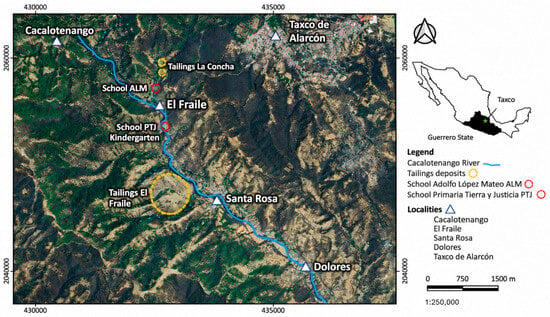
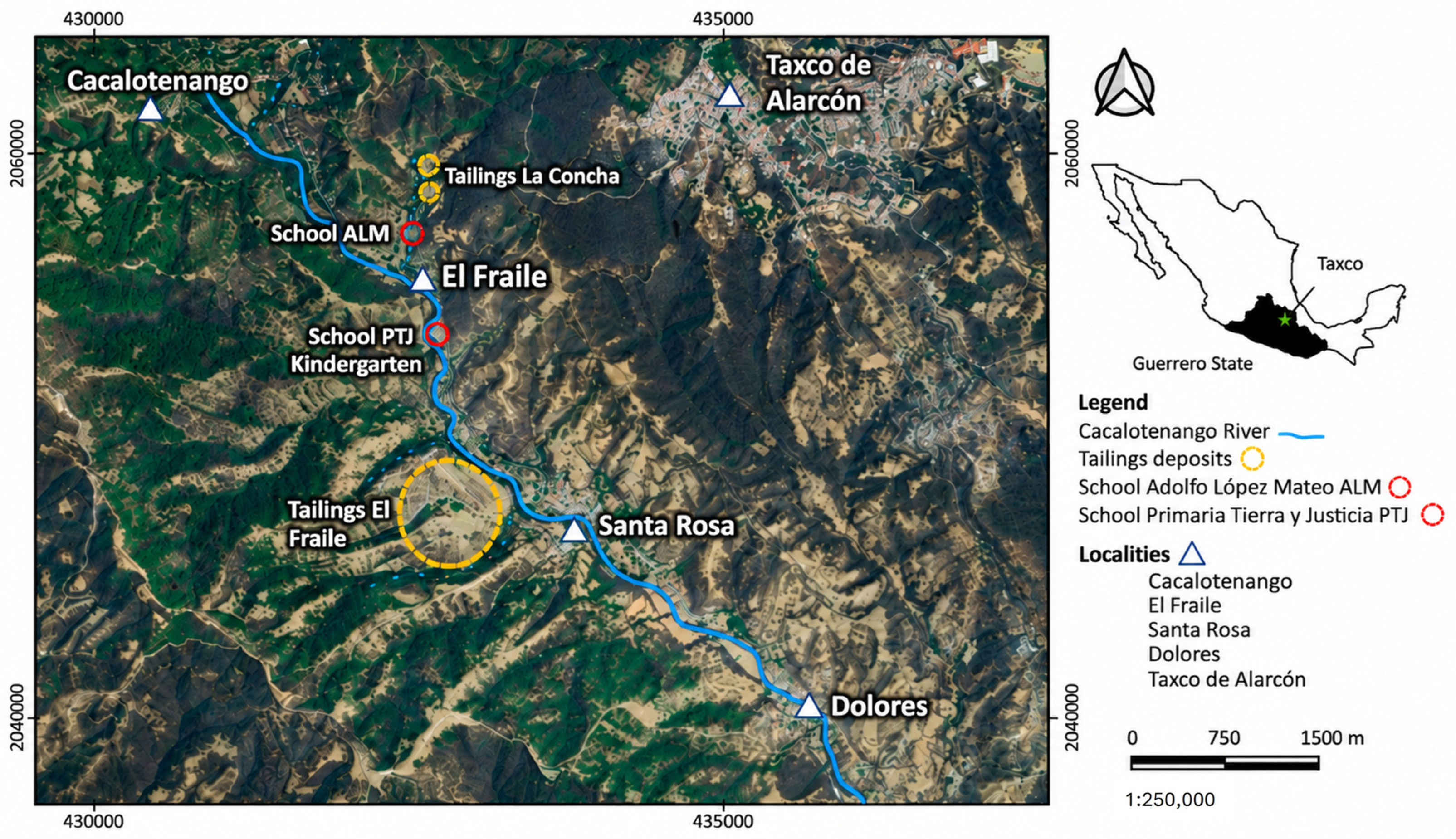
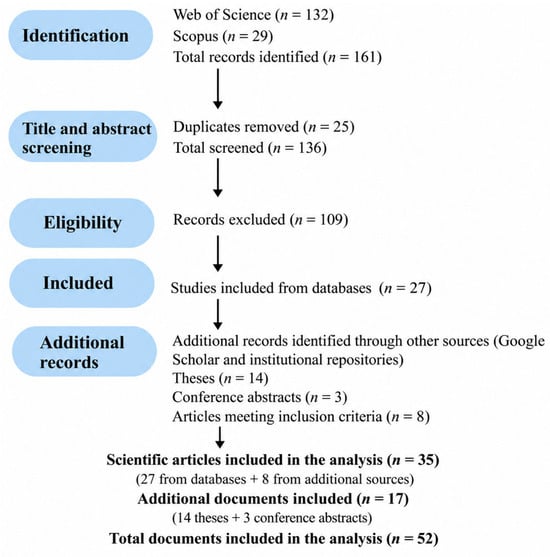
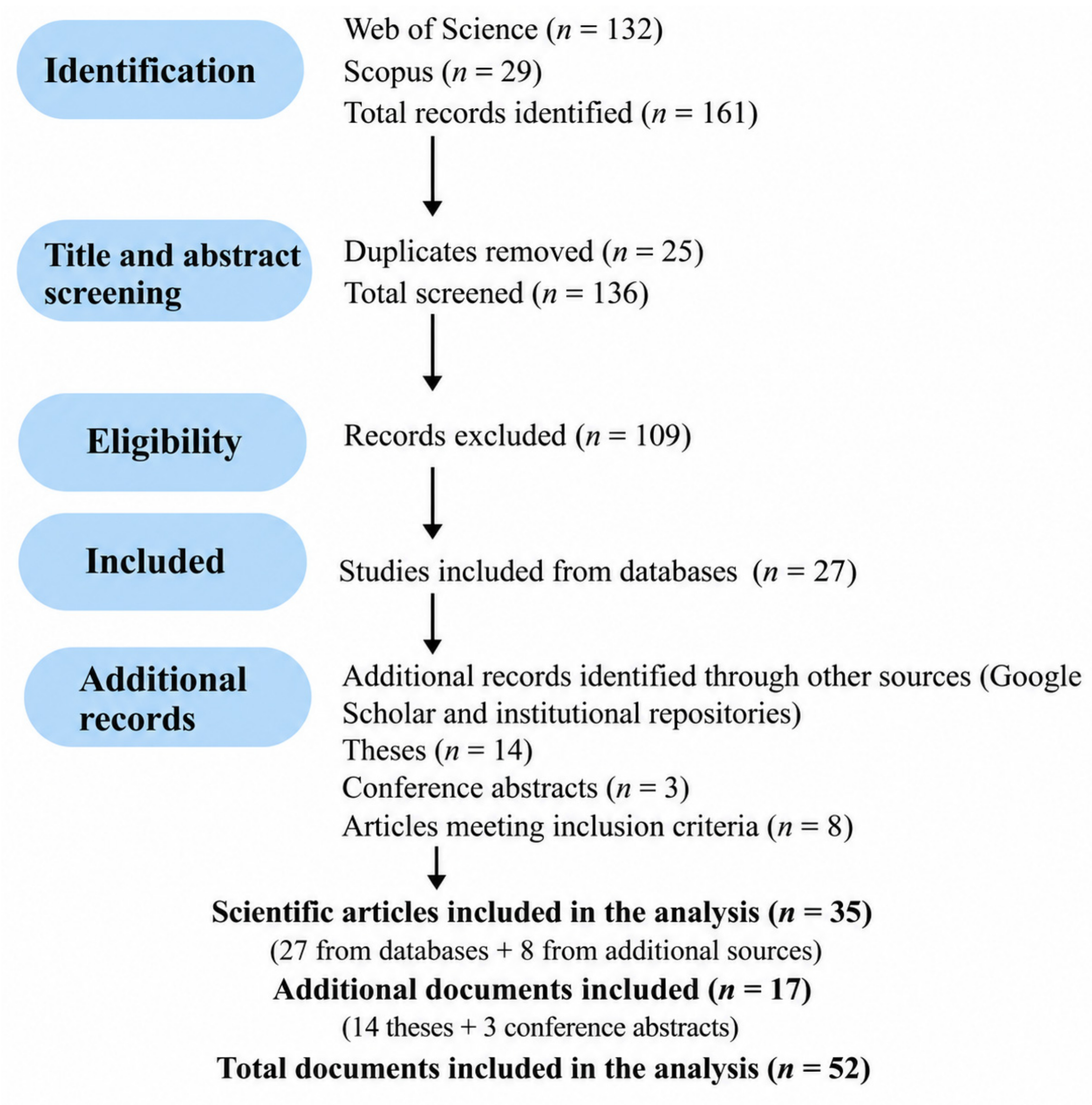
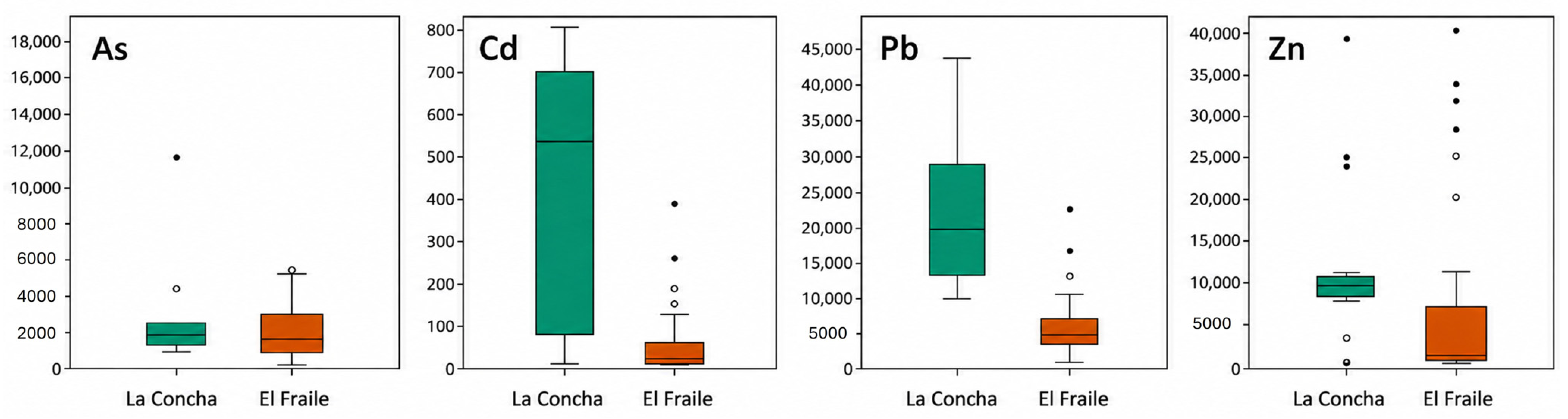
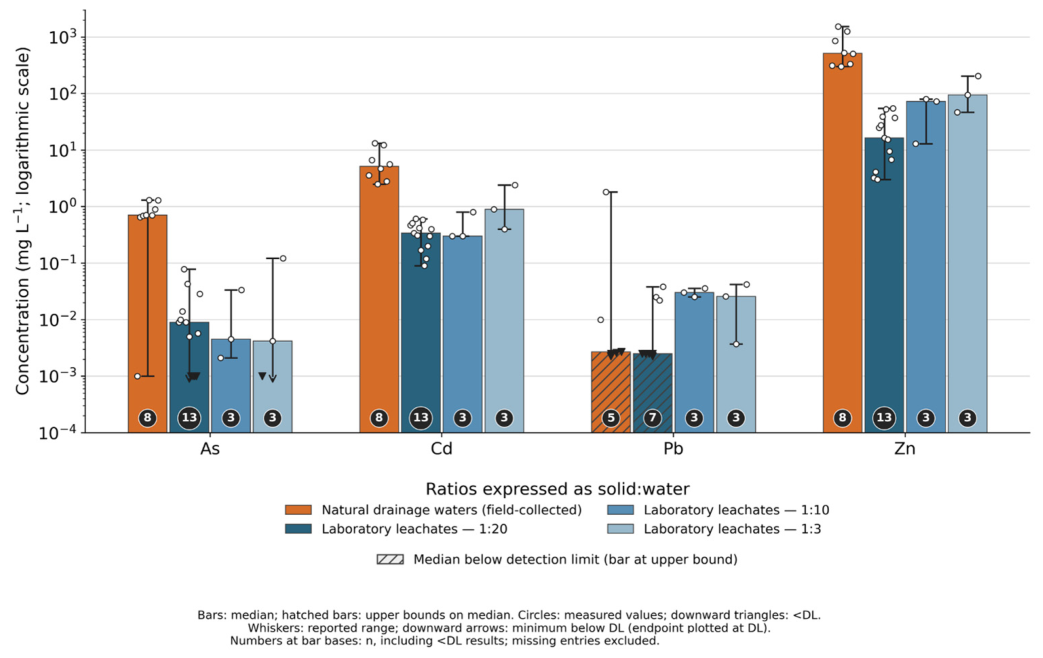
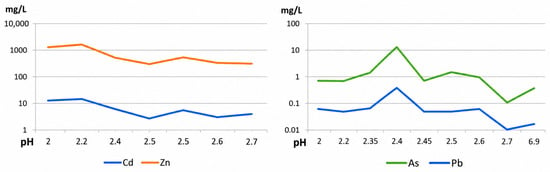
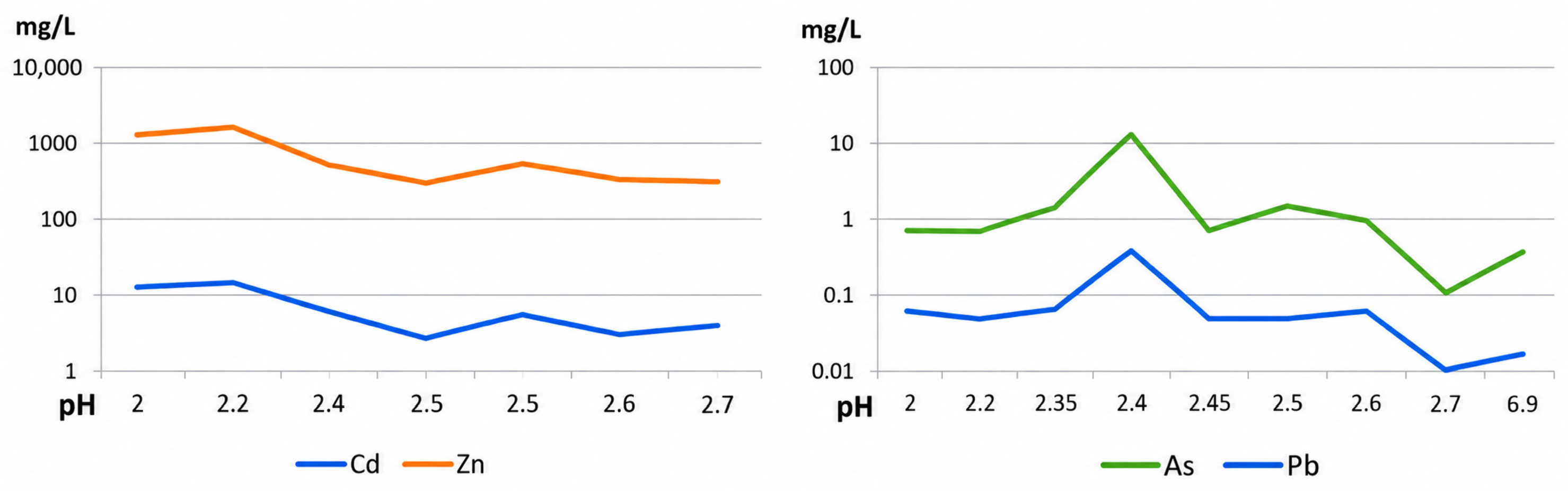
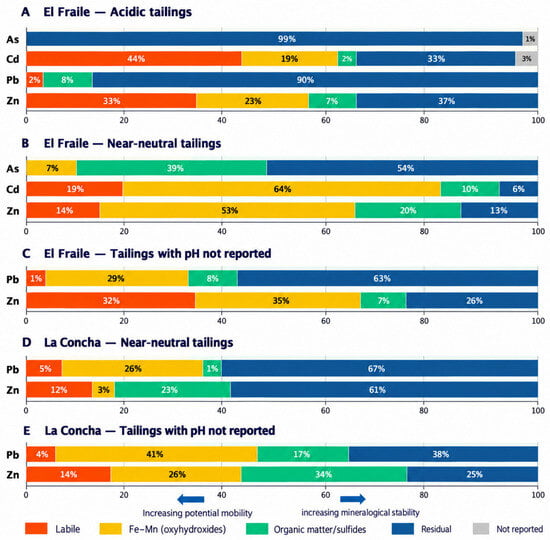
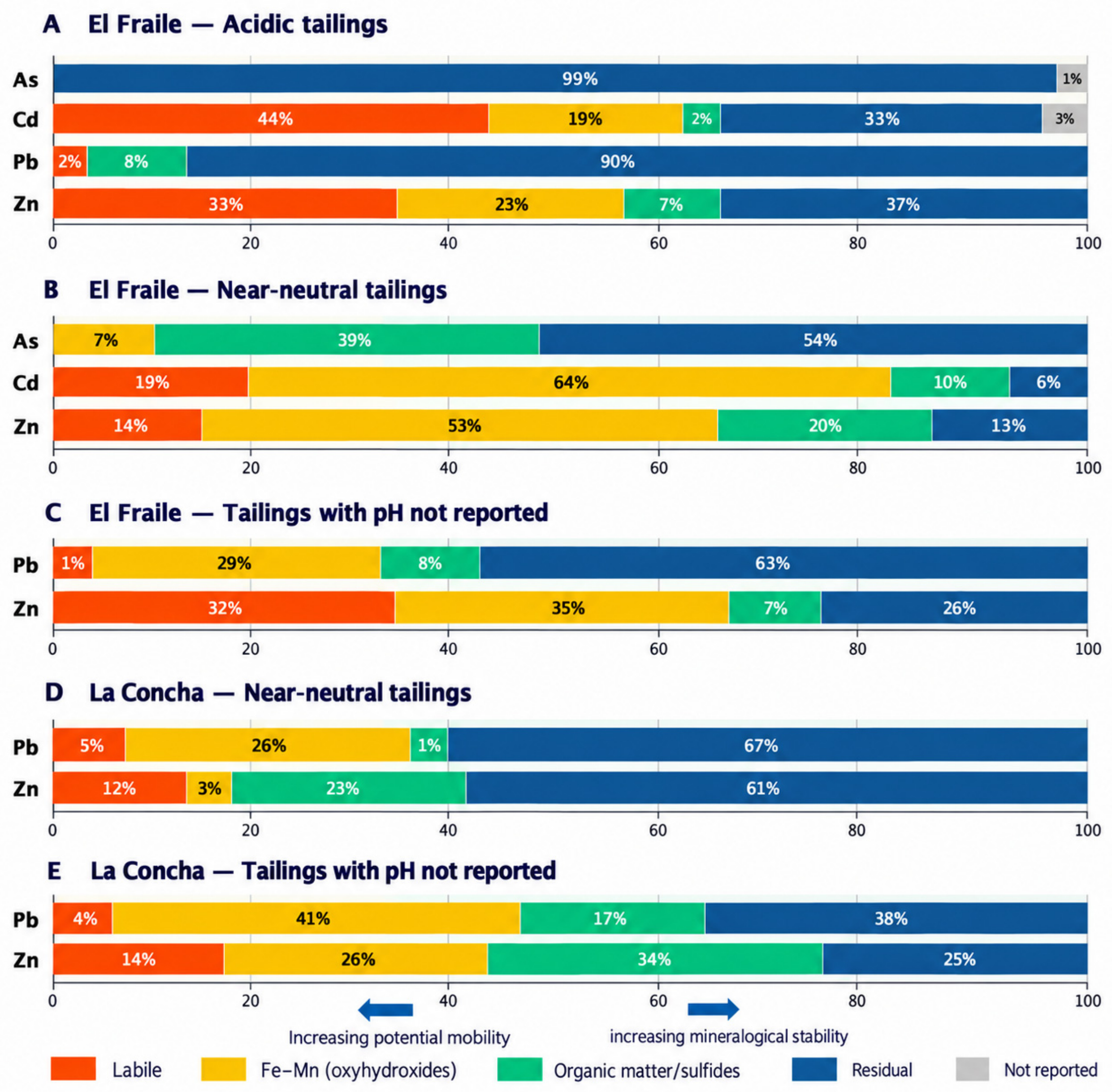
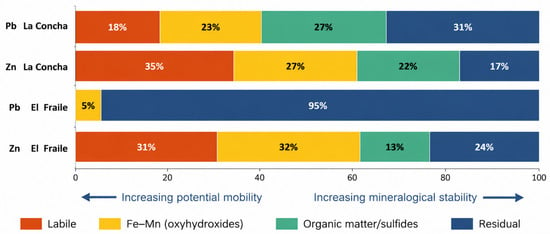
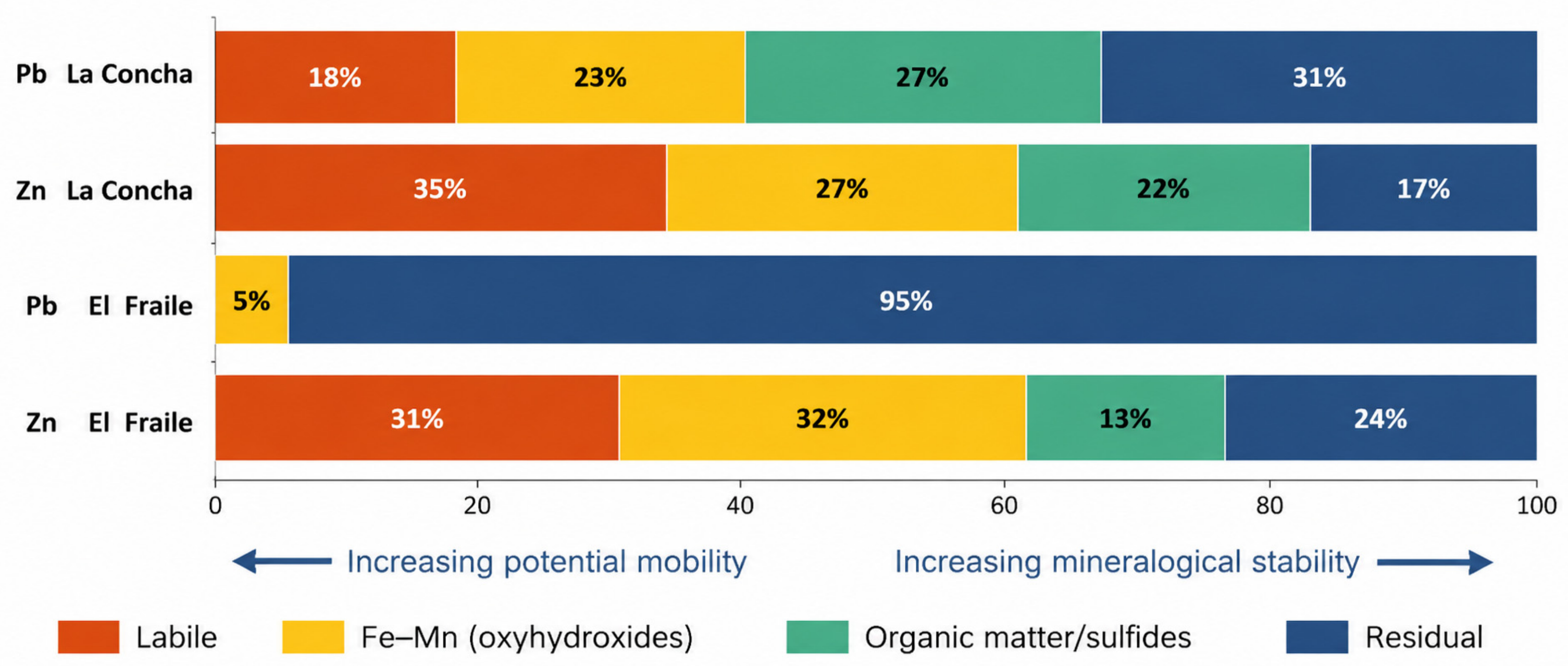
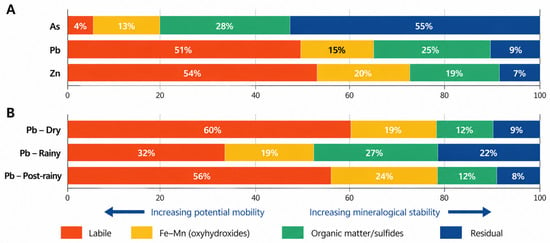
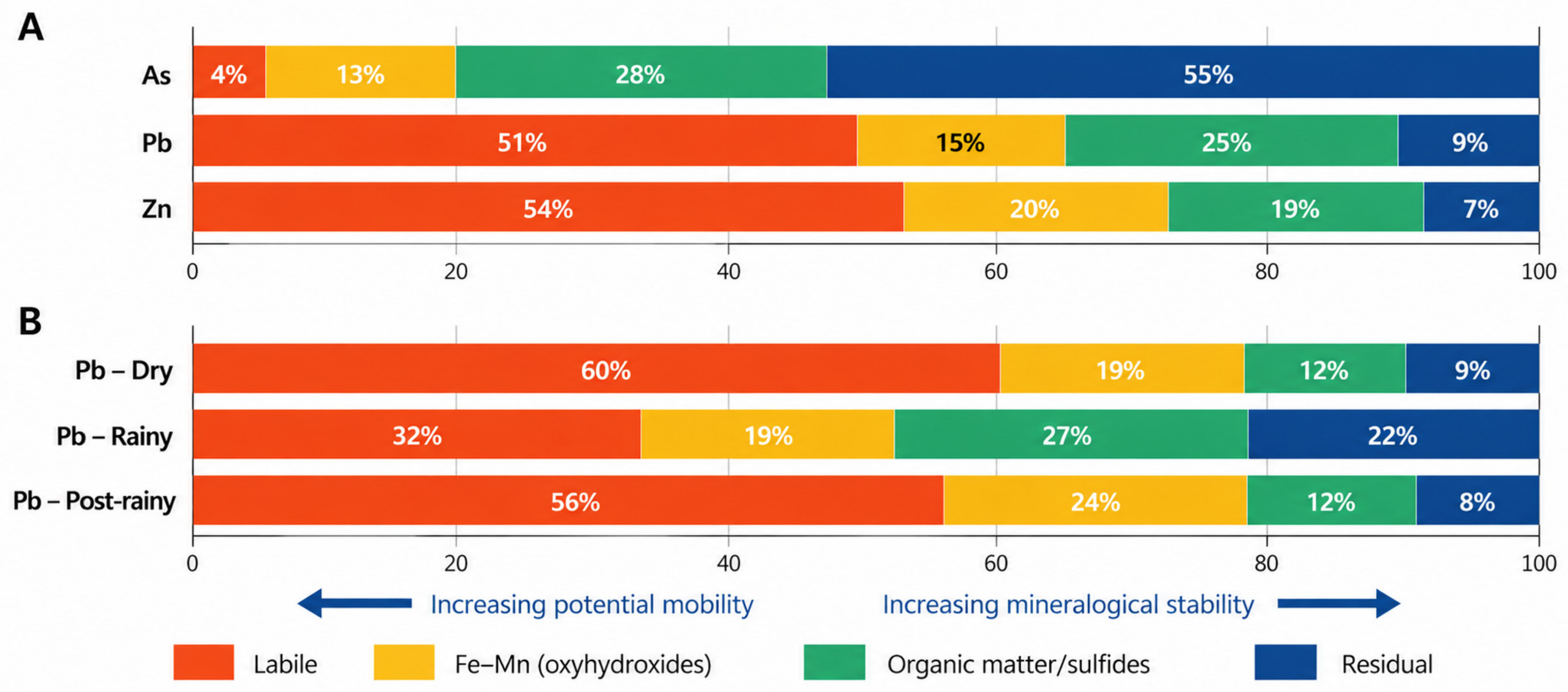

Disclaimer/Publisher’s Note: The statements, opinions and data contained in all publications are solely those of the individual author(s) and contributor(s) and not of MDPI and/or the editor(s). MDPI and/or the editor(s) disclaim responsibility for any injury to people or property resulting from any ideas, methods, instructions or products referred to in the content. |
© 2026 by the authors. Licensee MDPI, Basel, Switzerland. This article is an open access article distributed under the terms and conditions of the Creative Commons Attribution (CC BY) license.