


Abstract
Integrated operational planning for unmanned carrier-based aircraft groups requires the coordination of launch, airborne mission, and recovery activities under complex temporal and resource constraints. Heterogeneous mission workflows and trajectory-dependent arrival times create asymmetric and time-varying demands for limited shared resources. From a resource-utilization symmetry perspective, these demands should be coordinated with available service capacity rather than distributed equally among resources. This study formulates a multistage scheduling model covering launch and departure, formation assembly, aerial refueling, cooperative mission execution, and carrier recovery. A hierarchical objective is adopted to minimize the overall mission cycle first and the total airborne holding time second. To provide realistic temporal inputs, feasible three-dimensional trajectories are generated using the grey wolf optimizer, and their flight times are incorporated into the scheduling model. An adaptive memetic biased random-key genetic algorithm (AMBRKGA) is developed to solve the resulting problem. Its three-layer random-key encoding represents group launch priorities, tanker assignments and receiver service sequences, and recovery priorities. Constraint-based decoding, adaptive diversity control, and variable neighborhood descent are further integrated to generate feasible schedules and coordinate global and local search. Simulations involving 14–24 unmanned carrier-based aircraft produce complete and resource-conflict-free operational plans. In the 24-aircraft scenario, AMBRKGA achieves the shortest mean mission cycle among the comparison algorithms, while ablation and sensitivity analyses indicate effective local refinement and satisfactory parameter robustness. The scope of this work is limited to abstract multistage scheduling and resource coordination and does not address weapon employment, target engagement, or real-time combat command and control. Overall, the proposed method effectively coordinates asymmetric resource demands across operational stages and improves multistage operational efficiency.
1. Introduction
Unmanned carrier-based aircraft groups are the core combat force of a carrier strike group. They play a critical role in achieving maritime air superiority and sea control. Their primary missions include defensive and offensive counter-air operations. Land-attack operations represent another typical combat scenario. The operational effectiveness of carrier-based aircraft depends not only on equipment performance but also on the quality of planning and scheduling [1,2]. During a typical operation, different types of unmanned carrier-based aircraft must complete several consecutive stages. These stages include launch and departure, formation assembly, aerial refueling, trajectory flight, cooperative mission execution, and carrier recovery. Each stage is constrained by limited resources, including flight-deck support equipment, tankers, and recovery facilities. The stages are also coupled through mission precedence, group synchronization, and flight times. In complex airspace, detours caused by no-fly and threat zones further change the arrival times of different groups at critical operational positions. These changes are subsequently propagated to aerial refueling, cooperative mission execution, and recovery. Therefore, the coordination of multistage operational timing and shared resources is a key problem in unmanned carrier-based aircraft group operational planning.
From the perspective of resource-utilization symmetry, multistage operational planning should maintain a coordinated relationship between time-varying service demands and the capacities of limited shared resources. Functionally equivalent resources may exhibit symmetric service capabilities under ideal conditions. However, heterogeneous mission requirements, trajectory-dependent arrival times, tactical priorities, and resource availability break this ideal balance and lead to asymmetric congestion across operational stages. In this study, symmetry does not imply assigning an equal number of aircraft or tasks to each resource. Instead, it refers to balanced and coordinated resource utilization under asymmetric operational constraints.
Unmanned carrier-based aircraft group scheduling is conducted after the group composition and operational missions have been determined. It coordinates the timing and resource utilization of launch, assembly, mission execution, and recovery. Such carrier-based unmanned operations involve both flight-deck support and airborne mission activities. Therefore, existing studies can be reviewed from both integrated and stage-specific perspectives. Integrated operational scheduling and cross-stage planning focus on precedence relations, resource transfer, and temporal coordination across multiple stages. Stage-specific studies can be further divided into flight-deck scheduling and airborne operational scheduling. The former mainly addresses resource allocation and temporal optimization during support, deck movement, launch, and recovery. The latter focuses on formation assembly, trajectory flight, aerial refueling, cooperative mission execution, and return coordination after departure from the carrier. These studies provide important theoretical and methodological foundations for carrier-based aircraft group operational planning.
Research on integrated operational scheduling and cross-stage planning has gradually shifted from the local optimization of individual stages to the coordinated scheduling of multiple interdependent stages. In early studies, aircraft support, deck movement, launch, and recovery were generally treated as independent processes. The operational sequence and resource allocation of each process were determined separately. Therefore, the propagation of local decisions to subsequent operational stages could not be fully represented. As research progressed, precedence relations and resource coupling among different processes began to be modeled from an integrated scheduling perspective. Liu et al. [3] formulated aircraft support, deck movement, and launch as a hybrid flexible flow-shop scheduling problem. An integrated design of multiple pre-launch processes was thereby achieved. Wu et al. [4] considered both mission processes and launch timing when planning cooperative launch operations for multiple carrier-based aircraft. Subsequent studies extended the research scope from launch operations to the coordination of launch and recovery. Zhang et al. [5] employed hierarchical reinforcement learning to coordinate launch and recovery decisions. This method improved cross-stage planning capability. Han et al. [6] incorporated hangar transfer, deck movement, maintenance support, and launch execution into a unified model. The scope of integrated cross-stage scheduling was further expanded. Nevertheless, existing integrated scheduling studies remain focused on flight-deck support, movement, launch, and recovery. Major airborne stages, including formation assembly, aerial refueling, trajectory flight, and cooperative mission execution, have rarely been modeled within a unified framework. Consequently, local scheduling decisions may transfer resource congestion to subsequent airborne stages, making cross-stage demand–capacity coordination difficult.
Research on flight-deck scheduling has mainly focused on support organization, equipment allocation, aircraft movement routes, and launch and recovery sequencing within the limited deck space. Related studies outside China have evolved from experience-based manual decision-making to computer-aided planning and human–machine collaborative decision-making. To improve flight-deck situational awareness and operational planning, several systems have been investigated. These systems include a persistent flight-deck monitoring system [7], an interactive “Ouija Board” system [8], a decision-support system for flight-deck operations [9], and a human-interactive course-of-action planner [10]. Ryan et al. [11] compared expert heuristics with integer linear programming for flight-deck scheduling. The feasibility of using optimization methods to support complex flight-deck decisions was demonstrated. Studies in China have placed greater emphasis on the coupling among support resources, activity precedence, and deck movement. Cui et al. [1] considered multiple activity modes, personnel and equipment transfer, and fixed-resource allocation. An optimization model for flight-deck support operations and resource allocation was developed. Su et al. [2] investigated a resource-constrained multi-aircraft scheduling problem in which both resources and aircraft must move between different operating positions. Liu et al. [12] further analyzed the effect of launch scheduling on the allocation of fixed aviation support stations. Zhang et al. [13] proposed a baseline-reactive scheduling method for maintenance disruptions. In addition to support activities, aircraft movement routes strongly affect launch efficiency. Such routes are constrained by deck obstacles, narrow passages, and motion conflicts among multiple aircraft. Methods for carrier-based aircraft deck movement planning and control have been systematically reviewed [14]. Li et al. [15] proposed an iterative safe dispatch corridor framework for autonomous dispatch trajectory planning of carrier-based vehicles, providing safe and kinematically feasible deck dispatch trajectories in confined flight-deck environments. Autonomous scheduling of aircraft movement and launch under towing operations has also been investigated [16]. During recovery, efficiency is affected by the landing sequence, arresting-resource occupancy, wake-separation requirements, and bolter events. Zhang et al. [17] therefore developed a carrier landing scheduling model that considers bolter probability and fuel status. Overall, existing flight-deck studies have described the constraints among spatial layouts, support equipment, movement routes, and launch and recovery resources in detail. However, the times at which aircraft enter or leave flight-deck operations are generally treated as external inputs. Their continuous relationships with airborne mission completion, return trajectories, and airborne waiting have received limited attention. A locally efficient launch plan may concentrate aircraft arrivals at subsequent assembly or refueling positions. Therefore, flight-deck efficiency alone does not necessarily ensure balanced resource utilization throughout the complete mission process.
For unmanned carrier-based aircraft groups, airborne operational scheduling mainly involves cooperative multi-aircraft mission planning, aerial refueling and trajectory planning [18]. For cooperative mission planning, Ponda et al. [19] systematically investigated a cooperative mission planning framework for multiple UAVs. Zhen et al. [20] proposed an intelligent self-organizing planning method for search-and-strike missions. Liu et al. [21] employed multi-agent reinforcement learning for cooperative mission allocation among heterogeneous UAVs in dynamic environments. Recent studies have further considered spatiotemporal synchronization in cross-domain heterogeneous unmanned swarms and resilient task pre- and re-assignment for UAV formations [22,23]. For aerial refueling scheduling, Huang et al. [24] considered multiple tankers, multiple receiver aircraft, and their spatiotemporal constraints. Refueling-resource allocation and service sequencing were investigated. Trajectory planning in complex airspace is another important factor that affects airborne operational timing. Feng et al. [25] employed a hybrid GWO to generate UAV trajectories that satisfy three-dimensional spatial constraints. Edison and Shima [26] jointly modeled cooperative mission allocation and trajectory optimization. Learning-based trajectory planning and maneuver decision-making in constrained or obstructed environments have also received increasing attention [27,28]. Their study demonstrated the coupling between trajectory decisions and mission timing. These methods have improved mission allocation, aerial refueling and trajectory generation. However, most of them focus on a single stage or local process. The continuous propagation among trajectory flight times, refueling-resource competition, group mission coordination, and airborne recovery waiting has rarely been represented within a unified operational process. In particular, route-dependent arrival differences produce time-varying and asymmetric service demands at the refueling and recovery stages. Without a unified temporal framework, such demand asymmetry cannot be coordinated from the perspective of the complete operational process.
From the perspectives of problem abstraction and algorithm design, unmanned carrier-based aircraft scheduling has evolved from classical models to more complex formulations. The classical models include hybrid flow-shop scheduling [29], flexible job-shop scheduling [30], and resource-constrained project scheduling [31]. More recent models incorporate resource transfer, dynamic disturbances, and multistage coupling. Heuristics, genetic algorithms [32], differential evolution [33], and reinforcement learning [5,34] have been employed to solve these problems. Recent reviews have further summarized machine-learning-driven combinatorial optimization and neural-network-assisted optimal control as emerging approaches for complex optimization and decision-making problems [35,36]. When heterogeneous decisions are simultaneously represented, conventional discrete encoding may generate duplicate assignments or infeasible permutations. Such decisions include launch sequencing, resource allocation, and recovery sequencing. Complex repair mechanisms are therefore required. Biased random-key genetic algorithms represent combinatorial solutions using continuous random keys and problem-specific decoders. High-quality structures are preserved through elite–non-elite biased crossover [37]. Existing reviews indicate that scheduling is one of the most widely investigated application areas of biased random-key genetic algorithms. Local search and population diversity enhancement are important directions for improving their performance [38]. Recent applications have also explored discrete and hybrid metaheuristics in other engineering domains. Examples include discrete forest optimization combined with selective mapping for peak-to-average power ratio reduction in optical OFDM systems [39] and a hybrid whale optimization approach combining random seeding with subsequent population search [40]. However, effective diversity must be maintained separately for different decision layers in multistage unmanned carrier-based aircraft operational planning. Stage-specific local improvement mechanisms are also required.
In summary, substantial progress has been made in the key techniques associated with different stages of unmanned carrier-based aircraft group operational planning. However, flight-deck and airborne operations are generally optimized as relatively independent problems. Flight-deck scheduling focuses on aircraft support, deck movement, launch, and recovery. The post-launch activities and return arrival times are usually treated as external conditions. In contrast, airborne mission planning focuses on formation assembly, trajectory flight, aerial refueling, and cooperative mission execution. Aircraft launch times and flight-deck resource states are often assumed to be known. Such stage-wise optimization cannot adequately represent the influence of launch timing on airborne assembly, aerial refueling, and mission arrival times. It also cannot describe how mission completion times and return trajectories affect carrier recovery and airborne waiting. Moreover, predefined flight times are used in some studies. The influence of actual detours in complex airspace on operational timing is therefore neglected. Hence, launch and departure, airborne operations, and carrier recovery should be planned within a unified temporal framework. Effective coordination between flight-deck launch and recovery and airborne operational processes can then be achieved. From a symmetry perspective, stage-wise optimization may shift resource congestion from one stage to another and thereby amplify resource-utilization asymmetry across the complete operational process. Trajectory-induced temporal differences further propagate this asymmetry to formation assembly, aerial refueling, cooperative mission execution, and carrier recovery.
To address these limitations, an integrated scheduling model is developed to coordinate launch, formation assembly, aerial refueling, cooperative mission execution, and carrier recovery using trajectory-derived flight times. The methodological contribution of AMBRKGA is a coordinated representation and search design in which the heterogeneous scheduling structure governs solution encoding, adaptive search regulation, and local refinement. Building on the BRKGA framework [37] and its established extensions [38], the following contributions are made:
- (1)
- A three-layer random-key representation and a coupled scheduling decoder are developed to integrate group-level sequencing with aircraft-level resource assignments and service priorities. The representation distinguishes the heterogeneous decision components, while the decoder propagates their temporal and resource interactions across operational stages.
- (2)
- A diversity-based adaptive mechanism is designed for the corresponding decision components. Their random-key diversity is monitored separately to regulate elite inheritance probabilities, while global stagnation and the random-immigrant proportion govern population renewal. This enables differentiated exploration of decision components with different convergence states.
- (3)
- A scheduling-specific VND procedure is constructed around the same decision structure. Its neighborhoods modify individual scheduling components, but candidate improvements are assessed through complete decoding under the common hierarchical objective. Local changes are therefore evaluated by their effects on the overall schedule. Together, these contributions connect heterogeneous decision representation, differentiated exploration, and local refinement within a unified framework for multistage scheduling.
The remainder of this paper is organized as follows. Section 2 analyzes the operational process of unmanned carrier-based aircraft groups in complex airspace. An integrated scheduling model covering launch and departure, formation assembly, aerial refueling, cooperative mission execution, and carrier recovery is formulated. The objective function and relevant constraints are also presented. Section 3 introduces AMBRKGA. Flight-time preprocessing, multi-layer random-key encoding, constraint-based decoding, biased genetic operations, adaptive diversity control, and variable neighborhood descent are described. Section 4 validates the proposed model and algorithm through scheduling under different fleet sizes, comparative experiments, ablation experiments, and parameter sensitivity analysis. Finally, Section 5 concludes the paper and discusses its limitations and future research directions.
2. Problem Description and Model Formulation
2.1. Operational Process of Unmanned Carrier-Based Aircraft Groups
The operational planning and scheduling problem for unmanned carrier-based aircraft groups involves the coordinated planning of multiple stages. These stages include launch and departure, trajectory planning, aerial refueling, cooperative mission execution, and carrier landing and recovery. The task sequence and resource allocation involved in these stages are key factors that determine the operational capability of unmanned carrier-based aircraft groups. According to their properties, the constraints can be classified into temporal scheduling constraints and resource constraints. The resource constraints include not only the supply capacity of carrier-based equipment but also the interdependence among different aircraft groups during aerial refueling. In particular, fuel resources are subject to both spatial and temporal restrictions. Before an operational mission is executed, each unmanned carrier-based aircraft must complete launch and departure as well as formation assembly. After the assigned mission has been completed, the aircraft must return to the carrier for recovery. The mission set assigned to each aircraft group can be regarded as a project. Accordingly, the operational process can be represented by a composite activity-on-node network, as shown in Figure 1. A total of m carrier-based aircraft are divided into n groups according to their assigned missions. In the figure, , , and denote launch and departure, formation assembly, and carrier landing and recovery, respectively. These three stages are required for all aircraft groups. Moreover, denotes the gth aircraft group, and denotes the jth mission of the ith aircraft group.
Figure 1.
Operational process of multiple unmanned aircraft groups.
For the ith aircraft group, its operational process can be expressed as , where is the set of mission nodes. The solid directed arcs in represent the logical precedence relations among missions. The dashed arcs represent resource and logical constraints among different aircraft groups.
Different operational missions require different transition routes between operational sites. According to their functions, the operational sites are classified into five categories: the carrier position, formation assembly position, pre-mission refueling position, mission position, and post-mission refueling position. The transition route of each aircraft group depends on whether aerial refueling is required and whether it is performed before or after the mission.
As shown in Figure 2, the black lines represent the transition routes shared by all aircraft groups. The red solid lines represent the routes followed by tankers assigned to pre-mission refueling. The red dashed lines represent the routes followed by tankers assigned to post-mission refueling. The blue lines represent the routes of combat aircraft refueled before their missions. The green lines represent the routes of combat aircraft refueled after their missions.
Figure 2.
Operational-site transition routes of unmanned carrier-based aircraft groups.
Based on the above analysis and assumptions, the operational planning and scheduling problem can be described as follows. Let denote the set of unmanned carrier-based aircraft, where m is the number of aircraft and n is the number of aircraft groups. indicates that the ith aircraft belongs to the jth group. Four generalized activities are considered. Activity 1 is launch and departure, Activity 2 is formation assembly, Activity 3 is group mission execution, and Activity 4 is carrier landing and recovery. During launch and departure, each aircraft is launched using a carrier-based catapult or ski-jump system. Only one aircraft can be launched at a time. After departure, each aircraft proceeds to a designated assembly position near the carrier. It then loiters until all members of its group have arrived. The subsequent activity can be initiated only after formation assembly has been completed. During group mission execution, tankers and airborne early warning (AEW) aircraft generally perform independent missions and do not require aerial refueling. Other combat aircraft are refueled either before or after their assigned missions. The AEW aircraft must be launched first and recovered last to ensure continuous support throughout the operation. In addition, precedence relations exist among the missions of different groups. Ammunition and fuel constraints must also be satisfied. During carrier landing and recovery, all aircraft share the arresting system. Therefore, only one aircraft can be recovered at a time. Aircraft within the same group are generally recovered according to a predefined priority. Aircraft from different groups are scheduled according to conventional rules based on their earliest arrival times and recovery priorities. The mission categories considered in this study are used solely to represent heterogeneous activity chains, precedence relations, and resource requirements in the scheduling model. They are abstract modeling entities and are not intended to prescribe real-world tactical procedures, target-engagement strategies, or weapon employment.
The m unmanned carrier-based aircraft enter the scheduling process according to the group launch sequence and then execute their respective operational activities. The primary objective is to minimize the overall mission cycle. A shorter cycle allows all group missions to be completed more rapidly and improves operational effectiveness. Unlike a conventional hybrid flow-shop scheduling problem, the missions assigned to different aircraft groups are heterogeneous and strongly coupled. Therefore, the problem is defined as a heterogeneous-agent composite-task scheduling problem.
2.2. Model Formulation
To describe the operational planning problem in complex airspace, the main sets, parameters, and decision variables are defined in Table 1.
Table 1.
Definitions of parameters.
The operational activities of the unmanned carrier-based aircraft groups are conducted within a predefined three-dimensional airspace. The operational node set P consists of the carrier position, formation assembly position, pre-mission refueling position, mission positions, and post-mission refueling position. It is expressed as
where , , , and denote the carrier position, formation assembly position, pre-mission refueling position, and post-mission refueling position, respectively. Moreover, denote the mission positions assigned to different aircraft groups. Each operational node is represented by a three-dimensional coordinate .
No-fly zones and threat zones are distributed within the operational airspace. No-fly zones are treated as hard constraints in trajectory planning. Therefore, aircraft trajectories are not allowed to enter these regions. Threat zones are treated as soft constraints, and the corresponding exposure is included in the trajectory evaluation cost.
For each flight segment , a feasible three-dimensional trajectory is generated according to its start and end nodes and the distributions of the no-fly and threat zones. The corresponding trajectory length is then calculated. Based on the cruising speed of each aircraft group, the flight time of group g along segment l is obtained as
where and are measured in kilometers and kilometers per hour, respectively. The factor 60 is used to convert the flight time into minutes.
For aircraft i moving from operational node h to node j, the transition time is determined by the flight time of its group along the corresponding segment:
where denotes the group to which aircraft i belongs, and denotes the flight segment from node h to node j.
Therefore, the trajectory planning results are incorporated into the operational scheduling model in the form of flight times. These times affect the start and completion times of launch, formation assembly, aerial refueling, cooperative mission execution, and carrier landing and recovery.
Given the aircraft group composition, mission process, and flight time of each segment, the operational planning problem is used to determine the launch sequence of the aircraft groups, tanker assignments and service sequences for receiver aircraft, the start and completion times of all activities, and the recovery sequence of the aircraft.
2.3. Objective Function
All temporal and resource constraints must be satisfied while the overall mission cycle is minimized. The mission cycle is measured by the latest completion time of carrier recovery among all aircraft. The makespan is defined as
where denotes the time at which aircraft i completes carrier recovery.
After returning to the carrier holding airspace, an aircraft may remain airborne because of competition for the recovery resource. Therefore, the total airborne holding time is defined as
where and denote the time at which aircraft i arrives in the carrier holding airspace and the time at which its recovery begins, respectively. A smaller H reduces ineffective airborne waiting and the associated fuel consumption. Even when the overall mission cycle remains nearly unchanged, reducing H allows aircraft to spend less time loitering in the carrier holding airspace and retain more fuel reserve before recovery. It also alleviates congestion around the recovery stage and provides greater operational margin for handling recovery delays or other disturbances.
Accordingly, a hierarchical objective is formulated as
For any two feasible solutions and , their preference relation is defined as
Thus, the overall mission cycle is minimized first. The secondary objective H is considered only when two solutions have the same ; otherwise, the solution with the smaller is always preferred. No discretization or tolerance-based grouping of the primary objective is used in the implementation. The same hierarchical comparison rule is applied throughout population ranking, elite selection, and VND acceptance.
2.4. Constraints
According to their functions, the constraints are classified into stage precedence, platform resource, aerial refueling, cooperative mission, and trajectory safety constraints.
- (1)
- Stage precedence constraints
Each unmanned carrier-based aircraft must complete its activities through an alternating sequence of operational-site transitions and mission execution. For the jth transition of aircraft i and its subsequent activity, the corresponding completion times are calculated as
where denotes the flight segment associated with the jth transition of aircraft i.
An activity can begin only after the preceding transition has been completed. Similarly, the next transition can begin only after the current activity has been completed. Therefore,
All aircraft in the same group must arrive at the assembly position before subsequent activities can be initiated. Let denote the arrival time of aircraft i at the assembly position. The assembly time of group g is then determined by
- (2)
- Launch and recovery constraints
Because of the limited capacity of the carrier-based launch and recovery equipment, only one aircraft can be launched or recovered at a time. For any two aircraft i and j, their launch operations must satisfy
Similarly, their recovery operations must satisfy
An aircraft can be recovered only after it has arrived in the carrier holding airspace:
To ensure continuous early warning coverage throughout the operational process, AEW aircraft must be recovered after all other aircraft. In addition, the number of aircraft involved in a single operational wave cannot exceed the maximum carrier-deck support capacity M.
- (3)
- Aerial refueling constraints
The total fuel demand of the receiver aircraft assigned to each tanker cannot exceed its fuel supply capacity:
A tanker cannot refuel multiple aircraft simultaneously. If aircraft i and j are both assigned to tanker k, the corresponding refueling operations must satisfy
A refueling operation cannot begin before both the tanker and receiver have arrived at the designated refueling position. Let and denote the sets of aircraft refueled before and after their missions, respectively. The following constraints must be satisfied:
- (4)
- Cooperative mission constraints
Primary combat groups assigned to low-altitude penetration and long-range strike missions can begin their missions only after the supporting groups have entered their operational states. These supporting groups include electronic jamming and air escort groups. Let and denote the sets of supporting and primary combat groups, respectively. The corresponding constraint is
The AEW mission must cover the mission execution intervals of all other combat groups. Therefore,
- (5)
- Trajectory safety constraints
All aircraft trajectories must remain within the predefined operational airspace and avoid all no-fly zones. For each discrete trajectory point on flight segment l, the following condition must be satisfied:
where indicates that a trajectory point lies inside no-fly zone q.
The trajectories must also satisfy the operational airspace boundary and maximum climb-angle constraints:
No-fly zones are treated as hard constraints. By contrast, exposure to threat zones is incorporated into the evaluation function during trajectory planning and does not directly determine the feasibility of the scheduling solution.
3. AMBRKGA Algorithm
AMBRKGA is organized around the heterogeneous decision structure of the scheduling problem. Its three functional layers contain four random-key vectors, which provide a common basis for both adaptive regulation and neighborhood design. The adaptive mechanism measures diversity separately for these vectors and adjusts their inheritance probabilities according to the observed search state. VND operates on the corresponding scheduling decisions to refine selected elite solutions. Both evolutionary offspring and neighborhood candidates are evaluated by the same constraint-based decoder and hierarchical objective.
The components therefore have distinct but coordinated roles: encoding and decoding establish how coupled decisions are represented and translated into schedules; adaptive diversity control regulates exploration across the decision components; and VND exploits their scheduling structure for local improvement. Importantly, a change to one decision component is evaluated through its consequences for the complete schedule, including downstream timing and shared-resource interactions. This common structural basis provides the rationale for integrating the three components. The overall framework is shown in Figure 3.
Figure 3.
Framework of AMBRKGA.
3.1. Flight-Time Preprocessing
No-fly and threat zones in complex airspace may cause the actual trajectory to deviate from the straight line between two operational nodes. Consequently, the arrival and start times of subsequent stages are affected. To obtain the segment flight times required for scheduling, three-dimensional trajectories between operational nodes are planned offline before AMBRKGA is executed. The grey wolf optimizer (GWO) is adopted for this purpose [25]. The start and end nodes, no-fly zones, threat zones, and flight-performance parameters are used as inputs. A feasible trajectory length and the corresponding flight time are obtained for each segment.
For each flight segment , three-dimensional control points are placed between the start point and the end point . A candidate trajectory is represented as
The coordinates of all control points constitute a candidate individual in GWO. To balance trajectory efficiency, smoothness, and flight safety, the trajectory evaluation function is defined as
where the first five terms represent the costs of trajectory length, smoothness, altitude deviation, vertical variation, and climb angle, respectively. and represent the threat exposure costs. and denote the penalties for no-fly-zone collisions and airspace boundary violations, respectively. No-fly zones and airspace boundaries are treated as hard constraints. Threat zones are incorporated into the trajectory cost as soft constraints.
The control-point coordinates are optimized using the standard GWO position-update mechanism. After each update, the control points are corrected to satisfy the search boundaries. Discrete sampling is then conducted to check no-fly-zone collisions, airspace boundary violations, and maximum climb-angle constraints. Let the final smoothed trajectory contain discrete points . The length of flight segment l is calculated as
Given the cruising speed of aircraft group g, its flight time along segment l is calculated using Equation (2). The values of for all flight segments are calculated once before scheduling optimization. They are then used as fixed parameters by the constraint-based decoder of AMBRKGA. Based on these parameters, the start and completion times of launch, assembly, aerial refueling, cooperative mission execution, and carrier recovery are derived.
3.2. Multi-Layer Random-Key Encoding
The operational planning problem involves heterogeneous decisions, including group launch sequencing, tanker assignment, receiver service sequencing, and carrier recovery sequencing. When a discrete-sequence encoding scheme is directly adopted, differences in the dimensions and value ranges of these decisions may lead to duplicate assignments, index overflows, or invalid permutations during genetic operations. Therefore, a multi-layer random-key encoding scheme is designed. The discrete scheduling decisions are represented in a continuous domain and are converted into executable operational plans by a constraint-based decoder.
Let G denote the set of unmanned carrier-based aircraft groups, I denote the set of unmanned carrier-based aircraft, and denote the set of combat aircraft requiring aerial refueling. A candidate solution is represented as
where , , , and denote the group launch-priority keys, tanker-assignment keys, receiver-priority keys, and recovery-priority keys, respectively. Their dimensions are , , , and , respectively. According to the operational process, the encoding scheme can be divided into launch, aerial refueling, and recovery decision layers. Therefore, a three-layer structure with four random-key vectors is formed.
- (1)
- Launch decision layer
An aircraft group is used as the encoding unit in the launch layer. The corresponding vector is defined as . Except for aircraft groups with fixed tactical priorities, the launch sequence is determined by sorting the random keys in ascending order. Aircraft within the same group are launched consecutively according to their predefined indices. In this way, the organizational relationship within each group is preserved. Because AEW and aerial refueling missions provide advance support, the AEW group is forced to launch first during decoding. Tanker groups are also assigned higher launch priorities than conventional combat groups. Therefore, the random keys are used to optimize the relative sequence of conventional groups, whereas fixed tactical requirements are enforced by the decoding rules.
- (2)
- Aerial refueling decision layer
Whether each combat group is refueled before or after its mission is predefined according to the scenario. This decision is not optimized by the algorithm. Therefore, only two decisions are required in the aerial refueling layer. The first determines which tanker serves each receiver aircraft. The second determines the service sequence of multiple receiver aircraft. To represent these decisions separately, each receiver aircraft is assigned a tanker-assignment key and a receiver-priority key .
The tanker-assignment key is used to select an available tanker at the current refueling stage. Suppose that tankers are available. The interval is divided equally into subintervals. The subinterval containing the random key determines the assigned tanker, whose index is given by
For example, suppose that two tankers are available during pre-mission refueling. If , receiver aircraft i is assigned to the first tanker. Otherwise, it is assigned to the second tanker. In this manner, a continuous random key is directly mapped to a discrete tanker assignment.
The receiver-priority key is used to determine the refueling service sequence. After tanker assignment, receiver aircraft at the same refueling stage are sorted in ascending order of . A smaller key indicates a higher service priority. The sorted receiver aircraft are processed sequentially by the decoder. Refueling begins when the receiver has arrived at the refueling position and its assigned tanker is available. If the tanker is serving another aircraft, the receiver must wait until the tanker is released. After each refueling operation, the availability time of the corresponding tanker is updated. The next receiver is then scheduled.
Therefore, determines which tanker serves each receiver, whereas determines the service sequence. Together, these two random-key vectors describe a scheduling process in which multiple tankers operate in parallel and each tanker serves its assigned receivers sequentially.
- (3)
- Recovery decision layer
The aircraft-level random-key vector is used to represent the competition priorities for the single recovery resource. Because aircraft return to the carrier at different times, the recovery sequence cannot be determined by a static ranking of all aircraft. Let denote the set of aircraft that have arrived in the carrier holding airspace but have not yet been recovered at time t. The next aircraft to be recovered is selected as
If no aircraft is currently ready for recovery, the recovery-resource clock is advanced to the earliest arrival time of the next aircraft. To ensure that early warning coverage is maintained throughout the operation, AEW aircraft do not compete during the regular recovery stage. They are recovered only after all other aircraft have completed recovery. This dynamic priority mechanism jointly considers return availability, recovery-resource occupancy, and tactical support requirements. Therefore, infeasible plans in which recovery begins before an aircraft returns to the carrier are avoided.
In summary, heterogeneous discrete scheduling decisions are represented by continuous vectors through the multi-layer random-key encoding scheme. Complex temporal and resource constraints are handled by a deterministic decoder. The physical meanings of the launch, aerial refueling, and recovery decisions are preserved. Meanwhile, each candidate solution can be mapped reliably to a structurally complete operational plan. A unified solution representation is thus provided for biased crossover, adaptive search, and layer-specific neighborhood improvement.
3.3. Scheduling Decoder
According to the precedence relations among launch, assembly, aerial refueling, group mission execution, and recovery, the decoder converts into , , , and for all activities. For an activity that occupies resource r, let denote the earliest availability time of this resource. Let denote the set of predecessor activities. A serial schedule generation scheme is adopted:
The timing of each flight segment is derived from . After an activity has been completed, the availability time of the corresponding resource is updated as , where is the required safety interval between two consecutive uses of resource r. The scheduling procedure is described below.
- Step 1:
- Launch and assembly decoding.
The group launch sequence is first obtained by sorting in ascending order. The aircraft sets within these groups are then concatenated according to the group sequence. The aircraft launch sequence is obtained as
During decoding, the AEW-first and tanker-advance rules are imposed on . The launch-resource clock is then updated sequentially according to . After launch, the arrival time of each aircraft at the assembly position is calculated using . Assembly can begin only after all members of the same group have arrived. Therefore, the synchronization time of group g is
- Step 2:
- Aerial refueling and group mission decoding.
For the pre-mission and post-mission refueling stages, receiver aircraft are first assigned to tankers using . The receiver sequence is then generated by sorting in ascending order. For receiver aircraft i, the refueling start time is determined jointly by its arrival time and the availability time of its assigned tanker:
The arrival times at the mission positions are then derived using the flight times of the corresponding groups. The start and completion times of the missions are determined according to the cooperative constraints. The last-arrival synchronization rule is applied within each group. A primary combat group cannot begin its mission before the supporting groups have entered their operational states. The AEW mission is maintained until all other operational missions have been completed.
- Step 3:
- Return and recovery decoding.
After completing its mission or post-mission refueling, each aircraft returns to the carrier holding airspace along its planned trajectory. Its arrival time is then obtained. Let denote the earliest availability time of the arresting system. The set of aircraft currently available for recovery is defined as
where U is the set of aircraft that have not yet been recovered. If is empty, is advanced to the earliest return time among the aircraft in U. Otherwise, the aircraft with the smallest is selected for recovery. and U are then updated. After all non-AEW aircraft have been recovered, AEW aircraft are processed using the same rule. The complete decoding procedure is presented in Algorithm 1.
The activity and resource clocks are updated simultaneously during decoding. Therefore, only priorities and resource assignments need to be optimized. Continuous time variables do not need to be directly encoded. The resulting schedule is finally verified by the constraint-checking module.
3.4. Biased Random-Key Genetic Operations
A biased random-key genetic mechanism is adopted to update the population. This mechanism is intended to preserve high-quality scheduling structures while maintaining global search capability. Unlike a conventional genetic algorithm, in which parent solutions are selected without distinction, each offspring is generated from one elite and one non-elite parent. Layer-specific inheritance biases are used to control the search intensity of different scheduling decisions. Thus, the disruption of high-quality launch, aerial refueling, and recovery structures is reduced.
| Algorithm 1 Multi-layer random-key scheduling decoder. |
|
Let denote the population at generation t, and let N denote the population size. Individuals are sorted in ascending order according to the objective . The population is then divided into an elite set and a non-elite set . The number of elite individuals is defined as
where is the elite proportion. The top individuals are directly retained in the next generation. Therefore, the best scheduling structures found so far are not lost during evolution.
To generate each offspring, an elite parent and a non-elite parent are randomly selected from and , respectively. No crossover points are specified. Instead, the random keys in each encoding layer are inherited independently. For the jth random key in layer , the offspring gene is determined by
where is independently generated for the jth gene in encoding layer l. It follows a uniform distribution over . denotes the elite inheritance probability of layer l at generation t. Because , an offspring is more likely to inherit a gene from the elite parent. An elite-biased crossover is therefore formed. A larger increases the inheritance strength of high-quality scheduling structures. When approaches 0.5, the contributions of the two parents become more balanced. The probabilities , , , and are assigned to the launch-priority, tanker-assignment, receiver-priority, and recovery-priority layers, respectively. Different recombination intensities can thus be applied to different scheduling decisions. The crossover process for the launch-priority layer is illustrated in Figure 4.
Figure 4.
Illustration of the biased crossover operation.
In addition to elite retention and biased crossover, random immigrants are generated in each generation. All random keys of these immigrants are independently sampled from . New scheduling structures are continually introduced into the population through these immigrants. This mechanism alleviates population homogenization caused by elite-biased inheritance. Therefore, the population at generation is constructed as
where and denote the biased-crossover offspring set and random-immigrant set, respectively. The total size of the three sets is N.
Because crossover is always performed in the continuous random-key space, duplicate elements, missing elements, and invalid indices cannot occur in the offspring. Each new individual is mapped to an operational plan using the decoder described in Section 3.3. If constraints such as tanker capacity cannot be satisfied through decoding and repair, the individual is regarded as infeasible. It is then ranked after all feasible individuals.
3.5. Adaptive Diversity Control
Fixed elite inheritance probabilities and random-immigrant proportions cannot simultaneously accommodate early-stage global exploration and late-stage local convergence. Therefore, the elite inheritance bias and random-immigrant proportion are adjusted adaptively. The adjustment is based on the population diversity of each encoding layer and the stagnation of the global best solution.
Let denote the length of encoding layer l. The population diversity of this layer at generation t is defined as
Because all random keys lie in , directly reflects the average difference among individuals in the corresponding encoding layer. A smaller indicates that the population has become concentrated in this decision space. Let denote the number of consecutive generations without improvement in the global best solution. Premature convergence is considered to occur in layer l when or .
For an encoding layer with insufficient diversity, its elite inheritance probability is reduced as
Consequently, the probability that non-elite genes are inherited by the offspring is increased. Meanwhile, the random-immigrant proportion is increased as
When population diversity is restored and the best solution continues to improve, and gradually return to their baseline values and , respectively. Thus, excessive randomness is prevented from being maintained throughout the search. If the best solution remains unimproved for a predefined number of generations, the elite individuals are retained and part of the non-elite population is reinitialized.
The convergence state of each encoding layer can be identified independently by this mechanism. For example, the launch sequence may have stabilized while insufficient diversity remains in the tanker-assignment layer. In this case, only the inheritance bias of the tanker-assignment layer is reduced. The entire chromosome does not need to be perturbed. Effective scheduling structures can therefore be preserved, while targeted exploration is applied to decision layers trapped in local optima.
3.6. Variable Neighborhood Descent
The biased random-key genetic mechanism provides strong global search capability. However, gene-wise recombination may not fully exploit structural information near high-quality solutions. To enhance local exploitation, variable neighborhood descent (VND) is applied to selected elite individuals. The decoded operational plans are improved by sequentially modifying key scheduling decisions at different operational stages.
According to the decision structure of the operational planning problem, the following neighborhood set is constructed:
swaps the launch-priority keys of two aircraft groups to adjust their launch and assembly sequence. changes the tanker assignment of an aircraft refueled before its mission. changes the tanker assignment of an aircraft refueled after its mission. swaps the receiver-priority keys of two aircraft assigned to the same tanker. swaps or promotes the recovery-priority key of a critical aircraft to reduce the mission cycle or airborne holding time. All neighborhood operations are applied to random keys or their mapped intervals. Therefore, chromosome validity is preserved.
Let X denote the current elite individual. The VND procedure begins with neighborhood . Candidate solutions are generated from the current neighborhood and decoded into schedules. If a feasible solution satisfying
is obtained, it is accepted and the search returns to the first neighborhood. Otherwise, the next neighborhood is examined. The top elite individuals are selected for VND in each generation. No more than local evaluations are performed for each elite individual. Local search is terminated when no improvement can be obtained from any neighborhood or when evaluations have been reached. The detailed procedure of the VND implementation is summarized in Algorithm 2.
| Algorithm 2 Variable neighborhood descent. |
|
The same hierarchical evaluation criterion is adopted in both VND and the global search. Therefore, the holding time is not reduced at the expense of a longer mission cycle. By switching among the launch, aerial refueling, and recovery decision spaces, the limitations of a single neighborhood structure can be overcome. The improved elite individuals are returned to the population. Together with biased genetic operations and adaptive diversity control, VND forms the global–local collaborative search mechanism of AMBRKGA.
4. Experiments and Analysis
To validate the proposed operational planning model and solution method, operational scheduling with different fleet sizes, comparative experiments, and ablation experiments are conducted. All algorithms are implemented in MATLAB R2024b and executed on Windows 10. Unless otherwise specified, all experiments use the hierarchical comparison rule defined in Section 2.3: is minimized first, and H is used only to distinguish solutions with the same . This criterion prevents local holding-time reductions from being achieved at the expense of a longer overall mission cycle.
4.1. Trajectory and Flight-Time Inputs
4.1.1. Experimental Scenario and Parameter Settings
The experimental scenario is constructed in a three-dimensional Cartesian coordinate system. Both horizontal distance and altitude are measured in kilometers. The scenario contains the carrier position, formation assembly position, pre-mission and post-mission refueling positions, AEW mission area, low-altitude penetration mission area, and long-range strike mission area. Three air-defense suppression targets, two air escort targets, and two electronic jamming targets are also included. In total, 14 operational nodes are considered. The airspace constraints are represented by nine semi-ellipsoidal regions. Six are no-fly zones, while the remaining three represent radar, air-defense, and low-altitude firepower threat zones. The no-fly zones are treated as hard constraints on trajectory feasibility. The threat zones affect the trajectory search through exposure costs. The three-dimensional and top-down views of the scenario are shown in Figure 5. All mission nodes, airspace regions, aircraft-group settings, and related parameters in the numerical experiments are synthetic and are constructed exclusively for methodological validation; they do not represent an actual operational plan or real-world deployment scenario.
Figure 5.
Mission scenario for the unmanned carrier-based aircraft groups: (a) three-dimensional view; (b) top-down view.
The main parameters of GWO are listed in Table 2. The number of intermediate control points, the number of trajectory sampling points, and the maximum climb angle are denoted by , , and , respectively. The cost weights follow the definitions given above. and denote the grey wolf population size and the maximum number of iterations, respectively. Because M has already been used to denote the maximum carrier-deck support capacity, is introduced here to avoid assigning different physical meanings to the same symbol. To balance search accuracy and computational cost, each flight segment is encoded using four three-dimensional control points. Each smoothed trajectory is discretized into 160 sampling points for collision detection. The no-fly-zone collision weight and the airspace boundary violation weight are both set to . These values are considerably larger than the weights assigned to trajectory length and smoothness. Consequently, infeasible trajectories can be effectively eliminated during population selection.
Table 2.
Parameter settings for GWO-based trajectory planning.
4.1.2. Analysis of Trajectory Planning Results
The planned trajectories of the different mission groups are shown in Figure 6. Different routes are generated according to the mission characteristics of each group. The air-defense suppression group visits three air-defense targets sequentially. The air escort and electronic jamming groups each visit two mission nodes consecutively. After their missions have been completed, these groups proceed to the post-mission refueling position. The low-altitude penetration and long-range strike groups enter their target areas after pre-mission refueling. The AEW aircraft continuously performs surveillance and support tasks within the designated airspace.
Figure 6.
GWO-based trajectory planning results: (a) three-dimensional view; (b) top-down view.
The planned trajectories avoid the no-fly zones in three-dimensional space. Continuous and smooth altitude variations are also maintained.
The total trajectory length, cruising speed, and flight time of each group are listed in Table 3. The no-fly-zone collision indicators of all 20 independently planned flight segments are zero. Therefore, all planned trajectories satisfy the hard airspace constraints. The AEW group has the shortest total trajectory, with a length of 390.833 km. The long-range strike group must enter a deep target area. Its total trajectory length reaches 922.296 km, which is the longest among all groups. At a cruising speed of 880 km/h, the corresponding flight time is 62.884 min. Although the aerial refueling group visits fewer mission nodes, its cruising speed is only 650 km/h. Its total flight time therefore reaches 62.463 min. These results indicate that the flight time of each group is determined jointly by its planned trajectory length and cruising performance.
Table 3.
Trajectory planning results for different aircraft groups.
Therefore, GWO generates feasible three-dimensional trajectories that satisfy the no-fly-zone constraints. It also provides segment flight times that are consistent with the mission routes and cruising performance of the different groups. These flight times are directly used in the subsequent scheduling experiments. Consequently, the timing of launch, assembly, aerial refueling, cooperative mission execution, return, and recovery is determined based on the planned trajectories. Data coupling between trajectory planning and operational scheduling is thereby established.
4.2. Operational Planning and Scheduling Simulation
4.2.1. Case Settings
To examine the ability of the proposed scheduling model to generate executable plans for different fleet sizes, four cases involving 14, 18, 20, and 24 unmanned carrier-based aircraft are constructed. The trajectory times obtained in Section 4.1 are used in all four cases, and AMBRKGA is employed for optimization. These experiments are intended to validate the feasibility of the scheduling model and analyze how resource competition changes with fleet size.
The group compositions of the four cases are presented in Table 4. Each case contains seven types of mission groups: AEW, air-defense suppression (SEAD), air escort (ESCORT), electronic jamming (JAM), low-altitude penetration (LOW), long-range strike (STRIKE), and aerial refueling (TANKER). As the total number of aircraft increases, additional aircraft are mainly assigned to the air-defense suppression, low-altitude penetration, and long-range strike groups. The air escort, electronic jamming, and AEW forces are also expanded moderately. The aerial refueling group is fixed at four aircraft in all cases. This setting allows the effect of increasing refueling demand to be examined under a fixed amount of refueling resources.
Table 4.
Aircraft-group composition under different fleet sizes.
The population size of AMBRKGA is set to 50, and the maximum number of iterations is set to 100. The remaining parameters are provided in Table 5. The same evaluation criterion and trajectory inputs are used in all four cases.
Table 5.
Parameter settings of the comparison algorithms.
4.2.2. Scheduling Results
The mission cycles and airborne holding times obtained for different fleet sizes are presented in Table 6. All cases pass an independent constraint check. Each schedule contains the complete operational process, including carrier launch, segment flight, formation assembly, pre-mission or post-mission refueling, sequential multi-target missions, airborne holding, and carrier recovery. No resource overlap or violation of mission precedence is observed. Moreover, no service operation begins before the corresponding aircraft has arrived. Therefore, all generated schedules are executable.
Table 6.
Scheduling results under different fleet sizes.
The 24-aircraft case is taken as an example. As shown in Figure 7, Aircraft 1–2 belong to the AEW group, Aircraft 3–6 belong to the air-defense suppression group, and Aircraft 7–9 belong to the air escort group. Aircraft 10–12 belong to the electronic jamming group, Aircraft 13–16 belong to the low-altitude penetration group, and Aircraft 17–20 belong to the long-range strike group. Aircraft 21–24 constitute the aerial refueling group.
Figure 7.
Operational planning results for 24 unmanned carrier-based aircraft: (a) overall scheduling Gantt chart; (b) tanker scheduling Gantt chart.
Tankers 21 and 22 are deployed at the pre-mission refueling position. They mainly support the air-defense suppression, low-altitude penetration, and long-range strike groups. Tankers 23 and 24 are deployed at the post-mission refueling position. They support the air escort and electronic jamming groups. The AEW group does not receive aerial refueling in this case. It continuously provides early warning support throughout the operation.
The optimized pre-mission refueling assignment is as follows. Tanker 21 sequentially serves Aircraft 5, 13, 6, 3, 20, 19, 15, and 17. Tanker 22 sequentially serves Aircraft 16, 4, 14, and 18. For post-mission refueling, Tanker 23 sequentially serves Aircraft 8, 7, 12, 11, and 10, while Tanker 24 serves Aircraft 9. The aircraft are not simply distributed evenly according to their indices or group sequence. Instead, tanker assignment and service sequencing are jointly optimized. The arrival times at the refueling positions, tanker availability, subsequent mission precedence, and return and recovery schedules are considered simultaneously. The resulting plan satisfies the non-overlap constraint for each tanker. It also ensures that aircraft assigned to pre-mission refueling enter the mission area only after refueling has been completed. Similarly, aircraft assigned to post-mission refueling are served only after their operational missions have been completed.
The operational schedules and refueling results of the four cases are presented in Figure 7, Figure 8, Figure 9 and Figure 10. As the fleet size increases, the synchronization holding time within each group increases. More receiver aircraft must be served sequentially by the pre-mission tankers. Competition for the single recovery resource also becomes more intensive during the return stage. Although the problem scale and resource coupling increase continuously, the decoder maintains temporal continuity across all operational stages. Feasible schedules are generated by adjusting the launch, aerial refueling, and recovery sequences.
Figure 8.
Operational planning results for 14 unmanned carrier-based aircraft: (a) overall scheduling Gantt chart; (b) tanker scheduling Gantt chart.
Figure 9.
Operational planning results for 18 unmanned carrier-based aircraft: (a) overall scheduling Gantt chart; (b) tanker scheduling Gantt chart.
Figure 10.
Operational planning results for 20 unmanned carrier-based aircraft: (a) overall scheduling Gantt chart; (b) tanker scheduling Gantt chart.
As the fleet size increases from 14 to 24 aircraft, increases from 155.942 min to 206.173 min, corresponding to an increase of 32.21%. The increments from 14 to 18, 18 to 20, and 20 to 24 aircraft are 20.231, 9.769, and 20.231 min, respectively.
The total airborne holding time increases from 75.723 min to 199.381 min. This result indicates that an increase in fleet size has a stronger effect on shared-resource competition than on the average mission time of an individual aircraft. In the 24-aircraft case, 12 aircraft require pre-mission refueling and six require post-mission refueling. In addition, all aircraft except the AEW aircraft must compete for the recovery resource. Therefore, aerial refueling and carrier recovery become the main bottlenecks that prevent further reductions in the mission cycle.
The convergence processes of the four cases are shown in Figure 11. decreases rapidly within the first 10–20 generations. The total airborne holding time H decreases rapidly within the first 20–30 generations. Both objectives then gradually stabilize and converge to their final values. These results demonstrate the robustness of the proposed algorithm.
Figure 11.
Convergence curves under different fleet sizes: (a) ; (b) total airborne holding time.
To quantify the resource-utilization balance discussed in the Introduction, a post hoc analysis is conducted for four resource stages: departure, pre-mission refueling, post-mission refueling, and recovery. For each stage s, the observation window extends from the earliest service-demand readiness time to the final service completion. All departure demands are ready at time zero. Let denote the cumulative actual service time and the cumulative available resource time within this window. Resource arrival and availability conditions are considered, and available resources performing no service are included. The stage resource utilization ratio is defined as
The stage resource-utilization balance index, denoted by , is defined using an equally weighted Jain formulation:
Here, , , , and denote the resource utilization ratios for departure, pre-mission refueling, post-mission refueling, and recovery, respectively. The index measures the similarity among these four stage-level utilization ratios. A value closer to one indicates more balanced stage resource utilization, with when all four ratios are equal and positive.
AMBRKGA can influence this balance indirectly through its coupled scheduling decisions. Group launch priorities affect the timing of downstream service demands, tanker assignments and receiver service sequences determine refueling workload allocation and service timing, and recovery priorities shape recovery-resource occupancy. Through constraint-based decoding, these decisions jointly determine the service and availability times used to calculate the stage utilization ratios. Biased crossover, adaptive diversity control, and VND explore alternative combinations of these decisions under the hierarchical objective. Consequently, improved utilization balance can emerge as a secondary outcome of optimizing mission completion and recovery waiting, even though the balance index is not explicitly optimized.
Figure 12 presents the index evolution in one recorded optimization run for each scenario. From generation 0 to generation 100, the population mean increases from 0.8732 to 0.9465, from 0.9219 to 0.9832, from 0.9033 to 0.9743, and from 0.8992 to 0.9834 for the 14-, 18-, 20-, and 24-aircraft scenarios, respectively. The observed increases suggest that AMBRKGA’s joint optimization of cross-stage timing and resource assignments indirectly promotes more balanced stage utilization in these four runs, providing quantitative support for the resource-utilization interpretation of symmetry. The improvement is not necessarily monotonic because balance is not directly optimized. Moreover, the index measures utilization similarity rather than absolute utilization efficiency and should therefore be interpreted alongside and H. The results also demonstrate the scalability of the proposed method within the tested fleet-size range. As the fleet size increases from 14 to 24 aircraft, AMBRKGA consistently generates complete and feasible schedules without resource conflicts or precedence violations. Meanwhile, the runtime increases from 77.97 s to 117.35 s as the number of scheduling decisions and the competition for shared refueling and recovery resources increase. Therefore, the proposed method exhibits practical scalability for the investigated problem sizes, although the computational cost grows with problem scale.
Figure 12.
Evolution of the stage resource-utilization balance index under different fleet sizes (solid lines: population means; shaded bands: within-population SD).
4.3. Comparative Experiments
4.3.1. Experimental Design and Parameter Settings
To evaluate the search performance of AMBRKGA, hill climbing (HC), differential evolution (DE) [33], and simulated annealing (SA) [41] are selected as comparison algorithms in the 24-aircraft scenario. The same trajectory inputs, multi-layer random-key solution space, and constraint-based decoder are used by all algorithms. Each algorithm is independently executed 50 times to reduce the influence of randomness. The 95% confidence intervals of the mean values are estimated using 10,000 bootstrap resamples. Pairwise comparisons between AMBRKGA and the three baseline algorithms are performed using two-sided Wilcoxon signed-rank tests with Holm correction at a significance level of 0.05. The parameter settings are presented in Table 5. The AMBRKGA parameter settings in Table 5 are kept fixed throughout the comparative and ablation experiments, while their local sensitivity is examined separately in Section 4.5.
The parameter settings follow the principle of consistency. An initial solution set of 50 individuals and a maximum of 100 iterations are used for all four algorithms. The same multi-layer random-key encoding and scheduling decoder are also adopted. Therefore, the launch sequence, tanker assignment, receiver service sequence, and recovery sequence are optimized within the same decision space. The experimental differences arise mainly from the search mechanisms of the algorithms rather than from different solution representations or constraint-handling methods.
For AMBRKGA, the elite proportion and initial random-immigrant proportion are set to and , respectively. These settings are used to balance the stable inheritance of high-quality scheduling structures and population renewal. The upper bound of the random-immigrant proportion is set to . Thus, existing high-quality structures are not excessively disrupted when exploration is adaptively enhanced. For the launch-priority, tanker-assignment, receiver-priority, and recovery-priority layers, the initial elite inheritance probabilities are set to . Higher inheritance probabilities are assigned to the tanker-assignment and receiver-priority layers. Refueling-resource competition is most intensive in the 24-aircraft scenario. Therefore, the stable inheritance of high-quality tanker assignments and service sequences can reduce resource conflicts and airborne waiting. Relatively lower inheritance probabilities are used for the launch and recovery layers. This setting provides greater recombination flexibility for adjusting group assembly relationships and recovery sequences.
Diversity regulation is triggered when any encoding layer satisfies , or when the global best solution remains unimproved for consecutive generations. This mechanism is used to alleviate premature convergence in the highly coupled scheduling space. Only elite solutions are selected for VND in each generation. No more than neighborhood solutions are evaluated for each elite solution. Local exploitation of the launch, aerial refueling, and recovery decisions is therefore enhanced while the additional computational cost is limited.
The comparison algorithms are well-established methods for combinatorial optimization. The typical ranges of their main parameters have been extensively examined in previous studies. These ranges are used as references to avoid introducing a clear parameter bias toward any particular algorithm.
4.3.2. Analysis of Comparative Results
The statistical results are presented in Table 7. For the primary objective , AMBRKGA obtains the lowest mean value of 206.020 min and the smallest standard deviation of 0.628 min, with a 95% confidence interval of [205.859, 206.200] min. HC, DE, and SA obtain mean values of 206.705, 206.285, and 206.170 min, respectively. For the secondary objective H, SA obtains the lowest mean holding time of 188.828 min, while AMBRKGA ranks second with 189.104 min and a 95% confidence interval of [185.429, 193.042] min. The difference between AMBRKGA and SA is only 0.276 min. Therefore, although AMBRKGA does not achieve the best value for every individual metric, it provides a favorable numerical balance in terms of mission cycle, airborne holding time, and solution stability.
Table 7.
Statistical and computational results of different algorithms in the 24-aircraft scenario.
The paired statistical tests provide further evidence for these differences. For , AMBRKGA significantly outperforms HC after Holm correction (, , large effect). Its mean is also lower than those of DE and SA, with medium and small effect sizes, respectively, although these differences do not reach statistical significance ( and ). For holding time, AMBRKGA significantly outperforms DE (, , medium effect), while its difference from HC does not reach statistical significance (). The holding-time difference between AMBRKGA and SA is negligible (, ). These results indicate that AMBRKGA provides a statistically supported advantage over HC in the primary objective and over DE in the secondary objective, while maintaining competitive performance against SA.
The applicability of the algorithms is further analyzed in terms of primary-objective quality, resource coordination, and repeated-run stability. Compared with HC, AMBRKGA reduces the mean by 0.685 min, corresponding to a reduction of approximately 0.33%. The mean airborne holding time is reduced by 6.850 min, or approximately 3.50%. Meanwhile, the standard deviation of decreases from 0.898 min to 0.628 min. Together with the statistically significant difference and its large effect size, these results indicate that AMBRKGA provides a more reliable improvement over HC in primary-objective quality and repeated-run stability. Compared with DE, AMBRKGA reduces the mean by 0.265 min and the mean holding time by 10.533 min. Although the difference does not reach statistical significance, the holding-time improvement is statistically significant after Holm correction (), with a medium effect size (). This result also highlights the practical role of the secondary objective. When the mission cycle is already close to its attainable level, reducing airborne holding time improves recovery efficiency by decreasing unnecessary loitering and the associated fuel consumption without sacrificing the primary objective. Compared with SA, AMBRKGA shortens the mean by 0.150 min, while increasing the mean holding time by only 0.276 min. The difference in the holding-time metric is less than 0.15%. Therefore, a shorter overall mission cycle is obtained at the cost of only a marginal increase in holding time. A reasonable balance between the primary and secondary objectives is thereby achieved.
Figure 13 presents the mean convergence curves obtained from the independent repeated experiments, while Figure 14 shows the final-result distributions of the different algorithms. Each point on a curve is the arithmetic mean of the historical best objective values obtained by the corresponding algorithm at that iteration. Therefore, the curves do not represent a single selected run. According to Figure 13 and Table 7, AMBRKGA rapidly reduces the primary objective during the early search stage. The holding time is further improved during the subsequent search.
Figure 13.
Mean convergence curves of different algorithms: (a) ; (b) total airborne holding time.
Figure 14.
Final-result distributions of different algorithms: (a) ; (b) total airborne holding time.
Quantitatively, AMBRKGA requires a mean runtime of 117.699 s, which is 9.28%, 31.38%, and 20.58% higher than HC, DE, and SA, respectively. Its total number of fitness evaluations is correspondingly 44.40–55.18% higher because of the additional VND neighborhood search. Since the problem is addressed in an offline setting, trading additional computational time for higher-quality solutions is considered acceptable. Therefore, the advantage of AMBRKGA is not reflected by absolute superiority in every individual metric. Instead, a stable balance is achieved among a short mission cycle, low airborne holding time, and small variations among repeated runs. Such comprehensive performance is more valuable for operational planning problems in which the mission cycle is prioritized while shared-resource waiting must also be controlled.
4.4. Ablation Experiments
4.4.1. Ablation Settings
To analyze the individual contributions and interaction effects of adaptive diversity control and VND, three variants are constructed: AMBRKGA_v1, AMBRKGA_v2, and AMBRKGA_v3. VND is removed from AMBRKGA_v1, while the adaptive mechanism is removed from AMBRKGA_v2. Both mechanisms are removed from AMBRKGA_v3. Except for the removed mechanism, the remaining algorithm parameters follow the settings in Table 5. Each configuration is executed 50 times in the 24-aircraft scenario, and the maximum number of iterations is set to 100. The 95% confidence intervals of the mean values are estimated using 10,000 bootstrap resamples. Pairwise comparisons are performed using two-sided Wilcoxon signed-rank tests with Holm correction at a significance level of 0.05.
4.4.2. Analysis of Ablation Results
The statistical results of the different configurations are presented in Table 8, while the corresponding convergence curves and box plots are shown in Figure 15 and Figure 16, respectively. The complete AMBRKGA obtains a mean of 205.920 min, tied with AMBRKGA_v3 for the lowest value, and achieves the lowest mean holding time of 188.099 min. Moreover, its holding-time standard deviation is reduced to 12.002 min. The corresponding 95% confidence intervals are [205.769, 206.070] min for and [184.841, 191.464] min for holding time. Although the confidence intervals of the four variants overlap substantially, AMBRKGA consistently maintains a favorable combination of the primary objective, secondary objective, and solution stability.
Table 8.
Statistical and computational results of the ablation experiments.
Figure 15.
Mean convergence curves of the ablation variants: (a) ; (b) total airborne holding time.
Figure 16.
Final-result distributions of the ablation variants: (a) ; (b) total airborne holding time.
The paired statistical comparisons are reported in Table 9. After Holm correction, the differences in and holding time do not reach statistical significance, and the corresponding effect sizes are negligible to small. This indicates that the improvements are moderate relative to the stochastic variability of the search process. Nevertheless, the complete AMBRKGA achieves the lowest mean holding time while maintaining the lowest mean , showing a favorable overall numerical performance rather than a large improvement in a single metric.
Table 9.
Pairwise statistical comparison of different AMBRKGA configurations.
When the adaptive mechanism is enabled, the introduction of VND reduces the mean from 206.030 min to 205.920 min. The mean holding time is reduced by 1.314 min, and the success rate in reaching the global optimum increases from 0.76 to 0.84. The mean number of iterations required to reach the optimal is also reduced by 5.229. When the adaptive mechanism is disabled, VND reduces the mean holding time by 1.119 min. The mean iteration at which the optimum is reached is advanced by 9.308 generations. However, the mean and success rate are not improved simultaneously. This local refinement is achieved at the expense of additional computational effort. When adaptive diversity control is enabled, VND increases the mean runtime from 95.180 s to 117.628 s (+23.59%) and the mean number of fitness evaluations by 63.19%. Without adaptive diversity control, the corresponding increases are 22.86% and 62.82%, respectively. Since the present study focuses on offline operational planning rather than online rescheduling, this additional computational effort is acceptable when higher-quality schedule refinement is preferred.
The effect of the adaptive mechanism is further analyzed. When VND is enabled, adaptive regulation reduces the mean holding time by an additional 1.210 min. It also reduces the mean number of iterations required to reach the optimum from 15.073 to 13.929. When VND is disabled, the adaptive mechanism reduces the mean holding time by 1.015 min and accelerates the search process. However, the mean is not improved. In contrast to VND, adaptive diversity control introduces almost no additional evaluation burden: the change in the mean number of fitness evaluations is only about 0.1% under both VND settings. This indicates that the adaptive mechanism mainly adjusts the exploration behavior rather than increasing the computational workload. The mean convergence profiles in Figure 15 reduce the fluctuations caused by random initialization and stochastic search operations. The interaction results are further illustrated in Figure 17. The lowest mean holding time is obtained when adaptive diversity control and VND are enabled simultaneously. This numerical result suggests that the two mechanisms can play coordinated roles in global exploration and local refinement, although the interaction effect does not reach statistical significance.
Figure 17.
Interaction between the adaptive mechanism and VND: (a) mean ; (b) mean holding time.
Overall, the comparative and ablation results show that the main advantage of AMBRKGA lies in the coordinated use of global search, population diversity, and local exploitation. The adaptive mechanism adjusts the exploration intensity according to the population state. VND provides targeted improvements for high-potential individuals. Although the objective-value differences among the ablation variants are not statistically significant, the complete AMBRKGA achieves the lowest mean holding time while maintaining the lowest mean . Considering that the present problem is solved in an offline planning setting, the additional computational effort introduced by VND represents an acceptable trade-off for enhanced solution refinement. Consequently, AMBRKGA provides a favorable balance among mission cycle, airborne holding time, solution stability, and computational effort.
4.5. Parameter Sensitivity Analysis
To examine whether the preceding experimental results depend strongly on the adopted AMBRKGA parameters, a local one-factor-at-a-time sensitivity analysis is conducted on the 24-aircraft instance. Three principal parameters are considered: the elite proportion , the diversity threshold , and the maximum VND evaluation budget . The tested values are , , and . Only one parameter is varied at a time, while the others are fixed at the adopted setting . The resulting 13 unique configurations are independently executed 50 times. The common baseline configuration is therefore reported only once in Table 10. GWO is not included in this scheduling sensitivity analysis because it is used only for offline trajectory preprocessing, and the resulting feasible trajectory and flight-time library is fixed before all scheduling experiments.
Table 10.
Sensitivity results of the principal AMBRKGA parameters.
The detailed sensitivity results are summarized in Table 10, and the corresponding parameter-response trends are illustrated in Figure 18.
Figure 18.
Sensitivity of AMBRKGA to (a) , (b) , and (c) .
As shown in Table 10 and Figure 18, all 13 configurations consistently obtain the same primary-objective value of min. This indicates that the mission cycle is locally insensitive to moderate variations in the three principal parameters. The mean holding time exhibits moderate and non-monotonic variations, with ranges of 5.043, 6.156, and 2.725 min for , , and , respectively. Therefore, no single tested parameter value consistently dominates the others.
The clearest computational effect is associated with . Increasing from 10 to 30 increases the mean runtime from 88.19 s to 145.08 s and the mean number of FEs from 8407.00 to 12,436.25, while remains unchanged. Thus, increasing the VND budget mainly increases computational effort rather than producing a consistent improvement in the primary objective.
Overall, the adopted configuration is regarded as a moderate parameter setting rather than a uniquely optimal combination. These results also show that the benefit of increasing the VND budget is not proportional to its computational cost. In particular, increasing substantially increases runtime and fitness evaluations without consistently improving the primary objective. Therefore, VND should be regarded as a controlled local-refinement mechanism rather than an unrestricted search component, and a moderate evaluation budget is preferable for the present offline planning problem.
4.6. Discussion and Limitations
Several limitations should be noted. First, the present model assumes deterministic activity durations and a static threat environment. In practical operations, weather changes, equipment failures, and mission updates may alter flight and service times after an offline schedule has been generated. Real-world carrier recovery contingencies, such as bolter events requiring a go-around and another recovery attempt, are also not explicitly modeled and may further affect recovery timing and airborne holding. Because the current framework does not perform online rescheduling, such disturbances may reduce schedule feasibility or cause resource conflicts.
Second, the proposed method demonstrates practical scalability over the tested 14–24-aircraft cases, since feasible schedules are consistently obtained as the fleet size increases. However, the corresponding runtime also increases because the enlarged decision space and intensified competition for shared resources require more schedule evaluations. This computational growth is further affected by the additional neighborhood evaluations introduced by VND. The ablation and sensitivity results show that VND improves local refinement but introduces a substantial evaluation burden, while increasing does not consistently improve the primary objective. Therefore, the present method is more suitable for offline planning than time-critical online rescheduling. In addition, the present framework is an offline academic scheduling model and is not designed for real-time tactical command, autonomous engagement, or weapon employment.
Future work will investigate rolling-horizon and dynamic rescheduling under uncertainty, joint trajectory-scheduling optimization, and parallel, surrogate-assisted, or learning-assisted search to improve computational efficiency and scalability.
5. Conclusions
This study developed an integrated operational planning framework for unmanned carrier-based aircraft groups in complex airspace. The proposed model coordinates launch, formation assembly, aerial refueling, cooperative mission execution, and carrier recovery within a unified temporal framework. GWO-generated three-dimensional trajectories provide realistic segment flight times for scheduling. On this basis, AMBRKGA integrates multi-layer random-key encoding, constraint-based decoding, adaptive diversity control, and VND to optimize launch sequencing, tanker assignment, receiver service sequencing, and recovery priorities.
Simulation results show that the proposed framework generates complete and conflict-free schedules for the investigated fleet sizes. AMBRKGA achieves a favorable balance among mission cycle, airborne holding time, solution stability, and computational effort. The ablation and sensitivity results further confirm the complementary roles of adaptive diversity control and VND and indicate satisfactory local robustness to the principal algorithm parameters.
Author Contributions
Conceptualization, Y.W.; Methodology, T.L., C.G. and Y.W.; Validation, X.C.; Investigation, M.S.; Data curation, X.C., C.G. and M.S.; Writing—original draft, T.L. and X.C.; Writing—review & editing, T.L., X.C., C.G., Y.W., M.S. and Z.L.; Visualization, T.L. and C.G.; Supervision, Y.W. and Z.L.; Project administration, Z.L. All authors have read and agreed to the published version of the manuscript.
Funding
This research work is financially supported by the Fundamental Research Funds for the Central Universities with the project reference number of ZYGX2026J020 and the Pre-research Project of AVIC Chengdu Aircraft Design & Research Institute.
Data Availability Statement
The original contributions presented in this study are included in the article. Further inquiries can be directed to the corresponding author.
DURC Statement
This research is limited to the academic study of multistage scheduling, resource allocation, and combinatorial optimization. Although the numerical scenario is formulated in the context of unmanned carrier-based aircraft operations and therefore has potential dual-use implications, the proposed method addresses only abstract temporal coordination and shared-resource scheduling. It does not involve weapon design or employment, target selection or engagement, damage assessment, electronic-attack techniques, autonomous lethal decision-making, or real-time combat command and control. The mission categories used in the simulations are abstract representations of heterogeneous scheduling processes, and no classified data, sensitive operational specifications, or actual deployment parameters are used. The authors acknowledge the potential dual-use nature of the application context and are committed to responsible research, ethical use, regulatory compliance, and transparent reporting to mitigate potential misuse.
Conflicts of Interest
The authors declare no conflicts of interest.
References
- Cui, R.; Han, W.; Su, X.; Zhang, Y.; Guo, F. A multi-objective hyper heuristic framework for integrated optimization of carrier-based aircraft flight deck operations scheduling and resource configuration. Aerosp. Sci. Technol. 2020, 107, 106346. [Google Scholar] [CrossRef] [Scilit]
- Su, X.; Cui, R.; Li, C.; Han, W.; Liu, J. A heuristic solution framework for the resource-constrained multi-aircraft scheduling problem with transfer of resources and aircraft. Expert Syst. Appl. 2023, 228, 120430. [Google Scholar] [CrossRef] [Scilit]
- Liu, J.; Han, W.; Li, J.; Zhang, Y.; Su, X. Integration design of sortie scheduling for carrier aircrafts based on hybrid flexible flowshop. IEEE Syst. J. 2020, 14, 1503–1511. [Google Scholar] [CrossRef] [Scilit]
- Wu, Y.; Wang, Y.; Qu, X.; Sun, L. Exploring mission planning method for a team of carrier aircraft launching. Chin. J. Aeronaut. 2019, 32, 1256–1267. [Google Scholar] [CrossRef] [Scilit]
- Zhang, S.; Han, Q.; Wu, Q.; Zhang, D.; Li, Y.; Xu, M. Efficient collaborative planning for carrier-borne aircraft dispatch and recovery via hierarchical reinforcement learning. Chin. J. Aeronaut. 2026, 39, 103681. [Google Scholar] [CrossRef] [Scilit]
- Han, W.; Wu, H.; Guo, F.; Cheng, L.; Su, X. Integrated scheduling optimization of carrier-based aircraft deck operation for comprehensive efficiency. Def. Technol. 2026; in press. [CrossRef] [Scilit]
- Johnston, J.S. A Feasibility Study of a Persistent Monitoring System for the Flight Deck of U.S. Navy Aircraft Carriers. Master’s Thesis, Air Force Institute of Technology, Wright-Patterson Air Force Base, OH, USA, 2009. [Google Scholar]
- Uzun, B. A Multimodal Ouija Board for Aircraft Carrier Deck Operations. Master’s Thesis, Massachusetts Institute of Technology, Cambridge, MA, USA, 2016. [Google Scholar]
- Ryan, J.; Cummings, M.; Roy, N.; Banerjee, A.; Schulte, A. Designing an interactive local and global decision support system for aircraft carrier deck scheduling. In Proceedings of the Infotech@Aerospace 2011, St. Louis, MO, USA, 29–31 March 2011; AIAA Paper 2011-1516; AIAA: Reston, VA, USA, 2011. [Google Scholar] [CrossRef] [Scilit]
- Michini, B.; How, J. A human-interactive course of action planner for aircraft carrier deck operations. In Proceedings of the Infotech@Aerospace 2011, St. Louis, MO, USA, 29–31 March 2011; AIAA Paper 2011-1515; AIAA: Reston, VA, USA, 2011. [Google Scholar] [CrossRef] [Scilit]
- Ryan, J.C.; Banerjee, A.G.; Cummings, M.L.; Roy, N. Comparing the performance of expert user heuristics and an integer linear program in aircraft carrier deck operations. IEEE Trans. Cybern. 2014, 44, 761–773. [Google Scholar] [CrossRef] [Scilit] [PubMed]
- Liu, Y.; Han, W.; Su, X.; Cui, R. Optimization of fixed aviation support resource station configuration for aircraft carrier based on aircraft dispatch mission scheduling. Chin. J. Aeronaut. 2023, 36, 127–138. [Google Scholar] [CrossRef] [Scilit]
- Zhang, Y.; Li, C.; Su, X.; Cui, R.; Wan, B. A baseline-reactive scheduling method for carrier-based aircraft maintenance tasks. Complex Intell. Syst. 2023, 9, 367–397. [Google Scholar] [CrossRef] [Scilit]
- Wang, X.; Liu, J.; Su, X.; Peng, H.; Zhao, X.; Lu, C. A review on carrier aircraft dispatch path planning and control on deck. Chin. J. Aeronaut. 2020, 33, 3039–3057. [Google Scholar] [CrossRef] [Scilit]
- Li, K.; Li, X.; Wu, Y.; Deng, Z.; Wang, Y.; Meng, Y.; Li, B.; Su, X.; Wang, L.; Wang, X. Autonomous dispatch trajectory planning of carrier-based vehicles: An iterative safe dispatch corridor framework. Def. Technol. 2026, 56, 83–95. [Google Scholar] [CrossRef] [Scilit]
- Deng, Z.; Liu, X.; Dou, Y.; Su, X.; Li, H.; Wang, L.; Wang, X. Autonomous sortie scheduling for carrier aircraft fleet under towing mode. Def. Technol. 2025, 43, 1–12. [Google Scholar] [CrossRef] [Scilit]
- Zhang, G.; Wang, L.; Deng, Z.; Liu, X.; Su, X.; Li, H.; Lu, C.; Liu, K.; Wang, X. Landing scheduling for carrier aircraft fleet considering bolting probability and aerial refueling. Def. Technol. 2025, 50, 1–19. [Google Scholar] [CrossRef] [Scilit]
- Li, W.; Wen, C.; Shi, M.; Qin, K.; Shi, L. On asynchronous bipartite consensus over quasi-structurally balanced signed networks. IEEE Trans. Control Netw. Syst. 2026, 1–12. [Google Scholar] [CrossRef] [Scilit]
- Ponda, S.S.; Johnson, L.B.; Geramifard, A.; How, J.P. Cooperative mission planning for multi-UAV teams. In Handbook of Unmanned Aerial Vehicles; Valavanis, K.P., Vachtsevanos, G.J., Eds.; Springer: Dordrecht, The Netherlands, 2015; pp. 1447–1490. [Google Scholar] [CrossRef] [Scilit]
- Zhen, Z.; Xing, D.; Gao, C. Cooperative search-attack mission planning for multi-UAV based on intelligent self-organized algorithm. Aerosp. Sci. Technol. 2018, 76, 402–411. [Google Scholar] [CrossRef] [Scilit]
- Liu, D.; Dou, L.; Zhang, R.; Zhang, X.; Zong, Q. Multi-agent reinforcement learning-based coordinated dynamic task allocation for heterogenous UAVs. IEEE Trans. Veh. Technol. 2023, 72, 4372–4383. [Google Scholar] [CrossRef] [Scilit]
- Meng, Y.; Xu, S.; Liang, X.; Zeng, S.; Yao, Z.; Bian, C.; Wang, L.; Zhong, C.; Wang, X. Spatiotemporal synchronization-aware cross-domain mission planning for air-sea-underwater heterogeneous unmanned swarms. Ocean Eng. 2026, 353, 124694. [Google Scholar] [CrossRef] [Scilit]
- Wang, X.; Gao, X.; Wang, L.; Su, X.; Jin, J.; Liu, X.; Deng, Z. Resilient multi-objective mission planning for UAV formation: A unified framework integrating task pre- and re-assignment. Def. Technol. 2025, 45, 203–226. [Google Scholar] [CrossRef] [Scilit]
- Huang, J.; Xing, J.; Ren, J.; Quan, Q.; Zhang, Y. Aerial refueling scheduling of multi-receiver and multi-tanker under spatial-temporal constraints for forest firefighting. Chin. J. Aeronaut. 2024, 37, 71–91. [Google Scholar] [CrossRef] [Scilit]
- Feng, J.; Sun, C.; Zhang, J.; Du, Y.; Liu, Z.; Ding, Y. A UAV path planning method in three-dimensional space based on a hybrid gray wolf optimization algorithm. Electronics 2024, 13, 68. [Google Scholar] [CrossRef] [Scilit]
- Edison, E.; Shima, T. Integrated task assignment and path optimization for cooperating uninhabited aerial vehicles using genetic algorithms. Comput. Oper. Res. 2011, 38, 340–356. [Google Scholar] [CrossRef] [Scilit]
- Dou, Y.; Deng, Z.; Yi, X.; Wang, L.; He, L.; Fan, Y.; Wang, X. A hierarchical learning-based autonomous berthing trajectory planner for unmanned surface vehicle. Ocean Eng. 2026, 356, 125266. [Google Scholar] [CrossRef] [Scilit]
- Zheng, L.; Li, X.; Su, X.; Li, B.; Wang, L.; Zhou, J.; Peng, H.; Tian, W.; Wang, X. Within-visual-range air combat maneuver decision-making in obstructed environments via a curriculum self-play soft actor-critic with an attention mechanism. Def. Technol. 2026, 57, 122–137. [Google Scholar] [CrossRef] [Scilit]
- Ruiz, R.; Vázquez-Rodríguez, J.A. The hybrid flow shop scheduling problem. Eur. J. Oper. Res. 2010, 205, 1–18. [Google Scholar] [CrossRef] [Scilit]
- Chaudhry, I.A.; Khan, A.A. A research survey: Review of flexible job shop scheduling techniques. Int. Trans. Oper. Res. 2016, 23, 551–591. [Google Scholar] [CrossRef] [Scilit]
- Kolisch, R.; Hartmann, S. Experimental investigation of heuristics for resource-constrained project scheduling: An update. Eur. J. Oper. Res. 2006, 174, 23–37. [Google Scholar] [CrossRef] [Scilit]
- Hartmann, S. A self-adapting genetic algorithm for project scheduling under resource constraints. Nav. Res. Logist. 2002, 49, 433–448. [Google Scholar] [CrossRef] [Scilit]
- Jiang, T.; Su, X.; Han, W. Optimization of support scheduling on deck of carrier aircraft based on improved differential evolution algorithm. In Proceedings of the 2017 3rd IEEE International Conference on Control Science and Systems Engineering (ICCSSE), Beijing, China, 17–19 August 2017; pp. 136–140. [Google Scholar] [CrossRef] [Scilit]
- Park, J.; Chun, J.; Kim, S.H.; Kim, Y.; Park, J. Learning to schedule job-shop problems: Representation and policy learning using graph neural network and reinforcement learning. Int. J. Prod. Res. 2021, 59, 3360–3377. [Google Scholar] [CrossRef] [Scilit]
- Wang, X.; Yu, X.; Wang, Z.; Si, Z.; Wu, G.; Su, X.; Qu, S.; Xiong, B.; Peng, H.; Li, X.; et al. Machine learning-driven combinatorial optimization: A systematic review. Arch. Comput. Methods Eng. 2026; Online first. [CrossRef] [Scilit]
- Wang, X.; Dou, Y.; Yi, X.; Zhang, Y.; Li, X.; Li, B.; Peng, H.; Wang, L.; Teo, K.L. When optimal control meets neural network: A comprehensive survey. Arch. Comput. Methods Eng. 2026, 33, 6797–6852. [Google Scholar] [CrossRef] [Scilit]
- Gonçalves, J.F.; Resende, M.G.C. Biased random-key genetic algorithms for combinatorial optimization. J. Heuristics 2011, 17, 487–525. [Google Scholar] [CrossRef] [Scilit]
- Londe, M.A.; Pessoa, L.S.; Andrade, C.E.; Resende, M.G.C. Biased random-key genetic algorithms: A review. Eur. J. Oper. Res. 2025, 321, 1–22. [Google Scholar] [CrossRef] [Scilit]
- Alhalabi, M.; Taşpınar, N.; Wadi, M. PAPR reduction using discrete forest optimization algorithm based on SLM technique in intensity modulated direct detection optical OFDM communication systems. Int. J. Commun. Syst. 2025, 38, e70126. [Google Scholar] [CrossRef] [Scilit]
- Alhalabi, M.; Taşpınar, N.; Sönmezocak, T. A novel hybrid whale optimization algorithm-based SLM (HWOA-SLM) for PAPR reduction in optical IM/DD OFDM systems. Appl. Sci. 2026, 16, 2349. [Google Scholar] [CrossRef] [Scilit]
- Kirkpatrick, S.; Gelatt, C.D., Jr.; Vecchi, M.P. Optimization by simulated annealing. Science 1983, 220, 671–680. [Google Scholar] [CrossRef] [Scilit] [PubMed]
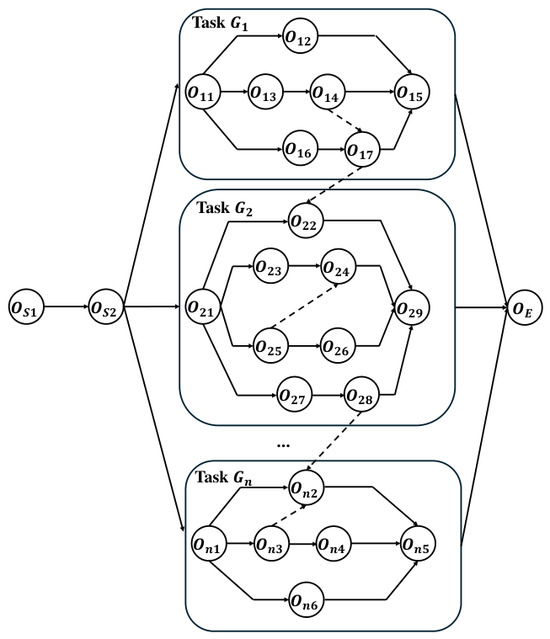
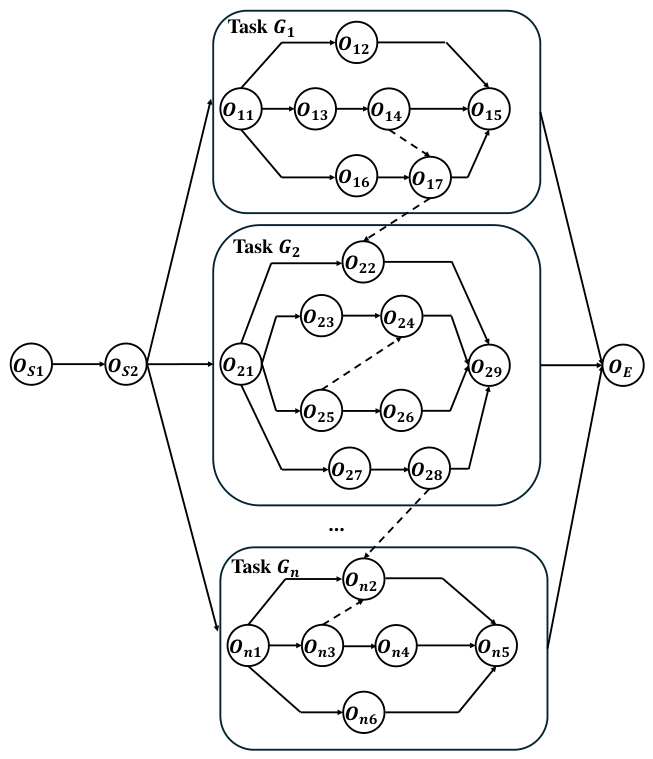


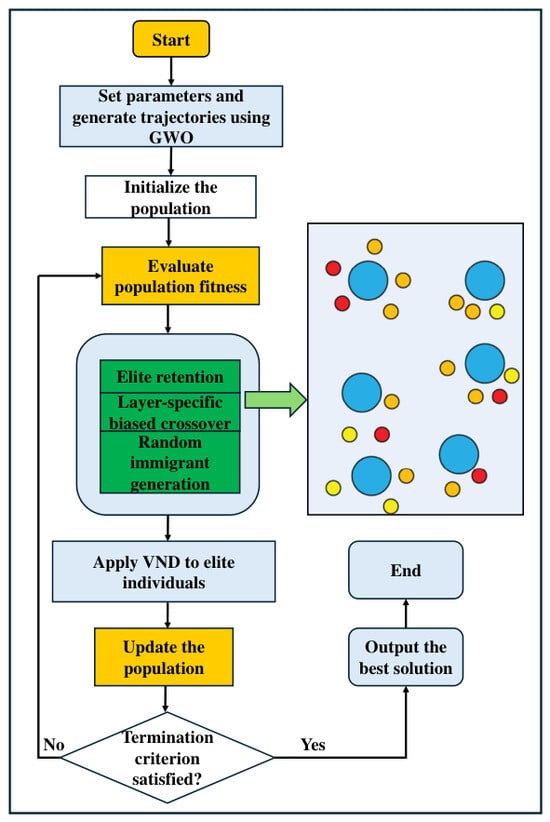
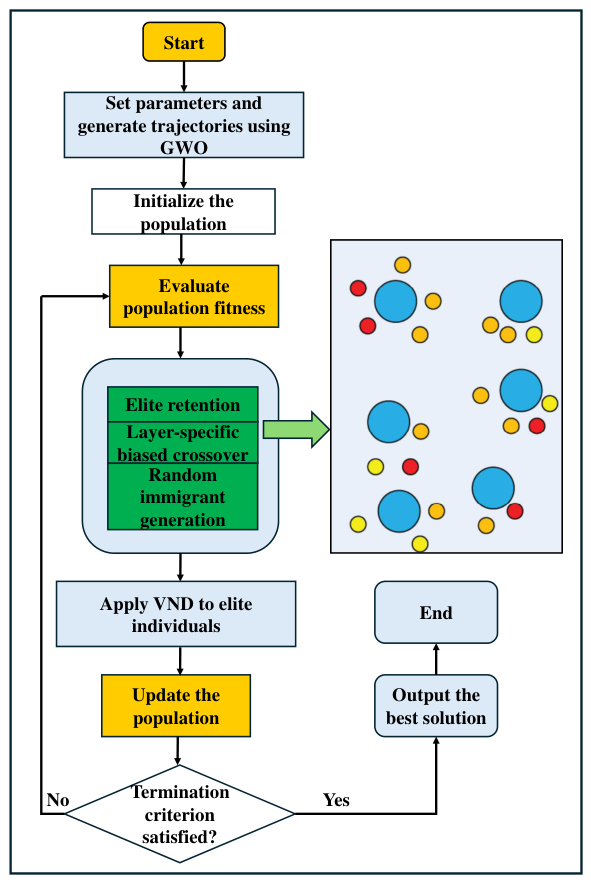
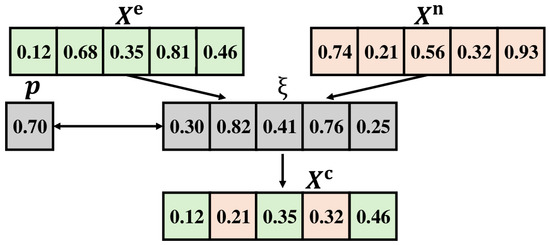
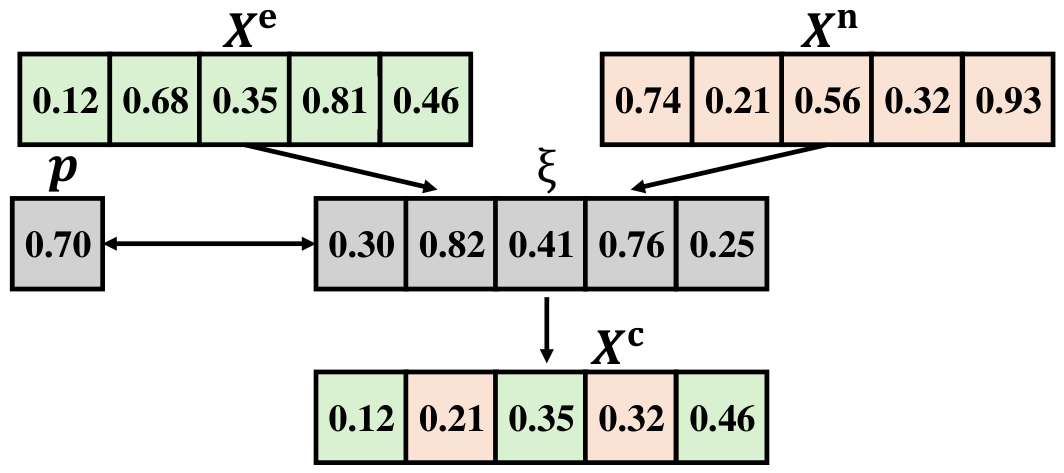
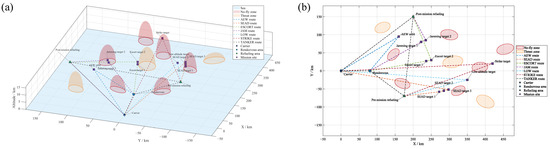
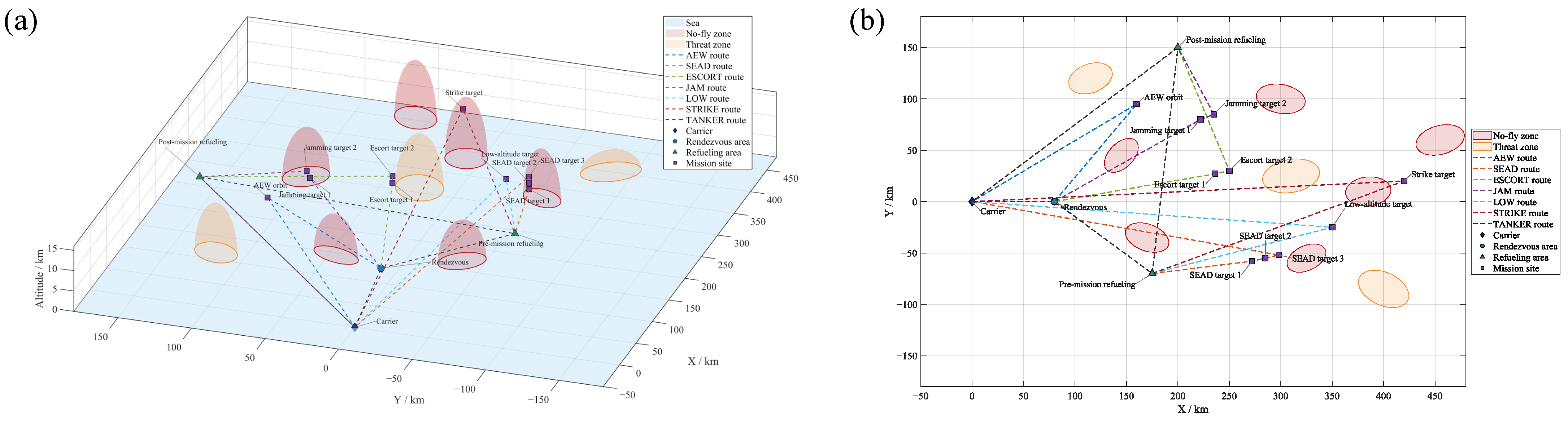
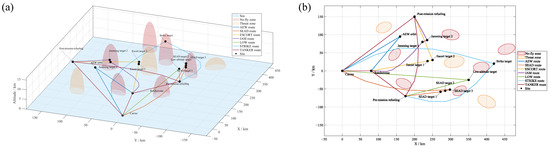
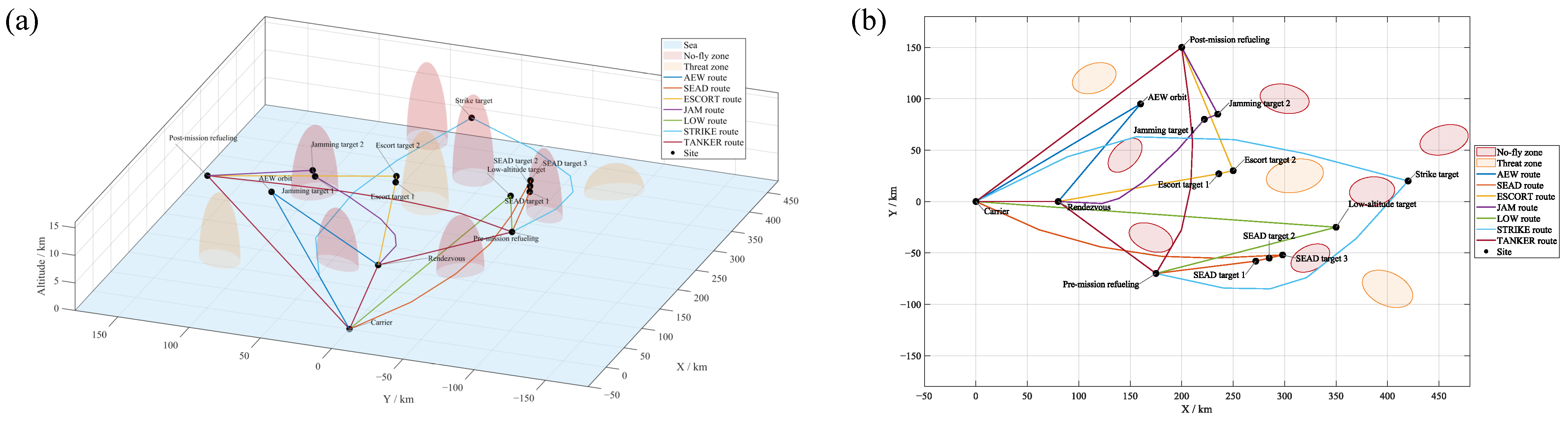
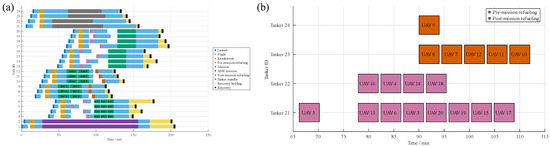
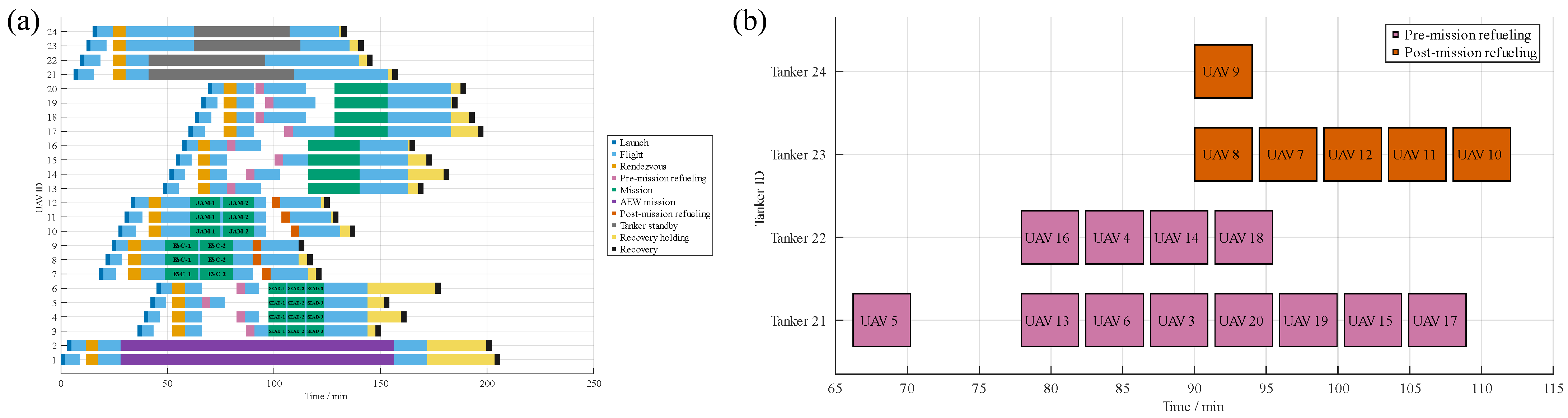
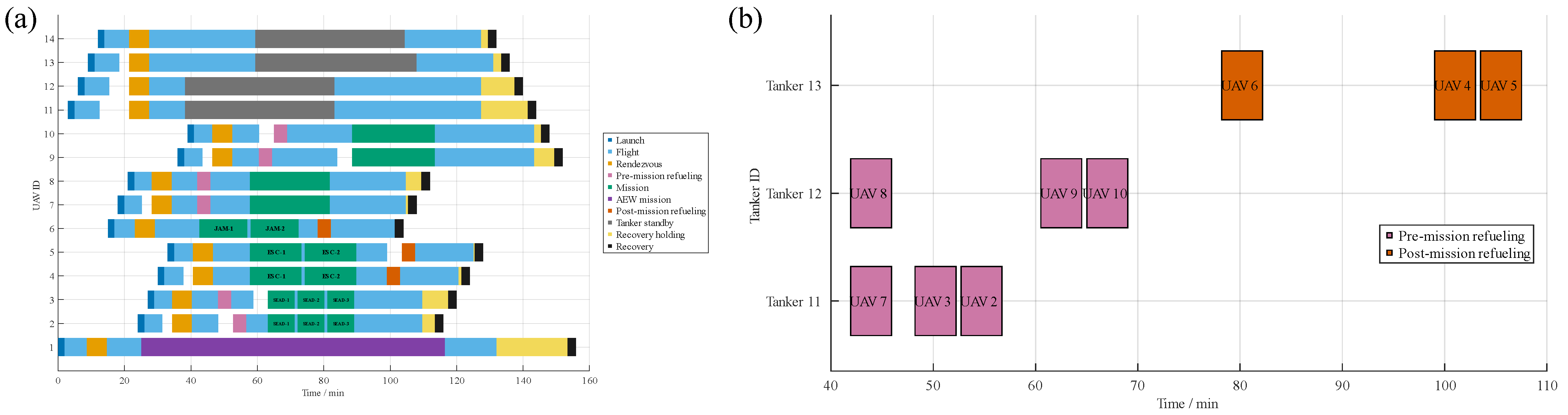
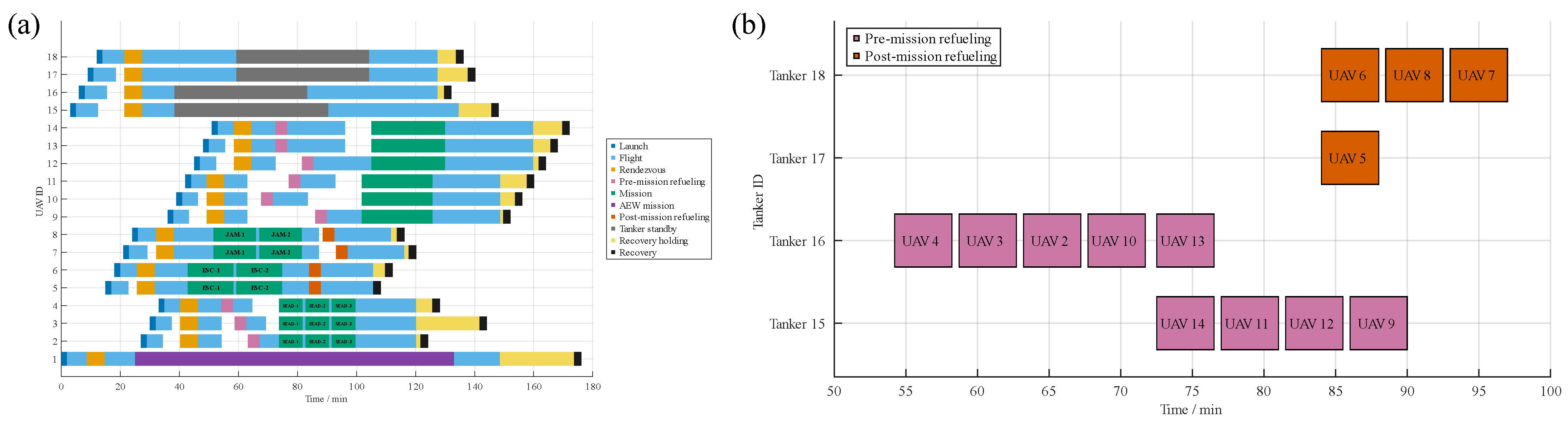
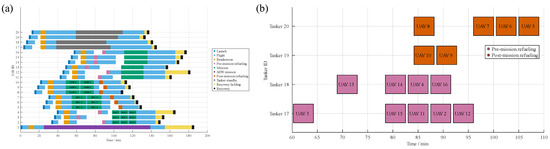
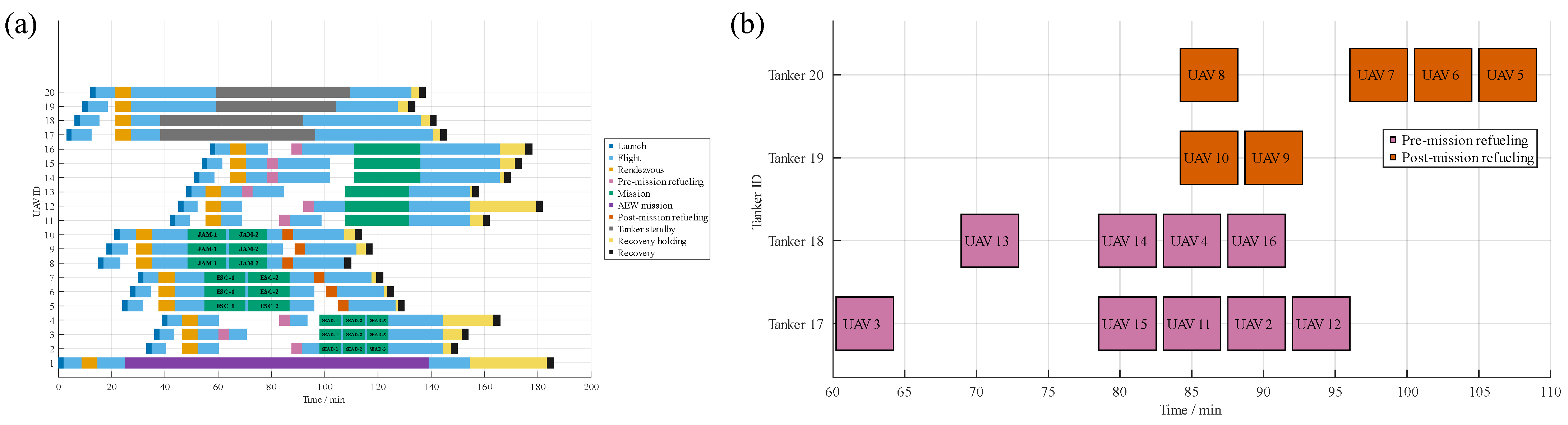
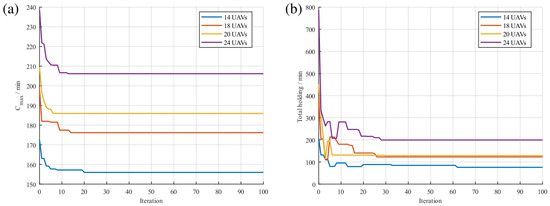
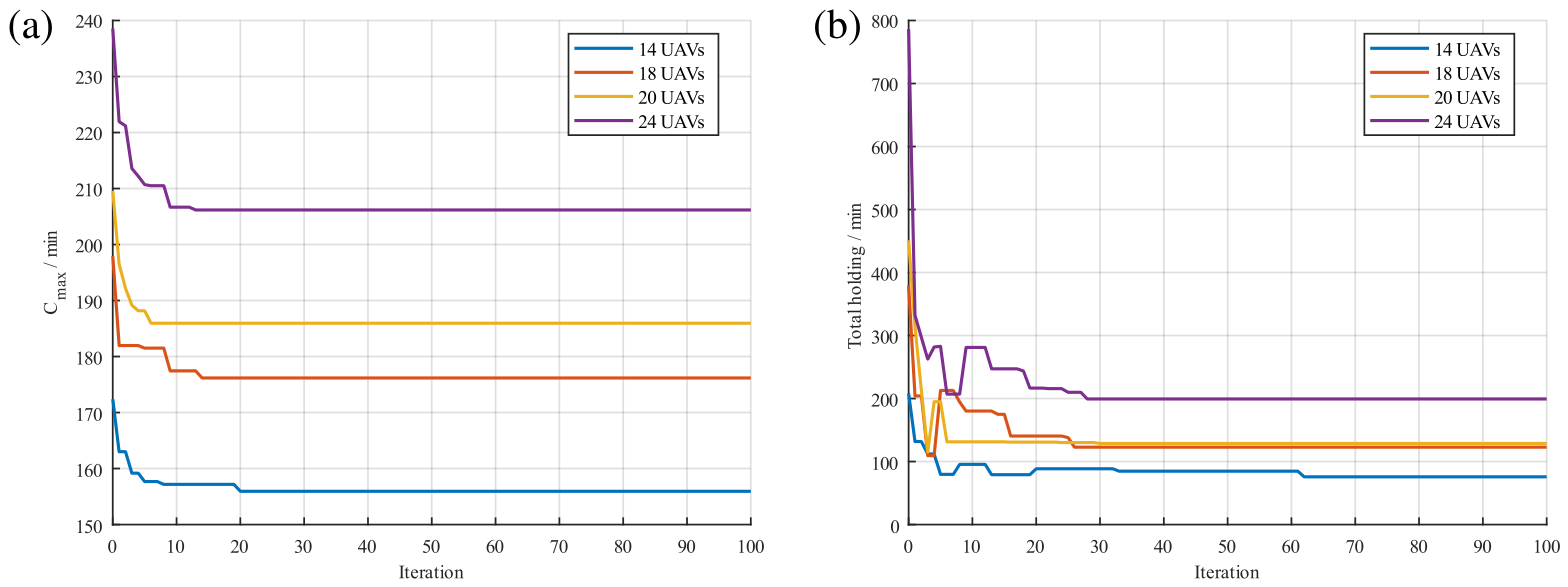
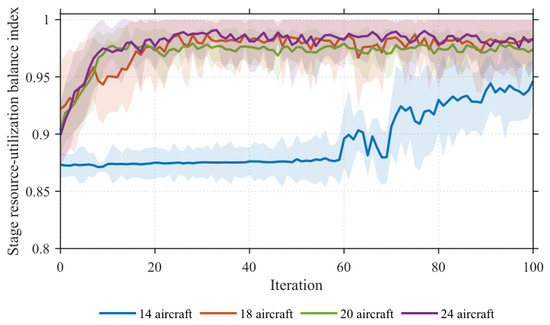
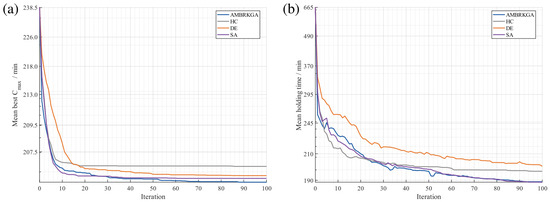
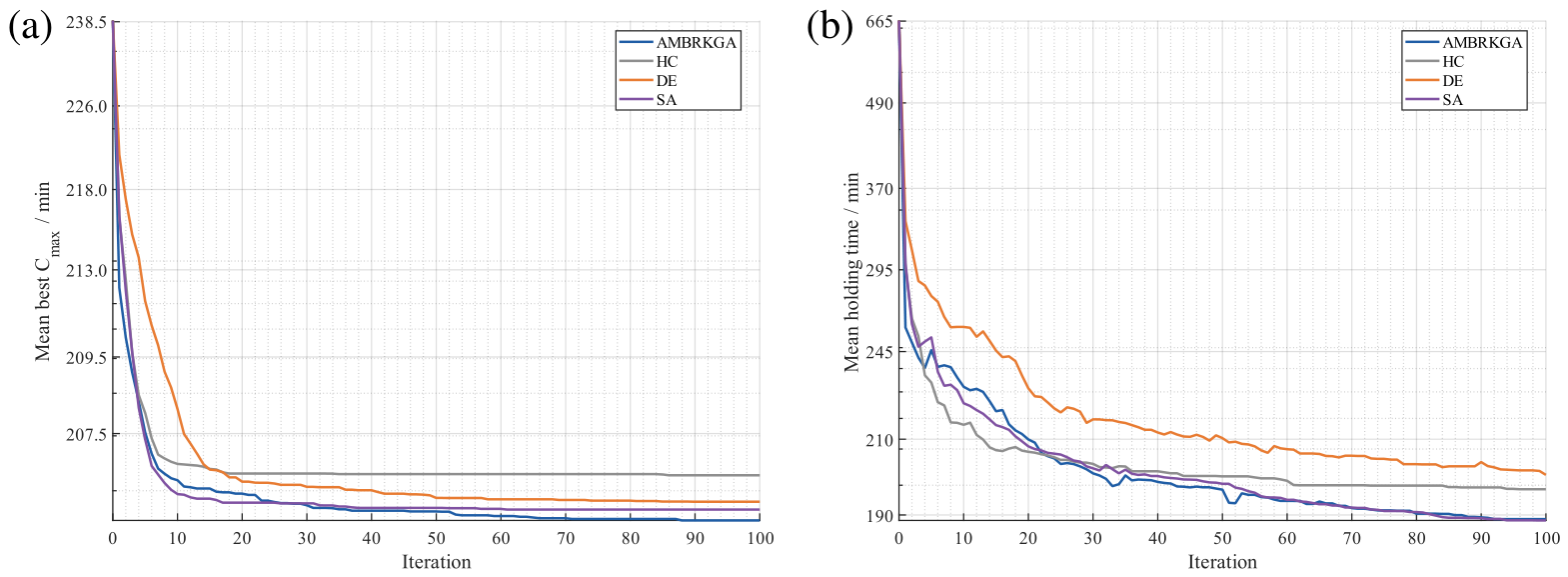
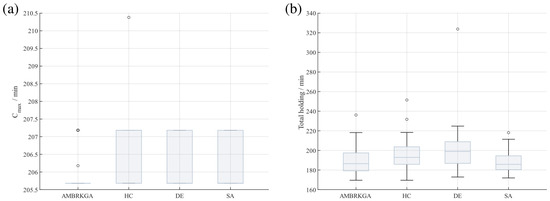
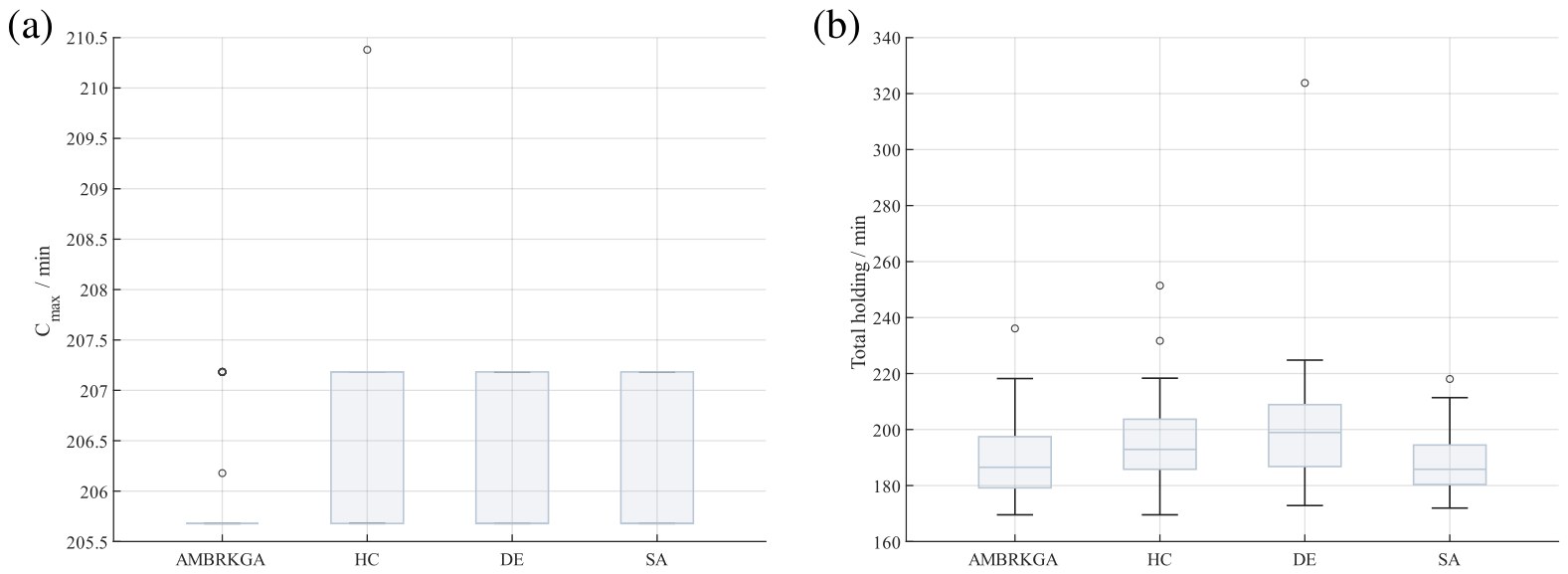
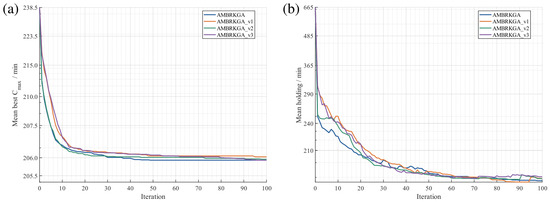
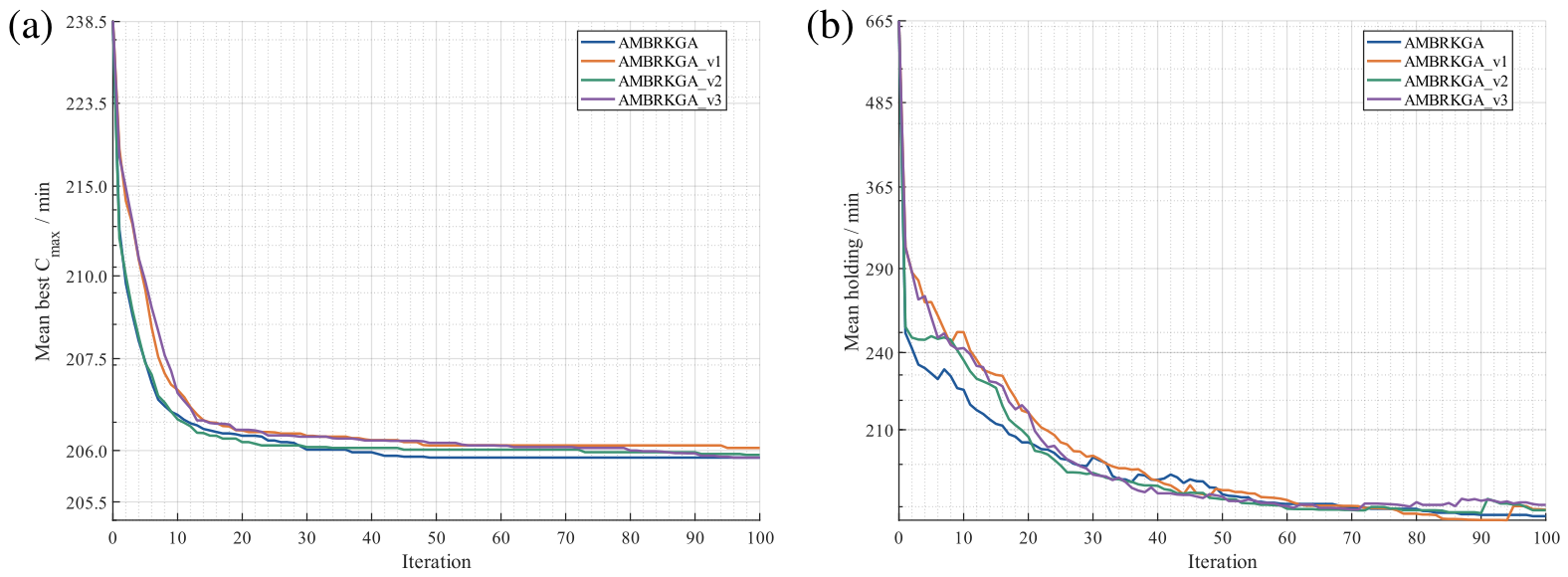
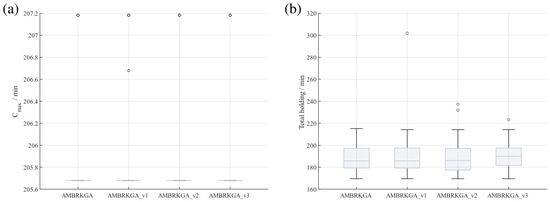
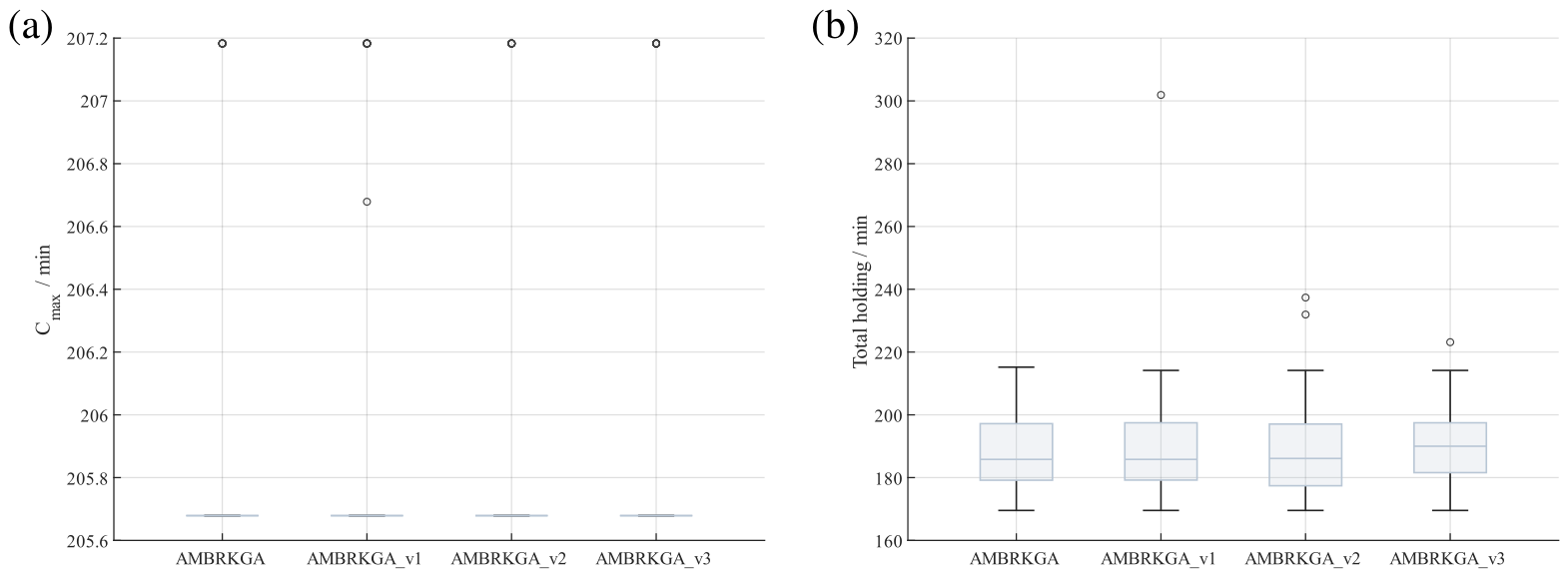
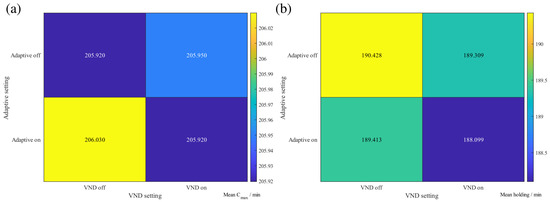
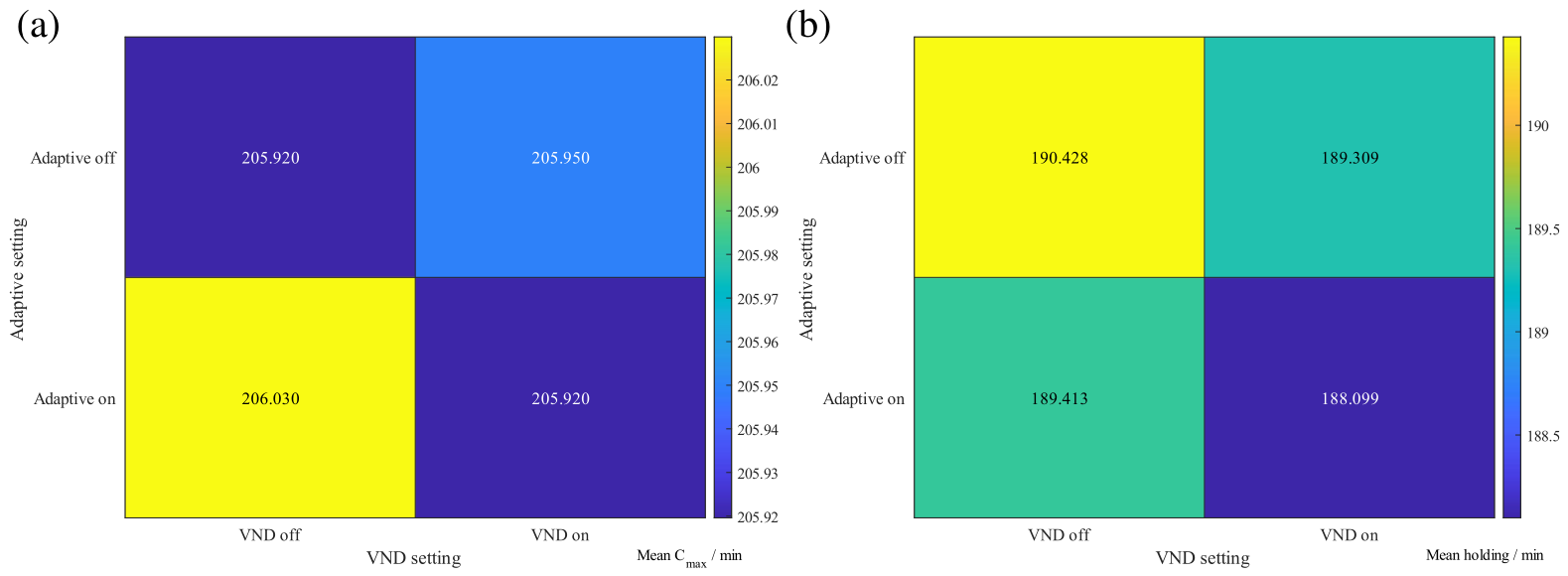
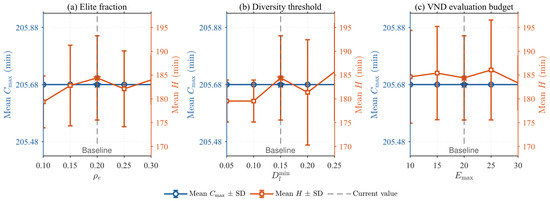
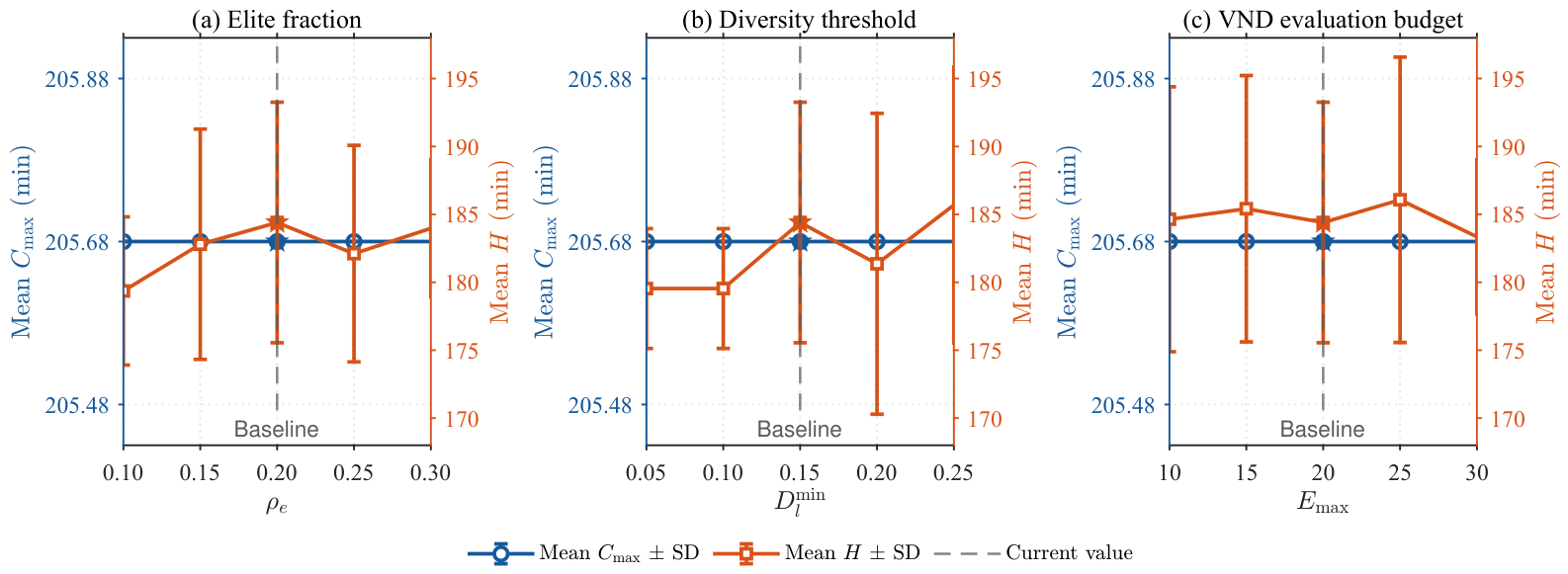

Disclaimer/Publisher’s Note: The statements, opinions and data contained in all publications are solely those of the individual author(s) and contributor(s) and not of MDPI and/or the editor(s). MDPI and/or the editor(s) disclaim responsibility for any injury to people or property resulting from any ideas, methods, instructions or products referred to in the content. |
© 2026 by the authors. Licensee MDPI, Basel, Switzerland. This article is an open access article distributed under the terms and conditions of the Creative Commons Attribution (CC BY) license.