


Abstract
The thermal runaway propagation in lithium-ion battery modules poses a serious threat to the safety of electric vehicles and energy storage systems. This study experimentally evaluated the thermal propagation suppression performance of five insulating materials: polyimide foam, nano-porous silica aerogel, ceramic fiber, pre-oxidized fiber aerogel, and mica sheet on 4 Ah ternary pouch cell modules. Thermal runaway was triggered in Cell 1 via an external short circuit (30C), and propagation behavior was characterized in terms of temperature evolution, propagation time, mass loss, and microstructural analysis. The results indicated that aerogel-based materials exhibited excellent thermal insulation performance. For the nano-porous silica aerogel, the temperature difference between its front and back surfaces reached as high as 484 °C, while the temperature rise of the adjacent cell was kept below 107 °C, thereby completely blocking propagation. The module mass loss was only 17.63 g, corresponding to a material loss rate of 0.67%. Pre-oxidized fiber aerogel also effectively suppressed propagation, albeit with a slightly higher material loss rate of 2.20%. In contrast, ceramic fiber and mica sheets only partially delayed thermal runaway propagation, as the adjacent cells still exhibited cracking and electrolyte leakage. Polyimide foam failed to prevent thermal runaway propagation, only extending the total propagation time from 424 s to 678 s (an increase of 60%) before being completely burned. Microstructural SEM analysis revealed that the aerogel materials suffered only slight fiber fracture, whereas the ceramic fiber underwent severe structural damage, the mica sheets displayed cracks and melting, and the polyimide foam was completely combusted. Taken together, these findings suggest that nano-porous silica aerogel is the preferred material for blocking thermal runaway in lithium-ion batteries, offering practical guidance for the thermal safety design of battery systems.
1. Introduction
With the continuous improvement of global environmental awareness and the ongoing refinement of policies related to the new energy industry, new electric vehicles and advanced energy storage technologies have emerged as strategic high-growth industries with enormous potential. Owing to their long cycle life [1], high operating voltage, high energy density, environmental friendliness, and low cost [2], lithium-ion batteries have been widely applied in energy storage, electric vehicles, and unmanned aerial vehicles [3]. As electrochemical energy storage devices, lithium-ion batteries are highly prone to thermal runaway [4] when subjected to mechanical abuse [5], electrical abuse [6] or thermal abuse [7]. Under practical application conditions, lithium-ion batteries are typically assembled into battery packs. Once thermal runaway is triggered in a single cell within a module, heat is rapidly transferred to adjacent cells, inducing chain propagation of thermal runaway and ultimately causing catastrophic failure of the entire battery pack [8]. Therefore, safety has become a key constraint on the practical deployment and development of lithium-ion batteries [9], and developing effective measures to block the propagation of thermal runaway within the battery pack is of great practical significance for improving the safety performance of battery systems [10].
Over the years, numerous scholars have developed various technical methods for the prevention and control of thermal runaway. In terms of internal battery safety, recent progress in electrode design, including composite anodes based on S-doped graphene oxide/polypyrrole/fumed silica, MoS2/fumed silica, and PAN-lignin fiber/B,P-co-doped graphitic carbon nitride, has enhanced capacity, rate capability, and cycling stability while also affecting the thermal behavior and safety margins of lithium-ion batteries [11,12,13]. In terms of external safety management, various technologies are further used to suppress thermal runaway and block its propagation. Accordingly, these external strategies can be broadly divided into two categories: active thermal runaway suppression and passive thermal runaway propagation blocking. The active thermal runaway suppression methods include water immersion [14], aerogel foam extinguishing agents [15], and thermal runaway suppression in air, CO2, air–silicone oil semi-immersion, or CO2–silicone oil semi-immersion environments [16]. In addition, methods such as adding air gaps and cooling plates also exist. Compared with the aforementioned methods, passive protection strategies based on thermal insulation barriers neither require external cooling pipes nor depend on liquid media. Instead, they suppress heat transfer by simply constructing physical barriers from insulation materials with low thermal conductivity and excellent fire resistance. Owing to their significant advantages in lightweight design, passive suppression strategies have become a key focus of the current thermal safety design of power batteries.
It has been widely demonstrated that the thermal insulation performance of barrier materials is a critical factor in preventing the propagation of thermal runaway in lithium-ion batteries. Accordingly, considerable research efforts have been devoted to investigating the effectiveness of various thermal insulation materials in suppressing battery thermal runaway. The thermal insulation materials are generally classified into flame-retardant phase-change composites and non-phase-change barrier materials. Regarding composite phase-change materials, Qiu et al. [17] developed flame-retardant flexible composite phase change materials and applied for thermal runaway management in battery packs. The temperatures were maintained below 70 °C when the battery pack was wrapped with the flame-retardant flexible composite phase change material, indicating effective prevention of thermal runaway. Sun et al. [18] developed a COMSOL-based simulation model for lithium-ion battery thermal runaway to explore the influence of the thermal conductivity of phase-change fireproof partition substrates on suppression. The simulation revealed that the proposed structure achieved zero thermal-runaway propagation in battery modules, offering guidance for thermal-runaway-suppression safety design. In a further study [19], the thermal insulation performance of six insulation materials (ordinary flame-retardant foam, glass fiber cotton, alumina-silicate ceramic fiber felt, mica insulation plate, nanofiber aerogel insulation layer, and composite phase-change insulation layer) was also compared, and all of the materials contributed to thermal runaway suppression, achieving zero propagation within the module. Chen et al. [20] prepared a phosphorus-containing, melamine-based flame-retardant cross-linked composite phase-change material, which can maintain the temperature below 36 °C and serve for both battery thermal management and thermal-runaway-propagation prevention.
On the other hand, many researchers have analyzed various types of barrier materials, such as aerogels and non-phase-change metal meshes. In this regard, Cao et al. [21] investigated the thermal runaway characteristics of 18650 lithium-ion batteries and the flame-retardant mechanisms of metal meshes. Experimental results showed that such barrier meshes achieved a good suppression effect on thermal runaway. Researchers have also employed visual devices to investigate the flame-retardant effect of metal mesh on the thermal runaway of 18650 lithium batteries [22], and the synergistic effect of blocking airflow, cooling and interrupting the chain reaction of combustion was achieved. Huang et al. [23] elucidated how aerogel barriers suppress the propagation of thermal runaway in batteries at different charge and discharge rates. The results indicate that a 2 mm thick aerogel mat is identified as the critical thickness for suppression, suitable for the tested 2 Ah nickel–cobalt–manganese (NCM) battery system. As an effective thermal barrier, it limits the maximum temperature of adjacent cells to below 146.5 °C, thereby completely interrupting thermal runaway. Huang et al. [24] investigated and characterized the behavior of thermal runaway (TR) under thermal abuse at various states of charge (SOC), and introduced a glass fiber-reinforced SiO2 aerogel composite as an internal thermal barrier. Systematic tests demonstrated that thickening the barrier could linearly prolong the delay before adjacent cells undergo thermal runaway propagation (TRP), significantly mitigating its severity. Hu et al. [25] found that using hydroxyapatite-modified cellulose aerogel as a thermal barrier between batteries can completely block the propagation of thermal runaway, thanks to its low thermal conductivity and flame-retardant properties. Xiao et al. [26] developed a dual-function aerogel insulation sheet containing temperature-controlled fire-extinguishing microcapsules, which combines thermal insulation with self-extinguishing capabilities, and offers protective effects superior to those of traditional insulation materials. Chen et al. [27] reported that, by virtue of the triple synergy of porous physical barriers, amino chemical passivation, and high-temperature silica thermal insulation protective films, thermal runaway could be delayed across all stages from the single cell to the module, reducing heat release and smoke emission.
Comprehensive literature analysis shows that existing studies on lithium-ion battery thermal runaway suppression have mainly focused on different thermal insulation media. However, most of these studies are still limited to performance tests of single materials and lack a cross-comparative quantitative analysis of multiple mainstream commercial thermal insulation media under identical module-level thermal-runaway conditions. In addition, studies on the material damage mechanisms after high-temperature thermal runaway remain relatively insufficient. To address this gap, this study selected five typical commercially available thermal barrier materials—nano-porous silica aerogel, pre-oxidized fiber aerogel, ceramic fiber, mica sheet, and polyimide foam—and directly compared their fire-resistance performance and thermal-runaway barrier effects under the same module-level conditions. The comparison was conducted in terms of temperature rise, mass loss, and SEM micro-characterization. This work establishes a multidimensional evaluation system for thermal insulation materials and provides an experimental basis for the passive thermal suppression design of lithium-ion batteries.
2. Experiment
2.1. Experimental Systems and Materials Selection
The battery used in this study is a pouch-type ternary lithium-ion battery, and the key parameters of the batteries are shown in Table 1.
Table 1.
Battery specifications.
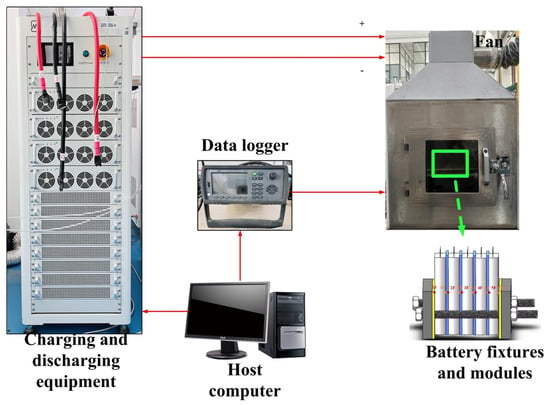
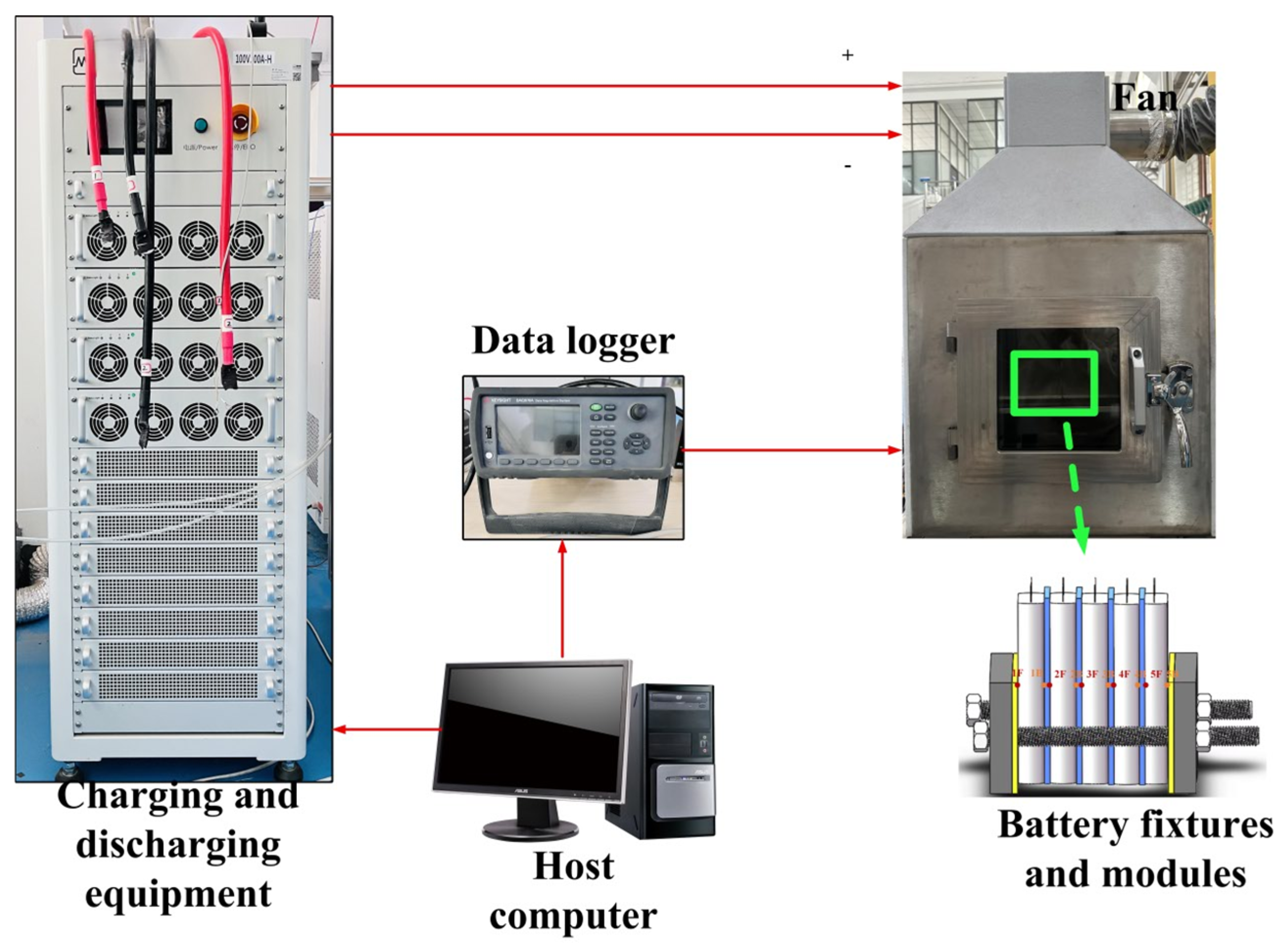
The experimental test platform is shown in Figure 1, and includes batteries (Tianjin Lishen Battery Joint-Stock Co., Ltd., Tianjin, China), K-type thermocouples, explosion-proof boxes (0.5 m × 0.5 m × 0.8 m), data acquisition instruments Keysight DAQ970A (Keysight Technologies, Inc., Santa Rosa, CA, USA), a high-performance battery testing system Neware CE-6002n (Neware Technology Ltd., Shenzhen, China), 300 A high-current knuckle clamps, fans, battery module clamps and cameras. The front of the explosion-proof box is equipped with an observation window made of thickened explosion-proof glass, which not only prevents flames from ejecting but also protects the camera equipment. A ventilation system is installed on top of the cabinet to promptly release gases during lithium-ion battery thermal runaway, ensuring laboratory safety. A thickened heat insulation plate is placed at the bottom of the battery module to reduce heat transfer to the steel countertop of the explosion-proof box and prevent thermal runaway damage to the cabinet body.
Figure 1.
Experimental test platform.
The battery module consists of five pouch batteries, two square mica plates, and steel fixing fixtures. The fixing clamp is fastened by bolts, allowing for free adjustment of its preload pressure on the battery. The bolt uses a torque wrench to set the nut torque to about 1 N·m, keeping the preload unchanged. The two mica plates are placed between Battery 1 and the front cover plate of the fixture, and between Battery 5 and the rear cover. The size of the mica sheets matches the size of the front and rear cover plates of the fixture to reduce the impact of the clamps on battery heat dissipation.
This paper selects five materials on the market with strong insulation properties: polyimide foam, nano-porous silica aerogel, ceramic fiber, pre-oxidized fiber aerogel, and mica sheet. The specific parameters of the materials are shown in Table 2. These five insulation materials have significant advantages in thermal insulation and high-temperature resistance, making them suitable for thermal isolation and fire protection in new electric vehicle batteries, aerospace, and 3C electronic products. Polyimide foam has excellent high-temperature resistance, capable of withstanding temperatures above 300 °C for extended periods. Its unique foam structure significantly reduces heat conduction, making it an efficient insulation material. Nano-porous silica aerogel has extremely low thermal conductivity (far lower than static air), a porosity exceeding 90%, and a density of 0.003 g/cm3, making it one of the lightest known solid materials, with extremely strong chemical stability and corrosion resistance. Ceramic fibers have a low coefficient of thermal expansion and excellent tensile strength, allowing them to maintain stable performance at high temperatures, and they possess properties such as acid and alkali resistance and aging resistance. Pre-oxidized fiber aerogel uses pre-oxidation wire as the base material, and after mixing with aerogel, forms a porous structure. At high temperatures, it can undergo further heat treatment to produce high-purity carbon fiber, demonstrating excellent thermal insulation performance. Mica boards have excellent thermal stability and insulation properties, maintain structural stability in high-temperature environments, do not release toxic gases, and possess bending strength and acid and alkali resistance.
Table 2.
Thermal physical properties of different separator materials.
It should be noted that the thermal conductivity values listed in Table 2 are nominal room-temperature values. At elevated temperatures of several hundred degrees Celsius, the thermal conductivity of these materials may change substantially owing to intensified thermal radiation, structural evolution, and other high-temperature effects. In this study, however, the five materials were first evaluated using fire-resistance tests and then installed as barrier layers in battery modules. Their barrier performance and post-test damage after thermal runaway were directly compared under identical conditions. The selection of the optimal barrier material was therefore based mainly on actual fire and thermal-runaway suppression performance rather than on room-temperature thermal conductivity alone.
2.2. Experimental Methods and Procedures
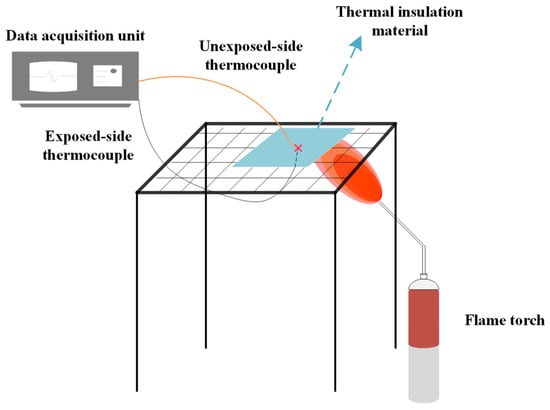
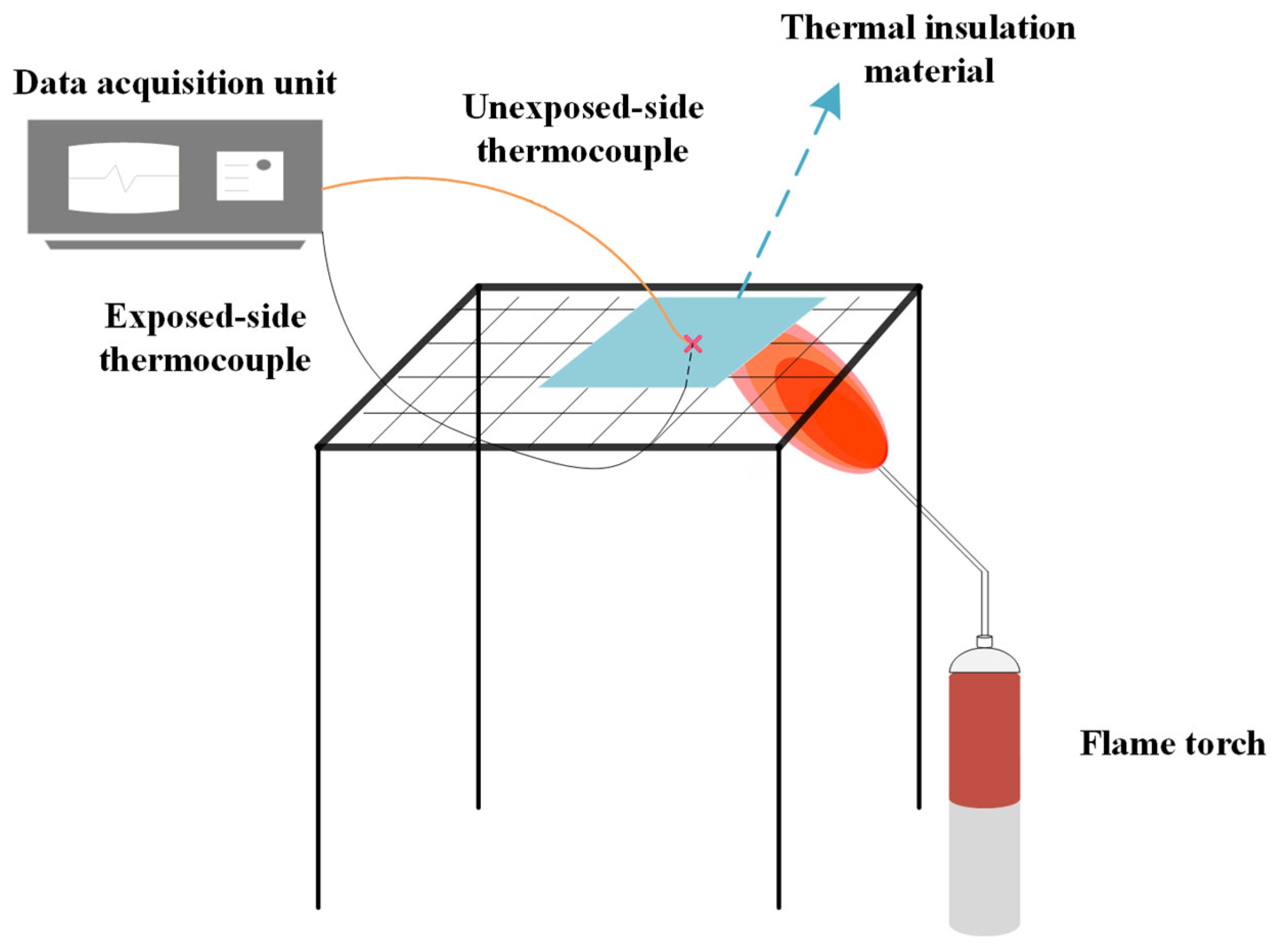
This experiment mainly consisted of two parts. First, five different thermal insulation materials were selected for fire resistance testing. The experiment was conducted using a butane blowlamp, with a maximum flame temperature reaching 1500 °C. The insulation materials were directly exposed to the flame for 5 min. During the experiment, to accurately measure the temperature changes, J-type thermocouples were placed at the geometric centers of the exposed and non-exposed surfaces of the insulation materials, where the exposed surface refers to the surface directly facing the flame and the non-exposed surface refers to the surface facing away from the flame. The temperature variations were monitored in real time through the thermocouples to evaluate the flame-retardant performance of the insulation materials under high-temperature conditions. The specific operation procedure is shown in Figure 2. Second, lithium-ion batteries at 100% SOC were selected, and five batteries were arranged sequentially in a horizontal linear manner for the experiment, with different insulation materials placed between each battery for isolation. In this study, the external short-circuit condition was simulated via high-rate constant-current discharge to triggered thermal runaway. A 30C constant current (120 A) was applied to battery No. 1 to induce thermal runaway, with a theoretical discharge duration of 2 min, and temperature data were collected using high-temperature K-type thermocouples. It should be emphasized that a set of repeated single-cell tests was conducted to calibrate the external short-circuit triggering condition (30C rate), which can stably induce thermal runaway, as shown in our previous work [28]. This work focuses on demonstrating the thermal barrier capability of the insulation material under a well-defined thermal runaway boundary, and the module test was performed as a representative case.
Figure 2.
Fire resistance performance test.
All temperature monitoring points were set at the center positions of the front and rear planes of the battery pack, with specific locations shown in Figure 1. To ensure the accuracy of the experimental results, a high-precision balance was used to measure the mass changes of the insulation materials and lithium batteries before and after the experiment. Experimental phenomena were recorded in real time by a camera to capture the process and behavior of the battery module during thermal runaway.
3. Results and Discussion
3.1. Comparison of Fire Resistance Tests
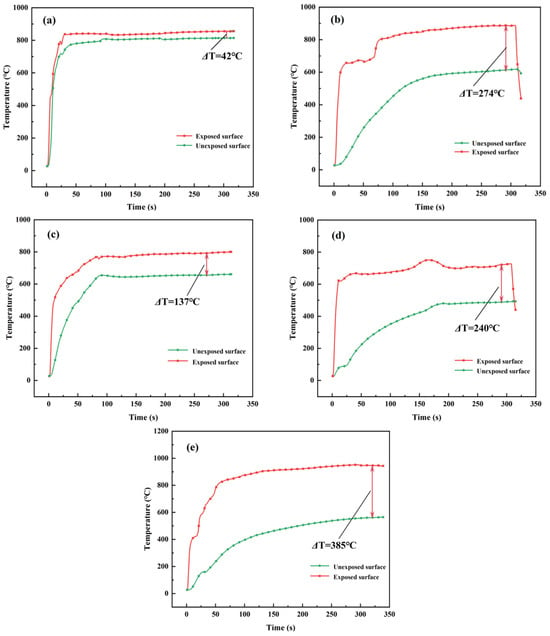
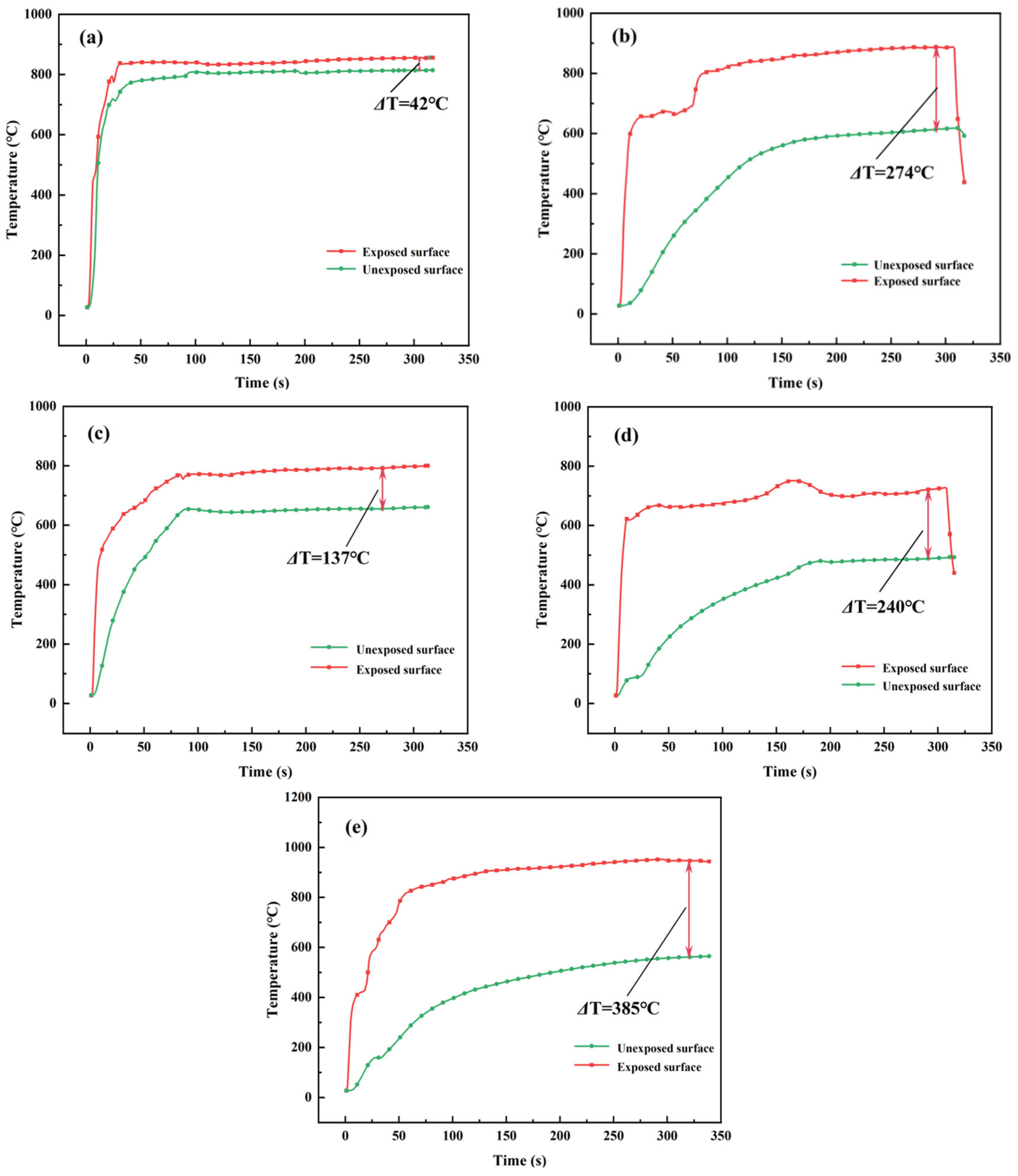
As shown in Figure 3, various thermal insulation materials were subjected to heat treatment using a butane flame torch. During the heating process, polyimide foam exhibited significant embrittlement, blackening, and deformation. The temperature difference between the flame-exposed and the non-exposed surface was only 42 °C. Under high-temperature conditions, polyimide foam was prone to deformation and embrittlement, leading to a decrease in its fire resistance. Nano-porous silica aerogel showed slight blackening and minor flaking in the directly flame-exposed area after heating, but its overall structure remained largely unchanged, with a temperature difference of 274 °C between the flame-exposed and non-exposed surfaces. During heating, ceramic fiber surfaces were completely blackened and exhibited embrittlement and flaking, although the basic structure was essentially preserved, with a temperature difference of 137 °C between the flame-exposed and non-exposed surfaces. Pre-oxidized fiber aerogel showed almost no change in appearance before and after heating, only minor flaking in the flame-exposed areas, with a temperature difference of 240 °C between the flame-exposed and non-exposed surfaces. Mica sheets displayed whitening in some local areas after heating, with no change in the material structure, and the temperature difference between flame-exposed and non-exposed surfaces reached 385 °C. Overall, these results indicate that under flame heating conditions, mica sheets exhibit the strongest fire resistance, whereas polyimide shows the weakest fire resistance, primarily due to its tendency to deform and embrittle under combustion. The fire resistance of nano-porous silica aerogel and pre-oxidized fiber aerogel is at a moderate level, with the former slightly outperforming the latter. Although ceramic fibers maintain certain structural integrity at high temperatures, their fire resistance is relatively weak.
Figure 3.
Flame resistance test temperature diagram: (a) polyimide foam; (b) nano-porous silica aerogel; (c) ceramic fiber; (d) pre-oxidized fiber aerogel; (e) mica sheet.
3.2. The Effect of Different Thermal Insulation Materials on Thermal Runaway Propagation in Lithium-Ion Batteries
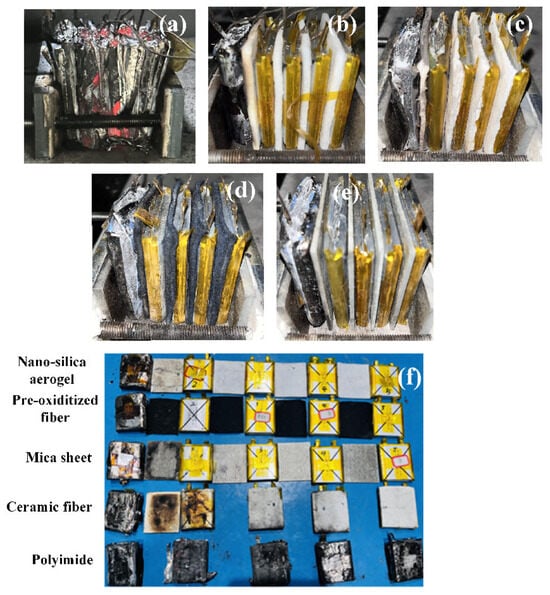
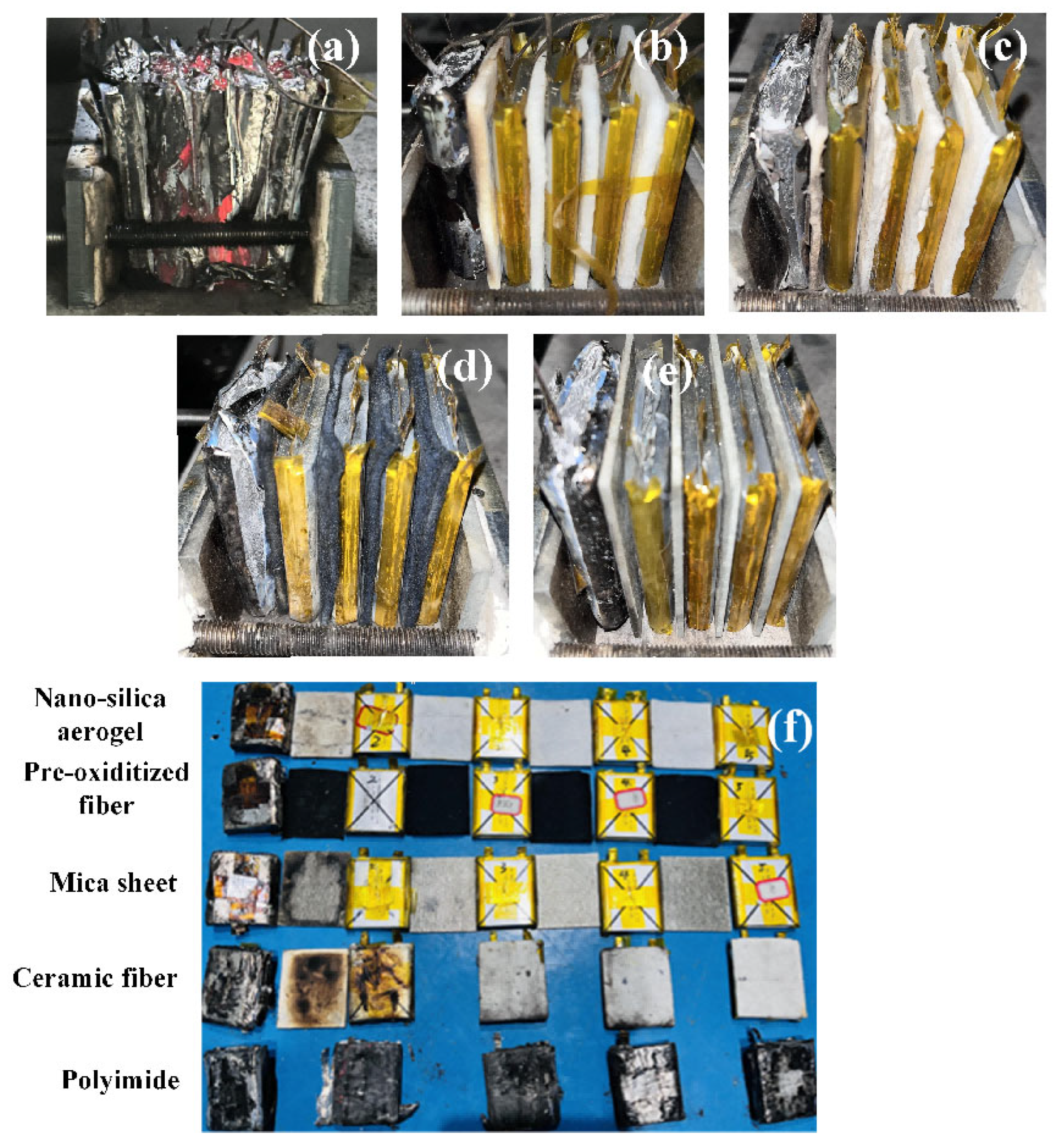
According to the analysis of the damage to battery modules made of different materials after experimental cooling, as shown in Figure 4, the battery modules with polyimide foam interlayers experienced severe thermal runaway. The battery rolls turned black due to thermal runaway, and the aluminum casing on the battery surface melted and deformed due to high temperatures. Moreover, during the thermal runaway process, the high-temperature flames released caused the temperature of the polyimide foam to rise sharply, exceeding its autoignition point and resulting in combustion. No molded foam remnants remained after the experiment. In the battery modules with nano-porous silica aerogel interlayers, the first piece of insulation material softened, and its front surface changed from white to carbon yellow, while the back surface remained relatively intact; no significant macroscopic damage was observed in the remaining batteries and materials. In the battery modules with ceramic fiber interlayers, the first piece of insulation material turned black directly, its thickness decreased, it became extremely brittle, and material shedding occurred; the corners of the second piece of insulation material were completely burned, while the remaining batteries and materials remained in good condition. In the battery modules with pre-oxidized fiber aerogel interlayers, the first piece of insulation material hardened, and no macroscopic damage was observed in the remaining materials or batteries. In the battery modules with mica sheet interlayers, localized charring appeared on the second piece of insulation material, whereas the other batteries and materials remained intact.
Figure 4.
Macroscopic damage images of battery module structures with different materials after testing: (a) polyimide foam; (b) nano-porous silica aerogel; (c) ceramic fiber; (d) pre-oxidized fiber aerogel; (e) mica sheet. (f) Planar diagram.
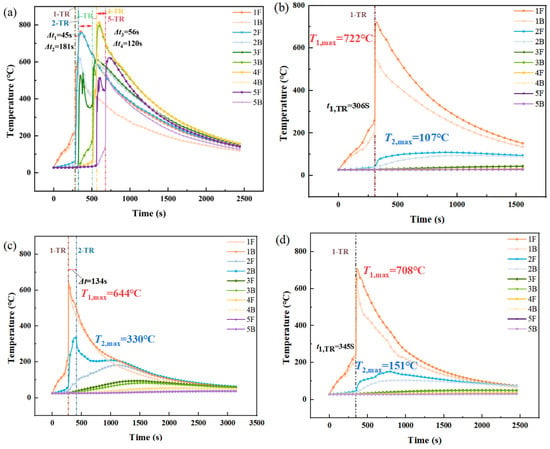
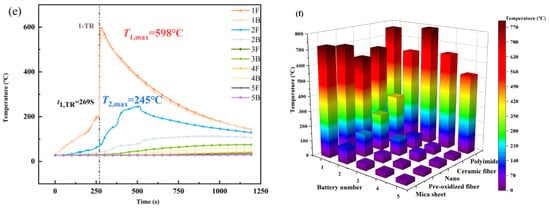
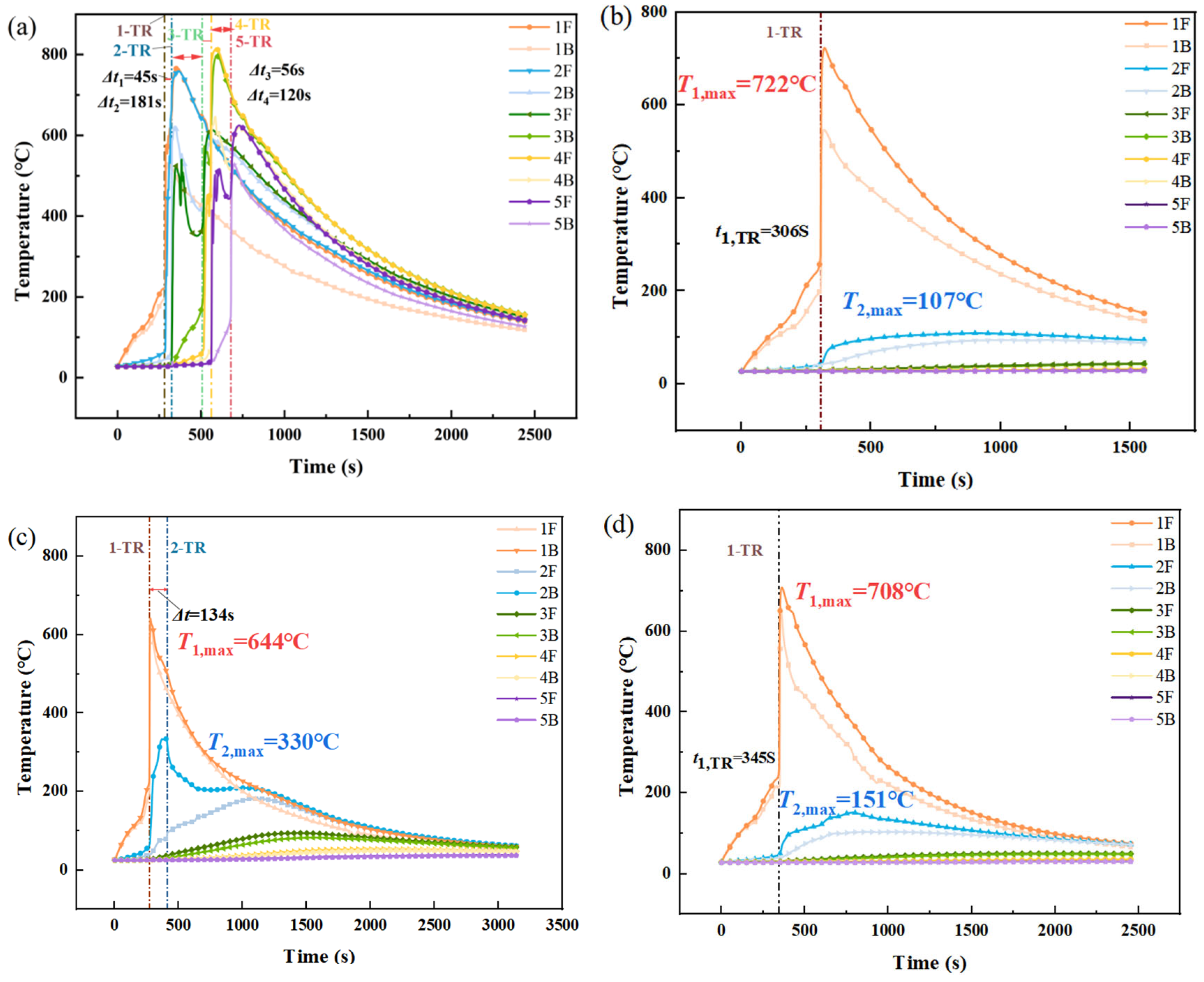
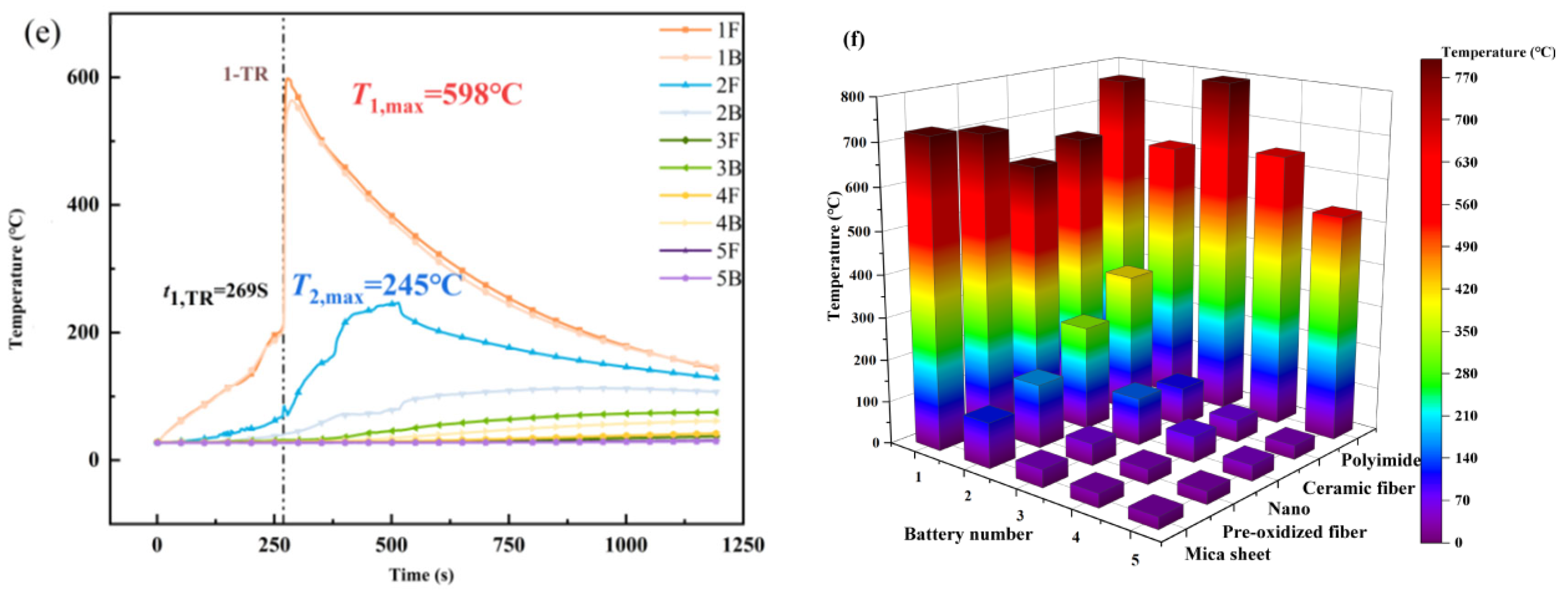
The temperature characteristics of thermal runaway propagation are key factors in the thermal safety assessment of lithium batteries [29]. Figure 5 illustrates the impact of different thermal insulation materials on the thermal runaway temperature characteristics of a lithium battery pack at 100% SOC. In Figure 5a, for the battery module with a polyimide interlayer, the front- and back-surface temperatures of Battery 1 (T1F and T1B) rose rapidly during the initial discharge stage and reached the critical thermal runaway temperature of approximately 220 °C at 286 s. This observation is consistent with the findings of Wu et al. [30], who also reported a comparable critical thermal runaway temperature for lithium-ion batteries. Subsequently, the module entered the thermal runaway stage, where the temperature increased sharply, eventually reaching 766 °C at 360 s, after which the temperature gradually decreased. As the T1B temperature on the back surface of Battery 1 increased, the front surface temperature of Battery 2, T2F, followed closely, rising rapidly to the melting point of the polyimide foam in about one second. The polyimide 331 s material failed under the influence of flames and could not effectively prevent heat transfer, causing Battery 2 to undergo thermal runaway, which then spread to the entire battery pack. The subsequent four batteries experienced thermal runaway sequentially at 323 s, 502 s, 563 s, and 679 s. The data in Figure 5b show that in the battery module using a nano-porous silica aerogel interlayer, the front and back surface temperatures of Battery 1, T1F and T1B, reached 257 °C and 198 °C, respectively, at 306 s, and increased exponentially in a short period, reaching 722 °C and 546 °C at 722 s. The maximum temperature difference between the front and back surfaces of Battery 1 reached 484 °C. Moreover, the temperature of Battery 2 rose only slowly to 107 °C, and the temperatures of the other batteries remained around 28 °C, with no significant temperature rise observed. This material effectively prevented the propagation of thermal runaway. Figure 5c shows that the thermal insulation effect of ceramic fibers is relatively limited. For Cell 1, the front and back surface temperatures T1F and T1B were 223 °C and 194 °C at 271 s, respectively, and then the temperatures rose sharply, ultimately reaching the maximum temperature of 644 °C at 644 s. The front surface temperature T2F of Cell 2 began to rise rapidly at 275 s and reached the maximum temperature of 330 °C at 405 s, while the back surface temperature T2B of Cell 2 reached the maximum temperature of 181 °C at 1113 s. As shown in Figure 5f, the average temperature of Cell 3 was 90 °C, exceeding the maximum operating temperature of 70 °C, indicating a potential risk of thermal runaway. Figure 5d illustrates the temperature variations of the battery module using a pre-oxidized fiber aerogel interlayer. For Cell 1, the front and back surface temperatures T1F and T1B were 241 °C and 210 °C at 345 s, respectively, after which the temperatures rose rapidly, reaching the maximum temperatures of 706 °C and 656 °C at 706 s. The temperature of Cell 2 increased slightly but ultimately reached the maximum front surface temperature T2F of 151 °C at 801 s. The maximum temperature difference between the front and back surfaces of the first insulating material reached 564 °C, demonstrating its superior thermal insulation performance. This material effectively blocks the spread of thermal runaway. Figure 5e shows that the thermal insulation performance of mica sheets is moderate. For Cell 1, the front and back surface temperatures T1F and T1B were 206 °C at 263 s, reaching the critical temperature for thermal runaway. Subsequently, the temperatures rose sharply, reaching the maximum temperatures of 598 °C and 563 °C at 280 s, followed by a rapid temperature rise of Cell 2, with the front surface temperature T2F reaching a maximum of 245 °C at 513 s, while the maximum temperature difference of the mica sheet between the front and back surfaces was 476 °C. Mica sheets can only partially mitigate the propagation of thermal runaway, and their overall effectiveness is inferior to that of aerogel materials.
Figure 5.
Temperature variation chart: (a) polyimide foam; (b) nano-porous silica aerogel; (c) ceramic fiber; (d) pre-oxidized fiber aerogel; (e) mica sheet. (f) Temperature variation histogram.
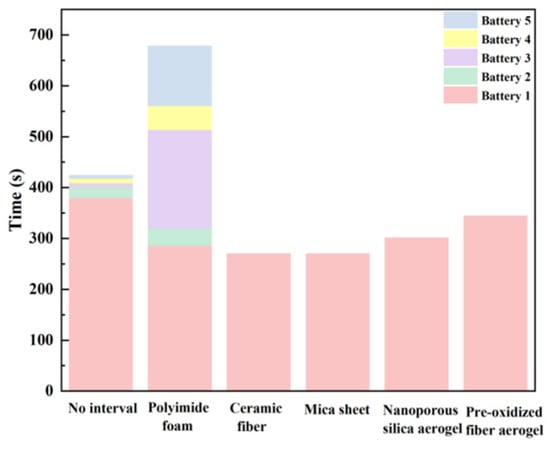
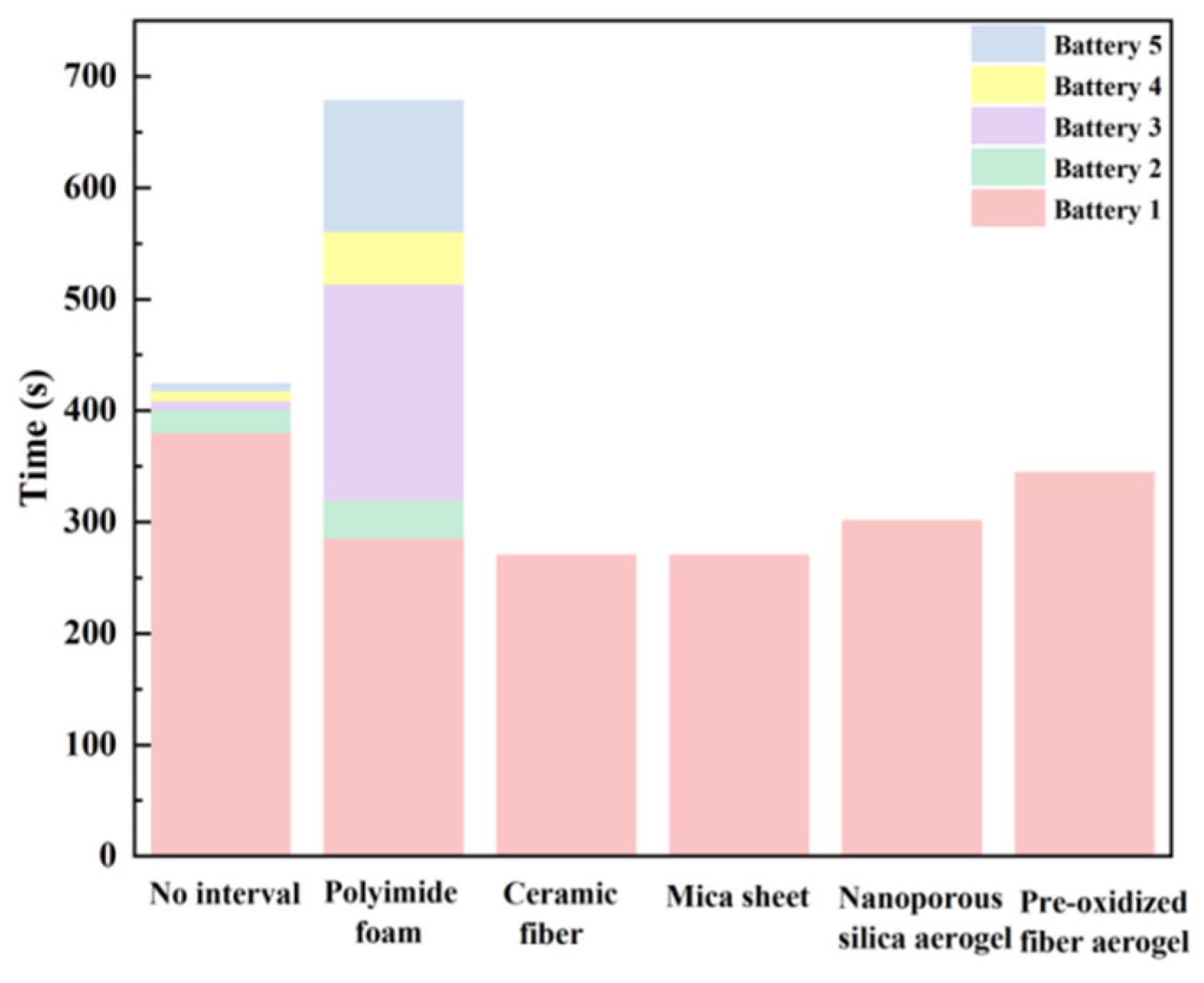
From the thermal runaway propagation diagram in Figure 6, it can be seen that without an insulation layer, the thermal runaway of the battery module progresses very rapidly, with the entire module reaching complete thermal runaway in 424 s. When polyimide foam insulating layers are placed between the batteries, the thermal runaway of the battery module cannot be suppressed, and the entire module reaches complete thermal runaway in 678 s, which is a 60% increase in duration compared with the battery module without an insulation layer. When the insulation layer consists of nano-porous silica aerogel or pre-oxidized fiber aerogel, only Battery 1 exhibits a significant thermal runaway explosion phenomenon, and the thermal runaway of the battery module is effectively suppressed. When the insulation layer consists of ceramic fiber or mica sheet, the thermal runaway propagation is only partially mitigated.
Figure 6.
Thermal runaway propagation time diagram.
3.3. Evaluation of Thermal Insulation Performance Based on Mass Loss
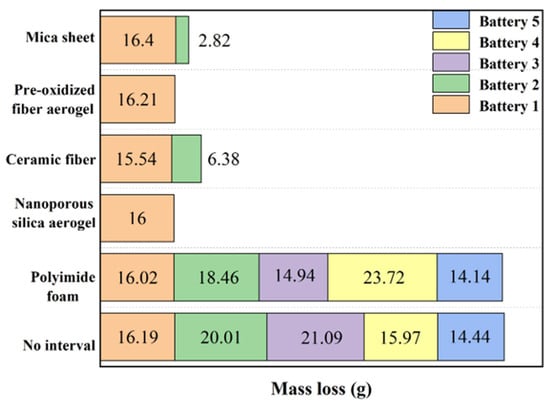
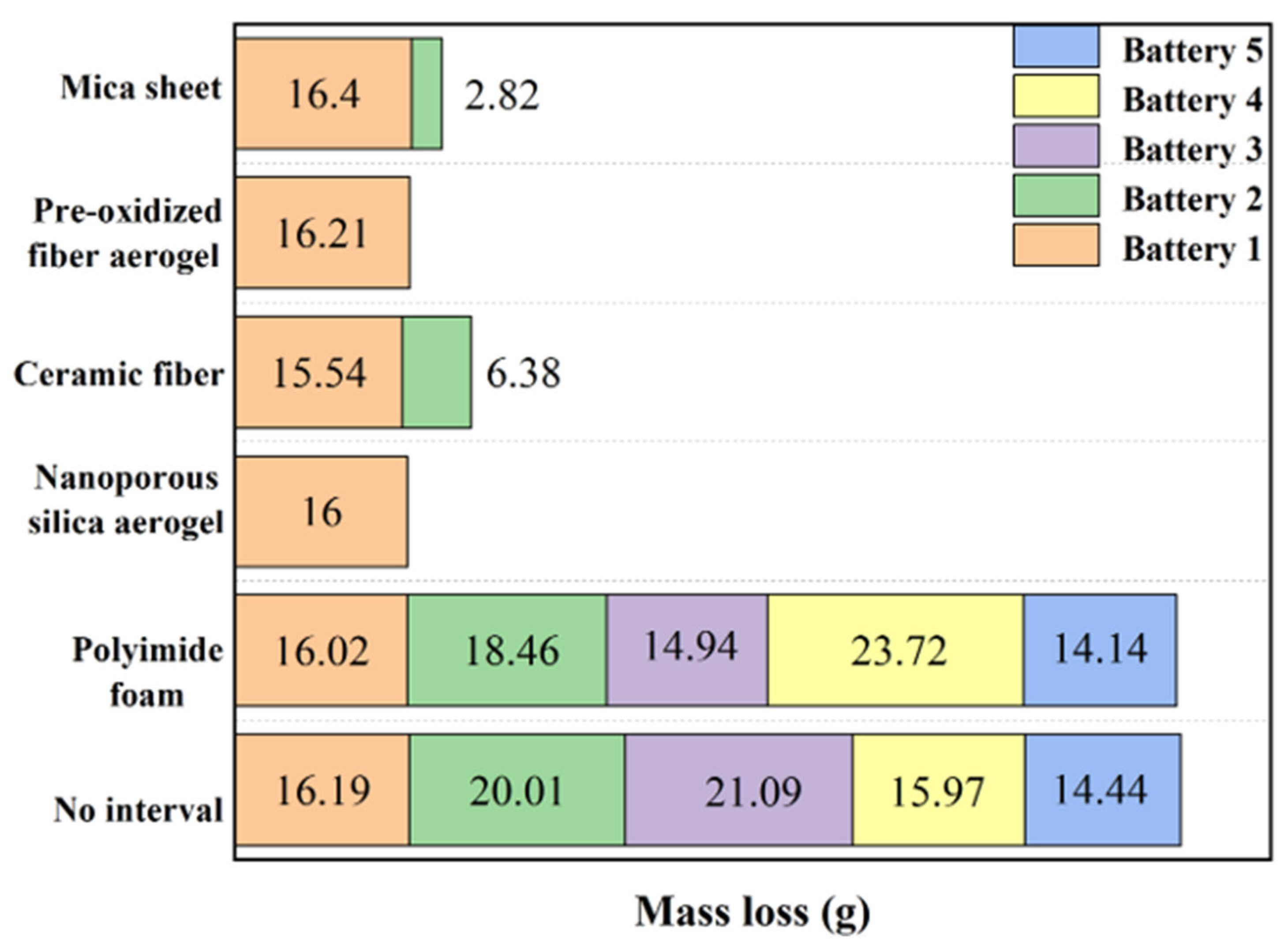
By quantitatively analyzing the mass loss of battery modules under different thermal insulation material structures, it is possible to comprehensively assess the thermal runaway propagation speed and the risk level of battery modules under various thermal insulation material structures, thereby determining which thermal insulation material structure can most effectively reduce the overall thermal hazards of battery modules during use and lower safety risks. Figure 7 shows the mass loss of each battery cell in the module under different thermal insulation material structures, clearly illustrating the specific impact of each insulation material on mass loss [31].
Figure 7.
Mass loss of battery modules.
Figure 7 shows that the total mass loss of the battery module with a polyimide foam interlayer is 98.5 g, with the mass losses of the five batteries being 16.02 g, 18.46 g, 14.84 g, 23.72 g, and 14.14 g, respectively. Under the polyimide structure, all batteries experienced thermal runaway, with the greatest mass loss. The total mass loss of the battery module with a nano-porous silica aerogel interlayer is 17.63 g, mainly due to a 16 g mass loss of battery 1. The total mass loss of the battery module with a ceramic fiber interlayer is 21.92 g, with battery 1 losing 15.54 g and battery 2 losing 6.38 g. The total mass loss of the battery module with a pre-oxidized filament aerogel interlayer is 17.32 g, mainly due to a 16.21 g mass loss of battery 1. The total mass loss of the battery module with a mica sheet interlayer is 19.22 g, with batteries 1 and 2 losing 16.4 g and 2.82 g, respectively, with battery 2′s loss primarily due to electrolyte leakage. Among all modules, the battery module with a polyimide foam interlayer exhibits the most significant mass loss, while the battery module with a nano-porous silica aerogel interlayer has the least mass loss. The mass loss of the battery module is primarily due to high-temperature chemical reactions occurring inside the batteries. These reactions usually release large amounts of toxic and harmful gases, resulting in excessive internal pressure, battery swelling, casing rupture, and gradual gas release. The rapid discharge of large amounts of gas causes a swift decrease in mass, and the venting process is also accompanied by the spraying of a large amount of electrolyte, further exacerbating the loss of battery mass. As the temperature continues to rise, the process of thermal runaway intensifies, triggering a series of chain reactions. The electrode materials inside the battery begin to decompose, particularly the cathode materials, whose thermal decomposition reactions at high temperatures damage the internal structure of the battery, causing a significant decline in the mass of the electrode materials. The aluminum-plastic film of the battery casing begins to melt at around 800 °C, further compromising the integrity of the battery and leading to additional mass loss.
The mass changes of the thermal insulation materials before and after thermal runaway were subsequently recorded, and the mass loss of different materials is compared in Table 3. Due to the complete combustion of polyimide foam after experiencing thermal runaway, its mass loss rate could not be accurately measured. At high temperatures, polyimide foam undergoes chemical degradation, leading to structural failure and loss of thermal insulation performance. Moreover, during combustion, polyimide foam releases large amounts of toxic gases, such as nitrogen oxides (NOx) and carbon monoxide (CO). Therefore, it is not suitable for use alone and requires the addition of thermally conductive fillers in practical applications to enhance its thermal insulation performance [32].
Table 3.
Thermal insulation material mass loss.
The mass loss rates of the other materials are as follows: nano-porous silica aerogel 0.67%, ceramic fiber 8.82%, pre-oxidized fiber aerogel 2.20%, and mica sheet 0.11%. When the temperature reaches 700~800 °C, the thickness of the nano-porous silica aerogel material contracts and its mass decreases. At high temperatures, the nanoparticles undergo agglomeration and sintering, which destroys the fiber structure. In addition, the organic groups in the aerogel decompose or oxidize at high temperatures, which is also one of the reasons for the mass loss [33,34], However, its mass loss rate is relatively low; the mass reduction of ceramic fibers at high temperatures is mainly due to crystallization and sintering of the fiber structure induced by high temperatures, which makes them brittle and prone to fracture and leads to the collapse of pores. Damage to the fiber surface is also caused by the erosion of acidic and alkaline gases, leading to significant mass loss. For pre-oxidized fiber aerogels, mass loss is primarily due to the volatilization of a small amount of organic matter at high temperatures, changes in the pore structure caused by thermal expansion, and slight surface cracking or damage. Mica sheets, on the other hand, exhibit excellent anti-loss properties under high-temperature conditions, with minimal mass loss.
3.4. Micro-Morphological Analysis of Insulation Materials Before and After Thermal Runaway
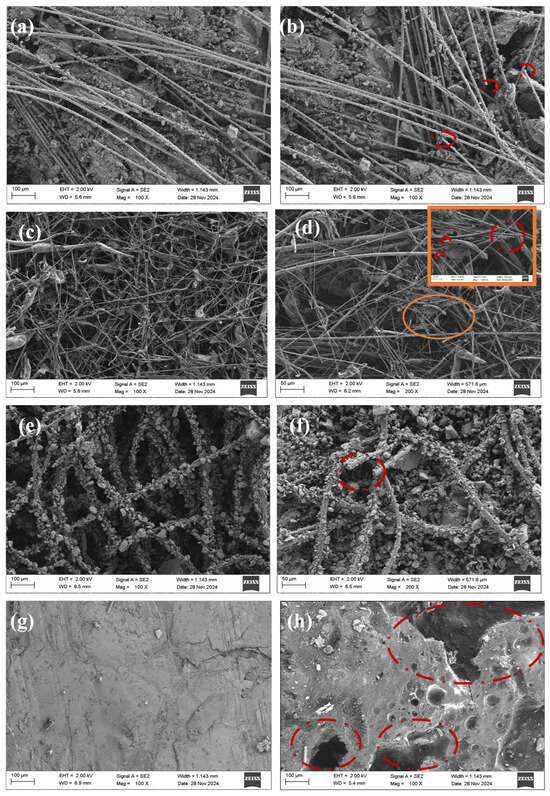
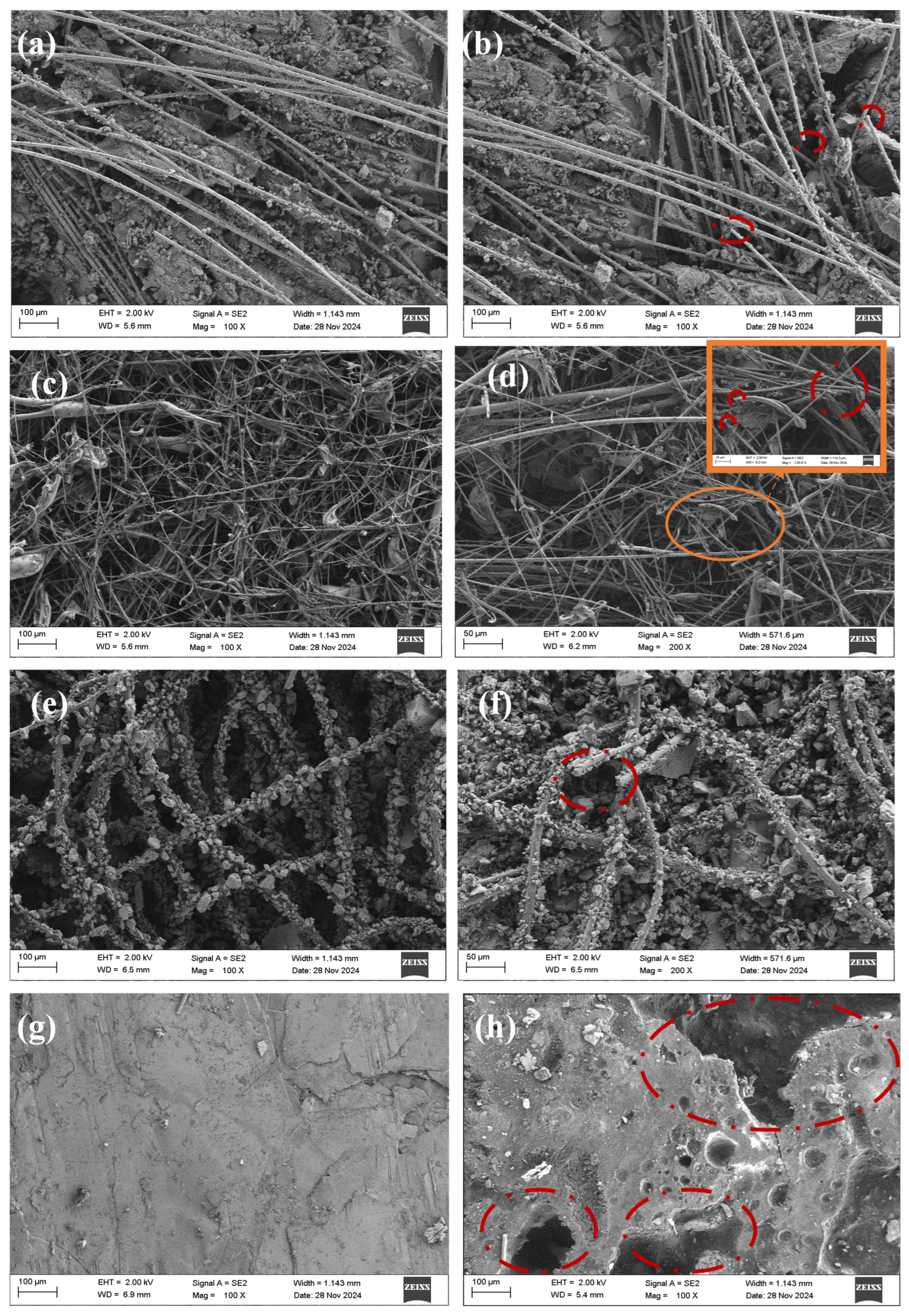
To investigate the effect of thermal runaway propagation on the insulation layer materials in the module, SEM microscopic morphology analysis was conducted on the insulation materials of each module before and after the experiments. Figure 8 shows the microscopic SEM morphologies of different insulation materials used in the modules before and after the experiments. Figure 8a is the SEM image of nano-porous silica aerogel at 100× magnification before the experiment. The image exhibits a relatively dense fibrous structure, with the aerogel uniformly covering the fiber surfaces, forming a stable composite material. Its high porosity and fibrous structure provide excellent thermal insulation and mechanical stability. The SEM images of the material after the experiment are shown in Figure 8b. At the same 100× magnification, it was observed that after heating due to lithium battery thermal runaway, the aerogel material exhibited only minor fiber breakage, which may be caused by uneven thermal expansion or thermal stress due to extremely high local temperatures, leading to damage in certain areas of the aerogel fibrous structure. However, the overall fiber structure did not show significant changes, indicating that the material has high structural stability and resistance to thermal deformation at elevated temperatures. The high porosity and low density of the aerogel may help to disperse and isolate heat sources during heating, thereby maintaining overall structural stability and slowing heat conduction. Figure 8c shows the SEM image of ceramic fibers before the experiment at 100× magnification, where fiber diameters vary, and fibers are interwoven with an intact overall structure, smooth surfaces, and no noticeable damage or defects. However, as shown in Figure 8d, after the experiment, when the material is observed at 200× and 1000× magnification, severe fiber structure damage is evident, including extensive fiber breakage, collapse, and partial burn marks in some areas. The observed damage may be related to complex thermo-mechanical stresses in high-temperature environments, but further characterization is needed to confirm the underlying mechanism. After fiber breakage, both thermal insulation performance and mechanical strength may decrease, potentially resulting in a loss of support and insulation capability. Figure 8e shows the SEM image of the pre-oxidized fiber aerogel at 100× magnification before the experiment. The fibers are relatively long, uniform in thickness, and have large gaps between them, with the fiber surfaces covered by abundant aerogel particles. After the experiment, the material was magnified to 200×, as shown in Figure 8f. It can be observed that some fibers exhibit slight breakage, and the bonding strength of local particles has weakened, with some particles detaching. However, the fibers as a whole still appear to retain structural stability, with no collapse or significant structural damage, and no melting phenomenon is observed. Therefore, the material may maintain strong thermal insulation capability during thermal runaway blocking, preserving its structural stability [35]. Figure 8g shows the SEM image of the mica sheet at 100× magnification before the experiment. Its surface exhibits a clear layered structure, which is smooth and free of obvious cracks or holes. The crystal structure demonstrates high order and relatively high stability. However, after the experiment, as shown in Figure 8h, the layered structure of the mica sheet at 100× magnification is severely damaged, with numerous cracks, holes, and signs of melting, particularly evident in the areas marked in red in the figure. These changes may be associated with thermal expansion mismatch and possible phase transition at high temperatures, although further characterization is required to confirm these mechanisms. These phenomena indicate that high-temperature conditions may significantly reduce the thermal stability and mechanical performance of mica, and its thermal insulation capability may be substantially affected. Due to the calcination of the polyimide material during the experiment, which mixed with the residues after thermal runaway, it is difficult to effectively distinguish between the polyimide material and the electrode material; therefore, a comparative analysis of the microstructure could not be performed.
Figure 8.
Microstructural SEM testing: (a,b) pre- and post-experiment nano-porous silica aerogel; (c,d) pre- and post-experiment ceramic fiber; (e,f) pre- and post-experiment pre-oxidized fiber aerogel; (g,h) pre- and post-experiment mica sheet.
3.5. Integrated Evaluation
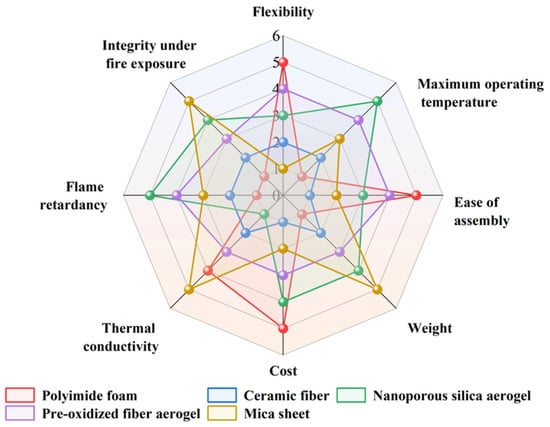
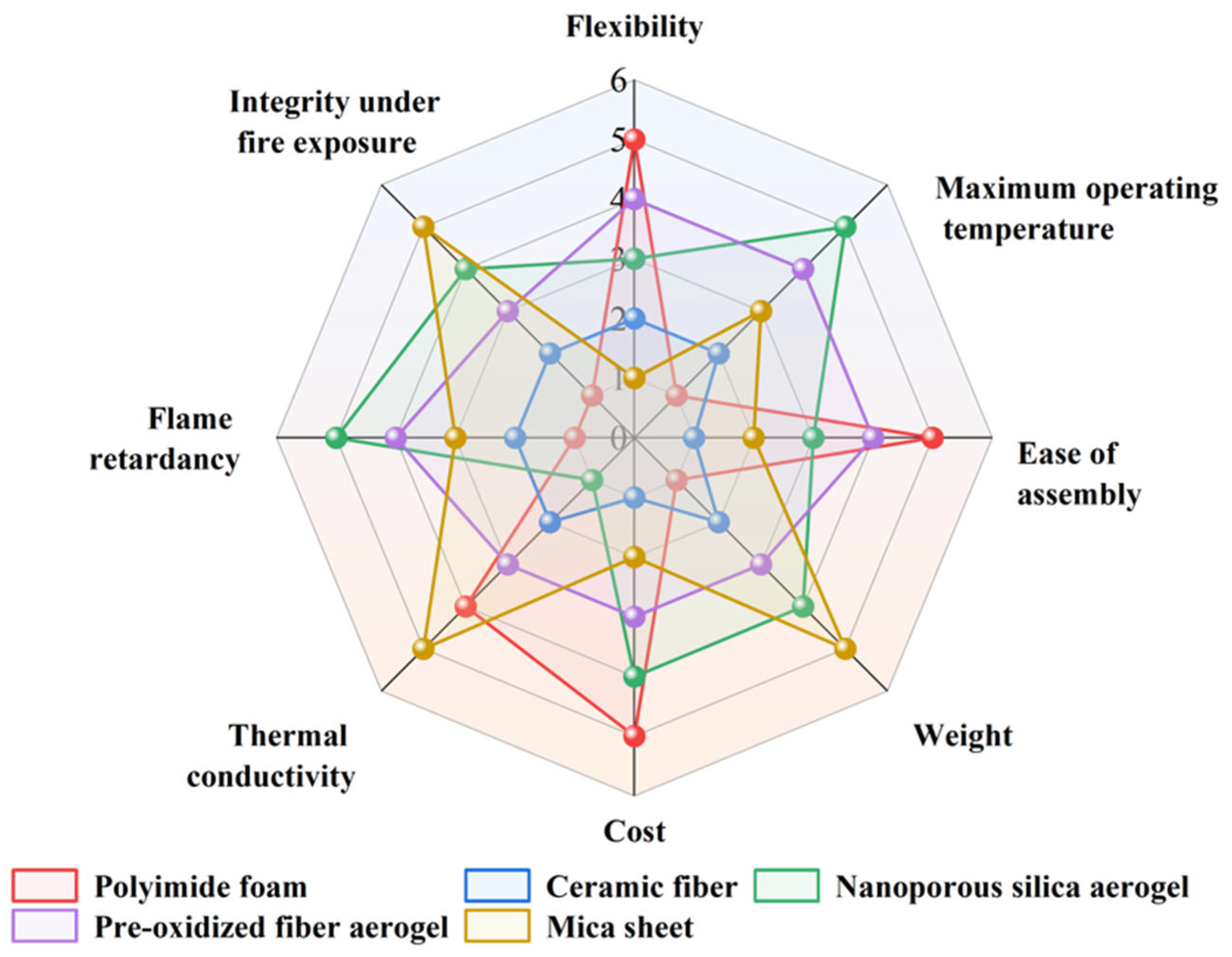
The radar chart, as shown in Figure 9, was constructed to comprehensively compare the performances of the five materials. It was constructed based on eight key performance indicators: flexibility, maximum operating temperature, ease of assembly, weight, cost, thermal conductivity, flame retardancy and integrity under fire exposure. Each indicator was scored on a 1–6 scale, with higher scores indicating better performance. Quantitative indicators (thermal conductivity, weight, and cost) were normalized according to their measured or reported values, while qualitative indicators (flexibility, ease of assembly, flame retardancy, and integrity under fire exposure) were scored based on experimental observations and literature data. As shown in Figure 9, the performance of five thermal insulation materials was compared across eight key performance indicators. The results indicate that although polyimide exhibits low thermal conductivity, it has poor flame retardancy and directly melts under fire exposure; ceramic fiber demonstrates relatively superior performance in terms of flexibility and ease of assembly, but is deficient in other aspects; nano-porous silica aerogel and pre-oxidized fiber aerogel both perform excellently in terms of low thermal conductivity and flame retardancy, but nano-porous silica aerogel is more effective as a thermal runaway barrier, while pre-oxidized fiber aerogel offers lower weight and cost; mica sheet shows relatively balanced performance across all properties, but its applicability in lithium-ion battery barrier applications is relatively limited.
Figure 9.
Comprehensive index chart.
These trends are generally consistent with previous studies. Nano-porous silica aerogel and pre-oxidized fiber aerogel have been reported to possess excellent thermal insulation and flame-retardant properties [36,37], with the latter offering advantages in weight and cost. Ceramic fiber is commonly reported to provide good flexibility and ease of assembly, although its overall thermal insulation performance is relatively limited [38]. Mica sheet generally exhibits balanced performance but is less suitable for lightweight thermal runaway barriers in lithium batteries [39]. Polyimide foam is known to have low thermal conductivity but poor flame retardancy and fire resistance [40]. Therefore, based on the present results and the comparison with previous studies, nano-porous silica aerogel exhibits the best overall performance as a thermal runaway barrier material among the materials investigated in this work.
4. Conclusions
In this study, the controlled variable method was adopted to investigate the ability of different thermal insulation materials to block the propagation of thermal runaway in lithium batteries. Thermal runaway propagation blocking experiments were conducted on battery modules equipped with different insulation materials, and the barrier performance of various insulation materials was compared and analyzed from multiple perspectives. Combined with mass loss analysis and microstructural characterization, the following conclusions were drawn:
- (1)
- By analyzing the blocking effects of different insulation layers on thermal runaway propagation from the perspectives of macroscopic damage, temperature, and time of the battery module, the results showed that aerogel materials exhibited excellent thermal insulation performance. For nano-porous silica aerogel specifically, the temperature difference between the front and rear surfaces of nano-porous silica aerogel reached up to 484 °C, and the temperature rise of adjacent cells was controlled below 107 °C, thereby suppressing the propagation of thermal runaway. Ceramic fiber and mica sheet could prevent thermal runaway propagation to a certain extent, but adjacent cells exhibited cracking and electrolyte leakage. Polyimide foam had poor thermal insulation performance and could not effectively prevent heat diffusion. Although the thermal runaway duration of the module was extended from 424 s to 678 s (a 60% increase compared with the case without an insulation layer), thermal runaway still spread throughout the entire battery module and could not be effectively prevented from full propagation.
- (2)
- Through mass loss evaluation, it was found that polyimide exhibited the worst thermal insulation performance, with complete combustion resulting in a maximum mass loss of 98.5 g, making it difficult to effectively prevent heat propagation. Nano-porous silica aerogel performed best, with a module mass loss of 17.63 g and a material loss rate of 0.67%, demonstrating excellent thermal insulation performance at high temperatures. Pre-oxidized fiber aerogel ranked second. Mica sheet had the lowest material loss ratio of only 0.11%, but its thermal insulation effect in actual thermal runaway was moderate. Ceramic fiber showed intermediate performance, with a module mass loss of 21.92 g and a material loss rate of 8.82%, indicating relatively weak thermal insulation performance.
- (3)
- SEM micro-morphology analysis showed that nano-porous silica aerogel exhibited only slight fiber fracture at high temperatures, with a stable overall structure and excellent thermal insulation performance. Ceramic fiber suffered severe damage to its fiber structure under high-temperature stress, resulting in significant degradation of both thermal insulation performance and mechanical strength. Pre-oxidized fiber aerogel also exhibited only slight fiber fracture and some shedding of aerogel particles, demonstrating good structural stability and relatively strong thermal insulation performance. The layered structure of mica sheet was severely damaged at high temperatures, with cracks and melting traces observed, leading to a significant decline in thermal insulation performance. Polyimide could not be analyzed due to its complete melting and burning, and its overall performance was the worst. In summary, aerogel materials demonstrated excellent thermal insulation performance and stability in blocking thermal runaway propagation in lithium batteries. However, through comprehensive evaluation, nano-porous silica aerogel was identified as the preferred solution for high-efficiency thermal insulation materials.
Author Contributions
Y.Z.: Data Curation, Investigation, Writing—Original Draft; X.A.: Data Curation, Investigation, Writing—Original Draft; Z.A.: Conceptualization, Funding Acquisition, Investigation, Methodology, Writing—Review And Editing; B.X.: Formal Analysis, Writing—Review And Editing. All authors have read and agreed to the published version of the manuscript.
Funding
This research was funded by the Lanzhou Youth Science and Technology Talent Innovation Project [2024-QN-18]; the Industrial Support Plan Project of Gansu Provincial Education Department [2025CYZC-034].
Data Availability Statement
Data will be made available on request.
Conflicts of Interest
The authors declare no conflicts of interest.
References
- Fatoki, O.; Parupelli, S.K.; Kaur, M.; Mathew, A.; Rehmat, A.; Desai, S. Review of Direct Lithium Extraction Methods: Recent Advances and Outlook. Batteries 2026, 12, 133. [Google Scholar] [CrossRef] [Scilit]
- Xia, X.; Li, P. A review of the life cycle assessment of electric vehicles: Considering the influence of batteries. Sci. Total Environ. 2022, 814, 152870. [Google Scholar] [CrossRef] [Scilit] [PubMed]
- Koshtyal, Y.; Olkhovskii, D.; Rumyantsev, A.; Maximov, M. Applications and Advantages of Atomic Layer Deposition for Lithium-Ion Batteries Cathodes: Review. Batteries 2022, 8, 184. [Google Scholar] [CrossRef] [Scilit]
- Zhang, L.; Yang, S.; Liu, L.; Zhao, P. Cell-to-cell variability in Li-ion battery thermal runaway: Experimental testing, statistical analysis, and kinetic modeling. J. Energy Storage 2022, 56, 106024. [Google Scholar] [CrossRef] [Scilit]
- Zhang, L.; Wei, Z.; Chen, L.; He, H. In-situ ultrasonic identification and early warning of mechanical-abuse-induced failure in lithium-ion batteries. Nano Energy 2026, 156, 112145. [Google Scholar] [CrossRef] [Scilit]
- Liu, J.; Zhang, H.; Jin, X.; Zhao, K.; Wang, Z.; Cui, Y. Aging Behavior and Mechanisms of Electric Bicycle Batteries under Typically Accelerated Abuse-Testing Conditions. ACS Appl. Energy Mater. 2026, 9, 1599–1615. [Google Scholar] [CrossRef] [Scilit]
- Jin, L.; Lei, E.; Zhang, J.; Li, Q.; Ma, K.; Shi, Q.; Li, F. Study on the Thermal Abuse Damage Characteristics of Lithium Iron Phosphate Battery and Its Detection Method. Energy Sci. Eng. 2025, 14, 962–972. [Google Scholar] [CrossRef] [Scilit]
- He, S.; Jiang, Z.; Guo, S.; Zhang, Y.; Huang, Y.; Cao, C. Silica aerogel blanket based on dip coating method for thermal runway blocking in lithium batteries. J. Energy Storage 2026, 153, 121004. [Google Scholar] [CrossRef] [Scilit]
- Yao, L.; Yu, C.; Xiao, Y.; Cui, G.; Fei, Z.; Qu, C. A comprehensive review of lithium-ion battery safety issues and fault diagnosis strategies throughout the entire lifecycle. J. Energy Storage 2025, 136, 118447. [Google Scholar] [CrossRef] [Scilit]
- Rao, K.D.; Rao, K.D.; Pavani, P.; Prasad, K.V.S.R.; Indira, D.; Phaniteja, B. A critical review on lithium ion battery modeling, battery management system and thermal runaway issues. Electr. Eng. 2025, 107, 11471–11507. [Google Scholar] [CrossRef] [Scilit]
- Al-Bujasim, M.; Gencten, M.; Donmez, K.B.; Arvas, M.B.; Karatepe, N.; Sahin, Y. Enhanced lithium-ion battery performance with a novel composite anode: S-doped graphene oxide, polypyrrole, and fumed silica. Nanotechnology 2025, 36, 115401. [Google Scholar] [CrossRef] [Scilit] [PubMed]
- Kalkan, E.; Eksik, O.; Aydemir, N.; Arvas, M.B. Structural, morphological, and electrochemical characterization of MoS2/fumed silica composite anodes for enhanced lithium-ion battery performance. J. Mater. Sci. Mater. Electron. 2025, 36, 1191. [Google Scholar] [CrossRef] [Scilit]
- Koklu, I.O.; Aydemir, N.; Eksik, O.; Kalkan, E.; Arat, R.; Şahin, K.; Yazar, S.; Arvas, M.B. Advanced anode design with PAN-lignin fiber and B, P-co-doped graphitic carbon nitride composites for sustainable lithium-ion battery applications. Mater. Res. Express 2025, 12, 115015. [Google Scholar] [CrossRef] [Scilit]
- Yao, Y.; Sun, B.; Hu, Z.; Zhang, F.; Wang, Y.; Pan, Y. Experimental study on the efficiency of water immersion inhibiting the thermal runaway and propagation of lithium batteries in electric bicycle charging cabinets. Process Saf. Environ. Prot. 2026, 215, 109190. [Google Scholar] [CrossRef] [Scilit]
- Wang, W.; Jiao, J.; Lang, X.; Yang, J.; Wang, Z.; Yang, Y. The inhibition mechanism on thermal runaway propagation and fire suppression performance of aerogel foam for 314 Ah LiFePO4 energy storage modules in full-scale energy storage container. Case Stud. Therm. Eng. 2026, 84, 108307. [Google Scholar] [CrossRef] [Scilit]
- Yang, Z.; Song, J.; Yang, H.; Wang, S.; Du, M.; Gao, Y. Study on Flame Suppression of Thermal Runaway Process of Lithium-Ion Batteries by CO2 and Immersion Environment. J. Electrochem. Soc. 2026, 173, 120515. [Google Scholar] [CrossRef] [Scilit]
- Qiu, H.; Zhang, Z.; Ling, Z.; Fang, X. Developing a flame-retardant flexible composite phase change material to realize both temperature control and thermal runaway prevention for lithium-ion battery pack. Appl. Therm. Eng. 2024, 248, 123301. [Google Scholar] [CrossRef] [Scilit]
- Sun, X.; Sun, P.; Dong, Y.; Zheng, B. Zero-spreading of thermal runaway in lithium-ion battery modules using composite phase change firewalls. Int. Commun. Heat Mass Transf. 2026, 170, 110036. [Google Scholar] [CrossRef] [Scilit]
- Sun, X.; Dong, Y.; Sun, P.; Zheng, B. Effects of thermal insulation layer material on thermal runaway of energy storage lithium battery pack. J. Energy Storage 2024, 76, 109812. [Google Scholar] [CrossRef] [Scilit]
- Chen, P.; Li, X.; Li, C.; Jia, W.; Tian, J.; Mao, Y.; Cheng, G.; Zhang, Y.; Yang, W.; Zhu, S.; et al. The intrinsic flame retardant multifunctional composite phase change material with phosphorus pentoxide for battery thermal safety system. Appl. Therm. Eng. 2024, 256, 124160. [Google Scholar] [CrossRef] [Scilit]
- Cao, X.; Chen, W.; Zhang, M.; Zhou, J.; Wang, Z.; Wang, J.; Sun, S. Research on thermal runaway characteristics of 18,650 lithium-ion battery and its flame resistance mechanism. Int. Commun. Heat Mass Transf. 2026, 175, 111076. [Google Scholar] [CrossRef] [Scilit]
- Cao, X.; Zhang, M.; Chen, W.; Zhou, J.; Wang, Z.; Sun, S. Research on the effect of wire mesh structure parameter for lithium battery thermal runaway prevention. Fuel 2027, 427, 139684. [Google Scholar] [CrossRef] [Scilit]
- Huang, Y.; Ruan, Y.; Shen, X.; Zhao, Y.; Li, W.; Shi, Y.; Liu, J.; Wang, J.; Wang, Z. Investigation on thermal runaway characteristics of lithium-ion batteries and barrier inhibition mechanism of aerogel composites under high-rate charge-discharge conditions. Process Saf. Environ. Prot. 2026, 214, 109024. [Google Scholar] [CrossRef] [Scilit]
- Huang, Y.; Fan, Y.; Sun, L.; Shen, X.; Zhao, Y.; Cao, Y.; Wang, J.; Wang, Z. Mechanism of heat transfer suppression and safety evaluation of high-performance aerogel insulation materials in the thermal runaway propagation of lithium-ion batteries. Energy 2025, 334, 137684. [Google Scholar] [CrossRef] [Scilit]
- Hu, X.; Zhang, Z.; Deng, Y.; Yang, Z.; Luo, Y.; Jiang, L.; Zhang, M.; Han, L.; Cheng, Y. Heat blocking mechanism and performance evaluation of flame-retardant modified bacterial cellulose aerogel for lithium-ion battery thermal runaway propagation prevention. Chem. Eng. J. 2026, 531, 174265. [Google Scholar] [CrossRef] [Scilit]
- Xiao, Y.; Pan, Y.; Yang, J.; Li, L.; Zhao, Z.; Cheng, X.; Zhang, H. Enhanced safety of lithium-ion batteries by a novel bifunctional aerogel sheet coated with fire extinguishing microcapsules. Chem. Eng. J. 2025, 516, 164014. [Google Scholar] [CrossRef] [Scilit]
- Yinuo, C.; Jiaqi, C.; Yiming, G.; Shuaishuai, R.; Jinzhang, J. Mechanisms and performance of APTES-modified SiO2 aerogels for the suppression of thermal runaway in lithium-ion batteries. J. Environ. Chem. Eng. 2026, 14, 122607. [Google Scholar] [CrossRef] [Scilit]
- Zeng, Z.; An, X.; Peng, C.; Ruan, X.; Song, Z.; Dang, C.; An, Z. Study on the thermal runaway behavior and mechanism of 18650 lithium-ion battery induced by external short circuit. Appl. Therm. Eng. 2025, 258, 124569. [Google Scholar] [CrossRef] [Scilit]
- Feng, X.; Zheng, S.; Ren, D.; He, X.; Wang, L.; Cui, H.; Liu, X.; Jin, C.; Zhang, F.; Xu, C.; et al. Investigating the thermal runaway mechanisms of lithium-ion batteries based on thermal analysis database. Appl. Energy 2019, 246, 53–64. [Google Scholar] [CrossRef] [Scilit]
- Wu, Y.; Feng, X.; Yang, M.; Zhao, C.-Z.; Liu, X.; Ren, D.; Ma, Z.; Lu, L.; Wang, L.; Xu, G.-L.; et al. Thermal Runaway of Nonflammable Localized High-Concentration Electrolytes for Practical LiNi0.8Mn0.1Co0.1O2|Graphite-SiO Pouch Cells. Adv. Sci. 2022, 9, 2204059. [Google Scholar] [CrossRef] [Scilit] [PubMed]
- Chen, M.; Zhu, M.; Zhao, L.; Chen, Y. Study on thermal runaway propagation inhibition of battery module by flame-retardant phase change material combined with aerogel felt. Appl. Energy 2024, 367, 123394. [Google Scholar] [CrossRef] [Scilit]
- Wei, H.; Hu, X.; Deng, Y.; Wei, X.; Yang, Z.; Han, G. Distributed activation energy treatment of polyimide aerogel and its blocking effect on thermal runaway propagation of ternary battery. J. Energy Storage 2024, 90, 111744. [Google Scholar] [CrossRef] [Scilit]
- Huang, D.; Wang, C.; Shen, Y.; Shi, L. Influences of heating rate on the nano-porous structure of silica aerogel. Part. Sci. Technol. 2021, 39, 123–130. [Google Scholar] [CrossRef] [Scilit]
- Yang, M.Y.; Tang, G.H.; Sheng, Q.; Guo, L.; Zhang, H. Atomic-level sintering mechanism of silica aerogels at high temperatures: Structure evolution and solid thermal conductivity. Int. J. Heat Mass Transf. 2022, 199, 123456. [Google Scholar] [CrossRef] [Scilit]
- Hu, D.; Shi, J.; Jia, R.; Liu, Y.; Wu, D.; Chang, S.; Liu, Z.; Wu, K.; Wang, D.; Ni, H.; et al. Cost-effective preparation of pre-oxygenated PAN fiber composite SiO2 aerogel felt with excellent mechanical and thermal insulation properties. Colloids Surf. A Physicochem. Eng. Asp. 2024, 701, 134899. [Google Scholar] [CrossRef] [Scilit]
- Cao, W.; Zhang, J.; Sun, L.; Chen, B.; Ma, K.; Li, Y. Phytic acid/sodium alginate/silicon dioxide composite aerogel with high thermal stability and excellent flame retardancy. Polymer 2026, 361, 130436. [Google Scholar] [CrossRef] [Scilit]
- Liu, F.; Wang, J.; Yang, N.; Wang, F.; Chen, Y.; Lu, D.; Liu, H.; Du, Q.; Ren, X.; Shi, M. Experimental study on the alleviation of thermal runaway propagation from an overcharged lithium-ion battery module using different thermal insulation layers. Energy 2022, 257, 124768. [Google Scholar] [CrossRef] [Scilit]
- Wang, Z.; Shi, D.; Liu, X.; Shen, Y.; Zhi, M.; Ouyang, D. A multi-parameter investigation on the suppression performance and mechanisms of vacuum silica aerogel and ceramic fiber against thermal runaway propagation in large-format LiFePO4 batteries. J. Energy Storage 2026, 151, 120624. [Google Scholar] [CrossRef] [Scilit]
- Yue, Y.; Wang, J.; He, L.; He, C.; Sun, X.; Huang, Y.; Wang, Z.; Zhang, J.; Wang, Z.; Chen, H. Thermal runaway propagation suppression efficacy of various thermal insulation materials towards large-capacity battery: Performance evaluation and mechanism investigation. Appl. Therm. Eng. 2026, 296, 130571. [Google Scholar] [CrossRef] [Scilit]
- Li, M.; Niu, M.; Liu, Z.; Li, H.; Rao, Z. Thermal insulation-flame retardant synergistic polyimide composite aerogel for mitigating thermal runaway in lithium-ion batteries. Appl. Therm. Eng. 2025, 281, 128721. [Google Scholar] [CrossRef] [Scilit]

Disclaimer/Publisher’s Note: The statements, opinions and data contained in all publications are solely those of the individual author(s) and contributor(s) and not of MDPI and/or the editor(s). MDPI and/or the editor(s) disclaim responsibility for any injury to people or property resulting from any ideas, methods, instructions or products referred to in the content. |
© 2026 by the authors. Licensee MDPI, Basel, Switzerland. This article is an open access article distributed under the terms and conditions of the Creative Commons Attribution (CC BY) license.