


Abstract
Rapid globalization is intensifying tensions between visitors and residents in heritage cities. In Madinah, which welcomed approximately 9 million visitors in 2024 and aims to reach 25 million by 2030, this pressure risks eroding residents’ lived experiences, daily rituals, routines, and social practices collectively understood as Intangible Cultural Heritage (ICH). This project seeks to identify and spatially map ICH to guide urban planners in protecting and enhancing culturally significant places amid rapid development. Despite its importance, few methodologies exist for systematically collecting and evaluating ICH. This research tests participatory methods for documenting ICH in Madinah through the “Living Heritage Atlas,” a project developed in collaboration with the Madinah Development Authority and Gehl. Between May and June 2025, four methods were deployed: semi-structured interviews, participatory mapping, an online survey, and a public engagement installation. Findings indicate that one-on-one interviews were most effective in capturing nuanced understandings of ICH, particularly in a context where cultural identity is deeply intertwined with religion. Other methods primarily raised ICH awareness rather than generating high volumes of data. The results further suggest that crowdsourced approaches to ICH documentation have mixed success without sustained public engagement to support broad and meaningful participation.
1. Introduction
Rapid globalization intensifies tensions between preservation and urban growth in heritage cities, where the pressures of tourism, development, and economic expansion often collide with residents’ daily lives. In Madinah, a city of profound religious and cultural significance that welcomed approximately 9 million visitors in 2024 and is projected to receive 25 million annually by 2030, these dynamics are particularly acute. While urban planning efforts have traditionally focused on the conservation of physical sites, far less attention has been given to the everyday practices, routines, and social interactions that give these places meaning. These lived experiences, collectively understood as intangible cultural heritage (ICH), are essential to the continuity of local identity, yet remain difficult to define, document, and safeguard.
This gap presents a fundamental challenge for urban planning: how can cities safeguard not only the well-known heritage sites, but also the intangible practices and community knowledge that sustain them? Existing planning tools and heritage documentation are poorly equipped to capture ICH, as they tend to privilege physical heritage sites over dynamic, community-defined experiences and knowledge. As a result, planners lack systematic, evidence-based methods to identify where and how intangible heritage is embedded in the urban landscape, limiting their ability to respond to rapid change in culturally sensitive ways.
This paper addresses this gap by developing and evaluating a set of participatory, place-based methods for documenting ICH in Madinah through the “Living Heritage Atlas” project. Working in collaboration with the Madinah Region Development Authority and Gehl, the research tests four civic engagement approaches—semi-structured interviews, participatory mapping, a digital platform, and a public installation—to understand how these different methods capture, structure, and spatialize community knowledge. It should be noted that this paper focuses on evaluating these methods for collecting ICH data for urban development and not on how that data might then be applied to urban development processes. Our work shows that while participatory approaches are essential for capturing the depth and nuance of ICH, they vary significantly in their ability to generate meaningful data, with interviews proving most effective for producing rich, place-based narratives. We also find that digitally enabled crowdsourcing methods, while valuable for community awareness of ICH, require sustained engagement strategies to produce reliable datasets. Finally, the research highlights a critical conceptual challenge: in Madinah, religious practices are not a discrete category of heritage but rather a structuring force that cuts across social life and impacts cultural expression. This overlap challenges conventional ICH classification systems, including UNESCO’s domains, and suggests the need for new ICH categorization frameworks when working in deeply religious urban contexts. Therefore, when collecting ICH data within these contexts, it is important to consider an expansion of the UNESCO categorization framework.
2. Background: Intangible Cultural Heritage and Civic Tools
2.1. Defining Intangible and Living Heritage
To understand how intangible cultural heritage (ICH) is defined and practiced in the Arab world, it is important to begin with the term turāth (تراث), the Arabic word for “heritage,” which originates from waratha (“to inherit”) and is linked to mirath (material inheritance). Unlike mirath, turāth refers to inherited cultural and intellectual knowledge, often passed down through oral and written traditions, such as early Islamic texts known as Kutub al-Turath [1] (p. 31). While turāth originates in a material conception of inheritance, its broader cultural meanings, encompassing oral traditions, religious knowledge, and social practices, align with UNESCO’s definition of ICH.
Beginning in the early twentieth century, the international consensus on defining heritage to safeguard was primarily focused on the preservation of physical monuments. However, starting in the second half of the twentieth century and into the 1990s, there was a movement to recognize the value of non-material aspects of culture and community-governed continuity of practices, culminating with the 2003 UNESCO Convention for the Safeguarding of the ICH [2]. Under this convention, ICH is defined as “the practices, representations of expressions, knowledge, skills… that communities, groups, and, in some cases, individuals recognize as part of their cultural heritage [1] (p. 5). This definition of heritage is no longer limited to a collection of static artifacts or decontextualized sites, but shifts the focus to a body of knowledge and a process of meaning-making grounded in spatial, material, and affective relationships [1] (pp. 16–17). This relational perspective is expanded in the work of Poulios, who argues for a continuity-based approach to conservation, one that positions heritage within evolving community practices rather than fixed values [3] (p. 18). This shifts heritage from static preservation to a lived, adaptive, and socially embedded process, echoed in both Arab conceptions of turāth and Saudi policy. It underscores that material and intangible heritage are intertwined and continuously practiced and reshaped.
Building upon the 2003 UNESCO Convention’s emphasis on ICH as living, community-recognized practices transmitted across generations, and shaped through identity, continuity, and environmental context [2], this study operationalizes intangible and living heritage through three thematic lenses that recur across both ICH scholarship and MENA heritage debates:
- Continuity of community use and control foregrounds who sustains a practice, how knowledge is transmitted, and how communities retain agency over meaning and safeguarding [2,4,5].
- Daily practices and place identity treat heritage as something enacted through routine, embodied, and often ordinary practices, where streets, courtyards, markets, and domestic spaces become heritage infrastructures through repeated use and attachment [1] (p. 23).
- Diverse participation and social use of space emphasize that heritage is plural and contested, shaped by different social groups and power relations, and can be excluded or distorted when institutional narratives overwrite vernacular meanings [1] (p. 53), [6].
It is important to note that heritage in the Arab world is shaped by legacies of empire, colonization, and postcolonial restructuring, which continue to influence how cultural identity is defined and preserved [1] (p. 15). In Saudi Arabia, this has led to a growing recognition of ICH as critical evidence for understanding and sustaining cultural identity. National policies emphasize not only documenting ICH but also ensuring it is sustained through governmental support. Since ratifying the UNESCO 2003 Convention in 2008, Saudi Arabia has inscribed eighteen ICH elements on UNESCO’s Representative Lists [7], including Al-Qatt Al-Asiri, Arabic coffee, Majlis gatherings, and Al-Ardah Al-Najdiyah. This change signaled a shift from viewing heritage as static folklore to recognizing it as a dynamic cultural resource. Yet, many everyday rituals and practices remain undocumented, limiting the evidence base needed to inform planning and safeguard living heritage in rapidly changing urban contexts.
As a holy city, religion and heritage are closely related to the identity of Madinah. The religious practices related to Madinah as a pilgrimage destination are well documented from a historic and religious lens [8], and these phenomena can be understood as ICH tourism, in which tourists’ perceived value is closely related to place attachment as described by Yao et al. [9]. While some critique the commercialization of the Hajj as diminishing the religious cultural heritage of Madinah [10], religious practices and the significance of Madinah as a holy city continue to remain strongly integrated within residents’ experiences and perceptions [11]. Beyond the religious cultural significance of Madinah that is formally recognized, everyday religious practices permeate into the everyday living culture of people [12], and it is important to document and safeguard ICH in Madinah to encompass inclusive participation of the people who live there [13].
2.2. Methods to Collect and Visualize Intangible Heritage Data
ICH is difficult to document using conventional information systems, which were designed for tangible heritage and struggle to capture the processual and multisensory nature of living practices [14] (p. 116). Object-oriented metadata structures often flatten or misrepresent ICH, omitting tacit knowledge and relational meaning that are difficult to codify [14] (pp. 137, 141–143). In response, scholars increasingly adopt participatory and civic approaches that foreground embodied, situated knowledge and incorporate multiple voices. Methods such as interviews, participatory mapping, and digital platforms reposition communities as co-producers of knowledge, with citizens acting as “sensors” of local cultural practices [15] (p. 17). Mobile crowdsourcing further reinforces this shift by centering users in the preservation process [16] (pp. 3–4).
2.2.1. Digital and Immersive Technologies: Potentials and Limitations
Emerging frameworks combine ethnographic methods with digital tools to better capture ICH [14] (pp. 116–126), and recent work outlines workflows that integrate digitization, metadata, curation, and open access to data. There are examples of multi-media methods, including GIS, audiovisual recording, and motion capture that expand beyond text-based documentation [14] (pp. 119–121). Advanced tools such as 3D digitization and VR enable detailed recording of embodied practices [17] (pp. 2–4), but often require specialized expertise and risk decontextualizing cultural meaning through opaque computational processes [14] (p. 121), [17] (pp. 3–4). More accessible approaches, such as semantic wikis, function as participatory inventories that link people, places, and practices through shared ontologies [18] (p. 1). These relational systems better reflect the interconnected nature of tangible and intangible heritage, supporting cumulative contributions while maintaining interpretability [14] (pp. 141–144). Across these approaches, a consistent concern is avoiding decontextualization and preserving the evolving relationships between heritage, place, and community.
2.2.2. Participatory and Community-Based Approaches
A growing set of studies centers on participatory and community-based documentation of ICH practices, especially in contexts where displacement, uneven literacy, or limited infrastructure make conventional, text-heavy archives inadequate. Nic Eoin and King document the use of participatory video, GPS mapping, and local storytelling to preserve cultural knowledge from displaced villages [19] (pp. 39–46). They argue that conventional, text-heavy archiving is often ineffective in such contexts due to literacy gaps, lack of digital infrastructure, and the temporal nature of heritage practices [19] (p. 44). They use GPS to record “encrypted landscapes,” such as maps that are held in collective memory that link oral histories to specific material mnemonics [19] (p. 40). By showing how ICH is tied to material space and landscape, they argue that displacement can produce a “double loss” of both place and memory [19] (pp. 39–40). Their findings support ethical, locally meaningful formats, such as participatory mapping by children and co-designed memory platforms, that are accessible and rooted in lived experience [19] (pp. 45–46). They also caution that unless communities retain access to and interpretive control over their own histories, documentation can inadvertently contribute to further marginalization. More broadly, participatory mapping and civic data collection enable communities to challenge dominant narratives, build evidence, and strengthen data literacy [20] (pp. 51, 85–86). By involving participants in data creation, these approaches foster sustained engagement and produce knowledge that is both locally grounded and actionable.
Trinlae offers another ethically grounded participatory framework using phenomenological methods to capture the internal, contemplative dimensions of religious practices [21] (pp. 335–336, 341–342). Drawing on the Swayambhu UNESCO World Heritage site in Nepal, the method involves interviewing over 10 diverse participants, generating individual and composite structural-textural narratives, and validating findings through community feedback before publication [21] (p. 342). She emphasizes polylingual representation, such as interlinear tables that place original script, phonetic transliteration, and translation side-by-side, to retain cultural nuance and prevent “erasure through translation” [21] (p. 339). Trinlae also presents an ethical checklist, including inclusivity, respectful narrative tone, and participant verification [21] (p. 336), and warns against the “epistemic violence” of outsider interpretations that can distort symbolic complexity and historical trauma [21] (pp. 331–334, 337, 343). She proposes AR tools as a minimally invasive way to preserve spatial practices while enabling co-designed experiences [21] (pp. 338, 343). Overall, the study makes a case for participatory, context-sensitive ICH representation that foregrounds local voices and phenomenological depth, while remaining cautious of commodification and misappropriation.
Meggi evaluates a comparative set of documentation tools in Diu Town, India, explicitly balancing professional accuracy with community participation [22] (pp. 408–415). Her method includes traditional hand surveys, photogrammetry, photospheres, and laser scanning, assessed not only for technical output but also for lay accessibility and feasibility in local contexts [22] (pp. 409–412). Hand surveys promote owner participation and emotional engagement, but are labor-intensive and risk omitting difficult-to-reach features [22] (p. 410). Photogrammetry can be supported by community-sourced images (including diaspora and locals) to produce objective models, but requires technical expertise, can suffer from missing coverage, and often feels emotionally detached for lay audiences [22] (pp. 410–411). Photospheres enable participation through smartphone tools [22] (p. 411), though they may still require costly apps and higher-end devices. Laser scanning produces highly detailed 3D outputs but is expensive, expert-dependent, and difficult to deploy in under-resourced sites like Diu [22] (pp. 411–412), especially under environmental constraints such as high temperatures that might damage expensive kits [22] (pp. 412–413). Building on this comparison, Meggi proposes a layered sequencing of methods: starting with hand surveys to capture “atmosphere” and overlooked narratives, followed by photogrammetry for accuracy, and reserving laser scanning for critical structural cases [22] (pp. 412–413). She cautions against privileging photorealism, which can erase intangible dimensions, such as stories, affect, and place attachment, that are better conveyed through interpretive sketches, oral histories, participant reflections, or “architectural sections” that layer the past, present, and future [22] (pp. 413–414). Her evaluative framework includes three criteria: (1) Layperson/Owner Engagement, (2) Professional Usefulness, and (3) Feasibility in local contexts [22] (p. 414).
Across these studies, several methodological patterns emerge. Multi-modal approaches, combining visual, spatial, and narrative data, are more likely to reflect the complexity of ICH. Participatory methods that treat community members as co-researchers and recognize public contributions as valid forms of expertise [21] (p. 235) tend to produce more meaningful outcomes. Often, the collective process of generating data produces impacts that exceed the data itself, fostering communities of actors committed to protecting shared resources [20]. Together, these patterns inform our Madinah pilot’s mixed-method design to test the best methods. Interviews, participatory mapping, and crowdsourcing features, such as “geo-referencing” and “contextualization”, are combined to bridge the gap between material heritage and local wisdom [16] (pp. 8–9).
2.3. Ethics of Making Heritage Visible
Making ICH visible raises critical ethical concerns, as decisions about what is documented, how it is categorized, and who controls its representation are inherently political [1,6]. In rapidly evolving contexts such as Saudi Arabia, where heritage is increasingly mobilized through initiatives like Vision 2030, documentation efforts intersect with broader agendas of development, tourism, and national identity formation. As a result, the visualization and spatialization of ICH can risk privileging dominant narratives while marginalizing others, or translating complex, lived practices into standardized forms that may not fully reflect local meanings [9,12].
At the same time, the absence of documentation presents its own risks. Without systematic approaches to capturing everyday practices and place-based knowledge, many forms of living heritage remain excluded from planning processes and policy frameworks, rendering them more vulnerable to erasure amid rapid urban change. In this sense, making ICH visible can function as a form of evidence, supporting recognition, advocacy, and more culturally responsive decision-making [22].
This paper positions the Madinah work within this optimistic, action-oriented framing: when visibility is co-produced, governed with consent, and connected to policy and planning pathways, it can become an enabling resource for protection rather than a risk factor. Ultimately, as Ghassan Hage articulates, visibility without power is a trap [23]. Heritage work must balance the desire for recognition with the right to opacity, preserving the plurality and lived nature of heritage. For heritage mapping tools to be ethical, they must prioritize community agency, allow for refusal, and resist extractive tendencies. In this context, the Madinah pilot emerges in a moment when Saudi institutions are seeking new modes of collaboration and participatory learning, creating an opening to design visibility practices that are deliberately community-centered and oriented toward positive heritage outcomes.
3. Methods of Data Collection and Analysis
3.1. Participatory Data Collection
Participatory data collection was conducted in Madinah from May–June 2025, with a focused case study in the Al Mughaisilah neighborhood. The process included: (1) semi-structured interviews conducted in May 2025 with local residents to capture in-depth, place-based narratives; (2) a community storytelling and mapping workshop held on 19 June 2025 at Taqmeera Bakery, engaging residents in documenting everyday practices; (3) an interactive public installation at Al Rashid Mall on 19–20 June 2025, designed to engage a broader public and support contributions to the digital platform; and (4) a stakeholder workshop on 22 June 2025 at the Smart Madinah Innovation Lab, in collaboration with the Madinah Region Development Authority (MRDA), to connect findings to planning and policy discussions. Together, these engagement tools were co-created with community-based input to expand upon conventional heritage documentation (e.g., inventories, surveys, nomination dossiers) that privilege tangible artifacts and static descriptions while overlooking highly localized, relational, and time-bound practices [14] (pp. 45–46), [21] (pp. 333–334, 336). Similarly, we sought to address the limitations of existing digital heritage tools, often omitting descriptive contexts, layered typologies that relate to local places and give it its lived and embodied quality [16] (pp. 118–119), [19] (p. 52).
Data collection was guided by open-ended prompts designed to elicit first-person, place-based narratives. These prompts were organized around three intangible cultural heritage (ICH) themes derived from the literature: continuity of community use and control, daily practices and place identity, and diverse participation. While the interview protocol provided the foundation, questions were adapted for the website and mapping exercise to suit different formats and levels of engagement (see Table A1). Interviews used a semi-structured format with follow-up probing and co-mapping of locations, while the mapping exercise incorporated temporal and sensory cues to elicit more spatially grounded responses. The website offered a simplified interface for story submission.
3.1.1. Semi-Structured Interviews
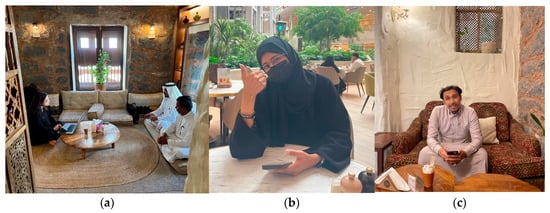
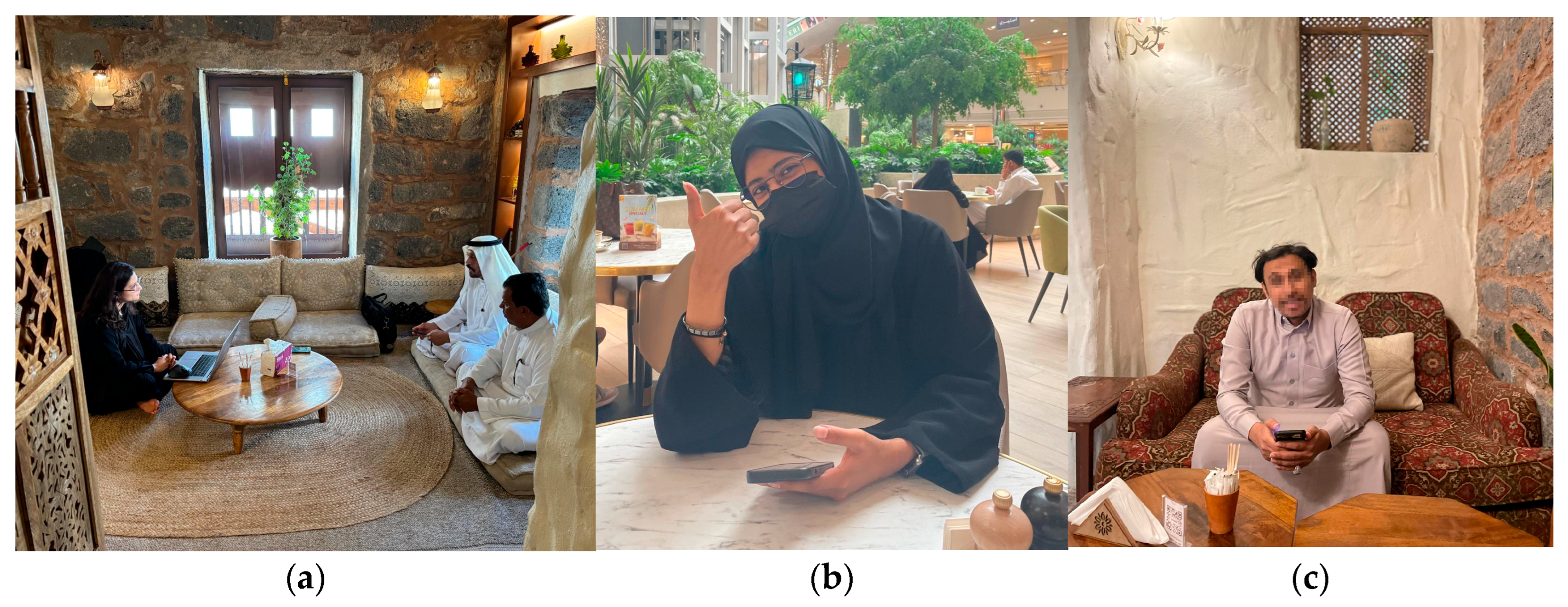
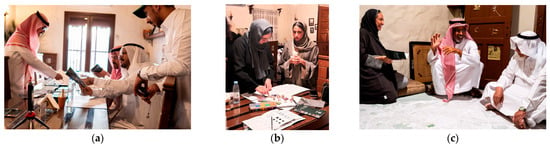
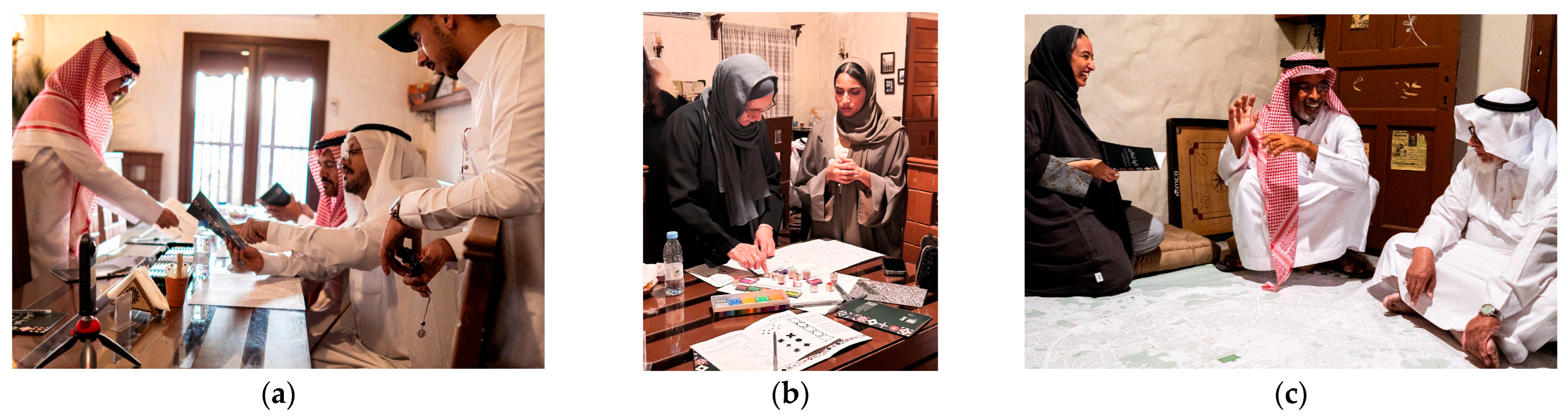
Semi-structured interviews were conducted 13–25 May 2025. Participants were approached for an interview based on their connection to the Al Mughaisilah neighborhood, and eleven in-person interviews were conducted. These interviews were designed to collect detailed, personal stories about Madinah’s history and everyday life tied to place. Each interview lasted approximately 30–60 min and was conducted in a setting familiar to the respondents (see Figure 1). Some of the initial interview participants were selected based on their vocation being aligned with safeguarding ICH and their affiliation to the Al Mughaisilah neighborhood, while considering the diversity of age, gender, and other backgrounds. A snowball methodology was used to ask participants to identify other potential candidates who might be open to participating in a similar interview. While demographic information was not used for analysis, the participants represented a diverse range of backgrounds, including four women, seven men, and ages ranging from early twenties to fifties, to capture a plurality of perspectives. All data was collected in accordance with the Collaborative Institutional Training Initiative (CITI) Program ethical procedures, with informed consent and image usage permits.
Figure 1.
Interviews were conducted with participants in comfortable and familiar settings, conducted 13–25 May 2025, as depicted: (a) through personal and intimate conversations, (b) in a public space, and (c) in a comfortable living room space. Images courtesy of Albert Mørk, Gehl.
The interviews were the first community engagement method deployed, and the results helped to shape the development and categorization of heritage insights, which became the meaningful metric of data that relates UNESCO ICH concepts with place-based information (see Section 3.2.1 for how we define heritage insights). Ultimately, the themes that emerged from the interviews helped form the qualitative coding that we developed for ICH categories and place typologies, which were used by all of the community engagement methods.
3.1.2. Digital Website Platform
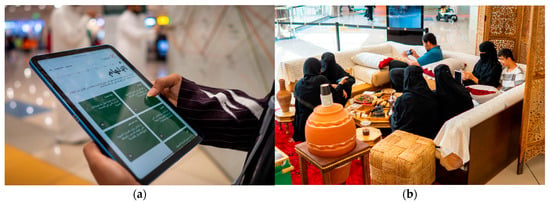
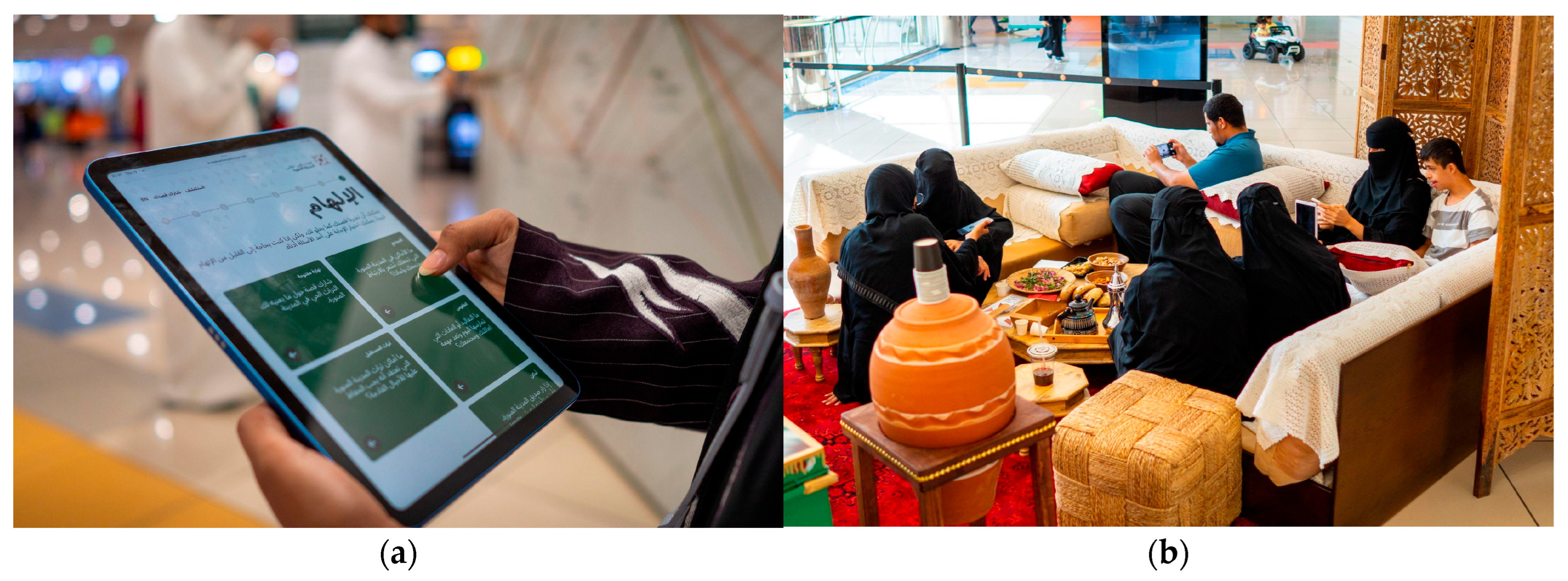
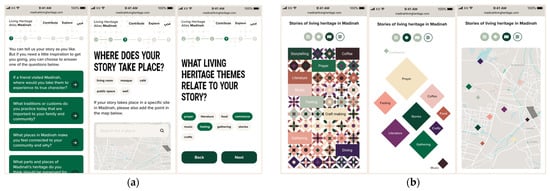
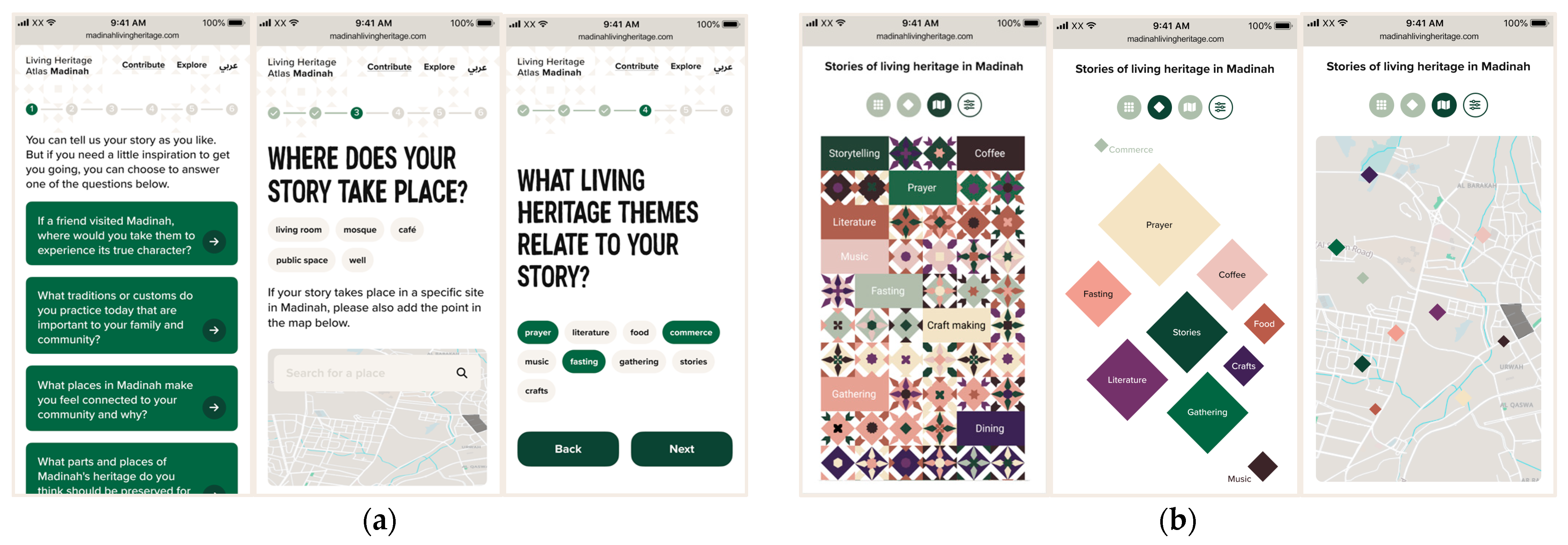
In parallel to conducting the interviews, our team designed a web platform to broaden access beyond in-person engagement. The website (madinahlivingheritage.com) is a public, bilingual tool (Arabic and English) to collect and visualize ICH narratives, extending community participation asynchronously beyond the interviews and in-person events. To collect qualitative ICH data, the webform form prompts users with a choice between five question prompts (see Table A1), requires a response with a written story or recorded audio, asks users to specify one or more ICH categories and place typology tags, and optionally pin a location on the map. The research team promoted the website through the in-person public installation event at Al Rashid Mall with a provided tablet or via QR code on personal mobile devices, and the support of volunteer-guided demonstrations, as seen in Figure 2. Upon submission of their stories on the website, participants checked a box to indicate their informed consent that their story would be publicly and anonymously displayed on the website.
Figure 2.
Users engage with the website at Al Rashid Mall, where most contributions were collected during the pilot project launch events between 18–22 June 2025: (a) a participant uses a tablet to select a question prompt to share a story; (b) participants gather in the pop-up majlis, or living room space, within the public installation to engage in conversations about heritage. Photography by Albert Mørk, Gehl.
As a visualization tool, the website also displays the heritage insights data collected across all methods to serve as a living archive where contributors can explore other submitted ICH stories (see Figure 3). Promoting the visibility of heritage by framing the website as a public archive helped to legitimize the public perception that their voice matters and to build trust with the participants across all methods. However, while website submissions received are stored on the website’s database, the Madinah Region Development Authority requested that the team moderate responses and reframe interview transcripts as first-person narratives before displaying the stories publicly.
Figure 3.
Screenshots of the Living Heritage Atlas Madinah website interface: (a) the webform shows options for users to submit stories in text or audio; (b) users can browse heritage stories submitted by others through a data visualization. The website developed for this research can be viewed at: https://madinahlivingheritage.com/en (accessed on 25 May 2026).
While all of the website contributions came from the in-person events in June 2025, there were plans to promote the website through a social media campaign. The aim was to test whether a digital tool could capture insights from a wider audience as a crowdsourcing tool, but unfortunately, this digital public outreach was ultimately not acted upon by collaborators at the Madinah Region Development Authority, which affected the results for this tool.
3.1.3. Mapping Exercise
Our team designed and conducted a tactile, participatory mapping exercise to co-produce spatial knowledge of ICH. The activity took place during two workshops: one with local residents on 18 June 2025 at Taqmeera Bakery in Al Mughaisilah, and another with stakeholders on 22 June 2025 at the Madinah Innovation Lab. These sessions were designed to foster community engagement while building a shared understanding of ICH and the places where it is practiced (see Figure 4). Participants each signed an image usage permit and provided informed consent for their stories to be documented and shared anonymously.
Figure 4.
Local participants document ICH through place-based identity and everyday routines through the mapping exercise: (a) the mapping exercise sparked collaboration and conversation among participants; (b) a volunteer helps a participant follow the instructions on the worksheet; (c) participants gather around to locate their story on the city-scale map. Photography (Figure 4a,c) by Albert Mørk, Gehl and (Figure 4b) by Ashley Louie, LCAU.
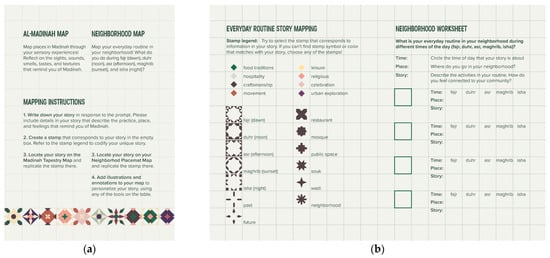
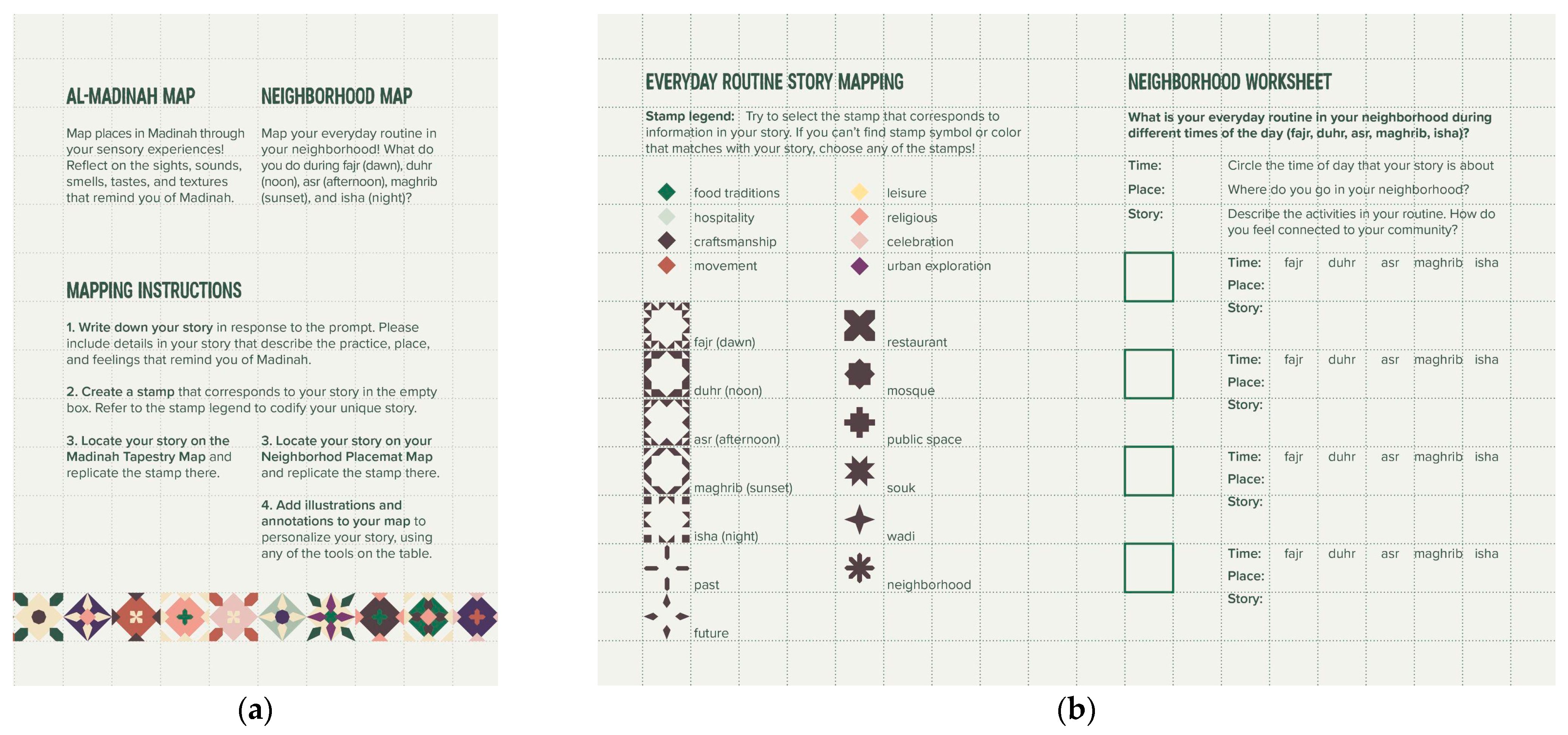
To guide participants through codifying their stories into ICH and place-based data, our team designed mapping exercise worksheets with steps to follow (see Figure 5). Through these instructions, participants were first asked to reflect on a place that holds significance in their everyday lives and to write a brief narrative describing this place in response to the prompt. After identifying a place, the second step is to construct a stamp in which the colors and shapes represent the ICH categories, places, and temporal or sensory qualities of the story (refer to Section 3.2.1 for further information on codifying heritage insights). Lastly, participants would locate the place on the map and replicate the same stamp mark there.
Figure 5.
Excerpt pages from the mapping exercise instructions & worksheets: (a) the worksheet provides instructions for participants to write a story, to create a symbolic stamp, and to locate the story on the map; (b) the worksheet provides space for participants to fill in their narrative and a codified color and stamp reference legend, representing the ICH category, place typology, and temporal qualities.
As a hands-on activity, the mapping exercise playfully encouraged participants to think about how their stories would be codified into qualitative data. Volunteers were essential to helping participants work through the steps of the mapping exercise worksheets, and ultimately, some participants did not finish the exercise, leaving some incomplete data entries that could not be used as heritage insights. However, the shared experience and conversations sparked from the mapping exercise helped to foster community enthusiasm around the topic of ICH.
3.1.4. Public Installation
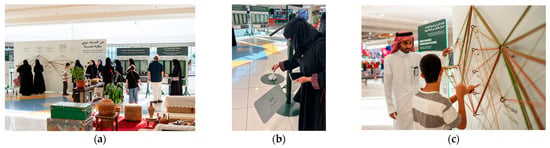
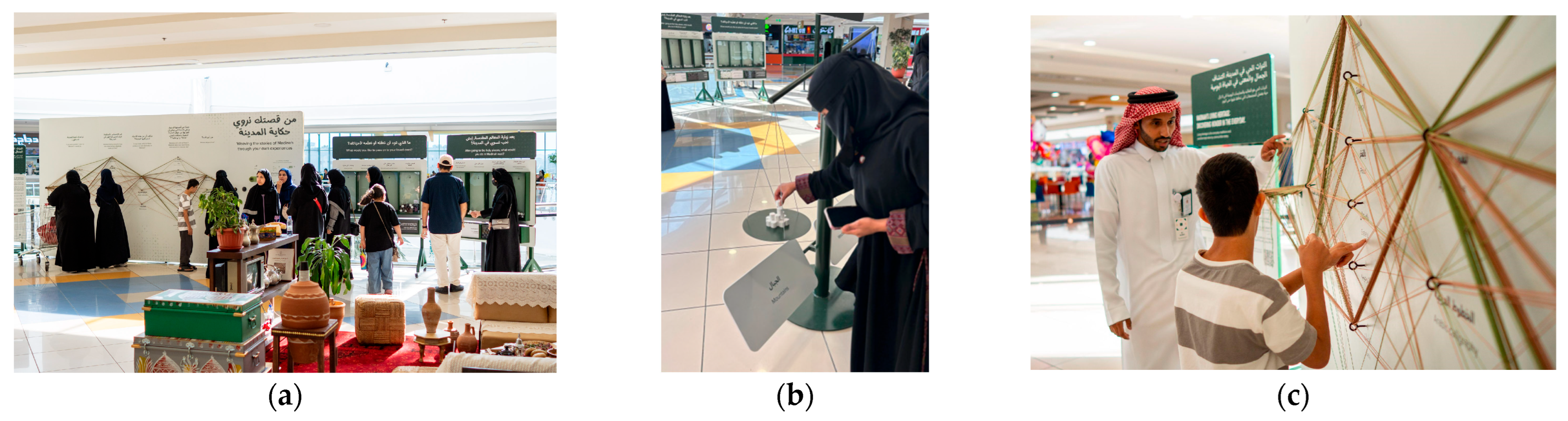
Finally, our research team co-designed an interactive public installation with the Domestic Data Streamers as a high-visibility entry point to spark conversation about ICH with a broader audience. The installation consisted of three physical interactive displays that invited passersby to share views on ICH through specific fixed-choice prompts (see Table A2 in Appendix A), involving voting opinions by placing a weight on a binary scale, placing a ball, or threading a string for multiple-choice questions (see Figure 6). These activities encouraged fun and quick engagement, and interactions often evolved into longer discussions, in which volunteers invited interested participants to sit at the pop-up indoor majlis, or living room, and to the website for a full story submission. Because the questions were more prescriptive and the data format differed from the other open-ended qualitative question prompts, the results from this data collection are difficult to compare with the other methods. Given these limitations, this approach to community engagement functioned primarily to raise awareness of living heritage and to prompt public contributions to the website platform.
Figure 6.
Interactive public installation in Al Rashid Mega Mall: (a) participants gather around the data installations; (b) a participant places a weight on the scales to voice their connection to the mountains; (c) a participant threads a string through several multiple-choice options on the data string wall. Photography by Albert Mørk, Gehl.
3.2. Constructing a Structured Dataset for ICH
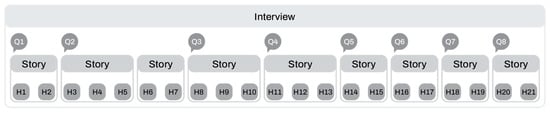
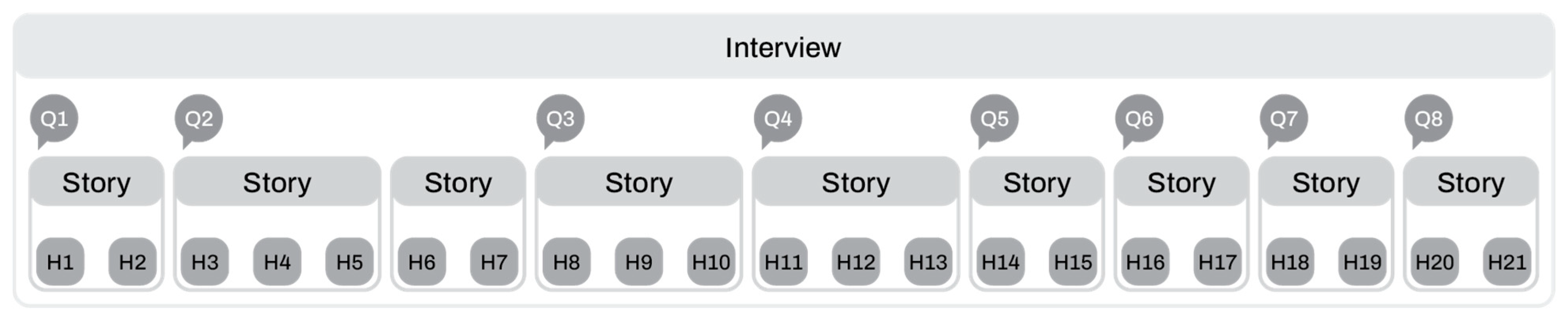
We used qualitative coding to extract ICH elements and place-based information from three data sources: interviews, website submissions, and a mapping exercise. This process produced a structured dataset that enabled comparison across methods and translation of qualitative insights into formats relevant for urban planning. Each interview response was treated as a story. Interviews were recorded, transcribed, translated, and segmented into multiple stories, whereas website and mapping submissions typically yielded shorter, single entries (see Figure 7). All data were anonymized. Compared to other methods, interviews produced more detailed narratives, while website and mapping entries were more concise, limiting the depth of analysis.
Figure 7.
Diagram of how each interview was broken up into several stories based on conversational topic shifts, often aligning with each question prompt. Each story was then further categorized into heritage insights that each contain a ritual paired with a location.
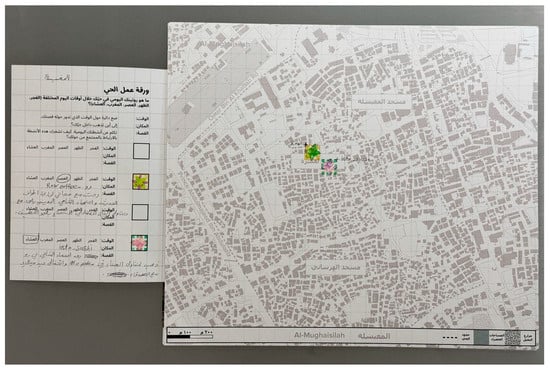
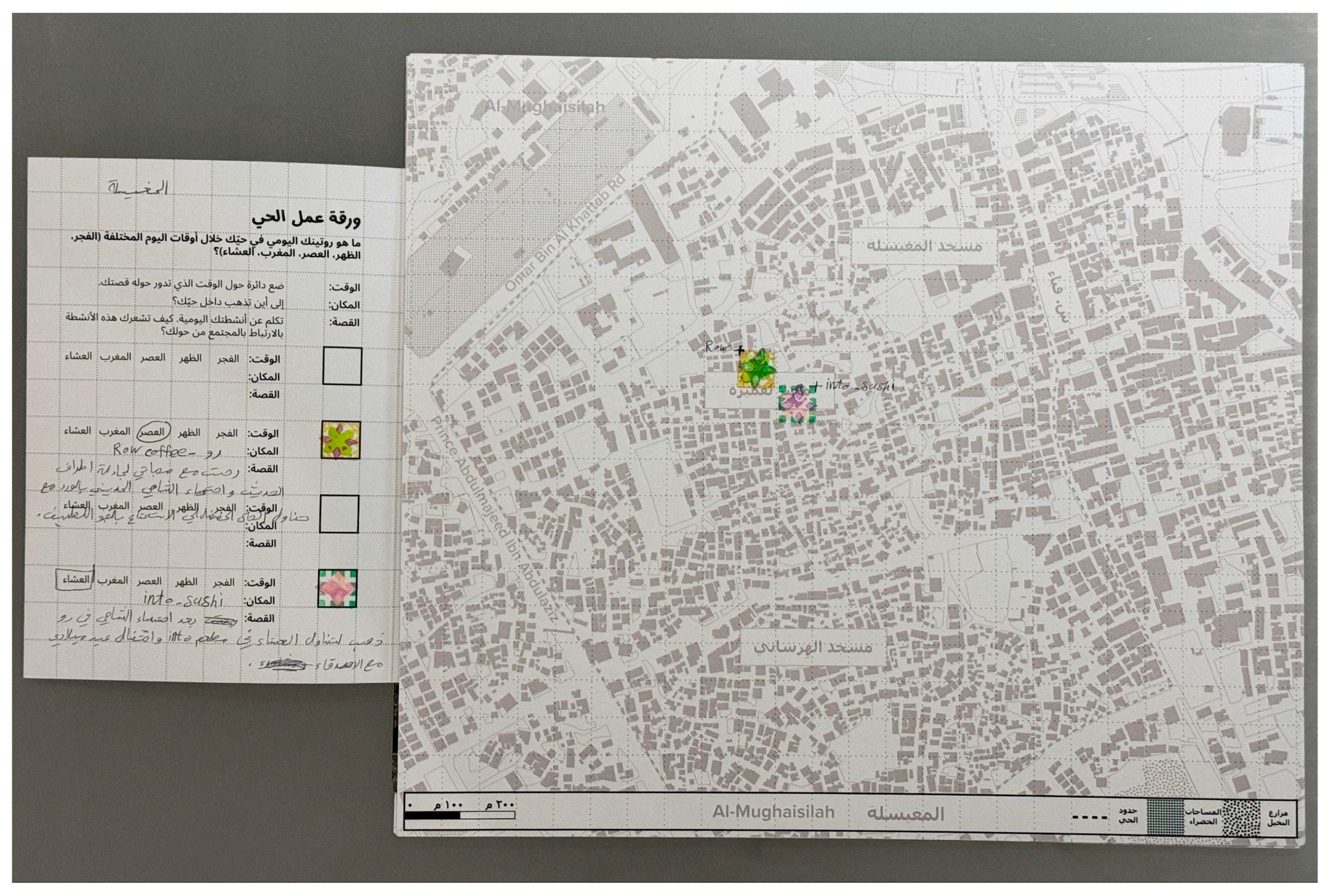
Open-ended narratives (“stories”) were transformed into a structured, quantifiable dataset through qualitative coding methods [24,25,26]. We define a heritage insight as the primary unit of analysis: a discrete pairing of an identified ICH element with place-based information. This may include a place name, typology, and/or spatial location. Heritage insights capture how intangible practices are expressed spatially and enable aggregation across broader ICH domains and place typologies. Coding approaches varied by method. Interview data required manual qualitative coding: stories were reviewed and segmented into one or more heritage insights depending on the number of practices and locations described (e.g., multiple practices in one place, or one practice across multiple places). While this approach captured rich, nuanced data, it was time-intensive. In contrast, the website and mapping exercise embedded structured inputs to reduce post-processing. Website users selected predefined ICH categories and place typologies during submission; entries were treated as valid heritage insights even when narrative fields were incomplete. The mapping exercise similarly encoded data through a visual stamping system, where combinations of shapes and colors represented ICH categories, place typologies, and temporal or sensory attributes. Each worksheet was documented as a heritage insight, with written responses serving as the primary source for reliable coding (see Figure 8).
Figure 8.
Example of qualitative data collected from the mapping exercise. On the left, the worksheet includes two identified places with written stories and the codified time of day circled; on the right, the two places are locations on the neighborhood scale map. The layered stamp colors symbolize the ICH categories related to the story, while the combined shapes represent the place typology and time of day the respondent might visit this place. The English translation of the worksheet shown on the left side of the image can be referenced in Figure 5b, on the right side of the page titled “Neighborhood Worksheet.”
3.2.1. ICH Concepts and Elements
This study adopts and extends the UNESCO categorization framework for ICH in order to make it comparable to other ICH data collection initiatives. UNESCO defines ICH through the 2003 Convention and associated controlled vocabularies [2,7]. Using qualitative coding, heritage insights were labeled with ICH concepts and elements aligned with this framework (e.g., “handicrafts,” “traditional games and play,” “Arabic calligraphy”), while also incorporating emergent terms derived from participant narratives. These concepts were subsequently classified into broader categories that expand upon UNESCO’s five domains of ICH. Consistent with UNESCO’s recognition that these domains are not exhaustive, the framework was adapted to reflect context-specific conditions. The five broad domains of ICH, defined by UNESCO, include the following [2]:
- Oral traditions and expressions;
- Performing arts;
- Social practices, rituals, and festive events;
- Knowledge and practices concerning nature and the universe;
- Traditional craftsmanship.
Four guiding principles structured this adaptation: (1) alignment with UNESCO terminology where applicable; (2) use of the five domains as first-order categories; (3) expansion to include everyday, place-based “living heritage”; and (4) inclusion of locally specific terms emerging from the data. This resulted in the refinement of “social practices” into subcategories such as religious practices, leisure, and food customs, and the introduction of a new category, “urban life and memory,” to capture everyday experiences and perceptions of change in the built environment (see Table A3).
3.2.2. Place-Based Information
In addition to ICH concepts and elements, each heritage insight was coded with place-based information, including place name, typology, and spatial attributes where available. Respondents frequently referenced specific sites (e.g., mosques, parks), which were standardized and classified into typologies such as public space, religious site, or landscape (see Table A4). Where relevant, additional sub-types were applied (e.g., types of religious sites or landscape features). Narratives that referenced broader geographies (e.g., neighborhoods or the city as a whole) were accommodated through generalized typologies such as “neighborhood” and “citywide.”
Spatial data were collected across methods to support mapping and planning applications. During interviews, locations were co-mapped with participants using Google My Maps, allowing sites to be recorded as points, lines, or polygons. The mapping exercise similarly elicited place-based information tied to everyday routines, while the web platform enabled users to assign typologies and, where possible, geolocate entries using map pins or coordinates.
4. Results: Impact of Participatory Methods on Identifying ICH
To evaluate each method, we assess trade-offs between community engagement and the quality and completeness of intangible cultural heritage (ICH) data. Key metrics include participation rates and trust, number of heritage insights, and diversity of unique places mapped. Table 1 gives an overview of the trade-offs described, and this section describes the effectiveness of each method in further detail.
Table 1.
Evaluation matrix of participatory methods.
4.1. Participant Engagement and Trust
Participation is measured as the proportion of contributors relative to those reached (Table 2). Acknowledging that the sample size is small across all methods of participation, there may be limitations in homogeneity bias, which may limit the impact of the participation rates and the statistical inference of the analytical results. Interviews achieved the highest participation rate (73%; 11 of 15 participants), reflecting the role of social capital and targeted recruitment through a snowball approach. The mapping exercise reached 28 participants across two events (56% participation), with similar uptake despite differences in format: a guided, collective workshop at Taqmeera Bakery and a more informal, drop-in engagement at the Madinah Innovation Lab. In both cases, volunteers were essential in supporting participants through the structured worksheets.
Table 2.
Participation rates across methods of engagement.
The public installation reached the largest audience (approximately 1756 passersby), engaging an estimated 236–300 contributors (13–17% participation). All 38 website submissions originated during these in-person events, with the platform recording 909 views and 587 unique visitors within two months.
Trust was inferred from the depth of engagement, including participants’ willingness to share personal narratives and remain involved over time. An impact assessment study, led by Gehl, follows a Theory of Change [27] model, which evaluates three impact areas to construct how we define building trust through engagement: (1) engaging Locals & Experts, (2) co-creating an understanding, (3) communicating living heritage [28]. Interviews, despite their small sample (11 participants), fostered the strongest trust, generating detailed accounts and continued participation in follow-up activities. In contrast, methods designed for broader access, such as the public installation, produced more diverse but less sustained engagement.
Participation differences across methods were also evident in time and resource demands. Interviews required minimal upfront design but involved the longest participant commitment (30–60 min) and the most intensive post-processing. The website required significant development effort but minimized post-processing through structured inputs and shorter participation times (10–15 min). The mapping exercise occupied a middle ground, balancing moderate facilitation and engagement (20–40 min) with reduced, though still necessary, post-processing.
Across all methods, participants expressed strong interest in contributing their perspectives. The act of documenting and visualizing these contributions—through maps, the website, and the installation—reinforced a sense of inclusion and ownership, suggesting that participatory approaches can strengthen community connections to heritage.
4.2. Evaluating Heritage Insights and Diversity of Results
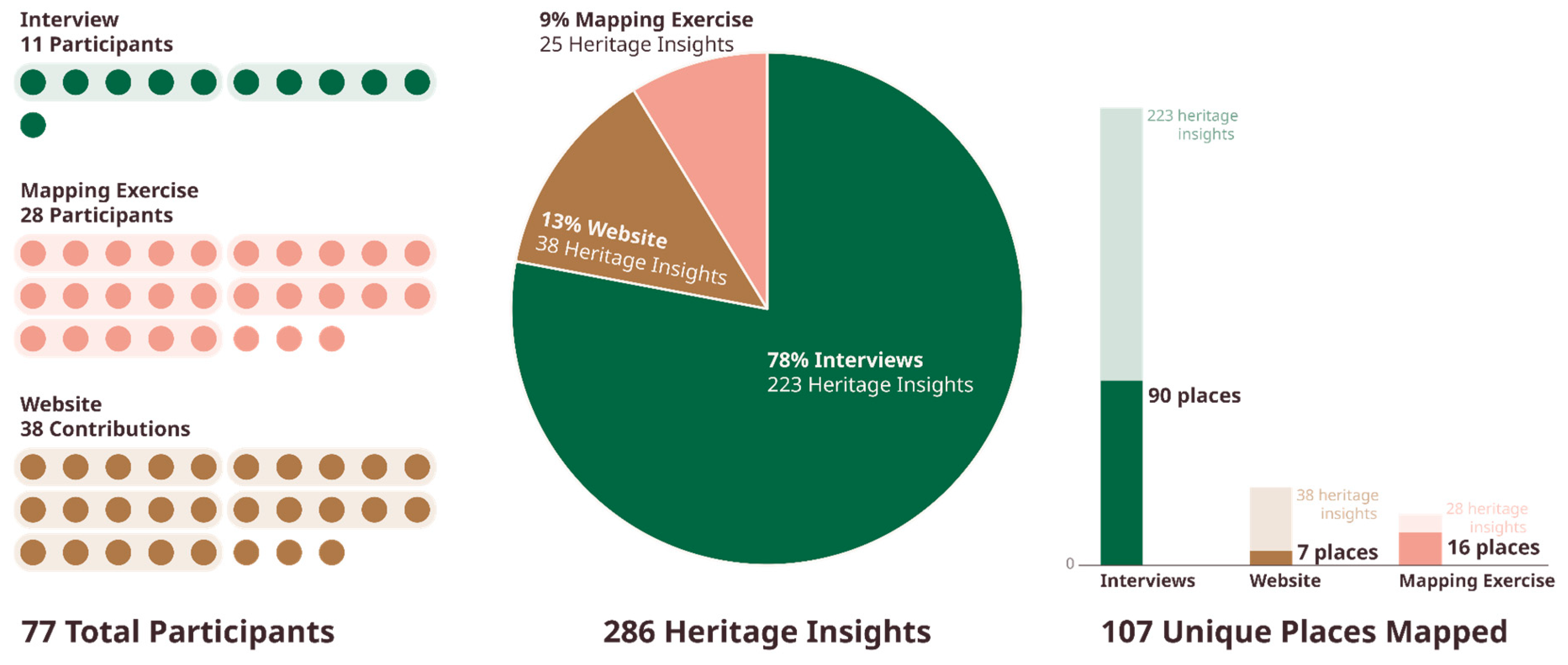
Across all methods, we documented 286 heritage insights and mapped 107 unique locations from a total of 77 participants (see Table 3). We documented the most heritage insights by far from the interviews, with an average of 20.3 heritage insights documented per participant. Conversely, the mapping exercise and website yielded results closer to a proportion of one heritage insight per participant. Data completeness varied across methods, with the website showing the greatest level of missing information, reflecting the lack of facilitator oversight during the collection process.
Table 3.
Overview of data collected and participants per engagement method.
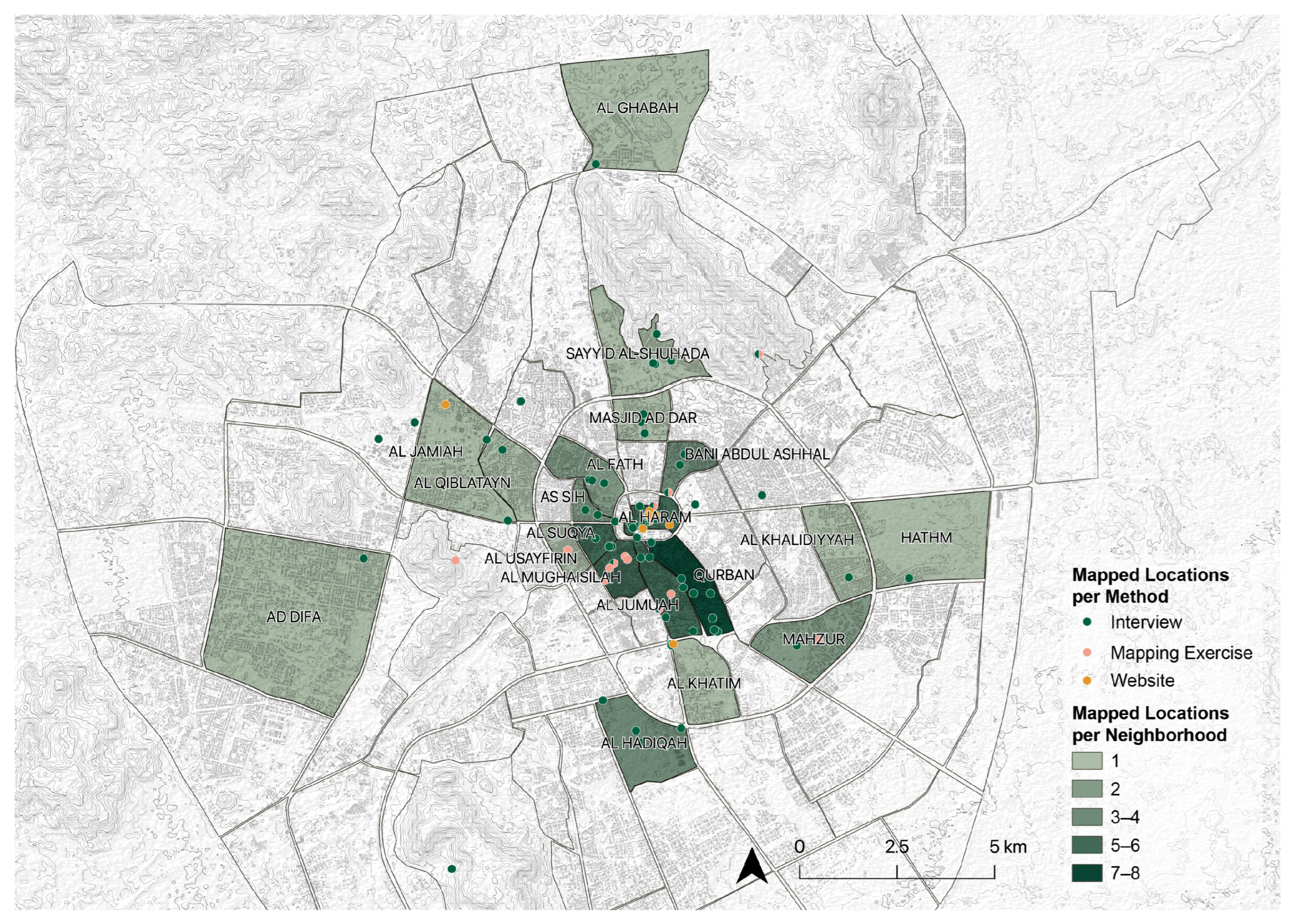
To assess spatial diversity, we evaluated the number of unique locations mapped across methods (see Figure 9). The mapping exercise generated a diversity of locations with minimal duplication of well-known locations (e.g., major religious or civic landmarks). However, interviews produced more detailed narratives and, through co-mapping, often resulted in multiple locations being recorded per participant. The website yielded the least spatial data, with only seven locations being mapped.
Figure 9.
Locations mapped by participants per method. The choropleth illustrates the aggregated counts of unique locations mapped per neighborhood in Madinah.
4.3. Interviews Created the Most Data, Other Methods Created the Most Awareness
In comparing the data documented across all methods, the interviews yielded the most ICH data, generating the highest number of heritage insights and the greatest diversity of mapped locations across all methods (see Figure 10). The group mapping exercise fostered community dialogue and generated unique locations through collective engagement. Although the website was an effective tool for visualizing the results of ICH data documented thus far, further efforts and promotion are needed to effectively collect data from broader audiences as intended.
Figure 10.
Overview of total participants, heritage insights documented, and unique places mapped across all methods: interview, mapping exercise, and website. Despite involving the fewest participants, the interviews yielded the most heritage insights and unique places mapped.
4.4. Effectiveness of Research Prompts Framework
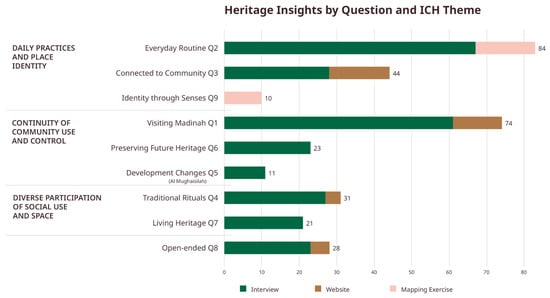
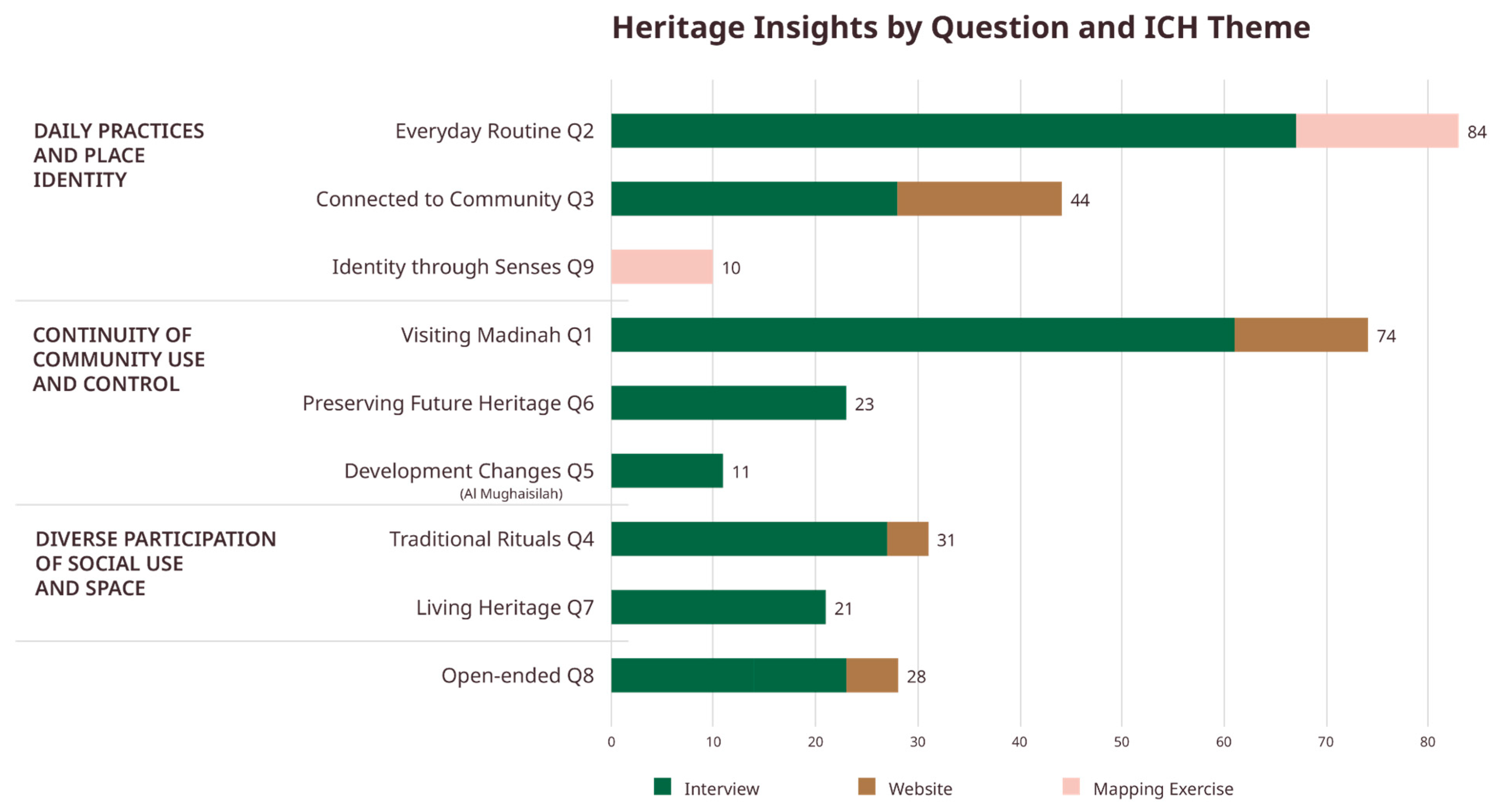
Across all methods, prompts related to everyday routines (particularly Question 2 in Table A1) generated the highest number of heritage insights (see Figure 11). These questions were effective because they used accessible, relatable language and framed ICH through relatable lived experience rather than abstract definitions. Participants were able to easily describe routines tied to time (e.g., prayer schedules) and sensory experiences, which expanded the range and depth of responses. Similarly, the prompt asking where participants would take a visiting friend served as an intuitive entry point (see Question 1 in Table A1), helping respondents articulate place-based significance and identity. While there may be some bias in the order of the questions asked, creating conversational or attention-span fatigue, using relatable questions at the beginning of the semi-structured interviews (starting with Questions 1 and 2) helped to construct a shared knowledge and understanding of discussing the topic of ICH with participants. After constructing the shared understanding of ICH, it is also important to include the opportunity for open-ended responses that may not necessarily fit within prescribed questions. These findings suggest that grounding ICH documentation in daily practices and familiar narratives is critical to eliciting meaningful data.
Figure 11.
Total heritage insights documented per prompt question, grouped by ICH themes.
4.5. UNESCO’s ICH Domains Need Expansion for Saudi Arabia
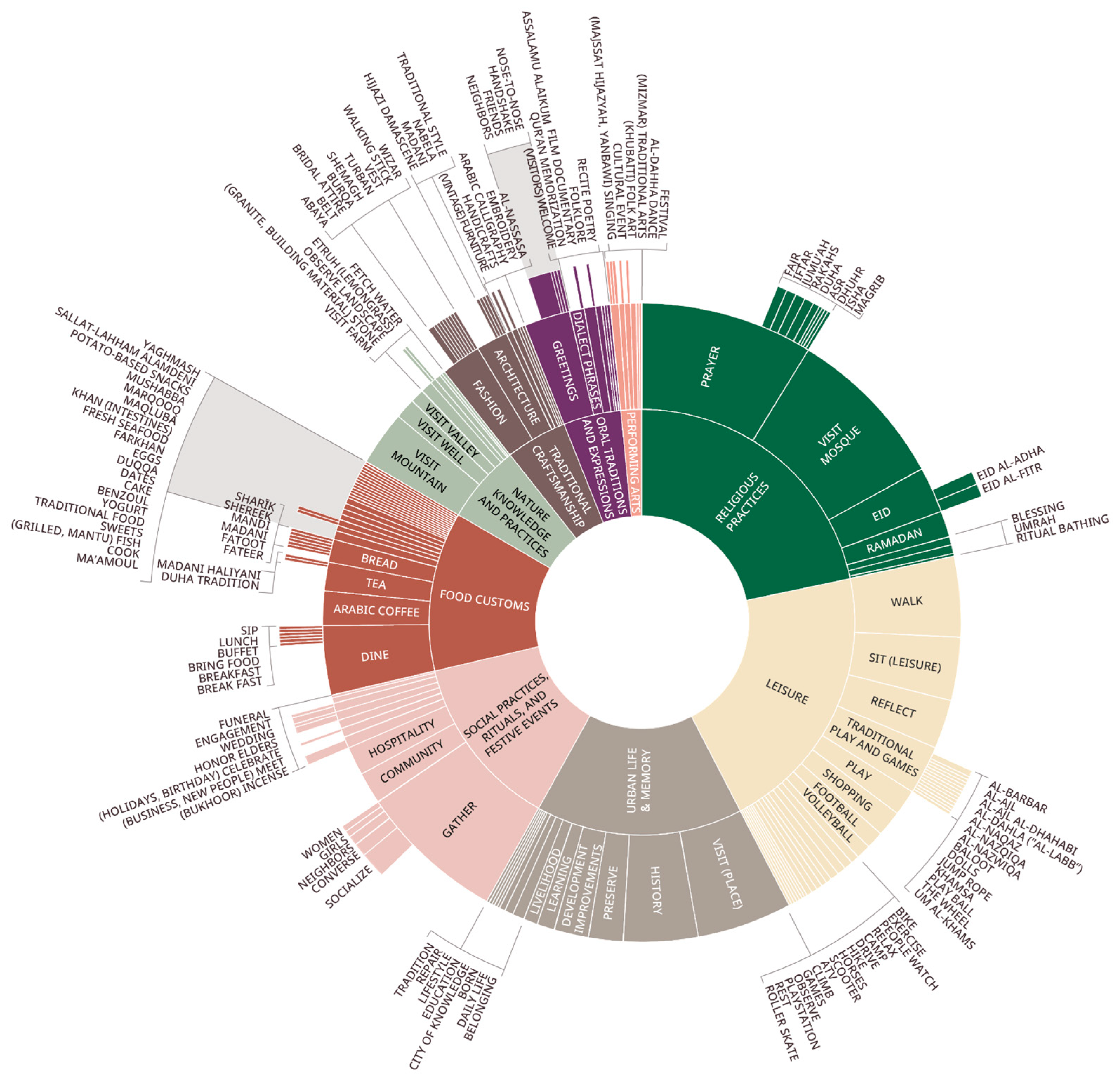
The UNESCO 2003 Convention’s five broad domains for ICH provided a useful starting point for structuring the data [2]. For example, references to visiting mountains, valleys, or surrounding landscapes, often associated with positive sentiment, were categorized under “knowledge and practices concerning nature and the universe,” reflecting connections between cultural identity and environment. However, in practice, these domains proved insufficient to adequately distinguish between the types of practices described by participants. To capture the full range of “living heritage” expressed by participants, this research introduces an additional category, “urban life and memory,” to account for everyday practices, experiences of urban change, and expressions of belonging embedded in the built environment (see Figure 12). The identification of this gap and the proposed extension constitute a key additional contribution of this study, advancing ICH classification toward more context-sensitive and contemporary urban conditions.
Figure 12.
Visualization of the frequency of ICH elements documented and grouped by ICH categories. Note that a heritage instance may have been labeled with more than one ICH element and category, so this chart does not represent the total number of heritage insights documented.
Additionally, categories such as “social practices, rituals, and festive events” aggregate a wide range of activities that differ significantly in meaning, frequency, and spatial expression. As a result, they limit the ability to differentiate between everyday practices (e.g., leisure activities or food preparation), religious rituals, and culturally specific customs. To address this limitation, the classification was refined through the introduction of subdomains (e.g., “religious practices,” “leisure,” “food customs”) and more granular categories (e.g., “traditional games and play,” “bread”).
Furthermore, the data collected in this study indicate that religious practices are deeply embedded across multiple ICH domains and cannot be treated as a discrete category in the context of Madinah, and this distinction is important to note for holy cities. Rather than being seen as a topic distinct from ICH, religion overlaps with several ICH categories and is intertwined with everyday life: it shapes temporal rhythms (e.g., daily prayer), anchors social practices (e.g., Ramadan, Eid), informs food customs (e.g., iftar), is expressed through oral traditions (e.g., Qur’an recitation, greetings such as “Assalamu alaikum”), and is tied to the landscape through sites of cultural and spiritual significance. Mosques, in particular, function not only as places of worship but also as spaces for learning, gathering, and community life. This degree of integration contrasts with many urban contexts where religious, civic, and social functions are more clearly differentiated. In Madinah, these domains are co-constitutive, reflecting the city’s identity as a holy site. This overlap challenges conventional ICH classification frameworks and underscores the need for more relational and context-sensitive approaches to heritage categorization in religious urban environments.
The hierarchical structure illustrated in Figure 12 improves analytical precision by enabling both aggregation of recurring concepts and identification of context-specific elements, such as locally named practices in Madinah. It also supports gap analysis and deeper investigation by making visible which forms of ICH are underrepresented or require further documentation. We offer this framework as a contribution for further review and refinement by UNESCO.
5. Discussion and Limitations
5.1. Creating Trust for Participatory Methods
Participatory engagement methods are a great way to collect crowdsourced community voices and to construct qualitative data for topics that are difficult to document, such as ICH. However, this research illustrates how crowdsourcing community voices is difficult in contexts where community participation is not a common form of civic engagement. While collaboration with a local organization is essential to building trust with communities, greater alignment with the project collaborator would have been beneficial, particularly in establishing shared expectations around the transparent collection and presentation of data. While the website served as an effective tool for visualizing ICH documentation efforts, it also introduced ethical concerns related to the dissemination of the data. For example, given that the partner retained ownership over the platform, there was a preference to curate how results were presented, including editing participant stories for the public-facing interface. Although these modifications did not affect the underlying analysis, they limited the direct representation of respondents’ voices. Uncertainty about the potential impacts of broader public release of the data may have also contributed to the decision not to implement the planned social media campaign for the website. This highlights a key tension: while collaboration with a government authority enhanced legitimacy and access to local stakeholders, it also introduced constraints on openness and dissemination. Future work should focus on building institutional trust in transparent, community-centered data practices, particularly in the context of crowdsourced heritage documentation.
5.2. Limitations and Trade-Offs Between Methods
The depth of the heritage insights documented from the interviews can be attributed to extended engagement time and a conversational, narrative-driven format that enabled participants to elaborate on place-based experiences and meanings; however, they required extensive time, which meant we had limited ability to create a large sample. The interviews were limited to only 11 participants because they also required the most intensive post-processing, including transcription, translation, qualitative coding, and spatial mapping of responses. Despite these resource demands, interviews proved to be the most effective method for generating rich, detailed, and spatially diverse heritage data.
The group mapping activity fostered a collaborative environment in which participants built on each other’s contributions in real time. This collective dynamic increased the diversity of mapped locations, as participants could see prior entries and respond by adding distinct or complementary sites. The place-based prompts (see Table A1) provided accessible entry points, encouraging discussion and enabling participants to move beyond well-known landmarks (e.g., major religious or civic sites) toward a broader range of locations tied to everyday routines, temporal patterns, and sensory experiences. As a result, the method functioned not only as a data collection tool but also as a social process that strengthened dialogue, collective ownership, and community engagement around heritage. However, it required moderate post-processing, including qualitative coding and spatial data entry, and some worksheets were incomplete and could not be fully coded as heritage insights. The effectiveness of this method was therefore contingent on structured facilitation and active volunteer support to guide participants through the multi-step exercise.
Furthermore, the data collection and the dissemination of the website platform as a data collection tool could have been more effective. Spatial data collection via the website platform was limited because geolocation was optional to reduce barriers to participation; future iterations should consider geolocation to be a required input to improve the utility of the dataset for mapping and planning applications. Additionally, without the planned social media campaign, website engagement did not extend beyond the event period, indicating that digital participation depended heavily on in-person activation.
These comparisons highlight a key trade-off: low-barrier methods expand reach but require facilitation to convert visibility into meaningful contributions. Because the interviews involved a personalized conversation, interviewees tended to share multiple stories that described different ICH practices at the same location, or mentioned several places that were applicable to the same ICH practice, so multiple heritage instances were enumerated in this way. Conversely, the group-based format of the mapping exercise encouraged participants to compare responses and identify new sites, reducing repetition and prompting the inclusion of less commonly mentioned places, in contrast to when interview and website participants contributed in isolation. These findings suggest a trade-off between accessibility and data completeness.
6. Conclusions and Recommendations
6.1. Conclusions
This research demonstrates that documenting intangible cultural heritage (ICH) through participatory, place-based methods can generate meaningful data in rapidly changing heritage cities. Heritage protection is often conducted by top-down interventions of government entities, and therefore, having this data adds an essential resource: the collective voices and interests of communities, groups, and individuals. The data, therefore, contributes to a sense of ownership and active participation in the evidence created to protect the heritage of cities [29,30,31]. By translating qualitative narratives into structured, spatially grounded data, the Living Heritage Atlas Madinah provides a framework for making everyday cultural practices visible and actionable. The findings reveal that in Madinah, ICH is not easily separable into discrete domains: religious practices permeate daily life, social interactions, and spatial routines, challenging conventional classification systems. This insight, alongside the introduction of new categories such as “urban life and memory,” highlights the need to expand existing ICH frameworks to better capture the relational and lived dimensions of heritage. Methodologically, the study underscores the value of combining deep, narrative-driven approaches with scalable participatory tools, while also recognizing trade-offs between data richness, accessibility, and processing effort. At the same time, the research surfaces critical tensions around governance, transparency, and control in the representation of community knowledge, particularly when working with institutional partners. Ultimately, this work positions participatory ICH documentation as both a technical and social process, one that not only produces data but also builds awareness, trust, and collective stewardship. As cities like Madinah continue to evolve, integrating community-defined heritage into planning processes will be essential to ensuring that development does not come at the cost of lived cultural identity.
While this study focused its geographic scope on Madinah, the participatory methods used to gather evidence from the collective voices of residents can be applied to other cities. The hierarchical structure of classifying terms that align with UNESCO’s five ICH domains can be an effective method for organizing qualitative data in other contexts. Additionally, those studying ICH in other holy cities should consider looking beyond the formal religious practices affiliated with heritage sites to also understand how religious practices may be intertwined with everyday living practices of people.
6.2. Recommendations and Future Research
As previously discussed, future research can build upon this place-based documentation of ICH by expanding upon crowdsource data collection through the website and by collaborating with UNESCO on how to further domain categorization of ICH. We would encourage a better understanding of how digital tools can be positioned for community engagement and data collection. While we made recommendations on expanding upon the UNESCO domains based on insights that emerged from the qualitative data collection, bringing these findings to work collaboratively with UNESCO could help to improve defining and documenting ICH beyond the scope of this research.
While heritage insights derived from this research only identify ICH elements, this can serve as the first step in generating evidence to support integrating safeguarding strategies into urban planning. Identifying ICH elements that emerge from the responses begins to form a broader image of ICH [32], and from here, further research can be conducted to complement the broader knowledge, practices, and history that surround these cultural assets. Additionally, urban planners and designers can leverage the insights from our ICH findings to inform guidelines for how new development affects the continuity of ICH practices. Similar to other cities worldwide, recent developments in Madinah are actively shaping new heritage practices, while transforming existing ones.
Author Contributions
Conceptualization, S.W., A.L., and A.K.; methodology, S.W., A.L., and A.K.; software, A.L.; validation, A.L. and A.K.; formal analysis, A.L. and A.K.; investigation, A.K. and A.L.; resources, A.K. and A.L.; data curation, A.L.; writing—original draft preparation, A.K. and A.L.; writing—review and editing, A.L., A.K., and S.W.; visualization, A.L. and A.K.; supervision, S.W. and A.L.; project administration, S.W. and A.L.; funding acquisition, S.W. All authors have read and agreed to the published version of the manuscript.
Funding
The Living Heritage Atlas Madinah project was funded by the Madinah Region Development Authority (MRDA). Funding provided to the Norman B. Leventhal Center for Advanced Urbanism at MIT came through a subcontract agreement with Gehl. This research was conducted as a sponsored project, so there is no grant number.
Data Availability Statement
The study was conducted in accordance with the Collaborative Institutional Training Initiative (CITI) Program, with training certification completed by team members in May 2025. Informed consent for participation was obtained from all subjects involved in the study.
Acknowledgments
The authors would like to acknowledge the contributions of the project teams across institutions. At the Civic Data Design Lab and the Norman B. Leventhal Center for Advanced Urbanism at Massachusetts Institute of Technology, this work was led by Sarah Williams, and managed by Ashley Louie with support from the broader research team (Mohammed Alsehali, Ghida Anouti, Jennifer Balasus, Maria Gabriela Carucci, Racha Doughman, Berit Lavender, Areti Kotsoni, Oluwabusola Marcus, Mercy Olagunju, Zoe Voss Lee). At Gehl, the project benefited from the leadership and collaboration of Jeff Risom, Liselott Stenfeldt, Amanda Gregor, Adriana Akers, Amira Badran, Guitsa Herro, and their colleagues (Jonathan Pichot, Adam Eriksson, Natalia Garcez, Clara McNair). We also extend our thanks to partners at MRDA, including Abdulmajeed Manjara, Ahmed Alowfi, Ali Alanazi, and Abdulaziz Juhany, for their engagement and support throughout the project. Additional thanks are due to Domestic Data Streamers for their role in designing the public installation, and to Mohammed Ibrahim Shafee Architects (MISH) for their contributions. Most importantly, we are deeply grateful to the residents and participants in Madinah who generously shared their stories, experiences, and knowledge, without whom this work would not have been possible.
Conflicts of Interest
The authors declare no conflicts of interest. While MRDA supported the project delivery, the research evaluation and analysis presented in this paper were conducted independently by the authors.
Abbreviations
The following abbreviations are used in this manuscript:
| ICH | Intangible cultural heritage |
| CITI | Collaborative Institutional Training Initiative |
| MISH | Mohammed Ibrahim Shafee Architects |
| MRDA | Madinah Region Development Group |
| MIT | Massachusetts Institute of Technology |
| UNESCO | United Nations Educational, Scientific, and Cultural Organization |
Appendix A
This appendix includes the question prompts used for qualitative data collection across all methods. Table A1 includes the questions used across the interviews, website survey, and mapping exercise. Table A2 includes the questions used in the public installation, which used a different format.
Appendix A.1
Table A1.
Qualitative Questions for Data Collection. Questions are categorized by ICH theme, ordered in the sequence asked during the semi-structured interviews, and an ✕ indicates the method(s) in which the question prompts were used.
Appendix A.2
The public installation and related question prompts were designed by our collaborators, Domestic Data Streamers, to build upon the questions initially identified through the interviews and website (see Table A1).
Table A2.
This table includes the qualitative questions and binary or multiple choice responses incorporated into the public installation participatory data collection.
Appendix B
All intangible cultural heritage elements and concepts documented in this research are included in the following tables. Table A3 includes the ICH elements organized by category, and Table A4 includes the places organized by place typology.
Appendix B.1
Table A3.
The ICH concepts mentioned in qualitative story responses were classified into categories based on UNESCO domains, concepts, and elements. Although an ICH concept may fall into more than one domain, concepts in this table are organized by the first listed relevant domain.
Appendix B.2
Table A4.
Places mentioned in qualitative story responses were classified into place typologies.
References
- Hassan, F.; Youssef, M.; De Trafford, A. (Eds.) Cultural Heritage and Development in the Arab World; Bibliotheca Alexandrina: Alexandria, Egypt, 2008. [Google Scholar]
- UNESCO. Basic Texts of the 2003 Convention for the Safeguarding of the Intangible Cultural Heritage, 2024 ed.; UNESCO: Paris, France, 2024.
- Poulios, I. Discussing strategy in heritage conservation: Living heritage approach as an example of strategic innovation. J. Cult. Herit. Manag. Sustain. Dev. 2014, 4, 16–34. [Google Scholar] [CrossRef] [Scilit]
- Bortolotto, C. From the ‘Monumental’ to the ‘Living’ Heritage: A Shift in Perspective. In World Heritage: Global Challenges, Local Solutions; Carman, J., White, R., Eds.; Archaeopress: Oxford, UK, 2006. [Google Scholar]
- Poulios, I. Is Every Heritage Site a ‘Living’ One? Linking Conservation to Communities’ Association with Sites. Hist. Environ. Policy Pract. 2011, 2, 144–156. [Google Scholar] [CrossRef] [Scilit]
- Smith, L. Uses of Heritage, 1st ed.; Routledge: Oxfordshire, UK; New York, NY, USA, 2006. [Google Scholar] [CrossRef] [Scilit]
- UNESCO. Browse the Lists of Intangible Cultural Heritage and the Register of Good Safeguarding Practices—UNESCO Intangible Cultural Heritage. Available online: https://ich.unesco.org/en/lists (accessed on 22 April 2026).
- Nasr, S.H.; Nomachi, A.K. Mecca the Blessed & Medina the Radiant (Bilingual): The Holiest Cities of Islam (Bilingual Edition); Tuttle Publishing: North Clarendon, VT, USA, 2015. [Google Scholar]
- Yao, D.; Zhang, K.; Wang, L.; Law, R.; Zhang, M. From Religious Belief to Intangible Cultural Heritage Tourism: A Case Study of Mazu Belief. Sustainability 2020, 12, 4229. [Google Scholar] [CrossRef] [Scilit]
- Qurashi, J. Diminishing religious cultural heritage of holy Makkah and Medina due to commercialization of the sacred event. In Spiritual and Religious Tourism: Motivations and Management; CABI Religious Tourism and Pilgrimage Series; CABI: Wallingford, UK, 2019; pp. 85–96. [Google Scholar] [CrossRef] [Scilit]
- Hakimi, M.O. Exploring the essence of Al-Madinah Al-Munawwarah: Leveraging the portraits approach to understand the second-holiest city in Islam. J. Islam. Mark. 2026, 17, 1178–1199. [Google Scholar] [CrossRef] [Scilit]
- Lenzerini, F. Intangible Cultural Heritage: The Living Culture of Peoples. Eur. J. Int. Law. 2011, 22, 101–120. [Google Scholar] [CrossRef] [Scilit]
- Eichler, J. Intangible cultural heritage, inequalities and participation: Who decides on heritage? Int. J. Hum. Rights 2021, 25, 793–814. [Google Scholar] [CrossRef] [Scilit]
- Zlodi, G. Information and Documentation Perspective to Intangible Cultural Heritage in the Context of Digital Humanities Research. Stud. Ethnol. Croat. 2023, 35, 115–148. [Google Scholar] [CrossRef] [Scilit]
- Dhonju, H.K.; Xiao, W.; Shakya, B.; Mills, J.P.; Sarhosis, V. Documentation of Heritage Structures Through Geo-Crowdsourcing and Web-Mapping. Int. Arch. Photogramm. Remote Sens. Spat. Inf. Sci. 2017, XLII-2/W7, 17–21. [Google Scholar] [CrossRef] [Scilit]
- Hannewijk, B.; Vinella, F.L.; Khan, V.-J.; Lykourentzou, I.; Papangelis, K.; Masthoff, J. Capturing the City’s Heritage On-the-Go: Design Requirements for Mobile Crowdsourced Cultural Heritage. Sustainability 2020, 12, 2429. [Google Scholar] [CrossRef] [Scilit]
- Hou, Y.; Kenderdine, S.; Picca, D.; Egloff, M.; Adamou, A. Digitizing Intangible Cultural Heritage Embodied: State of the Art. J. Comput. Cult. Herit. 2022, 15, 55. [Google Scholar] [CrossRef] [Scilit]
- Kim, H.; Suh, J.; Ahn, J.; Kim, J. Constructing a semantic wiki for living cultural heritage: Case study of Korean tea culture. In Proceedings of the 9th International Conference on Ubiquitous Information Management and Communication; Association for Computing Machinery: New York, NY, USA, 2015; pp. 1–4. [Google Scholar] [CrossRef] [Scilit]
- Nic Eoin, L.; Owens, E.; King, R. Memories of Metolong: The challenges of archiving intangible heritage in development contexts. In 2013 Digital Heritage International Congress (DigitalHeritage); IEEE: Marseille, France, 2013; pp. 37–44. [Google Scholar] [CrossRef] [Scilit]
- Williams, S. Data Action: Using Data for Public Good; MIT Press: Cambridge, MA, USA, 2022. [Google Scholar]
- Shehade, M.; Stylianou-Lambert, T. (Eds.) Emerging Technologies and the Digital Transformation of Museums and Heritage Sites: First International Conference, RISE IMET 2021, Nicosia, Cyprus, 2–4 June 2021, Proceedings; Communications in Computer and Information Science; Springer International Publishing: Cham, Switzerland, 2021; Volume 1432. [Google Scholar] [CrossRef] [Scilit]
- Meggi, A. Towards a digital heritage: Evaluating methods of heritage interpretation, Diu Town—A case study. Int. J. Herit. Archit. Stud. Repairs Maintence 2017, 2, 406–416. [Google Scholar] [CrossRef] [Scilit]
- Hage, G. Towards an ethics of the theoretical encounter. Anthropol. Theory 2016, 16, 221–226. [Google Scholar] [CrossRef] [Scilit]
- Strauss, A.L.; Corbin, J.M. Basics of Qualitative Research: Techniques and Procedures for Developing Grounded Theory, 2nd ed.; Sage Publications: Thousand Oaks, CA, USA, 2003. [Google Scholar]
- Richards, K.A.R.; Hemphill, M.A. A Practical Guide to Collaborative Qualitative Data Analysis. J. Teach. Phys. Educ. 2018, 37, 225–231. [Google Scholar] [CrossRef] [Scilit]
- Zhu, X.; Oberman, T.; Aletta, F. Defining acoustical heritage: A qualitative approach based on expert interviews. Appl. Acoust. 2024, 216, 109754. [Google Scholar] [CrossRef] [Scilit]
- Weiss, C.H. Nothing as Practical as Good Theory: Exploring Theory-Based Evaluation for Comprehensive Community Initiatives for Children and Families. In New Approaches to Evaluating Community Initiatives Concepts, Methods, and Contexts; Connell, J., Kubisch, A.C., Schorr, L.B., Weiss, C.H., Eds.; Aspen Institute: Washington, DC, USA; Scientific Research Publishing: Glendale, CA, USA, 1995; pp. 65–92. Available online: https://www.scirp.org/reference/referencespapers?referenceid=3202497 (accessed on 21 May 2026).
- Gehl. Urban Research Lab and the Living Heritage Prototype Impact Assessment. 2025. Available online: https://drive.google.com/file/d/1gD-6lqYd8S9R5hM7m-ifNsa6GrmkeyT8/view?usp=sharing (accessed on 21 May 2026).
- Akagawa, N.; Smith, L. Safeguarding Intangible Heritage: Practices and Politics; Routledge: Oxfordshire, UK, 2018. [Google Scholar]
- Blake, J. Safeguarding intangible cultural heritage in the urban environment: Some experiences gained from implementing UNESCO’s 2003 convention. In Urban Heritage, Development and Sustainability; Routledge: Oxfordshire, UK, 2015. [Google Scholar]
- Sousa. The Participation in the Safeguarding of the Intangible Cultural Heritage: The Role of Communities, Groups and Individuals; Memória Imaterial CRL: Alenquer, Portugal, 2018. [Google Scholar]
- Liu, Y.; Li, Y.; Tao, W.; Wang, Q. Measuring intangible cultural heritage image: A scale development. PLoS ONE 2024, 19, e0299088. [Google Scholar] [CrossRef] [Scilit] [PubMed]

Disclaimer/Publisher’s Note: The statements, opinions and data contained in all publications are solely those of the individual author(s) and contributor(s) and not of MDPI and/or the editor(s). MDPI and/or the editor(s) disclaim responsibility for any injury to people or property resulting from any ideas, methods, instructions or products referred to in the content. |
© 2026 by the authors. Licensee MDPI, Basel, Switzerland. This article is an open access article distributed under the terms and conditions of the Creative Commons Attribution (CC BY) license.