Article

Cultural Heritage Recognition through Protection of Historical Value and Urban Regeneration: CSOA Forte Prenestino

Department of Planning, Design and Technology of Architecture, Sapienza University of Rome, Via Flaminia 70/72, 00196 Rome, Italy
*
Author to whom correspondence should be addressed.
Land 2024, 13(4), 453; https://doi.org/10.3390/land13040453
Submission received: 16 February 2024 / Revised: 18 March 2024 / Accepted: 22 March 2024 / Published: 2 April 2024
(This article belongs to the Section Urban Contexts and Urban-Rural Interactions)

Abstract

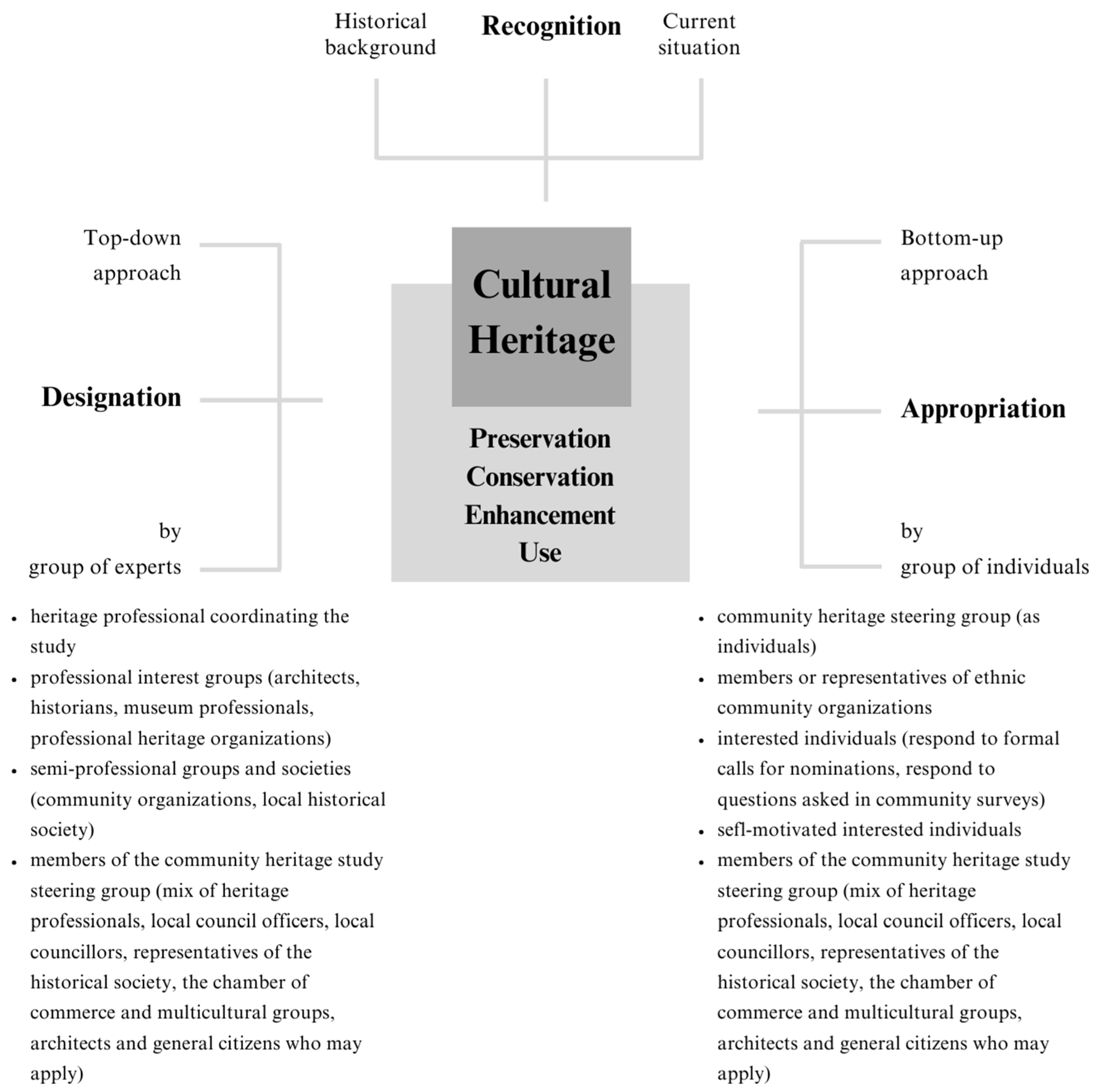
The conformation and dynamics of metropolitanisation act as propulsive elements of territorial transformations. The deficiency of infrastructural equipment, the heterogeneity of urban fabric and the lack of services and public spaces contribute to severing the identity ties between settled communities and territories. In light of this, within the more general reflection concerning urban regeneration, we recall the role that cultural heritage plays in the physical and functional organisation of the city, as a reflection of the interaction between community and context. The contribution is contextualized in the research work on the activities related to Thematic Line 4 of the Extended Partnership 5—CHANGES (NRRP). The thematic line activities follow three phases: 1. contextualization; 2. operational phase; 3. experimentation. The research work presented here is part of the ‘operational phase’, to identify strategies and projects for heritage-led regeneration. The article analyses the pilot case of CSOA Forte Prenestino as a starting point for thinking about expanding the research activity to other similar cases. It is a self-managed community centre in Rome (Italy) located in the nineteenth-century Forte, which has become a symbol of collective identity. The case study was identified following three levels of investigation: 1. identification of the municipality, first-level administrative subdivision of the city of Rome (Italy); 2. identification of the main historical, archaeological and architectural emergencies of the municipality; 3. identification of an asset to be analysed as “Heritage by designation” (involvement of experts) and “Heritage by appropriation” (involvement of communities). The research results show the “Recognition Path” of Forte Prenestina: according to what has been ‘designated’ by urban planning instruments, project instruments, legislative instruments and authors of scientific publications and conferences; and on the basis of the bottom-up ‘appropriation’ process of the asset that has allowed its management, assessment of its cultural and social potential and its development. The research results allow us to reflect on heritage-led urban regeneration as a strategy capable of capturing and promoting the links between social integration and cultural–historical identity.
Keywords: cultural heritage; historical value; collective identity; protection; adaptability; urban regeneration cultural heritage; historical value; collective identity; protection; adaptability; urban regeneration