Article

Natural and Organic Input-Based Integrated Nutrient-Management Practices Enhance the Productivity and Soil Quality Index of Rice–Mustard–Green Gram Cropping System


by
Sukamal Sarkar
1,
Anannya Dhar
1,
Saikat Dey
1,
Sujan Kr. Chatterjee
1,
Shibasis Mukherjee
2,3,
Argha Chakraborty
2,3,
Gautam Chatterjee
2,3,
Natesan Ravisankar
4 and
Mohammed Mainuddin
5,*
1
Division of Agronomy, School of Agriculture and Rural Development, Ramakrishna Mission Vivekananda Educational and Research Institute, Narendrapur, Kolkata 700103, India
2
Division of Agricultural Biotechnology, School of Agriculture and Rural Development, Ramakrishna Mission Vivekananda Educational and Research Institute, Narendrapur, Kolkata 700103, India
3
All India Network Programme on Organic Farming, Narendrapur Centre, Ramakrishna Mission Vivekananda Educational and Research Institute, Ramakrishna Mission Ashrama, Narendrapur, Kolkata 700103, India
4
ICAR-Indian Institute of Farming Systems Research, Meerut 250110, India
5
CSIRO Environment, Canberra 2601, Australia
*
Author to whom correspondence should be addressed.
Land 2024, 13(11), 1933; https://doi.org/10.3390/land13111933
Submission received: 8 October 2024 / Revised: 14 November 2024 / Accepted: 15 November 2024 / Published: 17 November 2024
(This article belongs to the Special Issue Ecosystem Disturbances and Soil Properties)

Abstract

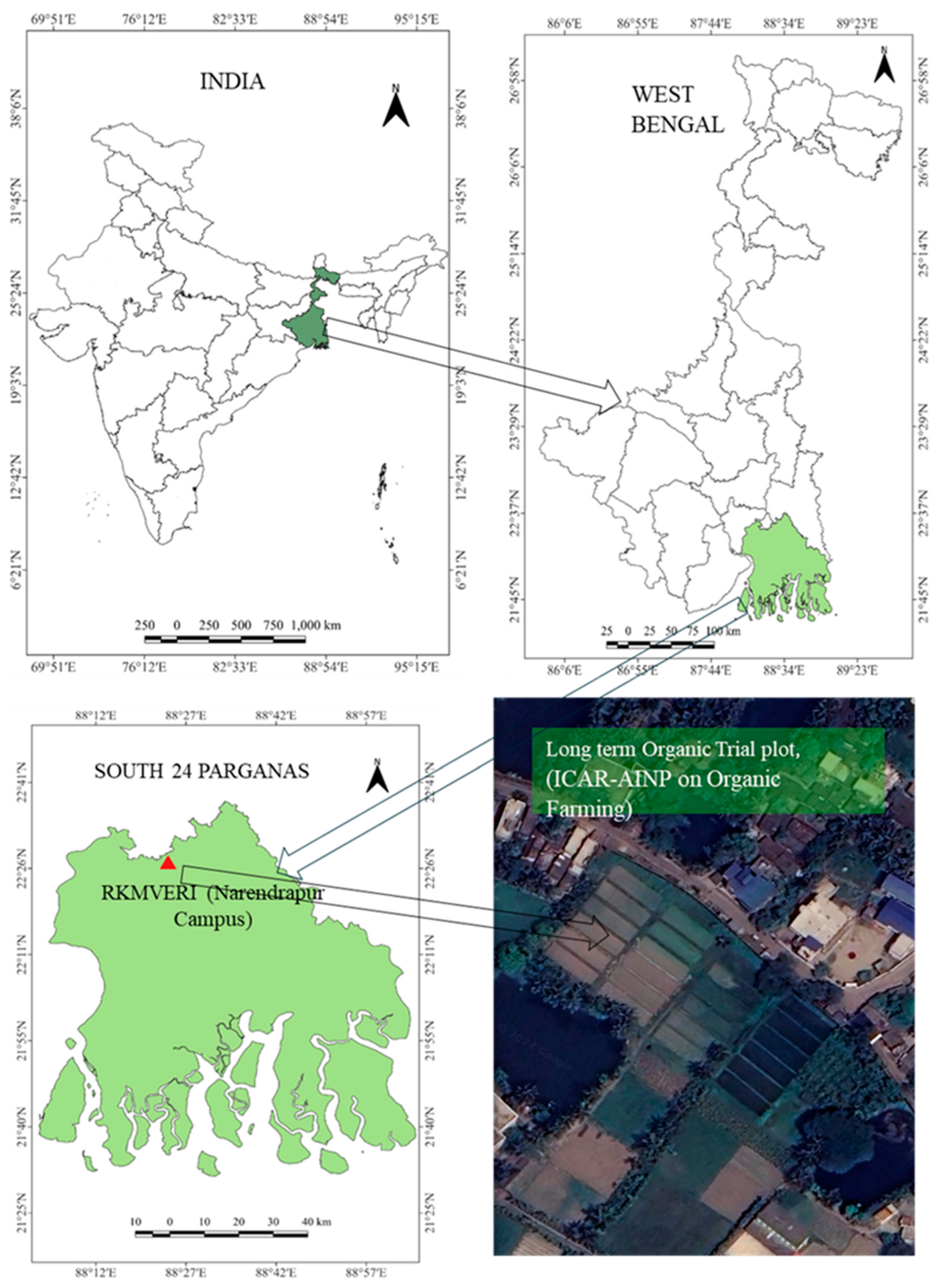
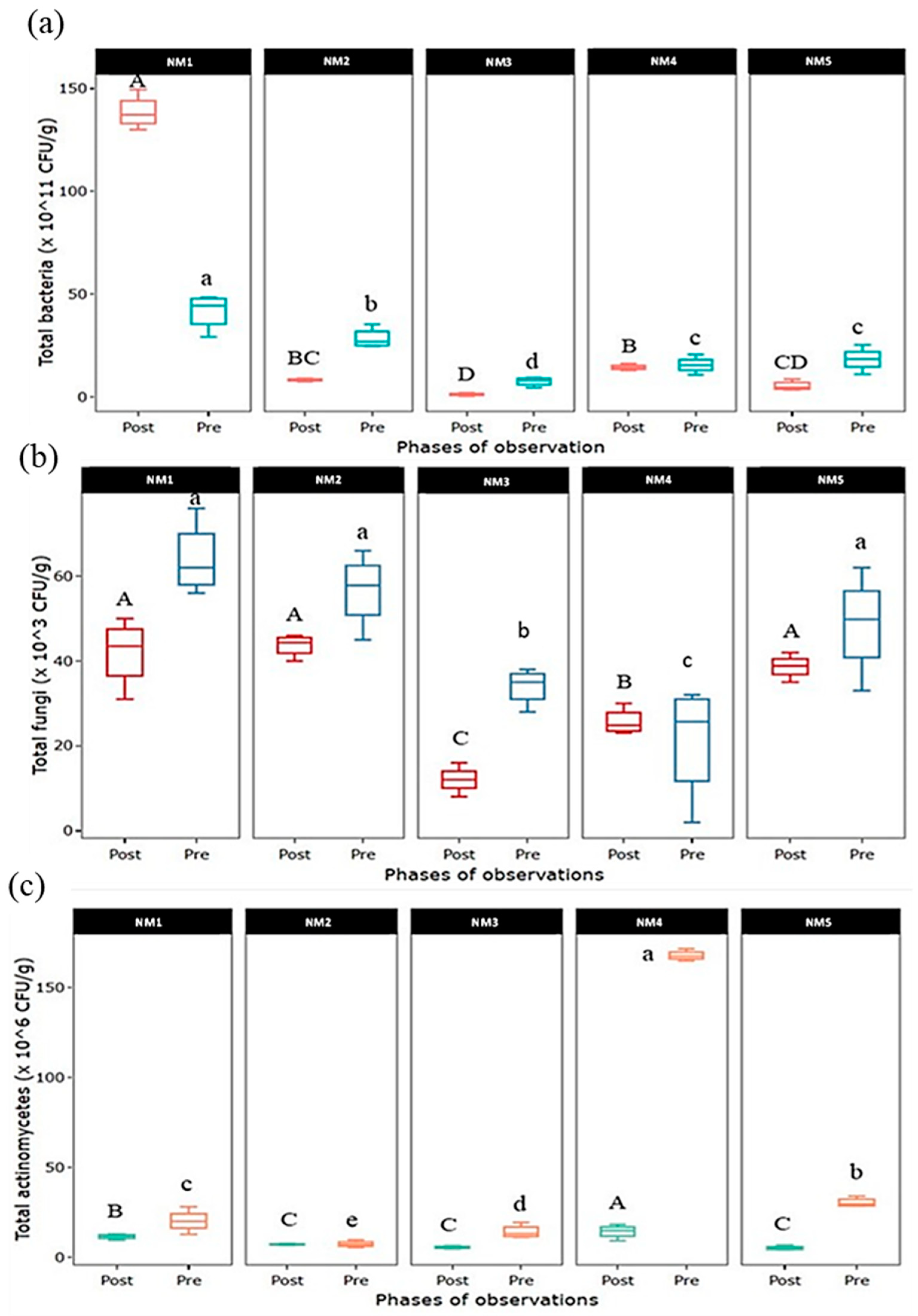
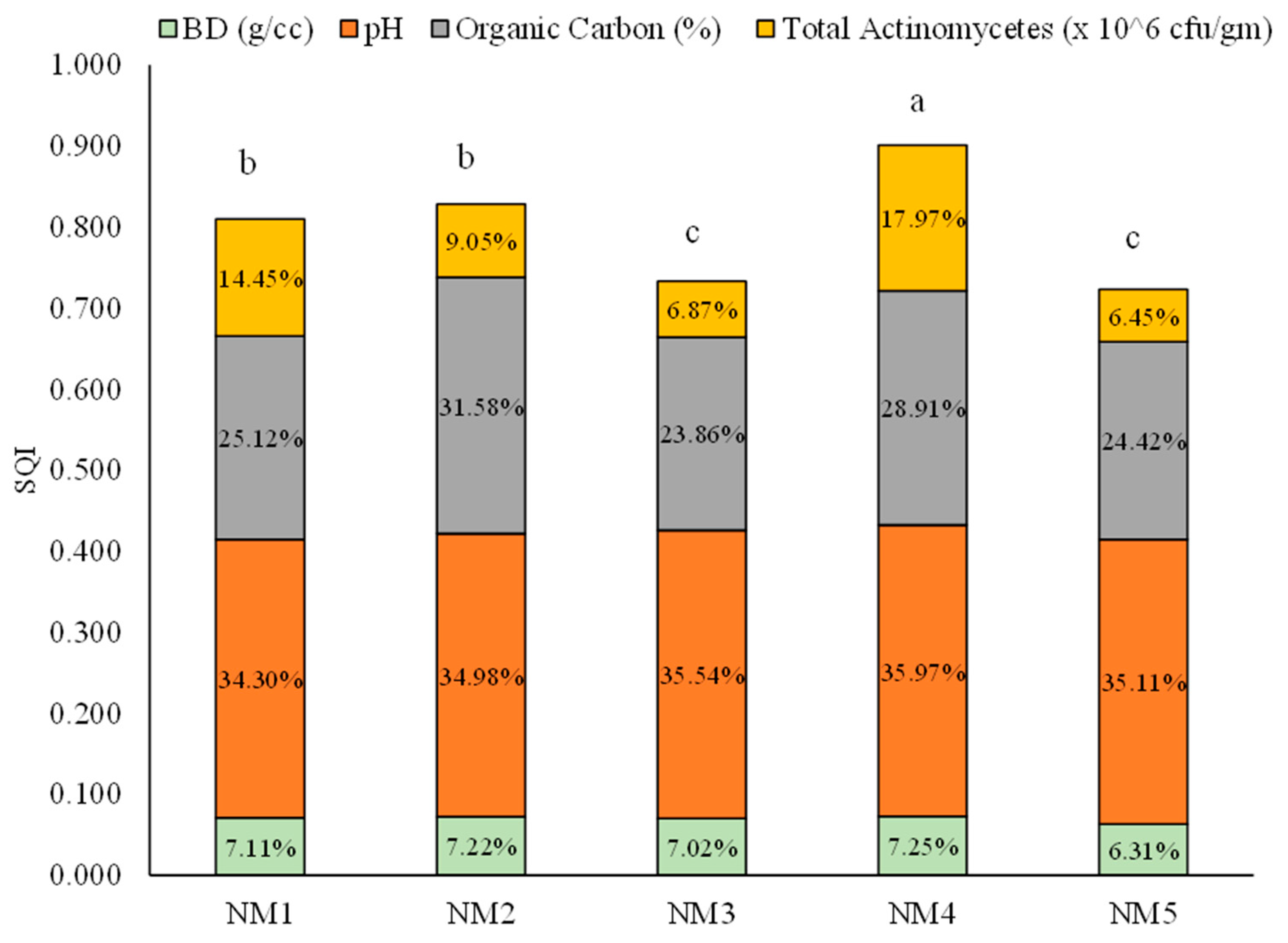
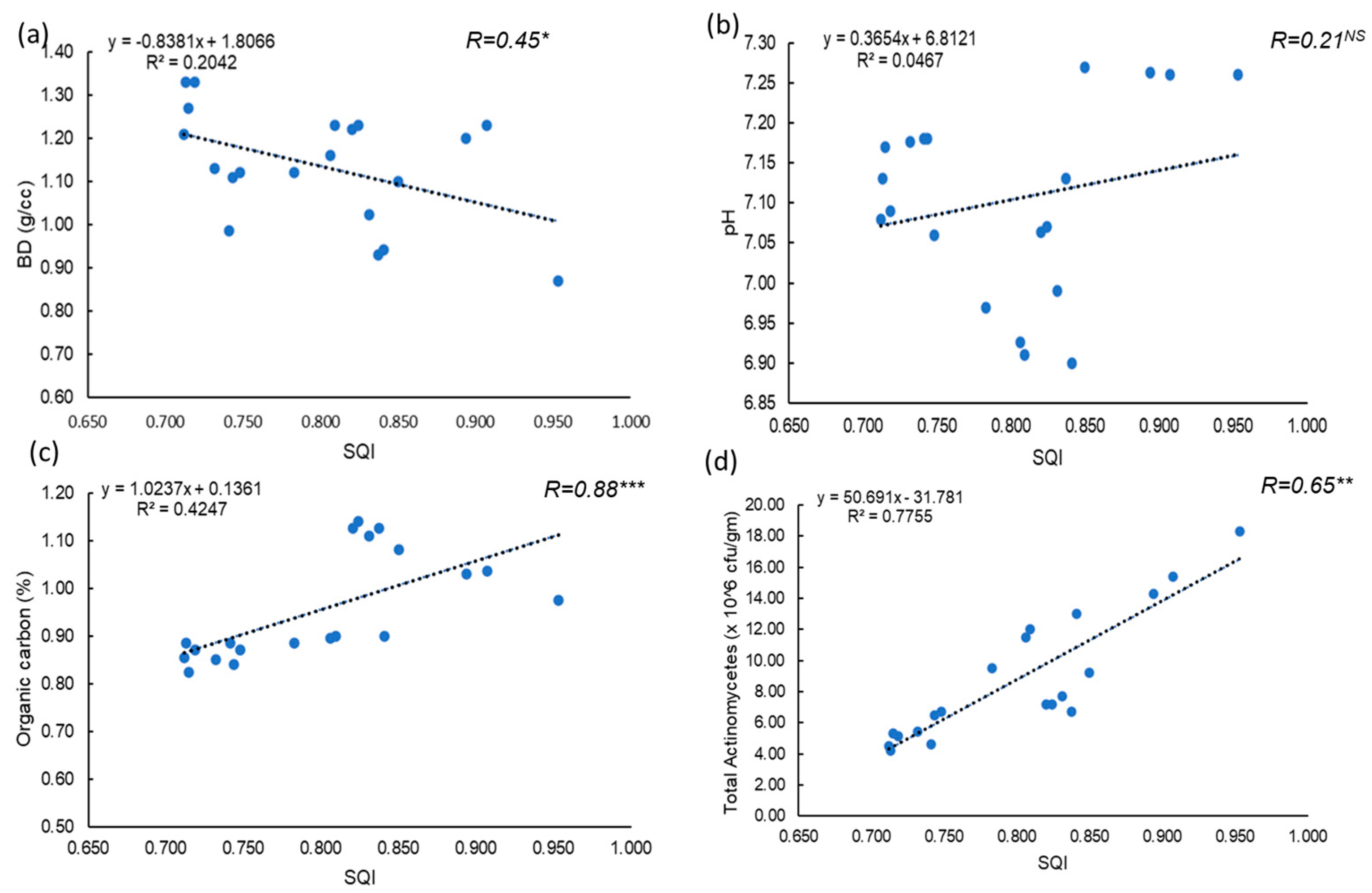
The effects of integrated nutrient-management (INM) practices on soil quality are essential for sustaining agro-ecosystem productivity. The soil quality index (SQI) serves as a tool to assess the physical, chemical, and biological potential of soils as influenced by various edaphic and agronomic practices. A multiyear (2018–2021) field experiment was performed at the University Organic Research Farm, Narendrapur, West Bengal, India, to investigate the influence of integrated and sole applications of different conventional fertilizers, organic (e.g., vermicompost), and natural farming inputs (e.g., Dhrava Jeevamrit and Ghana Jeevamrit) on SQIs and crop productivity of rice–mustard–green gram-based cropping systems. A total of 12 parameters were selected for the assessment of SQI, amongst which only four, namely pH, organic carbon %, total actinomycetes, and bulk density, were retained for the minimum data set based on principal component analysis (PCA). In this study, the maximum SQI value (0.901) of the experimental soil was recorded in the INM practice of 25% organic and 25% inorganic nutrient inputs, and the rest with natural farming inputs, which augments the SQI by 24% compared to the 100% inorganic nutrient treatment. Amongst the different soil parameters, the highest contribution was from the pH (35.18%), followed by organic carbon % (26.77%), total actinomycetes (10.95%), and bulk density (6.98%). The yields in different cropping systems varied year-wise across treatments. Notably, the highest yield in rainy rice was estimated in the 100% organic treatment, followed by INM practices in the subsequent years, and finally, the combination of organic and natural inputs in the final year. In the case of mustard, the combination of organic and natural inputs resulted in the highest productivity in the initial and last years of study, while the 100% organic treatment resulted in higher productivity in subsequent years. Green gram showed a dynamic shift in yield between the 100% organic and integrated treatments over the years. Further, a strong correlation was also established between the soil physico-chemical parameters and the SQI. Overall, this study concludes that the natural and organic input-based INM practice enhances the soil quality and crop productivity of the rice–mustard–green gram cropping system under the coastal saline zone.
Keywords: cereal-based cropping system; coastal saline zone; natural farming; organic inputs; soil fertility cereal-based cropping system; coastal saline zone; natural farming; organic inputs; soil fertility