Article

Identification of Water-Reuse Potentials to Strengthen Rural Areas in Water-Scarce Regions—The Case Study of Wuwei


Faculty of Geomatics, Computer Science and Mathematics, Hochschule für Technik Stuttgart, Schellingstr. 24, 70174 Stuttgart, Germany
Land 2020, 9(12), 492; https://doi.org/10.3390/land9120492
Submission received: 10 November 2020 / Revised: 30 November 2020 / Accepted: 2 December 2020 / Published: 3 December 2020
(This article belongs to the Section Urban Contexts and Urban-Rural Interactions)

Abstract

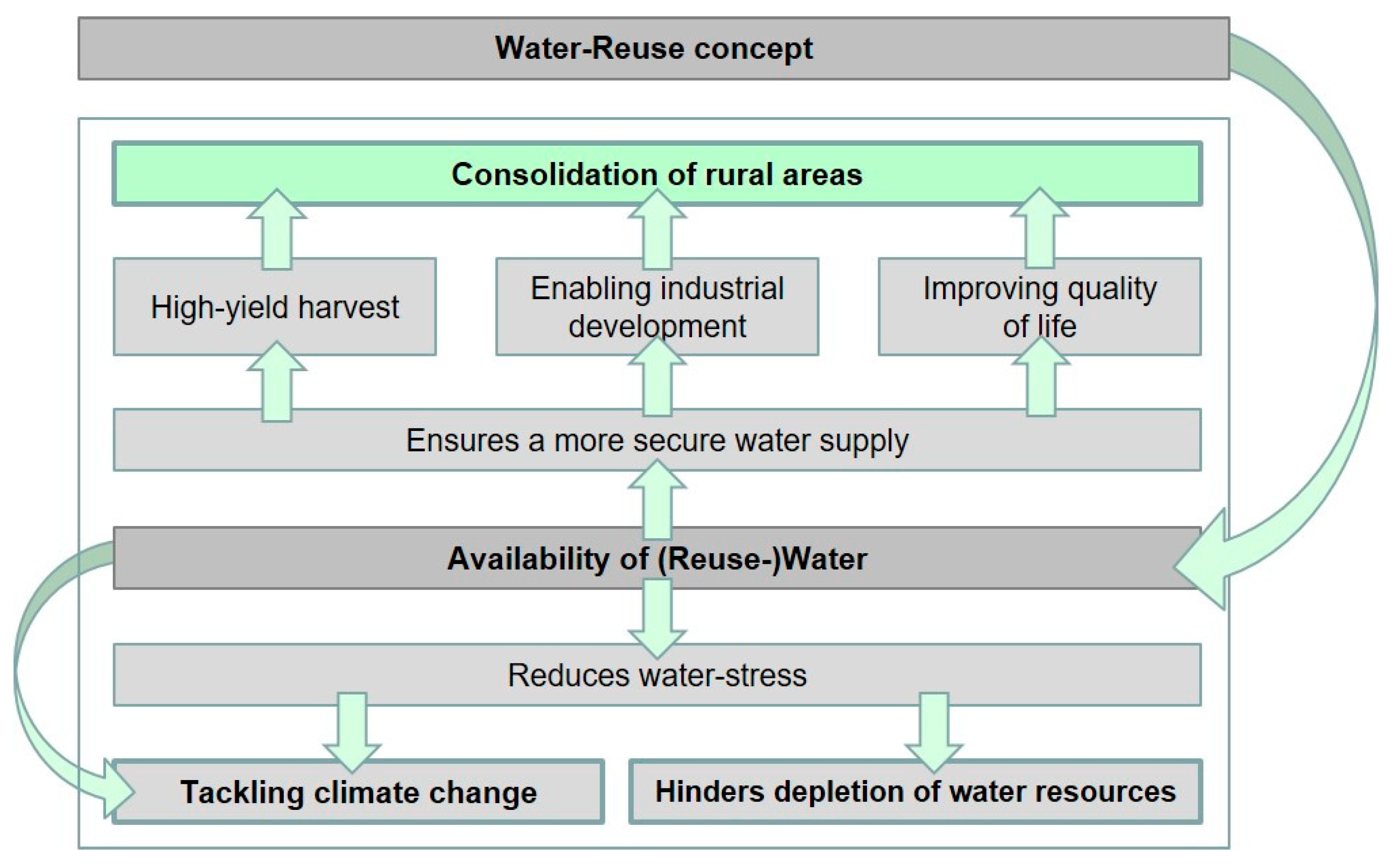
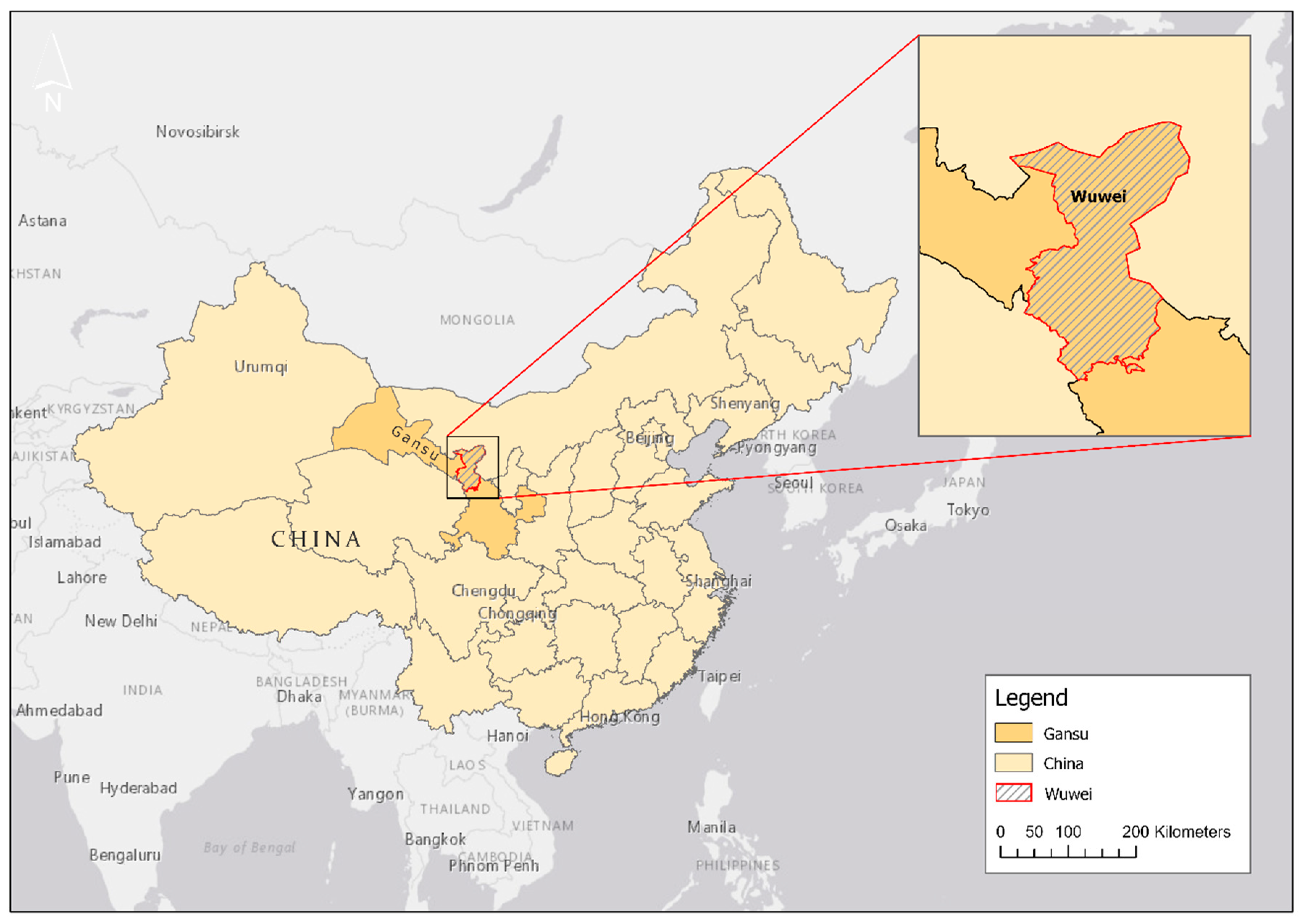
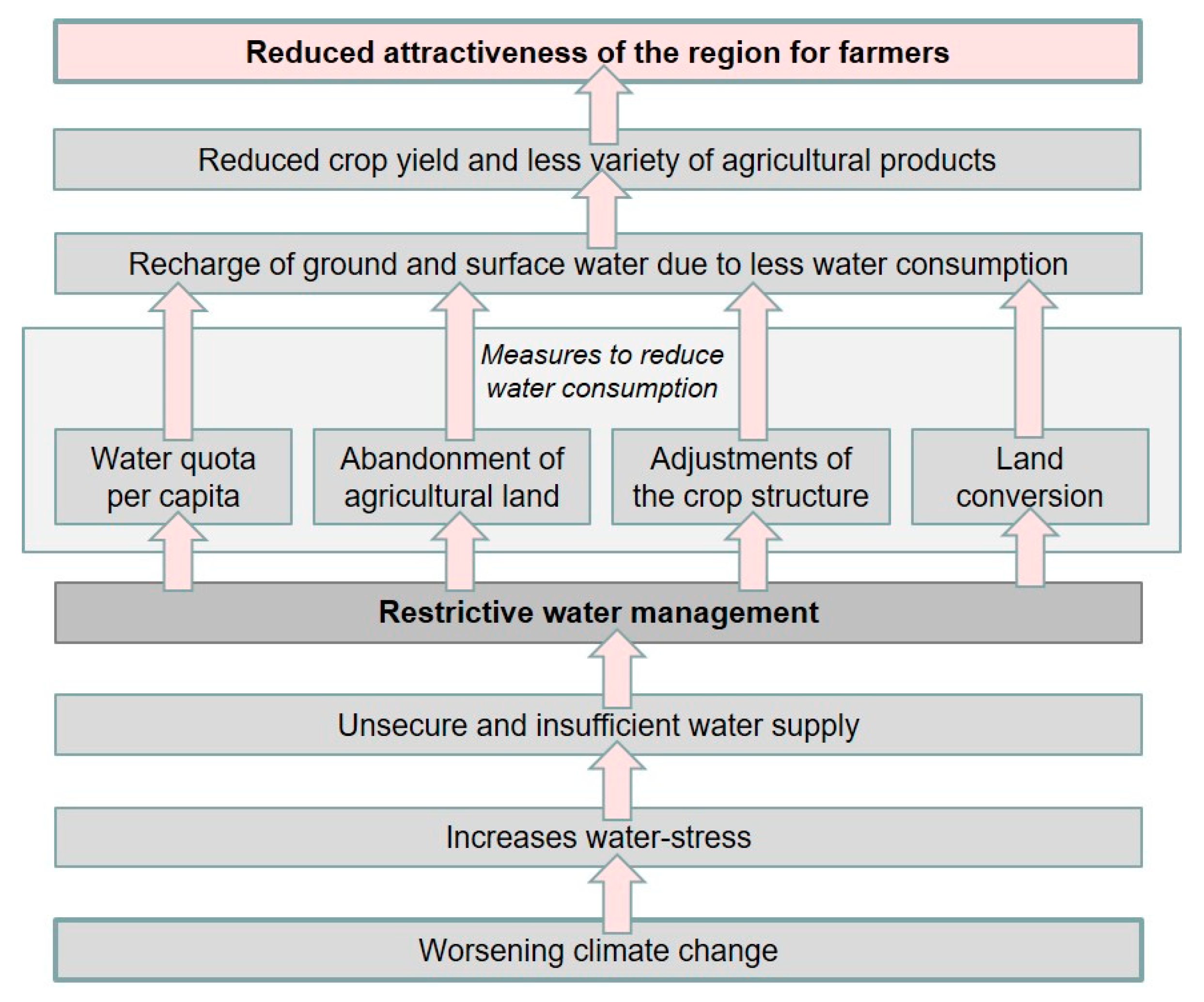
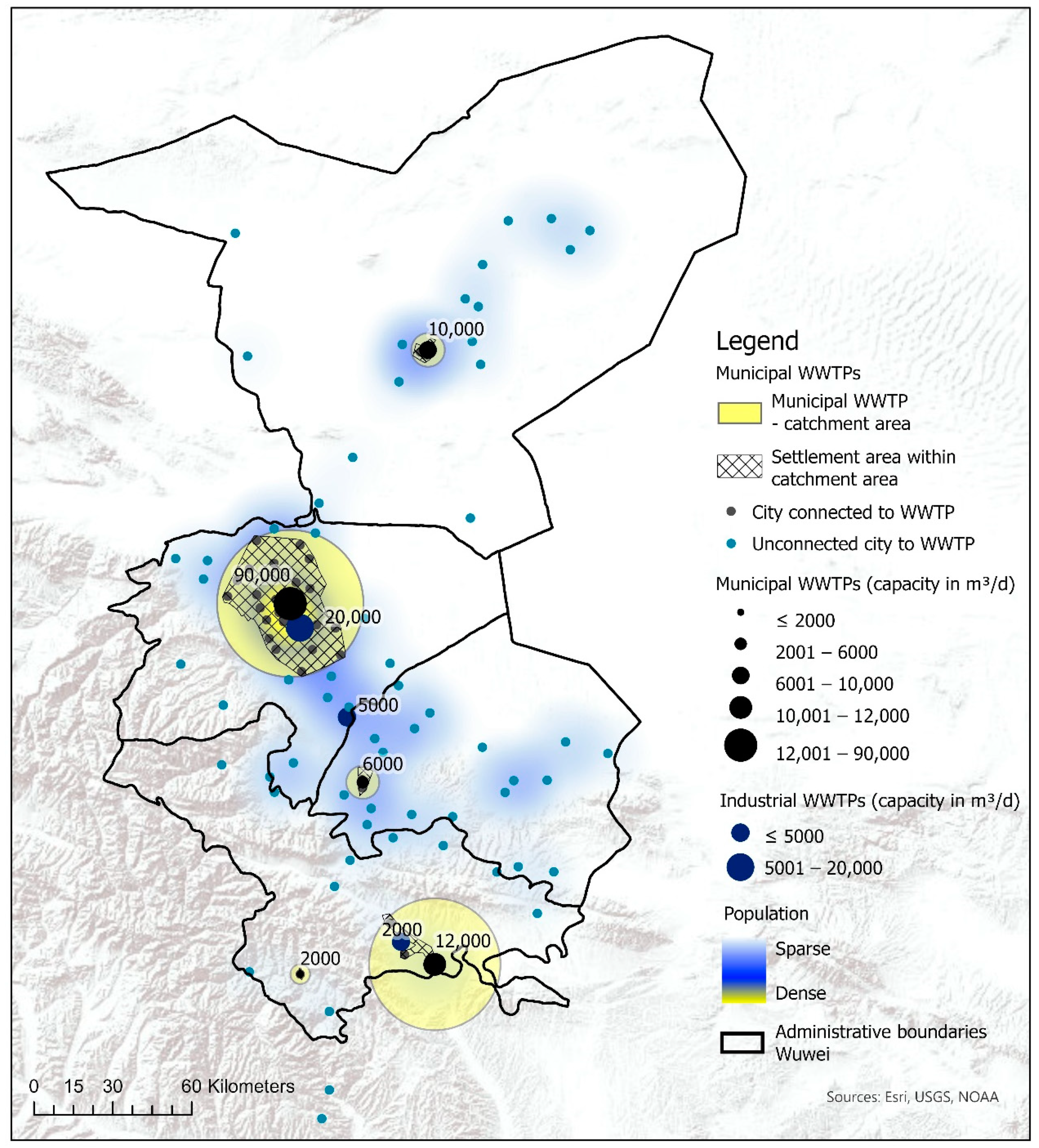
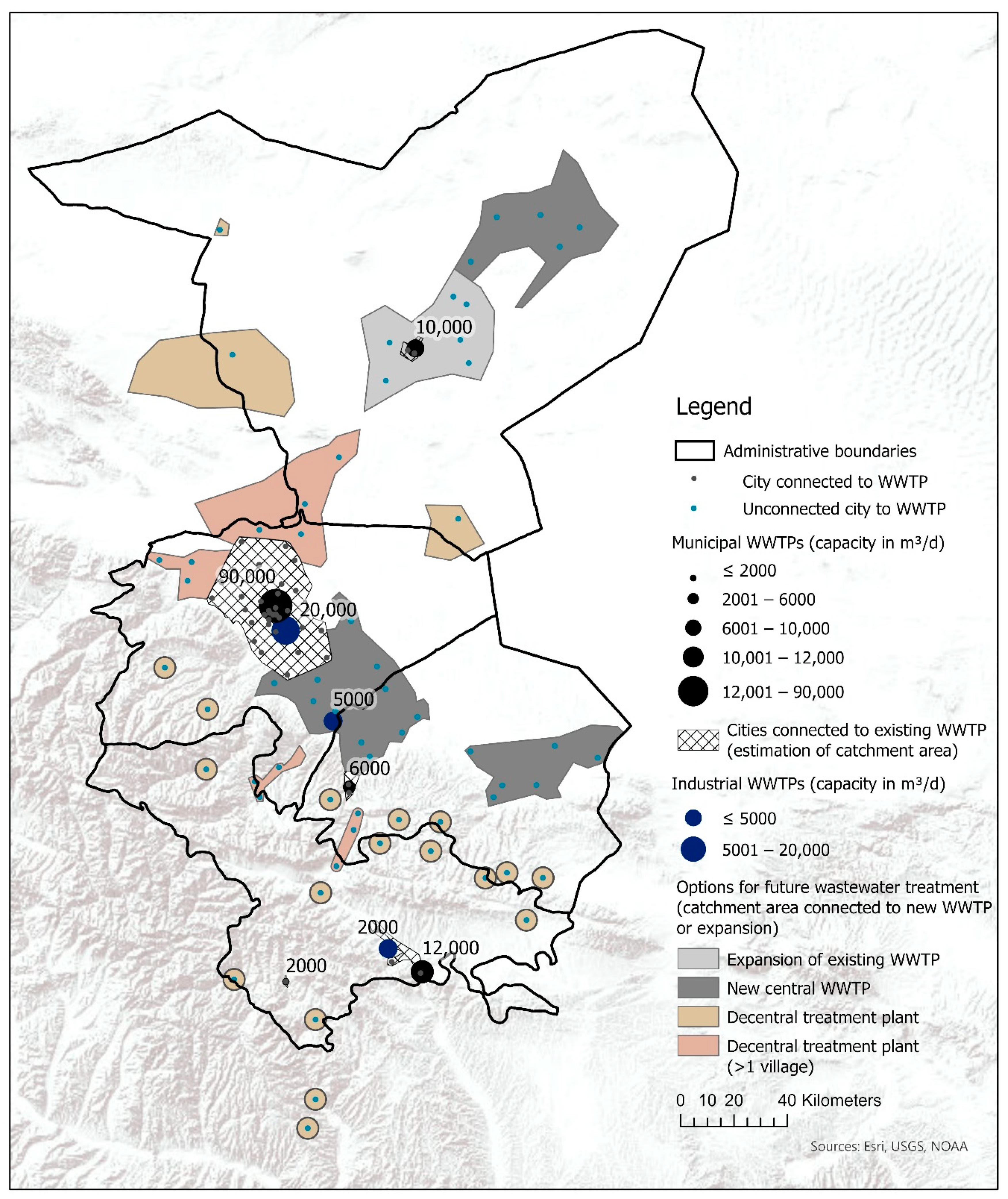
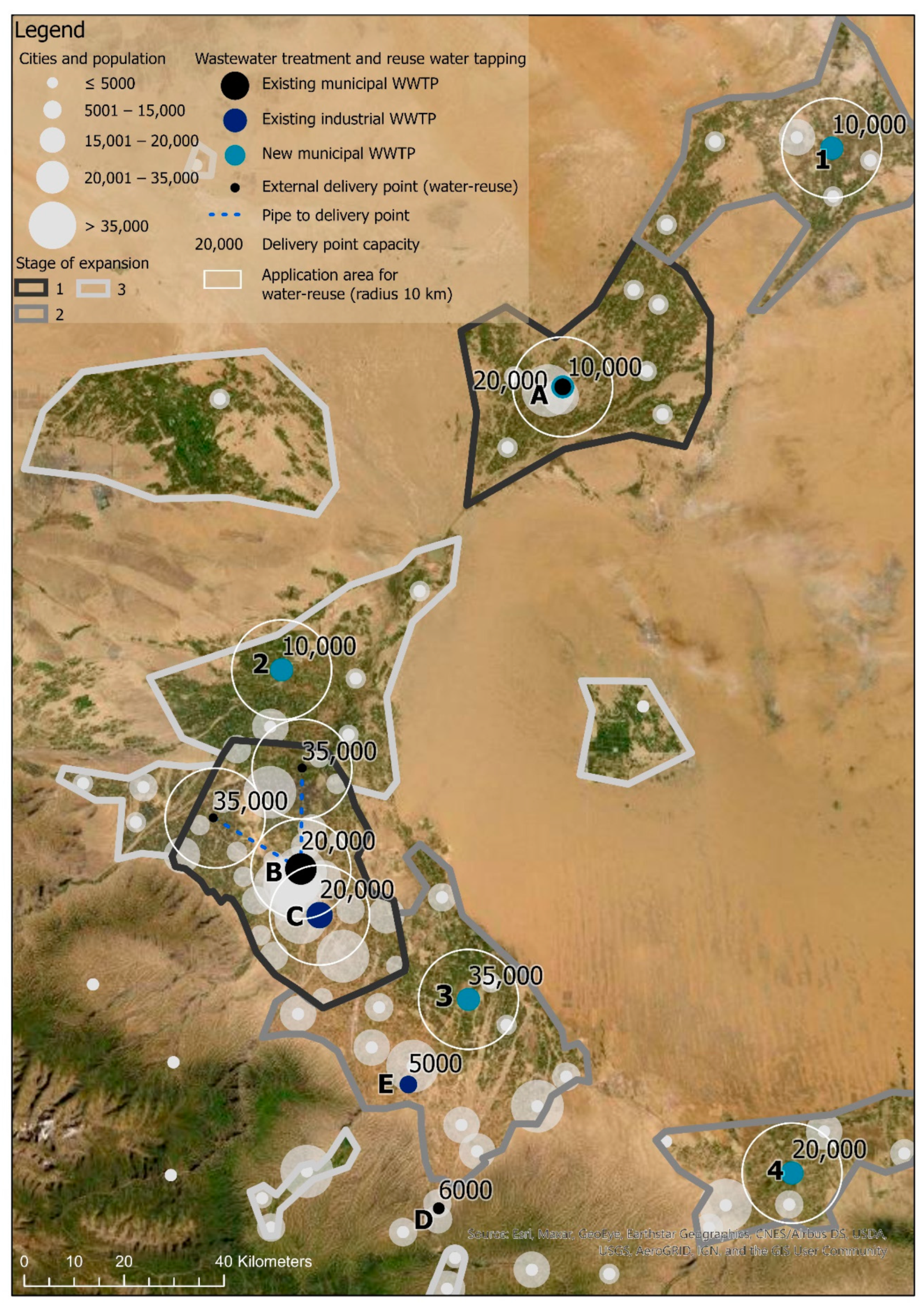
Due to water scarcity, which is worsening due to climate change, rural areas often face the challenge of rural exoduses. Limited water resources restrict local farmers as the opportunities for cultivation in the fields are reduced. This makes rural areas increasingly unattractive. To strengthen rural areas, sustainable water management with a focus on water-reuse is required. Since treated wastewater is a daily resource with calculable quantities available, reused water can contribute to the sustainable strengthening of a region. Therefore, an analysis of water-reuse potentials must be conducted to develop a water-reuse concept and thus increase the application of reused water. For this purpose, a case study of Wuwei as a rural and water-scarce region in China was chosen. By using a geoinformation system, the unfulfilled water-reuse potential can be identified by intersecting the results of the analysis regarding the current water supply and disposal situation with spatial and regional information, such as population data. Hence, the study presents the potential to increase wastewater treatment and water-reuse for, e.g., agricultural irrigation. It is shown that, in the best case, reused water can be increased from 5479 m3 per day to 207,461 m3 per day. Resource efficiency can be further increased by combining water-reuse concepts with land-use strategies adapted to climate change. This will ensure a more sustainable water supply in the future.
Keywords: rural areas; water scarcity; water-reuse; agricultural irrigation rural areas; water scarcity; water-reuse; agricultural irrigation