


Abstract
Arbuscular mycorrhizal fungi (AMF) support plant establishment and soil recovery in degraded lands, yet their long-term associations with vegetation in restored quarries remain poorly understood. This study quantified AMF spore density and genus-level occurrence in pioneer-plant rhizospheres at a cement quarry revegetated more than two decades earlier. AMF infective potential was assessed using Pueraria javanica trap cultures. Relationships among AMF attributes, vegetation strata, rhizosphere flavonoids, and soil chemical properties were evaluated using mixed-effects, correlation, and multivariate analyses. Trap-culture colonization was high across tree-, shrub-, and herb-associated inocula, with no significant difference among vegetation strata. Spore density differed significantly among strata and was highest in herbaceous rhizospheres, including Imperata cylindrica, Cymbopogon citratus, and Themeda gigantea; Eupatorium odoratum also supported high density among shrubs. Available phosphorus was the only soil property that remained significantly associated with spore density after accounting for vegetation stratum and plant species. Exchangeable potassium and soil organic carbon were positively correlated with spore density but did not remain significantly associated in the adjusted models. Total flavonoids differed strongly among vegetation strata but were not significantly associated with field AMF spore density after adjustment for vegetation stratum and plant species and were not correlated with trap-culture colonization or genus richness. Glomus sensu lato was the most frequently detected taxon. Trap-culture colonization of 70–90% and the positive association between available phosphorus and field spore density suggest that AMF propagule metrics may serve as candidate indicators of belowground condition in long-term tropical quarry restoration.
1. Introduction
Ecological restoration requires the recovery of not only aboveground vegetation but also belowground biological processes that sustain nutrient cycling, plant establishment, and ecosystem functioning [1,2]. Cement quarrying creates highly disturbed substrates and removes vegetation, thereby constraining natural plant establishment [3]. Therefore, revegetation is an essential first step. Successful restoration also requires the recovery of soil properties and belowground biological networks that support plant recruitment and succession.
Restoration success has commonly been assessed using vegetation cover, species composition, structural development [4], and soil physicochemical properties [3,5,6,7]. These indicators are important. However, they may overlook the recovery of soil microbial communities and propagule pools that mediate nutrient acquisition and plant–soil feedbacks. Soil microorganisms can function both as facilitators and as indicators of ecosystem recovery [1], although their responses may not develop at the same rate as aboveground vegetation [2]. Evaluating belowground biological attributes alongside vegetation and soil chemistry may therefore provide a more comprehensive assessment of long-term restoration outcomes.
The rhizosphere provides a direct link between vegetation establishment and belowground recovery. Interactions among roots, soil microorganisms, and soil chemical conditions regulate plant resource acquisition and tolerance to environmental stress [8]. Assessing rhizosphere biological attributes can therefore reveal whether revegetation has been accompanied by the development of functional plant–soil interactions
Arbuscular mycorrhizal fungi (AMF) are important components of belowground ecosystem functioning because they form symbiotic associations with a wide range of terrestrial plants and contribute to nutrient and water acquisition, soil aggregation, plant stress tolerance, and carbon stabilization [2,9]. Their spores, colonized root fragments, and extraradical hyphae constitute an inoculum pool that can facilitate the establishment of subsequent vegetation [10,11]. However, AMF taxa differ in their colonization strategies, propagule production, disturbance tolerance, and allocation to intraradical and extraradical structures [12,13]. Field spore density and the infective potential of these propagules may therefore provide complementary information on belowground biological condition in restored quarry landscapes.
Pioneer vegetation may play an important role in rebuilding these propagule pools. Species with contrasting rooting systems, growth rates, litter production, and carbon allocation can create distinct rhizosphere environments and influence AMF abundance and occurrence [2,14,15]. Herbaceous plants, shrubs, and trees may consequently differ in their capacity to maintain viable AMF inoculum and modify soil chemical conditions. Pioneer vegetation should therefore not be viewed only as transitional plant cover, but also as a potential reservoir of microbial propagules that supports subsequent ecological succession.
Plant-associated biochemical conditions may provide an additional pathway through which vegetation influences the rhizosphere. Flavonoids and other secondary metabolites can affect AMF spore germination, hyphal development, and root colonization, although responses depend on compound identity, concentration, chemical modification, fungal taxon, and environmental conditions [16,17,18]. Field evidence linking total rhizosphere flavonoid content to AMF abundance or taxonomic occurrence remains limited. Moreover, total flavonoid concentration may obscure contrasting effects among individual flavonoid classes. Rhizosphere flavonoid profiles are therefore more appropriately examined as exploratory indicators of vegetation-associated biochemical differentiation than as direct evidence of AMF recruitment mechanisms.
The revegetated cement quarry studied in Sukabumi, West Java, was subsequently colonized naturally by pioneer plant species representing tree, shrub, and herbaceous strata [19]. Although vegetation development at this site has been documented, it remains unclear whether soils beneath this vegetation maintain abundant and infective AMF propagules, whether these attributes differ among vegetation strata, and how they are associated with soil chemical conditions. Addressing these questions is important for evaluating how naturally established pioneer vegetation is associated with belowground biological condition and whether such vegetation may warrant retention during quarry restoration.
Accordingly, this study aimed to compare field AMF spore density and genus-level occurrence among soils associated with different pioneer plant species and vegetation strata; to assess the infective potential of AMF propagules from tree-, shrub-, and herb-associated rhizospheres using Pueraria javanica as a common trap host; and to identify soil chemical properties associated with variation in field AMF spore density after more than two decades of quarry restoration. Total flavonoid content and flavonoid-class profiles were additionally examined as exploratory indicators of biochemical differentiation among vegetation-associated rhizospheres. By linking vegetation strata with AMF propagule status and soil chemical conditions, this study evaluates the potential of AMF metrics as candidate indicators of belowground condition in long-term quarry restoration.
We hypothesized that (a) field AMF spore density and rhizosphere soil properties would differ among vegetation strata; (b) the infective potential of AMF propagules would vary among tree-, shrub-, and herb-associated soils; and (c) variation in field AMF spore density would be associated with rhizosphere flavonoid concentration and soil nutrient gradients.
2. Materials and Methods
2.1. Study Site and Sampling Design
The study was conducted within a revegetated cement-quarry landscape spanning sampling areas in the Cibadak (−6.916057, 106.783572) and Cicantayan (−6.907056, 106.817222; −6.895611, 106.873556) subdistricts of Sukabumi Regency, West Java, Indonesia (Figure 1). The three sampling locations were situated at approximately 360 m a.s.l. in Cibadak, 577 m a.s.l. in Cicantayan 1, and 584 m a.s.l. in Cicantayan 2. The quarry landscape was spatially discontinuous, with revegetated mining patches separated by approximately 2–3 km. These patches were not predefined experimental blocks; sampling followed the occurrence of the selected pioneer plant species across the broader quarry landscape. Because species were not systematically replicated among patches, a separate site or block effect could not be estimated. The site had been revegetated with Pinus merkusii more than two decades before the study and was subsequently colonized naturally by pioneer plant species representing tree, shrub, and herbaceous vegetation strata [19]. Pinus merkusii was not included among the target plant species because it predominantly forms ectomycorrhizal associations, whereas the present study specifically focused on arbuscular mycorrhizal fungi (AMF) associated with naturally established pioneer vegetation [20]. Field sampling was completed during a single field campaign lasting approximately 10 days during September–October 2021, at the transition from the dry to the rainy season. Each biological sample was collected once, and all vegetation strata were sampled within the same field campaign. Subsequent trap-culture and laboratory activities continued until November 2022.
Figure 1.
Geographic location and regional layout of the study area: (a) macro-scale position of Sukabumi Regency (highlighted in red) within the Indonesian archipelago; and (b) micro-scale spatial distribution of the three evaluated sampling plots (Cibadak, Cicantayan 1 and Cicantayan 2) superimposed onto satellite imagery.
Regional climatological data for Sukabumi report daily temperatures of approximately 20–24 °C, rainfall values of approximately 330–500 mm, and relative humidity of 89–92% [21]. The quarry substrate is limestone-derived. A previous assessment of the Holcim Educational Forest (HEF) revegetation area reported low nutrient availability, acidic soil conditions, soil compaction, and elevated Fe, Al, and Mn as constraints to plant establishment [22]. According to site-management information obtained during fieldwork, approximately 5 kg of compost and 100 g of dolomite were applied per planting hole before Pinus merkusii establishment. Despite the limestone-derived substrate, localized acidic drainage with pH below 4.5 was reported at the site.
Based on the vegetation survey reported in [19], the study included 12 pioneer plant species, each represented by three biological replicates. For each species, three spatially separated individual plants were randomly selected and treated as independent biological replicates. One composite rhizosphere soil sample was collected from each plant by combining three subsamples taken from different points around its rooting zone, with a total weight of approximately 1000 g. This sampling design yielded 36 vegetation-associated soil samples. Three additional samples were collected from spatially separated non-vegetated locations within the same quarry landscape, resulting in a total of 39 soil samples. Exact inter-plant distances were not recorded during field sampling and therefore cannot be reconstructed reliably.
Rhizosphere soil was collected by carefully excavating the rooting zone of each selected plant. Fine roots were traced to the target plant to ensure the correct association between plant identity and the collected rhizosphere soil. Soil adhering closely to the fine roots was retained as rhizosphere soil. Sampling depths were adjusted to the dominant rooting zones of each vegetation stratum, respectively, 0–60 cm for trees, 0–40 cm for shrubs, and 0–15 cm for herbaceous plants. Soil from non-vegetated locations was collected at a depth of 0–15 cm.
Each composite sample, representing one individual plant, was homogenized and divided into separate portions for soil chemical analysis, rhizosphere flavonoid analysis, direct AMF spore extraction, and trap-culture establishment. Samples were placed in sealed containers, transported in a cooler box, and processed separately; hence, the identity of each biological replicate was maintained throughout the analyses.
Because sampling depth was confounded with vegetation stratum, comparisons among tree-, shrub-, and herb-associated soils were interpreted cautiously. The design does not allow separate estimation of vegetation and depth effects; observed differences may therefore reflect both vegetation-associated conditions and vertical gradients in root density and soil properties.
2.2. Rhizosphere Flavonoid Analysis
Rhizosphere soil samples were submitted to the Center for Agricultural Industry (Balai Besar Industri Pertanian), Bogor, West Java, Indonesia, for flavonoid analysis. Total flavonoid content was quantified using UV-Vis spectrophotometry (Shimadzu, Kyoto, Japan) with quercetin as the reference standard. The laboratory output also provided molecular-formula information for detected compounds/features. These formulae were manually matched against PubChem and, when no clear match was obtained, other publicly available NCBI resources and relevant literature to tentatively assign broader flavonoid classes. Because the assignments were not confirmed using authentic analytical standards, the class-level annotations were considered tentative. The available laboratory documentation did not specify additional analytical blanks or secondary standards beyond the quercetin calibration; these QC details therefore cannot be reported and are acknowledged as a methodological limitation.
According to the laboratory report, the maximum absorption wavelength was determined by scanning from 350 to 500 nm and was approximately 415 nm. A quercetin calibration curve was prepared at concentrations of 25–125 µg mL−1. An aliquot of the sample extract was dissolved in ethanol and reacted with sodium acetate, AlCl3, and distilled water. Each sample extract was measured in five analytical replicates; these analytical replicates were not treated as independent biological observations, and their mean was used as the sample-level value for statistical analysis. Total flavonoid content was expressed as mg quercetin equivalents per kilogram of sample (mg QE kg−1). Tentatively assigned flavonoid classes were recorded as presence–absence data because their concentrations were not quantified separately.
2.3. Soil Chemical Analysis
Soil pH was measured in a 1:5 soil-to-water suspension. Total nitrogen was determined using the Kjeldahl method, available phosphorus expressed as P2O5 using the Bray-1 extraction method, exchangeable potassium using ammonium acetate extraction (NH4OAc), and soil organic carbon using the Walkley-Black method. Available sulphur was determined using the turbidimetric method after extraction with Ca(H2PO4)2 solution, and absorbance was measured at 420 nm. The variables were expressed as pH, total N (%), available P2O5 (mg kg−1), exchangeable K (meq 100 g−1 soil), available S (ppm), and soil organic C (%).
2.4. Field AMF Spore Density and Morphological Identification
Field AMF spore density was determined directly from field-collected rhizosphere soil using the wet-sieving and decanting method of [23]. A 100-g subsample of air-dried soil was suspended in approximately 500 mL of water and stirred thoroughly to disperse soil aggregates. After the heavier particles had settled briefly, the suspension was decanted through nested sieves with mesh sizes of 250, 100, 50, and 30 µm, arranged from the largest to the smallest aperture. The procedure was repeated three times to maximize spore recovery.
Material retained on the sieves was rinsed into Petri dishes and examined under a stereomicroscope (Olympus SZ61, Japan) at ×20–40 magnification. Intact AMF spores were counted manually based on their morphological characteristics. Field AMF spore density was expressed as the number of spores recovered per 100 g dry soil.
All intact spores recovered from each 100-g subsample were counted for spore-density estimation. Within each sample, spores were grouped according to morphological similarity, and two representative spores from each distinct morphotype were selected for mounting on microscope slides in polyvinyl-lacto-glycerol (PVLG), with or without Melzer’s reagent, and subsequent genus-level identification. Morphological identification was based on spore size, colour, shape, wall structure, surface ornamentation, subtending hyphae, and reaction to Melzer’s reagent, following Brundrett et al. (1996) [24] and relevant AMF taxonomic descriptions. Thus, spore-density estimation included all intact spores, whereas taxonomic identification was based on representative morphotypes.
Because identification was based on morphology, Glomus was reported as Glomus sensu lato when separation into recently revised genera was not possible. AMF genera were recorded as present or absent in each soil source. Genus-level results were therefore interpreted as occurrence patterns rather than quantitative community composition because genus-specific spore abundances were not determined.
2.5. Trap Culture and Assessment of AMF Infective Potential
Trap cultures [24] were established separately for each independent composite field sample to assess the infective potential of AMF propagules. Pueraria javanica was used as a common trap host for all soil sources. Each composite sample was retained as a separate inoculum source, resulting in three independent trap-culture inocula for each plant species and three for non-vegetated soil.
Plastic pots (10 cm diameter) were prepared with 100 g of sterile zeolite in the lower layer, followed by 50 g of field-collected soil as inoculum and a 50 g upper layer of sterile zeolite. Zeolite was sterilized by autoclaving for 1 h before use. Germinated P. javanica seedlings of similar size were planted in the pots and maintained under greenhouse conditions. Plants were watered regularly, and shoots were pruned periodically to encourage root development. Greenhouse temperature and relative humidity were not continuously recorded. No uninoculated control pots were included because the trap-culture assay was designed to recover and compare viable AMF propagules from each field-soil inoculum rather than to quantify background colonization. The absence of an uninoculated control is therefore acknowledged as a limitation, because background greenhouse contamination cannot be independently excluded. No nutrient additions were documented in the available trap-culture protocol.
After three months, watering was withheld for two weeks to promote AMF sporulation. Fine roots of P. javanica were harvested and washed carefully under running water. Roots were cleared in 10% KOH for at least 12 h, then soaked in 2% HCl for 30 min, then directly stained in 0.05% trypan blue for 12–24 h, following a modification of Phillips and Hayman (1970) [25].
Ten randomly selected root segments, each approximately 1 cm long, were examined for each independent soil inoculum. Thus, 30 root segments were evaluated for each plant species across the three independent inocula. Root segments were observed under a light microscope at ×10–40 magnification. A root segment was considered colonized when at least one AMF structure, including intraradical hyphae, vesicles, arbuscules, or intraradical spores, was observed within the root tissue.
AMF root colonization was calculated for each independent trap-culture inoculum as:
Colonization values were subsequently summarized for the three independent soil inocula representing each plant species. Because the same trap host was used under standardized greenhouse conditions, colonization of P. javanica was interpreted as an indicator of the infective potential of AMF propagules in the original field soil. It was not interpreted as colonization of the original pioneer plant roots in the field.
2.6. Statistical Design and Data Analysis
The statistical design was hierarchical. Vegetation stratum was treated as the principal grouping factor, plant species was nested within vegetation stratum, and the three individual plants sampled for each species represented independent biological replicates. The three soil subsamples collected around each plant were composited before analysis and were therefore not treated as independent observations.
All analyses were conducted using R version 4.4.2 [26] with the packages glmmTMB ver. 1.1.14 [27], emmeans ver.2.0.4 [28], DHARMa ver. 0.5.0 [29], vegan ver. 2.7-6 [30], ggplot2 ver. 4.0.3 [31], and rstatix ver. 1.1.0 [32]. Statistical significance was evaluated at p < 0.05, and p-values were adjusted using the Holm procedure [33] where multiple comparisons were performed.
2.6.1. Field AMF Spore Density
Field AMF spore density was analysed using the 36 vegetation-associated rhizosphere samples. Spore density was transformed as ln(y + 1) and analysed using a linear mixed-effects model fitted with glmmTMB. Vegetation stratum (tree, shrub, or herbaceous) was included as a fixed effect, whereas plant species was included as a random intercept because the three biological replicates were nested within species. This random intercept accounted for within-species clustering and unmeasured species-level heterogeneity while vegetation stratum was evaluated as the fixed grouping factor.
Model residuals were evaluated for normality and homoscedasticity. The overall effect of vegetation stratum was tested by likelihood-ratio comparison of models with and without the stratum term. When a significant stratum effect was detected, pairwise comparisons among estimated marginal means were performed with Holm-adjusted p-values. Estimated marginal means and 95% confidence intervals were back-transformed to the original spore-density scale for reporting.
Species-level means and standard deviations were presented descriptively. Species-level comparisons were considered exploratory because each plant species occurred within only one vegetation stratum. The three non-vegetated soil samples were excluded from the mixed-effects model because they were not associated with a plant species and were retained only as descriptive reference samples.
2.6.2. Trap-Culture Infective Potential
Trap-culture infective potential was analysed using the numbers of colonized and non-colonized root segments recorded for each independent soil inoculum. The analysis included 36 vegetation-associated inocula, with each composite rhizosphere sample treated as an independent biological replicate.
A binomial generalized linear mixed-effects model was fitted. Vegetation stratum (tree, shrub, or herbaceous) was included as a fixed effect, whereas plant species was included as a random intercept to account for the three independent inocula nested within each species. Model residuals and overdispersion were evaluated using simulation-based diagnostics. Pairwise comparisons among vegetation strata were performed using estimated marginal means with Holm-adjusted p-values when the overall stratum effect was significant.
The non-vegetated soil inocula were excluded from the host-associated inferential analysis because they were not associated with an identifiable current plant host. Consequently, AMF propagules recovered from these soils could not be attributed to a defined rhizosphere and may include legacy propagules from previous vegetation. Trap-culture colonization was analysed separately from field AMF spore density because it represented the infective potential of viable AMF propagules expressed under standardized greenhouse conditions and was not interpreted as colonization of the original pioneer plant roots in the field.
2.6.3. Relationships Between Soil Chemical Properties and Field AMF Spore Density
Relationships between field AMF spore density and soil pH, total nitrogen, available phosphorus, exchangeable potassium, available sulphur, and soil organic carbon were initially evaluated using Spearman’s rank correlations based on matched independent composite soil samples.
Correlations were first calculated using all 39 samples, including the three non-vegetated reference samples, and were subsequently repeated using only the 36 vegetation-associated samples. This sensitivity analysis was conducted to determine whether the observed relationships were disproportionately influenced by the contrasting properties of the non-vegetated soils. Because six soil properties were examined, p-values were adjusted using the Holm procedure [33] within each set of correlation analyses.
The relationships were subsequently evaluated using separate negative-binomial generalized linear mixed-effects models fitted to the 36 vegetation-associated samples. Field AMF spore density was used as the response variable, whereas each soil property and vegetation stratum were included as fixed effects. Soil-property variables were standardized before modelling to improve model convergence and facilitate comparison among predictors [34]. Plant species was included as a random intercept to account for the three biological replicates nested within each species.
Separate models were fitted for each soil property rather than including all soil variables in a single model because several soil properties were intercorrelated and the number of independent samples was limited [35,36]. Model residuals, dispersion, and potential zero inflation were evaluated using simulation-based diagnostics. Incidence-rate ratios, 95% confidence intervals, and Holm-adjusted p-values were reported for the soil-property predictors.
2.6.4. Principal Component Analysis
Principal component analysis (PCA) was conducted using centred and scaled values of the six soil chemical variables to summarize the major edaphic gradients across the 39 independent composite samples, comprising 36 vegetation-associated samples and three non-vegetated reference samples [37,38]. Field AMF spore density was projected as a supplementary variable and did not contribute to the construction of the principal components. Pearson correlations between field spore density and sample scores on PC1 and PC2 were calculated. The proportions of total variance explained by the first two principal components were reported. As a sensitivity analysis, the PCA and correlations between field AMF spore density and PC1/PC2 scores were repeated using only the 36 vegetation-associated samples, excluding the three non-vegetated reference samples.
Redundancy analysis and PERMANOVA were not performed because the AMF data were limited to sparse presence—absence records for five morphologically identified genera and lacked genus-specific abundance information. Genus-level patterns were therefore summarized descriptively rather than subjected to constrained multivariate analysis.
2.6.5. Rhizosphere Flavonoids
Total rhizosphere flavonoid content was analysed using the 36 independently measured vegetation-associated samples. Differences among tree-, shrub-, and herb-associated rhizospheres were evaluated using a linear mixed-effects model, with vegetation stratum included as a fixed effect and plant species included as a random intercept. Total flavonoid content was log-transformed to improve the normality and homogeneity of model residuals. Pairwise comparisons among vegetation strata were performed using estimated marginal means with Holm-adjusted p-values [33]. The three non-vegetated samples were retained only as descriptive references and were excluded from inferential comparisons because no current plant host could be assigned to these soils; their flavonoid signals therefore could not be attributed to a defined rhizosphere and may include legacy inputs.
Relationships between total flavonoid content and field AMF spore density, trap-culture colonization, and AMF genus richness were evaluated using Spearman’s rank correlations. Because the pooled relationship between total flavonoid content and field spore density could reflect broad differences among vegetation strata, this relationship was additionally evaluated using a linear mixed-effects model with log-transformed field AMF spore density as the response, standardized total flavonoid content and vegetation stratum as fixed effects, and plant species as a random intercept. Model residual normality was evaluated using the Shapiro–Wilk test, and the flavonoid effect was reported as the regression coefficient, standard error, p-value, and exponentiated estimate with a 95% confidence interval.
Individual flavonoid classes and AMF genera were recorded as presence—absence variables. Because individual flavonoid concentrations and genus-specific AMF abundances were not quantified, associations between particular flavonoid classes and AMF genera were summarized descriptively as exploratory co-occurrence patterns and were not interpreted as evidence of direct biochemical selection.
3. Results
3.1. Field AMF Spore Density Across Vegetation Strata
At the species level (Table 1), the highest mean spore density was recorded beneath Imperata cylindrica (337.33 ± 40.02 spores 100 g−1 air-dried soil), followed by Eupatorium odoratum (223.00 ± 10.82), Cymbopogon citratus (214.00 ± 9.17), Themeda gigantea (212.00 ± 14.00), and Setaria sp. (181.33 ± 3.06; Table 1). Among tree-associated soils, Macaranga gigantea supported the highest mean spore density (126.00 ± 24.58), whereas Hibiscus tiliaceus showed the lowest value among vegetation-associated soils (27.00 ± 3.61 spores 100 g−1 air-dried soil).
Table 1.
Field AMF spore density associated with pioneer plant species across vegetation strata.
Field AMF spore density differed significantly among vegetation strata (likelihood-ratio χ2 = 11.44, df = 2, p = 0.0033; Table 2). Herbaceous rhizospheres showed the highest observed mean spore density (217.87 ± 69.39 spores 100 g−1 air-dried soil), followed by shrub-associated soils (131.50 ± 60.48) and tree-associated soils (64.22 ± 48.31). The non-vegetated reference soils contained substantially fewer spores (14.67 ± 7.02 spores 100 g−1 air-dried soil) but were excluded from the mixed-effects model.
Table 2.
Field AMF spore density across vegetation strata.
Pairwise comparisons showed that spore density was significantly higher in shrub-associated than tree-associated rhizospheres (Holm-adjusted p = 0.023) and in herbaceous than tree-associated rhizospheres (Holm-adjusted p < 0.001). The herbaceous-shrub difference was not statistically significant after Holm adjustment (p = 0.061). Back-transformed estimated marginal means (95% CI) were 51.13 (30.82–84.38), 120.18 (78.04–184.80), and 208.84 (142.18–306.54) spores 100 g−1 air-dried soil for tree-, shrub-, and herbaceous-associated soils, respectively.
3.2. Trap-Culture Infective Potential
All vegetation-associated soil inocula contained viable AMF propagules capable of colonizing the common trap host Pueraria javanica. Across the 36 independent inocula, root colonization ranged from 70% to 90% (Table 3). Mean colonization was highest for shrub-associated inocula (86.67 ± 4.92%), followed by herbaceous (84.00 ± 6.32%) and tree-associated inocula (77.78 ± 4.41%). However, vegetation stratum had no significant effect on trap-culture infective potential (likelihood-ratio χ2 = 2.91, df = 2, p = 0.233). Because colonization values were concentrated near the upper end of the observed range (70–90%), this non-significant stratum effect should be interpreted cautiously; a ceiling effect may have reduced sensitivity to detect among-stratum differences.
Table 3.
Trap-culture infective potential of AMF propagules from vegetation-associated rhizosphere soils.
At the species level, the highest mean colonization was recorded for inocula associated with Eupatorium odoratum and Imperata cylindrica (90.00%). Inocula associated with Mimosa invisa, Clibadium surinamense, Themeda gigantea, and Cymbopogon citratus produced mean colonization values of 86.67%. The lowest mean values were recorded for Macaranga gigantea, Hibiscus tiliaceus, and Brachiaria decumbens (76.67%), although colonization remained relatively high.
Because all inocula were evaluated using the same trap host under standardized greenhouse conditions, these values represent the infective potential of viable AMF propagules in the field soils rather than AMF colonization of the original pioneer plant roots. All raw data are available in Supplementary Materials.
3.3. Relationships Between Soil Chemical Properties and Field AMF Spore Density
When all 39 composite soil samples were included, field AMF spore density was positively correlated with available P2O5 (Spearman’s ρ = 0.729, Holm-adjusted p < 0.001), exchangeable K (ρ = 0.544, Holm-adjusted p = 0.0014), and soil organic C (ρ = 0.706, Holm-adjusted p < 0.001; Table 4). Available S showed a negative bivariate correlation with spore density (ρ = −0.334, unadjusted p = 0.0376), but the relationship was no longer significant after Holm adjustment (p = 0.113). Soil pH and total N were not significantly correlated with spore density.
Table 4.
Relationship between soil chemical properties and field AMF spore density.
The sensitivity analysis using only the 36 vegetation-associated samples produced a similar pattern. Field spore density remained positively correlated with available P2O5 (ρ = 0.656, Holm-adjusted p < 0.001), exchangeable K (ρ = 0.445, Holm-adjusted p = 0.026), and soil organic C (ρ = 0.627, Holm-adjusted p < 0.001). Associations with soil pH, total N, and available S were not significant. Across these vegetation-associated samples, available P2O5 ranged from 24.98 to 68.46 mg kg−1.
After vegetation stratum and variation among plant species were accounted for in the negative-binomial mixed-effects models, available P2O5 remained positively associated with field AMF spore density (likelihood-ratio χ2 = 8.03, df = 1, Holm-adjusted p = 0.0276). A one-standard-deviation increase in available P2O5, equivalent to approximately 11.57 mg kg−1, was associated with an estimated 9.7% increase in expected spore density (incidence-rate ratio = 1.10, 95% CI = 1.03–1.17). Exchangeable K, soil organic C, soil pH, total N, and available S did not remain significantly associated with spore density in the adjusted models.
3.4. Principal Component Analysis of Soil Chemical Properties
Principal component analysis revealed a major edaphic gradient across the 39 composite soil samples (Figure 2). PC1 explained 60.49% of the total variation, whereas PC2 explained 17.07%; together, both axes accounted for 77.57% of the variation in the six measured soil properties.
Figure 2.
Principal component analysis (PCA) biplot of soil chemical properties across 39 independent composite samples from tree-, shrub-, herbaceous-, and non-vegetated soil sources. Points represent individual composite samples, and vectors indicate the direction and relative contribution of soil pH, total N, available P2O5, exchangeable K, available S, and soil organic C. Field AMF spore density was projected as a supplementary variable and did not influence the construction of the principal components. PC1 and PC2 explained 60.49% and 17.07% of the total variation, respectively. The AMF spore-density vector is supplementary. Abbreviations: Corg, soil organic C; P2O5, available phosphorus expressed as P2O5; K, exchangeable K; S, available S; N, total N.
PC1 was primarily associated with soil organic C, available P2O5, available S, exchangeable K, and pH (Table 5). Soil organic C, available P2O5, exchangeable K, and pH loaded in the opposite direction to available S. The non-vegetated reference samples were positioned mainly toward the positive side of PC1 and were associated with higher available S and lower pH, available P2O5, exchangeable K, and soil organic C. Most herbaceous rhizosphere samples occurred toward the negative side of PC1 and were associated with higher available P2O5, exchangeable K, and soil organic C. Tree- and shrub-associated soils occupied intermediate positions, with considerable overlap among vegetation strata.
Table 5.
Loadings and contributions of soil chemical properties to the first two principal components.
PC2 was dominated by total N, which contributed 61.62% to this axis (Table 5). Shrub-associated soils tended to occur toward the positive side of PC2, partly reflecting the relatively high total N concentrations recorded beneath Mimosa invisa, whereas herbaceous samples tended to occur toward the negative side.
Field AMF spore density, projected as a supplementary variable, was negatively correlated with PC1 scores (Pearson’s r = −0.614, p < 0.001) and moreweakly with PC2 scores (r = −0.332, p = 0.039). Higher spore densities were therefore aligned with samples characterized by higher available P2O5, exchangeable K, and soil organic C and lower available S. Because spore density was included only as a supplementary variable, it did not influence the construction of the principal components.
A sensitivity PCA restricted to the 36 vegetation-associated samples confirmed that the major edaphic gradient persisted after exclusion of the three non-vegetated reference samples. PC1 and PC2 explained 44.26% and 22.25% of the total variation, respectively (66.51% combined). Available P2O5, exchangeable K, and soil organic C remained the strongest contributors to PC1, whereas available S loaded in the opposite direction. Field AMF spore density remained significantly correlated with PC1 scores (Pearson’s r = −0.621, p < 0.001), whereas the association with PC2 was not significant (r = −0.218, p = 0.202).
3.5. Rhizosphere Flavonoids and Their Associations with AMF Attributes
Total flavonoid concentrations differed significantly among vegetation strata (likelihood-ratio χ2 = 29.33, df = 2, p < 0.001; Figure 3). Across the 36 vegetation-associated rhizosphere samples, concentrations ranged from 48.12 to 442.26 mg QE kg−1. Tree-associated rhizospheres showed the highest mean concentration (308.37 ± 65.33 mg QE kg−1), followed by shrub-associated soils (179.34 ± 28.79 mg QE kg−1) and herbaceous rhizospheres (70.25 ± 17.52 mg QE kg−1). All pairwise differences remained significant after Holm adjustment (adjusted p < 0.001). Model estimates indicated that concentrations were approximately 1.71 times higher in tree- than shrub-associated rhizospheres, 4.43 times higher in tree- than herb-associated rhizospheres, and 2.59 times higher in shrub- than herb-associated rhizospheres. The non-vegetated reference samples had a substantially lower mean concentration (21.25 ± 10.26 mg QE kg−1) and were excluded from inferential comparisons.
Figure 3.
Total flavonoid concentrations in rhizosphere soils associated with tree, shrub, and herbaceous pioneer vegetation. Points represent independent composite rhizosphere samples, and boxplots show the median, interquartile range, and overall distribution within each vegetation stratum. Non-vegetated soils are shown only as a descriptive reference and were excluded from inferential statistical comparisons. Different lowercase letters indicate significant pairwise differences among vegetation strata based on the linear mixed-effects model with Holm-adjusted p-values.
Across the vegetation-associated samples, total flavonoid concentration was negatively correlated with field AMF spore density (Spearman’s ρ = −0.609, p < 0.001). However, in the mixed-effects model accounting for vegetation stratum and plant species, standardized total flavonoid content was not significantly associated with log-transformed field AMF spore density (β = 0.141 ± 0.097 SE, p = 0.147; exp[β] = 1.152, 95% CI = 0.951–1.394). Model residuals were approximately normal (Shapiro–Wilk p = 0.753), indicating that the pooled negative relationship primarily reflected between-stratum contrasts rather than a consistent within-stratum association. Total flavonoid concentration was also not significantly correlated with trap-culture root colonization (ρ = −0.238, p = 0.162) or AMF genus richness (ρ = 0.078, p = 0.650). Genus richness was likewise not significantly correlated with field spore density (ρ = 0.067, p = 0.699).
Eleven flavonoid classes were tentatively assigned based on molecular-formula matching. Isoflavones were the most frequent, occurring in 13 of 36 samples, followed by flavanones in 12 samples, flavonols in 11 samples, and flavones in 10 samples. C-glycosylflavones occurred in six samples; dihydroflavanols, rotenoids, and catechins each occurred in five; chalcones in four; flavanols in two; and anthocyanins in one sample. Five AMF genera were identified morphologically: Glomus sensu lato occurred in 21 samples, Gigaspora in 12, Entrophospora in seven, Acaulospora in four, and Scutellospora in three. Because flavonoid classes and AMF genera were recorded only as presence–absence data, their co-occurrence patterns were interpreted descriptively. Species-level occurrence of the morphologically identified genera is summarized in Table 6.
Table 6.
Presence–absence of morphologically identified AMF genera in soils associated with pioneer plant species.
4. Discussion
The results show that more than two decades after quarry revegetation, the site exhibited clear vegetation-associated differences in AMF propagule status and rhizosphere conditions. Soils associated with pioneer vegetation contained viable AMF propagules, distinct rhizosphere chemical conditions, and clear differences in field spore density among vegetation strata. Rather than being attributable to a single factor, these patterns reflected the combined influence of vegetation-associated conditions, edaphic filtering, and broader plant-microbe-soil interactions.
4.1. Viable AMF Propagules in Soils Associated with Pioneer Vegetation
The detection of AMF in soils associated with all 12 pioneer plant species shows that viable propagules were present in vegetation-associated soils more than two decades after quarry revegetation. This pattern was evidenced not only by the presence of field spores (Table 1) but also by the capacity of vegetation-associated soil inocula to colonize the common trap host, Pueraria javanica. Trap-culture root colonization remained high across all vegetation strata, ranging from 70% to 90%, and did not differ significantly among tree-, shrub-, and herb-associated soils (Table 3). Thus, although field spore densities varied among vegetation strata, viable AMF inoculum was broadly distributed among soils associated with the established pioneer vegetation.
Field spore density and trap-culture colonization represent different attributes of the AMF propagule pool. Field spore density quantifies spores present in the soil at the time of sampling, whereas trap-culture colonization reflects the combined capacity of viable spores, colonized root fragments, and extraradical hyphae to establish symbiosis with a suitable host under standardized conditions. Consequently, soils with contrasting field spore densities may produce similar trap-host colonization when non-spore propagules or differences in spore viability compensate for lower spore abundance [20,24]. The relatively uniform and high trap-culture colonization observed in this study therefore suggests that infective AMF propagules were widely distributed across the vegetation mosaic, even where field sporulation was comparatively limited. However, because colonization values were concentrated between 70% and 90%, a ceiling effect may have limited statistical discrimination among soil sources; the non-significant stratum effect should therefore not be interpreted as evidence of equivalent infective potential. Because no uninoculated control was included, background greenhouse contamination cannot be excluded independently; accordingly, the trap-culture results are interpreted as infective potential associated with the field inocula rather than as absolute proof that every observed colonization event originated exclusively from the inoculum.
These trap-culture results should not be interpreted as measurements of colonization intensity in the original pioneer plants. The common host was used to standardize host identity and greenhouse conditions, thereby allowing comparison of the infective potential of the soil inocula rather than direct measurement of symbiosis in the field vegetation. Moreover, non-vegetated soil was excluded from the host-associated analysis because it lacked an identifiable current plant host; any AMF propagules present could therefore include legacy inoculum that could not be assigned to a defined rhizosphere. The study therefore demonstrates the presence of viable AMF inoculum in soils associated with pioneer vegetation but does not quantify host-associated infective potential in the non-vegetated reference soil.
4.2. Vegetation-Associated Patterns in Field AMF Spore Density
Field AMF spore density differed markedly among vegetation strata, with the highest densities recorded in herbaceous rhizospheres, the lowest in tree-associated soils, and intermediate values in shrub-associated soils (Table 2). Herbaceous and shrub-associated soils both supported significantly greater spore densities than tree-associated soils, whereas the difference between herbaceous and shrub-associated soils was not significant after adjustment for multiple comparisons. Considerable variation also occurred among plant species within the same vegetation stratum (Table 1), indicating that vegetation form alone did not fully explain the observed pattern. Because sampling depth covaried with vegetation stratum, these differences are descriptive of vegetation-associated sampling profiles rather than isolated vegetation effects.
Several mechanisms may contribute to the comparatively high spore densities beneath herbaceous pioneers. Herbaceous species commonly develop dense networks of fine roots in surface soil, where root turnover, rhizodeposition, nutrient availability, and microbial activity are often greatest. These conditions may provide numerous colonization sites and favour AMF taxa with relatively rapid colonization and sporulation strategies. Tree roots, by contrast, may be distributed through a larger soil volume and may maintain AMF associations through longer-lived roots and hyphal networks rather than through high localized spore production. This interpretation is consistent with trait-based concepts showing that AMF taxa differ in their allocation to intraradical colonization, extraradical mycelium, persistence, and reproduction [12,13].
This interpretation must, however, be considered in relation to the sampling design. Rhizosphere soils were collected at different maximum depths beneath trees, shrubs, and herbaceous plants. Because fine-root density, organic matter, nutrient availability, and AMF propagules commonly vary with soil depth, part of the observed stratum effect may reflect differences in the sampled soil profile rather than vegetation form alone. The comparatively high spore densities beneath herbaceous plants should therefore be interpreted as a combined vegetation-rhizosphere-depth pattern. Future studies should standardize sampling depth or explicitly include depth as an independent factor.
The widespread occurrence of Glomus sensu lato is consistent with ecological strategies commonly attributed to many members of the Glomeraceae. These fungi often colonize newly available roots rapidly and allocate strongly to intraradical structures, traits that may favour persistence in disturbed and early-successional environments [12,13]. Members of the Gigasporaceae, including Gigaspora and Scutellospora, generally invest more strongly in extraradical mycelium and may recover more slowly after severe physical disturbance. Their less frequent occurrence may therefore reflect differences in disturbance tolerance, recovery strategy, host association, or soil requirements.
The less frequent occurrence of Acaulospora and Entrophospora should not be interpreted as evidence of uniformly narrow ecological tolerance. Several Acaulospora lineages are adapted to acidic and nutrient-poor soils, and their local occurrence may reflect interactions among soil chemistry, host identity, dispersal history, and propagule availability [15,39,40]. Because identification was based on spore morphology, taxonomic resolution was limited to genus-level occurrence, and Glomus was treated in the broad morphological sense. Accordingly, these genus-level records represent morphologically detectable spores and should not be interpreted as a complete characterization of the AMF community.
4.3. Soil Chemical Filtering and Vegetation-Associated AMF-Soil Relationships
The soil analyses identified available P2O5 as the property most consistently associated with field AMF spore density (Table 4), this finding confirm with [41]. Its positive relationship remained significant after vegetation stratum and variation among plant species were considered. Exchangeable K and soil organic C were also positively correlated with spore density in the bivariate analyses, but neither remained significantly associated with spore density in the adjusted models. These variables therefore appear to characterize a broader gradient of rhizosphere development and soil fertility rather than acting as isolated controls.
The positive association between available P2O5 and AMF spore density should be interpreted within the context of nutrient limitation. AMF improve plant phosphorus acquisition through extraradical hyphae that explore soil beyond the immediate root-depletion zone and access poorly mobile phosphorus pools [20,42]. At the same time, host phosphorus status influences carbon allocation to the fungal partner. Severe phosphorus limitation may constrain plant growth and photosynthate production, thereby limiting fungal biomass and sporulation, whereas moderate phosphorus availability may support both host productivity and AMF development [39,42]. Conversely, high phosphorus supply can reduce plant dependence on AMF and suppress fungal colonization or carbon allocation [39]. The positive relationship observed in this study is therefore more consistent with conditions in which moderate phosphorus availability supports both host productivity and AMF development than with a universally positive response to increasing phosphorus.
Causality may operate in both directions. Greater phosphorus availability may stimulate plant growth and fungal reproduction, while AMF activity may improve phosphorus acquisition and contribute to nutrient cycling. The observed relationship is therefore better interpreted as evidence of a reciprocal plant—fungus—soil feedback than as proof that either phosphorus availability or AMF abundance was the sole initiating factor. Because this study was observational, it cannot determine whether greater phosphorus availability promoted sporulation, whether established AMF contributed to improved phosphorus acquisition, or whether both developed simultaneously during revegetation.
Exchangeable K followed a similar but less independent pattern (Table 4; Figure 2). Potassium supports stomatal regulation, enzyme activation, carbohydrate transport, and tolerance to drought and other environmental stresses. Improved K nutrition may therefore enhance host photosynthesis and carbon supply to fungal symbionts [43,44]. AMF hyphae may also improve plant access to potassium beyond the immediate root zone, particularly in nutrient-poor or water-limited substrates [44]. However, because exchangeable K varied concurrently with available P2O5 and soil organic C, its positive bivariate relationship with spore density should not be interpreted as a separate causal effect.
Soil organic C was strongly correlated with spore density before vegetation stratum and plant species were included in the model (Table 4). AMF are obligate biotrophs and do not use soil organic matter as their principal carbon source [20]. Higher soil organic C instead reflects greater litter input, root turnover, rhizodeposition, plant productivity, and improved soil habitat [14]. These conditions may support plant carbon allocation to AMF and other microbial groups involved in nutrient mineralization. In turn, AMF may contribute to carbon stabilization through hyphal turnover, aggregate formation, and physical protection of organic matter within soil aggregates [2,45]. The relationship between soil organic C and spore density is therefore consistent with a vegetation-associated feedback, although organic C did not explain additional variation after vegetation structure and species identity were considered.
Soil pH was not significantly correlated with spore density within the vegetation-associated samples. The PCA showed that most vegetated rhizospheres occupied a relatively narrow, mildly acidic pH range, whereas the non-vegetated reference soils were more acidic (Figure 2). Soil pH may therefore have acted primarily as a threshold filter separating severely constrained substrate from established rhizospheres rather than as a linear predictor within the narrower vegetated range. Strong acidity can restrict spore germination and hyphal growth in sensitive AMF taxa, reduce phosphorus availability, and increase the mobility of potentially toxic elements [46,47]. Nevertheless, the higher pH beneath vegetation cannot be attributed to AMF alone and probably reflects the combined effects of litter inputs, root activity, nutrient uptake, and microbial processes.
Total N also showed no significant relationship with field spore density (Table 4). Nitrogen may not have been the principal limiting factor for AMF development, or its effects may have differed among host species and microbial functional groups. AMF can contribute to nitrogen acquisition, including the transfer of inorganic and organically derived N, although this function is generally more variable than their contribution to phosphorus uptake [48]. The relatively high total N beneath Mimosa invisa may also reflect interactions with nitrogen-fixing microorganisms rather than AMF activity alone. This pattern highlights the importance of considering multiple microbial guilds when interpreting belowground condition at restored sites.
Available S showed a negative bivariate tendency when all samples were analysed, but the relationship was not significant after correction for multiple testing and disappeared when the non-vegetated samples were excluded (Table 4). The PCA nevertheless indicated that non-vegetated soils were associated with higher available S, lower pH, and lower available P2O5, exchangeable K, and soil organic C (Figure 2; Table 5). Available S should therefore be interpreted as part of the broader edaphic contrast between non-vegetated substrate and developed rhizospheres rather than as evidence of direct sulphur toxicity. Although the analysis quantified extractable available S, it did not characterize other sulphur pools, redox conditions, or interactions with potentially toxic metals. Consequently, no specific toxic mechanism can be inferred. AMF may contribute to plant sulphur nutrition and tolerance of chemically stressful soils, but these functions require targeted physiological and geochemical measurements for direct confirmation [49,50].
These results indicate that the measured soil properties did not act as isolated drivers and were not merely passive consequences of AMF establishment. Available P2O5 was the only soil property that remained significantly associated with spore density after adjustment, whereas exchangeable K and soil organic C reflected a broader vegetation-associated edaphic gradient. Soil pH and available S primarily distinguished the more chemically constrained non-vegetated substrate from developed rhizospheres, while total N was influenced by host-specific and potentially multi-microbial processes. The overall pattern is therefore best understood as reciprocal environmental filtering, in which soil conditions influence AMF survival, colonization, and reproduction, while plant–AMF associations progressively contribute to nutrient acquisition, carbon inputs, aggregation, and rhizosphere development.
4.4. Flavonoids Differentiated Vegetation-Associated Rhizospheres but Were Not Consistently Associated with AMF Attributes
Total flavonoid concentrations differed clearly among vegetation strata, with the highest concentrations recorded beneath trees, intermediate concentrations beneath shrubs, and the lowest concentrations beneath herbaceous plants (Figure 3). This pattern indicates substantial biochemical differentiation among rhizospheres during long-term vegetation development. Flavonoids participate in diverse plant–microbe signalling processes and may influence AMF spore germination, hyphal branching, root colonization, and interactions with rhizobia and other rhizosphere microorganisms [16,17,18].
Despite this clear stratification, total flavonoid concentration was not significantly associated with field AMF spore density in the mixed-effects model after vegetation stratum and plant species were accounted for. The negative pooled correlation arose primarily because tree-associated rhizospheres had high flavonoid concentrations but relatively low spore densities, whereas herbaceous rhizospheres showed the opposite pattern. Total flavonoid concentration was also unrelated to trap-culture colonization and AMF genus richness. The results therefore provide no evidence that higher total flavonoid concentrations consistently promoted or suppressed AMF sporulation, infective potential, or genus-level occurrence.
Total flavonoid concentration may be too broad an indicator because individual compounds differ substantially in biological activity. Their effects may depend on molecular class, concentration, glycosylation, AMF taxon, plant developmental stage, and surrounding soil conditions. In this study, flavonoid classes were tentatively assigned from molecular-formula/database matching and were not confirmed using authentic analytical standards. Individual compounds/classes were recorded only as present or absent, and their specific biological roles were not tested. The study therefore describes vegetation-associated flavonoid-class diversity but cannot establish causal relationships between particular flavonoids and particular AMF genera. Compound-specific quantification and controlled bioassays would be required to test whether individual metabolites stimulate or inhibit particular fungal taxa.
The absence of a simple relationship between total flavonoids and AMF attributes is itself informative. It indicates that AMF propagule patterns in the quarry substrate were associated with host identity, vegetation structure, nutrient conditions, propagule availability, and broader rhizosphere processes rather than with a single chemical signal. Flavonoids should therefore be regarded as one component of a multidimensional rhizosphere environment rather than as a stand-alone indicator of AMF recruitment.
4.5. Implications for Quarry Restoration and Land Management
Restoration progress in quarry landscapes cannot be evaluated from vegetation cover alone. More than two decades after revegetation, soils associated with pioneer plants contained substantial field spore populations (Table 1 and Table 2) and viable AMF inoculum capable of colonizing a common trap host (Table 3). These biological attributes occurred together with differences in soil fertility and rhizosphere biochemistry. Available P2O5 was the only soil property that remained significantly associated with field spore density after adjustment for vegetation stratum and plant species (Table 4), while the PCA linked higher spore densities with greater available P2O5, exchangeable K, and soil organic C and lower available S (Figure 2; Table 5). At the same time, flavonoid concentrations differed markedly among vegetation strata (Figure 3), indicating that vegetation establishment was accompanied by both edaphic and biochemical differentiation of the rhizosphere. These combined patterns support restoration frameworks that define recovery through ecosystem attributes, processes, and resilience rather than vegetation structure alone [1,2,7].
Restoration programmes frequently prioritize tree planting and may regard naturally colonizing herbs and shrubs as undesirable competition. The present results instead indicate that different vegetation strata were associated with complementary belowground attributes. Herbaceous rhizospheres supported the highest field AMF spore densities (Table 2) and were associated with the portion of the edaphic gradient characterized by higher available P2O5, exchangeable K, and soil organic C (Figure 2). Shrubs and trees, meanwhile, were associated with distinct rhizosphere biochemical conditions, including higher total flavonoid concentrations (Figure 3), as well as longer-lived roots, litter inputs, and greater structural complexity. These associations suggest that retaining a heterogeneous mixture of herbs, shrubs, and trees may help maintain a broader range of rhizosphere conditions than immediately imposing uniform tree cover, but the observational design does not demonstrate a causal management effect [7,12,13,14,45].
Field AMF spore density and trap-culture colonization may serve as complementary candidate indicators of belowground condition. Field spore density reflects the spore pool present at the time of sampling (Table 1 and Table 2), whereas trap-culture colonization indicates whether the soil contains viable propagules capable of establishing symbiosis with a suitable host (Table 3) [20,24]. Their interpretation becomes stronger when combined with soil organic C, available phosphorus, exchangeable K, pH, available S, and vegetation composition (Table 4; Figure 2). Such an integrated candidate-indicator set may provide a more informative assessment of restoration trajectories than plant survival, canopy cover, or vegetation structure alone [1,2,7].
Several limitations should guide the application of these findings. The study was conducted within one quarry landscape, and field sampling was completed during a single approximately 10-day campaign in September–October 2021. Although all samples were collected within the same field campaign, unmeasured short-term temporal variation cannot be excluded, and transferability to other substrates remains unknown. The quarry landscape comprised spatially discontinuous revegetated patches separated by approximately 2–3 km that were not designed as experimental blocks; because plant species were not systematically replicated among patches, a separate site or block effect could not be estimated. Sampling depth was confounded with vegetation stratum, preventing separate estimation of vegetation and depth effects. AMF identification was based on spore morphology and restricted to genus-level occurrence and therefore does not represent the full AMF community. Flavonoid classes were tentatively assigned from molecular-formula/database matching, individual compounds were not quantified separately, and specific class functions were not tested. The observational design also prevents causal relationships from being established among vegetation, soil chemistry, flavonoids, and AMF attributes.
The results nevertheless indicate that long-term quarry restoration was accompanied by distinct belowground biological and rhizosphere patterns, not only by aboveground vegetation establishment. Vegetation strata differed in field sporulation, soil chemistry, and rhizosphere flavonoid profiles, while infective AMF inoculum remained widely distributed across the pioneer vegetation mosaic. Available P2O5 showed the most consistent adjusted association with field spore density, whereas exchangeable K and soil organic C characterized a broader gradient of vegetation-associated soil development. From a management perspective, these associations are consistent with the possibility that a heterogeneous vegetation mosaic helps maintain diverse rhizosphere conditions and AMF propagule sources; however, this observational study does not demonstrate that such management causes greater restoration resilience.
Future studies should validate these patterns across multiple quarry sites, restoration ages, and seasons using standardized soil sampling depths. Comparisons with appropriate reference ecosystems or baseline conditions, together with direct assessment of AMF colonization in the roots of established pioneer plants, would help determine whether the spatial patterns observed here represent temporal trajectories of belowground ecosystem development.
5. Conclusions
More than two decades after revegetation, viable and infective AMF propagules were broadly distributed in soils associated with naturally established pioneer vegetation at the former cement quarry. Field AMF spore density differed among vegetation strata, with the highest density in herbaceous rhizospheres and the lowest in tree-associated soils. In contrast, trap-culture colonization remained consistently high and did not differ significantly among tree-, shrub-, and herb-associated inocula. These complementary responses indicate that field sporulation varied with vegetation-associated rhizosphere conditions, whereas viable inoculum capable of colonizing a common host was widely distributed across the restored vegetation mosaic.
Available P2O5 was the only soil property that remained significantly associated with field AMF spore density after vegetation stratum and plant species were taken into account. Exchangeable K and soil organic C were positively correlated with spore density in the bivariate analyses but primarily reflected a broader gradient of vegetation-associated soil development. Total flavonoid concentrations differed markedly among vegetation strata but were not significantly associated with field spore density after adjustment for vegetation stratum and plant species and were not correlated with trap-culture colonization or AMF genus richness. These findings indicate that long-term quarry restoration was associated with coordinated variation in vegetation, AMF propagule status, and rhizosphere conditions rather than aboveground vegetation establishment alone. The findings therefore suggest that retaining a heterogeneous mixture of herbaceous plants, shrubs, and trees may support a broader range of rhizosphere conditions, and that candidate belowground indicators, including field spore density, infective potential, soil nutrient status, and soil organic C, may complement conventional assessments of restoration progress.
Supplementary Materials
The following supporting information can be downloaded at: https://www.mdpi.com/article/10.3390/land15091723/s1, Data S1: Mikoriza Semen Sukabumi.
Author Contributions
Conceptualization, E.W., H.S., F.R., N.M., M.W., T.K., Y.L., R.S., G.T.P., R.G., D.S. and A.I.; methodology, E.W., S.B., H.H., I.F., M.Y., R.S.B.I. and T.Y.; software, I.F., M.Y., S.B. and M.W.; validation, E.W., W.D., L.A., R.S.B.I., Y.L. and T.K.; formal analysis, E.W., S.B., H.H. and I.F.; investigation, E.W., R.S.B.I., W.D., D.P., R.G., D.S. and N.M.; resources, E.W., S.S., F.R. and R.S.; data curation, M.Y., W.D., L.A., G.T.P., R.S.B.I., S.S., D.P., R.G., T.Y. and D.S.; writing—original draft preparation, E.W., H.S., F.R., N.M., M.W., T.K., Y.L., R.S., G.T.P., R.G., D.S., D.P., L.A., W.D., H.H., I.F., M.Y., S.S., S.B., T.Y., R.S.B.I. and A.I.; writing—review and editing, E.W., H.S., F.R., N.M., M.W., T.K., Y.L., R.S., G.T.P., R.G., D.S., D.P., L.A., W.D., H.H., I.F., M.Y., S.S., S.B., T.Y., R.S.B.I. and A.I.; visualization, E.W., M.Y., M.W., I.F., S.B. and H.H.; supervision, E.W., H.S. and F.R.; project administration, M.Y., W.D. and R.S.; funding acquisition, E.W. and D.P. All authors have read and agreed to the published version of the manuscript.
Funding
This research was funded by Forestry and Environment Research and Development Agency, FY 2021; RPPI 4.
Data Availability Statement
The original contributions presented in the study are included in the article/Supplementary Materials, further inquiries can be directed to the corresponding author.
Acknowledgments
The authors acknowledge FOERDIA for supporting this research through RPPI Program No. 4, fiscal year 2021. The authors also thank Agus Justianto and Kirsfianti L. Ginoga for their support. During the preparation of this manuscript, the authors used ChatGPT-5.4 (OpenAI) and QuillBot for language editing and graphical presentation refinement. The authors subsequently reviewed and revised all outputs and take full responsibility for the accuracy, originality, and integrity of the published work.
Conflicts of Interest
The authors declare no conflicts of interest. The funders had no role in the design of the study; in the collection, analyses, or interpretation of data; in the writing of the manuscript; or in the decision to publish the results.
Abbreviations
The following abbreviations are used in this manuscript:
| AMF | arbuscular mycorrhizal fungi |
| CI | confidence interval |
| IRR | incidence-rate ratio |
| PCA | principal component analysis |
| PVLG | Polyvinyl-lacto-glycerol |
References
- Harris, J. Soil Microbial Communities and Restoration Ecology: Facilitators or Followers? Science 2009, 325, 573–574. [Google Scholar] [CrossRef] [Scilit] [PubMed]
- van der Heijden, M.G.A.; Martin, F.M.; Selosse, M.-A.; Sanders, I.R. Mycorrhizal ecology and evolution: The past, the present, and the future. New Phytol. 2015, 205, 1406–1423. [Google Scholar] [CrossRef] [Scilit] [PubMed]
- Mohamad, N.; Muthusamy, K.; Embong, R.; Kusbiantoro, A.; Hashim, M.H. Environmental impact of cement production and solutions: A review. Mater. Today Proc. 2022, 48, 741–746. [Google Scholar] [CrossRef] [Scilit]
- Trimanto, T.; Hapsari, L.; Budiharta, S. Integrating indicators of natural regeneration, enrichment planting, above-ground carbon stock, micro-climate, and soil to assess vegetation succession in post-mining reclamation in tropical forest. Turk. J. Bot. 2021, 45, 457–467. [Google Scholar] [CrossRef] [Scilit]
- Ruiz-Jaen, M.; Aide, M.T. Restoration Success: How Is It Being Measured? Restor. Ecol. 2005, 13, 569–577. [Google Scholar] [CrossRef] [Scilit]
- Wortley, L.; Hero, J.-M.; Howes, M. Evaluating Ecological Restoration Success: A Review of the Literature. Restor. Ecol. 2013, 21, 537–543. [Google Scholar] [CrossRef] [Scilit]
- Gann, G.D.; McDonald, T.; Walder, B.; Aronson, J.; Nelson, C.R.; Jonson, J.; Hallett, J.G.; Eisenberg, C.; Guariguata, M.R.; Liu, J.; et al. International principles and standards for the practice of ecological restoration: Second edition. Restor. Ecol. 2019, 27, S1–S46. [Google Scholar] [CrossRef] [Scilit]
- Solomon, W.; Janda, T.; Molnár, Z. Unveiling the significance of rhizosphere: Implications for plant growth, stress response, and sustainable agriculture. Plant Physiol. Biochem. 2024, 206, 108290. [Google Scholar] [CrossRef] [Scilit] [PubMed]
- Brundrett, M.C. Mycorrhizal associations and other means of nutrition of vascular plants: Understanding the global diversity of host plants by resolving conflicting information and developing reliable means of diagnosis. Plant Soil 2009, 320, 37–77. [Google Scholar] [CrossRef] [Scilit]
- Jakobsen, I.; Abbott, L.K.; Robson, A.D. External hyphae of vesicular–arbuscular mycorrhizal fungi associated with Trifolium subterraneum L. New Phytol. 1992, 120, 371–380. [Google Scholar] [CrossRef] [Scilit]
- Lekberg, Y.; Koide, R.T. Is plant performance limited by abundance of arbuscular mycorrhizal fungi? A meta-analysis of studies published between 1988 and 2003. New Phytol. 2005, 168, 189–204. [Google Scholar] [CrossRef] [Scilit] [PubMed]
- Hart, M.M.; Reader, R.J. Taxonomic basis for variation in the colonization strategy of arbuscular mycorrhizal fungi. New Phytol. 2002, 153, 335–344. [Google Scholar] [CrossRef] [Scilit]
- Chagnon, P.L.; Bradley, R.L.; Maherali, H.; Klironomos, J.N. A trait-based framework to understand life history of mycorrhizal fungi. Trends Plant Sci. 2013, 18, 484–491. [Google Scholar] [CrossRef] [Scilit] [PubMed]
- Jones, D.L.; Nguyen, C.; Finlay, R.D. Carbon flow in the rhizosphere: Carbon trading at the soil–root interface. Plant Soil 2009, 321, 5–33. [Google Scholar] [CrossRef] [Scilit]
- Philippot, L.; Raaijmakers, J.M.; Lemanceau, P.; van der Putten, W.H. Going back to the roots: The microbial ecology of the rhizosphere. Nat. Rev. Microbiol. 2013, 11, 789–799. [Google Scholar] [CrossRef] [Scilit] [PubMed]
- Cesco, S.; Neumann, G.; Tomasi, N.; Pinton, R.; Weisskopf, L. Release of plant-borne flavonoids into the rhizosphere and their role in plant nutrition. Plant Soil 2010, 329, 1–25. [Google Scholar] [CrossRef] [Scilit]
- Abdel-Lateif, K.; Bogusz, D.; Hocher, V. The role of flavonoids in the establishment of plant root endosymbioses with arbuscular mycorrhizal fungi, rhizobia, and Frankia bacteria. Plant Signal. Behav. 2012, 7, 636–641. [Google Scholar] [CrossRef] [Scilit] [PubMed]
- Akiyama, K.; Matsuoka, H.; Hayashi, H. Isolation and identification of a phosphate deficiency-induced C-glycosyl flavonoid that stimulates arbuscular mycorrhiza formation in melon roots. Mol. Plant-Microbe Interact. 2002, 15, 334–340. [Google Scholar] [CrossRef] [Scilit] [PubMed]
- Widyati, E.; Yulianti, M.; Darwiati, W.; Irianto, R.S.B.; Prameswari, D. Natural colonization of vegetation under twenty years restoration of ex-cement mining. IOP Conf. Ser. Earth Environ. Sci. 2021, 886, 12112. [Google Scholar] [CrossRef] [Scilit]
- Smith, S.E.; Read, D.J. Mycorrhizal Symbiosis, 3rd ed.; Academic Press: Cambridge, MA, USA, 2008. [Google Scholar] [CrossRef] [Scilit]
- Badan Pusat Statistik Kabupaten Sukabumi. Keadaan rata-rata curah hujan dan hari hujan, temperatur, kelembaban di Sukabumi 2018 (Stasiun Pengamatan PT Goalpara). Available online: https://sukabumikab.bps.go.id/id/statistics-table/1/Mjk5IzE=/keadaan-rata-rata-curah-hujan-dan-hari-hujan-temperatur-kelembaban-di-sukabumi-2018-stasiun-pengamatan-pt-goalpara-.html (accessed on 24 August 2026).
- Widiyatmoko, R.; Wasis, B.; Prasetyo, L.B. Analisis Pertumbuhan Tanaman Revegetasi di Lahan Bekas Tambang Silika Holcim Educational Forest (HEF) Cibadak, Sukabumi. Master’s Thesis, IPB University, Bogor, Indonesia, 2017. Available online: https://repository.ipb.ac.id/handle/123456789/88310 (accessed on 2 September 2026).
- Gerdemann, J.W.; Nicolson, T.H. Spores of mycorrhizal Endogone species extracted from soil by wet sieving and decanting. Trans. Br. Mycol. Soc. 1963, 46, 235–244. [Google Scholar] [CrossRef] [Scilit]
- Brundrett, M.; Bougher, N.; Dell, B.; Grove, T.; Malajczuk, N. Working with Mycorrhizas in Forestry and Agriculture; Australian Centre for International Agricultural Research: Canberra, Australia, 1996. [Google Scholar]
- Phillips, J.M.; Hayman, D.S. Improved procedures for clearing roots and staining parasitic and vesicular-arbuscular mycorrhizal fungi for rapid assessment of infection. Trans. Br. Mycol. Soc. 1970, 55, 158–161. [Google Scholar] [CrossRef] [Scilit]
- R Core Team. R: A Language and Environment for Statistical Computing R Foundation for Statistical Computing; R Foundation for Statistical Computing: Vienna, Austria, 2024; Available online: https://www.R-project.org/ (accessed on 2 September 2026).
- Brooks, M.E.; Kristensen, K.; van Benthem, K.J.; Magnusson, A.; Berg, C.W.; Nielsen, A.; Skaug, H.J.; Mächler, M.; Bolker, B.M. GlmmTMB balances speed and flexibility among packages for zero-inflated generalized linear mixed modeling. R J. 2017, 9, 378–400. [Google Scholar] [CrossRef] [Scilit]
- Lenth, R.V. emmeans: Estimated Marginal Means, aka Least-Squares Means; R package; CRAN: Vienna, Austria, 2024; Available online: https://CRAN.R-project.org/package=emmeans (accessed on 2 September 2026).
- Hartig, F. DHARMa: Residual Diagnostics for Hierarchical (Multi-Level/Mixed) Regression Models; R Package; CRAN: Vienna, Austria, 2024; Available online: https://CRAN.R-project.org/package=DHARMa (accessed on 2 September 2026).
- Oksanen, J.; Simpson, G.L.; Blanchet, F.G.; Kindt, R.; Legendre, P.; Minchin, P.R.; O’Hara, R.B.; Solymos, P.; Stevens, M.H.H.; Szöcs, E.; et al. vegan: Community Ecology Package; R package; CRAN: Vienna, Austria, 2024; Available online: https://CRAN.R-project.org/package=vegan (accessed on 2 September 2026).
- Wickham, H. ggplot2: Elegant Graphics for Data Analysis; Springer: Berlin/Heidelberg, Germany, 2016. [Google Scholar] [CrossRef] [Scilit]
- Kassambara, A. rstatix: Pipe-Friendly Framework for Basic Statistical Tests; R package; CRAN: Vienna, Austria, 2023; Available online: https://CRAN.R-project.org/package=rstatix (accessed on 2 September 2026).
- Holm, S. A simple sequentially rejective multiple test procedure. Scand. J. Stat. 1979, 6, 65–70. [Google Scholar]
- Dormann, C.F.; Elith, J.; Bacher, S.; Buchmann, C.; Carl, G.; Carré, G.; García Marquéz, J.R.; Gruber, B.; Lafourcade, B.; Leitão, P.J.; et al. Collinearity: A review of methods to deal with it and a simulation study evaluating their performance. Ecography 2013, 36, 27–46. [Google Scholar] [CrossRef] [Scilit]
- Schielzeth, H. Simple means to improve the interpretability of regression coefficients. Methods Ecol. Evol. 2010, 1, 103–113. [Google Scholar] [CrossRef] [Scilit]
- Zuur, A.F.; Ieno, E.N.; Elphick, C.S. A protocol for data exploration to avoid common statistical problems. Methods Ecol. Evol. 2010, 1, 3–14. [Google Scholar] [CrossRef] [Scilit]
- Jolliffe, I.T.; Cadima, J. Principal component analysis: A review and recent developments. Philos. Trans. R. Soc. A Math. Phys. Eng. Sci. 2016, 374, 20150202. [Google Scholar] [CrossRef] [Scilit] [PubMed]
- Legendre, P.; Legendre, L. Numerical Ecology, 3rd ed.; Elsevier: Amsterdam, The Netherlands, 2012. [Google Scholar]
- Treseder, K.K. A meta-analysis of mycorrhizal responses to nitrogen, phosphorus, and atmospheric CO2 in field studies. New Phytol. 2004, 164, 347–355. [Google Scholar] [CrossRef] [Scilit] [PubMed]
- Agerer, R. Fungal relationships and structural identity of their ectomycorrhizae. Mycol Prog. 2006, 5, 67–107. [Google Scholar] [CrossRef] [Scilit]
- Oehl, F.; Laczko, E.; Bogenrieder, A.; Stahr, K.; Bösch, R.; van der Heijden, M.G.A.; Sieverding, E. Soil type and land-use intensity determine the composition of arbuscular mycorrhizal fungal communities. Soil Biol. Biochem. 2010, 42, 724–738. [Google Scholar] [CrossRef] [Scilit]
- Smith, S.E.; Smith, F.A. Roles of arbuscular mycorrhizas in plant nutrition and growth: New paradigms from cellular to ecosystem scales. Annu. Rev. Plant Biol. 2011, 62, 227–250. [Google Scholar] [CrossRef] [Scilit] [PubMed]
- Cakmak, I. The role of potassium in alleviating detrimental effects of abiotic stresses in plants. J. Plant Nutr. Soil Sci. 2005, 168, 521–530. [Google Scholar] [CrossRef] [Scilit]
- Garcia, K.; Zimmermann, S.D. The role of mycorrhizal associations in plant potassium nutrition. Front. Plant Sci. 2014, 5, 337. [Google Scholar] [CrossRef] [Scilit] [PubMed]
- Rillig, M.C. Arbuscular mycorrhizae, glomalin, and soil aggregation. Can. J. Soil Sci. 2004, 84, 355–363. [Google Scholar] [CrossRef] [Scilit]
- Clark, R.B. Arbuscular mycorrhizal adaptation, spore germination, root colonization, and host plant growth and mineral acquisition at low pH. Plant Soil 1997, 192, 15–22. [Google Scholar] [CrossRef] [Scilit]
- Chambers, S.; Sawyer, N.; Cairney, J. Molecular identification of co-occurring Cortinarius and Dermocybe species from southeastern Australian sclerophyll forests. Mycorrhiza 1999, 9, 85–90. [Google Scholar] [CrossRef]
- Hodge, A.; Fitter, A.H. Substantial nitrogen acquisition by arbuscular mycorrhizal fungi from organic material has implications for nitrogen cycling. Proc. Natl. Acad. Sci. USA 2010, 107, 13754–13759. [Google Scholar] [CrossRef] [Scilit] [PubMed]
- Allen, J.W.; Shachar-Hill, Y. Sulfur transfer through an arbuscular mycorrhiza. Plant Physiol. 2009, 149, 549–560. [Google Scholar] [CrossRef] [Scilit] [PubMed]
- Göhre, V.; Paszkowski, U. Contribution of the arbuscular mycorrhizal symbiosis to heavy metal phytoremediation. Planta 2006, 223, 1115–1122. [Google Scholar] [CrossRef] [Scilit] [PubMed]
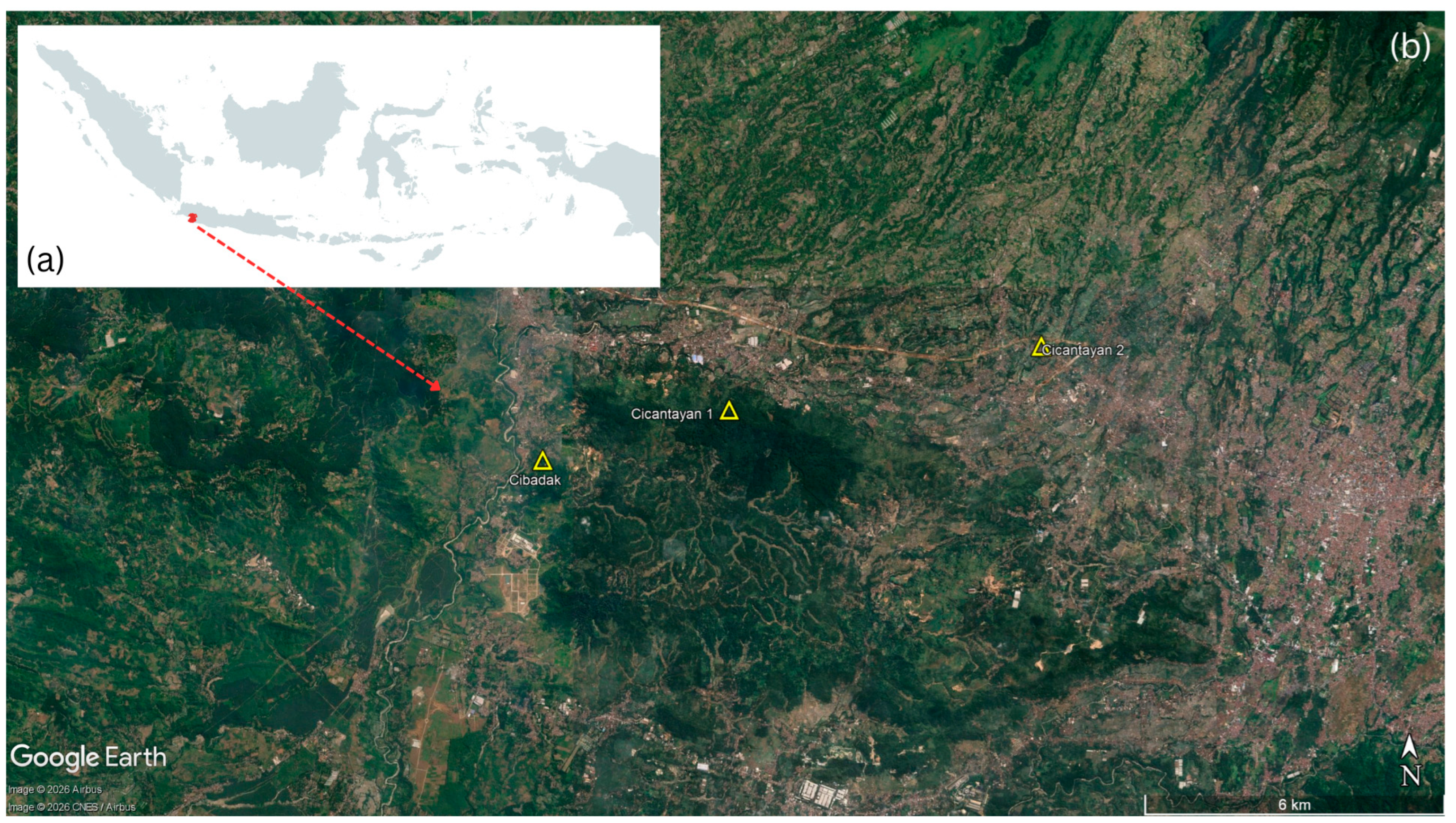
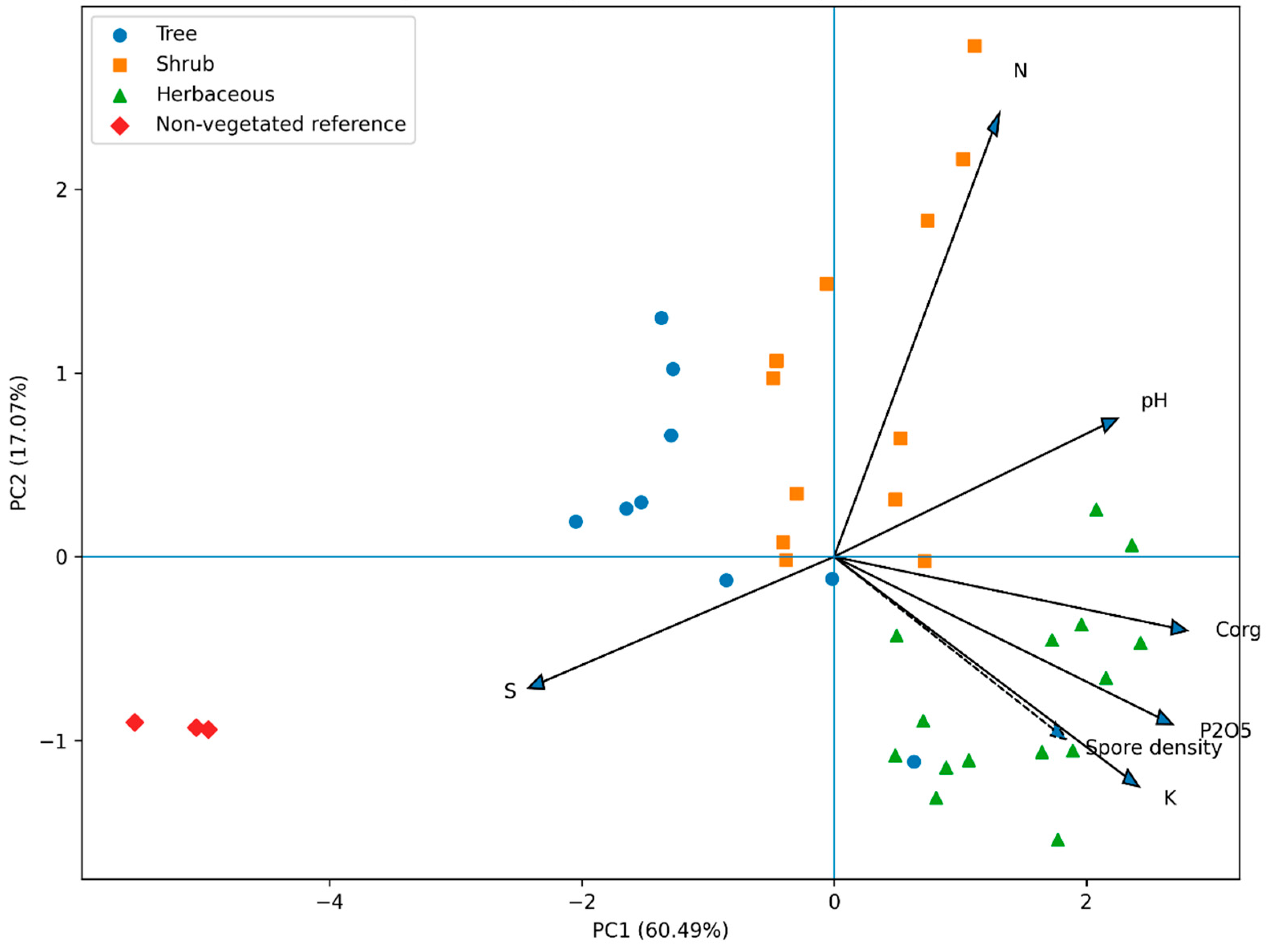
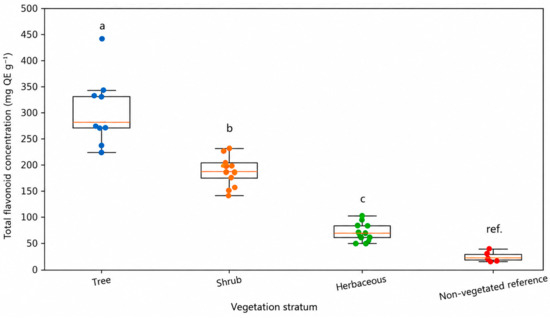
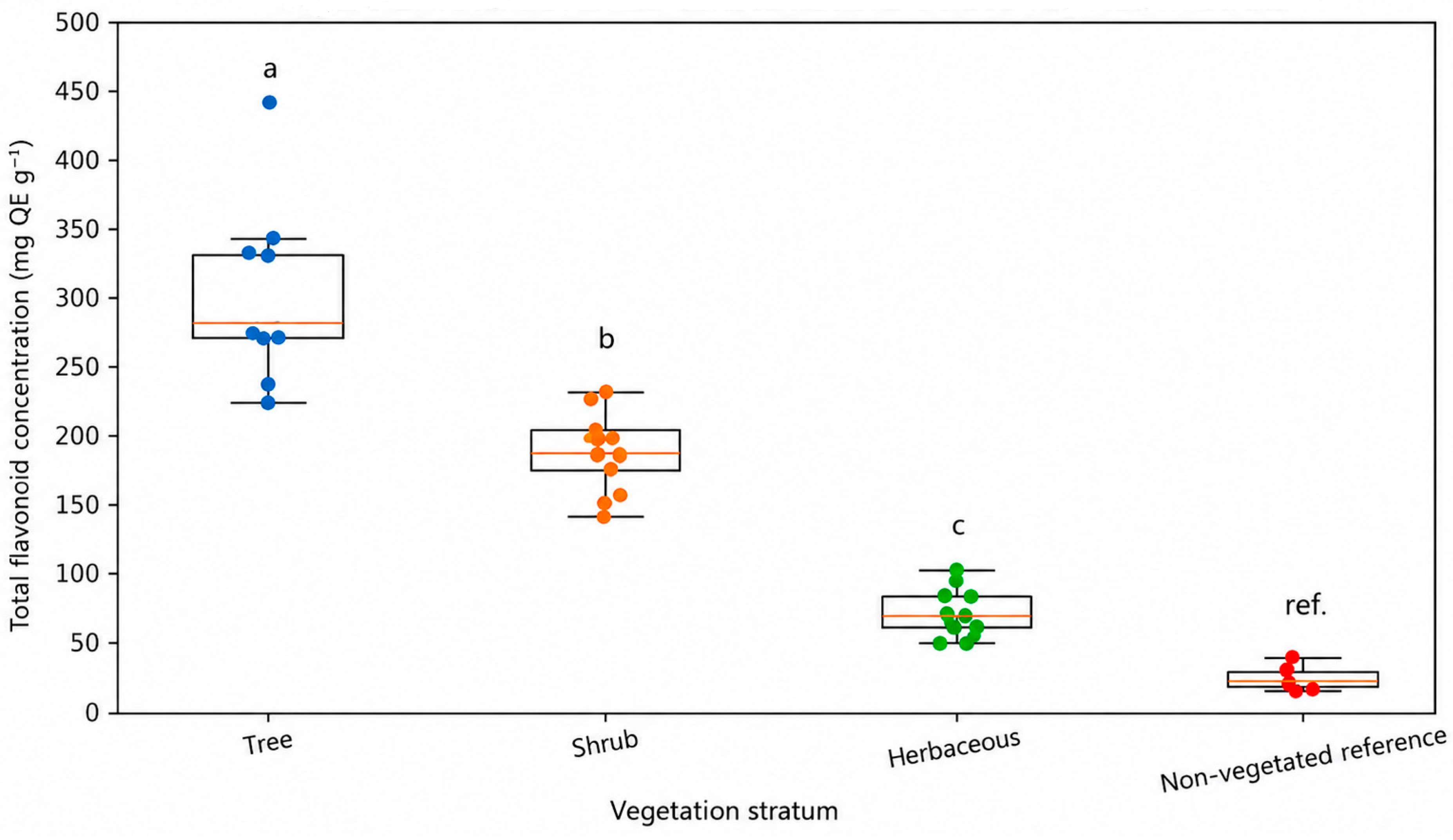

Disclaimer/Publisher’s Note: The statements, opinions and data contained in all publications are solely those of the individual author(s) and contributor(s) and not of MDPI and/or the editor(s). MDPI and/or the editor(s) disclaim responsibility for any injury to people or property resulting from any ideas, methods, instructions or products referred to in the content. |
© 2026 by the authors. Licensee MDPI, Basel, Switzerland. This article is an open access article distributed under the terms and conditions of the Creative Commons Attribution (CC BY) license.