


Abstract
This study evaluated the effects of chemical and organic fertilization on aboveground biomass and soil properties across three natural grassland regions in the middle section of the Greater Khingan Mountains. Field experiments were conducted in Keyouqian Banner, Keyouzhong Banner, and Zhalaite Banner using three treatments: fencing enclosure (control), fencing enclosure + chemical fertilizer, and fencing enclosure + organic fertilizer, each with three biological replicates. Both chemical and organic fertilization significantly increased aboveground biomass by 30.41% and 24.56%, respectively (p < 0.05), with no significant difference between treatments. Chemical fertilization significantly reduced soil available phosphorus by 9.01% (p < 0.05), whereas organic fertilization had no significant effect on the measured soil properties (p > 0.05). Aboveground biomass and soil properties differed among the three regions, and these differences were associated with variations in soil pH and background soil conditions. These findings indicate that fertilization effectively enhanced grassland productivity, whereas biomass and soil responses varied among regions with different soil conditions, highlighting the importance of considering regional soil characteristics when interpreting fertilization responses and developing grassland management strategies.
1. Introduction
Grassland ecosystems cover approximately 40.5% of the global terrestrial land area and rank among the most widely distributed terrestrial ecosystems on Earth. They not only safeguard the supply of agricultural and pastoral products but also provide critical support for the development of animal husbandry, thereby possessing substantial economic value [1,2]. According to the 2024 China Natural Resources Bulletin issued by the Ministry of Natural Resources, China’s grassland area reaches 2.632 million km2, ranking first in the world [3]. As a precious natural resource and an important ecological barrier, grasslands play a pivotal role in China’s socioeconomic development and ecological civilization construction [4]. In recent years, however, the combined pressures of intensified human activities and global climate change have led to increasingly severe grassland degradation [5,6,7,8], which has become a major threat to national ecological security and the sustainable development of animal husbandry.
Among the measures for restoring degraded grasslands, fertilization can rapidly replenish soil nutrients, promote vegetation growth, and effectively enhance vegetation coverage and biomass; it is therefore a widely applied and highly effective restoration approach [9,10,11]. At present, the management of degraded grasslands in China relies predominantly on inorganic chemical fertilizers [12]. Although these fertilizers can improve soil fertility in the short term, they are characterized by a short duration of efficacy and a propensity to cause non-point source environmental pollution [13]. In contrast, organic fertilizers offer a more balanced nutrient composition; after microbial decomposition, they generate various bioactive substances that support normal plant growth and development [14]. Previous studies have confirmed that organic fertilizer application can increase grassland aboveground biomass and raise the proportion of gramineous forage species [15]. Moreover, organic fertilizers can ameliorate soil physicochemical properties, thereby influencing vegetation biomass accumulation [16]; the biological and biochemical characteristics of soils receiving organic fertilizer also respond more sensitively to environmental changes and fertilization management practices [17]. To date, existing research has not yet systematically compared the restoration efficacy of organic versus chemical fertilizers on degraded grasslands, nor has it thoroughly investigated whether the restoration effects of a given fertilizer type vary regionally across different degraded grassland types. It is widely assumed that chemical fertilizers produce rapid but short-lived effects, whereas organic fertilizers exert more stable but slower-acting effects. However, whether this assumption holds for all degraded grassland types remains uncertain, and it still lacks sufficient experimental validation.
This study investigated the effects of fencing enclosure + chemical fertilizer application, fencing enclosure + organic fertilizer application, and fencing enclosure control on aboveground biomass and soil nutrient characteristics in three natural grasslands with contrasting soil conditions in the middle section of the Greater Khingan Mountains. Specifically, we evaluated the effects of different fertilization regimes on vegetation productivity and soil nutrient status and analyzed the correlations between soil properties and aboveground biomass. We hypothesized that (1) both chemical and organic fertilizers would increase aboveground biomass by alleviating nutrient limitations but would differ in their effects on soil nutrient characteristics due to contrasting nutrient release patterns; and (2) because of differences in background soil conditions among study sites, the magnitude of biomass and soil responses to fertilization would vary among study sites. These results will contribute to a better understanding of the response patterns of the grassland–soil system to different fertilization measures and provide a reference for site-specific grassland management in this region.
2. Materials and Methods
2.1. Study Area
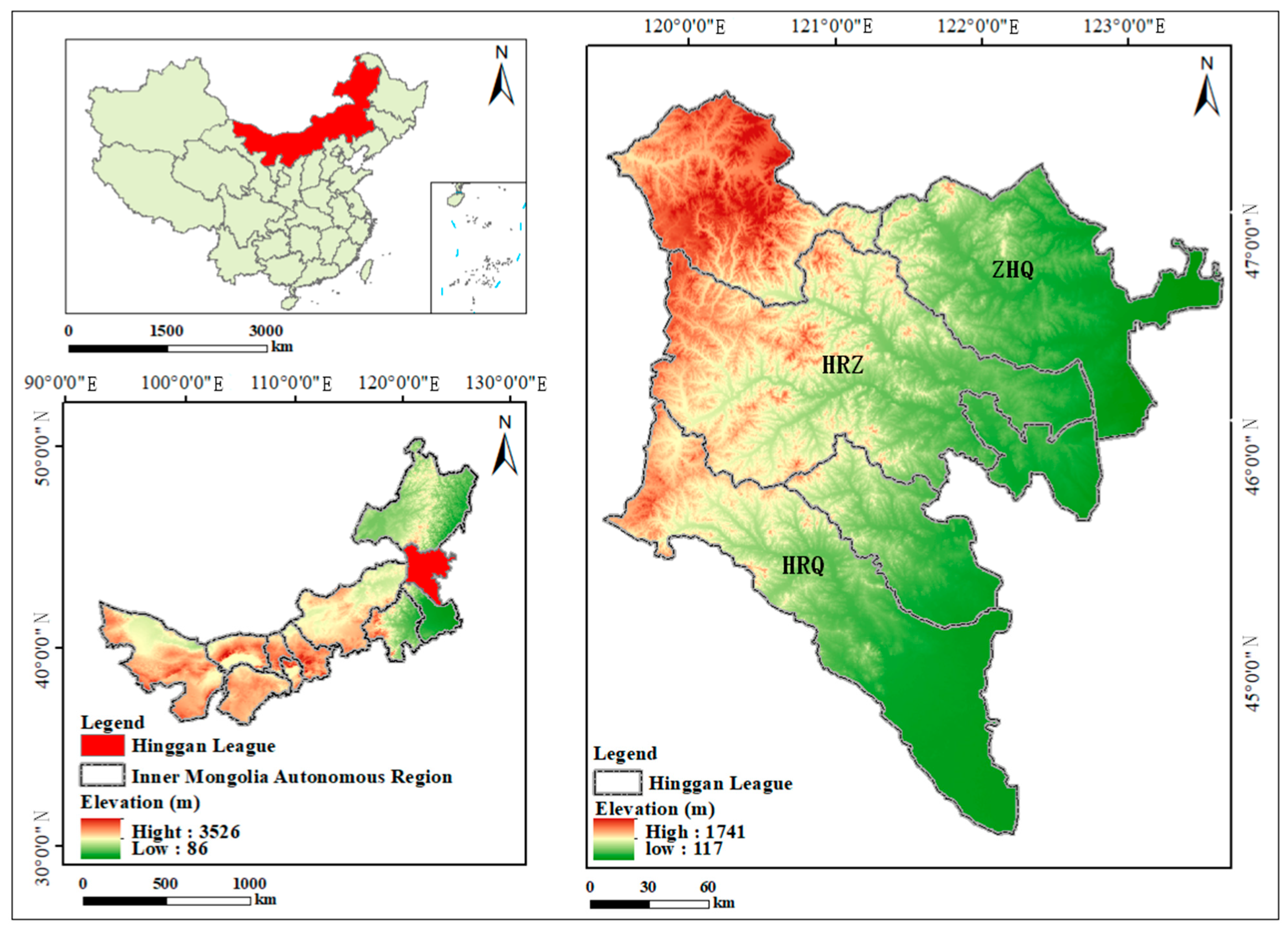
The experimental site in Keyouqian Banner (HRQ) is located in Manzutun Manchu Township, Keyouqian Banner, Hinggan League, Inner Mongolia Autonomous Region (120°58′25.46″ E, 46°27′2.17″ N), at an elevation of 719 m (Figure 1). The region has a temperate continental monsoon climate, with a mean annual temperature of 4 °C, a frost-free period of approximately 100 d, and mean annual precipitation of 410–440 mm. The soil type is chernozem (exhibiting relatively high organic matter content and favorable soil structure).
The experimental site in Keyouzhong Banner (HRZ) is situated in Daiqintala Sumu, Keyouzhong Banner, Hinggan League, Inner Mongolia Autonomous Region (121°32′16.19″ E, 45°08′9.39″ N), at an elevation of 273 m (Figure 1). It also experiences a temperate continental monsoon climate, with a mean annual temperature of 4.8 °C, a frost-free period of approximately 120 d, and mean annual precipitation of 370–380 mm. The soil type is saline-alkali soil (soils characterized by salt accumulation and sodium ion enrichment, with a relatively high pH).
The experimental site in Zhalaite Banner (ZHQ) is located in Tumuji Town, Zhalaite Banner, Hinggan League, Inner Mongolia Autonomous Region (122°58′45.10″ E, 46°9′49.26″ N), at an elevation of 163 m (Figure 1). The climate is temperate continental monsoon, with a mean annual temperature of 4.3 °C, a frost-free period of approximately 130 d, and mean annual precipitation of 350–400 mm. The soil type is chestnut soil (characterized by a certain level of organic matter and carbonates).
Figure 1.
Map of the study area. HRQ: Keyouqian Banner; HRZ: Keyouzhong Banner; ZHQ: Zhalaite Banner.
2.2. Experimental Design
Three experimental sites were selected in the middle section of the Greater Khingan Mountains (Keyouqian Banner, Keyouzhong Banner, and Zhalaite Banner). At each site, three treatments were established: fencing enclosure (control, CK), fencing enclosure + chemical fertilizer (CF), and fencing enclosure + organic fertilizer (OF). Each treatment had three biological replicates, with each replicate consisting of one experimental plot of 25 m2. Organic fertilizer was applied at 2000 kg hm−2 (N + P2O5 + K2O ≥ 8.5%; Organic matter ≥ 45%; Humic acid ≥ 20%; Amino acid ≥ 10%; Beneficial microorganisms ≥ 2.0 × 10⁸ CFU g−1), and chemical fertilizer was applied at 1050 kg hm−2 (nutrient ratio N:P2O5:K2O = 26:11:11). Fertilization was performed in late May, once per year. The fertilization rate and frequency were based on the conventional fertilization rates and frequencies used for local crops.
2.3. Measurement Indicators and Methods
Field sampling was conducted in August 2021 and August 2022, with new quadrats randomly established each year. Within each experimental plot, three standard 1 m × 1 m quadrats were randomly established. Soil samples from the 0–20 cm layer were collected from each quadrat, and vegetation and soil indicators were measured concurrently using the following methods: Aboveground biomass: samples were brought back to the laboratory, dried at 105 °C for 30 min to deactivate enzymes, and then further dried at 65 °C for 24 h until constant weight; Soil pH: measured with a pH meter at a soil-to-water ratio of 1:5 using distilled water; Soil organic matter: determined by the potassium dichromate (K2Cr2O7) volumetric method with oil-bath heating according to NY/T 1121.6-2006 [18]; Soil alkali-hydrolyzable nitrogen: measured by the diffusion absorption method according to LY/T 1228-2015 [19]; Soil available phosphorus: determined by the molybdenum–antimony anticolorimetric method according to NY/T 1121.7-2014 [20]; Soil available potassium: extracted with ammonium acetate and measured by flame photometry according to NY/T 889-2004 [21]. Soil samples collected from the three quadrats were analyzed separately.
2.4. Data Analysis
One-way analysis of variance (ANOVA) was performed among treatments using SPSS 20.0. Pearson correlation analyses were conducted separately for different treatments and different plots. Correspondence analysis (CA) was employed across different regions to visualize the multivariate associations among treatments, aboveground biomass, and soil properties. Correlation heatmaps and correspondence analysis plots were generated using Origin 2024 Pro and R 3.3.1 to systematically examine the differences and intrinsic relationships among vegetation characteristics, soil nutrients, and grassland aboveground biomass under different experimental treatments.
3. Results
3.1. Effects of Different Fertilization Treatments on Grassland Aboveground Biomass and Soil Nutrients
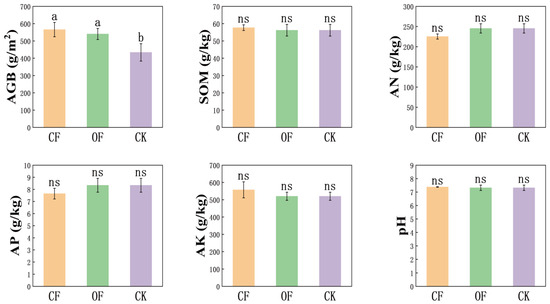
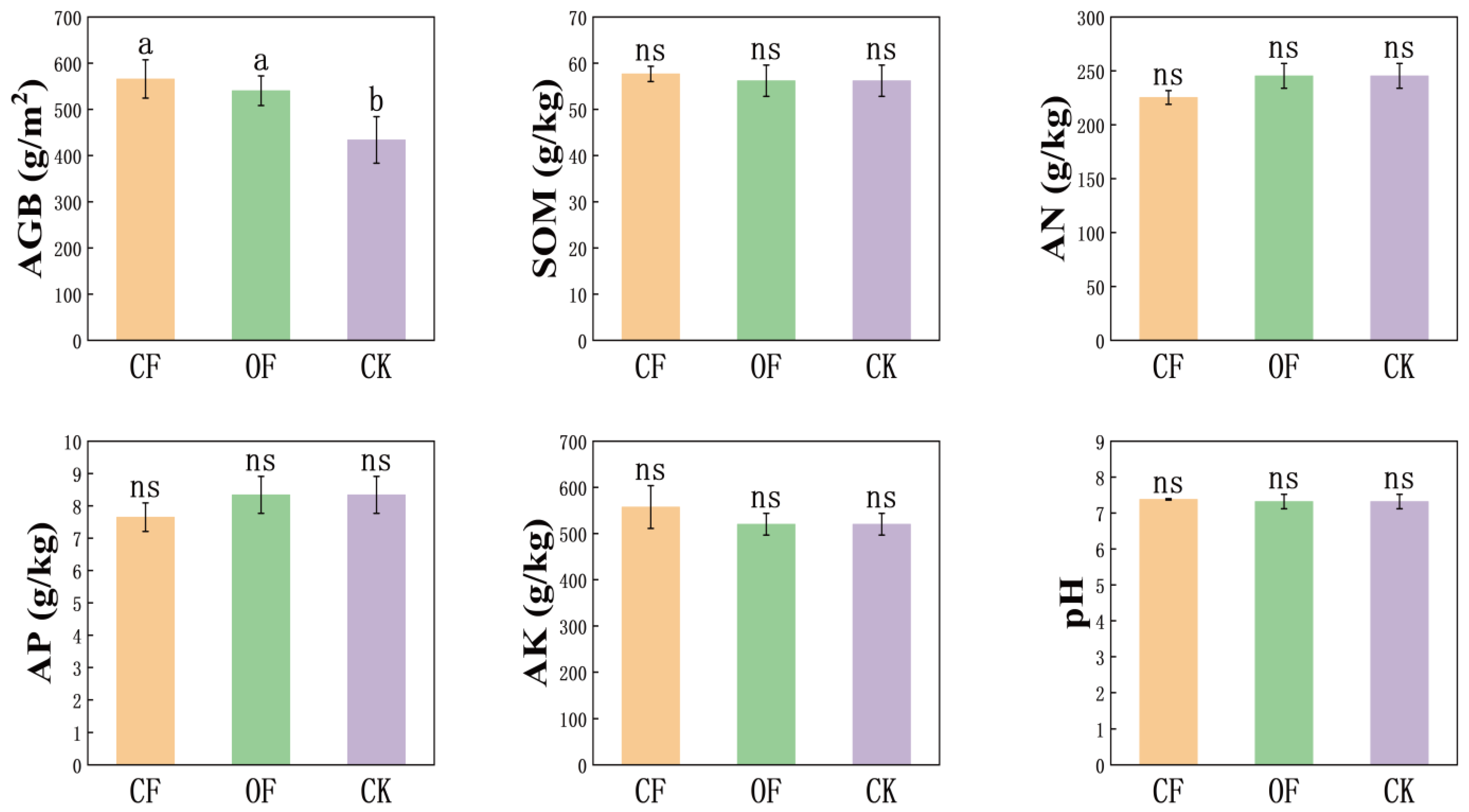
As shown in Figure 2, significant differences were observed in grassland aboveground biomass and soil available phosphorus content among the different treatments (p < 0.05). Compared with the fencing enclosure control, both chemical fertilizer and organic fertilizer treatments significantly increased aboveground biomass (p < 0.05), while the difference between the two fertilizer treatments was not significant (p > 0.05). None of the fertilization treatments exerted significant effects on soil organic matter, alkali-hydrolyzable nitrogen, available potassium, or soil pH (p > 0.05). Soil available phosphorus content under the chemical fertilizer treatment was significantly lower than that under the organic fertilizer and control treatments (p < 0.05), whereas the difference between the organic fertilizer treatment and the control was not significant (p > 0.05).
Figure 2.
Effects of different treatments on grassland aboveground biomass and soil nutrients. Note: Data are presented as mean ± standard error. OF: organic fertilizer; CF: chemical fertilizer; CK: control; AGB: aboveground biomass; SOM: soil organic matter; AN: soil alkali-hydrolyzable nitrogen; AP: soil available phosphorus; AK: soil available potassium; pH: soil pH. Different lowercase letters indicate significant differences among treatments (p < 0.05). n = 6. “ns” in the figure indicates no significant difference between the groups.
3.2. Effects of Different Regions on Grassland Aboveground Biomass and Soil Nutrients
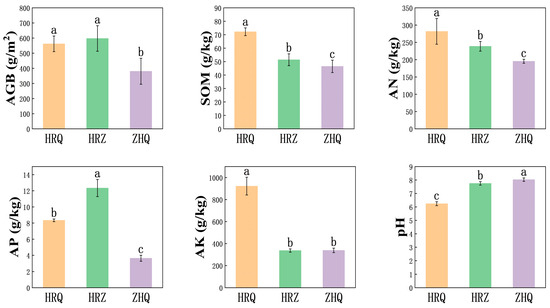
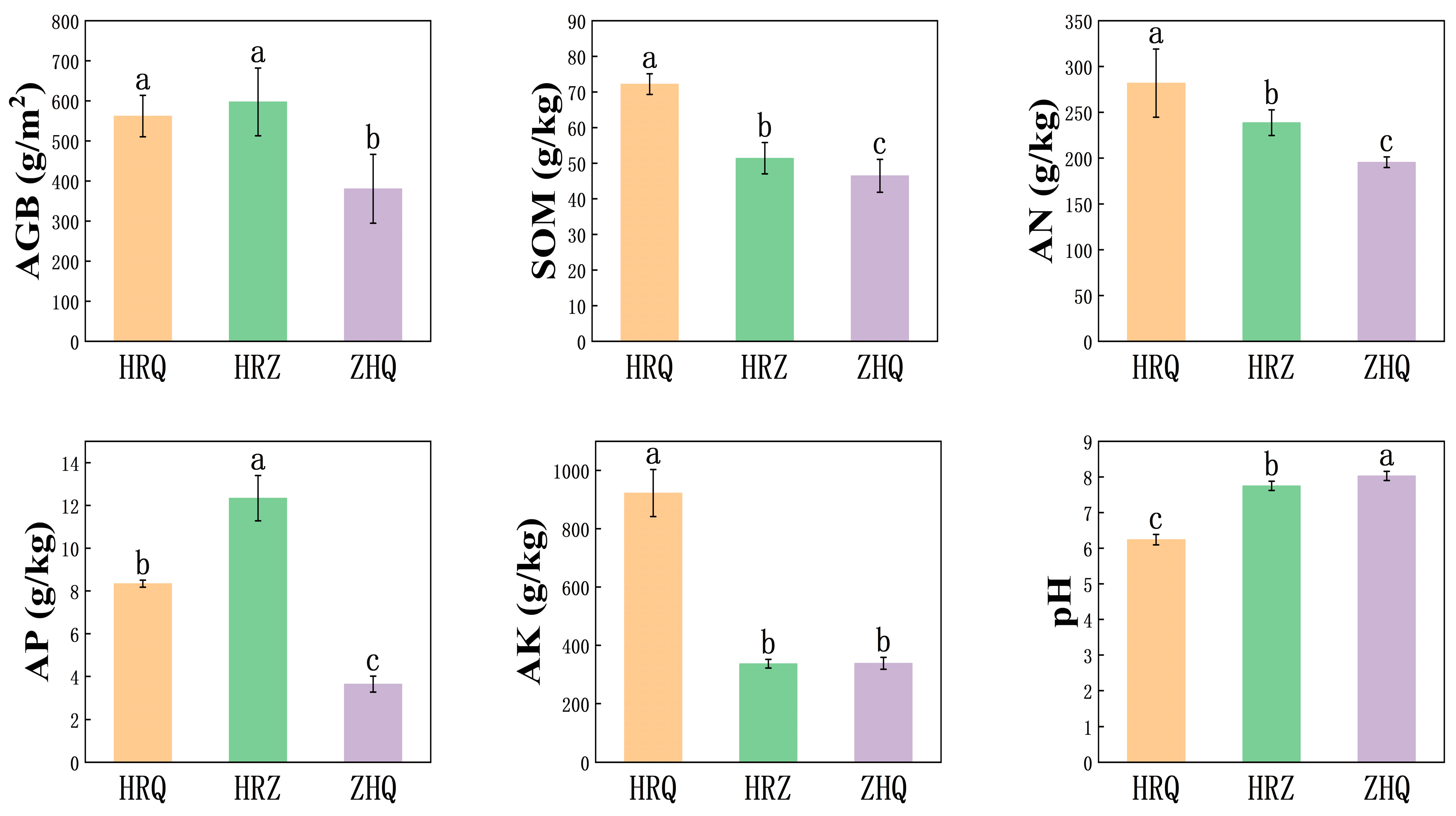
Analysis of variance (Figure 3) revealed significant spatial differences in grassland aboveground biomass and all soil nutrient indicators among the three study regions (p < 0.05). Aboveground biomass in Keyouqian Banner and Keyouzhong Banner was significantly higher than that in Zhalaite Banner (p < 0.05), with no significant difference between Keyouqian Banner and Keyouzhong Banner (p > 0.05). Soil organic matter and alkali-hydrolyzable nitrogen contents exhibited consistent significant gradient differences across the three sites, following the overall pattern HRQ > HRZ > ZHQ (p < 0.05). Soil available phosphorus content differed significantly among regions, specifically in the order Keyouzhong Banner > Keyouqian Banner > Zhalaite Banner (p < 0.05). Soil available potassium content in Keyouqian Banner was significantly higher than that in Keyouzhong Banner and Zhalaite Banner (p < 0.05), while the latter two sites showed no significant difference (p > 0.05). Soil pH also displayed a clear gradient among the three regions, following the pattern Zhalaite Banner > Keyouzhong Banner > Keyouqian Banner, with all pairwise differences reaching significance (p < 0.05).
Figure 3.
Effects of different regions on grassland aboveground biomass and soil nutrients. Note: Data are presented as mean ± standard error. HRQ: Keyouqian Banner; HRZ: Keyouzhong Banner; ZHQ: Zhalaite Banner; AGB: aboveground biomass; SOM: organic matter; AN: soil alkali-hydrolyzable nitrogen; AP: soil available phosphorus; AK: soil available potassium; pH: soil pH. Different lowercase letters indicate significant differences among treatments (p < 0.05). n = 6. “ns” in the figure indicates no significant difference between the groups.
3.3. Correlation Analysis of Grassland Aboveground Biomass and Soil Nutrient Indicators Under Different Fertilization Treatments
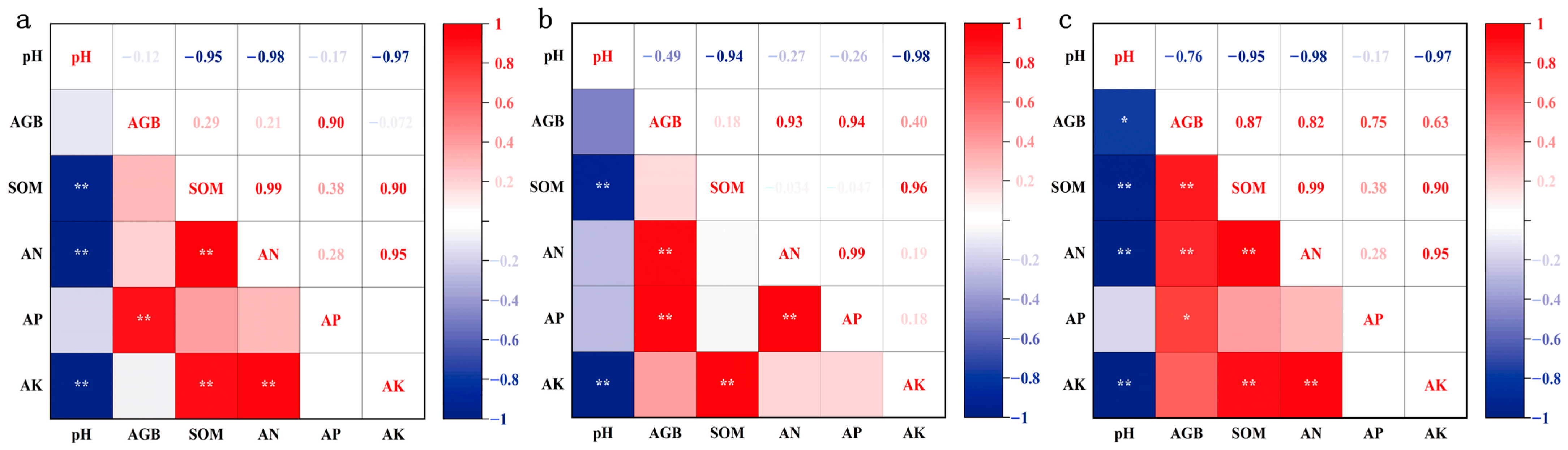
The correlation analysis results between grassland aboveground biomass and soil nutrient indicators under different fertilization treatments are presented in Figure 4. Under the chemical fertilizer treatment (Figure 4a), aboveground biomass was significantly positively correlated with soil available phosphorus (p < 0.05); soil organic matter and alkali-hydrolyzable nitrogen were both significantly positively correlated with soil available potassium (p < 0.05); and soil pH was significantly negatively correlated with soil available potassium, organic matter, and alkali-hydrolyzable nitrogen (p < 0.05). Under the organic fertilizer treatment (Figure 4b), aboveground biomass was significantly positively correlated with soil available phosphorus and alkali-hydrolyzable nitrogen (p < 0.05), and a significant positive correlation also existed between soil available phosphorus and alkali-hydrolyzable nitrogen (p < 0.05); soil organic matter was significantly positively correlated with soil available potassium (p < 0.05); and soil pH was significantly negatively correlated with soil organic matter and available potassium (p < 0.05). Under the unfertilized control treatment (Figure 4c), aboveground biomass was significantly positively correlated with soil available phosphorus, alkali-hydrolyzable nitrogen, and organic matter (p < 0.05); alkali-hydrolyzable nitrogen was significantly positively correlated with soil available potassium and organic matter (p < 0.05); and soil pH was significantly negatively correlated with aboveground biomass, organic matter, alkali-hydrolyzable nitrogen, and available potassium (p < 0.05).
Figure 4.
Correlation heatmaps of grassland aboveground biomass and soil nutrient indicators under different treatments. Note: (a) shows correlations under the chemical fertilizer treatment; (b) under the organic fertilizer treatment; (c) under the control treatment. AGB: aboveground biomass; SOM: soil organic matter; AN: soil alkali-hydrolyzable nitrogen; AP: soil available phosphorus; AK: soil available potassium; pH: soil pH. “*” indicates significant correlations between indicators (p < 0.05). “**” indicates significant correlations between indicators (p < 0.01).
3.4. Correlation Analysis of Grassland Aboveground Biomass and Soil Nutrient Indicators Among Different Regions
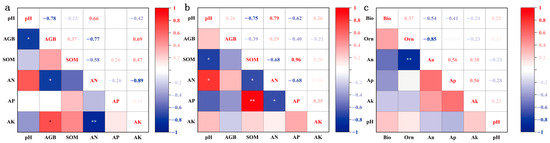
Regional correlation analysis of grassland aboveground biomass and soil nutrient indicators for the three study sites is shown in Figure 5. In the Keyouqian Banner site (Figure 5a), aboveground biomass was significantly positively correlated with soil available potassium (p < 0.05) and significantly negatively correlated with soil pH and alkali-hydrolyzable nitrogen (p < 0.05); a significant negative correlation was also observed between soil available potassium and alkali-hydrolyzable nitrogen (p < 0.05). In the Keyouzhong Banner site (Figure 5b), aboveground biomass showed no significant correlations with any soil nutrient indicators (p > 0.05); alkali-hydrolyzable nitrogen was significantly negatively correlated with soil available phosphorus and organic matter (p < 0.05), while organic matter was significantly positively correlated with available phosphorus (p < 0.05); soil pH was significantly positively correlated with alkali-hydrolyzable nitrogen (p < 0.05) and significantly negatively correlated with organic matter (p < 0.05). In the Zhalaite Banner site (Figure 5c), aboveground biomass exhibited no significant correlations with any soil nutrient indicators (p > 0.05), and only soil organic matter and alkali-hydrolyzable nitrogen showed a significant negative correlation (p < 0.05).
Figure 5.
Correlation heatmaps of grassland aboveground biomass and soil nutrient indicators among different regions. Note: (a) shows correlations for Keyouqian Banner; (b) for Keyouzhong Banner; (c) for Zhalaite Banner. AGB: aboveground biomass; SOM: soil organic matter; AN: soil alkali-hydrolyzable nitrogen; AP: soil available phosphorus; AK: soil available potassium; pH: soil pH. “*” indicates significant correlations between indicators (p < 0.05). “**” indicates significant correlations between indicators (p < 0.01).
3.5. Correspondence Analysis of Grassland Aboveground Biomass and Soil Nutrient Indicators Under Different Fertilization Treatments in Each Region
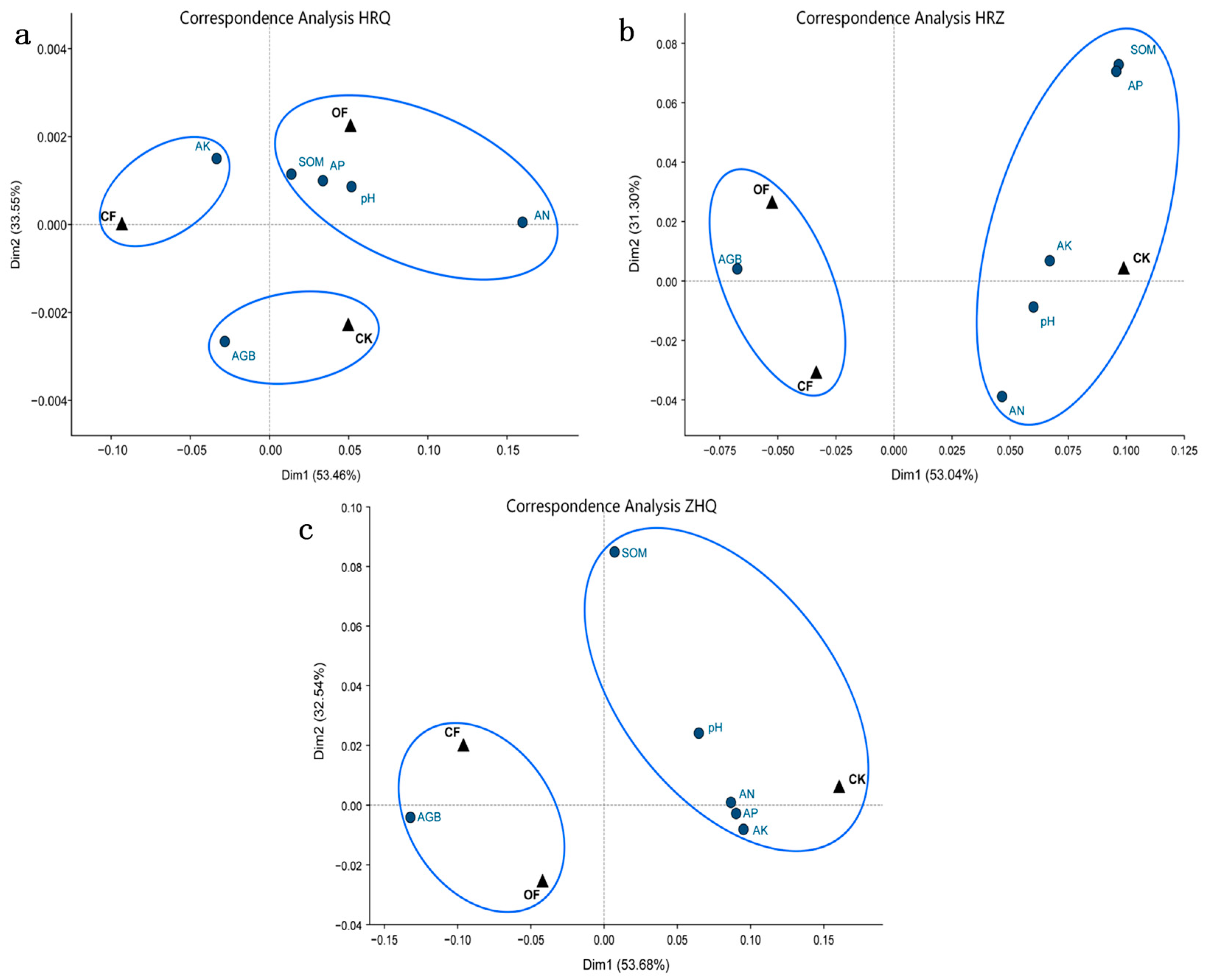
Correspondence analysis results of grassland aboveground biomass and soil nutrient indicators under different fertilization treatments in each study region are presented in Figure 6. The indicators displayed distinct distribution patterns in the two-dimensional ordination space, indicating that different fertilization treatments not only altered soil nutrient contents but also regulated the association structures among indicators of the soil–vegetation system.
Figure 6.
Correspondence analysis of indicators under different treatments within each site. Note: (a) shows the correspondence analysis for Keyouqian Banner; (b) for Keyouzhong Banner; (c) for Zhalaite Banner. AGB: aboveground biomass; SOM: soil organic matter; AN: soil alkali-hydrolyzable nitrogen; AP: soil available phosphorus; AK: soil available potassium; pH: soil pH. OF: organic fertilizer; CF: chemical fertilizer; CK: control.
In the Keyouqian Banner site (Figure 6a), soil organic matter, soil available phosphorus, and soil pH clustered relatively closely in the ordination space, indicating strong associations among these indicators. In contrast, although soil alkali-hydrolyzable nitrogen showed an overall distribution direction consistent with the above indicators, its relatively greater spatial distance suggested a relatively weak association. These soil indicators were generally located close to the organic fertilizer treatment in the ordination space, indicating that their changes had a relatively strong association with the organic fertilizer treatment. Soil available potassium was relatively independent and located close to the chemical fertilizer treatment, reflecting that its variation pattern had a relatively high consistency with the chemical fertilizer treatment. In addition, aboveground biomass was closer to the control treatment in the ordination space, indicating that in the Keyouqian Banner site, the association between aboveground biomass and fertilization treatments was relatively weak. The separation of different fertilization treatments in the ordination space indicated that the soil nutrient response patterns corresponding to different fertilization methods differed to some extent.
In the Keyouzhong Banner site (Figure 6b), soil alkali-hydrolyzable nitrogen, soil available potassium, and pH clustered relatively closely, reflecting strong associations among the three; soil organic matter and soil available phosphorus also exhibited a relatively high degree of clustering, indicating a strong association between the two. Although the two groups of indicators formed separate clusters, a certain spatial distance remained between the groups, indicating that their mutual association was relatively limited. Aboveground biomass was relatively close to both the chemical fertilizer and organic fertilizer treatments in the ordination space, indicating that under the conditions of this experiment, fertilization treatments had a relatively strong association with changes in aboveground biomass.
In the Zhalaite Banner site (Figure 6c), soil alkali-hydrolyzable nitrogen, soil available phosphorus, soil available potassium, and soil pH clustered relatively closely in the ordination space, indicating strong associations among these indicators. Soil organic matter was generally consistent with the distribution direction of the above indicators, but its relatively greater spatial distance indicated a relatively weak degree of association. Aboveground biomass was located near the chemical fertilizer and organic fertilizer treatments, indicating that under the conditions of this experiment, changes in aboveground biomass exhibited a relatively strong association with fertilization treatments.
4. Discussion
4.1. Effects of Different Fertilization Treatments on Grassland Aboveground Biomass and Soil Nutrients
Fertilization is an effective means of enhancing grassland productivity and improving soil nutrient status. Both chemical and organic fertilizers can promote vegetation recovery in grasslands, and although their modes of action differ markedly, their short-term promoting effects are similar. Consistent with the findings of Tong Z et al. [22], Li Fan et al. [23], and E. T. Borer et al. [24], chemical fertilizer can significantly increase grassland aboveground biomass (p < 0.05). Similarly, consistent with the results of Ma K et al. [25], Zhang Chu et al. [26], and Zhang Fengge et al. [27], the application of organic fertilizer can also significantly enhance grassland aboveground biomass (p < 0.05). The conventional perception that chemical fertilizers act quickly while organic fertilizers act slowly is not correct. Based on the results of this study, the effective nutrients ultimately obtained by plants under chemical and organic fertilizer applications may be similar, a view that is also supported by the findings of Lin et al. [28].
This study found that chemical fertilizer application significantly reduced soil available phosphorus content (p < 0.05), a phenomenon consistent with the observations of Yang et al. [29], who reported that chemical fertilizer inputs can simultaneously increase vegetation biomass and decrease soil available phosphorus. The underlying mechanism is that nitrogen is one of the primary limiting factors for plant growth [30]. Chemical fertilizers rapidly supply high concentrations of inorganic nitrogen to the soil, effectively alleviating nitrogen limitation and promoting rapid plant growth. During this process, the rate of phosphorus uptake and utilization by plants increases substantially, while soil phosphorus fixation is intensified, ultimately leading to a decline in soil available phosphorus content [31,32]. Combined with the correlation analysis under the chemical fertilizer treatment in this study (Figure 3), aboveground biomass was significantly positively correlated with soil available phosphorus (p < 0.05). It is therefore speculated that the nutrient limiting factor in the grassland system may also have shifted after chemical fertilizer input in this study. Once nitrogen becomes sufficient, phosphorus may become the new growth-limiting factor; plants consume large amounts of soil available phosphorus to support biomass accumulation, resulting in decreased soil available phosphorus content and significantly increased aboveground biomass.
The results also show that organic fertilizer application had no significant effects on soil nutrient indicators, including organic matter, alkali-hydrolyzable nitrogen, available phosphorus, available potassium, and pH (p > 0.05), yet still significantly increased grassland aboveground biomass (p < 0.05). This outcome can be attributed to the dynamic balance between nutrient release from organic fertilizer and nutrient uptake by plants [33]. Nutrients in organic fertilizer must undergo microbial decomposition and mineralization in the soil before they become available for plant uptake; consequently, they are characterized by a gradual release rate and long-lasting efficacy. During the peak growing season, vegetation can continuously absorb the nutrients mineralized from organic fertilizer, meeting the demands of the entire growth period and enabling biomass accumulation. Although instantaneous field sampling did not detect significant increases in soil available nutrient contents, plants received an adequate supply throughout the growing season, thereby resulting in elevated aboveground biomass.
4.2. Effects of Different Regions on Grassland Aboveground Biomass and Soil Nutrients
In this study, grassland aboveground biomass and soil nutrient characteristics exhibited significant spatial heterogeneity among the three research regions. Differences in site-level soil background physicochemical properties were the core drivers of divergence in grassland productivity. Overall, aboveground biomass in Keyouqian Banner and Keyouzhong Banner was significantly higher than that in Zhalaite Banner (p < 0.05), with no significant difference between the former two sites (p > 0.05). Combined with soil indicator analyses, the inter-regional differences in aboveground biomass were closely related to soil pH and background nutrient levels (Figure 2).
Soil organic matter releases organic acids and carbon dioxide during decomposition, thereby lowering soil pH and alleviating soil alkalization [34]. A slightly acidic to neutral soil environment can effectively activate fixed phosphorus, reduce the adsorption and fixation of potassium by clay minerals, and substantially enhance soil phosphorus and potassium availability [35]. In addition, soil alkali-hydrolyzable nitrogen is mainly derived from the mineralization of organic matter; a higher organic matter content can maintain a sustained nitrogen supply potential and is compatible with a lower soil pH environment [36,37]. Appropriate pH conditions can activate soil microbial activity [38], accelerate organic matter decomposition and nutrient mineralization, and promote the transformation of organic nitrogen into plant-available alkali-hydrolyzable nitrogen, thereby increasing the alkali-hydrolyzable nitrogen content and further enhancing the level of soil available nutrients [39]. Conversely, high-pH, strongly alkaline soils can significantly inhibit microbial activity and nutrient mineralization processes, reduce soil potassium and phosphorus availability, and constrain the soil nutrient supply capacity [36,40]. The differences in soil physicochemical indicators among the three regions in this study were highly consistent with the above patterns. As shown in Figure 1, different treatments did not significantly change soil pH (p > 0.05). As shown in Figure 2, soil pH in Keyouqian Banner was significantly lower than that in Keyouzhong Banner (p < 0.05), and soil pH in Keyouzhong Banner was significantly lower than that in Zhalaite Banner (p < 0.05). As shown in Figure 2, aboveground biomass in Keyouqian Banner and Keyouzhong Banner was significantly higher than that in Zhalaite Banner (p < 0.05). Meanwhile, the negative correlation between aboveground biomass and alkali-hydrolyzable nitrogen in Keyouqian Banner (Figure 4) may be attributable to the stronger uptake of soil alkali-hydrolyzable nitrogen by the higher biomass in this region, thereby reducing the residual alkali-hydrolyzable nitrogen content in the soil. In summary, fertilization treatments did not alter soil pH; slightly acidic, low-pH soil environments are more conducive to nutrient activation and accumulation [41], whereas alkaline, high-pH environments impede nutrient transformation and reduce soil fertility [42].
The differences in soil physicochemical indicators among the three regions in this study closely align with the patterns described above. Soil pH in Keyouqian Banner and Keyouzhong Banner was significantly lower than that in Zhalaite Banner (p < 0.05), while soil organic matter, alkali-hydrolyzable nitrogen, and available phosphorus contents were all significantly higher (p < 0.05). Moreover, soil available potassium content in Keyouqian Banner was markedly superior to that in the other two regions. These favorable soil background conditions ultimately resulted in higher grassland aboveground biomass.
Correspondence analysis results for each study site (Figure 5) further indicated that different fertilization treatments exhibited certain distributional differences in the ordination space, reflecting the comprehensive association patterns between soil properties and aboveground biomass under different fertilization treatments. In Keyouqian Banner, the soil was overall slightly acidic, with adequate nutrient reserves and superior physicochemical properties, conferring relatively high background fertility. Consequently, aboveground biomass in this region tended to be primarily driven by natural soil conditions, and the effects of fertilization treatments were relatively limited. In contrast, soils in both Keyouzhong Banner and Zhalaite Banner were alkaline, with elevated pH and weaker nutrient activation capacity; the differences in background physicochemical properties between the two sites were relatively small. Although soil organic matter, alkali-hydrolyzable nitrogen, and available phosphorus contents in Keyouzhong Banner were slightly higher than those in Zhalaite Banner, the overall background advantage was not pronounced. Therefore, changes in grassland productivity exhibited a relatively strong association with fertilization treatments. Consequently, grassland productivity in Keyouzhong Banner and Zhalaite Banner responded more sensitively to fertilization measures, with aboveground biomass accumulation relying mainly on the regulation provided by chemical and organic fertilizers. Based on the above results, it can be inferred that regional soil background conditions are also one of the important dominant factors determining grassland vegetation growth.
4.3. Limitations of This Study
In addition, although soil properties were strongly associated with differences in aboveground biomass among regions, the three study regions differed not only in soil properties but also in elevation, precipitation, soil type, and other environmental conditions. This study was unable to fully disentangle the independent contributions of soil factors and other environmental factors to vegetation productivity. Future studies should incorporate variables such as climate, topography, and long-term changes to further clarify the relative roles of different environmental factors in driving changes in grassland productivity.
5. Conclusions
Both chemical and organic fertilizers significantly increased grassland aboveground biomass (p < 0.05), yet their effects on soil nutrient dynamics differed. Chemical fertilizer rapidly alleviated nitrogen limitation, stimulating an increase in aboveground biomass; plants consumed substantial amounts of soil available phosphorus to support biomass accumulation, potentially leading to a decrease in soil available phosphorus content. In contrast, organic fertilizer, through slow nutrient release, maintained grassland productivity while not causing substantial accumulation of soil available nutrients.
Grassland aboveground biomass exhibited significant regional differences (p < 0.05), which largely reflected differences in soil background conditions. In Keyouqian Banner, relatively lower soil pH and higher contents of soil organic matter and available nutrients indicated superior soil conditions and higher grassland productivity. In comparison, Keyouzhong Banner and Zhalaite Banner had stronger soil alkalinity and lower background fertility, and their biomass exhibited a more pronounced response to fertilization. These results indicate that soil background conditions significantly influence fertilization effects and should be taken into account when interpreting the vegetation and soil response characteristics of different grassland regions.
Author Contributions
Conceptualization, W.H., T.W. and Y.N.; methodology, W.H. and Y.N.; software, W.H., R.J. and Y.N.; validation, W.H., R.J., T.W., H.L. and Y.N.; formal analysis, W.H., R.J., H.L. and Y.N.; investigation, W.H., C.H., C.D. and Y.N.; resources, W.H., C.H., T.W. and C.D.; data curation, W.H., H.L. and Y.N.; writing—original draft preparation, W.H., R.J., H.L. and Y.N.; writing—review and editing, R.J., H.L. and Y.N.; visualization, W.H. and H.L.; supervision, W.H. and Y.N.; R.J. and W.H. contributed equally to this work; project administration, W.H., T.W. and Y.N.; funding acquisition, Y.N. All authors have read and agreed to the published version of the manuscript.
Funding
This study was supported by the Key R&D and Achievement Transformation Program of Inner Mongolia Autonomous Region (2023YFDZ0018), the Key Technology Research and Demonstration Project for High-Standard Grassland Construction (SMZB-2025004), and the Project for Tackling Key Agricultural Technologies (NK2022181007).
Data Availability Statement
Data will be made available on request.
Acknowledgments
We would like to express our sincere gratitude to all the individuals and organizations that contributed to this research. This research was supported by the Research and Demonstration Project on Key Technologies for High-Standard Grassland Construction (SMZB-2025004); the Key R&D and Achievement Transformation Plan Project of Inner Mongolia Autonomous Region (2023YFDZ0018); and the Agricultural Core Technology Attack Project (NK2022181007).
Conflicts of Interest
Author Mr. Chunlin Dong, Mr. Chunbiao Hou were employed by the Yuanmu Forage Industry Co., Ltd., Hinggan League, China. The remaining authors declare that the research was conducted in the absence of any commercial or financial relationships that could be construed as a potential conflict of interest.
References
- Abdalla, M. Unveiling Innovations in Grasslands Productivity and Sustainability. Agronomy 2023, 13, 2537. [Google Scholar] [CrossRef] [Scilit]
- O’Mara, F.P. The role of grasslands in food security and climate change. Ann. Bot. 2012, 110, 1263–1270. [Google Scholar] [CrossRef] [Scilit]
- Hou, M.; Ge, J.; Xiu, Y.; Meng, B.; Liu, J.; Feng, Q.; Liang, T. The urgent need to develop a new grassland map in China: Based on the consistency and accuracy of ten land cover products. Sci. China Life Sci. 2023, 66, 385–405. [Google Scholar] [CrossRef] [Scilit]
- Dong, S.; Tang, F.; Ping, X.; Yang, X.; Yang, Z.; Lin, C.; Lu, X.; Wang, T.; Ji, B.; Xu, B.; et al. Zoning and functional analysis of Chinese grasslands under the background of ecological civilization in the new era. J. Nat. Resour. 2022, 37, 568–581. [Google Scholar] [CrossRef] [Scilit]
- Zhou, S.; Peng, L. Applying Bayesian belief networks to assess alpine grassland degradation risks: A case study in Northwest Sichuan, China. Front. Plant Sci. 2021, 12, 773759. [Google Scholar]
- Bardgett, R.D.; Bullock, J.M.; Lavorel, S.; Manning, P.; Schaffner, U.; Ostle, N.; Chomel, M.; Durigan, G.; Fry, E.L.; Johnson, D.; et al. Combatting global grassland degradation. Nat. Rev. Earth Environ. 2021, 2, 720–735. [Google Scholar] [CrossRef] [Scilit]
- Hou, Q.; Ji, Z.; Yang, H.; Yu, X. Impacts of climate change and human activities on different degraded grassland based on NDVI. Sci. Rep. 2022, 12, 15918. [Google Scholar] [CrossRef] [Scilit]
- Yan, Z.; Gao, Z.; Sun, B.; Ding, X.; Gao, T.; Li, Y. Global degradation trends of grassland and their driving factors since 2000. Int. J. Digit. Earth 2023, 16, 1661–1684. [Google Scholar] [CrossRef] [Scilit]
- Yang, L.; Liu, H.; Li, C.; Li, F.; Xu, W.; Zhou, G. Effects of different nitrogen, phosphorus and potassium fertilization formulas on plant community structure of degraded alpine grassland. Chin. J. Ecol. 2015, 34, 25–32. [Google Scholar]
- Wang, C.; Zhang, F.; Zhu, X.; Dong, K. The effects of N and P additions on microbial N transformations and biomass on saline-alkaline grassland of Loess Plateau of Northern China. Geoderma 2014, 213, 419–425. [Google Scholar] [CrossRef] [Scilit]
- Hautier, Y.; Tilman, D.; Isbell, F.; Seabloom, E.W.; Borer, E.T.; Reich, P.B. Anthropogenic environmental changes affect ecosystem stability via biodiversity. Science 2015, 348, 336–340. [Google Scholar] [CrossRef] [Scilit]
- Wang, D.; Wang, M.; Zheng, L.; Gu, Y.; Wang, S. Effects of fertilization in the current year on plant community characteristics of different functional groups in degraded grassland of Horqin Sandy Land. Heilongjiang Anim. Sci. Vet. Med. 2022, 1–5. [Google Scholar] [CrossRef]
- Zhai, L.; Zheng, M.; Zhang, L.; Chen, J.; Zhang, J.; Jia, X. Short-Term Co-Application of Organic and Chemical Fertilizer Benefits Topsoil Properties and Maize Productivity in a Medium-Productivity Meadow-Cinnamon Soil. Agronomy 2023, 13, 944. [Google Scholar] [CrossRef] [Scilit]
- Yuvasri, E.A.; Anandham, R.; Balachandar, D.; Senthilkumar, M.; Thiyageshwari, S.; Vincent, S. Harnessing the power of traditional organic formulations for crop growth and microbial harmony. Front. Biosci.-Elite 2024, 16, 14. [Google Scholar] [CrossRef] [Scilit]
- Chi, X.; Ji, Y.; Ge, G.; Wei, H.; He, B.R.; Guo, S.Q. Effects of fertilization on community characteristics and soil physicochemical properties of saline-alkaline meadow steppe. Acta Agrestia Sin. 2024, 32, 3915–3923. [Google Scholar]
- Cai, Z.; Shi, J.; Fu, S.; Li, F.; Lv, L.; Liu, Q.; Zhang, H.; Bao, S. Effects of Microbial Fertilizer Combined with Organic Fertilizer on Forage Productivity and Soil Ecological Functions in Grasslands of the Muli Mining Area. Plants 2025, 14, 3156. [Google Scholar] [CrossRef] [Scilit]
- Ning, C.; Wang, J.; Cai, K. Research progress on effects of organic fertilizer on soil fertility and soil environmental quality. Ecol. Environ. Sci. 2016, 25, 175–181. [Google Scholar]
- Standard’s NY/T 1121.6-2006; Soil Testing—Part 6: Method for Determination of Soil Organic Matter. Ministry of Agriculture of the People’s Republic of China: Beijing, China, 2006.
- Standard’s LY/T 1228-2015; Nitrogen Determination Methods of Forest Soils. Standards Press of China: Beijing, China, 2015.
- Standard’s NY/T 1121.7-2014; Soil Testing—Part 7: Method for Determination of Available Phosphorus in Soil. Ministry of Agriculture of the People’s Republic of China: Beijing, China, 2014.
- Standard’s NY/T 889-2004; Determination of Exchangeable Potassium and Non-exchangeable Potassium Content in Soil. Beijing, China, 2004.
- Tong, Z.; Quan, G.; Wan, L.; He, F.; Li, X. The Effect of Fertilizers on Biomass and Biodiversity on a Semi-Arid Grassland of Northern China. Sustainability 2019, 11, 2854. [Google Scholar] [CrossRef] [Scilit]
- Li, F.; Zhou, G.; Yang, L.; Xu, W.H.; Zhong, Z.B.; Song, W.Z. Effects of fertilization at the end of growing season on aboveground biomass of alpine grassland on the Qinghai-Tibet Plateau. Acta Agrestia Sin. 2014, 22, 998–1006. [Google Scholar]
- Borer, E.T.; Harpole, W.S.; Adler, P.B.; Arnillas, C.A.; Bugalho, M.N.; Cadotte, M.W.; Caldeira, M.C.; Campana, S.; Dickman, C.R.; Dickson, T.L.; et al. Nutrients cause grassland biomass to outpace herbivory. Nat. Commun. 2020, 11, 6036. [Google Scholar] [CrossRef] [Scilit]
- Ma, K.; Wang, Y.; Jin, X.; Zhao, Y.; Yan, H.; Zhang, H.; Zhou, X.; Lu, G.; Deng, Y. Application of Organic Fertilizer Changes the Rhizosphere Microbial Communities of a Gramineous Grass on Qinghai–Tibet Plateau. Microorganisms 2022, 10, 1148. [Google Scholar] [CrossRef] [Scilit]
- Zhang, C.; Wang, M.; Zhang, Y.; Wang, X.; Chen, J.Q.; Li, R.Q.; Dai, J.Z.; Bai, Y.T.; Xin, X.P.; Wei, Z.J.; et al. Effects of root cutting and organic fertilizer application on aboveground biomass and soil nutrients of Leymus chinensis meadow steppe hayfield. Acta Agrestia Sin. 2022, 30, 220–228. [Google Scholar]
- Zhang, F.; Huo, Y.; Cobb, A.B.; Luo, G.; Zhou, J.; Yang, G.; Wilson, G.W.; Zhang, Y. Trichoderma biofertilizer links to altered soil chemistry, altered microbial communities, and improved grassland biomass. Front. Microbiol. 2018, 9, 848. [Google Scholar] [CrossRef] [Scilit]
- Lin, Z.; Zhao, B.; Yuan, L.; Hwat, B.S. Effects of long-term located fertilization on soil nutrients and crop yield. Sci. Agric. Sin. 2009, 42, 2809–2819. [Google Scholar]
- Yang, J.; Xu, Y.; Sun, J. Analysis of nutrient characteristics changes of irrigated desert soil under long-term different fertilization measures. Xinjiang Agric. Sci. 2022, 59, 433–440. [Google Scholar]
- Elser, J.J.; Bracken, M.E.S.; Cleland, E.E.; Gruner, D.S.; Harpole, W.S.; Hillebrand, H.; Ngai, J.T.; Seabloom, E.W.; Shurin, J.B.; Smith, J.E. Global analysis of nitrogen and phosphorus limitation of primary producers in freshwater, marine and terrestrial ecosystems. Ecol. Lett. 2007, 10, 1135–1142. [Google Scholar] [CrossRef] [Scilit]
- Fu, H.; Hu, M.; Li, M.; Lian, X.Q.; Liu, H.Z.; Tian, Y.; Li, Q. Effects of long-term nitrogen application and mowing on phosphorus uptake of plants in Leymus chinensis meadow of Songnen Plain. Acta Agrestia Sin. 2024, 32, 3462–3471. [Google Scholar]
- Huang, J. Potential of Stable Yield and Efficiency Increase of Wheat and Characteristics of Soil Microbial Resource Limitation Under Long-Term Nitrogen Fertilizer Application. Ph.D. Thesis, Nanjing Agricultural University, Nanjing, China, 2025. [Google Scholar]
- Dincă, L.C.; Grenni, P.; Onet, C.; Onet, A. Fertilization and soil microbial community: A review. Appl. Sci. 2022, 12, 1198. [Google Scholar] [CrossRef] [Scilit]
- Hong, S.; Piao, S.; Chen, A.; Liu, Y.; Liu, L.; Peng, S.; Sardans, J.; Sun, Y.; Peñuelas, J.; Zeng, H. Afforestation neutralizes soil pH. Nat. Commun. 2018, 9, 520. [Google Scholar] [CrossRef] [Scilit]
- Sun, H.; Larney, F.J. Effects of conservation tillage and plant residues on soil nutrient status. Eco-Agric. Res. 1997, 5, 49–53. [Google Scholar]
- Zhao, Y.; Lei, S.; Liu, Y. Spatial variability characteristics and influencing factors of soil nutrients in Shengli mining area. Soils 2020, 52, 356–364. [Google Scholar]
- Liu, D.; Ding, M.; Wen, C.; Zhang, H. Effects of soil erosion on soil nutrient elements traced by 137Cs in red soil hilly region of southern Jiangxi. J. Soil Water Conserv. 2019, 33, 62–67. [Google Scholar]
- Liu, J.Z.; Wang, P.; Xiao, H.Y.; Zhao, J.; Shu, W. Soil nitrogen mineralization rate, nitrification rate and influencing factors in terrestrial ecosystems of China: A statistical analysis based on literature data. Acta Ecol. Sin. 2020, 40, 4207–4218. [Google Scholar]
- Wang, X.; Song, L. Advances in the Study of NO3− Immobilization by Microbes in Agricultural Soils. Nitrogen 2024, 5, 927–940. [Google Scholar] [CrossRef] [Scilit]
- Li, Z.; Liu, D.; Wei, X.; Sun, Y. Research progress on removal of heavy metals from soil by saponin leaching method. Bull. Sci. Technol. 2019, 35, 1–5+10. [Google Scholar]
- Adhikari, D.; Jiang, T.; Kawagoe, T.; Kai, T.; Kubota, K.; Araki, K.S.; Kubo, M. Relationship among Phosphorus Circulation Activity, Bacterial Biomass, pH, and Mineral Concentration in Agricultural Soil. Microorganisms 2017, 5, 79. [Google Scholar] [CrossRef] [Scilit]
- Ma, Q.; Zhao, G. Effects of different land use patterns on soil nutrient status in intensive agricultural areas. J. Nat. Resour. 2010, 25, 1834–1844. [Google Scholar]
Disclaimer/Publisher’s Note: The statements, opinions and data contained in all publications are solely those of the individual author(s) and contributor(s) and not of MDPI and/or the editor(s). MDPI and/or the editor(s) disclaim responsibility for any injury to people or property resulting from any ideas, methods, instructions or products referred to in the content. |
© 2026 by the authors. Licensee MDPI, Basel, Switzerland. This article is an open access article distributed under the terms and conditions of the Creative Commons Attribution (CC BY) license.