1. Introduction
Water scarcity has become an increasingly critical concern worldwide [
1], affecting both developed and developing regions as conventional water resources face mounting stress. Declining groundwater levels, contamination of surface water bodies, and the degradation of aquifers due to toxic pollutants, salinity, and sodicity continue to threaten the reliability of established water supply systems [
1,
2]. At the same time, rapid urbanization and population growth have accelerated water consumption for domestic, industrial, and agricultural purposes, intensifying pressure on already overburdened supply networks [
2,
3,
4,
5]. These combined pressures, environmental, demographic, and infrastructure, underscore the urgent need for alternative and sustainable water sources that can supplement centralized systems while reducing vulnerability to droughts and climate-induced disruptions.
Within this global challenge, rainwater has long served as an essential component of local water security. Historically, communities have relied on rainfall to meet domestic needs, support agricultural production, and maintain ecological systems. Contemporary water management increasingly recognizes this value, especially in regions where conventional water supplies face chronic shortages or where the cost of expanding infrastructure is prohibitively high. Rainwater contributes naturally to soil moisture, sustains vegetation, and supports urban and rural ecosystems [
6]. Beyond its ecological role, it presents an accessible and decentralized water source that can complement surface and groundwater resources, especially when captured and stored through purpose-built systems [
7].
Among the various rainwater harvesting approaches, household rainwater tanks (HRWTs) have re-emerged as a practical and adaptive strategy for enhancing water resilience at multiple scales. HRWTs allows households to capture, store, and utilize rainfall for domestic and non-potable purposes, reducing dependence on mains water and alleviating pressure on centralized infrastructure. Urban water planners increasingly regard HRWTs as a decentralized technology capable of enhancing supply diversity, mitigating stormwater runoff, and reducing flood risks during periods of high rainfall. Conversely, during drought conditions, HRWTs provide households with a buffer against supply restrictions and support community-level resilience by distributing water storage capacity across neighborhoods rather than concentrating risk within a single supply network [
8,
9,
10]. In addition, HRWTs support small-scale domestic agriculture and reduce water demand, allowing more centralized water to be allocated to broader agricultural needs, especially in water-scarce regions [
2].
HRWTs also embody a shift toward participatory and distributed water governance, where individual households actively contribute to the resilience of wider water systems. By empowering users to manage a portion of their own supply, the household rainwater tank (HRWT) introduces shared responsibility and fosters public awareness of water conservation. Their contribution extends beyond immediate household benefits. When adopted at scale, HRWTs reduce potable water demand, delay the need for costly infrastructure upgrades, and provide local governments with a flexible tool for managing variability in supply [
9,
10]. Furthermore, they offer co-benefits for stormwater management by reducing peak runoff volumes, decreasing pollutant loads, and contributing to more sustainable urban hydrology [
11,
12].
The relevance of HRWT is also closely aligned with the United Nations Sustainable Development Goals, particularly SDG 6, which advocates for the sustainable management of water resources and universal access to safe and affordable water [
13]. By diversifying water sources and enhancing local self-sufficiency, HRWTs support both water security and environmental sustainability, making them a valuable component of integrated water management strategies across diverse contexts.
Despite these advantages, the global adoption of HRWT has been markedly uneven. Their uptake is shaped by a complex interplay of contextual factors, including policy incentives, regulatory frameworks, economic conditions, cultural attitudes, technological accessibility, and public awareness [
14,
15]. In regions with supportive government policies, subsidies, or building regulations, HRWT adoption rates have increased significantly [
16,
17,
18]. Conversely, in areas lacking institutional support, the absence of financial incentives, limited technical knowledge, or competing water priorities has constrained their integration into mainstream water management practices [
19]. These variations have resulted in a fragmented global landscape where some jurisdictions have embraced HRWT systems as a critical sustainability measure, while others treat them as optional or supplementary technologies.
Furthermore, the effectiveness of HRWT systems is highly dependent on local climatic conditions, water demand patterns, and urban design characteristics [
14,
15]. In rain-rich regions, tanks can provide a substantial proportion of household water needs, whereas in arid environments, their contribution may be limited or seasonal. This climatic dependency underscores the importance of tailoring HRWT policies and designs to specific hydrological and socio-environmental contexts [
5] rather than adopting uniform models across regions. Technological innovation has sought to address some of these limitations through improved filtration systems, smart sensors, and integrated designs that optimize tank performance [
20,
21,
22]. Nevertheless, gaps remain in understanding how these advancements translate into real-world adoption, long-term maintenance, and overall system efficiency. Although these issues have been acknowledged and addressed by several scholars [
15,
23], the existing knowledge remains fragmented. Therefore, there is still a need for broader, more up-to-date, and methodologically consistent studies that examine these dynamics across diverse contextual and thematic settings.
A further challenge lies in the conceptual and methodological diversity across the existing literature. This diversity encompasses variations in research design (e.g., qualitative case studies, quantitative modelling, and mixed-method approaches), data collection strategies, analytical frameworks, and spatial or temporal scales of analysis. While numerous studies have examined aspects of HRWT performance, cost-effectiveness, environmental impacts, or social acceptance, comprehensive reviews that synthesize these dimensions on a global scale remain limited. Much of the existing research is region-specific or technologically focused, creating silos that obscure broader trends and knowledge gaps. As cities and rural communities worldwide grapple with increasing water insecurity, there is a growing need for integrated analyses that capture the multifaceted role of HRWT [
12,
15,
23] within contemporary water management systems.
This paper responds to that need by adopting a multifaceted review approach to examine global trends in HWRT adoption. A multifaceted review systematically synthesizes literature across multiple dimensions, such as technical, policy, environmental and social perspectives, using complementary analytical approaches to capture the complexity of the field. Accordingly, the paper integrates evidence on the historical evolution of HWRT’s policy drivers, design considerations, implementation challenges, and regional variations. By mapping the global trajectory of HRWT and identifying the conditions under which they succeed or encounter barriers, the review clarifies the current state of knowledge and highlights emerging directions for research and practice.
In doing so, the paper identifies critical gaps that influence both the uptake and long-term functioning of HRWTs. These include inconsistencies in policy frameworks, variable public acceptance, maintenance challenges, insufficient performance monitoring, and a lack of integrated modelling approaches that capture both hydrological and socio-economic dimensions. The review also examines how HRWTs can be better integrated into urban and rural water planning frameworks, particularly in light of increasing climate variability and the need for diversified water supply portfolios.
To achieve its objectives, this paper asks, What key factors emerge from the global literature on household rainwater tank systems, and what insights and gaps can be identified in relation to these factors?
The findings are presented through a two-stage literature review approach, combining a systematic review with a critical review. The systematic stage maps publication trends and identifies key thematic domains, while the critical stage interrogates conceptual framings, methodological approaches, and knowledge gaps within the field. The paper is structured as follows. The Introduction establishes the need for and significance of this paper, arguing that although numerous studies examine aspects of household rainwater tank (HRWT) performance, comprehensive global syntheses on cost-effectiveness, environmental impacts, and social acceptance remain limited. The
Section 2 justifies the two-stage review design and details the review process. The
Section 3 presents a literature-based analysis organized around four themes: technology, policy, environment, and socio-economic dimensions. The Conclusion synthesizes the overall argument and highlights key strengths, persistent gaps, and priority directions for future research.
This review is novel in its combination of a household focus and a multifaceted investigative approach. First, it focuses specifically on household rainwater tanks, rather than broader rainwater harvesting systems, which dominate much of the existing literature. Second, within this household focus, it considers multiple technological, social, and behavioral factors, moving beyond prior studies that examine only a single or limited number of aspects. This combination provides unique insights and depth, enabling a comparative analysis of global trends and offering an overarching picture of how household rainwater tanks are adapted and where research attention has been concentrated. In doing so, this paper synthesizes insights from diverse geographic, policy, and climatic contexts. It offers guidance for researchers, industry practitioners, and policymakers seeking to strengthen the role of HRWT in meeting global water demand, enhancing resilience, and supporting sustainable water management in the future.
2. Methods
This review uses a two-stage methodology, applying a systematic literature search followed by critical analysis, consistent with established approaches in sustainability research. It develops a comprehensive understanding of the adaptation research landscape of household rainwater tanks. The systematic review serves as a structured and rigorous method for organizing and interpreting a large body of published research. It enables the synthesis of existing knowledge, the identification of research trends, and the recognition of gaps and limitations across studies. This process supports the clarification of key hypotheses and helps avoid methodological weaknesses observed in previous work, such as inconsistent variable definitions, and a lack of long-term empirical assessments [
24]. In contrast, the critical review extends beyond descriptive synthesis by evaluating the quality, assumptions, methods, and contributions of the selected studies. Through this analytical lens, the review identifies inconsistencies, emerging debates, and conceptual developments within the field [
25]. Together, these complementary approaches offer both a broad mapping of the HRWT literature and a nuanced, in-depth analysis that informs future research directions.
2.1. Stage 1: Systematic Review
The first stage employed a systematic review to identify, map, and synthesize global research trends and key thematic areas related to HRWTs. The review was guided by established principles of systematic reviewing to enhance transparency, reproducibility, and methodological rigor.
2.1.1. Search Strategy and Data Sources
A comprehensive literature search was conducted using two major academic databases: Scopus and Web of Science. These databases were selected for their broad coverage of peer-reviewed research across environmental, engineering, and social science disciplines. While other databases may contain additional relevant literature, the selection of these two sources represents a deliberate methodological boundary to ensure consistency, quality, and manageability of the review process, and is acknowledged as a limitation of the study’s scope. The search strategy employed a combination of keywords and synonyms related to household rainwater tanks, rainwater harvesting, and adoption-related practices. Truncation and Boolean operators were used to ensure both focus and breadth.
To reflect contemporary research trajectories and avoid outdated conceptual or policy contexts, the search was restricted to publications from 2010 to 2025 (inclusive). Only peer-reviewed journal articles published in English were included. Conference papers, book chapters, grey literature, technical reports, and non-peer-reviewed sources were excluded.
The search strategy was designed to ensure comprehensive and reproducible coverage of relevant literature. A combination of keywords was developed to capture different dimensions of household rainwater systems. Specifically, search terms included variations of “household rainwater tank”, “domestic rainwater harvest”, and “household rainwater”, combined with terms such as “adoption”, “uptake”, “implementation”, “usage”, “performance”, “barrier”, and “driver”. These terms were applied to the title, abstract, and keyword fields. Furthermore, the review was limited to publications within the timeframe from 2010 to 2025, which is acknowledged as a limitation of the study scope. The following search string was applied in Scopus and adapted as necessary to suit the Web of Science search syntax:
(TITLE-ABS-KEY (“household rainwater tank*” OR “domestic rainwater tank*”
OR “household rainwater harvest*” OR “domestic rainwater harvest*”
OR “household rainwater*” OR “domestic rainwater*”)
AND TITLE-ABS-KEY (“adoption*” OR “uptake*” OR “implementation*”
OR “trend*” OR “installation*” OR “management*” OR “usage*”
OR “performance*” OR “barrier*” OR “driver*”))
AND PUBYEAR > 2009
AND PUBYEAR < 2026
2.1.2. Inclusion, Exclusion, and Screening Processes
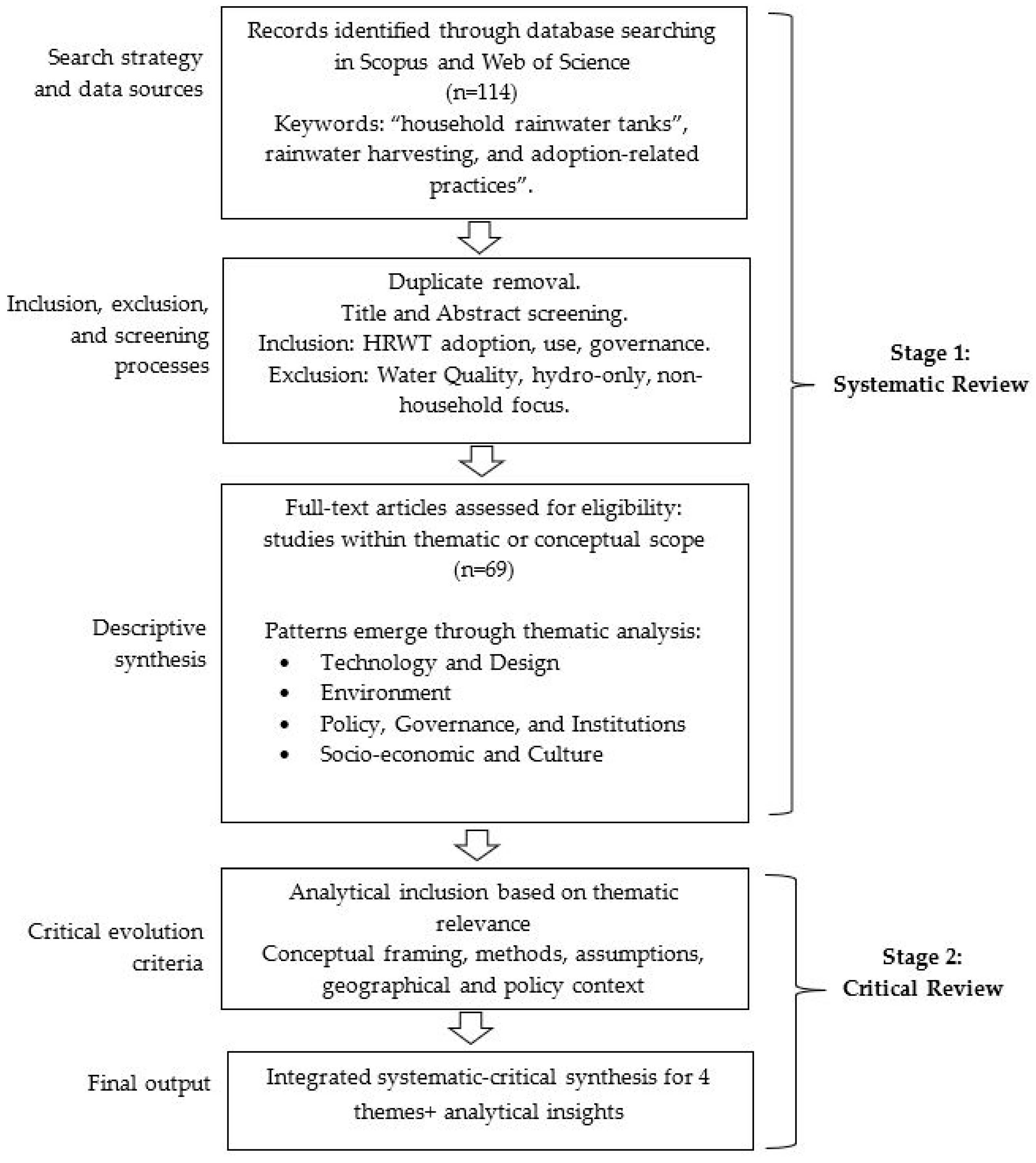
The initial search returned 114 records across the two databases. After removing duplicate records, a two-stage screening process was undertaken.
In the first stage, titles and abstracts were screened against predefined criteria to assess relevance to HRWT adoption, implementation, governance, or use. Accordingly, particular attention was given to whether the study had a substantive focus on household rainwater tanks, rather than only a peripheral mention. Papers that included household rainwater tanks in the title, abstract, or keywords but did not directly address the scope of this review were excluded at this stage. For example, studies that only provided general recommendations without examining household-level adoption or use were not considered further.
In the second, full-text screening was conducted to confirm conceptual and thematic alignment with the scope of the review. Papers were assessed for whether they provided substantive analysis relevant to household rainwater tank adoption, implementation, governance, or use. Studies were excluded if they focused primarily on aspects outside this scope, including:
rainwater quality contamination,
technical performance testing without adoption or usage considerations,
rainfall characteristics or hydrological modelling unrelated to household adoption, or
general advantages or disadvantages of rainwater consumption without behavioral, institutional, or socio-economic analysis.
Following screening, 69 papers were identified as closely aligned with the scope of this review. The relatively smaller sample size reflects the filtering of studies to include only those closely aligned with the research scope, particularly those addressing behavioral and adoption dimensions, while excluding a substantial proportion of purely technical literature.
2.1.3. Descriptive Synthesis
The selected literature revealed a gradual increase in scholarly attention to HRWTs over the past 15 years, although publication numbers fluctuated over time. A notable peak occurred in 2014, followed by variability in subsequent years and a smaller resurgence around 2020. Geographically, Australia and the United States accounted for a substantial proportion of publications, reflecting strong policy interest and long-standing investment in alternative and decentralized water management strategies in these contexts.
Through iterative coding and thematic analysis, four overarching thematic areas were identified from the systematic review:
Technology and Design
Environment
Policy, Governance, and Institutions
Socio-economic and Culture
These themes formed the analytical foundation for the second stage of the review.
2.2. Stage 2: Critical Review
The second stage comprised a critical review that moved beyond descriptive synthesis to interrogate the intellectual foundations, assumptions, and limitations of the existing HRWT literature. Drawing on the four themes identified in Stage 1, this stage critically examined how HRWT adoption has been framed, studied, and interpreted across different disciplinary, geographical, and policy contexts.
Specifically, the critical review
evaluated dominant conceptual framings and methodological approaches within each thematic area,
identified underlying assumptions, biases, and tensions in how HRWT adoption is understood and measured,
examined contradictions and gaps between technological, policy-driven, and socio-cultural perspectives,
highlighted under-researched geographical regions and socio-political contexts, and
explored whose knowledge, experiences, and voices are prioritized, or marginalized, in HRWT research.
Rather than treating themes as discrete categories, the critical review emphasized their interconnections, revealing how technological design choices, policy frameworks, and socio-cultural dynamics interact to shape adoption outcomes. By foregrounding these analytical insights, the combined systematic-critical approach provides both a structured overview of the field and a deeper interpretive understanding of the challenges, opportunities, and blind spots in global HRWT research (
Figure 1).
The methodological quality of the included studies was assessed to ensure the reliability and credibility of the evidence informing this review. Key criteria included clarity of research objectives, appropriateness of study design, robustness of data collection and analysis methods, and relevance to household rainwater tank adoption, implementation, governance, or use. Given the multifaceted nature of this review, studies were not excluded solely based on methodological limitations. Instead, identified limitations were noted and taken into account when interpreting and synthesizing findings, ensuring that conclusions reflect the strongest available evidence while capturing a comprehensive range of technological, environmental, policy, governance, institutional and socio-economic and cultural perspectives.
3. Results and Discussion
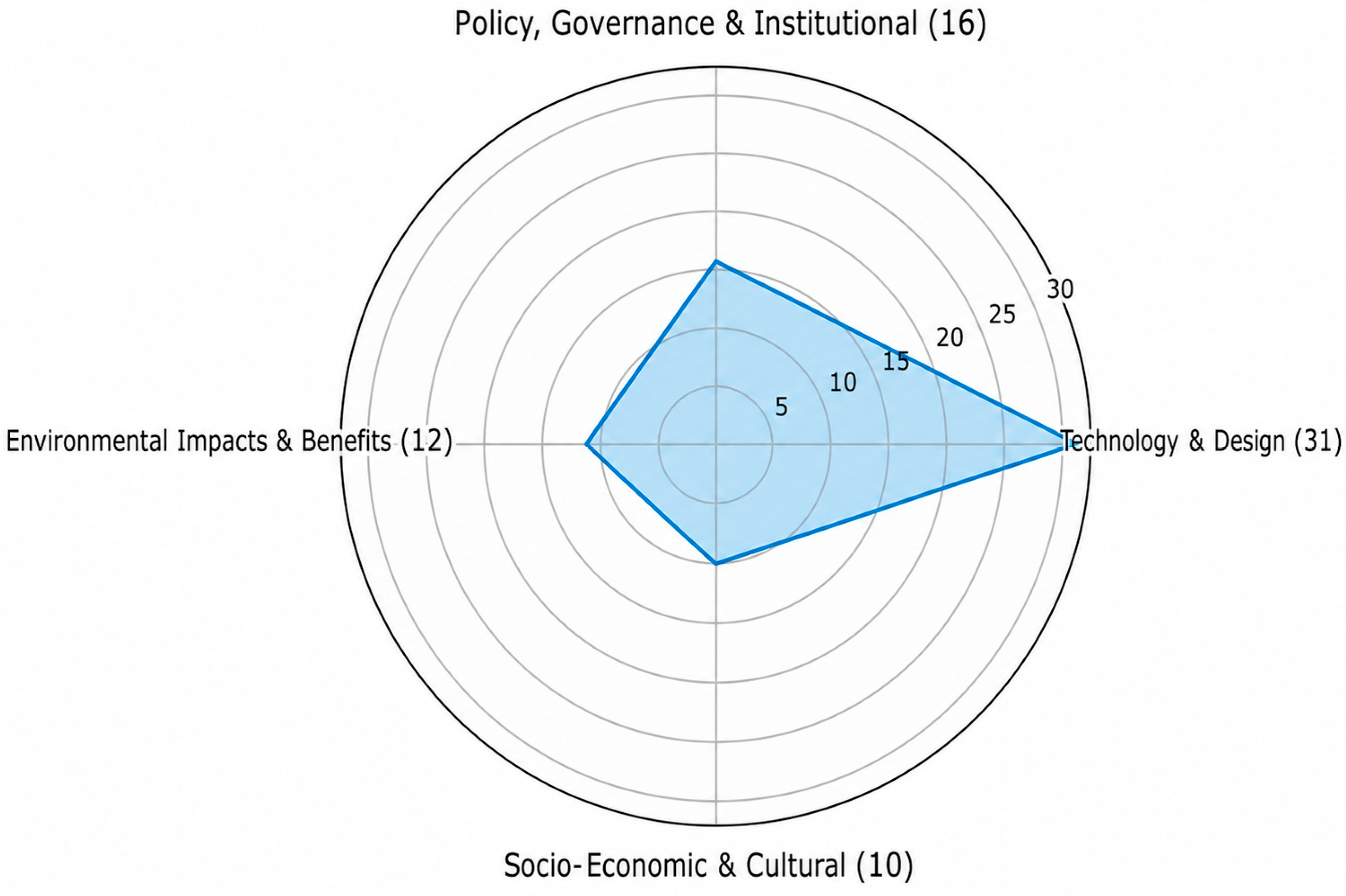
Drawing on both systematic and critical reviews of the literature, this section examines four key themes that shape research on HRWTs: (1) technological and design aspects, (2) policy, governance, and institutional frameworks; (3) environmental impacts and benefits; and (4) socio-economic and cultural considerations. Across the literature, the distribution of studies addressing these four themes is as follows: 31 on technological and design aspects, 16 on policy, governance, and institutional frameworks, 12 on environmental impacts and benefits, and 10 on socio-economic and cultural considerations. Several studies, while primary focused on one theme, also overlap with others. The radar chart in
Figure 2 illustrates this relative research emphasis across the four thematic domains identified in this paper.
As shown in
Figure 2, the literature is unevenly distributed, with technological and design considerations receiving the greatest attention, followed by policy and environmental dimensions, while socio-economic and cultural aspects remain comparatively underrepresented. This distribution highlights an imbalance in current research efforts and indicates the need for a more comprehensive and integrative approach to understanding HRWT systems. However, exploring these dimensions allows for an in-depth understanding of how HRWT has been adopted and studied across diverse contexts, and provides a holistic view of current knowledge and research trends in the field.
Table 1 presents a concise visual summary of the key themes. The accompanying section then expands on this overview, providing additional context, explanations, examples, and underlying reasons to support and interpret what is shown in the figure.
3.1. Technological and Design Dimensions
The literature search revealed that much of the recent research on HRWT is concentrated on technological and design dimensions, representing approximately 45% of the studies reviewed. This body of work demonstrates a strong focus on technical optimization, addressing climate change and health risks, and introducing novel modelling approaches for system design parameters, tank sizing, and maintenance requirements.
Rainwater tanks in the context of climatic variability, pollution, and health risks is a critical topic in the literature on the technological and design dimensions. Incorporating long-term climate variability into system design is framed as essential for improving efficiency and ensuring a reliable household water supply [
3]. Evidence from Central Europe indicates that rainfall patterns fluctuate significantly over time, affecting system performance and reliability; therefore, designs should be based on long-term rainfall records rather than short-term data. Additionally, technological enhancements are recommended to address water quality challenges arising from environmental pollution and acid rain [
26]. Implementing quality monitoring and pre-storage assessments is essential in this context to ensure that harvested rainwater is safely allocated for specific purposes and to prevent groundwater contamination. Flood mitigation represents another aspect of technological adaptation in HRWT systems for climatic challenges. While conventional tanks become ineffective once their capacity is exceeded during extreme storms, smart, system-controlled tanks are designed to coordinate outflows and reduce peak runoff. Evidence from Australian cities demonstrates that such coordinated operation significantly lowers peak flows across a range of tank sizes and rainfall conditions, enhancing flood mitigation performance compared with non-controlled tanks [
20]. Another emerging technological dimension involves the design of combined rainwater-harvesting and stormwater-detention systems with passive release mechanisms for new homes. These systems integrate water storage with controlled stormwater management, enabling tanks to temporarily detain runoff during heavy rainfall and release it gradually to reduce peak discharge. Evidence from Taiwan demonstrates growing interest in such integrated approaches, reflecting a broader regional trend toward multifunctional rainwater infrastructure that simultaneously supports water supply and urban flood mitigation [
27]. Turkey provides another example demonstrating that roof-based collection systems and storage infrastructure in greenhouse facilities can significantly increase the volume of harvestable rainwater when seasonal rainfall patterns are carefully incorporated into system design [
28].
Studies show that harvested rainwater can also meet acceptable quality standards for certain domestic uses, except for drinking, when appropriate system design and maintenance are ensured [
29,
30]. Evidence from Mexico and Palestine demonstrates that domestic rainwater harvesting systems integrated with water-efficiency retrofits can address urban water scarcity, with results indicating acceptable water quality for most domestic uses and strong household willingness to adopt the system [
31,
32]. Nevertheless, studies show that harvested rainwater can become contaminated through roof catchments, gutters, and storage surfaces, making untreated rainwater a public health risk, particularly in rural regions where it is commonly consumed despite health advisories [
33]. Contaminants such as bacteria and chemical pollutants, including heavy metals and nitrates, can pose risks of infections and long-term health effects, especially if the water is used for drinking or cooking without proper treatment. A clear need is highlighted for effective pre-treatment prior to disinfection, as well as safeguards to prevent recontamination during storage. Therefore, small-scale treatment systems suitable for rural HRWTs warrant further investigation given their practical relevance. Hypochlorite, for example, has been identified as a promising disinfectant for rural Australia due to its residual protection, availability, and low cost; however, effective system design requires an understanding of chlorine demand and appropriate dosing.
Also, within the technological and design dimension, recent modelling studies indicate a trend toward communal-based HRWT systems aimed at enhancing the performance and overall efficiency of household rainwater collection. This approach integrates individual household tanks with a shared communal storage facility, whereby runoff from household tanks is conveyed to a central tank, treated, and redistributed to households with additional water demand, while any surplus is directed toward groundwater recharge [
21]. Simulation studies conducted in urban areas, including Jakarta, Indonesia, indicate that this model enhances both volumetric and temporal reliability, increases available water supply, reduces surface runoff, and decreases reliance on groundwater extraction [
34].
Hydrologic modelling is another key technological aspect, with recent studies indicating that commonly used methods, such as design-storm modelling and continuous simulation, are insufficient on their own to fully assess the impacts of HRWT systems on urban runoff [
4]. Alternative approaches, including annual exceedance probability-neutral modelling, dual-probability analysis, and synthetic runoff frequency methods, are identified as more comprehensive assessment options, with the choice of model depending on local site conditions. Models used for technical performance evaluation, including those incorporating real-time monitoring and cost–benefit assessments, are also critical. They highlight the importance of accounting for site-specific variables such as local rainfall patterns, water service tariffs, and tank sizing [
4], all of which influence the long-term efficiency and economic viability of HRWT systems.
3.2. Policy, Governance, and Institutional Frameworks
The literature search identified policy, governance, and institutional frameworks as another key focus in HRWT research, illustrating how countries regulate household rainwater use to align with sustainability and economic objectives at national or regional levels. The literature indicates that policy frameworks commonly integrate a combination of regulatory and incentive-based mechanisms aimed at mainstreaming household rainwater use. However, the extent to which they lean toward regulations or incentives is largely shaped by contextual factors such as rainfall variability, economic conditions, governance capacity, levels of urbanization, and social acceptance.
In a country with a stable economy and political system, such as Japan, rainwater tanks are mandated through national building codes and urban water management policies, reflecting a strong regulatory approach designed to support flood control, water security, and national sustainability goals [
35]. Although this regulatory framework has resulted in widespread and standardized adoption of rainwater harvesting over the decades, particularly in public and large buildings, household uptake remains relatively low, largely due to limited awareness and motivation among households. While financial incentives and the installation of infiltration inlets have helped mitigate this, household participation in rainwater tank adoption remains limited in many municipalities in Japan [
35]. This suggests that regulatory frameworks alone are insufficient to drive household uptake, highlighting the need for complementary incentive mechanisms to encourage broader public engagement and investment.
Germany also exemplifies a strong regulatory approach to decentralizing rainwater management, primarily to support flood control and the protection of existing infrastructure and ecosystems [
18]. Although regulation forms the foundation of this approach, mandating practices such as the source separation of rainwater from sewer systems, it is complemented by incentive programs that encourage technological innovation and adoption by both public and private actors. This combination of regulatory and incentive-based measures highlights the need for integrated strategies to promote effective rainwater management, similar to lessons observed in Japan.
In countries such as the United States, despite growing support from public agencies and industry guidelines, formal municipal rainwater harvesting policies remain limited. Adoption is primarily driven by voluntary participation supported by economic incentives, public education, and integrated planning. High system costs remain a key barrier, while subsidies and clear guidance on water use promote successful implementation. These findings highlight how incentive-based approaches, rather than strict regulations, can effectively encourage rainwater harvesting and sustainable water management [
36]. Compared with more regulatory-driven contexts, such as Japan and Germany, voluntary approaches may lead to more variable adoption rates, but they can also encourage greater flexibility and user engagement when supported by financial incentives and awareness programs. Therefore, identifying an appropriate balance between regulatory measures and incentive-based approaches is essential.
Australia provides a particularly insightful case for examining the integration of regulatory and incentive instruments. As one of the driest inhabited continents, Australia has undergone a series of water policy reforms [
37], transitioning from voluntary rebate schemes in the 1990s to more stringent water efficiency standards in the 2000s [
38]. Within this trajectory, New South Wales’s Building Sustainability Index (BASIX) stands out as a comprehensive, performance-based planning policy linking water efficiency, energy conservation, and thermal comfort objectives. BASIX mandates that most new residential developments achieve defined potable water savings, which can be met partly through the mandatory installation of rainwater tanks [
39]. Two decades after its introduction, BASIX offers valuable insights into how regulatory frameworks can embed sustainable practices within housing design while maintaining flexibility for developers and consumers [
40].
In addition to analyzing the mechanisms of policy frameworks, the literature highlights the typical strengths and weaknesses of existing policy initiatives across diverse contexts. Strengths are often characterized by the collaborative and supportive nature of policies, which are highly valued by communities for sustaining long-term adoption of household rainwater tanks. For example, in Queensland, Australia, policies that provided incentives and supportive features were generally perceived as fairer and more effective, whereas purely regulatory measures were less accepted, particularly among community members confident in managing rainwater tank maintenance themselves [
41].
In contrast, weaknesses are evident when policy initiatives fail to account for local practices. In regions such as Tuamotu, French Polynesia, household rainwater harvesting cisterns are extensively used for drinking water supply. Nevertheless, the formal governance system demonstrates a limited capacity to formulate locally relevant and context-specific policies for such circumstances and continues to rely on inappropriate measures derived from broader-scale frameworks, underscoring a critical limitation in policy localization and adaptation [
42].
Furthermore, HRWT adoption policies lack effectiveness when they are not context-sensitive and when local needs are not accurately identified and addressed. South Asia provides examples of this, indicating that the success of HRWT policies is contingent upon enabling conditions, such as sufficient rainfall and suitable household architecture to meet potable water demand. For example, HRWTs have potential in Sri Lanka, parts of Bangladesh, and certain regions of India, where rainfall occurs for a significant portion of the year [
43]. However, in some areas of Bangladesh, household rainwater harvesting governance often falls short of meeting year-round water demand, with users relying on alternative sources. Challenges such as limited knowledge of water treatment and system maintenance, inadequate functional components, and lack of monitoring support highlight persistent gaps in policy implementation and long-term system sustainability [
19]. Evidence from urban case studies further indicates that the effectiveness and cost-efficiency of onsite water-conserving technologies, such as rainwater and graywater systems, depend on local housing characteristics, fixture retrofitting, and neighborhood socio-economic conditions, highlighting the importance of tailoring policy and implementation strategies to specific urban contexts [
44,
45].
3.3. Environmental Impacts and Benefits
The literature research identified a focus on environmental impacts and benefits in HRWT research, highlighting key areas, such as energy use, infrastructure, and treatment, that require improvement to make rainwater harvesting more sustainable.
Studies suggest individual household rainwater systems performed marginally better environmentally than systems implemented at the scale of a whole building [
46]. As studies show, the main contributor to environmental burden is electricity used for pumping, while the system can still reduce pressure on local water resources in areas experiencing water stress. However, when infrastructure construction and disinfection processes are included, environmental impacts may increase significantly. When designed minimally, using shorter distribution distances and removing the need for pumps, domestic systems outperformed municipal drinking water and significantly reduced energy use and human health-related air pollutants, while also avoiding blue water losses [
47].
Studies also found that rainwater tanks, as a more technologically intensive alternative to traditional dam-based water supply, can increase environmental impacts per unit of water across most categories, including ecotoxicity, human toxicity, global warming, ozone depletion, and metals depletion [
48]. These findings highlight the challenge for water planners in balancing higher energy and material demands with the need for resilient, diversified water sources in the context of population growth and diminishing dam supplies.
In addition to system design and scale, the location and integration of rainwater harvesting infrastructure significantly influence environmental outcomes. Studies indicate that combining rainwater harvesting with greywater reuse or integrating it into building-scale stormwater management can enhance overall sustainability by reducing potable water demand and mitigating urban runoff [
49]. Furthermore, lifecycle assessments emphasize the importance of selecting low-impact materials and optimizing maintenance practices to minimize energy use and environmental burdens, reinforcing the need for holistic planning in the deployment of HRWT systems.
3.4. Socio-Economic and Cultural Considerations
The literature search identified the socio-economic and cultural dimensions of HRWT, suggesting a positive socio-economic and cultural shift. However, the extent of this change is influenced by contextual factors such as rainfall variability, national economic conditions, and other local constraints.
Domestic rainwater tanks indicate an emerging but uneven cultural shift in how households value water. For example, in Australia, while some perceive tank water as a personal safeguard or lifestyle choice, others regard it as a civic contribution or merely an extension of existing infrastructure. This variation implies rainwater tanks have not yet matured into a fully accepted household technology but are gradually reshaping attitudes toward water use and responsibility [
50]. Evidence from water-insecure regions, such as remote areas of Canada, further highlights that the introduction of HRWTs, even when only small volumes are captured, can meaningfully improve daily life by reducing household water-retrieval efforts, increasing general-purpose water use, and offering modest economic savings [
51]. Psychological benefits have also been reported, suggesting that rainwater harvesting supports not only practical needs but also a sense of autonomy and well-being in contexts of chronic water scarcity. The implementation of rainwater harvesting systems at the household-cluster level, rather than at individual houses, can also improve the quality of life for communities facing water scarcity [
52]. Evidence from Mexico shows that increasing access to water within clustered households reduces the time and effort required for water collection, easing daily burdens and allowing residents to devote more time to productive or personal activities. In addition, the enhanced water availability within these clusters contributes to better household health, as access to safer water can reduce the prevalence of waterborne diseases. Nevertheless, such systems need to be methodically adapted and scaled within spatially informed decision-making and public policy frameworks to ensure long-term effectiveness. Evidence from Palestine highlights similar challenges, showing that although rainwater harvesting can improve domestic water supply and agricultural productivity, high construction costs limit its cost-effectiveness and constrain wider adoption in the absence of supportive policy measures [
53].
There are also instances where roof-harvested rainwater, including at the household level, is increasingly used for urban agriculture and small-scale food production, reflecting a cultural shift toward sustainable living. Kenya, representing economically less developed and arid regions, provide examples on the use of rainwater for food production as a cultural practice that remains largely unfeasible. In contrast, Australia, as a developed country with greater infrastructure and technological capacity, presents stronger potential for integrating rainwater harvesting into sustainable food production practices. Nevertheless, effective design integration, such as customized rainwater harvesting systems tailored to agricultural activities, is essential for embedding these practices into residents’ daily lives [
54]. Furthermore, in places where water resources are constrained by social and environmental pressures, HRWT offers an important complementary solution to augment the main water supply. For example, in the Solomon Islands, HRWT adoption can strengthen the resilience of water supply systems affected by rapid population growth, urbanization, under-maintained infrastructure, ethnic tensions, and affordability issues linked to water tariffs. Beyond their functional role, HRWT also helps address socio-cultural challenges by reducing dependence on unreliable or contested communal water sources and by supporting household autonomy during periods of supply disruption [
55]. However, despite these advantages, rainwater harvesting should not be relied upon as the sole source of domestic water supply.
While HRWT systems can reduce pressure on limited water resources and support broader socio-economic and cultural benefits, there may also be economic challenges. Evidence from single-house systems in Northern Cyprus indicates that implementation is often constrained by high installation and maintenance costs [
56]. Research from Southern African regions further shows that socio-economic reliability is influenced by several factors, including rainfall variability, roof catchment area, household water demand, tank cost, number of residents, and discount rates [
57]. Therefore, a more comprehensive analysis that integrates environmental benefits alongside socio-economic considerations would provide a fuller understanding of the overall feasibility of HRWT systems. While not focused exclusively on rainwater, evidence from a water-scarce community in the Philippines illustrates the broader context of integrated water systems, showing that rainwater harvesting combined with water treatment and eco-toilet components can be successfully implemented when socio-cultural factors, such as user attitudes and behavioral intentions, are considered [
58]. Implementation of rainwater harvesting in Malaysia further demonstrates how socio-economic and cultural factors influence adoption, emphasizing the importance of competitive costs, application in commercial buildings, cost-effective treatment solutions, effective policy implementation, the use of green materials, public perception improvement, and reliable first-flush technology [
59]. However, the study does not address specific HRWT user preferences or operational aspects of rainwater harvesting, leaving a gap in understanding how such systems can be optimally implemented.
Building on this distribution, the synthesis reveals several key trends across the literature. First, research is predominantly oriented towards technological optimization, with a growing emphasis on system optimization, modelling, and integration with climate-responsive infrastructure. In contrast, socio-economic and cultural dimensions remain comparatively underexplored, despite their critical role in influencing household adoption and long-term use. Second, clear regional variations are evident. Developed regions, such as Australia, Japan, and Germany, tend to emphasize regulatory frameworks, technological innovation, and integrated urban water management. In contrast, developing regions, including parts of Asia, Africa, and the Pacific, often focus on accessibility, affordability, and context-specific adaptation. In these contexts, a significant emphasis is placed on technological efforts to enable the use of harvested rainwater for drinking purposes, reflecting a priority to address basic water needs rather than broader development goals. These differences underscore how local environmental, economic, and institutional conditions shape both the implementation and outcomes of HRWT systems.
These disparities are also closely linked to variations in national research funding levels, institutional capacity, and infrastructure investment, which collectively influence the focus and depth of research across regions. Consequently, such patterns can affect both research funding priorities and access to scientific resources, further reinforcing existing imbalances in knowledge production.
Finally, several research gaps emerge. There is a need for more integrative studies that bridge technical, policy, and socio-cultural dimensions, as well as greater attention to household-level behavioral dynamics, long-term system performance across diverse contexts, and comparative cross-regional analyses. Addressing these gaps is essential for advancing a more balanced and comprehensive understanding of HRWTs and for informing more effective and context-sensitive strategies for sustainable water management.
4. Conclusions
This review directly addresses the research question, What are the key factors shaping HRWT systems globally, and what critical knowledge gaps remain? It reveals that the research trends for HRWTs primarily fall into four key themes: (1) Technological and Design Dimensions, (2) Policy, Governance, and Institutional Frameworks, (3) Environmental Impacts and Benefits and (4) Socio-Economic and Cultural Considerations.
Technological and design dimensions of HRWTs emphasise the importance of context-sensitive, optimized system design to ensure reliability, water quality, and flood mitigation. Advances in modelling, tank sizing, and system coordination demonstrate that both household-level and communal-based approaches can enhance water availability and reduce environmental impacts. However, the literature also highlights persistent challenges, particularly in addressing water contamination risks, climatic variability, and long-term performance under diverse local conditions. Overall, effective HRWT system design requires integrating technical innovation with site-specific data, pre-treatment measures, and adaptive management strategies to support safe, resilient, and sustainable household water supply.
Policy, Governance, and Institutional Frameworks discussion shows that their effectiveness for HRWT depends not only on the type of instruments adopted, regulatory, incentive-based, or hybrid, but also on how well these instruments are aligned with local realities. Strong regulations, such as those in Japan and Germany, can institutionalize rainwater management but may fall short without public engagement and supportive incentives. Conversely, predominantly incentive-driven approaches, as seen in the United States, can encourage voluntary uptake but rely heavily on sustained community interest and governance capacity. Context-sensitive, integrated frameworks, illustrated by Australia’s BASIX scheme, demonstrate the value of combining flexibility with enforceable standards. Ultimately, successful HRWT policy requires grounded, locally informed strategies that consider environmental conditions, household practices, and socio-institutional dynamics to ensure long-term adoption and system sustainability.
Environmental benefits of HRWTs are also notable, particularly in reducing pressure on local water resources and minimizing energy use when designed efficiently. However, the environmental performance of HRWT is highly sensitive to design choices, infrastructure requirements, and treatment processes. While domestic-scale systems with minimal pumping and shorter distribution distances can outperform conventional water supply in energy and pollutant reductions, more technologically intensive systems may increase environmental burdens. These findings emphasise the need for careful planning and design to optimize the sustainability of HRWT, balancing resource efficiency with resilience and long-term environmental outcomes.
Socio-economic and cultural responses to HRWTs are shaped by highly localized needs, capacities, and values. While HRWTs can enhance well-being, reduce daily labor, improve household autonomy, and support broader community resilience, its benefits are unevenly distributed across different economic and environmental contexts. Cultural acceptance is growing but remains variable, influenced by perceptions of water security, lifestyle, and civic responsibility. At the same time, financial barriers, rainfall variability, and design limitations continue to constrain adoption, particularly in regions with limited resources. These findings highlight the importance of integrating socio-economic realities and cultural practices into the design and promotion of HRWT systems to ensure long-term relevance, equity, and sustainability.
Overall, this review addresses the research question by identifying four key factors shaping household rainwater tank systems: technological, policy, environmental, and socio-economic. It also highlights critical gaps across these areas. The findings indicate that while technological advancements dominate the literature, important insights emerge regarding inconsistencies in policy frameworks, variable public acceptance, maintenance challenges, and limited integration of socio-economic and hydrological modelling. These gaps highlight the need to better understand HRWT as a socio-technical system, where technical performance, governance structures, and user behaviors are closely interconnected.
From a policy and practice perspective, the review underscores the importance of context-sensitive and integrated approaches. Policymakers should move beyond isolated regulatory or incentive-based mechanisms and instead adopt hybrid frameworks that align with local environmental conditions, institutional capacities, and community practices. For practitioners and planners, the findings emphasize the need to incorporate user behaviors, maintenance requirements, and long-term system performance into design and implementation strategies. Integrating HRWTs into broader urban and rural water planning frameworks is particularly critical in the context of increasing climate variability and the need for diversified and resilient water supply systems.
Finally, this review identifies several priorities for future research. There is a clear need for more interdisciplinary and integrative studies that bridge technological, policy, and socio-cultural dimensions. Greater attention should be given to household-level behavioral dynamics, long-term system performance under varying climatic conditions, and the development of modelling approaches that combine hydrological and socio-economic factors. In addition, more comparative cross-regional studies are needed to better understand how contextual differences shape adoption and outcomes. Addressing these areas will be essential for advancing a more balanced and comprehensive evidence base and for positioning HRWT as a sustainable and adaptable solution within global water management strategies.




 ,
,