Multi-Dimensional Method Innovation and System Construction for Synergistic Damage Assessment of Multi-Media Pollution

 ,
, 
 ,
,
Abstract
1. Introduction
2. Research Methods
2.1. Dynamic Data Layer Fusion
2.1.1. Data Preprocessing Technical System
2.1.2. Three-Stage Parameter Calibration Method: Achieving Synergistic Consistency of Multi-Factor Parameters
2.2. Damage Quantification Layer
2.2.1. Environmental Damage Entropy (EDE)
- (1)
- Damage dispersion: It quantifies the uniformity of damage distribution across different environmental media. A higher EDE value indicates more evenly dispersed damage, which typically requires more comprehensive and coordinated governance strategies.
- (2)
- Nonlinear coupling intensity: Through the kernel density estimation of damage contribution probabilities, EDE captures the degree of information overlap and interaction between media, directly addressing the double-counting problem inherent in traditional linear summation methods.
- (3)
- System uncertainty: It reflects the cumulative uncertainty arising from multi-source data heterogeneity, parameter variability, and incomplete understanding of cross-media processes, providing a natural measure of assessment reliability.
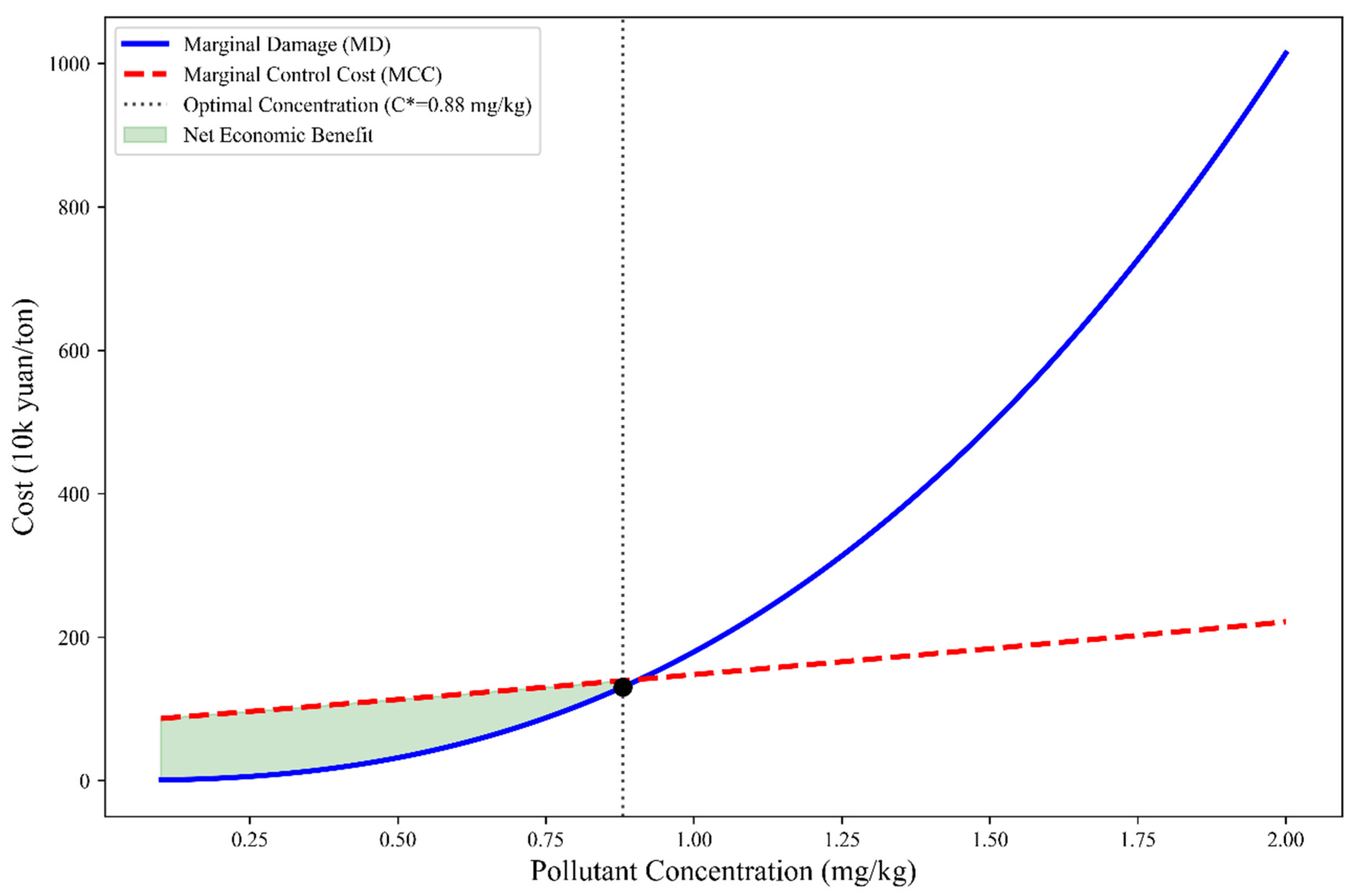
2.2.2. Calculation of the Optimal Control Condition Based on the Coupling of Marginal Damage and Control Cost
2.3. Model Layer Coupling
2.4. Streamlined Operational Workflow for Regulatory Application
- (1)
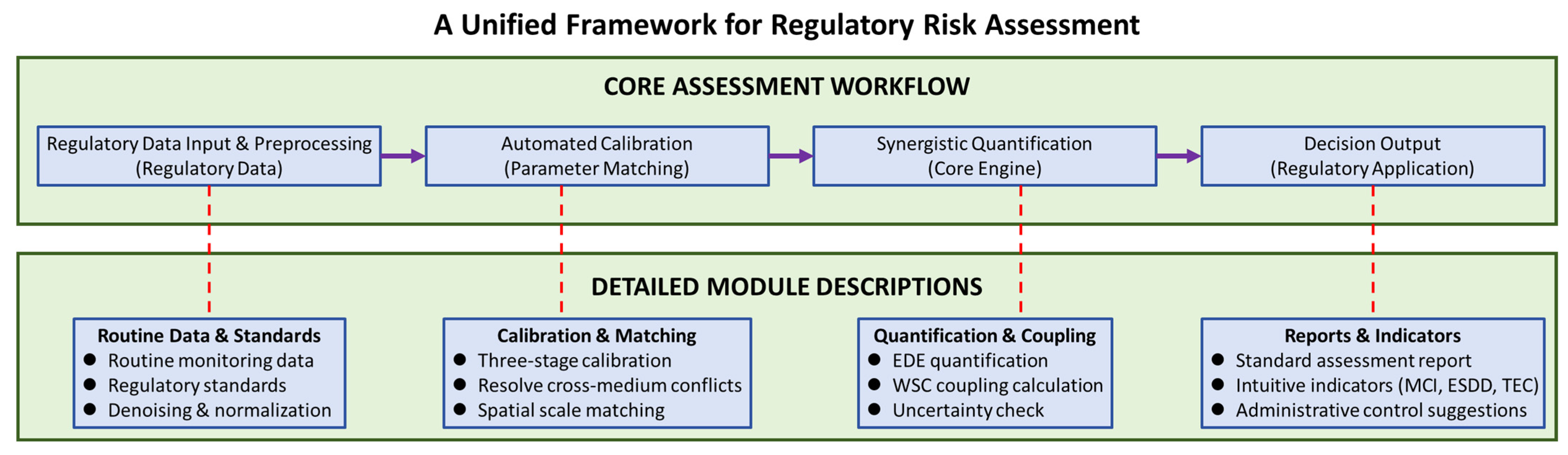
- Data Input: Regulators input routine field-measured environmental data (concentration, hydrological/meteorological parameters) into the HSA preprocessing module.
- (2)
- Automated Calibration: The system automatically matches and calibrates cross-media parameters using the embedded three-stage calibration system, minimizing the need for manual expert intervention.
- (3)
- Synergistic Quantification: The EDE and WSCC algorithms process the calibrated data entirely in the background, computing the nonlinear interactions and synergy coefficients without requiring advanced mathematical input from the user.
- (4)
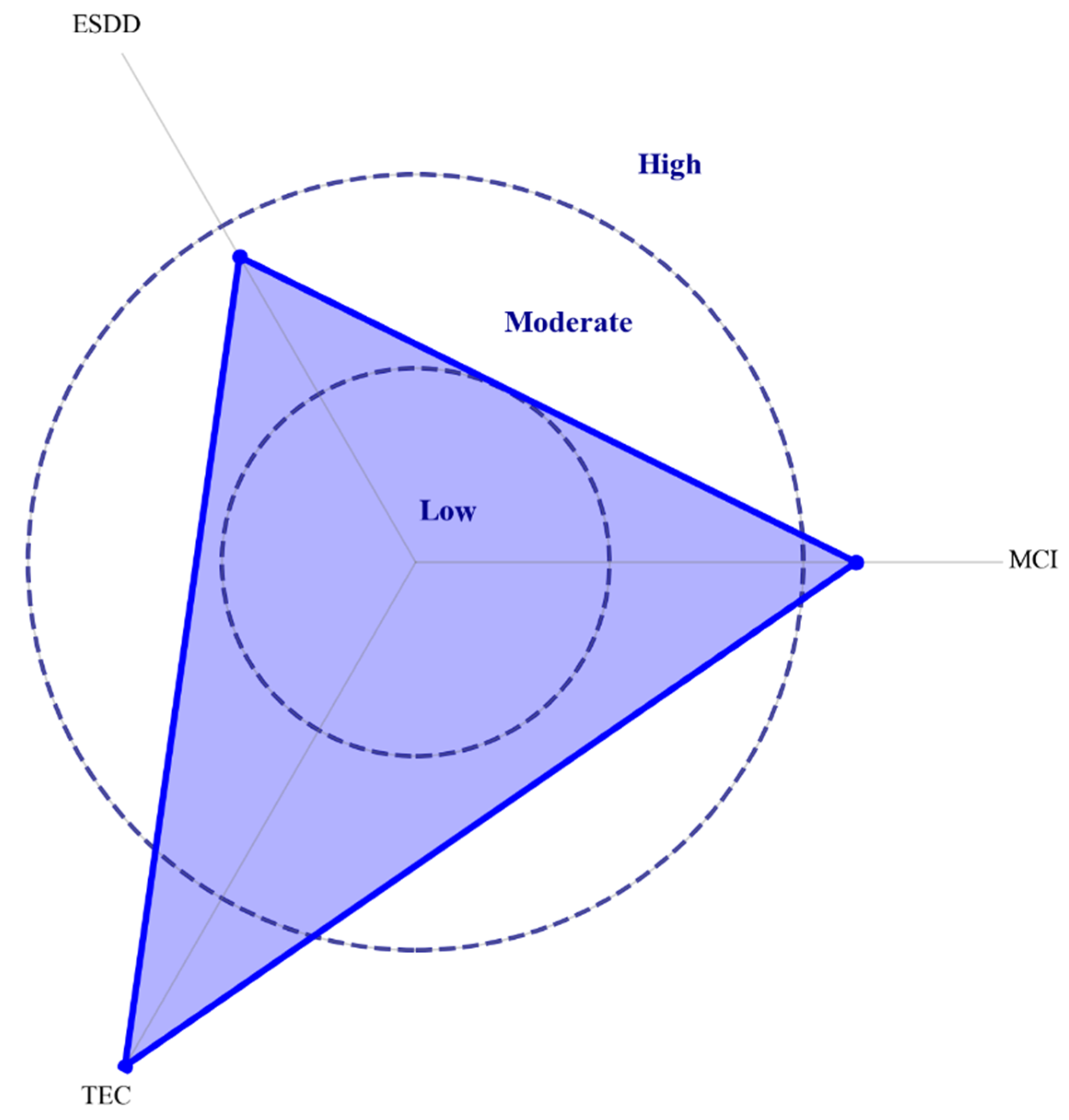
- Decision Output: The system outputs three intuitive, categorized indices (MCI, ESDD, TEC) which correspond directly to predefined regulatory action plans. This encapsulation ensures that while the underlying algorithms remain robustly complex, the user-facing process is simplified and highly practical.
3. Results and Discussion
3.1. Multi-Factor Damage Coupling Mechanism
3.1.1. Pollution Chain Analysis
3.1.2. Damage Amplification Effect
3.1.3. Amplification of Ecological Risks
3.1.4. Environmental Element Correlation Matrix and Quantitative Model for Liability Allocation
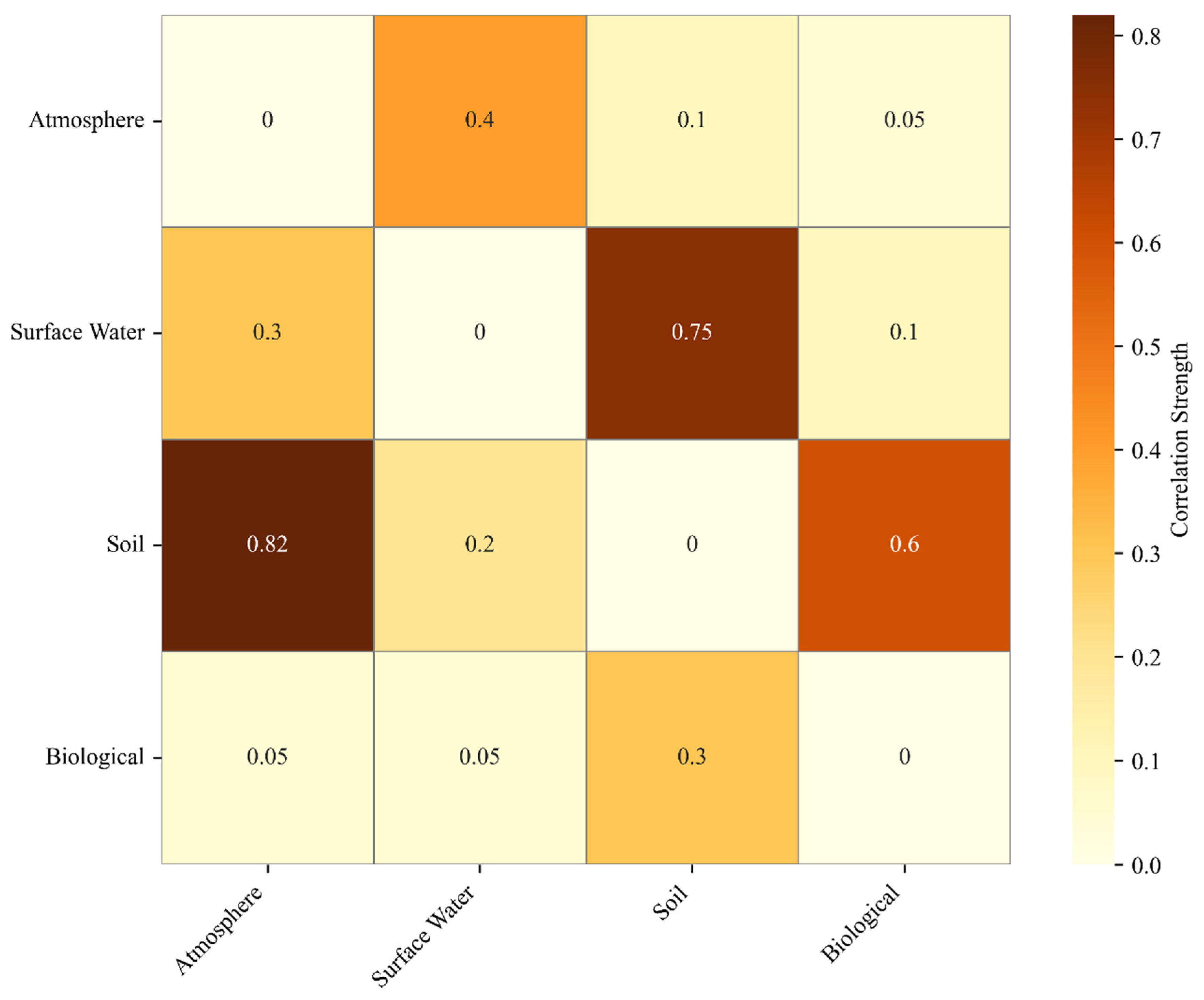
Construction of the Correlation Matrix
Quantitative Model for Liability Allocation
3.1.5. Threshold-Triggered Cascading Effects and Dynamic Prediction Model
3.2. Case Study Results of Multi-Media Synergistic Pollution Damage Assessment
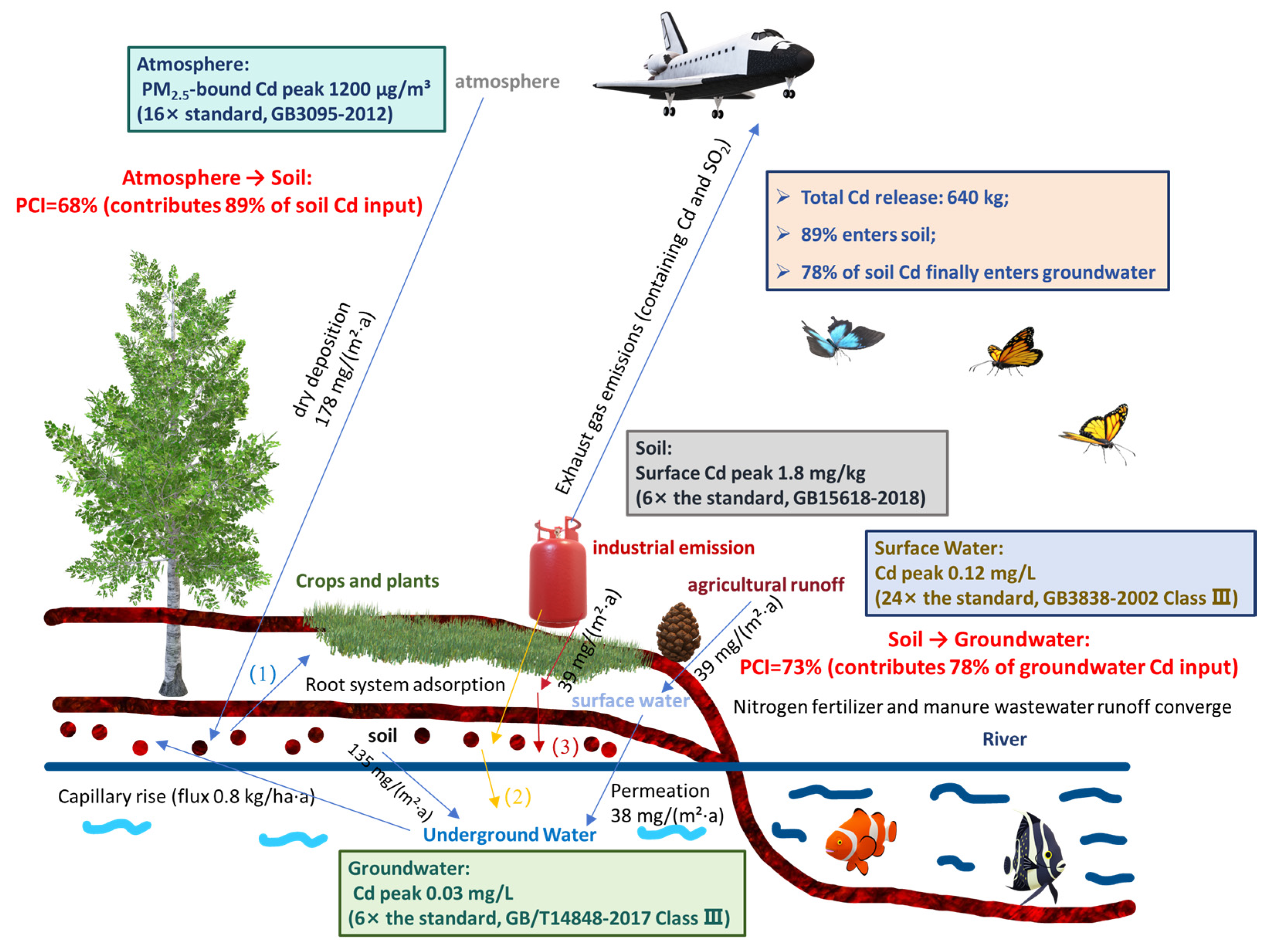
3.2.1. Pollution Chain Network Construction and Key Pathway Identification
3.2.2. Environmental Damage Entropy and Integrated Damage Value
3.2.3. Analysis of Ecological Risk Cascading Effects
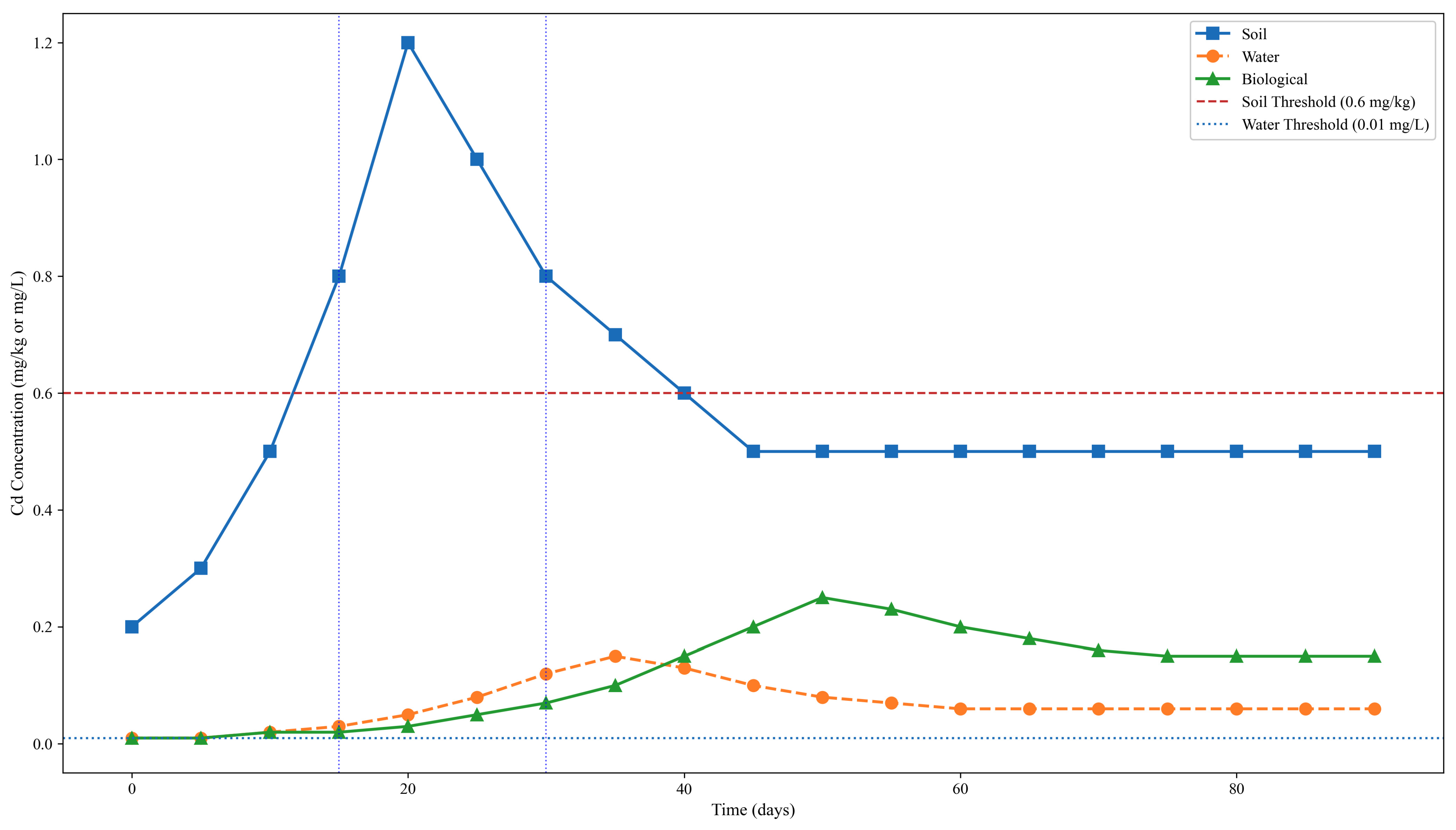
Threshold Exceedance and Cascading Pathway Identification
Biomagnification Effect and Health Risk
3.2.4. Comprehensive Assessment and Governance Recommendations
3.2.5. Cross-Scenario Performance Comparison and Transferability Analysis
4. Conclusions
Supplementary Materials
Author Contributions
Funding
Data Availability Statement
Conflicts of Interest
References
- Wei, L.-N.; Wu, N.-N.; Xu, R.; Liu, Y.; Liu, S.; Zhang, H.-Y.; Li, Z.-T.; Liu, Y.-H.; Xu, X.-R.; Zhao, J.-L.; et al. Rainfall, seasonal variation, and stream type governing the multi-media fate and ecological risks of tire additives and their transformation products in mega-urban streams. Water Res. 2025, 287, 124366. [Google Scholar] [CrossRef]
- Chele, F.S.; Jimenez-Pazmino, P.; Läufer, K. New technologies as decision aids for the advancement of ecological risk assessment. Integr. Environ. Assess. Manag. 2023, 19, 1168–1171. [Google Scholar] [CrossRef]
- Wang, J.; Wang, R. The Impact of Urbanization on Environmental Quality in Ecologically Fragile Areas: Evidence from Hengduan Mountain, Southwest China. Land 2024, 13, 503. [Google Scholar] [CrossRef]
- Zhou, K.; Zhao, L.; Yang, Y. Co-Disposal of Multisource Municipal Solid Waste: Cross-Media Transport Characteristics of Key Elements and Related Gaseous Pollutants Emission. Energy Fuels 2025, 39, 24239–24254. [Google Scholar] [CrossRef]
- De la Nogal-Fernández, B.; Lantaron-Santamaria, S.; Cuenca-Castillo, M.a.N.; Akhrimenko, V.; Orive, G.; Lertxundi, U. Are We Throwing Away Medicines Too Early? Environ. Sci. Technol. 2025, 59, 10703–10706. [Google Scholar] [CrossRef]
- Shen, Z.; Sun, Z.; Xu, J.; Yang, L.; Cao, M.; Shi, H.; Luo, X. Focus on China’s non-ferrous metal industry: Emission characteristics of heavy metals and their impacts on water, soil, and air. J. Hazard. Mater. 2025, 497, 139757. [Google Scholar] [CrossRef] [PubMed]
- Li, X.; Li, N.; Zhao, R.-s.; Shi, Y.; Cai, Y. Characterization and risk prioritization of PFAS via nontarget screening in soil and maize near a fluoropolymer manufacturing facility. J. Hazard. Mater. 2025, 500, 140445. [Google Scholar] [CrossRef] [PubMed]
- Tang, Y.; Liu, X.; Chen, Z.; Guo, H.; Li, H.; Ouyang, M.; Luo, X.-S. Effects of atmospheric particle deposition from coal combustion on heavy metals accumulation and growth responses of wheat (Triticum aestivum L.). J. Environ. Manag. 2026, 397, 128262. [Google Scholar] [CrossRef]
- Fan, Y.; Yang, G.; Tian, X.; Ding, S.; Li, Q.; Zhou, T.; Peng, T.; Tian, B. Experimental and numerical investigation on normal strength and high strength RC arches subjected to underwater explosions. Eng. Struct. 2025, 322, 119138. [Google Scholar] [CrossRef]
- Huang, Q.; Zhang, Q.; Zhao, S.; Chen, X.; Guan, H.; Liu, J. DFT-guided design of biochar-based composites for photocatalytic degradation of fluoroquinolone antibiotics in soil-water systems: Non-targeted metabolomics and structural equation modeling. J. Hazard. Mater. 2025, 499, 140077. [Google Scholar] [CrossRef]
- Robles-Lecompte, A.; Cheng, J.; McKenna, A.M.; Chang, N.-B. Linking pattern shifts of dissolved organic nitrogen fractional removal with microbial species richness in a cascade upflow biofiltration process. Water Res. 2024, 264, 122130. [Google Scholar] [CrossRef] [PubMed]
- Xu, C.; Xu, C.; Zhou, Q.; Shen, C.; Peng, L.; Liu, S.; Yin, S.; Li, F. Spatial distribution, isomer signature and air-soil exchange of legacy and emerging poly- and perfluoroalkyl substances. Environ. Pollut. 2024, 343, 123222. [Google Scholar] [CrossRef]
- Yang, D.; Jia, X.; Xia, T.; Zhang, N.; Su, S.; Tao, Z.; Wu, Z.; Liang, J.; Zhang, L. Novel insight into deriving remediation goals of arsenic contaminated sites with multi-media-equivalent dose and local exposure parameters. J. Hazard. Mater. 2025, 482, 136501. [Google Scholar] [CrossRef] [PubMed]
- Luo, J.; Wiedmann, T.; Aryampa, S.; Fisher, R. Understanding variations in life cycle assessment of biosolids processing systems: A review. J. Clean. Prod. 2025, 486, 144558. [Google Scholar] [CrossRef]
- Bao, Y.; Shi, Z.; Li, X.; An, Y.; Song, W.; Li, Y.; Wu, W.; Wei, L.; Yan, Y.; Li, D. Intelligent prognostics of syngas pipeline elbow erosion via a hybrid machine learning—Digital twin framework. J. Ind. Inf. Integr. 2025, 48, 101006. [Google Scholar] [CrossRef]
- Rico, A.; Picazo, A.; Chavez, J.; Campo, J.; Colomer-Vidal, P.; Muñoz-Arnanz, J.; Jiménez, B.; Rizzi, C.; Federico, L.; Villa, S.; et al. Impacts of the 2024 flash flood on water quality, pathogenic bacteria and organic contaminant risks in the Albufera Natural Park (Valencia, Spain). Environ. Res. 2026, 290, 123515. [Google Scholar] [CrossRef]
- Zhu, X.; Wang, H.; Han, Y.; Zhang, D.; Liu, S.; Zhang, Z.; Liu, Y. Reconstructing the VOC—Ozone Research Framework Through a Systematic Review of Observation and Modeling. Sustainability 2025, 17, 7512. [Google Scholar] [CrossRef]
- Arnot, J.A.; Gobas, F.A.P.C. A review of bioconcentration factor (BCF) and bioaccumulation factor (BAF) assessments for organic chemicals in aquatic organisms. Environ. Rev. 2006, 14, 257–297. [Google Scholar] [CrossRef]
- Han, G.; Song, S.; Huang, Y.; Xia, H.; Yu, M. Advancing fugacity modeling of POPs: Critical evaluation of multimedia frameworks and future pathways. Process Saf. Environ. Prot. 2025, 202, 107722. [Google Scholar] [CrossRef]
- Lin, Y.; Ma, T.; Li, C.; Shen, L.; Tan, X.; Luo, K.; Peng, K. Numerical Study of SC-CO2 Jet-Induced Rock Fracturing Using SPH-FEM and the RHT Model: Parameter Effects and Damage Evolution. Appl. Sci. 2025, 15, 11357. [Google Scholar] [CrossRef]
- Li, W.; Yan, D.; Weng, B.; Lai, Y.; Zhu, L.; Qin, T.; Dong, Z.; Bi, W. Nonlinear effects of surface soil moisture changes on vegetation greenness over the Tibetan plateau. Remote Sens. Environ. 2024, 302, 113971. [Google Scholar] [CrossRef]
- Semenzin, E.; Critto, A.; Marcomini, A. Ecosystem impairment evaluation on biodiversity and functional diversity for contaminated soil assessment. Integr. Environ. Assess. Manag. 2009, 5, 399–413. [Google Scholar] [CrossRef]
- Amorim, L.; de Oliveira, R.V.; Bezerra, L.L.; Fechine, P.B.A.; Correia, A.N.; de Lima-Neto, P.; Monteiro, N.D.K.V. Theoretical Study of Fe3+ and Ni2+ Ion Interactions in Ethaline as the Deep Eutectic Solvent and Water Solutions Using Molecular Dynamics, Quantum Theory of Atoms in Molecules, and Non-Covalent Interactions. ACS Omega 2025, 10, 16015–16030. [Google Scholar] [CrossRef]
- Lamas, G.A.; Ujueta, F.; Navas-Acien, A. Lead and Cadmium as Cardiovascular Risk Factors: The Burden of Proof Has Been Met. J. Am. Heart Assoc. 2021, 10, e018692. [Google Scholar] [CrossRef]
- Bordon, I.C. Metals and new approaches for biomonitoring. Integr. Environ. Assess. Manag. 2023, 19, 1411–1413. [Google Scholar] [CrossRef]
- Rodríguez-Zapata, M.A.; Agudelo, C.A.R. The Economic Value of Environmental Liabilities: Addressing One of the Greatest Challenges for the Maintenance of Socioecological Potentialities in Colombia. J. Knowl. Econ. 2025, 16, 15005–15033. [Google Scholar] [CrossRef]
- Araujo, T.B.G.; Junior, S.F.S.; de Farias Araujo, G.; Medeiros, R.J.; Soares, L.O.S.; Ikehara, B.R.M.; de Almeida, N.l.R.; Pinto, F.G.; Lemos, L.S.; Quinete, N.; et al. Multi-endpoint evaluation of PFOA toxicity in Danio rerio: Oxidative, genotoxic, and metabolomic responses. J. Hazard. Mater. 2026, 501, 140704. [Google Scholar] [CrossRef]
- Lima, A.D.; Nascimento, A.P.; Moraes, A.S.B.; Costa, A.B.; Santos, R.P.; Bezerra, L.E.; Giarrizzo, T.; Martins, L.L.; Cavalcante, R.M. Lepas anatifera as a biomonitor of ocean health, ecological impacts, and cancer risk in a new frontier of exploration (Brazilian Equatorial Margin). Environ. Res. 2025, 274, 121226. [Google Scholar] [CrossRef]
- Xie, C.; Zhang, X.; Xin, J.; Jian, X.; Huang, T.; Tang, Z.; Wang, Z.; Li, Z.; Yang, Z.; Gao, H.; et al. Impacts of trade-driven outsourced nitrogen emissions on environment and environmental inequities in China. J. Clean. Prod. 2025, 519, 146006. [Google Scholar] [CrossRef]
- Baral, N.R.; Mishra, S.K.; George, A.; Gautam, S.; Mishra, U.; Scown, C.D. Multifunctional landscapes for dedicated bioenergy crops lead to low-carbon market-competitive biofuels. Renew. Sustain. Energy Rev. 2022, 169, 112857. [Google Scholar] [CrossRef]
- Azevedo, A.; Guerra, A.; Martins, I. Seamounts ecological modelling: A comprehensive review and assessment of modelling suitability to emergent challenges. Ocean Coast. Manag. 2024, 251, 107050. [Google Scholar] [CrossRef]
- Ng, K.H.; Yusoff, N.H.M.; Chong, C.H.; Wan, Y.K. P-graph-based synthesis of a wastewater treatment process for heavy metal removal: A nonlinear optimisation with cost and sustainability perspectives. J. Clean. Prod. 2025, 524, 146463. [Google Scholar] [CrossRef]
- Zong, Z.; Huang, Y.; Kwan, J.; Hankins, N.P. Standardized benchmarking of advanced oxidation processes for tetracycline degradation with life cycle assessment and economic evaluation. Chem. Eng. J. 2025, 525, 170664. [Google Scholar] [CrossRef]
- Ma, L.; Xu, Z.; Fan, L.; Jia, H.; Hu, H.; Li, L. Multi-Source Data Integration and Model Coupling for Watershed Eco-Assessment Systems: Progress, Challenges, and Prospects. Processes 2025, 13, 2998. [Google Scholar] [CrossRef]
- Chabert, M.; Large, G.; Tedoldi, D.; Lakel, A.; Fardel, A.; Lipeme Kouyi, G.; Gasc, A.; Nguyen, E.; Chatain, V. Stormwater sediment monitoring in infiltration facilities: A convenient method for assessing accumulation rates and mitigating environmental impact. J. Clean. Prod. 2025, 525, 146518. [Google Scholar] [CrossRef]
- Keiser, D.A.; Muller, N.Z. Air and Water: Integrated Assessment Models for Multiple Media. Annu. Rev. Resour. Econ. 2017, 9, 165–184. [Google Scholar] [CrossRef]
- Muller, N.Z.; Mendelsohn, R. Measuring the damages of air pollution in the United States. J. Environ. Econ. Manag. 2007, 54, 1–14. [Google Scholar] [CrossRef]
- Gan, R.K.; Alsua, C.; Aregay, A.; Assaf, D.; Bruni, E.; Arcos González, P. Exploring Cascading Disaster Risk During Complex Emergencies: Chemical Industry Disaster Risk Assessment in the Aftermath of the Kakhovka Dam Bombing in Ukraine. Disaster Med. Public Health Prep. 2024, 18, e62. [Google Scholar] [CrossRef]
- Rodríguez, A.; van Grinsven, H.J.M.; Einarsson, R.; Beusen, A.H.W.; Sanz-Cobena, A.; Lassaletta, L. The NBCalCer model for calculating global benefits and costs of nitrogen fertilizer use for cereal cultivation: Model description, uncertainty analysis and validation. Comput. Electron. Agric. 2025, 231, 110039. [Google Scholar] [CrossRef]
- GB 3095-2012; Ambient Air Quality Standards. Ministry of Environmental Protection; General Administration of Quality Supervision, Inspection and Quarantine of the People’s Republic of China: Beijing, China, 2012.
- GB 15618-2018; Soil Environmental Quality—Risk Control Standard for Soil Contamination of Agricultural Land (Trial). Ministry of Ecology and Environment; State Administration for Market Regulation: Beijing, China, 2018.
- GB 3838-2002; Environmental Quality Standards for Surface Water. State Environmental Protection Administration; General Administration of Quality Supervision, Inspection and Quarantine of the People’s Republic of China: Beijing, China, 2002.
- GB/T 14848-2017; Standard for Groundwater Quality. General Administration of Quality Supervision, Inspection and Quarantine of the People’s Republic of China; Standardization Administration of China: Beijing, China, 2017.
- Donoho, D.L. De-noising by soft-thresholding. IEEE Trans. Inf. Theor. 1995, 41, 613–627. [Google Scholar] [CrossRef]
- Soares, M.; Rabow, S.; Rousk, J. Can heavy metal pollution stress reduce microbial carbon-use efficiencies? Soil Biol. Biochem. 2024, 195, 109458. [Google Scholar] [CrossRef]
- Shafieiyoun, S.; Thomson, N.R. The role of intra-NAPL diffusion on mass transfer from MGP residuals. J. Contam. Hydrol. 2018, 213, 49–61. [Google Scholar] [CrossRef] [PubMed]
- Sobol, I.M. Global sensitivity indices for nonlinear mathematical models and their Monte Carlo estimates. Math. Comput. Simul. 2001, 55, 271–280. [Google Scholar] [CrossRef]
- Sportisse, B. A review of parameterizations for modelling dry deposition and scavenging of radionuclides. Atmos. Environ. 2007, 41, 2683–2698. [Google Scholar] [CrossRef]
- Osame, P.U.; Peretomode, E.; Hawez, H.K. Advances in Flow of Water Through Variably Saturated Soils: A Review of Model Approaches and Experimental Investigations with Use of Sensors. Sensors 2025, 25, 7027. [Google Scholar] [CrossRef]
- Walz, I.; Schwack, W. Multienzyme Inhibition Assay for Residue Analysis of Insecticidal Organophosphates and Carbamates. J. Agric. Food. Chem. 2007, 55, 10563–10571. [Google Scholar] [CrossRef]
- Aldridge, W.N.; Davison, A.N. The mechanism of inhibition of cholinesterases by organophosphorus compounds. Biochem. J. 1953, 55, 763–766. [Google Scholar] [CrossRef]
- Marín-Benito, J.M.; Carpio, M.J.; Sánchez-Martín, M.J.; Rodríguez-Cruz, M.S. Previous degradation study of two herbicides to simulate their fate in a sandy loam soil: Effect of the temperature and the organic amendments. Sci. Total Environ. 2019, 653, 1301–1310. [Google Scholar] [CrossRef]
- Meylan, W.M.; Howard, P.H. Atom/Fragment Contribution Method for Estimating Octanol—Water Partition Coefficients. J. Pharm. Sci. 1995, 84, 83–92. [Google Scholar] [CrossRef]




| Source Element/Receptor Element | Atmosphere (1) | Surface Water (2) | Groundwater (3) | Soil (4) | Organism (5) |
|---|---|---|---|---|---|
| Atmosphere (1) | 1.00 (elf-circulation, physical diffusion) | 0.65 (Wet deposition, physical migration) | 0.30 (Precipitation infiltration, physical migration) | 0.85 (Dry-wet deposition, physical migration) | 0.78 (Respiratory exposure, biological accumulation) |
| Surface Water (2) | 0.25 (Evaporation, physical migration) | 1.00 (Self-circulation, physical diffusion) | 0.90 (Infiltration recharge, physical migration) | 0.60 (Surface runoff deposition, physical migration) | 0.95 (Water body exposure, biological accumulation) |
| Groundwater (3) | 0.10 (Phreatic evaporation, physical migration) | 0.80 (Interflow recharge, physical migration) | 1.00 (Self-circulation, physical diffusion) | 0.72 (Capillary rise, physical migration) | 0.45 (Groundwater irrigation, biological accumulation) |
| Soil (4) | 0.55 (Dust emission, physical migration) | 0.88 (Leaching, physical + chemical) | 0.92 (Vertical infiltration, physical migration) | 1.00 (Self-circulation, physical diffusion) | 0.98 (Root uptake, biological accumulation) |
| Organism (5) | 0.05 (Biological emission, biological transformation) | 0.15 (Biological excretion, biological transformation) | 0.08 (Biological death decomposition, biological transformation) | 0.20 (Biological residue decomposition, biological transformation) | 1.00 (Self-circulation, biological metabolism) |
| Pollutant | TMF | Human Exposure Risk Increment | |
|---|---|---|---|
| Methylmercury | 3.2 | 5.8 | +180% increase in nervous system damage |
| Polychlorinated biphenyl 153 (PCB 153) | 6.3 | 3.2 | +95% increase in carcinogenic risk |
| Tetrabromodiphenyl ether (TBDE) | 8.1 | 7.5 | +210% increase in thyroid toxicity |
| Scenario | Pollution Type | Temporal Scale | Spatial Scale | Dominant Pathway | PCI Accuracy | Damage Quantification Accuracy |
|---|---|---|---|---|---|---|
| Chemical Plant Explosion | Sudden heavy metal | 90 days | 28.6 km2 | Atmosphere → Soil → Groundwater | 95.7% | 95.7% |
| Taihu Lake Basin | Persistent non-point source nitrogen | 4 years | 36,900 km2 | Soil → Groundwater → Surface Water | 93.6% | 95.0% |
| Pearl River Delta | Persistent industrial organic | 5 years | 41,500 km2 | Surface Water → Sediment → Biota | 96.9% | 92.8% |
| Average | - | - | - | - | 95.3% | 94.7% |
Disclaimer/Publisher’s Note: The statements, opinions and data contained in all publications are solely those of the individual author(s) and contributor(s) and not of MDPI and/or the editor(s). MDPI and/or the editor(s) disclaim responsibility for any injury to people or property resulting from any ideas, methods, instructions or products referred to in the content. |
© 2026 by the authors. Licensee MDPI, Basel, Switzerland. This article is an open access article distributed under the terms and conditions of the Creative Commons Attribution (CC BY) license.
Share and Cite
Lin, Z.; Wang, J.; Yan, B.; Zhang, J.; Wang, Y.; Fan, L.; Li, C. Multi-Dimensional Method Innovation and System Construction for Synergistic Damage Assessment of Multi-Media Pollution. Water 2026, 18, 1068. https://doi.org/10.3390/w18091068
Lin Z, Wang J, Yan B, Zhang J, Wang Y, Fan L, Li C. Multi-Dimensional Method Innovation and System Construction for Synergistic Damage Assessment of Multi-Media Pollution. Water. 2026; 18(9):1068. https://doi.org/10.3390/w18091068
Chicago/Turabian StyleLin, Zhengda, Jifeng Wang, Bingjie Yan, Jun Zhang, Yu Wang, Lingling Fan, and Caoqingqing Li. 2026. "Multi-Dimensional Method Innovation and System Construction for Synergistic Damage Assessment of Multi-Media Pollution" Water 18, no. 9: 1068. https://doi.org/10.3390/w18091068
APA StyleLin, Z., Wang, J., Yan, B., Zhang, J., Wang, Y., Fan, L., & Li, C. (2026). Multi-Dimensional Method Innovation and System Construction for Synergistic Damage Assessment of Multi-Media Pollution. Water, 18(9), 1068. https://doi.org/10.3390/w18091068