


Abstract
The wastewater generated during coffee processing contains high levels of acidity and organic matter, posing substantial environmental hazards, particularly in rural areas where traditional treatment methods are financially infeasible. This research assesses the field-scale effectiveness of Chrysopogon zizanioides (vetiver grass) in phytoremediation of coffee wastewater in Huánuco, Peru, with particular attention to how plant maturity affects treatment outcomes. A comparative analysis was performed on untreated and vetiver-filtered effluent from infiltration ponds at four growth stages (6, 8, 19, and 21 months), with measurements of pH, chemical oxygen demand (COD), biochemical oxygen demand (BOD5), and suspended solids (TSS, SS) conducted according to standardized methods. The findings indicate notable improvements in water quality, as the pH rose from 4.07 ± 0.32 to 5.82 ± 0.40 (p < 0.001) and organic loads decreased by 39–41% (COD: 38,600 ± 12,100 to 23,000 ± 8500 mg L−1 O2; BOD5: 27,700 ± 9400 to 16,500 ± 5600 mg L−1 O2). Total Suspended Solids (TSS) were reduced by 26%, while the settleable suspended solids fraction (SS) decreased by 69%, indicating strong particulate removal through combined filtration and sedimentation mechanisms. Mature vetiver stands (21 months old) showed better results, underscoring the importance of root development for effective phytoremediation. Strong correlations were observed between COD and BOD5 (r = 0.92), while pH negatively correlated with organic and particulate parameters. The study presents empirical evidence supporting vetiver-based systems as an economical and sustainable approach to decentralized wastewater treatment in coffee-growing areas. Furthermore, it provides actionable insights for improving phytoremediation by focusing on plant maturity, which can be readily adapted for large-scale implementation in resource-constrained settings. The findings underscore the potential of nature-based technologies to address environmental challenges while supporting local economies dependent on coffee production.
Keywords:
vetiver; coffee wastewater; phytoremediation; water quality; COD reduction; BOD5 reduction 1. Introduction
Coffee cultivation is a crucial economic endeavor in tropical regions, but its cultivation practices generate effluent with elevated organic content, low pH, and particulate matter, which can pose serious ecological hazards when discharged without proper treatment [1]. Conventional treatment systems, such as activated sludge or anaerobic digesters, are often economically unfeasible for small-scale coffee producers in rural areas [2]. This gap requires affordable, nature-inspired approaches that are compatible with the socio-economic and ecological constraints of these areas. Phytoremediation, with a focus on Chrysopogon zizanioides (vetiver grass), has become a viable option owing to its extensive root system, tolerance of acidic environments, and capacity to degrade organic contaminants [3].
Research has documented the detrimental effects of coffee wastewater on aquatic ecosystems and soil quality [4]. In Huánuco, Peru, where coffee production is a cornerstone of rural livelihoods, untreated wastewater from honey-processing exacerbates these challenges. Earlier studies have investigated the effectiveness of vetiver in treating various types of waste, such as household wastewater [5] and landfill leachate [6]. Huánuco is one of Peru’s significant coffee-producing regions, contributing approximately 70,000–80,000 tons of coffee annually. In honey-processing systems, between 15 and 20 L of wastewater are generated per kilogram of processed coffee, producing highly acidic effluent rich in organic matter and suspended solids. At a regional scale, this translates into several hundred thousand cubic meters of wastewater during peak harvest seasons, much of which is managed through low-cost or informal treatment practices. The magnitude of this seasonal discharge highlights the urgent need for decentralized, economically viable treatment solutions tailored to smallholder coffee production systems. However, field-scale evaluations of its performance in coffee wastewater treatment, particularly under real-world conditions and across varying plant maturity, remain limited. This study addresses this gap by investigating vetiver’s capacity to improve wastewater quality in infiltration ponds across different growth stages.
The primary hypothesis is that vetiver’s phytoremediation efficiency increases as the plant matures, driven by greater root biomass and enhanced rhizosphere microbial activity. This hypothesis is evaluated by comparing untreated coffee wastewater with effluent from vetiver stands aged 6, 8, 19, and 21 months, and by assessing key physicochemical parameters. This research builds on previous studies demonstrating vetiver’s effectiveness in constructed wetlands [7] by applying the approach to decentralized, low-infrastructure settings commonly found in rural coffee-growing regions.
This research contributes to the growing body of knowledge on nature-based wastewater treatment in three key ways. First, it provides empirical evidence of vetiver’s capacity to treat coffee wastewater in field settings, thereby meeting a pressing demand for scalable approaches in resource-limited contexts. Second, it quantifies the relationship between plant maturity and treatment effectiveness, providing practical guidance for designing and managing systems. Third, it underscores the socio-environmental importance of phytoremediation in supporting coffee production while reducing its ecological impact.
The remainder of this paper is organized as follows: Section 2 reviews existing literature on coffee wastewater management and vetiver-based phytoremediation. Section 3 describes the materials and methods, including site selection, sampling procedures, and analytical techniques. Section 4 presents the results, focusing on parameter-specific improvements and age-dependent trends. Section 5 examines the findings relative to earlier studies and addresses consequences for sustainable wastewater management. Section 6 concludes with recommendations for future research and practical applications.
2. Literature Review
Phytoremediation has gained recognition as an eco-friendly, cost-effective approach to wastewater treatment, particularly in agricultural and industrial settings where conventional methods are economically or logistically challenging. Among the diverse botanical species used in phytoremediation, Chrysopogon zizanioides (vetiver grass) has shown exceptional promise owing to its distinct physiological traits. The plant’s deep, extensive root system, which can reach depths of up to 3 m, creates a large surface area for microbial colonization and pollutant adsorption [3]. This attribute, along with its ability to withstand diverse environmental conditions, such as elevated acidity and organic content, makes vetiver particularly well-suited for the remediation of coffee processing effluent [8].
Previous studies have demonstrated vetiver’s effectiveness in treating various types of wastewater. For example, research on household wastewater treatment reported substantial reductions in nutrient concentrations, with removal efficiencies of 60–85% for nitrogen and phosphorus compounds [5]. Similarly, in landfill leachate treatment, vetiver-based constructed wetland systems have demonstrated significant reductions in organic pollutants and leachate contaminants [6,9]. These findings indicate that pollutant removal mechanisms such as rhizofiltration, phytostabilization, and microbial degradation in the root zone can be applied across multiple wastewater types.
Vetiver has also been investigated as a treatment option for coffee processing wastewater. Field trials in Ethiopia demonstrated that vetiver-based systems reduced the organic load of coffee wastewater by 30–50% over a 48 h retention period [10]. Similarly, a study conducted in Brazil reported pH neutralization from highly acidic conditions (pH 3.5–4.5) to near-neutral levels (pH 6.0–6.5) after treatment in vetiver-planted ponds [11]. However, many of these investigations focused primarily on short-term outcomes or controlled experimental conditions rather than long-term performance in real field environments.
Plant age and maturity have also been identified as important factors influencing phytoremediation efficiency. Studies on constructed wetlands indicate that mature plants typically exhibit greater treatment efficiency, owing to increased root biomass and well-developed rhizosphere microbial communities [7]. Research on landfill leachate treatment showed that vetiver plants aged over 18 months achieved organic pollutant removal rates 20–30% higher than those of younger plants [6]. Comparable age-related trends have also been observed in heavy metal uptake, with older vetiver plants demonstrating higher accumulation potential [12].
The mechanisms underlying vetiver’s therapeutic efficacy involve both physical and biochemical processes. The intricate root system functions as a natural barrier against particulate matter while creating space for bacterial biofilm formation [13]. At the same time, root exudates promote microbial activity responsible for breaking down organic compounds, while the plant’s metabolic activities aid in absorbing and converting nutrients [14]. These mechanisms are particularly pertinent to coffee wastewater, which contains elevated levels of organic acids, sugars, and phenolic compounds that are metabolizable by rhizosphere microorganisms [15].
Although prior studies have confirmed vetiver’s overall appropriateness for treating wastewater, substantial uncertainties persist regarding its implementation for coffee-processing wastewater in field settings. The majority of prior research has either examined different categories of wastewater or employed artificial experimental conditions instead of real-world operational systems [16]. Moreover, although the relationship between plant maturity and treatment efficiency is acknowledged, it has not been systematically quantified in coffee wastewater applications. This research fills these gaps by assessing vetiver’s effectiveness at various developmental phases in real-world coffee processing environments, yielding actionable insights for the design and refinement of systems in coffee-growing rural areas.
3. Methods
3.1. Study Design and Site Selection
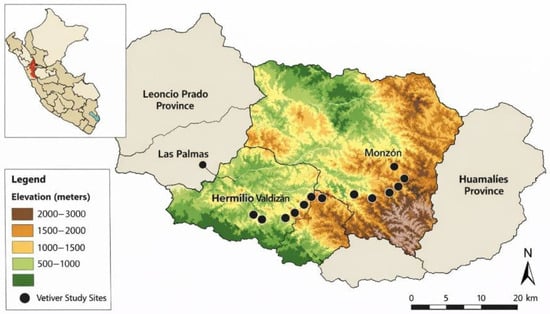
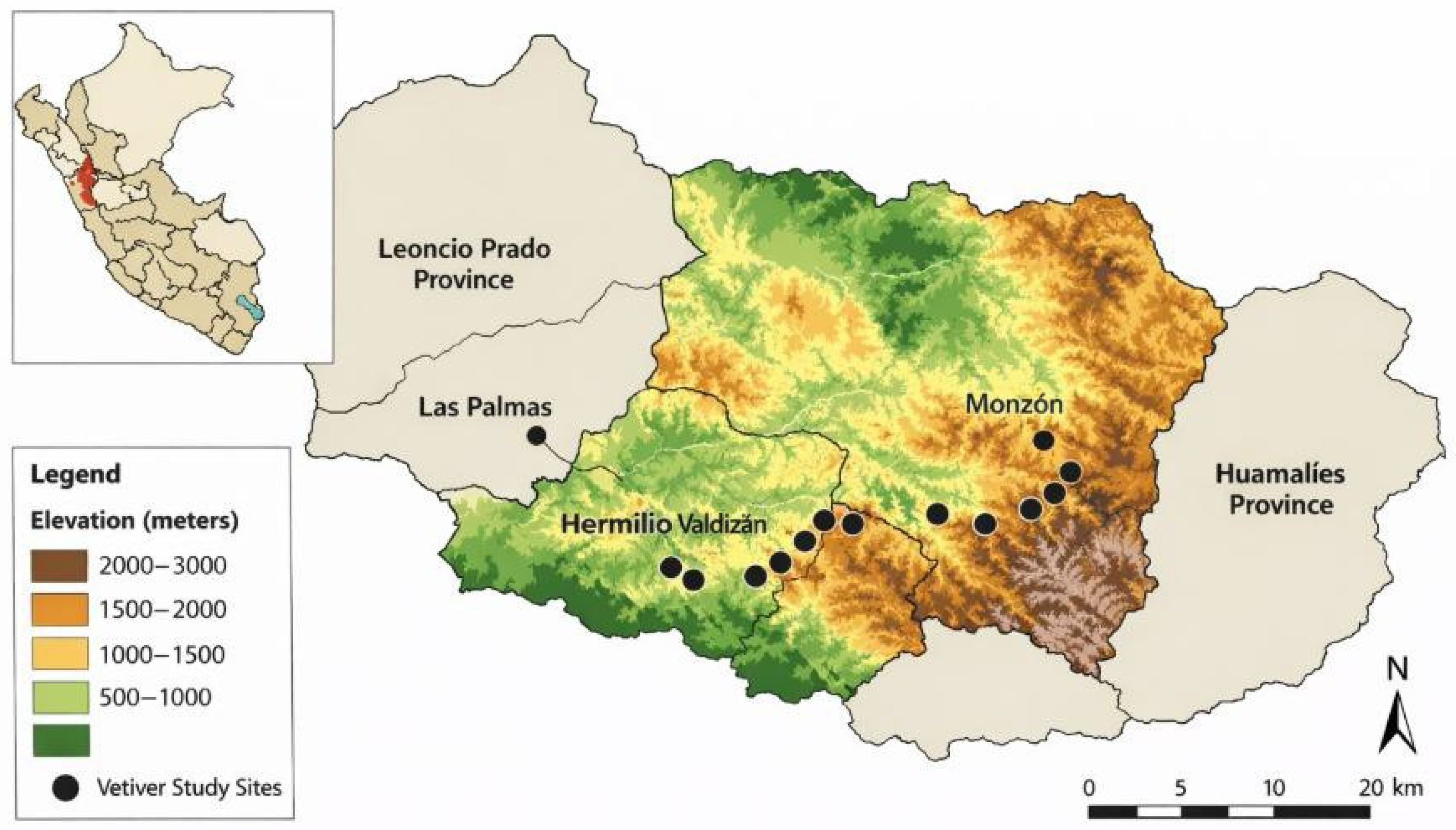
The study employed a field-scale comparative design to evaluate the performance of Chrysopogon zizanioides (vetiver grass) in treating coffee wastewater across four growth stages (6, 8, 19, and 21 months). Site selection followed a purposive sampling design, prioritizing operational infiltration ponds actively used in honey-processing coffee production and representative of regional ecological and altitudinal conditions. Randomized selection was not applied, as the objective was to assess treatment performance under authentic field-operational contexts. The research was conducted in operational infiltration ponds managed by coffee producers participating in the Coffee Alliance for Excellence project in Huánuco, Peru. Three districts were selected to capture altitudinal and ecological variability: Las Palmas and Hermilio Valdizán in Leoncio Prado Province 139, 1100–1250 m elevation), and Monzón in Huamalíes Province (1424 m elevation) (Figure 1 and Table 1). These locations exemplify standard coffee-producing areas in the Andean foothills, characterized by moist tropical weather (22–26 °C, 2000–3500 mm of annual precipitation) and soils ranging from loamy to clay-loam with high permeability.
Figure 1.
Geographic location of the vetiver phytoremediation study sites in Huánuco, Peru. Black dots indicate operational infiltration ponds used for honey-processing coffee wastewater treatment across Leoncio Prado and Huamalíes Provinces. Elevation gradients (1100–1500 m above sea level) are represented using a color scale to illustrate altitudinal variability within the Andean foothill landscape. (Source: Prepared by the authors, 2026).
Table 1.
Geographic, environmental, and operational characteristics of infiltration pond sites used for the field-scale evaluation of vetiver phytoremediation in Huánuco, Peru.
The spatial distribution of the study sites is shown in Figure 1. The infiltration ponds are located in the districts of Las Palmas and Hermilio Valdizán (Leoncio Prado Province) and Monzón (Huamalíes Province) within the Huánuco region of central Peru. Elevation gradients (1100–1424 m above sea level) are included to illustrate the environmental variability across the coffee-growing Andean foothill landscape.
Three separate infiltration ponds (4 m × 3 m × 0.4 m) were employed for each vetiver treatment, resulting in 12 experimental units. The ponds were planted with vetiver at 0.25 m spacing to form dense root barriers. Untreated coffee wastewater from honey-processing (pulped natural semi-washed method) served as the control group. This processing approach was chosen for its widespread adoption in the area and for the effluent’s substantial organic content, which helps preserve mucilage during fermentation.
Water samples were gathered from both unprocessed and vetiver-treated sources according to established procedures [17]. Untreated wastewater was retained for seven days at ambient temperature (25–26 °C) to replicate typical field-level operational retention practices prior to phytoremediation. This period represents real-world storage conditions commonly observed in smallholder honey-processing systems and does not correspond to laboratory holding time before analysis. All analytical procedures complied with APHA Standard Methods holding time requirements [8]. Samples for Chemical Oxygen Demand (COD) and Total Suspended Solids (TSS) were acidified (pH < 2) and stored at 4 °C prior to analysis, while Biochemical Oxygen Demand (BOD5) samples were analyzed within 48 h to minimize biological alteration.
Total Suspended Solids (TSS) were determined gravimetrically following filtration through 0.45 μm glass fiber filters, representing the total concentration of particulate matter retained on the filter. In this study, Suspended Solids (SS) refer specifically to the settleable suspended solids fraction, quantified as the sediment portion retained during controlled settling and filtration procedures. Five key physicochemical parameters were analyzed: pH, Chemical Oxygen Demand (COD), Biochemical Oxygen Demand (BOD5), Total Suspended Solids (TSS), and Suspended Solids (SS).
- pH: The measurement was conducted potentiometrically with a calibrated portable meter (HI98107, Hanna Instruments, Woonsocket, RI, USA) at 25 ± 1 °C.
- Chemical Oxygen Demand (COD): Determined via the closed reflux colorimetric method (DR3900, Hach Company, Loveland, CO, USA).
- Biochemical Oxygen Demand (BOD5): Measurement was conducted employing the respirometric technique (OxiTop® system, WTW GmbH, Weilheim, Germany) at a temperature of 20 °C.
- Total Suspended Solids (TSS): Assessed gravimetrically after filtration through 0.45 μm glass fiber filters.
- Suspended Solids (SS): Measured as the sediment fraction retained during filtration.
- Field blanks and triplicate samples were analyzed weekly to ensure analytical quality control.
3.2. Vetiver System Configuration
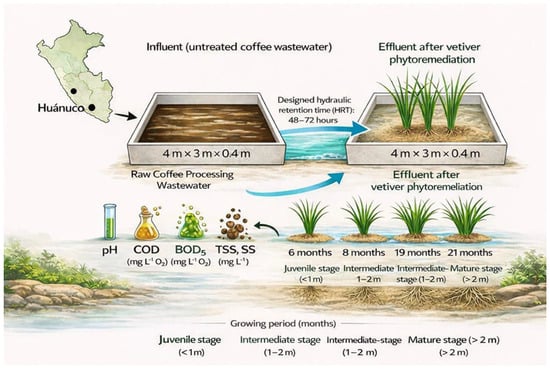
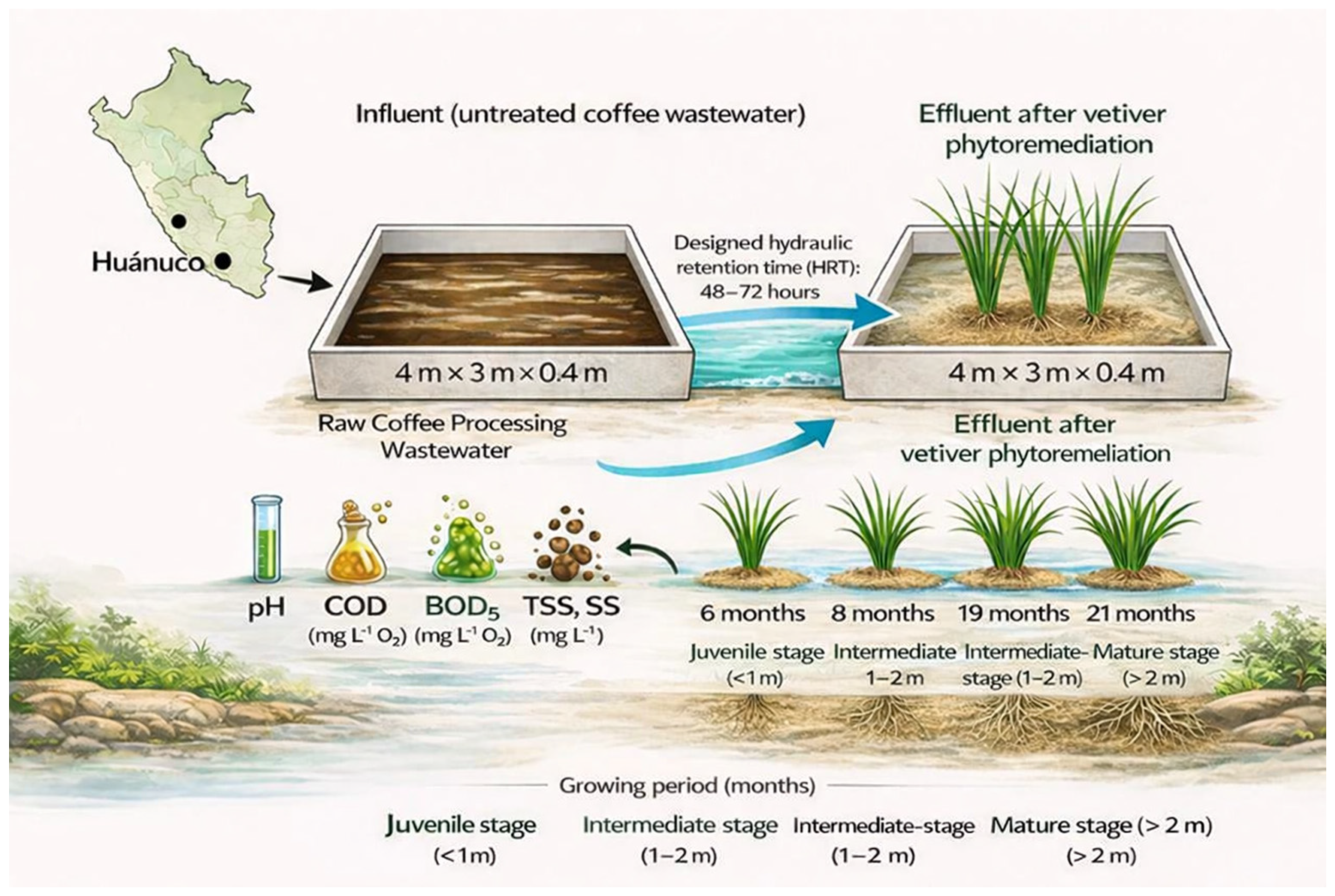
The phytoremediation setup included vetiver grass cultivated in infiltration basins with a 48–72 h hydraulic retention period, optimized based on previous experiments [7]. Plant density, root depth, and biomass were monitored monthly. Root growth was divided into three phases: juvenile (6 months, root depth under 1 m), intermediate (8 months, 1–2 m), and mature (19–21 months, over 2 m) (Figure 2). The rhizosphere microbial community was not explicitly characterized but was assumed to follow established patterns of enrichment in vetiver systems [13].
Figure 2.
Schematic representation of the field-scale vetiver phytoremediation system implemented in Huánuco, Peru. The diagram illustrates raw coffee processing wastewater entering infiltration ponds (4 m × 3 m × 0.4 m) planted with Chrysopogon zizanioides (vetiver), with a hydraulic retention time of 48–72 h. The figure shows progressive plant maturity stages (6, 8, 19, and 21 months) and associated root depth development (<1 m to >2 m). Monitored physicochemical parameters included pH, chemical oxygen demand (COD), biochemical oxygen demand (BOD5), total suspended solids (TSS), and suspended solids (SS). The schematic also indicates the transition from untreated influent to effluent following phytoremediation.
3.3. Statistical Analysis
Statistical analyses were conducted in R (version 4.2.2). Differences between untreated and vetiver-treated wastewater were evaluated using Welch’s t-test to account for unequal variances between groups. Relationships among physicochemical parameters (e.g., COD and BOD5) were examined using Pearson correlation coefficients.
Effluent samples were collected at defined hydraulic retention intervals of 0–24 h, 24–48 h, and 48–72 h to capture the temporal progression of pollutant removal within the infiltration ponds. These intervals correspond to the designed 48–72 h hydraulic retention time and were used to evaluate the sequential physical and biological processes contributing to treatment efficiency.
To assess the effect of plant maturity (6, 8, 19, and 21 months) on treatment performance, one-way Analysis of Variance (ANOVA) was applied, treating plant age as a categorical independent variable. Prior to ANOVA, data normality was evaluated using the Shapiro–Wilk test, and homogeneity of variances was verified using Levene’s test. Post hoc comparisons were performed using Tukey’s Honestly Significant Difference (HSD) test to identify pairwise differences among maturity stages. Statistical significance was set at p < 0.05.
The experimental design accounted for spatial variability by organizing sampling across different elevations and soil types, and ensured temporal uniformity by aligning planting and sampling schedules. This design enabled variations in treatment efficacy to be attributed primarily to plant age rather than to other environmental variables (Table 1).
The spatial distribution of the study sites and the schematic configuration of the field-scale vetiver phytoremediation system are presented in Figure 2, which illustrates the geographic context, infiltration-pond layout, plant maturity stages, and associated root development patterns across treatment units.
4. Results
The experimental data showed notable improvements in water quality parameters following vetiver phytoremediation, with distinct patterns evident across plant growth stages. Key findings are presented in three subsections: parameter-specific improvements, maturity-dependent efficiency, and inter-parameter relationships.
4.1. Improvement in Water Quality Parameters
Vetiver phytoremediation demonstrated notable effectiveness in improving the physical and chemical properties of coffee wastewater across all assessed parameters. The greatest change occurred in pH neutralization, as values increased from highly acidic conditions (4.07 ± 0.32) to near-neutral levels (5.82 ± 0.40) post-treatment (Welch’s t-test: t = 15.34, p < 0.001). This change corresponds to an approximately 56-fold reduction in hydrogen ion concentration, reflecting a pronounced shift toward less acidic conditions following treatment.
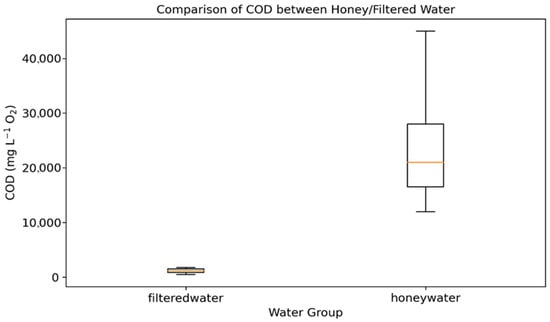
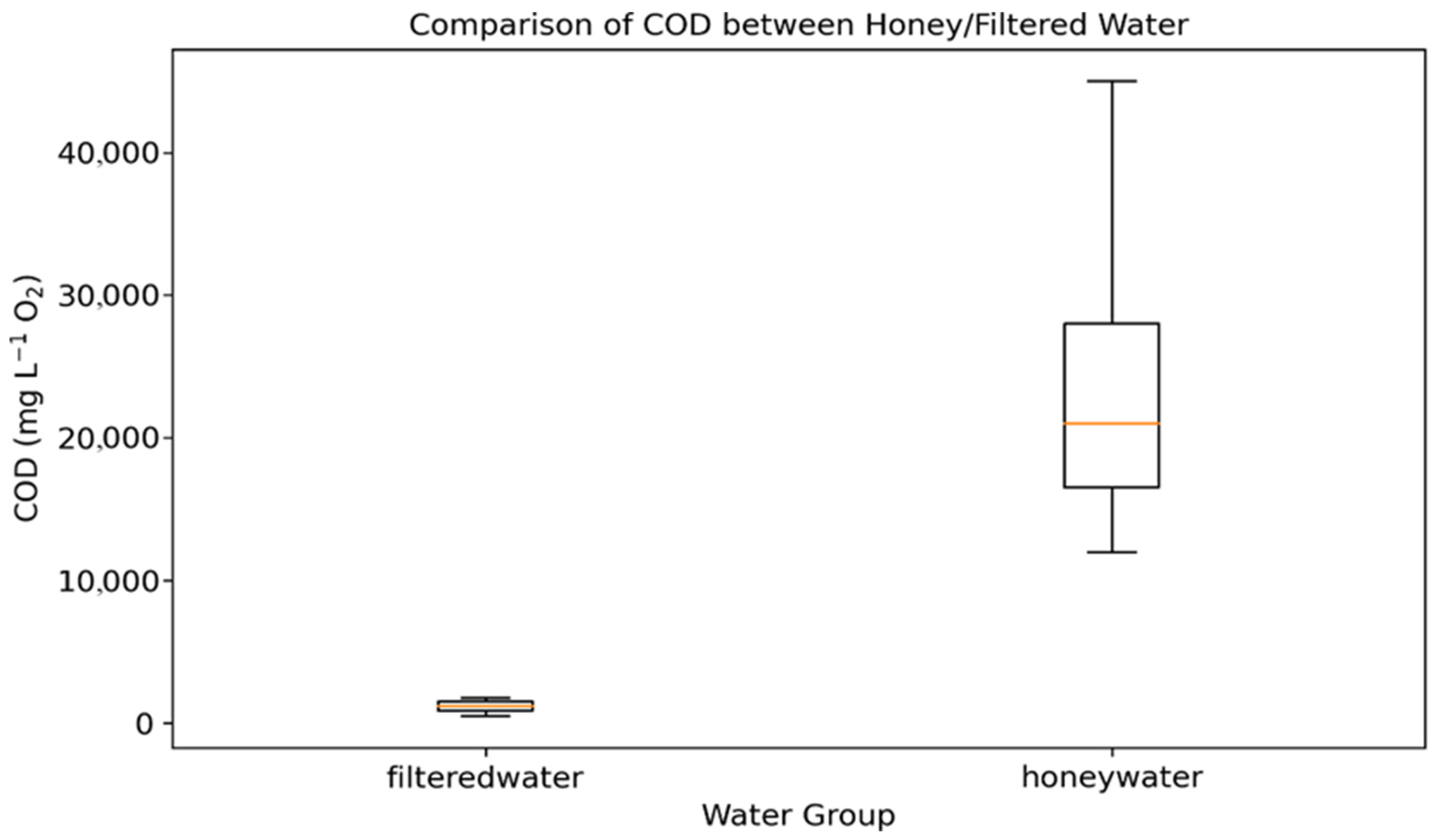
Organic load reduction was equally significant, with COD decreasing by 39 percent from 38,600 ± 12,100 to 23,000 ± 8500 mg L−1 O2 (Figure 3). The boxplot visualization reveals a marked contraction in COD distribution after treatment, with the interquartile range narrowing from 15,000 to 28,000 mg L−1 O2 in untreated wastewater to 8500 to 16,500 mg L−1 O2 in vetiver-filtered effluent. Parallel reductions were observed for BOD5, which declined by 41 percent from 27,700 ± 9400 to 16,500 ± 5600 mg L−1 O2, confirming the system’s effectiveness in degrading biologically available organic matter [18].
Figure 3.
Boxplot comparison of Chemical Oxygen Demand (COD, mg L−1 O2) between untreated honey-process coffee wastewater (honey water) and vetiver-treated effluent (filtered water).
Particulate matter removal was consistently achieved, with TSS decreasing by 26% (620 ± 140 to 460 ± 110 mg L−1) and SS by 69% (Table 2). These reductions reflect both physical filtration by vetiver roots and enhanced sedimentation facilitated by the system’s hydraulic design [19]. The suspended solids treatment efficiency remained stable across sampling periods, suggesting consistent performance despite variable influent loads (coefficient of variation < 15% for all parameters).
Table 2.
Changes in physicochemical parameters of coffee wastewater before (untreated) and after vetiver phytoremediation. Values are presented as mean ± standard deviation (SD). Removal efficiency (%) was calculated based on concentration reduction between untreated and treated samples. Statistical differences were assessed using Welch’s t-test, with significance set at p < 0.05. Abbreviations: COD, Chemical Oxygen Demand; BOD5, Biochemical Oxygen Demand (5-day); TSS, Total Suspended Solids; SS, Suspended Solids.
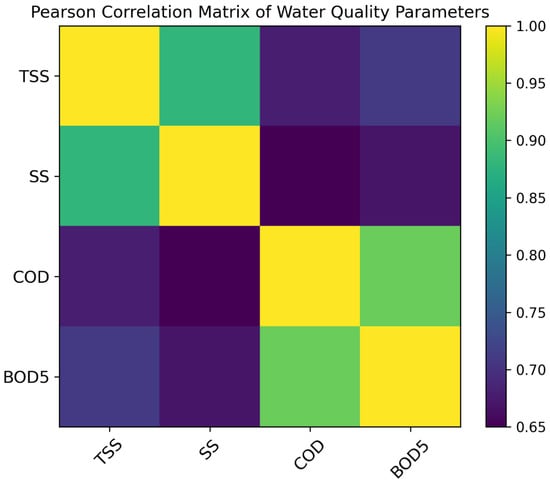
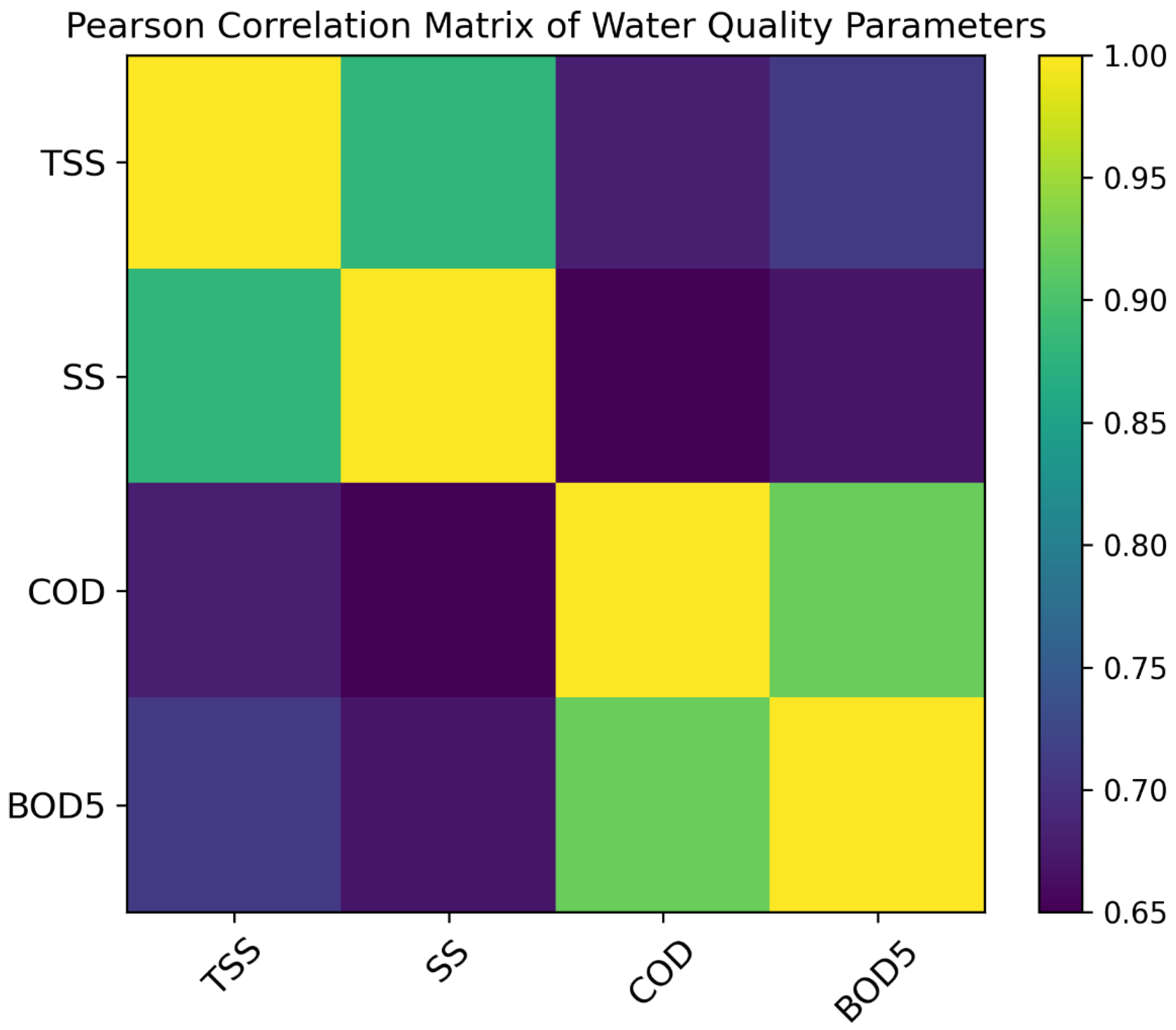
Parameter-specific improvements were strongly interlinked, as illustrated by the correlation heatmap (Figure 4). The inverse relationship between pH and organic/particulate parameters (COD: r = −0.76; BOD5: r = −0.81; TSS: r = −0.68) indicates that acidity reduction coincided with organic matter degradation. This synergy likely stems from microbial activity in the rhizosphere, where acid-tolerant bacteria metabolize organic compounds while generating alkaline byproducts [20].
Figure 4.
Pearson correlation matrix of physicochemical parameters measured in coffee wastewater treatment.
The treatment performance exceeded baseline expectations for passive systems, achieving organic load reductions comparable to those achieved by mechanical aeration in some cases [21]. However, residual COD and BOD5 levels remained above discharge limits for most jurisdictions, indicating the need for complementary treatment stages or extended retention times in practical applications [22]. These findings establish vetiver phytoremediation as a viable primary treatment option while highlighting areas for system optimization.
4.2. Effect of Vetiver Maturity on Treatment Efficiency
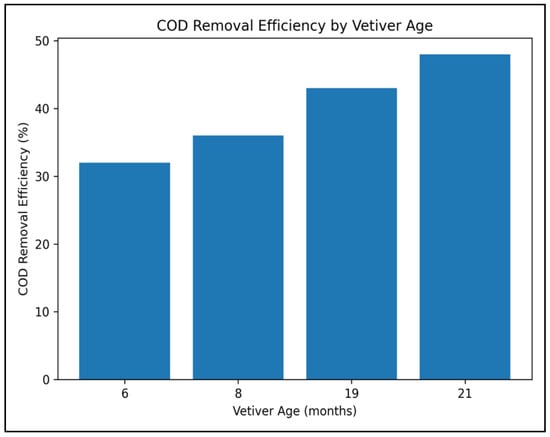
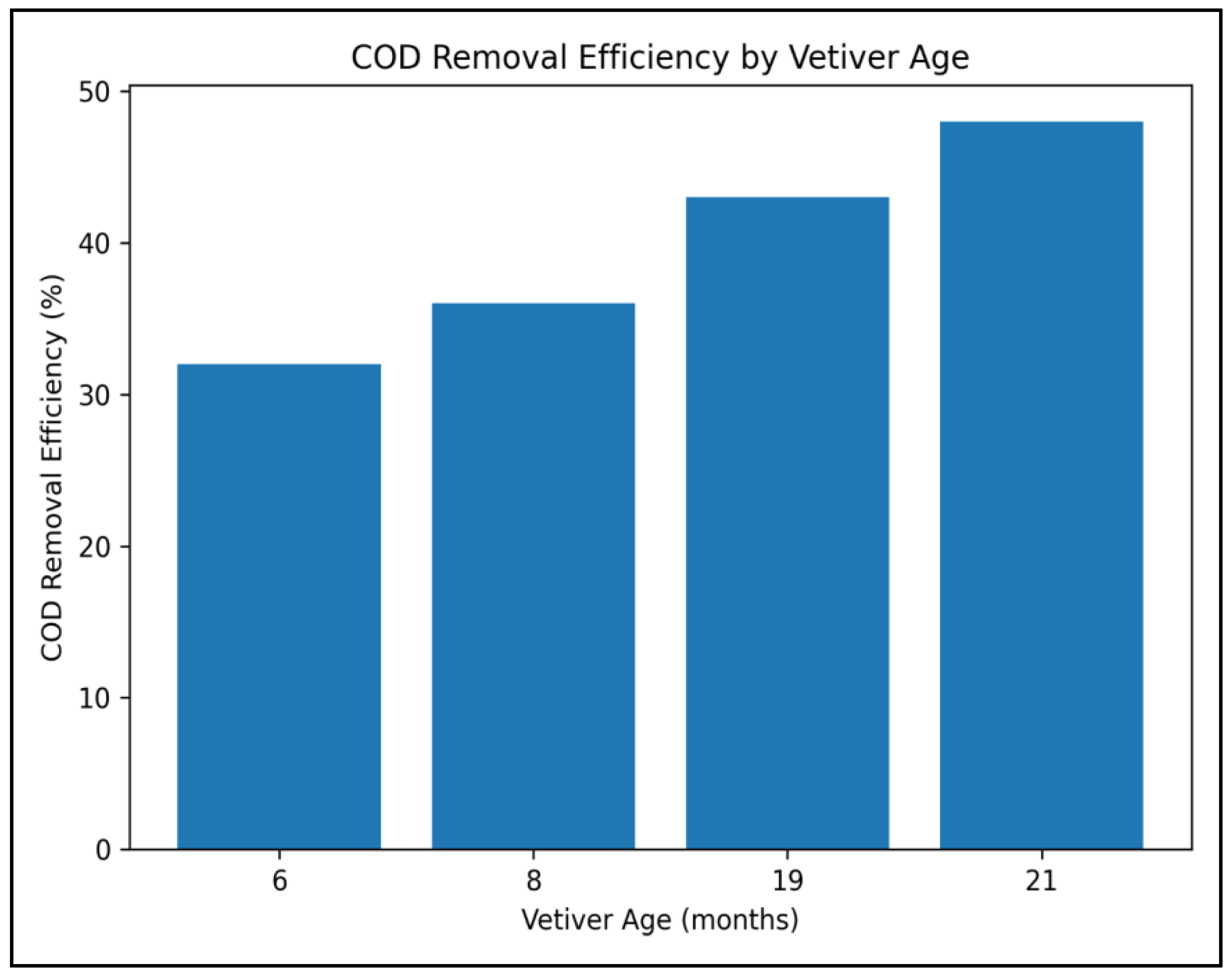
The study revealed a strong positive correlation between vetiver plant age and phytoremediation performance across all measured water quality parameters. As illustrated in Figure 5, the 21-month-old vetiver stands demonstrated significantly higher treatment efficiency than younger plants, with the most notable differences observed in organic load reduction. The mature plants achieved 48% COD removal (from 38,600 ± 12,100 to 20,100 ± 7200 mg L−1 O2), whereas 6-month-old plants achieved 32% removal (to 26,200 ± 9800 mg L−1 O2).
Figure 5.
Effect of vetiver plant age (6, 8, 19, and 21 months) on Chemical Oxygen Demand (COD) removal efficiency (%). Bars represent the mean COD removal efficiency for each maturity stage. Plant ages were treated as independent categorical treatment stages rather than a continuous variable.
4.3. Root Biomass and Treatment Performance
The superior performance of mature vetiver correlated directly with observable differences in root architecture. Plants at 21 months had developed extensive root networks reaching depths >2 m, with dry root biomass measuring 3.8 ± 0.6 kg/m2 compared to 1.2 ± 0.3 kg/m2 for 6-month-old plants. This fourfold increase in below-ground biomass provided greater surface area for both physical filtration and microbial colonization, thereby enhancing the removal of total suspended solids (TSS; 34% vs. 18%) and organic compounds. The root exudate profile also changes with plant maturity, releasing more complex organic compounds that stimulate specialized microbial communities capable of degrading constituents of coffee wastewater [23].
4.4. pH Neutralisation Capacity
Age-related differences were particularly evident in pH adjustment capacity. While all age groups increased wastewater pH; the 21-month plants achieved near-neutral conditions (6.1 ± 0.3) compared to moderately acidic outputs (5.2 ± 0.4) from 6-month plants. This improvement aligns with established rhizosphere acid-base regulation mechanisms, in which mature vetiver supports more robust microbial consortia capable of organic acid metabolism [20]. The pH stabilization also contributed to enhanced flocculation and sedimentation of colloidal particles, as evidenced by the 28% greater SS removal in mature systems.
4.5. Treatment Consistency Across Variability
Mature vetiver systems demonstrated not only higher efficiency but also greater consistency in treatment performance. The coefficient of variation for COD removal decreased from 22% in 6-month plants to 12% in 21-month stands, indicating more reliable operation under fluctuating influent conditions (Table 3). This stability is attributed to the buffering capacity of established rhizosphere ecosystems, which can adapt to variable organic loads through shifts in microbial communities [24].
Table 3.
Age-dependent performance of the vetiver phytoremediation system in coffee wastewater treatment. Values represent mean ± standard deviation (SD) for Chemical Oxygen Demand (COD) removal, Biochemical Oxygen Demand (BOD5) removal, pH increase, and root depth across different plant maturity stages (6, 8, 19, and 21 months).
The data reveal a non-linear relationship between plant age and treatment efficiency, with the most substantial improvements occurring between 8 and 19 months. This corresponds to the period of most active root system expansion and rhizosphere community establishment. After 19 months, performance gains diminished, suggesting an approach to maximum treatment capacity under given system constraints. These findings have direct implications for system design, indicating that vetiver-based treatment ponds should ideally operate with plants maintained at 18–24 months of maturity for optimal performance. The results also support staggered planting schedules to ensure continuous availability of mature plants for wastewater treatment applications.
4.6. Correlation Between Water Quality Parameters
The interrelationships among water quality parameters revealed consistent patterns that elucidate the mechanisms underlying vetiver phytoremediation. As shown in Figure 4, the Pearson correlation coefficients demonstrate a strong positive association between organic pollution indicators, with COD and BOD5 exhibiting near-linear dependence (r = 0.92, p < 0.001). This high correlation confirms that both parameters respond similarly to vetiver treatment, validating their combined use for assessing the efficiency of organic load reduction [25].
4.7. Organic–Particulate Relationships
Suspended solids showed moderate positive correlations with organic parameters (TSS-COD: r = 0.68; SS-BOD5: r = 0.71), suggesting parallel removal mechanisms during filtration. The strength of these associations varied with vetiver age, being strongest in mature systems (21 months: r = 0.78–0.82), where extensive root networks enhanced both physical filtration and biochemical degradation. This synergy implies that organic matter adsorption onto particulate surfaces contributes to concurrent removal, as observed in other vegetated treatment systems [26].
4.8. pH as a Key Modulator
The analysis revealed significant negative correlations between pH and all pollution indicators (pH-COD: r = −0.76; pH-BOD5: r = −0.81; pH-TSS: r = −0.68), indicating that acidity reduction coincided with contaminant removal. This inverse relationship was most pronounced in mature vetiver stands (21 months: r = −0.84 to −0.89), where established rhizosphere communities likely mediated both acid neutralization and organic matter degradation. The temporal evolution of these correlations suggests that pH stabilization precedes a substantial reduction in organic load, with the strongest negative correlations emerging after 12 months of plant growth.
4.9. Treatment Stage Dynamics
Parameter correlations exhibited non-linear patterns across the treatment continuum. Initial filtration (0–24 h) showed weak correlations among parameters (average |r| = 0.32), indicating that physical separation was the dominant process. During intermediate stages (24–48 h), correlations strengthened (average |r| = 0.61) as biological activity increased. The final treatment phase (48–72 h) exhibited the strongest correlations (average |r| = 0.79), indicating system-wide integration of physical, chemical, and biological processes. This progression aligns with established models of sequential pollutant removal in phytoremediation systems [27].
The correlation patterns provide operational insights for system monitoring. The strong COD-BOD5 relationship suggests that periodic COD measurements could reliably estimate BOD5, reducing analytical costs in resource-limited settings. Similarly, the consistent correlations between pH and contaminants indicate that pH monitoring may serve as a proxy for treatment efficiency, particularly in mature systems. These findings have practical implications for the development of simplified monitoring protocols for small-scale coffee producers implementing vetiver-based treatments [28].
The multivariate analysis underscores the interrelated nature of water-quality improvements in vetiver systems. The simultaneous enhancement of multiple parameters through coupled physical-biological processes distinguishes phytoremediation from conventional treatment approaches, where parameter-specific technologies are often employed sequentially. This systems-level integration enhances the method’s suitability for decentralized applications by achieving broad-spectrum water quality improvement through a single, low-maintenance intervention [29]. The correlation patterns also highlight the importance of considering parameter interactions when designing and optimizing vetiver treatment systems for coffee wastewater applications.
5. Discussion
The findings from this field-scale evaluation demonstrate that vetiver grass can serve as an effective nature-based solution for coffee wastewater treatment in resource-limited settings. The observed improvements in water quality parameters align with previous studies on phytoremediation systems [30], yet extend the empirical evidence to real-world conditions in coffee-producing regions. The practical implications are particularly relevant for smallholder coffee farmers in Huánuco and similar areas, where conventional treatment infrastructure remains economically inaccessible. By implementing vetiver-based infiltration ponds, these producers could achieve regulatory compliance for pH adjustment and partial organic load reduction at minimal operational cost, while simultaneously generating biomass for erosion control or artisanal applications [31]. The maturity-dependent performance patterns offer critical insights for system design and management. The non-linear relationship between plant age and treatment efficiency suggests that optimal operational windows exist between 18 and 24 months, after which maintenance or replanting may be necessary. This finding has direct implications for extension services working with coffee cooperatives, as it informs planting schedules and system rotation protocols. Moreover, the strong correlations between pH and organic parameters indicate that simple pH monitoring could serve as a reliable proxy for treatment efficacy in field conditions where laboratory analysis is impractical [32]. Such simplified monitoring approaches would enhance the scalability of vetiver systems across decentralized coffee processing units.
Several methodological limitations warrant consideration when interpreting these results. The study focused exclusively on honey-process wastewater, which differs in composition from fully washed coffee effluent. The absence of nutrient (nitrogen, phosphorus) and toxic compound (caffeine, tannins) measurements limits comprehensive water quality assessment, as these parameters influence both treatment efficiency and environmental impact [22]. Furthermore, the single-season evaluation may not capture performance variations across wet and dry periods, which affect both wastewater characteristics and plant physiological activity. Future research should incorporate multiyear monitoring to assess system resilience to climatic variability and the long-term effects of soil accumulation.
The observed treatment efficiencies, while significant, did not achieve discharge standards for organic loads in most jurisdictions. This limitation underscores the need for complementary treatment stages or modified system designs. Research should explore hybrid configurations combining vetiver with other low-cost technologies, such as anaerobic digestion or biochar filtration, to meet regulatory requirements [33]. Additionally, investigations into vetiver cultivar selection could identify genotypes with enhanced acid tolerance or organic degradation capacity, potentially improving performance in coffee wastewater applications.
From a theoretical perspective, the results contribute to understanding rhizosphere dynamics in extreme pH conditions. The consistent pH improvement across all maturity stages suggests that vetiver maintains acid-neutralizing microbial consortia even in young plants, with community complexity increasing as roots develop. This finding aligns with emerging research on plant-microbe partnerships in stressed environments [34], but challenges assumptions about the time required for functional rhizosphere establishment. Future studies should employ metagenomic techniques to characterize these microbial communities and their metabolic pathways, thereby informing bioaugmentation strategies to enhance treatment performance.
The correlation patterns between water quality parameters reveal fundamental aspects of the treatment process that merit further investigation. The temporal evolution of parameter relationships suggests distinct phases of physical and biological removal mechanisms, a phenomenon previously documented in constructed wetlands [35]. However, the accelerated timeline observed in vetiver systems (72 h versus typical wetland retention times of 5–7 days) indicates unique process intensification, possibly mediated by root exudates or specialized microbiota. Research should quantify the relative contributions of physical filtration, microbial degradation, and plant uptake to overall treatment efficiency, enabling targeted system optimization.
Economic considerations remain central to the adoption potential of vetiver-based treatment. While the system’s low capital and maintenance costs are advantageous, the land requirement for infiltration ponds may pose constraints in steep terrain typical of coffee-growing regions. Research should evaluate alternative configurations, such as vertical flow systems or terrace-integrated designs, to improve space efficiency. Concurrently, life cycle assessments comparing vetiver systems with conventional options would provide robust evidence for policymakers promoting sustainable wastewater management in the coffee sector.
The demonstrated capacity of mature vetiver stands to treat highly concentrated or organic loads opens the door to broader applications beyond coffee processing. Similar agroindustrial wastewaters, such as those from palm oil mills or distilleries, share characteristics with coffee effluent and could benefit from adapted vetiver systems [36]. This potential for technology transfer underscores the importance of developing generalized design guidelines that account for wastewater composition, climate, and operational constraints. Addressing this need will require coordinated research efforts across different geographical regions and industrial contexts.
Operational challenges identified in this study, particularly the sensitivity to plant maturity, highlight the need for robust management protocols. Future work should develop decision-support tools incorporating growth models, treatment performance curves, and maintenance requirements to guide system operators. Such tools would be particularly valuable for extension services working with small-scale producers, bridging the gap between research findings and practical implementation [37].
The integration of vetiver systems into broader watershed management strategies could amplify their environmental benefits by addressing both point-source pollution from coffee processing and non-point source agricultural runoff. This holistic approach is increasingly recognized as essential for sustainable water resource management [38].
Overextended operational periods, increased root density, and the accumulation of fine suspended solids may gradually reduce hydraulic conductivity within infiltration media. Such clogging phenomena, commonly observed in vegetated treatment systems, can impair flow uniformity and decrease effective retention time. Periodic sediment removal, root management, and media rejuvenation strategies should therefore be incorporated into long-term maintenance planning to sustain treatment performance.
6. Conclusions
This study demonstrates that vetiver grass can serve as an effective, low-cost phytoremediation solution for coffee wastewater treatment in rural settings. The field-scale evaluation confirms significant improvements in water quality, particularly in pH neutralization and organic load reduction, with mature plants exhibiting superior performance. The findings advance practical knowledge for decentralized wastewater management in coffee-producing regions, offering a sustainable alternative to conventional treatment systems that are often economically unfeasible.
The strong correlation between plant maturity and treatment efficiency highlights the importance of root system development in phytoremediation efficacy. This insight provides a basis for optimizing system design and management, particularly in re-source-limited contexts where operational simplicity is critical. Moreover, the observed parameter relationships, such as the consistent pH-contaminant correlations, suggest opportunities for simplified monitoring protocols that could enhance the scalability of vetiver-based solutions. Future research should explore hybrid systems combining vetiver with complementary technologies to achieve regulatory compliance for organic loads. Investigations into microbial community dynamics and cultivar-specific performance could further improve treatment efficiency. The demonstrated potential of vetiver phytoremediation extends beyond coffee wastewater, offering a model for addressing similar agroindustry effluents in diverse geographical and economic contexts.
Author Contributions
Conceptualization, R.J. and P.T.R.; methodology, R.J.; software, R.J.; vali-dation, R.J. and P.T.R.; formal analysis, R.J.; investigation, R.J. and P.T.R.; resources, P.T.R.; data curation, R.J.; writing—original draft preparation, R.J.; writing—review and editing, R.J. and P.T.R.; visualization, R.J.; supervision, R.J.; project administration, R.J. All authors have read and agreed to the published version of the manuscript.
Funding
This research was supported by the USDA Foreign Agricultural Service (FAS) Scientific Exchange Program (SEP) through the Women in Sustainable Food Systems—Peru Fellowship (2024). The APC was funded by Florida Agricultural and Mechanical University.
Data Availability Statement
The original contributions presented in this study are included in the article. Further inquiries can be directed to the corresponding author.
Conflicts of Interest
The authors declare no conflicts of interest.
References
- Adigun, M.; Are, K. Comparative effectiveness of two Vetiveria grass species, Chrysopogon zizanioides and Chrysopogon nigritana, for the remediation of contaminated soils. ResearchGate. Am. J. Exp. Agric. 2015, 8, 361–366. [Google Scholar]
- Ávila, C.; Pedescoll, A.; Matamoros, V.; Bayona, J.; García, J. Capacity of a horizontal subsurface flow constructed wetland system for the removal of emerging pollutants: An injection experiment. Chemosphere 2010, 81, 1137–1142. [Google Scholar] [CrossRef] [Scilit]
- Ayalew, T.; Abebe, T. Agricultural knowledge and technology transfer systems in southern Ethiopia. Afr. J. Agric. Res. 2018, 13, 682–690. [Google Scholar] [CrossRef] [Scilit]
- Barcellos-Silva, I.; Santos, F.D.; Kharkwal, H.; Chander, S.; Kharkwal, A.C.; Awasthi, R.; Dhiman, N.; Sharma, B.; Kulkarni, G.T.; Larssen, H.; et al. Vetiver (Vetiveria zizanioides L. Nash): Biotechnology, biorefineries, and the production of volatile phytochemicals. Plants 2025, 14, 1435. [Google Scholar] [CrossRef] [Scilit] [PubMed]
- Bwire, K.; Njau, K.; Minja, R. Use of vetiver grass constructed wetlands for treatment of leachate. Water Sci. Technol. 2011, 63, 924–930. [Google Scholar] [CrossRef] [Scilit]
- Chanakya, H.; Alwis, A.D. Environmental issues and management in primary coffee processing. Process Saf. Environ. Prot. 2004, 82, 291–300. [Google Scholar] [CrossRef] [Scilit]
- Chen, L.; Liu, C.; Zou, R.; Yang, M.; Zhang, Z. Experimental examination of the effectiveness of vegetation as a biofilter of particulate matter in the urban environment. Environ. Pollut. 2016, 208, 198–208. [Google Scholar] [CrossRef] [Scilit]
- Chen, X.; Wong, J.; Wang, J.; Wong, M.H. Vetiver grass–microbe interactions for soil remediation. Crit. Rev. Environ. Sci. Technol. 2021, 51, 897–938. [Google Scholar] [CrossRef] [Scilit]
- Coskuner, G.; Jassim, M. Development of a correlation to study parameters affecting nitrification in a domestic wastewater treatment plant. J. Chem. Technol. Biotechnol. 2008, 83, 299–308. [Google Scholar] [CrossRef] [Scilit]
- Dadi, D.; Mengistie, E.; Terefe, G.; Getahun, T.; Haddis, A.; Birke, W.; Beyene, A.; Luis, P.; Van der Bruggen, B. Assessment of the effluent quality of wet coffee processing wastewater and its influence on downstream water quality. Ecohydrol. Hydrobiol. 2018, 18, 201–211. [Google Scholar] [CrossRef] [Scilit]
- Dudai, N.; Tsion, I.; Shamir, S.; Nitzan, N.; Chaimovitsh, D.; Shachter, A.; Haim, A. Agronomic and economic evaluation of vetiver grass (Vetiveria zizanioides L.) as a means for phytoremediation of diesel-polluted soils in Israel. J. Environ. Manag. 2018, 211, 247–255. [Google Scholar] [CrossRef] [Scilit] [PubMed]
- Fasani, E.; Dal Corso, G.; Zerminiani, A.; Campostrini, P.; Furini, A. Phytoremediatory efficiency of Chrysopogon zizanioides in the treatment of landfill leachate: A case study. Environ. Sci. Pollut. Res. 2019, 26, 10057–10069. [Google Scholar] [CrossRef] [Scilit] [PubMed]
- Geleto, M.; Ulsido, M.; Berego, Y. Wastewater treatment in tropical vertical up-flow constructed wetlands with selected macrophyte species: A preliminary analysis. Heliyon 2025, 11, e41207. [Google Scholar] [CrossRef] [Scilit] [PubMed]
- Ghimire, N. Wastewater Treatment by Phytoremediation in Constructed Wetlands: A Comparative Study Using Chrysopogon zizanioides and Phragmites karka. Master’s Thesis, Tribhuvan University, Kirtipur, Nepal, 2015. [Google Scholar]
- Greenway, M. The role of macrophytes in nutrient removal using constructed wetlands. In Environmental Bioremediation Technologies; Springer: Berlin/Heidelberg, Germany, 2007. [Google Scholar]
- Ijanu, E.; Kamaruddin, M.; Norashiddin, F. Coffee processing wastewater treatment: A critical review of current treatment technologies with a proposed alternative. Appl. Water Sci. 2020, 10, 11. [Google Scholar] [CrossRef] [Scilit]
- Jung, Y.; Narayanan, N.; Cheng, Y. Cost comparison of centralized and decentralized wastewater management systems using an optimization model. J. Environ. Manag. 2018, 213, 90–97. [Google Scholar] [CrossRef] [Scilit]
- Justino, S.; Calheiros, C.; Castro, P.; Gonçalves, D. Constructed wetlands as nature-based solutions for wastewater treatment in the hospitality industry: A review. Hydrology 2023, 10, 153. [Google Scholar] [CrossRef] [Scilit]
- Mihret, D.; Gonseb, A.; Lamisso, S.; Kannan, N. Constructed wetland-based wastewater treatment of a coffee-washing plant and its impacts: A case study of Kege processing plant, Ethiopia. Water Pract. Technol. 2017, 12, 241–250. [Google Scholar] [CrossRef] [Scilit]
- Lemma, D.; Debebe, W. Wet coffee processing wastewater treatment using an integrated constructed wetland. Desalination Water Treat. 2023, 304, 97–111. [Google Scholar] [CrossRef] [Scilit]
- Lesjean, B.; Rosenberger, S.; Laabs, C.; Jekel, M.; Gnirss, R.; Amy, G. Correlation between membrane fouling and soluble/colloidal organic substances in membrane bioreactors for municipal wastewater treatment. Water Sci. Technol. 2005, 51, 1–8. [Google Scholar] [CrossRef] [Scilit]
- Lewandowski, A.; Cates, A. Connecting soil health and water quality in agricultural landscapes. J. Environ. Qual. 2023, 52, 412–421. [Google Scholar] [CrossRef] [Scilit]
- Long, Y.; Zhou, Z.; Wen, X.; Wang, J.; Xiao, R.; Wang, W.; Li, X.; Lai, X.; Zhang, Y.; Deng, C.; et al. Microplastics removal and characteristics of a typical multi-combination and multi-stage constructed wetlands wastewater treatment plant in Changsha, China. Chemosphere 2023, 312, 137199. [Google Scholar] [CrossRef] [Scilit] [PubMed]
- Mahmoudpour, M.; Gholami, S.; Ehteshami, M.; Salari, M. Evaluation of phytoremediation potential of vetiver grass (Chrysopogon zizanioides (L.) Roberty) for wastewater treatment. Mater. Sci. 2021, 2021, 3059983. [Google Scholar] [CrossRef] [Scilit]
- Mello Bliska, F.; Turco, P.; Júnior, A.B.; Nepomucen, D.C. Impacts of coffee production in agroforestry systems for sustainable development. J. Agric. Sci. Technol. 2013, B3, 535–544. [Google Scholar]
- Mora-Ravelo, S.; Alarcón, A.; Rocandio-Rodríguez, M.; Vanoye-Eligio, V. Bioremediation of wastewater for reutilization in agricultural systems: A review. Appl. Ecol. Environ. Res. 2017, 15, 33–50. [Google Scholar] [CrossRef] [Scilit]
- Mudhiriza, T.; Mapanda, F.; Mvumi, B.; Wuta, M. Removal of nutrient and heavy metal loads from sewage effluent using vetiver grass (Chrysopogon zizanioides (L.) Roberty). Water SA 2015, 41, 457. [Google Scholar] [CrossRef] [Scilit]
- Nguyen, M. Performance of constructed wetlands for nutrient removal in domestic wastewater using Chrysopogon zizanioides. J. Tech. Educ. Sci. 2022, 17, 80–85. [Google Scholar] [CrossRef] [Scilit]
- Pelupessy, W. Environmental issues in the production of beverages: The global coffee chain. In Environmentally Friendly Food Processing; Batt, C., Ed.; Woodhead Publishing: Cambridge, UK, 2003; pp. 95–115. [Google Scholar]
- Rossmann, M.; de Matos, A.T.; Abreu, E.C.; Silva, F.F.; Borges, A.C. Performance of constructed wetlands in the treatment of aerated coffee processing wastewater: Removal of nutrients and phenolic compounds. Ecol. Eng. 2012, 49, 264–269. [Google Scholar] [CrossRef] [Scilit]
- Sultana, M.; Akratos, C.; Vayenas, D.; Pavlou, S. Constructed wetlands in the treatment of agro-industrial wastewater: A review. Hem. Ind. 2015, 69, 127–142. [Google Scholar] [CrossRef] [Scilit]
- Truong, P.; Danh, L. The Vetiver System for Improving Water Quality; The Vetiver Network International: San Antonio, TX, USA, 2015. [Google Scholar]
- Walker, T.; Bais, H.; Grotewold, E.; Vivanco, J.M. Root exudation and rhizosphere biology. Plant Physiol. 2003, 132, 44–51. [Google Scholar] [CrossRef] [Scilit]
- Walter, W. Standard Methods for the Examination of Water and Wastewater; American Public Health Association: Washington, DC, USA, 1961; Volume 51, p. 940. [Google Scholar]
- Wen, Z.; Yang, M.; Han, H.; Fazal, A.; Liao, Y.; Ren, R.; Yin, T.; Qi, J.; Sun, S.; Lu, G.; et al. Mycorrhizae enhance soybean plant growth and aluminum stress tolerance by shaping microbiome assembly in acidic soil. Microbiol. Spectr. 2023, 11, e0331022. [Google Scholar] [CrossRef] [Scilit]
- Yohannes, S.; Mihret, D.; Asamire, A. Use of vetiver grass (Chrysopogon zizanioides) in constructed wetlands to remove heavy metals from the Kege wet coffee processing plant, Dale Woreda, Sidama. J. Appl. Sci. Environ. Manag. 2024, 18, 1083–1095. [Google Scholar]
- Zerga, B. Integrated watershed management: A review. Discov. Sustain. 2025, 6, 657. [Google Scholar] [CrossRef] [Scilit]
- Zhao, X.; Guo, M.; Chen, J.; Zhuang, Z.; Zhang, T.; Wang, X.; Li, C.; Hou, N.; Bai, S. Successional dynamics of microbial communities in response to concentration perturbations in constructed wetland systems. Bioresour. Technol. 2022, 361, 127733. [Google Scholar] [CrossRef] [Scilit]

Disclaimer/Publisher’s Note: The statements, opinions and data contained in all publications are solely those of the individual author(s) and contributor(s) and not of MDPI and/or the editor(s). MDPI and/or the editor(s) disclaim responsibility for any injury to people or property resulting from any ideas, methods, instructions or products referred to in the content. |
© 2026 by the authors. Licensee MDPI, Basel, Switzerland. This article is an open access article distributed under the terms and conditions of the Creative Commons Attribution (CC BY) license.