Effect of Geometric Parameters in the Seal Clearance on the Modal Characteristics of Pump-Turbine Runner




Abstract
1. Introduction
2. Research Objects and Methods
2.1. Research Object
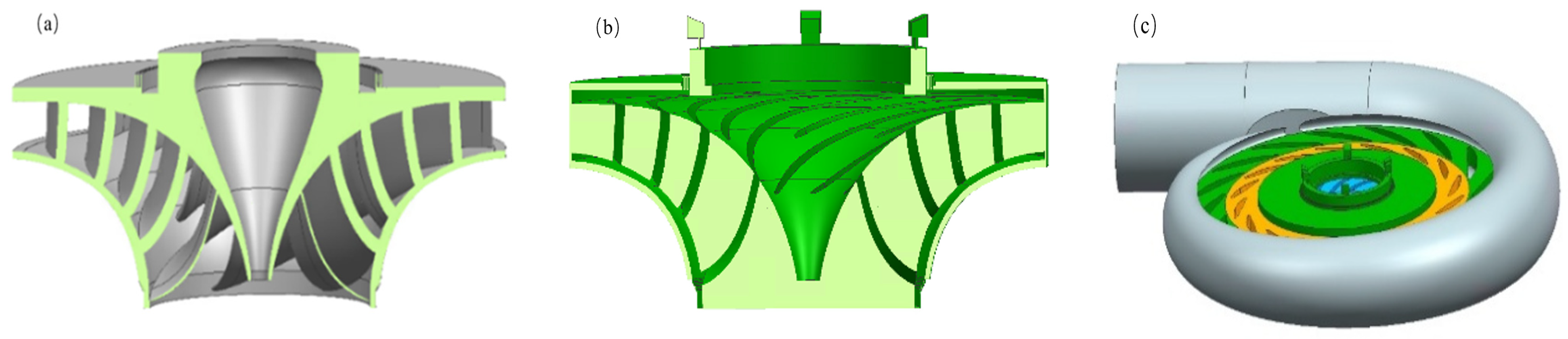
2.1.1. Pump-Turbine Model
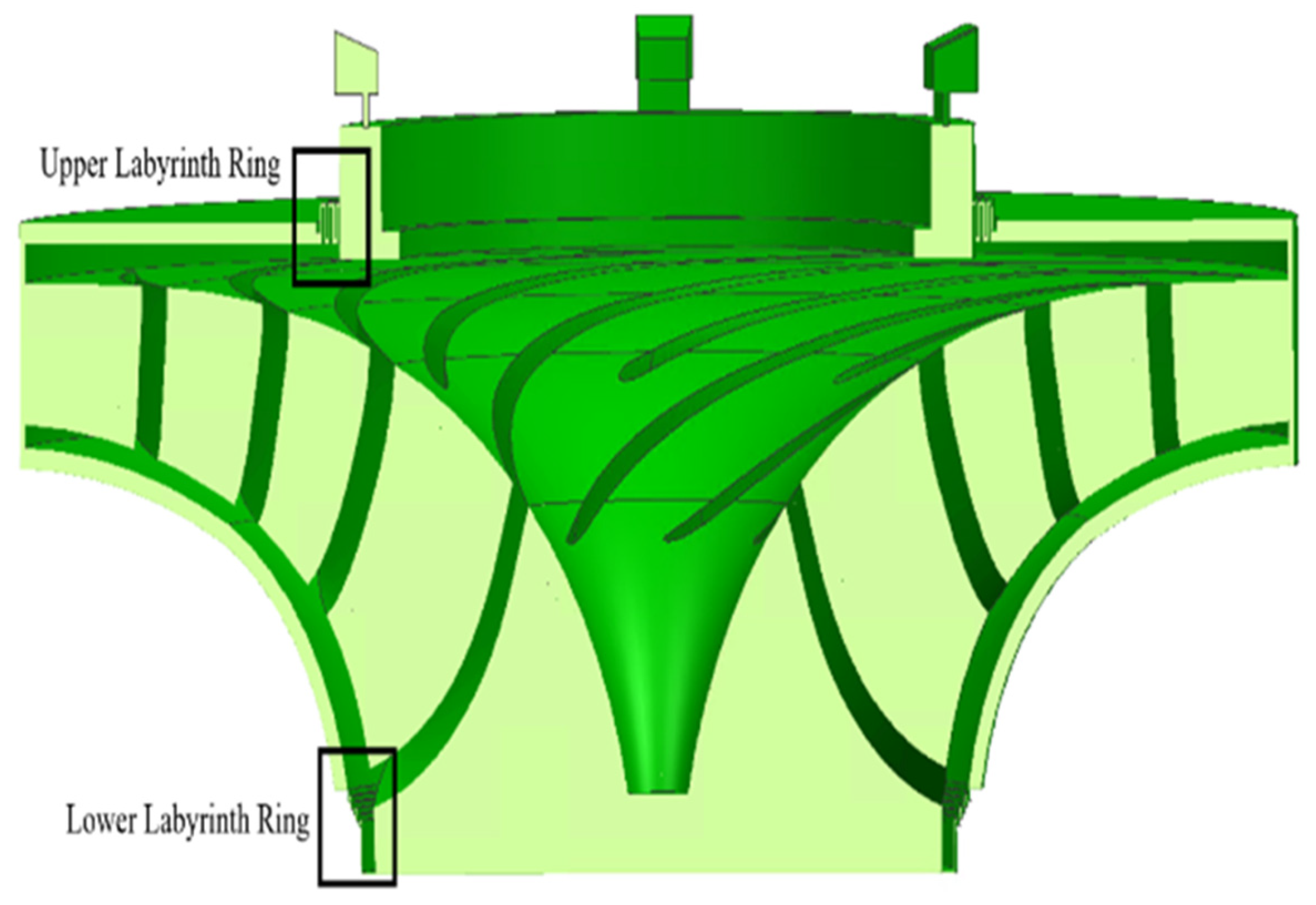
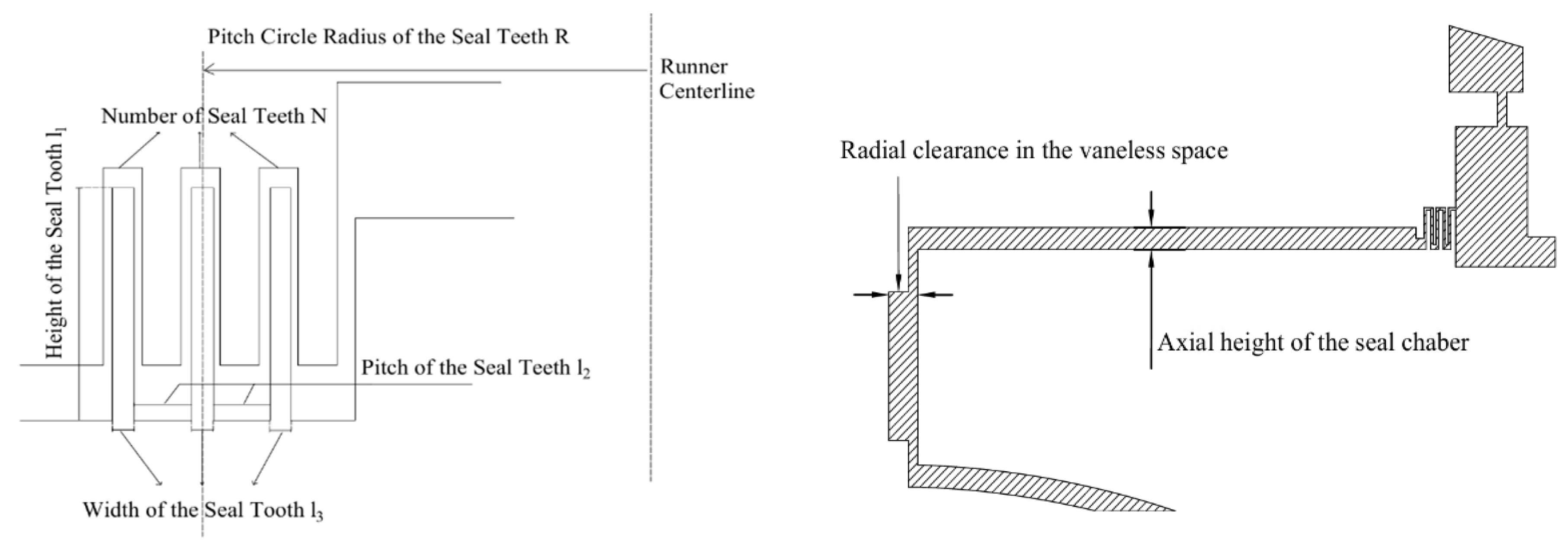
2.1.2. Labyrinth Seal Structure
2.2. Numerical Simulation Method
2.3. Mesh Generation
2.4. Computational Setup
3. Discussion of Results
3.1. Influence of Fluid Medium on Runner Modal Characteristics
3.1.1. Comparative Analysis of Wet and Dry Modal Characteristics of the Runner
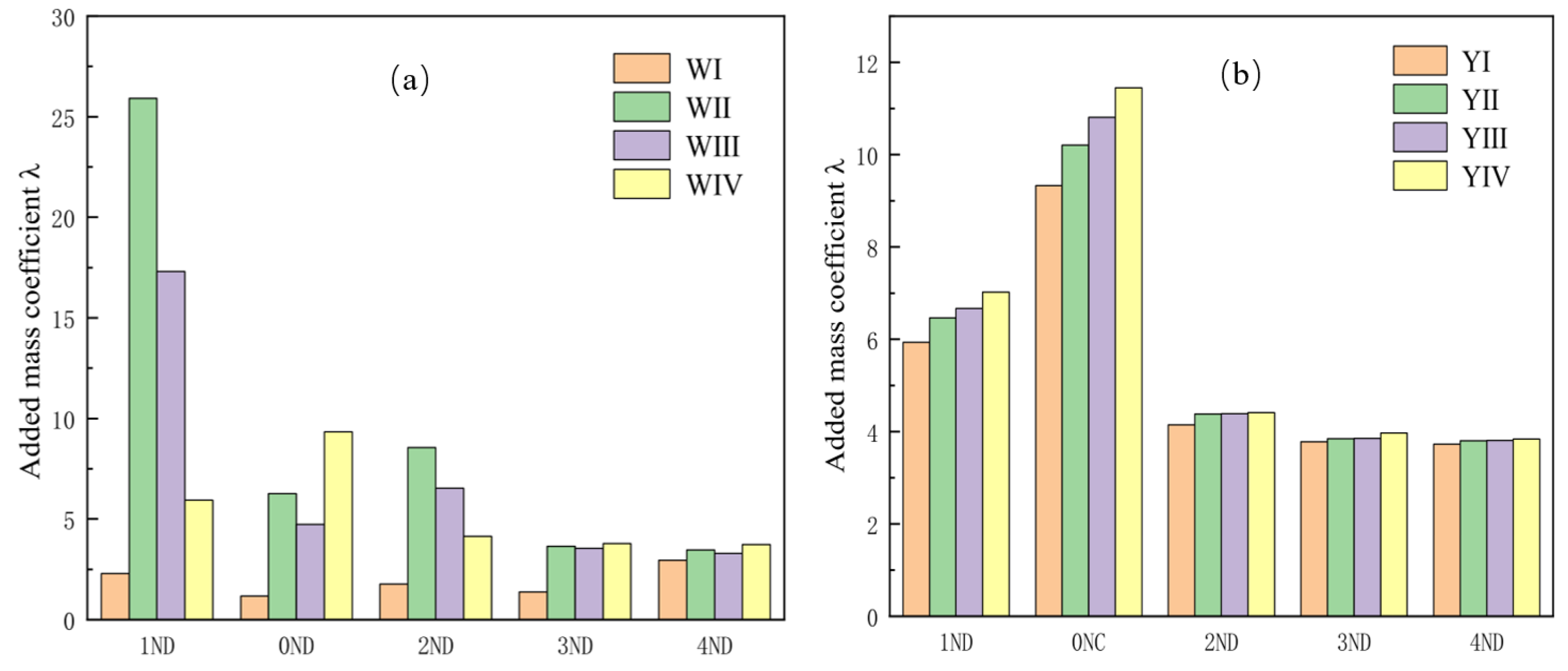
3.1.2. Influence of Fluid Domain on Runner Modal Characteristics
3.2. Study on the Influence of Seal Clearance Geometry on the Wet Modal Frequency of the Runner
3.2.1. Influence of Labyrinth Seal Comb Structure on Runner Modal Characteristics
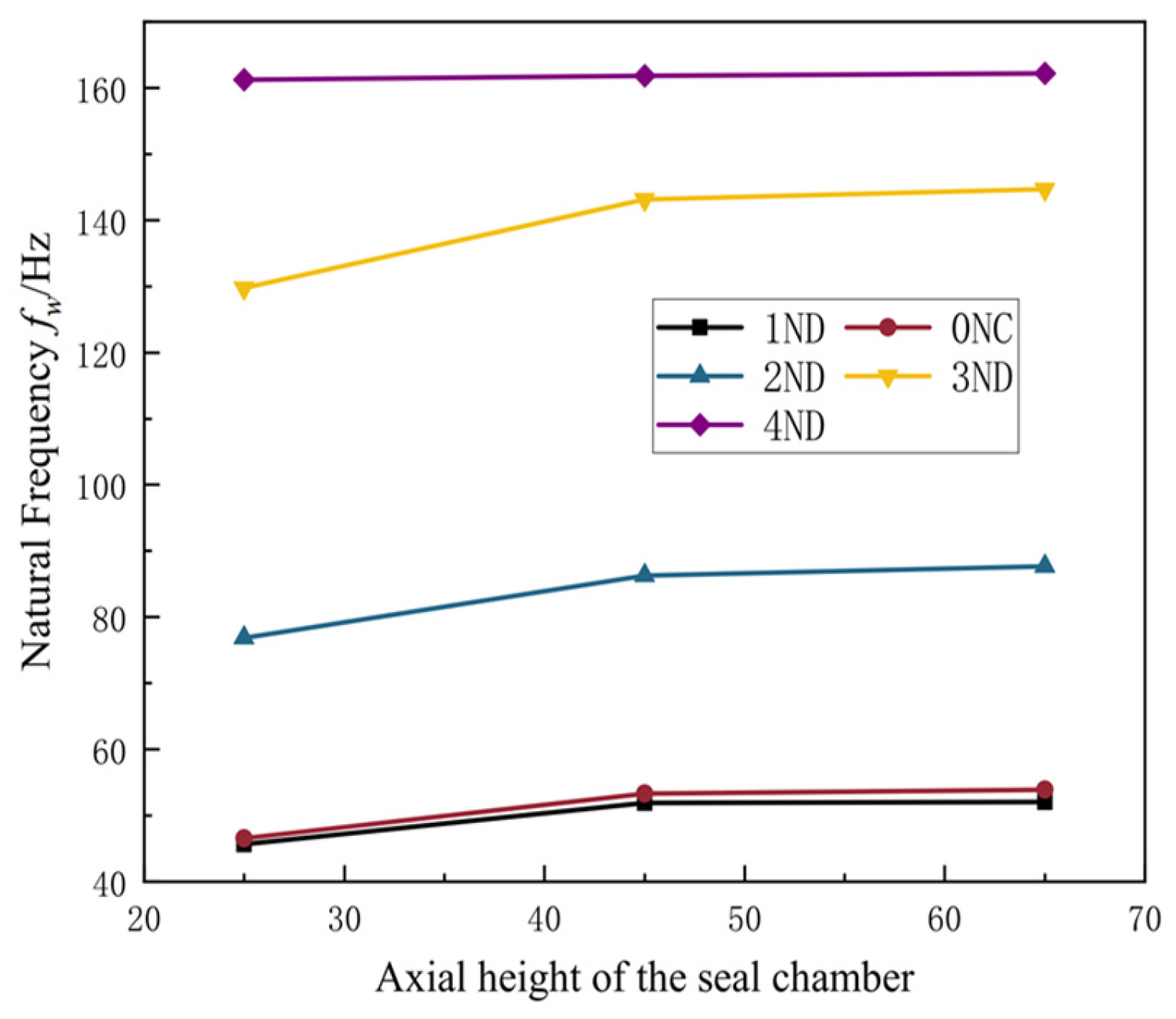
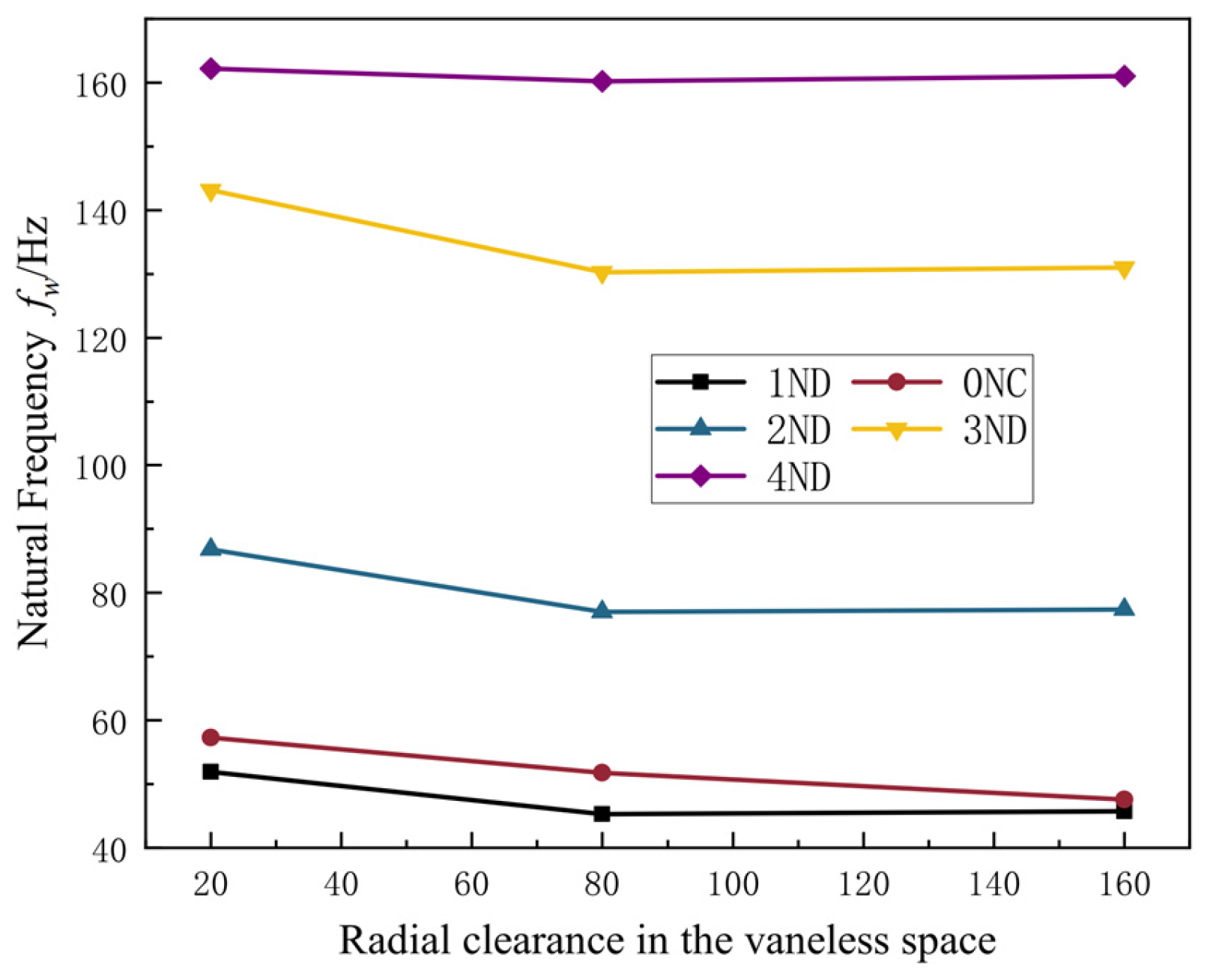
3.2.2. Influence of Seal Clearance Geometry on Runner Modal Characteristics
3.2.3. Sensitivity Analysis of Wet Modes to Seal Clearance Geometry
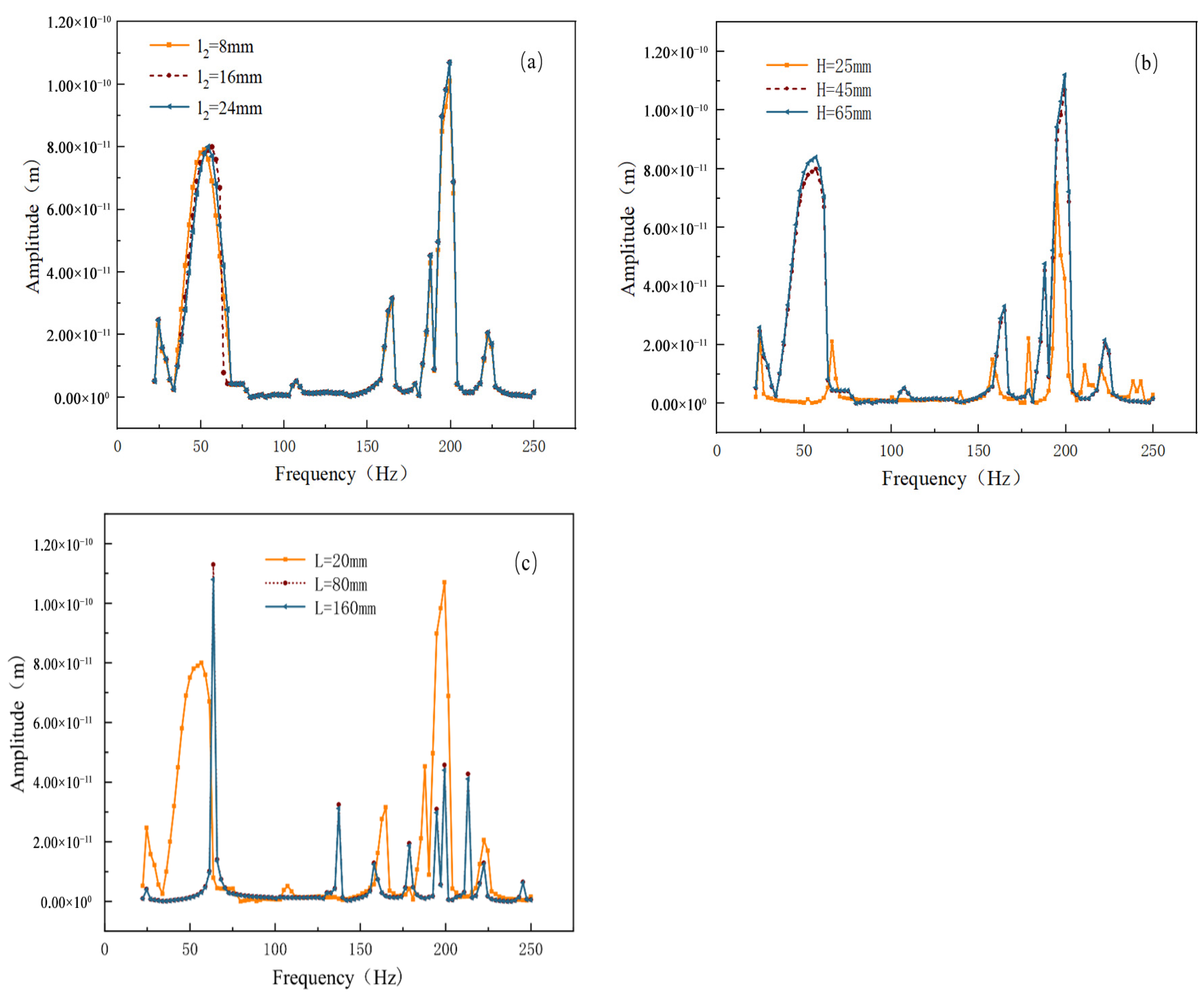
3.3. Analysis of the Influence of Labyrinth Seal Parameters on Harmonic Response Characteristics
4. Conclusions
- (1)
- The wet modal characteristics are mainly governed by the fluid in the immediate vicinity of the runner. The upper crown chamber plays the most critical role, whereas the influence of the far-field fluid domain is negligible. This finding supports the use of a simplified near-field model for efficient modal analysis.
- (2)
- Among the seal clearance geometric parameters, the axial height of the seal chamber and the radial clearance in the vaneless space exhibit the most pronounced influence on wet modal frequencies. In particular, the radial clearance in the vaneless space strongly affects the NC modes, with a maximum frequency shift of 16.93%.
- (3)
- For the labyrinth seal teeth, the tooth pitch is the dominant geometric parameter influencing the modal behavior. It can cause a frequency variation of up to 13.73% in the 1ND mode.
- (4)
- Harmonic response analysis further confirms that the axial height of the seal chamber and the radial clearance in the vaneless space are key geometric factors governing the runner’s vibration response and resonance risk. Variations in these parameters notably shift resonant amplitudes and frequency distributions. For example, reducing the radial clearance in the vaneless space to 20 mm leads to a pronounced resonance peak with substantially amplified amplitude near 200 Hz.
Author Contributions
Funding
Data Availability Statement
Acknowledgments
Conflicts of Interest
References
- General Institute of Water Resources and Hydropower Planning and Design. China Renewable Energy Development Report 2023; China Water & Power Press: Beijing, China, 2024. [Google Scholar]
- Zhang, F.; Fang, M.; Tao, R.; Liu, W.; Gui, Z.; Xiao, R. Investigation of energy loss patterns and pressure fluctuation spectrum for Pump-turbine in the reverse pump mode. J. Energy Storage 2023, 72, 108275. [Google Scholar] [CrossRef]
- Colmenar-Santos, A.; Linares-Mena, A.R.; Velázquez, J.F.; Borge-Diez, D.; Blázquez-García, F. Energy-efficient three-phase bidirectional converter for grid connected storage applications. Energy Convers. Manag. 2016, 127, 599–611. [Google Scholar] [CrossRef]
- Yang, X.; Wang, C.; Chen, Z.; Chen, F.; Bi, H.; Luo, Y.; Wang, Z. Effect of added mass on modal characteristics of pump-turbine runner. J. Hydroelectr. Eng. 2021, 40, 78–85. [Google Scholar]
- Xia, X. Research on Modal Characteristics of Pump-Turbine Runner Considering Rotation Effects. Master’s Thesis, China Agricultural University, Beijing, China, 2023. [Google Scholar]
- Gui, Z.; Xia, X.; Wang, W.; Zhou, L.J.; Liu, D.H.; Wang, Z.W. Dynamic Stress Analysis of Pump-Turbine Runner during Start-up Process. Trans. Chin. Soc. Agric. Mach. 2021, 52, 153–161. [Google Scholar]
- Tan, W.; Wan, Y.; Li, C.; Li, H. Cause Analysis and Countermeasures for Abnormal Vertical Vibration of Large Hydropower Unit Head Cover. Large Electr. Mach. Hydraul. Turbine 2020, 270, 77–82. [Google Scholar]
- Xia, X.; Zhou, L.; Wang, Z.; Liu, D. Effects of trailing-edge modification of guide vanes on the wake vortices under different inflow conditions. Proc. Inst. Mech. Eng. Part A J. Power Energy 2021, 235, 1892–1901. [Google Scholar] [CrossRef]
- Vogel, S.M.; Skinner, D.W. Natural frequencies of transversely vibrating uniform band plates. J. Appl. Mech. 1965, 32, 926–931. [Google Scholar] [CrossRef]
- Southwell, R.V. On the free transverse vibrations of a uniform circular disc clamped at its centre; and on the effects of rotation. Proc. R. Soc. Lond. Ser. A 1922, 101, 133–153. [Google Scholar] [CrossRef]
- Leissa, A.W. Vibration of Plates; Scientific and Technical Information Division; National Aeronautics and Space Administration: Washington, DC, USA, 1969. [Google Scholar]
- Mao, Y.; Young, Y.L. Influence of skew on the added mass and damping characteristics of marine propellers. Ocean Eng. 2016, 121, 437–452. [Google Scholar] [CrossRef]
- Parsons, M.G.; Vorus, W.S.; Richard, E.M. Added Mass and Damping of Vibrating Propellers; University of Michigan: Ann Arbor, MI, USA, 1980. [Google Scholar]
- De Santo, F.D. Added mass and hydrodynamic damping of perforated plates vibrating in water. J. Press. Vessel Technol. 1981, 103, 175–182. [Google Scholar] [CrossRef]
- Bergan, C.W.; Tengs, E.O.; Solemslie, B.W.; Dahlhaug, O.G. Damping measurements on a multi blade cascade with multiple degrees of freedom: A francis 99 test case. In Proceedings of the Journal of Physics Conference Series; IOP Publishing: Bristol, UK, 2019; Volume 1296, p. 012003. [Google Scholar]
- Zeng, Y. Research on Hydraulic Damping Characteristics of Flow-Induced Vibration for Pump Runner and Guide Vanes. Ph.D. Thesis, China Agricultural University, Beijing, China, 2022. [Google Scholar]
- Chen, H.; Tong, X.; He, Z. Numerical and experimental studies on the hydrodynamic damping of a zero-thrust propeller. J. Fluids Struct. 2020, 92, 102957. [Google Scholar] [CrossRef]
- Torre, O.; Escaler, X.; Egusquiza, E.; Farhat, M. Experimental investigation of added mass effects on a hydrofoil under cavitation conditions. J. Fluids Struct. 2013, 39, 173–187. [Google Scholar] [CrossRef]
- Torre, O.; Escaler, X.; Egusquiza, E.; Farhat, M. Numerical and experimental study of a nearby solid boundary and partial submergence effects on hydrofoil added mass. Comput. Fluids 2014, 91, 1–9. [Google Scholar] [CrossRef]
- Yao, C.; Huang, X.; Zhu, P.Y.; Thévenaz, L. Strain measurement of hydraulic turbine using distributed optical fiber sensor: A preliminary study. In Proceedings of the Optical Fiber Sensors Conference; Optica Publishing Group: Washington, DC, USA, 2020; p. Th4. [Google Scholar]
- Torre, O.; Floris, I.; Sales, S.; Escaler, X. Fiber Bragg Grating Sensors for Underwater Vibration Measurement: Potential Hydropower Applications. Sensors 2021, 21, 4272. [Google Scholar] [CrossRef]
- Kohtanen, E.A.; Davis, R.B. Hydroelastic damping of low aspect ratio cantilevered plates. J. Fluids Struct. 2019, 90, 315–333. [Google Scholar] [CrossRef]
- Jacobson, K.E.; Kiviaho, J.F.; Kennedy, G.J.; Smith, M. Evaluation of time-domain damping identification methods for flutter-constrained optimization. J. Fluids Struct. 2019, 87, 174–188. [Google Scholar] [CrossRef]
- Ausoni, P. Turbulent Vortex Shedding from a Blunt Trailing Edge Hydrofoil; Swiss Federal Institute of Technology Lausanne: Lausanne, Switzerland, 2009. [Google Scholar]
- Ding, J.; Lin, J.; Zhao, J.; Yin, Y. Time-Varying Damping Ratio Method for Dynamic Detection of Locomotive Vehicle Motion Stability. J. Mech. Eng. 2015, 51, 109–117. [Google Scholar] [CrossRef]
- Liang, Q.W.; Rodríguez, C.G.; Egusquiza, E.; Huang, X.X. Numerical simulation of fluid added mass effect on a Francis turbine runner. Comput. Fluids 2007, 36, 1106–1118. [Google Scholar] [CrossRef]
- Huang, S.; Deng, X.; Li, H.; Liu, H. Research on dynamic characteristic of the runner of turbine based on acoustic-solid coupling. Water Power 2020, 46, 92–95. [Google Scholar]
- Liu, Y.; Gong, J.; Xu, Y.; Rong, C.J.; Wang, L.Q. Wet modal analysis of the runner of an centrifugal pump with a space diffuser considering fluid-solid coupling. Fluid Mach. 2020, 48, 50–56. [Google Scholar]
- Feng, J.; Ling, Z.; Zhao, Z.; Li, H.H.; Chen, D.Y. Study on structural stability of Francis turbine runners under partial load conditions. J. Hydroelectr. Eng. 2021, 40, 107–114. [Google Scholar]
- Huang, X.; Escaler, X. Added Mass Effects on a Francis Turbine Runner with Attached Blade Cavitation. Fluids 2019, 4, 107. [Google Scholar] [CrossRef]
- Zeng, Y.; Qi, X.; Shu, L.; Yao, Z.; Zhou, L.; Wang, F. Fluid–Structure Interaction Effects of a Partially Immersed, Cantilevered Hydrofoil. J. Fluids Eng. 2022, 144, 021202. [Google Scholar] [CrossRef]
- Naudascher, E.; Rockwell, D. Flow-Induced Vibrations: An Engineering Guide; Dover Publications: New York, NY, USA, 2012. [Google Scholar]
- Trivedi, C.; Cervantes, M.J. Fluid-structure interactions in Francis turbines: A perspective review. Renew. Sustain. Energy Rev. 2017, 68, 87–101. [Google Scholar] [CrossRef]
- Askari, E.; Jeong, K.; Amabili, M. Hydroelastic vibration of circular plates immersed in a liquid-filled container with free surface. J. Sound Vib. 2013, 332, 3064–3085. [Google Scholar] [CrossRef]
- Rodríguez, C.G.; Flores, P.; Pierart, F.G.; Contzen, L.R.; Egusquiza, E. Capability of structural-acoustical FSI numerical model to predict natural frequencies of submerged structures with nearby rigid surfaces. Comput. Fluids 2012, 70, 117–126. [Google Scholar] [CrossRef]
- Valentin, D.; Presas, A.; Egusquiza, E.; Valero, C. Experimental study on the added mass and damping of a disk submerged in a partially fluid-filled tank with small radial confinement. J. Fluids Struct. 2014, 44, 1–17. [Google Scholar] [CrossRef]
- Presas, A.; Valero, C.; Huang, X.X.; Egusquiza, E.; Farhat, M.; Avellan, F. Analysis of the dynamic response of pump-turbine runners-Part I: Experiment. In IOP Conference Series: Earth and Environmental Science; IOP Publishing: Bristol, UK, 2012. [Google Scholar]
- He, L.Y.; Zhou, L.J.; Ahn, S.; Wang, Z.W.; Nakahara, Y.; Kurosawa, S. Evaluation of gap influence on the dynamic response behavior of pump-turbine runner. Eng. Comput. 2019, 36, 491–508. [Google Scholar] [CrossRef]
- Li, D.; Xia, X.; Zhou, L.; Gong, K.; Wang, Z. Effect of outer edge modification on dynamic characteristics of pump turbine runner. Eng. Fail. Anal. 2021, 124, 105379. [Google Scholar] [CrossRef]
- Yan, J.; Zuo, Z.; Guo, W.; Hou, H.; Zhou, X.; Chen, H. Influences of wear-ring clearance leakage on performance of a small-scale Pump-turbine. Proc. Inst. Mech. Eng. Part A J. Power Energy 2020, 234, 454–469. [Google Scholar] [CrossRef]
- Zhou, D.; Chen, H.; Zhang, J.; Jiang, S.; Gui, J.; Yang, C.; Yu, A. Numerical Study on Flow Characteristics in a Francis Turbine during Load Rejection. Energies 2019, 12, 716. [Google Scholar] [CrossRef]
- Wu, Z.; Liang, W.; Dong, W.; Gao, C.; Chen, D. Influence of lower ring clearance on Internal Flow characteristics of Francis Turbine. Trans. Chin. Soc. Agric. Eng. 2020, 36, 23–29+337. [Google Scholar]
- Cao, Y.; Zandi, Y.; Rahimi, A.; Fan, Q.; Bai, Y.; Guo, J.; Fu, L.; Khadimallah, M.; Jameel, M.; Assilzadeh, H. Analysis of leaking ratio of sealing device for the intake port of EMC closed integral structure turbine disk through soft computing. Adv. Nano Res. 2021, 11, 313–326. [Google Scholar]
- Zhao, J.; Xu, Y.; Zhu, T.; Qi, Z.; Li, Y. Adaptive labyrinth simulation and experimental study. J. Tsinghua Univ. (Nat. Sci. Ed.) 2022, 62, 463–469. [Google Scholar]
- Zhang, Y.; Li, J.; Ma, D.; He, Y.; Ji, J.; Sun, B.; Li, Z.; Yan, X. Experimental and Numerical Investigations on the Leakage Flow Characteristics of Helical-Labyrinth-Brush Seals. J. Xi’an Jiaotong Univ. 2021, 143, 041023. [Google Scholar] [CrossRef]
- Huang, X.X.; Egusquiza, E.; Valero, C.; Presas, A. Dynamic behaviour of pump-turbine runner: From disk to prototype runner. In IOP Conference Series: Materials Science and Engineering; IOP Publishing: Bristol, UK, 2013. [Google Scholar]


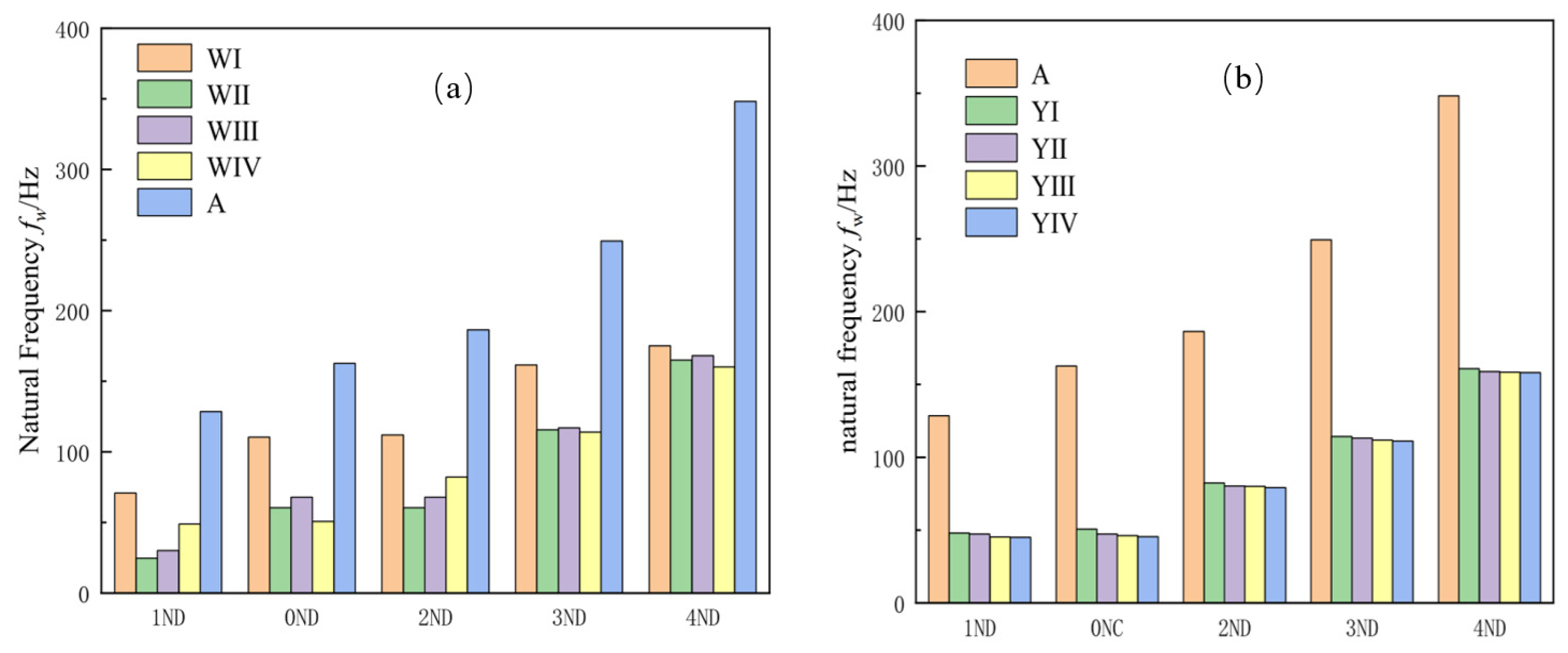

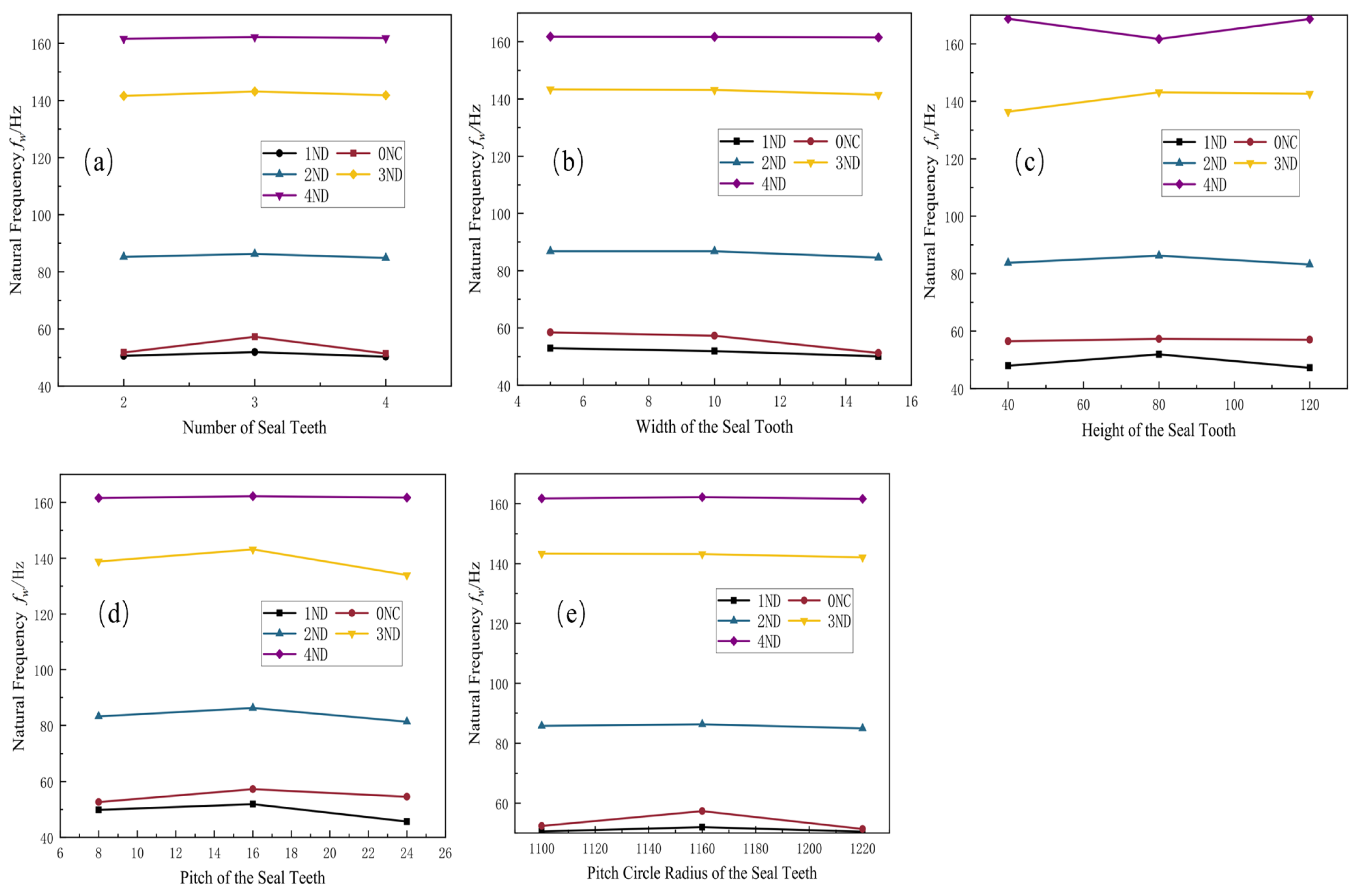



| Parameter | Value | Unit |
|---|---|---|
| Number of seal teeth N | 2, 3, 4 | [—] |
| Height of the seal tooth l1 | 40, 80, 120 | [mm] |
| Pitch of the seal teeth l2 | 8, 16, 24 | [mm] |
| Width of the seal tooth l3 | 5, 10, 15 | [mm] |
| Pitch circle radius of the seal teeth R | 1100, 1160, 1220 | [mm] |
| Axial height of the seal chamber H | 25, 45, 65 | [mm] |
| Radial clearance in the vaneless space L | 20, 80, 160 | [mm] |
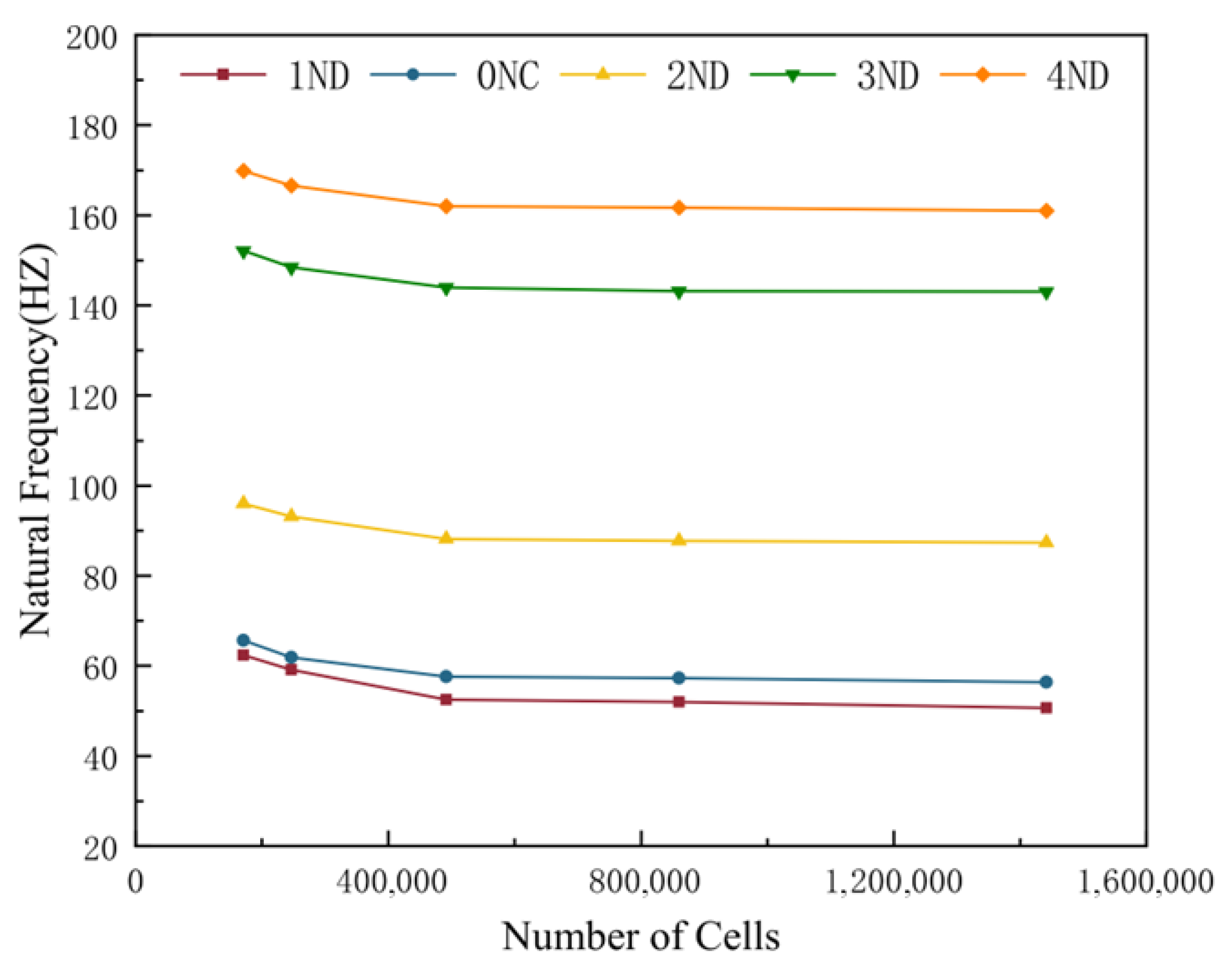
| Mesh 1 | Mesh 2 | Mesh 3 | Mesh 4 | Mesh 5 | |
|---|---|---|---|---|---|
| Number of nodes | 258,961 | 371,894 | 732,598 | 1,275,856 | 2,130,317 |
| Number of elements | 170,751 | 246,632 | 491,808 | 860,382 | 1,441,546 |
| Modal | In Air fa/Hz | In Water fw/Hz | Frequency Reduction Rate FRR | Added Mass Factor λ |
|---|---|---|---|---|
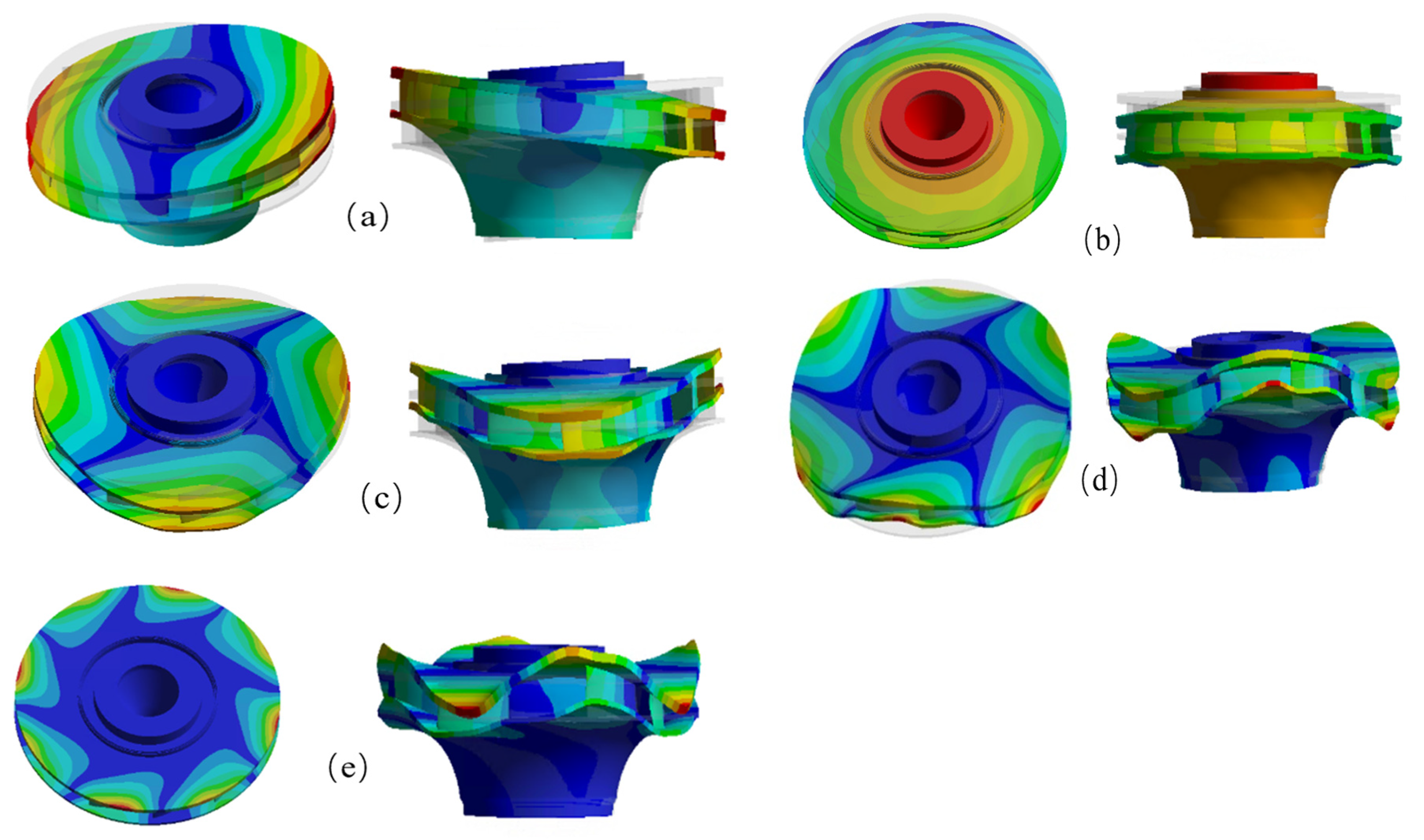
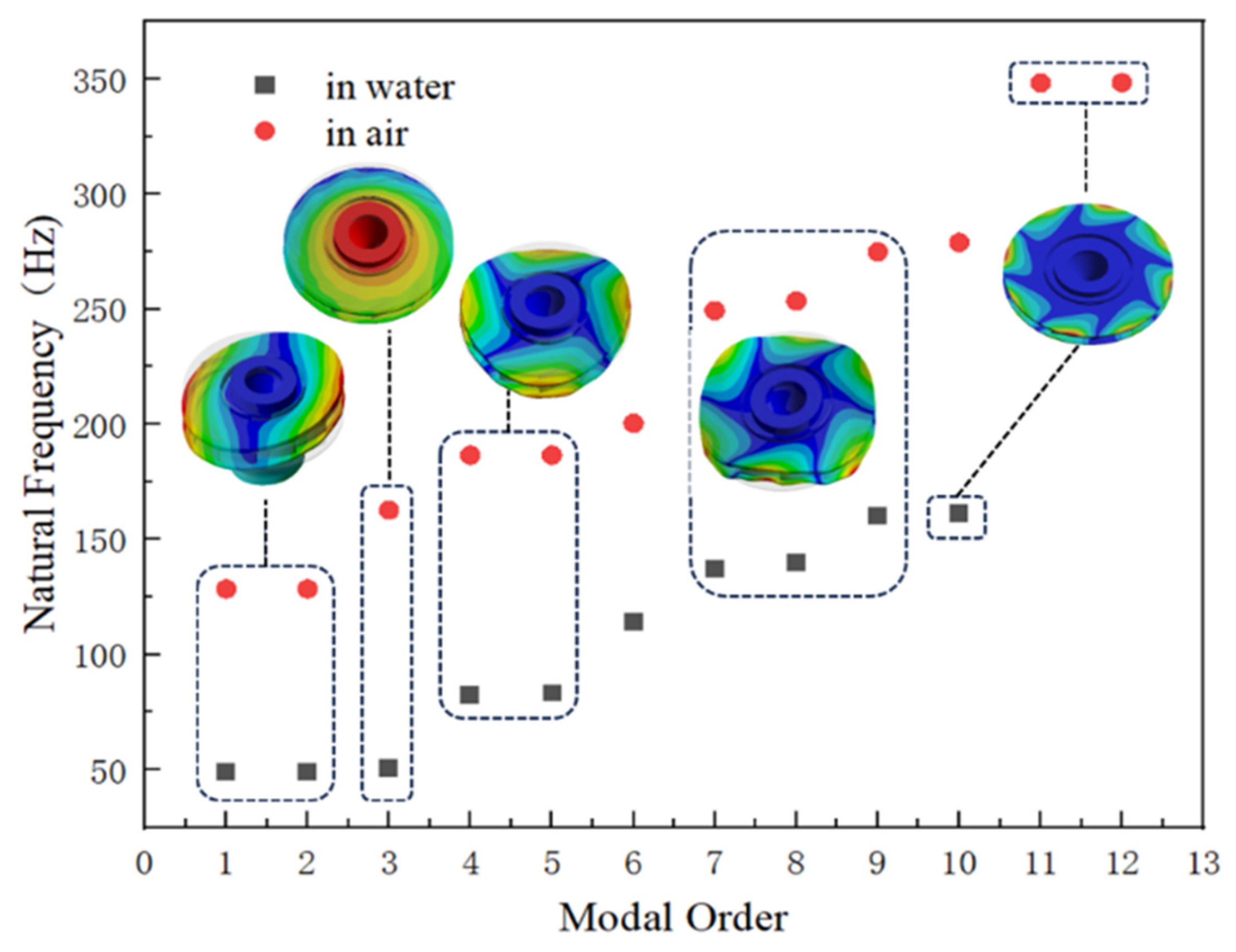
| 1 ND | 128.43 | 48.77 | 0.620 | 5.936 |
| 0 NC | 162.57 | 50.57 | 0.689 | 9.334 |
| 2 ND | 186.46 | 82.17 | 0.559 | 4.147 |
| 3 ND | 249.29 | 114.03 | 0.543 | 4.779 |
| 4 ND | 348.29 | 160.18 | 0.540 | 3.728 |
| Number | Description |
|---|---|
| A | In air |
| WI | Internal flow passage only |
| WII | Upper crown chamber only |
| WIII | Lower band chamber only |
| WIV | Entire flow field |
| Number | Description |
|---|---|
| A | In air |
| YI | Near-runner flow field |
| YII | Guide vane domain included |
| YIII | Stay vane domain included |
| YIV | Volute domain included |
| H = 45 mm | H = 65 mm | |
|---|---|---|
| 1 ND | −13.69% | −13.85% |
| 0 NC | −14.57% | −15.85% |
| 2 ND | −12.30% | −14.12% |
| 3 ND | −10.30% | −11.47% |
| 4 ND | −0.37% | −0.58% |
| L = 80 mm | L = 160 mm | |
|---|---|---|
| 1 ND | 14.73% | 11.90% |
| 0 NC | 10.65% | 16.93% |
| 2 ND | 12.73% | 10.84% |
| 3 ND | 9.87% | 8.49% |
| 4 ND | 0.90% | 0.40% |
| Parameter | Variation Range | 1 ND Luffing | 0 NC Luffing | 2 ND Luffing | 3 ND Luffing | 4 ND Luffing |
|---|---|---|---|---|---|---|
| Number of seal teeth (N) | 3 → 4 | −3.32% | −11.45% | −1.65% | −0.92% | −0.24% |
| Height of the seal tooth (l1) | 80 → 120 | −9.09% | −0.51% | −3.60% | −0.38% | +4.33% |
| Pitch of the seal teeth (l2) | 16 → 24 | −13.73% | −5.02% | −6.06% | −6.85% | −0.33% |
| Width of the seal tooth (l3) | 5 → 15 | −5.74% | −13.98% | −2.63% | −1.39% | −0.19% |
| Pitch circle radius of the seal teeth (R) | 1160 → 1220 | −2.89% | −10.42% | −1.57% | −0.73% | −0.33% |
| Axial height of the seal chamber (H) | 65 → 25 | −13.85% | −15.85% | −14.12% | −11.47% | −0.58% |
| Radial clearance in the vaneless space (L) | 20 → 80 | −14.73% | −10.65% | −12.73% | −9.87% | −0.90% |
Disclaimer/Publisher’s Note: The statements, opinions and data contained in all publications are solely those of the individual author(s) and contributor(s) and not of MDPI and/or the editor(s). MDPI and/or the editor(s) disclaim responsibility for any injury to people or property resulting from any ideas, methods, instructions or products referred to in the content. |
© 2026 by the authors. Licensee MDPI, Basel, Switzerland. This article is an open access article distributed under the terms and conditions of the Creative Commons Attribution (CC BY) license.
Share and Cite
Zhao, X.; Tian, Y.; Tao, R.; Zhou, L.; Wang, Z. Effect of Geometric Parameters in the Seal Clearance on the Modal Characteristics of Pump-Turbine Runner. Water 2026, 18, 671. https://doi.org/10.3390/w18060671
Zhao X, Tian Y, Tao R, Zhou L, Wang Z. Effect of Geometric Parameters in the Seal Clearance on the Modal Characteristics of Pump-Turbine Runner. Water. 2026; 18(6):671. https://doi.org/10.3390/w18060671
Chicago/Turabian StyleZhao, Xue, Yu Tian, Ran Tao, Lingjiu Zhou, and Zhengwei Wang. 2026. "Effect of Geometric Parameters in the Seal Clearance on the Modal Characteristics of Pump-Turbine Runner" Water 18, no. 6: 671. https://doi.org/10.3390/w18060671
APA StyleZhao, X., Tian, Y., Tao, R., Zhou, L., & Wang, Z. (2026). Effect of Geometric Parameters in the Seal Clearance on the Modal Characteristics of Pump-Turbine Runner. Water, 18(6), 671. https://doi.org/10.3390/w18060671