


Abstract
Artificial water bodies in post-mining landscapes often remain chemically altered and ecologically degraded, yet their ecological risk is frequently underestimated by conventional water quality assessments. Persistent toxicity in mining-impacted waters is a global challenge, as acidity alone often fails to explain the adverse biological effects observed. This study assessed the ecological condition of three artificial ponds in a former gold–antimony mining area (Midões, northern Portugal), using an integrated framework that combined physicochemical and biological (phytoplankton and macroinvertebrates) elements with ecotoxicological assays. Ecotoxicity was evaluated using Lemna minor (growth inhibition) and Daphnia magna (acute toxicity, survival, and feeding rate) under untreated water and pH-adjusted conditions to disentangle acidity-driven effects from other chemical stressors. According to Water Framework Directive metrics, all ponds were classified as having moderate ecological potential, driven by persistent acidic conditions and elevated heavy metal concentrations (e.g., zinc and cadmium). Biological communities showed marked temporal/spatial variability, reflecting physicochemical differences among ponds. Phytoplankton showed summer blooms of cyanobacteria, while macroinvertebrates were generally dominated by tolerant taxa (exhibiting low taxonomic richness/diversity). Ecotoxicological assays showed consistent toxicity across all sampling periods, with high mortality and reduced feeding rates in D. magna and growth inhibition in L. minor. Notably, toxicity often persisted even after pH adjustment, indicating that the observed biological effects were not driven by acidity but were largely attributable to residual metal contamination. These findings highlight the ecological vulnerability of mining-impacted water bodies and underscore the need for management and remediation strategies that address metal removal in addition to pH correction.
1. Introduction
Mining activities, particularly polymetallic mining, played a crucial role in the European economy, thriving until the early 1970s and forming a significant foundation of the economic structure at the time [1,2]. However, over the following decades, metal production declined, either due to the depletion of mineral resources or the cessation of operations in response to shifting societal demands. This downturn led to a significant rise in mine closures and abandonment [3], consequently increasing environmental risks, particularly from tailings deposits that are highly prone to erosion and chemical weathering [1,2,4]. Surrounding ecosystems, including adjacent soils, surface waters, and groundwater, are often exposed to elevated concentrations of potentially toxic metals (PTMs) and acid drainage [2,5]. Several studies have reported severe impacts on aquatic ecosystems, including: (i) reduced biotic richness and diversity resulting from the mobilization of potentially toxic elements (PTEs) from sediments into the water column driven by pH shifts [6]; (ii) dominance of tolerant species, leading to biodiversity loss; and (iii) disruption of nutrient cycling and alteration of key abiotic conditions [7]. Furthermore, another concern is the formation of water-filled depressions created by mining operations, where precipitation and groundwater infiltration accumulate. Over time, these depressions can develop into artificial water bodies capable of supporting aquatic communities, despite often exhibiting compromised environmental quality. Although artificial in origin, such systems may be considered simplified aquatic ecosystems, as they can host planktonic and benthic organisms and basic ecological interactions. Due to their origin and environmental constraints, these ecosystems are generally expected to display low species richness, often dominated by generalist and stress-tolerant taxa characteristic of early stages of ecological succession. These artificial ponds are frequently hydrologically isolated, with limited or no exchange with surrounding water bodies, which can strongly influence their biological communities.
The environmental impacts of abandoned mines and artificial water bodies highlight the need for robust water management frameworks. Within the European Union, the Water Framework Directive (WFD, 2000/60/EC) provides guidelines for assessing the ecological potential of natural and heavily modified water bodies, typically using standard physicochemical parameters [8,9]. However, relying exclusively on these parameters often fails to capture the full ecological risk, particularly in mining-impacted water bodies. Several studies [10,11,12] have raised concerns about the limited biological assessment tools currently available for lentic ecosystems, advocating for the inclusion of additional biological communities (such as benthic macroinvertebrates, zooplankton, or microbial assemblages) to provide a more holistic evaluation of water quality [10,13]. Although the WFD incorporates biological quality elements, the current implementation tends to overlook cause–effect relationships, sublethal impacts, and organism-level responses to contamination [6,14,15]. In response, recent research has highlighted the value of incorporating ecotoxicological tools and bioassays as more integrative and functionally relevant approaches to evaluating water quality [16,17,18]. Standardized assays with aquatic organisms at different trophic levels (e.g., Lemna minor, Daphnia magna) are sensitive to a wide range of contaminants and can detect sublethal effects that reflect early, ecologically significant changes in ecosystem function. L. minor, a floating macrophyte, plays a key role in primary production and nutrient cycling in lentic ecosystems, while D. magna, as a filter-feeding cladoceran, links primary producers to higher trophic levels and contributes to energy transfer [15,16]. Both species are known to be particularly sensitive to pH and metal contamination, common stressors in mining-impacted environments, making them ideal bioindicators for detecting early, sublethal effects on aquatic ecosystems [17,18].
Mining-impacted water bodies worldwide often remain acidic and chemically altered, with persistent toxicity that is not fully mitigated by pH neutralization efforts. Understanding these limitations is critical for managing ecological risks in such systems. Building on an integrative framework that combines physicochemical assessment, biological characterization, and ecotoxicological testing, this study applies this complementary approach to a mining-impacted landscape, specifically, three artificial ponds located in a former gold-antimony mining area in Midões, northern Portugal. The study pursues two main objectives: (i) to assess the water quality and characterize the resident aquatic biota, with a particular focus on phytoplankton and macroinvertebrate communities; and (ii) to evaluate the potential ecotoxicity of the ponds’ natural waters through standardized bioassays using representative test organisms, Daphnia magna and Lemna minor. By integrating these lines of evidence, the study aims to provide a comprehensive assessment of the ecological condition of these water bodies and to clarify the potential environmental risks associated with mining-derived contamination, offering insights that are relevant to mining-impacted waters globally.
2. Materials and Methods
2.1. Characterization of the Study Area
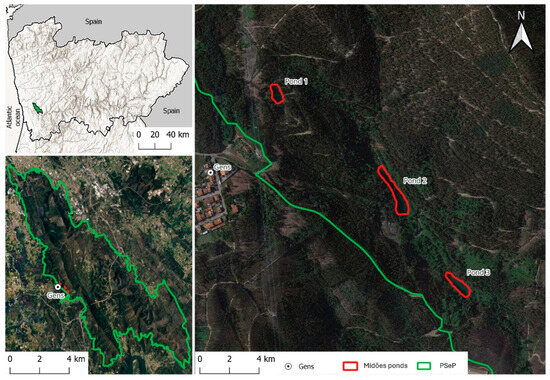
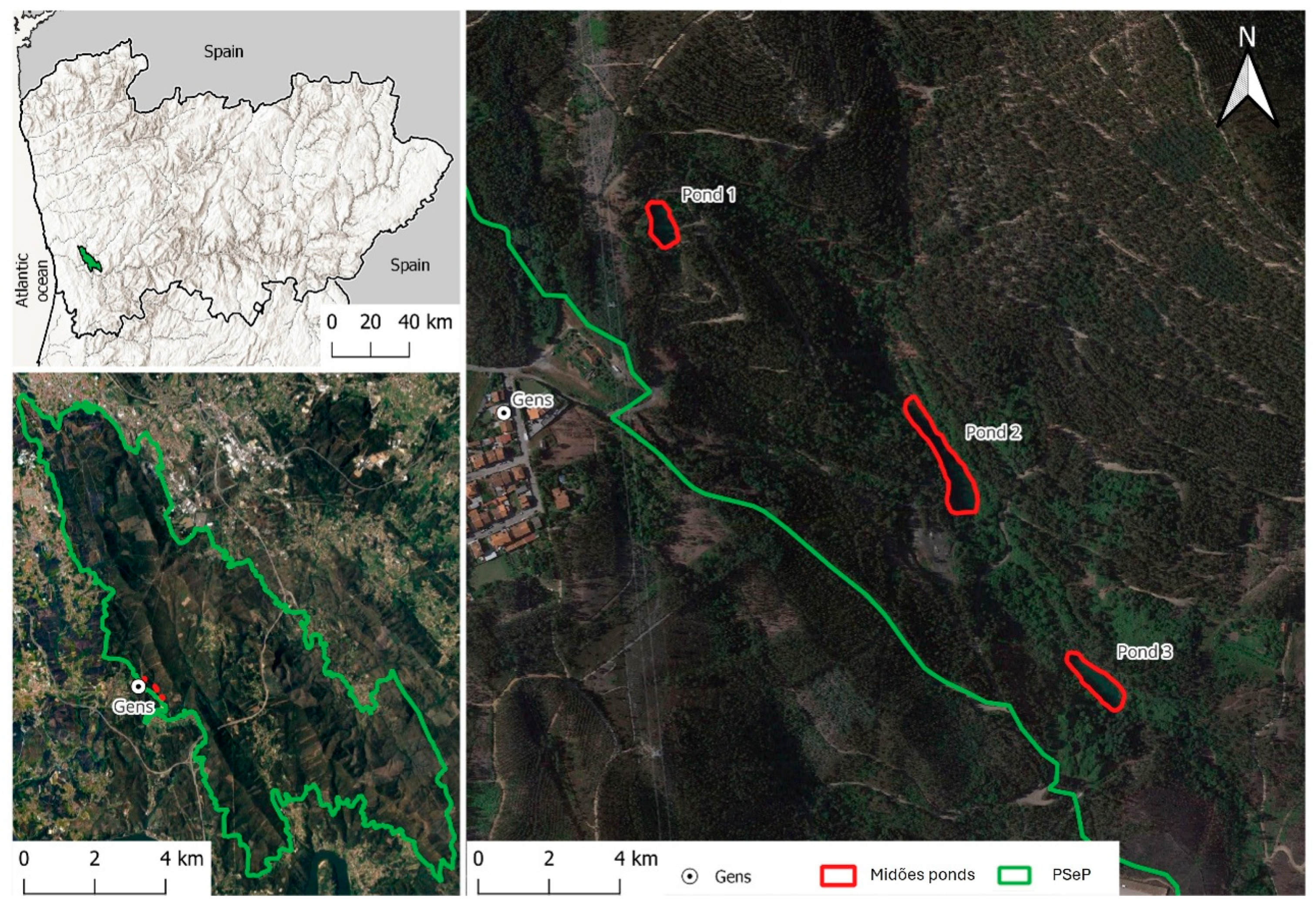
This study was conducted in three artificial ponds (P1, P2, and P3), known as Midões ponds, located in a small village called Gens, in the municipality of Gondomar in the north of Portugal (Figure 1). These ponds arose from gold-antimony mining activities that occurred from 1872 until 1940. The ponds have different total surface areas of 1002.64 m2 (P1), 2942.45 m2 (P2), and 1604.89 m2 (P3), as well as depths of P1 ≈ 2.5 m, P2 ≈ 10 m, and P3 ≈ 8 m. The study area is located in the transition zone between Atlantic and Mediterranean climates. The region experiences mild temperatures due to Atlantic influence, with average annual values ranging from 12.5 to 15 °C, and abundant annual precipitation of 1200–1800 mm, including occasional frosts. Summer months are typically dry, which can induce water stress and influence the ecological dynamics of lentic systems in the area [19,20]. Currently, these three ponds are located in an area classified as a Regional Protected Landscape known as “Parque das Serras do Porto” (PSeP) [19,20]. Protected areas are generally designated to conserve natural and semi-natural systems, safeguard biodiversity and geodiversity, and promote environmental quality. However, in landscapes affected by historical mining activities, the persistence of legacy contamination may pose challenges to conservation objectives, highlighting the importance of environmental assessment and, where necessary, restoration measures. Despite their location within a protected area and their origin in historical mining activities, these artificial ponds have not been previously subjected to environmental or biological assessment. PSeP is situated in a geodiversity-rich region shaped by the Valongo Anticline, a significant geological formation of the northwest Iberian Peninsula [20]. This megastructure predominantly comprises Paleozoic and even older Pre-Cambrian formations, spanning approximately 300 million years, except for some river terraces [21,22]. These ancient formations not only reveal Earth’s distant past but also hold archaeological significance, particularly Roman gold mining, emphasizing their unique geology, conservation value, and historical importance [21].
Figure 1.
Map of the location of the Midões ponds sampling sites in Gens, Portugal. P1—41.1163939 N, −8.4727097 W with 1002.64 m2 of total area; P2—41.1144045 N, −8.4691684 W with 2942.45 m2 of total area; and P3—41.1117144 N, −8.4665426 W with 1604.89 m2 of total area.
2.2. Sampling Procedure and Physicochemical Analysis
This study was conducted during six sampling periods throughout 2022–2023: July (Jul), August (Aug), September (Sep), November (Nov), February (Feb), and May (May), following the Water Framework Directive guidelines for assessing the water quality of lentic ecosystems. These months encompass seasonal extreme conditions (summer: July–September; autumn: November; winter: February; spring: May), allowing temporal variability in physicochemical conditions and biological responses to be captured throughout the year. In each pond (P1, P2, and P3), physicochemical parameters were measured in situ, including pH, electrical conductivity (µS/cm), total dissolved solids (TDS; mg/L), temperature (°C), dissolved oxygen (mg/L and % saturation), and salinity, using a multiparameter probe (Multi 3630 IDS SET F - Xylem Analytics Germany GmbH, Weilheim, Germany). Additionally, 10 L of water samples were collected from each pond in plastic bottles and transported to the laboratory in the dark at 4 °C. Nutrient quantification was performed on the sampling day. Samples intended for the remaining chemical analyses (priority substances, specific pollutants, and other contaminants) were stored at −20 °C in accordance with the analytical laboratory’s protocols. Samples used for ecotoxicological bioassays were stored at 4 °C in the dark, and all bioassays were initiated within a maximum period of 24 h after sample collection.
In the laboratory, water samples were analyzed according to the parameters established by the WFD for artificial surface water bodies [23]. Priority substances, specific pollutants, and other pollutants were analyzed in July, August, September, and February sampling periods, in accordance with WFD requirements and to capture seasonal extreme conditions (winter and summer). The analytical procedures were specific for each contaminant and are detailed in Table 1 and Table 2. The quantification of nitrites (mg NO2−/L), nitrates (mg NO3−/L), total nitrogen (mg Ntotal/L), ammoniacal nitrogen (mg NH4+/L), phosphates (mg PO4+/L), and total phosphorus (mg Ptotal/L) was conducted using a Spectroquant Multy Colorimeter. Five-day biochemical oxygen demand (BOD5) was quantified according to APHA guidelines [24]. Total suspended solids (TSS) and volatile suspended solids (VSS) were measured in triplicate for each pond, according to Ali Khan [25] and APHA procedures [24].
Table 1.
Results of the general physicochemical parameters (sampling sites: P1, P2, and P3; sampling periods: July, August, September, November, February, and May); reference values (RVs) defined for artificial water bodies according to APA [23]. Bold values represent values outside the established RV.
Table 2.
Results of specific pollutants, other pollutants, and priority substances (Sampling sites: P1, P2, and P3; Sampling periods: July, August, September, November, February, and May). Analytical chemical methods used for each chemical group; reference values (RVs) defined for artificial water bodies, according to APA [23]. Bold values represent the values outside the established RV. Analytical chemical methods used: CZ_SOP_D06_02_002 *# 002 for arsenic, copper, chromium, zinc, and lithium; SMEWW 3113 B for manganese; SMEWW 3500 Fe-B for iron; SMEWW 3113—B for aluminum; CZ_SOP_D06_02_002 *# 002 for cadmium, nickel, and lead.
In each pond, phytoplankton and macroinvertebrate communities were also collected. The phytoplankton community was analyzed from a 500 mL water aliquot preserved with 5 mL of Lugol solution (1%, v/v), and processed according to the INAG protocol [26]. Macroinvertebrate communities were sampled using a hand net with a 0.5 mm mesh and a length of 0.5 m. A composite sample was collected from all habitat types present in each pond (e.g., substrate and vegetation), following the procedures described by INAG et al. [27]. All macroinvertebrate samples were preserved in 4% formaldehyde until laboratory analysis.
2.3. Phytoplankton and Macroinvertebrates Communities
Phytoplankton community quantification was performed following the procedure described in INAG et al. [26]. Phytoplankton quantification and identification were carried out for each water sample using an optical microscope (Leica DMLB), in a Neubauer counting chamber, with at least 800 cells counted in three replicates. Taxonomic identification was conducted using standard identification guides and specific taxonomic keys [28,29]. For Chlorophyll a determination, an aliquot of water from each pond was filtered through a Whatman CF/C filter (1.2 mm porosity, 47 mm diameter). Afterward, the filters were immersed in 90% acetone and stored in the dark at 4 °C for 24 h to achieve complete pigment extraction [30,31]. Chlorophyll a concentration was determined using a set of monochromatic equations following the method described by Lorenzo et al. [32]. Macroinvertebrate samples were washed through a 0.5 mm mesh sieve to remove fine sediments and residual formaldehyde. The retained organisms were sorted and preserved in 70% ethanol in properly labeled containers for subsequent identification. Macroinvertebrates were identified under a stereomicroscope, predominantly to the family level, and to the class level for Oligochaeta, using a dichotomous identification key [33]. Due to the spatial heterogeneity of the ponds, composite samples were collected for macroinvertebrate communities to ensure the representation of all habitat types identified within each site. This sampling strategy followed established monitoring program guidelines and allowed an integrated assessment of the biological communities at the pond scale, reducing habitat-related bias while ensuring comparability across sampling periods.
2.4. Ecotoxicological Assays
2.4.1. Natural Water Treatments, Test Organisms, and Maintenance Conditions
To conduct the ecotoxicological assays, natural water samples from each pond were used, and two distinct treatments were employed: (i) natural water samples from each pond (P1, P2, and P3); and (ii) natural water samples, from each pond, with pH adjustment (BP1, BP2, and BP3) to achieve the optimal pH value for the respective species and culture medium for each assay. The model species selected to perform this study belong to different trophic levels (the macrophyte Lemna minor and the microcrustacean Daphnia magna) that play different key functions in the aquatic food web, and are also standard species in aquatic ecotoxicology studies [34,35]. L. minor was cultivated in Steinberg medium, and the culture was maintained at a controlled temperature (23 ± 2 °C) and continuous light (24 h, ~7000 lux), according to the standard guideline OECD 221 [36]. Cultures of D. magna were continuously kept in laboratory conditions for successive generations [37]. Cultures were renewed on alternate days using a synthetic hard-water medium, “ASTM hard water” [38], which was supplemented with a standard organic additive, Ascophyllum nodosum extract [39]. The cultures were maintained under controlled conditions of photoperiod (16 hL:8 hD) and temperature (20 ± 2 °C). Daphniids were fed Raphidocelis subcapitata at a rate of 3.0 × 10⁵ cells/mL/day.
The pH of the natural water samples was adjusted according to the requirements of each test organism: for Lemna minor, pH was set between 5.3 and 5.7, while for Daphnia magna, it was maintained between 7.0 and 7.5. These two treatments were designed to demonstrate that the acidic pH frequently observed in artificial ponds represents a significant stressor for aquatic ecosystems and should be carefully considered in restoration and recovery efforts.
2.4.2. Lemna minor Assays
L. minor growth inhibition assays were conducted following the standard guideline OECD 221 [36], with adaptations to six-well microplates [40]. Six replicates were performed for each water sample (P1, P2, P3, BP1, BP2, and BP3). In each replicate, 12.5 mL of the corresponding water sample and five fronds of L. minor were added. A control group was established with fronds exposed to the Steinberg medium. The microplates were incubated in a climate chamber under controlled temperature and light conditions (see Section 2.4.1) for 7 days. After this period, the fronds were counted and washed with distilled water, dried with absorbent paper, and weighed (dry weight, g).
2.4.3. Daphnia magna Assays
Three assays were performed using D. magna: an acute immobilization assay, a survival assay, and a feeding rate assay. D. magna acute immobilization assay was performed based on the OECD guideline 202 [41], using a control group (ASTM) and 100% of each natural water sample (P1, P2, and P3). Four replicates were conducted for each water sample in glass vessels with 25 mL of sample dilution or ASTM (control). In each replicate, five organisms (<24 h old and born between the 3rd and 5th broods) were added. The assay was conducted under controlled conditions of temperature (20 ± 2 °C) and photoperiod (16 hL:8 hD). The organisms were observed after 24 h and 48 h, and the percentage of immobilized or dead organisms was recorded. To conduct the survival assay, 24-well microplates were used to evaluate the D. magna survival after exposure to each water sample (P1, P2, P3, BP1, BP2, and BP3), following the methodology described by Lopes et al. [42]. One microplate was used per water source (24 replicates), and2.5 mL of the corresponding water sample was added to each well. The bioassay began by placing one neonate (<24 h old, originating from the 3rd to 5th broods) into each well. Organisms were monitored for survival over a 6 h period, with observations recorded at 10, 20, 30, 40, 50, 60, 90, 120, 150, 180, 240, 300, 360, and 1140 min. At the end of the assay, mortality (%) was calculated for each exposure period.
Feeding rate assays were performed according to McWilliam and Baird [43], with a few modifications described in Queirós et al. [44]. The assay was conducted in six well-microplates, and in each well, 12.5 mL of the natural water samples with pH adjusted was added. Five replicates were prepared for each water treatment, and 6 neonates (4–5 days old, born between the 3rd and 5th broods) were added to each well. A blank containing only the water samples and microalgae, without organisms, was included to account for any algal growth during the test period. Before adding the organisms, absorbance was measured at ʎ = 400 nm. After a 24 h exposure period in a climatic chamber with controlled temperature (20 ± 2 °C) and total darkness, the organisms were removed, and absorbance was measured again at 400 nm. Feeding rate was then calculated according to Allen et al. [39].
2.5. Statistical Analysis
In accordance with the Water Framework Directive (WFD) [8], the physicochemical parameters are categorized into two groups based on ecological potential: good (green) and moderate (yellow), regarding the threshold values defined for the water body typology. Similarly, biological parameters (chlorophyll a, total biovolume, cyanobacteria biovolume, and AGI) are classified into two categories: good (green) and moderate (yellow), considering the reference value and the typology of the artificial water body. Phytoplankton analysis includes total biovolume, cyanobacterial biovolume, and AGI to better understand the community and its relationships with environmental conditions.
Canonical correspondence analysis (CCA) was conducted using CANOCO for Windows version 4.5® software to identify associations between environmental variables and phytoplankton or macroinvertebrate communities. Prior to the analysis, environmental variables were standardized, and redundant variables were removed. Additionally, to evaluate the dynamics of the macroinvertebrate community, a set of parameters was determined: abundance (N), taxonomic richness (S), Margalef (d), Shannon–Wiener (H’), and Simpson evenness (J) for each pond and throughout the entire campaign. For the Daphnia magna assays, a one-way ANOVA was performed to determine whether significant differences existed among treatments. When the ANOVA indicated significant effects, a Dunnett test was applied to compare each treatment with the control group. For the Lemna minor growth inhibition assay, a one-way ANOVA was first performed to test for overall differences among groups. Subsequently, a Dunnett test was used to compare each treatment with the control group, and pairwise t-tests were used to assess differences between P1 and BP1, P2 and BP2, and P3 and BP3. The adopted level of significance was 0.05. All statistical analyses were carried out using SPSS Statistics v29.
3. Results and Discussion
3.1. Physicochemical Characterization
The general physicochemical parameters measured in the three ponds (P1, P2, and P3) during 2022–2023 are presented in Table 1. Seasonal temperature fluctuations were observed across the sampling periods, with values ranging from 12.4 °C (P1 in February) to 27.6 °C (P1 in July). Temperatures exceeded the reference values (RV) only at P1 in July. pH values in the three ponds consistently remained below the RV throughout the study period, ranging from 2.91 (P2 in May) to 5.17 (P1 in November). The highest pH values (≈5.0) were recorded in November, likely influenced by intense rainfall during that month, which was classified as a “rainy month” by the Instituto Português do Mar e da Atmosfera, with precipitation reaching approximately 138.7 mm [45]. Total dissolved solids (TDS) exceeded the RV only in P2 during February (669 mg/L) and May (796 mg/L). All remaining physicochemical parameters, including biochemical oxygen demand (BOD5), electrical conductivity, total suspended solids (TSS), and nutrient concentrations (NO2−, NO3−, PO43−, PO4-P, and ammoniacal nitrogen), remained within the RVs across all sampling periods (Table 1). Total nitrogen concentrations exceeded the maximum value (8 mg/L) during specific periods: July (P2 and P3), September (P1 and P3), and February (P1). The accumulation of nutrients, particularly nitrogen and phosphorus, is likely associated with the intensive use of fertilizers and manure in surrounding agricultural areas, as well as other contributing factors [22]. This pattern aligns with general observations in other agricultural and mining-impacted freshwater systems, where human activities often drive nutrient enrichment and influence the ecological status of aquatic ecosystems. Elevated temperatures observed in July and September (Table 1) may further intensify this process by enhancing biological activity, particularly among bacteria and algae [46]. These microorganisms play a key role in the nitrogen cycle and can release nitrogen-rich compounds into the water column, potentially contributing to algal bloom proliferation [46]. Based on the general physicochemical results, all three ponds were classified as having moderate ecological potential. This classification was mainly driven by persistently low pH values and elevated total nitrogen concentrations, which were the principal parameters influencing the ecological status achieved (Table 1).
Chemical analyses of specific pollutants, other pollutants, and priority substances in water samples were conducted during summer (July, August, and September) and winter (February) periods to capture contrasts between extreme meteorological conditions (Table 2). The concentrations recorded for specific pollutants (e.g., arsenic, copper, and chromium) and priority substances (e.g., cadmium and nickel) were inconclusive because the detection limits of the analytical equipment were higher than the established thresholds (e.g., arsenic in P3 in August < 3.0 mg/L; RV for arsenic = 0.05 mg/L). Among the other analyzed pollutants, only manganese exceeded the RV (0.2 mg/L) across all ponds and sampling periods (Table 2), resulting in the classification of all ponds as having moderate ecological potential. Mining activities are a well-documented source of metal-rich waste materials, such as tailings, which often contain elevated concentrations of manganese [47]. Together with seasonal variations and local environmental conditions, such as fluctuations in pH and temperature (which are currently more pronounced under climate-change scenarios), these anthropogenic pressures likely contribute to the moderate ecological potential recorded across all ponds. Over time, weathering processes can promote the release of manganese into adjacent water bodies. Furthermore, manganese solubility and mobility are strongly influenced by pH and redox conditions, with acidic environments enhancing both its release and accumulation in water bodies [48].
Elevated metal concentrations in water, sediments, and soils within mining-impacted areas have been widely reported [49,50,51]. Lopes et al. [42], in a study on acid mine drainage remediation, quantified several metals and concluded that their presence can adversely affect surrounding biota. Similarly, Zhang et al. [52] investigated the spatial distribution of several metals (As, Cr, Pb, Cd, Cu, and Zn) in both water and sediments, showing that their concentrations are influenced by gold mining activities. The study also highlights that sediments can function as sinks for these contaminants through processes such as precipitation and adsorption. Moreover, the authors reported that elevated concentrations of Zn, Cd, Pb, Ni, Cu, and As in the water column were closely associated with acidic conditions (low pH) [52], a pattern also observed in the present study (Table 1 and Table 2). Overall, the measured physicochemical parameters and pollutant concentrations suggest that water quality in these ponds is influenced by a combination of human activities, historical mining, agricultural practices, and seasonal environmental changes, in line with trends reported in similar ecosystems.
3.2. Biological Characterization
3.2.1. Phytoplankton Community
The assessment of the phytoplankton community in artificial water bodies is typically based solely on chlorophyll a concentration. In contrast, the evaluation of heavily modified water bodies, such as reservoirs (as noted by Pinto et al. [10]), includes additional parameters, such as cyanobacteria biovolume percentage, total biovolume, the Algae Group Index (AGI), and the trophic state index [23]. In the present study, phytoplankton community analysis followed all these criteria. However, potential discrepancies in the results may arise, as the assessment relied on characteristics and reference values established for reservoirs, which may not accurately reflect the specific conditions and ecological dynamics of artificial water bodies.
Based on the phytoplankton community analysis (Table 3I), all ponds were classified as having a good ecological potential (EP), except P3 in August and P2 and P3 in September, which were classified as moderate EP. Considering chlorophyll a concentration, the highest values were observed in August and September (see Table 3I), likely due to the higher temperatures and increased sunlight typical of summer, which promoted phytoplankton growth [53,54]. Additionally, elevated nutrient levels (observed in chemical analyses conducted during these months—Table 1), especially nitrogen and phosphorus, can also contribute to algal blooms [55,56]. During the warmer months, the ponds may experience stable thermal stratification, in which warmer, lighter water remains at the surface, and vertical mixing is impeded [57]. This stratification not only limits mixing between water layers but also concentrates nutrients in the upper stratum, promoting algal growth and increasing chlorophyll a concentration [58]. Consistent with this, higher total cyanobacteria biovolume was observed in August (P3) and September (P2 and P3; Table 1). These high values generally indicate a nutrient-rich environment that promotes the proliferation of cyanobacteria species (e.g., Microcystis sp., which was quantified in our samples—Table 3I and S1) [59]. Regarding the AGI, the values obtained were low (<0.05), indicating that the Midões ponds have poor or degraded ecological conditions (Table 3I). These values can be explained by the dominance of specific algal groups that are indicative of poor water quality, such as Mycrocystis sp. [60].
Table 3.
Ecological assessment of phytoplankton and macroinvertebrate communities in the three ponds (P1, P2, and P3) across the sampling periods (July, August, September, November, February, and May). (I) Phytoplankton results are expressed as ecological quality ratio (EQR) values, calculated according to the Water Framework Directive (WFD) criteria, with reference values (RV) for high, good, moderate, poor, and bad ecological potential following APA [23]: High/Good = 0.80; Good/Moderate = 0.60; Moderate/Poor = 0.40; Poor/Bad = 0.20. (II) Macroinvertebrate metrics include abundance, taxonomic richness, diversity, and evenness. * No macroinvertebrate community was observed in this sample and period.
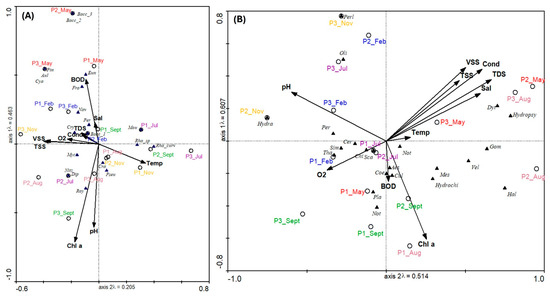
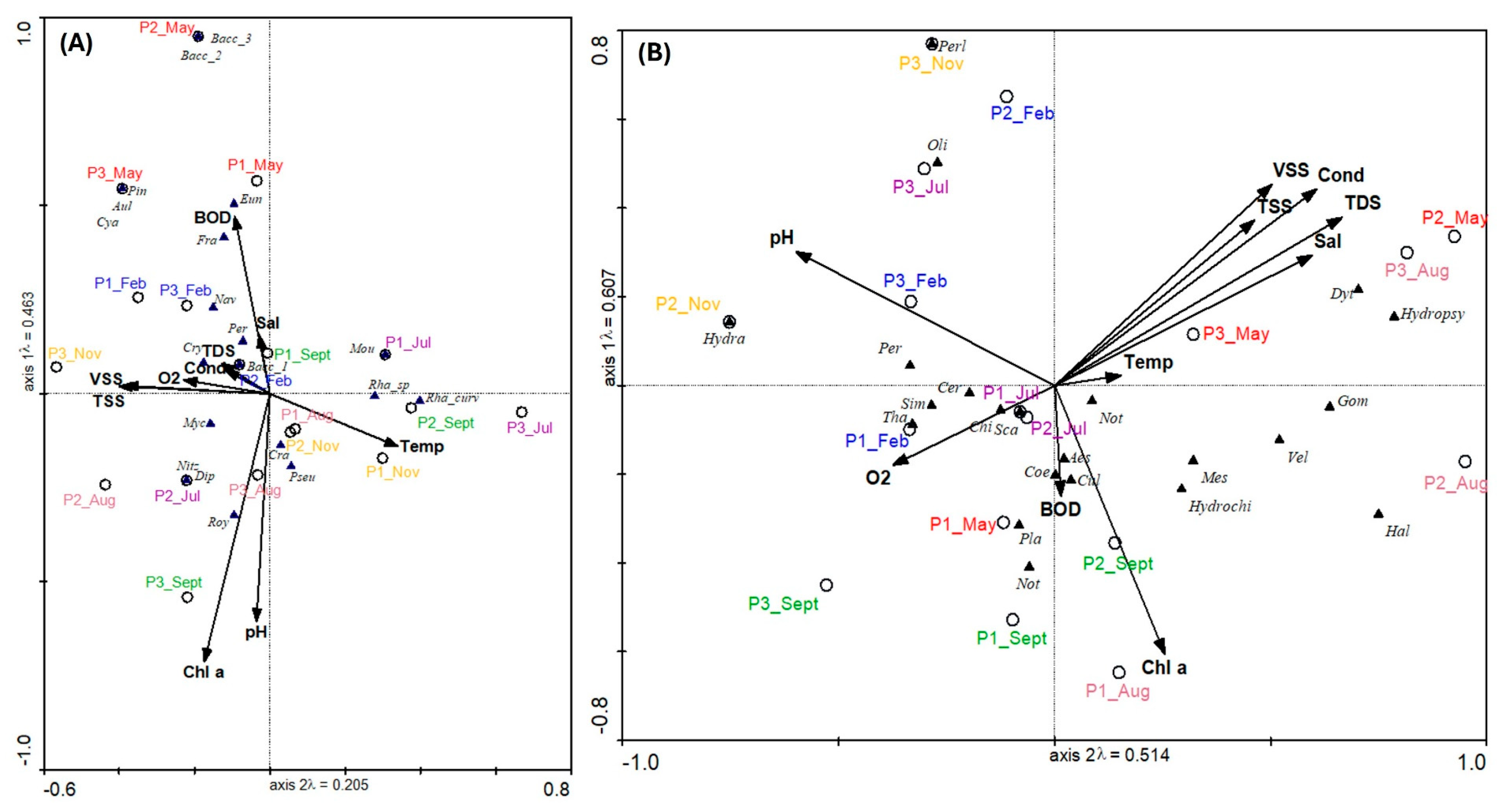
Figure 2A shows the spatial distribution resulting from the CCA applied to the physicochemical parameters and phytoplankton community observed at each sampling site and period. The multivariate analysis (see Figure 2A and Table 3I) revealed seasonality in the ponds. These seasonal patterns likely result from the combined influence of historical stressors, such as low pH and metal contamination, and current environmental variations, including temperature fluctuations and nutrient availability, which together shape the structure and composition of the phytoplankton communities. All the samples from spring (May) were associated with high values of BOD5, and a high abundance of Bacillariophyceae (Bacc_2, Bacc_3, Pin, Fra, Aul, and Eun) and Cyanophyceae (Cya). The samples from summer and autumn (e.g., P1 and P3 of July, P2 of September, and P1 of November) were characterized by pH values, temperature, and Chl a concentration, favouring the appearance of Cyanophyta (Rha_sp and Rha_cur) (Figure 2A). On the other hand, the winter samples (February) appear to be associated with high TDS values and Navicula sp., with a decrease in diversity observed. Several authors have suggested that the increase in nutrients (e.g., nitrogen and phosphorus), temperature fluctuations, and light conditions may affect the growth and diversity of the phytoplankton community (e.g., [61]). The presence of heavy metals can also affect planktonic communities, reducing both phytoplankton abundance and the mean individual size, as described by Cattaneo et al. [62] in Lake D’Orta in the north of Italy (an acid lake polluted with Cu, Zn, Ni, and Cr for more than 50 years). These findings are consistent with the concentrations detected in our study (e.g., Cu levels exceeded 0.03 mg/L in August, September, and February), suggesting that similar metal-driven and pH effects on phytoplankton abundance and size could be occurring in the Midões ponds. Acidic conditions are also associated with reduced primary productivity and lower levels of phytoplankton taxa, causing a decrease in phytoplankton biomass (chlorophyll a) [61]. Water transparency is another key factor influencing phytoplankton growth, and when combined with low pH, it can alter species composition and promote the proliferation of specific taxa, such as Cyanophyta [63]. Comparable patterns were observed in the Midões ponds, where acidic conditions coincided with increased abundance of Microcystis sp. (Cyanophyta), affecting overall phytoplankton productivity.
Figure 2.
Canonical correspondence analysis (CCA) of aquatic phytoplankton (A) and macroinvertebrates (B) distribution (see taxa abbreviations in Tables S1 and S2). Sampling sites (P1, P2, and P3); sampling periods (Jul—July, Aug—August, Sept—September, Nov—November, Feb—February, and May); physicochemical parameters: temperature (Temp), conductivity (Cond), salinity (Sal), dissolved oxygen (O2), biochemical oxygen demand (BOD), total dissolved solids (TDS), total suspended solids (TSS), volatile suspended solids (VSS), pH, and chlorophyll a concentration.
3.2.2. Macroinvertebrate Community
Results of macroinvertebrate abundance, taxonomic richness, diversity, and evenness for each pond and sampling period are presented in Table 3II. These patterns appear to reflect the combined influence of long-term stressors, such as acidic conditions and metal contamination, and seasonal environmental factors, including temperature fluctuations and nutrient availability, which together shape community composition and species distribution. In general, the highest abundance values were observed in the summer months, with the maximum recorded in P3 in July (n = 244; Table S2). This high value is largely attributed to the dominant and highly tolerant taxon Oligochaeta, which accounted for ~66.7% of the total organisms. The lowest abundance was recorded in P2 in February (n = 18), where Oligochaeta also constituted a significant portion of the organisms (~72.2%; Table S2). Taxonomic richness ranged from 4 to 12 and showed a clear relationship with temperature (Table 1 and Table 3II). Higher richness occurred during warmer months (July, August, and September), while lower richness was recorded in cooler months (November, February, and May).
The Margalef index measures species diversity within a sample by considering the number of species and the total number of individuals. Normally, a higher index value suggests a greater species richness or diversity [64]. The present results showed that the Margalef index ranged from 0.6 to 2.6, with higher values observed during the summer months (except P1 in September), and remained similar in ponds P2 and P3 throughout all sampling periods (Table 3II). Regarding Shannon–Wiener diversity, it was generally low across all sites (Table 3II), with the highest value observed in P1 in July (H’ = 2.1) and the lowest in P2 in May (H’ = 0.2). The Simpson Evenness index measures the relative abundance of different species within an area, showing the lowest values in P3 July and P1 February (E = 0.2) and the highest in P3 February (E = 0.8) (Table 3II). Based on these results, noticeable differences between ponds were evident, indicating moderate biodiversity with seasonal peaks. However, the overall low diversity and evenness suggest significant environmental stress, likely linked to the presence of heavy metals and low pH from previous mining activities. Moreover, the artificial nature of the ponds may favor the dominance of opportunistic and tolerant species, further contributing to the observed community patterns. The increase in diversity and richness during the summer months suggests some ecosystem resilience, allowing higher biodiversity under more favorable conditions. Consistently low Shannon–Wiener diversity index (H’) values across all ponds reflect uneven relative abundance of species. This finding is further supported by the low evenness values, suggesting that tolerant species are significantly more abundant than others (Table 3II). Even low concentrations of heavy metals and nutrients from mining activities can impact macroinvertebrates’ diversity and distribution [65,66]. Species capable of tolerating high levels of pollutants dominate, while more sensitive species are either absent or present in very low numbers [65,66]. These patterns are consistent with the concentrations reported by Qu et al. [65] (Zn 0–0.0973 mg/L, Pb 0.0036–0.0891 mg/L, Cu 0.0011–0.0577 mg/L, Ni 0.0019–0.0052 mg/L, Cd 0.00012–0.00061 mg/L), which fall within ranges known to affect macroinvertebrate community composition. Notably, the metal levels measured in the Midões ponds are comparable (Table 2), suggesting that similar tolerance-driven patterns in macroinvertebrate assemblages may be occurring in our study system.
Figure 2B shows the spatial distribution resulting from the CCA applied to the physicochemical parameters and macroinvertebrates observed at each sampling site and period. Spring (May) and summer (July, August, and September) samples were associated with high temperatures and chlorophyll a concentration, and were characterized by taxa indicative of moderate water quality, namely Coleoptera (Notonectidae and Haliplidae), Hemiptera (Mesoveliidae), and Heteroptera (Veliidae) (Figure 2B, Table 3II). In contrast, autumn (November) and winter (February) samples were associated with higher pH values and macroinvertebrates, such as Hydracarina, and Plecoptera (Perlodidae) (Figure 2B), taxa frequently used as indicators of moderate and high-water quality, respectively [12].
3.3. Ecotoxicological Assays: Lemna minor
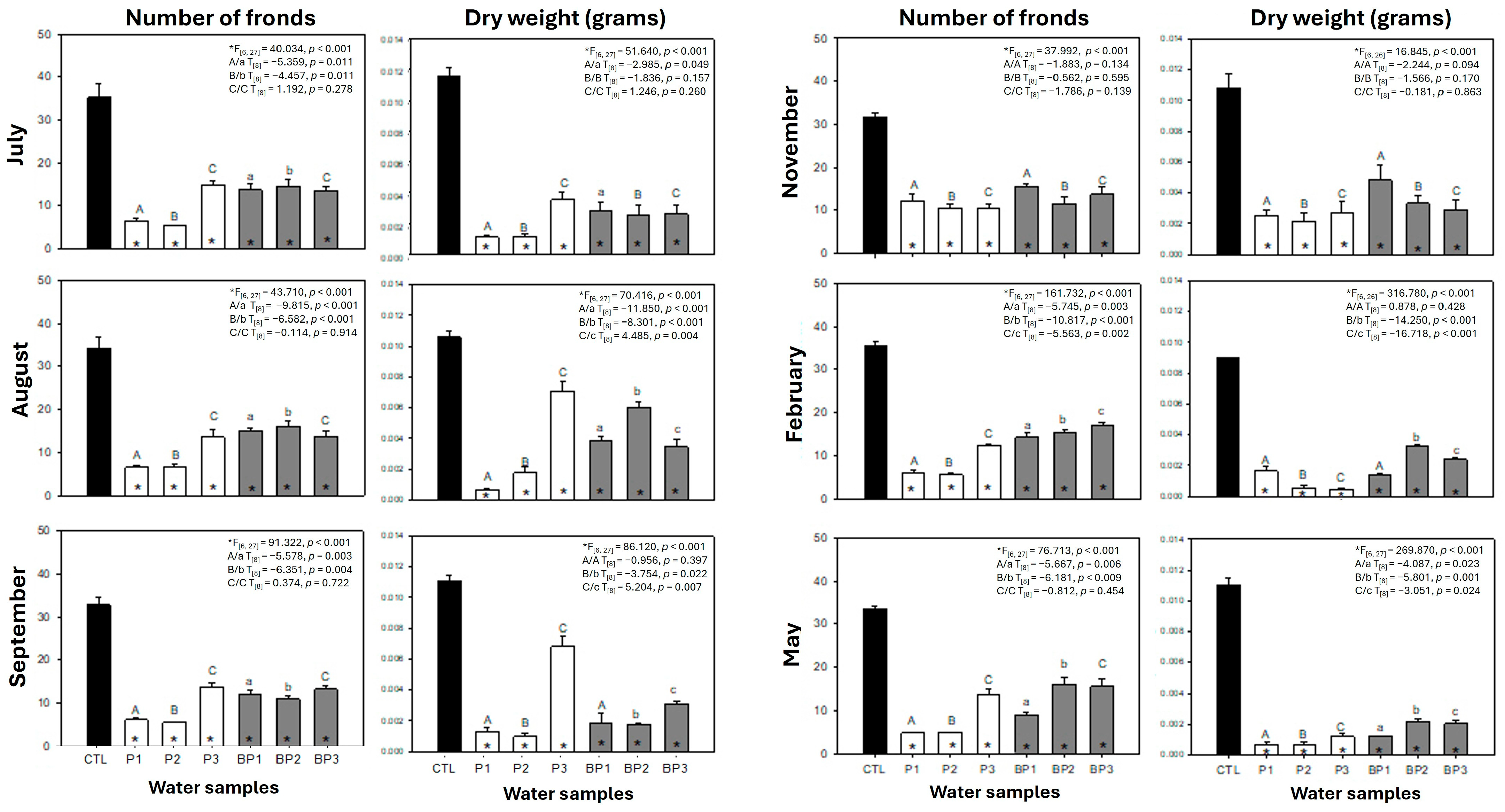
The results from the growth inhibition assays with L. minor are shown in Figure 3. Overall, comparing the natural water samples (P1, P2, and P3) and the pH-adjusted samples (BP1, BP2, and BP3) with the control group, a significant decrease in frond number and dry weight was observed. Regarding the number of fronds of L. minor, it is evident that only in November were no significant differences observed between P1 and BP1, and P2 and BP2 (Figure 3). In contrast, in the remaining months, the number of L. minor fronds significantly increased after exposure to samples BP1 and BP2 (compared to P1 and P2, respectively). On the other hand, no significant differences were observed after exposure to P3 and BP3 across all sampling periods (except in February). L. minor dry weight exhibits a significant decrease compared to the control group after exposure to all samples (P1, P2, P3, BP1, BP2, and BP3) across the different sampling periods (Figure 3). In general, when analyzing the differences between natural and pH-adjusted samples, BP1 and BP2 showed a significant increase in dry weight across almost all samplings (except in November). Additionally, BP3 caused a significant increase in dry weight in February and May, while the opposite was observed in August and September (Figure 3). No significant differences in dry weight were observed between natural and pH-adjusted samples in November. As explained earlier (see Section 3.1), meteorological conditions in this month led to alterations in pond characteristics (e.g., pH and nutrient concentrations—Table 1), potentially explaining the observed differences in L. minor frond number and dry weight (Figure 3).
Figure 3.
Results of the growth inhibition assay of Lemna minor [number of fronds and dry weight (g)] after exposure to the natural water samples (P1, P2, and P3—white bars) and samples with pH adjustment (BP1, BP2, and BP3—grey bars). * stands for significant differences between treatments and the control group (Dunnett test, p < 0.05). Different letters stand for differences between water treatments in each pond; the same letters (AA, BB, and CC) stand for no significant differences; different letters (Aa, Bb, and Cc) stand for significant differences (t-test, p < 0.05).
The results obtained here indicate that, despite pH adjustments, several factors beyond pH can influence the growth of L. minor. Notably, the presence of heavy metals in water samples (e.g., zinc, manganese, copper, chromium, cadmium, nickel, and lead), as evidenced by chemical quantifications (Table 2), represents a significant factor. Although the metal concentrations are not consistently constant and can fluctuate, this variability poses a risk of toxic harm to the organism over time, leading to toxic injuries [67]. Midões ponds, situated in a deactivated mining area, exhibit high concentrations of metals in natural waters (see Table 2), specifically Zn, Mn, Cd, Ni, and Pb. Among the metals identified in the different water samples, Cu and Zn were already classified as extremely and moderately toxic, respectively, to Lemna minor [68]. Cvjetko et al. [69] studied the impact of Cu (0.159–0.318 mg/L) and Cd (0.562 mg/L) on L. minor, highlighting their cumulative effects over time. These authors suggest that both metals individually are toxic and genotoxic to this species, causing oxidative stress [69], at concentrations similar to those observed in our study (e.g., 0.550 mg/L Cd in P1 and 0.603 mg/L Cd in P2, July). Khellaf et al. [70] and Dyck et al. [71] explored the impact of Co, Cs, Mn, Ni, Cu, Cd and Zn on the physiological and biochemical functions of L. minor, indicating that high concentrations (0.5 mg/L of Zn and 0.4 mg/L of Cu) induce phytotoxic effects, including a decrease in growth, biomass, and photosynthetic pigment content. In our study, Zn reached 0.6 mg/L in P2 (August), within the reported phytotoxic range. The phytotoxicity of metals also manifests in visible symptoms in L. minor, such as stunted growth and necrosis [72]. According to Khellaf and Zerdaoui [73], Cu, Ni, Cd, and Zn can cause visible damage to L. minor, with chlorosis as the initial effect, progressing from green to yellow on the fronds, followed by necrosis. Severi et al. [74] demonstrated that Al concentrations above 4 mg/L induce severe physiological stress responses, increasing peroxidase activity, decreasing growth rate, and interfering with the metabolism of cell wall polysaccharides [75,76]. In the present study, Al concentrations exceeded 4 mg/L in P2 and P3 (August) and in all ponds in September, levels comparable to those reported to induce severe physiological stress in aquatic organisms [74]. Collectively, these findings indicate that the metal concentrations detected in the ponds are sufficiently high to trigger physiological and growth responses in aquatic plants, in line with previous studies.
In summary, adjusting the pH plays a crucial role in reducing the toxicity of these waters by neutralizing acidity and precipitating dissolved metals [77]. It should be noted that low pH alone can have adverse effects on aquatic biota, representing an important stressor in these artificial ponds. The pH-adjusted treatments thus simulate potential remediation scenarios, allowing assessment of sublethal effects on sensitive species and providing insights into possible management strategies for mining-impacted waters. However, the persistence of toxicity after pH adjustment suggests that additional factors may be involved. Metal speciation and bioavailability can remain altered even after pH correction, potentially maintaining toxic effects on aquatic organisms. Moreover, combined or synergistic effects among metals and other contaminants may contribute to the observed biological responses, as frequently reported in mining-impacted waters. As the pH increases, metals tend to form insoluble hydroxides, which are less bioavailable and thus less toxic to aquatic plants like Lemna minor [78]. Uysal et al. [79] demonstrated L. minor’s ability to remove chromium (Cr) across a range of pH values (4–7). Their study supports the previously discussed information, showing that at higher pH levels, the concentration of Cr decreases, indicating increased precipitation of the metal in the water. Overall, L. minor growth inhibition assay results demonstrate that water toxicity in the Midões ponds cannot be explained solely by acidity, but rather by the combined effects of low pH and metal contamination. Although pH adjustment mitigated toxicity in several cases, residual adverse effects persisted, indicating the influence of bioavailable metals and other chemical stressors. These findings highlight the relevance of L. minor as a sensitive bioindicator for assessing the integrated ecological risk of mining-impacted waters and reinforce the importance of combining chemical analyses with ecotoxicological assays for a more comprehensive evaluation of water quality.
3.4. Ecotoxicological Assays: Daphnia magna
3.4.1. Acute and Survival Assays
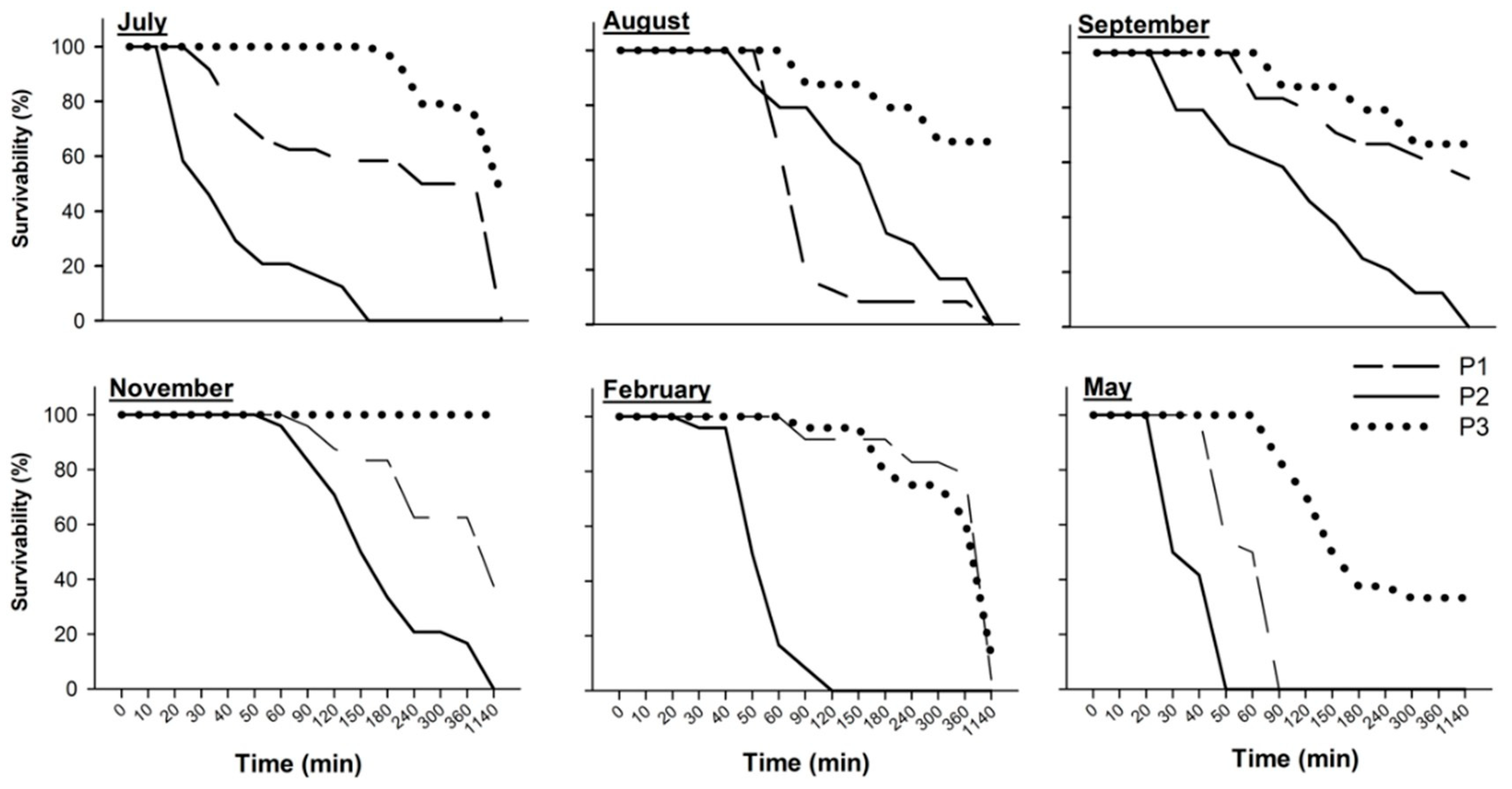
In the acute immobilization assay, all natural water samples (P1, P2, and P3) across all sampling periods caused 100% mortality of D. magna after 24 h of exposure. Figure 4 shows the results of D. magna survival assays after exposure to natural water samples (P1, P2, and P3). D. magna survival was not affected by water samples with pH adjustment (BP1, BP2, and BP3). Conversely, all natural water samples influenced D. magna survivability across all sampling periods, except for P3 in November (Figure 4). Overall, after exposure to P3, a delayed effect on D. magna mortality was observed compared to P1 and P2, with mortality occurring after longer exposure times. Comparing P1 and P2, P2 caused earlier mortality (e.g., high mortality recorded after only 20 min of exposure in July and May), indicating greater toxicity to D. magna than the other water samples (this higher toxicity of P2 may be explained by its consistently lower pH values compared to P1 and P3, combined with relatively higher concentrations of specific pollutants, priority substances, and other contaminants observed during most sampling periods—Table 2). Midões ponds consistently exhibit acidic pH values throughout all the sampling periods (see Table 1). In November, despite the general increase in pH across all three ponds due to weather conditions (Table 1), this change proved insufficient to counteract the toxicity of the metals, albeit at a slower rate. In February and May, when the ponds exhibited similar pH values (Table 1), P3 did not differ from the other two ponds in its impact on D. magna survival. El-Deeb Ghazy et al. [80] noted that pH levels can influence the survival, growth, and reproduction of D. magna. These authors reported a survival rate of 47% at pH 4.44, with higher survival at higher pH values (e.g., around 80% at pH 4.61). Nevertheless, the observed survival patterns suggest that pH alone does not fully explain the toxicity of the natural water samples. Goodfellow et al. [81] highlighted the occurrence of a toxic ion imbalance that is physiologically intolerable for aquatic organisms, such as D. magna, which aligns with the conditions observed in Midões ponds (acidic values and higher metal concentrations, especially in P2 during July—see Table 1 and Table 2). In this context, Khangarot et al. [82] identified Cu and Zn among the most toxic metals affecting D. magna (Hg > Ag > Cu > Zn > Cd > Pb). Although several metals detected in the present study remained below reported LC50 values in the literature (e.g., [83]), the combined presence of multiple contaminants, together with acidic conditions, likely contributed to the observed mortality. This highlights the complex nature of contamination in Midões ponds, shaped by historical mining activities and current land-use practices in the surrounding area.
Figure 4.
Percentage of survivability of Daphnia magna observed after different exposure periods (10, 20, 30, 40, 50, 60, 90, 120, 150, 180, 240, 300, 380, and 1140 min) to natural water samples (P1, P2, and P3).
3.4.2. Feeding Rate Assay
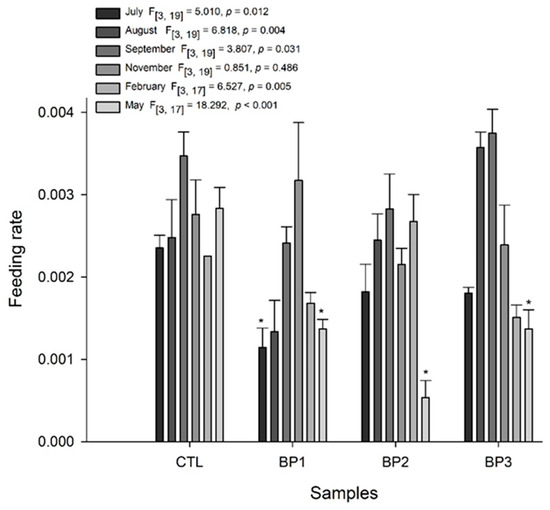
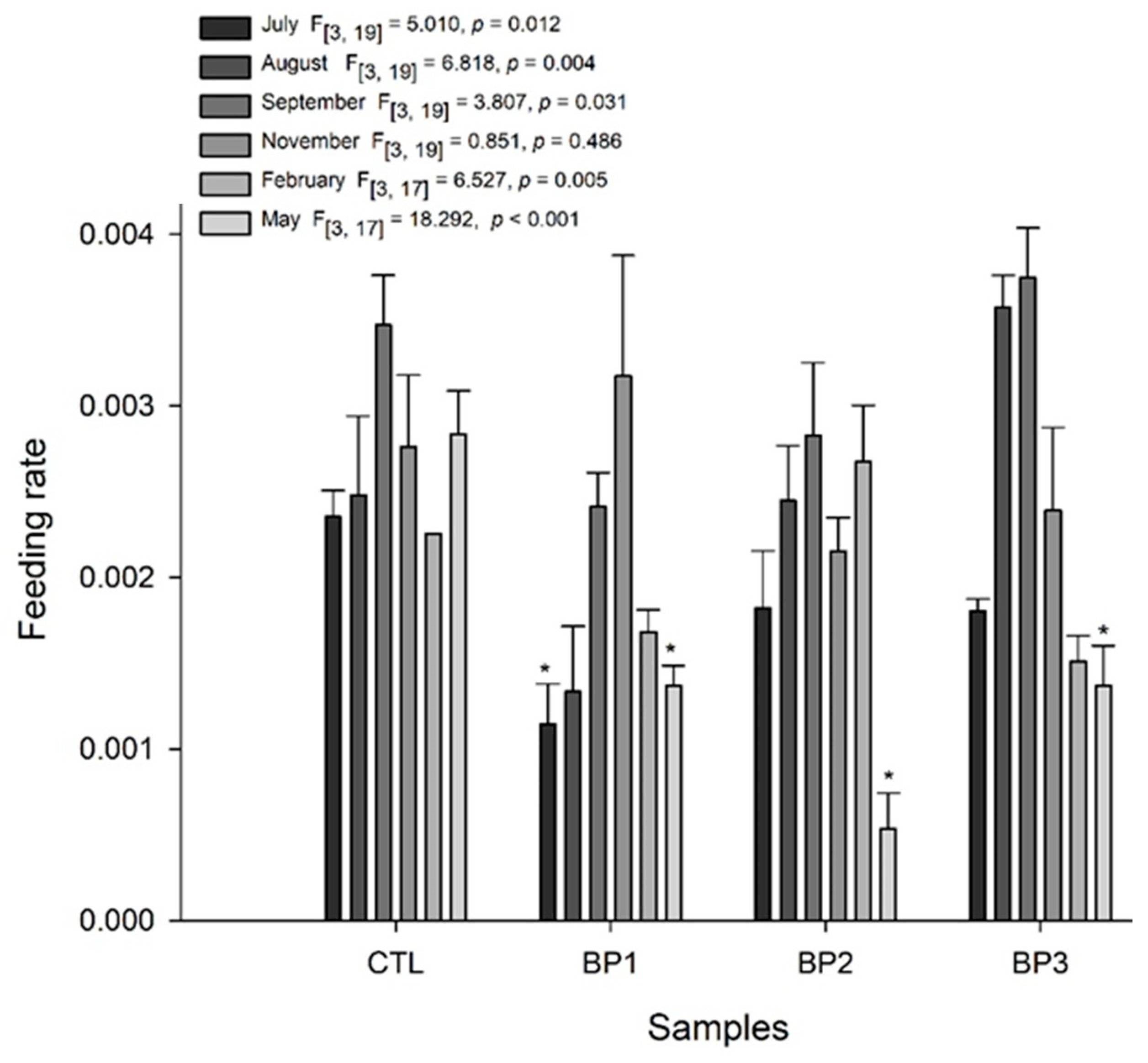
The feeding rate assay was conducted to investigate the potential impact of the pH-adjusted samples (BP1, BP2, and BP3) on the feeding performance of D. magna (Figure 5). A significant decrease in feeding rate was observed in BP1 in July, as well as in all the samples collected in May (Figure 5). The results obtained indicate that, even with pH adjustment to the optimal value for D. magna, the feeding rate capacity of the organism decreased significantly, possibly due to the chemical composition of the samples. Midões ponds’ water samples were considered a complex mixture due to the presence of metals (Table 2). Environmental metal mixtures are of particular interest to aquatic studies due to the potential effects on survival and feeding behavior of aquatic species, namely D. magna [84,85]. Even after pH adjustment, changes in metal speciation and residual bioavailability may sustain sublethal effects on feeding performance. In addition, potential synergistic or additive interactions among co-occurring metals and other dissolved constituents may further exacerbate feeding inhibition in D. magna. Several metals, including Cu, Cd, Ni, and Zn, have been detected in aquatic ecosystems at concentrations of approximately 30 µg Cu/L, 1 µg Cd/L, 50 µg Ni/L, and 200 µg Zn/L. These levels are known to cause ecotoxicological effects, such as increased mortality, reduced growth, impaired reproduction, decreased population growth, and, more generally, disruptions in feeding rates of aquatic organisms [86]. Feeding rates and food consumption data recorded for aquatic organisms were considered sensitive endpoints to assess toxic effects on primary consumers, such as D. magna. Lari et al. [84] characterized the individual toxicities of Cd, Cu, Ni, and Zn at lethal and sub-lethal concentrations on D. magna, quantifying the interactive toxic effects of these metals through feeding rate assays and evaluating feeding behavior. The results revealed that Cu and Zn were the most toxic (Hg > Ag > Cu > Zn > Cd > Pb). Additionally, the decrease in feeding rates in D. magna contributes to decreased growth and reproduction, posing a risk to the survival of natural populations [84].
Figure 5.
Results of the feeding rate assay of Daphnia magna after exposure to natural water samples with pH adjustment (BP1, BP2, and BP3) collected during the different sampling periods. * stands for significant differences between each treatment and control group (Dunnett test, p < 0.05).
Overall, the ecotoxicological assays performed with D. magna revealed both lethal and sublethal effects associated with the Midões ponds water samples, even when pH was adjusted to optimal conditions for the species. The survival assay demonstrated marked toxicity of the natural waters, particularly from P1 and P2, highlighting the role of acidity and elevated metal concentrations in driving mortality. Furthermore, the feeding rate assay proved to be a sensitive endpoint, showing significant impairment of physiological performance under pH-adjusted conditions, which indicates that metal mixtures and other dissolved contaminants exert toxic effects beyond direct lethality. Taken together, these results emphasize that the ecological risk posed by the Midões ponds arises from the combined action of low pH and metal contamination, reinforcing the importance of using multiple ecotoxicological endpoints to accurately assess the impacts of mining-affected waters.
4. Conclusions
This study provides an integrated assessment of the ecological condition of three artificial ponds located in a former mining area, combining physicochemical and biological characterization, and ecotoxicological assays. Being artificial environments, these ponds are unlikely to reach an ecological climax and tend to remain in conditions similar to the initial stages of ecological succession. According to the metrics established under the Water Framework Directive, all ponds were classified as having moderate ecological potential, a classification mainly driven by persistent acidic conditions and the presence of metal contaminants associated with historical mining activities. The biological communities reflected this environmental pressure. Phytoplankton responses revealed pronounced seasonal dynamics, with generally good ecological potential interrupted during summer periods (August and September) by increased productivity and cyanobacterial proliferation, likely promoted by elevated temperatures, higher light availability, and nutrient inputs. In contrast, the macroinvertebrate community showed low diversity and evenness, indicating significant ecological stress and the dominance of pollution-tolerant taxa. These patterns suggest that the combination of artificial conditions, metal contamination, nutrient enrichment, and low pH continues to shape community structure, limiting the establishment of more sensitive species.
The ecotoxicological evaluation using L. minor and D. magna proved to be a valuable complement to conventional ecological assessment. Both test organisms exhibited clear responses to pond waters, revealing toxic effects that were not fully captured by physicochemical parameters alone. While pH adjustment reduced toxicity in several cases, adverse effects persisted, demonstrating that water toxicity is not solely driven by acidity but also by the combined action of dissolved metals and other contaminants. These results emphasize that pH itself is a relevant stressor, particularly in environments influenced by acid mining drainage, and must be carefully managed even when metal concentrations are reduced, to mitigate the environmental impacts of mining and post-mining activities. The persistence of adverse effects after pH adjustment further suggests that metal speciation, residual bioavailability, and potential synergistic interactions among contaminants play an important role in shaping biological responses in mining-impacted waters. While microbial activity was indirectly inferred through phytoplankton responses in the present study, future research could incorporate targeted analyses of bacterial and fungal communities to provide a more comprehensive understanding of microbial-mediated processes in these systems.
Overall, this study highlights the importance of integrating chemical, biological, and ecotoxicological approaches to obtain a comprehensive understanding of ecological risk in mining-impacted artificial water bodies. The combined use of standard WFD indicators and sensitive bioassays enhances the detection of sublethal and cumulative effects, supporting more informed management and remediation strategies for these vulnerable aquatic ecosystems. While this study focuses on ponds in Midões, northern Portugal, the findings illustrate challenges common to mining-impacted waters worldwide, where residual toxicity from metals and complex contaminant mixtures can persist despite pH neutralization, highlighting the broader applicability of integrated ecological and ecotoxicological assessments.
Supplementary Materials
The following supporting information can be downloaded at: https://www.mdpi.com/article/10.3390/w18050536/s1, Table S1: Phytoplankton abundances (number of cells per sampling effort) recorded in each pond (P1, P2, and P3) and sampling period (July, August, September, November, February, and May); Table S2: Macroinvertebrates abundances recorded in each pond (P1, P2, and P3) and sampling period (July, August, September, November, February, and May).
Author Contributions
B.S.D., R.P., and S.C.A. participated in the research and/or article preparation and carried out the conceptualization. B.S.D. and R.P. conducted the fieldwork and laboratory work. B.S.D., R.P., and S.C.A. wrote the original draft and performed the final review. S.C.A. was the supervisor of the work and was responsible for funding. All authors have read and agreed to the published version of the manuscript.
Funding
This research was funded by national funds through FCT—Fundação para a Ciência e a Tecnologia, I.P., and by the European Commission’s Recovery and Resilience Facility, within the scope of UID/04423/2025 (https://doi.org/10.54499/UID/04423/2025), UID/PRR/04423/2025 (https://doi.org/10.54499/UID/PRR/04423/2025), and LA/P/0101/2020 (https://doi.org/10.54499/LA/P/0101/2020). B.S.D. is supported by an FCT Ph.D. grant (2022.10505.BD).
Data Availability Statement
The original contributions presented in this study are included in the article/Supplementary Materials. Further inquiries can be directed to the corresponding author.
Acknowledgments
The authors would like to thank the Municipality of Gondomar for their support and valuable contribution to the chemical analyses. The authors also acknowledge the Restaura Project—Revitalize the Land: assessment of soil health, risk analysis and rehabilitation of former mining areas (RESTAURA—NORTE 2030—FEDER-02704900) is funded by the Northern Regional Programme 2021–2027 (Norte 2030—NORTE2030-2024-84, SACCCT—Sistema de Apoio à Criação de Conhecimento Científico e Tecnológico—Projetos Integrados de IC&DT).
Conflicts of Interest
The authors declare that they have no known competing financial interests or personal relationships that could have appeared to influence the work reported in this paper.
References
- Antunes, I.M.H.R.; Albuquerque, M.T.D. Using Indicator Kriging for the Evaluation of Arsenic Potential Contamination in an Abandoned Mining Area (Portugal). Sci. Total Environ. 2013, 442, 545–552. [Google Scholar] [CrossRef] [Scilit] [PubMed]
- Otunola, B.O.; Mhangara, P. Global Advancements in the Management and Treatment of Acid Mine Drainage. Appl. Water Sci. 2024, 14, 204. [Google Scholar] [CrossRef] [Scilit]
- Ericsson, M.; Drielsma, J.; Humphreys, D.; Storm, P.; Weihed, P. Why Current Assessments of ‘Future Efforts’ Are No Basis for Establishing Policies on Material Use—A Response to Research on Ore Grades. Miner. Econ. 2019, 32, 111–121. [Google Scholar] [CrossRef] [Scilit]
- Poláková, M.; Straka, M.; Polášek, M.; Němejcová, D. Unexplored Freshwater Communities in Post-mining Ponds: Effect of Different Restoration Approaches. Restor. Ecol. 2022, 30, e13679. [Google Scholar] [CrossRef] [Scilit]
- Pereira, R.; Ribeiro, R.; Gonçalves, F. Plan for an Integrated Human and Environmental Risk Assessment in the S. Domingos Mine Area (Portugal). Hum. Ecol. Risk Assess. 2004, 10, 543–578. [Google Scholar] [CrossRef] [Scilit]
- Martinez-Haro, M.; Acevedo, P.; Pais-Costa, A.J.; Neto, J.M.; Vieira, L.R.; Ospina-Alvarez, N.; Taggart, M.A.; Guilhermino, L.; Ribeiro, R.; Marques, J.C. Ecotoxicological Tools in Support of the Aims of the European Water Framework Directive: A Step towards a More Holistic Ecosystem-Based Approach. Ecol. Indic. 2022, 145, 109645. [Google Scholar] [CrossRef] [Scilit]
- Oberholster, P.J.; Genthe, B.; Hobbs, P.; Cheng, P.H.; De Klerk, A.R.; Botha, A.M. An Ecotoxicological Screening Tool to Prioritise Acid Mine Drainage Impacted Streams for Future Restoration. Environ. Pollut. 2013, 176, 244–253. [Google Scholar] [CrossRef] [Scilit]
- European Parliament and Council. European Union Diretiva 2000/60/CE. J. Off. Comunidades Eur. 2000, 22, 1–72. [Google Scholar]
- Grigg, N.S. Framework and Function of Integrated Water Resources Management in Support of Sustainable Development. Sustainability 2024, 16, 5441. [Google Scholar] [CrossRef] [Scilit]
- Pinto, I.; Rodrigues, S.; Antunes, S.C. Assessment of the Benthic Macroinvertebrate Communities in the Evaluation of the Water Quality of Portuguese Reservoirs: An Experimental Approach. Water 2021, 13, 3391. [Google Scholar] [CrossRef] [Scilit]
- García-Chicote, J.; Armengol, X.; Rojo, C. Zooplankton Abundance: A Neglected Key Element in the Evaluation of Reservoir Water Quality. Limnologica 2018, 69, 46–54. [Google Scholar] [CrossRef] [Scilit]
- Trottier, G.; Embke, H.; Turgeon, K.; Solomon, C.; Nozais, C.; Gregory-Eaves, I. Macroinvertebrate Abundance Is Lower in Temperate Reservoirs with Higher Winter Drawdown. Hydrobiologia 2019, 834, 199–211. [Google Scholar] [CrossRef] [Scilit]
- Llirós, M.; Inceoʇlu, Ö.; García-Armisen, T.; Anzil, A.; Leporcq, B.; Pigneur, L.M.; Viroux, L.; Darchambeau, F.; Descy, J.P.; Servais, P. Bacterial Community Composition in Three Freshwater Reservoirs of Different Alkalinity and Trophic Status. PLoS ONE 2014, 9, e116145. [Google Scholar] [CrossRef] [Scilit] [PubMed]
- Rodrigues, S.; Pinto, I.; Martins, F.; Formigo, N.; Antunes, S.C. Can Biochemical Endpoints Improve the Sensitivity of the Biomonitoring Strategy Using Bioassays with Standard Species, for Water Quality Evaluation? Ecotoxicol. Environ. Saf. 2021, 215, 112151. [Google Scholar] [CrossRef] [Scilit]
- Pinto, I.; Rodrigues, S.; Lage, O.M.; Antunes, S.C. Assessment of Water Quality in Aguieira Reservoir: Ecotoxicological Tools in Addition to the Water Framework Directive. Ecotoxicol. Environ. Saf. 2021, 208, 111583. [Google Scholar] [CrossRef] [Scilit] [PubMed]
- Diogo, B.S.; Rodrigues, S.; Silva, N.; Pinto, I.; Antunes, S.C. Evidence for Links between Feeding Behavior of Daphnia magna and Water Framework Directive Elements: Case Study of Crestuma-Lever Reservoir. Water 2022, 14, 3989. [Google Scholar] [CrossRef] [Scilit]
- Allan, I.J.; Vrana, B.; Greenwood, R.; Mills, G.A.; Roig, B.; Gonzalez, C. A “Toolbox” for Biological and Chemical Monitoring Requirements for the European Union’s Water Framework Directive. Talanta 2006, 69, 302–322. [Google Scholar] [CrossRef] [Scilit]
- Serpa, D.; Keizer, J.J.; Cassidy, J.; Cuco, A.; Silva, V.; Gonçalves, F.; Cerqueira, M.; Abrantes, N. Assessment of river water quality using an integrated physicochemical, biological and ecotoxicological approach. Environ. Sci. Process. Impacts 2014, 16, 1434–1444. [Google Scholar] [CrossRef] [Scilit]
- ICNF. Rede Nacional de Áreas Protegidas—RNAP.; ICNF: Lisboa, Portugal, 2022. [Google Scholar]
- PSeP Serras Do Porto. Available online: https://serrasdoporto.pt// (accessed on 1 August 2024).
- Andresen, T.; Silva, A.; Lima, A.; Andrade, G.; Abranches, M.; Leal, S. História do Parque das Serras do Porto—Relatório de Estudos Prévios; Associação de Municípios Parque das Serras do Porto: Porto, Portugal, 2018. [Google Scholar]
- Jwaideh, M.A.A.; Sutanudjaja, E.H.; Dalin, C. Global Impacts of Nitrogen and Phosphorus Fertiliser Use for Major Crops on Aquatic Biodiversity. Int. J. Life Cycle Assess. 2022, 27, 1058–1080. [Google Scholar] [CrossRef] [Scilit]
- APA. Critérios para a Monitorização das Massas de Água Critérios para a Monitorização das Massas de Água; APA: Amadora, Portugal, 2022. [Google Scholar]
- APHA. Standard Methods for the Examination of Water and Wastewater; APHA: Washington, DC, USA, 1999. [Google Scholar]
- Ali Khan, T. Groundwater Quality Evaluation Using Multivariate Methods, in Parts of Ganga Sot Sub-Basin, Ganga Basin, India. J. Water Resour. Prot. 2015, 7, 769–780. [Google Scholar] [CrossRef]
- INAG, I.P. Manual para a Avaliação da Qualidade Biológica da Água; Protocolo de Amostragem e Análise Para o Fitoplâncton; Ministério Do Ambiente, do Ordenamento do Território e do Desenvolvimento Regional: Lisbon, Portugal, 2009.
- INAG, I.P. Manual para a Avaliação da Qualidade Biológica da Água em Sistemas Fluviais Segundo a Diretiva Quadro da Água Protocolo de Amostragem e Análise para os Macroinvertebrados Bentónicos; Ministério do Ambiente, do Ordenamento do Território e do Desenvolvimento Regional: Lisboa, Portugal, 2008.
- Lund, J.W.G.; Kipling, C.; Le Cren, E.D. The Inverted Microscope Method of Estimating Algal Numbers and the Statistical Basis of Estimations by Counting. Hydrobiologia 1958, 11, 143–170. [Google Scholar] [CrossRef] [Scilit]
- Carlson, R.E. A Trophic State Index for Lakes. J. Water Resour. Prot. 1977, 22, 361–369. [Google Scholar] [CrossRef] [Scilit]
- Strickland, J.D.H.; Parsons, T.R. A Practical Handbook of Seawater Analysis, 2nd ed.; Fisheries Research Board of Canada: Ottawa, ON, Canada, 1972. [Google Scholar]
- Owen, T. Lind Handbook of Common Methods in Limnology, 2nd ed.; Mosby: St. Louis, MI, USA, 1979. [Google Scholar]
- Lorenzo, C.J. Determination of Chlorophyll and Pheo-Pigments: Spectrophotometric Equations. Limnol. Oceanogr. 1967, 12, 343–346. [Google Scholar] [CrossRef] [Scilit]
- Tachet, H.; Richoux, P.; Bournaud, M.; Usseglio-Polatera, P. Invertébrés d’eau Douce: Systématique, Biologie, Écologie; CNRS: Paris, France, 2000; Volume 1. [Google Scholar]
- Rodrigues, S.; Teixeira, M.I.; Diogo, B.S.; Antunes, S.C. Assessment of the ecotoxicological effects of deltamethrin to Daphnia magna: Linking sub-individual and supra-individual parameters. Watershed Ecol. Environ. 2023, 5, 231–240. [Google Scholar] [CrossRef] [Scilit]
- Rodrigues, S.; Pinto, I.; Martins, F.; Formigo, N.; Antunes, S.C. An Ecotoxicological Approach Can Complement the Assessment of Natural Waters from Portuguese Reservoirs? Environ. Sci. Pollut. Res. 2022, 1, 52147–52161. [Google Scholar] [CrossRef] [Scilit] [PubMed]
- OECD. Test No. 221: Lemna sp. Growth Inhibition Test; OECD Guidelines for the Testing of Chemicals, Section 2; OECD Publishing: Paris, France, 2006. [Google Scholar] [CrossRef] [Scilit]
- Pinto, I.; Henriques, B.; Viana, T.; Freitas, R.; Pereira, E.; Antunes, S.C. From High-Tech To High-Risk? Unveiling the Acute Ecotoxicological Effects of Rare Earth Elements on Daphnia magna. Bull. Environ. Contam. Toxicol. 2025, 114, 67. [Google Scholar] [CrossRef] [Scilit]
- ASTM E729-23e1; Standard Guide for Conducting Acute Toxicity Tests on Test Materials with Fishes, Macroinvertebrates, and Amphibians. ASTM International: West Conshohocken, PA, USA, 1989.
- Allen, Y.; Calow, P.; Baird, D.J. A Mechanistic Model of Contaminant-Induced Feeding Inhibition in Daphnia magna. Environ. Toxicol. Chem. 1995, 14, 1625–1630. [Google Scholar] [CrossRef] [Scilit]
- Diogo, B.S.; Rodrigues, S.; Lage, O.M.; Antunes, S.C. Are the Ecotoxicological Tools Viable to Evaluate the Effectiveness of Wastewater Treatment Plant Effluents? Int. J. Environ. Sci. Technol. 2023, 20, 11943–11962. [Google Scholar] [CrossRef] [Scilit]
- OECD. Test No. 202: Daphnia sp. Acute Immobilization Test; OECD Guidelines for the Testing of Chemicals, Section 2; OECD Publishing: Paris, France, 2004. [Google Scholar] [CrossRef] [Scilit]
- Lopes, I.; Gonçalves, F.; Soares, A.M.V.M.; Ribeiro, R. Ecotoxicological Tools in the Remediation of Acid Mine Drainage. Toxicol. Environ. Chem. 1999, 70, 441–460. [Google Scholar] [CrossRef] [Scilit]
- McWilliam, R.A.; Baird, D.J. Postexposure Feeding Depression: A New Toxicity Endpoint for Use in Laboratory Studies with Daphnia magna. Environ. Toxicol. Chem. 2002, 21, 1198–1205. [Google Scholar] [CrossRef] [Scilit]
- Queirós, V.; Azeiteiro, U.M.; Antunes, S.C. Feeding Inhibition Tests as a Tool for Seston Quality Evaluation in Lentic Ecosystems: Salinization Impact. Ann. Limnol.—Int. J. Limnol. 2019, 55, 23. [Google Scholar] [CrossRef] [Scilit]
- IPMA. Boletim Climático Portugal Continental; IPMA: Lisboa, Portugal, 2022. [Google Scholar]
- Potter, P.; Ramankutty, N.; Bennett, E.M.; Donner, S.D. Characterizing the Spatial Patterns of Global Fertilizer Application and Manure Production. Earth Interact. 2010, 14, 1–22. [Google Scholar] [CrossRef]
- Edraki, M.; Baumgartl, T.; Manlapig, E.; Bradshaw, D.; Franks, D.M.; Moran, C.J. Designing Mine Tailings for Better Environmental, Social and Economic Outcomes: A Review of Alternative Approaches. J. Clean. Prod. 2014, 84, 411–420. [Google Scholar] [CrossRef] [Scilit]
- Matveeva, V.A.; Alekseenko, A.V.; Karthe, D.; Puzanov, A.V. Manganese Pollution in Mining-Influenced Rivers and Lakes: Current State and Forecast under Climate Change in the Russian Arctic. Water 2022, 14, 1091. [Google Scholar] [CrossRef] [Scilit]
- Hadzi, G.Y.; Essumang, D.K.; Ayoko, G.A. Assessment of Contamination and Potential Ecological Risks of Heavy Metals in Riverine Sediments from Gold Mining and Pristine Areas in Ghana. J. Trace Elem. Miner. 2024, 7, 100109. [Google Scholar] [CrossRef] [Scilit]
- Besser, J.M.; Brumbaugh, W.G.; Ingersoll, C.G. Characterizing Toxicity of Metal-Contaminated Sediments from Mining Areas. Appl. Geochem. 2015, 57, 73–84. [Google Scholar] [CrossRef] [Scilit]
- Antunes, S.C. Avaliação Ecotoxicológica Integrada da Área Adjacente a Uma Mina de Urânio Abandonada. Ph.D. Thesis, Universidade de Aveiro, Aveiro, Portugal, 2007. [Google Scholar]
- Zhang, H.; Yu, J.; Zhou, S. Spatial Distribution of As, Cr, Pb, Cd, Cu, and Zn in the Water and Sediment of a River Impacted by Gold Mining. Mine Water Environ. 2014, 33, 206–216. [Google Scholar] [CrossRef] [Scilit]
- Schabhüttl, S.; Hingsamer, P.; Weigelhofer, G.; Hein, T.; Weigert, A.; Striebel, M. Temperature and Species Richness Effects in Phytoplankton Communities. Oecologia 2013, 171, 527–536. [Google Scholar] [CrossRef] [Scilit]
- Weisse, T.; Gröschl, B.; Bergkemper, V. Phytoplankton Response to Short-Term Temperature and Nutrient Changes. Limnologica 2016, 59, 78–89. [Google Scholar] [CrossRef] [Scilit]
- Wurtsbaugh, W.A.; Paerl, H.W.; Dodds, W.K. Nutrients, Eutrophication and Harmful Algal Blooms along the Freshwater to Marine Continuum. WIREs Water 2019, 6, e1373. [Google Scholar] [CrossRef] [Scilit]
- Glibert, P.M.; Burkholder, J.M. Causes of Harmful Algal Blooms. In Harmful Algal Blooms; John Wiley & Sons: Hoboken, NJ, USA, 2018; pp. 1–38. [Google Scholar] [CrossRef] [Scilit]
- Elçi, Ş. Effects of Thermal Stratification and Mixing on Reservoir Water Quality. Limnology 2008, 9, 135–142. [Google Scholar] [CrossRef] [Scilit]
- Herut, B.; Almogi-Labin, A.; Jannink, N.; Gertman, I. The Seasonal Dynamics of Nutrient and Chlorophyll a Concentrations on the SE Mediterranean Shelf-Slope. Oceanol. Acta 2000, 23, 771–782. [Google Scholar] [CrossRef] [Scilit]
- Shan, K.; Song, L.; Chen, W.; Li, L.; Liu, L.; Wu, Y.; Jia, Y.; Zhou, Q.; Peng, L. Analysis of Environmental Drivers Influencing Interspecific Variations and Associations among Bloom-Forming Cyanobacteria in Large, Shallow Eutrophic Lakes. Harmful Algae 2019, 84, 84–94. [Google Scholar] [CrossRef] [Scilit] [PubMed]
- Vardaka, E.; Moustaka-Gouni, M.; Cook, C.M.; Lanaras, T. Cyanobacterial Blooms and Water Quality in Greek Waterbodies. J. Appl. Phycol. 2005, 17, 391–401. [Google Scholar] [CrossRef] [Scilit]
- Edward, G.B.; David, C.S. Freshwater Algae: Identification, Enumeration and Use of Bioindicators, 2nd ed.; David, C.S., Edward, G.B., Eds.; Wiley Blackwell: Chichester, UK, 2015. [Google Scholar]
- Cattaneo, A.; Asioli, A.; Comoli, P.; Manca, M. Organisms’ Response in a Chronically Polluted Lake Supports Hypothesized Link between Stress and Size. Limnol. Oceanogr. 1998, 43, 1938–1943. [Google Scholar] [CrossRef] [Scilit]
- Kwiatkowski, E.R.; Roff, C.J. Effects of Acidity on the Phytoplankton and Primary Productivity of Selected Northern Ontario Lakes. Can. J. Bot. 1976, 54, 2546–2561. [Google Scholar] [CrossRef] [Scilit]
- Kitikidou, K.; Milios, E.; Stampoulidis, A.; Pipinis, E.; Radoglou, K. Using Biodiversity Indices Effectively: Considerations for Forest Management. Ecologies 2024, 5, 42–51. [Google Scholar] [CrossRef] [Scilit]
- Florencio, M.; Gómez-Rodríguez, C.; Serrano, L.; Díaz-Paniagua, C. Competitive Exclusion and Habitat Segregation in Seasonal Macroinvertebrate Assemblages in Temporary Ponds. Freshw. Sci. 2013, 32, 650–662. [Google Scholar] [CrossRef] [Scilit]
- Qu, X.; Wu, N.; Tang, T.; Cai, Q.; Park, Y.S. Effects of Heavy Metals on Benthic Macroinvertebrate Communities in High Mountain Streams. Ann. Limnol.—Int. J. Limnol. 2010, 46, 291–302. [Google Scholar] [CrossRef] [Scilit]
- Drost, W.; Matzke, M.; Backhaus, T. Heavy Metal Toxicity to Lemna minor: Studies on the Time Dependence of Growth Inhibition and the Recovery after Exposure. Chemosphere 2007, 67, 36–43. [Google Scholar] [CrossRef] [Scilit]
- Dirilgen, N.; Inel, Y. Effects of zinc and cooper on growth and metal accumulation in duckweed, Lemna minor. Bull. Environ. Contam. Toxicol. 1994, 53, 442–449. [Google Scholar] [CrossRef] [Scilit]
- Cvjetko, P.; Tolić, S.; Šikić, S.; Balen, B.; Tkalec, M.; Vidaković-Cifrek, Ž.; Pavlica, M. Effect of Copper on the Toxicity and Genotoxicity of Cadmium in Duckweed (Lemna minor). Arh. Hig. Rada Toksikol. 2010, 61, 287–296. [Google Scholar] [CrossRef] [Scilit]
- Khellaf, N.; Zerdaoui, M.; Faure, O.; Leclerc, J.C. Tolerance to Heavy Metals in the Duckweed, Lemna minor. Environ. Int. 2008, 34, 1022–1026. [Google Scholar]
- Van Dyck, I.; Vanhoudt, N.; Vives i Batlle, J.; Horemans, N.; Van Gompel, A.; Nauts, R.; Wannijn, J.; Wijgaerts, A.; Vassilev, A.; Vangronsveld, J. Uptake of Co, Cs, Mn, Ni and Zn by Lemna minor and Their Effects on Physiological and Biochemical Functions. Environ. Exp. Bot. 2023, 213, 105440. [Google Scholar] [CrossRef] [Scilit]
- Radić, S.; Babić, M.; Škobić, D.; Roje, V.; Pevalek-Kozlina, B. Ecotoxicological Effects of Aluminum and Zinc on Growth and Antioxidants in Lemna minor. Ecotoxicol. Environ. Saf. 2010, 73, 336–342. [Google Scholar] [CrossRef] [Scilit]
- Khellaf, N.; Zerdaoui, M. Growth Response of the Duckweed Lemna minor to Heavy Metal Pollution. J. Environ. Health Sci. Eng. 2009, 6, 161–166. [Google Scholar]
- Severi, A. Aluminium Toxicity in Lemna minor: Effects of Citrate and Kinetin. Environ. Exp. Bot. 1997, 37, 53–61. [Google Scholar] [CrossRef] [Scilit]
- Foy, C.D.; Chaney, R.L.; White, M.C. The Physiology of Metal Toxicity in Plants. Annu. Rev. Plant Physiol. 1978, 29, 511–566. [Google Scholar] [CrossRef] [Scilit]
- Huck, G.M. Impairment of Sucrose Utilization for Cell Wall Formation in the Roots of Aluminum-Damaged Cotton Seedings. Jpn. Soc. Plant Physiol. 1972, 13, 7–14. [Google Scholar]
- Saalidong, B.M.; Aram, S.A.; Otu, S.; Lartey, P.O. Examining the Dynamics of the Relationship between Water PH and Other Water Quality Parameters in Ground and Surface Water Systems. PLoS ONE 2022, 17, e0262117. [Google Scholar] [CrossRef] [Scilit]
- Horvat, T.; Vidaković-Cifrek, Ž.; Oreščanin, V.; Tkalec, M.; Pevalek-Kozlina, B. Toxicity Assessment of Heavy Metal Mixtures by Lemna minor L. Sci. Total Environ. 2007, 384, 229–238. [Google Scholar] [CrossRef] [Scilit] [PubMed]
- Uysal, Y. Removal of Chromium Ions from Wastewater by Duckweed, Lemna minor by Using a Pilot System with Continuous Flow. J. Hazard. Mater. 2013, 263, 486–492. [Google Scholar] [CrossRef] [Scilit]
- El-Deeb Ghazy, M.M.; Habashy, M.M.; Mohammady, E.Y. Effects of PH on Survival, Growth and Reproduction Rates of The Crustacean, Daphnia magna. Aust. J. Basic Appl. Sci. 2011, 5, 1–10. [Google Scholar]
- Goodfellow, W.L.; Ausley, L.W.; Burton, D.T.; Denton, D.L.; Dorn, P.B.; Grothe, D.R.; Heber, M.A.; Norberg-King, T.J.; Rodgers, J.H. Major Ion Toxicity in Effluents: A Review with Permitting Recommendations. Environ. Toxicol. Chem. 2000, 19, 175–182. [Google Scholar] [CrossRef]
- Khangarot, B.S.; Ray, P.K. Investigation of Correlation between Physicochemical Properties of Metals and Their Toxicity to the Water Flea Daphnia magna Straus. Ecotoxicol. Environ. Saf. 1989, 18, 109–120. [Google Scholar] [CrossRef] [Scilit] [PubMed]
- Biesinger, K.E.; Glenn, M.C. Effect of Various Metals on Survival, Growt, Reproduction, and Metabolism of Daphnia magna. J. Fish. Res. Board Can. 1972, 29, 1691–1700. [Google Scholar] [CrossRef] [Scilit]
- Lari, E.; Gauthier, P.; Mohaddes, E.; Pyle, G.G. Interactive Toxicity of Ni, Zn, Cu, and Cd on Daphnia magna at Lethal and Sub-Lethal Concentrations. J. Hazard. Mater. 2017, 334, 21–28. [Google Scholar] [CrossRef] [Scilit]
- Dedourge-Geffard, O.; Palais, F.; Biagianti-Risbourg, S.; Geffard, O.; Geffard, A. Effects of Metals on Feeding Rate and Digestive Enzymes in Gammarus fossarum: An in Situ Experiment. Chemosphere 2009, 77, 1569–1576. [Google Scholar] [CrossRef] [Scilit]
- Komjarova, I.; Blust, R. Multi-Metal Interactions between Cd, Cu, Ni, Pb and Zn in Water Flea Daphnia magna, a Stable Isotope Experiment. Aquat. Toxicol. 2008, 90, 138–144. [Google Scholar] [CrossRef] [Scilit]

Disclaimer/Publisher’s Note: The statements, opinions and data contained in all publications are solely those of the individual author(s) and contributor(s) and not of MDPI and/or the editor(s). MDPI and/or the editor(s) disclaim responsibility for any injury to people or property resulting from any ideas, methods, instructions or products referred to in the content. |
© 2026 by the authors. Licensee MDPI, Basel, Switzerland. This article is an open access article distributed under the terms and conditions of the Creative Commons Attribution (CC BY) license.