


Abstract
Decentralized graywater treatment using nature-based systems represents a sustainable, low-energy alternative to centralized wastewater technologies, particularly in water-scarce regions. This study evaluates the performance of a rain-garden-based constructed wetland implemented at Zain Park in Jerash, Jordan, for on-site graywater treatment and potential non-potable reuse. The system consists of two filtration beds with multi-layer gravel–sand media planted with ornamental vegetation to promote physical filtration, adsorption, and biologically mediated transformations. Influent and effluent samples were monitored monthly from April 2024 to January 2025 and analyzed for biodegradable and oxidizable organic fractions (BOD5 and COD), nutrients (TN, PO43−), suspended solids, turbidity, salinity indicators, and microbial parameters (E. coli and total coliform). Average removal efficiencies reached 98% for BOD and 96% for COD, while turbidity and TSS were reduced by more than 96%, indicating effective organic degradation and particulate retention. Nutrient removal was moderate, with 40% reduction in Total Nitrogen and 74% in nitrate, reflecting partial nitrification–denitrification and plant uptake. Microbial removal was variable, with an average reduction of 0.8 log10 (64.7%) for E. coli and 1.1 log10 (82.6%) for total coliforms, indicating that passive filtration alone may not ensure complete pathogen attenuation. Post-treatment disinfection and substrate enhancements (aeration and plant selection) can strengthen system efficiency and support sustainable graywater reuse in water-stressed regions, contributing directly to SDG 6 (Clean Water and Sanitation), SDG 11 (Sustainable Cities and Communities), and SDG 12 (Responsible Consumption and Production). These findings support the applicability of compact constructed wetland systems as decentralized wastewater treatment solutions in arid and semi-arid urban environments.
1. Introduction
The rapid growth of urban areas has led to a substantial increase in graywater generation, necessitating efficient and sustainable treatment solutions. Decentralized graywater treatment systems offer a viable approach by enabling localized treatment, reducing the strain on centralized infrastructure, and promoting resource recovery [1,2]. These systems contribute to public health protection, mitigate environmental pollution, and provide a cost-effective alternative to large-scale water management by enhancing water reuse and minimizing discharge-related impacts [3,4,5,6].
Rain gardens (RGs), as nature-based solutions (NBSs), are commonly used for stormwater management, where they reduce water pollution, flooding risks, and associated costs, while also protecting public health and ecosystems [7]. However, beyond stormwater treatment, RGs can function as decentralized water management systems, playing a significant role in graywater treatment and reuse, particularly in urban areas with limited space [8]. By enhancing water infiltration and pollutant removal, they improve water quality before reuse and contribute to sustainable water resource management [9,10]. They offer low-energy, sustainable alternatives for treating both stormwater and graywater, effectively managing runoff through infiltration, filtration, and nutrient uptake [11]. Unlike conventional treatment methods, RGs leverage natural filtration, adsorption, and microbial activity to efficiently reduce contaminants, making them a viable solution for urban water reuse. However, the stormwater retention capacity of these systems varies significantly across different climatic conditions, making it challenging to establish universal guidelines for their implementation [12]. The effectiveness of RGs is influenced by regional climate, soil composition, and vegetation selection, highlighting the need for localized design adaptations [13]. As climate change intensifies extreme precipitation events, further development of RG systems should integrate adaptive strategies to improve stormwater retention and treatment efficiency in urban environments [14,15].
The NBSs have demonstrated significant potential in improving water quality, particularly for graywater, which originates from household activities and contains fewer contaminants than blackwater [16,17,18]. The effectiveness of such systems in pollutant removal has been highlighted in recent studies. A significant reduction in biodegradable and oxidizable organic fractions and nutrient levels was observed in nature-based treatment systems, making them suitable for urban water recycling, while high removal efficiencies of ammonium (NH4+) and total coliform (TC) were achieved despite some nutrient leaching [19,20]. Additionally, modular treatment systems incorporating biochar and wood chips have shown substantial oxygen demand reduction, with planted configurations demonstrating superior pollutant removal performance [21,22]. Obeidat et al. [23,24] evaluated a decentralized graywater treatment system utilizing ground-based green walls for toilet flushing and lawn irrigation at the University of Jordan’s Al-Zahra dormitory in Amman. The system incorporated a degreaser for primary treatment, followed by a green wall as a secondary treatment step, with the treated effluent stored in an underground tank and further disinfected using ultraviolet light (UV) lamps before being reused. The results demonstrated high removal efficiencies for turbidity, Total Suspended Solids (TSS), total Chemical Oxygen Demand (COD), and total Biochemical Oxygen Demand (BOD5), ensuring compliance with irrigation reuse standards, including for TC and Escherichia coli (E. coli) concentrations. A summary of the previous studies conducted on the RG systems is represented in Table A1 in Appendix A.
Jordan is one of the most water-scarce countries in the world, with per capita water consumption of 61 m3, far below the 500 m3 international threshold for water scarcity. This crisis is intensified by arid climatic conditions, limited rainfall, high evaporation rates, and rapid urban expansion, placing immense pressure on the country’s water resources [25,26]. As a response, the utilization of unconventional water has become a key strategy for mitigating these challenges, with reclaimed water making up a significant portion of the national water supply [27]. Research indicates that water reuse has the potential to meet a considerable share of the country’s demand [28]. Significant modifications in stormwater management practices are essential to mitigate urban flooding, protect natural ecosystems, and minimize infrastructural damage caused by stormwater hazards. Integrating stormwater management with urban design offers a sustainable solution to flood control and environmental preservation. Green infrastructure, particularly RGs, presents an environmentally friendly alternative to traditional stormwater management methods. These systems play a crucial role in reducing rainwater volume and flow, preventing infrastructure damage, and removing pollutants from urban runoff, while also enhancing groundwater recharge [29]. The RGs effectively filter sediments, heavy metals, pathogens, nutrients, and hydrocarbons through various soil and plant-based mechanisms such as adsorption, reduction, sedimentation, cation-exchange capacity, and biotransformation. The agricultural sector greatly benefits from treated wastewater, with most reclaimed water used for irrigation, reducing reliance on freshwater resources and minimizing the need for chemical fertilizers [8,30].
Addressing Jordan’s water-scarcity challenges requires the adoption of sustainable and decentralized graywater treatment solutions that are technically feasible and operationally simple. The RGs offer a promising nature-based approach for managing and treating graywater, particularly in urban environments where space is limited and decentralized reuse is desirable. Unlike conventional constructed wetlands that typically rely on extended retention times, RGs promote infiltration-driven treatment through filtration, sedimentation, and adsorption processes, making them suitable for compact decentralized applications.
While nature-based systems have been widely investigated, most existing studies focus on laboratory-scale experiments, stormwater management, or short-term pilot trials. Limited research provides extended field-scale performance data for decentralized graywater treatment systems operating under real institutional conditions in arid and water-scarce regions. This study presents a full-scale implementation of an RG system for graywater treatment in Jordan and evaluates its operational stability, hydraulic loading performance, organic and microbial removal efficiency, and reuse suitability over a ten-month monitoring period at Zain Park in Jerash Governorate. By providing long-term, field-based evidence under relatively high-strength graywater conditions, this work contributes practical validation to support decision-makers and local communities in adopting sustainable decentralized graywater management strategies in water-scarce regions.
2. Materials and Methods
2.1. Study Area
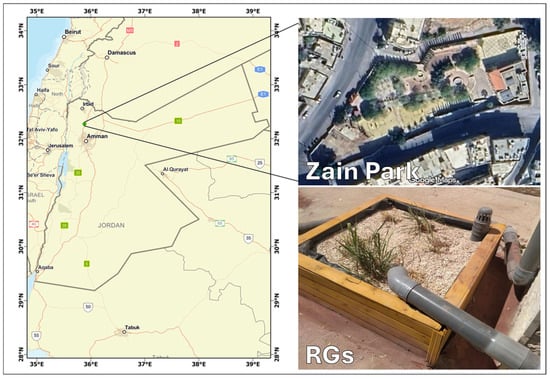
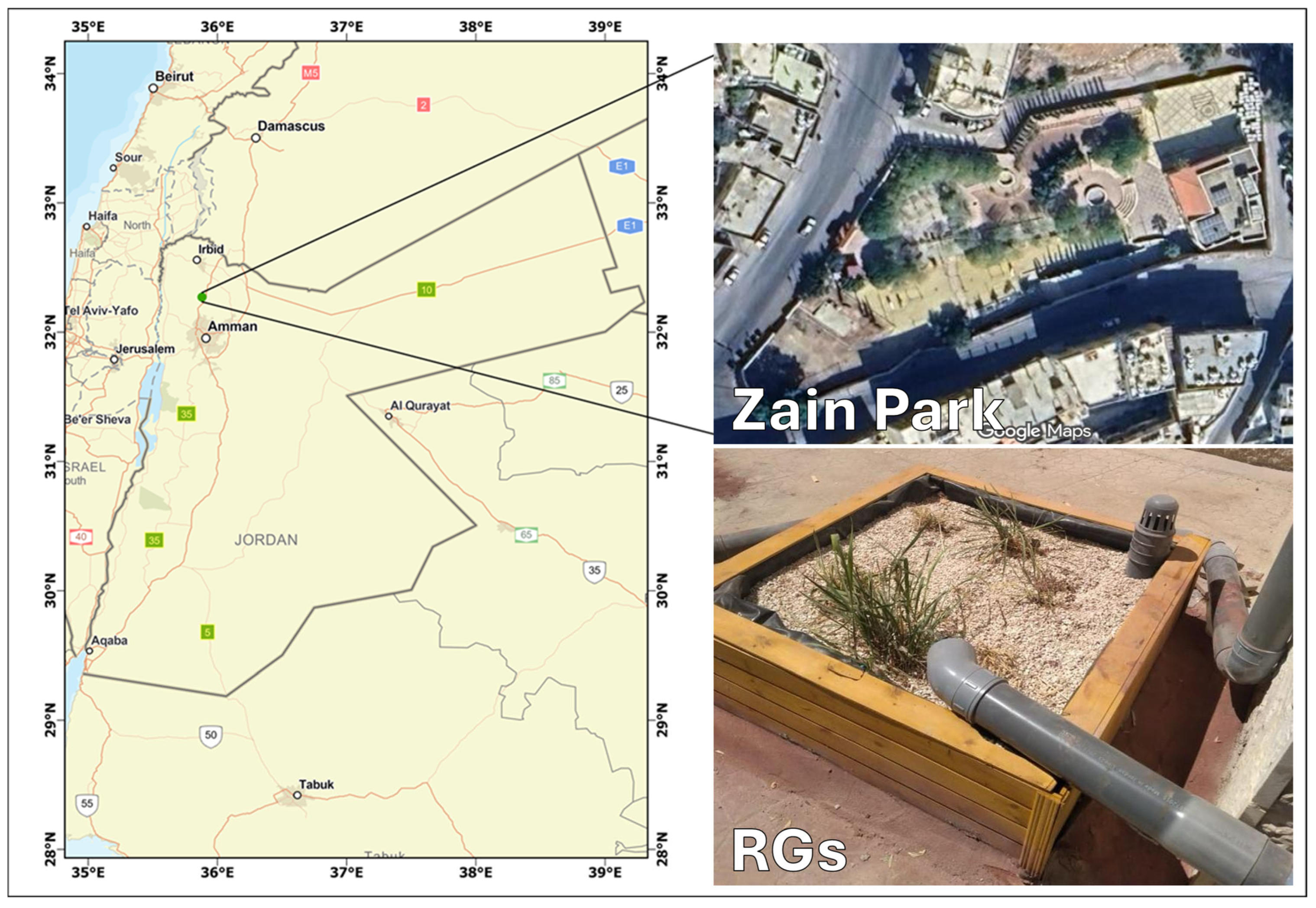
A rain garden was installed at Zain Park in Jerash governorate in Jordan. It has coordinates of 32°16′55″ N and 35°53′57″ E, as shown in Figure 1. The park has an approximate area of 4800 m2 and an approximate perimeter of 320 m.
Figure 1.
Study area location.
2.2. Description of the RG System
The construction of the RGs began with the preparation of the basement. It involved excavating a 10 cm deep area and compacting the soil after regularizing the surface to remove sharp rocks. The structural framework of the garden was formed using wooden panels for both the bottom and vertical walls. A 1.0 mm thick plastic polyvinyl chloride (PVC) liner was then installed to provide waterproofing. An outlet pipe passage was integrated into the structure to facilitate proper drainage. Next, a slotted drainage pipe was installed to enhance water flow and prevent waterlogging. The bed was then filled with selected medium layers, carefully arranged as per the design drawings, ensuring that the final surface remained perfectly horizontal without any slope.
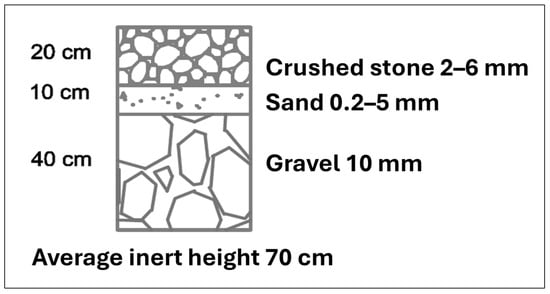
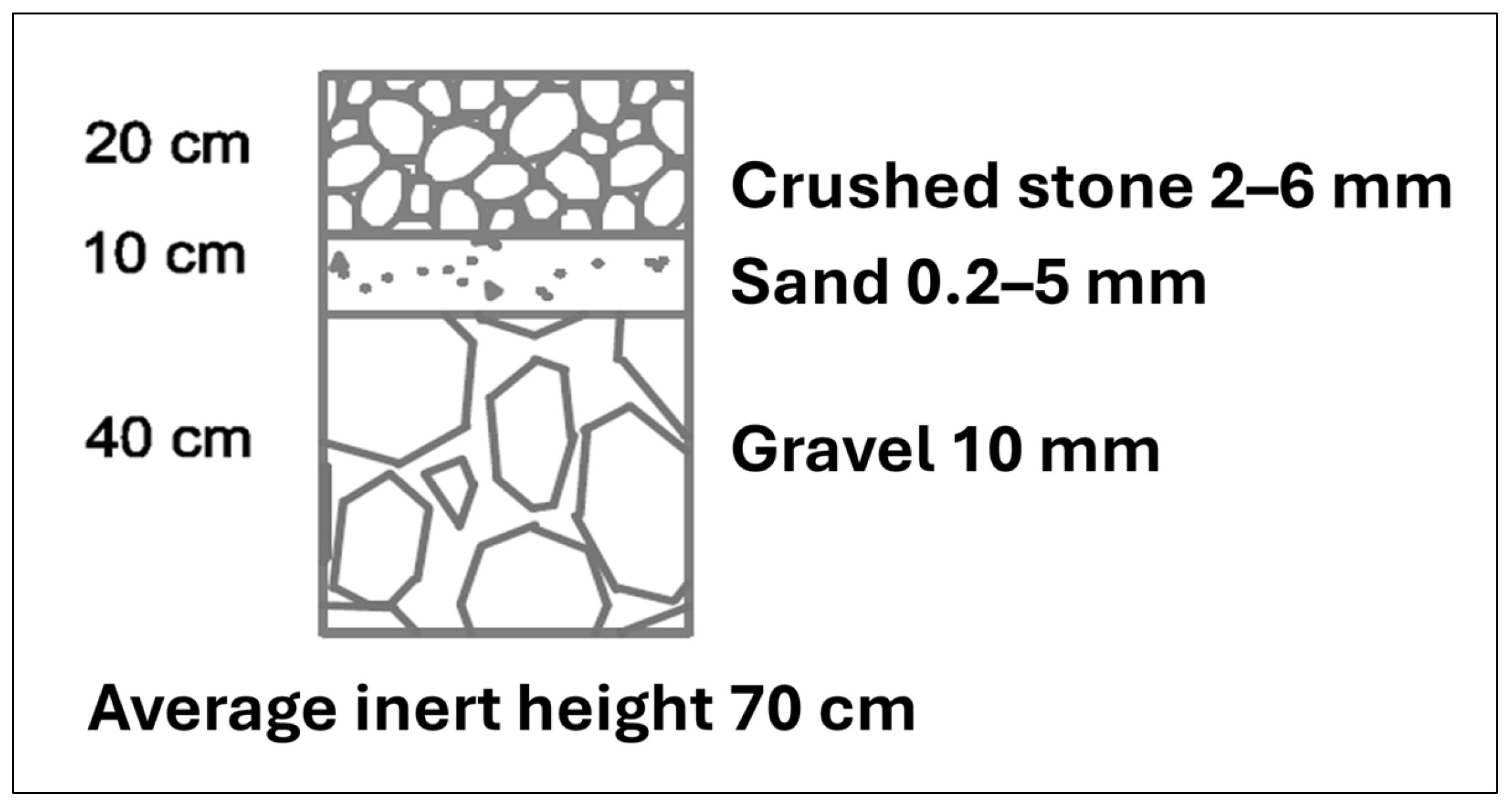
The RGs consist of two beds, each with a bottom surface area of 1 m2 (1 m × 1 m). The filter media is arranged in three layers: a 40 cm layer of 5–10 mm round or crushed, washed gravel at the bottom, followed by a 10 cm layer of fine sand (0.2–5 mm, D60 = 1 mm), and a 20 cm layer of 2–6 mm round or crushed, washed gravel on top. The total depths of the RGs are 80 cm, including a 10 cm free board, as shown in Figure 2.
Figure 2.
Filter layer details.
The structure is an overground wooden containment box (2 cm thick), internally waterproofed with a 1 mm plastic liner. Drainage is facilitated by a pipe with a nominal diameter of 100 mm (DN100 PVC) slotted pipe installed at the bottom with slots every 10 cm, along with a DN100 ventilation pipe featuring a chimney. A ceramic tile is positioned at the inlet to regulate water entry from the graywater source. Graywater influent originated exclusively from indoor sources, and rainfall was not harvested or mixed with the influent; precipitation only reached the system as direct rainfall onto the planted beds. The system is designed for ornamental plant growth, with Juncus effusus placed in the center and four Iris pseudacorus surrounding it. The RGs were designed to handle a flow rate of 0.5 m3/day, promoting efficient water filtration and retention. Table 1 illustrates the parameters of the RGs.
Table 1.
Summary of the RG characteristics.
Based on the operational flow rate of 0.5 m3 day−1 and a total effective infiltration surface area of 2 m2 (two beds, each 1 m2), the estimated hydraulic loading rate (HLR) was approximately 0.25 m3 m−2 day−1. Considering the total media depth of 0.70 m (excluding freeboard) and the porosity of gravel–sand substrates reported in similar systems, the estimated hydraulic retention time (HRT) falls within the range commonly reported for bioretention and vertical-flow wetland-type systems treating graywater. Such loading conditions favor rapid infiltration while allowing sufficient contact time for filtration, adsorption, and biologically mediated processes in the rhizosphere and filter media. The selected hydraulic design, therefore, represents a compromise between compact footprint requirements and treatment efficiency, suitable for decentralized urban installations where space availability is limited.
2.3. Laboratory Analysis and Water Quality Assessment
Laboratory tests were conducted over a ten-month period, from April 2024 to January 2025. The monitoring period was determined by the system construction date and the fixed project duration. Despite its length, this period captures seasonal variability and provides reliable insight into initial system performance and biodegradable and oxidizable organic fractions reduction efficiency. A total of ten effluent grab samples (one per month) were collected and analyzed to monitor the chemical, physical, and biological performance of the RG system. All tests were conducted at the Water Authority of Jordan Laboratories, the Ministry of Water and Irrigation, Jordan. The analyses included water quality parameters such as BOD5, COD, TSS, and Total Dissolved Solids (TDS), which were assessed using standard methods, including BOD5 Lum SM 5210B [31] and Closed Reflux Titration SM 5220C [32]. Total Nitrogen (TN) was analyzed using catalytic combustion. Phosphate (PO43−) levels were also measured using ion chromatography. Additionally, physical parameters such as turbidity were assessed using the Nephelometric method (SM 2130B [33]), while the potential of hydrogen (pH) was measured through electrometric and field analysis (SM 4500 H B [34] and SM 2510B [35], respectively). Biological contaminants, including E. coli and TC, were quantified using the Multiple Tube Fermentation method (SM 9221F [36] and SM 9221 A, B [37]). Lastly, dissolved oxygen (DO) was measured using Standard Method 4500-OG. Descriptive statistics were applied to characterize graywater properties. All parameters are presented in Table 2.
Table 2.
Summary of laboratory tests and methods [27].
The final treated effluent results were evaluated against the Jordanian Standards (JS 1776/2013) [38,39] to determine the suitability of the treated water for reuse in irrigation and other applications. Table 3 represents the effluent quality standards for irrigating different crops with the allowable limits, showing that stricter thresholds, especially for BOD5, COD, TSS, turbidity, and E. coli, are required to ensure safe reuse in agriculture. Biodegradable and oxidizable organic fractions in this study were operationally represented by BOD5 and COD, which are standard surrogate parameters for biodegradable and chemically oxidizable organic fractions in wastewater, as described by Metcalf and Eddy and Tchobanoglous, APHA Standard Methods, and in the literature [23,24,40]. Log reduction values (LRVs) were calculated for each sampling event as log10 (influent concentration/effluent concentration), and percentage removals were computed independently from measured concentrations. Reported average values represent arithmetic means of monthly removal efficiencies.
Table 3.
Graywater standards in Jordan [39].
3. Results and Discussions
3.1. Characterization of Raw and Treated Graywater
The influent and effluent characteristics of the RG system were analyzed based on 10 samples, with average values and standard deviations providing insights into treatment performance Table 4.
Table 4.
Characteristics of raw and treated graywater (all values are presented as (μ ± σ: mean ± standard deviation) of 10 samples for each area and treatment stage).
The relatively elevated influent concentrations can be attributed to low per capita water use, resulting in limited dilution, direct feeding of graywater without upstream equalization or dilution, and the fact that monitoring was conducted during the initial operational phase of the system. Such conditions are consistent with the reported variability and concentration ranges of graywater and low- to medium-strength wastewaters described by Metcalf and Eddy and Tchobanoglous [40].
Influent and effluent graywater quality was summarized using mean values and standard deviations to reflect central tendency and variability. Influent concentrations showed high variability, with BOD5 (525 ± 277 ppm) and COD (1085 ± 510 ppm). Following treatment, concentrations decreased to 11 ± 2 ppm for BOD5 and 38 ± 9 ppm for COD. The influent BOD5/COD ratio was 0.48, indicating a substantial biodegradable fraction of organic load [41].
The pH remained stable in both influent (8.0 ± 0.3) and effluent (8.0 ± 0.1), while dissolved oxygen changed from 6 ± 1 ppm to 4 ± 1 ppm. Nutrient concentrations showed variability, with TN decreasing from 25 ± 1 ppm to 15 ± 6 ppm and NO3− from 89 ± 12 ppm to 24 ± 13 ppm, whereas NH4+ and PO43− remained low in both streams. Turbidity and TSS exhibited substantial reductions, from 406 ± 186 NTU and 290 ± 179 ppm in the influent to 4 ± 3 NTU and 11 ± 2 ppm in the effluent, respectively. TDS increased slightly from 745 ± 30 ppm to 791 ± 275 ppm [42,43].
Microbial concentrations were characterized by high variability, with influent E. coli (3.1 × 10⁵ ± 4.8 × 10⁵ MPN/100 mL) and TC (4.0 × 10⁶ ± 4.8 × 10⁶ MPN/100 mL). Effluent values were lower, at 1.8 × 10⁵ ± 3.8 × 10⁵ MPN/100 mL for E. coli and 3.7 × 10⁵ ± 4.5 × 10⁵ MPN/100 mL for TC [44,45].
3.2. Chemical Evaluation of the RG System Performance
3.2.1. Total BOD5 and Total COD
The BOD5 and COD variations over the monitoring period provide insight into the organic pollutant degradation mechanisms within the RG system. The observed fluctuations in influent concentrations reflect seasonal variations in graywater composition, while the effluent data demonstrates the system’s efficiency in biodegradable and oxidizable organic fractions reduction through biological and physicochemical processes facilitated by ornamental plants and substrate filtration.
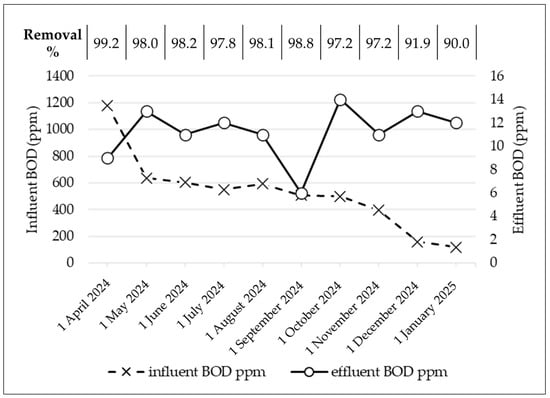
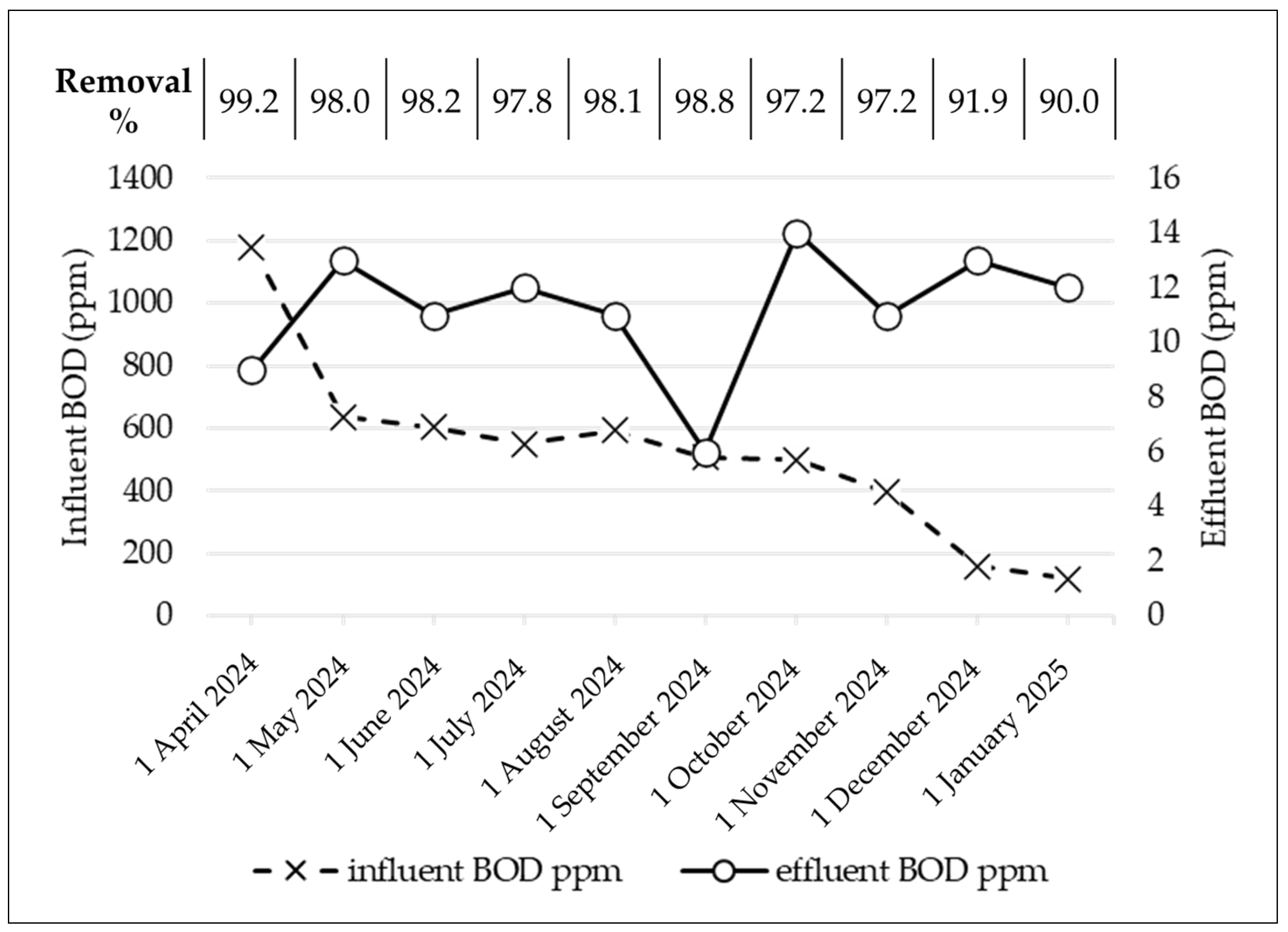
The influent BOD5 levels showed a declining trend, starting at 1181 ppm in April and decreasing to 120 ppm in January. This trend is likely influenced by seasonal shifts in household water consumption, variations in detergent and biodegradable and oxidizable organic fractions inputs, and dilution effects from rainfall infiltration into the system. Despite these fluctuations, the effluent BOD5 remained consistently low, ranging between 6 and 14 ppm, demonstrating the RGs’ ability to enhance biodegradable and oxidizable organic fractions degradation. The presence of ornamental plants played a key role in promoting microbial growth within the rhizosphere, where microbial communities aided in the aerobic and anaerobic breakdown of organic compounds. The lowest effluent BOD5 (6 ppm) recorded in September suggests peak microbial and plant-root activity, while slightly higher values in colder months (October and December) indicate reduced microbial efficiency due to lower temperatures affecting enzymatic reaction rates and metabolic processes.
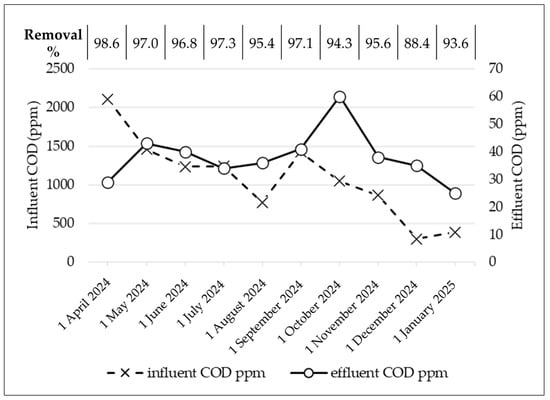
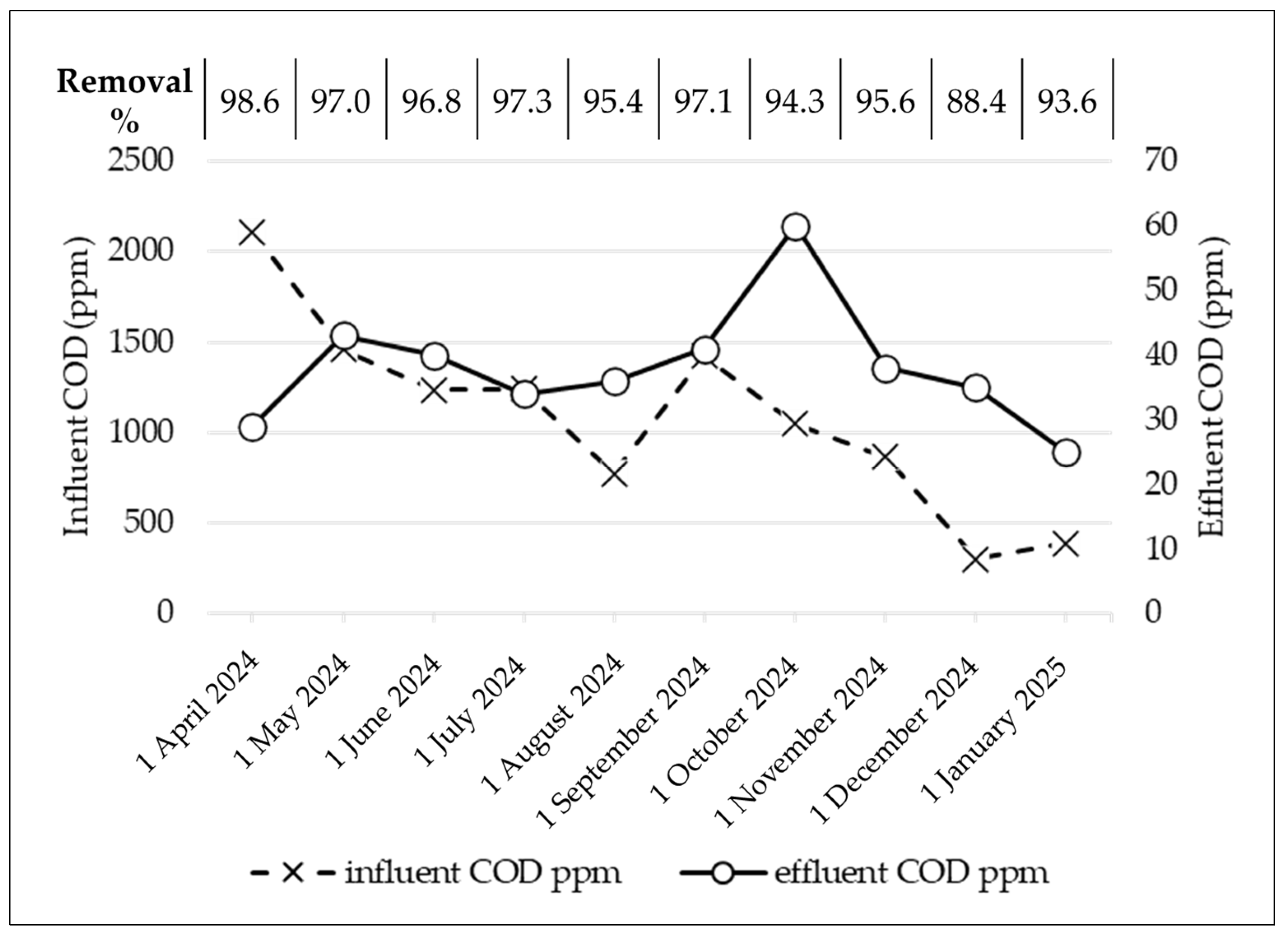
The COD concentrations followed a similar trend, with influent values fluctuating from 2111 ppm in April to 390 ppm in January, reflecting variations in the organic load of graywater, including surfactants, oils, and particulate matter. The highest COD levels observed in April suggest the presence of complex organic compounds from household cleaning products, which are more resistant to biodegradation. Effluent COD remained low throughout the study period (25–60 ppm), highlighting the efficiency of the RG system in biodegradable and oxidizable organic fractions oxidation and adsorption within the soil–root interface. The highest effluent COD (60 ppm) in October may be attributed to increased influent loads combined with reduced plant uptake efficiency due to seasonal changes affecting plant metabolic activity.
The RG system’s effectiveness in regulating biodegradable and oxidizable organic fractions reduction is driven by a combination of biological, chemical, and physical mechanisms. The ornamental plants in the system contributed to pollutant removal by promoting microbial colonization and oxygen diffusion through root exudation, stimulating heterotrophic bacterial activity essential for BOD5 and COD breakdown. These results align with previous research results, which report significant variability in total COD and total BOD5 removal efficiencies [5]. Previous studies highlighted the effectiveness of RGs in removing BOD5 and COD [46,47]. Another study by Santos et al. [48] obtained 85% of COD, 97% of BOD5 removal efficiency for their ran garden system. Additionally, substrate filtration and infiltration processes aided in the adsorption and sedimentation of biodegradable and oxidizable organic fractions, further enhancing treatment performance. Rainfall likely contributed to dilution effects, reducing influent concentrations during rain months, while evapotranspiration by the plants influenced water retention and pollutant stabilization [49].
The system achieved notable organic pollutant removal, with BOD and COD reductions of 98% and 96%, respectively. As reported by Corbett [46], Qonitan et al. [47] and Santos et al. [48], the high efficiency of biodegradable and oxidizable organic fractions degradation is attributed to biodegradation by microbial communities in the rhizosphere, supported by oxygen diffusion from ornamental plant roots. Additionally, substrate filtration and adsorption mechanisms played a key role in trapping organic compounds, further enhancing removal performance. Figure 3 and Figure 4 illustrate the influent and effluent levels of total BOD5 and total COD, respectively, providing a visual representation of the RG system’s performance across the ten months.
Figure 3.
Total BOD values at influent and effluent of the RG system.
Figure 4.
Total COD values at influent and effluent of the RG system.
3.2.2. pH and DO
The pH and DO levels were monitored throughout the study period to assess the chemical stability and oxygenation capacity of the RG system. These parameters are crucial for evaluating the biogeochemical processes occurring within the system, including the influence of ornamental plants on water chemistry.
The influent pH values fluctuated between 7.47 and 8.42, indicating alkaline graywater conditions, likely influenced by the presence of detergents, soaps, and cleaning agents. The effluent pH remained within a slightly alkaline range (7.79–8.11), demonstrating that the RG system maintained pH stability with only minor fluctuations. The observed pH variations suggest that buffering reactions within the substrate and plant-root zone helped neutralize influent fluctuations, preventing significant shifts in water acidity or alkalinity. Additionally, plant-root exudates and microbial activity may have contributed to pH regulation through natural biochemical processes.
The DO levels in the influent ranged from 4.98 to 7.42 ppm, with higher values observed in warmer months (August) due to increased aeration and microbial respiration rates. The effluent DO values fluctuated between 2.27 and 6.06 ppm, showing a slight decline after treatment. This reduction can be attributed to oxygen consumption during biodegradable and oxidizable organic fractions, degradation, and microbial respiration in the substrate and root zone. The lowest effluent DO levels (2.27 ppm in October) suggest that increased microbial decomposition rates and oxygen uptake by plant roots may have contributed to localized oxygen depletion within the system. Conversely, the highest effluent DO values (6.06 ppm in December) indicate periods of enhanced aeration, potentially due to seasonal variations in water infiltration and plant transpiration.
The RG system played a significant role in moderating pH and DO levels, ensuring a balanced environment for microbial and plant-based treatment processes. The ornamental plants likely influenced oxygenation dynamics by enhancing aeration through root oxygen transfer, while microbial interactions within the substrate contributed to biodegradable and oxidizable organic fractions. The observed seasonal variations in DO indicate that temperature and plant activity influenced oxygen availability, with potential implications for system performance during colder months. The role of NBSs in pH stabilization aligns with previous studies, supporting effective treatment. These systems help regulate pH, enhance performance, consistent with findings that wetland plants contribute to pH stability [50]. The NBSs effectively increased DO levels, consistent with findings by Santos et al. [48] and Greksa et al. [49].
3.2.3. Nutrient Dynamics
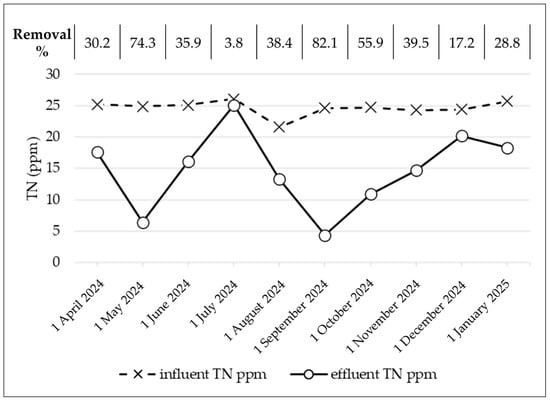
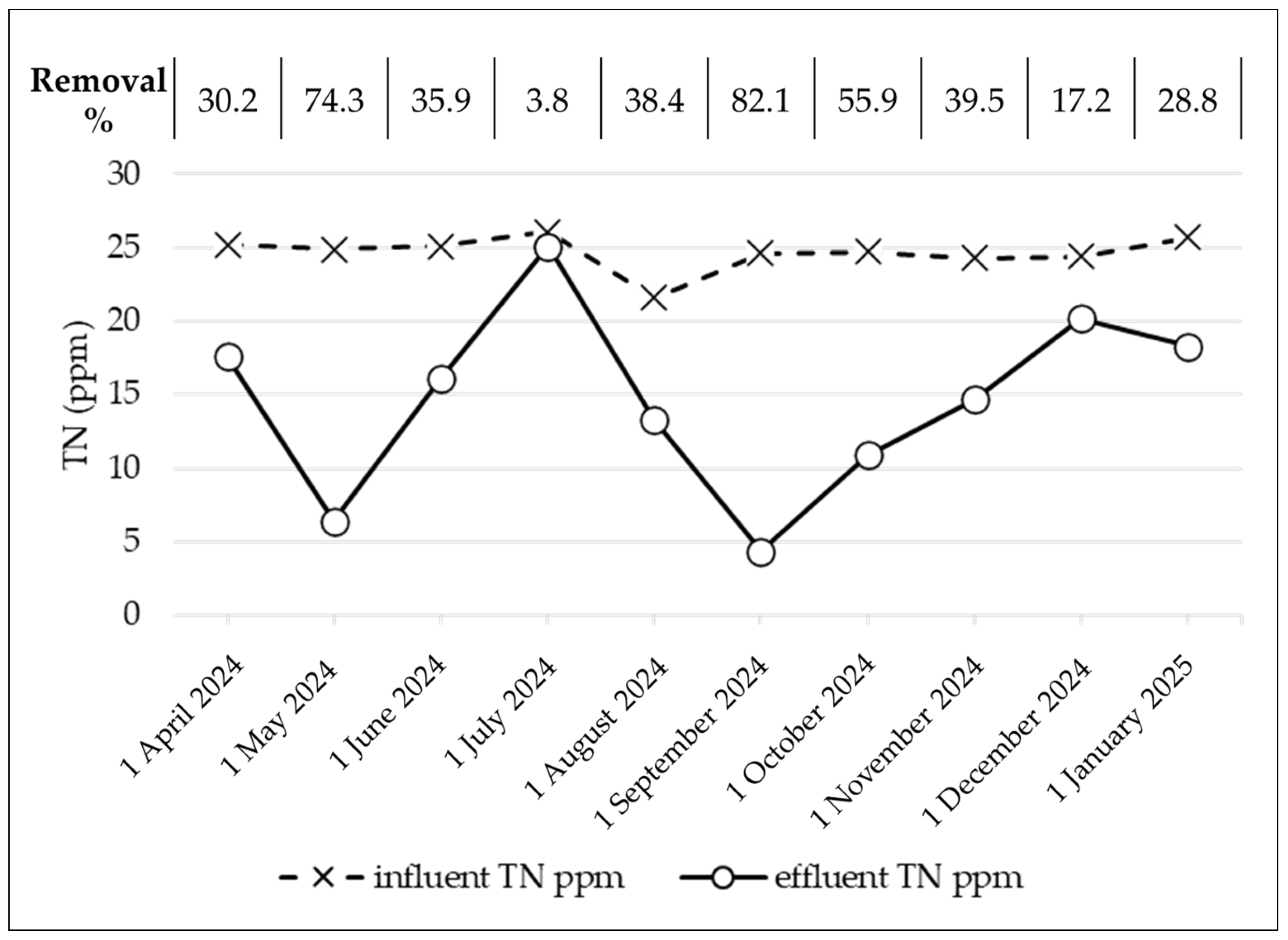
The RG system’s nutrient removal efficiency was assessed by monitoring TN over the study period (Figure 5). These parameters provide insight into nitrogen transformation processes, including microbial nitrification–denitrification, plant uptake, and substrate adsorption. The PO43− concentrations remained consistently low (below 0.6 ppm) throughout the monitoring period, indicating limited phosphorus presence in the influent and effluent graywater streams.
Figure 5.
The TN concentrations at influent and effluent of the RG system.
The influent TN concentrations remained relatively stable, fluctuating between 21.6 and 26.1 ppm, reflecting consistent graywater nitrogen loads. Effluent TN values varied more significantly, ranging from 4.4 to 25.1 ppm, with the lowest concentration recorded in September and the highest in July. The fluctuations in TN removal efficiency suggest that, beyond seasonal biological effects, hydraulic and operational factors played an important role. While moderate TN removal during the warmer period (April–August) is consistent with active plant uptake and microbial processes, the reduced TN removal observed in July is more plausibly linked to preferential flow or short-circuiting within the media, more oxic conditions that can limit denitrification, potential saturation of plant nitrogen uptake during peak growth, and the influence of routine maintenance activities.
For nutrient removal, TN exhibited a moderate reduction of 40%. This removal efficiency suggests that nitrification–denitrification processes were only partially effective, likely due to limited anaerobic zones in the RGs bed. Nutrient removal efficiency is typically low, with TN and TP reduction often below 10%, as reported by Sadia [51] and Micek et al. [52].
3.3. Physical Evaluation of the RG System Performance
The RG system’s physical treatment performance was evaluated by monitoring turbidity, TSS, and TDS. These parameters reflect the efficiency of the system’s multi-layered filtration bed, which plays a critical role in particle retention, sedimentation, and potential leaching of dissolved solids.
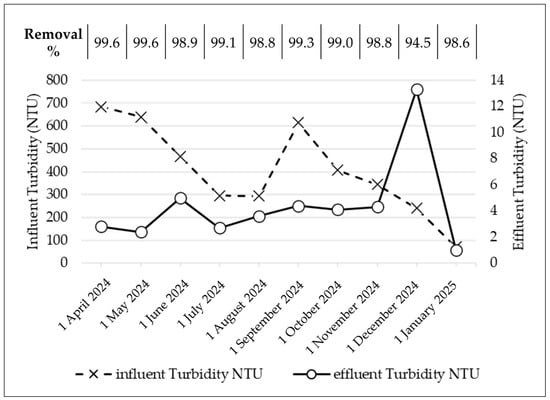
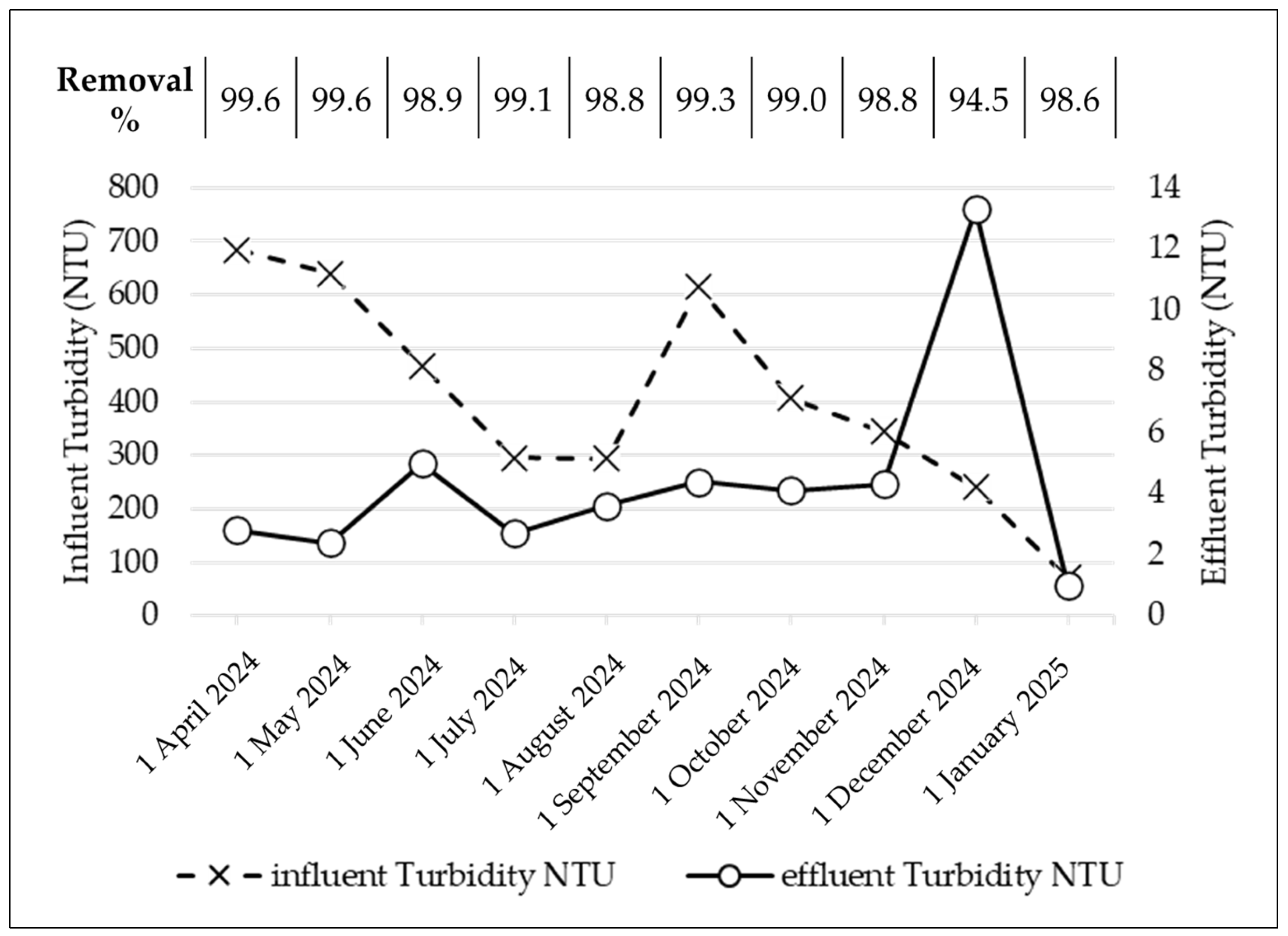
The influent turbidity exhibited significant fluctuations, with the highest values recorded in April (684 NTU) and May (639 NTU), gradually decreasing to 71 NTU in January, as shown in Figure 6. This variation is likely due to seasonal changes in graywater composition, influenced by household activities and potential dilution from rainfall. The effluent turbidity remained consistently low (1.01–13.3 NTU), demonstrating the RGs’ efficiency in solid removal as reported by Qonitan et al. [47] and Sadia [51]. The filtration bed, consisting of a multi-layered gravel and sand arrangement, played a key role in trapping fine particles and reducing turbidity levels. Effluent turbidity was generally stable (1–6 NTU), with a single higher value observed in December (13.3 NTU). This isolated increase likely reflects short-term seasonal and operational factors, such as temporary influent variability, minor maintenance activities, and brief hydraulic disturbances that mobilized fine particles within the media, rather than a sustained change in system performance.
Figure 6.
Turbidity values at influent and effluent of the RG system.
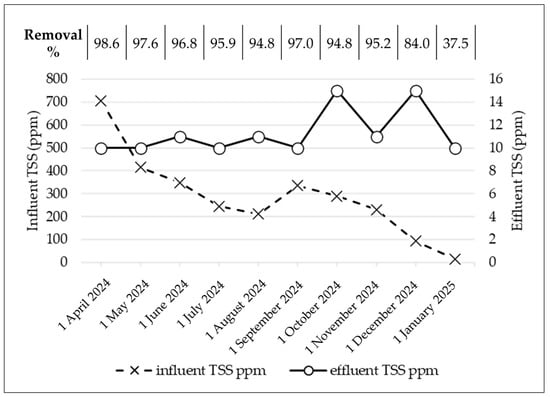
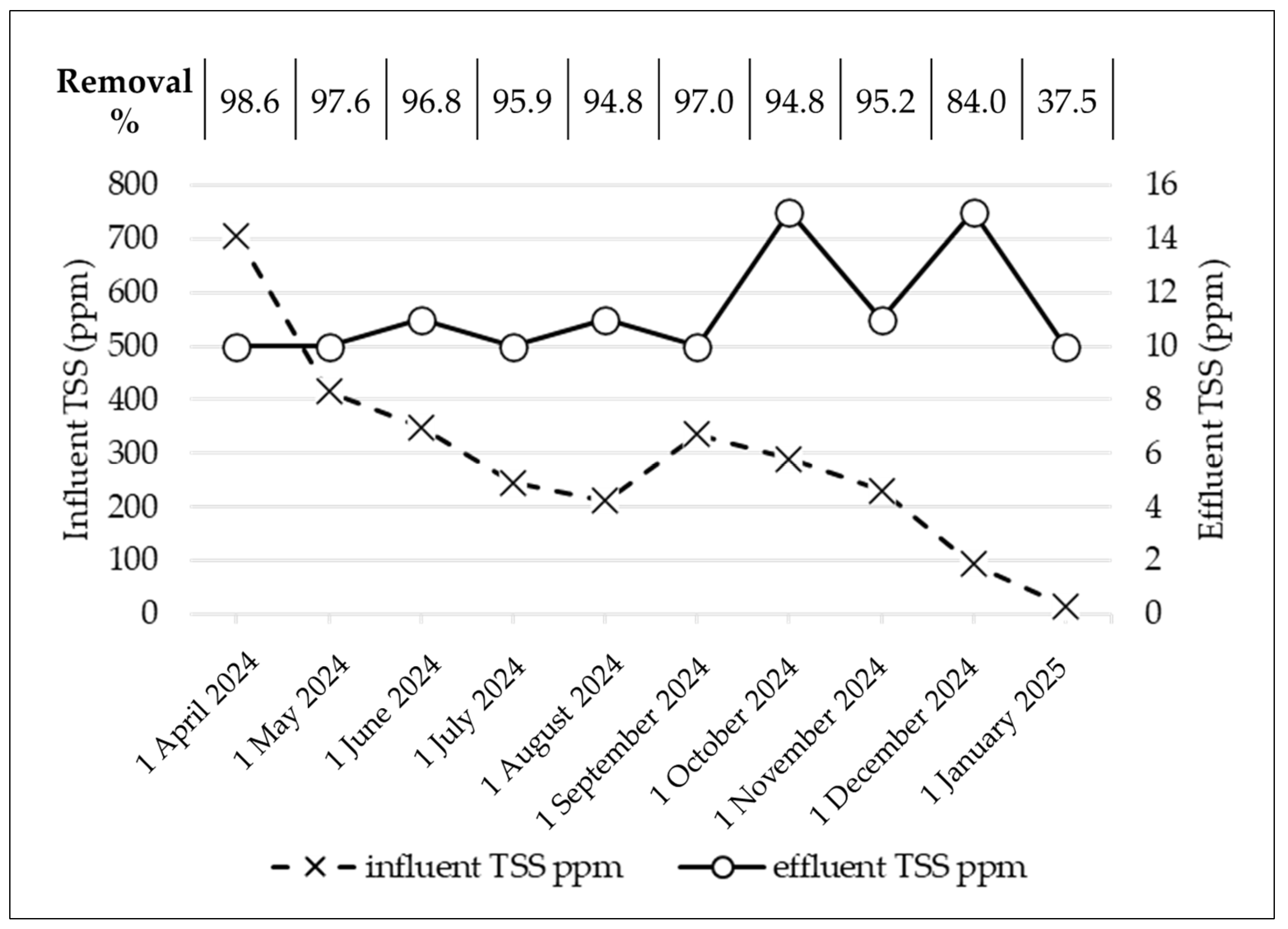
The TSS followed a similar trend, with influent values ranging from 16 to 706 ppm, as shown in Figure 7. The filtration bed effectively retained suspended solids, resulting in consistently low effluent TSS values (10–15 ppm). The gravel and sand layers facilitated the sedimentation and adsorption of suspended particles, preventing their release into the effluent [46,47,51,52,53,54]. The highest influent TSS (706 ppm in April) correlated with peak turbidity values, indicating high particulate loads in graywater. The lowest influent TSS (16 ppm in January) may be attributed to seasonal dilution effects or reduced particulate input from household activities.
Figure 7.
The TSS concentrations at influent and effluent of the RG system.
The TDS levels in the influent remained relatively stable (708–788 ppm), indicating a consistent presence of dissolved ions in graywater. However, effluent TDS values varied significantly (250–1164 ppm), with increased concentrations recorded in April (1044 ppm), October (1164 ppm), and July (974 ppm). The elevated effluent TDS suggests leaching of dissolved minerals or organic compounds from the substrate, particularly in months when microbial and plant-root activities were higher. The lowest effluent TDS (250 ppm in September) suggests enhanced ion retention within the filtration bed, likely due to adsorption and precipitation mechanisms occurring in the sand and gravel layers. The sand layer likely facilitated finer particle retention and improved ionic stabilization, while the gravel layers at the bottom provided pathways for percolation, preventing excessive clogging and promoting consistent filtration efficiency.
The system exhibited high efficiency in physical pollutant removal, achieving up to 99% turbidity and 96–94% TSS reduction, significantly improving overall water quality. This performance is consistent with previous studies reporting effective turbidity and suspended solids removal in nature-based systems, including Subramanian et al. [55] and Patil et al. [56], and exceeds the efficiencies reported for grease traps and degreasing units [55,56]. The enhanced removal of TSS, surpassing values reported by Abou-Elela and Hellal [57], Kotsia et al. [58], Trowsdale and Simcock [54], Corbett [46], Metcalf [53], Sadia [51], and Qonitan et al. [46], highlights the effectiveness of the multi-layered filtration bed. The combination of gravel and fine sand promoted filtration, sedimentation, adsorption, and particle retention, consistent with mechanisms described by Manga et al. [59], resulting in superior turbidity and TSS removal compared to similar decentralized treatment systems.
3.4. Biological Evaluation of the RG System Performance
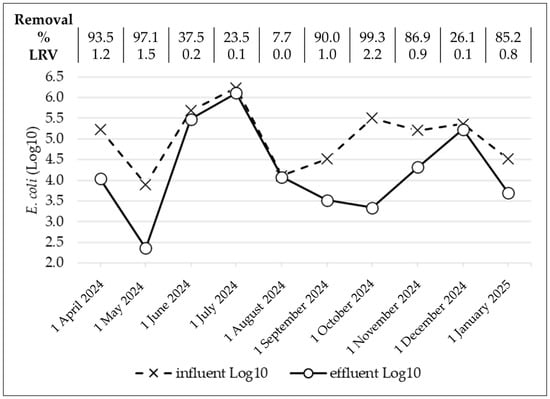
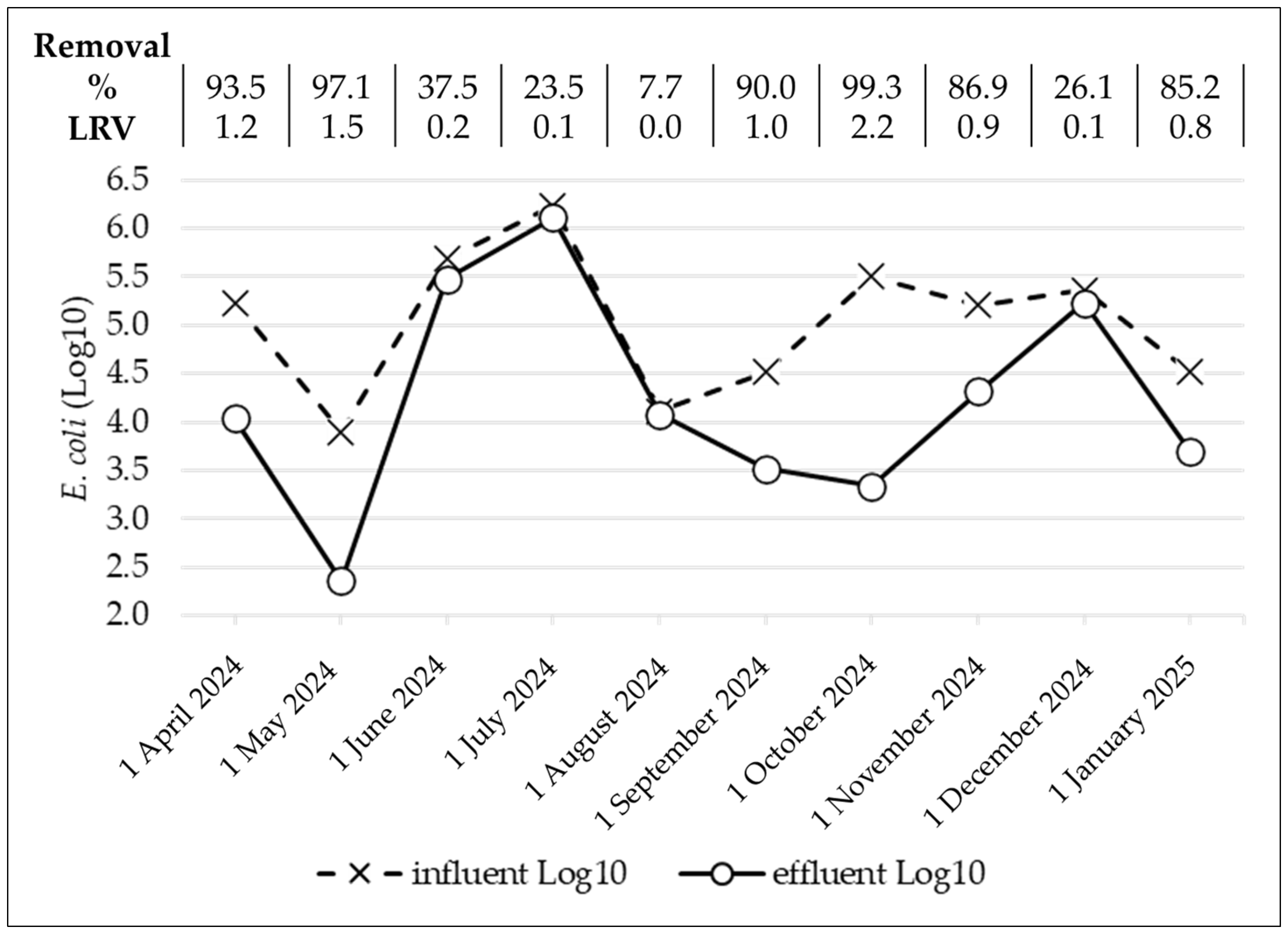
The microbial removal efficiency of the RG system was assessed by monitoring E. coli and TC concentrations in the influent and effluent over a ten-month period (Figure 8). These parameters are indicative of pathogenic contamination and reflect the system’s biological treatment capacity under varying environmental conditions.
Figure 8.
The E. coli concentrations at influent and effluent of the RG system.
The influent E. coli levels displayed substantial fluctuations, ranging from 7.9 × 10³ MPN/100 mL (May) to 1.7 × 10⁶ MPN/100 mL (July). Similarly, TC values in the influent varied widely, with the lowest concentrations in May (7.0 × 10⁴ MPN/100 mL) and the highest in January (1.6 × 10⁷ MPN/100 mL). These variations can be attributed to seasonal differences in household water use, temperature effects on bacterial growth, and potential dilution from rainfall events.
Despite these high and variable influent loads, the effluent generally exhibited reduced bacterial counts, indicating partial microbial removal by the system. E. coli in the effluent ranged from 2.3 × 10² MPN/100 mL (May) to 1.3 × 10⁶ MPN/100 mL (July), whereas TC levels varied between 2.3 × 10³ MPN/100 mL (May) and 1.6 × 10⁶ MPN/100 mL (July). The elevated effluent counts in July and other months with higher influent loads suggest that peak bacterial contamination can exceed the system’s natural attenuation capacity, particularly when ambient temperatures and microbial activity favor bacterial growth.
The E. coli removal ranged from 0.0 to 2.2 log10, corresponding to 7.7–99.3% reduction, with an average removal of 0.8 log10 (64.7%). The TC removal ranged from 0.2 to 2.3 log10 (34.7–99.4%), averaging 1.1 log10 (82.6%). The comparatively lower E. coli removal, which is slightly below the value reported by Qonitan et al. [47] (54%), indicates that bacterial attenuation processes were less effective than solid and biodegradable and oxidizable organic fractions reduction. The higher removal of TC suggests that larger or less resistant microbial groups were more readily retained within the filter media.
The observed E. coli removal efficiency can be explained by several design and operational characteristics of the rain garden system. The relatively short hydraulic retention time limits prolonged exposure of microorganisms to unfavorable conditions such as nutrient depletion and predation, which are key pathogen attenuation mechanisms in conventional constructed wetlands. In addition, although predominantly aerobic conditions favor E. coli removal through physical filtration, attachment to filter media, and biological processes—and subsurface flow constructed wetlands commonly achieve removals of 1–3 log10—preferential flow paths within coarse gravel layers may allow partial bypassing of finer filtration zones, thereby reducing effective bacterial straining.
Furthermore, the absence of direct sunlight exposure within the subsurface filtration media eliminates ultraviolet inactivation, a mechanism that contributes to pathogen reduction in surface-flow systems. Collectively, these factors explain why passive rain garden filtration alone may be insufficient to meet stringent microbial reuse standards, highlighting the need for complementary post-treatment disinfection when the treated effluent is intended for applications such as toilet flushing or unrestricted irrigation.
When compared to the JS (1776/2013) [38], the NBS-treated effluent met irrigation reuse criteria but did not satisfy the stricter toilet flushing requirement of E. coli < 10 MPN/100 mL. Studies by Bakheet et al. [60] and Arden and Ma [61] emphasized the necessity of additional disinfection for stricter reuse compliance. While substantial reductions can be obtained within the system, further improvement in microbial removal could be achieved through design or operational enhancements, such as increasing hydraulic retention time or adding a polishing treatment stage [60].
4. Conclusions
This study assessed the effectiveness of the RG system for graywater purification, focusing on biodegradable and oxidizable organic fractions degradation, nutrient cycling, microbial inactivation, and water quality improvement. The system demonstrated high efficiency in the removal of oxygen demands (BOD 98%, COD 96%), indicating strong oxidative and microbial degradation processes. The multi-layered filtration system facilitated adsorption, sedimentation, and particulate retention, significantly reducing suspended solids (TSS 96%) and turbidity (99%), resulting in a clearer effluent suitable for non-potable applications. The chemical stability of the effluent, including pH regulation and DO fluctuations, suggests that buffering reactions within the substrate and plant-root exudates contributed to maintaining a biochemically favorable environment for microbial and enzymatic activity. Nutrient removal was moderate, with TN reduced by 40% and NO3− by 74%, indicating partial microbial nitrification–denitrification and plant assimilation. However, seasonal variations in temperature and microbial metabolism influenced nitrogen removal efficiency, with higher effluent NO3− concentrations in colder months, highlighting the impact of environmental conditions on microbial transformation pathways. Microbial removal was comparatively lower than physicochemical parameters, with average reductions of 0.8 log10 (64.7%) for E. coli and 1.1 log10 (82.6%) for TC over the study period. Although substantial reductions were achieved, these levels may not be sufficient to meet stringent reuse standards in applications requiring high microbial safety. Therefore, supplementary treatment measures may be necessary where a higher effluent quality is required.
The RG systems provide a sustainable, decentralized solution for graywater treatment in both urban and rural areas. They reduce pressure on wastewater infrastructure, lower chemical treatment needs, and offer low-maintenance options where centralized systems are absent. By combining chemical, biological, and physical processes, RGs support scalable, eco-friendly water management suitable for water-stressed regions. Performance can be improved through optimized plant selection, hydraulic design, and substrate enhancements such as coarser gravel, biochar, and better aeration to prevent clogging and support microbial activity [62]. For higher microbial safety, post-treatment disinfection is recommended, alongside long-term monitoring to track seasonal variations and potential substrate leaching.
Beyond performance evaluation, this study provides context-specific operational evidence supporting the practical deployment of decentralized nature-based graywater treatment systems in arid regions facing increasing water scarcity. This work contributes to key Sustainable Development Goals (SDGs), particularly SDG 6 (Clean Water and Sanitation) by enhancing safe graywater reuse, SDG 11 (Sustainable Cities and Communities) through decentralized nature-based treatment, and SDG 12 (Responsible Consumption and Production) by promoting resource-efficient water management. The system’s potential to reduce health risks aligns with SDG 3 (Good Health and Well-Being), while its sensitivity to seasonal conditions underscores relevance to SDG 13 (Climate Action).
Author Contributions
Conceptualization, N.O. and A.A.-S.; methodology, N.O., A.A.-S. and R.B.; software, N.O., F.M. and A.R.; validation, C.S. and R.B. and F.M.; formal analysis, N.O. and R.B.; investigation, N.O.; resources, A.R. and N.O.; data curation, N.O., F.M., A.S. and C.S.; writing—original draft preparation, F.M., R.B. and N.O.; writing—review and editing, A.A.-S., A.A.A., A.R., C.S., R.B., A.S. and J.A.; visualization, F.M., C.S., J.A. and A.R.; supervision, A.A.-S. and A.A.A.; project administration, A.A.-S. All authors have read and agreed to the published version of the manuscript.
Funding
The decentralized treatment unit (rain garden system) was created for graywater exiting Zain Park at Jerash, Jordan, under the funding of the European Union (UN) in partnership with the Nature-Based Solutions for Domestic Water Reuse in Mediterranean Countries (NAWAMED) Project (No.: A_B.4.1_0290).
Data Availability Statement
The data supporting the results of this study are not publicly available due to privacy restrictions imposed by the relevant ministries. However, interested parties may contact the corresponding author for inquiries regarding data access under appropriate ethical guidelines.
Acknowledgments
The authors would like to express their sincere gratitude to the University of Jordan, Amman, Jordan, for providing the resources and support necessary for this research. During the preparation of this work, the authors used ChatGPT5.2 to improve language. After using this tool/service, the authors reviewed and edited the content as needed and took full responsibility for the content of the publication.
Conflicts of Interest
Authors Riccardo Bresciani, Anacleto Rizzo, Chiara Sarti and Fabio Masi were employed by the company Iridra Srl. The remaining authors declare that the research was conducted in the absence of any commercial or financial relationships that could be construed as potential conflicts of interest.
Abbreviations
The following abbreviations are used in this manuscript:
| BOD5 | Total Biochemical Oxygen Demand |
| COD | Total Chemical Oxygen Demand |
| DN100 | Nominal Diameter of 100 mm |
| E. coli | Escherichia coli |
| HLR | Hydraulic Loading Rate |
| HRT | Hydraulic Retention Time |
| JS | Jordanian Standards |
| MPN/100 mL | Most Probable Number per 100 mL |
| μ | Mean |
| NBSs | Nature-Based Solutions |
| NH4+ | Ammonium |
| NO3− | Nitrate |
| pH | Potential of Hydrogen |
| PO43− | Phosphate |
| PVC | Polyvinyl Chloride |
| RGs | Rain Gardens |
| σ | Standard Deviation |
| TDS | Total Dissolved Solids |
| TN | Total Nitrogen |
| TP | Total Phosphorus |
| TSS | Total Suspended Solids |
| UV | Ultraviolet Light |
Appendix A
Table A1.
Comparison between the performance results of the RGs applied in this study and in other studies.
References
- Masi, F.; Bresciani, R.; Rizzo, A.; Edathoot, A.; Patwardhan, N.; Panse, D.; Langergraber, G. Green walls for greywater treatment and recycling in dense urban areas: A case-study in Pune. J. Water Sanit. Hyg. Dev. 2016, 6, 342–347. [Google Scholar] [CrossRef] [Scilit]
- Varma, C.; Rathinam, R.; Suresh, V.; Naveen, S.; Satishkumar, P.; Abdulrahman, I.S.; Salman, H.M.; Singh, P.; Kumar, J.A. Urban waste water management paradigm evolution: Decentralization, resource recovery, and water reclamation and reuse. Environ. Qual. Manag. 2023, 33, 523–540. [Google Scholar] [CrossRef] [Scilit]
- Pasciucco, F.; Pecorini, I.; Iannelli, R. Planning the centralization level in wastewater collection and treatment: A review of assessment methods. J. Clean. Prod. 2022, 375, 134092. [Google Scholar] [CrossRef] [Scilit]
- Singh, A. Impact of alternative water sources on soil and environment. Sustain. Water Resour. Manag. 2023, 9, 114. [Google Scholar] [CrossRef] [Scilit]
- Obeidat, N.; Shatanawi, K.; Kassab, G.; Halalsheh, M. Performance of decentralized wastewater treatment system employing upflow anaerobic sludge blanket and vertical flow constructed wetland. Case Stud. Chem. Environ. Eng. 2024, 9, 100695. [Google Scholar] [CrossRef] [Scilit]
- Tella, T.A.; Festus, B.; Olaoluwa, T.D.; Oladapo, A.S. Water and wastewater treatment in developed and developing countries: Present experience and future plans. In Smart Nanomaterials for Environmental Applications; Elsevier: Amsterdam, The Netherlands, 2025; pp. 351–385. [Google Scholar]
- Kõiv-Vainik, M.; Kill, K.; Espenberg, M.; Uuemaa, E.; Teemusk, A.; Maddison, M.; Palta, M.M.; Török, L.; Mander, Ü.; Scholz, M.; et al. Urban stormwater retention capacity of nature-based solutions at different climatic conditions. Nat.-Based Solut. 2022, 2, 100038. [Google Scholar] [CrossRef] [Scilit]
- Mola, M.; Kougias, P.G.; Statiris, E.; Papadopoulou, P.; Malamis, S.; Monokrousos, N. Short-term effect of reclaimed water irrigation on soil health, plant growth and the composition of soil microbial communities. Sci. Total Environ. 2024, 949, 175107. [Google Scholar] [CrossRef] [Scilit]
- Abu-Afifeh, Q.; Rahbeh, M.; Al-Afeshat, A.; Al-Omari, S.; Qutishat, T.A.; Brezat, A.; Alkayed, A. Dam sustainability’s interdependency with climate change and dam failure drivers. Sustainability 2023, 15, 16239. [Google Scholar] [CrossRef] [Scilit]
- Al-Afeshat, A.; Zoubi, M.M.; Abu-Afifeh, Q.Y.; Al-Jawaldeh, H.; Qutishat, T.A.; Masoud, A.M.N.; Rahbeh, M. Interrelation of dams sustainability with the local communities and water quality. Glob. J. Environ. Sci. Manag. 2025, 11, 157–176. [Google Scholar]
- Wang, W.; Zhou, X.; Wu, S.; Zhao, M.; Jin, Z.; Bei, K.; Zheng, X.; Fan, C. Vertical green wall systems for rainwater and sewage treatment. Sustainability 2024, 16, 7593. [Google Scholar] [CrossRef] [Scilit]
- Kanade, T.M.; Batule, R.B. Exploring blue and green infrastructure options for urban integration. In Integrating Blue-Green Infrastructure into Urban Development; IGI Global Scientific: Hershey, PA, USA, 2024; pp. 195–222. [Google Scholar]
- Song, C. Application of nature-based measures in China’s sponge city initiative: Current trends and perspectives. Nat.-Based Solut. 2022, 2, 100010. [Google Scholar] [CrossRef] [Scilit]
- Liu, M.; Wang, Z.; Wang, M.; Li, X.; Zhang, Y.; Yang, B.; Lai, C. A framework for optimization and assessment of long-term urban stormwater management scenarios under climate change and performance challenges. J. Environ. Manag. 2025, 390, 126298. [Google Scholar] [CrossRef] [Scilit] [PubMed]
- Vobruba, T.; Hartl, M.; Langergraber, G.; Pucher, B.; Gattringer, H.; Bertino, G.; Panzenböck, F.; Kisser, J. vertECO® vertical green wall system demonstration for domestic wastewater treatment and on-site reuse in an Austrian eco-village. Ecol. Eng. 2025, 211, 107460. [Google Scholar] [CrossRef] [Scilit]
- Klautau, R. Greywater Treatment to Drinking Water: Challenges and Technologies; FAO: Rome, Italy, 2020. [Google Scholar]
- Rahman, K.Z.; Al Saadi, S.; Al Rawahi, M.; Knappe, J.; van Afferden, M.; Moeller, L.; Bernhard, K.; Müller, R.A. A multi-functional nature-based solution (NBS) for greywater treatment and reuse at the same plot. Ecol. Eng. 2023, 191, 106952. [Google Scholar] [CrossRef] [Scilit]
- Van de Walle, A.; Kim, M.; Alam, M.K.; Wang, X.; Wu, D.; Dash, S.R.; Rabaey, K.; Kim, J. Greywater reuse as a key enabler for improving urban wastewater management. Environ. Sci. Ecotechnol. 2023, 16, 100277. [Google Scholar] [CrossRef] [Scilit]
- Dal Ferro, N.; De Mattia, C.; Gandini, M.A.; Maucieri, C.; Stevanato, P.; Squartini, A.; Borin, M. Green walls to treat kitchen greywater in urban areas: Performance from a pilot-scale experiment. Sci. Total Environ. 2021, 757, 144189. [Google Scholar] [CrossRef] [Scilit]
- Lakho, F.H.; Vergote, J.; Ihsan-Ul-Haq Khan, H.; Depuydt, V.; Depreeuw, T.; Van Hulle, S.W.H.; Rousseau, D.P.L. Total value wall: Full scale demonstration of a green wall for greywater treatment and recycling. J. Environ. Manag. 2021, 298, 113489. [Google Scholar] [CrossRef] [Scilit]
- Aicher, A.; Boermel, M.; Londong, J.; Beier, S. Vertical green system for gray water treatment: Analysis of the VertiKKA-module in a field test. Front. Environ. Sci. 2022, 10, 976005. [Google Scholar] [CrossRef] [Scilit]
- Galvão, A.; Martins, D.; Rodrigues, A.; Manso, M.; Ferreira, J.; Silva, C.M. Green walls with recycled filling media to treat greywater. Sci. Total Environ. 2022, 842, 156748. [Google Scholar] [CrossRef] [Scilit]
- Obeidat, N.; Abu-Awwad, A.; Al-Salaymeh, A.; AlBtoosh, J.; Zoubi, M.M.; Abu-Afifeh, Q.Y.; Seif, M.A.; Hroub, H.; Arabiat, O. Social acceptance of water quality through decentralized greywater treatment using green wall system. Glob. J. Environ. Sci. Manag. 2025, 11, 519–532. [Google Scholar]
- Obeidat, N.; Abu-Awwad, A.; Al-Salaymeh, A.; Bresciani, R.; Masi, F.; Rizzo, A.; AlBtoosh, J.; Zoubi, M.M. Ground-based green façade for enhanced greywater treatment and sustainable water management. Water 2025, 17, 346. [Google Scholar] [CrossRef] [Scilit]
- Hroub, H.A.; Rahbeh, M.; Zoubi, M.M.; Abu-Afifeh, Q.Y.; Al-Jawaldeh, H.; Obeidat, N. Projection of future temperature variations in river basins under climate change scenarios using general circulation models. Glob. J. Environ. Sci. Manag. 2024, 11, 403–426. [Google Scholar]
- El-Mahroug, S.E.; Suleiman, A.A.; Zoubi, M.M.; Al-Omari, S.; Abu-Afifeh, Q.Y.; Al-Jawaldeh, H.F.; Alta’any, Y.A.; Al-Nawaiseh, T.; Obeidat, N.; Alsoud, S.H.; et al. Predictive modeling of climate-driven crop yield variability using DSSAT towards sustainable agriculture. AgriEngineering 2025, 7, 156. [Google Scholar] [CrossRef] [Scilit]
- Ministry of Water and Irrigation (MWI). Annual Report; Ministry of Water and Irrigation (MWI): Amman, Jordan, 2024. [Google Scholar]
- Kahn, M.; Sangiorgio, M.; Rosa, L. Potential of wastewater reuse to alleviate water scarcity under future warming scenarios. Environ. Res. Lett. 2025, 20, 034012. [Google Scholar] [CrossRef] [Scilit]
- Sharma, R.; Malaviya, P. Management of stormwater pollution using green infrastructure: The role of rain gardens. WIREs Water 2021, 8, e1507. [Google Scholar] [CrossRef] [Scilit]
- Gholami-Shabani, M.; Nematpour, K. Reuse of Wastewater as Non-Conventional Water: A Way to Reduce Water Scarcity Crisis; IntechOpen: London, UK, 2024. [Google Scholar]
- 5210B; Biochemical Oxygen Demand (BOD5). Standard Methods for the Examination of Water and Wastewater. American Public Health Association (APHA): Washington, DC, USA, 2017.
- 5220C; Chemical Oxygen Demand (COD)—Closed Reflux, Colorimetric Method. Standard Methods for the Examination of Water and Wastewater. American Public Health Association (APHA): Washington, DC, USA, 2017.
- 2130B; Turbidity—Nephelometric Method. Standard Methods for the Examination of Water and Wastewater. American Public Health Association (APHA): Washington, DC, USA, 2017.
- 4500-H+ B; pH—Electrometric Method. Standard Methods for the Examination of Water and Wastewater. American Public Health Association (APHA): Washington, DC, USA, 2017.
- 2510B; Electrical Conductivity Method. Standard Methods for the Examination of Water and Wastewater. American Public Health Association (APHA): Washington, DC, USA, 2017.
- 9221F; Total Coliform—Multiple-Tube (MPN) Method. Standard Methods for the Examination of Water and Wastewater. American Public Health Association (APHA): Washington, DC, USA, 2017.
- 9221A,B; Coliform Group—Multiple-Tube Fermentation Technique. Standard Methods for the Examination of Water and Wastewater. American Public Health Association (APHA): Washington, DC, USA, 2017.
- JS 1776/2013; Jordanian Standard for Treated Domestic Wastewater Reuse. Jordan Standards and Metrology Organization (JSMO): Amman, Jordan, 2013.
- Al Arni, S.; Elwaheidi, M.; Salih, A.A.M.; Ghernaout, D.; Matouq, M. Greywater reuse in rural Jordan. Water Sci. Technol. 2022, 85, 1952–1963. [Google Scholar] [CrossRef] [Scilit] [PubMed]
- Metcalf & Eddy. Wastewater Engineering: Treatment and Resource Recovery, 4th ed.; McGraw-Hill: New York, NY, USA, 2004. [Google Scholar]
- Ghaly, A.; Mahmoud, N.; Ibrahim, M.; Mostafa, E.; Abdelrahman, E.; Emam, R.; Kassem, M.; Hatem, M. Greywater Sources, Characteristics, Utilization and Management Guidelines: A review. Adv. Environ. Waste Manag. Recycl. 2021, 4, 134–151. [Google Scholar] [CrossRef] [Scilit]
- Widyarani; Wulan, D.R.; Hamidah, U.; Komarulzaman, A.; Rosmalina, R.T.; Sintawardani, N. Domestic wastewater in Indonesia: Generation, characteristics and treatment. Environ. Sci. Pollut. Res. 2022, 29, 32397–32414. [Google Scholar] [CrossRef] [Scilit]
- Shafiquzzaman, M.; Haider, H.; Ahsan, A.; Ahmed, A.T.; Hasan, M.M. Comparative evaluation of wastewater and greywater treatment by algal membrane photobioreactor for small communities. Water Air Soil Pollut. 2025, 236, 217. [Google Scholar] [CrossRef] [Scilit]
- Oteng-Peprah, M.; de Vries, N.K.; Acheampong, M.A. Greywater characterization and generation rates in a peri urban municipality of a developing country. J. Environ. Manag. 2018, 206, 498–506. [Google Scholar] [CrossRef] [Scilit]
- Mahmoudi, A.; Mousavi, S.A.; Darvishi, P. Greywater as a sustainable source for green roofs. J. Environ. Manag. 2021, 295, 112991. [Google Scholar] [CrossRef] [Scilit]
- Corbett, E.F.K. Analysis of the Chemistry and Microbiology of Urban Stormwater. Ph.D. Thesis, University of Strathclyde, Glasgow, UK, 2022. [Google Scholar]
- Qonitan, F.; Natasya, C.; Septa, A.; Mosyaftiani, A.; Putri, N.; Fidyarosa, Q. Water quality status of an urban river in Jakarta—Nature-Based Solution Recommendations for Water Quality Improvement. In Proceedings of the ICO-SEID 2022, Jakarta, Indonesia, 23–24 November 2023; Volume 11, pp. 1–14. [Google Scholar]
- Santos, B.F.S.; Faccioli, G.G.; Carvalho, R.S.; Gomes Filho, R.R.; Passos, E.S. Filter gardens as a nature-based solution for gray water treatment. Rev. Gest. Soc. Ambient. 2024, 18, e05358. [Google Scholar] [CrossRef] [Scilit]
- Greksa, A.; Blagojević, B.; Grabić, J. Nature-based solutions in Serbia: Implementation of rain gardens in the suburban community Kać. Environ. Process. 2023, 10, 41. [Google Scholar] [CrossRef] [Scilit]
- Salinas-Toledano, M.A.; Thring, R.W.; Garcia-Becerra, F.Y. High-Resolution Monitoring Reveals Treatment Wetland Resilience across Temperature and Loading Conditions: Factorial Analysis of Operational Parameters in Domestic Wastewater Treatment. J. Water Process Eng. 2025, 74, 107851. [Google Scholar] [CrossRef] [Scilit]
- Sadia, A. Development of a New Green Infrastructure Using Biochar. Ph.D. Thesis, Georgia Southern University, Statesboro, GA, USA, 2024. [Google Scholar]
- Micek, A.; Jóżwiakowski, K.; Marzec, M.; Listosz, A.; Malik, A. Efficiency of Pollution Removal in Preliminary Settling Tanks of Household Wastewater Treatment Plants in the Roztocze National Park. J. Ecol. Eng. 2020, 21, 9–18. [Google Scholar] [CrossRef] [Scilit]
- Metcalf, J.D. Monitored Rain Garden Case Study Comparison. Master’s Thesis, Villanova University, Villanova, PA, USA, 2022. [Google Scholar]
- Trowsdale, S.A.; Simcock, R. Urban stormwater treatment using bioretention. J. Hydrol. 2011, 397, 167–174. [Google Scholar] [CrossRef] [Scilit]
- Subramanian, P.S.G.; Raj, A.V.; Jamwal, P.; Connelly, S.; Yeluripati, J.; Richards, S.; Ellis, R.; Rao, L. Decentralized treatment and recycling of greywater from a school in rural India. J. Water Process Eng. 2020, 38, 101695. [Google Scholar] [CrossRef] [Scilit]
- Patil, Y.M.; Patki, V.K.; Jahagirdar, S.; Karale, R.; Angathekar, V. Greywater treatment by vegetated vermifilter: A low cost material for rural sanitation in India. Mater. Today Proc. 2021, 45, 6946–6950. [Google Scholar] [CrossRef] [Scilit]
- Abou-Elela, S.I.; Hellal, M.S. Municipal wastewater treatment using vertical flow constructed wetlands planted with Canna, Phragmites and Cyprus. Ecol. Eng. 2012, 47, 209–213. [Google Scholar] [CrossRef] [Scilit]
- Kotsia, D.; Deligianni, A.; Fyllas, N.M.; Stasinakis, A.S.; Fountoulakis, M.S. Converting treatment wetlands into “treatment gardens”: Use of ornamental plants for greywater treatment. Sci. Total Environ. 2020, 744, 140889. [Google Scholar] [CrossRef] [Scilit]
- Manga, M.; Ngobi, T.G.; Okeny, L.; Acheng, P.; Namakula, H.; Kyaterekera, E.; Nansubuga, I.; Kibwami, N. The effect of household storage tanks/vessels and user practices on the quality of water: A systematic review of literature. Environ. Syst. Res. 2021, 10, 18. [Google Scholar] [CrossRef] [Scilit]
- Bakheet, B.; Prodanovic, V.; Deletic, A.; McCarthy, D. Effective treatment of greywater via green wall biofiltration and electrochemical disinfection. Water Res. 2020, 185, 116228. [Google Scholar] [CrossRef] [Scilit]
- Arden, S.; Ma, X. Constructed wetlands for greywater recycle and reuse: A review. Sci. Total Environ. 2018, 630, 587–599. [Google Scholar] [CrossRef] [Scilit]
- Boano, F.; Caruso, A.; Costamagna, E.; Ridolfi, L.; Fiore, S.; Demichelis, F.; Galvão, A.; Pisoeiro, J.; Rizzo, A.; Masi, F. A review of nature-based solutions for greywater treatment: Applications, hydraulic design, and environmental benefits. Sci. Total Environ. 2020, 711, 134731. [Google Scholar] [CrossRef] [Scilit]

Disclaimer/Publisher’s Note: The statements, opinions and data contained in all publications are solely those of the individual author(s) and contributor(s) and not of MDPI and/or the editor(s). MDPI and/or the editor(s) disclaim responsibility for any injury to people or property resulting from any ideas, methods, instructions or products referred to in the content. |
© 2026 by the authors. Licensee MDPI, Basel, Switzerland. This article is an open access article distributed under the terms and conditions of the Creative Commons Attribution (CC BY) license.