


Abstract
Trifluoroacetic acid (TFA), the shortest perfluoroalkyl carboxylic acid, is the most prevalent ultra-short-chain PFAS in the environment. Its high polarity, strong acidity, water solubility, persistence, and mobility promote widespread occurrence across aquatic, terrestrial, agricultural, food, plant, and biological matrices. These same properties make reliable determination challenging because TFA shows poor reversed-phase retention, limited enrichment potential, few confirmatory ions, and frequent laboratory/background contamination. This review critically evaluates extraction and analytical strategies for TFA determination, including direct injection, dilute-and-shoot, SPE, solvent-based extraction, LC-MS/MS, IC-MS/MS, HILIC and mixed-mode LC-MS/MS, CE-MS/MS, HRMS, and fluorine-balance approaches. No single method is universally optimal: background contamination is often limited in low-concentration water samples, extraction efficiency dominates uncertainty in soils, plants, and foods, and ion suppression is critical in biological fluids. Direct injection is generally preferable for clean water and supports interlaboratory-validated methods, whereas complex matrices require matrix-specific extraction, with acetonitrile/water and isotope dilution among the most reliable options. Acidified methanol may cause esterification artifacts, and SPE methods adapted from long-chain PFAS are often unsuitable. The review proposes a matrix-specific extraction hierarchy and a minimum reporting checklist to improve harmonization and data comparability.
1. Introduction
Environmental monitoring is essential for evaluating the occurrence, distribution, and long-term accumulation of persistent contaminants in both natural and engineered systems. Recently, significant attention has focused on highly mobile and persistent fluorinated compounds, which are transported via atmospheric, aquatic, and terrestrial pathways and ultimately enter drinking water resources, agricultural systems, and food chains [1,2].
Per- and polyfluoroalkyl substances (PFAS) represent a large and diverse class of fluorinated chemicals characterized by their exceptional chemical stability and environmental persistence [3]. Trifluoroacetic acid (TFA; CF3COOH), which predominantly exists as trifluoroacetate (CF3COO−) in aqueous environmental systems, has become one of the most significant ultra-short-chain PFAS in both aquatic and terrestrial environments [4,5]. According to widely accepted PFAS definitions, TFA is generally classified within the PFAS family because it contains a fully fluorinated methyl group and thus represents the shortest perfluoroalkyl carboxylic acid (PFCA) [6]. In contrast to many long-chain PFAS, which are primarily discussed in the context of bioaccumulation and protein binding, TFA is of particular concern due to its high persistence, substantial environmental mobility, and potential for continuous accumulation in water resources, plants, food, and other exposure-relevant matrices [5].
The environmental burden of TFA arises from both direct and indirect anthropogenic sources. As illustrated in Figure 1, TFA may be released directly through industrial activities or generated as a terminal degradation product of fluorinated precursors, including fluorinated gases such as hydrofluorocarbons (HFCs) and hydrofluoroolefins (HFOs), agrochemicals, pharmaceuticals, and other industrial chemicals [4].
Figure 1.
Conceptual diagram illustrating the environmental lifecycle, multimedia transport pathways, and exposure routes of trifluoroacetic acid (TFA) and other highly persistent fluorinated contaminants.
More broadly, fluorinated organic compounds containing at least one carbon-bound trifluoromethyl (C–CF3) moiety may ultimately form TFA, particularly when this moiety is resistant to biochemical or photochemical degradation [5]. Atmospheric oxidation of volatile fluorinated compounds and the degradation of fluorinated pesticides are major contributors to environmental TFA contamination, particularly in water resources [7]. The stability of the trifluoromethyl group and the strength of the C–F bond render TFA highly persistent, enabling its accumulation across various environmental compartments [4,5]. The presence of TFA in drinking-water systems is particularly concerning, due to its high solubility and ionic nature, which hinders its removal by conventional treatment processes [8].
Additionally, the documented occurrence of TFA in beer and tea [9], a broad range of plant-origin foods [10], and wine [11] highlights potential dietary exposure pathways and underscores the need for analytical methods applicable not only to water but also to complex matrices such as plants, food, beverages, soil, and biological samples. Although the environmental and regulatory interest in TFA is increasing, its reliable determination remains analytically challenging.
The extreme polarity, strong acidity, and high mobility of TFA complicate extraction, enrichment, chromatographic retention, and mass spectrometric detection [6]. As a result, conventional PFAS methods designed for medium- and long-chain compounds often provide inadequate retention, recovery, and selectivity for TFA, which can lead to underestimation and matrix-related biases [6,12]. Accurate TFA determination therefore depends not only on instrumental sensitivity but also on robust sample preparation, effective compensation for matrix effects, and method validation. Furthermore, as TFA data are increasingly compared across environmental compartments and monitoring programs, harmonized analytical protocols and standardized quality-assurance/quality-control (QA/QC) practices are necessary to ensure that reported concentrations reflect true environmental variability rather than methodological differences.
While previous reviews have addressed the sources, environmental occurrence, fate, exposure, toxicity, and broader analytical challenges of TFA and other ultra-short-chain PFAS [4,6], a comprehensive and critical assessment of extraction strategies, sample preparation, and matrix-specific analytical performance for TFA remains lacking. This gap is particularly important because TFA monitoring is increasingly applied to food, plants, soil, and biological samples, where matrix effects and extraction losses often contribute substantially to analytical uncertainty. This review critically evaluates extraction and sample preparation strategies for the reliable determination of TFA in environmental, food, plant, and biological matrices. Particular emphasis is placed on extraction efficiency, recovery, matrix effects, contamination control, and calibration strategy, which are considered central determinants of analytical data quality. The review focuses on direct injection, dilute-and-shoot approaches, solid-phase extraction (SPE), aqueous and organic solvent extraction, and protein precipitation, as well as chromatographic separation, mass spectrometric (MS)-based detection, method validation, and quality assurance. By comparing current workflows and identifying matrix-specific limitations, this review aims to provide practical recommendations that support the harmonization, validation, and implementation of fit-for-purpose analytical methods for TFA monitoring across diverse matrices.
2. Materials and Methods
2.1. Literature Search Strategy
The literature included in this review was identified through searches of Web of Science, Scopus, Google Scholar, and PubMed using combinations of the terms “trifluoroacetic acid”, “TFA”, and “ultra-short-chain PFAS”. Relevant peer-reviewed articles published in English, as well as analytical methods, technical reports, and regulatory documents published between 1998 and August 2026 were considered.
2.2. AI-Assisted Preparation of Visual Materials
Gemini 2.0 Flash (Google LLC, Mountain View, CA, USA) was used to generate and visually refine the Graphical Abstract, Figure 1 and Figure 3. The authors provided the scientific content, terminology, conceptual relationships, and instructions for the intended organization of these visual materials. All generated outputs were reviewed for scientific accuracy, and their text, labels, arrangement, and graphical elements were corrected and finalized by the authors. Gemini was used only for figure preparation and was not used for data generation, data analysis, or formulation of scientific conclusions. The authors take full responsibility for the accuracy and final content of the visual materials.
3. Physicochemical Properties
The analytical behavior of TFA is determined by its small molecular size, strong acidity, high polarity, and high water solubility. These characteristics distinguish TFA from longer-chain PFAS and limit the applicability of conventional PFAS analytical methods. In contrast to hydrophobic PFAS, which are readily retained on reversed-phase (RP) columns and SPE sorbents, TFA predominantly exists as a highly mobile anion, and therefore requires specialized extraction and chromatographic techniques [6] (Figure 2, Table 1).
Figure 2.
Physicochemical properties of TFA and the resulting analytical challenges.
TFA is the shortest PFCA and possesses a very low acid dissociation constant (pKa) with reported values ranging from ~0.03 to 0.60 [13,14,15,16], resulting in its predominant existence as the trifluoroacetate anion (CF3COO−) under both environmental and analytical conditions [4,17,18]. Consequently, hydrophobic interactions with C18 stationary phases are minimal, whereas ion-exchange and polar interaction mechanisms play a significant role in chromatographic retention and enrichment.
The high polarity and water solubility of TFA present significant challenges for sample extraction and enrichment. Conventional liquid–liquid extraction (LLE) and hydrophobic SPE typically demonstrate poor performance. In contrast, direct injection, ion-exchange SPE, and ion chromatography (IC) are often more suitable, particularly for water samples [6]. In complex matrices such as soil, food, plants, and biological samples, TFA may co-extract with salts and other polar compounds, thereby increasing the risk of matrix effects [6].
Another major analytical limitation is the poor retention of TFA on conventional RP liquid chromatography (LC) columns. Studies have shown that TFA may elute near the void volume or may not be retained on certain C18 columns, resulting in co-elution with matrix components and increased ion suppression [18]. Therefore, IC, hydrophilic interaction chromatography (HILIC), and mixed-mode ion-exchange chromatography are often preferred for the analysis of ultra-short-chain PFAS [12].
TFA produces limited MS/MS fragmentation due to its small molecular size, which reduces the number of confirmatory product ions available. Quantification is typically based on the m/z 113→69 transition, while the fluoride ion (m/z 19) may serve as an additional qualifier ion. Alternatively, high-resolution mass spectrometry (HRMS) can provide confident identification through accurate-mass measurements. Consequently, reliable TFA identification relies on adequate chromatographic separation, retention-time matching, isotope-labelled internal standards (ISs), and rigorous quality-control procedures rather than MS/MS fragmentation alone [6].
Matrix effects represent a significant analytical challenge. Since TFA frequently elutes early and co-elutes with salts and other polar compounds, signal suppression or enhancement may occur during electrospray ionization. To enhance quantification accuracy, isotope dilution, matrix-matched calibration, or standard addition are commonly recommended [19].
In summary, the combination of strong acidity, high polarity, weak retention in RP columns, limited MS/MS fragmentation, and susceptibility to matrix effects makes TFA one of the most analytically challenging PFAS. These properties must be carefully considered when selecting appropriate extraction, separation, and detection strategies.
Table 1.
Physicochemical properties of TFA and associated analytical implications.
4. Sample Collection, Storage, and Contamination Control
In the analysis of TFA, analytical data quality is often determined before sample extraction begins. Environmental and food samples generally contain TFA at low µg/L or µg/kg concentrations, with regulatory limits established at similar levels. Consequently, errors during sampling, transport, or storage may contribute more to overall analytical uncertainty than those occurring during instrumental analysis. The EU Drinking Water Directive (Directive (EU) 2020/2184), establishes a 0.5 µg/L “PFAS Total” parametric value, with a compliance deadline of 12 January 2026 [20]. In contrast, TFA is excluded from the more stringent 0.1 µg/L “sum of 20 PFAS” parameter, as this list omits ultra-short-chain species [21]. For the protection of groundwater against pollution and deterioration, the European Parliament and the Council of the European Union set a relative potency factor (RPF) of 0.002 perfluorooctanoic acid (PFOA) equivalents for TFA and set a threshold of 0.0044 µg/L PFOA equivalents for the sum of 25 PFAS (now including TFA), expressed as the annual average value, in inland surface water in spring of 2026 [22].
These thresholds highlight the importance of strict procedural blank control, as even minor contamination, such as a few tens of ng/L, can represent a significant proportion of the regulatory limit. Therefore, rigorous blank control is a fundamental requirement for reliable TFA analysis.
TFA is unusual in that the primary pre-analytical risk is contamination rather than analyte loss. Due to its very low pKa and high water solubility, TFA remains predominantly as anion and exhibits minimal binding to hydrophobic surfaces, making losses through container-wall sorption negligible compared with those of long-chain PFAS [6]. However, TFA is frequently detected throughout the laboratory environment, including in ambient air, reagent water, chromatographic solvents, and through leaching from fluoropolymer components [6,23]. It is therefore advisable to replace any fluoropolymer materials, including polytetrafluoroethylene (PTFE) tubing, vial liners, and cap septa with polypropylene (PP) or high-density polyethylene (HDPE) alternatives where possible, and to verify reagent water and mobile phases for background TFA prior to use [24]. Because no laboratory material or reagent can be assumed to be free of TFA, contamination levels should be quantified rather than assumed or estimated. This requires the use of field blanks during sampling and transport, method blanks to monitor contamination introduced during sample preparation, and solvent or instrument blanks to assess carryover and mobile-phase background, with all blank levels reported transparently rather than subtracted without documentation.
Filtration is another critical pre-analytical step that warrants careful evaluation. The removal of particulates from water, soil leachates, or food homogenates is often essential; however, membrane filters may introduce interfering compounds and, in some cases, retain small amounts of the analyte [25]. This retention is generally less significant for highly polar substances such as TFA, the potential influence of filter material on analytical recovery should be verified experimentally. Filter composition, conditioning volume, and the timing of filtration relative to the addition of the IS should therefore be optimized and documented for each matrix.
Storage is comparatively less problematic because TFA is highly stable. Its environmental persistence ensures that it does not degrade significantly in refrigerated or frozen conditions [8], thereby minimizing concerns regarding analyte degradation. Instead, the primary considerations are contamination introduced through caps and headspace, as well as concentration changes due to solvent evaporation. Complex extracts from plant, food, and biological samples present an additional challenge: storage conditions must also maintain matrix stability, as alterations in the matrix can affect ionization efficiency during LC–MS/MS analysis [26]. For water, storage at 4 °C is adequate for short durations, while freezing at −20 °C, or −80 °C for biological samples, is recommended for extended storage or for solid and extracted materials [27]. Sampling and QA/QC considerations are listed in Table 2.
Table 2.
Sampling and QA/QC considerations for trifluoroacetic acid (TFA) analysis across different matrices.
Considerations of pH and ionic strength are primarily relevant for post-sampling procedures. TFA remains fully deprotonated across the typical pH range encountered, so acidification, a common preservation step for many organic analytes, does not stabilize TFA and may adversely affect ion-exchange enrichment or IC if not carefully controlled [8]. In samples with high inorganic content, competing anions can disrupt both SPE retention and electrospray efficiency [26]. These matrix effects are most effectively addressed during extraction and calibration strategies (Section 5 and Section 7) rather than during sampling. For solid foods and plants, the European Union Reference Laboratory for Single Residue Methods (EURL-SRM) reporting limit for TFA in fruit and vegetables, 0.04 mg/kg fresh weight, serves as a practical benchmark for required workflow cleanliness and analytical performance.
5. Extraction and Sample Preparation Strategies
Sample preparation is a critical determinant of TFA data quality [26]. The physicochemical behavior described in Section 3 undermines the hydrophobic-retention logic that underpins most established PFAS workflows [5]. Consequently, optimal preparation methods are highly matrix-dependent, and inappropriate choices may introduce greater analytical uncertainty than the analytical instrument itself. This section summarizes the principal approaches and evaluates, based on mechanistic considerations, their efficiency, associated risks, and areas lacking adequate validation. A cross-matrix ranking and assessment of routine suitability are addressed in Section 8.
5.1. Direct Injection and Dilute-and-Shoot Approaches
For clean aqueous samples, direct injection is generally considered the most reliable method [8,12,19,32,33]. The extreme polarity of these analytes, which complicates enrichment due to the lack of a hydrophobic moiety, also reduces the benefits of conventional extraction procedures. Additional sample preparation primarily increases the risk of analyte loss and contamination without enhancing selectivity. The standardized direct-injection method for TFA determination in water specifies a working range of 0.1–3.0 µg/L and was evaluated in an interlaboratory trial involving twelve laboratories, with relative reproducibility standard deviations of approximately 6–20% [19].
This approach is most suitable for drinking water, surface water, groundwater, rainwater, bottled water, diluted wastewater, and certain beverages. The dilute-and-shoot variant applies this principle to higher-matrix liquid samples; beverages and liquid foods are typically diluted tenfold in water prior to injection to decrease matrix complexity and viscosity [20]. Key advantages include minimal handling, reduced risk of analyte loss, low contamination risk, rapid processing, and suitability for routine monitoring. The main limitation is the lack of preconcentration, which means the achievable limit of detection (LOD) and limit of quantification (LOQ) depend on instrument sensitivity and require sensitive MS/MS or HRMS. Matrix effects from co-eluting salts and polar compounds persist and must be addressed through isotope dilution, matrix-matched calibration, or standard addition. Overall, for clean water samples, direct injection is generally preferable to SPE [26].
5.2. Solid-Phase Extraction (SPE)
SPE provides enrichment and cleanup; however, its application to TFA requires matrix-specific optimization and careful evaluation. Conventional PFAS SPE methods, such as RP or weak-anion-exchange (WAX) protocols exemplified by EPA 533/537, are designed for analytes with a perfluorinated tail, which TFA lacks [34]. Due to minimal nonpolar interactions, TFA retention relies almost exclusively on anion exchange, making it susceptible to breakthrough and displacement by the high concentrations of inorganic anions (e.g., chloride, sulfate, bicarbonate) commonly found in environmental waters. Empirical studies demonstrate that, in systematic evaluations of adsorbable and extractable organic fluorine, ultra-short-chain perfluoroalkyl acids (PFAAs), including TFA, exhibit the lowest recovery rates among all chain lengths [35]. Early targeted research achieved quantitative recovery of TFA from most water matrices using an anion-exchange disc; however, saline samples necessitated an additional liquid–liquid cleanup step due to interference from competing anions [28].
Among available sorbent types, WAX is strongly pH-dependent and benefits from an organic wash that reduces matrix effects, but its capacity is significantly diminished in the presence of competing anions. Strong anion exchange (SAX/MAX) provides stronger retention but complicates the elution of tightly bound TFA [34]. Mixed-mode phases offer intermediate performance.
Online SPE represents a promising strategy for TFA enrichment. Large-volume injection with a WAX trap column, coupled to HILIC or ion-exchange separation, enables the capture of ultra-short-chain PFAS that are not retained by RP columns and achieves low nanogram per liter LOQs for TFA in surface water [36,37]. However, these configurations require specialized instrumentation and meticulous optimization. While SPE offers genuine advantages, including preconcentration, cleanup, lower LOQ, and suitability for complex or low-level water samples, it also presents notable limitations: breakthrough, incomplete retention, challenging elution, matrix-dependent recovery, and increased contamination risk of blanks. Therefore, SPE can be successfully applied to TFA only following TFA-specific optimization and validation; direct transfer of unmodified long-chain PFAS protocols is not recommended [38].
5.3. Aqueous Extraction for Soil and Sediment
Although TFA is highly mobile, its recovery from soil remains dependent on the specific matrix. Factors such as soil organic matter, clay content, ionic strength, and moisture can significantly influence the extraction efficiency [39,40]. Additionally, post-extraction processing steps, including centrifugation and filtration, may affect the final measured concentration. Comparative studies of extraction strategies for German grassland and farmland soils demonstrate that extraction behavior is determined by matrix interactions, extraction solvent conditions, and pH conditions. Since TFA predominantly partitions into the aqueous phase at pH values above approximately 1, aqueous or salt-assisted extraction methods are preferred [30].
Methanolic extraction under acidic conditions can esterify TFA to volatile methyl trifluoroacetate, resulting in analyte loss and providing a strong rationale against the use of acidified methanol for soil extraction. In the same study, acetonitrile/water extraction achieved nearly quantitative IS recovery in method blanks, whereas a methanol/sodium-sulfate salting-out approach resulted in recoveries of only approximately 63%. Furthermore, an evaporative up-concentration step further reduced recovery for methanolic methods. Previous headspace-gas chromatography (HS-GC) studies have demonstrated the feasibility of low-level soil analysis, with method detection limits (MDL) near 0.2 ng/g [29].
Regardless of whether shaking, sonication, or centrifugation-assisted extraction is employed, the consistent finding is that soil extraction methods require matrix-specific optimization and validation. Farmland soil, grassland soil, sediment, and sludge are not interchangeable, and acidic methanolic extraction presents a significant risk of esterification-related analyte loss.
5.4. Extraction Methods for Plant and Food Matrices
For plant-derived foods, the standard reference method is the Quick Polar Pesticides (QuPPe) protocol developed by the EURL-SRM. This method involves water adjustment, acidified-methanol extraction, centrifugation, filtration, and subsequent LC- or Ion chromatography (IC)-MS/MS analysis using IS. Polypropylene vials are employed to minimize adsorptive losses of highly polar analytes (EURL-SRM QuPPe-PO, the plant-origin adaptation of the method). The EURL-SRM reporting limit for TFA in fruits and vegetables is 0.04 mg/kg fresh weight [41].
In practical applications, extraction typically utilizes acidified methanol or acetonitrile/water systems [42], followed by homogenization, centrifugation, optional cleanup, and simple dilution for liquid foods and beverages. Major analytical challenges include matrix effects from sugars, organic acids, pigments, proteins, and salts [41,43]; variable recovery rates across crop types; and differences in plant water content that affect extraction efficiency [43]. Dispersive C18 or similar cleanup procedures can also reduce matrix effects but may also result in analyte loss [41]. The acidified methanolic step presents the same esterification-related loss mechanism previously identified for soil matrices [30].
Capillary electrophoresis (CE)–MS/MS has been validated for TFA and difluoroacetic acid in plant matrices as an alternative with reduced matrix effects [42]. Additionally, TFA transfer into beverages such as beer and tea infusions is a well-documented exposure pathway [9]. Overall, analytical methods for foods and plants require validation specific to each crop or matrix group, and methods validated for one commodity should not be assumed to be directly transferable to others.
5.5. Preparation of Biological Samples
Common procedures for preparing urine, serum, plasma, and tissue samples include dilution, protein precipitation using acetonitrile or methanol (often acidified), centrifugation, filtration or ultrafiltration, anion-exchange cleanup, and isotope dilution [44]. A validated IC method with suppressed-conductivity detection, requiring only ultrafiltration, has been demonstrated for the simultaneous determination of TFA and bromide in plasma and urine. However, this method is applicable only at the relatively high micromolar concentrations associated with anesthetic metabolism of fluorinated pharmaceutical products, rather than the lower concentrations relevant to environmental exposure [31].
For trace-level PFAS in serum and plasma, the standard approach involves methanol- or acetonitrile-based protein precipitation followed by isotope-dilution LC-MS/MS. Because TFA-free human serum is not available as a calibration matrix, surrogate-matrix calibration with ISs is necessary to ensure accuracy [45]. Although validated PFAS panels for serum and plasma generally exclude ultra-short-chain PFAS, a small number of peer-reviewed studies have reported TFA in human serum using methods that included matrix-specific recovery testing and analytical QA/QC [46,47,48,49,50]. However, these methods remain study-specific and heterogeneous, and no harmonized or interlaboratory-validated method for trace-level TFA determination in serum or plasma is currently available (see Section 9).
The primary challenges include strong ion suppression, low expected analyte concentrations, and interference from proteins and salts [26]. These factors require matrix-matched calibration and the use of ISs [38]. Thus, for biological matrices, extraction recovery alone is not a sufficient performance criterion; ion suppression, matrix effects, and calibration accuracy must also be systematically evaluated and reported.
6. Chromatographic Separation and Detection Methods
Following either the extraction and isolation of TFA or its direct injection, the selection of a separation and detection platform determines the selectivity, sensitivity, and confirmation power of the analysis. Given that TFA is a small, strongly acidic anion with weak hydrophobic character and limited fragmentation, no single analytical platform is optimal for all matrices. The relative advantages of each method must therefore be evaluated in the context of the physicochemical behavior of TFA described in Section 3. In addition to chromatographic performance and detection sensitivity, instrumental background contamination should be routinely assessed because TFA may be present in the LC-system, mobile phases, or solvent delivery components, resulting in background peaks that can compromise trace-level analysis. Instrumental blanks should therefore be analyzed regularly, and one effective strategy to minimize interference is the use of a trapping (delay) column installed upstream of the injector to retain background TFA originating from the LC system and separate the instrument-derived blank peak from the analyte signal [51]. This section first provides an overview of available columns, stationary phases, and instrument configurations (Section 6.1, Table 3), and subsequently evaluates each platform individually (Section 6.2, Section 6.3, Section 6.4, Section 6.5, Section 6.6 and Section 6.7).
6.1. Columns, Stationary Phases, and Instrument Configurations
Column selection is the most critical factor in TFA analysis, as the analyte’s properties (Section 3) limit the applicability of RP retention mechanisms commonly employed in most PFAS methods. On standard C18 phases, TFA elutes at or near the void volume; therefore, effective retention requires alternative separation mechanisms based on ionic and polar interactions. Polar-endcapped or mixed-mode RP/anion-exchange columns, such as the polar mixed-mode Raptor Polar X used for C1–C4 PFAS, combine weak hydrophobic and anion-exchange interactions, allowing the method to remain compatible with conventional LC-MS instrumentation. Additionally, a mixed-mode column forms the basis of the standardized direct-injection water method [12,19].
Taniyasu et al. [18] combined offline weak anion-exchange solid-phase extraction (WAX-SPE) with mixed-mode ion-exchange separation on an RSpak JJ-50 2D column (Shodex, Resonac Corporation, Tokyo, Japan) and MS/MS detection, achieving a TFA LOQ of 0.5 ng/L in precipitation samples.
HILIC and hybrid HILIC/ion-exchange phases represent intermediate approaches and are often combined with large-volume injection and an online WAX trapping to retain and concentrate TFA using conventional hardware [12]. In addition to liquid chromatography, CE enables the electrophoretic separation of TFA in a bare fused-silica capillary [42]. Supercritical fluid chromatography (SFC)–MS/MS provides a further separation option for TFA and other ultra-short-chain PFAS, as discussed in Section 6.8.
Detection is primarily performed using triple-quadrupole MS in negative electrospray mode, monitoring the single informative transition m/z 113→69, which corresponds to the loss of CO2 and formation of the CF3− fragment ion. Due to the absence of a strong qualifier transition, confirmation depends on retention-time matching with a 13C2-TFA IS [6]. The fluoride ion (m/z 19) generated during fragmentation may also be monitored as an alternative qualifier ion; however, its low specificity and potential contribution from other fluorinated species limit its use as a standalone confirmation transition. High-resolution instruments, such as Orbitrap and quadrupole time-of-flight (Q-TOF) systems, often coupled with online SPE, provide exact-mass confirmation and enable retrospective screening, although they share the same fragmentation limitation. The main column and instrument configurations are summarized in Table 3.
Table 3.
Columns, stationary phases, and instrument configurations used for TFA determination.
6.2. Liquid Chromatography–Mass Spectrometry
Liquid chromatography–tandem mass spectrometry (LC-MS/MS) is the most widely available analytical platform and, consequently, the most common choice for routine TFA analysis. The primary limitation of this technique is chromatographic: on conventional RP (C18) columns, TFA exhibits poor retention and may elute at or near the void volume, co-eluting with salts and other polar matrix components, which may lead to ion suppression [37]. Sufficient retention requires the use of polar-endcapped, mixed-mode RP, or anion-exchange columns, or alternatively, a fundamentally different separation mechanism (see Section 6.3 and Section 6.4). Direct-injection LC-MS/MS has been standardized for TFA determination in water; the working range and interlaboratory validation results are summarized in Section 5.1 [19].
Detection is typically performed using MS/MS in multiple reaction monitoring (MRM) mode. However, confirmation is constrained because the deprotonated precursor ion (m/z 113) produces only one major product ion (m/z 69, CF3−). Although the fragment ion m/z 19 (F−) can be monitored as an additional qualifier, its limited specificity restricts its confirmatory value, resulting in greater reliance on chromatographic retention time and isotope-labelled ISs for reliable identification. As a result, identification relies heavily on retention-time matching, IS, and rigorous QA/QC procedures [6]. Quantification with 13C2-TFA corrects for both recovery and ionization effects and is considered essential. With an appropriate column and a sensitive instrument, LC-MS/MS is well suited for routine laboratory analysis, although its confirmation capability for TFA remains intrinsically limited.
6.3. Ion Chromatography-Mass Spectrometry
TFA behaves as a small inorganic-like anion, a property exploited in early ion chromatographic work showing that trace TFA can be resolved from chloride, phosphate, and other background anions on anion-exchange columns with suppressed conductivity detection [60]. Accordingly, IC retains TFA through anion exchange interactions, whereas conventional RP chromatography provides limited retention. IC-MS/MS was included alongside HPLC-MS/MS in the interlaboratory validation of DIN 38407-53, which specifies a working range of 0.1–3.0 µg/L [19].
This method is particularly effective for water matrices, as it separates TFA from chloride, sulfate, and other common anions, thereby reducing charge competition and ionization suppression at the source. Previous studies have demonstrated the robustness of IC with suppressed-conductivity detection for TFA in plasma and urine, requiring only ultrafiltration [31]. The primary trade-offs are practical: coupling IC to MS requires suppression of the high-ionic-strength eluent and careful management of make-up flow [61]. High inorganic loads may still suppress signal if not adequately separated [62].
With careful optimization, IC-MS/MS represents one of the most reliable platforms for TFA analysis in aqueous matrices [6]. Its strength lies in the direct handling of highly polar, non-retained compounds without reliance on hydrophobic interactions, allowing robust separation based on ionic properties. The use of suppressor technology reduces eluent background and enhances MS compatibility, thereby enhancing sensitivity despite the inherently high ionic strength of IC eluents [63,64]. In addition, IC provides effective separation of TFA from inorganic anions such as chloride and acetate, which might otherwise contribute to ion suppression or analytical interference [60].
However, reliable performance depends on careful control of instrumental conditions, including suppressor efficiency, eluent composition, and make-up flow to stabilize electrospray ionization [63]. Matrix-derived inorganic ions may still affect signal intensity if chromatographic separation is insufficient, requiring method optimization tailored to sample composition [19]. When these factors are properly managed, IC-MS/MS offers a robust and selective approach that is particularly well suited to clean and moderately complex aqueous matrices and can outperform conventional RP-LC-MS/MS methods [19].
6.4. HILIC and Mixed-Mode LC-MS/MS
HILIC and hybrid HILIC/ion-exchange phases provide an intermediate approach, enhancing retention of highly polar analytes while remaining compatible with conventional LC-MS instruments [12,65]. These columns are increasingly preferred for ultra-short-chain PFAS. An effective configuration combines large-volume injection and online WAX trapping with HILIC/ion-exchange separation, enabling the capture of TFA and related compounds that elute unretained from RP columns [5]. The primary limitation is operational: HILIC retention is highly sensitive to the composition of the injection solvent [66]. Consequently, aqueous-rich extracts must be diluted with a high-organic mobile phase or otherwise conditioned to prevent peak distortion. Although this approach improves chromatographic retention, it remains susceptible to matrix effects and high salt concentrations [6]. Method development is therefore demanding; however, for laboratories lacking IC capability, mixed-mode and HILIC columns provide the most practical LC-based solution for achieving adequate TFA retention [12].
6.5. High-Resolution Mass Spectrometry-Based Methods
HRMS provides high-resolution accurate-mass measurement, enabling targeted quantification, suspect and non-target screening, and retrospective interrogation of acquired data for additional ultra-short and short-chain PFAS [67,68]. Online-SPE coupled to LC–HRMS has been applied to TFA and related compounds in surface water [37], and Orbitrap platforms (Thermo Fisher Scientific, Bremen, Germany) are well established for broader PFAS panels. A related hybrid approach, IC coupled to Orbitrap HRMS (IC-HRMS), has also been used for suspect screening of PFCAs including TFA in drinking water, combining IC’s mechanistic suitability for small anions with HRMS’s capacity for retrospective and suspect analysis [69].
For TFA specifically, however, HRMS faces the same fundamental obstacles as tandem MS: the low molecular mass allows limited diagnostic fragmentation, so confirmation relies primarily on accurate mass, isotope pattern, and retention behavior, and comparison with authentic standards rather than on extensive product-ion spectra. Consequently, authentic reference standards remain essential for unequivocal identification and reliable quantification [6]. HRMS is therefore most valuable for placing TFA within the broader ultra-short-chain PFAS profile and identifying emerging fluorinated compounds, rather than for surpassing IC-MS/MS or LC-MS/MS for routine TFA analysis.
6.6. Capillary Electrophoresis-Mass Spectrometry
CE is known for its capability to analyze small and highly charged molecules because it separates ions according to their electrophoretic mobility rather than hydrophobic interactions. This separation mechanism makes CE especially attractive for TFA, offering high sensitivity while minimizing matrix-related interferences. A Good Laboratory Practice (GLP)-validated CE-MS/MS method for the determination of TFA and difluoroacetic acid in plant samples achieved the regulatory LOQ of 0.01 mg/kg across seven different products. Compared with a comparable LC-MS/MS approach, the CE–MS/MS method was at least ten times more sensitive on a column-loading basis and showed substantially lower matrix effects [42].
The advantages of CE are not restricted to mass spectrometric detection. Since TFA has no UV chromophore, a validated CE method coupled with capacitively coupled contactless conductivity detection (CE-C4D) has been developed achieving separation in less than one minute and reliable quantification in six different water types. The method demonstrated good linearity and precision, providing a simple and cost-effective alternative when MS instrumentation is unavailable [70]. Moreover, CE-MS/MS has been successfully applied to biological samples. For example, Azab et al. (2020) reported a multisegment-injection nonaqueous CE-MS/MS platform for high-throughput biomonitoring of perfluoroalkyl substances in serum, highlighting the broader applicability of CE-MS/MS beyond environmental and food analysis [71].
Despite these strengths, several factors limit the routine adoption of CE-MS/MS. Compared with LC-MS/MS, CE-MS interfaces are less mature and remain less standardized. Ongoing developments in both sheath-liquid and sheathless interface designs aim to improve the trade-off between analytical sensitivity, operational robustness, and practical usability [72]. Furthermore, the inherently small injection volumes used in CE can restrict concentration sensitivity, and the technique is still uncommon in routine monitoring laboratories. Consequently, CE-MS/MS is best viewed as a powerful complementary analytical tool for specialized laboratories and difficult analytical applications rather than as a mainstream platform for routine monitoring.
6.7. Gas Chromatography-Mass Spectrometry
Gas chromatography coupled to mass spectrometry (GC–MS) provides an alternative approach for the TFA determination; however, due to its ionic and nonvolatile nature, conversion to a volatile derivative is required. Derivatization with 2,4-difluoroaniline has been used to determine gaseous and particulate TFA in atmospheric samples [56]. In a separate study on drinking water, derivatized TFA was measured by GC–MS, whereas other PFAS were analyzed using HILIC–MS/MS or reversed-phase LC–MS/MS [57].
GC-based analysis has also contributed to the broader characterization of TFA and other PFAS in environmental dust matrices [73]. In a recent study, rapid derivatization with diphenyldiazomethane enabled the quantitative GC-MS analysis of C2-C14 PFCAs in aqueous matrices. The derivatization reaction was completed in less than one minute, and the method achieved detection limits within one order of magnitude of those obtained by conventional LC-MS/MS methods [55]. Although GC–MS provides effective retention and separation of TFA, derivatization introduces additional sources of uncertainty associated with reaction yield, contamination, and analyte loss.
6.8. Supercritical Fluid Chromatography-Mass Spectrometry
Supercritical fluid chromatography coupled to tandem mass spectrometry (SFC–MS/MS), including ultra-performance convergence chromatography, provides another alternative for separating TFA and other ultra-short-chain PFAS [58]. The approach was initially developed for simultaneous quantitative determination of ultra-short- to long-chain PFAS in rain and river water [58]. Subsequent quantitative applications included the analysis of waters associated with known or suspected contamination sources [74] and the determination of PFAA inputs and outputs for a freshwater-lake mass balance [59]. SFC–MS/MS has also been used for qualitative TFA determination in a fluorine mass-balance study of wastewater-treatment effluent and sludge [75]. In general, SFC offers rapid analysis and narrow chromatographic peaks; however, its broader application is restricted by the limited instrumentation availability and the need for matrix-specific validation.
6.9. Sum-Parameter and Fluorine-Balance Approaches
A distinct group of methods estimates total fluorine or total organofluorine rather than identifying individual compounds. These include total fluorine and total organic fluorine, the extractable and adsorbable organic fluorine fractions (EOF and AOF) measured by combining IC, fluorine-19 nuclear magnetic resonance spectroscopy (19F-NMR), and the indirect total oxidizable precursor (TOP) assay [52].
Such methods are valuable for fluorine mass balance assessments and for evaluating the fraction of organofluorine not accounted for by targeted compound analysis. However, they are not suitable for the specific determination of TFA. Combustion IC is nonselective, and the extraction or adsorption steps that preceded it often fail to capture ultra-short-chain species, resulting in frequent loss of TFA and potential overestimation of treatment efficiency or degradation in fluorine-balanced studies [53]. The TOP assay has similar limitations because it involves an oxidation step followed by targeted LC analysis, which commonly relies on RP-LC that provides inadequate retention of short-chain oxidation products. Moreover, TFA itself is a terminal oxidation product and therefore cannot be further converted through the TOP process [76]. 19F-NMR avoids matrix and preparation bias by quantifying the terminal –CF3 resonance directly, but its detection limit (approximately 50 µg/L) is too high for environmental TFA [77]. Overall, sum-parameter and fluorine-balance methods complement, but cannot replace, targeted TFA quantification. When ultra-short-chain PFAS are of concern, TFA should be quantified using dedicated analytical methods and reported separately.
7. Method Validation and Analytical Performance
Validation practices for TFA are highly variable across matrices, and the distinction between reporting a detection and demonstrating a reliable, defensible measurement represents a defining challenge in the current literature (Table 4). For water matrices, validation efforts have advanced sufficiently to establish formal interlaboratory assessment and method standardization. In contrast, for soil, food, and particularly biological matrices, many published methods still report performance data that are either incomplete or do not clearly distinguish between different sources of analytical uncertainty.
7.1. Calibration and Quantification Strategy
The most consequential choice is how quantification compensates for matrix effects and analytical losses. Isotope dilution with 13C2-TFA has become the de facto standard and is considered essential for complex matrices, because it corrects simultaneously for ionization suppression and for losses occurring after the isotopically labelled standard is introduced [6]. Where an IS is unavailable or a surrogate (for example 13C3-perfluorobutanoic acid (PFBA)) is used, the correction efficiency is reduced, since a structurally different surrogate may not accurately represent TFA-specific extraction, retention, and ionization behavior. Matrix-matched calibration and standard addition remain valuable alternatives, particularly for matrices where a true blank matrix is unavailable. For serum, where PFAS-free human matrix cannot be obtained, a charcoal-stripped surrogate matrix combined with a labelled TFA surrogate is used precisely because conventional calibration would be biassed. The recurring limitation in the literature is the assumption that isotope correction is sufficient without independent evaluation of its performance within the specific matrix.
7.2. Sensitivity and Linearity
Reported detection limits vary widely, ranging from sub-ng/L using online-SPE–HRMS in surface water to micromolar-level methods for anesthetic-metabolite monitoring [31]. The critical consideration is not the lowest achievable LOQ, but whether it is fit for purpose relative to applicable regulatory values and analytical reporting requirements. Relevant benchmarks include the EU “PFAS Total” parametric value of 0.50 µg/L [20], the matrix-dependent working range of 0.10–3.0 µg/L specified in DIN 38407-53 for direct-injection analysis of water [19], and the EURL-SRM quantitative reporting limit of 0.04 mg/kg fresh weight for TFA in fruits and vegetables [10]. While linearity is generally well characterized, linear ranges are frequently reported without verification at low concentrations, which is essential when sample concentrations are near the LOQ.
7.3. Trueness, Extraction Efficiency, and Matrix Effect
The most frequent reporting deficiency concerns the inappropriate combination of distinct analytical performance parameters into a single recovery value. Many studies report a “recovery” value near 100% that reflects isotope-corrected apparent recovery, without separately quantifying absolute extraction efficiency or the magnitude of the matrix effect [26,38]. Extraction efficiency refers to the proportion of native analyte released from the matrix, while the matrix effect denotes changes in ionization response. Isotope-corrected recovery combines both factors and can mask poor extraction if the labelled standard is added only after extraction [78]. For example, in soil analysis, acetonitrile/water extraction achieved nearly quantitative IS recovery, whereas a methanol/sodium-sulfate approach yielded only about 63%, and acidic methanolic conditions risked esterification loss [30]. Reporting extraction efficiency, matrix effect, and isotope-corrected recovery as separate values provides greater interpretability than presenting a single combined recovery figure.
7.4. Precision and Interlaboratory Comparability
Intra- and inter-day precision are commonly reported and, for well-developed methods, typically exhibit relative standard deviations below 10%. However, true interlaboratory reproducibility has been demonstrated almost exclusively for water [19], with reproducibility relative standard deviations (RSDs) of 6–20% across 12 laboratories. By contrast, interlaboratory comparisons in other matrices show substantially poorer agreement. EOF measurements yielded coefficients of variation of 67% in groundwater and 20% in eel tissue [79], and serum PFAS biomonitoring under the EU-wide HBM4EU quality assurance program achieved RSDs of only 13–22% even after iterative improvement across four rounds [80]. For TFA, the water-method validation summarized in Section 5.1 provides evidence of interlaboratory reproducibility [19]. Currently, no equivalent interlaboratory evidence exists for soil, food, or biological TFA measurements, which remains the primary barrier to comparing concentrations across studies and monitoring programs.
7.5. Contamination Controls and Stability
Carryover and blank correction are critical components of method validation for an analyte as susceptible to background interference as TFA (Section 4) [51]. Blank levels should be systematically characterized and reported relative to the LOQ, rather than subtracted without documentation. Carryover must be explicitly assessed, particularly given the use of high-concentration calibration ranges [81]. In contrast, storage stability is rarely a limiting factor due to TFA’s resistance to degradation. The more relevant stability concern is whether complex extracts maintain consistent ionization behavior throughout the analytical sequence, a factor that is rarely evaluated [82].
Overall, TFA is increasingly reported across environmental and biological matrices, whereas comprehensive validation of the underlying analytical methods remains limited. Analytical methods for water now achieve a high standard, including interlaboratory agreement. In contrast, methods for soil, food, and biological matrices often omit absolute extraction efficiency, only partially characterize matrix effects, and lack interlaboratory benchmarks. Improving data comparability requires separate reporting of extraction efficiency and matrix effects, verified application of isotope dilution, transparent contamination-control procedures, and expansion of interlaboratory validation efforts beyond water matrices.
Table 4.
Validation parameters reported in representative TFA analytical methods.
8. Critical Comparison of Extraction Efficiency
Comparing extraction methods for TFA does not support the identification of a universally optimal approach, as the predominant source of analytical error varies substantially among matrices. In clean aqueous samples, recovery is seldom problematic; instead, background contamination and blank control are the primary analytical challenges. For solids such as soil and plant material, the limiting factor is absolute extraction efficiency, defined as the fraction of native analyte released from the matrix. In biological fluids, ionization suppression rather than extraction recovery is typically the dominant source of uncertainty. Therefore, ranking methods solely by their reported recovery figure is misleading, since an isotope-corrected recovery near 100% may mask poor absolute extraction efficiency or substantial matrix effects (Section 7). A more meaningful criterion is whether a method effectively controls the dominant error source associated with the target matrix. Figure 3 summarizes this matrix-specific decision framework, illustrating the relationship between sample type, dominant analytical uncertainty, and the most appropriate extraction and detection strategy for achieving reliable TFA quantification.
Figure 3.
Matrix-specific method selection for TFA analysis, summarizing the recommended extraction and detection approach for each sample type. LIV: large volume injection.
For clean water matrices, this approach supports minimal sample manipulation. Direct injection avoids extraction losses and minimizes contamination risks, and it now forms the basis of a standardized, interlaboratory-validated method for drinking water [19]. Its primary limitation is the lack of preconcentration, which only becomes significant when the required LOQ is lower than what the instrument can achieve with a neat sample. In such cases, the analytical challenge is to enrich an analyte that is inherently resistant to enrichment. Conventional sorbent SPE is a less effective solution: WAX phases are susceptible to breakthrough and displacement by the high background of inorganic anions in environmental water [16], and ultra-short-chain PFAS exhibit the poorest recovery on these phases (Section 5.2). A more robust solution is online SPE combined with large-volume injections, which can achieve low-ng/L limits when appropriately optimized, although it requires dedicated instrumentation and has limited applicability for routine monitoring laboratories.
For solid and complex food samples, extraction efficiency is the primary determinant of analytical performance, and the choice of method has significant consequences. Aqueous and salt-assisted extraction methods leverage TFA mobility, but their effectiveness varies with matrix composition, whereas acetonitrile/water extraction generally provides more consistent performance and IS recovery, in line with established multi-residue extraction principles [84]. In contrast, acidified methanol poses a specific risk of esterification loss and performed substantially worse in direct comparisons [30].
From a quantitative perspective, the key challenge is not recovery alone but the combined contribution of extraction efficiency and matrix effects. As demonstrated in foundational LC–MS/MS studies, absolute recovery, matrix effects, and overall process efficiency must be evaluated separately to avoid misinterpretation of method performance [26,38]. Accordingly, a systematic approach is recommended: apply acetonitrile/water extraction where feasible, use isotope dilution for quantification, and report absolute extraction efficiency independently of matrix-effect-corrected recovery (Figure 3).
For biological fluids, no extraction strategy fully resolves the dominant issue of ion suppression, which is inherent to electrospray ionization in complex matrices [85,86]. Protein precipitation can serve as a pragmatic clean-up step but is insufficient as a standalone solution. Reliable quantification therefore requires isotope dilution in combination with matrix-matched or surrogate-matrix calibration, and method validation must explicitly demonstrate control of matrix effects rather than relying on recovery metrics alone, consistent with current bioanalytical validation guidance [87].
Table 5 compares sample-preparation strategies in terms of recovery reliability, routine applicability, relative time requirements, consumable costs, and operational complexity to support matrix-specific method selection in routine monitoring laboratories. The major conclusion is that the optimal method is highly matrix-dependent: for clean water, direct injection is generally preferable to any extraction; for trace water, online SPE offers the most effective enrichment; and for soil, food, and biological samples, extraction efficiency and matrix effects, rather than instrumental sensitivity, are the primary determinants of data quality.
Table 5.
Comparative assessment of extraction efficiency and suitability of sample-preparation strategies for TFA.
9. Analytical Gaps and Future Directions
The preceding sections demonstrate that the field is advancing unevenly: while water analysis is well established and increasingly harmonized, and supported by interlaboratory validation, monitoring in other matrices remains fragmented. The following gaps are presented not as criticisms of individual studies, but as priority areas for methodological improvement required to achieve comparable and reliable TFA datasets across laboratories, matrices, and monitoring programs.
For water, a standardized, interlaboratory-validated method is now available [19], and comparable official methods have been developed in other regions (Table 6). However, no equivalent standardization exists for soil, food, plant, or biological matrices, where methods remain laboratory-specific and are difficult to compare. Addressing this gap requires extending harmonized protocols beyond water and, importantly, organizing interlaboratory comparison exercises for solid and biological matrices. Single-laboratory validation alone cannot establish the reproducibility that has been demonstrated for water methods.
Table 6.
Current analytical gaps and recommendations.
A related deficiency is the limited availability of certified reference materials (CRMs). In the absence of matrix-matched CRMs for soil, plant tissue, food, and serum, laboratories are unable to independently verify trueness, and apparent agreement between methods may reflect shared bias rather than analytical accuracy [89]. Investment in developing such CRMs would be the most effective step toward improving comparability and addressing multiple sources of uncertainty simultaneously. Reporting practices represent another area for improvement. As outlined in Section 7, extraction efficiency and matrix effects are often combined into a single isotope-corrected recovery value, which obscures whether uncertainty arises primarily from incomplete analyte ionization suppression [26,38]. Future studies should report absolute extraction efficiency, matrix effects, and isotope-corrected recovery as separate performance parameters, and should explicitly characterize matrix effects rather than presuming their elimination through isotope dilution [90].
The limited comparability of SPE methods is partly attributable to insufficient reporting of critical performance parameters. Enrichment recoveries for highly polar acids are matrix-dependent and sensitive to competing anions (Section 5.2); however, breakthrough behavior, competing-ion effects, and elution performance are rarely reported in sufficient detail to evaluate method transferability [91].
Online SPE combined with large-volume injection (LVI) offers a promising route to automated enrichment of TFA and other ultra-short-chain PFAS in water. Wang et al. demonstrated online SPE–HPLC–HRMS using a 2 mL sample loading volume [37,92]. Jacob and Helbling also demonstrated online SPE coupled to HPLC–MS/MS for the simultaneous determination of short- and ultra-short-chain PFAS in water and wastewater samples [93]. Such workflows may reduce manual handling and opportunities for contamination associated with offline extraction. However, larger loading volumes do not necessarily improve TFA sensitivity: breakthrough and losses during washing must be evaluated alongside matrix effects [37]. Future studies should assess method transferability, carryover, sorbent lifetime, solvent consumption, and cost per sample to establish the practical benefits for routine monitoring.
Ion mobility spectrometry–mass spectrometry (IMS–MS) provides an additional separation dimension and collision cross-section information that can strengthen PFAS identification and suspect screening [94]. However, its application to TFA requires specific optimization. In a recent LC–IMS–MS study of human serum, TFA eluted near the column void volume and exhibited pronounced clustering in the ion mobility dimension, preventing reliable quantification under the investigated conditions [95]. Future studies should evaluate in order to improve chromatographic retention and control of ion clustering to enable reliable TFA measurements and better discrimination from matrix interferences. Such evaluations should establish sensitivity at environmentally relevant concentrations and the reproducibility of mobility measurements.
Biological monitoring of TFA remains less harmonized than water analysis. Peer-reviewed studies have reported TFA in human serum, including an LC-MS/MS method employing acetonitrile protein precipitation, isotope-labelled internal standards, and surrogate-matrix calibration [49]. However, further work is needed to establish comparability across laboratories and performance at low exposure concentrations. Priorities include matrix-specific validation, assessment of analytical interferences, appropriate calibration strategies, and interlaboratory comparison exercises.
While food and plant matrices benefit from the QuPPe framework and dedicated methods [42,88], validation remains largely commodity-specific and inconsistent, and few studies demonstrate transferability across different crop groups and food categories.
In addition to 13C2-TFA, isotopically labelled analogues are commercially available for other ultra-short-chain PFAS, including perfluoropropanoic acid (PFPrA), trifluoromethanesulfonic acid (TFMS), perfluoroethanesulfonic acid (PFEtS), and perfluoropropanesulfonic acid (PFPrS), as summarized in Table 7. Their incorporation into validated analytical workflows can support simultaneous isotope-dilution quantification of these compounds. Future work should evaluate their performance across different matrices and sample-preparation procedures. The development of matrix-matched reference materials remains a complementary priority [89].
Table 7.
Examples of commercially listed isotope-labelled standards for selected ultra-short-chain PFAS.
Additionally, targeted TFA quantification should be integrated with complementary analytical techniques rather than considered independently. Although fluorine mass-balance approaches and HRMS each have specific limitations for TFA determination (Section 6.5 and Section 6.6), their use alongside targeted analysis can provide a more comprehensive understanding of ultra-short-chain PFAS occurrence and total organofluorine burdens, provided that the well-documented under-recovery of ultra-short-chain species in sum-parameter methods is acknowledged [54].
10. Proposed Minimum Reporting Checklist for TFA Methods
A persistent challenge in comparing TFA data arises not from the inability of studies to detect the analyte, but from incomplete reporting of critical analytical details required to evaluate measurement reliability. This lack of detail prevents readers from determining whether measured concentrations represent true environmental levels or contributions from procedural artefacts and analytical bias. The proposed checklist presented in Table 8 is designed to address this issue directly. It is structured around the specific challenges associated with TFA analysis, including ubiquitous background contamination, weak analyte retention, reliance on single-product-ion detection, and matrix-dependent extraction, rather than serving as a generic validation list. Adoption of this checklist would improve transparency, facilitate interlaboratory comparison, and enhance confidence in reported TFA concentrations across laboratories and sample matrices. Several checklist items warrant particular emphasis due to their frequent omission. Blank assessment and contamination control are essential for TFA due to its widespread presence in laboratory air, solvents, and consumables; blank levels should therefore be reported relative to the LOQ, rather than subtracted without disclosure (Section 4). Extraction efficiency and matrix effects should be reported as independent parameters alongside isotope-corrected recovery, as combining these metrics obscures the primary source of uncertainty (Section 7). Confirmation criteria require explicit description because TFA generates often only one major diagnostic product ion (m/z 113→69). Although the transition to m/z 19 (F−) can be monitored as a qualifier, its low specificity limits its confirmatory value, precluding the standard two-transition identification approach [6,27]. Authors should specify the alternative confirmation methods employed, such as analysis on an alternative chromatographic column, retention-time matching with an isotope-labelled standard, IC-based separation, or HRMS confirmation. Reporting units and measurement basis must be clearly defined (e.g., fresh weight versus dry weight for plant and food matrices), and each reported concentration should be accompanied by an assessment of measurement uncertainty, given the wide range of interlaboratory reproducibility for TFA, even in standardized water methods [19]. Collectively, these requirements distinguish between mere detection and a scientifically defensible measurement.
Table 8.
Minimum reporting checklist for analytical studies determining TFA concentrations.
11. Conclusions and Perspectives
TFA poses a distinct analytical challenge within PFAS analysis due to its small size, strong acidity, extreme polarity, and high mobility. These properties undermine conventional hydrophobic retention-based methods, leading to poor enrichment, weak chromatographic retention, and limited MS/MS fragmentation. As a result, analytical accuracy depends more on rigorous control of pre-analytical factors, particularly sample preparation, contamination, and matrix effects, than on instrumental sensitivity alone. No universally optimal method exists, as the dominant source of analytical error varies by matrix. Contamination is the primary concern in clean water, extraction efficiency in soils and plants, and ionization suppression in biological matrices. Method selection should therefore target the main matrix-specific uncertainty rather than rely solely on recovery values.
Direct injection is generally the preferred approach for clean water, minimizing sample handling, reducing contamination risk, and has been supported by interlaboratory validation. More complex matrices require extraction, with acetonitrile/water-based extraction combined with isotope dilution currently representing the most robust general approach. In contrast, acidified methanol should be avoided due to esterification risks, while SPE remains matrix-dependent and requires specific validation for TFA.
A key limitation in the current literature is the conflation of extraction efficiency, matrix effects, and isotope-corrected recovery into a single metric, thereby obscuring analytical uncertainty and limiting comparability. While water analysis has reached a relatively high level of harmonization, methods for soils, food, plants, and especially biological matrices remain less standardized, with limited interlaboratory validation and a lack of matrix-matched certified reference materials.
Addressing these gaps requires the development of harmonized, matrix-specific methods, expanded interlaboratory validation, improved reference materials, and broader availability of matching ISs for ultra-short-chain PFAS. The matrix-specific recommendations, critical method comparison, minimum reporting checklist, and future research priorities presented in this review are intended to support the development of more robust, transparent, and comparable analytical workflows for TFA.
Future research should evaluate online SPE combined with large-volume injection for automated enrichment and IMS-MS for improved selectivity in short-chain PFAS analysis, with particular attention to demonstrating their sensitivity and quantitative reliability for TFA.
More broadly, TFA shifts the main analytical challenge from detection to ensuring sample integrity and measurement quality. Future efforts should therefore focus on validated, matrix-specific workflows that explicitly assess extraction efficiency, matrix effects, and uncertainty. As regulatory attention toward TFA and other ultra-short-chain PFAS continues to increase, analytical methods specifically designed for highly polar compounds, together with greater harmonization of analytical practices and closer integration of monitoring data with environmental and regulatory frameworks, will be essential for producing reliable data and enabling meaningful exposure and risk assessment.
Author Contributions
Conceptualization, J.M. and R.K.G.; literature search and data curation, J.M., R.K.G. and M.T.; writing—original draft preparation, J.M.; writing—review and editing, J.M., R.K.G., M.T. and L.A.; visualization, J.M. and R.K.G. All authors have read and agreed to the published version of the manuscript.
Funding
This research received no external funding.
Data Availability Statement
The original contributions presented in this study are included in the article. Further inquiries can be directed to the corresponding author.
Acknowledgments
Conflicts of Interest
The authors declare no conflicts of interest.
References
- Iyer, M.; Anand, U.; Thiruvenkataswamy, S.; Babu, H.W.S.; Narayanasamy, A.; Prajapati, V.K.; Tiwari, C.K.; Gopalakrishnan, A.V.; Bontempi, E.; Sonne, C.; et al. A review of chromium (Cr) epigenetic toxicity and health hazards. Sci. Total Environ. 2023, 882, 163483. [Google Scholar] [CrossRef] [Scilit]
- Gautam, R.K.; Mottaghipisheh, J.; Verma, S.; Singh, R.P.; Muthukumaran, S.; Navaratna, D.; Ahrens, L. PFAS contamination in key indian states: A critical review of environmental impacts, regulatory challenges and predictive exposure. J. Hazard. Mater. Adv. 2025, 18, 100748. [Google Scholar] [CrossRef] [Scilit]
- Ahrens, L. Polyfluoroalkyl compounds in the aquatic environment: A review of their occurrence and fate. J. Environ. Monit. 2011, 13, 20–31. [Google Scholar] [CrossRef] [Scilit]
- Freeling, F.; Björnsdotter, M.K. Assessing the environmental occurrence of the anthropogenic contaminant trifluoroacetic acid (TFA). Curr. Opin. Green Sustain. Chem. 2023, 41, 100807. [Google Scholar] [CrossRef] [Scilit]
- Arp, H.P.H.; Gredelj, A.; Gluge, J.; Scheringer, M.; Cousins, I.T. The Global Threat from the Irreversible Accumulation of Trifluoroacetic Acid (TFA). Environ. Sci. Technol. 2024, 58, 19925–19935. [Google Scholar] [CrossRef] [Scilit]
- Bjornsdotter, M.K.; Yeung, L.W.Y.; Karrman, A.; Ericson Jogsten, I. Challenges in the analytical determination of ultra-short-chain perfluoroalkyl acids and implications for environmental and human health. Anal. Bioanal. Chem. 2020, 412, 4785–4796. [Google Scholar] [CrossRef] [Scilit]
- Joerss, H.; Freeling, F.; van Leeuwen, S.; Hollender, J.; Liu, X.; Nodler, K.; Wang, Z.; Yu, B.; Zahn, D.; Sigmund, G. Pesticides can be a substantial source of trifluoroacetate (TFA) to water resources. Environ. Int. 2024, 193, 109061. [Google Scholar] [CrossRef] [Scilit]
- Scheurer, M.; Nodler, K.; Freeling, F.; Janda, J.; Happel, O.; Riegel, M.; Muller, U.; Storck, F.R.; Fleig, M.; Lange, F.T.; et al. Small, mobile, persistent: Trifluoroacetate in the water cycle—Overlooked sources, pathways, and consequences for drinking water supply. Water Res. 2017, 126, 460–471. [Google Scholar] [CrossRef] [Scilit]
- Scheurer, M.; Nodler, K. Ultrashort-chain perfluoroalkyl substance trifluoroacetate (TFA) in beer and tea—An unintended aqueous extraction. Food Chem. 2021, 351, 129304. [Google Scholar] [CrossRef] [Scilit]
- EU Reference Laboratory for Pesticides Requiring Single Residue Methods. Residues of DFA and TFA in Samples of Plant Origin; EU Reference Laboratory for Pesticides Requiring Single Residue Methods (EURL-SRM); CVUA Stuttgart: Fellbach, Germany, 2017. [Google Scholar]
- Freeling, F.; Mira de Orduna Heidinger, R. Tracking Trifluoroacetate (TFA) through Time: A 78-Year Record from Archived Wines. Environ. Sci. Technol. 2025, 59, 26762–26769. [Google Scholar] [CrossRef] [Scilit]
- Liang, S.-H.; Steimling, J.A.; Chang, M. Analysis of ultrashort-chain and short-chain (C1 to C4) per- and polyfluorinated substances in potable and non-potable waters. J. Chromatogr. Open 2023, 4, 100098. [Google Scholar] [CrossRef] [Scilit]
- Solomon, K.R.; Velders, G.J.; Wilson, S.R.; Madronich, S.; Longstreth, J.; Aucamp, P.J.; Bornman, J.F. Sources, fates, toxicity, and risks of trifluoroacetic acid and its salts: Relevance to substances regulated under the Montreal and Kyoto Protocols. J. Toxicol. Environ. Health B Crit. Rev. 2016, 19, 289–304. [Google Scholar] [CrossRef] [Scilit]
- Freeling, F.; Scheurer, M.; Koschorreck, J.; Hoffmann, G.; Ternes, T.A.; Nödler, K. Levels and Temporal Trends of Trifluoroacetate (TFA) in Archived Plants: Evidence for Increasing Emissions of Gaseous TFA Precursors over the Last Decades. Environ. Sci. Technol. Lett. 2022, 9, 400–405. [Google Scholar] [CrossRef] [Scilit]
- Hanson, M.L.; Madronich, S.; Solomon, K.; Sulbaek Andersen, M.P.; Wallington, T.J. Trifluoroacetic Acid in the Environment: Consensus, Gaps, and Next Steps. Environ. Toxicol. Chem. 2024, 43, 2091–2093. [Google Scholar] [CrossRef] [Scilit]
- Tzilivakis, J.; Lewis, K.A.; Green, A.; Warner, D.J. A decade of growth and impact of the Pesticide Properties Database (PPDB). Hum. Ecol. Risk Assess. Int. J. 2026, 1104-1129. [Google Scholar] [CrossRef] [Scilit]
- Balasuryia, D.; Queral-Beltran, A.; Vick, T.; Simpson, S.; Lacorte, S.; Aga, D.S.; Hoepker, A.C. Experimental Determination of p Ka for 10 PFAS, Mono-, Di-, and Trifluoroacetic Acid by 19F-NMR. Environ. Sci. Technol. Lett. 2025, 12, 1238–1246. [Google Scholar] [CrossRef] [Scilit]
- Taniyasu, S.; Kannan, K.; Yeung, L.W.; Kwok, K.Y.; Lam, P.K.; Yamashita, N. Analysis of trifluoroacetic acid and other short-chain perfluorinated acids (C2–C4) in precipitation by liquid chromatography-tandem mass spectrometry: Comparison to patterns of long-chain perfluorinated acids (C5–C18). Anal. Chim. Acta 2008, 619, 221–230. [Google Scholar] [CrossRef] [Scilit]
- Dorgerloh, U.; Becker, R.; Freeling, F.; Scheurer, M.; Gökçe, E.; Strack, K.; Sommerfeld, T.; Sauer, A.; Schneider, J.; Härtel, C.; et al. Standardising the quantification of trifluoroacetic acid in water: Interlaboratory validation trial using liquid chromatography-mass spectrometric detection (LC–MS/MS). Accredit. Qual. Assur. 2025, 30, 473–476. [Google Scholar] [CrossRef] [Scilit]
- European Union. Directive (EU) 2020/2184 of the European Parliament and of the Council of 16 December 2020 on the quality of water intended for human consumption (recast). Off. J. Eur. Union 2020, L435, 1–62. Available online: https://eur-lex.europa.eu/eli/dir/2020/2184/oj (accessed on 18 September 2026).
- Cimpean, I.A.; Paun, I.; Pirvu, F.; Iancu, V.I.; Chiriac, F.L. Unregulated and Regulated PFASs in Bottled and Tap Water: Occurrence, Co-Occurrence Patterns, and Implications for Human Health and Regulatory Frameworks. J. Xenobiotics 2025, 15, 81. [Google Scholar] [CrossRef] [Scilit]
- European Parliament. Protection of Groundwater Against Pollution and Environmental Quality Standards in the Field of Water Policy. Available online: https://oeil.europarl.europa.eu/oeil/en/document-summary?id=1898288 (accessed on 18 September 2026).
- Cui, J.; Guo, J.; Zhai, Z.; Zhang, J. The contribution of fluoropolymer thermolysis to trifluoroacetic acid (TFA) in environmental media. Chemosphere 2019, 222, 637–644. [Google Scholar] [CrossRef] [Scilit]
- U.S. Environmental Protection Agency (EPA), Office of Water, Office of Science and Technology, Engineering and Analysis Division. Method 1633, Revision A: Analysis of Per- and Polyfluoroalkyl Substances (PFAS) in Aqueous, Solid, Biosolids, and Tissue Samples by LC-MS/MS; U.S. Environmental Protection Agency (EPA): Washington, DC, USA, 2024.
- Peters, F.T.; Remane, D. Aspects of matrix effects in applications of liquid chromatography-mass spectrometry to forensic and clinical toxicology—A review. Anal. Bioanal. Chem. 2012, 403, 2155–2172. [Google Scholar] [CrossRef] [Scilit]
- Trufelli, H.; Palma, P.; Famiglini, G.; Cappiello, A. An overview of matrix effects in liquid chromatography-mass spectrometry. Mass Spectrom. Rev. 2011, 30, 491–509. [Google Scholar] [CrossRef] [Scilit]
- Commission, E. Analytical Quality Control and Method Validation Procedures for Pesticide Residues Analysis in Food and Feed; SANTE/11312/2021 V2; EURL: Brussels, Belgium, 2021. [Google Scholar]
- Wujcik, C.E.; Cahill, T.M.; Seiber, J.N. Extraction and analysis of trifluoroacetic Acid in environmental waters. Anal. Chem. 1998, 70, 4074–4080. [Google Scholar] [CrossRef] [Scilit]
- Cahill, T.M.; Benesch, J.A.; Gustin, M.S.; Zimmerman, E.J.; Seiber, J.N. Simplified Method for Trace Analysis of Trifluoroacetic Acid in Plant, Soil, and Water Samples Using Headspace Gas Chromatography. Anal. Chem. 1999, 71, 4465–4471. [Google Scholar] [CrossRef] [Scilit]
- Scholl, J.; Meiers, E.; Mauch, T.; Lisec, J.; Sommerfeld, T.; Weinfurtner, K.; Haase, H.; Koch, M. Approaches towards sensitive and reliable determination of trifluoroacetic acid (TFA) from German grass- and farmland soils. Chemosphere 2025, 382, 144496. [Google Scholar] [CrossRef] [Scilit]
- Hankins, D.C.; Kharasch, E.D. Determination of the halothane metabolites trifluoroacetic acid and bromide in plasma and urine by ion chromatography. J. Chromatogr. B Biomed. Sci. Appl. 1997, 692, 413–418. [Google Scholar] [CrossRef] [Scilit]
- Albers, C.N.; Sültenfuss, J. A 60-Year Increase in the Ultrashort-Chain PFAS Trifluoroacetate and Its Suitability as a Tracer for Groundwater Age. Environ. Sci. Technol. Lett. 2024, 11, 1090–1095. [Google Scholar] [CrossRef] [Scilit]
- Zhang, C.; Hao, S.; Gonda, N.; Zhi, Y.; Strathmann, T.J.; Schaefer, C.E.; Higgins, C.P. Quantification of long-chain, short-chain, and ultrashort-chain liquid chromatography-amenable PFASs in water: Evaluation of approaches and tradeoffs for AFFF-impacted water. J. Hazard. Mater. 2024, 466, 133591. [Google Scholar] [CrossRef] [Scilit]
- Poole, C.F. New trends in solid-phase extraction. TrAC Trends Anal. Chem. 2003, 22, 362–373. [Google Scholar] [CrossRef] [Scilit]
- Pan, Y.; Helbling, D.E. Revealing the factors resulting in incomplete recovery of perfluoroalkyl acids (PFAAs) when implementing the adsorbable and extractable organic fluorine methods. Water Res. 2023, 244, 120497. [Google Scholar] [CrossRef] [Scilit]
- Zou, J.; Zhao, M.; Chan, S.A.; Song, Y.; Yan, S.; Song, W. Rapid and simultaneous determination of ultrashort-, short- and long- chain perfluoroalkyl substances by a novel liquid chromatography mass spectrometry method. J. Chromatogr. A 2024, 1734, 465324. [Google Scholar] [CrossRef] [Scilit]
- Wang, Y.; Liu, M.; Vo Duy, S.; Munoz, G.; Sauve, S.; Liu, J. Fast analysis of short-chain and ultra-short-chain fluorinated organics in water by on-line extraction coupled to HPLC-HRMS. Sci. Total Environ. 2024, 943, 173682. [Google Scholar] [CrossRef] [Scilit]
- Matuszewski, B.K.; Constanzer, M.L.; Chavez-Eng, C.M. Strategies for the assessment of matrix effect in quantitative bioanalytical methods based on HPLC-MS/MS. Anal. Chem. 2003, 75, 3019–3030. [Google Scholar] [CrossRef] [Scilit]
- Nguyen, T.M.H.; Braunig, J.; Thompson, K.; Thompson, J.; Kabiri, S.; Navarro, D.A.; Kookana, R.S.; Grimison, C.; Barnes, C.M.; Higgins, C.P.; et al. Influences of Chemical Properties, Soil Properties, and Solution pH on Soil-Water Partitioning Coefficients of Per- and Polyfluoroalkyl Substances (PFASs). Environ. Sci. Technol. 2020, 54, 15883–15892. [Google Scholar] [CrossRef] [Scilit]
- Brusseau, M.L. Differential Sorption of Short-Chain versus Long-Chain Anionic Per- and Poly-Fluoroalkyl Substances by Soils. Environments 2023, 10, 175. [Google Scholar] [CrossRef] [Scilit]
- Anastassiades, M.; Schäfer, A.-K.; Eichhorn, E.; Kolberg, D.I.; Dias, H.; Benkenstein, A.; Zechmann, S.; Mack, D.; Wildgrube, C.; Barth, A.; et al. Quick Method for the Analysis of Highly Polar Pesticides in Food Involving Extraction with Acidified Methanol and Determination by LC- or IC-MS/MS—Food of Plant Origin (QuPPe-PO-Method), Version 12.3; EURL-SRM: Brussels, Belgium, 2024. [Google Scholar]
- Stuke, S.; Bemboom, P.; Wirkner, H.; Smith, W.; Lock, S.J. Residue analytical method for the determination of trifluoroacetic acid and difluoroacetic acid in plant matrices by capillary electrophoresis tandem mass spectrometry (CE-MS/MS). J. Chromatogr. A 2021, 1646, 462096. [Google Scholar] [CrossRef] [Scilit]
- Kwon, H.; Lehotay, S.J.; Geis-Asteggiante, L. Variability of matrix effects in liquid and gas chromatography-mass spectrometry analysis of pesticide residues after QuEChERS sample preparation of different food crops. J. Chromatogr. A 2012, 1270, 235–245. [Google Scholar] [CrossRef] [Scilit]
- Da Silva, B.F.; Ahmadireskety, A.; Aristizabal-Henao, J.J.; Bowden, J.A. A rapid and simple method to quantify per- and polyfluoroalkyl substances (PFAS) in plasma and serum using 96-well plates. MethodsX 2020, 7, 101111. [Google Scholar] [CrossRef] [Scilit]
- Frigerio, G.; Cafagna, S.; Polledri, E.; Mercadante, R.; Fustinoni, S. Development and validation of an LC-MS/MS method for the quantitation of 30 legacy and emerging per- and polyfluoroalkyl substances (PFASs) in human plasma, including HFPO-DA, DONA, and cC6O4. Anal. Bioanal. Chem. 2022, 414, 1259–1278. [Google Scholar] [CrossRef] [Scilit]
- Berger, U.; Kaiser, M.A.; Karrman, A.; Barber, J.L.; van Leeuwen, S.P. Recent developments in trace analysis of poly- and perfluoroalkyl substances. Anal. Bioanal. Chem. 2011, 400, 1625–1635. [Google Scholar] [CrossRef] [Scilit]
- Zheng, G.; Eick, S.M.; Salamova, A. Elevated Levels of Ultrashort- and Short-Chain Perfluoroalkyl Acids in US Homes and People. Environ. Sci. Technol. 2023, 57, 15782–15793. [Google Scholar] [CrossRef] [Scilit]
- Yeung, L.W.Y.; Husoy, T.; Jiao, E.; Nauta, W.; Herzke, D.; Haug, L.S.; Geuer, J.K.; Andreassen, M.; Dirven, H. Extractable organofluorine (EOF) and target PFAS, including trifluoroacetic acid (TFA), in human serum from a Norwegian cohort, with a case study on the impact of fluorinated pharmaceuticals. Environ. Int. 2026, 211, 110280. [Google Scholar] [CrossRef] [Scilit]
- Cheng, L.; Teagle, S.; Enders, J.R.; Weed, R.A.; Nichols, H.B.; Knappe, D.R.U.; Hoppin, J.A. Historical Blood Serum Samples from Wilmington, North Carolina: The Importance of Ultrashort-Chain Per- and Polyfluoroalkyl Substances. Environ. Sci. Technol. 2025, 59, 23125–23135. [Google Scholar] [CrossRef] [Scilit]
- Duan, Y.; Sun, H.; Yao, Y.; Meng, Y.; Li, Y. Distribution of novel and legacy per-/polyfluoroalkyl substances in serum and its associations with two glycemic biomarkers among Chinese adult men and women with normal blood glucose levels. Environ. Int. 2020, 134, 105295. [Google Scholar] [CrossRef] [Scilit]
- Sayed, R.; Omran, A.A.; Farag, R.S.; Mahmoud, H.A.; Soliman, M. Overcoming challenges in the analysis of the ubiquitous emerging contaminant trifluoroacetic acid employing trap column liquid chromatography tandem mass spectrometry. J. Hazard. Mater. 2025, 491, 137976. [Google Scholar] [CrossRef] [Scilit]
- Shelor, C.P.; Warren, C.; Odinaka, C.V.; Dumre, K. Comprehensive review of combustion ion chromatography for the analysis of total, adsorbable, and extractable organic fluorine. J. Sep. Sci. 2024, 47, e2400235. [Google Scholar] [CrossRef] [Scilit]
- Smith, S.J.; Lauria, M.; Higgins, C.P.; Pennell, K.D.; Blotevogel, J.; Arp, H.P.H. The Need to Include a Fluorine Mass Balance in the Development of Effective Technologies for PFAS Destruction. Environ. Sci. Technol. 2024, 58, 2587–2590. [Google Scholar] [CrossRef] [Scilit]
- He, Z.; Plassmann, M.; Cousins, I.T.; Benskin, J.P. A Novel Fluorine Mass Balance Method for Improved Characterization and Quantification of Extractable (Organo)fluorine in Drinking Water. Environ. Sci. Technol. Lett. 2024, 12, 73–78. [Google Scholar] [CrossRef] [Scilit]
- Ye, R.; Di Lorenzo, R.A.; Clouthier, J.T.; Young, C.J.; VandenBoer, T.C. A Rapid Derivatization for Quantitation of Perfluorinated Carboxylic Acids from Aqueous Matrices by Gas Chromatography-Mass Spectrometry. Anal. Chem. 2023, 95, 7648–7655. [Google Scholar] [CrossRef] [Scilit]
- Hu, X.; Wu, J.; Zhai, Z.-H.; Zhang, B.-Y.; Zhang, J.-B. Determination of Gaseous and Particulate Trifluoroacetic Acid in Atmosphere Environmental Samples by Gas Chromatography-Mass Spectrometry. Chin. J. Anal. Chem. 2013, 41, 1140–1145. [Google Scholar] [CrossRef] [Scilit]
- Neuwald, I.J.; Hubner, D.; Wiegand, H.L.; Valkov, V.; Borchers, U.; Nodler, K.; Scheurer, M.; Hale, S.E.; Arp, H.P.H.; Zahn, D. Ultra-Short-Chain PFASs in the Sources of German Drinking Water: Prevalent, Overlooked, Difficult to Remove, and Unregulated. Environ. Sci. Technol. 2022, 56, 6380–6390. [Google Scholar] [CrossRef] [Scilit]
- Yeung, L.W.Y.; Stadey, C.; Mabury, S.A. Simultaneous analysis of perfluoroalkyl and polyfluoroalkyl substances including ultrashort-chain C2 and C3 compounds in rain and river water samples by ultra performance convergence chromatography. J. Chromatogr. A 2017, 1522, 78–85. [Google Scholar] [CrossRef] [Scilit]
- Bjornsdotter, M.K.; Yeung, L.W.Y.; Karrman, A.; Jogsten, I.E. Mass Balance of Perfluoroalkyl Acids, Including Trifluoroacetic Acid, in a Freshwater Lake. Environ. Sci. Technol. 2022, 56, 251–259. [Google Scholar] [CrossRef] [Scilit]
- Kaiser, E.; Rohrer, J. Determination of residual trifluoroacetate in protein purification buffers and peptide preparations by ion chromatography. J. Chromatogr. A 2004, 1039, 113–117. [Google Scholar] [CrossRef]
- Karu, N.; Dicinoski, G.W.; Hanna-Brown, M.; Srinivasan, K.; Pohl, C.A.; Haddad, P.R. Determination of pharmaceutically related compounds by suppressed ion chromatography: III. Role of electrolytic suppressor design. J. Chromatogr. A 2012, 1233, 71–77. [Google Scholar] [CrossRef] [Scilit]
- Antignac, J.-P.; de Wasch, K.; Monteau, F.; De Brabander, H.; Andre, F.; Le Bizec, B. The ion suppression phenomenon in liquid chromatography–mass spectrometry and its consequences in the field of residue analysis. Anal. Chim. Acta 2005, 529, 129–136. [Google Scholar] [CrossRef] [Scilit]
- Ngere, J.B.; Ebrahimi, K.H.; Williams, R.; Pires, E.; Walsby-Tickle, J.; McCullagh, J.S.O. Ion-Exchange Chromatography Coupled to Mass Spectrometry in Life Science, Environmental, and Medical Research. Anal. Chem. 2023, 95, 152–166. [Google Scholar] [CrossRef] [Scilit]
- Bruggink, C.; Jensen, D. Combining ion chromatography with mass spectrometry and inductively coupled plasma-mass spectrometry: Annual review 2020. Anal. Sci. Adv. 2021, 2, 238–249. [Google Scholar] [CrossRef] [Scilit]
- Mottaghipisheh, J.; Gautam, R.; Ahrens, L. Combined RP-HILIC for suspect screening of persistent, mobile, and toxic substances in surface water: A case study. Sci. Rep. 2025, 15, 43272. [Google Scholar] [CrossRef] [Scilit]
- Gritti, F.; Sehajpal, J.; Fairchild, J. Using the fundamentals of adsorption to understand peak distortion due to strong solvent effect in hydrophilic interaction chromatography. J. Chromatogr. A 2017, 1489, 95–106. [Google Scholar] [CrossRef] [Scilit]
- Rehnstam, S.; Smith, S.J.; Ahrens, L. Suspect and non-target screening of per- and polyfluoroalkyl substances (PFAS) and other halogenated substances in electrochemically oxidized landfill leachate and groundwater. J. Hazard. Mater. 2024, 480, 136316. [Google Scholar] [CrossRef] [Scilit]
- Strynar, M.; McCord, J.; Newton, S.; Washington, J.; Barzen-Hanson, K.; Trier, X.; Liu, Y.; Dimzon, I.K.; Bugsel, B.; Zwiener, C.; et al. Practical application guide for the discovery of novel PFAS in environmental samples using high resolution mass spectrometry. J. Expo. Sci. Environ. Epidemiol. 2023, 33, 575–588. [Google Scholar] [CrossRef] [Scilit]
- Gallidabino, M.D.; Hamdan, L.; Murphy, B.; Barron, L.P. Suspect screening of halogenated carboxylic acids in drinking water using ion exchange chromatography—High resolution (Orbitrap) mass spectrometry (IC-HRMS). Talanta 2018, 178, 57–68. [Google Scholar] [CrossRef] [Scilit]
- El-Attug, M.N.; Lutumba, B.; Hoogmartens, J.; Adams, E.; Van Schepdael, A. Method development and validation for trifluoroacetic acid determination by capillary electrophoresis in combination with capacitively coupled contactless conductivity detection (CE-C4D). Talanta 2010, 83, 400–403. [Google Scholar] [CrossRef] [Scilit]
- Azab, S.; Hum, R.; Britz-McKibbin, P. Rapid biomonitoring of perfluoroalkyl substance exposures in serum by multisegment injection-nonaqueous capillary electrophoresis-tandem mass spectrometry. Anal. Sci. Adv. 2020, 1, 173–182. [Google Scholar] [CrossRef] [Scilit]
- Zhang, W.; Ramautar, R. CE-MS for metabolomics: Developments and applications in the period 2018–2020. Electrophoresis 2021, 42, 381–401. [Google Scholar] [CrossRef] [Scilit]
- Wang, B.; Yao, Y.; Wang, Y.; Chen, H.; Sun, H. Per- and Polyfluoroalkyl Substances in Outdoor and Indoor Dust from Mainland China: Contributions of Unknown Precursors and Implications for Human Exposure. Environ. Sci. Technol. 2022, 56, 6036–6045. [Google Scholar] [CrossRef] [Scilit]
- Bjornsdotter, M.K.; Yeung, L.W.Y.; Karrman, A.; Jogsten, I.E. Ultra-Short-Chain Perfluoroalkyl Acids Including Trifluoromethane Sulfonic Acid in Water Connected to Known and Suspected Point Sources in Sweden. Environ. Sci. Technol. 2019, 53, 11093–11101. [Google Scholar] [CrossRef] [Scilit]
- Aro, R.; Eriksson, U.; Kärrman, A.; Chen, F.; Wang, T.; Yeung, L.W.Y. Fluorine Mass Balance Analysis of Effluent and Sludge from Nordic Countries. ACS ES T Water 2021, 1, 2087–2096. [Google Scholar] [CrossRef] [Scilit]
- Janda, J.; Nodler, K.; Scheurer, M.; Happel, O.; Nurenberg, G.; Zwiener, C.; Lange, F.T. Closing the gap—Inclusion of ultrashort-chain perfluoroalkyl carboxylic acids in the total oxidizable precursor (TOP) assay protocol. Environ. Sci. Process Impacts 2019, 21, 1926–1935. [Google Scholar] [CrossRef] [Scilit]
- Camdzic, D.; Dickman, R.A.; Joyce, A.S.; Wallace, J.S.; Ferguson, P.L.; Aga, D.S. Quantitation of Total PFAS Including Trifluoroacetic Acid with Fluorine Nuclear Magnetic Resonance Spectroscopy. Anal. Chem. 2023, 95, 5484–5488. [Google Scholar] [CrossRef] [Scilit]
- Van Eeckhaut, A.; Lanckmans, K.; Sarre, S.; Smolders, I.; Michotte, Y. Validation of bioanalytical LC-MS/MS assays: Evaluation of matrix effects. J. Chromatogr. B Anal. Technol. Biomed. Life Sci. 2009, 877, 2198–2207. [Google Scholar] [CrossRef] [Scilit]
- Ruyle, B.J.; Pickard, H.M.; Schultes, L.; Fredriksson, F.; Heffernan, A.L.; Knappe, D.R.U.; Lord, H.L.; Meng, P.; Mills, M.A.; Ndungu, K.; et al. Interlaboratory Comparison of Extractable Organofluorine Measurements in Groundwater and Eel (Anguilla rostrata): Recommendations for Methods Standardization. Environ. Sci. Technol. 2023, 57, 20159–20168. [Google Scholar] [CrossRef] [Scilit]
- Nubler, S.; Esteban Lopez, M.; Castano, A.; Mol, H.G.J.; Haji-Abbas-Zarrabi, K.; Schafer, M.; Muller, J.; Hajslova, J.; Dvorakova, D.; Antignac, J.P.; et al. Interlaboratory Comparison Investigations (ICIs) and External Quality Assurance Schemes (EQUASs) for human biomonitoring of perfluoroalkyl substances (PFASs) in serum as part of the quality assurance programme under HBM4EU. Sci. Total Environ. 2022, 847, 157481. [Google Scholar] [CrossRef] [Scilit]
- Clouser-Roche, A.; Johnson, K.; Fast, D.; Tang, D. Beyond pass/fail: A procedure for evaluating the effect of carryover in bioanalytical LC/MS/MS methods. J. Pharm. Biomed. Anal. 2008, 47, 146–155. [Google Scholar] [CrossRef] [Scilit]
- Jiang, F.; Liu, Q.; Li, Q.; Zhang, S.; Qu, X.; Zhu, J.; Zhong, G.; Huang, M. Signal Drift in Liquid Chromatography Tandem Mass Spectrometry and Its Internal Standard Calibration Strategy for Quantitative Analysis. Anal. Chem. 2020, 92, 7690–7698. [Google Scholar] [CrossRef] [Scilit]
- Affricano, A.; Asteggiano, A.; Di Bernardo, A.; Apirakkan, O.; Khachonwongwattana, A.; Sinaviwat, S.; Medana, C. Case study: Targeted HPLC-MS/MS analysis of TFA and other USC-PFAS in beverages and waters from Italy and Asia. Food Control 2026, 181, 111779. [Google Scholar] [CrossRef] [Scilit]
- Lehotay, S.J.; Son, K.A.; Kwon, H.; Koesukwiwat, U.; Fu, W.; Mastovska, K.; Hoh, E.; Leepipatpiboon, N. Comparison of QuEChERS sample preparation methods for the analysis of pesticide residues in fruits and vegetables. J. Chromatogr. A 2010, 1217, 2548–2560. [Google Scholar] [CrossRef] [Scilit]
- Bonfiglio, R.; King, R.C.; Olah, T.V.; Merkle, K. The effects of sample preparation methods on the variability of the electrospray ionization response for model drug compounds. Rapid Commun. Mass Spectrom. 1999, 13, 1175–1185. [Google Scholar] [CrossRef]
- Chambers, E.; Wagrowski-Diehl, D.M.; Lu, Z.; Mazzeo, J.R. Systematic and comprehensive strategy for reducing matrix effects in LC/MS/MS analyses. J. Chromatogr. B Anal. Technol. Biomed. Life Sci. 2007, 852, 22–34. [Google Scholar] [CrossRef] [Scilit]
- Viswanathan, C.T.; Bansal, S.; Booth, B.; DeStefano, A.J.; Rose, M.J.; Sailstad, J.; Shah, V.P.; Skelly, J.P.; Swann, P.G.; Weiner, R. Quantitative bioanalytical methods validation and implementation: Best practices for chromatographic and ligand binding assays. Pharm. Res. 2007, 24, 1962–1973. [Google Scholar] [CrossRef] [Scilit]
- Manzano-Sanchez, L.; Martinez-Martinez, J.A.; Dominguez, I.; Martinez Vidal, J.L.; Frenich, A.G.; Romero-Gonzalez, R. Development and Application of a Novel Pluri-Residue Method to Determine Polar Pesticides in Fruits and Vegetables through Liquid Chromatography High Resolution Mass Spectrometry. Foods 2020, 9, 553. [Google Scholar] [CrossRef] [Scilit]
- Olivares, I.R.B.; Souza, G.B.; Nogueira, A.R.A.; Toledo, G.T.K.; Marcki, D.C. Trends in developments of certified reference materials for chemical analysis—Focus on food, water, soil, and sediment matrices. TrAC Trends Anal. Chem. 2018, 100, 53–64. [Google Scholar] [CrossRef] [Scilit]
- Kruve, A.; Rebane, R.; Kipper, K.; Oldekop, M.L.; Evard, H.; Herodes, K.; Ravio, P.; Leito, I. Tutorial review on validation of liquid chromatography-mass spectrometry methods: Part I. Anal. Chim. Acta 2015, 870, 29–44. [Google Scholar] [CrossRef] [Scilit]
- Rahman, M.F.; Peldszus, S.; Anderson, W.B. Behaviour and fate of perfluoroalkyl and polyfluoroalkyl substances (PFASs) in drinking water treatment: A review. Water Res. 2014, 50, 318–340. [Google Scholar] [CrossRef] [Scilit]
- Saliu, T.D.; Teymoorian, T.; Munoz, G.; Grenon, M.C.; Sauve, S. Analysis of ultra-short-chain and short-chain PFAS in environmental samples: A review. Talanta 2026, 306, 129745. [Google Scholar] [CrossRef] [Scilit]
- Jacob, P.; Helbling, D.E. Rapid and Simultaneous Quantification of Short- and Ultrashort-Chain Perfluoroalkyl Substances in Water and Wastewater. ACS ES T Water 2022, 3, 118–128. [Google Scholar] [CrossRef] [Scilit]
- Dodds, J.N.; Hopkins, Z.R.; Knappe, D.R.U.; Baker, E.S. Rapid Characterization of Per- and Polyfluoroalkyl Substances (PFAS) by Ion Mobility Spectrometry-Mass Spectrometry (IMS-MS). Anal. Chem. 2020, 92, 4427–4435. [Google Scholar] [CrossRef] [Scilit]
- Dodds, J.N.; Barlow, N.; Joseph, K.M.; Rehm, S.J.; Chiu, W.A.; Han, G.; Luo, Y.S.; Zhu, K.; Casey, W.; Rusyn, I.; et al. Insights into complementary exposomic targeted analysis and suspect screening approaches: A case study examining human serum for chemicals with LC-IMS-MS. Environ. Sci. Adv. 2026, 5, 1306–1315. [Google Scholar] [CrossRef] [Scilit]
- Cambridge Isotope Laboratories. Ultrashort-Chain PFAS Standards and Mixture. Available online: https://dl.novachem.com.au/files/15-ENV_SPOT_USC_PFAS_2026.pdf (accessed on 18 September 2026).
- LGC Standards. Trifluoroacetic Acid 13C2 Sodium 50 µg/mL in Methanol:Water. Available online: https://www.lgcstandards.com/DE/de/Trifluoroacetic-acid-13C2-sodium-50-g-mL-in-Methanol-Water/p/DRE-A17844405MW-50 (accessed on 18 September 2026).
- Wellington Laboratories. Mass-Labelled TFA. Available online: https://bcp-instruments.com/wp-content/uploads/2025/08/M2TFA_july2025_BCP.pdf (accessed on 18 September 2026).
- LGC Standards. Perfluoropropionic Acid 13C3 50 µg/mL in Methanol:Water. Available online: https://www.lgcstandards.com/US/en/Perfluoropropionic-acid-13C3-50-g-mL-in-Methanol-Water/p/DRE-A15987241MW-50 (accessed on 18 September 2026).
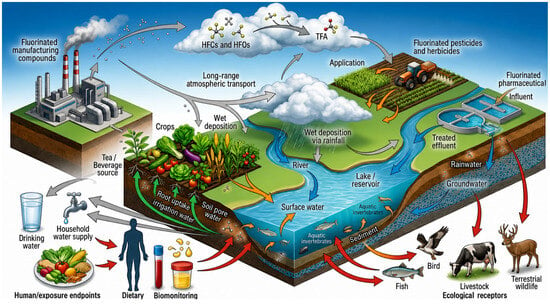
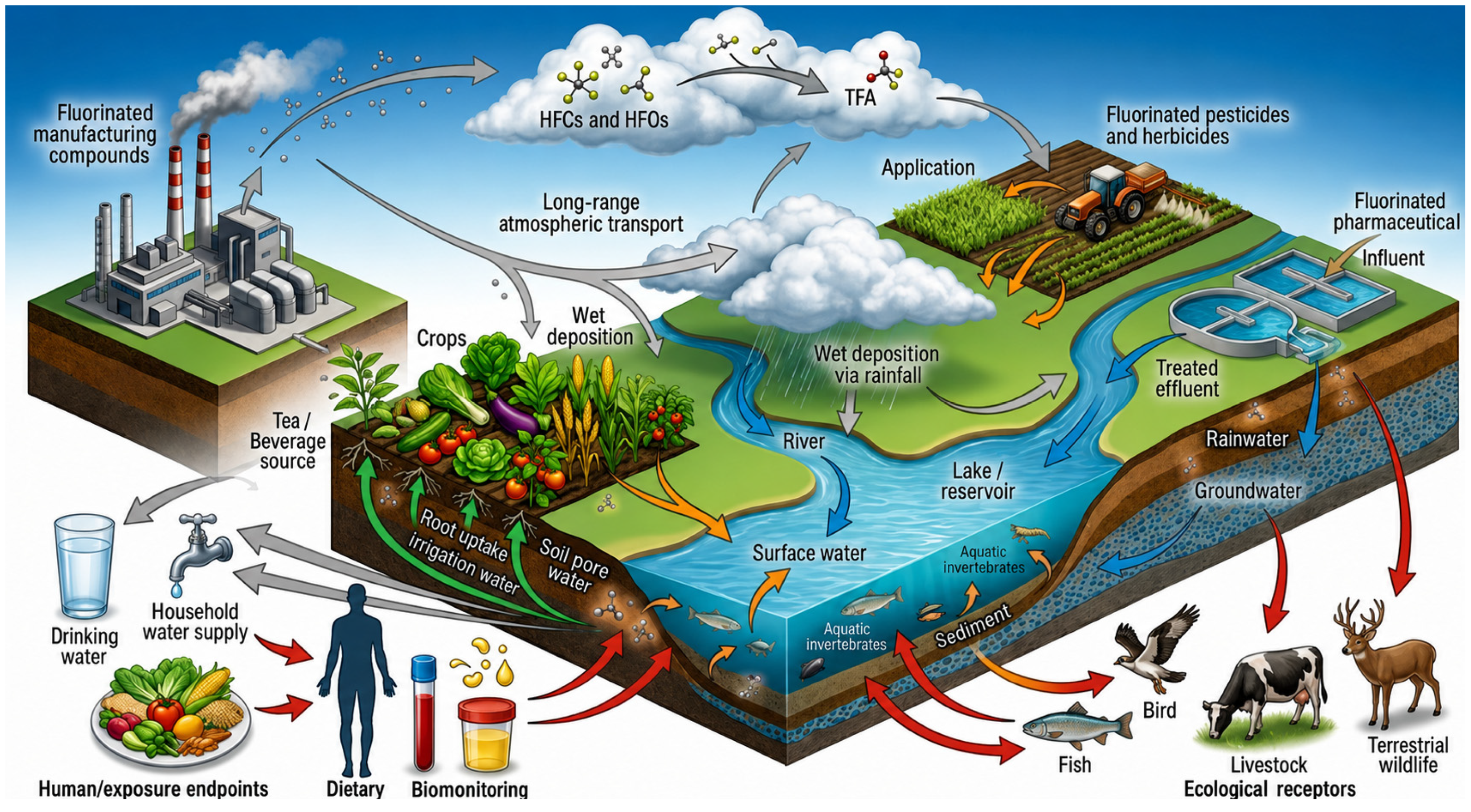
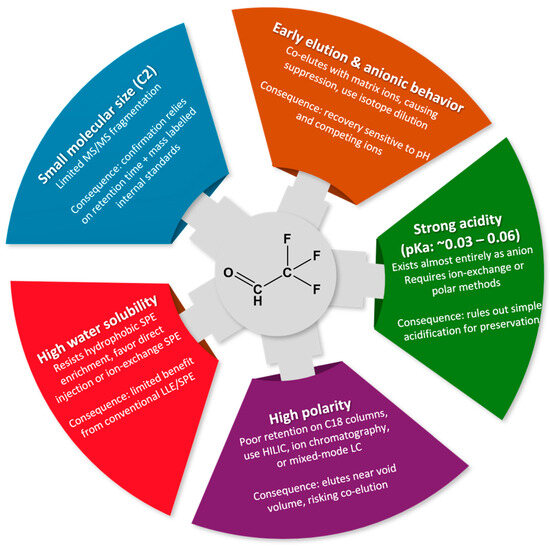
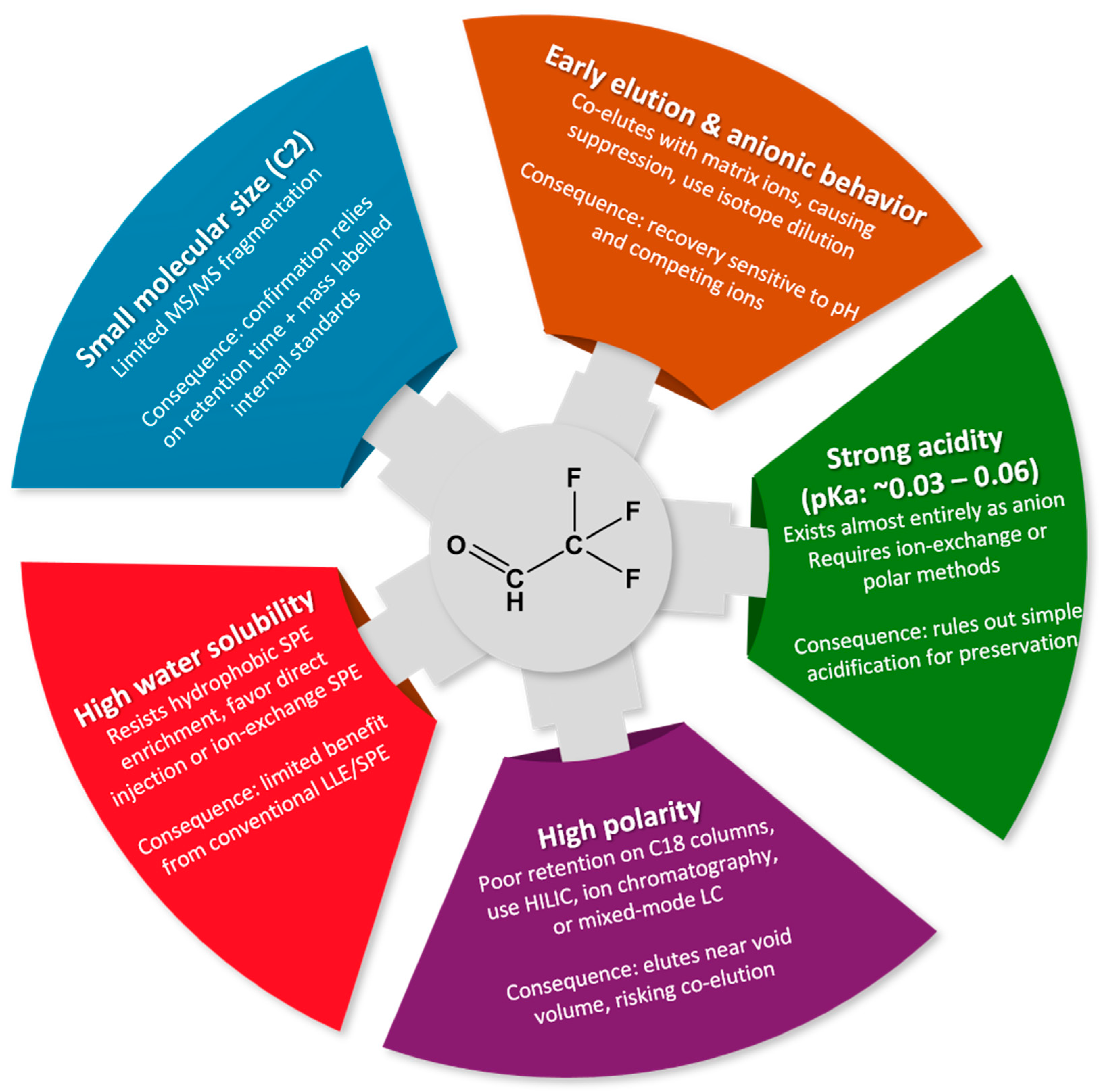
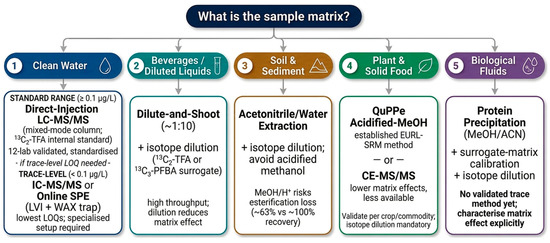
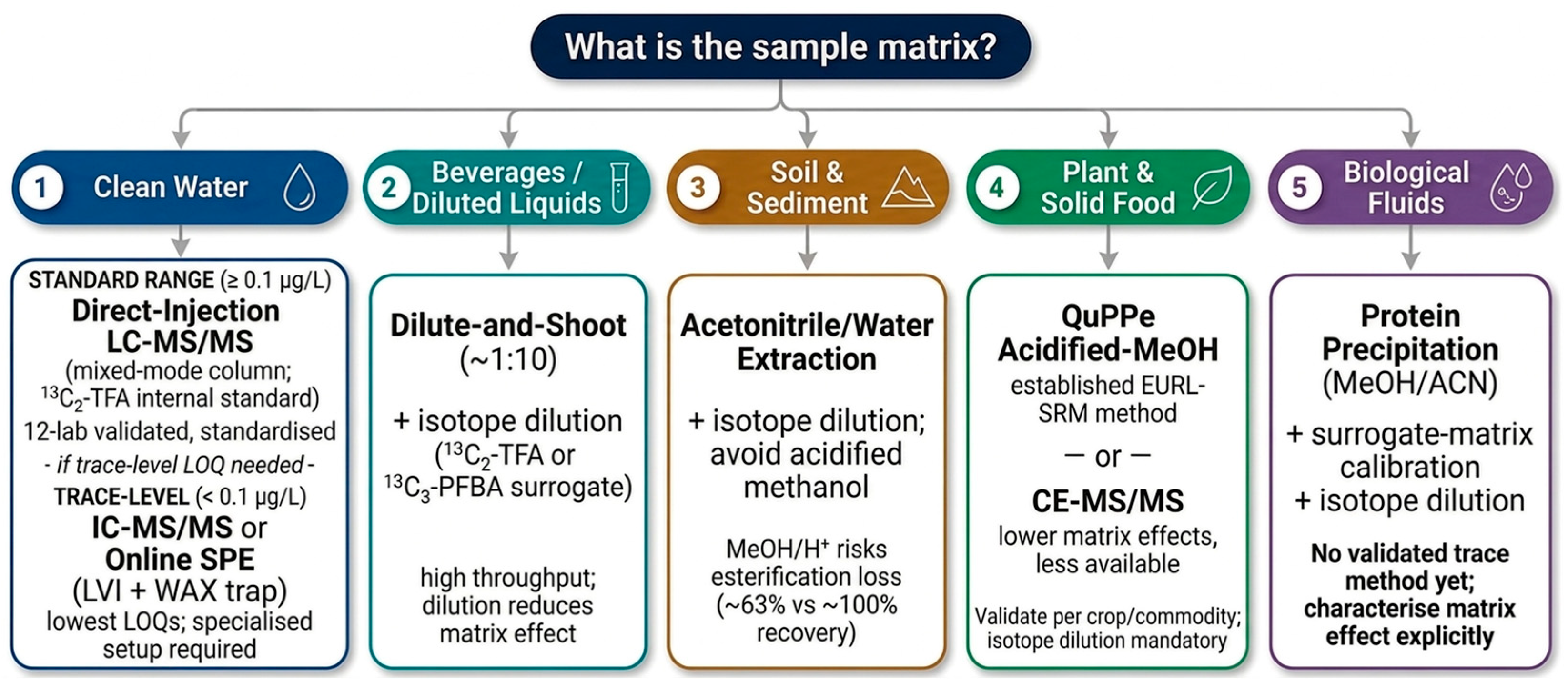

Disclaimer/Publisher’s Note: The statements, opinions and data contained in all publications are solely those of the individual author(s) and contributor(s) and not of MDPI and/or the editor(s). MDPI and/or the editor(s) disclaim responsibility for any injury to people or property resulting from any ideas, methods, instructions or products referred to in the content. |
© 2026 by the authors. Licensee MDPI, Basel, Switzerland. This article is an open access article distributed under the terms and conditions of the Creative Commons Attribution (CC BY) license.