


Abstract
This study focused on a comparative analysis of oxygen and hypochlorite ions as cathodic electron acceptors in microbial fuel cell (MFC) reactors treating wastewater containing methylene blue dye. One of the major factors influencing MFC performance is the choice of cathodic electron acceptor, which directly affects electrochemical efficiency and treatment performance. Based on the analysis, the hypochlorite ion-assisted MFC (MFC-H) performed better in its electrochemical properties, achieving a maximum power density of 115.2 mW m−2, which was much higher than that of the oxygen-cathode MFC (29.44 mW m−2). The MFC-H system also exhibited higher coulombic efficiency, a more positive cathode potential, and greater decolorization efficiency (88%) compared to the oxygen-cathode configuration (79%). The enhanced performance of the hypochlorite-based system indicates more effective electron transfer and faster cathodic reaction kinetics, thereby improving energy recovery and dye removal. These results demonstrate that hypochlorite can serve as an effective alternative cathodic electron acceptor in MFCs for treating dye-containing wastewater.
1. Introduction
The rapid industrialization and subsequent urbanization have increased wastewater production, especially from the textile, dyeing, paper, and chemical industries. This type of wastewater contains high concentrations of synthetic dyes and industrial chemicals, which are hazardous to aquatic environments and human health [1,2]. On the other hand, the growing global demand for energy and the continued reliance on fossil fuels have heightened concerns about energy insecurity and environmental degradation [3,4]. These challenges emphasize the need for technologies capable of addressing wastewater treatment while enabling energy recovery.
Conventional wastewater treatment methods, including primary settling, secondary biological treatment, and advanced polishing stages, are effective to varying degrees in removing suspended solids and biodegradable organic matter. However, secondary contaminants and refractory compounds, including synthetic dyes and emerging pollutants, are often resistant to removal during conventional biological treatment processes [5,6]. Advanced treatment technologies such as adsorption, membrane separation, and oxidation processes have been developed to overcome these limitations; however, these methods are often associated with high operational costs and may lead to the generation of secondary waste streams [7,8,9].
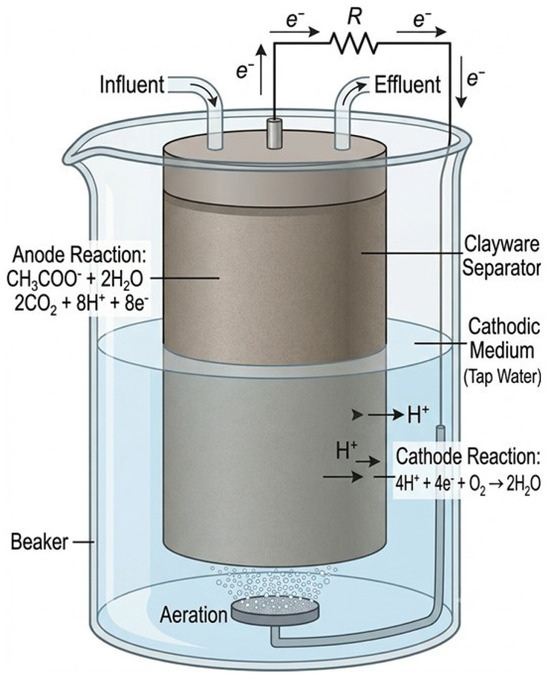
Microbial fuel cells (MFCs) have emerged as an innovative and sustainable technology capable of converting chemical energy stored in organic matter directly into electrical energy through microbial metabolism. In MFC systems, microorganisms oxidize organic substrates at the anode, releasing electrons that are transferred to the cathode through an external circuit, thereby generating electricity [10,11]. This capability enables MFCs to simultaneously achieve wastewater treatment and energy recovery, offering a potential alternative to energy-intensive conventional treatment technologies [12,13,14]. The reactions that occur in the anode and cathode are as follows:
Anode (oxidation):
CH3COO− + 2H2O → 2CO2 + 7H+ + 8e−
Cathode (Reduction):
O2 + 4H+ + 4e− → 2H2O + 4H+ + 4e−
The performance of MFCs is influenced by several operational parameters, including electrode materials, microbial community structure, substrate type, and the nature of the cathodic electron acceptor. Oxygen is the most commonly used electron acceptor due to its availability and environmental compatibility; however, its application is limited by its low solubility in aqueous systems (typically ~7–9 mg L−1 at room temperature and atmospheric pressure), slow oxygen reduction kinetics, and relatively high activation overpotentials [15,16,17]. These limitations often result in reduced power output and increased internal resistance in oxygen-based MFCs.
To overcome these challenges, alternative cathodic electron acceptors with higher redox potentials have been investigated, including ferricyanide, permanganate, nitrate, and hypochlorite ions. Several studies have reported improved cathodic reaction rates and enhanced power densities when such electron acceptors are employed, compared to oxygen-based systems [18,19,20]. For instance, ref. [18] reported power densities exceeding 100 mW m−2 using permanganate as the cathodic electron acceptor, substantially higher than those typically achieved with oxygen cathodes under comparable operating conditions. Among these alternatives, sodium hypochlorite has attracted interest due to its strong oxidative capability, relatively low cost, and high redox potential. Jadhav et al. (2014) demonstrated that hypochlorite-based MFCs achieved power densities approximately 2–3 times higher than those of oxygen-cathode systems, which was attributed to reduced activation losses and improved electron-transfer efficiency at the cathode [21,22]. The reaction that occurred in the Hypochlorite cathode is as follows:
Hypochlorite cathode: ClO− + H2O + 2e− → Cl− + 2OH−
Synthetic dyes used in industrial applications are well known for their toxic, mutagenic, and carcinogenic properties [23]. Approximately 10–20% of dyes used in textile processing are released into wastewater streams, leading to persistent environmental contamination. Methylene blue, a widely used dye in the textile industry, is chemically stable and resistant to degradation in conventional biological treatment systems, often remaining detectable even after secondary treatment processes. Methylene blue (MB), a cationic thiazine dye commonly used in the textile and medical industries, is a significant environmental pollutant due to its toxicity and recalcitrant nature [20,24,25]. This anaerobic reduction step is critical for initial dye decolorization, making MFCs particularly suitable for treating dye-laden wastewater and enabling controlled electron transfer.
Methylene blue is a 3,7-bis(dimethylamino) phenothiazine chloride [26]. The core structure consists of a heterocyclic phenothiazine ring. The decolorization process begins with the reduction of this phenothiazine chromophore. Leuco-methylene blue (LMB) Formation. The primary step in decolorization is the 2-electron, 1-proton reduction of the blue MB cation into the colorless, non-fluorescent Leuco-methylene blue (LMB) [26,27].
Recent advances in water treatment technologies have highlighted the potential of in situ oxidant generation and light-assisted catalytic oxidation for the effective removal of refractory organic pollutants. Such approaches offer enhanced degradation performance while limiting the production of harmful by-products. Therefore, combining electrochemical methods with advanced oxidation processes has become an attractive and sustainable strategy for wastewater remediation.
Earlier studies have reported that hypochlorite functions as an efficient cathodic electron acceptor, enhancing the electrochemical performance of microbial fuel cells relative to conventional oxygen cathodes [22]. Nevertheless, there remains a lack of a comprehensive understanding of how cathodic electron acceptor selection affects dye removal efficiency, effluent detoxification, microbial activity, and electron recovery during the treatment of methylene blue-contaminated wastewater.
Although previous studies have demonstrated improved power generation with hypochlorite as a cathodic electron acceptor, most investigations have focused primarily on electrochemical performance, with limited attention to comprehensive treatment efficiency, coulombic recovery, microbial activity, and toxicity reduction under comparable operating conditions. Therefore, a systematic comparison of oxygen- and hypochlorite-based cathodic systems remains necessary, particularly for synthetic dye-containing wastewater. Accordingly, the objective of this study is to compare oxygen and sodium hypochlorite as cathodic electron acceptors in microbial fuel cells treating methylene blue-containing synthetic wastewater, with emphasis on electricity generation, coulombic efficiency, electrode potential behavior, dye decolorization, toxicity reduction, microbial growth, and overall treatment efficiency, thereby providing a more holistic assessment of both environmental remediation and bioelectrochemical performance.
2. Materials and Methods
2.1. Microbial Fuel Cell Setup
A two-chamber microbial fuel cell was assembled using two acrylic compartments, each with a total effective volume of 200 mL. The compartments were separated by a proton-exchange membrane (PEM), with clayware used as the PEM, which was pre-soaked in deionized water prior to assembly to ensure ionic conductivity. Graphite felt electrodes with a surface area of 140 cm2 were used as the anode and 250 cm2 as the cathode materials, which had a spacing distance of 1 cm. About 1000 mL of catholyte was placed in the cathode region. Before use, the electrodes were rinsed with deionized water to remove surface impurities. The general schematic representation of a MFC is depicted in Figure 1.
Figure 1.
Schematic representation of microbial fuel cell.
The current collectors were made of titanium wires, which were securely attached to the graphite felt electrodes to minimize contact resistance. The anode and cathode chambers were connected through an external circuit using a fixed external resistance, allowing continuous current flow during operation. All joints and connections were sealed to prevent leakage and oxygen intrusion into the anode chamber.
2.2. Composition of Inoculum Culture Medium and MFC Operation
The inoculum used was anaerobic sludge obtained from the municipal wastewater treatment plant. The sludge was acclimated under anaerobic conditions prior to inoculation and then added at a concentration of 20% (v/v) to the anode chamber. Synthetic wastewater with a COD of 3200 mg L−1, containing acetate (spectrum reagents and chemicals Pvt. Ltd. Edayar, Cochin, India) was prepared as the anolyte. A phosphate-buffered medium was used to provide buffering capacity and stable ionic strength, following commonly used MFC synthetic media reported in the literature [28]. Specifically, a 50 mM phosphate-buffered solution (PBS) was prepared (per 1 L) using 4.58 g Na2HPO4, 2.45 g NaH2PO4·H2O, 0.31 g NH4Cl, and 0.13 g KCl (pH ~7.0), and then amended with acetate as the carbon source. The medium was also supplemented with a trace mineral solution (e.g., 12.5 mL L−1) and a vitamin solution (e.g., 5 mL L−1) (all the chemicals were purchased from Spectrum reagents and chemicals Pvt. Ltd Edayar, Cochin) as is commonly practiced in MFC studies to support stable microbial activity [29,30]. Acetate concentration was selected to achieve the target COD (3200 mg L−1), and the anolyte pH was adjusted to near neutral before use. Methylene blue dye was also added to the anolyte at an initial concentration of 25 mg L−1 for the experiment.
The MFCs were operated in batch mode at room temperature (28 ± 2 °C). Anaerobic conditions in the anode chamber were maintained throughout the experimental period by limiting headspace exposure and avoiding agitation that could introduce oxygen. The cathode chamber was open to air for oxygen-based MFCs or filled with a hypochlorite-containing catholyte for hypochlorite-assisted MFCs. All experiments were performed in triplicate (n = 3), and the results are presented as mean ± standard deviation (SD). Statistical comparisons between MFC-O and MFC-H treatments were conducted using a two-tailed Student’s t-test in Microsoft Excel (Version 2024)/OriginPro (Version 2026)/SPSS (Version 30). Differences were considered statistically significant at p < 0.05. Statistical significance is indicated in the figures as * p < 0.05 and ** p < 0.01.
An external resistance of 100 Ω was applied during normal operation. Voltage output was recorded using a digital multimeter at regular time intervals (typically every 30–60 min) until a stable voltage profile was achieved. A stable operating condition was defined as a voltage variation of less than 5% across three consecutive measurements, and these steady-state values were used for subsequent electrochemical analysis. Each batch cycle was run until a noticeable voltage decline was observed, indicating substrate depletion. ORP measurements were conducted in the anode chamber at least once per batch cycle throughout the experimental period.
2.3. Catholyte Preparation and Hypochlorite Use
Sodium hypochlorite (NaOCl) solution was used as the cathodic electron acceptor in the hypochlorite-assisted microbial fuel cell (MFC-H). Commercial-grade sodium hypochlorite solution was diluted with deionized water to prepare catholyte solutions of varying concentrations. Hypochlorite concentrations ranging from 50 to 300 mg L−1 (expressed as free chlorine) were prepared fresh prior to each experimental run to minimize degradation and loss of oxidative strength.
The catholyte was added to the cathode chamber at the beginning of each batch cycle, and the cathode chamber was gently mixed manually before operation to ensure uniform concentration. No additional buffering agents were added to the catholyte, and pH changes were monitored during operation. The influence of hypochlorite concentration on power generation, electrochemical performance, and wastewater treatment efficiency was evaluated by operating all MFCs under identical conditions, with only the catholyte composition varied between experiments.
2.4. Performance Analysis
Current and power densities were calculated from the measured voltage values and external resistance, using Ohm’s law (I = V/R), and normalized to the anode surface area. Polarization and power density curves were obtained by varying the external resistance from 10 Ω to 10 kω, allowing sufficient time at each resistance to stabilize the voltage after the MFCs reached stable operation. Voltage stabilization was confirmed when variation remained below 5% over consecutive readings.
The internal resistance of the system was determined from the slope of the linear (ohmic) region of the polarization curve. Electrochemical characterization using cyclic voltammetry (CV) and linear sweep voltammetry (LSV) was conducted to assess redox behavior and electron-transfer characteristics, with measurements performed after the MFCs reached steady-state conditions. CV was carried out over a potential window of −0.95 V to +0.95 V (vs. Ag/AgCl) at a scan rate of 10 mV s−1, a range commonly employed in bioelectrochemical systems to resolve redox-active species without inducing non-faradaic artifacts. LSV was conducted from the open-circuit potential to 0.95 V (vs. Ag/AgCl) at the same scan rate (10 mV s−1) to evaluate cathodic and anodic current responses under controlled polarization. The CV and LSV were performed by taking the anode as the working electrode, the cathode as the counter electrode, and Ag/AgCl as the reference electrode. All CV and LSV measurements were performed under identical conditions for both oxygen- and hypochlorite-based MFCs to ensure direct comparability.
Coulombic efficiency (CE) was calculated to evaluate the fraction of electrons recovered as electrical current relative to the theoretical electrons released from substrate oxidation. CE was determined using the following expression:
where M is the molar mass, ∫ I dt is the total coulombs measured over the batch cycle, F is Faraday’s constant (96,485 C mol−1 e−), b is the number of electrons exchanged per mole of oxygen (b = 4), ΔCOD is the change in COD (g L−1), and V is the anode chamber volume (L). Considering an initial COD concentration of 3200 mg L−1 and a COD removal efficiency of 86%, the corresponding COD removal was 2752 mg L−1. Coulombic efficiency was calculated using the total electrical charge recovered during the operational cycle together with the measured COD removal according to the equation. This approach was applied consistently for all experimental conditions to determine the fraction of electrons recovered as electrical current, relative to the theoretical electrons released from substrate oxidation.
CE (%) = M (∫ I dt)/(F × b × ΔCOD × V) × 100
Chemical oxygen demand (COD) was measured using the standard dichromate closed reflux method, following established protocols [31]. Samples were filtered where necessary to remove suspended biomass prior to analysis, and COD removal efficiency was calculated based on the difference between initial and final COD concentrations.
Dye decolorization efficiency was determined spectrophotometrically by measuring absorbance at 668 nm, corresponding to the maximum absorption wavelength of methylene blue. Prior to analysis, samples were centrifuged to remove suspended solids and microbial cells, ensuring accurate absorbance measurements. Centrifuged samples were measured promptly after collection to minimize air re-oxidation of LMB. A calibration curve was prepared using standard methylene blue solutions, and dye removal efficiency was calculated using the ratio of initial and final absorbance values as follows,
(Di − Df/Di) × 100, whereas Di and Df are initial and final values.
COD and dye removal efficiencies were calculated as percentages using initial and final concentrations. All experiments were conducted in triplicate, and mean values with standard deviations were reported to ensure data reliability and reproducibility.
To find the amount of total chloride present in the anolyte of the test MFC’s, the Mohr Method was employed to check that any crossed-over hypochlorite would be rapidly reduced to chloride within the complex, reductive environment of the active anolyte. For this, 50 mL of anolyte from each duplicate test MFC was transferred into 2 Falcon tubes, and 500 μL of sodium hypochlorite was added to each. Also, MB dye-containing SWW (synthetic wastewater) was taken in another Falcon tube and added with the same amount of sodium hypochlorite. The tubes were then incubated for 48 h. For the Mohr Method, 50 mL of 0.02 M silver nitrate was prepared. Potassium chromate acts as an indicator, and the samples were then titrated with silver nitrate until the color changed from teal blue to cyan.
The DREAM assay coefficient indicates the extent of microbial electron transfer present in the sample. A total of 2 mL of methylene blue-containing wastewater sample was taken in a cuvette. The reduction in MB was measured at a wavelength of 660 nm for a period of 15 min at 10 s intervals using a UV–Vis Spectrophotometer (manufactured by Shimadzu corporation, Kyoto, Japan, Model-UV1800) from. The control consisted of autoclaved wastewater samples. The extent of reduction was quantified by the DREAM ASSAY coefficient calculated as follows:
A0 − AI/A0, where A0 and AI are the initial and final absorbances.
3. Results and Discussion
3.1. The Generation of Electricity Using Microbial Fuel Cells
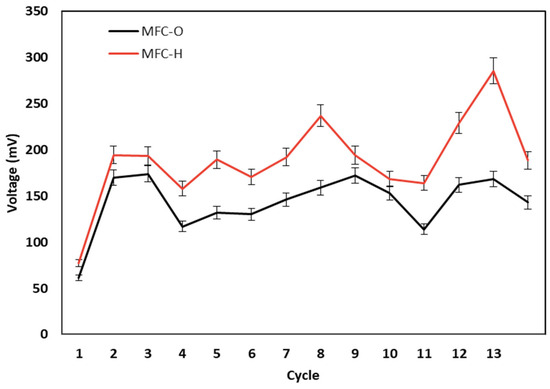
The performance of microbial fuel cells (MFCs) operated with oxygen (MFC-O) and sodium hypochlorite (MFC-H) as cathodic electron acceptors was evaluated by monitoring voltage generation over time. The variation in cell voltage during the operational cycle is shown in Figure 2. MFC configurations exhibited a gradual increase in voltage during the initial operating period, indicating successful acclimation of electroactive microbial communities at the anode.
Figure 2.
Line graph representing the daily voltage readings throughout the MFC operation.
The MFC-H system generally produced a higher voltage output than the control MFC-O throughout the experimental cycle, with the exception of Days 3–4, when values were comparable or transiently reversed. From the voltage profile shown in Figure 2, the hypochlorite-assisted MFC reached a maximum steady-state voltage of approximately 290 mV, whereas the oxygen-cathode MFC stabilized at a lower voltage of approximately 165 mV. The maximum open-circuit voltage (OCV) generated by the respective cells is 0.62–0.65 V for MFC-H and 0.29–0.32 V for MFC-O. In addition, the time required to reach a stable voltage was shorter for MFC-H, suggesting a faster establishment of effective electron-transfer pathways. The higher and more stable voltage output observed in MFC-H can be attributed to more efficient cathodic consumption of electrons, which minimizes electron accumulation at the anode and supports continuous microbial oxidation of the substrate. In contrast, the oxygen-based MFC exhibited lower and more fluctuating voltage output, which is consistent with the limited solubility of oxygen in aqueous systems (~7–9 mg L−1 at ambient conditions) and the intrinsically slow kinetics of the oxygen reduction reaction (ORR). Such voltage fluctuations and lower steady-state values are commonly reported for oxygen-cathode MFCs operating without catalysts or forced aeration [15].
The enhanced voltage generation in MFC-H is further supported by the higher redox potential of the hypochlorite/chloride couple (E° = +0.89 V) relative to oxygen at neutral pH. The observed voltage enhancement of approximately 1.7–1.8 times that of the oxygen-cathode system aligns well with previously reported hypochlorite-assisted MFC studies. For instance, ref. [22] reported approximately 2–3-fold higher voltage and power outputs when hypochlorite was used as the cathodic electron acceptor rather than oxygen under comparable operational conditions. The voltage values obtained in the present study, therefore, fall within the lower-to-mid range of values reported in the literature, reflecting realistic performance under laboratory-scale conditions.
Moreover, the improved voltage stability in MFC-H indicates better coupling between anodic microbial metabolism and cathodic electron acceptance, which is essential for sustained electricity generation. Efficient cathodic kinetics reduce anodic overpotential and alleviate electron backpressure on the biofilm, thereby supporting stable microbial activity and continuous substrate oxidation. Similar relationships between enhanced cathodic performance and stabilized anodic bioelectrochemical activity have been reported in earlier microbial fuel cell studies [32]. The magnitude of the improvement observed in this study is consistent with reported trends and is primarily attributable to enhanced cathodic reaction kinetics rather than to changes in reactor configuration or operating conditions. The ORP values remained consistently below −200 mV, confirming the maintenance of strictly anaerobic conditions in the anode chamber during all operational cycles.
3.2. Polarization Behavior and Power Density Output
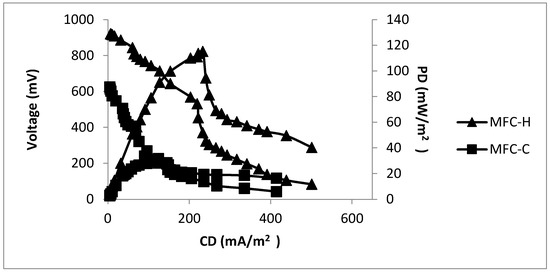
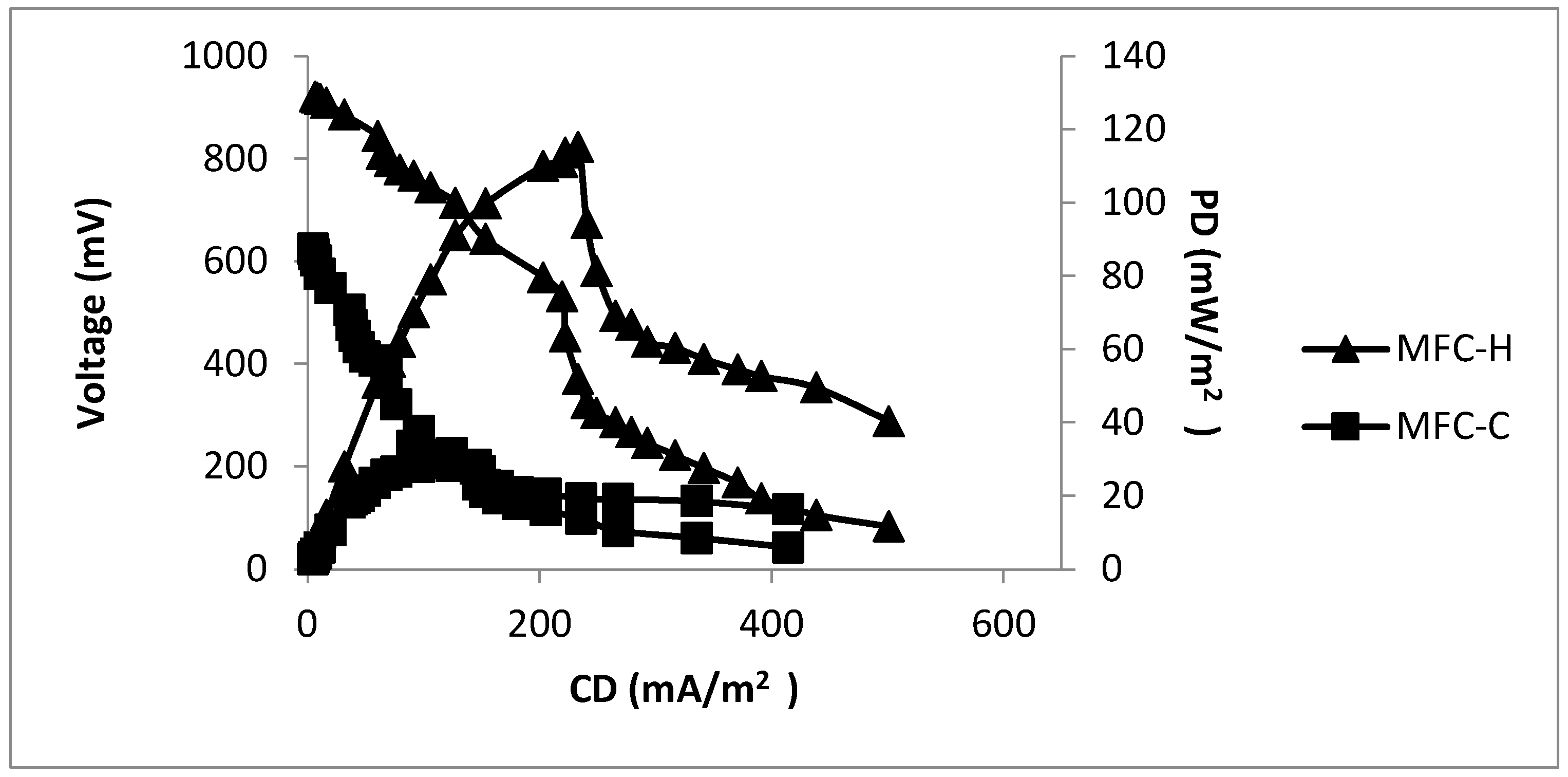
To further evaluate the electrochemical performance of the microbial fuel cells, polarization and power density analyses were conducted for both the oxygen-cathode MFC (MFC-O) and the hypochlorite-assisted MFC (MFC-H). The corresponding polarization and power density curves are presented in Figure 3. Distinct differences in both voltage decay profiles and power output were observed between the two systems, indicating the strong influence of the cathodic electron acceptor on overall cell performance.
Figure 3.
Polarization curve for MFC’s with hypochlorite (MFCH) and oxygen (MFCC) as the cathodic electron acceptors with sludge as the inoculum.
The MFC-H system achieved a maximum power density of 115.2 mW m−2, which was 3.9 times higher than that obtained for the oxygen-based system (29.44 mW m−2). This substantial increase in power output reflects improved electron-transfer efficiency at the cathode and is consistent with the higher steady-state voltage observed for MFC-H. The power density curve of MFC-H also exhibited a broader peak, suggesting that the system could sustain higher current densities over a wider operating range than MFC-O.
Polarization curve analysis further revealed that the voltage losses in MFC-H were significantly lower across the activation and ohmic regions. In particular, the initial steep voltage drop at low current densities, commonly associated with the polarization curve profile, is consistent with lower activation overpotential in MFC-H than for MFC-O, though electrochemical impedance spectroscopy (EIS) would be required to quantify this component independently, indicating reduced activation energy barriers for the cathodic reduction reaction in the presence of hypochlorite. The voltage of 901 mV shown in Figure 3 is indeed from the MFC-H system, measured at a maximum resistance of 10,000 Ω at the start of the polarization experiment. In contrast, the oxygen-cathode MFC exhibited a steeper voltage decline in the low-current region, suggesting higher activation overpotentials due to sluggish oxygen-reduction kinetics under passive aeration conditions. At intermediate current densities, the slope of the polarization curve for MFC-H was less steep than that of MFC-O, indicating lower ohmic overpotential. The reduced ohmic losses are consistent with the lower internal resistance estimated for MFC-H (130 Ω) from the linear region of the polarization curve, compared with MFC-O (160 Ω), with R2 values of 0.98 and 0.97, respectively. At higher current densities, both systems exhibited voltage losses indicative of mass transport limitations; however, the onset of mass-transfer overpotential occurred at higher current densities in MFC-H than in MFC-O. This suggests that hypochlorite reduction sustained higher electron fluxes before becoming diffusion-limited, whereas oxygen reduction in the control system was constrained earlier due to oxygen solubility and transport limitations.
The improved polarization behavior and reduced overpotentials observed in MFC-H can be attributed to the higher redox potential and faster hypochlorite reduction kinetics, which reduce cathodic activation losses and facilitate rapid electron consumption. Similar reductions in cathodic overpotential and corresponding improvements in power density have been reported in hypochlorite-based MFCs by [22], who observed 2–3-fold increases in power output relative to oxygen-cathode systems. The power density achieved in the present study, therefore, falls well within the range reported for laboratory-scale hypochlorite-assisted MFCs.
The enhanced performance of MFC-H can be attributed to the higher standard reduction potential of the hypochlorite/chloride redox couple and the faster cathodic reaction kinetics compared with oxygen reduction. The improved cathodic electron acceptance reduced activation overpotentials, facilitated continuous electron withdrawal from the anodic biofilm, and enhanced overall electrochemical efficiency, leading to significantly higher power generation.
3.3. Application in Electrochemical Characterization
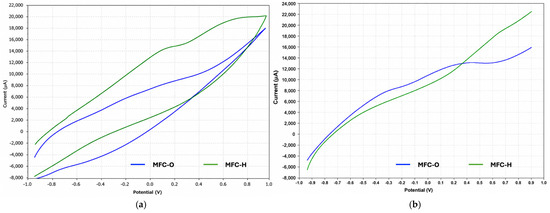
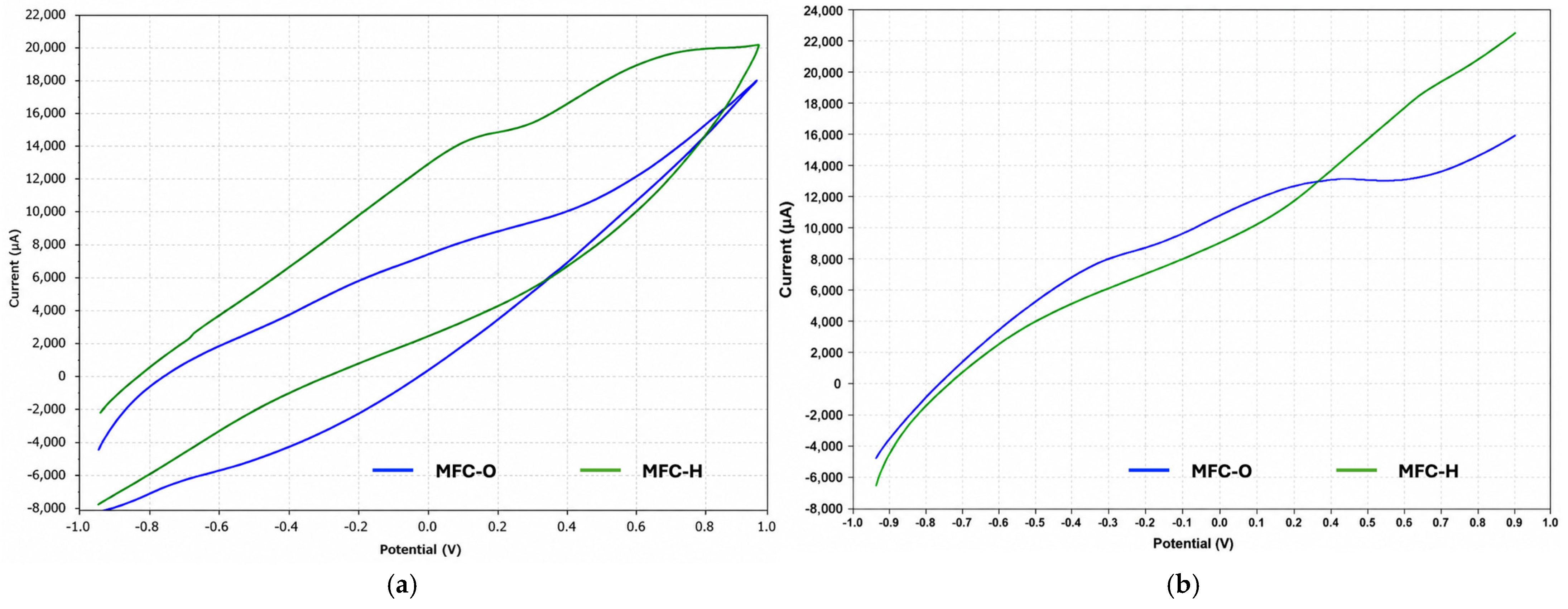
Cyclic voltammetry (CV) and linear sweep voltammetry (LSV) were employed to further investigate the redox behavior and electron transfer characteristics of the microbial fuel cell systems. The CV profiles of the oxygen-cathode MFC (MFC-O) and the hypochlorite-assisted MFC (MFC-H) are shown in Figure 4a, while the corresponding LSV curves are presented in Figure 4b.
Figure 4.
Graph indicates the cyclic voltammetry analysis: (a) CV and (b) LSV.
As shown in Figure 4a, both MFC systems exhibited broad, quasi-rectangular CV profiles with no sharply defined redox peaks, characteristic of mixed-culture electroactive biofilms in which multiple redox-active components contribute to extracellular electron transfer rather than a single dominant redox mediator. Similar CV shapes have been widely reported for acetate-fed mixed-community MFC anodes and are often attributed to the collective contribution of outer-membrane cytochromes, redox proteins, and capacitive biofilm behavior rather than discrete soluble mediators [33]. The background (capacitive) current, estimated from the mid-potential region where no distinct peak is observed, was consistently higher for MFC-H than for MFC-O. From the graphical extraction, the background current at approximately 0.0 V was ±8–9 mA for MFC-H, compared to ±5–6 mA for MFC-O. The higher background current in MFC-H suggests an increased electroactive surface area and/or enhanced biofilm capacitance, which are commonly associated with improved electron storage and release capabilities at the biofilm–electrode interface.
Although no sharp anodic or cathodic peaks were evident, the maximum anodic current at the positive vertex potential (~+0.95 V) reached approximately 19–21 mA (21,000 µA) for MFC-H, compared to 17–18 mA for MFC-O. Similarly, the maximum cathodic current at the negative vertex potential (~−0.95 V) was approximately −6 to −7 mA for MFC-H and −4 to −5 mA for MFC-O. These higher absolute current values across the entire potential window indicate enhanced faradaic response and lower overall polarization losses in the hypochlorite-assisted system.
The absence of well-defined peak separation (ΔEp) suggests that electron transfer in both systems is likely dominated by surface-confined or distributed redox processes, rather than diffusion-controlled reversible redox couples. Such behavior has been frequently reported in MFC anodes colonized by Geobacter-dominated or mixed anaerobic communities, where CV responses are often broad and peak-less due to overlapping redox centers operating over a wide potential range [34]. The higher current envelope observed for MFC-H indicates that improved cathodic electron acceptance indirectly enhances anodic redox turnover, reducing electron accumulation within the biofilm.
The LSV curves shown in Figure 4b further support the enhanced electrochemical performance of the hypochlorite-assisted MFC. The MFC-H system exhibited a steeper current–potential slope and higher current density across most of the scanned potential range compared to the oxygen-cathode system. From the LSV data, the onset potential for the significant current increase in MFC-H occurred at approximately −0.75 to −0.70 V, whereas MFC-O showed a slightly delayed onset at approximately −0.65 V, indicating a lower activation overpotential for the hypochlorite-assisted system. At an intermediate potential of approximately 0.0 V, the current generated by MFC-H was approximately 8–9 mA, compared to 6–7 mA for MFC-O, demonstrating enhanced charge transfer kinetics under hypochlorite-assisted operation.
At higher applied potentials (~+0.95 V), MFC-H reached a current of approximately 23–24 mA (24,000 µA), while MFC-O plateaued at around 16–17 mA, suggesting a higher limiting current and delayed mass transport limitation in the hypochlorite-based system. This behavior is consistent with the polarization analysis, in which MFC-H exhibited reduced activation and mass-transport overpotentials relative to the oxygen-cathode MFC.
The CV and LSV results collectively indicate that the hypochlorite-assisted MFC exhibits enhanced electrochemical activity characterized by higher background currents, larger current envelopes, and reduced activation losses, though electrochemical impedance spectroscopy (EIS) would be required to quantify this component independently Rather than producing sharp redox peaks, the observed CV profiles reflect capacitive-dominated and surface-confined electron transfer, which is typical for well-developed electroactive biofilms in microbial fuel cells.
Comparable CV characteristics have been reported for acetate-fed MFCs inoculated with anaerobic sludge or Geobacter-enriched communities, where broad CV responses and elevated background currents were correlated with improved power output and lower internal resistance [35]. The current magnitudes observed in the present study fall within the range reported for laboratory-scale MFC anodes operating under similar scan rates and potential windows, supporting the validity of the observed trends.
3.4. Decolorization of Methylene Blue Dye
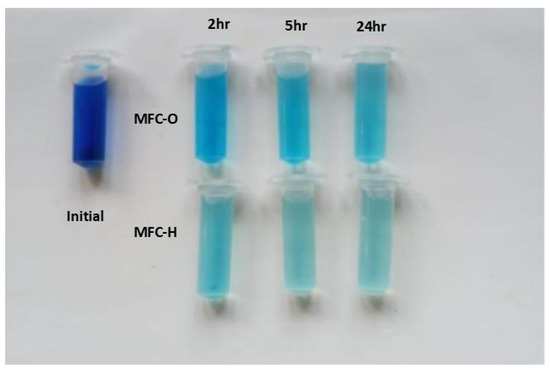
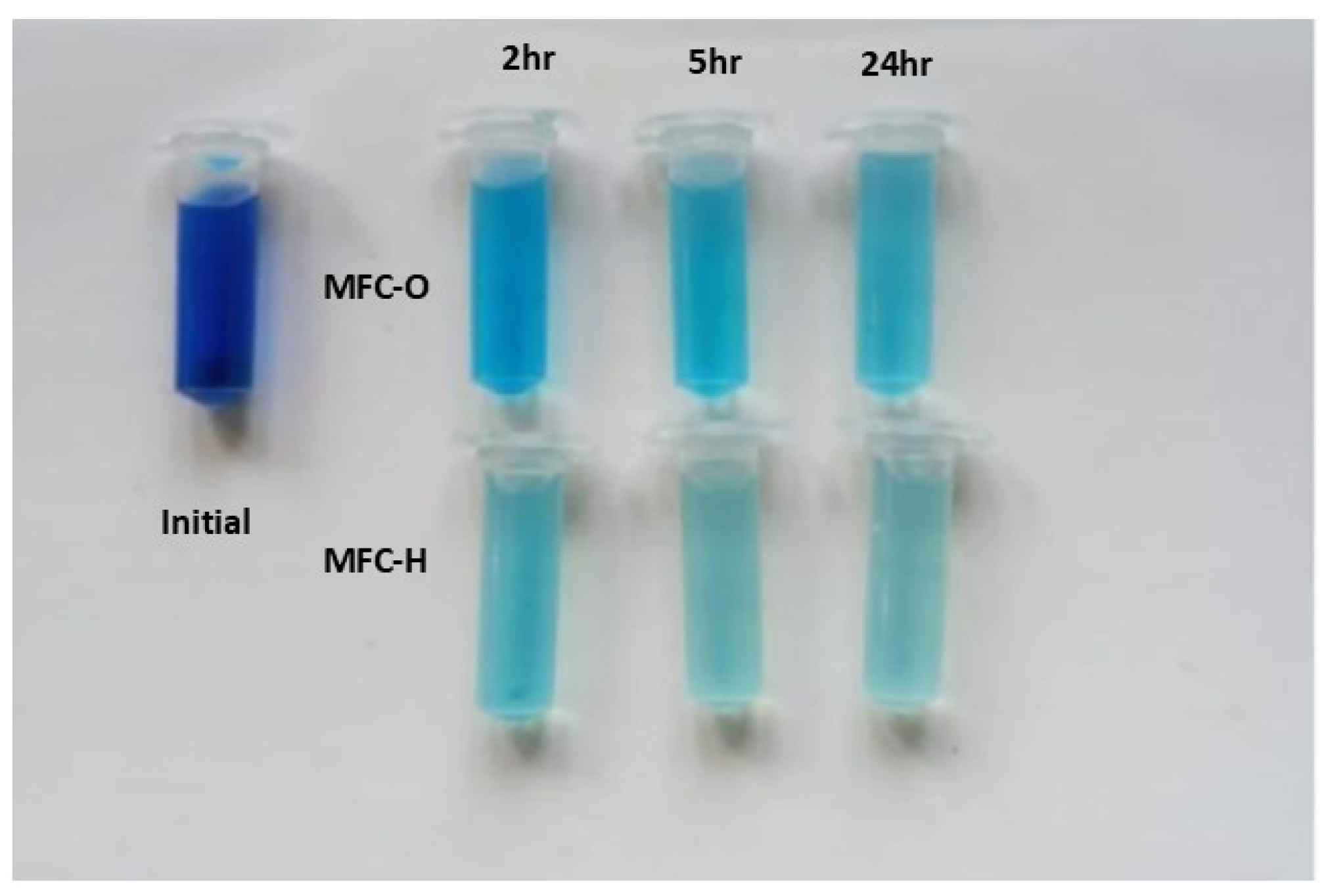
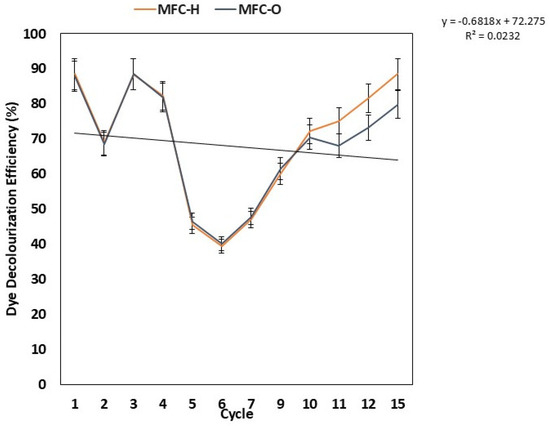
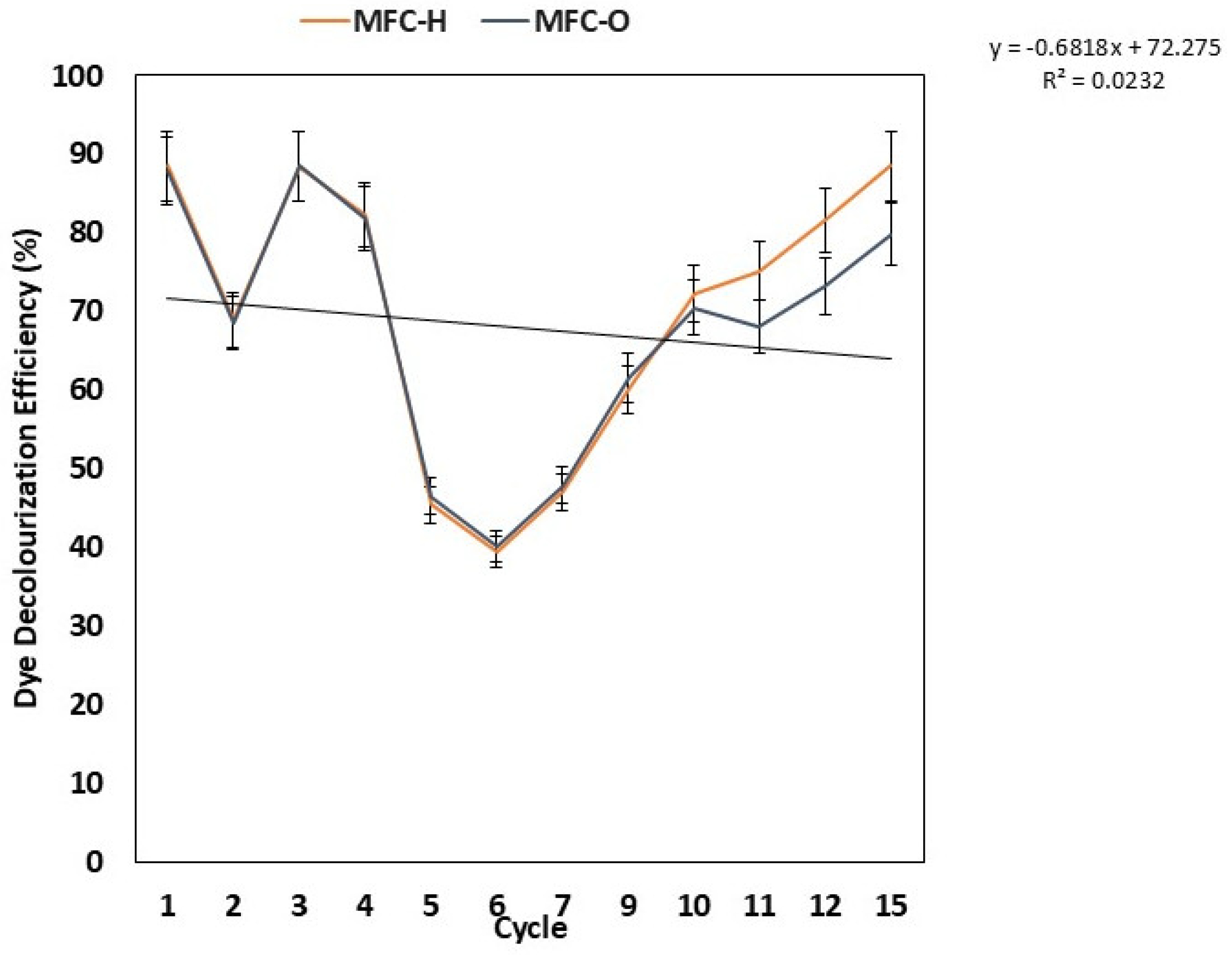
The dye removal performance of the microbial fuel cell systems was evaluated through both visual observation and quantitative analysis of methylene blue decolorization. The visual changes in dye intensity during treatment are shown in Figure 5, while the corresponding quantitative decolorization efficiencies are presented in Figure 6.
Figure 5.
Samples of anolyte taken to check the methylene blue dye decolorization within the MFC.
Figure 6.
Line graph representing the dye decolorization efficiency in control and test MFCs.
A noticeable reduction in color intensity was observed in both MFC configurations over the operational period; however, the hypochlorite-assisted MFC (MFC-H) exhibited faster and more pronounced decolorization compared to the oxygen-cathode system (MFC-O). Quantitative analysis revealed that MFC-H achieved a significantly higher methylene blue decolorization efficiency (88 ± 2.1%) than MFC-O (79 ± 2.8%) (p < 0.05), demonstrating the positive effect of hypochlorite-assisted cathodic reactions on dye removal performance.
The enhanced decolorization observed in MFC-H can be attributed to improved electron availability and transfer efficiency at the anode, which is critical for the reductive transformation of dye molecules. In microbial fuel cells, methylene blue decolorization primarily occurs through reductive cleavage of Phenothiazine and transformation reactions mediated by anaerobic microbial metabolism, rather than direct oxidation at the cathode. The hypochlorite-assisted system facilitates more efficient electron withdrawal at the cathode, thereby reducing electron accumulation within the anode biofilm and sustaining continuous reductive activity.
Although hypochlorite is a strong oxidant, its role in the present system is confined to the cathodic compartment, and the anode chamber remained strictly anaerobic, ensuring that dye decolorization was dominated by biological reductive processes rather than chemical oxidation. This is supported by the observation that decolorization occurred progressively over time rather than instantaneously, which is characteristic of microbial-mediated dye transformation. Similar behavior has been reported in previous MFC studies treating phenothiazine dyes, in which enhanced electron-transfer efficiency led to higher decolorization rates without direct chemical oxidation of the dye [20]. Some studies conducted in MFC with different cathode acceptors and their efficiencies are depicted in Table 1.
Table 1.
Comparison table of some studies conducted in MFC with different cathode acceptors and their efficiencies.
The decolorization efficiency achieved in the present study (88 ± 2.1% for MFC-H) is within the upper range reported for laboratory-scale MFC systems treating methylene blue and related dyes, which typically report decolorization efficiencies between 60 and 90% depending on reactor configuration, dye concentration, and operational conditions. Oxygen-cathode systems often exhibit lower decolorization efficiencies due to electron competition between dye reduction and oxygen reduction, which can divert electrons away from reductive dye-transformation pathways. During the analysis, the MFC’s decolorization efficiency for methylene blue was initially high. It may be that, initially, the dye concentration was more enhanced due to electron shuttling by the exogenous activity of methylene blue, which can efficiently transfer electrons from bacteria to the anode, resulting in the reduction in the dye. At the same time, some part of the dyes may be physically absorbed by the carbon felt. However, at mid-cycle, a reduction in dye decolorization from 80% to 40% has been observed in both MFCs. The reason for such a reduction may be the intermediate accumulation of decolorization products that may affect the uniform growth of microorganisms. Regarding the mid-cycle increase in methylene blue (MB) concentration, accumulation is observed during the mid-phase of the cycle. As the concentration of dyes increases, the pressure offered may be high [36]. During the final cycles, the dye decolorization ability increases. A possible reason is that bacteria resistant to MB toxicity or capable of using MB as a terminal electron acceptor proliferate, leading to a more robust “decolorizing” biofilm. The bacteria acclimatized to the present environment also begin to adapt to the byproducts. Some studies have shown that the intermediate products formed can function as electron shuttles, facilitating faster electron transfer between the bacteria and the remaining dye molecules [37].
Furthermore, the improved dye removal performance in MFC-H aligns with the higher coulombic efficiency and power density observed in earlier sections, indicating a strong coupling between electron recovery and contaminant transformation. This relationship suggests that enhanced cathodic kinetics indirectly promote more efficient anodic dye reduction, reinforcing the role of optimizing cathodic electron acceptors in improving overall MFC treatment performance. The progressive and time-dependent nature of decolorization is consistent with biological reductive transformation; however, abiotic contributions from hypochlorite cannot be fully excluded in the absence of a sterile chemical control.
3.5. COD Removal and Coulombic Efficiency
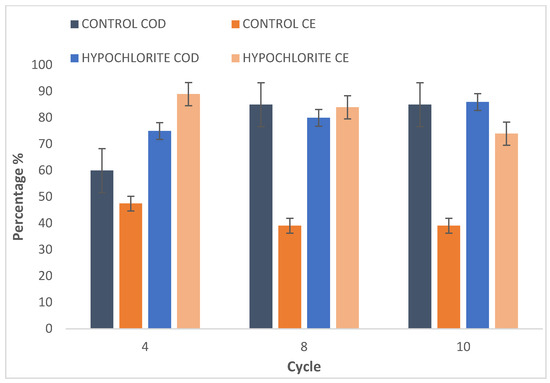
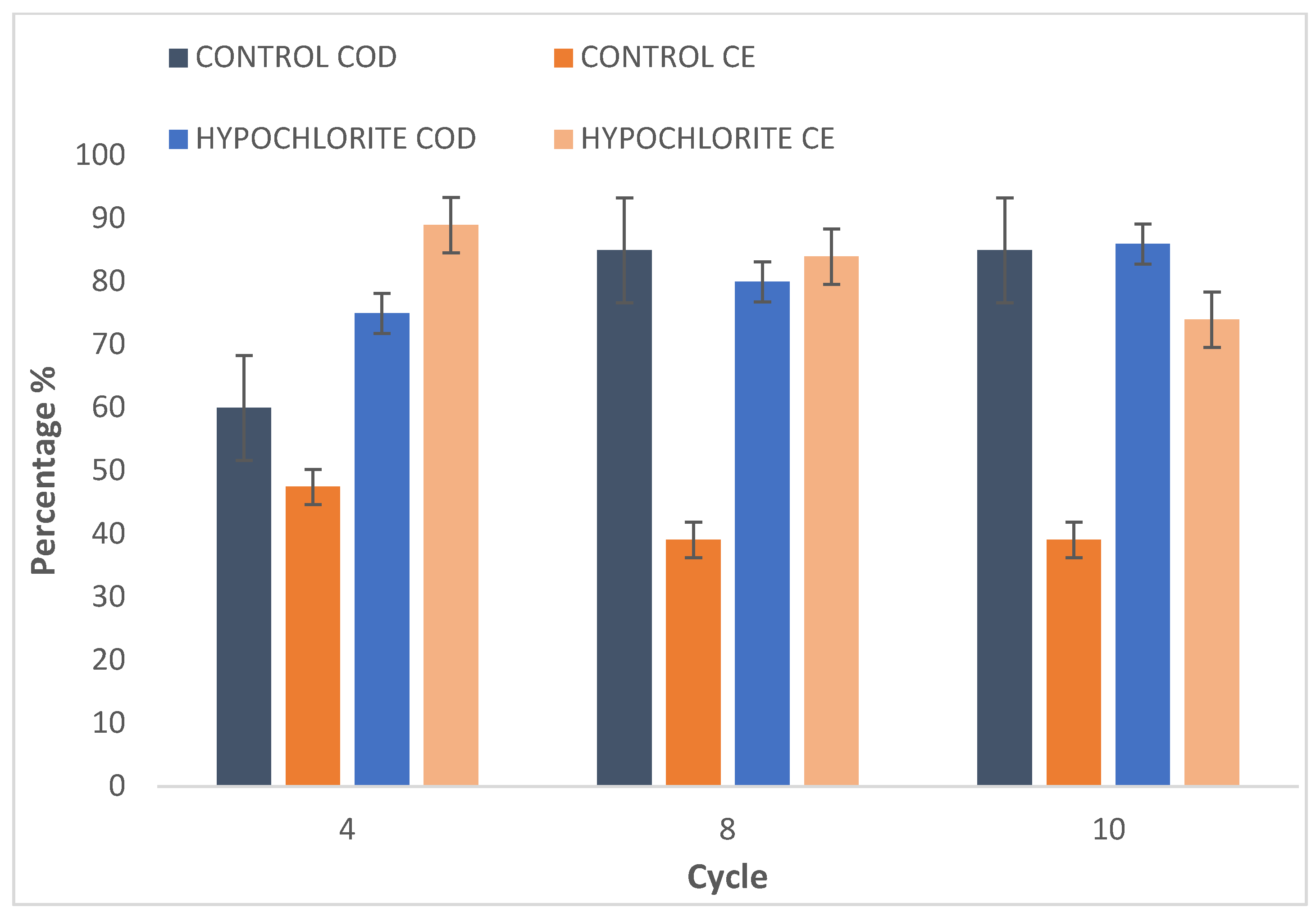
The organic matter removal performance of the microbial fuel cell systems was evaluated by monitoring the reduction in chemical oxygen demand (COD), and the results are presented in Figure 7. Both MFC configurations demonstrated effective COD removal over the operational period, indicating successful microbial oxidation of organic substrates. However, the hypochlorite-assisted MFC (MFC-H) exhibited higher COD removal efficiency compared to the oxygen-cathode system (MFC-O).
Figure 7.
COD removal efficiency achieved by MFC-O and MFC-H. Error bars represent standard deviation of triplicate experiments (n = 3). Statistical significance between treatments was determined using Student’s t-test (p < 0.05).
MFC-H achieved a COD removal efficiency of 86%, whereas the oxygen-based MFC-O achieved a comparatively lower COD removal of 85%. The COD removal observed in MFC-H and MFC-O was comparable, suggesting more efficient substrate utilization and indicating that the addition of hypochlorite did not significantly alter the overall organic matter degradation capacity of the system. Improved cathodic electron acceptance reduces electron accumulation at the anode, thereby facilitating sustained microbial metabolism and continuous oxidation of organic matter.
Coulombic efficiency (CE), which represents the fraction of electrons recovered as electrical current relative to the theoretical electrons released from substrate oxidation, was also higher in the hypochlorite-assisted system. The CE of MFC-H (>80%) was consistently higher than that of MFC-O (20–40%), indicating reduced electron losses to competing pathways, such as methanogenesis, biomass synthesis, or alternative anaerobic respiration. This observation highlights the importance of cathodic reaction kinetics in controlling electron flow within MFC systems. The improved CE observed in MFC-H can be attributed to enhanced cathodic electron consumption, which maintains a favorable potential gradient across the anode biofilm and minimizes electron diversion into non-electrogenic pathways. In contrast, oxygen-cathode systems often exhibit lower CE due to limited oxygen-reduction kinetics, which can restrict electron withdrawal and promote competing microbial processes [38].
The COD removal efficiencies observed in this study fall within the range commonly reported for laboratory-scale MFCs treating synthetic wastewater, which typically achieve 50–80% COD reduction, depending on operating conditions and substrate concentration [39,40]. The simultaneous increase in COD removal and CE observed in MFC-H indicates improved coupling between organic matter oxidation and electricity generation, which is a key performance indicator for bioelectrochemical systems.
Importantly, the enhanced COD removal observed in MFC-H also supports the improved dye decolorization results discussed in Section 3.4. Efficient oxidation of the primary carbon source ensures a steady supply of electrons, which can be used for both electricity generation and the reductive transformation of dyes. This integrated performance demonstrates that optimization of cathodic electron acceptors can significantly enhance both treatment efficiency and energy recovery in microbial fuel cell systems. COD removal efficiencies of 85 ± 1.2% and 86 ± 1.4% were observed for MFC-O and MFC-H, respectively. Statistical analysis indicated that the difference was not significant (p > 0.05), suggesting that cathodic electron acceptor selection had limited influence on COD removal under the conditions tested.
3.6. Variation in pH and Conductivity
Changes in pH and conductivity of the anolyte and catholyte during MFC operation are summarized in Table 2. The pH variations observed in both systems were relatively minor and remained within a range suitable for microbial activity throughout the experimental cycles. The anolyte pH showed only slight fluctuations, indicating stable microbial metabolic activity and buffering capacity of the system.
Table 2.
Table showing the changes in pH and conductivity of the anolyte and catholyte during MFC operation.
The conductivity of the electrolytes showed noticeable differences between the two systems. Higher conductivity values were consistently observed in the hypochlorite-assisted MFC compared to the oxygen-cathode system. This increased conductivity may have contributed to improved ionic transport between the electrodes, thereby supporting enhanced electrochemical performance. Higher electrolyte conductivity is known to reduce ohmic resistance in MFC systems, which aligns with the lower internal resistance and improved power output observed for the hypochlorite-assisted configuration. The enhanced power output in MFC-H may reflect a combined effect of higher redox potential and elevated ionic strength.
The total chloride present in the anolytes was measured using the Mohr method, where the samples of anolytes incubated with hypochlorite for 48 h were titrated, and the chloride ion concentration was calculated and compared with that of the Dye SWW containing hypochlorite. Based on the observation, the chloride ion concentration of 201.356 mg/L was observed in Dye SWW, which was reduced to 119.112 mg/L and 127.62 mg/L in the anolyte samples incubated with hypochlorite. There is about a 36–40% reduction in the free chlorine present in the anolyte after treatment with hypochlorite.
3.7. Phytotoxicity Reduction and Assessment of Seed Germination
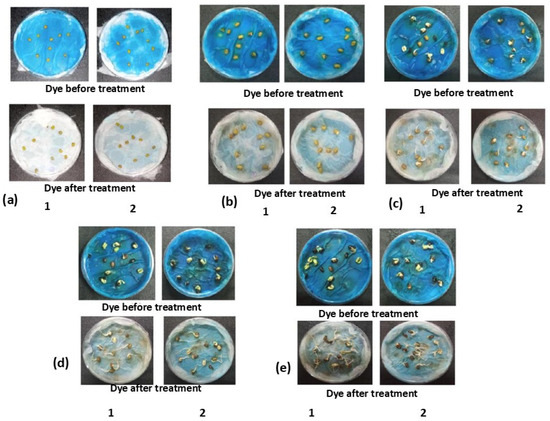
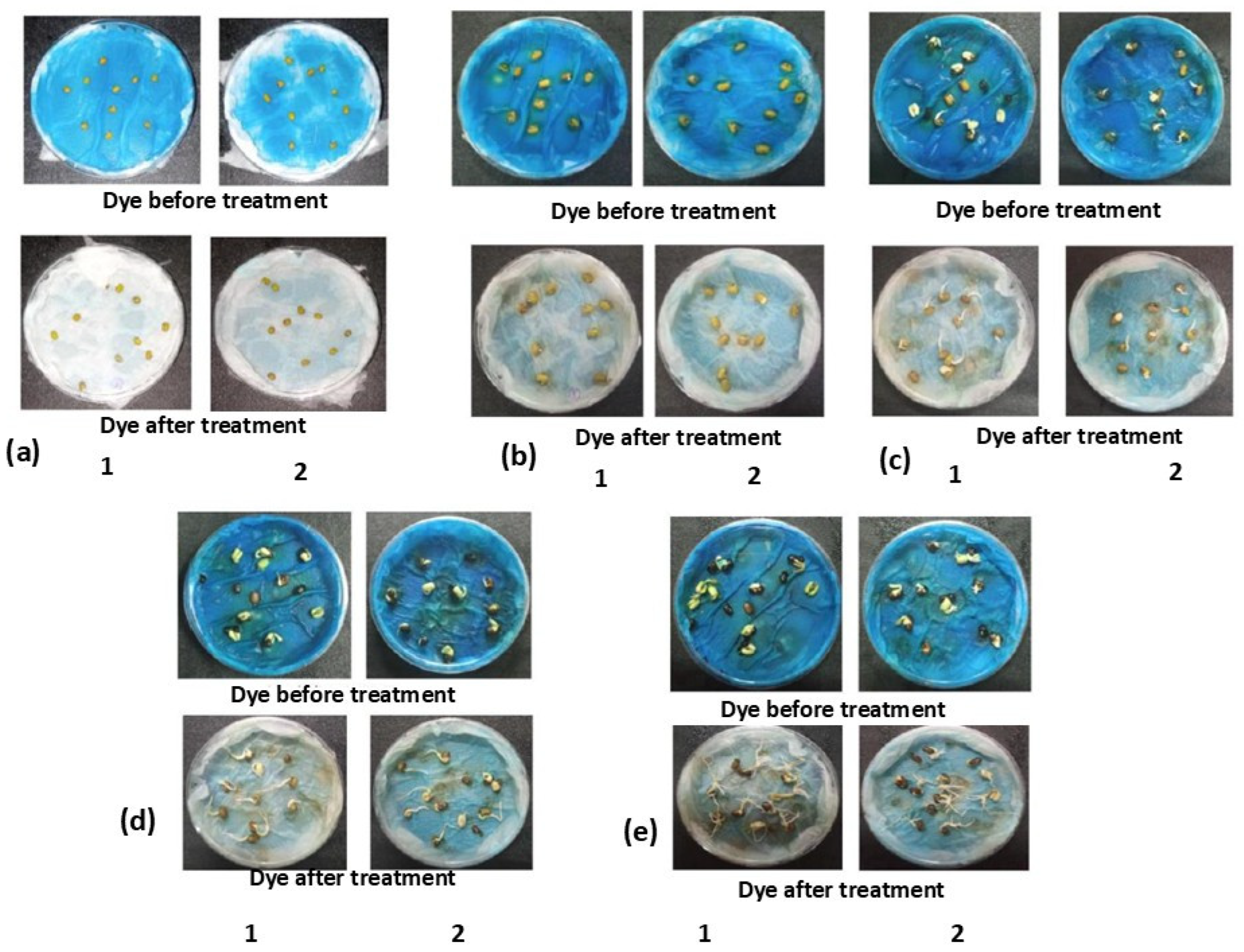
The phytotoxicity of methylene blue-containing wastewater before and after treatment in the microbial fuel cell systems was evaluated using Pisum sativum seed germination assays. Visual observations of seed germination over the experimental period are shown in Figure 8.
Figure 8.
Petri plates with dye before and after treatment: (a) Day 1, (b) Day 2, (c) Day 3, (d) Day 4, and (e) Day 5. The number 1 indicates samples from MFC-H and 2 from MFC-O.
Seeds exposed to untreated dye-containing wastewater exhibited severely inhibited germination and growth, which is quantitatively supported by the data presented in Table 2. During the first cycle, no root or shoot growth was observed (0 cm), and even after four cycles, root growth remained limited to only 0.6 ± 0.01 cm, with no measurable shoot development. These results confirm the strong phytotoxic effect of untreated methylene blue-containing wastewater. In contrast, seeds exposed to MFC-treated wastewater demonstrated substantially improved germination and growth performance. As shown in Table 3, root growth increased from 0.78 ± 0.2 cm in Cycle 2 to 2.61 ± 0.5 cm by Cycle 4, while shoot growth, which was completely absent in untreated samples, reached 0.09 ± 0.05 cm by Cycle 4. This represents more than a fourfold increase in root length compared to untreated wastewater at the same cycle, indicating a clear reduction in phytotoxicity following MFC treatment.
Table 3.
Data showing root growth rate and shoot growth rate in 4 cycles (n = 3).
The progressive improvement in root and shoot development across successive cycles suggests that bioelectrochemical treatment reduced the concentration and/or toxicity of inhibitory compounds, rather than merely diluting their effects. While shoot growth remained relatively limited compared to root elongation, the initiation of shoot emergence itself indicates a significant improvement in effluent quality, as shoot development is generally more sensitive to residual toxicity.
These phytotoxicity results align well with the observed dye decolorization and COD removal efficiencies discussed in earlier sections. Improved root elongation and shoot emergence are consistent with partial detoxification of the treated effluent, rather than complete mineralization of all dye-derived intermediates. Similar trends have been reported in previous studies evaluating phytotoxicity reduction following microbial or bioelectrochemical treatment of dye-containing wastewater, where root growth recovery was observed prior to full shoot development. Thus, quantitative phytotoxicity assessment confirmed that MFC treatment substantially reduced the inhibitory effects of methylene blue-containing wastewater on Pisum sativum germination and growth, demonstrating the detoxification potential of bioelectrochemical treatment.
3.8. Microbial Growth and Activity Assessment
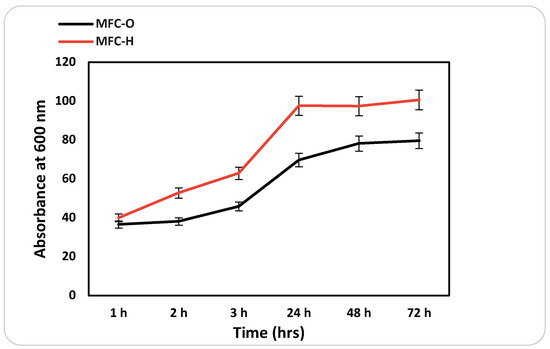
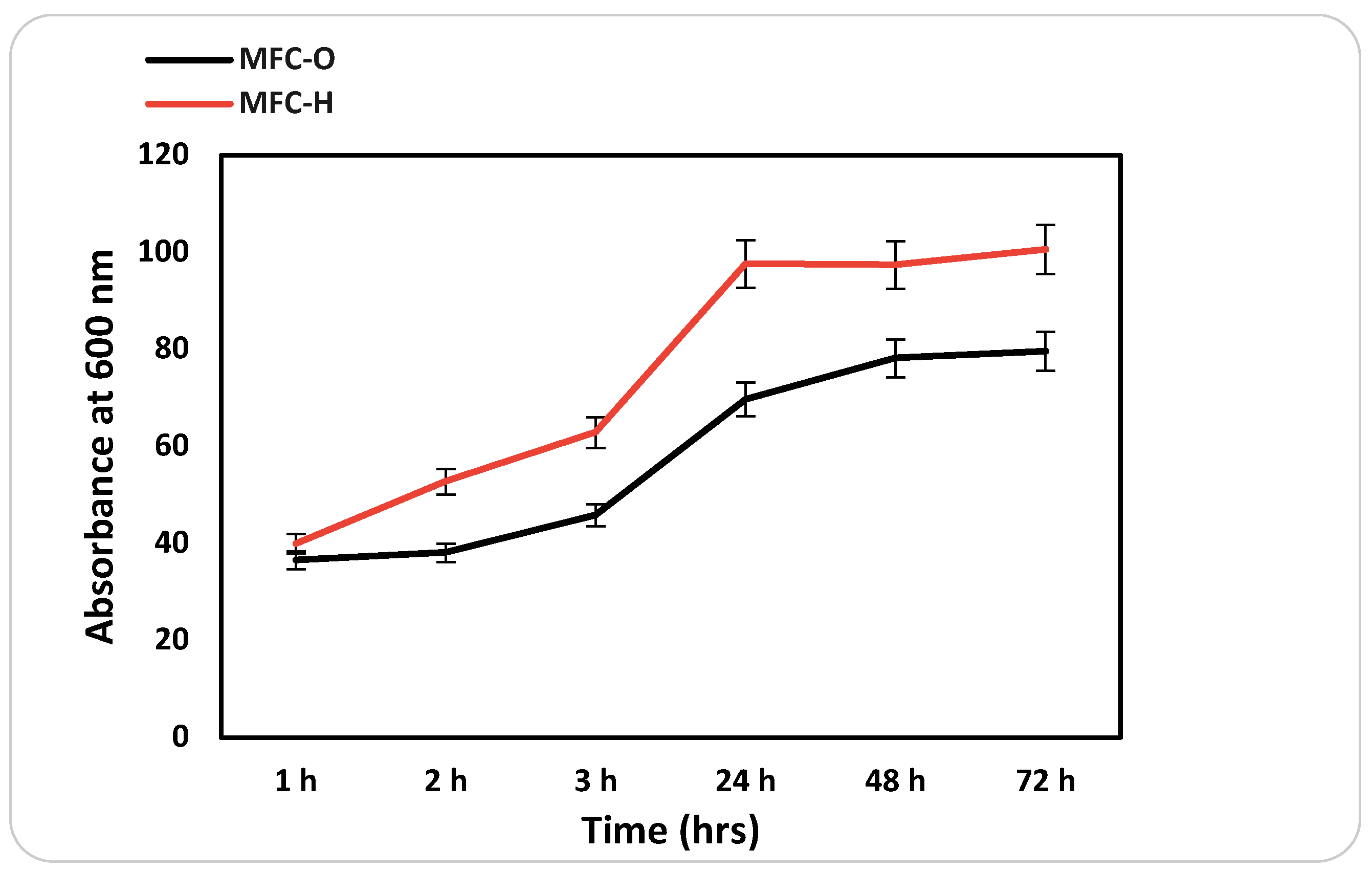
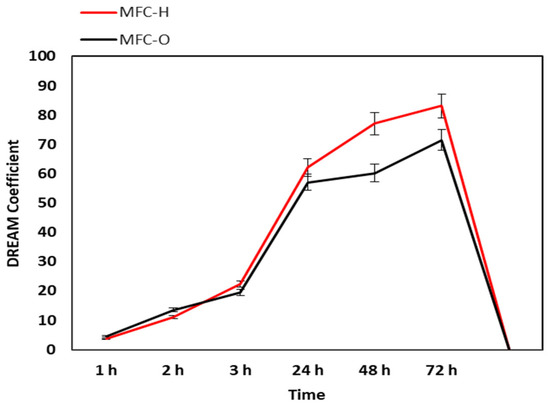
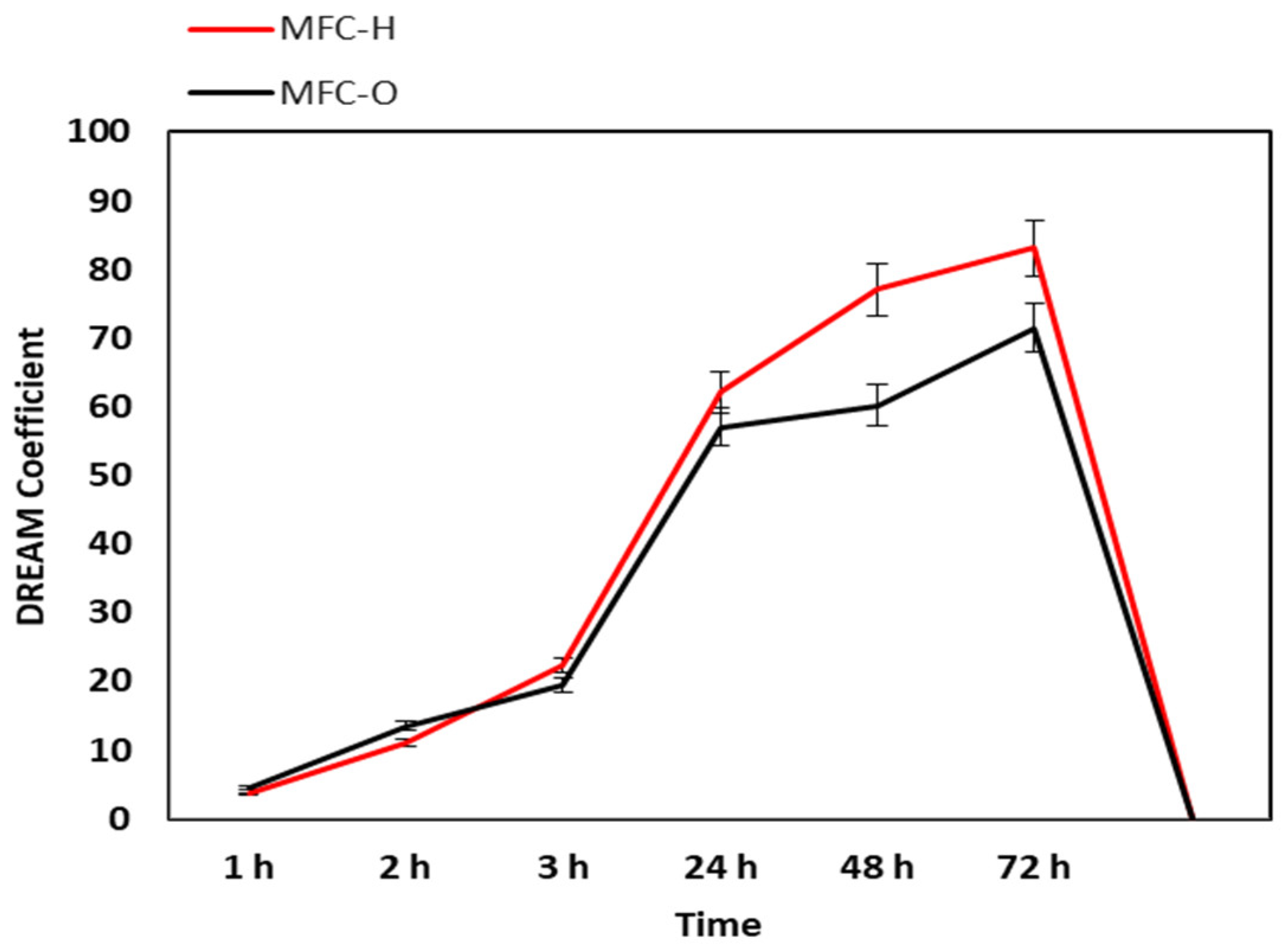
Microbial growth dynamics and metabolic activity in the microbial fuel cell systems were assessed using optical density measurements and the DREAM assay, as shown in Figure 9 and Figure 10, respectively. These analyses were used to evaluate the influence of the selection of cathodic electron acceptors on microbial proliferation and electron-transfer activity.
Figure 9.
Microbial growth dynamics in the microbial fuel cell systems were assessed using optical density at 660 nm.
Figure 10.
DREAM assay coefficient of microbial growth curve.
As shown in Figure 9, microbial growth increased over time in both MFC configurations, indicating successful acclimation of the inoculated anaerobic sludge. However, the hypochlorite-assisted MFC (MFC-H) exhibited consistently higher biomass accumulation compared to the oxygen-cathode system (MFC-O). From the growth curve, the optical density in MFC-H increased to approximately 0.85–0.90 by the final measurement, whereas MFC-O reached a lower value of approximately 0.65–0.70. This represents an increase of roughly 25–35% in biomass concentration in the hypochlorite-assisted system relative to the control.
The enhanced microbial growth observed in MFC-H suggests that more efficient electron withdrawal at the cathode supported sustained anodic metabolism, thereby promoting microbial proliferation. In contrast, the comparatively lower growth observed in MFC-O may be associated with electron accumulation and higher anodic overpotentials, which can impose metabolic stress on electroactive microorganisms. Such relationships between cathodic efficiency and microbial growth have been reported in microbial fuel cell studies, in which improved cathodic kinetics led to enhanced biomass development at the anode.
Microbial metabolic activity was further assessed using the DREAM assay, which provides an indirect measure of electron transfer activity. As shown in Figure 10, the DREAM assay coefficient for MFC-H increased progressively to approximately 1.9 units while the oxygen-based system reached a lower coefficient of approximately 1.6 units. This represents an increase of approximately 40–50% in electron transfer activity in the hypochlorite-assisted MFC relative to the control.
The higher DREAM coefficient observed in MFC-H indicates enhanced electron-transfer efficiency and metabolic activity within the microbial community, consistent with the higher current densities, power output, and coulombic efficiency reported earlier. The close alignment between microbial growth (Figure 9) and DREAM activity (Figure 10) suggests that the hypochlorite-assisted system not only supported greater biomass formation but also enriched electroactive microbial populations, rather than promoting non-electrogenic growth.
Importantly, the improved microbial activity observed in MFC-H does not appear to be inhibited by the presence of hypochlorite, as the oxidant was confined to the cathodic chamber. The absence of growth suppression in MFC-H confirms that hypochlorite did not adversely affect the anodic microbial community and instead indirectly enhanced microbial performance by improving electrochemical conditions.
3.9. Microbial Dye Decolorization Outside the MFC System
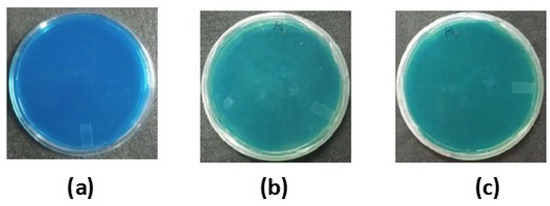
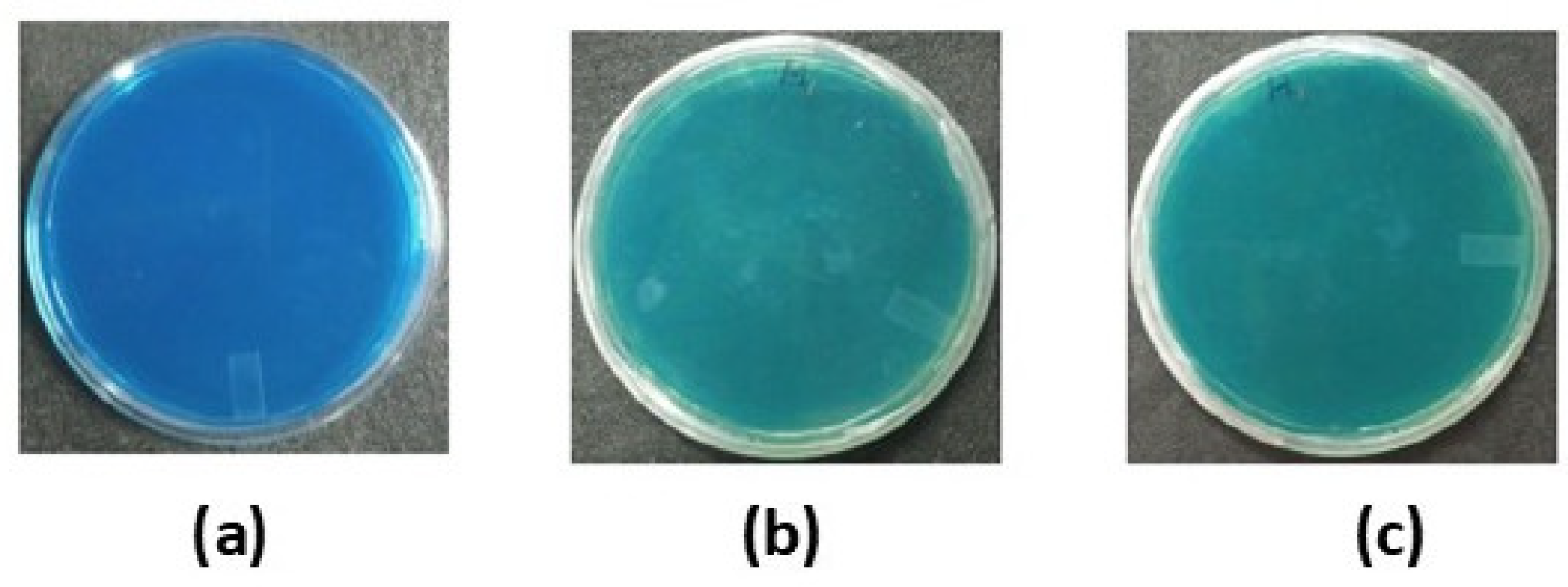
To evaluate the intrinsic dye-degrading capability of the microbial community independent of bioelectrochemical operation, a bacterial plate assay was conducted using sludge-derived microorganisms outside the MFC configuration. The visual progression of methylene blue decolorization on agar plates is shown in Figure 11.
Figure 11.
Dye decolorization outside MFC plating method: (a) plates before inoculation, (b) plates 24 h after incubation, and (c) plates 48 h after incubation.
Prior to inoculation (Figure 11a), the plates exhibited uniform and intense blue coloration, indicating the presence of intact methylene blue at the initial concentration. After 24 h of incubation (Figure 11b), a visible reduction in color intensity was observed, particularly around microbial growth zones, suggesting the onset of biologically mediated dye transformation. After 48 h of incubation (Figure 11c), the blue coloration was further diminished, with large regions of the plate showing substantial decolorization. The progressive reduction in blue coloration observed around microbial growth zones is consistent with biological dye transformation, though abiotic color changes cannot be entirely ruled out in the absence of a time-matched uninoculated control plate.
Although the plate assay was qualitative, the time-resolved visual changes (0 h → 24 h → 48 h) clearly demonstrate progressive dye removal under non-electrochemical conditions. Complete decolorization was not observed within 48 h, indicating that dye transformation occurred gradually and was limited by biological kinetics alone. In contrast, the MFC systems achieved up to 88% decolorization under bioelectrochemical operation within comparable or shorter operational periods, highlighting the advantage of controlled electron transfer in enhancing dye degradation efficiency. The observed dye decolorization outside the MFC system is consistent with microbial enzymatic mechanisms reported for methylene blue. Decolorization occurs via the reduction of the phenothiazine chromophore to its colorless leuco-form (LMB), a process typically catalyzed by NADH-dependent dehydrogenases or diaphorases.
However, unlike the MFC system, the non-MFC plate assay does not provide control over electron flow, redox potential, or energy recovery, and therefore relies solely on microbial metabolic activity for dye transformation. The slower and incomplete decolorization observed in the plate assay underscores the role of bioelectrochemical coupling in accelerating dye degradation, as electron withdrawal at the anode in MFCs promotes sustained reductive metabolism and prevents electron accumulation within microbial cells.
The plate assay results confirm that the sludge microbiome has an inherent capacity to decolorize methylene blue; however, integrating microbial activity with electrochemical electron harvesting in the MFC system significantly enhances the rate and extent of dye decolorization. This comparison reinforces the advantage of microbial fuel cells as a treatment platform that not only exploits microbial enzymatic potential but also improves process efficiency through controlled bioelectrochemical processes. Eluting dye from a defined agar area using methanol and measuring absorbance at 668 nm at each time point would provide useful quantitative data for the plate assay and can also be applied.
4. Future Perspectives
While the present study demonstrates the technical advantages of hypochlorite-assisted MFCs, several considerations must be addressed to advance their practical applicability. Future research should focus on optimizing hypochlorite dosage and replenishment strategies to balance improved cathodic performance with chemical consumption and operational sustainability. Long-term operation studies are required to evaluate catholyte stability, potential by-product formation, and system durability under repeated batch or continuous-flow conditions.
Further investigation into alternative, high-potential but less chemically intensive cathodic electron acceptors, as well as hybrid cathode configurations that combine chemical and biological oxygen reduction, could provide pathways to achieve comparable performance gains with reduced chemical input. Integration of electrochemical impedance spectroscopy (EIS) and advanced microbial community analysis would also enable more precise quantification of resistance components and clarify the relationship between cathodic conditions and anodic microbial ecology.
From an application perspective, future studies should evaluate hypochlorite-assisted MFCs using real industrial dye wastewater, where complex matrices and competing electron acceptors may influence performance. Coupling MFC treatment with downstream polishing or resource recovery processes could further enhance the technology’s environmental and economic viability.
5. Conclusions
This study demonstrated that the selection of cathodic electron acceptors significantly influences the performance of microbial fuel cells treating methylene blue-containing wastewater. Compared to oxygen, sodium hypochlorite enhanced electricity generation, achieving a maximum power density of 115.2 mW m−2, which is much higher than that of the oxygen-cathode system. Improved electrochemical behavior resulted in higher coulombic efficiency and superior dye decolorization (88%). Biological assessments confirmed reduced phytotoxicity and improved microbial activity following treatment. Overall, the results highlight the potential of hypochlorite-assisted MFCs to improve both energy recovery and their general use for wastewater detoxification under controlled laboratory conditions. MFC treatment, in general, significantly reduces the phytotoxicity of methylene blue-containing wastewater. This study generally focused on the effect of cathodes; the work related to the characterization of the sludge was omitted, and the limitations of this study will be considered for future work. To transition MFC technology from laboratory experimentation to large-scale commercial application, future research should prioritize the development of cost-effective, scalable materials that can withstand long-term environmental stress.
Author Contributions
A.M.E.: Writing—original draft, Writing—review and editing, Visualization, Validation, Software, Conceptualization, Methodology, Data curation. A.U.: Methodology, Data curation, Validation. A.C.: Methodology, Data curation, Validation. M.T.N.: Supervising, Writing, reviewing, and editing. R.P.P.: Writing—review and editing, Supervision, Conceptualization, Funding, Methodology, Validation. All authors have read and agreed to the published version of the manuscript.
Funding
The grant received from the University Grants Commission, Govt. of INDIA (File No. CUSAT/PL(B)A1/15/2025) to undertake this work is duly acknowledged. Moreover, the authors declare that this study did not receive funding from Brilliant Dyes Ltd. Author Md Tabish Noori is employed by Brilliant Dyes Ltd., London, UK. The company was not involved in the study design, collection, analysis or interpretation of data, the writing of this article, or the decision to submit it for publication.
Data Availability Statement
The data presented in this study are available on request from the corresponding author. The data are not publicly available because they form part of ongoing research.
Acknowledgments
We would like to acknowledge the funding received from the UGC-BSR project for the successful completion of the work.
Conflicts of Interest
Author Md Tabish Noori was employed by the company Brilliant Dyes Ltd., London, UK. The remaining authors declare that the research was conducted in the absence of any commercial or financial relationships that could be construed as potential conflicts of interest.
References
- Crini, G.; Lichtfouse, E. Advantages and disadvantages of techniques used for wastewater treatment. Environ. Chem. Lett. 2018, 17, 145–155. [Google Scholar] [CrossRef] [Scilit]
- Chang, H.-L.; Liu, Y.-L.; Keng, C.-J.; Jiang, H.-L.; Hu, J. Challenges of industrial wastewater treatment: Utilizing Membrane bioreactors (MBRs) in conjunction with artificial intelligence (AI) technology. J. Ind. Prod. Eng. 2024, 41, 422–427. [Google Scholar] [CrossRef] [Scilit]
- Oyinloye, T.Q.; Awotoye, T. Exploring the Human Rights Impact of Subsidy Removal: Studies from Renewable Energy Transition in Nigeria and China. J. Sustain. Dev. Law Policy 2025, 16, 183–209. [Google Scholar] [CrossRef] [Scilit]
- Ramandi, S.; Entezari, M.H. Study of structural and electrochemical properties of graphene/polyaniline nanotube/ZIF-67 nanocages as a 3D novel ternary composite hydrogel for all-solid-state supercapacitors. Ionics 2024, 30, 3003–3019. [Google Scholar] [CrossRef] [Scilit]
- Sonune, A.; Ghate, R. Developments in wastewater treatment methods. Desalination 2004, 167, 55–63. [Google Scholar] [CrossRef] [Scilit]
- Ramrakhiani, L.; Ghosh, S.; Majumdar, S. Emerging contaminants in water and wastewater: Remediation perspectives and innovations in treatment technologies. In Springer Transactions in Civil and Environmental Engineering; Springer Nature: Singapore, 2022; pp. 253–284. [Google Scholar] [CrossRef] [Scilit] [PubMed]
- Karim, A.; Raji, Z.; Karam, A.; Khalloufi, S. Valorization of Fibrous Plant-Based Food Waste as Biosorbents for Remediation of Heavy Metals from Wastewater—A Review. Molecules 2023, 28, 4205. [Google Scholar] [CrossRef] [Scilit] [PubMed]
- Lu, J.; Zhou, Y.; Zhou, Y.; Zhou, Y.; Zhou, Y. Recent advance in enhanced adsorption of ionic dyes from aqueous solution: A review. Crit. Rev. Environ. Sci. Technol. 2023, 53, 1709–1730. [Google Scholar] [CrossRef] [Scilit]
- Periyasamy, A.P. Recent advances in the remediation of Textile-Dye-Containing wastewater: Prioritizing human health and sustainable wastewater treatment. Sustainability 2024, 16, 495. [Google Scholar] [CrossRef] [Scilit]
- Logan, B.E. Microbial Fuel Cells; John Wiley & Sons: Hoboken, NJ, USA, 2008. [Google Scholar]
- Rahimnejad, M.; Adhami, A.; Darvari, S.; Zirepour, A.; Oh, S.-E. Microbial fuel cell as new technology for bioelectricity generation: A review. Alex. Eng. J. 2015, 54, 745–756. [Google Scholar] [CrossRef] [Scilit]
- Slate, A.J.; Whitehead, K.A.; Brownson, D.A.C.; Banks, C.E. Microbial fuel cells: An overview of current technology. Renew. Sustain. Energy Rev. 2018, 101, 60–81. [Google Scholar] [CrossRef] [Scilit]
- Das, S.; Raj, R.; Das, S.; Ghangrekar, M.M. A Sustainable Approach for the Production of Green Energy with the Holistic Treatment of Wastewater through Microbial Electrochemical Technologies: A Review. Front. Sustain. 2021, 2, 792028. [Google Scholar] [CrossRef] [Scilit]
- Kumar, M.; Singh, R. Sewage Water Treatment with Energy Recovery Using Constructed Wetlands Integrated with a Bioelectrochemical System. Environ. Sci. Water Res. Technol. 2020, 6, 795–808. [Google Scholar] [CrossRef] [Scilit]
- Jia, H.; Wang, P. Biocatalytic Generation of Power from Biofuels: Biofuel Cells. Biofuels 2010, 1, 479–492. [Google Scholar] [CrossRef] [Scilit]
- Macchi, S.; Watanabe, F.; Viswanathan, T.; Siraj, N. Characterization and Electrocatalytic Performance of Molasses Derived Co-Doped (P,N) and Tri-Doped (Si,P,N) Carbon for the ORR. Electrochem 2021, 2, 311–322. [Google Scholar] [CrossRef] [Scilit]
- Rukmani Krishnan, S.; Verstraete, D.; Aguey-Zinsou, F. Performance of Non-Precious Metal Electrocatalysts in Proton-Exchange Membrane Fuel Cells: A Review. ChemElectroChem 2024, 11, e202400299. [Google Scholar] [CrossRef] [Scilit]
- You, S.; Zhao, Q.; Zhang, J.; Jiang, J.; Zhao, S. A Microbial Fuel Cell Using Permanganate as the Cathodic Electron Acceptor. J. Power Sources 2006, 162, 1409–1415. [Google Scholar] [CrossRef] [Scilit]
- Nosek, D.; Jachimowicz, P.; Cydzik-Kwiatkowska, A. Anode Modification as an Alternative Approach to Improve Electricity Generation in Microbial Fuel Cells. Energies 2020, 13, 6596. [Google Scholar] [CrossRef] [Scilit]
- Ganta, A.; Bashir, Y.; Das, S. Dairy Wastewater as a Potential Feedstock for Valuable Production with Concurrent Wastewater Treatment through Microbial Electrochemical Technologies. Energies 2022, 15, 9084. [Google Scholar] [CrossRef] [Scilit]
- Vassiliev, Y.B.; Grinberg, V.A. Adsorption Kinetics of Electrode Processes and the Mechanism of Kolbe Electrosynthesis: Part I. Adsorption of Carboxylic Acids and the Nature of the Particles Chemisorbed on Platinum Electrodes. J. Electroanal. Chem. 1990, 283, 359–378. [Google Scholar] [CrossRef] [Scilit]
- Jadhav, D.A.; Ghadge, A.N.; Mondal, D.; Ghangrekar, M.M. Comparison of Oxygen and Hypochlorite as Cathodic Electron Acceptor in Microbial Fuel Cells. Bioresour. Technol. 2014, 154, 330–335. [Google Scholar] [CrossRef] [Scilit] [PubMed]
- Brown, M.A.; De Vito, S.C. Predicting Azo Dye Toxicity. Crit. Rev. Environ. Sci. Technol. 1993, 23, 249–324. [Google Scholar] [CrossRef] [Scilit]
- Khan, I.; Saeed, K.; Zekker, I.; Zhang, B.; Hendi, A.H.; Ahmad, A.; Ahmad, S.; Zada, N.; Ahmad, H.; Shah, L.A.; et al. Review on Methylene Blue: Its Properties, Uses, Toxicity and Photodegradation. Water 2022, 14, 242. [Google Scholar] [CrossRef] [Scilit]
- Dlamini, D.S.; Tesha, J.M.; Vilakati, G.D.; Mamba, B.B.; Mishra, A.K.; Thwala, J.M.; Li, J. A Critical Review of Selected Membrane- and Powder-Based Adsorbents for Water Treatment: Sustainability and Effectiveness. J. Clean. Prod. 2020, 277, 123497. [Google Scholar] [CrossRef] [Scilit]
- Vallejo, W.; Diaz-Uribe, C.; Duran, F.; Vargas-Delgadillo, D.P.; Barbosa, O. Kinetic and Thermodynamic Study of Methylene Blue Adsorption onto Activated Carbon Obtained from the Peel of Musa paradisiaca. Sci 2025, 7, 170. [Google Scholar] [CrossRef] [Scilit]
- Jain, N.; Kanu, N.J. The potential application of carbon nanotubes in water Treatment: A state-of-the-art-review. Mater. Today Proc. 2021, 43, 2998–3005. [Google Scholar] [CrossRef] [Scilit]
- Fan, Y.; Hu, Z.; Liu, H. Sustainable Power Generation in Microbial Fuel Cells Using Bicarbonate Buffer and Proton Transfer Mechanisms. Environ. Sci. Technol. 2007, 41, 8154–8158. [Google Scholar] [CrossRef] [Scilit] [PubMed]
- Khater, D.Z.; El-Khatib, K.M.; Hassan, R.Y.A. Effect of vitamins and cell constructions on the activity of microbial fuel cell battery. J. Genet. Eng. Biotechnol. 2018, 16, 369–373. [Google Scholar] [CrossRef] [Scilit] [PubMed]
- Konatam, S.; Panigrahi, S.; Tandi, A.; Roy, D.N. Potential application of vitamins to combat biofilm-mediated drug resistance by pathogenic bacteria. Future Microbiol. 2025, 20, 1031–1047. [Google Scholar] [CrossRef] [Scilit] [PubMed]
- American Public Health Association (APHA); American Water Works Association (AWWA); Water Environment Federation (WEF). Standard Methods for the Examination of Water and Wastewater, 23rd ed.; APHA: Washington, DC, USA, 2017. [Google Scholar]
- Rabaey, K.; Verstraete, W. Microbial Fuel Cells: Novel Biotechnology for Energy Generation. Trends Biotechnol. 2005, 23, 291–298. [Google Scholar] [CrossRef] [Scilit] [PubMed]
- Logan, B.E.; Rossi, R.; Ragab, A.; Saikaly, P.E. Electroactive microorganisms in bioelectrochemical systems. Nat. Rev. Microbiol. 2019, 17, 307–319. [Google Scholar] [CrossRef] [Scilit] [PubMed]
- Santoro, C.; Arbizzani, C.; Erable, B.; Ieropoulos, I. Microbial Fuel Cells: From Fundamentals to Applications. J. Power Sources 2017, 356, 225–244. [Google Scholar] [CrossRef] [Scilit] [PubMed]
- Pendyala, B.; Chaganti, S.R.; Lalman, J.A.; Heath, D.D. Optimizing the Performance of Microbial Fuel Cells Fed a Combination of Different Synthetic Organic Fractions in Municipal Solid Waste. Waste Manag. 2016, 49, 73–82. [Google Scholar] [CrossRef] [Scilit] [PubMed]
- Kagalkar, A.N.; Jagtap, S.S.; Jadhav, J.P.; Bapat, V.A.; Govindwar, S.P. Decolorization of Methyl Red by Galactomyces geotrichum MTCC 1360. J. Hazard. Mater. 2010, 182, 471–478. [Google Scholar] [CrossRef] [Scilit] [PubMed]
- Oon, Y.L.; Ong, S.A.; Ho, L.N.; Wong, Y.S.; Dahlan, I.; Oon, Y.S. Disclosing the Synergistic Mechanisms of Azo Dye Degradation and Bioelectricity Generation in a Microbial Fuel Cell. J. Clean. Prod. 2018, 182, 10–17. [Google Scholar] [CrossRef] [Scilit]
- Logan, B.E.; Hamelers, B.; Rozendal, R.; Schröder, U.; Keller, J.; Freguia, S.; Aelterman, P.; Verstraete, W.; Rabaey, K. Microbial Fuel Cells: Methodology and Technology. Environ. Sci. Technol. 2006, 40, 5181–5192. [Google Scholar] [CrossRef] [Scilit] [PubMed]
- Sonawane, J.M.; Mahadevan, R.; Pandey, A.; Greener, J. Recent Progress in Microbial Fuel Cells Using Substrates from Diverse Sources. Heliyon 2022, 8, e12353. [Google Scholar] [CrossRef] [Scilit] [PubMed]
- Wang, J.; Ren, K.; Zhu, Y.; Huang, J.; Liu, S. A Review of Recent Advances in Microbial Fuel Cells: Preparation, Operation, and Application. BioTech 2022, 11, 44. [Google Scholar] [CrossRef] [Scilit] [PubMed]

Disclaimer/Publisher’s Note: The statements, opinions and data contained in all publications are solely those of the individual author(s) and contributor(s) and not of MDPI and/or the editor(s). MDPI and/or the editor(s) disclaim responsibility for any injury to people or property resulting from any ideas, methods, instructions or products referred to in the content. |
© 2026 by the authors. Licensee MDPI, Basel, Switzerland. This article is an open access article distributed under the terms and conditions of the Creative Commons Attribution (CC BY) license.