


Abstract
The oxidative potential (OP) of atmospheric particulate matter serves as an effective indicator for assessing the health risks posed by reactive oxygen species (ROS). Existing studies have mainly focused on conventional particulate matter including PM2.5, whereas systematic investigations into the OP of road dust in coal–resource–based cities are still limited. Taking Huainan City, China as the study area, this paper explored the characteristics and influencing factors of OP in water–soluble fractions of road dust from different functional zones. The results indicated that the OP of water-soluble fractions in road dust from Huainan City was 0.162 ± 0.079 pmol/min/μg, with the value in the coal mining zone being significantly lower than that in the commercial and industrial zones. The average concentration of water–soluble organic carbon (WSOC) was 67.3 ± 59.4 mg/kg, with lower levels observed in the coal mining and power plant zones. WSOC was primarily dominated by fulvic acid–like (C1) and tryptophan–like (C2) components. C1 prevailed in coal mining, power plant, and other functional zones, whereas C2 was dominant in commercial, park and residential zones. Overall, the WSOC showed a mixed-source signature dominated by endogenous sources and characterized by a low degree of humification. The total concentration of water–soluble heavy metals in road dust was 43.46 mg/kg, dominated by Fe, Sr, Cu, Ba, and Mn, with relatively lower concentrations observed in the industrial and coal mining zones. The influencing factors of OP exhibited differentiation among functional zones: in industrial zones, it was regulated by As, Mn, TC (total carbon), WSOC and its fluorescent components, while in non-industrial zones, it was closely associated with Co, TC, and WSOC. These findings indicate that road dust toxicity and its key chemical drivers in coal mining and power plant zones of coal resource–based cities exhibit distinctive characteristics. This study provides a scientific basis for the precise management of road dust pollution and the prevention of associated health risks.
1. Introduction
Extensive research on urban atmospheric particulate matter has demonstrated that the inhalation of such particles induces the generation of reactive oxygen species (ROS) within the human body, consequently inducing oxidative stress and posing risks to the respiratory and cardiovascular systems [1]. Oxidative potential (OP) is an indicator of the ability of atmospheric particulate matter to generate reactive oxygen species (ROS), which can oxidize biological molecules and induce cellular oxidative stress [2]. Road dust is an important source of atmospheric particulate matter pollution and poses adverse impacts on human health [3]. Current research on OP has predominantly focused on PM2.5, with studies revealing that OP values vary across different countries, cities, and even distinct functional zones within the same city [4,5]. The OP of PM2.5 also exhibits pronounced seasonal variation characteristics [6]. Heavy metals, including Fe, V, Ni, Cu, and Mn, serve as significant contributors to the OP of PM2.5 [7]. The study by Wang et al. indicates that Fe is a significant contributor to the OP of PM2.5, and that the water–soluble organic carbon (WSOC) can enhance this OP by increasing the solubility of Fe via complexation [8]. In contrast, the interactions among Cu, Mn, and organic compounds can exert an antagonistic effect on the formation of ROS [9]. Current research on road dust mainly focuses on the concentration distribution characteristics of heavy metals and related health risk assessment. Meanwhile, some studies have focused on characterizing the OP of road dust and its influencing factors. For example, Jiang et al. [10] analyzed the heavy metal concentration and OP values in the urban road dust of Xiamen and found that parking lots had higher OP levels than busy intersections, with only water-soluble Cu and total Tl concentrations showing a significantly positive correlation with OP. Wang et al. [11] reported that the water-insoluble fractions exhibited higher OP compared to the water–soluble fractions in road dust from Xi’an, with chromophoric organic matter dominating the OP of the water–soluble fractions.
However, current relevant studies have notable limitations. First, most research mainly focuses on large cities, while studies targeting coal–resource–based and other special cities remain scarce. Second, urban functional zones are generally classified into conventional types such as traffic, residential, parks, industrial, and commercial zones. For coal–resource–based cities such as Huainan, with numerous coal mines and thermal power plants, the OP characteristics of road dust and its influencing factors in these specialized functional zones have not been thoroughly investigated. Third, existing studies mostly investigate the effects of heavy metals or organic compounds on oxidative potential individually, and the interactions between them still require further clarification. Therefore, this study selected Huainan City as the study area. By analyzing the distribution characteristics of water–soluble heavy metals, water-soluble organic carbon, and fluorescent substances in the water–soluble fractions of road dust from different functional zones, we systematically investigated the main factors influencing the OP of road dust. This paper elucidates the toxicity of road dust in coal mining and power plant zones within coal resource–based cities, along with its key chemical drivers, thereby providing a scientific basis for precise road dust pollution control and human health risk prevention.
2. Materials and Methods
2.1. Study Area
The study area is located in Huainan City, Anhui Province, China. The city is situated in the north–central region of Anhui Province. In terms of urban type, Huainan represents a typical resource–based industrial city in East China, with core industries dominated by coal mining and thermal power generation. Long–term intensive mining activities and industrial growth have led to a series of environmental problems including coal mining subsidence, coal–fired emissions, and urban expansion [12]. In the present study, we classified Huainan into seven functional zones: coal mining, power plant, park, residential, traffic, industrial, and commercial zones. Field sampling was implemented in each zone.
2.2. Sample Collection
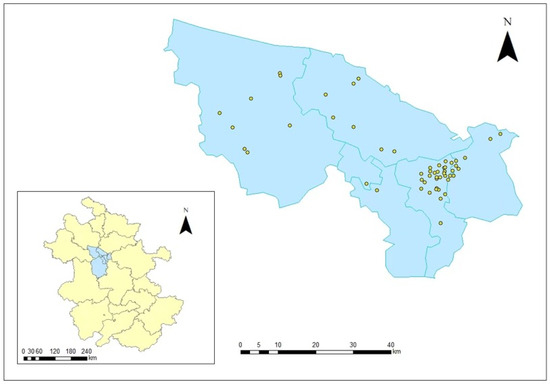
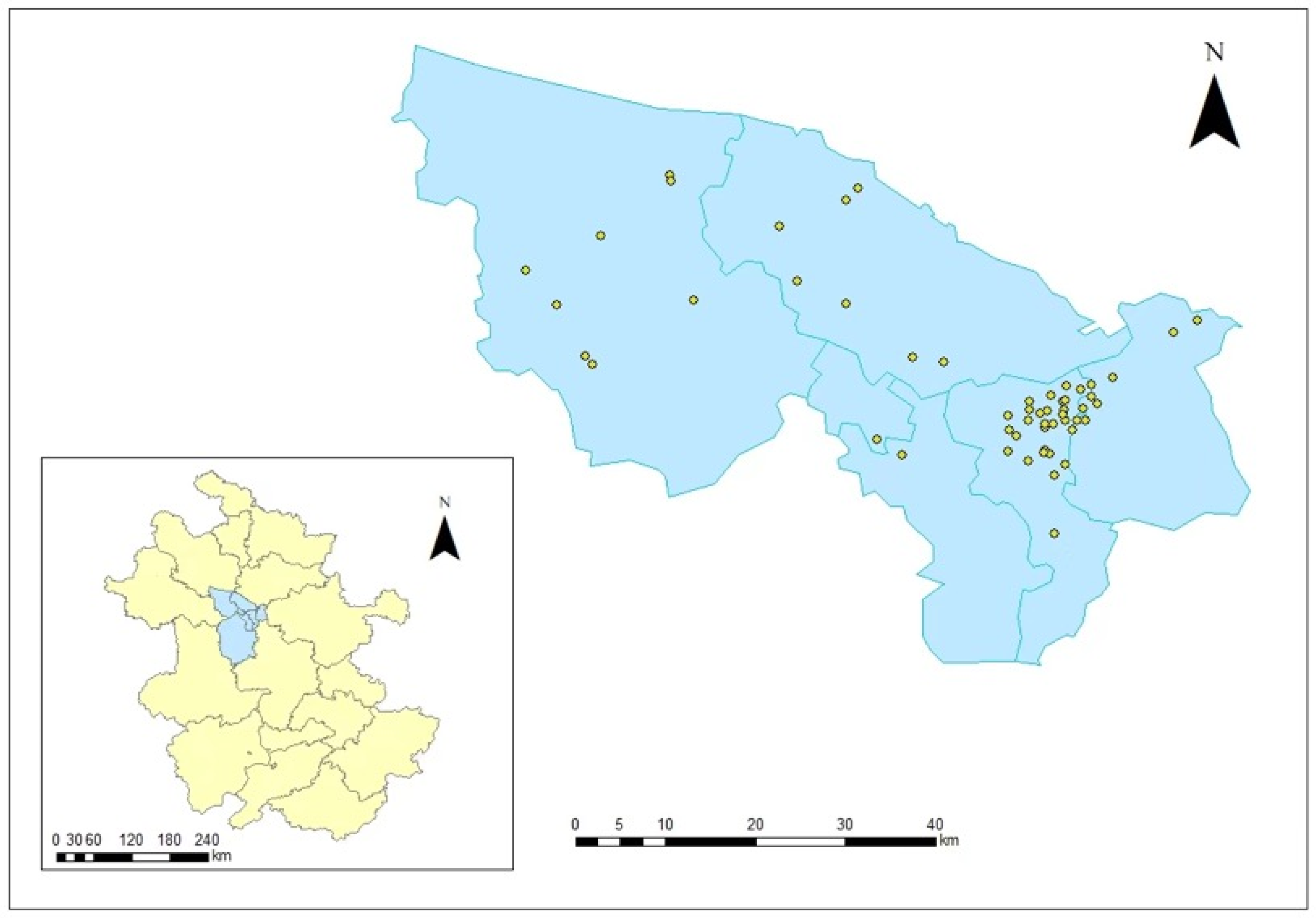
A total of 54 sampling sites were set up on non-motorized lanes across seven functional zones in Huainan City, with sample collection conducted from December 2024 to January 2025 (Figure 1). The seven functional zones consisted of park zone (8 sampling sites), traffic zone (8 sampling sites), industrial zone (8 sampling sites), commercial zone (8 sampling sites), residential zone (8 sampling sites), coal mining zone (8 sampling sites), and power plant zone (6 sampling sites). Sampling was performed using a cordless vacuum cleaner (B203CN, Dreame Information Technology Co., Ltd., Tianjin, China) at a constant speed along each site. After sampling, the latitude, longitude, and sampling date were recorded with a handheld GPS device(Tianjin Liaowang Optoelectronics Technology Co., Ltd., Tianjin, China), and all samples were placed in sealed bags. The samples were then air–dried and sieved using a 100–mesh sieve (<150 μm). The sieved fractions were transferred into clean sealed bags, labeled, and stored in the dark at −20 °C for subsequent experimental analysis.
Figure 1.
Distribution of sampling sites.
2.3. Reagents and Instruments
2.3.1. Reagents
Methanol (CH3OH, 99.8%), trichloroacetic acid (TCA, C2HCl3O2, AR), 5,5′-dithiobis-(2-nitrobenzoic acid) (DTNB, C14H8N2O8S2, 98%), and dithiothreitol (DTT, C4H10O2S2, 99%) were all purchased from Shanghai Aladdin Biochemical Technology Co., Ltd. (Shanghai, China). Tris(hydroxymethyl)aminomethane (Tris, C4H11NO3, ultra-pure grade) and ethylenediaminetetraacetic acid (EDTA, C10H16N2O8, AR) were obtained from Shanghai Macklin Biochemical Technology Co., Ltd. (Shanghai, China).
2.3.2. Instruments
Total organic carbon TOC analyzer (enviro TOC, Elementar, Langenselbold, Germany); three-dimensional fluorescence spectrophotometer (F–7100, Hitachi High-Tech Corporation, Tokyo, Japan); multifunctional microplate reader (Victor Nivo, PerkinElmer Life and Analytical Sciences (UK) Ltd., High Wycombe, UK); inductively coupled plasma-mass spectrometer (ICP–MS, NexION 300, PerkinElmer Inc., Waltham, USA); electronic analytical balance (FA2004, Shanghai Sunny Hengping Scientific Instrument Co., Ltd., Shanghai, China); electric forced-air drying oven (101–1B, Changge Mingtu Machinery Equipment Co., Ltd., Changge, China); intelligent centrifuge (LSC–50H, Shaoxing Super Instrument Co., Ltd., Shaoxing, China); ultrasonic cleaner (GW0410, Shenzhen Guanbo Technology Industrial Co., Ltd., China, Shenzhen, China); Mijia cordless vacuum cleaner (B203CN, Tianjin Dreame Information Technology Co., Ltd., Tianjin, China); high-precision GPS area meter (Nohawk, Tianjin Liaowang Optoelectronics Technology Co., Ltd., Tianjin, China).
2.4. Water-Soluble Heavy Metal Analyses
A precisely weighed 1 g aliquot of each sample was immersed in 50 mL of ultrapure water, followed by ultrasonication at room temperature for 15 min. The mixture was then centrifuged for 15 min. The supernatant was collected and filtered through a 0.45 μm aqueous microporous membrane to obtain the test solution. The concentrations of heavy metal elements (Li, V, Cr, Mn, Fe, Co, Ni, Cu, Ga, As, Sr, Sb, Ba) in the extracts were determined by ICP–MS. The method detection limit (MDL) for all elements was below 1 ng/L. The standard reference material (GBW–07403a, National Research Center for Standards, Beijing, China) for soils was adopted, and recoveries of elements ranged from 81.2% to 118.1%. Blank controls and parallel samples were prepared simultaneously to reduce experimental error and guarantee data reliability.
2.5. Carbonaceous Components Analyses
A precisely weighed 1 g aliquot of each sample was placed into a centrifuge tube and extracted with 50 mL of ultrapure water, followed by ultrasonication at room temperature for 30 min. After centrifugation for 30 min, the supernatant was collected and filtered through a 0.45 μm aqueous microporous membrane. The filtrate was determined by a total organic carbon (TOC) analyzer for total carbon (TC), total inorganic carbon (TIC), and water-soluble organic carbon (WSOC). Quantification was carried out with a calibration series prepared from national certified reference materials. Sample results were corrected via blank tests and method calibration. Prior to WSOC measurement, the TOC analyzer was preheated for 30 min, and checked for airtightness. The injection system was rinsed with ultrapure water. After instrument stabilization, blank samples were tested prior to the test samples. The measuring range of the TOC analyzer was 0~100.000 ppm.
2.6. Three-Dimensional Fluorescence Spectroscopic Analyses
A 0.1 g aliquot of the sample was weighed and transferred into a centrifuge tube. The sample was then immersed in an appropriate volume of ultrapure water and subjected to ultrasonic extraction for 30 min using an ultrasonic cleaner. Following extraction, the mixture was centrifuged for 15 min. The supernatant from each sample was carefully aspirated and filtered through a 0.45 μm microporous membrane to obtain the analytical solution for subsequent tests.
For experimental detection, a quartz cuvette was used, and sample analysis was conducted using a three–dimensional fluorescence spectrophotometer. Ultrapure water was used as a blank control to subtract background fluorescence interference. The instrumental parameters were set as follows: an excitation wavelength scanning range of 200–600 nm, an emission wavelength scanning range of 250–600 nm, and a scanning interval of 5 nm for both. Prior to formal measurement, baseline calibration was performed, and the operational status and performance stability of the instrument were thoroughly checked. Parallel sample analyses were carried out to minimize systematic and random errors throughout the experiment.
The raw three-dimensional fluorescence excitation–emission matrix (EEM) data were processed via parallel factor (PARAFAC) analysis using EEM-toolkit 1.61. The detailed analytical procedure for the model followed the method reported by Shu et al. [13].
2.7. Oxidative Potential Analyses
A precisely weighed 5 mg sample was submerged in an appropriate volume of ultrapure water and subjected to ultrasonication at room temperature for 30 min, followed by centrifugation for 15 min. The supernatant was collected and filtered through a 0.45 μm aqueous microporous membrane to obtain the test solution of water–soluble fractions. Then, 1.5 mL of the above test solution was mixed with 2 mL of 0.1 mol/L phosphate buffer solution (pH = 7.4) and 0.5 mL of 1 mM DTT solution, and vortexed thoroughly. Next, 0.5 mL of the mixed reaction solution was accurately pipetted and added to 1 mL of 10% (w/v) trichloroacetic acid (TCA) solution. After mixing, the mixture was incubated in a thermostatic water bath at 37 °C for reaction. At five time points (0, 15, 30, 45, and 60 min) during the water bath incubation, 2 mL Tris.EDTA buffer solution and 50 μL of 10 mM DTNB chromogenic solution were sequentially added to the system, followed by thorough shaking. For each time point, six equal aliquots (250 μL each) of the reaction solution for each sample were transferred to the corresponding wells of a 96–well microplate. Appropriate blank and parallel controls were set up. The microplate was read using a multifunctional microplate reader at the wavelength of 412 nm. The absorbance data of the water-soluble fractions of all samples at different reaction times were collected and recorded for subsequent calculation.
2.8. Statistical Analysis
Spearman’s rank correlation analysis was performed using SPSS 27.0. Asterisk notation was defined as follows: * indicates correlation significant at the 0.05 level (two–tailed), and ** indicates correlation significant at the 0.01 level (two–tailed).
3. Results and Discussion
3.1. OP Characteristics of Water-Soluble Fractions in Road Dust
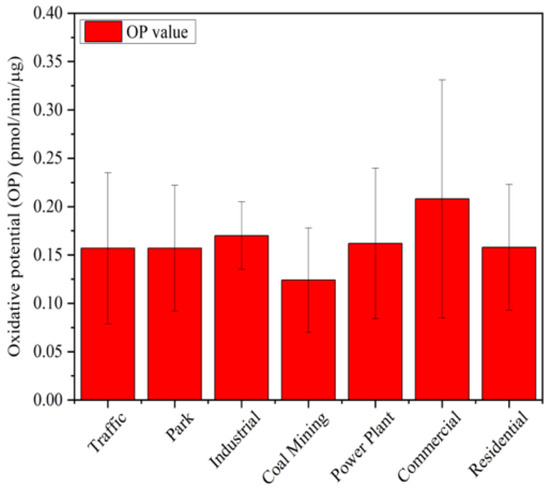
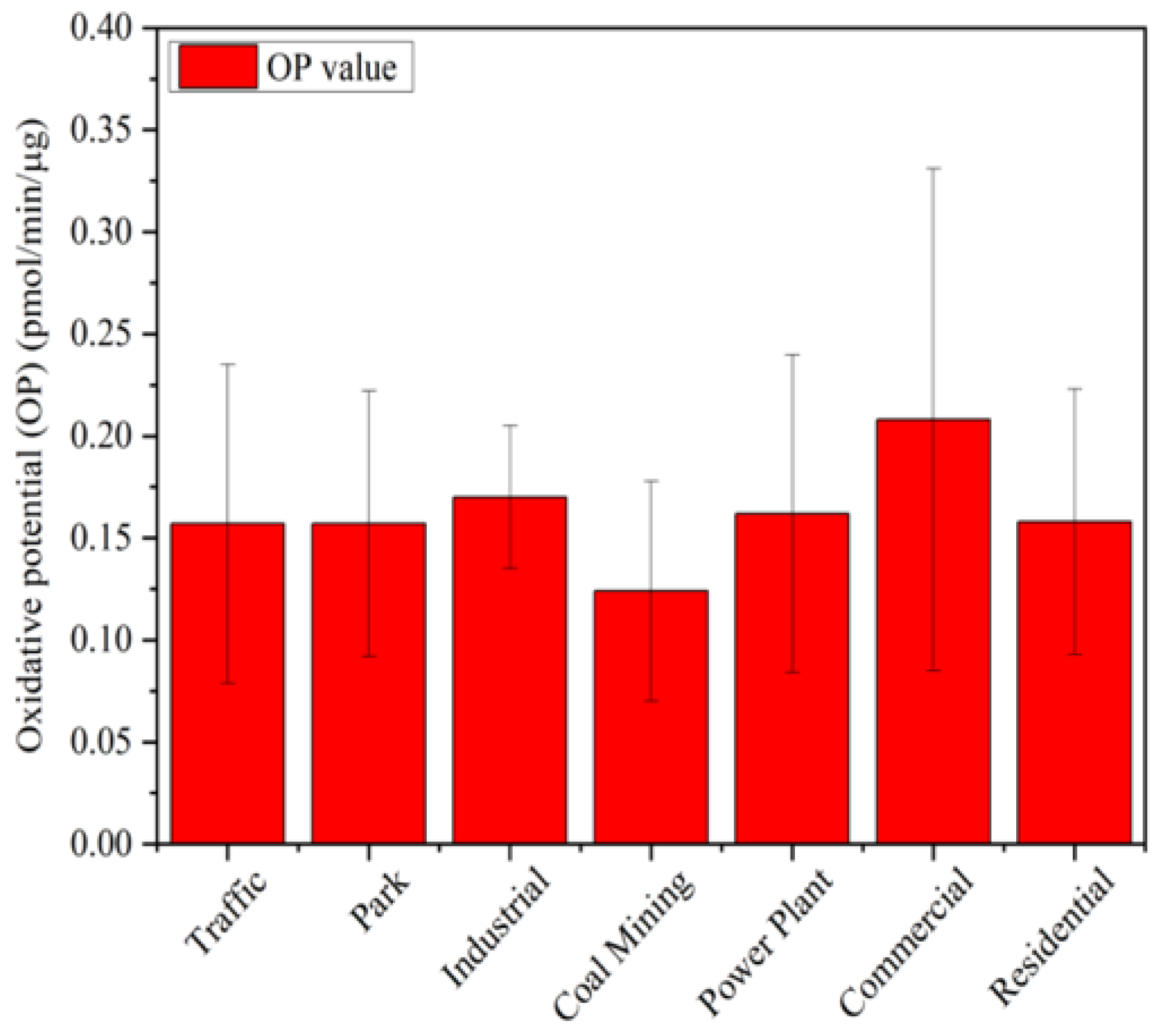
Figure 2 illustrates the OP characteristics of water–soluble fractions in road dust from different functional zones in Huainan City. The average OP value was 0.162 ± 0.079 pmol/min/μg, which was comparable to the levels reported by Li et al. [14] for water–soluble fractions in road dust in Xi’an. Spatially, the OP of water–soluble road dust exhibited distinct variations across functional zones. The commercial and industrial zones showed significantly higher OP values compared to other zones, while the coal mining zone exhibited the lowest OP (0.124 ± 0.054 pmol/min/μg). The OP level in the commercial zone was approximately 1.7 times that in the coal mining zone, highlighting pronounced inter–zonal differences. Previous studies have indicated that water–soluble organic carbon and transition metals in particulate matter contribute substantially to its OP [15,16]. The observed differences among functional zones were likely associated with the distribution patterns of these components. It can thus be inferred that the spatial variation in OP of water–soluble fractions in road dust across different functional zones in Huainan might be closely associated with differences in the concentrations, distribution, and interactions of major reactive components (e.g., water–soluble organic carbon and water–soluble heavy metals). These differences stemmed from the distinct pollution source profiles in each zone.
Figure 2.
OP values of water-soluble fractions in road dust from different functional zones of Huainan City.
3.2. Characteristics of WSOC in Road Dust and Its Fluorescent Components
3.2.1. Characteristics of WSOC in Road Dust
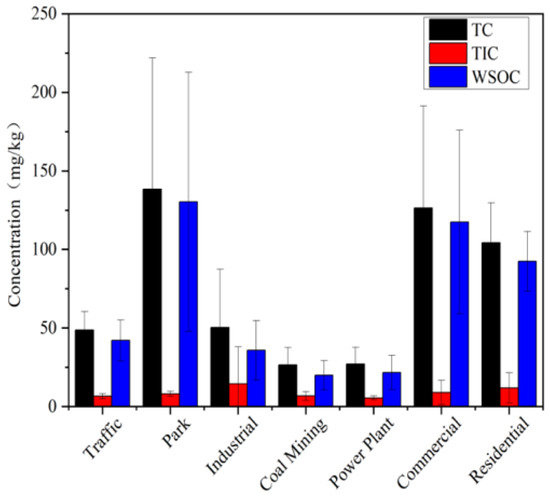
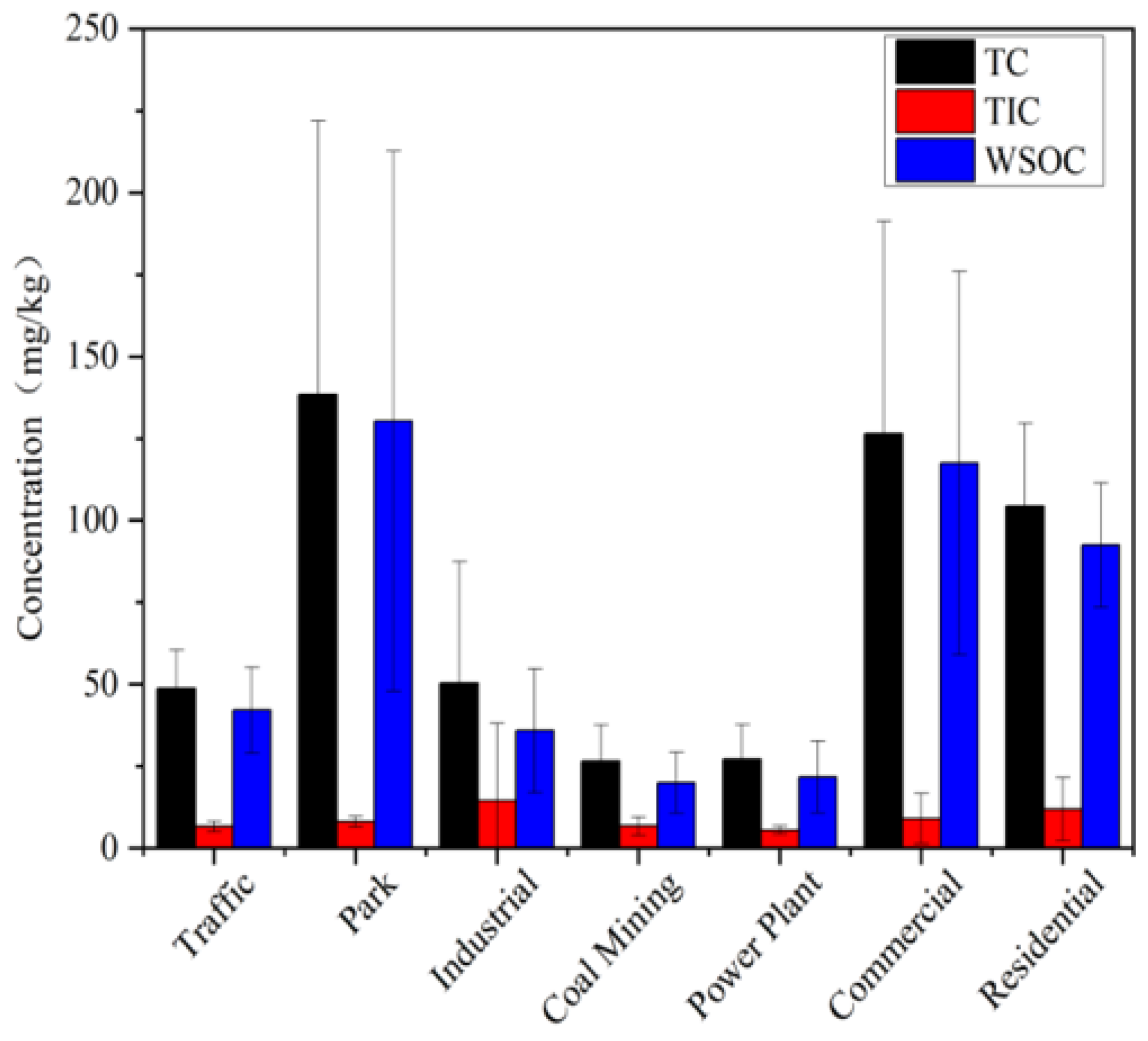
Figure 3 shows the concentration distribution of TC, TIC, and WSOC in water–soluble fractions of road dust from different functional zones in Huainan City. Overall, the average concentration of TC in the water–soluble fractions of road dust was 76.3 ± 62.6 mg/kg. Specifically, the average TIC concentration was only 9.0 ± 10.8 mg/kg, while the average WSOC concentration reached 67.3 ± 59.4 mg/kg, accounting for 88.2% of TC. This result indicated that WSOC was the dominant component of TC in the water–soluble fractions of road dust across the functional zones in Huainan City, with TIC contributing relatively little to TC. Spatially, the distribution of carbon components in water-soluble fractions of road dust exhibited significant variation among functional zones. The spatial pattern of WSOC concentration corresponded closely to that of TC, further demonstrating that WSOC was the primary factor driving the spatial differences in carbon components. Specifically, the TC and WSOC concentrations in park, commercial, and residential zones were significantly higher than those in other functional zones. The average WSOC concentration in these three zones reached 113.4 mg/kg, which was substantially higher (approximately 5~6 times) than that in the coal mining and power plant zones. This discrepancy is closely linked to the pollution source characteristics of different functional zones: the park, commercial, and residential zones are more strongly influenced by secondary transformation products of biogenic volatile organic compounds, vehicle emissions, cooking fumes, and residential activities, which likely contribute substantial amounts of water–soluble organic carbon to the road dust. In contrast, the coal mining and power plant zones have sparse human activity, and the road dust contains coal dust, mineral particles (e.g., coal gangue), and coal combustion residues. The carbon in coal is predominantly present in forms that are poorly soluble in water, such as refractory organic carbon and fixed carbon, resulting in limited leaching into the water–soluble fraction. Consequently, the TC and WSOC concentrations in the water–soluble fractions of road dust in these two functional zones were significantly lower than those in other zones.
Figure 3.
Distribution of TC, TIC, and WSOC concentrations in the water–soluble fractions of road dust from Huainan City.
3.2.2. Fluorescence Characteristics of WSOC Components in Road Dust
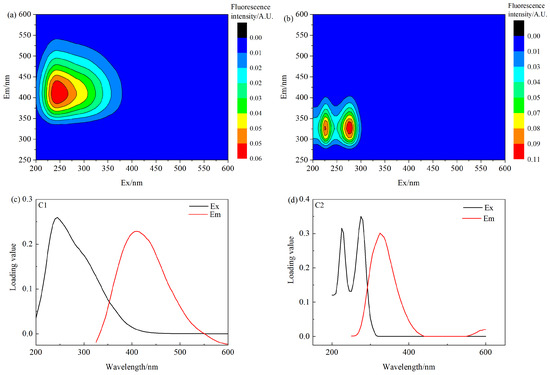
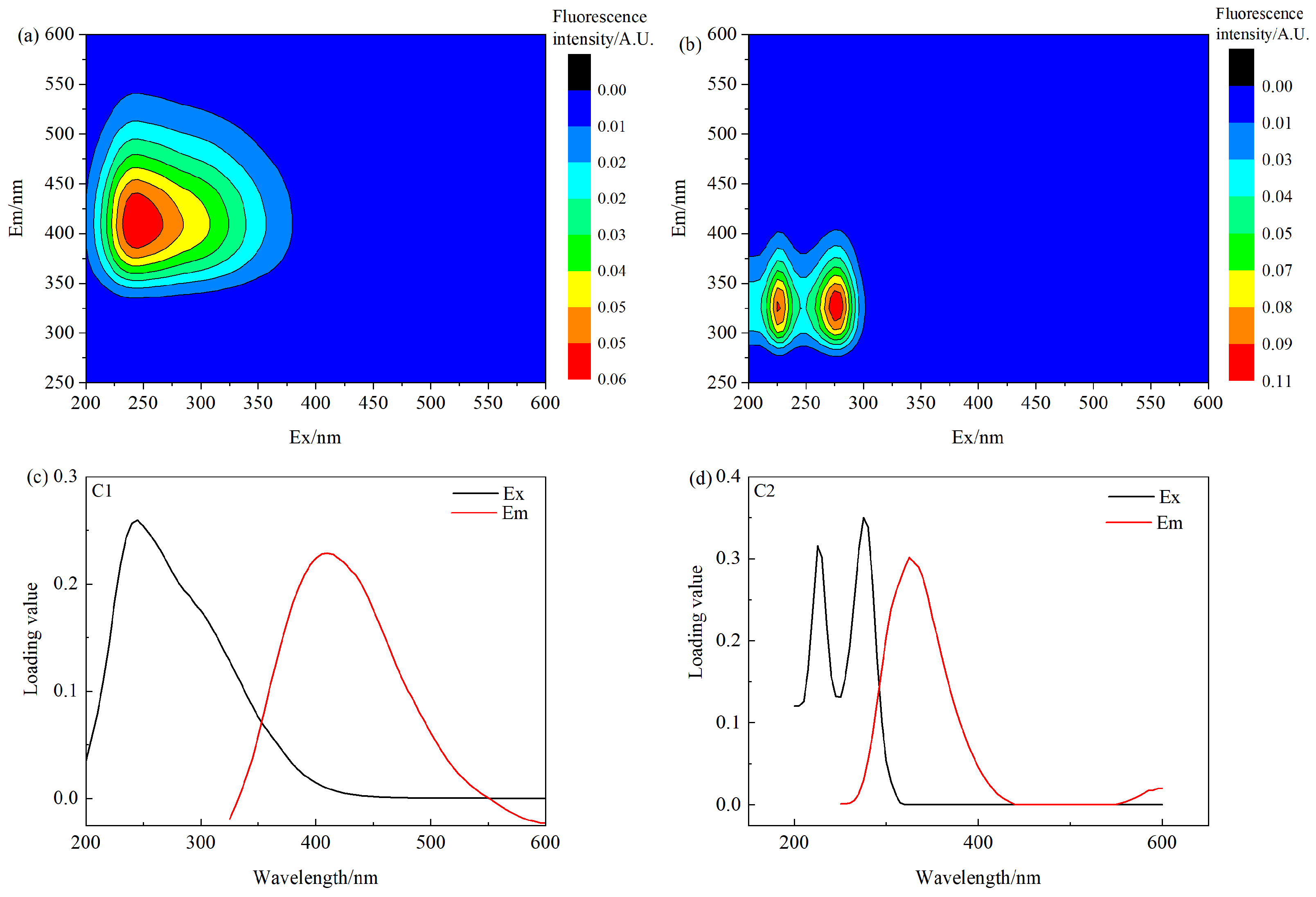
Figure 4 presents the three–dimensional fluorescence spectra of the water–soluble fractions in road dust from different functional zones. Spectral matrices were analyzed via the PARAFAC model, and two major fluorescent components (C1 and C2) were identified. The spectral characteristics and sources of these two components differed significantly. Only a single characteristic fluorescence maximum was observed for the component C1 (Figure 4a). And Component C1 exhibited maximum excitation and emission wavelengths at 245 nm and 410 nm (Figure 4c), respectively, with a spectral signature highly consistent with fulvic–like substances [17]. In terms of origin, Component C1 was primarily derived from the humification processes of terrestrial plant residues, soil organic matter, and biological remains [18]. The enrichment of this component in road dust essentially reflected the input characteristics of terrestrial organic matter.
Figure 4.
Three-dimensional excitation–emission matrix (3D–EEM) fluorescence spectra of water-soluble fractions in road dust from Huainan City. (a) 3D-EEM contour plot of fluorescent component C1; (b) 3D-EEM contour plot of fluorescent component C2; (c) Excitation (Ex) and emission (Em) loading spectra of component C1; (d) Excitation (Ex) and emission (Em) loading spectra of component C2.
Two separated characteristic fluorescence peaks could be observed in the Component C2 (Figure 4b). Component C2 exhibited excitation/emission (Ex/Em) maxima at 225 (275)/325 nm (Figure 4d), a spectral profile characteristic of tryptophan–like substances. This component is generally categorized as a readily biodegradable fraction within water–soluble organic matter [19], and represents a core endogenous biogenic constituent of water-soluble organic matter in road dust. Its abundance is closely associated with microbial metabolic activity in the environment [20]. During the microbial degradation of organic matter, substantial amounts of tryptophan–like metabolites are produced; therefore, the abundance of Component C2 can indirectly reflect the intensity and activity of regional microbial processes [21]. In addition, Stedmon et al. [22] reported that external inputs such as industrial and domestic wastewater, together with the associated microorganisms and their metabolites, are also major sources of tryptophan–like substances. Wastewater, solid waste, and food–service emissions from human activities contain abundant organic matter available to microorganisms. Metabolic transformation of these substances produces accumulated tryptophan-like fluorescent compounds, which then enter road dust through surface runoff and atmospheric deposition. Accordingly, Component C2 was present at markedly higher concentrations in areas with intense human activity, including residential, commercial and park zones.
3.2.3. Fluorescence Intensity of WSOC in Road Dust
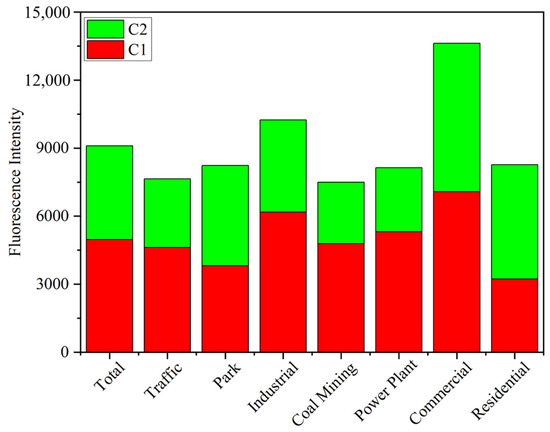
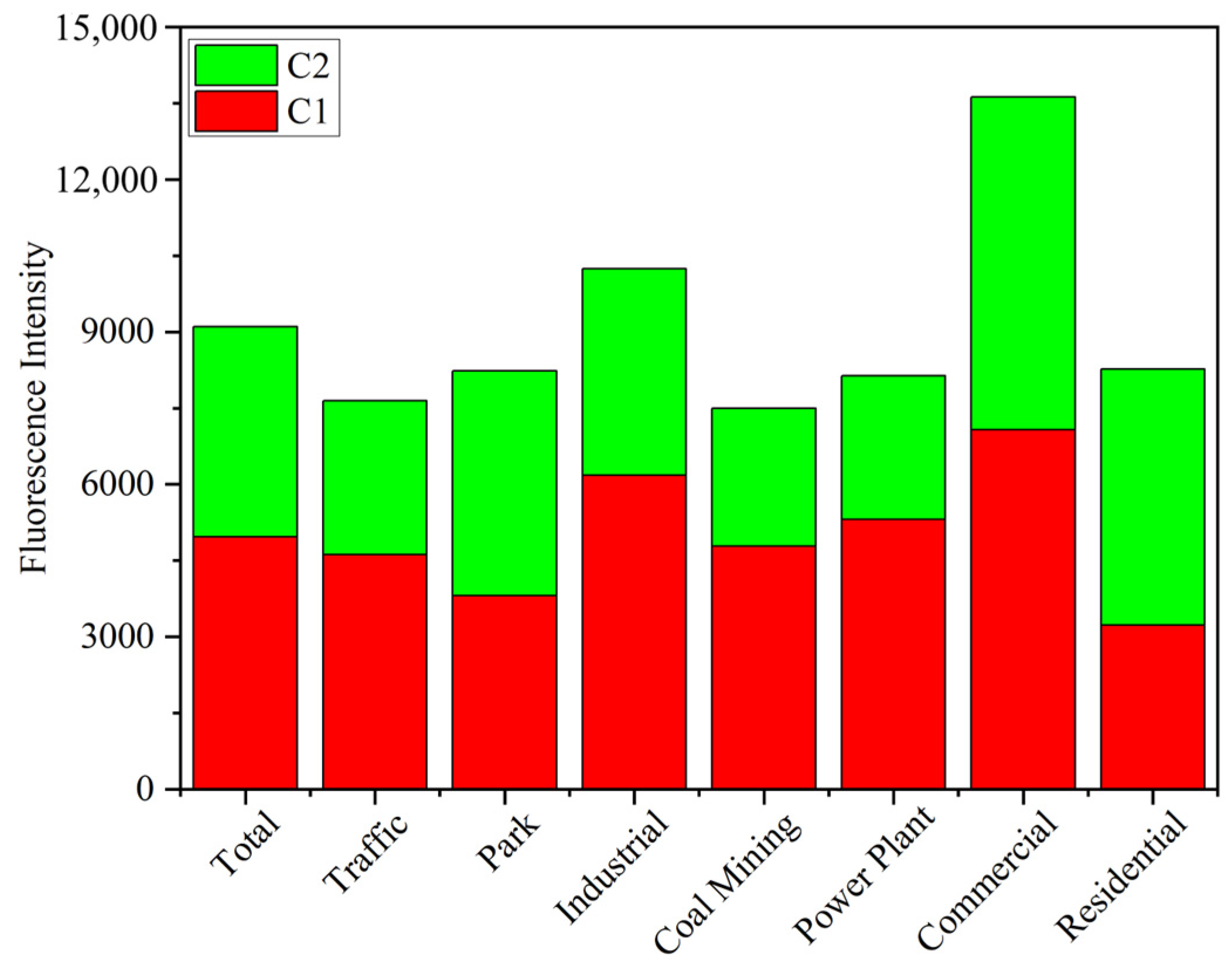
Figure 5 displays the fluorescence intensity of Components C1 and C2 in road dust. It can be observed that the spatial patterns of two fluorescent components, C1 and C2, differed significantly, and that their distribution was closely associated with the intensity of human activities and environmental characteristics across different functional zones. Although the total fluorescence intensity in the coal mining and power plant zones was relatively low, the fluorescence intensity of Component C1 in these zones exceeded that in functional zones such as parks, residential zones, and traffic zones. Component C1 (terrestrial humic–like substances) accounted for a relatively high proportion (all exceeding 60%) in the coal mining zone, power plant zone, industrial zone, and traffic zone, serving as the dominant component of WSOC in road dust in these zones. Specifically, in the power plant and coal mining zones, the proportions reached 65.3% and 63.8%, respectively, indicating typical humic–like characteristics. According to Wu et al. [23], microorganisms can also transform more bioavailable carbohydrates and protein molecules into recalcitrant humic–like substances.
Figure 5.
Fluorescence intensities of Components C1 and C2 in road dust from Huainan City.
In contrast, Component C2 (biogenic organic matter) accounted for a higher proportion in commercial, park, and residential zones. In particular, it constituted 60.9% in the residential zone, representing the dominant component in that region. As areas with intensive human activity, residential and commercial zones produce large amounts of domestic waste, sewage, cooking emissions, and pet excrement, which provide abundant substrates for microbial activity and promote the production of tryptophan-like microbial metabolites. Meanwhile, the relatively high vegetation coverage in residential and park zones contributes to continuous inputs of organic matter. The readily degradable organic substances derived from microbial degradation of the vegetation enter road dust via wind and vehicle disturbances, further increasing the proportion of Component C2. In summary, the distinct proportional differences of Components C1 and C2 in road dust across various functional zones clearly reveal that WSOC in road dust is jointly regulated by the transformation of endogenous organic matter and exogenous anthropogenic inputs. This finding provides a scientific basis for the precise management of road dust pollution in different zones.
3.2.4. Sources of Fluorescent Components in WSOC from Road Dust
The fluorescence index (FI) is commonly used to infer the source of WSOC. An FI below 1.4 usually indicates dominant terrestrial origin and low microbial activity, while an FI above 1.9 points to dominant autochthonous sources derived mainly from microbial processes [24]. In our study, FI values were greater than 2.8, indicating a strongly autochthonous character and substantial biogenic contribution to WSOC in road dust. The autochthonous index (BIX) is used to evaluate the contribution of autochthonous sources to WSOC. A BIX value between 0.6 and 0.8 reflects mainly terrestrial inputs; a value above 1.0 points to dominant biological or bacterial sources; and values in the range of 0.8–1.0 suggest mixed sources [25]. The BIX value obtained in this study was 0.86, demonstrating that WSOC in road dust originated from both terrestrial and autochthonous sources. The humification index (HIX) serves as an indicator of the degree of humification in WSOC. An HIX value lower than 0.8 corresponds to a low degree of humification, with decreasing values indicating progressively weaker humification [26]. In summary, WSOC in road dust from the studied city exhibited a mixed–source signature, with autochthonous sources being dominant and a relatively low degree of humification.
3.3. Characteristics of Heavy Metals in Water-Soluble Fractions of Road Dust
Table 1 presents the concentrations of water–soluble heavy metals in road dust from Huainan City. The total concentration of water–soluble heavy metals was 43.46 mg/kg. The concentration of individual water-soluble heavy metals followed the order: Fe > Sr > Cu > Ba > Mn > V > As > Li > Ni > Cr > Sb > Ga > Co. In Huainan, Fe, Sr, Cu, Ba, and Mn were the dominant components, together accounting for 89.4% of the total concentration, indicating a pattern in which a few high–concentration elements dominated while lower–concentration elements were distributed in a more diverse manner.
Table 1.
Concentrations (mg/kg) of water–soluble heavy metals in road dust from Huainan City.
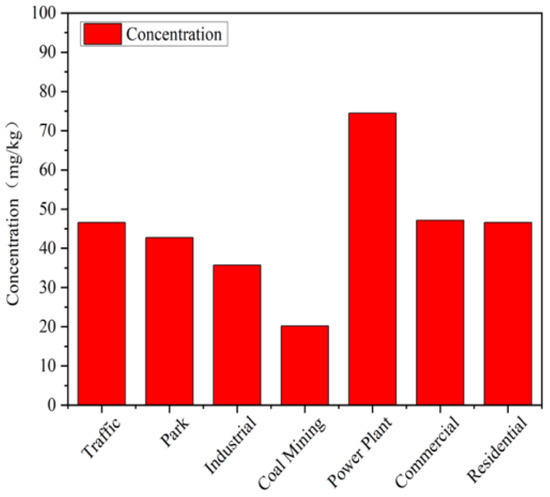
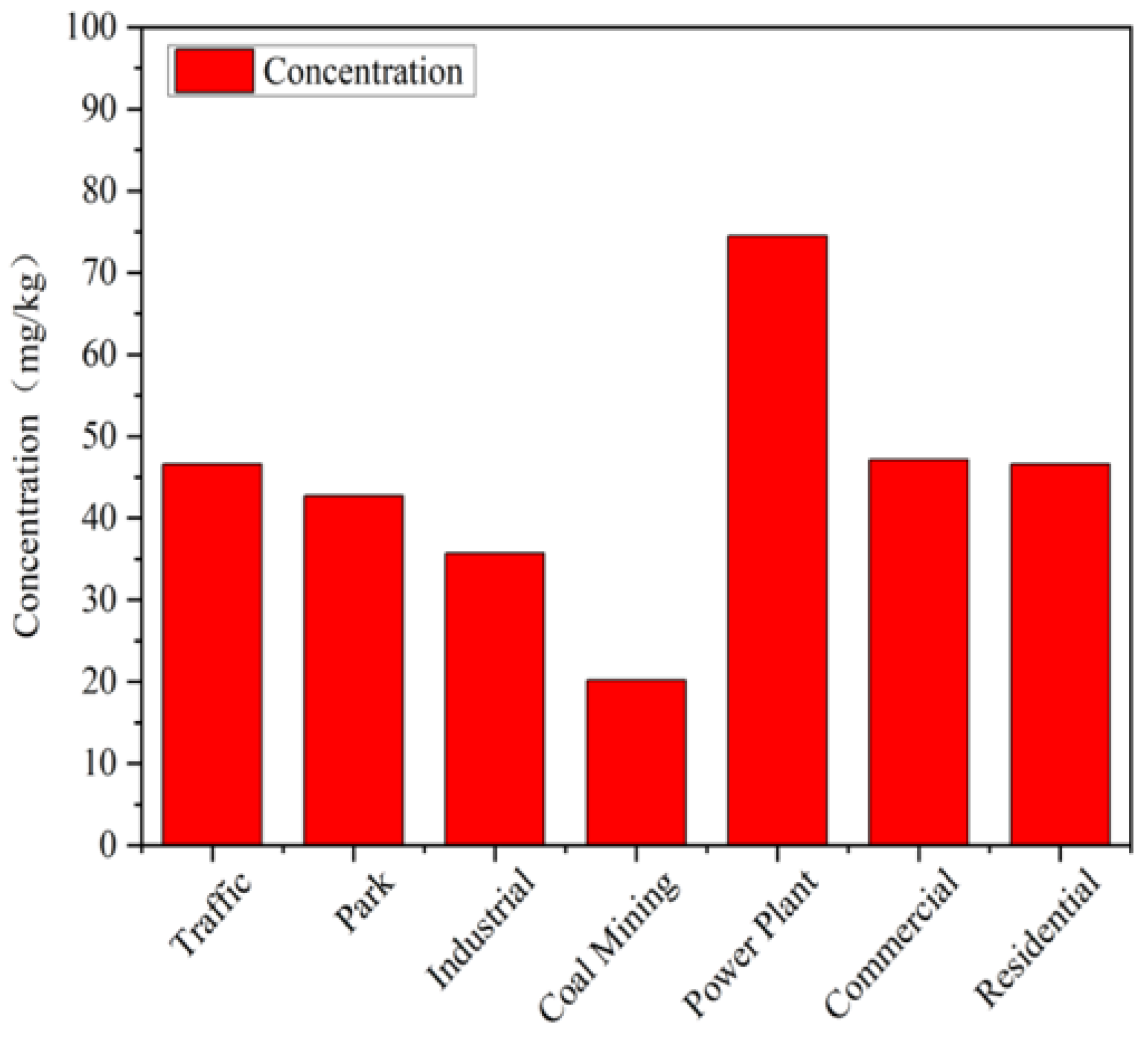
Figure 6 shows the distribution of total water–soluble heavy metal concentrations in road dust from different functional zones of Huainan City. The highest total concentration (74.5 mg/kg) was observed in the power plant zone, while the industrial and coal mining zones showed lower total water–soluble heavy metal concentrations compared with other functional zones. The lowest concentration (20.20 mg/kg) was found in the coal mining zone, with the level in the power plant zone being about 3.7 times that in the coal mining zone. Influenced by industrial type, emission patterns of pollution sources, and heavy metal speciation, the accumulation of water–soluble heavy metals exhibited clear spatial heterogeneity across different functional zones.
Figure 6.
Total concentrations of water–soluble heavy metals in road dust from different functional zones of Huainan City.
Table 2 presents the concentrations of water-soluble heavy metals in road dust from different functional zones of Huainan City. The industrial structure of Huainan City is centered on coal–fired power generation, with numerous coal–fired power units distributed across the region. The continuous combustion of coal releases large amounts of iron-containing particulate matter. Iron itself exhibits relatively high solubility, and under acidic atmospheric conditions, it can undergo further transformation [27], which enhances its dissolution potential. These particles eventually deposit onto the surface through atmospheric dry and wet deposition, accumulating in road dust. Sr and its compounds are used as additives in coal combustion to promote high–temperature sulfur fixation [28], and Sr generally possesses high mobility and is readily leachable [29]. Fe and Sr are the main contributors to water–soluble heavy metals in the power plant zone. Their combined accumulation ultimately leads to a significantly higher total concentration of water–soluble heavy metals in this zone. In contrast, road dust in the coal mining zone is dominated by coal dust and mineral dust. Fe in coal mainly exists as sulfide–bound forms, which are chemically stable and poorly water–soluble, resulting in minimal release into the water-soluble fraction. Consequently, the total concentration of water-soluble heavy metals in the coal mining zone is the lowest in the city. Furthermore, V, Cu, and Ba reached their highest levels in the traffic zone, while Cr, Co, and Ni showed pronounced enrichment in the commercial zone. These heavy metals are mainly derived from traffic–related pollution [30,31,32]. High traffic volumes in the traffic and commercial zones, along with vehicle wear and exhaust emissions, are the primary drivers of the elevated concentrations of these heavy metals.
Table 2.
Concentrations (mg/kg) of water–soluble heavy metals in road dust from different functional zones of Huainan City.
3.4. Factors Influencing the OP of Water-Soluble Fractions in Road Dust
3.4.1. Impact of Water-Soluble Heavy Metals in Road Dust on OP
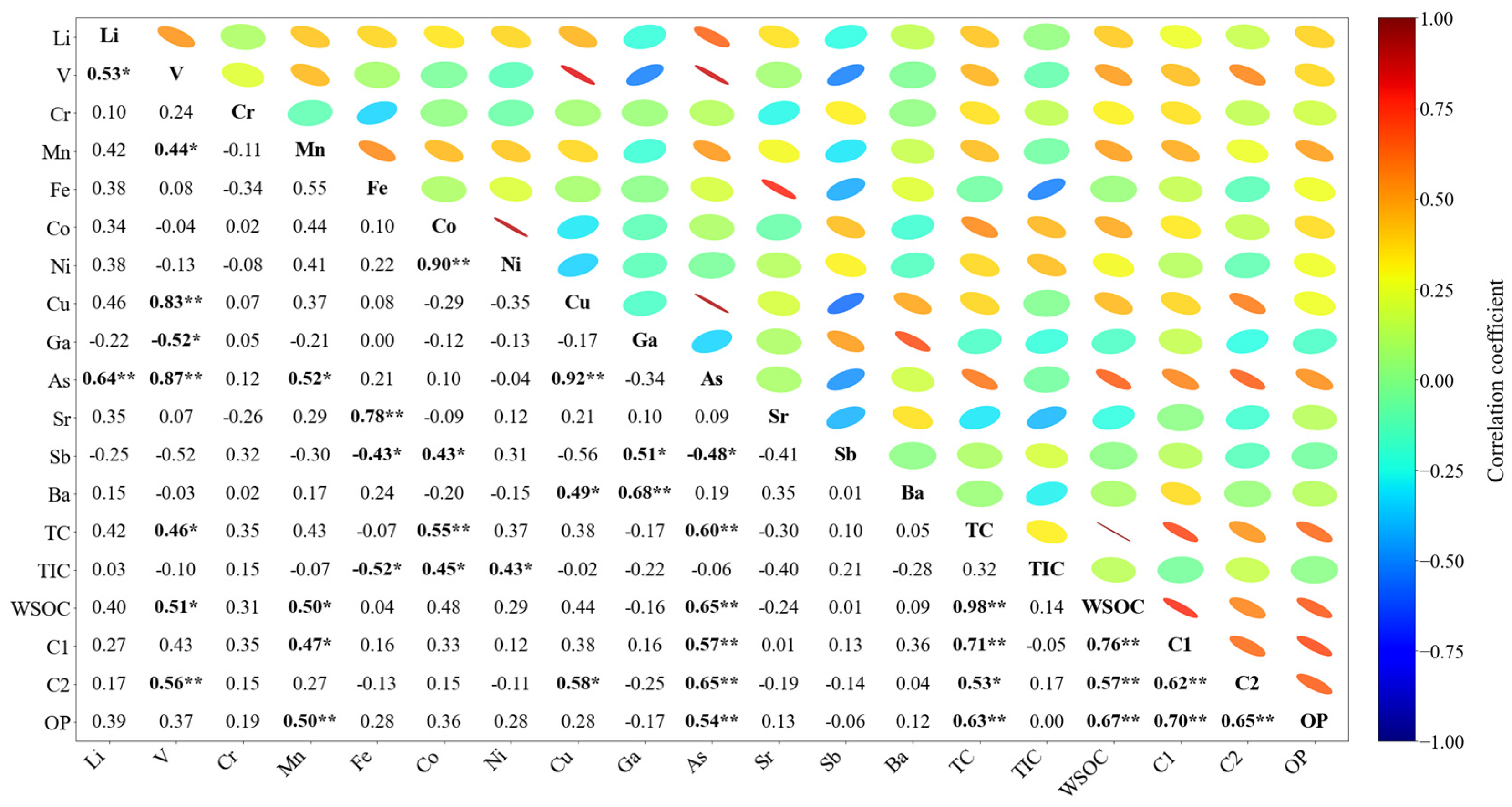
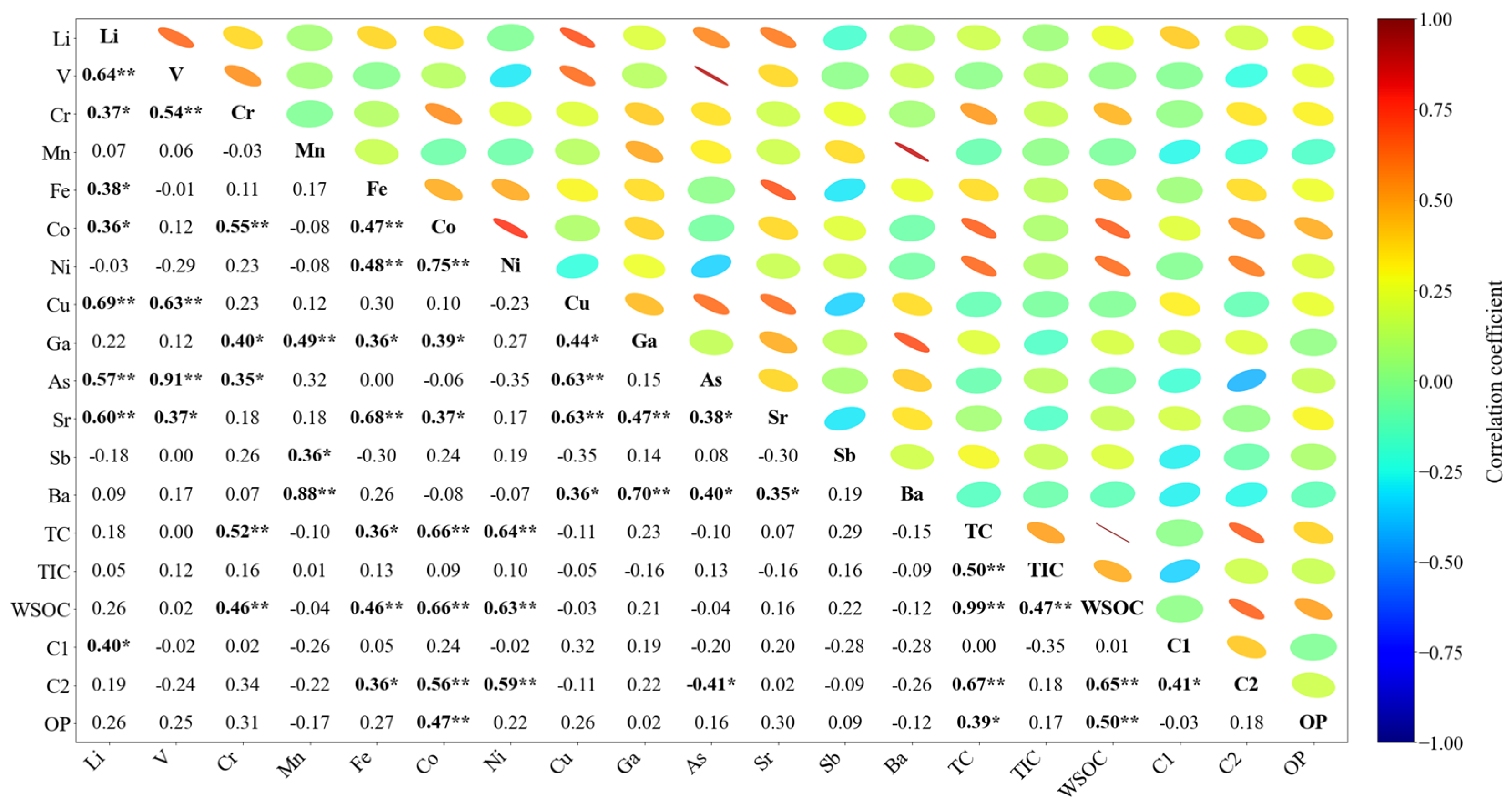
Figure 7 and Figure 8 illustrate the correlation between the OP of water–soluble fractions in road dust and their chemical components across different functional zones. As shown, in the industrial, coal mining, and power plant zones (three industry–related functional zones), the OP of the water–soluble fractions in road dust exhibited significant positive correlations with Mn and As, indicating that Mn and As were key factors regulating the OP of water-soluble fractions in road dust in these regions. Transition metals can act as catalysts, accelerating the formation of ROS via Fenton–like reactions and thereby elevating OP levels [33]. Notably, the analysis revealed a significant positive correlation between Mn and As. Combined with existing studies indicating that As acts as a tracer for coal–combustion emissions [34], this correlation suggests that Mn and As might share common pollution sources. Previous research has confirmed that the source of Mn is closely associated with fuel–combustion processes [31]. Industrial and power plant zones are generally equipped with fuel combustion facilities including boilers and coal–fired generating units, which release pollutants containing Mn and As during operation. This further supports the conclusion that Mn and As share a common origin.
Figure 7.
Correlations between OP and chemical components in the water–soluble fractions of road dust from industrial, coal mining, and power plant zones. Note: * Correlation is significant at the 0.05 level (two–tailed); ** Correlation is significant at the 0.01 level (two–tailed).
Figure 8.
Correlations between OP and chemical components in the water–soluble fractions of road dust from traffic, park, commercial, and residential zones. Note: * Correlation is significant at the 0.05 level (two–tailed); ** Correlation is significant at the 0.01 level (two–tailed).
In contrast to three industrial functional zones described above, the correlation patterns in four non–industrial functional zones (commercial, residential, traffic, and park zones) showed distinct differences. The OP of the water–soluble fractions in road dust in these zones exhibited significant correlations with Co. Moreover, the positive correlation coefficients between Co and both Cr and Ni exceeded 0.50, representing substantially stronger significant correlations than those observed for Co with other heavy metals. Among these, Cr, Ni, and Co are representative elements of traffic sources [32,35]. This indicates that the three elements share a common pollution source, namely traffic emissions. Considering the actual environmental characteristics of these four non–industrial functional zones, where pedestrian flow and vehicle volume are generally high, traffic–related emissions including vehicle exhaust, tire wear and road surface abrasion constitute a major pollution source of road dust in these areas.
3.4.2. Impact of WSOC and Its Fluorescent Components in Road Dust on OP
The OP of the water-soluble fractions in road dust showed significant positive correlations with TC and WSOC. In three industrial functional zones, the correlation coefficients between OP and TC/WSOC were higher, which might be related to the carbon skeleton structure and occurrence types of carbon in different functional zones. As a chemically complex mixture, WSOC primarily contains functional groups such as carboxyl, hydroxyl, carbonyl, and ether bonds, as well as various chemical components including dicarboxylic acids, polyols, ketones, and aromatic hydrocarbons [36]. WSOC can interact with transition metals via its surface functional groups, thereby promoting the formation of ROS, with highly oxidized humic–like substances serving as the main binding sites for transition metals [37]. Due to the pronounced influence of industrial activities in industrial, coal mining, and power plant zones, terrestrially derived humic-like substances account for a relatively high proportion of WSOC, and Component C1 dominated the WSOC composition, becoming a major contributor to the OP of water–soluble fractions in road dust within these zones.
In three industrial functional zones, WSOC showed significant positive correlations with V, Mn, and As. Coal mining activities release substantial amounts of heavy metals such as V, Mn, and As; V exhibited a significant positive correlation with Li, Mn, Cu, and As; As serves as a tracer for coal combustion, whereas V, Cu and Mn originate from industrial and traffic sources [31,32,38,39]. This pattern indicated that WSOC in these zones was mainly derived from coal mining, industrial activities, and vehicle emissions. In four non–industrial functional zones, WSOC was significantly correlated with Cr, Fe, Co, and Ni. Fe showed significant positive correlation with Sr, Co, Li, Ni, and Ga. Crustal materials are an important natural source of Sr in surface dust [40]. Co, Li, Cr, and Ni are predominantly derived from traffic emissions. Thus, Fe originates from both natural crustal materials and anthropogenic traffic sources. These relationships suggested that WSOC in the four non–industrial zones was predominantly associated with traffic sources.
In three industrial functional zones, the OP of water-soluble road dust showed significant positive correlations with WSOC, C1, and C2, indicating that WSOC, C1, and C2 were key factors regulating the OP of water–soluble fractions in road dust in these zones. In contrast, in four non–industrial functional zones, the OP of water–soluble road dust was only significantly correlated with WSOC, while the correlations with C1 and C2 were markedly weaker, suggesting a relatively minor influence of C1 and C2 on OP in these zones. This regional difference is likely attributable to variations in the structural composition of WSOC. In three industrial zones, Component C1 in road dust showed significant positive correlations with Mn and As, while Component C2 was significantly correlated with V, Cu, and As. In four non-industrial zones, Component C1 was significantly correlated with Li, and Component C2 with Fe, Ni, and Co. Previous studies have suggested that these transition metals may competitively displace C1 or C2 from the original complexes formed between C1/C2 and water–soluble organic and inorganic components, thereby enhancing fluorescence intensity [37]. These heavy metals may also undergo complexation with certain chemical constituents in WSOC, subsequently enhancing OP via Fenton–like reactions [41].
4. Conclusions
- (1)
- The average OP of water-soluble fractions in road dust from Huainan City was 0.162 ± 0.079 pmol/min/μg. There were distinct differences in OP among different functional zones. The commercial zone had the highest OP, and the coal mining zone the lowest. The OP value of the commercial zone was approximately 1.7 times that of the coal mining zone.
- (2)
- The average WSOC concentration in road dust from Huainan City was 67.3 ± 59.4 mg/kg, accounting for 88.2% of TC. The WSOC concentrations of road dust in park, commercial, and residential zones were significantly higher than those in coal mining and power plant zones (approximately 5–6 times higher). Fluorescent components of WSOC were primarily C1 (fulvic–like substances) and C2 (tryptophan–like substances), and their proportions differed among various functional zones. WSOC in road dust of the city presented a mixed–source signature, which was dominated by autochthonous sources and had a low humification degree.
- (3)
- The average total concentration of water-soluble heavy metals in road dust from Huainan City was 43.46 mg/kg. Among the different functional zones, the power plant zone had the highest total concentration, and the coal mining zone had the lowest. Fe and Sr were the major contributors to water–soluble heavy metals in the power plant zone. V, Cu, and Ba had the highest concentrations in the traffic zone, while Cr, Co, and Ni were markedly enriched in the commercial zone.
- (4)
- The factors affecting the OP of water–soluble fractions in road dust differed among functional zones. In the four non-industrial zones, OP was correlated with carbon fractions (WSOC), as well as heavy metals such as Co. In contrast, OP in the three industrial zones had significant positive correlations with WSOC, C1, C2, As, and Mn.
5. Recommendation
This study explored the characteristics and influencing factors of the oxidative potential of water-soluble fractions in road dust from various functional zones of a coal-resource-based city. Comparative analysis of oxidative potential between water-soluble and water-insoluble fractions should be carried out in future studies to differentiate their oxidative potential levels and corresponding influencing factors. Furthermore, the mechanisms behind oxidative potential formation driven by interactions between organic matter and heavy metals should also be explored in depth. Combined cellular toxicology experiments are also recommended to validate the health risk assessment results.
Author Contributions
Methodology, formal analysis, data curation, writing—original draft preparation, writing—review and editing: N.P.; Software, writing—original draft preparation, writing—review and editing: J.W. (Jingfeng Wu); Methodology: W.C., X.M., Z.L., G.Z. and J.W. (Jie Wu); writing—review and editing: J.W. (Jinggang Wang). All authors have read and agreed to the published version of the manuscript.
Funding
This work was supported by the key projects of scientific research projects in institutions of higher learning in Anhui Province (Anhui Provincial Department of Education, 2022AH050819).
Data Availability Statement
The data that support the findings of this study are available from the corresponding author upon reasonable request.
Acknowledgments
Generative AI tool Doubao Desktop v2.15.9 (Windows) was only used for English language polishing and grammatical revision of the manuscript. No AI was involved in data analysis, experimental design, content writing and conclusion derivation of this research.
Conflicts of Interest
The authors declare no conflicts of interest.
References
- Pavagadhi, S.; Betha, R.; Venkatesan, S.; Balasubramanian, R.; Hande, M.P. Physicochemical and toxicological characteristics of urban aerosols during a recent Indonesian biomass burning episode. Environ. Sci. Pollut. Res. 2013, 20, 2569–2578. [Google Scholar]
- Zhou, W.H.; Zhao, Y.L.; Li, R.F.; Fu, H.B.; Li, Q.Z.; Liu, C.W.; Chen, J.M. Metals, PAHs and oxidative potential of size-segregated particulate matter and inhalational carcinogenic risk of cooking at a typical university canteen in Shanghai, China. Atmos. Environ. 2022, 287, 119250. [Google Scholar] [CrossRef] [Scilit]
- Liu, S.; Wu, T.; Wang, Q.; Zhang, Y.; Tian, J.; Ran, W.; Cao, J. High time-resolution source apportionment and health risk assessment for PM2.5-bound elements at an industrial city in northwest China. Sci. Total Environ. 2023, 870, 161907. [Google Scholar] [CrossRef] [Scilit] [PubMed]
- Daellenbach, K.R.; Uzu, G.; Jiang, J.H.; Cassini, A.L.; Vlachou, A.; Stefenelli, G.; Cano, F.; Weber, S.; Kuenen, J.E.P.; Schaap, M.; et al. Sources of particulate-matter air pollution and its oxidative potential in Europe. Nature 2020, 587, 414–419. [Google Scholar] [CrossRef] [Scilit] [PubMed]
- Chen, K.; Xu, J.S.; Lord, F.; Sun, Y.; Ji, D.S.; Metcalfe, S.E.; Raghu, B.; Sailesh, N.; Jia, C.R.; Xiao, H.; et al. Chemical constituents, driving factors, and source apportionment of oxidative potential of ambient fine particulate matter in a Port City in East China. J. Hazard. Mater. 2022, 440, 129864. [Google Scholar] [CrossRef] [Scilit]
- Wang, J.P.; Lin, X.; Lu, L.P.; Wu, Y.J.; Zhang, H.X.; Lv, Q.; Liu, W.P.; Zhang, Y.L.; Zhuang, S.L. Temporal variation of oxidative potential of water soluble components of ambient PM2.5 measured by dithiothreitol (DTT) assay. Sci. Total Environ. 2019, 649, 969–978. [Google Scholar] [CrossRef] [Scilit] [PubMed]
- Kelly, J.T.; Baker, K.R.; Nowak, J.B.; Murphy, J.G.; Markovic, M.Z.; VandenBoer, T.C.; Ellis, R.A.; Neuman, J.A.; Weber, R.J.; Roberts, J.M.; et al. Fine-scale simulation of ammonium and nitrate over the South Coast Air Basin and San Joaquin Valley of California during CalNex-2010. J. Geophys. Res. Atmos. 2014, 119, 3600–3614. [Google Scholar] [CrossRef] [Scilit]
- Wang, Y.X.; Salana, S.; Yu, H.R.; Puthussery, J.V.; Verma, V. On the Relative Contribution of Iron and Organic Compounds, and Their Interaction in Cellular Oxidative Potential of Ambient PM2.5. Environ. Sci. Technol. Lett. 2022, 9, 680–686. [Google Scholar] [CrossRef] [Scilit]
- Yu, H.R.; Jin, W.; Cheng, Y.L.; Kiran, S.B.; Verma, V. Synergistic and Antagonistic Interactions among the Particulate Matter Components in Generating Reactive Oxygen Species Based on the Dithiothreitol Assay. Environ. Sci. Technol. 2018, 52, 2261–2270. [Google Scholar] [CrossRef] [Scilit] [PubMed]
- Jiang, B.Q.; Wen, Z.N.; He, L.X.; Liu, Y.J.; Zhong, X.F.; Wu, S.P. Ecological risk and human health risk assessment of heavy metals in road dust in urban Xiamen. Environ. Pollut. Control 2025, 47, 4–13. [Google Scholar]
- Wang, Q.W.; Chen, Q.C.; Wang, C.; Wang, R.H.; Liu, G.R.; Li, H.; Li, Y.G. Characteristics of organic matter composition and oxidation potential in road dust in winter in Xi’an. Environ. Sci. 2023, 44, 3797–3808. [Google Scholar]
- Wang, X.T.; Lin, J.Z.; Han, J. Response of Land Use and Net Primary Productivity to Coal Mining: A Case Study of Huainan City and Its Mining Areas. Land 2022, 11, 973. [Google Scholar] [CrossRef] [Scilit]
- Shu, Y.R.; Kong, F.M.; He, L.H.; Chen, L.H.; Liu, H.; Zhan, F.X.; Lu, X.J.; Wu, T.M.; Si, D.N.; Mao, J.S.; et al. Machine learning-assisted source tracing in domestic-industrial wastewater: A fluorescence information-based approach. Water Res. 2025, 268, 122618. [Google Scholar] [PubMed]
- Li, H.; Chen, Q.C.; Wang, C.; Wang, R.H.; Sha, T.; Yang, X.Q.; Ainur, D.D. Pollution characteristics of environmental persistent free radicals (EPFRs) and their contribution to oxidation potential in road dust in a large city in northwest China. J. Hazard. Mater. 2023, 442, 130087. [Google Scholar] [CrossRef] [Scilit] [PubMed]
- Bae, M.S.; Schauer, J.J.; Lee, T.; Jeong, J.; Keun, Y.K.; Kim, C.U.; Ro, S.G.; Song, Z.H.; Shon, Z.H. Relationship between reactive oxygen species and water-soluble organic compounds: Time-resolved benzene carboxylic acids measurement in the coastal area during the KORUS-AQ campaign. Environ. Pollut. 2017, 231, 1–12. [Google Scholar] [PubMed]
- Guo, H.B.; Li, M.L.; Lyu, Y.; Cheng, T.T.; Xu, J.J.; Li, X.X. Size-resolved particle oxidative potential in the office, laboratory, and home: Evidence for the importance of water-soluble transition metals. Environ. Pollut. 2018, 246, 704–709. [Google Scholar] [PubMed]
- Song, X.N.; Yu, Q.; Zhang, Y.; Zhang, Y.; Yin, X.Y. Distribution characterization and source analysis of dissolved organic matters in Taihu Lake using three dimensional fluorescence excitation-emission matrix. Acta Sci. Circ. 2010, 30, 2321–2331. [Google Scholar]
- Bai, X.Y.; Gu, S.W.; Wang, Z.Y.; Che, Y.F.; Feng, J.X.; Zhang, W.J. Distribution and spectral characteristics of soil humus under diverse land use patterns in the wind erosion region. J. Agro-Environ. Sci. 2025, 44, 1793–1803. [Google Scholar]
- Huang, M.; Li, Z.L.; Huang, B.; Luo, N.L.; Zhang, Q.Z.; Zhang, X.Q.; Zheng, G.M. Investigating binding characteristics of cadmium and copper to DOM derived from compost and rice straw using EEM-PARAFAC combined with two-dimensional FTIR correlation analyses. J. Hazard. Mater. 2018, 344, 539–548. [Google Scholar] [CrossRef] [Scilit] [PubMed]
- Liu, C.; Li, Z.W.; Asef, A.B.; Berhe, A.A.; Xiao, L.; Liu, D.Y.; Wang, H.P.; Zeng, G.M. Characterizing dissolved organic matter in eroded sediments from a loess hilly catchment using fluorescence EEM-PARAFAC and UV–Visible absorption: Insights from source identification and carbon cycling. Geoderma 2019, 334, 37–48. [Google Scholar] [CrossRef] [Scilit]
- Yan, Y.; Xing, D.; Ji, X.Y.; Wen, J.L.; Zhang, M.C.; Wang, R. Characteristics of dissolved organic matter release and microbial community composition during decomposition of three aquatic plants. J. Environ. Eng. Technol. 2026, 16, 632–639. [Google Scholar]
- Stedmon, C.A.; Markager, S. Resolving the Variability in Dissolved Organic Matter Fluorescence in a Temperate Estuary and Its Catchment Using PARAFAC Analysis. Limnol. Oceanogr. 2005, 50, 686–697. [Google Scholar] [CrossRef] [Scilit]
- Wu, J.Q.; Zhao, Y.; Zhao, W.; Yang, T.X.; Zhang, X.; Xie, X.Y.; Yang, H.C.; Wei, C.Z. Effect of precursors combined with bacteria communities on the formation of humic substances during different materials composting. Bioresour. Technol. 2017, 226, 191–199. [Google Scholar] [CrossRef] [Scilit] [PubMed]
- McKnight, D.M.; Boyer, E.W.; Westerhoff, P.K.; Doran, P.T.; Kulbe, T.; Andersen, D.T. Spectrofluorometric characterization of dissolved organic matter for indication of precursor organic material and aromaticity. Limnol. Oceanogr. 2001, 46, 38–48. [Google Scholar] [CrossRef] [Scilit]
- Han, J.M.; Yu, Y.; Zheng, R.F.; Li, M.; Zhang, K.; Jiang, B.B. Analysis of the source of DOM in underground reservoir of coal mine. J. Min. Sci. Technol. 2020, 5, 575–583. [Google Scholar]
- Su, X.Y.; Wang, Y.; Cheng, X.; Zhou, J.S. Spectroscopic characterization analysis of dissolved organic matter in snow samples from Harbin. Environ. Chem. 2021, 40, 312–320. [Google Scholar]
- Wang, Y.; Zhang, Y.X.; Qi, B.; Zhu, Y.H.; Gao, Y.Q.; Li, W.J. Variation and influencing factors of iron solubility in fine particulate matter in Hangzhou. Chin. J. Environ. Sci. 2023, 43, 115–121. [Google Scholar]
- Chen, X.D.; Lu, X.W. Source apportionment of soil heavy metals in city residential areas based on the receptor model and geostatistics. Environ. Sci. 2017, 38, 2513–2521. [Google Scholar]
- Zhang, G.Y.; Wei, J.; Zhang, Y.T.; Wang, R.; Hou, Z.S.; Zhao, M.X.; Zhang, X.R. Soil Sr, Mg, Ca in upstream watersheds of the Guanting and Miyun Reservoirs as climate indicators. Geol. Front. 2023, 30, 485–492. [Google Scholar]
- Li, H.H.; Chen, L.J.; Yu, L.; Guo, Z.B.; Shan, C.Q.; Lin, J.Q.; Gu, Y.G.; Yang, Y.X.; Yang, Z.B.; Shao, J.R.; et al. Pollution characteristics and risk assessment of human exposure to oral bioaccessibility of heavy metals via urban street dusts from different functional areas in Chengdu, China. Sci. Total Environ. 2017, 586, 1076–1084. [Google Scholar] [CrossRef] [Scilit] [PubMed]
- Hao, Q.; Lu, X.W.; Yu, B.; Yang, Y.F.; Lei, K.; Pan, H.Y.; Gao, Y.H.; Liu, P.R.; Wang, Z.Z. Sources and probabilistic ecological-health risks of heavy metals in road dust from urban areas in a typical industrial city. Urban Clim. 2023, 52, 101730. [Google Scholar] [CrossRef] [Scilit]
- Lee, M.G.; Ryu, H.; Chung, W.; Hyun, S.H.; Lee, M.P.; Kim, M.H.; Kwon, J.T.; Lee, Y.J.; Kim, Y. Influence of road roughness and slope on the accumulation and distribution of tire-wear particles and heavy metals in road dust. Environ. Res. 2025, 282, 122079. [Google Scholar] [CrossRef] [Scilit] [PubMed]
- Charrier, J.G.; Anastasio, C. On dithiothreitol (DTT) as a measure of oxidative potential for ambient particles: Evidence for the importance of soluble transition metals. Atmos. Chem. Phys. 2012, 12, 11317–11350. [Google Scholar] [CrossRef] [Scilit] [PubMed]
- Wu, L.; He, W. Discussion on arsenic content and occurrence form in Ningdong coalfield in Ningxia. Coal Chem. Ind. 2021, 44, 57–60+117. [Google Scholar]
- Pan, H.Y.; Lu, X.W.; Lei, K. A comprehensive analysis of heavy metals in urban road dust of Xi’an, China: Contamination, source apportionment and spatial distribution. Sci. Total Environ. 2017, 609, 1361–1369. [Google Scholar] [CrossRef] [Scilit] [PubMed]
- Saxena, P.; Hildemann, L.M. Water-soluble organics in atmospheric particles: A critical review of the literature and application of thermodynamics to identify candidate compounds. J. Atmos. Chem. 1996, 24, 57–109. [Google Scholar] [CrossRef] [Scilit]
- Zhao, T.Y.; Cao, Y.X.; Cai, Q.H.; Bai, Y.; Hu, P.; Zhang, L.J.; Zhang, Y. Multiple spectroscopic insights into the coupling effect of transition metals and water-soluble organic compounds on the oxidative potential of PM2.5 during haze and clean days. J. Hazard. Mater. 2025, 496, 139406. [Google Scholar] [CrossRef] [Scilit] [PubMed]
- Wang, H.; Zhao, Y.Y.; Walker, T.R.; Wang, Y.G.; Luo, Q.; Wu, H.; Wang, X.X. Distribution characteristics, chemical speciation and human health risk assessment of metals in surface dust in Shenyang City, China. Appl. Geochem. 2021, 131, 105060. [Google Scholar] [CrossRef] [Scilit]
- Zupančič, M.; Miler, M.; Žibret, G. The relationship between the inhalation bioaccessibility of potentially toxic elements in road dust from a heavily polluted industrial area and the source of their pollution. Environ. Pollut. 2024, 361, 124810. [Google Scholar] [CrossRef] [Scilit] [PubMed]
- Zieliński, M.; Dopieralska, J.; Królikowska-Ciągło, S.; Walczak, A.; Belka, Z. Mapping of spatial variations in Sr isotope signatures (87Sr/86Sr) in Poland—Implications of anthropogenic Sr contamination for archaeological provenance and migration research. Sci. Total Environ. 2021, 775, 145792. [Google Scholar] [CrossRef] [Scilit] [PubMed]
- Lu, S.L.; Win, M.S.; Zeng, J.Y.; Yao, C.H.; Zhao, M.F.; Xiu, G.L.; Lin, Y.C.; Xie, T.T.; Dai, Y.F.; Rao, L.F.; et al. A characterization of HULIS-C and the oxidative potential of HULIS and HULIS-Fe(II) mixture in PM2.5 during hazy and non-hazy days in Shanghai. Atmos. Environ. 2019, 219, 117058. [Google Scholar]

Disclaimer/Publisher’s Note: The statements, opinions and data contained in all publications are solely those of the individual author(s) and contributor(s) and not of MDPI and/or the editor(s). MDPI and/or the editor(s) disclaim responsibility for any injury to people or property resulting from any ideas, methods, instructions or products referred to in the content. |
© 2026 by the authors. Licensee MDPI, Basel, Switzerland. This article is an open access article distributed under the terms and conditions of the Creative Commons Attribution (CC BY) license.