


Abstract
The heavy metal burden on natural freshwater ecosystems is uninterruptedly increasing, which could affect their biodiversity, particularly regarding avian species. Three river barrages were selected for the sampling of water birds from autumn 2021 to spring 2022. Seven heavy metals—nickel (Ni), copper (Cu), cobalt (Co), zinc (Zn), lead (Pb), cadmium (Cd), and manganese (Mn)—were estimated in the hearts and livers of Fulica atra (Common Coot), Anas strepera (Gad-wall), and Anas crecca (Eurasian Teal) (Linnaeus, 1758) by atomic absorption spectrometry. The mean concentrations of metals were found to be significantly (p < 0.05) different among the sam-pling sites, species, and tissues. In the livers of F. atra and A. strepera, respectively, the highest mean concentration among the metals belonged to Zn (521 µg/g), and the lowest belonged to Cd (0.17 µg/g). The concentrations of Zn, Cu, Pb, Cd, and Co were highest in A. strepera heart samples. However, the concentrations of Zn, Pb, Cd, and Mn were found to be highest in the livers of F. atra. A comparison between both tissues indicated that the concentration of Ni is significantly (p < 0.05) higher (except for F. atra from Trimmu barrage) in the livers of water birds and that the concentration of Cd is significantly higher in the hearts of water birds. The mean metal concentrations were higher than the background limits reported in various studies, suggesting that the wintering water birds of Pakistan are under a significant load of heavy metal pollution. Histopathological analysis suggested that the observed heavy metals altered the normal histologies of hearts and livers of Fulica atra (Common Coot), Anas strepera (Gadwall), and Anas crecca (Eurasian Teal) sampled from three wetlands of Punjab Pakistan.
1. Introduction
Natural aquatic bodies receive pollutants, including heavy metals, from natural and artificial sources. The exposure and uptake of metals vary in a species because of differences in age, gender, body size, diet, and trophic level in a food chain. For wetland ecosystems, water birds are considered as the main indicators, being more vulnerable to heavy metals exposure [1]. Exposure to metal contaminants is also influenced by the solubility, bioavailability, mobility, and binding affinity of metals with tissues [2,3]. Migratory water birds use many wetlands of Pakistan as their wintering sites. These wetlands are mainly contaminated with heavy metal population coming from different sources (i.e., untreated urban sewage, industrial effluents, and agricultural wastes) [4].
The wetlands of Punjab have rich avifuana. The water of Chenab River and Jhelum River collects at Trimmu barrage, which was constructed to control floods in Jhang city and ensure the supply of irrigation water. It is a combination of freshwater and terrestrial ecosystems and is home to a wide variety of animals and plants [5]. Trimmu barrage serves as a significant wetland site that attracts migratory and endemic species of birds. The barrage area encompasses a diverse range of aquatic and terrestrial ecosystems, making it a highly suitable habitat for a wide array of migratory and endemic avian species [6]. Zaman et al. [7] observed fifty-eight species of resident and migratory birds at Trimmu barrage. Taunsa barrage and Chashma barrage serve as the significant wetland habitats for both international and local migratory bird species. This includes various types of waterfowl, waders, and avifauna that migrate over long distances.
The present study was conducted to (1) estimate heavy metal concentrations in the wetlands of Punjab, Pakistan; (2) compare heavy metal concentrations between wetlands; and (3) estimate differences in the accumulation of metals among species and tissues.
2. Materials and Methods
2.1. Study Area and Sampling Sites
The present study was conducted on three major wetlands (Chashma barrage, Taunsa barrage, and Trimmu barrage) of Punjab, Pakistan. Chashma barrage was built on the Indus River in 1971. Five lakes with low levels of water arise from different embankments of the barrage. An area of about 250 hectares is occupied by each lake. The peripheral area is leased to farmers for crop cultivation. The water level in all lakes varies with the season (up to 8 m in flood season and 0.2 m in dry period). Taunsa barrage was also constructed on the Indus River. It is a reservoir of water that is mainly used for irrigation. On the barrage, five embankments are formed, which prevents the drying of lakes and maintains shallow waters when there is a shortage of water in the main river channel. The water level in sideway channels and lagoons varies between 0.2 m and 5.0 m; however, in the core channels, it ranges from 5.0 m to 11.5 m [8].
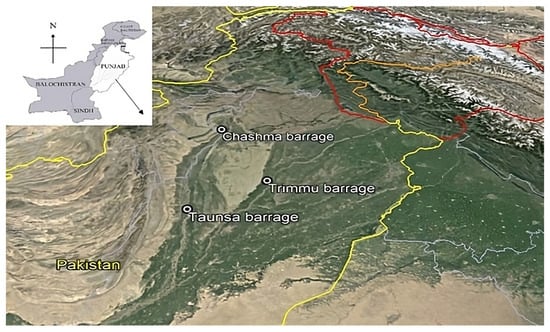
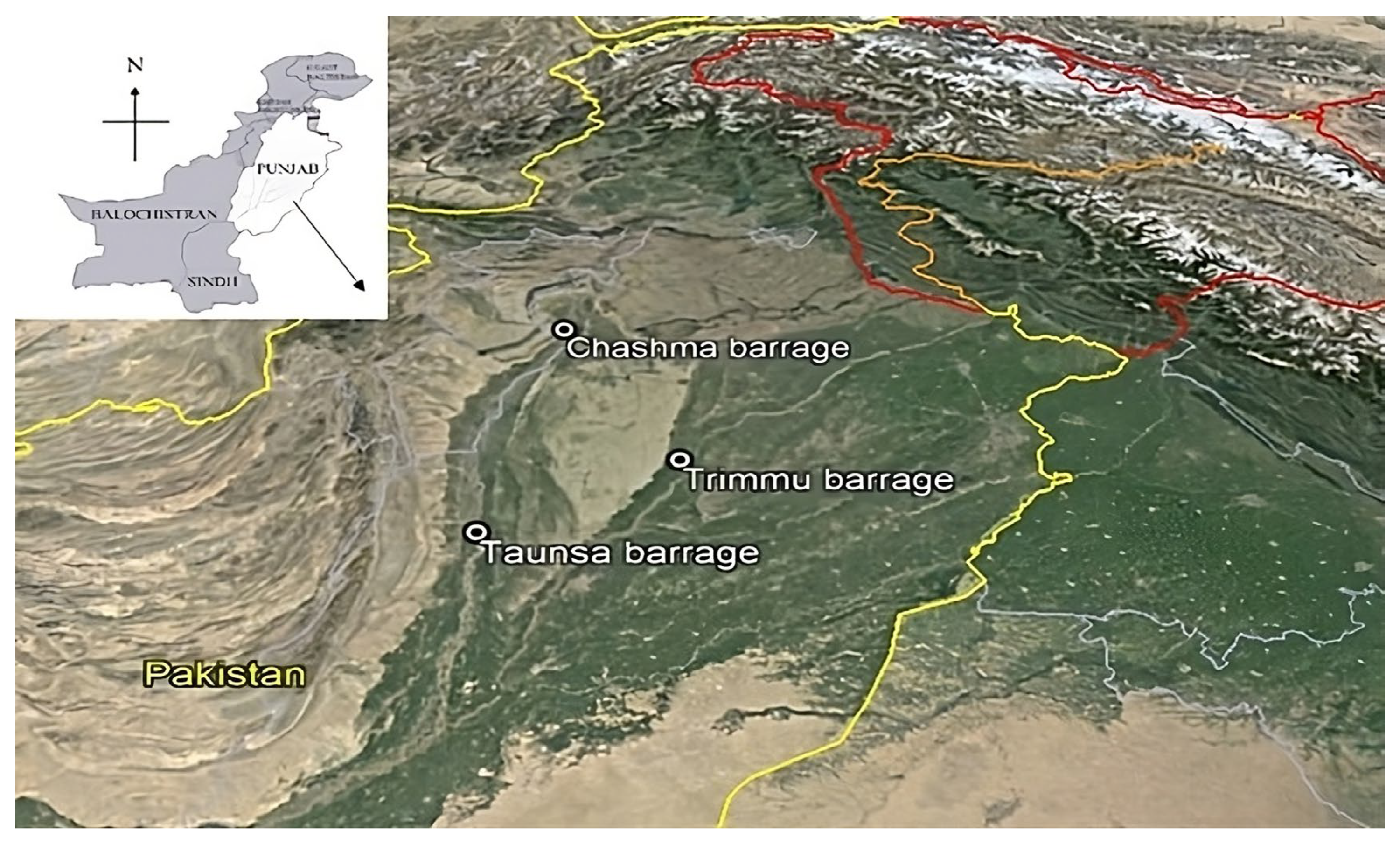
Sampling was carried out in three wetlands of Punjab, Pakistan, including two main Ramsar sites. Site I was Chashma barrage (District Mianwali: 32°25′4″ N; 71°26′19″ E), Site II was Taunsa barrage (District Muzaffargarh: 30°30′46″ N; 70°50′57″ E), and Site III was Trimmu barrage (District Jhang: 31°10′0″ N; 72°7′60″ E) (Figure 1).
Figure 1.
Location of sampling sites.
2.2. Collection and Preparation of Tissues
Heart and liver samples of Anas crecca (n = 25), Fulica atra (n = 26), and Anas strepera (n = 23) were obtained from licensed hunters between autumn 2021 and spring 2022. These birds were selected for this study because they serve as indicators of environmental health due to their wide distribution, ability to accumulate pollutants, ecological significance in wetland habitats, role as indicator species, and international significance for cross-border conservation efforts. Samples were packed in sterilized bags and put in a nitrogen environment for safe transportation. In the laboratory, the tissues were dissected with the help of an autoclaved stainless-steel knife, washed with double distilled water, and kept at −20 °C until digestion. On a thermolyte plate set at 200 °C, one gram of each tissue was digested until it was colorless using 10 mL of HNO3 (65%) and 5 mL of HClO4 (70%). Deionized water was added to the digested solution to dilute it to a level of 25 mL.
2.3. Quantification of Heavy Metals in Samples
A Thermo Fisher Scientific (Cambridge CB5 8BZ, UK) iCE 3000 Series flame atomic absorption spectrophotometer was used to measure the content of heavy metals. The Institute of Zoology, University of the Punjab, Lahore, Pakistan’s Local Bioethical Committee accepted the rules that were followed for every experimental activity (Ref. D/1449/UZ). The standard reference material (SRM) used to check the accuracy of heavy metal analysis was NIST-SRM 1570 (National Institute of Standards and Technology, Gaithersburg, MD, USA). To determine the limit of detection (LOD) and limit of quantification (LOQ), 25 blanks were measured. LOQs and LODs were estimated by the method of [9]. The LODs for Cd, Co, Ni, Pb, Cu, Mn, and Zn were 0.001, 0.002, 0.001, 0.004, 0.003, 0.04, and 0.2 µg/g, respectively, while their LOQs were 0.003, 0.01, 0.003, 0.01, 0.01, 0.1, and 0.67, respectively. The minimum criterion for repeatability was 1%. When the values exceeded this limit, the analysis was repeated.
2.4. Statistical Analysis
Mean concentrations ± SD of metals for both organs were calculated by applying basic descriptive statistics on SPSS version 22. Differences in heavy metal burdens between sites, species, and tissues were assessed by using a one-way ANOVA test on Minitab 17.
2.5. Histopathological Analysis
Heart and liver tissues, removed from the sampled organisms, were stored in 10% formalin and stained with eosin and hematoxylin. The tissues were dehydrated by passing through an ethanol gradient (80%, 90%, and 100%), kept in cedar wood oil for clearing, placed in paralast, and kept in the incubator at 60 °C for 30 min. Then, the paraplast was replaced with a new one, and the samples were again kept in the incubator at 60 °C for 12 h. This procedure was repeated till the tissues became clear. For each tissue, a box block was made and then firmly fixed into a plastic caster. By using rotatory microtone, 2 to 3 μm thick segments of each tissue were cut down, moved to clear slides, stretched on Fischer slides, and warmed.
The tissues were deparaffinized by using xylene. Then, a 50–100% ethanol dilution was used for rehydration purposes. Tap water was used to wash the slides, and hematoxylin staining was performed. The slides were washed again to remove excess stains and then stained with eosin. After completely dehydrating the slides in absolute alcohol, two drops of DPX mountant were placed on each slide, and each slide was covered with a cover slip. The slides were dried and placed under a microscope attached to a digital camera at 40 X resolution.
3. Results
3.1. Comparison of Heavy Metals between Sites
The mean concentration of Cu, Pb, Ni, Cd, Zn, Co, and Mn in water at the three sampling sites and the WHO standards for these heavy metals are presented in Table 1. The concentrations of these heavy metals in the heart samples of A. crecca, A. strepera, and F. atra is presented in Table 2. In the heart samples, only the mean concentration of Ni (p < 0.05) was significantly higher in F. atra at Trimmu barrage. In A. strepera, the concentrations of Cu, Pb (p < 0.05), and Co (p < 0.01) were significantly higher at Chashma barrage, while the concentrations of Ni and Cd (p < 0.05) were significantly higher at Trimmu barrage. In A. crecca, the mean values of Cd (p < 0.01) and Mn (p < 0.05) were higher at Trimmu barrage, and that of Cu (p < 0.05) was higher at Taunsa barrage. In the liver samples, when mean concentrations were compared, Cu and Ni (p < 0.05) were significantly higher at Chashma barrage and Taunsa barrage, respectively, in F. atra. Similarly, in A. strepera, Ni (p < 0.01) and Zn (p < 0.05) were higher at Taunsa barrage and Chashma barrage, respectively. Lastly, Co (p < 0.01) was higher at Chashma barrage in A. crecca (Table 3).
Table 1.
WHO criteria for heavy metals in Pakistan and the concentration of heavy metals in water samples from three sampling sites.
Table 2.
Mean ± S.D (µg/g) values of selected metals in hearts of water birds.
Table 3.
Mean ± S.D (µg/g) values of selected metals in livers of water birds.
3.2. Comparison of Heavy Metals between Tissues
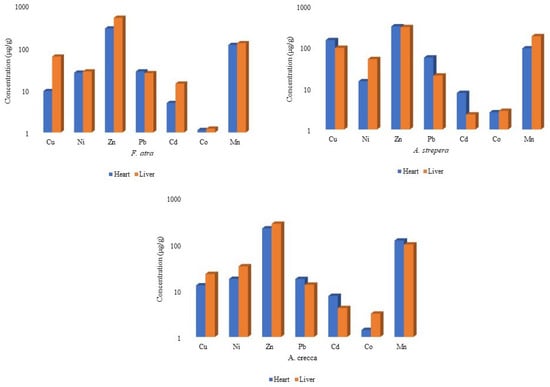
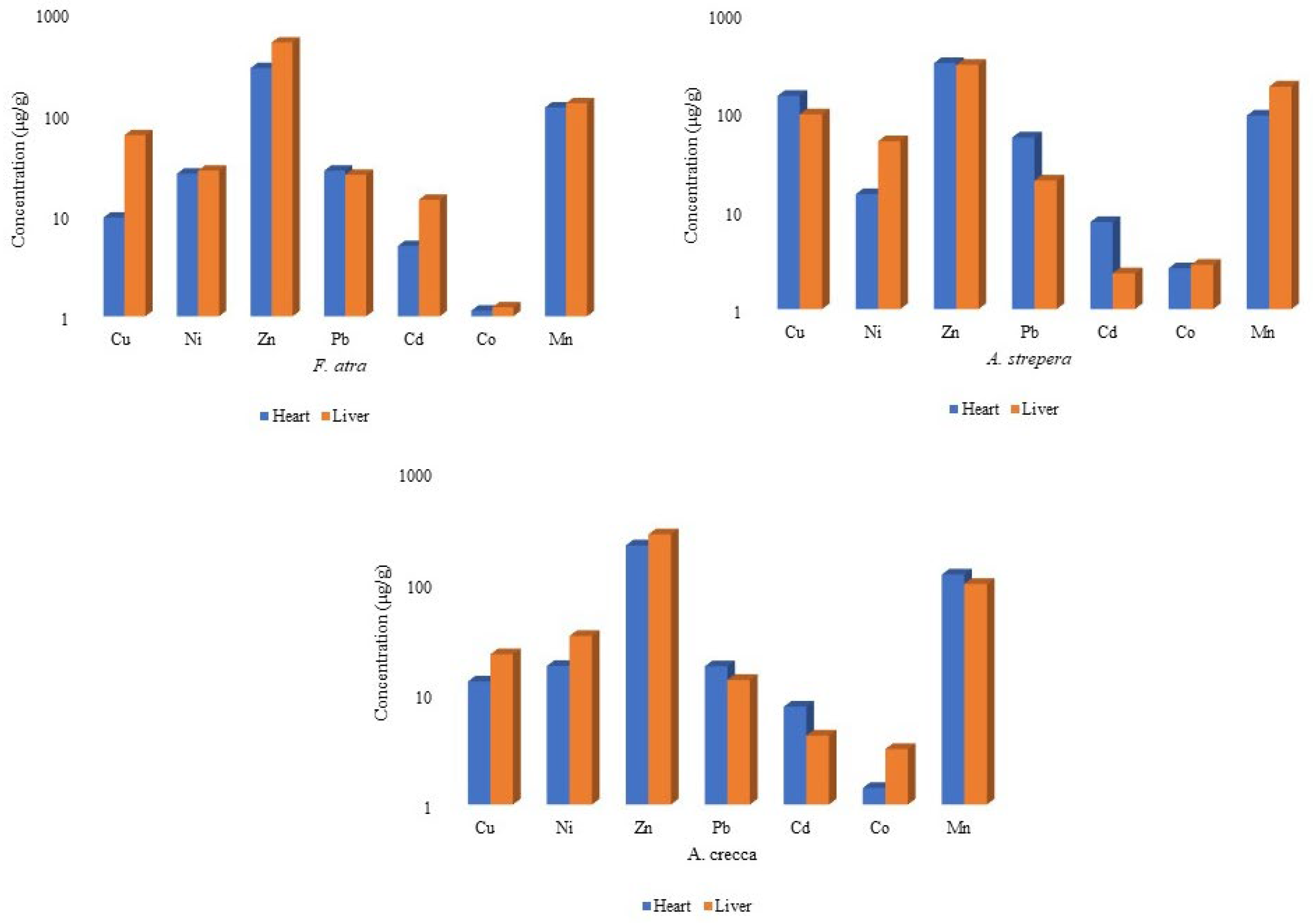
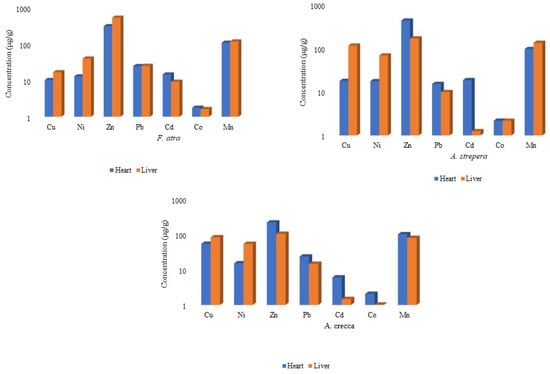
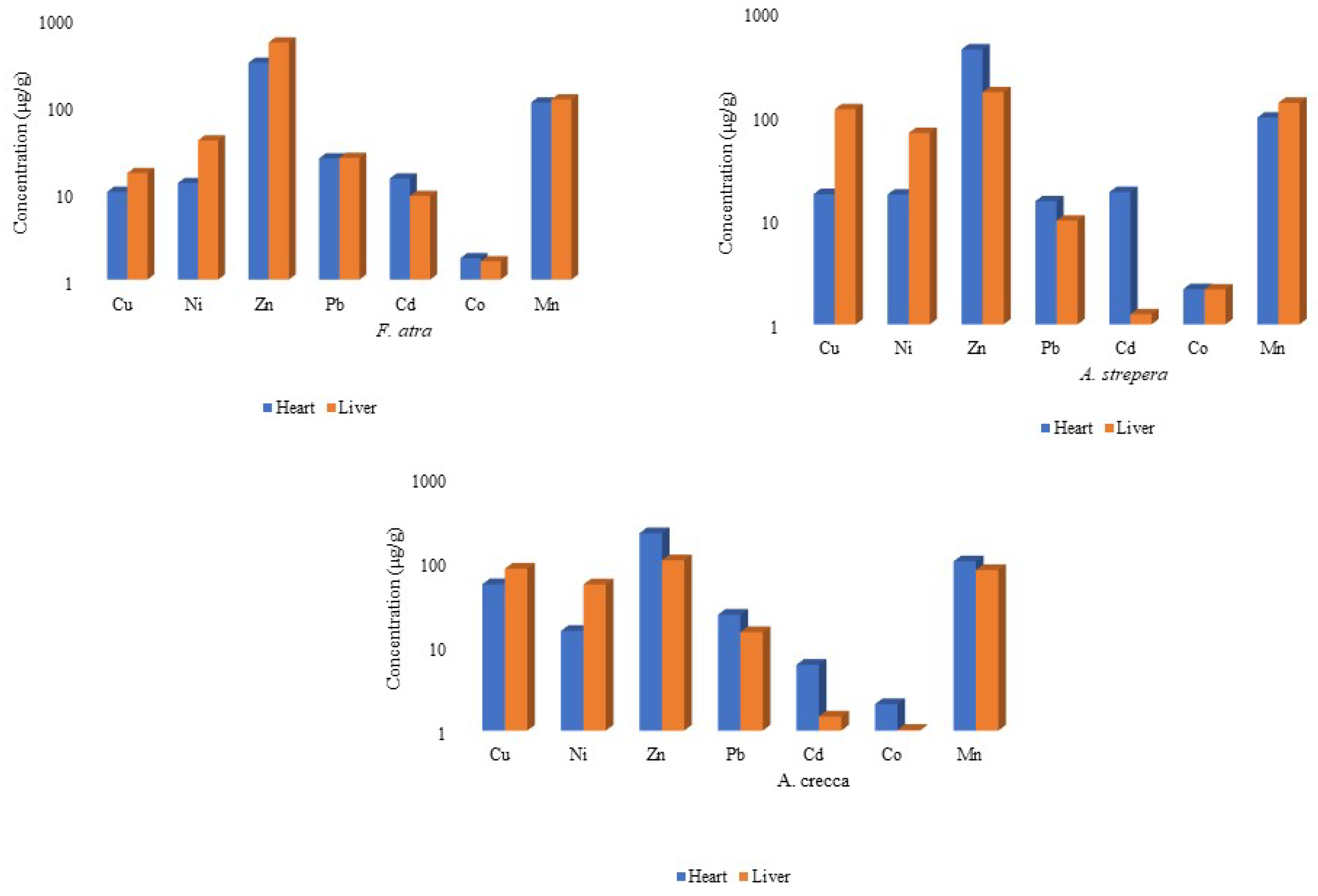
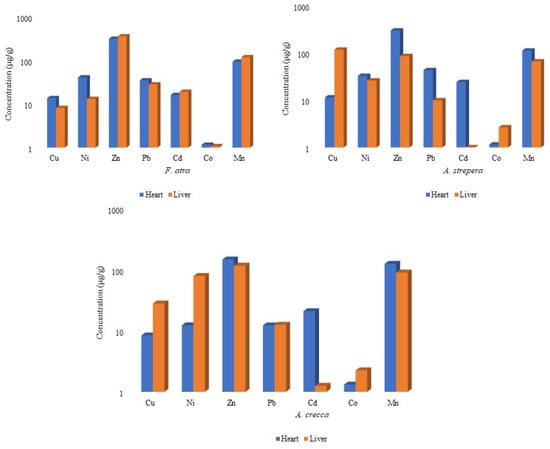
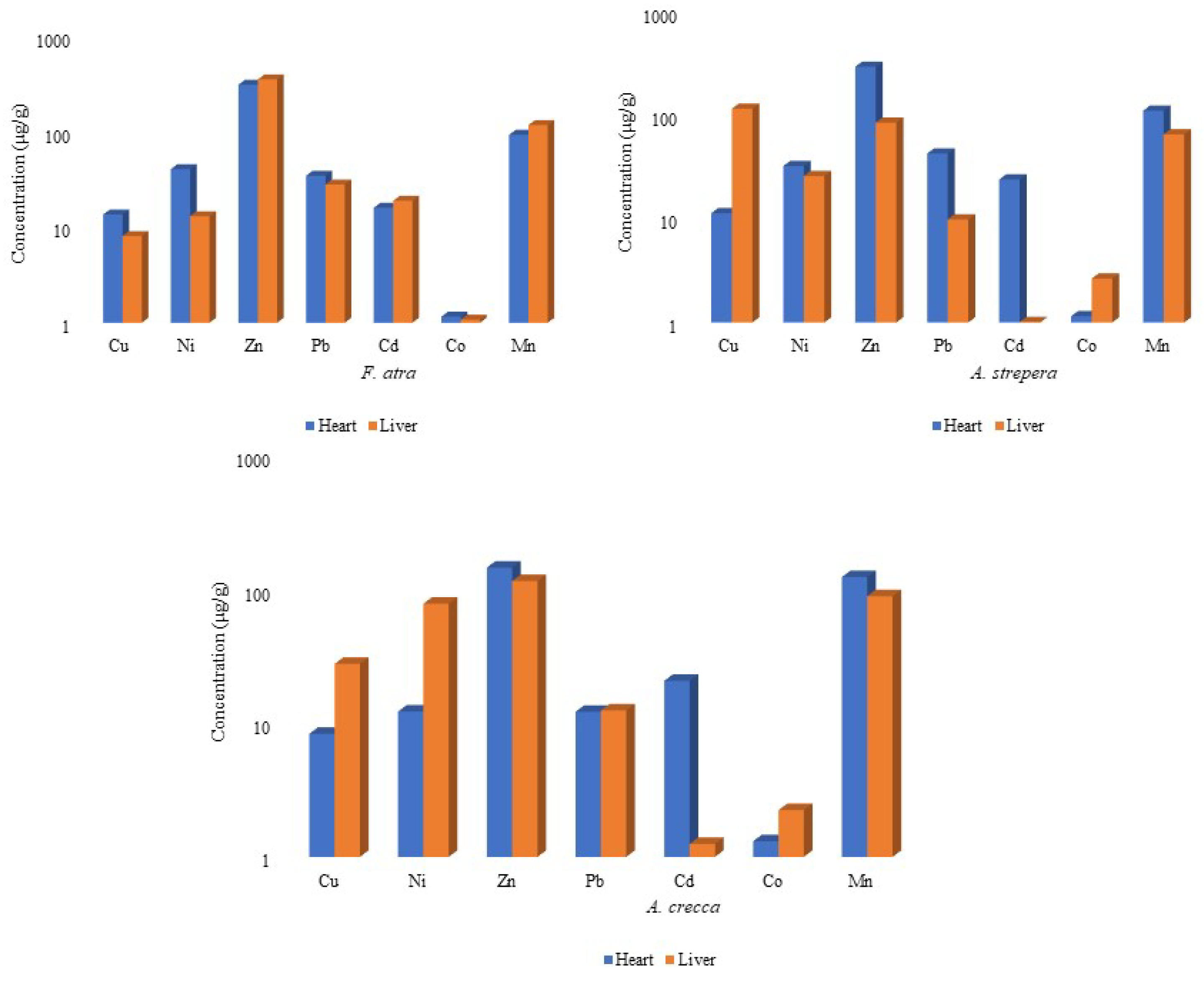
When the mean concentrations between the heart and liver samples were compared, the concentrations of metals were higher in the livers of water birds, but in A. strepera, they were higher in the heart tissues (Figure 2, Figure 3 and Figure 4). Ni was significantly (p < 0.05) higher in the livers, except for F. atra, from Trimmu barrage, and the Cd concentration was significantly (p < 0.05) greater in the hearts when compared with the livers.
Figure 2.
Heavy metals (µg/g) in hearts and livers of water birds from Chashma barrage.
Figure 3.
Heavy metals (µg/g) in hearts and livers of water birds from Taunsa barrage.
Figure 4.
Heavy metals (µg/g) in hearts and livers of water birds from Trimmu barrage.
3.3. Comparison of Heavy Metals between Species
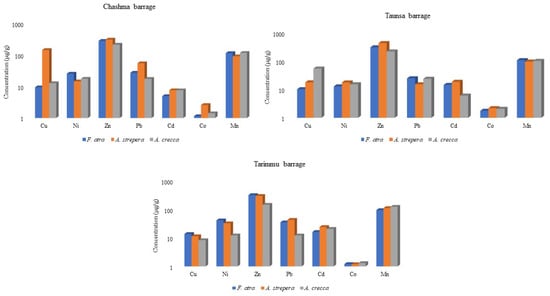
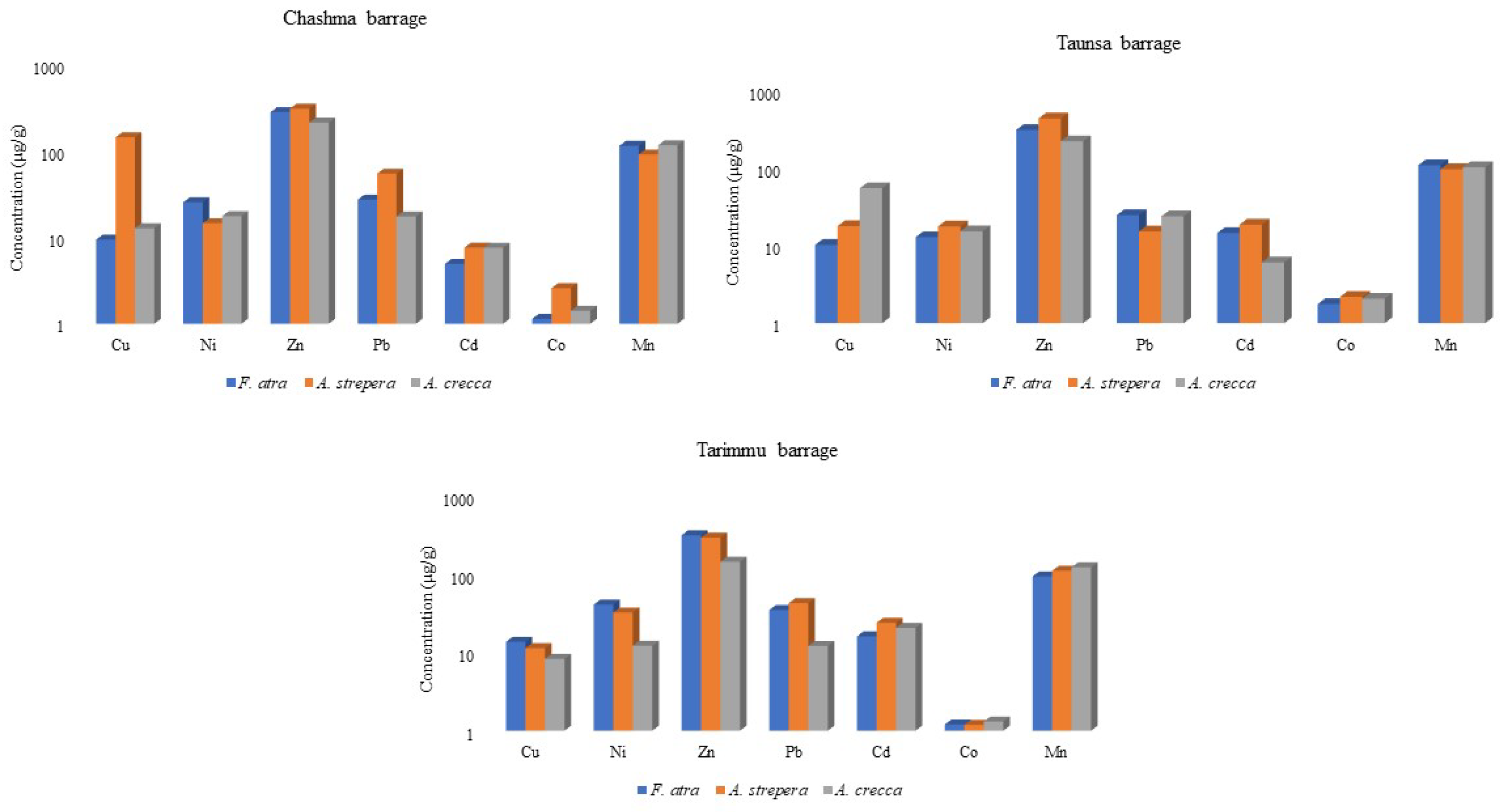
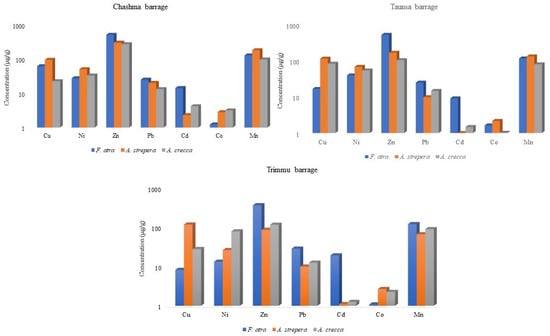
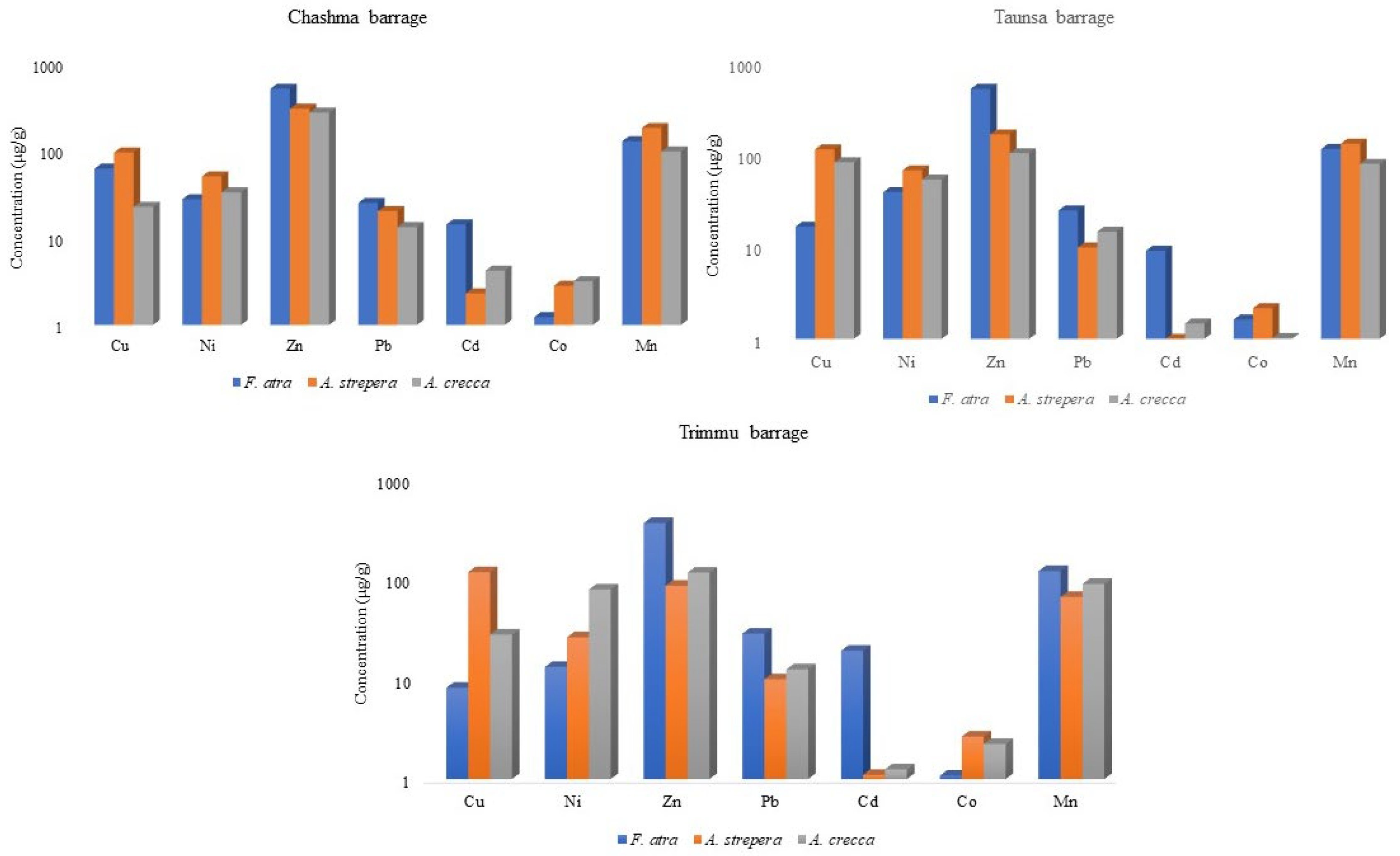
Among the species, A. strepera accumulated metals in the highest concentration (p < 0.05) at Chashma barrage and Taunsa barrage, while F. atra accumulated metals in the highest concentration at Trimmu barrage (Figure 5 and Figure 6). A. strepera was the species in which Zn (427.7 µg/g), Cu (144.6 µg/g), Pb (54.76 µg/g), Cd (24.18 µg/g), and Co (2.59 µg/g) were found to be most abundant, while, F. atra showed remarkable differences in the concentrations of Zn, Cd, Pb, and Mn in the livers as compared to both other species.
Figure 5.
Comparison of heavy metals (µg/g) in hearts of water birds.
Figure 6.
Comparison of heavy metals (µg/g) in livers of water birds.
3.4. Histopathological Analysis
3.4.1. Heart
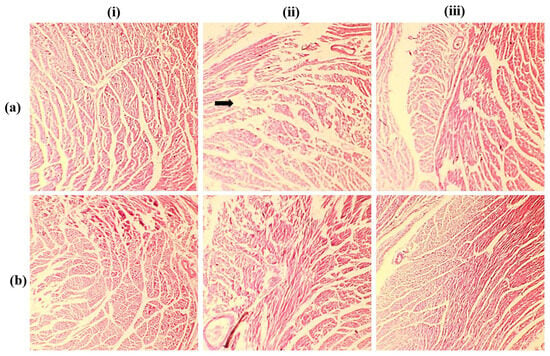
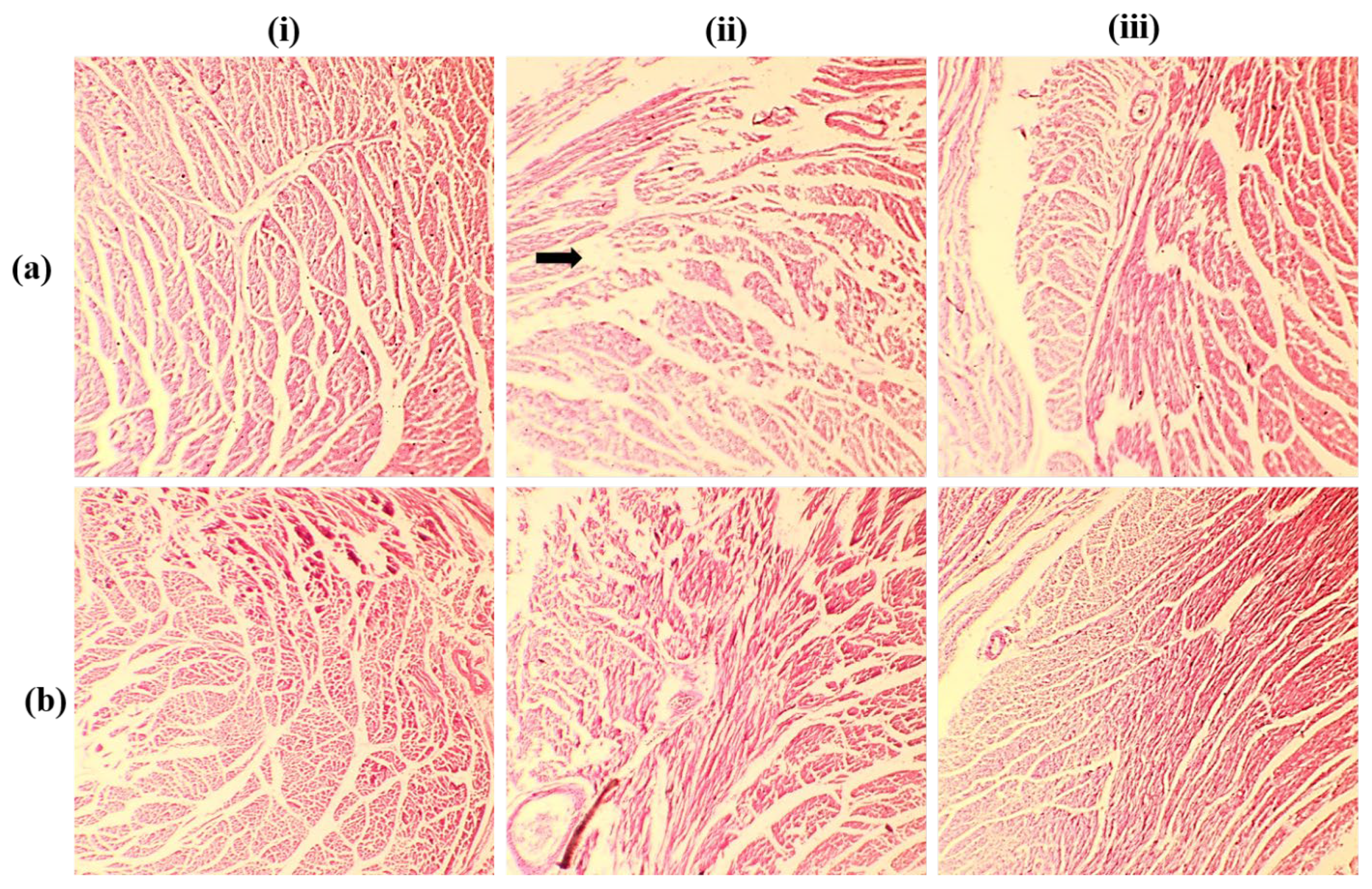
Cardiomyocytes and striations in myocardial fibers were recorded for histological sections of A. crecca hearts, while myocarditis (arrow) was evident in the hearts of A. crecca from Chashma barrage (spring), Taunsa, and Trimmu barrage (autumn) (Figure 7).
Figure 7.
Photomicrographs of hearts of A. crecca from (i) Taunsa barrage, (ii) Trimmu barrage, and (iii) Chashma barrage during (a) autumn and (b) spring. H & E, magnification: 40× Myocarditis (arrow) was evident in the hearts of A. crecca.
Histological sections of hearts of A. strepera from all localities in both seasons depicted normal microarchitectures without any distortion of cardiomyocytes and striated muscle fibers, except for the degeneration of muscle fibers in a heart of A. strepera sample collected from Trimmu barrage in autumn. A widened interstitium and necrosis of myocardial fibers were also observed in the heart section of the same sample (Figure 8).
Figure 8.
Photomicrographs of hearts of A. strepera from (i) Taunsa barrage, (ii) Trimmu barrage, and (iii) Chashma barrage during (a) autumn and (b) spring. H & E, magnification: 40×.
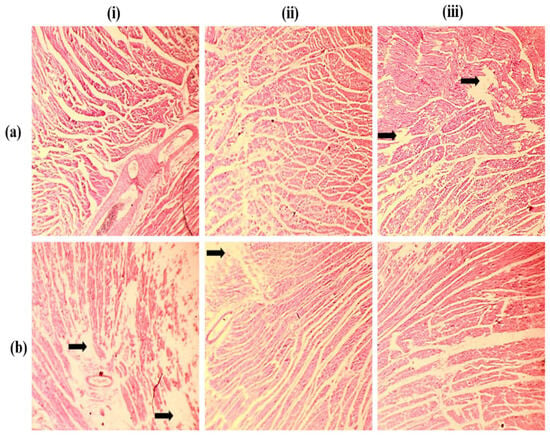
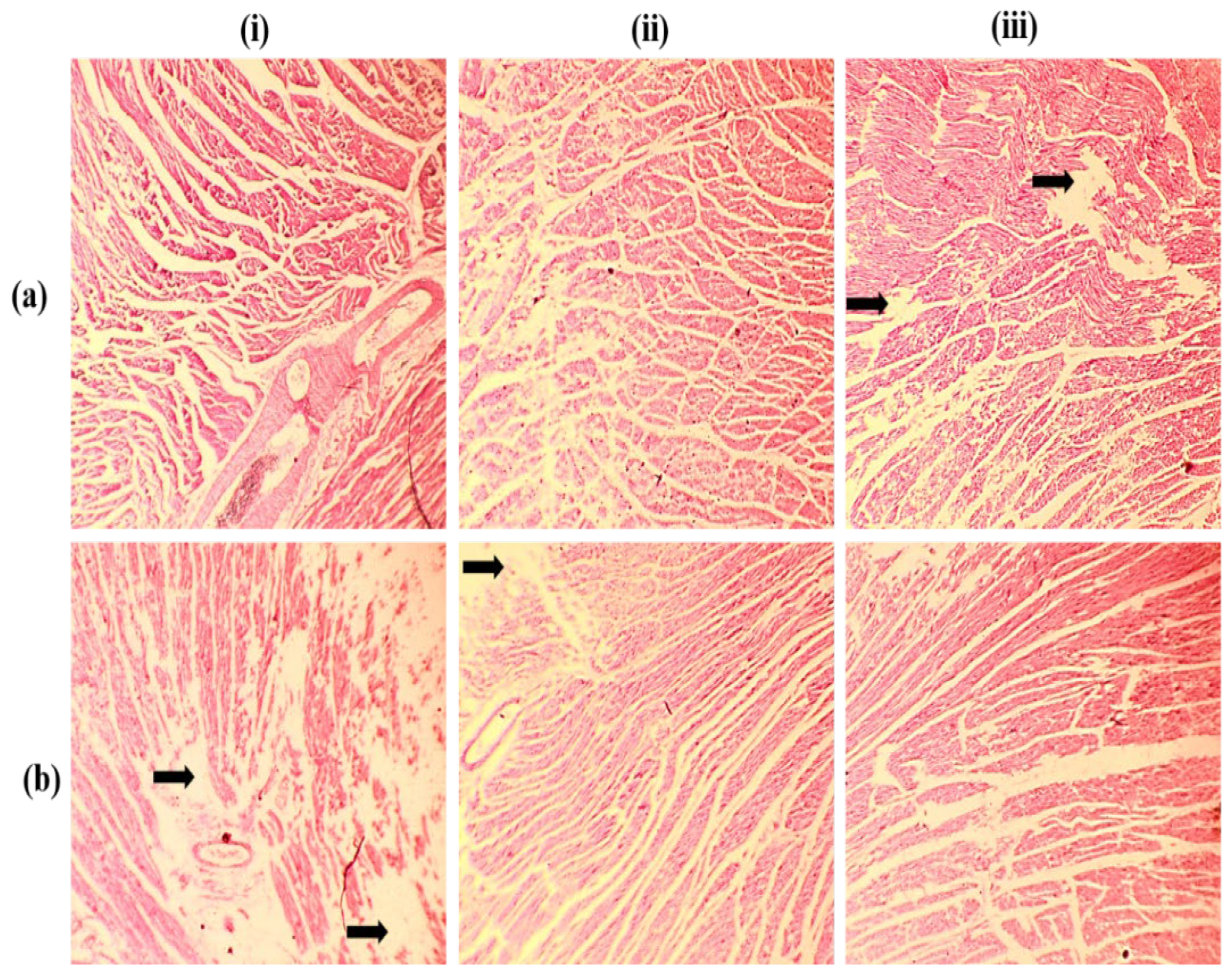
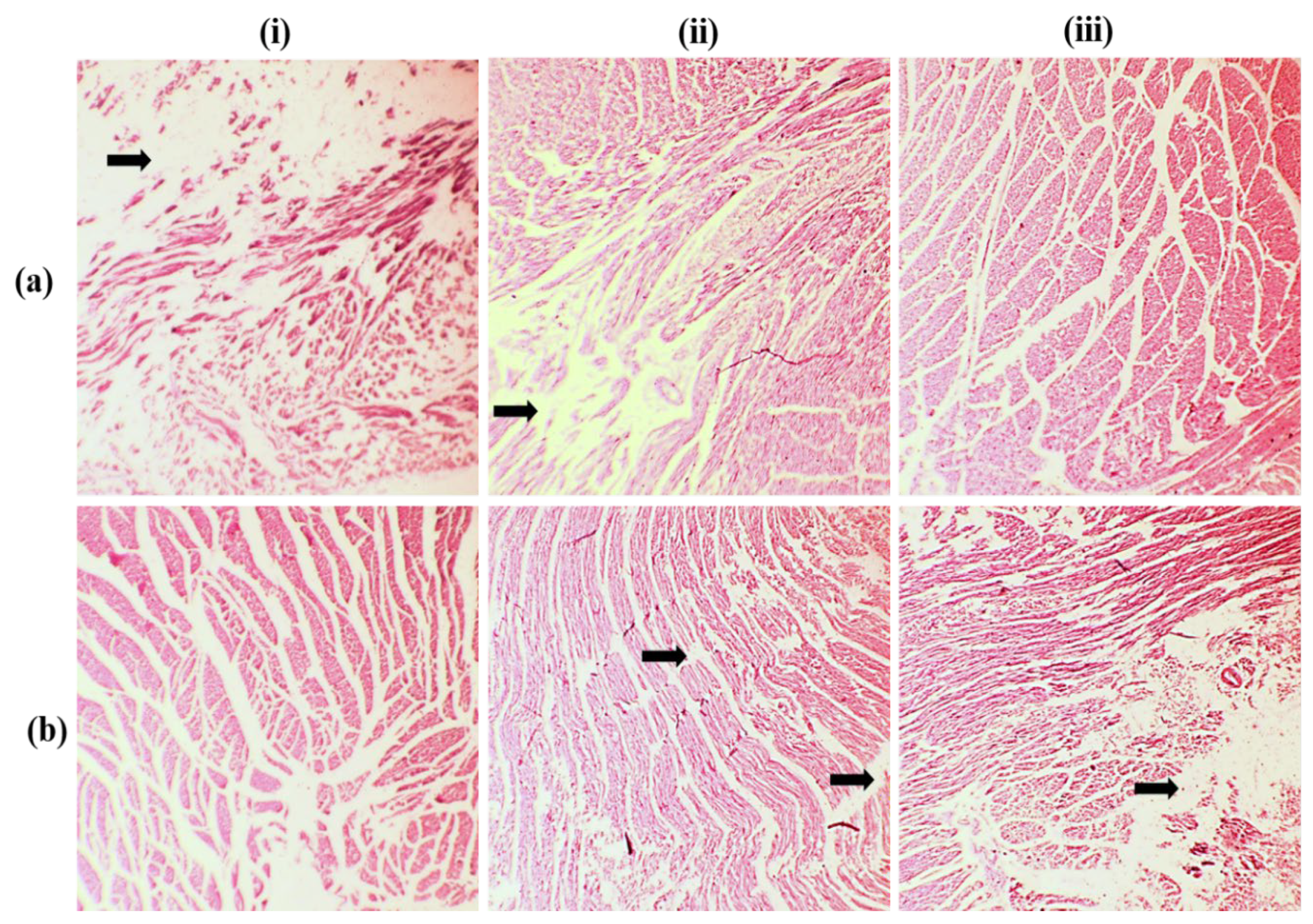
The histological sections of F. atra hearts from all localities in both seasons were found to be anomalous. Extensive myocarditis was observed in samples collected from Taunsa barrage (autumn), Trimmu barrage (in both autumn and spring), and Chashma barrage (spring), while a significantly widened interstitial space was observed in histological sections of F. atra hearts sampled from Chashma barrage (autumn) and Taunsa barrage (spring) (Figure 9).
Figure 9.
Photomicrographs of hearts of F. atra from (i) Taunsa barrage, (ii) Trimmu barrage, and (iii) Chashma barrage during (a) autumn and (b) spring. H & E, magnification: 40× (black arrow showed myocarditis).
3.4.2. Liver
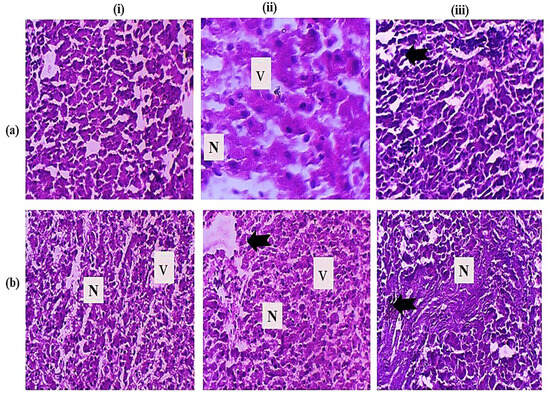
Melan macrophage aggregations (*), the dilation of diss space (small arrow), and degenerative hepatocytes (larger black arrow) appeared in histological sections of A. crecca livers sampled from Chashma barrage (spring) and Taunsa and Trimmu barrage (autumn) (Figure 10).
Figure 10.
Photomicrographs of livers of A. crecca from (i) Taunsa barrage, (ii) Trimmu barrage, and (iii) Chashma barrage during (a) autumn and (b) spring. H & E, magnification: 40× (Melan macrophage aggregations (*), the dilation of diss space (small arrow), and degenerative hepatocytes (larger black arrow).
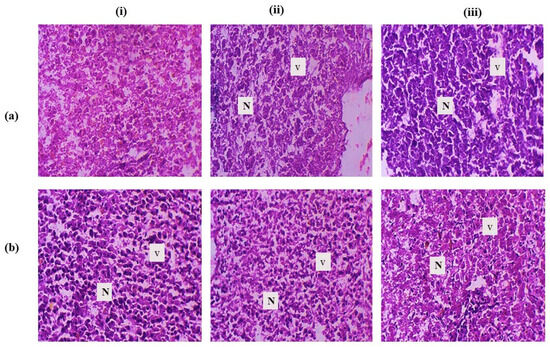
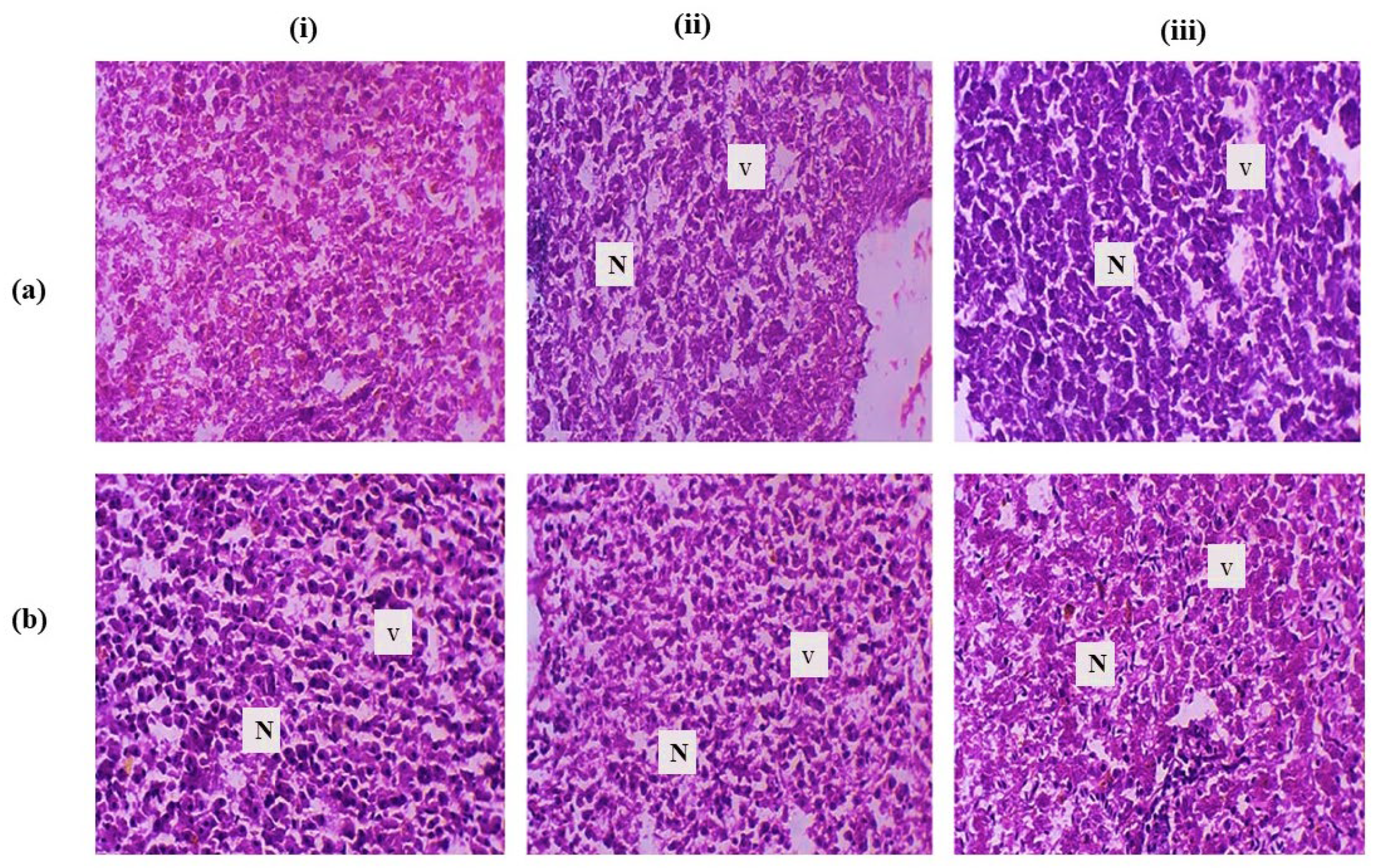
Necrosis (N) and vacuolation (V) appeared in histological sections of A. strepera livers sampled from Chashma barrage (spring) and Taunsa and Trimmu barrage (autumn) (Figure 11).
Figure 11.
Photomicrographs of livers of A. strepera from (i) Taunsa barrage, (ii) Trimmu barrage, and (iii) Chashma barrage during (a) autumn and (b) spring. H & E, magnification: 40× (V = vacuolation and N = Necrosis).
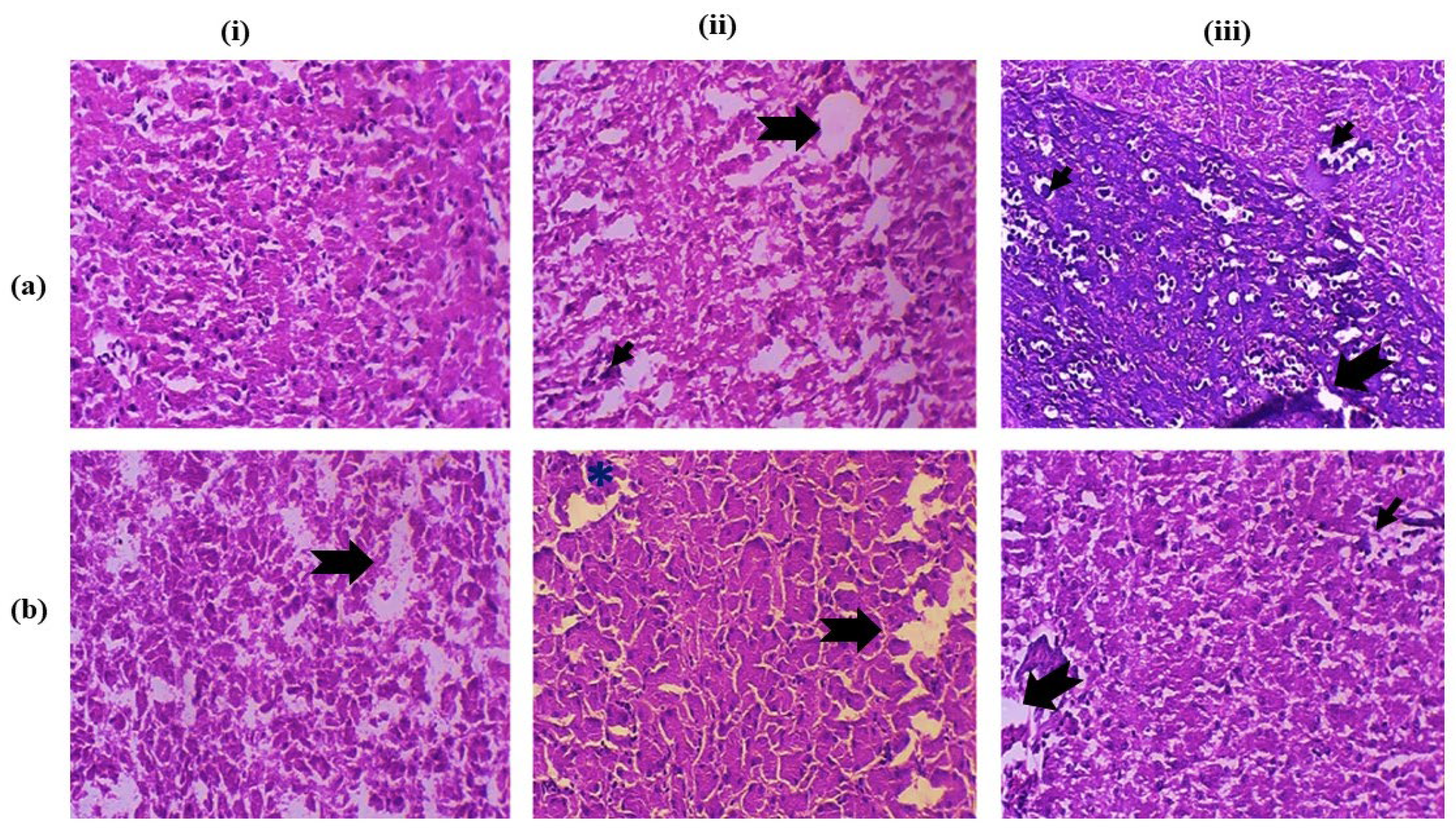
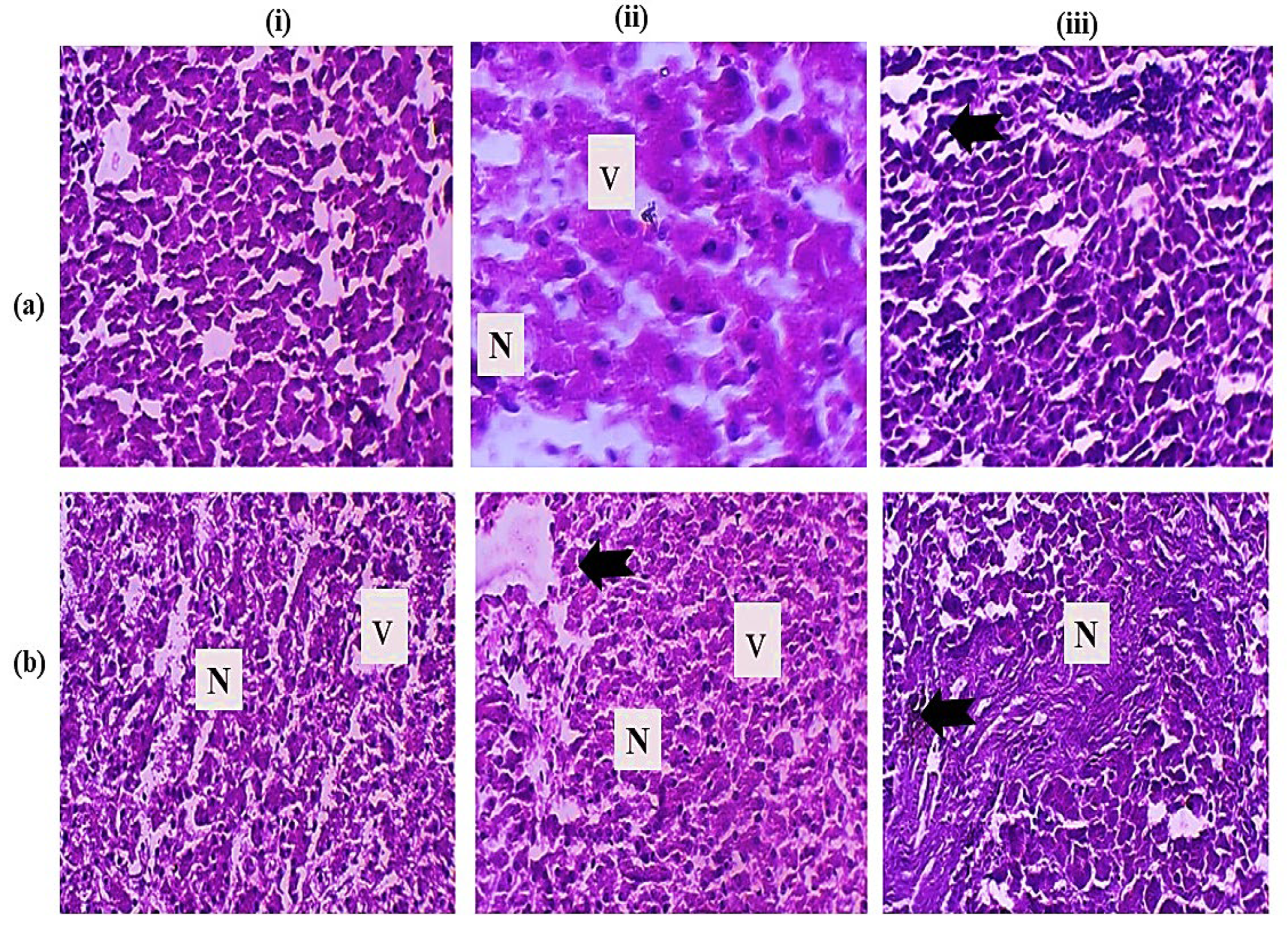
Necrosis (N), vacuolation (V), and pyclotic nuclei necrosis (PN) appeared in histological sections of F. atra livers sampled from Chashma barrage (spring) and Taunsa and Trimmu barrage (autumn) (Figure 12).
Figure 12.
Photomicrographs of livers of F. atra from (i) Taunsa barrage, (ii) Trimmu barrage, and (iii) Chashma barrage during (a) autumn and (b) spring. H & E, magnification: 40× (V = vacuolation and N = Necrosis).
4. Discussion
In the present study, the concentrations of metals varied with the sampling sites, species, and tissues. It was found that Cd had the lowest concentration among the metals (0.17 µg/g in the livers of A. strepera at Trimmu barrage), and Zn had the highest (521 µg/g in the livers of F. atra at Taunsa barrage).
4.1. Metal Concentrations in Tissues
In the heart samples, Cu ranged between 8.33 µg/g and 144.6 µg/g, comparable to the findings of Ruelas-Inzunza and Páez-Osuna [10] (8.6 µg/g–41 µg/g) and Akoto et al. [11] (16 µg/g–21.2 µg/g). The average amount of Cu in the liver lies within the range of 8.18 µg/g and 117.2 µg/g. The liver detoxifies pollutants and other harmful compounds that enter the body, making it more vulnerable to the toxic effects and buildup of heavy metals in tissues [12]. For water birds, Cu in concentrations ranging between 270 mg/kg and 1300 mg/kg dry weight is toxic, with an acute toxicity value of 700 mg/kg [13]. It was found that the concentration of Cu was lower in all samples than the acute toxicity limits but higher than the normal physiologically required concentration. In the present study, the concentration of Zn was lower than its toxic limits (>440 mg/kg dry weight) [14], except in the livers of F. atra (521 µg/g). As Zn is actively regulated in birds because it comes through diet, it did not affect the livers. But when it reaches higher limits than the metabolic needs of the body, birds are threatened by its health-damaging effects [15]. According to our findings, Ni was comparatively higher in the livers in comparison to the hearts. The average Ni concentration ranged from 13.22 µg/g to 78.5 µg/g, higher than the values reported by the authors of [16].
The mean Cd concentration varied from 4.94 µg/g to 24.18 µg/g and 0.17 µg/g to 19.2 µg/g for the hearts and livers, respectively. These concentrations were higher than those reported in F. americana (3.3 µg/g) [10], A. crecca (0.55 µg/g) [17], F. atra (0.85 µg/g) [18], A. crecca (0.83 µg/g), and A. strepera (1.08 µg/g) [19]. Water birds are more at risk from the toxicity of Pb because they either swallow lead shots or they feed upon cereals and weeds grown in fields irrigated by Pb-contaminated waters [20]. In the present study, the Pb concentration was highest in the hearts of A. strepera (54.76 µg/g) and livers of F. atra (28.47 µg/g). These concentrations were far greater than the reported threshold limits of poisoning (<7.5 µg/g wet weight) [21]. The concentration of Co ranged from 1.02 µg/g to 3.16 µg/g and 0.54 µg/g to 2.59 µg/g in the livers and hearts, respectively, in the present investigation. These values are greater than those reported by Yohannes et al. [22] (i.e., 0.003 µg/g for hearts and 0.11–1.4 µg/g for livers). The main anthropogenic sources of enhanced Co in natural wetlands are domestic, industrial, and agricultural wastewater discharge [23]. The dietary route is the main route that facilitates the accumulation of Mn in the bodies of water birds. The Mn concentration reported in the present study was found to be far greater when compared with the findings of Ruelas-Inzunza and Páez-Osuna [10], Kim et al. [24], Kim and Oh [25], and Sujak et al. [26]. Long-term exposure to heavy metals may cause disruptive behavior and reduced resistance against diseases [27].
4.2. Comparison between Sites
A general trend of increasing heavy metals concentrations at Chashma barrage > Taunsa barrage > Trimmu barrage in the heart samples and Taunsa barrage > Chashma barrage > Trimmu barrage in the liver samples was found. The mean metal concentrations were high at Trimmu barrage perhaps because Trimmu barrage receives wastewater containing pollutants (industrial, domestic, agricultural) from local and distant sources. The possible source of the pollutants in Trimmu barrage is wastewater discharged from the cities of Gujrat, Sialkot, and Faisalabad into the Chenab River, in these cities, major industries (such as the fertilizer industry, paper and pulp products industry, leather tanneries, and textile industries) are prevalent [23].
Chashma barrage and Taunsa barrage are situated on the Indus River and play an important role in irrigation and fishing, but municipal discharge, agricultural runoff, industrial effluents, and sewage contaminate their water, which generates public health issues. The untreated industrial wastewater discharge magnifies the level of contamination of the Indus River’s water. The human population that lives by the river increases its pollution by dumping its excretory and domestic waste in the river. A considerable concentration of heavy metals is present in these effluents, which threaten the health of the inhabitants of aquatic bodies [28].
4.3. Comparison between Species
Among the species, the mean Cu was highest in A. strepera, which is attributed to its larger body size. The increasing order of Ni was as follows: F. atra < A. strepera < A. crecca. The mean Ni concentrations were higher than those reported by Lebedeva [29] and Van Eeden [30]. The mean concentration of Zn ranged between 85.87 µg/g and 521 µg/g, higher than the values in various studies [19,31,32]. The mean lead concentration was highest in A. strepera heart samples, while in F. atra, it was higher in the livers. F. atra habitually ingest more Pb shots [23], which might be the cause of the high Pb levels in this species, while A. strepera and A. crecca inhabit the same areas, but the body size difference affects their Pb accumulation. Cadmium concentrations below 3 µg/g dry weight are considered to be safe for birds, but we found higher levels than these in all samples except in the livers of A. strepera from Taunsa barrage. The mean concentration of Cd in the present study is far higher than that reported in F. atra, A. crecca, and A. strepera (0.002–0.026 µg/g) by Mansouri and Majnoni [18], and Sinkakarimi, Binkowski, Hassanpour, Rajaei, Ahmadpour and Levengood [19], respectively. Discharges from industrial and municipal sources are the main cause of cobalt in wetlands [23]. The increasing order of mean Co was found to be F. atra < A. crecca < A. strepera. The mean Mn concentration ranged from 66.15 µg/g to 179.7 µg/g, which is higher than that reported by Aloupi et al. [33], Mateo and Guitart [32], Lebedeva [29], and the authors of [23].
4.4. Histopathology
Cobbina et al. [34] found that co-exposure to many metals resulted in a higher level of toxicity when compared to exposure to each metal individually. In the current study, cardiomyocytes and striations in myocardial fibers appeared in histological sections of the heart samples, and necrosis (N), vacuolation (V), and pyclotic nuclei necrosis (PN) appeared in histological sections of A. strepera livers sampled from Chashma barrage (spring) and Taunsa and Trimmu barrage (autumn). No similar studies have been conducted previously; however, heavy metal exposure has been shown to cause abnormally organized myofibrils, apoptosis, and vacuolization in the heart tissue of rats [35,36]. According to the results of Jayawardena et al. [37], heavy metals caused alternations in the liver histology of amphibians, and Riaz, Nisa, Anjum, Butt, Mehmood, Riaz and Akhtar [35] reported necrosis and cell degeneration in liver tissues due to co-exposure to heavy metals.
5. Conclusions
The wetlands of Punjab are under a heavy burden of heavy metal pollution. The concentration of heavy metals in aquatic bodies reported in the present study is within the toxic range for water birds. Furthermore, heavy metals caused health issues in the sampled birds, as alternations in cardiac tissues and hepatic tissues were observed in photomicrographs of both tissue types after they were stained with E & H. The damaged tissues are an indication of the severity of toxicity faced by these wintering species, which could reduce their reproductive potential and challenge their survival. In addition, the polluted wetlands could induce behavioral changes, including to their migration patterns.
Author Contributions
Conceptualization, M.S.K. and M.A.A.; methodology, M.W.; software, S.S.; validation, S.-M.K. and A.A.A.-G. formal analysis, A.U.; investigation, M.A.A.; resources, S.-M.K.; data curation, A.A.A.-G.; writing—original draft preparation, S.S. and A.U.; writing—review and editing, M.S.K., M.W. and M.A.A.; visualization, S.-M.K.; supervision, M.S.K. and I.-J.L.; project administration, A.A.A.-G. and I.-J.L.; funding acquisition, S.S and I.-J.L. All authors have read and agreed to the published version of the manuscript.
Funding
This research was supported by the Basic Science Research Program through the National Research Foundation of Korea (NRF), funded by the Ministry of Education (RS-2023-00243438).
Data Availability Statement
Data are contained within the article.
Acknowledgments
The authors extend their appreciation to the Researchers Supporting Project number (RSP2024R483), King Saud University, Riyadh, Saudi Arabia.
Conflicts of Interest
The author declares no conflicts of interest.
References
- Tylmann, W.; Gołębiewski, R.; Woźniak, P.P.; Czarnecka, K. Heavy metals in sediments as evidence for recent pollution and quasi-estuarine processes: An example from Lake Druzno, Poland. Environ. Geol. 2007, 53, 35–46. [Google Scholar] [CrossRef] [Scilit]
- Burger, J.; Diaz-Barriga, F.; Marafante, E.; Pounds, J.; Robson, M. Methodologies to examine the importance of host factors in bioavailability of metals. Ecotoxicol. Environ. Saf. 2003, 56, 20–31. [Google Scholar] [CrossRef] [Scilit]
- Peakall, D.; Burger, J. Methodologies for assessing exposure to metals: Speciation, bioavailability of metals, and ecological host factors. Ecotoxicol. Environ. Saf. 2003, 56, 110–121. [Google Scholar] [CrossRef] [Scilit] [PubMed]
- Spiegel, H. Trace element accumulation in selected bioindicators exposed to emissions along the industrial facilities of Danube Lowland. Turk. J. Chem. 2002, 26, 815–824. [Google Scholar]
- Mahboob, S.; al-Balawi, H.A.; Al-Misned, F.; Ahmad, Z.; Sultana, S. Study on Avian Diversity of Thal Desert (District Jhang), Punjab, Pakistan. Life Sci. 2013, 10, 1–8. [Google Scholar]
- Mahboob, S. Diversity of avifauna of Trimmu barrage, district Jhang, Punjab, Pakistan. Pak. J. Zool. 2009, 41, 43–49. [Google Scholar]
- Zaman, A.; Rafique, A.; Ashraf, A.; Mahmood, M.S.; Nahid, N.; Jabeen, F.; Sultana, S.; Sultana, T.; Ali, S.; Zihad, S.M.; et al. Diversity, Abundance, and Distribution of Avifauna in District Jhang, Pakistan. J. Zool. Syst. Evol. Res. 2022, 2023, 3308651. [Google Scholar] [CrossRef] [Scilit]
- Mahmood-ul-Hassan, M. Population trend of the black coot (Fulica atra) in the Punjab, Pakistan during 1989 through 2008. Pak. J. Zool. 2011, 43, 665–671. [Google Scholar]
- Eka, N.; Retno, S.; Rohman, A. Validation and quantitative analysis of cadmium and lead in snake fruit by flame atomic absorption spectrophotometry. Int. Food Res. J. 2012, 19, 937. [Google Scholar]
- Ruelas-Inzunza, J.; Páez-Osuna, F. Trace metals in tissues of resident and migratory birds from a lagoon associated with an agricultural drainage basin (SE Gulf of California). Arch. Environ. Contam. Toxicol. 2004, 47, 117–125. [Google Scholar] [CrossRef] [Scilit]
- Akoto, O.; Bortey-Sam, N.; Ikenaka, Y.; Nakayama, S.M.; Baidoo, E.; Yohannes, Y.B.; Ishizuka, M. Contamination levels and sources of heavy metals and a metalloid in surface soils in the Kumasi Metropolis, Ghana. J. Health Pollut. 2017, 7, 28–39. [Google Scholar] [CrossRef] [Scilit] [PubMed]
- Lucia, M.; André, J.-M.; Bernadet, M.-D.; Gontier, K.; Gérard, G.; Davail, S. Concentrations of metals (zinc, copper, cadmium, and mercury) in three domestic ducks in France: Pekin, muscovy, and mule ducks. J. Agric. Food Chem. 2008, 56, 281–288. [Google Scholar] [CrossRef] [Scilit] [PubMed]
- Isanhart, J.P.; Wu, H.; Pandher, K.; MacRae, R.K.; Cox, S.B.; Hooper, M.J. Behavioral, clinical, and pathological characterization of acid metalliferous water toxicity in mallards. Arch. Environ. Contam. Toxicol. 2011, 61, 653–667. [Google Scholar] [CrossRef] [Scilit] [PubMed]
- Beyer, W.N.; Dalgarn, J.; Dudding, S.; French, J.B.; Mateo, R.; Miesner, J.; Sileo, L.; Spann, J. Zinc and lead poisoning in wild birds in the Tri-State Mining District (Oklahoma, Kansas, and Missouri). Arch. Environ. Contam. Toxicol. 2004, 48, 108–117. [Google Scholar] [CrossRef] [Scilit] [PubMed]
- Sileo, L.; Nelson Beyer, W.; Mateo, R. Pancreatitis in wild zinc-poisoned waterfowl. Avian Pathol. 2003, 32, 655–660. [Google Scholar] [CrossRef] [Scilit] [PubMed]
- Deng, H.; Zhang, Z.; Chang, C.; Wang, Y. Trace metal concentration in great tit (Parus major) and greenfinch (Carduelis sinica) at the Western Mountains of Beijing, China. Environ. Pollut. 2007, 148, 620–626. [Google Scholar] [CrossRef] [Scilit] [PubMed]
- Fedynich, A.M.; Ballard, B.M.; McBride, T.J.; Estrella, J.A.; Garvon, J.M.; Hooper, M.J. Arsenic, cadmium, copper, lead, and selenium in migrating blue-winged teal (Anas discors L.). Arch. Environ. Contam. Toxicol. 2007, 53, 662–666. [Google Scholar] [CrossRef] [Scilit] [PubMed]
- Mansouri, B.; Majnoni, F. Comparison of the metal concentrations in organs of two bird species from western of Iran. Bull. Environ. Contam. 2014, 92, 433–439. [Google Scholar] [CrossRef] [Scilit] [PubMed]
- Sinkakarimi, M.-H.; Binkowski, L.J.; Hassanpour, M.; Rajaei, G.; Ahmadpour, M.; Levengood, J.M. Metal concentrations in tissues of gadwall and common teal from Miankaleh and Gomishan International wetlands, Iran. Biol. Trace Elem. Res. 2018, 185, 177–184. [Google Scholar] [CrossRef] [Scilit]
- Binkowski, Ł.J. The influence of environmental conditions on lead transfer from spent gunshot to sediments and water: Other routes for Pb poisoning. Chemosphere 2017, 187, 330–337. [Google Scholar] [CrossRef] [Scilit]
- Pain, D. Lead in waterfowl. In Environmental Contaminants in Wildlife: Interpreting Tissue Concentrations; Beyer, W.M., Heinz, G.H., Redman-Norwood, A.W., Eds.; Lewis Publishers: Boca Raton, FL, USA, 1996. [Google Scholar]
- Yohannes, Y.B.; Ikenaka, Y.; Nakayama, S.M.M.; Mizukawa, H.; Ishizuka, M. Trace element contamination in tissues of four bird species from the Rift Valley Region, Ethiopia. Bull. Environ. Contam. Toxicol. 2017, 98, 172–177. [Google Scholar] [CrossRef] [Scilit] [PubMed]
- Ullah, K.; Hashmi, M.Z.; Malik, R.N. Heavy-metal levels in feathers of cattle egret and their surrounding environment: A case of the Punjab Province, Pakistan. Arch. Environ. Contam. Toxicol. 2014, 66, 139–153. [Google Scholar] [CrossRef] [Scilit] [PubMed]
- Kim, J.; Koo, T.-H.; Oh, J.-M. Monitoring of heavy metal contamination using tissues of two Ardeids chicks, Korea. Bull. Environ. Contam. Toxicol. 2010, 84, 754–758. [Google Scholar] [CrossRef] [Scilit] [PubMed]
- Kim, J.; Oh, J.-M. Metal levels in livers of waterfowl from Korea. Ecotoxicol. Environ. Saf. 2012, 78, 162–169. [Google Scholar] [CrossRef] [Scilit] [PubMed]
- Sujak, A.; Wiącek, D.; Jakubas, D.; Komosa, A.; Kitowski, I. Mallards Anas platyrhynchos shot in Eastern Poland: Ecological risk evaluated by analysis of trace elements in liver. Hum. Ecol. Risk Assess. Int. J. 2019, 25, 2116–2132. [Google Scholar] [CrossRef] [Scilit]
- Dauwe, T.; Janssens, E.; Pinxten, R.; Eens, M. The reproductive success and quality of blue tits (Parus caeruleus) in a heavy metal pollution gradient. Environ. Pollut. 2005, 136, 243–251. [Google Scholar] [CrossRef] [Scilit]
- Jabeen, F.; Chaudhry, A.S. Environmental impacts of anthropogenic activities on the mineral uptake in Oreochromis mossambicus from Indus River in Pakistan. Environ. Monit. Assess. 2010, 166, 641–651. [Google Scholar] [CrossRef] [Scilit] [PubMed]
- Lebedeva, N. Accumulation of heavy metals by birds in the southwest of Russia. Russ. J. Ecol. 1997, 28, 41–46. [Google Scholar]
- Van Eeden, P.H. Metal concentrations in selected organs and tissues of five Red-knobbed Coot (Fulica cristata) populations. Water SA 2003, 29, 313–322. [Google Scholar] [CrossRef] [Scilit]
- Carpene, E.; Serra, R.; Isani, G. Heavy metals in some species of waterfowl of northern Italy. J. Wildl. Dis. 1995, 31, 49–56. [Google Scholar] [CrossRef] [Scilit]
- Mateo, R.; Guitart, R. Heavy metals in livers of waterbirds from Spain. Arch. Environ. Contam. Toxicol. 2003, 44, 0398–0404. [Google Scholar] [CrossRef] [Scilit] [PubMed]
- Aloupi, M.; Karagianni, A.; Kazantzidis, S.; Akriotis, T. Heavy metals in liver and brain of waterfowl from the Evros Delta, Greece. Arch. Environ. Contam. Toxicol. 2017, 72, 215–234. [Google Scholar] [CrossRef] [Scilit] [PubMed]
- Cobbina, S.J.; Chen, Y.; Zhou, Z.; Wu, X.; Zhao, T.; Zhang, Z.; Feng, W.; Wang, W.; Li, Q.; Wu, X.; et al. Toxicity assessment due to sub-chronic exposure to individual and mixtures of four toxic heavy metals. J. Hazard. Mater. 2015, 294, 109–120. [Google Scholar] [CrossRef] [Scilit] [PubMed]
- Riaz, M.A.; Nisa, Z.U.; Anjum, M.S.; Butt, H.; Mehmood, A.; Riaz, A.; Akhtar, A.B.T. Assessment of metals induced histopathological and gene expression changes in different organs of non-diabetic and diabetic rats. Sci. Rep. 2020, 10, 5897. [Google Scholar] [CrossRef] [Scilit] [PubMed]
- Xu, L.-H.; Mu, F.-F.; Zhao, J.-H.; He, Q.; Cao, C.-L.; Yang, H.; Liu, Q.; Liu, X.-H.; Sun, S.-J. Lead induces apoptosis and histone hyperacetylation in rat cardiovascular tissues. PLoS ONE 2015, 10, e0129091. [Google Scholar] [CrossRef] [Scilit]
- Jayawardena, U.A.; Angunawela, P.; Wickramasinghe, D.D.; Ratnasooriya, W.D.; Udagama, P.V. Heavy metal–induced toxicity in the Indian green frog: Biochemical and histopathological alterations. Environ. Toxicol. Chem. 2017, 36, 2855–2867. [Google Scholar] [CrossRef] [Scilit]

Disclaimer/Publisher’s Note: The statements, opinions and data contained in all publications are solely those of the individual author(s) and contributor(s) and not of MDPI and/or the editor(s). MDPI and/or the editor(s) disclaim responsibility for any injury to people or property resulting from any ideas, methods, instructions or products referred to in the content. |
© 2024 by the authors. Licensee MDPI, Basel, Switzerland. This article is an open access article distributed under the terms and conditions of the Creative Commons Attribution (CC BY) license (https://creativecommons.org/licenses/by/4.0/).