


Abstract
Oil and gas production has an adverse impact on the ecological state of the Russian Arctic. The local natural materials, such as peat, moss, and reindeer moss are considered as naturel sorbents in wastewater treatment technologies. The sorption properties of these local materials were studied. The sorption isotherms at different initial concentrations of the pollutant (250, 50, and 0.5 mg/L) were constructed. The patterns of changes in the sorption intensity of oil products were determined. The sorbents were modified by microwave radiation (600 W, one minute), which had a visible positive effect on the samples. Preliminary calculations of the filter cassette dimensions with the performance 200 m3/day were carried out. Efficiency and cheapness predict the economic feasibility of using these materials in wastewater filtering equipment.
1. Introduction
Several dozen fields are located in the Arctic, producing over 80% of natural gas and 17% of oil in Russia [1]. Under the influence of anthropogenic impact and climate change, the adverse environmental consequences are being felt. It is noted that, in these regions, the sources of water supply are more polluted by oil and oil products. This occurs for a number of reasons, one of which is the introduction into rivers of pollutants with which untreated and partially treated sewage is contaminated. Therefore, one of the main tasks to be solved is the minimization of pollutant releases to the water bodies through economic and other activities [2,3,4,5,6,7].
One of the most common methods of purifying water from residual oil products is sorption, which is used in facilities, such as sorption filters and sorption columns. The main technology parameters of granular-laden filters are the filtration rate, the height of the filter layer, the size of the material fractions, and grain shape of the material, its porosity, and its heterogeneity [8]. Activated carbon is considered the most common and efficient loading material for these facilities [9,10,11]. However, for the northern area, this sorbent is very expensive because of the lack of nearby coal fields.
Promising sorption materials for wastewater treatment are not only expected to have high sorption properties, but are also expected to be non-toxic, capable of regeneration, and capable of being easily utilized, along with having a low cost and an accessible raw material base. These requirements force researchers to turn to other naturally occurring phytosorbents [12]. These can be peat, different plants, grated bark and tree branches, and agricultural or woodworking waste [13,14,15,16,17]. The main drawback of the natural materials is their low sorption capacity, which is also adversely affected by their increased hydrophilicity.
Various modifications reduce water absorption and enhance sorption activity [18,19]. The most popular methods for sorbents modifying and activating are as follows: the heat treatment (different methods of heating, combustion, or hot steam) [20,21]; the methods of physical and chemical influence on the sorbent or a mixture of sorbent and sorbate (microwave irradiation MV, radiation exposure, ultrasonic, and other) [19,22,23,24,25]; and processing with reagents (solutions of salts, alkalis, or acids), which can be combined with heating [16,26]. The main criteria for the choice of modification methods are efficiency, economics, safety, and manufacturing. Table 1 presents the best results of the study of some natural sorbents for the extraction of oil products from water.
Table 1.
The modification and efficient of natural sorbents.
The natural sorbents can be used to remove other types of contaminants from wastewater. For example, coconut-based sorbent is able to extract arsenic from water [14]. The crushed branches of city trees, pine sawdust, and modified tree’s bark adsorb copper ions well [16,27,28,29]. Sugarcane bagasse and orange peels can remove lead ions from water [28]. The ability of mosses to accumulate various metals is noted, and this property can be used at treatment facilities for industrial surface runoff [29]. The modified leaves-based biosorbent could be used as an alternative adsorbent for effective chromium elimination from water [30]. The pre-modified peat is capable of removing manganese, lead, chrome, and copper ions from the water [31]. Analytical descriptions of the sorption properties of the natural sorbents have been given in earlier published studies [31,32], which provided the basis for this research.
Peat, whose reserves in the north of Russia represent over 10% of the world’s reserves, is of particular interest [33]. There are a lot of studies on the issue of water purification with peat [34,35]. There is quite a lot of experience in the use of peat in systems for treating surface wastewater from the territory of oil depots, airports, and road surfaces [36]. The distribution of moss and lichen in the Arctic is very broad; it is the main type of vegetation in the north [37]. Lichens are more concentrated in the tundra, and they are the base food for reindeer in winter [38]. These materials are used solely as natural barriers to prevent the propagation of pollution into the natural environment [29]. There is no information on the practical use of moss and lichens, including reindeer moss, in wastewater treatment technology. The purpose of the scientific work was to determine the sorption potential of Arctic natural materials towards oil and oil products. The studied sorbents can be used in wastewater treatment technologies in decentralized settlements and oil fields.
2. Materials and Methods
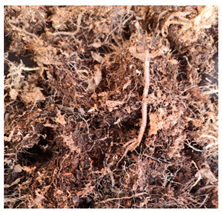
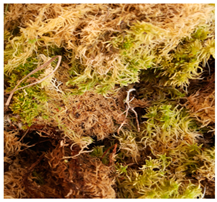
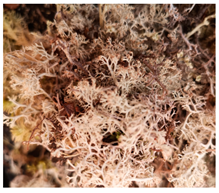
As natural sorbents, samples of peat, moss, and reindeer moss, collected from the Yamalo-Nenets Autonomous Okrug (YNAO) in the Arctic area of Russia, were studied. The samples of the natural materials were taken by the “squares method“at five points, carefully crushed and mixed. The materials were carefully washed and dried to a constant weight at 20 °C in laboratory conditions. The aspect, sampling location, and description of the sorbent samples are provided in Table 2.
Table 2.
The aspect, sampling location, and description of the sorbent samples.
The sorption properties of the natural materials were investigated by standard methods approved in Russia. The mass concentration of oil products in water samples was measured by the fluorimetric method using the “Fluorat-02–3 M“ device according to the standard (PND F 14.1:2:4.128-98, Russia). The samples were thoroughly washed to pH = 7 and dried to a constant weight (at temperature 20 °C), then processed in a household microwave oven. The modification of each sorbent (of 100 g) was realized by the physical impact method, as follows: microwave irradiation of the samples (on a glass plate without a cover) at a power of MV = 600 W and at a frequency of 2.45 Hz for one minute was carried out. The sorption properties of the sorbents (natural and after microwave treatment) with respect to dissolved and emulsified oil products were studied when they were extracted from aqueous model solutions.
The study of the sorption process was carried out for three values of the initial concentration of oil products (0.5, 50, and 250 mg/L) in the model solution. In each case, the sample weight of the sorbent was 2 g; a filtering column with diameter 16 mm was employed; the given filtration rate was 0.2–0.3 cm/s; the contact time was 1–0.5 min. Under dynamic conditions, a model solution (total volume = 1.1–3.2 L, pH = 6.9–7) was slowly filtered through a sorbent sample placed in the column. In volumes (150–500 mL), the concentration of oil products in the filtrate was measured and the pollution mass extracted by the sorbent was calculated. Once the concentration of the substance in the filtrate had reached the initial concentration in the model solution, the experiment was stopped. Subsequently, the resulting mass values were summarized for all experiments of one series. Then, the sorption isotherms were built, and the intensity of the oil product extraction process was studied. The Henry coefficient (G) of Equation (1) for a linear interval of the chart was analyzed as follows:
where Cp is the sorption capacity (mg/g), and Cs is the residual water pollution concentration (mg/L).
Cp = G·Cs
3. Results
3.1. Peat
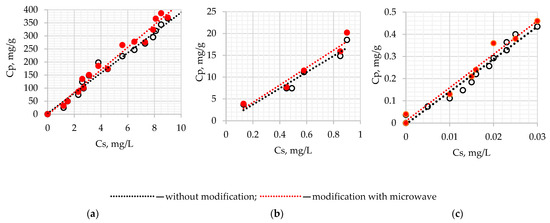
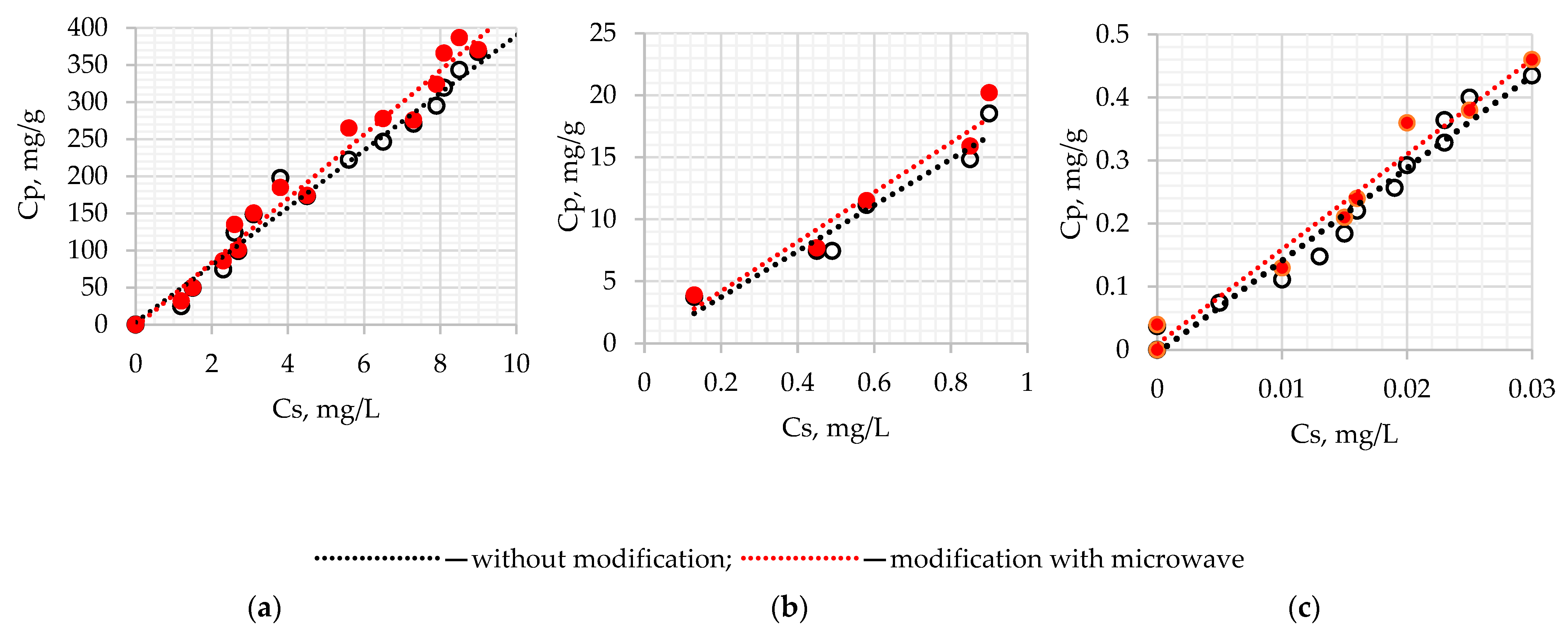
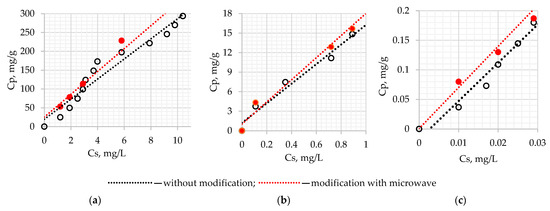
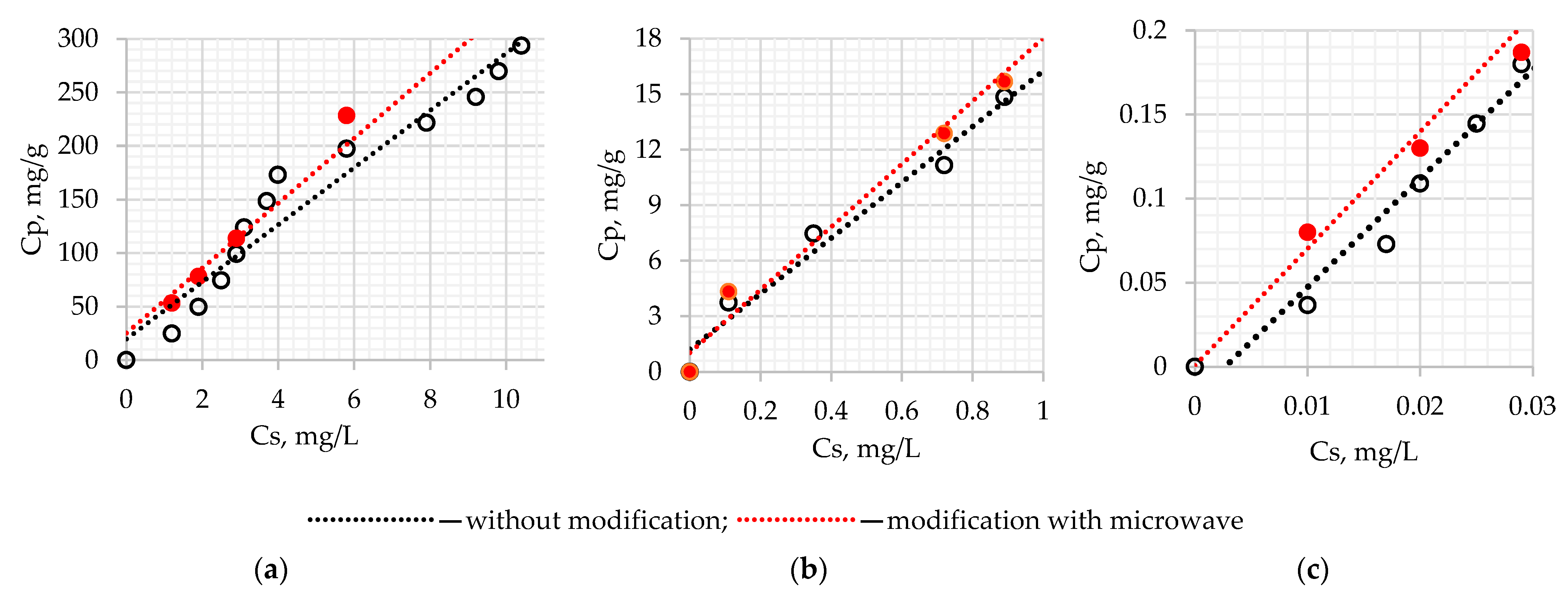
The sorption isotherms (Figure 1) of oil products by peat built on the results of the experiment are rectilinear. The red dotted line highlights the results of samples modified with microwave irradiation. A proportional change in the Henry coefficient in the equations was noted, as follows: the higher the initial pollution content in water, the stronger the sorption process.
Figure 1.
Sorption isotherms of oil products by peat obtained from aqueous solutions at initial concentration, mg/L, of (a) 250, (b) 50, and (c) 0.5.
Therefore, the ability of the peat examined to extract petroleum products from water has been confirmed [30,31]; the higher the initial concentration of pollution in the water, the more efficient the purification is. Pretreatment of the peat samples by microwave irradiation increases the sorption capacity by just 3 to 5%. On the basis of the experimental data, rectilinear trends were plotted for individual segments of the sorption isotherms. The straight smoothing factors are determined by calculation. The values of the Henry coefficients (G) for the straight sections of sorption isotherms are given in the Table 3.
Table 3.
The values of the Henry coefficients (G) for the peat sorption isotherms.
3.2. Moss and Reindeer Moss
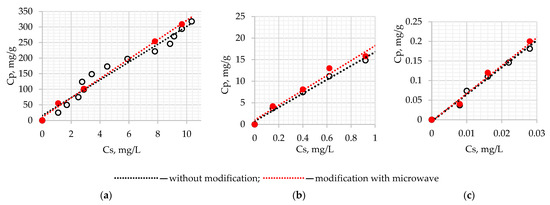
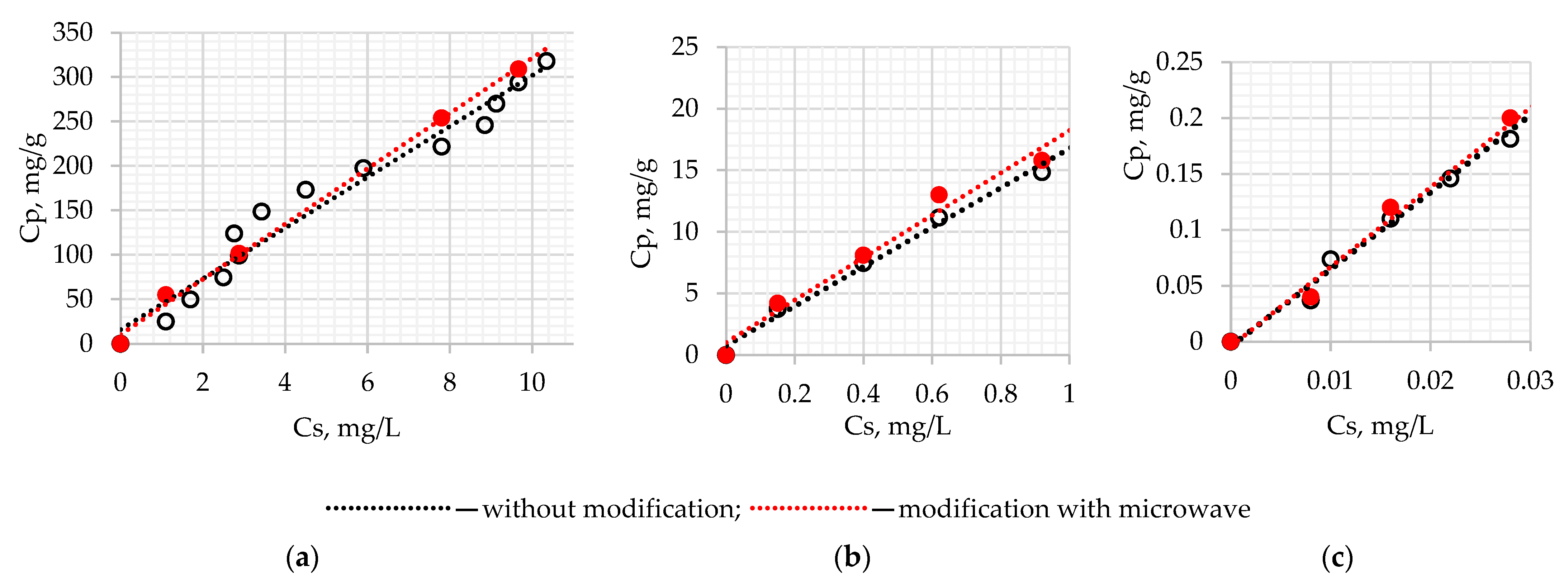
The sorption isotherms of oil products by moss and reindeer moss for the various initial concentrations of pollutants are shown in Figure 2 (for moss) and Figure 3 (for reindeer moss).
Figure 2.
Sorption isotherms of oil products by moss obtained from aqueous solutions at initial concentration, mg/L, of (a) 250, (b) 50, and (c) 0.5.
Figure 3.
Sorption isotherms of oil products by reindeer moss obtained from aqueous solutions at initial concentration, mg/L, of (a) 250, (b), 50, and (c) 0.5.
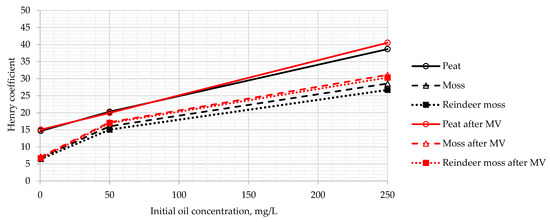
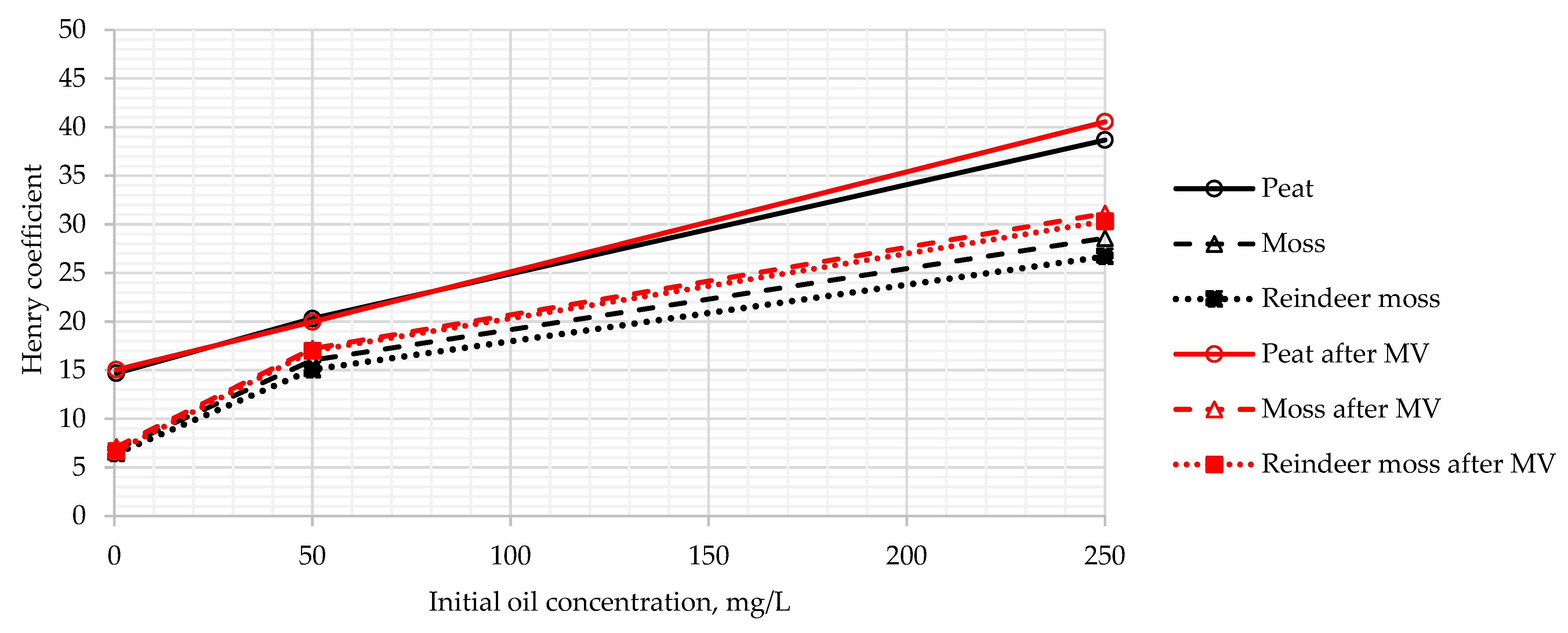
All types of plant servants adsorb oil products perfectly under conditions of high initial concentration (250 mg/L), and much worse in the case of medium (50 mg/L) and, especially, low concentration values (0.5 mg/L). Figure 4 shows the change in the intensity of the sorption process by peat, moss, and reindeer moss, as a function of the initial concentration of the substance.
Figure 4.
Change in the intensity of the oil adsorption process from a model aqueous solution based on the initial concentration.
After microwave irradiation, the peat samples improved their performance as follows: the sorption rate increases by 5–6%, but only at high initial concentrations. Peat sorption capacity increases by only 3.6–7.5%, while peat samples have shown better results compared to other materials studied. Microwave processing has a positive effect on reindeer moss samples, as the sorption capacity can be increased by 11–15%. At the same time, the sorption rate rises from 3.7 to 12.8% when initial concentrations are low and medium, respectively. For moss samples, microwave modification is not significant—sorption capacity rises by only 1–3%. Table 4 shows the maximum sorption capacities achieved as a result of this experiment. All experiments were conducted in two parallel runs, with the measurement error not exceeding 10%.
Table 4.
The maximum sorption capacities.
4. Discussion
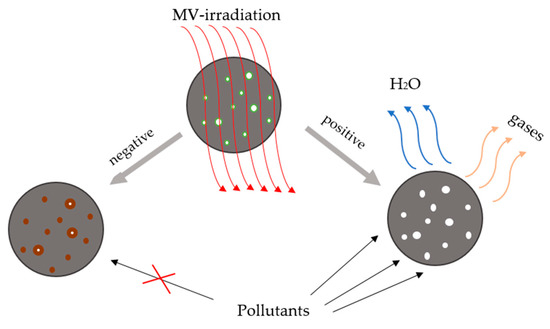
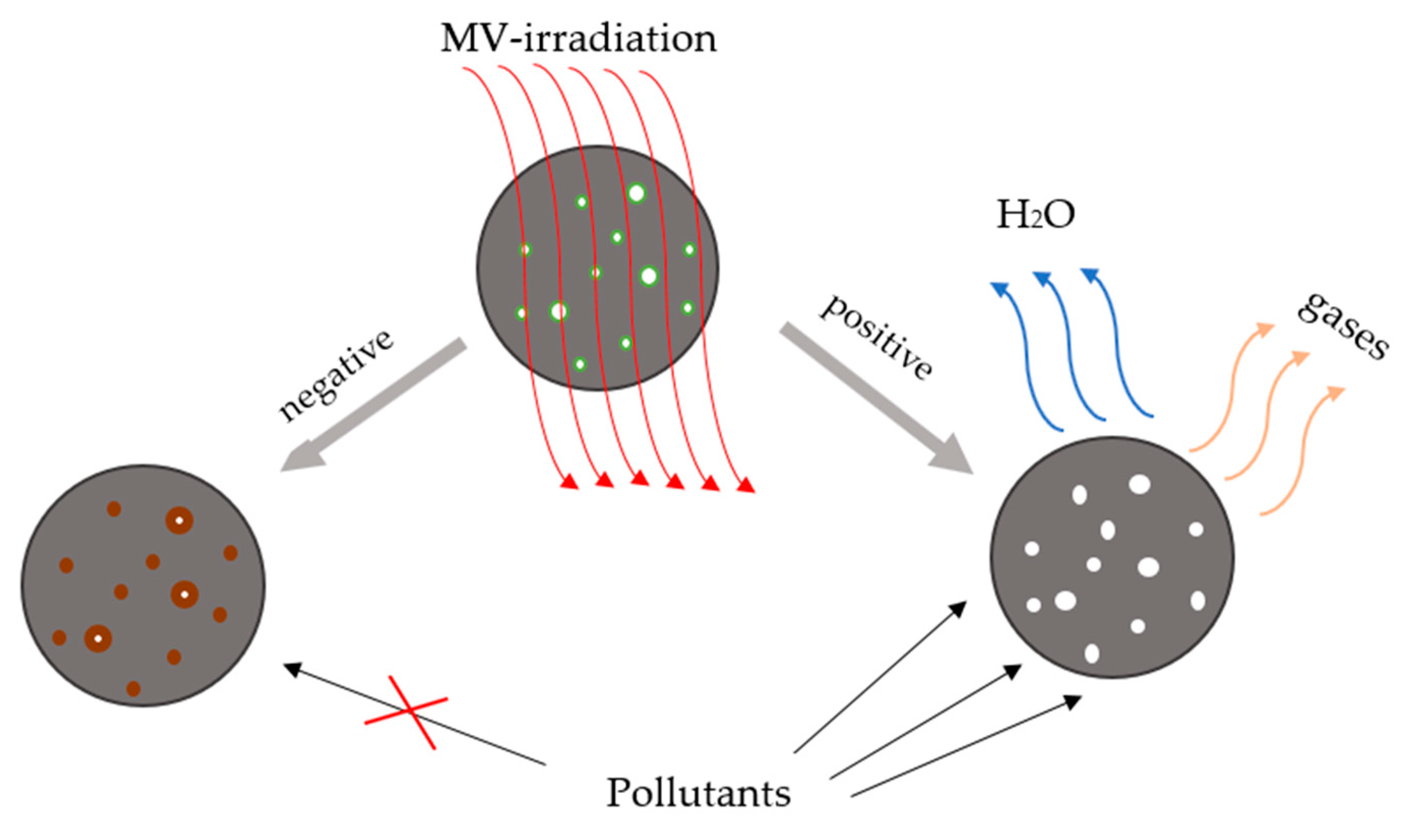
The main drawback of natural materials, such as sorbents, is their low sorption properties compared with active carbons, which are negatively affected by increased hydrophilia. It has been found that microwave radiation speeds up many chemical reactions, favoring fast volumetric heating of the liquid or solid samples, and it also quickly and completely removes moisture [23]. Additionally, there is published evidence that MV treatment increases the surface area, porosity, and functional group availability of some natural materials. However, there are also opposite results, where microwave exposure can lead to a deterioration in the properties of coals due to a decrease in permeability [22]. The effect of microwave processing on the sorption properties of natural absorbents may be unclear. This is because different types of sorbents, under similar conditions, can produce a positive or negative effect. To achieve the best result, the power of microwave irradiation, the heating temperature, and the length of treatment all play an important role. Improvement of the sorption properties is achieved by removing water, gases, and light organic substances from the pores of the sorbent. This increases the porous area (positive scenario). However, in some cases, high temperature and instant volumetric heating with microwaves has the reverse effect: the pollution sintered in the pores and cannot be removed. The sorption surface area decreases and the sorption activity of the natural material decreases (negative scenario). The chosen scenario (negative or positive) is dependent on the properties of the sorbents, and the treatment parameters which have to be determined in each individual case. Figure 5 shows a diagram of how microwave treatment affects the state of the sorbent and its pores. This can explain the various results of the irradiation of peat, moss, and reindeer moss; for peat, the maximal intensifying effect was 7.5%; for moss, it was 4.5%; the best result was achieved for reindeer moss, as it was up to 15%.
Figure 5.
Scheme of the mechanism of the impact of microwave radiation on natural sorbents—positive and negative scenarios.
Naturally occurring sorbents are known to have less sorption capacity than activated carbons. However, the absence of regenerative processes and lower costs justifies the economic feasibility of using peat and other materials. For the practical application of the research findings, the design dimensions of the removable filter cassettes loaded with the sorbents studied were determined by the calculation method. The cassette is a square device on a wooden frame with a sheathing made of filter cloth (for example, canvas), and the inside is filled with peat, moss, or reindeer moss. The cassette can be inserted in special reinforced concrete together with a removable filter element. Previously, an empirical dependence, namely Equation (2), was obtained to determine the height of the filter layer (Hk) in an actual oily sewage treatment plant using natural sorbents [30], as follows:
where v, the filtration rate, is in the range from 0.2 to 0.5 cm/s; k is the reserve factor equal to 1.5–2.0; C is the pollutant concentration after sorption, mg/L; C0 is the initial pollutant concentration, mg/L; β is the mass transfer coefficient, s−1, determined using the following Equation (3):
The mass transference coefficient (β) is determined in each individual case by the value of the “instant breakthrough” (Cm) and time (τ), with other things being equal. The technological parameters of the samples studied, required to determine the design parameters of the filter cassettes, are given in Table 5.
Table 5.
The technological parameters of the filter cassettes.
The usable surface of the filter cassette F (m2) is determined by the Equation (4), as follows:
where Q is the daily wastewater consumption, m3/day; ϑ is the filtration speed, taken from 10 to 20 m/h; n is the number of working installations; the safety factor k = 1.4.
For example, with an estimated filtration rate of 18 m3/hour and a flow rate of 200 m3/day, the required surface of one of the filter cassettes (with a total number of working units of two) will be 0.324 m2, with real plan dimensions of 0.6 m × 0.6 m. The height of the cassette is taken depending on the type of loading (Table 5). On average, with a constant input concentration, such a cassette can last between 3 and 7 days, so it should be replaced by a new one after that time. The spent cassette, saturated with oil products, is dried and then used as a fuel briquette for industrial installations.
As part of this scientific work, there have been no feasibility studies comparing the operating costs of facilities using the natural sorbents and traditional sand/gravel/coal filters. That is foreseen for the future. Additionally, for the practical application of the research findings, total environmental analysis is needed. All environmental factors and impacts must also be considered.
5. Conclusions
As a result, natural materials in the Arctic area (peat, moss, and reindeer moss) are potential sorbents for the treatment of wastewater containing oil and oil products. The experiment performed on model solutions made it possible to obtain the sorption characteristics of the materials for several values of the initial concentration of contaminants. Studies have demonstrated that at the maximum contamination concentration (250 mg/L), the best results are obtained for all samples; the sorption rate is 2–2.6 times that of the initial medium and low levels (50 and 0.5 mg/L, respectively). This confirms the well-known fact, that the higher the concentration of pollution in the water, the easier it is to reduce it through sorption, including the use of peat, moss, or reindeer moss. The modification of the studied materials by microwave irradiation will make it possible to somewhat reduce the loading height of the filtering constructions or increase their service life.
As a result of the experiment, the parameters necessary for modelling filter cassettes loaded with peat, moss, or reindeer moss were obtained. The design dimensions of the filtered cassettes were counted. These filters can be used at the post-treatment stage of domestic wastewater from shift work camps or at the main treatment stage of surface runoff from oil fields, oil depots, and other specialized facilities. Before practical implementation, a technical, economic, and environmental analysis is needed.
Author Contributions
Conceptualization, E.V.; methodology, E.V. and A.F.; formal analysis, E.V.; investigations, E.V. and A.F.; data curation, E.V. and A.F.; writing—original draft preparation, E.V.; writing—review and editing, E.V. and A.F.; visualization, E.V. and A.F.; supervision, E.V.; project administration, E.V.; funding acquisition, E.V. All authors have read and agreed to the published version of the manuscript.
Funding
This research received no external funding.
Institutional Review Board Statement
The study did not involve humans or animals.
Informed Consent Statement
Not applicable.
Data Availability Statement
The data presented in this study are available on request from the corresponding author.
Conflicts of Interest
The authors declare no conflict of interest. The funders had no role in the design of the study, in the collection, analyses, or interpretation of data, in the writing of the manuscript, or in the decision to publish the results.
References
- Dmitrievsky, A.N.; Eremin, N.A.; Shabalin, N.A.; Kondratyuk, A.T.; Eremin, A.N. State and prospects of traditional and intellectual development of hydrocarbon resources of the Arctic shelf. Bus. J. Neftegaz. Ru. 2017, 1, 32–41. Available online: https://magazine.neftegaz.ru/articles/rynok/538351-sostoyanie-i-perspektivy-osvoeniya-uglevodorodnykh-resursov-arkticheskogo-shelfa-rossii/ (accessed on 28 August 2022).
- Daley, K.; Truelstrup Hansen, L.; Jamieson, R.C.; Hayward, J.L.; Piorkowski, G.S.; Krkosek, W.; Gagnon, G.A.; Castleden, H.; MacNeil, K.; Poltarowicz, J.; et al. Chemical and microbial characteristics of municipal drinking water supply systems in the Canadian Arctic. Environ. Sci. Pollut. Res. 2018, 25, 32926–32937. [Google Scholar] [CrossRef] [Scilit] [PubMed]
- Mezentseva, O.V.; Volkovskaya, N.P.; Zakharova, V.P.; Guryanova, V.V. Pollution of the west Siberian Rivers by oil products for the period 2000–2017. Uspekhi Sovrem. Estestvozn. 2018, 12–1, 175–181. [Google Scholar]
- Vialkova, E.; Maksimova, S.; Zemlyanova, M.; Maksimov, L.; Vorotnikova, A. Integrated Design Approach to Small Sewage Systems in the Arctic Climate. Environ. Process. 2020, 7, 673–690. [Google Scholar] [CrossRef] [Scilit]
- Hickel, K.A.; Dotson, A.; Thomas, T.K.; Heavener, M.; Hébert, J.; Warren, J.A. The Search for an Alternative to Piped Water and Sewer Systems in the Alaskan Arctic. Environ. Sci. Pollut. Res. 2018, 25, 32873–32880. [Google Scholar] [CrossRef] [Scilit] [PubMed]
- Kallenborn, R.; Brorström-Lundén, E.; Reiersen, L.-O.; Wilson, S. Pharmaceuticals and Personal Care Products (PPCPs) in Arctic Environments: Indicator Contaminants for Assessing Local and Remote Anthropogenic Sources in a Pristine Ecosystem in Change. Environ. Sci. Pollut. Res. 2018, 25, 33001–33013. [Google Scholar] [CrossRef] [Scilit] [PubMed]
- Matveeva, V.A.; Alekseenko, A.V.; Karthe, D.; Puzanov, A.V. Manganese Pollution in Mining-Influenced Rivers and Lakes: Current State and Forecast under Climate Change in the Russian Arctic. Water 2022, 14, 1091. [Google Scholar] [CrossRef] [Scilit]
- Dzyubo, V.V. Filtering materials and operating parameters of water purifiers. Vestn. Tomsk. Gos. Arkhitekturno-Stroit. Univ. J. Constr. Archit. 2019, 1, 177–187. [Google Scholar] [CrossRef] [Scilit]
- Levakov, I.; Shahar, Y.; Rytwo, G. Carbamazepine Removal by Clay-Based Materials Using Adsorption and Photodegradation. Water 2022, 14, 2047. [Google Scholar] [CrossRef] [Scilit]
- Liu, Z.; Singer, S.; Tong, Y.; Kimbell, L.; Anderson, E.; Hughes, M.; Zitomer, D.; McNamara, P. Characteristics and applications of biochars derived from wastewater solids. Renew. Sustain. Energy Rev. 2018, 90, 650–664. [Google Scholar] [CrossRef] [Scilit]
- Xia, Y.; Li, W.; He, X.; Liu, D.; Sun, Y.; Chang, J.; Liu, J. Efficient Removal of Organic Matter from Biotreated Coking Wastewater by Coagulation Combined with Sludge-Based Activated Carbon Adsorption. Water 2022, 14, 2446. [Google Scholar] [CrossRef] [Scilit]
- Privalova, N.M.; Dvadnenko, M.V.; Nekrasova, A.A.; Popova, O.S.; Privalov, D.M. Oily wastewater purification with natural and artificial absorbents. Nauchnyi Zhurnal KubGAU 2015, 113-09, 10. [Google Scholar]
- Bannova, E.A.; Kitaeva, N.K.; Merkov, S.M.; Muchkina, M.V.; Zaloznaya, E.P.; Martynov, P.N. Study of a method for obtaining a hydrophobic sorbent based on modified peat. Sorpt. Chromatogr. Process. 2013, 13, 60–68. [Google Scholar]
- Peng, Y.; Li, Y.; Tang, S.; Zhang, L.; Zhang, J.; Zhao, Y.; Zhang, X.; Zhu, Y. Dynamic Adsorption of As(V) onto the Porous α-Fe2O3/Fe3O4/C Composite Prepared with Bamboo Bio-Template. Water 2022, 14, 1848. [Google Scholar] [CrossRef] [Scilit]
- Park, H.; Kim, J.; Lee, Y.-G.; Chon, K. Enhanced Adsorptive Removal of Dyes Using Mandarin Peel Biochars via Chemical Activation with NH4Cl and ZnCl2. Water 2021, 13, 1495. [Google Scholar] [CrossRef] [Scilit]
- Voronov, A.A.; Maksimova, S.V.; Osipova, E.Y. Purification of urbanized melt water with plant sorbents. Vestn. Tomsk. Gos. Arkhitekturno-Stroit. Univ. J. Constr. Archit. 2021, 2, 105–117. [Google Scholar] [CrossRef] [Scilit]
- Rahman, N.U.; Ullah, I.; Alam, S.; Khan, M.S.; Shah, L.A.; Zekker, I.; Burlakovs, J.; Kallistova, A.; Pimenov, N.; Vincevica-Gaile, Z.; et al. Activated Ailanthus altissima Sawdust as Adsorbent for Removal of Acid Yellow 29 from Wastewater: Kinetics Approach. Water 2021, 13, 2136. [Google Scholar] [CrossRef] [Scilit]
- Wahi, R.; Chuah, L.A.; Choong, T.S.Y.; Ngaini, Z.; Nourouzi, M.M. Oil removal from aqueous state by natural fibrous sorbent: An overview. Sep. Purif. Technol. 2013, 113, 51–63. [Google Scholar]
- Malyshkina, E.S.; Vyalkova, E.I.; Osipova, E.Y. Water purification with natural sorbents. Vestn. Tomsk. Gos. Arkhitekturno-Stroit. Univ. J. Constr. Archit. 2019, 1, 188–200. [Google Scholar] [CrossRef] [Scilit]
- Faizal, A.M.; Kutty, S.R.M.; Ezechi, E.H. Modelling of Adams-Bohart and Yoon-Nelson on the Removal of Oil from Water Using Microwave Incinerated Rice Husk Ash (MIRHA). Appl. Mech. Mater. 2014, 625, 788–791. [Google Scholar] [CrossRef] [Scilit]
- Taufik, S.H.; Ahmad, S.A.; Zakaria, N.N.; Shaharuddin, N.A.; Azmi, A.A.; Khalid, F.E.; Merican, F.; Convey, P.; Zulkharnain, A.; Abdul Khalil, K. Rice Straw as a Natural Sorbent in a Filter System as an Approach to Bioremediate Diesel Pollution. Water 2021, 13, 331. [Google Scholar] [CrossRef] [Scilit]
- Bakhia, T.; Khamizov, R.K.; Bavizhev, M.D.; Konov, M.A. The effect of microwave treatment of clinoptilolite on its ion-exchange kinetic properties. Sorpt. Chromatogr. Process. 2016, 16, 803–812. [Google Scholar]
- Berdonosov, S.S. Microwave Chemistry. Mosc. MSU 2001, 7, 32–38. [Google Scholar]
- Vialkova, E.; Obukhova, M.; Belova, L. Microwave Irradiation in Technologies of Wastewater and Wastewater Sludge Treatment: A Review. Water 2021, 13, 1784. [Google Scholar] [CrossRef] [Scilit]
- Staicu, V.; Luntraru, C.; Calinescu, I.; Chisega-Negrila, C.G.; Vinatoru, M.; Neagu, M.; Gavrila, A.I.; Popa, I. Ultrasonic or Microwave Cascade Treatment of Medicinal Plant Waste. Sustainability 2021, 13, 12849. [Google Scholar] [CrossRef] [Scilit]
- Denisova, T.R.; Shaikhiev, I.G.; Sippel’, I.Y. Ash sawdust oil capacity increased by acid solution treatment. Vestn. Tekhnologicheskogo Univ. 2017, 18, 233–235. [Google Scholar]
- Mikova, N.M.; Skvortsova, G.P.; Mazurova, E.V.; Chesnokov, N.V. Influence of the cross-linking effect on the properties of sorbents obtained from aspen and larch bark. J. Appl. Chem. 2019, 92, 1333–1343. [Google Scholar]
- Molaudzi, N.R.; Ambushe, A.A. Sugarcane Bagasse and Orange Peels as Low-Cost Biosorbents for the Removal of Lead Ions from Contaminated Water Samples. Water 2022, 14, 3395. [Google Scholar] [CrossRef] [Scilit]
- Urlikh, D.V.; Timofeeva, S.S.; Bryukhtov, M.N. Possibilities to use leafy moss in wastewater treatment. Bull. Irkutsk. State Tech. Univ. 2013, 13, 136–139. [Google Scholar]
- Khan, Q.; Zahoor, M.; Salman, S.M.; Wahab, M.; Talha, M.; Kamran, A.W. Removal of Chromium (VI) from the Steel Mill Effluents Using the Chemically Modified Leaves of Pteris vittata as Adsorbent. Water 2022, 14, 2599. [Google Scholar] [CrossRef] [Scilit]
- Vialkova, E.I. Study of Natural Minerals and Production Wastes of the Tyumen Region and the Ural Region in Order to Purify Water and Soil. Ph.D. Thesis, Novosibirsk State University of Architecture and Civil Engineering (SIBSTRIN), Novosibirsk, Russia, 1999. Available online: https://search.rsl.ru/ru/record/01000265691 (accessed on 30 August 2022).
- Sergeeva, E.S.; Laptedulche, N.K. Development of approaches to modeling the processes of purification of oily waters in dynamic conditions with natural sorbents. Energy Sav. Energy Dissipation 2009, 4, 9–11. [Google Scholar]
- Degtyarev, K.S. Peat Is an Underestimated Resource of Russia. Available online: http://www.c-o-k.ru/ (accessed on 5 December 2022).
- Couillard, D. The use of peat in wastewater treatment. Water Res. 1998, 28, 1261–1274. [Google Scholar] [CrossRef] [Scilit]
- Perez, J.; Ramos, A.; Ordonez, J.; Gomes, M. Dual-stage peat beds in small community wastewater treatment. J. Environ. Sci. Health Part A 2007, 42, 1125–1130. [Google Scholar] [CrossRef] [Scilit] [PubMed]
- Prodous, O.A.; Mikhailov, A.V. The experience of using peat filtration for surface runoff treatment. Water Supply Sanit. Tech. 2016, 3, 34–39. Available online: https://www.vstnews.ru/en/archives-all/2019/2019-3/7500-opyt-primeneniya (accessed on 5 December 2022).
- Moseev, D.S.; Sergiyenko, L.A.; Kuzmina, E.Y. New moss species (Bryophyta) for the Franz Josef Land (Russian Arctic). Nov. Sist. Nizshikh Rastenii 2018, 52, 195–203. [Google Scholar] [CrossRef] [Scilit]
- Mingalimova, A.I.; Skorobogatova, O.N.; Koneva, V.V. Lichen composition in the floodplain of the Agan river (Khanty-Mansiysk-Autonomous Area—Yugra). Vestn. NVSU 2016, 2, 17–22. Available online: https://vestnik.nvsu.ru/2311-1402/article/view/49423 (accessed on 5 December 2022).

Publisher’s Note: MDPI stays neutral with regard to jurisdictional claims in published maps and institutional affiliations. |
© 2022 by the authors. Licensee MDPI, Basel, Switzerland. This article is an open access article distributed under the terms and conditions of the Creative Commons Attribution (CC BY) license (https://creativecommons.org/licenses/by/4.0/).