


Abstract
Atmospheric metal pollution in urban ecosystems is a critical global issue. Feral pigeons (Columba livia) serve as effective bioindicators of ambient air quality. This pilot study evaluates their applicability across three contrasting regions in Kazakhstan: Ust-Kamenogorsk (non-ferrous metallurgy), Pavlodar (coal-fired power generation), and Bigash village (rural background). Concentrations of 14 metal(loid)s and 10 rare earth elements (REEs) in feathers were determined via ICP-MS/ICP-OES and analyzed using principal component analysis, hierarchical cluster analysis, and pollution indices. In Ust-Kamenogorsk, high contamination factor (Cf) values for Cd (26.0), Pb (41.2), and As (19.0) indicated ‘very high contamination’ from non-ferrous metallurgy. In Pavlodar, Cf values for Cd (5.0), As (5.0), and Cu (7.3) showed ‘considerable contamination’ linked to coal combustion and oil refining. The total Metal Pollution Index for Ust-Kamenogorsk (11.1) was 4.8 times higher than for Pavlodar (2.3). REE profiles showed a ‘dilution effect’ driven by industrial dust, except for gadolinium, for which a pronounced concentration peak was recorded in Pavlodar. Multivariate statistics confirmed the effectiveness of using pigeon feathers as an integrative tool to differentiate zones of high technogenic pressure. Overall, this pilot study lays the foundation for long-term biomonitoring of the urban environment in industrial centers of Kazakhstan with heavy pollution loads.
1. Introduction
Metallic air pollution has become a critical global environmental challenge affecting both developed and developing nations [1]. Of particular concern is the multi-element contamination of airborne particulate matter (PM), which effectively adsorbs various toxic metals and metalloids onto its surface. Due to their high bioavailability, these non-biodegradable and bioaccumulating contaminants pose severe socio-environmental and public health risks [2,3,4]. In addition, potential rare earth elements (REEs) exposure is an emerging global concern, as recent evidence demonstrates that these elements can impact various biological systems, including humans [5].
Traditional physicochemical methods for atmospheric monitoring, while precise, are costly, time-consuming, and limited to capturing instantaneous pollutant concentrations without reflecting actual biological impacts. To overcome these limitations, biomonitoring using avifauna has emerged as a highly effective approach for assessing ambient air quality. Recent evidence of accelerating declines in avian populations worldwide further underscores their pivotal role as ecological indicators. In urban ecosystems, synanthropic bird species represent one of the most promising groups for atmospheric biomonitoring due to their abundance, ease of identification, and close contact with human-induced pollution [6,7,8,9,10,11]. Specifically, bird feathers serve as a unique spatial and temporal record of environmental quality. The elemental concentrations in plumage reflect pollution levels during the molting period, enabling researchers to differentiate between localized urban emissions and global migratory influences. Bird feathers are considered promising biomonitors of air quality [12]. Moreover, feathers integrate both endogenous intake (via the bloodstream during growth) and exogenous deposition (atmospheric dust accumulation), providing a comprehensive assessment of urban air contamination. The integration of feather analysis with spatial and ecological data enables the identification of pollution hotspots, the assessment of anthropogenic impacts, and the development of effective conservation measures for both natural and human-dominated landscapes [13].
Among synanthropic species, the feral pigeon (Columba livia) is a well-established model organism owing to its well-characterized physiology and phenotypic diversity [14,15,16,17,18,19,20,21,22,23,24,25]. Their strictly sedentary lifestyle, high bioaccumulation capacity, and year-round abundance make them exceptionally reliable biomonitors for urban areas. Although Kazakhstan hosts major mining and metallurgical complexes, there is a notable scarcity of research utilizing synanthropic birds for atmospheric biomonitoring. This pilot study aims to evaluate the potential of using feral pigeon feathers (Columba livia) as a biomonitoring tool for ambient air quality in two cities in Kazakhstan—Pavlodar and Ust-Kamenogorsk. Pavlodar and Ust-Kamenogorsk are among the country’s largest industrial centers, experiencing consistently high loads of particulate matter and associated metallurgical emissions [26,27,28,29,30]. Our specific objectives were: (1) to compare the elemental profiles of feral pigeon feathers from Pavlodar and Ust-Kamenogorsk against a baseline area, and (2) to identify variations in elemental structure of feathers between these two cities.
2. Materials and Methods
2.1. Study Area
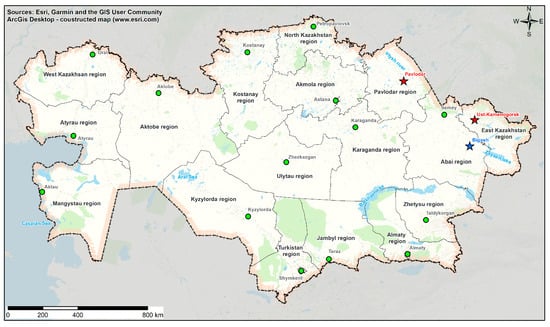
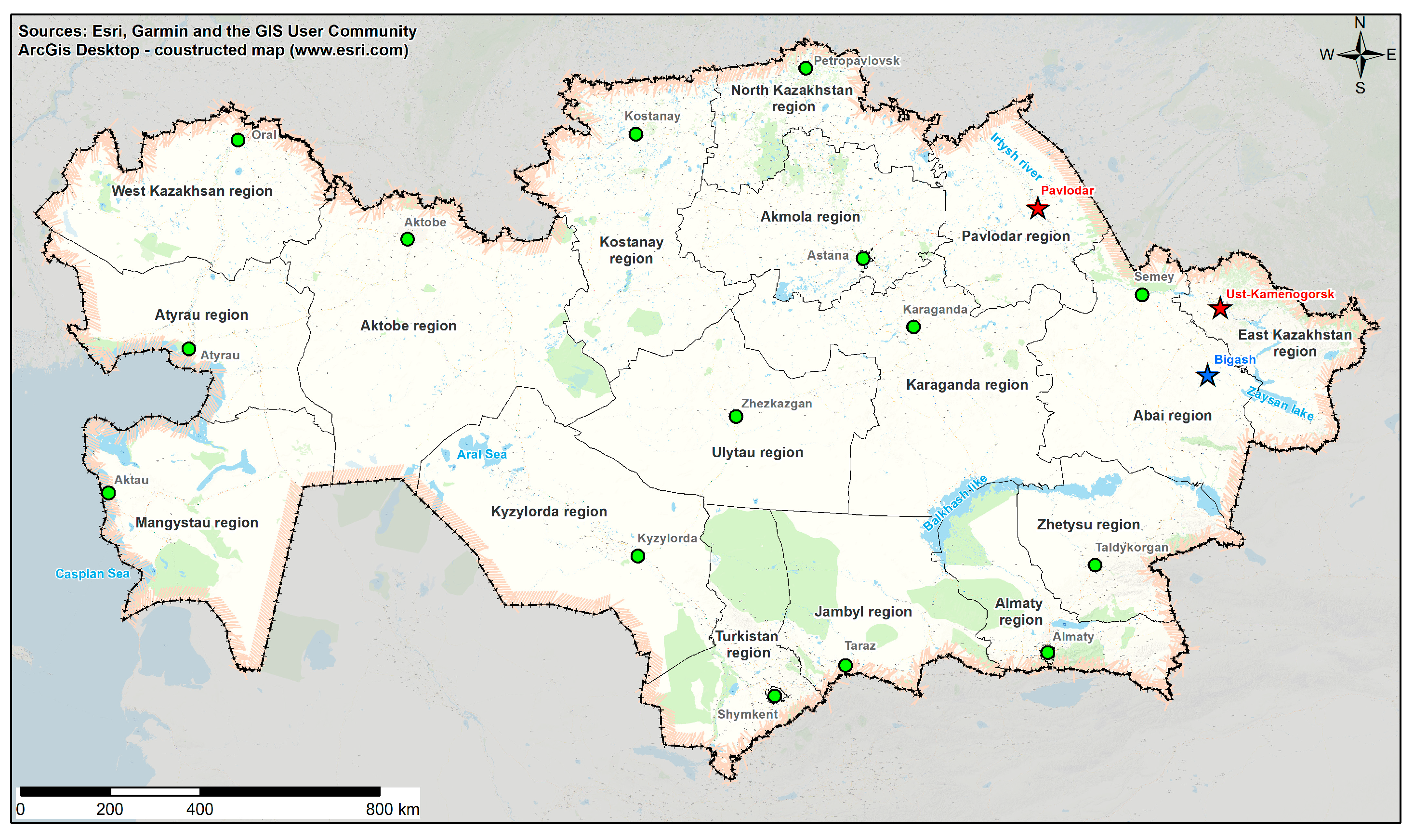
Two of the largest industrial cities in the Republic of Kazakhstan (Ust-Kamenogorsk and Pavlodar) were selected as the primary urbanized study areas for pigeon sampling (Figure 1), both characterized by a concentration of metallurgical, energy, and petrochemical enterprises [30,31]. The Bigash village (48.638° N, 82.010° E) in the Kokpekty District, Kazakhstan, was chosen as the background area (Figure 1).
Figure 1.
Map of Kazakhstan.
The selection of this background area was based on its physico-geographical and climatic characteristics identical to those of the studied urbanized territories, as well as its isolation from direct sources of industrial impact.
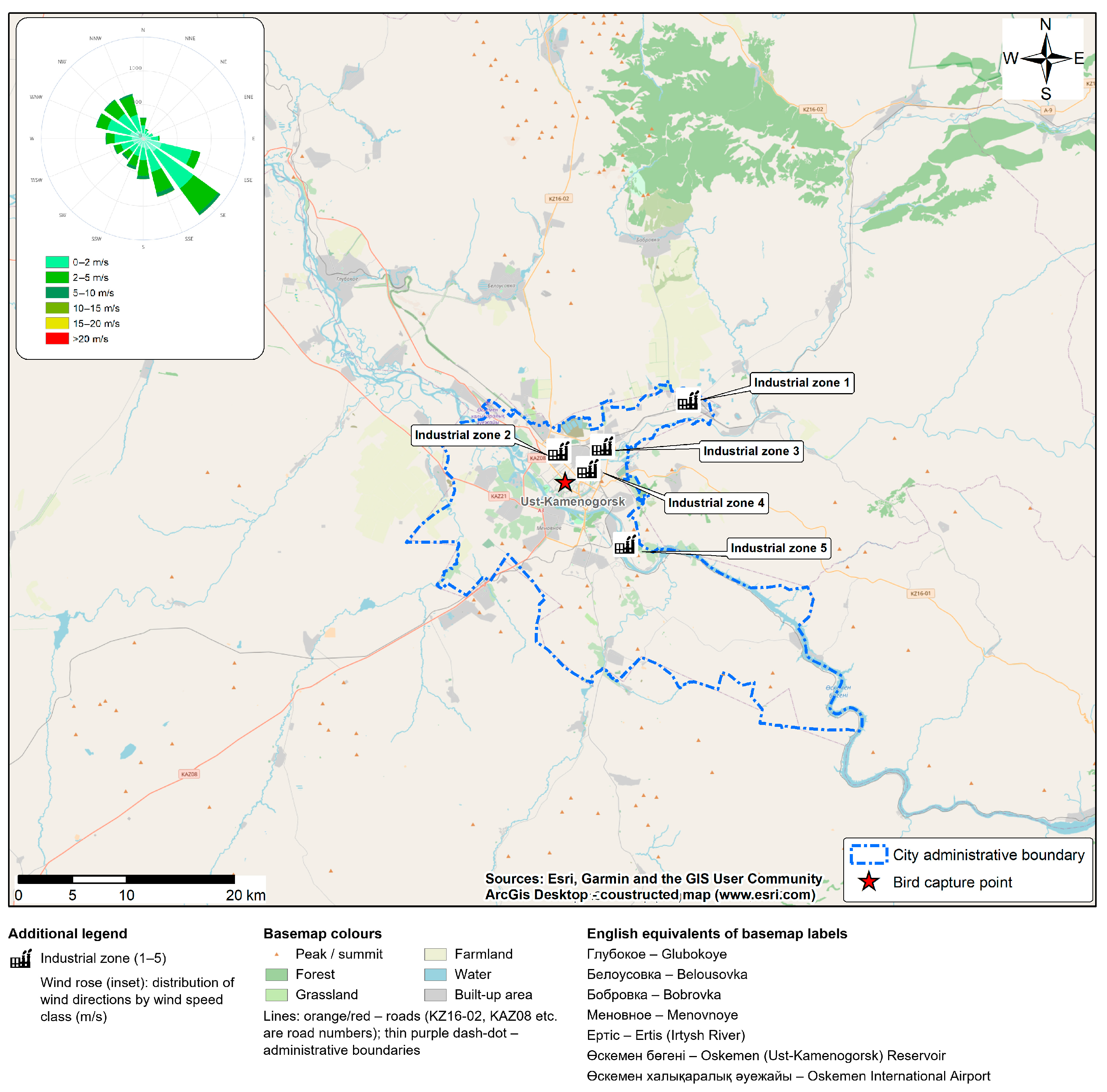
The sampling site in Ust-Kamenogorsk (49°57′ N, 82°37′ E) is shown in Figure 2.
Figure 2.
Sampling site in Ust-Kamenogorsk, Kazakhstan.
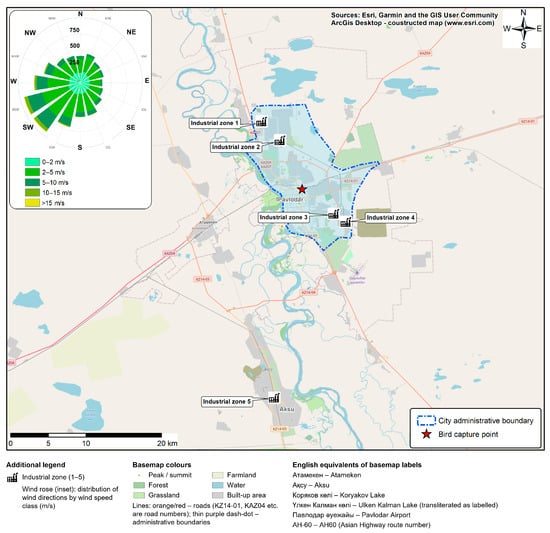
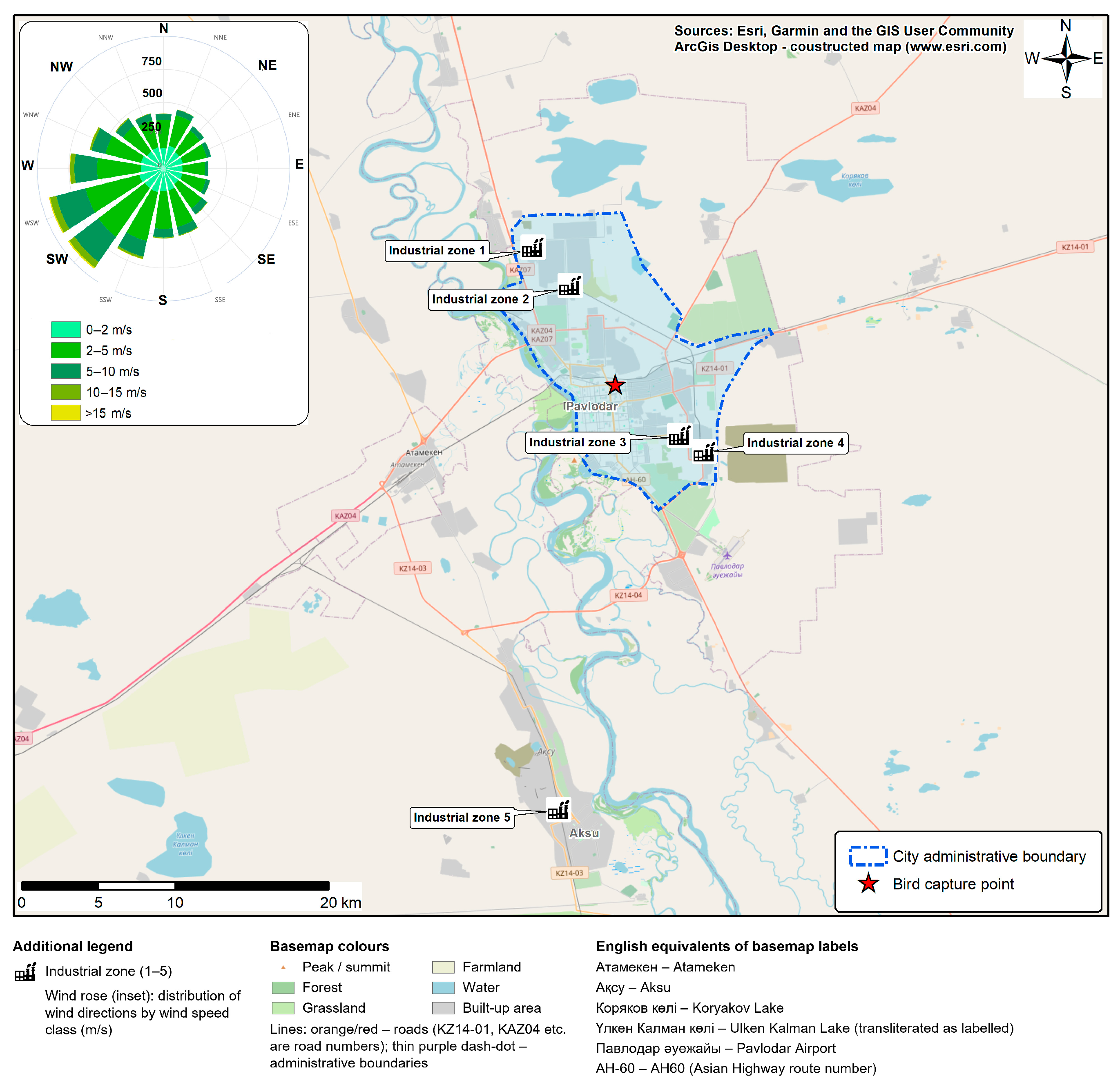
The sampling site in Pavlodar (52°18′ N, 76°57′ E) is shown in Figure 3.
Figure 3.
Sampling site in Pavlodar, Kazakhstan.
2.2. Physico-Geographical and Anthropogenic Characteristics of Ust-Kamenogorsk and Pavlodar, Kazakhstan
Ust-Kamenogorsk is the largest industrial center in East Kazakhstan. Situated in an intermountain basin surrounded by the spurs of the Altai Mountains, the city experiences an extremely unfavorable aerodynamic regime within a sharply continental climate. A defining feature of Ust-Kamenogorsk is the exceptionally low dispersion potential of its atmosphere. This enclosed topography, combined with frequent fogs and prolonged periods of calm—with winter calm frequencies reaching 60–70%—regularly triggers adverse meteorological conditions (AMCs). During these periods, toxic industrial smog is trapped within the surface boundary layer, causing a sharp increase in fine particulate matter enriched with a wide spectrum of chemical elements. This situation is further compounded by the location of major non-ferrous metallurgical enterprises directly within city limits. This cluster includes the Ust-Kamenogorsk Metallurgical Complex of “Kazzinc” LLP and “Ulba Metallurgical Plant” JSC (producing beryllium, tantalum, and uranium), whose emissions are saturated with Class I hazardous heavy metals and metalloids (Pb, Zn, Cd, Cu, As, and Se). Additionally, the Ust-Kamenogorsk and Sogrinsk Thermal Power Plants contribute significantly to ambient air pollution by emitting vast volumes of fly ash, which acts as a carrier for trace element adsorption. A dense transport network, coupled with the basin topography, further exacerbates ground-level contamination. Consequently, the atmospheric particulate matter in Ust-Kamenogorsk is characterized by high anthropogenic loads of Cd and Pb. Decades of metallurgical operations have formed a stable historical geochemical anomaly characterized by high metal bioavailability, consistently placing Ust-Kamenogorsk at the top of Kazakhstan’s most polluted settlements [30,32].
Pavlodar is a major industrial city in northeastern Kazakhstan, characterized by a sharply continental climate with long, cold winters and short, hot summers. The city hosts a dense concentration of thermal power and metallurgical enterprises, causing ground-level air pollution to be consistently assessed as high. During winter, frequent temperature inversions, calm periods, and fogs drastically reduce the atmospheric dispersion potential, facilitating the accumulation of fine particulate matter within both the ground-level air layer and snow cover. The primary contribution to metal and metalloid contamination stems from thermal power plants (TPP-1, TPP-2, and TPP-3). Operating on high-ash Ekibastuz coal, their emissions contain immense volumes of fly ash enriched with As, V, and Pb. Furthermore, Pavlodar’s industrial landscape includes non-ferrous and ferrous metallurgical complexes: the Pavlodar Aluminium Plant (JSC “Aluminum of Kazakhstan”), the Kazakhstan Electrolysis Plant (JSC KEZ), the Aksu Ferroalloy Plant, and pipe rolling facilities. These enterprises emit aerosols containing metals and fine silicate dust. The urban atmospheric load is additionally supplemented by emissions from the Pavlodar Petrochemical Plant (PNHZ) and JSC “Caustic” [26,28,29,31].
2.3. Sampling
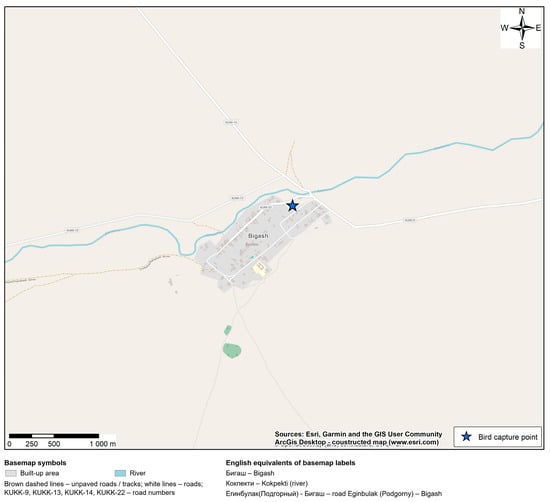
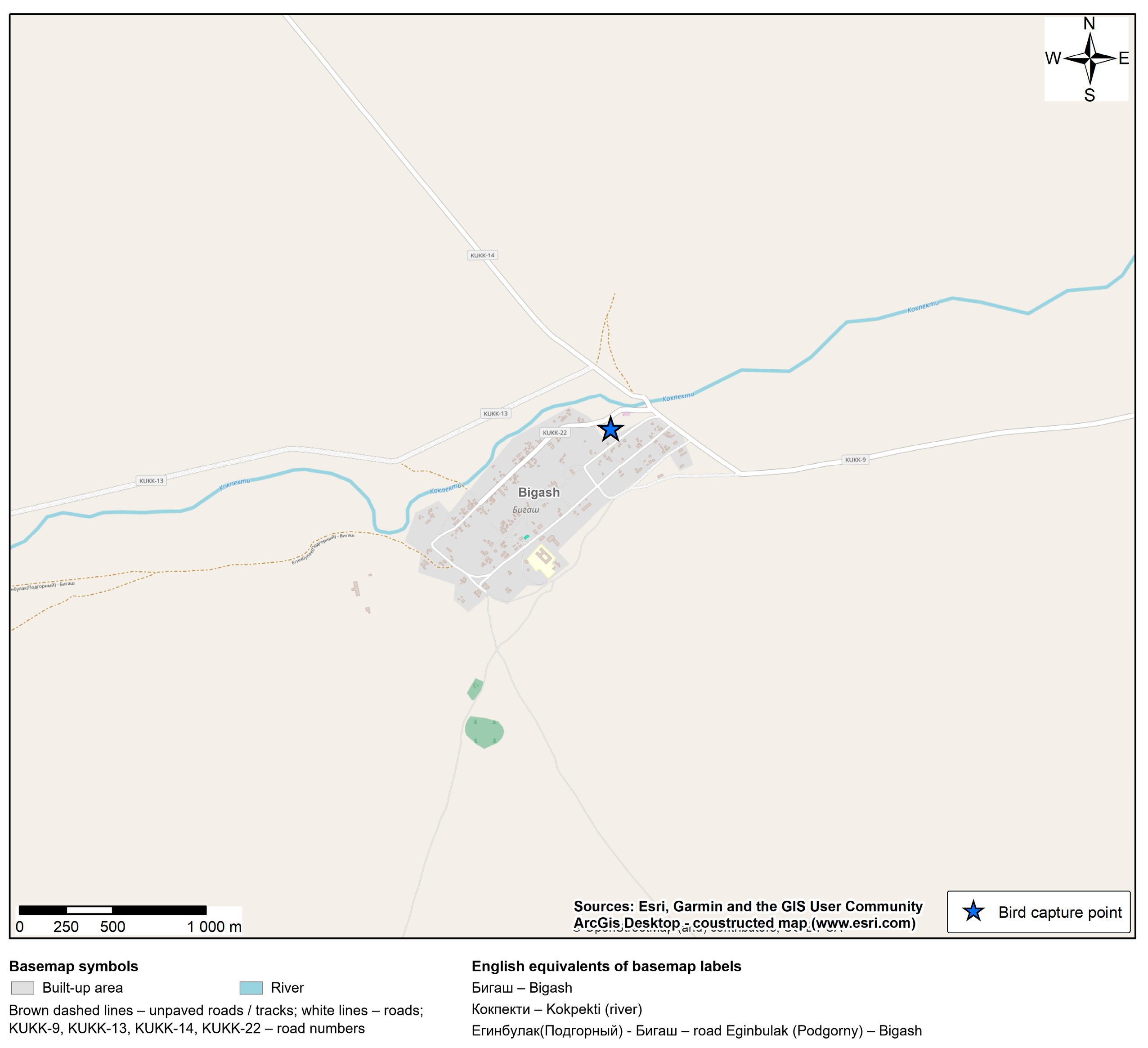
Feral pigeons (Columba livia) were randomly sampled, regardless of gender, across three distinct study areas in Kazakhstan: the industrial cities of Ust-Kamenogorsk and Pavlodar, and a rural background site located in the village of Bigash (Figure 4). To ensure close chronological proximity, pigeon sampling was conducted consecutively on 6–8 February 2026, at the following locations: Ust-Kamenogorsk, Pavlodar, and Bigash village (Kokpekty District). Pigeons were caught humanely using portable walk-in cage traps [33]. Pigeons were trapped without regard to sex, as this was a pilot study and the authors lacked the technical capability for sex identification. However, trapping was intentionally avoided during or immediately following the molting period.
Figure 4.
Sampling site in Bigash village, Kazakhstan.
A total of 24 adult individuals were captured, with 8 specimens obtained across three sampling locations. To ensure chronological and physiological standardization, primary flight feathers (remiges) were selected as the biological matrix [34]. Specifically, the first or second primary flight feathers (P1/P2) were gently plucked from the left wing of each bird, minimizing any impact on flight capabilities. Only fully formed, structurally intact feathers devoid of visible deformities or ectoparasite damage were collected. Following sampling, all live birds were safely released back into their natural habitat. Individual feather samples were immediately sealed in labeled paper bags and transported to the laboratory.
2.4. Sample Preparation
Feather samples were initially rinsed with ultra-pure deionized water to dislodge coarse particulate matter. The washed feathers were transferred to 4 mL metal-free polyethylene vials and dried in an oven at 60 °C for 24 h. The dry weight of each sample was determined to the nearest 0.01 mg using a Mettler Toledo XPR105 (Zurich, Switzerland) analytical balance. Acid digestion of the samples was performed in accordance with State Standard Method No. 499-AES/MS MKHA GSI RK (Registration No. KZ.07.00.03351-2016) and US EPA Method 3052. The feathers were digested in a 1:1 (v/v) mixture of high-purity 70% HNO3 and 30% H2O2 using a closed-vessel microwave digestion system. Following the digestion cycle, the solutions were quantitatively diluted with deionized water to a fixed volume and stored at room temperature until subsequent elemental analysis.
2.5. Elemental Analysis
Elemental quantification within the digested feather matrices was performed using a combined analytical approach [35] consisting of inductively coupled plasma optical emission spectrometry (ICP-OES; EXPEC-6500) and inductively coupled plasma mass spectrometry (ICP-MS; SUPEC-7000), both manufactured by Focused Photonics Inc. (Hangzhou, China). The application of these methods enabled the determination of a wide range of chemical elements, including Al, As, V, Fe, Cu, Zn, Ga, Sr, Cd, Cs, Se, Gd, Lu, La, Ce, Pr, Nd, Sm, Eu, Dy, Er, Pb, Th, and U.
All elemental concentrations are expressed in mg kg−1 (ppm) on a dry weight (dw) basis. Where necessary, conversion to wet weight concentrations was performed using an experimentally determined drying coefficient, calculated as the ratio of the initial wet sample weight to its corresponding dry weight.
Calibration of the analytical instruments was performed using multi-element standard solutions. Certified reference solutions manufactured by PerkinElmer (Shelton, CT, USA) and Inorganic Ventures (Christiansburg, VA, USA) were used to prepare the calibration standards. To minimize the influence of matrix effects and instrumental drift, background correction and internal standardization procedures were applied during the measurements. To monitor the stability of the analytical signal, a quality control (QC) solution was measured after every ten studied samples. In the event of an 8–10% deviation in the QC measurement from the established value, the analytical instrument was recalibrated.
To assess the accuracy of the chemical element determinations, solid certified reference materials (CRMs), including Lake Baikal bottom silt (BIL-1), were employed. The use of CRMs allowed for monitoring the analytical procedure, taking into account potential element losses during the sample preparation and instrumental determination stages. The accuracy of the results was evaluated by comparing the experimentally obtained concentrations with the certified values of the respective elements in the reference materials.
To minimize the influence of matrix effects in the ICP-MS analysis, internal standardization was applied, including the use of ytterbium (Yb) isotopes. The precision of the analytical measurements was evaluated by the relative standard deviation (RSD). According to the laboratory quality control data, the RSD values did not exceed 10%.
The instrumental Limits of Detection (LODs) for the target chemical elements were expressed in µg L−1. To compare the analytical performance with the research results presented in mg kg−1 dry weight, the instrumental limits of detection were recalculated, taking into account the sample mass, final volume, and the additional dilution factor. Furthermore, the Method Limits of Detection (MDLs) and Limits of Quantification (MLOQs) must account for the contribution of all analytical stages, including sample preparation and procedural blank analysis. The concentrations of chemical elements were expressed in mg kg−1 dry weight (dw). The instrumental and method limits of detection for each target element are presented in Table A1.
2.6. Quality Control
To prevent potential cross-contamination, all laboratory equipment and glassware utilized in this study were meticulously decontaminated by soaking in a 10% hydrochloric acid solution, followed by multiple rinses with deionized water, and dried in a dust-free environment prior to use. Quality control (QC) and system calibration were ensured by constructing multi-level calibration curves. Working standard solutions for each target element were prepared via sequential dilution of a 1000 mg L−1 stock solution (BDH Spectrosol, Poole, United Kingdom).
2.7. Assessment Methods
The contamination factor (Cf) was used to express the degree of contamination by a single metal(loid), to it background value [36,37]. To evaluate the overall metal(loid)s load, the complex Metal Pollution Index (MPI) was applied [38].
The contamination factor (Cf) is calculated using the following equation:
Cf—contamination factor;
Cmean—mean element concentration in feathers within the study area, mg kg−1;
Cglobal background level—baseline elemental concentrations for birds [39].
The MPI [39] is calculated using the following equation:
C1, C2, C3…Cn—geometric mean concentrations of elements whose mean and/or maximum concentrations exceeded physiological norms;
n—the total number of analyzed metal(loid)s.
2.8. Assessment of Rare Earth Elements (REEs) Fractionation and Anomaly Calculations
Preliminary evaluation using the North American Shale Composite (NASC) values [40] revealed a highly positive europium anomaly in the feathers of the background population, indicating a strong regional geochemical overprint. To eliminate the lithogenic dust effect (variations in mineral matter load on feathers) and visually evaluate the fractionation profiles of REEs within the urbanized ecosystems of Ust-Kamenogorsk and Pavlodar, individual REE concentrations in pigeon feathers were first normalized against Al as a conservative lithophilic tracer [41]. The Al-normalization was performed using Equation (3):
where REEnorm is the Al-normalized ratio of a specific rare earth element (dimensionless unit);
CREE is the median concentration of the REE in the pigeon feather sample (mg/kg dry weight);
CAl is the median concentration of Al in the same feather sample (mg kg−1 dry weight).
Subsequently, to isolate the localized industrial signal and eliminate the natural Oddo-Harkins effect inherent to raw lanthanoid distributions, these individual baseline ratios were normalized against the corresponding values of the regional control site (Bi-gash village) to obtain anthropogenic enrichment factors (Xn):
where (X) represents the specific baseline-normalized lanthanoid.
Cerium (Ce/Ce*) and europium (Eu/Eu*) anomalies were calculated as deviations from the geometric mean of their adjacent baseline-normalized elements using Equations (4) and (5):
Cerium and europium anomalies were calculated as deviations from the geometric mean of their neighboring elements using Equations (5) and (6):
Values > 1.05 or <0.95 were interpreted as significant positive or negative anthropogenic anomalies, respectively.
2.9. Statistical Analysis
The analytical dataset was organized in tabular form and processed using STATISTICA software (version 12.0) and Origin Pro (2015). Descriptive statistics were calculated for each element, including minimum, maximum, and median values, as well as the coefficient of variation. The median values were used as robust measures of central tendency because several elements showed wide concentration ranges, a high coefficient of variation, and local outliers. These characteristics indicated strong heterogeneity within the dataset.
Concentration values falling below the instrumental limits of detection (LOD) were treated as non-detects. To evaluate the accumulation patterns of the 14 metal(loid)s in pigeon feathers, a Hierarchical Cluster Analysis (HCA) was conducted using Ward’s method and Euclidean distances. Prior to clustering, values below the detection limit were replaced with half the detection limit. The dataset was then subjected to Z-score standardization to eliminate scale-dependent bias. Principal Component Analysis (PCA) was applied to evaluate the element profiles of pigeon feathers. To ensure the robustness of multivariate statistical analysis, PCA module configurations within Statistica were finely adjusted to optimize factor loadings under a constrained sample size.
To ensure linguistic clarity and professional academic phrasing, a generative AI model (ChatGPT-5.6 Luna, OpenAI, San Francisco, CA, USA) was employed strictly for English language editing and proofreading. The authors maintain full accountability for the accuracy and integrity of the scientific data presented.
3. Results
3.1. Metal(loid)s Concentrations in the Feathers of Feral Pigeons (Columba livia) from Ust-Kamenogorsk, Kazakhstan
The descriptive statistics for the concentrations of metal(loid)s in the feathers of feral pigeons are presented in Table A2. The dataset is characterized by high heterogeneity. Pb exhibits the highest distribution heterogeneity in the feathers of pigeons from Ust-Kamenogorsk, with a coefficient of variation (CV) of 72%. A high degree of concentration variability was also noted for Cd and As (CV of 56% and 46%, respectively).
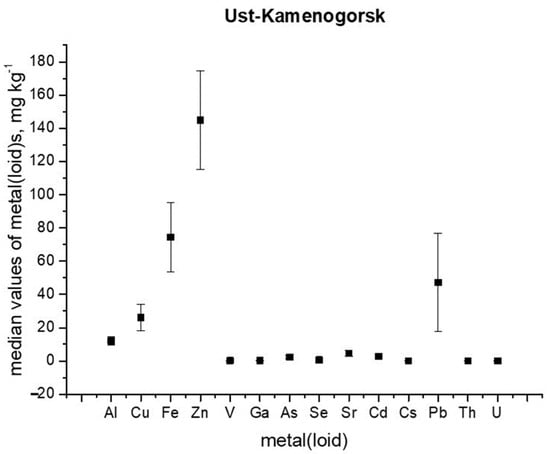
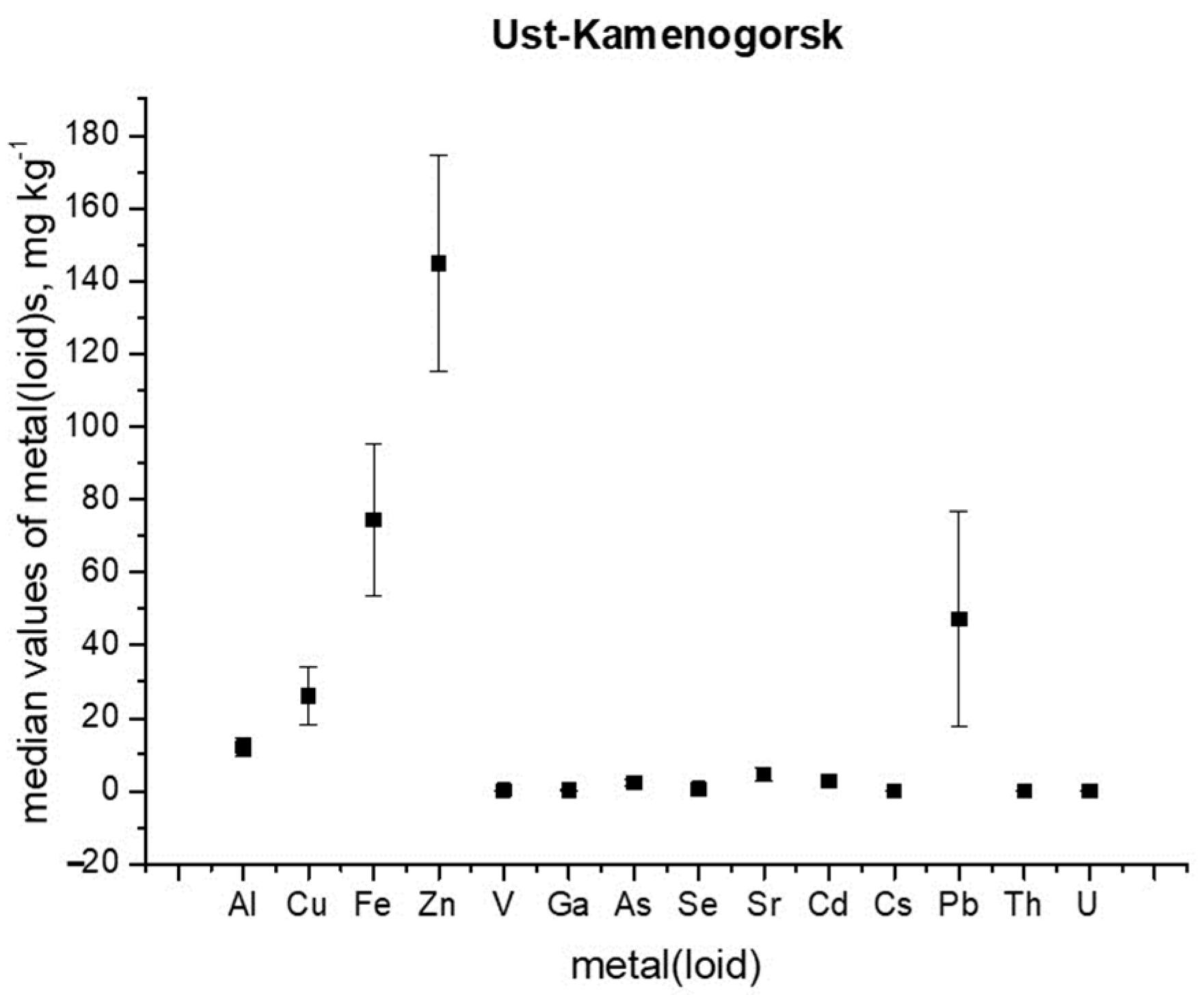
As illustrated in Figure 5, the distribution of median concentrations of metal(loid)s (Al, Cu, Fe, Zn, V, Ga, As, Se, Sr, Cd, Cs, Pb, Th, and U) in the feathers of pigeons from Ust-Kamenogorsk, which exhibits pronounced differences.
Figure 5.
Distribution of median concentrations of metal(loid)s in the feathers of feral pigeons (Columba livia) from Ust-Kamenogorsk. Whiskers indicate the standard deviation (SD).
The highest accumulation level in the feathers is characteristic of Zn, with a median value of approximately 145 mg kg−1. Elevated levels were also recorded for Fe (75 mg kg−1) and Pb (47 mg kg−1). Cu and Al showed moderate accumulation with median values of around 26 and 12 mg kg−1, respectively. Regarding other hazardous elements, the median concentrations of Cd and As in the plumage are 2.6 and 2.2 mg kg−1, respectively. The remaining elements (V, Ga, Se, Sr, Cs, Th, and U) are characterized by trace and ultra-trace accumulation levels.
The descriptive statistics for the concentrations of metal(loid)s in the feathers of feral pigeons are presented in Table A2. The dataset is characterized by high heterogeneity. Pb exhibits the highest distribution heterogeneity in the feathers of pigeons from Ust-Kamenogorsk, with a coefficient of variation (CV) of 72%. This high variability points to a pronounced mosaic pattern of Pb exposure across the urban landscape. A high degree of concentration variability was also noted for Cd and As (CV of 56% and 46%, respectively), indicating an uneven spatial distribution of metallurgical emissions within the city limits.
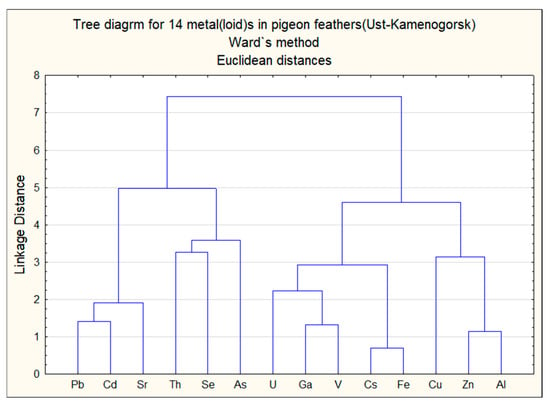
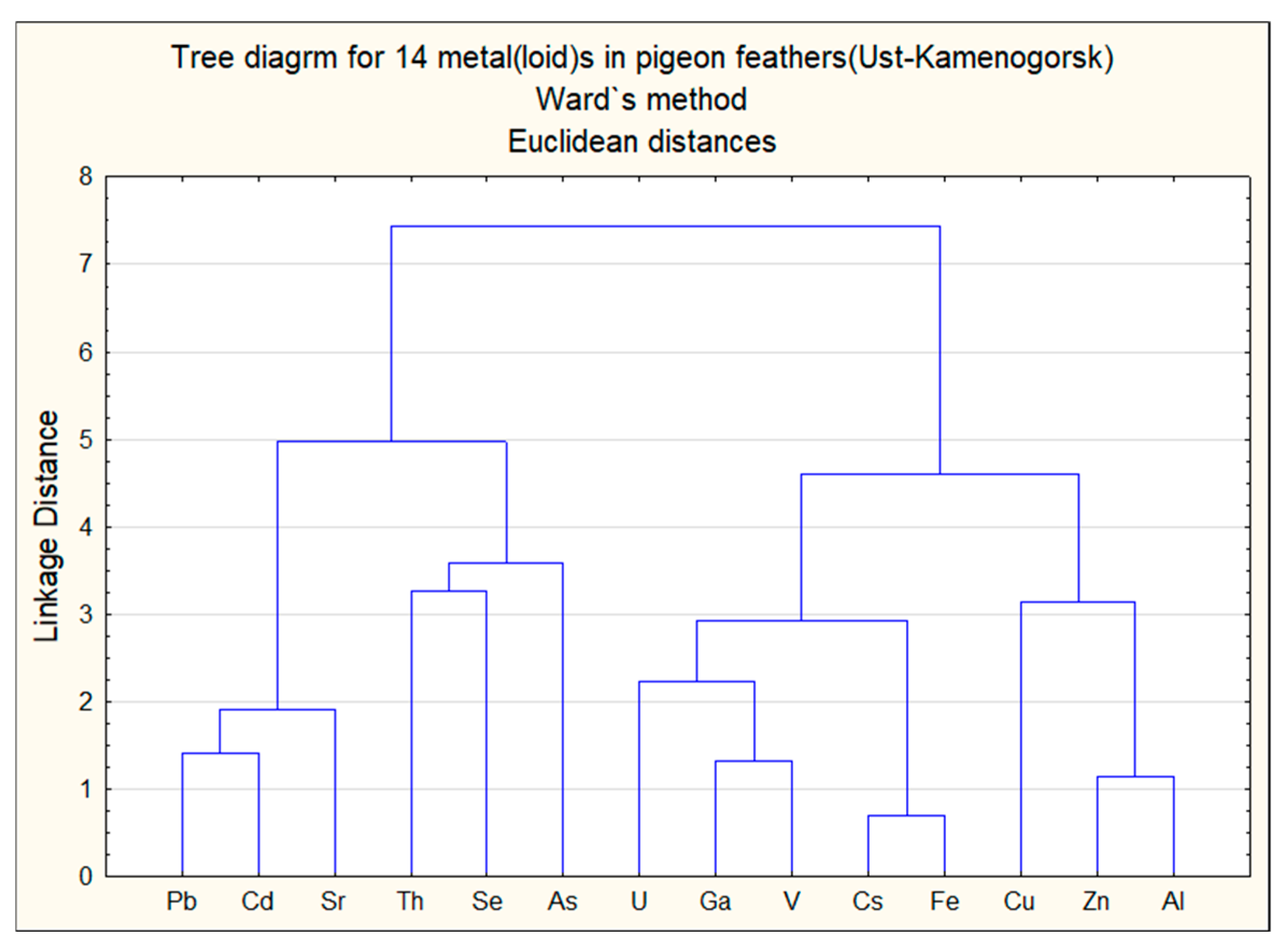
HCA of the metal(loid) concentrations in the feathers of feral pigeons (Columba livia) from Ust-Kamenogorsk revealed two primary macro-clusters at a linkage distance ˃ 7 (Figure 6).
Figure 6.
Dendrogram from the HCA of metal(loid)s in the feathers of feral pigeons (Columba livia) from Ust-Kamenogorsk, Kazakhstan.
The first macro-cluster comprises Pb, Cd, Sr, Th, Se, and As. Within this cluster, the minimum linkage distance (<1.5) was recorded for the Pb–Cd pair, which is subsequently joined by Sr at a linkage level of 2.0. The second sub-cluster within this group is formed by Th, Se, and As, with the highest similarity observed between Th and Se.
The second macro-cluster groups eight elements (U, Ga, V, Cs, Fe, Cu, Zn, and Al), indicating a predominantly mixed terrigenous-technogenic origin. In this group, tightest clustering is characteristic of the Cs–Fe pair, with a linkage distance of less than 0.8, and the Zn–Al pair, with ~1.2 linkage distances. The clustering of major crustal components (Al, Fe), alongside heavy metals (Cu, Zn), and trace elements (U, Ga, V, Cs) can point to the fact that the accumulation of these substances on the plumage occurs primarily via the deposition of fine airborne and soil-derived dust.
3.2. Metal(loid)s Concentrations in the Feathers of Feral Pigeons (Columba livia) from Pavlodar, Kazakhstan
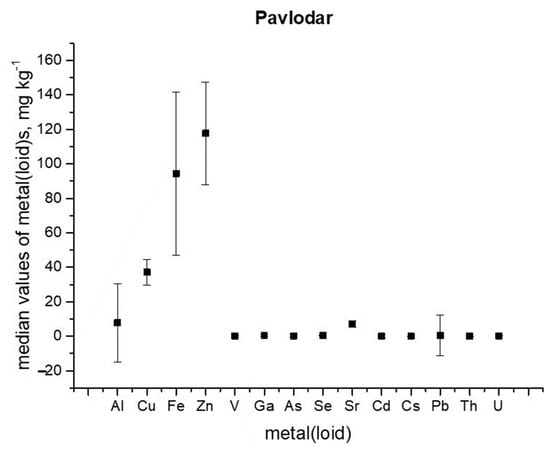
The descriptive statistics for the metal(loid) concentrations in the feather samples of feral pigeons collected in Pavlodar are presented in Table A3. Although the median values for Pb, Cd, and As are below 1.0 mg kg−1, the dataset for these elements exhibits high heterogeneity. The CV reaches 244.7, 210.9, and 158.2% for Pb, Cd, and As, respectively.
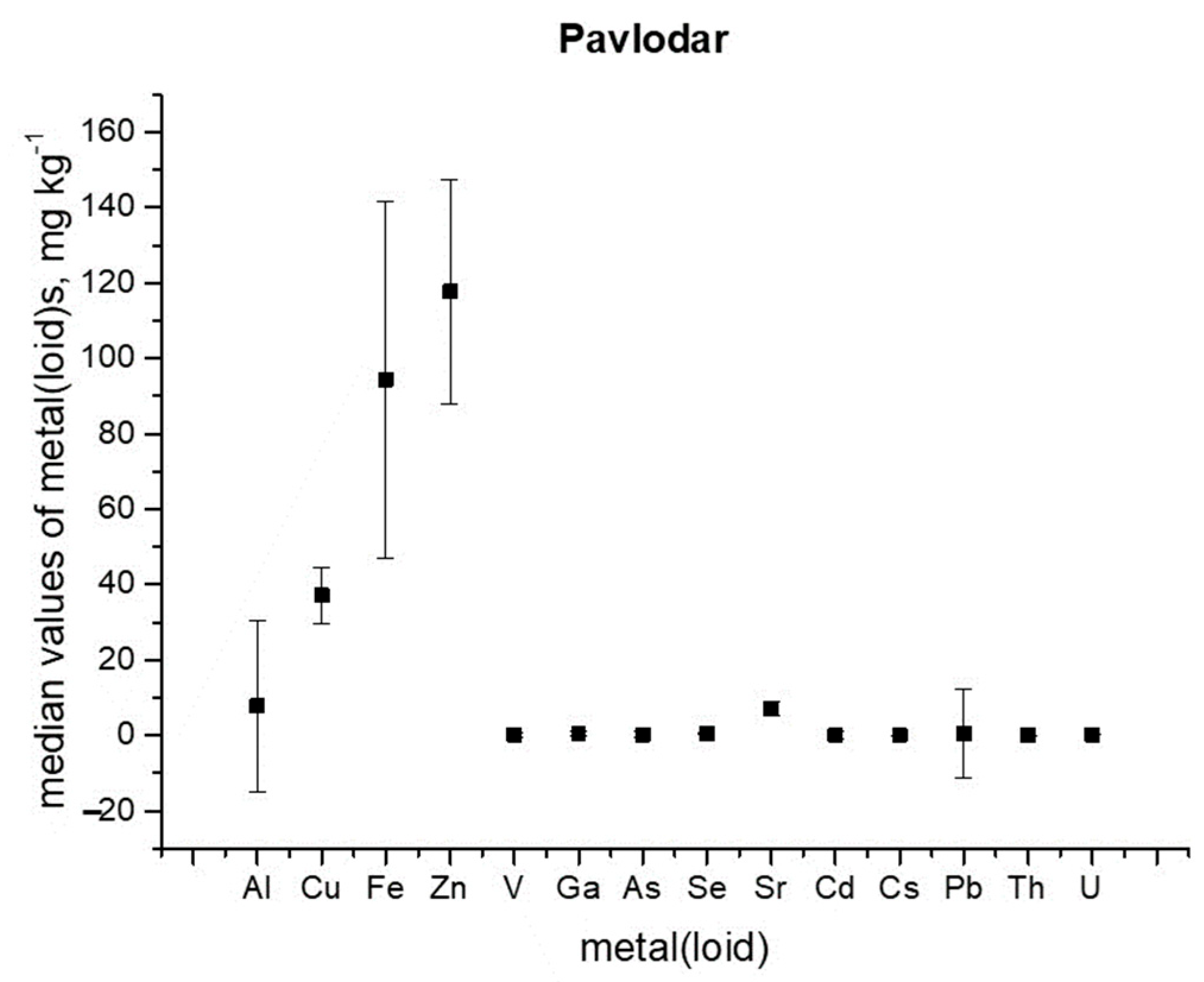
The distribution of median concentrations of metal(loid)s (Al, Cu, Fe, Zn, V, Ga, As, Se, Sr, Cd, Cs, Pb, Th, and U) in the plumage of feral pigeons from Pavlodar, as illustrated in Figure 7.
Figure 7.
Distribution of median concentrations of metal(loid)s in the feathers of feral pigeons (Columba livia) from Pavlodar. Whiskers indicate the standard deviation (SD).
The maximum content in the analyzed feathers was recorded for Zn, with a median value of 118 mg kg−1. Fe represents the second highest accumulation level, showing a median concentration of 94 mg kg−1. The accumulation levels for Cu and Al were 37 and 8 mg kg−1, respectively. Among the remaining analyzed elements, relatively higher values were observed for Sr, with a median of 7 mg kg−1. The median values for Pb, Cd, As, and other metals and metalloids (V, Ga, Se, Cs, Th, and U) were at trace and ultra-trace levels, with median values below 1.0 mg kg−1.
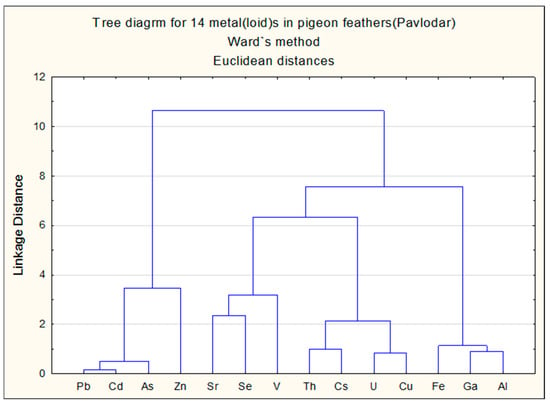
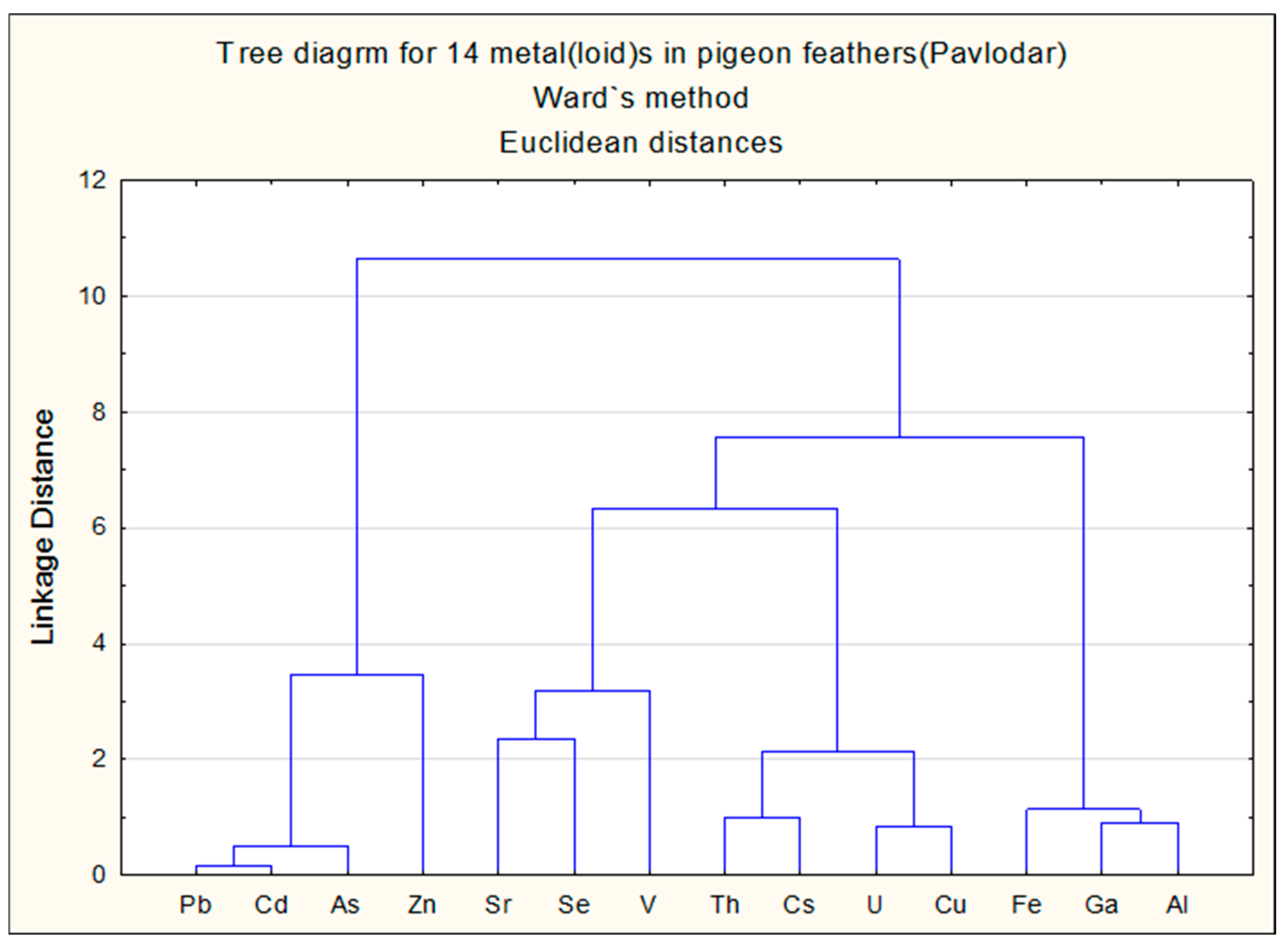
HCA of the metal(loid) concentrations in the feathers of feral pigeons (Columba livia) from Pavlodar revealed two primary macro-clusters at a linkage distance exceeding 10.5 (Figure 8).
Figure 8.
Dendrogram from the HCA of metal(loid)s in the feathers of feral pigeons (Columba livia) from Pavlodar, Kazakhstan.
The first macro-cluster comprises Pb, Cd, As, and Zn. Within this cluster, the minimum linkage distance (<0.5) was recorded for the Pb–Cd pair, which is joined by As at a linkage level of 0.5. Zn complements this group at a linkage distance of approximately 3.5.
The second macro-cluster groups ten elements (Sr, Se, V, Th, Cs, U, Cu, Fe, Ga, and Al) and splits into two sub-clusters at a linkage distance of about 7.5. The first sub-cluster links Sr, Se, V, Th, Cs, U, and Cu, with the minimum linkage distances observed for the Th–Cs (~1.0) and U–Cu (~0.8) pairs. The second sub-cluster groups the crustal components Fe, Ga, and Al at a linkage distance of approximately 1.2.
3.3. Concentrations of Metal(loid)s in the Feathers of Feral Pigeons (Columba livia) from the Background Area: Bigash Village, Kazakhstan
The descriptive statistics for the metal(loid) concentrations in the pigeon feathers from the Bigash village are presented in Table A4. Similar to the urbanized areas of Pavlodar, the background area variability of Pb, Cd, and As within the sample was maximal (73, 173, and 264, respectively).
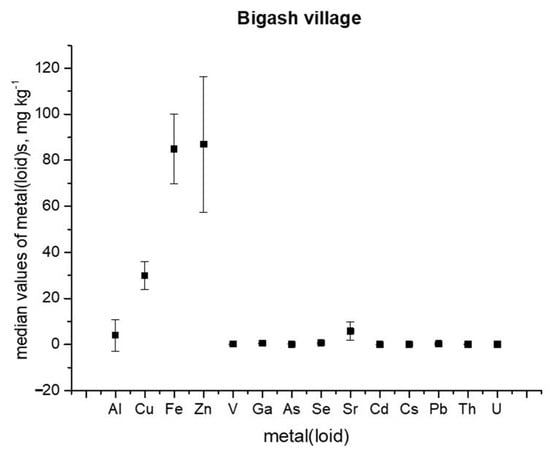
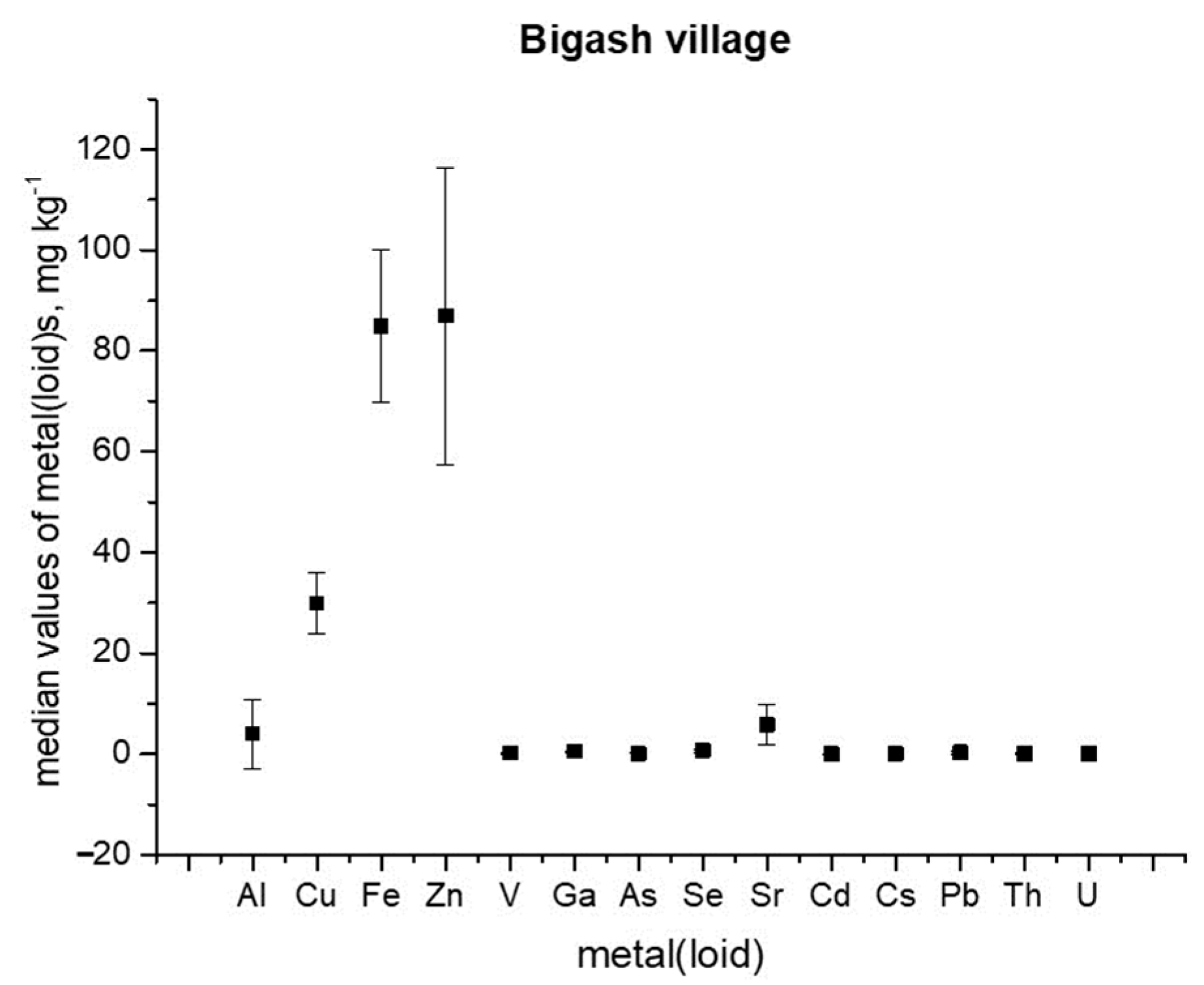
The distribution of median concentrations of metal(loid)s (Al, Cu, Fe, Zn, V, Ga, As, Se, Sr, Cd, Cs, Pb, Th, and U) in the plumage of feral pigeons from the background area (Bigash village) is presented in Figure 9.
Figure 9.
Distribution of median concentrations of metal(loid)s in the feathers of feral pigeons (Columba livia) from the background area (Bigash village). Whiskers indicate the standard deviation (SD).
The highest concentrations in the analyzed feathers were observed for Zn and Fe, with median values of 87 and 85 mg kg−1, respectively. The accumulation levels for Cu and Al amounted to 30 and 4 mg kg−1, respectively. Among the remaining analyzed elements, the median value for Sr was 6 mg kg−1. The concentrations of the other metal(loid)s (V, Ga, As, Se, Cd, Cs, Pb, Th, and U) were at trace and ultra-trace levels, with median values below 1.0 mg kg−1. In contrast to the urbanized areas, no range expansion of individual values was noted for Pb, Cd, and As in the background area, and their variability within the sample was minimal (Table A4). Isolated high variability within the sample was observed only for Zn.
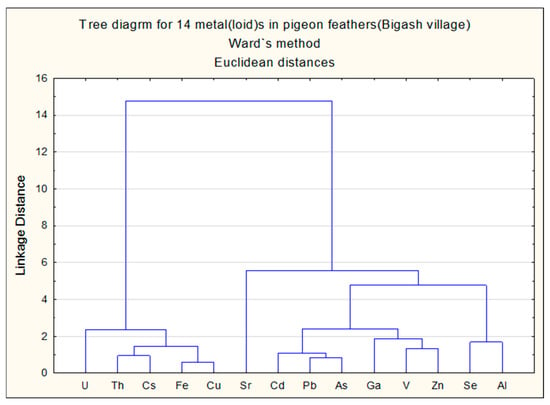
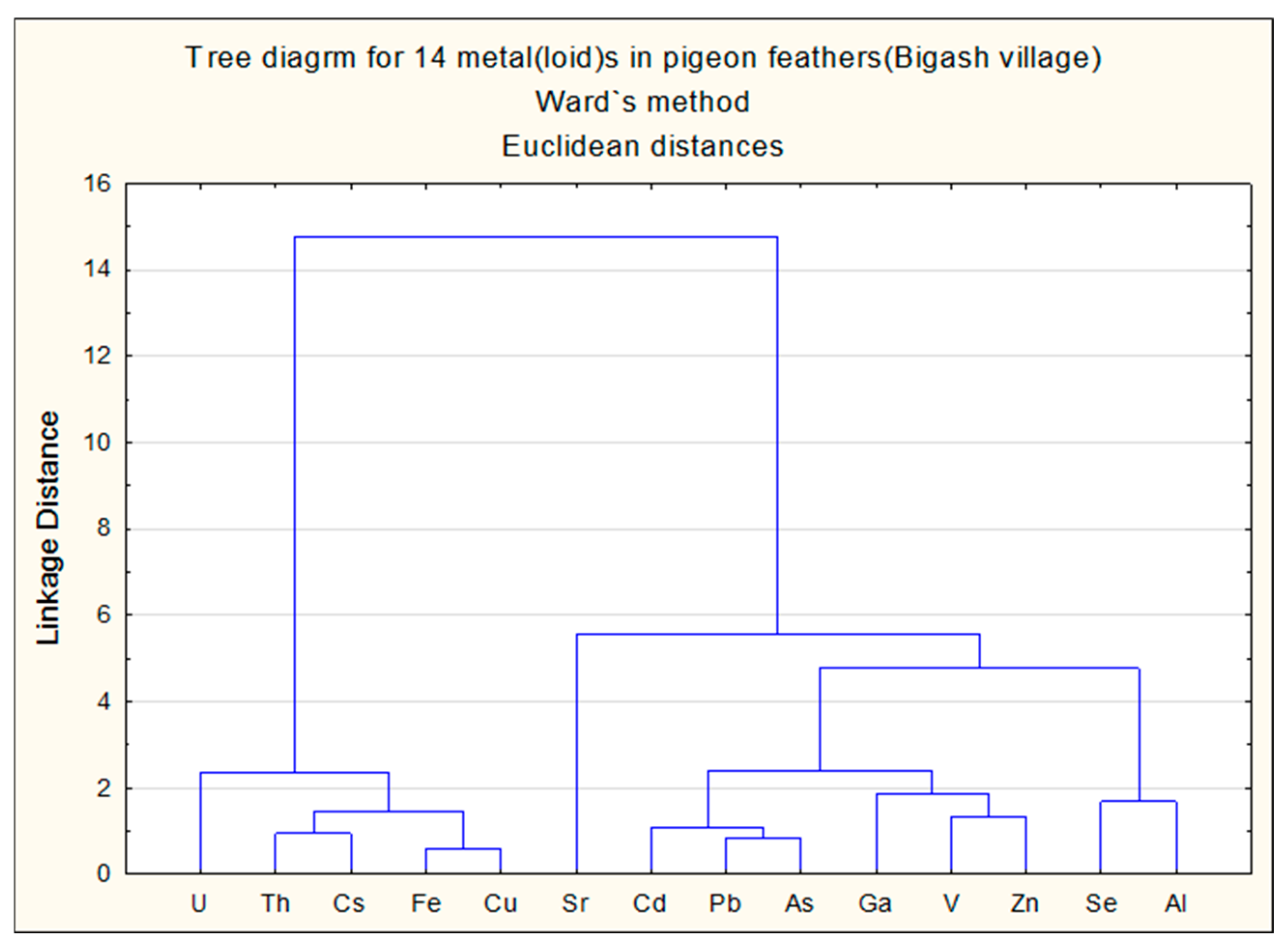
Figure 10 shows a dendrogram representing the results of HCA of the concentrations of 14 metal(loid)s in the feathers of feral pigeons (Columba livia) from the background area.
Figure 10.
Dendrogram from HCA of metal(loid)s in the feathers of feral pigeons (Columba livia) from Bigash village, Kazakhstan.
The first macro-cluster comprises five elements: U, Th, Cs, Fe, and Cu at a linkage distance of approximately 2.4. The second macro-cluster groups nine elements (Sr, Cd, Pb, As, Ga, V, Zn, Se, and Al) and splits into two distinct sub-clusters at a linkage distance of about 5.6. The first sub-cluster includes Cd, Pb, As, Ga, V, and Zn, with Sr joining independently at a linkage level of 5.6. Within this group, the minimum distances (<1.0) are observed for the Cd–Pb and V–Zn pairs, which are further joined by As and Ga at approximately 2.5. The second sub-cluster links Se and Al at a tight distance of approximately 1.8. The close clustering of Se with Al on the dendrogram (Figure 10) probably suggests a predominantly natural, geogenic origin for selenium in this region.
3.4. Accumulation Patterns of Rare Earth Elements (REEs)
The spatial distribution of the normalized concentration indices (Xn) for the analyzed rare earth elements (REEs) in the feathers of feral pigeons (Columba livia) exhibited distinct variations across the sampling localities relative to the baseline level (Table A5). For the reference cohort (Bigash village), the values for all calculated indices were uniformly fixed at 1.00, thereby establishing this locality as the geochemical baseline for inter-site comparison.
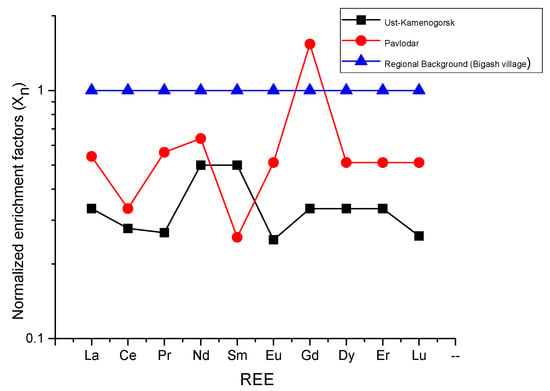
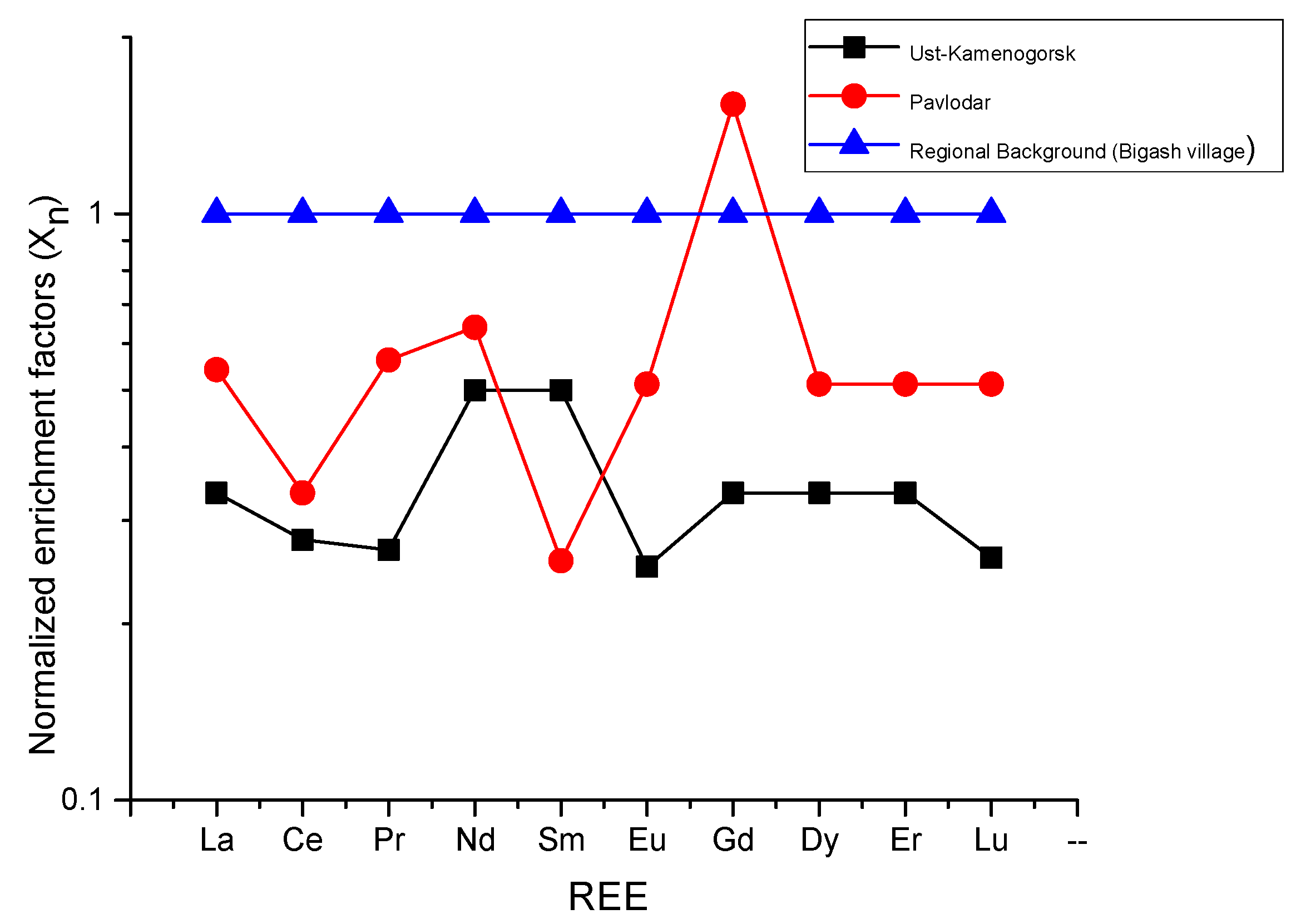
The baseline-normalized accumulation profiles and spatial distribution patterns of the 10 analyzed REEs in pigeon feathers across the studied localities are illustrated in Figure 10. In the Ust-Kamenogorsk cohort, the (Xn) values for the entire lanthanide series remained strictly below the baseline level. The lowest index was recorded for Eu (Xn = 0.250), whereas the maximum values within this sample were shared by Nd and Sm at 0.500. These parameters demonstrate a lower relative bioaccumulation of both light (La–Eu) and heavy (Gd–Lu) rare earth elements within the urban-industrial matrix of Ust-Kamenogorsk compared to the rural reference site.
The Pavlodar cohort exhibited a heterogeneous accumulation pattern. The baseline-normalized content of most REEs fluctuated within a range of 0.256 (Sm) to 0.640 (Nd). Conversely, a pronounced enrichment peak was observed for Gd, with its index reaching 1.537 (Figure 11).
Figure 11.
Baseline-normalized concentration indices (Xn) of Rare Earth Elements (REEs) in the feathers of feral pigeons (Columba livia) across the studied localities (individual median concentrations were sequentially normalized to Al and the regional baseline of Bigash village; the horizontal dashed line at 1.0 represents the regional background; vertical axis is displayed on a logarithmic scale (Log10) to emphasize industrial depletion and localized anomalies).
3.5. PCA of the Elemental Profile of Pigeon Feathers
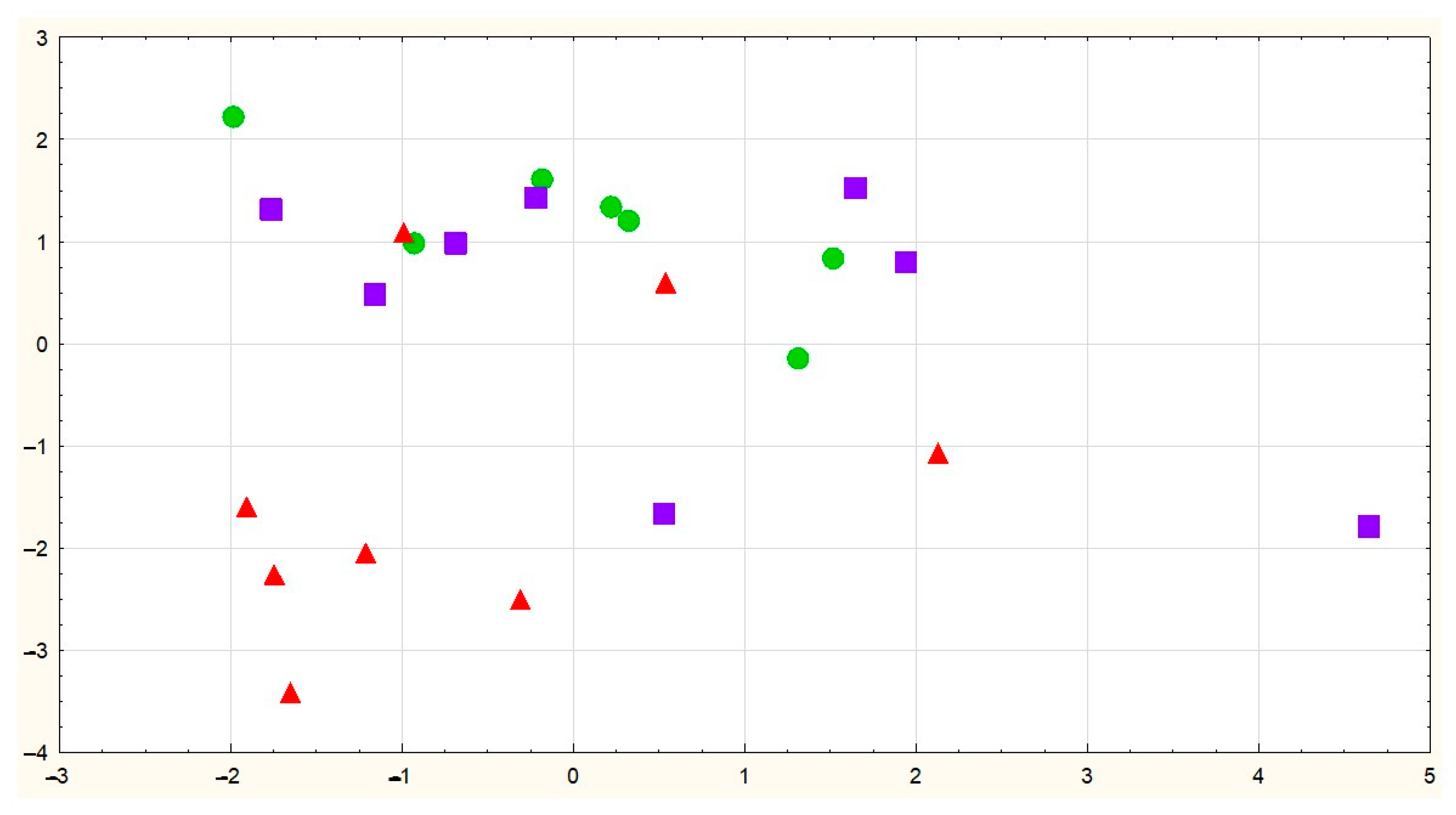
The first two principal components accounted for 79% of the total variance, with PC1 explaining 60% and PC2 explaining 19% (Table A5). Axis PC1 exhibited strong negative loadings (<−0.70) for a broad spectrum of elements, including lithogenic and industrial metals: Al, Cu, Fe, V, Ga, Cs, Th, and U, alongside a pronounced suite of rare-earth elements (La, Ce, Pr, Nd, Eu, Dy, Er, and Lu). Conversely, Se showed a strong positive loading (0.82) on PC1. Axis PC2 was primarily defined by strong negative loadings for Zn, As, Cd, and Pb.
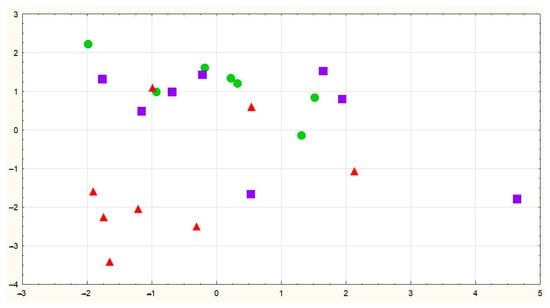
The PCA ordination diagram demonstrates a clear spatial differentiation among the studied populations based on the elemental profiles of feral pigeon (Columba livia) feathers (Figure 12). The samples from Ust-Kamenogorsk form a distinct, highly compact cluster localized predominantly in the lower-left quadrant of the plot. This group is characterized by negative values along both axes PC1 and PC2.
Figure 12.
Ordination plot of the elemental profile of pigeon feathers along the PC1 and PC2 axes.
In contrast, the samples from Pavlodar and Bigash village occupy the upper half of the ordination space, showing positive PC2 values. A significant spatial overlap is observed between these two locations along the PC2 axis. Geographically, Pavlodar and Bigash are located more than 500 km apart. The observed similarity in the profiles of Pavlodar and the rural baseline (Bigash) can be explained by a different factor: urban spatial planning. In Pavlodar, industrial complexes, including thermal power plants, are located outside the residential areas where samples were collected. In contrast, the industrial cluster in Ust-Kamenogorsk is integrated directly into urban residential areas, resulting in immediate technogenic exposure.
3.6. Contamination Indices
For a comparative assessment of the elemental composition of feral pigeon (Columba livia) feathers, pollution indices were calculated based on the plumage data: the contamination factor (Cf) relative to global avian background values [36,37] and the comprehensive MPI [38]. The indices were computed exclusively for elements whose mean and/or maximum concentrations exceeded physiological norms (Pb, Cd, Zn, Cu, and As) (Table A7). Reference values established in ornithological monitoring were utilized as the global background for birds.
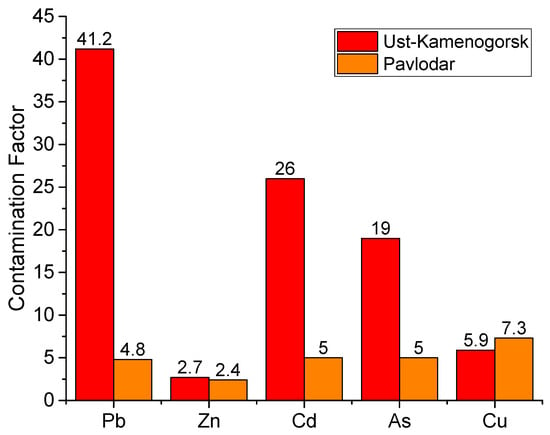
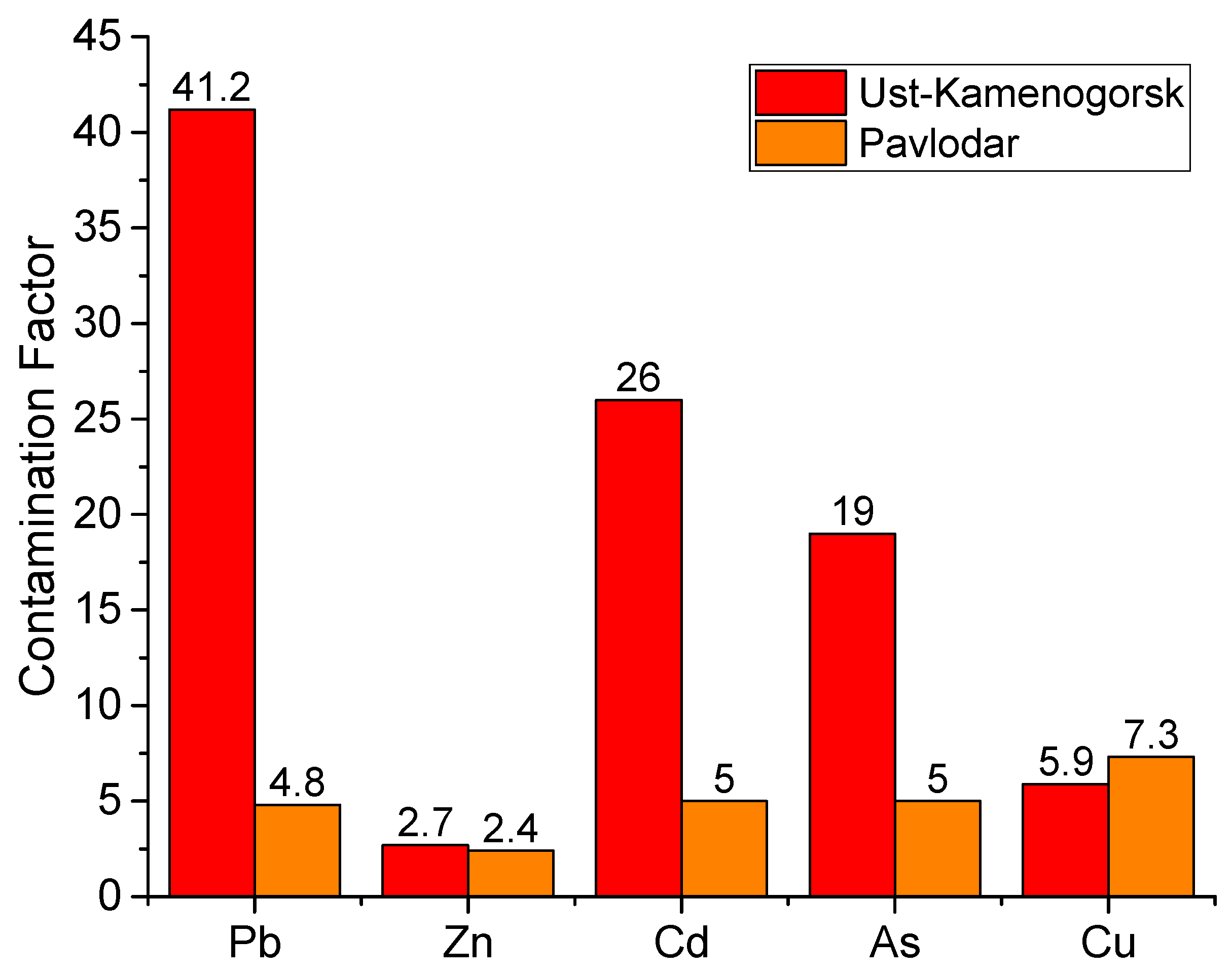
The values of Cf for the feathers of pigeons sampled in urbanized areas are presented in Figure 13.
Figure 13.
Contamination factors (Cf) values for the feathers of feral pigeons (Columba livia) from the urbanized areas of Pavlodar and Ust-Kamenogorsk.
According to Figure 13, the maximum Cf value of pigeon plumage for Cd was 26.0 in Ust-Kamenogorsk and 5.0 in Pavlodar. For Pb, the plumage Cf values amounted to 41.2 in Ust-Kamenogorsk and 4.8 in Pavlodar. The As contamination level in the feathers of pigeons from Ust-Kamenogorsk reached 19.0, which is approximately four times higher than the corresponding value for Pavlodar (5.0). For Cu, the Cf was 5.9 in Ust-Kamenogorsk and 7.3 in Pavlodar, while the respective Zn values were 2.7 and 2.4.
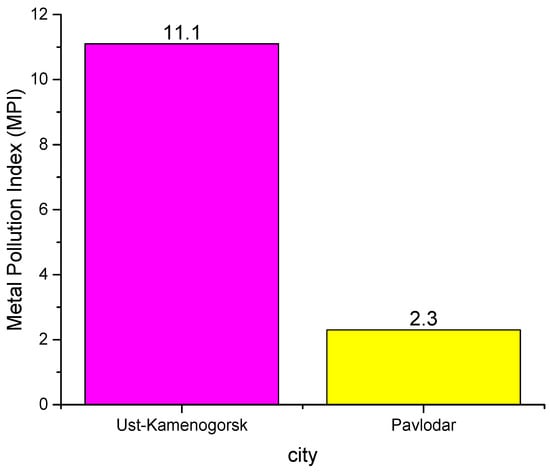
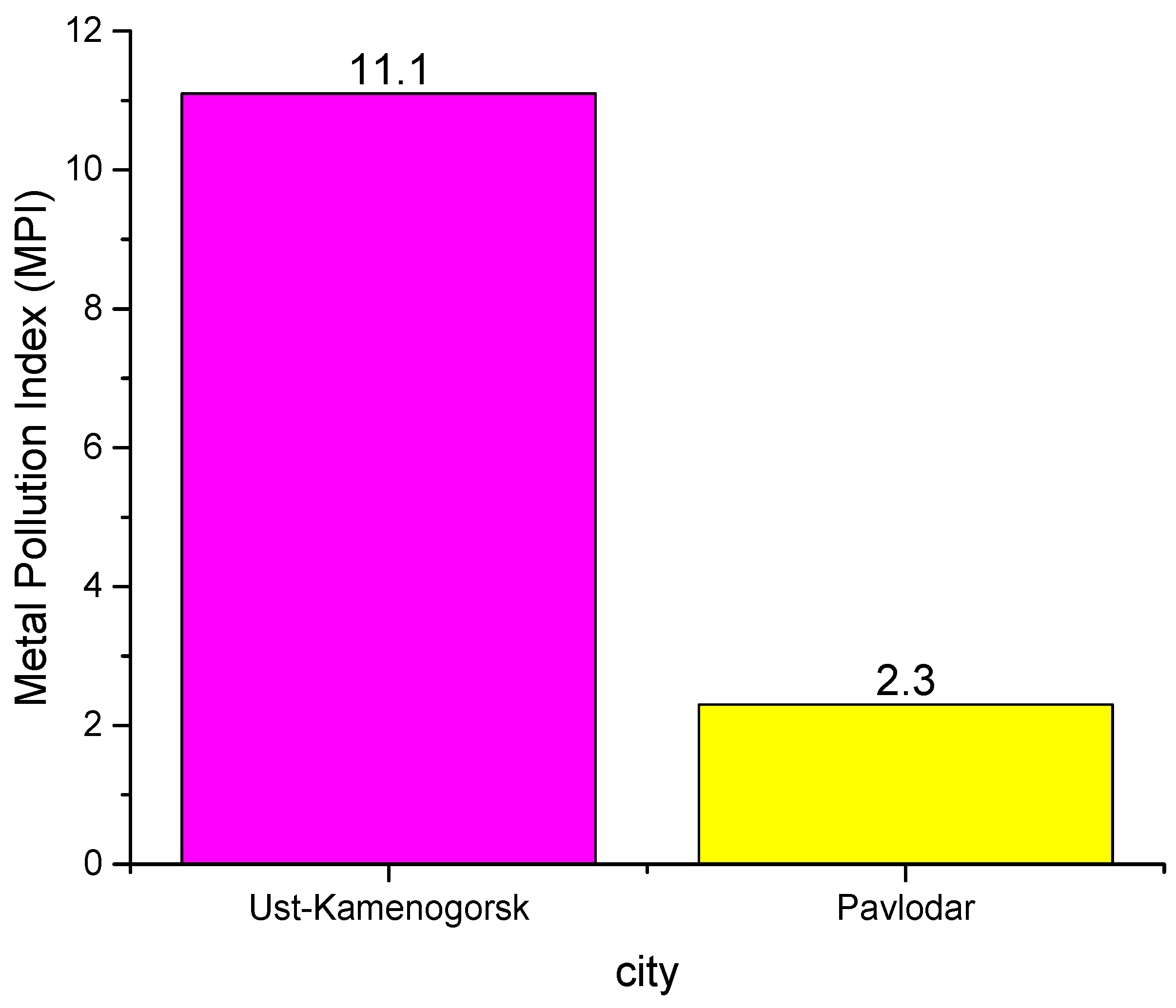
The MPI values for pigeon plumage in both cities are shown in Figure 14. The integral MPI for Ust-Kamenogorsk (11.1) is 4.8 times higher than that for Pavlodar (2.3).
Figure 14.
MPI values for the feathers of feral pigeons (Columba livia) from the urbanized areas of Pavlodar and Ust-Kamenogorsk; MPI values were calculated based on the geometric means of 5 elements: Pb, Cd, As, Zn, Cu (Table A7).
4. Discussion
4.1. Environmental Evaluation of Element Composition in the Feathers of Feral Pigeons
To assess the anthropogenic load on the plumage of feral pigeons (Columba livia), the study results were compared with the background ranges and toxicity thresholds of chemical elements in birds established in the field of avian ecotoxicology. In avian ecotoxicology, a feather Pb concentration below 1.0–2.0 mg kg−1 is considered the background level. The threshold for toxic effects is established at concentrations exceeding 4.0 mg kg−1 [42,43].
The Pb level in the plumage of pigeons from Ust-Kamenogorsk exceeds the background norm by more than tenfold, indicating the anthropogenic impact of lead-zinc plant emissions on the ground-level air pollution in the city. In Pavlodar, the mean feather Pb concentration (4.8 mg kg−1) slightly exceeds the threshold for toxic effects. However, the maximum Pb concentrations (33.8 mg kg−1) surpass this threshold multiple times, suggesting a localized, spotty pattern of atmospheric lead pollution within the city. In the background area of Bigash village, the Pb content in the bird feathers remains below the established background ranges (Table A1, Table A2 and Table A3).
Normally, Cd is practically absent in the feathers of wild birds (<0.05–0.1 mg kg−1) [39]. The threshold for systemic toxicity in birds is approximately 2.0 mg kg−1 [43,44]. In Ust-Kamenogorsk, the mean feather Cd concentration in pigeons (2.6 mg kg−1) exceeds this toxic threshold, while the maximum value (4.5 mg kg−1) indicates severe local contamination of individual birds. The mean Cd level (0.5 mg kg−1) in the plumage of pigeons from Pavlodar indicates a moderate anthropogenic load. However, the recorded maximum Cd concentrations (2.8 mg kg−1) significantly exceed the critical threshold, demonstrating pronounced local contamination of the urban ecosystem by this heavy metal. In the background area, Cd concentrations in the feather samples reach the upper threshold of the background level (0.02 mg kg−1), indicating ecological well-being in terms of this parameter.
The natural background range of As for birds is 0.1–0.5 mg kg−1. A value of 4 mg kg−1 is accepted as a tentative threshold for the onset of toxic effects of As in wild birds [42,43]. The mean As concentration (1.89 mg kg−1) in the feathers of pigeons from Ust-Kamenogorsk slightly exceeds the upper background limit, while the maximum value (2.6 mg kg−1) does not surpass the toxicity threshold for this xenobiotic. In Pavlodar, the mean feather As level (0.5 mg kg−1) is at the upper background limit, whereas the maximum concentrations (2.1 mg kg−1) are twofold lower than the toxic threshold. The presence of As in the plumage is evidently due to the urban emission sources of this metalloid (coal combustion products from TPPs). The mean metalloid concentration in the bird feathers from the background area is significantly below the baseline level. However, the maximum As value (0.7 mg kg−1) recorded at the background site slightly exceeds the upper background limit, which may indicate point pollution sources, such as coal burning or pesticide application.
The content of essential metals (Zn, Cu, Fe) in bird feathers is relatively high compared to non-essential metals and serves as a marker of the physiological norm rather than environmental pollution alone. The physiological optimum for Zn in most bird species ranges from 70 to 150 mg kg−1, for Fe from 50 to 150 mg kg−1, and for Cu from 6 to 15 mg kg−1 [39,42,43].
The mean and maximum Zn concentrations in the feathers of pigeons from Ust-Kamenogorsk exceed the upper limits of the norm, reflecting the city’s metallurgical profile. In contrast, the Zn concentrations in the plumage of pigeons from the background area and Pavlodar fall within the physiological norm. The accumulation of Cu in the bird plumage across Ust-Kamenogorsk, Pavlodar, and the background territory exceeds the natural norm by approximately twofold. This phenomenon is likely driven by the regional geochemical features characteristic of the polymetallic-rich provinces of Eastern and Northern Kazakhstan, as well as localized industrial pressures [26,31,32]. The mean and maximum Fe concentrations in the feathers of pigeons from Ust-Kamenogorsk and the background area do not exceed the physiological norm. In Pavlodar, the recorded maximum Fe concentration (216 mg kg−1) slightly exceeds the norm limits.
The normal physiological range of Se is 0.5–1.5 mg kg−1. The toxicity threshold is established at levels exceeding 4.0–5.0 mg kg−1 [42,43]. The Se content in the pigeon feathers across all studied areas is at the lower limit of the norm, indicating the absence of selenium contamination.
Al actively deposits on bird feathers from the air alongside soil and ash particles. In granivorous birds feeding on the ground (tree sparrows, larks, and pigeons), feather aluminum levels are consistently higher due to contact with soil dust. If the feathers were not thoroughly washed before analysis, the values can reach 40.0–100.0 mg kg−1 or more, reflecting mechanical contamination rather than bioaccumulation [39]. Values exceeding 200 mg kg−1 are considered critical in global literature and are interpreted as a marker of anthropogenic pollution [44,45]. The comparative analysis showed that the Al concentrations in the feathers of pigeons from all studied areas fall within the safe physiological range and are significantly below the critical pollution threshold. A slight increase in the feather Al concentrations of birds from Ust-Kamenogorsk and Pavlodar compared to the background area merely reflects a natural increase in the dustiness of the urbanized environment.
4.2. Integrated PCA and HCA Approach to the Differentiation of Pigeon Feather Elemental Profiles
The PCA results suggest a pronounced isolation of the elemental profile of bird feathers from Ust-Kamenogorsk, which appears to be driven by a high level of heavy metal accumulation (Figure 12); this separation is consistent with the HCA topology (Figure 6), where priority industrial toxicants (Pb, Cd, As) form a tight independent cluster. Conversely, the spatial overlap of the elemental profile of bird feathers from Pavlodar and Bigash village along the positive direction of the PC2 axis indicates a lower level of toxicant exposure.
The HCA method differentiates these two samples, revealing specific element associations. In Pavlodar, Zn shifts into a single macrocluster with Pb, Cd, and As (Figure 8), which is consistent with the emission profile of fly ash from coal combustion at thermal power plants [26,28,29,31]. In contrast, the rural area (Bigash village) is characterized by the maximum linkage distance (>14.5) and groups U, Th, Cs, Fe, and Cu into a distinct cluster (Figure 10), which is clearly a consequence of the lithogenic distribution of elements. The close clustering of Pb and Cd at minimal linkage distances (<1.5 in Ust-Kamenogorsk and <0.5 in Pavlodar) likely indicates the influence of localized technogenic pressures, although their exact origins differ between the two cities. In Ust-Kamenogorsk, this trend is probably driven by significant emissions from non-ferrous metallurgy, specifically from the Kazzinc industrial complex. Conversely, in Pavlodar, the tight Pb–Cd association is presumably linked to the deposition of fly ash from coal-fired power plants combined with a vehicular footprint. Since leaded gasoline has been banned in Kazakhstan since 2005, this traffic-related signature is driven by non-exhaust emissions, such as brake pad abrasion, tire wear, and the resuspension of historical tailpipe deposits embedded in soil dust.
Thus, PCA captures the macrostructural separation of anthropogenic loads across the three sampling sites, while HCA details specific elemental associations for each location. Together, these multivariate statistical insights demonstrate that the elemental profile of pigeon feathers can serve as an integrative indicator of the specific nature of anthropogenic pollution in particular territories.
4.3. Environmental Signatures of REE Accumulation
The baseline-normalized indices of REEs in feral pigeon feathers revealed distinct biogeochemical patterns contrasting the urban-industrial centers with the rural reference area. The systemic depletion of most lanthanides in the urban pigeon feathers, combined with the distinct gadolinium anomaly in Pavlodar (Figure 11), evidently, reflects complex interactions between environmental exposure, anthropogenic emissions, and biological uptake pathways. The observation that almost all investigated REEs in Ust-Kamenogorsk (Xn = 0.250–0.500) and Pavlodar (Xn = 0.256–0.640) fell strictly below the rural baseline of Bi-gash village (Figure 11) represents a distinct eco-geochemical trend called “dilution effect” [46]. In heavy industrial hubs such as Ust-Kamenogorsk, industrial dust acts as a high-volume physical diluent on the plumage surface. Since REEs are lithophilic elements naturally enriched in the Earth’s crust and soils, heavy particulate deposition from industrial emissions (dominated by technogenic metals rather than natural soil minerals) can dilute the fraction of bioavailable lanthanides captured by urban avifauna. Furthermore, the local atmosphere is highly enriched with primary technogenic heavy metals (such as Pb, Zn, and Cd), as demonstrated by their elevated absolute concentrations in the plumage. From a toxicological perspective, the massive influx of these divalent and trivalent heavy metal ions can competitively inhibit binding sites on the feather keratin matrix during endogenous synthesis.
The positive Gd anomaly detected in the pigeon plumage from Pavlodar (Xn = 1.537) can be attributed to the cumulative output of the city’s specialized medical infrastructure. There are approximately five major medical centers utilizing MRI modalities in Pavlodar (Table A8). Globally, the primary source of micro-enrichment in Gd is the widespread clinical use of gadolinium-based contrast agents (GBCAs) in magnetic resonance imaging (MRI) facilities. These highly stable, water-soluble chelated complexes bypass conventional municipal wastewater treatment plants and enter local aquatic systems, where they can be incorporated into urban food webs via drinking water or aquatic macroinvertebrates [47,48]. According to estimates, each MRI scanner releases 2.7 kg of gadolinium annually [49]. Therefore, it is probable that the observed Gd anomaly in pigeon feathers from Pavlodar is due to the effluents of medical facilities.
4.4. Comparative Analysis of Anthropogenic Load
According to Hakanson’s classification based on the (Cf) values, the accumulation of several priority toxicants in pigeon feathers in Ust-Kamenogorsk falls into high-exposure categories. Specifically, a Cf of 26.0 was obtained for Cd (Table A7, Figure 12), which is associated with emissions from non-ferrous metallurgy. The contamination factors for Pb (41.2) and As (19.0) assign the city’s urban ecosystem to the “very high contamination” category, which may reflect the impact of lead-zinc production [30,32].
Contamination factors for Cu and Zn correspond to the “significant” (5.9) and “moderate” (2.7) contamination categories, respectively. In Pavlodar, the contamination profile of the pigeon plumage differs. Contamination factors for Pb, Cd, and As (4.8, 5.0, and 5.0, respectively) fall into the “significant contamination” category. The contamination factor for Zn (2.4) is classified within the limits of a “moderate” anthropogenic load. The Cu contamination level in the feathers from Pavlodar (7.3) also represents a high contamination level and exceeds that of Ust-Kamenogorsk. A potential anthropogenic source of Cu in the plumage of pigeons from Pavlodar may be the city’s thermal power plants (TPP-2 and TPP-3), which heavily rely on high-ash Ekibastuz coal. The high-temperature combustion of this coal is accompanied by the emission of fine fly ash aerosols containing Cu [26].
The MPI value for the feathers of pigeons from Ust-Kamenogorsk (11.1) (Table A7, Figure 14) suggests a polymetallic contamination signature, which is likely associated with the deposition of fine heavy metal aerosols originating from the industrial cluster located within the city limits. In contrast, the MPI value for the feathers of pigeons from Pavlodar is lower (2.3) (Table A7, Figure 14), which correlates with the concentration of its industrial enterprises (ferrous and non-ferrous metallurgy, thermal power engineering, and oil refining) outside the city limits within designated industrial zones [28,29].
4.5. Comparison of Metal(loid)s Levels in the Feathers of Feral Pigeons from Ust-Kamenogorsk and Pavlodar with International Studies
The Pb and Cd concentrations established in the feathers of pigeons from Ust-Kamenogorsk (41.2 and 2.6 mg kg−1, respectively) substantially exceed the levels typical for major Chinese megacities, such as Beijing, Guangzhou, and Harbin [50,51], and are multiple times higher than the levels recorded in the plumage of synanthropic birds in France, Hungary, and Poland. Concurrently, the accumulation parameters of these elements in the plumage of Ust-Kamenogorsk pigeons correspond to the upper pollution boundaries observed for birds from urbanized areas in India and Pakistan.
The mean Pb level in the feathers of pigeons from Pavlodar (4.8 mg kg−1) is close to the lower limit of concentrations typical for pigeons in France (5.0–20.0 mg kg−1) [15]. However, it noticeably exceeds the data reported for India (2.4–3.0 mg kg−1) [52] and is nearly twofold lower than that recorded in Iran (8 mg kg−1) [53]. In the feathers of pigeons from India [52], the mean concentration ranges of Zn and Cu are 27.1–35.1 and 7.1–9.1 mg kg−1, respectively, whereas the values for these essential metals in Pavlodar are three to four times higher.
Since data for As are lacking in most global ornithological studies on wild pigeons, we compared our findings with other bird species. The As concentration in the feathers of pigeons from Pavlodar (0.5 mg kg−1) slightly exceeds the upper limit of this metalloid content in the feathers of raptors from Hungary (0.3–0.4 mg kg−1) [42].
A comparison of the obtained data on metal(loid)s contamination in pigeon feathers from Ust-Kamenogorsk and Pavlodar with similar literature data for cities in China, India, Iran, and Eastern Europe confirms the practicality and informative value of using this synanthropic bird species for the long-term biomonitoring of atmospheric metal/metalloid pollution in urbanized areas. Furthermore, the application of granivorous pigeons as air quality biomonitors is supported by a fundamental principle in ecotoxicology. Specifically, metals and metalloids, including Pb, Cd, and As, do not exhibit pronounced biomagnification within the trophic webs of terrestrial ecosystems. On the contrary, they frequently display biodilution when transferring from plants to phytophages and granivores [54].
In general, despite the pilot nature of the conducted research, the concentrations of metals and metalloids in the feathers of feral pigeons (Columba livia) obtained in this study correspond to the specific emission profiles of Ust-Kamenogorsk and Pavlodar, reflecting localized environmental conditions within the birds’ home ranges.
4.6. Limitations of the Study and Future Perspectives
Our study identified certain limitations related to the small size and heterogeneity of the samples, which may affect their representativeness (e.g., pigeons migrating from other areas). Furthermore, we lacked up-to-date data on trace element pollution at the studied sites, which could have facilitated the interpretation of our findings. However, despite these limitations, our results may accurately capture site-specific industrial signatures and reflect the actual pollution levels across selected cities and the background area. Future research should consider increasing the sample size and tracking the site fidelity of pigeons.
5. Conclusions
The results of this pilot study indicate that pigeon plumage could serve as a useful indicator of site-specific industrial signatures, which may support its use for regional monitoring. The preliminary data isolated a critical polymetallic footprint in Ust-Kamenogorsk (MPI = 11.1) from non-ferrous metallurgy and a distinct fly-ash signature (enriched Cu, Pb, Cd, As) in Pavlodar (MPI = 2.3).
The integrated PCA and HCA approach proved highly effective even within this preliminary scope. PCA clearly separated the high-exposure metallurgical hub, while HCA resolved subtle geochemical variations at lower-exposure sites, successfully differentiating Pavlodar’s technogenic coal-ash signature from the lithogenic baseline of Bigash village. The REE profiles showed a ‘dilution effect,’ apparently driven by industrial dust, with the exception of gadolinium, which exhibited a relatively distinct concentration peak in Pavlodar.
Overall, these initial results validate the use of the feather elemental profile for long-term biomonitoring in Ust-Kamenogorsk and Pavlodar, as well as across other industrial centers of Kazakhstan.
Author Contributions
Conceptualization, Z.B. and N.M.; methodology, Z.B., N.M., M.J. and Y.P.; software, V.M. and Y.P.; validation, N.M., V.M. and Y.P.; formal analysis, N.M., S.S. and Y.P.; investigation, Z.B., M.J. and S.S.; resources, Z.B.; data curation, N.M.; writing—original draft preparation, Z.B., Y.P. and L.K.; writing—review and editing, Z.B., Y.P. and L.K.; visualization, V.M., Y.P. and A.Z.; project administration, N.M.; funding acquisition, Z.B. All authors have read and agreed to the published version of the manuscript.
Funding
This work was supported by program-targeted funding from the Ministry of Science and Higher Education of the Republic of Kazakhstan (IRN BR27101493), under the project “Development of a strategy for reducing air pollution in industrial cities of Kazakhstan, based on identifying the distribution of pollution sources”. The funders had no role in study design, data collection and analysis, decision to publish, or preparation of the manuscript.
Institutional Review Board Statement
The animal study protocol was approved by the Bioethics Committee of Astana Medical University (Protocol No. 6, dated 29 January 2026).
Informed Consent Statement
Not applicable.
Data Availability Statement
The data supporting the results of this study are available on figshare: https://doi.org/10.6084/m9.figshare.33368212.
Acknowledgments
The authors express their sincere gratitude to Gaukhar Kabdrakhimova from L.N. Gumilyov Eurasian National University for her invaluable advice, constructive feedback, and continuous support throughout the preparation of this manuscript.
Conflicts of Interest
Author Zhanat Baigazinov was employed by the company JSC “Park of Nuclear Technologies. The remaining authors declare that the research was conducted in the absence of any commercial or financial relationships that could be construed as a potential conflict of interest.
Abbreviations
The following abbreviations are used in this manuscript:
| metal(loid)s | metals and metalloids |
| MPI | metal pollution index |
| HCA | hierarchical cluster analysis |
| PCA | principal component analysis |
| LOD | limit of detection |
| SD | standard deviation |
| CV | coefficient of variation |
| REEs | rare earth elements |
| RK | Republic of Kazakhstan |
| AMCs | adverse meteorological conditions |
| TPP | thermal power plants |
| dw | dry weight |
| QC | quality control |
| CRMs | certified reference materials |
| BIL-1 | Lake Baikal bottom silt |
| MDLs | method limits of detection |
| MLOQs | limits of quantification |
| NASC | North American Shale Composite |
| GBCAs | gadolinium-based contrast agents |
Appendix A
Table A1.
Instrumental detection limits.
Table A2.
Descriptive statistics for metal(loid) concentrations in pigeon feathers from Ust-Kamenogorsk, Kazakhstan.
Table A3.
Descriptive statistics for metal(loid)s concentration in pigeon feathers from Pavlodar, Kazakhstan.
Table A4.
Descriptive statistics for metal(loid)s concentration in pigeon feathers from Bigash village, Kazakhstan.
Table A5.
Normalized concentration indices (Xn) of rare earth elements (REEs) in the feathers of feral pigeons (Columba livia) across the studied localities.
Table A6.
Factor loadings extraction: principal components.
Table A7.
Contamination indices of feathers of feral pigeons (Columba livia) from Ust-Kamenogorsk and Pavlodar, Kazakhstan.
Table A8.
Key medical and diagnostic facilities utilizing gadolinium-based contrast agents (GBCAs) in Pavlodar.
References
- Li, H.; Qian, X.; Wang, Q. Heavy metals in atmospheric particulate matter: A comprehensive understanding is needed for monitoring and risk mitigation. Environ. Sci. Technol. 2013, 47, 13210–13211. [Google Scholar] [CrossRef] [Scilit]
- Matei, E.; Râpă, M.; Mateș, I.M.; Popescu, A.-F.; Bădiceanu, A.; Balint, A.I.; Covaliu-Mierlă, C.I. Heavy Metals in Particulate Matter—Trends and Impacts on Environment. Molecules 2025, 30, 1455. [Google Scholar] [CrossRef] [Scilit]
- Nam, N.Y.; Bărbulescu, A.; Sharma, M.; Howari, F.; Salem, I.B.; Dghaim, R.; Kumbhar, P.; Xavier, C.M.; Alghafli, S.; Al-Taani, A.A.; et al. Heavy metal pollution in arid urban environments: Anthropogenic and geogenic insights from road dust in the United Arab Emirates. Arch. Environ. Contam. Toxicol. 2025, 89, 313–334. [Google Scholar] [CrossRef] [Scilit]
- Cha, Z.; Zhang, X.; Zhang, K.; Zhou, G.; Gao, J.; Sun, S.; Gao, Y.; Liu, H. Atmospheric heavy metal pollution characteristics and health risk assessment across various type of cities in China. Toxics 2025, 13, 220. [Google Scholar] [CrossRef] [Scilit]
- Celis, J.E.; Squadrone, S.; Berti, G.; Abete, M.C.; Sandoval, M.; Espejo, W. Dis-tribution of rare earth elements (REEs) in the feathers of gentoo penguins (Pygoscelis papua) from different geographical locations of the Antarctic peninsula area. Sci. Total Environ. 2024, 919, 170923. [Google Scholar] [CrossRef] [Scilit]
- Smith, P.A.; Smith, A.C.; Andres, B.; Francis, C.M.; Harrington, B.; Friis, C.; Morrison, R.I.G.; Paquet, J.; Winn, B.; Brown, S. Accelerating declines of North America’s shorebirds signal the need for urgent conservation action. Ornithol. Appl. 2023, 125, duad003. [Google Scholar] [CrossRef] [Scilit]
- Furness, R.W.; Greenwood, J.J.D. Birds as Monitors of Environmental Change; Chapman & Hall: London, UK, 1993. [Google Scholar] [CrossRef] [Scilit]
- Chace, J.F.; Walsh, J.J. Urban effects on native avifauna: A review. Landsc. Urban Plan. 2006, 74, 46–69. [Google Scholar] [CrossRef] [Scilit]
- Pollack, L.; Ondrasek, N.R.; Calisi, R. Urban health and ecology: The promise of an avian biomonitoring tool. Curr. Zool. 2017, 63, 205–212. [Google Scholar] [CrossRef] [Scilit]
- Barton, M.G.; Henderson, I.; Border, J.A.; Siriwardena, G. A review of the impacts of air pollution on terrestrial birds. Sci. Total Environ. 2023, 873, 162136. [Google Scholar] [CrossRef] [Scilit]
- Yao, T.; Wang, G.; Li, C. Bird’s blood and feathers as bioindicators for the oxidative stress induced by metal(loid)s in polymetallic contaminated areas. Ecol. Indic. 2023, 146, 109909. [Google Scholar] [CrossRef] [Scilit]
- Świsłowski, P.; Hebda, G.; Zinicovscaia, I.; Chaligava, O.; Isinkaralar, O.; Isinkaralar, K.; Rajfur, M. I believe I can fly… but in polluted air, why? Bird feathers as an example of environmental contaminant monitoring. Sci. Total Environ. 2025, 972, 179033. [Google Scholar] [CrossRef] [Scilit]
- Hebda, G.; Świsłowski, P.; Zinicovscaia, I.; Chaligava, O.; Rajfur, M. Feather element profiles differ between farmland- and forest-associated passerines: Winter mon-itoring of birds at feeder. Environ. Res. 2026, 302, 124655. [Google Scholar] [CrossRef] [Scilit]
- Jacob, D.; Paduraru, E.; Gabor, V.-R.; Gache, C.; Breaban, I.G.; Gurlui, S.; Plavan, G.; Jijie, R.; Nicoara, M. Trace metal bioaccumulation in feral pigeons (Columba livia f. domestica) and rooks (Corvus frugilegus) residing in the urban environment of Iasi City, Romania. Toxics 2024, 12, 593. [Google Scholar] [CrossRef] [Scilit]
- Frantz, A.; Pottier, M.; Karimi, B.; Corbel, H.; Aubry, E.; Haussy, C.; Gasparini, J.; Castrec-Rouelle, M. Contrasting levels of heavy metals in the feathers of urban pigeons from close habitats suggest limited movements at a restricted scale. Environ. Pollut. 2012, 168, 23–28. [Google Scholar] [CrossRef] [Scilit]
- Kurhaluk, N.; Tkachenko, H.; Hetmański, T.; Jerzak, L. Profile of heavy metals and antioxidant defense in the muscle tissues of pigeons (Columba livia f. urbana) from anthropogenically transformed areas in the Pomeranian region (Northern Poland). Arch. Environ. Contam. Toxicol. 2021, 80, 601–614. [Google Scholar] [CrossRef] [Scilit]
- Cui, J.; Halbrook, R.; Zang, S.; Masdo, M.; Han, S. Evaluation of homing pigeon feather tissue as a biomonitor of environmental metal concentrations in China. Ecotoxicology 2021, 30, 1521–1526. [Google Scholar] [CrossRef] [Scilit]
- Asgari, F.; Sajjadi, N.; Zaeimdar, M.; Sadeghi, M.; Tehrani, M. Comparative analysis of heavy metal accumulation in urban pigeon feathers: A case study in the zinc industrial town of Zanjan. Results Eng. 2024, 23, 102849. [Google Scholar] [CrossRef] [Scilit]
- Li, Z.; Courchamp, F.; Blumstein, D. Pigeons home faster through polluted air. Sci. Rep. 2016, 6, 18989. [Google Scholar] [CrossRef] [Scilit]
- Malvandi, H.; Shamabadi, M.H.; Vaezi, I. Biomonitoring of heavy metals using feathers of different bird species in Mashhad metropolis, Iran. Bull. Environ. Contam. Toxicol. 2026, 116, 112. [Google Scholar] [CrossRef] [Scilit]
- Atar Adout, D.; Hawlena, D.; Maman, R.; Paz-Tal, O.; Karpas, Z. Determination of trace elements in pigeon and raven feathers by ICPMS. Int. J. Mass Spectrom. 2007, 267, 109–116. [Google Scholar] [CrossRef] [Scilit]
- González-Gómez, X.; Simal-Gándara, J.; Alvarez, L.; López-Beceiro, A.; Pérez-López, M.; Martínez-Carballo, E. Non-invasive biomonitoring of organic pollutants using feather samples in feral pigeons (Columba livia domestica). Environ. Pollut. 2020, 267, 115672. [Google Scholar] [CrossRef] [Scilit]
- Pitre, C.; Ponette-González, A.G.; Rindy, J.E.; Lee, A.; Doherty, D.; Fry, M. Bird feathers are potential biomonitors for airborne elemental carbon. Environ. Monit. Assess. 2021, 193, 35. [Google Scholar] [CrossRef] [Scilit]
- Rose, E.; Nagel, P.; Haag-Wackernagel, D. Spatio-temporal use of the urban habitat by feral pigeons (Columba livia). Behav. Ecol. Sociobiol. 2006, 60, 242–254. [Google Scholar] [CrossRef] [Scilit]
- Surov, A.V.; Katsman, E.A.; Belenkova, V.V.; Khatsaeva, R.M.; Mosalov, A.A.; Feoktistova, N.Y. On the accumulation of heavy metals and arsenic in the feathers of the blue rock pigeon (Columba livia var. urbana) in different districts of Moscow. Russ. J. Ecol. 2025, 56, 548–556. [Google Scholar] [CrossRef] [Scilit]
- Faurat, A.; Yessimova, D.; Satybaldiyeva, G.; Kuatbayev, A.; Utarbayeva, A.; Kaliyeva, A.; Akhmetov, K.; Khan, S.M.; Ahmad, Z.; Rakhmanov, S. Assessing the spatial distribution and sources of heavy metal pollution in the snow cover: A case study from Pavlodar, northeastern Kazakhstan. PLoS ONE 2025, 20, e0322300. [Google Scholar] [CrossRef] [Scilit]
- RSE “Kazhydromet”. Information Bulletin on the State of the Environment of the Republic of Kazakhstan; Ministry of Ecology and Natural Resources of the Republic of Kazakhstan: Astana, Kazakhstan, 2026. [Google Scholar]
- Aliya, Z.; Zhanat, B.; Nursultan, A.; Nurlan, M.; Kassym, Z.; Yelena, P.; Sayan, S.; Medet, A. Assessment of snow cover contamination in Pavlodar, Kazakhstan, based on elemental analysis and pollution indices. Atmosphere 2026, 17, 583. [Google Scholar] [CrossRef] [Scilit]
- Temirzhanova, A.Y.; Aktayev, M.R.; Baigazinov, Z.A.; Mukhamediyarov, N.Z.; Monayenko, V.N.; Mukhamediyarova, A.A.; Tashekova, A.Z.; Zhumadilov, K.S.; Biyakhmetova, D. Geochemical characteristics of the pollution of snow cover with aerosols in an industrial center (Pavlodar, North-Eastern Kazakhstan). Atmosphere 2026, 17, 995. [Google Scholar] [CrossRef] [Scilit]
- Assanov, D.; Radelyuk, I.; Perederiy, O.; Galkin, S.; Maratova, G.; Zapasnyi, V.; Klemeš, J.J. Spatiotemporal Patterns of Air Pollution in an Industrialised City—A Case Study of Ust-Kamenogorsk, Kazakhstan. Atmosphere 2022, 13, 1956. [Google Scholar] [CrossRef] [Scilit]
- Safarov, R.; Shomanova, Z.; Nossenko, Y.; Kopishev, E.; Bexeitova, Z.; Kamatov, R. Spatial analysis of air pollutants in an industrial city using GIS-based techniques: A case study of Pavlodar, Kazakhstan. Sustainability 2024, 16, 7834. [Google Scholar] [CrossRef] [Scilit]
- Woszczyk, M.; Spychalski, W.; Boluspaeva, L. Trace metal (Cd, Cu, Pb, Zn) fractionation in urban-industrial soils of Ust-Kamenogorsk (Oskemen), Kazakhstan—Implications for the assessment of environmental quality. Environ. Monit. Assess. 2018, 190, 362. [Google Scholar] [CrossRef] [Scilit]
- Bub, H. Bird Trapping and Bird Banding: A Handbook for Trapping Methods All Over the World; Cornell University Press: New York, NY, USA, 1991. [Google Scholar]
- Jaspers, V.L.B.; Eulaers, I.; Covaci, A. Bird feathers as a biomonitor for environmental pollutants: Prospects and pitfalls. TrAC Trends Anal. Chem. 2019, 118, 223–226. [Google Scholar] [CrossRef] [Scilit]
- Environmental Protection Agency. SW-846 Test Method 6020B: Inductively Coupled Plasma-Mass Spectrometry; Environmental Protection Agency: Washington, DC, USA, 2014. Available online: https://www.epa.gov/hw-sw846/sw-846-test-method-6020b-inductively-coupled-plasma-mass-spectrometry (accessed on 25 June 2026).
- Hakanson, L. An ecological risk index for aquatic pollution control. A sedimentological approach. Water Res. 1980, 14, 975–1001. [Google Scholar] [CrossRef] [Scilit]
- Liao, J.; Cui, X.; Feng, H.; Yan, S. Environmental Background Values and Ecological Risk Assessment of Heavy Metals in Watershed Sediments: A Comparison of Assessment Methods. Water 2022, 14, 51. [Google Scholar] [CrossRef] [Scilit]
- Usero, J.; Gonzalez-Regalado, E.; Gracia, I. Trace metals in the bivalve mollusks Ruditapes decussates and Ruditapes philippinarum from the atlantic coast of Southern Spain. Environ. Int. 1997, 23, 291–298. [Google Scholar] [CrossRef] [Scilit]
- Burger, J. Metals in avian feathers: Bioindicators of environmental pollution. Rev. Environ. Toxicol. 1993, 5, 203–311. [Google Scholar]
- Gromet, L.P.; Dymek, R.F.; Haskin, L.A.; Korotev, R.L. The “North American shale composite”: Its compilation, major and trace element characteristics. Geochim. et Cosmochim. Acta 1984, 48, 2469–2482. [Google Scholar] [CrossRef] [Scilit]
- Covelli, S.; Fontolan, G. Application of a normalization procedure in determining re-gional geochemical baselines. Environ. Geol. 1997, 30, 34–45. [Google Scholar] [CrossRef] [Scilit]
- Grúz, A.; Mackle, O.; Bartha, A.; Szabó, R.; Déri, J.; Budai, P.; Lehel, J. Biomonitoring of toxic metals in feathers of predatory birds from eastern regions of Hungary. Environ. Sci. Pollut. Res. 2019, 26, 26324–26331. [Google Scholar] [CrossRef] [Scilit]
- Nzabanita, D.; Shen, H.; Grist, S.; Hampton, J.O.; Hufschmid, J.; Nugegoda, D. Heavy metal concentrations in feathers and metabolomic profiles in Pacific black ducks (Anas superciliosa) from Southeastern Australia. Environ. Toxicol. Chem. 2025, 44, 92–102. [Google Scholar] [CrossRef] [Scilit]
- Shafaeipour, A.; Zolfaghari, G.; Fathinia, B. Monitoring of toxic metals(loids) in fifteen raptor bird species of Iran. Environ. Sci. Pollut. Res. 2024, 31, 65816–65833. [Google Scholar] [CrossRef] [Scilit]
- de Amorim Lemos, R.C.; Anunciação, D.S.; Vieira, G.M.N.; Efe, M.A. Aluminium exposure in understory birds of Atlantic Forest fragments in Brazil. Bull. Environ. Contam. Toxicol. 2026, 116, 90. [Google Scholar] [CrossRef] [Scilit]
- Tang, Y.; Han, G.; Wu, Q.; Xu, Z. Use of rare earth element patterns to trace the provenance of the atmospheric dust near Beijing, China. Environ. Earth Sci. 2013, 68, 871–879. [Google Scholar] [CrossRef] [Scilit]
- Gao, X.; Han, G.; Zhang, S.; Ren, J. Anthropogenic gadolinium as a tracer of urban impact in the Chinese Capital Economic Circle: Distribution, sources, and sus-tainable remediation perspectives. J. Hazard. Mater. 2025, 498, 139812. [Google Scholar] [CrossRef] [Scilit]
- Hatje, V.; Novais, F.C.; Orani, A.M.; Machado, M.E.; Masque, P.; Metian, M. A global imprint of gadolinium-based contrast agents used in magnetic resonance imaging in drinking water. Environ. Sci. Technol. 2026, 60, 19611–19619. [Google Scholar] [CrossRef] [Scilit]
- Ognard, J.; Barrat, J.A.; Cotton, F.; Mian, A.; Kremer, S.; Sitoh, Y.Y.; Douraïdi, A. A roadmap towards pollution prevention and sustainable development of gadolinium. J. Neuroradiol. 2021, 48, 409–411. [Google Scholar] [CrossRef] [Scilit]
- Yao, T.; Zhu, G.; Zhang, Y.; Yan, P.; Li, C.; de Boer, W.F. Bird’s feather as an effective bioindicator for detection of trace elements in polymetallic contaminated areas in Anhui Province, China. Sci. Total Environ. 2021, 771, 144816. [Google Scholar] [CrossRef] [Scilit]
- Varagiya, D.; Jethva, B.; Pandya, D. Feather heavy metal contamination in various species of waterbirds from Asia: A review. Environ. Monit. Assess. 2022, 194, 26. [Google Scholar] [CrossRef] [Scilit]
- Gupta, V. Feathers of feral pigeons (Columbia livia) as bioindicator for heavy metals pollution in Jaipur, India. Indian J. Ecol. 2018, 45, 393–396. [Google Scholar]
- Norouzi, M.; Mansouri, B.; Hamidian, A.H.; Ebrahimi, T.; Kardoni, F. Comparison of the metal concentrations in the feathers of three bird species from Southern Iran. Bull. Environ. Contam. Toxicol. 2012, 89, 1082–1086. [Google Scholar] [CrossRef] [Scilit]
- Kelly, B.C.; Gobas, F.A.; McLachlan, M.S. Intestinal absorption and biomagnification of organic contaminants in fish, wildlife, and humans. Environ. Toxicol. Chem. 2004, 23, 2324–2336. [Google Scholar] [CrossRef] [Scilit]
Disclaimer/Publisher’s Note: The statements, opinions and data contained in all publications are solely those of the individual author(s) and contributor(s) and not of MDPI and/or the editor(s). MDPI and/or the editor(s) disclaim responsibility for any injury to people or property resulting from any ideas, methods, instructions or products referred to in the content. |
© 2026 by the authors. Licensee MDPI, Basel, Switzerland. This article is an open access article distributed under the terms and conditions of the Creative Commons Attribution (CC BY) license.